How well do you remember your U.S. history class from high school or college? Did some of the key moments in America’s 250 years of existence involve Larry David playing a founding father? OK, maybe not, but it’s fun to imagine what that would be like. And that’s precisely what David and Jeff Schaffer have done with their new HBO series “Life, Larry and the Pursuit of Unhappiness.”
The series, premiering Friday, is a timely look at some of America’s big moments in history with a comedic twist that will remind viewers of “Curb Your Enthusiasm,” partly because it also features some cast members from the show. The series arrives on the cusp of the 250th anniversary of America’s founding, and offers an alternative history that’s still steeped in facts. Schaffer stopped by Guest Spot to talk about creating the series with David and what it was like to work with former President Obama.
Speaking of laughter, if you like yours with a whole lot of drama, FX dropped the final season of “The Bear” Thursday on Hulu. The series, which premiered in 2022 and made phrases like “cousin,” “yes, chef,” and “every second counts” memorable, ties up a lot of strings for its crew of chefs. Jeremy Allen White and Ayo Edebiri, the actors who were at the center of the show for five seasons, spoke to us about “The Bear” coming to a close, where their characters end up and what it feels like to leave them behind (be forewarned, the interview has lots of spoilers).
The finale feels like a fitting end to one of the best shows of the past decade (so far) — but we won’t say much more. Enjoy each episode like a multi-course meal at a fine-dining restaurant. You’ll want to savor each bite before it’s over.
You are reading Screen Gab newsletter
Sign up to get recommendations for the TV shows and streaming movies you can’t miss, plus exclusive interviews with the talent behind your favorite titles, in your inbox every Friday
By continuing, you agree to our Terms of Service, which include arbitration and a class action waiver. You agree that we and our third-party vendors may collect and use your information, including through cookies, pixels and similar technologies, for the purposes set forth in our Privacy Policy such as personalizing your experience and ads.
Also in this week’s Screen Gab, our writers recommend an animated series with monsters and mystery and a documentary about one of America’s greatest bands. I’ll get my flags, fireworks and BBQ supplies ready in the meantime. — Maira Garcia
Turn on
Recommendations from the film and TV experts at The Times
Bobby and Romy in Disney+’s “The Doomies.”
(Disney)
“The Doomies” (Disney+)
If you’re missing “Widow’s Bay,” and like cartoons, here’s another tale of monsters loose in a coastal tourist town, with the difference that the town, called “Ouimpre,” is decidedly on the Atlantic coast of northwest France. (It’s a Franglais pun.) There are half-timbered buildings; what used to be a Camembert factory after it was a beret factory; a cafe that serves crepes, not pancakes; and boulangeries, not bakeries. (It’s a French production; Disney encouraged animator Andrés Fernandez to go local.) As in “Stranger Things,” which no one may be missing by now, the protagonists are kids — Romy, who is excitable and impulsive, and Bobby, who is neither — abetted by a formidable female teenage demon slayer and a lighthouse keeper with occult knowledge. The series is energetic, funny and character-driven — even the monsters. The action is well-staged and intense, the color palette moody and evocative, and the design not at all reminiscent of a hundred other cartoons, which makes the show refreshing as well as fun. — Robert Lloyd
Earth, Wind & Fire in HBO’s “Earth, Wind & Fire (To Be Celestial vs. That’s The Weight Of The World)”
(Jeffrey Mayer / HBO)
“Earth, Wind & Fire (To Be Celestial vs. That’s the Weight of the World)” (HBO Max)
Even if you think you don’t know Earth, Wind & Fire, chances are they’ve soundtracked a wedding, bar mitzvah, awkward office party or some other memorable celebration in your life. Somewhere between “Shining Star,” “Let’s Groove” and “September,” the band mastered the art of coaxing three or four generations of a family onto the same dance floor. Questlove’s new documentary explores how that happened. If his recent Sly Stone film examined how genius can curdle into self-destruction, this one asks a different question: How did Earth, Wind & Fire founder Maurice White build something that lasted? Abandoned by his mother as a child, White set out to create not just a band but a family, assembling a sprawling ensemble around a musical and spiritual vision. Questlove is too thoughtful a filmmaker to sand down the rough edges. White emerges as both inspiring and flawed: a gifted bandleader, spiritual seeker and demanding perfectionist whose drive sometimes came at a personal cost. Drawing on interviews with everyone from former bandmates to Stevie Wonder, Lionel Richie and Barack and Michelle Obama, Questlove builds a portrait of White that never shies away from his contradictions. In the process, he shows how White’s fascination with spirituality, Egyptology and the cosmic unknown shaped both the band’s music and mythology. You may occasionally wish the film lingered longer on the performances themselves (for a reminder of what made Earth, Wind & Fire such a formidable live act, start with the 1975 concert album “Gratitude”). But by the end, you have a deeper appreciation for the band’s unlikely feat: turning something so eccentric into something so universal. — Josh Rottenberg
Guest spot
A weekly chat with actors, writers, directors and more about what they’re working on — and what they’re watching
Larry David in “Life, Larry and the Pursuit of Unhappiness.”
(John Johnson / HBO)
Is Larry David about to be the most entertaining (and crankiest) history teacher America has ever had?
To celebrate the arrival of the nation’s semiquincentennial, the comedian teamed up with Barack and Michelle Obama’s Higher Ground Productions to revisit the truth of our history with some comedic chaos. The result is “Life, Larry and the Pursuit of Unhappiness,” a seven-episode sketch comedy series from the mind of David and his longtime “Curb Your Enthusiasm” collaborator Jeff Schaffer that pairs reenactments of seminal milestones from America’s past with David’s misanthropic humor — or, as its creators dub it, “‘Curb’ in costume.” Subtitled “An Almost History of America,” it features a star-studded roster of actors dressing up in period clothes alongside David, including “Curb’s” Jeff Garlin, J.B. Smoove and Susie Essman, as well as Bill Hader, Kathryn Hahn, Jon Hamm and Jerry Seinfeld. The first episode premieres Friday at 9 p.m. ET/PT on HBO and will stream on HBO Max.
Over a video call, Schaffer discussed the show’s genesis, former President Obama’s improv skills and the British TV series that has him entertained. — Yvonne Villarreal
Tell me about getting into business with the Obamas. Their production company approached Larry. How did it evolve into this?
Larry and President Obama know each other a little bit. They really enjoy each other’s company, or at least Larry enjoys needling Obama, and Obama really enjoys needling Larry. The moment that we all met together to have our first meeting, the first thing Obama does — I’ve never met the president [prior]— he starts just ragging on Larry’s golf game, and how he wears so much sunscreen on the golf course. And Larry just goes to President Obama, “Oh, I’m sorry, my dad’s not from Kenya.” And that’s how it started. They have a great rapport and they wanted to do something special for the 250th [anniversary]. Larry says no to everything — his best friend can be having a premiere of a movie, and Larry will go, “Where is it in Hollywood?” But Larry’s not going, that’s too far. When this came around, Larry was like, “Huh, that’s actually pretty interesting.” He responded right away to the historical nature of it because, as he would say, he’s an American history buff.
The genesis for Larry and I is that we had done a tiny test run of this with that FTX ad for the Super Bowl a few years back. I don’t know, whatever happened to those people — I’m sure they’re fine — but he remembered how much fun he had being in costume. And honestly, I think he forgot how much he hated being in a wig. It’s like childbirth, enough time had passed.
Given the sort of tenor of the times, why does this type of comedic look at America’s history feel like the appropriate way to mark this anniversary?
It’s the 250th and I get that celebrating the country right now may feel like throwing a birthday party for your friend who’s in rehab — he’s all f— up — but we still love him, right? There’s a way to look at the country’s history, warts and all, the two steps forward and the one step back. And I think one of the best ways to do that is through comedy.
Going back to President Obama — what are the negotiations to get him to appear in it? Or was that on the table from the beginning?
Once I saw the two of them interact together, that became my primary mission. We’ll write the sketches, and we’ll do the documentary stuff, we’ll make it all historical and fun, whatever, but we have to get you two on screen together. It was also sort of the promise of the show, too. When I originally talked to Amy Gravitt at HBO about it, I remember I said, “What if I could give you a show that brought together two people half of America loves?”
What was it like directing them in a scene together? He gives the opening remarks at the start of the show.
He is a truly inspiring, amazing human being who also happens to have great comedic timing. He and Larry get into a groove immediately, which is very fun, and it was honestly one of the coolest things I’ve ever done in my life, directing them. The president said, “I guess I like being annoyed by Larry. Once we get together, I start sounding like him.” It’s like Larry’s this black hole of negativity that sucked Obama in for these brief periods of time; it was just fun.
Is he good at improv then on the spot like that?
Yes, he is. He’s got some really funny stuff in the sketch they’re in together that is all him — 100% the president.
Do you have a favorite moment from this first episode — it features the Declaration of Independence, segregation and Rosa Parks.
There’s different things in each of them. The thing that I’m most excited about is when you don’t know what the next one’s going to be, and then when the narration for the little documentary section starts, and it starts talking about Rosa Parks, I can just see [viewers] going, “Oh no …” That’s a great “Curb” feeling. It’s a comedy horror film — “Oh no, don’t do that, oh no.” Then you get sucked in.
We tried really hard to make sure that production-wise, there’s historical accuracy, so it really felt like you were in this moment. Then Larry gets dropped in, and all hell breaks loose. Same thing with World War I — I got to shoot a whole bunch of World War I fighting — and there’s Larry pretending to be dead. One of the things that attracted us to it in the very beginning was the idea of the juxtaposition between these big dramatic moments and then Larry. History is writ large, and Larry writes so small and that dynamic is fun for us.
One of the great things about a show like this — or what’s come before, like “Drunk History” — are the lessons that can be learned. Is there something you learned while filming this series or a takeaway you had in looking back at our history?
There are things I did not know. One of the things that was also enjoyable is being able to talk about modern things in a historical context, even with that phone. We don’t write dialog — we write some, but it’s basically like doing “Curb.” Larry knew that people were going to ask some questions about the phone, but I just was peppering these people with questions about all of the modern stuff, and just watching Larry get angrier and angrier at these people. At a certain point, the membrane of actor, of character to real human being was breached. He was so mad at them, but that’s what making the show is. Actually, at the end of the our shoot, President Obama said to me, “I see how it works. Larry makes the world uncomfortable, and you make sure the world makes Larry uncomfortable.” That’s literally how we make the show.
Would this format work for current historical events? How do you think, 250 years from now, a reboot of this show would tackle something like telling the story of the UFC fight on the White House lawn?
That’s the problem — we’ve entered an era of America parodying itself. It’s insane. One of my good friends, Dave Mandel, used to do a “Veep” and he’s like, “What do you do now?” I think what we tried to do, and you’ll see as you go further into episodes, we try to address a lot of things that are happening right now through a historical lens. So we might be back in colonial times, and we might be back in the ‘50s, but we’re actually talking about something that’s happening right now.
Before I let you go, what is the TV show or movie out right now that you’re telling everyone to watch?
I just started watching “Steve and Alice” [Hulu, Disney+]. It’s so well done; it’s so dark and funny and really engaging.
What’s the comfort show or movie you return to again and again?
I can pretty much put on any “Lord of the Rings” [HBO Max] movie anywhere and not be able to get my butt off the seat.
U.S. Vice President JD Vance (L), Pakistani Prime Minister Shehbaz Sharif (C), and Qatari Prime Minister Mohammed bin Abdulrahman bin Jassim Al Thani speak ahead of talks between the United States and Iran at the Buergenstock resort in Obbuergen, near Lucerne, Switzerland, on Sunday. Photo by Urs Flueeler/EPA
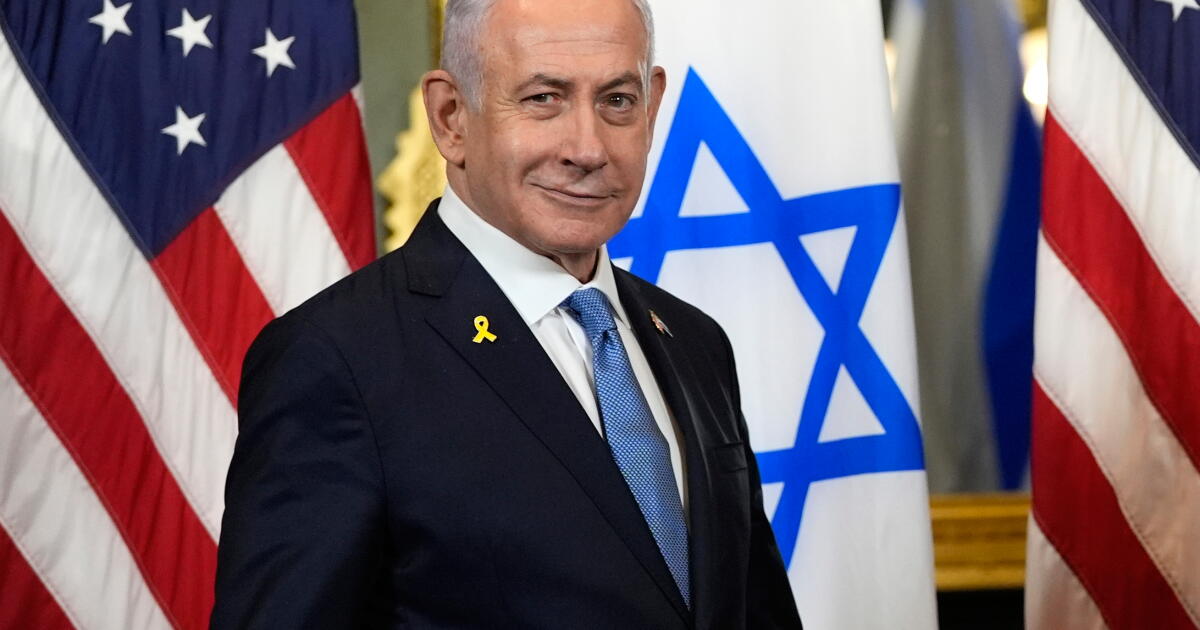
June 21 (UPI) — U.S. Vice President JD Vance said the United States is looking “to transform our relationship” with Iran but warned Sunday’s renewed talks in Switzerland wouldn’t bring about an immediate resolution to the war.
Vance was joined by President Donald Trump‘s go-to negotiators in the peace talks — Steve Witkoff and Jared Kushner — in the gathering at the Bürgenstock lakeside resort, CNN reported. Pakistani and Qatari mediators were also in attendance, The New York Times reported.
“Never before has the Iranian and American leadership met at such a high level,” Vance told reporters ahead of the talks.
“What the president has asked us to do is turn over a new leaf to transform our relationship with the people of Iran, and to extend an outstretched hand that says to the people of Iran that if your leadership is willing to give up being a driver of regional instability, if they are willing to give up nuclear weapons ambitions for the long term, then the United States is willing to fundamentally transform our relationship with that country,” he said.
“We’ve already made great progress over just the last few hours, and I expect that we will make additional progress in the hours to come.”
Sunday’s gathering in Switzerland is the latest in a series of negotiations between the two countries — and mediators — to attempt to bring an end to a war that began with U.S. and Israeli strikes on Iran on Feb. 28.
Trump signed a peace agreement with Iran on Wednesday while he was in France for the G7 Summit. The 14-point pact included the immediate cessation of fighting by all sides — including in Lebanon — plans to reopen the Strait of Hormuz and an easing of financial restrictions on Iran.
Iran, however, said it closed the strait again Saturday, accusing Israel of launching a fresh round of strikes on Hezbollah, the Iranian-backed militant group in Lebanon. The strikes killed at least 22 people.
Though the fighting between Israel and Hezbollah has been central to a peace agreement between the United States and Iran, neither of the parties were involved in Sunday’s talks in Switzerland.
Author Harlan Coben, known for gripping thrillers that place ordinary people in extraordinary circumstances, has provided enough source material for book-to-screen adaptations on Netflix that it merits its own landing page. The latest screen translation of his work begins with a parent’s worst nightmare.
“I Will Find You” follows an imprisoned father wrongfully convicted of brutally murdering his son. When he learns his child may still be alive, it sets off a harrowing, twist-filled search for the truth. User discretion is advised as to whether that makes it the perfect binge for the Father’s Day weekend. “I Will Find You” is also the first series in Coben’s partnership with the streamer to take place in the U.S. — other projects have been set in countries across Europe, including the U.K., France and Spain, in four different languages. Coben and showrunner Robert Hull stopped by Guest Spot to discuss the eight-episode series.
You are reading Screen Gab newsletter
Sign up to get recommendations for the TV shows and streaming movies you can’t miss, plus exclusive interviews with the talent behind your favorite titles, in your inbox every Friday
By continuing, you agree to our Terms of Service, which include arbitration and a class action waiver. You agree that we and our third-party vendors may collect and use your information, including through cookies, pixels and similar technologies, for the purposes set forth in our Privacy Policy such as personalizing your experience and ads.
Also in this week’s Screen Gab, our streaming recommendations include a series of brief historical videos that honor the 250th anniversary of the Declaration of Independence and a Netflix documentary that revisits Michael Jackson’s 2005 child molestation trial.
And if you’re a fan of “House of the Dragon,” which returns Sunday with its third season, check out coverage from Tracy Brown, our resident expert on all matters related to Targaryen family drama. She assembled a guide to refresh your memory on the events of the second season and spoke with Emma D’Arcy ahead of the new season.
Keep on reading (and watching). See you next week.
—Yvonne Villarreal
Turn on
Recommendations from the film and TV experts at The Times
In the spirit of the old CBS “Bicentennial Minutes” (the spirit of the old CBS for that matter) — which ran in commercial breaks from July 4, 1974, until Dec. 31, 1976, and featured celebrities telling a story from “200 years ago today” — historian and podcaster Heather Cox Richardson has mounted a series of similarly timed semiquincentennial videos, as “250 to 250.” Narrated by an array of scholars, politicians, activists, public servants and others, its overarching theme is that “the story of America has been one of the constant efforts of Americans — from all races, ethnicities, genders, and abilities — to make real the belief that we are all created equal and have a right to have a say in our democracy.” (It can’t be said too often.) Segments (there are 25 as of this writing) include the Constitutional Convention, the Triangle Shirtwaist Fire, the Erie Canal, the AIDS Memorial Quilt, Man o’ War, Eisenhower’s “D-day: In Case of Failure” statement, Rita Moreno, the Everglades, the Social Security Act, Fannie Lou Hamer, An Wang (the inventor of magnetic core memory), Thomas Paine’s “Common Sense” and L.A. Times reporter Rubén Salazar, killed by a sheriff’s rubber bullet during the 1970 National Chicano Moratorium March Against the Vietnam War. — Robert Lloyd
A still from “Michael Jackson: The Verdict” of Mark Geragos, who briefly served as the singer’s defense attorney.
(Netflix)
“Michael Jackson: The Verdict” (Netflix)
Moviegoers embraced “Michael,” propelling Antoine Fuqua’s film about the global superstar to become the highest-grossing music biography in movie history. But reviewers and others have continued to criticize the absence of references to the child molestation allegations that continually shadowed the singer. Netflix’s documentary “Michael Jackson: The Verdict,” however, brought it into focus. Directed by Nick Green, it chronicles the 2005 child molestation trial that threatened to derail Jackson’s career after a young boy accused him of abuse. The three-part series uses archival footage and new interviews with attorneys involved in the case, journalists, fans and members of Jackson’s inner circle to explore the trial, which sparked international attention, and its aftermath. Although the project is unlikely to affect Jackson’s popularity much, some of the revelations uncovered during the investigation are disturbing. — Greg Braxton
Guest spot
A weekly chat with actors, writers, directors and more about what they’re working on — and what they’re watching
Sam Worthington as David Burroughs, a wrongfully imprisoned father, in “I Will Find You.”
(Christos Kalohoridis/Netflix)
What would you do to save your child? “I Will Find You” follows David Burroughs (Sam Worthington), a father serving a life sentence for the gruesome killing his toddler son. But when his ex-sister-in-law Rachel Mills (Britt Lower), an out-of-work reporter, presents him with evidence that suggests his young son, Matthew, is still alive, it sets in motion a daring prison escape and a high-stakes rescue mission in search of the truth. And that’s just one of the parent-child dynamics that fuel the series to illustrate, as Coben told us, how most parents are “trying to do what we think is best for our child — and that could lead to greatness or it could lead to disaster.” Over a recent video call, Coben and showrunner Robert Hull discussed the chilling premise and the book moment that was most challenging to bring to screen. Beware of spoilers ahead. — Y.V.
Harlan, Netflix wanted to make this before you even finished the book. How did that shape or intensify your normal writing process? Is it hard to turn off the noise of the pressure that carries?
Coben: Actually, no. In terms of writing the novel, I’ve learned that the worst novels are the ones that you write thinking you’re going to make a great TV series or a movie. If you write a novel going, “Ooh, I can’t wait for it [to be adapted],” it’s going to stink — trust me. My caveat to that is, though, I don’t care about making changes. I don’t have fidelity to the novel. Once I knew it was going to be already a TV series, I made sure I cut off any thoughts of that, and just told Robby, “Your job is going to be to worry about how to adapt whatever I do.” The way it started was Robby and I had met, and we wanted to do something together at Netflix. We wanted to maybe do the first one that was going to be filmed [and take place in the U.S.], and weren’t sure which to do. I pitched the idea to Robby as I started writing the book, and Robby’s eyes lit up. We went to Netflix and [executives] were like which book is this? I’m “Well, it’s not a book yet; it’s a third of a book right now. I’ll finish it while Robby’s working on the pilot and the adaptation.
Robby, what pulled you into this story?
Hull: As a father myself, I would easily give my life to save my children. What would be terrifying is to not have that opportunity. And Harlan created this character [in that situation] — he says very early on in the book, “A father’s job is to protect my son, and I didn’t do that.” He’s [David] living in this spiritual prison, regardless. And in this day and age, to have someone come and say, “Hey, there might be a way for you to correct the past, to change the most horrible thing that’s ever happened to you” — I thought that was just an incredible way to start a story.
Britt Lower as Rachel Mills and Sam Worthington as David Burroughs in “I Will Find You.”
(Netflix)
Was there a moment from the book, or a twist, that was most challenging to bring to screen, or one that you were most excited about?
Hull: It’s actually the same moment: When Rachel comes [to the prison] and shows David the photograph very early on. That is a scene that has to establish who Rachel is, establish her back story, her pathos, her connection to David, introduce the mystery, David’s reaction to the mystery. There is so much going on. You have to check off in three pages and in the hands of possibly actors other than Sam and Britt, that could be a real train wreck of a scene. Sam’s reaction when he first sees that photo is just unmistakably incredible, and you don’t have to write it. He tells you in three or four seconds the last five years of what he’s been through, and the possibility that maybe things can be different just by staring at a photo, which is incredible.
Coben: That’s one of my favorite scenes too. Also the ending, making sure that landed and gave the emotional punch that I wanted and I felt when I was writing the book. I think we delivered it less-was-more there. It closes it and it leaves it, so you can interpret it your own way, and you can bring it. We were thinking, it’d be really interesting to ask people a year from now, “Where do you think those characters are?”
Let’s talk about that part of the ending — so spoiler warning starts here. The book goes more deeply into how Rachel and David’s relationship evolves into a romance by the end. The series is more vague — we see them hold hands. Robby, how did you want that moment to play?
Hull: If you want them to be together and you’re hoping they are, then I’ve done my job right. I actually don’t want to answer that question because the relationship is so complex and so dynamic. Early on, we didn’t want the traditional two-hander, where [it’s] “Oh, now they’re going to fall in love, now they’re going to come together.” No, Rachel’s her own character with her own story and pathos, and at the end, what they’ve been through together, if that moment is the promise of something more, great; if it’s the promise of “look what we’ve been through,” that’s OK too. That’s what I was going for, at least.
Do you think there’s more of David’s story to tell? Would you want a Season 2 to explore what happens next?
Coblen: I’m probably the only writer who will say this: No, not really. I don’t do Season 2’s unless I think they’ll be better than Season 1’s. Let me do new stories instead. This is a complete story to me. Now, if somebody says to me, “I’ve come up with an idea that might work, that could be as compelling as being [in prison] for five years for the murder of your child for the same character? I never say never. I’ve learned that in my career. But we’ll see. I don’t think so.
Robby’s like, “but I want a Season 2.”
Hull: The moment he said, “If you can come up with a story better than the one we told …,” I was like, “Oh, guess we’re not doing a Season 2.”
Before I let you go, what have you watched recently that you’re recommending to everyone?
Coben: “Your Friends & Neighbors” [Apple TV] by my pal Jonathan Tropper and my other pal Jon Hamm. I’m proud of the job they’ve done on that show and I’m happy for them.
Hull: “Run Away,” ’Safe,” “Fool Me Once.” [Each are a Coben adaptation for Netflix]. Those are the three I’m digging right now.
It’s Friday afternoon in North Hollywood and Ziggy Marley is perched on a stool inside his newly built Rebel Lion Studio, tucked in one of the neighborhood’s creative enclaves.
The nine-time Grammy winner is surrounded by a collection of lion figurines, guitars, traditional hand drums and a piano. Along the walls hang two replicas of backdrops his legendary father, Bob Marley, used on tour in the 1970s. The murals, depicting Rastafari icons and Haile Selassie I and Marcus Garvey, were featured in the 2024 biopic “Bob Marley: One Love.”
“These are what we used as the backdrop for the concert scenes. Them spiritual to me,” Marley says in patois as the smell of palo santo dances around the rehearsal space.
Music has been both an inheritance and lifelong pursuit for Marley. From sitting in studio sessions with his father as a child to building a five-decade career of his own, he has remained a curious student of the craft, one willing to challenge convention in search of a deeper meaning. That spirit is evident on “Brightside,” his ninth solo album, which was released on vinyl on April 18 (Record Store Day) and May 1 on streaming.
Rather than recording the eight-track project in 440 Hz, the standard tuning frequency for most modern music, he opted for 432 Hz, a tuning some musicians and theorists believe creates a warmer, more meditative listening experience. He also slowed down his songwriting process, giving each lyric room to carry its message of hope through turbulent times. The album, which may be his most personal yet, also features “Many Mourn for Bob,” the first song he has written directly about his late father.
“I think it shows the next stage that I probably am in,” says Marley, adding that he felt connected to his father on a spiritual level. “We took another step in the relationship, to another place that it’s never been before.”
Ziggy Marley is bringing his “Brightside” tour to the Hollywood Bowl on June 21 alongside reggae star Burning Spear.
(Dania Maxwell / For The Times)
He adds, “When I was doing the song, it kind of came to me like this song could’ve been my father’s song. It could’ve been a song that he wrote.”
The reflective nature of “Brightside” arrives at another pivotal time in Marley’s career. This year marks the 20th anniversary of “Love Is My Religion,” the Grammy-winning album that launched his solo career and crystallized a personal philosophy he still carries today. He is also set to release his sixth children’s book, “True to Myself,” in September.
As we wrap up our conversation, Marley has only a few minutes before Rebel Lion Studio shifts back into work mode. Within minutes, bandmates, background singers and production crew members begin funneling into the space, hauling in stacks of equipment as promotion and preparations continue the “Brightside” tour, which stops at the Hollywood Bowl on June 21.
This interview has been lightly edited for length and clarity.
You recorded your latest album, “Brightside,” here at Rebel Lion Studio, which you designed and built from the ground up. Can you take me back to the beginning of that process and why you wanted to do it?
I grew up around my father and my mother as growing musicians trying to succeed and there was one thing I kept hearing over and over throughout my life: independence. Their whole mission was to be independent. I saw them work and I saw my father build a studio. I saw him have a space where he can do more music and control his own time. That was a dream of mine for a long time, ever since I started doing music because usually we use other people’s studios. I couldn’t have this in my house. It’s too much. It’s a dream come true.
We’re surrounded by two beautiful murals. Is there a particular item that is personal to you?
The murals are replicas of my father’s backdrops that they used. The original artwork is by Neville Garrick, but he helped us re-create them for the Bob Marley movie. These are the murals we used as the backdrop for the concert scenes. They are spiritual to me cause that’s Haile Selassie and Marcus Garvey, two very important beings for us. Inspirational.
On “Brightside,” Ziggy Marley dedicated a song to his father, Bob Marley, for the first time in his career.
(Dania Maxwell / For The Times)
“Brightside” is your ninth solo album. What mindset were you in emotionally and spiritually when you started working on it?
I never thought about making an album, I was just writing songs. You just tap into things in your subconscious that are waiting to become music, I feel like. Then when the time comes for writing songs, the time comes. It’s like a season. Like you have blueberry or orange season. So there’s a season for me when I write songs. Then you say, “All right, let’s make an album then.” But you don’t think about an album before. It’s just an expression or a feeling just to make music, not for any reason but to make it. It happened over a period of years. Ideas and experiences that eventually come out. But closer to the time I [made] the album, I remember writing some of the later songs like “Why Let the World.” It was a song that I wrote because I was feeling down and everything that was happening in the world and the country. Just so much negativity and I just felt like I needed to take a break from it. To recharge yourself. We cannot fight every day. We need to take a break and then get back to it. I needed to teach myself to take some time. It was more of a mental thing than an emotional thing. Stuff I deal with my father, personal life and stuff with my spirituality and my faith. So there’s a lot of me in this record.
“Many Mourn for Bob” is the first song you’ve explicitly written about your father. Your brother, Stephen, is also on the vocals. What surprised you emotionally once that song was finished?
I’m not sure I thought about it like that. The experience of expressing that emotion, it’s a spiritual experience. I think it shows the next stage that I probably am in and even my relationship with my father on that spiritual level. It’s a different place. We took another step in the relationship, to another place that it’s never been before. When I was doing the song, it kind of came to me like this song could’ve been my father’s song. It could’ve been a song that he wrote. That’s how I felt about it. This is partly his song. It’s me and him making this song. This song is his song too.
How has your relationship with grief changed over the years?
It’s more of a comrade, understanding, empathy and having the maturity and the experience to understand what he went through as a man, as a human being. I think that’s what it is, really. A better understanding of what he went through, not the glory. The pain, the mental and emotional state. You’re more than just an idol. You’re more than just a legend. You’re more than just a father. To go deeper than that, so that’s the next level.
Yeah, the skit you used of him saying “I’m just a man from the ghetto” on the song really summarizes that.
That’s the real him. That’s him right there. Even in the tone of his voice, you can hear the real Robert coming out.
Another standout song from the album is “Racism Is a Killa.” One thing that you do well is having a heavy topic, but finding a way to still make it feel hopeful and joyful. Why was it important for you to approach the track this way rather than from a place of anger, heaviness or sounding preachy?
I think it started out preachy and angry, but over time, it kind of evolved and I kind of evolved too ‘cause my own evolution is represented in the music. And you know something, doing that song helped me evolve because I had to think about it differently without the anger. The song made me do that. Like how else can I approach this? It’s inspiration that causes these things. It’s not an intellectual thing. I didn’t do that intellectually. Like over time, something just started coming out of me. I never really thought about it before, but I can see it now.
In the video, which features your daughter, Zuri, you referred to the condition as “Racismosis” in the video and sang about how it can be cured.
It’s kind of like a sickness, a disease. It’s a virus. We can minimize the virus and stop the disease. It’s true. Racism is a killa. This virus can kill ya. Literally kill ya. Spirtually kill ya. Emotionally kill ya. Mentally kill ya. It kill ya in different ways. It kills the victim and it kills the person perpetrating it. It’s killing everyone, but we can cure it though. It starts with the children. I have a friend of mine who said, “Yo, my little son loves this song. He doesn’t want to stop. He says ‘Put on “Racism is a Killa.”’ So that’s where the antidote is starting. The minds of the children. The music with a conscious message gives them the right consciousness that they grow up with. That is how we take our time and lower the spread of the virus.
You recently released an alternate version for “Racism Is a Killa” with Big Boi. How did that collaboration come together and what excited you about working with him?
I’ve loved Big Boi and Outkast from a long time ago. He’s a legend and a strong voice. There’s different layers to it and I feel like Big Boi took it to that other layer. So yeah, we just love Big Boi and I’m going to jump on something he does. [Laughs]
I’d be remiss if I didn’t ask your approach for your album and how you swapped the typical 440 Hz for 432 Hz. Do you remember the first time you heard the music played back that way?
It’s a long journey because for most of my life in music, I’ve tried to be a student. I’ve tried to keep an open mind and learn more and more. With this album, there’s an inspirational side of music and that’s where I lean into most of the time, but as I grew up, I started to understand there’s also a science too. It’s also mathematics. The universe, it’s all mathematics and science, and I shouldn’t shun the science of music just because I think the inspiration is all it should be. I think a part of that was learning that for myself and opening up and saying, “Yo, let me put some science into this.” Frequency. What does frequency do to people? Frequency affects people. Frequency is a weapon. It’s a tool. I’m sure the army has some kind of frequency thing. So frequency is powerful. I wanted to try something different anyway. I want to be different. I want my frequency to be different from the majority of frequencies that’s being played out there, because it’s fun for me to be different.
When I was working on the demos, I was like “Let me try this 432 Hz thing” and I like how it feels for me personally, how I sing on the frequencies. It resonates differently and makes me feel different. We did it and it felt good, and we did it live, and from my point of view, I felt a different energy with the audience too. So all of those experiments led me to the final conclusion to say, “Yeah, let me do the record in 432.” It’s really nice vibes, which the world needs a different frequency. We can use it.
This year marks the 20th anniversary of “Love Is My Religion,” your first solo Grammy-winning album. When you think back to that era of your life, who was Ziggy back then?
A lot was changing because I moved to L.A. during that time.
You got married around that time too, right?
Yeah. I don’t really fight change. I just try to navigate them and figure them out cause sometimes change is hard. There was a lot of change living here, moving around, trying to find a place, music, but then it’s like we are continuously updating ourselves. I’m continually updating. You know how you update your OS. I’m updating my OS. My operating system is being updated throughout my experience in life. There’s always something else out there for me to evolve to. So during that period of my life, “Love Is My Religion” came to me when someone asked me, “What religion are you?” And I just said “Love is my religion.” I never thought about it before, never contemplated it, never even thought of those words together before in my life, and they just came out to me that day. So the album represents a time in my life when I realized there’s a spiritual awakening that I had. “Love Is My Religion” is a spiritual awakening. That’s my thing. That’s who I am. That’s why it’s a milestone.
“If you think you’re going to change this world with music and you’re trying to send a message out there, you have to speak to children,” Ziggy Marley says.
(Dania Maxwell / For The Times)
You’re kicking off the “Brightside” tour this month, which includes a stop at the Hollywood Bowl. What are you most excited about when it comes to bringing this album to people for the first time live?
I’m excited about playing the music. I think it’s about the music. These new songs, they vibrate very highly for me and I’m excited about experiencing and expressing that. And also kind of not doing it for the audience. I don’t want to do it for the audience. I want the audience to experience what I’m experiencing, what I’m expressing. I want them to feel me. I don’t want them to be like “Hey look at me.” [Laughs] There’s still connectivity going on, but I want them to feel the songs the real way. That’s what I’m excited about for people to feel it the way that I feel it.
You even posted the lyrics and told fans to get to practicing, so they can really understand the message.
Yeah. Just reading them for me, I really like the writing I did on this. I also took some time with this too. I was saying to someone that I developed a deeper relationship with the lyrics and the words than I did before. My relationship with the words here are very mature. I feel good about it. That’s why I want people to know the words because words are very important. Words are very important. If you know the words you get a deeper understanding of what I’m talking about and what I’m feeling.
After nearly 50 years of making music, Ziggy Marley built his own studio in North Hollywood called Rebel Lion Studio. He plans to turn it into a multipurpose creative space.
(Dania Maxwell / For The Times)
Look on the bright side is a phrase that people say often, but what do those words mean to you right now?
Sometimes we can get in a place [where] we can’t see the other side of things because we’re so caught up in that one place. Like the cliché, there’s two sides to a story, ya know? The universe is always yin and yang, but there’s always another side of things. But I feel like the way we are being programmed in a way through media and everything, it’s like there’s only one side. Everything is like this, there’s nothing else going on over there that we need to see, we only need to see this. This is all that’s going on in the world. There’s nothing good, there’s nothing nice, there’s no good people, there’s no love. So it’s a realization too. A realization that there’s the other side. Never get to that place where we think it’s just that side alone because we get so much of it. It’s a reminder, I think, for us like “Come on guys.” The thing about it too, sometimes you can feel like — even for me — some people say, “Hey look on the bright side,” some people find that like “Why are you happy? Why you so chirpy?” [Laughs]
That’s true.
I’m proud that I’m on the bright side. I’m living on the bright side, I don’t care. You don’t like me because I’m living on the bright side? You want me to be like you, you want me just live on the dark side with you, right? So it’s like a proudness of being positive and having that outlook in life, and not feeling like you have to [fall to] peer pressure. More positivity in life, not just the negativity. I’m confident in that too. So it’s kind of like that too, you know, like being proud, lifting up that side of me. Yeah, I’m happy to be living on the bright side.
Some people are still processing “Euphoria’s” evolution away from its roots as a gritty drama that explored highly mature and dark teenage experiences to, in its final season, a fever dream-esque look at adulthood that played like a full-blown neo-noir crime thriller. But another show’s creative transformation has taken the stage now.
The third season of AMC’s adaptation of Anne Rice’s “Interview With the Vampire” brings a reset to the captivating world of bloodsuckers. While the first two seasons adapt the original 1976 novel, relying heavily on the recollection of Louis de Pointe du Lac (Jacob Anderson) as he recounts his centuries-long life and romance with Lestat de Lioncourt (Sam Reid) to a journalist, the new season shifts narrative focus and perspective over to Lestat, who transforms into a charismatic frontman of a glam-rock band to publicly set the record straight. As such, the series has been retitled “The Vampire Lestat,” which is the name of Rice’s second novel. For this week’s Guest Spot, I spoke with showrunner Rolin Jones about the show’s rebranding and Reid’s commitment to the musical challenge.
You are reading Screen Gab newsletter
Sign up to get recommendations for the TV shows and streaming movies you can’t miss, plus exclusive interviews with the talent behind your favorite titles, in your inbox every Friday
By continuing, you agree to our Terms of Service, which include arbitration and a class action waiver. You agree that we and our third-party vendors may collect and use your information, including through cookies, pixels and similar technologies, for the purposes set forth in our Privacy Policy such as personalizing your experience and ads.
Also in this week’s Screen Gab, TV critic Robert Lloyd steers us away from the usual streaming options to recommend a man’s video journal that documents his quest to travel the world by foot, while culture critic Mary McNamara suggests a new British comedy about codependent BFFs navigating the sort of tricky development that would end most friendships.
Speaking of endings to relationships, it was announced this week that “Doctor Who” showrunner Russell T Davies is exiting the series (again) seven months after Disney+ decided not to continue its partnership with the BBC to distribute the long-running sci-fi series. BBC also announced it will not air the show’s previously announced Christmas special this year. Lloyd, a longtime Whoverse follower, is a voice of calm through it all. He shares his thoughts on why the new questions swirling around the franchise don’t necessarily have to be cause for alarm — evolution is part of the show’s essence, he reminds us. Elsewhere in current events, if you’ve been curious (… sure, that’s the right word!) about the UFC Freedom 250 live event that will unfold in an oversize cage on the White House South Lawn in celebration of Trump’s 80th birthday and the country’s 250th anniversary — and will be streamed live on Paramount+ — check out our explainer about the controversy — and lawsuit — it has sparked.
Now if you’ll excuse me, I have another Matthew Rhys story to read so I can maintain my executive membership in the fan club. See you next week!
— Yvonne Villarreal
Turn on
Recommendations from the film and TV experts at The Times
In February 2023, Alexander Campbell, then 27, set out from Sydney to walk west around the world. Currently he is somewhere around Albania, having traversed, among other places, Bangladesh, Nepal, Pakistan, Kazakhstan, Turkey and Bulgaria. He’s been documenting his progress on camera all along the way, but it wasn’t until Day 938, in Georgia, that he began posting the longer, “uneventful” videos that make his channel such a singular, meditative, even hypnotic, form of vicarious travel. Walking alone to the sound of his own footsteps, through sun, rain, sleet, snow and dark of night, over mountains and deserts, through forests and fields, he becomes a character in a peripatetic, nearly one-man show. The occasionally encountered friendly local will warn him about wolves or bears or the hunters who might mistake him for one, though he meets more dogs than people. (He calls them all “Buddy,” warily.) Titles include “I Slept in a Barn Full of Stray Dogs,” “I Got Caught in a Snowstorm With Nowhere to Sleep” and “Something Was Out There in the Forest.”) — Robert Lloyd
Jemaine Clement, left, and Nicola Walker in “Alice and Steve.”
(Lara Cornell / Hulu)
“Alice and Steve” (Hulu, Disney+)
What would you do if your ex-turned-longtime bestie slept with your 26-year-old daughter? Well, Alice (“The Split’s” Nicola Walker) 100% loses her mind. Sure, during a drunken convo at a bar, she did tell Steve (“Flight of the Conchords’” Jemaine Clement) that he could have any woman he wanted, but she most certainly wasn’t talking about Izzy (Yali Topol Margalith). Having just returned home after breaking up with her boyfriend, Izzy decides that Steve, now bunking down on the sofa, is “strangely hot” enough for a little rebound sex and then a romantic relationship. And Steve, though initially regretful and more than a little shell-shocked, decides this is what he wants too. “I really like her,” he says by way of sheepish explanation. It leaves Alice no choice but to hilariously alternate between screaming and scheming as she tries to put a stop to the proceedings even at the expense of her marriage, her career, her friendship with Steve and her self-respect.
Clement’s sad-sack charm successfully boosts the leap of faith required to keep Steve from becoming an oblivious creep, but the show belongs to Walker. Her Alice becomes a blazing embodiment of the emotional maelstrom inside every woman who is expected to somehow put on a supportive, understanding face no matter how outrageous or impossible the situation. The laughs she elicits are exhalations of shock, recognition and relief. We can’t all ditch the high road for pure, luxurious fury, but it’s mighty fun to watch someone who does. — Mary McNamara
Guest spot
A weekly chat with actors, writers, directors and more about what they’re working on — and what they’re watching
Sam Reid as Lestat De Lioncourt in “The Vampire Lestat.”
(Sophie Giraud / AMC)
If you thought posting cryptic digs about an ex on your social media accounts as a way to cope with unresolved emotions was petty, this TV vampire may have you beat. The wild new, music-infused season of “The Vampire Lestat” (formerly “Interview With the Vampire”) revolves around Lestat de Lioncourt (Reid) on an elaborate mission to tell his side of the story after his ex-lover, Louis de Pointe du Lac (Anderson) published a scandalous memoir — with the help of journalist — that detailed their turbulent romance. In his bid to control the narrative, Lestat becomes an immortal glam rocker who launches a music tour and enlists the same journalist — newly turned into a vampire — to direct and film a music documentary about his life. The result is a flamboyant seven-episode season that blends rock-opera style performances (the season will feature 20 original songs) with personal reflections from its flashy frontman. As it enters its second week of release on AMC and AMC+, creator and showrunner Rolin Jones spoke over video call recently to discuss the show’s creative pivot and more. — Y.V.
To kick off the new season, there was an immersive premiere concert event at the historic Beacon Theatre in New York City earlier this month. Was that a surreal experience? Did you feel like a music manager?
I have a hard time talking about the work — the selling of the work, all that kind of stuff. I want to finish my edit, and then I want to like disappear at the Arctic. I knew we were doing this and I knew that there were like fans from all over the world flying in for it — some who didn’t have tickets. I knew there were people who had worked on the show from Seasons 1, 2, and 3 who got on a plane, asked for a ticket, and made a pilgrimage there. I was really moved by it. It was about as good as these things can ever be. It felt really beautiful. It felt like Vampire Church. It was pretty cool. And Sam — “surprising” is not the word because I’ve worked with him for a long time — was way better than he should have been. It’s incredible.
In this TV landscape, taking a show and giving it a new title as it enters its third season is a daring move. The series moves focus to the second book in Rice’s oeuvre. And while it continues the story of these characters, at the same time, it feels like a new show. What made you nervous about carrying out that kind of creative transformation? And what was thrilling about it?
We could start with a thrilling part because the idea to be able to go to the people who worked really hard and say, “Hey, let’s rebuild it” — that’s exciting. That part’s cool. The executing part about it is where the terror begins because most worthwhile art — you can call TV art — invariably has to have risk and danger involved in it, otherwise you’re probably performing a magic trick. No offense to magicians. But you want something that when you turn off the TV, you’re not immediately forgetting. The more risk you do, in terms of form, in terms of all that, you want to be able to feel like you can pull it off because, otherwise, they [the audience] have nothing to grasp onto. [And they say,] “You just destroyed this thing we love, how dare you!” But generally speaking, everybody — from the top of the network down to the actors who are doing it — was down for it. Mostly because, if you listen to our fandom, I think they demand it. They’re out there on a limb telling everybody “it’s the greatest TV show, and blah blah blah” and you have to deliver that for them so that they can continually confidently bombard all their friends and neighbors and say, “Watch the show.” There’s nobody who didn’t give everything [to this season]. It was a real collective leap together.
Sam undergoes quite the transformation to make this rock star vampire persona believable. What struck you about how he approached embodying Lestat this season?
I gained 20 pounds in Toronto, and that’s because I kept stuffing my face with bread, and about every three or four times I would have this big sloth of butter on bread, I’d go, “Poor Sam” because I know Sam had not touched a piece of bread. Let’s start there — 0% body fat, the dimensions on the waist. The level of dedication. He was living and breathing every second about the role and about the demands of it — sing songs, and not only sing songs, but go learn to be a musician, and go train with people who have been doing it their whole life so you can fake it. I feel very confident saying this: Anybody who watches this season and Sam’s performance will feel like, at the end, they saw one of the 10 greatest performances in the history of our medium. I think he absolutely disappeared. James Gandolfini did not sing songs, Swearengen [the “Deadwood” character played by Ian McShane] did not sing songs. Mr. White [the “Breaking Bad character played by Bryan Cranston] did not sing songs. I’ll put him [Sam] up against all of them. He’s incredible.
What if he wants to go off and be a rock star now?
He could do it.
Jacob Anderson as Louis De Pointe Du Lac in Season 3 of “The Vampire Lestat.”
(Sophie Giraud / AMC)
You have a rock band posing as vampires fronted by an actual vampire who is the focus of a documentary being directed by a vampire passing as a human. And for all this to work, the band has to be good. What was the challenge of making this fictional band’s stardom believable — the charisma, the presence on stage, the discography? It’s a tall order, in addition to making a compelling TV show.
Anytime you have seen these things, following a band, there’s so many ways it can fall flat. You can do three or four of the things you need to do, and if one of them falls apart, you’re still stuck there, going, “Eh.” We all, who are working on it, love music. We’ve all been in clubs. The first thing we did was remove the stardom for budget reasons, but also for singular storytelling — he decided to do rock ’n’ roll in the year 2025. Some basic building blocks, we need songs. So with [composer and songwriter] Daniel Hart, we bring him into the [writers’] room because it’s not only writing songs, but writing the context about when and where he’s [Reid] singing them. He has to be aware of what we’re doing in the room. We also have to be able to pivot when he has pure inspiration; he can come in with something we’ve never talked about, and go “Boom!” And it’s OK, now what do we do with this song? And quite often this year we restructured episodes because the song was beating our episode. [We had to] hire actors who can play or musicians that can act — and that’s not everybody, so that shrinks that down. Make sure when you’re in the club, or whether you’re singing the song in rehearsal, let us uglify it, embrace the mistake, make it a little dirty. We have a song this year that has some of the most beautiful orchestrations, but because of where it landed in the season and what it talked about, we ended up going with the most stripped down, bare version of it. Don’t worry, you’ll get to hear these beautiful orchestrations [at some point]. [It’s also thinking about] how do you carve out the time you need to shoot it and the playback elements of it, and what sacrifices you have to make on other set pieces that you would normally put in is a lot. But everything from the beginning was with one thing in mind: Do not suck. How can we suck less? Let’s not suck. And we just kept going over and over again with that.
At the end of the first episode we see Lestat reunited with his undead mom, Gabriella, who he has, I think it’s fair to say, an oddly intimate relationship with —
Multifaceted.
And obviously the Louis-Lestat romance is far from being over. What are you interested in exploring within those two dynamics, in particular, moving forward since they’re so central to Lestat?
It becomes immediately about him going, “Let me try to explain this … I might have just repelled 80% of you.” I’m really interested in the viewers who are really off-put by it. I want to see where they’re at by the end of Episode 7, if they trust us. And see what they’re feeling. I guess [some people feel], “Oh, you’re not allowed to do this in the TV world unless you got f— dragons and s—, but all the things that you would have thought [that the network might say], “Don’t do this,” we didn’t really have a lot of those obstacles. There was a lot of trust. The thing with the Lestat character is like it’s probably harder to cuddle up to him like you could Louis. Louis is a Faustian tale; here it’s like a Faustian tale but Elton John’s at the center of it. There’s a series of questions like “Why do you keep doing this to yourself? Why do you keep get trapped into these things?” It’s like going on odyssey, or as Jacob called it, an idiocy, with a character that is exotic and eccentric and contradictory. For us going forward, as we wrote it, every time we fell into the something that felt well-made or cool on a twist or turn level, we found we were very suspicious of it, and we were trying to make alien TV as best we could. So, what do I want? It’s less about exploring those two dynamics, although they’re richly part of this fabric. It was, how can you take them on a magic carpet ride, a very difficult one? The idea is to actually have, by the end, every single person recognize that part of themselves in him. And how can you normalize him over seven episodes? How can you deliver that to an audience?
I know you’ve been super–busy, but what’s the last thing you watched that you found yourself recommending to everyone or something that you were obsessed with right now?
A TV show I’m watching, one that I’m enjoying right now, is “Widow’s Bay” [Apple TV]— that has been very enjoyable. It’s so much fun.
Matthew Rhys’ facial expressions are so good.
Oh, he’s great, and that show just really knows what it is, and is joyfully silly, and has a great atmosphere. It’s one of the most beautifully shot things I’ve seen in a while. I’m not finished yet.
OK, before I let you go, I hope we get a concert out in L.A. at some point.
Wouldn’t that be nice? Where would you put it up? Echoplex?
WASHINGTON — The relationship between President Trump and French President Emmanuel Macron started simply enough, with a handshake, nearly a decade ago.
But even then, there were signs of strain in their relationship — tensions that could be on full display during next week’s G7 summit in France.
Back in 2017, Trump was a brash businessman just elected to America’s most powerful office, and Macron was an upstart politician who had won his race in a landslide. At a NATO summit in Brussels, they clinched hands far longer than most people do when they meet for the first time. Neither seemed to want to be the first to break a grip so tight that it exposed white knuckles.
Nevertheless, a friendship was born. And early on, Macron seemed to be the one European leader with a knack for managing his mercurial, three-decades-older counterpart.
Macron invited the Republican president to join him for Bastille Day celebrations in July 2017, including an Eiffel Tower dinner date with their wives. Trump reciprocated by making Macron the guest of honor the following year at his first White House state dinner, the highest diplomatic honor the United States can extend to an ally.
But by the end of Trump’s first term, the bromance had faded. And in his second term, the leaders now openly trade barbs, disagreeing over tariffs, Ukraine and the Iran war. That dynamic will be scrutinized next week when Trump and the leaders of Britain, Canada, Germany, Italy and Japan join Macron in the French lakeside resort of Evian-les-Bains for the G7 summit.
Trump’s long-simmering frustrations with US allies could be on display
There could be awkward moments between Trump and Macron, as well as among Trump and the other G7 leaders he’s criticized for not joining him in Iran.
“But I also think European leaders are quite professionals when it comes to politics, and in some ways diplomacy at this point, and will maybe see it as an opportunity as well,” Max Bergmann, director of the Europe, Russia, and Eurasia Program at the Center for Strategic and International Studies, said in an interview.
Kurt Volker, a former U.S. ambassador to NATO, said the Trump-Macron relationship has been further complicated by the Iran war and Trump’s complaints “that Europeans weren’t helping, when they hadn’t been consulted, and their interests are very much affected by this.”
“I think that was a negative for Macron,” Volker said.
Trump joined Israel in a war against Iran over its nuclear program back in February without consulting other U.S. allies. He then complained publicly when European countries spurned his requests for their help.
Waning support for Ukraine in its war against Russia from the Trump administration “has really irritated the French,” Volker said. “They feel this is important and we’re not paying attention to it.” Macron invited Ukrainian President Volodymyr Zelenskyy to join the leaders’ discussions on Tuesday.
Macron is the G7 member who has dealt with Trump the longest
In Trump’s first term, Macron appeared confident that he could persuade and influence the U.S. leader, but the relationship increasingly has come to be defined by their disagreements.
Macron now says he is “careful” about Trump’s statements, suggesting he no longer takes them at face value. Their relationship remains cordial as each calls the other “my friend.” But the relationship has also experienced some ups and downs.
As president-elect, Trump attended the reopening of Notre Dame Cathedral in Paris in late 2024 at Macron’s invitation. After Trump began his second term in 2025, Macron was an early Oval Office visitor. The president wrote on social media that he was “delighted” to welcome Macron back to the White House and said the relationship with France has been “very special.”
But at one point during the meeting, the French president publicly corrected Trump after he wrongly suggested that Europe would recover the money it had provided to support Ukraine. With a smile, Macron touched Trump’s forearm and replied, “We provided real money.”
Macron also condemned as “brutal and unfounded” new tariffs that Trump slapped on steel, aluminum and a broader range of European imports in early 2025.
But there have also been some lighter moments mixed with the tensions.
A documentary aired last year on French television showed Macron telling Trump during a phone call that Zelenskyy had agreed to a U.S.-backed ceasefire proposal. Trump replied, “You’re the greatest.”
Macron has often said he can reach Trump directly whenever he needs to — and proved his point during last year’s U.N. General Assembly session in New York. After police officers blocked the French leader from crossing a street because traffic had been halted for Trump’s motorcade, Macron whipped out his cellphone and dialed the U.S. president.
“How are you?” Macron said. “Guess what? I’m waiting in the street because everything is frozen for you!”
‘This is not a show,’ Macron has said about Trump’s NATO ambiguity
Macron has argued that Trump’s “America first” policies bolstered his case for a stronger European defense capability that would lessen reliance on the United States.
In April of this year, as Trump sent mixed signals about Washington’s commitment to NATO after the start of the war in Iran, Macron delivered some of his sharpest criticism of the U.S. president.
“There is too much talk, and it’s going in all directions,” Macron said. “We all need stability, calm and a return to peace. This is not a show.”
“You have to be serious, and when you want to be serious, you don’t say the opposite every day of what you said the day before,” he said.
Trump, while mimicking a French accent, recently has taken to reenacting a conversation he says he had with Macron over drug prices and tariffs. Trump also poked Macron by telling a private luncheon in April that his wife, Brigitte Macron, treats her husband badly. The comments were in a video the White House had posted on its YouTube channel before blocking access.
Macron didn’t see any humor in Trump’s comments. “The remarks I heard were neither elegant nor appropriate,” he said. “They do not deserve a response.”
Still, Macron has tried to accommodate Trump’s schedule to ensure his presence at the summit in Evian-les-Bains, knowing that he has a record of leaving such gatherings early.
Macron originally had set Sunday, which is Trump’s 80th birthday, as the opening day of the summit, but he pushed the start back a day because Trump is celebrating the occasion with a UFC show staged on the White House grounds.
Superville and Corbet write for the Associated Press. Corbet reported from Paris.
FATBOY Slim has opened up about the ‘awkwardness’ he felt with ex Zoe Ball after their divorce, shortly after they reunited to take some new family snaps.
The couple tied the knot in 1999 but their romance wasn’t all smooth sailing, with Zoe admitting to having an affair with DJ Daniel Peppe.
Sign up for the Showbiz newsletter
Thank you!
Fatboy Slim has admitted that his relationship with ex Zoe Ball was initially ‘awkward’ after their divorceCredit: youtube/@BeginAgainWithDavinaHe spoke about it with Davina McCall on her podcast, Begin AgainCredit: youtube/@BeginAgainWithDavina
After briefly separating the duo got together again three months later up until their divorce in 2016.
Speaking to Davina McCall on her Begin Again podcast about it Fatboy Slim, real name Norman Cook, shared how ‘awkward’ he felt with Zoe initially after the split as they attempted to co-parent their children Woody and Nelly.
Though overall the star praised the dynamic him and Zoe hold today, saying it might even be better now than when they were a couple.
He said: “Our triumph is to remain really good friends and parents, even though we’re not a couple anymore…
The podcast chat comes shortly after Zoe and Norman attended a wedding togetherNorman looked dapper in a grey suitZoe is a TV regular, known for previously hosting Strictly Come DancingCredit: BBCNorman and Zoe went their separate ways in 2016 after tying the knot back in 1999Credit: Shutterstock Editorial
“It was a bit awkward at first, but then we got this rhythm where… we’re probably actually better than we were when we were a couple.
“You sign on to be parents, that’s for life.
“You can sign up for marriage and you can get divorced. But you can never stop being parents.”
Norman also praised Zoe for being really good at keeping him “grounded”, noting: “Going through it together was great because, Zoe is a really good teacher, she was really good, really measured and she’s kept me really grounded to earth…”
The podcast chat comes a week after Norman and Zoe reunited to attend a friends wedding over the weekend.
Their daughter Nelly was a bridesmaid at the stunning event that took place at Parnham Park in Dorset.
Zoe posted a series of sweet clips and snaps from the day to her Instagram account.
She wore a cream dress with a slit covered in ruffles, while Norman opted for a handsome grey suit.
In the post’s caption, Zoe penned: “Congratulations Eva & James & Willow
“We love you so much. The most perfect wedding celebration for our dear magic friends.
“Groomsmen, Bridesmaids & a few close folk to celebrate the Wedding.”
Barry Keoghan’s new girlfriend is Danica Hall, who pals describe as ‘down-to-earth’Credit: SplashBarry has stepped back into the limelight with a new woman on his armCredit: Splash
But last week, Dublin-born Barry stepped back into the limelight with a new woman on his arm.
And far from being a global superstar, she’s a down-to-earth Brit.
“Barry’s new girlfriend is Danica Hall,” a friend tells The Sun. “Compared to Sabrina she couldn’t be more low key.
“She was born in Staffordshire and moved to London a few years ago. She was working for a cosmetic surgery company on Harley Street.
“Danica — or Neeka as her mates call her — is well-connected through her work. She met Barry through mates and they started talking. It evolved into a romance and they’ve both been totally smitten.”
Saltburn and Peaky Blinders star Barry, 33, and Danica, 29, were photographed together for the first time last week. They were seen kissing while picking up coffees on a relaxed holiday in Barcelona.
Friends say the pair have been together officially for weeks, with those close to Barry telling The Sun that Neeka reminds them of Alyson Kierans, the mother of his three-year-old son Brando.
The 39-year-old dated Barry from 2021 to July 2023, five months before he was first linked to Sabrina.
“Alyson was a dental nurse when she met Barry,” a pal explains.
“She didn’t court the spotlight then and she certainly doesn’t now.
“Her relationship with Barry may be over but they will share their son forever. She is a devoted mother and caring for Brando is her priority.
“That is something Barry really values in a partner. That sense of ‘normalness’ he had with Alyson, who wasn’t bothered about living a public life, is what his friends think he has found again in Neeka.”
Barry’s new romance is a stark contrast to the one he had with American singer Sabrina, 27.
They became one of 2024’s biggest It couples, with loved-up appearances at Coachella and the Met Gala.
Barry was even rolled out as part of Sabrina’s album campaign for Short N’ Sweet, appearing in the music video for her single Please, Please, Please.
“Neeka is totally in sync with Barry,” a friend explains. “When their relationship got more serious, she deleted all of her social media profiles, even her LinkedIn.
Barry and new girlfriend Danica share an intimate momentCredit: SplashBarry with ex Sabrina Carpenter at the 2024 Met GalaCredit: Getty
“She gets that he wants to live a quiet life and she is totally down with that.”
Those close to Barry also say that he has never been happier.
A pal adds: “Career- wise, Barry is going from strength to strength.
“The Beatles biopics will be intense from next year, with promotion all over the globe and Barry knows his feet won’t touch the ground.
“With Neeka, he’s been able to spend time doing things he loves. Working hard, living a quiet life and hanging out with his mates.”
When Barry split from Sabrina after a year, a source cited their busy workloads. But then all hell broke loose.
Social media trolls and hardline Sabrina fans accused him of cheating.
The unfounded claims were fuelled further by a TikTok personality called Breckie Hill, who was linked to Barry on a gossip website. In a statement posted just days after his split was made public, Barry wrote: “I can only sit and take so much. I deactivated my account because I can no longer let this stuff distract from my family and my work.
Barry with Alyson Kierans, the mother of his three-year-old son BrandoCredit: GettyBarry, above as Ringo, was announced as one of the new Fab Four for Sam Mendes’ Beatles biopicsCredit: PA
“The messages I have received — no person should ever have to read them.
“Absolute lies, hatred, disgusting commentary about my appearance, character, how I am as a parent and every other inhumane thing you can imagine.”
Those close to Barry said it was comments about his late mother, who died of a heroin overdose when he was 12, that hurt the most.
The star, who spent his formative years in and out of the care system in Ireland, said of his background: “She was just unable to look after us.
“My father wasn’t there and so we got taken into care.
“That kind of thing still haunts me. You don’t forget waiting on the social worker’s steps and waiting for a new family to come and play with you. You ask: why you?”
In his heartfelt statement announcing he was leaving social media, Barry also described the messages sent to him.
He wrote: “Talking about how I was a heroin baby and how I grew up, and dragging my dear mother into it. Knocking on my granny’s door. Sitting outside my baby boy’s house intimidating them. That’s crossing a line.”
Barry recently starred alongside Cillian Murphy in the Peaky Blinders film released in MarchCredit: PABarry shot to fame after his role in 2023 film SaltburnCredit: Alamy
But just four months after he bid a public retreat, Barry was unveiled as one of the new Fab Four for Sam Mendes’ Beatles biopics.
Insiders revealed that he threw himself into the work alongside Paul Mescal, Harris Dickinson and Joseph Quinn ahead of filming, which started production earlier this year.
He was rarely seen or gave interviews, and kept a low profile.
But last August, he hit the headlines again after Sabrina dropped her album Man’s Best Friend, which once again led to frenzied speculation that some of the songs were about him.
She even remade the video for Please, Please, Please, with the new version showing Barry’s character tied up in the boot of her car.
Sabrina refused to shut down allegations of cheating and said of her album: “I write songs about exactly how I feel, so I guess I can’t be surprised that people are interested in who and what those songs are about.”
In March this year, Barry told how he was still getting abuse online. He said: “There’s a lot of hate online. There’s a lot of abuse of how I look, and it’s kind of past the point of, ‘Everyone goes through that’.
“And everyone does, but it’s made me shy away.
Danica is said to be nothing like Barry’s previous girlfriend Sabrina CarpenterCredit: SplashThose close to Barry insist he will not be hard-launching his romance with DanicaCredit: Splash
“It’s made me really go inside myself, not want to attend places, not want to go outside.
“And I say this being absolute pure and honest to you. It’s becoming a problem.”
The following month he addressed the backlash around Sabrina, saying: “There was a narrative out there that was never really sort of even spoken on — a narrative that’s not true — and I never confirmed or said anything about it. And I just disappeared.
“I’m not asking for people to become my fans and like me because that’s not normal.
“I’m asking for people to stop assuming and also stop jumping on this narrative and attacking me and dragging me down in any way you can. I’m not saying this for pity. Why is it cool to hop on and beat someone up?”
Now, those close to Barry insist he will not be hard-launching his romance with Danica.
A friend added: “He has been through a high- profile romance, he’s not in a hurry to go back.
According to multipleoutlets, the former couple — who met on the set of the 2024 musical blockbuster “Wicked” — quietly called it quits several months ago.
“It’s amicable, they gave lots of time and careful consideration and decided to go their separate ways,” a source told People. “They are still friends and very supportive of one another. They have been quietly broken up for several months.”
The “Thank U, Next” singer, 32, and “SpongeBob SquarePants” actor, 34, had been linked since 2023. They made their relationship Instagram-official in 2024 in the lead-up to the release of “Wicked,” in which Grande starred as G(a)linda the Good while Slater portrayed Munchkin and future-Tin Man Boq.
Their dating rumors were scrutinized at the time because Grande and Slater both had highly publicized splits from former spouses around the same time. Grande was previously married to real estate agent Dalton Gomez, while Slater had been married to psychologist Lilly Jay, his high-school sweetheart with whom he shares a child.
In March, Slater wrapped the off-Broadway run of “Marcel on the Run.” In addition to co-writing the play with Marshall Pailet, Slater portrayed mime artist Marcel Marceau.
Grande, meanwhile, embarked on her Eternal Sunshine tour in Oakland on Saturday. This marks the “Hate That I Made You Love Me” singer’s first tour since 2019. Grande is slated for five shows in Los Angeles beginning June 13.
This might be the last time fans can catch Grande at a live concert — at least for a while. In November, she mentioned these shows might be her “last hurrah” as a touring pop star.
“I’m very excited to do this small tour, but I think it might not happen again for a long, long, long, long time,” she said on the “Good Hang With Amy Poehler” podcast. “So I’m going to give it my all, and it’s going to be beautiful, and I think that’s why I’m doing it, because it’s like, one last hurrah.”
Grande’s next album, “Petal,” will be released July 31.
Anyone who has been a new parent knows it’s not easy to do on your own — it really does take a village. And in the latest season of “The Four Seasons,” which returned to Netflix last week, Ginny, played by Erika Henningsen, finds her village as she navigates single parenthood after the sudden death of Nick, played by Steve Carell. While that may sound gloomy — no, terrifying — the comedy series created by Tina Fey, Lang Fisher and Tracey Wigfield keeps the laughs coming, whether they involve the central friend group spreading Nick’s ashes — morbid, I know, but I promise you’ll laugh — a malfunctioning breast pump or making friends with someone who loves to dig really big holes in the sand at the beach. Henningsen dropped by Guest Spot to talk about her character and what she hopes comes next if the show gets a third season.
And if you breeze through the second season’s eight episodes, there’s plenty else to watch this weekend. For more laughs, Mindy Kaling’s latest comedy series, “Not Suitable for Work,” premiered this week with three episodes. The TV creator spoke to Times TV writer Yvonne Villarreal about how the series touches on the heightened feelings Kaling experienced living in New York in her 20s, trying to break into comedy writing. But if you are looking for the complete opposite, the first two episodes of the newest iteration of “Cape Fear” are out today on Apple TV (you may remember the 1991 film version directed by Martin Scorsese and starring Robert De Niro, or even the 1962 version starring Robert Mitchum). The series, which inserts some modern elements and twists, stars Javier Bardem as the villainous Max Cady and Amy Adams as lawyer Anna Bowden, who our television critic says “is low-key forceful as his primary opponent.”
You are reading Screen Gab newsletter
Sign up to get recommendations for the TV shows and streaming movies you can’t miss, plus exclusive interviews with the talent behind your favorite titles, in your inbox every Friday
By continuing, you agree to our Terms of Service, which include arbitration and a class action waiver. You agree that we and our third-party vendors may collect and use your information, including through cookies, pixels and similar technologies, for the purposes set forth in our Privacy Policy such as personalizing your experience and ads.
Also in this week’s Screen Gab, our critics recommend a web short that will give you some background on “Backrooms,” as well as a horror film with a similar vibe, and a new nature documentary series. — Maira Garcia
Turn on
Recommendations from the film and TV experts at The Times
Chiwetel Ejiofor in “Backrooms,” which was inspired by Kane Parson’s surrealist web videos.
Last weekend, 20-year-old Kane Parsons became the youngest filmmaker to hit No. 1 at the box office with “Backrooms,” a surrealistic experiment about a furniture salesman (Chiwetel Ejiofor) drawn into a maze of humdrum office space. Peek into the movie’s lore on Parsons’ YouTube channel where his eight and a half minute short, “Presentation,” hints at why Mark Duplass was running around in a lab coat. Or let the feature stand as its own work and watch Simon Glassman’s “Buffet Infinity” instead. Told through snippets of local TV commercials, this morbidly hilarious horror tale is like plopping down on one of the backroom’s couches to channel surf. The bland muzak and cinematography are spot-on, as are the familiar breeds of low-budget pitchmen: the car salesman, the personal injury lawyer, the housewife. But once two neighboring restaurateurs duel over the rights to a special sauce — and one gets defamed and disappeared — these escalating, tense ads reveal a town under siege. Things have gotta be bad when the pawn broker starts rapping about his vast selection of knives. — Amy Nicholson
A pilosaurs in NBC’s “Surviving Earth.”
(NBC)
“Surviving Earth” (NBC, Peacock)
If computer animation is good for anything, it is its ability to bring prehistoric creatures to convincing conjectural life. From Willis O’Brien‘s stop-motion dinosaurs in “The Lost World,” to “Jurassic Park,” to the BBC’s “Walking With Dinosaurs,” we are ever glad to take that trip backward, in increasingly sharp detail. “Surviving Earth,” an eight-part nature documentary cum disaster movie cum action film, adds a thematic twist: extinction. With titles like “When the Earth Burned,” “When the Seas Died” and “When the Forests Collapsed,” it is, on the one hand, a dark tour through a long history of climate crises and population collapse; on the other, per its title, its relatively cheering theme is that life, generally speaking, can handle whatever the planet (or stray asteroid) throws at it. (Humans are not left off the hook; the two episodes out for review each conclude with a visit to our destructive modern world.) As in many nature films, the animals are framed in cute or suspenseful stories that largely involve family and community; territory and travel; and looking for food and not being food. (The more adorable the animal, the more likely it is to escape uneaten, and some of those baby dinos are precious.) It premieres Thursday at 8 p.m. on NBC, and new episodes air weekly, followed by a rebroadcast of “The Americas,” the network’s earlier present-day nature series, and stream on Peacock the next day. — Robert Lloyd
Guest spot
A weekly chat with actors, writers, directors and more about what they’re working on — and what they’re watching
Kerri Kenney-Silver as Anne and Erika Henningsen as Ginny in Season 2 of “The Four Seasons.”
(Emily V. Aragones/Netflix)
What if you found out you were pregnant? And then your partner died suddenly. Oh, and he hadn’t divorced his wife yet, so there’s no money to support yourself and a new baby. For some people, it would be enough to cause a meltdown and an existential crisis. But in Season 2 of “The Four Seasons,” Ginny takes it all in stride. The character, played by actor Erika Henningsen, forges ahead, has the baby — fathered by the now-deceased Nick — and ends up getting help from the most unexpected person: Anne, her partner’s ex.
The comedy series once again follows the close-knit friend group consisting of Jack (Will Forte) and Kate (Tina Fey), Danny (Colman Domingo) and Claude (Marco Calvani), and the new odd couple, Anne (Kerri Kenney-Silver) and Ginny. This season, they take trips to the Catskills, the Jersey Shore and Italy as they try to navigate grief following Nick’s death, supporting Ginny despite the awkwardness of her situation with Anne, and an international move by Danny and Claude after they decide not to have a child.
Henningsen discussed Ginny’s arc this season and how she connects with Anne, who finds purpose in caring for baby Gino (or Eugene, depending on whom you ask), and what it was like juggling multiple projects along with filming “The Four Seasons.” — M.G.
At the end of the first season of “The Four Seasons,” viewers were hit with a big surprise: Ginny is pregnant. And in Season 2, we see her further along and eventually with a baby. What was it like to play Ginny at this stage in her life, navigating single motherhood? Did you look to anyone for inspiration?
I feel like Ginny’s character arc in this season was a tightrope walk that our writers executed flawlessly. Because, let’s be honest, the situation between Anne and Ginny is a bit bizarre. To quote our show, “there is no Beyoncé song” for what to do when your recently deceased ex-husband’s pregnant girlfriend shows up on the group hiking trip! What myself and the writers really tried to highlight, especially in those early spring episodes, is how scared Ginny feels to be entering motherhood without a partner by her side and how that fear and grief become the dominating force behind her actions. She’s just scrambling for some semblance of confidence and security, to feel like she’s going to be “ready” when the baby arrives. But, as any real mom can attest, there is no ‘“ready” when it comes to a baby. You just take it one day at a time and figure it out as you go. I love that Ginny has that realization toward the middle of the season. She may not be the perfect mom to Gino, but she’s his mom, and getting to play the beach scene where Ginny takes one tiny bold step, alone, into motherhood was super special. In terms of inspiration, I was constantly texting two friends of mine who had just had babies for ways to walk, ways to lay down, ways to stretch, etc. Also, our incredible hair department head, JT Franchuk (shoutout, JT!), was on set with me every day, and I was lucky to have her as a confidant and sounding board as she was seven months pregnant when we began shooting Season 2.
You share many great scenes with Kerri Kenney-Silver, who becomes a surrogate mother to Ginny and grandmother to her baby, despite the history between them. How did you two navigate this dynamic, and what was it like working together?
Kerri Kenney-Silver is truly the greatest scene partner an actor could have for a litany of reasons. Kerri comes from an improv background but is also a technical wordsmith. She’s constantly throwing out new line readings and physical comedy to bounce off of, but is also deeply respectful of the words Tina Fey and company have crafted, so she’s equal parts anchor to a scene as well as a playmate. Kerri and I never tried to nail down one exact “right” way to play a scene. We were constantly adjusting the levers with each take, digging into one another versus backing off, casually throwing away a sentimental line versus staring into one another’s eyes. What we did agree on was to never judge these two characters. Some people might look at our character’s choices as debilitating or selfish, but we both found that Anne and Ginny deeply needed and wanted to be there for one another. In their own little “odd couple” way, they were choosing one another to get through the next tenuous, unknown chapter of life. Oh, and working with Kerri? As I’ve said, “if you’re gonna lose a Steve Carrell, just wait til you gain a Kerri-Kenney Silver.” She is obviously so talented, but also one of the warmest and most welcoming humans I have worked with. And she makes me snort-laugh on a regular basis.
You came up in theater and originated the role of Cady Heron in the Broadway production of “Mean Girls,” based on the film by Fey. You were on Broadway in “Just in Time” last year, too. What has it been like to balance your stage work with your TV work lately?
Honestly? It’s been a lot! I say that with 98% gratitude and 2% “so tired when is vacation?” exhaustion. Last year, I was doing press for “The Four Seasons” while opening a brand-new original Broadway show, while also recording Season 3 of the hit animated series I currently star in, “Hazbin Hotel” [Prime Video]. My days were spent doing interviews in the morning, rushing to Circle in the Square theater for “Just in Time” preview rehearsals in the afternoon, recording episodes of “Hazbin Hotel” on my dinner break, all before heading back to the theater for an 8 p.m. curtain. I remember there was one night I did a SAG panel with Tina, Kerry and Marco on 55th and Broadway that ended at 7:45, and I was in pincurls and fake eyelashes, ready to go onstage opposite Jonathan Groff at 8:15. It is definitely a balancing act, and one I would not be able to navigate without my team and my husband. Nonetheless, I wouldn’t have it any other way. I love how each discipline has started to inform the other: I’ve taken my spontaneity in the voice-over booth onto set, I’ve taken my trust in stillness in front of the camera onto the stage, and I’ve taken my discipline doing eight shows a week into everything. Getting to dip a toe into multiple pools of the entertainment industry is, I think, the only way my brain wants to operate.
If “The Four Seasons” gets a third season, where would you like to see Ginny go?
In a perfect world? I’d love if Danny/Claude planned a fabulous trip to a gay destination like Mykonos that the rest of the group somehow gloms onto. I remember visiting Fire Island for the first time a few summers ago at Tina’s recommendation and loving it so much. I texted her that I never wanted to leave and she basically wrote back, “Yup. Always follow the gays.” So, maybe we will do exactly that in Season 3. Also, on a very specific Ginny note, I will hopefully have a toddler in Season 3 as opposed to a baby (our babies on set were under 6 months old so they definitely fell into the “handle with care” category!), and my dream is to be able to hold one the way Diane Keaton holds her toddler in “Baby Boom.” It’s a perfect moment of physical comedy, and I aspire to re-create it.
What have you watched recently that you are recommending to everyone you know?
“Beef” Season 2 and the recent Rafael Nadal documentary, “Rafa.” Both Netflix. What can I say? I’m loyal. The entire cast in “Beef” is spectacular, and I love the genre-bending the showrunner weaves throughout. You never quite know where you stand, but the twists feel earned and character-driven as opposed to gimmicky. There’s one quasi-bottle episode set in an ER that felt perfectly surreal, claustrophobic and exactly what it feels like to be in the ER on bad health insurance (speaking from 21-year-old experience). “Rafa” is just … no words. I love a sports doc (“The Last Dance” [Netflix], “Prefontaine” [VOD], “The Endless Summer” [Tubi] — you name it), probably because, in my heart of hearts, I just want to be an athlete.
What’s your go-to comfort watch, the movie or TV show you go back to again and again?
I will never tire of watching “The Parent Trap” [Disney+]. It’s perfect. Chessy is a queer icon, Meredith Blake is the “villain” but also get that vineyard honey, one of Lindsay Lohan’s best performances, and what I wouldn’t give to have an ounce of the class that was Natasha Richardson. Every scene is perfect, there’s not a single “skip” on the soundtrack. Also a flawless Maggie Wheeler cameo! Nancy Jane Meyers: You outdid yourself.
The success of D-day, a pivotal moment in World War II, partially hinged on the weather forecast. The Allied invasion of Normandy, France, on June 6, 1944, was planned for months as the American and British forces held practice operations in England.
Enormous efforts were made to mislead the Germans about what was coming. The operation was originally scheduled for June 5 but the day before, James Stagg, a meteorologist and group captain in the Royal Air Force, advised the American commander, Dwight D. Eisenhower, to wait for better conditions.
This lesser-known decision is the premise of “Pressure,” a new movie from filmmaker Anthony Maras. It’s an adaptation of David Haig’s play of the same name, in which the playwright himself portrayed Stagg. Haig, who co-wrote the “Pressure” screenplay with Maras, compares it to “The Imitation Game.”
“Some of these heroes who affect history from the sidelines just stay in the sidelines until somebody does research, discovers them lurking and finds they are so quietly heroic that it’s irresistible as a story,” Haig says, speaking via Zoom from London.
Haig began writing a version of the script shortly after the play debuted at the Royal Lyceum Theatre in Edinburgh in May 2014. It moved to the West End in 2018, and opened in North America at Toronto’s Royal Alexandra Theatre in 2023. Maras came onboard after making his 2018 film “Hotel Mumbai,” also based on a true story.
“When I first read the play and the script, I was bowled over by how, with this one decision, so many lives were changed,” Maras says, on a video call from Los Angeles. “Not just the lives of the men on the beach but throughout the Allied world. When you think of a war story, you think of men and now women on the field, but there is so much more to it behind the scenes.”
The film expands Haig’s play and includes additional characters and sequences, including the actual D-day invasion. It stars Andrew Scott as Stagg, Brendan Fraser as Eisenhower, Kerry Condon as Eisenhower’s secretary Kay Summersby, Chris Messina as U.S. Air Force meteorologist Irving P. Krick and Damian Lewis as senior British army officer Bernard Montgomery.
Both Haig and Maras strove to be as historically accurate as possible, even including archival footage from the war. “It is inevitably heightened, as any stage play or film is,” Haig says. “But it is very true.”
“It is absolutely as true as we could get it within the confines of a two-hour runtime,” Maras adds. “We took great lengths to try and be as accurate to the history but also to the deeper story as possible.”
Here’s what is true and what is dramatized in “Pressure.”
The importance of the weather
Brendan Fraser, left, and Andrew Scott in the movie “Pressure.”
(Alex Bailey / Focus Features / StudioCanal)
D-day, secretly known as Operation Overlord, was timed based on several factors, including the weather, the tides and the moonlight. Because the assault was multipronged, with Allied forces coming by sea, land and air, they required good visibility at night and a high tide to ensure less distances between the boats and the defending Germans.
“There were hundreds of meters between low tide and high tide,” Maras says. “So depending on where the boats landed, you either had 50 meters until you made it to the dunes and then the bunkers, or you had to make it 300 meters if it was low tide.”
A clear forecast with low winds and no rain was essential.
“The landing craft were antiquated and flat-bottomed,” Haig says, “and if they had gone on May 5 with the storms that Stagg anticipated coming in with the jet stream, those landing craft would have capsized. The war wouldn’t have been lost, although we do posit that it might have been in the film. In reality, failure would have elongated [the war] and caused countless extra deaths.”
To shoot “Pressure,” the filmmakers used real charts and meteorological instruments. The production design team re-created the famous D-day map from the Allied headquarters in Southwark House. The real one was made in two pieces by separate manufacturers to ensure secrecy.
“When you see that map, it’s a little bit mismatched and our team re-created that,” Maras says. “We got the paper they used to draw the maps from the same mill they used for those maps 80 years ago. A lot of effort was put into the minutiae that adds to the accuracy.”
Exercise Tiger
The film opens with a depiction of an Allied training operation called Exercise Tiger, which took place over several months on England’s Slapton Sands. Because many of the soldiers were young and untested, the Allied leaders wanted to prepare them for the sights and sounds of battle.
“They did a whole series of exercises to try and get together a full-scale dress rehearsal of what D-day would be,” Maras says.
These rehearsals, still widely unknown and spanning from late 1943 through April 1944, involved dangerous friendly fire and suffered from serious coordination errors, resulting in the real-life deaths of at least 700 American and British soldiers.
“That was an absolute disaster and yet we remember D-day as one of the great military triumphs in history,” Haig says.
Maras wanted the film to begin with this moment to emphasize the headspace of the Allied leaders.
“How do you establish what the true consequences of failure are for a story like this?” Maras says. “When we’re in the war room with all of those commanders and officers, they know what the implications of their words mean because they’ve seen it. They’ve lived it. The image of the blood in the water and the young men in that water was to tattoo in the audience’s brain that if these commanders mess up, this could happen again.”
Eisenhower, in particular, felt the magnitude of D-day. “He wrote two letters on the eve of D-day: what happens in success and what happens in failure,” Maras says. “He was sleeping two hours a night. He was a nervous wreck.”
Stagg vs. Krick
In the film, Scott’s Stagg arrives at Southwark House from Dunstable four days before D-day is planned. He is confronted by the American meteorologist Krick, who disagrees with him about the potentially disastrous forecast. Krick believes sun and calm seas are on the horizon thanks to historical analogue charts, but Stagg, using more comprehensive prediction methods, thinks a major storm is coming.
“In actuality, Stagg came onboard in about November 1943 and got to Southwark House a few months earlier,” Maras says. “His transfer came a few months earlier, not a few days earlier. The contours of the relationships between Stagg and Krick and the others are accurate, but they took place in a more compressed timeline.”
Both Stagg and Krick have recounted their version of events in various books, both claiming they were right about the weather. Although Haig and Maras imagine their dialogue and how these conflicts may have played out, the conflicts were real.
“They both adhered to their own meteorological vision,” Haig says, explaining the differences in prediction models from continent to continent. “In the United States, Krick’s system of weather forecasting was viable. If you come to the U.K., you can’t rely on the weather for more than five minutes, so that method doesn’t apply.”
Adds Maras, “They thought, ‘The weather is going to be good. We should hold our nerve and go.’ There was a rhetorically violent disagreement between him and the others.”
In the film, Krick claims that he has never inaccurately predicted the weather ahead of a battle, using his successes in North Africa as evidence. This was technically true.
“He was very good at his job within the context of certain geographical landscapes,” Haig says. “He didn’t make a mistake in North Africa. When Eisenhower challenges Stagg, he says, ‘This man never got it wrong.’ And he didn’t. In the whole of the North African campaign, Krick was spot on.”
After Stagg convinces the leaders to postpone D-day, he is vindicated by a deluge of rain that arrives while everyone is attending church at Southwark House on June 5. There was a church on site, although this moment in the film was dramatized.
“Whether it began raining precisely at that moment I have my doubts,” Haig says. “But it has the framework of truth.”
Ike and Kay
Andrew Scott and Kerry Condon in the movie “Pressure.”
(Alex Bailey / Focus Features / StudioCanal)
Kay Summersby had been an ambulance driver during the Blitz. The film hints at a less-than-professional relationship between Eisenhower and his personal secretary. She was certainly with Eisenhower at Southwark House, although there is less evidence that she had any kind of association with Stagg.
“The biggest fictional thing I did with both the play and the film was to join the third point of the triangle so you’ve got Stagg, Eisenhower and Kay,” Haig says. “The link between Stagg and Kay historically would be tenuous.”
There are differing opinions about Eisenhower and Kay’s relationship. “We know that they were extremely close and they shared a trustful bond,” Maras says. “There are many photos of them together. She was definitely a big force in Ike’s life at that time, and we wanted to pay respect to that.”
“Whatever one’s interpretation of the relationships that she inhabits within the story, her influence was substantial,” Haig adds.
After seeing Peter Jackson’s 2018 World War I documentary “They Shall Not Grow Old,” Maras had the idea to use colorized archival footage in “Pressure.”
“In the D-day sequence at the end, there are various real-life shots of the soldiers landing on the beaches,” Maras says. “We were able to cut between the archival [material] and our footage to increase the scope. And it wasn’t just to get the scale. Yes, we have shots of massive flotillas and ships and trucks, but sometimes it was just for a glance of a soldier where you can see death in his eyes.”
The team ultimately acquired more than 50 hours of archival footage. They hired research editors to go through it and, after a few days, Maras asked if any of the editors could recommend additional crew to help.
Then a man named James Stagg showed up to work. “Stagg’s grandson, 80 years later, walked into our offices and helped edit the archival movie footage that we put in his grandfather’s film,” Maras says.
Stagg’s wife
Andrew Scott in the movie “Pressure.”
(Alex Bailey / Focus Features / StudioCanal)
The play doesn’t include scenes with Stagg’s wife, Elizabeth, but Haig purposefully bookends the film with the couple together. “When he arrives at Southwark House as a terse, brusque, tricky man, you’ve already experienced his level of affection with his wife and that’s really important contextually,” Haig says. “You’re waiting for the end when he goes back to see her and the baby.”
At the time when Stagg went to Southwark House, his wife was pregnant. Stagg was not allowed to make phone calls to her because of the secrecy surrounding D-day. In reality, the hospital where she gave birth was not bombed, as it is in the movie.
“The bombing of the hospital was more reflective of the times that Stagg and his wife had gone through in the lead up to D-day,” Maras says. “That element is to encapsulate that Stagg was fearing for his wife. As he walks down this corridor, he is faced with: Is she alive? Is she dead?”
Truth to power
Ultimately, Stagg tells a room full of military leaders that they have to pause on D-day because of the weather — a truthful inclusion. It was important to Maras to emphasize how he stood up to power.
“Here’s a protagonist who’s not afraid to speak his mind and has the courage to get up in front of a room full of the most powerful military on Earth at that point and tell them something they don’t want to hear,” Maras says.
“When Eisenhower was passing on the baton of leadership at the inauguration for JFK, JFK asked, ‘What gave you the edge on D-day?’ Eisenhower said, ‘We had better meteorologists than the Germans.’ He had the wisdom to trust in the experts. It’s worth heeding that lesson from history.”
It’s hard to believe we’re approaching the end of May and the midpoint of the year, which means some of our favorite shows have come to a close, including “The Late Show With Stephen Colbert,” which aired its final episode on CBS last week. Our critics and columnists weighed in on Colbert’s tenure as host of “The Late Show” over the years, writing about why he was the risky but right choice to host, his faith and his next chapter. And “Hacks,” starring Jean Smart and Hannah Einbinder, dropped its series finale on HBO Max last night. Times culture columnist Mary McNamara and television critic Robert Lloyd took a moment to discuss the course of the show after five seasons, the characters and why they found the finale satisfying.
While those series have come to an end, a new television show, Prime Video’s “Spider-Noir,” arrived this week with a different take on a beloved superhero, Spider-Man. “Spider-Noir” stars Nicolas Cage as Ben Reilly and his alter ego the Spider. Writer Carlos Aguilar spoke to Cage and co-star Lamorne Morris about their spin on the comic book-based characters they portray, and this week, Karen Rodriguez, who plays Ben’s secretary Janet Ruiz on the show, stopped by Guest Spot to talk about her character, working with the ensemble cast and how she gets a nice prize at the end of the season (be warned, a few spoilers ahead).
You are reading Screen Gab newsletter
Sign up to get recommendations for the TV shows and streaming movies you can’t miss, plus exclusive interviews with the talent behind your favorite titles, in your inbox every Friday
By continuing, you agree to our Terms of Service, which include arbitration and a class action waiver. You agree that we and our third-party vendors may collect and use your information, including through cookies, pixels and similar technologies, for the purposes set forth in our Privacy Policy such as personalizing your experience and ads.
Also in this week’s Screen Gab, our writers recommend a trio of newly arrived second seasons and a collection of films based on Homer’s “The Odyssey” that will get you in the mood for Christopher Nolan’s epic arriving later this summer. Vacation screen time can’t come soon enough. — Maira Garcia
Turn on
Recommendations from the film and TV experts at The Times
Asif Ali, Poorna Jagannathan and Saagar Shaikh in Season 2 of “Deli Boys.”
(Sandy Morris / Disney)
Season 2 of “The Four Seasons” (Netflix), “Patience” (PBS) and “Deli Boys” (Hulu)
There is a season, goes the song, and there is sometimes a second season. Here’s your chance to turn (turn, turn) on your TV to three fine, finally returning series. Tina Fey’s “The Four Seasons” demonstrates there’s still life in this bumpy midlife friend-com about couples (in flux) who vacation together four times a year because apparently there are people who can afford to do that. (On this year’s itinerary: the Catskills, the Jersey Shore and Italy.) It stars Fey, Colman Domingo, Will Forte and others, and even a little bit of Steve Carell, though his character died at the end of Season 1. (Flashbacks, baby.) “Patience,” a charming British mystery, airing here as part of PBS’ “Masterpiece,” stars charismatic autistic actor Ella Maisy Purvis as a neurodivergent amateur detective, assisting the police in York, England. This season replaces Laura Fraser’s finally understanding detective investigator Bea Metcalf with Frankie Monroe (Jessica Hynes), a less sympathetic successor, but Mark Benton (whom you may know from Britbox’s “Shakespeare & Hathaway: Private Investigators,” or should) as Calvin Baxter is happily still around as the boss. Abdullah Saeed’s hectic, hilarious “Deli Boys” retails the further misadventures of brothers Mir (Asif Ali) and Raj (Saagar Shaikh), who last season stumbled unaware into their late father’s drug business, fronted by a chain of convenience stores. New to the show this season are Fred Armisen as a casino owner, Andrew Rannells as a district attorney and Kumail Nanjiani as the lawyer for the brothers’ Lucky Auntie (Poorna Jagannathan, majestic). — Robert Lloyd
John Turturro, left, Tim Blake Nelson and George Clooney in “O Brother, Where Art Thou?”
(Melinda Sue Gordon / Universal Pictures)
Odysseys (Criterion Channel)
All hail original IP, which is great and all, but sometimes a 3,000-year-old story sticks around for a reason. Homer crystallized the impulse to return home after a long time away from all that is familiar. We’ll watch Matt Damon make that journey in Nolan’s “The Odyssey,” hitting theaters July 17, but until then, Criterion builds anticipation with some of the most notable homeward journeys. Martin Scorsese achieves a kind of cosmic misfortune with 1985’s “After Hours,” in which Griffin Dunne’s yuppie only wants to escape Soho and go back to his apartment after a late-night date gone sour. You can bop to the Coens’ tuneful “O Brother, Where Art Thou?,” a faithful Homeric translation, then check out the Preston Sturges satire “Sullivan’s Travels,” which inspired the Coens’ title. But don’t let David Lynch’s “The Straight Story” pass you by: It was the least name-checked of his films when the director died last year, but it’s one of his most gentle and improbable triumphs, about a road trip via lawn tractor to a dying brother. — Joshua Rothkopf
Guest spot
A weekly chat with actors, writers, directors and more about what they’re working on — and what they’re watching
Janet Ruiz (Karen Rodriguez) in “Spider-Noir.”
(Aaron Epstein / Prime)
Being exceptionally competent at your job is a superhero power — so says this editor. In “Spider-Noir,” Rodriguez plays Janet, a secretary to private investigator Ben Reilly, a.k.a. the Spider. But Janet is not just someone who sits behind the desk answering phones and filing paperwork. She’s as much a gumshoe as Reilly, walking into a police station with poise and ease to sweet-talk the officer into giving her crucial information on an investigation (all it takes is a good sandwich). Her ability to ask the right questions and find answers puts her on equal ground with Reilly and his best friend Robbie Robertson, the investigative journalist played by Morris, leading her to a rightful promotion at the end of series. Don’t you love it when good old-fashioned hard work gets you ahead?
While Rodriguez has been busy lately with her breakout role in “Spider-Noir,” she has also been at work on “The Hunting Wives,” Netflix’s hit drama in which she plays Deputy Wanda Salazar and is slated to return later this year. The actor spoke to us about going toe to toe with Cage, why she loved working with her various cast mates and what she’s watching now. — M.G.
“Spider-Noir” is a comic book adaption, but it’s also a take on classic noir films. How did you prepare for your role as Janet given the mix of genres?
I had a little more freedom because Janet is strictly based on the Girl Friday archetype from classic noir. So I first started with the scripts. Oren [Uziel]’s vision for Janet was very precise in the writing, and from that arc I wanted to figure out why this particular woman in this particular world and what does she offer the environment that no one else can. Then I delved into “The Maltese Falcon” (Janet was based off of Effie Perine), “Double Indemnity,” “His Girl Friday,” among others. And then I mixed it all in with Nick’s take on Ben Reilly because so much of who Janet is absolutely informed by who Ben is.
Janet is very no-nonsense, especially with Ben, even though he’s her boss. What was it like “managing up” and playing off of Nick’s acting? Have you ever dealt with a boss like that in real life?
Well, I think that what’s great about Janet is that she is no-nonsense but she also has a killer sense of humor and wit. I think it makes her someone who’s very skilled at getting what she wants, a little sugar with the medicine. Nick is the ultimate scene partner — so prepared, so playful and most importantly, unpredictable. For Janet, Ben’s antics are her obstacle in the scene and Nick always made sure Ben gave Janet plenty of obstacles. All I had to do was know Janet is the boss and the voice of reason, then listen and respond to him. We had a great time keeping each other on our toes and I’m so grateful to have had that experience with him. No, I haven’t had a boss like that!
Janet shares a lot of scenes with different characters, like Robbie (Morris), Lonnie (Abraham Popoola) or even Frankie (Cary Christopher), the little boy who’s friendly with Ben. She is very good at connecting with people. How was it creating a rapport with so many different cast mates and was there a scene or moment that stood out to you?
Thank you for saying that! Her ability to connect with people is one of my favorite parts about her. And oh, I loved it. The ensemble acting of it all thrills me. It allows me to explore different facets of the character and it’s just fun to collide with different actors. And this particular cast made it so joyful — they’re all mega-talented but also super-focused and hardworking. We just wanted to make the best show we could.
A moment that stood out to me … I loved seeing Janet’s superpower in the scene with Lonnie, how her kindness and ability to make people feel seen makes her a powerful player in this world. And Abraham Popoola is just magnificent so it was a really fun day on set with him and Lamorne.
In the end Janet and Ben become partners. Was that inevitable given her skills?
I would like to think so! And I think Janet would too! But it still made me cry when I read the episode and when I saw the office door sign with both their names. I think for Janet, too — despite knowing she’s worth it, it is still momentous to have Ben give her her due.
Along with “Spider-Noir,” you’ll be back on “The Hunting Wives” for Season 2 later this year. Anything you can tease about what Wanda Salazar might be up to?
You know Maple Brook is going to give her plenty to do! She’s definitely going to have her hands full this season. And I’m excited because I think fans are in for some shocking moments!
What have you watched recently that you are recommending to everyone you know?
“Ponies” [Peacock]. Oh, and I’ve been watching “The Comeback” [HBO Max], Season 1-3. Lisa Kudrow forever.
What’s your go-to comfort watch, the movie or TV show you go back to again and again?
“The Office” [Peacock]. “Bridget Jones’s Diary” [YouTube, Paramount+]. “Pride and Prejudice,” 2005 vibes [Britbox, Prime Video].
Summer is just around the corner. Get into the spirit of long, lazy days — first, let’s pretend those exist in ample supply beyond our dreams — by spending your Memorial Day weekend taking cues from our watch guide. There are plenty of options to suit your tastes, including a new take on one of cinema’s most iconic monster brides and a retrospective of Martin Short’s high-flying career in comedy, the final season of “Hacks” and another television series that expands the “Star Wars” franchise. No sunscreen is required.
You are reading Screen Gab newsletter
Sign up to get recommendations for the TV shows and streaming movies you can’t miss, plus exclusive interviews with the talent behind your favorite titles, in your inbox every Friday
By continuing, you agree to our Terms of Service, which include arbitration and a class action waiver. You agree that we and our third-party vendors may collect and use your information, including through cookies, pixels and similar technologies, for the purposes set forth in our Privacy Policy such as personalizing your experience and ads.
Turn on
Recommendations from the film and TV experts at The Times
Christian Bale and Jessie Buckley in a scene from “The Bride.”
(Warner Bros. Pictures)
“The Bride” (HBO Max)
Heavy buzz preceded the arrival of Maggie Gyllenhaal’s feminist reboot of the horror classic “The Bride of Frankenstein” earlier this year. The casting of Christian Bale and Jessie Buckley as Frankenstein’s monster and his companion, respectively, along with Gyllenhaal’s obvious passion for the project, seemed to promise cinematic fireworks. However, it divided critics: Some brutally panned the film, calling it overbearing and ludicrous; others applauded the movie as an ambitious big swing that should not be ignored. And while most agreed that Buckley gave a committed performance as the ferocious Bride, her lead actress Oscar win for “Hamnet” did not save the film from bombing and vanishing quickly from theaters. Viewers can now decide whether it was truly a disaster or just misunderstood when “The Bride” hits HBO Max this weekend. — Greg Braxton
Steve Carell and Charly Clive play a father and daughter navigating their complicated relationship in the HBO comedy “Rooster.”
(Katrina Marcinowski / HBO)
“Rooster” (HBO Max)
If you’re looking for some easy laughs this weekend, and you’re a fan of series from Bill Lawrence like “Shrinking” or “Ted Lasso,” this HBO comedy may be right up your alley. The show follows Greg Russo (Steve Carell), a divorced author of “beach reads” who is offered a position at a university where his daughter, Katie (Charly Clive), teaches. Katie, as much as she loves her dad, also wants some space as she navigates the messy relationship with her husband Archie (Phil Dunster), who has left her for a graduate student named Sunny (Lauren Tsai). (Katie does not take it well.) The show is filled with mishaps and misunderstandings that will make you belly laugh. But what also makes this show special is the supporting cast that absolutely kills it when they’re onscreen, including Danielle Deadwyler as Dylan, an English professor; John C. McGinley as Walter, the school’s president; and Robby Hoffman as Mo, Sunny’s friend and roommate. The series just wrapped its first season — I’m willing to bet you’ll binge this one. — Maira Garcia
Martin Short and Catherine O’Hara in “Marty, Life Is Short.”
(From Netflix)
“Marty, Life Is Short” (Netflix)
This delightful and moving documentary brings into focus Martin Short’s life and decades-long career in comedy. Don’t be fooled by its straightforward overview of Short’s rise to showbiz mainstay through his eccentric, vaudevillian brand of comedy. Directed by his longtime friend Lawrence Kasdan, who first collaborated with the comedian on the 1987 comedy “Cross My Heart,” the film goes beyond the bullet points, offering intimate insights about the lows of building a career and a touching look at him as a friend and family man. In addition to hearing directly from Short, the film features soundbites from people who know him well, including Andrea Martin, Tom Hanks, Steven Spielberg, Steve Martin, Eugene Levy and the late Catherine O’Hara. But the true standout moments come from the home footage provided by Short. It’ll leave you longing for a whole docu-series of his star-studded gatherings with some of the names mentioned above. What do you mean we get to see Short and Hanks, both shirtless on a boat, re-enact a scene from “Butch Cassidy and the Sundance Kid” — in this scenario, Hanks’ Forrest Gump is the Sundance Kid and Short’s famous sketch-comedy character Ed Grimley is Butch — as they hurl themselves into the sea? That beats any reality TV moment or DIML vlog on TikTok I’ve seen this year. — Yvonne Villarreal
A scene from Cartoon Network’s “Adventure Time,” featuring Finn the Human, voiced by Jeremy Shada, and Jake the Dog, voiced by John DiMaggio.
(Cartoon Network)
“Adventure Time” (Hulu, Disney+)
With the new “Adventure Time: Side Trips” due on Hulu and Disney+ on June 29, I am watching Pendleton Ward’s original series from the beginning, the better to appreciate its deep world-building and pick up whatever I might have missed the first time. Set in a lush, lively post-apocalyptic world where human boy Finn and shape-shifting dog Jake fight villains and party with friends, it’s gorgeously strange, beautifully designed and full of feeling. Characters include a pie-baking little elephant; Lady Rainicorn, half-unicorn, half-rainbow; a sort of sentient Game Boy; a vampire queen; and the Ice King, looking for a princess (Bubblegum, Flame, Lumpy Space, Hot Dog) to love him. A nexus of creative young animators, it’s the trunk of a tree whose branches include “Summer Camp Island,” “Steven Universe,” “Over the Garden Wall,” and “OK K.O.: Let’s Be Heroes,” which is to say, it’s possibly the most important cartoon show of the 21st century. At 283 episodes, there’s more than one can consume over even a holiday weekend, obviously, but you have to start somewhere. — Robert Lloyd
Clarke Peters, Alfre Woodard, Alfred Molina, Denis O’Hare and Geena Davis in “The Boroughs.”
(Netflix)
“The Boroughs” (Netflix)
In an isolated but fairly posh desert retirement community, freaky things are afoot. Strangely, no one seems to notice until cranky, grieving widower Sam (Alfred Molina) moves in. He hates the Boroughs at first sight and is only there because his now-dead wife signed them up in an apparently unbreakable contract. So of course he’s going to complain about every problem, from a broken door knob to, you know, a mysteriously dead neighbor. And before you can say, “The Thursday Murder Club” meets “Stranger Things” by way of “Scooby-Doo,” he’s reluctantly assembled a group of equally curious residents played by equally high-wattage actors including Geena Davis, Alfre Woodard, Clarke Peters and Denis O’Hare — all of whom make the Boroughs, and “The Boroughs,” well worth the price of admission, be it during nocturnal visits by monsters or an occasionally creaking plot.
Though still a criminally underrepresented demographic, aging boomers are having something of a moment on TV (see also “Only Murders in the Building,” “A Man on the Inside” and “Hacks”) and “The Boroughs,” (produced by the Duffer Brothers, who gave us “Stranger Things”) is a perfect example of why. The message of every unlikely-hero story is inevitably one of empowerment — kids/hobbits/retirees are just as capable of saving the day as muscle-bound men in their prime — and actors as strong and experienced as these can glide over plot holes and shoulder three times their weight in disbelief suspension without breaking a sweat. Getting the opportunity to watch such a group do it together is just as much fun as figuring out exactly what is going on at the Boroughs and who’s going to stop it. — Mary McNamara
A scene from Lucasfilm’s “Star Wars: Maul — Shadow Lord.”
(Lucasfilm Ltd.)
“Star Wars: Maul — Shadow Lord” (Disney+)
“The Mandalorian and Grogu” is the shiny new “Star Wars” movie in theaters this weekend — the franchise’s first since 2019 — but let’s not forget that some of the galaxy far, far away’s best storytelling in recent years has been on TV. “Star Wars: Maul — Shadow Lord” follows the dark side warrior in the early days of the Empire’s reign as he works to rebuild his criminal syndicate while getting some revenge on gangsters that have betrayed him. Introduced and presumed dead after being cut in half in a lightsaber duel in “Episode I,” Maul’s resilience and dark ambitions were further explored in “The Clone Wars.” Maul is a formidable, manipulative, intelligent and vicious villain that’s ultimately doomed to fail, but there’s something about his relentless refusal to accept his fate that I find a bit admirable — even if he’s evil. A noir crime thriller, “Maul — Shadow Lord” is set in a gritty, metropolitan planet outside of the rule of the Empire, meaning, yes, the former Sith lord will cross paths with some Jedi on the run. There’s no better way to close out May than getting immersed in “Star Wars.” — Tracy Brown
Jean Smart and Hannah Einbinder in the fifth and final season of “Hacks.”
(HBO)
“Hacks” (HBO Max)
With the series finale of “Hacks” approaching on May 28, it’s the perfect time to catch up on Ava (Hannah Einbinder) and Deborah’s (Jean Smart) latest schemes. Season 5 follows Deborah clawing her way back into public favor after her short stint as a late-night host. Going out with a bang, the show’s final season has been chock-full of guest stars, from Trisha Paytas and Tony Kushner to Jesse McCartney and “Property Brothers” duo Drew and Jonathan Scott. The dynamic between Deborah’s managers, Jimmy (Paul W. Downs) and Kayla (Megan Stalter), is still ridiculously entertaining, even if Kayla still can’t get Jimmy’s coffee order right. Across the characters, the chemistry is palpable as “Hacks” builds to the pièce de résistance of Deborah’s career: a sold-out show at Madison Square Garden. — Katie Simons
Animated characters from the Crunchyroll series “Classroom of the Elite.”
“Classroom of the Elite” (Crunchyroll)
The anime series revolves around Kiyotaka Ayanokoji, a stoic high schooler with a hidden brilliant mind who enrolls in an isolated boarding school. In this cutthroat school, designed as a meritocracy to identify Japan’s future leaders, students are pushed through unconventional tests — such as a survival challenge on a deserted island — and they risk expulsion if they fail. Bribery and backdoor deals run rampant. School officials turn a blind eye to violence — and there is plenty of it.
The show follows Ayanokoji and his classmates as they scheme to climb from the lowest tier, D-Class, to the coveted A-Class. Along the way, it invites the question of whether an archetypal meritocracy can truly exist in a system ridden with loopholes. The calculating Ayanokoji can be a hard protagonist to root for, as he brazenly uses his peers as pawns. By the end of the third season, we see Ayanokoji begin to occasionally open up to a select few classmates, though we’re constantly left to wonder if those moments are genuine or engineered. Season 4, which premiered in early April with weekly releases, picks up with Ayanokoji in his second year and brings a new slate of characters with murky motivations. — Iris Kwok
WASHINGTON — Barney Frank, the longtime Democratic congressman and leading liberal who brought new visibility to gay rights and crafted the most significant reforms to the financial system in a generation, has died. He was 86.
Frank died late Tuesday, according to Jim Segel, Frank’s former campaign manager and close friend.
After representing broad swaths of Boston’s suburbs in Congress for 32 years, Frank and his husband moved to Ogunquit, Maine. He entered hospice there in April with congestive heart failure and is survived by his husband, Jim Ready, and sisters, the longtime Democratic strategist Ann Lewis and Doris Breay, along with brother David Frank.
A self-described “left-handed gay Jew,” Frank was known for his acerbic wit, combative style and focus on marginalized communities. He represented the party’s left wing while keeping close with Democratic leaders who sometimes frustrated progressives.
He is best known as a pioneer for LGBT rights. After decades of grappling with his sexuality, he publicly came out as gay in 1987, the first member of Congress to do so voluntarily. With his 2012 marriage to Ready, he became the first incumbent lawmaker on Capitol Hill to marry someone of the same sex.
But in an April interview as he entered hospice, Frank said he hoped he would be remembered for advocating a brand of politics that embraced progressive ideals without forcing them on voters prematurely. It is an approach he feared was being rejected as Democrats prepare for what could be a rollicking primary as they hope to retake the White House in 2028 and move past the Trump era.
“I hope I made the point that the best way to accomplish the improvements in our society that we need, particularly in making it less unfair economically and socially, is by conventional political methods,” Frank said. “The main obstacle to our defeating populism and going further in the right direction is that mainstream Democrats have to make it clear that we oppose that part of the agenda of our friends on the left that is politically unacceptable. They’re right about a lot of things but you have to have some discretion.”
“You should not take the most unpopular parts of your agenda and make them litmus tests,” he added. “And that’s what my friends on the left have been doing.”
Frank’s path to public life
Born in 1940 in Bayonne, N.J., Frank wrote in his 2015 memoir that he was drawn to public life after Emmett Till, a Black 14-year-old from Chicago, was lynched by white men in Mississippi. Frank would volunteer in Mississippi during the Freedom Summer of 1964, though he acknowledged the fast-talking style was a challenge in the Deep South.
“My direct organizing of Mississippi voters was limited by the fact that my accent [to this day more New Jersey than New England], my poor diction, and my rapid speech, especially when I got excited, rendered me largely incomprehensible to rural Mississippians of both races,” he wrote.
He entered politics in 1968 as an aide to Boston Mayor Kevin White before winning a seat in the Massachusetts House in 1972. Frank was elected to Congress in 1980, an otherwise dismal year for Democrats as the party lost dozens of seats in the U.S. House and Republican Ronald Reagan won the White House.
Frank’s pragmatic style surfaced early in his congressional career. He joined the liberal Democratic Study Group to help push then-Speaker Tip O’Neill (D-Mass.) to respond more aggressively to the Reagan administration. But Frank said he found himself more often agreeing with O’Neill’s less confrontational approach.
Years later, as Congress prepared to pass a massive tax overhaul package, Frank intended to vote “no,” opposed to the bill’s lowering of top tax rates. He changed his mind, however, when he worked out a deal boosting affordable housing tax credits.
“I was happy to sacrifice my ideological purity to improve legislation that was going to become law with or without me,” he wrote.
Rep. Nancy Pelosi, the California Democrat and former House speaker, called Frank an “idealist to the nth degree.”
“The goals, the vision, the promise of it all,” she recalled in an interview. “Nobody could ever surpass what he brought to the table in that regard.”
Making history in Congress
Through his early years in Washington, Frank led something of a double life.
Privately, he socialized in the city’s gay circles and had relationships but did not publicly acknowledge his sexuality. The media at the time rarely reported that someone was gay unless that person was involved in a scandal. When Frank in 1987 invited a reporter to his office to formally ask whether the congressman was gay, Frank responded, “yeah, so what?”
Other elected leaders, perhaps most notably San Francisco’s Harvey Milk, had come out years before. Members of Congress, including Rep. Gerry Studds (D-Mass.), were previously outed through scandal.
Frank’s approach made him the most prominent gay leader in national politics for much of the 1980s and 1990s. He helped secure AIDS funding and pressed the Democratic Clinton administration, unsuccessfully, to lift a ban on gays serving in the military.
But there were low points, too, most notably an overwhelming 1987 House vote to reprimand him for poor judgment involving a male prostitute he hired in 1985. Rep. Newt Gingrich of Georgia, the Republican whip at the time, pressed for the more severe punishment of censure, which was rejected by a large margin.
Frank became something of a punch line among conservative Republicans, with House Majority Leader Dick Armey (R-Texas) calling him “Barney Fag” in 1995. Armey said he misspoke and later apologized from the House floor.
Along the way, Frank became known as one of the most quotable lawmakers in Congress.
Regarding abortion, he said Republicans believed “life begins at conception and ends at birth,” criticizing the party’s push to curb social programs. After Ken Starr released a report describing President Clinton’s relationship with Monica Lewinsky in sometimes intimate detail, Frank said it required “too much reading about heterosexual sex.”
Rep. Steny Hoyer (D-Md.) entered Congress the same year as Frank and he recalled his former colleague: “You may get a blow, but it was softened by the humor that came with it.”
Presiding over a financial overhaul
By 2007, Frank was the chairman of the House Financial Services Committee, where he would leave his lasting policy mark as the U.S. economy careened toward collapse. He worked with the Republican Bush administration to pass a rescue package, providing vital support to financial institutions but spurring a populist revolt that still courses through American politics.
Once the initial crisis eased, Frank helped develop the most significant reform legislation since the New Deal. Working with then-Senate Banking Committee Chairman Chris Dodd (D-Conn.), the Dodd-Frank Act would enhance consumer protections, impose new capital requirements for banks and boost the ability of regulators to monitor risk.
“Barney and I shared a fantastic relationship,” Dodd said. “I had many good moments in those 36 years in Congress, but none more significant, joyful, or productive than those almost two years working with Barney on our banking bill.”
During President Trump’s second term, his Republican administration has worked to roll back many of the legislation’s provisions, arguing they were too onerous.
Frank faced his toughest reelection campaign in years in 2010 as the tea party wave swept over American politics. He opted against running again in 2012, though remained engaged in politics long after leaving Congress and was a fierce critic of Trump.
Asked for his prediction on who might succeed Trump, Frank said “unfortunately I won’t get to vote for it.”
Series 37 is in full swing, and in tonight’s episode (May 17), available on ITV2 and ITVX, tensions within Girl Band reached boiling point. Meanwhile, one cast member has revealed where things stand romantically following a tender moment that caught everyone’s attention.
TOWIE’s Dani has addressed her relationship status and the situation with newcomer Jonnie Gurie after the pair were spotted getting cosy during the cast’s Vietnam getaway.
In tonight’s episode, now streaming on ITVX, Harry quizzed Jonnie directly: “I want to ask a question Jonnie. On the last night I seen you basically spooning Dani on the sofa,” reports OK!.
Jonnie responded: “Listen, I think um, I said this on the last day when we was with Elma and Dani, I don’t even know how it happened, we just got comfortable with each other we spent more time with each other.”
He continued: “There was one night, we had a kiss but we’ve not really spoke about that what’s going on since we’ve been back. It’s just been chill, I said I don’t want to put pressure on anything that’s going on.”
Diags couldn’t resist chiming in with a quip: “He’s got a little Dan Edgar script.” Later on, viewers saw Dani and Ella head to the beach for what Ella described as some much-needed “scream therapy”. Letting out their pent-up frustrations, Dani yelled: “I hate that I’m a cougar, release me from being a cougar.”
She continued: “I hate it here.. keep Jonnie away from me please.” Turning to Ella, she admitted: “I feel better, I’m still a cougar though it’s not changed anything.”
When quizzed about how things stood between them, Dani confessed: “I’m such a cougar, I think I’ve been hanging around Elma for too long because why am I flirting with young boys 24/7. It’s just still like quite light hearted, it’s just a flirt but I don’t think it’s anything, it’s not anything…”
Ella probed: “Are you sure” to which Dani responded: “Yeah.”
Off-screen, it seems TOWIE enthusiasts are backing the potential pairing, as an exclusive snippet was posted on The Only Way is Essex’s social media featuring Dani discussing matters on the You Alright, Hun? Podcast.
The post, shared this week, was captioned: “Fancy an exclusive? Dani gives us the gossip on where things are with Jonnie on the ‘You Alright, Hun?’ #TOWIE podcast! Listen/Watch on ITVX, Spotify and YouTube“, with Dani being questioned about her relationship status with Jonnie.
She revealed: “I think now we’re off, but that’s only for now. We’re back in contact a little bit, we haven’t seen each other and like we’ve had conversations.
“We know we miss each other but we’re not sure where it’s going to go, so I feel like there’s a lot of conversations to be had. That’s the exclusive, we’re in contact again and we wasn’t so that’s a step in the right direction.
“We’re in contact, we’re talking. But I haven’t seen him in four weeks so I can’t really say we’re back on.”
One admirer responded: “I hope they get together, love Danni she cracks me up.”
HONG KONG — As President Trump left Beijing on Friday, Chinese social media resurfaced a familiar nickname for the president — flattering at first glance — declaring that Chuan Jianguo, the “Nation Builder,” had returned.
It was not meant as a compliment. The nation he is building, according to the Chinese, is not the United States but their own, through a series of inadvertent yet costly mistakes inflicted by Trump at home and abroad.
Share via
If the Chinese government was self-assured entering Trump’s summit with Xi Jinping, then the results of the state visit, in which Beijing refused to offer Trump any meaningful deals or concessions, signal their unmistakable confidence in American decline.
Chinese government statements in local media stating as much made their way back to Trump as he was departing, aggravating the president, a U.S. official said. But the White House secured a clarification from the Chinese that seemed to placate Trump. America was only declining under President Biden, they said — not anymore.
President Trump and President Xi Jinping tour Zhongnanhai Garden on Friday in Beijing.
(Evan Vucci / Pool via Getty Images)
The Trump administration argues the trip was a success, having secured the display of conciliation and partnership the president had sought after years of increasingly dangerous acrimony.
Foreign policy hawks on China will be displeased with his new direction of friendship and cooperation with a government they view as openly hostile to the United States. But Trump seems to have reached a similar conclusion as past administrations, that China might require a relationship in pursuit of, as Xi put it, “constructive strategic stability.”
Trump was notably out of character throughout his stay here, deferential to his host, marveling at displays of Chinese power and reticent to speak with the press.
Five times over two days, Trump referred to Xi as his friend, taking every public opportunity to offer his compliments and pats on the back. None of it was reciprocated. The Chinese leader, Trump told Fox News in an interview, was “all business” in private, as well, apparently uninterested in his overtures of personal goodwill.
Presidents Xi and Trump tour Zhongnanhai Garden on Friday.
(Evan Vucci—Pool/Getty Images)
The summit may ultimately be remembered as the moment when Trump recognized a shifting power dynamic, where an American president had the rare and uncomfortable experience of entering a meeting clearly overmatched.
“I think the most important thing is relationship,” Trump said in the interview, describing the summit as “historic.”
“It’s all about relationship,” he added. “I have a very good relationship with President Xi.”
Taiwan was discussed ‘the whole night’
Little of substance was accomplished over two days of talks. But Chinese officials expected no less after warning Trump’s team before the summit that its minimal preparation had failed to lay the groundwork for diplomatic agreements.
Still, the lack of breakthroughs may come as a relief to some in Washington. Trump appears to have held to a long-standing U.S. line on Taiwan, for now, refusing to provide Xi with clarity on whether the United States would defend the self-ruled island if China tries to reclaim it by force.
The two men discussed the matter “the whole night,” Trump told Fox.
If China attacked, “they would be met harshly, and bad things will happen,” Trump said. Yet within the same answer, he questioned Taiwan’s “odds” against China if war were to break out, even with U.S. help, noting its proximity to the Chinese mainland and its vast distance away from the United States.
Whether Trump will proceed with arms sales to Taiwan — passed by Congress and obligated by law under the Taiwan Relations Act — is still an open question.
“If you kept it the way it is, I think China is going to be OK with that,” Trump said, referencing an ambiguous status quo around Taiwan’s status, “but we’re not looking to have somebody say, ‘Let’s go independent because the United States is backing us.’ ”
“Taiwan would be very smart to cool it a little bit,” he added. “China would be smart to cool it a little bit. They ought to both cool it.”
President Trump departs as President Xi looks on after a visit to Zhongnanhai Garden on Friday.
(Evan Vucci/ Pool via Getty Images)
Curious company
Trump’s choice of company in the U.S. delegation left the Chinese with questions over the purpose of the trip.
Lara Trump, a Fox News host and the president’s daughter-in-law, attended alongside her husband, Eric Trump, whose presence as a private citizen running the Trump Organization was a direct appeal to Beijing to treat the administration like a family business. Brett Ratner, director of the “Rush Hour” series and a documentary on the first lady that bombed at the box office, was given prime placement along with America’s top business leaders.
The last time a secretary of Defense attended a presidential state visit to China was on Richard Nixon’s famous trip in 1972. Chinese officials were unsure what to make of Pete Hegseth’s presence — whether it was meant to convey a softer stance, a hardening one, or simply an ignorance of basic diplomatic protocol.
Trump said he felt personally honored by the lavish welcome he received on the edge of Tiananmen Square, outside the Great Hall of the People, where China hosts all visiting dignitaries.
Before a lunch at Zhongnanhai, the secretive headquarters of the Chinese Communist Party, Trump asked Xi if he was special for getting to visit the compound. He was the fourth U.S. president to do so.
While the Trump administration offered itself glowing reviews of the outcome of the summit, the Chinese government offered little to say as he departed. And Chinese media highlighted Beijing’s resolute stance on American priorities — from trade to the Iran war — as evidence of Chinese confidence and American decline.
But all that business wasn’t the point of the trip, Trump told Fox’s Bret Baier. For the president, it was all personal.
“I want to thank President Xi, my friend, for this magnificent welcome,” Trump said in his toast at the state banquet, repeating the personal overture. “The American and Chinese people share much in common. We value hard work. We value courage and achievement. We love our families and we love our countries.
“Together, we have the chance to draw on these values to create a future of greater prosperity, cooperation and happiness and peace for our children,” Trump added. “We love our children. This region and the world — it’s a special world, with the two of us united and together.”
Early signs point to the United States and China moving towards a relationship focused on pragmatic areas of common interest following US President Donald Trump’s trip to China, according to analysts, setting aside the turmoil that marked 2025.
Trump was in Beijing for three days this week to meet with Chinese President Xi Jinping, accompanied by a delegation of American CEOs, including the heads of Apple, Nvidia, BlackRock and Goldman Sachs.
Recommended Stories
list of 4 itemsend of list
The meeting between the two leaders came just over six months after they agreed to pause the US-China trade war for a year on the sidelines of a multilateral summit in South Korea. While a frequent critic of China’s economic policies at home, Trump appeared to get along with Xi in person throughout his trip and lavished praise on the Chinese leader.
“It’s an honour to be with you, it’s an honour to be your friend, and the relationship between China and the USA is going to be better than ever before,” Trump told Xi on Thursday.
The White House readout of the Trump-Xi meeting on Thursday stressed areas of common ground, stating that the leaders had “discussed ways to enhance economic cooperation between our two countries” by “expanding market access for American businesses into China and increasing Chinese investment into our industries”.
Notably absent from the statement was any mention of China’s export controls on rare earths, critical materials used across the tech, defence and energy sectors. China controls nearly the entire industry, and it has moved to restrict US access.
William Yang, senior Northeast Asia analyst at the Crisis Group, told Al Jazeera that Trump’s remarks showed he would likely try to compartmentalise US-China relations into areas where the two sides can work together without being overshadowed by geopolitical concerns.
Xi, while less effusive, also spoke of his desire to move towards a new US-China framework based on “constructive strategic stability”, meaning that the US and China should try to “minimise competition, manage differences and allow stability to be the foundation of the bilateral relationship”, according to Yang.
Both leaders appear to have sidestepped other controversial issues, such as the status of Taiwan, a 23 million-person democracy claimed by Beijing but unofficially backed by Washington.
Xi told Trump during their meeting that Taiwan was the “most important issue” in the US-China relationship, and that mishandling it could lead to “clashes and even conflicts” between the two sides. Beijing objects to Washington’s ongoing military support of Taiwan and has pressed the US to take a more explicit line on Taiwan’s political status.
Although the US does not recognise the government in Taipei, it maintains a deliberately vague policy on China’s territorial claims. Despite the controversy, neither the Chinese nor the US readout mentioned whether Trump discussed Taiwan or the future of arms sales – suggesting he either disagreed with Xi or avoided the topic.
Analysts like Yang say it is still too soon to know whether Trump will heed Xi’s remarks by blocking or delaying a $14bn arms deal reportedly in the works for Taiwan. The deal would need Trump’s sign-off to move forward, according to US legislators.
Xi was equally circumspect on Iran and the Strait of Hormuz, which has been shuttered since the US and Israel launched a war on Iran on February 28.
Trump has previously pushed China to encourage Iran to reopen the strait, through which a fifth of the world’s oil and gas passed each year before the war, because of its close relationship with Tehran. China and Iran signed a 25-year “strategic partnership” in 2021, and Beijing buys 80 to 90 percent of Iran’s oil annually.
Trump raised the points again in his meeting with Xi in Beijing, according to the US readout, which said the two leaders “agreed that the Strait of Hormuz must remain open to support the free flow of energy”.
“President Xi also made clear China’s opposition to the militarisation of the Strait and any effort to charge a toll for its use, and he expressed interest in purchasing more American oil to reduce China’s dependence on the Strait in the future. Both countries agreed that Iran can never have a nuclear weapon,” the readout said.
The Chinese readout of their meeting on Thursday did not include mention of Iran or its nuclear programme.
Chucheng Feng, founding partner of Hutong Research based in Beijing, told Al Jazeera that the omissions reflect that Xi and Trump still disagree on key issues, including Iran, but that the overall message from the summit was a desire to move forward.
“For Beijing, the most important thing is to find a floor for the relationship, to set up and enhance guardrails so that no surprises or uncontrolled escalations suddenly emerge. For that, item-by-item disagreements are largely secondary,” he said.
In China, Elon Musk has gained both admiration and criticism. While he is seen as a visionary, he has faced scrutiny from regulators and the public due to issues with customer complaints. The success of Musk’s SpaceX and its Starlink satellite service has also led to concerns from the People’s Liberation Army, especially as Tesla faces growing competition from Chinese electric vehicle (EV) manufacturers, which threatens Musk’s standing in the market.
Musk recently attended a summit in Beijing with U. S. President Donald Trump, alongside other CEOs like Tim Cook and Jensen Huang, focusing on resolving business issues with China. After a formal welcome, Musk expressed his desire to achieve “many good things” in the country. At the same event, Xiaomi’s CEO Lei Jun, an admirer of Musk, took a selfie with him, which became popular on social media, showcasing the public’s interest in Musk.
Despite facing competition on technology and pricing from local companies, Musk and Tesla remain influential in China. Experts note that Musk’s business goals align with China’s technological priorities, including electric vehicles, AI, and advanced robotics, making Tesla’s self-driving technology the standard in the industry. In 2018, Tesla became the first foreign automaker permitted to operate in China without a local partner, and its sales in the country reached about 626,000 vehicles last year, contributing significantly to its revenue.
Other Chinese carmakers, like Chery, draw inspiration from Tesla’s focus on innovation, blending it with Toyota’s emphasis on quality. However, Musk’s other ventures, particularly SpaceX, provoke concern among Chinese military and government officials due to its dominance in satellite communications, especially in light of geopolitical tensions, hinting at efforts to develop domestic alternatives.
Though Musk’s social media platform, X, is banned in China, he has a significant following on Weibo and has been celebrated as a global icon in the country. His recent visit pertains to an attempt to purchase $2.9 billion in solar manufacturing equipment from Chinese suppliers, although this may be affected by China’s potential export restrictions on advanced technologies to the U. S.
Musk’s company is also seeking regulatory approval for more advanced self-driving technology. However, his relationship with China has been delicate, particularly when Tesla faced backlash in 2021 over its handling of customer complaints, highlighted by a public protest at an auto show. Additionally, Teslas were previously banned from military areas due to security concerns.
Looking ahead, organizations believe that Tesla’s standing might challenge Musk’s popularity in China as local companies continue to progress. However, he is likely to remain an influential figure in China’s tech scene for his achievements in the automotive and technology industries.
KYLIE MINOGUE and Jason Donovan’s romance defined a generation, and the couple broke hearts around the world when they split in 1989.
Now fans are set for a nostalgia overload as private footage of their time together has been unearthed.
Sign up for the Showbiz newsletter
Thank you!
Kylie Minogue and Jason Donovan’s romance defined a generation, and the couple broke hearts around the world when they split in 1989Credit: NetflixIt will be shown in Kylie’s new three-part Netflix series, which is set to be released on May 20Credit: Getty
It will be shown in Kylie’s new three-part Netflix series, which is set to be released on May 20.
The self-shot footage includes videos of the couple on holiday together before Kylie made it big as a pop star.
Taylor Sheridan’s “Yellowstone” universe, the sprawling neo-western TV franchise that chronicles the embattled Dutton family across time and locations, continues its aggressive expansion on screen with next week’s arrival of “Dutton Ranch.”
Premiering May 15 on Paramount+, the series continues the story of Beth Dutton (Kelly Reilly) and Rip Wheeler (Cole Hauser) — she’s the daughter of the late John Dutton (Kevin Costner), while he’s John’s longtime ranch foreman and fixer — as they migrate their passionate and unwavering love from Montana to South Texas to build a new life. The new series picks up about a year after the events that closed out the mothership series — namely, the selling of Yellowstone Ranch. And as you might expect, it doesn’t take long for them to make new enemies in their efforts to keep their new ranch operating.
Christina Alexandra Voros, who is an executive producer and director on the series, stopped by Guest Spot to talk about what sets “Dutton Ranch” apart from its parent show.
You are reading Screen Gab newsletter
Sign up to get recommendations for the TV shows and streaming movies you can’t miss, plus exclusive interviews with the talent behind your favorite titles, in your inbox every Friday
By continuing, you agree to our Terms of Service, which include arbitration and a class action waiver. You agree that we and our third-party vendors may collect and use your information, including through cookies, pixels and similar technologies, for the purposes set forth in our Privacy Policy such as personalizing your experience and ads.
Also in this week’s Screen Gab, our recommendations include the return of a classic Cartoon Network series and a new addition to the growing microdrama landscape. And wait. Did you hear “The Bear” released a special episode? Let us tell you about it.
Scroll down and stream on. See you next week.
— Yvonne Villarreal
Turn on
Recommendations from the film and TV experts at The Times
Mordecai, a blue jay who works at the park, in “Regular Show: Lost Tapes.”
(Cartoon Network)
“Regular Show: The Lost Tapes” (Cartoon Network )
Nearly a decade after “Regular Show” flashed into history with a metafictional battle for the fate of the universe, J.G. Quintel is restoring his cult-beloved cartoon series to life, with its cast and creatives back in place. (Following the “Gumball” revival, these are great days for old-school CN fans.) A surreal hardly workplace comedy, it’s set in a city park (even when, in the last season, the park was hijacked into a tree-shaped space station), where the characters — a blue jay, a raccoon, a lollipop man, a Yeti, a muscular little green monster, a video-game ghost with a hand growing out of its body-head and a walking gumball machine, who runs things — get into scrapes as strange as that cast list might suggest. As the original series ended 25 years into the future, “The Lost Tapes” no doubt indicates a rewind — VHS is the preferred format of this crew — into an earlier world we can regard as the present. Though what, after all, is time to a cartoon? (The show premieres Monday on Cartoon Network, and will come to Hulu and HBO Max later in the year.) — Robert Lloyd
Eric C. Lynch, Brittney Jefferson and Jenna Nolen in a scene from “Screen Time.”
(Liliane Lathan)
“Screen Time” (TikTok, PineDrama)
When word hit that Issa Rae’s Hoorae Media was set to premiere its first microdrama series, which are essentially super-short TV shows shot for smartphones, it felt like it was finally time for me to see what this format on the rise is all about. “Screen Time” begins with a double-date movie night that goes off the rails after a mysterious figure hijacks the TV and sends two couples — Danielle (Brittney Jefferson of “Rap Sh!t”) and Marcus (Eric C. Lynch of “Queen Sugar”); and James (Xavier Avila of “Á La Carte”) and Olivia (Jasmine Luv of “Tell It Like a Woman”) — on a tailspin as they’re forced to confess their secrets or risk their online footprint being made public. It’s a fun and ridiculous ride, made all the more entertaining when you scroll the comments for a full communal experience. It’ll have you doing an inventory on your phone’s contents, if you’re not busy unplugging any nearby virtual assistants while questioning what’s up with Marcus. There are 27 episodes now available to watch, with each clocking in at roughly a minute and flowing into the next. (For a bit of comparison, the viral “Who TF Did I Marry?” TikTok series by Reesa Teesa, which held me hostage in 2024, had about 50 videos, with many lasting around 10 minutes. But that was real-life drama.) Of course, Rae knows something about making online content stand out. Long before “Insecure” made her an in-demand storyteller in TV and film, Rae broke through with her YouTube series “The Mis-Adventures of Awkward Black Girl.” The next episode drop arrives on May 22. — Y.V.
Catch up
Jon Bernthal as Michael “Mikey” Berzatto and Ebon Moss-Bachrach as Richard “Richie” Jerimovich in a stand-alone episode of “The Bear” titled “Gary.”
(FX)
Everything you need to know about the film or TV series everyone’s talking about
“Dutton Ranch” isn’t the only show spinning off family dynamics in new places. “The Bear” made a surprise episode drop earlier this week. Titled “Gary,” the stand-alone episode — listed on Hulu separate from the main show and not considered part of a season — is a one-hour flashback that mostly functions as a prequel. It follows Richie (Ebon Moss-Bachrach) as he sets out on a work trip to Gary, Ind., with Mikey (Jon Bernthal).
Though not biologically related, the pair are best friends who consider each other family of the “cousin” variety. And they’re tasked with running an errand for cousin Jimmy (Oliver Platt) to deliver a box whose contents neither knows. Moss-Bachrach and Bernthal, who have been friends since 2003, co-wrote the episode. And TV critic Robert Lloyd had this to say about the pair’s collaboration here: “One senses that as writers, they’ve built themselves a playground to act in; both are phenomenal.”
It’s also worth noting that, a day after the episode’s release, FX confirmed the Emmy-winning series is coming to an end next month. Fans questioned the show’s fate when the fourth season concluded with its tortured but deeply ambitious head chef Carmy Berzatto (Jeremy Allen White) announcing he planned to leave the restaurant. So, yes, chef: When “The Bear” returns on June 25 for it’s fifth season, it will be the series’ last.
Guest Spot
A weekly chat with actors, writers, directors and more about what they’re working on — and what they’re watching
(Emerson Miller / Paramount+)
A pair of “Yellowstone” siblings are keeping television screens supplied with Dutton drama. After “Marshals,” the CBS procedural that follows Kayce Dutton (Luke Grimes) as he leaves ranch life to join an elite U.S. Marshals unit in Montana, became runaway hit for the network when it premiered earlier this year, quickly earning a Season 2 renewal, the fictional character’s sister, Beth (Reilly), is poised for her spin-off debut. Joined by her husband Rip (Hauser) and their surrogate son Carter (Fin Little), the trio relocate to South Texas to escape the ghosts of the Yellowstone ranch and build a new life in “Dutton Ranch.” Managing a new 7,000-acre property, they encounter new friends (a compassionate veterinarian played by Ed Harris) and foes (a rival rancher played by Annette Bening). The nine-episode series premieres with two episodes on May 15. Ahead of the show’s launch, reports surfaced that Chad Feehan, the show’s creator and showrunner, would not return for Season 2. I spoke with Voros, a longtime collaborator of Sheridan, about how the new series is different from the mothership, whether its central couple parallels the epic love story featured in “The Madison” and the show’s she’s been watching. — Y.V.
How is “Dutton Ranch” different from “Yellowstone”?
“Yellowstone” was entirely about a family holding on to the legacy of a place, and “Dutton Ranch” is entirely about building a new legacy. From a spiritual sense, what is driving these characters is similar — it is the bond to family, it is protection of each other. But the landscape has changed. In many ways, what was about land in the mothership has alchemized into being about family in “Dutton Ranch” because that’s what is left. The land that has brought them to their knees in war for generations is no longer something that burdens them, but they are tasked with building a new life and protecting that new life that they have built.
What is it about Beth and Rip that struck a chord with “Yellowstone” viewers? And why do you think they are well–suited to stretch this TV universe?
Everyone loves a good love story and everyone loves an imperfect hero. When two people find each other and complete each other in a way that is both untraditional and heroic and romantic, it’s hard not to fall in love with them — and it’s hard to not want to fight for them and want to see them succeed. I’ve been with “Yellowstone” since the first season, and I remember very clearly being out there in Montana, making this crazy, big, ambitious TV show. And I remember, the next year, no one could go out to a restaurant in town without being accosted. Then the next year, there were Rip and Beth costumes at the store for Halloween. It takes a very special kind of actor to be able to carry that story and that character forward and to keep evolving, and to not become a caricature of themselves, but to grow not just the fictional person, but to also grow as an artist, to continue breathing life into that character. And I think Kelly and Cole have done so with with such grace and such a profound commitment to each other and to the show and to storytelling. They’re both EPs this season, and it’s so well-earned. It’s not just on face value. They have been in the trenches from the very beginning, really fighting for and protecting themselves and the DNA of the series.
I know, in theory, Taylor’s other series that you worked on, “The Madison,” is not in the same fictional universe. But at the heart of that series is this epic, once-in-a-lifetime romance. Do you see parallels? Do you think Preston (Kurt Russell), whose character loved visiting Montana, and Rip would have ever crossed paths? Would they have liked each other?
They would have enjoyed a beer together if they stumbled into each other at the same bar. I think the pursuits that feed their souls are different. Beth and Stacy would have ultimately gotten along after probably some kind of caustic series of remarks at the same bar.
I think there’s something about enduring love that is in both of those relationships. There are parallels in terms of the secrets that people carry, not necessarily nefarious ones, but sides of yourself that you don’t always see. I will say, Rip and Beth understand all the facets of each other in a way that is different from Stacy and Preston. The love story of “The Madison” is about two people who share everything but this one thing. Rip and Beth’s characters have also known each other since they were teenagers, and they have experienced most of each other’s lives together. If you look at Taylor’s writing, and maybe this comes from his own love story, he loves writing these strong romances, whether it’s Rip and Beth or Stacy and Preston. There are these grounding relationships that are formed by these volatile people, and it is fascinating to watch, and I think people find something familiar in them.
Ed Harris as Everett McKinney and Annette Bening as Beulah Jackson in “Dutton Ranch.”
(Emerson Miller / Paramount+)
The cast in the Sheridan TV universe are all pros. You’re also working with some major screen heavyweights — Kevin Costner, Helen Mirren, Harrison Ford, Michelle Pfeiffer, etc. In “Dutton Ranch,” you have Annette Bening and Ed Harris. What was the pinch-me moment?
I don’t even know where to start. Ed came into my office to chat at the very beginning, before we started prep. I just froze for a second; I lost my ability to speak like a normal human being. You have to forget that they are who they are in the beginning until you settle into a routine, otherwise you would be too awe-inspired to really do anything productive with your day. I feel so spoiled by the caliber of artists that I’ve had the opportunity to work with. I’m working with Sam Jackson right now on “Frisco King.” I look at the work that I’ve done with Michelle and Kurt, then Annette and Ed on this — it’s such an honor that artists of that caliber are excited to come play in these worlds. Everyday on set with Annette and Ed makes me a wiser director, makes me a smarter human being.
It was recently reported that Chad Feehan, the series co-creator, departed the series as showrunner. What was your collaboration with him like? And how do you think he handled setting the foundation for this series?
Writing a spin-off to “Yellowstone” comes with a tremendous amount of responsibility and a tremendous amount of opportunity. It’s a gift to be able to work with characters like Rip and Beth, and I think Chad did a wonderful job creating a world of characters for them to go toe to toe with in the Jacksons. The original DNA of the No. 1s on our call sheet was always there, but they are entering a new path and a new part of their own journey and worthy adversaries were needed.
OK, before I let you go, what have you watched recently that you are recommending to everyone you know?
“The Beast in Me” [Netflix], I thought was unbelievable. It’s not the kind of thing that I normally watch. I just finished watching “Imperfect Women” [Hulu]. I was so taken by the performances in both of those shows. I love “Hacks” [HBO Max], I love “Shrinking” [Apple TV]. I balance my dark thriller with comedy.
Reuben Owen and his girlfriend Jessica Ellwood have been together since October 2024 and are starring in the new series of Life in the Dales on Channel 5
The couple met at a Young Farmers’ Convention(Image: Instagram)
The Channel 5 show chronicles the young farmer’s journey through the ups and downs of managing a machinery business at Ravenseat, the sprawling 2,000-acre family farm in Swaledale, North Yorkshire, where he honed his skills under the guidance of his parents, Clive and Amanda Owen.
Reuben, 22, first captured the nation’s hearts on Our Yorkshire Farm before Life In The Dales launched in 2024.
Beyond showcasing his farming exploits, he regularly offers fans a peek into his personal life with Jessica.
Jessica herself comes from a farming background, working on her parents’ Brough Castle farm, which houses hundreds of animals, reports the Express.
The couple got together in October 2024, and have since shared some loved-up posts on social media, marking Valentine’s Day, their anniversary and spending Christmas together.
They met at a young farmers’ convention, with Jessica later sharing on the show: “Ever since we first met, we just clicked. I think it’s because I’m from a farming background, so’s Reuben.”
She added: “I just love him to bits. Love his family, get on great with them.”
Reuben meanwhile told OK magazine: “It took me a while to ask her out, I wasn’t that brave but I just asked her one night, we went out for some tea one night and I’d lost my wallet and she had to pay for my dinner!”
In a previous interview with The Mirror, Reuben shared how his family reacted to Jessica, saying: “Mum and Jess get on well, they talk about sheep together, they all approve and they all get along really well.”
The couple are also planning on moving in together soon, as he added: “We’re just waiting for something to come up. I’ve got to try and get a nice place, get a bit of a farm somewhere one day.
“It would be ideal to have a farm where I can park my diggers and she can have her sheep and cows.”
When probed on the prospect of starting a family, referencing his parents’ large brood, he quipped: “I don’t think I fancy nine of them, I don’t fancy nine at all. We’ll have to wait and see.”
In a 2023 article for Farmers Guardian, Jessica, then 18, spoke about growing up on Brough Castle Farm in Cumbria.
She said: “Farming is in my blood: I grew up on Brough Castle Farm and remember helping my mum and dad in the fields from a young age. Since then, it is all I have ever wanted to do.
“I am now working full-time alongside my dad and taking on more responsibilities for different parts of the farm, which is really exciting. I have always loved working with animals too, particularly cows and sheep; they have their own personalities and I feel like I know them all. Because I have grown up with them since I was very little, I see all the animals as part of our family.”
Reuben Owen: Life in the Dales airs Tuesday at 8pm on Channel 5.
It’s officially May, which means summer vacation season is upon us. If you’re planning a trip to the beach, just make sure it’s got cell service (don’t say we didn’t warn you).
This week, Apple TV released the first two episodes of “Widow’s Bay,” a horror comedy that takes a closer look at those cozy seaside vacation towns and what might be beneath the surface. Katie Dippold, the creator of the series, which stars Matthew Rhys, Stephen Root and Kate O’Flynn (Jeff Hiller, one of my faves, also has a nice supporting role), stopped by Guest Spot to talk more about the genesis of the show and why it bends genres — more on that below.
You are reading Screen Gab newsletter
Sign up to get recommendations for the TV shows and streaming movies you can’t miss, plus exclusive interviews with the talent behind your favorite titles, in your inbox every Friday
By continuing, you agree to our Terms of Service, which include arbitration and a class action waiver. You agree that we and our third-party vendors may collect and use your information, including through cookies, pixels and similar technologies, for the purposes set forth in our Privacy Policy such as personalizing your experience and ads.
Also in this week’s Screen Gab, we recommend a documentary film (and an animated short) that looks at the musical legacy of the King of Pop, and a recent docuseries about the FLDS community. — Maira Garcia
Turn on
Recommendations from the film and TV experts at The Times
Quincy Jones, left, Michael Jackson and Lionel Richie in Netflix’s “The Greatest Night in Pop.”
(Netflix/Courtesy of Netflix)
‘The Greatest Night in Pop,’ ‘Sing: Thriller’ (Netflix)
I don’t know whether the release of “Michael,” the Michael Jackson biopic, had anything to do with “I Want You Back,” the greatest single of all time, playing in my dentist’s office today, but MJ is definitely in the air, posthumously pelleting us with his fantastic music and permanently controversial self. Somewhat in that spirit, I offer Bao Minh Nguyen‘s 2024 documentary “The Greatest Night in Pop,” about the recording of the 1985 super-duper star charity single “We Are the World,” co-written by Jackson and Lionel Richie and featuring the oddest assortment of singers ever to be gathered into a single studio — a congregation including Tina Turner, Bob Dylan, Steve Perry, Huey Lewis, Stevie Wonder, Willie Nelson, Dionne Warwick, Cyndi Lauper, Ray Charles, Bruce Springsteen and Harry Belafonte, among others. (Richie, Springsteen, Lauper, Lewis and Sheila E. sit for new interviews.) Jackson fans will get a glimpse of him at work like a normal musician, albeit one dressed as the General of Neverland. Dylan watchers will see a fish far out of water. Local historians will enjoy footage of L.A. in the ‘80s. On another, quite delightful note, “Sing: Thriller,” also from 2024, is a 10-minute cartoon take on Jackson’s video of the same name, starring the cast of the “Sing” movies, zombified and, naturally, dancing. — Robert Lloyd
Christine Marie in Netflix’s “Trust Me: The False Prophet.”
(Netflix)
‘Trust Me: The False Prophet’ (Netflix)
Mormonism has been under the spotlight lately, with reality series and documentaries taking a closer look at the religious group. But one particular sect, the Fundamentalist Church of Jesus Christ of Latter-day Saints, has long come under scrutiny for its practices and allegations of cult-like behavior, child marriage and child sexual abuse. This four-part series from director Rachel Dretzin is a continuation of her work documenting the FLDS community (she previously directed 2022’s “Keep Sweet: Pray and Obey,” also for Netflix). It follows cult expert Christine Marie and her husband Tolga Katas, who moved to Short Creek, Utah, where the community previously led by Warren Jeffs, the former FLDS leader and convicted felon, is based. Marie befriends the women in the community, gaining their trust, only to find out that another man, Samuel Bateman, is claiming to be a prophet. What she uncovers is a web of abuse and crimes. The series is riveting and disturbing, culminating with Bateman’s arrest and eventual conviction. — M.G.
Guest Spot
A weekly chat with actors, writers, directors and more about what they’re working on — and what they’re watching
Matthew Rhys and Stephen Root in Apple TV’s “Widow’s Bay,” now streaming.
(Apple)
Have you ever taken a vacation to a nice place but then see or experience something that just feels off? Apple TV’s new series, “Widow’s Bay,” tries to capture some of that feeling, where a seemingly quaint town hides dark secrets.
Matthew Rhys plays Tom Loftis, the mayor of Widow’s Bay, an island 40 miles off the New England coast. He’s attempting to save the region from economic slump — there’s no WiFi, cell phone service is spotty, the streets need repaving — by trying to make it a tourist destination. He manages to get a New York Times travel writer to visit, who writes a story that seems to turn the town’s fortunes. But much to Tom’s chagrin, the locals — particularly Wyck, played by Stephen Root — say the island is cursed and it has been awakened to unleash a “haunt.”
Creator and showrunner Katie Dippold’s fascination with such places began at an early age, growing up in New Jersey, where her family would take trips to the shore. She began writing the series more than 10 years ago, and it’s evolved over the years. “Believe it or not, this was originally a ‘Parks and Recreation’ sample for me when I got that writing job,” says Dippold, whose writing credits also include “The Heat” and “Ghostbusters.” “But it was very different, it was more comedic.”
While the show incorporates some comedic elements, it very much has moments of horror and dread that might make you gasp when something unexpected happens. Some of that feeling is thanks to director Hiro Murai (“Atlanta,” “Mr. & Mrs. Smith”), who directed the first three episodes and the final two. “Sometimes it’s like a ‘blink and you miss it’ kind of moment, which I love for this show,” Dippold says, even if it meant losing some of the humor they’d written in the scripts.
The creator spoke over a video call to dissect the characters and series, and explained whether or not we would see Willy the clown from Episode 2 again. This conversation has been edited for length and clarity. — M.G.
You’ve worked on a number of comedic projects, and this show has comedy elements. But horror is definitely a part of this show. Have you always been into horror, and why mash up these genres?
I’m a comedy writer, first and foremost, but I’m also the biggest horror fan. I like watching horror more than I like watching comedy. I just wanted to try to create a world where you could play with both of those things. But I should say that I actually don’t like most horror comedies. The ones that do it well are some of my favorite movies, like “American Werewolf in London,” “Cabin in the Woods” or “Shaun of the Dead,” and even the three of those are very, very different.
Especially in a TV show, I didn’t want it to feel like constant horror and dread. I like having those moments with a surprise laugh … or just something completely absurd. But, to that point, it was also a constant tonal tightrope walk from beginning to end because … I never wanted to undercut the tension. As a horror fan, I wanted to take it very seriously, and so that was a challenge from the scripts to production to casting to the edit to the score, just every step of the way.
The show is set in a small island town that’s trying to become the new “it” destination — comparable places like Bar Harbor, Maine, and Cape Cod are mentioned — except the townsfolk say it’s cursed. What about these communities intrigues you and why set the story in that location?
I grew up in New Jersey, and I always loved going to the Jersey Shore, and I always talk about this haunted house on the boardwalk that I used to always go to, and I just love that seaside haunted house vibe. I think I always romanticized it … that atmosphere is my dream. A couple years ago, I went to a diner in Marblehead, Mass., and it’s called the Driftwood, and it was just so perfect … in the sense that it was so cozy and lived in. You could see the ocean outside. It was a gray, cloudy day and there was a cemetery that was not that far away. There’s something about it that I found so special, and I never wanted to leave that place. And so I just wanted to get that feeling and get it on the screen.
Unique places have unique people like Wyck, who is trying to warn Tom about the fog that’s rolled in. Wyck is an oddball — every town seems to have one. Was that rooted in anyone or anything?
I was just trying to think of who would be the best thorn in Loftis’ side, and Stephen Root is so great at everything he does, and he’s so funny, but then so heartbreaking the next. When I was young, my dad had his drinking buddies, and Wyck doesn’t seem that far off from that kind of person, so I kind of relate to that. He represents the voice of the people of the islands, the real islanders, the real locals that take it all very seriously, and so he’s just the constant menace to Loftis.
And poor Tom is so practical. He’s worried about keeping the town afloat and literally keeping the lights on. But he also kind of believes the stories. How does this character and his contrasts help illustrate the story?
I think Loftis, in the beginning of the story, is at a place of determination and optimism. He cannot accept that this is his life and he cannot accept that this is the life of his teenage son [Evan, played by Kingston Rumi Southwick]. So he’s really trying to bring what he can to the island through tourism and what that would do for the town. But there’s some stuff that he needs to reckon with — he will throughout the season. I think I can be very optimistic, and so when you learn the hard truths of life, I always take that very hard myself.
Is this related to his wife being dead?
I think that’s a huge part of it. There’s a lot of what happened with his wife that he hasn’t fully reconciled. There’s stuff he needs to come to terms with … if he keeps repressing it, it’s just going to destroy him.
You set some ground rules or parameters of the world we’re in: First the quake, the fog and so forth. How did you come up with it?
In the writer’s room, we spent so much time thinking of the history of this town and different eras of leadership. …Because the more that we fleshed out this world since 1681, the funnier it was to us when something would pop out that’s ridiculous, you know what I mean? Like, then the ludicrous is more fun, if everything else feels real. It’s so important that you buy everything that’s happening, because it’s very easy to go off the rails. Once you start not buying it, it’s very hard to get back to ever feeling the tension.
The other thing I would say about the mythology, the rules … Loftis could dismiss it. Like the examples the [New York Times] reporter gives at the restaurant [of islanders going to the mainland and dying], those are weird. It’s weird that those things happen to people, but it’s also not like they all went on a boat and blew up. It’s just weird enough that I know I would take it seriously but still murky enough to give a little bit of room for Loftis to dismiss it and not be a complete lunatic.
They’re plausible enough to have happened.
But deep down, I think it scares him very much and that’s why he’s putting in all the effort.
In Episode 2, we see Willy, a creepy, fast-moving clown. Will we see him again?
Oh, possibly. Because I think for some things on the island, if you’ve heard about it before, it’s existed before and it’s come back, so it’s probably not completely gone.
Hiro Murai directed the first three episodes and he has a couple more at the end of the season. I feel like we see his stamp on the show. Was he someone you wanted to work with?How did he help bring your vision to life?
He was my dream director for it because I love “Atlanta” so much. I think Hiro is so fantastic at creating a very grounded world, a grounded scene and then still surprising the hell out of you with some absurd moment.
“Atlanta” was very inspiring to me. I had written this long before, and I was rewriting throughout the 10 years or so. But TV changed in the process, from the time I wrote the pilot to now, and that was very helpful. I think he’s so good with specifics and little nuances, and we have a very similar sense of humor. … I just knew this show would never be corny if [Hiro] was directing it.
Last thing, what are you watching right now that you’d recommend to others?
I’m rewatching “Game of Thrones” [HBO Max]. Me and my boyfriend … make breakfast every Saturday morning and rewatch an episode from the series. And it’s such a fun rewatch because the first time, I had not read the books. It’s so fascinating to rewatch again, now that you understand what the hell is happening.
I’m also watching “Hacks’” [HBO Max] final season, which I always love. In terms of movies … we were in production and then I was in post, so I didn’t get to see a ton of new stuff, but I loved “Weapons” [HBO Max]. I know it’s now a year old … but that’s my honest answer.