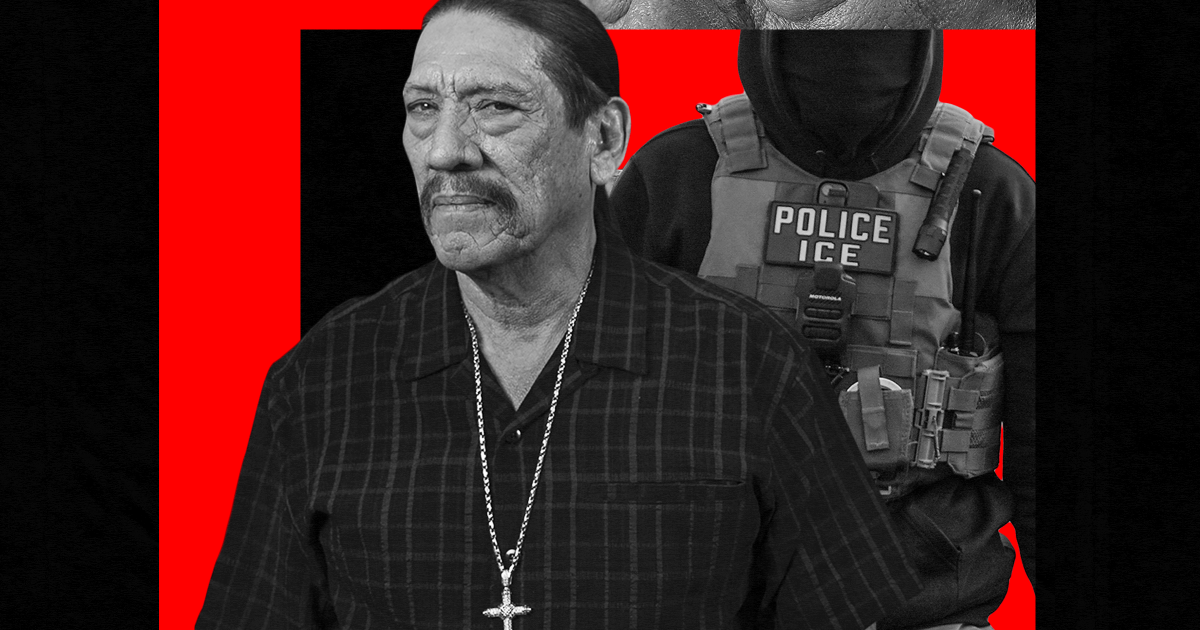
The feature is co-produced by the Daily Wire — the right-wing media company launched in 2015 by conservative political commentator Ben Shapiro — and Bonfire Legend, a production company formed by prolific producer Dallas Sonnier in 2021.
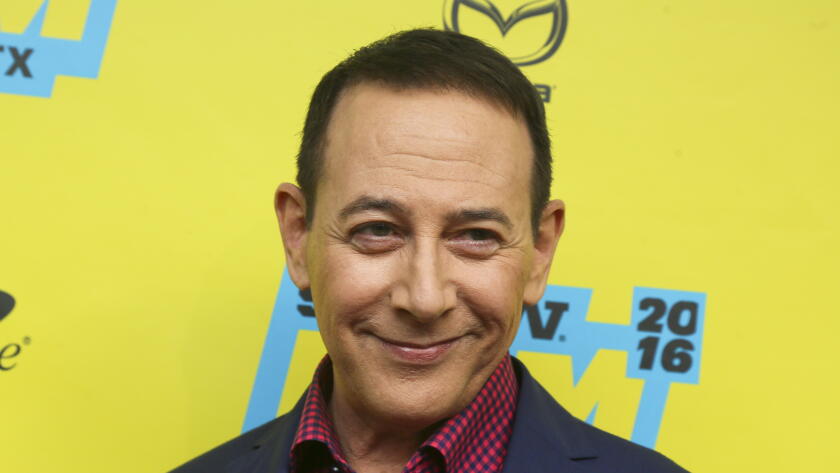
Frequently featured in movies targeting Latino audiences, Trejo built a devoted following within the demographic over the years as one of the more prominent Mexican American actors in Hollywood.
He was criticized online for his involvement in “Pawn Shop” due to its positive portrayal of ICE agents, who have been antagonizing the Latino community at an accelerated clip over the last two years. Trejo was called a “sellout” and a “traitor” across social media in recent days.
“I want to address some social media comments about me. Make no mistake. I am a proud Mexican who has always been and will always be a supporter of my community,” Trejo wrote in an Instagram post. “I am also obviously pro-immigrant. I am not pro ICE. I know where I come from and I know our struggles. I am an actor. My job is to tell a story.”
Trejo’s casting was first announced by the Montana newspaper Bozeman Daily Chronicle after speaking with one of Trejo’s cast members on the film’s set in Livingston, Mont., as well as Livingston locals who had seen and photographed the actor in the city’s downtown area.
Deadline confirmed that Trejo, along with “Reservoir Dogs” actor Harvey Keitel and “E.T. the Extra-Terrestrial” star Henry Thomas, was scheduled to appear in the film after reviewing the call sheet.
The 82-year-old Trejo has previously voiced support for immigrant communities. During the initial onset of the COVID-19 pandemic in spring 2020, he was part of a coalition of Latino actors who pushed forward the #AyudaEnEspanol campaign, which advocated for providing COVID-19 resources kits in Spanish for Latino migrant farmworkers across the U.S.
In an interview with TMZ in fall 2025, the actor, who has appeared in over 400 films and television programs, was asked to give a message to the families that had been affected by ICE raids.
“To the families, keep up hope,” Trejo said. “Help your neighbor and do whatever you can for people in need.”
His recent statement came after “Pawn Shop” made headlines for hitting snags in its production in Livingston following local protests. Residents claimed the movie’s production interrupted local businesses’ operations — and that the crew did not properly communicate with businesses about its schedule.
Production on the film was temporarily paused on Oct. 3 from an order by the Livingston city commission. Filming resumed on Oct. 6 after Livingston officials reinstated permits for the movie.
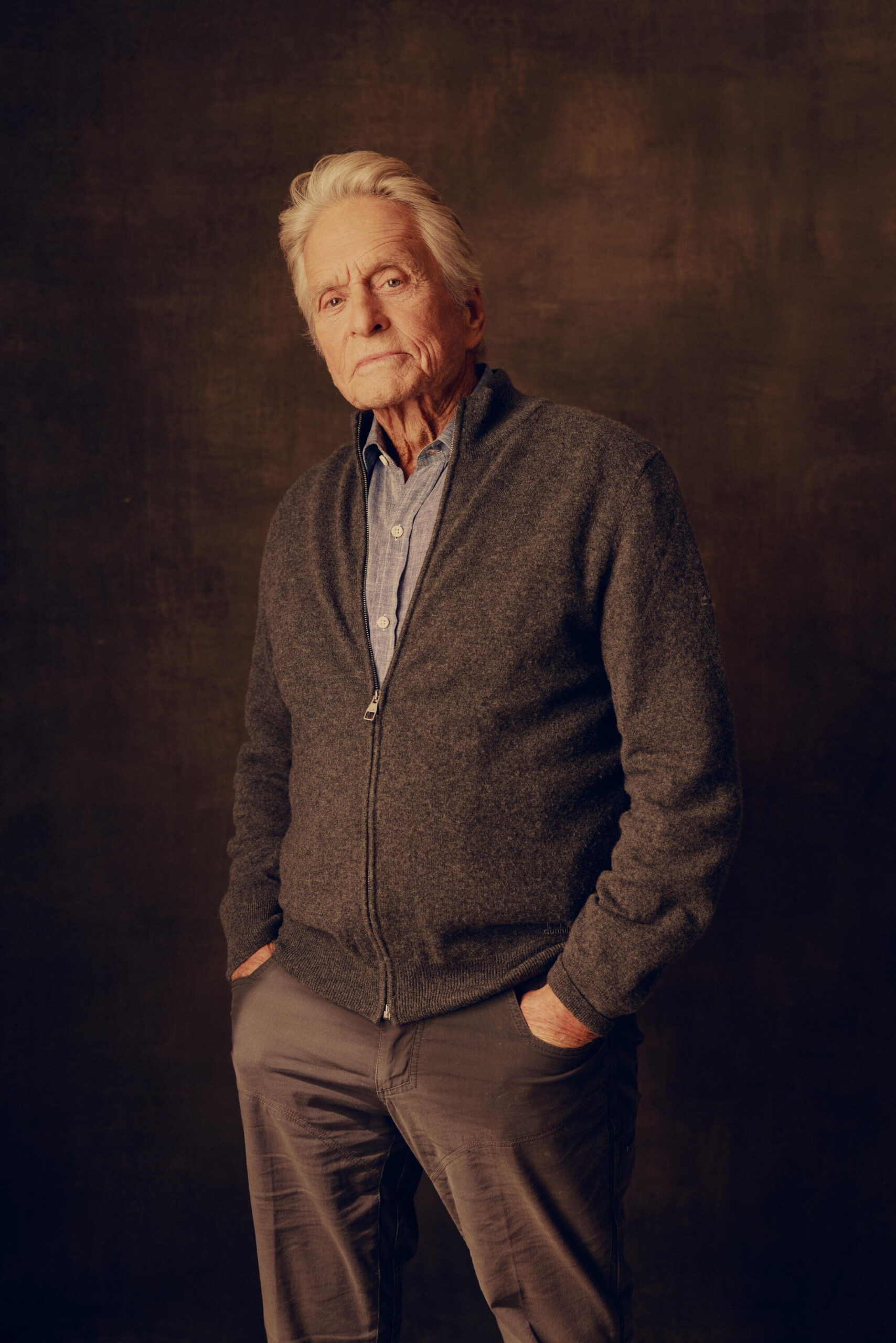
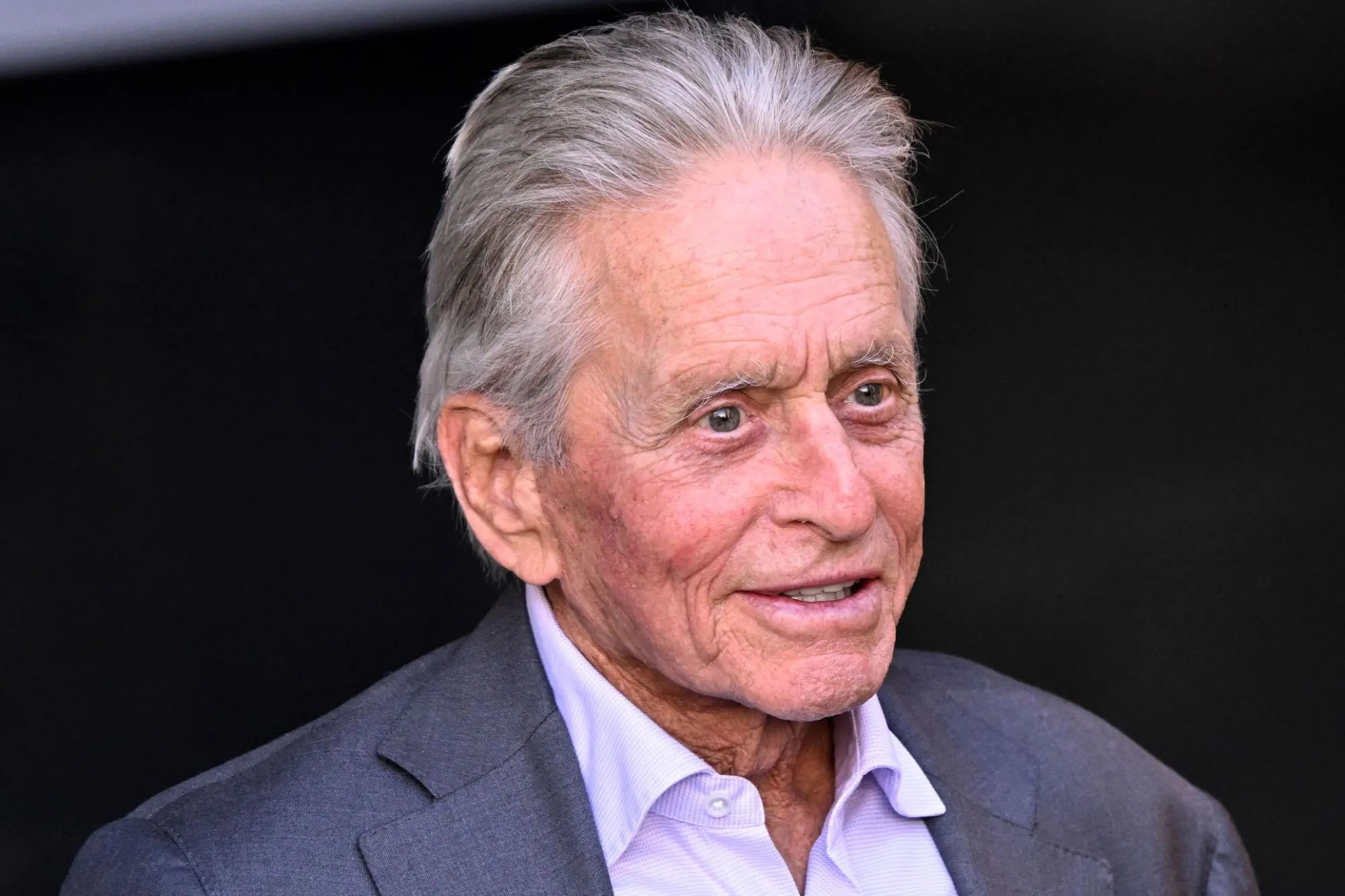
Movie stars are an endangered species. They still exist, sure. Their beautiful faces still fill 50-foot screens, beaming down on us. Yet, there is a shortage of, say, Michael Douglas. A man who, over the span of decades, played an American president, a troubled detective, and a Wall Street tycoon so convincingly that the FBI recruited the actor to do a PSA for investment bankers about the perils of financial fraud.
On the Shelf
One Helluva Ride
By Michael Douglas Grand Central Publishing: 496 pages, $35
If you buy books linked on our site, The Times may earn a commission from Bookshop.org, whose fees support independent bookstores.
The night before I meet Michael Douglas on Zoom, I have a hard time sleeping. I want to be well-rested before I meet the leading man — perhaps one of the last leading men from an era in Hollywood that felt limitless. What do I mean by that? He’ll tell you. His new memoir details his movie-making career as a prolific producer and actor, along with his affair with his “Romancing the Stone” co-star Kathleen Turner, mudslides in Mexico, snorting cocaine with O.J. Simpson, encounters with Princess Diana and screaming matches with Paul Verhoeven that end in blood. In short: the life of a movie star.
“People say to me: Michael Douglas. When I see your name, I don’t know what I’m going to get, but I know it’s going to be good,” Michael Douglas says.
(David Urbanke / For The Times)
Halfway through our conversation, something unanticipated happens: Douglas reveals that he doesn’t quite see himself as a movie star. After gentle pushback, he elaborates. Instead, Douglas sees himself as a chameleon.
“People say to me: Michael Douglas. When I see your name, I don’t know what I’m going to get, but I know it’s going to be good,” he says.
He’s speaking from his home in New York. Behind him is a moody 18th-century Orientalist painting, its scene too indistinct for me to make out. His smiling face — which, like most American moviegoers, I had watched 50 feet tall in the dark — glows with warmth even on my laptop screen. It seems abnormal even to witness him in miniature.
To be clear: Michael Douglas is a movie star, whether or not he wants to cop to it over Zoom. It’s in his blood. His father, Kirk Douglas — born Issur Danielovitch to Russian Jewish immigrant parents — was a legendary actor whose shadow Douglas struggled to escape, as he details in the early chapters of his memoir. He spent his childhood on movie sets, watching his father spar with iconic directors like Stanley Kubrick. Michael Douglas was subject to violent and angry outbursts as well. “Dad’s volatility kept us on edge,” he writes. He felt suffocated by his father’s legacy, often hoping to shake the title of “Kirk Douglas’ son.”
Early in his career, Douglas left his starring role on TV’s “The Streets of San Francisco” after producing his first film, “One Flew Over the Cuckoo’s Nest,” which became a breakout success. On that film, he had to deliver the shattering news to his father that he was too old to play the lead — essentially, firing his father from his dream role. It was a betrayal. Instead, the role went to Jack Nicholson, who would later win an Academy Award for his humanizing portrayal of Randle McMurphy. The film won multiple Academy Awards, launching Douglas’ career as a heavyweight producer and later an actor. Escaping the shadow of being Kirk Douglas’ son has been a lifelong battle for the actor.
(Grand Central Publishing)
Occasionally, inheritance can be a burden. In his own life, Douglas details how he was a distracted father and husband who lost sight of his son, Cameron Douglas. During Cameron’s childhood, Douglas was elsewhere — on location in the Mexican jungle in “Romancing the Stone,” then a disastrous film production in Morocco for “Jewel of the Nile” that included a fatal plane crash that resulted in three crew members’ deaths. To cope with the breakneck pace of show business, Douglas sought refuge in women, cocaine and work.
Cameron’s troubled youth reached a crescendo when he was sentenced to five years in federal prison for drug smuggling, with an additional sentence for drug possession in prison — serving seven years in the end. It was enormously painful for Douglas, who also struggled with addiction, and had sought out treatment to provide an example to his son.
In a late chapter, he recalls confiding in Rob Reiner, who also had a son who struggled with addiction issues. In the memoir, Douglas addresses the killing of Rob and Michelle Reiner in December 2025; their son Nick has been charged with murder. “We both had sons with serious drug issues and we both, at times, had been at the end of our rope,” Douglas writes. “It was a heartbreaking confessional for us, but I know we gave each other some measure of comfort during the hard times.”
Why trudge through movie history, turning over every stone and every wound, in a nearly 500-page memoir? Because, according to Douglas, it’s time.
“Your 80s may be a good time to share,” the actor says, who recently turned 82. “People interested in movies, we give them a certain insight into the process, and maybe they could learn something. For others, it’s just gossip.” His battle with Stage 4 oral cancer brought the contours of his life into stark relief, sharpened by seven weeks of radiation and chemotherapy. His official diagnosis was tongue cancer, but he told the public he had throat cancer, hoping to stall speculation in the press about the possibility of disfigurement — and, more specifically, the prospect of losing his tongue. It was isolating, and Shane Salerno — the memoir’s co-author — stayed by Douglas’ side.
Michael Douglas.
(David Urbanke / For The Times)
As much as Douglas’ memoir, “One Helluva Ride,” is a revealing and delightful account of a life in show business, it is also a love letter to California — a place where Douglas spent much of his adult life, beginning at UC Santa Barbara. The college travel brochure read: campus by the sea. “I remember the cover of it was a guy walking down the beach with a surfboard, two girls in two-piece bathing suits. In 1963, I never saw a two-piece bathing suit back east.” He was sold.
The California years made an impression. Douglas is still, at heart, a hippie. Raised in stiff East Coast prep culture, he was reborn in the California sunshine. “I transferred into becoming a hippie, influenced by the Maharishi Mahesh Yogi, hallucinatory drugs, and the world that existed in the early ‘60s in San Francisco.”
Strangely, Douglas argued that some of the utopic sentiments of the 1960s are returning. “People are beginning to look back at that time, and realize how important family is — cooperation, sharing,” he says. “Socialism is not a four-letter word or something that’s terrible. There are other things to pursue in life other than just making money.”
“Your 80s may be a good time to share,” Michael Douglas says.
(David Urbanke / For The Times)
Like the characters he portrayed, Douglas is far from perfect. He admits that he struggled — in his first marriage, and later as a father. After marrying Diandra Luker, Douglas was unfaithful, having relationships with co-stars, most notably Turner on the set of “Romancing the Stone” in the Mexican jungle. The two denied the relationship for years. Now, with Turner’s blessing, Douglas writes about their involvement in his memoir.
Before Turner, there was Diane Thomas, the film’s waitress-turned-screenwriter, with whom Douglas had an affair. Thomas’ life was tragically cut short in a car accident involving a Porsche that Douglas had gifted her.
Then there were the rumors. On the set of “Basic Instinct,” some speculated that Douglas and Sharon Stone were having an affair. They weren’t, he explains. Douglas was instead locked in a power struggle with director Verhoeven, who, during one particularly heated argument with the actor, suffered a burst artery in his nose, turning the confrontation into a bloody scene. Douglas, meanwhile, was involved with another co-star, Jeanne Tripplehorn. “They were so focused on a possible relationship between Sharon and me, they missed the real relationship happening between me and Jeanne,” he writes.
When he and his current wife, actor Catherine Zeta-Jones, made it official, Douglas went to the other room to make breakup calls to five other women. (By this point in the memoir, Douglas has enough goodwill to pass this off as charming.) “From the moment I met Catherine, and we formed our family, I was a new man,” he writes.
The memoir enshrines Douglas’ petty show-business grievances too: a repaired grudge against David Letterman, a TV co-star who stole his longtime girlfriend, and a bouquet sent to Julia Roberts to apologize for his drunken buffoonery. In Douglas’ words: “There’s two or three people that I share my hostilities with.” He clashed with Brian De Palma, who was originally attached to direct “Fatal Attraction” and tried to have Douglas fired. De Palma underestimated Douglas and was replaced by Adrian Lyne. Years later, De Palma apologized, but Douglas rejected it.
It is impossible to tell the story of Douglas’ career without the women he encountered. The films he championed helped establish a new type of female lead — in all their powerful, morally ambiguous and deranged glory. “An actress was not allowed to play a villain,” he says. In “One Flew Over the Cuckoo’s Nest,” the actor struggled to cast Nurse Ratched. “A whole number of leading actresses turned that part down until we found Louise Fletcher, who went on to win an Oscar.”
For Glenn Close, Sharon Stone and Kathleen Turner, acting opposite Michael Douglas was transformative. After her role as a murderous, sex-crazed bisexual in “Basic Instinct,” Stone became one of the biggest stars of the 1990s and earned an Oscar nomination for Martin Scorsese’s “Casino.” Close‘s portrayal of the mistress-turned-lovesick psychopath in “Fatal Attraction” earned the actor her first lead Oscar nomination after three supporting nods. Turner went from being primarily known as the sexy femme fatale of “Body Heat” to a Golden Globe-winning star with box-office clout after her collaboration with Douglas. Sure, she sued him, too, but their friendship survived.
However, it wasn’t until his role as Gordon Gekko, the fast-talking, impulsive tycoon in 1987’s “Wall Street,” that Douglas was in full force, winning an Academy Award for lead actor. Directed by Vietnam veteran Oliver Stone, Douglas delivered an unforgettable performance about the dangers of unchecked capitalism and greed. At an early New York screening, Douglas recalls Wall Street traders being stunned by the film’s stinging accuracy. “A lot of the Wall Street characters were there, very cocky at the time; they all were shocked because we caught them.”
To his surprise, Wall Street financiers approached him on the street to praise Gekko — anointing him as their hero. “I said, ‘I was the villain.’ ‘No, no, no,’” he said. “So it showed me a lot.”
It speaks to Douglas’ gifts as an actor that he could transcend the caricature of white male entitlement he portrayed with such precision. In “Falling Down,” filmed during the 1992 uprising triggered by the Rodney King verdict, Douglas plays an unemployed defense worker, a man so consumed by disillusionment and blinded by his own sense of victimhood that he cannot recognize the harm he inflicts on others. The character would prove eerily prescient, anticipating an archetype that would take shape in the decades to come. An entire generation mistaking the actor’s brilliance as an invitation.
Perhaps that is the strange thing about being a movie star: Audiences decide who you are, and what you mean to them. For a chameleon, an actor who spent a lifetime resisting other people’s definitions of him, that might be the ultimate paradox.
As our conversation winds down, I remind him of his immense contributions to filmmaking, through producing and acting. It seems redundant, but I say it anyway. His response is polite.
“Quirky,” he said. “‘Falling Down,’ ‘The War of the Roses’ — I love those quirky films.”
“I’m proud of my movies,” he says. “I’m very proud of my movies.”
Connors is a culture journalist in L.A. She covers books, food, entertainment and offbeat Los Angeles. She’s currently at work on a book of essays about tourism in all its forms.
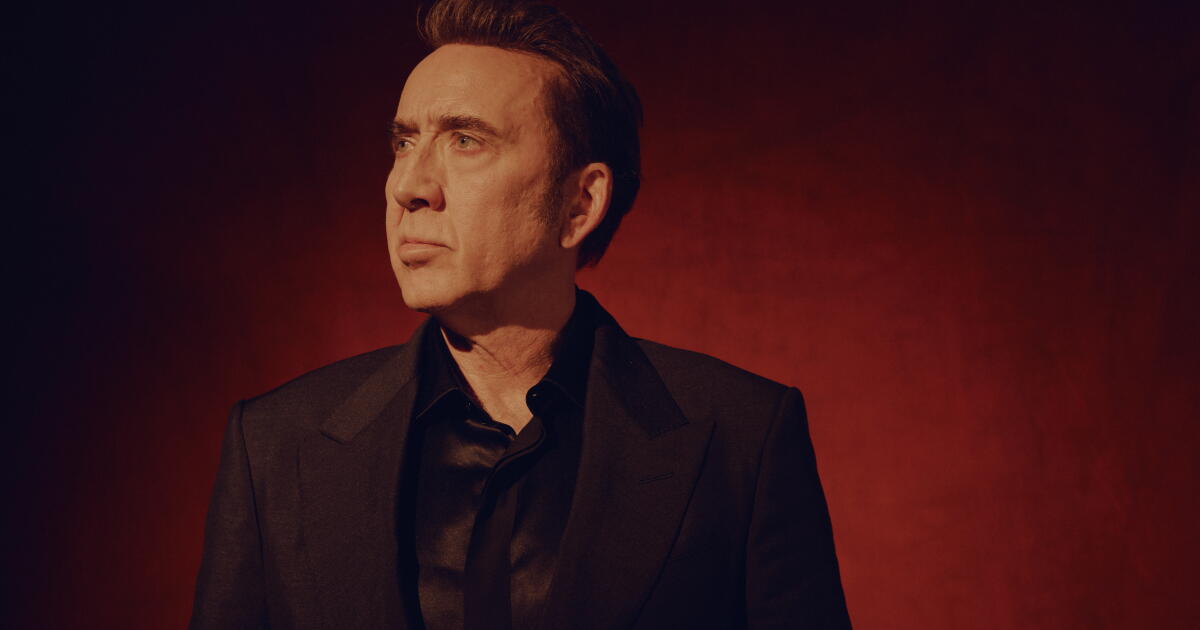
Nicolas Cage is making it clear — he’s not an “AI-friendly actor.”
The 62-year-old actor spoke out against a tech giant during an appearance at New York Comic Con on Saturday. He alleged that he was asked to sign an artificial intelligence waiver for the television series “Spider Noir.”
“Amazon is a very AI-friendly company, to the tune of $50 billion invested in OpenAI,” Cage said on stage.
“I am not an AI-friendly actor, so it’s like, connect those dots! I’m not a member of their club. I didn’t sign the waiver to let him use AI on ‘Spider-Noir.’ I’m probably not going to be working with that studio again, but that’s OK.”
Amazon did not immediately respond to a request for comment.
“Spider-Noir,” which premiered in May, is a “Spider-Man” project that put a 1930s crime-thriller spin on the web-slinging superhero. The show was produced by both Sony Pictures Television and Amazon MGM Studios.
Cage’s part as “The Spider” marked his first leading role in a series. The Oscar-winning actor, whose home in Malibu was recently affected by a sinkhole, is known best for his roles in movies like “National Treasure,” “Moonstruck” and “The Rock.”
Upon its release, “Spider-Noir” received much praise from fans and critics alike. In its first six weeks of streaming, the series earned 2.6 billion minutes watched, according to Nielsen. It was also Amazon’s most-nominated show at this year’s Emmys, with 11 nominations and five wins.
Last month, Amazon announced that the show was canceled after only one season, leaving much of the industry in shock.
During his Comic Con panel, Cage also said he plans to keep working in TV. He announced that he will be joining the HBO series “True Detective.”
“My agent’s out there somewhere listening,” Cage said. “That’s OK that I’m the first to announce that, right?”
Twenty-one years into its run, “Dancing With the Stars” is one of the hottest and buzziest shows on TV right now.
ABC’s competition series kicked off its 35th season in September, scoring its biggest premiere ratings since 2020. Fueling a lot of that viewership power are Gen Z and millennial viewers, attracted by a cast loaded with social media influencers, reality TV stars and nostalgic favorites. And a certain 55-year-old late-night sidekick has emerged as a social media hit with his lovable underdog journey: Guillermo Rodriguez.
Best known as the former parking lot security guard-turned-sidekick on “Jimmy Kimmel Live!,” who was discovered after he was caught sleeping in the car of the show’s announcer, Rodriguez regularly steals the spotlight on the late-night talk show with his humorous, humble interactions in comedy bits and as a red-carpet correspondent. Now, he’s expanding his profile as a celebrity contestant on “Dancing With the Stars,” paired with dance pro Witney Carson.
Rodriguez says he’s been asked to join the show before, but he passed because of a busy schedule and his insecurity as a dancer — “I’m not a dancer,” he tells me. “I dance when we have Thanksgiving, Christmas, but it’s for two seconds, four seconds. Not a minute and a half!”
He praises Carson, who is competing while pregnant, for her patience and encouragement in his journey.
“Oh, my God, Witney is a great partner,” he says. “She’s telling me, ‘Listen, just follow me. Follow the steps. Remember, do not look at the floor; look up. And just be yourself. If I want to ask you to be a diva, you be a diva. I don’t want you to laugh.’ She’s been fantastic. She’s helping me a lot. She tells me, ‘The audience know that you’re not a professional dancer, and that you’re trying hard and everything. Just enjoy because this only happens once in a lifetime.’” Read more from my conversation with Rodriguez in Guest Spot.
You’re reading the Screen Gab newsletter
Sign up to get recommendations for the TV shows and streaming movies you can’t miss, plus exclusive interviews with the talent behind your favorite titles, in your inbox every Friday.
By continuing, you agree to our Terms of Service, which include arbitration and a class action waiver. You agree that we and our third-party vendors may collect and use your information, including through cookies, pixels and similar technologies, for the purposes set forth in our Privacy Policy such as personalizing your experience and ads.
Also in this week’s Screen Gab, our writers recommend a miniseries about a mysterious sea creature terrorizing a small coastal town and a pair of psychological horror dramas exploring female rage. And just a quick PSA — not funded by taxpayers, I promise — before I wrap up: “Felicity” is now streaming on Netflix. If you want to get (re)acquainted with collegiate angst, the art of making “hey” pack the same power as a Keats poem or experience Keri Russell’s controversial haircut moment, give it a whirl. As a superfan who returned to it often when it was on Hulu, it’s my duty to warn you to proceed with caution when it comes to Season 4. — Yvonne Villarreal.
Turn on
Recommendations from the film and TV experts at The Times
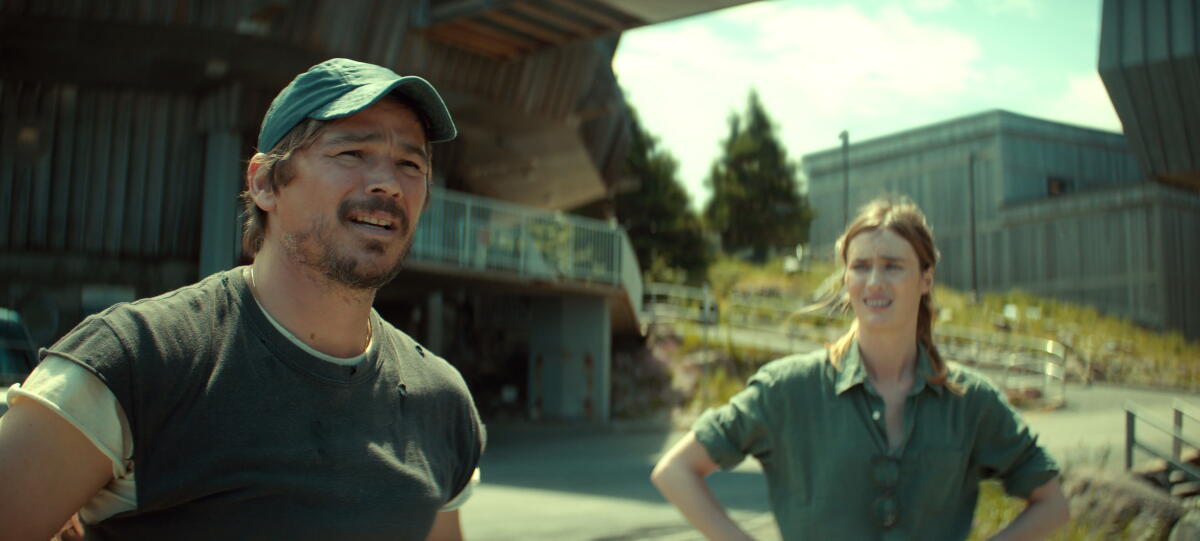
Josh Hartnett as Calvin and Mackenzie Davis as Fonda in Netflix’s “Below.”
(Netflix)
“Below” (Netflix)
A first-rate sea monster miniseries, set in a small fishing village in Newfoundland, where the natives add an “s” to some verbs (“anyway you slices it,” “I gets it”), making them sound a little like Popeye. Creator Jesse McKeown drops enough “Jaws” references to let you know he’s aware of the similarities, but “Below,” which goes some crazy places in its latter half, is very much its own aquatic whirligig. Josh Hartnett plays fisherman Calvin Penney, attempting to harvest blue ice for vodka in the face of declining stocks, but finding his haul smelling strangely of ammonia. Mackenzie Davis is marine researcher Fonda Howander (year’s best name), who has an idea about that. (Global warming, your real-world villain.) The series, in which I detect a quality of Canadian naturalism, uses its special effects budget sparingly, and I would say, wisely; when something extraordinary happens, it doubly registers. But the series’ strength is in its evocative background and nicely drawn characters, going about their messy human business, as the town debates whether to let the government transplant them to somewhere less remote while Calvin tries to get his adult kids on his page. — Robert Lloyd
Summer H. Howell as the titular teenager in Prime Video’s “Carrie.”
(Robert Falconer / Prime Video)
“Carrie” (Prime Video) and “Monster: The Lizzie Borden Story” (Netflix)
Killer women usher in the Halloween season with these two new horror series. The TV adaptation of Stephen King’s novel loosely follows the 1976 big-screen classic starring Sissy Spacek, but reimagines the bloody prom queen Carrie (Summer H. Howell) in today’s world, replete with cyberbullies and smartphones. The limited series from horror master Mike Flanagan (“The House on Haunted Hill,” “Midnight Mass”) pits the terror of the modern world — school shootings, conspiracy-theory fanaticism — against a naive girl’s deadly telekinetic powers for a smart and powerful reimagining of the chilling classic. “The Lizzie Borden Story” is the fourth season of the “Monster” anthology series from Ryan Murphy and Ian Brennan, and it stars Ella Beatty as the titular character. With the help of an enviable cast (Sarah Paulson, Vicky Krieps), it dramatizes the events before, during and after the 1892 ax murders of Borden’s father and stepmother, and jumps timelines to connect Borden’s story with that of another violent female killer who shocked the country a century later. Does it take historical liberties? Absolutely, and it makes for a thrilling new take on a notorious chapter in American crime. — Lorraine Ali
Guest spot
A weekly chat with actors, writers, directors and more about what they’re working on — and what they’re watching
Witney Carson and Guillermo Rodriguez perform during Mariah Carey night on “Dancing With the Stars.”
(Eric McCandless / Disney)
When Guillermo Rodriguez signed up to compete on “Dancing With the Stars,” he came in with no dance background and the least nimble body, but he had experience in how to win over fans as the scene-stealing sidekick on “Jimmy Kimmel Live!” Now, Rodriguez has danced the cha-cha, paso doble, foxtrot and samba before millions of people — captivating audiences with assisted knee walks, floor drops and a bare-chested message for the world. He may be the lowest-scoring star on the leaderboard each week, but the 55-year-old knows how to hold an audience and, with professional partner Witney Carson, has managed to stay alive in the competition. After channeling his inner diva for Mariah Carey night on the show (cheekily performing to “Obsessed”) and making it past this week’s elimination round, Rodriguez spoke to us about how he’s feeling at this stage in the competition. — Y.V.
How is the diva life treating you?
Oh, my God, Yvonne, it’s hard work. Being a diva is not easy.
What body part is hurting you today?
You know what — my legs. My legs and my back hurt bad. If you’re in the 20s and 30s, it’s OK, but when you’re like in the 50s, it’s hard. In the 20s and 30s, you have all the energy and also your body is young.
When you get home from rehearsals or after performance night, what’s your routine? Are you doing a bath soak? Are you elevating your feet?
I actually I get in the pool, I get in the hot tub. But someone was telling me I gotta get a massage and I gotta get a cold plunge because that’s gonna help the body. Also, you know what is helping me. I haven’t [had a] drink in two months, and I feel good. I have a shot, I have a drink, so it can relax me and everything. But with “Dancing,” I cannot have a drink because I don’t wanna forget the steps.
You’ve said that you’re doing the show because you want to dance with your wife. How’s that going? Have you been showing her any moves at home?
I have a little bit. And she said, “Well, wait, this is it?” I go, “No, this is only the beginning [steps]. I still got to show [you] more. She goes, “Oh, now I understand why you’re so tired.” And I go, “Yeah, we have to rehearse and everything, and you gotta smile at the camera, you gotta watch your steps, you gotta move your hips and everything.” And I tell her, “When I move to the left, I hear a noise like [mimics creaking noises], ‘Oh, oh, my body is clicking!’ I move left to the left — my knee is making noise!’” But I’m having a lot of fun. It’s great.
How has this experienced changed you so far? How do you feel when you’re out there performing?
It changed me in that I get nervous and it’s hard, but when I go over there [onstage], I like it. I enjoy. You get like a minute and 12 or 40 [seconds], depending on the music. But I’m happy. I get to push myself.
I get out there and [I think], I gotta give my best. And I feel so good because a lot of the audience, they like it a lot. They go crazy and everything, and that makes me feel so good. You know what — I might not be the best dancer, but I’m trying my best, and the people see it. But who knows what’s gonna happen. I might go home next week.
Witney Carson and Guillermo Rodriguez perform the paso doble on “Dancing With the Stars.”
(Christopher Willard / Disney)
We’ve seen you in the bottom a few times. This week, you were there again. What was going through your head this week as you waited for the names to be called?
I feel very nervous. I said, “Oh, my God, this is it. We going home.” I told Witney [before the show], “Witney, I think this is it. I think we’re going home.” She said, “Well, listen, if we’re going home, we did a good job. You told me that you wanna pass the first week, and you already passed the first week, so you don’t have nothing else to lose.” But I feel very nervous. And then when they say, “The couple going home is Ciara [Miller] and Brandon [Armstrong],” I was like, “Oh, my God.” It was hard. And the dance was hard too. Samba is a fast dance. We didn’t have too much time to rehearse because we were going to New York back and forth.
The fandom for “Dancing With the Stars” goes hard. What has surprised you about the fan response?
A lot of the fans are voting for us. I want to say thank you to all the fans. They‘re keeping us alive. They’re voting a lot. They’re making it happen and everything. I was so surprised. [This week,] Carrie Ann [Inaba] give us bad comments, and the audience started booing. I was like, “Wow, this is so amazing! The audience is on our side.” They want us to keep going. And I told Witney, “Witney, we gotta keep going.” We dance for the people. If we make it past next week, it will be great. If we go home, we did it and that’s it.
On the other side of that, there can be some negative talk too, some frustrated fans who think other contestants should still be there. How do you deal with that? Or when the beefs get stirred up on social media? Are you paying attention to that?
I don’t know. The first week I was listening to the comments and everything, but now I don’t listen. I just go have fun. Everybody has different opinions. You cannot please everybody. So I just go have fun, enjoy, and that’s it. If they like it, [or] they don’t like it. Some people say, “Oh, he’s too old. He’s out of shape.” I say, “You know what? Come and dance yourself. It’s not easy.” Every week I try to do better and better.
How do you think Jimmy Kimmel would do in the competition?
Oh — you want me to be honest? He doesn’t dance. And he told me that. He told me, “You know me, that I’m not good.” And I go, “Yeah, I know you’re not good. You’re like a rock.” I told him, “Jimmy. I think when it’s time and they say, ‘Dancing the cha-cha-cha, here’s Jimmy Kimmel,’” I said, “I’m gonna come right away before you start and I’m gonna spray WD-40 so you can move good.”
Is there a song you really want to dance to if you had the opportunity to pick it?
Oh, I would like to dance to one that goes [begins singing “You’re the Best” by Joe “Bean” Esposito, which is featured in the “Karate Kid” soundtrack]: “You’re the best. You’re the best around. No one’s ever gonna keep you down. You’re the best.” I’m like, oh, my God, I would love to dance that one.
I know you’re super busy with all the rehearsals, but is there a show that you are enjoying right now,one that helps you unwind?
Oh yeah, there’s a show that I’m watching right now. It’s called “The Studio” with Seth Rogen. I cannot wait for the new season. I love the show. Seth Rogen is doing a great job. Bryan Cranston too, and Ike Barinholtz. Oh, my God, everyone in the cast is so funny.
We have to get you on that show, Guillermo. You can play yourself.
Yeah, I want to. I want to be in that show. Hopefully, it happens soon.
Hayden Panettiere‘s former fiancé, Wladimir Klitschko, was granted temporary guardianship of her estate on Friday, following the actor’s sudden death in August.
Klitschko appeared in virtual court on Thursday alongside their 11-year-old daughter Kaya, according to People.
Kaya is the sole heir of the estate of the “Heroes” star, who on Aug. 16 was found unresponsive in a Greenville, S.C., residence. The Greenville County Coroner’s Office ruled the death an accidental overdose involving several drugs, including fentanyl.
Klitschko filed a petition in a Los Angeles County court on Sept. 24, requesting that he be allowed to act as Kaya’s representative. The Ukrainian boxer and Olympic gold medalist has had full custody of their daughter since 2018.
The filing cites items that were seized from her home in a federal investigation with no assurance that they will be returned, as well as unauthorized people who gained access to her Los Angeles residence.
“Without an immediate appointment for these purposes, there is a high probability that property belonging to Hayden’s Estate may be lost, damaged or dissipated before a duly appointed personal representative can be in place to protect it,” the filing stated.
According to the petition, Panettiere and Klitschko hired security before her death to protect her home because an unnamed person gained access inside. Her ex-fiancé feared that the same person would continue to “misappropriate” items belonging to the actor’s estate.
A day before their Oct. 8 court date, Klitschko submitted a supplemental claim to the earlier petition where he believed someone from outside of Panettiere’s family was selling some of her possessions, including jewelry, to a pawn shop, per ABC News.
In addition to seeking guardianship, Klitschko also asked the courts to grant him the ability to “request and authorize law enforcement investigation into the recovery of Hayden’s property believed to have been misappropriated.”
Panettiere and Klitschko had an on-and-off relationship between 2009 and 2018 and were briefly engaged in 2013. In 2014, the “Nashville” and “Ice Princess” star welcomed their daughter, but relinquished full custody to Klitschko in 2018 due to her struggles with postpartum depression and substance abuse.
“It was the hardest thing I could do,” she said during a 2022 appearance on “Red Table Talk.” “But the best thing for my daughter was to make sure she was OK, take care of myself and make sure I could be a good mom to her. And sometimes that means letting go.”
Klitschko has always spoken highly of Panettiere, lamenting his loss on Instagram, where he shared a picture of the two with Kaya (with an orange dot covering her face) on Aug. 18. In his post, he stated that the family was going through “profound shock and grief.” He also acknowledged his ex-fiancé’s experience navigating demands of the entertainment industry.
“Nothing will erase the times we shared or the place she had in our lives,” he wrote in the Instagram caption. “To our daughter Kaya, I will always speak of her mother with respect and make sure she remembers the person she was.”
The next hearing is scheduled for Dec. 7, when permanent guardianship of the estate will be decided; however Kaya does not need to be present.
Times staff writer Alexandra Del Rosario contributed to this report.
The one consensus about Method acting is that it’s controversial. Other than that, everything’s up for debate: What is Method acting, exactly? Do actors and audiences love it or hate it? And, perhaps most importantly, who can afford to practice the technique?
Method acting is a technique in which an actor embodies a character absolutely, usually both on- and off-camera, for months at a time (and sometimes, as in the curious case of Austin Butler’s Elvis accent, beyond the project itself).
Some actors, like those in the list below — including Daniel Day-Lewis, Christian Bale and Robert De Niro — swear by it. But others — like Brian Cox, Toni Collette and Robert Pattinson — eschew the practice. (Collette called it “total bulls—” and “utter wankery,” and Jennifer Lawrence said that working with a Method actor would make her nervous.)
Female actors — like Charlize Theron, Kristen Stewart, Natalie Portman, Anya Taylor-Joy and Ellen Burstyn — have pointed out that it’s a luxury they can’t afford. (“I don’t think that children or partners would be very understanding of, you know, me making everyone call me ‘Jackie Kennedy’ all the time,” Portman said about portraying the first lady.) And Black actors — like Brian Tyree Henry and Omari Hardwick — have said they wouldn’t be able to do it safely. (“I’ve never gone full Method,” Hardwick said. “I don’t want to be pulled over while ‘driving while Method.’ … I’ll get in trouble for that. That’s scarier.”)
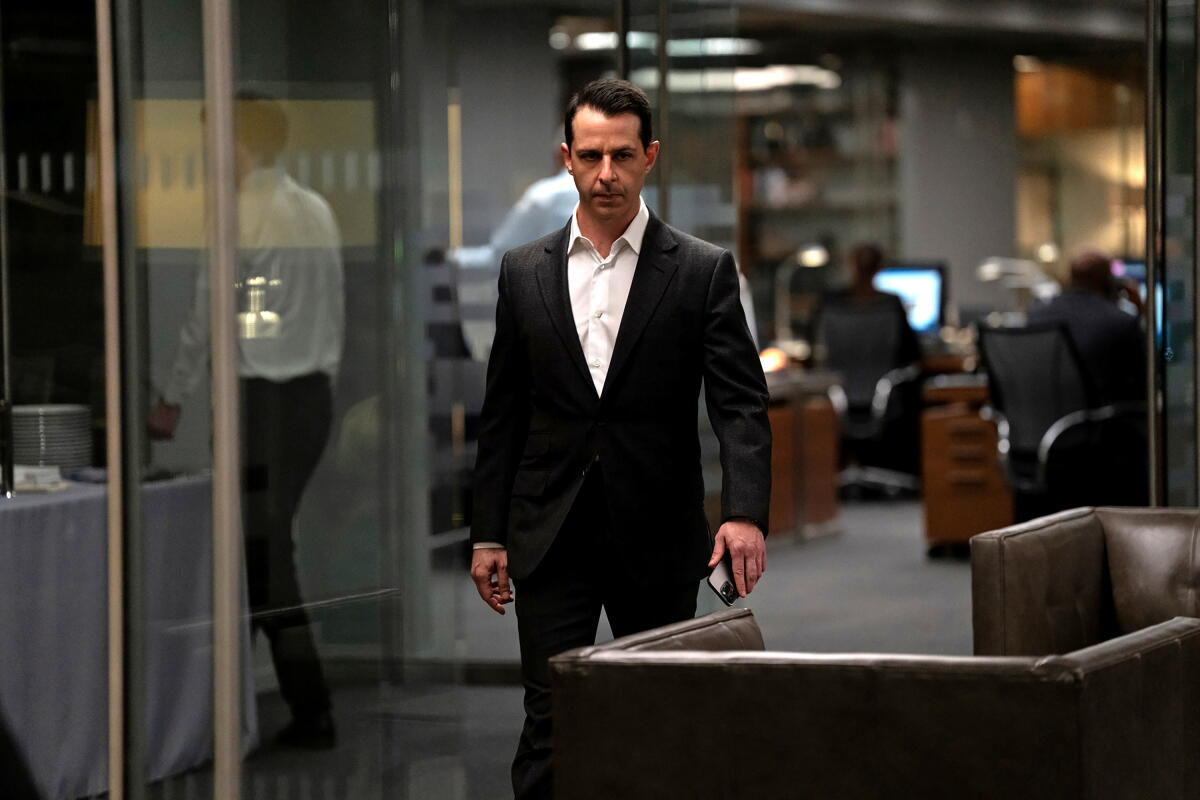
Jeremy Strong — who plays Mark Zuckerberg in “The Social Reckoning” — recently defended his commitment to Method acting. Here are some of the most extreme Method acting performances of all time.
Jeremy Strong as Kendall Roy in “Succession.”
(Macall Polay / HBO)
Jeremy Strong (again)
Strong is known for his unrelenting adherence to Method acting, especially on the set of “Succession.” (“The result that Jeremy gets is always pretty tremendous,” his TV dad Cox told the New Yorker in 2021. “I just worry about what he does to himself. I worry about the crises he puts himself through in order to prepare. … It’s a particularly American disease, I think, this inability to separate yourself off while you’re doing the job.”)
This tendency held true on the set of “The Social Reckoning” too. “He showed up walking like Mark, talking like Mark,” director Aaron Sorkin told Entertainment Weekly. “I heard crew members on set call him Mark. I never heard him use his own voice until after I called ‘cut’ on his last shot.”
“I’ll be honest, I think this isn’t just the way he likes to do it,” Sorkin added. “I think it’s the only way he knows how to do it.”
Andrew Garfield as Father Sebastião Rodrigues in “Silence.”
(Kerry Brown / Paramount Pictures)
Andrew Garfield
Then there are those who argue that the Method is misunderstood — first by actors, and subsequently by public perception.
“I’m kind of bothered by this idea that ‘Method acting is f— bulls—,’” Andrew Garfield said on the “WTF With Marc Maron” podcast in 2022. “No, I don’t think you know what Method acting is if you’re calling it bulls—, or you just worked with someone who claims to be a Method actor who isn’t actually acting the Method at all. It’s also very private. I don’t want people to see the f— pipes of my toilet. I don’t want them to see how I’m making the sausage.”
Garfield employed the Method in Martin Scorsese’s 2016 historical drama “Silence,” in which he played a 17th-century Portuguese Jesuit missionary who goes to Japan. He studied Catholicism with Jesuit priest James Martin, partook in the 31-day Ignatian Spiritual Exercises and denied himself food and sex.
Al Pacino as Tony Montana in “Scarface.”
(Universal Studios / Universal Pictures)
Al Pacino
On that same podcast, Garfield praised two actors known for applying the Method well and seemingly with respect — to the craft and those around them: Al Pacino, especially in “Dog Day Afternoon,” and Robert De Niro, most notably in “The Mission.”
In “Dog Day Afternoon,” Pacino played Sonny Wortzik (based on John Wojtowicz), a first-time crook whose attempt to rob First Brooklyn Savings Bank goes awry and devolves into a hostage situation. Pacino backed out of the role three times before committing (though he later won a BAFTA Award for the performance).
Producer Martin Bregman attributed this hesitancy to Pacino’s Method acting, saying this might have been a world the actor didn’t want to explore, as “no major star had ever played a gay.”
“Scarface” drug kingpin Tony Montana is also considered the pinnacle of Pacino’s Method acting. “I’ve never been that committed to a role,” he said, also on “WTF With Marc Maron.” “I mean, I was there. I said, ‘I am this guy.’”
Robert De Niro as Travis Bickle in “Taxi Driver.”
(Columbia Pictures)
Robert De Niro
In “The Mission,” De Niro stars as Captain Rodrigo Mendoza, a mercenary, slave trader and guest of the Spanish governor of 18th-century Paraguay. Jeremy Irons co-stars as Jesuit priest Father Gabriel, who challenges Mendoza to undergo penance.
De Niro channeled real-life tension with Irons — who he didn’t want cast for the role — into on-screen animosity between the two characters.
And then there’s “Taxi Driver” — for which he got a real New York City cab license and drove 15 hours a day for a month — and “Raging Bull” — when he trained with the boxer he portrays, Jake LaMotta, for over 1,000 rounds — making him a quintessential Method actor.
Lady Gaga as Patrizia Reggiani in “House of Gucci.”
(Metro Goldwyn Mayer)
Lady Gaga
There are also counterexamples of the limitations Method acting often places on women and actors of color. (Theron told The Times in 2020 that, “I can’t do the Method thing. I did it once, for ‘Devil’s Advocate,’ and I was just exhausted. It was really hard to go to those deep, dark places because I was so tired.”)
Lady Gaga, though, lived as Italian socialite Patrizia Reggiani for a year and a half while working on “House of Gucci.” She spoke with a thick Italian accent for nine months, both on- and off-camera.
“I was either in my hotel room, living and speaking as Reggiani, or I was on set, living and speaking as her,” Gaga told British Vogue. “I remember I went out into Italy one day with a hat on to take a walk. I hadn’t taken a walk in about two months and I panicked. I thought I was on a movie set.”
Jared Leto as the Joker in “Suicide Squad.”
(Warner Bros. Pictures)
Jared Leto
Jared Leto also starred in “House of Gucci,” as Paolo Gucci, who aspires to be a designer, despite his apparent lack of talent.
“He works in a very similar fashion,” director Ridley Scott told Vulture. “Once he goes in, it’s like he’s immersed, and he doesn’t come out and breathe for air until he’s finished.”
Leto is infamous for his extreme and controversial approach to the Method. As the Joker in “Suicide Squad,” he sent bizarre “gifts” — a live rat, a dead pig, bullets, anal beads and used condoms — to co-stars Will Smith and Margot Robbie to create a dynamic of “surprise and spontaneity.”
“Leto’s Joker is the latest evidence that the prestige of method acting has dimmed,” essayist Angelica Jade Bastién wrote in the Atlantic, “thanks to the technique’s overuse by those seeking award-season glory or a reputation boost, as well as its history of being shaped by destructive ideas of masculinity.”
Joaquin Phoenix as the Joker in “Joker.”
(Niko Tavernise / Warner Bros. Pictures)
Joaquin Phoenix
The Joker seems to elicit intense psychological commitment like moths to a ghastly green flame. Joaquin Phoenix didn’t quite go Method to play him in “Joker” and “Joker: Folie à Deux,” but he did shed 52 pounds for the role.
“And, as it turns out, that then affects your psychology,” Phoenix told the Daily Beast. “You start to go mad when you lose that amount of weight in that amount of time.” (Heath Ledger walked that same fine line for “The Dark Knight.”)
For his role in “The Master,” as Freddie Quell, a World War II Navy veteran struggling to adjust to a postwar society, Phoenix forced himself to talk out of one side of his mouth by asking the dentistto fasten metal brackets to his teeth.
Jamie Foxx as Ray Charles in “Ray.”
(Nicola Goode / Universal Pictures)
Jamie Foxx
Taylor Hackford, the director of “Ray” — a biopic about Ray Charles — asked Jamie Foxx, who starred as the blind soul musician, to have his eyes glued shut. This was not Foxx’s idea (perhaps a key tenet of the Method), but he agreed to it.
“Imagine having your eyes glued shut for 14 hours a day,” Foxx told the New York Times. “That’s your jail sentence.” For the first two weeks of filming, the actor suffered panic attacks, until he eventually got used to the claustrophobic sensation.
Years later, on the set of “Django Unchained,” Foxx and co-star Leonardo DiCaprio discussed embracing Method acting to help both of them better handle the disturbing material. (DiCaprio plays the ruthless owner of a plantation where Foxx’s character’s wife is enslaved.)
Leonardo DiCaprio as Hugh Glass in “The Revenant.”
(Kimberley French / 20th Century Fox)
Leonardo DiCaprio
The film for which DiCaprio finally won an Oscar (after four previous lead actor nominations, plus one for supporting actor) was also his most Method approach. As fur trapper Hugh Glass in “The Revenant,” DiCaprio crawled inside of a prop horse carcass, ate raw bison liver (despite being a vegetarian) and endured freezing temperatures, his icy breath fogging up the camera lens.
Like Phoenix, DiCaprio might not be a traditional Method actor, but he comes quite close. In 2016, after his “Revenant” nom, director Agnieszka Holland — who directed DiCaprio in “Total Eclipse,” before he filmed “Romeo + Juliet” — reflected on this.
She said he has never been a classic American Method actor, instead relying on personal experience. “But he’s doing some trick which is pretty mysterious to everyone watching — frankly even for the director,” she told the BBC. “Look at him on screen and, for the moment of the shot, he really becomes the character.”
Montgomery Clift as George Eastman and Elizabeth Taylor as Angela Vickers in “A Place in the Sun.”
(Getty Images)
Montgomery Clift
And then there are the true, original Hollywood Method actors. Montgomery Clift, Marlon Brando and James Dean are considered to have christened the technique in the 1950s. Even Clift, though, expressed reservations about the term when asked about it — “Method acting,” as it turns out, is a contentious phrase.
Method acting began with Russian/Soviet theatermaker Konstantin Stanislavski in the 1930s. From there, acting coach and actor Lee Strasberg — who co-founded the Group Theater — largely coined “the Method” in America. Group members Stella Adler and Sanford Meisner eventually left and rejected parts of Strasberg’s technique. All three of them approached the Method slightly differently, and became prominent acting teachers.
Clift was among the first actors invited to study in the Actors Studio with Strasberg and Elia Kazan. His role as George Eastman, the poor nephew of a rich industrialist, in “A Place in the Sun” is considered a landmark Method acting performance.
Marlon Brando as Stanley Kowalski in “A Streetcar Named Desire.”
(Cineclassico / Alamy / Warner Bros. Pictures)
Marlon Brando
Clift and Brando were both contemporaries and, at times, acting rivals. But Brando was so moved by Clift’s performance in “A Place in the Sun” that he voted for him to win the 1952 Academy Award for lead actor — Clift, meanwhile, voted for Brando to win for his role as Stanley Kowalski in “A Streetcar Named Desire” the same year. (Humphrey Bogart ended up victorious for his role as Charlie Allnut in “The African Queen.”)
“A Streetcar Named Desire” — both the original 1947 Broadway production and the 1951 film adaptation — was directed by Actors Studio co-founder Kazan. Brando also starred in both versions, and, though his performance was temperamental, Kazan said: “Marlon was living on stage. … A performance miracle was in the making. What was there to do but be grateful?”
James Dean as Cal Trask and Julie Harris as Abra Bacon in “East of Eden.”
(Warner Bros. Pictures)
James Dean
James Dean only got the chance to star in three films — “East of Eden,” “Rebel Without a Cause” and “Giant” — before he died at 24, and the latter two were released after his death. Prior to all three, though, he also studied at the Actors Studio under Strasberg.
In “East of Eden,” also directed by Kazan, Dean played the wayward young man Cal Trask, who competes against his (favored) twin brother (played by Richard Davalos) for the affection of their pious father. Dean had a turbulent relationship with his own father, and his mother died when he was 9. (The Trask brothers’ mother is ostensibly dead too.)
“One of the things that made [Dean] noticed,” actor Martin Landau told PBS, “was his vulnerability. He understood a mother he didn’t have. … ‘East of Eden’ was like a chance to meet his mother again, if one accepts that.”
Ruth McCabe as Mary and Daniel Day-Lewis as Christy Brown in “My Left Foot.”
(Miramax)
Daniel Day-Lewis
Daniel Day-Lewis is perhaps the closest contemporary follower in Clift, Brando and Dean‘s footsteps. He has won a record three Academy Awards for lead actor, including in 1990 for his iconic performance as Irish writer and painter Christy Brown in “My Left Foot.” (Day-Lewis beat out Tom Cruise in “Born on the Fourth of July,” Morgan Freeman in “Driving Miss Daisy” and Robin Williams in “Dead Poets Society.”)
Brown, who was born with severe cerebral palsy, could not walk or talk, was wheelchair-bound and only had control of his left foot, which he used to paint and write. Day-Lewis refused to stand between takes, remaining in his wheelchair, and made production assistants feed him by hand. He is now renowned for his Method acting, grueling process and devotion to his roles.
Christian Bale as Trevor Reznik in “The Machinist.”
(Paramount Classics)
Christian Bale
Another Method actor who rejects the label, Christian Bale is oft-associated with extreme physical transformations and intense focus onset, including in “American Psycho” as serial killer Patrick Bateman and in “The Machinist” as sleepless industrial worker Trevor Reznik.
Bale lost more than 50 pounds in four months to play the machinist, paranoid and deluded after being unable to sleep for a year. Bale’s daily diet consisted of black coffee, an apple and a tin of tuna.
But in 2011, Bale told the Mirror: “At the end of the day, I’m faking it. Pure imagination. I never took any classes, I just go, ‘I better wing this one and make it up!’ Everybody talks about the process too much. The interesting thing about a movie is the movie.”
Austin Butler as Elvis Presley in “Elvis.”
(Warner Bros. Picture / Warner Bros. Pictures / AP)
Austin Butler
Eight months after “Elvis” hit theaters in June 2022, Austin Butler — who starred as the King of Rock and Roll — said he would finally drop Presley’s deep Southern twang. (That came after fans noticed the Elvis accent creeping in during his Golden Globes acceptance speech, “Saturday Night Live” monologue and “Jimmy Kimmel Live!” guest spot.)
“It’s funny to me because I don’t even think about it,” Butler told The Times after his Oscar nomination for the role. “I guess after three years of doing everything that I could to focus on this one goal of trying to bring life to Elvis in this film, I think that there’s certain muscular habits that must pop up.”
Once again, though, Butler wouldn’t use the term to describe himself. “I never have used the word ‘Method,’” he told the Hollywood Reporter. “I think that word gets thrown around a lot. It’s a very misunderstood thing that isn’t really what I do. … It’s more that I just like to immerse myself.”
Michael Kearns, a trailblazing AIDS activist and author credited as the first out gay actor, has died. He was 76.
Filmmaker and professor Roland Palencia confirmed the actor’s death on social media, writing that Kearns had died Monday evening after feeling unwell and calling the paramedics on Sunday. Palencia said that the actor had been in and out of emergency rooms more than five times in the last few months.
“Michael Kearns was a friend, mentor, neighbor, and my movie buddy,” Palencia wrote. “For the past year, we watched an average of a movie a month. Our favorite theater was the Vista Theater in Los Feliz, with a larger-than-life screen and within walking distance of where we both lived. Our favorite film this year was ‘The History of Sound.’
“It is a strange feeling to know we will not see the living Michael again, who spoke in hyperbolic, superlative tones. For him, nothing in life was small enough; everything had magnified significance. He himself and his legacy are larger than life,” he continued. “I will miss him deeply. Our next movie was going to be ‘La Bola Negra,’ a film based on Federico García Lorca’s first openly gay play, the Spanish playwright [was] killed in 1936 by the fascist Francisco Franco army. Michael was our Los Angeles García Lorca.”
Born Jan. 8, 1950, and raised in St. Louis, Kearns felt odd from an early age.
“I couldn’t throw a ball particularly well. I didn’t excel in sports,” he told talk show host Sheila Kuehl during a 1998 appearance on “Get Used to It.”
“But one day I was put in the school play, and I excelled. Suddenly I realized I could entertain, and from that moment on it was just like this realization, ‘Oh my God, here is something that I can do, I have found it,’ and I was only 8 years old. From that moment on, to this very moment, I’ve never ever veered from that path.”
Kearns realized along the way that his path to stardom wouldn’t be so simple. He had initially been drawn to the theater as a means to escape his home life, and himself, but he ultimately found the craft inspired the opposite: “As I got into my 20s, coinciding with an awakening of other areas of my life — spiritual, sexuality — I found that the theater and being an actor was more of a way to truly connect with who I was as a person,” he told Kuehl.
Around this time, Kearns made his way to Chicago, where he studied acting at the original Goodman School of Drama, which became the Theatre School at DePaul University, and graduated in 1972. It was here that Kearns got his first taste of casting bias, and realized that he was facing a real dilemma: Did he want to be gay or did he want to become a commercially successful actor?
“In spite of the fact that most of the teachers were gay or lesbian, they had that Hollywood philosophy that if they knew you to be a homosexual, you were not as eligible to play heterosexuals,” he continued. “By that point I was out, out, out. I mean, there was no way I was going to alter my offstage behavior to please anyone.”
Kearns acted across film and television from the 1970s through the aughts, including roles in “Body Double,” “Nine Lives,” “Street Asylum” and “Beverly Hills, 90210.” During an era when it could be dangerous to be queer, the actor was out, and in 1991, he made television history when he shared that he was HIV positive on NBC’s “A Closer Look,” and the next day, “Entertainment Tonight.” The following year, he appeared on a segment of ABC’s dramedy series “Life Goes On” and played a character with HIV.
In 1975, Kearns used his acting chops to pull off a literary stunt in which he posed, both in nude photographs and in extensive interviews, as author Grant Tracy Saxon, a pen name for TV writer Thom Racina who penned “The Happy Hustler,” a faux memoir (it was actually fictionalized erotica) about a high-priced male sex worker. Years later, Kearns became an author himself and published five theater books including “T-Cells & Sympathy” and “Acting = Life,” which were nominated for Lambda Literary Awards.
The actor’s first major theater role in Los Angeles was in Tom Eyen’s comedy “The Dirtiest Show in Town” in 1972. Perhaps his most celebrated performance was playing the title role in Charles Ludlam’s “Camille” at Highways Performance Space in 1993. He also acted in James Carroll Pickett’s “Dream Man,” in 1985 and toured with the production internationally.
Kearns, who considered himself “a political creature as well as an actor,” also garnered acclaim for his solo theater works, which were inspired by the AIDS epidemic and his grief surrounding the too-frequent death of his friends. “Intimacies” and “More Intimacies,” in which he played a dozen diverse characters with AIDS, as well as solo pieces “Rock” and “Going In: Once Upon a Time in South Africa,” made Kearns feel that he had found new purpose and depth in his work.
“Somewhere in that time, I became an artist,” Kearns told The Times in 1994. “Whatever that pain, that loss, that tragedy was, I managed to spin it like an alchemist into something passionate. And it’s been increasingly so since.”
In 1992, he married his husband, Philip Juwig, who died the same year. Bereft, Kearns spent three years thinking, “What now?” and kept coming back to the same thing: He wanted to be a dad. In 1995 he adopted a baby girl, Tia Katherine Kearns, whom he named after his grandmother.
In 2017, he interviewed his daughter for the summer issue of Honeysuckle Magazine about her identity as a Black woman, her work as an artist and her unique upbringing. She said that she attended a progressive school and didn’t feel judged, noting, “they doted on my dad because he had a skill set that other dads didn’t; for school fundraisers; he could climb a ladder and decorate with panache.”
Later in the interview, she revealed that she had her dad’s passion for political activism.
“I think my political consciousness was formed early on,” she said. “I think it would have been impossible for me not to have an awareness of the world and political climate with a dad who is an openly gay actor and activist. Your openness and courage forced me to be honest with myself and the world I live in.”
Kearns gushed in a 2015 interview that his dream creative collaboration would be directing a project written by his daughter that explored race.
In the last couple of decades, the social justice crusader worked with Angelenos to develop their own voices through writing workshops. He also served as an artistic associate at the Skylight Theatre in Los Angeles, artist-in-residence at Housing Works, and artistic director of QueerWise, a Spoken Word collective he founded in 2012.
Kearns was widely recognized for his work, including the Robert Chesley Playwrighting Award (2005), honoring lifetime achievement in LGBTQ+ theater, and a COLA Fellowship (2005) from the city of Los Angeles Cultural Affairs Department to fund major new creative works. His acting career was highlighted by a Drama-Logue Award and a Los Angeles Drama Critics Circle Award nomination for his lead role in “Camille.” Additionally, his national advocacy earned him the Victory Award (1999) from the Gay & Lesbian Victory Fund, alongside honors from the ACLU of Southern California (1987).
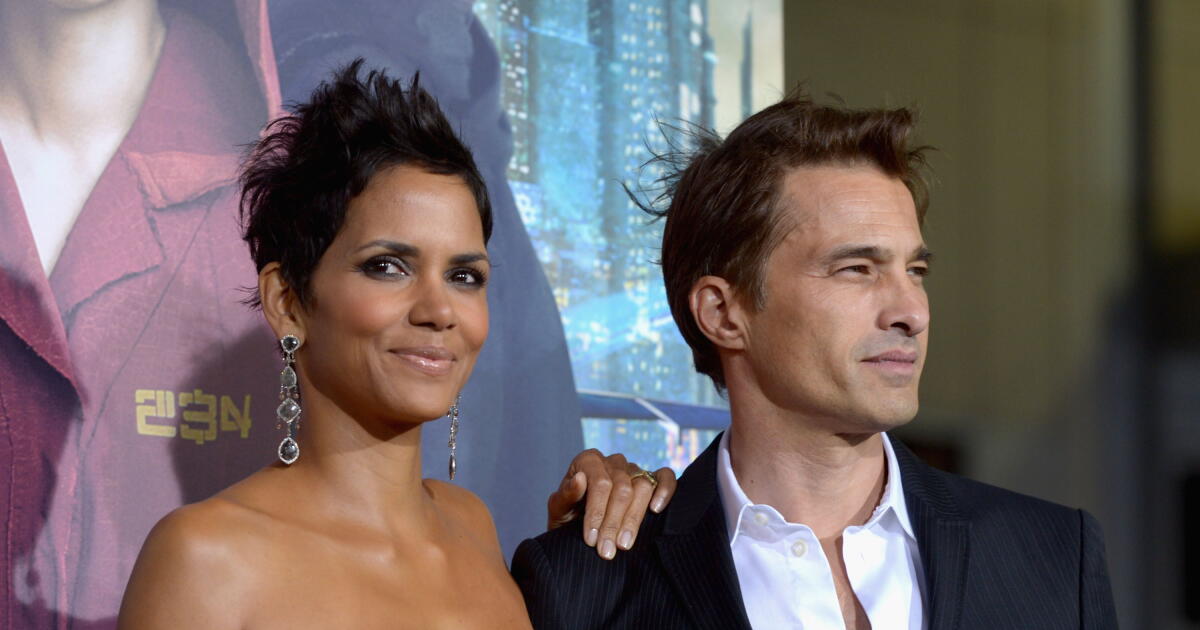
Halle Berry has several loved ones in her corner amid her contentious custody case with ex-husband Olivier Martinez, who accused the Oscar winner of physically abusing their 12-year-old son. Among the actor’s supporters is Nahla Aubry, the 18-year-old daughter Berry has kept largely out of the public eye.
Aubry, whom Berry shares with ex-boyfriend Gabriel Aubry, spoke against her former stepfather Martinez and in support of her mother in a declaration filed Monday in Los Angeles Superior Court. In his request for a restraining order filed last week, Martinez accused Berry of physically abusing their son, Maceo, “putting her hands around his neck, and choking him” during a Sept. 26 incident. Martinez was granted the restraining order and is seeking sole legal and physical custody. Nahla Aubry said in her declaration, obtained by The Times, that Martinez’s allegations left her “shocked, very sad, and very upset.”
“The statements Olivier claims my mom made are wholly inconsistent with the values she has taught me my entire life,” Aubry said. She added elsewhere in her declaration: “I have never witnessed her act violently toward anyone.”
A legal representative for Martinez did not immediately respond on Thursday to The Times’ request for comment.
In her declaration, Aubry spoke about her experiences splitting time between her mother and father’s homes amid their separation and and said her mother “consistently provided me with stability, support, guidance” and that she “never heard” the actor speak negatively about her family or her ex-boyfriend. Aubry said she lived with her brother for most of her life and has “never heard my mom say anything about Olivier” to her brother, contradicting claims Martinez raised in his request for a protective order.
Martinez pointed to an alleged 2023 incident when Berry is accused of telling their son, then 9, that his father is “ ‘a white b— trying to rob a Black woman’ due to child support issues,” according to court documents. She added that Berry has “always” encouraged her children to keep “loving relationships with our fathers.” Aubry also said in her declaration that while Berry can be strict, she is also “warm, supportive and deeply involved in our lives.”
“I have never witnessed her act violently toward anyone, however, I do remember Olivier beating up my father in our driveway when I was little,” she said, referring to a 2012 brawl between Gabriel Aubry and Martinez.
In addition to denying the claims of abuse against her mother, Aubry spoke about her stepbrother’s behavior, writing in his declaration he can be “very impulsive” and “often acts without thinking and then refuses to take responsibility for his actions.” Aubry noted she last spoke to her brother a day after the alleged September incident and that he did not seem upset, and that the current restraining order prohibits her from contacting her brother.
Berry’s fiancé, Van Hunt, and her attorneys also filed declarations in favor of the “Monster’s Ball” actor. Attorney Marina Z. Beck in her declaration accused Martinez of refusing to provide information to Berry about their son and his education, of interfering with their son’s therapy and of refusing to follow therapist recommendations. The court documents also include screenshots of text message exchanges between Berry and Martinez and an email from their son’s school about his disruptive behavior days after the alleged incident.
Berry and Martinez were married from 2013 from 2015. Their divorce finally ended in August 2023, when they agreed to joint custody of their son and Berry agreed to pay Martinez $8,000 a month in child support.
In his request for a restraining order, Martinez also asked that Berry refrain from drinking or partaking in other substances during her visitation time and asked that she complete sobriety testing “before, during and after” her visitation, according to court documents. The judge denied those sobriety testing requests until a further hearing for the order on Oct. 16.
Patrick Baghdaserians, an attorney for Martinez, told The Times last week the welfare and safety of Berry and Martinez’s child remains paramount.
In a new memoir, Joe Manganiello is getting candid about the condition that nearly killed him and the measures he took in search of healing.
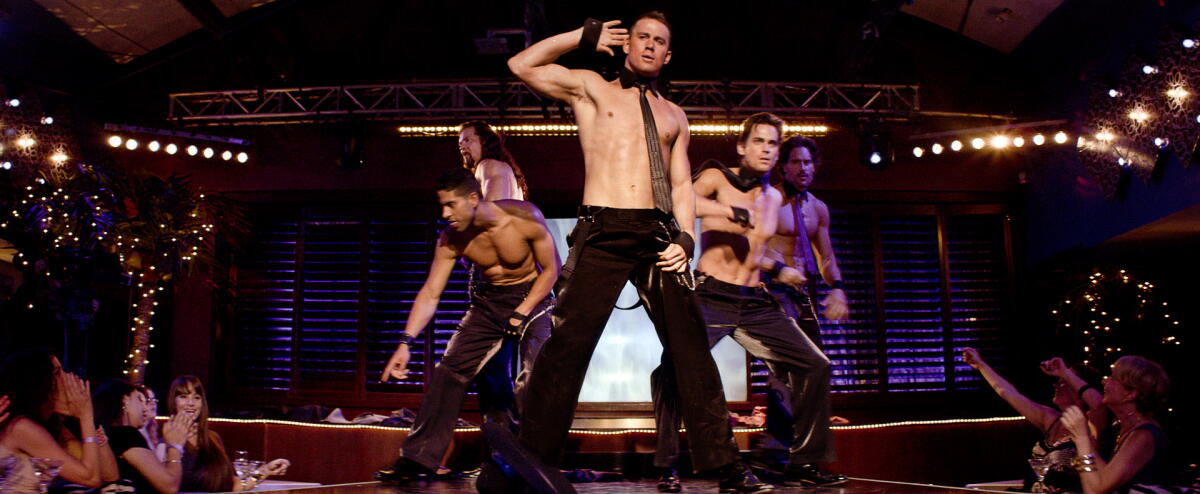
The upcoming book, “Bloodlines,” which hits bookstores and online retailers Oct. 13, follows Manganiello’s career in Hollywood from “True Blood” werewolf to “Magic Mike” hunk, his seven-year marriage and subsequent divorce from “Modern Family” star Sofía Vergara and his battle with a mystery autoimmune condition that he says nearly killed him.
The 2010s were off to a stellar start for Manganiello. He was landing notable parts in buzzy projects and fell in love with television’s Colombian Jessica Rabbit, but shortly after the couple said “I do,” the actor’s rise abruptly switched course because of health issues that left doctors stumped.
Adam Rodriguez, onstage from left, Kevin Nash, Channing Tatum, Matt Bomer and Joe Manganiello in “Magic Mike.”
(Warner Bros. Pictures)
“I was getting sicker and sicker,” he told People. Manganiello detailed debilitating abdominal pain, fevers, rashes, headaches, fatigue and ulcers in his digestive tract that caused bleeding and led to countless colonoscopies. In 2016, he was rolled into an emergency “major organ amputation” in which doctors removed a portion of his intestines and sent him home 60 pounds lighter than his normal weight, with a colostomy bag in tow.
“It happened to me, and it’s the truth, and I have all the scars to prove it,” Manganiello told the outlet. Doctors attempted to treat the actor with prescriptions used for patients with Crohn’s and ulcerative colitis, but nothing worked. An autoimmune disease seemed to be the culprit, he said, but such “conditions are a dumping ground for things [doctors] don’t understand. They start running you through this gauntlet of drugs.”
Manganiello said that, as a result of the illness, his marriage fell apart, he gave away his gun to protect himself from suicidal impulses, and he took in an itty-bitty Chihuahua named Bubbles.
He also started to pursue alternative treatment, which included a trip to Cuba, where he licked the pituitary gland in a goat’s skull, an esoteric ritual used to attempt a factory reset on a person’s immune system. When that didn’t cure him, he turned to a Santa Monica shaman who believed generational trauma caused the actor’s ailments.
“Whatever chains there were to the past suffering of my ancestors, they were completely broken,” he said. “There’s not an ounce of fear in me about moving forward with my life.”
Manganiello revealed he’s since had reconstructive surgery on his digestive tract and is seemingly cured.
“I can’t believe I’m alive,” he said. “I feel like I was reborn.”
The cause of death for Dennis Haskins, an actor best known for playing Principal Richard Belding across the “Saved by the Bell” franchises, has been revealed.
Haskins’ friend and longtime caretaker, Kimberly Snow, confirmed the actor’s Sept. 27 death and told The Times that Haskins had quietly battled Parkinson’s disease and was candid about other health issues. The actor died at Providence Saint Joseph Medical Center in Burbank.
The Los Angeles County Department of Public Health cited Parkinson’s disease as the actor’s immediate cause of death, according to his death certificate obtained by TMZ. Irritable bowel syndrome, depression, hypertension and benign prostatic hyperplasia were also listed as health conditions Haskins battled.
Snow, a former manager of Burbank’s since-shuttered Dimples Karaoke, shared the news of the actor’s death on Instagram, writing that Haskins was a staple at the joint, so much so that many of the patrons thought he owned it.
“A lot of people thought he owned it, but he didn’t,” the tribute read. “He just loved the place and its people. He enjoyed singing for people, meeting them, and taking selfies with his fans. Dimples closed down about 11 years ago, and people still associate him with his beloved ‘second home.’ He was known to most as Mr. Belding from Saved by the Bell, but to us, he was much more than that.
“About eight years ago, he became ill,” the post continued. “He had been silent about his fight with Parkinson’s, among other health concerns, because he did not want the attention. He did not want to have to tell people. He would say, ‘What do I even say?’ So I respected his wishes and stayed quiet, and I helped him through his journey into the next chapter of his life.
“Late last night, that journey ended for him.”
The actor played Mr. Belding across seven different series, including “Good Morning, Miss Bliss,” “Saved by the Bell,” “Saved by the Bell: The College Years,” “Saved by the Bell: The New Class,” “The Rerun Show,” “Robot Chicken” and “Victorious.”
SAVED by the Bell star Dennis Haskins’ cause of death has been revealed after the much-loved actor died aged 75.
His death certificate shows Dennis died on September 27 at Providence Saint Joseph Medical Center in Burbank, California.
Dennis Haskins died from Parkinson’s Disease, his death certificate indicatesCredit: Shutterstock EditorialDennis (top left) as the lovable but stern Mr Belding in Saved by the BellCredit: Getty Images – Getty
The certificate, from the Los Angeles County Department of Public Health, lists Parkinson’s disease at the immediate cause of death.
It was not publicly known that Dennis had Parkinson’s before he died and his former wife Sarah Quinones told TMZ he had even cut off communication with close pals to hide his diagnosis.
In his final years Dennis lived in an assisted-living facility and stopped returning calls and texts from Sarah and other close friends because he didn’t want anyone to know he was suffering from the illness.
His role as Mr Belding earned him the nickname ‘America’s Favourite Principal’Credit: GettyDennis kept his diagnosis hidden from close palsCredit: Shutterstock Editorial
Dennis found widespread fame playing Principal Belding on the hit show Saved by the Bell, as well as numerous spin-offs.
Dennis, from Chattanooga, Tennessee, initially played the role of Principal Belding on the show Good Morning, Miss Bliss from 1988-1989.
The series then became Saved by the Bell, which aired on NBC until 1993, followed by Saved by the Bell: The New Class from 1993-2000.
Dennis earned the nickname “America’s Favourite Principal” for his performance.
His character’s exasperated ‘Hey, hey, hey, what is going on here?’ as he struggled to control his students became one of the show’s most iconic lines.
Dennis also reprised his role in the spin-off specials Saved by the Bell: The College Years in 1993 and Saved by the Bell: Wedding in Las Vegas in 1994.
Before launching his TV career, Haskins attended the University of Tennessee at Chattanooga, where the school said he was deeply involved in campus life.
He worked as a music manager, agent and concert promoter, reportedly counting Tom Jones among his clients.
Dennis then made his network TV debut on the 1979 pilot episode of The Dukes of Hazzard.
Aside from his defining role as Mr Belding, Dennis racked up more than 100 acting credits over his decades-long career.
Dennis’ agent Jay Schachter told TMZ: “It’s a tragic loss. Everyone loved Mr. Belding and those of us who got to know Dennis, loved him even more.
“He was a great person, and he loved, I mean absolutely LOVED his fans.”
More than a year after the death of his wife, Jenisa Garland, “Grey’s Anatomy” star Isaiah Washington announced the news of her passing.
The actor posted the news on Instagram over the weekend, writing, “Yes … the rumors are true. My dear wife of 29 years collapsed suddenly on May 31, 2025 and passed away on June 9, 2025.”
Washington said his wife’s death “came as a huge shock to me and our entire family.”
“She succumbed to a massive hemorrhagic stroke and never recovered,” he continued, before adding some cautionary advice to his fans. “Listen, y’all … some headaches are not just headaches or migraines, they can be much worse and a warning sign. Get a brain scan if you can and take those headaches seriously.”
A hemorrhagic stroke is less common than an ischemic stroke, but it is more fatal and occurs when a blood vessel leaks or ruptures in the brain, according to the Mayo Clinic. Causes may include uncontrolled high blood pressure, trauma from a fall or accident, or overtreatment of blood thinners. Signs of a stroke include a sudden intense headache, confusion, trouble speaking, loss of balance, face drooping, sudden blurred vision and more.
“She has been gone 16 months now, but she left 3 incredibly amazing children behind to continue her legacy. I don’t know if this is an appropriate post, because Jenisa Washington was extremely private, but I guess I just have to be reprimanded from her on the other side.”
On Monday, Washington posted a tribute to comedian Reggie McFadden, crediting the “In Living Color” actor with introducing him to his wife more than 30 years ago. “RIP Reggie McFadden,” he wrote on Instagram. “Say hello to Jenisa Washington, because it was you who introduced me to her in 1995.”
Washington played Dr. Preston Burke on “Grey’s Anatomy” in 2005 but was nixed from the medical drama in 2007 after an on-set spat with co-star Patrick Dempsey, a.k.a. Dr. McDreamy, during which Washington reportedly referred to (then-closeted) castmate T.R. Knight, who played George O’Malley, using a homophobic slur. After reports of the behind-the-scenes beef, Knight came out as gay publicly.
Later that year, at the Golden Globes, Washington denied the incident but repeated the word in the process. He ultimately apologized and returned to “Grey’s” in 2014 for a guest spot.
Actor Robert Kelker-Kelly, who was a familiar face in daytime dramas in the 1990s with turns in “Days of Our Lives” and “General Hospital,” has died.
Kelker-Kelly died Saturday evening at his home in St. Peters, Mo., the city’s Police Department confirmed Monday to The Times. Law enforcement officials responded Saturday evening to a report of an unconscious man who was not breathing. Police arrived at the actor’s home along with paramedics and “life-saving measures were administered but were unsuccessful,” police said.
Police said officers found nothing suspicious at the scene. A cause of death was not revealed, but police noted that Kelker-Kelly was said to have complained of chest pain before he became unresponsive. A spokesperson for the St. Charles County Ambulance District confirmed paramedics responded Saturday to a report of a man in cardiac arrest. Kelker-Kelly was 62.
Kelker-Kelly primarily acted in TV and was best known for his work in long-running daytime dramas, which also included “Another World.” Notably, he portrayed the rebellious heartthrob Beauregard “Bo” Brady in “Days Of Our Lives” from 1992 to 1995. He began his turn as Bo, which lasted for more than 586 episodes, following the departure of original actor Peter Reckell, who would return to the show off and on in the following decades.
During his tenure, Kelker-Kelly portrayed the spouse of Hope Brady and love interest of Lisa Rinna’s Billie Reed. She spoke negatively of that experience and called her co-star a bully in her memoir, released earlier this year. He did not respond to People’s request for a response at the time.
Kelker-Kelly made his official debut in “Another World” in 1987 and appeared in more than 400 episodes in a handful of roles until 1998, according to the actor’s IMDb page. He was also known for his work as Stavros Cassadine in “General Hospital” and its spinoff series “Port Charles.” John Martinuzzi originated the role. Kelker-Kelly’s “General Hospital” tenure lasted from 2001 to 2014 and was his final TV role. His television credits also include “Jack’s Place,” “Touched by and Angel” and “Rescue 77.”
The actor was born April 18, 1964, in Wichita, Kan. His mother was a nurse and his father a pathologist. Kelker-Kelly’s parents divorced when he was 7 years old, and he later moved in with his father. The actor was in and out of colleges but studied acting and grew fond of Shakespeare, according to People.
After his acting career, Kelker-Kelly became a professional pilot. He married production assistant Linda Ratner in 1988; they divorced four years later. Kelker-Kelly then married “Days of Our Lives” actor Miriam Parrish in 1997. That marriage ended in 2013. He is reportedly survived by a daughter, Amelia Rose Kelly.
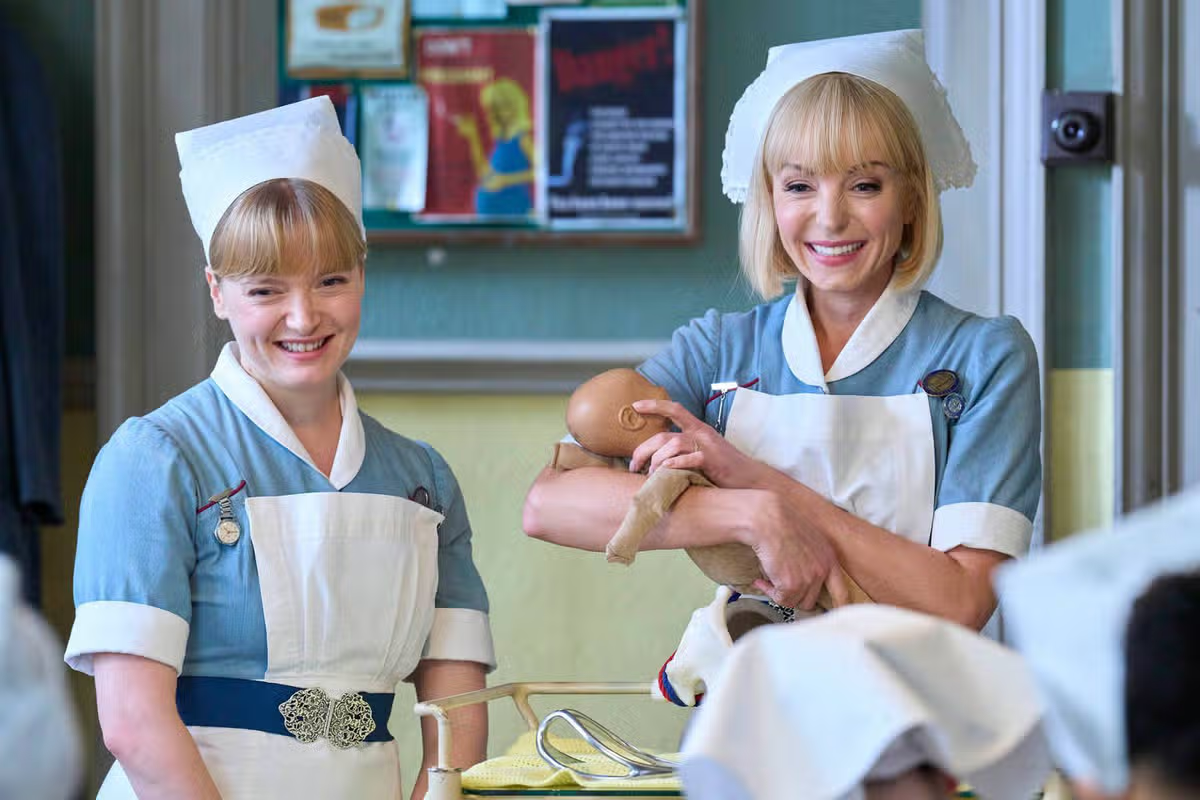
Call the Midwife star Natalie Quarry has taken on a brand new role away from the BBC period drama
A Call the Midwife star has been cast in an Agatha Christie Drama(Image: BBC / Neal Street Productions / Andrea southam)
A Call the Midwife star is set to appear in another period drama.
The BBC has confirmed Natalie Quarry, who played Rosalind Clifford in beloved series, will star in the forthcoming six-part series, Hercule.
The exciting drama, which has commenced filming in Liverpool, will centre around three of Agatha Christie’s early stories, while also introducing Hercule Poirot to future friends and allies and one particular nemesis.
The show, from Mammoth Screen and Agatha Christie Limited, has been described as “an intimate study of Hercule Poirot, the man, and an epic portrait of Britain between the wars.”
Actor Edward Bluemel takes on the lead role of Hercule Poirot, and is best known for his roles in Killing Eve and A Discovery of Witches. He is the youngest to take on the role created by Agatha Christie back in 1916.
Also starring in the drama is Death in Paradise star Ralf Little who joins the star-studded cast alongside Emily in Paris star Paul Forman, It’s a Sin star Omari Douglas, The Beauty’s Jessica Alexander, and The Souvenir’s Honor Swinton Byrne.
Widely regarded as one of the greatest detectives in fiction, Hercule Poirot has sold over 750 million copies, captivating readers and audiences for more than a century.
Sharing excitement for the new Agatha Christie series, James Prichard, the great-grandson of the famous author, and executive producer for Agatha Christie Limited, said: “My father had the privilege of working with David Suchet for nearly 25 years, and I now have the good fortune of being able to share my great-grandmother’s brilliant stories with a new generation of viewers.”
He added: “Edward Bluemel is an extremely talented performer and will make a great addition to the long line of actors that have played this celebrated character, aided and abetted by Benji Walters’ thoughtful scripts. I cannot wait to see Edward on screen as Hercule Poirot.”
Who is Natalie Quarry?
Actress Natalie Quarry joined the Call the Midwife cast in its 13th season as a student midwife, Rosalind Clifford, and has since become a fully-fledged practitioner among the nuns and nurses at Nonnatus House.
In the most recent series, which concluded earlier this year, she became involved with the Women’s Liberation Movement and found love with local social worker Cyril Robinson (Zephryn Taitte), but their relationship has been a topic of discussion among the locals.
Away from the BBC period drama, Natalie has also starred in Doctors, Atlanta, and Blitz.
MICHAEL Douglas has denied he’s a sex addict and said he was a “healthy product of the Sixties” after his affair revelation with Kathleen Turner.
The actor, 82, confessed to having a relationship with Kathleen as they filmed their 1984 action flick Romancing The Stone.
Michael Douglas has denied he’s a ‘sex addict’ in his new bookCredit: GettyThe actor revealed he had an affair with Kathleen Turner when he was married to his first wifeCredit: DHUB_Search_Shutterstock_Editorial_NUK
At the time, Michael was married to his first wife Diandra Luker.
The Basic Instinct star opened up about his colourful love life and insisted he was not a “sex addict” despite his multiple flings.
Sign up for the Showbiz newsletter
Thank you!
Speaking to The Times, he was asked if he ever wondered why he had slept with so many women.
Michael replied: “I don’t know if I slept with so many women, I don’t see it that way. No, not me, no. I was a healthy product of the Sixties.”
The actor insisted he was ‘ a healthy product of the Sixties’Credit: DHUB_Search_Shutterstock_Editorial_NUKThe Wall Street star is now smitten and happily married to Catherine Zeta JonesCredit: AFP
He added: “My curiosity is why, of all countries, of all the press that I do, why are the Brits so consumed with the issues of sex?”
In the nineties, it was reported that Michael had entered rehab for a sex addiction.
But Michael has said in an excerpt from his upcoming memoir One Helluva Ride: “I was never a ***ing sex addict.”
Shared by People, Michael dished about his extramarital romance with Kathleen.
Michael penned: “Kathleen was smart, funny, and sexy with a deep, sultry voice that became her signature.
“I instantly liked her, and we were immediately attracted to each other.”
Michael then claimed that his marriage to Diandra “was in a bad place” and that he had been having an affair with Romancing The Stone screenwriter Diane Thomas prior to meeting Kathleen.
In the book, he described himself as “technically married, but separated” as he had an affair with Kathleen.
He noted that audiences spotted their chemistry, and they were forced to deny everything and put it down to them both being “terrible flirts” due to him being married.
“It was a lie meant to protect my wife and son, a lie we told the world for 40 years.”
In his book, Michael confessed: “The truth is that during the production of Romancing the Stone, Kathleen and I fell hard for each other and began a relationship.”
He said that their relationship “grew naturally” and noted how much they respected and cared for one another, “and how attracted we were to each other”.
Michael added: “Like every other guy in the world at the time, I was knocked sideways by Kathleen….”
They continued their romance until it fizzled out when his wife visited on set and made it clear to Kathleen they were still married.
Diandra warned her off and Kathleen “didn’t want to interfere”.
Although their romantic relationship was over, they continued to star in movies together until 1989.
His first marriage to film producer Diandra Luker lasted from 1977 to 2000.
After 18 years together, Diandra filed for divorce in 1995, leading to a protracted legal separation which was finalised in 2000.
Michael is now smitten and happily married to Catherine Zeta Jones.
Catherine and Michael first met in August 1998 at the Deauville American Film Festival in France.
The official cause of death for Fiona Lowe, the 13-year-old daughter of actor Chad Lowe and niece of Rob Lowe, has been revealed.
The database for the Los Angeles County Medical Examiner confirmed that Fiona Lowe died Tuesday by suicide and died in a hospital. Chad Lowe, the Emmy-winning star of “Life Goes On,” and his family announced Fiona’s death in a statement shared with People on Tuesday. The actor shares Fiona and two other daughters with wife Kim Painter.
Before the medical examiner’s report became public, Lowe’s family did not reveal a cause of death but in its statement mentioned contact information for a mental health lifeline. The family in its statement said it was “heartbroken by the loss” and remembered Fiona as a “loving girl who was smart, creative, and loved to dance.”
“She was adored by her sisters and she was deeply loved by her parents. In fact, she was the light of our lives,” the family added. Lowe and his loved ones also said Fiona’s death is “devastating for our entire family” and asked for prayers and privacy.
Fiona’s death comes after the “Pretty Little Liars” actor’s family lost their home in the Palisades fire, which killed 12 peopleand consumed more than 6,500 structures. He shared videos and photos of the destruction to his Instagram page.
Lowe, 58, is the younger brother of actor Rob Lowe. He and Painter married in 2010 and welcomed Fiona in 2012. Fiona celebrated her 13th birthday in November and was the second of the couple’s three daughters. Lowe and Painter first welcomed daughter Mabel in 2009 and their youngest daughter, Nixie, in 2016.
Suicide prevention and crisis counseling resources
If you or someone you know is struggling with suicidal thoughts, seek help from a professional or call 988. The nationwide three-digit mental health crisis hotline will connect callers with trained mental health counselors. Or text “HOME” to 741741 in the U.S. and Canada to reach the Crisis Text Line.
Halle Berry is speaking out against her ex-husband Olivier Martinez, after he accused the actor of physically abusing their 12-year-old son and was granted a restraining order against the Oscar winner.
Marina Beck, an attorney for the 60-year-old “Catwoman” and “John Wick: Chapter 3” star, in a statement downplayed Martinez’s protective order, granted Thursday by a Los Angeles Superior Court judge.
“To say this filing is entirely meritless and deliberately misleading would be an understatement,” Beck said, later accusing Martinez of repeatedly violating court orders and interfering with “necessary therapeutic and educational interventions to the detriment” of his son with Berry.
The attorney added: “In a way, today’s filing is not entirely unexpected from an individual with a well-documented history of erratic, possessive and violent behavior. Fortunately, Halle is used to this kind of outrageous conduct from Mr. Martinez and, while she is deeply saddened, she will not allow it to deter her from fighting for Maceo’s best interests and providing him with the love and support he needs.”
Patrick Baghdaserians, an attorney for Martinez, did not comment on the statement from Berry’s legal team, but said the welfare and safety of Berry and Martinez’s child remains paramount.
According to the order reviewed by The Times, Berry is prohibited from contacting Martinez, 60, and their son Maceo beyond the terms of her August 2023 split-custody agreement. The judge also modified the actor’s visitation time, limiting her hours with her son to Mondays, Tuesdays and weekends between 10 a.m. and 8 p.m.
Berry and Martinez wed in France in July 2013, shortly after confirming they were expecting a baby together. They welcomed their son in October. Berry shares a daughter with ex-boyfriend Gabriel Aubry. The actor was also previously married to ex-MLB pro David Justice and singer-actor Eric Benét and is currently engaged to musician Van Hunt.
Berry filed to divorce Martinez in October 2015. Their divorce finally came to an end after eight years in August 2023, when they agreed to joint custody of their son and Berry agreed to pay Martinez $8,000 a month in child support. The “Monster’s Ball” actor was also ordered at the time to also pay Martinez 4.3% of any income she receives above $2 million.
Martinez’s request for a domestic violence restraining order centered on an alleged Sept. 26 incident involving Berry and their son. Martinez alleged the actor “physically abused our son, Maceo, by jumping on him, putting her hands around his neck, and choking him.”
The financial terms of their divorce also appeared to be central to another alleged incident in 2023, when Berry allegedly told Maceo, then 9, that his father is “ ‘a white b— trying to rob a Black woman’ due to child support issues,” the request said. Martinez’s filing included a declaration of Berry’s alleged history of abuse, screenshots of his text conversation with Berry following the alleged September incident in which she appears to have written, “I feel terrible about what happened last night.”
Martinez requested sole legal and physical custody of Maceo. He also asked that Berry refrain from drinking or partaking in other substances during her visitation time and asked that she complete sobriety testing “before, during and after” her visitation, according to court documents. The judge denied those sobriety testing requests until a further hearing for the order on Oct. 16.
Berry has been a vocal supporter for victims of domestic violence and a volunteer at the Jenesse Center, a nonprofit organization dedicated to domestic violence intervention and prevention. The actor has also spoken about her own experience with domestic violence growing up. She recalled her father’s abusive treatment of her mother during a gala in 2015.
“She stayed for too long and her children, my sister and I, saw far too much and I’ve suffered the damage of being a child of domestic violence,” Berry said at the time.
Former Times staff writer Jonah Valdez contributed to this report.
Paul Reubens’ larger-than-life stage presence as Pee-wee Herman carried over into the actor’s home-sweet-home — and this month, fans of the late actor can bid on 439 items from his collection.
Julien’s Auctions is hosting Paul Reubens’ Big Auction at the Groundlings Theatre in Los Angeles on Oct. 28 to celebrate the life and career of the late comedian, actor and writer. Tickets sold out within the day on Friday, but the public may participate in the auction online at juliensauctions.com. Anyone with a Groundlings show ticket can view the exhibition until Oct. 28.
The auction features Pee-wee’s iconic gray suit and other costumes, red Schwinn bicycles, dolls, puppets, claymation figures, scripts and more. The memorabilia comes from Reubens’ major features and TV shows, including “Pee-wee’s Playhouse,” “Pee-wee’s Big Adventure,” “The Pee-wee Herman Show,” “Big Top Pee-wee” and “Pee-wee’s Big Holiday.”
Reubens created the Pee-wee Herman character in 1978 while a member of the Groundlings company. “The Pee-wee Herman Show” began at the Groundlings Theatre, moved to the Roxy Theatre on Sunset Boulevard and aired as a 1981 HBO special. Reubens parlayed the show’s success into the 1985 hit film “Pee-wee’s Big Adventure.” Tim Burton’s feature film directorial debut, the movie had a $7 million budget and earned more than $40 million.
Share via
Paul Reubens, the actor and comedian best known for portraying the character Pee-wee Herman on stage and screen, has died. He was 70.
Next came the Daytime Emmy-winning TV series “Pee-wee’s Playhouse,” which ran from 1986 through 1990 and helped kick-start the careers of now well-known stars including Phil Hartman, Laurence Fishburne and S. Epatha Merkerson. Feature films “Big Top Pee-wee” (1988) and “Pee-wee’s Big Holiday” (2016) followed. Before his death on July 30, 2023, Reubens recorded interviews for the 2025 Emmy-winning documentary miniseries, “Pee-wee as Himself.”
Here are six highlights of the auction:
“Pee-wee’s Big Holiday” Hero Pee-wee Herman Suit
“Pee-wee Herman” hero ensemble.
(Julien’s Auctions)
The iconic slate gray glen plaid suit worn by Paul Reubens in his 2016 Netflix film, complete with white shirt, red bow tie, pocket square, and white loafers. ($8,000-$10,000)
“Pee-wee’s Playhouse” Fridge Food
12 pieces of “food” found in Pee-wee’s fridge.
(Julien’s Auctions)
A collection of 12 prop food pieces from the “Pee-wee’s Playhouse” refrigerator, including a claymation red pepper and bacon with armature arms, olive barbells, frozen food boxes, and desserts. ($800-$1,000)
Pee-wee Herman 1989 JCPenney 40-Inch Limited-Edition Doll
Large Pee-wee Herman doll from the late 1980s.
(Julien’s Auctions)
The 40-inch doll made by Carousel for Reubens’ JCPenney-exclusive line in the late 1980s is one of the rarest Pee-wee Herman collectibles. Only 2,000 were made in 1989, and some were used as store displays. The doll is in its original box, with the original factory shipping carton. ($300-$500)
Paul Reubens’ “Pee Wee” Harmonica
A vintage “Pee Wee” brand harmonica, circa 1945-1951.
(Julien’s Auctions)
A vintage “Pee Wee” brand harmonica made in occupied Japan (circa 1945-1951) in its original box, personally owned by Reubens, who cited this brand as the inspiration for his character’s name. ($100-$200)
“Pee-wee’s Big Adventure” Replica Bicycle with 2011 Visionary Spike TV Scream Award
A full-scale replica of Pee-wee’s red Schwinn DX bicycle.
(Julien’s Auctions)
A full-scale replica of Pee-wee’s iconic red Schwinn DX, ridden by Reubens at the 2011 Spike TV Scream Awards where he accepted the honorary Visionary Award (also included in the auction). ($5,000-$7,000)
Production scripts and storyboards
“The Pee-wee Herman Show” 1981 production script with revision pages.
(Julien’s Auctions)
“Pee-wee’s Playhouse” Season 1 scripts (a collection of 13, one for each episode of Season 1 in 1986)
“Pee-wee’s Big Adventure” script credited to Phil Hartman, Paul Reubens, and Michael Varhol, containing minor differences from the final film including a deleted magic shop scene
“Big Top Pee-wee,” featuring barnyard and farm animal artwork
“Grey’s Anatomy” and “One Tree Hill” actor Sophia Bush reveals in her new memoir, “And I Will Tell You Mine: Notes From a Life in Progress,” that she married former professional soccer player Ashlyn Harris in summer 2025.
The private ceremony took place in upstate New York with Harris’ children, Sloane and Ocean, attending, Bush and Harris revealed in a Vogue exclusive published Wednesday. The couple said they later made the rounds, visiting friends and family to divulge their secret nuptials.
Sophia Bush, in a 2025 episode of “Grey’s Anatomy,” told Vogue she married Ashlyn Harris in a private ceremony with Harris’ children in attendance.
(Anne Marie Fox / Disney)
“We got to have personal experiences with everyone we love, and once we got through all of those, how do we put it out? Because I don’t want to keep sitting on panels or in interviews and being like, ‘My partner,’” Bush told Vogue over Zoom, then turning to Harris. “You’re not my partner, you know? You’re my wife. And it feels so amazing to say that.”
After Harris described her kids running around, picking flowers and generally having fun, stepmom Bush recalled the family roasting marshmallows on their wedding night: “It was so precious, and zero pressure. I will never forget it.”
The newlyweds also explained that, though they value privacy, optics are important for at least one very important reason.
“We understand how sacred and how pure our love is. But the visibility piece matters,” Harris said, “because there are still kids hiding who don’t feel seen, and if we make room and space for one person, that’s worth maybe costing us a little bit of peace in the public eye.”
Hollywood is filled with book-to-screen adaptations that have ignited grumbling and spirited debates. Even before its release, Zoe Kazan’s interpretation of John Steinbeck’s sprawling 1952 masterwork, “East of Eden,” roused passionate opinions from loyalists of the text on social media.
Much of the discourse surrounds Kazan’s creative choice in how to portray the book’s infamous antagonist, Cathy Ames, in Netflix’s seven-episode limited series out Thursday.
Steinbeck’s multigenerational saga ruminates on family, the power of choice and the nature of good and evil — deeply exploring the biblical stories of Cain and Abel and the fall of Adam and Eve — through the intertwined destinies of two families, the Trasks and the Hamiltons. Cathy (later known as Kate) functions as a chilling, destructive force in the saga.
Kazan pared down much of the Hamilton family’s story for the show and centered Cathy (Florence Pugh), whose arrival alters the lives of the Trask brothers, Adam (Christopher Abbott) and Charles (Mike Faist). In doing so, Kazan dared to humanize the character who has been considered one of literature’s most definitive symbols of pure evil, described by Steinbeck to be a “psychic monster” born without a conscience or kindness.
“I’m trying to protect my mental health by not being too much online,” Kazan said in a video call from London on a recent weekday. “I do think it is not surprising to me that this character brings up a lot of strong feelings for people … I’m excited to see what people think once they actually see what we have made and aren’t just anticipating something.”
Mike Faist as Charles Trask, Christopher Abbott as Adam Trask and Florence Pugh as Cathy Ames in Netflix’s “East of Eden.”
(Netflix)
When Kazan, an actor who has expanded her creative footprint behind the camera, first pitched the series in 2019 and was asked about which actor she envisioned as Cathy, she replied: “I have one.” She had seen Pugh in “Midsommar,” “Lady Macbeth” and “Little Women,” marveling at how the actor’s ultra femininity lived alongside her masculine energy.
“The range on that girl … I was like, if anybody can do that, they can play Cathy,” Kazan says. “It allowed me to write Cathy as complicated and mysterious [as I wanted] and with so much shadow and light.”
When it came to Adam and Charles, Kazan knew Abbott and Faist could depict the psychological nuance beyond the binaries of the nature versus nurture debate: “I wanted an Adam where you felt what his true nature was and the nature that his father had pushed him into … and I knew we needed that in Charles as well.”
Adapting a classic is hardly a simple endeavor, particularly one that has been done before. That Kazan would choose “East of Eden,” which unpacks legacy and generational shadows is apt: Her grandfather, Elia Kazan, famously directed the 1955 film version starring James Dean. The actors of the Netflix series are eager for viewers to see her vision come to life.
“When you do an adaptation of a book, especially a seminal American novel, no matter what, you’re always going to be up against it because … whenever somebody reads a book, the budget in their heads is unlimited,” Abbott says. “I think this is such a great adaption in its own right.”
Pugh adds: “I’m excited for people to do the stuff that I’m doing now, which is [to say], ‘Oh my God, let’s read this and see how it fits against what I’ve got in my head.’”
Over a video call together, Pugh, Abbott and Faist reflected on their journey to adapting Steinbeck’s epic story, including their first experiences with it and filling in the shades of these characters who remain timeless allegories of the human condition. This conversation, which contains spoilers, has been edited for clarity and length.
Florence Pugh, left, Christopher Abbott and Mike Faist take on some of literature’s most indelible characters — Cathy Ames, Adam Trask and Charles Trask — made famous in John Steinbeck’s classic “East of Eden.” (Photographs by Sophia Spring / For The Times)
When did you first encounter the book?
Faist: My first encounter with the story was the James Dean, Elia Kazan film. That was a movie that I watched, especially when I first moved to New York and wanted to be an actor. It wasn’t until Zoe and Florence asked if I’d be interested in doing this, that I picked up the book.
Pugh: I want to say maybe my early 20s, I read the book. I only watched the movie recently to prepare myself for these kind of conversations. I’m rereading the book now while we’re heading into press, just so I can like fine-tune what I thought I knew … there’s so much love that’s being breathed into every single sentence of every chapter [in this adaptation], and that is solely down to Zoe’s fantastic brain and her ability to want to dig deeper.
Abbott: A lot of my favorite books I’ve picked up and put down numerous times before actually plowing through it — that was the case here until Zoe approached me about doing it. I was like, “Well, this is a perfect excuse to finally [finish].”
This adaptation lit up social media early on for centering Cathy. She is such a polarizing figure. Some see her solely as an evil monster. Some argue there is more nuance to what’s driving her actions. Florence, how do you see her?
Pugh: It’s tricky because I know I’m gonna get asked this again and again, and I guess I’m still trying to figure out how to word it without totally pissing people off. I love finding characters that people automatically think are villains and trying to find a way for you to love them — it’s my favorite thing to do.
I read these episodes, and I was listening to Zoe and how she was wanting this to come from Cathy’s perspective, how Cathy was her hero and how she’s just been championing Cathy ever since she first read the book — that was so f— exciting to know that we’re not gonna just point the finger and say that she’s evil. It is my job to do my skills as good as possible so that I can argue in defense of them. I believe that I can argue for her, which is terrifying but also really cool. I care for her deeply. I understand where she went and why. Does she do some terrible things? Absolutely. Is she a product of the situation that she grew up in? Totally. You can’t get raped as a child and and you be totally fine for the rest of your life.
Florence Pugh as Cathy Ames. She hopes the adaptation prompts curiosity: “I’m excited for people to do the stuff that I’m doing now, which is [to say], ‘Oh my God, let’s read this and see how it fits against what I’ve got in my head.’”
(Netflix)
That detail was not explicitly stated in the book. What were your conversations with Zoe about it?
Pugh: That’s why we ended up choosing the way that we explained it and the way that we showed it — that little girl is so tiny you can’t even imagine anything bad happening to her, and the fact that she’s holding “Alice in Wonderland,” [in her mind], there’s so many through lines through Cathy and Kate’s life that all come back to that moment. You don’t need to do much. Everybody has the sinking feeling of what might happen to a vulnerable child in that situation. In the book, I think it’s constantly playing with the themes of can we trust her? Is she already a monster as a child?
What Zoe has done is made her a real human, and has given her cause and has given her time to understand. That moment that is alluded [to in the book ] — if Cathy asked the boys to tie her down, and whatever it is that they were doing to her — it’s no longer alluded [in the series]. That [assault] happened, but maybe people didn’t believe her.
Mike, what were you interested in excavating with Charles, this Cain archetype who’s tormented by rejection and jealousy?
Faist: What is amazing about this story is — and it’s the entire through line of the entire novel — is this idea of timshel. What happens in a person’s life, and the burdens that they carry, then the choices they make, and every single moment as they continue to live it. Charles jumped out at me. There was just something about him that I was very drawn to — and along with that pull, there’s this feeling of dread, where you say, “Oh God, I can’t believe that I’m about to jump in and do this thing.” You end up surrendering yourself to it. It is scary and deeply exciting.
Abbott: I don’t have a brother. You forget too that they’re half brothers and what that dynamic is like, what kind of Freudian s— pops up. I think the through line for Mike and I, because there’s a lot of conflict there, that it always comes from a place from love. The letters, as they [Charles and Adam] get older, that are written or the letters that he starts to write and doesn’t send, when there is hate between them, it’s because they love each other so much. Otherwise, it would just be indifference. A lot of that happens in the things that are unsaid.
1
2
1.Mike Faist as Charles Trask. (Netflix)2.Christopher Abbott as Adam Trask. He found the sibling relationship intriguing: “I don’t have a brother. You forget too that they’re half brothers and what that dynamic is like, what kind of Freudian s— pops up.”(Kirsty Griffin / Netflix)
When Zoe approached you, Chris, to play Adam, you questioned whether she actually meant for you to be Charles?
Abbott: I’m just used to being typecast, so I thought she made a mistake. Zoe’s mentioned this idea of masculine and feminine energy — what one presents and what one actually holds, and the old switcheroos of that. The very first email, I was like, “Oh, are you sure?” But I was excited to play with all the nuance of and the layers of what this is. I had seen the movie before, and it [covers] only the last 100 or so pages. It’s really gratifying to play a part where you get to see someone’s whole life and how this guy goes from being this wanderer, drifter to this to stoic, depressed, rigid older man.
What moment between these characters were you most eager or nervous to depict?
Faist: The scene that I reflect back on the most, that actively had the biggest impact on me, is the scene between Cathy and Charles, where she comes into his room and the two of them share this intimacy together. We had talked about what we were wanting to do, then on the day, none of it was really working. I remember Florence had this really specific thing she wanted to bring to the scene. And it was really powerful — there’s these very rare moments when you genuinely feel someone’s objective actively working against your own. [Pugh makes a quizzical face.] No, it’s good! It creates this friction and this tension that does exist and does live.
Abbott: That was your favorite, huh?
Faist: I’m sorry, Chris! That one was just such a visceral feeling of, I know what my character wants in this thing, and her character is very much wanting the exact opposite and the literal clash of that that moment and the feeling of that — I’ll never forget that.
Pugh: It’s such an important scene to get right because it literally is the ending moment of those two; it added so much pressure on the day of shooting. It’s actually really hard when you’re trying to do a sex scene that’s consensual, but it’s definitely not at the right time. The coolest thing about it is it wasn’t working and we had to push everyone out. Everyone was whispering and everyone was trying to figure out what they were comfortable with us doing and, eventually, Mike and I were just like: Right. Done.
Florence Pugh, with Christopher Abbott, left, and Mike Faist, says “East of Eden” endures because “every single one of these characters is struggling to survive realistically.”
(Sophia Spring / For The Times)
Chris, you have the daunting task of, in the closing moments of the series, delivering the word that’s the thrust of the whole story —timshel.
Abbott: I think that was the last scene I shot. I can’t say I was being lazy, but the character had a stroke so he was laying there. You just gotta listen [in a moment like that]. Hoon [Lee, who plays Lee] is reading from the Bible. You take in the room. I nailed it in one. [Pugh and Faist laugh.]
People have deep feelings about “East of Eden.” And it seems to have had a real resurgence recently, even outside of curiosity about this adaptation. Why do you think that is?
Abbott: That’s a big, existential [thing to think about]. There’s a ton of themes in the book that are relevant: displacement, family, love. The themes in the book aren’t specific to the time period. All great works are that.
Pugh: It’s also about generational trauma and change in healing. One of the things I recognized immediately when I started rereading the book months ago, the first few pages about the Salinas Valley describe very quickly that this place is about growth, change and moving on. What I’ve taken from our adaption of Cathy and her generational trauma and what she’s doing to her kids is that not everybody is going to get it right. The reason I think why people keep picking it back up is every single one of these characters is struggling to survive realistically, and they are all making decisions that affect and domino-effect other people around them. Us learning about how we could have done better will always be relevant. And especially with America, and what we’re watching in terms of its constant battle against racism and immigration. It’s relevant to life and to our lives.
Washington’s top diplomat calls the suspected plot ‘a very serious situation’ after five were arrested over the weekend.
Published On 29 Sep 202629 Sep 2026
United States Secretary of State Marco Rubio has said a “foreign actor” was involved in a suspected bomb plot near an airbase in the United Kingdom used by the US military.
Police arrested five men, all British nationals from London, in their early to mid-20s, on Sunday after being alerted by a local farmer about three white vans driving towards RAF Fairford, a British base that houses US bombers flying missions against Iran.
Recommended Stories
list of 4 itemsend of list
The counterterrorism police said on Monday they were investigating whether individuals were acting for a foreign state in an apparent plot to attack the airbase. They later said the suspects would be released on bail.
Commenting on the suspected plot and arrests on the Hannity programme on Fox News late on Monday, Rubio said, “What happened, what almost happened, what could have happened in the UK over the weekend is a very serious situation.”
“It’s one that clearly involves the hands of a foreign actor. I won’t get into great detail about that yet,” he added.
Iran’s Islamic Revolutionary Guard Corps (IRGC) had said in July the Fairford base was a legitimate target.
Iran’s embassy in London said in a statement on Monday it “categorically rejects and strongly condemns the recent unfounded and malicious speculations” that it was involved, which it said would fuel “Iranophobia propaganda” in the UK.
Trump said on Sunday the UK and the US had had the suspects “under investigation” for a while and alleged, “They were looking to do big damage to our fort.”
After hearing news that suspects were being released on bail, Trump said on Monday the case “might be” linked to Iran but declined to elaborate.
US bombers
The UK gave the US permission in March to use Fairford for “specific defensive operations into Iran” to destroy Iranian missiles at source.
US bombers and other planes have since been seen taking off and landing at the base – the only one on the British mainland used for this purpose.
Residents in the rural Cotswolds area surrounding Fairford said the site, which hosts a range of US military equipment and personnel, had seen increased activity and security in recent months.
Authorities evacuated about 85 households from a nearby village early on Sunday, but they were allowed to return home the next day.
Tehran has previously warned London against allowing its bases to be used by the US in operations against Iran.
Iranian Foreign Minister Abbas Araghchi has accused London of “putting British lives in danger” by allowing the bases to be used “for aggression against Iran”.
Dennis Haskins, an actor known best for playing Principal Richard Belding on the 1990s high school sitcom “Saved by the Bell,” died on Sunday night. He was 75.
Haskins’ friend and longtime caretaker, Kimberly Snow, confirmed the actor’s death. A cause of death is unknown, but Haskins had quietly battled Parkinson’s and was candid about other health issues. According to Snow, the actor died around 11 p.m. in a Burbank assisted living facility.
Snow, a former manager of Burbank’s since-shuttered Dimples Karaoke, shared the news of the actor’s death on Instagram, writing that Haskins was a staple at the joint, so much so that many of the patrons thought he owned it.
“A lot of people thought he owned it, but he didn’t,” the tribute read. “He just loved the place and its people. He enjoyed singing for people, meeting them, and taking selfies with his fans. Dimples closed down about 11 years ago, and people still associate him with his beloved ‘second home.’ He was known to most as Mr. Belding from Saved by the Bell, but to us, he was much more than that.
“About eight years ago, he became ill,” the post continued. “He had been silent about his fight with Parkinson’s, among other health concerns, because he did not want the attention. He did not want to have to tell people. He would say, ‘What do I even say?’ So I respected his wishes and stayed quiet, and I helped him through his journey into the next chapter of his life.
“Late last night, that journey ended for him. He is now at peace and is probably entertaining the people in the sky. Just know that if you tried to reach out to him in the last few years, I did read your messages to him, and you were heard.”
Haskins played the earnest and beloved Mr. Belding across the “Saved by the Bell” franchise for 12 years, from 1988 to 2000. As recently as 2015, he reprised the role for a sketch on “The Tonight Show Starring Jimmy Fallon,” alongside Bayside High School alums Mark-Paul Gosselaar, Elizabeth Berkley, Mario Lopez and Tiffani Thiessen.
Haskins was born in Chattanooga, Tenn., on Nov. 18, 1950, to parents Dennis Button Haskins IV and Veneta Marilyn Yarbrough. One of three boys, he attended Notre Dame High School in Chattanooga and, later, the University of Tennessee at Chattanooga.
He ultimately made his way to Los Angeles where he broke into acting, with his first on-screen gig playing a workman in “Archie Bunker’s Place” in 1981. He acted regularly through the ’80s, landing parts in television shows “Magnum P.I.” and “The Dukes of Hazzard” before finding his way to the part that would make him America’s favorite principal.
He played Mr. Belding across seven different series, including, “Good Morning, Miss Bliss,” “Saved by the Bell,” “Saved by the Bell: The College Years,” “Saved by the Bell: The New Class,” “The Rerun Show,” “Robot Chicken,” and “Victorious.”
“It’s a tragic loss,” Jay Schachter, head of film and television for Stewart Talent in New York City, said in a statement to NBC.
“Everyone loved Mr. Belding and those of us who got to know Dennis, loved him even more,” Schachter said. “He was a great person, and he loved, I mean absolutely LOVED his fans.”