week

Bunker Talk: Let’s Talk About All The Things We Did And Didn’t Cover This Week

Welcome to Bunker Talk. This is a weekend open discussion post for the best commenting crew on the net, in which we can chat about all the stuff that went on this week that we didn’t cover. We can also talk about the stuff we did or whatever else grabs your interest. In other words, it’s an off-topic thread.

This week’s caption reads:

A scalar model for an atomic bomb proof hospital. Details show Geiger counters, decontamination chambers, oxygen wards, boiler room, power plant and huge hospital city below ground. The underground part would be insulated against radioactivity and poison gas by protective belts of earth, steel, and concrete. The underground hospital would accommodate 700 patients and a full hospital staff, in addition to an undetermined number of civilians. The three level subterranean hospital would be stocked with food, water and other supplies which would enable continuance of life for an almost indefinite period. (Bettmann/Getty Images)

Prime Directives:

  • If you want to talk politics, do so respectfully and know that there’s always somebody that isn’t going to agree with you. 
  • If you have political differences, hash it out respectfully, stick to the facts, and no childish name-calling or personal attacks of any kind. If you can’t handle yourself in that manner, then please, discuss virtually anything else.
  • No drive-by garbage political memes. No conspiracy theory rants. Links to crackpot sites will be axed, too. Trolling and shitposting will not be tolerated. No obsessive behavior about other users. Just don’t interact with folks you don’t like. 
  • Do not be a sucker and feed trolls! That’s as much on you as on them. Use the mute button if you don’t like what you see.  
  • So unless you have something of quality to say, know how to treat people with respect, understand that everyone isn’t going to subscribe to your exact same worldview, and have come to terms with the reality that there is no perfect solution when it comes to moderation of a community like this, it’s probably best to just move on. 
  • Finally, as always, report offenders, please. This doesn’t mean reporting people who don’t share your political views, but we really need your help in this regard.

Tyler’s passion is the study of military technology, strategy, as well as foreign policy, and he has fostered a dominant voice on those topics in the defense and national security space. Tyler was the creator of the hugely popular defense site Foxtrot Alpha before developing TWZ, which he continues to lead as the Editor-In-Chief to this day.


Source link

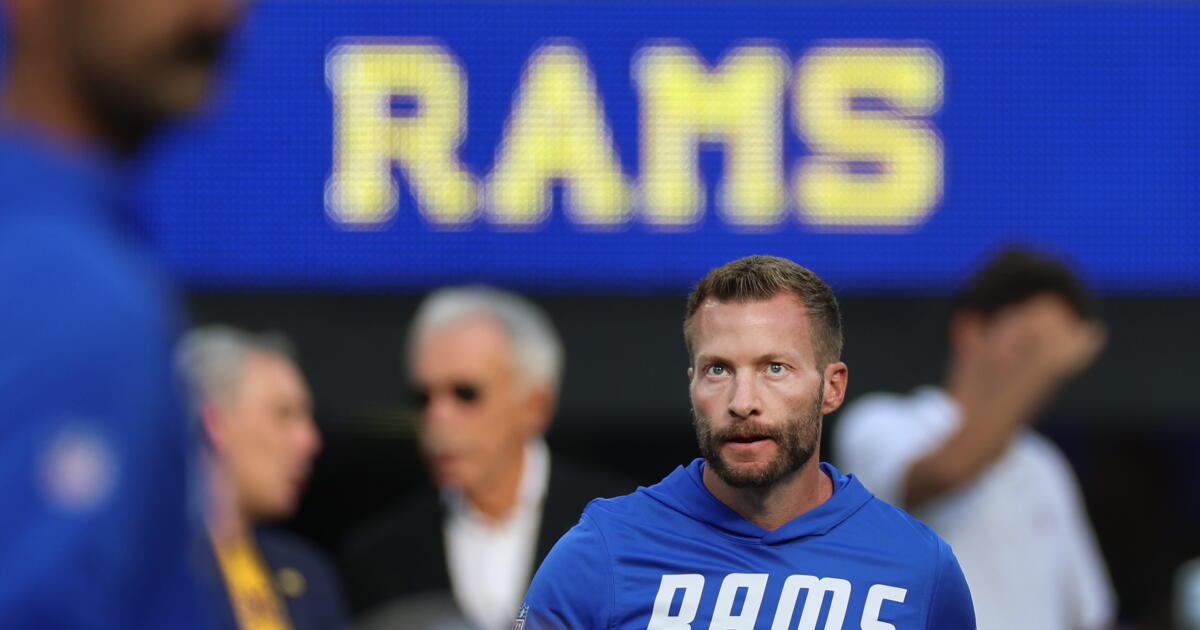
Why Sean McVay decided to cancel Rams minicamp this year

Unless they are in Maui, as they were last year, Rams coach Sean McVay annually opts to cancel mandatory minicamps after the initial report day.

This year, McVay avoided any pretense of suspense.

On Thursday, he announced to his players that after fulfilling some broadcast media responsibilities on Monday, they would not have a minicamp and break until they report to training camp at Loyola Marymount in late July, a Rams official said.

McVay’s announcement came about a week after San Francisco 49ers coach Kyle Shanahan canceled minicamp, and Seattle Seahawks coach Mike Macdonald did the same.

The Rams play the 49ers in their Sept. 10 season opener in Melbourne, Australia.

So Thursday’s final practice of organized team activities — the offseason program is voluntary — wrapped up the offseason for a team that advanced to the NFC championship game before losing to the eventual Super Bowl champion Seahawks.

Now, after trading for All-Pro cornerback Trent McDuffie and end Myles Garrett — a two-time NFL defensive player of the year — the Rams will enter the season as a favorite to play in Super Bowl LXI at SoFi Stadium.

“We’re not naïve to the things that are said,” McVay said this week, “but that doesn’t affect us and we have to be humble. … You acknowledge it, but you also understand that that means absolutely nothing.”

The Rams made news on several fronts while building what is arguably the NFL most star-studded roster.

In March, star receiver Puka Nacua checked into a rehab facility after several incidents during and after the season. One incident led to a civil lawsuit by a woman who alleges that Nacua made an antisemetic remark during a group dinner and later bit her during a ride in a vehicle.

The Rams sent the No. 29 pick in the 2026 draft and three other picks to the Kansas City Chiefs for McDuffie, and then gave him an extension that makes him the highest-paid cornerback in NFL history. The Rams also signed free agent cornerback Jaylen Watson, McDuffie’s former teammate on two Super Bowl championship teams.

The Rams then stunned many by selecting Alabama quarterback Ty Simspon with the 13th pick in the draft, leading to an awkward news conference that featured a dour McVay, who later explained that he was attempting to be respectful of quarterback Matthew Stafford’s status as the team leader.

A few weeks later, the Rams signed Stafford — the reigning NFL MVP — to a one-year, $55-million extension through the 2027 season.

And then came the trade for Garrett.

The Rams sent edge rusher Jared Verse, a 2027 first-round draft pick and future second- and third-round picks to the Cleveland Browns for Garrett, who last season amassed an NFL record 23 sacks.

“The biggest thing is that this organization really trusts and is buying into this year,” safety Quentin Lake said this week. “You look at how close we were last year, and it gives you the confidence to say what will take us the extra step.”

The Rams plans for a smooth transition to training camp, however, were roiled this week when veteran left tackle Alaric Jackson was arrested on suspicion of felony domestic violence.

In August 2024, the NFL suspended Jackson for two games for an unspecified violation of the league’s personal conduct policy.

Three months later, a woman filed a lawsuit against Jackson alleging that in May of that year he recorded her without her consent during sex. The woman alleged that Jackson repeatedly refused to delete the video and then taunted her with it. The woman reported the incident to the NFL, but the civil case was dismissed.

If the NFL were to determine that Jackson violated its personal conduct policy, he could be subject to a six-game suspension or banishment from the league, with an opportunity to appeal.

Jackson, who joined the Rams as an undrafted free agent in 2021, signed a three-year deal with the team in February 2025 that included $35 million in guarantees. He is scheduled to earn $18.4 million this season.

Warren McClendon Jr., a fourth-year pro who started in place of Jackson in the past, has mostly played right tackle, and he is expected to start at that spot now that Rob Havenstein has retired.

David Quessenberry is a nine-year veteran, but he played as a full-time starter only once — in 2021 — and has not started a game in the last two seasons. The Rams selected offensive lineman Keagen Trost in the third round

So the Rams have plenty to ponder before regrouping for training camp, the start of a process they aim to complete with another Super Bowl title.

Source link

James Burrows made TV feel like family: Remembering the sitcom master

Unlike the movies, where directors get the glory, TV directors sit lower in the hierarchy, below creators, producers and actors. In most series, which might employ several over a season, they are interchangeable — which isn’t to say they aren’t valuable, transforming words on a page into a four-dimensional living thing. But a director hired to helm a pilot, as James Burrows, who died Friday at 85, was again and again — almost as a lucky charm — helps set the tone for the series. Jake Kasdan’s input was crucial to the feel (and philosophy) of “Freaks and Geeks,” as Hiro Murai’s was to “Atlanta” (and most recently “Widow’s Bay”). In some cases a director is a co-creator in all but title and union affiliation. A show might subsequently pass to later hands, but they’ll be honoring its established look and feel.

But Burrows was more than a little well known. If you sat through the opening credits of “Taxi,” whose pilot he directed along with 74 other episodes — and why wouldn’t you, with its pleasing Bob James theme and Checker Cab crossing the Queensboro Bridge — you would have seen his name for weeks on end. You might have noticed it on “Cheers,” which he co-created and for which he directed 236 episodes, or on “Will & Grace” (246 episodes), or “Frasier,” “The Big Bang Theory,” “3rd Rock From the Sun,” “Caroline in the City,” “Two and a Half Men,” “2 Broke Girls,” “The Neighborhood” or, just last year, “Mid-Century Modern” — all series whose pilots he directed. You might have caught it on episodes of “The Mary Tyler Moore Show,” “Phyllis,” “Rhoda” or “Laverne & Shirley,” until you began to think that maybe there was nobody else directing network multi-camera situation comedies, the most human of television formats and a specialty from which he rarely strayed.

And you might have seen him as himself this year in the third season of Lisa Kudrow’s “The Comeback,” as the man she enlists to save a television pilot from hacky AI jokes. “Surprising only comes from a group of writers huddled in a corner, beating themselves up to beat out a better joke,” he says.

“As director, I am there to help create the ensemble, to do everything I can to foster a community among the company, and to train a new set of actors to behave as a group and respect one another,” he wrote in his 2022 memoir, “Directed by James Burrows.” He famously took the cast of “Friends” to Las Vegas before the show premiered in order to foster bonds in a soon-to-be-impossible state of anonymity. “I guess I have a gift for creating families,” he told the New York Times in 2023.

But if “Friends” refers to the characters and the people who play them, it includes the audience too. Burrows’ talent was to midwife a real relationship between the viewer and the viewed, “You want to go where everybody knows your name,” runs the “Cheers” theme, and where you know everyone’s name. The families he excelled at creating were yours as well, and one watched knowing that these things happened in real time in real space, and that you could be in the room, if you made the effort. Tickets were available.

The son of Abe Burrows, who wrote or co-wrote the books for “Guys and Dolls,” “Can-Can” and “How to Succeed in Business Without Really Trying,” and co-created the radio comedy “Duffy’s Tavern” — set, like “Cheers,” in a bar, though the younger Burrows denied any influence — he’d been directing dinner theater when he had the idea to write to Mary Tyler Moore, whom he’d met on the set of a never-opened “Breakfast at Tiffany’s” musical. His stage experience (and his Yale School of Drama degree, presumably) proved eminently transferable to the proscenium reality of multi-camera situation comedy.

What Burrows shows share — the ones we remember, at least, out of many we don’t — is that they’re fundamentally joyful. They lack cynicism. They’re expressive of their times without being showily edgy. They walk a line between freshness and familiarity, which makes one want to return week after week. They may push an envelope — “Friends” was something new, after all — but subtly. We can assume, given his reputation and the fact that he could have retired on “Cheers” alone, that he liked what he did and did what he liked, and regard his choice of projects as a form of personal expression in itself, the basis of a body of work that has and will live on.

Source link

How the plan to expand the L.A. City Council got shelved once again

Good morning, and welcome to L.A. on the Record — our City Hall newsletter. It’s David Zahniser, with an assist from Noah Goldberg and Melissa Gomez, giving you the latest on city and county government.

It’s long been the Holy Grail for the reform crowd that tracks L.A. city government: expanding the size of the City Council.

The idea of giving L.A. more council members was endorsed by the city’s redistricting commission in 2021. Two years later, the concept was debated at length by a council committee focused on reform. After that panel failed to reach a decision, the idea was assigned to the city’s Charter Reform Commission, which endorsed the change, saying the council should have 25 members, up from 15.

Yet even after that five-year journey, the council voted Wednesday to push a proposed ballot measure on that topic off to the future, sending the idea to a new reform committee for more deliberations.

So what happened this time around?

You’re reading the L.A. on the Record newsletter

Sign up to make sense of the often unexplained world of L.A. politics.

For one thing, the 13-member citizens commission that recommended the idea didn’t offer a lot of specifics on how the change would work.

The commission recommended 10 additional council members, a move that would cause each district to shed more than 100,000 residents, leaving each member with about 159,000 constituents.

But it never explained whether that decrease should be accompanied by a similar reduction in a council member’s salary, now nearly $245,000 a year.

“That’s one of the reasons why [council expansion] is slated for further study,” Councilmember Bob Blumenfield said in an interview. “While the commission might have had a nice discussion and a negotiation among themselves, what we need to have in front of us to vote responsibly is context and information.”

A councilmember’s pay could be a major sticking point for voters during a campaign over council expansion — especially if an opposition campaign arose to defeat it.

Blumenfield said the commission failed to vet other issues, including the number of council aides needed for each district if a district is smaller.

Councilmember Tim McOsker expressed a similar view.

“I think there were gaps in what the commission proposed — substantive gaps,” he said.

Backers of council expansion have argued that an increase in the number of districts would make the council more responsive and more diverse. Opponents said bigger does not necessarily mean better representation.

Raymond Meza, who chaired the Charter Reform Commission, acknowledged that pay, staffing and the cost of each council office didn’t come up during his panel’s deliberations. Those questions should have fallen to the council, which reviews and approves the city budget each year, he said.

“They would need to figure this out through the budget process, like they figure out most other things in the city,” he said.

Meza said he believes that, in the end, council members didn’t want to dilute their own power. Former City Councilmember Mike Bonin offered a similar take, saying elected officials generally don’t want to risk changing the system that got them into office.

“They are in power because of the way the system is structured,” said Bonin, who now runs the Pat Brown Institute for Public Affairs at Cal State LA.

Before sidelining the expansion proposal, Council President Marqueece Harris-Dawson said a larger council would shift the balance of power at City Hall, giving the mayor greater authority and the council less of it.

In the end, none of these delays may end up mattering. No one at City Hall expected council expansion to happen until 2032 anyway, since the change would require a new round of redistricting — the process of drawing new boundaries for each council district. Redistricting won’t happen until after the release of results from the 2030 U.S. Census.

In other words, there’s still time for voters to act.

What happened to the City Hall misconduct measure?

Here’s another proposal that got shunted to the sidelines during the council’s eight-hour marathon meeting: what to do about city elected officials who are charged with serious crimes.

Charter reform was, in part, a reaction to a string of corruption scandals. Among them: three sitting council members who were charged with felonies between 2020 and 2023.

In each case, council members had to decide whether to use their power, spelled out in the City Charter, to suspend colleagues accused of wrongdoing — stripping away their duties until their criminal cases were resolved.

The council moved swiftly to suspend then-Councilmember Jose Huizar in 2020, taking action the day he was arrested, before he even pleaded “not guilty” to racketeering and other charges. The council suspended then-Councilmember Mark Ridley-Thomas in 2021 after a lengthy floor debate, with some saying he was being denied his due process rights. (Ridley-Thomas, who was found guilty of seven felonies, is fighting his conviction.)

A few years later, the council decided not to suspend Councilmember Curren Price, allowing him to step off of his council committees but preserving his other council duties as he contests charges of embezzlement, perjury and conflict-of-interest violations.

Although the case is still ongoing, Price is back on various city committees.

Each of those cases put the council in a bind. Voting in favor of suspension can mean depriving a council member’s constituents of representation. It also runs counter to the idea that a colleague is innocent until proven guilty.

Voting against suspension has its own set of dangers, such as undermining trust in city government. It could also allow an elected official accused of wrongdoing to continue taking part in decisions about contracts, real estate development and other matters where the potential for corruption exists.

Under the current system, a council member can be suspended with just eight votes. Harris-Dawson, who supported the suspension of Huizar but opposed it for Ridley-Thomas, said early on that he wanted the Charter Reform Commission to look at the process for disciplining elected officials accused of wrongdoing.

The Charter Reform Commission offered its answer two months ago, recommending that the council retain the power to suspend, but only with a three-fourths vote — 12 out of 15. That safeguard was meant to guard against potential abuses of power, said Meza, the former commission chair.

The council declined to put that idea on the ballot, saying it needs more study.

Asked about that decision, Harris-Dawson said he has long had serious problems with the idea that “one set of elected officials could suspend another set of elected officials.” He suggested that a third party in another branch of government — not the council — determine whether a member merits suspension.

Under that arrangement, the council could initiate the process but leave it to a judge or other party to make the final call, he said.

“I personally think that we have checks and balances in government that should be respected,” Harris-Dawson said.

A last-minute union threat

One ballot proposal that did survive this week’s gauntlet of votes was a plan to increase, not decrease, the council’s power. That proposal, backed by Councilmember Hugo SotoMartínez, would give the council the authority to set policy at the Los Angeles Police Department.

But even that proposal may be in danger, thanks to a dispute that has erupted between the city’s labor negotiators and the Los Angeles Police Protective League, the union representing rank-and-file officers.

Union leadership said this week that the league was not formally asked by management to meet and confer over various charter proposals dealing with the LAPD, including the one focused on policy. That step is legally required before such measures can be sent to voters, the union said.

City Administrative Officer Matt Szabo, the city’s chief labor negotiator, told council members on Monday that his office sent three emails to various employee units asking if they wanted to confer over the charter changes. He said his office received no response from the police union.

A day later, after learning of Szabo’s remarks, the league fired back.

In a letter to council members, the union said it only received emails about charter reform that had nothing to do with policing. Those emails did not constitute a formal invitation to meet and confer about potential changes at the LAPD, the union said.

The city “did not follow the law and did not formally contact us,” union President Ricky Mendoza said in a statement.

The council voted to draft the change in LAPD policy making, pending a confidential report from the city attorney on whether the city first has to bargain with the police union. Council members cast that vote even after the union demanded that they suspend any further consideration of the proposal for the Nov. 3 ballot.

If the city attorney concludes that the LAPD ballot proposal does not require further talks, the Police Protective League will file a lawsuit to protect its members’ legal rights, union officials said.

On Wednesday, Szabo said the proposal to give the council power over LAPD policy decisions doesn’t require collective bargaining.

The proposal to give council say over policy at the LAPD wasn’t the only one focused on that department. Another measure discussed by the council would have given the police chief power to terminate alleged problem officers.

The council sent it to a committee for more study. The union said that proposal also would have required a meet and confer process.

State of play

— CITY CHARTER GRAB BAG: As noted earlier, the council voted to draft an assortment of charter amendments for the Nov. 3 ballot, including one to allow the council to give noncitizen residents the right to vote in local elections. The council also ordered up a measure doubling the amount of money allocated for the Department of Recreation and Parks, discarding an alternative plan that would have increased it by 50%. Other measures would switch the city to a two-year budget process and require a five-year plan for maintaining and upgrading city infrastructure.

— KNOWING ME, KNOWING ULA: Looking to boost apartment construction, the council backed a surprise plan to rewrite Measure ULA, the tax on high-end property sales passed by voters in 2022 and sometimes called the mansion tax. The council voted 9-5 to instruct the city’s lawyers to draft a measure exempting apartment buildings sold within 10 years of construction from having to pay the tax. Another vote will be needed to get it on the ballot.

— ZOO STORY: Membership at the Los Angeles Zoo has fallen by 23% over the past year, dropping from 36,914 in April 2025 to 28,440 in February, according to a report issued by the Los Angeles County civil grand jury. That report urged the city to create a new public-private partnership to run the facility, saying such a move will be critical for the zoo’s long-term survival.

— SHERIFF SUBPOENAS: L.A. County’s Civilian Oversight Commission is suing the Sheriff’s Department, asking a judge to order the release of records on three use-of-force incidents involving its deputies. The commission issued three subpoenas to the agency in February 2025, but according to the suit, the department has declined to fully comply.

— UNION DUES AND DON’TS: A former high-level officer with L.A.’s firefighter union has been accused of stealing more than $82,000 from a charity for injured firefighters to pay for his online gambling, his mortgage and other personal expenses. Adam Walker, former secretary of United Firefighters of Los Angeles City Local 112, was charged with one count each of grand theft and forgery, prosecutors announced Wednesday.

— DOG DISASTER: The Los Angeles Police Department is facing a public outcry after its officers shot and killed the dog of a woman celebrating the New York Knicks’ NBA championship in Canoga Park. Video on social media showed the dog’s owner sobbing and hugging her dog, who was wearing a Knicks T-shirt, as several LAPD officers stood nearby.

— BASS WEIGHS IN: The Canoga Park incident prompted Mayor Karen Bass to issue a statement promising a thorough and transparent investigation into the death of Jameson, the dog killed by the LAPD. “Every life lost to violence is a tragedy, and we know that the devastating loss of Jameson will be felt by his family forever,” she said. “I have spoken directly to the Chief to ensure a full investigation and accountability for any wrongdoing.”

— OFFICE FIRE: A fire broke out at a building in Pacific Palisades where former mayoral candidate Spencer Pratt maintained an office for his crystals company. Pratt, whose home burned in the 2025 Palisades fire, called the latest blaze “very suspicious.” The fire department said it’s investigating.

QUICK HITS

  • Where is Inside Safe? The mayor’s signature program to address homelessness went to a stretch of Silver Lake Boulevard that passes under the 101 Freeway. That area is represented by Soto-Martínez.
  • On the docket next week: The council meets Wednesday to take up the massive 4th & Central project, which calls for offices, retail space and nearly 1,600 units of housing on a 7.6-acre site in downtown.

Stay in touch

That’s it for this week! Send your questions, comments and gossip to LAontheRecord@latimes.com. Did a friend forward you this email? Sign up here to get it in your inbox every Saturday morning.

Source link

How low-budget movies are beating Hollywood’s most expensive bets

Two of the biggest box-office standouts of 2026 so far were not made by established studio directors or built on franchise IP.

“Obsession” and “Backrooms” — horror films from internet-native directors in their 20s — have outperformed far more expensive studio releases.

The breakout success of these films has ignited debate across Hollywood about what made these movies so popular, especially among Gen Z moviegoers who haven’t been flocking to cinemas in recent years. Here’s what to know:

The numbers

Obsession” was directed by 26-year-old Curry Barker, who got his start on YouTube with sketch comedy and horror shorts. Released May 15 by Focus Features, the film was made for just $750,000 but opened to a staggering $17 million and has improved on its debut every weekend since.

“Obsession” set an all-time horror record for the biggest fourth weekend for a film at the domestic box office, raking in $25.4 million. It now ranks as the year’s fifth most popular film, nearing $200 million domestically and roughly $295 million worldwide — ahead of Pixar’s “Hoppers” ($166 million) and Paramount’s “Scream 7” ($121 million), per Box Office Mojo.

“Backrooms,” from 21-year-old Kane Parsons — known on YouTube as Kane Pixels — drew on an online fascination with liminal spaces, leading audiences through an endless run of nearly indistinguishable rooms.

Released May 29 by A24 (known for such acclaimed films as “Moonlight” and Everything Everywhere All at Once”) on a reported $10-million budget, it opened to $81 million and crossed $100 million in under a week.

Within two and a half weeks, it had outgrossed the entire theatrical runs of horror films “Five Nights at Freddy’s 2,” “Smile” and “Scream 7.” It sits as 2026’s eighth-highest-grossing film.

Who is watching?

The audiences are young. In recent weeks, nearly 90% of “Backrooms’” viewers were under 35, with more than half under 25. Over “Obsession’s” first few weekends, 75% of the audience was 17 to 34, which is significant at a time when major studios have struggled to consistently get younger viewers to trek to the multiplex.

Why it’s working

Audiences have clearly latched onto the stories, said Jason Blum of Blumhouse–Atomic Monster, who worked on both films.

“There’s been an audience kind of waiting to get back to the movie theaters, and we in Hollywood really have not landed on what would get them back,” he told The Times in an interview this week.

Blum, who upended horror genre with the “Paranormal Activity” franchise, ties the success of “Backrooms” and “Obsession” to a connection to the directors’ origins.

Because the films were made by creators who speak to younger viewers daily on YouTube, he said, that generation “feels like they’re being spoken to.”

David Gross, an analyst at FranchiseRe, framed it as a new pipeline of talent and material. Creators can build large followings very inexpensively, he said, and their stories arrive further developed — which expedites the development and discovery process. He called internet-based storytelling “another additive source for material for movies.” Blum added that the films’ success could make studios more willing to bet on undiscovered directors who “might not have been considered” before.

Rosie Ramirez, chief marketing officer at Galaxy Theatres, said a young first-wave audience tends to generate buzz. More than a month after “Obsession” was released, she said, the Nevada chain’s four California locations are only now seeing a second wave of moviegoers curious about the hype.

Notably, the rise of these two films has unfolded in the shadow of major releases like Disney’s “Star Wars: The Mandalorian and Grogu,” and Mattel’s “Masters of the Universe,” both of which returned underwhelming numbers in their respective opening weekends.

Is it a trend or an anomaly?

Whether this marks a lasting shift or a fluke is unclear. May crossed $1 billion in box office — with “Backrooms” and “Obsession” doing much of the heavy lifting. Despite the improvement, the box office has yet to full return to pre-pandemic levels, with the summer tracking roughly 3.5% behind summer 2019, said Comscore’s Paul Dergarabedian.

And Dergarabedian questioned how the industry could replicate a success that, in his words, was “authentically and organically created” rather than manufactured: “It just happened,” he said.

Ramirez argued the broader summer slate — franchise tentpoles like “Toy Story 5” alongside some original surprises — points to a healthy box office regardless, a reminder that “it doesn’t always have to be the big summer blockbuster.”

Source link

Friction between Trump and Republican senators is growing before the pivotal midterm elections

The relationship between President Trump and Senate Republicans neared a breaking point this week as he upended their efforts to speedily confirm one of his own nominees and said he would not sign the renewal of a key surveillance law unless they agree to new terms.

Trump’s overnight social media post Wednesday that he was delaying Jay Clayton’s nomination to become national intelligence director, just hours before the U.S. attorney’s confirmation hearing, further strained relations between the Senate and White House that have been worsening for weeks. Later that day, some Republican senators who have been hesitant to challenge the president directly on the Iran war were blunt in their criticism of his deal to end it.

“This is the worst foreign policy blunder in decades,” Sen. Bill Cassidy (R-La.) said in a post on X.

The open tensions are an almost complete reversal from a year ago when Senate Republicans worked closely with Trump on a complicated effort to push through his massive package of spending and tax cuts.

At the time, criticism of the president was almost nonexistent among Republicans on Capitol Hill, and they planned to highlight passage of that bill in the midterms. But as the November election draws closer and Republicans are trying to defend their majorities, Trump is instead needling Congress with his demands and reversals, driving several Republican senators to disparage his actions publicly for the first time.

“I think somebody’s not dialing the president into the complexities of what he’s done here,” Sen. Thom Tillis (R-N.C.) said Wednesday after Clayton’s confirmation was postponed. “I mean, my God.”

The slow unraveling of what once seemed like an airtight alliance between the executive and legislative branches in a Republican-led Washington extends to their policy priorities.

Trump appears to have lost interest in most of the GOP agenda and has become almost singularly focused on his voting legislation to require proof of citizenship, which has almost no chance of passing. At the same time, he has asked members of Congress to fund parts of his White House ballroom project, allow a temporary intelligence director that none of them likes and cede their powers on the Iran war.

The growing rift has brought much of the Senate’s business to a halt and put Republicans who are up for reelection this year on the defensive. It has also put pressure on Senate Majority Leader John Thune, who has been upfront with Trump about what he can and cannot do in the Senate.

Trump pressures Thune on voting bill

Trump has pressured Thune (R-S.D.) relentlessly to scrap the filibuster and pass the strict proof-of-citizenship legislation, called the SAVE America Act. Thune has told Trump publicly and privately that the votes are not there for either step. Still, Trump has kept up the push.

In a social media post Thursday, Trump said he would be “the last Republican president” if the voting bill does not pass.

“Senate Majority Leader John Thune, and the Republican Senate, must not let this ‘carnage’ happen,” Trump said. “They will go down on the wrong side of History, as will all Republicans who just stood by and watched.”

Nonetheless, Trump has yet to go after the well-liked Republican leader on a personal basis, as he often did with Thune’s predecessor, Sen. Mitch McConnell (R-Ky.). Trump once called McConnell a “ dour, sullen, and unsmiling political hack.”

Trump and Thune talk frequently, even as Thune is sometimes giving the president news he does not want to hear. As Trump pushed for the voting bill, Thune scheduled weeks of floor time to consider it, an effort to make clear that the Senate was supportive, even if the votes are lacking.

Missouri Sen. Eric Schmitt, one of the president’s closest allies in the Senate, said he has never heard Trump say anything negative about Thune.

“It’s a difficult position,” Schmitt said of Thune’s role in the Senate. “I think they have a good working relationship.”

One of Thune’s closest allies, Republican Sen. Mike Rounds of South Dakota, said the even-keeled leader is the “right person at the right time.”

“In the Capitol today, he is the stable force,” Rounds said. “In Washington, D.C., today, he is the stable force.”

No signs of revolt among Senate GOP

There were no signs of a revolt within the GOP conference, for now, despite Trump’s pressure.

Thune “has managed it better than anyone else could manage it,” said Cassidy, who has become a more frequent Trump critic since a primary loss to a Trump-backed challenger.

Criticism of Trump has at times surfaced even among his closest Senate allies, especially with his proposed $1.776-billion settlement fund for his political allies and his pick for acting intelligence director, Bill Pulte, who has no known intelligence experience.

But the rift with Trump has also stoked some new internal tensions.

Several Republican senators criticized Sen. Mike Lee (R-Utah), who has waged an online campaign to eliminate the filibuster and pass the SAVE America Act, in a private conference lunch this week for stoking dissension within the party in an election year.

Unbowed, Lee has kept up his social media campaign, including a post Friday on X in which he said that giving up because Republicans lack the votes is a “recipe for failure.”

Texas Sen. John Cornyn, one of those who spoke out at the meeting, replied that it is Lee’s job to find the votes, “if you can.”

“Can’t just complain about others,” Cornyn posted. “Prove us wrong.”

Trump’s dwindling number of allies

Some Senate Republicans have made clear they have no plans to separate themselves from Trump.

As several of his colleagues criticized Trump’s agreement with Iran this week, first-term Sen. Bernie Moreno (R-Ohio) aggressively defended it on social media.

“Let’s get the Nobel Peace Prize ready!” Moreno posted on X.

But Trump has far fewer of those Senate allies than he did when they narrowly passed the tax and spending cuts legislation a year ago. That is in part because he has picked off some of the most loyal Republican votes himself.

Cassidy and Cornyn lost in primaries last month after Trump endorsed their opponents. Tillis announced he was not running for reelection last year after Trump repeatedly criticized him on social media.

Now all three have become frequent critics.

Shortly after his election loss, Cornyn posted on social media a fable about a frog and a scorpion. The scorpion asks the frog to carry it across a river, according to the fable, and then stings the frog in the middle of the river, “dooming them both.”

“The dying frog asks the scorpion why it stung despite knowing the consequence,” Cornyn’s post read. “To which the scorpion replies: ‘I am sorry, but I couldn’t help myself. It’s my character.’ ”

Jalonick writes for the Associated Press.

Source link

Best dog-friendly pubs with beer gardens revealed as UK set to hit 30C this week

There’s nothing better than heading to a pub garden during the balmy UK weather, and the top nine have been named – and they’re the purrfect spots for you and your beloved dog

The UK’s best dog-friendly pubs with beer gardens have been named, and it comes at the perfect time ahead of a period of intense rays.

The UK is set to bask in balmy weather this week, with temperatures reaching a blistering 30C in some regions as we edge closer to the official start of summer. Set to be a scorcher, sitting in a beautiful pub garden under shade with your pooch and a refreshing pint in hand might just be the perfect way to enjoy the sun-soaked weather.

In a bid to help Brits find that sought-after beer garden, CAMRA, the UK’s Campaign for Real Ale, has revealed the top nine dog-friendly pubs with beer gardens across the UK, all of which serve up that desirable cask beer. From their Pub of the Year winners and Good Beer Guide participants, these are undoubtedly some of the best pubs to visit during the summer months, and they’re dotted across the nation.

First on their list is Tamworth Tap in the market town of Tamworth, Staffordshire, just 30 minutes from Birmingham. It boasts an historic courtyard beer terrace with sweeping views of Tamworth Castle and additional seating at the front, so you’ll rarely be short of a seat.

It’s dog-friendly until 7pm on Friday and Saturday, providing more than enough time to enjoy it’s pictursque views over a pint from the Tamworth Brewing Company. It was named Pub of the Year in 2022, 2023 and 2025, and was also featured in the Good Beer Guide this year.

The Bailey Head in the market town of Oswestry in Shropshire, named after the nearby remains of Oswestry Castle, also featured among the top nine. It offers a pavement garden at the front of the pub, proving to be the perfect people-watching spot, and has ever-changing beers to suit every punter’s taste.

It was named Pub of the Year in 2024 and featured in the Good Beer Guide for 2026, earning well-deserved recognition and a reputation as a beloved public house in the area.

Nestled in the small village of Aldworth is the Bell Inn, and while it was named Pub of the Year back in 1990 and again in 2019, it has still earned a position on CAMRA’s list. In a Grade-II listed building, it has traditional pub interiors and a sprawling back garden with picnic benches and further seating situated at the front.

The Travellers Rest in the village of Skeeby is another pub worth noting during the summer months. Featured in the Good Beer Guide 2026 and Highly Commended in the Pub Saving Awards 2023, the pub was brought back to life after being closed for 15 years, and offers a serene garden room and spacious garden with a selection of local cask beers.

For those living in London, the Antwerp Arms in Tottenham might be your next best pub, thanks to its Georgian building and charming beer garden that is a favourite among locals. It’s another featured in the Good Beer Guide this year, and serves up local beers from Redemption Brewery.

But with nine charming pubs to choose from on CAMRA’s list, there are plenty of choices, whatever your preference, and of course, your furry friend can tag along too.

Top 10 dog-friendly pubs with beer gardens

  1. Tamworth Tap, Tamworth
  2. Bailey Head, Oswestry
  3. Bell Inn, Aldworth
  4. The Travellers Rest, Skeeby
  5. Antwerp Arms, Tottenham
  6. Miner’s Arms, Hundall
  7. Village Inn, Arrochar
  8. The Volunteer Arms (Staggs), Musselburgh
  9. Rhos yr Hafod Inn, Cross Inn (Llanon)

Do you have a travel story to share? Email webtravel@reachplc.com

Source link

Shohei Ohtani and Justin Wrobleski team up to lead Dodgers over Rays

Whenever Shohei Ohtani is questioned, it seems, he does something spectacular.

On Tuesday, with discussion still swirling over whether his knee problem from the week before would influence his two-way availability when he took the mound Wednesday, Ohtani broke open a scoreless standoff with a sixth-inning solo home run.

It held as the winning run, and the Dodgers went on to beat the Tampa Bay Rays 1-0.

“That’s just him,” Dodgers starting pitcher Justin Wrobleski said of Ohtani. “He’s obviously the best player of all time. I’m super lucky and blessed to be his teammate and watch him play. It’s been super cool.”

Up to that point, neither team’s starting pitcher had flinched.

Wrobleski had given up just three hits in six scoreless innings. And, along with five strikeouts, he hadn’t had more than one baserunner in any inning, squashing the scrappy Rays’ ability to manufacture a run.

Though the Dodgers had made more viable scoring threats against Rays starter Drew Rasmussen, they’d come up short for five innings.

They came within a couple of feet of scoring in the second inning, but the Rays pulled off a trick play to throw out Kyle Tucker at home.

Rays catcher Nick Fortes tags out Kyle Tucker trying to score in the second inning.

Rays catcher Nick Fortes tags out Kyle Tucker trying to score in the second inning.

(Eric Thayer / Los Angeles Times)

With runners on first and third, Alex Freeland laid down a bunt to Rasmussen. When he fielded it cleanly, Tucker shuffled back toward third base. But then Rasmussen turned and fired toward second base, and Tucker took off. Rays shortstop Taylor Ward cut off the throw in front of the base and cut down Tucker as he slid headfirst for the plate.

For the next three innings, the Dodgers (47-27) failed to reach base.

Then Ohtani happened.

Leading off the sixth inning, Ohtani pounced on a cutter that drifted toward the heart of the plate.

He launched it to straightaway center field, where it bounced on the netting beyond the fence.

Rasmussen lasted through the seventh inning, leaving that home run as the only blemish on his outing. Then the two bullpens duked it out to a draw in the late innings.

Justin Wrobleski pitched six scoreless innings.

Justin Wrobleski pitched six scoreless innings.

(Eric Thayer / Los Angeles Times)

Ohtani’s home run stood alone.

It was his fifth home run in nine games, bringing his season total to 14.

After a slow start, by his standards, Ohtani lamented his lack of power. Now, with the second-highest on-base-plus-slugging percentage in the National League (.966), just barely trailing the Washington Nationals’ James Wood (.967), Ohtani has that going for him too.

“He was hitting the ball hard, some doubles, singles,” manager Dave Roberts said. “And if he was just missing a little bit [before], there was going to be slug. So that’s what’s happening. Seeing the baseball well. Swinging at good pitches. And when he uses the big part of the field, there’s just no one better.”

The home run Tuesday, however, was not enough to claim a spot in the batting order Wednesday. Not in an extra-early 12:10 p.m. game. Not just days removed from a bout of inflammation in his left knee.

Before the game, Ohtani threw off a mound to test his knee before his scheduled pitching start the next day. It went well enough that he’ll be taking the mound, Roberts confirmed Tuesday night. But he will not be hitting.

Roberts will keep a close eye on Ohtani, who left the game last Thursday with a swollen knee and then sat out Friday. Ohtani theorized over the weekend that issues with his pitching mechanics may have aggravated his knee.

Said Roberts: “He wouldn’t start if we felt that we were going to put him in harm’s way.”

Glasnow hopes to begin throwing soon

In retrospect, it’s clear to right-hander Tyler Glasnow that he tried to start throwing a little too quickly after back spasms pulled him out of his start against the Houston Astros on May 6. But at the time of the injury, Glasnow, who is no stranger to back problems, was encouraged.

“It didn’t feel as bad when I first did it,” Glasnow told The Times on Tuesday.

Nearly a month and a half later, Glasnow has twice tried to restart throwing, and twice he’s had to shut it down.

“Frustrating, for sure,” Glasnow said. “Just because it happens so frequently. A lot of times I just want to find a way to address the underlying issues of why it happens.”

He has yet to find that long-term solution, but he does not expect to have surgery.

Glasnow, encouraged by his recent improvement, expects to start throwing again “soon.”

“We’re just waiting for it to be fully, fully healed,” he said.

Edman activated

As expected, the Dodgers activated Tommy Edman (right ankle surgery) off the injured list Tuesday and designated utility man Santiago Espinal for assignment.

Edman didn’t make his season debut, but Roberts said he’ll play a mixture of second base, third and left field, with his playing time dictated by factors such as pitcher matchups and the availability of left fielder Teoscar Hernández’s (strained left hamstring), who’s still on the IL.

Source link

Newly married Dua Lipa splashes out £2m in one week as she snaps up TWO new London homes

DUA Lipa has taken her London property empire to four pads by snapping up two more swish homes.

The pop sensation – who recently married actor Callum Turner– has just splashed around £1m on a two-bed flat in London’s Leicester Square area.

Dua Lipa has taken her London property empire to four pads by snapping up two more swish homes Credit: AP
The pop sensation has just dropped around £1m on a two-bed flat in London’s Leicester Square area Credit: Google Maps

And another £1m went on a flat in north London which is next door to a pad with a similar price tag she already owns.

Dua also has a pad in Hampstead worth £7m.

A firm called Chiltern Court Ltd, of which she is a “person of significant control” took out loans from the royal family’s banker Coutts & Co and OneSavings Bank Plc to fund the purchases.

That’s despite the chart topper being worth £150m.

LOVE FLOAT

Dua Lipa & husband Callum kiss in the sea as he squeezes her bum on honeymoon


TURNER AROUND

Dua Lipa & Callum Turner make huge life decision days after getting married

The star recently tied the knot with Callum Turner Credit: Google Maps
Dua purchased a mansion in West Hampstead back in 2020 for £6.5m Credit: Getty

Dua also owns a stunning £6.5m Victorian property in West Hampstead, which she bought back in 2020.

Prior to that she bought her first home in 2017, located in London, when she was just 22.

It’s been a great few weeks for Dua after tying the knot with Callum during an intimate ceremony at Old Marylebone Town Hall last month.

Dua, 29, stunned in a white hat, dress and gloves hand in hand with newly wedded husband, 35-year-old Callum, wearing a navy suit and tie.

Eight friends and family stood on both sides of the stairs at Marylebone Registry and tossed confetti as the beaming couple headed into a black cab.

A small security team and the family went in a green Land Rover and accompanied the couple who left in taxi.

It was a low-key affair making them legally man and wife ahead of their second wedding – a lavish three-day event in Sicily.

Insiders have said that the ceremony will be a massive, luxurious affair.

“They have rented out multiple huge venues for the multi-event extravaganza,” said a source.

Dua and Callum have been linked together since early 2024 and went Instagram official in May that year.

Then in June 2025 the singer confirmed that they were engaged.

Source link

London landmark opens brand-new rooftop bar & music venue this week after £1.3billion upgrade

IF you’re looking for a new London hang-out spot, Olympia has it all from pretty bars to top-tier entertainment.

After a £1.3billion upgrade, the impressive project is opening its rooftop ‘Canopy’ today and its music venue later this week.

Olympia in West Kensington has been transformed after a £1.3 billion upgrade Credit: Olympia
New rooftop bars and restaurants are opening this week like Bar Arriba Credit: Olympia

The enormous revamped building in West Kensington is opening its rooftop bars and restaurants that can only be found at Olympia today.

For anyone who fancies Mexican, check out Bar Arriba which serves up fresh cocktails and small bites from tacos to tostadas.

Lillie’s Wine Bar & Restaurant is the spot for the best of British food from Gressingham duck to Devon crab salad and you can even try a rhubarb and custard cocktail.

The outside area looks like an English country garden too with sculptures and beds of daffodils.

SCHOOL’S OUT

Just 6 weeks until school summer hols! Cheap all inclusives where kids go FREE


CHEAP DATE

Our fave cheap European destinations with flights under £20 & hotels from £24pp

At Wolves of Tokyo dig into Japanese dishes from sushi to grilled skewers, gyozas and tartare.

Arbour is the food hall which has more of a casual vibe and inside are four different spots; Café Modo, Fry Baby, The Rambler and Whammy Burger.

All of these spots are up on the rooftop so they’re perfect for a sunny weekend.

But if the weather doesn’t play ball, there is a retractable roof to protect punters from the rain.

Another dining venue at Olympia called Pillar Hall opened in March, 2026.

It’s found in the Grade-II listed part of Olympia that was built in 1886 and is home to Idalia an all-day restaurant and Pepperbird, a speakeasy-style bar.

Lillie’s Bar and Restaurant is in the style of an English country garden Credit: Incipio

That’s not all that opens this week as tomorrow, the state-of-the-art music venue, British Airways ARC will open.

It’s been described as a ‘world-class venue’ which will host music, comedy and entertainment.

It will start with performances by Self Esteem and McFly before the likes of Van Morrison and Khalid take to the stage later in the year.

This will be followed by the 1,575-seat British Airways Theatre in 2027 which will be London’s largest new theatre in 50 years.

Japanese restaurant Wolves of Tokyo has beautiful views from outside Credit: Olympia

The Hyatt Regency hotel which will have 204 rooms will open to guests from July 6.

The other on-site hotel, CitizenM London Olympia will have 146 rooms and is expected to open this summer, although no official date has been announced.

Olympia London first opened in 1886 and has held performances by Jimi Hendrix and Pink Floyd and was used as an exhibition space by the likes of Vivienne Westwood.


Source link

Drop-in improv classes in Los Angeles for all levels

Buckle in because the training wheels are OFF for this improv drop-in. So Much Improv, created and led by comic Joe Fahey, focuses on getting in your reps by doing back-to-back improvised scenes. Classes are held at Kingsley Studios, which can be difficult to spot. The two-level complex is located right in front of a liquor store, and the studio is on the second floor behind gated doors. The studio looks like a cute living room, with a couch against one wall and plants across another.

The class size tends to be small (my class included five people), but that allows more time to improvise per person. The class is mostly regulars, so there is already a good rapport between Fahey and the students. That means he can give more specific feedback. After completing other beginner courses, this one felt the scariest, but I leaned in. After a few reps, I felt more confident in my ability to improvise and develop tactics to work with my scene partner. By implementing his feedback, I was able to fine-tune my improv skills.

This class is perfect for those who want more practice. The type of reps can differ each class, but the week I went centered on UCB auditions (it was that time of year). Since the class is small, you get a more catered experience.

Best for: Back-to-back practice on intermediate or advanced drills
Cost: $20
Time commitment: Two hours
Parking: Street parking
Pro tip: Bring water because you will be talking a lot, and something caffeinated to beat the late-night crash for this evening class that requires your full attention.

Source link

California’s slow vote count stirs frustration, but changes would be hard

Over the last decade, California became a national leader in voter accessibility and security, expanding options for when and how ballots can be cast while also strengthening election safeguards.

But those reforms came at a cost: speed. And in a political climate where unsupported conspiracies about election fraud can run rampant on social media — pushed, at times, by top political leaders — some fear the slow vote count is becoming a liability.

Election outcomes in recent years have become more drawn out in California, most recently taking about a week to determine the gubernatorial and Los Angeles mayoral candidates advancing to November’s runoff after hotly contested primaries. And in prior years, it’s taken even longer to determine tight U.S. House or state Senate seats.

That trade-off — election accessibility and security over quick results — has long been defended as a byproduct of California’s desire to make it as easy as possible to cast a ballot while ensuring accuracy and integrity, something backers say remains vital to a thriving democracy.

But some experts say the increasing backlash over the slow vote count sows distrust.

“We’ve allowed the long count to be normalized, … but that doesn’t mean it’s normal,” said Kim Alexander, president of the nonpartisan California Voter Foundation, who has become an advocate for accelerating the state’s vote count. “There’s no question that voter confidence is eroding.”

A slower vote count does not signal any indication of fraud, despite unfounded claims over the last week by President Trump and others. Election officials and nonpartisan groups make clear that voter fraud remains extremely rare in the U.S., and there’s been no evidence of any such issues in California’s latest primary count.

But studies have found that voter trust slides as results lag, and this primary made clear that disinformation gains more traction the longer contests drag on, especially with lead changes.

That came to pass this primary, particularly as reality TV personality Spencer Pratt slowly lost his initial second-place ranking in the L.A. mayor’s race, before later batches of votes bumped him from the runoff — fueling an onslaught of social media hysteria: claims of so-called corruption and vote dumping, misinformed examples of alleged fraud and right-wing disinformation campaigns.

But making any substantive changes — particularly before November’s general election — would be an uphill battle, especially in deep-blue California, where Democrats tend to resist limits to voter access. And some are urging restraint.

“We should never drive policy based on conspiracy theories and lies,” said David Becker, the executive director of the nonpartisan Center for Election Innovation & Research. “That said, are there things California can do?”

Some suggestions, such as increased funding for county election offices and more education about early voting, would probably make some difference.

But the crux of the slow count comes from a flood of last-minute mail-in ballots — in a state with about one-eighth of the U.S. population. When a large percentage of California’s voters mail or drop off these ballots on or just before election day — as they tend to — it creates what Alexander calls the “pig in the python” effect: a major backlog of labor-intensive ballots to process, in a state that already handles the largest-volume ballot counts.

While verification occurs simultaneously during in-person voting, election officials in California are required to confirm a voter’s registration status, verify each voter’s signature and ensure each person did not vote elsewhere for each vote-by-mail ballot. Becker called it an “intensively human process” that cannot be sped through — but could be spread out by more early voting.

“It is a lot easier to report results out faster when ballots come in sooner,” Becker said.

Altering that process significantly enough to ease that bottleneck would likely come with other trade-offs, experts said, such as earlier deadlines to turn in certain ballots or more time-consuming ballot drop-offs — either of which might dissuade some voters from showing up. Mail-in ballots have overwhelmingly become Californians favorite way to vote, with more than 80% of voters using that method in every election since 2020.

But California didn’t become known for slow ballot counting overnight. Since the turn of the millennium, the state has taken several steps to increase voter access by expanding options for how, when and where voters can cast their ballot, while also strengthening its processes to become what the secretary of state’s office calls “the strongest voting security standards in the country.”

Those changes have included same-day voter registration, more early voting options, replacing neighborhood-specific polling places with vote centers, and most notably, universal vote-by-mail, which in 2021 required that all registered voters be mailed their ballot, which can be mailed back, returned to a secure drop box or vote center or ignored if the voter opts to vote in person.

Many Democratic voters this year waited to turn in their ballots due to the crowded pool of gubernatorial candidates, which probably exacerbated the already-slow process.

Still, that was expected. Election watchdogs and party officials from both parties tried to temper Californians’ expectations about the timing of results from the primary, reminding voters that it would likely take days if not weeks to call close races.

But when that exact process began to play out — particularly in the extremely tight contests for California governor and Los Angeles mayor — it almost immediately brought criticism and concern.

“None of the optics are good,” complained Roxanne Hoge, chair of the Los Angeles County Republican Party. “None of this is designed to inspire confidence.”

As Gov. Gavin Newsom’s office tried to dispel misinformation about California’s ballot tabulation process, the statement also said, “For the record: we wish the votes were counted faster, too.”

Not only would a speedier election count improve voter trust, which can often increase participation, Alexander said, it would also decrease harassment of election workers and help newly elected candidates step into their new roles faster — and eliminate a long limbo period for the losing candidate.

“We can get it right and do it faster, and we should,” Alexander said.

A 2023 law allowed counties to provide voters an opportunity to cast their vote-by-mail ballot as an in-person ballot, by submitting it sans envelope and signing for it at a vote center, which reduces the verification process required by election workers. About half of California counties have adopted some option of this expedited process, according to the California Voter Foundation, some calling it “Sign, scan and go!” or the “naked ballot” option, but more widespread implementation of this could help speed up the count, Alexander said. Los Angeles County, which processes more ballots than many states, has not yet implemented this time-saving option.

California also allows ballots, if postmarked by election day, to be accepted up to a week after polls close — though that policy may soon be forced to change depending how the Supreme Court rules on a case challenging ballots arriving after election day. Still, these late-arriving ballots don’t account for a large share of the delays in California: in 2024, only about 2.5% of all ballots arrived in the mail after election day.

But some election observers point out that even when compared with states with similarly run elections, California still lags behind.

“California simply counts the ballots it has too slowly and its elections offices are underfunded,” election analysts Eli McKown-Dawson and Nate Silver recently wrote in a Substack piece. “If you want people to be confident in your electoral system, a good first step is to build one that works properly.”

And while seven other states also automatically mail voters ballots, experts say it’s hard to make direct comparisons with California. Some critics often point to Colorado as an example of a state with similarly ubiquitous mail-in voting, yet a much faster count than California. But the scale of states’ elections are so different: In 2024, California processed about 13 million vote-by-mail ballots; not even 3 million were counted in Colorado.

Some have also pointed out that despite all the ways California has worked to expand voter accessibility, turnout hasn’t dramatically changed. California remains relatively in the middle of the pack when it comes to voter turnout across the U.S., and while the state has seen some spikes in turnout during certain election years, there’s been no noticeable uptick over the last 15 years, according to a review of data from 2008 to 2024.

But Becker contended that there are many factors that can influence voter turnout, in particular, California’s strong blue tilt.

“Perceived competitiveness” — or lack thereof — often keeps voters from the polls, as can uninspiring campaigns or even the weather, Becker said, but he was adamant that shouldn’t be a reason to make it harder for people to vote.

“Accessibility is always worth it,” Becker said.

Hoge, the GOP chair, had a different take, highlighting concerns about the voter registration process as well as the slow count — though she has been clear that the latter doesn’t necessarily signal fraud.

She has continued to push a more tempered narrative to many Republican leaders, including from the White House. On X, she shared a post that fact-checked a photo of vote tabulations from L.A. County, which appeared to — erroneously — show reality TV personality Spencer Pratt receiving no new votes in a daily vote count. And she boosted a video that dispelled rumors about Democrats stealing votes and ones about widespread fraud in California’s process.

“It’s a horrible roller coaster,” Hoge said about California’s election results. “It doesn’t make sense, and the fact that you’re just noticing it today doesn’t mean that it’s newly not making sense. … But until we win, we can’t change it.”

No matter what California might change or improve, Becker said he is confident it won’t stop the criticism or campaigns of misinformation. He also said that most elections in California are called relatively quickly — take the state’s pick for president, which is usually confirmed on election night — but it’s a small share of extremely tight races that take longer, because they require a more complete count to call a winner.

“It doesn’t matter how fast California counts its ballots, … we would be seeing similar conspiracy theories, maybe just with a different framing,” Becker said. “California ends up being a very effective bogeyman.”

Staff writer Kevin Rector contributed to this report.


Source link

UK’s biggest lavender farm spanning over 110 stunning acres throws open its doors for summer this week

SUMMER has officially arrived with a sea of fragrant flowers, as the UK’s largest lavender farm opens its gates this week.

Get ready to stroll through 110 acres of picture-perfect purple fields, with an array of summer activities on offer for all the family.

Castle Farm Lavender Fields are about to reopen to the public for the summer Credit: Castle Farm
Visitors can pay up to £7 to take a one hour stroll around the purple fields Credit: Castle Farm

Castle Farm Lavender Fields are opening for the summer season this week, with the public now able to enjoy its purple blooms once again.

Nestled between Eynsford and Shoreham in Kent, this sprawling lavender paradise will welcome visitors from Friday, June 19, remaining open until the end of July.

Opening in 1998, Castle Farm’s enterprise has bloomed into the UK’s largest lavender field, receiving five consecutive gold medals at the RHS Chelsea Flower Show.

Visitors wanting to indulge in the delightful flowers can take part in a variety of different activities, including a one-hour stroll though its most famous field, Darenth Valley.

SPLASH OUT

World’s biggest slip and slide in UK is opening for 7 days a week next month


ROLL ON

UK’s largest theme park with new rollercoaster drops annual pass to 19p a day

A whole host of workshops and events are also on offer across the season, including lavender wreath-making and breathwork sessions, and lavender picnics.

Castle Farm also is home to an award-winning farm shop and dedicated Lavender Barn, where visitors can choose a fresh bunch of purple flowers as the ultimate souvenir from the day.

The farm shop also offers an array of Kent-based produce, including apples from the Castle Farm orchard and even lavender-flavoured gin.

This sprawling lavender field is only a short, one-hour drive from London, where citygoers can go relax and enjoy the beautiful countryside scenery.

Lavender delights can also be bought from the dedicated, on-site farm shop Credit: Castle Farm
Picnics, wreath-making and breathwork are all on offer this summer Credit: Castle Farm

Previous visitors have raved about their day trips, with one saying: “It’s so beautiful here, it’s well worth a visit”.

Others praised the “stunning views” and “beautiful scent” in the fields.

Tickets for the lavender field walks are priced at £7 for over 16s, and £4.50 for children, with infants under three able to visit for free.

Dogs are welcome for the one hour lavender walk and guided field tours, but not for lavender picnics, wreath workshops or breathwork classes.

Castle Farm is opening to the public again on June 19, with tickets for its various activities on sale now.

Source link

Bunker Talk: Let’s Talk About All The Things We Did And Didn’t Cover This Week

Welcome to Bunker Talk. This is a weekend open discussion post for the best commenting crew on the net, in which we can chat about all the stuff that went on this week that we didn’t cover. We can also talk about the stuff we did or whatever else grabs your interest. In other words, it’s an off-topic thread.

This week’s caption reads:

FEB 22 1981; Federal Emergency Management Agency (Underground Bunker At Den Fed CTR); (Photo By Dave Buresh/The Denver Post via Getty Images)

Prime Directives:

  • If you want to talk politics, do so respectfully and know that there’s always somebody that isn’t going to agree with you. 
  • If you have political differences, hash it out respectfully, stick to the facts, and no childish name-calling or personal attacks of any kind. If you can’t handle yourself in that manner, then please, discuss virtually anything else.
  • No drive-by garbage political memes. No conspiracy theory rants. Links to crackpot sites will be axed, too. Trolling and shitposting will not be tolerated. No obsessive behavior about other users. Just don’t interact with folks you don’t like. 
  • Do not be a sucker and feed trolls! That’s as much on you as on them. Use the mute button if you don’t like what you see.  
  • So unless you have something of quality to say, know how to treat people with respect, understand that everyone isn’t going to subscribe to your exact same worldview, and have come to terms with the reality that there is no perfect solution when it comes to moderation of a community like this, it’s probably best to just move on. 
  • Finally, as always, report offenders, please. This doesn’t mean reporting people who don’t share your political views, but we really need your help in this regard.

Tyler’s passion is the study of military technology, strategy, and foreign policy and he has fostered a dominant voice on those topics in the defense media space. He was the creator of the hugely popular defense site Foxtrot Alpha before developing The War Zone.


Source link

Who loved Bass, Raman and Pratt the most? A district-by-district breakdown

Good morning, and welcome to L.A. on the Record — our City Hall newsletter. It’s David Zahniser and Noah Goldberg, giving you the latest on city and county government.

Los Angeles voters have finally gotten some closure on the outstanding contests in the June 2 primary election, with City Councilmember Nithya Raman qualifying for the runoff against Mayor Karen Bass, and Measure ER, the countywide sales tax hike, prevailing after a week of ballot counting.

With nearly all the votes counted, Angelenos are now getting a more granular understanding of the strongholds built up by each of the top three mayoral candidates.

Districts that went big for Bass, Raman and Pratt

Early on in the vote-counting process, it looked like Raman might not win her Hollywood Hills-based district, which stretches from Silver Lake to Reseda. In the end, she pulled out a first-place finish, securing nearly 34% of the vote compared to Bass’ 31%, according to Paul Mitchell, vice president of the voter data firm Political Data Inc, who aggregated county precinct data into council districts. Spencer Pratt, the former reality TV personality, trailed at 27%.

Still, Raman’s strongest support came from three districts on the eastern end of the city.

Mitchell’s analysis showed Raman with 45% of the vote in Council District 13, which includes all or parts of Echo Park, Hollywood and Atwater Village. She got nearly 40% in Council District 1, which takes in parts of Highland Park, Mt. Washington and Angeleno Heights. And she scored nearly 38% of the vote in Council District 14, which includes downtown, Boyle Heights and El Sereno.

Those districts are represented by Hugo SotoMartínez, Eunisses Hernandez and Ysabel Jurado, respectively — all members of Democratic Socialists of America, who all endorsed Bass instead of Raman, a DSA member herself. Raman placed first in all three.

Bass found her greatest strength in the three districts that cover South L.A., coming in first in all three. Her best performance was in District 8, represented by Council President Marqueece Harris-Dawson, where she led with nearly 62% of the vote.

You’re reading the L.A. on the Record newsletter

Sign up to make sense of the often unexplained world of L.A. politics.

The mayor received 45% of the vote in Council District 10, which stretches from Koreatown to the Crenshaw Corridor, and 42% in Council District 9, which stretches from the southern edge of downtown south to 95th Street.

Pratt performed the strongest in the west San Fernando Valley. He was the top vote-getter in District 12, which is represented by Councilmember John Lee and includes Chatsworth, Granada Hills and Porter Ranch. In that district, he received 39% of the vote, Mitchell’s assessment showed.

Pratt got nearly 37% of the vote in District 3, which is represented by Councilmember Bob Blumenfield and includes Woodland Hills, Warner Center and Canoga Park.

Pratt also led the pack in the 5th District, which takes up much of the Westside and is represented by Councilmember Katy Yaroslavsky. He had 30.7% of the vote, compared to Raman’s 30.6%, according to Mitchell’s analysis.

Nithya Raman attacks the L.A. ‘political machine’

It was one of tougher attacks of the mayoral primary: Raman accused Bass of engaging in “pay to play” — making decisions that benefited certain interest groups, who then spent big on her reeelection.

At her first post-election press conference Wednesday, Raman revisited that line of attack, criticizing Bass over her push to upgrade the city’s Convention Center. That $2.6 billion project was approved in the middle of the city’s financial crisis, when the council was contemplating major job cuts, Raman said.

“Downtown business groups then spent over a million dollars supporting her in her reelection. Meanwhile, the city went back to voters asking them to pay more to fix their streetlights. That is the political machine at work,” she said.

Pay to play was a potent issue in the 2005 election, when Mayor James Hahn was defeated by Councilmember Antonio Villaraigosa. At the time, federal agencies had opened corruption investigations into decisions at the city’s harbor and airports, as well as the Department of Water and Power. That year, the phrase “pay to play” was synonymous with criminal wrongdoing.

In a video acknowledging his primary defeat, Pratt said he got into the mayor’s race to “expose this corrupt machine.”

Raman stopped short of such a framing.

“It’s not corruption,” Raman told reporters at Vista Hermosa Park. “But it is evidence that the system, and how it works, particularly the influence of money in politics, has led to some very broken priorities here in the city.”

Last year, policy analysts warned the Convention Center project would be a financial drag from the moment it opens, consuming more than $100 million per year throughout the 2030s. Business groups and labor organizations pushed back, saying the project would help revitalize downtown while creating much needed construction jobs.

The Central City Assn., a downtown-based business group that supported the Convention Center upgrade, spent about $1.6 million on efforts to reelect Bass.

“Nithya Raman doesn’t think we need more jobs or visitors to our hotels and restaurants that produce the tax revenues downtown generates for the entire city, so it’s hard to support her,” said Central City Assn. President and Chief Executive Officer Nella McOsker in a statement.

Bass spokesperson Alex Stack also pushed back on Raman’s criticism, saying the mayor has been with “every group and industry to deliver results for Angelenos.”

“Nithya Raman can’t get anything done and then attacks the same groups she sought to endorse her campaign,” he said.

Pratt trailed Trump among L.A. voters

As a mayoral candidate, Pratt was dogged by questions about whether he was MAGA — shorthand for the movement that first powered President Trump into office in 2016. The Republican had received fulsome praise from Trump-aligned figures, including podcast host Joe Rogan and Greg Gutfield of Fox News.

Pratt downplayed his GOP ties. Still, there’s one area where he definitely had some similarity with Trump: His performance with L.A. voters.

Trump and Pratt both picked up roughly one out of every four votes in L.A. during their respective campaigns.

Pratt, former star of MTV’s “The Hills,” had 25.5% of the vote in L.A., according to results posted Friday. In November 2024, Trump did a little better, receiving 26.5%, county election results show.

Trump had 369,319 votes in L.A. two years ago, compared to 976,781 for then-Vice President Kamala Harris. By Friday, Pratt had 217,638 votes, compared to 247,242 for Raman and 292,115 for Bass.

It might not be fair to compare Pratt and Trump, given that there were key differences between the elections. Pratt was competing in a primary campaign, while Trump was in a general election. The candidate pool was different as well.

Trump was running in a six-way contest where Harris was his main rival. Pratt, on the other hand, was in a race featuring 13 other candidates.

Although two-thirds of those candidates were complete unknowns, four of Pratt’s rivals ran serious campaigns, amassing endorsements and spending significant amounts of money.

State of play

— TRUMP VS. LAHSA: The Trump Administration moved Thursday to block the embattled Los Angeles Homeless Services Authority from receiving federal funds, saying the agency was badly managed and engaged in fraud. Elected officials across the city denounced the move, while nonprofit groups also voiced alarm. “This is intended to create chaos,” said Jerry Jones, the head of the Greater LA Coalition on Homelessness, which represents groups that serve the region’s unhoused.

— PAYOUT PROBE: Dist. Atty. Nathan Hochman said Wednesday that he believes four out of every five claims in the largest sex abuse settlement in U.S. history — one that resulted in a $4 billion payout by Los Angeles County— may be fake. Hochman has asked a judge to pause the sex abuse payments while he continues his criminal investigation into the plaintiffs, lawyers and therapists involved in filing the claims.

— GET READY TO RUMBLE: The showdown between Bass and Raman is going to get ugly, political experts said this week, in part because they agree on a number of big-picture political issues. Both will need to court at least some of the disaffected voters who picked Pratt in the primary.

— A SCATHING SENDOFF: As we mentioned higher up, Pratt released a video Friday that was both an acknowledgment of his primary election defeat and a vitriolic screed against Bass and Raman, his former rivals. Pratt called them “morons,” “commie animals” and “corrupt communists,” and made clear he intends to ramp up his attacks in the coming months. “I don’t have campaign laws hamstringing me now. It’s war,” he said.

— WOOING LATINOS: Bass carried far more Latino-majority neighborhoods than her rivals in last week’s primary, a Times analysis found. She carried 35 Latino-majority neighborhoods, including Boyle Heights, Pacoima and Historic South-Central. That was a 46% increase from 2022, when she won 24 Latino-majority neighborhoods in her primary against Rick Caruso and Kevin de León, the analysis found.

— EKING OUT A WIN: The countywide sales tax hike known as Measure ER prevailed this week, with late-arriving ballots pushing the number of ‘yes’ votes just above 50%. “It’s a lifesaver to carry us through the storm we’re all in,” said County Supervisor Holly Mitchell, who led the push among her colleagues to get the measure on the ballot.

— AN EXPENSIVE FEE-FA: Bass was set to attend the U.S. opening game of the World Cup Friday at SoFi Stadium in Inglewood after being invited by FIFA, her office said. Still, Bass wasn’t exempt from the high ticket prices she criticized earlier this year. She paid $2,735 out of pocket for her ticket, a spokesperson said. On a related note, the mayor announced more than 100 “Kick it in the Park” events where Angelenos can watch World Cup games for free.

— MORE OF THE SAME: In a break with recent history, every council member who ran for reelection this year won their race. “People see what we’re doing, and they want us to keep fighting for them,” said Councilmember Tim McOsker, who won nearly three out of every four votes in his San Pedro-to-Watts district.

QUICK HITS

  • Where is Inside Safe? The mayor’s signature program to address homelessness went to the area around 54th Street and Western Avenue, in the South L.A. district represented by Harris-Dawson.
  • On the docket next week: The City Council meets Wednesday to take up a sprawling package of charter reform proposals, including a move to ranked-choice voting and a larger number of council members. Will the council send those ideas to voters or punt them for another two years? Stay tuned!

Stay in touch

That’s it for this week! Send your questions, comments and gossip to LAontheRecord@latimes.com. Did a friend forward you this email? Sign up here to get it in your inbox every Saturday morning.

Source link

‘The Vampire Lestat’ boss discusses bringing a glam rock edge to the AMC saga

Some people are still processing “Euphoria’s” evolution away from its roots as a gritty drama that explored highly mature and dark teenage experiences to, in its final season, a fever dream-esque look at adulthood that played like a full-blown neo-noir crime thriller. But another show’s creative transformation has taken the stage now.

The third season of AMC’s adaptation of Anne Rice’s “Interview With the Vampire” brings a reset to the captivating world of bloodsuckers. While the first two seasons adapt the original 1976 novel, relying heavily on the recollection of Louis de Pointe du Lac (Jacob Anderson) as he recounts his centuries-long life and romance with Lestat de Lioncourt (Sam Reid) to a journalist, the new season shifts narrative focus and perspective over to Lestat, who transforms into a charismatic frontman of a glam-rock band to publicly set the record straight. As such, the series has been retitled “The Vampire Lestat,” which is the name of Rice’s second novel. For this week’s Guest Spot, I spoke with showrunner Rolin Jones about the show’s rebranding and Reid’s commitment to the musical challenge.

You are reading Screen Gab newsletter

Sign up to get recommendations for the TV shows and streaming movies you can’t miss, plus exclusive interviews with the talent behind your favorite titles, in your inbox every Friday

Also in this week’s Screen Gab, TV critic Robert Lloyd steers us away from the usual streaming options to recommend a man’s video journal that documents his quest to travel the world by foot, while culture critic Mary McNamara suggests a new British comedy about codependent BFFs navigating the sort of tricky development that would end most friendships.

Speaking of endings to relationships, it was announced this week that “Doctor Who” showrunner Russell T Davies is exiting the series (again) seven months after Disney+ decided not to continue its partnership with the BBC to distribute the long-running sci-fi series. BBC also announced it will not air the show’s previously announced Christmas special this year. Lloyd, a longtime Whoverse follower, is a voice of calm through it all. He shares his thoughts on why the new questions swirling around the franchise don’t necessarily have to be cause for alarm — evolution is part of the show’s essence, he reminds us. Elsewhere in current events, if you’ve been curious (… sure, that’s the right word!) about the UFC Freedom 250 live event that will unfold in an oversize cage on the White House South Lawn in celebration of Trump’s 80th birthday and the country’s 250th anniversary — and will be streamed live on Paramount+ — check out our explainer about the controversy — and lawsuit — it has sparked.

Now if you’ll excuse me, I have another Matthew Rhys story to read so I can maintain my executive membership in the fan club. See you next week!

— Yvonne Villarreal

Turn on

Recommendations from the film and TV experts at The Times

@AlexanderCampbellOfficial (YouTube)

In February 2023, Alexander Campbell, then 27, set out from Sydney to walk west around the world. Currently he is somewhere around Albania, having traversed, among other places, Bangladesh, Nepal, Pakistan, Kazakhstan, Turkey and Bulgaria. He’s been documenting his progress on camera all along the way, but it wasn’t until Day 938, in Georgia, that he began posting the longer, “uneventful” videos that make his channel such a singular, meditative, even hypnotic, form of vicarious travel. Walking alone to the sound of his own footsteps, through sun, rain, sleet, snow and dark of night, over mountains and deserts, through forests and fields, he becomes a character in a peripatetic, nearly one-man show. The occasionally encountered friendly local will warn him about wolves or bears or the hunters who might mistake him for one, though he meets more dogs than people. (He calls them all “Buddy,” warily.) Titles include “I Slept in a Barn Full of Stray Dogs,” “I Got Caught in a Snowstorm With Nowhere to Sleep” and “Something Was Out There in the Forest.”) — Robert Lloyd

A man and a woman singing into a beer bottle.

Jemaine Clement, left, and Nicola Walker in “Alice and Steve.”

(Lara Cornell / Hulu)

“Alice and Steve” (Hulu, Disney+)

What would you do if your ex-turned-longtime bestie slept with your 26-year-old daughter? Well, Alice (“The Split’s” Nicola Walker) 100% loses her mind. Sure, during a drunken convo at a bar, she did tell Steve (“Flight of the Conchords’” Jemaine Clement) that he could have any woman he wanted, but she most certainly wasn’t talking about Izzy (Yali Topol Margalith). Having just returned home after breaking up with her boyfriend, Izzy decides that Steve, now bunking down on the sofa, is “strangely hot” enough for a little rebound sex and then a romantic relationship. And Steve, though initially regretful and more than a little shell-shocked, decides this is what he wants too. “I really like her,” he says by way of sheepish explanation. It leaves Alice no choice but to hilariously alternate between screaming and scheming as she tries to put a stop to the proceedings even at the expense of her marriage, her career, her friendship with Steve and her self-respect.

Clement’s sad-sack charm successfully boosts the leap of faith required to keep Steve from becoming an oblivious creep, but the show belongs to Walker. Her Alice becomes a blazing embodiment of the emotional maelstrom inside every woman who is expected to somehow put on a supportive, understanding face no matter how outrageous or impossible the situation. The laughs she elicits are exhalations of shock, recognition and relief. We can’t all ditch the high road for pure, luxurious fury, but it’s mighty fun to watch someone who does. — Mary McNamara

Guest spot

A weekly chat with actors, writers, directors and more about what they’re working on — and what they’re watching

A shirtless man with long blond hair holds up a black and red sheet draped behind him

Sam Reid as Lestat De Lioncourt in “The Vampire Lestat.”

(Sophie Giraud / AMC)

If you thought posting cryptic digs about an ex on your social media accounts as a way to cope with unresolved emotions was petty, this TV vampire may have you beat. The wild new, music-infused season of “The Vampire Lestat” (formerly “Interview With the Vampire”) revolves around Lestat de Lioncourt (Reid) on an elaborate mission to tell his side of the story after his ex-lover, Louis de Pointe du Lac (Anderson) published a scandalous memoir — with the help of journalist — that detailed their turbulent romance. In his bid to control the narrative, Lestat becomes an immortal glam rocker who launches a music tour and enlists the same journalist — newly turned into a vampire — to direct and film a music documentary about his life. The result is a flamboyant seven-episode season that blends rock-opera style performances (the season will feature 20 original songs) with personal reflections from its flashy frontman. As it enters its second week of release on AMC and AMC+, creator and showrunner Rolin Jones spoke over video call recently to discuss the show’s creative pivot and more. — Y.V.

To kick off the new season, there was an immersive premiere concert event at the historic Beacon Theatre in New York City earlier this month. Was that a surreal experience? Did you feel like a music manager?

I have a hard time talking about the work — the selling of the work, all that kind of stuff. I want to finish my edit, and then I want to like disappear at the Arctic. I knew we were doing this and I knew that there were like fans from all over the world flying in for it — some who didn’t have tickets. I knew there were people who had worked on the show from Seasons 1, 2, and 3 who got on a plane, asked for a ticket, and made a pilgrimage there. I was really moved by it. It was about as good as these things can ever be. It felt really beautiful. It felt like Vampire Church. It was pretty cool. And Sam — “surprising” is not the word because I’ve worked with him for a long time — was way better than he should have been. It’s incredible.

In this TV landscape, taking a show and giving it a new title as it enters its third season is a daring move. The series moves focus to the second book in Rice’s oeuvre. And while it continues the story of these characters, at the same time, it feels like a new show. What made you nervous about carrying out that kind of creative transformation? And what was thrilling about it?

We could start with a thrilling part because the idea to be able to go to the people who worked really hard and say, “Hey, let’s rebuild it” — that’s exciting. That part’s cool. The executing part about it is where the terror begins because most worthwhile art — you can call TV art — invariably has to have risk and danger involved in it, otherwise you’re probably performing a magic trick. No offense to magicians. But you want something that when you turn off the TV, you’re not immediately forgetting. The more risk you do, in terms of form, in terms of all that, you want to be able to feel like you can pull it off because, otherwise, they [the audience] have nothing to grasp onto. [And they say,] “You just destroyed this thing we love, how dare you!” But generally speaking, everybody — from the top of the network down to the actors who are doing it — was down for it. Mostly because, if you listen to our fandom, I think they demand it. They’re out there on a limb telling everybody “it’s the greatest TV show, and blah blah blah” and you have to deliver that for them so that they can continually confidently bombard all their friends and neighbors and say, “Watch the show.” There’s nobody who didn’t give everything [to this season]. It was a real collective leap together.

Sam undergoes quite the transformation to make this rock star vampire persona believable. What struck you about how he approached embodying Lestat this season?

I gained 20 pounds in Toronto, and that’s because I kept stuffing my face with bread, and about every three or four times I would have this big sloth of butter on bread, I’d go, “Poor Sam” because I know Sam had not touched a piece of bread. Let’s start there — 0% body fat, the dimensions on the waist. The level of dedication. He was living and breathing every second about the role and about the demands of it — sing songs, and not only sing songs, but go learn to be a musician, and go train with people who have been doing it their whole life so you can fake it. I feel very confident saying this: Anybody who watches this season and Sam’s performance will feel like, at the end, they saw one of the 10 greatest performances in the history of our medium. I think he absolutely disappeared. James Gandolfini did not sing songs, Swearengen [the “Deadwood” character played by Ian McShane] did not sing songs. Mr. White [the “Breaking Bad character played by Bryan Cranston] did not sing songs. I’ll put him [Sam] up against all of them. He’s incredible.

What if he wants to go off and be a rock star now?

He could do it.

A bloodied man holds a piece of paper with his right hand

Jacob Anderson as Louis De Pointe Du Lac in Season 3 of “The Vampire Lestat.”

(Sophie Giraud / AMC)

You have a rock band posing as vampires fronted by an actual vampire who is the focus of a documentary being directed by a vampire passing as a human. And for all this to work, the band has to be good. What was the challenge of making this fictional band’s stardom believable — the charisma, the presence on stage, the discography? It’s a tall order, in addition to making a compelling TV show.

Anytime you have seen these things, following a band, there’s so many ways it can fall flat. You can do three or four of the things you need to do, and if one of them falls apart, you’re still stuck there, going, “Eh.” We all, who are working on it, love music. We’ve all been in clubs. The first thing we did was remove the stardom for budget reasons, but also for singular storytelling — he decided to do rock ’n’ roll in the year 2025. Some basic building blocks, we need songs. So with [composer and songwriter] Daniel Hart, we bring him into the [writers’] room because it’s not only writing songs, but writing the context about when and where he’s [Reid] singing them. He has to be aware of what we’re doing in the room. We also have to be able to pivot when he has pure inspiration; he can come in with something we’ve never talked about, and go “Boom!” And it’s OK, now what do we do with this song? And quite often this year we restructured episodes because the song was beating our episode. [We had to] hire actors who can play or musicians that can act — and that’s not everybody, so that shrinks that down. Make sure when you’re in the club, or whether you’re singing the song in rehearsal, let us uglify it, embrace the mistake, make it a little dirty. We have a song this year that has some of the most beautiful orchestrations, but because of where it landed in the season and what it talked about, we ended up going with the most stripped down, bare version of it. Don’t worry, you’ll get to hear these beautiful orchestrations [at some point]. [It’s also thinking about] how do you carve out the time you need to shoot it and the playback elements of it, and what sacrifices you have to make on other set pieces that you would normally put in is a lot. But everything from the beginning was with one thing in mind: Do not suck. How can we suck less? Let’s not suck. And we just kept going over and over again with that.

At the end of the first episode we see Lestat reunited with his undead mom, Gabriella, who he has, I think it’s fair to say, an oddly intimate relationship with —

Multifaceted.

And obviously the Louis-Lestat romance is far from being over. What are you interested in exploring within those two dynamics, in particular, moving forward since they’re so central to Lestat?

It becomes immediately about him going, “Let me try to explain this … I might have just repelled 80% of you.” I’m really interested in the viewers who are really off-put by it. I want to see where they’re at by the end of Episode 7, if they trust us. And see what they’re feeling. I guess [some people feel], “Oh, you’re not allowed to do this in the TV world unless you got f— dragons and s—, but all the things that you would have thought [that the network might say], “Don’t do this,” we didn’t really have a lot of those obstacles. There was a lot of trust. The thing with the Lestat character is like it’s probably harder to cuddle up to him like you could Louis. Louis is a Faustian tale; here it’s like a Faustian tale but Elton John’s at the center of it. There’s a series of questions like “Why do you keep doing this to yourself? Why do you keep get trapped into these things?” It’s like going on odyssey, or as Jacob called it, an idiocy, with a character that is exotic and eccentric and contradictory. For us going forward, as we wrote it, every time we fell into the something that felt well-made or cool on a twist or turn level, we found we were very suspicious of it, and we were trying to make alien TV as best we could. So, what do I want? It’s less about exploring those two dynamics, although they’re richly part of this fabric. It was, how can you take them on a magic carpet ride, a very difficult one? The idea is to actually have, by the end, every single person recognize that part of themselves in him. And how can you normalize him over seven episodes? How can you deliver that to an audience?

I know you’ve been superbusy, but what’s the last thing you watched that you found yourself recommending to everyone or something that you were obsessed with right now?

A TV show I’m watching, one that I’m enjoying right now, is “Widow’s Bay” [Apple TV]— that has been very enjoyable. It’s so much fun.

Matthew Rhys’ facial expressions are so good.

Oh, he’s great, and that show just really knows what it is, and is joyfully silly, and has a great atmosphere. It’s one of the most beautifully shot things I’ve seen in a while. I’m not finished yet.

OK, before I let you go, I hope we get a concert out in L.A. at some point.

Wouldn’t that be nice? Where would you put it up? Echoplex?

Maybe the Troubadour.

What about the Greek? That would be nice.

ICYMI

Must-read stories you might have missed

Source link

The Spanish city where you can get five-star stays for under £40pp & it’s 37C next week

IF you’re looking for five-star stays on the cheap, check out Zaragoza in northeastern Spain.

The city has rooms in luxury hotels for as little as £79 per night for two people, as well as a thriving tapas scene – and it’s going to be very hot next week.

Zaragoza has rooms at five-star hotels for under £80 per night Credit: Alamy
Hotel Palafox has a rooftop pool and rooms from £80 Credit: booking.com

The Hotel Price Index from Hotels.com found that Zaragoza is the cheapest destination for five-star hotels in the whole of Europe.

The report revealed that you can stay in luxe rooms for an average price of £120 – but Sun Travel has found five-star stays for under £80 per night.

The first is Reina Petronila which is a short walk to the city centre and plenty to do at the hotel itself.

It has a long indoor pool, spa with a sauna, gym, bar and on-site restaurant.

CHEAP DATE

Our fave cheap European destinations with flights under £20 & hotels from £24pp


IT’S A WASHOUT

UK indoor waterparks with VIP spas, mega slides and 30C tropical climates

In the morning there’s a buffet breakfast which one guest described it as the “best part” of their stay.

Rooms range from single to Junior Studio Suite which sleeps up to two but has a self-contained dining and kitchenette.

Visitors have described it as “beautiful” another called it “value for money“.

You can book a one-night stay in the Reina Petronila from £79 per night (or £39.50pppn).

Hotel Palafox is another five-star hotel found in the Old Town, it’s very near the train station too so it’s in a prime location for visitors.

On-site there’s an Aragonia restaurant which serves up local dishes as well as a sauna, gym and pretty terrace.

Zaragoza sits on the banks of the Ebro River Credit: Getty

The gem of the hotel is the seasonal outside pool surrounded by sun umbrellas and parasols.

Rooms range from singles to grand suites and start from £81 per night (or £40.50pppn).

After a restful night, there’s plenty to do in Zaragoza which sits on the banks of the Ebro River.

And if you fancy a visit soon, the city is set to reach highs of 37C next week.

For tapas, head to El Tubo which has maze-like and narrow streets filled with restaurants.

The small dishes are generally served from 1-4pm and 8pm-midnight.

Hotel Palafox has rooms from singles to grand suites Credit: Expedia

Some tapas specialities here include Ternasco de Aragón (lamb), migas (fried breadcrumbs), and borraja which is local wild greens.

It’s also a prime bar-hopping spot during the evenings.

If anyone is heading there as a family, there’s lots to keep children entertained like the aquarium and the Emoz origami museum is filled with tiny paper treasures.

The city has some impressive buildings, some of which are Basilica de Nuestra Senora del Pilar and Palacio de la Aljaferia.

Further afield, visitors can take a day trip to the Monasterio de Piedra which is a national park that has lots of pretty waterfalls.

Brits can fly directly from London Stansted to Zaragoza from £18 with Ryanair in June.

Here are the cheapest five-star stays abroad…

These are the destinations where you’ll find the cheapest five-star hotels from Hotels.com…

  1. Nha Trang, Vietnam (£70)
  2. Zaragoza, Spain (£120)
  3. Wrocław, Poland (£120)
  4. Tirana, Albania (£130)
  5. Riga, Latvia (£130)
  6. Zagreb, Croatia (£130)
  7. Sofia, Bulgaria (£135)
  8. Heraklion (Crete), Greece (£135)
  9. Tallinn, Estonia (£140)
  10. Santo Domingo, Dominican Republic (£140)


Source link

ISWAP Used Theology to Absorb the Shock of Its Deadliest Week

For the Islamic State (IS) and its West Africa Province (ISWAP), the third week of May 2026 began with a compound disaster and ended with a theology lesson. The group faced one of its most shocking moments, at least in West Africa or, more specifically, Nigeria. 

With its headquarters in Nigeria, ISWAP has been the most active wing of the Islamic State globally, claiming more attacks than any other IS province since its central operations in Iraq and Syria were largely overpowered. Following the call for its members to migrate to Africa, ISWAP has, in the past two years, temporarily overran Nigerian military installations, including at least one super camp. The group was enjoying relative success when a turning point came: one of its most important first-generation commanders was killed. 

The operation that killed Abu Bilal Al-Minuki between midnight and 4 a.m. on May 16 was described by the Nigerian military as “meticulously planned and highly complex”. It not only left the terrorist dead, but it also caused a crisis of morale that ISWAP’s propaganda machine would spend the following days trying to contain through a theological message. 

Ahmad Salkida, a leading conflict analyst who has been observing the situation since it emerged, described the killing of Al-Minuki as a “serious disruption” to the activities of ISWAP in the Lake Chad region.

Airstrikes and special forces raids followed. More people were killed, and confusion reportedly descended. The operations, according to some reports, may also have killed the likely successor to Al-Minuki, another terrorist commonly known as Ba Shuwa, opening a new and, perhaps, unplanned chapter in the insurgency.

By May 19, Nigeria’s Defence Headquarters reported that 175 ISWAP and Boko Haram militants had been killed since the joint offensive began. According to the report, at least 20 died in a single engagement. By the time Nigerian authorities stopped counting, the joint operation had become the most lethal week the group had faced in years.

The theology of a bloody week

Within that catastrophic week, the Islamic State released its Al-Naba newsletter with a pointed editorial. Although it did not mention Al-Minuki or the numerous fighters killed, the editorial retold a story of a battle that happened 14 centuries ago to boost the morale of a group in disarray.

Reports suggest there was internal suspicion, even before the death of Al-Minuki, that some fighters may have leaked information leading to his death, driven by internal discontent over the unequal treatment between foreign fighters who migrated to the ISWAP and the local fighters in Nigeria. However, the editorial tried to shift away from that and present the losses as a normal sacrifice. 

A group of masked soldiers holding flags marches in a desert landscape, with Arabic text and articles overlaying the scene.
Screenshot from the IS weekly Al-Naba released after the death of Al-Minuki 

Everything in the editorial is deliberate. The piece opens on Talha ibn Ubaydullah, a companion of the Prophet Muhammad, at the Battle of Uhud. The selection is pointed in ways that any reader with a classical Islamic education would immediately recognise. 

Uhud was a near-disaster for early Muslims because of an internal division. It was a battle in which archers abandoned their positions, turning a momentary advantage into a rout that left dozens of companions dead and the Prophet himself wounded. 

What Islamic tradition preserved, and what the Al-Naba propaganda wanted to convey from that valley, however, was not only the memory of tactical failure but of individual men who placed their bodies between the Prophet and death – an important sacrifice for the existence of Islam. 

The editorial tells ISWAP fighters who have fallen into fear, confusion, or doubt after the loss of Al-Minuki and other fighters that a similar situation occurred during the Battle of Uhud. However, because the Prophet’s companions believed they were fighting for Islam, they did not see it as a problem.

In essence, the message is that they may ultimately be killed, suffer injuries, or even think they have already achieved victory and begin collecting spoils of war, only for circumstances to turn against them. Yet, regardless of whatever hardships or setbacks they face, they should not regard themselves as having lost, because they are fighting for their religion.

“Your role, O my mujahid brother, is to make your chest a sanctuary for the religion of Islam and guard it with your body,” the editorial reads. 

This is a recognisable pattern in IS editorial strategy. After senior commanders are killed, Al-Naba invokes early Islamic battles such as Badr, Uhud, and Khandaq as mirrors, casting present losses as the preconditions for eventual triumph. The rhetorical architecture is consistent and has appeared after every major command-level strike against the organisation. What changes each time is only the particular story pulled from the tradition.

In 2019, when Abubakar Al-Baghdadi, the former leader of Islamic State, died, Al-Naba compared the situation with that of early Muslims after the death of Prophet Muhammad, in which many of his companions fell into disbelief until they were calmed by the first caliph Abu Bakr As-Siddiq. Al-Naba issue 207 argued that if Islam could survive the death of the Prophet Muhammad, the Islamic State could also survive the death of Al-Baghdadi. 

The choice of Talha in the recent issue of Al-Naba, specifically after the death of Al-Minuki, adds a layer to the editorial. Talha survived Uhud and fought many more campaigns. The editorial addresses not only those who died but also those who lived through the week. The message to fighters still alive in the Lake Chad Basin, still holding ground, is legible between every sentence. 

“It is the duty of my mujahid brother to walk those same paths in defence of the religion of Islam, its honour, and its sovereignty,” the editorial says. 

The crisis of succession 

The theology in the Al-Naba editorial could steady nerves or explain deaths. It could also transform defeat into sacrifice. However, it could not answer the practical question now hanging over the movement: who would lead after Al-Minuki?

For years, ISWAP’s resilience has rested on its ability to survive leadership decapitation. Commanders and factional leaders have died, been assassinated, or removed. Yet the organisation endured because a pool of experienced first-generation figures remained available to absorb the shock. However, this time may be different.

A HumAngle analysis observed that Al-Minuki’s most likely successor was Ba Shuwa. However, he too may have been killed in the subsequent strikes; if confirmed, the movement would lose not only its most influential commander but also the man widely expected to replace him.

Al-Minuki belonged to a shrinking class of terrorists who entered the movement before the 2009 uprising transformed Boko Haram from a fringe extremist religious organisation into a regional insurgency. He embodied institutional memory, battlefield experience, and personal relationships that spanned multiple generations of fighters. 

Ba Shuwa, although younger in status within the movement, still belonged to that older ecosystem. Their simultaneous deaths would accelerate a transition that many inside ISWAP had anticipated but few expected to happen so suddenly. The names now circulating inside insurgent circles to replace Al-Minuki and Ba Shuwa show the scale of that transition.

Among the strongest contenders, as HumAngle gathered, is Abu Salem, a commander who grew up entirely within the insurgency’s wartime environment.  He reportedly combines military authority with religious credentials, a combination that carries considerable weight inside ISWAP’s hierarchy.

Another frequently mentioned figure is Bana Chingori, long regarded as a close associate of Ba Shuwa and an influential commander in his own right.

However, beneath the movement’s ideological claims lies a complex web of battalion loyalties, personal networks, ethnic affiliations, and historical rivalries. Fighters speak the language of the caliphate, but leadership legitimacy is often negotiated through social structures that long predate the insurgency itself. The question is not merely who is capable of leading, but who can command obedience across the various factions that make up the movement.

This is where the editorial in Al-Naba becomes more interesting. The Islamic State understands that leaders can be replaced. What is more difficult to replace is cohesion.

The editorial’s invocation of Uhud was not simply a sermon about perseverance. It was also an attempt to create continuity at a moment when continuity is under threat. By reminding fighters that early Muslims endured confusion after battlefield losses yet remained united, the editorial implicitly addresses the danger of fragmentation.

For nearly a decade, ISWAP distinguished itself from rival jihadist factions partly through its ability to maintain organisational discipline. While Boko Haram under Abubakar Shekau frequently splintered under pressure, ISWAP developed bureaucratic structures capable of surviving individual losses. The current transition will test those structures more severely than any succession crisis since the death of Abu Musab al-Barnawi and the removal of other senior figures from the Muhammad Yusuf generation. 

The paused migration 

Beyond the succession question lies another bigger development. ISWAP has announced that the flow of fighters migrating from Iraq and Syria to Nigeria has been effectively paused.

For years, the Islamic State’s call for migration to Africa was one of ISWAP’s most reliable sources of experienced foreign fighters. Foreign fighters who had trained and fought in the central theatre arrived in Lake Chad with tactical knowledge, ideological authority, and direct personal connections to IS central command. 

Al-Minuki himself was a product of that ecosystem. The suspension reflects the bigger issue that ISWAP is facing, in which local ISWAP members feel foreigners are given more priority in the insurgency, and they’re being relegated. This, according to some sources, was one of the reasons that opened a loophole that led to the intelligence leading to the killing of Al-Minuki. 

Al-Naba issue 550 addressed the question of migration indirectly. The editorial, titled “Africa Between Yesterday and Today”, spoke in the past tense about those who had already made the journey. “Those who came before you from Iraq walked this path,” the editorial told terrorists currently in Africa, “and they carried the weight of this religion on their shoulders.”

Silhouette of a person with a rifle and document against a sunset. Arabic text with the headline "Africa: Between Yesterday and Today."
Screenshot from Al-Naba 550th issue. 

The joint US-Nigeria strike that killed Al-Minuki demonstrated a targeting capability that ISWAP had not previously faced at this intensity in the Lake Chad theatre. The use of American intelligence assets alongside Nigerian special forces created a surveillance environment that makes the movement of senior figures, especially those arriving from abroad,  significantly more dangerous than before. 

For IS central, sending experienced insurgents into a degraded environment risks losing irreplaceable assets to an adversary that has now demonstrated it can find and kill the most protected figures in the organisation. The pause in migration is both a strategic retreat and a rational response to changed targeting conditions.

The commanders now being discussed as replacements for Al-Minuki are men who grew up entirely inside the Nigerian insurgency. Whatever their capabilities, they appear to lack the cross-theatre experience and IS central relationships that figures as Al-Minuki carried. The migration pause has narrowed the field of who can credibly lead it.

Source link

‘Michael’ is streaming; ‘The Verdict’ prosecutor details threats

Nearly 17 years after the King of Pop’s death, Michael Jackson is dominating the box office, television ratings and headlines.

Michael,” the biopic about the star that hit theaters in April, has surpassed $900 million at box offices globally, according to Deadline, making it the second-highest-grossing film of 2026 behind “The Super Mario Galaxy Movie,” which hit $1 billion. Although “Bohemian Rhapsody” is still the highest-grossing musical biopic, “Michael” is a mere $11 million behind and will likely snag the title in coming weeks.

The film, which stars Jackson’s nephew Jaafar Jackson, follows the “Thriller” hitmaker from his early career leading the Jackson Five to reaching pinnacle star status in the late ’80s. The film’s timeline ends before 1993, when Jackson faced sexual abuse allegations brought by 13-year-old Jordan Chandler.

On Tuesday, “Michael” was released to streaming services, and fans at home can rent or buy on-demand from Amazon Prime Video and other platforms.

Also available for streaming is the Netflix docuseries “Michael Jackson: The Verdict,” which became available on June 3 and dominated the streamer’s charts with nearly 18 million views in its first week. The three-part series examines the pop star’s 2005 molestation trial, in which he was acquitted of all charges, and features key players from the trial, including jurors, eyewitnesses and prosecutors.

The lead prosecutor, Ron Zonen, spoke with TMZ on Tuesday and said that, although he wasn’t sure audiences would view the allegations with a different lens 20 years later, he wanted the documentary to be “as accurate as possible” and feature “the perspective of people who were involved in the trial.”

As far as the response from viewers, Zonen told the outlet that he’d received threats via email. “Well, there are people who are fans, who express their displeasure at the position that we took in this documentary, and express their displeasure very clearly to me,” he said, adding that he’s not bothered by the bad blood with mega-fans, and that the threats were more numerous at the time of the trial.

Source link

U.S. says it has launched strikes against Iran following crash of Army Apache helicopter

The U.S. military said Tuesday it has begun strikes against Iran following the crash of a U.S. Army Apache helicopter off the coast of Oman that President Trump blamed on the Islamic Republic.

In a statement posted to social media, U.S. Central Command said the strikes would be “a proportional response to unjustified Iranian aggression.” It comes after Trump blamed Iran for downing the helicopter and vowed that the U.S. would respond.

Iranian state media reported that explosions were heard on an Iranian island in the Strait of Hormuz.

Trump had blamed Iran for shooting down a helicopter close to the Strait of Hormuz and said the United States must respond. Iran’s top diplomat said foreign military forces near the country’s territory “are at constant risk.”

The Apache helicopter that crashed went down after colliding with an Iranian drone, according to a U.S. official, who spoke on condition of anonymity to discuss an ongoing investigation.

It wasn’t clear whether the collision was intentional, and official statements only said the crash is under investigation. CNN, CBS News and other outlets earlier reported the Iranian drone collision.

Trump said Iran shot down the aircraft while it was on patrol over the Strait of Hormuz and declared that the U.S. “must, of necessity, respond to this attack,” in a post to social media.

The U.S. military later announced that it had begun strikes against Iran.

In the first known operation of its kind by the American military, a drone boat rescued the two aviators who were aboard the Apache attack helicopter when it went down near the critical shipping lane that Iran has effectively closed during its war with the U.S. and Israel.

Trump said in a social media post that military officials told him “the Iranians shot down one of our highly sophisticated Apache Helicopters.” Both service members “are safe and uninjured,” he added.

“Nevertheless, the United States must, of necessity, respond to this attack,” Trump wrote.

A woman walks past a mural depicting a U.S. aircraft carrier under missile attack

A woman walks past a mural depicting a U.S. aircraft carrier under missile attack in downtown Tehran, Iran on Monday.

(Vahid Salemi / Associated Press)

Soon after Trump made his accusation, Iranian Foreign Minister Seyed Abbas Araghchi said in a social media post that the strait is “thousands of miles away from U.S. shores.”

“Foreign forces in proximity to our territory are at constant risk on account of their own human errors, plain accidents, or potentially being caught in crossfire,” Araghchi wrote. “To reduce risk, best solution is for them to leave.”

The downing of the helicopter further strained a two-month ceasefire a day after Iran and Israel exchanged fire for the first time since the fragile truce took effect. Iranian state television said Tuesday that the Israeli attacks killed at least two members of the country’s air-defense units.

Since the U.S. and Israel began striking Iran on Feb. 28, the war has shaken the global economy, driven up energy prices around the world and made many basics, including food, more expensive.

Officials have been unable to turn the April ceasefire into a deal to permanently end the conflict, particularly as Israel intensifies and expands its military campaign in Lebanon against the Iranian-backed militia Hezbollah.

Army crew members picked up by drone boat

The Army aviators were rescued at 3:30 a.m. local time Tuesday, about two hours after their helicopter went down during a patrol off the coast of Oman, U.S. Central Command said.

The U.S. service members were spotted and picked up by a drone boat that took them to another location on the water, where they were picked up by a helicopter, said Capt. Tim Hawkins, a spokesman for U.S. Central Command. Hawkins initially said the drone took the two to shore, and he did not elaborate on the updated timeline.

It was the first known drone rescue at sea by the U.S. military, Hawkins said.

AH-64 Apache helicopters have been a key asset for the American military as it enforces a blockade on Iranian crude oil shipments and tankers, seeking to pressure Tehran into a deal. The helicopters have also been used by the United Arab Emirates to shoot down Iranian drones.

The drone used to perform the rescue was a 24-foot vessel called a Corsair, Hawkins said. It’s manufactured by Saronic Technologies.

The drone was assigned to the Navy’s Task Force 59, established in 2021 as the Navy’s first uncrewed and artificial intelligence unit that focuses on maritime security in the Middle East, including the Strait of Hormuz and the Suez Canal.

Trump insists an Iran deal is coming

Before he accused Iran of downing the U.S. helicopter, Trump had expressed renewed optimism over negotiations with Iran.

“We have a good chance” of signing a deal in “two or three days,” Trump said late Monday. But he did not provide any details on why there was reason for new optimism. In the two months since the U.S. and Iran agreed to an initial ceasefire, Trump has repeatedly predicted that a deal is near.

“We’re very close to having a very, very good, strong, powerful deal,” the president said.

Mediators, led predominantly by Pakistan, have been trying for weeks to get a deal across the line. However, both Iran and the U.S. have taken hard-line positions.

The U.S. wants to see Iran give up its stockpile of highly enriched uranium, which is believed to be entombed in the aftermath of American airstrikes that happened during the 12-day war in 2025. But Iran is refusing that and demanding relief from sanctions. It also wants the release of frozen assets even before a final agreement is in place, something rejected by Trump.

Before Trump’s comments on negotiations, Qalibaf said Monday that Trump’s remarks so far on a possible deal “contradicted the agreed-upon sections,” showing that the U.S. is “neither seeking a ceasefire nor dialogue.”

The continued fighting between Israel and Hezbollah is still a top Iranian priority as well. Lebanon’s army chief, Gen. Rodolphe Haykal, traveled to Pakistan on Tuesday. There, he met Pakistan’s army chief, Field Marshal Asim Munir, who has been a key figure in the Iran-U.S. talks.

Haykal’s visit comes as Lebanon’s government takes an increasingly hard line on Hezbollah but remains unable to disarm the powerful militia. Hezbollah thanked Iran on Tuesday for attacking Israel “in defense of our Lebanese people,” suggesting that Lebanon’s government should take this opportunity to improve relations with Tehran.

Israel issues a warning for Tyre, Lebanon

Meanwhile, the Israeli military issued an evacuation warning for Lebanon’s southern port city of Tyre, including the Christian quarter, which has so far been spared from airstrikes on the city.

Last week, Israel warned the Christian neighborhoods in Tyre that it believed Hezbollah members were among them. Many Lebanese Shiite Muslims fled to those areas as Israeli strikes hammered the Mediterranean coastal area over the past two weeks.

After last week’s warning, the Lebanese army deployed to the Christian district of Tyre in an effort to prevent Israeli attacks there and to show that Hezbollah has no armed presence in the area. But Avichay Adraee, the Israeli military’s Arabic-language spokesperson, posted on X on Monday that the Israeli military “will have to act against their terrorist activities in the neighborhood soon.”

Gambrell, Superville and Toropin write for the Associated Press. Superville and Toropin reported from Washington. AP writers Michelle L. Price in New York, Will Weissert in Washington, Bassem Mroue in Beirut, Munir Ahmed in Islamabad and Russ Bynum in Savannah, Ga., contributed to this report.

Source link