Prague, Czech Republic – Youssef Moursi, a 25-year-old Egyptian university student and activist in Prague, has spent the last six months in pre-trial detention, accused of an arson attack in March against a Czech weapons factory with alleged ties to Israel.
Moursi is one of 11 people being charged with “terrorism” for the attack and could face up to 20 years in prison if convicted.
The case has echoes of legal battles in the United Kingdom, where Palestine Action activists have been sentenced under terrorism laws, and Germany, where five people accused of targeting a site linked to Elbit Systems, Israel’s largest weapons maker, are on trial.
Moursi, a humanities student at Charles University, said in a statement to Al Jazeera that “a group of armed and masked policemen smashed down [my] front door”, two days after the alleged attack, in which he denies any involvement.
He spent the first three months of his detention in solitary confinement, according to his lawyer. Today, he is allowed one hour outside his cell and 20 minutes on the phone a day, with visits from friends and family every two weeks.
“[There] is the psychological front being waged against us, where [the police] deliberately try to break us by putting some of us in solitary confinement for months, denying us visits, blocking correspondence, or spreading fear,” Moursi said. “Putting people in custody and prolonging it time and time again without direct evidence, mainly based on a mix of inclinations, activism, racism, and an attempted blurring of freedom of speech, is unacceptable.”
Moursi and his lawyer, Pavel Cizinsky, believe he has been targeted because of his involvement in pro-Palestine activism in Prague.
Cizinsky said part of the evidence police have against Moursi is that on the day after the fire, he posted advice for pro-Palestinian activists on social media, should they be approached by officers. Cizinsky called this “ridiculous.”
“If you put into Google what to do when interviewed by the police, the first advice is wait for your lawyer. But if you say it as a pro-Palestinian activist, if you write it to your friends, then it’s reason against you that you are guilty,” Cizinsky said.
At the beginning of the investigation, Cizinsky said he faced pressure from the authorities not to take the case. As a result, he was not present during the initial interrogation and house raid on Moursi’s flat.
“It is clear that there is extraordinary attention to this investigation by the police, and really great resources dedicated to this case,” Cizinsky said. “But the fact that he is already five months in prison is surely a breach of law.”
Under Czech law, individuals held in pre-trial detention who have not been convicted must have their detention reviewed by a court every three months. Moursi’s detention has so far been reviewed twice, with the court deciding each time that he must stay in prison.
His detention will be reviewed again in early December, and the trial is expected to start within a year.
The fire broke out in the early hours of March 20 at LPP Holding, a Czech weapons factory in Pardubice, about 120km (75 miles) east of Prague.
No one was injured but police said the building was destroyed, with damage estimates reaching hundreds of millions of crowns, or at least four million euros.
A previously unknown pro-Palestinian group called The Earthquake Faction claimed responsibility and posted videos of the fire, saying it targeted LPP Holding for its cooperation with Elbit Systems, an Israeli weapons company.
In 2023, LPP Holding and Elbit Systems announced a partnership to build drones in the Czech Republic. But on the day of the fire, an LPP Holding spokesperson told Czech media the collaboration never happened.
The fire inside LPP Holding after the alleged arson attack [Courtesy of The Earthquake Faction]
In the weeks following the attack, police launched a manhunt and arrested several foreign nationals including Ukrainian, Czech, Slovak, Polish and American citizens. Of the 10 other individuals accused, three are under house arrest in Poland and seven remain behind bars in the Czech Republic.
Over the past two years, Elbit Systems has become a primary target for pro-Palestine activists across Europe.
In June, a UK court convicted four imprisoned Palestine Action members of criminal damage with a “terrorist connection” after a raid on an Elbit Systems factory in Filton, near Bristol. In September last year, police in Poland arrested protesters at an arms fair for throwing red liquid over an Elbit Systems stand. This week, an elderly man in Germany was arrested after protesting against the Israeli weapons giant.
In Prague, the atmosphere for pro-Palestinian activists has grown increasingly tense.
A collective called Prague 4 Palestine Youth stopped organising demonstrations and charity events after police investigations into dozens of its members in the months following the arson attack.
Rue, a 25-year-old Czech activist who requested anonymity, said that friends of those detained in the arson case and fellow activists are being subjected to interrogations, house raids, and indefinite confiscations of their devices as the investigation continues.
Nine days after the fire, Rue said, “[The police] interrogated us, and then they took us back to [our] apartment where they did a search of the house. They kept us awake for more than 24 hours. I was having panic attacks for a week straight after it happened.”
An October 10 protest in Prague calling for an end to Israel’s genocidal war on Gaza [Isabella Fattore/Al Jazeera]
After the interrogation and house search, Rue was told they were being treated as a witness to the arson attack. The police confiscated their phone and computer, which have not been returned.
Rue believes they were investigated because of their friendship with suspects in the arson case. They have visited two in prison; one is in solitary confinement for 23 hours a day, Rue said.
“When it comes to the end of the visit, the tears come,” Rue added. “You’re free to go anywhere and do anything, and they go back to being in those four walls.”
The individuals detained in the Czech Republic could remain in prison for up to four years without being convicted, according to their lawyers.
Police confirmed they have arrested and charged suspects of several different nationalities and remanded them in custody.
“Given the gravity of the case and the ongoing investigation into terrorism-related offences, the supervising public prosecutor’s office has assumed exclusive authority to release information,” the police said.
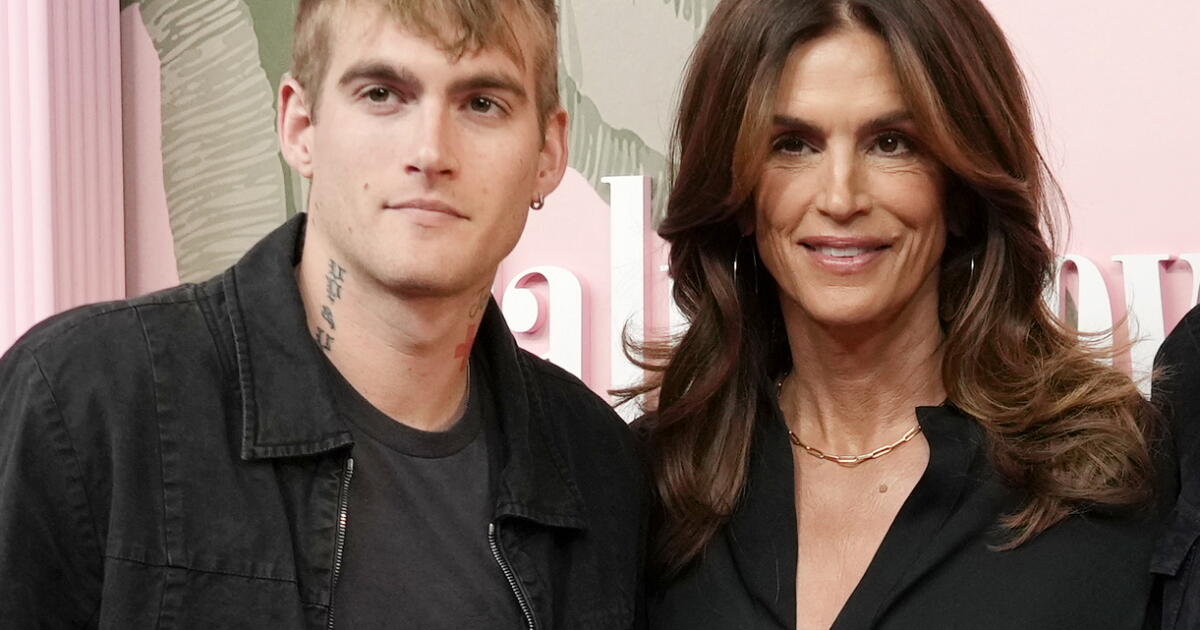
Cindy Crawford and family paid homage to her son, Presley Gerber, in their first public statements since his death at 27.
The supermodel and actor shared a smiling black-and-white portrait of Gerber along with a heartfelt message, writing, “We are beyond heartbroken to lose our beloved son and brother. We feel so blessed to have had Presley in our lives for 27 years.”
She continues, “He is a sweet, beautiful soul who loved and is loved, now and forever. We are so proud of how he showed up in the world, with kindness and vulnerability. We are grateful for the outpouring of love and support from so many who know and love our family and even strangers who feel our pain. Til we meet again our sweet boy. We love you forever, Mom, Dad and Kaia.”
Crawford concluded the post by thanking photographer Sebastián Faena for taking the image of Gerber, who appears to have angel wings.
Gerber, the brother of model Kaia Gerber and only son of Crawford and her husband, Rande Gerber, died Sept. 20 at a luxury rehab center called Resolutions Living in Santa Monica.
Kaia Gerber shared her own Instagram tribute honoring her late brother. In it, she shared a video of the two of them as children, with the caption “i love you the bluest, to the moon and back and back again, forever big brother.” The post also included a photo of the siblings as children on the beach.
In a lengthier essay included with the photo and video, she addressed the emptiness she’d felt in the weeks since her brother’s death.
“I am learning how to love you when I cannot see you. How to tell you something without picking up my phone to call you. How to be your sister in a world that I can’t reach for you in,” she wrote, adding, “I don’t know how to do that yet.”
Presley, who had been candid about his struggles with addiction and mental health during public appearances on his social media account, entered the Resolutions Living home on Sept. 19. The following morning, he was found dead of what police said was a drug overdose.
As of Sunday, the Santa Monica Police Department was still investigating the source of the drugs Gerber had taken.
An autopsy was performed, but the cause and manner of death have been deferred, “which means additional testing and/or studies were requested in order to make a determination,” according to a Sept. 21 statement from the Los Angeles County medical examiner. It could take a few months for a cause of death to be determined, the statement continued.
His death has sparked questions about how he could overdose on drugs inside the Resolutions Living home. The L.A. Times reported that the facility operates in a regulatory gray area and is not authorized to provide medical care.
The California Department of Health Services is investigating whether Resolutions Living was providing any services that would require a state license after receiving a complaint about the sober living home in September, according to department spokesperson Anthony Cava.
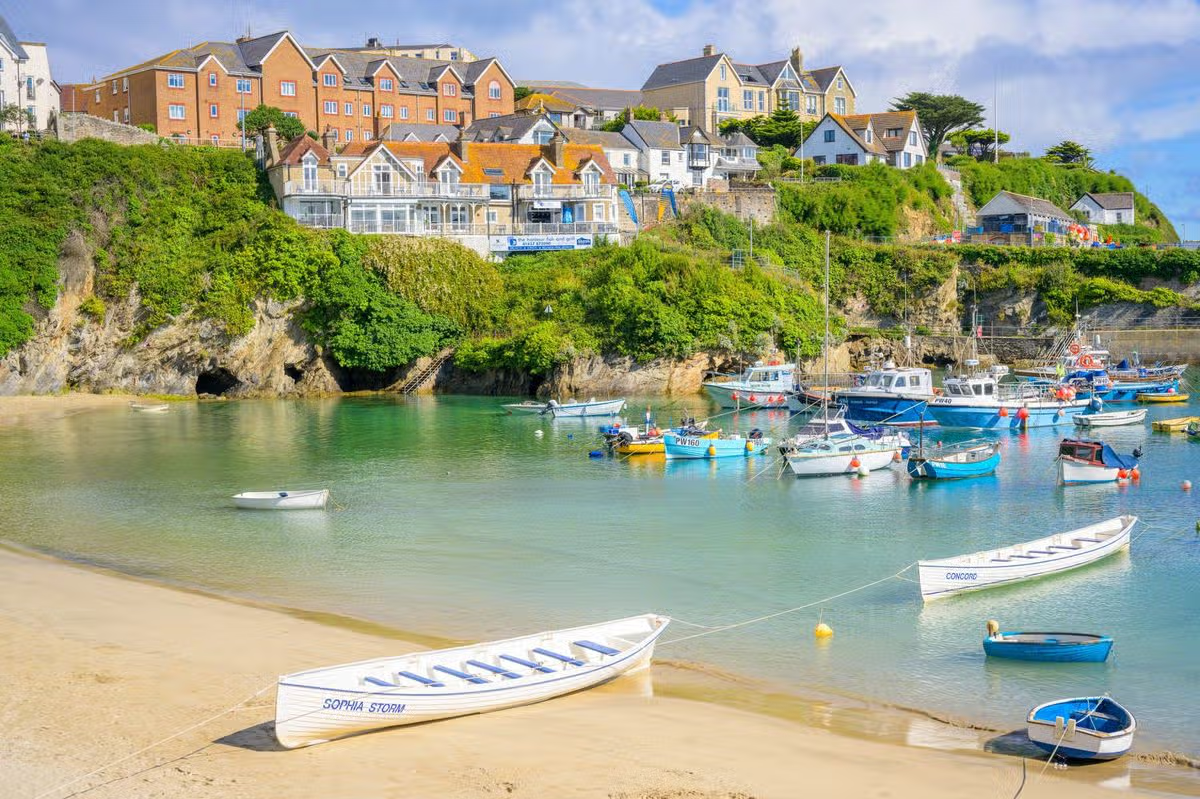
This charming seaside village is just as beautiful in autumn as it is in summer
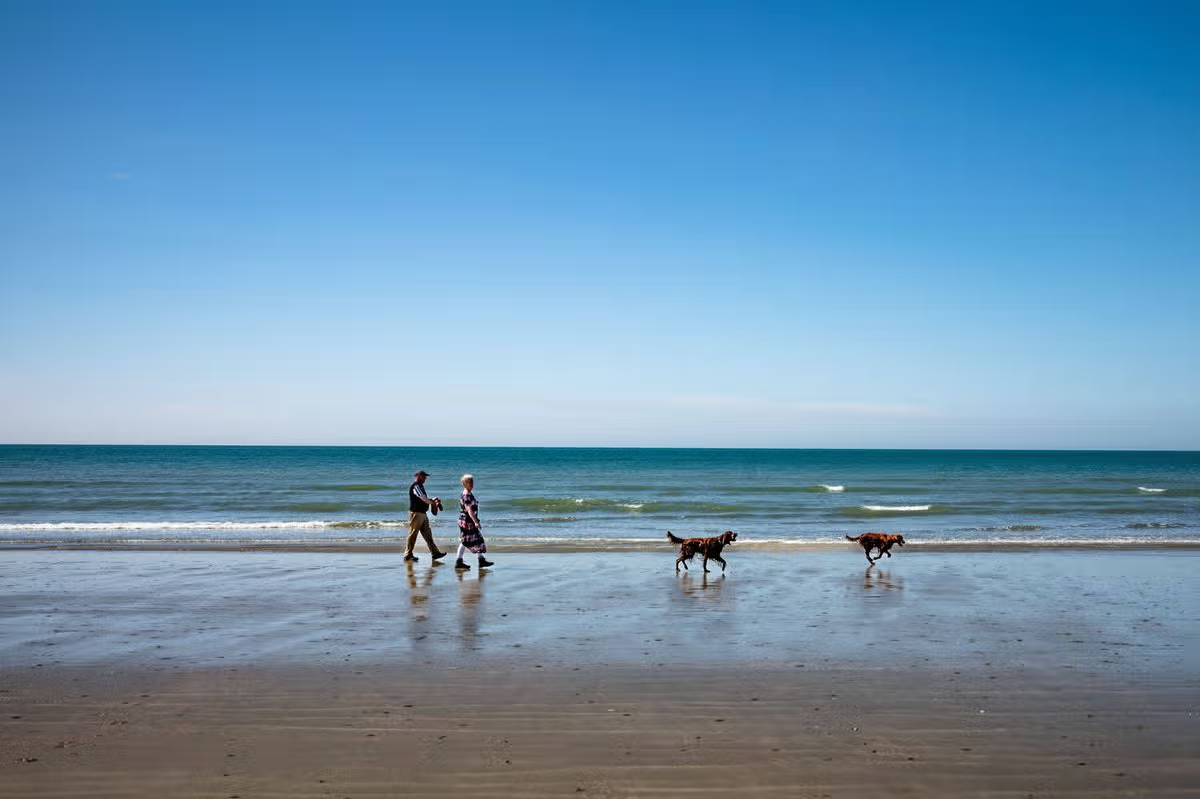
This beachside town is the perfect spot for autumn(Image: UCG, UCG/Universal Images Group via Getty Images)
Summer may be behind us, but that’s no reason to abandon a trip to the seaside. While taking a dip in the sea might not be on the cards, the British coast still has a great deal to offer.
There’s one spot in particular that locals affectionately call ‘God’s pocket’, owing to its mild microclimate that brings warmer, sunnier weather than the surrounding towns. And even if it’s simply too chilly for a swim, this gorgeous location boasts a bustling high street brimming with independent shops, cafés and pubs.
That magical place is East Wittering, tucked away along the shores of the Manhood Peninsula in West Sussex.
Ensure our latest DWP headlines always appear at the top of your Google Search by making us a Preferred Source. Click here to activate or add us as Preferred Source in your Google search settings.
While it draws the crowds during summer, it’s equally as charming during the cooler months. Take a stroll along the pebbled beach and, at low tide, wander out across the exposed stretches of soft golden sand.
After soaking up the ocean views and breathing in the fresh sea air, head into town for a spot of exploring. Kick off your morning with a coffee from Ground, just a stone’s throw from the beach on Shore Street, before making your way to The Boulevard for a proper sit-down breakfast.
With a full stomach, you can throw yourself into some serious retail therapy. One of East Wittering’s greatest draws is its remarkable array of independent shops.
From vintage clothing and fashion at Let’s Go Back, to locally handcrafted art and jewellery at The Artisan Shoppe, there truly is something to suit every taste.
For those who love the great outdoors, there’s Wittering Surf Shop, while art enthusiasts can head to V. A Design Studios.
The latter is operated by local artist Victoria and stocks everything from large-scale paintings to hand-drawn cards.
Naturally, no weekend browse would be complete without a swift pint before heading home – and East Wittering has plenty of those too.
The Shore Inn is a firm favourite, tucked right beside the main beach entrance. It’s bustling, dog friendly and boasts outdoor seating if you fancy soaking up some of the early autumn sunshine.
There’s also regularly live music to enjoy while you sip on your drink.
Slightly further afield in West Wittering (roughly a 10 minute drive away) sits The Lamb Inn – an 18th century country pub brimming with character and featuring a gorgeous beer garden.
OUR Spotlight On column uncovers the top things to see and do in the best holiday destinations, as well as lesser-known spots, in the UK and abroad.
This week, we’re shining the light on the already well-lit destination of San Diego, which sees more than 300 days of sunshine a year.
San Diego has 300 days of sunshine, did you know?Credit: AlamyBelmont is one of the world’s oldest theme parksCredit: Alamy
The Sun’s Deputy Travel Editor Kara Godfrey recently visited, and said: “I love exploring Belmont theme park, which dates back to 1925, which felt like going back to the 50s with wooden rollercoasters and spinning ice cream rides.
“Then hop over to South Mission Beach for some insane sushi at Cannonball overlooking the ocean, before a drink in Part Time Lover, a very cosy listening bar with a vinyl shop at the back.
Sign up for the Travel newsletter
Thank you!
“Save time for Barrio Logan too, named one of the best neighborhoods in the world with fantastic independent stores and street art.”
You’ll want to take advantage of that glorious weather.
So head to La Jolla Cove which was recently named the best beach in the USA in the Tripadvisor’s Travellers’ Choice Awards.
The shoreline is home to crystal-clear waters that are ideal for snorkelling in – keep your eyes peeled for wild sea lions slouched on the rocks and sand, too.
If you’re not much of a snorkeller, grab yourself a kayak from one of the many rental stores or indulge in one of the gorgeous clifftop hiking trails that will take you along the coast.
HIDDEN GEM
Ditch the tourist attractions and crowded shores. Instead you should make a beeline for North Park, where the locals and creatives hang out.
Make sure you come thirsty as this area is crammed with independent coffee shops and some of the best craft beer in the States.
Make sure to admire the colourful murals splattered along the streets and pop into the vintage stores for a souvenir.
Take a look at the historic Observatory North Park ahead of your visit as you may time if perfectly to catch one of the regular gigs,
There is so much to do in the cityCredit: AlamyBarrio Logan is home to some beautiful street artCredit: Alamy
BEST VIEW
Take a stroll from Sunset Cliffs Natural Park, just south of Ocean Beach.
This dramatic 1.5-mile stretch of rugged coastline is one of San Diego’s most spectacular viewpoints, where you can watch the Pacific waves crashing into rock arches while the sun sets beyond the horizon.
If you’re not one for a nature walk, then Mister A’s is a cracking rooftop restaurant perched high above downtown with sweeping panoramic views across San Diego, the bay and the flight path into the city’s airport.
Cocktails are being continually shaken and the atmosphere is warm and buzzy.
RATED RESTAURANT
Exciting new openings are cropping up all over the city, including Ikaria in La Jolla which is due to open towards the end of this year.
The restaurant is inspired by the Greek island which shares its name and will feature a vibrant Mediterranean menu alongside wine tastings session and cooking classes.
For a slap-up brunch, Morning Glory is set a few streets back from the waterfront, near the Harbor View area, and stars in the Michelin guide for good reason.
Decorated in hues of candy floss pink, with mirrored furniture and a champagne vending machine, it’s got an air of Palm Springs about it.
Star dishes include the indulgent souffle pancakes and fried chicken and waffles.
BEST BARS
Swap your cocktail for a pint from one of San Diego’s independent breweries – after all, this city is known as the IPA capital of the world.
Mujeres Brew House in Barrio Logan is run entirely by women and offers a whole host of craft pours including crisp lagers and bold West Coast IPAs.
It hosts regular events, live music sessions and pop-up food stalls in a casual but lively setting.
HOTEL PICK:
The 4* Pearl Hotel in Point Loma is affordable and elegant, with retro-inspired furniture and decor that make it feel like its from another era.
It’s quickly become one of San Diego’s coolest places to stay with stylish rooms, excellent cocktails and easy access to both downtown and the beach.
Rooms cost from £115 per night based on two people sharing a double. See thepearlsd.com.
In 2021, Unesco designated 11 historic spa towns across Europe as one transnational world heritage site, recognising their “exceptional testimony to the European spa phenomenon, which gained its highest expression from around 1700 until the 1930s”. This was the original wellness tourism, and these grand health resorts include Bath in England and the town of Spa in Belgium, as well as the west Bohemia spa triangle of Karlovy Vary, Františkovy Lázně and Mariánské Lázně.
Of that trio, Karlovy Vary is the most well known and within a day trip of Prague, but Mariánské Lázně is arguably the prettiest. The town offers three natural healing traditions: mineral springs, carbon dioxide springs known as Maria’s Gas, and therapeutic peloids (mud and clay). Czech nationals are still prescribed weeks-long spa stays to recover from surgery, severe illness or chronic conditions, but anyone can check into the Nové Lázně hotel (doubles from €234 B&B, including spa access), a canary yellow neo-renaissance confection built in 1896 that faces the central park.
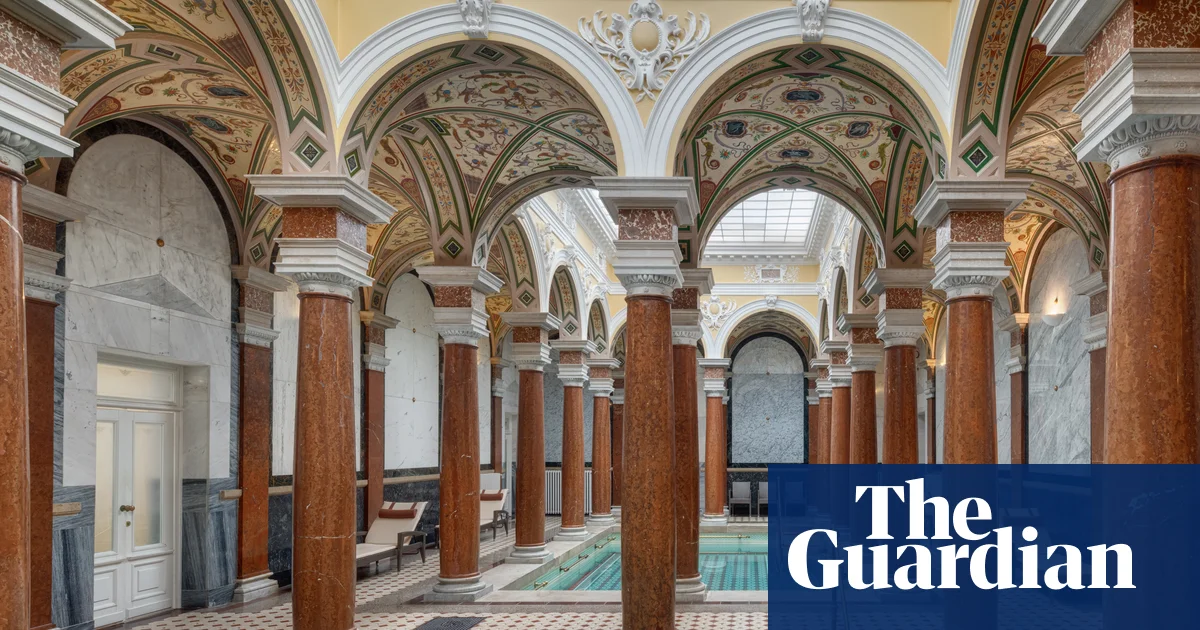
Its spa is a trip back in time: baths surrounded by marble columns and intricately decorated treatment cabins, including one built for King Edward VII, who visited nine times. Join tourists and locals drinking the waters from special porcelain cups while walking along the colonnades, and don’t forget to pair it with a spa wafer – large, thin, crispy confections with sweet fillings such as hazelnut or chocolate. It’s not all virtuous.
Bad Kissingen, Germany
Bad Kissingen in Bavaria is renowned for its architecture. Photograph: Moskwa/Alamy
Germany is home to about 350 designated spa towns, including three of the Unesco Great Spa Towns of Europe: celebrity favourite Baden-Baden, quiet riverside Bad Ems and elegant Bad Kissingen in Bavaria. The latter’s striking architecture is arguably the most interesting of the three, much of the central spa district having been rebuilt by star German architect Max Littmann in the early 20th century. This includes the grand fountain hall, with its stained-glass roof, where Brunnenfrauen (fountain women) dispense different mineral waters from bronze pipes, and the huge basilica-style Wandelhalle, where the town’s spa philharmonic orchestra performs several times a day.
Music has always been part of the spa experience – the Staatsbad Philharmonie Kissingen holds the world record for the most concerts performed in one year (727!) – and the beautiful art nouveau-style Regentenbau houses one of the best concert halls in Europe.
The modern KissSalis Therme (from €19 for two hours) on the southern edge of town is the main public bathhouse today, with indoor and outdoor thermal pools, mud treatments and various – clothing-free – saunas.
At the more classical end of the spa spectrum, the Grand Hotel Kaiserhof Victoria (doubles from €209 B&B, including spa access) sits next door to the Wandelhalle on the town’s Kurgarten. The water used in the spa here is pumped up directly from the brine spring, while the inhalation room has a wooden graduation tower covered in knobbly salt deposits, which mimics the healing effects of mineral-rich sea air.
Bad Wildbad, Germany
A pool at Palais Thermal in Bad Wildbad. Photograph: Cavan Images/Alamy
Deep in the north of the Black Forest, this spa town offers ways of immersing in nature beyond soaking in waters from the thermal springs. Rising above the town, Sommerberg (meaning “summer mountain”) will get pulses racing. A funicular railway whizzes visitors to the top, the starting point for hiking and biking routes. For more heart-pumping views, the accessible Treetop Walk (€12.50) spirals above the dense pine trees to an observation tower 40 metres up, with a tunnel slide back down the middle for extra thrills, while the Wildline suspension bridge (€9.50) – with its 380-metre walkway – arches over the Enz valley for maximum views.
Back in town, there are two thermal baths to dip into: the modern Vital Therme, where those with joint and back problems are prescribed movement therapy and spa treatments (€14 for three hours); and the historic Palais Thermal, where the pools are surrounded by marble pillars, statues of Venus and Moorish tiles (€21 for three hours). Mokni’s Palais Hotel is connected to the Palais Thermal building, meaning guests can pad over in their bathrobes (doubles from €183 B&B, including access to the spa).
Bagnoles-de-l’Orne, France
Château du Gué aux Biches at Bagnoles de l’Orne
Local legend has it that, after many battles, the medieval lord Seigneur Hugues de Tessé freed his faithful warhorse Rapide in Normandy’s Andaines forest to live out the rest of its days in peace. Much to the nobleman’s surprise, the horse later returned to him stronger and full of life, then led his master to the warm, sulphurous waters of Bagnoles’ spring. Centuries later, a spa resort sprang up so the Parisian bourgeoisie could also tap into this fountain of youth, with belle époque villas laid out on the shores of a lake in the middle of the forest (today, it’s also handily less than an hour and a half from the ferry at Caen for British wellness seekers).
That belle époque quartier was the vision of local politician Albert Christophle, whose former hunting lodge on the edge of the village is now the very lovely five-bedroom Château du Gué aux Biches (doubles from €195 B&B).
This summer, its Danish owners, Klaus Bentin and Soren Rasmussen, added a new restaurant in the old kitchen, serving up smørrebrød (open sandwiches).
The hotel has a partnership with the nearby spa at B’O Resort, meaning Klaus or Soren will line up your treatments, and there are bicycles to borrow so you can pedal a couple of kilometres over for that clay body wrap or hydromassage.
The surrounding forest is crisscrossed with hiking, biking and trail running routes. In autumn, take things more meditatively by going mushroom foraging among the more than 1,700 varieties sprouting from the Andaines forest floor.
Bad Gastein, Austria
Felsentherme thermal spa at Bad Gastein, Salzburg province. Photograph: Alamy
This genteel town in the Hohe Tauern Alps was built on water; indeed, a roaring waterfall cascades right through the middle of it. The healing reputation of its radon-rich waters, which bubble up from the town’s thermal springs, saw grand hotels built in the 19th century to house the emperors and aristocrats, writers and thinkers (Sigmund Freud among them) who came to be cured of their ills.
The fashion for “taking the waters” trickled away, but in recent years there’s been something of a revival, with a clutch of new hotels opening. The Cōmodo (doubles from €188 B&B) is one of them, a slick spot refashioned from a 1960s sanatorium. Bedrooms look out over the valley and mountains, as does the thermal water-filled indoor pool. There are several public fountains where you can still drink water straight from the source (warm, slightly salty and metallic tasting), but perhaps more palatable is to soak at the brutalist Felsentherme public bath complex with its numerous pools (€40 for a day pass).
Just as warming – but with fewer health benefits – is a bowl ofKaspressknödelsuppe (beef broth with cheese-infused dumplings) at the cosy cabin of Schafflinger Alm (soups from €4.50, mains from €17) after a bracing hike through the forest or carving up the Schlossalm-Angertal-Stubnerkogel ski area, where the season kicks off in late November.
Piešťany’s Spa Island, Slovakia
Irma Balneotherapy House in Piestany. Photograph: Piestany tourism board
Just before crossing the Colonnade Bridge to get to Piešťany’s Spa Island, there’s a statue of a man breaking his crutch, symbolic of the healing powers of the town’s thermal waters and sulphurous mud, harnessed on this enclave of wellness in the Váh River. The first simple wooden bathhouses were built on the island in 1778, but the opening of the Thermia Palace hotel and its Irma Balneotherapy House in 1912 turned it into a health resort.
Further hotels and spas are dotted between the trees and become increasingly concrete and functional as you get further from the bridge.
The Thermia Palace is still the fanciest option, with a raft of treatment programmes in the spa, from extensive diagnostics and lab tests to mud packs and pools (doubles from €210 half-board, including spa access). The blue-black goop is applied all over the body at a toasty 45C and left for about 10 minutes before being unceremoniously hosed off.
Outside, the spa park also feels restorative, with lily ponds, fountains and free-roaming peacocks.
In town, Elektrárňa Piešťany is a former power plant turned cultural centre that feels surprisingly vital, with film festivals and rock concerts, while the strikingly brutalist House of Arts hosts chamber orchestras and tango music trios.
Rogaška Slatina, Slovenia
The Grand hotel at Rogaška. Photograph: Andrija Majsen/Alamy
This town in eastern Slovenia is famed for Donat Mg, one of the world’s most magnesium-rich mineral waters, traditionally consumed for its digestive benefits. The company now sells millions of bottles of the stuff each year, but here at the source you can sip it for free from the fountains in the Pivnica Drinking Hall – although its salty, fizzy, metallic flavour is something of an acquired taste.
Like other towns of its ilk, Rogaška attracted the great and the good of Europe in the 19th century, and its confection of architecture is testament to that. A short stroll away from the drinking hall, through immaculately clipped gardens, the butter-yellow Grand Hotel Rogaška is straight out of the town’s golden age (doubles from €198 half-board include spa access). Bedrooms are traditional, but the spa has all the bells and whistles, from carbon dioxide baths and mineral water inhalations to reflexology and magnetotherapy.
Somewhat fittingly for a town famous for its drinking water, Rogaška is also known for its glassware – and visitors can tour the Rogaška crystal factory (€12) to see the glass-blowing in action before buying glasses for their Donat Mg from the on-site shop. The surrounding wooded hills are the place for autumn walks.
Salsomaggiore Terme, Italy
Terme Berzieri in Salsomaggiore, Emilia-Romagna. Photograph: Elena Dallari
In Emilia-Romagna’s so-called “food valley”, not far from Parma, this small spa town will help balance out some of that indulgence. Last year, the Italian thermal brand QC Spa of Wonders reopened the beautiful art deco-style Terme Berzieri, where the gilded interiors – all frescoes, mosaics, majolica and stucco – are as much of a draw as the salty spring waters, rich in iodine and bromide (five-hour spa sessions from €62). There’s the usual thermal attractions, as well as a sauna cinema and infinity rooftop pool, while treatments in wooden barrels nod to the area’s winemaking.
Try some of those wines at the Cantina Il Poggio vineyard in the hills outside Salsomaggiore, which produces a range of styles including the local sparkling Malvasia di Candia Aromatica (tastings from €30). Continue the tastings with a visit to a parmigiano reggiano producer, such as Caseificio Ugolotti (tour and tasting €23), before picking up some ham from Parma’s famous La Prosciutteria. Stop for a roast pork sandwich at legendary panini place Pepèn, before feasting your eyes on the Pilotta Palace complex with the Galleria Nazionale, Palatine Library and Farnese theatre, while the opulent Teatro Regio hosts the annual Verdi festival in October. The organic agriturismoCase Zucchi, about a 10-minute drive from Salsomaggiore, makes a suitably foodie base, with bedrooms named after herbs and the breakfast table piled with fresh bread, eggs, ham, cheese and fruit each morning (doubles from £104 B&B).
Caldas de Monchique, Portugal
The terraced fields of Serra de Monchique near Fóia, the highest mountain in the Algarve. Photograph: Image Broker/Alamy
High in the Serra de Monchique mountains, surrounded by cork oak and eucalyptus forests, the whitewashed hill town of Monchique offers a slower-paced autumn escape than the nearby Algarve coast. Its cobbled streets are lined with craft shops, ceramic workshops and simple taverns serving chouriço (smoked sausage) with a small glass of medronho (fruit brandy). In a wooded valley below town, the spa village of Caldas de Monchique is little more than a handful of 19th-century buildings around a shaded square and park, where you can drink slightly warm spring water from the public fountain.
The spa offers hydro rituals including a Vichy shower, massage and bath, or thermal water circuits around the pools, sauna and Turkish baths, before a dip in the outdoor pool.
Afterwards, the 1692 restaurant, with its stained-glass windows, dishes up bacalhau à Monchique (salt cod stuffed with chouriço and ham). It’s not far from here to Fóia, the highest mountain in the Algarve at 902 metres. It’s worth the walk to the summit for the views, or hike on a further 2½ miles (4km) to the Barbelote waterfall, which cascades over a rocky cliff face in the wetter months.
Chaves, Portugal
Eco cabins at Pedras Salgadas Spa and Nature Park
There’s a little run of spa towns in the north of Portugal near the Spanish border, a curative route through Pedras Salgadas, Carvalhelhos, Vidago, Carlão and Chaves.
In Chaves, the waters are some of the hottest in Europe, coming out of the ground at a scorching 76C. The Romans built a large therapeutic bathing complex here, that was only rediscovered by accident in 2006 when work began on an underground car park. Now, the free Museu Termas Romanas de Chaves allows visitors to explore the pools and soaking baths, perfectly preserved thanks to an earthquake in the 4th century that sealed them for millennia.
To take the waters today, head to the Aquae Salutem Thermal Complex (€30 for 90 minutes), a circuit of outdoor pools, saunas, steam and showers that opened in 2025.
About half an hour down the road, the Pedras Salgadas Spa and Nature Park sits on the fringes of one of the other small spa towns. The owners have built 18 eco-houses and treehouses on stilts (doubles from £171 B&B, spa access additional £17 per room) among the pine trees at the source.
Guests can do a spot of forest bathing before dipping into the spa – redesigned by one of Portugal’s most famous architects, Álvaro Siza – for a thermal water hydro-massage, or wander between the pink spring pavilions in the park. Pedras Salgadas is also a popular, naturally sparkling mineral water brand.
Minka Kelly and Dan Reynolds have ended their four-year relationship.
A source close to the couple confirmed the breakup, People first reported on Wednesday.
The “Friday Night Lights” actor and Imagine Dragons frontman first met in 2022 through a mutual friend — although their first month interacting was over phone calls as Kelly, 46, was in the U.K. for work and finishing her memoir, “Tell Me Everything,” which delved into her complex relationship with her mother.
Reynolds, 39, asked to read the book.
“You’ll either be terrified and run for the hills or you’ll see the beauty in all of it,” Kelly shared on “The Drew Barrymore Show” in November 2025. “He fortunately was the latter.”
The pair was first publicly spotted in November 2022 leaving Cafe Stella in Silver Lake; a month earlier, Reynolds announced his split from his wife, indie singer Aja Volkman, whom he married in 2011. His divorce from the Nico Vega vocalist was finalized in March 2024.
In July, Kelly shared an Instagram post of Reynolds featuring his four children (whom he shares with Volkman) at Disneyland, with the caption, “No place I’d rather be.”
In a 2024 interview with People, Reynolds shared that his kids had grown fond of Kelly.
“We view it as kind of bonuses to the family: more people to love, more people to help. We’ve just been really careful with that and slow with navigating how to bring Minka into that conversation,” he said. “She’s done a really incredible job of being sensitive and careful on her end as well.”
In 2025, Reynolds made a guest appearance on the first season of Netflix’s “Ransom Canyon,” which starred Kelly as Quinn O’Grady, a former concert pianist, opposite Josh Duhamel, who played rancher Staten Kirkland.
The show was canceled after two seasons this September.
As viewers tuned into tonight’s episode of The Celebrity Traitors, the Mirror takes a look at some of the strong ties that bind this year’s batch of stars, which could take them all the way to the end
19:36, 08 Oct 2026Updated 19:56, 08 Oct 2026
There are plenty of friendships on the show already(Image: BBC)
The Celebrity Traitors is well underway and it’s already brimming with wild twists and turns – including a self-confessing traitor and a weird adversion to physical touch.
We’re only two episodes in, but fans will have already spotted that a number of stars seem chummy even before getting themselves settled in the iconic Scottish Highlands castle.
Friendliness isn’t always a superpower on the show – the sneakiest often prevail once it really gets going – but loyalty can go a long, long way.
As we’ve seen in previous seasons (Hello Rachel Duffy and Stephen Libby), forging an alliance can make all the difference when all eyes are on you at the Round Table. And it sometimes takes just one strong ally to sway the opinion of the group.
Here, the Mirror takes a look at some of the strongest bonds in Celebrity Traitors this year, and how they might shake things up…
Rob Beckett and Romesh Ranganathan
Starting off with possibly the best-known connection in the show, comedians Rob Beckett and Romesh Ranganathan already feel like a package deal, with their friendship dating back to their early days on the 2010 comedy circuit.
Rob first learned of Romesh’s comedic talents through a friend and headed out to see his set at his dad’s pub. His initial feeling was that of annoyance, having “wanted to be the only good one at comedy”. But this irritation quickly blossomed into a friendship that would see them right to the top of their profession.
Both feeling like “outsiders” in a middle-class industry, Rob and Romesh secured a solid bond before hitting the big time. Reminiscing in a 2021 address to the Royal Television Society, Rob, now 40, shared: “Coming up through comedy and telly, which is quite a middle-class world, we bonded because we both felt we didn’t belong. We really did get on…Having a mate that you can share the madness with was great.”
Having built impressive careers independently, becoming familiar faces on the likes of A League of Their Own, 8 Out of 10 Cats, Mock the Week, and Taskmaster, it soon became clear that viewers loved the pair’s natural on-screen dynamic.
In 2019, Rob and Romesh were snapped up by Sky Television for Rob and Romesh Vs…, a series which sees the two funnymen plunged into unfamiliar territory together.
One episode saw the pals perform a country song in Nashville after meeting Shania Twain, while another followed them as they performed Hollywood-style stunts for Hollyoaks.
Summing up their relationship as the Traitors’ games began, Rob quipped: “I know Rob very, very well. I mean, I’ve sat next to him as he’s had a colonic.”
It’s clear nothing much fazes the duo, who are able to adapt to pretty much any situation imaginable – from dancing in Swan Lake to training with the NFL. Will their bond and shared chameleon abilities prove to be one of this season’s greatest weapons? We’ll have to wait and see.
Richard E. Grant and Jerry Hall
Another friendship that has also come under the spotlight is that of Richard E. Grant and Jerry Hall. Neighbours over in swanky Richmond and friends for 30 years, Richard was a guest at Jerry’s 2016 wedding to media tycoon Rupert Murdoch, whom she divorced in 2022.
Jerry has spoken fondly of the fun she shared with the Withnail & I thespian on the set of the 2004 kids’ fantasy film, Tooth, which delves into the lives of tooth fairies living in ‘Fairytopia’.
Describing the critically reviled movie as “ridiculous” ahead of their Traitors reunion, Jerry chuckled: “We had such a laugh, and I went on holiday with him earlier this year, just after Christmas, to Africa with some friends. And we danced all night. We had so much fun! Little did we know back then that we’d both be here!”
Richard, 69, had viewers’ jaws firmly on their living room floors after proudly outing himself as a traitor in the very first episode, followed by plenty of backtracking. While many faithfuls were less than convinced by the Academy Award winner’s subsequent performance, supermodel Jerry stood firmly by her pal.
Jerry, 70, insisted: “I just don’t believe Richard’s a Traitor. I know Richard, I’ve known him 30 years and he’s my neighbour. He says and does eccentric things. He’s an amazing guy, but I think he’s acting out because he’s not been chosen.”
While en route to their shipwreck challenge, Jerry was quick to agree with Industry actress Myha’la, who said, “I really, really genuinely do not think he’s a traitor,” declaring, “I don’t either.”
This show of loyalty may prove very useful to Richard when it comes to quashing some very understandable doubts over his faithfulness.
Of course, fans of a more cynical bent could also argue that Richard and Jerry could have discussed tactics beforehand in one of their neighbourly chats, and that a long game could well be afoot to see them both splitting the prize…
Bella Ramsey and Sebastian Croft
Having braved the tangled feudal webs of Westeros together, Bella Ramsey and Sebastian Croft will likely feel prepared for the cloak-and-dagger world of the Traitor’s Castle. And their established friendship could prove to be a powerful alliance.
Bella, now 23, was just 11 years old when they astonished Game of Thrones fans with their portrayal of the pint-sized yet formidable head of House Mormont, Lyanna Mormont.
Sebastatian, known as ‘Bash’ to pals, made his Thrones debut in 2016 – the same year as Bella – giving a brief but memorable performance as a young Ned Stark.
While the pair never got to share a scene, Sebastian, 24, could barely contain his excitement as he pictured the two of them plotting together. The star, who is known to be a huge Traitors buff, enthused: “I love Bella! Imagine us in the turret together. That would be the dream.”
Being well-used to sticky endings in their former shared set, you can guarantee that these two won’t be too horrified by increasingly frequent dispatches of their castlemates. But they also know that sometimes it’s the ones you care for the most who can leave you with a Valyrian steel sword in the back.
In a private castle exchange in episode two, Bella admitted, “I go back and forth on you, Bash”, making their suspicions clear. Bash was quick to refute this, signalling their closeness as he argued, “I genuinely think you’d know if I was.” Bella considered this and noted that they thought Sebastian would know too, if it were the other way around.
Both actors pledged to have each other’s backs, but it was evident that neither one of them left the conversation feeling 100 per cent at ease. During a piece to camera segment, Bella shared: “I know Sebastian, who I know as Bash. We met quite a few years ago, I think at an awards thing we were both at. I mostly trust Bash, but there’s something just a little bit unsettling that I just have to keep in the back of my [mind].” They added, “I can’t trust everybody. This is a game. Nothing is personal”
Sebastian, too, is erring on the side of caution, telling the camera: “I love Bella, and I’ve tried to make myself as little of a threat to them, but as much of an asset, because Bella is a formidable player. That’s someone I’m definitely keeping an eye on.”
Joe Lycett and James Acaster
Joe Lycett and James Acaster are also good pals, with their friendship dating back to their days on the pub circuit nearly 20 years ago. The comedic pair, who have appeared on numerous panel shows together, have a running joke about people frequently getting them mixed up.
Back in 2021, Joe, 38, cheekily riffed on this by putting James’ face on posters for his tour, causing some confusion amongst comedy fans. Clarifying that this wasn’t an awkward error on the part of the printers, Joe issued the following statement via X: “I would like to publicly apologise to Mr Acaster and his team for this.
“The posters were an experiment to see if my face was a deterrent to the British public and if his face would sell more tickets for my show.”
He proceeded to jest: “It is with great disappointment that I have discovered sales have shot up. Mr Acaster’s legal team contacted my representatives, and after talks we have agreed on an out-of-court settlement.”
Will the similarities between the duo prove to be a help or a hindrance this season? We shall certainly see.
Maya Jama and… half the castle
A natural leader, fans were no doubt thrilled to see Maya Jama don that infamous green cloak and make it look like a fashion moment. And it’s likely the presenter’s natural people skills will prove to be a real asset here.
Maya, 32, has crossed paths with a number of fellow Traitors celebs in the course of her work. In 2020, she competed against James Acaster on The Big Fat Quiz of the Year.
Memorably, James dislodged a safety partition screen in an humorously chaotic attempt to stop Maya’s team from seeing his written answer. It’s likely she won’t have forgotten the comedian’s competitive streak.
In March 2021, Maya appeared on Romesh’s podcast Hip Hop Saved My Life, where she discussed developing her early love of hip hop through her mum’s Eminem CDs. She also offered Romesh some tips on his makeup techniques.
Then, in February 2024, Maya was seated in the front row at Italy’s Milan Fashion Week, right next to Little Mix’s Leigh-Anne Pinnock. More recently, Maya co-presented the Artist of the Year award at the BRIT Awards 2026 with none other than You’re Beautiful singer, James Blunt.
While there will be few unfamiliar faces here for Maya, she has played down any significant connections, asserting: “I’ve met a few people in the cast, but nobody really knows me, so we’re all starting from scratch.”
Nevertheless, these various brushes over the years will surely come in useful when it comes to keeping a careful eye out at the round table.
The Celebrity Traitors returns tonight at 8 pm on BBC One.
Do you have a story to share? Email me at julia.banim@reachplc.com.
A baggily clad skateboarder’s wheels clatter across concrete floors, the noise bouncing off exposed pipes and iron girders. Vaulted skylights set in high ceilings illuminate the industrial space and its central kitchen, from which my main course – a silky lemon risotto, spiked with samphire, rhubarb, garlic, baby onions and basil – has just been transported.
I’m in the Dutch city of Eindhoven, in North Brabant, famous for its historic connection to Philips, the one-time electronics giant. The restaurant, Radio Royaal, is housed in what was once their engine room, in the Strijp-S neighbourhood. Today, Strijp-S buzzes with concept stores, an indoor food market, MU Hybrid Art House and the Area 51 skatepark. The broader area, Strijp, was where the company was largely headquartered: its zones are named S, T and R. In the late 90s, Philips withdrew from the city where it had started in 1891, and the letters I, J and P were never assigned.
Philips had employed about half of the region’s working population, so its departure for Amsterdam inevitably left a huge hole. Fortunately for Eindhoven, this was short-lived, and within a decade the city had reinvented itself as a multicultural hub for design and innovation – so much so that Dutch Design Week, the largest event of its kind in northern Europe, has been held here since 2005.
The innovative Trudo Tower is adorned with greenery. Photograph: Pixelbiss/Alamy
This year’s iteration, from 17 to 25 October, has a jam-packed programme of exhibitions, workshops and seminars at more than 100 locations around the city, with thousands of local and international designers involved. About 350,000 visitors are expected, with displays spanning everything from a bar made from mushrooms to the manipulation of Dutch wool (which is coarser than other wools, such as merino) for wearable garments.
Well beyond Design Week, however, Eindhoven packs a punch in terms of creativity. On my visit, I discovered a city that is not only vibrant and design-led, but also surprisingly green.
Completely off-limits during Philips’ heyday, Strijp-S is perhaps the liveliest example of Eindhoven’s reinvention, with innovative businesses making the most of the industrial spaces. It’s distinguished, too, by the Trudo Tower, a 19-storey building where facade planters froth with more than 70 species of greenery. Purpose-built in 2020, these eye-catching apartments were designed to provide affordable housing for low-income residents.
Despite the city’s industrial past, about 40% of Eindhoven’s landscape comprises greenery. Walkways – complete with bat boxes – run alongside the Dommel river, while larger spaces, such as Karpendonkse Plas and Philips de Jongh park, provide walking and biking opportunities. This, plus an average commute time of 15 minutes, helps to explain why Eindhoven was named the world’s least stressed city last year.
Evoluon exhibition and conference space. Photograph: Bildagentur/Joko/Alamy
As you walk from the UFO-shaped Evoluon (now functioning as an exhibition space and conference centre, and given by the company to the city on its 75th anniversary) on the edge of the Het Ven neighbourhood towards Strijp-R, the area becomes both green and residential. Ahead of the times, Philips saw the correlation between nature and healthy, happy employees. As early as 1910, the company started building workers’ accommodation with large gardens, which today are a mix of social and private housing.
Strijp-R’s primary allure, however, is the RK Complex. Formerly a Philips ceramics factory, it was bought by renowned Dutch designer Piet Hein Eek and opened in 2010. Other designers have workshops here, too: the idea, said Hein Eek, was to give young creatives an affordable space to work. The concept obviously works: in more than 15 years, only five of the 25 studios have changed hands.
Designer Piet Hein Eek’s studio. Photograph: Nick Bookelaar
Visitors flock here year-round to check out Hein Eek’s eco-forward scrap wood furniture and for glimpses into the studios, the cavernous exhibition space and the shop, packed with smaller design objects – ceramics, books, jewellery. The onsite Green Restaurant favours local, seasonal ingredients in hearty portions; it’s attached to the boutique Piet Hein Eek hotel, also one of the designer’s innovations. It has 14 rooms, each featuring a distinctive design style, with doubles from €135.
What makes a stay in Eindhoven even more interesting, however, are the myriad ways this impulse towards repurposing spaces, reusing materials and thinking sustainably shapes the visitor experience. I stayed at Hotel Mariënhge (doubles from €83) in the centre, a former monastery characterised by clean lines and cheeky art, its interiors effortlessly blending old and new.
From here, it’s a short walk to the retail district, where vintage stores range from the highly curated Yatva Vintage to a Salvation Army ReShare store. Near Strijp-R, I happen upon Luna & Lore, owned and run by Luna Hartogs. “Lore is about wisdom passed on from previous generations, and I learned to sew from my grandmother,” she explains, as I rifle delightedly through rails of upcycled vintage clothing. “For me, it’s also about passing things on for people to enjoy.”
“Eindhoven gets called ‘Vintage Valhalla’ – a paradise,” Erik van Gerwen of Eindhoven 365 tells me over dinner at Fifth NRE, itself housed in a former gas factory. “There’s the Philips legacy, but the presence of the Design Academy also ensures a lively community, passionate about innovatively making use of what already exists.”
Berenkuil graffiti zone. Photograph: Nick Bookelaar
Creating opportunities is a recurring theme in Eindhoven. I see it again at New Order of Fashion, a nonprofit organisation providing makers with resources to experiment with, as well as a sellers’ platform. It’s also a lab, researching the future of fashion from a regenerative perspective, and a public space aiming to inspire visitors to think about their consumer choices.
I loiter outside the Muziekgebouw concert hall: since 2024, its facade has featured a massive mural of a street musician and classical concert violinist embracing. Named Echoes of Harmony, it was commissioned by Eindhoven city council to represent music’s ability to bridge barriers, and since named best mural worldwide by Street Art Cities.
On the city’s north-eastern edge, graffers can legally unleash spray cans in Berenkuil, a two-level roundabout and now the country’s largest open-air graffiti zone. Ramps and rails make it a beeline for skateboarders, too; again, I hear wheels grinding on concrete. There are no dibs here: the art lasts mere days before it’s sprayed over by someone else, but that, I’m told, is the point. In Eindhoven, perhaps more than anywhere else, the idea that everything is ephemeral, yet also renewable, seems entirely at home.
Your prospect of winning is small. So small, you could peer through a microscope, blink and miss it. How, then do you draw voters to your candidacy and boost your chances?
Actually, let’s not pretend. A very real flesh-and-blood Republican, Steve Hilton, is running for California governor and if your idea for grabbing attention doesn’t involve a make-believe lesbian couple, double entendre and a soft-core porn vibe, you’re very clearly lacking in imagination.
Hilton ran an ad featuring just such elements, garnering coast-to-coast notice, millions of views and ensuring the tagline — “Now lick it” — while not as resonant as, say, “The only thing we have to fear is fear itself,” will forever live in political infamy.
What the spot tries to do, convince folks in this left-leaning redoubt to be venturesome and vote for Hilton, is not the least offensive, though your friendly political columnist, hardly a prude, found the execution a bit, well, icky.
You’re reading the L.A. Times Politics newsletter
Expert columnists cover the insights, legislation, players and politics you need to know.
By continuing, you agree to our Terms of Service, which include arbitration and a class action waiver. You agree that we and our third-party vendors may collect and use your information, including through cookies, pixels and similar technologies, for the purposes set forth in our Privacy Policy such as personalizing your experience and ads.
Being a cis white male of a certain age, however, means perhaps we shouldn’t be the one to judge. We’re certainly not the target audience. So we turned to two of the youngish, hippest people we know, Daughters No. 1 & 2, who are both well-accomplished 30-somethings and truly upstanding citizens.
What follows is their spontaneous reaction.
Daughter No. 1: “Stupid, infantilizing.”
Daughter No. 2: “Wtf is this fake woke AI ad? Ew.”
(For the record, Hilton said the ad was not AI generated. He apologized, sort of, to those who took offense.)
We also asked the Fabulous Mrs Z. — who has impeccable judgment, notwithstanding all the years she’s stayed married to your friendly political columnist — for her response. “It’s just so strange and stupid,” she said. “Why would he approve this ad? It makes me question his judgment.”
What do the pros say?
Of course, that’s just four people — one of whom doesn’t even live in California — so it’s not much of a sample.
For more insight, we turned to some political professionals.
And who better to weigh in than Fred Davis, the madcap genius behind another infamous California campaign spot, the so-called Demon Sheep ad he concocted for Carly Fiorina’s 2010 U.S. Senate campaign. The Felliniesque production included lightning bolts, a Roman column and a man covered in sheepskin crawling on all fours and leering with a glowing red eye — the point being that Fiorina’s rival, Tom Campbell, was supposedly a profligate wolf in fiscal-conservative sheep clothing.
Strange, yes, but definitely more memorable than an accountant in green eyeshade laboring over the books.
Anyway, Davis — who’s featured Paris Hilton, bad hair and a giant rat in a crown as part of his out-there oeuvre — loved the new Hilton campaign spot, calling it “super attention-getting, super interesting.” (Which is not the least surprising from a man whose chosen epitaph is, “If you don’t notice it, why bother?”)
“I think it’s a brilliantly done ad,” Davis said, “wonderfully written.” And, he added, “I can’t imagine it gaining him one vote.”
Which was sort of the point, no?
Kevin Spillane also appreciates Hilton’s effort, given his own Sisyphean struggles as a Republican strategist in California.
A screen grab from Steve Hilton’s “Just Try It” ad. Columnist Mark Z. Barabak found execution of the spot a bit, well, icky.
(Steve Hilton for Governor)
“They’re doing something out there and on the edge. I don’t fault them for that,” said Spillane, who supports Hilton and has contributed to his campaign. “It’s a clever concept of trying to get people to do something that they’re not used to doing.”
Which is to say vote for a Republican for statewide office in California.
But Spillane, too, questioned the execution. “I actually was fine with the ad until they got to the ‘lick it’ line,” he said, insisting he is also no prude. “That’s just a little too explicitly sexual.”
Running, not advancing
To his credit, Hilton has been running hard for governor. Much harder than his Democratic rival and the prohibitive front-runner, Xavier Becerra. Hilton has issued an abundance of policy proposals and spoken before pretty much any group or microphone-wielding reporter or podcaster who’ll have him.
None of which has garnered Hilton anywhere near the publicity captured by his racy “Just Try It, California” ad.
Hilton’s edgy attitude and pugnacious put-downs would place him right at home among the network’s collection of trolls, provocateurs and Democrat-bashing gargoyles.
But Hilton should leave the advertising to someone else.
AUTUMN and winter family holidays in the UK are a gamble – you could get glorious sunshine and plenty of fresh air, or be stuck inside playing board games on repeat thanks to nonstop rain.
But there’s one chain of seaside resorts boasting such an array of indoor and outdoor activities, it barely matters what the weather is.
The Sun’s Head Of Travel, Caroline McGuire, and the rest of her holiday group enjoyed a recent action-packed staycationCredit: Caroline McGuireButlin’s holidays are affordable yet full of plenty of indoor activities for the kids to see and do – even when the weather’s badCredit: Butlins
Butlin’s has so many indoor activities that you could fill an entire three days without spending any time outdoors.
A school mum and I took our families on the all inclusive break earlier this year, after one too many staycations were marred by huge downpours – and were blown away by the offering (not the wind).
Butlin’s is really hard to get your head around if you haven’t been before – for starters, it’s SO cheap. Well… it is if you go for the cheapest accommodation.
Their base rates start from £49 for four nights for a family of four during October half term at their Minehead site, for example – that’s an astonishing £12.25pp per holiday.
But that’s in their cheapest comfort rooms, which don’t have a kitchen – the cheapest accommodation with a kitchen is £69 in the comfort apartments, and the prices go all the way up to £502 if you’re in the fancier bayside apartments.
At their Skegness site, where we stayed, accommodation over half term ranges from £122 in their standard rooms, up to £515 in the Maple Walk Premium Lodges and £791 in the platinum plus caravans.
We stayed in the Maple Walk lodges that first opened in 2024. The high-end, three-bedroom property featured a sleek kitchen, outdoor decking and a wood- panelled master bedroom.
Maple Walk has its own entrance and even housekeeping, signalling a big departure from Butlin’s main, affordable offering.
Caroline’s son and a friend enjoy the fairgroundCredit: Caroline McGuireThe value you get out of a four-night break when factoring in the activities is astonishingCredit: Caroline McGuireThe sites have tons of paid-for activities you can sign up to, like laser quest, the fairground, bowling, go-karting, climbing and aerial adventure coursesCredit: Free for editorial use
But it doesn’t matter where you book – the activities included in the price are the same.
That includes the indoor waterparks, the West-End-style shows and entertainment like wrestling, the Skypark outdoor playparks, the soft plays and certain arts and crafts sessions.
Then if you book during a particular holiday, the resorts often host plenty of extra themed activities for free – for example, at October half term they have free fireworks displays, silent discos and pumpkin carving.
The sites have tons of paid-for activities you can sign up to as well, like laser quest, the fairground, bowling, go-karting, climbing and aerial adventure courses.
The value you get out of a four-night break when factoring in the activities is astonishing.
Let’s say for instance, you went to one of their shows every evening of your stay – for a decent seat at a West End production of a similar standard to the Butlin’s Masked Singer Live show, you’d be looking at around £40pp minimum, while WWE live show tickets cost from £40pp to £150pp for regular arena seats.
If we’re conservative, that’s £120pp for three nights of quality shows already.
And these are top quality performances. The year-round pantomime is so hilarious it had me slapping my thigh, and the Animals and Mythical Beasts production brought tears to my son’s eyes.
The star of the shows for us, however, was the Maximum Pro Wrestling, which included a star turn from one of the celebrity hosts, Jeff Brazier.
Then you have the free soft play – at between £5 and £12 per child across the UK, it’s free at Butlin’s and entry to the water park – which typically costs between £15 to £26pp at decent-sized venues in Britain.
Book yourself into both of those twice over the course of your stay and that averages around £47pp, rising up to £167pp for the value of the free entertainment on offer when you factor in the cost of the shows.
That’s before you add in any of the paid-for activities. During our three-night stay, we played mini golf and laser quest, spent far too many pound coins in the arcade, enjoyed arts and crafts and went to the fun fair.
If you’re planning on going all out on the food and drink, their relatively new all inclusive bundles are great value too.
We opted for the all-inclusive dining and drinks packages. The Premium Dining package costs £33.95 an adult and £19.50 a child (age six to 14) per day, and covers a buffet breakfast and a buffet dinner.
These are full of choice, with Indian, Chinese, roast dinners, cheeseboards, burgers, soft serve and far more on offer for dinner.
At breakfast, there was everything from a Full English (with a fantastic veggie selection), made to order toasted sandwiches and omelettes, cereals, pastries fruit and pancakes.
The drinks package starts from an extra £25.95 an adult per day and £10.50 a child, which includes unlimited booze, soft drinks and Costa coffee.
If you think you’ll get through more than four pints of Madri beer at £6.10 each, or five glasses of house wine at £5.60 each, over the course of the afternoon and evening then it’s well worth shelling out for.
The resorts also have new self-serve bars for the first time too, with beers, ciders, cocktails, spirits and mixers and soft drinks.
Each Butlin’s resort has a large indoor arcade featuring hundreds of gamesCredit: Caroline McGuireThe ‘Splash’ swimming pool at Butlin’s holiday resort in Bognor RegisCredit: AlamyFor a decent seat at a West End production of a similar standard to the Butlin’s Masked Singer Live show, you’d be looking at around £40pp minimumCredit: Butlins
If you don’t want to gorge at the buffet like we did every night, the DineAround package includes a buffet breakfast and then you can pick from the other on-site dining options for a two-course lunch or dinner.
This could be pub grub at The Beachcomber Inn or classic American diner-style food. Or you can simply pay as you go or cook in your accommodation.
Prices for all inclusive get even cheaper during termtime, midweek breaks, with all-inclusive food and drink bundles on Showtime Breaks starting from £28 per person, per night for a family of four.
So if you’re paying £39 for a comfort room that sleeps up to 6 people on a midweek break, that’s a further £312.12 for the premium dining and drinks plan – working out at £351.12 in total or £22pp a night for accommodation, activities, and all inclusive food and drink.
It’s almost hard to argue against going out for food at those kinds of prices…
There was a sense of inevitability that England captain Kane would be the star turn in Tuesday’s 3-0 win over the Czech Republic as he celebrated equalling Peter Shilton’s record of 125 England caps.
Kane, still irreplaceable at 33, added to his goals tally as England’s all-time record scorer, his total of 91 now 38 ahead of Wayne Rooney, who is in second place in the listings with 53 goals in 120 games.
And, with Kane still looking in his prime and fully fit, it now seems only a matter of time before he makes history as the first player to score 100 goals for England.
This alone will have delighted Tuchel, but even more satisfying for the German is that he now presides over an attacking quartet that can pose a threat to any side in world football.
Kane is the peerless spearhead, but Anthony Gordon – on target in the three Nations League games against Spain, the Czech Republic and Croatia before being rested here at Wembley – has moved his game on to another level since joining Barcelona from Newcastle.
Gordon is a creator with burning pace, while on the right flank Bukayo Saka has looked rejuvenated after a World Cup during which he was hampered by an Achilles injury, as he proved with two goals in Croatia.
And, just behind them all, with everything he does stamped with world class, is Jude Bellingham, England’s player of the year and the golden future of his country at only 23.
This may be bad news for Chelsea’s Cole Palmer, whose withdrawal from England’s squad has allowed others to cement their place in front of him, with Nottingham Forest’s Morgan Gibbs-White proving his commitment by cutting short a family holiday to join the squad after being excluded initially.
England’s front four looks a natural fit, augmented by Chelsea’s Morgan Rogers, while Liverpool’s 18-year-old Rio Ngumoha will be an international contender for years to come.
If Tuchel can keep his fab four fit and firing, England will be a danger to any opponents.
The most impressive number the Dodgers put up this season was 100 — the games they won. They had to do a lot of things right to get there.
No Dodger ranked among the top 16 in the majors in home runs or the top 37 in RBIs, yet they were fourth in runs scored. How? They were third in the majors in walks and near the bottom in strikeouts, which allowed them to manufacture runs by stringing together long innings rather than relying on the long ball.
Two games into the postseason, that script has flipped. After Sunday’s 3-2 loss to the Braves, the Dodgers head to Atlanta with their best-of-five National League Division Series tied. Suddenly the Braves, who will start ace Chris Sale on Tuesday, have the edge.
“Getting the split in this place against these guys, yeah, it’s awesome,” Braves manager Walt Weiss said.
All seven of the Dodgers’ runs in the NLDS have come on five home runs, three of them with the bases empty. The Dodgers are 0 for 9 with men in scoring position, stranding 13 runners. They’ve also struck out three times more often than they’ve walked and are batting .215 against the relay team of 10 pitchers Atlanta has used.
“We didn’t throw out a bunch of hits, but there was still traffic,” Dodgers manager Dave Roberts said. “We didn’t need many hits tonight to have a different result, and we just couldn’t get it.”
Sure it’s a small sample; just two games. Yet it should be a troubling one for the Dodgers, the two-time defending World Series champions.
“Sometimes it’s just you can’t hit,” said Mookie Betts, who walked twice. “I mean, there’s nothing really you can do to explain that. You’ve just got to be in the moment and come through. We had some moments today [when] we didn’t come through.
“That’s part of the game. We’ve just got to keep giving ourselves moments, and eventually something will happen.”
“We’ve got to find a way to score some runs without hitting a home run,” added Freddie Freeman, who homered Sunday and has three hits in the series. “That’s our biggest thing right now. So keep getting guys on base and get that big hit.”
Freeman said the Braves have done a good job keeping the Dodgers hitters off-balance by emptying their bullpen, sending in a fresh pitcher every couple of innings.
“It’s tough because you’re facing a different arm every single time you’re going up there,” Freeman said. “It’s different angles, different velocities, different things. So stringing hits together is very hard.
“This is the playoffs. We’re not going to score eight to 10 runs. It’s hard. Pitching staffs are good.”
Dodgers outfielder Teoscar Hernández wondered whether the Braves’ game plan might soon backfire. Aside from Sale, Weiss has few pitchers left the Dodgers haven’t seen; eventually they’ll catch up, he says.
“We’ve seen basically the best out of the bullpen,” Hernández said. “We can have a better plan for Tuesday and Wednesday.”
Will Smith reacts after popping out during the fifth inning in the Dodgers’ 3-2 loss to the Braves on Sunday.
(Eric Thayer / Los Angeles Times)
Although the Dodgers committed the second-fewest errors and gave up the fewest unearned runs this season, they haven’t looked sharp defensively in the postseason, with all three Atlanta runs Sunday coming with two outs.
The Braves loaded the bases in the first inning on a single and two walks before scoring when a diving Betts snared a Mauricio Dubón grounder up the middle, but threw wild and late to first, enabling Ronald Acuña Jr. to score. They then went ahead to stay in the fifth on a line drive to left that Hernández misplayed into a triple, followed by reliever Kris Bubic’s wild pitch.
“I didn’t think he hit it that good,” Hernández said. “I didn’t break in, but I broke to the side. And then when I realized, it was too late.”
Atlanta’s final run came in the seventh when Michael Harris II one-hopped the wall in right-center, allowing Matt Olson, running from first on the full-count pitch, to score.
Now the advantage swings to the Braves, who go to Truist Park, where they had the second-best home record in the league.
“We knew it was going to be a battle. We knew those guys weren’t going to go down,” Roberts said of the Braves.
Completing his latest course highlights Azpilicueta’s thirst for knowledge and a desire for constant self-improvement.
It was something he learned at Chelsea, where he arrived as a relatively low-profile £7m signing in a dressing room full of established leaders such as John Terry, Frank Lampard and Petr Cech, alongside star names including Fernando Torres, Eden Hazard and Ashley Cole.
He explained: “I started as a right winger, moved to France, then moved to Chelsea. I wasn’t a star signing. I had to find my way. Left-back, wing-back, centre-back in a back three.
“It was about consistency. I had to work hard to stay fit, adapt to different managers and different positions.
“When you arrive at Chelsea, you feel the ambition straight away. Every three days you have to win. Every game and every trophy matters.
“That culture pushed me to the maximum and, especially when I left Chelsea, I felt that I had given everything I had for the club.”
Azpilicueta explained how his education away from the pitch helped him develop into a leader at Stamford Bridge.
It gave him the confidence to represent Premier League players during the Covid-19 pandemic, while also helping to organise initiatives and keep the club moving forward after owner Roman Abramovich was sanctioned following Russia’s invasion of Ukraine.
His defining moment came in that 2021 Champions League final victory.
There is little doubt that, having succeeded Terry and then Gary Cahill as captain, Azpilicueta ranks among Chelsea‘s greatest leaders. Yet he revealed that, since leaving the club in 2023, he has not returned to Stamford Bridge.
He was among dozens of players to leave after Chelsea changed ownership from Abramovich to the current American-led consortium in 2022.
“I left Chelsea, but Chelsea will always stay in my heart,” he said. “I follow every game and I hope the club comes back to where it belongs.
“There are some very strong teams around and football sometimes needs a bit of time. You need connections, people playing together and understanding each other.
“At a big club like Chelsea, the demands are high. But I think that’s normal. It should be demanding and ambitious because, speaking as a Chelsea fan, you always want to see the club winning trophies.
“I have confidence that [manager] Xabi [Alonso], the staff and the players will do good work. Hopefully they can bring a lot of happiness to the fans.”
He has been following Chelsea‘s latest captain Reece James, who he believes will grow into a better leader, since over-30 players Jordan Henderson, Danny Welbeck and Emiliano Martinez joined over the summer.
When it is suggested that he might return to Stamford Bridge in some capacity to be marked by a warm reception from supporters, Azpilicueta responds modestly: “I don’t know about that.
“I will come back one day. I won’t be putting on my boots, though.”
Eritrea has cut off diplomatic relations with neighbouring Ethiopia, escalating a long-simmering conflict between the two states rooted in territorial disputes and mutual accusations of interference.
The move comes as fighting flares in northern Ethiopia between Ethiopian federal troops and an opposition alliance that Addis Ababa accuses Eritrea of backing.
Recommended Stories
list of 3 itemsend of list
The clashes are the most severe in Ethiopia since its 2020-2022 civil war that killed hundreds of thousands of people.
But this time, the ripple effects could go further, potentially fuelling broader unrest in a region already plagued by numerous interrelated conflicts, analysts warn.
Here’s what we know about the Ethiopia-Eritrea conflict, the latest fighting in northern Ethiopia and what it could mean for the region at large:
Why did Eritrea break off ties with Ethiopia?
Eritrea announced it was severing ties with Ethiopia on Thursday, after Addis Ababa announced it would close its embassy in Asmara and expel 10 Eritrean diplomats.
In a statement, Eritrea’s Ministry of Foreign Affairs said Ethiopia’s actions had left it with “no option but to reciprocate in kind and sever all diplomatic ties with Ethiopia”.
The Eritrean ministry accused Ethiopia of pursuing a years-long “agenda of incessant hostility”, including by infringing on its coastal areas and arming fighters opposed to Ethiopia’s government.
Ethiopia has likewise accused Eritrea of backing armed groups opposed to its government. Both sides have rejected the other’s accusations.
The diplomatic breakdown follows months of worsening relations, driven largely by disputes over landlocked Ethiopia’s push for access to the Red Sea and allegations that Eritrea is backing the rebel Tigray People’s Liberation Front (TPLF), which leads the Ethiopian Peoples’ Forces Alliance for Survival, a rebel alliance fighting for control of parts of northern Ethiopia.
Have Ethiopia’s ties with Egypt and Sudan been hit, too?
Yes. Ethiopia accuses Egypt and Sudan of joining Eritrea in backing Tigrayan rebel forces, worsening already strained ties with both countries.
Ethiopia has long been at odds with Egypt over the status of Ethiopia’s Grand Ethiopian Renaissance Dam (GERD) project, which Cairo views as a risk to its water security and share of the Nile.
Ethiopia and Egypt have also expelled diplomats. Cairo ordered an Ethiopian diplomat to leave the country on Thursday, after Addis Ababa earlier kicked out an Egyptian diplomat, Egyptian state-linked media reported.
Egyptian state-linked broadcaster Al-Qahera News quoted an Egyptian official as calling Ethiopia’s move to expel the Egyptian diplomat as “regrettable and unjustified” and saying that Cairo responded in line with “the principle of reciprocity”.
The latest conflict also has implications for Sudan, whose military-backed government accuses Ethiopia of backing rebel forces it is fighting in its own civil conflict. Ethiopia rejects those allegations.
“The conflicts in Ethiopia and Sudan have become more interconnected, with the Ethiopian government and Sudanese Armed Forces accusing each other of harbouring and equipping respective opposition forces from inside their own borders,” Ahmed Soliman, senior research fellow at the Chatham House think tank’s Africa programme, told Al Jazeera. “Egypt has also been drawn into the escalation with its long-running enmity with Ethiopia over the Nile.”
What is happening in northern Ethiopia?
Tigrayan-led rebel forces have engaged in clashes with Ethiopian government-backed forces in the country’s north since last week. Fighting is concentrated in three regions: Tigray, Amhara and Afar.
Al Jazeera’s bureau chief in Ethiopia, Mohammed Taha Tawakel, reported that forces loyal to the federal government have made significant gains in the Tigray region, taking control of several towns and closing in on the regional capital, Mekelle.
Further east in Afar, a pro-government armed group claimed on Thursday to have recaptured the town of Erebti, which rebel forces had taken control of earlier in the week. The pro-government group thanked the Ethiopian military for its “magnificent air support” and said it would pursue further advances.
Despite the pro-government advances, Tawakel reported that rebel forces still maintain what he described as a “strong rear link with Eritrea” along the countries’ border.
He also reported growing fears that fighting could move into major urban centres of Tigray, such as Adwa, Axum, Shire and Mekelle. Some people have already begun fleeing to Amhara and Afar, he added.
Outside northern Ethiopia, the conflict appeared to spill into the capital, Addis Ababa, for the first time early on Thursday, as an explosion was reported at the Ministry of Defence.
AFP quoted a diplomatic source as saying small drones were the most probable cause of the blast.
While Ethiopia’s army has a much larger arsenal of drones, rebel forces have previously used them to target airbases and airports in various parts of the country, reported conflict monitor ACLED.
What are the roots of the Ethiopia-Eritrea dispute?
Ties between the neighbours have been historically fragile. In 1962, Ethiopia annexed Eritrea. An armed independence struggle, led by Eritrea’s current President Isaias Afwerki, secured independence in 1993. The countries fought another border war from 1998 to 2000.
When Ethiopian Prime Minister Abiy Ahmed came to power in 2018, he moved to end the tensions and normalise diplomatic relations with Eritrea. During Ethiopia’s last civil war in 2020-2022, Eritrea even backed Ethiopia’s government against the TPLF.
But Abiy’s ambitions to seek direct sea access for landlocked Ethiopia have contributed to recent tensions, say analysts. Abiy has repeated that Ethiopia has a right to sea access, words that officials in Asmara take as a declaration of territorial conflict with Eritrea.
Could the current conflict spread in the region?
Many analysts fear it could.
Laura Hammond, professor in development studies at SOAS University of London, told Al Jazeera this scenario is already under way.
“The risks that conflict will spread to other countries, or that neighbours in the region will be brought into the present conflict are already playing out in terms of Eritrea’s support for the TPLF and the Alliance for Survival,” said Hammond.
“There is a strong possibility that Eritrea will become more involved in the conflict on the ground inside Tigray if it continues much longer,” she continued. “There is also a risk that the conflict could inflame relations with and inside Sudan.”
Martin Plaut, an analyst specialising in the Horn of Africa, also said there was a “real danger” of the conflict spreading.
“The situation is extremely tense and it would only require a spark to ignite a conflagration that could engulf [Ethiopia and Eritrea], as well as neighbouring Sudan,” he told Al Jazeera.
Looking for your next coastal getaway? We have teamed up with family-owned coach holiday specialist Daish’s Holidays to give two lucky readers the chance to win a £400 voucher towards a UK break
Enjoy a seaside escape with Daish’s Holidays
Looking for a charming seaside break? Daish’s Holidays, a UK based family-owned coach holiday specialist, is giving two lucky readers the chance to win a £400 voucher to spend on a UK getaway at one of its 11 hotels.
Picture days spent strolling along scenic coastlines, exploring picturesque seaside towns and villages, unwinding in welcoming accommodation, and enjoying good food and live entertainment. It’s a perfect recipe for a relaxing coastal getaway with Daish’s.
Each winner will enjoy a half-board, four-night stay at one of 11 charming Daish’s hotels across Britain’s favourite seaside destinations:
Newquay: Barrowfield Hotel
Bournemouth: Bournemouth Sands Hotel
Isle of Wight: Daish’s Hotel
Torquay: Devonshire Hotel | Abbey Lawn Hotel
Scarborough: Esplanade Hotel
Weymouth: Hotel Prince Regent | The Russell Hotel
Eastbourne: Imperial Hotel
Weston-Super-Mare: Sandringham Hotel
Llandudno: Somerset Hotel
Travel by coach from one of Daish’s Holidays’ many pick-up points across England, from West Yorkshire to Cornwall, or make your own way and enjoy a self-drive break.
Whether you’re looking for fresh sea air, sightseeing or simply a chance to relax and unwind, a Daish’s Holidays break could be the perfect seaside escape.
To be in with a chance of winning, simply fill in the form below. If you can’t see the form, click here.
For full details and to explore all destinations, visit www.daishs.com.
The Grown-Up Getaways offer the chance to try jewellery making, pottery or painting, as well as explore some of the UK’s most beautiful beaches and countryside
This article contains affiliate links, we will receive a commission on any sales we generate from it. Learn more
There are more than 40 Parkdean Resorts sites to choose from across the UK(Image: Parkdean Resorts)
There’s no time like the changing colours of autumn to explore what the rest of the UK has to offer before the biting winter weather sets in. And for those seeking a fuss-free getaway, one holiday park group is offering breaks from £99 for four nights with more than 40 picturesque locations to choose from.
Parkdean Resorts operates sites across Britain’s coast and countryside, from the beaches of Devon and Cornwall to quiet escapes in Northumberland and Scotland via the likes of the ever-popular Lake District and the Welsh seaside. While many may think of a holiday park break as being one for families with little ones in tow, Parkdean Resorts also offers Grown-Up Getaways – designed specifically for adults looking to enjoy a holiday at their own pace.
These breaks tailored to grown-ups offer a packed programme of activities outside of school holidays, so holidaymakers can start their day with yoga or swimming, while away the afternoon with board games, pool, darts or archery, and spend evenings enjoying a whodunnit murder mystery, karaoke, poker, bingo or a quiz. Other new activities at these Grown-Up Getaways include creative pursuits such as jewellery making, pottery, painting and mosaic art, while entertainment ranges from country nights to rock ‘n’ roll shows and performances full of hits from iconic musicals.
READ MORE:
There are various accommodation options to choose from too, from lodges and caravans to glamping pods, safari tents and cottages with hot tubs, while restaurants, bars, takeaway options and on-site supermarkets at each park provide plenty of places to eat and drink. Holidaymakers seeking a stress-free break can book all-inclusive packages at the majority of Parkdean Resorts sites across the UK too.
All-inclusive holidays are available on selected four-night Monday arrival stays at 45 parks, as well as on selected three-night weekend breaks at 14 parks across the UK, with packages starting from £100 per adult and £40 per child. These breaks include three restaurant meals a day, unlimited soft drinks and Costa Coffee, plus plenty of choice on dedicated kids’ menus.
Grown-Up Getaways offer activities for adults outside of school holidays, while all-inclusive packages are also available.
Another choice for UK holiday parks is Haven, which is inviting visitors to its Haunted Haven season this Halloween when its holiday parks will be offering activities and entertainment with a spooky twist. With more than 30 locations to choose from, prices for a Halloween-themed break start from £65 for four nights.
A different option is Forest Holidays, which can be found in 13 UK forests stretching from Deerpark in Cornwall right up to Strathyre in Stirling. Each lodge at these sites comes with a hot tub, with one to five-bedroom options available for couples’ retreats or family holidays.
Back at Parkdean Resorts, for holidaymakers seeking inspiration on where to go this autumn, the top-rated choice of the group’s destinations on TripAdvisor based on nearly 2,000 reviews is Falbarrow Holiday Park in the Lake District. Situated on Lake Windermere with direct access to the water’s edge, this site offers ample opportunity for water sports such as sailing, kayaking, and paddleboarding on England’s largest lake, although it is also not one of the sites where the all-inclusive offer is available.
Meanwhile, one Parkdean Resorts regular wrote in a five-star review on Trustpilot: “Great holiday park, friendly staff especially in the bar and restaurant. Being pet-friendly made it for us.”
Another customer said: “This place was superb, caravan was lovely and the lakes are great. I have already booked for next year. Been coming to Cornwall now for the last 10 years and been all over in caravan parks for holidays, but this place was best by far.”
And a third praised: “Lovely site. Swimming pool absolutely brilliant as were the child aqua jets and water skis. Very good value for money and the site is very nicely maintained. We got a late deal and it was an absolute bargain!”
One holidaymaker thought their accommodation could have been improved, feeding back: “I booked a three-bedroom lodge but was up graded to a four-bedroom. I feel I should have been given the choice of upgrade because I found it very big for two of us.”
A different reviewer commented: “Parkdean is a great option holiday for relaxing and doing your own thing. Has all the facilities you require to make it a great holiday.”
Autumn can be a great time to escape to the coast, after the crowds and heat of summer have disappeared. We’d love to hear about your favourite seaside resorts in the UK and Europe for an off-season break – places that don’t shut up shop at the end of September, where’s there’s still lots to enjoy year-round and where you may get some late sunshine.
The best tip of the week, chosen by Tom Hall of Lonely Planetwins a £200 voucher to stay at a Coolstays property – the company has more than 3,000 worldwide. The best tips will appear in the Guardian Travel section and website.
Keep your tip to about 100 words
If you have a relevant photo, do send it in – but it’s your words we will be judgingfor the competition.
We’re sorry, but for legal reasons you must be a UK resident to enter this competition.
The competition closes on Monday 5 October at 10am BST
Your responses, which can be anonymous, are secure as the form is encrypted and only the Guardian has access to your contributions. We will only use the data you provide us for the purpose of the feature and we will delete any personal data when we no longer require it for this purpose. For alternative ways to get in touch securely please see our tips guide.
If you’re having trouble using the form click here. Read terms of service here and privacy policy here.
OUR Spotlight On column gives you the lowdown on what to see and do in your favourite holiday hotspots – as well as lesser known gems.
This week we shine a light on a Florida favourite perfect for an autumn or winter break – Boca Raton.
Most Brits won’t have heard of Boca RatonCredit: SuppliedBut the beautifully laid-back beaches make it a secret paradiseCredit: Alamy
Close to the bright lights of Miami, it offers a more relaxed experience in a stunning coastal setting.
As the Head of Travel at the Sun, I recently visited Florida’s secret paradise, with with pristine beaches, surprisingly lush parks and Japanese gardens and a laid back vibe.
Sign up for the Travel newsletter
Thank you!
But with the new Brightline that speeds holidaymakers from Orlando to Miami on Eurostar-style trains stopping off in Boca, it’s easier than ever for us Brits to discover the delights of this upscale city that offers all the best of Miami without the crowds and frenetic city pace.
With jetlag waking me early, I took a stroll on the beachfront near Spanish River Park where the sun breaks over the water painting the sky in vibrant amber and violet tones.
Settling onto the sands, I had the beach almost to myself as pelicans flew low over the gentle surf and watched as the sun rose high.
So here are some of my other tips on exploring the lesser known US city.
MUST SEE / DO
A beloved local institution, Gumbo Limbo Nature Center invites visitors to explore Boca Raton’s coastal ecosystem through nature trails, butterfly gardens and marine conservation exhibits.
It is famous for its sea turtle rehabilitation facility, where visitors can see rescued loggerhead and green sea turtles getting nursed back to health.
Visit during turtle nesting season from March through October, when the centre hosts guided night-time turtle walks and seasonal hatchling releases.
HIDDEN GEM
The Morikami Museum and Japanese Gardens offer a serene escape that feels worlds away from the buzz of the coastline.
It is easy to get to thanks to a new Eurostar-like fast trainCredit: AlamyIf you want a quieter place to explore in Florida, this is the placeCredit: Alamy
Spanning 16 acres, the gardens celebrate centuries of Japanese design through tranquil ponds, bonsai collections and carefully curated pathways.
BEST VIEW
Set between the Atlantic Ocean and the Intracoastal Waterway, the Blue Flag designated Spanish River Park offers spectacular sunrise views over the beach and equally beautiful sunset scenes along its shaded walking trails and waterfront areas.
RATED RESTAURANT
Mizner Park, an open-air shopping and dining complex, is all pink-stucco Mediterranean Revival architecture and towering palm trees.
Here, Tryst blends classic French bistro charm with an inventive American menu under Chef Daniel Dore, featuring dishes from steak frites to a vegan mushroom lasagna topped with oat milk béchamel.
For more relaxed, value dining, Tomasso’s Pizza and Subs is a neighbourhood institution, serving up New York-style slices and massive sandwiches for decades.
A couple of slices or hot sub is from £7.33.
BEST BAR
American Social in Mizner Park is a fun sports bar bringing Modern American cuisine with a twist.
It is the perfect place not only if you want to catch a game, but also for an intimate dinner or a night with friends.
Beer lovers should head to Biergarten Boca Raton.
Tucked into Royal Palm Place, this indoor/outdoor spot stocks more than 24 beers on taps and has dozens of craft bottles as well.
With live music and generous happy hour deals, it’s a relaxed place to kick back.
HOTEL PICK
Fresh from a £5.4million renovation, the Boca Raton Marriott at Boca Center is close to Mizner Park in the city centre and an ideal base for discovering the area.
There’s a gorgeous outdoor pool with plenty of shade from towering palms and you can pick up a cocktail or two at the outdoor Drift bar.
End the day at Sonrisa, with its bold Caribbean-American flavours.
Rooms feature floor-to-ceiling windows to make the most of the views and a calm, neutral palette with splashes of marine blue.

![The fire inside LPP Holding after the alleged arson attack [Courtesy of The Earthquake Faction]](https://i0.wp.com/occasionaldigest.com/wp-content/uploads/2026/10/Fire-inside-LPP-Holding.-The-Earthquake-Faction-1792580804.png?w=640&ssl=1)