The Victorians’ love of seaside resorts inspired a developer to try and build a ‘mega resort’ for the rich and powerful of the time, but many of the plans for this seaside town never came to fruition

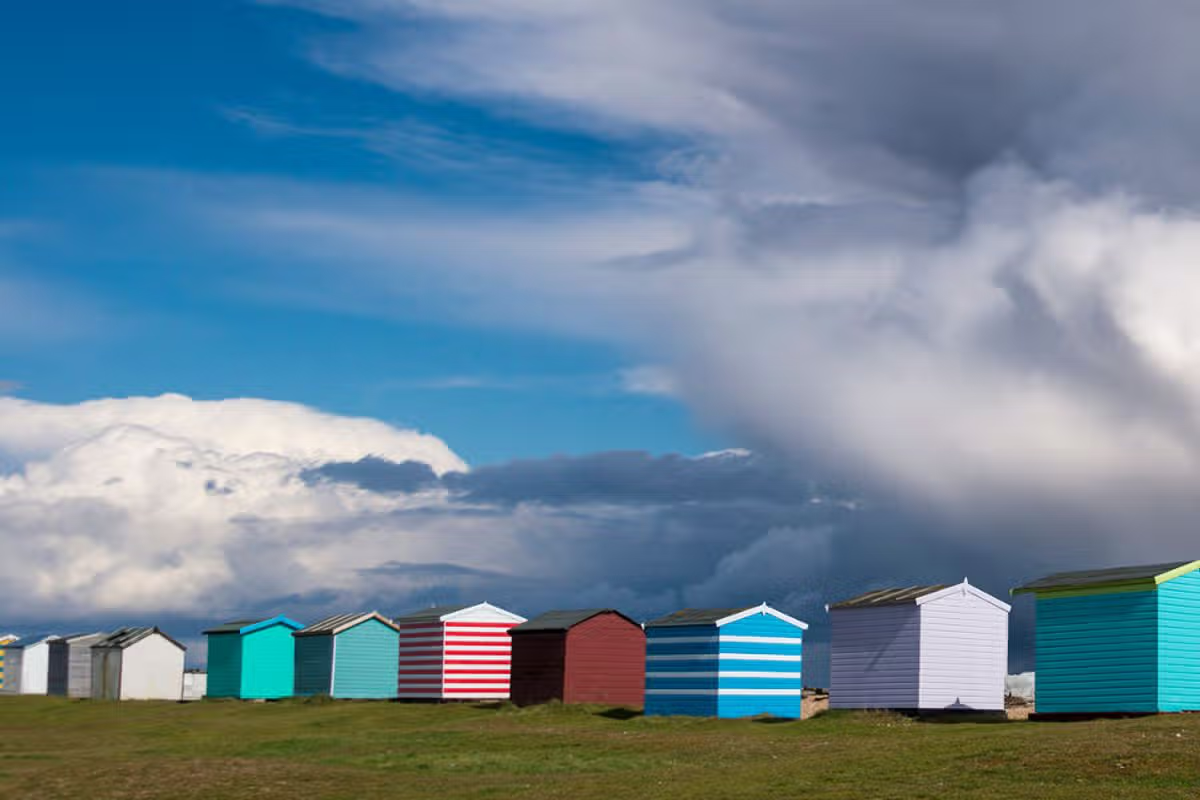
The seaside village is a lot smaller than was initially planned(Image: Getty Images)
Victorians loved the seaside. Time at the beach was the perfect antidote to the dirty, smoggy cities that were rapidly expanding, and the sea air was touted as a cure for everything from respiratory problems to exhaustion.
Another thing that was expanding at the time was Britain’s railway lines, and entrepreneurs were quick to build seaside resorts to accommodate Victorians’ love of beaches. One such visionary was Sir Robert Perks, a politician who looked at a stretch of Kent coast and decided it would make an incredible resort for the wealthiest in society at the time.
The spot was given the name Littlestone-on-Sea, named after a nearby headland called Little Stone, and initially it comprised of a home for Robert, accommodation called the Grand Hotel, a church, and some terraced houses. However, the Grand Hotel didn’t turn out nearly as grand as planned, and it was just the first project that didn’t quite live up to the vision.
Robert teamed up with a surveyor named Henry Tubbs to launch Littlestone Golf Course in 1888, which is still open to this day, and at one end there’s a distinctive local building the Littlestone water tower, which was supposed to supply fresh water to the golf course and the impressive seaside town that was envisioned.
Unfortunately, the water from the 120ft tall tower was too salty to use, and over time it was abandoned. However, in the Second World War, the structure found a new purpose. It became a lookout post that protected Kent’s shores, and the addition of platforms meant guards could keep lookout from many levels. Nowadays, it has been turned into a unique home.
Other plans for Littlestone included a large housing development, a lively promenade, and a favourite of Victorians – a pier. However, parts of the design for the pier were eventually used in Eastbourne, so it wasn’t a total waste of time.
Nowadays, Littlestone is far from the bustling resort that was imagined by the Victorian entrepeneurs, but it certainly has its own charm. Its vast shingle beach is lined with colourful beach huts, and the long flat promenade is popular for families and dog walkers.
From the shore you can spot the Mulberry Harbour Phoenix Caisson, a temporary breakwater that was built during the D-Day Normandy landings in World War 2. Few of these structures remain, making it a popular site for those interested in military history.
The town itself has a handful of shops, cafés, and restaurants. There’s a small selection of seaside hotels, as well as a caravan park that’s much loved by families looking for a peaceful break at the seaside.
So, while Littlestone may not have become a playground for the rich, it developed its own character over time and is still much-loved by visitors who want a more low-key seaside experience.
Have a story you want to share? Email us at webtravel@reachplc.com