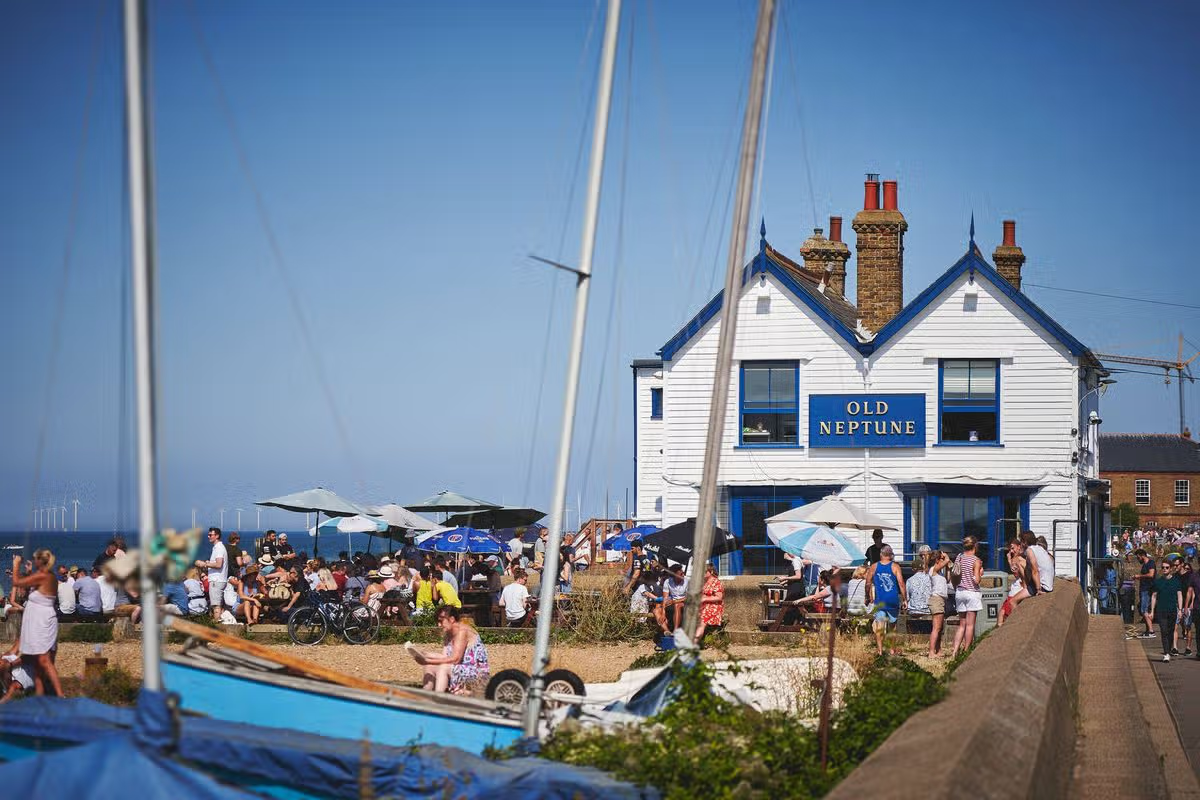
One shop worker called it ‘the friendliest town in England’

The town’s working harbour remains one of the main attractions(Image: Paolo Paradiso via Getty Images)
One charming UK seaside town is famous for its oysters, bustling harbour and colourful collection of independent shops. Oysters have long been at the heart of Whitstable’s identity, with the town’s seafood heritage dating back centuries.
Today, its working harbour remains one of the main attractions, with fishing boats, seafood stalls, a market and waterside places to eat. But there’s much more to Whitstable than its famous seafood.
The town is a haven for independent shopping, with Harbour Street, the High Street and the surrounding streets lined with quirky boutiques, vintage stores, galleries, delis, bookshops and homeware shops.
Only a handful of national chains remain.
Just over an hour from London by train, the town has become a popular weekend retreat for city dwellers, reports the Express.
Visitors can spend the day browsing independent businesses before grabbing some fresh seafood and taking a stroll along the coast.
Wander down Harbour Street and the High Street, and you’ll encounter shopfronts brimming with character. Here, you can uncover a variety of distinctive treasures like the stunning Pearl Shop selling contemporary pearl jewellery and marine object d’arts, to George’s Whitstable, a fixture of the high street for 50 years and a true Aladdin’s Cave of treasures
You’ll also find award-winning British artisan cheeses at The Cheese Box, unique gifts at Buttercup Independent Toy Shop, a beautiful selection of books at Harbour Books, Whitstable’s beloved independent bookstore, and sweet treats at HoneyKanes Bright & Beautiful Shop, all without stepping inside a single chain store. That reputation has only strengthened in recent years.
Whitstable flourishes on independence, creativity and community spirit.
This sentiment is echoed by Stewart McArthur, from Brisbane, Australia, who is on a gap year and working at The Wit! of Whitstable, a vibrant Harbour Street gift shop that recently moved up from a small harbour stall to a prime High Street location.
He said: “You can wander up and down the street and see anything you need – there are so many different style stores that you don’t really need Amazon here.
“This is quite a busy little town. It just seems to get a lot of people coming through, which helps the independent businesses.”
Tourists, he added, are absolutely crucial. “They really support a lot of the local businesses when they come through. It gets busy, but I wouldn’t say overwhelmed,” he said.
For Stewart, what sets Whitstable apart is its sense of community. “It’s the friendliest town in England, it’s just a nice, chill, relaxed place. It’s nice to have a conversation with anyone who comes by.”
That sense of community was perhaps best illustrated by the tale of Revival Food & Mood, a social enterprise café and wellbeing hub that lost its premises during the 2021 lockdown.
Rather than disappearing, it was rescued by a grassroots campaign championed by residents with backing ranging from local groups to household names like Suggs from Madness and celebrated potter Keith Brymer Jones.
Thanks to the town’s resolve, Revival ultimately secured funding through the government’s Community Ownership Fund and reopened in a restored heritage building on the High Street. It now operates not only as a café but also as a venue for music, social gatherings, and mental health support.
Vanessa Brolly, the front-of-house manager at Revival Food & Mood told the Express: “There was a lot of support from the community about making sure that they found a new home.”
The wellbeing hub café is supported by East Kent and Bexley Mind, and has been in Whitstable for roughly eight years, though only two at its current site, and provides a variety of dishes, drinks, and social events such as “Chatty Tuesday” and a regular “Sound Social” in partnership with a neighbouring record shop.
Ms Brolly said: “There’s definitely a very close-knit community feel here. For example, we’ve got the social sounds event on tonight and that’s being run by the record shop, which is about two doors down and they’ll come in and play the records. Everyone’s always looking to collaborate, which is nice.”
Step inside and you’re welcomed by quirky décor designed to brighten the spirits, featuring an indoor garden complete with a water fountain, snug booth seating, and a 1970s-inspired relaxation space kitted out with sofas, vinyl decks, lamps, and a mirror ball.
Ms Brolly noted that national chains such as Costa and Prezzo have shut their doors, yet believes this speaks to the strength of independent businesses rather than any ill-feeling towards big brands.
“If I were visiting, I wouldn’t go to Costa,” she said, emphasising that visitors come to Whitstable in search of unique, independent spots.”
She went on to say that funding initiatives, such as Canterbury Council’s levelling-up programme, could also help keep Whitstable’s flourishing independent scene alive, but ultimately, what makes the town truly special to her is straightforward. “Everyone supports each other.”
For her, the best thing about working at Revival is “being involved in the community and listening to good music.”
Mrs Sally Miller, owner of Anchors Aweigh Vintage, has run her seaside vintage shop for 13 years.
Having lived in neighbouring Tankerton for over 17 years, she’s witnessed first-hand how the high street has changed over time. Step inside and it’s impossible not to be captivated by its treasure trove of curiosities — a shop overflowing with history, character and one-of-a-kind finds that each seem to have a story of their own.
Mrs Miller told the Express: “You get more versatility now than you did. A lot of the locals moan about the idea that it’s all down to people from London. Actually, we probably have more people from Sheffield than from London, but that doesn’t occur to them. The world is a transient place now, isn’t it?”
“Some of the locals are like, ‘all these people!’ But you live in a nice place – people aren’t going to avoid it. When you talk about DFLs [Down From Londoners], it doesn’t really matter. It’s a transient place, a tourist destination. And because we do live in a nice place, people come. The more the merrier!”
Yet for Mrs Miller, the backbone of Whitstable’s businesses remains its local community: “We get a lot of repeat customers, a lot of local shoppers as well. They like popping in for buttons and little bits.”
What keeps independent shops thriving and sets Whitstable apart, she believes, is a winning combination of attentive service and a warm, welcoming atmosphere that fosters genuine conversation and connection with every customer who walks through the door.
“People like to talk, they like to stop. We give them the time of day – I’m sure we probably keep people in here longer than they should be,” she laughed.
“It’s the service. People still appreciate the service.”
That sense of camaraderie runs deep — if she doesn’t have something in stock, Ms Miller is more than happy to point customers in the direction of a fellow trader, as they all get along and know one another well.
She added: “We have a strong shop local culture. We’re really lucky. People here talk to you.”
Pearl Shop owner, jeweller and pearl specialist Bibi Southwell also revealed how the town’s heritage and community spirit shaped her business: “We first opened as a pop-up in August 2024, and the response was incredible – both locals and visitors really embraced us. That encouraged us to open permanently just a couple of months later in October. Whitstable’s longstanding history with oysters made The Pearl Shop feel like a natural addition to the town. With its coastal charm, creativity, and independent spirit, it was the perfect fit.
“My favourite thing is being able to be creative every day and sharing that with the community. There’s such warmth here, and we’re surrounded by other independent shopkeepers who all support each other.
“Whitstable draws people from all over thanks to its seaside character, oysters, and thriving independent scene. We see loyal locals who come back regularly as well as visitors who discover us while exploring the high street and both are equally important to us.”
She added: “Whitstable has an authenticity that you don’t find everywhere. The town celebrates creativity, uniqueness, and quality over mass-produced sameness. Visitors come here expecting to find something they won’t see on every other high street, and that gives independents like us the space to really thrive.”
On the subject of the recent closures of chains such as Costa, Ms Southwell said it underlines how people in Whitstable actively seek out independent businesses. Echoing views shared by others including Ms Brolly, she explains that visitors arrive wanting to soak up the distinctive character of the town, rather than the familiar chains they can find anywhere else.
“It shows that people in Whitstable actively choose independents. When you visit, you want to experience the character of the town, not the same coffee chain you’d find anywhere else. I think Whitstable is proving that high streets can survive, and even flourish, when they’re built around small, passionate businesses instead of big brands.”
While many traders are celebrating Whitstable’s flourishing independent scene, not everybody is persuaded it can last. One shop owner, speaking on condition of anonymity, offered a sobering reminder of the very real pressures bearing down on the town’s small businesses.
“They’ve let the harbour be rented out to everything you can imagine that we don’t need in a small seaside town, instead of seafood, for people to make money instead of seafood, which is what we actually need there,” they said. “I don’t want another glossy piece by someone from London saying this is the ‘new Camden’. That’s five years behind the times and it doesn’t help us. Until councils stop raiding towns that were built by small family businesses, we’re all going to die. The local councils couldn’t organise a p***-up in a brewery.”
The shopkeeper’s exasperation is plain to see: “Tourists come here expecting seafood, and instead they find crochet cushions and Thai curry. That’s not what this harbour was built for.”
They went on to say that the town’s weekend atmosphere has been put under strain: “Our weekends are dominated by traffic jams and alcohol. Families leave early, children can’t run around, and the council won’t close the smallest, most dangerous roads for safety. This place risks turning into a tourist attraction, rather than a real working town with shops and families.”
Despite this, the shopkeeper conceded that Whitstable retains its undeniable appeal. “The town will always be amazing – but there’s something not quite right about what goes on behind the scenes when small coastal towns are made popular.”
A spokesperson from Canterbury City Council told the Express: “We’re very pleased to hear such positivity about Whitstable, which only goes to reinforce our view that it’s one of the UK’s best seaside towns – a fantastic place to live and work in, and also wonderful for a visit or extended stay.
“Clearly it’s never possible to please everybody, but given the fact the negative comments have been made anonymously, it makes you wonder if the individual has been turned down for trading opportunities at the harbour and their views have been affected as a result.
“The criticism is also incorrect, because there is seafood readily available at the harbour. The harbour is visited by thousands and thousands of people each year and our commercial units along the south quay are very popular with local residents and visitors alike.
“The hugely popular Whitstable Rocks Oyster Festival takes place each September – this year from 12 to 14 September, see whitstablerocksoysterfestival.com – which brings lots of people in and is also run by a private business.
“At its heart, Whitstable remains a fishing town with an active harbour and plenty of businesses selling seafood. Shops selling a whole mix of other goods complement this offer, which leads to a great balance of traders overall.
“But don’t take our word for it – Daily Express readers should come and experience Whitstable for themselves!”.