Move over, “Alice in Wonderland” and “The Wizard of Oz” — you too, “Spirited Away” and “The Chronicles of Narnia.” There’s a new eye-popping portal fantasy in town and its name is “Wildwood.”
This is a thoroughly involving and captivating stop-motion adventure from Laika, the animation studio that made such other beautiful handmade works as “Coraline” and “Kubo and the Two Strings.” But it’s clear from the level of artistry on display here that the company, led by producer-director Travis Knight, has steadily advanced in technology, innovation and ambition. (We’re talking 233 handcrafted puppets and 132 practical sets.) That’s saying a lot given Laika’s previous top-tier output. In addition, Laika worked alongside New Zealand’s Wētā FX to create the movie’s stunning digital environments and visual effects. That magical ivy is something else.
The wondrous story was adapted by frequent Laika collaborator Chris Butler from the epic 2011 novel written by Colin Meloy (frontman for indie rock band the Decemberists, whose original music is featured here) and illustrated by Carson Ellis. The tale kicks off as intrepid young Portland, Ore., teen Prue (voiced by Peyton Elizabeth Lee) defies her worrywart parents and, in their absence, takes her baby brother, Mac, out for a bike ride around her city’s singularly quirky downtown. (Not for nothing, Knight is a Portland native and Laika is based just outside the city.)
But things quickly turn pitch dark as a murder of crows (take that collective noun how you will) swoops down and, quite terrifyingly, à la Alfred Hitchcock’s “The Birds,” abducts little Mac. This leads a desperate Prue and, soon, her nerdy but plucky classmate Curtis (Jacob Tremblay), into the forbidden “Impassable Wilderness” at the edge of town to rescue Mac. From there on it’s a roller coaster of magnificently rendered battles, chases, near-misses and escapes as Prue and Curtis — separately and together — navigate the enchanted, astonishing woods and its wildly assorted communities of rulers, warriors and underlings.
As Prue and Curtis struggle to unravel the twisty lore of the obstacle-laden forest in their search for Mac, their outsider presence inadvertently sets off a long-festering showdown for control of the forest between its warring factions. On the one hand, it’s Alexandra, the sinister, dangerously obsessed Dowager Governess (Carey Mulligan) and her marauding band of military-style coyotes (Tom Waits, Charlie Day and others) versus a wayward posse of bandits (led by Mahershala Ali’s formidable Brendan). Then there’s the Avian Principality, a bird-led kingdom also against Alexandra’s mounting power, including a stunningly majestic eagle known as the General (Angela Bassett) and the wise old Owl Rex (Richard E. Grant).
Vying for dominance as well are the haughty, self-serving bureaucrats of the area’s bustling capital of South Wood (Jemaine Clement, Marc Evan Jackson), who pull their political strings from the relative safety of the grand Pittock Mansion. Other characters Prue and the increasingly brave Curtis encounter along the way include the wry and resourceful rat Septima (Awkwafina), the courageous bandit Niamh (Amandla Stenberg), elderly mystic Iphigenia (Tantoo Cardinal) and the realm’s harried postmaster (Len Cariou). The talking animals feel right at home alongside the human figures and the voice work is excellent all around.
Needless to say, there’s a lot going on in Butler’s busy, occasionally dizzying script, though compressing the approximately 550-page source material was surely no easy task. (As it is, “Wildwood” runs more than two hours, long for an animated film, though it rarely lags.) Still, the narrative has its share of “just go with it” moments and explanations. Bits of connective tissue can sometimes feel missing amid the action and the story’s lessons, particularly for Prue, don’t always land as strongly or affectingly as they could.
It should also be said that there’s some fairly outsize violence along the way, particularly during the combat scenes, plus other potentially disturbing bits of mayhem that may be too extreme for younger children. Parents take note: The film more than rightly earns its PG-13 rating.
Nonetheless, for most audiences, especially animation-loving teens and adults, this should prove a spectacularly immersive ride, vibrantly shot by the great Caleb Deschanel (“The Right Stuff,” “The Natural”) and crafted by a reported 49 animators who brought the film to life one dazzling, painstaking frame at a time.
‘Wildwood’
Rated: PG-13, for strong fantasy violence/bloody images, thematic material, suicide-related material, brief partial nudity and language
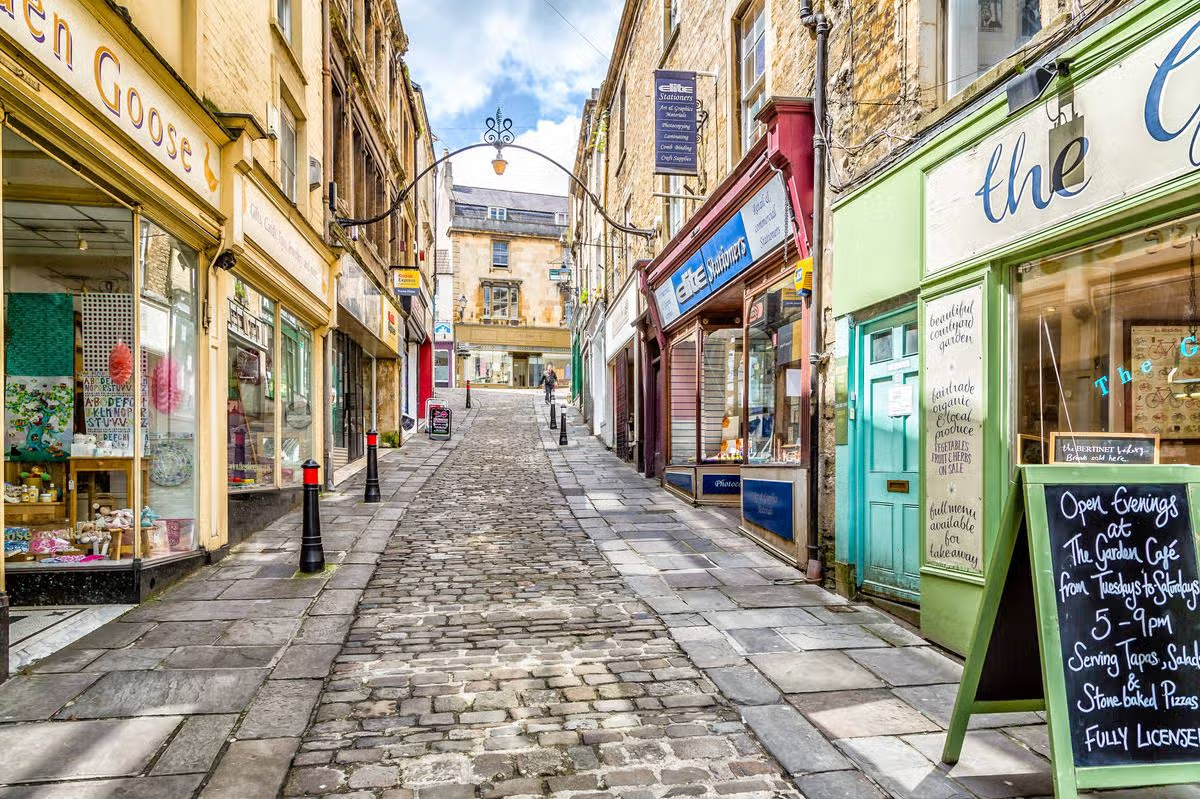
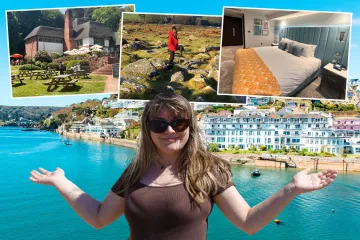
This quaint town in Somerset has been named one of the best places to live in the UK time and time again – so I headed back to find out what all the fuss is about
This quaint town in Somerset has been named one of the best places to live in the UK time and time again – so I headed back to find out what all the fuss is about(Image: Nigel Jarvis via Getty Images)
I recently found myself back in Somerset for the first time in several years, taking a nostalgic journey with my friend who had flown halfway across the globe to mark their mum’s 60th birthday. A road trip from the capital to sweeping fields of countryside felt like the perfect way to spend a crisp autumn weekend.
My friend is originally from Frome, Somerset, but now lives on the shores of New South Wales. I hadn’t visited this charming West Country town for nearly eight years, yet had noticed its name cropping up in headlines as one of Britain’s finest places to live.
I’d never given it much thought, as Frome has always simply been my mate’s hometown, but if it’s collecting awards repeatedly, there must be something I’ve overlooked over the past decade.
What’s more, Frome’s Rye Bakery also earned a mention in Britain’s Best Bakeries by Milly Kenny Ryder. The Times even branded the town “Wokeville”, home of the “conscious hipster”. Yet to me, it’s always been a tight-knit community hub that’s cricket-obsessed, where everybody knows one another, and where pints are shockingly affordable compared to London prices.
Nestled on the edge of the Mendip Hills, Muddy Stilettos described Frome as a “community-minded town packed with arty, artisan shops, eateries and other businesses, with an indie cinema and a music venue where the likes of Paul McCartney ‘just pop in’. And it hosts the best designer-maker-producer street market in the West.”
Either I’d never properly clocked it before or the town has experienced a remarkable transformation during my eight-year absence. The town centre, filled with cobbled side streets that climb upwards, is lined with tiny boutiques and quirky independent shops, stocking everything from vintage clothing and antiques to its very own apothecary emporium.
Make sure our latest travel stories always appear at the top of your Google Search by setting us as a Preferred Source. Click here to activate or add us as a Preferred Source in your Google search settings.
Streets like Cheap Street and Catherine Hill are packed with independent retailers, upmarket coffee shops, and sufficient micropubs and wine bars to keep you busy for ages. What Muddy Stilettos celebrated as “interesting indies”, my mate’s mum labelled “artisanal… and we aren’t the artisanal type”.
Another draw for both locals and visitors from further away is Frome’s abundance of markets, which by pure coincidence were running the weekend I wasn’t there. At the Frome Independent Market you’ll discover designer makers alongside artisan food and drink producers.
You’d struggle to spot many chain shops or restaurants here, which is brilliant if you’re keen to avoid the overwhelming presence of typical high street brands. I spotted just one Costa Coffee, and that was it.
My first real stop was Rye Bakery at its Station Approach site. The other branch can be found inside a church on Whittox Lane.
Even the old railway house at the station has been transformed into a compact independent food market and events venue. Alongside Rye Bakery, you’ll discover its sister wine bar, cheesemonger The Cheese Lord, Indian and Trinidadian street food, a charcutier, another wine bar, plus a community sauna and cold plunge.
Oh, and there’s a milk vending machine thrown in for good measure. You genuinely wouldn’t need to venture beyond the station.
Naturally, it would be churlish not to sample Rye’s offerings. I devoured a cinnamon bun alongside my iced coffee (on a freezing cold Sunday morning), plus a special sandwich crammed full of salami, Glastonbury cheddar, and salsa verde mayo.
It’s precisely the sort of fare I crave from a bakery, though I can appreciate that to some it might appear a touch… gentrified. The sandwich was bursting at the seams, with the heat of the salami tempered by the zesty mayo and punchy cheddar. All these trendy new bakeries have turned the humble sarnie into something rather fashionable.
Rye’s cinnamon bun proved just as delightful as the sandwich, boasting soft, fluffy dough and beautifully spiced cinnamon sugar. Not overly sickly sweet, but sweet enough to satisfy my appetite.
We even discovered an Australian serving behind the counter, and if that’s not an indication of quality coffee, I don’t know what is.
It was also pleasant to revisit some of the neighbourhood drinking establishments. You’ll encounter a mixture of traditional country pubs or independent craft beer venues. Personally, I’d head just beyond the town limits for an authentic taste of Somerset living.
I nearly shed a tear when I discovered a pint of cider for under £6. It makes me appreciate just how costly London has become, and truly, that the prices needn’t be as eye-wateringly steep as they are.
Frome has both evolved and remained unchanged. It’s still the same charming Somerset town where everybody knows everybody; where the tranquillity of the town centre feels so unfamiliar to someone from London.
The residents may not have altered, but it appears the atmosphere has, attracting a fresh generation of people to its cobbled streets. There’s a feeling of togetherness that you only encounter in small towns like Frome.
It offers an escape from hectic urban existence, where you can retreat into the countryside within moments rather than hours. It may not be exactly the same Frome I recall, but I’ll always maintain a warm attachment to the town.
There’s something special about this place, known for its laid-back vibe and thriving bohemian culture, and what I think is arguably one of Britain’s best high streets.
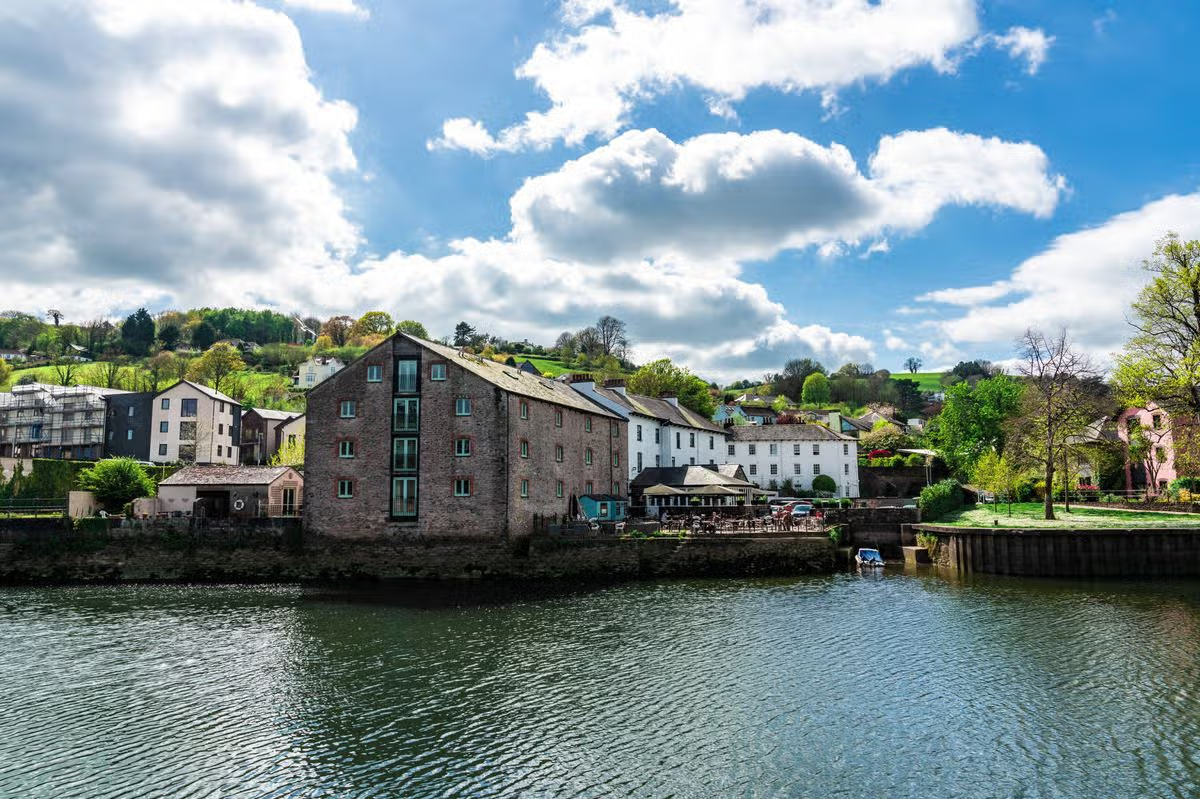
This beautiful town is perfect for autumn(Image: CHUNYIP WONG via Getty Images)
Living in London, life can sometimes feel rather frenetic. While I adore city living, I do try to escape at least a few times a year to properly unwind.
Among my favourite retreats is Totnes, a market town renowned for its relaxed atmosphere and delightful high street,celebrated for its artistic community and flourishing bohemian spirit. It also boasts, in my view, one of Britain’s best high streets.
Beginning at the lower end of the street, you can cross the bridge spanning the River Dart and truly absorb the town’s character from there.
During the summer months, the town is adorned with vibrant bunting, while small boats drift across the water.
In autumn, it’s equally gorgeous, as the trees turn red and gold and the high street lights up with cosy shop fronts to escape from the biting wind.
There is abundant riverside greenery, and the town buzzes with energy. After crossing the bridge, pop into The Curator for a coffee – the first of numerous independent establishments scattered along the high street
The coffee is excellent, and they offer a delightful range of pastries if you fancy settling down for a snack – though don’t overindulge, there’s plenty more to discover.
The high street climbs gradually upwards and is flanked by hundreds of independent retailers, charity shops and tearooms.
Further along the high street, you’ll find the Cornish Bakery, which fills the street with the delicious savoury scent of pasties. They cater for all tastes; even my vegan brother discovered something he truly enjoyed.
As the high street curves round to the left, you’ll come across Butterworth’s Vintage Co, a compact yet impressive secondhand shop stocking everything from knitwear to workwear and even vintage magazines.
Once you’ve had a good root through the merchandise, you might fancy a swift drink or perhaps another bite to eat – and you’re in luck.
Just a short walk from Butterworth’s sits The Bull Inn, a fantastic establishment boasting an extensive organic food menu alongside nine guest rooms, should you need somewhere to stay for the night.
The highlight of The Bull Inn for me is its delightful garden, where you can kick back in the sunshine and watch the world go by. Situated directly across the car park, and much like the rest of the town, it’s frequently adorned with gorgeous bunting.
On a glorious day, it’s truly hard to beat – and if you’re anything like me, you’ll be more than ready to take the weight off your feet after all that browsing along the high street.
Eric Dangerfield is surrounded by senior citizens.
After a packed set at Riot Fest the previous weekend, the 25-year-old lead singer and rhythm guitarist of the Paradox welcomed the quiet of his boomer-dominated neighborhood.
“I’m a suburban dude,” he said, smiling from his home in metro Atlanta, his cropped two-toned dreads bobbing as he spoke.
The Paradox spent much of the summer on the festival circuit, powering through a growing discography of pop-punk gems, so Dangerfield and the three other band members are taking a brief breather before their Proceed With Caution Tour starts this month — their first as headliners.
It’s peaceful. That is, “Except when the boys come over,” he adds.
On a late morning in September, the boys are here and accounted for: patching in to a video call, minutes apart, from their homes, also in suburban ATL. Dangerfield, born with the perfect stage name, has ideas that flow faster than he can seem to get them out. Then there’s Donald Bryant on bass. Yin to Dangerfield’s yang, with a quiet, commanding presence.
Percy “PC3” Crews has been playing drums since he was 3, and his vicious skills on the drum kit contrast with a cheery, relaxed demeanor. Finally, there’s Christopher Bernard, a.k.a. Xelan — the lead guitarist and Dangerfield’s vocal complement.
Dangerfield likens the four to musical superheroes from a Marvel series. But not so much the “Earth’s mightiest heroes” variety.
On their first headlining tour, the band brings its new EP, “Proceed With Caution,” to Los Angeles while claiming space in a historically white genre and weaving social commentary into its pop-punk sound.
(Shorefire Media)
“I’m like Mister Fantastic and Donald’s my Invisible Woman. Xelan’s the Thing, and Percy is John Storm,” he says of his partners in musical mischief. “If I’m ugly, just say that,” quips Xelan, the band’s oldest member at 30. “Yeah. Because you’re strong, bro,” reassures Eric.
By this time, the interview has devolved into fun-loving chaos.
They finish each other’s sentences and switch up their Google Meet backgrounds, cracking up as an awkward graduation portrait pops up. At some point, Bernard decides to give a bedroom tour, showing off his collection of Blink-182 and Fall Out Boy posters.
A photo of him with Travis Barker hangs next to a framed Billboard plaque on a nightstand. Barker was featured on the Paradox’s 2025 single “Bender” and performed with the group at Vans Warped Tour the same year.
The Billboard plaque commemorates the band’s song “Get the Message” from its debut EP, “NSFW,” reaching No. 1 on the Alternative Airplay chart in January — a great achievement for any rock artist — but the Paradox also happens to be the first all-Black band to do so.
The success, although rapid, didn’t come from nowhere. All of the members have been working toward music in some form for years.
Dangerfield had a deal with a small label where he was originally making a go of it as a pop and R&B soloist. He also put out his music online. Looking for something different, he remembered his passing interest in pop-punk from his days growing up in Palm Coast, Fla. It was the “Fat Lip” video by Sum 41 that sealed the deal.
Yearning to be in a band, he started working with Bernard, whom he met online and shared his passion for the genre. Bryant was Dangerfield’s childhood friend from Palm Coast who had also moved to Atlanta, while Crews had been a fixture on the local music scene. And the name? It came from Dangerfield’s love of quantum physics.
Shortly after the group officially formed in June 2024, Dangerfield’s then-girlfriend — now wife and band “momager” Lexi Dangerfield — opened Instagram and TikTok accounts filming and posting their homey videos. The band’s song “Kaitlyn” and some covers blew up. The artists’ perspective, filtered through a Gen Z lens, struck a multigenerational nerve.
Attention came so quickly that Dangerfield felt the need to defend against online detractors who were convinced the group was an industry plant.
From there, the fairy-tale plot thickened. Billie Joe Armstrong followed Dangerfield on Instagram, and the two struck up a friendship that led to the Paradox opening for Green Day on the Atlanta stop of its Saviors Tour. But this was, of course, after Jack White’s people called — who the group ended up opening for at Basement East in Nashville.
Things haven’t slowed down in the two years since, with opportunities coming fast and furious. In the spring of last year, the band signed a deal with Hundred Days Records, a subsidiary of Virgin Music Group, and teamed up with producers Mike Pepe and Robopop to work on “NSFW.”
“Bender,” the group’s collaboration with Barker, and “Do Me Like That” are featured on Madden NFL 27 and NBA 2K26 video game soundtracks. Last month, the musicians streamed a concert from Twitch superstar Kai Cenat’s house. And now, instead of opening for their idols, they are inviting them up on stage as guests. For their second Warped Tour in Long Beach, that meant Deryck Whibley of Sum 41 and Logan Henderson from Big Time Rush.
The embrace from established musicians has definitely helped the band navigate its rise. In a moment of doubt, Crews said Good Charlotte’s Joel Madden, in particular, came through with sage advice.
“He asked me a question: ‘How does it feel being where we were?’ And I was like, ‘It feels like a dream.’ It felt like I was gonna wake up on my desk sophomore year with drool on my f— table. And I was telling him that, and he was like, ‘You know, it may feel that way, but it is real … It’s real, and it’s you … you belong in these rooms.’”
The irony of being embraced in a mostly white subgenre of punk rock while Black American culture formed its foundation is not lost on the group. Had the band come about during one of Dangerfield’s favorite eras of music, the ’50s and ’60s — there would likely have been rooms in which they weren’t welcomed.
While the band members understand the impact their visibility has — especially for non-white kids who grew up in the suburbs as they did: skating, riding BMX, building Legos, watching anime, dreaming of a life onstage — it does require some balance. “They’re not asking Taking Back Sunday this stuff,” Dangerfield acknowledged when asked if they might tire of the representation mantle. “Or Blink, but … We are a minority in this space and in this country, and I think that you know the stuff that comes with being Black should definitely be talked about. I think those conversations are important.”
He said as much in August, when the group made its Tiny Desk debut in celebration of NPR’s Black Music Month. “Now, like they said, we made history,” he said, leaning into the mic after the first song. “And the Paradox is in the business of bringing rock ’n’ roll back to the originators.”
A glance at the comment section under the video makes clear the group’s authenticity resonates with those who haven’t felt seen or heard in certain spaces.
“I’m a black girl from the suburbs of Metro ATL,” wrote @rainjojo. “And I’m glad to see representation of people who are like me indulging in punk rock. I got into this genre from childhood shows like “16,” “Stoked”, and other early 2000 to 2010 shows, and I remember being bullied for being whitewashed. Please keep making more music like this.”
The tour is named after “Proceed With Caution,” the band’s sophomore EP released on Oct. 2. Across six tracks, it continues in the same vein as “NSFW,” with sharp melodies and a dash of humor thrown in. But on “That’s Not Fair,” the group wades deeper into social commentary. It was also the most difficult to record, cut raw with no click track.
“We were just trying to think of things that were not fair, [from] small and trivial like losing your keys to, I don’t know, using it as a bridge to talk about larger issues and things like that,” Dangerfield says of the song. “I think a big thing for me personally, it’s not political … is kind of the fact that everything is getting so expensive. The price of everything is rising so rapidly, and the salaries that people are being paid are not really growing to match that.”
The Paradox perform at The Moroccan Lounge on Thursday, Oct. 22.
(Hunter Lyon)
“And it’s like, we got very lucky, but the thing is, most people don’t,” he continued. “If you’re gonna sacrifice all your time, slaving away working for big corporations and stuff like that, you should at least be able to, you know, buy a candy bar or something.”
So far, the musicians aren’t taking anything for granted and are trying to enjoy the in-between moments.
Dangerfield and his wife took their daughter on a Disney cruise for her second birthday — she’s spent much of her young life traveling with the band.
With some of his publishing money, Bernard indulged his love of vintage Japanese fashion and has a 2000s-era Tuscan house on his vision board. Crews stays healthy, listens to lots of Snarky Puppy, and looks forward to the relaxed cannabis laws of L.A. when the tour stops at the Moroccan Lounge on Oct. 22 and 23. If time allows, he might even have time to surf in Malibu.
Bryant, who counts Mike Dirnt, Mark Hoppus and James Jamerson among his biggest influences, balances a dream of seeing his band play for thousands with looking forward to a life lived like his older brother: a chiropractor with a nice family.
But some dreams will have to wait as the band goes back to making music, hopefully with lasting impact. The members want to become household names, “like Nirvana,” with music people will play for hundreds of years. Why not?
Anything is possible when you are a fantastic foursome.
THE Feeling star Dan Gillespie Sells has married his partner John McCrea in an intimate London ceremony, surrounded by family and friends.
The couple tied the knot at Hackney Town Hall as documented by their The Feeling bandmate Richard Jones.
The Feeling star Dan Gillespie Sells has married his partner John McCrea in an intimate London ceremony, surrounded by family and friendsCredit: richardjonesface/ InstagramSophie Ellis Bextor took to the mic at the reception, belting her fan favourite hit Murder On The Dancefloor out to the guestsCredit: richardjonesface/ Instagram
Unsurprisingly, Richard’s wife Sophie Ellis Bextor was also in attendance.
The Murder On The Dancefloor songstress even took to the mic at the reception, belting her fan favourite hit out to the guests.
Sign up for the Showbiz newsletter
Thank you!
Richard shared a slew of photos of the event to Instagram, including a video of his wife at the mic.
He captioned the post: “Congratulations to @dangsells and @officialjohnmccrea!
The couple tied the knot at Hackney Town HallCredit: richardjonesface/ InstagramThey were met with cheers and confetti as they walked together as newlywedsCredit: richardjonesface/ InstagramTheir bandmate Richard Jones attended with his wife SophieCredit: richardjonesface/ InstagramThe nuptials come ahead of The Feelings latest tour, called 20 Years And Home – a nod to their debut album Twelve Stops And Home, released two decades agoCredit: Getty
“A day of pure Joy!”
Dan – who also composed the book for the mega-successful musical Everybody’s Talking About Jamie – looked blissful in the snaps from his big day.
He was seen holding hands with actor/singer John, saying their vows, before exiting the town hall steps together.
They were met with cheers and confetti as they walked together as newlyweds.
The reception then appeared to move onto a local bar, with not just Sophie seen serenading the happy couple.
In another snap, Sophie can be seen posing with a large bridal dress, hitting the dancefloor for the evening reception.
The nuptials come ahead of The Feelings latest tour, called 20 Years And Home – a nod to their debut album Twelve Stops And Home, released two decades ago.
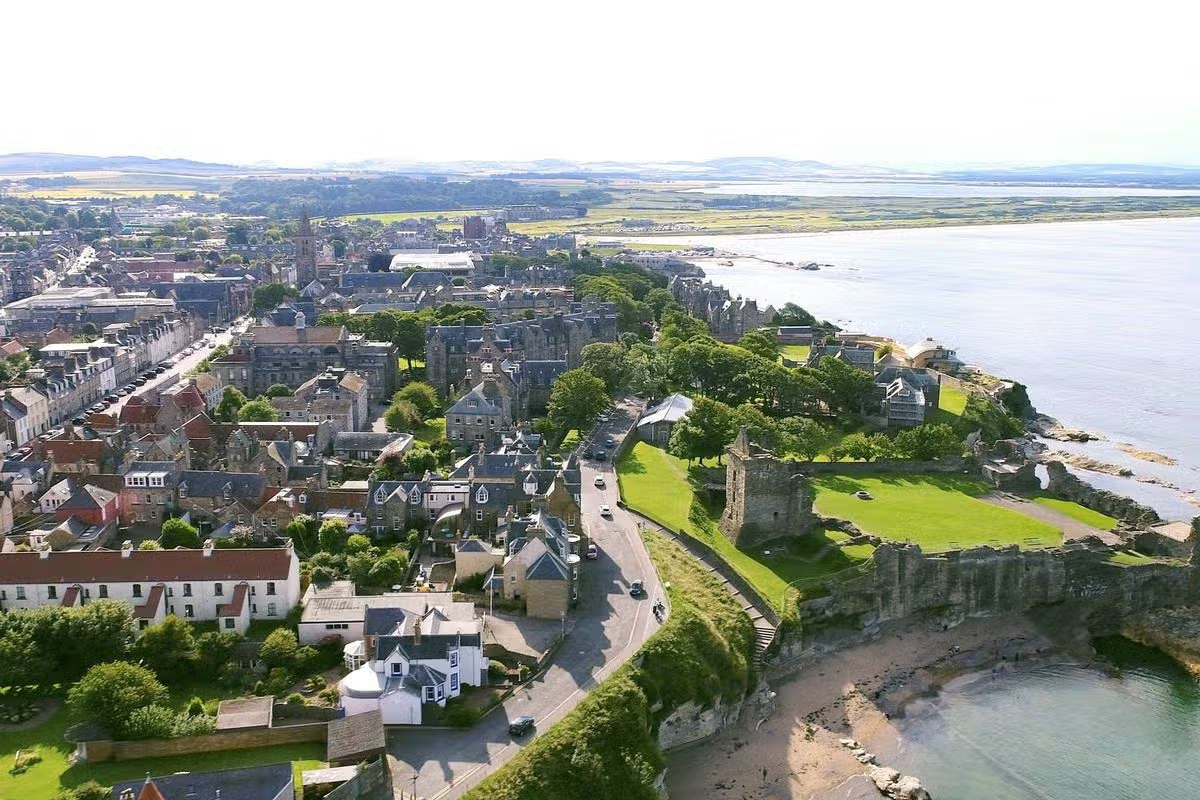
The hotel is situated just a 10-minute walk from the iconic West Sands Beach(Image: Getty)
A popular Scottish seaside town has been dealt a devastating blow following the sudden closure of a prominent hotel. The firm behind the establishment recently collapsed into liquidation, forcing its immediate shutdown, with all members of staff confirmed to have lost their jobs.
The Kinnettles Hotel, a five-star boutique property nestled in the heart of St Andrews, Scotland, shut its doors for good in September after its parent company, Kinnettles Hotel Limited, went into liquidation.
The hotel’s on-site restaurant partner, Gidi Grill, was locked out of the building on September 23, with owner Mo Adeniyi claiming “the building was taken over by someone else, but we hadn’t been told”. He confirmed he was now on the hunt for new premises to relocate his West African and Afro-Caribbean restaurant.
The closure of the Kinnettles Hotel, situated just a 10-minute walk from the iconic West Sands Beach and the historic St Andrews Old Course golf links, left all 12 members of staff without work.
The broader Kinnettles portfolio, which includes Kinnettles Mansion in Guardbridge and Kinnettles Castle near Forfar, had previously been put up for sale for £15 million.
Callum Carmichael, a partner at FRP Advisory, has been appointed as liquidator of the company. He confirmed that the challenges facing the business had become “insurmountable”, reports the Express.
Ensure our latest travel stories always appear at the top of your Google Search by making us a Preferred Source. Click here to activate or add us as a Preferred Source in your Google search settings
Mr Carmichael told The Courier: “Kinnettles Hotel has been a well-established part of St Andrews’ hospitality sector, offering boutique accommodation in the heart of the town for many years.
“Despite its established presence, the challenges facing the business and many like it in Scotland’s hospitality sector ultimately proved insurmountable. Our focus is now on safeguarding the assets of the three companies and supporting those affected.”
Nestled at 127 North Street in the heart of St Andrews town centre, the Kinnettles Hotel featured 15 spacious bedrooms, a bar, spa, and an on-site restaurant.
The hotel had garnered a string of glowing reviews on TripAdvisor, with guests heaping praise on the accommodation, spa and facilities alike.
One wrote in July: “I genuinely don’t think I’ve ever had a better spa experience in my life. From the moment I arrived until the moment I left, every single detail was absolutely perfect.”
A second reviewer wrote in May: “I had an amazing experience at Kinnettles Hotel & Spa, truly one of the best I’ve had.”
A third posted in March: “My husband and I stayed for one night and used spa facilities and got a treatment each. First of all we were made to feel very welcomed when we entered the building , staff couldn’t do enough for us.
“The breakfast next morning was lovely but the best part was the spa facilities and the treatment it was absolutely fantastic and cant wait to go back again.”
Another visitor commented in March: “I can’t praise highly enough the Kinnettles Hotel and Spa, St Andrews. We arrived as guests and departed five days later as friends.”
The spot is famed for its cobbled streets, Norman castle and stunning architecture
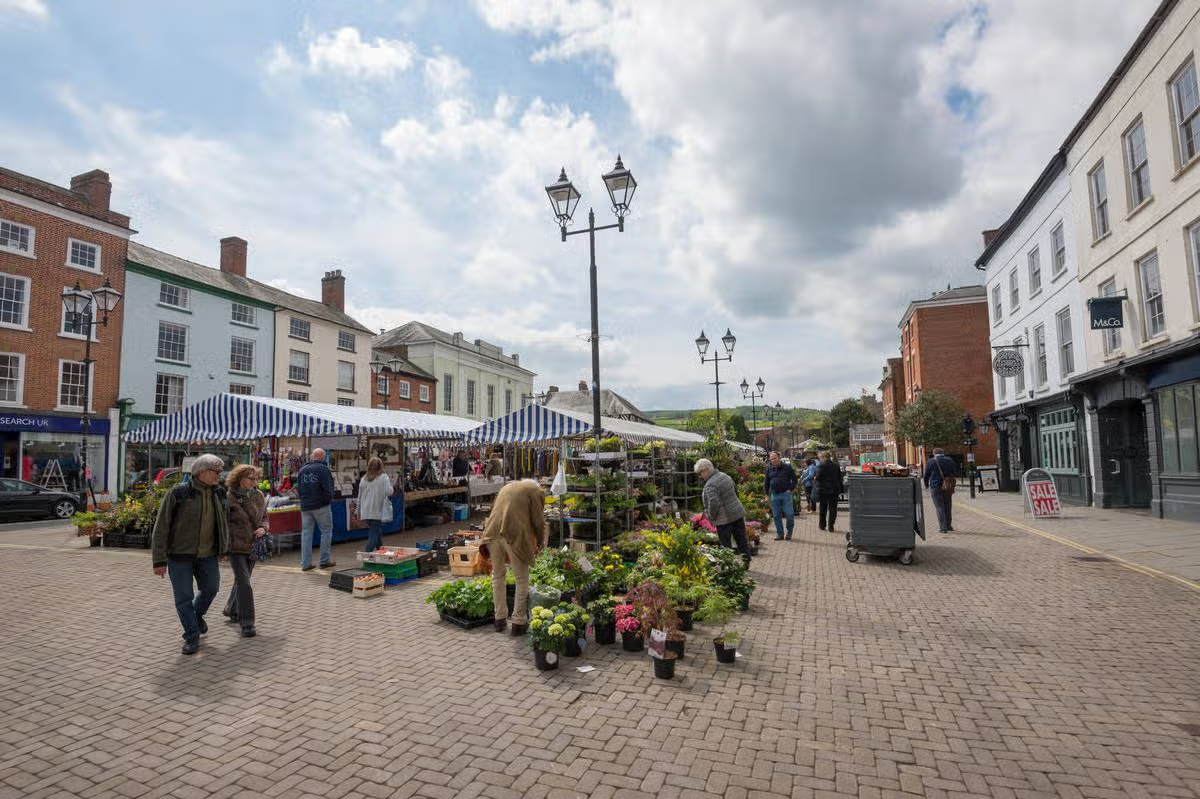
The town has plenty of shops, cafes and restaurants to visit(Image: Photos by R A Kearton via Getty Images)
Long hailed by poet John Betjeman as “the loveliest town in England,” Ludlow has also earned a global reputation as a premier food and drink destination. With over 500 listed buildings and a skyline dominated by a Norman castle, Ludlow effortlessly blends ancient, storybook charm with a modern appeal.
Winding cobblestone streets lead visitors to delis, bakeries, welcoming pubs and acclaimed restaurants.
Frequently dubbed the “food and drink capital of the Marches”, Ludlow’s thriving hospitality scene is fuelled by its impressive variety of locally sourced produce. In 2024, a Which? Travel survey of more than 9,000 people asked respondents to rate the food and drink in their favourite inland towns and villages.
Ensure our latest travel stories always appear at the top of your Google Search by making us a Preferred Source. Click here to activate or add us as a Preferred Source in your Google search settings
As Which? Travel put it, “Instead of a handful of high-end eateries, there’s a culture of local produce as well as numerous pubs and cafes, served by people who care about the food.”
This ethos is reflected on every plate, with an emphasis on fresh, locally sourced ingredients and menus that change with the seasons.
TripAdvisor currently ranks Old Downton Lodge as Ludlow’s finest restaurant, while waterside favourite CSONS is another beloved choice for relaxed, quality dining, along with Kin Kitchen and The French Pantry for café and bistro-style fare. Pub lovers are spoilt for choice with options including The Queens and The Boot Inn, both of which are highly rated on TripAdvisor.
Experts from Ludlow Distillery note that the town’s food and drink scene benefits greatly from a thriving network of local producers, ranging from artisan cheesemakers and bakers to craft brewers and distillers.
They stated: “The strength of this offering is best seen (and tasted) by a visit to the Local to Ludlow Market in the Castle Square (where growers and makers based within 30 miles of the town sell a range of high-quality and carefully selected produce), and the award-winning Broad Bean fine food delicatessen on Broad Street.”
The town proudly champions ‘Slow Food’, a global grassroots movement with thousands of members worldwide that brings together a love of good food with a commitment to community values.
In recent years, the movement in Ludlow has gone from strength to strength.
Slow Food Ludlow Marches offers activities throughout the year, including visits, talks, demonstrations, meals and Taste Workshops at Ludlow Food Festival in September.
Ludlow Food Festival ranks among the town’s most celebrated annual events, regularly drawing around 15,000 visitors to Ludlow Castle over three days.
Both locals and visitors alike can look forward to the Winter Festival at Ludlow Castle. Taking place between 27 and 29 November 2026, the event showcases local entertainment, mulled wine, and much-loved highlights from the Ludlow Food Festival.
Head along on the second or fourth Thursday of the month to discover the Ludlow Local Produce Market, a vibrant showcase of food and drink made within a 30-mile radius.
The stalls champion sustainability and seasonality, turning an ordinary shopping trip into a thoroughly enjoyable afternoon out.
Outside of Shropshire, Wells was named runner-up for inland dining by Which? Travel.
Other destinations receiving recognition include Lavenham in Suffolk, Llangollen in Denbighshire, Stamford in Lincolnshire, and Cartmel in Cumbria. Each offers its own distinctive flavour of a foodie escape.
Residents in Limoges, France, are expressing shock and anger after protests saw their 140-year-old town hall set ablaze. The fire destroyed its roof and clock tower, as officials condemned the attack.
A HISTORIC town will host a festive wonderland with real reindeers for just one day.
The UK’s largest single-day Christmas market is returning with more than 120 stalls this December.
Beverley Festival of Christmas is branded the UK’s largest single-day Christmas marketCredit: East Riding of Yorkshire CouncilThe festive event even features a real reindeerCredit: Visit East Yorkshire
The Beverley Festival of Christmas will return on Sunday, December 13, bringing thousands of visitors to the East Yorkshire town for one of the country’s biggest festive events.
Shoppers will be able to browse more than 120 stalls selling everything from handmade gifts and Christmas decorations to jewellery, homeware and locally produced food.
Sign up for the Travel newsletter
Thank you!
The market will spread across Beverley’s historic Saturday Market, Wednesday Market and North Bar, with independent traders offering plenty of inspiration for anyone still searching for Christmas presents.
The day will kick off with a spectacular parade at 10am, setting off from Wednesday Market and travelling along Toll Gavel towards Saturday Market.
Santa Claus will lead the procession alongside his reindeer, with live music, comedy acts, Steampunks, majorettes and Bernese mountain dogs also expected to take part.
Visitors can browse through over 120 market stalls for freeCredit: East Riding of Yorkshire Council
After the parade, Father Christmas and his reindeer will remain in Saturday Market until mid-afternoon, giving families the chance to see them up close and take photographs.
Visitors can also expect traditional Victorian fairground rides, face painting, birds of prey displays and ice sculptures throughout the day.
Brass bands, carol singers and dancers will provide a festive soundtrack as shoppers explore the town centre.
The festival will be running from 10am until 4pm and the entry is free.
The event was first established in 1995 by local shop owner John Bird, who brought Beverley’s traders together to create a special day of Christmas shopping.
It has since grown into one of East Yorkshire’s best-known festive traditions, with 2026 marking its 30th year.
I’LL admit it. I’m a scaredy cat. So it was rather out of character for me to be tip-toeing through a churchyard in the pitch black, led by a stone-faced monk and the Witchfinder general.
I was on a Ghostly and Macabre tour in the quiet Suffolk town of Bury St Edmunds.
Jenna Stevens experienced a Ghostly and Macabre tour in the quiet Suffolk town of Bury St EdmundsCredit: SuppliedThe Nutshell, which claims to be the UK’s smallest pub, measuring just 15ft x 7ftCredit: Supplied
Costumed guides John and Mike had been recalling gruelling stories of local murders and the paranormal before we made our way, squelching through soggy maple leaves, to the charnel house.
“This is usually when the owls join us” said Mike. Just then, an owl hooted back, right on-cue.
Sign up for the Travel newsletter
Thank you!
The house was built to store bones when graveyards became full. And what happened when the crypt piled up? Well, that’s where ‘bonfire’ comes from (bone-fire in old English).
“Usually, no one is allowed in here” whispered Mike. “But on tours with us, you can come in.” I gulp.
I was starting to become convinced these animals were paid actors. I’ll keep it secret what I saw inside. Just know that I darted back to my hotel room in a flash afterwards.
Luckily, the ivy-clad Angel Hotel, where Charles Dickens penned The Pickwick Papers, is nothing like the eerie building I’d been exploring.
My room had a free-standing copper bathtub and plump bed, while downstairs, the kitchen was cooking up hearty dishes such as braised-beef ‘Pickwick Pie’.
The 1,000 year-old abbey ruins and gardens, where once stood one of Britain’s most powerful monasteriesCredit: SuppliedStay at the Angel Hotel, where Charles Dickens penned The Pickwick PapersCredit: Supplied
It was also perfectly positioned for exploring the rest of this quaint town and its quirky thrills.
That includes the 12th-century Moyse’s Hall Museum, which is set to open a new gallery named Crime And Superstition on Halloween this year.
The gallery explores Bury’s deep-rooted ties with witchcraft, including everything from 17th century voodoo poppets to hand-made wands.
The centrepiece is A Tryal Of Witches, the best-documented English witch trial, detailing a 1662 case in which two Suffolk women were found guilty of bewitching children.
Slightly less spooky is the 1,000 year-old abbey ruins and gardens.
Visitors enter via a huge, 14th century Abbey Gate under an imposing portcullis into the remains of what was once one of Britain’s most powerful monasteries.
Opposite here, on Abbeygate Street, you will find a truly thriving high street with boutiques including chocolatiers, tailors and antique shops.
I was visiting on a Saturday, when the local market was in full swing and the independent cafes and restaurants were packed, including Italian spot PrimaVista, where the fresh tomato spaghetti easily rivalled dishes I’ve had in Italy.
Make sure to swing by The Nutshell, which claims to be the UK’s smallest pub, measuring just 15ft x 7ft.
It’s delightfully quirky, with a 400-year-old mummified cat displayed above the bar along with a mummified rat.
“It’s to tease the cat”, flat-capped local Chris smirked.
Bury locals are fiercely proud of their brilliantly bizarre town, and after my time here I admit, I’m under its spell, too.
OUR Spotlight On column suggests what to do and see in the top holiday spots as well as some lesser known regions in the UK and further afield.
This week, we’re looking at Padstow, and, as someone who visits every year, this is THE time of year to visit.
Visit Padstow in Autumn when all the crowds are goneCredit: AlamyThe seaside town is much quieter in OctoberCredit: Getty
In autumn, the heaving summer crowds have died down and you can actually enjoy the quaint harbour as it once was in its more peaceful days as a sleepy fishing town.
Famous TV chef Rick Stein moved here in his 20s, drawn to the waters from which he could pluck fresh seafood on a daily basis, and now owns four restaurants here.
Sign up for the Travel newsletter
Thank you!
Rick isn’t the only famous face to fall for Padstow, either – Fern Britton, Kate Hudson and even the royals have all openly spoken about their love for the Cornish region (I once spotted Dame Judi Dench shopping in Boots on the high street here).
The famous Camel Trail weaves through rural countryside for 18.3 miles, starting at the edge of Padstow leading all the way to Wenford Bridge on Bodmin Moor.
The most scenic stretch, in my opinion, is the 5.5 mile section between Wadebridge and Padstow which follows the Camel Estuary up to the coast.
Walk it, cycle it, run it – take your pick. Bikes can be rented from the Wadebridge end, where there is also a little cafe serving refreshments.
HIDDEN GEM
You’ll likely find a fair few tourist pottering around Padstow’s narrow streets, among the pastel-coloured houses and boutique shops and cafes, but very few make the two mile walk to Hawker’s Cove, a secluded beach with sweeping ocean views and quiet sands.
Make sure to swing by the Rest a While Tea Garden, a makeshift cafe overlooking the sands serving classic Cornish cream teas and home-baked goodies.
At this time of year, you may have the whole beach to yourself.
You can still enjoy some fantastic fresh fish on the harbourCredit: GettyExpect empty beaches tooCredit: Alamy
BEST VIEW
The gorgeous Harbour Hotel in Padstow offers glorious views of the bay from its perch, high on a hill.
Its restaurant and bar terrace is undoubtedly the best spot in summer, with seats positioned to both catch the sunshine and overlook the water.
Order yourself a grapefruit margarita made from El Jimador Tequila, Cointreau, hibiscus, pink grapefruit and lime juice with a pink Himalayan salt rim, and watch the sun set beyond the horizon, behind the town of Rock.
RATED RESTAURANT
Prawn on the Lawn has two venues within Padstow’s central harbour – one slightly larger than the other but both pack a punch.
Make sure to reserve a table in advance of your visit, especially during half terms and school holidays.
Menus of sharing style dishes showcase seafood caught fresh from local waters and prepared by top notch chefs. Porthilly oysters cost from £4.50 each, while larger plates like seared tuna, soy, mirin and chilli cost £15.50.
For coffee and a slice of one of the grandest homemade cakes you’ll ever eat, pop to Cherry Trees Coffee House, whose wondrous desserts, topped with swirls of buttercream, take pride of place behind a glass counter.
BEST BAR
For cocktails that will knock your socks off, head to Ruby’s Bar, part of the Rick Stein chain, which sits behind a rather unassuming door on Broad Street.
It serves up all the classics, but with unusual twists.
The Foraged Martini, for example, is made from Iichiko Shochu (a Japanese spirit), sweet and dry sakes, and locally-foraged gorse flowers with shiitake mushroom oil.
The Old Custom House, on the other hand, is an old-school boozer serving up foamy pints of local ales.
HOTEL PICK
The 4* Harbour Hotel may look a little weathered from the outside (as you’d expect for an old Victorian building sat so close to the sea), but the inside is tranquil and perfectly reflects its seaside location.
Rooms are decorated in cool blue tones accented by white shutters on the windows – many come with fabulous sea views.
This gorgeous town is tucked inside one of the country’s most beautiful regions.
This gorgeous market town is a great place to explore(Image: chrisdorney via Getty Images)
One of the great pleasures of being on holiday is browsing the shops of wherever you happen to find yourself. Unearthing hidden gems or tasty local treats to take back home is one of the finest parts of any trip away.
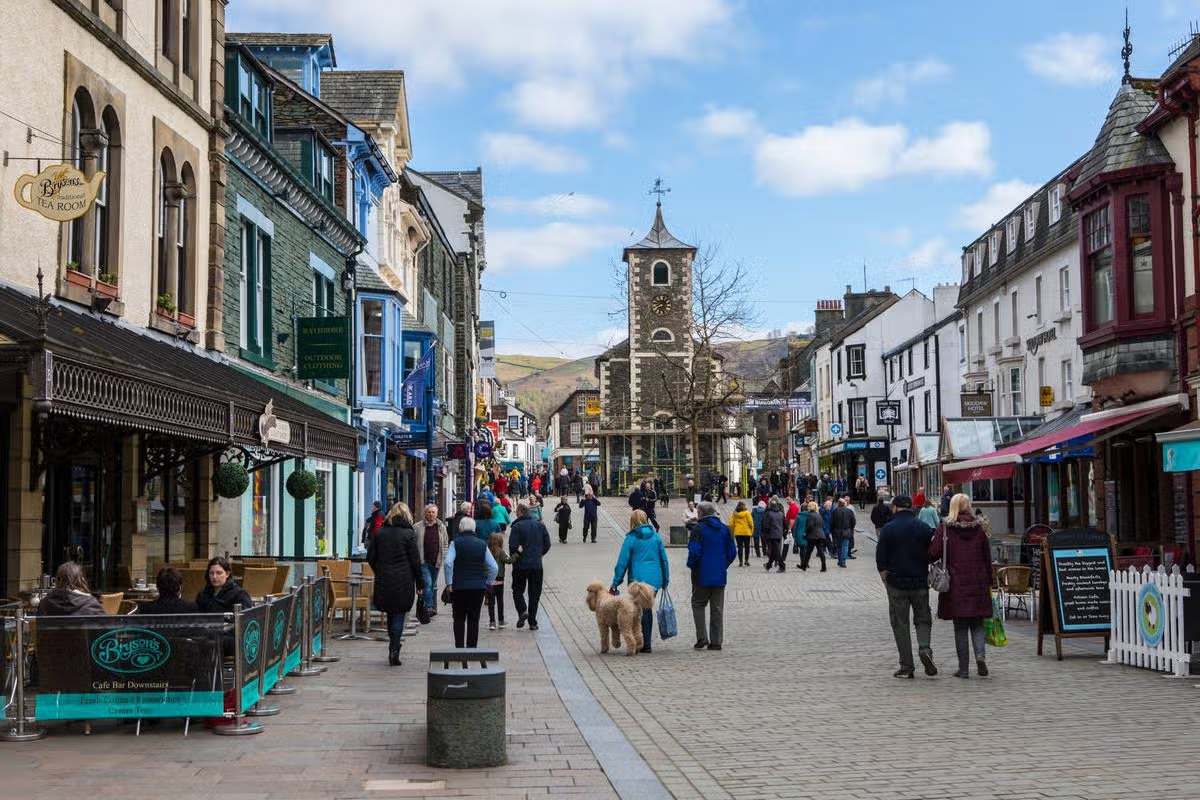
Nestled in a stunning corner of the UK is a town boasting a market brimming with treasures that has been running for hundreds of years. The charming town of Keswick sits within the Lake District and is renowned for its breathtaking scenery – and naturally, its market.
Before the market as it exists today came into being, churchgoers would hold unofficial ones in the nearby church.
In order to regulate trading, the town was granted a Royal Market Charter in 1276 that gave it the legal right to hold a weekly Saturday market and an annual five day fair.
Today, the market continues to flourish and can be visited every Thursday and Saturday. There are roughly 60 different stalls to browse, selling everything from locally produced food and drink to vintage clothing and artisan gifts.
It’s not solely the market that makes Keswick such a wonderful destination. The town is also packed with stunning lakeside walks that burst into glorious shades of gold and orange throughout the autumn months.
As the leaves begin to turn, now is arguably the ideal time to pay Keswick a visit.
The market town sits in the northern section of the Lake District National Park, and ranks among the nation’s most stunning locations.
There’s an abundance of remarkable walks that highlight the area’s natural splendour. If you’re seeking panoramic vistas, then the Latrigg path is essential, winding up the hillside for three miles.
Upon reaching the top, you’re treated to sweeping views across Keswick and the neighbouring Derwentwater.
Another essential walk is the Castlerigg Stone Circle route which guides you along the former railway path, then up the lane towards the Castlerigg Stone Circle.
The stone circle occupies a natural plateau, and stands as one of Britain’s oldest stone circles stretching back to the Neolithic era.
Some of the 38 stones within the circle tower up to 10 feet high.
This picturesque town attracts thousands of visitors every autumn for its stunning foliage — but residents are fighting back against a surge of influencers with calls to restore peace and safety to their quiet community
16:27, 15 Oct 2026Updated 16:27, 15 Oct 2026
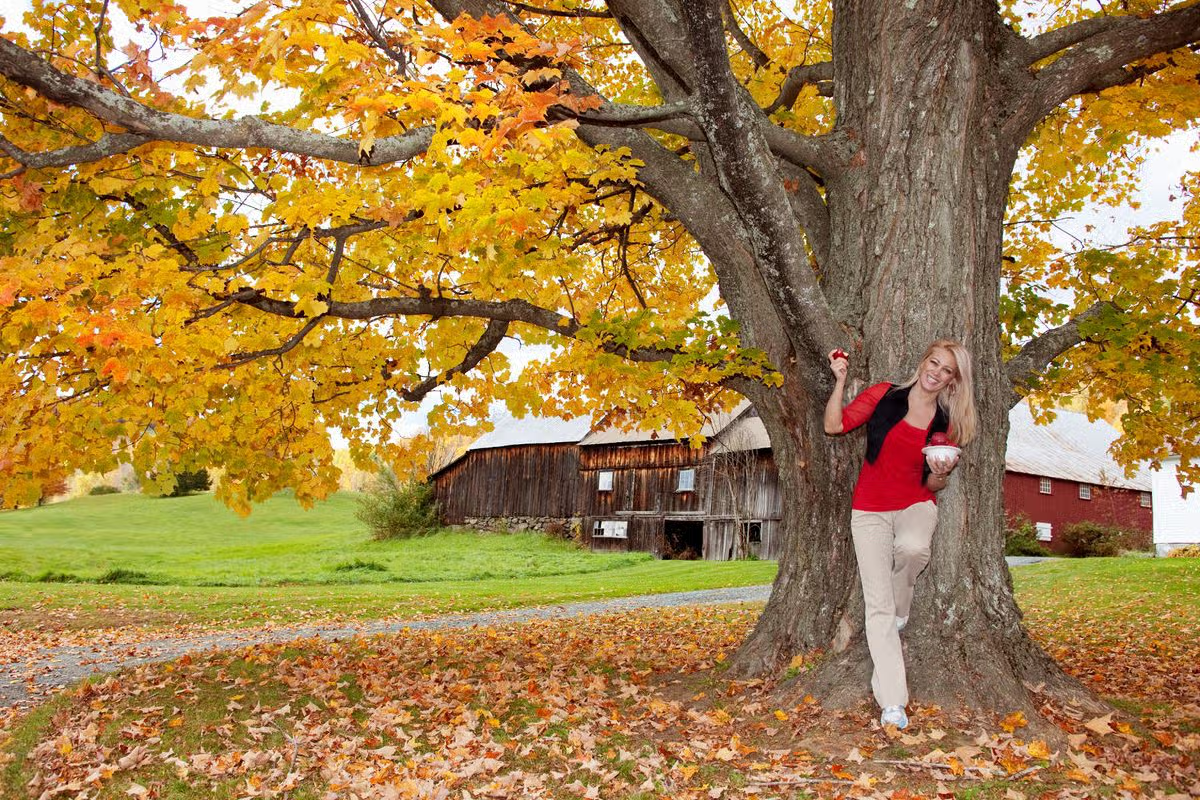
People flock to this town every year for the amazing autumn colours – but not everyone is happy about it (file image)(Image: Getty Images)
Autumn is one of the most beautiful times of year, as trees turn from green to a stunning red, brown, orange, and gold. Getting out to see the seasonal colours is one of the most enjoyable things to do at this time of year – as long as you wrap up warm – and you can get some incredible pictures and video for social media while you’re at it.
But people living in one town which has become world-famous for its spectacular autumn displays have become so fed up of people flocking to their quiet community that they’re putting measures in place to ban influencers entirely. Pomfret in Vermont, in the north-eastern United States, is a peaceful, tranquil community, home of only slightly more than 900 people.
But in recent years it has become a hive of activity every autumn as crowds of people attracted by beautiful pictures of the autumn colours – known to some as ‘leaf-peepers’ – come by to see for themselves. And this has become a real problem for some residents.
‘Rude’ social media influencers
Some have said they have experienced visitors being rude, disrespectful, or downright selfish in their pursuit of the perfect snap or video, with little regard for those around them. According to news.com.au, local farmer Cathy Emmons said she and her husband Bill had witnessed one visitor wander onto private property and set up a portable changing booth, before emerging in different outfits for her selfies.
She has also witnessed tourists brazenly wandering onto her farm and stealing her tomatoes, while another resident described a drone hovering just a few feet above his head as he dined outdoors with his family. In a separate incident, a visitor parked unlawfully in a local’s driveway and used her garden shed as a toilet.
Problems on the roads
The picturesque Sleepy Hollow Farm on Cloudland Road is one of the most popular locations. But the road is not equipped to deal with the amount of traffic it is experiencing, and concerns have been expressed about visitors blocking lanes as they pull over to take photos.
Various measures have been introduced in an attempt to tackle the problem – but with limited success. In 2023, local officials shut the road to non-residents during the peak foliage season, from the middle of September to the middle of October, reports the Express.
The measure has been repeated in subsequent years, and will once again be enforced from Saturday, September 26, to Tuesday, October 13 this year. In a notice confirming the plans, issued in August, the Town of Pomfret Selectboard acknowledged the measures “cannot fully address the significant issues created by fall foliage traffic”.
It went on to say: “We also appreciate these steps may inconvenience area residents, their guests and others. Nonetheless, we believe these actions will significantly improve safety and quality of life for residents most severely affected by increased foliage season traffic, as they did the last several years.”
Fundraiser for road closure
Last year locals established a fundraising page called ‘Save Cloudland Road’, designed to raise sufficient funds to cover road closures and traffic enforcement to tackle the flood of visitors. A message on the page reads: “Over the past several years, Cloudland Road (and the small roads leading to Cloudland Road) have experienced an unprecedented surge in Instagram and TikTok-fueled tourist ‘influencers’.
“During fall foliage season, crowds commonly surge to hundreds of people at one time, and tour bus companies have even joined the fracas. Cloudland and surrounding roads can become impassable during the fall, and poorly behaved tourists have damaged roads, had accidents, required towing out of ditches, trampled gardens, parked in driveways, and verbally assaulted residents.”
The page pleads with people in the community to band together to raise enough money – estimated to be more than $12,000, or around £9,000 – to pay for signs and sheriff deputies to man temporary closures. It says the measures are needed “to bring peace, safety, and civility back to the families who live here”.
Ensure our latest headlines always appear at the top of your Google Search by making us a Preferred Source. Click here to activate or add us as Preferred Source in your Google search settings
This town has gorgeous coastal walks as well as plenty to explore
15:06, 12 Oct 2026Updated 15:07, 12 Oct 2026
This gorgeous coastal town is perfect for a weekend away(Image: Getty)
Summer has drawn to a close and autumn has arrived. While summer is a wonderful season for getting away, there’s no reason the enjoyment has to end when temperatures drop.
Indeed, autumn ranks among the most spectacular times of year across the UK.
The foliage transforms into golden hues, tourist numbers dwindle and settling into a welcoming pub following a lengthy ramble epitomises the perfect autumn pursuit.
If you’re seeking a UK destination that truly comes alive during autumn, there’s a delightful seaside town in Cornwall that might tick all the boxes.
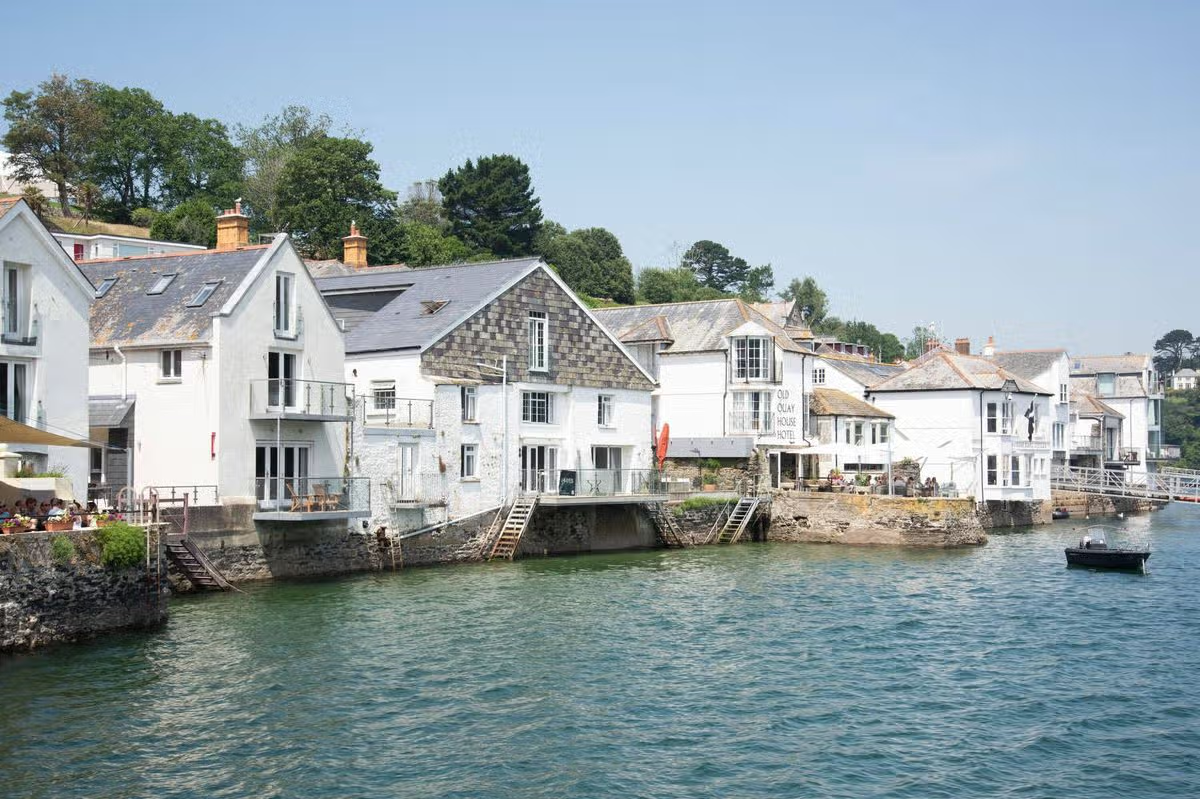
According to research conducted by credit card firm Zable, Fowey in Cornwall emerges as the best value location for an autumn staycation. It’s not merely affordable though – it’s also a charming harbour town brimming with things to discover.
The town sits proudly on the banks of the river Fowey and traces its roots back to medieval times.
Its naturally deep water harbour established it as a significant historical port and commercial hub throughout the centuries, while the streets showcase magnificent Victorian and Edwardian architecture.
The region surrounding Fowey also holds Area of Outstanding Natural Beauty status.
If you fancy exploring the town’s surrounding landscape, then the creeks and coves walk is absolutely essential. This four-mile circular route incorporates two ferry crossings and highlights the magnificent woodlands and coastal pathways that cradle the town.
The walk requires two to three hours including ferry journeys and looks absolutely stunning at this time of year. However, if you’d prefer to remain in the town itself then you certainly won’t be short of things to do.
Fowey boasts a thriving high street brimming with independent shops and boutiques that are ideal for an afternoon of browsing.
Fore Street serves as the town’s main high street and its twisting alleyways offer a wonderful way to while away an afternoon.
Make sure to pop into Jo Downes Handmade Glass for locally blown glass artworks, or Heather Jane and Co., which features art from 180 local makers.
Round off your day at a quintessential Cornish pub, the Ship Inn on Trafalgar Square. This historic establishment was built in 1570 and features a huge open fire ideal for a relaxing autumn pint.
The beautiful spot is perfect for pensioners seeking a relaxed lifestyle
14:27, 12 Oct 2026Updated 14:35, 12 Oct 2026
Best town to retire in Spain as expats praise ‘affordable living’
New analysis from World Atlas has named the best Spanish towns to relocate to. They are all stunning, overlooked locations, ideal for retirees seeking a peaceful and authentic way of life away from well-known resorts such as Benidorm or the Costa del Sol.
The research highlighted seven picturesque towns with fewer than 50,000 inhabitants across Spain that feature “walkable, historic centres with accessible recreation, including coastal paths, mountain trails, canoeing rivers, and reservoirs a short drive from the front door”. On Reddit, expats praised the “affordable living” and the “amazing regional food” of some of these picture-perfect locations.
Trujillo, in Extremadura, was named the best small town to retire in, with the lowest housing prices of around €717 (£605) per month. Locals praised the town’s authenticity on social media, with one saying that “life is more or less affordable, with no uncontrolled tourism problems, and food is amazing”.
Trujillo was followed by Arcos de la Frontera, in Cádiz, which has an estimated population of 31,046. Experts at World Atlas noted: “For retirees who want a classic Spanish white town with water sports on the doorstep rather than just mountain views, Arcos is a rare combination.”
Baiona, in Galicia, was also named one of the best places to relocate to. The charming town in northern Spain has a population of 12,380. World Atlas stated: “Baiona offers a version of coastal Galicia that pairs history with a genuine beach-town feel, at a price most Mediterranean resort towns can’t match.”
Other places included the picturesque town of Sitges, just half an hour down the coast from Barcelona, and Cangas de Onís, best known as the historic gateway to the Picos de Europa National Park.
Hebron, occupied West Bank – Badr al-Tamimi, 60, lives in Hebron’s Old City, where Israeli checkpoints, iron gates and road closures turn the simplest tasks into a dispiriting daily ordeal for Palestinian residents.
The situation goes beyond mere restrictions on movement. Israel has created a ghost town in parts of Hebron, where residents feel they are being driven out. This is most pronounced in an area known as H2, where Israel has complete control and Palestinians are subject to the dictates of the military.
Recommended Stories
list of 3 itemsend of list
A few days ago, Israeli authorities installed three iron gates across a 200-metre (656-foot) stretch of Hebron’s Old City – amounting to just 0.2 dunams (200 square metres) – as part of Israel’s apparent attempts to restrict Palestinians’ freedom to move around the city.
Hebron Mayor Yousef al-Jabari told Al Jazeera that one gate was erected on al-Zahid Road, the only route accessible to vehicles reaching the Old City entrance. A second was placed at the start of al-Shalala Street, which leads to shops connecting to the Bab al-Zawiya area in the city centre. A third towers over another section of al-Shalala Street, a thoroughfare used by pedestrians to access the shopping area.
They are part of a wider web of travel restrictions across the occupied West Bank, but Hebron, which has a strong settler presence, has suffered more than most Palestinian cities.
Approximately 40 percent of the 89 checkpoints in the West Bank and 11 percent of all 925 movement obstacles are located in the H2 area of Hebron, which is under tight Israeli control, according to the United Nations Office for the Coordination of Humanitarian Affairs (OCHA).
About 7,000 Palestinians in an area of Hebron where hundreds of settlers live are affected by the latest travel restrictions. Since October 2023, when the genocidal war on Gaza began, only Palestinians with specific identification numbers could enter this area. Checkpoints at the entrance to this zone are generally only open from 7am to 8pm.
Badr al-Tamimi is forced to move between iron gates to reach other parts of the Old City where he lived his whole life [Sari Jaradat/Al Jazeera]
Al-Tamimi, who lives in the al-Sheikh neighbourhood adjacent to the city’s famed Ibrahimi Mosque, owns a shop in the Old City.
Palestinians can be kept waiting for hours at the checkpoints, and the mood of a soldier manning one can decide the commute time of a Palestinian. Worshippers attempting to enter the Ibrahimi Mosque can be held up for hours by soldiers.
“They might allow a limited number of people to enter while others are forced to wait, whereas resident movement comes to a halt during incursions, Jewish holidays, and the associated security measures,” he added.
Repeated closures have paralysed economic activity in Hebron, making it increasingly difficult for shops and companies to do business.
“Our presence in the Old City is a matter of steadfastness, not the availability of the elements needed for economic life,” al-Tamimi said.
Even after Israel’s occupation of the city in 1967, Hebron was once a bustling city with lively shops and markets. Residents could move more freely between neighbourhoods, which helped with economic life in the city.
From that point, the Old City’s geography changed, becoming isolated from its surroundings, al-Tamimi said.
He points to Shuhada Street, once a vital artery for transport and commerce in the city before road closures and restrictions transformed the area’s reality.
“They committed the crime, yet they continue to punish us for it,” he said.
In 1997, the Hebron Protocol was signed between the Palestine Liberation Organization (PLO) and Israel, dividing the city into two zones: H1, which was under relative Palestinian jurisdiction, and H2 – an area which includes the Old City, the Ibrahimi Mosque, and illegal settlements – remained under Israeli security control.
Issa Amro, coordinator of the Youth Against Settlements group, said Israeli prohibitions intensified with the outbreak of the second Intifada in 2000 when Hebron became a centre of the uprising.
During this period, vast areas of the city were sealed off, shops were forced to close, and residents often remained confined to their homes or neighbourhoods.
Since Israel’s genocidal war on Gaza began on October 7, 2023, the number of checkpoints has risen to 32, while other obstacles impeding Palestinian movement now exceed 130.
Israel installed new iron gates in Hebron’s Old City to restrict the movement of Palestinians [Sari Jaradat/Al Jazeera]
The “closed zones”, designated by Israeli authorities as areas of military activity with restricted access to Palestinians, have expanded around the Ibrahimi Mosque and the illegal settlements that lie in the heart of the city.
“The movement restrictions are effectively holding residents as hostages,” Amro said.
Mayor al-Jabari said approximately 10,000 Palestinians in the Old City and the surrounding closed zones are affected by these measures.
Some parts of Hebron are inaccessible to vehicles, and Palestinian residents are subject to curfews two or three days a week, usually over the weekend.
He believes these restrictions are aimed at hindering Palestinians’ ability to return home and stifle life in parts of Hebron.
Meanwhile, Israeli authorities have helped settlers expand in the area, imposing a new suffocating reality for Palestinians in the city.
Al-Jabari said Israel’s current government could be doing this to curry favour with settlers ahead of this month’s election.
Control of Hebron, its Old City, and the Ibrahimi Mosque is a key issue for settlers, and politicians in this group occupy key posts in the Israeli government.
This has coincided with a concerted effort by Israeli authorities to cement the settler presence in and around the city.
“The seizure of buildings and land, along with the installation of gates, is a continuation of Israeli policies that have been in place for decades,” al-Jabari said.
“These include the closure of Shuhada Street and the shutting down of over 500 shops, as well as the establishment of settlement outposts and military positions within the Old City.”
He has seen more restrictions on Palestinians’ freedom of movement over the past month, measures that will undoubtedly appease settlers.
Hebron municipality has responded to this by filing lawsuits in Israeli courts, despite its scepticism about the impartiality of the judiciary.
With these measures continuing, life for Palestinians is getting worse, making work, life and education a daily struggle.
Israel cites the security situation as a pretext for erecting more checkpoints and iron gates in Hebron, but there are no such restrictions on settlers.
Since 2015, Israel has limited the number of Palestinian residents of closed zones who can pass through these checkpoints. Students and teachers frequently have their bags searched by Israeli soldiers or are detained.
Ayat al-Jabari, a 40-year-old science teacher, worked for a year at Qurtuba School, located near the closed Shuhada Street, before transferring to her current position at Al-Fayha School, near the Ibrahimi Mosque.
Although reaching Qurtuba School from her home should have been a five-minute journey, it often took an hour.
On her unsettling morning route through a nearby cemetery, often in darkness during the winter months, settlers and soldiers often appear in the graveyard to block the path of Palestinians or abuse them.
“Every day, I was forced to take a long route and walk through a cemetery to avoid passing the checkpoint, as I don’t hold a [special identification card] number. Even those who do hold numbers are sometimes forced to take this path to escape the soldiers’ moods,” she said.
After moving to Al-Fayha School, al-Jabari hoped her commute would improve, but the situation is no better than before.
“Whenever Jewish holidays arrive, these schools are closed because all the students live in areas subjected to a total lockdown, to the point where residents are even forbidden from opening their front doors,” she said.
A former Michelin-starred chef has reopened a well-known chippy as part of his Salt and Malt restaurant and takeaway chain
Fish and chips remain a popular seaside treat(Image: Mark Taylor)
Few foods are as quintessentially British as fish and chips. From seaside holidays to Friday night takeaways, the humble dish has become a much-loved part of life in the UK.
But the classic pairing of crispy battered fish and golden chips is actually more than a century old. Fried fish and potatoes were eaten separately before the two came together in the late 19th century, with English Heritage dating the combination to towards the end of the 1800s.
It wasn’t long before fish and chips became synonymous with a day at the seaside. This is where Reach’s reporter Mark David Taylor went to visit one iconic seaside for a day trip and to try some fish and chips.
Former Michelin-starred chef Josh Eggleton took over the much-loved seafront chippy after more than 20 years in business, transforming it into one of his Salt & Malt restaurant and takeaway outlets within just a few weeks.
And it appears to have struck a chord with locals straight away – by 6pm on the glorious summer Saturday of Mark’s visit, there was already a queue for tables inside the Weston-super-Mare restaurant, with an even lengthier one snaking outside for takeaways.
Boasting blue-tiled frontage, black and white ‘chessboard’ floor tiles and ribbed glass partitions between booths, this gleaming new Salt and Malt bears a striking resemblance to existing branches, giving the impression that Eggleton is eyeing up further seaside locations. And rightly so, as this upmarket fish and chip concept is absolutely crying out for wider expansion, reports Wales Online.
Featuring sustainably sourced North Atlantic fish, gluten-free chips and daily specials – on this occasion, Cornish Mounts Bay sardines with toasted sourdough, salad and pickles – it’s undeniably a ‘posh’ chippy, yet Eggleton has been mindful not to price out everyday seaside visitors.
Takeaway prices remain reasonably competitive with most seafront chippies – small cod and chips is £12.50, battered sausages are £2.40 and the kids’ meals are £7, chips in a cone at £2 and a large chip box for £5.60.
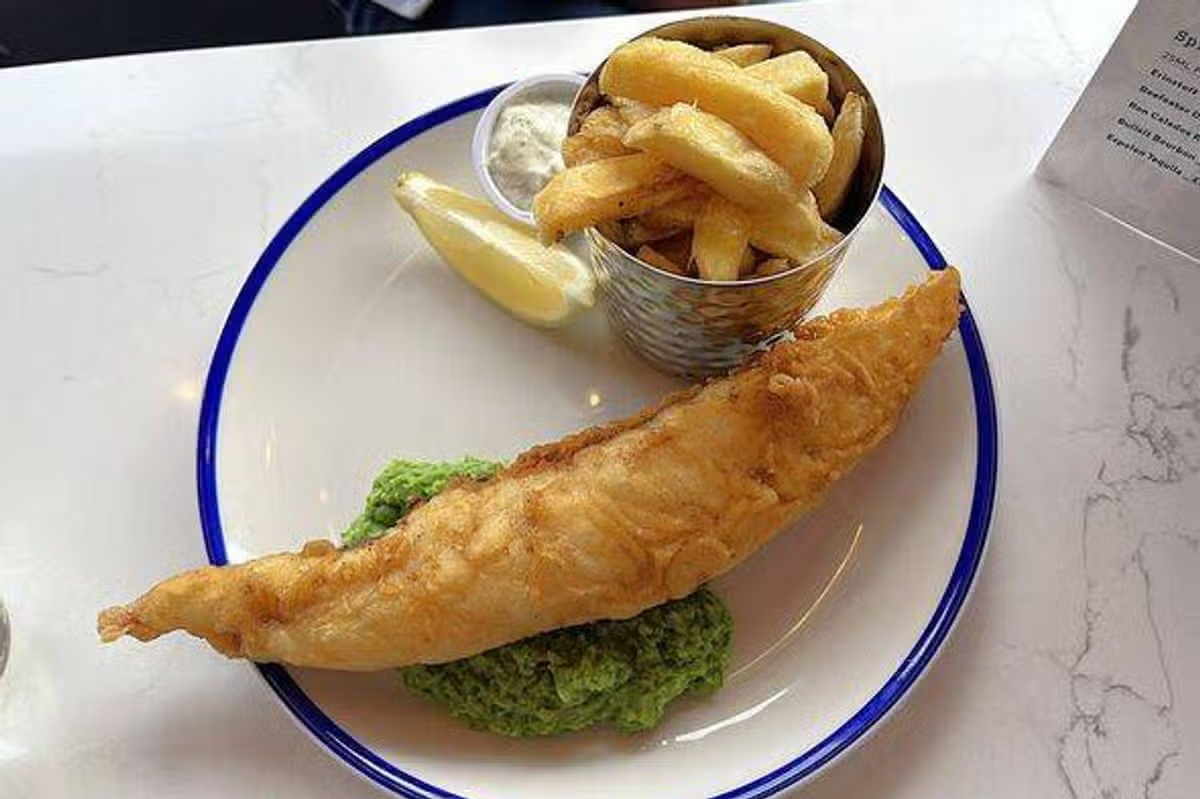
Inside the restaurant, prices are naturally higher, with battered haddock and chips with buttered crushed garden peas coming in at £19, and a homemade fishcake with cod, haddock, lemon, dill and parsley priced at £14.50.
The children’s menu (for ages 16 and under) in the restaurant is a reasonable £7.50, offering battered fish, sausage, chicken chunks, scampi and halloumi, all served with chips and a choice of peas, baked beans, carrots or cucumber.
Yet it’s the inventive touches and alternatives that sets Salt and Malt apart from your typical seaside chippy.
Alongside gluten-free batter as standard, diners can opt to have their cod or haddock baked in garlic butter rather than battered – perhaps the healthier choice for those craving a ‘beach body’ this summer.
For those less concerned about such matters, free chip refills are also on offer, though the portions are hearty enough that you may not need them.
Mark and his plus one sampled the cod and chips (£18) and the curried cod burger (£16.50), and neither disappointed. The cod was wrapped in crisp, golden batter, with large, moist and succulent flakes of fish inside, accompanied by a generous serving of buttery crushed peas.
Granted, £18 is above average for fish and chips, but this was a superb rendition of the great British seaside staple and well worth every penny. Nestled in a soft brioche bun, the curried cod burger featured a generous portion of lightly battered fish with a subtle curry sauce flavour, accompanied by tartare sauce, coleslaw and pickled red cabbage.
The chips were perfectly cooked – crispy on the outside, fluffy within, and completely grease-free.
Essentially, the dish brought together all the finest elements of a traditional seaside chippy – fish and chips, a bread roll, curry sauce and classic burger toppings – and the combination was nothing short of brilliant. If summed up in just two words, they’d be “top drawer”.
Traditional chippy favourites paired with stunning coastal views – what more could anyone ask for?
California Republican gubernatorial candidate Steve Hilton dove deep into his housing platform and lobbed a few attacks at his Democratic opponent, Xavier Becerra, during a town hall with Los Angeles news outlets Tuesday.
Hilton also pointed to some disagreements with President Trump, providing daylight between himself and a president who remains deeply unpopular in California, during the event hosted and livestreamed by the Los Angeles Times and LAist.
Democratic Gov. Gavin Newsom’s final term ends in early January, providing California voters the opportunity to select a new governor at a time of conflict between the state and the Trump administration over environmental policies, immigration, healthcare and other pressing issues.
Ballots already have started to arrive in California voters’ mailboxes ahead of the Nov. 3 election.
Here are the top takeaways from the discussion with Hilton:
Walking the tightrope on Trump
Republicans running for statewide office already have an uphill battle because of California’s heavily Democratic electorate. It’s an acute challenge this year, campaign experts say, because many Democratic voters are itching to help their party regain control of Congress and neutralize Trump’s agenda.
Trump endorsed Hilton in April, which helped the former Fox News host pull ahead of his GOP rival, Riverside Sheriff Chad Bianco, and secure the second-place spot in the primary election, behind Becerra.
On the campaign trail, Hilton has remained supportive of Trump and said Democratic policies, not the war in Iran, are to blame for high prices.
The Republican said those differences are rooted in his strong support for states’ rights.
“The broader point I want to make, and you can track this back to the commentary and what I’ve written over the years, is I’m a strong believer in decentralizing power,” he said. “I think there’s far too much involvement of the federal government in our affairs in California, and I’m going to be a very strong advocate for bringing those powers back in all sorts of ways.”
Gas prices, taxes and housing permits
Hilton described California’s cost of living as “a nightmare” and a major contributor to residents and businesses moving out of the state.
He laid out an affordability plan, which he refers to as “Califordable,” that he would prioritize if elected governor. His plan includes:
Ending income taxes for Californians who earn $150,000 or less.
Slashing oil industry regulations and clean energy mandates for utility companies to achieve $3 gas and lower electric bills.
Ushering in a new construction boom of single-family homes, including by developing 10 new cities around the state, and capping government fees on newly constructed houses.
He blames the state’s affordability woes on Democrats, who have controlled the state legislative seats and held every elected statewide office since 2009.
“It’s not just that it’s time for some change in California, it’s time for balance. It’s time to try something different after 16 years of doing it the same way,” he said.
Republican gubernatorial candidate Steve Hilton said he does have some policy differences with President Trump during a town hall at the Los Angeles Times Building on Tuesday in El Segundo.
(Ronaldo Bolanos/Los Angeles Times)
Hilton said he would stop enforcing laws requiring communities to meet housing production goals and instead focus on building in undeveloped areas of the state that want new homes.
“We’ve got this attitude that the only place you can build is inside what’s currently developed, and that’s motivated by a desire to stop traffic and sprawl and all these things. But the consequence of that is that you end up finding [it] almost impossible to build anything” because of permitting battles and lawsuits, he said. “My plan is to open that up so that we build outwards, not just upwards, increasing the amount of space we use for housing.”
How he would pay for it all
Hilton said that Newsom and Democratic lawmakers have gotten accustomed to spending big and that he wants to return California’s state budget to its pre-pandemic size.
Earlier this year Newsom signed a budget just shy of $352 billion. His first budget as governor, in 2019, clocked in at nearly $215 billion.
The growth occurred during a time “when around 2 million people on net have moved out of the state,” Hilton said. “So we’re spending twice as much for a big reduction in population and worse results.”
He said he could offset the tax cuts by ending funding for high-speed rail, trimming state agencies by 5% and cracking down on Medicaid fraud. Together, he estimates those cuts would save about $25 billion annually. He has also promised to end state-funded healthcare for undocumented immigrants and to hollow out agencies that regulate the state’s air quality and coastlines.
Another round of attacks on Becerra
While he largely stayed focused on policy, Hilton criticized Becerra’s record as U.S. Health and Human Services secretary and dinged him for skipping the town hall.
“Looking forward to perhaps one day having another chance to sit down with my competitor in this race, Xavier Becerra. We’ve had one debate. He promised that there would be debates, plural. Not to be today. But hopefully we can have that conversation because Californians deserve a conversation about the future of our state,” he said during his opening remarks.
On Monday, Hilton attacked Becerra for having “pulled out” of the debate, though the Democratic candidate never agreed to attend a debate proposed by The Times and LAist. Becerra’s spokesperson said the campaign declined the invitation because of a full campaign schedule.
In the weeks following the June primary election, Becerra made himself scarce on the campaign trail and attended few public events. In August, he told reporters there would be multiple debates. He and Hilton faced off last week in an hourlong debate on CNN but no other debates have been announced.
Offshore wind projects “grotesque,” Hilton says
At a time when the Trump administration has systematically dismantled climate and environmental policies, Hilton took care to cast himself as an environmentalist who is concerned about climate change.
He criticized many of the policies favored by Democrats, however, as a “very one-dimensional way of thinking” and offered a more business-friendly approach to addressing climate change:
Planting 3 billion trees and restoring wetlands.
Expanding the use of climate-friendly geothermal energy near places such as the Salton Sea and Sonoma and Modoc counties.
Expanding oil production in California, which he said reduces the need to import foreign oil on tanker ships that spew carbon emissions.
“So that’s a way of reducing carbon emissions that doesn’t burden working people and small businesses with the highest energy costs in the country. We’ve got to get the balance right,” Hilton said.
Hilton aligns with Trump’s vehement opposition to offshore wind projects, a potential source of abundant renewable energy. This year, the Trump administration announced deals to pay wind project developers billions to abandon U.S. wind leases off the coasts of California, North Carolina, New York and New Jersey.
“I think offshore wind is an absolute abomination. I mean, you look at beautiful Morro Bay or Humboldt up in the northern part of our state,” Hilton said. “The industrialization of our coastline that offshore wind would create, I think, is just grotesque, and I’m dead against it.”
Working across the aisle
When asked how he would work with a Democratic majority in the state Legislature, Hilton said he has experience doing it — as an advisor to former United Kingdom Prime Minister David Cameron, he shared an office with a member of the opposite party.
“We worked together very well. Didn’t agree on everything,” he said. “That would be my attitude. I’m very open. I’m not tribal. I’m not particularly partisan. I’m a pragmatic, problem-solving kind of person, and I’m looking forward to working with the Legislature.”
He said he would press the Legislature to cut spending and “the endless number of bills that they pass every year. … But I want to work together to reduce costs for Californians.”
Hilton also found alignment with Democrats who ran in the gubernatorial primary, including former Orange County Rep. Katie Porter, San José Mayor Matt Mahan and former Los Angeles Mayor Antonio Villaraigosa.
“Katie Porter in the primary … actually endorsed my tax plan. Matt Mahan and I agree on a lot of things to help” cut costs and speed up housing constriction, he said. “Antonio Villaraigosa, we agreed on a lot of things to do with energy policy. So I think there are Democrats who we’ll be able to work with to get consensus on some of the things that we need to get done.”
Ready for a luxury East London break? Enter our exclusive competition to win a stylish two-night stay at the award-winning Town Hall Hotel, complete with daily breakfast and an exquisite dinner for two at Elis.
Win a luxurious 2 night stay in the stunning Town Hall Hotel
Looking for the ultimate East London escape? We’ve teamed up with the award-winning Town Hall Hotelin Bethnal Green to give one lucky reader and a guest the chance to win a stylish two-night stay, complete with daily breakfast and dinner at the acclaimed Elis .
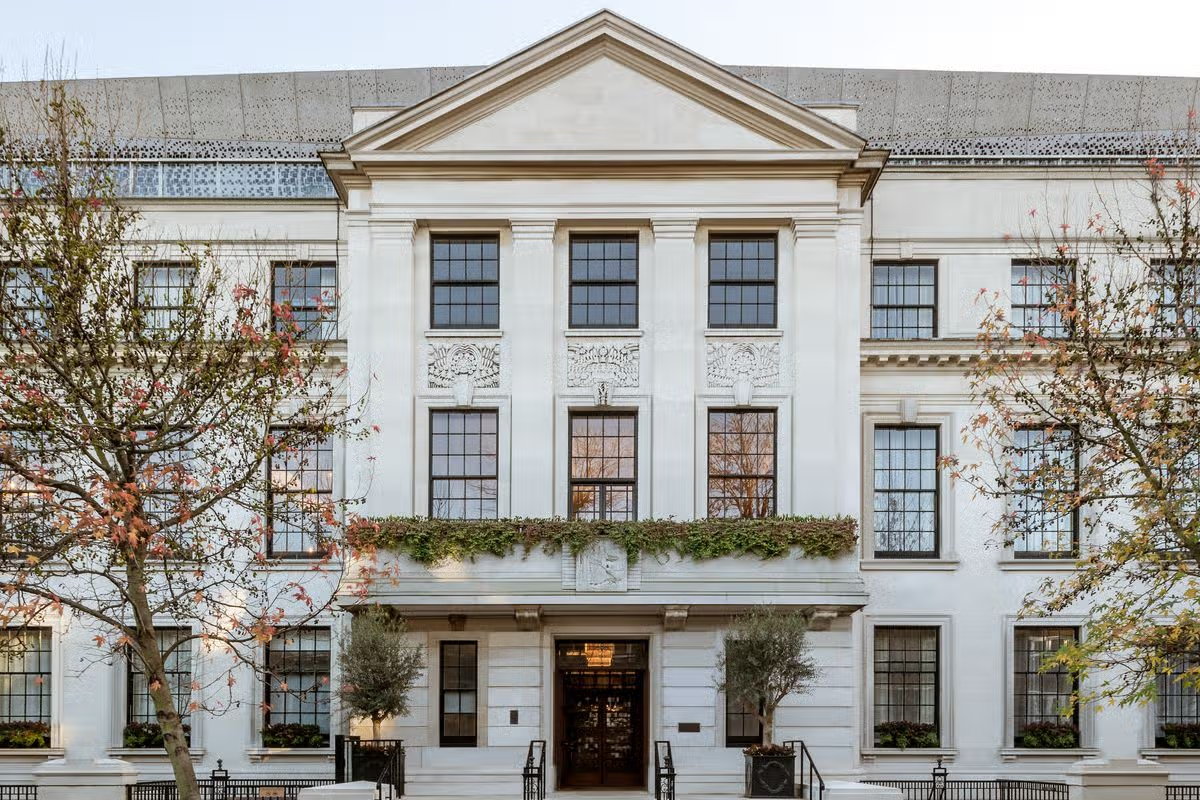
Housed inside the former Edwardian Bethnal Green Town Hall, this Grade-II listed landmark seamlessly blends grand historic architecture with cutting-edge modern design. Step inside to discover sweeping marble staircases, intricate Art Deco detailing, and a striking glass-and-steel extension—creating a boutique retreat like no other.
Experience the best of East London
Positioned right in the energetic heart of Bethnal Green, Town Hall Hotel is perfectly placed for exploring East London’s vibrant culture from the independent boutiques of Shoreditch, to the iconic Columbia Road Flower Market and historic Brick Lane.
When you’re not out exploring, unwind in the hotel’s breath taking 14-metre indoor heated swimming pool, squeeze in a session at the gym, or relax with a cocktail at the bar.
What you can win:
A two-night stay for two guests in one of the hotel’s spacious, gallery-like luxury suites (featuring fully equipped kitchens and bespoke interiors).
Daily breakfast (B&B) to start each morning in style.
Dinner for two at Elis, where two-Michelin-starred chef Rafael Cagali and his team serve up a relaxed menu inspired by his Brazilian-Italian roots.
For your chance to win simply fill in the form below. if you can’t see the form, click here.
A PRETTY English seaside town could soon get a massive upgrade.
Gorleston in Norfolk is home to Gorleston-on-Sea Beach which was recently named one of Europe’s best beaches in Tripadvisor’s Travellers‘ Choice Awards.
Gorleston in Norfolk could be getting a new waterfront attraction with a soft play area and wellness centre
And now the seaside destination could be getting even better with a new waterfront attraction.
The Ocean Room used to be a thriving nightclub with bands like Blur and Pink Floyd performing there.
Sign up for the Travel newsletter
Thank you!
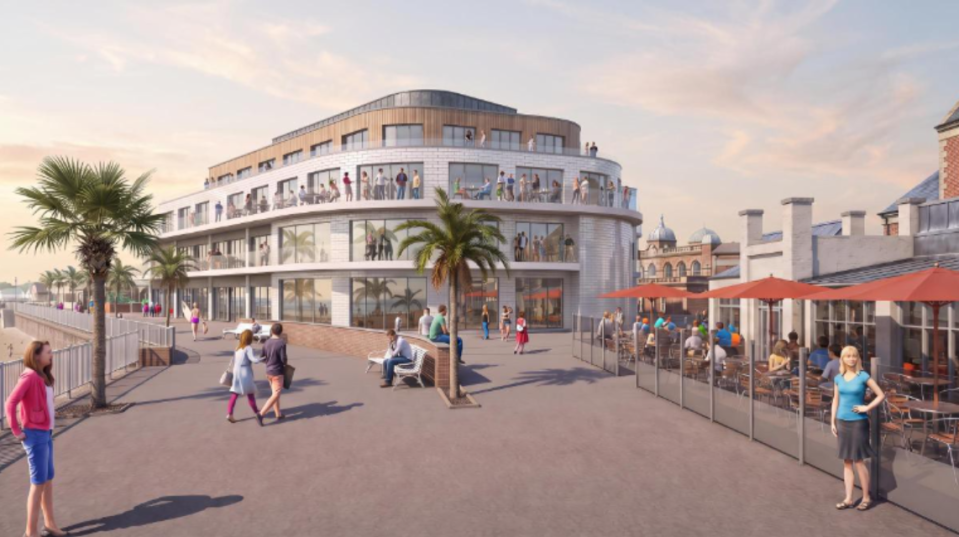
Now, the council has sold the building for £500,000 with future plans looking to replace the building with a soft play area, indoor games space, a coffee shop and a wellness centre with a spa.
The surrounding area would be redeveloped too with connections to the nearby Gorleston Pavilion Theatre and the bandstand.
If The Ocean Room was to be saved, the local council has estimated it would cost £1million to repair the building.
According to the BBC, the developer said: “The Ocean Room holds a special place in the hearts of many and the team recognises the building’s removal will be a source of genuine disappointment for the community.
“However, it should be noted that the council itself identified significant structural concerns with the building before the site was sold.”
While formal plans have not been submitted to the council yet, the round, Art Deco building could be facing its last days.
It would be built where the current Ocean Room is
The Ocean Room originally opened back in 1939 and used to host dinner dances, boxing events, nightclub evenings and concerts.
It then closed in 2024 after its tenants went into administration and the building has remained empty since.
One shop worker called it ‘the friendliest town in England’
The town’s working harbour remains one of the main attractions(Image: Paolo Paradiso via Getty Images)
One charming UK seaside town is famous for its oysters, bustling harbour and colourful collection of independent shops. Oysters have long been at the heart of Whitstable’s identity, with the town’s seafood heritage dating back centuries.
Today, its working harbour remains one of the main attractions, with fishing boats, seafood stalls, a market and waterside places to eat. But there’s much more to Whitstable than its famous seafood.
The town is a haven for independent shopping, with Harbour Street, the High Street and the surrounding streets lined with quirky boutiques, vintage stores, galleries, delis, bookshops and homeware shops.
Only a handful of national chains remain.
Just over an hour from London by train, the town has become a popular weekend retreat for city dwellers, reports the Express.
Visitors can spend the day browsing independent businesses before grabbing some fresh seafood and taking a stroll along the coast.
Wander down Harbour Street and the High Street, and you’ll encounter shopfronts brimming with character. Here, you can uncover a variety of distinctive treasures like the stunning Pearl Shop selling contemporary pearl jewellery and marine object d’arts, to George’s Whitstable, a fixture of the high street for 50 years and a true Aladdin’s Cave of treasures
You’ll also find award-winning British artisan cheeses at The Cheese Box, unique gifts at Buttercup Independent Toy Shop, a beautiful selection of books at Harbour Books, Whitstable’s beloved independent bookstore, and sweet treats at HoneyKanes Bright & Beautiful Shop, all without stepping inside a single chain store. That reputation has only strengthened in recent years.
Whitstable flourishes on independence, creativity and community spirit.
This sentiment is echoed by Stewart McArthur, from Brisbane, Australia, who is on a gap year and working at The Wit! of Whitstable, a vibrant Harbour Street gift shop that recently moved up from a small harbour stall to a prime High Street location.
He said: “You can wander up and down the street and see anything you need – there are so many different style stores that you don’t really need Amazon here.
“This is quite a busy little town. It just seems to get a lot of people coming through, which helps the independent businesses.”
Tourists, he added, are absolutely crucial. “They really support a lot of the local businesses when they come through. It gets busy, but I wouldn’t say overwhelmed,” he said.
For Stewart, what sets Whitstable apart is its sense of community. “It’s the friendliest town in England, it’s just a nice, chill, relaxed place. It’s nice to have a conversation with anyone who comes by.”
That sense of community was perhaps best illustrated by the tale of Revival Food & Mood, a social enterprise café and wellbeing hub that lost its premises during the 2021 lockdown.
Rather than disappearing, it was rescued by a grassroots campaign championed by residents with backing ranging from local groups to household names like Suggs from Madness and celebrated potter Keith Brymer Jones.
Thanks to the town’s resolve, Revival ultimately secured funding through the government’s Community Ownership Fund and reopened in a restored heritage building on the High Street. It now operates not only as a café but also as a venue for music, social gatherings, and mental health support.
Vanessa Brolly, the front-of-house manager at Revival Food & Mood told the Express: “There was a lot of support from the community about making sure that they found a new home.”
The wellbeing hub café is supported by East Kent and Bexley Mind, and has been in Whitstable for roughly eight years, though only two at its current site, and provides a variety of dishes, drinks, and social events such as “Chatty Tuesday” and a regular “Sound Social” in partnership with a neighbouring record shop.
Ms Brolly said: “There’s definitely a very close-knit community feel here. For example, we’ve got the social sounds event on tonight and that’s being run by the record shop, which is about two doors down and they’ll come in and play the records. Everyone’s always looking to collaborate, which is nice.”
Step inside and you’re welcomed by quirky décor designed to brighten the spirits, featuring an indoor garden complete with a water fountain, snug booth seating, and a 1970s-inspired relaxation space kitted out with sofas, vinyl decks, lamps, and a mirror ball.
Ms Brolly noted that national chains such as Costa and Prezzo have shut their doors, yet believes this speaks to the strength of independent businesses rather than any ill-feeling towards big brands.
“If I were visiting, I wouldn’t go to Costa,” she said, emphasising that visitors come to Whitstable in search of unique, independent spots.”
She went on to say that funding initiatives, such as Canterbury Council’s levelling-up programme, could also help keep Whitstable’s flourishing independent scene alive, but ultimately, what makes the town truly special to her is straightforward. “Everyone supports each other.”
For her, the best thing about working at Revival is “being involved in the community and listening to good music.”
Mrs Sally Miller, owner of Anchors Aweigh Vintage, has run her seaside vintage shop for 13 years.
Having lived in neighbouring Tankerton for over 17 years, she’s witnessed first-hand how the high street has changed over time. Step inside and it’s impossible not to be captivated by its treasure trove of curiosities — a shop overflowing with history, character and one-of-a-kind finds that each seem to have a story of their own.
Mrs Miller told the Express: “You get more versatility now than you did. A lot of the locals moan about the idea that it’s all down to people from London. Actually, we probably have more people from Sheffield than from London, but that doesn’t occur to them. The world is a transient place now, isn’t it?”
“Some of the locals are like, ‘all these people!’ But you live in a nice place – people aren’t going to avoid it. When you talk about DFLs [Down From Londoners], it doesn’t really matter. It’s a transient place, a tourist destination. And because we do live in a nice place, people come. The more the merrier!”
Yet for Mrs Miller, the backbone of Whitstable’s businesses remains its local community: “We get a lot of repeat customers, a lot of local shoppers as well. They like popping in for buttons and little bits.”
What keeps independent shops thriving and sets Whitstable apart, she believes, is a winning combination of attentive service and a warm, welcoming atmosphere that fosters genuine conversation and connection with every customer who walks through the door.
“People like to talk, they like to stop. We give them the time of day – I’m sure we probably keep people in here longer than they should be,” she laughed.
“It’s the service. People still appreciate the service.”
That sense of camaraderie runs deep — if she doesn’t have something in stock, Ms Miller is more than happy to point customers in the direction of a fellow trader, as they all get along and know one another well.
She added: “We have a strong shop local culture. We’re really lucky. People here talk to you.”
Pearl Shop owner, jeweller and pearl specialist Bibi Southwell also revealed how the town’s heritage and community spirit shaped her business: “We first opened as a pop-up in August 2024, and the response was incredible – both locals and visitors really embraced us. That encouraged us to open permanently just a couple of months later in October. Whitstable’s longstanding history with oysters made The Pearl Shop feel like a natural addition to the town. With its coastal charm, creativity, and independent spirit, it was the perfect fit.
“My favourite thing is being able to be creative every day and sharing that with the community. There’s such warmth here, and we’re surrounded by other independent shopkeepers who all support each other.
“Whitstable draws people from all over thanks to its seaside character, oysters, and thriving independent scene. We see loyal locals who come back regularly as well as visitors who discover us while exploring the high street and both are equally important to us.”
She added: “Whitstable has an authenticity that you don’t find everywhere. The town celebrates creativity, uniqueness, and quality over mass-produced sameness. Visitors come here expecting to find something they won’t see on every other high street, and that gives independents like us the space to really thrive.”
On the subject of the recent closures of chains such as Costa, Ms Southwell said it underlines how people in Whitstable actively seek out independent businesses. Echoing views shared by others including Ms Brolly, she explains that visitors arrive wanting to soak up the distinctive character of the town, rather than the familiar chains they can find anywhere else.
“It shows that people in Whitstable actively choose independents. When you visit, you want to experience the character of the town, not the same coffee chain you’d find anywhere else. I think Whitstable is proving that high streets can survive, and even flourish, when they’re built around small, passionate businesses instead of big brands.”
While many traders are celebrating Whitstable’s flourishing independent scene, not everybody is persuaded it can last. One shop owner, speaking on condition of anonymity, offered a sobering reminder of the very real pressures bearing down on the town’s small businesses.
“They’ve let the harbour be rented out to everything you can imagine that we don’t need in a small seaside town, instead of seafood, for people to make money instead of seafood, which is what we actually need there,” they said. “I don’t want another glossy piece by someone from London saying this is the ‘new Camden’. That’s five years behind the times and it doesn’t help us. Until councils stop raiding towns that were built by small family businesses, we’re all going to die. The local councils couldn’t organise a p***-up in a brewery.”
The shopkeeper’s exasperation is plain to see: “Tourists come here expecting seafood, and instead they find crochet cushions and Thai curry. That’s not what this harbour was built for.”
They went on to say that the town’s weekend atmosphere has been put under strain: “Our weekends are dominated by traffic jams and alcohol. Families leave early, children can’t run around, and the council won’t close the smallest, most dangerous roads for safety. This place risks turning into a tourist attraction, rather than a real working town with shops and families.”
Despite this, the shopkeeper conceded that Whitstable retains its undeniable appeal. “The town will always be amazing – but there’s something not quite right about what goes on behind the scenes when small coastal towns are made popular.”
A spokesperson from Canterbury City Council told the Express: “We’re very pleased to hear such positivity about Whitstable, which only goes to reinforce our view that it’s one of the UK’s best seaside towns – a fantastic place to live and work in, and also wonderful for a visit or extended stay.
“Clearly it’s never possible to please everybody, but given the fact the negative comments have been made anonymously, it makes you wonder if the individual has been turned down for trading opportunities at the harbour and their views have been affected as a result.
“The criticism is also incorrect, because there is seafood readily available at the harbour. The harbour is visited by thousands and thousands of people each year and our commercial units along the south quay are very popular with local residents and visitors alike.
“The hugely popular Whitstable Rocks Oyster Festival takes place each September – this year from 12 to 14 September, see whitstablerocksoysterfestival.com – which brings lots of people in and is also run by a private business.
“At its heart, Whitstable remains a fishing town with an active harbour and plenty of businesses selling seafood. Shops selling a whole mix of other goods complement this offer, which leads to a great balance of traders overall.
“But don’t take our word for it – Daily Express readers should come and experience Whitstable for themselves!”.
After a roasting hot summer during which a trip to the beach to escape the heat was top of everyone’s agenda, Rosaleen Fenton made an autumnal visit to one of the country’s most popular seaside towns
08:41, 30 Sep 2026Updated 08:54, 30 Sep 2026
Rosaleen whizzed down to St Ives on a GWR train
A summer trip to Cornwall can often feel like a battle against the crowds. With thousands of visitors packing into its narrow lanes, navigating St Ives during peak season can make you feel like you are trapped in an endless queue – albeit one with access to delicious Cornish pasties roughly every five feet.
But as the schools reopen their doors, the town quietens down and begins to feel like a place reclaimed by its residents. I had been told September is the best time to visit, so I gave it a go, my mum and I hopping on a Great Western Railway (GWR) train from London Paddington, hoping for a glorious, slightly calmer seaside weekend.
Our journey took on a mythical feeling as we headed further west. GWR has recently revived its Line to Legend Land storybook, a century-old set of promotional travel pamphlets and books that encourage passengers to explore the scenic regions by train. It is packed with South West folklore and retellings, and now a new tale by former Children’s Laureate Sir Michael Morpurgo.
Do you have a travel story to share? Email webtravel@reachplc.com
The railway has installed five life-sized statues of these legendary figures across the network. Stepping onto the platform at St Ives, you were greeted by the famous mermaid of Zennor – which celebrates the legend of a local chorister lured beneath the waves. Reading about a coastline teeming with mythical creatures while watching Carbis Bay slide past your window felt like the perfect way to leave a busy working week behind.
Our home for the weekend was Tregenna Castle Resort, perched high on a hill and offering one of the most breathtaking views in the West Country – and not one I tire of looking at.
These stone walls have seen a lot of history. Built in 1774 as a grand private home, it was later purchased by GWR as an exclusive hotel. Today, the 72-acre estate is a dream for holidaymakers. Situated amidst lush ground, it boasts indoor and outdoor pools, woodland walks, a nine-hole golf course, and courts for tennis, badminton and pickleball.
Then there is the food, which deserves its own spotlight. We dined at the Godrevy View Restaurant, named after the distant lighthouse said to have inspired Virginia Woolf. The ever-changing menu is far superior to standard hotel fare. We begin with a beautifully arranged, nicely seasoned tomato salad served with Thai basil whipped ricotta, watermelon, ponzu and chervil (£11). For main, an 8oz fillet steak is generous, served alongside fondant potatoes, carrot puree, asparagus and baby beets.
On Sunday, we enjoyed roast beef, cooked to perfection, with all the trimmings, including Yorkshire puddings hiding a decadent treat within – a small dollop of braised beef swimming in rich jus. My daily routine quickly settled into gluttony – a delicious fry-up for breakfast, a rich chocolate brownie for dessert – an extremely pleasant way to start and finish every day.
While the town, which has a stand-out independent shopping scene and was named the UK’s prettiest seaside town just this week, is calmer in September than the summer holiday months, the streets still felt substantially fuller than you’d expect from a place of 11,000 people. A great energy, but the bustling made me yearn to return to the sublime peace of Tregenna Castle, just 15-minutes away.
With our visit coming just days after Prime Minister Andy Burnham said he was in favour of a ‘tourist tax’ for Cornwall, the topic of overtourism was top of my mind. It’s fair to say business owners in the area remain divided on the topic, but for me, the benefits are easy to see. St Ives records more than 220,000 overnight stays annually, meaning it could bring in over £1,000,000 a year – a lifeline for a town where social issues are pressing, despite its well-to-do reputation. There’s a foodbank here, and a lot of young people who can’t survive in a property market where 15% of homes are second ones.
Chatting with locals, many said they no longer live in St Ives itself, preferring nearby Penzance, where they have room to breathe, cheaper homes, and not every shop sells clotted cream fudge.
Yet as a visitor, I can see why those in the industry are wary of scaring anyone off. It’s clear how holidaymakers pour vital cash into the local economy through independent shops, galleries and restaurants. Last year Jon Hyatt, who chairs Visit Cornwall, said he was “against any charge that might put visitors off”.
It’d be a terrible shame if they were, given how much there is to enjoy, from frolicking in the waves of Porthmeor Beach and peering off the side of Smeaton’s Pier, to touring the Barbara Hepworth Museum and Sculpture Garden.
Unsure of what to take on next, my travel companion tried using an AI bot to plan a fun day out for us. Unsurprisingly, technology failed us with the app repeatedly instructing us to catch a bus route that hasn’t existed for over two years. Abandoning our future robot overlords, we turned to a friendly member of hotel staff instead, who pointed us straight toward Tate St Ives – a far superior mode of recommendation.
Opened in 1992 on a cliff overlooking Porthmeor Beach, the displays change regularly. We caught an exhibition by Halima Cassell, whose intricate geometric sculptures play beautifully with light and shadow. Outside, it feels as if her artwork was continuing, a rainbow appearing over the beach, ending atop the RNLI flag.
Afterward, we walked a stretch of the South West Coast Path and enjoyed the brutally beautiful landscape, with the rhythm of the waves calming our frazzled nerves. As a special treat, we returned to London on GWR’s overnight Night Riviera Sleeper service.
I slept blissfully after a trip to the glorious buffet bar, where you can enjoy a free hot chocolate, before heading to slumber in a carriage. Getting onto the top bunk is no trouble, with a smart fold-away ladder showing how cleverly designed this small cabin is.
We arrived back in London just after 5am, though passengers can stay on board until closer to 7am. Breakfast is delivered (for me, a bacon roll) alongside piping hot coffee – which gives me the strength to start my day back in London, where I mourn the glorious coastline I left behind.
Book it
Tregenna Castle Resort, Treloyan Avnue, St Ives. Rooms and luxury self-catering lodges available. Visit tregenna-castle.co.uk
GWR operates regular services from London Paddington. To travel in a sleeper cabin on the Night Riviera, you need to purchase a regular train ticket, plus a supplement for the cabin. For the best deals, book up to three months in advance. Book at GWR.com.
Timed entry tickets to Tate St Ives on Porthmeor Beach cost £14 (£1.50 extra with a voluntary donation), though locals can get unlimited all-year entry for £10. Book in advance at tate.org.uk/visit/tate-st-ives.