THE start of summer will officially begin tomorrow with the longest day of the year – where one UK town won’t see nightfall.
Summer solstice celebrations are set to take place across the Northern Hemisphere.
Sign up for the Travel newsletter
Thank you!
The island will see around 18 hours and 55 minutes of sunlight tomorrowCredit: AlamyThe busy fishing town has around 7,000 permanent residentsCredit: Alamy
Lerwick, the main town of the Shetland islands, will see almost 19 hours of daylight tomorrow (June 21) as the Northern Hemisphere celebrates the summer solstice.
Located closer to the Arctic Circle than London, night will fall for just five hours on the UK’s most northerly town.
Residents will not experience complete dark either, as the sun will remain just below the horizon, creating an effect which residents have named “da simmer dim”.
This summer twilight means that light lingers well beyond midnight, with a light blue hue visible across the sky throughout the night.
Visitors can reach the remote location via flights or ferriesCredit: Getty Images/iStockphotoAverage summer temperatures tend to stay around 14° CCredit: Alamy Stock Photo
Lerwick, translating to “Bay of Clay”, is a busy fishing town with just 7,000 residents year-round.
Despite the summer twilight, the island only sees around 1,158 hours of sunshine – around 13 per cent – a year and August remains its warmest month with an average temperature of 14° C.
On the day of the winter solstice (December 21), the town will receive just five hours and 49 minutes of daylight.
Packed with narrow winding streets, stone cottages and prehistoric settlements, the remote location can be typically reached via ferries from Aberdeen.
The summer solstice marks the Northern Hemisphere’s longest day of the year as well as the official start of astronomical summer.
It occurs when the earth’s axis is tilted at its closest point from the sun, with many countries marking the occasion with midsummer celebrations.
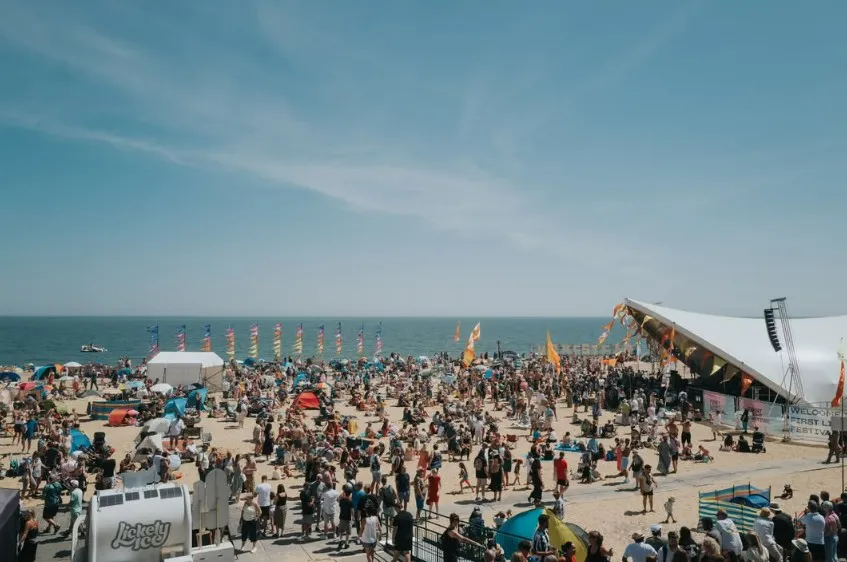
A FREE UK beach festival dubbed a “giant family playground” returns this weekend to an iconic seaside town.
Tens of thousands of visitors are expected to descend on the beachfront to enjoy a programme of live music and workshops.
Sign up for the Travel newsletter
Thank you!
A free UK beach festival returns this weekend, with tens of thousands of visitors expected to attendCredit: InstagramThe festival includes a host of workshops, music performances, and live events to celebrate the summer solsticeCredit: Instagram
A huge, free beach festival is set to return this weekend (June 20 to June 21) with tens of thousands of visitors expected to attend.
The First Light Festival takes place annually in Lowestoft, Suffolk, and features more than 200 performances across 24 stages.
The creative festival also offers visitors a wide-ranging programme of workshops, wellbeing sessions, crafting, dance, science, storytelling and family adventures for a fun-filled weekend.
Taking place over the summer solstice, the festival is a celebration of the first sunrise of midsummer.
This year, visitors will be able to attend a “special Indian Sunrise raga” at dawn on Sunday, June 21.
The festival covers an expansive area of the South Beach, spreading along the seafront, promenade and nearby Kensington Gardens and East Point Pavilion.
Converting the seafront into a “giant family playground”, festival-goers will enjoy events such as dance parties, science discoveries and circus skills workshops.
There are also camping options for those looking to stay overnight, including a glamping experience in well-equipped campervans.
Visitors are able to enter the First Light Festival for free and without a ticket.
However, after 9.30 pm, any festival-goers looking to attend one of the Sundown Events happening on Saturday night after the free programme of beach events ends will need to purchase a ticket.
The festivities began on Friday, June 19, with a selection of live theatre and music events to kick off the celebrations, and there are many more activities to get involved in as the weekend progresses.
A huge Big Bang Boogie parade takes place on Saturday, June 20, starting at the East Point Pavilion at 11 am and travelling along the seafront towards the main Sunlight Stage.
Other activities include a grounded movement ring, rocketry experience, and a traditional Punch and Judy show.
Visitors can also explore a selection of dance workshops, aerial displays and even get to see objects from the Natural History Museum.
Returning for its sixth year, the festival also has a huge impact on the town itself.
Chairman of Lowestoft Vision business improvement district, Danny Steel, told the BBC that the midsummer festival was “massive” for Lowestoft.
He explained: “We get about 30,000 people come to the First Light Festival over the weekend, and if all of those people spend £35 in Lowestoft, that’s £1m extra into the Lowestoft economy.”
Chief executive officer of the First Light Festival, Genevieve Christie, said the festival is about “coming together” as a community and gives people the chance to “experience things in real life”.
The festival also aims to put Lowestoft on the map as a holiday destination.
She explained: “All of our work is about raising the profile of Lowestoft, actually as a place to come on holiday, to be a tourist.
“We’ll be looking forward to 2028, when we’ll be operating the new cultural centre in Lowestoft, and our whole idea there is to bring the spirit of the festival into the town.”
Anna accuses him of stealing the sandwich which she travelled more than 4,000 miles to eat – and it was filmed outside a shop in Pienza dressed to look like a deli.
It’s apt that a romantic comedy was filmed in Pienza as the town is known for having love-themed street names.
A few are Via dell’Amore which translates into ‘love street’ and Via del Bacio which is ‘kiss street’.
A NEW multi-million-pound waterfront park is set to open today – and it’s three times larger than London’s Trafalgar Square.
Visitors will be able to walk across a 55-metre bridge from the High Street to the revamped riverside.
Sign up for the Travel newsletter
Thank you!
The massive space is three times larger than London’s Trafalgar SquareCredit: GRAHAM BROWN @ CHAPMAN BROWN PHOTOGRAPHYThe amphitheatre features sweeping views of the River TeesCredit: GRAHAM BROWN @ CHAPMAN BROWN PHOTOGRAPHY
Stockton-on-Tees‘ Waterfront Urban Park is set to be unveiled today (June 20), as part of the council’s vision to regenerate the struggling town centre.
The £23million project will bring a “dynamic space for events, leisure and community life” to the area, where residents will be able to enjoy three separate play areas, event spaces and even a skate spot.
The focal feature of the park is a 21,000sq ft amphitheatre designed for live events, which connects the upper and lower sections of the park via 402 granite steps.
Ten-metre play towers, an oval lawn and facilities that can accommodate pop-up food and drink vendors are also key landmarks in the area.
The site features more than 17,000 plants which border the park and play spacesCredit: Stuart BoultonChildren are able to play in three separate play areas which also features climbing nets and trampolinesCredit: Unknown
The history of the town centre has also been integrated into the space, with text, poetry and illustrations featuring Stockton’s heritage carved onto floor and wall surfaces.
Activities forchildren include a toddler trail, swings, climbing nets, trampolines and “exhilarating” slides connecting the amphitheatre to the riverside.
The waterfront space features sweeping views of the River Tees, and more than 17,000 plants have been installed from over 224 species.
The entire project, completed by contractors Esh Construction, cost more than £41million, which included the demolition Castlegate Shopping Centre and the Swallow Hotel.
Building began in December 2024, and now the opening will take place as part of Armed Forces Celebration Day.
Councillor Paul Rowling, the deputy leader and cabinet member for resources and regeneration, said: “Stockton Waterfront urban park is going to have a transformational effect on the borough, the wider Tees Valley and beyond.
“The Waterfront Park is set to be a catalyst for further investment and drive our ambitions for the future. This is only the beginning of that journey.”
The project has been named “one of the most ambitious regeneration projects in Europe” in a bid to help revitalise the deprived market town.
His French club finished eighth in Ligue 1 last season and reached the Europa Conference League semi-finals, losing to Rayo Vallacano. It was the first time Strasbourg had reached the last four of a European competition.
O’Neil played at Bristol City when current Ipswich chief executive Mark Ashton held the same role at Ashton Gate.
Strasbourg had initially been confident of keeping him following his January arrival, but O’Neil will return to the Premier League for the first time since leaving Wolves in December 2024.
Ipswich are looking for a new head coach after McKenna stepped down last week, despite leading them back to the top flight by finishing second in the Championship last season.
The 40-year-old took charge of the Tractor Boys in 2021 and led them to three promotions in the past four seasons, two of which have taken the club into the Premier League.
McKenna was linked with the Fulham job after Marco Silva’s departure, but quit Town to take a break from the game and spend more time with his family.
“I feel this is the right time for me to step aside,” he said. “I do so with great pride at the incredible progress we have made and with huge hope and optimism for the future of the club.”
Ipswich open their Premier League campaign at home to Sunderland on 22 August.
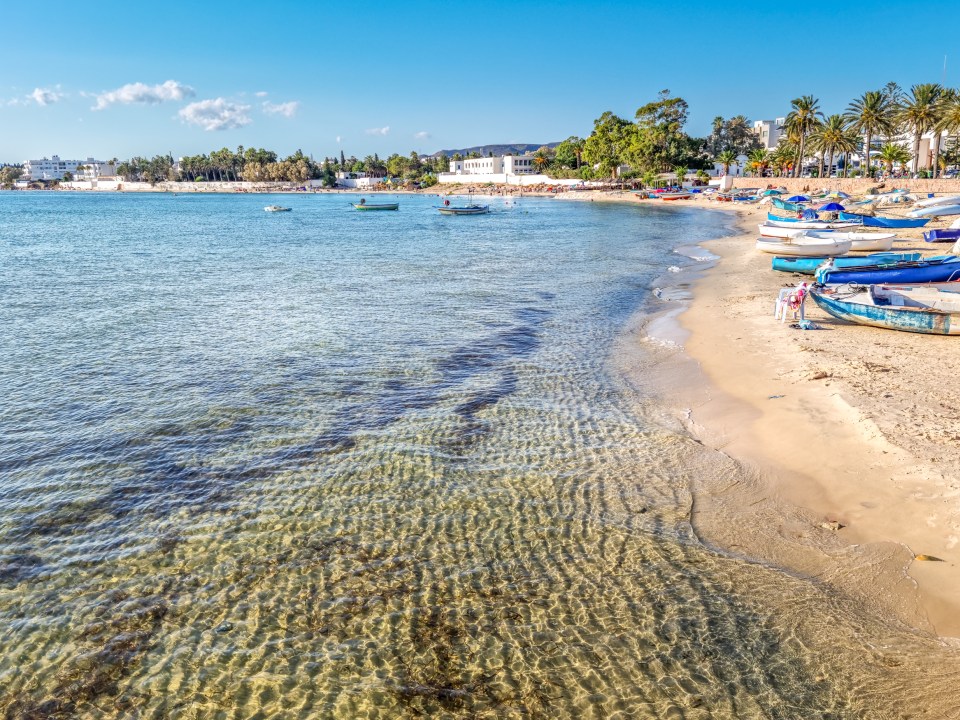
FANCY a seaside holiday that’s cheaper than St Tropez and looks like Greece? Look no further.
Jet2 has announced that they are launching new flights to a coastal African destination from a number of UK airports.
Sign up for the Travel newsletter
Thank you!
From Enfidha, travellers can head to Hammamet around 30 minutes awayCredit: Getty
The flights will head to Enfidha in Tunisia, with two flights a week from Birmingham, Manchester and London Stansted from May 1, 2027 to October 31, 2027.
And then there will also be weekly flights to the destination from Leeds Bradford and East Midlands airports as well.
From Enfidha, visitors will easily be able to visit Hammamet which is just 30 minutes away .
Also known as the ‘Tunisian Riviera’, it costs just 35 per cent the price of a holiday to the French Riviera where you’ll find St Tropez.
The Sun’s Digital Sports Reporter, Etienne Fermie, recently visited.
She said: “In May sunshine, the glorious blue sky pops off the glistening white walls of the stunning coastal town of Sidi Bou Said in northern Tunisia.
“All the buildings are decked out in white and blue, providing a gorgeous visual as the perfect sky kisses the crystal clear, calm Mediterranean sea.
“Sidi Bou Said is reminiscent of Santorini and symbolic of the blend of cultures that modern-day Tunisia infuses.”
And an hour from Hammamet is Sibi Bou Said, which is like SantoriniCredit: Getty
Other destinations travellers can reach from Enfidha Airport include Port el Kantaoui, Skanes, Mahdia and Sousse.
Jet2 used to fly to Tunisia in 2015 from East Midlands, Glasgow, Leeds Bradford, Manchester and Newcastle airports but the route was suspended not long after it launched.
Steve Heapy, Jet2 Chief Executive, said: “With year-round sunshine, rich culture and fantastic scenery, Tunisia has something for everyone and we know how immensely popular it will be.
Fakhri Khalsi, Acting UK Director at the Tunisian National Tourist Office, said: “This announcement represents a significant milestone in our efforts to strengthen Tunisia’s position as a leading Mediterranean destination and reflects the growing confidence of major travel operators in our tourism offering.
“As one of the UK’s most respected and influential travel companies, Jet2’s entry into the Tunisian market will provide British travellers with even greater access to our country’s rich cultural heritage, beautiful coastline, authentic experiences, and renowned hospitality.”
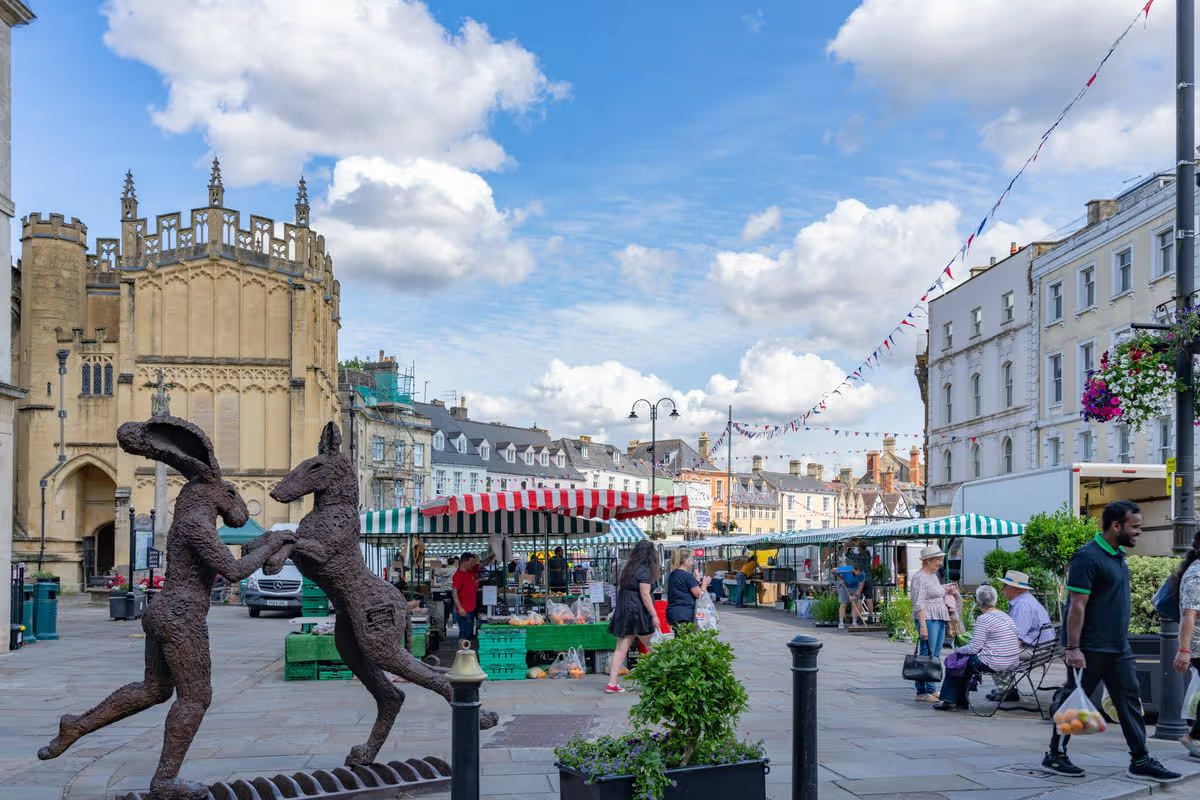
The “overlooked” town has been named one of the top places to visit in the UK for 2026, crowning the historic Cotswolds town ahead of overrun tourist hotspots like Bibury and Bourton-on-the-Water
The market town has been named one of the best places to visit in the UK in 2026 (stock image)(Image: Brian Scantlebury via Getty Images)
The best place to visit in the Cotswolds has been revealed – and it’s not the usual suspects like Chipping Campden, Bibury or Bourton-on-the-Water.
There’s an abundance of stunning beauty spots scattered across the UK, with rugged landscapes, peaceful golden beaches, vibrant and quirky towns, craggy rocks and cliffs, vast woodlands, rolling green hills, and plenty more besides.
For a relatively small country, there’s a rich variety of diverse destinations to pick from – whether you fancy exploring the peaceful glacial lakes and fells of the Lake District, or the seemingly endless dramatic coastlines of Scotland, the history and intrigue of sites like the Mourne Wall in Northern Ireland, or the impressive peaks of Eryri/Snowdonia in Wales; there’s no shortage of choices.
This is equally true when it comes to the varied towns scattered throughout the UK, from sleepy fishing villages and bustling market towns, to picturesque places that offer a glimpse into the past, and much more.
If you’re keen to embark on a “staycation” in the UK and feel overwhelmed at the prospect of deciding where to go, you’re in luck.
Time Out has issued a round-up of “the best places to go in the UK in 2026” – and a Gloucestershire town has made the cut. Widely celebrated as the “Capital of the Cotswolds”, the historic market town of Cirencester has claimed fifth place on a national list.
Time Out said: “When it comes to ‘where to travel in the UK’, you might think the Cotswolds has been done to death. Actually, it hasn’t. In fact, only teeny tiny portions of the region tend to get all the love.”
The publication described Cirencester as “often-overlooked” and championed the town – the largest in the region – for being “much better equipped for tourism” than overcrowded destinations such as Bibury.
Cirencester boasts a seamless fusion of Roman heritage with a vibrant independent shopping scene – particularly within the historic Corn Hall and Arcade – alongside stunning green spaces, including Cirencester Park. Home to the 9th Earl and Countess Bathurst, the park is a haven for deer and horses alike.
History enthusiasts will be in their element at the award-winning Corinium Museum, which houses an impressive Roman collection; “one of the largest collections of Romano-British antiquities extensively from Corinium”.
Featuring mosaics, sculptures, coins and much more, the fully accessible venue also includes a gift shop, café, and the Cirencester Visitor Information Centre.
The town is equally well-stocked with stunning historic buildings and characterful pubs that are well worth exploring.
Of summer visits, Time Out noted: “Heading here in summer? Go for a dip in the Cirencester Open Air Swimming Pool, a beautiful old spot for a swim surrounded by old buildings.
“It’s a slice of history all by itself – around since 1869, making it one of the oldest in the country.”
The quirky coastal destination has been named one of the best to visit in 2026 by Time Out, thanks to its vibrant shopfronts and historic harbour
Folkestone has been transformed from being derelict to trendy(Image: Tim Merry )
Thanks to the arrival of the long-awaited King Charles III Coastal Path, the UK’s coastline can now be walked in its entirety, and many are setting their sights on its stunning seaside towns to experience it all this summer.
According to Time Out, this is one of the must-visit destinations in 2026, and with an abundance of attractions set against a stunning seaside setting, it’s not difficult to understand why.
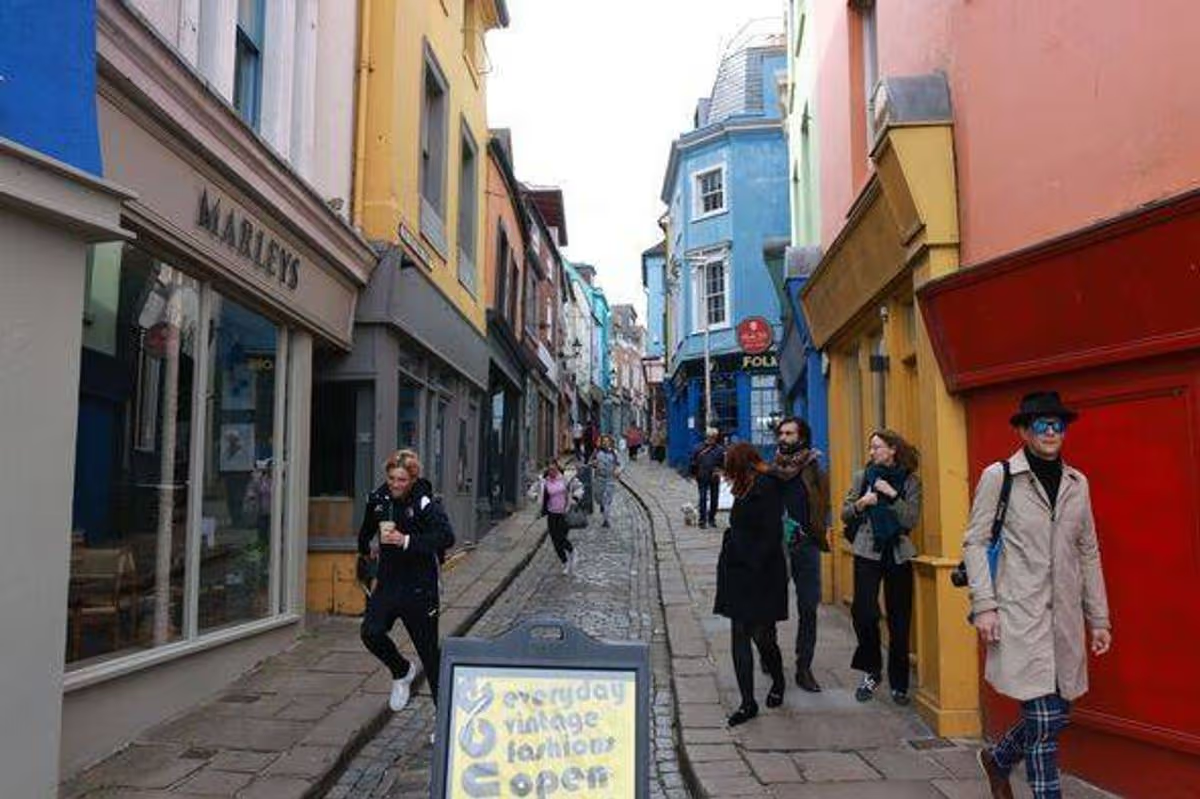
Outshining the likes of its well-known neighbours such as Margate, Whitstable and Brighton, Folkestone has carved out a reputation as a rewarding coastal escape for a picture-perfect break. Situated on the southern fringe of the North Downs, tucked into a valley between two cliffs, lies the historic town, overflowing with offbeat character.
With greater incentive than ever to forgo the flights and discover the UK coastline, Folkstone makes an excellent starting point, coming in at number four on the list of seaside destinations.
Creative Quarter
At the centre of this town lies a thriving cultural hub, overseen by the arts charity Creative Folkestone. Its mission has led to the restoration of more than 90 buildings, now home to a wealth of independent studios, cafes and businesses all rooted in creativity, which permeates the entire town.
Awash with colour, it’s this quarter, comprising winding and meandering streets, that makes Folkestone stand out as a destination. The rainbow-hued painted shopfronts and flourishing independent businesses are what distinguish it and make it immediately identifiable from a single photograph.
On visiting for the first time, one guest wrote on TripAdvisor: “Today was my first visit to Folkestone, and we wanted to visit the Creative Quarter. Was not disappointed.
“Fabulous sunny day, helps, of course. Cobble streets and set on a hill. So might not be great for some. Wonderful galleries and fabulous eateries. Quirky shops and friendly people. I will visit again.”
Visitors could easily find themselves whiling away hours browsing in and out of shops, picking up unique souvenirs, books, homeware and artwork.
Harbour
Steeped in history and buzzing with events throughout the week, the Harbour Arm is a true centrepiece of Folkestone. Once serving as the railway terminal for the Folkestone-Boulogne Ferry and a departure point for troops heading to the Western Front, it has since been transformed into a stunning setting for drinks, food and live entertainment with family and friends.
The picturesque promenade, stretching out towards the sea, is home to more than 70 independent food, drink and retail vendors, meaning visitors are genuinely spoilt for choice. If there’s one thing that rings true about Folkestone, it’s the town’s wholehearted dedication to championing local businesses throughout every corner of its tourist offering.
One impressed visitor shared: “Folkestone Harbour Arm has been transformed into a remarkable destination – a vibrant blend of artistic flair, seaside heritage, and excellent food.
“We thoroughly enjoyed the wonderful walk to the lighthouse, passing a compact market area and plenty of great food stalls. The fresh sea air and creative atmosphere made it a joy.”
Beach
Folkestone boasts several sandy bays and pebble beaches, but one in particular has earned a reputation as a firm favourite with visitors, and tends to get packed out during the warmer summer months.
Nestled by the harbour is Sunny Sands, the go-to beach for many, thanks to its soft sands perfect for sandcastle building and sunbathing, plus its convenient location near the heart of the town.
According to visitors, while it suits everyone, it’s ” especially great for children”, owing to its well-maintained facilities and opportunities for water sports. What’s more, this is among the nearest beaches to London, less than an hour’s journey from the capital, making it a popular choice for Londoners craving a breath of seaside air.
Adding to its appeal is the parking available directly beside the beach at the Harbour Arm Car Park, though expect it to fill up rapidly during peak tourist season.
One visitor summed it up simply, saying: “Beautiful beach, lovely day out. fabulous views and scenery. Great for all ages. Lots to see and do. Very clean beach, worth a visit.”
OUR Spotlight ON column takes an in-depth look at the best things to see and do in popular holiday destinations, as well as shining a light on some lesser-known spots.
This week we’re focusing on Folkestone, the newly-revived Kentish coastal town.
Sign up for the Travel newsletter
Thank you!
Here is everything you need to know about visiting FolkestoneCredit: Alamy
The Sun’s Deputy Travel Editor Kara Godfrey, who lives there, has shared some of her best kept secrets.
She said: “Being just 52 minutes from London, Folkestone is one of the easiest beach towns to get to by train in the country.
“It hopes to reopen the funicular again this summer after years, and you can find live music most weekends at the harbour too.
“My favourite spot? Gaia Studios for a huge cocktail list (and they’re branching out into brunch too).”
The linear coastal gardens feel tucked away under the cliffs and are well-maintained with impressive planting and a prime spot right alongside the beach.
If that wasn’t enough there’s also the South East’s largest free adventure playground which is being rebuilt and will open in the summer.
BEST VIEW
There’s nothing like enjoying the view of the sea, particularly at the end of the Harbour Arm sipping a glass of something bubbly at the Lighthouse Champagne bar.
Pick up a bite to eat from the many food stalls and restaurants on the arm or indulge in some independent shopping.
The Harbour Arm also boasts the UK’s largest beach spa so the best view might just be from the sauna, hot tub or a cold plunge barrel!
The beach is big enough to never need to fight for spaceCredit: Alamy
RATED RESTAURANT
The award-winning Rocksalt, a two-rosette restaurant overlooking the harbour, is where you will find the best seafood in town.
Make sure to try the seared Folkestone scallops, alongside a chunky piece of fresh bread made by Docker brewery just down the road.
A short drive away in Saltwood the only two star Michelin restaurant in the whole of Kent.
Hide & Fox serves modern British cuisine in an intimate and relaxed environment.
BEST BAR
The Radnor Arms came fifth in the Good Food Guide’s list of 100 best pubs in Britain.
It’s a cosy, renovated Victorian pub in the Bouverie district serving a locally-sourced menu with roasts, brunches and themed evenings including flatbreads, Asian night and steak night.
Prohibition-inspired speakeasy The Potting Shed only opens on Friday, Saturday and Sunday evenings.
Obtain the password to slip into the backroom and be rewarded with a carefully crafted cocktail menu inspired by the underground culture of the speakeasy bars of the 1920s.
Rocksalt has amazing views over the harbourCredit: Alamy
HOTEL PICK
Voco The Clifton is a traditional Victorian hotel with rooms decorated by local artists and views of the Channel, as well as Marco Pierre White Steakhouse Bar & Grill.
Rooms from £100 per night.
Or try the Burlington Best Western, a Victorian 4* hotel overlooking the famous Leas Promenade and the English Channel.
One town has been hailed as the ‘most beautiful in the UK’ thanks to its stunning beaches and clear blue waters that rival the Greek islands
One Devon town has been hailed as the ‘most beautiful in the UK’ thanks to its stunning beaches and clear blue waters that rival the Greek islands(Image: image by grahammcpherson.com via Getty Images)
With sparkling azure waters, yachts, and a sweep of golden sand, you could easily mistake this stunning beach town for somewhere on a Greek island. Devon’s Dartmouth has been dubbed the UK’s answer to the Greek Isles, with its coastal beauty inviting comparisons to the Mediterranean.
Devon, renowned for its picture-perfect holiday spots, attracts countless tourists each year, yet Dartmouth stands out with its spectacular views and attractions. Travel enthusiast Sarah Hagan, who goes by sarahkhagan on TikTok, sang Dartmouth’s praises in a viral video, calling it the ‘most beautiful town in the UK’.
Her TikTok clip’s comment section brimmed with praise for Dartmouth’s distinctive appeal, with one user saying: “Most beautiful place in the UK I’ve ever been to.”
Another added: “Favourite view ever!”
Some viewers were so taken aback by Dartmouth’s splendour that they questioned its whereabouts, with one commenting: “THAT’S DEVON?! It looks like Greece in my opinion.”
Dartmouth effortlessly combines its coastal grandeur with a rich history, alongside its picture-perfect harbour, teeming with a mix of fishing vessels and sailing yachts, reports the Express.
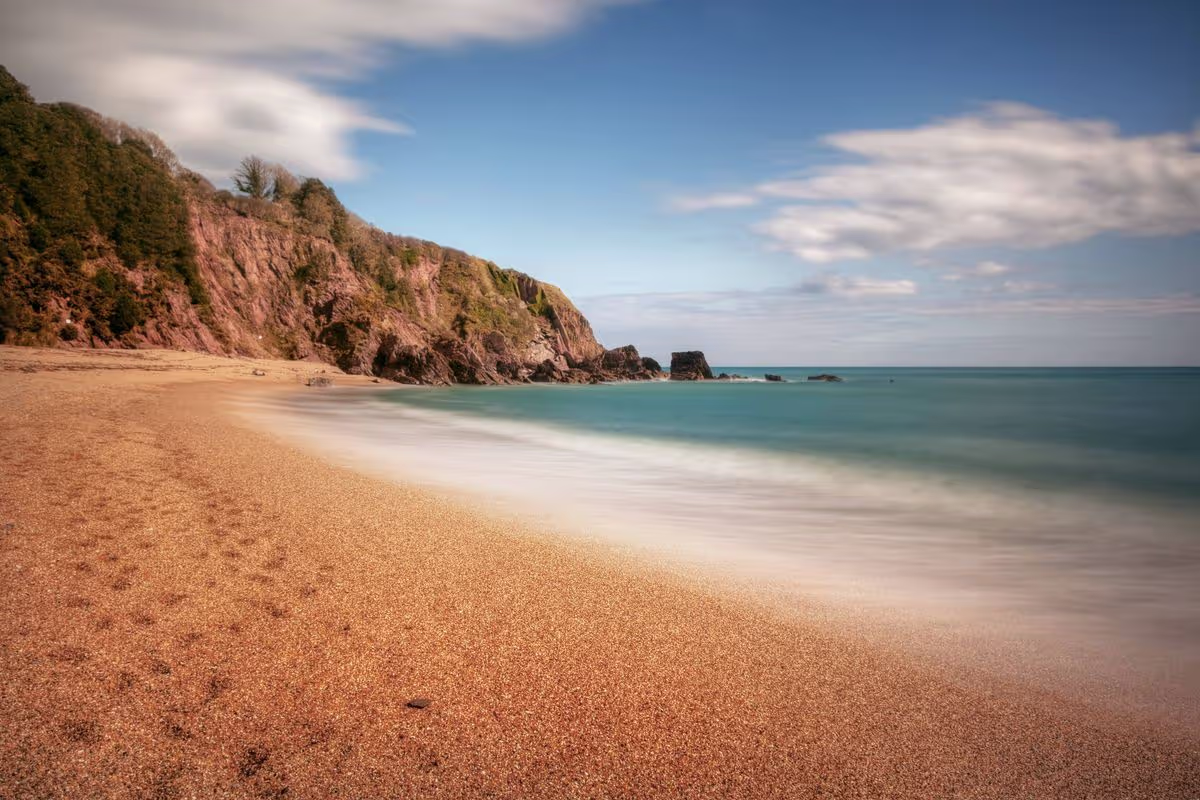
When it comes to seaside trips, beaches are typically the first thing that springs to mind. A short distance from Dartmouth sits Blackpool Sands, a hidden gem of coastline.
However, this isn’t your typical seaside destination, providing visitors with the distinctive chance to relax in its Seaside Sauna. Switch between the refreshing salt water and the peaceful escape from the outside world’s chaos.
For those craving adventure, paddle boards or kayaks can be rented, or you can join a guided tour along the coastline.
Combining historic architecture with stunning river settings and the South Devon countryside, you’re transported to a completely different world. Dartmouth Castle ought to be among your initial destinations.
Commanding the harbour entrance, Dartmouth Castle may well claim the most picturesque location of any fortification in the UK. The castle saw action during the Civil War and remained operational right through to WWII.
If maritime and naval heritage captures your imagination, the town’s Royal Naval College, where navy officers have undergone training since 1863, is essential viewing. You can also spot HMS Britannia anchored in the River Dart.
A wander through the town will inevitably bring you to Dartmouth Harbour, the hub of the South Devon town, where as many as 3,000 moorings can be discovered during the autumn months. It’s also the perfect place to treat yourself to some classic fish and chips.
Located in the vibrant centre of the harbour, Rockfish is a treasure for seafood lovers, serving fresh local catches that have earned glowing reviews on TripAdvisor. Guests can savour their meals while taking in a scenic view of Bayard’s Cove, with the highly praised fish and chips takeaway option costing £11.95 for MSC Haddock and Chips.
For those who prefer eating inside, Rockfish features a restaurant with breath-taking views across the River Dart. Celebrity Masterchef viewers may recognise the venue’s head honcho, Mitch Tonks, who has previously appeared on the programme as a judge.
The menu showcases a selection of superb dishes, including a sumptuous Platter of “Fruits de Mer” for two at £37.50 per person, Grilled Brixham Cuttlefish at £19.95, and tempting Rockfish Tacos.
For a hint of elegance, the Michelin Guide recommends The Angel of Dartmouth, where Elly Wentworth, recognised from BBC’s Great British Menu, creates dishes with international flair. Standout options include Brixham Crab Risotto for £18, Devonshire Lamb served with asparagus, spring pea, and lamb jus for £37, and a delicious Clotted Cream Parfait at £9.50.
If you’re after a drink, Dartmouth’s most popular spot is Bar 1620, situated at the heart of the harbour. For a peaceful moment overlooking the town while enjoying a cocktail or two, head here.
Bar 1620 offers an extensive range of cocktails — including classics, hot cocktails and some creative 1620 originals — alongside a draft master keg system that serves up the freshest, coldest pints you’ll find anywhere.
ARCADES, ice cream parlours, chippies and tourist attractions galore – there’s one town that has everything you’d look for in a seaside trip, but the catch is, it’s not on the coast.
Matlock Bath in the Derbyshire Dales has attracted visitors for centuries and is renowned for its coastal feel, even though it’s miles from the sea.
Sign up for the Travel newsletter
Thank you!
Matlock Bath in the Derbyshire Dales has a coastal feel despite not being anywhere near the coastCredit: AlamyThe banks of the River Derwent are ideal for being beside the waterCredit: The Sun – Catherine Lofthouse
It may not have a beach, but the banks of the River Derwent are a great alternative for being beside the water.
And there are so many chippies on one half-mile stretch between the Fishpond Inn and the Midland pub, that I think this little gem could easily give Scarborough a run for its money to claim the title of the chip shop capital of the country.
The Yorkshire resort has 93 takeaways, which equals 85.4 for every 100,000 people, while I counted 10 along Matlock Bath’s North and South Parade.
With a population of just 670, that means there’s one chippie per 67 residents.
All these fish bars are needed, though, to feed the hungry hordes that flock to the area, especially in warm weather.
It’s a mecca for motorcyclists, as well as offering family-friendly attractions like theme park Gulliver’s Kingdom and the Heights of Abraham.
The town has lots of family attractions including Gulliver’s KingdomCredit: The Sun – Catherine Lofthouse
The town also boasts the oldest pleasure park in the UK, which has been wooing wanderers for almost 300 years.
I took a meander around Lovers’ Walk, which is accessed via a bridge over the river, and felt like I’d happened upon a wilderness, miles away from civilisation.
You climb up the steep wooded slopes to the edge of the treeline to get incredible views out over the rolling countryside.
Further along, you can spot the rides and attractions over at Gulliver’s Kingdom on the opposite side of the valley.
It’s no wonder that visitors have been strolling here since at least 1742 and why it was a favourite for courting couples seeking privacy from prying eyes, hence the name.
I’ve been visiting this area since I was little and never been up to this secluded spot, so it just goes to show how much there is on offer, as every time I come, I find something new to do.
Adults should head to the lido at New Bath Hotel which is fed by a natural springCredit: The Sun – Catherine Lofthouse
If you’re visiting without kids, I would thoroughly recommend taking a swim at the lido at the New Bath Hotel, which is fed by a natural geothermal spring that has a temperature of around 20C.
The pool is for over-18s only and costs £10 for a 50-minute swim if you’re not a guest at the hotel.
For families, you really can’t go wrong with a trip on the cable cars up to the Heights of Abraham, where you can explore the caverns through the cliffs and enjoy the playgrounds and walks with views out over the town and river below.
Blue Peter badge holders can get in free and it’s a fantastic day out, unlike anywhere else I’ve visited at home or abroad.
You’d be mad to miss this unique place if you’re in the area, as it really does have something to appeal to all ages, including a display paying homage to the Wombles this summer.
Even Queen Victoria gave it her seal of approval when she came here and trekked up to the vantage point on a donkey – I’m sure she would have given the alpine cable cars installed in 1984 her royal assent as the perfect way to make the ascent if they had been around at the time.
And there are even cable cars to head up to the Heights of AbrahamCredit: AlamyAt the Heights of Abraham, you can explore the caverns through the cliffs and enjoy the playgroundsCredit: The Sun – Catherine Lofthouse
If you’re looking for a bit of a break, you should check out the accommodation on offer at Gulliver’s Kingdom, which is great for a day out or an overnight stay.
It’s got plenty of rides that are perfect for primary aged children and lots of its rooms are themed around Wind in the Willows, as well as some for little princesses and wannabe wizards.
It’s even got an indoor glamping option, with bell tents set up in one big room that also houses a camp kitchen.
One of my favourite days out in Matlock Bath was bringing my youngest son to see the illuminations, which take place on weekends in early autumn.
The boat parade is a fun activity to watch in the autumn tooCredit: Alamy
This is certainly a spectacle to behold, with themed boats lit up in the darkness as they parade up and down the Derwent.
Some evenings also have fireworks and there’s entertainment and fairground rides on the riverside.
The boat parade makes perfect use of its setting and you can see why it’s still going strong after more than a century.
If you love discovering quirky spots with something different around every corner, you could do a lot worse than heading to the Derbyshire Dales and checking out Britain’s only inland seaside town.
The fish and chips in this seaside town were great but not the only attraction(Image: Manchester Family / MEN)
Despite its popularity, this bustling seaside town has somehow eluded me and my family. Its position on the west coast of Wales and nearly equidistant between its north and south means it’s not exactly the most convenient spot for a day out for most folk.
That’s not to suggest it’s overlooked by visitors. Frequently dubbed the ‘culture capital’ of Wales, the town ranks among the nation’s most-visited locations and boasts the nation’s oldest pier, which launched in 1865.
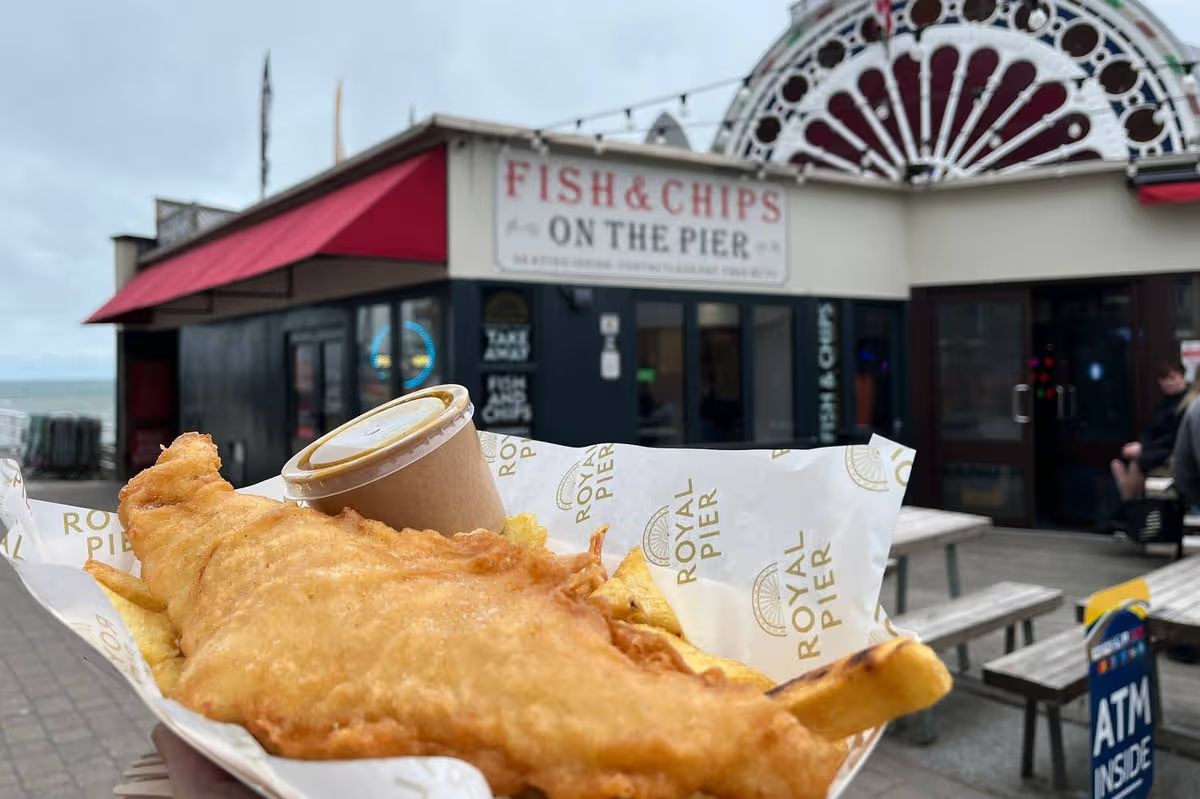
Now a truncated version of its original span, the Royal Pier is currently marketed as ‘a one stop destination for food, drinks, socialising and family fun’, featuring an arcade, a pub, a chippy, a nightclub and more.
On one flank of the pier stands Aberystwyth Castle, a Grade I listed Edwardian fortress constructed in the late 13th century. But it was the attraction at the northern tip of the promenade that captured our interest: the extraordinary Aberystwyth Cliff Railway.
Britain’s longest electric funicular cliff railway, it’s been ferrying visitors to the top of Constitution Hill since launching in 1896 and ran on a water balance system until electrification in 1921, reports WalesOnline.
The carriages are pulled to the summit at merely 4mph, driven by a motor and steel cables. And the leisurely pace ensures you have ample opportunity to absorb the breathtaking landscape below, with magnificent views of the town, Cardigan Bay and, on a clear day, 26 mountain peaks stretching across much of Wales’s length.
It’s not simply a journey up and down either, as there’s plenty to enjoy at the summit, including a modest crazy golf course, frisbee golf, a games room with pool, air hockey and 10-pin bowling, and one of the world’s largest camera obscuras, which provides a live aerial view of 1,000 square miles of land and seascape below. Having paid £1 each, we couldn’t make out much, though we were informed the vista is considerably better on a clearer day.
There’s a compact gift shop and some historical displays chronicling the heritage of the hill, once known as Luna Park (a Victorian forerunner to modern theme parks) which boasted a helter skelter and an early version of a roller coaster called a ‘switchback railway’. There’s also the well-loved Consti café serving meals, snacks and drinks — and it even has its own pick ‘n’ mix stand.
Saving ourselves for fish and chips, we enjoyed a coffee and a cider, with the weather mild enough to sit in the covered outdoor seating area. You can stroll back down if you fancy, but at just £1 extra for a return ticket (adults £8, children £7), we opted for the easier route and grabbed a standing spot at the front of the carriage for an unobstructed view.
Dogs are welcome in the carriages, though the whimpering pooch in ours appeared far from impressed with the experience. Back on solid ground, we had plenty of time to discover more of the town, which has scooped awards for both its beaches, regularly celebrated for their strikingly clear turquoise waters.
While some visitors were bold enough to take a swim, we cooled down with ice cream sundaes from Prom Diner, a much-loved spot along the seafront serving Italian-inspired luxury Welsh ice cream Mario’s.
Also situated on the main promenade, lined with charming pastel-hued buildings, is The Original Tram Company, doing a brisk trade offering the likes of crepes, waffles, donuts and drinks. Set further back from the front are rows of shops boasting some independent gems, including the delightful Bookshop By The Sea and no fewer than three outlets from independent clothing label Polly, established in the town over 30 years ago.
The seaside atmosphere fades as you venture further from the shore, where familiar high street names such as Betfred, Savers and JD, alongside banks and mobile phone shops, begin to dominate.
With a swift change of direction, it was finally time for our much-anticipated chippy tea, and we made our way back to the Royal Pier.
Tempting as it was to enjoy ‘a chipnic on the pier’ – where numerous picnic-style tables offer spectacular views – it was simply too windy for that, so we opted to grab and go.
Much as I adore a seaside vista while tucking into fish and chips, I must confess that with hordes of seagulls swooping overhead, we thought it wiser to retreat to the car to enjoy our meal in peace. Being charged 25p for a tray to eat from felt somewhat unusual.
Given the sauce and gravy we’d purchased to accompany our meal, managing without them would have been rather tricky. Nevertheless, the food was absolutely delicious and our impromptu ‘chipnic in the car’ proved to be the ideal conclusion to an action-packed day.
OUR Spotlight On column gives you the lowdown on what to see and do in some of the most popular holiday destinations – as well as some lesser-known areas.
This week we’re shining a spotlight light on Kotor Bay in Montenegro, one of Europe’s most spectacular yet underrated seaside escapes.
Sign up for the Travel newsletter
Thank you!
Here’s everything you need to know about a trip to Kotor Bay this summerCredit: Alamy
The Sun’s Deputy Travel Editor Kara Godfrey recently visited Montenegro.
She said: “The country’s coastal resorts are all stunning, sitting on the turquoise waters.
“But Kotor Bay is a must visit – even if just for a quick stroll around the town.
“One of the most unusual spots is the Kotor Cats Museum, based on the many animals that roam the streets.”
Kotor Old Town is the bay’s beating heart, with cobbled alleys, Venetian palaces and fortress walls.
Then a short walk along the waterfront towards Dobrota takes you past a public lido, stone swimming platforms and little cafés right on the water – a calm stretch that’s also one of the safest spots in the bay for an easy sea swim.
A short hop around the bay, Perast is impossibly picturesque, with its baroque houses and tiny islets.
From the harbour, small boats take about ten minutes to reach Our Lady of the Rocks, the postcard-pretty church sitting on its own artificial island.
The historic Ladder of Kotor rises directly behind the Old Town – a zig-zag mule trail with big views the higher you go.
Or head further inland to Lovcen National Park, where the road climbs towards the Njego Mausoleum and its 360-degree mountain panorama.
The Vrmac Ridge trail, between Kotor and neighbouring Tivat Bay, is another great option, an old military road with superb views over both sides of the coast.
Tour operator Untravelled Paths can fix up guided trips taking in everything from honey farms to white water rafting on the Tara river.
Tivat is a great jumping off point for other coastal townsCredit: Alamy
This unique winery ages its bottles underwater for a flavour like nothing on land. Bottles are lowered roughly 20 metres to the seabed in metal cages and left to age for about a year.
Travellers can join a guided dive to racks of barnacle-covered bottles on the seabed, then sample the results back on shore.
BEST VIEW
The bar Monte 1350 crowns the upper station of the new Kotor-Lovcen cable car, its terrace looking straight down over the bay and out towards the Adriatic.
Visitors can sip a cold drink while watching the sunlight shift across the bay or stay to catch the sunset.
RATED RESTAURANT
Galion is Kotor’s standout dining spot, with one of the most romantic waterfront settings in Montenegro.
The glass-walled restaurant juts out over the water, giving diners views of the bay while they enjoy fresh seafood and local wines.
Perfect for a special evening without the hefty prices of other Med hotspots.
Perast town is a peaceful escape from the other busier townsCredit: Alamy
BEST BAR
Evergreen Jazz Club is a cosy, dimly-lit spot with exposed brick walls and live music ranging from acoustic sets and blues to Balkan fusion.
Its great-value drinks are enjoyed by friendly locals and travellers.
HOTEL PICK
Klinci Village Resort on Lustica peninsula is a peaceful spot with rustic charm, sea views and Montenegrin hospitality, with rooms from around £80 per night.
For something more budget-friendly, Hotel Vardar in Kotor offers comfortable rooms and a prime location near the Old Town from around £60 per night.
TONOPAH, Nev. — Some years ago, Harry Chahal and his wife were on a trip to Las Vegas when, like countless motorists before and since, they passed through this high desert speck of a town.
Tonopah, built by the mining industry around 1900 and depleted as the gold, silver, lead and mercury waned, is a remote way station about halfway between Reno and Las Vegas. Signs on either side warn — ominously, given the unforgiving expanse ahead — that once you’ve left, the nearest gas station is not for another 100 miles or so.
Harry Chahal opened hometown pizza in 2015 after driving through town and seeing there was no pizza place.
(Mark Z. Barabak / Los Angeles Times)
As he passed through town, Chahal noticed something missing: a pizza parlor.
Pizza is not generally associated with Punjab, India, where Chahal — given name Harvarinderjit — is originally from. But he learned how to make pizza, and how much customers loved gobbling it up, while working at different gas station mini-marts around rural Nevada.
In that absence, Chahal saw opportunity.
He and his wife, Ravinder, moved to Tonopah and in 2015 opened Hometown Pizza in a vacant building on U.S. Route 95, which runs through the heart of town. Ten years later, they bought the Dream Inn Motel, a 39-room operation just up the road.
Views of the 47th president, from the ground up
Lately, Chahal has been sprucing up the motor inn: new cabinets, new furniture, fresh paint every few months. The reason is President Trump.
Tonopah and the surrounding desert, stretching farther than the eye can reckon, is verging on a boom, owing to vast reserves of lithium, boron and other sought-after materials and a Trump administration promise to turn the U.S., in the words of Interior Secretary Doug Burgum, into “a mineral powerhouse once again.”
Chahal, 40, is a repeat Trump voter and even though he has issues with some of what the president has done — he’s not happy about the war with Iran and inflation has taken a decent-sized bite out of his pizza business — he feels his faith in Republicans in general and Trump in particular have paid off.
A registered nonpartisan, Chahal is fairly apolitical. “I vote for Republicans because they’re better for business,” he said as a lunch-time crowd of locals and folks passing through tucked into the $11.99 pizza-and-salad buffet. Here’s proof: In the last year, Chahal said, he’s seen motel occupancy increase significantly, from around 15 rooms rented each night to 25 or more.
Those fresh touches to the Dream Inn are Chahal’s investment in the future and a belief that, with Trump in office, even better times lie ahead.
Tonopah was built as a mining town around 1900. It’s fortunes have waxed and mostly waned.
(Mel Melcon / Los Angeles Times)
::
For much of its being, Tonopah relied on metal, minerals and other valuables scooped from the earth. Today, government is the largest employer.
But mining continues to hold fast to the town’s imagination.
A headframe — that’s the tower built directly over an underground mine shaft — is part of Tonopah’s logo. Mining-related sculptures, including statues of Jim and Belle Butler, who staked the first claim in the 20th century silver rush, dot the main thoroughfare. The high school’s athletes are called the “Muckers,” after those who shovel ore into underground rail cars.
The Tonopah Historic Mining Park is a big tourist attraction, along with the Clown Motel and other lodging establishments supposedly haunted by the ghosts of dead miners and other paranormal phenomena. (Chahal says there are no apparitions at the Dream Inn.)
The Clown Motel, which draws visitors from around the world, is said to be haunted by the ghosts of dead miners.
(Christopher Reynolds / Los Angeles Times)
Lately, however, mining is becoming more than just a part of nostalgic lore. It’s poised to again be a major boon to the local economy and the town’s 3,000 residents.
Plans are underway for a new lithium and boron mine at Rhyolite Ridge, approximately 30 miles southwest of Tonopah, in Nevada’s Silver Peak Range. (Lithium, most of which is now imported, is a vital ingredient in the batteries that store solar energy and power electric vehicles; boron is used, among other things, for bulletproof armor and vests.)
About 27 miles to the south of Tonopah, near the town of Goldfield, a new gold mine is set to open in 2028.
Joe Westerlund, Tonopah’s town manager, said fresh development and the prospect of hundreds of new, good-paying jobs are much welcomed. The median income here is about $37,000 annually, less than half the state average. The hospital in town closed in 2015. Venture off U.S. 95 and the rolling hills are flecked with weathered miner’s cottages and tumbledown homes no longer fit for habitation.
(A three-bedroom, two-bath home in a comfy subdivision on the north end of town can be had for around $250,000, but don’t hurry over to buy; inventory is low and could grow even leaner if demand for housing increases.)
The Tonopah Historic Mining Park is a big local tourist attraction.
“As soon as he got into office, things started loosening up. We had 15 drill rigs,” said Westerlund, who has lived in Tonopah since 1972. “I had never seen that before in my life.”
There are, of course, environmental concerns — about pollution, water supply, native habitat — but those worries haven’t gained much of a toehold. Nye County, which is home to Tonopah, isn’t exactly tree-hugger country — and not just because most of the land is scrub-filled desert. Trump carried Nye County all three times he ran, with landslide support ranging from 68% to 70%.
“This is a pro-Trump town,” Westerlund said, “and I feel like his policies are doing good for the town.”
Chahal stands ready to cash in, knowing firsthand what economic good times feel like.
The Mizpah hotel, opened in 1908, offers the plushest accommodations in town.
(Chris Erskine / Los Angeles Times)
When he moved here in 2014, he and his wife were forced to stay in a motel for six months because workers finishing up a $1 billion solar energy project were taking up most of the living space. That’s the kind of extended-stay guest he’s after, not the tourists bedding at the Mizpah Hotel, the plushest resort in town, with its cut-glass chandeliers, Victorian furnishings and photo gallery of celebrities who’ve stayed the night.
“If I can rent 25 rooms a night, maybe 15 can be for the long term” of several weeks at a time, Chahal said. He’s done the math — $82 a night for a queen bed, single occupancy; $89 for a king — and likes how it pencils out.
::
Chahal came to the U.S. in 2006, after marrying Ravinder, who grew up in the Sacramento area. She had family in Punjab and was a regular visitor to India. The two met when they were 10 years old. Chahal became an American citizen in 2020.
Politically, Indian Americans lean heavily toward the Democratic Party. But in the tiny Nevada communities where the couple lived — Lovelock, Battle Mountain and Ely before Tonopah — there was little or no Indian American presence. So Chahal wasn’t acculturated into the party the way many others have been. Rather, he embraced the GOP gospel of lower taxes and less regulation.
Working seven days a week, Chahal has little time these days for politics, beyond voting. He isn’t particularly ideological or, for that matter, worshipful of Trump.
“Every coin has a head and a tail,” he said, flipping his wrist as though tossing a quarter in the air. He sees two sides to the president. “Maybe you’re angry for some things,” Chahal said. “Maybe you agree with some things.”
He supports the notion of tariffs as a way of bringing manufacturing jobs back to the U.S. He also laments that the pizza boxes he uses, which are made in China, once cost him 30 cents and now run almost 67 cents apiece.
He backs Trump’s promise to round up and deport violent criminals who are in the country illegally. But he’s also mindful of the important role immigrants play, especially in areas like farming and construction, in sustaining the U.S. economy.
Living in a town greatly shaped by outside forces — the fluctuation of commodity prices, the changing of presidential administrations, the shifting priorities emanating from Washington — Chahal is familiar with vicissitudes and the business cycles of boom and bust.
Not everything Trump has done has helped the mining industry.
But based on the talk around town, Chahal believes a more prosperous future is in the offing. He certainly hopes so, and he’s counting on the president to deliver.
SEAGULLS glide peacefully overhead, waves lap gently on the shingle shore and locals natter as they stroll along, pulled forwards by their eager dogs.
This is everything the British seaside should be. But something’s missing — and I’m not sure what.
Sign up for the Travel newsletter
Thank you!
Aldeburgh’s colourful seafrontCredit: GettyGrab a bite on the pretty high street in the Victorian seaside townCredit: Alamy
As I make my way up Aldeburgh’s promenade, soaking up the Suffolk sunshine, it suddenly dawns on me — there isn’t a pier in sight.
And where are the loud arcades, slot machines and screams of kids on fairground rides?
There is none. In fact, there’s only beautiful scenery, peace and quiet. And I absolutely love it.
I’ve always been keen to stop by this Victorian seaside town, drawn in by its rows of pastel-pink merchant houses and its pretty beach peppered with old fishing boats.
Unlike many coastal towns, where you have to dodge carts selling sticks of rock to get to the beach, Aldeburgh’s esplanade is protected as an Area of Outstanding Natural Beauty.
There are, however, plenty of souvenir shops, chippies, cafes, ice cream parlours and pubs along its high street.
The White Hart Inn is one of the best spots, pouring pints of Adnams, which is brewed up the road in Southwold.
There’s pub grub too, but if you’re after something a little more fancy, a short walk from here is local favourite, The Suffolk (the-suffolk.co.uk).
It’s consistently named one of the best restaurants in the country, with a menu that focuses on seafood, including whole lobsters and a catch of the day.
I opted for poached cod which came with chunky pancetta, mussels and chard in a delicious cider sauce.
My waitress recommended I wash it down with a Sea Buckthorn Margarita.
Apparently this drink is so loved by locals that there was uproar when it was removed from the menu.
Regulars demanded it be put back on and I’m grateful the restaurant obliged.
If you’re more of a gin lover, be sure to sample some Fishers Gin.
The spirit is produced locally and the family-run distillery offers regular tours.
The 90-minute experiences begin with an ice-cold G&T, followed by a tea-making session with botanicals.
Alice Penwill at the distillery tour and tasting in AldeburghCredit: Alice PenwillAldeburgh in Suffolk is everything the British seaside should beCredit: Getty
Then there is a look at where the gin is created followed by some more tastings.
After knocking back all those drinks, I was grateful that I only had to walk a few paces to my hotel, The Brudenell.
This coastal retreat has a great spot on the seafront, with beautiful views across the water from its patio.
My room featured an enormous bay window and an adjoining balcony where I could enjoy the fresh sea breeze.
The breakfast is a real treat, too — fluffy pancakes, scrambled eggs with smoked salmon, and a classic fry-up with local produce.
If you’re keen to explore a little further, the neighbouring town of Snape is well worth a visit.
Here you’ll find Snape Maltings, a series of impressive buildings that were once used to process barley into malt for brewing beer.
The venue hosts Aldeburgh’s annual summer music festival as well as regular classical performances, jazz and lunchtime concerts.
It’s also a shopping destination and a prime spot to pick up house and garden supplies, plants, antiques and musical instruments.
For nature lovers, Snape Maltings borders the River Alde, and boat trips can be booked via Suffolk River Trips that will take you past some impressive points of nature, including the mudflats.
Or, if you fancy simply taking in the views instead, head up to the Snape Maltings cafe that overlooks the reed beds which are teeming with bird life.
After spending a few tranquil days in this neck of the woods, you certainly won’t be missing the piers and arcades.
GO: ALDEBURGH
STAYING THERE: One night’s B&B at The Brudenell costs from £210 based on two people sharing.
I already want to return to this historic town that has quietly built a reputation as one of the most desirable places to live in Britain.
I visited the tiny little town that’s ‘UK’s best place to live’ – I fell in love instantly(Image: Getty)
Friends spoke highly of it, travel writers regularly rank it among the UK’s best places to live, and it has built a reputation as one of the country’s most creative and independent towns.
Even so, I wasn’t quite prepared for how much I would enjoy spending a day there. Located in the Upper Calder Valley in West Yorkshire, Hebden Bridge has a fascinating history. Once a small settlement where packhorse routes crossed the River Hebden, it grew rapidly during the Industrial Revolution thanks to textile manufacturing and its position on the Rochdale Canal.
The arrival of the railway in the 19th century further transformed the town, connecting it to nearby cities and helping it prosper. Today, many of the old mill buildings remain, giving Hebden Bridge much of its distinctive character. But rather than being dominated by its industrial past, the town has reinvented itself as a thriving hub for independent businesses, artists and outdoor enthusiasts.
I arrived by train on a bright morning and was immediately struck by the setting. Hebden Bridge is in a narrow valley surrounded by steep hillsides, with rows of traditional stone buildings packed between the river and the slopes above. It’s a dramatic setting but the town itself feels welcoming and surprisingly compact.
My first stop was a walk along the Rochdale Canal, one of Hebden Bridge’s defining features. The towpath was busy with walkers, cyclists and dog owners, while narrowboats drifted slowly through the water. It felt like the perfect introduction to the town, offering a chance to take in both the scenery and the relaxed pace of life.
Full of independent shops
From there, I headed into the centre, wandering along Market Street and the surrounding roads. One of the things that stood out most was the number of independent shops.
Unlike many town centres, there was little sign of the major chains that have become so common elsewhere. Instead, I found bookshops, bakeries, record stores, galleries and cafés occupying handsome stone-fronted buildings. I stopped for coffee and later picked up lunch from a local bakery before spending time browsing some of the shops.
The town was busy without feeling overcrowded, and there seemed to be a strong sense that people were there because they wanted to be, rather than simply passing through.
In the afternoon, I made the walk up to Heptonstall, the historic hilltop village overlooking Hebden Bridge. The climb is steep in places, but the views across the valley more than justify the effort.
Heptonstall itself is well worth exploring, with its cobbled streets, historic church and connections to the poet Sylvia Plath, who is buried in the churchyard.
Back in Hebden Bridge, I spent some time by the river before heading to the station. As I sat watching people come and go, it became clear why the town has attracted so much attention over the years: the combination of history, landscape, community and independence. It manages to feel both lively and relaxed at the same time, while offering easy access to some of the most beautiful countryside in northern England.
I’ve visited plenty of attractive towns across the UK, but few have left me thinking about what it might be like to live there. Hebden Bridge was one of them, and by the time I boarded the train home, I was already planning a return visit.
It is one of the most popular holiday destinations in the UK but a 20-minute drive away you’ll find a much better beach.
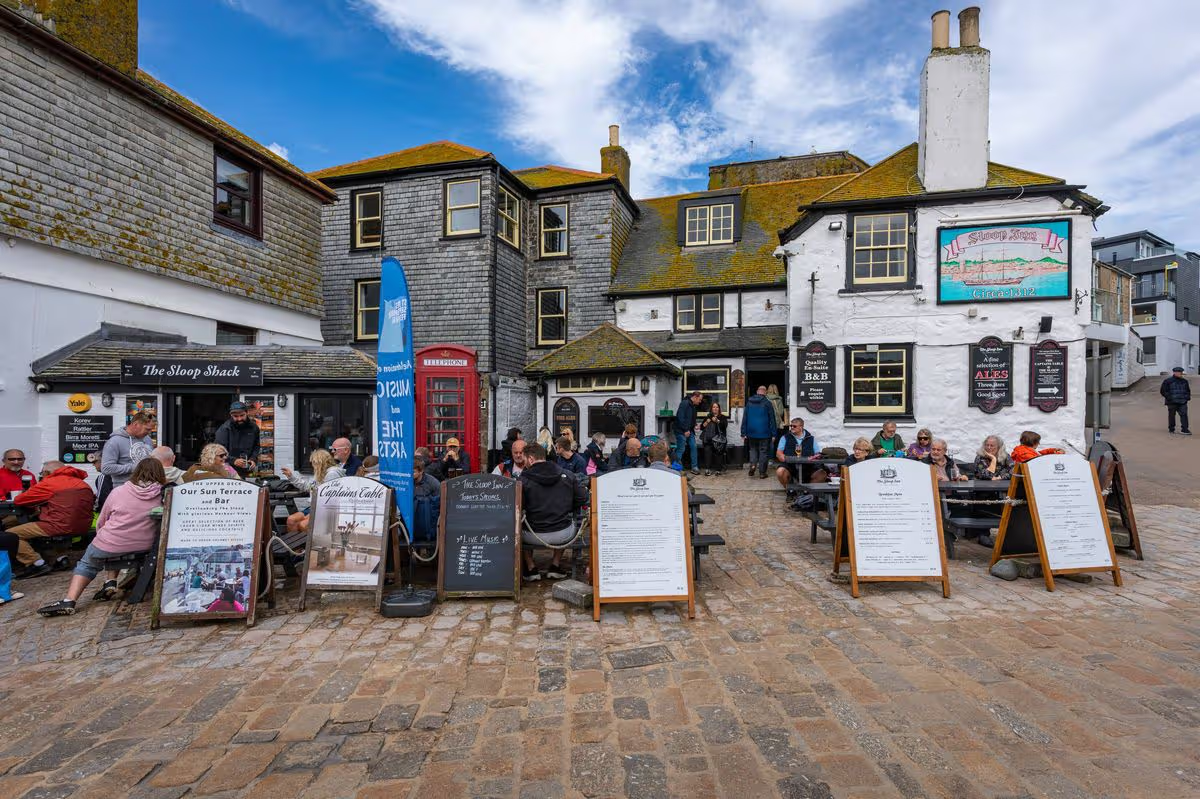
St Ives is set to be one of the busiest holiday destinations in the UK this summer thanks to what it has to offer visitors — pictured is The Sloop Inn, one of the oldest inns in Cornwall(Image: Milos Ruzicka via Getty Images)
Cornwall is famous around the UK and beyond for its beauty, whether it’s the quintessential seaside towns and villages, seafood, dramatic cliffs, golden beaches or azure sea. Each beach and cove has its own unique charm, but some, like St Ives on the north-west coast, are more famous than others. In fact, it is going to be the most popular place for staycations in the UK this year, according to Sykes Holiday Cottages.
And that’s just the latest accolade for the town, which has also been called the “artsiest” in Cornwall. In 2011, the postcard-perfect town outshone rivals from Spain, France and Italy to be named one of Europe’s top beach destinations. However, despite its picturesque appeal, when I visited during a recent summer I found that St Ives was marred by murky waters and an overwhelming number of tourists (including me, of course). And those considering a Cornish getaway might discover a more enchanting spot just around the corner, just like I did.
Is St Ives a good place to visit?
In short, yes. St Ives is brimming with attractions, boasting five sandy beaches and a gently sloping shoreline perfect for families and those looking to bask in the sun. The beachfront is well-equipped with amenities including lifeguard patrols from Easter through September, deck chair rentals and water sports equipment available for hire, including kayaks, stand-up paddleboards and more. On a sunny day, Porthmeor Beach buzzes with activity, earning its reputation as the town’s “premier” beach.
Just beyond the beachfront, visitors can explore a delightful labyrinth of narrow lanes lined with pastel cottages, which play host to several restaurants, bars and cafes. Local dining spots serve up authentic Cornish fare, with traditional dishes like pasties, crab and mussels. It’s also been called “Cornwall’s art mecca” by virtue of being home to the Tate, the Barbara Hepworth Museum and Sculpture Garden, historic studio Leach Pottery, the award-winning Porthminster Gallery and a swathe of smaller indie galleries.
If you’ve never been, like I hadn’t until last summer, it’s a must-visit. Arriving with high hopes, the bay looked breath-taking from afar (that is, from the bustling car park at the top of the town). The honey-coloured stone buildings in the streets below were inviting but once I set foot on the beach reality hit.
Families and groups occupied every bit of sand on a weekday afternoon in July. Even at 4pm, Porthmeor beach was still crowded, including its far side. With a Cornish pasty in hand, I finally found a spot to sit, only to be met by an army of seagulls that had clearly spent the day gorging on litter left on the sand.
The real let-down came when I went for a quick swim in the sea. Having visited Kynance Cove and Pedn Vounder Beach just days before, I was underwhelmed by the slightly murky water that seemed polluted by heavy footfall and frequent boat activity. I questioned why I was swimming here when Cornwall is home to so many clear, secluded coves.
Is there a better alernative?
Later that same evening, when I drove further up the coast towards Hayle, I discovered a gem. Gwithian Towans Beach is at the far end of St Ives Bay and boasts a wide, spacious sandy beach that is popular for surfing but rarely crowded. It’s approximately a 24-minute drive via the Hayle Bypass to this incredible beach, which is backed by massive dunes perfect for a long walk.
When the tide recedes, the nearby Godrevy Beach seamlessly blends with Gwithian to create a vast expanse of beach. At high tide, it transforms into a distinct cove, framed by cliffs and the National Trust-owned headland. Situated at the far end of St Ives Bay, Godrevy Beach is a neighbouring treasure, famed for its iconic lighthouse and a small colony of seals.
The water here is noticeably clearer, likely due to its exposure to Atlantic swells that disperse sediments. A swim here is invigorating and less daunting than in St Ives itself. On the beach, you can find a private spot behind dramatic rocks, even on a bustling afternoon. However, the true marvel of this westerly location is the sunset views.
Is there parking?
Parking is available at the top of the headland in a National Trust car park, from where it’s a short walk down to Gwithian beach for a quick dip. This is arguably more accessible for visitors than parking at the top of St Ives and navigating the steep streets down to the shoreline there. Facilities are somewhat limited, with a small cafe and surf shop at Gwithian and a National Trust cafe at Godrevy. Limited toilet and shower facilities are available in the Gwithian parking areas.
The island’s dark history of forced labour and harrowing conditions for prisoners of war has left a haunting legacy
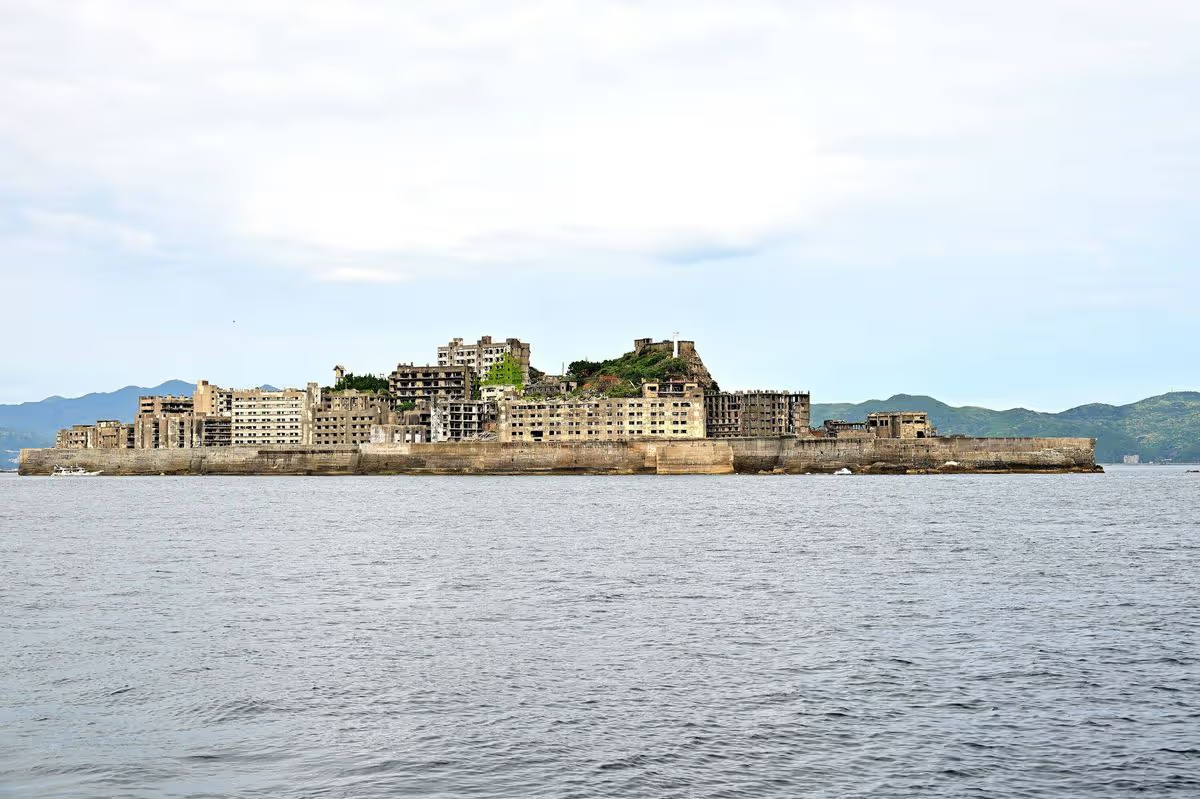
This island has been abandoned for decades(Image: Getty)
In the late 19th century, this isolated Japanese island was a bustling town fuelled by its coal-mining industry. Today, it’s gradually being swallowed by the sea and reclaimed by nature, but given the island’s sinister past, perhaps it’s for the best that this once-thriving community has fallen into silence.
Hashima Island sits roughly 15 kilometres off Nagasaki, and was formerly a mining settlement. At its height in the late 1950s, the island housed more than 5,000 residents who lived in its towering apartment blocks — the ruins of which remain visible today.
Initially renowned for its undersea coal mines, the island also harbours a deeply troubling history.
The island was purchased by Mitsubishi in the late 19th century, and in 1916, work commenced on apartment blocks to house workers. There was a school, a kindergarten, a community centre and a hospital.
For leisure, residents could head to the cinema or visit the numerous shops, reports the Express.
Following the end of World War 2, Chinese and Korean prisoners of war were forced to labour on the island, either erecting buildings or toiling in the mines. These prisoners endured appalling and perilous conditions under Mitsubishi’s control.
Many perished from exhaustion and starvation — the precise death toll on the island ranges from 137 to as many as 1,300.
The people who laboured here dubbed the island “Jail Island” or even “Hell Island” — a stark contrast to the tranquil mining town it seemed to be. By the 1970s, coal reserves had largely run dry and the industry was in terminal decline.
This prompted many residents to abandon the island, and by the mid-70s, the mine had shut its doors for good, leaving the island completely deserted.
In 2009, Japan put forward a request for the island to be added to the UNESCO World Heritage List.
The move drew sharp criticism from the governments of North and South Korea and China, with Seoul arguing it would “violate the dignity of the survivors of forced labour”.
Eventually, South Korea and Japan struck a deal allowing the island to be included on the list, on the condition that Japan provided information acknowledging the use of forced labour.
However, in 2021, it emerged that Japan had failed to honour its side of the agreement, having not displayed adequate information regarding the use of forced labour.
The museum in Nagasaki, which documents the island’s history, reportedly contains no testimonies from Koreans about forced labour or discrimination, and the sole Korean testimony on display actually denies that forced labour was ever used.
TRAIN fares in the UK are some of the highest in Europe, meaning even a short-distance day trip for Brits can be prohibitively expensive.
But there is a way to save on high-cost rail travel, just as long as you’re willing to be flexible when it comes to your destination.
Sign up for the Travel newsletter
Thank you!
I tried out the new mystery ‘Lucky Train Trip’ train tripCredit: Ryan GrayThe promotion took me to Margate for just £9.99Credit: Alamy
As someone who loves exploring the UK, I was delighted to hear about the Trainpal app and its ‘Lucky Train Trip’ promotion, allowing Brits to book train tickets to a mystery location for just £9.99.
With an empty Tuesday in the calendar, and a desire to see parts of the country I hadn’t before, I thought I’d give it a go to see if it was worth it.
It’s pretty simple to use.
Simply download the Trainpal app, scroll down to the Lucky Train Trip section before selecting where you want to travel from and on which date, and then the app does the rest.
There are some restrictions though when using this promotion.
The first is there are only two mystery destinations available to each customer per day.
So if you don’t like either of the two journeys you receive via the lucky dip, then you either have to wait until the next day to try again, or you have to pay full price to go somewhere you definitely want to visit.
After drawing Gatwick Airport on my first attempt, I’ll admit that my confidence in the app was pretty low to begin with.
However, my second spin drew the seaside town of Margate, which had some tickets listed online for as much as £40 return.
It seemed a no-brainer to accept, considering how much I’d save, particularly for such a sought-after destination.
It was a busy day in half-term but I relaxed in the sun on the beachCredit: Ryan Gray
What’s more, this was during half-term and my train was rammed, but there are seemingly no restrictions on the promotion during holidays or weekends, meaning it’s not just good for weekday excursions.
Margate itself more than lived up to its reputation as a seaside stalwart, particularly during the recent heatwave.
I paddled in its refreshing blue sea water, absorbed some culture in the Turner Contemporary art gallery, and of course enjoyed some seaside refreshments.
As its name suggests, it overlooks the beach from the harbour, making it a perfect spot to enjoy a drink in the sun, especially with some pints available for less than £5.
However, I was similarly impressed with Little Swift and its serving hatch, which offers takeaway slushie cocktails for as little as a tenner.
I stopped by locally loved Little Swift for a takeaway cocktail slushieCredit: Ryan Gray
Good seaside food was easy to find as well, with Peter’s Fish Factory so popular with the locals that they were already lining up around the block by the time I’d arrived for lunch.
It’s easy to see why as well, with crispy scampi, perfect chip shop chips and a healthy portion of mushy peas setting me back no more than £13.
I still had plenty of time to explore the many vintage shops in the town’s charming warren of backstreets, where Britain’s best museum for 2026, according to Time Out, the Crab Museum can also be found.
After picking up a delicious real fruit ice cream from Follow the Swirl and playing on the games in one of the sea front’s many arcades, it was time to get my return train home.
And this brings me to one of the Trainpal promotion’s two main catches.
The £9.99 only covers a one-way ticket, meaning travellers do have to fork out for their own return fare.
There are catches to the deal – one is that you have to buy your return ticketCredit: Ryan Gray
This set me back another £12, which wasn’t unreasonable, but had I been sent somewhere further afield, it could have been much less affordable.
After playing around with the app on subsequent days to see how far away I could have ended up, I know that day trips from London to Chester are possible.
One-way fares from Chester to London are as much £44, so not exactly cheap, although the £9.99 outbound fare does save almost £30 on the cost of a return trip.
So it does cut costs even without covering the return leg.
Another issue is that the £9.99 offer is only available for one ticket, meaning anyone looking to take a spontaneous day out with a friend or family member will have to hope that their companion is also offered the same mystery destination via the app, or someone will have to pay full price.
Nevertheless, I’d say for a one-off solo day out it was worth it.
I saved a bit of money on my train and ended up having a great time somewhere I probably wouldn’t have considered visiting otherwise.
With a few more blanks in the calendar throughout the summer, I’m keen to try my luck again to see where I might end up.
A picturesque Northumberland seaside village has secured a coveted spot in Time Out’s top 10 best UK seaside towns for 2026, outranking popular destinations including Bamburgh and Berwick
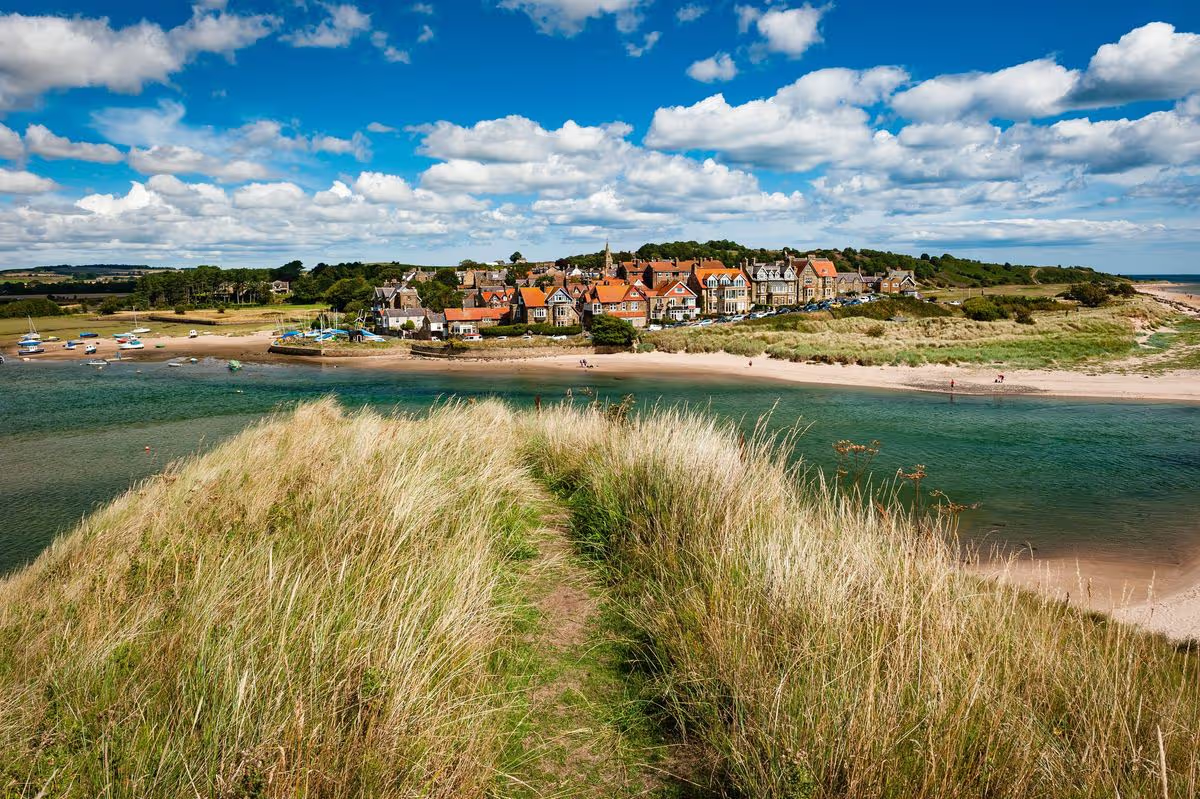
The town is finally getting the credit it deserves (Image: by Marc Guitard via Getty Images)
The Northumberland coastline is grabbing attention this summer as holidaymakers hunt for wallet-friendly getaways, and with the newly opened King Charles III Coastal Path, the entire UK shoreline can now be explored on foot.
Thanks to the coastal path encircling the whole country, enthusiastic walkers and adventurers are scouting their next staycation, and this peaceful village offers an ideal starting point.
Time Out unveiled their ranking of the finest UK seaside towns to visit in 2026, and an overlooked treasure in Northumberland secured a spot in the top 10. Alnmouth is celebrated for its wild natural beauty and soft sands, discreetly positioned along the coastline, sitting between Newcastle and Edinburgh.
Outranking some of the nation’s most beloved seaside resorts, including St Ives and Brighton, and climbing above its nearby neighbours Bamburgh and Berwick, it’s evident that Alnmouth is one to keep an eye on this year.
The beach
Alnmouth lies within one of Northumberland’s Areas of Outstanding Natural Beauty, and consequently, it brims with unspoilt corners and abundant wildlife. Alnmouth Beach is precisely one of these treasured locations, cherished by both tourists and locals for its expansive stretch of sand, providing a delightful day by the sea.
One recent visitor shared on TripAdvisor: “Nice wide sandy beach with convenient shops and cafes nearby. Parking right behind the beach. Not over-commercialised.”
Another visitor added: “Really lovely beach! Was nice and quiet when we went so was so peaceful. Great place to chill on a day out. Good fun wading in the water! Would definitely return!”
The beach warmly welcomes four-legged friends, making it a brilliant destination for the whole family. It’s divided into three sections, offering ample room to spread out and have fun.
Many visitors choose to arrive via the Northumberland Coast Path, making their way from neighbouring towns and villages while taking in the stunning coastline in its entirety.
Restaurants
According to TripAdvisor reviews, the top spot for a hearty meal in the village is Bistro 23, which serves up brunch and coffee during the day alongside evening dining in the bistro.
One delighted diner left a glowing review: “Wonderful food and super service at this amazing restaurant. We have visited a number of times and have never been anything other than delighted.”
For a touch of elegance, the delightful Whittling House is a country restaurant that prides itself on using locally sourced produce packed with flavour. It also boasts 10 guest rooms, making it the perfect base for a full weekend away, with their exceptional food and drink keeping you going throughout your stay.
For something a little more traditional, The Red Lion — which also operates as a bed and breakfast — offers an extensive pub grub menu. Well-behaved dogs are made to feel at home in the bar and beer garden, where you can enjoy a pint while soaking up views of the boats.
Art Gallery
Celebrating the work of local talent, The Old School Gallery makes for a wonderful pit stop during a day spent exploring the coastline, nestled inside a charming period school building. It boasts an accessible collection of inspiring artwork from artists across Northumberland and beyond, all of which can be enjoyed alongside a delicious coffee from their very own in-house café.
One reviewer wrote: “Very friendly staff with a warm welcome. The gallery is varied to suit all tastes and budget. We only went for a coffee and ended up buying a print by a local artist.”
Another visitor added: “A lovely old English school turned into a gallery and café, what couldn’t you love about this? The food is great and they have an amazing gift shop.”
Whether you’re wrapping up for a bracing winter stroll along the shore or seeking out a tranquil spot to soak up the summer sun, the quaint village of Alnmouth is the perfect place to take a breather and drink it all in.
AN iconic UK pier could be forced to close after its owner collapsed into liquidation.
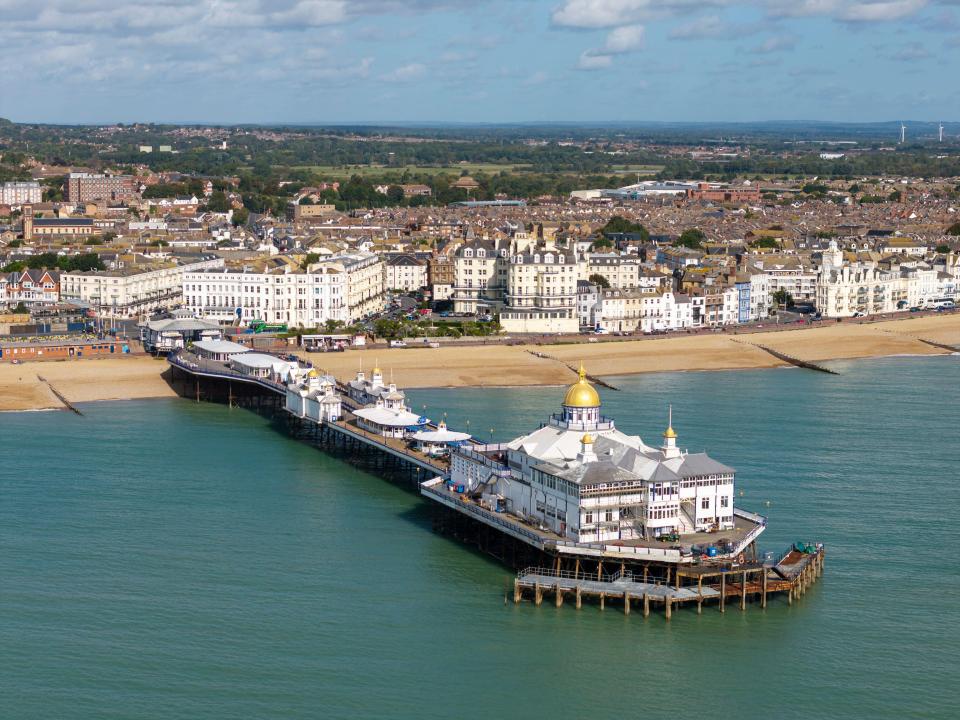
The future of historic landmark, which dates back to 1866, remains uncertain.
Sign up for the Travel newsletter
Thank you!
The future of Eastbourne Pier remains uncertain after its operator recently collapsed into liquidationCredit: AlamyThe iconic pier dates back to the Victorian era and features cafes, gift shops, and a live music venueCredit: Alamy
Lions Pier Limited, which operates Eastbourne Pier, was issued a compulsory winding-up order last month.
Local hotelier Abid Gulzar, who is listed as the firm’s sole director on Companies House, was handed the order on May 12, 2026 following a petition filed on March 25, 2026.
As a result, Lions Pier Limited and the future of the pier is now in the hands of the Official Receiver.
Compulsory liquidation is typically triggered by an unpaid creditor, with the court appointing the Official Receiver to take complete control of the process.
The Official Receiver is responsible for investigating the reasons behind the company’s failure and assessing the director’s conduct, which could lead to a director disqualification order and further sanctions.
Gulzar purchased Eastbourne Pier in October 2015, before going on to acquire nearby Hastings Pier, which he entered into voluntary liquidation in 2023.
Two of the businessman’s hotel firms, Chatsworth Hotels Ltd and Lion Hotels Ltd, were also put into voluntary liquidation in 2017.
The hotelier carried out extensive renovation works at Eastbourne Pier, including the construction of four new replacement buildings.
Now, the collapse of Lions Pier Limited has resurfaced questions over the ownershop of the pier’s physical structure.
If Lions Pier Limited is deemed the owner, the Official Receiver could move to sell the pier as part of the liquidation process.
However, if Gulzar holds the freehold separately, as was the case with Hastings, he may retain control of the asset despite the company’s collapse.
A spokesperson for Eastbourne Borough Council told The Argus: “We are monitoring the situation at Eastbourne Pier very closely.
“It is an iconic and much-loved seafront attraction, and we hope the Official Receiver can secure an outcome that ensures it remains open and restored for residents, visitors and businesses based on the pier.
“While the pier has always been in private ownership, council officers routinely check its general condition and these checks will continue.”
Eastbourne Pier was transformed into a defensive stronghold during World War II in the event of invasion, with part of the decking removed to deter enemy landings and machine guns installed in the theatre.
Nowadays, the pier proves a popular tourist attraction for those visiting the UK’s sunniest town, offering cafes, gift shops, arcades, and a live music venue.
The Sun has reached out to Abid Gulzar via the Official Receiver for comment.
A TOWN in Hertfordshire that has been compared to southern France has just had an upgrade to its lido.
The outdoor pool in Hitchin has reopened for the summer season with some new upgrades.
Sign up for the Travel newsletter
Thank you!
The 90-year-old Hitchin Lido has undergone upgradesCredit: Google mapsHitchin Lavender has been compared to looking like the south of FranceCredit: Alamy
The 50 metre heated lido on the outskirts of the town first opened in 1938 and reopened on 23 May this year for the swim season.
It has an art deco design and is surrounded by sunbathing terraces; there’s also a lawned area for picnicking.
Prior to it reopening for this year’s summer season, Hitchin Lido had upgrades to its changing rooms including new cubicles, lockers, sinks, tile flooring and mirrors.
The funding was given to the lido from a former swimmer, Hazel Jacobs, who left money in her will after passing away two years ago.
Paul Francis, general manager at Hitchin Lido, said: “We are truly grateful to Hazel for this wonderful gift to the Lido.
“The refurbishment has transformed the facilities for our visitors, with new lockers, improved changing rooms and a much fresher environment for everyone to enjoy.”
It’s recommended to book tickets in advance to the lido as it can get very busy during the summer.
Tickets for adults start from £5.80 and children from £2.90.
The Hertfordshire town has been compared to the south of France in recent years thanks to its European-style attraction that’s beencalled “Little Provence” by visitors.
Hitchin Lavender is just outside of the town and is a pretty lavender field that one visitor said “feels like France rather then Hitchin!”
Hitchin Lido has a baby pool, picnic area and places to sunbatheCredit: Tripadvisor
This year, Hitchin Lavender opens on June 20 and closes on August 7.
She said: “When it comes to looking like France, I’d say the market square is one of the only parts that does, however it reminds me more of a town in somewhere northern like Normandy, rather than the south.
“There were food and drink vans pitched up on the sides with a few seats dotted around, a large clock and a corn exchange building with a cupola and weather vane – which I have seen in France.”
Alice compared Hitchin to northern FranceCredit: Alamy
She added: “Another hint of France was the tall houses and bars with the classic-looking wooden timber beams and window frames (although this trait is arguably both French and English).
“There are at least five bakeries though, which I’ll grant the TikTokers is a key factor in all French towns.”
Hitchin is known for its bustling food and drink scene from Hermitage, which is a restaurant, cocktail bar, bagel shop, and oyster bar all under one roof.