A MUCH-LOVED family ride has been forced to close after it appears it derailed and the track split.
The Big Dipper at Blackpool Pleasure Beach is one of the oldest operating rollercoasters in the world.
Videos on social media appear to show a split trackCredit: TiktokCarriages also seemed to derailCredit: Tiktok
Yesterday afternoon, the wooden rollercoaster was forced to close and is still closed today, following some of the carriages of the ride derailing, with a video shared on social media also showing the track split down the middle.
Several videos shared on social media show the ride at a halt on a low part of the track.
Sign up for the Travel newsletter
Thank you!
The track in front, which rises before a drop, appears to be broken in several places – though, reportedly, no one was hurt.
One rider, Reanna Harrison-Berry, 20, who was riding with her boyfriend, said they heard a “crunch” sound as they went uphill.
This small seaside town has had to install a park and ride due to the sheer number of visitors, and its narrow, winding streets are a difficult place to find a parking spot in the summer holidays
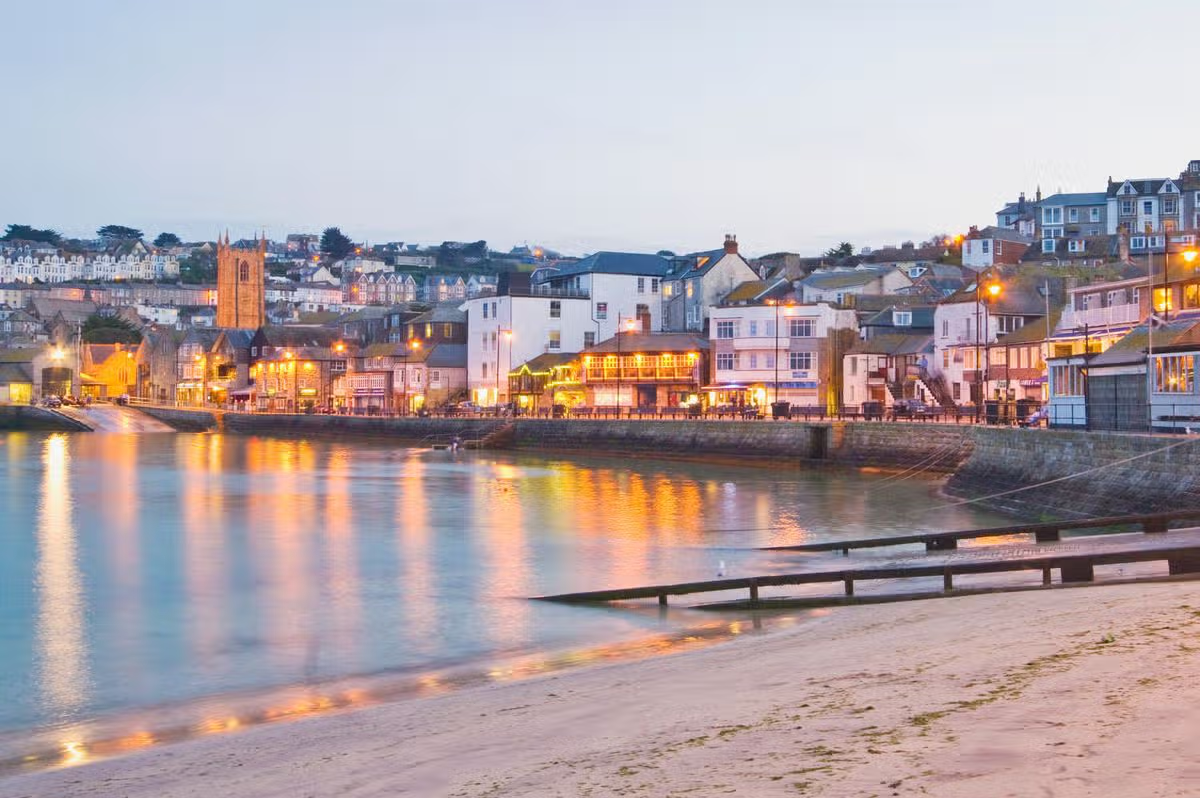
Tourists flock to this seaside town year round but the school holidays see it packed(Image: Getty Images)
If you’ve ever taken the kids to a seaside town or popular attraction during the six week summer holidays, you’ll know the pain of driving around in circles looking for a spot.
A lot of tourist hotspots, such as beach towns, have old, narrow roads, and often, car parking is expensive and a long walk away from any attractions. It’s one of the most annoying things about trying to enjoy a day out in the summer.
A new study, which looked at parking across the UK’s seaside towns and tourist hotspots during the summer break claims it has found the worst place to find a parking space during this time.
Perhaps unsurprisingly, the worst place to park is in Cornwall, which, as a county, welcomes around four million overnight visitors and 14 million day trippers a year. The pretty fishing town of St Ives took the top spot, with a huge number of visitors heading to its beach or art galleries finding it tough to grab a parking spot.
The study, carried out by Indigo Car Hire, looked at average parking costs, the number of parking spots per 1,000 visitors, and the number of car parks within a mile of the town centre. It also looked at the number of Google reviews that mentioned tourists facing parking problems.
These factors were then scored out of 100, with St Ives easily topping the list with 92 out of 100. A recent TripAdvisor review said: “Felt we should visit as we’re in Cornwall for a week, but having failed to find any parking anywhere we were glad to get out.”
Another claimed: “We had to re-attempt visiting St Ives due to a lack of parking. In order to park we had to come between 8am-9am, just FYI. Locals are very friendly and try to help.” While one said it was a “Very nice place with lots of restaurants and shops, but totally crowded with tourists in July. You can hardly find a parking space which are very expensive!”
But the small town is tackling its parking issues. Visit St Ives has tips on where to park when visiting, and recommends either using a park and ride car park just outside the town, or parking at nearby St Erth station and taking the St Ives Bay Line, a 15-minute train ride that gives you incredible coastal views as you arrive at the town.
St Ives wasn’t the only Cornish spot to make the list. Padstow came in fourth, while Newquay came in tenth. In second place the seaside town of Whitby in North Yorkshire scored 89 out of 100 for poor parking, with some visitors parking at the neighbouring village of Sandsend and braving the 45-minute walk into town.
A recent review said: “We saw car parks, but they were totally full no matter what time of day it was, same with the on-street parking near the front.” While another claimed there was “plenty of parking. However very expensive. £2.60 for an hour.”
Cherie Carter, managing director at Indigo Car Hire, said: “According to an RAC survey earlier this year, a third of drivers struggle with parking anxiety. The aim from this study is not to discourage drivers from visiting hotspots like St Ives or Whitby, but to help travellers enjoy their summer break with fewer unexpected frustrations when they arrive.”
Top 10 worst places for parking in the six-week holidays
St Ives, Cornwall – 92/100
Whitby, North Yorkshire – 89/100
Tenby, Wales – 87/100
Padstow, Cornwall – 85/100
Salcombe, Devon – 82/100
Southwold, Suffolk – 80/100
Bournemouth, Dorset – 79/100
Brighton, East Sussex – 77/100
Robin Hood’s Bay, North Yorkshire – 76/100
Newquay, Cornwall – 75/100
Have a story you want to share? Email us at webtravel@reachplc.com
FAMILIES were left disappointed as the main attraction at a seaside town was forced to close significantly sooner than expected.
A lengthy farewell message was issued to the community, thanking locals for their support.
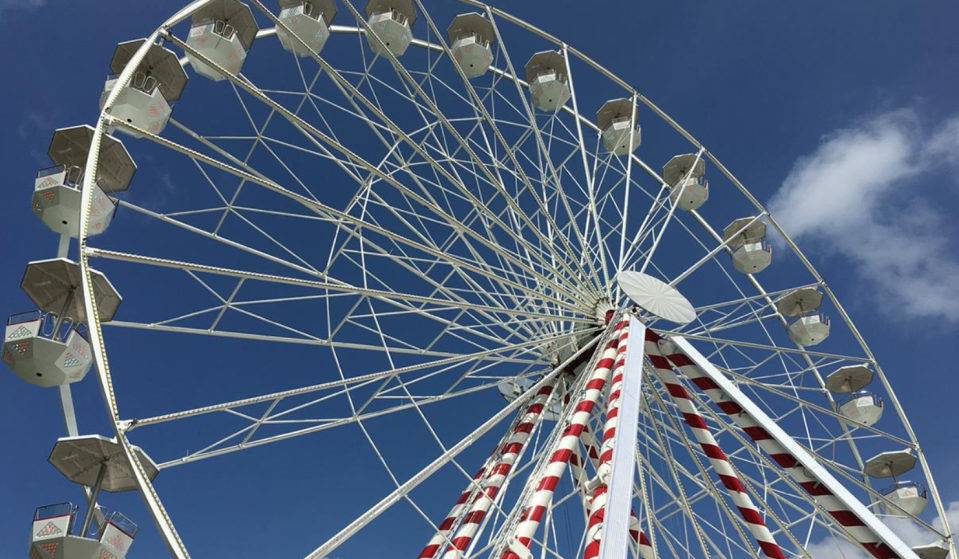
The Sky Club Wheel had only opened in 2025 last yearCredit: Visit Eastbourne
Eastbourne beach has said goodbye to the popular Sky Club Wheel following the announcement it was closing for good.
The attraction was only opened to the public in April 2025 and following the announcement of its closure, it was intended to be operational until September 6.
Sign up for the Travel newsletter
Thank you!
However, the ride’s final day has already passed, July 20, almost seven weeks earlier than intended.
Eastbourne Council has previously confirmed the attraction was closing due to “commercial considerations.”
A spokesperson for Sky Club Wheel said: “It is with a heavy heart that we announce that Sky Club Eastbourne has now closed permanently.
“We’d like to sincerely apologise to everyone that was hoping to visit us again before the end of the season. Unfortunately, we had to close earlier than expected.
“To everyone who has visited us over the years – thank you. Whether you rode with family, friends, or simply came to enjoy the incredible views, you’ve helped create so many special memories, and we’re honoured to have been a part of them.
“The support we’ve received from local residents, visitors, businesses and our amazing team has meant more than words can say.
“We are incredibly grateful for every ticket purchased, every recommendation and every smile shared with us.
“Although this chapter has come to an end, the memories we’ve made in Eastbourne will stay with us forever.
“From the bottom of our hearts, thank you for all your support over the years. We wish the wonderful town of Eastbourne all the very best for the future.”
My theme park day begins with gunfire. A jailbreak! But shortly after, I‘m attending a wedding. Next I’m on a mission, helping the local postmaster justify his uncontrollable desire to open everyone’s packages, and trying to find a way to do so without telling a lie.
This is just another Sunday morning at Knott’s Berry Farm’s “Ghost Town Alive!,” a now-10-year-old interactive show — live-action role-playing game is more accurate — that has become the best summer offering at any theme park, and not just in SoCal but in America. There’s a daily story, including three editions of a single-page newsletter that are updated every day. There’s also lots of improv. Over the years, I’ve found myself on the prowl for mysterious elixirs, playing matchmaker, collaborating on group stories in a schoolhouse, doing police work, participating in a mustache contest or flashing a press badge.
“Ghost Town Alive!” ultimately is the promise of theme parks fulfilled, that is that we can enter a fantasy world and play as cartoonish, or maybe even idealized, versions of ourselves.
You’re reading Mr. Todd’s Wild Ride newsletter
Todd Martens’ newsletter delivers news and commentary on the past, present and future of theme parks, right from the theme park capital of the world — Southern California.
By continuing, you agree to our Terms of Service, which include arbitration and a class action waiver. You agree that we and our third-party vendors may collect and use your information, including through cookies, pixels and similar technologies, for the purposes set forth in our Privacy Policy such as personalizing your experience and ads.
It’s a rarity, an event with 46 actors — about 30 of whom appear each afternoon — who lead guests through scavenger hunts, puzzles or just conversations about life in Calico, the fictional town of Knott’s Berry Farm’s Ghost Town area. The cast ranges from those just out of college to those in their mid-70s, and no character is ever played by more than one actor. This gives Calico a sense of life, an illusion that it’s actually populated, but also allows actors to fully develop a personality and let their characters evolve.
Before creative director Andy Crocker was working on “Ghost Town Alive!,” she was visiting it as a fan. Crocker, an experiential designer who has worked on projects for companies as wide-ranging as the Los Angeles Public Library and Walt Disney Imagineering, specializes in particular on guest-to-actor interactions.
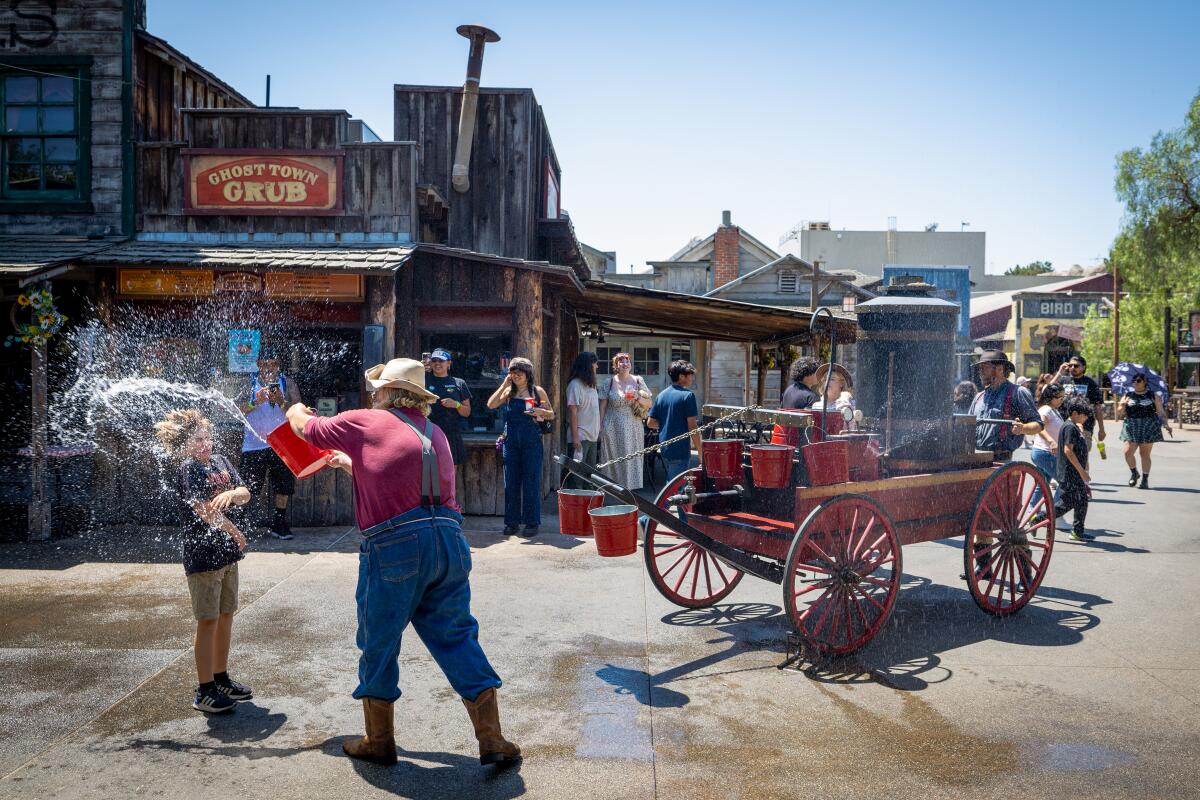
“Ghost Town Alive!” unfolds like a live-action role-playing game. But expect plenty of silliness.
(Allen J. Schaben / Los Angeles Times)
“I will never forget the first time I saw it as a guest,” Crocker tells me. “I came with my husband, and we did not bring our kid. We walked in, and I saw a little girl in a pink cowboy hat with a painted-on mustache following an outlaw off to jail. That outlaw was giving a gritty HBO performance. Wasn’t patronizing. Wasn’t talking down. He was giving her a hero moment, and I burst into tears. I didn’t know this was possible to do on this scale with such an institution. The empowerment that performer gave to that guest, I will never forget.”
To make a theme park feel personal is no easy feat. In fact, designers have long been trying to solve this problem, whether by creating interactive attractions that feel responsive to the guest, or short-lived experiments such as the late but great Star Wars: Galactic Starcruiser, colloquially known as the Star Wars hotel.
Crocker says others have asked for the “secret sauce” to “Ghost Town Alive!” They’ve tried — and are trying — but she’s not so sure the magic can be replicated. One, Knott’s is blessed with a real, 100-year-old Ghost Town. That allowed for the investment to be solely in the cast and performance rather than infrastructure. And yet actors, of course, aren’t cheap.
A single-page newspaper is printed three times a day during “Ghost Town Alive!”
(Todd Martens / Los Angeles Times)
“The amount of people that we have, that’s tough for a lot of places,” Crocker says. “They try to do it with less, and it doesn’t quite work.”
Speaking on a panel hosted by trade group the Themed Entertainment Assn., Jeff Tucker, Knott’s Berry Farm’s show writer, says one early mistake Knott’s made was thinking everyone who works in Ghost Town could partake. That meant, for instance, taping dialogue cues to cash registers in the saloon in the hopes that bartenders could become a character. The concept failed. “It’s a logistical nightmare,” he says. The lesson: Hire actors to perform. Let bartenders be bartenders and retail staff be retail staff.
Another reason Crocker tells me “Ghost Town Alive!” is so rare, and will remain so: It doesn’t rely on intellectual property, or a known franchise, which has become the lifeblood of modern theme parks. “With things that are heavy IP, it’s very tricky to control your IP and to allow for real play, guest agency, and, honestly, artist agency,” she says.
Evan Battle, center, who plays Deputy Chester Davenport, at Knott’s Berry Farm’s “Ghost Town Alive!” in 2024. The interactive theatrical experience allows guests to mingle with about 30 actors.
(Allen J. Schaben / Los Angeles Times)
That’s important, as “Ghost Town Alive!” can shift with the whims of the guest. There’s a core storyline this year. A rich, Beverly Hills-like family is revealed to be the true owners of Calico, and how the residents respond is the key narrative of the day. But there are multiple tales to uncover, including hidden factions (check out the Calico Historical Society) and who is taking who to the 4 p.m. hoedown, which ends each daily game of “Ghost Town Alive!”
But Crocker has also seen it get rather heartwarming.
“My mom came to see it,” she says. “She has some health concerns. There was a character who was in a crazy mix-’em-up and said he would not make it to the hoedown and that this would be his last day on Earth. This character and my mom ended up having this conversation about how if you know you don’t have a lot of time left, what would you do with your time? I was surprised by that pivot.”
It helps, Crocker says, that she’s noticed one commonality among the “Ghost Town Alive!” staff. They play — or were weaned on — tabletop role-playing games such as “Dungeons & Dragons,” which at their best allow for an anything-goes approach designed to follow the direction of the players rather than a strict script.
Tucker on the panel said there was one rule the crew lives by that defines the success of “Ghost Town Alive!”: “It’s not real,” he said. “We can do whatever we want.”
This week in SoCal theme parks
Not yet ready for prime time, Knott’s Berry Farm has delayed the opening of Montezooma: The Forbidden Fortress.
(Todd Martens / Los Angeles Times)
Montezooma is not yet zooming. Knott’s Berry Farm initially intended to launch its reimagined Montezooma’s Revenge, now known as Montezooma: The Forbidden Fortress, this week. Late Thursday, the park delayed its public unveiling, with a spokesperson citing additional fine-tuning that surfaced during its final days of testing. The delay is not expected to be a prolonged one. “We appreciate everyone’s understanding and look forward to welcoming media and guests in the coming days when we can showcase the attraction exactly as intended,” read a statement from the park.
A monthlong Lego celebration. Carlsbad’s Legoland likes to describe its Lego Festival, which started Monday and runs through Aug. 30, as a child’s first fest. Expect lots of characters and an assortment of play-focused areas. One is dedicated to music, another is a free-run creative zone and a third is a Lego garden designed to soothe. New this year is a game-heavy center dedicated to the Pokémon franchise, as well as a challenge-filled F1 installation.
It’s now more expensive to eat at Disneyland. Price hikes, unfortunately, are a yearly-occurrence at the Disneyland Resort, and this summer, like every summer, hundreds of food items have ever-so-slightly increased in cost. Most are in the range of a dollar or so — give or take a quarter or two — but expect to pay $7, up from $6.50, for a scoop of popcorn. I admittedly do not keep a database of Disneyland food prices, but sites like Mickey Visit or Theme Park IQ have tracked the most egregious price bumps. Looking at their data, you may want to think twice about dining at Disneyland’s Rancho del Zocalo Restaurante, where prices have been increasing even as portions over the years have been declining.
Where is Fast & Furious: Hollywood Drift? We’re now in midsummer, and Universal Studios Hollywood’s Fast & Furious: Hollywood Drift still does not have an official opening date. While sources familiar with the coaster’s operations point to routine mechanical issues that have arisen during its test and adjustment phase, one thing is certain: It’s not delayed due to noise complaints from neighbors, as rumors suggested last week. A Universal spokesperson pushed back on the notion that the coaster is delayed, stating it would still open this summer, which lasts into late September.
The best thing I ate at the parks
The hearty cottage pie from Downtown Disney’s Gordon Ramsay at the Carnaby.
(Todd Martens / Los Angeles Times)
I’ve been eagerly anticipating the opening of Gordon Ramsay at the Carnaby at the Disneyland Resort’s Downtown Disney, the latest concept in which the celebrity chef has agreed to lend his name. This one is an upscale gastropub, and while I’ll leave the full cuisine analysis to the professional food writers, as a parkgoer I do believe it fills a void in Disneyland’s shopping and entertainment district, bringing the area an adult-focused space with upscale (read: expensive) twists on old favorites like fish and chips ($33) and cottage pie ($38). And after reading breathless press release-like articles and posts from my theme park peers (“utter perfection,” proclaimed one) I couldn’t have been more excited to dine there this weekend.
Let’s start with the vibe, which I found to be rather confused. I was seated in the tiny, uncomfortable indoor bar, a place that felt like an afterthought and leaned airport terminal drinking hole, as it’s situated at the top of a stairwell and serves primarily as a thoroughfare into the dining hall. That a pub, especially one with an extensive cocktail menu (I did love my $22 cotton candy-infused Old Fashioned) would treat its introductory bar as a throwaway rather than a centerpiece of the experience was disappointing (an outdoor bar is significantly more enticing). The core dining space leans contemporary more than a traditional, wood-infused pub, feeling cafe-like with its ‘60s rock posters and framed portraits of those in mod outfits. More theme-ing would have been welcome, as I read it as slightly cold and corporate rather than homey and intimate. Instead of, say Pasadena’s Lucky Baldwins, this felt like a nice break room at a major record label.
But my dish was delightful. I had my heart set on the cottage pie, this one infused with a hearty portion of short rib. I probably should have taken leftovers, because it’s heavy, but in the best way possible. The potato-rich top felt creamy and buttery, while the meat was equally soft. The whole thing felt invitingly plush. I walked away mixed. No complaints on my entrée, and I’m eager to come back and try the fish and chips, and yes, that viral sticky toffee pudding dessert, but longing for a more welcoming atmosphere, especially at this price point.
Tell us your stories. Ask us your questions.
Have a theme park tale to share? Whether it was a good day or less-than-perfect day, I would love to hear about it. Have a question? A tip? A fun photo from the parks to share? Email me at todd.martens@latimes.com. I may feature your note in an upcoming newsletter.
Ride on,
Todd Martens
P.S.
Drowned Out Productions’ “The Shoebox Museum” explores love and loss.
(Drowned Out Productions. )
There’s a show running Saturday and Sunday in Los Angeles that I believe theme park fans should make time for. “The Shoebox Museum,” at North Hollywood’s After Hours theater, is a walk-through immersive experience at its most thoughtful. It’s short, at around 30 minutes, but it stayed with me for hours after it concluded.
“The Shoebox Museum,” from Drowned Out Productions’ Jackson Mancuso, who does theme park design by day, is a mediation on heartbreak, asking what we want to leave behind, and take with us, as we explore our grief. It’s meticulously designed, as we follow light cues through byzantine rooms filled with everyday ephemera — the type of stuff that only holds meaning to those who were in love. It’s a show about how an once broken heart, even mended, still finds ways to haunt us.
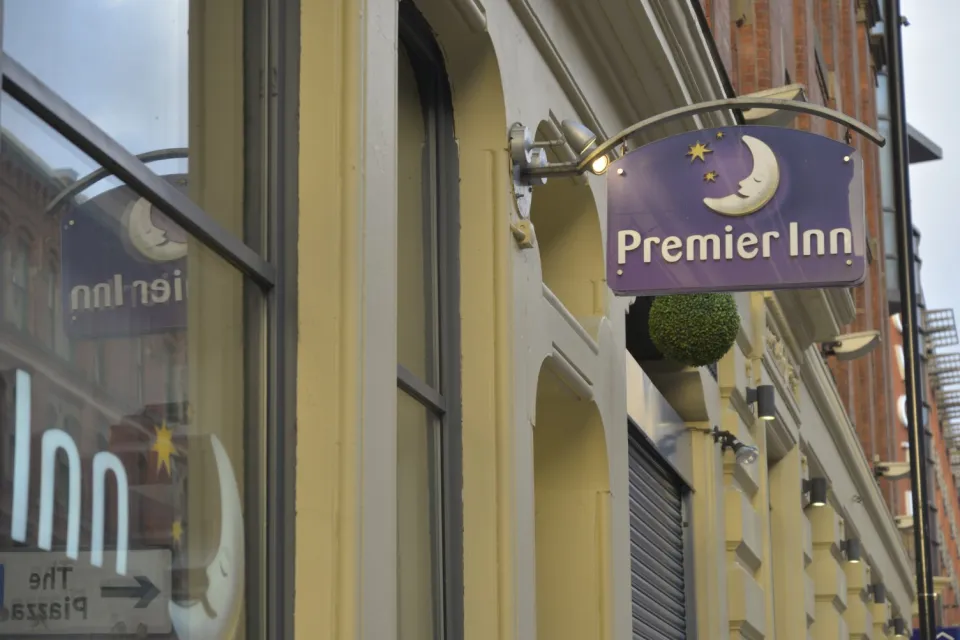
PREMIER INN has revealed plans to open a £14million hotel in a seaside town.
The UK’s largest hotel chain is set to to transform an “underutilised” area near to several tourist attractions.
Premier Inn is set to open the 108-bedroom hotel in HunstantonCredit: NurPhoto via Getty ImagesThe site earmarked for development is in Southend Road on the Norfolk coastCredit: King’s Lynn and West Norfolk Borough Council
The investment by Whitbread, the company which owns the Premier Inn brand, has been welcomed by residents and businesses in Norfolk.
The site earmarked for development is in Southend Road, Hunstanton.
Sign up for the Travel newsletter
Thank you!
Premier Inn has been discussions to create the 108-bedroom hotel “for years”.
Planning permission will now have to be gained before the development can take place, which would be built near Seagate (East) Car Park, the council said.
Simon Ring, deputy leader of King’s Lynn and West Norfolk Borough Council, described the move as a “vote of confidence” in the future of the town.
He said it followed years of discussions between the local authority and the firm.
“This is huge news for Hunstanton,” Ring told the BBC.
“The sheer fact the UK’s largest hotel chain wants to invest in Hunstanton is a vote of confidence in the resort’s future, placing us alongside Norfolk’s other big visitor destinations, and this investment and new facility will hopefully act as a catalyst for further money.”
Whitbread acquisitions manager Paul Smith said the new hotel would provide “visitors with the quality, value and reliability they expect from the UK’s leading hotel brand”.
Premier Inn currently operates nearly 850 hotels in the UK.
If Oxnard to you is just a freeway sign on the way to Santa Barbara or Ojai, you’re missing out on a few things. Like an extensive harbor with none of the traffic or showy affluence of its southern cousins. Miles and miles of white sand where you won’t find another family right next to you as soon as you lay down a towel. A diverse, chilled city with an energetic subculture (Nardcore, anyone?) and some pretty decent tacos.
There are a bunch of ways to spend your time here. Take an architecture tour around Heritage Square, perhaps, or taste your way around September’s Chowderfest at the Maritime Museum. On the water, you can paddleboard ‘til you drop, commune with whales on a boat excursion or skip off to the Channel Islands on a whim.
It’s the only California Cultural District in Ventura County, an honor bestowed by the California Arts Council, which says that “from Guelaguetza and Fiestas Patrias to Juneteenth celebrations, Nardcore punk shows, lowrider cruises, fandangos, and Ballet Folklorico, the district’s cultural life is exuberant and deeply rooted in community.” Rapper/producer and Oxnard native Anderson .Paak named his third album after the city and has hosted the .Paak House music festival in the region.
And Oxnard is a summer home to Netflix darlings the Dallas Cowboys Cheerleaders. For two decades, the Cowboys have held their training camp in the city, and this time around, the cheerleaders will join the scene for Oxnard Fan Night on July 31, the opening ceremony Aug. 1 and toa dance clinic Aug. 2.
Oxnard may not be overly polished, which of course adds to its charm. To get to know the community, you’ll have to veer a few miles off the 101 — but the detour makes for a vibrant SoCal weekend.
During the June heatwave, we took a trip down to the great British seaside, where Bournemouth’s Highcliff Marriott Hotel had something special on offer
08:23, 20 Jul 2026Updated 08:48, 20 Jul 2026
This article contains affiliate links, we will receive a commission on any sales we generate from it. Learn more
Inside Bournemouth Highcliff Marriott Hotel
Bournemouth vastly expanded in the 1800s as wealthy Victorians came to convalesce among the town’s famous, inflammation-soothing pine trees.
Strolling through the town, I can’t quite catch the scent of those historic pines – but the sea breeze coupled with the olfactory overload of a nearby doughnut stand is equally reviving.
While the trees may no longer soothe my woes, there is a mountain of scientific research proving that being by the water really does boost spirits.
Marine biologist Wallace J. Nichols, in his book Blue Mind, wrote how exposure to blue spaces – including the glorious British seaside – can act as medicine for the brain, effectively lowering levels of the stress hormone cortisol and boosting overall happiness. For me, it is an undeniable truth: being by the sea brings a sense of calm that I simply cannot replicate anywhere else.
Luckily, I am soaking up all of these benefits from my seaside cottage at Bournemouth’s Highcliff Marriott Hotel, which offers incredible, sweeping views from its hillside perch.
For many of us, 2026 is the year of the staycation. With thousands of holidaymakers enduring airport chaos and the EU’s troublesome new entry/exit system, opting to stay closer to home makes sense.
But while staying in the UK gets rid of most problems, it can still be a gamble: the fickle British weather, the uninspiring reality of holiday rentals that look fabulous online, and the long list of check-out demands by so-called hosts.
If you’re looking for the perfect compromise – which offers the privacy of a private rental, but with four-star luxury and no cleaning demands – the hotel’s new coastal cottages have cracked the code.
Marriott has revamped its 19th century former coastguard cottages into a set of stunning boutique retreats. Designed by Joanna Knight Interiors, they feature a gorgeous coastal aesthetic packed with sandy neutrals, retro Smeg fridges, and beach-hut-coloured front doors.
The service when we arrive after a long, sticky drive during the Juneheatwave is top notch. We arrived at a cottage where staff had already thoughtfully blasted the air conditioning, and were handed a kids’ activity pack at reception.
Best of all, there was no requirement to strip the sheets or empty the bins at the end of our stay, leaving us more time to enjoy the hotel’s perks, including a 24-hour gym and a well-heated outdoor pool.
Complete with a range of games in the garden for kids, including giant Jenga, while there’s a fully stocked pool-side bar for adults, along with grandstand views of the pier, it is remarkably hard to drag yourself away from the surroundings and into the town itself.
You don’t have to venture far to eat well, with the on-site Brasserie Blanc restaurant serving up an impressive feast for every meal.
For dinner, I followed a wise proverb: cheese is love, and cheese with cream is extra love, meaning I had to order the cheese soufflé (£8.50) – it was delicious, with a beautifully light, airy texture, while my guests opted for a tasty looking Devon crab and avocado with garlic croutons for their starter (£9.95).
The mains include a spectacular sirloin (£29.95) alongside an impressive Chateaubriand (£69.95) for two: succulent, perfectly seasoned, teamed with a punchy pepper sauce, and accompanied by very decent fries. For dessert, the lemon tart (£9.50) went down extremely well, as did the classic crème brûlée (£6.95). The mocktail menu is surprisingly strong – if often feels like an afterthought at most places, but here, I got to enjoy an alcohol-free margarita (£10.95) that left me reeling at how punchy it was.
Even the children’s menu is surprisingly decent, with a welcome absence of standard beige chicken nuggets; instead, it offers a large variety of healthy, delicious dishes including grilled trout and veggie bolognese. Thanks to the temporary summer VAT cut, it is also well-priced at £9.50 for two courses or £12.50 for three.
Dining on the large outside terrace where I could breathe in the sea air, I left the table feeling spiritually lighter despite the three-course meal.
That welcoming atmosphere carried me straight into a buzzy evening, with the hotel bar packed with drinkers ready for a fun night out before the England match.
The next morning, breakfast continued to the same high standard, with a vast range of hot and cold items, including an exceptional cooked-to-order omelette bar, a high-quality full English fry-up and a great Continental spread.
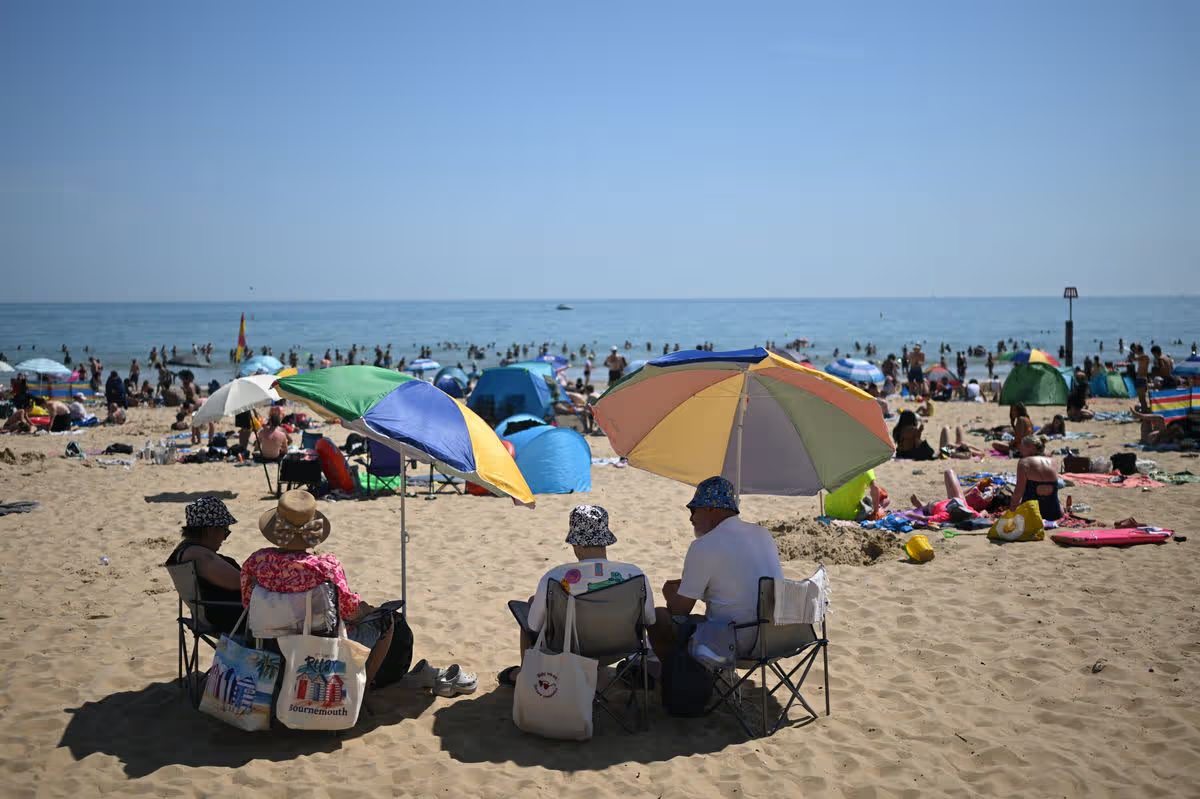
Fuelled up for the day, Bournemouth beach called to us. Helpfully, it is just a three-minute stroll from the hotel, which is a godsend when you’re travelling with kids. Its golden sands are stunning, and at seven miles long, there is plenty of room for everyone to spread out.
Bournemouth is a town of brilliant dualities. While parts of the town centre can look slightly worse for wear, looking beyond the high street reveals world-class coastal beauty.
The nearby Hengistbury Head is well worth a visit, a sprawling nature reserve offering great views of the Isle of Wight and gentle walks.
Closer to the hotel, right by Bournemouth Beach, sits the Oceanarium. We found this to be very reasonably priced at £35 for a family and a perfect sanctuary during the heat. It is a great spot for kids to burn off some energy in the shade, while staring down sharks, stingrays, and penguins.
And of course, the iconic pier remains an absolute must for older kids, packed to the brim with traditional arcade, fairground rides and a set of indoor climbing walls.
By combining a private cottage with the luxuries of a landmark hotel, the Highcliff Marriott has set a new standard for the great British staycation.
Book it
A private Coastal Cottage is available from £130/night (based on two sharing). Fine out more here.
If you’re looking for a budget-friendly city break this summer, a study has shown some of the cheapest options across Europe, and one country dominates the top ten with a huge selection of inexpensive cities
The city has been nicknamed the Venice of Poland(Image: Getty Images)
Summer is a great time to enjoy a city break. While some people prefer to head to the beach, the sunny weather can be a nice time to see a new city, as you can explore outside and enjoy a more relaxed vibe.
But city breaks can be expensive. If you’re looking for budget options, there’s one country in particular that should be top of your list. It has six out of the ten cheapest city breaks in Europe, and makes up the entirety of the top five named in the study.
The research, carried out by virtual card provider Getsby, looked at data from travel cost site Budget Your Trip and worked out the average cost for two people for a mid-range city break in 100 different European cities. It crunched the numbers on the daily cost for two people for two days, including mid-priced meals, a hotel stay, and using local transport.
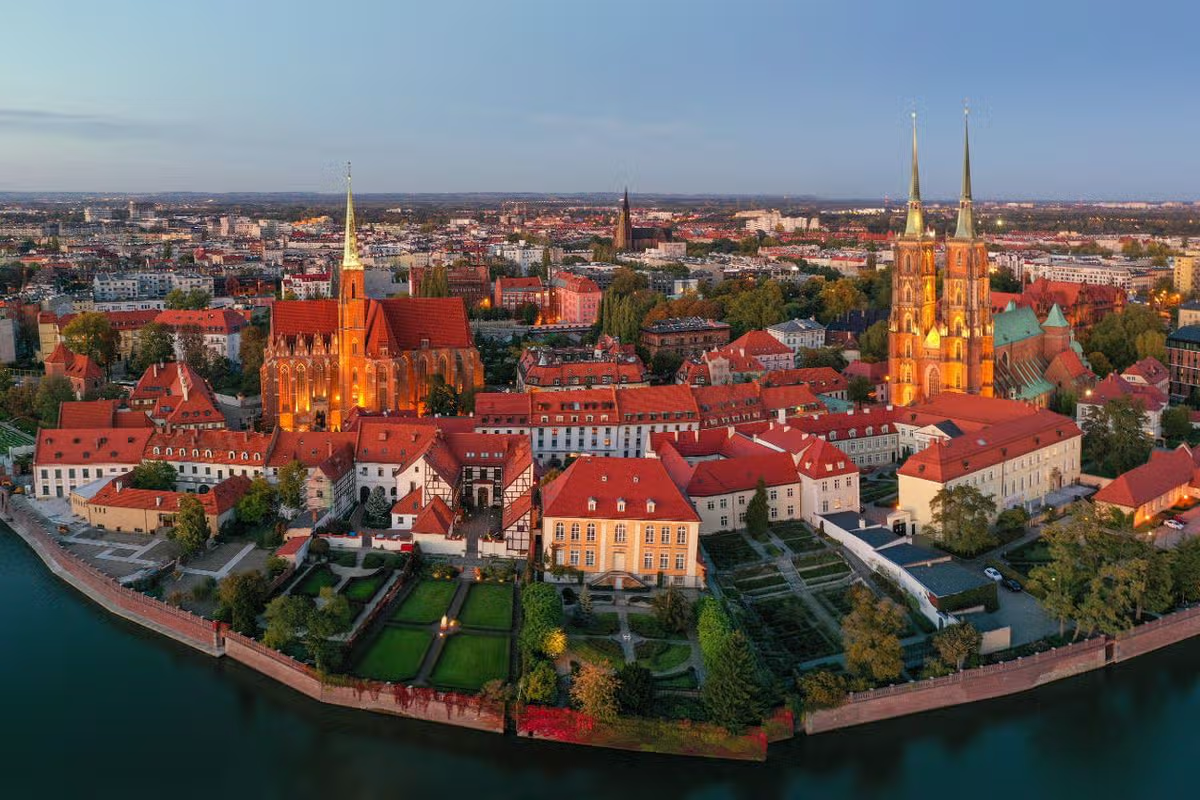
Coming in with a daily average cost of £35 per person was Wroclaw in Poland, making it the cheapest option out of all the cities studied. Wroclaw, set in the southwest of the country, was built on 12 islands across the Odra River and its neighbourhoods are connected by over 100 bridges. It’s sometimes called the Venice of Poland thanks to its sprawling network of canals that offer you the chance to go sightseeing by boat.
Ostrów Tumski, or Cathedral Island, is the oldest part of the city, made up of cobblestone streets that are illuminated by 102 gas lamps, each one lit by hand every evening by a man in a cape. Just across the water is Rynek, one of the largest medieval squares in Europe, where you’ll find a towering Gothic old town hall and traditional tenement houses painted in soft pastel tones.
Centennial Hall is another of the city’s architectural masterpieces. Built in the 1910s, this vast concrete building was used as a filming location for Hunger Games prequel The Ballad of Songbirds and Snakes, its distinctive high dome making it perfect for the Capitol Arena.
Eating out is inexpensive in Wroclaw, and you can find plenty of hearty, cheap eats. Fill up on kluski sląskie, soft potato dumplings, or zurek, a tangy soup often served in a bread bowl. The city is also a popular place to visit during the winter months, where the icy weather gives it serious cosy vibes.
Rynek becomes the site of the city’s Christmas market from late-November until early-January, and opens late in to the night. You can try traditional Polish food and enjoy hot mulled wine served in ceramic, boot-shaped mugs that have become a collector’s item.
But Wroclaw isn’t Poland’s only inexpensive destination. The top five cheapest breaks are all in the country: Poznań, Katowice, Gdańsk, and Kraków, making up the list. Warsaw, the country’s capital, also comes in at number ten.
Outside of Poland, four other cities complete the top ten. These are Sofia in Bulgaria, Zagreb in Croatia, Malmö in Sweden, and Budapest in Hungary, putting the majority of cheap destinations in Eastern Europe.
The 10 cheapest European cities for a weekend getaway
Wroclaw, Poland
Poznań, Poland
Katowice, Poland
Gdańsk, Poland
Krakow, Poland
Sofia, Bulgaria
Zagreb, Croatia
Malmö, Sweden
Budapest, Hungary
Warsaw, Poland
Have a story you want to share? Email us at webtravel@reachplc.com
Sitting atop a hill in the heart of one of the most popular areas in the UK is a charming market town that offers a step back in time along its narrow lanes and medieval backdrop
I visited this charming UK town, brimming with traditional tearooms and independent businesses(Image: Amy Jones)
While it may be compact, this idyllic UK town is brimming with traditional tearooms and one of the best bookshops in the UK, as I discovered on a recent visit.
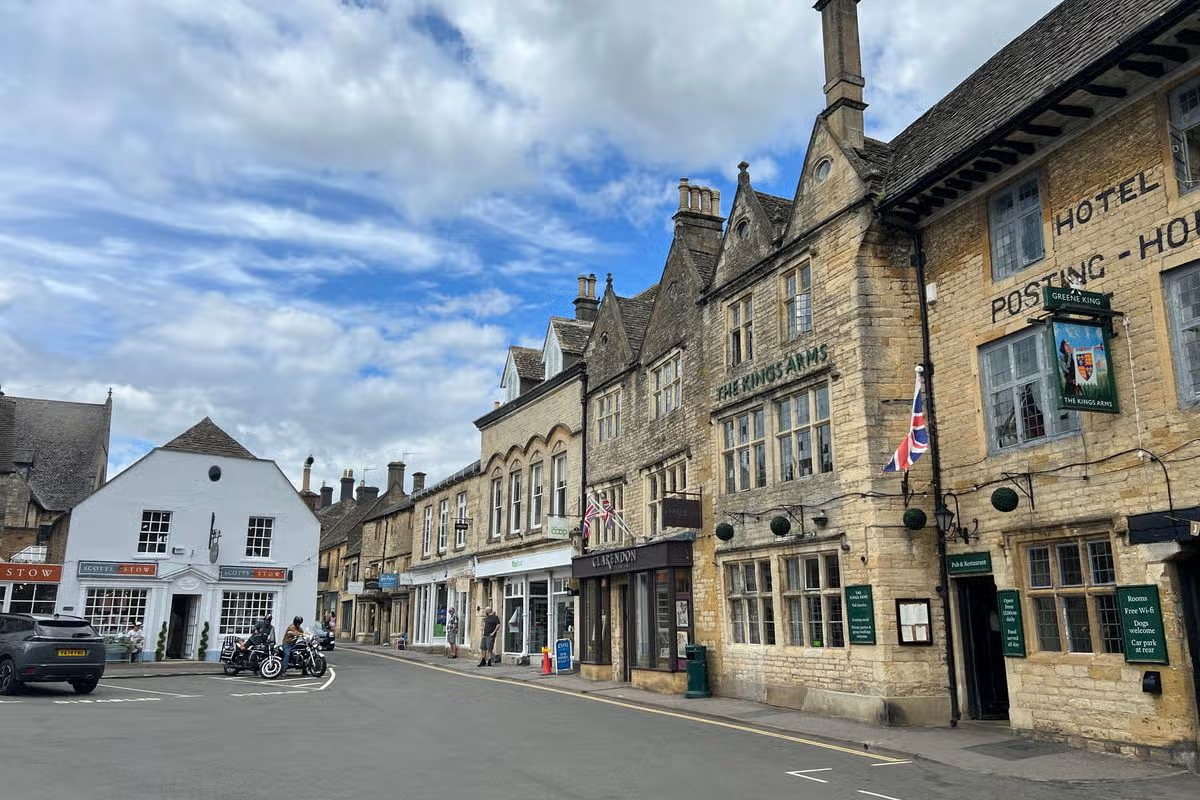
The Cotswolds are well-known for being home to quaint towns filled with honey-coloured cottages and meandering rivers against rolling countryside hills, so there’s a very good reason why it’s an Area of Outstanding Natural Beauty (AONB). One settlement that makes up this notoriously beautiful part of the world is Stow-on-the-Wold, the highest town in the Cotswolds.
Perched nearly 800ft above sea level in Gloucestershire, Stow-on-the-Wold is famed for its ancient market square, thriving independent scene, and for being regarded as the ‘antique capital of the Cotswolds’. Positioned just a 10-minute drive from Bourton-on-the-Water and 30 minutes from Cheltenham, it attracts visitors far and wide who come to marvel at its charms.
The renowned market square that characterises this town, dating back to 1107, is surrounded by an abundance of shops, from the gift store, The Honey Pot, sheepskin goods at Lambswold and the Cotswold Sweet Company. But if you wander further into the town, down sloping streets and past medieval stonework and climbing ivy, there’s so much more to discover.
I visited Stow-on-the-Wold for the first time this month and was left in awe of how many shops lined its narrow, honey-hued streets. There weren’t any empty stores in sight, but thriving independent businesses like Ella’s Emporium, Rhubarb Rhubarb Boutique, the florist Allium, kitchen store, The Crock Shop, beer cafe and bottleshop, Off the Square, and a local favourite at lunch, Cotswold Baguettes.
If you don’t take time strolling along its narrow lanes, off the main high street, it’s easy to miss a hidden gem, with some shops tucked a little out of the way. I could have easily missed Talbot Court, where green shopfronts and string lights adorn a courtyard, and the Borzoi Bookshop, which quickly became my favourite find.
Tucked down another courtyard decorated with flags, hanging lights and potted plants, just off Digbeth Street, the independent bookshop has been trading for more than 40 years. Packed with novels for all ages, Borzoi’s is a sanctuary for bibliophiles who are looking to find their next best read in a cosy, secluded store, or to join one of their book clubs, and I could have spent hours inside.
One visitor shared on TripAdvisor: “Lovely quaint book shop with a wide variety of books, cards and wrapping. They had a lovely children’s section with beanbags to sit on, which was inviting for our child. Staff were pleasant, and the shop was fairly busy with customers. They even had signed copies of books on sale. Would definitely recommend.”
Naturally, Stow-on-the-Wold is home to a variety of antique stores, including the White Cottage and Tare Antiques, where visitors are guaranteed to find a vintage treasure, with displays decorating entrances. But what truly makes this town stand out are the collection of traditional tearooms, which really felt as though I had stepped back in time.
Lucy’s tearoom was particularly noteworthy, with elegant seating outside and its curved window frames, while I also found the Old Bakery Tearoom, tucked inside the Fountain Court, offering classic cream tea. Huffkins also appeared to be a favourite among locals, as they sat in the summer sunshine savouring a slice of cake and a cuppa against the town’s medieval backdrop.
But a trip to Stow-on-the-Wold isn’t complete without stopping by The Porch House, which is claimed to be the oldest pub in England. I glimpsed inside the medieval pub, where its historic wooden beams and uneven floors, dating back to the 10th century, made it feel as though a pint should be served in a drinking tankard.
Meanwhile, residents were filling the streets around The Queen’s Head Inn, sipping drinks in the afternoon summer sun, with the pub adorned with hanging baskets. Others opted for a glass of wine outside at Massimo or a cocktail and bite at The Cotswolds Farm shop, before taking a stroll around the market town packed with charm.
The town is also celebrated for the ‘Tolkien Door’, located at the north entrance of St. Edward’s Church, surrounded by towering intertwined yew trees which are believed to have inspired the ‘Doors of Durin’ in J. R. R. Tolkien’s The Lord of the Rings. Twice annually, Stow-on-the-Wold also plays host to the traditional Gypsy horse fair, which stretches back over 500 years and originated as a sheep and wool fair, reflecting the town’s trading heritage.
Do you have a travel story to share? Email webtravel@reachplc.com
Having always loved the idea of running her own bookshop, Mirror writer Julia Banim spent the night at Read and Rabbit in Loftus, which offers guests the opportunity to try their hand at bookselling
15:31, 17 Jul 2026Updated 15:49, 17 Jul 2026
Mirror reporter Julia Banim spent the night at Read and Rabbit in Loftus, Yorkshire(Image: Julia Banim)
It’s always been a bit of a daydream of mine to run a quirky bookshop, ideally in a suitably pretty location.
So imagine my delight when I learned about Read and Rabbit, a sweet pink bookshop nestled in the quaint village of Loftus, on the very edge of the breathtakingly poetic North York Moors National Park.
It’s here where literary-minded holidaymakers can stay above the shop in the cosiest of surroundings. Best of all, in between curling up with a book and exploring the many charms of the local area, guests can try their hand at running the shop themselves, tallying up change, and greeting customers looking for a good read, and indeed, a good rabbit.
If you’ve been waiting around for your romcom moment, then let this be your sign. I simply couldn’t resist.
Read and Rabbit is the baby of Marta Eleniak, a friendly and likeable host with an encyclopedic knowledge of local haunts. She tells the Mirror: “I love creating experiences for people. Of all the things that I’ve done in my life, it’s when I’ve organised holidays for other people and done things that made them smile, that’s kind, where I feel I’m in my element. It’s like my calling, really, creating experiences for others.”
Before clocking on for my bookshop shift, Marta and I stop by the nearby Cattersty Sands beach, a hidden gem offering enough tranquillity to dislodge even the most stubborn writer’s block. Those with pets will also be pleased to know that it’s dog-friendly.
A relative newbie to Loftus, Marta fell for the area while looking for somewhere new to live, ideally in a friendly, affordable community with woods to walk in and plenty of rolling hills.
While chatting about her search on a Facebook group, a fellow member suggested their hometown of Loftus, with its waterfalls and proximity to the sea. Marta was immediately sold.
Having familiarised myself with lovely Loftus, it was onto my shift. The bookshop itself is a real treasure, with creative displays and even a fun ‘Harry Potter experience’ that young bookworms, and perhaps those not so young, will no doubt enjoy.
Marta learned that the centuries-old shop, previously an artist’s pottery studio, was up for sale through the local walking group, and while she initially had no intention of buying, when she saw it in person, it was love at first sight. It was then that things started to come together.
With this new ‘run a bookshop’ experience, guests staying in the self-catering accommodation have free rein to run Read and Rabbit, should they choose to. If they decide to do so, the only rules are that they open on at least one of the core days between 10 am and 2 pm on Saturday and on one midweek day.
That aside, guests are free to do as they wish and can spend time organising the books, changing up the window displays, and even offering workshops. For those looking for a bit more of a transformative stay, Marta offers buddy-up sessions to help people overcome writers’ block.
For Marta, Read and Rabbit is about more than selling books. From spending time online, she’s come across people who don’t necessarily have many friends in the offline world, and feels a brick-and-mortar bookshop offers that all-important sense of physical connection that’s so often missing in today’s society.
Marta says: “When I was researching bookshops, lots of people who had bookshops said the positive is that bookshops are just happy places for so many people. If you’re neurodivergent, it’s often a place where you feel quite happy and at ease.
“I just thought, I want to make it a happy place for people. And I want to have fun, quirky stuff there that makes people laugh. So even if they come in and something just makes them laugh, and they don’t buy anything, that’s good enough for me.”
There’s a comforting feel to the place, and indeed, Marta herself, that seems to prompt people to open up. While peaceful, Read and Rabbit also gets its fair share of eccentric and interesting customers, including those from North Yorkshire’s thriving artistic community. Often, they’ll stop and chat, sharing their stories, a laugh, and any problems that might be troubling them, big or small.
Profits from book sales go towards creating affordable events for people, with Marta noting: “Meditation is great, but not everybody can afford £10 or whatever it is for a meditation session.” I’m soon getting a feel for the place and the wider village, selling everything from adorable children’s books to humorous cards.
Now, I’ve worked in the trenches of retail before and can assure future guests that this is a far more relaxed experience. As Marta herself put it: “It’s a bit like when you’re a kid, and you play shop, but you actually get a whole shop to play with, but it’s real.”
For lunch, I enjoy a delicious takeaway pie and brownie from the award-winning Willow Cake Shop, a much-loved local establishment that looks like a bakery straight out of a fairytale. It’s a sizeable portion, but I don’t leave so much as a crumb.
After we close for the day, Marta and I take a walk in the local woods, of which there are plenty. Outdoorsy readers will be spoiled for choice with ancient woodland to explore, with plenty of Tolkien-esque trees and dramatic waterfalls to fire up the imagination.
Afterwards, we head into nearby Staithes, a wonderfully atmospheric fishing village with labyrinthine cobbled streets, a rugged coastline, and the saltiest sea air.
Those writing novels populated with old-timey smugglers, crashing waves, and secrets shared in lantern-lit taverns will adore Staithes. Do make sure to check out the Cod and Lobster, which offers excellent fresh seafood and unparalleled views over the harbour.
Lungs filled with sea air, I settle into my accommodation at Read and Rabbit, a charmingly unique set of rooms with plenty of literary touches, from typewriters to, of course, plenty of books. With two rooms to choose from, I went for the larger one with the window seat overlooking the street.
The kitchen is well stocked, with Marta kindly leaving out fresh local eggs and oranges to pop in the press for juice. I particularly love the colourful roof garden, the perfect spot for a morning cuppa. I sleep well and spend the first hour or so reading happily by the window, rain tinkling on the pane outside.
When things brighten up a bit, I say a reluctant goodbye to Read and Rabbit, and head over to nearby Saltburn, a Victorian seaside town famed for its historic pier and surfing. Saltburn has a relaxed, youthful feel, while still maintaining its timeless British seaside feel.
Fish and chips are, of course, a must, and so I stop by The Seaview Restaurant, a popular local haunt where there are queues on an ordinary Monday afternoon. The delicious and generous servings are made all the more special by the sparkling ocean views.
With Wuthering Heights fever having gripped the nation earlier this year, it’s clear that Yorkshire’s wild literary culture is having a moment. Should you want to explore beyond the crowds at Whitby and Howarth, then overlooked yet well-positioned Loftus, and in particular Read and Rabbit, offers the perfect opportunity to do so.
You can find out more about staying at Read and Rabbit here.
Do you have a story to share? Email me at julia.banim@reachplc.com
This coastal gem boasts Viking history, a famous ice cream parlour, and independent shops – and it’s a place I’ve been visiting since childhood that’s magical even when the weather isn’t the best
It’s the perfect seaside town, in my opinion(Image: Nicola Roy)
Summer is in full swing across the UK, bringing with it some glorious weather over recent weeks. With hopefully more sunshine to come, now’s an ideal time to organise a seaside trip or two.
Britain boasts countless spectacular locations, and although the heatwaves have been great, we all know how unpredictable the weather can be here.
But there’s one particular spot I’ve been returning to since I was young that gets lively during summer without becoming overcrowded, and even when it’s pouring down, it’s still amazing.
Largs, a lovely seaside town on Scotland’s west coast, sits approximately an hour’s drive from Glasgow. Famous for its Viking museum, traditional amusement arcades, and ferry services to the Isle of Cumbrae, it’s somewhere many Scots will likely have explored during the warm summer months.
This picturesque town positioned on the Firth of Clyde offers everything you could want from a coastal getaway, with a range of hotels and places to stay.
We stayed at the Old Rectory, a beautiful holiday home sleeping up to 14 people, featuring a hot tub and plenty of room for unwinding. One of the best things about Largs is how near you are to the waterfront regardless of where you are.
The charming Victorian seafront is packed with things to see and do, offering an impressive selection of eateries serving everything from classic fish and chips to delicious Thai cuisine.
Largs has immense historical importance as the location of a landmark battle in 1263, which signalled the end of Norse dominance in Scotland.
The Vikingar museum offers a fascinating glimpse into this heritage, though for a truly hands-on experience, the annual Largs Viking Festival in August is highly recommended. As luck would have it, the festival was in full swing during our trip, featuring dramatic battle re-enactments, live performances and some spectacular outfits.
Beyond its Viking roots, Largs is equally famous for its art deco ice cream parlour, which has been pulling in the crowds for generations.
Nardini’s, fondly known as Scotland’s most beloved café, has built its amazing reputation on its welcoming atmosphere and exceptional ice cream. Much like Vikingar, it enjoys a fantastic waterfront setting, making it the perfect spot to enjoy a scoop or two of your favourite flavour.
Alongside their extensive range of cakes and light bites, it’s a great choice for lunch or a quick snack while strolling along the promenade.
Venture into the town centre and you’ll uncover charming narrow streets bursting with independent gift shops, cafés and yet more ice cream parlours. On one particular morning, we chose to have brunch at Perk – a lively café bursting with plants and books, featuring an outstanding menu to match.
The vanilla matcha was an absolute treat, and the feta and avocado waffles were impossible to resist.
Still peckish after your meal? There’s a cake counter overflowing with pastries and other indulgent sweet treats available to take away.
While Largs may lack the familiar high street chains, it more than compensates with a wonderful selection of independent traders stocking truly unique items.
A large market tent has vendors offering everything from organic dog food to wooden lamps, jewellery, soaps and even tarot readings – you could quite easily spend hours browsing.
If you want to venture a little further, jump on a quick ferry crossing from the harbour to the Isle of Cumbrae, home to the delightful town of Millport.
The island is small enough to cycle around in just a couple of hours, with a well-earned pint awaiting you at the finish before a speedy 10-minute sail back to the mainland. Nearby, the breathtaking Kelburn Castle stands tall – a spectacular park and estate that hosts its very own summer music festival.
It’s perfectly suited to families too, featuring several playgrounds, cascading waterfalls and plenty more to uncover, all within a 10-minute drive from Largs. Truthfully though, Largs alone provides more than enough to keep visitors thoroughly entertained for either a day trip or a full weekend break.
If you’re lucky enough to visit on a bright day, it’s absolutely ideal. But even in wet weather, there’s no need to panic – it makes those seaside walks all the more refreshing and the welcoming ice-cream parlours even more tempting.
It comes as the £100million attraction in the often overlooked town created new designs that needed approval from Lancaster City Council.
Sign up for the Travel newsletter
Thank you!
As for the attraction itself, everything will be centred around the Realm of the Sun, Realm of the Moon and an area called Metronome.
In the Realm of the Sun, visitors can expect a tropical landscape that adapts to both hot and cold seasons, with vertical plants, hanging mini gardens, a multi-sensory area and a waterfall.
Then in the Realm of the Moon, the space will be darker with a “hyper-real rock pool” that has sped-up cycles of tides.
Outside, there will be a number of landscaped gardens and an arena to explore too.
And of course, there will be shops and restaurants for the visitors as well.
In the most recent announcement, there will be a £4.5million immersive experience called The Elder Tree.
The attraction is set to cost £100millionCredit: Eden ProjectIt will feature two domes – one themed around the sun and the other around the moonCredit: Lancashire County Council
The tree will stretch nearly 20 metres and take visitors on a journey from its roots to its hollows.
The attraction is expected to get around 585,000 visitors a year, with a capacity of up to 740,000.
Outside, in the arena, the capacity will be 6,000 people.
Parts of the attraction are expected to open in 2027, with other parts opening at a later date.
Plans originally approved in 2022 included four domes, but in the most recent plans this was reduced to two domes.
Oakland is a town often misunderstood. As someone who’s lived in the city and still spends a ton of time there, I’ve seen the good, the bad and the ugly.
And yet, there’s no place like it.
People who know the real Oakland — the ones who’ve explored neighborhoods from Chinatown to Fruitvale to Temescal, who’ve caught sunsets over the entire Bay from the Oakland hills, who’ve admired art in downtown and watched films at the historic Grand Lake Theater — will tell you there’s so much more to “The Town” than it gets credit for. During her post-Olympics homecoming at Frank Ogawa Plaza, figure skating gold medalist Alysa Liu summed up Oakland with one word: “Soul.” Locals beamed. With her unapologetically funky style, zen-like confidence and YOLO mentality, this athlete had clearly been shaped by the city.
Located on the eastern shore of the San Francisco Bay, Oakland is a midsized city with an outsized reputation, having long served as a pressure cooker for grassroots activism. The Black Panther Party, the hyphy subgenre of hip-hop, official U.S. wildlife refuges — they all started in Oakland. Visit the city and you’ll find that it’s slower-paced than San Francisco but has all the cultural diversity. Its food scene is endlessly innovative — try the handcrafted zaru soba at Soba Ichi or some of the best Indigenous food on the West Coast at Wahpepah’s Kitchen. And for those wanting to explore the outdoors, there’s Lake Merritt in the center of town and redwood forests in the hills.
Oakland is far from perfect; while crime is reportedly down, it’s important to be street smart (or as locals say, to “keep your head on a swivel”). But I’ve seen many changes to the town over the years and have a renewed appreciation for its vibrancy. Here’s just a sampling of ways you can enjoy the cultural bounty from this city by the Bay.
Ben Morris visited Sambuca di Sicilia, dubbed “Italy’s little America”, to investigate a seemingly incredible €1 home scheme, but he quickly discovered a catch
Around 25 municipalities are said to be offering the €1 homes
(Image: Ben Morris/YouTube
)
A travel vlogger who visited the beautiful Mediterranean island of Sicily to investigate a €1 home scheme quickly came across a major “catch”. A wave of reports advertise small towns in Italy flogging vacant properties for as little as €1 (just 85p in today’s money).
It’s a phenomenon that comes on the back of a reported rural exodus. Young Italians have been increasingly drawn to city life, leaving stunning villages to empty out as their ageing populations dwindle.
Around 25 municipalities are said to be offering the €1 homes, betting that renovated and occupied properties will be more lucrative; second homes come with tax bills.
Ben Morris visited the commune of Sambuca di Sicilia, Sicily, dubbed “Italy’s little America” due to the influx of US property buyers, to investigate. On his self-titled YouTube channel, Ben spoke to a local estate agent about the scheme.
She explained: “So, when they launched the first project, then there has been three: €1 houses, €2 houses, and €3 houses.”
The estate agent went on to say: “The rules are more or less always the same. You have to do an offer of at least €1, €2 or €3, but you know that the higher offer will win the house.”
Returning to Ben’s narration, he stated: “So there’s the catch in Sambuca. Although houses do go on the market for €1, they usually get bid on for up to €5,000 (about £4,200).
“However, the town that we’re going to visit after this actually has houses that you can straight up buy for €1. No catch. And there’s actually places available now.”
Ben then spoke about the home of Meredith Tabbone, who bought hers for €5,000 and later bought the home next door. However, her renovations set her back a whopping $446,000 (about £333,000).
Later, he set off in search of a no-strings-attached €1 home in the town of Mussomeli. Ben met up with a woman named Natalie, who said she’d show him a range of homes, including two that cost just €1.
Once he entered one such property, it was immediately visible that the house needed a lot of work. Ben was advised to only walk on the edges of the floor as he ventured through the property for “safety” reasons.
After he inspected the seemingly dilapidated two-level property, he commented: “And that is exactly why so many of these homes are being sold for so cheap. You’re going to need to do renovations and spend money to make it livable.
“You also have the responsibility to make sure your house doesn’t fall down and like kill your neighbour or something.”
Natalie also explained that, in addition to this, the buyer would have expenses to close the sale. Ben said this was another “little catch”, adding that you’d have to pay for notary fees and certificates.
Speaking previously about the scheme, 1eurohouses.com said in a statement, as reported by the Independent: “We do not need new constructions and new overbuilding.
“The strategy to improve the housing environment and reclaim our cultural identity is to revive the small abandoned centres or to redevelop buildings in a state of abandonment, with a story that is our history.”
It is easy to see why people love the Northumberland village so much. The centre is quaint and pretty, the beach sandy and impressive, and the castle perfectly preserved and towering
Bamburgh has won, yet again(Image: TimMcGuinness/ChronicleLive)
Has there been a run as dominant as this in the history of British seasides?
Once again, Bamburgh has been named the best coastal town or village the UK has to offer, bringing the run of victory to six in a row in the Which? annual survey.
It is easy to see why people love the Northumberland village so much. The centre is quaint and pretty, the beach sandy and impressive, and the castle perfectly preserved and towering.
In a gushing show, 5,320 Which? readers handed Bamburgh perfect marks for its seafront, scenery and beach. “It is a wonderful historic village with miles of sand and glorious views,” one happy visitor enthused.
Another said: “Bamburgh Castle, a stunning building, is the core of the village and leads through the sand dunes to an extraordinary beach, which never fails to captivate us.”
And a third agreed: “It’s just gorgeous and is as good now as it was years ago; it’s not been spoiled by commercialisation. What made it successful then has been retained.”
But amid all of the enthusiasm for the settlement of 300 people, not everyone is convinced by its dominance of the Which? survey. In fact, a number of locals are fed up with the limelight that is being cast on Bamburgh.
“I wish they wouldn’t do things like this. All it does is make rich southerners read it and then decide to buy a holiday house there, pushing up house prices and pushing out actual locals,” one irked person wrote online.
Another chimed in: “Peace and quiet?! Not on a sunny summer’s day. The village (it is not a Town) is rammed with vehicles and visitors.”
The gripes are consistent. Back in 2022, when Bamburgh’s reputation as the best of the best was still being forged, resident John Graham shared his frustrations. He said: “When the sun is out the place can be overrun. In the day, you get the ice-cream brigade leaving their rubbish everywhere and in the evenings the drunken louts have their fun.
“On an average morning in the summer, I pick up five or six burnt-out disposable barbecues and half a dozen or so bin bags full of bottles and cans.”
One business owner said it is really sad to see a big increase in litter being dumped in the sand dunes below the castle. They added: “A friend of mine summed up the problem quite well the other day when he said it’s like over-fishing.
“Pubs and hotel owners might be enjoying the money rolling in, but the more people who come here, the more damage is done to the environment.”
I visited last summer and was not overly impressed by what I found. One major issue was the cars. On a hot June day, the stream of traffic on the arterial road that runs through Bamburgh’s centre is relentless. The closest train station is seven miles away in Chathill, and the buses are sporadic, so any hopes of embarking on a relaxing, car-free day trip will prove difficult.
For me, the real issue with Bamburgh is its vibe. Central to the charm of Britain’s great seaside towns is a slightly edgy, salty quality in some way connected to large quantities of sailors. Bamburgh, with its Farrow and Ball doors and memorial benches, has none of this.
The stars of the show in Bamburgh are the beach and the castle. It is undeniable that the combination of the two — how the 1,400-year-old fort hangs above the broad, sandy shore — is magnificent. You won’t find me criticising Bamburgh Castle.
The beach, however, is arguably a little one-note. Once you’ve waded out half a mile to get to a patch of water deep enough to paddle in, you’ll be frozen by a North Sea that rarely swells itself into anything remotely as interesting as what you’d find on the UK’s Atlantic coast.
If you’re in search of a very long beach, Camber Sands near Rye in East Sussex not only enjoys a lot more sunshine — as one of the sunniest places in the country — it also has superior sand dunes, particularly so if you’re a teenager interested in launching yourself off their summits.
Epic food, amazing shows, museums you won’t find anywhere else and a helicopter ride down the famous strip – here’s my ultimate Las Vegas itinerary
Niamh Kirk Features Writer and Octavia Lillywhite Acting beauty and wellness editor
07:00, 11 Jul 2026
This article contains affiliate links, we will receive a commission on any sales we generate from it. Learn more
Neon capital of the world – Las Vegas is a larger than life destination(Image: Getty)
The glitz, the glam, those unforgettable “wow” moments – it’s easy to see why Las Vegas remains the ultimate bucket-list destination. Whether you’re marveling at the neon skyline from 1,000 feet up or walking the Strip to soak in the music and eclectic fashion, this town is a sensory explosion that demands to be experienced at least once.
The home of the famous strip, countless wedding chapels and its own Eiffel Tower and Statue of Liberty, this place almost doesn’t feel real. It’s defined by vintage camp, 24-hour casinos, more buffet restaurants than you can possibly imagine, and high-class dining eateries. Welcome to Vegas, baby.
I arrived via a direct flight from Heathrow, checking into The Cosmopolitan of Las Vegas. Arguably the best-positioned hotel on the Strip, it offers the perfect paradox: you are in the heart of the action, yet the rooms are a sanctuary of total silence.
My suite featured a private balcony overlooking the city’s glowing landmarks and the iconic choreography of the Bellagio fountains. Watching the water dance from my room, the excitement for my desert escape truly set in.
Where to find the best places to eat in Las Vegas
Food is central to the Vegas experience, so first on the agenda once we’d dropped our bags was brunch at Alexxa’s – situated on the Strip, right in the thick of the action. In the spirit of a true American getaway, we went straight for the classics, ordering a spread of fried chicken and waffles, fluffy American-style pancakes and steak and eggs.
Of course, no Vegas brunch is complete without a little “hair of the dog.” I washed it all down with the most gargantuan Bloody Mary I’ve ever seen, complete with a slice of bacon. Nothing here is small-scale – it was the perfect, over-the-top introduction to the local food scene.
But don’t miss breakfast at the hotel either. The Cosmopolitan‘s Wicked Spoon is a brilliant buffet, with pretty much everything you could possibly think of… I even had a few sushi rolls on the side.
For dinner, we feasted at Mayfair Supper Club inside the Bellagio (yes, the one from Ocean’s Eleven), where live dancers perform around diners as they tuck into all-American classics.
But the highlight was dinner at Vanderpump Paris – and as a Real Housewives of Beverly Hills fan, it was the dream. Lisa Vanderpump knows how to put together a menu. Curated with Parisian themes embellished with Vegas flair and eclectic cocktails, I felt like a total superstar eating here.
Experiences you must not miss while you’re there
I could have filled the days just walking up and down the infamous strip. With buskers, magicians, show girls (and show boys) I spotted the Eiffel Tower, the Luxor pyramid, the Empire State Building, the Paris globe and the iconic casinos – which were already getting busy, despite it being barely two in the afternoon.
But there are so many bucket list experiences to try, too. We started with an ice hockey Game: Golden Knights vs. Edmonton Oilers (tickets around £55). I was pretty much an ice hockey novice, but that doesn’t matter a jot. American sport is packed with entertainment, and it didn’t take me long to soak up the atmosphere and join in with the chants. Why can’t this be a thing in the UK?
As if that wasn’t enough excitement for one night, we then ticked off another iconic moment – a helicopter ride down the Strip.
Now, I’m no daredevil (I was slightly apprehensive), but as soon as we got up into the sky it was magical. We were given a 10-minute tour by our pilot, taking off at 10:30pm, just as Vegas was truly coming alive for the night.
We also checked out The Sphere, which I’d like to call an immersive cinema but it’s so much more than that. It’s a one of a kind, multi-sensory show with holograms and AI. With tickets for the classic The Wizard of Oz, I was expecting a cinematic experience. In fact, it was fully immersive, to the point it made us feel like we were actually in the storm with Dorothy.
Another recommendation is the Neon Sign Museum. The bright lights of the signs are what makes Vegas so magical, so what happens to the signs when they are no longer in use? They go to the Neon Sign Museum – and it’s nearly as impressive as the Strip itself.
I loved seeing the ‘old’ Vegas here, bringing history to light – literally – and for the best experience I recommend the illuminated evening tours (from £26) but there are also self-guided daytime options (from £19).
Finally, in dedication to the stars of all the shows, we couldn’t miss a stop at the Show Girl Museum – the home of all the iconic showgirl costumes. But what makes this museum one of a kind? It’s inside Grant Philipo’s house – a former showgirl costume designer. Tickets are $33 each and Grant has nearly 300 mannequins in his home as he led us around the impressive pad, paying homage to the glamour and beauty of Las Vegas.
And if the brunch and dinner performances weren’t enough, we topped the day off by going to watch Jennifer Lopez perform at her residency in The Colosseum theatre – part of Caesar’s Palace Hotel.
You’d think with all that I wouldn’t have found time to have a little flutter on the tables, but this is a 24-hour city – there’s always time to squeeze something else in, if you can just stay awake.
Stays at he Cosmopolitan of Las Vegas start at $189.35 / approx. £142 per night including resort fee and taxes. Stays in the Terrace One Bedroom Suites with Fountain View starts from $246.49 / approx. £185 per night, including resort fee and taxes.
Vegas Views helicopter tour by Maverick Helicopters start at £75 per person, see maverickhelicopter.com
Virgin Atlantic offers daily direct flights to Las Vegas from London Heathrow starting from £512*, and seasonal flights from Manchester Airport. *Prices subject to change.
SEASIDE towns – the UK sure does have a fair few, but with so many stunning spots, it is easy for others to be forgotten about or even bashed.
This is the case for Bognor Regis this week, as it has been named the WORST seaside town in the UK.
Bognor Regis was recently named the worst seaside town in the UK – but I don’t agreeCredit: Alamy
If you really want to see some of the UK’s best beaches, check out some of our best £9.50 Holidays.
In research carried out by Which?, towns were voted on by more than 5,300 people focusing on a range of criteria including the quality of the beaches, scenery, food and drink, accommodation, tourist attractions, shopping and value for money.
Sign up for the Travel newsletter
Thank you!
Bognor Regis scored just 41 per cent overall, achieving one star in all categories, bar one.
Having visited just last week, and on a number of occasions before, I think (or rather, I know) they’ve got it wrong.
Bognor Regis is actually the sunniest spot in the UK – and what is not to love about that?
Tie this in with its long-stretching beach with miles of sea views and it’s hard not to love.
The main beach (known as East Beach) is unbeatable. While it is a pebble beach, there is plenty of space to put up a deck chair and enjoy the waves crashing on the stones.
Though, if you do want to go on a walk but avoid the pebbles, running along the beach is a nice flat esplanade.
You can head to the long pebble beach and soak up the sunshineCredit: Cyann FieldingAlong the beach you will find Luna Hut Sauna and the pierCredit: Cyann Fielding
Sat at the edge of the beach you will also find a number of things to do.
For example, you can head to the pier which is full of arcade machines and instead of your usual keyring prizes, you can bag a Jellycat (I tried and failed to get the seagull).
Also along the beach you will find Luna Hut Sauna Bognor Regis where you can head straight from the sea to the sauna and then sit looking out at the ocean.
You can choose between a half-an-hour session and an hour-and-a-half session, costing from £8 per person.
You can also pick up an ice cream for a couple of quid, or fish and chips for under a tenner – prices that are getting harder to find these days.
Alternatively, you can head to West Beach, which is west of the town centre and is normally less crowded.
For something free to do, visit the Bognor Regis Museum which has lots of exhibits on local history, fossils, vintage cameras and even an extensive radio collection.
And would it even be a proper trip to Bognor Regis if you didn’t go to Butlin’s?
You can head to Butlin’s even just for a dayCredit: Cyann FieldingAt the park, there is a huge swimming complex as well as soft play for little onesCredit: Cyann Fielding
Butlin’s Bognor Regis is home to a wealth of things to do – with the most recent experience being a claw machine which claimed the Guinness World Record title for the biggest in the world.
For little ones, there are soft play areas, fairground rides and a tonne of shows.
Bigger kids can also enjoy PlayXperience, can only be found at Butlin’s Bognor Regis and boasts escape rooms, crazy golf, VR games and more.
On my last visit, I spent hours jumping between the different experiences, getting competitive at interactive darts and losing the crazy golf game along the way.
Another great attraction at the resort is the Splash Waterworld, which has a splash area with tipping buckets for little ones and slides for older kids.
What makes this all even better is that you don’t have to stay to enjoy all of this – you could just book a day ticket.
These tickets will be 15 per cent cheaper from July 17 until September 1 as well, thanks to the Government’s Great British Summer Savings scheme.
It takes less than two hours to reach Bognor Regis on the train from LondonCredit: GettyAnd while there make sure to check out the station bookshopCredit: Refer to source
As for the town centre, which admittedly it is a little run down in places and with a horde of chain stores, there are still some gems including places for a good bite to eat and others for a cheap pint.
For example, you could go to The Hatter’s Inn, a Wetherspoons pub with pints of Worthington’s creamflow for just £1.99.
And for a bite to eat, check out Bonito Lounge which serves a range of feel-good, comfort dishes including fish and chips with a drink for £12.09 and bottomless coffee refills for £1.89.
The building is covered in plants and it has some lovely outdoor seating to ensure you’re making the most of being in the sunniest spot in the UK.
It doesn’t take long to reach the seaside destination from London either – it takes under two hours on the train, direct.
And if you do happen to be coming by train, make sure to head into the station’s bookshop for a tonne of cheap, second hand books.
So ignore the ‘stats’ that say its the worst town – it has all the charm of seaside towns gone by, with cheap prices, great pubs, and fantastic holiday parks to boot.
Clacton on Sea, Lowestoft, Great Yarmouth and Blackpool all did poorly in this year’s Which? ranking of the best and worst seaside towns and villages in the country, but they were beaten to the bottom spot
The West Sussex town has once again come in for a kicking(Image: Adam Gerrard / Daily Mirror)
“It’s a dead town.”
That’s how one former resident of Bognor Regis described the much-maligned West Sussex town, which has just been named the UK’s worst for a second year in a row.
Thousands of Which? readers decided that Bognor is the bottom of the bottom, calling it expensive and noisy, while arguing it’s got a rubbish beach and terrible attractions.
“Lacking investment, slow to supply tourists what they need,” one recent visitor commented. “The place is run down and feels neglected,” another said.
If things couldn’t get any worse, the town was recently plagued by a pervasive mystery pong drifting across the channel from France.
Do you agree with Bognor’s place on the list? Let us know in the comments below or email webtravel@reachplc.com
Levi Winchester, the Mirror’s money editor, grew up in Bognor. While Levi has now moved on to sunnier pastures, she holds an enduring love for a seaside town etched into Britain’s coastal consciousness, yet one that has fallen on hard times.
“I remember many happy summers playing down the beach in Bognor Regis. At low tide, you could see sand for miles, as the smell of fish and chips wafted through the air,” Levi recalled when asked for her thoughts on a town that once served as a home to George V for three months.
“The town was always buzzing with families enjoying their trip to Butlin’s—and while the seaside resort still attracts large crowds every year, the town itself has lost its heart. The promenade lacks love and is in need of a serious revamp.
“Even under the lights of the pier, it still just feels grey and miserable. Like many other UK high streets, the main town centre is empty now with hardly any shops left.”
One unhappy local wrote on Reddit: “Yes, it’s a dead town. Pretty much just pound shops, charity shops, Polish shops, banks, and chain coffee places. I think Macari’s is still there, but there’s nothing I would call charming about the town, nor has there been for quite a while.”
Another chimed in: “Bognor’s pretty much a depressing hole. I didn’t live here when it was nice, but it was destroyed by cheap holidays in Spain. It’s pretty sad, actually–you can tell the town is in the process of a slow death.”
Not everyone is quite so down on Bognor, however.
Freya and Matthew Reynolds run the independent furniture store on the high street that shares their family name. When Bognor came last in 2025’s survey, they told The Argus how much they loved the town.
Matthew, who moved to London and then returned, said it is a “lovely place to raise a family by the seaside.”
“I think Bognor has done quite well. There are not that many boarded-up shops. In other places, half the town centre seems to be boarded up,” he said.
Julia Smith, a 59-year-old carer, reacted strongly to the news of Bognor’s lowly ranking. “I think it’s a bit of snobbery. You need to come down and see it for yourself—don’t rely on so-called reports,” she told The Guardian. “There’s so much here. The sea is amazing. There are loads of places to eat as well, whether you’ve got a tenner or 100 quid to spend.”
She added: “We live here, and we never get sick of it. I’m going on 60, but I love it.”
Despite grappling with its reputation, there’s no denying Bognor Regis’ unwavering popularity. Each year, it attracts a whopping four million tourists – a number likely to keep growing thanks to the likes of Butlin’s.
Boasting a Victorian pier originally built in 1865, a slew of golden sandy beaches, rows of arcades, and plenty of fish and chip shops – Bognor Regis still possesses all of the quintessential coastal must-haves. One recent visitor argued they loved the ‘lights along the pier at night’, while other respondents suggested that Bognor Regis could recover its glory days with the right investment.
TOP 30 SEASIDE TOWNS & VILLAGES
Bamburgh — 84%
Tynemouth — 82%
St Andrews — 81%
Aldeburgh — 80%
Crail — 80%
Frinton-on-Sea — 80%
Portmeirion — 80%
St Davids — 79%
Bude — 78%
Southwold — 78%
North Berwick — 77%
Plockton — 77%
St Ives — 77%
Swanage — 77%
Lyme Regis — 76%
Lytham St Annes — 76%
Portstewart — 76%
Conwy — 75%
Dornoch — 75%
Filey — 75%
Lynmouth — 75%
Sidmouth — 75%
St Mawes — 75%
Tenby — 75%
Tobermory — 75%
Wells-next-the-Sea — 75%
Whitley Bay — 75%
Broadstairs — 74%
Falmouth — 74%
Llandudno — 74%
BOTTOM 30 SEASIDE TOWNS & VILLAGES
Ilfracombe — 57%
Minehead — 57%
Bridlington — 56%
Cleethorpes — 56%
Fishguard — 56%
Seaton — 56%
Torquay — 56%
Abersoch — 55%
Colwyn Bay — 55%
Morecambe — 55%
Newquay — 55%
Barry Island — 54%
Skegness — 54%
Mablethorpe — 53%
Margate — 53%
Paignton — 53%
Southport — 53%
Herne Bay — 52%
Littlehampton — 51%
New Brighton — 51%
Weston-super-Mare — 50%
Burnham-on-Sea — 48%
Clacton-on-Sea — 48%
Southend-on-Sea — 47%
Bangor — 46%
Blackpool — 46%
Fleetwood — 46%
Great Yarmouth — 46%
Lowestoft — 46%
Bognor Regis — 41%
Results are based on an online survey conducted in January-February 2026 of 5,320 Which? Connect panel members who spoke about 11,999 experiences of visiting a UK seaside town for leisure purposes in the previous 12 months.
Travel experts at Time Out have ranked the best seaside towns to visit in the UK in 2026, and a town in Wales has taken the top spot
It’s often overlooked for its famous neighbour (Image: WALES NEWS SERVICE)
Wales is fast becoming one of the most sought-after staycation destinations for Brits this summer, with its long-overlooked coastal treasures finally getting the recognition they deserve.
As holidaymakers hunt for wallet-friendly breaks, the newly opened King Charles III Coastal Path has thrown open the entire UK shoreline to those keen to explore it on foot. With it comes a wave of enthusiastic walkers on the lookout for their next adventure, and it appears this Pembrokeshire town could be just the ticket.
Travel experts at Time Out have ranked what they believe, after scouring the length and breadth of the country, to be the finest UK seaside towns to visit in 2026. Topping the list is an underrated Welsh treasure, Saundersfoot in Pembrokeshire.
Pipping some of Britain’s most beloved coastal hotspots to the post — including Brighton, St Ives, and Folkestone — this charming seaside retreat is well and truly having its moment in the sun.
Nestled between the popular towns of Tenby and Amroth, Saundersfoot is loved for its sweeping beach and bustling harbour. Many visitors choose to tackle part of the Pembrokeshire Coast Path, which winds through these spots, and a straightforward 3.3-mile route with breathtaking views will bring you directly from Tenby.
Beach and harbour
As with any seaside town worth its salt, it’s the spectacular beaches that first lure people in — and everything else on offer that keeps them coming back. Saundersfoot is no different, boasting a standout stretch of shoreline that draws visitors from far and wide.
Saundersfoot Beach is the main expanse of sand, providing a level surface for families to relax and watersports enthusiasts to enjoy. TimeOut described it as “one of the most gorgeous beaches of any British seaside resort”, and its prime position near the town centre makes it even more appealing.
Its blue flag accreditation ensures a safe seaside experience for those bringing young children, and many visitors can be spotted walking their dogs along the water’s edge.
Describing Saundersfoot beach, one TripAdvisor user noted: “Lovely beach to walk on, very clean and close to the town with shops and cafes literally just a street over. It’s also very close to the harbour, so it’s nice to see the boats.”
Adding to the area’s charm is its historic harbour, originally constructed in 1829 to enable coal exports from local mines. It has since evolved into an ideal fusion of heritage and modernity with excellent amenities and activities, serving as the town’s focal point.
One review said: “On the way from Swansea to Tenby we made a short stopover at Saundersfoot Harbour. The small port is quite beautiful and worth seeing.”
Part of the harbour area features an array of eateries and drinking establishments where visitors can sit back and admire views of the peaceful coastline. Here, you can begin your morning at The Breakfast Clwb or enjoy lunch at Catch Beach Club, treat yourself to ice cream at Odley’s Gelato and sample traditional pasties at Pembrokeshire Pasty and Pie Co. From the harbour, visitors can book a variety of boat trips to explore the surrounding area, as well as hire equipment to go crabbing along the waterfront.
For those who prefer to stay put in Saundersfoot, the Welcome Centre and Coal Museum offer a fascinating insight into the town’s origins.
Free to visit, the centre shines a light on the lives of local mining families, the hardships they endured and the gruelling conditions that shaped miners’ working days. Along the way, you’ll uncover the pivotal role the harbour once played in the area’s rich coal mining history.
Booming Hans Zimmer-style cinematic music reaches a crescendo, shaking my bones. Two turquoise macaws swoop within an inch of my hair and join a sky filled with nearly 250 birds. Hawks, kites, pelicans, and an owl soar and swoop around a pagan-looking wooden circle. Peacocks fuss at the makeshift river below, coaxed by two actors telling the story of humans’ relationship with nature. Grey clouds roll in, dark with rain. After all, we are risking an open-air performance in north-east England. I’m at a preview of Kynren: the Storied Lands, the latest gloriously unrestrained project in the market town of Bishop Auckland, 12 miles south of Durham.
I grew up near Bishop Auckland, which was once an important coal-mining and railway town. Last time I was here, its centre was dominated by discount stores. If, in 2003, you’d told teenage me that the high street would become an ode to art, history and culture, I would have laughed. Well, I would have grunted and turned up the Nu metal on my MP3 player.
The Spanish Gallery inside Auckland Palace features work by El Greco and Velázquez. Photograph: The Auckland Project
This madcap renaissance is down to one couple. In 2012, investment banker Jonathan Ruffer rescued Francisco de Zurbarán’s celebrated series Jacob and His Twelve Sonsfrom the sale of Auckland Palace. Needing somewhere to house the paintings, he ended up buying Auckland Palace too. He and his wife Jane Ruffer could have followed centuries of previous owners, closed the doors and kept the paintings to themselves. Instead, they set up a charity and opened up the palace and its beautiful gardens to the public. Thus began the complete renovation of Bishop Auckland.
The palace itself is a vision of grand, gothic architecture dating from the late 12th century. In St Peter’s chapel, the stone archways and a painted wooden ceiling make you feel as if you have stepped into the middle ages. The lifesized Zurbarán paintings remain on the dining room walls as a stream of visitors peruse the preserved stately rooms, guided by volunteer attendants.
“We employ 201 staff,” says Harry Sinclair, public relations officer at the Ruffers’ Auckland Project, as he guides us through the estate. “Around 80% come from a 10-mile radius, so we’re very much leading the circular economy. It’s about regenerating the town through its culture and heritage.”
After procuring the palace, the project grew arms and legs, becoming the Auckland Project, a regeneration charity dedicated to remodelling Bishop Auckland. As well as running the palace and gardens, the initiative built two art galleries and a lookout tower, and preserved a local heritage railway and Roman fort.
The galleries – one dedicated to mining art from County Durham, the other to the golden age of Spanish art – are not the ramshackle, fossil-packed local museums of my childhood school trips, but sleek galleries with ink-black walls and , boasting works by El Greco and Velázquez. Back outside, the drizzle clinging to my skin brings me back to Earth, but the striking viewing tower dominating the centre like the skeleton of a cathedral is another sight I never thought I’d see in Bishop Auckland. “Altogether we call it a slightly bonkers day out,” says Sinclair.
The setting for the new show is picturesque. Photograph: Will Walker/North News and Pictures
He tells me about the 59-bedroom hotel the project is building on the market place. He says it should increase footfall and dwell time in the town centre, with 1.5 million visitors expected each year from 2029. The hotel could create up to 95 jobs. There are already self-catering cottages in a neat line outside Auckland Palace and boutique accommodation at the Park Head Hotel.
But most ambitious of all is the jaw-dropping Kynren project. In 2013, the Ruffers bought Flatts Farm – about 100 hectares (250 acres) outside Bishop Auckland – and every summer since 2016, have hosted a glorious night show telling 2,000 years of English history to audiences of up to 8,000 people. More than 1,000 local volunteers work to create an extravaganza with horseback cavalry, sword fighting, working steam locomotives and boats gliding across a human-made lake, culminating in a dazzling firework display.
And next week, Kynren: the Storied Lands is opening during the day, too, as a live-show theme park for the first time. The arena, where my sneak peek at the new Lost Feather show takes place, is impressive. Huge wooden branches are stacked haphazardly into a circular nest so convincing I expect an eagle chick the size of a bus to emerge. During the show, birds pop out of hidden doors above the audience and swoop overhead, coaxed by handlers in medieval-style tunics.
It doesn’t always go to plan. One kestrel flies off into the nearby forest, and a tawny owl refuses to perform; its wide yellow eyes staring out at an audience delighted by its misbehaviour. Each mishap only adds to the joy of the experience. “That’s the beauty of live performance,” Anna Warnecke, CEO of Kynren, says. “There’s an electric sense of adrenaline that you don’t get from watching the same thing on a screen.” She’s right. By the end of the show, we’re holding a collective breath and there’s heartfelt applause and laughter when the kestrel returns from the distant woodland to the gloved arm of its handler.
The Auckland Tower in the heart of town. Photograph: travelibUK/Alamy
The Lost Feather is one of six live shows running throughout the day until mid-September. The other five performances are in equally elaborate auditoriums. The Legend of the Wear (a re-telling of the local Lambton Worm myth) features live action water stunts on a lakeside stage. At Land of the Vikings you walk through a working village, interacting with actors to the sound of clanging metal from the forge before distant drumming signals the start of the show in the boat-like arena. Expect big beards, the clash of shields and axes, fire, and a lot of Viking roaring.
“We wanted to create a visitor destination,” Anna says. “People aren’t going to travel that far for a single 90-minute show like Kynren. So the daytime performances give people a reason to spend all day here.” There’s certainly plenty to stay for at Bishop Auckland these days. Apart from epic bird shows and recreated Viking raids, a fascinating palace, Spanish masterworks, a Roman fort, deer park and heritage railway line, the original Kynren spectacular still runs on Fridays and Saturdays between July and September.
This is not just a “slightly bonkers day out”; it’s a testament to unbridled ambition. I think even my sulking 16-year-old self would be secretly in awe of what Bishop Auckland has achieved.
The trip was provided by Visit County Durham. Kynren: the Storied Lands day show runs from 18 July until 12 September (£30 adult, £20 child, kynren.com). Auckland Palace (£20, children under 4 free, aucklandproject.org) is open 10.30am-4pm, Wednesday to Sunday and bank holiday Mondays