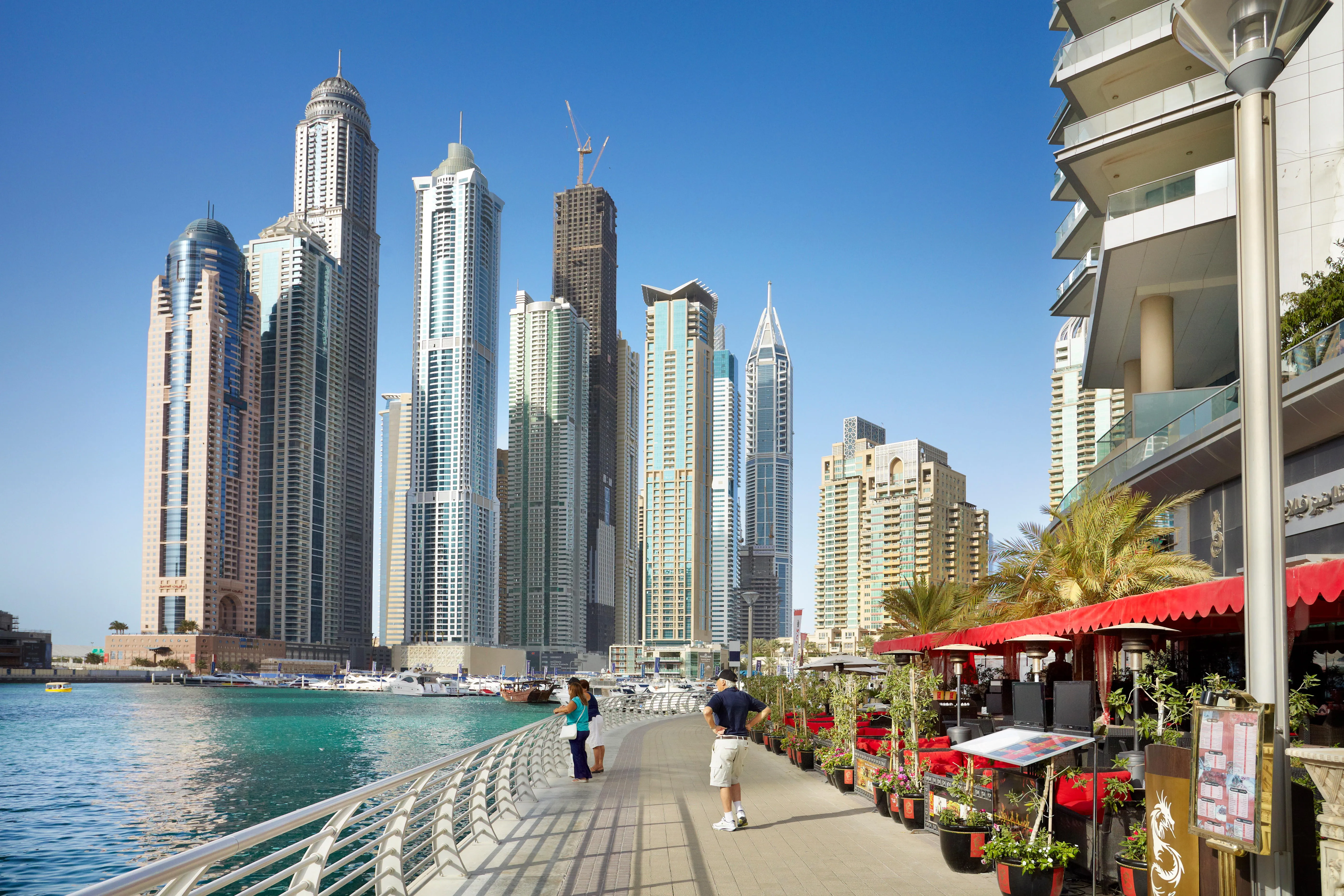

DUBAI holidays can now go ahead as the UK Foreign Office has lifted the travel ban.
All non-essential travel to the United Arab Emirates (UAE) was banned back in March.

This was due to the Iran conflict which saw Dubai caught up in the attacks, which included a drone strike on Dubai International Airport.
However, the US and Iran have since signed a peace plan that ends the ongoing war.
In response, the UK Foreign Office has updated their travel advice earlier today.
It now says: “FCDO no longer advises against all but essential travel to UAE.”


It still warns that the situation is “unpredictable and attacks could resume at short notice”.
However, the lifting of the ban means holidays can resume to the region.

Last year, 1.4million Brits visited Dubai alone, which have since massively dropped due to the travel ban.
British Airways and Virgin Atlantic have already suspended flights to Dubai until October 2026 and winter 2027, respectively.
However, Emirates continues to operate flights between the UK and the UAE.
The travel ban being lifted also affects Abu Dhabi, where holidays can also resume.
The UK Foreign Office has lifted the travel ban for Qatar as well, which includes flights going through Doha.
In response, Qatar Airways has increased the number of flights operating between the UK and Doha, including 49 flights a week from London Heathrow and 14 a week from Edinburgh.
What does this now mean for your holiday?
The Sun’s Head of Travel Lisa Minot explains more:
It’s back!
Travel to the Middle East plummeted in the wake of the Iran war and our Foreign Office advising against all but essential travel to the UAE, Qatar, Bahrain and Kuwait.
For decades, British sun-seekers have been used to flying via the Middle Eastern hubs. Airlines like Emirates, Etihad and Qatar aggressively took on the legacy carriers like British Airways and Singapore Airlines with value flights and unbeatable service.
All that came shuddering to a halt when the war in Iran saw missiles fired at the glitzy skyscrapers of Dubai and drones were shot down over Qatar’s major hub airport in Doha.
Overnight, hotels emptied and travellers scrabbled for direct flights to destinations in the Far East and Australia, or switched to the traditional hub airports in Singapore and Hong Kong.
With the peace plan now agreed, there is light at the end of the tunnel.
It is fantastic news that the Foreign Office has moved swiftly to lift the blanket ban that threw the holiday plans of millions into chaos.
Demand to Dubai and its neighbouring emirates including Abu Dhabi will no doubt bounce back quickly.
Those tourism-dependent countries are desperate to tempt us back. Expect a wave of great holiday deals and rock bottom fares in the coming weeks to encourage us to pack our bags.
But there is still a sting in the tail – the shocking rise in oil prices due to the closure of the Hormuz Straits hit the industry hard. Airfares will have to rise as airlines attempt to balance their books after such a sustained period of unrest.
But for now, for those who loved the Dubai beach clubs or appreciated the chance to travel seamlessly across the globe via the Middle East, there’s cause for celebration.
The gateway to these sun-drenched spots is open once more.
This affects long-haul holidays to places like Sri Lanka, the Maldives and Australia, who often use these Middle East hubs as stopover destinations.
Many destinations have seen a drop in tourism because of the war – Thailand predicted as many as 11million long-haul arrivals this year, but has since dropped this to 10million.