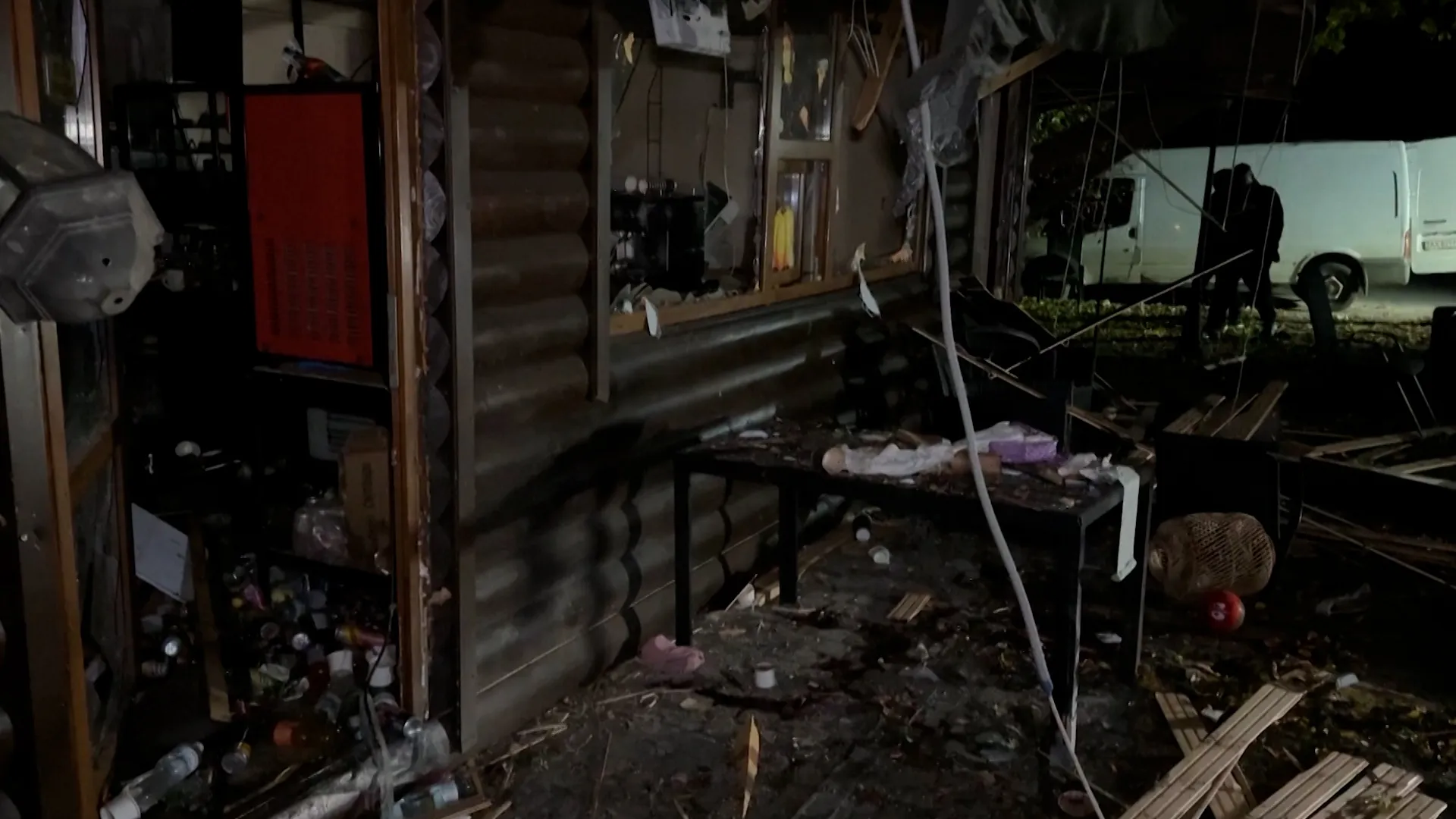
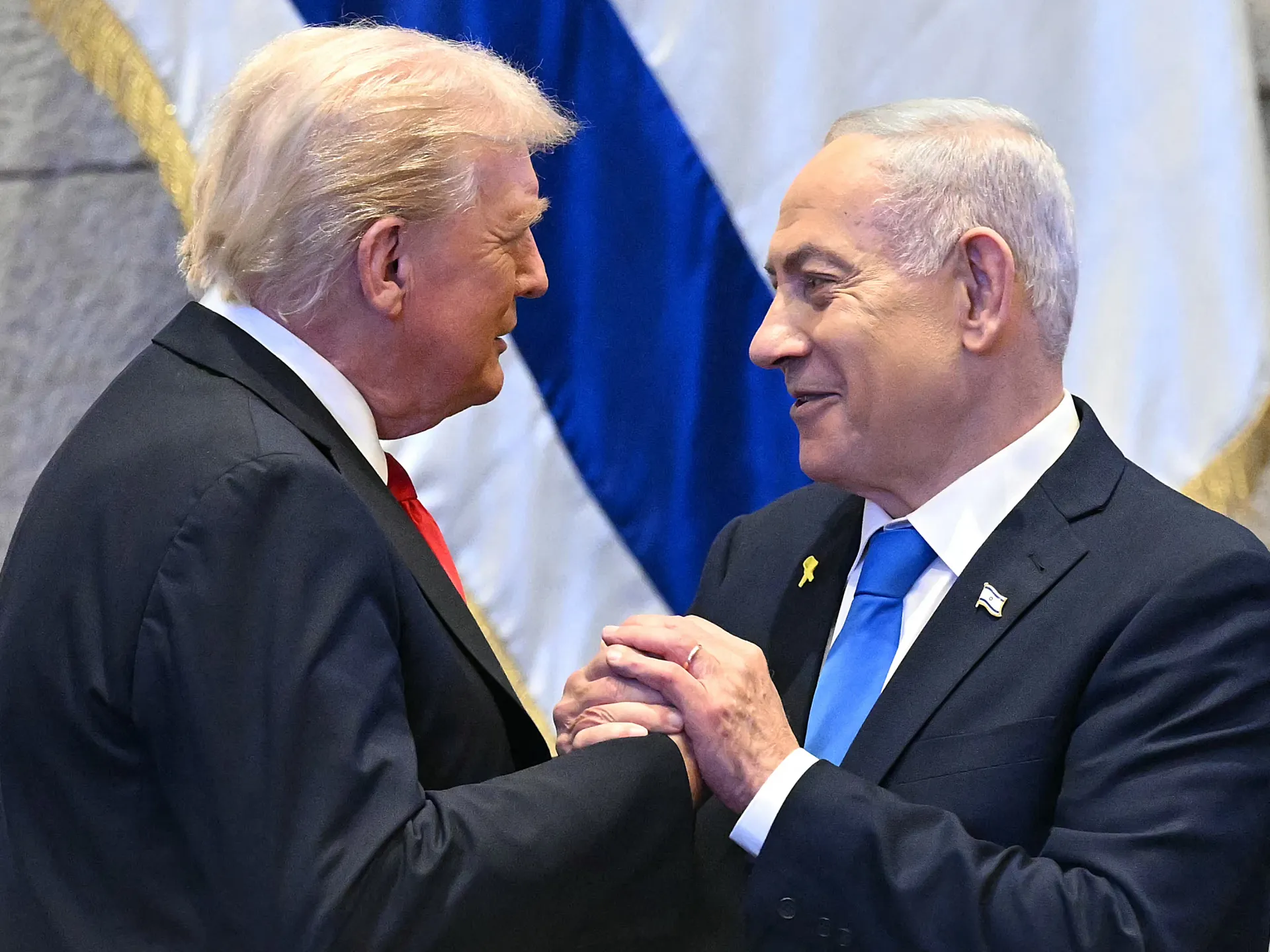
Negotiators from Ukraine, Russia and the US are expected to meet in Abu Dhabi next month.
Published On 24 Oct 202624 Oct 2026
Ukraine says restrictions on its military’s Starlink satellite connections have been lifted after more than a week of disruption that hampered drone operations against Russian forces.
Defence Minister Yevhenii Khmara said on Saturday that Starlink and Starshield connections were stable on equipment travelling above 400 kilometres per hour (250 miles per hour). He credited talks with Washington and President Volodymyr Zelenskyy’s diplomacy.
Recommended Stories
list of 4 itemsend of list
Ukraine relies heavily on Elon Musk’s SpaceX satellite services for communications and drone missions. However, who ordered the restrictions remains unclear, with US President Donald Trump denying responsibility while defending Elon Musk.
The disruption further strained relations between Kyiv and Washington, already under pressure over Trump’s agreement to temporarily lift sanctions on Russian diesel and allow US imports.
Trump also called earlier this month for Ukraine to have a new president, then suggested on Monday that someone other than Zelenskyy should negotiate for Kyiv. The exchanges follow their public confrontation at the White House in February 2025.
Talks planned in Abu Dhabi
The lifting of the Starlink restrictions comes as the United States seeks to revive peace negotiations between Moscow and Kyiv. Negotiators from Ukraine, Russia and the US are expected to meet in Abu Dhabi in the first half of November, more than four years after Russia launched its full-scale invasion in February 2022.
Kremlin spokesman Dmitry Peskov confirmed the planned negotiations on Friday, while Zelenskyy also announced agreement on technical-level meetings.
It comes as Trump credited his wife, Melania Trump, with securing a local ceasefire in Oleshky, in southern Ukraine’s Kherson region, which Russian forces have occupied since 2022.
Subsequent Ukrainian and Russian statements putting the ceasefire’s start on October 27, with the humanitarian operation planned for October 29.
Deadly attacks continue
A Russian missile strike on Lozova, in Ukraine’s northeastern Kharkiv region, killed a man and wounded two others on Saturday, regional Governor Oleh Syniehubov said, while in northern Ukraine, a Russian attack on Chernihiv on Friday killed a man and wounded at least 25 people, local authorities said.
Shelling in Kramatorsk killed one person and wounded six, including three children, according to Donetsk officials. In nearby Sloviansk, attacks on Friday killed a 62-year-old woman and wounded four people, Mayor Vadym Lyakh said.
Ukraine reported strikes inside Russia on Friday and overnight into Saturday, including on Togliatti’s Togliattikauchuk petrochemical plant, a major synthetic rubber producer. Mayor Ilya Sukhikh confirmed industrial damage but reported no casualties.
Ukraine also said it struck Oryol’s Proton electronics plant, which it says makes missile components. Regional Governor Andrei Klychkov reported three deaths in an attack on an unidentified facility.
Authorities in Russian-occupied Crimea reported power cuts after overnight Ukrainian attacks.
Russia’s Defence Ministry said air defences intercepted a SCALP cruise missile, four Neptune missiles and 1,297 Ukrainian fixed-wing drones over 24 hours, TASS reported. The figures could not be independently verified.
Forensic anthropologists have identified the remains of at least 38 people who were disappeared during Argentina’s last military dictatorship. Al Jazeera’s Teresa Bo filed this report near the once clandestine detention centre known as La Perla.
Global crude prices continue to climb, with Brent benchmark hitting $117.30 a barrel to build on four-year highs as market fears grow over a potential resumption of the US-Israeli war on Iran.
Mehdi Hasan debates ex-Trump adviser Steve Cortes on the economy, Trump’s immigration policies and Islamophobia.
With the US midterm elections approaching, the balance of power in Congress is at stake, and the outcome could shape the legacy of President Donald Trump’s second term. As Republicans face growing voter dissatisfaction, Trump’s record has become a central battleground in the fight to control Congress.
Trump faces mounting challenges, including low approval ratings, an unpopular war in Iran, high inflation and petrol prices, economic uncertainty surrounding his tariff policies, and widespread backlash over his immigration crackdown.
How does Trump’s second term measure up against the promises he made on the campaign trail?
In this interview, Mehdi Hasan goes head-to-head with Steve Cortes, a former Trump campaign adviser, who defends the president’s second-term agenda, including his economic and immigration policies, and Islamophobic rhetoric.
Joining the discussion:
Olivia Troye – Former homeland security and counterterrorism adviser to Vice President Mike Pence Mike Nellis – Democratic strategist and former senior adviser to Vice President Kamala Harris Rob Arlett – Former Trump campaign chair and political commentator
President Trump says it was First Lady Melania Trump’s initiative that led to a ceasefire between Russia and Ukraine in the Ukrainian city of Oleshky, which has been under Russian occupation for four years. The ceasefire is expected to begin in a week.
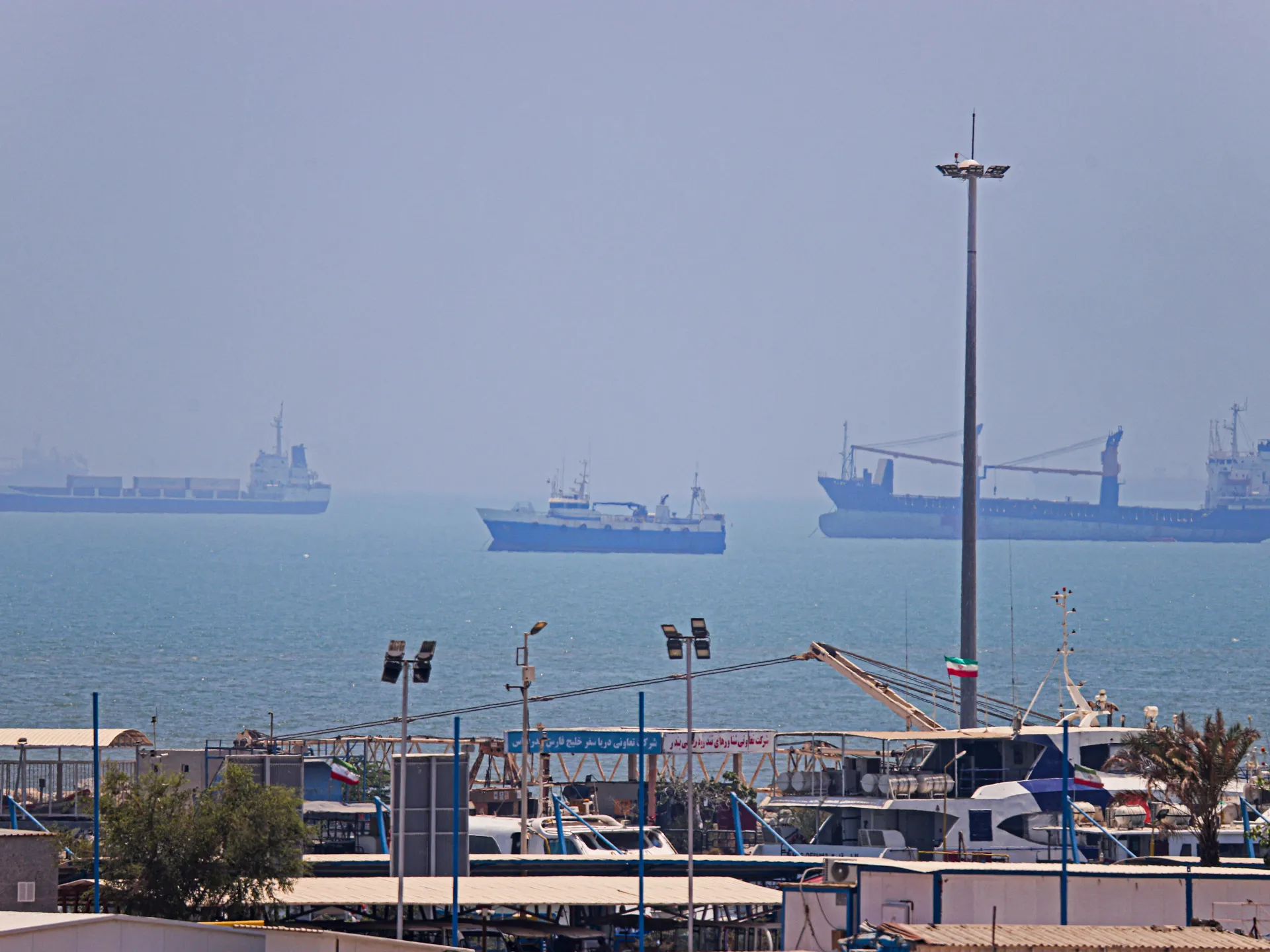
Oil prices have climbed towards their highest levels in five months as attacks on tankers in and around the Strait of Hormuz mount and efforts to end the United States-Israel war on Iran are deadlocked.
Brent crude, the international benchmark, rose by more than $2 to $110.85 a barrel on Wednesday, close to a five-month peak.
Recommended Stories
list of 4 itemsend of list
A day earlier, Iran’s Islamic Revolutionary Guard Corps (IRGC) said two tankers were “set ablaze” after hitting mines at what it called an illegal crossing point in the strait. Then, on Thursday, the IRGC said it hit seven more tankers although Washington dismissed the claim. In a statement, the IRGC said four of the vessels were transferring oil when they were targeted and caught fire overnight.
In September, the Houthis, an armed group also known as Ansar Allah (Arabic for Supporters of God), seized territory in Yemen close to the Bab al-Mandeb strait, a critical chokepoint into and out of the Red Sea and a gateway to Egypt’s Suez Canal.
The escalation came as the world’s emergency oil stocks, already tapped heavily since the Iran war began on February 28, sit at their lowest levels in decades.
Al Jazeera put a question to analysts: If fighting resumes in full, the Strait of Hormuz is shut off completely and Houthi attacks choke off Bab al-Mandeb, how long could the world’s reserves last?
Here’s what you need to know:
What emergency oil reserves are there?
Strategic oil reserves are stockpiles of crude oil and fuel held by governments or by companies on their behalf for use in a supply emergency.
The International Energy Agency (IEA), which was established in 1974 after the Arab oil embargo, coordinates most of them. Its importing members must hold at least 90 days of net imports. China and India are not members.
How much of the reserves has already been released this year?
A record amount.
On March 11, days after the start of the US-Israel war on Iran, the IEA’s 32 members agreed to make 400 million barrels available from emergency supplies, more than double the volume released after Russia’s full-scale invasion of Ukraine in 2022.
The US pledged 172.2 million barrels from its Strategic Petroleum Reserve (SPR) and Japan 79.8 million, according to IEA figures.
The SPR has since fallen to 283 million barrels, its lowest level since October 1982, according to the US Department of Energy.
Much of that oil was lent rather than sold and must be returned with extra barrels, according to the US Energy Information Administration.
How much oil is left?
Far less than before the war began in February, and not all of it can be used.
Aaron Kildow, a senior crude oil analyst at Sparta Commodities, told Al Jazeera that global strategic stocks excluding China and Iran have fallen by nearly 327 million barrels since the end of December 2025 with the US, Europe and Japan accounting for about 95 percent of the draw.
He estimated that leaves only about 400 million barrels of usable reserves worldwide, excluding China’s stockpile, which is unlikely to be exported, and Gulf stocks, which could be cut off by a total closure of Hormuz.
Nearly half of these available stocks are in Japan.
Europe has about 76 million barrels uncommitted, but members such as Germany are holding some back for a local emergency, Kildow said.
“Europe is the real wildcard, both on timing and willingness,” Kildow said.
Meanwhile, China’s onshore crude stocks stand at 1.13 billion barrels, down from 1.23 billion in late February but still enough for about 80 days of refinery intake, Muyu Xu, a senior crude oil analyst at the analytics firm Kpler, told Al Jazeera.
India’s reserves cover just eight days of its imports, the Reuters news agency reported.
What would a full closure of Hormuz and Bab al-Mandeb mean?
Before the war, about one-fifth of the world’s oil and liquefied natural gas supplies, or roughly 20 million barrels of oil a day, passed through the Strait of Hormuz.
Saudi Arabia has increased the amount of crude it transports from its oilfields in the east to its Red Sea port of Yanbu in the west via the East-West Pipeline, thereby bypassing Hormuz.
But there have been strikes on that pipeline, and tankers heading south from Yanbu must pass through Bab a-Mandeb, where the Iran-backed Houthis declared a blockade on Saudi shipping in July.
Only a confirmed 373,000 barrels a day of Saudi crude have transited Bab al-Mandeb so far this month, the lowest level since February, Xu said, with most Yanbu cargoes now heading north via Egypt instead.
If Hormuz were shut and the Houthis blocked all Saudi tankers, Gulf producers could export only through a few pipelines and Yanbu’s northbound route, Xu said.
That would leave about 7.5 million barrels a day of Middle Eastern crude, against 16.8 million now, a shortfall of about 9.3 million barrels a day, she estimated.
“If such attacks occur, the supply disruption could be even more severe and prolonged,” Xu said, referring to strikes on oilfields, terminals and pipelines.
[Al Jazeera]
So how long would reserves last?
Not for long – possibly just weeks, according to experts.
If Kpler’s estimated shortfall had to be covered entirely from the roughly 400 million usable barrels that Kildow identified, they could not, in practice, be released that fast. Japanese and South Korean reserves can move quickly, Kildow said, but US barrels are staged over three months, and Europe’s contribution is uncertain.
Chris Beauchamp, chief market analyst at IG Group, said the world was fortunate after the first closure. “The salient feature of March and beyond was how a crisis didn’t actually develop. We got away with it,” he said.
“I don’t think the global economy will be as lucky next time if there is a protracted conflict,” Beauchamp said. “A month or two is all we have.”
The world would not literally run out of oil. Instead, prices would rise until enough demand disappeared. “One hundred fifty dollars [per barrel] becomes a very distinct possibility, which then sees significant demand destruction,” Beauchamp said.
The sharpest squeeze would be on diesel, which is already nearly double the price of crude, the IEA said.
Refiners would compete for crude grades rich in diesel, “a cost that ultimately lands on consumers,” Kildow said.
Who would feel it first?
Asian importers with thin reserves.
Most Gulf exports in September and October went to Asian buyers, and India and Pakistan are among the most exposed, Kildow said, adding that their nearest alternative supply, from West Africa, is 25 to 28 days away by sea, compared with two days from Fujairah in the United Arab Emirates.
“The squeeze won’t hit uniformly. It lands fastest and hardest where reserves are thinnest and substitute supply is farthest away,” Kildow said.
Who would gain?
Oil producers far from the Gulf.
In the second quarter of this year, as the US-Iran war was under way, ExxonMobil reported earnings of $14.5bn, its highest in four years while Chevron posted $12bn, its best in six years and Shell more than doubled its earnings to nearly $10bn. Their profits are largely down to the high oil prices.
A second shock would send refiners scrambling for supplies from the US, Latin America, West Africa and Russia, Xu said.
“This would allow non-Middle Eastern producers to benefit from higher crude prices, potentially alongside lower transportation costs,” she said.
In August, US President Donald Trump said companies such as ExxonMobil and Chevron were “making too much money based on a shortage”.
For the past four-and-a-half years, the war on Europe’s doorstep has haunted policymakers. Yet they have treated it as a looming threat rather than one already eroding the very foundations on which Europe stands.
Russia’s war has devastated much of Ukraine’s south and east, even as the front lines have shifted only slowly. For Europe, however, the challenge has never been confined to the battlefield. Supporting Ukraine and constraining Russia have tested the continent’s economic resources and political unity. Now, as United States President Donald Trump seeks to force a disadvantageous settlement on Kyiv and repeatedly threatens to withdraw US support, Europe faces the prospect of shouldering even more of that burden alone.
Even if the latest crisis is averted, Europe can no longer assume that Washington will guarantee its security. It must develop the financial capacity to sustain Ukraine’s defence, the industrial strength to defend itself and the economic leverage to constrain Moscow. To meet these challenges, Europe must build a war economy.
The past four years offer lessons in how Europe can finance such an effort, but also warnings about the divisions that could undermine it. The European Union has already been at the forefront of Ukraine’s recent financing, moving from an 18.1-billion-euro ($21bn) share of the G7’s $50bn Extraordinary Revenue Acceleration (ERA) loans in 2024 to finalising a new 90-billion-euro ($100bn) loan this April, one that came without US commitment. Yet internal divisions remain over numerous issues, particularly as they pertain to constraining Russia. This month, the EU adopted its largest-ever round of sanctions listings. But while the measures added a record number of designations, they did little to broaden the scope of restricted activity and did not accelerate the phase-out of Russian energy imports, with pipeline gas imports still permitted until autumn 2027. European leaders have also expressed concern over Trump’s decision to waive new Russia-related sanctions as he seeks to grapple with the costs his foreign policy has wrought.
However, the US-Israel war on Iran has, if anything, shown that Europe’s measures against Russian hydrocarbons could have gone further. Before February, some 20 million barrels per day (bpd) of crude and oil products and roughly 110 billion cubic metres (bcm) a year of liquefied natural gas (LNG) passed through the Strait of Hormuz. By comparison, Russia exported about 6.5 million bpd of oil and products in September, and some 43bcm of LNG last year – about a third of Hormuz’s oil and two-fifths of its LNG. As the crisis continues and Trump seeks additional Russian supplies, Europe must complement its efforts to constrain Moscow with greater investment in its own security.
The first and most important step is to establish a standing framework for joint EU borrowing – not only to finance Ukraine’s continued defence, but also to fund the defence industry Europe will need to sustain its own defence and, if necessary, prevail against future threats from Russia. Crisis begets innovation, as demonstrated during the COVID-19 pandemic, when EU member states pushed past their long-held aversion to mutualised borrowing, creating the 750-billion-euro NextGenerationEU recovery fund in 2020. The EU’s contribution to the ERA loans and this year’s 90-billion-euro facility, both financed by common EU borrowing, extended that logic to wartime finance. But these remain crisis-by-crisis improvisations. Deepening fiscal and capital markets union and building a genuine fiscal-military state would provide the foundations of Europe’s power and its ability to deter and win wars.
The same logic plays out in the US today, where deep capital markets have given companies such as SpaceX, which invested heavily for years before seeing returns, the space to develop technologies such as its Starlink network that have reshaped modern warfare. The importance of this technology is now keenly felt on Ukraine’s battlefields, where Kyiv’s communications have rested on a network subject to the whims of one man, SpaceX CEO Elon Musk. Europe therefore needs the fiscal capacity to fund its own technological development and procurement.
There are understandable jitters about the existing indebtedness of European states such as France and the United Kingdom. However, Russia’s frozen sovereign assets offer a potential way to support further borrowing. Divisions remain over using these assets, with Belgium, which hosts the lion’s share at Euroclear, opposing such a move over fears of Russian legal action and damage to its position in the global financial system. The bloc must come together to share that risk, which is overblown in any case. Not all EU fiscal support needs to come in the form of direct joint debt either. Greatly expanding the EU capital markets union and creating tax-advantaged structures across the region for defence firms and technological innovators may prove even more effective.
Beyond the assets themselves, Europe must also take greater control over its continued economic linkages with Russia. That means intervening far more actively in cases such as that of Austria’s Raiffeisen Bank. In 2025, following a Russian court ruling, more than 2.1 billion euros were taken from Raiffeisen’s Russian subsidiary to compensate Rasperia, a company tied to the sanctioned oligarch Oleg Deripaska. A Vienna court’s ruling last month now paves the way for Raiffeisen to seek compensation from Rasperia’s frozen assets in the EU – using the same sanctions derogation through which Euroclear released some $3bn in 2025. It is precisely this kind of legalised dealing with Moscow that keeps threats like those levelled at Belgium credible: if the Kremlin can seize European assets and prompt the release of Russian-linked assets frozen in the EU, every expropriation becomes a bargaining chip.
Furthermore, the UK and the EU have increasingly made use of measures against circumvention that share some features with US secondary sanctions. Europe should now be more assertive in making it clear that firms helping Russia evade its sanctions risk losing access to European financial systems and markets. US firms will choose Europe over the Kremlin, even if Trump waives more sanctions.
Finally, Europe should seek to reduce US influence over its foreign and security relationships. Speaking in Qatar this week, US Ambassador to Turkiye Tom Barrack said Washington was moving away from its decades-old bargain of security for Gulf oil. Europe may not be able to offer the same level of security, but it can offer a mutually beneficial partnership that addresses both sides’ concerns. And it is Europe that is now stepping up in the Gulf, with the UK and France deploying jets, air defences and refuelling support to help Saudi Arabia against Houthi attacks. Unlike Washington, Europe can promise a deeper partnership in the future and serve as a reliable buyer of Gulf oil and gas exports in exchange for Gulf states doing more to address Europe’s security concerns about Russia through enhanced sanctions compliance and, first and foremost, ending the Kremlin’s role in OPEC plus.
Europe has the means to finance its own security. It must now find the will to borrow for it.
The views expressed in this article are the author’s own and do not necessarily reflect Al Jazeera’s editorial stance.
A sweeping campaign by federal immigration agents to identify voter fraud by noncitizens through door knocks, street stops and other field interviews in California and eight other states must be reined in ahead of the Nov. 3 election, after a federal judge in Northern California ruled it has intimidated U.S. citizens and interfered with the work of voting rights groups.
Judge Araceli Martínez-Olguin said in a ruling Wednesday that limiting the Department of Homeland Security’s surging operations in those states — which she wrote “sweep in U.S. citizens for investigation” — does not prevent the Trump administration from “exercising their authority to investigate voter fraud by lawful means.”
A Homeland Security spokesperson said the agency is “laser focused on identifying, prosecuting, and removing aliens who vote,” and has “no plans to question or investigate people we believe to be U.S. citizens.”
The ruling was the latest to come out of an unprecedented legal war playing out between the Trump administration and California in recent days, in which an array of election cases are working their way through the federal courts at breakneck speed.
There is, for example, the lawsuit the U.S. Justice Department filed against California and state and local elections officials last week, demanding that they set aside any ballots from a list of 20,000 individuals identified by immigration officials as “likely noncitizens.”
There are also two cases out of Washington, D.C., in which a coalition of Democratic leaders, immigrant rights groups, voting rights experts and naturalized citizens in California are challenging the Trump administration’s use of Homeland Security data to target voters.
White House, Homeland Security and Justice Department officials have all defended the administration’s efforts as necessary to ensure that noncitizens are not illegally diluting the votes of U.S. citizens. First Assistant U.S. Atty. Bill Essayli, the lead federal prosecutor in Los Angeles, has claimed to have “overwhelming evidence” that tens of thousands of noncitizens are doing so in California.
‘That is not normal’
Democratic leaders and prominent elections experts, meanwhile, have cast the administration’s claims as baseless and intentionally exaggerated to stoke uncertainty about election security and ultimately challenge midterm results the president doesn’t like, and the Justice Department’s legal arguments as fundamentally flawed and wildly out of line with long-established department policy to stay out of elections in the lead up to voting.
“That is not normal. We have literally never experienced that in American history. Not once,” said David Becker, executive director of the nonpartisan Center for Election Innovation & Research and a former Justice Department elections attorney. “The fact that the administration appears poised for the first time to act as an adversary to the states and counties who have [the] undisputed constitutional authority to run elections? That is unusual.”
At the same time, Becker and other experts stressed that those efforts to date have failed, and state and local elections have largely proceeded in recent weeks without incident, with millions of Americans having already cast their ballots.
“California voters need to know that they’re in good hands, that we have leaders at the state and local levels who are protecting our ballots and are ensuring that these attempts by the federal government to root out supposed noncitizen voting are not going to prevent Californians from casting our ballots,” said Kim Alexander, president of the California Voter Foundation. “Part of the strategy here is to distract people and scare people and raise fears, and the important thing is to continue to stay focused on … making a plan to vote.”
Status of cases
Federal courts have already rejected multiple Trump executive orders seeking to enforce nationwide voter ID and citizenship requirements. The Supreme Court blocked an administration plan for the U.S. Postal Service to vet mail ballots. The Justice Department has compiled a stunning record of losses in its 30 lawsuits demanding state voter rolls — with 26 of those cases, including the one in California, so far dismissed.
And election experts said they expect the Trump administration to rack up more losses in coming days — including in the Justice Department’s case challenging California officials’ refusal to segregate the ballots of some 20,000 voters based on the administration’s unsubstantiated claims they are noncitizens.
U.S. District Judge David O. Carter, shown in 2023, is overseeing a lawsuit in which the Department of Justice says 20,000 California ballots may have been sent to “likely noncitizens.”
(Genaro Molina/Los Angeles Times)
That case was taken up — and scheduled for a Tuesday hearing — by Judge David O. Carter, an appointee of President Clinton who in January rejected the administration’s demand for California’s voter rolls, calling it a clear federal overreach that would have a “chilling effect” on voters and threaten American democracy.
California has called for the case to be dismissed outright, on the grounds that the administration has zero authority to make such demands, and that the demands are unlawful. The Trump administration has asked Carter to immediately rule in the matter.
“Every minute of [ballot] processing that occurs without segregating the ballots of suspected non-eligible voters causes untraceable disenfranchisement and dilution of the votes of United States citizens,” wrote Julie Hamill, an assistant U.S. attorney in Essayli’s office.
In D.C. federal court, Judge James E. Boasberg set an Oct. 30 hearing in a case in which UCLA Voting Rights Project attorneys, the Coalition for Humane Immigrant Rights, or CHIRLA, and a California voter named Pedro Trujillo are challenging the administration’s use of unproven federal databases to allege California voters aren’t citizens.
Carl Bergquist, an attorney for CHIRLA, said he looked forward to bringing a host of recent Trump administration actions to the court’s attention — including the administration’s lawsuit against California, the charging this week of 28 legal permanent residents in California with election-related crimes, and Trump’s threats to arrest California elections officials who don’t comply with his administration’s demands.
“The events of the last few days, from threats to state and local officials, increased general immigration operations, the random knocking on doors by federal agents and the recent arrests are causing a chill in the community,” Bergquist said. “People, including naturalized citizens, are making their plans to vote and the Federal Government is doing its utmost to quash their attempts to exercise this fundamental right that they have lawfully acquired.”
The argument that naturalized citizens are being intimidated also features prominently in a second lawsuit filed in D.C. federal court Tuesday, in which top Democrats in Congress joined Nevada party officials and a California immigrant named Erick Jose Jimenez to challenge the Trump administration’s unprecedented voter fraud probes.
That lawsuit, also assigned to Boasberg, says Jimenez, a naturalized citizen since 2006, fears being “unlawfully targeted for voting and disenfranchised (or worse).”
Justin Levitt, a Loyola Law School professor who studies elections and was a senior policy advisor on democracy and voting rights in the Biden White House, said there is “so much noise” around the election right now, in part because the administration has been making wild legal arguments about its authority over elections.
But he said “none of the federal government’s attempts to assert power that they do not have are working,” and voting “for 99.999% of the public” will remain “wonderfully normal.”
Iran is rebuilding Eagle 44, a hardened underground airbase carved into the side of a mountain that can shelter fighter aircraft, drones, and potentially cruise and ballistic missiles, despite the remote facility absorbing at least three rounds of airstrikes this year. High-resolution satellite imagery captured by Planet Labs in late September and reviewed by TWZ shows a new section of taxiway completed, several support buildings still destroyed or damaged, wrecked equipment cleared off the pavement, and obstacles that were placed to obstruct the runway now removed. Construction is ongoing at a time when the Pentagon and Trump administration maintain there is little remaining of the Iranian air force for such a facility to protect.
Eagle 44, also called ‘Oghab 44’ after the 44th anniversary of the 1979 revolution, was unveiled by Iranian state media in February 2023 when senior officials visited what was described as the country’s newest underground airbase. Islamic Republic of Iran Air Force (IRIAF) F-4D/E Phantom IIs, armed with AGM-65 Maverick air-to-ground missiles, laser and electro-optically guided bombs, unguided ‘dumb’ bombs, as well as domestically produced anti-ship missiles, were shown using the facility in the footage. The IRIAF had roughly 60 examples in service at the time, its most numerous combat jet by some margin, though how many remain today, and are actually operational, is unknown. In addition to the Phantoms, one-way attack drones were also seen in the background.
F-4 Phantom at Eagle 44. Photo: Iranian state media Another view of an F-4 Phantom at Eagle 44. Photo: Iranian state media
The IRIAF, rather than the Islamic Revolutionary Guard Corps (IRGC) Aerospace Force, operates the base, which is located in Hormozgan province and sits in the foothills of the Zagros Mountains, approximately 100 miles northwest of the Strait of Hormuz. Iranian state media described it as “one of the army’s most important air force bases, with fighters equipped with long-range cruise missiles and built in the depths of the Earth.” Then-Chief of Staff of the Armed Forces Maj. Gen. Mohammad Bagheri, who was present at the unveiling, warned that “any attack on Iran from our enemies, including Israel, will see a response from our many air force bases including Eagle 44.” He was eliminated in the opening strikes of the Twelve-Day War, which Israel dubbed Operation Rising Lion, in June 2025.
Location of Eagle 44 airbase in southern Iran. Photo: Google Earth
Work on the cavernous underground tunnel complex began in 2013. Construction of a 2.7-mile main runway, situated on the northern side of the base on a valley floor below the mountain range, started roughly eight years later. Two taxiways run through a smaller ridge connecting the runway to four entrances to the primary tunnel complex, where the jets and weapons are stored, although only one taxiway is currently operational.
The promotional video released in 2023 revealed at least one internal blast door, as well as branches from the main tunnel to revetment areas to park fighters and drones. A support compound of several buildings is on the west side of the base, next to the unfinished taxiway. The purpose of each structure is unclear, but a functioning airbase requires maintenance and repair facilities, crew quarters, reserves of fuel and munitions, security and force protection assets, and infrastructure to coordinate air traffic control and command and control functions.
Video released by Iranian state media in February 2023 reportedly showing the inside of the tunnel complex at Eagle 44.
The United States kicked off Operation Epic Fury alongside Israel on February 28, launching a massive wave of strikes against Iran from the west and south. Eagle 44 is located within striking distance of the munitions carried by air wings embarked on U.S. Navy aircraft carriers operating in the northern Arabian Sea and missiles fired by the guided-missile destroyers that escort them, as well as Air Force tactical and strategicaircraft and Army assets in the region. However, low-resolution images reviewed by TWZ through March 16 indicated that while the base was targeted, little damage was visible.
HIMARS fired during OEF. CENTCOM photo B-1B fuels for OEF mission. USAF photo Super Hornets launch during OEF. Navy photo Guided-missile destroyer USS Spruance fires a Tomahawk Land Attack Missile (TLAM) in support of Operation Epic Fury (OEF). U.S. Navy photo
As the U.S. and Israel continued the relentless air campaign over the next several weeks, the base was targeted again at the end of March, with greater effect, according to a report from The New York Times. High-resolution images the paper reviewed revealed impact craters on the taxiways near the tunnel entrances, one building leveled, and small mounds placed along the runway, presumably to prevent enemy aircraft from landing. Battle damage assessments suggested the strikes were intended to cut the underground caverns off from the runway, trapping whatever was inside and preventing takeoff. The report did not state whether U.S. or Israeli aircraft carried out the attack, and Israeli officials declined to comment. However, the U.S. was primarily responsible for pressuring Iran’s southern flank, while the Israelis attacked the western front.
After the fragile April ceasefire collapsed and the U.S. imposed a second blockade, U.S. Central Command (CENTCOM), based out of MacDill Air Force Base in Tampa, Florida, and responsible for executing day-to-day operations of the war, launched multiple strikes across Iran on July 15, and Eagle 44 was hit for at least a third time. An analysis published by Soar Atlas, a satellite imagery provider, identified four aimpoints on July 16, with cratered taxiways and damage to additional infrastructure. According to that analysis, the structures targeted were related to the base’s construction unit, but TWZ has not independently verified this claim. The Pentagon and CENTCOM have not specifically named Eagle 44 in any press briefing or release, and Iran has not acknowledged the base was struck.
United States Navy forces on station in mid-July 2026 when the second blockade began and strikes resumed. TWZ/IAN ELLIS-JONES
The Planet Labs satellite imagery from September 29, obtained exclusively by TWZ, indicates that Iran began reconstruction after the July attacks and that the effort is ongoing.
The main runway, previously blocked by obstacles meant to deter and prevent unauthorized aircraft from landing, is now clear. On the western taxiway (marked in red below), a new section leading into the ridge ‘pass-through’ is complete, with its finished upper cement-concrete layer visible. On the other side of the pass, construction of the next segment is underway, with a subgrade layer of stabilized, compacted dirt laid down but not yet paved (orange). Farther south, in front of the western tunnel entrances, impact craters (blue) are still visible. When finished, the second taxiway will provide a direct link between the western hangars and the runway, allowing additional aircraft to move freely without sharing a single taxiway, a major bottleneck for higher operational tempos and more complex sortie launches and recoveries. A second functional taxiway and tunnel would also provide critical redundancy if the other is hit.
On the primary eastern taxiway, two dark streaks (green) that appeared following the strikes in July run off the edge of the pavement, likely debris left by equipment that was struck and removed. Notably, the streak marks match the width of the wreckage, suggesting it was bulldozed or pushed off the taxiway to reopen it. There is no sign of the equipment being recovered, only that it was cleared out of the way.
In the main support compound (yellow) next to the western taxiway, two buildings are clearly destroyed and a third is damaged. They have not been rebuilt yet, which is consistent with previous reporting from The Times and Soar Atlas that the attacks degraded construction capabilities, and suggests the regime may be focused on completing and repairing the taxiways rather than the installations.
The four entrances to the main tunnel complex (white), arranged in two pairs less than half a mile apart at the end of each taxiway on the southern part of the base, appear to be intact, although the angle makes it unclear whether they are open or sealed. What’s inside the mountain, and how many fighters remain in Iran’s inventory, is unknown. Regardless of the status of the fighter fleet, as we noted earlier, the base can also store drones and could be packed with cruise or ballistic missiles.
The U.S. and Israel have a range of bunker buster bombs that could be used in an attempt to collapse the tunnel entrances, a major choke point for any underground weapons storage site. While not destroying what is being held within, doing so would block anything inside from leaving — and being used — for a period of time. Additionally, the pass-through tunnels make for easy targets, and hitting them would keep fixed-wing aircraft from reaching the runway. No impact points on the mountain itself or damage to the portals inside is apparent, but they could have been sealed and hit farther in, which may not be highly visible via satellite imagery. Reaching the main storage caverns themselves would likely be far harder. Larger bunker busters in the U.S. inventory include the GBU-57 Massive Ordnance Penetrator (MOP) guided munition, which could be capable of reaching deeper into the main site, but these are very limited in number and can only be delivered by the Air Force’s B-2A Spirit stealth bombers. It’s highly unlikely the U.S. would expend such resources on a site like this over many others of higher strategic importance.
Eagle 44 is not the only base that Iran is fixing during the lull in hostilities. By the end of May, Iran had cleared 50 of 69 tunnel entrances struck at 18 underground facilities, including some “missile cities,” according to a report by CNN− and that number is likely higher now. Planet Labs, Airbus, and Vantor imagery reviewed by The Wall Street Journal in July showed rebuilt entrances near Kangavar, fresh excavation at Dezful, and repairs near Kermanshah. “They have very impressive industrialization and reconstruction capabilities,” Israeli Brig. Gen. Ran Kochav told the paper. “They refilled their stockpiles,” he added.
A Western official toldBloomberg earlier this month that Iran “remains well-stocked with ballistic missiles and some anti-ship missiles, and can quickly add more,” and a U.S. official posited in May that “the Iranians have exceeded all timelines the IC [Intelligence Community] had for reconstitution.” Both assessments are at odds with what the White House and Pentagon have repeatedly claimed. Secretary Pete Hegseth stated in April that Iran’s air force was “wiped out” and its missile program was “functionally destroyed; launchers, production facilities, and existing stockpiles depleted and decimated,” while acknowledging a week later that the regime was “digging out” launchers, missiles, and bombed facilities but had “no ability to replenish offensive or defensive capabilities.” In May, CENTCOM Commander Adm. Brad Cooper told Congress, “Before Operation Epic Fury, the Iranian Air Force flew between 30 and 100 sorties each day; today that number is zero.” More recently, at a campaign rally in Kansas on Monday, U.S. President Donald Trump said, “They have no air force… their 229 beautiful fighter jets are now scattered all over the runways, the beautiful runways of the Islamic Republic of Iran.”
Video released by Iranian state media in May 2022 showing a different underground missile and drone complex.
At the very least, strikes on Eagle 44 cratered the taxiways and degraded support infrastructure, which likely put at least some of whatever airpower is stored there, if any, out of action. But even after enduring months of war and extreme economic pressure due to the ongoing U.S. blockade and sanctions, as well as dealing with damage across the country, Tehran continues to prioritize construction on the remote base. That fact alone could put it back on the target list if the U.S. and Israel launch another operation. But above all else, it points to how important this facility is to the regime, for whatever reason.
Iran’s Islamic Revolutionary Guard Corps (IRGC) says renewed attacks by the United States could prompt Tehran to invade neighbouring countries and hit bases used in US military operations as part of its new “offensive” strategy.
The warning on Wednesday came amid escalating attacks on shipping in the Strait of Hormuz, a global energy chokepoint, and uncertainty over diplomatic efforts to end the nearly eight-month war.
Recommended Stories
list of 3 itemsend of list
“Our defence doctrine was previously defensive; we used to say that if a country attacks us, we will respond. Now we say that if a country attacks us, we will both respond and launch an offensive,” IRGC spokesman Hossein Mohebi said.
Washington ordered some diplomatic personnel to leave Saudi Arabia amid attacks from Yemen’s Houthis while US President Donald Trump has signalled that a decision on the conflict could come soon.
According to media reports, the US and Israel are planning potential attacks on Iran in the coming weeks.
As negotiations seem stalled and both sides exchange threats, could the region be heading towards another military escalation?
What is Iran’s new doctrine?
The IRGC on Wednesday announced a shift towards an “offensive and asymmetrical” defence doctrine, threatening to invade countries that launch attacks against it.
Mohebi said Tehran would no longer limit its military operations to retaliatory strikes.
Mohebi stressed that Iran’s missile stockpile has increased 1.5 times since the 12-day war between Iran and Israel in June 2025. He did not provide specific figures.
“The quality of the missiles has improved significantly, and their range, destructive power and accuracy in hitting targets have increased,” the spokesman said.
Moreover, Mohebi said Iranian forces were in the “stage of preparing to unveil the ‘father of all bombs’. This is something new for the enemy.”
Meanwhile, attacks in the Strait of Hormuz continued unabated.
The IRGC’s navy said on Thursday that four vessels it accused of being involved in illegal oil transfers were struck and caught fire in the northern Gulf. Three other vessels hit mines west of the strait, it added.
Before the war, one-fifth of the world’s oil and natural gas supplies passed through the Strait of Hormuz. While shipments through the strait are still below those levels, oil shipments from the region returned to pre-war levels last month as exporters found alternative ways to ship out their oil and gas, including using pipelines.
However, a flurry of recent attacks in the key waterway and the fighting between Yemen’s Houthis and its Saudi-backed, internationally recognised government, which has resulted in Houthi attacks on Saudi Arabia, have once again sent oil prices surging. Brent crude climbed above $110 a barrel on Thursday amid fears of further disruptions to regional energy supplies.
Why the shift?
Iran’s shift towards an offensive military doctrine reflects Tehran’s determination to make future US-Israeli attacks significantly more costly, according to analysts.
Negar Mortazavi, senior fellow at the Centre for International Policy, told Al Jazeera that Tehran was drawing lessons from the wars of 2025 and 2026 after its previous strategy of retaliation failed to prevent repeated attacks.
“Tehran now wants to establish a new equation: Any future attack on Iran will come at a much higher cost for the aggressors,” she told Al Jazeera.
Unable to match conventional US military capabilities, Iran is increasingly relying on asymmetric warfare, including missiles, drones and its leverage over the Strait of Hormuz, Mortazavi explained.
She said Tehran was pursuing a broader strategy aimed at imposing military, economic and political costs on Washington, including potentially influencing the November 3 US midterm elections.
(Al Jazeera)
“Iran wants to teach Washington a lesson: Attacking Iran comes with a high price, one that can even cost elections,” Mortazavi said, referring to US surveys that are predicting electoral losses for Trump’s Republican Party.
She added that Iranian officials were closely monitoring the elections, believing the economic fallout from the war could damage the Republican Party’s prospects of retaining control of Congress.
“The long-term objective is to establish deterrence so that future American administrations think twice before daring to attack Iran again,” she said.
Political analyst Rami Khouri said the doctrine was also intended to ensure that the consequences of attacks extend to the US, Israel and regional countries supporting their military operations.
“That’s one part of the strategy, that the suffering and the damage have to be equal and reciprocal,” Khouri, nonresident senior fellow at the Arab Center, told Al Jazeera.
Khouri argued that Tehran was also seeking to challenge what it views as longstanding Western domination of the region.
“The Iranians are actually working to try to end the colonial period,” he said.
He added that Iran’s strategy could extend the economic consequences of conflict far beyond the Middle East, affecting energy supplies, transportation, insurance costs and shipments of essential goods.
“The pain is going to go way beyond just the Middle East and Israel and the US and will hurt people in other parts of the world,” Khouri said.
What has the US said about resuming the war?
Trump has offered conflicting signals about Washington’s next steps.
On Wednesday, he said the US was no longer negotiating with Tehran and suggested developments were imminent. “We are going to have something one way or the other that’ll happen fairly soon,” he told reporters.
He also said Washington could end the war immediately but wanted a lasting outcome. “It’ll end very soon. We could leave now, but we want to make sure it lasts for a long time,” Trump said at a campaign rally in South Carolina.
Trump previously pledged not to attack Iran before the November 3 elections.
US Secretary of State Marco Rubio said this week that reaching a peace agreement is extremely difficult and insisted that Iran must stop targeting commercial shipping in the Strait of Hormuz.
Rubio has maintained that Washington will reject any agreement allowing Iran to develop nuclear weapons, which require highly enriched uranium. “The United States will not support any deal that creates a pathway for Iran to ever have a nuclear weapon,” he said on Wednesday.
Tehran insisted its right to enrichment is guaranteed under the Non-Proliferation Treaty.
Iran has offered a seven-day plan to restore shipping through the Strait of Hormuz in exchange for Washington ending its blockade of Iranian ports, easing sanctions and unfreezing Iranian assets.
Meanwhile, the US Department of State on Wednesday ordered nonemergency personnel and their families to leave Saudi Arabia after recent Houthi attacks.
The US embassy in Riyadh has warned of further attacks while American officials told the Reuters news agency that family members could be withdrawn from other Gulf missions.
State Department spokesman Tommy Piggott said departure orders for mission personnel across the Gulf have not been ordered, saying the current orders were for “employees and their family members in Saudi Arabia only”.
Israeli Prime Minister Benjamin Netanyahu reiterated on Sunday his pledge to topple Iran’s government, saying it was key to preventing it from rebuilding its nuclear programme and the “axis of resistance”, further raising prospects of an escalation.
Netanyahu made the comments as Israel’s longest-serving prime minister is locked in a tough battle to remain in power in Tuesday’s elections.
Is war imminent?
Analysts warned that renewed US-Israeli attacks on Iran are increasingly possible with both sides preparing for another confrontation despite the continued possibility of diplomacy.
“Another round of war seems to be approaching,” Mortazavi said.
“Both sides appear to be preparing for renewed confrontation while escalating tensions in the Strait of Hormuz increase the risk of a wider conflict,” she said.
Mortazavi added that the elections in the next two weeks in the US and Israel could influence the timing of military action but warned that the current trajectory appeared to favour escalation over negotiations.
Mohsen Rezaei, secretary of Iran’s Supreme National Security Council, on Wednesday said, “Everyone must know that any action against Iran comes at a cost.”
“If diplomacy can create this understanding, we prefer diplomacy, but if the war continues, Iran has the necessary means to sustain its response,” Rezaei said, according to the IRNA news agency.
Echoing Mortazavi, Khouri warned that another confrontation could be approaching although he said US threats might still be part of a negotiating strategy.
“I think imminent conflict is on the cards, but I don’t know if war is the right word to use,” Khouri told Al Jazeera.
He said renewed strikes could target Iran’s critical infrastructure, including electricity networks, transportation systems, bridges and essential services.
“We’re probably going to get some severe attacks on a few targets that will try to make life in Iran very difficult,” he said.
However, Khouri cautioned that Iran’s ability to withstand another major military offensive while inflicting comparable damage on its adversaries remained uncertain.
“It’s not clear if Iran has the ability to withstand major new assaults against it,” he said, while stressing that Tehran was unlikely to surrender to military pressure.
Overnight attacks on Kyiv injured 15 people, while two were injured in Moscow as Russia said it intercepted 163 Ukrainian drones. The attacks came hours after Putin and Zelenskyy signalled willingness to resume peace talks with the US.
Mekelle, Ethiopia- In Mekelle, shops are reopening, and banks are resuming services, but residents remain anxious about what comes next. Ethiopian federal forces and allied fighters retook the Tigray regional capital on October 4, as renewed fighting raised fears that the region’s fragile recovery could be derailed once again.
Tigray, in northern Ethiopia, is still recovering from the 2020–2022 war between federal forces and the Tigray People’s Liberation Front (TPLF), the region’s dominant political movement. For residents, the return of fighting has brought new uncertainty over jobs, education, security and the future.
Daily life resumes, but hardship remains.
Businesses and financial services are gradually reopening in Mekelle, but many households are struggling to afford necessities. Delayed salaries have left public employees struggling to cover food, rent and school costs, while years of conflict have depleted family savings.
“Things may be reopening, but that does not mean our problems are over. We still have expenses every day, and without our salaries, it is difficult to know how we will manage,” said Gebregziabher, a public servant in Mekelle.
The funding crisis has affected the wider public sector. In March, Tigray’s interim administration said it could no longer cover monthly salaries for about 137,000 civil servants because expected federal budget transfers had not arrived. In April, the regional finance bureau reported an 8.5-billion-birr (about $52,000) funding shortfall affecting salary payments and development projects.
For many residents, the reopening of businesses offers only a partial return to normality. Without reliable incomes and greater security, everyday expenses remain difficult to manage.
Students fear losing more time
For students in Tigray, renewed fighting has revived fears of another interruption to their education. Many already lost valuable study time during the previous war and worry about falling further behind.
In Adigrat, Shewit, a grade 10 student, said uncertainty about classes and security had left him worried about his future.
A street in Mekelle, where residents are trying to resume daily life despite economic hardship and fears of further conflict [Al Jazeera]
“I have already lost so much time because of the war. I am afraid that if our education is disrupted again, I will lose another year and fall further behind,” he said.
Some university students have left Tigray for Addis Ababa, Ethiopia’s capital, to seek transfers to other public universities. The Ministry of Education announced temporary placements at universities elsewhere in the country for students enrolled at institutions in Tigray. More than 5,000 returning students had applied by September 17–18, according to reporting on the ministry’s programme.
Abel, a third-year student at Axum University, travelled to Addis Ababa to request a transfer.
“I didn’t want to leave, but I also can’t keep putting my education on hold. I came to Addis to see if I can transfer to another university and continue my studies. I just want to finish what I started,” he said.
For students who have already lost years to conflict, the uncertainty means more than interrupted classes. It threatens to delay graduation and make an already difficult path to employment even harder.
Border communities fear a wider conflict
Near the Eritrean border, military movements and conflicting accounts of troop deployments have heightened fears that the fighting could spread beyond Tigray.
On October 8, The Associated Press reported claims by a commander allied with Ethiopia’s government that Eritrean troops had entered Adigrat earlier that week and Idaga Hamus the following day. The AP said it could not independently verify those accounts. The conflict-monitoring organisation ACLED separately reported Eritrean troops crossing the border at Zalambessa.
On October 13, Reuters reported that Ethiopian government forces had advanced into Zalambessa, citing people in contact with residents and other sources. The report said it remained unclear whether Eritrean troops or Tigrayan opposition fighters were still present in the town. The differing accounts underscored the difficulty of establishing control of individual towns as the fighting shifted.
Daily life slowly resumes in Mekelle, but delayed salaries and a lack of safety continue to weigh on residents [Al Jazeera]
The developments have unfolded amid worsening relations between Addis Ababa and Asmara. On October 8, Ethiopia’s foreign minister, Gedion Timothewos, accused Eritrea of sending troops as far as 60km (37 miles) into Ethiopian territory in several areas of Tigray and appealed to the United Nations Security Council to respond.
Eritrea has denied invading Ethiopian territory. Its government said Ethiopia’s accusations amounted to a declaration of war and called on the Security Council to take action against Ethiopia. The competing claims have raised fears that renewed fighting in Tigray could lead to a direct confrontation between the two neighbours.
Ethiopia and Eritrea fought on the same side during the 2020–2022 Tigray war, when Eritrean forces supported the federal government against the TPLF. Their deteriorating relations have added a regional dimension to the renewed conflict.
In Zalambessa, residents are watching developments with concern. One resident, who declined to be named, said the uncertainty made it difficult to know what to expect in the coming weeks.
An uncertain road ahead
On October 16, Ethiopian Prime Minister Abiy Ahmed announced a six-month caretaker administration for Tigray, tasked with restoring public services, helping displaced people return and preparing the region for elections. The announcement followed the federal forces’ takeover of Mekelle and other major towns.
The federal government says the temporary administration will help restore stability and pave the way for elected regional leadership. The TPLF has opposed the federal advance, and it remains uncertain how effectively the new administration will operate across the region.
For residents, the immediate concerns are whether salaries will be paid, schools and health facilities will function, and displaced families will be able to return safely.
In Zalambessa, Gebrehiwot said residents knew from experience what another conflict could bring.
“People are worried because we know what war means for this area. We have already suffered enough, and nobody wants to see things reach that point again,” he said.
What role will the Latino vote have in the upcoming midterm elections?
In the latest episode of “The De Los Podcast,” hosts and Times editors Fidel Martinez and Suzy Exposito welcome Times columnist Gustavo Arellano to dissect the increasingly important electorate, one that will help decide races locally and at the national level.
Long considered a reliable vote for the Democratic Party, Latinos shifted rightward in 2024.
“The Republican Party has always known — going back to the days of [President Dwight D.] Eisenhower — that there is something there in this demographic as it starts getting bigger,” Arellano said.
Arellano documented the history of Democratic support among California Latinos, highlighting the passage of 1994’s California Proposition 187 — which prohibited undocumented immigrants from using the state’s public services including non-emergency healthcare and education resources — as a turning point.
“It turned a whole generation of Latinos into voting Democrat, but it also showed the Republican Party that anti-immigrant politics work,” he said. “The problem with the Democratic Party in California for basically the next 30 years is all they would do is say, ‘You as a Latino should never vote Republican because they did 187.’”
A Pew Research Center study showed that in the 2024 presidential election, a slight majority of Latinos voted for former Vice President Kamala Harris — but they also voted for President Trump at a much higher rate than they did in 2020.
Trump garnered 48% of the Latino vote compared with Harris’ 51% share and significantly jumped past the 36% clip he received in the 2020 presidential election. The study’s results reveal that the initial 2024 exit polls actually underestimated Latinos’ Trump support, with the Republican candidate tracking at 46% of the Latino vote on election day.
Arellano contributed this shift in voting pattern to a lack of effective messaging from Democrats and widespread material hardships among Latinos.
“[You now have] an entire generation who have grown up and life has been harder for them because they are working-class folks,” he said. “And they’re saying, ‘The Republicans are racist? Well, life hasn’t improved for me as a Democrat, let me just take my chance with the racist.’”
But recent polling shows Latinos might have buyers’ remorse. The community cited increased cost of living, immigration tactics, involvement in wars across the world and a struggling economy as reasons for retreating from Republican leadership. Trump’s approval rating among Latinos dipped to 27% in an early October NBC News study. That same poll found that Democrats have a 24-point lead on whom Latino voters want to see in control of Congress.
“The Republican Party was given this extraordinary gift of the Latino vote, and what did they do? They blew it,” Arellano said.
He spotlighted Texas as a prime of example of how Republicans squandered their grip on Latino voters. The demographic voted heavily in favor of Trump in 2024, even in the long-Democratic borderland region of the state.
“Texas [Republicans] gerrymandered their state because they thought, “We have now this permanent Latino shift to our party, so let’s make these districts even more Latino because they’re going to vote Republican,’” Arellano said. “And now Latinos are running away [from the Republican Party] hard.”
Across the country, Latinos have also soured on the Republican Party due to the public display that Immigration and Customs Enforcement officers have put on in recent years, Arellano noted.
“To see people dragged and beaten … that weighs on you,” he said. “On top of that, the economy sucks, we’re in a stupid war, this president is increasingly saying crazy things … and now this immigration stuff. So [people are wondering] what good is it to be with [Trump] now.”
Beirut, Lebanon – After her husband died from COVID-19 in 2020, Lena Kouyoumjian moved back to her parents’ house in Mazraat Yachouh, a village 20 minutes’ drive from Beirut. For Lena, energetic and outgoing, the move was difficult, but she accepted that she needed help to care for her 20-year-old daughter, Vana, who is autistic and non-verbal.
Lena first noticed her daughter’s symptoms when she was two years old. Vana is still unable to communicate verbally how she feels, but her mother does her best to understand her.
Recommended Stories
list of 3 itemsend of list
Like many autistic individuals – and neurodivergent people in general – Vana needs a supportive and stable environment, alongside a structured routine, to feel well.
Lebanon has been engulfed in war since October 2023, with bombings across the country and an economic crisis continuing to impact all Lebanese, particularly neurodivergent people.
When Israel escalated its attacks on southern Lebanon in March, as a trainer for children with disabilities, Lena understood that this could impact her autistic daughter.
“Any sudden change in routine, loud noises, fear, or uncertainty can increase their anxiety and make them feel unsafe,” Lena told Al Jazeera.
“I can see this in my daughter. Since the situation became more difficult, she has become more anxious and sensitive to the changes happening around her.”
Lena Kouyoumjian poses for a selfie with her non-verbal autistic daugher Vana, whose symptoms have worsened due to Israel’s war in Lebanon, as the 20-year-old fears loud noises or “any sudden change in routine” [Courtesy of Lena Kouyoumjian]
Challenging a social stigma
The symptoms of autism and attention-deficit/hyperactivity disorder (ADHD) vary depending on the person and condition, but they frequently include sensory issues and emotional dysregulation. ADHD and autism often occur together, combining to make AuDHD, where traits from both conditions can be seen.
People with these neurodevelopmental conditions are often stigmatised by societies that do not fully understand them, including in Lebanon.
While the pressures caused by Israel’s war on Lebanon and mass displacement have led to psychological issues for many, neurodivergent people are more vulnerable due to their need for consistent support and routine.
“Being a parent of an autistic child isn’t something every parent can handle. A challenge I often face is deciding the amount of time and energy I should allocate to my child,” said Lena.
Lebanon’s Autism Awareness Association (AAA) has provided support for both mother and child. Vana has attended classes at AAA, a nonprofit based in Antelias, outside Beirut, for the past six years, which serves as an alternative school for young autistic people.
But rising costs in Lebanon during the war have prevented Vana from attending classes regularly. “Even transportation to her centre became very difficult, especially with the increasing financial challenges. At times, it became impossible for her to go, so she had to stay home,” Lena said.
Ghada Hayek Makhoul, who co-founded AAA with other parents of autistic children in 2015, said the group has made constant efforts to increase awareness about the condition in Lebanon.
“Many people don’t know what autism really is. They don’t know the spectrum; how it can vary from mild to moderate to severe,” Ghada told Al Jazeera.
A teacher for young autistic people high-fives Anthony at the AAA after he scores a basket [Alex Milan Durie/Al Jazeera]
Sensory overload
Ghada’s son, Anthony, is a calm 27-year-old autistic, non-verbal man who relies heavily on helpers. Although he is unable to speak, his mother said it is clear when he is distressed, putting his hands over his ears when he is in pain due to sensory discomfort.
Autistic people can be more sensitive to noises than neurotypical people. During the war, people in Lebanon have been subjected to a harrowing range of sounds, from Israeli bombs exploding on the ground to the sonic booms of warplanes flying overhead.
“So, imagine the drones all the time [for autistic people], the bombs, and the vibration of the bombs … all of this that we were hearing, so of course it affected him a lot,” Ghada said.
“My son can’t listen to the TV any more due to the news. He switches it off and removes the remote control. It’s too triggering for him.”
Anthony’s mother said he senses tension and anxiety, even if his understanding of what is being said or happening is limited.
“[It affects] all the senses, everything. He doesn’t want to go into a pool any more. He used to love the water. And now, he doesn’t want to go into the pool any more,” Ghada said.
“I don’t know what changed. Because it’s outside? Because of the sound? I don’t know.”
A non-verbal autistic girl practices her writing in French as a teacher at the AAA holds her hands to support her [Alex Milan Durie/Al Jazeera]
Mental health support as a luxury
Israel’s war on Lebanon has had a direct economic impact on the AAA and other organisations providing neurodivergent or psychological support.
Lebanon’s economic crisis, with inflation potentially reaching 17 percent this year, has also led to a brain drain of professionals who could support neurodivergent people.
AAA is a crucial support base for families with autistic children. But it comes at a significant cost of $700 per month for children attending five days a week. With 80 percent of the population living in poverty, few can afford such services.
“We need more trained staff, and we also need to keep the staff that are leaving the country. So, we need to have better salaries, but we cannot afford it, because we will have to increase the load on the parents,” said Ghada. “Things are in crisis mode for everybody during the war.”
The same thing is being seen with other mental health services. While many nongovernmental organisations (NGOs) provide free therapy, private consultations can cost more than $100 for a single 50-minute session.
Nour Toukan, a public health researcher at Enmaeya, a media platform focused on sustainable development, told Al Jazeera that care for people with autism or even for ADHD is “very much an out-of-pocket expense.”
While the government did launch a National Disability Allowance in 2023, with funding from the European Union and the United Nations Children’s Fund (UNICEF), the allowance of $40 per month is not enough to cover even the basics in Lebanon. People with autism can get a personal disability card, issued by the Ministry of Social Affairs, making them eligible for support, but those with ADHD cannot.
Lebanon’s National Mental Health Programme, established in 2014 by the Ministry of Public Health, is trying to bridge gaps in support caused by economic and geographic variables.
Dr Rabih El Chammay, the founder and director of the programme, told Al Jazeera a national mental health strategy for children and teenagers is being finalised.
“National studies addressing autism and ADHD have also been conducted, providing evidence to inform this work. We are meeting with several organisations, particularly organisations representing families of persons with autism, to understand priorities and build momentum for further coordinated action,” Dr Rabih said. “War makes this work more difficult because it can increase support needs while disrupting the services people depend on.”
Nour Toukan, a public health researcher at Enmaeya, a Lebanese media platform focused on sustainable development, told Al Jazeera that “at the moment, care for autism or even for ADHD is very much an out-of-pocket expense” [Alex Milan Durie/Al Jazeera]
Developmental regression
Displaced people have been the most impacted, but all of those in Lebanon whose schooling and routines have been disrupted are affected.
Adham Faraj, a 23-year-old psychology student at the Lebanese American University in Beirut, who was diagnosed with ADHD in 2024, said that when his classes moved online due to the war, he found himself staying at home more and more.
“It’s less engaging, especially if you struggle with attention. You’re less motivated to go out, so you just attend classes from bed,” Adham said.
Adham said the intensity of Israeli air strikes in Lebanon unsettled him, along with concerns about the rising price of medicine.
“There’s always a cheaper alternative, but it depends on people’s social class. Maybe an $11 box of medication is affordable for some, but not for everyone,” he said.
Rim Ajjour, a psychologist and psychotherapist in Beirut, whose work focuses on young people with autism, has seen that many of the skills neurodivergent people learned before the war are now being lost.
“With the limited resources available in Lebanon and the shift in people’s priorities, there has been more limited access to therapy,” she said.
Rim said that her clinic and others are doing their utmost to keep therapy accessible by freezing consultation fees, even when their own expenses are increasing.
With Israeli attacks continuing in southern Lebanon, which remains occupied by Israeli forces, in violation of a US-brokered June ceasefire, many fear the impact on their work in case of a return to full-scale war.
“I don’t know how we’ll be able to take it again,” Rim said.
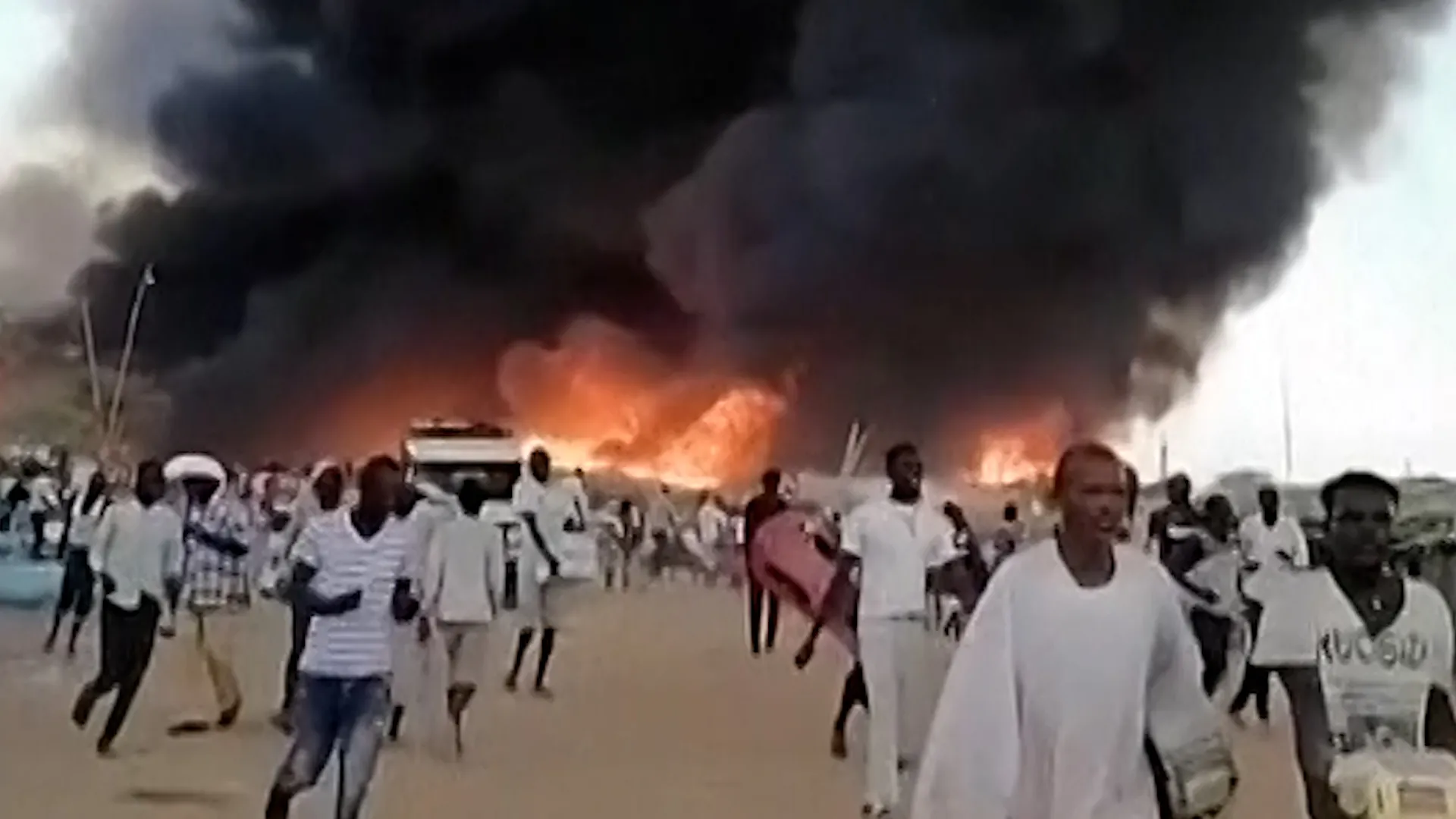
A drone strike near a market in Abyei has killed at least 150 people. Fighting between Sudan and the paramilitary Rapid Support Forces (RSF) has intensified in recent days, as Khartoum accuses the RSF of hiding in the disputed region near South Sudan.
Amid escalating tensions with Ukrainian leader Volodymyr Zelenskyy, United States President Donald Trump has increased pressure on the Eastern European country to make a deal that would end the war with Russia.
Speaking at the White House on Tuesday, Trump doubled down on his efforts to blame the Ukrainian president for holding up peace efforts that would bring the years-long conflict to a close.
Recommended Stories
list of 3 itemsend of list
“Zelenskyy has to want to settle this war, and if he doesn’t, I think it’s going to be a very bad thing,” Trump said as he talked about Russia having an “unlimited” supply of people to send in the fight.
Moments later, the US president referenced a contentious Oval Office meeting he held with Zelenskyy in February 2025, shortly after returning to power.
Zelenskyy, Trump said, could have made a “better deal” then. “He’s going to have to want to make a deal, because I don’t think his people are going to stand for it any longer,” Trump told reporters.
On Tuesday, the Ukrainian president met US special envoy Steve Witkoff and European leaders in Oslo, Norway, to discuss ending Russia’s war.
In a post on social media after the meeting concluded, Zelenskyy said, without providing specifics, that his country has “some clear ideas on how to get to peace”.
“We are united with our European partners in this effort, and we want the Americans to take these ideas to the Russians,” Zelenskyy wrote. “One of the important ideas is to move to a potential trilateral meeting of the leaders to address the issues that only the leaders can do.”
The Ukrainian leader added that Witkoff would head to Russia on Wednesday, where peace discussions are expected to continue.
“Let’s see what Putin has to say,” Zelenskyy said.
When asked whether Russian President Vladimir Putin should meet Zelenskyy, Trump said there was “tremendous” hatred between the two leaders.
“It’s hard for them to be in the same room,” Trump said. “I don’t care how it’s done.”
Starlink controversy
Trump’s remarks come as the White House continues to squeeze Ukraine in order to force the country to cut a deal with Russia.
Last week, Ukrainian officials reported slowdowns with Starshield, the military-grade version of the Starlink satellite system, run by the aerospace company SpaceX.
Ukraine relies on the technology for communications and intelligence to prevent Russian attacks.
It is unclear who ordered restrictions that limit Ukraine’s access to Starshield. SpaceX CEO and Trump ally Elon Musk pointed a finger at the White House.
“Starshield systems are owned and controlled by the US government. Any limits on speed or usage are decided by the US military and ultimately POTUS,” he wrote on October 14.
The news agency Reuters also reported that the order came from inside the White House, citing two US officials and a Western official.
But a report in The Wall Street Journal on Tuesday claimed US officials had blamed Musk himself for the slowdown, saying the SpaceX CEO ordered it last week. Trump and US Defence Secretary Pete Hegseth have both denied that the government directed the restrictions, with Hegseth pushing responsibility towards SpaceX.
Building ties with Putin
Trump, meanwhile, has sought to ease the historically tense relations between Russia and the US.
In August 2025, Trump invited Putin to Alaska, the Russian leader’s first visit to US soil in a decade.
More recently, Trump has expressed openness this month to meeting with Putin and Chinese President Xi Jinping, as part of a trilateral discussion on denuclearisation.
Trump also announced this month that he struck a deal to obtain diesel from Russia, marking a stunning reversal of years of US pressure on Moscow’s economy.
The US president also waived new economic restrictions that would have been imposed under the Lindsey Graham Sanctioning Russia and Iran Act, a bipartisan law he signed one month earlier, in honour of a late senator.
It would have imposed sanctions on Russian officials, banks and tankers, as well as tariffs on countries that purchase Russian oil.
US Secretary of State Marco Rubio defended the decision on Tuesday, saying the law allowed the waiver through a provision embedded in the legislation.
“The president chose to use a national security waiver to not immediately implement those [sanctions and restrictions], because he recognises that these things have to be looked at in their totality,” Rubio said in an interview with India’s News18.
Rubio argued that Trump was engaged in a “balancing act” in deciding the extent of US-imposed economic restrictions and how they could impact the rest of the world.
“When you do that pressure, sometimes it spills over and has a negative impact on other countries,” Rubio said.
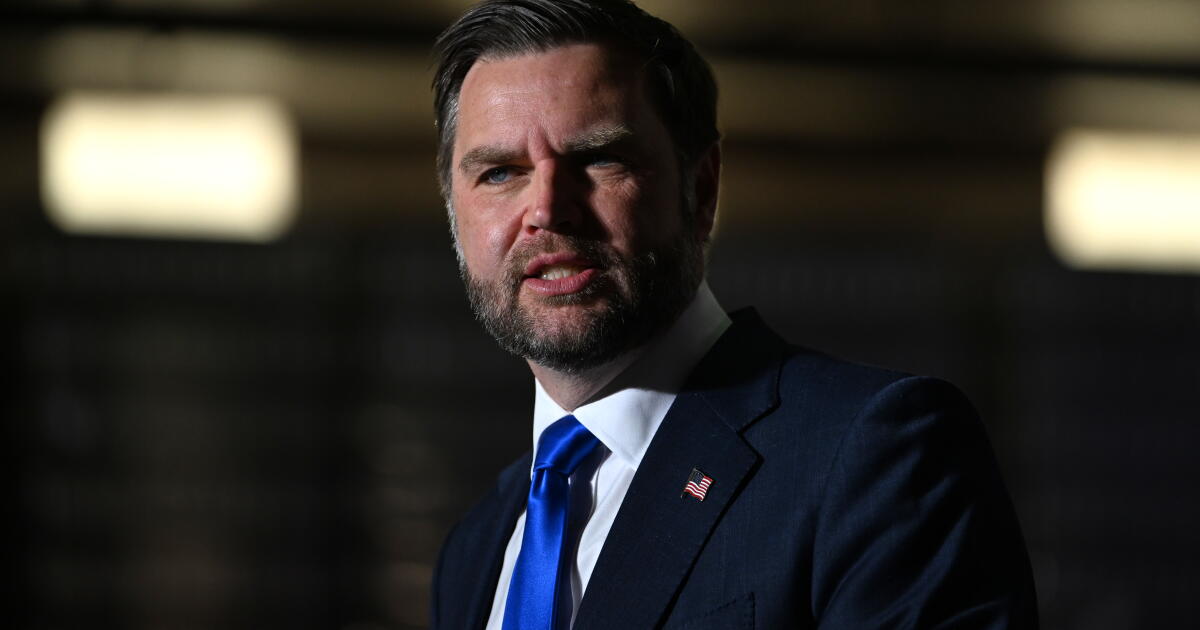
Vice President JD Vance declined Monday to endorse Israeli Prime Minister Benjamin Netanyahu for reelection a day after President Trump endorsed the embattled Israeli leader.
“The president has the most influential endorsement in American or international political history,” Vance said during an interview with journalist Mark Halperin.
“I endorse American candidates, and that’s where I’m focused on the midterms,” Vance said, while traveling Monday to campaign for Republican Senate nominee Michael Whatley of North Carolina. “So, I’m not getting involved in Israeli elections.”
Vance has campaigned for a foreign leader — then-Hungarian Prime Minister Viktor Orban, last spring before the right-wing leader’s party lost that country’s parliamentary election.
Vance’s deference to Trump on Netanyahu comes at an extraordinarily sensitive time for Jewish Americans and the U.S. alliance with Israel. Concerns about antisemitism have surged across the political spectrum ahead of the midterm elections.
Republicans have been eager to portray Democrats, notably Michigan Democratic Senate nominee Abdul El-Sayed, as hostile toward Jews and Israel, while they deal with their own internal schisms.
Vance has faced skepticism from Jewish Republicans about his commitment to Jewish Americans and the U.S. alliance with Israel.
Last month, Vance spoke privately in Las Vegas to the Republican Jewish Coalition, a leading GOP group committed to advocating for a strong U.S. relationship with Israel and against antisemitism.
Vance left a positive impression on his RJC audience while stopping short of disavowing influential conservative podcast host Tucker Carlson.
Vance has faced general questions about his association with Carlson, a former Fox News host who faced backlash last year for interviewing antisemite Nick Fuentes on his podcast.
In June, Vance sharply criticized members of Israel’s government for opposing Trump’s efforts to resolve the war with Iran.
In July, Vance said elements of the Israeli government had tried to influence American sentiment to derail negotiations.
“There are some people within their system that we know beyond a shadow of a doubt are manipulating and trying to change American public opinion to keep the war going on indefinitely,” Vance said during an appearance on Joe Rogan’s podcast.
A Russian drone strike on a park in Ukraine’s north-eastern Kharkiv region has killed six people, including three children. The attack comes amid growing concerns over Ukraine’s air defences and Donald Trump’s moves to import Russian diesel.
United States President Donald Trump has announced his official endorsement of Israel’s Prime Minister Benjamin Netanyahu’s election campaign after previously refusing to endorse anyone.
Trump posted on his Truth Social platform on Sunday that Netanyahu had been a “great warrior prime minister and an even greater partner for peace”, adding that Iran had been “systematically destroyed both militarily and financially, and unless they change their ways, rapidly, we will soon finish the job.”
Recommended Stories
list of 3 itemsend of list
“If Israel has the wrong Leader, which would be anyone other than Bibi, America will have to do this work ourselves, and I am not inclined to do so,” Trump wrote.
“Bibi Netanyahu has been Strong, Brave, and Brilliant in the face of tremendous opposition, including that coming from even Israel, itself. Despite all of that, he has endured and, in fact, he has thrived!”.
The president added that normal men and women would have “wilted” under the pressure that Netanyahu was under, but the Israeli prime minister “got stronger”.
“This is the kind of Partner that the United States of America is demanding of Israel, a Country for which it has done so much. Please let this Letter serve to represent my Complete and Total Endorsement of Bibi Netanyahu in his upcoming Race for Re-Election as Prime Minister of Israel. BIBI NETANYAHU WILL NEVER LET YOU DOWN!”, he added.
The Israeli election will be on October 27 . According to Israeli news outlet Haaretz’s tracker, as of Sunday, the opposition alliance led by the Yashar party of Gadi Eisenkot is expected to win the most seats, at 52, with Netanyahu’s Likud party-led coalition taking 51 of the 120 seats in the Knesset.
So far, no party is projected to secure an outright majority.
But Trump’s endorsement comes after he had previously shied away from fully backing Netanyahu’s election campaign.
Earlier this month, when asked twice by TIME magazine if Netanyahu should be given another term, Trump pivoted to his own popularity in Israel and Washington’s actions supporting Israel.
When asked on Thursday by the right-wing US news outlet, Newsmax, if he was planning to get involved in the Israeli elections, Trump said: “They’d like me to be. Yeah, they’d like me to be”.
When asked whether he trusted Netanyahu, Trump replied, “I don’t trust anybody, honestly”.
Still, Sanam Vakil, director of the Middle East North Africa programme at the British think tank Chatham House, explained that Trump’s endorsement of Netanyahu was “politically significant” because it comes after months of tension between the two leaders.
“It allows Netanyahu to reinforce his claim that he is indispensable to Israel’s relationship with Washington,” Vakil told Al Jazeera.
“However, its electoral impact should not be overstated. Israeli voters remain divided over Netanyahu’s leadership and the outcome of the Iran war. The endorsement may help consolidate his existing support, but it does not resolve the wider questions surrounding his record,” she added.
Andreas Krieg, senior lecturer at the school of security studies at King’s College London, said that Trump’s endorsement was a “political gift” to Netanyahu, whose electoral campaign is struggling.
But like Vakil, he cautioned against treating Trump’s endorsement as a game-changer.
“Netanyahu’s problems are structural, involving fragmented right-wing parties, disillusioned ultra-Orthodox voters and the legacy of October 7. Trump may mobilise reluctant Likud voters, potentially worth a seat or two in a close contest, but he cannot manufacture the coalition majority Netanyahu currently lacks,” Krieg told Al Jazeera.
What the endorsement means for the Iran war
Much of Trump’s endorsement has been heavily focused on the Iran war, at a time when many analysts suggest the US president might be looking to restart attacks, either before or after the midterm elections in early November.
The conflict, which began in February after the US and Israel launched attacks across Iran, is currently at a standstill.
The Strait of Hormuz, which once transported 20 percent of global crude, was effectively shut by Iran after the war started. A US naval blockade of Iranian vessels followed, as each country struck ships passing through the waterway that they accused of not complying with its orders. Oil traffic last month through the strait picked up to pre-war levels as the US Navy shepherded an increasing number of tankers. But a spate of Iranian attacks on vessels early this month has again hit crude exports through Hormuz.
On Monday morning, Brent crude futures stood at $107.57 a barrel, down slightly after reaching their highest since May 19 on Friday, when they briefly touched $110 a barrel.
Last month, Iran presented a proposal to Washington to reopen the waterway within seven days, but negotiations failed after the US did not address Tehran’s seven conditions, which included the lifting of sanctions and the ending of its naval blockade.
Foreign Minister Abbas Araghchi told Iranian media outlets on Sunday that the proposal remained on the table and, if Washington accepts Tehran’s conditions, the strait could reopen within six days, with talks resuming the following day.
At the same time, Araghchi, in a post on X on Sunday night, accused Netanyahu of wanting to restart attacks on Iran with the US to “stay out of jail”.
“Last time you wanted to ‘finish the job’, Iran emerged even stronger. Want to try your luck again? Be our guest. But be careful; we have unfinished jobs too,” he wrote.
“Netanyahu is driving America into another war to stay out of jail, whatever the consequences for Israel – let alone POTUS,” he added.
Krieg said Trump was prioritising the use of “coercive leverage” through his endorsement of Netanyahu but not necessarily “war over diplomacy”.
“The naval blockade is hurting Iran considerably and Washington believes time is working in its favour. Trump’s calculation is that Iran will eventually accept nuclear concessions and reopen Hormuz, without Washington having to offer significant concessions first,” he argued.
“His endorsement reinforces the military threat underpinning that strategy. But it does not mean diplomacy is finished. Trump still wants a deal he can present as a victory. The danger is that Tehran increasingly believes it must escalate to improve its bargaining position.”
What is next?
Vakil explained that, while Trump’s declaration of support for Netanyahu had signalled renewed political alignment with Israel and left the door open for future joint military action, it also makes it “harder for Trump to distance himself from the war or portray the US as having been reluctantly drawn into it”.
“He is explicitly taking ownership of the partnership and its military campaign against Iran. However, the endorsement does not necessarily mean that the two leaders have agreed on another operation, nor does it settle the question of who initially pushed hardest for war,” she said.
Vakil added that for Tehran, the statement will reinforce the belief of Iranian leaders that there is “little meaningful distinction between US and Israeli objectives.”
“At the same time, Trump’s suggestion that he is reluctant to confront Iran without Netanyahu could be interpreted as evidence of the limits of Washington’s appetite for another war.”
Meanwhile, while Trump has said that he would not attack Iran before the November midterms, several US media outlets have reported that the Pentagon has drawn up plans to relaunch attacks before voters head to the polls.
Last week, US news outlet Axios reported, citing both US and Israeli officials, that both Trump and Netanyahu had spoken about launching a major new operation against Iran ahead of the elections in both countries.
For Krieg, the likelihood that the US and Israel launch an attack on Iran remains low, assuming there is no Iranian strike that forces a response.
“The more dangerous window opens after November 3 [US midterms], when those electoral constraints disappear. Both militaries are preparing for that possibility. The greatest immediate risk is an uncontrolled escalation in Hormuz that forces Washington’s hand before either leader is politically ready,” he said.
Barbara Leaf, former US Assistant Secretary of State for Near Eastern Affairs, tells Al Jazeera that public opposition to the war with Iran could threaten Republican control of Congress, as economic fallout fuels voter anger.
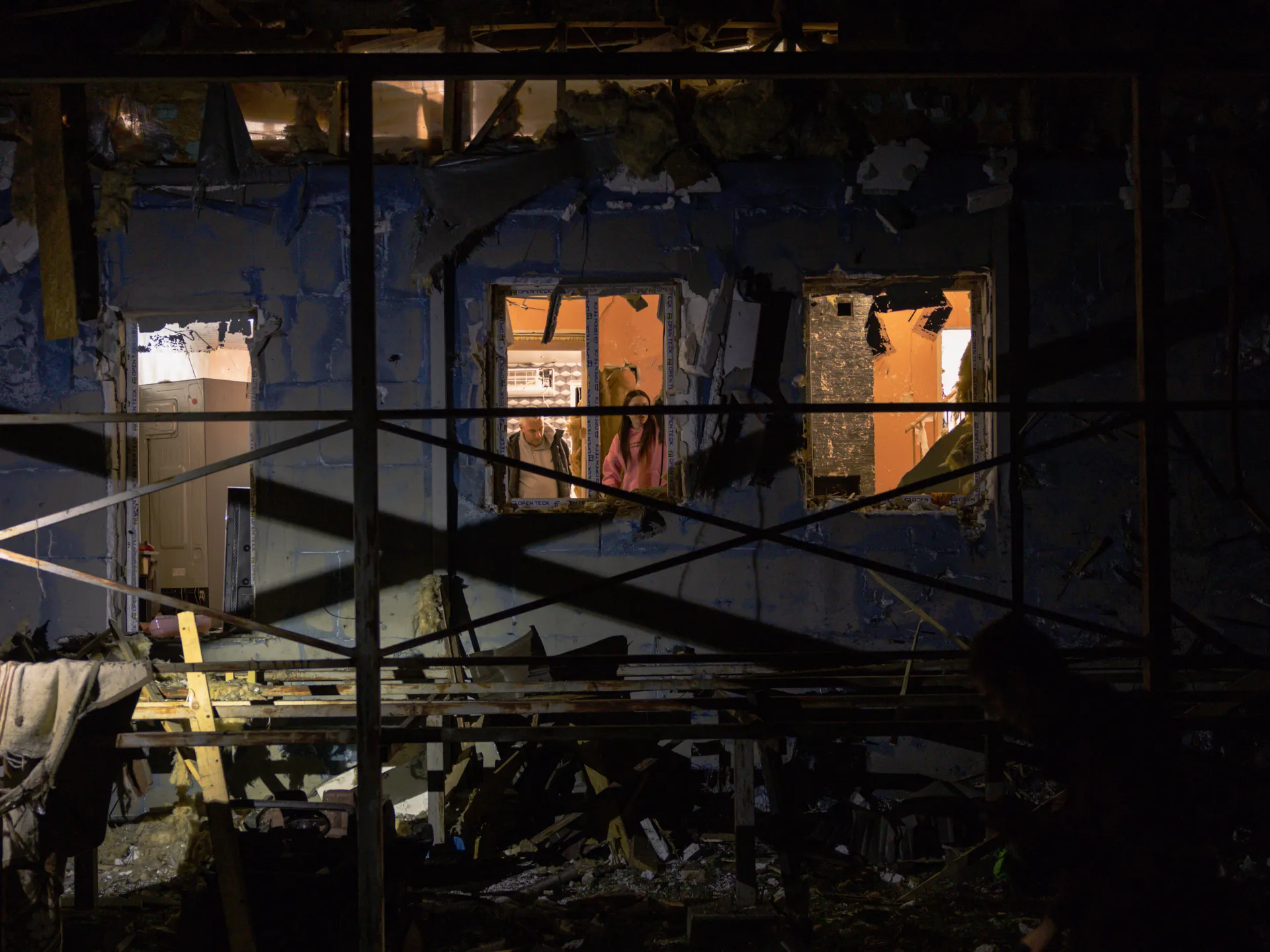



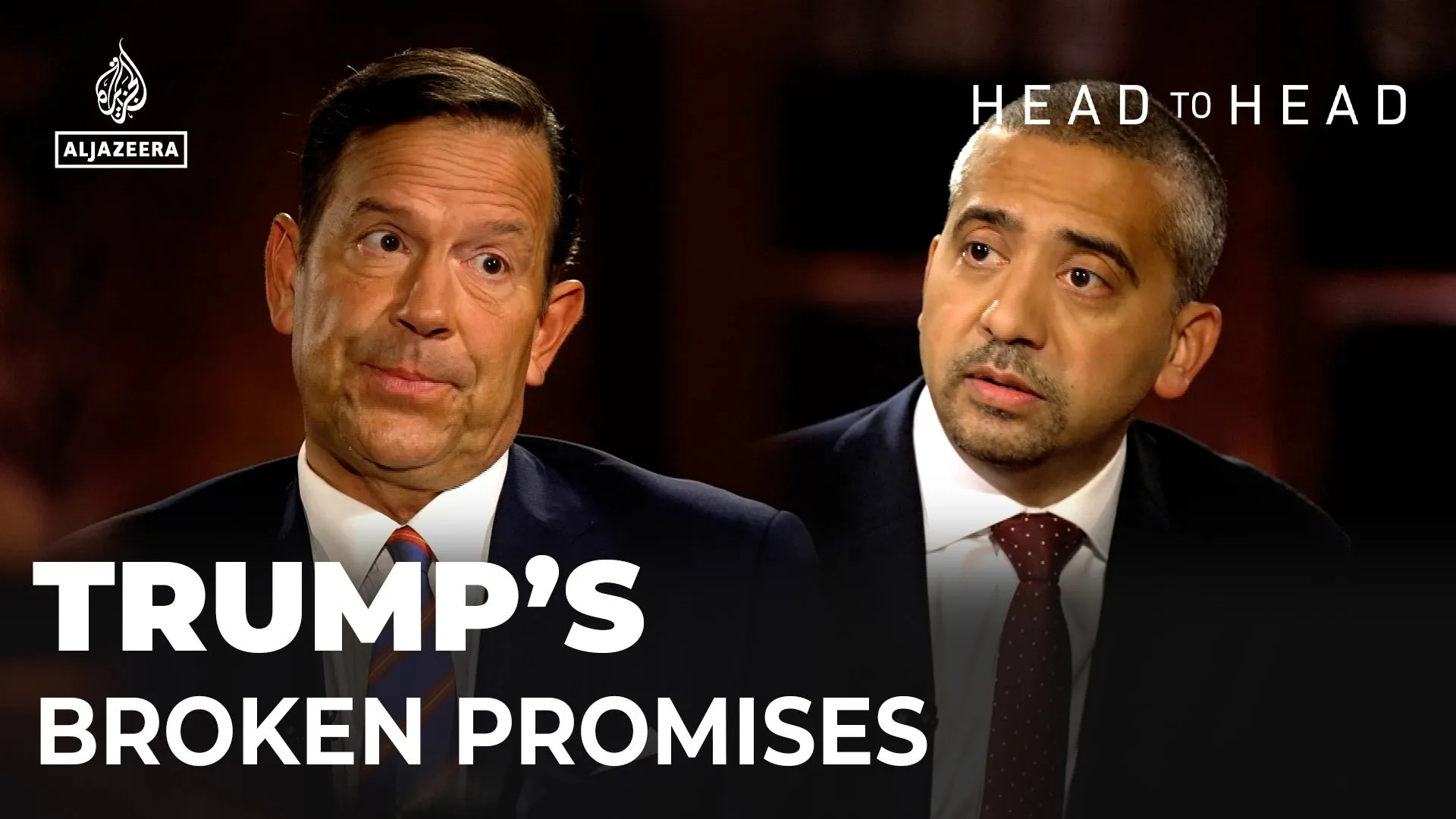
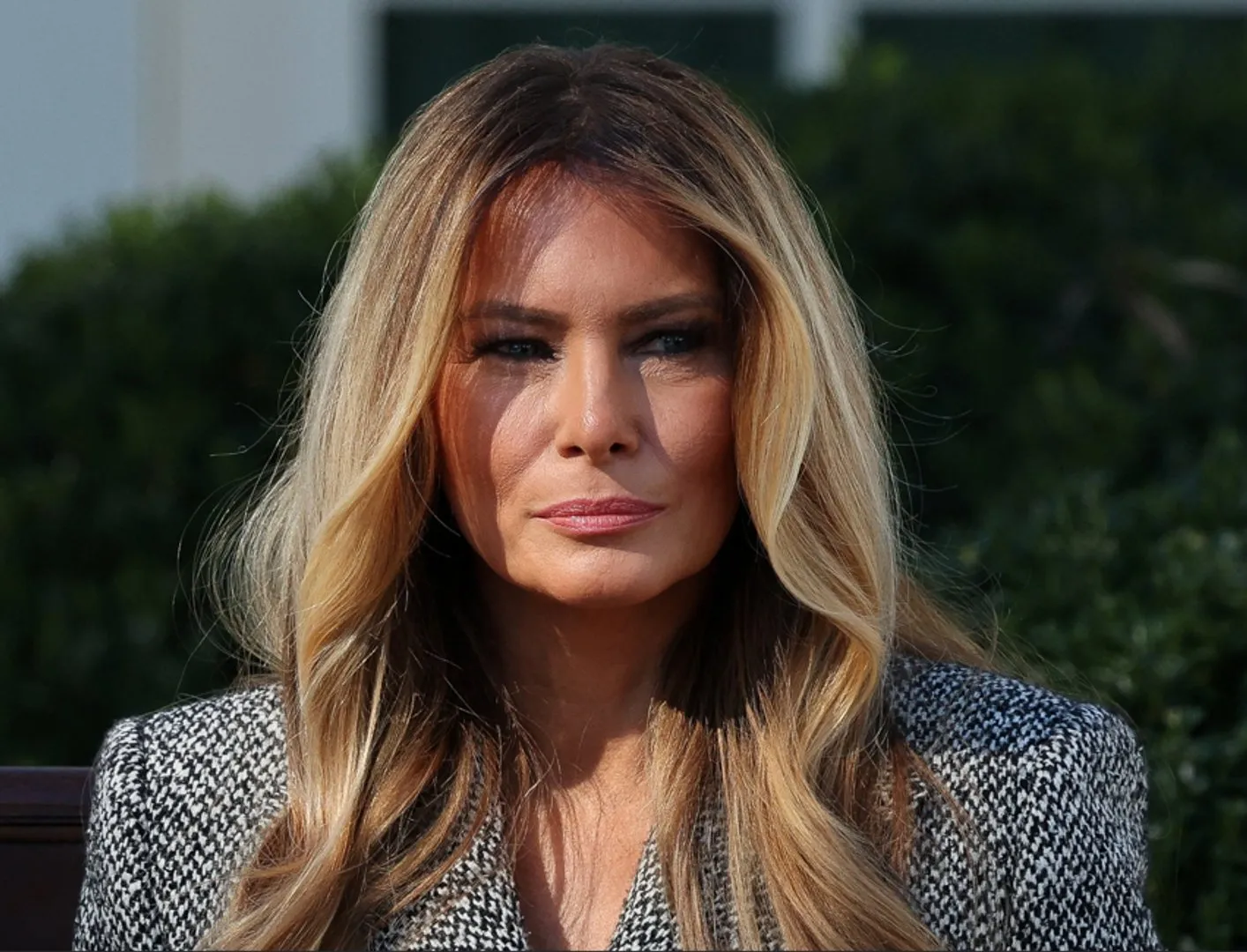
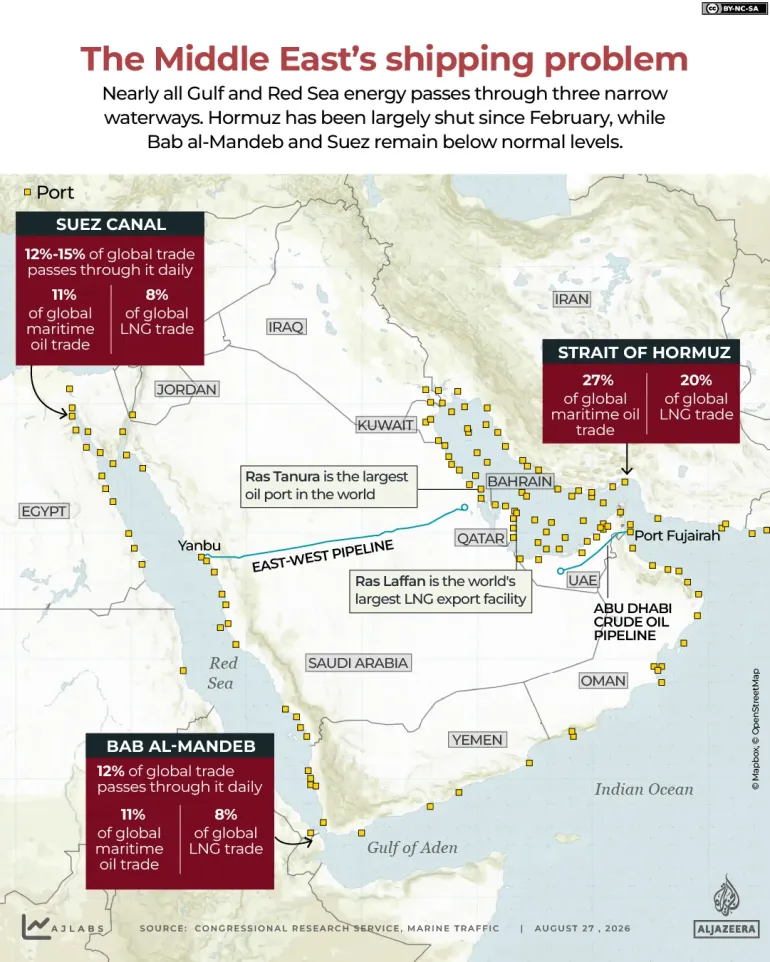
![[Al Jazeera]](https://i0.wp.com/occasionaldigest.com/wp-content/uploads/2026/10/INTERACTIVE-MIDDLE-EAST-iran-hormuz-shipping-aug-27-2026-1787815800-1788488337.webp?w=640&ssl=1)

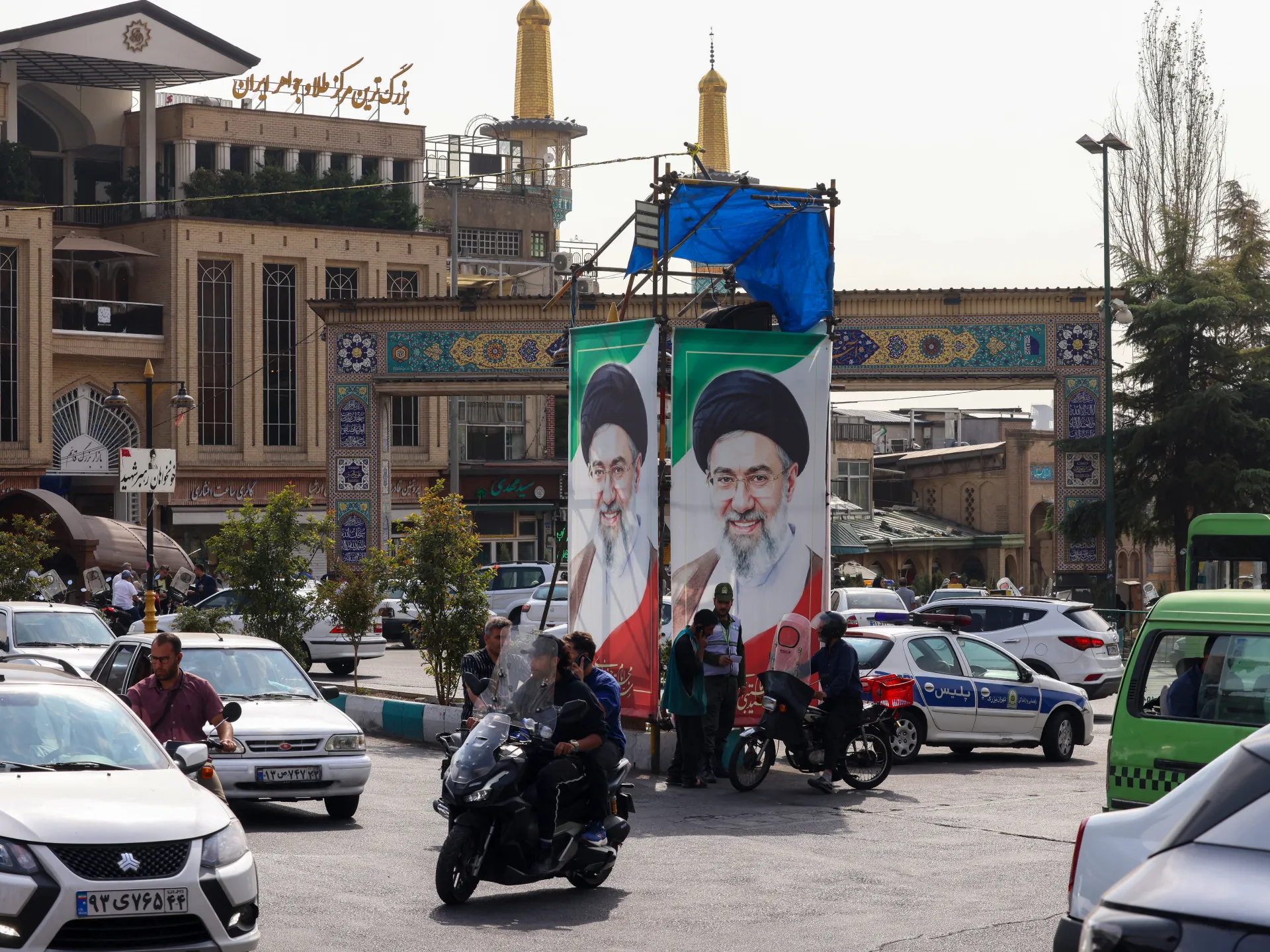


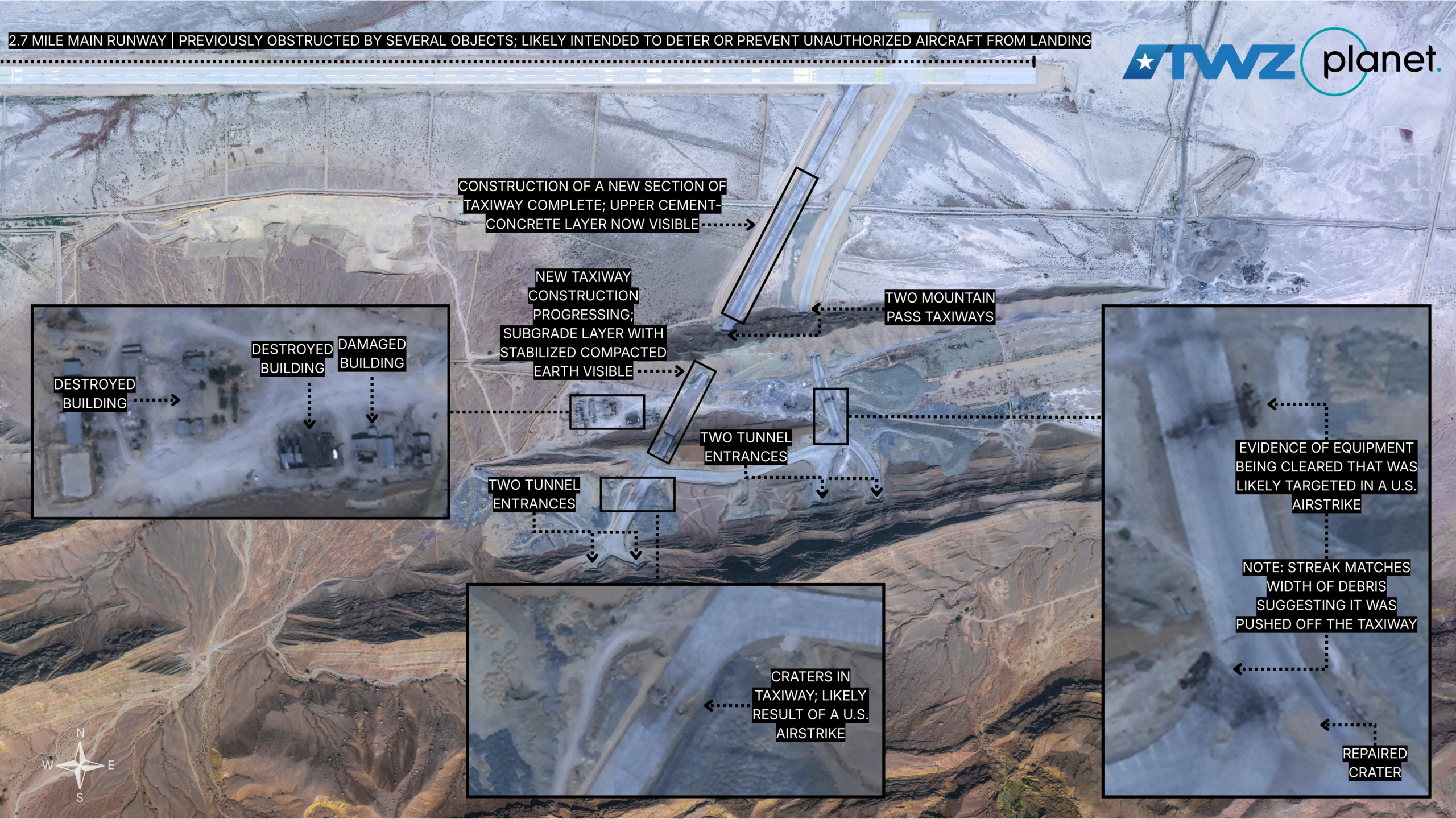


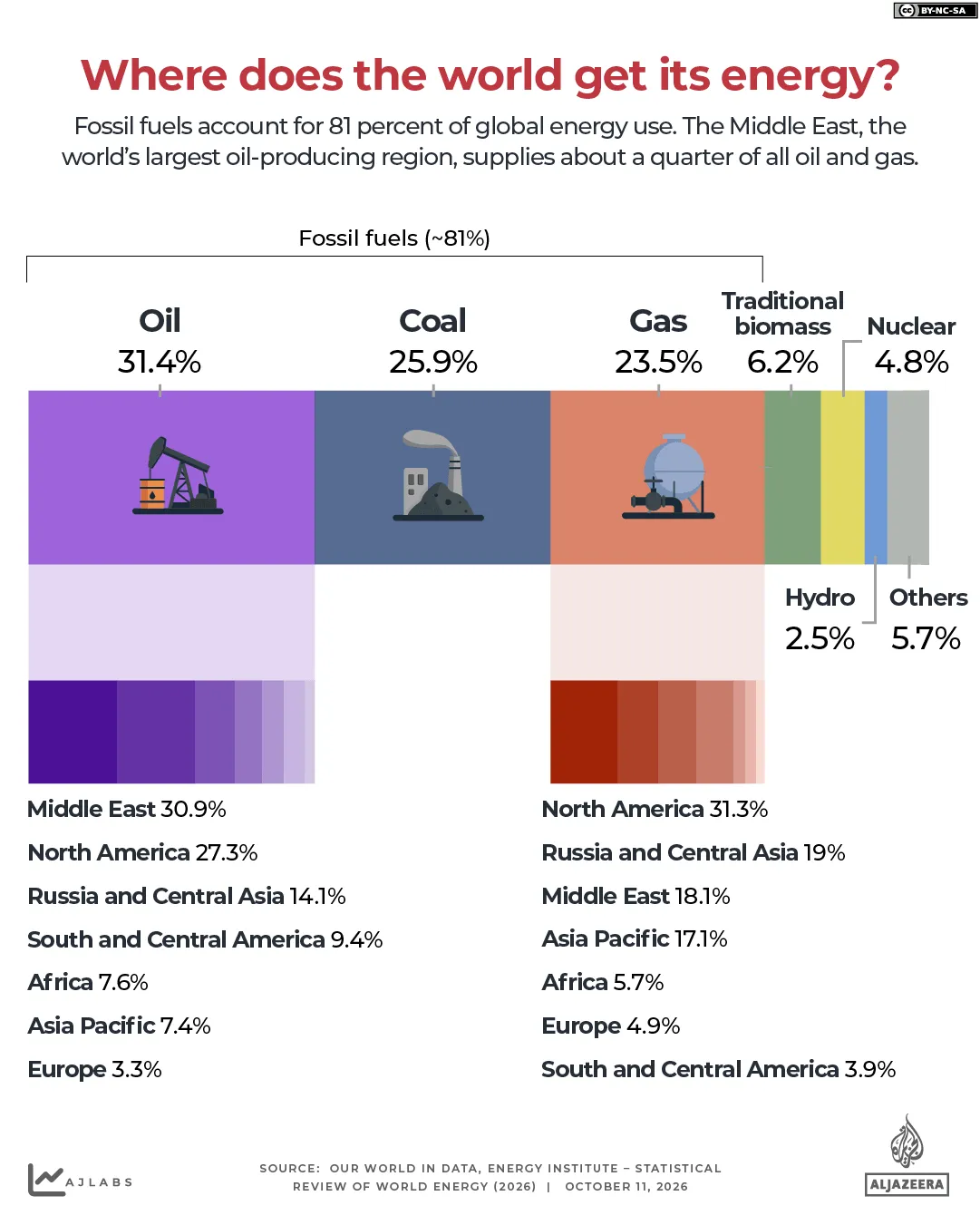


![A street in Mekelle, where residents are trying to resume daily life despite economic hardship and fears of further conflict [Al Jazeera]](https://i0.wp.com/occasionaldigest.com/wp-content/uploads/2026/10/Mekelle-main-road2-1792504392.jpg?w=640&ssl=1)
![Daily life slowly resumes in Mekelle, but delayed salaries and a lack of safety continue to weigh on residents [Al Jazeera]](https://i0.wp.com/occasionaldigest.com/wp-content/uploads/2026/10/Mekelle-Market-2-1792504404.jpg?w=640&ssl=1)



![Lena Kouyoumjian poses for a selfie with her non-verbal autistic daugher Vana, whose symptoms have worsened due to Israel’s war in Lebanon, as the 20-year-old fears loud noises or “any sudden change in routine” [Courtesy of Lena Kouyoumjian]](https://i0.wp.com/www.aljazeera.com/wp-content/uploads/2026/10/Lena-Kouyoumjian-credit-1792403815.jpg?w=640&ssl=1)
![A teacher for young autistic people high-fives Anthony at the AAA after he scores a basketball throw [Alex Milan Durie/Al Jazeera]](https://i0.wp.com/www.aljazeera.com/wp-content/uploads/2026/10/Alex-Durie-photos-Lebanon-Autism-25-1792404535.jpg?w=640&ssl=1)
![A non-verbal autistic girl practises her writing in French as a teacher at the AAA holds her hands to support her [Alex Milan Durie/Al Jazeera]](https://i0.wp.com/www.aljazeera.com/wp-content/uploads/2026/10/Alex-Durie-photos-Lebanon-Autism-15-1792404524.jpg?w=640&ssl=1)
![Nour Toukan, a public health researcher at Enmaeya, a Lebanese media platform focused on sustainable development, told Al Jazeera that “at the moment, care for autism or even for ADHD is very much an out-of-pocket expense" [Alex Milan Durie/Al Jazeera]](https://i0.wp.com/www.aljazeera.com/wp-content/uploads/2026/10/Alex-Durie-photos-Lebanon-Autism-03-1792403759.jpg?w=640&ssl=1)