war

Does Trump hold ‘all the cards’ against Iran in the Strait of Hormuz? | US-Israel war on Iran News

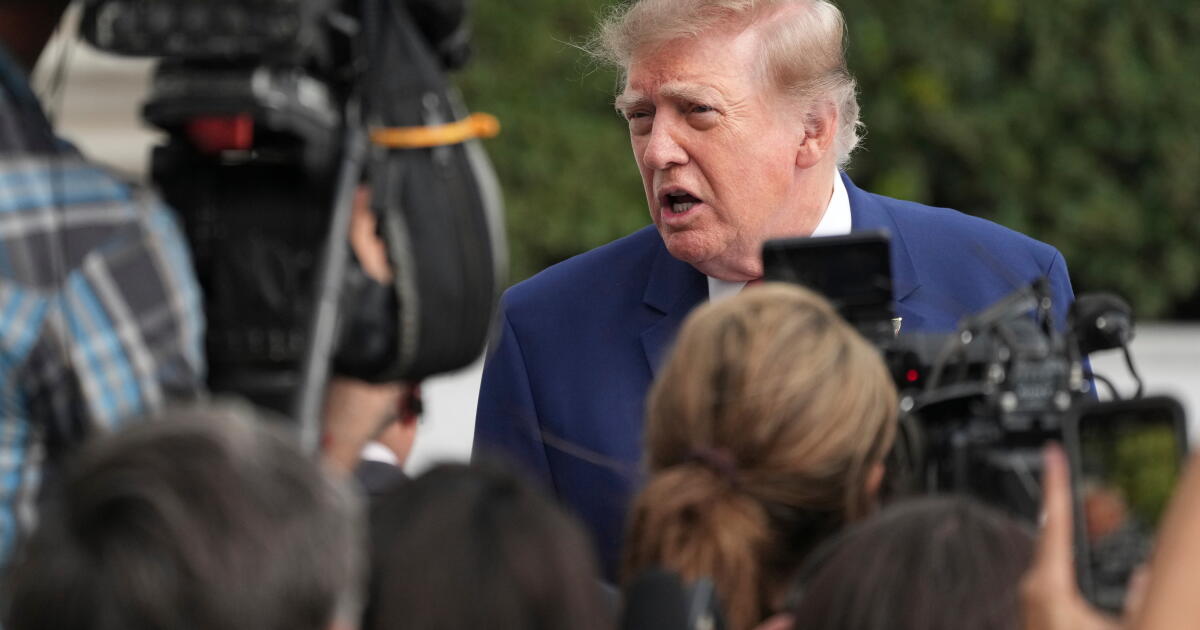
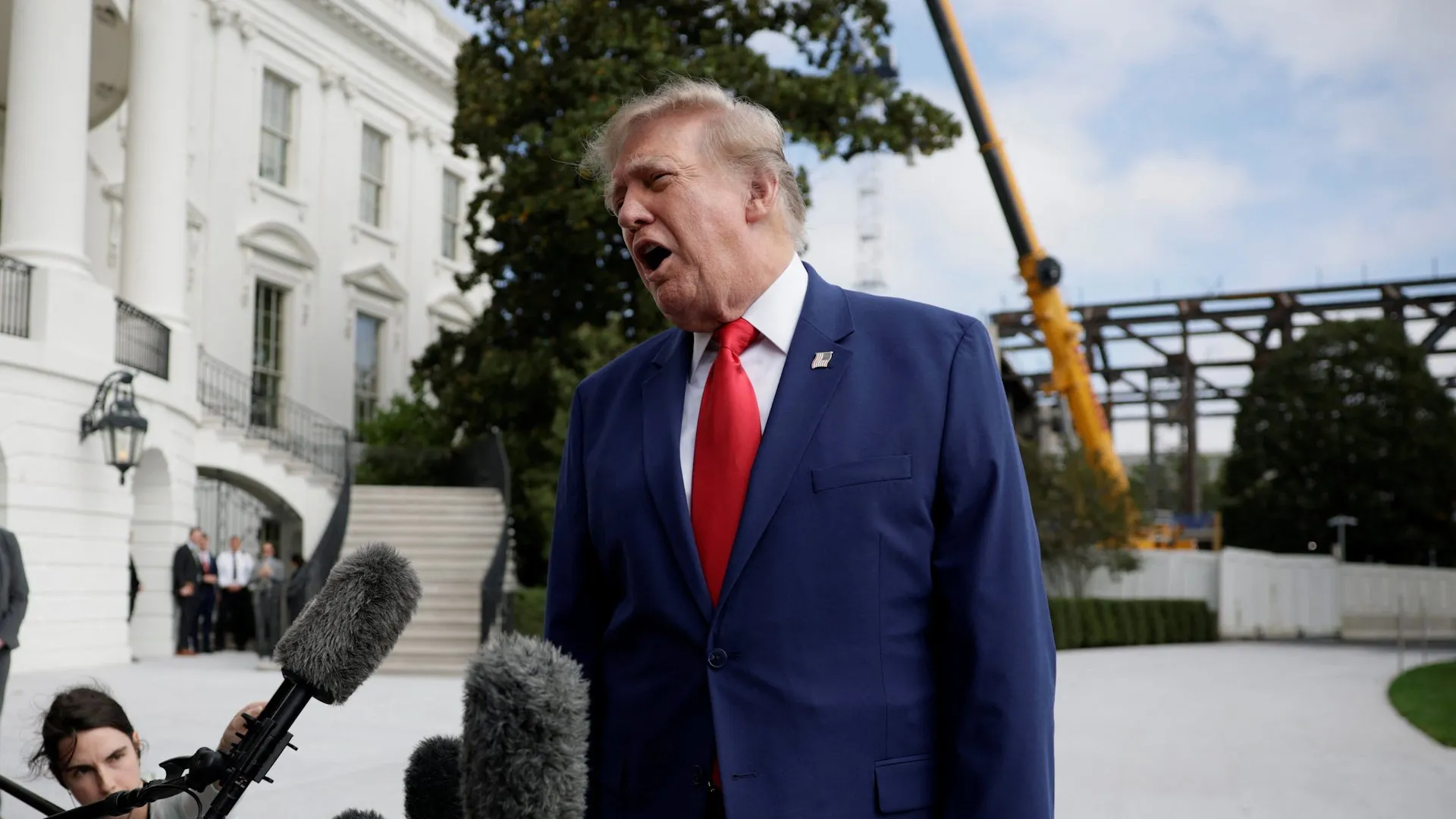
“I have all the cards,” posted the White House on its X account on Sunday, alongside an image of President Donald Trump holding playing cards from the Uno game, in a message appearing to signal Washington’s confidence in its ongoing war on Iran.

Uno is a card game in which the winner is the first to get rid of all their cards.

Recommended Stories

list of 4 itemsend of list

The post came after Trump announced on his Truth Social platform that the US military would begin guiding ships stranded around the Strait of Hormuz by the war on Monday, in a sign that the conflict could further escalate, despite the near-month-long fragile ceasefire. Tehran has been effectively blocking nearly all shipping from the Gulf for more than two months, after the US and Israel attacked Iran two months ago, disrupting global energy supplies.

“We have told these countries that we will guide their ships safely out of these restricted waterways, so that they can freely and ably get on with their business,” Trump said, dubbing the campaign “Project Freedom”. “They are merely neutral and innocent bystanders!”

The president added that US negotiators were engaged in “very positive discussions” with Tehran, which could lead to “something very positive” without further elaboration.

Iran, however, reacted by insisting that the security of the waterway was in the hands of its armed forces, and warned that “any safe passage and navigation in any situation” should be “carried out in coordination with the armed forces”.

On Monday, the Iranian Fars news agency reported that a US warship had been hit by two Iranian drones, the claim was denied by US Central Command.

So what leverage do the US and Iran hold over each other, and what happens next?

In response to Trump’s “I have all the cards” social media post, Iran’s Consulate General in Hyderabad, India, posted its own image on X.

“Yes, we have less cards,” Iran’s consulate in the Indian city of Hyderabad wrote on X, together with a photo of an Iranian military spokesperson holding four Uno cards compared to Trump’s five, pointing out that usually holding all the cards means you are losing, not winning, in the game of Uno.

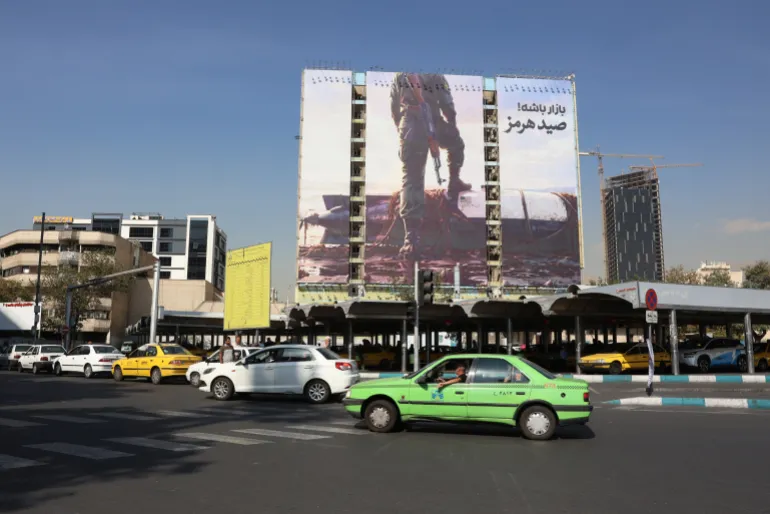
In response to Trump’s “Project Freedom” declaration, Iran’s Islamic Revolutionary Guard Corps (IRGC) warned that ships deemed to be in breach of its rules in the Strait of Hormuz “will be stopped by force”, while insisting there has been no change in how it manages traffic through the strategic waterway.

On Monday, it issued a new map of the Strait of Hormuz with boundaries extending further to the east than its previous one, and said any ship travelling between the two sides must coordinate with the IRGC first.

“There has been no change in the management process of the Strait of Hormuz,” spokesperson Sardar Mohebbi said, adding that vessels that comply with the “transit protocols issued by the IRGC Navy” will be “safe and secure”.

“Other maritime movements that are contrary to the declared principles of the IRGC Navy will face serious risks. Violating vessels will be stopped by force,” he said.

What leverage does the US have over Iran?

Sanctions

The United States’ most enduring source of leverage over Iran remains its sanctions regime, which was launched in 1979 when Ayatollah Ruhollah Khomeini declared Iran an Islamic Republic.

Successive US administrations over the past 47 years have hit Tehran with a series of financial restrictions targeting Iran’s banking, oil exports and access to international markets – the US says the sanctions are a response to Iran’s nuclear programme.

Sanctions have significantly constrained Iran’s economy, limiting government revenue and contributing to inflation and currency depreciation. Measures enforced through the US Treasury also deter other countries and companies from engaging with Iran, further strangling its economy.

The economic pressure has been central to US strategy towards Iran, particularly during its attempts to force Tehran back to negotiations over its nuclear programme, under both Democratic and Republican administrations.

Military power

Beyond economics, the US maintains overwhelming military superiority, especially air power. Aircraft carriers, long-range bombers and precision strike capabilities give Washington the ability to target Iranian infrastructure with relatively low risk to its own forces.

US bases across the Gulf, as well as military partnerships with regional allies – most notably Israel – reinforce this advantage.

American forces, together with the Israeli army, have killed more than 3,000 people, and struck thousands of sites across Iran in the current war, including Iran’s energy and nuclear sites.

Naval blockade

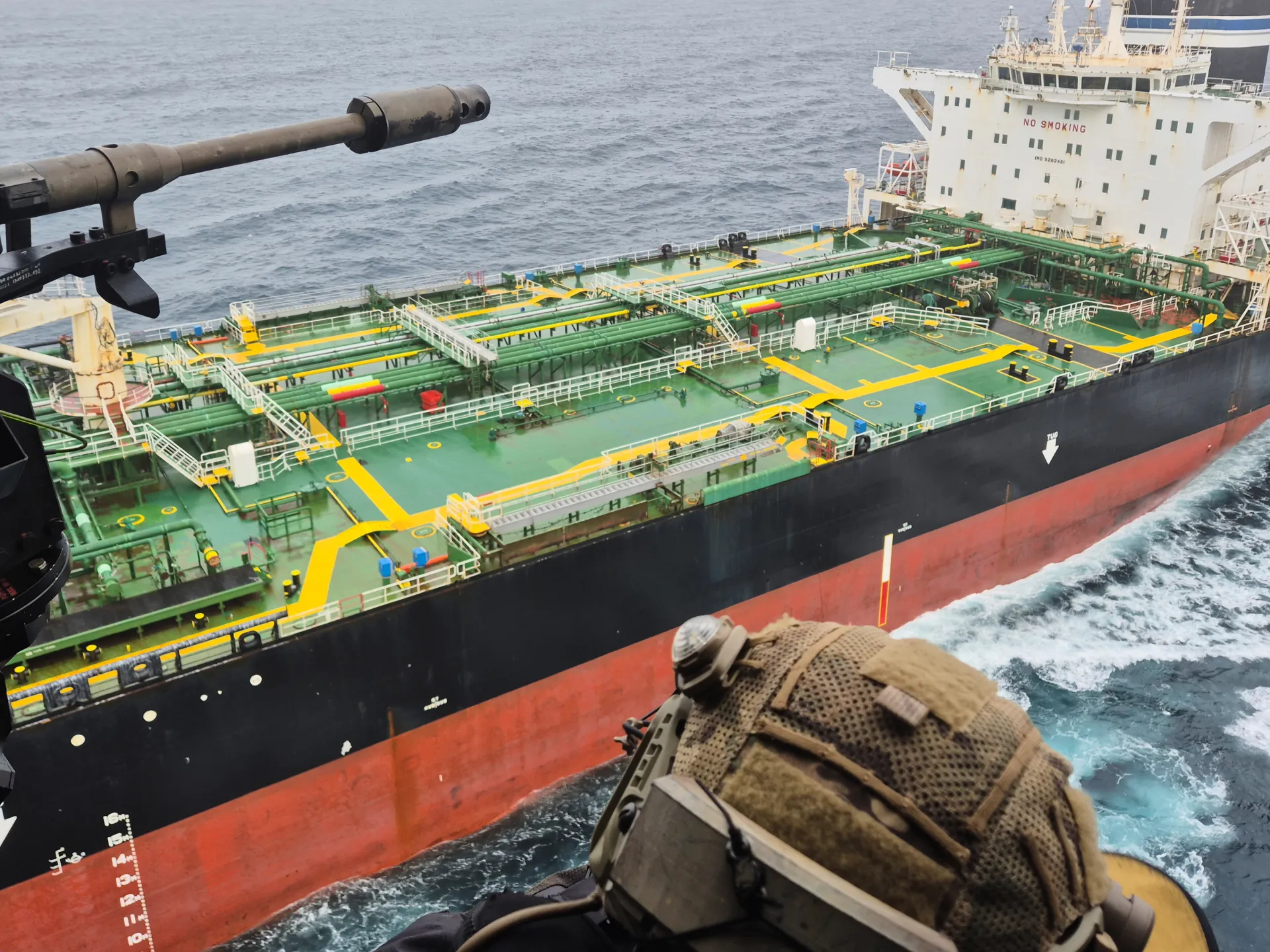
Since mid-April, the United States has enforced a widespread naval blockade of Iranian ports and ships. The operation began on April 13 after talks between Washington and Tehran collapsed, with US forces ordered to stop or divert vessels entering or leaving Iranian ports.

US forces have since intercepted or turned back dozens of ships, and seized a container ship, the Touska. On Monday, the US announced that its crew had been repatriated to Iran from Pakistan, where they were taken after their ship was captured in the Gulf of Oman last month.

According to Trump, the blockade is designed to choke Iran’s oil exports, its main revenue source.

US officials say the measures have severely disrupted Iran’s trade, which relies heavily on sea routes.

What leverage does Iran have?

Strait of Hormuz

The vital waterway is Iran’s most significant strategic asset, the narrow passage ships one-fifth of the world’s oil and liquefied natural gas (LNG) supplies in peacetime.

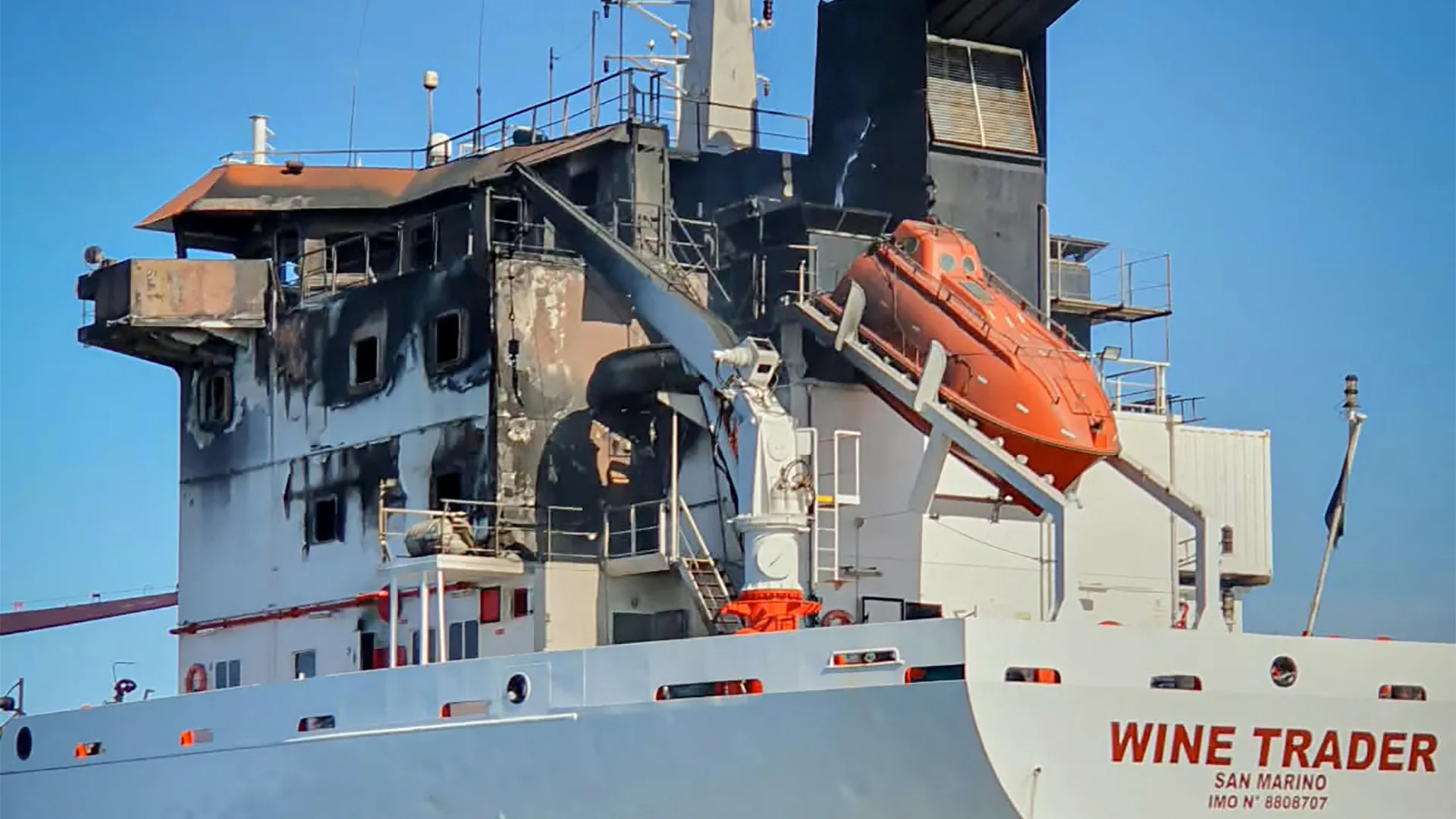
Tehran has effectively closed the strait since the war began on February 28, sending global oil and gas prices soaring and energy markets into turmoil. Iran has repeatedly demonstrated its ability to target shipping, seize vessels, or conduct military exercises, demonstrating its ability to close or restrict the strait.

The result is soaring energy prices globally, forcing many countries to implement severe austerity measures to soften the blow.

Last week in the US, the average price of a gallon (3.8 litres) of gasoline (petrol) rose to $4.30, according to the American Automobile Association (AAA), up from less than $3 before the war.

Surging energy costs have driven up inflation and deepened economic uncertainty in the US, compounding Trump’s political troubles amid overwhelming disapproval for the war amongst Americans.

Even if the US does begin escorting ships through safely – the threat from mines or Iranian strikes may be enough to prevent tankers from attempting to sail, experts say. Insurance companies are also unlikely to underwrite voyages.

Regional allies

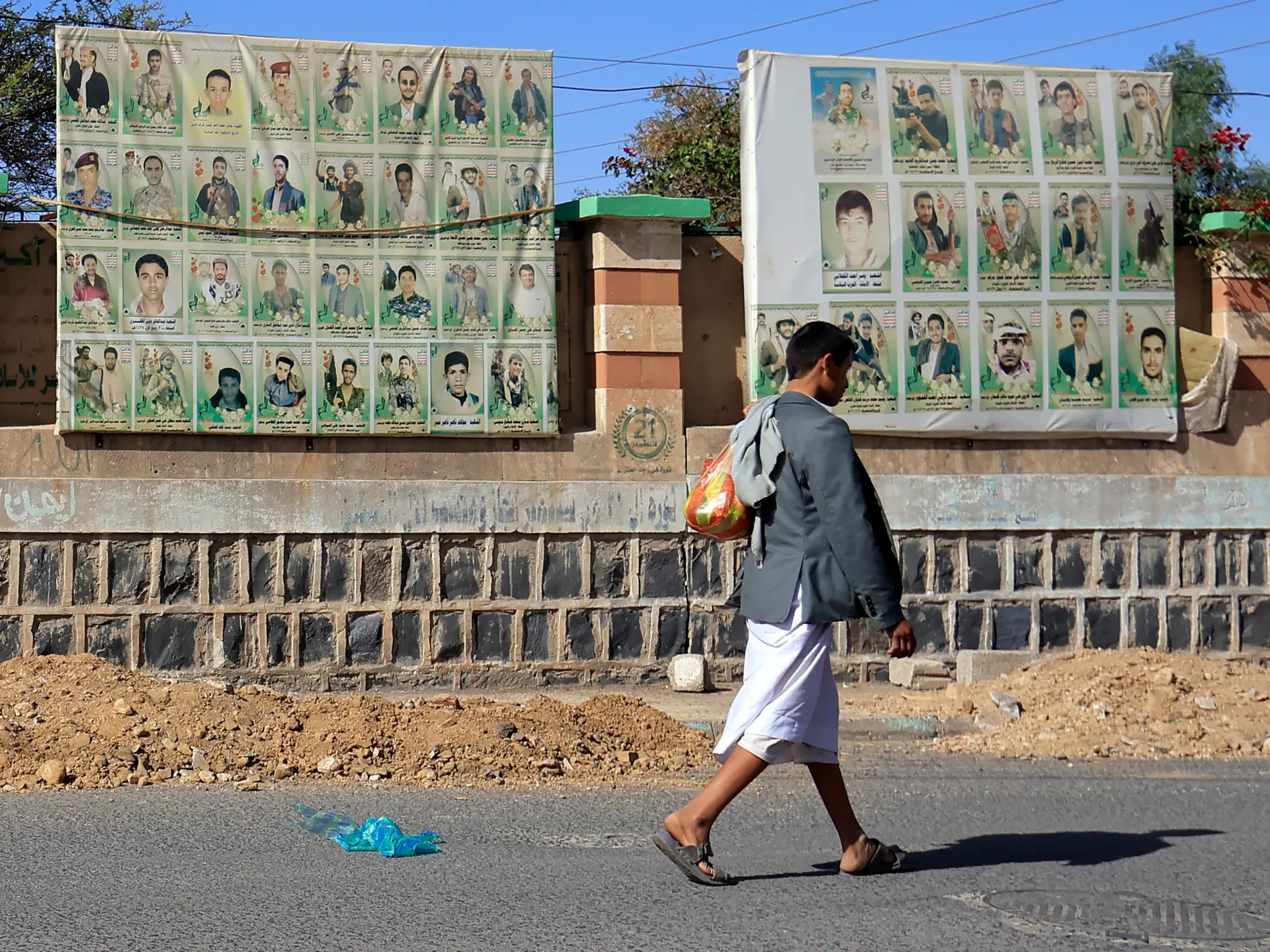
Iran’s network of allied groups across the Middle East is another asset that Tehran relies on heavily. These include armed groups in Iraq and Syria, as well as Hezbollah in Lebanon and the Houthis in Yemen

Through these groups, Iran has exerted pressure indirectly, targeting US interests and allies without engaging in direct confrontation.

One critical threat Iran has previously made is for the Houthis to disrupt shipping in the Bab al-Mandeb, another vital maritime chokepoint linking the Red Sea to the Gulf of Aden.

INTERACTIVE - Bab al-Mandeb strait red sea map route shipping map-1774773769

The Houthis, an Iran-aligned group in Yemen, have previously targeted shipping in this area, most notably during Israel’s genocidal war on Gaza, further raising concerns about the security of global trade routes.

Roughly 4.2 billion barrels of crude oil and refined petroleum liquids flowed through the strait in 2014, accounting for about five percent of global supply.

Cheap drones and cluster bombs

While nowhere near the military capabilities of the US, Iran’s investment in missile and drone programmes has proven to be an effective means of deterrence. That is particularly through its ability to threaten regional US bases and impose significant costs on regional countries hosting American assets involved in military operations against Tehran.

While the US undoubtedly has a more sophisticated and powerful arsenal at its disposal, the interceptors it uses to combat Iranian drones cost around $4 million each, while Iran’s Shahed drones can be mass-produced at $20-50,000 each.

Furthermore, Iran’s ballistic missiles have proved capable of breaching Israel’s much-lauded “Iron Dome” defence system on several occasions. Iran has also dropped cluster bombs, which divide before they can be intercepted, making them much harder to stop.

So does the US really hold the most cards?

Michael Clarke, visiting professor at the Department of War Studies, King’s College London, said Trump’s overwhelming conventional military strength has failed to translate into strategic leverage on the ground.

“President Trump thinks he is a great poker player,” Clarke told Al Jazeera. “He thought America’s sheer destructive potential put all the ‘cards’ in his hand” when starting the war on Iran.

But Iranian forces have consistently disrupted US expectations through asymmetric tactics, he said.

“At every turn, the Iranians have come up with asymmetric tactics – vicious, reckless tactics – that have negated everything the Americans have tried to do,” Clarke noted, describing a pattern in which traditional US military superiority has been blunted by unconventional responses.

Despite significant American forces and assets in the region – including “no fewer than three US Carrier Strike Groups, two Marine Expeditionary Units, hundreds of combat aircraft and thousands of troops”, Clarke argued that Washington has struggled to find an effective use for its multi-billion-dollar resources at its disposal.

Moreover, he said, domestic pressure on Trump is growing. Trump “can’t find a way to use them [US forces] that will make any real difference to the current stalemate in the limited time he has before his own MAGA base concludes he has lost the game”.

Clarke also highlighted the willingness of Iran’s IRGC to escalate tensions. “Whatever this war might do to Iranian society, the IRGC is prepared to gamble with its own existence in the fight,” he added.

Source link

Iran says it fired missiles at US warship to prevent it entering Hormuz | US-Israel war on Iran

NewsFeed

Iranian state media says two missiles have struck a US navy destroyer to prevent it entering the Strait of Hormuz after the warship ignored warnings to halt. The attack comes after US President Donald Trump announced a naval mission to ‘guide’ stranded ships through the strait.

Source link

Hezbollah Suffers Heavy Losses as War with Israel Deepens Political and Military Strain

The latest escalation between Hezbollah and Israel began in early March following strikes linked to a wider regional conflict involving Iran and the United States. Hezbollah entered the conflict shortly after, positioning itself as part of a broader regional confrontation.

Since then, the group has faced significant battlefield losses, territorial setbacks in southern Lebanon, and growing domestic criticism. Israeli forces have established a buffer zone inside Lebanese territory, while large numbers of civilians have been displaced, particularly from Shiite communities that form Hezbollah’s core support base.

The conflict follows an earlier war that severely weakened Hezbollah, including the killing of its long time leader Hassan Nasrallah. Despite rearming and adapting its tactics, the group now faces mounting pressure on both military and political fronts.

Hezbollah’s Strategic Gamble
Hezbollah officials suggest the decision to re enter conflict was calculated. By aligning more closely with Tehran during a wider regional war, the group aims to ensure Lebanon becomes part of any future negotiations between Iran and the United States.

The expectation is that Iranian leverage could secure a stronger and more lasting ceasefire than previous agreements. However, this strategy carries high risks, especially as Washington has indicated that any deal with Iran may not include Lebanon.

Rising Human and Material Costs
The war has inflicted heavy casualties. Lebanese authorities report thousands killed since March, though the exact number of Hezbollah fighters remains disputed. Reports from within the group suggest losses could be substantial, with some fighters’ bodies still unrecovered in frontline towns.

Entire communities in southern Lebanon have been devastated, with villages destroyed and new graves appearing rapidly after ceasefire periods. Displacement has also intensified sectarian tensions, as affected populations seek refuge in other regions where resentment toward Hezbollah is growing.

Domestic Political Fallout
Inside Lebanon, opposition to Hezbollah’s armed status has hardened. Critics argue that its actions continue to expose the country to repeated wars. In a significant shift, the Lebanese government has engaged in direct talks with Israel, a move Hezbollah strongly opposes.

The government has also taken steps to limit Hezbollah’s military role, including banning its armed activities earlier this year. However, enforcing such measures remains difficult given the group’s entrenched influence and the risk of internal conflict.

Continuing Clashes Despite Ceasefire
Although a ceasefire announced in mid April reduced large scale fighting, hostilities have not fully stopped. Both sides continue to exchange strikes in southern Lebanon, and Hezbollah has dismissed the truce as ineffective due to ongoing Israeli attacks.

Israel maintains that its operations are necessary to eliminate threats to its northern regions and has indicated that dismantling Hezbollah’s military capacity will be central to any long term agreement.

Analysis
Hezbollah’s current position reflects a complex mix of resilience and vulnerability. While it has demonstrated the ability to regroup and continue fighting, this alone does not translate into strategic success. The group is increasingly constrained by battlefield losses, internal Lebanese opposition, and uncertainty over external support.

Its reliance on Iran introduces another layer of risk. If a broader agreement between Tehran and Washington excludes Lebanon, Hezbollah may find itself bearing the costs of a war without securing meaningful political gains.

At the same time, Israel appears determined to reshape the security landscape in southern Lebanon, potentially prolonging the conflict. Without a comprehensive regional settlement, the most likely outcome is a prolonged stalemate marked by intermittent violence and continued suffering on both sides.

With information from Reuters.

Source link

Trump says US to begin escorting ships in Strait of Hormuz | US-Israel war on Iran

NewsFeed

US President Donald Trump has announced ‘Project Freedom’, a naval mission to escort stranded ships through the Strait of Hormuz starting Monday, warning any interference will be met “forcefully”. The move comes amid a fragile US-Iran truce, with Tehran warning it would treat US intervention as a breach.

Source link

Iran Ceasefire Means Trump Needs No Congressional Approval To Continue War: White House

The 60-day clock for President Trump to seek congressional approval for further military actions against Iran was stopped by the April 7 ceasefire, a senior White House official claimed to The War Zone Friday morning. As we previously noted, the president faced a deadline today under the War Powers Resolution of 1973 to obtain permission from Congress to continue fighting.

The White House decision comes as the now-paused war is at a stalemate, with both sides believing they can outlast the other. Meanwhile, Trump is considering options for a new round of strikes while Iranians say they have presented new plans for working toward a peace deal.

“For War Powers Resolution purposes, the hostilities that began on Saturday, February 28 have terminated,” the official told us, speaking on condition of anonymity to discuss the matter. “Both parties agreed to a two-week ceasefire on Tuesday, April 7 that has since been extended. There has been no exchange of fire between U.S. Armed Forces and Iran since Tuesday, April 7.”

The administration’s statement today follows War Secretary Pete Hegseth’s Congressional testimony yesterday that “the 60-day clock pauses or stops in a ceasefire.”

🚨🛑🚨
US Defense Secretary Pete Hegseth says a ceasefire could pause the 60-day war powers deadline, but Senator Tim Kaine argues the law may not allow it.
Source::CNN news pic.twitter.com/NfzHb79NEC

— Naki (@Naki_BK8) May 1, 2026

Under the War Powers Resolution, the use of armed forces should be terminated within 60 days unless Congress has declared war or voted to approve a 30-day extension. Since Trump formally notified Congress about the Iran war on March 2, that deadline fell today. Even though several other presidents have simply ignored the War Powers Resolution, the Trump administration is now arguing that the measure doesn’t really apply to their operation just yet.

It remains unclear how or if Congress will react. It adjourned yesterday for a week-long recess. On Thursday, the Senate rejected the latest of many resolutions intended to halt the war, The Washington Post noted

Republican lawmakers appear to be deferring to Trump on the issue of the War Powers Resolution. Senate Majority Leader John Thune, R-S.D., told The Associated Press on Thursday that he doesn’t plan on a vote to authorize force in Iran or otherwise weigh in.

“I’m listening carefully to what the members of our conference are saying, and at this point I don’t see that,” Thune said.

Republican Sen. Kevin Cramer of North Dakota said he’d vote for an authorization of war if Trump asked for it. But he questioned if the War Powers Act, passed during the Vietnam War era as a way for Congress to claw back its power, is even constitutional.

“Our founders created a really strong executive, like it or not like it,” Cramer said.

In a post on X, Republican Sen. Susan Collins of Maine, who joined with nearly all Democrats for the vote, said Trump’s authority as commander in chief is “not without limits.”

The 60-day deadline “is not a suggestion; it is a requirement,” she said, adding that further military action “must have a clear mission, achievable goals, and a defined strategy for bringing the conflict to a close.”

As I have said since these hostilities with Iran began, the President’s authority as Commander-in-Chief is not without limits. The Constitution gives Congress an essential role in decisions of war and peace, and the War Powers Act establishes a clear 60-day deadline for Congress…

— Sen. Susan Collins (@SenatorCollins) April 30, 2026

UPDATES

Iran says that it has “delivered its latest proposal for negotiations based on efforts to end the war to Pakistan,” the official Iranian IRNA news outlet reported on Friday.

“Iran handed over the text to Pakistan – a mediator for negotiations with the United States – on Thursday evening,” IRNA stated, without providing any details about what it entailed.

​Iranian Foreign Ministry Spokesperson Esmaeil Baqaei emphasized in a television interview “that ending the war and establishing a sustainable peace remain Tehran’s main priorities in negotiations with the United States,” according to IRNA.

However, how much the new proposals will move the needle is unclear. Trump’s major demand is that Iran give up its nuclear ambitions. Baqaei’s comments followed those yesterday by Iran’s Supreme Leader, Ayatollah Mojtaba Khamenei, that seem to be in opposition to Trump’s demand. Khamenei said that his country will protect its “nuclear and missile capabilities” as a national asset and that the only place Americans belong in the Persian Gulf is “at the bottom of its waters.”

As we noted yesterday, the injured Iranian supreme leader rarely communicates publicly and Trump claims there is a fracture in Tehran’s government, making negotiations difficult. The schism in Iranian leadership should come as no surprise. This is exactly what we predicted could happen before the war even started.

Pakistan has been serving as an intermediary between the U.S. and Iran. Talks in Islamabad on April 11 concluded without reaching an agreement to end the war.

Iran submitted a revised negotiation proposal to the United States through Pakistani mediators on Thursday, IRNA news agency reported on Friday.

Foreign ministry spokesman Esmail Baghaei earlier said Tehran seeks a durable peace in talks with Washington, even as senior clerics… pic.twitter.com/UwdvXeVDOU

— Iran International English (@IranIntl_En) May 1, 2026

While details of the new plan are unknown, CNN International Diplomatic Editor Nic Robertson said that from talking to sources, it could involve a situation where the U.S. lifts its blockade of Iranian ports at the same time Iran ends its closure of the Strait of Hormuz.

At the 11th hour in Pakistan Iran’s proposal arrives – will it go far enough for the US President – here’s what we know about it pic.twitter.com/j7r4QB5sUB

— Nic Robertson (@NicRobertsonCNN) May 1, 2026

U.S. Central Command commander Adm. Brad Cooper and Joint Chiefs of Staff Chairman Gen. Dan Caine briefed President Trump Thursday night for 45 minutes “on new operational plans for potential strikes against Iran,” Axios reported on X, citing two senior American officials.

As we noted yesterday, CENTCOM has prepared three options, according to Axios. They include: 

  • “Short and powerful” waves of strikes on Iran, likely including infrastructure targets. 
  • “Taking over part of the Strait of Hormuz to reopen it to commercial shipping. Such an operation could include ground forces,” one source told the outlet.
  • A “special forces operation to secure Iran’s stockpile of highly enriched uranium.” As we have reported in the past, such an operation faces tremendous challenges and great risk for a questionable chance of success.

“President Trump has all the cards as negotiations continue, and he always has all options at his disposal to ensure that Iran can never possess a nuclear weapon,” White House deputy press secretary Anna Kelly told us Friday morning in response to our query about the briefing. CENTCOM declined comment and the Joint Chiefs have not responded to our request.

מפקד פיקוד מרכז של צבא ארה”ב האדמירל בראד קופר וראש המטות המשולבים הגנרל דן קיין תדרכו הלילה את הנשיא טראמפ במשך 45 דקות על תכניות מבצעיות חדשות לתקיפות אפשריות נגד איראן, כך לפי שני בכירים אמריקנים https://t.co/p4GOe8rdAf

— Barak Ravid (@BarakRavid) May 1, 2026

Addressing one of those options listed by Axios, Iranian MP and member of the negotiation delegation Mahmoud Nabavian warned that if Iranian leaders are assassinated in any attack, leaders of Persian Gulf nations “will be killed and their palaces destroyed.”

Iranian MP and member of the negotiation delegation Mahmoud Nabavian states that if Iranian leaders are assassinated in any attack, all of the complicit despots in the Persian Gulf will be killed and their palaces destroyed. pic.twitter.com/JUioYttQtc

— Seyed Mohammad Marandi (@s_m_marandi) May 1, 2026

While Israel has managed to meet its military objectives against Iran, leaving the Islamic Republic with highly enriched uranium would be a huge mistake, a senior military official told the Israeli Ynet media outlet.

The air force established an “Iran Department,” and the goals that had been set were achieved, the anonymous official told the publication.

“Now we will see whether another ‘clarification’ is needed to make them sit down for negotiations,’” the senior military official told the outlet, adding that “without a solution to the issue of uranium enrichment and the nuclear program, it will be one major failure.”

Israel Air Force chief exits with warning: no nuclear deal with Iran would be ‘a major failure’

Maj. Gen. Tomer Bar is ending 39 years in uniform after leading the Israel Air Force through October 7, internal reservist turmoil, his…https://t.co/AOAmxFbB64 pic.twitter.com/xwsLRe3Zyn

— Ynet Global (@ynetnews) May 1, 2026

An Iranian official claims that last night, “small enemy drones appeared to assess the country’s air defense, and Iran’s air defense responded decisively.”

“The Islamic Republic must respond offensively to the presence of micro-drones so that the enemy does not make such a mistake again,” said Ali Khodarian, Iranian National Security Commission of the Parliament Member. He did not say whose drones flew over Iran.

The War Zone cannot independently verify that claim, but this would be very much in line with preparations for resuming the air war. Stimulating an enemy’s air defense network via decoy drones would provide critical intelligence on the enemy’s electronic order of battle, including the status and locations of threat emitters and Iran’s ability to respond.

JUST IN: Iranian National Security Commission of the Parliament Member, Khodarian:

“Last night, small enemy drones appeared to assess the country’s air defense, and Iran’s air defense responded decisively. The Islamic Republic must respond offensively to the presence of… pic.twitter.com/pri0iBauOd

— Sulaiman Ahmed (@ShaykhSulaiman) May 1, 2026

Khodarian’s comments follow video emerging on social media last night showing Iranian air defenses firing over Tehran.

In a major sign of growing cooperation between Israel and Gulf nations spurred by the war, Israel “sent sophisticated weapons systems — including an advanced laser — to the United Arab Emirates to help defend the Gulf monarchy from a ferocious onslaught of Iranian missiles and drones,” Financial Times reported.

Israel sent the UAE a version of its Iron Beam laser defense system, FT stated, citing one person familiar with the deployment and another with knowledge of the preparations to operate the system.

As we have previously explained, Iron Beam is a trailer-mounted weapon using directed-energy to destroy targets, including rockets, mortars, and drones. Reports described the system as firing “an electric 100-150 kW solid-state laser that will be capable of intercepting rockets and missiles.”

It was first deployed by Israel earlier this year to defend against incoming Hezbollah projectiles from Lebanon. 

Israel also provided UAE with its lightweight Spectro surveillance system, “which helped the Gulf nation detect incoming drones, especially Shaheds, from as far as 20km away,” the publication stated. The system “integrates a wide range of digital imaging, high-definition optical sensors and advanced lasers, providing simultaneous multi-spectral observation capabilities and enabling ultra-long-range detection,” according to the Israel manufacturer Elbit

In addition to Iron Dome, #Israel dispatched a version of the Iron Beam laser-based air defense system to the United Arab Emirates during the recent fighting with #Iran to help protect the Gulf nation from missile and drone attacks. https://t.co/AAuUpfxyxK

— Jason Brodsky (@JasonMBrodsky) May 1, 2026

A satellite image emerging on social media purports to show that Iran is continuing to load oil onto tankers at Kharg Island.

“No sign yet Tehran has run out of storage, despite baseless claims from the White House,” Javiar Blas, energy and commodities columnist at Bloomberg stated on X. 

As we previously reported, Trump suggested that Iran’s oil infrastructure could “explode” in about three days because of mechanical and geologic issues exacerbated by the blockade.

Transits of the Strait of Hormuz continue to decline during the ongoing closure by Iran and U.S. blockade of Iranian ports.

As of April 30, “Hormuz crossings reduced to seven transits, split between four commercial and three non-commercial movements, with direction broadly balanced at four west-to-east versus three east-to-west,” the global trade intelligence firm Kpler stated on X. “Only two laden west-to-east crossings were recorded, under Pakistani and Comoros flags carrying [refined petroleum] and dry bulk, while higher-risk tonnage remained limited with just three shadow or sanctioned vessels observed and the rest assessed low-risk.”

No new physical attacks have been recorded since April 22, Kpler added, with permissive passages continuing.

Strait of Hormuz | Daily Vessel Crossings

As of 30 April, Hormuz crossings halved d/d to seven transits, split between four commercial and three non-commercial movements, with direction broadly balanced at four west-to-east versus three east-to-west.
Only two laden west-to-east… pic.twitter.com/y5Mc39xarg

— Kpler (@Kpler) May 1, 2026

The UK Maritime Trade Operations (UKMTO) group says strait transits have fallen by more than 90%, leaving 850 merchant ships and around 20,000 sailors trapped inside the Gulf and unable to leave. 

The Royal Navy maritime monitoring team has warned that shipping through the Strait of Hormuz has fallen by more than 90 per cent, with 850 merchant ships and around 20,000 sailors trapped inside the Gulf and unable to leave. Click image for more.https://t.co/XgKDZjSzql

— UK Defence Journal (@UKDefJournal) May 1, 2026

Despite a ceasefire, Israel said it has continued attacking Hezbollah positions in southern Lebanon.

Troops from the Paratroopers Brigade, Givati Brigade, Commando Brigade, and the Fire Brigade (214), under the command of the 98th Division, have operated in recent weeks in the area of the town of Bint Jbeil to clear the area of Hezbollah infrastructure and eliminated its fighters, the IDF said on Telegram.

“During the operations, the troops dismantled more than 900 terrorist infrastructure sites, located hundreds of weapons, and eliminated more than 200 terrorists in close-quarters combat and precise airstrikes.”

“After it was identified as booby-trapped, the Israeli Air Force struck and dismantled the stadium as part of the division’s efforts to locate and dismantle infrastructure used for terrorist purposes,” IDF claimed. “The IDF will continue to operate against threats to the citizens of the State of Israel and IDF forces, in accordance with the directives of the political echelon.”

IDF Division 98 completed a large-scale clearing operation in southern Lebanon. Hundreds of Hezbollah infrastructure sites destroyed, over 200 terrorists eliminated, and massive weapons stockpiles seized.

A town stadium rigged by Hezbollah as a booby-trapped compound was among… pic.twitter.com/l0SGpZXI1h

— Open Source Intel (@Osint613) May 1, 2026

Contact the author: howard@thewarzone.com

Howard is a Senior Staff Writer for The War Zone, and a former Senior Managing Editor for Military Times. Prior to this, he covered military affairs for the Tampa Bay Times as a Senior Writer. Howard’s work has appeared in various publications including Yahoo News, RealClearDefense, and Air Force Times.


Source link

Iran lawmaker says Strait of Hormuz will not return to pre‑war state | US-Israel war on Iran

NewsFeed

Iran says the Strait of Hormuz will never return to the status quo that existed before the US and Israel launched their war. A draft Iranian law would permanently ban Israeli vessels and deny transit to nations deemed ‘hostile’ by their alliance with the US.

Source link

U.S. hits crude oil export record as war keeps Strait of Hormuz closed

May 3 (UPI) — Oil exports from the United States have increased by more than 30% the U.S.-Israeli war in Iran started and the Strait of Hormuz was blockaded in response.

The Port of Corpus Christie has overtaken the ports in Saudi Arabia and Iraq in the last few weeks as the two Persian Gulf ports have been cut off from the rest of the world since the Strait has been blockaded.

Over the past two months, the United States has sold more than 250 million barrels of oil to foreign buyers as exports have increased by 30%, from 3.9 million barrels per day in February to 5.2 million barrels per day in April, Bloomberg and CNBC reported.

Experts have warned, however, that domestic oil inventories are depleting stockpiles and there is a question of how long the country will be able to continue replacing oil on the market that is stuck in the Strait.

Although selling oil is good for business, oil producers are struggling to keep up with the demand and it is possible that selling so much could have an add-on effect of pushing gas prices for American consumers even higher than they have gone since the war started.

“Ships are coming to take our oil, but once significant volumes of are leaving the United States, it can be expected that balances will tighten,” Clayton Seigle, senior fellow at the Center for Strategic and International Studies, told Bloomberg.

“We are digging ourselves a hole in terms of spending down inventories,” he said.

Roughly 20% of global oil supplies pass through the Strait of Hormuz and Iran’s shutting of it has caused gas and fuel prices to skyrocket over the last two months, including massive effects on the airline industry, which has seen seen the price of jet fuel double since before the war.

Oil from the United States, Latin America and West Africa could for a short time be a substitute for Middle Eastern oil for countries in Asia, which has been hurt the most, but it is not ideal, Matt Smith, director of commodity research at Kpler, told CNBC.

“Asian markets are buying whatever they can get their hands on, so they’re taking a lot of light sweet [American] crude [oil],” Smith said, but their refineries are optimized for the heavier oil produced in the Middle East.

“It’a hole that can’t be plugged,” Smith told CNBC. “The answer has to be ensuring secure supply from the Middle East.”

[kicker]

Source link

Zelenskyy has no cards to play against Russia or the West | Russia-Ukraine war

Ukrainian President Volodymyr Zelenskyy’s artistic skills have earned him the reputation of a public relations genius acknowledged by both friends and foes. United States President Donald Trump, who has openly attacked him in public, famously called the Ukrainian leader “the greatest salesman on Earth”. A much more sympathetic voice, New York Times columnist David French, has recently portrayed Zelenskyy as “the new leader of free world”.

But Zelenskyy’s PR genius can do very little when it comes to changing the dynamics of the battlefield in the Russia-Ukraine war. In recent weeks, his administration and allies have tried hard to create the impression that the war might be approaching a turning point. But realities on the ground tell a different story.

For example, there were official claims that in February, Ukraine made more territorial gains than Russia did. Some pro-Ukrainian war monitoring platforms have supported these claims while others have not. It is important to note  these calculations can be tricky given that along the frontline there is an extensive grey zone in which control is unclear. The advances themselves are measured in 150-200 square kilometres per month. In other words, methodology can be manipulated in order to produce the desired conclusion: that Ukraine is gaining ground.

In reality, there is nothing at all that suggests a significant change in the battlefield dynamics that have been in place for at least two years now.

More importantly, Russian troops are currently besieging a number of industrial cities in the north of the Donetsk region. Their advances all along the northern border, in particular, are extending the active front line by hundreds of kilometres, which is making Ukraine’s personnel shortages even more acute.

Four years into the war, the Ukrainian army has had to resort to brutal campaigns to enforce mandatory conscription, pulling young men off the streets of towns and villages. Meanwhile, Russia is still able to lure volunteers by offering lavish compensation.

Ukrainian officials have also claimed that Russia is losing more troops than it is able to recruit based on dubious casualty data. Zelenskyy, in particular, has stated the Russians suffered the highest number of monthly casualties in March this year – 35,000. But his statement contradicted his own Ministry of Defence, which claimed that the highest Russian monthly losses crossed 48,000 in January 2025, with an average monthly rate of roughly 35,000 throughout 2025.

Zelenskyy’s chief of staff, former military intelligence chief Kyrylo Budanov, also contradicted this narrative that Russia is having major difficulty with deploying personnel. He acknowledged in a recent interview that the collapse of the Russian mobilisation effort was not forthcoming.

It should be noted that Ukraine is waging a successful drone campaign to damage Russian oil facilities. But it is doubtful that it could change anything beyond providing dramatic footage of oil tanks on fire for TV networks to broadcast.

In April, Russian oil revenues surged to $9bn, thanks to the US-Israel war on Iran. The windfall Russia got in a month is equivalent to 10 percent of the loan Ukraine is to receive from the European Union over the next two years to help fund its war effort.

It cannot be denied that Russia has sustained major economic losses due to the war, and Russian President Vladimir Putin has acknowledged as much. But the Russian economy displays much the same downturn as other European economies, also affected by wars in Ukraine and Iran.

Russia’s gross domestic product (GDP) per capita adjusted for purchasing power parity (an indicator reflecting living standards) currently exceeds that of less affluent EU countries, such as Romania and Greece, according to the IMF charts. The same indicator for Ukraine is on par with Mongolia and Egypt, while the country’s critical infrastructure lies in ruins and millions of Ukrainians have fled the country, most of them for good.

With Ukraine’s prospects bleaker than ever, pro-Ukrainian audiences jump on every news from Russia, which they hope may signify “cracks in the regime”. Last month, an Instagram video by Russian influencer Victoria Bonya made Western headlines for its daring criticism of government policies. There may be frustration in Russia, but the regime is far from approaching a downfall.

This narrative, however, serves to distract Ukrainian and EU citizens from the painful truth that the war is heading towards a deadlock at best and Ukraine’s collapse at worst. Zelenskyy may have received a lifeline with the $90bn euro loan, but his and his allies’ lack of vision and winning strategy is staggering.

The reality has already begun to kick in. German Chancellor Friedrich Merz recently suggested that Ukraine would have to concede some of its territory to Russia to end the war but get a faster track to EU membership in exchange. The EU’s defence chief, Andrius Kubilius, has gone further by claiming that NATO membership for Ukraine was out of the question and EU membership was going to be a “complicated process”. Instead, he proposed a military union of Ukraine and other European countries – an idea that Moscow will reject, interpreting it as NATO through the back door.

What these contradictory statements manifest is that the main bargain over the contours of peace is currently going not so much between Zelenskyy and Putin, but between Zelenskyy and his Western, primarily European, allies.

As Budanov recently claimed, the positions of Kyiv and Moscow can be moved closer to what is realistically attainable in peace talks. But Zelenskyy needs to show at least some kind of gain for Ukraine when a very unpalatable version of a peace treaty is finally signed. Ideally, that gain would be EU membership or real security guarantees, but as Merz and Kubilius’s statements suggest, the chances of attaining either are slim.

The frustration among Ukrainians is already palpable. The head of the Ukrainian parliament’s fiscal committee, Danylo Hetmantsev, said European officials should stop seeing Ukrainians as “a tool for solving someone’s geopolitical tasks” or as a “human shield”. They have no right to define Ukraine’s destiny, he insisted.

But Zelenskyy, who is dogged by a large-scale investigation into corruption involving his immediate entourage, seems to hold no cards to play against Russia or his Western allies. The status quo in which he retains the position of a war leader serves him well, but it is increasingly becoming untenable.

The views expressed in this article are the author’s own and do not necessarily reflect Al Jazeera’s editorial stance.

Source link

On World Press Freedom Day, Pope honours journalists killed in war zones | Freedom of the Press News

The pope urged the rememberance of journalists who lost their lives pursuing the truth, particularly in conflict areas.

Pope Leo has marked World Press Freedom Day ⁠by condemning ⁠violations of media freedom around the world and paying tribute to journalists killed while reporting in ⁠conflict zones.

At the end of his weekly Sunday prayer in a sunny Saint Peter’s Square at the Vatican, the pontiff ⁠said the day highlighted both the importance of independent journalism and the growing threats faced by reporters.

Recommended Stories

list of 4 itemsend of list

“Today we celebrate World Press Freedom Day … unfortunately, this right is often violated, sometimes in blatant ‌ways, sometimes in more hidden forms,” he said.

World Press Freedom Day, ⁠sponsored by the UN cultural agency UNESCO is intended to show support for media organisations that come under ⁠pressure or censorship. It is also an opportunity to commemorate journalists who have been killed at work.

The Roman Catholic leader urged the faithful to remember journalists and reporters who have lost their lives pursuing the truth, particularly in conflict areas.

“We remember the many journalists and reporters who have been victims of war and violence,” ⁠the pope said.

A report last month by the Watson Institute for International and Public Affairs’ Costs of War project found that Israel’s war on Gaza was the deadliest conflict for media workers ever recorded, with Israeli forces having killed 232 Palestinian journalists since October 2023.

More journalists have been killed in Gaza than in both world wars, the Vietnam War, the wars in Yugoslavia, and the United States war in Afghanistan combined, the report found.

In past speeches, the ⁠leader of the Catholic Church has described journalism as a pillar of society and democracy, and information as a public good that must be safeguarded ‌and defended.

The pontiff has often thanked reporters for sharing the truth, saying that doing their job could never be ‌considered ‌a crime, and frequently calling for the release of journalists who have been unfairly detained or prosecuted.

Last week, the leading Paris-based press freedom NGO, Reporters Sans Frontières (RSF), or Reporters Without Borders, found that freedom of the press around the world has fallen to its lowest level in a quarter of a century.

For the first time since RSF started producing the index in 2002, it said more than half of the world’s countries fall into the “difficult” or “very serious” categories for press freedom – “a clear sign that journalism is increasingly criminalised worldwide”.

Source link

Was the Iran war the final blow in the collapse of Spirit Airlines? | US-Israel war on Iran News

Spirit Airlines, a budget carrier in the United States, has begun winding down operations, cancelling all flights, after talks with the Trump administration to secure a $500m bailout failed. Experts say a spike in aviation fuel prices from the US-Israel war on Iran dealt the final blow to the struggling airline that pioneered the ultralow-cost carrier model.

The airline’s shutdown after 34 years has left some 17,000 staff members unemployed, many passengers stranded, and raised doubts about the future of budget air travel.

Recommended Stories

list of 3 itemsend of list

How did Spirit Airlines reach this point? Did the US-Israel war on Iran deliver the final blow?

Here’s what we know:

What has Spirit Airlines said?

On Saturday, Spirit Aviation Holdings, the airline’s parent company, said the company had started to wind down operations.

“Spirit Aviation Holdings, Inc … today regretfully announced that the Company has started an orderly wind-down of operations, effective immediately. All Spirit flights have been cancelled, and Spirit Guests should not go to the airport,” the company said in a statement on Saturday.

The statement added that, despite its efforts, “the recent material increase in oil prices and other pressures on the business have significantly impacted Spirit’s financial outlook”.

Spirit Airlines, whose airfares were lower compared with other US airlines, had 4,119 domestic flights scheduled between May 1 and May 15, offering 809,638 seats, according to the latest data from Cirium, an aviation analytics firm.

The carrier’s parent firm started as a long-haul trucking company in 1964. It shifted to aviation around 1983. The carrier rebranded from Charter One Airlines to Spirit in 1992.

How did Spirit Airlines reach this point?

The airline had been struggling financially for years and had filed for bankruptcy twice – in November 2024 and then in August 2025 – due to continued losses, high debt, and intense competition from other airlines.

According to a May 2 report by the Reuters news agency, Spirit had recently reached a deal with its lenders that would have helped it emerge from its second bankruptcy by late spring or early summer.

But the war on Iran, which led to a significant increase in aviation turbine fuel (ATF) prices, added to Spirit’s financial struggles and complicated its bankruptcy exit.

Spirit’s restructuring plan assumed ATF costs of about $2.24 a gallon in 2026 and $2.14 in 2027, but prices had climbed to about $4.51 a gallon by the end of April, leaving the carrier unable to survive without new financing.

A Spirit board meeting ended without an agreement to rescue the company, a person close to the discussions told Reuters late on Friday.

US Transportation Secretary Sean Duffy told Reuters he tried to get many airlines to buy Spirit but found no takers. “What would someone buy?” Duffy asked. “If no one else wants to buy them, why would we buy them?”

US President Donald Trump also said he had tried to bail out the airline with a $500m financing package.

“If we can help them, we will, but we have to come first,” Trump told reporters. “If we could do it, we’d do it, but only if it’s a good deal.”

However, a creditor close to the deal told Reuters, “The Trump administration made an extraordinary effort to try and save Spirit, but you can’t breathe life into a corpse. Given that, the company should make its intentions clear for the sake of its customers and employees.”

Anita Mendiratta, special adviser to the UN Tourism secretary-general, noted that while war and geopolitical instability may not have caused Spirit’s collapse, they likely delivered the final blow.

“Surging fuel costs exposed the vulnerability of airlines operating on thin margins with little room for shock absorption,” she told Al Jazeera.

“Spirit’s weaknesses were already there – it had already gone through two bankruptcy filings in the two years prior; global instability simply accelerated the inevitable. In today’s aviation market, volatility is no longer an exception; it is the operating environment,” Mendiratta said.

Are other airlines also under pressure due to the Iran war?

The war on Iran has disrupted global oil and gas prices, with Brent crude rising above $111 a barrel on Friday. The high crude oil prices have also caused ATF prices to rise, affecting budget airlines badly.

Across the globe, airlines have been increasing prices to reflect the high ATF prices, and some have also reduced their flight operations.

German airline Lufthansa said last month it cancelled 20,000 flights in a bid to protect itself from the soaring ATF costs.

On Friday, leading Indian carrier Air India said it has increased fuel surcharges on all flights, adding that it will reduce 100 flights a day across its domestic and international routes.

Mendiratta noted that the aviation industry is on alert as airlines carrying high debt, facing fuel cost volatility, labour cost pressures, fleet constraints, and sustained pricing pressure remain exposed [to the war], especially those operating through a low-cost carrier model.

“What happens next is a defining test of aviation leadership. The rapid response from rival airlines to protect stranded passengers reflects an industry that understands its most valuable asset is not aircraft or market share, it is customer trust [both traveller and cargo],” she said.

“Just as importantly, how airlines support displaced employees, reassure markets, and reinforce operational stability will shape confidence in the sector’s long-term recovery,” she added.

Source link

What’s Iran’s 14-point proposal to end the war? And will Trump accept it? | US-Israel war on Iran News

Iran has offered a new 14-point proposal to the United States in the latest diplomatic step to reach a permanent end to the war, which has exposed the limits of US military dominance and shaken the global economy.

Responding to the new proposal on Saturday, US President Donald Trump said he is studying it but is not sure he can make a deal with Iran, a day after he voiced frustration with a previous offer from Tehran through the mediator Pakistan.

Recommended Stories

list of 3 itemsend of list

Late on Thursday, Tehran sent the proposal to Pakistan, which got the two sides to agree on the ceasefire. According to the Iranian Tasnim news agency, the 14-point plan was formulated in response to a nine-point US plan.

But weeks since the ceasefire began on April 8, Washington and Tehran have been unable to negotiate a peace deal. Tehran wants a permanent end to the war, while Trump has insisted that Iran first end the effective blockade of the Strait of Hormuz, through which a fifth of global oil and gas exports pass. The US president has also made the issue of Iran’s nuclear capability a “red line”.

Iran’s de facto blockade of the strait came in response to the US and Israel launching attacks on the country on February 28. A naval blockade of Iranian ports by the Trump administration, despite the ceasefire deal, has heightened tensions.

The US and Iran have also been continuing to attack, capture, and intercept each other’s ships, pointing to an ongoing naval war still playing out in the Strait of Hormuz.

So what’s the new proposal, and will President Trump accept it?

Here’s what we know:

INTERACTIVE_LIVETRACKER_IRAN_US_ISRAEL_MIDDLEEAST_ATTACKS_April 27_2026_GMT1645-1777299147
(Al Jazeera)

What is Iran’s 14-point proposal to end the war?

According to Iranian media reports, Tehran’s new proposal came in response to a Washington-backed nine-point peace proposal, which primarily sought a two-month ceasefire.

However, in its latest peace proposal, Iran said it wants to focus on ending the war instead of extending the truce and wants all issues resolved within 30 days.

The new proposal calls for guarantees against future attacks, a withdrawal of US forces from around Iran, the release of frozen Iranian assets worth billions of dollars and the lifting of sanctions, war reparations, ending all hostilities, including in Lebanon, and “a new mechanism for the Strait of Hormuz”.

Iran, which was also attacked by the US and Israel last June, wants a guarantee against future aggression. Israel has previously targeted Iranian nuclear scientists and run campaigns to sabotage its nuclear sites.

Tehran also wants its right to uranium enrichment guaranteed as a signatory to the Non-Proliferation of Nuclear Weapons (NPT), but Trump has made the nuclear issue a “red line”. Iran wants decades of sanctions, which have devastated its economy, to be lifted as part of any deal. The navigation through the strait and demands for war reparations are other sticking points in the talks.

According to a report by Iranian state broadcaster IRIB, after delivering the proposal, Deputy Foreign Minister Kazem Gharibabadi said, “Now the ball is in the United States’ court to choose the path of diplomacy or the continuation of a confrontational approach.”

Paul Musgrave, an associate professor of government at Georgetown University in Qatar, said Iran has “slightly softened” its proposal.

“The news reports on it indicate that there is a slight softening in the proposal, or rather a run-up to discussing the proposal, namely that the Iranian side may have given up its precondition that the US cease its distant blockade of Iranian traffic [in the Strait of Hormuz],” he told Al Jazeera.

“Beyond that, though, a lot of the things that are reportedly in the proposal include maintaining Iran’s sovereign ability to enrich uranium, its nuclear programme and, of course, what it delicately refers to as a ‘control mechanism’ over shipping in the Strait of Hormuz.”

Musgrave said on the two biggest issues – enrichment of uranium and transferring its highly enriched uranium – the US and Iran remain “far apart”.

“President Trump has been unyielding that Iran must surrender its nuclear capability,” he said.

Kenneth Katzman, a senior fellow at New York-based nonprofit Soufan Center, said Iran’s mistrust of Trump remains a bigger obstacle.

“The differences on the nuclear issues are actually … not that great a difference any more. It’s still substantial, but can be narrowed. The issue is that Iran really mistrusts Trump and the United States and does not want to move, really, into full discussion until this blockade is lifted,” he said.

“That’s a problem that could lead to US escalation. As Trump knows, he must break this Iranian control of the strait, so that’s where the issue is.”

Katzman said while both sides are “frustrated”, neither is likely to give up on the negotiations in the immediate future.

SH
The MSC Francesca captured by the Islamic Revolutionary Guard Corps in the Strait of Hormuz on April 24, 2026 [Meysam Mirzadeh/Tasnim/WANA via Reuters]

How did the US respond?

Trump has said he is reviewing Iran’s proposal, but warned that Washington could resume attacks if Tehran “misbehaves”.

Speaking to reporters in Florida before boarding Air Force One on Saturday, Trump confirmed that he had been briefed on the “concept of the deal”.

Despite the diplomatic opening, the president struck a characteristically blunt tone regarding the possibility of renewed hostilities, which have been paused since the ceasefire.

“If they do something bad, there is a possibility it could happen,” Trump said when asked if strikes would resume.

Trump added that the US was “doing very well” and claimed that Iran was desperate for a settlement because the country had been “decimated” by months of conflict and a naval blockade.

Trita Parsi from the Quincy Institute for Responsible Statecraft told Al Jazeera the economic cost of the blockade on Iranian ports has exceeded what the White House anticipated and argued that the broader strategic damage to the US was probably more significant.

“Iran has been under all kinds of economic pressure and sanctions for 47 years,” Parsi told Al Jazeera. “None of them has managed to break the Iranians or force them to capitulate,” he said.

In a post on Truth Social later on Saturday, Trump said it was difficult to imagine that the Iranian proposal would be acceptable as Tehran had “not yet paid a big enough price for what they have done to Humanity, and the World, over the last 47 years”.

Trump seems to have rejected the new Iranian proposal “without reading it or being briefed on it”, according to Musgrave from Georgetown University.

What are the previous peace proposals to end the conflict?

Iran’s latest proposal comes amid a fragile three-week truce that came into effect on April 8 and has put a pause on the US-Israel war on Iran.

A day before the ceasefire, Iran had proposed a 10-point peace plan, which included an end to conflicts in the region, a protocol for safe passage through the Strait of Hormuz, the lifting of sanctions and reconstruction, state-run news agency IRNA reported.

Trump had said Iran’s 10-point plan was a “significant proposal” but “not good enough”.

The April 7 proposal from Iran came in response to a 15-point plan drafted by the US on March 25.

Washington’s plan included a one-month ceasefire while the two sides negotiated terms to end the war, via Pakistan.

According to Israel’s Channel 12, it also included the dismantling of Iran’s nuclear facilities in Natanz, Isfahan and Fordow, a permanent commitment from Iran to never develop nuclear weapons, the handover of Iran’s stockpile of already enriched uranium to the International Atomic Energy Agency (IAEA), a commitment from Iran to allow the United Nations watchdog to monitor all elements of the country’s remaining nuclear infrastructure, reopening of the Strait of Hormuz and end of all sanctions on Iran, alongside the ending of the UN mechanism that allows sanctions to be reimposed.

Iran, however, rejected this plan and said a temporary ceasefire would give the US and Israel time to regroup and launch further attacks and in turn proposed its 10-point plan.

What is the situation on the ground now?

Despite a ceasefire, the Islamic Revolutionary Guard Corps (IRGC) said on Saturday that it remains on “full standby” for a return to hostilities, citing the US’s lack of commitment to previous treaties.

In a post on X on Sunday, the IRGC’s intelligence unit said, “There is only one way to read this: Trump must choose between an impossible military operation or a bad deal with the Islamic Republic of Iran. The room for US decision-making has narrowed.”

The impasse is further complicated by technical obstacles to reopening the Strait of Hormuz, including the presence of Iranian sea mines. Tehran has closed the strait since the war began on February 28, upending global oil and gas prices.

To pressure Iran to open the strait, the US imposed a blockade of all Iranian ports on April 13, stoking the oil and gas crisis. On Friday, Brent crude, the international benchmark, was at $111.29 per barrel at 08:08 GMT, compared with about $65 before the war.

Tensions have been further stoked by Trump’s recent characterisation of the US naval blockade as a “very profitable business”.

“We took over the cargo. Took over the oil, a very profitable business. Who would have thought, we’re sort of like pirates, but we’re not playing games,” Trump said at an event in the US state of Florida on Saturday.

Tehran’s Ministry of Foreign Affairs seized on the remarks, labelling them a “damning admission of piracy”.

Parsi from the Quincy Institute told Al Jazeera the US naval blockade of Iran has backfired on Trump and is making the situation worse.

“The negotiations were taking place and could have continued regardless of the blockade,” he said.

“The blockade has nothing to do with the Iranians being at the table. If anything, it is blocking diplomatic progress more than anything else,” Parsi noted.

He argued that Trump had actually secured his greatest advantage through diplomacy before the blockade was imposed.

“Once he managed to get the ceasefire, the primary pressure on him, the war itself and the way it was pushing up gas prices, was lifted. Had he stayed in that scenario and used time to his advantage, he would have been in a much stronger position vis-a-vis the Iranians, because the Iranians had not managed to get the key thing they wanted: sanctions relief.”

Instead, by imposing the blockade, Trump took more oil off the market.

“Oil prices are now higher during the ceasefire than they were during the war itself. All of these economic indicators show that the blockade is making the situation worse for Trump,” Parsi said.

However, Trump has been looking at options to resolve the oil crisis, including setting up a naval coalition called the Maritime Freedom Construct (MFC) to restore freedom of navigation in the Strait of Hormuz.

According to US media reports, core functions of the naval coalition would be to share intelligence among member nations, coordinate diplomatic efforts, and enforce sanctions to manage shipping traffic through the strait.

Source link

Strait of Hormuz blockade and other major naval sieges in modern times | US-Israel war on Iran News

The Strait of Hormuz, a narrow waterway once carrying roughly a fifth of the world’s oil and gas, remains effectively closed after the United States and Iran imposed competing blockades.

Naval blockades are one of the oldest weapons in warfare, requiring no ground troops or invasion, just the ability to cut off what an enemy needs to survive. These blockades have reshaped economies, societies and alliances across generations, sometimes with instant shockwaves, sometimes with effects only seen later.

Recommended Stories

list of 4 itemsend of list

From Israel’s ongoing siege of the Gaza Strip to blockades during World War I, here are some notable naval blockades in modern history:

Israel’s siege of Gaza (2007-present)

Gaza
A view of the severely damaged Gaza City port as fishermen work under difficult conditions due to Israeli attacks, March 8, 2025 [Hamza ZH Qraiqea/Anadolu]

Israel’s complete land, sea and air blockade of the Gaza Strip is one of the longest sieges in modern history.

Launched in 2007, Israel has limited the entry of goods and essential supplies, causing a prolonged humanitarian and economic crisis for the Strip’s 2.3 million people, who cannot travel freely.

Before Israel’s genocidal war on Gaza began in October 2023, fishermen were restricted to 6-15 nautical miles (11-28km) from shore, well below the 20-nautical-mile (37km) zone guaranteed by the Oslo Accords.

After 2023, with Israel’s policy of starving the population, fishermen have taken extreme measures to feed their families, leading to many being killed by Israeli fire.

Since 2008, several Freedom Flotilla vessels have attempted to break the Israeli blockade. Since 2010, all flotillas attempting to break the Gaza blockade have been intercepted or attacked by Israel in international waters.

On April 30, Israel raided 22 out of the 58 vessels in the most recent Global Sumud Flotilla campaign in international waters more than 1,000km (620 miles) from Gaza.

Blockade of Biafra (1967-70)

Biafra opinion piece
Nigerian troops entering Port Harcourt, after routing Biafran troops during the Nigerian Civil War [File: Evening Standard/Getty Images]

During the Nigerian Civil War, which began in July 1967, the Nigerian federal government imposed a land, sea and air blockade on the secessionist Republic of Biafra shortly after it declared independence.

The blockade led to widespread starvation, widely seen as a deliberate wartime strategy, transforming a territorial conflict into a global humanitarian crisis. Death tolls vary, but it is estimated that one to two million people died, the vast majority from hunger and disease rather than direct conflict.

The nearly three-year-long blockade ended with the Biafran surrender in January 1970.

Beira Patrol blockade (1966-75):

HMS Cleopatra's Wasp helicopter, No.463, encountered an engine failure at high altitude during the blockade on the Port du Beira in 1971. A crash landing occurred at sea and the aircraft was recovered. [File image.]
HMS Cleopatra’s Wasp helicopter encounters an engine failure at high altitude during the blockade on the Port du Beira in 1971; the aircraft was recovered after it crash-landed [File: 50tony Wikimedia Commons]

The Beira Patrol was a nine-year-long blockade by the British navy to prevent oil from reaching Rhodesia, present-day Zimbabwe, through the Mozambican port of Beira, enforced under United Nations sanctions following Rhodesia’s unilateral declaration of independence.

The blockade largely failed its strategic goal. Rhodesia continued receiving oil via South Africa and other Mozambican ports, which the UN resolution did not authorise the British navy to intercept.

Additionally, the cost to the United Kingdom was substantial. The operation tied up 76 naval ships over nine years, with two frigates required on station at all times.

The blockade ended in July 1975, when Mozambique’s newly gained independence from Portugal allowed it to credibly commit to blocking oil transit to Rhodesia, rendering the naval patrol redundant.

Cuban Missile Crisis ‘quarantine’ (1962)

Cuba missile crisis
A US official shows aerial views of one of the Cuban medium-range missile bases, taken in October 1962, to the members of the UN Security Council [File: AFP]

In October 1962, the US ordered a naval “quarantine” of Cuba after US U-2 spy planes discovered Soviet nuclear missile sites under construction on the island.

The US deliberately called it a “quarantine” rather than a blockade, which would have been legally an act of war, aiming to prevent the Soviets from bringing in more military supplies and to pressure them to remove the missiles already there.

The quarantine drew a line 500 nautical miles (920km) from Cuba’s coast, with US warships authorised to stop, search, and turn back any vessel carrying offensive weapons if necessary.

The crisis brought the world to the brink of nuclear war. The then-Soviet First Secretary Nikita Khrushchev called the blockade “outright piracy” and an act of aggression, and initially ordered ships to proceed. For several days, Soviet vessels steamed towards the quarantine line as the world watched.

The most dangerous phase of the standoff lasted 13 days. An agreement was reached in which the Soviets would dismantle their offensive weapons in Cuba in exchange for a US public declaration not to invade Cuba, and a secret agreement to remove US Jupiter missiles from Turkiye.

The naval quarantine was formally ended on November 20, 1962, after all offensive missiles and bombers had been withdrawn.

Blockade of Wonsan (1951-53)

Korean_War_bombing_Wonsan-1777774647
US B-26 Invaders dropped para-demolition bombs at supply warehouses and dock facilities at the Wonsan port in North Korea in 1951 [File: Wikimedia Commons]

During the Korean War, UN naval forces led by the US imposed a blockade of the North Korean port of Wonsan in February 1951, lasting nearly two and a half years.

It aimed to deny the North Korean navy access to the city, which was strategically significant for its large harbour, airfield and petroleum refinery.

The blockade was preceded by a dangerous mine-clearance operation in October 1950. North Korean forces had been well supplied by the Soviet Union and China with sea mines, and during the clearance, the sweepers USS Pledge and USS Pirate were sunk, killing 12 men and wounding dozens.

The operation successfully constrained North Korean and Chinese forces on the east coast, forcing them to divert thousands of troops and artillery pieces away from the front line. UN forces also captured several harbour islands, which strengthened the blockade’s grip on the port.

The blockade ended after 861 days with the signing of the Korean Armistice Agreement in July 1953. By that point, allied naval fire had almost levelled Wonsan.

US submarine blockade of Japan (1942-45)

Torpedoed_Japanese_destroyer_Yamakaze_sinking_on_25_June_1942-1777774700
The US sinking of the Japanese destroyer Yamakaze on June 25, 1942 [File: US Navy via Wikimedia Commons]

The US imposed a submarine blockade against Japan during the Pacific War.

The blockade began taking shape in 1942, combining US naval submarine attacks on merchant shipping with minelaying operations to cripple Japan’s war capabilities, disrupt shipping and cut off vital supplies such as food and fuel.

As an island nation, Japan was especially vulnerable, almost entirely dependent on imports of oil, rubber and raw materials. Its economy and military could not function without open sea lanes.

Over the course of the war, US submarines sank some 1,300 Japanese merchant ships and roughly 200 warships. By 1945, oil imports had effectively ceased.

Food imports collapsed, causing significant shortages and malnutrition across Japan by 1945, though the extent of civilian starvation is disputed.

After the US dropped atomic bombs on Hiroshima on August 6 and Nagasaki on August 9, 1945, Japan announced its surrender on August 15, bringing the blockade and the Pacific War to an end.

Blockade of eastern Mediterranean (1915-18)

Modern_Palestine_and_Syria_(5008479)-1777774750
World War I map shows modern Palestine and Syria, published in 1918 [File: Wikimedia Commons]

In August 1915, during World War I, the Allied forces imposed a blockade of the eastern coast of the Mediterranean to cut off military supplies and weaken the Ottoman Empire’s war effort.

The declared area ran from the intersection of the Aegean Sea and the Mediterranean Sea in the north to the Egyptian frontier in the south. The blockade was initiated by Britain and France, later assisted by Italy and other Allied powers.

The consequences were devastating. Military supplies, munitions, oil, food and medicine were all targeted. The food crisis was compounded by a locust plague in 1915 and a severe drought, contributing to severe famine across Lebanon and Greater Syria.

Reports suggest the famine led to 500,000 deaths by 1918, mostly civilians, with Mount Lebanon losing an estimated one-third of its population. Mass migration followed.

The blockade remained in place throughout the war and lifted only when Allied forces occupied Beirut and Mount Lebanon in October 1918.

Allied blockade of Germany (1914-19)

German_U-Boat,_U-35,_sinking_the_French_steamer,_Herault,_off_Spain,_1916_(32416175403)-1777774786
German U-35 submarine sinking the French steamer, Herault, in the Mediterranean, off Cabo San Antonio, Spain, June 23, 1916 [Courtesy of the Library of Congress]

The British navy began blockading Germany almost immediately after the outbreak of the war in August 1914.

The naval blockade extended from the English Channel to Norway, cutting off Germany from the oceans.

Britain mined international waters to prevent ships from entering the ocean, creating danger even for neutral vessels.

Germany responded by declaring the seas around the British Isles a “military area”, prompting Britain and France to ban all goods to and from Germany.

The blockade’s most devastating consequence was famine. The winter of 1916-17, known as the Turnip Winter, marked one of the harshest years in wartime Germany.

The blockade had cut off food and fertiliser imports, a failed potato harvest left little to fall back on, and a breakdown in food distribution compounded the crisis. It is estimated that between 424,000 and 763,000 civilians died from diseases related to hunger and malnutrition.

The blockade was not yet fully lifted until July 1919, after the Treaty of Versailles had been signed.

Source link

Iran war: What’s happening on day 65 as Trump reviews new plan to end war? | US-Israel war on Iran News

Iran has sent the US a new 14-point proposal to end the war.

United States President Donald Trump says he will review the latest Iranian proposal to end the war but has expressed doubt that the new plan will lead to a deal as the two sides have escalated their rhetoric.

Tehran has sent a 14-point plan to Washington, calling for guarantees of nonaggression, sanctions relief, the lifting of a naval blockade and an end to the war “on all fronts”, including in Lebanon. This proposal seeks to postpone nuclear talks to a later stage, an issue Trump has considered a “red line”.

Recommended Stories

list of 3 itemsend of list

Despite the diplomatic opening, the US president did not rule out the possibility of renewed hostilities. “If they do something bad, there is a possibility it could happen,” Trump said.

The Iranians have also fired back with the Islamic Revolutionary Guard Corps (IRGC) saying it is on standby for a return to war.

Here is what we know as the conflict enters day 65:

INTERACTIVE_LIVETRACKER_IRAN_US_ISRAEL_MIDDLEEAST_ATTACKS_April 27_2026_GMT1645-1777299147
(Al Jazeera)

In Iran

  • While Washington requested a two-month ceasefire, Tehran wants to focus on ending the war instead of extending the truce and wants all issues to be resolved within 30 days, according to Iran’s Tasnim News Agency.
  • The 14-point Iranian plan includes guarantees of nonaggression, the withdrawal of US forces from the vicinity of Iran, the lifting of the US naval blockade, the release of Iran’s frozen assets, the lifting of sanctions and an end to the war “on all fronts“, including in Lebanon, according to Tasnim.
  • The IRGC said it is on standby for a return to war with the US, saying a resumption of hostilities is “likely” as “evidence shows that [the US] is not committed to any agreements or treaties”.
  • Iran’s Ministry of Foreign Affairs said Trump’s description of the US capture of Iranian vessels as “piracy” is a “direct and damning admission of the criminal nature of their actions” against Tehran.
  • TankerTrackers.com said an Iranian supertanker has evaded the US blockade and reached the Asia Pacific while carrying more than 1.9 million barrels of crude oil valued at nearly $220m.

Diplomacy

  • The US has approved $8.6bn in major arms deals and military support for Qatar, Kuwait, the United Arab Emirates and Israel.
  • A convoy of 70 tanker trucks carrying Iraqi crude oil has crossed into Syria via the al-Yarubiyah border crossing as Baghdad seeks alternative export routes after the closure of the Strait of Hormuz.

In the US

  • Trump said he is studying Iran’s latest 14-point peace proposal but warned that attacks could resume if the Iranian government “misbehaves” or does “something bad”.
  • The US is seeking to form an international naval coalition called the Maritime Freedom Construct (MFC) to restore freedom of navigation in the Strait of Hormuz, which in effect has been blocked by Iran since the US-Israel war on the country began on February 28. According to US media, its core functions would be to share intelligence among member nations, coordinate diplomatic efforts and enforce sanctions to manage shipping through the strait.
  • Trump said a US troop withdrawal from Germany could far exceed 5,000 soldiers as tensions between the two allies rise over the war on Iran.

In Lebanon

  • At least 41 people have been killed as Israel launched 50 air strikes on southern Lebanon in 24 hours despite a ceasefire between Israel and Lebanon being in place since April 16. The death toll since the latest escalation in the war between Israel and Hezbollah began on March 2 has risen to 2,659 people.
  • The Israeli military issued a new warning, threatening attacks on 12 towns and villages in southern Lebanon and ordering residents to flee their homes.The towns and villages include al-Duwayr, Arab Salim, al-Sharqiya (Nabatieh), Jibshit, Braashit, Sarafand, Dounin, Briqa, Qaaqaiya al-Jisr, al-Qasiba (Nabatieh) and Kfar Sir.
  • Israel’s military has admitted to striking and damaging a Catholic “religious building” in southern Lebanon on Saturday as criticism grows over Israeli attacks on Christian sites.

Source link

‘SNL’ recap: Olivia Rodrigo debuts new song, Aziz Ansari plays Kash Patel

If you were to go by “Saturday Night Live” hosting performance alone, you might think that the best way to ensure a memorable, well rounded and surprisingly funny show is to book a female pop star — preferably one with some child-acting experience.

With apologies to Harry Styles, it’s been pop stars including Ariana Grande, Sabrina Carpenter, Dua Lipa and now Olivia Rodrigo who’ve shown themselves to be naturals at adapting their on-stage talents to the Studio 8H stage for “SNL.”

And while she might not have crushed it to the degree of Grande (something about the Bowen Yang era of the show and Grande seemed in perfect lockstep with each other), Rodrigo was a very good host. Whatever she lacked in sketch comedy chops, she more than made up for as musical guest, world-premiering a new song called “begged,” and singing in several sketches, including a memorable one about a girl in a zoo on a planet of bug people (we’ll get to that).

After a charming monologue in which she also sang, Rodrigo played a scheming woman in a “Dynasty”-like nighttime soap opera from the 1980s, “Edge of Destiny,” where people kept falling down the stairs. The mix of physical comedy, distant cue cards and having to keep from breaking character as cast members flopped down a set of fake stairs seemed almost too much for the guest host. But she recovered nicely in another solid (and hilariously gross) “Shop TV” sketch about a baker (Rodrigo) who makes lava cakes that look a lot like anuses.

She also played a woman competing with her ex-boyfriend (Ben Marshall) at a birthday party by pretending to have a date (he does the same with a wacky Ashley Padilla). She also played a cheating romantic partner in a musical sketch about getting busted, a rideshare passenger whose driver (Andrew Dismukes) discovers he has a talent for Jamaican dancehall rapping, and a TikToker employed by a home security company to take viral videos of burglars.

Rodrigo’s songs were tremendous, especially “begged,” but it was hard for any of the sketches to top Aziz Ansari’s appearance as FBI Director Kash Patel, which drew the biggest non-musical audience reaction of the show when he appeared in the cold open.

As musical guest, Rodrigo performed her latest single “drop dead,” introduced by Debbie Harry, and a new song, “begged,” introduced by recent host and “Heated Rivalry” star Connor Storrie.

It was the rare cold open without a rambling James Austin Johnson performance as President Trump. Instead, after a clever opening title card (“You’re watching A-Span. Of your life disappear. Watching C-SPAN.”), White House press secretary Karoline Leavitt (Padilla) talked about her upcoming maternity leave before introducing “The man, the myth, the liability,” Secretary of Defense Pete Hegseth (Colin Jost). Hegseth talked about the war in Iran with its “sick air raids. This war has been a movie … specifically ‘The Neverending Story.’ ” Hegseth fielded a few questions, belittling reporters as he’s done before, answering the question of when the war will end: “That’s like asking when is sex gonna be over,” he replied, “Answer: when the man is done.” Hegseth introduced Patel (Ansari), who fast-talked his way through a defense of his alleged drinking and spending. From low hanging fruit (“We dotted every T and bulged every I”) to a much sharper takedown of Patel (“I’m the first Indian person to suck at their job”), Ansari brought his Tom Haverford from “Parks and Recreation” energy, particularly when describing jumping on the couch at a night club screaming, “Who wants the nuclear codes? J/K, I ain’t got ‘em!”

Rodrigo’s monologue began by acknowledging how young the 23-year-old pop star really is: they say your favorite “SNL” cast is the one you saw when you were a teenager and hers, she said, was the current cast. After teasing her new album out next month, she showed a clip of a commercial she did for Old Navy and mentioned working with Jake Paul on the Disney Channel show “Bizaardvark.” Paul, she said, once told her, “I really want to beat up old guys on Netflix!” and they both achieved their dreams. Rodrigo then played at a piano a take of her first hit single “drivers license,” focused on getting a Real ID at the DMV and all that it requires. “Passport, W2, first-born son / Gas bill, body count, bra size, how long will this be? I’ll just use my old fake ID,” she sang.

Best sketch of the night: They even have Olivia-shaped popsicles!

Unsurprisingly, the best of the night was one of Rodrigo’s musical performances, this time a pre-taped music video about a girl who loves her perfect bedroom. It’s got a purple corded phone, a lava lamp, a beanbag chair … and it happens to be a habitat at a zoo on a planet of bug people. The wistful, lovely song is accompanied by weird visuals of the aliens, who look like praying mantises, admiring the human specimen through the room’s windows, applauding when she goes to the bathroom and taking pictures. There are enough bizarre touches, such as a VHS version of “A League of Their Own” with aliens in human skin suits, a bug protester and an unsuccessful male mate (Johnson), that quite a bit of world building happens in the short span of the very catchy tune. Can we get this song on Apple Music and Spotify, please?

Also good: Cute — cake frosting on the nose. Sexy — mashed potatoes all over the face.

Former “SNL” cast member Kristen Wiig had a talent for introducing characters whose one bizarre trait, expertly performed, could drive a whole sketch. These days, it’s Ashley Padilla (maddeningly, she’s still billed as a “Featured Player”) who is able to elevate a potentially annoying character with a collection of hilarious tics and a lot of boundary overstepping. In a sketch about a broken-up couple (Rodrigo and Marshall) who try to make each other jealous by glomming on to fake new dates, Padilla laughs too loudly, smears mashed potatoes all over Marshall’s face, gives an unhinged speech that includes, “We are to be married at midnight! Now let us pray.” It seems like every episode of late has had one sketch reserved for Padilla to show her way with these types of self-unaware characters, and this was another great showcase for her.

‘Weekend Update’ winner: Podcasters are at war and it’s hard to understand why

If you don’t know why “Call Her Daddy” podcaster Alex Cooper (Chloe Fineman) and TikToker and “Hot Mess” podcaster Alix Earle (Veronika Slowikowska) are feuding, trust us, you are not alone. Their apparent beef, which has been speculated about by very online people and, weirdly, business reporters, is now “Weekend Update” fodder, with the women comparing their fight to a “literal Chernobyl for white women.” Perhaps the best part was Michael Che’s complete bafflement as to who these women are and why they’re mad at each other. Elsewhere, Kam Patterson continued his streak of clunky “Update” segments, this time vying for a date with Megan Thee Stallion after her breakup with NBA player Klay Thompson. In describing himself, Patterson said, “Some say he’s finding his voice more every week.” Unfortunately for Patterson, there’s only two episodes left in the season.

Source link

Millions of jobs lost as Iranians battle ‘Operation Economic Fury’ | US-Israel war on Iran

NewsFeed

A fragile ceasefire may have paused the US-Israeli war on Iran, but the economic cost is crippling the daily lives of Iranians. The US is blockading Iranian ports, while the price of goods skyrockets and businesses struggle to keep employees.

Source link

Khartoum drone strike kills five in Sudan, NGO reports | Sudan war News

The attack, the second in a week, follows months of relative calm in the city after government forces regained control last year.

A drone strike carried out by the paramilitary Rapid Support Forces (RSF) has killed five civilians in Khartoum, according to an NGO.

The attack, which Emergency Lawyers, an independent legal group supporting victims of human rights violations in Sudan, reported on Saturday, is the second to take place in the capital within a week. It follows months of relative calm in the city after government forces regained control last year.

Recommended Stories

list of 3 itemsend of list

The NGO said it holds the RSF fully responsible for the strike, accusing the group of breaching international humanitarian law.

Emergency Lawyers said the incident forms part of an ongoing pattern of attacks on civilians. Nearly 700 civilians were killed in drone strikes in the first three months of this year, according to UN figures.

‘Completely free’

On Tuesday, a drone struck a hospital in the Jebel Awliya area, around 40 kilometres (25 miles) south of central Khartoum, a security source and eyewitnesses told the AFP news agency. It was the first such attack in the area in months.

The Sudanese army, which now enjoys a solid grip in the north and east, launched a rapid counteroffensive last year that pushed the paramilitary forces out of the capital.

Following intense fighting around the capital last year, Sudan’s military government declared the Khartoum region “completely free” of RSF.

Since then, the RSF has largely concentrated on expanding its control in its stronghold in the western Darfur region and pushing into neighbouring areas, capturing valuable oil-producing assets.

Violence has also spread to southeastern Blue Nile state near the border with Ethiopia, raising fears of a more prolonged and fragmented conflict.

The RSF carried out a series of drone strikes on Khartoum last year, largely targeting military sites, power stations and water infrastructure.

In recent months, however, the capital has seen relative calm. More than 1.8 million displaced residents have returned, and the airport has resumed domestic flights. That said, much of the city remains without electricity or basic services.

The conflict between the Sudanese government and the RSF – a former ally – began in April 2023. Since then, around 14 million people have been displaced and two-thirds of the population are in urgent need of humanitarian support, according to the United Nations.

Source link

Spirit Airlines collapses amid rising fuel costs from war on Iran | Travel

NewsFeed

US budget carrier Spirit Airlines shuts down after talks for a government bailout failed, leaving 17,000 workers jobless and many passengers stranded. Rising fuel prices from the US-Israel war on Iran partially blamed for Spirit’s rapid decline.

Source link

Inside the Nigerian Military’s Quiet Gains Against a Fragmented War

In Nigeria’s North East, the Boko Haram insurgent group once carved out territory and declared a caliphate. In the North West, terrorist groups operate as fluid, profit-driven networks, embedding themselves in local economies. In the Middle Belt, communal violence reflects deeper contests over land, identity, and survival. In the South East, separatist agitation by the Indigenous People of Biafra (IPOB) has fused with armed enforcement and criminal opportunism. Along the southern waterways, oil theft and piracy threaten economic lifelines.

Across all these theatres, one institution has remained consistently engaged: the Nigerian military, often as the default responder in the absence of effective civilian governance. Public perception often frames this engagement as a failure as attacks continue and civilians remain vulnerable. A closer, evidence-based reading tells a more complex story, however, though available data remains incomplete and, at times, contested. 

Infographic: 5,295 armed clashes, 909 air/drone strikes, 259 territory recoveries, 218 interventions, 388 cross-border events, 135 surrenders.
The Nigerian military has recorded gains that have accumulated over the years. Infographics: Damilola Lawal/HumAngle.

The Nigerian military appears to have adapted under pressure and recalibrated aspects of its doctrine, and, in key moments, helped reverse trajectories that once pointed toward state collapse. It has delivered tangible gains, some strategic, others tactical, many costly. Still, those gains sit on unstable ground because governance gaps, political interference, corruption, and weak institutional follow-through have repeatedly blunted them. Communities liberated from one threat find themselves exposed to another. 

The North East war: reversing a collapse

By early 2015, Nigeria was on the brink of losing control in the North East. Boko Haram had evolved from an insurgent group into a territorial force controlling large swathes of Borno State and parts of Yobe and Adamawa. It administered territory, collected taxes, and imposed its authority over local populations. Gwoza was declared the headquarters of a so-called caliphate. Entire communities were displaced, and military formations overrun.

The turning point came with a shift in military posture, in which command structures were reconfigured, and the operational headquarters was relocated to Maiduguri, the Borno State capital, bringing leadership closer to the frontline. Coordination with regional forces under the Multinational Joint Task Force (MJTF) also intensified as air and ground operations were synchronised.

The results were immediate and significant, though the durability of these gains has varied across locations. Key towns like Monguno, Bama, Dikwa, and even Gwoza, the symbolic heart of Boko Haram’s territorial claim, fell back under government control in rapid succession. Data from ACLED shows that between 2015 and 2025, the military recovered at least 259 territories. 

With this territorial success, supply routes were disrupted, and fighters were killed in large numbers. Civilians began to return to these areas, in some cases under fragile security conditions. 

It marked the collapse of Boko Haram’s experiment with territorial governance, and the battle for Sambisa Forest reinforced this shift.

Counter-insurgency early in the war featured the rapid reconquest of Boko Haram territory from 2015–16, followed by various clearance ops in 2017–20, which was wound down by 2022. Much of this reconquest was essentially complete by 2021.  Data: ACLED.  Infographics: Damilola Lawal/HumAngle.

For years, Sambisa had functioned as a strategic sanctuary where fighters trained, hostages were held, and leadership structures operated with relative security. It also carried psychological weight. As long as Sambisa remained intact, Boko Haram retained a sense of permanence.

The military’s assault on the forest required sustained effort involving navigating difficult terrain, dealing with improvised explosive devices, and confronting entrenched fighters. Airstrikes softened targets while ground troops advanced in phases, enabling special forces units to penetrate deeper into the forest.

The symbolic impact was significant, though not decisive in ending insurgent capacity. Boko Haram could no longer claim a fixed territorial base for as long as was once the case. Its command structure was disrupted, and its image of invincibility weakened.

And so Boko Haram fragmented into factions. The Islamic State West Africa Province (ISWAP) emerged as a more structured and strategic actor while the Shekau-led faction became more erratic, marked by extreme violence and unpredictability.

The military adjusted again.

Operations shifted from territory holding to mobility and disruption. Intelligence-led raids targeted leadership and logistics. Airpower became central to deep strikes in difficult terrain. Operation Lafiya Dole, the codename for the counter-insurgency operation, transitioned into Operation Hadin Kai, reflecting a recalibrated effort.

Today, the insurgency remains active, particularly in remote areas and along the Lake Chad basin. But the scale and nature of the threat have changed.

The air campaign is sustained and expanding in line with the trend. Over the years, the top regional targets have included the Northeast: 485 strikes (6,063 deaths), the Northwest: 309 strikes (3,629 deaths), and the South-South: 50 strikes (15 deaths). Data: ACLED.  Infographics: Damilola Lawal/HumAngle.

The North West: fighting a war without frontlines

The North West posed a different challenge. Armed groups here are diffuse. It lacks a central command and is driven by economic incentives rather than ideology, so groups form, splinter, and realign quickly. Local grievances and criminal enterprise also intersect here.

Estimates suggest tens of thousands of terrorists operate across this region, covering multiple states including Zamfara, Katsina, Kebbi, Sokoto, and Kaduna. This fragmentation complicates the military response, as frontlines, headquarters, and leadership structures (the usual strategic targets) are not clear. The military has responded by leaning heavily on airpower and targeted ground operations. This has not gone without major problems, such as the repeated “accidental bombing” of civilian populations, which have drawn criticism from rights groups and affected communities. 

Still, airstrikes have been used to hit camps deep within forested areas that are difficult for ground troops to access. Intelligence plays a critical role in identifying targets. Data shows that the sustained air campaign has yielded at least 909 strikes and 10,237 fatalities in 10 years. ACLED data shows that about 560 of these fatalities were civilians.

Ground forces usually conduct follow-up operations to recover weapons and temporarily secure areas.

The airstrikes targeted insurgent sects in the North East, and in the North West, the raids targeted various non-state actor groups with varying agendas. Oil thieves and pirates are mainly the targets in the South South. Data ACLED. Infographics: Damilola Lawal/HumAngle

Large numbers of kidnapped victims have been rescued during coordinated operations. Livestock, often a key economic asset for communities, has been retrieved. Such attacks have also killed some high-profile terrorist leaders, but they have also led to the loss of officers. 

In some areas, these operations appear to have had a temporary stabilising effect, though violence frequently resurges. Communities report periods of reduced attacks, farming activities have resumed in limited corridors, and confidence in security presence has improved, though often temporarily. 

Still, armed violence regenerates as the effects of weak governance in the North East are the same in the North West: new leaders emerge, and fighters disperse and regroup. Economic incentives remain strong. 

The Middle Belt: stabilising a political conflict

Violence in the Middle Belt is often described as a farmer-herder conflict, but the region’s violence reflects a complex mix of land disputes, ethnic tensions, and environmental stress. Armed militias operate alongside opportunistic criminal actors, while cycles of reprisal deepen mistrust between communities. 

There are too many dynamics in play here to reduce the crisis to a “military versus any specific group” conflict. Most of the time, softer kinetic actions, such as arrest and deterrence, are used. 

In certain corridors, the presence of military forces has reduced the frequency of mass casualty events. But the limits are clear. Several parts of the region still depend on self-help vigilante groups, who are often outgunned during terror attacks. 

There is also a growing distrust between communities and security operatives, who are sometimes accused of slow response and complicity. In April, residents of Gashish, a rural community in Barkin Ladi Local Government Area of Plateau State, staged a protest over continued attacks in the community despite military presence. A checkpoint manned by troops of Operation Enduring Peace was destroyed during the demonstration. 

The military has denied such accusations, but independent verification remains limited. 

However, in other areas, the visibility of armed forces has also had a deterrent effect on opportunistic attacks. 

At its core, the conflict in the region is driven by political and environmental factors. It revolves around identity and access to land and water. While military deployments can suppress violence temporarily, they cannot resolve competing claims or rebuild trust between communities. Without political solutions, stability remains provisional.

The military has also recorded arrests where softer kinetic actions and deterrence are required. This cuts across war theatres and international boundaries, notable examples include the 642 Nigerian refugees arrested in Cameroon (2017), the 72 suspects from Jos violence (2018), and 30 men arrested by MNJTF (2022)/ Infographics by Damilola Lawal/HumAngle.

The South East: managing a hybrid threat

The South East presents a hybrid security challenge. Separatist agitation, particularly linked to IPOB, has evolved into a mix of political mobilisation and armed enforcement. The group has enforced sit-at-home orders through violence and intimidation while the Eastern Security Network (ESN) operates in forested areas.

The military’s response has been presented as targeted and intelligence-driven. Operations focus on dismantling camps, intercepting arms, and arresting key figures. Urban centres are secured to prevent escalation into wider insurgency.

Yet the approach carries risks.

Heavy-handed operations have generated grievances. Allegations of abuses have eroded trust in some communities. This complicates intelligence gathering, which is critical in a conflict where fighters blend into civilian populations. 

Targeted and intelligence-driven operations have led the military to dismantle camps, IEDs, and intercept arms across Nigeria, among other gains. This trend is growing in the Southeast. Infographics: Damilola Lawal/HumAngle

The Niger Delta and maritime domain: securing economic lifelines

In the South South and along Nigeria’s maritime corridors, the military, particularly the navy, has delivered some of its most visible successes. A decade ago, the Gulf of Guinea was a global hotspot for piracy. Sustained operations, including improved surveillance, increased naval patrols, and collaboration with international partners, have changed that landscape. These have led to the destruction of illegal refining sites and to arrests that disrupt networks involved in oil theft.

These gains have helped to protect revenue streams, stabilise energy production, and reinforce Nigeria’s position in regional maritime security, although illegal activities have not been fully eradicated. 

“The Nigerian military is overstretched”

According to World Bank data collected from development indicators in 2020, Nigeria has roughly 223,000 active personnel across the army, navy, and air force. The army, which carries out most internal operations, has about 140,000 to 150,000 troops.

In the battlespace, there are simultaneous operations in at least six theatres. That constitutes multi-domain internal security warfare. Nigeria has about 0.1 per cent of its population under arms. When compared to countries facing sustained internal conflict, which often exceed 0.3 to 0.5 per cent, the country is operating below the threshold needed to dominate territory.

On the geography front, Nigeria is over 923,000 square kilometres, with vast forests, porous borders, and ungoverned rural space. It is impossible to hold ground everywhere with the limited available personnel. So troops are cycled, which then leads to fatigue because units stay deployed for long periods with limited rest.

Retired Lt. Gen. Tukur Buratai, the country’s former Chief of Army Staff, recently said, “The military is overstretched, defence budgets are diverted to routine policing duties, and the Armed Forces’ preparedness for conventional threats is reduced.”

However, there are also welfare issues and equipment gaps, especially at the tactical level in remote theatres. The result is predictable: Tactical wins, like killing terror commanders or rescuing hostages are visible, but strategic stagnation remains because you cannot sustain presence everywhere.

Military intervention is a subset of the over 8,259 total military-linked events reported in the past decade. Infographics: Damilola Lawal/HumAngle

The structural constraint: why gains do not hold

Despite these efforts, Nigeria’s security situation remains volatile. 

In many areas, once the military has cleared armed actors, there is limited follow-through by civil authorities, as local administration is weak. So, communities do not experience the full return of the state, allowing armed groups to exploit this gap to re-enter or reorganise.

Economic conditions sustain conflict. Studies have shown that high levels of poverty and unemployment, particularly among young people, create a pool of potential recruits when armed groups offer income, however precarious.

Trust deficits also weaken intelligence because communities that distrust state actors are less likely to share information. This limits the effectiveness of intelligence-led operations and increases reliance on force.

Finally, strategy remains fragmented. Nigeria faces different types of violence that require tailored responses. Yet policy often treats them through a similar lens. Counterterrorism approaches are applied to terrorist attacks, while military solutions are prioritised in conflicts that require political negotiation.

The Nigerian military has played a significant role in preventing state collapse in multiple regions.

At the height of Boko Haram’s expansion, the possibility of sustained territorial loss was real. That threat has been largely reversed. In the North West, despite persistent violence, terrorist groups have not been allowed to consolidate into a territorial authority. In the South East, tensions have been contained below the threshold of full insurgency. In the maritime domain, economic lifelines have been secured.

However, good governance remains the only real pathway out of a cycle of violence. 

Data from HumAngle Tracker

Yet the reality remains harsh. Lives are still lost daily. Families continue to sell everything they own to pay ransoms. The military has contributed to pushing back elements of the threat with measurable, though uneven, success, but it has not eliminated them.


Additional data provided by Mansir Muhammed. 

Source link

Clinton Avoids Issue of Congressional OK : Policy: President consults with legislators. ‘Ask my lawyer,’ he says of War Powers Act.

President Clinton consulted congressional leaders Wednesday on his policy toward Bosnia but continued to avoid a firm commitment to seek congressional approval before deciding to send American forces there.

The 1973 War Powers Act requires the President to notify Congress in most cases before sending troops into areas of potential hostilities and requires that the troops be withdrawn within 60 days if Congress does not authorize their presence.

The law was enacted over President Richard Nixon’s veto. Each successive Administration has argued that it represents an unconstitutional infringement on the President’s powers as commander in chief.

During the last 12 years of Republican administrations, Democrats in Congress have made a major issue of support for the War Powers Act. That puts Clinton and his aides in a potentially difficult situation, which they have tried to avoid by evading questions about precisely where they stand.

Clinton continued that approach Wednesday. “Ask my lawyer, I don’t play lawyer,” he said when asked at a White House photo session whether he believes the law is constitutional. “I think it’s worked reasonably well.”

Later, White House Communications Director George Stephanopoulos said: “The President is reviewing the War Powers Act at this time. That is under review by the National Security Council and the counsel’s office.”

White House aides have fallen back on carefully worded pledges to consult with Congress in a manner that is “consistent with” the war powers law but not necessarily “pursuant to” it. Once Clinton decides on a course of action, he “will go to the Congress if it is required,” Stephanopoulos said.

President George Bush followed a somewhat similar path before the Persian Gulf War. Bush argued that he did not need congressional authorization before sending troops to the Gulf but urged Congress to pass a resolution authorizing the use of force against Iraq before the actual war began. Bush insisted, however, that he had the power to go ahead with the attack if Congress voted against him.

Clinton’s less clear-cut position appears to be acceptable to congressional leaders.

Although members of Congress have often touted the War Powers Act as an important safeguard against unbridled executive power, few over the last 20 years have relished the prospect of using it.

One indication of the weakness of the law came in the House on Wednesday when it finally got around to approving a resolution authorizing the sending of U.S. troops to Somalia. The authorization came five months after the troops were dispatched and the day after U.S. forces turned over control of the relief effort to the United Nations.

At a ceremony at the White House to honor troops returning from the African nation, Clinton linked their experiences with the events that may soon unfold in the former Yugoslav republics.

“Your successful return reminds us that other missions lie ahead for our nation,” he said. “You have proved again that our involvement in multilateral operations need not be open-ended or ill-defined, that we can go abroad and accomplish some distinct objectives and then come home again when the mission is accomplished.”

At a later White House ceremony, where he talked about the importance of rapid action on health care reform, Clinton defended his Administration against the charge that monitoring developments in Bosnia-Herzegovina has interfered with his other activities and that it has tried to do too many things at once.

“One of the most challenging things we have to do in this city at this time is to break a mind-set that we have one problem at a time and we’ll get on it and we’ll only think about that,” Clinton said.

Source link