war

Clinton Avoids Issue of Congressional OK : Policy: President consults with legislators. ‘Ask my lawyer,’ he says of War Powers Act.

President Clinton consulted congressional leaders Wednesday on his policy toward Bosnia but continued to avoid a firm commitment to seek congressional approval before deciding to send American forces there.

The 1973 War Powers Act requires the President to notify Congress in most cases before sending troops into areas of potential hostilities and requires that the troops be withdrawn within 60 days if Congress does not authorize their presence.

The law was enacted over President Richard Nixon’s veto. Each successive Administration has argued that it represents an unconstitutional infringement on the President’s powers as commander in chief.

During the last 12 years of Republican administrations, Democrats in Congress have made a major issue of support for the War Powers Act. That puts Clinton and his aides in a potentially difficult situation, which they have tried to avoid by evading questions about precisely where they stand.

Clinton continued that approach Wednesday. “Ask my lawyer, I don’t play lawyer,” he said when asked at a White House photo session whether he believes the law is constitutional. “I think it’s worked reasonably well.”

Later, White House Communications Director George Stephanopoulos said: “The President is reviewing the War Powers Act at this time. That is under review by the National Security Council and the counsel’s office.”

White House aides have fallen back on carefully worded pledges to consult with Congress in a manner that is “consistent with” the war powers law but not necessarily “pursuant to” it. Once Clinton decides on a course of action, he “will go to the Congress if it is required,” Stephanopoulos said.

President George Bush followed a somewhat similar path before the Persian Gulf War. Bush argued that he did not need congressional authorization before sending troops to the Gulf but urged Congress to pass a resolution authorizing the use of force against Iraq before the actual war began. Bush insisted, however, that he had the power to go ahead with the attack if Congress voted against him.

Clinton’s less clear-cut position appears to be acceptable to congressional leaders.

Although members of Congress have often touted the War Powers Act as an important safeguard against unbridled executive power, few over the last 20 years have relished the prospect of using it.

One indication of the weakness of the law came in the House on Wednesday when it finally got around to approving a resolution authorizing the sending of U.S. troops to Somalia. The authorization came five months after the troops were dispatched and the day after U.S. forces turned over control of the relief effort to the United Nations.

At a ceremony at the White House to honor troops returning from the African nation, Clinton linked their experiences with the events that may soon unfold in the former Yugoslav republics.

“Your successful return reminds us that other missions lie ahead for our nation,” he said. “You have proved again that our involvement in multilateral operations need not be open-ended or ill-defined, that we can go abroad and accomplish some distinct objectives and then come home again when the mission is accomplished.”

At a later White House ceremony, where he talked about the importance of rapid action on health care reform, Clinton defended his Administration against the charge that monitoring developments in Bosnia-Herzegovina has interfered with his other activities and that it has tried to do too many things at once.

“One of the most challenging things we have to do in this city at this time is to break a mind-set that we have one problem at a time and we’ll get on it and we’ll only think about that,” Clinton said.

Source link

China reacts to Iranian warning of possible renewed U.S. war

We can analyze China’s current stance on the escalating Iranian conflict by understanding its true position. China does not desire a full-scale war that would destroy its oil interests, but it is not averse to the continuation of the neither-peace-nor-war situation that drains its adversaries, such as Washington. This positions China as a player that pushes for calm during critical times, while simultaneously providing Iran with the economic lifeline it needs. Here, China plays a dual and complex role in the Iranian conflict (the Iranian-American/Israeli conflict), balancing its strategic support for Tehran to safeguard its energy interests and undermine American influence with its pursuit of a ceasefire to avoid widespread economic chaos.

Based on current developments up to early May 2026 and statements by Iranian officials that war is a possibility, the regional and international landscape reveals a divide between actual military escalation and cautious diplomacy. The Chinese position and the likelihood of war can be analyzed based on several factors. China views the current conflict with Iran as a proxy war, prioritizing stability over stability. China considers Iran a strategic partner, and its stance is characterized by a delicate balance. The Chinese Foreign Ministry has repeatedly called for de-escalation and a complete ceasefire to prevent further escalation in the Middle East, while simultaneously condemning American escalation. China has stated that American and Israeli military operations against Iran violate its sovereignty and has expressed grave concern about the potential imposition of a blockade on Iranian ports and the Strait of Hormuz. While Beijing seeks to protect its investments and economic interests, China is deeply concerned about any disruption to oil and energy supplies, especially since a direct war would lead to imported inflation, negatively impacting its economy. Therefore, China’s current stance is characterized by a cautious, mediating role. China is attempting to play the part of a peace broker but is also wary of the potential damage a war could inflict on its relations with the United States, especially given the ongoing diplomatic exchanges between the two countries.

Regarding the likelihood of war (and the expected scenarios), despite the tense rhetoric, a full-scale, direct war between the United States and Iran remains a risky prospect for all parties. Current indicators suggest that a war is already underway (indirectly), particularly since the start of direct military operations (US/Israeli strikes) against Iran and its allies in February 2026. This indicates that a direct war remains a strong possibility. The option of blockade and proxies also remains a possibility. Chinese intelligence and military assessments suggest that Iran might prefer to carry out its threats through proxies in the region or by disrupting oil shipments in the Strait of Hormuz, rather than engaging in a direct war, to avoid a conventional military defeat. Despite Chinese diplomatic efforts to contain the situation, and despite the escalation, attempts are still underway, such as Pakistani mediation, to reach a ceasefire. This indicates a desire among the parties to keep the door open for political solutions.

As for my perspective on the proxy war between China and Iran against the United States and Israel, the current conflict is likely to continue as a proxy war of attrition, with limited and precise strikes, rather than a full-scale ground invasion. China will likely exert further pressure, continuing to push for diplomatic solutions because any large-scale war would threaten the stability of global energy supplies, on which it depends. It’s worth noting that the region is going through a critical moment and a dangerous phase of mutual deterrence. Iranian officials’ statements are as much messages of deterrence as they are an acknowledgment of the potential for escalation.

Regarding China’s role in the continuation of the war or its support for Iran (strategic and economic support), China considers the Iranian Strait of Hormuz and its purchases of Iranian oil as a vital economic lifeline. China is the largest buyer of Iranian oil (approximately 80-90% of exports), providing Tehran with crucial funding to sustain its activities. China also seeks to help Iran circumvent US sanctions, assisting Iran in bypassing these sanctions through an unofficial oil fleet, thus keeping the Iranian economy afloat. Furthermore, there is a strategic Chinese-Iranian partnership opposed to the West and US sanctions against Tehran. China views Iran as a partner in undermining the US-led global order through organizations such as BRICS and the Shanghai Cooperation Organization. Moreover, China is exploiting the current situation to its advantage. Chinese intelligence, military, defense, and security analyses suggest that the continuation of the Iranian war drains US resources and provides China with an opportunity to enhance its influence, absorbing the shock of the war and potentially emerging with strategic gains.

At the same time that China is playing a role in halting the Iranian war through mediation diplomacy to de-escalate tensions, with China acting as a hidden mediator to urge Tehran to cooperate and reach a ceasefire with the United States to protect its economic interests, despite China’s support for Iran, the war harms China by closing the Strait of Hormuz and threatening its energy security. This prompts Beijing to urge an end to the war and the reopening of waterways. Therefore, China is pursuing a policy of diplomatic pressure, consistently calling for restraint and believing that the best solution is an immediate ceasefire, according to statements by its permanent representative to the United Nations.

Accordingly, we conclude that a full-scale war is theoretically possible but practically unlikely as a final option due to the exorbitant cost to all parties. However, the continuation of retaliatory strikes and economic sanctions remains the most probable scenario at present.

Source link

China’s UN Envoy: Hormuz closure will dominate Trump-Xi talks | US-Israel war on Iran

NewsFeed

China’s UN Ambassador Fu Cong says maintaining the ceasefire and reopening the Strait of Hormuz are “urgent” priorities, warning the issue will be high on the agenda if it remains closed during President Donald Trump’s upcoming visit to Beijing.

Source link

A defiant Iran leaves Trump with few options

More than 60 days into his war with Iran, well past public deadlines he had set for its end, President Trump sat through a briefing from U.S. Central Command outlining yet another set of options for a fresh round of strikes.

On offer Thursday were unpalatable choices for a president eager to move on from the conflict he started. Renewed U.S. attacks risk inflaming the war beyond Trump’s control, undermining a fragile ceasefire for which American allies fought hard. But the very need for such a briefing underscored how difficult a position the president has found himself in.

A legal deadline for congressional authorization arrived Friday that threatens to increase pressure on the administration — and underscore lagging support for the most unpopular U.S. war in modern times. Global oil prices remain above $100 a barrel entering the midterm election season. And a diplomatic breakthrough with Tehran appears nowhere in sight.

Signs pointed to another U.S. military buildup in the region this week that could portend a fresh round of fighting. A U.S. Defense official familiar with the matter said the U.S. military has used the weeks-long pause to replenish its munitions. So, too, have the Iranians, who have reportedly increased their efforts to dig out stockpiles of missiles and drones buried by U.S. and Israeli strikes.

“Amateurs look at strategy; pros look at logistics,” said Robert Pape, a professor of international relations at the University of Chicago. “I have seen more buildup of force — actual firepower, with the addition of a third aircraft carrier, and logistics — than we’ve seen since the beginning of the war in February. So there’s been a notable change in the past week.”

The logistical surge appears to be a stream of Boeing C-17 military transport aircraft making their way to the region, alongside the addition of a third aircraft carrier. Only two carriers were in place when Trump first launched the war Feb. 28.

“That’s a pretty good sign that they’re mobilizing,” Pape added. “These are strategic and operational indicators. I would imagine they’re looking for a sharp knock.”

More than 10,000 Marines from expeditionary units are now in theater, giving Trump the option to launch limited ground operations, such as seizing a small stretch of coastline or initiating an assault on Kharg Island, the hub of Iran’s oil industry.

Occupying Iranian territory could provide the Trump administration with leverage in negotiations with Tehran. But it would also carry significant domestic political risks. A clear majority of Americans — including many Republicans — oppose a ground war.

More troops would be necessary to hold ground for any substantial period of time, experts said.

“I do have the impression, from some of the briefings that I have received as well as other sources, that an imminent military strike is very much on the table,” Sen. Richard Blumenthal, a Democrat from Connecticut, told CNN.

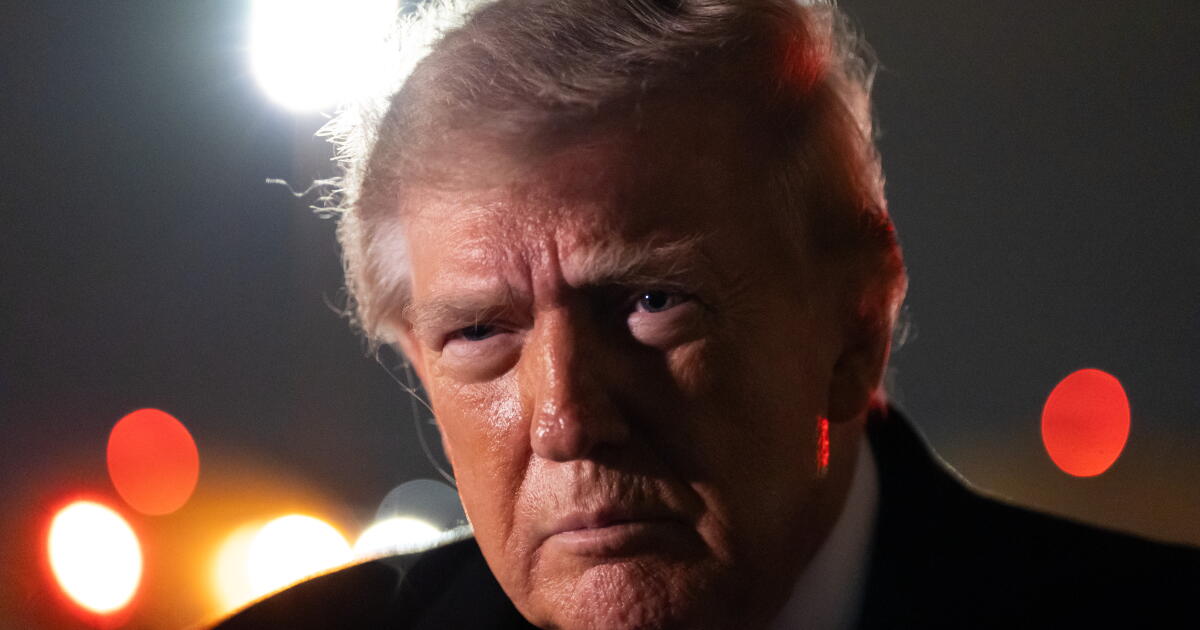
Departing Washington for the weekend, Trump told reporters that a “very disjointed” Iranian government, torn internally over whether to agree to a nuclear deal with the Americans, had put his administration “in a bad position,” uncertain whom to negotiate with or whether any agreement it might strike would be enforced.

“Right now we have negotiations going on. They’re not getting there,” Trump said. “They want to make a deal, but I’m not satisfied with it. So we’ll see what happens.”

And yet, the longer talks continue, the more pain Americans can expect to feel as global energy and fertilizer prices continue to skyrocket over disrupted commercial shipping traffic through the Strait of Hormuz, affecting the costs of pocketbook items ranging from food and fuel to airfare.

Trump hopes a brief new round of powerful strikes, potentially targeting Iranian infrastructure, will force Iran’s hard-liners to support a negotiated settlement — a gambit that could backfire, after an inaugural volley of strikes in the war killed off the government’s moderate voices, empowering the militant leadership of the Islamic Revolutionary Guard Corps.

“Do we want to go and just blast the hell out of them and finish them forever, or do we want to try and make a deal?” Trump asked, speaking with reporters on the South Lawn. “I mean, those are the options.”

In a letter addressed to Congress, Trump dismissed a 60-day deadline for congressional authorization for the war set forth in the War Powers Act, claiming the ceasefire with Iran had effectively stopped the clock on the administration’s legal responsibilities. Democrats argue that an ongoing U.S. blockade of Iranian ports constitutes an act of war that, absent a formal diplomatic agreement, requires congressional approval.

Speaking with reporters, Trump offered a less nuanced explanation.

“It’s never been used, it’s never been adhered to,” Trump said of the act. “Every other president considered it totally unconstitutional, and we agree with that.”

The internal debate over resuming the war comes after Pentagon officials informed Congress this week that the conflict, dubbed Operation Epic Fury, had cost taxpayers $25 billion thus far.

Pete Hegseth, the president’s secretary of Defense, defended the effort at a congressional hearing Wednesday, telling lawmakers that the United States was “absolutely” winning the war.

“Militarily,” Hegseth said, “on the battlefield, it’s been an astounding military success.”

He declined to say whether he had advised the president to launch the war in the first place.

Source link

Iran war: What’s happening on day 64 as Trump rejects Tehran’s proposal | US-Israel war on Iran News

US President Donald Trump says the latest Iranian peace proposal includes demands he ‘can’t agree to’.

United States President Donald Trump has voiced frustration with Iran’s latest peace proposal, saying “they’re asking for things I can’t agree to”, and cautioning against ending the conflict too early, only for tensions to resurface “in three more years”.

At the same time, Washington has warned that ships paying tolls or fees to Iran to transit the Strait of Hormuz could face US sanctions, signalling a tougher stance on maritime activity linked to Tehran.

Meanwhile, a new Washington Post-ABC News-Ipsos poll shows 61 percent of Americans believe Trump’s use of military force against Iran was a mistake.

Here is what we know:

In Iran

  • Fourteen soldiers were killed on Friday during operations to defuse unexploded ordnance in the northwestern Zanjan province, local media reported.
  • Supreme Leader Mojtaba Khamenei urged his people to wage economic battle and “disappoint” its enemies, as the war with the US and Israel and years of sanctions take a toll.
  • The Islamic Revolutionary Guard Corps (IRGC) Navy said it would enforce “new rules” over waters near its coast, aiming to turn them into a “source of security and prosperity” for the region.

War diplomacy

  • The US Department of State imposed new measures on entities linked to Iranian petroleum exports, including China-based Qingdao Haiye Oil Terminal, accusing it of importing millions of barrels of sanctioned crude and enabling billions in revenue for Tehran. Beijing rejected the move as unlawful “unilateral sanctions”.
  • The State Department said it cleared more than $8.6bn in military sales to Israel, Qatar, Kuwait and the United Arab Emirates.

In the US

  • Trump said he was unhappy with Iran’s new proposal for peace talks, which Iran’s state news agency IRNA said was delivered via mediator Pakistan. “They’re asking for things that I can’t agree to,” he said.
  • Analyst Sultan Barakat said Iran and the US are “really desperate” to end the war in a way that allows them to “save face”.
  • Trump told top US lawmakers that hostilities in Iran had ended, after coming under pressure from Congress to seek authorisation for the conflict as it headed into its third month.
  • The US Treasury Department slapped new sanctions on three Iranian foreign currency exchange firms to try to stem the flow of Tehran’s “financial lifelines”.
  • The USS Gerald R Ford left the Middle East after taking part in operations against Iran, a US official said, according to reports. Two other aircraft carriers – the USS Abraham Lincoln and USS George HW Bush – are among 20 US ships still in the region.
  • Mark Cancian of the Center for Strategic and International Studies said US military capability “has not changed” as Washington returns to its typical posture of two carrier groups.
  • “The Ford carrier group had left the United States last June, and its deployment has been extended twice. The crew and the ship are tired, so the United States is sending the group home,” he added.
epa12858426 The US Navy aircraft carrier USS Gerald R. Ford (CVN-78) sits anchored in Split, Croatia, 29 March 2026. The ship arrived for repairs following a non-combat fire during operations in the Red Sea. The world's largest carrier, which recently supported Operation Epic Fury, transitioned to the NATO-allied port after a March 12 laundry room fire injured three sailors and damaged sleeping quarters. The vessel remains a centerpiece of US naval power, housing over 5,000 crew members and 75 military aircraft. EPA/STRINGER
USS Gerald R Ford anchored in Split, Croatia, March 29, 2026 [EP]

In Lebanon

  • Lebanon’s Ministry of Public Health said 12 people were killed on Friday in Israeli strikes on the country’s south, including in a town where Israel’s army had issued a forced displacement order despite a ceasefire.
  • Lebanon’s parliament speaker, Nabih Berri, said Israel is using the ceasefire as cover to intensify attacks.

Source link

Arrests of several L.A. Iranian families sow confusion in a polarized community

Sarina Hosseiny said she had never heard of Qassem Suleimani, an Iranian general assassinated by the U.S. in 2020.

That is, not until this year, when threatening comments cropped up on social media claiming that she and her mother were relatives of Suleimani and were terrorists who should be deported.

The 25-year-old, who studies fashion at Los Angeles Trade Technical College, now sits in an immigration detention facility in Texas, alongside her 47-year-old mother. And other L.A. Iranian Americans helped put her there.

A photo of a woman with dark hair in a jacket with a patch of a red Stop sign and another of a yellow shell outlined in red

Sarina Hosseiny, 25, shown in an undated photo, is a student at Los Angeles Trade Technical College now held at an immigration detention facility in Texas, alongside her 47-year-old mother.

(Courtesy of Hosseiny family)

“They were sending me death threats. Literally saying like, they were gonna find me and kill me and my mom and all this stuff,” Hosseiny said in a phone interview from the facility last week. “All I’ve ever posted is that I was against war and just innocent people dying.”

In recent weeks, as the war in Iran continues, the U.S. State Department has detained five L.A. area-based Iranian nationals, including Hosseiny and her mother — all of whom are green card holders — and moved to strip them of their residency.

The arrests have exposed a rift in the Iranian American community, which has grown increasingly polarized in recent years, leading to online smear campaigns and at times violence.

In L.A., home to the largest concentration of people of Iranian descent outside Iran, a vocal segment has joined forces with Trump-aligned far-right conservatives, including Laura Loomer, to wage campaigns against other Iranians they believe should not be allowed to live here.

Many in the local community fled Iran after the Islamic Revolution in 1979 and cheered the recent U.S. military attacks on their native country. Some have turned on Iranian Americans who have expressed antiwar opinions, interpreting that stance as support for the current government.

A poster in a store window shows a man in a suit and tie, and the words King Reza Pahlavi

A poster in support of Iran’s former crown prince, Reza Pahlavi, hangs in a window of the Gallery Eshgh, which sells artwork and clothing reflecting Iranian culture on Westwood Boulevard in Los Angeles in April 2026.

(Kayla Bartkowski / Los Angeles Times)

The tensions are interpersonal, with arguments at family gatherings and friendships strained or shattered. But much of the conflict also takes place online, as when a San Diego-based “mommy influencer” — who normally posts images of herself and her three young children in a luscious backyard shucking nuts, arranging tulips and peeling pomegranates — urged her Instagram followers to contact Loomer so that “the deportation of [the Islamic Republic’s] lackeys can be arranged.”

Anger at the Iranian government has been channeled toward family members of current or former officials, with online petitions describing them as living luxuriously in the States even as ordinary Iranians face repression from a brutal government back home.

Agoura Hills residents Seyed Eissa Hashemi and Maryam Tahmasebi, both psychology professors, were detained by immigration authorities in early April — as was their son, Seyed Mobin Hashemi. The elder Hashemi, the State Department said, is the son of Masoumeh Ebtekar, who gained fame as a spokeswoman for militants who stormed the U.S. Embassy in Tehran in 1979 and became a reformist politician pushing for environmental protections and women’s rights.

The petition that led to the family’s detention amassed more than 140,000 signatures, with many identifying themselves as members of the Iranian diaspora in the U.S., Australia or elsewhere. The creator of the petition on Change.org, a user who also published petitions targeting five other families, did not respond to a request for comment.

The Times was not able to reach Hashemi or the family’s attorney. U.S. Secretary of State Marco Rubio said on social media when announcing their detentions that the Obama administration had granted visas to the family members, who have been lawful permanent residents since June 2016.

The Department of Homeland Security declined to respond to questions about Hosseiny and her mother’s case. White House spokesperson Abigail Jackson also declined to comment. The State Department and Loomer did not respond to requests for comment.

Jamal Abdi, president of the National Iranian American Council, said that some of the sentiment comes from real grievances about corruption in Iran, such as the banker who embezzled millions before fleeing to Canada. But he said that rumors have been weaponized to muffle voices opposing U.S. and Israeli military aggression in Iran and exploited by the Trump administration to exercise a show of strength at home during a flailing war.

Two large green, white and red flags with a lion symbol are displayed inside a store

The flags of pre-revolution Iran are prominently displayed in the Jordan Market, a purveyor of Persian groceries on L.A.’s Westwood Boulevard, in April 2026.

(Kayla Bartkowski / Los Angeles Times)

“This witch hunt has become really pervasive, and it’s not new,” Abdi said. “What seems to be new is there’s an administration who is willing and eager to entertain this McCarthyism and actually punish people based on what the mob is calling for.”

In the section of Westwood known as “Tehrangeles,” support for Reza Pahlavi, the exiled crown prince and son of the late shah, is apparent. A campaign to install him as Iran’s leader intensified in January, as protests ripped through the country. Supreme Leader Ayatollah Ali Khamenei was killed in a U.S.-Israeli attack in February.

“Make Iran Great Again” signs and posters of a stern-faced Pahlavi are plastered on nearly every window. Iran’s flag before the 1979 revolution — green, white and red with a lion and a rising sun — flutters from many overhangs.

In early March, as the U.S. widened its assault on Iran, crowds from the diaspora rallied in the neighborhood, dancing and celebrating even as the death toll in Iran grew and reports said a missile strike had killed more than 100 schoolchildren.

In Westwood these days, many are more tepid in their support for the war than at the outset and are hesitant to speak openly, whether because of potential backlash here in the U.S. or repercussions for relatives in Iran.

Iranians who don’t back a return to a monarchy under Pahlavi or American and Israeli intervention have gotten “a hell of a lot of backlash,” said Narges Bajoghli, an associate professor of Middle East studies at John Hopkins University. Bajoghli cited a groupthink dynamic stoked by popular Persian-language media such as Iran International, as well as U.S.-funded counter-propaganda programs during Trump’s first term.

After Aida Ashouri, a human rights lawyer who is running for L.A. city attorney, posted a video explaining why she opposes the U.S. war in Iran, the comments came rolling in.

“Please deport this woman,” one user wrote, tagging Rubio and Immigration and Customs Enforcement. “She is constantly spreading suspicious anti war propaganda.”

A woman with dark hair, in a red shirt

Aida Ashouri, who is running for L.A. city attorney, poses for a picture at Astralab on April 24, 2026.

(Etienne Laurent / For The Times)

Ashouri, a U.S. citizen, spent her childhood frequenting businesses in Westwood, but she no longer feels comfortable there, fearing some sort of altercation. Some businesses removed her campaign posters from their windows after the war began, she said.

“It’s 100% impacting my campaign. It’s hard to connect with the Iranian community now, even though I’m Iranian,” she said.

The State Department has said it revoked the green cards of Iranians it targeted in recent weeks, including Hosseiny and her mother. Immigration experts said it’s not so simple, as a legal process has to play out, during which the green cards remain valid.

Even so, Muzaffar Chishti of the Migration Policy Institute said that the executive branch has vast discretion in immigration law, particularly when invoking national security justifications, and defense attorneys may face an uphill battle.

Aaron Reichlin-Melnick, a senior fellow at the American Immigration Council, said he is “personally troubled by the idea that we need to deport someone because of who their grandparent is.”

“The government doesn’t usually outsource its investigatory processes to external people,” he said, referring to Loomer and others. “There’s still a lot of questions about how these people are being found and targeted.”

After Hosseiny and her mother, Hamideh Soleimani Afshar, were arrested by U.S. Immigration and Customs Enforcement agents on April 3, the State Department asserted that they were the Iranian general’s grand-niece and niece. Afshar had denounced America as the “Great Satan” and shown “unflinching support for the Islamic Revolutionary Guard Corps” while “enjoying a lavish lifestyle in Los Angeles,” the State Department said.

Social media posts, showing Soleimani Afshar posing for glamour shots and photos of Hosseiny in a similar vein, were published by numerous news outlets.

Loomer took credit on April 4 for the two women’s arrests, writing on X that over several months she had “quietly been documenting” their social media activity and shared the information with the Department of Homeland Security and the State Department.

Within hours, however, Hosseiny and her mother’s connection to the slain general was disputed, with his daughter writing on social media that they had “no relation whatsoever” to her family. A review of family documents, as first reported by Dropsite News, shows that Afshar’s father had no brothers and that the general is from a different province than Afshar’s family.

Hosseiny said her mother has been sharply critical of the U.S. and Israel’s military assault in Iran. But Hosseiny “always thought that in America, people have freedom.”

She said that her mother’s health has deteriorated as she battles severe autoimmune-related anemia and that her mother’s home and car were broken into, amid the stream of online hate.

After four weeks in detention, Hosseiny said, she is “still in disbelief.” Her friends have been raising funds for her legal defense.

Times staff writer Cierra Morgan contributed to this report.


Source link

Peru probes trafficking of citizens to fight for Russia in Ukraine | Russia-Ukraine war News

Peru’s public prosecutor says many of their citizens are victims of deception, lured by ⁠the promise of jobs but ended up in Ukraine.

Peru has launched an investigation into an alleged human trafficking network that lured citizens with false promises of employment in Russia, only for them to end up fighting in Russia’s war against Ukraine, the public prosecutor’s office has said.

Individuals were “recruited through deceptive job offers to work as security agents and other roles” in Russia, “with the promise of financial compensation”, the prosecutor’s office said in a statement on Friday.

Recommended Stories

list of 4 itemsend of list

The investigation will focus on the alleged crimes of “human trafficking” and “aggravated human trafficking”, the office said.

Percy Salinas, a lawyer representing families of people who ended up on the front lines in Ukraine, told the local TV channel N that 13 Peruvians have died in the war in Ukraine so far, according to the AFP news agency.

Salinas said individuals were reportedly offered monthly salaries of between $2,000 and $3,000, and that an estimated 600 Peruvians have been lured since last October to fight for Russia.

In a statement released on Thursday, Moscow’s embassy in Lima acknowledged that Peruvians had signed contracts to join the Russian armed forces.

The Peruvian Ministry of Foreign Affairs said it had asked the Russian embassy to clarify the situation and obtain information about the location and wellbeing of citizens serving in the Russian military. The ministry noted that Peruvian citizens are required to seek permission from the Foreign Ministry before serving in a foreign military.

The families of some of the victims who claimed they were recruited under false pretences to fight in Ukraine protested outside the ministry in Lima on Thursday, demanding their loved ones be repatriated.

Peru is the latest country to raise complaints against Russia over the deceptive recruitment of foreign nationals to fight in Ukraine.

More than 1,780 citizens from 36 African countries are believed to be fighting alongside Russian forces, according to Ukrainian estimates from February.

Russia has also previously acknowledged enlisting soldiers from North Korea, thousands of whom are estimated to have been killed or wounded in battle, as part of a military pact agreed between Moscow and Pyongyang.

 Relatives of Peruvians who claim they were recruited by Russia under false pretenses
Relatives of Peruvians who claim they were recruited by Russia to the front lines of the war in Ukraine protest in Lima, Peru, on April 29, 2026 [Mikhail Huacan/EPA]

Source link

US said to be withdrawing 5,000 troops from Germany over Iran war spat | Military News

President Donald Trump has feuded with European allies over their reluctance to step up support for war on Iran.

The United States military has said that it will pull 5,000 troops out of Germany amid ongoing tensions with the key European ally concerning the US war against Iran, according to media reports.

Reuters reported that the Pentagon made the decision on Friday, several days after German Chancellor Friedrich Merz said that Iran was humiliating the US during negotiations over the end of the war.

Recommended Stories

list of 3 itemsend of list

“The president is rightly reacting to these counterproductive remarks,” the report cites an anonymous official as saying.

The news service reported that the withdrawal is expected to take place over the next six to 12 months. The decision was also reported by CBS News, citing senior defence officials.

President Donald Trump has lashed out at European allies for not doing more to assist the US-Israel war on Iran, and had stated on Wednesday that he was thinking of pulling troops out of European countries deemed insufficiently supportive.

The US outlet Politico reported earlier this week that Trump’s threats to pull troops out of European countries caught the military by surprise, citing several anonymous defence officials and a congressional aide.

Trump attacked his German counterpart in another social media post on Thursday, stating that Merz should spend more time trying to end the war between Russia and Ukraine and less time “interfering with those that are getting rid of the Iran Nuclear threat, thereby making the World, including Germany, a safer place”.

While European countries have been hesitant to commit their own forces to the US war on Iran, leaders such as Merz were initially hesitant to offer criticism of the US attacks, widely considered illegal under international law.

But criticism has mounted as the war sends shocks across the global economy due to serious disruptions to regional energy supply. Earlier this week, Merz compared the war to previous military quagmires such as the US invasions of Iraq and Afghanistan.

“It is, at the moment, a pretty tangled situation,” he said. “And it is costing us a great deal of money. This conflict, this war against Iran, has a direct impact on our economic output.”

Source link

US warns shippers against paying Strait of Hormuz tolls, ‘donations’ | US-Israel war on Iran News

Latest warning comes as Iranian state media reports Tehran has presented new peace proposal to US.

The United States has warned that any shippers paying tolls or other fees to Iran for passage through the Strait of Hormuz risk being sanctioned.

The warning on Friday comes as a US naval blockade of the strait continued for its third week, amid stalled US-Iran ceasefire talks. Iranian President Masoud Pezeshkian has called the ongoing siege on the country’s ports “intolerable”.

Recommended Stories

list of 3 itemsend of list

Iran’s influence over, and ability to effectively close, the Strait of Hormuz emerged as a key point of leverage shortly after the US and Israel began launching attacks on Iran on February 28.

About one-fifth of the global crude oil and liquefied natural gas maritime shipments pass through the arterial waterway.

In its past proposals to end the war, Iran has proposed charging fees or tolls for vessels seeking to pass through the state. Washington has repeatedly rejected the prospect.

The advisory from the Department of the Treasury’s Office of Foreign Assets Control said Iran may offer shippers fiat currency, digital assets, offsets, informal swaps, or other in-kind payments.

It said those also included payments framed as charitable donations, including to the Iranian Red Crescent Society, Bonyad Mostazafan, or Iranian embassy accounts.

“OFAC is issuing ‌this alert to warn US and non-US persons about the sanctions risks of making these payments to, or soliciting ‌guarantees ‌from, the Iranian regime for safe passage,” it said.

“These risks exist regardless of payment method,” it said.

Both the government of Iran and the International Revolutionary Guard Corps (IRGC) remain under US sanctions.

The advisory on Friday came as Iranian state media reported that Tehran had sent a new proposal for a lasting ceasefire to the Trump administration.

A White House spokesperson said it does not “detail private diplomatic conversations”, declining to confirm receipt of the proposal.

The spokesperson, Anna Kelly, added that “Trump has been clear that Iran can never possess a nuclear weapon, and negotiations continue to ensure the short- and long-term national security of the United States”.

Both sides have largely halted attacks since reaching a tentative agreement to pause fighting on April 7. Trump has repeatedly threatened to resume attacks amid the stalled negotiations.

Iran’s Foreign Minister Abbas Araghchi said Friday that Tehran remains open to diplomacy with the US if Washington alters its “expansionist approach” and “threatening rhetoric”.

Source link

Poll finds 61 percent of Americans believe attacking Iran was a mistake | US-Israel war on Iran News

Poll finds that Americans are concerned about impact of the war on the cost of living and sceptical of success thus far.

A new poll has found that a large majority of people in the United States believe that the decision to take military action against Iran was a mistake, as the war roils the global economy and fuels cost-of-living concerns in the US.

A Washington Post-ABC-Ipsos poll released on Friday shows that 61 percent of respondents believe the use of military force against Iran was a mistake, with just 36 percent saying it was the right decision.

Recommended Stories

list of 3 itemsend of list

The poll is the latest to find low levels of support for the war launched against Iran by the US and Israel in late February, which has killed thousands of people across the Middle East and sent global energy prices surging.

Asked if they had changed their behaviour due to higher gas prices, 44 percent of respondents said they had cut back on driving, and 42 percent said they had done the same for household expenses. Those figures increased to 56 percent and 59 percent for respondents making less than $50,000 per year.

Those concerns come at a time when President Donald Trump’s approval ratings have dropped to new lows, with voters expressing frustration over economic issues and the cost of living.

The war has also been depicted as a contrast with Trump’s promise to keep the country out of unnecessary foreign wars, and 46 percent of respondents said the decision to attack Iran was inconsistent with the position Trump took during his presidential campaign.

Despite relatively low casualty figures among US forces, the poll found that the war on Iran is as unpopular as the Iraq War was during a period of heightened violence in 2006 and the Vietnam War was in the early 1970s.

Asked whether US military actions against Iran have been successful thus far, 39 percent said they had been unsuccessful, while 19 percent said they had been successful. A plurality of 41 percent said it was too soon to tell.

Support for the war remains robust among members of Trump’s Republican Party, however. Nearly 80 percent of Republicans said that the decision to attack Iran was the correct one, even as they were split evenly between rating operations as successful or stating that it was too soon to tell.

Source link

Trump slams CNN, New York Times over coverage of Iran war – Middle East Monitor

US President Donald Trump on Thursday sharply criticized The New York Times and CNN over their coverage of the US-Israeli war on Iran, describing CNN as “stupid” and claiming the newspaper’s reporting was “seditious,” Anadolu reports.

Trump said he had “militarily decapitated” Iran, speaking to reporters at an Oval Office event where he signed an executive order aimed at expanding workers’ access to retirement savings, while also criticizing Democratic efforts to limit his war powers.

“And every day, I read about how well they’re doing militarily,” he said. “They’ve got nothing left, they’re done. And yet I read in The New York Times, I see on stupid CNN — which I only watch because you have to watch a little bit of the enemy.”

READ: Pentagon says Iran still has part of naval fleet despite Trump claims

Trump also said coverage by the two outlets implied that Iran is “winning the war,” criticizing their reporting on the war.

“If you read The New York Times — it’s actually seditious, in my opinion,” he said. “You read some of these columnists, but it all starts with the top. It’s a terrible thing.”

He said he did not “care, and everybody knows the facts. We are decimating the country.”

Earlier, the New York Times editorial board suggested that the US military is “losing its edge” in the Iran war, arguing that tactical gains have not translated into overall victory and may weaken Washington’s position.

READ: American journalist Tucker Carlson feels ‘betrayed,’ criticizes Trump on Iran war: Report

Source link

Greek Orthodox Church sounds alarm over attacks on Christians in Jerusalem | US-Israel war on Iran News

Warning follows Jewish man’s arrest over brutal attack in which a nun was pushed and kicked in Jerusalem this week.

The head of a Greek Orthodox Church in Jerusalem has condemned a brutal attack on a nun in the city earlier in the week and warned of growing concerns over the future for Christians living in the Holy Land.

Archbishop Atallah Hanna said on Facebook that “the attack on a nun in the city of Jerusalem comes amid escalating violations against Christian institutions in the city”.

Recommended Stories

list of 3 itemsend of list

He added that “this reflects increasing concerns about the future of the historic Christian presence in the Holy Land”.

In his post, which was accompanied by a video, he warned that such attacks “are no longer isolated incidents, but part of a recurring pattern that threatens the Christian presence,” calling for international action to stop them.

On Thursday, Israeli police released a video showing what witnesses said was an attack by a Jewish man on a French nun in Jerusalem on Tuesday.

Video footage showed the man following the nun, forcibly pushing her to the ground, causing an injury to her head, then briefly walking away before returning to kick her as she lay on the ground, before bystanders intervened.

According to The Times of Israel, police said they had arrested a Jewish man suspected of assaulting the nun in Jerusalem.

“The suspect, a 36-year-old male, was identified and subsequently arrested by police,” the police said in a statement on Wednesday, adding it viewed with “utmost severity” any violent act “driven by potentially racist motives and directed toward members of the clergy”.

Father Olivier Poquillon, director of Jerusalem’s French School of Biblical and Archaeological Research, told the AFP news agency the 48-year-old nun is a researcher at the institution and did not wish to speak publicly.

Rising attacks on Christians

Attacks on Christian communities in occupied East Jerusalem and Israel have risen in recent years, according to the Rossing Center for Education and Dialogue, which tracks such incidents.

Churches in Jerusalem have repeatedly called on Israeli authorities to act decisively to put a stop to them.

On Tuesday, Israel’s Foreign Ministry called the incident a “shameful act” in a statement on X.

“In a city sacred to Jews, Christians, and Muslims alike, we remain committed to protecting all communities and ensuring those responsible for violence are held accountable,” the ministry added.

Last month, a viral photograph showing an Israeli soldier smashing a statue of Jesus Christ in southern Lebanon with a sledgehammer caused outrage.

The military said an investigation had been opened and that “appropriate measures will be taken against those involved in accordance with the findings”.

Israel later said the soldier had been jailed for 30 days, along with another soldier who had been filming him. Six other soldiers have been summoned for questioning.

Source link

Gaza aid flotilla vessels taken to Crete after Israeli interception | US-Israel war on Iran News

Israel’s military reportedly seized 22 vessels sailing among the Global Sumud Flotilla.

More than ‌160 activists on board aid ships forming a flotilla bound for Gaza have been taken to the Greek ⁠island of Crete ⁠after Israeli forces seized their vessels in international waters near Greece earlier this week, Freedom Flotilla organisers have said.

The organisers told the Reuters news agency on Friday that 168 members of the flotilla crew had been taken to Crete while two activists remained with Israeli authorities.

Recommended Stories

list of 3 itemsend of list

According to the group’s tracker, 22 boats have been intercepted so far by Israel, while 47 others are still sailing.

On Wednesday, Israeli military forces intercepted the boats travelling with the Global Sumud Flotilla from Barcelona in Spain, using drones, communications jamming technology, and armed raiding parties to halt the humanitarian fleet in the middle of the Mediterranean as it headed to Gaza, according to organisers and Israeli media.

Israeli Foreign Minister Gideon Saar said the activists on the intercepted boats would be taken to Greece.

On Friday, an Israeli army ship transferred 168 members of the flotilla crew to Greek boats, which then took them to Crete, where buses and an ambulance car waited for them, organisers said and Reuters footage showed.

A source who asked not to be identified also told Reuters that the remaining 47 boats at sea were still sailing off southern Crete and planned to anchor there at some point before continuing onwards to Gaza.

Each ship is carrying about a tonne of food, medical supplies and other equipment, the source added.

flotilla
Security camera footage shows crew members of the flotilla that sailed from the Spanish port of Barcelona, carrying humanitarian aid to Palestinians in Gaza, raise their arms as the vessel is said to be intercepted by the Israeli army off the coast of Greece, April 30, 2026 [Handout/Global Sumud Flotilla via Reuters]

‘A straight-up attack’

In an interview with Al Jazeera on Wednesday, Gur Tsabar, a spokesperson for the Global Sumud Flotilla, described Israel’s boarding of its vessels as “a straight-up attack on unarmed civilian boats in international waters”.

“This is illegal under international law. Israel has no jurisdiction in these waters. Boarding these boats amounts to illegal detention, potentially kidnapping on the high seas,” Tsabar added.

Officials around the globe have condemned the interception of the boats bound for Gaza as a violation of international law, with Turkiye calling it an “act of piracy”.

“By targeting the Global Sumud Flotilla, whose mission is to draw attention to the humanitarian catastrophe faced by the innocent people of Gaza, Israel has also violated humanitarian principles and international law,” Turkiye’s Ministry of Foreign Affairs said in a statement.

Spain called the interception “illegal”, while Germany and Italy expressed “great concern” and called for the release of detainees.

But in a statement on Thursday, the US Department of State threatened “to impose consequences” against those who support the flotilla, which it cast as “pro-Hamas”.

Pro-Palestinian activists say Israel and the United States wrongly conflate their advocacy for Palestinian rights with support for Hamas fighters.

Last October, Israel’s military intercepted about 40 boats from the first Global Sumud Flotilla as they tried to carry aid to besieged Gaza, arresting more than 450 participants, including the grandson of South African leader Nelson Mandela, Swedish campaigner Greta Thunberg and Member of European Parliament Rima Hassan.

Detained and taken to Israel, several of the flotilla activists claimed they were subjected to physical and psychological abuse while in Israeli custody.

Israel later expelled the arrested crew members and activists.

Source link

Ukraine begins to flex muscle as an emerging air power, angering Russia | Russia-Ukraine war News

Ukraine used its latest technology to deepen strikes against Russian oil storage, ports and refineries in the past week, bombing targets in the Urals 1,600 kilometres (990 miles) from its borders and prompting protests about “terrorist attacks” from the Kremlin spokesman.

President Volodymyr Zelenskyy on Wednesday announced “a new stage in the use of Ukrainian weapons to limit the potential of Russia’s war”.

Recommended Stories

list of 4 itemsend of list

The Ukraine Security Service (SBU) later clarified it had struck Transneft’s oil pumping and distribution facility in the city of Perm that day, from where oil was pumped to the Perm refinery and via pipeline in four directions across Russia.

INTERACTIVE-WHO CONTROLS WHAT IN UKRAINE-1777386423
(Al Jazeera)

The facility is “a strategically important hub of the main oil transportation system”, said the SBU, and preliminary information suggested that “almost all oil storage tanks are on fire”.

Russia’s Ministry of Defence confirmed the strike and said it had downed 98 Ukrainian UAVs across various regions.

“The Urals are now within reach, be vigilant,” wrote Russia’s presidential envoy to the region, Artem Zhoga.

Ukraine’s campaign has begun to elicit reactions from the Russian government.

Kremlin spokesman Dmitry Peskov called the attacks on oil facilities “terrorist attacks”.

INTERACTIVE-WHO CONTROLS WHAT IN EASTERN UKRAINE copy-1777386402
(Al Jazeera)

A Russian Defence Ministry announcement – that military cadets and a column of equipment would not take part in this year’s Victory Day parade commemorating the end of World War II “due to the current operational situation” – was also widely interpreted as a precaution against potential Ukrainian drone strikes.

Ukraine’s strikes are part of a strategy of depriving Russia of windfall profits from soaring oil prices due to the closure of the Strait of Hormuz.

Zelenskyy said Russian internal documents seen by his foreign intelligence service admitted that Ukraine had deprived oil offloading ports of much of their capacity.

A resident walks at the site a Russian drone strike, amid Russia's attack on Ukraine, in Dnipro, Ukraine April 30, 2026. REUTERS/Stringer TPX IMAGES OF THE DAY
A resident walks at the site of a Russian drone attack in Dnipro, Ukraine, April 30, 2026 [Reuters]

Primorsk and Ust-Luga on the Baltic Sea had lost 13 percent and 43 percent of capacity, respectively, and the Black Sea port of Novorossiysk 38 percent.

“We believe that such internal Russian data may be underestimated,” Zelenskyy said.

The internal figures roughly agree with a Reuters March estimate that Russia had lost approximately 40 percent of its export capacity.

That translated into revenue losses of $2.3bn in March, Zelenskyy estimated.

INTERACTIVE-WHO CONTROLS WHAT IN SOUTHERN UKRAINE-1777386384
(Al Jazeera)

The Institute for the Study of War, a Washington-based think tank, said that Ukraine had likely conducted at least 18 strikes against Russian oil infrastructure in April.

Kyiv’s attacks have been “steadily increasing the range, volume, and intensity” with “outsized impacts on Russian oil exports”.

Ukraine struck other oil and military targets during the past week.

On April 23, it damaged three storage tanks at the Gorky oil pumping station in Nizhny Novgorod and struck the Novokuibyshevsk petrochemical plant in Samara.

The next day, it destroyed two production facilities at the Atlant-Aero factory in Taganrog, Rostov, which builds the Molniya drones used to attack Ukrainian cities.

A serviceman of the Ukrainian Armed Forces installs anti-drone nets over a road near the frontline town of Druzhkivka, amid Russia's attack on Ukraine, in Donetsk region, Ukraine April 28, 2026. REUTERS/Serhii Korovainyi TPX IMAGES OF THE DAY
A serviceman of the Ukrainian Armed Forces installs anti-drone nets over a road near the front-line town of Druzhkivka in the Donetsk region, Ukraine, April 28, 2026 [Serhii Korovainyi/Reuters]

On Sunday, Ukraine struck the Yaroslavl oil refinery, and on Tuesday, they struck the Tuapse oil refinery on the Black Sea for the third time this month. Even before this latest strike, at least 24 oil storage tanks at the site had been destroyed, said Ukraine’s head of the Center for Countering Disinformation, Andriy Kovalenko.

Russian President Vladimir Putin dispatched his Civil Defence, Emergencies, and Disaster Relief minister, Alexander Kurenkov, to oversee the response personally.

An emerging air power

Ukraine has been developing its own long-range strike capabilities and devotes 20 percent of its defence resources to new technologies, said Defence Minister Mykhailo Fedorov.

One of its leading drone manufacturers, Wild Hornets, recently said a drone operator had used its remote piloting system to fly a Sting interceptor drone at a distance of 2,000km (1,240 miles).

On April 23, Fedorov said Ukraine had successfully tested remote control technology that enabled pilots to operate from the relative safety of Kyiv or Lviv, “at distances of hundreds and thousands of kilometres”.

INTERACTIVE Ukraine Refugees-1776241781
(Al Jazeera)

Ukraine is now touting its battlefield innovations in Saudi Arabia, Qatar and the United Arab Emirates in the wake of Iran’s attack on the Gulf nations.

Zelenskyy met Saudi Crown Prince Mohammed Bin Salman in Riyadh on April 24 to discuss “the export of our Ukrainian security expertise and capabilities in air defence”.

Days later, he said Kyiv produces as many as twice the number of certain types of weapons as the military needed, and that “Ukrainian companies will get a real opportunity to enter the markets of partner countries, provided that our military have the right to take the necessary amount of weapons first”.

The burgeoning relationship with the Gulf, he said, had invoked Moscow’s concern.

“Russia is particularly irritated by our contacts in the Middle East and the Gulf region,” he told Ukrainians on Wednesday.

More surprisingly, he said some allies, too, were irritated by the competition.

“We are also aware of the complex attitude of some of our other partners towards this – partners who would prefer to limit our state’s independence,” Zelenskyy said in an evening video address. “We consider this their mistake.

Source link

Commercial flights from Tehran’s main airport resume amid cautious normalcy | US-Israel war on Iran News

More commercial flights have been departing from Iran’s largest airport following its reopening last week.

Iranian authorities announced the resumption of flights at Imam Khomeini international airport after approximately 58 days of suspension since the launch of the US-Israel war on Iran. Flight information boards also went offline after the closure of Iran’s airspace.

Recommended Stories

list of 4 itemsend of list

For weeks, the suspension of flights stranded many travellers, disrupted businesses, and separated families.

Air traffic gradually resumed from April 25 with flights to 15 destinations operated by eight domestic airlines, covering regional and international destinations such as Medina, Istanbul, Muscat, China and Russia. Yet the number of flights is a fraction of what it was before the war.

Maryam, a passenger who planned to go to Toronto to see her daughters, told Al Jazeera: “After a lot of stress and problems, now I’ve found a ticket with an Iranian airline — flying first to Armenia with a long layover, and then on to Canada.”

Before the war, the airport was bustling with travellers and would witness 150 flights on a typical day. Now, terminals that were packed, then empty, are slowly filling up again as flights resume.

Ramin Kashef Azar, CEO of Imam Khomeini Airport City, told Al Jazeera that the return of foreign carriers, many of which have operated in the country for years, “will depend on political stability and their own risk assessments.” According to the Iranian Civil Aviation Organization, 20 aircraft have been destroyed and are no longer operational. However, the airport infrastructure has not been damaged and is approximately 95 percent ready.

These developments come after Iran’s gradual reopening of its airspace from April 19, in four phases. It encompasses transit flights followed by domestic flights, culminating in the full resumption of operations at international airports, as stated by the Iranian aviation regulator.

Foreign companies are apprehensive about returning to operate at Iranian airports amid the uncertainty surrounding the political and negotiating landscape between Tehran and Washington.

Targeting of airports

Iran’s civil aviation sector has suffered damage as a result of the war. More than 3,300 people have been killed in Iran, and thousands have been injured, in addition to widespread destruction of civilian infrastructure.

Another airport that was subject to US-Israel attacks several times was Mehrabad airport, also in Tehran. The airport mainly handles domestic flights. Located in the west of the capital, it was the official airport for international and domestic flights before the construction of Imam Khomeini airport in 2009.

In addition to Mehrabad, airports in Kashan, Tabriz, Ahvaz, Mashhad, Khoy and Urmia were also targeted. Several civilian aircraft have been damaged.

It is not the first time Mehrabad Airport has been attacked. In June 2025, it was reported that Israel targeted Mehrabad airport during the 12-day war. Iranian authorities, however, said the airport and its runways escaped damage.

The impact of the war goes beyond airports. It has affected other businesses, causing revenue losses, layoffs and operational disruptions.

Babak, a tour guide, said he and many of his colleagues lost their jobs “because there were no incoming or outgoing tours, as flights were suspended and the war was ongoing”.

Nowruz, the Persian New Year, which comes with a peak aviation season for Iranian airports, also witnessed flight suspensions and caused major disruption. According to Bijan, a travel agent, this affected tours, charter flights, and hotel bookings. He added that they are processing refunds and had to cut staffing from 20 to just two.

Airports are coming back to life, and passengers are returning, hinting at a fragile normalcy after weeks of silence. Each departure signals renewed connection with the world, even as uncertainty on the ground endures.

Source link

Iran vows ‘long, painful’ response if US renews attacks | US-Israel war on Iran News

Iran says it will respond with “long and painful strikes” on US positions across the Gulf region if Washington renews attacks, and has restated its claim to the Strait of Hormuz, complicating the plans of the United States for a coalition to reopen the waterway.

Two months into the US-Israel war on Iran, the strait remains closed, choking off 20 percent of the world’s oil and gas supplies. That has sent global energy prices surging and heightened concerns about the risks of an economic downturn.

Recommended Stories

list of 3 itemsend of list

Pakistan-led efforts to resolve the conflict have hit an impasse. Despite a ceasefire in place since April 8, Iran continues to block the strait in response to a US naval blockade of its ports, preventing oil exports – Tehran’s economic lifeline.

Iranian Ministry of Foreign Affairs spokesman Esmaeil Baghaei defended the closure of the Strait of Hormuz. “This is because of the war and the defence of our right – that is, according to international law, it is legitimate, legal, and accepted,” he said on Thursday night, Iran’s official news agency IRNA reported.

He accused the US of “exploiting a waterway” of which Iran is the coastal state. “In such circumstances, you cannot allow this waterway to be misused,” he said.

Baghaei also justified attacks on US assets in Gulf countries.

“Unfortunately, the regional countries also truly acted unjustly; during the holy month of Ramadan, they cooperated with a foreign party in attacking an Islamic country, and this is something that will remain a permanent demand.”

On Thursday, the United Arab Emirates said it had banned its citizens from travelling to Iran, Lebanon and Iraq, and urged those currently in those countries to leave immediately and return home.

Then, on Friday, in response to Iran’s threat to hit targets in the Gulf, the adviser to the UAE’s president, Anwar Gargash, said: “No unilateral Iranian arrangements can be trusted or relied upon, following its treacherous aggression against all its neighbours.”

Bahraini King Hamad bin Isa Al Khalifa also condemned what he described as Iranian aggression against Manama and accused Tehran of threatening its security and stability and exposing internal collaborators.

In a statement, the king expressed anger at individuals and some legislators accused of siding with the attackers, warning that traitors could face imprisonment, loss of citizenship and expulsion. He stressed that loyalty to the nation is “paramount”, urging unity and accountability, and said parliament must be “cleansed” of those who support enemies.

New US strikes?

It is unclear whether the US is planning to renew its attacks on Iran.

Friday is the deadline for Congress to approve the war. Without that – or a 30-day extension, which the Trump administration must also justify by the day – the US will have to scale back its offensive significantly under the 1973 War Powers Resolution.

A senior administration official said late on Thursday that, for the resolution, hostilities had ceased with the start of the April ceasefire between Tehran and Washington, effectively resetting the clock.

President Donald Trump received a briefing from officials on Thursday on plans for a series of further military strikes to pressure Iran to negotiate an end to the conflict, US publication Axios reported, quoting sources.

US Democratic Senator Richard Blumenthal told CNN on Thursday that he had the “impression from some of the briefings”, as well as from other sources, that “an imminent military strike is very much on the table”.

He added that this prospect was “deeply disturbing” because it could “well involve American sons and daughters in harm’s way” and lead to “potential massive casualties”.

Bracing for attack

Meanwhile, Iran has been bracing itself for likely attacks. Air defence activity was heard in some areas of the capital, Tehran, late on Thursday, Iran’s semi-official Mehr news agency reported, and the Tasnim news agency said air defences were engaging small drones and unmanned surveillance aerial vehicles.

A senior official of the Islamic Revolutionary Guard Corps (IRGC) said any new US attack on Iran, even if limited, would usher in “long and painful strikes” on its regional positions. Iranian media reports, quoting the aerospace force commander, Majid Mousavi, said: “We’ve seen what happened to your regional bases, we will see the same thing happen to your warships.”

Supreme Leader Mojtaba Khamenei said in a written message to Iranians that “the enemies’ abuses of the waterway” would be eliminated under the new management of the strait, indicating that Tehran intended to maintain its hold over it.

“Foreigners who come from thousands of kilometres away … have no place there except at the bottom of its waters,” he said.

Multiple scenarios

Reporting from the White House, in Washington, DC, Al Jazeera’s Mike Hanna said: “There’s no doubt that there have been various scenarios laid out for him [Trump] by his military advisers and by his intelligence advisers as to what to do should the ceasefire no longer be extended.”

“Obviously, that would involve some form of armed action, some form of intensified economic action.”

“There’s absolutely no doubt that President Trump has all sorts of scenarios that have been laid out in front of him, but very clearly as well, it’s going to be him and him alone who will choose what to do next,” Hanna added.

Source link

Russia hammers targets across Ukraine overnight | Russia-Ukraine war News

Russia has continued heavy attacks on Ukraine for the past 24 hours, with several coming overnight on Thursday and in the early hours of Friday. At least one person has been killed and several have been injured.

A Russian drone attack overnight damaged port infrastructure in Ukraine’s southern Odesa region and wounded two people in the Black Sea port city of Odesa, regional Governor Oleh Kiper said on Friday morning.

Two high-rise residential buildings were damaged in the attack, which destroyed apartments and caused fires, Kiper wrote on the Telegram messaging app.

“This night, Russia again massively attacked the civilian infrastructure of the Odesa region: two people were injured,” he said.

Kiper noted that two multistorey residential buildings in Odesa were damaged by drone strikes. Apartments were destroyed and fires broke out at the sites of the hits, and all necessary assistance was being provided to the victims.

The Russian army also attacked the Black Sea shipbuilding town of Mykolaiv with drones, Mayor Oleksandr Sienkevych reported on Facebook.

“As a result of the impact, there is damage in the private sector, and a fire also broke out,” he wrote. He warned residents that the threat is ongoing and urged people to remain sheltered.

On Thursday night, Ukraine launched its fourth drone attack in the past week on Russia’s Black Sea port of Tuapse, as it continues to target Russian energy infrastructure in a bid to halt oil revenues.

“In Tuapse, as a result of a drone ⁠attack by the ⁠Kyiv regime, a fire broke out on the territory ⁠of the seaport ⁠terminal,” the General ⁠Headquarters in the Krasnodar Region reported on Telegram. It ‌added that emergency crews were working at ‌the ‌site.

Russia hits central Ukraine

The Russian army attacked three districts of the Dnipropetrovsk region in central Ukraine “almost 20 times” with drones and artillery, the head of the Regional Military Administration (OVA), Oleksandr Ganzha, wrote on Telegram.

Ganzha reported that infrastructure was damaged in Kryvyi Rih, where one person was injured.

Ukraine’s news outlet Interfax reported that there were strikes on the Synelnyky district, the Dubovykivska and Petropavlivska communities, where a garage and a car were burned, and residences were damaged.

In the Nikopol district, communities in Nikopol, Marhanetska and Chervonohryhorivska have been affected. A private house was occupied and infrastructure, a petrol station, an administrative building and buses were damaged, Interfax reported.

In Kherson, attacks by drones have continued for the past 24 hours in Kherson, Zymivnyk, Komyshany and Zelenivka.

The head of the Ukrainian Defence Ministry, Yaroslav Shanko, wrote on Telegram: “Over the past day, 4 settlements in the Kherson community have been subjected to enemy attacks. As a result of Russian attacks in the Kherson community, 1 person was killed and 8 were injured.”

Private houses and multistorey buildings, an administrative building, warehouses, buses and civilian cars have been damaged.

INTERACTIVE-WHO CONTROLS WHAT IN UKRAINE-1777386423
(Al Jazeera)

Source link

Iran war: What’s happening on day 63 as Trump signals possible attacks | US-Israel war on Iran News

Iran’s president calls the US siege ‘intolerable’ as Donald Trump says war may resume.

Tensions remain high across the region, with Iran, the United States and Israel trading warnings as violence continues.

Iran’s President Masoud Pezeshkian has described the US naval siege of Iranian ports as an “extension of military operations” that is “intolerable”, while US President Donald Trump said Washington “might need” to restart the war, adding that only a handful of people know the details of ongoing talks.

Here is what we know:

In Iran

  • Air defences activated in Iran: Air defences were heard in the Iranian capital, Tehran, on Thursday night after being activated to counter small aircraft and drones, Iran’s Tasnim and Fars news agencies reported.
  • Iran accustomed to harsher sanctions: Analysts say Tehran entered the blockade prepared, with oil stockpiled at sea, high prices cushioning the impact, and a large domestic market, noting the country is used to “much harsher” conditions after years of pressure.

War diplomacy

  • Impasse likely despite pressure tactics: Retired US General Mark Kimmitt said Iran’s strategy of military pressure and economic pain is unlikely to force Washington into talks, warning “the compass needle doesn’t change” and a deadlock could persist, though mounting international pressure would likely push for negotiations and prevent Tehran from asserting control over the Strait of Hormuz.
  • US urges meeting of Israel, Lebanon: The US embassy in Lebanon called for a meeting between Lebanese and Israeli leaders as the Lebanese Ministry of Public Health said Israeli strikes on the country’s south killed at least 15 people despite an ongoing ceasefire.
  • Trump mulls US troop cuts in Italy, Spain: The US president said he may pull US troops from Italy and Spain due to their opposition to the Iran war, a day after proposing a similar reduction in Germany.

In the Gulf

  • UAE urges citizens to leave Iran, Lebanon and Iraq: The United Arab Emirates has banned its citizens from travelling to the three countries and called on those already there to leave immediately and return home, citing regional developments.

In the US

  • Trump signals Iran war still possible: The US president said he has not ruled out restarting the war, claiming Iranian leaders “want to make a deal badly”, while touting damage to Iran’s drone and missile capabilities and predicting falling petrol prices once the conflict ends.
  • Hegseth on civilian deaths: US Defense Secretary Pete Hegseth told senators the Pentagon has “every resource necessary” to limit harm to civilians, after lawmakers pressed him over a strike early in the war that killed about 170 people at a primary school in Iran.
  • He said human oversight remains in place when AI is used in military decisions. The US-based Human Rights Activists in Iran news agency says at least 1,701 civilians have been killed in the war, including 254 children.
  • Hostilities ‘terminated’: For War Powers Resolution purposes, US hostilities with Iran that began in February have now “terminated”, a senior official in the US administration said. “Both parties agreed to a two-week ceasefire on Tuesday, April 7, that has since been extended,” the official said. “There has been no exchange of fire between US Armed Forces and Iran since Tuesday, April 7.”

In Israel

  • Israel warns Iran: Israel’s defence minister Israel Katz said his country may soon have to “act again” against Iran, to ensure the Islamic republic “does not once again become a threat to Israel”.

In Lebanon

  • Deadly Lebanon strike: Israeli strikes on three south Lebanon villages killed nine people, among them two children and five women, according to Lebanon’s Health Ministry, nearly two weeks into a ceasefire between Israel and Hezbollah.
  • Two Israeli soldiers wounded in Lebanon: Two Israeli military personnel were injured after an explosive drone detonated in southern Lebanon, according to the army. An officer and a non-commissioned officer sustained moderate wounds and were taken to hospital for treatment, Israeli media reported.

Global economy

  • Oil at four-year high: Oil prices soared to four-year highs, with the US crude benchmark Brent for June delivery spiking more than 7 percent to $126.41, while West Texas Intermediate was up 3.4 percent to $110.31, before later paring gains.

Source link