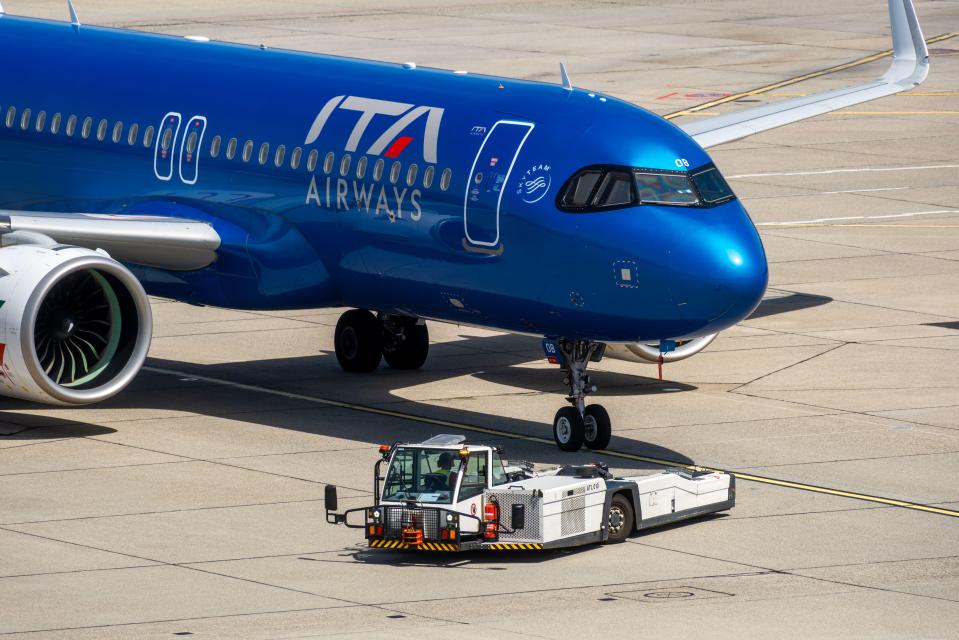
TENS of thousands of flights face being cancelled this winter as fears continue to grow over the high cost of jet fuel.
Airlines have already been forced to scrap thousands of flights in recent months since the Iran war broke out.

However, experts have warned that unless costs go down, cancellations could now affect winter schedules.
Italy‘s ITA chief executive Joerg Eberhart said they could be forced to cut as may as a fifth of flights from October to April, he told the FT.
Turkish Airlines echoed this, saying they could be forced to make “frequency cuts of even stop destinations” after summer if it continues.
Others have warned that is puts added pressure on airlines to fill planes, which is often not the case during the quieter winter season.


Most UK airlines have said that they don’t see any immediate threats to upcoming flights, as many have ‘hedged’ fuel costs, which is paying a set price for a period of time.
However, Ryanair has warned that budget airlines face the biggest struggle, due to the low margins.

The budget carrier’s boss Michael O’Leary previously warned: “If pricing stays higher for longer this summer, we think a number of our airline competitors in Europe are going to face real financial difficulties. I think there will be failures.”
Spirit Airlines has already been a victim of the ongoing fuel crisis, having gone into administration last month.
And while UK flights might not be cancelled, the cost of flights is expected to only go up.
International Airlines Group (IAG), which also owns Iberia and Aer Lingus, said it will likely pass on extra costs to cover the additional £1.72billion costs of its fuel this year.
And Virgin Atlantic has added a new fuel surcharge, ranging from £50 to £360.
Experts have said costs could continue to go up, due to the UK’s reliance on US jet fuel.
This is because US suppliers could divert their fuel inwards due to it being the busy American holiday season, particularly for “driving season” (when domestic holidays boom).
S&P Global’s research director for fuels Eleanor Budds told Telegraph: “Prices could rise again. The UK is replacing a good part of its imports. If the US can’t keep up those volumes, [the UK] is very exposed”.