As airlines grapple with the soaring jet fuel prices and global shortage due to the closure of the Strait of Hormuz, two more have been forced to increase their prices for passengers
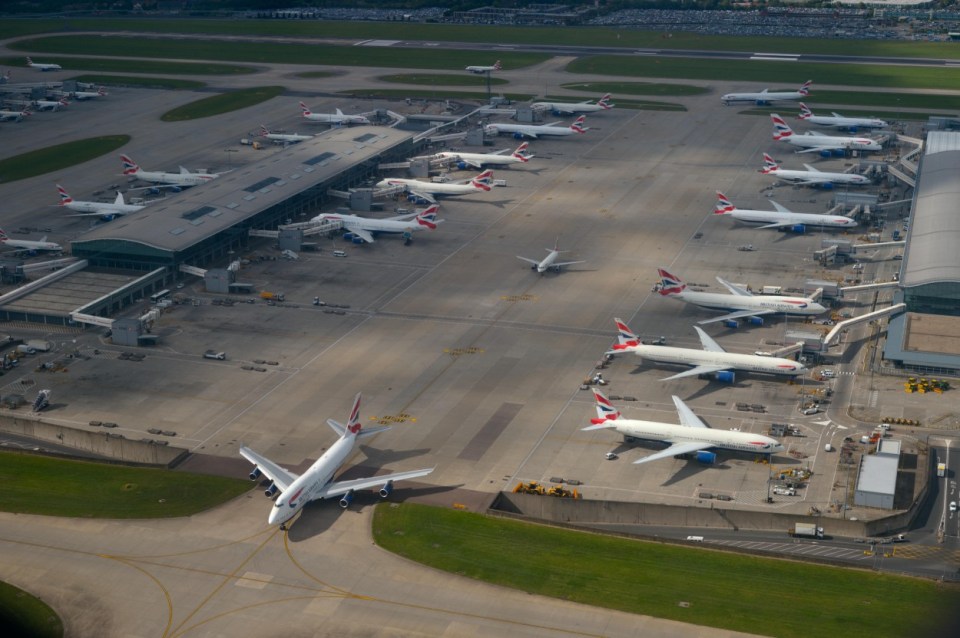
Two airlines have increased their prices amid the jet fuel crisis (Image: Getty Images)
Due to the escalating fuel crisis sparked by the Middle East conflict, two more airlines have been forced to raise their prices.
Air travel has been severely disrupted with cancelled routes and a sharp rise in jet fuel prices since US-Israeli strikes erupted on February 28, 2026. The situation was further heightened by Iran’s blockade of the Strait of Hormuz, through which approximately 20 per cent of the world’s oil and gas passes, triggering a global shortage.
As a result, airlines have been grappling with rising jet fuel costs and have been forced to raise prices. Air France and KLM are the latest airlines to confirm they’ve had to increase ticket prices as a result.
The airlines, which are part of the same company Air France–KLM, had previously added a surcharge last month to offset soaring jet fuel prices. At the time, economy fares were bumped up by an extra €50 (£43.47) for a round trip, reported The Sun.
Now, with another increase announced, a long-haul round trip with Air France or KLM could cost an additional €50, bringing the fuel surcharge to €100 (£86.98) on top of the standard fare. Meanwhile, flights to the United States, Canada and Mexico could increase by €70 (£60.89), and an economy round-trip could cost an extra €10 (£8.70).
The Mirror has contacted Air France and KLM for comment.
Air France and KLM aren’t the only airlines to raise prices amid the ongoing fuel crisis. Just this week, it emerged that Virgin Atlantic had increased some flight costs with an extra £50 fuel surcharge on economy-class tickets, while premium economy fares are climbing by £180 and business class by £360.
Virgin Atlantic Chief Executive, Corneel Koster, warned travellers that flight prices could climb in the coming months and potentially throughout the remainder of the year. He said: “We have never seen jet fuel at this level and airlines cannot sustain those sorts of high costs.”
“If the fuel price goes much higher, I think the surcharges may go higher. If they go up in a week and you book in two weeks’ time, you’ll be paying higher.”
While there are no fuel shortages at present, Koster acknowledged it was impossible to guarantee supplies in the months ahead. “We have contracts with multiple suppliers who have a wide range of diversity of where the jet fuel comes from,” he explained.
“We have good visibility and no concern for the coming one to two months – certainly for the remainder of April and May. Beyond that I have less visibility, but that is quite normal.”
Meanwhile, it’s also been reported that airlines, such as JetBlue, have increased luggage fees in a bid to offset the soaring fuel costs. For off-peak economy fares, bags are expected to cost $4 more (£2.95), jumping to $39 (£28.79), while peak economy fares are set to be $49 (£36.17).
Do you have a travel story to share? Email webtravel@reachplc.com
Draw for the 24-team 2027 AFC Asian Cup, originally set for Saturday, moved to May 9.
Published On 15 Apr 202615 Apr 2026
The draw for the 2027 Asian Cup in Saudi Arabia has been rescheduled for May 9 in Riyadh as the United States-Israel war on Iran disrupts regional sporting events.
The draw, originally scheduled for last Saturday, will be held at the historic At-Turaif District in Diriyah. The Asian Football Confederation (AFC) said on Wednesday that the postponement was made to ensure the full participation of all key stakeholders and member associations.
Recommended Stories
list of 4 itemsend of list
A number of sporting events across the region have been postponed or cancelled due to the war, which began on February 28.
Saudi Arabia is set to host the 24-team, quadrennial continental championship for the first time from January 7 to February 5. With 23 of the 24 teams already confirmed, the draw will divide the qualified nations into six groups of four.
The final qualification place will be decided on June 4 when Lebanon face Yemen in a playoff.
Defending champions Qatar have already secured their place at the finals along with four-time winners Japan and fellow World Cup qualifiers South Korea, Iran, Jordan, Australia and Uzbekistan.
THE new EES travel requirement is causing chaos at many European airports from three hour-long queues to missed flights.
From Portugal to Spain and Poland, here’s where Brits have been held up since the full rollout of the new travel rules.
Sign up for the Travel newsletter
Thank you!
Brits are now required to register their biometrics at EESCredit: AlamyPassengers at Lisbon Airport reported queues for two hours through passport controlCredit: AFP
New travel rules require all non-EU nationals to register their biometrics instead of having their passport stamped at border control, but it has held up travellers for hours.
Portugal
At Lisbon Airport, one passenger wrote on X yesterday (April 13), that he had been queueing for two hours to get through the airport.
Over the weekend, Lisbon as well as airports in Porto and Faro actually stopped EES registration because of excessive passenger wait times.
This was on the morning of April 11 and later restarted in the afternoon.
At Palma Majorca Airport in the capital of the island, there were reports of queues “between two and three hours” at passport control on April 11.
This was in a joint statement from Airports Council International Europe (ACI-Europe) and Airlines for Europe (A4E).
They added that some UK-bound aircraft left half-empty after boarding gates closed while passengers were still stuck in the immigration line.
On the same day, there were long queues in Tenerife South Airport – one passenger took a short video of the line.
She wrote on Facebook: “Tenerife South Airport departures for the passport stamp before boarding. I do worry about summer which is going to be another record breaker. What is the solution? The new EES system just isn’t good enough.”
Belgium
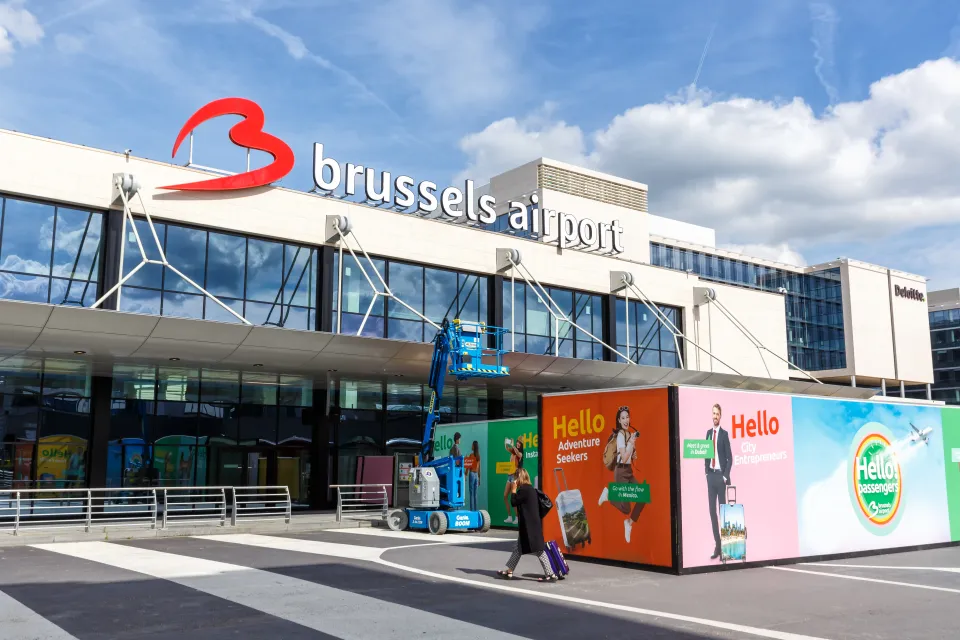
Delays at Brussels Airport on April 10 even caused passengers to miss their flights.
The Airports Council International reported that in one instance there weren’t any passengers on a plane when the gate closed.
It said one flight from Brussels to the UK was missing 51 passengers at departure.
And then, “another flight had zero passengers on board at gate closing time, and 90 minutes later, 12 passengers were yet to reach the gate”.
Italy
At Milan Airport 100 people were left stranded when an easyJet flight to Manchester left without them.
The delays due to the new EES checks meant travellers were waiting in lines over three hours long.
easyJet spoke to The Sun and said: “While this is outside of our control, we are sorry for any inconvenience caused.”
Netherlands
Other passengers reported delays at Amsterdam Schiphol Airport.
One took to social media and wrote that hardly any passport gates were open, leaving older travellers and families with young kids stuck in lines.
Poland
In Poland, there were also problems. One traveller described passport control as a “shambles” at Krakow Airport.
They said: “Arrived an hour 10 minutes ago. Yet still have this queue to get through. I estimate another hour at least.
“Avoid Krakow if you want to: save your sanity/make a meeting/have a connection/enjoy your holiday.”
Head of Sun Travel Lisa Minot explains what EES means for you…
THE Sun’s Head of Travel Lisa Minot has explained everything you need to know about EES…
The new system – designed to strengthen the European borders – requires every passenger to have their biometrics recorded.
Every traveller has to scan their passport and have a facial biometric before providing prints from the four fingers on their right hand.
Children under 12 have to do the biometric but do not have their fingerprints taken.
All then have to answer four questions about their reason for travel. Both fingerprints and facial biometrics are required the first time a traveller uses the system, and then just one of the two for every subsequent trip.
Then every three years, you are expected to go through the full process again.
While airports across Europe have the space to add this additional process, it is adding a huge amount of extra time to the customs checks.
Although it removes the need to have stamps in your passport, everything still needs to be checked either by a border officer or an e-gate.
ANOTHER airline has confirmed that luggage fees will be increasing due to the ongoing fuel crisis.
The conflict in the Middle East has resulted in the cost of jet fuel soaring due to the closure of the Strait of Hormuz, meaning airlines are looking at ways to offset costs.
Sign up for the Travel newsletter
Thank you!
United Airlines is the latest to increase luggage costs due to rising fuel pricesCredit: Reuters
And United Airlines has since increased its baggage fees, the second airline to do so.
The new rules mean checked bags now cost $10 (£7.50) extra, working out to $45 (£33) for domestic flights, or $50 (£37) if it it booked 24 hours before a flight.
A second checked bag will now cost up to $60 (£45) if booked last minute.
The airline said: “United is raising first and second checked bag fees by $10 for customers traveling in the US, Mexico and Canada and Latin America beginning with tickets purchased Friday, April 3.”
Last month, JetBlue was the first airline to confirm that they would be increasing luggage costs in response to fuel prices going up.
Checked bags have gone up by $4 (£3) for off peak, economy travellers – who will pay $39 (£30).
Peak economy travellers will have to pay $9 (£6.80) extra, so to $49 (£37).
Passengers paying for luggage less than 24 hours before the flight will pay an extra $10 (£7.50).
A JetBlue spokesperson told local media: “Adjusting fees for optional services used by select customers, such as checked baggage, allows us to continue offering more competitive fares.”
Some airlines are already cancelling flights.
UK-owned Skybus has cancelled its daily flights between London Gatwick and Newquay earlier than planned.
Due to finish by end of May, it has since cancelled all of the routes and cited lack of passengers as well as rising costs.
WE are rethinking travel plans amid uncertainty in the Middle East.
Price comparison site TravelSupermarket has found British holidaymakers are returning to reliable European favourites but also looking further afield.
Sign up for the Travel newsletter
Thank you!
We are rethinking travel plans amid uncertainty in the Middle EastCredit: Getty
In the first 25 days of March, interest surged for the Italian island of Sardinia, with searches up 236 per cent.
Chris Webber, head of holidays and deals at TravelSupermarket, said: “What’s striking about this data is the range of destinations seeing a boost.
“On the one hand, you have Majorca and Bodrum, places that Brits know and love, seeing huge jumps, which tells you a lot of people just want the certainty of a tried-and-trusted destination.
“But then you have California in the top ten, which is a sign some travellers are using this moment to think differently about where they want to go.”
IT has been our go-to since the very start of package-holiday travel and its enduring popularity is no surprise.
From family-friendly resorts such as Alcudia, Puerto Pollensa and Cala Bona, to the laidback delights of Sa Coma for couples, there is something for everyone.
Majorca has been our go-to since the very start of package-holiday travel and its enduring popularity is no surpriseCredit: Getty
The Tui Blue Levante sits in one of Cala Bona’s smartest spots and has indoor and outdoor pools, as well as direct beach access.
Seven nights’ half-board is from £442pp including flights from Gatwick on April 17, 25kg luggage and transfers.
WITH its perfect mix of affordable luxury, stunning Aegean coastline and rich history, the coastline on this Turkish delight is dotted with beautiful beaches and lively coastal spots.
A standout is the 5* Bodrum Holiday Resort, set directly on the shores of a crystal- clear bay.
Bodrum is the perfect mix of affordable luxury, stunning Aegean coastline and rich historyCredit: Getty
There is lots to keep little ones entertained, including a water park with five slides.
Seven nights’ all-inclusive is from £279pp including flights from Gatwick on April 19.
SMALLER than Wales, this tiny Balkan country on the shores of the Adriatic has so much to offer, from beautiful beaches to sleepy medieval villages and dramatic mountain scenery.
The 4* Hyatt Regency Kotor Bay Resort sits alongside the beautiful Bay of Kotor, and has stunning views over the surrounding hills and mountains from the outdoor pool.
Montenegro is on the shores of the Adriatic and has so much to offerCredit: Getty
Seven nights’ all-inclusive is from £1,110 including flights from Birmingham on May 7, 22kg luggage and transfers.
THERE are more and more travellers looking towards the Caribbean for their long-haul sunshine breaks.
So it’s no wonder this holiday favourite is increasing in popularity with its idyllic white-sand beaches and lush, green national parks.
The Dominican Republic is increasing in popularity with its idyllic white-sand beaches and lush, green national parksCredit: Getty
The 3.5* Sunscape Dominicus La Romana hotel is next to the soft sands of Playa Dominicus and has 13 restaurants, as well as plenty of activities on water and land.
Seven nights’ all-inclusive is from £1,081pp including British Airways flights from Gatwick on October 25.
The 2,700 hours of annual sunshine definitely help, combined with the fascinating history in Dubrovnik.
Croatia, known as the Land of a Thousand Islands, has crystal-clear waters and 2,700 hours of annual sunshineCredit: Getty
The 5* Hotel Croatia Cavtat is a 30-minute drive or boat ride from the famous city but also offers the chance to switch off and relax in style overlooking the waters of Cavtat Bay.
There’s a spa with indoor pool and rooftop pool to soak up the rays.
Seven nights’ B&B is from £576pp including flights from Bristol on April 12.
The Caribbean paradise of St Lucia is an-eight hour direct flight from the UKCredit: Getty
THE Caribbean paradise is an-eight hour direct flight from the UK and promises rainforest adventures, volcanic mud baths and, of course, endless beaches.
The small but perfectly formed Bay Gardens Inn is in lively Rodney Bay, a short walk from Reduit Beach.
There’s also a complimentary shuttle to sister hotel Bay Gardens Beach Resort where you can enjoy the beach and water park.
Seven nights’ room-only is from £1,004pp including flights from Gatwick on September 15.
He explained: “At a time of great economic uncertainty and steps being taken to conserve energy worldwide, it is neither environmentally nor economically sound for us to continue flying with vastly reduced passenger numbers.”
Passengers affected will be fully refunded.
The flights between London and Cornwall take around 1hr20 and start from £79.99 each way.
This is not only faster – trains take around five hours and include a change to Newquay – but cheaper than the average train fare which is around £85.
Some passengers use it as a way of travelling further onto Europe as well.
One Brit, who was meant to fly from Newquay to Gatwick, then onto Seville told the BBC: “Gatwick is not the easiest airport to get to so our contingency is probably to use rail.”
In the mean time, Ryanair offers flights between Newquay and London Stansted all year round.
And easyJet is due to start a new flight route to Newquay from June 23, with two a week from London Gatwick on Tuesdays and Thursdays.
A Cornwall Airport Newquay spokesperson said: “We are actively working with airline partners and stakeholders to secure sustainable London connectivity for the future.”
He said: “We don’t expect any disruption until early May, but if the war continues, we do run the risk of supply disruptions in Europe in May and June.”
While he said he didn’t see the airline having to cancel flights just yet, he warned that as much as 20 per cent of its jet fuel is costing them nearly $150 a barrel.
Other airlines around the world have already started cancelling flights.
Both Air New Zealand and SAS confirmed that more than 1,000 have been cancelled, mainly affecting domestic routes.
And United Airlines said five per cent of flights would be cancelled in the second and third quarters of 2026 – working out to around 250 a month.
The airline will still operate flights to Newquay from the Isles of ScillyCredit: Alamy
Choosing the right seat on the plane can determine a lot for your overall flight experience, and a travel expert has revealed exactly why you should avoid booking 11A
You might want to think carefully about choosing your seat on the plane(Image: Getty Images/Stock Image)
We all have a preferred window or aisle seat when flying, but one travel expert has revealed the exact seat you should always avoid.
Choosing the right seat on a plane can certainly come with its bonuses. Whether that’s more legroom, closer to the bathrooms, being the first row to be served refreshments, or a quieter spot near the back, away from babies. Yet some seats can be a disadvantage.
Window seats are popular among travellers, particularly for those wanting to enjoy the view during take-off or landing, for a little more privacy, or to take a little snooze against the cabin. One favoured window seat on planes has been 11A, due to its positioning near or over the wing, which is thought to offer less disruption from turbulence.
While it may sound appealing, 11A might not be as relaxing as it sounds. Andrea Platania, operations manager at airport transfer platform Transfeero, said that this specific seat often leaves passengers disappointed.
“Seat 11A might sound ideal because it’s by the window, but it can quickly become frustrating, especially on anything longer than a short hop,” the travel expert said. “You’re quite far from the toilets, which isn’t ideal, and getting in and out of that seat can be awkward.”
Andrea also explained that this seat can prove tricky for those who want to move around and stretch during the flight. “If you’re in 11A, you’re relying on the people next to you to move every time you want to get up. That might be fine once or twice, but over a longer journey it becomes inconvenient very quickly.”
It’s a seat that can also feel a little cut off from the rest of the cabin. “You’re not close to the aisle, so you don’t have that easy access, and you’re not in a premium position either. It ends up being a seat that looks better when you book it than it feels when you sit in it,” he outlined.
But that’s not the only seat you might want to think twice about booking. The expert said that seats 11A and 11F are among the “least rewarding seats” on a flight.
“Seats like 11A and 11F are often overlooked when people are booking, but they’re right in that middle section of the aircraft where you lose a lot of the small conveniences. They don’t seem bad on paper, but in practice, they’re some of the least rewarding seats to be in, Andrea said.
Yet one of the biggest disadvantages of these seats is during food and drink service. “On most short and mid-haul flights, cabin crew will begin service from both the front and the back of the plane, then work their way towards the centre. If you’re sitting in rows like 11, you’re effectively last in line from both directions.”
It can become even more of a drawback during busy flights. He said: “Passengers in seats like 11A and 11F are far more likely to find that popular snacks, meals, or even drinks have already run out by the time the trolley reaches them. It’s something people don’t think about when booking, but it becomes very obvious once you’re in the air.”
If that wasn’t enough to deter you from seats 11A and 11F, Andrea noted that they are inconveniently positioned on board. “You’re not particularly close to the toilets, and you’re not near the exits either, so you don’t get the benefit of convenience in either direction.
“You’re just in that middle zone where everything takes a bit longer.” So next time you book your plane seat, have a think about where you’d rather sit, whether that’s to ensure you’re one of the first to be served your meal or somewhere to ensure little disruption during your flight.
Do you have a travel story to share? Email webtravel@reachplc.com
A MAJOR airline has become the first to increase luggage charges in response to the fuel crisis caused by the Iran conflict.
American carrier JetBlue has confirmed that the cost of taking baggage onboard is to go up – and others could follow suit.
Sign up for the Travel newsletter
Thank you!
JetBlue is the first airline to increase luggage fees due to the Iran crisisCredit: Getty
The new costs will see checked bags go up by $4 (£3) for off peak, economy travellers, so will now be $39 (£30).
And the cost for peak economy travellers will go up by $9 (£6.80) so to $49 (£37).
Passengers paying for luggage less than 24 hours before the flight will pay an extra $10 (£7.50).
A JetBlue spokesperson told local media: “Adjusting fees for optional services used by select customers, such as checked baggage, allows us to continue offering more competitive fares.”
But airlines, especially budget ones, could choose to leave the cost of flights alone to remain competitive and instead raise the cost of extra fees.
In the UK, both Ryanair and easyJet have said their fares won’t be affected by the fuel crisis for now.
However, the crisis is being caused by the closure of the Strait of Hormuz – and the longer it continues, the more they will be at risk.
The Strait of Hormuz is one of the world’s most important oil routes, with around 20million barrels passing through every day – roughly 20 per cent of global supply.
COMIC Russell Brand’s rape trial has been delayed by four months and is expected to last eight weeks — up from five — due to “numerous” and expanded charges.
The screen star, 50, faces three counts of rape, three of sexual assault and one indecent assault against six women from 1999 to 2009.
Sign up for the Showbiz newsletter
Thank you!
Russell Brand’s rape trial has been delayed by four monthsCredit: PA
Brand — who denies all the charges in full — was facing trial at Southwark crown court on June 12.
But Mr Justice Joel Bennathan KC put it back until October 12.
He noted an eight-week trial in June would run into August — with potential summer holiday and travel interruptions.
Brand, of Hambleden, Bucks, didn’t attend court today.
Brand had appeared in court last month and denied charges of rape and sexual assault against two women in 2009.
Before the hearing, Brand took out a copy of the bible and began reading it but it was confiscated by the dock officer until the case was done.
The Met Police launched a probe into the TV presenter in September 2023 after The Sunday Times and Channel 4’s Dispatches published an investigation into allegations over his treatment of women.
Following the charge, Brand told his 11.3million X followers that he was “never a rapist”.
He added: “I’ve always told you guys that when I was young and single, before I had a wife and family… I was a fool, man.
“I was a fool before I lived in the light of the Lord… I have never engaged in non consensual activity, I pray you can see that by looking in my eyes.”
Brand, who was previously married to pop star Katy Perry, shares three children with his wife, Laura Gallacher, 37.
Brand faces three counts of rape, three of sexual assault and one indecent assault against six women from 1999 to 2009Credit: Andrew Styczynski
Tommy Fury has risked pregnant Molly-Mae’s wrath after announcing a huge fight the day after her due dateCredit: facebook/@SportskeedacombatMolly Mae and Tommy announced they’re expecting second child in heart-warming post last monthCredit: Instagram @mollymaeIf you look closely at the photo, it gives away when the influencer’s baby will be bornCredit: Refer to source
As she showed off some young lambs on her Instagram stories, it sparked worry as there is a risk of contracting disease from animals who’ve recently given birth.
.The Children’s Farm has a section on its website dedicated to safety and measures pregnant women can take to reduce the risk of infection.
Molly went on to admit she is not suffering from a cold or any illness but still finds herself feeling as though she cannot breathe in the morning – leading to her reaching for the sprays every day.
She said: “I don’t have a cold. I don’t feel ill but I wake up and I can’t breathe.”
But she assured fans she was feeling well within herself and her pregnancy as she nears her due date.
Molly-Mae has been teasing her fans about her unborn child since the pregnancy newsCredit: InstagramMolly Mae appears to be due to give birth a day before Tommy’s big fightCredit: @mollymae9879/YouTubeFans were excited to hear the news of Tommy’s next fightFans wondered if Tommy might miss the birth of his second childMolly-Mae recently raised concerns when she visited Ash End House Children’s Farm with BambiThe couple’s fans were delighted at their pregnancy news last month
British holidaymakers in Tenerife admit they have “booked early flights home” recently. A specific issue seems to have impacted their holidays over the past few weeks
12:05, 27 Mar 2026Updated 12:06, 27 Mar 2026
Brits in Tenerife admitted to booking early flights home (stock image)(Image: Gabriel Mello via Getty Images)
UK holidaymakers visiting a beloved travel hotspot say they’ve been “booking early flights home” after their breaks were disrupted by an unexpected issue. While many jet off abroad hoping to bask in the sunshine, unwind and enjoy some well-deserved rest, things don’t always go according to plan – no matter how much we’d like them to.
Brits in Tenerife recently discovered this first-hand, with some suggesting their holidays were “ruined” due to an unlikely problem. A string of videos have gone viral on TikTok, with visitors expressing their frustration after trips to the destination over recent weeks, catching many completely off guard.
A man, known online as Gazza, posted a video of his recent getaway, stating: “Come here every year and this is the first bad downpour experience.” He also described the weather as “brutal” for four days due to the relentless rainfall.
The clip has since racked up thousands of views, sparking hundreds of responses. It appears many fellow travellers have encountered similar situations.
Content cannot be displayed without consent
One commented: “Had wind, clouds and cold one year for four days out of the seven. Never went back.” Another added: “I was there last week and got an early flight home.”
Gazza responded to this remark, saying: “Was debating it too.” While a third chimed in: “I just got back. It was mental.”
A further user wrote: “It’s been almost a week!!! Everywhere/everything closed!!!” While another remarked: “That’s pretty unlucky. I would feel gutted.”
Others, however, claimed to have had a wonderful time during their visit, with some reporting an entirely different experience.
One holidaymaker shared: “It’s heaven. Chill.” Another added: “Here at the moment and not that bad. People need to chill out.”
Someone else also weighed in with: “Still rather be there than here. It’s the getting away that matters.”
What’s actually been going on?
While heavy rainfall is uncommon in Tenerife during March, a powerful storm has recently battered the Canary Islands. Storm Therese is reported to have wreaked havoc on the Canary Islands, particularly Tenerife and La Palma, with an unexpected mix of heavy rain, 100 km/h (62 mph) winds and even snowfall at high altitudes.
Authorities confirmed it was amongst the most devastating storms to strike the archipelago in over 10 years, which may well explain why so many visitors encountered such dreadful weather during their stays.
The silver lining, however, is that conditions appear to be on the mend. Current forecasts predict sunny spells over the coming days, with temperatures potentially reaching highs of up to 26 degrees, which could explain why some travellers have recently reported a marked improvement in the weather.
One visitor said: “It’s sunny now.” Another wrote: “I’m just back yesterday. Was there for a week. We had a ball even with the storm and rain.”
THE UK Foreign Office has warned Brits heading abroad to be wary of longer-than-usual airport queues ahead of new travel rules being fully rolled out next month.
The new EES requirement has already resulted in lengthy wait times at airports and are predicted to only get worse across the next few weeks.
Sign up for the Travel newsletter
Thank you!
New EES machines are set to cause length delays at airportsCredit: AlamyNon-EU citizens are required to register details before they flyCredit: Alamy
The Entry/Exit System (EES) is the new travel system replacing the need for a passport stamp by automatically checking when a person enters and exits an EU country.
Non‑EU residents have to register their details on their first visit to a Schengen area country.
This is done using the EES machines at airports and ferry terminals to log their fingerprints, facial images and scan passports.
With lots of Brits are still yet to register, and with an influx of families heading abroad over the upcoming Easter break – it’s anticipated that this will result in delays and queues at the EES machines.
New advice on the government website reads: “Ahead of the Easter holidays, Brits are being advised to be aware of extra border checks – the EU’s Entry Exit System (EES) – and allow additional time at the border when travelling to the EU.”
It added: “EES checks should take only a few minutes per person, although longer waits at border control are possible, including for your journeys back to the UK.”
Some passengers could be subject to further delays – especially those heading to Spain as ground staff are planning to strike at 12 airports across the country.
Travel Reporter Alice Penwill queued for three hours through Lanzarote Airport
Several Spanish unions are set to begin an indefinite strike too from today.
Walkouts are planned to take place on Mondays, Wednesdays and Fridays, across three time slots: from 5am to 7am, from 11am to 5pm and from 10pm to midnight.
Other baggage handling staff have planned 24-hour strikes on March 28-29 and April 2-6.
Airports that could be disrupted by these strikes include Madrid-Barajas, Málaga-Costa del Sol, Alicante-Elche, Palma de Mallorca, Barcelona-El Prat, Bilbao, Valencia and Bilbao.
It could disrupt also affect airports on popular Spanish islands too, like Gran Canaria, Tenerife Sur and Norte, Lanzarote, Fuerteventura and Ibiza.
Here are Sun Travel’s top tips on how to deal with EES travel chaos…
Sit at the front First off is quite simple,book a seatat the front of the plane. If you want to get toborder controlbefore the rest of the passengers on your flight, then by being at the front, you’ll be able to get off first.
Early flights When you’re booking, it might ease wait times if you go head out on one of the first flights of the day. There are generally fewer scheduled flights and they experience less disruption.
Anticipate delays If you are taking a connecting flight, we’d advise to anticipate delays. Of course this varies from airport to airport, but some travellers might find it will take longer to get through because of the EES requirements. Similarly, if someone’s collecting you perhaps give them a bit more time – especially if they’re in one of the pick-up zones that costs money.
Go for a bigger airport If you can go to a bigger airport and take a longer road transfer, it could be worth it At a larger airport there’s likely to be more EES machines than at one of the smaller ones For example, Assistant Travel Editor Sophie Swietochowski found there were plenty more of the machines in Spain‘s Alicante Airport than in Austria‘s Salzburg.
Bring entertainment If you have children, or are generally just bored of queues (and who can blame you?) – think about entertainment It could be worth setting the kids up with an iPad or something that will keep them occupied. Bring a reserve of snacks because standing in line means no access to the airport’s cafes and shops.
Get into the priority lane For those who are disabled and require assistance make sure to let the airline know in advance as you would usually. After landing, staff should escort you straight through to the front of border control queues. Many major airports offer priority family lanes at passport control for families with young children (usually under 12 years old).
Use the plane facilities Quite simply, if you are going to be waiting in line for yours, then you want to be comfortable. So before landing, go to the toilet on the plane. If you’re queueing along corridors before heading into border control, then the chances are there won’t be access to toilets
WASHINGTON — President Trump will travel to Beijing for a rescheduled summit with Chinese President Xi Jinping on May 14 and 15, the White House announced on Wednesday.
Trump had been scheduled to travel to China later this month but previously announced he was delaying the trip so he could be in Washington to help steward the U.S. and Israeli war against Iran. The Republican president had announced a rescheduled trip even though the war in Iran continues and the U.S. is pressing Tehran to accept a ceasefire proposal.
The president and First Lady Melania Trump also plan to host Xi and his wife, Peng Liyuan, for a White House visit later this year, press secretary Karoline Leavitt said.
Leavitt, when asked if the new dates for Trump’s trip could suggest he believes the Iran war could end soon, offered an optimistic tone that the conflict could reach an endgame before he travels.
“We’ve always estimated four to six weeks,” Leavitt responded. “So you could do the math on that.”
The United States and Israel launched the attacks against Iran on Feb. 28.
The China trip had been planned for months but began to unravel as Trump pressured Beijing and other world powers to use their military might to protect the Strait of Hormuz, a critical waterway for the flow of oil. The strait has been effectively closed as Iran targets energy infrastructure and traffic through it.
Trump said last week while meeting with Irish Prime Minister Micheál Martin in the Oval Office that he would be going to China in five or six weeks’ time instead of at the end of the month. He said he would be “resetting” his visit with Xi.
“We’re working with China — they were fine with it,” Trump said then. “I look forward to seeing President Xi. He looks forward to seeing me, I think.”
Trump’s visit to China is seen as an opportunity to build on a fragile trade truce between the two superpowers, but it has become tangled in his effort to find an endgame to the war in Iran. Soon after pressing China and other nations to send warships to secure access to Middle Eastern oil, Trump indicated last week that his travel plans depended on Beijing’s response, though he added then that the U.S. didn’t need help from the allies that rebuffed his request.
At least six people on board a Qatari military helicopter have been killed in a crash in the Gulf state’s waters after a “technical malfunction”, the government said.
Seven people were on board, with Qatar’s interior ministry on Sunday saying operations continue to find the last missing person.
“A Qatari helicopter had a technical malfunction during a routine duty, which led to its crash in the regional waters of the State,” the country’s defence ministry earlier said in a statement on X.
More than 2.5million Brits visited Portugal last year, and it could be even more popular in 2026 due to the Iran conflict
13:08, 20 Mar 2026Updated 13:08, 20 Mar 2026
Bookings to Portugal have surged since strikes on Iran began
The Foreign, Commonwealth and Development Office (FCDO) has issued updated travel guidance for those heading to Portugal. The update was released today (March 20).
Fresh information has been provided for individuals seeking to remain in Portugal beyond 90 days under exceptional circumstances. The updated guidance states: “If you’re visiting Portugal and need to extend your visa-free stay for exceptional reasons, such as a medical emergency, you must apply to AIMA using their contact form (access is only available to users in Portugal). If you’re in Portugal with a residence permit or long-stay visa, this does not count towards your 90-day visa-free limit.”
It adds: “If you’re in Portugal with a residence permit or long-stay visa, this does not count towards your 90-day visa-free limit.”
For British passport holders, visas aren’t required for short visits to EU nations or Schengen zone countries provided both conditions are met:
Your combined stay within the Schengen zone must not exceed 90 days within any 180-day period. The number of countries visited is irrelevant. The 180-day timeframe continuously ‘rolls over’, reports the Liverpool Echo.
EES
Since October 2025, the European Union has implemented the Entry/Exit System (EES), requiring travellers to provide fingerprints and photographs upon initial entry to or departure from the Schengen zone. It is scheduled to be fully operational by 10 April. However, the system has been plagued by teething problems, resulting in many travellers waiting for hours at airports. Because the system requires non-EU visitors – including Brits – to register their fingerprints and take a photo in person at the border, the additional registration time is already causing massive queues for non-European passengers at airports across the region.
It has caused such disruption that some locations have temporarily suspended its use. The European Commission has suggested that border authorities may pause the new system for up to six hours during peak travel times until September to help ease congestion.
More and more Brits are booking flights to Portugal as the conflict in the Middle East continues. Destinations like Cyprus, Turkey, Greece, Egypt, and Dubai are being viewed as increasingly risky, so travellers are opting for safer alternatives like Portugal and Spain.
Bookings to Portugal had increased by 42% over the two weeks to 13 March, according to Thomas Cook – the largest rise in any of the countries they arrange holidays to. It was followed by the Balearic Islands (40 per cent) and the Canary Islands (16 per cent).
TravelSupermarket shared data on online search interest, which it said demonstrates a “clear surge” for European and Atlantic destinations and away from the Middle East.
THERE could be trouble ahead for those who have booked holidays to far-flung destinations as airlines are warning of even more flight cancellations.
The rising price and shortage of jet fuel caused by the Iran crisis means airlines may be forced to axe longer journeys.
Sign up for the Travel newsletter
Thank you!
Certain airlines have already announced axing of flightsCredit: AlamyScandinavian Airlines System said it would be cancelling 1,000 flightsCredit: Alamy
Following the closure of the Strait of Hormuz, the price of jet fuel has risen sharply from $90 (£67) per barrel to as much as $200 (£150) per barrel – with oil traders now also expecting a shortage of it in the coming weeks.
As a result, there’s a rising risk of airlines cancelling services especially to long-haul destinations.
This is because airlines heading to far-flung places may not have enough fuel for the return journey.
The Times reported that the problem could even go on until summer quoting an industry source that said it could “take up to six months to get back to normal” – which sees us through to August.
The airline will see roughly a five per cent reduction in its services which works out to around 1,100 flights.
Following suit, Scandinavian Airlines System (SAS) announced that it would be cancelling 1,000 flights.
Certain countries, like Vietnam have now warned that flights could be cancelled from April, affecting the Easter break.
Meanwhile, China and Thailand have halted exports of fuel to maintain their own supplies – which in turn will affect airlines operating in other countries.
Closer to home, Brits could be affected as some of its jet fuel is imported from the likes of Kuwait, Saudi Arabia and the UAE.
International Air Transport Association said that “Europe is among the most exposed, with 25–30 per cent of its jet fuel demand originating from the Persian Gulf.”
Meanwhile, Watson Farley & Williams, the energy, infrastructure and transport law firm, said: “If airports and airlines’ stocks of fuel are depleted for any length of time, airlines will cease to be able to fuel their aircraft and will have to reduce their operations.
“This may have far-reaching consequences.”
This implies that there could be a knock-on effect for airlines later on, too.
It added that “further flight cancellations can be expected, even by airlines operating from home bases where there is a reliable supply of fuel.”
Certain UK airlines are less affected for now because they have secured some of their fuel at a fixed price for a certain amount of time.
A MAJOR airline in Europe has cancelled 1,000 flights next month due to soaring fuel costs caused by the Iran crisis.
Scandinavian Airlines System (SAS) is the second airline to do so, following Air New Zealand.
Sign up for the Travel newsletter
Thank you!
SAS is the first European airline to cancel flights due to the soaring cost of jet fuelCredit: Alamy
While the majority will be shorter domestic routes, some other longer routes could also be affected.
The main flights affected are across Norway, Sweden and Denmark.
In a statement, the airline said: “Given the ongoing situation in the Middle East, including the sharp and sudden increase in global fuel prices, we are taking measures to strengthen our resilience.”
“One such measure is a limited number of short-term flight cancellations.”
The airline has also confirmed that they have increased flight prices, one of the first to do so in response to the conflict and alongside Qantas and Cathay Pacific.
SAS is the first major airline in Europe to axe flights because of of the cost of fuel going up.
March 16 (UPI) — Even before a round of mid-May blizzards started blanketing an area stretching from South Dakota to northern Michigan on Saturday, a partial government shutdown already was making air travel miserable for Americans.
Extreme winter weather snarled all manner of transportation across the Midwest, while airports in Atlanta, Charlotte and elsewhere on the East Coast were slowed by pounding rain, on top of an increasing number of TSA employees either calling out sick or quitting their jobs because they are not getting paid.
As of early evening on Monday, there were 21,549 total flights delayed in the United States and 5,159 flights that were canceled, Flight Aware reported.
The Department of Homeland Security, which is home to the Transportation Security Administration, has not been funded since Jan. 30 amid a debate in Congress over funding the Department of Homeland Security, of which TSA is a part.
Democrats and Republicans in Congress disagree on adding guardrails for DHS agencies involved with immigration amid a crackdown by the Trump administration, which has left TSA unfunded.
The nation’s air traffic controllers, customs agents and TSA agents missed their first paycheck over the weekend, which has led to hundreds of TSA employees quitting their jobs, the New York Post reported.
The partial shutdown already had affected security and other services at airports, leading to long lines and advice that travellers arrive at the airport even earlier because of how backed up they have been.
On Sunday afternoon, as airports, travellers and millions at home prepared for winter weather to roll through overnight, the trade association Airlines for America, which represents both passenger and cargo airlines, sent an open letter to Congress pleading for them to fund TSA on predictions of what is already happening.
The CEOs, which include the leaders of the biggest U.S. passenger airlines, as well as FedEx and UPS, said that without funding TSA they expect travel issues during spring break, the World Cup and other national travel dates to be as chaotic as they were last year during the longest government shutdown in history.
Making matters worse has been a wide range of extreme weather across the country, from steady showers and a tornado watch shutting down Charlotte Douglas International Airport several times this morning — with the same occurring at major airports in Atlanta, Newark, Washington, D.C., Chicago, Detroit and Minneapolis, the Charlotte Observer reported.
The weather is not expected to let up, either, with the National Weather Service predicting that while the Midwest will get a bit of a break, severe thunderstorms with damaging winds and some tornadoes — as of early afternoon more than 34 million people were under tornado watches between Florida and New Jersey — expected later into the evening.
Melody Ashby jumps into a snow pile as her sister and mother look on, Sunday in Wadsworth Ohio. Photo by Aaron Josefczyk/UPI | License Photo
AS A RESULT of the Iran crisis, Brits have been looking for different destinations to travel to, with demand rising for some countries.
The conflict in the Middle East has had a ripple effect throughout the travel sector, with Brits being forced to cancel their holidays as the Foreign Office has issued ‘do not travel’ warnings to some destinations.
Sign up for the Travel newsletter
Thank you!
A number of European destinations are experiencing a rise in demand including spots in Spain like Ibiza (pictured)Credit: GettyItaly has seen an increased in demand too, where you could visit cities like Florence (pictured)Credit: GettyWhile some providers are seeing bookings for Greece fall, despite it being safe to travel to (pictured: Corfu)Credit: Getty
And now, Brits looking at booking a holiday are choosing destinations closer to home in Europe.
Last week, On The Beach confirmed that they had experienced a drop in demand for popular holiday destinations including Greece, Turkey, Cyprus and Egypt, as a result of growing tensions in the Middle East.
This is despite the Government having no warning against travel to any of the popular holiday regions in these countries.
But on the other hand, TUI has seen increased interest in Greece, as well as Portugal and Spain, as customers look to “familiar destinations”.
Neil Swanson, a director at TUI, said: “While we are seeing some cancellations in the affected areas, these are currently outweighed by customers choosing to amend their plans instead,” reports The Guardian.
Hays Travel on the other hand, has seen interest grow for trips to Italy, Malta and Croatia.
And Surrey-based holiday operator Kuoni has seen interest in longer haul destinations such as the Caribbean grow although this also comes with a jump in price as well.
Mark Duguid from Kuoni said: “What we’ve seen is huge increases in flight prices, because the seats remaining are limited – we are talking about seats going up by £1,000 a person for an economy seat, which then prices the holiday out of the market for many customers.”
Pure One Travel founder, Wesley Baker, said: “Travellers are still eager to explore the world, but geopolitical events inevitably influence where people choose to go.
“We are seeing customers pivot towards destinations they perceive as easier and more straightforward to reach.”
The tour operator added that interest has increased for destinations such as Spain, Portugal, Italy and Greece.
Baker added: “Many travellers are simply redirecting their plans rather than cancelling them.
“Europe remains extremely popular, while long-haul destinations in Latin America are also attracting interest from travellers looking for something more adventurous.”
According to Expedia, popular European destinations for this spring based on search data include Paris in France; Amsterdam in the Netherlands; Rome in Italy and Majorca and Tenerife in Spain.
Hays Travel has seen interest grow for trips to Italy, Malta and Croatia (pictured: Florence, Italy)Credit: GettyPure One Travel are seeing increased interest for Spain, Portugal, Italy and Greece (pictured: Milan, Italy)Credit: Getty
Ljubljana in Slovenia has seen a 90 per cent increase in search as well, and Valencia in Spain has seen a 65 per cent increase.
The Sun’s Head of Travel Lisa Minot explained: “There’s no doubt the current crisis in the Middle East is going to have a seismic impact on our holiday habits.
“Reports of travellers stranded in the UAE and across the globe will certainly prompt those looking to travel long haul to look at alternative ways to fly – with direct flights to places like Thailand, the Maldives and Japan sure to be very popular.
“Closer to home, the situation will sadly likely impact destinations like Turkey, Egypt, Cyprus and possibly even Greece.
“And with soaring fuel costs, tour operators will be looking to price alternative destinations competitively.
“But there are other options – our traditional resorts in places like Spain and Portugal are good, safe bets.
“Comparison giant TravelSupermarket has crunched the numbers for this summer and declared Spain’s Costa Calida one of the best-value destinations for this summer.
“Dubbed the ‘warm coast’, this region stretching along the south eastern region of Murcia is one of Spain’s most underrated coastlines with 150miles of beaches, crystal clear waters and the unique Mar Menor lagoon, Europe’s largest saltwater lake.
“Also worth exploring are the likes of Montenegro, Albania and even North Macedonia for cheaper hotel and restaurant costs as well as traditional favourite Bulgaria.”
“The Voice of Hind Rajab,” a heartbreaking retelling of the efforts to save a 6-year-old Palestinian girl amid Israel’s attacks on Gaza, will be honored at the 98th Academy Awards on Sunday — without one of its star players.
Actor Motaz Malhees, who stars in the film as Red Crescent dispatcher Omar, confirmed Thursday that he will be absent from the festivities because of President Trump’s travel ban against Palestinians. “I had the honor of playing one of the lead roles in a story the world needed to hear,” Malhees said on Instagram, “but I will not be there.”
“I am not allowed to enter the United States because of my Palestinian citizenship,” he added.
Trump announced his widened travel ban in December, noting his decision to “fully restrict and limit the entry of individuals using travel documents issued or endorsed by the Palestinian Authority,” along with people from countries including South Sudan and Syria. The president issued the order months after he presented his 20-point peace plan for the Gaza strip — efforts that some Palestinians feel have been now brushed aside amid U.S. and Israeli attacks against Iran.
Malhees said in his post that the restriction “hurts” but offered his followers and supporters a kernel of truth: “You can block a passport. You cannot block a voice.”
“The Voice of Hind Rajab,” directed by Tunisian filmmaker Kaouther Ben Hania, is nominated in the international feature category. The film is set in a Red Crescent call center in Ramallah and centers the 70-minute phone recording of Hind’s pleas for help as she waits with her family in a trapped car for emergency responders. She and two medics dispatched to her location were killed in February 2024 in Israeli attacks in Gaza.
The film earned the grand jury prize at the Venice Film Festival.
Though unable to celebrate the film at the Oscars on Sunday, Malhees said he stands “with pride and dignity” and that his “spirit will be with the Voice of Hind Rajab that night.”
“Our story is bigger than any barrier, and it will be heard,” he said.
A representative for the Academy of Motion Picture Arts and Sciences did not immediately respond to a request for comment.
As Malhees publicized his absence, fellow stars including Oscar winner Riz Ahmed and Emmy-nominated “Succession” star Arian Moayed rallied in support.
“Your work in the film and the film itself are both incredible and will live on forever,” Ahmed commented.
“You are brilliant, azizam,” Moayed replied to Malhees. “And this is heartbreaking and unjust.”