thousands

Photos: Thousands in Gaza City join mass funeral for 112 Palestinians | Gaza News

Thousands of Palestinians have taken part in a mass funeral in Gaza City for 112 members of the Hassayna and Abu Sharia families, whose remains were recently recovered from beneath the rubble nearly three years after an Israeli air raid.

Mourners gathered on Tuesday as bodies wrapped in Palestinian flags were carried through the streets of the besieged city before burial, in what local media described as one of the largest funerals since Israel’s genocidal war on Gaza began in October 2023.

Gaza’s civil defence said its crews spent two weeks excavating a destroyed residential building in the Sabra neighbourhood, eventually retrieving the remains of 112 people, including at least 40 children.

The families were killed in an Israeli strike in November 2023 that flattened their homes.

Relatives used the funeral to renew accusations that Israel committed war crimes in Gaza and demanded international investigations into the attack and the hundreds of bodies still believed to be buried under rubble across the territory.

Source link

Travel chaos across Europe as Italy, Greece and Hungary hit by fierce wildfires with thousands evacuated

Travel plans for around 1.6 million UK tourists heading to Italy were disrupted Rome, Milan, Venice and Naples hit by red alert. Greece helicopters fight fire despite midair crash which one Brit crew member miraculously survived.

BREAKING France forest fires- Thousands of tourists evacuated from campsites popular with Brits

Extreme weather brought chaos across Europe today, with warnings of 40C (104F) temperatures in some of the worst-hit countries.

Travel plans for about 1.6 million UK tourists heading to Italy were disrupted as nearly every city was placed on ‘red alert’ for extreme heat. Cities from north to south – including the capital Rome, Milan, Venice and Naples – were warning residents and tourists about the health risks. Temperatures have hit the mid-30sC in many places.

Authorities warned the ‘healthy and active’ were also at risk; not just groups including the elderly, very young children and people with chronic illnesses. Meanwhile, five water-dropping planes and five helicopters took off at dawn today to help firefighters near Athens – after a midair collision in which a Brit helicopter crew member miraculously survived.

The collision between the two fire-fighting choppers showed the extreme danger on the frontline of Europe’s wildfire emergency. Flames bore deeper into the region of the Greek capital, forcing fresh evacuations in the early hours. A Greek national and a Dane died when their helicopter collided with another near the seaside area of Psatha.

The British national and another local man were taken to a hospital, where their injuries were reported as minor. Foreign firefighting and helicopter crews are often deployed in Greece to help tackle wildfires during the country’s hot, dry summers.

More than 1,000 people have been evacuated from the region, including more than 250 rescued by boat from beaches in Greece. Evacuation orders were issued for three more areas, while crews worked to create firebreaks in a forest to help halt the blaze’s advance

In France, firefighters guarded a still-burning scar four times the size of Paris. The blaze raged through pine forests and scrubland over the weekend, whipped by gale force winds that often prevented water-dropping planes from operating.

Hungary is facing power cuts after the drought sweeping across much of Europe forced its only nuclear power plant to shut down. Peter Magyar, the prime minister, said the country was preparing for a “critical” week after the level of the Danube River, which cools the plant, fell to a record low.

The government was considering applying mandatory electricity restrictions for large companies starting today, Mr Magyar said: “We are facing the most critical five days ahead,” he said in a Facebook video.

The Paks power plant will not be generating, while the hottest, 40C days are ahead. The power grid, our public services, and we ourselves will all come under enormous strain.

The Danube has fallen to its lowest level in 30 years in several countries, including Romania. The drought has triggered water-use restrictions in more than 100 cities and villages, including on the outskirts of Budapest.

Mr Magyar called on companies, public institutions, local governments and households to significantly reduce or reschedule electricity use during evening peak hours between 5pm and 10pm.

Italy is in the midst of its fourth extreme heatwave of the summer, with temperatures hitting 40C in many parts of the country. According to official estimates, a total of 17.4 million tourists will be travelling in Italy until August 23, including 8.4 million Italians and nine million visitors from abroad, with about 1.6m expected from the UK.

Dash firefighting aircraft were seen through smoke as they flew over a wildfire in Correns, southeastern France, though the situation in the area was largely under control. Rory Boland, editor of Which? Travel, said wildfires in Greece were ‘deeply worrying’ for UK travellers.

He said: “It’s essential, however, that travellers don’t cancel their trips, especially those not due to travel for the next week or two. Travellers who cancel now will likely forfeit the right to a refund or rebooking, and you’re unlikely to be able to claim on travel insurance, as the FCDO has not warned against travel to the affected regions.

“Where possible, holidaymakers should wait until closer to their departure date to see if their holiday can go ahead or what flexible booking options may be offered by their tour operator or airline. Travel companies will be prioritising anyone due to depart in the next couple of days.”

Source link

Thousands under evacuation orders as Pacific Northwest wildfires rage

Dangerous wildfires are spreading across the Pacific Northwest, forcing thousands of people to evacuate their homes in parts of Washington state and Oregon. Photo Courtesy Washington Department of Natural Resources.

Aug. 2 (UPI) — Thousands of people were ordered to evacuate their homes across the Pacific Northwest on Saturday, as dangerous wildfires spread in parts of Washington state and Oregon.

Three major wildfires are burning around Spokane, the largest of which had burned more than 3,500 acres by Sunday morning, NPR reported.

“I was sitting near an elementary school and saw a wall of flames east of the school and just a cascade of black smoke and a wall of flames coming toward me,” Alexandra Duggan, who lives in the area, told NPR.

More than 5,000 structures are threatened by the fires, which have knocked out power from ore than 13,000 homes, CNN reported.

Gov. Bob Ferguson of Washington declared a state of emergency, saying, “Our record-setting drought and high winds are creating dangerous conditions across the state.”

“If you are in the area, please continue to be vigilant and follow directions of emergency personnel,” Ferguson said in a statement on X.

In Oregon, wildfires have burned more than 1.8 million acres this season, OPB reported.

On Saturday, more than 25,000 Oregonians were under evacuation orders in central and southeastern Oregon.

One of the blazes, east of Mount Hood, had already burned some 23,000 acres by Saturday morning and remained at 0% containment.

“The reason we’re seeing these conditions… is that things are really dry,” said Matt Callihan, a lead meteorologist for the National Weather Service, to OPB. “We haven’t seen rain in a long time. It’s been hot, so that’s allowed fuels to cure pretty well.”

Source link

Where are the wildfires in Crete? Map shows areas hit by fires as thousands evacuated from Rethymno

THOUSANDS of locals and British holidaymakers have been evacuated from Crete after deadly wildfires swept through the popular Greek hotspot.

At least three emergency responders have lost their lives during the crisis across Greece, including two firefighters who became trapped in their vehicle near the mountain village of Krya Vrysi in Crete.

Flames fanned by gale-force winds have spread across a 15-kilometre front Credit: Getty
At least three emergency responders have lost their lives during the crisis across Greece Credit: Getty

Flames fanned by gale-force winds have spread across a 15-kilometre front on the island at the peak of the summer holiday season.

Around 8,000 people were ordered to move to safety as flames closed in on southern resort villages, destroying homes, farms, and livestock in their path.

The crisis comes as severe heatwaves spark wildfires across Southern Europe and parts of the UK, with firefighters battling blazes from Spain and Turkey to Suffolk.

Where are the wildfires in Crete?

The primary fire zone in Crete is located along the island’s southern coast in the Rethymno region, specifically within the Agios Vasileios municipality.

HOL YES

Cheapest summer for holidays in YEARS – with August breaks still on sale for £188pp


EUROPE ON FIRE

Three ‘heroic’ firefighters dead as Greece hit by wildfire hell

Villages and coastal areas hit by emergency evacuation alerts include:

  • Krya Vrysi, Melambes, and Sachtouria
  • Agios Pavlos, Triopetra, and Agia Paraskevi
  • Orne and Ligres
The primary fire zone is located along the island’s southern coast

More than 200 firefighters, supported by 53 fire engines, have been tackling the south-coast blazes.

Nearby resort areas such as Agia Galini were evacuated as a precaution before conditions stabilised enough for some tourists to return.

Is it safe to travel to Crete?

It remains safe to travel to the vast majority of Crete.

The island’s main transport hubs – including Heraklion Airport and Chania Airport – remain open and operating normally, outside the fire zone.

Popular northern holiday destinations, including Rethymno’s historic Old Town, Chania, Heraklion, Elounda, and Agios Nikolaos, currently remain unaffected and open for business.

If you are due to travel, tour operators advise checking the exact location of your accommodation.

Anyone staying near the active southern fire zone should contact their hotel or package provider before travelling, follow official 112 emergency text alerts, and ensure travel insurance covers natural disaster disruptions.

Holidaymakers on the island are urged to download emergency alert apps, keep mobile devices charged, and strictly observe local fire bans.

How did the fires start?

Specialist arson investigation teams from the Greek Fire Service have launched formal inquiries into the exact ignition points of the Rethymno fires.

While investigations are ongoing, extreme heat and weather conditions created the perfect storm for rapid ignition.

A prolonged summer heatwave pushed temperatures above 40C, thoroughly drying out low vegetation, pine forests, and olive groves across the island.

Strong gusting winds reaching up to 102 km/h (7 on the Beaufort scale) whipped minor ignitions into runaway blazes within minutes.

Authorities across southern Europe have repeatedly warned that even minor human carelessness – like discarded glass, outdoor barbecues, or unextinguished cigarettes – can instantly trigger a major blaze in these dry conditions.

What is the forecast for Crete?

The weather outlook for Crete remains challenging, with forecasters predicting high temperatures to persist near or above 40C across the Aegean region.

But the primary hurdle for emergency crews has been unpredictable wind.

Violent, changing gusts have forced water-dropping planes and heavy helicopters to temporarily ground operations due to turbulence.

Fire crews are reliant on wind speeds dropping in the coming days.

Lower winds wills allow aerial firefighting squadrons to safely scoop seawater and drop targeted payloads on hot spots in Crete’s steep mountain terrain.

While ground teams continue to build containment lines, civil protection authorities maintain a high wildfire alert across Crete and wider Greece.

Source link

Spain’s enclave Ceuta raises alarm as thousands cross border from Morocco | Migration News

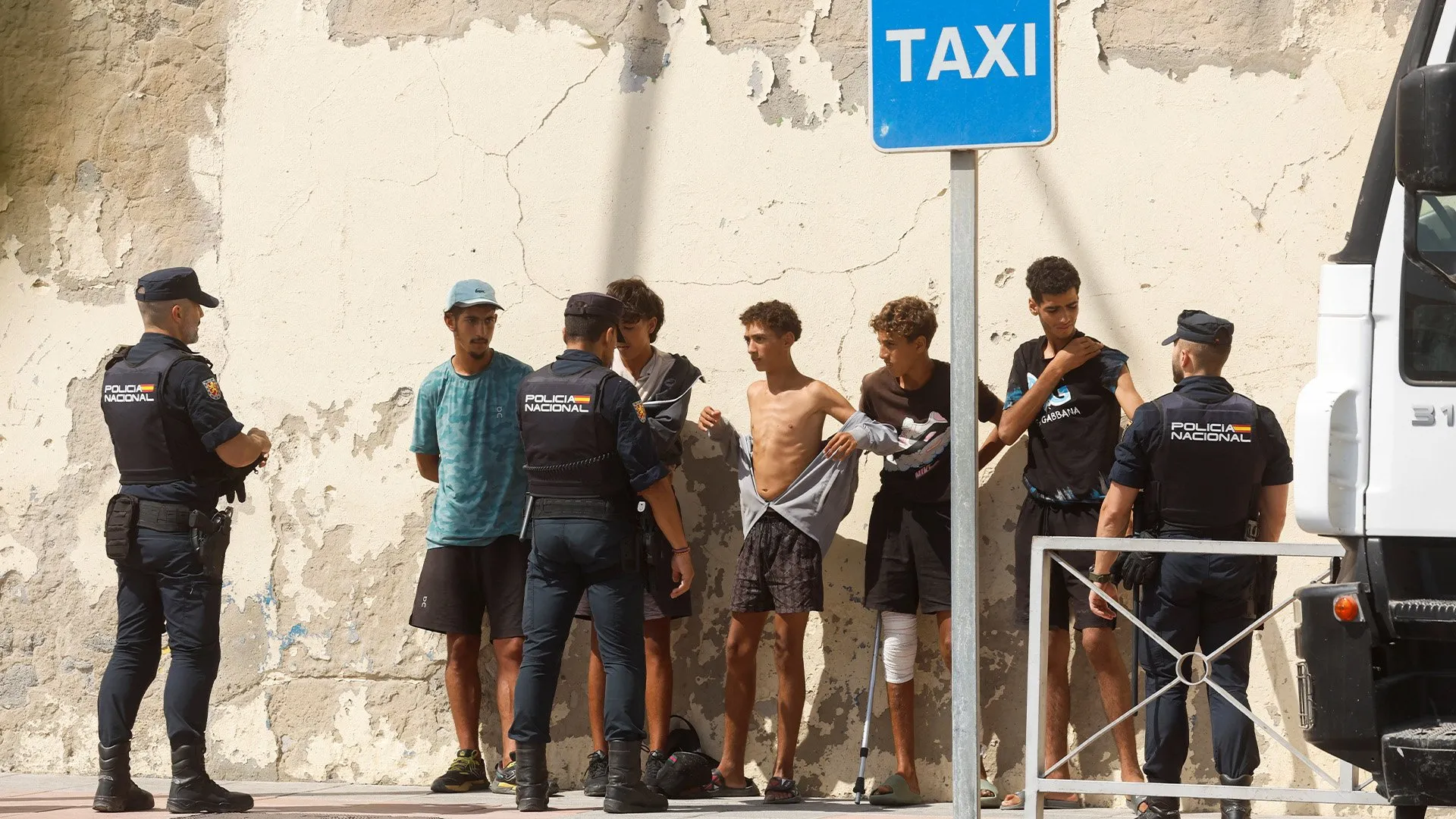
Estimates of up to 2,000 migrants have entered Spain’s territory of Ceuta in recent days in attempts to reach Europe.

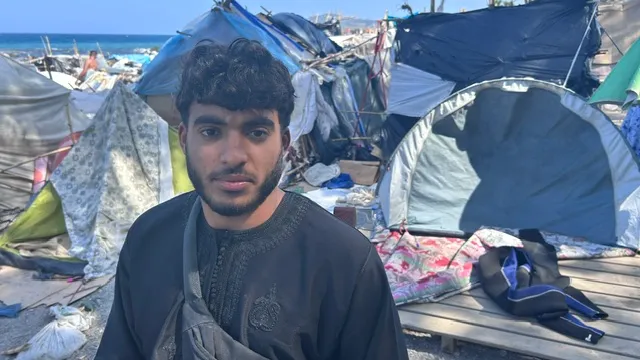
Authorities in Ceuta have raised the alarm after thousands of migrants breached the border to the North African Spanish enclave from neighbouring Morocco in recent days.

The government of Ceuta said on Thursday that between 1,500 and 2,000 people had entered in the last 10 days. Hundreds more were estimated to have arrived on Thursday, prompting regional President Jesus Vivas to declare an “absolute humanitarian and social emergency” and call on Madrid to send troops to reassert control of the border.

Recommended Stories

list of 4 itemsend of list

Spain’s Interior Ministry rejected calls to declare a national emergency, saying such a measure does not cover migration crises, but promised additional resources.

Footage showed some of the migrants shouting “Viva Espana!” as they entered the territory, many of them having travelled by water from the Moroccan side on inflatable devices.

Crowds were shown walking around the breakwaters onto local roads, reported The Associated Press news agency. State news agency EFE said others had crossed by the border by land, scaling fences.

Migrant rights activist Zakaria Zarroqui told the Reuters news agency that the surge in migrant numbers was similar to one that occurred in May 2021, when some 10,000 Moroccan and sub-Saharan youths entered ⁠the enclave within days.

“The situation remains out of control as we speak,” ⁠Zarroqui said, adding that people were still flocking to the Moroccan city of Fnideq in an attempt to cross the border.

Ceuta, together with Melilla — another autonomous ‌Spanish city in North Africa — represents the European Union’s only land border with Africa. Both cities often experience surges in attempted crossings by people seeking to migrate to Europe.

Earlier this month, Spain’s Supreme Court ruled that migrants intercepted at sea while attempting to reach Ceuta or Melilla cannot ⁠be returned to Morocco.

“It has been a slow trickle since the Supreme Court’s ruling, but today has been an explosion,” ⁠a Guardia Civil spokesperson told Reuters.

Spain’s Interior Ministry said it was working closely ‌with Morocco to address the surge in irregular arrivals, blaming people-smuggling networks for exploiting the Supreme Court’s ruling and encouraging undocumented migration.

Interior Minister Fernando Grande-Marlaska is expected to visit Ceuta on Friday to evaluate the situation.

Source link

Major Spanish airport to face MORE strikes in a matter of days as thousands of Brits to be affected

An image collage containing 1 images, Image 1 shows Three airplanes from Ryanair, Eurowings, and EasyJet parked at Palma de Mallorca Airport

BRITS heading to Spain are being warned to expect more strikes both this week and next week.

Baggage handlers have already staged a walkout at Palma Airport and will do so again this Saturday and again from next Tuesday.

The biggest airport in Majorca is set to see disruption next week Credit: Getty
Workers at Palma Airport will strike on Saturday and then ‘indefinitely’ from August 4 Credit: Getty

Workers for the company Swissport, which provides baggage-handling services, are set to walk out on August 1 between 7am-12pm then again between 7pm and 10pm.

After that, an ‘indefinite strike by ground-handling workers’ is set to start on Tuesday unless an agreement is reached, according to local media.

Some airlines that use the company for baggage-handling include Condor, Air Canada and TUI.

The airport has warned that others could be affected too, as a statement said that “its impact will stretch beyond Swissport-handled airlines“.

PARK UP

Epic UK holiday parks with waterparks, theme parks & Spoons pubs from £3pp a night


HOL YES

Cheapest summer for holidays in YEARS – with August breaks still on sale for £188pp

Popular airlines taking Brits to the island include Ryanair, easyJet and Jet2.

The airport said: “Large-scale airport strikes can occasionally create a minor knock-on effect. If Swissport-served flights experience delays at the gates, it can sometimes lead to localised congestion on the tarmac or minor delays at security control.”

To minimise disruption, Palma Airport has advised customers to do the following:

  • Check in online: Complete your check-in online before heading to the airport to minimise time spent in queues.
  • Travel light if possible: Travelling with hand luggage only allows you to bypass potential check-in and baggage carousel delays.
  • Monitor your airline’s app: Keep a close eye on text alerts or app notifications from your airline for real-time schedule updates.
  • Arrive on time (but not too early): Stick to the standard arrival window recommended by your carrier (usually two to three hours before departure). Arriving half a day early can worsen airport congestion.

The airport did see some disruption during the previous strike on July 28 when Swissport workers action coincided with a 24-hour walkout by the Regional Metal Sector.

The Regional Metal Sector covers technical personnel across the entire airport – their final strike is scheduled for today.

The airport has warned that passengers could face disruption Credit: Boarding1Now

On July 28, one man wrote on X: “Stuck on a staircase in palma airport due to swissport ground staff and baggage handlers on strike until midday.”

On the same day, another called on the strike to end with “people waiting on bags to start their holiday”.

A third wrote: “Been to Palma airport recently. It’s not just UK airports, that place is an absolute shambles.”

On the strike, a TUI spokesperson said: “We are aware of planned industrial action affecting airline operators at Palma airport.

“At this stage, we do not anticipate any disruption to our customers. However, we are working closely with our local teams and airport partners to minimise any potential impact.

“As always, we will proactively update our guests if there are any changes to their itinerary. Customers should continue to check their flight details as usual before travelling.”

Meanwhile, Ryanair told Sun Travel that it will “operate as normal” with “no impact to operations”.

easyJet also said its flights will be operating as normal.

Flight compensation rules

A look at your rights if a flight is delayed or cancelled, when your entitled to compensation and if your travel insurance can cover the costs.

What are my rights if my flight is cancelled or delayed?

Under UK law, airlines have to provide compensation if your flight arrives at its destination more than three hours late.

If you’re flying to or from the UK, your airline must let you choose a refund or an alternative flight.

You will be able to get your money back for the part of your ticket that you haven’t used yet.

So if you booked a return flight and the outbound leg is cancelled, you can get the full cost of the return ticket refunded.

But if travelling is essential, then your airline has to find you an alternative flight. This could even be with another airline.

When am I not entitled to compensation?

The airline doesn’t have to give you a refund if the flight was cancelled due to reasons beyond their control, such as extreme weather.

Disruptions caused by things like extreme weather, airport or air traffic control employee strikes or other ‘extraordinary circumstances’ are not eligible for compensation.

Some airlines may stretch the definition of “extraordinary circumstances” but you can challenge them through the aviation regulator the Civil Aviation Authority (CAA).

Will my insurance cover me if my flight is cancelled?

If you can’t claim compensation directly through the airline, your travel insurance may refund you.

Policies vary so you should check the small print, but a delay of eight to 12 hours will normally mean you qualify for some money from your insurer.

Remember to get written confirmation of your delay from the airport as your insurer will need proof.

If your flight is cancelled entirely, you’re unlikely to be covered by your insurance.


Source link

New federal rule sends hundreds of thousands of asylum cases to immigration courts

In its latest move to restrict the legal immigration system, the Trump administration announced a sweeping change Monday that could lead to the deportations of thousands of asylum seekers.

The change from U.S. Citizenship and Immigration Services allows asylum officers to bypass the need to interview certain applicants and instead refer them directly to immigration judges for removal proceedings.

The agency estimates that up to a third, or 444,000 of the more than 1.4 million asylum cases in its backlog, could be affected by the rule.

The administration framed the move as an effort to streamline the process and reduce the backlog of cases. The interim final rule takes effect Tuesday and is subject to a 60-day public comment period.

“For far too long the asylum system has been exploited for purposes of delay and work authorization, not legitimate claims of protection,” USCIS Director Joseph Edlow said in a news release.

“America’s asylum system exists to protect individuals who genuinely fear persecution and this rule will help ensure that resources are directed to the timely adjudication of those claims instead of to those seeking to use the system as a loophole,” Edlow added.

But advocates for immigrants said the change leaves asylum seekers who tried to follow the law vulnerable to deportation.

Migrants can apply for asylum two ways: affirmatively or defensively.

Those who entered the country legally, such as on a visa, and still have lawful status apply with USCIS and have their cases decided by an asylum officer. Those who crossed the border illegally or who are undocumented can apply after being placed into removal proceedings, where they make their case to an immigration judge.

Immigration courts are not an independent system — they are housed under the Department of Justice and judges are federal employees.

That shift is significant because the Trump administration has fired more than 100 immigration judges and replaced them with military lawyers and former prosecutors for the Department of Homeland Security. Many of the fired judges were appointed during the Biden administration or previously worked as lawyers representing immigrants.

In recent months, immigration courts have approved a dwindling percentage of asylum claims as judges face pressure to approve more deportations. After immigration agents began arresting people in courthouses, many immigrants grew wary of showing up for court proceedings, which has aided the increase in removal orders.

USCIS refers thousands of cases to immigration courts each year, federal data shows. During the first half of this fiscal year, the agency transferred 31,454 cases to immigration courts — a number that was already on track to be higher than the 2025 yearly total of 40,932. The highest yearly total was 61,729 cases in 2019, during Trump’s first presidency.

USCIS said the current policy, which requires an asylum officer to first interview an applicant before deciding whether to send the case to an immigration judge, “essentially allows an alien to get a second chance at asylum.”

Todd Schulte, president of the immigrant advocacy organization FWD.us, noted that the rule change comes just after the Trump administration terminated temporary legal protections for hundreds of thousands of Haitians and others, many of whom entered the U.S. legally and applied for asylum the “affirmative” way. On X, Schulte called the move “a terrible harbinger.”

Source link

Thousands rally against Tunisia’s president five years after power grab | Corruption News

NewsFeed

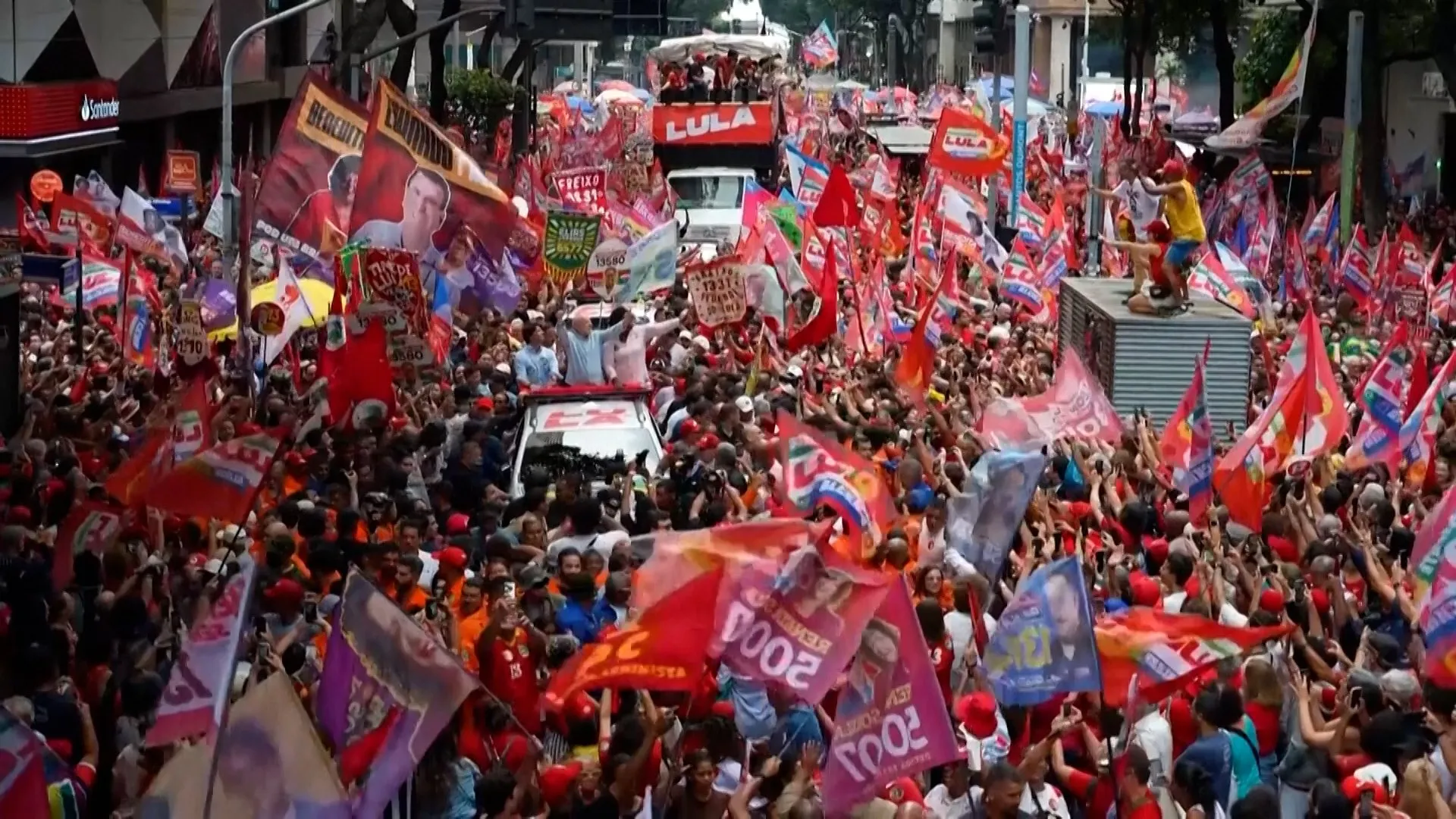
Thousands marched in Tunisia’s capital to demand the resignation of President Kais Saied five years after he suspended parliament. Protesters revived the 2011 revolution’s slogan ‘the people want the fall of the regime’ as they decried democratic backsliding, economic hardship and political repression.

Source link

Typhoon Noul makes landfall in China, with hundreds of thousands evacuated | Weather News

Noul hit southern Guangdong province and neighbouring Hong Kong, bringing strong winds and heavy rain to the region.

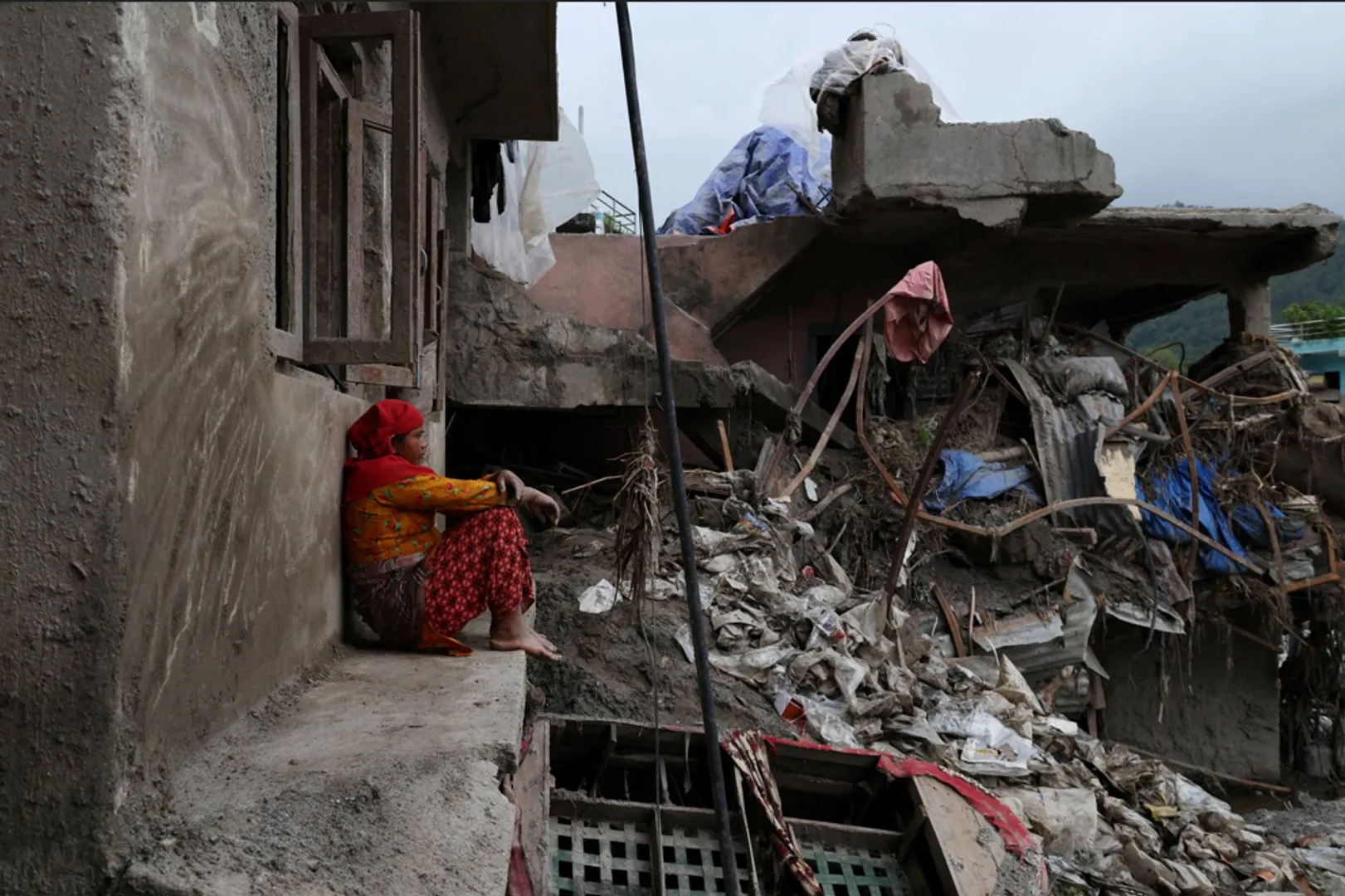
Typhoon Noul has hit southern China, including Hong Kong, bringing strong winds and heavy rain to the region and prompting the evacuation of hundreds of thousands of people in Guangdong province.

China’s national weather centre said Noul made landfall on the coast of Huidong county in Huizhou, southern Guangdong province, at approximately 3:50am local time on Sunday (19:50 GMT on Saturday).

Recommended Stories

list of 3 itemsend of list

China’s official Xinhua News Agency said Noul was the strongest typhoon to make landfall in China so far this year.

Hong Kong’s Observatory said Noul, with maximum sustained winds of 110 kilometres per hour (68 miles per hour) near its centre, was moving Sunday into inland Guangdong and weakening progressively, bringing strong winds and heavy rain to parts of the region.

More than 715,000 people had been relocated for safety by early Sunday in Guangdong province, according to state-owned China National Radio. On Saturday, authorities said some 340,000 people were evacuated.

China’s National Meteorological Centre expected parts of southern Guangdong and southeastern Fujian provinces to experience heavy rain and strong winds over the weekend.

Many trees were seen uprooted in Huilai county, located on the coast of Guangdong province, state broadcaster CCTV reported.

Hong Kong’s airport authority said about 350 flights were cancelled on Sunday. At least nine people were injured across the city during the typhoon period, according to Hong Kong authorities.

As Noul approached Hong Kong, parts of a large scaffolding on a high-rise building collapsed on Saturday afternoon, local police said, although initial reports indicated there were no injuries.

Taiwan’s Central Weather Administration said Noul was bringing rainfall to parts of southern and eastern Taiwan. It was passing over waters south of Taiwan and was moving away from the island Saturday.

Earlier this month, Typhoon Bavi brought strong winds and rain to eastern China, leading to the evacuation of more than two million people. It made landfall on July 11. Another, Maysak, made landfall in southern China on July 3.

Source link

Heatwave hell sparks summer of chaos as THOUSANDS queue for holidays and wildfires force Brits to flee hotels

As 6.3 million people embark on road trips, the UKHSA has issued a yellow heat health alert with a risk to life for the elderly and vulnerable

More than six million people are hitting the roads as the summer holidays begin – battling 30C temperatures and nose-to-tail traffic jams.

The AA predicts 6.3 million of us will make journeys between now and Thursday. Yellow heat health alerts are in place across much of the country until tomorrow morning and the UK Health Security Agency is warning of minor impacts on health and social care services and an increased risk to life for vulnerable people.

The Port of Dover is braced for its busiest weekend of the summer. Holidaymakers faced gridlock as they waited for ferries today, and tomorrow is set to be the same. Ferry company DFDS said its wait times at Dover were up to 60 minutes at border controls.

But officials hope it will be smooth sailing compared to the May half-term getaway, when waiting times hit four-and-a-half hours due to technical issues with thenew border check Entry Exit System.

The RAC’s Simon Williams warned: “Drivers should be ready for some very busy roads this weekend and expect delays. The best advice is to plan journeys and think about setting off earlier or later in the day to avoid traffic jams.”

Opting to stay at home this week will also come with its challenges. Millions of Brits are now subject to hosepipe bans and a drought has been officially declared for large parts of north and mid-Wales.

The rest of Wales, along with much of central, southern and eastern England, is in the “prolonged dry weather” ­category – one stage below a drought. But parts of Britain might be in for some light relief from Sunday, as high pressure retreats and brings outbreaks of rain.

Showers could be heavy in the north and the west of the UK, with 20mm possible in parts of north west Scotland. The rain will be much patchier further south and east, with large swathes of England and Wales forecast to get just a few millimetres at most. And it’s likely some locations in the south of England will not see a drop.

The Met Office’s Dan Suri said: “After a prolonged spell of hot, dry and settled weather, some will see a temporary change this weekend as weather fronts move south east across the UK. While some areas, particularly in the north and west, will see rain and showers, many places are likely to receive ­relatively little rainfall.

“For much of southern England, dry conditions are expected to remain the ­dominant feature, with ­temperatures recovering quickly next week and the potential for very warm or locally hot weather to return.”

Meanwhile, British holidaymakers were among thousands evacuated from the Cap Ferret peninsula as wildfires raged across south-west France. Tens of thousands are being forced to leave the upmarket resort, including hundreds escaping by boat.

Headmaster David Morton, 53, from Gloucester, was holidaying in the coastal village of Petit Piquey with his wife and sons when they received an emergency text message at 3am.

He said: “We got in our car, packed everything up as quickly as we could… and then set off and joined a very long, slow-moving queue of traffic. We could see several fires in the distance. The whole forest was on fire.”

The fire has so far consumed around 10,000 hectares – nearly the size of the city of Manchester – with water-bombing planes deployed in a bid to keep the flames under control. French Interior Minister Laurent Nunez said 40,000 people either had been or were preparing to evacuate from the Cap Ferret peninsula.

Firefighters also battled blazes in Le Porge and Lacanau in the Gironde department of south-west France, while smoke from the fires dominated the skyline in nearby Biscarrosse.

Elsewhere in Europe, Spain has declared a national emergency after 20,000 people were forced to flee due to fires near Madrid, while the Italian island of Sicily has also been hit.

Source link

Thousands of complaints, few punished: LAPD faces racial bias claims

Over the past decade, the LAPD has received thousands of complaints accusing officers of targeting people solely because of their race, ethnicity or other form of outward appearance.

Only one has been fired for it.

The now-former officer, Edgar Garcia Cancino, was part of a San Fernando Valley anti-gang unit whose members were alleged to have improperly pulled over and searched hundreds of motorists. Cancino has appealed his termination, arguing that other officers in his unit carried out more of the problematic stops. He claimed the department sought to make an example of him because he refused to implicate his superiors in wrongdoing.

Accusations of racial profiling have long plagued the department, alienating generations of Black and brown Angelenos. Known within the LAPD as “biased policing,” such complaints have persisted despite repeated attempts to enact reform. But the question of how commonly profiling occurs in the LAPD remains a topic of pointed debate.

Years of studies by researchers and reporting by The Times and other news outlets have found Blacks and Latinos in L.A. are subjected to stops, frisks, searches and arrests at significantly higher rates than whites, regardless of whether they live in high-crime neighborhoods. Past LAPD chiefs have acknowledged isolated cases of profiling may occur. At the same time, they have denied that there is a widespread, systemic problem.

An internal LAPD investigation of Cancino’s Mission Division gang squad uncovered an “overwhelming pattern of intentional policy violations,” according to a summary of the case file reviewed by The Times.

Police investigators said in the case file that they identified hundreds of stops that were not properly documented, along with failures by the officers to active their body and dashboard cameras.

The allegations against Cancino largely hinged on two stops, according to his attorney. In May 2023, Cancino and his partner pulled over a man for allegedly speeding and having tinted windows, said his attorney, Nicole Castronovo. The vehicle’s registration turned out to be expired, Castronovo said, but the driver was allowed to leave without a citation after the officers searched his vehicle and found nothing incriminating.

When interviewed about the incident later, according to Castronovo, the motorist told police investigators that Cancino had stopped him because ”I looked like a G,” or gangster.

A few months later, the attorney said, Cancino was involved in another questionable stop, this time of a pedestrian who also later lodged a complaint alleging he was profiled.

Castronovo denied that Cancino had unfairly targeted anyone while on the job, saying he is a proud Latino who joined the force out of a desire to give back to the city where he grew up. She argued that the department’s investigators cherry-picked cases involving Cancino while ignoring similar behavior by other Mission cops.

“They have set up a system where it’s virtually impossible to sustain a biased policing complaint against an officer,” she said. “And then they turn around and weaponized” it against Cancino.

The probe’s findings were presented to LAPD leadership, who recommended that Cancino be fired and sent to a disciplinary hearing.

Castronovo argued in an appeal that her client and another fired Mission officer, Kim Lobos, had been denied a fair disciplinary hearing because both were initially represented by a lawyer appointed by the police union who had a conflict of interest. According to Castronovo, the union attorney also represented other Mission officers who agreed to testify against Cancino and Lobos. A Los Angeles County judge ultimately rejected their appeal.

Only one other LAPD officer prior to Cancino was fired for alleged racial profiling, a case that occurred in 2011.

According to the California Department of Justice, 4,878 allegations of bias were brought against LAPD officers from 2016 to 2025. Of those, only three were sustained.

The department’s rates mirror those of most other law enforcement agencies across the state. The Los Angeles Sheriff’s Department, which received roughly 10% fewer complaints over than span, has sustained six racial bias allegations against deputies.

Defenders of the Police Department note that any member of the public is allowed to submit a complaint regardless of whether there is supporting evidence, which leads to a high number of allegations that cannot be proven. Others note that the presence of body-worn cameras has helped disprove frivolous claims filed by criminal suspects or others who have an ax to grind with the department.

A report released last year by the advocacy group Catalyst California found that in 2025, Black motorists accounted for nearly a third of all stops for minor traffic violations, even though they make up roughly 8% of the city’s population. The same report found that Latinos, who are about 47% of L.A.’s population, were pulled over in 58% of all traffic stops.

Latino people are up to four times more likely to be subjected to “consent” searches, and Black people up to three times as likely, according to the Catalyst study. Fewer than 1 in 10 of those stops resulted in seizures of guns or drugs, the report said.

LAPD officials have pushed back on the findings, saying there is no established methodology for analyzing racial profiling data. Many factors affect the racial and ethnic patterns of traffic stops — from the predominant race of the neighborhood in which the stop was made or whether the stop resulted in an arrest and conviction — all of which must be considered when interpreting raw data, officials say.

In May, the Los Angeles City Council voted in favor of limiting the use of “pretextual” stops, in which police use a broken taillight or another minor equipment violation as justification to pull someone over in order to investigate whether a more serious crime has occurred. Activists and some council members said they wanted to ban a controversial tactic that enabled racial discrimination. The measure urges the Police Commission, which is responsible for LAPD policy changes, to take up the issue this year.

The LAPD’s unwillingness to acknowledge officer biases and hand down punishment when warranted serves only to drive a wedge between the community and the department, said Peter Bibring, a civil rights and police practices attorney.

“The department, year after year after year, is saying, ‘Nope this never happens, this never happens,’” Bibring said. “Then the community doesn’t feel like the department is recognizing these legitimate problems and responding to their concerns.”

During a deposition for a racial profiling lawsuit filed over a 2019 traffic stop, an LAPD official was asked what evidence it would take to get someone fired.

The attorney for the plaintiff, a Black man who sued claiming he was pulled over by three gang officers who handcuffed him and allegedly searched his vehicle without probable cause, asked: “If you found out that a given officer had pulled over 2,000 people in the last year, and all 2,000 of them were Black, would you have enough information, sitting here today, to determine whether or not that data alone indicated that the officer was engaged in biased policing?”

The LAPD official’s response, according to the deposition transcript: “No.”

Jim Willis, a former LAPD detective who later worked for the L.A. Police Commission’s inspector general’s office, pointed to past audits that found serious shortcomings in the department’s investigations of racial bias complaints. Furthermore, he said, many people who are affected never file claims because they don’t understand laws around consent searches — or they are just relieved when officers let them go.

Even when someone bothers to file a complaint, Willis said, it’s difficult to gather enough evidence from a brief interaction to prove an officer made a traffic stop solely because of race. If there was a minor traffic infraction or other probable cause to make a stop, proving their motive requires them to confess to acting with intent to discriminate, Willis said.

That’s why most claims are dismissed by LAPD investigators, he said, “unless, you caught somebody on their body-worn video saying, ‘Hey tonight we’re going out and we’re (pulling over) brothers.’”

Source link

Southern Europe wildfires kill 3 firefighters, force thousands to flee

A wildfire burns in Burgohondo municipality in Avila province, 60 miles west of Madrid, on Wednesday forcing more than hundred residents to evacuate from the area. Photo by Raul Sanchidrian/EPA

July 23 (UPI) — Three firefighters were killed, two in France and one in Italy, and 12,000 people were forced to evacuate as wildfires continued to ravage areas of southern France, Italy and Spain.

Almost 6,000 acres have been burnt in the area west of Bordeaux, where 10,000 people were ordered to flee amid a ban on internal combustion and electric engines and road closures, the Gironde regional government said Thursday.

Authorities said 500 firefighters were tackling the blaze, which was moving southwestwards after breaking out in Saumo, a small town 20 miles northwest of Bordeaux, on Wednesday and that firefighting aircraft were en route to the scene.

No injuries had been recorded.

The two French firefighters died Tuesday as they battled to bring a separate blaze under control in a suburb of Bordeaux.

Var, a department on the Cote d’Azur between Marseille and Nice, was also badly affected, with thousands of acres burnt. Residents evacuated there were allowed to return to their homes Thursday to assess damage on strict instructions to restrict movement and activities because of the risk the fire could flare up again, amid windy conditions.

Meteo-France red alerts for forest fires were in place across several other departments in southern France on Thursday.

In Italy, a firefighter was killed and another was injured Wednesday battling a major fire on Sicily.

Sicilian Civil Protection chief Salvo Cocina said the wildfire in San Cataldo, in the southwest of the island, was one of 10 major incidents that had triggered the evacuation of residents, as a precaution.

About 6,000 firefighters, forestry officers and civil protection personnel were deployed in the operation.

The regional government said the most critical fires were in Casaboli, Bivona, Alimena, San Cataldo, Galati Mamertino districts and certain areas of the Madonie Park and Syracuse areas.

Footage online, shot by the Spanish Civil Guard, shows officers going door-to-door telling residents to leave as a major wildfire raged southwest of Madrid, between Almorox and Villa del Prado.

It comes after a huge wildfire to the north of the capital in Guadalajara province that broke out on July 16 razed almost 80,000 acres and a deadly forest fire in southeastern Almeria province that killed at least 11 people on July 10.

Across European Union countries, wildfires have burnt more than 628,000 acres so far in 2026, European Forest Fires Information System figures show — although the figure was below the 668,000 acres burnt in the same period in 2025.

Astronaut Buzz Aldrin walks on the surface of the Moon during the Apollo 11 mission on July 20, 1969. Photo by NASA/UPI | License Photo

Source link

Thousands forced to evacuate as wildfires sweep across southern France | Climate News

NewsFeed

Thousands of people are being evacuated from areas of southern France as firefighters battle huge wildfires. Researchers say climate change is intensifying heat and drought, creating conditions for larger and more destructive wildfire seasons across Europe.

Source link

Ryanair to axe two million seats to European country affecting thousands of flights

RYANAIR is set to cancel hundreds of flights to and from a popular European country.

Two million seats will be axed from the winter season in Belgium and next summer due to rising air passenger tax.

Two Ryanair airplanes on the tarmac, with one in the foreground partially obscuring the other.
Ryanair will axe millions of seats from Belgium Credit: EPA
View of the gates and airplane parking at Charleroi Bruxelles Sud international airport in Belgium.
The airline will remove five aircraft from its base at Charleroi Airport Credit: Getty

The airline said today that it would be removing five aircraft from its base at Charleroi, according to local media.

Cuts will affect services at Charleroi and Brussels Airport in Zaventem starting later this year.

Ryanair said the axing of routes is a decision made as part of the Federal Government’s plan to increase the departure tax on air tickets.

Just a few days ago, the Belgian government announced it would raise the amount from €5 (£4.26) to €7 (£5.97) from January 1, 2027.

COAST EFFECTIVE

Best UK family theme & waterparks with cheap stays from just £3pp a night


DIVE IN

Mega waterpark hotels with EVERYTHING you ever wanted & all inclusive from £189pp

Despite this being lower than expected, Ryanair said it is still too high.

When the tax increase was announced at the beginning of the year, Ryanair boss Michael O’Leary slammed the plans, calling them “silly” and “damaging”.

He added: “Over the last 20 years, Ryanair has grown to be Belgium’s largest airline.

“This growth can easily be lost to tax abolishing countries like Sweden Hungary, Slovakia and Italy, and if Charleroi and Belgium don’t reverse these taxes.”

Ryanair currently carries 11.6million passengers to and from Belgium, making it the largest airline operating in the country.

It’s not yet clear whether the routes axed will be from the UK.

Current flights routes to Charleroi include from Manchester, Newcastle and Edinburgh.

Source link

New travel warning for hundreds of thousands of Brits set to fly this summer amid safety fears

THE UK’s aviation watchdog has issued a new travel warning as thousands of families will jet off on their summer holidays this week.

The UK Civil Aviation Authority (CAA) has updated its travel warnings about common packing items that could delay your travels – or even see them cancelled.

Holidaymakers need to think twice about packing certain items this summer Credit: Getty
Anything with a lithium battery – like a vape, needs to be in hand luggage Credit: Getty

The CAA has warned that incidents involving lithium batteries are on the rise – so it’s important to pack certain gadgets correctly.

It’s well-known now that items like vapes and power banks have to go in hand luggage, but lots of other ones fall under the same category.

The CAA has named another eight items that you may not have realised are powered by lithium batteries.

These are:

COAST EFFECTIVE

Best UK family theme & waterparks with cheap stays from just £3pp a night


DIVE IN

Mega waterpark hotels with EVERYTHING you ever wanted & all inclusive from £189pp

  • Bluetooth speakers
  • Electric fans
  • Fitness and smartwatches
  • Digital cameras
  • Wireless headphones
  • Tablets
  • E-readers
  • Laptops

All of these items should be taken onboard as hand luggage.

This is so that if an incident occurs – like a power bank overheating – the cabin crew can react quickly.

The CAA said that on average, passengers carry four lithium battery devices each which works out as four million gadgets taking to the skies every day.

If any are packed incorrectly, it increases the likelihood of delays and or cancellations to flights.

For example back in May, an easyJet flight was forced to divert when a passenger informed crew during the flight that the portable charger was in the hold of the aircraft.

The flight had been heading to London Luton from Hurghada in Egypt but had to land in Rome as a ‘precaution’.

Other items like electric fans should go into the cabin – not in checked-in luggage Credit: Getty

In another case, a Hong Kong Airlines flight was forced to make an emergency landing after a fire broke out in one of the overhead bins.

Passengers suspected a power bank was behind the cause of the blaze, according to local media.

Giuseppe Capanna, product safety engineer at Electrical Safety First, had some further advice: “Before you head to the airport, give your devices a quick once-over. If a battery is bulging, swelling, changing shape, overheating or showing any other signs of damage, don’t take the risk.

“Instead, safely dispose of it as soon as possible at a local recycling centre with dedicated facilities for electronics and batteries and never put it in your general waste.

“Battery safety starts before you even step foot on an aircraft, starting with where you shop.

“When shopping for your summer getaway, the best way to protect yourself and those around you is to stick to a reputable high street retailer you know and trust to ensure your power bank or any other lithium-ion battery product you’re taking away with you is safe.”

Airlines have been cracking down on the use of power banks onboard this year, after one caught fire on an Air Busan flight in South Korea.

While passengers managed to evacuate, the plane was decommissioned due to the damage

Check out ALL the new rules you need to know before travelling this summer – including power banks.


Source link

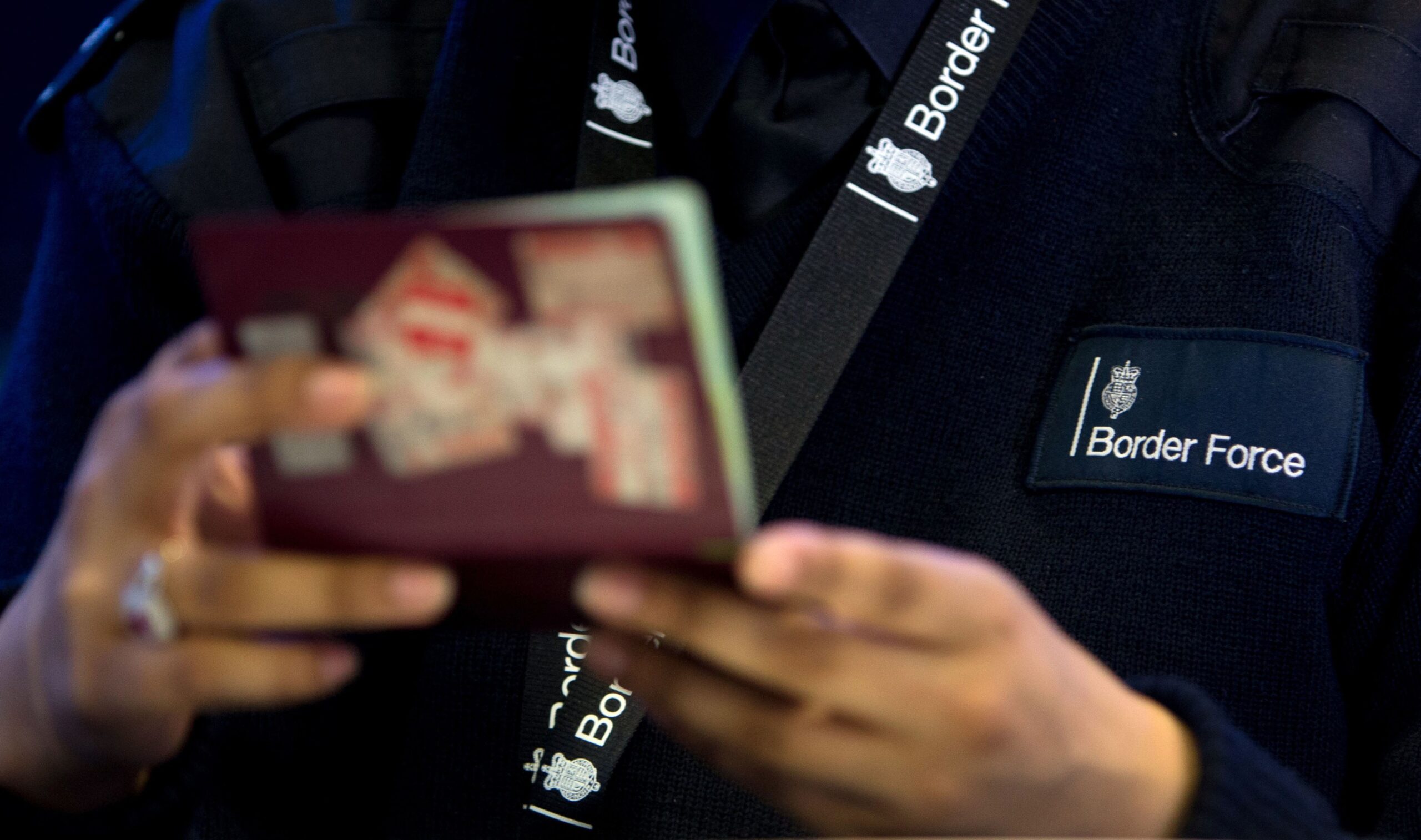
Huge flaw in new biometric checks means thousands of passengers face being stopped at the border

ANOTHER problem has arisen with the new EES entry rules for Europe and it could affect thousands of people.

In a recent case, one woman was questioned about her travels when she was confused for her sister.

One woman was mistaken for her twin sister while using EES Credit: AFP

EES has been introduced to use biometrics and fingerprinting to stop the need for manual checks at the border.

But it appeared that the system failed to correctly identify one woman from her twin sister.

As reported by Politico, the case involved one Brit who was accused of being illegally in the Schengen zone.

She was questioned by police while trying to fly back to the UK from Cluj-Napoca in Romania in May.

DIVE IN

Inside the £9.50 holiday park with a £10m upgrade – with a NEW waterpark and lido


COAST EFFECTIVE

Best UK family theme & waterparks with cheap stays from just £3pp a night

Romanian authorities at the airport said that the woman’s departure hadn’t been properly recorded after a visit to Amsterdam in April 2026.

The problem was that she hadn’t been to Amsterdam – but her identical twin sister had.

EES appeared to have confused the twins despite taking biometrics.

The woman was questioned for about 15-minutes but was ultimately allowed to fly home.

Around 12,000 sets of twins are born in the UK every year, so this could cause problems for thousands of people.

Asking experts what could have caused the flaw in the system, Niovi Vavoula, chair in cyber policy at the University of Luxembourg, gave two possible explanations.

The British traveller was questioned by authorities in the airport Credit: AFP
She was mistaken for her twin sister who had travelled to Amsterdam Credit: Getty

The first suggestion is that there may have been an improperly registered exit for the twin in Amsterdam.

The second they explained could have been down to the Romanian authorities in Cluj.

Niovi Vavoula told Politico, “It appears that the authorities are not well trained to distinguish between different processes and rely on facial images as the sole identification method.

“The fact they didn’t check the passport details in the EES, nor take into account that the EES is still fresh and there are various problems, shows what is called anchoring bias — when you rely on the first piece of evidence and disregard everything else.”

Romanian Border Police responded in a statement that said that EES had functioned properly at the time.

But that data in the system had to be “corrected” by border staff, who it added had not followed “applicable operational procedures.”

They added “we emphasise that this is an isolated incident and should not be considered representative of the overall performance of the [EES] system.”


Source link

Thousands of Ukrainians protest removal of Defense Minister Mykhailo Fedorov

Ukrainians protested in their thousand central Kyiv and other cities across the country on Thursday calling for the reinstatement of sacked Defense Minister Mykhailo Fedorov (pictured) ahead of a vote in parliament to replace him with Interior Minister Ihor Klymenko. Photo by Olivier Matthys/EPA

July 16 (UPI) — Thousands of Ukrainians rallied in central Kyiv and other cities on Thursday demanding the reinstatement of sacked Defense Minister Mykhailo Fedorov ahead of a vote in parliament to approve his replacement.

The mostly young protestors, waving Ukrainian flags and holding up signs condemning the removal of the popular political figure, shouted “reappoint” and “shame.”

“Hands off Fedorov” and “Stop sabotaging victory!” read some of the placards hours after President Volodymyr Zelensky dismissed Fedorov after just six months in the job as part of a major reshuffle of his cabinet.

The demonstrations come amid widespread opposition by lawmakers, the military and civil society demanding to know the reason for the ejection of one of the government’s most capable officials.

Among other achievements, Fedorov has been credited with breathing new life into the Defense Ministry, spearheading an anti-corruption drive, using data analysis to try to boost battlefield capabilities and opening a new front targeting critical Russian infrastructure in occupied Crimea and the Asov Sea.

In his previous government role in charge of digital transformation, he is credited with successfully lobbying SpaceX‘s Elon Musk to block the guidance systems of Russian drones from utilizing the firm’s Starlink satellite arrays. He also persuaded Musk to supply Starlink terminals to keep the country online amid sabotage of Ukraine‘s terrestrial internet networks.

Protesters said Fedorov’s dismissal would make people doubt the reforms he had embarked on.

A number of lawmakers from the ruling party have indicated they will not back the appointment of Ihor Klymenko, who currently serves as the minister of the interior, with at least one threatening to quit.

“Klymenko might not have enough votes. It’s not even about Fedorov. People have accumulated frustration and fatigue, and Fedorov’s resignation may cause unexpected social turmoil,” an unnamed lawmaker from the ruling party told The Kyiv Independent.

Tatiana Bohdanovska, 29, who lost her younger brother in battle in Kharkiv province four years ago, said it was a slap in the face to those killed defending Ukraine.

“My brother died believing this country would become different. If the government had invested earlier in technology and supported the army the way it should have, maybe he would still be alive,” she said.

Oleksandr, a serving soldier, told the BBC it was “the worst mistake Zelensky has made during his entire presidency.”

Fedorov’s dismissal — part of a shakeup that saw state-run Naftogaz CEO Serhiy Koretsky replace Yuliia Svyrydenko as prime minister — has been attributed to personal friction between him and Commander-in-Chief Oleksandr Syrskyi.

Speaking at a press conference on Thursday, Fedorov accused Syrskyi of sowing division among Ukrainians.

He said he tried to work with Syrskyi and his Chief of the General Staff Andrii Hnatov after Zelensky declined to replace them but every improvement he tried to initiate was rebuffed.

“Instead of finding a way of defeating Russia asymmetrically — which is the job of the commander-in-chief [Syrskyi] — he’s found a way of splitting our country,” said Fedorov.

However, Fedorov said he was 100% confident it would turn out for the best, stressing that Zelensky “hears the Ukrainian people, knows what to do.”

“I don’t believe he has yet chosen a side in the Syrskyi matter. I spoke with him today and said that I am acting according to my conscience,” he said.

Astronaut Buzz Aldrin walks on the surface of the Moon during the Apollo 11 mission on July 20, 1969. Photo by NASA/UPI | License Photo

Source link

Emmerdale legend’s epic rise from being homeless to ‘earning thousands’ on ITV soap

From being homeless to becoming one of Emmerdale’s most adored stars, one cast member has an incredible backstory

An Emmerdale icon has an off-screen story even more remarkable than some of the soap’s biggest storylines.

Over the years, viewers have been introduced to several stars who have joined the long-running programme. And while plenty have left, several have remained in the Dales, including Bob Hope actor Tony Audenshaw.

Tony shot to fame playing Bob Hope on the ITV soap back in 2000. Since then, he’s become a firm favourite and has been involved in a ton of memorable soap moments.

And in Wednesday’s episode (July 15) episode, the Woolpack Batman was seen spilling the beans to newcomer Serena Sugden (Casey Al-Shaqsy) about her newfound family.

However, for actor Tony, life hasn’t always been plain sailing as he has endured tough times trying to make ends meet while chasing his dream of acting.

Tony’s real-life homeless experience

In 2019, Tony opened up about being homeless back in the day, before having his big break in the TV world. The actor revealed he could not afford to stay in a BnB when he worked in Thorpe Park back in the 1980s, so was forced to sleep in his car in order to make ends meet.

“There were occasions where I didn’t have enough for a B&B, so I just parked up and tried to get some kip. It wasn’t easy, but you do what you have to do,” he said on Loose Women.

“I used to work at Thorpe Park, the theme park, I used to be the Thorpe Park rangers and do the voices. Up North things are much cheaper. I came down here in the 80s, and it was £70 for a BNB.

“If I was down for five nights I would sleep in the car, because I didn’t have much money coming in. I’d never do it two nights on the trot because you couldn’t really function well. It was Monday in a B&B, Tuesday in the car – the things you saw in those car parks, torches in the window.”

Tony’s reported soap earnings

Bob’s perseverance paid off as after an early stint in Brookside in the mid-90s, he was first seen on Emmerdale in 1996 in a minor role before landing the part of Bob Hope four years later.

Since then, he has clocked up more than 2,500 episodes, making him one of the soap’s longest-serving cast members.

Due to his status on the show, it’s believed Tony. could be earning thousands. Cast members earn between £400 and £2,000 per episode, which translates to annual salaries ranging from roughly £12,000 for newer cast members to over £200,000 for top, long-standing stars, like Tony.

Tony’s world record

Away from the Yorkshire set, Tony is renowned for his love of running; a hobby that has taken him all around the world, from London to Amsterdam and New York.

In 2010, he entered the London Marathon in a giant baby outfit — and crossed the line in just 3 hours and 13 minutes. The remarkable time earned him a Guinness World Record for the fastest marathon dressed as a baby, but the record has since been broken.

Running was also a hobby he shared with his late wife Ruth, who died from cancer in April 2017, when she was 43 years old, after a 16-month battle with the disease. Tony and Ruth had been married since 1996 and had two children together, a son George and a daughter Emily.

Emmerdale airs Monday to Friday at 8:00pm on ITV1 and ITVX

Source link

Millie Bobby Brown splashes thousands on a swimming pool for her DOGS to teach them how to swim

STRANGER Things star Millie Bobby Brown has had a swimming pool built — just for her dogs.

The 22-year-old British actress runs an animal rescue organisation called Joey’s Friends on her farm in Atlanta, Georgia, and wants to train pooches to swim.

Millie Bobby Brown holding her dog.
Millie Bobby Brown has had a swimming pool built for her dogs
Miniature golden doodle swimming in a salt water pool.
The actress wants to teach her pooches how to swim Credit: nycshooter

Millie also admitted her most expensive purchases are related to her animals.

Quizzed over the most unnecessary thing she has spent money on this year, she said: “Maybe a goat shed.

“Like I didn’t need the shed, did I? But the goats love it. I just thought it was cute. Also, a new chicken coop. That or I just built a swimming pool for my foster dogs.”

Millie then recalled the chat she had with her husband, 24-year-old model Jake Bongiovi, who she wed in 2024.

More on Millie Bobby Brown

HOLMES HOWLER

Netflix fans spot glaring blunder in Enola Holmes 3 – did you?


GOT THE TRAIT

I want to go on Traitors, says Millie Bobby Brown – here’s why I’d be perfect

She told the On Purpose With Jay Shetty podcast: “He’s like, ‘Why?’

“And I’m like, ‘Because it gets hot in the summer, and I want them to learn how to swim so that when they get adopted, they can swim’.”

Last year she said she had 62 pets including 25 farm animals, 23 foster dogs, ten of her own dogs and four cats.

She is believed to have rescued and rehomed more than 230 dogs.

Millie, who has an estimated net worth of £24million, has several goats named after rappers including Eminem, Cardi B, Slick Rick and Biggie Smalls, as well as chickens.

She said: “I have a lot of animals on the farm that were bullied out of their own farm.

“So the herds just kind of chose, ‘We hate that donkey’. Then that donkey comes to me. I have a lot of outcasts. That’s exactly where I belong.”

Millie hit the big time playing Eleven in the Netflix sensation — at the age of 12.

She made her movie debut in 2019’s Godzilla: King of the Monsters before starring in The Enola Holmes Mysteries.

She has since launched her own fashion range.

Source link

Heat waves in England and Wales caused thousands of additional deaths

Exceptionally hot weather in May and June was responsible for the heat-related deaths of at least 2,700 people in England and Wales, according to British research out Monday. File photo by Facundo Arrizabalaga/EPA-EFE

July 13 (UPI) — Exceptionally hot weather in May and June was responsible for the heat-related deaths of at least 2,700 people in England and Wales, according to British research out Monday that found that human-caused climate change was a significant factor.

Temperature records for both months fell during heat waves May 21-29 and June 18-28, with the bulk of the fatalities — 2,200 — in June when the temperature rose to as high as 99.9 degrees Fahrenheit compared with average daytime highs of 68 degrees Fahrenheit, the Met Office said in a news release.

Researchers from Imperial College London, the London School of Hygiene & Tropical Medicine and the Met Office modeled excess deaths — those over and above normal levels — during both heat waves using historical mortality records and established peer-reviewed methods.

Notably, almost 6 in 10 of fatalities during the May heat wave were attributed to additional heat contributed by human-caused climate change, compared with a little less than 4 in 10 during the heat wave in June, which was hotter and lasted longer.

The scientists said daytime maximum temperatures approximately 7 degrees Fahrenheit higher than they would have been without human-induced climate change had fueled temperatures that would have otherwise been far less likely to occur — making the heat waves far more hazardous to human health.

“We all love the sun, but people need to be aware that we are now seeing dangerous climate-change-fueled heat that is claiming lives, disrupting schools and hospitals and shutting down transport and infrastructure,” said Dr. Clair Barnes, Research Associate in Extreme Weather and Climate Change at Imperial College London.

“It’s time we woke up to the fact that we now live in a country with dangerously hot summers. To protect people during future extremes, we must urgently adapt to the reality of the climate we now have, and double down on global efforts to reach net zero emissions to stop this from getting worse,” she said.

Dr. Malcolm Mistry, Assistant Professor in Climate and Geo-spatial Modelling at the London School of Hygiene & Tropical Medicine, expressed concern that only a few weeks into summer England and Wales had already experienced two record-breaking heat waves.

He warned that with spikes of extreme hot weather more frequent and more intense due to human activity, summer heat waves were “rapidly evolving into a major health risk for people in the United Kingdom.”

Mistry said it was critical that changes to homes, workplaces and critical infrastructure to cope with extreme heat kept ahead of rising health risks in order to protect the elderly, children, babies and other vulnerable groups.

The Met Office said 2026 has been exceptional with the two heat waves topping records that had stood since May 1944 and June 1976.

“For the time of year these events were extreme, even in our warmer climate,” said Climate Attribution Manager, Dr. Mark McCarthy.

The climate division of the U.K. Health Security Agency said that with periods of heat likely to become more intense, longer and more frequent as the world continued to warm, the study showed the “scale of risk associated with extreme heat and the growing threat climate change poses to our wellbeing.”

Continental Europe has also been in the grip of a more or less continuous heat wave since May that has placed health systems under huge pressure, triggered deadly wildfires that have burned through tens of thousands of hectares of woodland and scrubland, crippled power grids and forced schools to close.

The World Health Organization said Sunday that 1,300 excess deaths reported across Europe since June 21 were linked to the high temperatures.

Director-General Tedros Adhanom Ghebreyesus said Europe was warming twice as fast as the rest of the world with 150 million people suffering the negative impacts of the extreme heat.

France’s Health Ministry said Sunday that there were 1,000 extra deaths between Wednesday and Saturday alone, compared with previous months.

Source link

Thousands gather in Srebrenica to mark 31 years since genocide | Srebrenica genocide News

Ten newly identified victims were buried as the more than 8,000 slain Bosnian Muslim men and boys were remembered.

Thousands have gathered in Bosnia and Herzegovina to mark 31 years since the Srebrenica genocide, as leaders and activists worldwide use the anniversary to call on people to fight dehumanisation.

On Saturday, mourners, survivors, foreign dignitaries and religious leaders gathered at the Srebrenica-Potocari Memorial Center to commemorate those who were killed in 1995. People took part in the annual peace march before 10 newly identified victims were buried.

Recommended Stories

list of 3 itemsend of list

Bosnian Serb forces overran the eastern Bosnian town of Srebrenica on July 11, 1995, killing more than 8,000 Bosnian Muslim men and boys over several days. Srebrenica had been declared a protected “safe area” by the United Nations Security Council two years earlier.

Denis Becirovic, Chairman of the Presidency of Bosnia and Herzegovina, said honouring those who were killed was crucial to maintaining stability.

“If we fail to preserve the truth about our past, we will have neither a present nor a future,” he said.

The Dutch ambassador to Bosnia and Herzegovina, Henk van den Dool, said education was key to preventing a repeat of similar atrocities.

“One of the common goals we share with the Srebrenica Memorial Center, with the mothers, and with the survivors is to translate this enduring warning into meaningful action. One of the most meaningful and effective ways to do that is through education,” he said.

Pursuit of justice

Every year on July 11 , newly identified victims are buried at the Srebrenica-Potocari Memorial Center, as investigators continue to search for the remains of people buried in mass graves in surrounding areas.

More than a thousand victims remain missing following the genocide, which is widely recognised as the worst atrocity committed in Europe since the Holocaust during the Second World War.

Pakistani Prime Minister Shehbaz Sharif called the massacre “a crime against humanity”, while the Mayor of London, Sadiq Khan, posted on X that he was “deeply moved” during his trip to Srebrenica last week.

“Today, as we stop to remember the victims and families who mourn them, we must also commit ourselves to fighting violence and dehumanisation wherever we encounter it and stopping hatred from taking hold,” Khan said.

More than 100,000 people were killed during the Bosnian War between 1992 and 1995. The conflict followed the dissolution of Yugoslavia, triggering a series of ethnic conflicts and wars of independence among the Balkan states that had previously formed a single country.

In recent days, campaigners have drawn comparisons between the Srebrenica genocide and Israel’s genocidal war on Gaza. Kenneth Roth, former executive director of Human Rights Watch, decried that senior Israeli officials are yet to be held legally accountable for their crimes.

“The United Nations this week remembered the genocide in Bosnia – the 8,000+ Muslim men and boys killed in Srebrenica in July 1995. The leaders of the genocide were convicted. The perpetrators of Israel’s genocide in Gaza remain at large,” Roth said on X.

Source link