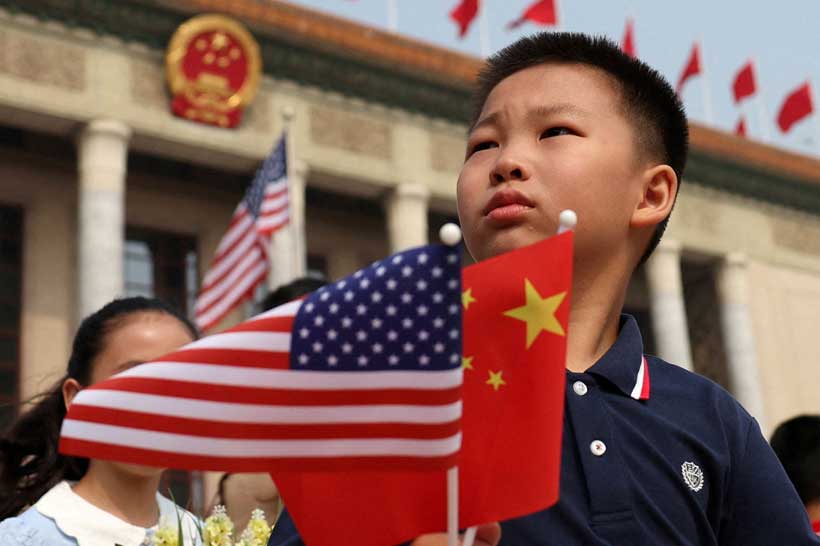
United States President Donald Trump concluded his final round of discussions with Chinese President Xi Jinping in Beijing while attempting to present the visit as a major economic success. The summit came at a sensitive moment for both countries as tensions over trade, Taiwan, artificial intelligence technology, and the Iran conflict continue to shape relations between the world’s two largest economies.
Trump emphasized trade agreements and commercial cooperation during the visit, hoping to strengthen his political standing ahead of important midterm elections in the United States. China, however, used the occasion to deliver clear warnings regarding Taiwan and to criticize the ongoing Iran conflict, signaling that major strategic disagreements remain unresolved despite the positive diplomatic atmosphere.
Trump Highlights Economic Progress
During meetings at the Zhongnanhai leadership compound in Beijing, Trump promoted what he described as successful trade negotiations between Washington and Beijing. He stated that both sides had reached agreements that would benefit their economies and help stabilize commercial relations after years of tariff disputes and economic uncertainty.
The United States announced several proposed agreements involving agricultural exports, beef, and energy sales to China. Officials also discussed mechanisms to manage future trade disputes and identified billions of dollars in potential goods trade between the two countries.
One of the most closely watched announcements involved aircraft manufacturer Boeing. Trump claimed China had agreed to purchase 200 Boeing aircraft, marking China’s first major order of American commercial planes in nearly ten years. However, investors reacted negatively because markets had anticipated a significantly larger agreement. Boeing shares declined after the announcement, reflecting disappointment over the scale of the deal.
The summit also failed to produce a breakthrough regarding advanced artificial intelligence technology exports. Expectations had been growing that restrictions on the sale of advanced AI chips from NVIDIA to China might ease, especially after company chief executive Jensen Huang joined the trip. No major agreement emerged on that issue.
China Pushes Back on Iran Conflict
While Trump focused publicly on economic achievements, China used the summit to voice frustration over the war involving Iran. Beijing stated that the conflict should never have started and called for diplomatic efforts to restore peace.
The Iran crisis has become a major international concern because of its impact on global energy markets. Rising instability in the Middle East has pushed oil prices upward and increased fears about disruptions to energy supplies traveling through the Strait of Hormuz, one of the world’s most critical shipping routes.
China’s position reflects both economic and strategic interests. Beijing relies heavily on stable energy imports and also views Iran as an important geopolitical partner that can balance American influence in the Middle East. Analysts believe China is unlikely to pressure Tehran aggressively because maintaining strong relations with Iran supports Beijing’s broader strategic goals.
Although Trump stated that he and Xi shared similar views on Iran, Chinese officials avoided publicly endorsing Washington’s approach. This difference highlighted the continuing gap between the two powers on international security issues.
Taiwan Remains the Most Sensitive Issue
Despite the friendly diplomatic setting, Taiwan emerged as one of the summit’s most serious areas of tension. Xi warned that mishandling the Taiwan issue could lead to conflict, reinforcing Beijing’s longstanding position that the island is part of China.
Taiwan remains one of the most dangerous flashpoints in global politics. China has repeatedly stated that it does not rule out the use of military force to bring Taiwan under its control, while the United States continues to support Taiwan’s defensive capabilities under American law.
American officials maintained that United States policy toward Taiwan had not changed. Secretary of State Marco Rubio emphasized that Washington continues to support regional stability while maintaining its established position on Taiwan.
The issue remains highly sensitive because any military escalation involving Taiwan could severely disrupt global trade, semiconductor production, and international security across the Indo Pacific region.
A Fragile Trade Truce Continues
One of the summit’s most important outcomes may simply be the continuation of the fragile trade truce reached during earlier talks between the two leaders. Previous negotiations had temporarily paused extremely high tariffs and reduced tensions over rare earth mineral exports that are essential for modern technology manufacturing.
However, uncertainty remains about whether the current trade arrangements will continue beyond the end of the year. American officials indicated that no final decision had been made regarding the future of tariff suspensions and broader economic cooperation.
This uncertainty reflects the deeper structural rivalry between the United States and China. While both countries benefit economically from stable trade relations, they remain competitors in technology, military influence, and geopolitical leadership.
Human Rights Concerns Surface
Human rights issues also appeared during the summit. Trump reportedly raised the case of Hong Kong media businessman and democracy advocate Jimmy Lai, who was sentenced to prison under Hong Kong’s national security law.
American officials expressed hope that Lai could eventually be released, while China maintained that Hong Kong affairs are internal matters and rejected foreign criticism.
The discussion demonstrated that human rights disputes continue to complicate relations between Washington and Beijing even during periods of economic cooperation.
Analysis
The Trump Xi summit demonstrated the increasingly complex nature of United States China relations. Both sides attempted to project stability and cooperation, particularly on trade and economic matters, yet major disagreements remained visible beneath the surface.
Trump sought to frame the visit as proof of economic leadership and diplomatic success. However, the relatively modest scale of announced agreements and the lack of major breakthroughs on technology exports limited market enthusiasm.
China, meanwhile, used the summit to reinforce its strategic priorities. Beijing signaled that Taiwan remains a non negotiable issue, defended its relationship with Iran, and resisted external pressure on human rights matters.
The summit ultimately reflected a broader reality in global politics. The United States and China are deeply interconnected economically, but they are also strategic rivals competing for influence across multiple regions and industries. Cooperation may continue in trade and commerce, but tensions over security, technology, and global power are unlikely to disappear soon.
With information from Reuters.