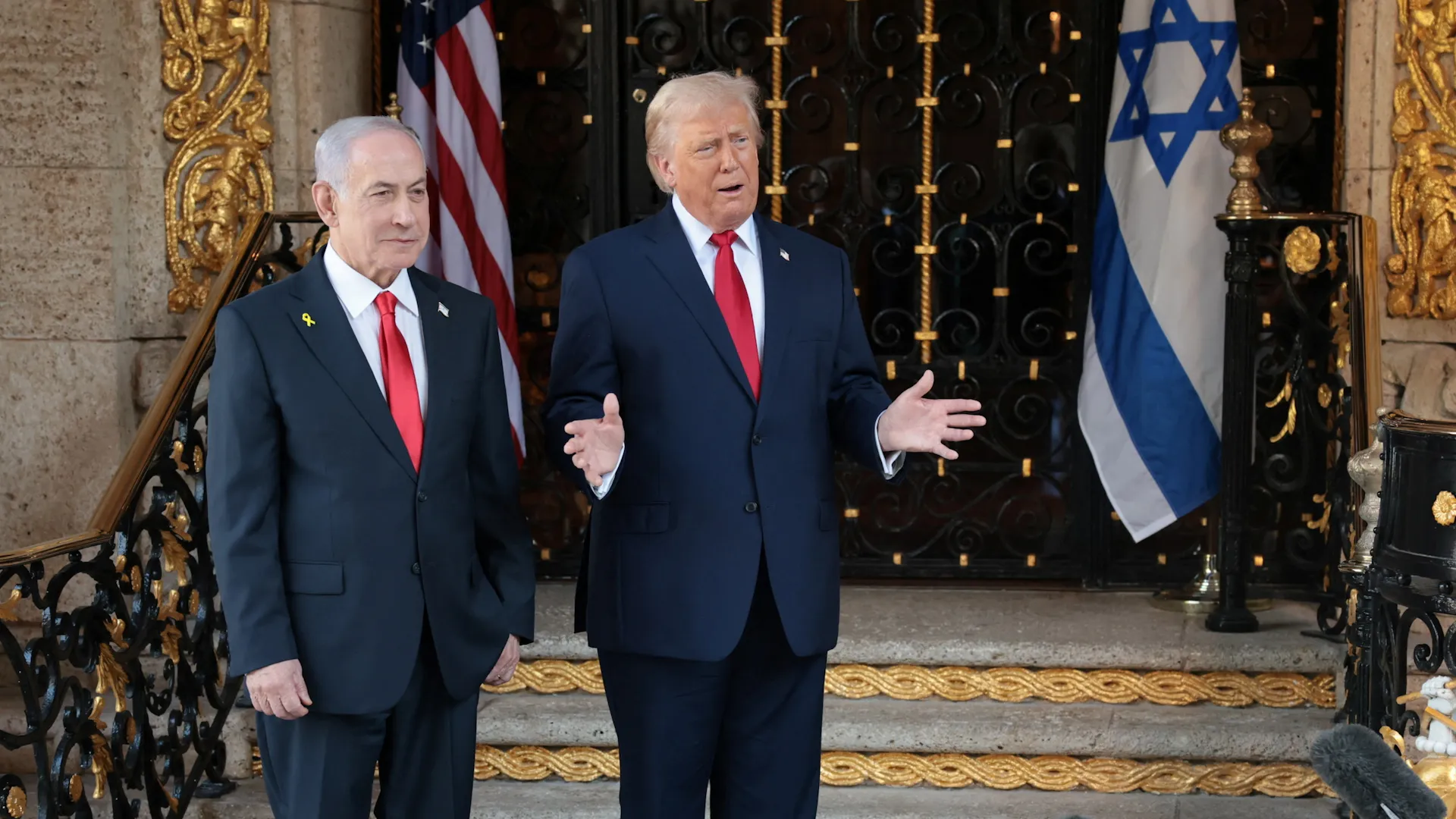
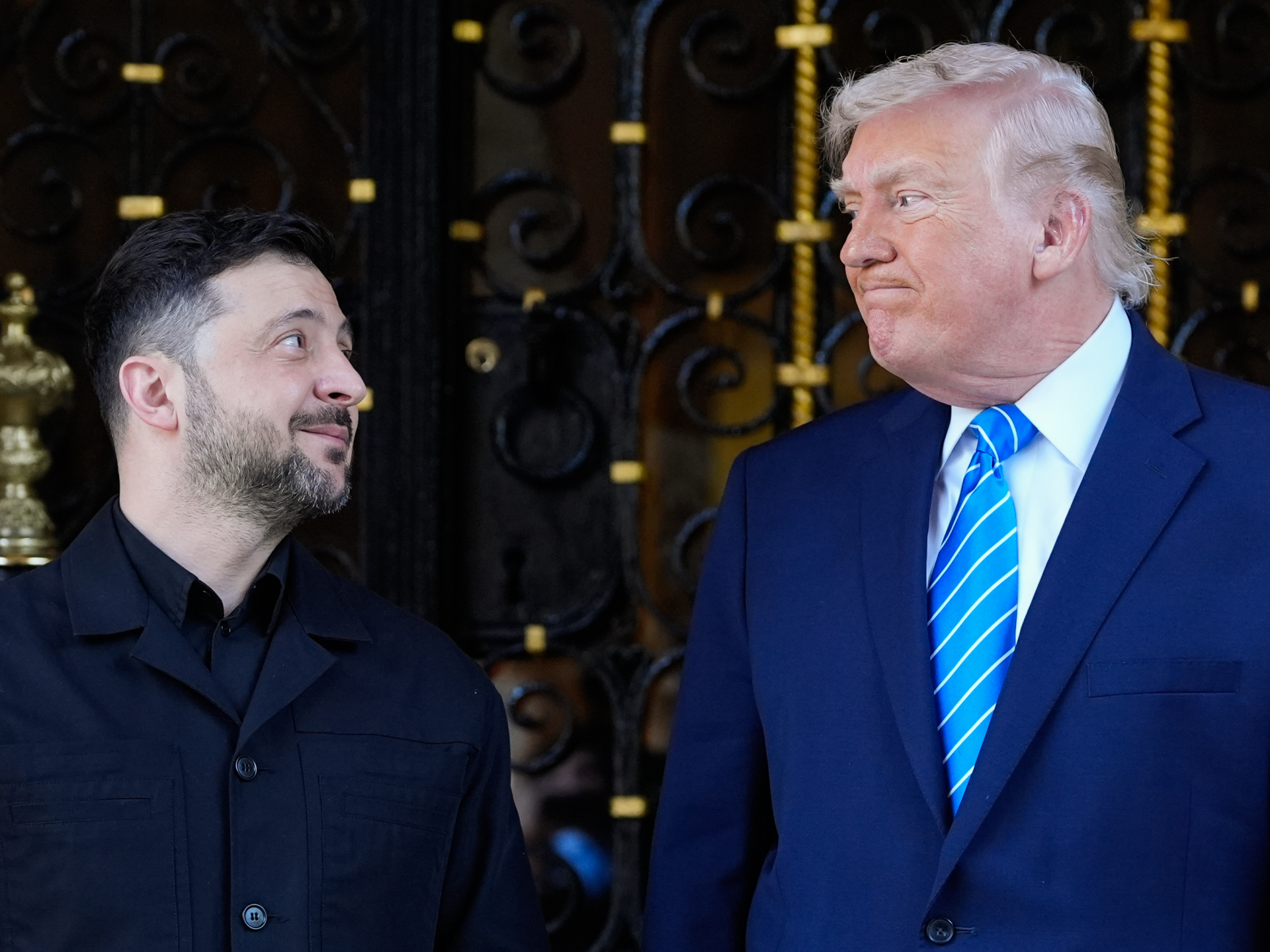
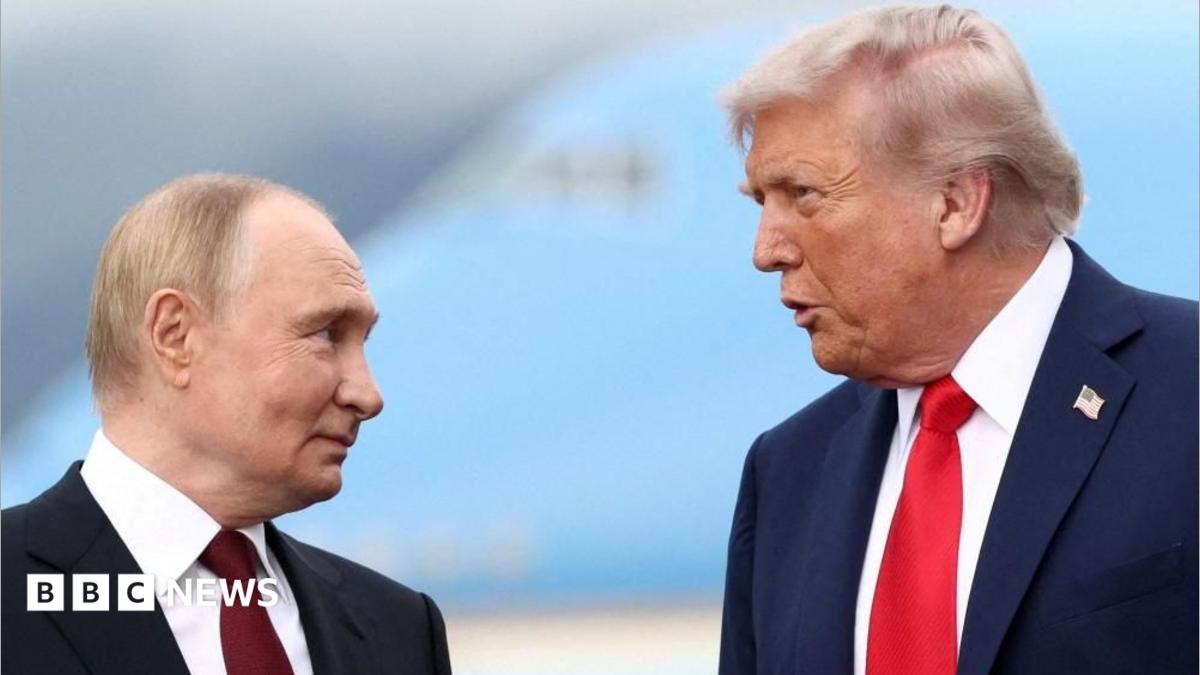
Amid escalating tensions with Ukrainian leader Volodymyr Zelenskyy, United States President Donald Trump has increased pressure on the Eastern European country to make a deal that would end the war with Russia.
Speaking at the White House on Tuesday, Trump doubled down on his efforts to blame the Ukrainian president for holding up peace efforts that would bring the years-long conflict to a close.
Recommended Stories
list of 3 itemsend of list
“Zelenskyy has to want to settle this war, and if he doesn’t, I think it’s going to be a very bad thing,” Trump said as he talked about Russia having an “unlimited” supply of people to send in the fight.
Moments later, the US president referenced a contentious Oval Office meeting he held with Zelenskyy in February 2025, shortly after returning to power.
Zelenskyy, Trump said, could have made a “better deal” then. “He’s going to have to want to make a deal, because I don’t think his people are going to stand for it any longer,” Trump told reporters.
On Tuesday, the Ukrainian president met US special envoy Steve Witkoff and European leaders in Oslo, Norway, to discuss ending Russia’s war.
In a post on social media after the meeting concluded, Zelenskyy said, without providing specifics, that his country has “some clear ideas on how to get to peace”.
“We are united with our European partners in this effort, and we want the Americans to take these ideas to the Russians,” Zelenskyy wrote. “One of the important ideas is to move to a potential trilateral meeting of the leaders to address the issues that only the leaders can do.”
The Ukrainian leader added that Witkoff would head to Russia on Wednesday, where peace discussions are expected to continue.
“Let’s see what Putin has to say,” Zelenskyy said.
When asked whether Russian President Vladimir Putin should meet Zelenskyy, Trump said there was “tremendous” hatred between the two leaders.
“It’s hard for them to be in the same room,” Trump said. “I don’t care how it’s done.”
Starlink controversy
Trump’s remarks come as the White House continues to squeeze Ukraine in order to force the country to cut a deal with Russia.
Last week, Ukrainian officials reported slowdowns with Starshield, the military-grade version of the Starlink satellite system, run by the aerospace company SpaceX.
Ukraine relies on the technology for communications and intelligence to prevent Russian attacks.
It is unclear who ordered restrictions that limit Ukraine’s access to Starshield. SpaceX CEO and Trump ally Elon Musk pointed a finger at the White House.
“Starshield systems are owned and controlled by the US government. Any limits on speed or usage are decided by the US military and ultimately POTUS,” he wrote on October 14.
The news agency Reuters also reported that the order came from inside the White House, citing two US officials and a Western official.
But a report in The Wall Street Journal on Tuesday claimed US officials had blamed Musk himself for the slowdown, saying the SpaceX CEO ordered it last week. Trump and US Defence Secretary Pete Hegseth have both denied that the government directed the restrictions, with Hegseth pushing responsibility towards SpaceX.
Building ties with Putin
Trump, meanwhile, has sought to ease the historically tense relations between Russia and the US.
In August 2025, Trump invited Putin to Alaska, the Russian leader’s first visit to US soil in a decade.
More recently, Trump has expressed openness this month to meeting with Putin and Chinese President Xi Jinping, as part of a trilateral discussion on denuclearisation.
Trump also announced this month that he struck a deal to obtain diesel from Russia, marking a stunning reversal of years of US pressure on Moscow’s economy.
The US president also waived new economic restrictions that would have been imposed under the Lindsey Graham Sanctioning Russia and Iran Act, a bipartisan law he signed one month earlier, in honour of a late senator.
It would have imposed sanctions on Russian officials, banks and tankers, as well as tariffs on countries that purchase Russian oil.
US Secretary of State Marco Rubio defended the decision on Tuesday, saying the law allowed the waiver through a provision embedded in the legislation.
“The president chose to use a national security waiver to not immediately implement those [sanctions and restrictions], because he recognises that these things have to be looked at in their totality,” Rubio said in an interview with India’s News18.
Rubio argued that Trump was engaged in a “balancing act” in deciding the extent of US-imposed economic restrictions and how they could impact the rest of the world.
“When you do that pressure, sometimes it spills over and has a negative impact on other countries,” Rubio said.
The lawsuit argues Trump bypassed Congress and misused a century-old law to impose sweeping tariffs on Canadian imports.
A US food importer is suing US President Donald Trump over his 50 percent tariffs on Canadian goods, arguing he lacks the legal authority to impose sweeping tariffs without congressional approval.
Gellert Global Group, a New Jersey-based company that imports Canadian cheese, filed the lawsuit on Tuesday in the US Court of International Trade in New York.
Recommended Stories
list of 4 itemsend of list
The company says the tariffs are driving up its costs and disrupting its relationships with suppliers on both sides of the border. Between September 16 and October 11, Gellert had paid more than $520,000 in duties, according to the complaint.
“Gellert Global Group has spent generations building trusted relationships with suppliers, customers and partners across the food industry,” said Thomas Gellert, the company’s co-chief executive officer, in a press release. “These tariffs disrupt those relationships overnight and create costs and uncertainty that ripple through the entire supply chain.”
The lawsuit challenges Trump’s decision to use a Depression-era law to impose tariffs on a wide range of Canadian products, including dairy products, furniture, clothing and wine.
The lawsuit argues that the law doesn’t apply to the Canadian policies the Trump administration says are discriminatory, since two of them “arose in response to the president’s own tariffs, while the third involves Canadian dairy policy governed by the US-Mexico-Canada Agreement (USMCA)”.
It also questions why Canadian cheese is being taxed over disputes involving alcohol and cars.
“No president should have the power to pull a dormant statute off the shelf and use it to impose sweeping tariffs or import bans without the limits Congress required,” said Sara Albrecht, chairman and CEO of the Liberty Justice Center, a nonprofit legal organisation that filed the suit on Gellert’s behalf.
The White House did not immediately respond to a request for comment, according to the Reuters news agency.
At the centre of the case is Section 338 of the Smoot-Hawley Tariff Act of 1930, which allows the president to impose tariffs of up to 50 percent on imports from countries found to discriminate against American businesses.
The provision had never been used until Trump invoked it this year.
The lawsuit argues that newer laws passed by Congress since then, such as Section 301 of the Trade Act of 1974, require investigations, public comment and other safeguards that Gellert says the Trump administration has bypassed, and that these override Section 338.
“The administration cannot skip those protections by reaching for a 1930 statute that no president had ever used to impose a tariff,” said Jeffrey Schwab, the Liberty Justice Center’s senior counsel and director of litigation.
In addition, the lawsuit says that even if Trump is allowed to use the older law, he hasn’t met its requirements, including waiting 30 days before tariffs can be collected on new products added to the list.
The administration only waited seven days to start collecting tariffs on cheese in September, according to the lawsuit.
Gellert is asking the court to declare the tariffs illegal, stop them from being collected, and order refunds with interest for importers who have been impacted.
The lawsuit marks the fourth major legal challenge to Trump’s tariffs.
In February, the US Supreme Court struck down most of the tariffs he imposed in 2025, and a trade court later ruled against a temporary 10 percent global tariff. A separate challenge to tariffs imposed over alleged forced labour in international trade is still pending.
The revocations targeted visa holders who had allegedly broken the law, or pose threats to national security.
Published On 20 Oct 202620 Oct 2026
The Trump administration has said it has revoked more than 300,000 visas issued to foreign nationals, claiming it has done so at a faster pace than any previous administration.
A spokesman for the US Department of State said on social media on Tuesday that the revocations targeted foreign nationals in the United States on visas who had broken the law, committed fraud or posed threats to national security.
Recommended Stories
list of 4 itemsend of list
“We have zero tolerance for foreigners here on visas who break the law, commit fraud, or undermine our national security,” Tommy Pigott, State Department spokesman, said in a post on the social media platform X.
The administration would continue taking action to secure US borders and protect national security, he added.
Al Jazeera has reached out to the State Department for comment.
In January, the department said it had revoked more than 100,000 visas, a record at the time.
The administration has also adopted a stricter policy on granting visas, with tightened social media vetting and expanded screening.
Rights advocates and human rights experts have condemned the Trump administration’s social media screening efforts, which they say threaten free speech and are akin to surveillance and the singling out of immigrants.
WASHINGTON — President Trump is hoping that $5,000 checks can juice Republican turnout in November’s midterm elections — but even some of his devoted fans are doubting that government payouts would arrive.
“I mean, I guess it’s good for some people. I really don’t care,” said Jamie Alvarez, who attended Trump’s recent Alaska rally in a red, white and blue outfit. “I don’t feel like your vote should be bought. I feel like you should vote for who you feel is going to do the best job.”
Joseph Eatherton was attending that same rally and said he was “not sure if it’s necessary.” When asked whether Trump could deliver on the promised money, he said, “I don’t know, and I hate being an armchair quarterback.”
The offering of government checks has become a go-to tactic for Trump when he faces a political jam. He’s previously endorsed $2,000 in dividends from tariff revenues and large refunds from spending cuts achieved by the Department of Government Efficiency, neither of which materialized. The latest example could reveal how much voters still trust Trump as they decide control of Congress in the midterm elections on Nov. 3.
Staunch supporters such as Lucy Martinez, the president of a Republican women’s club who attended a recent Trump rally in Texas, said there’s no doubt in their minds.
“I think that I will get the $5,000,” she said. Out of all the presidents, Trump is someone “who kept his promises to his people and all the United States.”
Trump has dished out payments as elections approach
However, many voters are already embittered by his economic leadership. His critics see a president who failed to tame inflation and keep America out of overseas conflicts, and whose agenda has fueled higher prices as the war with Iran appears to be at a stalemate.
“The trust on this is already gone for most people,” said Amy Frederiksen, a former Republican Minnesota Senate majority leader who now runs a public affairs firm.
“I just don’t see the energy around that line,” she added. “Most people know that’s a blatant over-the-top promise like several he’s made in the last couple of years, and they’re not buying it.”
As the midterms approach, Trump has also pledged a $90 payment to 20 million Medicare enrollees and $500 “rebates” for people the administration says were overcharged for their Obamacare plans. He has automatically enrolled every U.S. child in “Trump accounts” to invest in stocks.
The $5,000 payouts would only occur, Trump says, if Republicans keep their majorities in the House and Senate. Trump acknowledges that the cost would exceed $1 trillion, but it’s not clear that the White House is seriously engaging with the proposal’s ramifications, from the increased deficit to the likely boost to inflation.
The White House said the payments are possible because of Trump’s trade deals, investment commitments by foreign countries, government stakes in private companies and deals for oil and minerals.
The administration’s position is that the payments will help people recover from the inflation that began in 2021 under then-President Joe Biden, though Republicans, at the time, attributed that inflation to excessive government checks tied to pandemic relief.
When The Associated Press asked several weeks ago if the administration was modeling the economic impact from the checks, Christopher Phelan, chairman of the White House Council of Economic Advisers, said he would “refrain” from answering.
Roughly half of registered voters say Donald Trump does not keep his promises to Americans, according to an AP-NORC poll from September. About 3 in 10 say Trump tries to keep his promises but is unable to, while only about 2 in 10 say he keeps his promises.
Republican voters are more accommodating. About half say Trump tries to keep his promises but is unable to, and about 4 in 10 say he keeps his promises.
Trump is talking about the payments as a sure thing.
“If the Republicans win, you’ll each have $5,000 in your pocket and economic success for our country like we have never seen before,” he said at a Saturday rally in Kentucky. “And remember, ’cause they like to say, ‘Oh, well, maybe he won’t do that.’ Uh, I always do it.”
Campaign spending tracked by AdImpact suggests that Republicans are not running advertisements either on television or online about the promise. The few advertisements that do exist are from pro-Democratic groups such as Rolling Sea Action Fund that conclude with the voiceover, “Come on, do you really think he’s sending you a check? Yeah, right, we won’t get fooled again.”
At a Friday rally in Georgia, Trump noted that he had previously delivered a $1,776 “Trump dividend” to troops in the military. But those payments came from a congressionally approved housing supplement.
Trump claims the nation could not afford the payments if Democrats hold a chamber in Congress because the nation would be “flat broke.” But he said that one caveat is that the money could only be spent in the U.S., rather than in China, Japan or France. He joked that people should spend the check at his luxury club in Palm Beach, Florida.
“Let’s have lunch at Mar-a-Lago, where for $5,000, you’ll get one hamburger and a small dessert,” he told the crowd in Georgia.
Some in the crowd took Trump at his word that he would fight to get them the money. But they added the caveat that if he didn’t come through, it would not be his fault.
“I could use $5,000,” said Mike Boatman, a 58-year-old from Evansville, Indiana, who travels the country attending the president’s rallies. “I mean, he’s done everything he’s said he’s going to do.”
Boak, Bohrer and Barrow write for the Associated Press. Bohrer reported from Wasilla, Alaska, and Barrow reported from Dalton, Georgia. AP reporters Aaron Kessler and Linley Sanders in Washington and Lekan Oyekanmi in San Antonio, Texas, contributed to this report.
In what may be one of the most comical self-owns in recent politics, the esteemed attorneys of the U.S. Department of Justice announced Monday that despite the extravagant and terrifying misuse of their investigative power under the Trump administration, they have so far been able to identify only 28 people in all of California who may have voted illegally.
“The announcement today by the United States DOJ makes the point that there is no widespread voter fraud,” California Atty. Gen. Rob Bonta said after the news conference announcing the results of “Operation Protect the Vote.”
Twenty-eight people out of about 23 million registered voters in the state — and not all of them even tried to vote, according to the feds. That’s about 1 in 820,000 folks allegedly registering or voting illegally, a rate that roughly matches how often people in the United States get struck by lightning in a given year.
So much for Trump’s endless claims that there is a vast, organized conspiracy between Democrats and undocumented people to have them vote in large numbers to steal elections. I’ll point out here that none of those charged Monday have been accused of colluding with one another or with Democratic overlords.
All the power of the government — investigative, technological, legal — has been thrown at finding these mysterious, diabolically clever ballot baddies. And now, thanks to Bill Essayli, first assistant U.S. attorney for the Central District of California, and his colleagues across this great state, we now know that all 28 of them will be held accountable, if the government can prove wrongdoing. And let’s be clear — people who vote illegally should be held accountable.
But wait, there’s more, because this election-stealing plot by immigrants certainly doesn’t stop at the state line. Seamus Hughes of Court Watch, an excellent site that tracks federal litigation, reported Monday that since the start of this administration, 169 people have been charged federally with illegally registering or voting.
That number includes the new California cases, so it means an additional 141 potentially illegal voters have been charged across the U.S. — all told about 1 in 1.25 million registered voters being accused of illegally registering or voting, making this crime slightly less likely than guessing a six-digit pin code on the first try.
There. Is. No. Election. Stealing.
But that’s where the funny part ends, because this attack on California elections is serious and just getting started.
The federal government, you’ve probably read, is suing California, claiming it gave the state a janky thumb drive with 20,000 names of registered voters that it sort of strongly suspects maybe aren’t legal voters. Important note here: The government has been very careful not to claim that these people voted illegally, just that it might be so based on questionable data, which I’ll get to in a minute.
The feds gave the state a silly 48-hour deadline to agree to change constitutional law, dump common sense and sequester these 20,000 ballots, if they were even returned, to double-check they were cast by valid voters.
When California rightfully refused — because elections are run by states, not the federal government — the federal government sued on the thinnest of legal grounds. It basically claimed that voting illegally is illegal, and if California doesn’t do exactly what Trump wants, it could be violating the Supremacy Clause of the Constitution by impeding the feds from enforcing the crime of voter fraud.
First Assistant U.S. Atty. Bill Essayli speaks at a news conference Monday at which officials announced that 28 people in California had been charged with voter fraud.
(David Butow / For The Times)
Which is basically arguing that if the state government fails to stop voter fraud using the flawed methods Trump likes, then the state is somehow stopping federal authorities from prosecuting voter fraud themselves. But didn’t they just enforce it with 28 cases?
Get ready, because “state-facilitated voter fraud,” is a new right-wing thing.
California is “being complicit in non-citizens voting in our elections, and as they were warned last week, not only is it a civil violation, but they could also face criminal consequences,” Essayli said, which if it happened would give Trumped-up charges a whole new meaning.
Essayli said state officials are not being “good faith actors,” but I’ll argue that shoe is on the other foot. The list of 20,000 alleged, suspected, maybe-maybe-not illegal voters was likely drawn from the Systematic Alien Verification for Entitlements (SAVE) program, created by Elon Musk’s Department of Government Efficiency, if you can remember that unfortunate relic.
It sought to draw data from more than a dozen government databases that were not only not compatible with such information sharing, but which had been kept separate until now for privacy reasons. Americans in general did not want the government collecting unified, know-all records of every citizen.
Luckily for us, I guess, the SAVE system can’t actually create reliable, unified records. It confuses people, convolutes them, merges records of people with similar names, and in general has been deemed unreliable by data experts.
In September, the good folks at the UCLA Voting Rights Project joined with the Coalition for Humane Immigrant Rights to sue the federal government over its use of that system to target naturalized citizens for removal from voter rolls. Turns out, the government appears to be targeting immigrants who are now citizens with these voter fraud accusations.
As I wrote about a few weeks ago, naturalized citizens make up about 1 in 10 eligible voters, and nearly a quarter of them live in California. But they also live in swing states such as Michigan, where Democrat Abdul El-Sayed may draw such voters, and in other places such as Georgia and Nevada where races might be decided by only a few votes.
These arrests and lawsuits while voting is already underway in the midterms are a not-subtle form of voter suppression. Imagine being a naturalized citizen in the Central Valley, where ICE is driving rampant fear and where Republican Rep. David Valadao is running against Democrat Randy Villegas in California’s 22nd Congressional District — one of the nation’s most closely contested races.
Would you consider sitting this election out just in case your ballot draws the frightening eye of the federal government? Even knowing that your vote is legal, what if you lived in a mixed-status household? Would it be worth risking voting if it meant a knock at the door from immigration checking on your status, and maybe finding that family member who lacks it?
Why take the risk?
“Basically, what they’re doing now is just completely harassing and intimidating naturalized citizens who are legally eligible to vote through these actions,” said Matt Barreto, co-founder of the Voting Rights Project.
And if the vote isn’t suppressed enough to give Trump the results he wants, these prosecutions and lawsuits feed the beast of conspiracy, giving Trump fodder to claim the results are fake, the election stolen.
And round and round we go, reckoning with Trump’s claims that lightning is striking everyone, everywhere, all at once, because the vote didn’t go his way.
Trump calls for Zelenskyy to be replaced as negotiator, while Ukraine’s president says arms shipments delayed.
Published On 20 Oct 202620 Oct 2026
United States President Donald Trump says someone other than Ukrainian President Volodymyr Zelenskyy should negotiate on Kyiv’s behalf in talks to end Russia’s war.
“Zelenskyy is a man that should have had settled this war a long time ago. If he would’ve listened to me, he would have made a much better deal a long time ago,” Trump told reporters outside the White House on Monday. “Maybe it’s time for Zelenskyy to get somebody else to negotiate.”
Recommended Stories
list of 3 itemsend of list
The US president has been verbally swiping at his Ukrainian counterpart for several days as a rift between the leaders deepens.
On Sunday, Trump claimed on Truth Social that Zelenskyy does not want to end the war. Earlier this month, he called for him to be replaced as president, and labelled him a “warmonger” over Ukraine’s attacks on Russian oil refineries.
Trump has also defended sanctions waivers for Russia, saying in the same Truth Social post that he wants to keep Moscow at the negotiating table.
Zelenskyy said the decision “will hurt Ukraine” and strengthen Russian President Vladimir Putin’s war effort.
Trump also announced plans on October 9 for Russia to supply more than 300,000 metric tonnes of diesel to US and global markets to tackle fuel prices that have soared since the US and Israel launched a war on Iran in late February.
The decision has angered not only Kyiv, but also European partners and US officials, who say it rewards Moscow while it continues its four-and-a-half-year war on Ukraine.
Zelenskyy told US senators at a meeting on Monday that decisions taken by the Trump administration “are hard to explain between friends”.
He said arms shipments had been delayed and intelligence sharing restricted.
“We also know that … the Pentagon is delaying the delivery of missiles that our partners have already paid for through the PURL (Prioritised Ukraine Requirements List) programme,” he said.
To his knowledge, he added, one missile package was waiting for the signature of US Defense Secretary Pete Hegseth.
He also said several European countries were ready to transfer Patriot interceptor missiles from their own stockpiles but were awaiting US approval.
People walk in front of a damaged shopping mall following an air attack in Kyiv on October 19, 2026, amid the Russian invasion of Ukraine [Oleksii Filippov/AFP]
In remarks posted in a video on Telegram, Zelenskyy said that on three occasions in the past week, Ukraine had not received the advance warning of Russian attacks generally provided by its partners.
Last week, Zelenskyy suggested a disruption of Starlink services in Ukraine was “deliberate”. US Secretary of State Marco Rubio rejected the claim.
The sparring comes as Trump’s special envoy Steve Witkoff is set to travel to Norway this week for the next round of negotiations on ending the war in Ukraine, the Reuters news agency reported, citing three people familiar with the matter.
Two of the sources said they expected Zelenskyy to attend the meetings.
The Oslo discussions are expected to include Zelenskyy, Norwegian Prime Minister Jonas Gahr Store, representatives of the E4 – made up of the United Kingdom, France, Germany, and Poland – the European Union, and NATO.
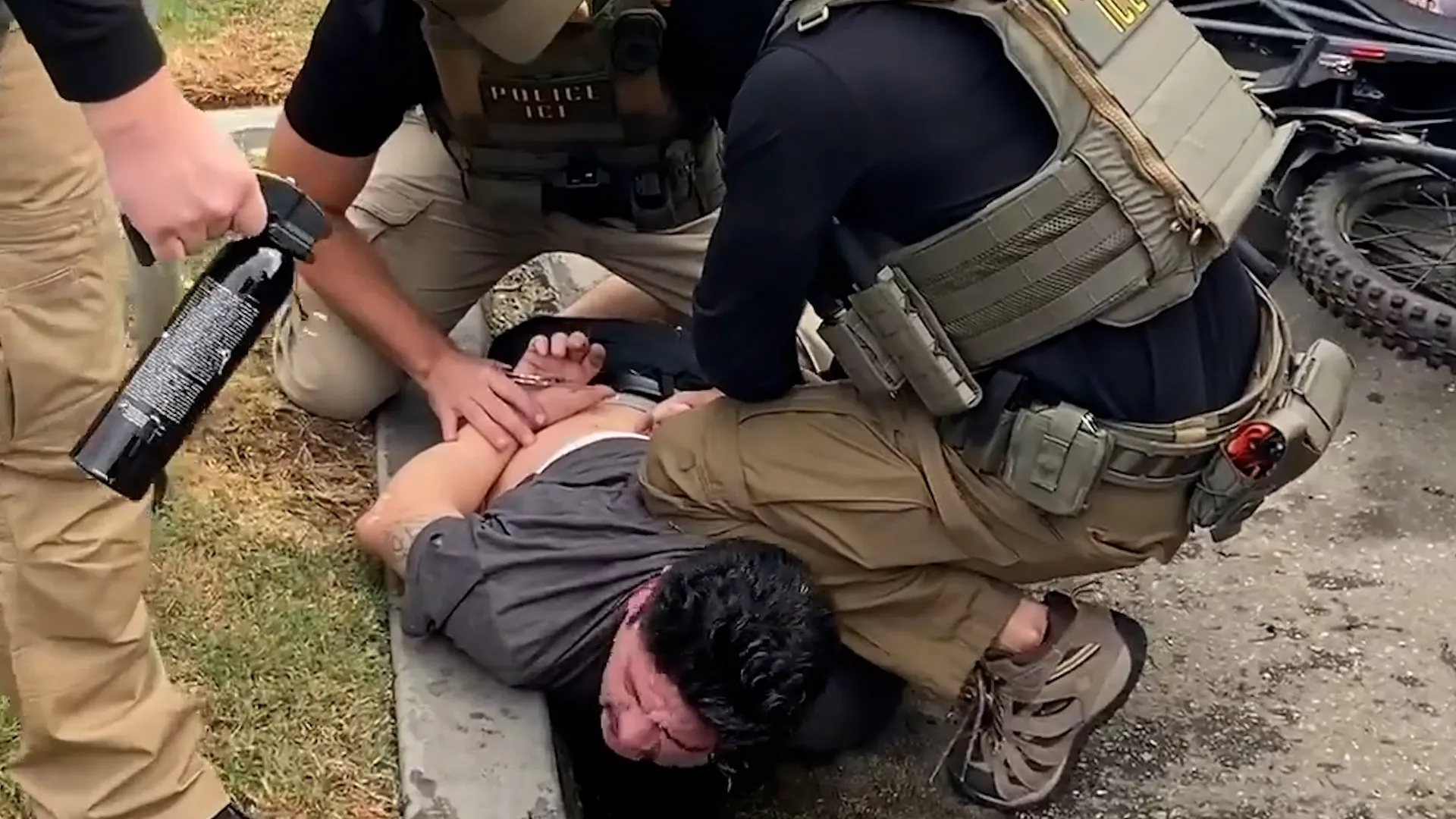
Video shows a man screaming in pain as ICE agents pin him down during an arrest in Long Beach, California. The family of Ricardo Gonzalez say he is a US citizen, and that ICE agents broke his arm during a wrongful arrest.
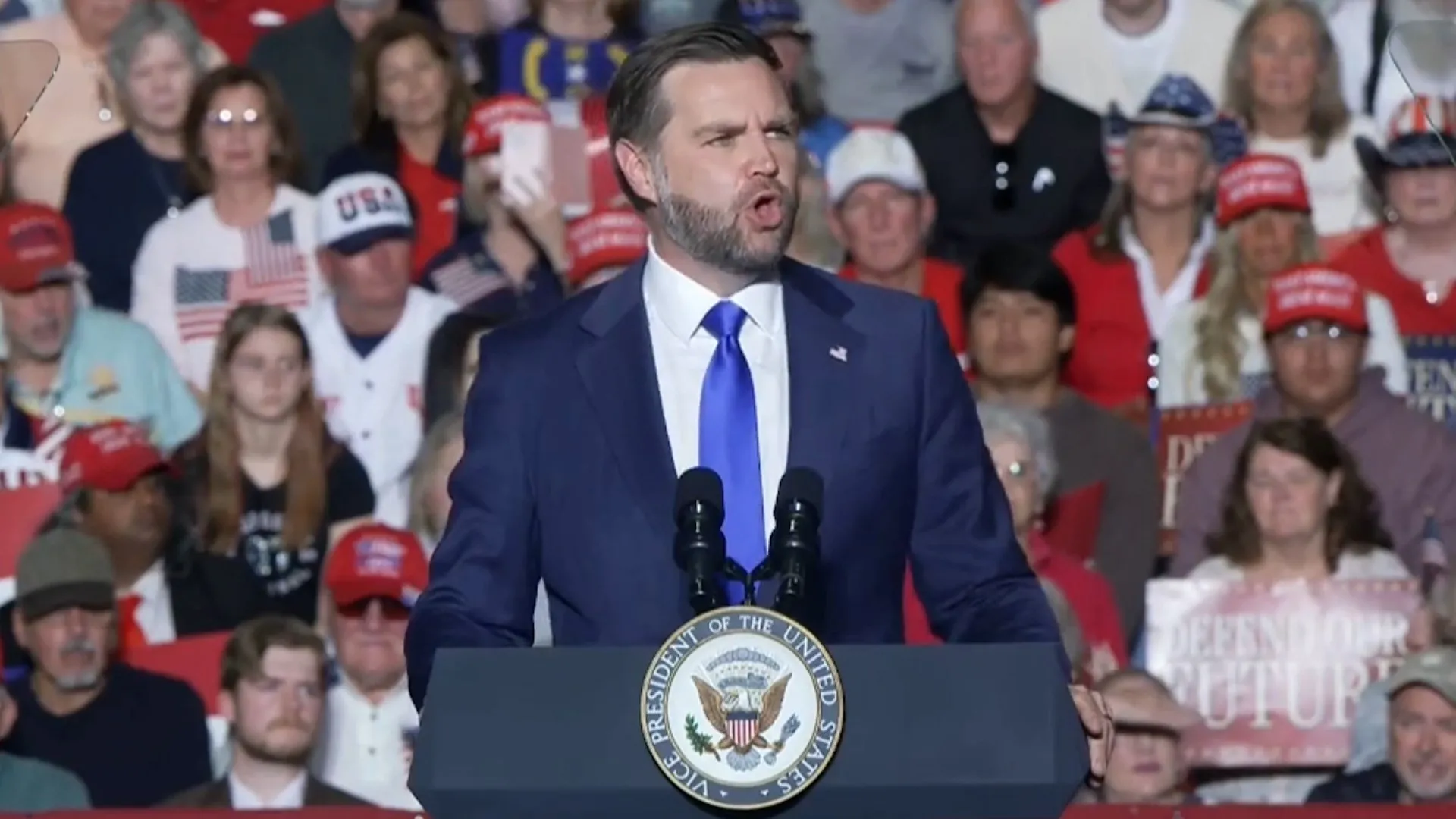
A protester demanding the release of the Epstein files interrupted US Vice President JD Vance at a North Carolina rally for Republican midterm candidates. After claiming illegal border crossings had fallen to zero, Vance joked that the protester was one who had slipped through.
First Lady Melania Trump has championed the executive action as a ‘transformative moment’ for US women’s health.
Published On 19 Oct 202619 Oct 2026
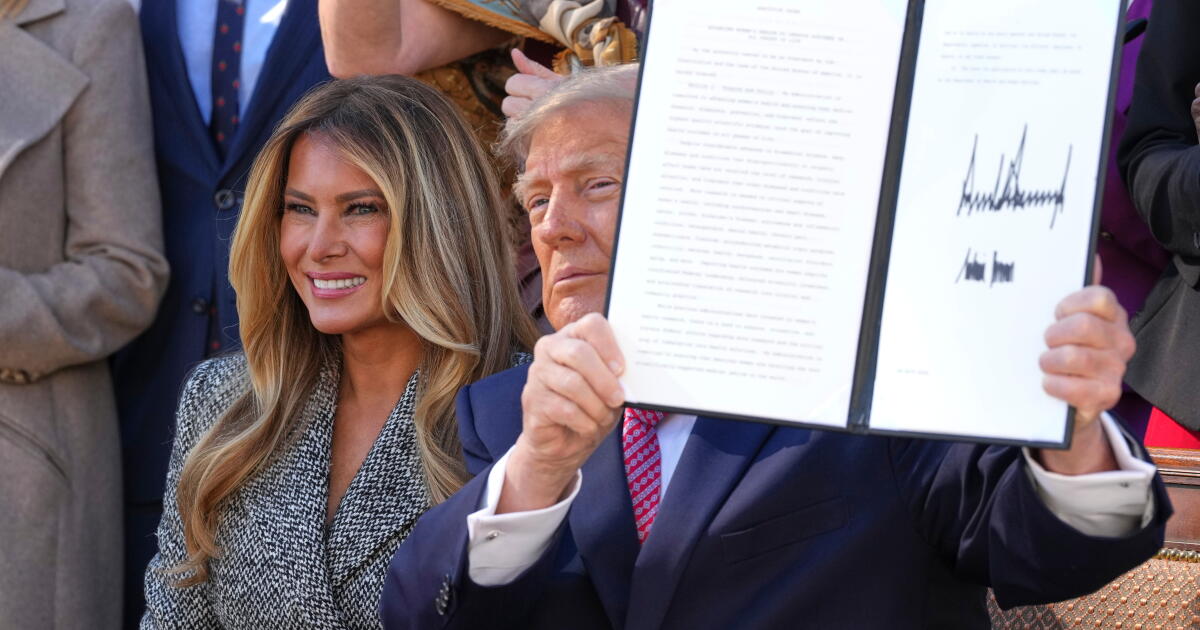
United States President Donald Trump has signed an executive order that will establish a dedicated women’s health division within the National Institutes of Health (NIH), as well as a White House task force focused on the subject.
During a signing ceremony in Washington on Monday, First Lady Melania Trump praised the initiative as setting “a new standard for women’s health in America”.
Recommended Stories
list of 3 itemsend of list
“This is a transformative moment for women in America. Beginning today, we will change the reality of women’s health,” she said.
“Previous generations fought for women’s rights. Our generation will fight to discover the cures that will ensure a woman can live her life in health and to the fullest.”
The newly minted project, spearheaded by the first lady, requires the new health division to be established within 90 days.
It aims to accelerate scientific discoveries, expand clinical access for women’s health and modernise care throughout every stage of a woman’s life.
The new division at the NIH will not replace the agency’s Office of Research on Women’s Health but will have a broader mandate beyond research, according to the White House.
Melania Trump gestured to “super intelligence, advanced biotechnology and groundbreaking therapies” as tools that offer a “unique chance to reinvent women’s healthcare”.
The first lady’s office has identified “five pillars” for innovation in the field. One involves funding targeted research to develop cures for diseases that affect women, such as endometriosis.
Another calls for a quicker timeline for “promising therapeutics” to reach female patients.
“In 2026, medical advances can do more than just prolong life,” said Melania Trump. “It should give women the freedom to live life to its fullest, to pursue our dreams, experience love, discover, create, travel and lead.”
The White House task force will be co-chaired by the newly cancer-free White House Chief of Staff Susie Wiles, as well as Health and Human Services (HHS) Secretary Robert F Kennedy Jr.
While Monday’s executive order mandates that the HHS must fund the administrative costs of the task force, the order itself does not include any specific funding targets or dollar amounts.
Experts have noted that Melania Trump has kept a relatively low profile during Trump’s second term.
Her public appearances have been fewer than during Trump’s first term, though she has stepped into the public spotlight to promote improvements to foster care and the role of technology, such as artificial intelligence in education.
During Trump’s first term, the first lady launched the “Be Best” campaign focused on child well-being, safe social media and countering opioid abuse.
But critics have questioned how effective Monday’s executive order might be, given the cuts Trump has made to the federal workforce since his second inauguration.
Thousands of employees have been laid off at the NIH alone, with Kaiser Health News reporting that its workforce is at its lowest level in decades.
The NIH was also given a deadline to slash spending by 35 percent across all of its divisions, amounting to a massive $2.6bn budget reduction.
In April 2025, the HHS drew widespread condemnation and a multi-state lawsuit after abruptly moving to terminate regional contracts for the Women’s Health Initiative, the nation’s largest longitudinal study on older women’s health at the time.
Critics warned that the move would jeopardise life-saving research on cardiovascular disease, cancer and osteoporotic fractures for senior women.
WASHINGTON — A federal judge on Monday questioned the Trump administration’s claims surrounding its efforts to redevelop a historic Washington golf course, challenging its contention that a recent tree-cutting spree did not indicate work was moving forward on the project, which is temporarily blocked by a court order.
“There is no universe in which all of this coincidentally happened all at the same time,” U.S. District Judge Ana Reyes said during a hearing over the fate of a project that has emerged as the latest legal flashpoint in President Trump’s campaign to leave his personal imprint on the nation’s capital.
Reyes last week ordered a halt to the golf course’s redevelopment plans until at least Oct. 26 after scolding the government for starting a large-scale tree removal at the course over a holiday weekend while providing little notice to the court or the plaintiffs trying to stop the makeover.
Then, on Sunday, Trump announced plans on social media to close the golf course for 15 months, starting on Nov. 15, and redevelop the 106-year-old park and course despite a court challenge by the D.C. Preservation League and two golfers. In a post on Monday, Trump said the work would start immediately.
Plaintiffs’ attorneys challenging the golf course renovation work have asked Reyes to extend her order that temporarily paused the work. They say the work is inflicting irreversible damage and that the redevelopment would violate the congressional act that created the park where the course is located.
The hearings on the century-old golf course have grown increasingly tense and on the eve of Monday’s hearing, Reyes rejected the administration’s request for her to recuse herself from the case. The government questioned her impartiality and accused her of engaging in “egregious” behavior from the bench during last week’s emergency hearing for the case.
Trump, a Republican, referred to Reyes as a “crazed lunatic” in his social media post on Monday.
“The United States Department of Interior wants to take a terrible and very unsafe golf course, and make it into a great, safe, and prestigious golf course. They have an absolute right to do so. It’s as simple as that!” Trump wrote.
Reyes, who was nominated by Democratic President Biden, said the government has failed “by any objective measure” to demonstrate the need for her recusal from the case.
“It is easy to weaponize selective quotations to bring a baseless recusal motion. But it is much harder to meet the demanding legal standard against a full record,” she wrote.
Trump has pledged to turn the course into a world-class golf venue — part of his grand vision for Washington, D.C., where he has torn down storied structures, remade or renamed others and deployed the National Guard for more than a year.
While it has been open to Washingtonians of all income levels, opponents of Trump’s plans for the golf course have argued it will alter the character of the space and make it less affordable to people.
Monday’s hearing started with a tense confrontation between Reyes and Justice Department official Stanley Woodward, when the judge asked if other any government attorneys in the room “as officers of the court” were willing to certify that everything within a Sunday filing was truthful and legally sound under federal rules of civil procedures.
In that filing Woodward argued that there were no final plans for the park.
“First, the plan is not final because the Park Service has not completed its review and the details of the proposal are subject to change during the review process,” the filing said.
Much of the hearing revolved around Trump’s social media posts over the weekend and his appearance last June at the golf course, accompanied by golf course architects and members of the administration and why there was such a sense of urgency for the cutting of the trees.
The witnesses at the hearing, Greg Wischer, deputy chief of staff at the Interior Department, and acting National Park Service director Jessica Bowron both acknowledged that they had only learned of the National Park Service Cultural Landscape Report in September that led to the tree cutting. That NPS report was from 2019.
WASHINGTON — President Trump on Monday directed the federal government to bolster federal research into women’s health, a move pushed by his wife, first lady Melania Trump.
The Republican president signed an executive order that creates a new women’s health division at the National Institutes of Health and a White House task force to focus on the issue. That panel was set to hold its first meeting Monday after the Trumps held a Rose Garden signing ceremony.
“Beginning today we will change the reality of women’s health,” Melania Trump said. “Previous generations fought for women’s rights. Our generation will fight to discover the cures that will ensure a woman can live her life in health and to the fullest.”
The president, who spoke after his wife, said the order will “promote new research and really go after the understudied diseases affecting women.” The order is also intended to promote diagnostic technology and improve treatment.
White House chief of staff Susie Wiles, who recently completed treatment for breast cancer, and Health and Human Services Secretary Robert F. Kennedy Jr. will lead the White House task force. Donald Trump said the task force will coordinate with various federal agencies and programs. The order does not include specific funding goals.
The initiative comes after a series of meetings the first lady had with federal health officials.
The president called it a “historic action” and praised the first lady’s work.
“She’s accomplished so much,” he said before pivoting into unscripted commentary on White House renovations, including the patio stone that now covers what was once the Rose Garden lawn.
Shifting back to women’s health, the president expressed surprise that some of the order’s requirements had not already been imposed.
“Who the hell wouldn’t have a women’s health division?” he said, after recalling that he’d asked Melania Trump, “Are you sure they don’t have that?”
The executive order calls for targeting maternal health, mental health and endometriosis. It also mentions other health concerns and diseases, including Alzheimer’s, osteoporosis, heart disease and stroke.
Melania Trump helped shape the order and the task force in consultation with physicians, White House officials, Kennedy and the Republican president. The initiative adds a new dimension to her policy portfolio as first lady.
In Donald Trump’s second term, the first lady has focused on improving foster care systems and expanding technology and artificial-intelligence access in education. In Trump’s first presidency, the first lady’s signature initiative, Be Best, focused on child well-being, safe social media use and reducing drug abuse.
The White House ceremony comes weeks before Nov. 3 elections and as Donald Trump’s job approval ratings have declined, including among women.
About 4 in 10 independent women supported Trump during the 2024 election against Democrat Kamala Harris and in the pre-presidency period, according to AP-NORC polls. That dropped to around a quarter in the opening months of this midterm election year, the period marked by Trump’s hard-line immigration crackdown in U.S. cities and the opening weeks of the Iran war.
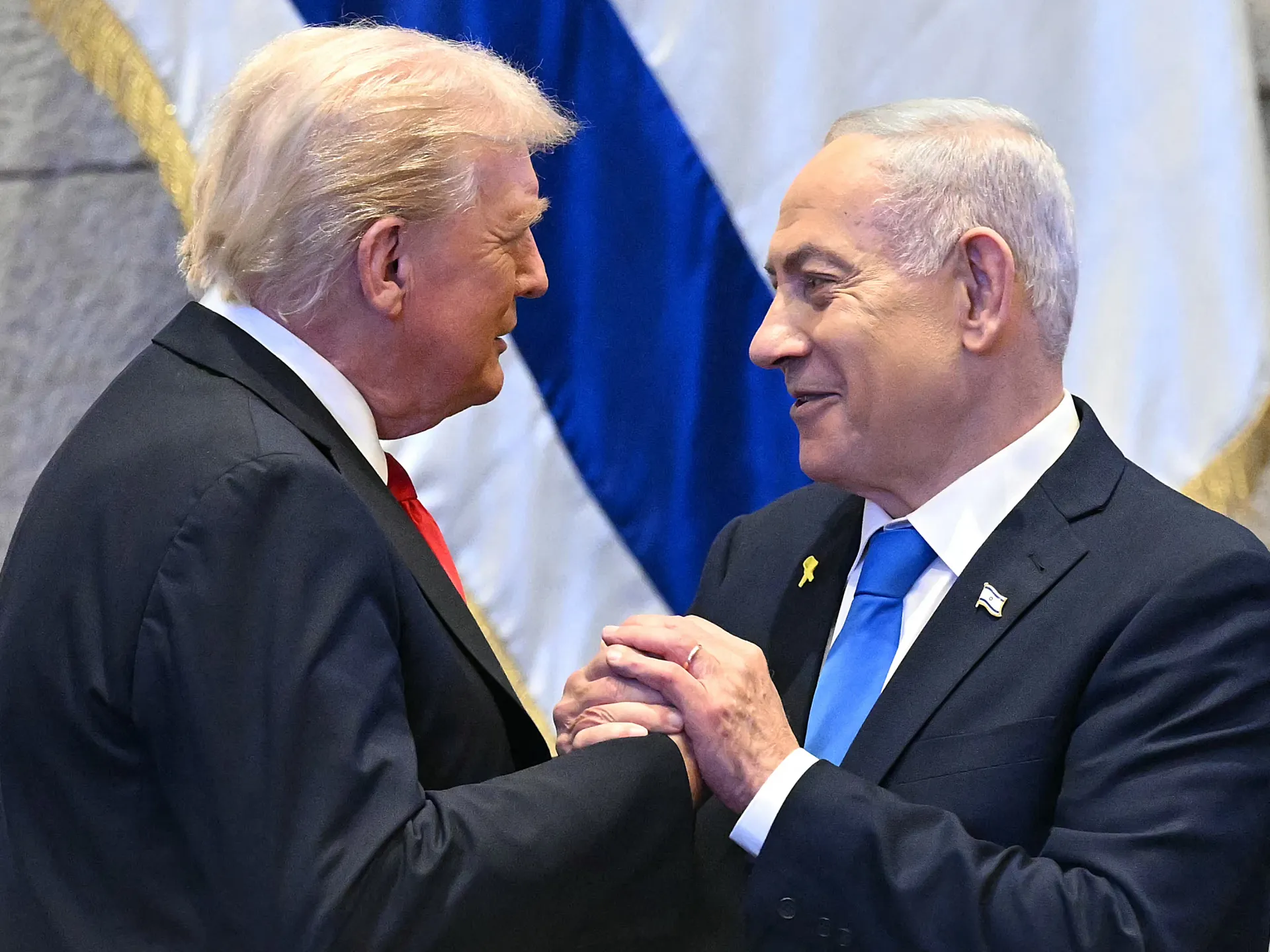
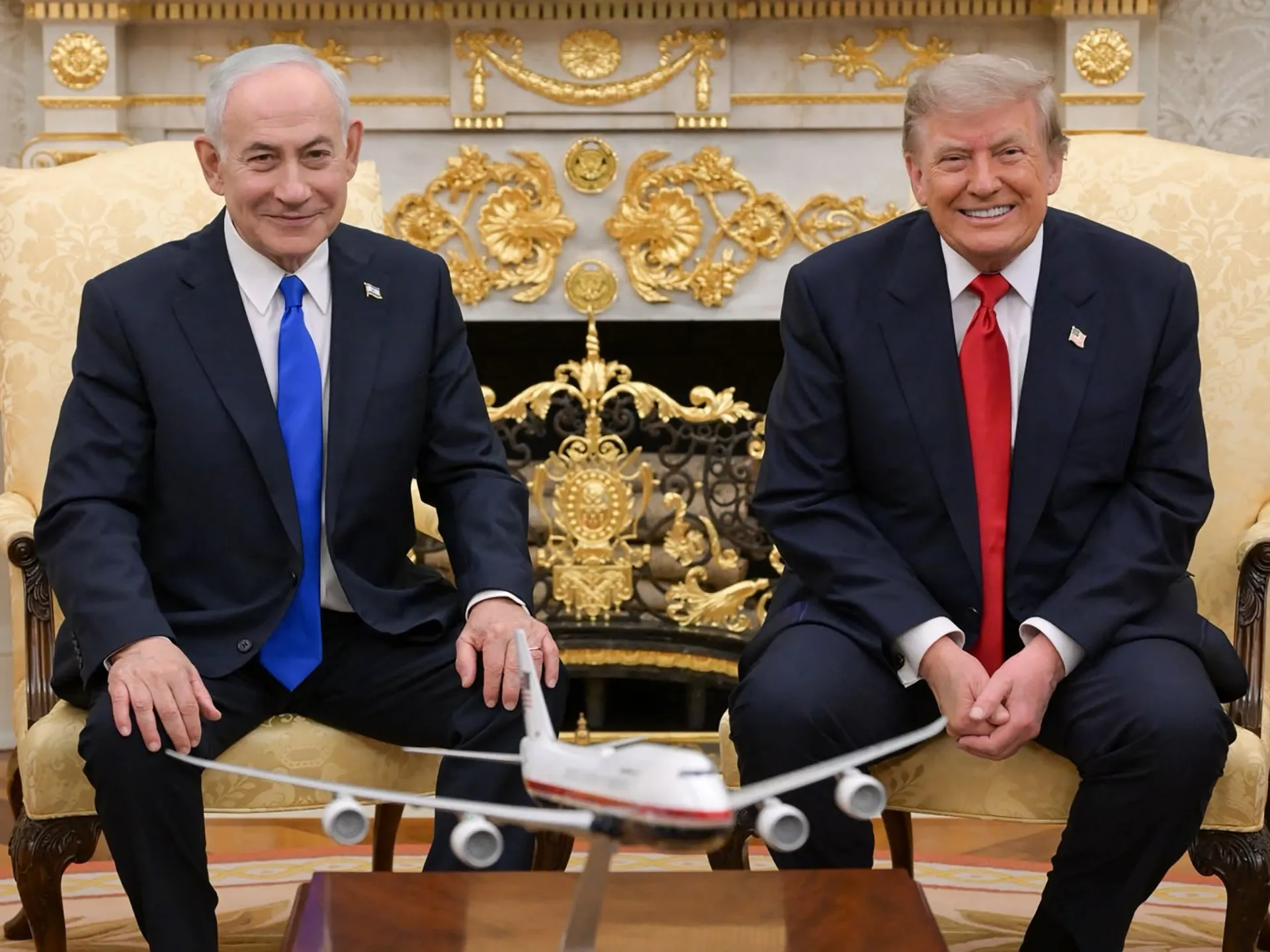
United States President Donald Trump has announced his official endorsement of Israel’s Prime Minister Benjamin Netanyahu’s election campaign after previously refusing to endorse anyone.
Trump posted on his Truth Social platform on Sunday that Netanyahu had been a “great warrior prime minister and an even greater partner for peace”, adding that Iran had been “systematically destroyed both militarily and financially, and unless they change their ways, rapidly, we will soon finish the job.”
Recommended Stories
list of 3 itemsend of list
“If Israel has the wrong Leader, which would be anyone other than Bibi, America will have to do this work ourselves, and I am not inclined to do so,” Trump wrote.
“Bibi Netanyahu has been Strong, Brave, and Brilliant in the face of tremendous opposition, including that coming from even Israel, itself. Despite all of that, he has endured and, in fact, he has thrived!”.
The president added that normal men and women would have “wilted” under the pressure that Netanyahu was under, but the Israeli prime minister “got stronger”.
“This is the kind of Partner that the United States of America is demanding of Israel, a Country for which it has done so much. Please let this Letter serve to represent my Complete and Total Endorsement of Bibi Netanyahu in his upcoming Race for Re-Election as Prime Minister of Israel. BIBI NETANYAHU WILL NEVER LET YOU DOWN!”, he added.
The Israeli election will be on October 27 . According to Israeli news outlet Haaretz’s tracker, as of Sunday, the opposition alliance led by the Yashar party of Gadi Eisenkot is expected to win the most seats, at 52, with Netanyahu’s Likud party-led coalition taking 51 of the 120 seats in the Knesset.
So far, no party is projected to secure an outright majority.
But Trump’s endorsement comes after he had previously shied away from fully backing Netanyahu’s election campaign.
Earlier this month, when asked twice by TIME magazine if Netanyahu should be given another term, Trump pivoted to his own popularity in Israel and Washington’s actions supporting Israel.
When asked on Thursday by the right-wing US news outlet, Newsmax, if he was planning to get involved in the Israeli elections, Trump said: “They’d like me to be. Yeah, they’d like me to be”.
When asked whether he trusted Netanyahu, Trump replied, “I don’t trust anybody, honestly”.
Still, Sanam Vakil, director of the Middle East North Africa programme at the British think tank Chatham House, explained that Trump’s endorsement of Netanyahu was “politically significant” because it comes after months of tension between the two leaders.
“It allows Netanyahu to reinforce his claim that he is indispensable to Israel’s relationship with Washington,” Vakil told Al Jazeera.
“However, its electoral impact should not be overstated. Israeli voters remain divided over Netanyahu’s leadership and the outcome of the Iran war. The endorsement may help consolidate his existing support, but it does not resolve the wider questions surrounding his record,” she added.
Andreas Krieg, senior lecturer at the school of security studies at King’s College London, said that Trump’s endorsement was a “political gift” to Netanyahu, whose electoral campaign is struggling.
But like Vakil, he cautioned against treating Trump’s endorsement as a game-changer.
“Netanyahu’s problems are structural, involving fragmented right-wing parties, disillusioned ultra-Orthodox voters and the legacy of October 7. Trump may mobilise reluctant Likud voters, potentially worth a seat or two in a close contest, but he cannot manufacture the coalition majority Netanyahu currently lacks,” Krieg told Al Jazeera.
What the endorsement means for the Iran war
Much of Trump’s endorsement has been heavily focused on the Iran war, at a time when many analysts suggest the US president might be looking to restart attacks, either before or after the midterm elections in early November.
The conflict, which began in February after the US and Israel launched attacks across Iran, is currently at a standstill.
The Strait of Hormuz, which once transported 20 percent of global crude, was effectively shut by Iran after the war started. A US naval blockade of Iranian vessels followed, as each country struck ships passing through the waterway that they accused of not complying with its orders. Oil traffic last month through the strait picked up to pre-war levels as the US Navy shepherded an increasing number of tankers. But a spate of Iranian attacks on vessels early this month has again hit crude exports through Hormuz.
On Monday morning, Brent crude futures stood at $107.57 a barrel, down slightly after reaching their highest since May 19 on Friday, when they briefly touched $110 a barrel.
Last month, Iran presented a proposal to Washington to reopen the waterway within seven days, but negotiations failed after the US did not address Tehran’s seven conditions, which included the lifting of sanctions and the ending of its naval blockade.
Foreign Minister Abbas Araghchi told Iranian media outlets on Sunday that the proposal remained on the table and, if Washington accepts Tehran’s conditions, the strait could reopen within six days, with talks resuming the following day.
At the same time, Araghchi, in a post on X on Sunday night, accused Netanyahu of wanting to restart attacks on Iran with the US to “stay out of jail”.
“Last time you wanted to ‘finish the job’, Iran emerged even stronger. Want to try your luck again? Be our guest. But be careful; we have unfinished jobs too,” he wrote.
“Netanyahu is driving America into another war to stay out of jail, whatever the consequences for Israel – let alone POTUS,” he added.
Krieg said Trump was prioritising the use of “coercive leverage” through his endorsement of Netanyahu but not necessarily “war over diplomacy”.
“The naval blockade is hurting Iran considerably and Washington believes time is working in its favour. Trump’s calculation is that Iran will eventually accept nuclear concessions and reopen Hormuz, without Washington having to offer significant concessions first,” he argued.
“His endorsement reinforces the military threat underpinning that strategy. But it does not mean diplomacy is finished. Trump still wants a deal he can present as a victory. The danger is that Tehran increasingly believes it must escalate to improve its bargaining position.”
What is next?
Vakil explained that, while Trump’s declaration of support for Netanyahu had signalled renewed political alignment with Israel and left the door open for future joint military action, it also makes it “harder for Trump to distance himself from the war or portray the US as having been reluctantly drawn into it”.
“He is explicitly taking ownership of the partnership and its military campaign against Iran. However, the endorsement does not necessarily mean that the two leaders have agreed on another operation, nor does it settle the question of who initially pushed hardest for war,” she said.
Vakil added that for Tehran, the statement will reinforce the belief of Iranian leaders that there is “little meaningful distinction between US and Israeli objectives.”
“At the same time, Trump’s suggestion that he is reluctant to confront Iran without Netanyahu could be interpreted as evidence of the limits of Washington’s appetite for another war.”
Meanwhile, while Trump has said that he would not attack Iran before the November midterms, several US media outlets have reported that the Pentagon has drawn up plans to relaunch attacks before voters head to the polls.
Last week, US news outlet Axios reported, citing both US and Israeli officials, that both Trump and Netanyahu had spoken about launching a major new operation against Iran ahead of the elections in both countries.
For Krieg, the likelihood that the US and Israel launch an attack on Iran remains low, assuming there is no Iranian strike that forces a response.
“The more dangerous window opens after November 3 [US midterms], when those electoral constraints disappear. Both militaries are preparing for that possibility. The greatest immediate risk is an uncontrolled escalation in Hormuz that forces Washington’s hand before either leader is politically ready,” he said.
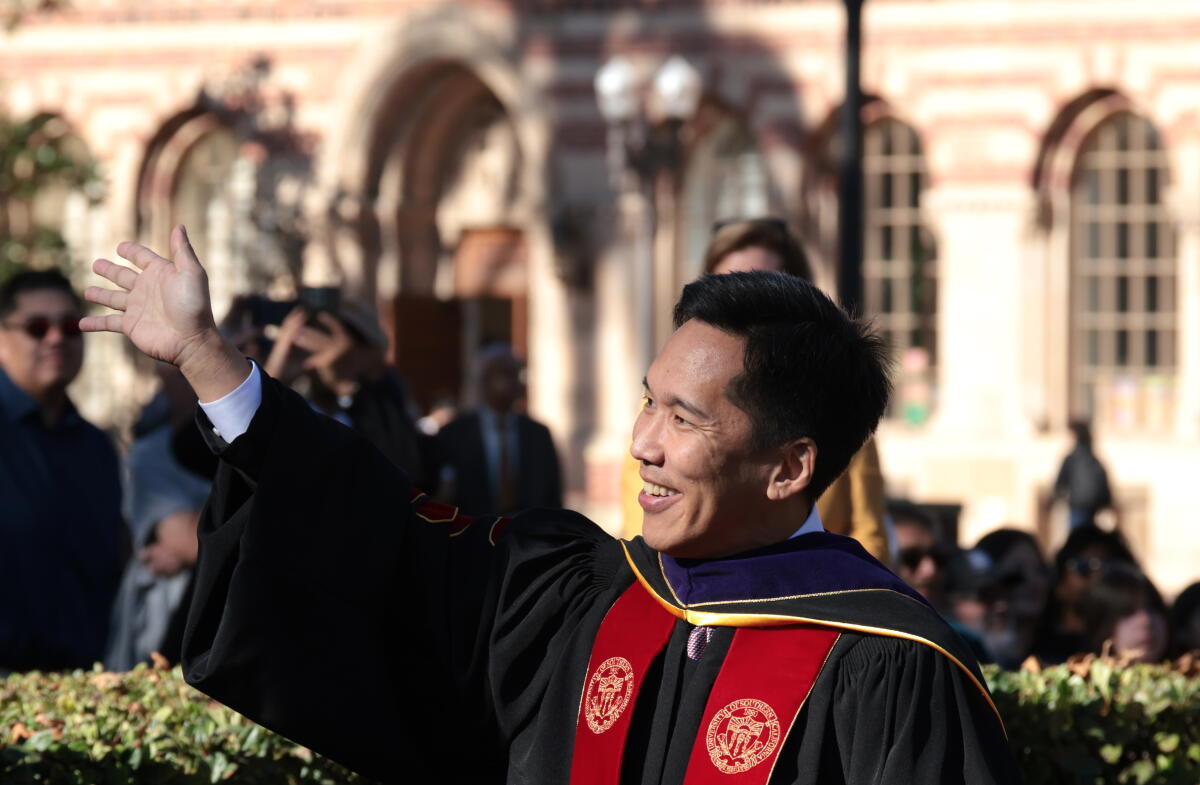
Eyo-Dae Kim and Susan Kim attended the University of Southern California decades ago, two international students with little money and no family in the U.S. On Friday, their son, Beong-Soo Kim, stood before an Alumni Park crowd and was formally installed as the 13th president of their alma mater.
“It is wonderful to have you here, Dad, facing the same library where you and Mom studied together at USC,” Kim, 53, said to his father, who took doctoral courses in economics. Kim’s late mother fled during the Korean War and earned a USC master’s degree.
“They certainly would never have imagined, as international students, that this day could possibly come,” Kim had said earlier.
In a wide-ranging interview before the event, Kim — who was appointed in February after holding an interim presidential role — said he leads USC at a time of promise and deep challenges:
The Los Angeles Memorial Coliseum, leased and operated by USC, will be a showcase site for the 2028 Olympics. A recent $200-million gift is fueling a university-wide push into artificial intelligence. USC admitted 12.6% of first-year applicants this fall for sought-after slots.
Beong-Soo Kim was formally installed as USC’s 13th president during an investiture ceremony Friday.
(Myung J. Chun / Los Angeles Times)
Yet he faces steep hurdles. The former federal prosecutor who spent five years as USC’s general counsel inherited a deficit of more than $200 million. Among his first actions, Kim approved the layoffs of more than 900 workers and ordered deep cost-saving measures. USC is still recovering from years of scandal and controversy that scarred its national reputation, including a $1.1-billion payout to settle sexual abuse allegations against a campus gynecologist, its involvement in the “Varsity Blues” admissions bribery scheme and its handling of pro-Palestinian protests.
Then there is Trojan football.
Fans chanted this month for the firing of football coach Lincoln Riley — after years of underachieving — though the Trojans have defeated Washington and Penn State after an Oregon loss.
Although fans and analysts have soured at times on Riley — whose pay exceeds $11 million and whose reported buyout is about $70 million — Kim declined to say whether USC could afford a coaching change, saying, “We’re not thinking about that.”
Share via
Amid fan chants to fire Trojan football coach Lincoln Riley, USC President Beong-Soo Kim declined to say whether USC could afford a coaching change, saying “we are laser-focused on the next game.”
“We are laser-focused on the next game, and then the game after that, and really having the best possible season that we can have in football,” he said.
After the stinging rounds of layoffs, Kim said, the university expects to “significantly exceed” the roughly $30-million surplus he forecast for USC earlier this year during his state-of-the-university speech, though final numbers are pending.
In his speech, Kim said that public trust in universities has declined and “we must regain trust by earning it.” USC is among the elite universities targeted last year by the Trump administration over alleged campus antisemitism, though it has not faced major federal funding freezes or lawsuits as the UC system has.
On Friday, deans and faculty in academic regalia processed into Alumni Park, where the Trojan Marching Band accompanied the national anthem as temperatures climbed toward the 90s during the nearly two-hour ceremony.
USC religious life dean Varun Soni opened an invocation by describing the cello’s sound post — a small wooden piece called its “soul” in Italian and French — and comparing it to the soul of a university. Kim, a cellist, later joined USC Thornton School of Music students to play “Prelude,” the first movement of Grieg’s “Holberg Suite,” Op. 40, as Kaufman School of Dance students performed.
Morton Schapiro, Northwestern’s president emeritus and a former USC dean, represented visiting academic delegates and praised Kim’s “creativity, character and commitment to community” before Suzanne Nora Johnson, chair of the Board of Trustees, formally installed Kim. Jewish, Christian, Muslim, Hindu, Buddhist and humanist blessings closed the ceremony. In the afternoon, a “Trojan Family celebration” in McCarthy Quad was scheduled to feature food stalls and performances by singer-songwriters Aloe Blacc, a USC alumnus, and Allen Stone.
Money, medicine and priorities
When he took over as interim president in 2025, upon the departure of Carol Folt, Kim immediately confronted the university’s financial crisis. The campus had long spent more than it brought in, an imbalance driven by rising athletics costs, pandemic expenses and major legal settlements. A weak year for USC’s health system deepened the shortfall. Kim maintained a hiring pause, stopped merit raises and took “a hard look at a lot of our administrative expenses and our operations,” he told The Times.
Keck Medicine of USC took a significant hit in the layoffs after running a deficit in the tens of millions in recent years. Last month, dozens of layoffs took place at the Viterbi School of Engineering.
Kim said Keck’s performance “has been good, but it can get better.” The health system is “making very positive progress” to cut expenses while focusing on “patient care, patient quality.”
Across campus, he credited staff and faculty with “stepping up, asking how can we do more with less.”
USC is also challenging a faculty union before the National Labor Relations Board. Non-tenure-track faculty voted in June to join United Faculty-UAW, with about 70% in favor. USC has asked the labor board to review the decision that allowed the vote, arguing the union is too broad. Faculty leafleted Friday during Kim’s event.
Kim said he wants USC to build strong partnerships with Los Angeles industries, including entertainment, biotechnology, sports and “the new space economy.”
He cautioned in his speech that “great universities do not become greater by trying to do everything.”
During the interview, he did not say which university programs need to shrink but said such decisions will come through a strategic plan that will “engage the whole community.”
“One of the things that I frankly pride myself on as a university president is that I readily admit that I don’t have all the answers, and certainly not the best answers,” he said.
Beong-Soo Kim speaks at USC’s commencement in May.
(Jason Armond / Los Angeles Times)
Admissions
A pressing debate — particularly within the University of California system — is whether standardized tests should be required for admissions. Many of the nation’s most elite institutions have recently turned away from test-blind or test-optional admission policies. UC, which does not consider SAT scores in admissions, is reviewing whether to resume SAT and ACT requirements.
Kim said USC, which is test-optional, is studying the issue too. USC considers SAT and ACT scores if applicants submit them but does not require them.
Share via
As the University of California evaluates whether to reintroduce SAT and standardized testing requirements for admission, USC President Beong-Soo Kim said USC is also looking at the question. He said USC, which is test-optional, has not made a final decision.
“It’s absolutely something that has been under discussion, particularly with respect to STEM students,” he said, referring to science, technology, engineering and math majors. He cautioned that no final decision has been made and that the new provost, David Madigan, will be looking at the issue.
Kim said UC’s test-blind policy is “one of the contextual factors that we have to consider.” Many California students who plan to apply to UC skip the tests, and many of them also apply to USC, he said.
USC said last year it would keep weighing applicants’ family ties to the university despite a state ban on legacy and donor preferences. In 2024, while the ban was pending, USC said it would “comply with state law” if it were signed. Schools that keep the preferences are listed publicly as out of compliance and must report more admissions data to the state.
Kim said USC chose to keep “considering whether someone is a member of the Trojan family” as one of many factors. He said he is “actually quite proud” that USC maintained its “holistic admissions practices” in a way that “provides more transparency about our admissions.”
Image and trust
Legacy preferences have fed a stereotype of USC as a college for the wealthy and well connected. Kim disputed that image.
He pointed to USC’s transfer students, Pell Grant recipients and first-generation students. USC opens its doors to “so many people in California, throughout the country, and throughout the world,” he said.
Still, Kim acknowledged that trust in education has fallen, though he said that trust in American institutions “across the board has been declining.”
Share via
USC violates state law by considering legacy and donor ties in admissions, a practice President Beong-Soo Kim defended as part of a holistic review while touting the university’s transparency in reporting admissions data to the state.
“Some might have to do with events from several years ago,” he said.
He did not say which events, though USC has had its share. As general counsel, Kim helped steer it through the aftermath of the national Varsity Blues admissions bribery scandal and the sex abuse payout to former patients of campus gynecologist George Tyndall, the largest in higher education history.
His answer to falling trust has been the Open Dialogue Project, which he launched in October 2025 to bring clashing views to campus. Guests have included National Institutes of Health Director Jay Bhattacharya, former ACLU President Nadine Strossen and legal scholar Jonathan Turley.
In September, the Foundation for Individual Rights and Expression gave USC its top “green light” rating for several speech policies. After the group recalculated its college free speech rankings, USC rose from 198th to 37th out of 261 schools.
White House pressure
Last fall, the Trump administration invited USC and eight other universities to sign a higher education compact offering favorable access to federal research grants. Signers would cap international undergraduates at 15%, require the SAT or ACT and freeze tuition for five years.
USC rejected the compact last October — about two weeks after the administration offered it.
Some faculty viewed USC’s initial reluctance to reject the overture as a sign it was unwilling to openly challenge Trump’s education demands. They also point to USC’s closure of its university-wide Office of Inclusion and Diversity last year amid a federal anti-DEI push and its removal of pages for cultural heritage months from its “Culture Journey” website earlier this year.
Kim disagreed that USC bends quickly to the White House.
“It would have been highly presumptuous for me just to make a rash decision about what we were going to do without listening,” he said of the compact.
International students have also faced pressures, as the government restricts some visa programs and significantly increases costs for others.
About 26% of USC students are international, with 15% of the undergraduate population coming from other nations. Kim said international students “have been part of USC for decades” and called their presence “a win-win.”
AI risks
USC is also leaning into artificial intelligence, with a $200-million gift from Nvidia board member Mark Stevens and his wife, Mary Stevens, meant to infuse AI across the campus and recruit AI researchers.
But leaders of OpenAI and Anthropic have warned that the technology’s fast development poses serious risks to jobs and human existence.
“We have to take those warnings very seriously,” Kim said. Universities, he said, can help clarify what it means for AI to be “aligned” and “safe.”
Kim said USC wants to make sure its students “are leading in terms of how to use it ethically, how to use it morally.”
The future
On July 14, 2028, the Coliseum — USC’s campus-adjacent home stadium — will share the Olympics’ opening ceremony with SoFi Stadium in Inglewood.
Kim said he hopes Olympic visitors will see “a university that has an incredible Olympic tradition,” but also one whose reach goes well beyond sports.
The Games will also bring alumni and students “from across the globe,” he said. “I think that’s going to make for a very magical moment.”
US President Donald Trump has issued an official endorsement of Israel’s Prime Minister Benjamin Netanyahu for the upcoming Israeli election. Al Jazeera’s Patty Culhane reports from Washington DC.
US president accuses Ukrainian leader of not wanting to end the war, as Zelenskyy speaks with Washington envoys.
Published On 19 Oct 202619 Oct 2026
United States President Donald Trump has defended sanction waivers for Russia, saying he wants to keep Moscow at the bargaining table and accusing his counterpart in Kyiv of not wanting to end the war in Ukraine.
Trump made the comments on Truth Social on Sunday in response to criticism of his decision to block numerous sanctions on Russia just days before they were due to take effect.
Recommended Stories
list of 3 itemsend of list
“My decision on Russia is a very simple one. I am in the process of negotiating Peace in the war between Russia and Ukraine, and don’t want to do anything that will drive, foolishly, Russia away from the bargaining table,” he said.
The move has triggered a significant diplomatic fallout between Trump and Ukrainian President Volodymyr Zelenskyy over the past week.
Zelenskyy said that waiving sanctions on Russia, which launched a full-scale invasion of its neighbour in 2022, “will hurt Ukraine”, telling NBC’s Meet the Press on Sunday that it would strengthen Russian President Vladimir Putin’s war effort.
“We can’t compare me and Putin. He’s [an] aggressor. He occupied us. He killed adults and children, his soldiers. He’s a terrorist, and that’s why I hope that President Trump will be very clear with this position.”
Trump reiterated his claim that Zelenskyy does not want the war on his country to end, saying on Truth Social that Kyiv was launching attacks on diesel refineries in Russia despite knowing it was “seriously hurting the world diesel markets”.
“Zelenskyy doesn’t care, and frankly, with all of the money that Europe is famously giving him… he doesn’t want to end this war, and probably never did,” Trump wrote.
Trump announced plans on October 9 for Russia to supply more than 300,000 metric tonnes of diesel to US and global markets to tackle fuel prices that have soared since the US and Israel launched war on Iran in late February. The move led Tehran to effectively close the Strait of Hormuz, through which one-fifth of global energy exports transited before the war.
Trump’s embrace of Russian energy has angered not only Kyiv, but also European partners and many US officials, who say the move rewards Moscow while it continues its four-and-a-half-year war against Ukraine.
US-Ukraine talks continue
The Ukrainian president said on X on Sunday that he has spoken with US presidential envoys Steve Witkoff and Jared Kushner as part of “virtually non-stop communication” between the two countries’ teams aimed at the “next steps in diplomacy”.
“We are doing everything on our part to make this happen, and to ensure that America’s position is strong and helps bring peace closer. Peace that everyone, except Russia, has been waiting for over the past four and a half years,” Zelenskyy wrote.
Zelenskyy spoke with Witkoff and Kushner as Russia and Ukraine continued to strike each other’s energy sites, with Moscow leaving thousands without power, and Kyiv carrying out the largest drone attack on Russia, in St Petersburg, since the war began.
US President Donald Trump has said his decision to suspend several Russian sanctions is an effort to keep Moscow at the negotiating table.
“I am in the process of negotiating Peace in the war between Russia and Ukraine,” Trump said on his Truth Social messaging platform, adding that he didn’t want to “do anything that will drive, foolishly, Russia away from the bargaining table”.
Trump blocked numerous sanctions on Russia on Friday night, two days before they were due to take effect, as a row with Ukrainian President Volodymyr Zelensky deepened.
Zelensky told NBC News on Sunday that siding with Russian President Vladimir Putin would be a “historic mistake”.
Russian envoy Kirill Dmitriev has responded to Trump’s order by calling it “an important and truly historic moment”. He said the sanctions, which were passed by the US Congress and signed into law by the US president in September, would have inflicted “serious damage” on the US and global market.
US Secretary of State Marco Rubio has described the suspension of the sanctions as a 60-day pause during which their potential impact on the US and global economies would be analysed.
In his Truth Social post, Trump also said Zelensky “doesn’t want to end this war, and probably never did”, adding “he could have made a better deal two years ago than he can now”.
Zelensky has pushed for an end to fighting, and has repeatedly said that Putin doesn’t want peace, since Russia launched its full-scale invasion of Ukraine in February 2022.
Relations between Washington and Kyiv frayed after the US struck a controversial deal to import Russian diesel last week.
Despite the international sanctions, Russia has still been able to export oil, much of it to China and India – often at attractive discounts. According to the think-tank Centre for Research on Energy and Clean Air (CREA), China has taken about half of Russia’s crude exports, with India accounting for about 37%.
In remarks to a European Union summit, after Trump announced the deal to buy diesel from Russia and said Zelensky was “more difficult to deal with” than Putin, Zelensky said it was nice to be among “real leaders”.
WEST PALM BEACH, Fla. — President Trump on Sunday announced plans to close a historic public golf course in the nation’s capital for 15 months and redevelop it despite an ongoing court challenge to his long-sought renovation.
Trump posted on social media about his intent to shut the East Potomac Golf Course, not far from the White House, starting Nov. 15 to make it “one of the Best and Most Spectacular Golf Courses anywhere in the World.”
A judge last week, however, ordered a halt to his redevelopment plans until at least Oct. 26 after scolding the government for starting a large-scale tree removal at the course over a holiday weekend while providing little notice to the court or the plaintiffs trying to stop the makeover.
Trump did not acknowledge the legal fight in his post, which included an artist’s rendering for the course redesign.
“When completed, it will be open to the Public while, at the same time, designed to the Highest Level of Golf and able to hold World Class Tournaments such as the U.S. Open, the PGA Championship, the Ryder Cup, and the Presidents Cup,” Trump wrote.
Democracy Forward, which is representing the plaintiffs challenging his renovation plans, responded by saying that the course is part of a national park and recreation facility that is meant for everyone to enjoy.
“Our litigation is intended to protect this community jewel for the people and communities it serves and we will continue to work with our plaintiffs to defend it from unlawful and harmful intrusion,” Skye Perryman, the president and chief executive of the group, said in a statement.
The judge in the case took notice of Trump’s online message and ordered the government to notify her by 8 p.m. Eastern time Sunday whether its position had changed from a court filing Friday that said “at most” Trump has given “preliminary thought” to the rebuilding plan and “there is no final agency action.”
Extensive makeover
Trump, a golf aficionado who plays often, already had announced plans to makeover the links as part of his broader project to renovate and refurbish places around Washington, including the White House and the Kennedy Center for the Performing Arts. Many of his projects, including plans for a huge ballroom at the White House, the installation of his own name on the Kennedy Center and construction of a massive arch, have been challenged in courts.
The 106-year-old park and course has been the subject of many emergency hearings as the president has sought to renovate it. Although it has been open to Washingtonians of all income levels, opponents of Trump’s plans to turn it into a high-end course have argued that it will alter the character of the space and make it less affordable.
Trump in his post echoed arguments he has made to justify his plans to remake the Kennedy Center, arguing it is in such dangerous condition that it needs to close.
“The current Course is old, broken, dilapidated, and of no further use or effect. It is in very poor condition, with falling, dangerous, and disease infested trees and, importantly, a collapsing and hazardous seawall,” Trump wrote.
Debris from the demolition of the White House East Wing to make way for his ballroom project also has been dumped on the grounds. The National Park Service has said the debris tested positive for lead, chromium and other toxic metals.
Trump also sought to justify the National Park Service’s removal of hundreds of trees that the judge paused, writing in his announcement that when the golf course was originally built, “it was famous for no trees, with views of Washington, D.C., for all to see, but now, it is completely overgrown, dysfunctional, and unsafe.”
Case returns to court
Trump’s post outlining a clear plan for construction complicates a federal court hearing scheduled for Monday in a lawsuit filed by the DC Preservation League and two golfers opposing the construction.
U.S. District Judge Ana Reyes has ordered key members of the administration to testify on the recent tree cutting and whether those actions are tied to the president’s plans for the historical public links.
The administration on Friday asked for Reyes to be replaced on the case, questioning her impartiality and citing what it called “egregious” behavior from the bench in response to an emergency hearing Oct. 12. Her frustration boiled over in a three-hour hearing when she lambasted the government’s attorney for the lack of notification she and the plaintiffs received before the trees were chopped down.
At the upcoming hearing, the judge is expected to address the request that she step aside. Meanwhile, over the weekend the plaintiffs asked that she grant them a more long-standing preliminary injunction in the case and/or a stay.
Price writes for the Associated Press. AP writer Gary Fields in Washington contributed to this report.
In a social media post ahead of Israel’s October 27 election, Trump calls Netanyahu a ‘Strong, Brave, and Brilliant’ leader.
United States President Donald Trump has issued an endorsement of Israel’s incumbent Prime Minister Benjamin Netanyahu, who is facing a close race in parliamentary elections scheduled for October 27.
In a post on Truth Social on Sunday, Trump praised the Israeli leader for being an ally of the US in its war on Iran. He added that he was giving his “Complete and Total Endorsement” to Netanyahu.
Recommended Stories
list of 3 itemsend of list
“BIBI NETANYAHU WILL NEVER LET YOU DOWN!” Trump wrote.
The US president’s backing comes nine days before the Israeli election — and after speculation that it might not come at all.
Trump had refused to endorse Netanyahu earlier this month, when asked repeatedly about the Israeli leader’s job performance in an interview with Time magazine.
Instead, when pressed by his interviewer, Trump avoided the subject, shifting the focus instead to his own popularity or security in the Middle East.
The two leaders have met more than a half dozen times since January 2025, but there have been reports of disagreements, including over the war against Iran and other conflicts.
In June, Trump acknowledged calling Netanyahu “f***ing crazy” in a phone conversation where he expressed frustration about Israel’s attacks on Lebanon.
Trump had reportedly asked Netanyahu not to take further action in Lebanon, in an apparent attempt to preserve a short-lived April ceasefire with Iran.
The two leaders had jointly launched a war against Iran on February 28, but the conflict has cost Trump domestic support.
The war has upended the global oil and gas supply, with no clear end in sight.
A Pew Research Center poll found this month that roughly two-thirds of US voters disapprove of Trump’s handling of the war, which has driven up consumer fuel prices and raised concerns about draining military stockpiles.
Trump’s Republican Party is facing a critical midterm election on November 3 that will decide whether it maintains control of the US Congress, as well as other key state and local offices.
Experts have speculated that Trump’s prior reticence to endorse Netanyahu may have come from public perception that Israel may have coaxed the US into the war.
Netanyahu’s Likud Party and its far-right coalition are also facing the prospect of losing the October contest to an opposition bloc led by Yashar party head Gadi Eisenkot.
In his endorsement on Sunday, Trump said it was only a matter of time before Iran would have attacked both the US and Israel.
The war, Trump argued, had already left Iran “systematically destroyed, both Militarily and Financially, and unless they change their ways, rapidly, we will soon finish the job”.
“If Israel has the wrong Leader, which would be anyone other than Bibi, America will have to do this work ourselves, and I am not inclined to do so,” Trump wrote.
“Bibi Netanyahu has been Strong, Brave, and Brilliant in the face of tremendous opposition, including that coming from even Israel, itself.”
BANGOR, Maine — Ever the optimist, Speaker Mike Johnson said he believes Republicans will hold on to their U.S. House majority, defying a surge of Democratic momentum in the final stretch of the midterm elections that will determine control of Congress.
It’s the crowds he says he’s seeing as he crosses the country campaigning for GOP candidates. The caliber of recruits and incumbents he calls workhorses, not show horses. And the nearly half a billion he has raised for House Republicans.
He also has faith.
“We run to win, and that’s biblical: You run to win,” he told the Associated Press during a campaign stop in Maine.
“And I believe that we will.”
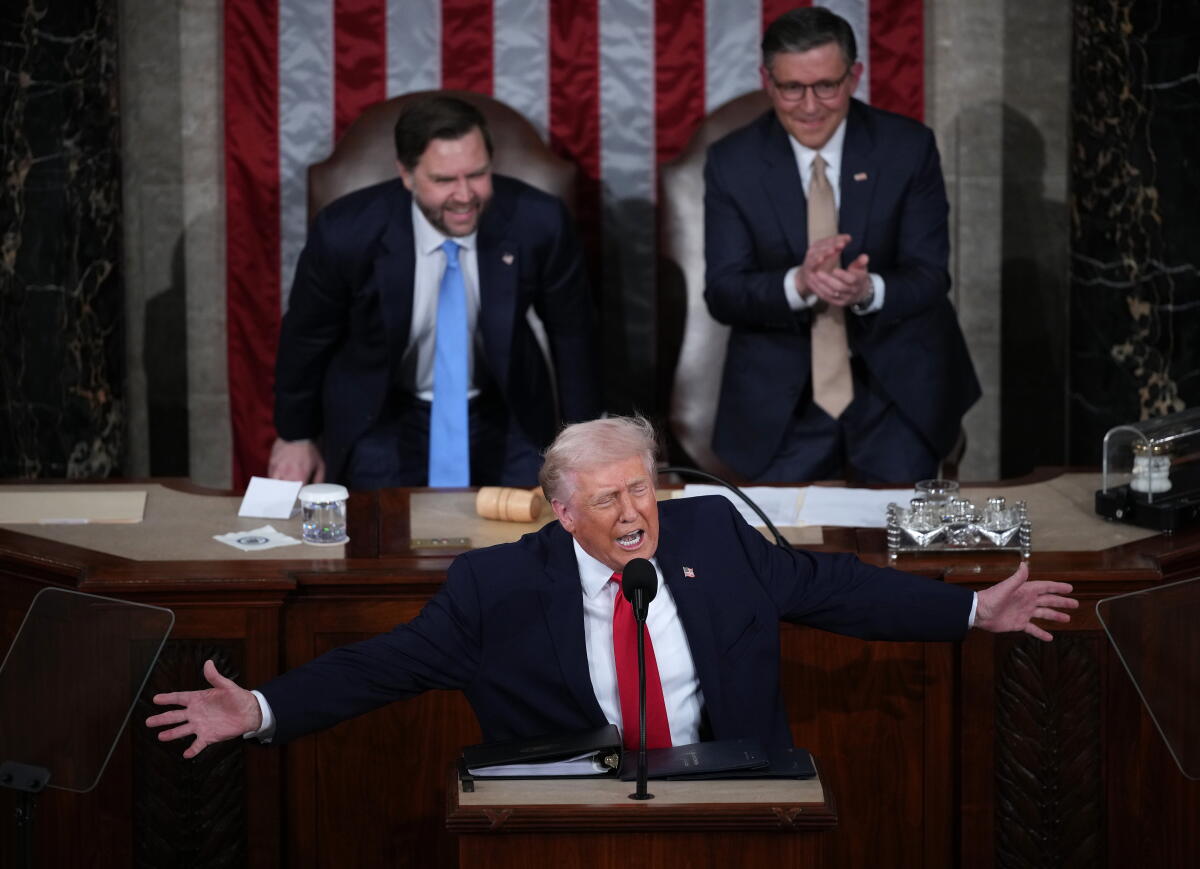
House Speaker Mike Johnson, right, applauds along with President JD Vance as President Trump delivers his State of the Union address during a joint session of Congress in February in Washington.
(Andrew Harnik / Getty Images)
The speaker of the House is one of the most consequential elected officials in the United States, second in line of succession to the president. While Johnson quipped to Fox News recently that he may return to his hometown of Shreveport, La., to start a lawn care business if Republicans lose power on Nov. 3, he fully expects to buck an American midterm tradition that often sees the president’s party dumped in Congress.
It can be said that Johnson, who has drawn so close to President Trump that he routinely fields 1 a.m. calls — they spoke the night before as Trump rallied in Alaska — walks on the sunny side of the street. That’s despite voter frustration over high prices and the Iran war, and his own challenge of leading one of narrowest House majorities in modern times.
In his three years as speaker, Johnson has pushed past the doubters and naysayers, holding his thread-thin GOP majority together to deliver Trump’s agenda. He notably led passage of the big tax breaks and social service cuts bill. Most days he does not have a single vote to spare.
“So many times everybody had written off, there was no way he was going to be able to pull off a particular vote,” said Republican Rep. Mark Harris of North Carolina, who joined the speaker on the campaign swing. “Yet he always seems to pull out the win in the end.”
In the interview, Johnson did not speak brashly about expanding the House majority on election day, as he has in the past. But on track to visit more than 20 states and 40 congressional districts though November, he said the political mood reminds him of the 2024 election that swept Republicans to control of Congress and the White House.
“It’s not going to be a giant majority,” he said. “But I genuinely believe that we will have a working majority.”
Emboldened by Trump
Johnson first fell into the speaker’s job almost by accident, a desperate choice by his GOP colleagues after a contingent of renegade Republicans ousted his predecessor, then-Rep. Kevin McCarthy of California in 2023.
Johnson had been a lower-level member of House leadership, but distinguished himself before the Jan. 6, 2021, attack on the Capitol by organizing support for Trump’s false claims of widespread fraud in the election that he lost to Democrat Joe Biden.
In the time since, Johnson has secured proximity to Trump’s power. He joined Trump at a UFC fight in New York and once gifted the president a speaker’s gavel as Trump signed the “One Big Beautiful Bill” into law. It was a symbolic act, but one that critics saw as giving away the authority of a coequal branch of government.
More recently, Johnson abruptly sent lawmakers home early rather than face a vote forced by Republican Rep. Thomas Massie of Kentucky to impeach Defense Secretary Pete Hegseth as lawmakers tried to halt the Iran war, which has not been authorized by Congress.
Over coffee in Bangor, after rallying for House candidate Paul LePage, a former governor, Johnson brushed back criticism that Congress has eroded under his watch as Trump works to amass executive power.
“Absolute nonsense,” Johnson said.
“We did not yield Article 1 authority to the president,” he said, referring to the powers spelled out in the Constitution. “We used our own,” he said, to muscle GOP priorities past Democratic opposition.
Trump agenda at risk
Johnson has focused the election on Democrats he portrays as “communists.” A handful of far-left liberals, backed by the Democratic Socialists of America, are on the ballot.
Rep. Hakeem Jeffries of New York, the House Democratic leader who is in line for the speaker’s gavel if his party sweeps to power, is preparing a first-100 days agenda for when the new Congress convenes in January, if there is a change in control.
What the Republicans will do if they retain power is less defined.
“Lots of plans,” Johnson said, “along the same course of what we’ve been doing — less taxes, less regulation.”
Trump “wants to go big for his legacy,” he said. “We have big things on the horizon that we can do.”
The president has essentially purged the House GOP ranks of those perceived to be disloyal. Among them are Massie, who lost his primary, and Marjorie Taylor Greene of Georgia, who retired early after breaking with Trump over release of the Jeffrey Epstein files.
Pressed how he would keep Republicans in line, Johnson said he is preparing to change the House rules if he returns as speaker.
“There’s going to be some changes that are going to make the machinery work smoother,” he said.
Praying for the speaker, and the country
Faith has often been strong among House leaders. Two former speakers, Nancy Pelosi and Newt Gingrich are Catholics, as is John Boehner, who invited Pope Francis to address Congress.
Johnson, a former constitutional lawyer who was first elected alongside Trump in 2016, is expected to win his own reelection next month.
“My faith is a huge component of how I think and how I act and what I do,” said Johnson, who led a public prayer on the National Mall as part of the nation’s 250th anniversary.
He is drinking lots of coffee these days, he said, cutting back on the Celsius, and still has 1,413 unread text messages, a slight dip from the frightful number reported a few months ago by the Wall Street Journal.
One text is from someone praying for him.
Johnson said he is grateful for the outpouring of prayers he receives, for him and the country.
“I pray for God’s will. And I believe God’s will is for us — and not the communists — to be in charge of America,” Johnson said.
“And it does say in the New Testament, you run the race to win,” he said, citing 1 Corinthians 9:24. “This is a biblical admonition. So we will.”
Remember the FIFA Peace Prize awarded to United States President Donald Trump six months before the World Cup? Well, it is now close to being scrapped, which would make the US president its first and only winner.
Less than a year after FIFA President Gianni Infantino extolled Trump in the US capital while presenting the award at the World Cup 2026 draw, several members of the FIFA Council are questioning its merit and have demanded changes, including scrapping the award.
Recommended Stories
list of 3 itemsend of list
The calls for scrutiny come at a time when Infantino faces ongoing criticism for his World Cup sell-off plan, which also led to calls for his removal from office.
So what was the prize about, and why might it be scrapped? Here’s a look:
What is the FIFA Peace Prize?
On November 5, football’s global governing body announced a new annual award called the “FIFA Peace Prize – Football Unites the World”.
FIFA said the award was created to “reward individuals who have taken exceptional and extraordinary actions for peace”.
Trump thanked FIFA and called the award “one of the great honours of my life”.
He and Infantino are close allies, and the FIFA chief had made it clear that he thought Trump should have won the Nobel Peace Prize for his efforts to broker a ceasefire in Israel’s genocidal war on Gaza.
“This is your prize. This is your peace prize,” Infantino said at the glitzy, celebrity-studded ceremony at Washington, DC’s Kennedy Center.
Infantino has repeatedly spoken about football as a unifier for the world, but the prize is a departure from the federation’s traditional focus on sport.
Critics pointed out that the recognition came less than 24 hours after the Trump administration carried out a deadly air strike in the Caribbean.
Two months later, the US and Israel launched their war on Iran, assassinating Supreme Leader Ali Khamenei in Tehran and hitting nuclear and military sites around the country.
The US-Israel war on Iran has gone on for months with Trump saying this week that he will not attack Iran again before the November 3 midterm elections in the US.
Why might FIFA scrap the award?
Several FIFA member nations demanded the discontinuation of the award during Thursday’s FIFA Council meeting in Zurich, Switzerland, according to reports in British media.
Others called for the prize to no longer be handed out to politicians.
As a result, FIFA’s 22-member Football Social Responsibility Committee was tasked with assessing the merits of the award. It is expected to make a recommendation before the next council meeting in Doha, Qatar, on December 16.
Debbie Hewitt, a FIFA vice president and president of the English Football Association, told the media at the council briefing that the committee “will consider, first of all, how the peace prize came about, whether it should have come about, whether it should have been awarded in the way that it was, who made that decision and whether or not it should be taken out or whether it should be reformed”.
What has FIFA said?
Al Jazeera has reached out to FIFA for comment and was referred to Infantino’s statement on it: “For the FIFA Peace Prize, it was decided that the Football Social Responsibility Committee will be tasked to analyse it, provide a proposal, and also, there, a decision will be taken at the next FIFA Council meeting.”
Has the FIFA Peace Prize faced opposition?
Yes.
In October, the Norwegian Football Association (NFF) made parallel filings with FIFA committees in relation to three recent issues, one of which was related to the awarding of the FIFA Peace Prize.
“The purpose is to raise these issues formally with the appropriate bodies, to have them examined, relevant evidence obtained and accountability for the conclusions reached,” the NFF said in a statement.
The NFF has repeatedly raised questions about the award, and in April, its president, Lise Klaveness, said FIFA should scrap its peace prize to avoid getting drawn into politics.
“We want to see it abolished. We don’t think it’s part of FIFA’s mandate to give such a prize. We think we have a Nobel institute that does that job independently already,” Klaveness said.
Earlier, human rights group FairSquare filed a complaint with the FIFA Ethics Committee, accusing Infantino of breaching his duty of neutrality by supporting Trump.
Infantino has been under severe pressure since he announced a plan in July to open premium FIFA competitions, such as the World Cup, to private investors [Omar Marques/Getty Images]
‘Mockery’ of FIFA human rights policy
The criticism of the award isn’t limited to football associations.
In late April, Australia midfielder Jackson Irvine said football’s credibility as a force for good has been undermined by FIFA, and he accused FIFA of making a mockery of its human rights policy.
“As an organisation, you would have to say decisions like the one that we saw awarding this peace prize makes a mockery of what they’re trying to do with the human rights charter and trying to use football as a global driving force for good and positive change in the world,” Irvine told the Reuters news agency in an interview.
“Decisions like that feel like they just set us back in the perceived market of what football currently is, especially at the top level, where it’s becoming so disconnected from society and the grassroots of what the game actually is and means in our communities and in the world.”
Craig Mokhiber, a former United Nations official who has campaigned to suspend Israel from world football over its genocidal war in Gaza, called the award to Trump a “truly shameful development”.
Infantino has refused to take action against Israel, arguing that football “cannot solve geopolitical” issues.
“Not satisfied with two years of FIFA complicity in genocide in Palestine, Infantino and his cronies have now invented a new ‘peace prize’ in order to curry favour with Donald Trump,” Mokhiber told Al Jazeera.
He added that the award also aims to “obscure” Trump’s “disgraceful record” of support for Israel, his deadly strikes on vessels in the Caribbean Sea and “gross violations of human rights” inside the US.
Growing pressure on Infantino
The scrutiny around the FIFA Peace Prize follows the recent backlash Infantino has faced.
Infantino has been under fire since his announcement in late July that he wanted to open FIFA’s premium competitions, such as the World Cup, to private investors.
That plan was ultimately abandoned in the face of widespread criticism with a rebellion led by the European governing body UEFA, the Asian Football Confederation and CONCACAF, which runs the sport in North and Central America and the Caribbean.
Infantino has headed FIFA since 2016 and is running for re-election in March despite calls for him to stand down in the wake of the $4.2bn plan to sell a 20 per cent commercial stake in the World Cup.
McALLEN, Texas — On a quiet corner of downtown McAllen, past shops selling quinceañera gowns and perfumes, about 30 people trickled into a small brewery on Wednesday evening to watch James Talarico, the Democratic Senate nominee in Texas, take questions from voters in a CNN town hall.
With beers and tacos, they gathered in front of a large projector screen. Karyme Segura, 18, sat at the front, listening closely as Talarico said federal immigration agents should be going after violent criminals, not “terrorizing our communities” and breaking up families.
Segura clapped. The message was personal to her. A day earlier, her stepfather had been deported to Mexico. Since his detention, her mother has been afraid to leave the house, she said. Now Segura has turned to politics, hoping to change the conditions that have left her family fractured and rattled.
“I just have to do something,” Segura said. “I am hoping that after the election my mom will feel more secure. That if Texas turns blue, Trump will feel threatened.”
Segura is the kind of voter Democrats are counting on as Talarico, a state representative from Austin, tries to defeat Ken Paxton, the state’s Republican attorney general, to become the first Democrat to win a statewide race in Texas since 1994. The race could decide control of the Senate, and has become one of the most high-profile and bitterly fought contests this year.
Talarico, a former teacher and Presbyterian seminarian, has courted voters with a populist economic pitch blended with an overlay of Christian messaging to “love thy neighbor.” Paxton, an ally of President Trump, has focused on rallying his party’s base by portraying Talarico as too progressive for Texas, including his past opposition to transgender sports restrictions.
Since late June, Talarico has led narrowly in most polls, alarming Republicans who have poured hundreds of millions of dollars into ads meant to boost Paxton. Elon Musk, the world’s richest person with significant operations in Texas, has helped buoy that GOP political rescue mission by dropping nearly $190 million into the race, according to federal campaign finance records filed Thursday.
Alyssa Cantu and Antonio Reyna, owners of the Gremlin Bar at their club Thursday in McAllen, Texas.
(Delcia Lopez / For The Times)
Democrats have spent heavily, too. In total, ad spending in the race has surpassed $500 million, according AdImpact, an ad-tracking firm, making it one of the most expensive non-presidential contests in U.S. history.
The Wednesday town hall amounted to free national airtime for Talarico too, who showed up on stage alone despite Paxton —who had so far refused to commit to any debate — being invited. In McAllen, the owners of the brewery, Tony Reyna and Alyssa Cantu, said they bought a projector screen just for the event.
“Any information we can bring out to the community, we try to make it happen,” Reyna said. “And if there is not going to be a debate, we are showing the town hall.”
In recent weeks, conspiracy theories, leaks and attacks have been constant in the lead-up to the election.
Both campaigns are courting independents and right-leaning voters, including Latinos who swung sharply toward Trump in 2024. But Trump’s unpopularity has complicated Paxton’s task. The latest polls show Trump’s approval rating at 32%, the lowest of his political career, as voters struggle with rising prices tied to tariffs and the war in Iran.
In Texas, about half of likely voters in a recent Fox News poll said they worried Paxton was too close to the president; nearly as many were concerned Talarico was too liberal.
Mario Guerrero, a 33-year-old home builder and executive director of the South Texas Builders Assn.
(Delcia Lopez / For The Times)
Along the border in the Rio Grande Valley, an overwhelmingly Latino region, there are signs that voters who backed Trump two years ago are now open to voting for Talarico — and Democrats as a whole. In interviews with more than a dozen voters across the region, many described the Trump administration’s approach to immigration enforcement as inhumane and morally wrong, as well as detrimental to the local economy.
“I didn’t think he was going to do what he is doing now. I don’t think anybody thought it would be like this,” said Mario Guerrero, chief executive of the South Texas Builders Assn. “I think they have gone too far.”
Guerrero voted for Trump all three times. Now he is voting for Democrats, he said.
Residents talked about how in July, a local nun from Nigeria was detained by federal immigration agents after walking from her home on her way to Mass. They talk about their small businesses hurting because people are afraid to be out in public shopping. Others say it is impossible to find workers in the region.
A candidate’s campaign sign marked with graffiti in McAllen, Texas.
(Delcia Lopez / For The Times)
Ariel Salinas, 50, a longtime builder in McAllen, said he has voted for Trump all three times he has been on the ballot. Now, he is voting for Democrats because he is furious at this administration’s approach to immigration, which he says has hurt the entire region’s economy.
“Everyone is hurting right now. Builders, the subcontractors, their families and their friends,” he said. “It’s a trickle effect down. If there are no homes being built, nobody gets paid and in turn no one goes to spend money at local groceries, at mom-and-pop shops, and so forth.”
On Thursday morning, at a housing development on the north edge of McAllen, about 10 homes stood unfinished, and there were no workers in sight. A house that once took four and a half months to build now takes a year, Salinas said. Laborers, whether undocumented or with work permits, have stopped showing up, afraid of being questioned by immigration agents.
“This shouldn’t be reality,” Salinas said. “It is a nightmare.”
Salinas still does not consider himself a Democrat, but said he plans to cast his ballot for them this year because he is so angered by how Republicans and Trump have handled immigration and mistreated hard-working people, many of whom are his neighbors.
“That doesn’t mean that in two years, we are going to vote Democrat again,” he noted. “We are going to vote for them and watch if they keep their promises to us.”
President Trump listens as Texas Atty. Gen. Ken Paxton, the Republican candidate for Senate, speaks at a campaign rally in San Antonio this month.
(Eric Gay / Associated Press)
Opinions on the race are “pretty baked in” by now, so the heavy spending in the final stretch may be hitting diminishing returns, said Brendan Steinhauser, a longtime Texas GOP strategist who previously worked for Sen. John Cornyn, whom Paxton defeated in the GOP primary.
“There are a few undecideds, but not many,” Steinhauser said. “And if they are undecided, the longer they go, I am guessing they are going to break away from the GOP.”
Most Texans appear to have made up their minds.
A University of Texas/Texas Politics Project poll released Wednesday showed 83% of Talarico’s supporters and 69% of Paxton’s said they were unlikely to change their minds. The poll also showed 72% of Democrats were extremely or very enthusiastic about voting, 10 points more than Republicans. In that poll, Talarico led among Latinos, women, suburban and urban voters, while Paxton had the edge with men and rural voters.
Fernando Salinas, 54, the owner of eight dress shops in McAllen, has always voted for Democrats, and after seeing how immigration raids have affected the local community, he believes this year will bring what many in the Valley call a “voto de castigo,” a punishment vote for the party in power.
“I think Texas is going to turn blue,” he said. “People are that upset.”
Republicans are already bracing for a possible loss. In a social media post Thursday, Trump blamed fellow Republicans for the struggles Paxton is facing in the race. He said Cornyn and GOP strategist Karl Rove were doing “everything possible to make it hard” for Paxton to win.
“They are hurting Texas and, more importantly, hurting the United States of America!” Trump wrote. “If Ken Paxton loses, it will be because of WEAK and INEFFECTIVE Political Hacks like John Cornyn and Karl Rove, who have ineffectively opposed me for my entire political career.”
In a September discussion during the Texas Tribune Festival, Rove said the contest “would be over” if Cornyn had defeated Paxton in the primary. Trump, who endorsed Paxton, has campaigned in Texas in recent weeks to rally the Republican base and urge them to vote. Vice President JD Vance has also stumped in the red state.
Texas state Rep. James Talarico, the Democratic candidate for U.S. Senate, speaks Thursday at a campaign event in San Marcos.
(Eric Gay / Associated Press)
In those campaign rallies, Trump has attacked Talarico — whom he calls “Talafreako” — for being a vegan, which Talarico say he is not. Vance has also jokingly questioned Talarico’s sexuality, a comment the campaign has dismissed as irrelevant to the issues that matter to Texans.
But in the Rio Grande Valley, some voters say they feel forgotten by Republicans.
Aaron Garza, 56, a business associate of Salinas, has watched immigration raids hurt business and the community. He has voted for Trump every time he has been on the ballot. But with early voting set to begin Monday, he has not decided whom to support yet.
Garza said he feels no loyalty to either party and wishes there were a third party that showed it actually cared about Latinos and their interests. Still, one thing has him leaning toward Democrats this year: They have shown up.
“The Republicans haven’t been here,” Garza said. “How come you are not here talking to us?”
Russian envoy Kirill Dmitriev said Trump’s order was “an important and truly historic moment”.
Posting on X, he said the sanctions would have inflicted “serious damage”, primarily on the US and global market, and that economic cooperation benefits both nations.
Democrats including the Virginia Congressman Don Beyer criticised the move, accusing Trump of capitulating to Moscow and turning his back on Kyiv and Zelensky.
“Trump’s latest surrender to Putin again betrays our Ukrainian partners and defies clear congressional intent of legislation designed to punish Russia for its illegal war of aggression,” Beyer wrote on X.
A handful of Republicans, too, came out against the move.
Senator Ted Cruz of Texas, a Trump ally, called waiving the sanctions a mistake, saying on Fox News: “I wish the president hadn’t done it.”
He added there were other ways to address diesel prices and “the current path, unfortunately, just… benefits Putin and that’s not a good idea.”
Senator John Cornyn, also of Texas, said on X: “Helping Putin in Ukraine is reckless. He would not stop with Ukraine and our NATO allies would be next.”
North Carolina Senator Thom Tillis called it “beyond irresponsible”, noting the sanctions legislation passed the chamber with a large, bipartisan majority.
Trump could bring down energy prices “by solving the Iran problem, not by doing a solid for Vladimir Putin,” he said.
Nebraska Representative Don Bacon said many lawmakers will now resist funding the president’s agenda “knowing he is propping up a dictator’s invasion and throwing an ally under the bus”.
The move is likely to draw further anger from Ukraine, where Zelensky has long stressed the need for stringent sanctions to limit funding that Russia can use in its war effort.
Zelensky said on Saturday morning that the sanctions “could have helped enormously” and that the law was “supposed to impose truly effective pressure on Russia to bring this war to an end”.
He pointed to Russian overnight attacks on 15 Ukrainian energy facilities that had caused power cuts in several regions and said: “Russia is trying to cause a blackout in Ukraine – right before winter.”
Zelensky said it was “important that everyone in America also sees what is really happening” on the ground.
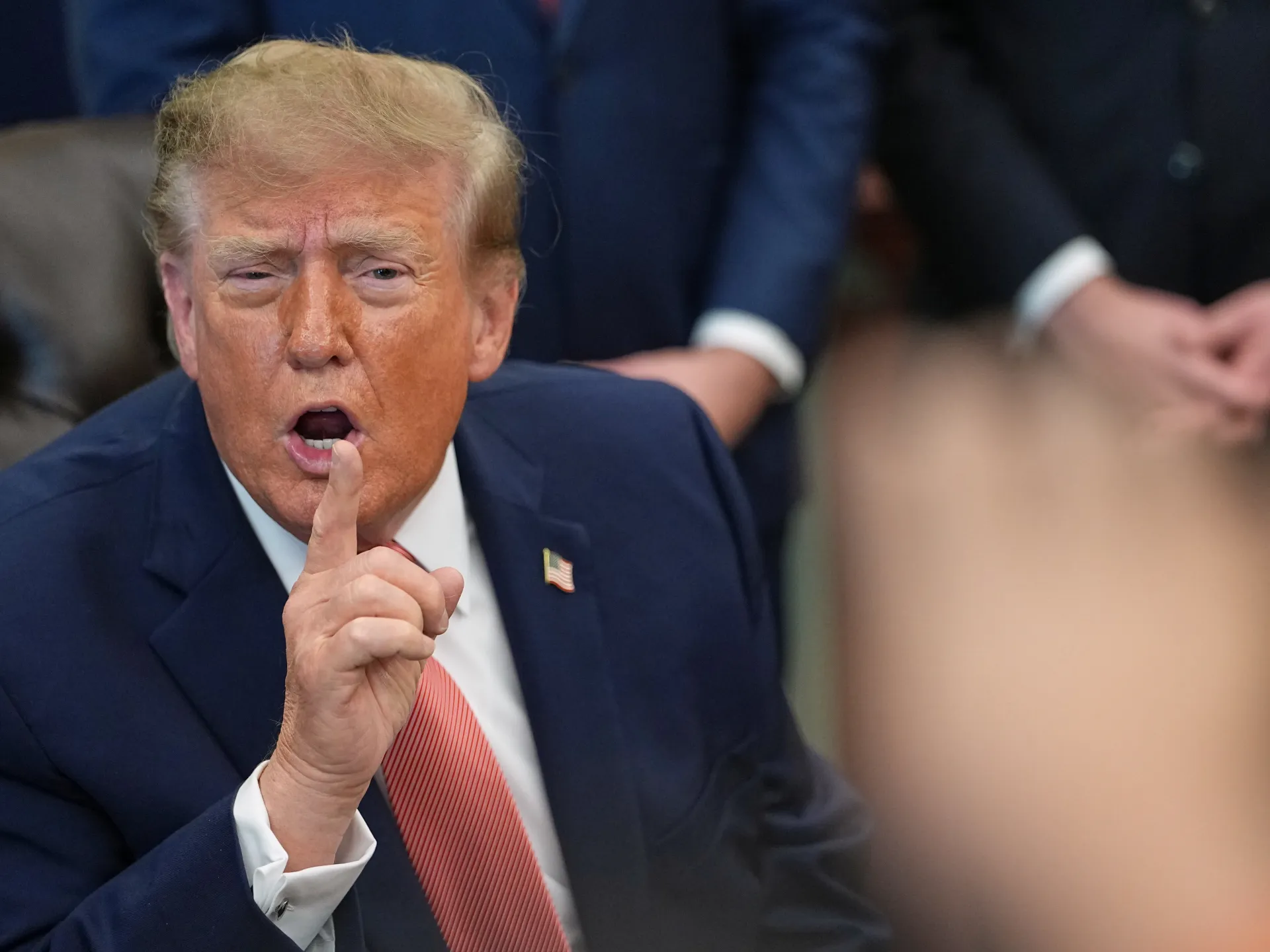

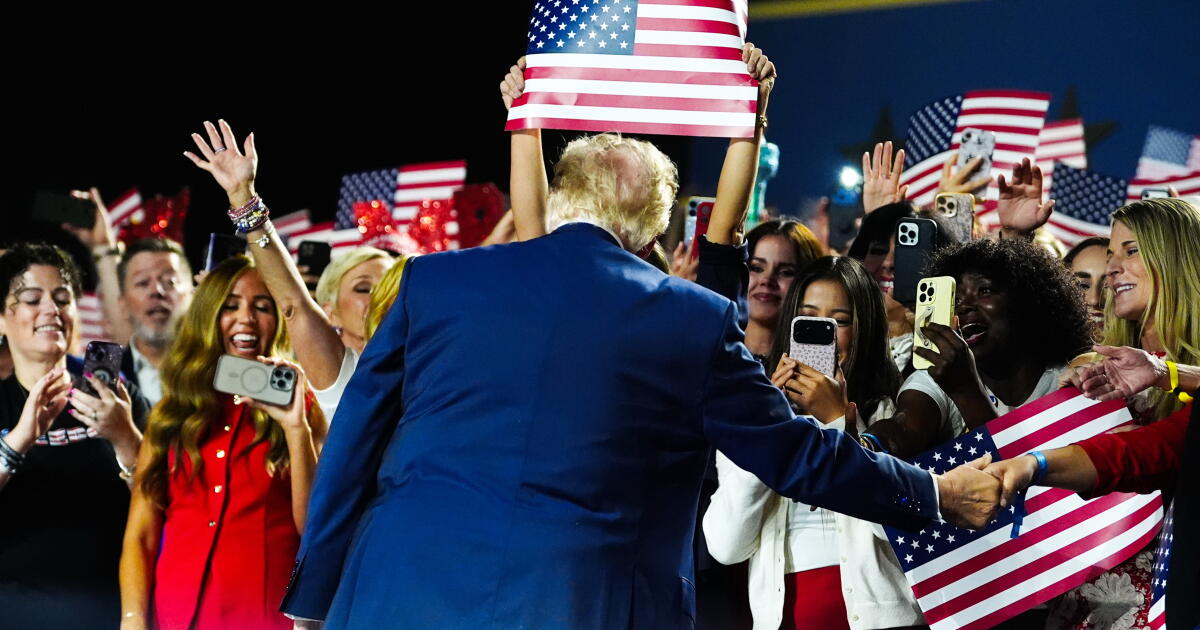

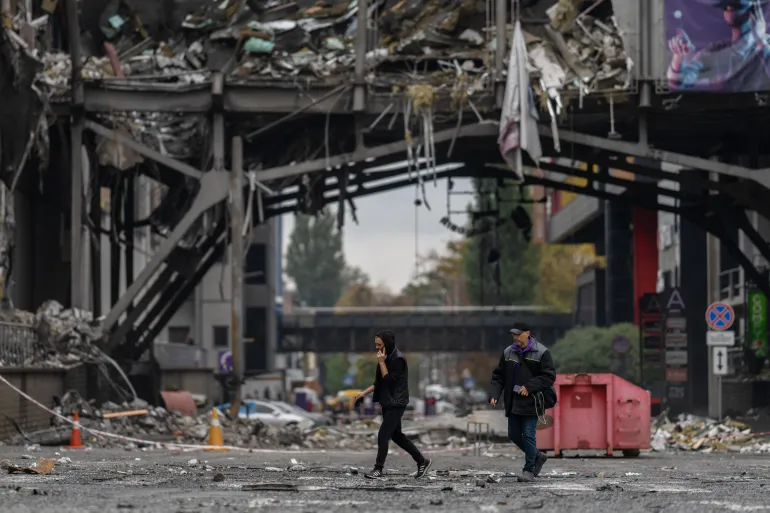
![People walk in front of a damaged shopping mall following an air attack in Kyiv on October 19, 2026, amid the Russian invasion of Ukraine [Oleksii Filippov/AFP]](https://i0.wp.com/occasionaldigest.com/wp-content/uploads/2026/10/AFP__20261019__D3PR8JC__v1__HighRes__UkraineRussiaConflictWar-1792469703.jpg?w=640&ssl=1)