The Muslim Brotherhood’s failure to penetrate Chinese society, particularly after the Arab Spring uprisings, stems from the Chinese Communist Party’s tight security grip, China’s policies of localizing religions, and the Chinese public’s rejection of transnational political ideologies. Despite the Brotherhood’s historical and organizational attempts to build ties with Muslim minorities in China, the rigid nature of the Chinese system and society has formed an impenetrable barrier to any infiltration. The fundamental contradiction between ideologies in China, such as Chinese communism as the ruling doctrine and political Islam as a totalitarian movement from which the Muslim Brotherhood emerged and China’s strict security policies aimed at integrating minorities, has led to the failure of these political ideological currents. Political Islam and the Muslim Brotherhood have failed to gain a foothold in China for several structural and political reasons. The most prominent of these is the strict nature of the Chinese communist system, which prohibits any political or religious activity outside the state’s control. This is compounded by the Sinicization policies that impose absolute loyalty to Chinese culture and the Communist Party. Furthermore, the internationalist ideology of the Muslim Brotherhood and political Islam clashes with Chinese nationalism. Additionally, there is a lack of popular support for such projects among Muslim minorities who follow religious traditions different from those in Arab and Islamic countries and around the world. Despite the existence of an Islamic religious group in China called Yihewani, whose name literally means brotherhood, it is a reformist movement within the Hanafi school of Islamic jurisprudence. It originated locally in China in the 20th century, specifically in the 1930s, but it is a completely independent, traditional Hanafi school of thought with no organizational or ideological ties to the Muslim Brotherhood in the Middle East.
On the other hand, China harbored apprehensions about the political Islam and Muslim Brotherhood model following the Arab Spring uprisings of 2011. Research centers and decision-making bodies in Beijing closely monitored the outcomes of these uprisings, particularly the Muslim Brotherhood’s rise to power in Egypt and Tunisia. China viewed the Brotherhood’s ascent to power in some countries, such as Egypt and Tunisia, followed by their subsequent failures and the descent of some into civil war, as evidence that political Islam harbors a project to destabilize nations. This understanding led Beijing to adopt a firm, principled stance rejecting this model of political Islam entirely in order to protect its own stable development model. Consequently, China adopted a policy of strategic alliance with Egypt under President Abdel Fattah El-Sisi and other Arab nationalist regimes following the events of the June 30, 2013, revolution in Egypt and the fall of the Muslim Brotherhood and its president, Mohamed Morsi. China strengthened its strategic and economic partnerships with current Arab governments, such as those in Egypt and the Gulf states. Here, China rejects interference in the internal affairs of other countries. Similarly, Arab states support the One China policy and its actions in Xinjiang. This high-level diplomatic coordination between China, Egypt, and other Arab states, following the Muslim Brotherhood’s failed rule, has led to a crackdown on any attempts to finance or subtly infiltrate the banned group through economic or educational channels within China.
Here, the Chinese state pursues a policy of institutional rejection of political Islam and the Muslim Brotherhood. Chinese authorities classify any political activity with a religious basis as a direct threat to national security and territorial integrity. This has led to the banning and dismantling of any cells or attempts to establish branches of the Muslim Brotherhood. Furthermore, Muslim ethnic minorities in regions like Xinjiang (East Turkestan) face strict security and surveillance measures that prevent the formation of any opposing Islamic religious movements within China. Beijing also imposes the forced assimilation of Muslim minorities into Chinese culture and criminalizes any transnational organizational manifestations or affiliations. With an emphasis on the dominance of communist ideology, the ruling Chinese Communist Party rejects any religious or political activity or movements that seek to assert identity above loyalty to the state and the party. This is coupled with strict Chinese security measures to combat foreign infiltration of religions, organizations, movements, and Islamic political currents within China, particularly the Muslim Brotherhood. Beijing maintains one of the world’s most stringent surveillance systems for monitoring religious and political activities. Following the Arab Spring uprisings of 2011, Chinese security agencies raised their alert levels to ensure that the contagion of color revolutions or ideological movements did not spread within its borders. China considers any foreign organization, such as the Muslim Brotherhood, a direct threat to national security and social stability. Therefore, any cells or committees attempting to engage with Chinese Muslims are banned and dismantled.
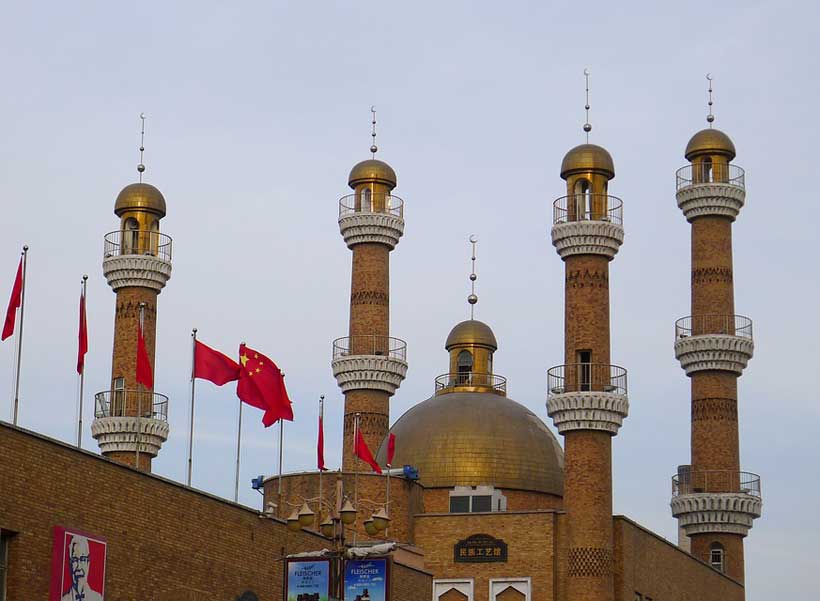
Political Islam movements have failed to penetrate Chinese society and bring about political or social changes as they have in other countries. This is due to several historical, political, cultural, and social factors imposed by the Chinese state. The most prominent of these factors are the tight security and political grip and the nature of the Chinese communist political system. China imposes a highly centralized system in which the state and the Communist Party completely control the public sphere and institutions. No independent political or ideological organization is permitted outside the umbrella of the Communist Party. Chinese authorities impose strict censorship and implement proactive security policies that prevent any political, religious, or opposition organizations or movements from existing or expanding. Furthermore, the primacy of nationalism over religion in China, where Chinese identity is primarily based on belonging to the nation and the nationality, represented by the culture of the majority Han Chinese population, makes loyalty to the state paramount. This renders the transnational ideologies adopted by political Islam movements unacceptable and severely restricted. Here, the government’s policies toward religions in China become clear. China pursues a policy of Sinicization of religions, meaning that the practice of any religious rituals must conform entirely to Chinese culture and socialism. The Chinese state follows policies of Sinicization on religions, with Chinese authorities implementing strict policies to subordinate religions to Chinese socialist culture and values. This has included systematic campaigns to prevent foreign or Middle Eastern influences on mosque style, clothing, and religious practices. China also adopts strict policies to contain any influence of political Islam and subjects religious bodies to state supervision. Beijing aims to Sinicize religions and requires their integration with the culture of the Han majority and the values of the Communist Party, placing loyalty to the nation above all other affiliations.
Stay ahead of the geopolitical week.
MD Briefing delivers expert analysis across five global fronts — the Indo-Pacific, energy, geoeconomics, European security, and the Middle East — every Monday morning. Free.
This occurs while the Chinese state officially manages and oversees Islamic institutions, such as the Islamic Association of China, thus preventing the emergence of independent religious leaders or institutions that could adopt or disseminate the ideas of political Islam. Herein lies the role of cultural and historical diversity within China. Muslim minorities in China, such as the Hui ethnic group, have absorbed traditional Chinese culture and integrated it with their beliefs over centuries, making their communities well-integrated into the broader social fabric and resilient against external influences. Muslims have been historically integrated into China, and Islam has been part of the Chinese social fabric for over 13 centuries. Muslim ethnic groups, such as the Hui, have successfully integrated into Chinese society and adapted to local culture. This integration has made political Islam alien to their environment due to China’s strict security measures. The Chinese government deals harshly with any religious or ethnic movements with a political character, particularly in the predominantly Muslim Xinjiang region of northwest China, under the banner of combating extremism and terrorism. Security policies and measures have been implemented to restrict any religious activity outside the official control of the Chinese state. The state adopts a dual strategy: containing practices acceptable to official state institutions while categorically rejecting any separatist or political tendencies that Beijing considers a threat to the country’s unity and stability.
Beijing manages religious pluralism through the Islamic Association of China and views any ideologies that deviate from loyalty to the state with extreme caution. The relationship between the state and Islam in China is shaped by several pillars, including national diversity. China has 56 officially recognized ethnic, religious, and national groups, with the Han Chinese constituting the vast majority at approximately 92% of the population. Regarding Muslim ethnic groups, there are 10 Muslim-majority groups in China, such as the Hui and Uyghurs, with the total number of Muslims estimated in the tens of millions. China officially adopts a policy of Sinicization, whereby Chinese authorities lead campaigns to eliminate transnational religious expressions, prohibiting religious institutions from having ties with their counterparts abroad. Religious institutions are required to adhere to the Party’s leadership and integrate their doctrines with Chinese cultural traditions. The Chinese government pursues a policy of Sinicization of Islam. The Chinese state adopts a firm strategy based on integrating Islam and its culture into the Chinese national identity (in accordance with socialism with Chinese characteristics). As we mentioned, Muslim affairs are officially managed through the Islamic Association of China, which is under the control of the ruling Communist Party. This closure of the religious sphere has thwarted the Islamic internationalism ideology promoted by the Muslim Brotherhood in Middle Eastern countries, as China confines religious teaching and practice to purely local frameworks, preventing the introduction of the writings of Sayed Qutb or Hassan Al-Banna into Chinese territory.
Therefore, we conclude that attempts by political Islamist movements, particularly the Muslim Brotherhood, to infiltrate China or penetrate its Muslim communities have failed. Here we observe the cultural and ethnic differences between the Muslim minorities in China and the ideas of the Muslim Brotherhood, which is banned in Egypt and the Middle East. The main Muslim population in China is divided into two primary groups that fail to resonate with the Brotherhood’s ideology: the Hui ethnic group, a Chinese Muslim minority. The Hui are Chinese-speaking Muslims fully integrated culturally and socially into the fabric of the Chinese state. Their primary loyalty is to China, and therefore, the Arab political ideology of the Muslim Brotherhood finds no echo among them. The second group is the Uyghur ethnic group. Uyghurs reside in the Xinjiang region (East Turkestan) in northwest China. Despite the presence of nationalist and religious tendencies, Beijing has imposed extremely strict security measures (including re-education camps and biometric surveillance, which are security systems within China that use an individual’s biological characteristics, such as fingerprints, facial features, and iris scans, to verify their identity), effectively isolating the region from any activism emanating from the Middle East, particularly from the Muslim Brotherhood.