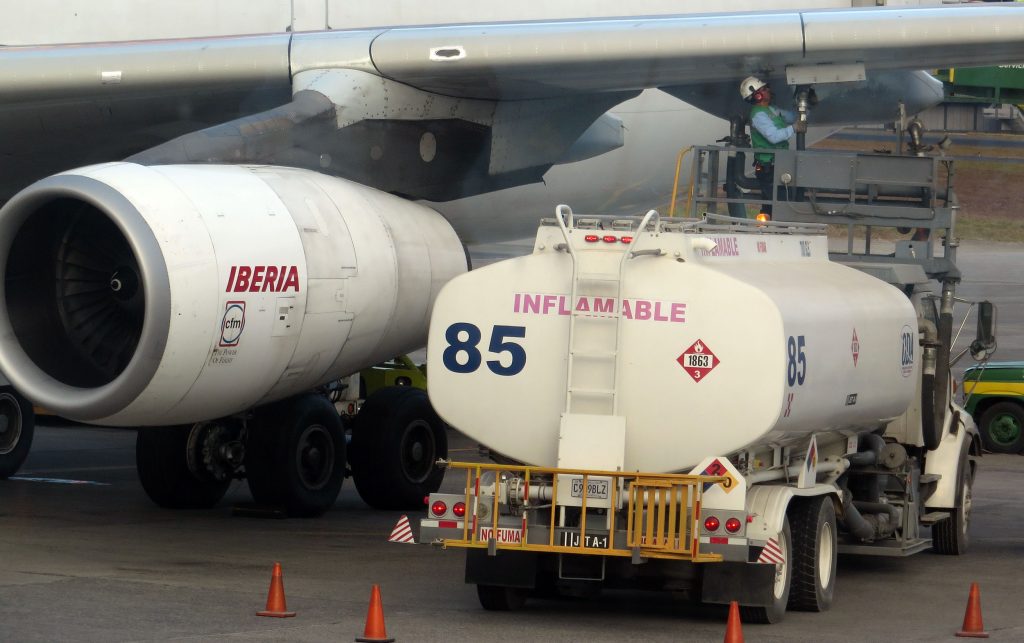
Airlines and shipping companies must send payment receipts to PDVSA to access fuel. (Archive)
Caracas, June 3, 2026 (venezuelanalysis.com) – The Venezuelan government headed by Acting President Delcy Rodríguez has instructed airlines and shipping companies to direct fuel payments to a US Treasury account.
Spanish newspaper El Diario published a May 28 letter from state oil company PDVSA addressed to “aviation and maritime customers” that laid out the “banking coordinates” for foreign currency payments concerning JET A1, MGO, and IFO 380 purchases.
JET A1 is a kerosene-based fuel widely used by commercial airplanes, while Maritime Gas Oil (MGO) and Intermediate Fuel Oil (IFO) 380 are standard for ship engines.
“We urge our customers to take the necessary precautions and forward the payment receipt to PDVSA sales representatives so that the payment is cleared and fuel supply is assured,” the letter read.
An attached US Treasury information sheet contains details for Fedwire payments to a “Venezuela custody account” and requires information about “source of funds, e.g., oil, gold, minerals, etc.”
The leaked letter is the first publicly available document from a Venezuelan state institution directing foreign currency payments to an account run by the US Treasury Department as opposed to the country’s Central Bank (BCV) or some alternative state-run mechanism.
Since the January 3 military strikes and kidnapping of Venezuelan President Nicolás Maduro, the Trump administration has seized control of the country’s export revenues. The White House has likewise extracted concessions in the form of pro-business reforms, preferential access for Western corporations to natural resources, and external audits of the Venezuelan Central Bank.
US Treasury general licenses allowing select Western corporations to engage in oil and gas activities mandate that all Venezuela-owed payments for royalties, taxes, and dividends be deposited in US Treasury accounts. Additional sanctions waivers imposed similar constraints on mining sector services and exports.
Neither US nor Venezuelan authorities have disclosed information about the funds, the timings of their disbursements back to Caracas, and the percentage kept by the Trump administration. The US president stated in a May interview that Washington has “made a fortune” from Venezuelan oil sales.
Both Washington and Caracas have acknowledged the use of Treasury-held Venezuelan revenues for the purchase of medicines and medical equipment from US manufacturers. In January, Secretary of State Marco Rubio said in a Senate hearing in January that Venezuela would need to submit a “budget request” to access its own funds.
According to reports, Washington is mandating that the Venezuelan Central Bank distribute the returned foreign currency to private sector importers via exchange table auctions run by public and private banks. The BCV has reportedly allocated more than US $5 billion thus far in 2026.
The Rodríguez acting government’s diplomatic rapprochement with the Trump White House, coupled with reforms to attract Western investment, has led to a growing number of international airlines reestablishing flights to the Caribbean nation. American Airlines currently runs two daily direct Caracas-Miami flights, while United Airlines will launch a Caracas-Houston connection in August. Jetblue, for its part, is set to initiate its first-ever Venezuela route later in the year.
Venezuelan authorities have likewise recorded increased shipping activity at the country’s ports.