HomeTransaction BankingStandard Bank’s Rajesh Ramsundhar on Africa’s Growth in Payments and Trade
Produced in partnership with Standard Bank, this video features Rajesh Ramsundhar, Head of Investor Services & Financial Institutions, Corporate and Investment Banking at Standard Bank, speaking with Global Finance at Sibos.
Rajesh Ramsundhar, Head of Investor Services & Financial Institutions, Corporate and Investment Banking at Standard Bank, speaks with Global Finance at Sibos. Content produced in partnership with Standard Bank.
Ramsundhar explains why Standard Bank is firmly bullish on Africa’s long-term growth runway; how payments and trade sit as the bank’s core transaction banking priorities; and how its technology agenda — building on the bank’s legacy of innovation, deploying technology to enter new markets, and applying data and AI to sharpen efficiency and client service — is positioning the bank for what comes next.
Fast-track settlement is making East African payments easier—and a new strategy emerges.
This article appears in the October 2026 issue ofGlobal Finance Magazine.
East Africa is beginning to transform the national payment systems used by millions of businesses and consumers into infrastructure for a more integrated regional market. Rather than building an entirely new platform, the emerging strategy is to connect existing systems, enabling money to move between countries more quickly and with less friction.
Rwanda and Tanzania are at the forefront of that effort, working to connect Tanzania’s Instant Payment System (TIPS) with Rwanda’s National Payment Switch (RSwitch) to create an instant-payment corridor under the Cross-Border Payment System Masterplan of the East African Community (EAC).
The work is moving beyond policy discussions into the technical, operational, and regulatory arrangements required to make the system function. Its significance, however, extends beyond faster remittances. If national payment systems become interoperable, businesses could pay suppliers, receive payments from customers, and settle commercial transactions across borders more easily than under traditional arrangements.
Small and midsize enterprises, banks, fintech companies, and mobile-money operators could all benefit if regional payments begin to match the speed and convenience of domestic transactions.
This Rwanda-Tanzania initiative offers the most immediate test of the concept, but it is not the only example of East Africa’s emerging payments architecture. Kenya’s Pesalink, the country’s instant-payment network, connected to the Pan-African Payment and Settlement System (PAPSS) in February. The partnership enables instant, round-the-clock payments from PAPSS participants to banks and mobile-money operators on the Pesalink network in Kenya, with transactions settled in local currencies.
Those two developments illustrate different routes toward the same objective. Rwanda and Tanzania are connecting their national instant payment systems directly, while Kenya is linking its domestic infrastructure to a wider continental network. Together, they suggest that African payments integration may depend less on building a single system than on making existing systems work together.
EAC’s Regional Masterplan
A broader regional effort is also moving into implementation. On August 24, the EAC announced the establishment of three technical working groups to support implementation of its Masterplan. The Masterplan is “anchored on four key pillars”: governance and regulation, infrastructure, inclusivity, and capacity building. It includes 20 strategic initiatives to strengthen cross-border payment systems.
Robert Omotunde, MDU Capital
Total trade for members of the EAC in 2025 is reported at $156.6 billion, including $19.3 billion among partner states, underscoring the system’s commercial implications. As goods and services move more freely across the region, the financial infrastructure supporting those transactions will also need to become easier to use.
“East Africa’s push for interoperable payments could fundamentally change the economics of regional trade,” said Robert Omotunde, executive director and chief investment officer of Lagos-based asset management and advisory firm MDU Capital. “The significance goes beyond making cross-border transactions faster or cheaper; it is about creating the financial infrastructure through which African businesses can trade more seamlessly across borders.”
As the African Continental Free Trade Area expands markets for cross-border businesses and increases demand for payment systems that support that commerce, opportunities could eventually extend beyond the EAC. Faster settlement, lower transaction costs, and greater use of local currencies could reduce some of the financial friction that still accompanies regional trade. While East Africa is beginning to connect payment systems already embedded in its banks, mobile-money networks, and the wider financial system, the region faces the challenge of ensuring those connections operate reliably across different regulatory and monetary environments.
Vincent Nwanma is a contributing writer based in Nigeria.
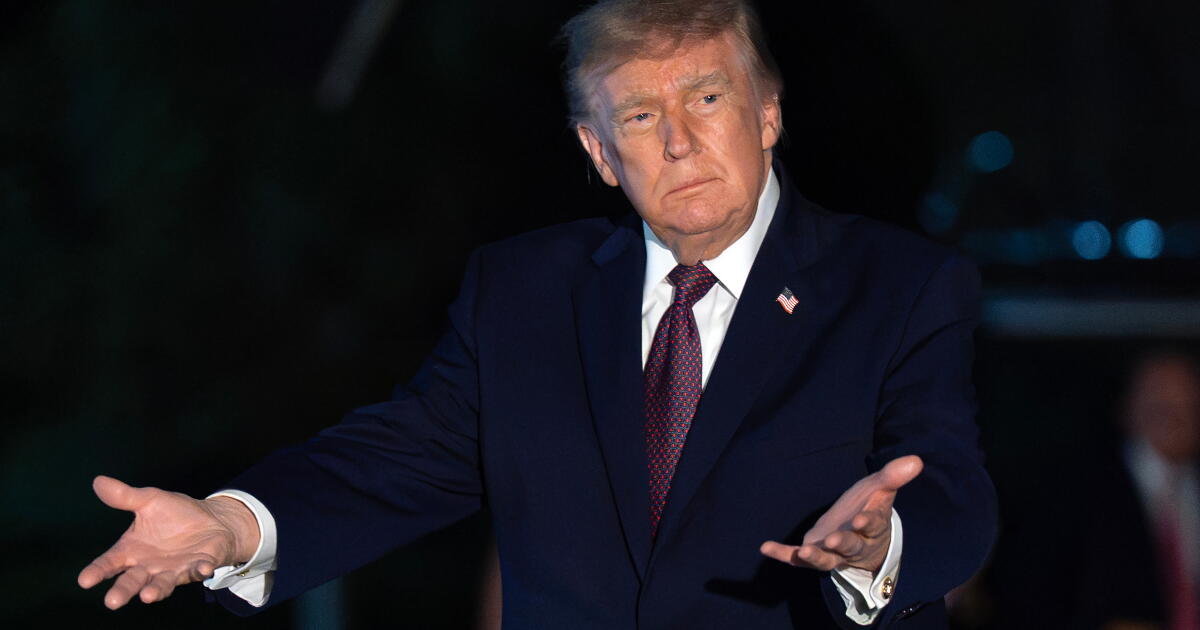
President Trump is promising more payments to voters just ahead of the Nov. 3 midterm elections — this time, to more than 20 million seniors, who each would get $90 to help pay for Medicare premiums.
The announcement, made late Friday night by Trump on social media, comes after he said last month about 1 million people would get rebate checks of $500 for Affordable Care Act premiums. It also comes after his One Big Beautiful Bill Act last year slashed funding for Medicare, disqualifying thousands from eligibility and raising fees for the rest, and for the ACA, raising premiums for millions by eliminating tax credits.
Trump has also promised on the campaign trail to send every American adult $5,000 if Republicans retain control of the House and Senate in the midterm elections.
His latest promise — which, like the others, would require approval from Congress — would probably cost more than $1 trillion, adding to the ballooning deficit and worsening inflation.
Polls show Americans increasingly blame Trump for the high cost of gasoline and groceries, with just 17% approving of his handling of inflation. Rising healthcare costs are also a key component of the affordability struggles many face across the country.
The president has sought to shrug off concerns about affordability, claiming the economy is booming.
The White House said the $90 payments for seniors would come from the Medicare Improvement Fund, established by Congress in 2008 as flexible funding to improve program operations and payments to healthcare providers.
As proposed, Medicare Part B enrollees would receive a one-time payment in October, either through direct deposit or by check, the White House said. Total monthly costs for the program — which covers costs like doctor’s visits, ambulance services and lab tests — start around $200 and vary with income.
To be eligible, seniors must be living in the U.S. and not be already receiving premium assistance from Medicaid or paying adjusted monthly premiums based on income, according to the Centers for Medicare and Medicaid Services. Seniors enrolled in Medicare Advantage, a private plan alternative to traditional Medicare coverage, would not be eligible for the payment. More than half of eligible Medicare beneficiaries have Medicare Advantage, according to healthcare research nonprofit KFF.
Previous administrations have not used the Medicare Improvement Fund in this way, although Congress has periodically taken out money from the fund to pay for other priorities, said Larry Levitt, KFF’s executive vice president for health policy. For example, $20.74 billion was used for the creation of the Affordable Care Act in 2010.
“The Medicare Improvement Fund language is quite broad and gives substantial discretion to the administration,” Levitt said.
At Sibos 2026, Bank of America announced that it had executed its first real-time payment initiated by Bradesco.
Bank of America Corp. has completed its first pilot transaction for a new cross-border real-time payments service, partnering with São Paulo–based Banco Bradesco SA to execute the transfer.
The bank announced the milestone during the annual Sibos conference in Miami on Tuesday. The payment, initiated by Bradesco through its existing connection to Swift, arrived in Hong Kong dollars in a local beneficiary’s account via Hong Kong’s Faster Payment System.
Bradesco did not respond to Global Finance’s request for comment. The transaction’s exact processing time or cost remains undisclosed. However, Bank of America confirmed that the payment was similar to a domestic instant transfer and was completed in near real time.
Need for Speed
Traditional banks are facing stiffer competition from card networks like Visa and fintechs such as Wise, which says 74% of its transfers arrive in under 20 seconds.
There are also stablecoin providers such as Circle, which all promise faster cross-border payments.
Daniel Stanton, Payments Product Head in Global Payments Solutions at Bank of America, is betting that the firm can win on ease of adoption rather than speed alone.
“The solution is designed to work with existing banking infrastructure,” said Stanton in an email. “[The bank’s] clients can gain the benefits of faster cross-border payments without a significant technology build, new connectivity or changes to their existing accounting processes,” he added.
Expanding Global Reach
Bank of America announced the service in June. It is designed for corporate, commercial, and financial-institution clients that send large volumes of small payments, such as remittances, payouts to gig workers, and payments to e-commerce vendors.
The Charlotte, North Carolina-based bank said the service offers real-time tracking, delivers the full principal amount and gives senders certainty that payments will arrive. It also connects to domestic instant-payment networks, including Mexico’s SPEI, the U.K.’s Faster Payments Service and India’s UPI. Clients can connect through their existing APIs or host-to-host channels.
Stanton said Bank of America clients will later be able to start these payments through CashPro, its digital banking platform, beginning in 2027. “We will share additional timing details closer to launch,” he added.
Daniel Stanton, Bank of America
Bank of America first introduced CashPro to corporate and institutional clients in 2009.
“We view this as complementary to our correspondent banking business,” Stanton continued. “It expands the payment options available to financial institutions and helps us meet growing demand for faster, more transparent cross-border payments.”
As for how many payments the firm expects to handle in its first year, it is too early to tell.
“We are seeing strong interest in solutions that can improve cross-border payments without requiring clients to make significant technology investments, establish new connectivity or change their accounting processes,” he said.
Surging Demand for Seamless Payouts
In June, Bank of America cited projections that cross-border person-to-person payment flows could grow 58% by 2032. Business-to-consumer flows could grow 131% by then.
Mark Monaco, head of Global Payments Solutions at Bank of America, touted the firm’s cross-border services earlier this month.
“Corporate treasurers don’t want to manage a patchwork of domestic schemes market by market,” Monaco told Global Finance. “They need banking partners to absorb that complexity.”
Industry Milestones in Miami
Announcements like these have made Sibos the default stage for major cross-border banking breakthroughs. For example, at last year’s event in Frankfurt, Germany, Swift unveiled a shared blockchain-based ledger. Over 30 global institutions backed the initiative—a move aimed at making 24/7 cross-border payments faster and less expensive worldwide.
Swift named Bank of America as one of the 30 firms involved.