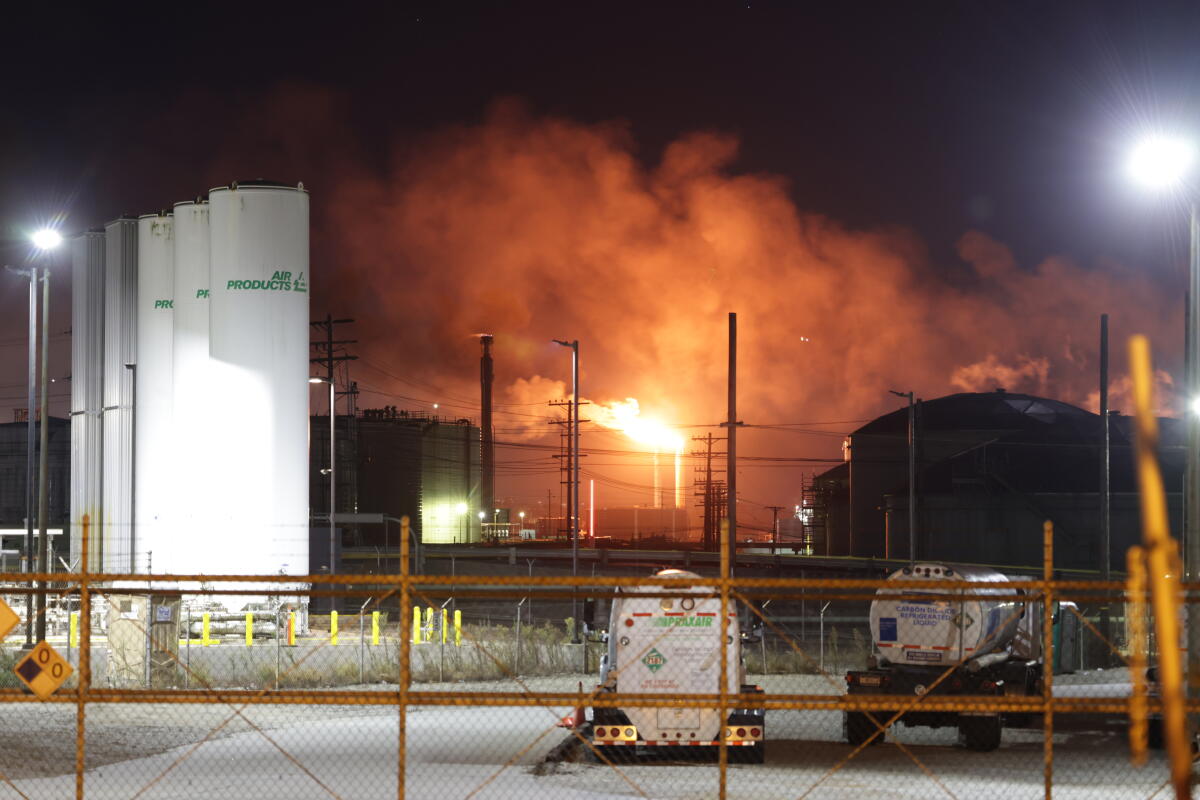
Travel companies are allowed to incrase the price after you have booked
Travel industry chiefs have warned that holiday prices could go up – even for people who have already booked. There are fears of cancellations, delays and disruptions this summer as oil supplies are restricted by the war in Iran.
And there are concerns that prices of travel will go up to cover the rising cost of fuel. But industry experts have also raised the spectre of the price of existing holiday bookings going up.
That means people who have already booked and paid for their holidays being asked to pay more if they still want to travel. Emma Brennan from travel agent and tour operator trade association ABTA said the legislation allows companies to ask for more money.
Speaking to BBC Money Box Live, she said: “There is something in the package travel regulations which just applies to package holidays, that travel companies could increase the cost of package holidays by what they call a fare charge. However, it very rarely happens, and there have been so many situations of disruption and uncertainty in recent years, and we haven’t seen this happening.
“And even if the travel company did choose to do it, there are quite strict rules around it. So, for example, it would have to have been in their terms and conditions, they can only do it up to the cost of eight per cent after that, and that’s a cost of eight per cent of the whole holiday – after that you would be offered a refund and it can only apply to various cost increases they are facing.”
According to Which? A 14-night package holiday can cost between £1,500 and £2,000 per person – meaning you could be asked to pay an extra £160 – or £640 for a family of four.
Airports Council International, which represents more than 600 airports, wrote recently to European commissioners for energy and transport and tourism, claiming that if the crucial Strait of Hormuz in Iran does not reopen in a “significant and stable way within the next three weeks” then “systemic jet fuel shortage is set to become a reality for the EU”.
Some airlines such as Virgin Atlantic have imposed fuel surcharges on passengers in response to higher oil prices, and others such as KLM have cancelled flights amid concerns about a shortage of fuel.
Susannah Streeter, chief investment strategist at Wealth Club, said: “Consumers are bracing for an energy crunch, and there are fears that just like the credit crunch of 2007-2008, there could be a long tail of repercussions. In the immediate term, there’s the prospect of holiday plans being ruined by a jet fuel crisis which could see thousands of flights cancelled.
“Lufthansa has already scrapped a big chunk of routes, and there are worries tourist destinations could be hit.”
THERE’S no need to give up on booking a summer getaway just yet.
If you’ve noticed holiday prices getting steeper, we’ve got some good news, as it turns out there are plenty of affordable holiday deals you can book for this summer.
Agadir in Morocco is the cheapest place to book a summer holiday this year with LoveholidaysCredit: Getty
Top UK travel companies have crunched the numbers to find the short-haul holiday spots ranking the cheapest for this summer.
From Travel Supermarket to TUI and Loveholidays, insiders have shared their tips on where to look for cheap breaks.
From white sand beaches that rival the Caribbean, to volcanic black sand islands that offer a natural spa setup – here’s the cheapest places to holiday abroad this summer.
Agadir, Morocco
Agadir has been named the most affordable destination for a seven-night summer holiday in 2026, according to research byLoveholidays.
The travel company analysed data for package holidays departing between 1st June and 31st August 2026, with Agadir coming out on top.
Summer holidays in Agadir averaged at just £230pp for a week away – but we found deals even cheaper.
Sun-drenched Agadir offers a six-mile-long sweep of golden sand, attracting everyone from surfers to sun-worshippers.
Choose to spend your days soaking up the 30°C heat on a lounger, strolling along the palm-lined promenade, or sipping a chilled mint tea at the glitzy marina.
For those who want a break from the beach, the Souk El Had market offers a maze of stalls selling everything from vibrant spices to handmade jewellery.
Book a break
If you click on a link in this box, we will earn affiliate revenue
Loveholidays offer a seven-night room-only stay at the Anezi Apartments from just £189pp.
Agadir Beach in Morocco boasts a six-mile stretch of golden sandsCredit: Getty
Neapolitan Riviera, Italy
If you’ve had an escape to the scenic coast of Italy on your bucket list, there’s never been a better time to book.
According to Travel Supermarket, holidays in the Neapolitan Riviera have seen the biggest price drop since the start of the conflict in the Middle East.
Holidays in this region have seen an average price drop of a whopping £231.53, when compared to what travellers were paying for the same trips last summer.
The Neapolitan Riviera stretches along the sun-drenched coast of Campania in Italy, from foodie-heaven Naples to sunny Sorrento.
This shimmering stretch of coastline also includes some of the country’s trendiest resorts, such as the dramatic Amalfi Coast and the pretty town of Positano.
For an underrated coastal city break, take a trip to Naples, where you can sample world-class handmade pizza in the colourful Spanish Quarter.
Book a break
If you click on a link in this box, we will earn affiliate revenue
Travel Supermarket offers a seven-night room-only stay at the four-star Hotel Casablanca in Naples from £289pp.
Italy’s Neopolitan Riviera has seen the biggest price drop, according to Travel SupermarketCredit: Alamy
Gran Canaria
Holidays to the Canary Islands are one of the most affordable options for a summer holiday abroad this year.
Holiday company TUI have revealed to The Sun that “Gran Canaria comes up trumps for families due to plenty of free kids’ places still available at family resorts” this year.
Gran Canaria is a total sun-soaked paradise, famous for its endless golden sands and sparkling Atlantic waters.
The star of the show is Maspalomas, where dramatic rolling dunes meet the sea, offering beach days with spectacular surroundings.
Along the coast in Meloneras, it’s all about shopping, dining and trendy beach clubs. As the sun sets, the beachfront boardwalks come alive with the buzz of outdoor bars.
The TUI BLUE Tres Vidas lines up family-sized apartments in a prime position for beach days on the sandy shores of Bahia Feliz.
Book a break
If you click on a link in this box, we will earn affiliate revenue
TUI offer a seven-night stay at the4T TUI BLUE Tres Vidas on a self-catering basisfrom £393pp.
Gran Canaria tops the list for cheap family holidays in the Canary IslandsCredit: Getty
Bodrum, Turkey
If you want to book a trip to the hotspot dubbed the St Tropez of Turkey, now’s the time.
According to Travel Supermarket, holidays to the stylish resort of Bodrum in Turkey are also much cheaper than usual, with average prices for a summer holiday dropping by £118.30 compared to the same period last year.
This upscale seaside spot balances ancient historical sites with plenty of glam beach clubs, fancy restaurants and rooftop cocktail bars.
Explore the glittering marina by strolling its palm-lined waterfront, dipping into a seafood restaurant for lunch or jetting out on a boat trip to a nearby bay.
Plus, history buffs will love a trip to the 15th-century Bodrum Castle perched upon a rocky peninsula, or the preserved Bodrum Amphitheatre that is free to explore.
Book a break
If you click on a link in this box, we will earn affiliate revenue
Travel Supermarket offer a seven-night all-inclusive stay at the Kriss Hotel from £465pp.
Bodrum has seen an average price drop of £118.30 since the start of the conflictCredit: Getty
Tenerife
Tenerife is a classic summer holiday favourite, but did you know that the island offers some of the cheapest trips for adults this summer?
Holiday company TUI told us that while “Great deals can be found across all of the islands…Tenerife comes out top for adults-only trips”.
When it comes to a classic fly and flop beach holiday, Tenerife is a top contender. The crescent of Playa de las Teresitas is straight out of a holiday magazine, with golden sands dotted with palm trees and calm, shallow waters.
Playa de la Arena, on the other hand, has a natural spa-like feel with mineral-rich, volcanic black sand.
And with the temperature hovering at 28°C in the summer months, this reliable and affordable hotspot continues to shine.
The adults-only TUI BLUE Los Gigantes sits at the ocean edge, so visitors get sea views from almost every vantage point. Glass-wrapped terraces give it a contemporary look, and with wine-tasting sessions, cocktail masterclasses and cooking courses all on offer.
Book a break
If you click on a link in this box, we will earn affiliate revenue
TUI offer a seven-night stay at the4T+ TUI BLUE Los Giganteson a half-board basisfrom £550pp.
Playa de las Teresitas in Tenerife is an idyllic golden sand beach, perfect for a fly and flop breakCredit: Getty
Cape Verde
For those craving a white-sand beach and turquoise waters without the long-haul flight or the Caribbean price tag, Cape Verde is your answer.
Holidays to this stunning archipelago have seen a significant price drop in price, with average costs falling by £98.82 compared to the same period last year, according to Travel Supermarket.
The country’s ten islands offer miles upon miles of pristine beaches and unspoilt volcanic landscapes.
On the popular island of Sal, you can laze on the golden sands of Santa Maria Beach, or explore the colourful town behind it, packed with lively surf bars and restaurants.
And with temperatures reaching 30°C in the summer months, it’s the perfect place to escape the unpredictable British weather and soak up some sun.
Book a break
If you click on a link in this box, we will earn affiliate revenue
Travel Supermarket offers a seven-night stay with breakfast at the four-star Dunas de Sal from £701pp.
Tarrafal Beach is just one of many to visit across Cape Verde’s ten islandsCredit: Getty
Costa Dorada, Spain
Spain‘s Costa Dorada ranks as the second cheapest place to book a summer holiday this year with Loveholidays.
The travel company’s research found that a seven-night summer break this year averaged just £381pp.
This Spanish resort is ideal for anyone who wants to mix lazy beach days with action-packed family adventure.
You can spend your morning conquering the world-class rollercoasters and waterslides at PortAventura World, before retreating to the palm-lined promenade of Salou for a chilled drink.
For a dose of history, the ancient city of Tarragona is right on your doorstep. Here you can wander through a Roman amphitheatre that overlooks the Mediterranean Sea.
Book a break
If you click on a link in this box, we will earn affiliate revenue
Loveholidays offer a seven-night room-only stay at the Vistamar hotel from £259pp.
Visit PortAventura World on a trip to Salou in Spain’s Costa DoradaCredit: PortAventura World
Antalya, Turkey
Antalya remains an affordable spot on the Turkish Riviera, offering a high-end feel for a fraction of the usual cost this year.
Summer holidays in the region arenow costing £90.29 less than they did before the Iran conflict, according to Travel Supermarket.
To the east, the soft sands of Lara Beach are lined with luxury resorts, while the pebbled shores of Konyaalti on the west have clear waters backed by the impressive Bey Mountains.
With summer temperatures regularly hitting 34C, it is a paradise for those who want to tan with a view and warm waters to dive into.
Make sure to tick off Kaleiçi, where you can wander past Ottoman-era architecture and narrow cobblestone streets that lead down to the Roman harbour.
Book a break
If you click on a link in this box, we will earn affiliate revenue
Travel Supermarket offer seven-night stay with breakfast at the Atalia hotel from £289pp.
Holidays to Antalya are now costing £90.29 less on average, according to Travel SupermarketCredit: Alamy
Majorca, Spain
Majorca is a firm British holiday favourite, and this year the Balearic gem is more affordable than usual.
According to Travel Supermarket, average holiday prices for the island have taken a dip of £86.28 compared to the same period last year.
This sunny Spanish island is full of variety. Lose yourself in the winding, cobblestone streets of Palma’s Old Town, overlooked by its massive Gothic cathedral, or head north to Puerto Pollensa for a more relaxed pace along its pine-lined promenade.
For nature lovers, the Drach Caves offer an otherworldly underground experience, with one of the largest subterranean lakes in the world.
Of course, the real draw is the sun-soaked coastline. With summer temperatures averaging a perfect 30C, the island’s Blue Flag beaches are calling this summer.
Es Trenc is a particularly beautiful beach, with shallow waters that are almost a luminous blue.
Book a break
If you click on a link in this box, we will earn affiliate revenue
Travel Supermarket offers a five-night room-only stay at the Alcina hotel from £199pp.
Visit the Old Town of Palma de Mallorca for amazing architecture, like the Gothic CathedralCredit: Getty
Rhodes, Greece
Rhodes continues to reign as one of TUI’s most affordable Greek destinations, and the holiday company have told us that there’s “an abundance of brilliant deals still to be found” there this summer.
The UNESO-listed medieval Old Town is home to historic sites and Gothic palaces, whilst the seaside tavernas that line the coast offer a scenic spot to enjoy a cold beer or a fresh Greek salad.
When it comes to beaches, Faliraki Beach boasts three miles of soft sands and shallow, bath-warm water that’s perfect for a lazy afternoon.
The resort of Ixia offers a cooling breeze that makes the 30C summer heat all the more comfortable.
In Ixia, the Lito Hotel has outdoor pools facing scenic coastal views, all just a 5-minute drive from the main town centre.
Book a break
If you click on a link in this box, we will earn affiliate revenue
TUI offer a seven-night stay with breakfast at the3T Lito Hotel from £417pp.
Rhodes in Greece is one of the cheapest summer holiday destinations to book with TUICredit: Getty
The Tesla (TSLA) Cybertruck has seen a boost from Elon Musk’s other companies, according to tracking by S&P Global Mobility. Notably, without sales to Elon Musk-led companies, Cybertruck registrations in Q4 would have fallen 51%.
1 of 3 | Andrew Ferguson, chairman of the Federal Trade Commission, delivers remarks during a White House fraud task force meeting March 27 in the Eisenhower Executive Office Building next to the White House in Washington, D.C. Three U.S. ad companies settled with the FTC on Wednesday over alleged collusion. File Photo by Shawn Thew/UPI | License Photo
April 15 (UPI) — U.S. advertising companies Dentsu, Publicis and WPP settled Wednesday with the Federal Trade Commission, which claimed they colluded over anti-misinformation policies that affected ad money for conservative publishers. The companies did not admit wrongdoing as part of the settlement.
In a press release, the FTC said the agencies “distorted America’s modern public square” and worked together to establish “brand safety” policies that limited the ads that could run on sites with content designated as misinformation. This affected ad revenues for conservative political websites and made it more difficult for them to make money from “disfavored political viewpoints,” the FTC release said. The commission filed a complaint Wednesday in the U.S.District Court for the Northern District of Texas.
A court must approve the settlement. The companies agreed not to collude to restrict ad-buying services over “news and political and social commentary content,” the FTC said.
The New York Times reported that a representative for Dentsu said the company was “fully committed to operating transparently, with integrity and in strict compliance with all applicable laws.” A representative for WPP told that Times the agreement “reflects our existing and ongoing commitment to provide our clients with unbiased advice as they decide where to place their media.” The companies own multiple ad agencies and buy digital ads on behalf of advertisers.
FTC Chairman Andrew N. Ferguson said in the release that the agencies’ brand safety policies “turned competition in the market for ad-buying services on its head.” The collusion, he said, “distorted the marketplace of ideas by discriminating against speech and ideas that fell below the unlawfully agreed-on floor.”
This follows a longstanding claim by the Trump administration that the media and websites treat conservatives unfairly. Ferguson and the FTC in 2025 also opened other inquiries into alleged anti-conservative censorship through online content moderation.
Speaker of the House Mike Johnson, R-La., speaks during a press conference on Tax Day and the Working Families Tax Cut outside the U.S. Capitol on Wednesday. Photo by Bonnie Cash/UPI | License Photo
A store run by Mega MGC Coffee, which reportedly bid for Home Plus Express. Photo by MGC Global
SEOUL, April 1 (UPI) — South Korean discount chain Home Plus said Tuesday that a court has begun to review the sale of its neighborhood grocery store chain, Home Plus Express.
Home Plus, which is under receivership, said the court started the procedure of selecting a preferred bidder after receiving reports from its sales adviser, Samil PricewaterhouseCoopers.
“Prior to the March 31 deadline, multiple companies were confirmed to have participated in the bidding process to acquire Home Plus Express,” the firm said in a statement.
Home Plus did not disclose further details, including the number of bidders and their identities.
However, Mega MGC Coffee has reportedly presented a bid for Home Plus Express. The budget coffee chain, which is owned by MGC Global, operates nearly 4,000 stores across South Korea.
Both MGC Global and Home Plus declined to confirm the reports.
Following unsuccessful attempts to sell Home Plus as a single entity, the divestment of Home Plus Express has emerged as a key pillar of its rehabilitation plan. The unit generated $730 million in revenue in 2024.
The Express division has a network of almost 300 stores and most of them are located in high-density urban areas. Home Plus also runs more than 100 large-format outlets.
In 2015, South Korea’s leading private equity fund, MBK Partners, purchased Home Plus from Tesco in a landmark $5 billion deal. In recent years, the retailer has struggled amid pandemic-related disruptions and the rise of e-commerce giants.
Since early last year, MBK Partners has tried to dispose of Home Plus to little avail. As a result, the company has shifted its focus to the sale of Home Plus Express.
VAN NUYS — It was a showdown between quake-weary homeowners and the insurance companies they are still battling six months later.
More than 300 people turned out for the confrontation Wednesday night, filling an auditorium at Birmingham High School in Van Nuys for a hearing presided over by state Sen. Art Torres (D-Los Angeles), chairman of the Senate insurance committee and the Democratic nominee for insurance commissioner in the November election.
Besides disgruntled victims of the Northridge quake, the speakers included representatives of State Farm, the state’s largest carrier with 20% of the homeowners market, and No. 3 Farmers Insurance Group.
Nettie Hoge, head of consumer services for the California Department of Insurance, also participated in the often heated town hall meeting that Torres conducted as an official hearing of the insurance committee.
Hoge told the crowd that state Insurance Commissioner John Garamendi had persuaded Woodland Hills-based 20th Century Insurance Co. to restore homeowners coverage to about 14 of its customers whose policies the company recently canceled.
20th Century received so many quake claims that the state insurance department granted the company special permission to get out of the homeowners coverage business. One of the conditions, however, was that the company offer its customers two more annual renewals. Some of its policyholders have complained recently that the company was seizing on technical excuses to refuse immediately to renew their policies.
Many people in the audience brandished signs such as “Boycott 20th Century” and “20th Century, What Did You Do With Our Premiums?”
Torres said 20th Century was invited to send a speaker to the meeting, but declined. However, when Torres asked if anyone from 20th Century was in the audience, two people raised their hands. Rick Dinon, a senior vice president, said the executives were there because they hoped to “correct some misinterpretations of the company’s actions, motives and finances.”
“It hurts,” Dinon said of the homemade signs criticizing the company. “We hope we have the respect of our customers and we most assuredly respect them.
“It hurts a lot to be placed in an adversarial relationship with our customers. It is disappointing we can’t continue to offer them the kind of protection we have in the past.”
When an earthquake hits, “much of the suffering is from the reprehensible conduct of the insurance industry adjusting the earthquake loss,” said George Kehrer, executive director of Community Assistance Recovery, or CARE, a Northridge-based consumer group he said represents more than 5,000 property owners.
“Adjusters swarm into the state like killer bees,” Kehrer said, drawing a standing ovation.
Torres told the group that many of the complaints he has received have come from people who fear their company will abandon them. But he noted that Garamendi is proposing a statewide insurance industry pool as well as supporting proposals for national disaster insurance.
“It’s hard to be patient,” he said. “People in northern California are still dealing with insurance companies from the Loma Prieta quake” in October, 1989.
Bill Gausewitz, of Farmer’s Insurance, said his company had resolved 27,241 quake-related claims, about 90% of those it had received. Of those, 7,877 were dismissed without payment and the others received compensation, he said.
Torres asked Gausewitz if Farmers had received complaints that it refused to pay the true cost of earthquake repairs.
“Not that I know of,” Gausewitz replied, drawing hoots and jeers from the audience.
Hoge said the insurance department has received complaints of low payments by virtually all insurance companies hit by Northridge quake claims.
Torres, whose committee is wrestling with many quake-caused problems, including a growing homeowners coverage crisis, said he arranged the meeting to give angry quake victims a chance to air their grievances.
Disillusioned policyholders have inundated his Los Angeles and Sacramento offices with complaints, he said, ranging from switching adjusters in the middle of the claims process to “low-ball” offers to settle to delays receiving payoff checks. Some accused their insurance carriers of breaking promises or lying to avoid paying claims.
Weekly insights and analysis on the latest developments in military technology, strategy, and foreign policy.
The makers of the Ukrainian Sting interceptor drone told The War Zone that despite growing interest in the Middle East for their product, they are not yet allowed to sell them outside the country. Other Ukrainian drone manufacturers, like SkyFall, are also reportedly interested in providing interceptors to the region.
However, “the Ukrainian government is engaged in bilateral discussions with partner countries about supplying drones,” he added.
Should the law change, Wild Hornets has the capacity to provide drones to foreign nations, Roslin explained.
“As part of those discussions, the Wild Hornets are ready to fulfill whatever need may fall on us to help Ukraine’s strategic partners if called on to do so.”
There seems to be a willingness to make key changes to the law to make it happen. Ukrainian President Volodymyr Zelensky stated that Ukrainian military experts were in the Middle East to share their experience after four years of bombardment by Russian Shaheds and that 11 nations are interested in obtaining these interceptors and other counter-drone systems.
President Zelenskyy:
More than ten countries have already turned to us for support in defending against Iranian Shahed drones.
“These are, in fact, the same attack drones that the Iranian regime supplied to Russia and trained Russians to use against the civilian population of… pic.twitter.com/b0sxTwg0kz
It is no surprise that there would be wide interest in counter-drone drones. With a price tag of roughly between $1,000 and $2,500 a piece, they are a small fraction of the cost of the multi-million dollar Patriot interceptors or even less expensive types, still costing a million dollars or more, being used by the U.S. and allies.
Beyond cost, the interceptor drones, 3-D printed weapons that look like 1950’s-era toy rockets, are far easier and quicker to produce than surface-to-air missiles.
Small enough to fit inside a backpack, they can reach speeds of up to 173 miles an hour, according to Wild Hornets. Some of Ukraine’s interceptors “combine thermal imaging with radar tracking and AI-assisted guidance, with a human operator taking manual control for the final seconds of the intercept,” Military Times noted. Sting interceptors are manually operated by pilots, Roslin stated.
Meet STING: the 3D-printed interceptor that looks like a DIY hobbyist project but is currently disrupting global defense massively. With the #IranWar intensifying, the UAE and Qatar are placing massive orders for this tiny Ukrainian drone. It’s a specialized anti-drone solution… pic.twitter.com/cTUQNknqe6
In a post on X, Wild Hornets denied it was in direct negotiations with Saudi Arabia to sell the Sting drones, a claim made Thursday by The Wall Street Journal.
“Recent reporting by The Wall Street Journal, citing anonymous sources, suggested that Saudi Aramco, the world’s largest oil company, is in negotiations with Wild Hornets regarding the purchase of interceptor drones to protect oil facilities from Iranian UAV attacks. This information does not reflect the current position or activities of our company. “
Wild Hornets “regularly receives inquiries from representatives of countries across the Middle East and the European Union regarding potential exports of the STING interceptor system, which has proven highly effective against Shahed-type drones in real combat conditions,” the X post continued.
Ukrainian defense company Wild Hornets, the manufacturer of the highly successful STING interceptor drone used against Shahed-type UAVs, states that it is not currently engaged in export negotiations with any country or… pic.twitter.com/GMk00EoRrH
Wild Hornets is reportedly one of at least two Ukrainian companies whose interceptors are garnering interest in the Middle East in the wake of Iranian Shahed attacks.
Today Iran launched military drones (likely Shahed-type) at Saudi Aramco’s Ras Tanura refinery, causing fires and forcing a temporary shutdown of one of the world’s biggest oil plants. The attack comes amid intensified Iran-US/Israel conflict.#SaudiArab#ARAMCO#IranWarpic.twitter.com/Tj1gh6wlWD
Earlier this week, another large Ukrainian drone producer called SkyFall said its manufacturing capacity had outgrown Ukraine’s ability to purchase its systems and the company was ready to export, according to Reuters.
“We have had interest and inquiries from our (allies) and countries in the Middle East,” a company representative told the outlet.
The SkyFall Shahed interceptor drone. (SkyFall)
While these small drone interceptors have proven successful in Ukraine and show real promise for applications elsewhere, their baseline capabilities are quite different from an actual surface to air missile, especially medium and long-range types. They have to be distributed far more broadly in order to be able to effectively respond to incoming drone threats, whereas a SAM can cover a much larger area and respond far quicker to the threat due to their high-speeds.
The lack of response speed also means that early warning is more critical, especially for area defense duties, as opposed to defending a specific facility or small area of a population center. Regardless, their cost differential and ease of deployment can overcome many of these drawbacks, especially when paired with tailored tactics, in order to get the price of interceptors far down and putting more defenses in more areas.
There are other inexpensive alternatives to costly interceptors that have taken center stage in conflicts as of late.
A U.S. Air Force F-15E Strike Eagle down-range in the Middle East with an air-to-air loadout that includes six seven-shot 70mm rocket pods, as well as four AIM-9X and four AIM-120 missiles. (CENTCOM) CENTCOM
The U.S. also has a ground-based system, called Vampire, that also uses these APKWS rockets. This system is deployed in small numbers to the Middle East and in larger numbers to Ukraine.
The Vampire ground-based interceptor system. (L3Harris) L3Harris
In addition, the U.S. reportedly sent 10,000 interceptor drones used in Ukraine to the Middle East.
“It is small enough to fit in the back of a midsize pickup truck, can identify drones and close in on them, using artificial intelligence to navigate when satellite and electronic communications are jammed,” according to the wire service.
A Polish soldier is seen as he operates an interception drone of the American MEROPS counter drone system during tests at the Nowa Deba military training ground, southeastern Poland, on November 18, 2025. (Photo by Wojtek RADWANSKI / AFP) WOJTEK RADWANSKI
“I’m not familiar with the particular offer, but the interceptors in general, we’ve had a number of new capabilities being fielded,” Cooper told us during a press conference held at CENTCOM headquarters in Tampa. “Obviously, I’m not going to talk about it from the operational perspective of what those are, but I think you have seen over a period of time us kind of get on the other side of this cost curve on drones in general.”
“If I just walk back a couple of years, remember what you used to always hear, we’re shooting down a $50,000 drone with a $2 million missile,” he added. “These days, we’re spending a lot of time shooting down $100,000 drones with $10,000” weapons.
Meanwhile, President Donald Trump has dismissed the need for Ukrainian help in combating Iranian drones and War Secretary Pete Hegseth on Friday downplayed the threat from Iranian drones and missiles. He proclaimed that one of Epic Fury’s main goals is diminishing Iran’s capacity to launch and build these weapons.
“Their missile launchers and drones being destroyed or shot out of the sky,” he told reporters, including from The War Zone. “Their missile volume is down 90%. Their one way attack drones yesterday down 95%.”
Hegseth: Iran has no real air defenses, air force, or navy left. Their missiles, launchers, and drones are being destroyed.
Missile attacks are down about 90%, and one-way attack drones dropped about 95%.
Still, the interest in the Middle East for Ukrainian drone interceptors remains high.
“This phone has been ringing off the hook,” Oleg Rogynskyy, the chief executive of Uforce, a conglomerate of Ukrainian defense technology start-ups, told The New York Times.
The index provider reviews the S&P 500 every quarter using rigorous criteria on market capitalisation, profitability, liquidity and sector balance to ensure it reflects the largest and most representative top 500 US companies.
ADVERTISEMENT
ADVERTISEMENT
The latest update will bring Vertiv Holdings, Lumentum Holdings, Coherent Corp. and EchoStar Corporation into the index.
They replace Match Group, Molina Healthcare, Lamb Weston Holdings and Paycom Software, with the changes taking effect before the market opens on Monday 23 March.
With trillions of dollars in assets tracking the S&P 500, the rebalance typically prompts buying from passive funds, often providing a short-term lift to new members.
Shortly after the S&P Global announcement, on Friday 6 March, all four companies’ shares rose on average 8% as investors began anticipating the increased flow.
Three out of the four incoming firms supply critical infrastructure for the AI boom, from power and cooling systems to high-speed optical components.
According to S&P Global, the changes show how sustained AI investment has become a structural force in the market, to the point that it is reshaping the index composition.
Big Tech is guiding for roughly €600bn in AI spending this year alone.
Vertiv
Vertiv Holdings specialises in critical digital infrastructure, offering power management, thermal management and modular systems that support high-density computing in data centres.
The company has seen explosive demand for liquid cooling and high-power solutions as AI workloads drive energy consumption far beyond conventional levels.
According to Vertiv’s fourth quarter 2025 earnings, released in February, organic orders grew 252% year-on-year in the final quarter, pushing its backlog to $15bn (€13bn) –– a 109% rise from the previous year.
The book-to-bill ratio reached approximately 2.9 times and full-year 2026 guidance points to organic sales growth of 27% to 29%, indicating very strong requisition.
The firm’s strong performance reflects its central role in enabling the hyperscalers’ expansion of AI infrastructure.
Inclusion in the S&P 500 is expected to increase visibility and liquidity through passive fund inflows. This milestone underscores Vertiv’s evolution into a key enabler of the physical infrastructure powering AI growth.
Lumentum
Lumentum Holdings develops advanced optical components, lasers and transceivers that deliver the ultra-high-speed connectivity required inside data centres and across communications networks.
Its products are essential for handling the massive bandwidth demands of AI model training and inference.
In early March, Nvidia announced a multi-year strategic partnership with Lumentum that includes a $2bn (€1.7bn) investment to expand capacity, advance US-based manufacturing and deepen research and development collaborations.
This partnership came alongside multibillion-dollar purchase commitments for advanced laser components.
The S&P 500 addition elevates the profile of optical technologies as a foundational layer in next-generation AI infrastructure.
For Lumentum, the move reinforces its position as a critical supplier in the race to scale AI systems efficiently and at unprecedented speeds.
Coherent
Coherent Corp. focuses on photonics and laser technologies, with a strong emphasis on silicon photonics and high-speed optical interconnects designed for large-scale AI computing clusters.
The company has repositioned its portfolio to tackle latency and power-efficiency challenges in hyperscale environments.
Similar to Lumentum, the company recently disclosed a parallel strategic partnership with Nvidia, also including a $2bn (€1.7bn) investment and multibillion-dollar purchase commitments for advanced optics.
The collaboration targets technologies vital for future data centre architectures and supports expanding US manufacturing.
The S&P 500 inclusion recognises Coherent’s transformation and the structural demand from global AI build-outs.
Greater institutional interest and enhanced liquidity are widely expected once the rebalance takes effect. This development cements the company’s role as an indispensable partner in the infrastructure underpinning rapid advances in AI.
EchoStar
EchoStar Corporation is the outlier of the group as it is the only company being added to the S&P 500 that is not directly tied to the expansion of AI infrastructure.
The firm delivers satellite communications, video entertainment and broadband services, primarily through its DISH network operations.
The addition brings dedicated exposure to the communications sector, balancing the heavy tilt toward AI infrastructure providers in this quarterly update.
In line with its fellow entrants, EchoStar has delivered triple-digit gains over the past year, reflecting resilience in the telecom space amid broader technology shifts.
The move complements the data centre focus of the other new companies and underscores how communications continues to shape the composition of the US’ flagship equity index.
The quarterly adjustments follow a pattern of the S&P 500 evolving alongside technological shifts. While passive inflows deliver an immediate boost, the longer-term impact lies in better alignment with the sectors driving the modern economy.