“Crazy Rich Asians” will officially be back on screen, with some familiar faces joining for the ride.
HBO announced on Thursday that it had ordered an original drama series of the same name based on author Kevin Kwan’s book series eight years after director Jon M. Chu’s “Crazy Rich Asians” film adaptation marked a watershed moment for Asian representation in Hollywood. The series will see stars Constance Wu and Henry Golding reprise their roles as lovebirds Rachel Chu and Nick Young; Ronny Chieng as Nick’s cousin Eddie Cheng and Oscar winner Michelle Yeoh as the hard-to-please Young family matriarch, Eleanor.
Although not exactly the movie sequel some fans were hoping for, the series will pick up after the events of the 2018 film and will be based on Kwan’s books, HBO announced. Adele Lim, who co-wrote Chu’s 2018 film, will serve as showrunner and will executive produce the series alongside Kwan, Chu and “Crazy Rich Asians” movie producers Nina Jacobson and Brad Simpson.
The official series order comes more than a year after Golding shared that he and some of his “Crazy Rich Asians” collaborators had reunited to discuss the future of the franchise, including a meeting with Lim. The Times confirmed last year that the series was in early development.
The “Crazy Rich Asians” series could fill the void left by the onetime promise of a “Crazy Rich Asians” sequel. Prospects of a sequel crumbled in 2019 when the Hollywood Reporter broke news that Lim left the sequel over pay disparity.
A Nashville judge ordered Tennessee officials to preserve evidence from Christa Pike’s failed execution, including drugs, syringes, medical equipment and recordings. Pike’s lawyers say the two failed lethal-injection attempts amounted to unconstitutional cruel punishment.
The Navy has announced plans to buy 30 new drone boats, 10 from each of three companies, under its Medium Unmanned Surface Vessel (MUSV) program. The deals are an important step forward for the Navy’s latest attempt to field larger USVs after years of setbacks and shakeups, but it remains to be seen when these new capabilities might actually become operational.
Galliano Marine Services, Huntington Ingalls Industries (HII), and Saronic Technologies each received so-called Other Transaction Authority (OTA) agreements in relation to the MUSV program today. OTA is a contracting mechanism designed to support rapid prototyping and other research and development work without having to use more traditional and often lengthy processes.
The awards “mark a significant step forward in translating the strategic vision into a tangible fleet capability,” Chris Miller, the Navy’s Acting Direct Reporting Portfolio Manager for Robotic and Autonomous Systems (DRPM RAS), told TWZ and others at a media roundtable earlier today. “Each agreement is for the procurement of 10 MUSV at an average procurement cost of $40 million per vessel.”
A rendering of HII’s Romulus design. HII
Saronic and HII submitted their Marauder and Romulus designs, respectively, to the MUSV Phase I competition. Galliano Marine Services, which does business as Edison Chouest, does not appear to have announced its entrant publicly. At a unit cost of $40 million, the total price tag for 30 MUSVs, regardless of type, would be $1.2 billion.
“Production will begin immediately at shipyards in Loreauville, Houma, and Franklin, Louisiana, with deliveries starting as early as the fourth quarter of [Fiscal Year] 2027,” Miller added.
Saronic’s Corsair, seen here, is an example of a speedboat-sized USV already in operational Navy service. Saronic
Threshold MUSV program requirements the service put out in March included a range of at least “2500 nm [nautical miles] at 25 knots while carrying a 25 MT [metric ton] load on the payload deck in NATO STANAG 4194 Sea State 4.” Sea State 4 is characterized by wind speeds of 17 to 21 knots and wave heights between four and eight feet, per that NATO standard. The MUSVs also had to be able to carry forty-foot equivalent units (FEU) containerized payloads and refuel at sea at a rate of “2,000 gallons per minute of fuel through deck connections.” Various other operational and sustainment requirements were laid out at that time, as you can read more about here.
The OTAs announced today were awarded “following successful at sea testing” under Phase I of the MUSV program, according to a press release the Navy put out today. A total of seven companies competed in this initial phase, with the others being Birdon, Leidos, PacMar Technologies, and Sea Machines. That work was conducted under an earlier round of OTAs.
“The testing evaluated, among other things, the vessel’s ability to see and understand the surrounding maritime environment, how well the vessels navigated autonomously according to the international regulations for preventing collisions at sea, and the vessel’s ability to conduct a long-duration mission,” the Navy’s Miller said at the roundtable earlier today. “The demonstrations had to prove that the designs were mature enough to meet the Navy’s operational standards and our requirements.”
In terms of the long-duration mission requirements, “the test was that they had to be able to execute [over] roughly 26 hours and over 360 nautical miles with only a single input during that time from a C2 [command and control] station allowed,” Milleter further explained. “So, it basically demonstrated that the vessel could run for an excess of 24 hours at an extended range with very minimal input from the actual operator from a C2 station. This provided basically our input and our ability to assess how truly autonomous the functionality was of the platforms.”
Overall, the OTA awards “were based on the optimal mix of autonomy, performance, design, production schedule, and cost,” he added.
The MUSV Phase II contracting notice outlines additional parameters, including that submitted designs cannot be more than 295 feet (90 meters) long or displace more than 5,000 metric tons. The USVs also have to be able to accommodate “at least 2x Twenty-foot Equivalent Unit (TEU) [containerized payloads] weighing 24,000 kg each and consuming 25 kW each” and be “capable of executing multi-day unmanned operations of at least 10 days.” The drone boats need to be “operable in NATO STANAG 4194 Sea State 4 and survivable in Sea State 6,” as well. The full lists of threshold requirements and desired attributes are reproduced below.
USN
In addition, “to be considered for this Call for Solutions, the proposed MUSV must be ready for operational demonstration at the time of solution submission,” according to the Phase II contracting notice. “An MUSV requiring substantial modifications for the production platform compared to the as-demonstrated platform will not be considered.”
“The Phase II solicitation allows entrants to compete and existing vendors to submit updated product blocks and modular payload configurations,” Miller, the Acting DRPM RAS, said today. “Testing evaluations will begin as early as November 16th, and proposals will be assessed on a continually rolling basis over the next five years.”
Miller also drew attention to the elimination of the speed and at-sea refueling targets previously outlined in Phase I.
“What we learned from Phase I is that as you increase the speed requirements and some of these other things, it does present certain challenges for industry,” according to Miller. “So I’m trying to actually find the sweet spot in the market where there is healthy competition, and there’s opportunities, and we can have more things that potentially are dual use, both military and civilian.”
A rendering of Saronic’s Marauder with containerized payloads. Saronic
So far, the Navy has only offered limited insights into exactly what specific mission sets it wants the MUSVs to perform, even initially.
The “MUSV Phase I requirements were closely tailored to fulfill operational requirements for a specific mission set focused on demonstrated ability to carry containerized payloads while meeting specific vessel performance requirements for speed and range,” Miller said during today’s roundtable. “However, there is an ever-increasing demand signal that we must be ready to meet. To ensure scalability across the broader mission sets and to support our joint force, we issued a formal call for solutions for MUSV Phase II integration and testing.”
He also stressed that the modularity of the designs being acquired now would allow for the continued evolution of their capabilities as time goes on.
With the focus on containerized payloads, “honestly, inside you could have a sensor, you could have repair equipment for ships,” Rebecca Gassler, who was the Navy’s Portfolio Acquisition Executive for Robotic and Autonomous Systems (PAE RAS) until August, also told TWZ and other outlets back in March. “You could have any number of payloads inside those, and you basically are able to just swap them on.”
In announcing the new OTAs today, as well as discussing the Phase II MUSV plans, the Navy also highlighted continued opportunities for the other companies that had been involved in Phase I.
“Leidos, PAC MAR, and Sea Machines were determined to complete the project provided for in their prototype other transaction agreement and will receive a $15 million award as part of the previously established terms of the prototype OTs,” the Navy’s MUSV announcement today adds. “Alongside the OT awardees, will be accepted onto the Drones.mil hosted Maritime Marketplace, where they are now eligible to receive follow-on production agreements from authorized acquisition authorities across the DOW [Department of War].”
A rendering of Steamracer, a larger USV design Sea Machines has pitched to the US Navy in the past. Sea Machines
Birdon did not complete the required testing. Based on the terms of the Phase I OTAs, Galliano, HII, and Saronic will also receive $15 million awards and be included in the marketplace. The aforementioned Phase II CFS is intended “to expand its acquisition pipeline through a Maritime Marketplace to broaden offerings and satisfy future MUSV mission sets,” as well, per the Navy.
The Navy stressed the importance of this open-ended “marketplace” model as a way to accelerate the acquisition process when it first outlined the MUSV program to the public back in March, as you can read more about here. Just last week, the service also established a new Robotic and Autonomous Systems Warfighting Development Center (RASWDC) to serve as a focal point for “the development, operational integration, and employment of robotic and autonomous systems (RAS) across the maritime domain,” to include the MUSV effort.
The Drones.mil marketplace also extends to all branches of the U.S. military and beyond just USVs. Miller today did highlight the potential for possible cooperation with other services on drone boat efforts through this framework. He also said the Navy might be willing to consider additional acquisition strategies, including leasing uncrewed platforms, in the future.
Larger USVs have long been seen as key to bolstering the U.S. Navy’s overall operational capacity above the waves, and doing so in a cost-effective and rapidly producible manner. They are also viewed as central to enabling new, more distributed concepts of operations designed to help expand operational coverage and reduce the vulnerability of crewed ships, especially in any future high-end fight in the Pacific with China.
A pair of optionally-crewed vessels the Navy has been experimenting with for years now seen sailing together with a Japanese Mogami class frigate. USN
“Unmanned technology is redefining operations and providing our combatant commanders with unprecedented scale, persistence, and risk tolerance,” the Navy’s Miller said at the roundtable.
At the same time, as mentioned, the Navy has attempted to acquire operational fleets of larger drone boats in the past without success. Today, the service’s capabilities in this regard remain limited to a pocket force of still largely experimental optionally-crewed designs.
Since the Navy first unveiled it in March, MUSV has already faced certain hurdles. This includes a major leadership shakeup in August that saw PAE RAS Rebecca Gassler, the first person to ever hold that post, removed from her post after just eight months for reasons that are still not immediately clear.
In July, it also emerged that Blue Water Autonomy and Saildrone had filed suit against the Navy over being left out of Phase I of the MUSV competition. The companies alleged that the service did not follow its own selection criteria. That lawsuit is still ongoing. Blue Water Autonomy, among others, had also previously made investments in response to requirements the Navy had laid out for a previous effort called the Modular Surface Attack Craft (MASC) last year. The MUSV program has now fully supplanted MASC.
In speaking at the roundtable today, Miller acknowledged potential budget limitations and other hurdles that could still impact MUSV going forward. “I’m trying to be prepared depending on where that demand goes,” he said.
As said at the start, today’s MUSV announcement is an important new step forward for the Navy’s efforts to acquire fleets of larger USVs, but the service still has to transition these efforts into operational realities.
South Africa’s President Cyril Ramaphosa has announced new measures to combat femicide and gender-based violence in the country. Since July, the bodies of at least 11 women have been found in an area east of Johannesburg prompting a nationwide outcry for action
Mayor Karen Bass called the training that LAPD officers receive for handling mental health calls “woefully inadequate” and ordered an outside review of the department’s policies Thursday, saying recent shootings highlight continued shortcomings in how police deal with people in crisis.
Bass is particularly concerned by the relative lack of specialized intervention training for patrol officers who respond to the vast majority of service calls. While the SWAT team and other units receive such training, it is not standard across the Los Angeles Police Department.
“After the academy, they have spot training that is essentially videos that are played at roll calls,” Bass said in an interview week with The Times.
The mayor’s directive comes as she’s locked in a reelection fight with progressive challenger Nithya Raman, who, like Bass, has criticized the LAPD over shootings of mentally ill people.
“The ability of the city to respond to someone’s pleas for help is incredibly important in ensuring that we maintain the trust of the public,” Raman recently told The Times. “And right now, there is no alternative system besides LAPD to respond to many of the calls that are coming into 911 besides, of course, Fire Department calls.”
Polling by the UC Berkeley Institute of Governmental Studies, co-sponsored by The Times, shows Raman is favored by 39% of likely L.A. voters, compared to 28% support for Bass — with 33% still undecided.
LAPD officers have fired their weapons at people 16 times this year — down from 34 shootings in 2025, but recent incidents have highlighted how officers continue to turn to their guns when confronting individuals with mental illnesses. In years past, department statistics showed at least a third of all police shootings involved someone with obvious signs of emotional distress.
Bass was particularly disturbed by a July 29 incident in the Olympic patrol area in which police fatally shot a man who approached them with an aluminum bat.
Body-camera video captured officers approaching 33-year-old Alejandro Garcia as he was walking through traffic on Normandie Avenue underneath the 10 Freeway overpass. Officers ordered him to drop the bat, although it’s unclear whether he heard them. While Garcia could be seen holding the bat with both hands, the footage appeared to contradict an early LAPD account suggesting he swung at them.
The shooting could have been avoided if “the officers were trained differently or better,” Bass said, noting that one of the officers had been on the job for roughly five months.
The LAPD has yet to identify the officer or officers who opened fire.
Bass said it would have been appropriate for the department to deploy a unit that sends a social worker out with officers when responding to calls involving a person in crisis.
“You knew before that he had a bat and he was going around smashing cars,” she said.
About a week later, two officers shot and killed Canas Zimran, 44, in Boyle Heights after, department officials say, he approached officers with what was later determined to be a tree trimmer.
The shootings occurred despite policies that prioritize deescalation techniques and the use of “less-lethal” alternatives, such as bean bag rounds meant to subdue people without resorting to firearms.
Bass said the killings reflect, in part, a broader failure of the mental health system to get people the care they need. Also of concern, the mayor said, was the lack of training for officers on how to distinguish between symptoms caused by mental illness, physical and cognitive disabilities and drugs such as phencyclidine, or PCP, which seems to be having a resurgence on city streets.
Bass said her review would be a top-down evaluation that also scrutinizes the roles of dispatchers, supervisors and others involved in responding to reports of people behaving erratically.
She said the audit will examine calls from the last five years involving people with “with known histories of mental or behavioral health conditions” in which police officers avoided using force. The goal, Bass said, is to “identify common themes or best practices that successfully de-escalated the incident or allowed officers to gain compliance.”
Bass added that it’s also important to consider the needs of LAPD officers and ensure they “receive appropriate assistance” to cope with stress. She was struck by the willingness of younger officers to openly talk about the mental toll of the job, recalling a recent visit to a roll call in which an officer described feeling a lack of support after being involved in an on-duty shooting.
LAPD officials have said the department has made numerous changes in recent years to curb police shootings, including adopting deescalation training focused on slowing down volatile situations, particularly those involving people who may be mentally ill. Still, the agency’s critics pack police commission meetings each week to argue for removing police from such calls, saying that officers are too quick to fire on people — particularly those wielding knives.
Although the city has experimented with programs that send specialists to help deescalate such encounters, LAPD policy still requires armed patrol officers to clear a scene of any potential threats beforehand.
Bass said she always has been a proponent of approaches that don’t involve police, some of which are employed by her Office of Community Safety. But she said stabbings and other incidents that pose an immediate danger to the public still require a police response.
Beyond looking at how to avoid police shootings, Bass’ directive calls for further assessment of the department’s training for handling people who’ve been booked into jails and detention facilities, including how they are restrained and transferred to medical facilities.
Bass wanted to ensure the review was done by an outside body, hinting at her frustration with the inaction of department leaders and the police commission on addressing the issue.
WASHINGTON — A federal judge early Thursday temporarily blocked President Trump’s move to ban three news outlets from the White House grounds and said CNN, MS NOW and Politico must have their access restored.
It’s the latest development in an escalating showdown between Trump and media outlets whose coverage he dislikes. The president announced he was banning the outlets Sept. 18, assailing what he called “fake news.” More recently, Trump has said negative coverage is dangerous for the country.
The outlets argued that they were singled out because of the content of their coverage — in other words, viewpoint discrimination — and called the ban a “blatant violation” of the 1st Amendment.
In an order posted shortly after midnight Eastern time, U.S. District Judge Timothy Kelly said the media outlets had met the legal thresholds needed to obtain a temporary restraining order, which include the likelihood of succeeding on the merits of the case and of suffering irreparable harm without an order.
“This is a high bar, but Plaintiffs have met it,” he wrote.
Kelly — whom Trump nominated in 2017 and who ordered a CNN journalist’s access restored in a similar case in 2018 — heard arguments Wednesday and ended the hearing without ruling.
On Thursday, he issued the temporary restraining order, which will be in effect for 14 days. Such orders are typically designed to preserve the status quo pending a closer review of the case by the court.
During the hearing, Kelly questioned whether the administration had met its legal responsibilities and provided CNN, MS NOW and Politico with adequate due process before banning them.
The rulings in two prior cases over press access, including one that went to the U.S. Supreme Court, made it clear that journalists are entitled to an opportunity to be heard before they have their press passes revoked.
Justice Department attorney Michael Velchik argued that the rulings in the earlier cases were wrong.
The judge noted that his decision would be guided by prior rulings in comparable 1st Amendment cases, even if the government disagrees with them.
U.S. Immigration and Customs Enforcement has stopped publicly revealing where it is holding thousands of detainees who are subject to final deportation orders, an unannounced move that has made it far more difficult for lawyers and relatives to find them, according to current and former officials familiar with the practice.
ICE removed those detainees from its online detainee locator system on Sept. 15, according to three current and former ICE officials who spoke on condition of anonymity because they were not authorized to discuss the change. Several lawyers contacted by The Associated Press confirmed their clients vanished from the system this week, and the American Immigration Lawyers Association warned its members about the situation Friday.
The move represents a stark departure from previous practice and highlights the hardline nature of President Trump’s immigration crackdown, leaving thousands of detainees exceedingly hard to trace and potentially unable to exercise all of their legal options.
The practice, which applies to detainees who have received final orders of removal from an immigration court, could speed deportations by making last-minute legal challenges harder to pursue, immigration lawyers said. Nearly 16,000 people who were arrested and booked into ICE detention in July were subject to final removal orders, more than a third of the overall bookings, according to ICE data obtained by the Deportation Data Project based at U.C. Berkeley and UCLA.
The practice does not apply to detainees held at a detention facility in Adelanto, California or at temporary holding facilities in Minneapolis, New York City or suburban Chicago, the sources said. Judges have ordered ICE to list detainees in those facilities in the online locator promptly upon their arrival, as part of litigation over their detention practices.
Lawyers and relatives distressed by lack of information on detainees
The effort to hide their locations adds to the ways in which the Trump administration has made life harder for detainees and their families as it has increased pressure on them to waive appeals and agree to deportation.
ICE did not publicize the move and in a statement issued to the AP, the agency did not confirm or deny it. The statement said detainees with final removal orders were being prioritized for deportation, even as ICE faces a “historic number of injunctions” from courts stopping individual removals.
As a result of the change, lawyers and relatives lost track of their clients and loved ones without explanation, which is especially concerning because detainees are frequently moved to new facilities before deportation, said Greg Chen, senior director of government relations at the American Immigration Lawyers Association.
“Families are freaking out because they think the person has been deported and they don’t know where the person might be,” he said. “On the attorney side, this has serious implications for the ability to contact their client. It certainly has implications about how it will interfere with the attorney-client relationship.”
The Department of Homeland Security, ICE’s parent agency, has argued that people who are subject to final removal orders have received due process. That usually means an immigration judge has ordered their removal after a hearing, including cases when immigrants fail to show up, and the decision was affirmed on appeal or not appealed.
Detainees with final removal orders still have options to appeal
Still, those detainees have options to challenge their detention and removal, including seeking to reopen the case or by bringing what’s known as a habeas petition asking a judge to release them on constitutional grounds. Federal judges have granted thousands of rulings ordering that detainees be released or granted bond hearings.
ICE detention facilities held more than 65,000 people as of early July, the most recent available data. Around 30% of them likely have final removal orders, said Michelle Mendez, legal director at the National Immigration Project.
More people have been issued final removal orders after failing to show up for hearings in recent months because the administration’s immigration courts have taken steps to make it harder to participate and to reopen such cases, she said.
“To me, it’s just another iteration of disappearing people,” she said. “Why would we do that in the United States of America? It’s something we’d hear about in another country and be concerned about individual rights and due process.”
Some with final removal orders also have legal protections against deportation to their countries of origin based on the likelihood they would be tortured or persecuted. Many of them are facing removal to third-party countries where they have no ties and their disappearance in ICE’s system will make legal challenges harder, lawyers said.
Lawyers say clients have vanished from ICE locator system
ICE initiated the online detainee locator system in 2010 to allow relatives, lawyers and the public to search for people in custody. Previously they had to call ICE regional offices or individual facilities to try to track them down.
Many advocates and lawmakers have complained that the system updates too slowly and contains too much inaccurate or missing information, allowing ICE to shield the locations of detainees for days or weeks. Minors, people who have been held by U.S. Customs and Border Protection for less than 48 hours, and detainees who are being transported are not in the system, among others.
But the exclusion of detainees with final removal orders has no apparent parallel, several immigration lawyers said. Atenas Burrola Estrada, a deputy program director with the Amica Center for Immigrant Rights, said that “every single one of our clients who has a final order has disappeared from the locator,” including 17 in all as of Monday.
Among those disappeared from the locator system are eight Somali men being detained at the U.S. military base in Guantanamo Bay, Cuba, according to one of their attorneys, My Khanh Ngo, of the American Civil Liberties Union. She said the change could make it “nearly impossible” for people to challenge their removals in some cases.
“If you can’t find your client, don’t know what’s happening to your client, you can’t get that information to the court to stop their removal,” she said.
The ruling comes amid legal battle over Trump’s changes to the Kennedy Center, including his effort to rename it.
By AFP and The Associated Press
Published On 17 Sep 202617 Sep 2026
A United States federal judge has ordered the Kennedy Center to provide 30 days’ notice before making major physical changes to the building, including demolition, after President Donald Trump said the Washington performing arts venue could be “ripped down”.
US District Judge Christopher Cooper issued the order on Thursday, saying it would “avoid any confusion” following the centre’s sudden closure this week.
Recommended Stories
list of 3 itemsend of list
The Kennedy Center closed on Wednesday and will remain closed for at least seven days to assess what its executive director Matt Floca called “acute risks to public safety” from structural deterioration. Officials have cited a partial ceiling collapse earlier this month and problems with the building’s roof terrace canopy.
The temporary closure came a day after the center’s board voted to close the facility for an extended renovation. The Trump-aligned board has argued that the building, which opened in 1971, is in serious disrepair.
Trump said on Wednesday that his administration’s efforts to restore the centre deserved recognition and warned that without them, “it’s going to close. It’ll end up being ripped down”.
The judge’s order followed a request from Democratic Representative Joyce Beatty, an ex officio Kennedy Center board member who has challenged Trump’s efforts to overhaul the institution. Judge Cooper rejected Beatty’s request for an emergency hearing but ordered that any major physical changes, including demolition, would require 30 days’ notice.
On Wednesday, an AFP news agency photograph showed Trump on board Air Force One examining a placard that appeared to depict the Kennedy Center being demolished. The image showed the words “Kennedy Center DEMOLIS…” above a picture of heavy machinery clearing rubble.
US President Donald Trump examines a large printout about the Kennedy Center on board Air Force One after landing at Joint Base Andrews, Maryland, on September 16, 2026 [Brendan Smialowski/AFP]
The AFP image was viewed millions of times on social media and made headlines in many US news outlets. The photograph was included in Beatty’s court filing on Thursday.
The legal dispute follows Judge Cooper’s earlier rulings that blocked efforts to add Trump’s name to the Kennedy Center without congressional approval.
The symbolic move comes as Argentina escalates its claim over the British-administered territory.
Published On 17 Sep 202617 Sep 2026
An Argentinian judge has ordered the suspension of a British-Israeli oil project near the Falkland Islands in a purely symbolic move as Argentina escalates its claim over the British-administered territory.
Wednesday’s interim ruling issued by a court in Argentina’s southernmost province, Tierra del Fuego, follows a lawsuit filed by 1982 war veterans and environmental lawyers earlier this month.
Recommended Stories
list of 3 itemsend of list
The plaintiffs sought to block Britain’s Rockhopper Exploration and Israel’s Navitas Petroleum from the Sea Lion oilfield, located about 220km (137 miles) from the islands.
The judge ordered the companies to “refrain from initiating, pursuing, carrying out or having carried out any material actions” that would involve drilling, installing infrastructure or extracting hydrocarbons, according to a ruling seen by the AFP news agency.
Additionally, the suspension applies “until such time as the environmental impact assessment procedure has been conducted before the national authority competent in environmental matters”.
The judge gave the parties 10 days to provide information, including details about the status of the project, its contractors and its financiers.
President Javier Milei’s administration has also taken legal action against the project, arguing it violates a United Nations resolution calling for both sides to desist from unilateral actions in the islands until their dispute is resolved.
The court order comes just a day after Argentina announced it would file further legal complaints against companies exploring for oil near the islands, intensifying its campaign against businesses operating in the British overseas territory.
Britain and Argentina fought a brief but bitter 10-week war in 1982 over the South Atlantic islands, known to Argentines as the Malvinas.
The 1982 war ended with an Argentinian surrender after 74 days of conflict that killed 649 Argentines and 255 British troops, as well as three Falkland Islanders.
Buenos Aires has doubled down on its claim over the Falkland Islands after US President Donald Trump said Washington was open to reviewing its historically neutral stance on the territory.
London maintains the islands are British and rejects the jurisdiction of Argentinian courts in the Falklands.
The islanders themselves voted overwhelmingly in 2013 to remain British.
But Argentina rejects that outcome, arguing that the principle of self-determination does not apply to a population it considers implanted by Britain after 1833.
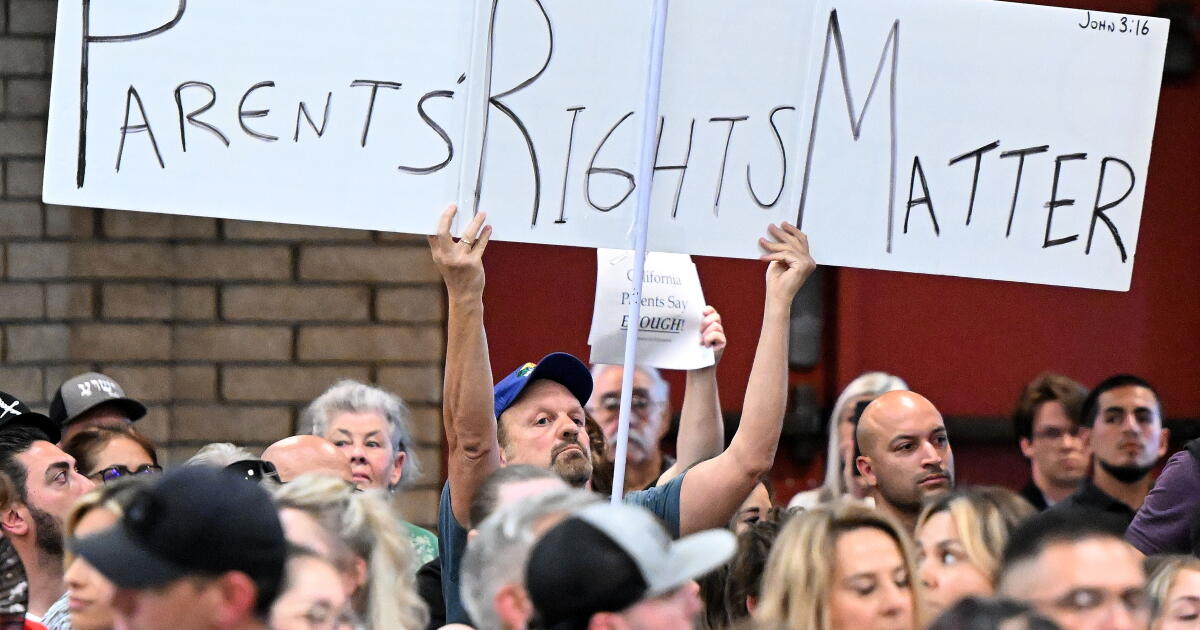
It remains illegal in California for a school district to force teachers and other staff to alert parents about their child’s gender identity, but parents must be told when they ask about it, a judge ruled Tuesday in a widely watched case dealing with parental rights.
San Bernardino County Superior Court Judge Michael Sachs, weighing both state law and a Supreme Court order, rejected an attempt by the Chino Valley Unified School District to reinstate its mandatory parent-notification policy.
“There is no requirement that the school district, on its own, after learning of transgender issues, contact parents and let the parents know of them,” Sachs said in court. At the same time, “in the event a parent makes an affirmative inquiry of a minor child regarding their status, whether transgender or not, that will trigger an obligation by the school district to respond.”
Under the Chino Valley policy, approved in July 2023, a school would have to notify parents of any request by a student “to use pronouns that do not align with the student’s biological sex or gender listed on the student’s birth certificate or other official records.” The same notification rules applied to the use of bathrooms or participation in sports.
State Attorney General Rob Bonta immediately challenged that policy in court and it was put on hold. In October 2024, Sachs had ruled that most of the policy was discriminatory — and therefore illegal — because it singled out a group of students for treatment that was different than the treatment of other students.
As an example, he cited the possibility that a student would come out confidentially to a school counselor — and then that counselor would immediately be required to alert the parents, even against the student’s wishes.
A policy that could result in mandated actions by a school employee continues to conflict with the intent of a 2025 California law that barred a school system from forcing teachers to tell parents about a student’s gender, Sachs concluded.
“That’s inappropriate and it’s still inappropriate,” Sachs said Tuesday.
New rules, new rulings
What has changed in the legal landscape, he added, is what happens when a parent requests information about their child’s gender status or sexual orientation or any number of other issues affecting that child.
Trial court rulings — affirmed by a Supreme Court majority in March — said that parents have the right to demand information about their child’s gender identity at school. School staff cannot lie to parents — including matters that a student wishes to conceal from their parents.
Attorney Emily Rae, representing Chino Valley, said Sachs was correct to acknowledge that parents had the right to information about their child, but that his ruling did not go nearly far enough — and that parent notification should be mandatory statewide.
Chino Valley also has a separate pending court challenge to the 2025 California law, contending it is at odds with the direction of the Supreme Court, which should take precedence.
Dept. Attorney General Delbert Tran, representing the state, declined to be interviewed Tuesday, but in his exchanges with Sachs, it was clear that he saw the ruling as about as much of a win as would be possible, given the Supreme Court’s recent directives.
He also said that supporters of parent-notification policies misstate or misunderstand the parent-teacher relationship that exists in practice and under state law. Parents, he said, have the legal right to observe classes and meet with teachers, and the expectation is that teachers will communicate freely and often with parents about a child’s needs and progress.
Chino Valley champions its view of parent rights
Chino Valley, a school district of 26,000 students in San Bernardino County, has adopted and defended a series of policies favored by parent activists, religious conservatives and President Trump under the leadership of school board President Sonja Shaw, a Republican currently running for the office of state superintendent of public instruction.
Under her leadership, the school system has taken a stand for a flag-ban policy in schools and classrooms, widely viewed as targeting gay pride flags; for removing school library books with passages deemed to be sexually obscene, and for working to ban trans athletes from girls sports and girls locker rooms.
Shaw attended Tuesday’s hearing and criticized Sachs’ reasoning.
“When he talks about a parent has a right to know now only if they ask, how do you know you’re being lied to or secrets being kept?,” Shaw said after the hearing. “That absolutely makes no sense.”
Shaw said the judge should have done “what’s right: Upheld parents’ constitutional right to the upbringing of their own child.”
In anticipation of Sachs’ ruling against the original policy, the Chino Valley school board revised the policy, expanding it to all students. Under the current policy, if any student “requests a change to their official or unofficial records, parents/guardians shall be notified to ensure that parents/guardians are informed and involved in all aspects of their child’s education.”
In other words, if a straight male student named William suddenly decided he wanted to be referred to as Robert on the class roll sheet — an official record — his parents would be notified.
In 2024, Sachs accepted this version of notification because students were not singled out for different treatment on the basis of their gender.
That form of the policy remains in effect.
Since that time, Shaw said, the district has been “transparent” with parents regarding important issues in the lives of their children. And Tuesday’s ruling would not change that.
Moving forward, she added, the district could assertively ask parents if they want to be informed about their child’s gender issues and that permission — if given — would continue to apply as the student proceeds through grade school.
BAGHDAD: Iraq ordered the closure of the Shalamcheh border crossing between Iraq and Iran as a precautionary measure after the latest drone attacks on Saudi Arabia, two security sources told Reuters on Saturday.
The sources said a wide-scale operation was underway to pursue perpetrators of the attack on Saudi Arabia.
Riyadh said on Friday its vital East-West pipeline was attacked by drones that were launched from Iraq.