Since January, the acting Rodríguez government has reformed its energy sector to favor US interests. (ABC)
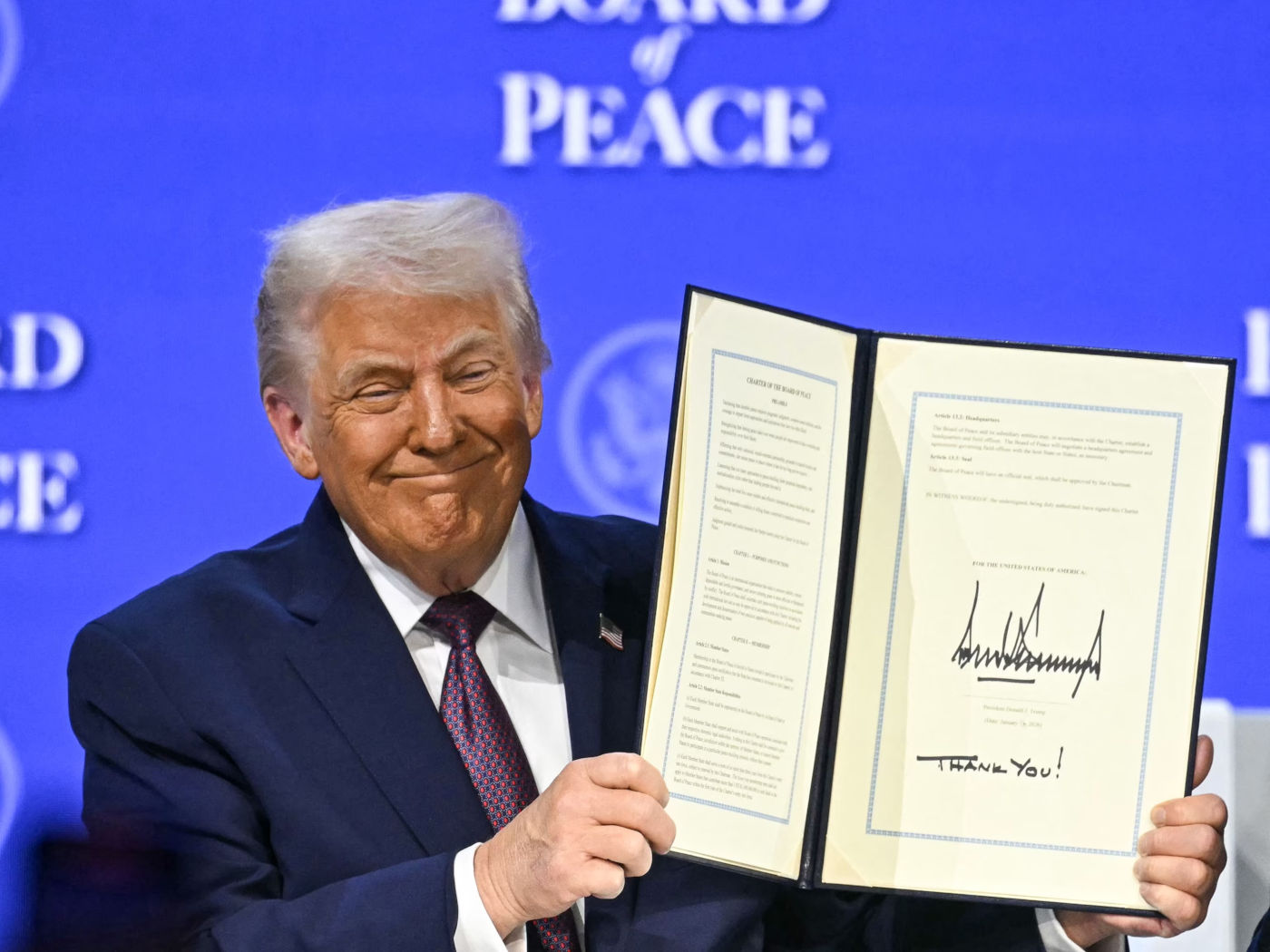
Caracas, August 28, 2026 (venezuelanalysis.com) – US President Donald Trump has announced a major energy agreement with Venezuela to “more than double US oil reserves.”
“The US has just entered into the biggest oil deal in history with Venezuela,” he wrote on social media. “Working with highly respected [Venezuelan Acting President] Delcy Rodríguez, and through a partnership with private business, [the US] has secured majority control of more than 65 billion barrels of proven Venezuelan oil reserves.”
Trump added that the purported agreement would lower US fuel prices “long into the future” while setting Venezuela “on a course toward tremendous success and great prosperity.”
US Secretary of State Marco Rubio called the reported deal “a huge win for both the American and Venezuelan people” and claimed it would bring “nearly US $100 billion in private investment” to the Caribbean nation. Trump and Rubio disclosed no specifics about the arrangement.
Venezuelan Acting President Delcy Rodríguez confirmed the “historic agreement” via a social media message on Friday night.
“I extend my deepest gratitude to Trump, Rubio, and the US government for their support in developing this agreement, which represents a historic milestone in US-Venezuela relations,” she wrote.
Rodríguez stated that the deal will involve private corporations developing 17 “strategic fields” with 65 billion barrels of proven reserves. She echoed Rubio’s $100 billion investment claim and pledged that the projects would yield $209 billion in tax revenues. According to the acting president, the announced agreement “ushers in a new era of growth and prosperity.”
The high-level negotiations were first reported by Axios on Thursday.
The Venezuelan Constitution establishes that all mineral and hydrocarbon resources are “inalienable public domain” goods. Transferring ownership of oil reserves would require a constitutional reform.
According to Reuters, the deal could take the form of a long-term lease, with the Trump administration then auctioning or allocating fields to select corporations. Bloomberg reported that the lease could be as long as 100 years.
The seventeen fields in question are said to include undeveloped extra-heavy crude projects in the Orinoco Oil Belt and mature light crude fields in Lake Maracaibo. The resulting supply would be “guaranteed” for the US as part of efforts to rein in rising fuel costs amid the ongoing standoff with Iran in the Persian Gulf.
Bloomberg additionally reported that Washington’s direct involvement in Venezuela’s oil industry could be conducted by the Pentagon’s Office of Strategic Capital (OSC) in partnership with Venezuelan oil mogul Alejandro Betancourt. The Biden administration created the OSC in 2022 to fund private sector initiatives deemed vital for US national security interests.
Since the January 3 US military strikes and kidnapping of Venezuelan President Nicolás Maduro, the acting Rodríguez administration has fast-tracked a diplomatic rapprochement with Washington while also opening the country’s energy and mining sectors to Western companies.
A new Hydrocarbon Law and associated regulations were drafted in consultation with oil executives and US officials. The reform slashed royalties and taxes and ceded control over operations and sales to private firms under joint venture or concession-type models. Caracas also acceded to foreign companies’ demands in allowing for legal disputes to be settled by international arbitration bodies.
The legislative overhaul replaced the 2001 Hydrocarbon Law approved by former President Hugo Chávez and subsequent decrees that established a leading role for the Venezuelan state in the energy sector, which in turn fueled the country’s economic and social progress in the 2000s.
The US Treasury has maintained wide-reaching sanctions in place while issuing licenses to hand-picked companies and barring the participation of enterprises from China, Iran, and Russia. Furthermore, Venezuelan oil revenues are presently deposited in a US Treasury account, with the disbursement timings and amounts left at Trump officials’ discretion.
On Thursday, the US Treasury’s Office of Foreign Assets Control (OFAC) amended eight sanctions waivers concerning oil, mining, and telecommunications. OFAC removed a requirement that contracts signed with Venezuelan state entities be drafted in accordance with US laws or jurisdiction. The agency stated that “investment-related reforms” by the acting Rodríguez government had made the clause unnecessary.
Venezuela’s investor-friendly regulatory environment has led to industry giants, including Chevron, Repsol, and Shell, striking new deals or renegotiating existing ones for crude and natural gas exploration. Companies with no energy track record such as Lionheart Capital and Crossover Energy are likewise set to take control of strategic oilfields.
Oil services company SLB, formerly Schlumberger, recently signed an agreement with PDVSA for reservoir studies and service provision. SLB has set the reactivation of 15 oil rigs in the South American country as a short-term priority.
According to Reuters, the multinational firm will also access prized data on Venezuela’s oilfields, from reservoir characterization to real-time output information. SLB allegedly seeks to “make Venezuela’s oil data reliable again.”
In another indication of Caracas’ dramatic diplomatic realignment with Washington, Venezuelan officials are reportedly mulling the possibility of exiting the Organization of Petroleum Exporting Countries (OPEC).
Venezuela played a leading role in the creation of OPEC in 1960 as it sought to bring together Global South oil-producing nations to secure better and more stable oil prices in global markets. Former President Chávez also prioritized revamping OPEC after a prior “Oil Opening” under US-aligned governments had oriented the industry toward US interests and undermined the organization.
Edited by Lucas Koerner in Philadelphia, USA.
[Updated on August 28 at 8.30 pm ET following Trump’s announcement.]