Why go now
In the south-west of Munich, Schlachthofviertel is an area in flux; a jarring district that is home to a theatre, a techno club and a controversial active slaughterhouse.
In the 1870s, after the final cholera epidemic in Munich, a municipal slaughterhouse (Schlachthof) was built on what was then the outskirts of the city as part of a wider effort to improve hygiene standards. Although it is still in use today, the site has dramatically decreased in capacity, and creative entrepreneurs have been quick to see the potential of unused spaces.
In 2021, the Münchner Volkstheater (People’s Theatre) moved to the area, bringing a new cultural status and sparking fears of accelerated gentrification. For me, it’s a part of town I go to for a change of scene or just a loaf of double-baked rye bread. In summer, the open-air spaces come out of hibernation and show a much edgier side to Munich.
Where to eat and drink
Today, butcher’s shops and cult dive bars sit side by side. There has been a flurry of openings; my favourite recent addition is the female-run Mari on Adlzreiterstraße, the street Albert Einstein lived on for much of his childhood. The airy cafe serves a late breakfast, including a Korean option of marinated tofu and miso mayonnaise.
The Brotatelier bakery operates from a shipping container, and bakers use equipment on wheels to maximise the limited space. From the cinnamon buns to the French fougasse bread, all products are prepared with sourdough. “Everybody has time here; we haven’t had a single customer who was stressed or anything like that,” says co-founder Christof Teriete, whose bigger concern is the impact of the fluctuating container temperatures on the sourdough starters.
For drinks, start at Frisches Bier, run by craft brewer Tilman Ludwig. He has his own beers on tap, along with a small selection of other independent labels, such as Bierol from Tirol and Hoppebräu from southern Bavaria.
Cultural experiences
On one side of Zenettistraße is the decommissioned cattle market (Viehhof). The red brick walls are now home to the Volkstheater. Launched with a production of Christopher Marlowe’s Edward II, the diverse programme includes the Radikal jung festival, focused on emerging directors, and the U20 Poetry Slam, which invites young writers to present their work.
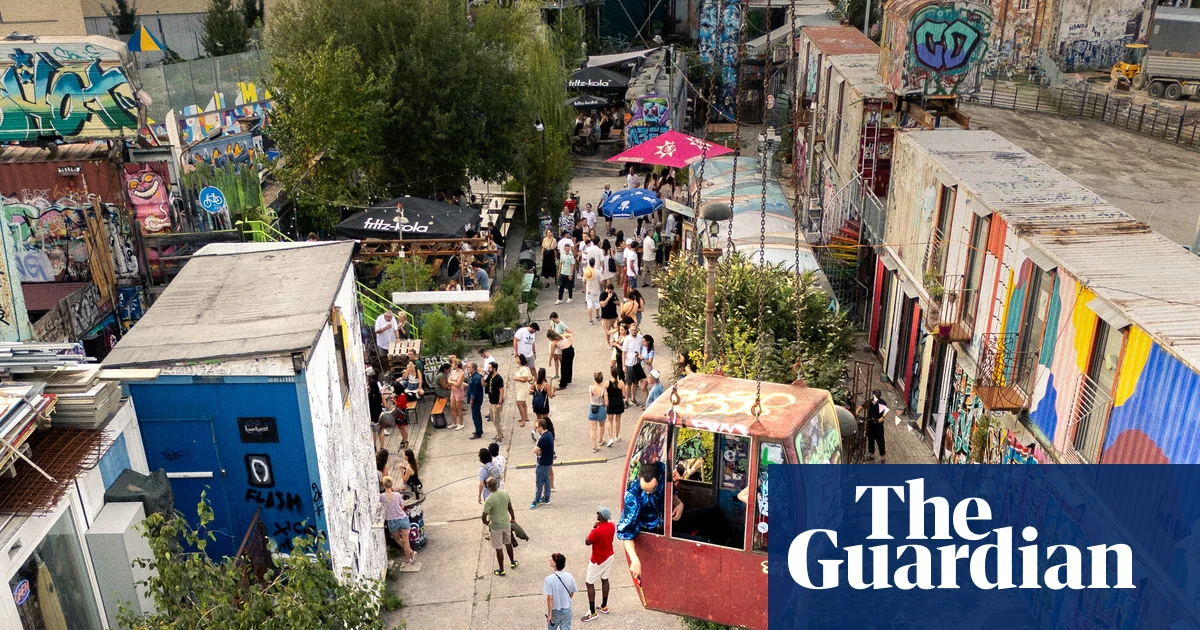
Next door is Bahnwärter Thiel, the heart of Munich’s underground scene, were graffitied shipping containers and the occasional caravan provide studios for DJs, artists, potters, goldsmiths, bakers (see above) and non-profits. “There’s no central heating or running water in the containers,” says Kati Legge from female creative office High Five, “but it’s not about comfort, it’s about maximum inspiration and the fascinating people around you.”
Raised garden beds add touches of green and upcycled materials are used for sculptures and makeshift walkways. There’s also a bar in an old tram, a restaurant in a train carriage and a techno club open till 6am weekends.
Where to shop
Rindchen’s Weinkontor has a huge selection of wine stored in a roomy, listed building. At Moss Concept Store on Thalkirchner Straße you’ll find ceramics, glassware and other home accessories.
Don’t miss
Actually quite hard to miss is Alte Utting, a former passenger ship that’s now a bar and event space that fills the length of a bridge over Lagerhausstraße. Destined for the scrapyard after years of service on Ammersee, it was rescued and relocated in 2017 by Wannda, the people behind Bahnwärter Thiel.
Where to stay
There’s little tourist accommodation in Schlachthofviertel, but there are hotels close to the nearby Oktoberfest site. Cocoon Theresienwiese has doubles from around €80 room-only.