



Coronation Street blaze to destroy iconic set as much-loved character ‘fights for life’
A deadly Coronation Street blaze will reportedly tear through Roy’s Rolls soon, causing the iconic set to burn down with the stunt apparently leaving a beloved character in danger

A deadly Coronation Street blaze will reportedly tear through Roy’s Rolls soon(Image: ITV)
There could be a shocking blaze on Coronation Street very soon, with a famous part of the set thought to be destroyed.
Reports claim Roy’s Rolls, the iconic café owned by Roy Cropper, will be burned down in a cruel arson attack in upcoming scenes. Not only that but as the blaze spreads, it could leave poor Roy in serious danger.
It’s claimed Roy will be left fighting for his life in the incident. with the building said to be be burnt down. As the battle to save Roy commences, the legend will apparently be rushed to hospital.
But who would want to target Roy or his business, and will Roy be okay? According to sources, Roy will be seen trapped in the blaze in scenes that will air onscreen in April.
READ MORE: Emmerdale Tracy’s secret exposed as Vanessa confronts her ahead of exitREAD MORE: EastEnders ‘reveals’ who will join Mark’s stolen cars scheme – but it’s not Lauren
According to The Sun, it sparks questions about whether Roy was targeted and why the café was set alight. A source told the publication: “Roy’s Rolls is targeted by a mystery fires tarter who breaks in and douses the cafe with petrol whilst Roy sleeps upstairs in his flat.
“When residents spot smoke coming out of the windows, emergency services are called. As the fire rages and people realise Roy is trapped inside the race is on to get him out alive.
“Will Roy be rescued in time, and what about his precious collection of railway memorabilia and memories of Hayley? Is this the end of Roy’s Rolls as we know it, and who wanted to burn down the iconic cafe?”
The Mirror has reached out to an ITV spokesperson for comment. It comes ahead of a murder plot taking place in April that sees one of five villains killed off. Jodie Ramsey, Megan Walsh, Carl Webster, Theo Silverton and Maggie Driscoll are all at risk.
The death plot will then spark a whodunnit before fans find out who has killed them and why. Some fans already think they have worked out who the killer is and who the victim will be.
It’s left fans fearing a popular character is about to depart the show in the plot. They think Eva Price, who only came back to the show in October last year, could bow out in a killer twist.
With teacher Megan exposed for grooming young student Will for sex, Will’s stepmother Eva Price vowed she would pay for her crimes. Now, fans have wondered if Eva will kill Megan as she takes revenge, but would Eva really turn killer?
Coronation Street airs weeknights at 8:30pm on ITV1 and ITV X. * Follow Mirror Celebs and TV on TikTok , Snapchat , Instagram , Twitter , Facebook , YouTube and Threads .
Gordon Ramsay causes tiny UK village to become nation’s ‘most searched for holiday spot’
A charming UK village has found a newfound status, thanks to celebrity chef Gordon Ramsay highlighting it as his coastal escape, with golden beaches and a booming food scene

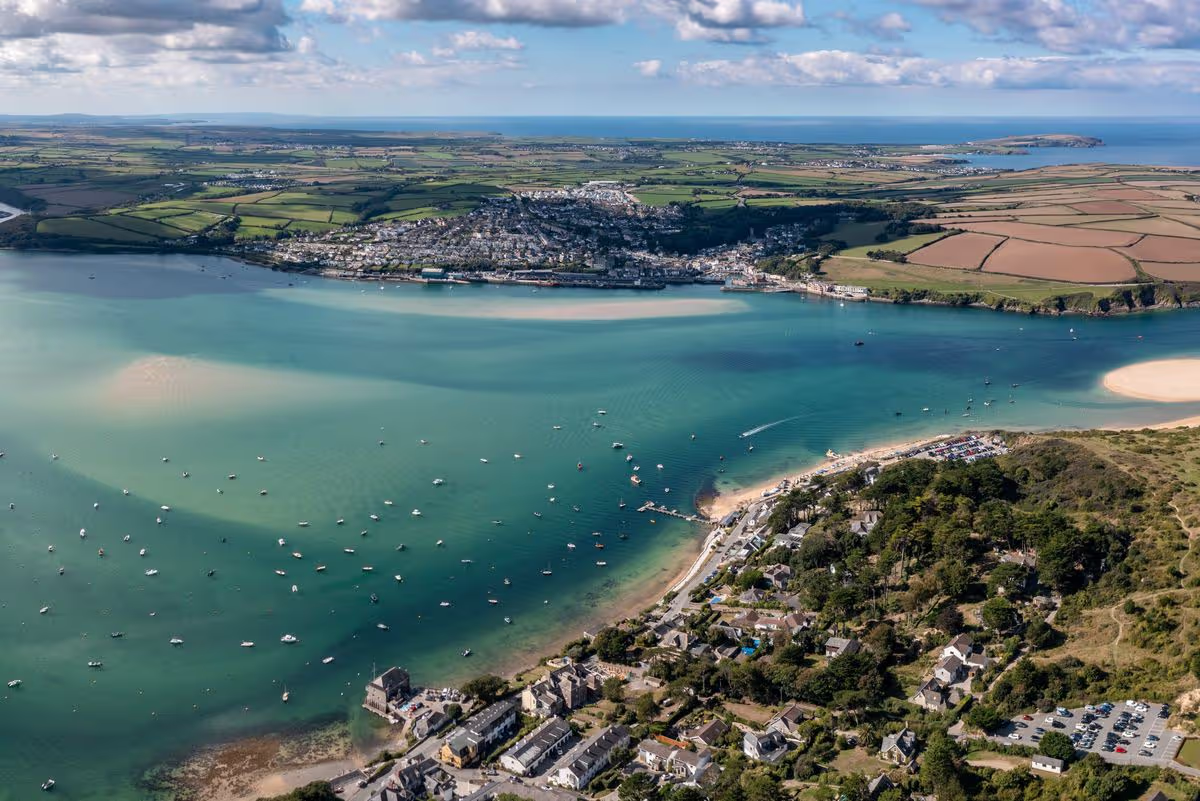
Gordon Ramsay has thrown a Cornish village into the spotlight(Image: Getty Images)
A small UK village has been thrown into the spotlight as the nation’s most searched holiday destination, all thanks to Gordon Ramsay.
Just last month, the Netflix series Being Gordon Ramsay was released, following the celebrity chef as he opened his latest venture, comprising multiple restaurants, at 22 Bishopsgate in London. While the foot of the series showed Ramsay in a professional light, it also offered a glimpse into life at home with his family and on holiday in Cornwall.
Used as his London escape, Ramsay showed viewers around his Cornwall holiday home, set in the charming village of Rock. This prompted a surge in searches around the village, situated on the Camel Estuary in north Cornwall, with fans asking, “Where is Rock in Cornwall?” and inputting “Rock Beach Cornwall.”
READ MORE: I stayed in colourful UK city often overlooked because of its famous neighbourREAD MORE: British tourists ditch popular holiday hotspot as it’s become ‘too expensive’
Elliot Walker, editor of local travel guide Cool Cornwall, said: “We always knew Rock was pretty special. But its appearance in a top TV show has dramatically boosted its fame and appeal. It’s wonderful to see more people discovering what those of us in Cornwall have quietly cherished for years.”
It was an unusual spike in attention for the village, yet one well deserved, thanks to its stretches of golden-sand beaches, thriving food scene, and status as an uncrowded haven. It’s just across the blue waters from the holiday hotspot of Padstow, and has been hailed as one of the UK’s most beautiful coastal areas.
Thanks to its position on the Camel Estuary, with its sheltered, calm blue waters, Rock is a popular spot among sailing enthusiasts and those looking to enjoy further watersports. Often dubbed the “Saint-Tropez of Cornwall”, it’s no wonder that Ramsay has chosen the coastal destination as his holiday home retreat for years, and even purchased a staggering £9.65 million neighbouring property.
“Anyone who visits Rock will understand why Gordon Ramsay has chosen this as his out-of-London retreat. The estuary views, dune-backed sandy beaches, lovely coastal walks, watersports such as sailing and wakeboarding, as well as several great restaurants and pubs, make this a truly special place to spend time,” Elliot added.
To help prospective visitors make the most of a trip to the stunning coast of Rock, Cool Cornwall has published a local guide to the area, with the best things to see and do. From exploring Daymer Bay, rockpooling at Greenaway beach, to climbing Brea Hill and dining at celebrity chef and friend of Ramsay, Paul Ainsworth’s The Mariners restaurant, there’s more than enough to enjoy during a weekend or week escape.
Elliot noted that Rock is a “wonderfully laid-back, naturally beautiful destination with real soul”, that he hopes visitors will enjoy past its newfound celebrity status. “Rock has been quietly doing its own thing for years, and it will carry on doing so long after the cameras have moved on,” he added.
“If the documentary is what brings people here for the first time, brilliant. But we’d love them to stay a little longer, explore a little further, and leave with a genuine feel for what makes this corner of Cornwall so special.”
Cornwall, which attracts millions of visitors every year, has long been an escape for Brits seeking a seaside holiday, with promises of golden-sand beaches and turquoise waters. The county has even attracted attention from film and television productions, with the likes of Poldark and James Bond using the beautiful UK coast as a backdrop.
“Cornwall is no stranger to appearances on screen,” Elliot said. “Each time there is a boost in searches for the locations featured and an influx of visitors. Rock is simply the latest example of that.”
Do you have a travel story to share? Email webtravel@reachplc.com
How to avoid the pricey new passport fees as new application costs hit record high
FOR the first time ever, renewing a British passport is set to cost more than £100.
That makes it one of the most expensive in the world – so if you want to avoid the rising costs, here’s how you can do it.
From April 8, 2026, the fee to renew a passport online for adults will rise from £94.50 to £102.
The standard fee for children will see a £5 increase, from £61.50 to £66.50.
Postal applications will go up from £107 to £115.50 for adults and £74 to £80 for kids.
The charge for a next-day premium service made from within the UK will rise from £222 to £239.50.


The Home Office said that the price increase is to “move towards a system that meets its costs through those who use it, reducing reliance on funding from general taxation.”.
If you need to update your passport, but don’t want to pay the increased fees, there are a few ways to avoid them.
First of all, apply before April 8, 2026 so your renewal will cost the current rate of £94.50.
Second, don’t apply for a renewal by post as this will increase the fee by £13.50.
And if you’re trying to avoid high costs, apply with ample time and don’t opt for next-day premium service as this hikes up the price by over £100 compared to online renewal.
The Home Office say that the fees “contribute to the cost of processing passport applications, consular support overseas, including for lost or stolen passports, and the cost of processing British citizens at UK borders.”
It also added that last year 99.7 per cent of applications last year that needed no further information were processed in under three weeks.
Those who still have a burgundy passport need to check the expiry date on their passports, as Brits are still being caught out.
You’ll need to have the passport renewed exactly six months before the expiry date to make sure you can still travel.
For example, if your passport was issued in June 2016, but your expiry date says September 2026, that expiry is incorrect.
Instead, your passport will expire 10 years past the start date – making the real expiry June 2026.
If travelling to the EU, your passport must be less than 10 years old.
It must also be valid for at least three months after the day you plan to return home.
For more on passport rules – here’s everything you need to know for travelling in 2026.
And check this new rule that was enforced in February 2026 affecting dual national citizens.

Affordable African city to get massive new £960million airport expansion with space for 20million passengers
A POPULAR holiday destination just a few hours from the UK is getting a huge new £960million airport expansion.
Mohammed V Airport in Casablanca, Morocco is currently expanding its airport with a new terminal which will be able to handle up to 20million passengers a year.
The new terminal will be ‘H’ shaped and is expected to be operational by 2029, in time for the 2030 FIFA World Cup.
It will have three levels with shops, green spaces and an airport hotel.
In addition, the terminal will be connected to Morocco‘s high-speed rail (LGV) network with links to Kenitra and Marrakech.
According to Architects’ Journal, the terminal will feature “sweeping undulations of the roof [evoking] the waves and movement of the Atlantic”.
Read more on travel inspo


The project also includes a 3,700-metre runway, which will run alongside taxiways and a new 42-metre-tall air traffic control tower.
British architecture firm, RSHP – who designed London’s Millennium Dome and Heathrow Airport’s Terminal 5 and control tower – will design the new terminal at Mohammed V Airport.
Ivan Harbour, senior design director at RSHP, said: “The airport will be a celebration of light, warmth and human scale, undulating from grand central spaces to intimate and calming oases, a memorable experience for all travelling through it.
“It will be a state of the art, responsible, building that interprets and celebrates the landscape of its place to create a graceful threshold between Casablanca and the world beyond.”
The airport currently has two terminals and serves around 11.5million passengers each year.
Royal Air Maroc flies direct to Casablanca from London Heathrow with flights starting from £178 one-way.
Though, with the airport expansion there could be more services to the UK in the future.
Casablanca’s main attraction is the Hassan II Mosque, one of the largest mosques in the world.
It also has a popular seaside promenade with lots of hotels and restaurants as well as Habous Quarter (known for its Moorish-style architecture, olive souks and bookstores) and the Old Medina with traditional markets.
The city is pretty cheap as well – a three-course meal for two usually costs around £23.74, while a beer is less than £3.
And the famous 1942 film Casablanca was also set in the city during World War II.
Despite mostly being filmed in studios in California, the film depicts the bustling city of Casablanca when it was used by people fleeing Nazi-occupied Europe.
In other airport news, a major London airport has hiked its drop off fees to £10 – the second highest in the UK.
Plus, these are all the new routes launching from the UK’s biggest and busiest airport this spring and summer.
How much is a UK passport – fees explained for adults, children and pensioners
Ahead of the busy Easter and summer holidays, the cost of a UK passport application, online and postal, are set to increase, with prices soaring above £100 for the first time

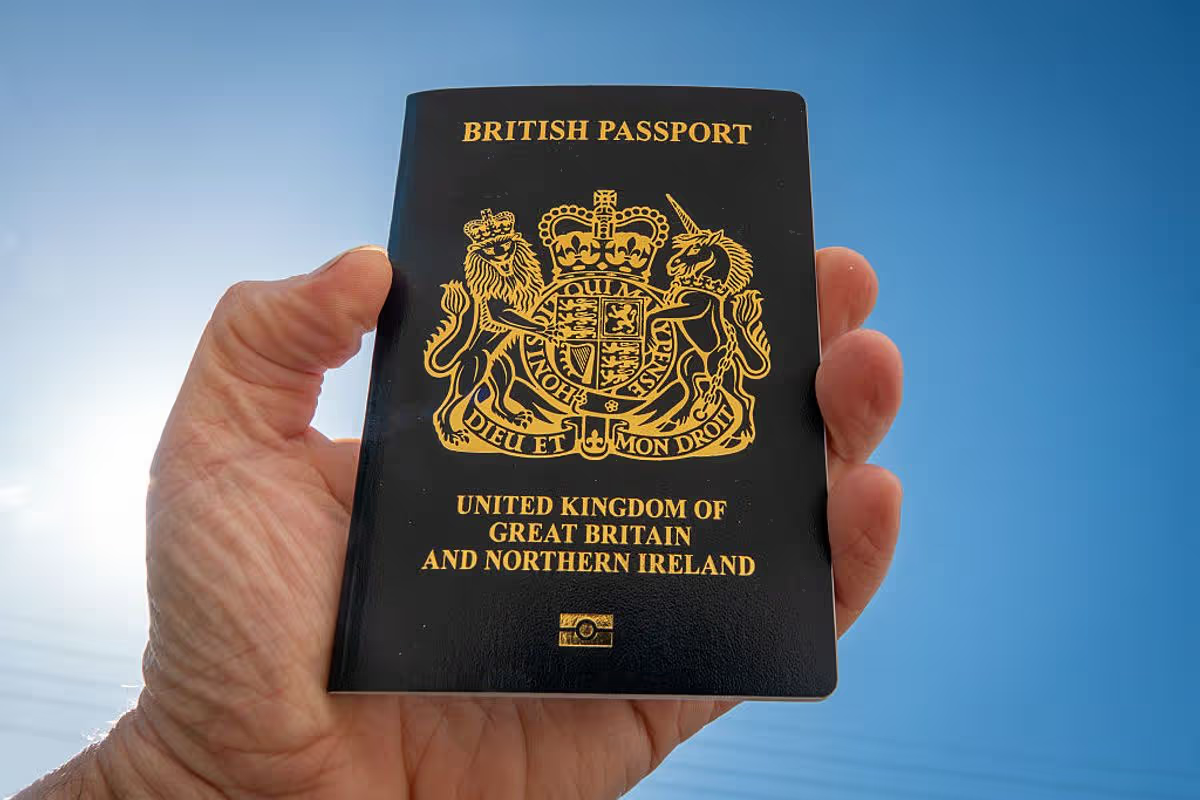
Cost of UK passport to exceed £100 for first time(Image: Getty )
The cost of all passports will significantly increase from next month as the Home Office confirms proposed plans.
The Home Office has proposed an 8 per cent increase in UK passport prices, which could see an adult pay out over £100 for the first time. The price of a child’s and a pensioner’s passport will also increase, with the changes set to be implemented from Wednesday, 8 April.
The Home Office said it will “move towards a system that meets its costs through those who use it, reducing reliance on funding from general taxation”. The fee increases are subject to Parliamentary approval.
The Home Office said in a statement: “The new fees will help the Home Office to continue to move towards a system that meets its costs through those who use it, reducing reliance on funding from general taxation.
“The Government does not make any profit from the cost of passport applications. The fees contribute to the cost of processing passport applications, consular support overseas, including for lost or stolen passports, and the cost of processing British citizens at UK borders.”
READ MORE: British tourists ditch popular holiday hotspot as it’s become ‘too expensive’READ MORE: UK passport holders face major fee change on April 8 2026 ‘for the first time’
How much is an adult passport?
From April 8, the cost of a UK adult passport, for standard online applications, will rise from £94.50 to £102. Meanwhile, postal passport applications could rise from £107 to £115.50 for adults.
How much is a passport for children?
The standard fee for a child’s passport, for online applications, could increase from £61.50 to £66.50, while a postal application could rise from £74 to £80 for children.
How much is a pensioner’s passport?
A standard, 32-page concessionary passport is available free of charge for those who were born on or before 2 September 1929 and at the time of their application, hold any British nationality.
The government said: “Customers who naturalised or registered as British nationals will still qualify regardless when they naturalised or registered.”
While the passport is free, there may be some delivery charges to return the passport or to send any supporting documents.
Will next-day services increase?
While it’s always advisable to apply for a new or replacement passport as early as possible, a next-day premium service is available in the UK. However, the new fees from 8 April could see this rise from £222 to £239.50.
How much will overseas UK passports cost?
Those applying overseas for a UK passport online can expect a rise from £108 to £116.50 for adults and from £70 to £75.50 for children. Meanwhile, overseas paper applications will increase from £120.50 to £130 for adults and from £82.50 to £89 for children.
The last time the price of a UK passport increased was on April 10, 2025, when they rose by around 7 per cent. An adult passport soared from £88.50 to £94.50, while a child’s online application increased from £57.50 to £61.50.
Before 2025, there were increases in April 2024 and February 2023.. However, the price surge in 2023 was the first increase in five years.
The government advised that anyone needing a new passport should apply well in advance, as the renewal process can take up to three weeks in the UK or longer during peak travel periods. For more information or to apply for a new or replacement UK passport, you can visit the government website.
Do you have a travel story to share? Email webtravel@reachplc.com
Foreign Office issues new travel warnings for 31 countries amid Middle East war
The FCDO has issued numerous warnings and advice for British citizens planning to travel to, or already in, affected countries. The latest was issued earlier this afternoon and covers 31 countries

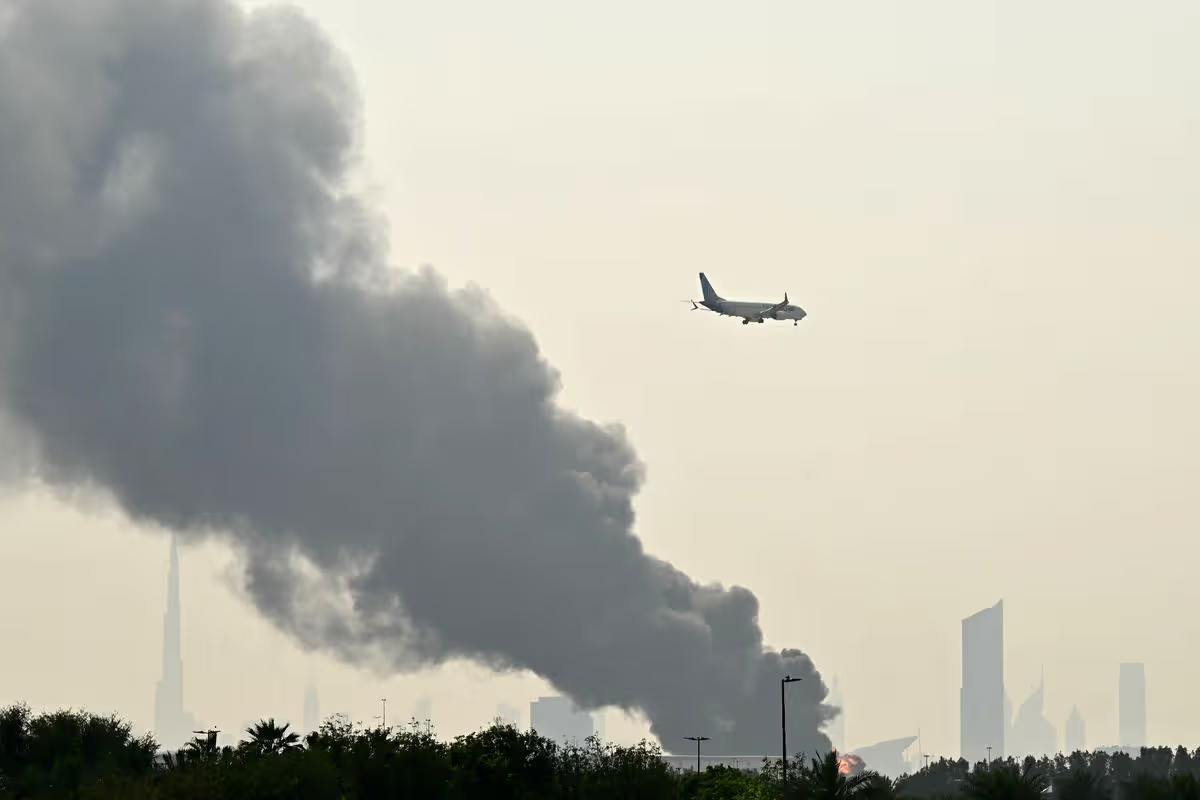
Thousands of flights have been grounded so far during the war(Image: AFP via Getty Images)
The UK Foreign, Commonwealth and Development Office (FCDO) has issued new travel advice for 31 countries amid the war in the Middle East.
Israeli and US strikes on Iran over the past three weeks triggered a response that has grounded thousands of flights, killed more than 2,000 people and caused flight paths and ship routes to be shut down.
The FCDO has issued numerous warnings and advice for British citizens planning to travel to, or already in, affected countries. The latest was issued earlier this afternoon and covers 31 countries.
“Escalation in the Middle East has caused widespread travel disruption, including airspace closures, delayed and cancelled flights. Your travel plans may be affected, even if your destination is not in the Middle East,” the advice reads.
READ MORE: Trump’s £150bn war bill as Iran gamble sends petrol prices soaring with taxpayers fumingREAD MORE: Keir Starmer holds emergency Cobra as he condemns Iranian strikes on energy plants
The FCDO advises that before travelling, UK passport holders:
- check travel advice for any countries or territories you are transiting through
- check for the latest updates from your airline or tour operator before travelling
- review your travel insurance policy for coverage before you travel
- monitor local and international media for the latest information and sign up for travel advice email alerts
Countries with updated advice
- Singapore
- Vietnam
- Phillipinnes
- Tuvalu
- Laos
- Thailand
- Uzbekistan
- New Zealand
- Bangladesh
- Australia
- Indonesia
- Brunei
- Japan
- Georgia
- Tajikistan
- Nepal
- Maldives
- Fiji
- Malaysia
- India
- Papa New Guinea
- Cambodia
- South Korea
- Samoa
- Solomon
- Tonga
- Nauru
- Vanutu
- Marshall Islands
- Kiribati
- Sri Lanka
More than 1,300 people in Iran have been killed during the war. Israeli strikes against the Iranian-backed Hezbollah militant group in Lebanon have displaced more than 1 million people — roughly 20% of the population — according to the Lebanese government, which says more than 1,000 people have been killed. Israel says it has killed more than 500 Hezbollah militants.
In Israel, 15 people have been killed by Iranian missile fire. Four people were also killed in the occupied West Bank overnight by an Iranian missile strike, according to officials. At least 13 U.S. military members have been killed.
Iran announced the execution of three men detained in January’s nationwide protests, the first such sentences known to have been carried out, the judiciary’s Mizan news agency reported.
Today, three weeks since the war began, Iran intensified its attacks on oil and natural gas facilities around the Gulf.
The strikes, in retaliation for an Israeli attack on a key Iranian gas field, sent fuel prices soaring and risked drawing Iran’s Arab neighbors directly into the conflict. Tehran’s targeting of energy production further stressed global supplies already under pressure because of Iran’s stranglehold on the Strait of Hormuz, a strategic waterway through which a fifth of the world’s oil is transported.
Since the U.S. and Israel launched the war on Feb. 28, Iran’s top leaders have been killed in airstrikes and the country’s military capabilities have been severely degraded. Still, Iran — now led by the son of the supreme leader killed in the war’s opening salvo — remains capable of missile and drone attacks rattling its Gulf Arab neighbors and a global economy dependent on the energy they produce.
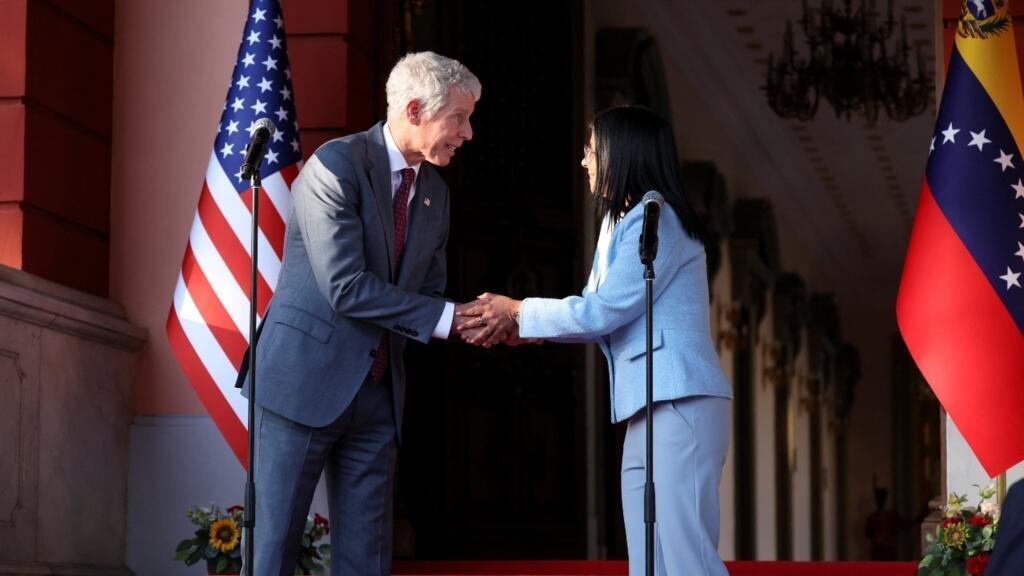
The US Has Recognized Delcy Rodríguez. What Now?
For years, the legal fight over Venezuelan assets abroad turned on one basic question: who does a foreign government recognize as the person entitled to act for Venezuela? In the United States, that question once pointed toward the opposition-led structure tied to the 2015 National Assembly and, before that, Juan Guaidó. After Guaidó fell, Dinorah Figuera became the head of what remains of that 2015 Assembly, the Comisión Delegada. Through that entity, the opposition continued trying to preserve control over foreign assets such as Citgo and funds held abroad.
Reuters reported in 2023 that the new opposition leadership under Figuera moved to oversee foreign assets, including Citgo and gold held at the Bank of England. During the Biden administration, the State Department likewise said in January 2023 that it would continue to recognize the democratically elected 2015 National Assembly as the last remaining democratic institution in Venezuela.
That is no longer the key US posture. In March 2026, the US government formally told a federal court in New York that the United States is recognizing Delcy Rodríguez as the “sole Head of State, able to take action on behalf of Venezuela.” The filing relied on the State Department’s March 5 statement normalizing relations with Venezuela under Delcy Rodríguez and on President Trump’s public remark that the United States had “formally recognized” the Venezuelan government. That is the legal pivot. Once Washington says who it recognizes as Venezuela’s head of state, US courts and agencies do not get to run their own foreign policy.
This is why the debate about Delcy’s legitimacy under Venezuelan domestic law, while politically important, is not the decisive question in New York, Delaware, Texas, or Washington. The majority of Venezuelan lawyers believe that Delcy Rodríguez is illegitimate. I am not arguing otherwise. However, under US constitutional law, recognition of a foreign sovereign belongs exclusively to the President of the United States.
The recognition question has shifted sharply in Delcy’s favor, even if some operational steps are still controlled by licenses, sanctions, and pending litigation.
In the case Zivotofsky v. Kerry, decided in 2015, the US Supreme Court said exactly that: the President has the exclusive power to grant formal recognition, and the nation must speak with “one voice” on that subject. Older US Supreme Court cases say the same thing in slightly different words. The practical result is simple: if the President recognizes one person as the one entitled to act for a foreign state, US courts (federal and state courts) generally follow that determination.
So, does that mean Delcy now controls Citgo? As a matter of US recognition law, the answer is yes, in the sense that authority now runs through the person Washington recognizes, not through whichever Venezuelan faction lawyers or commentators prefer. But there is one important practical wrinkle: Reuters reported that Delcy’s team still needs US Treasury clearance to take over Citgo’s US subsidiaries, and Citgo also remains entangled in ongoing court proceedings. In other words, the recognition question has shifted sharply in Delcy’s favor, even if some operational steps are still controlled by licenses, sanctions machinery, and pending litigation.
England works in much the same way. In the Bank of England gold litigation, the Supreme Court of the United Kingdom held that recognition of foreign heads of state is a matter for the executive, not the courts. The Court called this the “one voice principle”: English courts must accept the executive’s recognition position as conclusive. That is why the courts treated Juan Guaidó as the recognized head of state when the UK government recognized him. The logic is straightforward. English judges do not decide who truly won the constitutional struggle in Caracas. They follow the position taken by His Majesty’s Government.
If London does the same, the same logic will likely carry over to Venezuelan assets in England, including the gold dispute.
That is also why there is no serious legal basis for pretending that personal politics can change the answer. A lawyer may dislike Delcy Rodríguez. Another may dislike Dinorah Figuera. Someone else may prefer Edmundo González. None of that changes the recognition rule. On this issue, legal analysis is supposed to be colder than politics. If Washington recognizes Delcy, US institutions will generally treat Delcy as the person entitled to act for Venezuela. If London does the same, the same logic will likely carry over to Venezuelan assets in England, including the gold dispute. The law here is not about who we admire or dislike. It is about who the executive power of the US recognizes. Nothing else.
One last point matters. I have not found any official UK statement, as of now, publicly recognizing Delcy Rodríguez in the same clear way the United States has. A January 2026 statement by the UK Foreign Secretary referred to her as “acting President” and urged democratic steps, but it did not announce the kind of formal recognition statement the UK issued for Guaidó in 2019.
So the US conclusion is already here. The English conclusion depends on whether London takes that additional recognition step.

Jac Morgan: Wales captain in line for Ospreys return at Benetton
Morgan missed the first four rounds of the URC after suffering a calf problem on his return from the Lions’ tour to Australia.
The flanker came off the bench in the draw against Dragons at Rodney Parade in October and then went off to Wales duty.
“The guys that have been playing while Jac has been injured have done a terrific job, but it’s always brilliant when you bring a Lion back into your environment and selection,” said Jones.
“It’s good for the competition for places and competitiveness around training. He has added a great energy to the environment, on and off the field.”
This weekend’s fixture against Benetton would be Morgan’s first game since it was confirmed that he will leave Ospreys for Gloucester along with Dewi Lake in the summer.
Jones believes the forward from Brynaman will be determined to finish with a flourish.
“He has put a lot into the Ospreys over the time he has been here, physically and emotionally,” said the head coach.
“We want the whole thing to end on a really positive note. I can’t see anything other than a fully-focused, excited Jac Morgan wanting to go out on a high, and as a team we definitely want to do that.”

Kent meningits cases rise to 27, student vaccinations continue
March 19 (UPI) — The number of cases of meningitis in Kent has risen to 27, the United Kingdom Health Security Agency reported.
There are 15 confirmed cases, and 12 suspected cases, meaning health professionals suspect the illness based on symptoms.
Two people have died since the outbreak began: One high school student and a college student at the University of Kent.
“What is particularly remarkable about this case, and unexpected about this case, is the large number of cases all originating from what seems to be a single event,” Robin May, chief scientific officer at the UKHSA, told The Guardian.
Officials believe some students picked up the disease at Club Chemistry, a nightclub in Canterbury.
“There are two possible reasons for that,” May said. “One is that there might be something about the kind of behaviors that individual people are doing. The other possibility is the bacteria itself may have evolved to be better at transmitting.”
Students at the university are being given preventive antibiotics and vaccines effective against the strain of meningitis B. Officials have given 600 vaccines and 6,500 doses of antibiotics.
Canterbury Christ Church University in Kent confirmed that a student had meningitis, and four schools have seen confirmed cases.
The UKHSA said there was one student with meningitis at a college in London whose case was linked to the Kent outbreak.
Meningitis is an infection of the protective lining of the brain and spinal cord. It can be caused by bacteria or viruses. Meningitis B is caused by the Neisseria meningitidis bacteria, which is also called meningococcus.
Doctors in England were told on Wednesday to prescribe antibiotics to anyone who was at Club Chemistry between March 5 and 7 and to University of Kent students who had left the campus.
“Two doses of the MenB vaccine helps protect individuals against meningococcal B disease,” but not other strains of meningitis, said Trish Mannes, UKHSA regional deputy director for the south east, in a statement. “It is therefore still hugely important that people are aware of the signs and symptoms of invasive meningococcal disease and that they seek immediate medical attention if they or anyone they know develops these signs and symptoms.”
The UKHSA said the National Health Service was well stocked with vaccines after pharmacies reported they were struggling to get them.
Health Secretary Wes Streeting told the BBC there is no reason for people to buy it privately.
“We make it available through the NHS to those groups at risk based on independent scientific advice,” he said.
“In recent days, here in Canterbury we’ve made it more widely available than we normally would to targeted groups of students, club-goers, sixth-formers [older teens] where we think there is a higher risk. We’re doing this as a precaution.”

Founder of the Women’s Tennis Association and tennis great Billie Jean King (C) smiles with representatives after speaking during an annual Women’s History Month event in celebration of the 50th anniversary of Title IX in Statuary Hall at the U.S .Capitol in Washington on March 9, 2022. Women’s History Month is celebrated every March. Photo by Bonnie Cash/UPI | License Photo
Drone attack from Sudan kills 17 people in Chad as war spills over border | Sudan war News
Local resident says casualties include mourners at funeral and children playing nearby.

Published On 19 Mar 2026
A drone attack launched from Sudan has killed 17 people in Chad, according to the Chadian government, which has pledged to retaliate against any further strikes as the civil war in the neighbouring nation rages on.
A spokesman for the Chadian government announced the death toll on Thursday from the attack on the border town of Tine, which had been targeted despite “various firm warnings addressed to the different belligerents in the Sudan conflict and the closure of the border”.
Recommended Stories
list of 3 itemsend of list
It occurred as mourners gathered at a house on Wednesday for a funeral, according to a local resident quoted by the Reuters news agency, who reported there were two explosions and casualties included mourners and children playing nearby.
Local government sources said it was not immediately clear who was behind the attack, according to Reuters.
Chadian President Mahamat Idriss Deby called a meeting of the defence and security council on Wednesday night, ordering the army to “retaliate starting from tonight to any attack coming from Sudan”, according to a presidency statement.
Early on Thursday, the government said Chad had strengthened its security presence at the border and could potentially carry out operations on Sudanese territory.
Sudan’s paramilitary Rapid Support Forces (RSF) denied involvement in a post on Telegram, blaming the Sudanese army.
Porous border
The conflict in Sudan between its military and the RSF began in April 2023. The war has killed tens of thousands of people and displaced more than 12 million – nearly one million of them fleeing under fire to Chad, according to the United Nations.
The border between Chad and Sudan, which is nearly 1,400km (870 miles) long and located in a desert region, is porous and difficult to control.
Almost the entirety of Darfur, a vast region in western Sudan bordering Chad, has been captured by the RSF. The last major city there under the military’s control, el-Fasher, was seized by the RSF in October. The UN has accused the paramilitary group of carrying out massacres with “hallmarks of genocide”.
On February 21, the RSF claimed control of the border town of Tina, which is separated from Tine in Chad only by a narrow stream bed that is dry most of the time.
Chad closed its eastern border with Sudan last month after clashes linked to the war killed five Chadian soldiers. Its government said the move was aimed at preventing “any risk of the conflict spreading”.
Drones a key weapon of war
Drones have become a key weapon used by both Sudan’s military and the RSF.
The Sudanese army has received Iranian-made drones and Turkish and Russian military support.
The RSF, which has no air force of its own, has been equipped through a network of supply routes reportedly running through Chad and other transit states with reports pointing to the United Arab Emirates as a key supporter, an allegation that Abu Dhabi denies.
In the first two months of 2026, the Armed Conflict Location and Event Data project recorded 198 strikes by both sides, at least 52 of which caused civilian casualties. The attacks killed 478 people.
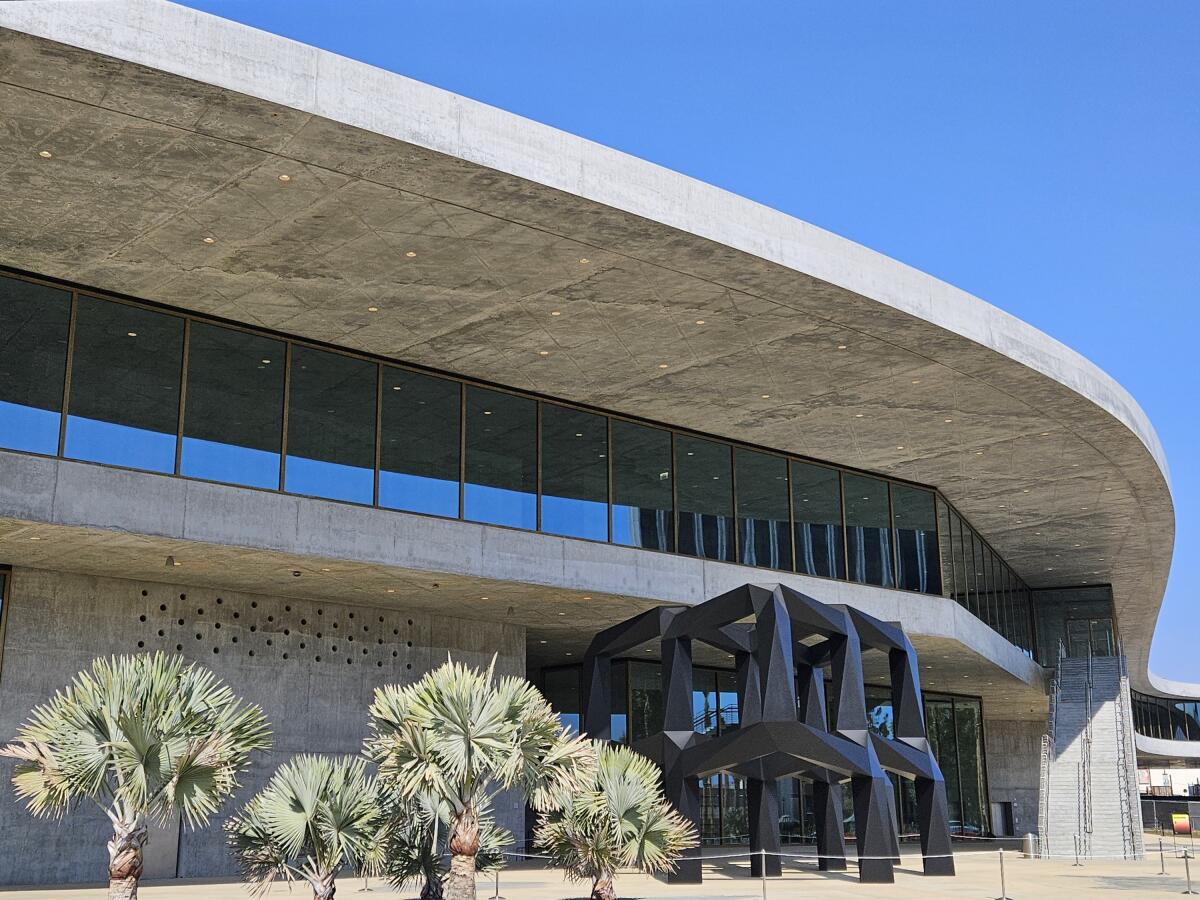
2026 marks an explosion of L.A. museum openings including Lucas Museum
This year marks a veritable museum-palooza as Los Angeles debuts four new major arts complexes, with three in the wings likely to open in advance of the 2028 Summer Olympics.
Immerse yourself in a psychedelic explosion at Meow Wolf, plan an afternoon liaison with Van Gogh at LACMA’s new David Geffen Galleries, inhale the scent of nature inside Refik Anadol’s AI arts museum, Dataland, or simply geek out over George Lucas’ jaw-dropping collection of “Star Wars” memorabilia.
Whatever your arts craving may be, this astoundingly rich new lineup of new local museums has you covered.
LACMA’s David Geffen Galleries

The new David Geffen Galleries, opening in 2026, are composed entirely of Brutalist concrete.
(Christopher Knight / Los Angeles Times)
The Los Angeles County Museum of Art’s David Geffen Galleries are set to debut this April to members, before opening for general admission at the beginning of May. The $720-million Geffen Galleries will display 2,500-3,000 objects from LACMA’s collection.
The building, designed by Pritzker Prize-winning architect Peter Zumthor, is described by supporters as a “concrete sculpture” and will host 90 exhibition galleries across 110,000 square feet. The Wilshire Boulevard museum’s inaugural exhibition will organize artwork by the Pacific, Indian and Atlantic Oceans and the Mediterranean Sea instead of by medium or period.
“The idea is for you to make your own path — not to speak at you, but to let you wander like you would through a park or a place,” LACMA Director and Chief Executive Michael Govan said in an interview with The Times. “That change in attitude, and how the building is built, is really exciting.”
Some of the most-anticipated works on display include Georges de La Tour’s “The Magdalen With the Smoking Flame” (1640), Henri Matisse’s “La Gerbe” (1953) and Vincent Van Gogh’s “Tarascon Stagecoach” (1888).
Lucas Museum of Narrative Art

The gardens at the Lucas Museum, designed by Studio-MLA, on Monday, May 19, 2025.
(Jason Armond / Los Angeles Times)
After more than 10 years of anticipation, George Lucas and Mellody Hobson’s museum will open in Exposition Park this September. With over 10,000 square feet of galleries, the museum will feature a wide array of artwork and pop culture ephemera, including Lucas’ personal trove of “Star Wars” film franchise treasures, “Peanuts” comic strips, “Alice’s Adventures in Wonderland” illustrations, a Richard Sargent painting and covers of the Saturday Evening Post.
Lucas donated his collection to curate the Lucas Archives, which, in addition to “Star Wars,” will encompass props and production art from Lucasfilm projects, such as the “Indiana Jones” franchise.
One of the museum’s defining features is its massive green-roof garden designed by Mia Lehrer and her landscape architecture firm Studio-MLA.
“This brings everything together,” Lehrer said in an interview with The Times. “Design, ecology, storytelling, infrastructure, community. It’s the fullest expression of what landscape can be.”
Meow Wolf

A work-in-progress piece set to be featured in Meow Wolf L.A. as seen during a walk through at the group’s warehouse in Santa Fe on Oct. 15, 2025.
(Gabriela Campos/For The Times)
Meow Wolf’s L.A. location will reimagine a ’90s movie theater with its takeover of the Cinemark at West L.A.’s Howard Hughes entertainment complex outside Culver City. Meow Wolf’s sixth permanent exhibition comes on the heels of the immersive art creator’s 52,000-square-foot psychedelic art installation in Las Vegas, which was disguised as a dystopian grocery store called Omega Mart and promptly went viral on TikTok.
Complete with sci-fi elements, a meditative space and a 30-foot-tall mushroom tower, Meow Wolf’s new location will open at the end of 2026. Although organizers have kept much of the exhibition under wraps, visitors can expect to be transfixed by a thoroughly Los Angeles tale.
“It’s cool that we’re creating a story about a pilgrimage, because L.A. is that for so many artists, especially people involved in storytelling,” Shakti Howeth, Meow Wolf‘s creative director, told The Times. “It’s one of those places that’s built on layers and layers of dreams, and we’re really exploring that here. Not only dreams but broken dreams — the compost that can happen when you digest broken dreams.”
Refik Anadol’s Dataland

Refik Anadol’s Infinity Room is meant to be a multisensory experience.
(Dataland)
Opening this spring at the Frank Gehry-designed Grand L.A., Dataland dubs itself the world’s first museum of AI arts. Turkish American artist Refik Anadol designed his own AI model, named the Large Nature Model, which only sources material with permission from original creators, making it what Anadol calls “ethical” AI. Partners include the Smithsonian and the Cornell Lab of Ornithology.
“I’m calling this new art form not AR, not VR, not XR — so we are still finding a name for it. The best name so far, and people love it, is generative reality,” Anadol told The Times.
Dataland will feature five galleries, including the Infinity Room, which Anadol first created in 2014 as a student at UCLA. In another exhibit, he trained an AI model on half a million scents and built a machine to push those scents into the gallery to create a totally immersive viewing experience.
Opening Later
The Armenian American Museum and Cultural Center of California
Slated to complete construction in downtown Glendale in late 2026, the 51,000-square-foot Armenian American Museum has been in the works for more than a decade. With a $67-million budget, the museum will include permanent and temporary exhibitions, as well as an auditorium, learning center, archives collection and a demonstration kitchen.
The museum is an initiative of the Armenian Genocide Centennial Committee Western US, and planning began as the group prepared to mark the the 100th anniversary of the Armenian Genocide in 2015. The museum is adorned with the 36 letters of the Armenian alphabet and a glass hazarashen skylight, inspired by traditional roofs in homes across the Armenian Highlands.
“The Armenian American Museum was once an idea, then a vision, and today is rising before our eyes,” museum Executive Chairman Berdj Karapetian said in a statement. “This progress is the result of an extraordinary collective effort by Armenians and non-Armenians here in California, across the United States and around the world.”
The Samuel Oschin Air and Space Center

The Samuel Oschin Air and Space Center in Los Angeles is a major expansion of the California Science Center.
(Myung J. Chun / Los Angeles Times)
A solid opening date has not yet been announced, but the $400-million Samuel Oschin Air and Space Center at the California Science Center in Exposition Park is busily preparing for liftoff. Construction on the building began in 2022. The shiny new building will be home to the Korean Air Aviation Gallery, Kent Kresa Space Gallery and the Samuel Oschin Shuttle Gallery, which will host the Space Shuttle Endeavour.
Endeavour will be displayed in launch position, making it the tallest authentic spacecraft displayed vertically in the world, with a height of 20 stories. One of three surviving space shuttles, Endeavour made 25 successful missions into space.
The center is also expected to have 20 planes and jets, including a Boeing 747, a mock flight deck and a pair of introductory films produced by J.J. Abrams’ company Bad Robot, one of which will end with a simulated launch.
“It is an amazing experience, and we want to really build it up,” Jeffrey N. Rudolph, president and chief executive of the California Science Center, told The Times. “It’s not just about the hardware but about the people and the educational aspects.”
The Broad Expansion

Exterior rendering of the future Broad expansion from Hope Street.
(The Broad. © Diller Scofidio + Renfro (DS+R))
Opening in 2028, the Broad expansion will contain 70% more gallery space, two outdoor courtyards, a live programming space and views of the museum’s art storage vault. First announced in 2024, the $100-million addition is slated for completion before the 2028 Summer Olympics.
Located in downtown L.A., the expansion was deemed necessary after the museum significantly exceeded visitor projections. The new building will invert the existing Broad museum’s architectural design, with a smooth, gray structure attached to the original construction.
“The idea is that it adds new facets to the visitor’s journey through the expanded Broad,” said Joanne Heyler, founding director and president of the Broad, in an interview with The Times. “In a way, the existing building is always sort of talking to you. And there will be a similar thing happening with the expansion, but just a slightly different conversation, like you’re listening to its sibling.”

I stayed in colourful UK city often overlooked because of its famous neighbour
I visited a unique British city which has plenty of character, a liberal vibe and a thriving art scene, but it’s often overshadowed by its posher neighbour

The city’s Castle Park is a relaxing place to spend time in(Image: Katie Oborn)
Britain boasts numerous cities waiting to be explored, and it’s remarkable how distinctive each one is, moulded by its heritage, residents, and surrounding terrain. I recently returned to a British city I’ve visited before, and whilst much has evolved in this vibrant metropolis over the years, it frequently gets overlooked because of its more celebrated neighbour.
I’ve been travelling to Bristol for several decades now, and the city conjures up warm memories of the Lakota nightclub from the late 1990s – the night spot is still open.
This urban centre has always possessed a rebellious “soul” with an independent spirit – and in recent years, the Green Party have effectively assumed complete control of Bristol City Council. During my visit to the city, I was struck by how spotless it was in the shopping area – and also how welcoming locals were.
As with everywhere else I’ve travelled to recently, there appears to be substantial construction underway in Bristol as the need for new housing continues to surge, but the city also boasts some striking, well-maintained period buildings.
I observed that many of the historic structures in Bristol were constructed from the same stone as those in the neighbouring city of Bath – and Bristol is frequently overshadowed when compared to the more conventionally picturesque city of Bath.
Nevertheless, Bristol possesses its own distinctive appeal and a progressive atmosphere, the city has a multicultural population alongside a flourishing arts culture, as well as some excellent retail and culinary destinations.
Bristol’s historic structures, constructed from a honey-hued limestone (referred to as Bath stone), contrast strikingly with the contemporary cityscape, whilst numerous modern buildings in Bristol have been decorated in vibrant colours, enhancing its distinctive charm.
A trip to Bristol can often prove more budget-friendly than Bath, and the city boasts excellent transport connections including a train service to London taking merely one hour and 30 minutes.
During my visit to Bristol I was accommodated at the Clayton Hotel on Broad Street, this four-star establishment occupies what was formerly a historic printworks location – with the structure dating back to approximately 1900.
The hotel’s striking Art Nouveau facade was created by William James Neatby, who served as the principal designer at Royal Doulton throughout the late 1800s to the early 1900s.
Broad Street itself proved fascinating, as upon exiting the hotel and glancing right, positioned just at the street’s end stood an ancient church, St Johns, which I’ve since learnt originates from medieval times and sits within the original city walls.
Visitors can pass through an archway of St Johns church (Nelson Street) to reach a main thoroughfare and considerably newer section of the city, creating the genuine sensation of travelling back in time; this district comprises Bristol’s old town.
Stumbling upon remnants of Bristol’s historic quarters is captivating, and nestled within the charming Castle Park in the city stands another church (St Peter’s) which traces its origins to the 11th century, encircled by a Physic Garden – and spending time here allows you to envision the lives that once unfolded in centuries past.
Today, Bristol city centre sits just 30 minutes from Bristol Airport with regular buses and coaches ferrying passengers back and forth – and there are rail connections or coaches to South West locations including Cornwall or Devon.
Many people mistakenly believe that Bristol sits within Somerset, but the city and its surrounding areas are actually an independent county corporate, established as far back as 1373, with a present-day unitary authority council.
The About Bristol website put it clearly: “Bristol is the largest city in the south west of England, with a population of approximately half a million.
“The city lies between Somerset and Gloucestershire and has been politically administered by both counties in part at various times. However, Bristol is historically a county in its own right and is properly entitled the City and County of Bristol.”
So what makes Bristol “better” than Bath, well there’s the Banksy claim to fame and the Banksy trail – and I’ve encountered a couple of these iconic works on previous trips.
Then there’s the nightlife. During this visit I attended an experimental gig at Strange Brew and the vibe was edgy yet inviting (that encapsulates Bristol perfectly I’d say).
Bath is undeniably a beautiful city to explore, but it exudes an air of affluence, whereas Bristol, rich in its own history, has a more down-to-earth vibe – and there are far fewer tourists to navigate around.
Indeed, Bristol made headlines in 2020 when a historical contentious bronze statue of Bristol-born slave trader Edward Colston was defaced and toppled during an anti-racism protest nearly six years ago – and this certainly raised some eyebrows at the time.
Those involved were making a stand and delivering a significant message, despite many labelling the statue’s toppling as vandalism at the time.
This act by protesters will also be etched in history as those responsible spotlighted Colston’s involvement in the Atlantic slave trade, in a manner that brought it to the attention of a wider audience – and I believe Bristol will always possess a rebellious spirit, it’s simply the nature of the city.
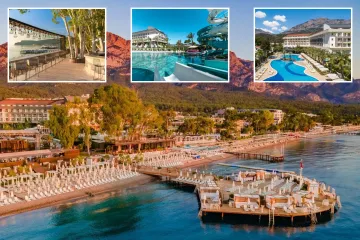
Turkey urges tourists it’s ‘still safe to travel’ as tour operators launch insanely cheap holiday deals
TURKEY has urged tourists that the country is still safe to visit, after seeing a slight drop in tourism.
The country has not been part of the Iran crisis, and the majority of Turkey – including the tourist resorts – remain safe to travel.
Despite this, On The Beach confirmed that they had experienced a drop in demand for destinations like Turkey.
But tourism authorities in Turkey have since confirmed that tourism is “still normal” across the country, which welcomed more than 4.2million Brits last year.
The Ministry of Culture and Tourism of the Republic of Türkiye has teamed up with Türkiye’s Tourism Promotion and Development Agency (TGA) to reassure tourists.
They confirmed that “holidays to Turkey are operating as usual, and nothing has changed”.


They added: “Every resort, hotel, excursion and experience is operating as booked – and there have been no closures, disruptions or government-issued restrictions on tourism activity anywhere in the country.”
Not only that but they said “no Turkish airport has been subject to closure, restriction or rerouting due to regional events”.
This includes the popular airports of Istanbul, Antalya Bodrum and Izmir.
And there are some super cheap Turkey holidays on sale right now.
You could spend a week all-inclusive at a Turkish holiday resort for just £199 each, which includes your seven night stay, return flights and your food and drink.
The cheap deal is staying at Ares Dream Hotel in Antalya, according to loveholidays.
Or spend a month for nearly half the cost than the average rent in the UK (£1,368), with a 28-night, all-inclusive stay from £619pp.
Even the summer holidays have cheap deals with seven nights at Hotel Linda in Kas from £469pp in August.
The current UK Foreign Office advice is that all of Turkey is safe to travel to, excluding the border with Syria.
Other bits of travel advice is to always carry around some form of photo ID such as a passport when travelling in Turkey.
Smoking is also banned on all public transport, as well as at bars, restaurants and cafes.
It’s not just Turkey that has seen a drop in tourism due to Iran, despite being safe to visit.
Egypt is seeing a drop in numbers, as well as Cyprus following an RAF base attack.
Both are still on the UK safe-travel list.
Champions League: English dominance of league phase prompts rethink
A number of European clubs have called on Uefa to change the Champions League rules and allow teams from the same country to draw each other in the league phase.
It comes amid concerns that the growing power of the Premier League is having a negative impact on teams from other countries.
Since the new Champions League format was introduced for the 2024-25 season country protection – which means no teams from the same league can play each other – has remained in place for the eight games that make up the first phase of the competition.
It is then removed for all the knockout rounds.
But with three English clubs in Pot 1 for this season’s league phase, draw conditions had to be placed upon the non-English clubs in order for the rule to be respected.
Teams felt aggrieved that it effectively increased the chances of a harder draw.
It meant Barcelona, Bayern Munich, Borussia Dortmund, Inter Milan, Paris St-Germain and Real Madrid all had to play two games against Premier League teams.
Some were forced to take Arsenal, Spurs or Newcastle from Pots 2, 3 and 4 to avoid deadlocking the draw.
For instance, PSG and Barcelona had to be given a fixture against Newcastle from Pot 4. Without the restriction they could have faced Kairat Almaty or Pafos.
On paper at least, being forced to pay the Magpies is more difficult.
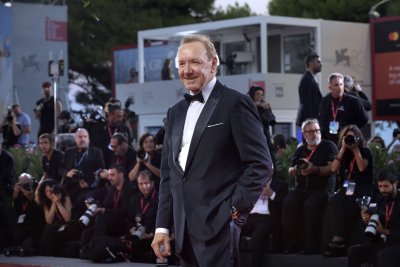
Kevin Spacey settles alleged sexual assault civil cases

Founder of the Women’s Tennis Association and tennis great Billie Jean King (C) smiles with representatives after speaking during an annual Women’s History Month event in celebration of the 50th anniversary of Title IX in Statuary Hall at the U.S .Capitol in Washington on March 9, 2022. Women’s History Month is celebrated every March. Photo by Bonnie Cash/UPI | License Photo
March 19 (UPI) — Actor Kevin Spacey settled out of court in England with three men who sued him, accusing him of sexual assault.
The cases were set for trial in the High Court this year.
The men alleged that between 2000 and 2013 Spacey, 66, assaulted them, but Spacey denies any wrongdoing.
In 2023, he was found not guilty of nine criminal sexual assault charges. Two of the accusers in the criminal trial filed the civil cases.
One accuser, known as LNP, alleged that Spacey “deliberately assaulted” him 12 times between 2000 and 2005. Another, known as GHI, said he “suffered psychiatric damage and financial loss” from an assault in 2008.
Actor Ruari Cannon, who has waived his right to anonymity, said that when he was in the Tennessee Williams play Sweet Bird of Youth at the Old Vic Theater in 2013, Spacey groped him at a party. Spacey was the artistic director at the theater at the time.
Cannon also settled with the Old Vic in a civil suit two weeks ago.
Cannon was on a BBC Channel 4 documentary, Spacey Unmasked, in 2024. Spacey called the allegation “ridiculous and it never happened.”
Spacey has been trying to win back his career, Deadline reported. Last year he said he has no home and was living out of hotels and Airbnbs and working as a lounge singer in Cyprus. He claims his struggles are like the actors who were blacklisted during McCarthyism, Deadline said.
Spacey also won a civil case in the United States in which actor Anthony Rapp said Spacey sexually assaulted him when he was 14.
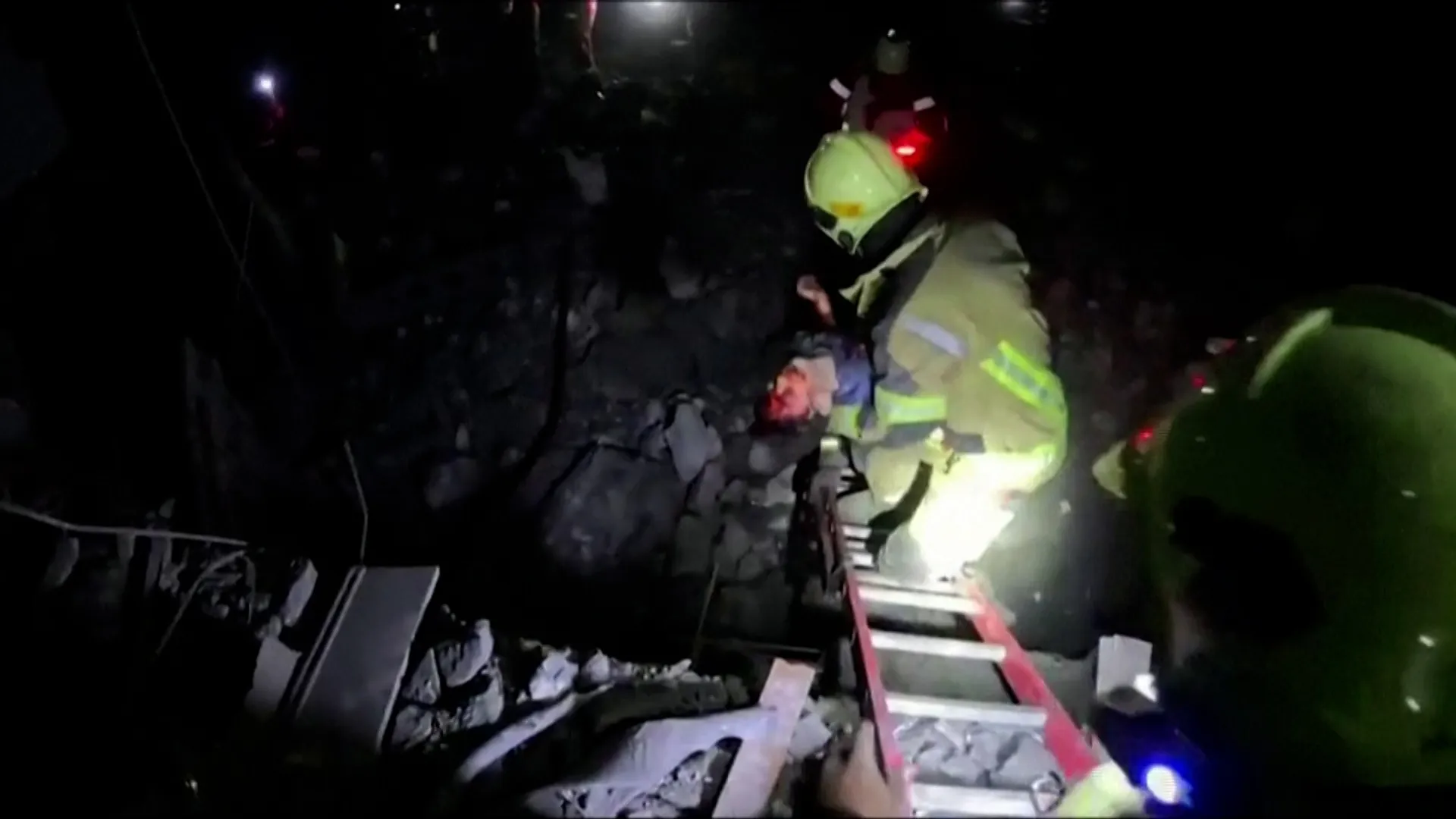
Child among survivors pulled from rubble of US-Israeli attack in Iran | Newsfeed
Video from Iran’s Red Crescent showed a child among survivors pulled from the wreckage of a US-Israeli air attack.
Published On 19 Mar 2026
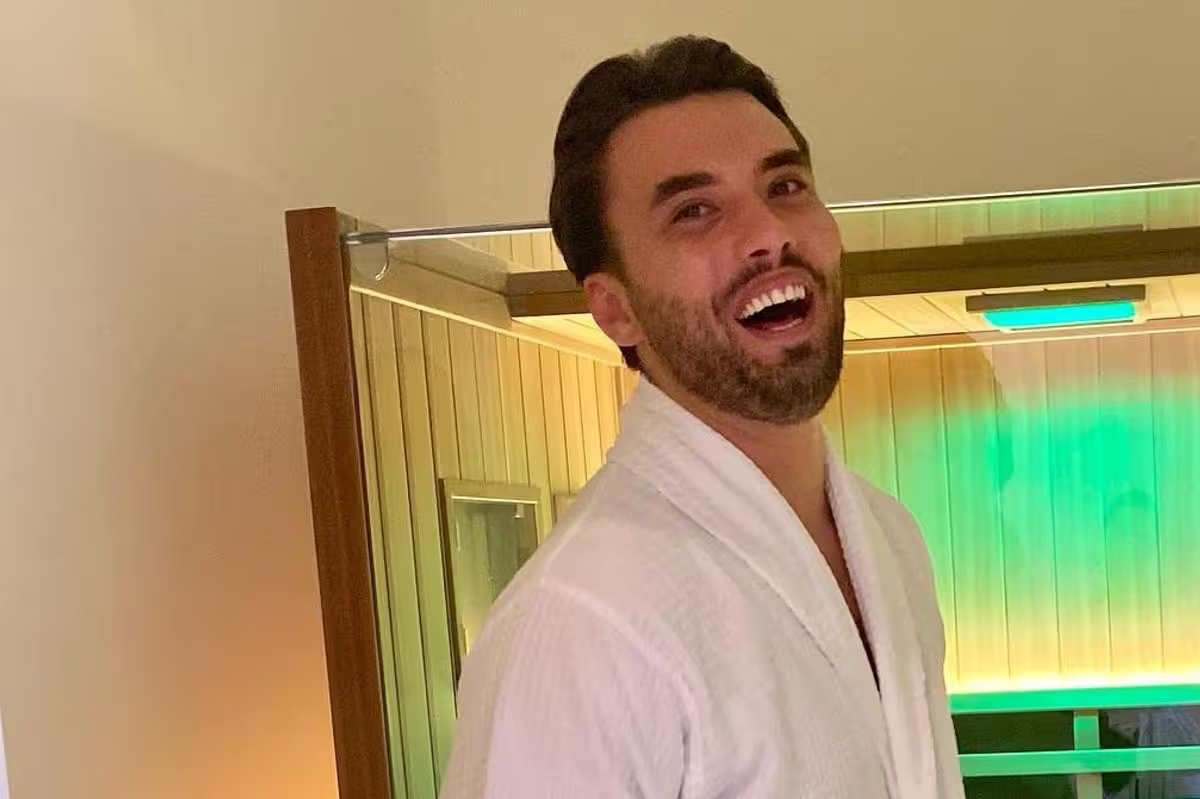
Jordan Wright’s stunned pals speak out after unimaginable tragedy
TOWIE star Jordan Wright has died at the age of 33 after being found in a drainage canal in Thailand and his friends and co-stars have started to speak out on the tragedy

Jordan Wright has tragically died at the age of 33 (Image: jordanwrights/Instagram )
TOWIE star Jordan Wright has died at the age of 33 after being found in a drainage canal in Thailand. The reality star, best known for appearing on The Only Way is Essex after initially finding fame on Ex on the Beach, had relocated to the had moved the luxury holiday destination just months ago in the hopes of a “fresh start” before tragedy struck.
His death was confirmed on Thursday by the local police and the Foreign Office. Police chief Sutthirak Chuthong of Choeng Thale district station said: “The guest was identified as Mr Jordan Wright, a British national, whom the hotel had been unable to contact. A search of the room revealed no signs of forced entry or other irregularities.
Shortly after the news broke, several of Jordan’s fellow celebs broke their silence on the matter as they paid tribute to the TV star, who had returned to his roots as a fireman in the years after finding fame.
READ MORE: Pregnant Sophie Kasaei ‘prays’ for hospitalised boyfriend after agonising illnessREAD MORE: Jordan Wright dead: TOWIE star, 33, dies in Thailand as tributes pour in
**Ensure our latest headlines always appear at the top of your Google Search by making us a Preferred Source. **Click here to activate** or add us as your Preferred Source in your Google search settings.**
In comments section of his final Instagram post, Chloe Brockett, who joined TOWIE in 2019, wrote: “Rest in Peace,” and emblazoned her comment with a heart emoji. Following that, Chloe Crowhurst, who found fame on Love Island, wrote: “Rest in peace Jord” alongside a white heart and cloud emoji.
Rykard Jenkins, another Love Islander, didn’t leave any words but chose to pay tribute in the form of a while love heart emoji and a symbol of hands in prayer.
Model Georgia Mercer wrote: “RIP Jord. You had the most infectious energy. Thank you for the laughs,” whilst influencer Scarlett Ellis saidL: “Such a lovely person gone too soon. Rest peacefully Jordan”
Tragic Jordan was discovered lying face down in the canal in a grey shirt and black trousers without any shoes on. A keycard for the Coco Phuket Bangtao Hotel was found in his pocket, police have said, with his phone nearby on the canal bank. Investigators have said there were no signs of physical assault or a struggle. His body has since been taken to Vachira Phuket Hospital for an autopsy.
It’s understood his body was found by a Burmese worker close to Bang Tao Beach on Saturday afternoon – roughly around 12.30pm. The Foreign Office also shared a statement on Jordan’s death.
A Foreign and Commonwealth and Development Office spokesperson said: “We are supporting the family of a British man who has died in Thailand and are in contact with the local authorities,” they told the Daily Mail.
Meanwhile tributes from shocked friends have poured in online, with many taking to Jordan’s last post shared on Instagram – which he posted just last week. The post features a photo of Jordan smiling while holding a glass of wine and sat in an infinity pool.
Meanwhile tributes from shocked friends have been made online, with many commenting on Jordan’s last post shared on Instagram – which he posted just last week. The post features a photo of Jordan in an infinity pool, smiling while holding a glass of wine.
“I’m home,” he declared in the Instagram post, alongside an emoji of the flag of Thailand. He continued: “FT The best bath I’ve ever taken”. One heartbroken pal wrote: “Oh Jord, gone way too soon. Rest in peace darling”. Another added: “Can’t believe what I’m hearing. Lots of fun times and good memories with you mate. Rest easy.”
In a post shared in December, he posed with pals at The Big Buddah in Phucket and gushed in the comments: “A very exiting year ahead”.
Like this story? For more of the latest showbiz news and gossip, follow Mirror Celebs on TikTok , Snapchat , Instagram , Twitter , Facebook , YouTube and Threads .

Thursday 19 March St. Joseph’s Day around the world
The provided text is an Occasional Digest digital newsletter dated March 19, 2026, which compiles diverse global information ranging from biographical history to current events. A central feature of the publication explores the life of Saint Joseph, detailing his role as a tradesman, his biblical lineage, and his status as the patron saint of various groups including workers and immigrants. Beyond religious history, the source includes practical financial data such as international currency exchange rates and meteorological updates for the United Kingdom. The digest also lists trending headlines regarding international military movements, political tensions in the Middle East, and the impact of s …
The most affordable summer holiday destination has been named with breaks from £24 each a night
THE seaside city of Agadir has been revealed to be the most affordable break for summer 2026.
A week basking in the Moroccan sunshine can cost as little as £24 per person per night between June and August – not to mention it has great weather and direct flights.
loveholidays has found the cheapest getaways for summer holidays between June 1 and August 31, 2026.
Agadir has come in first place with seven-night breaks costing on average £230 per person, or £33 per person per night.
The Moroccan city along the southwestern coast is surrounded by the Anti-Atlas mountains, but also has a six-mile long urban beach with golden sands.
It’s an ideal destination for Brits as the flight time is less than four hours.


The city is known for having hot weather too, and according to BBC weather, Agadir will reach highs of 27C next week.
Looking on the loveholidays website, Sun Travel found some even cheaper deals for seven-night breaks in June, for as little as £24 per person per night.
The three-star Appart Hotel Igoudar, which offers child-free stays, has seven-night breaks from £169 per person.
The hotel has Kasbah-style apartments which is just steps away from the beach.
There’s an outdoor swimming pool area too, and one dedicated to children.
Departing on June 3, 2026 breaks start from £169 per person – or £24 per person per night.
Or going away on August 24, 2026, across seven-nights start from £219 per person.
Another great pick is the Club Al Moggar Garden Beach which has its own private beach and a large swimming pool.
Going away from June 3, 2026 for seven nights including breakfast and flights starts from £239 per person – or £34 per person per night.
Deputy Travel Editor Kara Godfrey recently visited the city – and here’s what she found.
She said: “The Moroccan city is home to the country’s largest market, Souk El Had, as well as a bustling harbour and modern marina.
“Rebuilt following a devastating earthquake in 1960, the sprawling city nestles against the Atlantic Ocean and its palm-lined wide roads feel more Miami than Morocco.
“At Taghazout Beach, hordes of eager surfers took to the sea before I’d even finished my morning coffee.
“As a novice surfer, I opted to watch those riding the waves, while my companion made friends with the stray dogs and hawkers selling Moroccan breads.”
Another spot Kara visited was the Wall of Remembrance, which commemorates the lives that were lost in the earthquake in 1960.
Souk El Had is where you’ll find 3,000 shops selling lots of items from clothing to candles, souvenirs and gifts.
Closely behind Agadir in terms of affordability is Costa Dorada in Spain where average seven-night stays cost £381 per person on average.
loveholidays’ most affordable destinations this summer…

loveholidays has revealed the top 10 most affordable destinations for a seven-night summer getaway – and the average price…
- Agadir, Morocco – £230
- Costa Dorada, Spain – £381
- Murcia, Spain – £399
- Lanzarote, Canary Islands – £403
- Gozo, Malta – £403
- Gran Canaria, Canary Islands – £411
- Riga Region, Latvia – £434
- Corfu, Greek Islands – £438
- Andalucia, Spain – £439
- Halkidiki, Greece – £440
Here’s another city in Morocco that’s just one hour by boat from Spain and has cheap five-star hotels.
And here are cheap long-haul destinations to visit in 2026 with £119 flights and £8 hotels.
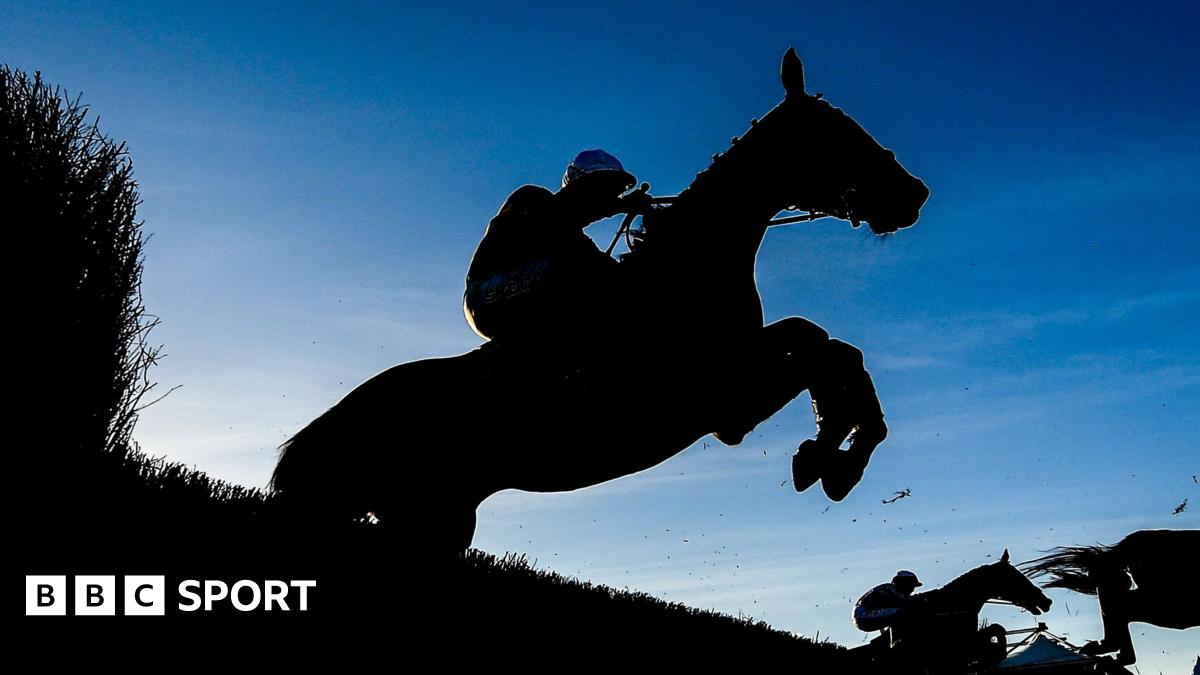
BHA launch new equality, diversity and inclusion strategy to tackle ‘consistent pattern’ of racism
The BHA’s research into underrepresented groups in racing highlighted “negative experiences, barriers to progression (which are often hidden), inconsistent support, and a lack of trust in reporting systems”.
A study which focused on the Urban Equestrian Academy – a social enterprise aimed at providing people from inner-city and diverse backgrounds access to horses and equestrian – found that all 20 participants had reported experiencing racism.
In the same study, all participants said that race had impacted their career progression.
One participant shared that they had thought about suicide “on a few occasions because of the way I was treated”.
Meanwhile, 40% (67) of respondents in a separate survey said they had experienced, witnessed, or had reported to them inappropriate or poor behaviour because of ethnicity or cultural background.
Some reported verbal abuse including aggressive racist language such as “dirty refugee” and “better off if you had been bombed”.
“The strategy is rooted in evidence and shaped by the lived experiences of people working in racing today, and we offer a huge thank you to those who have taken the time and shown the courage to share these with us,” the BHA’s head of diversity and inclusion, Rose Grissell, said.
“Many have positive experiences, but not everyone does, and acknowledging that is an important step in supporting positive progress.
“Our aim is to make inclusion part of everyday practice, not an optional extra.”
The BHA’s new equality, diversity and inclusion strategy includes the following proposals:
-
Strengthen leadership and accountability
-
Build equitable practices to address bias and barriers
-
Improve education and awareness to act inclusively
-
Better support and celebrate an inclusive culture
-
Engage new audiences and make the sport more accessible
BHA chief executive Brant Dunshea said the new strategy was about ensuring the “long-term health and success” of horse racing.
“To attract talent, fans and investment, we must ensure that everyone who works in or engages with racing feels safe, respected and able to thrive,” he said.
“British racing is at its best when it is open, welcoming and reflective of the society around us.”

Morocco says stripping Senegal of AFCON win ‘upholds rights and integrity’ | Africa Cup of Nations News
The football federation of Morocco says it welcomes the CAF Appeal Board decision to award it the 2025 AFCON title.
Published On 19 Mar 2026
The Royal Moroccan Football Federation (FRMF) has commended the decision to award its country the 2025 Africa Cup of Nations (AFCON) title, which was stripped from Senegal.
The FRMF “welcomes the decision, which reaffirms the primacy of competition regulations and reinforces the conditions necessary for the proper conduct of international tournaments”, the federation said in a statement on Thursday.
Recommended Stories
list of 4 itemsend of list
The Confederation of African Football (CAF) had announced on Tuesday that its Appeal Board had awarded the tournament to Morocco, the defeated finalists, on January 18.
The final, which Senegal won 1-0 in extra time, was delayed for 14 minutes when the Senegalese players and staff returned to the dressing room in protest against the awarding of an injury-time penalty to Morocco in the second half.
When play eventually resumed, Moroccan striker Brahim Diaz missed the kick with Senegal going on to win the game thanks to Pape Gueye’s stunning strike.
“From the outset, following the incidents that led to the interruption of the match, the FRMF maintained a clear and consistent position: the strict application of the governing regulations. The Federation’s approach was solely guided by this principle,” the FRMF statement read.
“Following its appeal, CAF has now confirmed that the applicable regulations were not properly enforced.”
Morocco appealed to CAF to overturn the result immediately after the final, which descended into chaos during and after the protest, and led to a pitch invasion, which resulted in 18 Senegalese fans being handed prison sentences.
The initial appeal was rejected, and the Appeal Board decision came exactly two months after the final was completed.
“Throughout the process, the FRMF acted in full compliance with all relevant legal and procedural frameworks, with a constant focus on upholding its rights and preserving the integrity of the competition,” it said in the statement.
“This decision provides clarity on the applicable framework and strengthens the consistency and credibility of international competitions, particularly within African football.”
The Senegal Football Federation (FSF) immediately responded to CAF’s ruling by saying it would take its own appeal to the Court of Arbitration for Sport.
Such a process could take as long as a year to reach a final decision.
Senegal’s government on Wednesday went on to allege corruption following the decision and called for an independent international investigation into the matter.
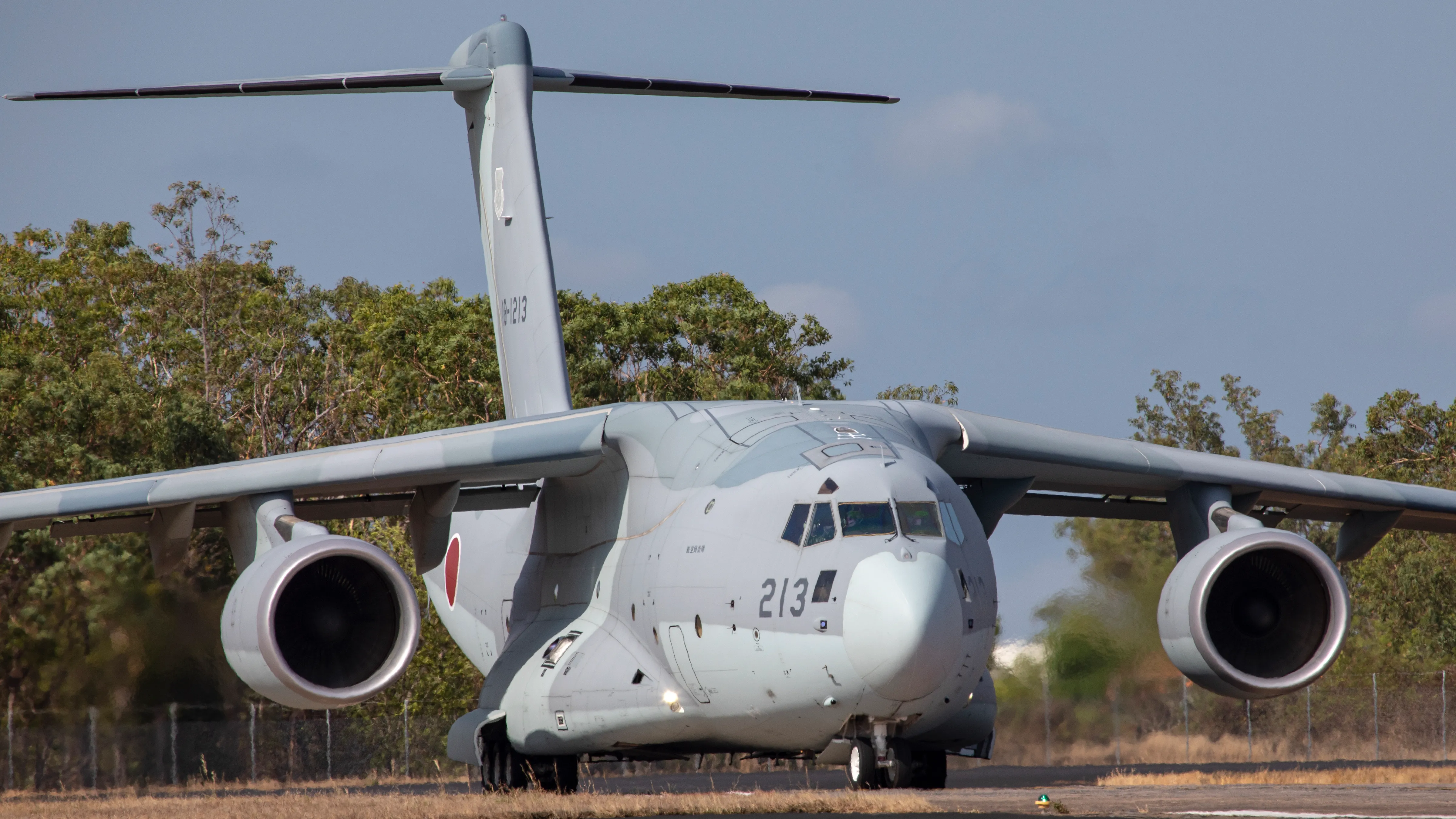
Japan’s EC-2 Electronic Warfare Jet, Arguably The World’s Ugliest Aircraft, Just Flew For The First Time
The latest addition to the Japan Air Self-Defense Force (JASDF) is, without question, one of the ugliest military aircraft to grace an apron today. With its enormous, bulged nose and other awkward protuberances, the Kawasaki EC-2 is, nevertheless, an important addition to the JASDF at a time when it faces increasing challenges from various sophisticated threats. The aircraft, which has generated much interest, took to the air for the first time today at Gifu Air Base, in the prefecture of the same name.
Derived from Japan’s indigenous C-2 twin-jet transport, the EC-2 is a standoff electronic warfare aircraft, the development of which began in 2021. Its primary role is to interfere with an opponent’s operations on the electromagnetic spectrum, from outside the range of air defense threats.
Specifically, the EC-2 is based on serial 68-1203, which was the third C-2 transport completed, before being modified for its specialist role.
As for the C-2, this military airlifter sits somewhere between a C-17 and a C-130 in terms of size and capabilities. In fact, it is probably closest in most regards to the four-turboprop Airbus A400M, but is powered by a pair of General Electric CF6 high-bypass turbofans — similar to those on many 747s and 767s, for instance.

Returning to the EC-2, this aircraft is the successor to the JASDF’s one-off and now-retired Kawasaki EC-1, which was converted from an existing C-1 transport airframe and was for many years operated by the Electronic Warfare Operations Group (Denshi Sakusengun) at Iruma Air Base, in Japan’s Saitama prefecture.
A series of photos shows the now-retired Kawasaki EC-1:
The EC-2 was first noted by an aircraft spotter at Gifu last month.
Gifu is home to the JASDF’s Aviation Development and Testing Group, which will put the EC-2 through its paces before it is approved for operational service.
Before its first flight, the EC-2 became a peculiar object of interest for spotters and locals alike, with photographers taking numerous shots of the aircraft as it underwent taxi trials at Gifu.
Prior to that, the EC-2’s appearance had only been publicly known thanks to a rendering released by the Japan Ministry of Defense.

Back in 2022, a spokesperson from the Japan Ministry of Defense’s Acquisition, Technology & Logistics Agency (ATLA) told Janes that the C-2 was selected as the platform due to its ability to carry a significant amount of equipment to enable it to conduct “effective jamming” from outside of the opponent’s threat envelope.
“[The] C-2 transport aircraft has been selected as the base platform after considering such factors as its flight performance, maximum payload, and cost,” the ATLA spokesperson said at the time.
“By choosing the C-2 as the base platform, we make use of the existing infrastructure of the C-2 and thus effectively and efficiently operate the new C-2-based standoff EW aircraft,” the spokesperson added.
Compared to the C-1, the C-2 has a significantly higher payload capacity. The new transport can carry a payload of nearly 80,000 pounds for a maximum takeoff weight of 310,000 pounds, as opposed to a payload of around 26,000 pounds and a maximum takeoff weight of 100,000 pounds for the older C-1. You can look at a very direct visual comparison of the C-1 and the C-2 here.

Reportedly, however, at least some of the equipment previously used in the EC-1 — including the J/ALQ-5 electronic countermeasures system — has been ported over to the new EC-2.
Like its predecessor, the EC-2 has a huge bulbous nose, but it also adds two large, bulged fairings in tandem on the top of the fuselage. Meanwhile, there are two other prominent fairings mounted on either side of the rear fuselage.
Detailed views of the Kawasaki EC-1:
Very few details of other specific equipment have been released, but imagery of the aircraft confirms that missile approach warning sensors (MAWS) are installed around the fuselage as part of its self-defense suite.
In an operational context, the EC-2 would use its powerful jamming systems to disrupt enemy sensors — especially those belonging to air defense systems and communications — on the ground and in the air, from a long distance.
The details that have been released relating to the EC-2 refer to program costs. Namely, the FY2025 Budget Request notes that around $260 million was allocated to the development of the aircraft. This is part of a total of around $3.2 billion that is being spent to upgrade intelligence collection and analysis capabilities.
Reflecting the increased emphasis on electromagnetic spectrum operations, Japan plans to buy four EC-2s, compared to having just one EC-1 in the past.
The EC-2 is the second specialized variant of the C-2, after the RC-2 signals intelligence (SIGINT) platform, first flown in 2018 and now active with the Electronic Warfare Operations Group. This aircraft was converted from the second C-2, serial 18-1202, and was officially handed over to the JASDF in 2020.
The RC-2 also has fairings on top and on the sides of the fuselage, and atop the tail. The nose radome is enlarged, and there is an extensive under-fuselage antenna ‘farm.’
According to statements from the Japan Ministry of Defense, it seems the EC-2 and RC-2 will likely work in concert. Specifically, the RC-2 is part of a wider effort to “improve capabilities to gather electromagnetic information necessary for electronic jamming and electronic protection.” This suggests that the RC-2 will conduct regular peacetime missions to gather data on locations and types of threat emitters, as part of generating an electronic order of battle, with this information then being used to ensure the EC-2 is able to target specific emitters.
In the past, Japan has also looked at other specialized versions of the C-2, including arming the transports with air-launched standoff missiles, in a parallel to the U.S. military’s experiments with adding a standoff attack option to existing transport fleets.
As part of its fiscal 2023 budget, the Japan Ministry of Defense received a little over $25 million to explore the missile-toting C-2 concept, with a plan to continue technical research until fiscal 2024. If judged successful, full-scale development would then follow. The current status of that effort is unclear.
One factor that has stood in the way of additional procurement is the very high cost of the C-2, with around $2.3 billion plowed into the development effort and each airframe priced at approximately $176 million, as of 2017. This means Japan has been buying these aircraft at a slow rate, with the aim of fielding a frontline fleet of 16. The high cost has also contributed to a failure to win any export orders, which, if secured, would have helped to bring down the price.
The EC-2 seen on its first flight earlier today, accompanied by a Mitsubishi F-2B chase plane:
However, there is clearly a need for the EC-2, and it seems likely that the program will yield further examples of the standoff jammer.
In the past, Japanese defense officials have described the regional environment as “severe” and increasingly complex.
After all, Japan faces an increasingly challenging security environment, with the key threats provided by Chinese, North Korean, and Russian military activity. China has intensified its air and naval operations in the East China Sea and the wider Western Pacific, including deploying aircraft carriers and conducting frequent patrols near Japan’s southwestern islands. North Korea continues to test ballistic missiles capable of reaching Japan, while Russian aviation activity around Japanese airspace has also increased, including joint patrols with the Chinese military.
Outside of Japan, this type of platform is of growing interest, with a number of significant active procurement programs. In the past, we have looked in detail at the U.S. Air Force’s EA-37B Compass Call, as well as its derivative for Australia, the MC-55A Peregrine.

While its bizarre appearance might be the most obvious feature of Japan’s new EC-2, this ungainly machine will play an important role in the modernization of the Japan Air Self-Defense Force, as it increasingly looks at how to dominate the electromagnetic domain.
Contact the author: thomas@thewarzone.com