



Cops fear Towie star Jordan Wright was running from someone in haunting last CCTV before he was found dead in Thai ditch
FEARS are mounting that Towie star Jordan Wright was running away from someone before he was found dead in a Thai ditch, cops say.
Local police are now probing whether Wright was being chased as he frantically dashed to his hotel while glancing over his shoulder.
Chilling CCTV captured the beloved TV personality running erratically past a truck before taking a sharp left turn.
The clip was timestamped to 11:25pm on March 12 – about 36 hours before he was found dead on Saturday.
Wright, 33, appeared to be somewhat disoriented and panicked as he rushed through the hotel complex.
He even grabbed onto a white pickup truck to help propel himself forward as he jolted away while turning.


Police now fear he may have been trying to lose someone as he sprinted through the streets of Phuket.
Lieutenant Colonel Sutthirak Chuthong of Choeng Thale district station has refused to rule out foul play.
He said: “The circumstances leading up to the death are quite unclear. It is possible that other people were involved.”
Wright was weaving erratically through the Hotel COCO Phuket Bangtao grounds in the video.
Authorities have also confirmed that they will be reviewing CCTV again throughout Friday in order to get any more details from the haunting clip.
The grainy night-time footage has raised questions over what Wright was doing in the moments leading up to his death.
The CCTV shows him pacing back and forth before suddenly bolting out of the complex again and vanishing into the darkness beyond the hotel perimeter.
From there, his final movements become even more disturbing.
Wright is believed to have sprinted across rough, uneven fields surrounding the hotel before leaping down a 10ft creek.
He is then thought to have splashed through a shallow stream and scrambled towards a nearby construction site.
That site, which is a desolate, half-built area with no CCTV, would become the place where his body was found.
Two days later, a Myanmar worker harvesting morning vegetables made the grim discovery – around 300 metres from his hotel.
A hotel insider revealed he had been staying alone and had no visitors.
They said: “He would go out at night like other guests. There was nothing unusual until we could not find him when he was due to check out.”
Records show Wright checked into the hotel alone and was due to leave on March 13, but never showed up.
Questions are still swirling around his death, with key details about his final hours remaining a mystery.
He had moved to Thailand just weeks before the tragedy seeking a “fresh start”.
Just days ago, the reality TV icon shared a haunting final glimpse into his dream life in Thailand.
Wright had posted a glossy carousel of sun-soaked snaps and videos embracing his fresh start in Phuket before tragedy struck.
Sharing the glitzy new life with his 21.5k Instagram followers, he simply captioned the post “I’m Home” alongside a Thai flag.
He was pictured lounging in a luxury infinity pool, clutching a glass as the sun set into the ocean behind him.
Another showed him grinning on top of a motorbike, soaking up the island lifestyle.
Tributes have since been pouring in for the late star.
Fellow Towie star Chloe Brockett wrote: “Rest in peace Jordan” and heart emoji.
Another wrote: “Oh Jord, gone way too soon. Rest in peace darling.”
A third said: “Oh Jord! This is heartbreaking to hear. You’ll be truly missed.”
From Basildon, Essex, Wright rose to fame on Ex On The Beach in 2017 before joining The Only Way Is Essex in 2018.
Wright also dated reality star Vicky Pattison and was known for his explosive storyline with Courtney Green and Myles Barnett.

Pelicans pull off mini-sweep of Clippers, who have lost four straight
NEW ORLEANS — Trey Murphy III scored 27 points and the New Orleans Pelicans extended their home winning streak to seven games with a 105-99 victory over the Clippers on Thursday night.
Saddiq Bey had 20 points and Zion Williamson added 15 for the Pelicans, who swept the two-game set against the Clippers after a 124-109 win, also at home, on Wednesday night.
Dejounte Murray was held out to rest as part of his comeback from a ruptured Achilles tendon. He had 17 points and a season-high 11 assists Wednesday night in his ninth game since making his season debut last month.

Derrick Jones Jr. scored 22 points, John Collins had 18 and Bogdan Bogdanovic added 16 for the Clippers, who lost their fourth in a row.
Kawhi Leonard sat out a night after scoring 25 points and grabbing eight rebounds in his return from a one-game absence because of a sprained left ankle.
The Pelicans trailed 94-91 with 5:53 after Collins’ floater, but Williamson made a layup and Murphy hit a three-pointer to put New Orleans up for good as it closed with a 14-5 run.
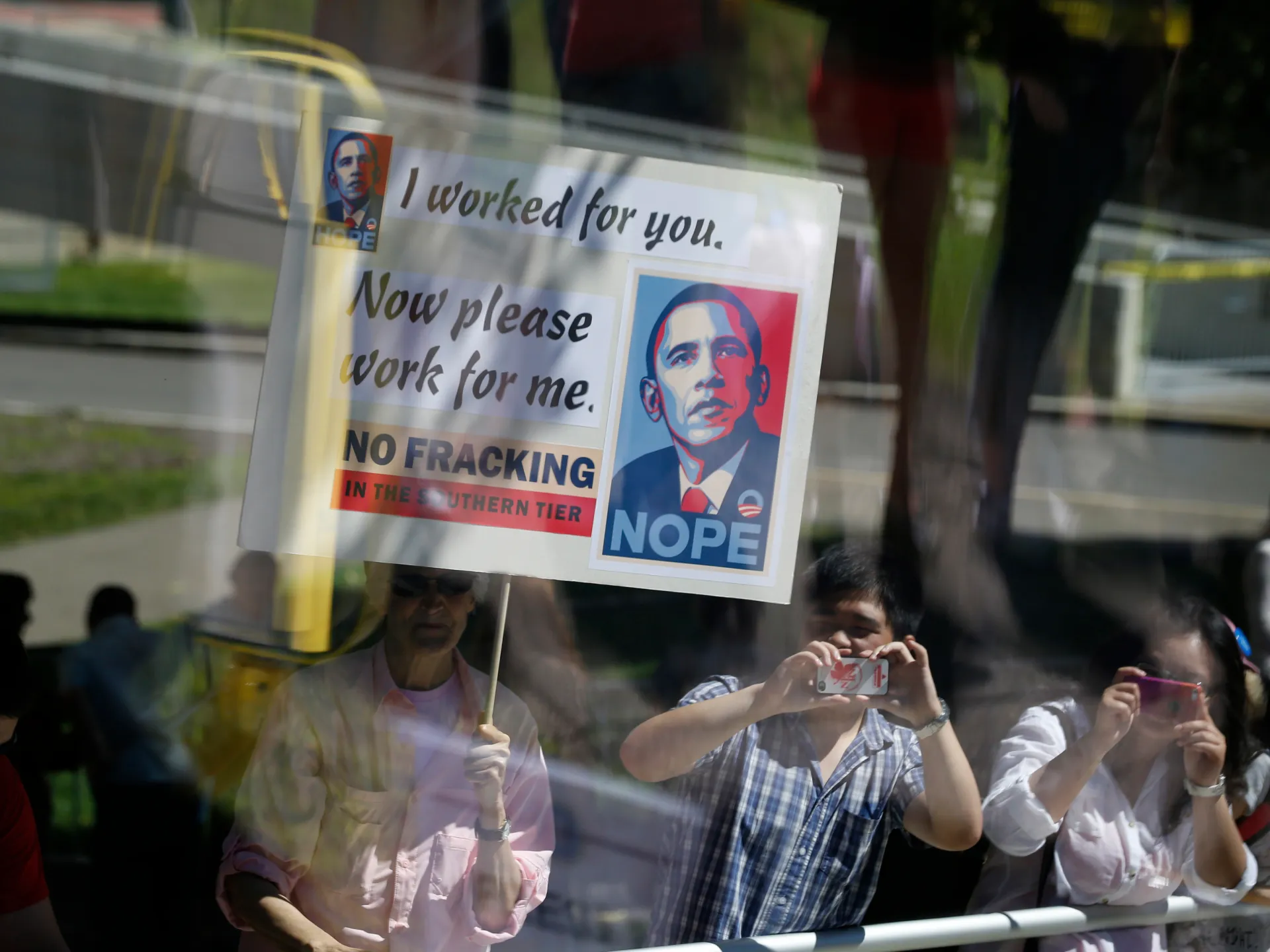
Long before Trump: How US policy has harmed the environment for decades | Climate Crisis News
Health and environment advocacy groups in the United States are suing the Environmental Protection Agency (EPA) over the Trump administration’s decision to withdraw a key 2009 climate change ruling known as the “endangerment finding”.
That finding had established that greenhouse gases are a risk to public health and environmental safety, given that they are the primary drivers of climate change. It formed the legal basis for many regulatory policies aimed at curbing climate change.
When US President Donald Trump, who has called climate change a “hoax” and a “con job”, rescinded the declaration in February this year, the EPA supported the move, deeming it the “single largest deregulatory action in US history”.
The lawsuit, filed on Wednesday this week, alleges that the Trump administration’s decision will risk the health and welfare of US citizens.
“Repealing the Endangerment Finding endangers all of us. People everywhere will face more pollution, higher costs, and thousands of avoidable deaths,” Peter Zalzal, the associate vice president of clean air strategies at the Environmental Defense Fund, one of the plaintiffs, said in a statement.
Trump’s revocation of the endangerment finding is the latest in a series of steps he has taken to prioritise deregulation, boost fossil fuel production and reverse climate regulations.
But Trump is not the first US president to enact policy damaging to the environment. Here’s how decades of US policy have harmed the environment before he arrived in the White House
What is the ‘endangerment finding’?
The endangerment finding was established under the presidency of Democrat Barack Obama. It states that carbon dioxide and other greenhouse gases pose a threat to public health and welfare.
That ruling allowed the EPA under President Obama to move forward on policy aimed at limit the release of greenhouse gases in the US, Michael Kraft, professor emeritus of political science and public and environmental affairs at the University of Wisconsin-Green Bay, told Al Jazeera.
Under the endangerment finding, power plants were required to meet federal limits on carbon emissions or risk being shut down. This forced oil and gas companies to invest more to detect and fix methane leaks, curb flaring, and improve tailpipe and fuel‑economy standards to enable automobile companies to manufacture more efficient, lower‑emitting vehicles.
What does rescinding it mean?
“By allowing for increased pollution, these recent changes [by the Trump administration] will harm practically every single person on the planet,” Washington, DC-based policy researcher Brett Heinz told Al Jazeera.
“People living near fossil fuel facilities will be some of the most immediately affected, as they will be exposed to the new air and water pollution unleashed by deregulatory policies,” Heinz added.
Without the endangerment finding in place, the EPA has lost a key legal basis on which to limit greenhouse gas emissions, making it easier for coal plants, oil refineries and petrochemical complexes to run older, dirtier equipment for longer, expand without installing modern pollution controls, and emit more soot, smog‑forming gases and toxic chemicals into nearby communities.
Heinz explained that higher greenhouse gas emissions from burning fossil fuels in power plants, cars and industry as well as continued deforestation will also amplify the dangers posed by natural disasters. This is because increased warming exacerbates heatwaves, storms, floods and droughts, and raises sea levels – all of which turn existing natural hazards into more frequent and more destructive disasters.
“The only people who will benefit from these decisions are a small handful of wealthy fossil fuel executives and shareholders, who will see healthy profits while the world grows sick. These fossil fuel elites, many of whom contributed money to Trump’s presidential campaign, have now gotten a return on this investment,” Heinz said.
Experts say that Trump’s decision to entirely do away with environmental policy is unlike any president before him.
“The White House’s tidal wave of new pro-pollution policies is completely unprecedented. While past administrations have modified environmental rules, the second Trump administration is essentially trying to eliminate them entirely. So far, this has been the most radically anti-environmental presidency in American history,” Heinz said.
How have previous US presidents endangered the environment?
Trump is by no means the first US president to enact policy which is damaging to the environment, however.
Under Republican Theodore Roosevelt, who was president from 1901 to 1909, Congress passed the Reclamation (Newlands) Act of 1902, which treated land and rivers primarily as raw material for large infrastructure projects rather than as ecosystems in need of protection.
This was furthered by Democrat Harry Truman, who was president from 1945 to 1953 and pushed for rapid post‑war industrial and suburban expansion by commissioning the construction of interstate highways and promoting car‑centric development.
Under Republican Dwight Eisenhower, who was president from 1953 to 1961, the interstate highway system burgeoned, and the private car became a developmental priority in the US.
While Republican Richard Nixon, who was president from 1969 to 1974, signed key environmental laws, he also backed massive fossil‑fuel expansion. Under Nixon, the highly toxic herbicide, known as Agent Orange, was used by the US military during the Vietnam War.
Republican Ronald Reagan, who was president from 1981 to 1989, appointed people to the EPA and the Department of Interior who pushed for expanded oil, gas, coal and timber extraction on public lands.
To facilitate this, they favoured deregulation and industry interests, and rolled back existing environmental policy, slashing budgets for EPA enforcement of the Clean Air and Clean Water Acts, easing rules on toxic emissions and pesticides, and opening up more federal land – including wilderness and wildlife habitat – to oil, gas, mining and logging activities.
Republican George W Bush, who was president from 2001 to 2009, refused to ratify the 1997 UN-backed emissions reductions Kyoto Protocol and actively undermined global climate negotiations by formally withdrawing US support for Kyoto in 2001, appointing senior officials who questioned climate science, and pushing voluntary, industry-friendly approaches instead of binding emissions cuts.
While Obama, who was president from 2009 to 2017, introduced several landmark climate regulations, he also oversaw the fracking boom, making the US the world’s largest oil and gas producer, and locking in long-term fossil infrastructure.
Fracking, or hydraulic fracturing, involves blasting water, sand and chemicals into shale rock to release oil and gas, a process believed to cause methane leaks, groundwater contamination, heavy water use and increased local air pollution.
Democrat Joe Biden, who was president from 2021 to 2024, approved large fossil projects such as the Willow project in Alaska. This involved oil development on federal land in the National Petroleum Reserve, projected to pump hundreds of millions of barrels of crude over several decades.
Figures released by the the US Bureau of Land Management (BLM) suggested that the project would release 239 million to 280 million tonnes of greenhouse gases over its lifetime. The project, approved in 2023 and ongoing, was projected to continue for 30 years.
Biden also backed LNG export growth by approving new and expanded export terminals and long‑term export licences, allowing companies to lock into multidecade contracts to ship US gas to Europe and Asia.
Is this a partisan issue?
No.
“The failure of US policymakers to aggressively tackle global warming is not so much a Democrat versus Republican matter,” Steinberg said.
“It’s neoliberalism, a form of corporate freedom, that is the heart of the problem. A bipartisan consensus on the need for economic growth has led to a general trend toward weakening environmental regulations,” he added.
The US once led the world in conservation by creating an extensive national park system in the 19th century, Ted Steinberg, a history professor at the US-based Case Western Reserve University, told Al Jazeera.
“That was then. US corporate interests, especially the fossil fuel industry, combined with the one-party political system, in which both Republicans and Democrats indenture themselves to the business class, have caused the United States to drag its feet on global warming,” Steinberg said.
What is the history of Washington’s impact on the environment?
The US has historically been the largest contributor to global warming, experts say.
“As in most countries, US environmental policy has been a response to the problems caused by industrialisation and urbanisation, starting in the mid-19th century and proceeding from there, happening at the local, state and national levels,” Chad Montrie, a history professor at the University of Massachusetts Lowell, told Al Jazeera.
“Much of that policy has been limited and inadequate, especially when corporations were able to exert their influence, but in some cases, it has been ahead of what other nations were doing,” Montrie, who specialises in environmental history, added.
There was a time when environmental policy was bipartisan. The EPA was, in fact, created by Republican President Richard Nixon in 1970.
“It wasn’t until the rise of pro-business politics in the 1980s that Republicans like President Reagan took a hard turn against environmental protections,” Heinz said.
“The Democratic Party continues to believe in environmental protection and climate-friendly policies to some degree, while the Republican Party has become one of the few political parties worldwide that completely denies the scientific facts around climate change.”
How does this affect the rest of the world?
“US policy often sets the standards for policy in other parts of the world, both because of its cultural influence and because of the control that the US has over global bodies like the International Monetary Fund,” Heinz said.
“Right now, the US is actively pushing dirty fossil fuels on the rest of the world and even threatening some of its allies for trying to negotiate new environmental agreements.”
Heinz explained that this pressure, coupled with soaring energy prices, seems to have convinced Europe to retreat from some of their climate goals. Household electricity prices jumped by about 20 percent across the European Union between 2021 and 2022, according to Eurostat data.
Heinz said that if the latest United Nations Climate Change Conference, or COP negotiations are any indication, global climate ambition appears to be on the decline right now.
The latest conference concluded in November 2025 in Brazil with a draft proposal which did not include a roadmap for transitioning away from fossil fuels, nor did it mention the term “fossil fuels” at all. This drew rebuke from several countries attending the conference.
“So long as Donald Trump remains in office, the hope of future generations relies upon the nations of the world coming together and acting responsibly to preserve a healthy environment at a time when the United States has gone truly mad.”

Israel Claims Destruction Of ‘Iran Force One’
The Israeli Air Force (IAF) claims that it destroyed the Iranian government’s Airbus A340 in a strike on Mehrabad International Airport in Tehran. Last summer, the aircraft had been part of an exodus of Iranian state-operated airliners to Oman, but its apparent demise now underscores the intensity of the current airstrikes against Iran, which have been systematically removing aircraft of all types from the Iranian inventory.
In a statement on X, the IAF described the A340-300 as “the plane of the leader of the Iranian terror regime” and a “strategic asset,” and said that its destruction “impairs the ability to coordinate between the leadership of the Iranian terror regime and Axis countries, in building military power, and in the regime’s rehabilitation capability.” The IAF posted a library photo showing the A340, which it says was also used by “additional senior officials from the terror regime, and elements in the Iranian military, to advance military procurement and manage relations with Axis countries through domestic and international flights.”
The fact that any airlift-capable aircraft, whether military or civilian by design, can be used to move materiel to Iranian proxies has long been a problem for Israel. With the IAF destroying its airlift fleet, Iran will find it harder to connect with proxies, providing support, as well as engaging in a variety of other nefarious activities.
At this stage, it should be noted that the destruction of the A340 has not yet been independently verified. TWZ has approached various commercial providers of satellite imagery for confirmation.
Previous satellite imagery showed the A340 parked in different dispersed areas around the airport, including among derelict airframes. This was almost certainly an effort to complicate targeting.
A satellite image of Mehrabad showing the runway blocked with parked buses and helicopters, rendering it unusable:
The A340 in question has the Iranian civil registration EP-IGA and is the largest aircraft in Iran’s modest government transport fleet. Widely described as ‘Iran Force One,’ in reference to the U.S. president’s Air Force One, the A340 has been used by the Iranian state for a variety of long-haul missions, making use of its widebody capacity and intercontinental range. In general, the A340 has been a fairly popular choice as a government transport, with VIP A340s having been operated by Egypt, France, Jordan, Libya, Qatar, and Saudi Arabia, among others.

Iran – Government A340-313 with Iran President on board Landing at Karachi Airport
In practice, Iran’s supreme leader only left the country occasionally, with the A340 primarily being used to move other high-ranking officials on diplomatic visits. For example, it was used to transport Iranian President Masoud Pezeshkian to the United States for the main annual United Nations General Assembly meeting in 2024.
The A340, which was operated by the Islamic Republic of Iran Air Force (IRIAF), despite its civilian-style livery, had a complicated history. It was first delivered to Air Canada in 1999, before flying under the colors of Air Jamaica, Turkish Airlines, AirBlue, and Asian Express. By 2015, it was owned by Tehran-based Meraj Airlines, which leased it to the Iranian government. It spent a period with Dena Airways, a passenger charter carrier based out of Mehrabad, but by 2018, it belonged to the Iranian government and was registered as EP-IGA.
Serving alongside the A340 in the Iranian government’s transport fleet were at least one Airbus A321-200 and a pair of BAe Avro RJ85 regional jets. Their fates remain uncertain at this stage.
Mehrabad has been hit particularly hard by U.S.-Israeli airstrikes, with targeted aircraft including the unique KC-747 aircraft operated by the IRIAF. The tanker version of the 747 was not flown anywhere else in the world, and Iran had just one flying example. You can read all about the aircraft in this past article.
Smoke rises after a reported Israeli strike on Mehrabad on March 3:
In June 2025, during the previous conflict with Israel, the A340 made an unusual flight to the Oman capital, Muscat. The widebody touched down there together with a pair of Airbus A321s, leading to speculation that they were transporting a delegation from Iran to try to negotiate an end to the fighting before the United States became involved.
Since Iran and Oman had strong diplomatic ties, with the Omanis often serving as an intermediary between the regime in Tehran and the West, this certainly seems a likely explanation.
Other options that we discussed at the time included the evacuation of individuals seeking to escape the current conflict. This became particularly urgent after Israel began striking Tehran, as well as other locations across western Iran, with virtual impunity.
There’s also the very strong possibility that the Iranian government moved these aircraft for their own protection from the Israeli strikes on Iranian air bases, including Mehrabad, where IRIAF F-14 Tomcat fighters were also targeted.
Regardless of the purpose, by the end of June, the United States was not only fending off Iranian attacks but had also bombed three key Iranian nuclear sites in Operation Midnight Hammer.
While the A340 made its way back to Tehran after the Twelve-Day War, its apparent destruction in an Israeli airstrike means that it won’t be able to repeat any such missions, and it is now little more than a symbol of the intensity of the U.S.-Israeli campaign to wipe out the Islamic Republic of Iran Air Force fleet alongside other key military capabilities.
Contact the author: thomas@thewarzone.com

Joseph Duggar of ‘19 Kids and Counting’ held on child sex abuse charges
Another member of the Duggar family, famous for the TLC series “19 Kids and Counting,” faces allegations of child sex abuse.
Joseph Duggar, the 31-year-old son of Jim Bob and Michelle Duggar and the younger brother of convicted sex offender Josh Duggar, was arrested Wednesday afternoon in Arkansas by local law enforcement on suspicion of molesting a minor in Florida, the Bay County Sheriff’s Office announced in a statement. The sheriff’s office said it received a report on Wednesday of past sexual abuse allegedly involving Duggar and a 14-year-old girl. The girl alleged she was 9 years old during one of several alleged incidents, police said.
The teenager, according to law enforcement, accused Duggar of molesting her in 2020 while she was vacationing with family and staying at a residence in Panama City Beach. He is accused of touching the girl’s genitals and rubbing her thighs.
Resources for survivors of sexual assault
If you or someone you know is the victim of sexual violence, you can find support using RAINN’s National Sexual Assault Hotline. Call (800) 656-HOPE or visit online.rainn.org to speak with a trained support specialist.
According to the statement, the victim said Duggar “eventually apologized” for the abuse, and he stopped touching her. Duggar had also “admitted his action’s to the girl’s father and to Tontitown detectives in Arkansas, Duggar’s home state, law officials said. The Tontitown Police Department confirmed Duggar’s arrest in a separate statement, noting it acted on a warrant issued by the Bay County Sheriff’s Office.
The former reality star was charged with molestation of a victim younger than 12 and “lewd and lascivious behavior conducted” by an adult. Duggar, who is currently jailed at the Washington County Detention Center, awaits extradition to Florida. He could not immediately be reached for comment.
Joseph Duggar, his parents and his siblings — whose first names also begin with the letter J — became unexpected reality TV stars with the premiere of TLC’s “19 Kids and Counting” in 2008. The series followed the giant family, highlighting their Christian fundamentalist lifestyle. The family’s once-charming facade of purity and religious devotion quickly faded in 2015 when Josh, the firstborn Duggar child, was accused of molesting five younger girls — four of whom were his sisters — when he was 15. The series was canceled that year.
In a separate case, Josh was convicted on two counts of possessing and receiving child pornography in December 2021. He was sentenced to 12 ½ years in prison in 2022. The Supreme Court rejected his efforts to appeal his case last June.
Fifteen years after the premiere of “19 Kids and Counting,” the series, the Duggar family and their devotion to the Institute in Basic Life Principles were subject to close scrutiny in the Prime Video docuseries “Shiny Happy People: Duggar Family Secrets.”
Jill Diillard, the second-eldest Duggar daughter and one of Josh’s victims, spoke out for the 2023 docuseries.
“I believe strongly that victims should always be protected. Victims should always be cared for,” she said. “You’re out there, your story’s out there. … I’d rather have some say in what that looks like.”
Another European airline cancels all flights to Dubai until summer
ANOTHER airline has announced it has axed all flights to Dubai due to the ongoing Iran crisis until at least mid-May.
Following suit of other airlines, Dutch-carrier KLM has extended its cancellation of flights to the United Arab Emirates city until spring 2026.
In a statement on its website, KLM said: “Due to the ongoing geopolitical unrest in the Middle East, KLM has decided to cancel all flights to and from Dubai, Riyadh and Dammam until 17 May.
“The safety of our passengers and crew is always our top priority. We understand that this decision has a significant impact on our travelers and are doing everything possible to keep them well informed.
“Passengers whose flights have been cancelled will be notified personally. They can change their flight or request a refund on the KLM website.”
The airline added that it would be closely monitoring the situation and would “remain in contact with the relevant authorities”.


KLM had already suspended its Dubai flights until March 28 – but has extended this until May 17, 2026.
KLM isn’t the only airline to cancel its Dubai flights until later this year.
Hong-Kong based airline Cathay Pacific said on March 19, that it would be stopping all its flights to and from Dubai until the end of April.
British Airways has suspended its operations to the city until May 31, 2026.
The airline usually operates around 20 flights a week to Dubai so thousands of passengers are expected to be affected.
Virgin Atlantic has also altered its schedule and has ended its seasonal Dubai flights early.
Other airlines like Finnair, Lufthansa and Wizz Air have suspended flights until the end of March where they are likely to assess the ongoing situation.
Aegean Airlines has cancelled its Dubai flights until April 19.
And airBaltic has announced it won’t fly to Dubai until October 24.
Flight compensation rules

A look at your rights if a flight is delayed or cancelled, when your entitled to compensation and if your travel insurance can cover the costs.
What are my rights if my flight is cancelled or delayed?
Under UK law, airlines have to provide compensation if your flight arrives at its destination more than three hours late.
If you’re flying to or from the UK, your airline must let you choose a refund or an alternative flight.
You will be able to get your money back for the part of your ticket that you haven’t used yet.
So if you booked a return flight and the outbound leg is cancelled, you can get the full cost of the return ticket refunded.
But if travelling is essential, then your airline has to find you an alternative flight. This could even be with another airline.
When am I not entitled to compensation?
The airline doesn’t have to give you a refund if the flight was cancelled due to reasons beyond their control, such as extreme weather.
Disruptions caused by things like extreme weather, airport or air traffic control employee strikes or other ‘extraordinary circumstances’ are not eligible for compensation.
Some airlines may stretch the definition of “extraordinary circumstances” but you can challenge them through the aviation regulator the Civil Aviation Authority (CAA).
Will my insurance cover me if my flight is cancelled?
If you can’t claim compensation directly through the airline, your travel insurance may refund you.
Policies vary so you should check the small print, but a delay of eight to 12 hours will normally mean you qualify for some money from your insurer.
Remember to get written confirmation of your delay from the airport as your insurer will need proof.
If your flight is cancelled entirely, you’re unlikely to be covered by your insurance.
For more on how the Iran crisis is set to affect Brits – airlines have warned of mass cancellations due to the rise in price of jet fuel.
And these Spanish islands could experience a price hike from hotels to beer in the coming months.
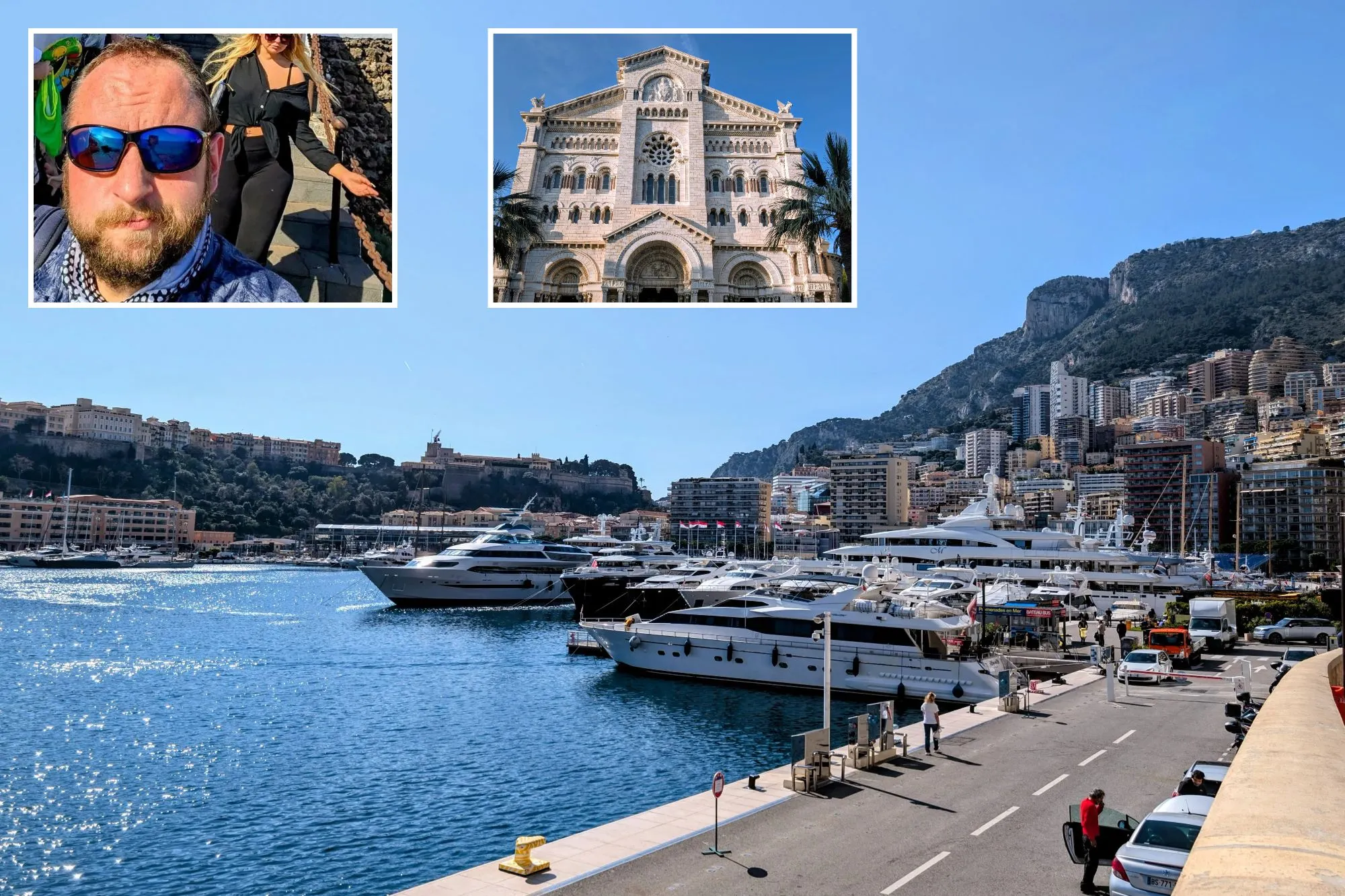
I visited two countries in two days for just £99

A MAN has revealed how he managed to visit two countries in two days for under £100 – and was back in time for work the next morning.
Aleksander Sikora, 41, wanted to visit both Nice and Monaco on his two days off.
The dad-of-two, who lives in Farnham, Surrey, bought easyJet return flights from Gatwick to Nice for just £48 which departed on Friday, March 13, and returned the next day.
His pre-trip costs included £13 parking, and be paid £19 for a hostel in Nice before departing as well.
After arriving in Nice, he went straight to Monaco by train (£6) to explore the sights of the famous ‘microstate’ – known for its beautiful buildings and wealth.
He visited the area around Monte Carlo’s casino and saw the Promenade des Champions – golden footprints of award-winning footballers.


Aleksander said: “I went to The Cathedral of Our Lady Immaculate, which was free to enter, and I went to the Prince‘s Palace of Monaco on the hill.”
Aleksander fuelled up throughout the day on a packed lunch be brought with him, although did splash out on some pizza from a local market stall.
He got a train back to Nice – squeezing in a visit to the Notre-Dame de Nice in the dark – where he slept and then had breakfast at the hostel the following morning.
The £19-a-night cost amazingly even included a breakfast of croissants, baguettes and coffee for the bargain price.
Aleksander said: “I am from Poland and somehow one of the other men in the hostel was too.
“Another of the men from the hostel suggested to go to the Russian Orthodox Cathedral so the next day that was what I did.”
Entry was free there too, so he explored after stocking up with more snacks and drinks from a local supermarket.
He walked up to the Colline du Chateau, which offers panoramic views of Nice, and took in the sights.
Aleksander then visited a museum to get some more history of Nice, before a gentle walk back to the airport.
He said: “That was another six miles or so, but I just looked around the streets, chilled out and relaxed.
“I put my headphones in, and just thought about nothing, enjoying my break from work.”
After spending his second day exploring Nice, he got back to the airport to catch his 9pm flight back to Gatwick – and was in bed by 11:30pm, ready for work the next day.
Aleksander, a retail employee trainer, said: “I saw a lot of historical things, if you like that kind of history it’s great.
“I studied history for three years, it’s a passion of mine and there is lots to discover.
“I walked around 30 miles in two days, but I don’t mind. I just relaxed and enjoyed it.”
And the entire trip cost around £100 thanks to Aleksander’s savvy travelling methods and bringing his own food.
He added: “The main beauty of the trip was the architecture, all the different cultures.
“You can’t compare them but every place is unique, and you can find beauty everywhere.
Full cost of Aleksander’s trip
- Return flight ticket – £48
- Car park Gatwick – £13
- Night in Nice with breakfast – £19
- Train from Nice to Monaco – £6
- Train from Monaco to Nice – £5
- Half a pizza in Monaco – £3.50
- Croissant & Coffee in Nice – £3
- Supermarket water and snacks – £2
= £99.50

NBA: Luka Donic equals Kobe Byrant scoring feat in LA Lakers win
Luka Doncic became the first player since Kobe Bryant to score 60 points in a game for the LA Lakers as they overcame the Miami Heat 134-126.
Doncic – the NBA’s leading scorer this season – has reached 30 points in eight consecutive games and got to 50 twice in his last five appearances but in hitting 60 achieved a mark that no Lakers player had managed since Bryant in 2019.
And on a night of notable marks for the Lakers, LeBron James scored a triple double with 19 points, 15 rebounds and 10 assists to move.
The game was his 1,611th regular-season outing, moving him level with Robert Parish for the most in NBA history. The all-time leading scorer in NBA history will set a new record if he features for the Lakers against the Orlando Magic on Saturday.
“He’s not only competing against the entire league but also Father Time. And he’s giving Father Time hell,” Heat head coach Erik Spoelstra said of the 41-year-old.

Japan vs Australia: Women’s Asian Cup final – team news, start and lineups | AFC Asian Cup News
Who: Japan vs Australia
What: AFC Women’s Asian Cup final
Where: Stadium Australia, Sydney
When: Saturday at 8pm (09:00 GMT)
How to follow: We’ll have all the build-up on Al Jazeera Sport from 06:30 GMT in advance of our live text commentary stream.
Two and a half years after their Women’s World Cup dream on home soil ended in heartbreak, Australia return to the same piece of turf in search of redemption.
Recommended Stories
list of 4 itemsend of list
The ghosts of the past may still linger, but Saturday’s final offers the Matildas’ golden generation something more: the chance to rewrite their story and lift a first major trophy in front of their own fans.
With eyes on a second continental title, Australia will face heavyweights and two-time champions Japan in a blockbuster Women’s Asian Cup final at Sydney’s Stadium Australia, the same venue on which the Matildas were stunned 3-1 by eventual runners-up England in the 2023 World Cup semifinals.
While many consider Australia favourites to lift the trophy this weekend, history tells a different story. The Matildas have lost both previous continental finals against Japan, leaving the hosts hoping the third time will be the charm.
Al Jazeera Sport takes a closer look at the final and what to expect from both teams:
How did Australia and Japan reach the final?
Both Australia and Japan have enjoyed an unbeaten route to the final, with the Aussies finishing second in Group A and Japan topping Group C.
Australia, 15th in the FIFA world rankings, opened their campaign with a 1-0 win over the Philippines before thrashing Iran 4-0, but had to fight for a 3-3 draw with South Korea in the final group game.
The knockouts saw Australia overcome North Korea 2-1 in the quarterfinals before they were tested brutally by record nine-time champions China in the semifinals, which they won 2-1.

In contrast, World No 6 Japan, the highest-ranked team in the tournament, were dominant from the get-go, beating Taiwan 2-0 to start their campaign. That was followed by an 11-0 rout of India and a 4-0 mauling of Vietnam, as the Nadeshiko sailed into the knockouts with a perfect record and a clean sheet.
In the quarterfinals, they swept past the Philippines 7-0 before downing South Korea 4-1 in the semifinals, reminding fans of why they are the most dangerous side in this tournament.
How many times have Australia and Japan faced each other?
Australia and Japan are familiar foes, having faced off 30 times. The defining clashes came in the 2014 and 2018 editions of the Women’s Asian Cup, when Japan beat Australia 1-0 both times in the final of those tournaments.
Saturday’s match is also the first time Australia have been in the final since losing the 2018 edition.
Australia and Japan last met a little over a year ago at the SheBelieves Cup in the United States. Japan beat the Aussies 4-0 en route to winning the title.

How many Asian Cups have Australia and Japan won?
Australia have won the Women’s Asian Cup once – their only major title – at the 2010 edition in China, where the Matildas defeated North Korea 5-4 on penalties. Current captain Sam Kerr, then 16 years old, scored the opening goal in that final.
Japan have won the Asian Cup twice, in 2014 and 2018, while they ended runners-up four times (1986, 1991, 1995, 2001).
Japan are also the only Asian team to have won the Women’s World Cup, beating the United States on penalties in the 2011 edition in Germany.

What’s the prize money for the winner?
Along with continental bragging rights, the champions will receive a cheque for $1.8m – the same prize money from 2022, which is lower than any other confederation’s equivalent tournament besides Oceania.
In comparison, the winner at the 2023 men’s Asian Cup took home a prize purse of $14.8 million.
Kerr shines for Australia, Ueki leads the way for Japan
Sidelined for two years by an ACL injury, Australia captain Kerr arrived at the 2026 tournament with questions surrounding her fitness and saddled with a heavy burden to restore pride in the Matildas.
Now with four goals in five matches, including a sublime winner in Tuesday’s semifinal, the 32-year-old striker has silenced all doubts and carried her team back into the national spotlight.
“I know I can be one of the best players in the world, and I am showing that at this tournament,” the Chelsea striker said of her recent form.

Along with Kerr, central midfielder Alanna Kennedy has been a goal-scoring machine for the ‘Tillies’, netting five goals in as many matches to sit second on the top-scorers list, while Caitlin Foord has been a key playmaker with three assists.
But the tournament’s spotlight has been captured by Japan’s Riko Ueki, whose six goals in four matches – including a stunning hat-trick off the bench against India – lead the charts.
The striker, often a vital presence in Japan’s front three, poses a headache to the opposition, alongside winger Kiko Seike, who has four goals in four games.
Japan coach says Matildas are ‘massive favourites’
Japan coach Nils Nielsen insists Australia will be “massive favourites” in the final, but his team’s near-flawless progress to the title match suggests otherwise.
Japan’s attacking force has scored a whopping 28 goals in five games, while their solid backline has conceded just one, against South Korea in the semifinals.
The Nadeshiko will have a partisan crowd at the 83,500-capacity Stadium Australia to deal with, and Greenlander Nielsen put the pressure on the Kerr-led Australia by calling the frontrunners.

“The Matildas really have an amazing team; they have adapted to whatever is coming their way,” Nielsen said. “They have a great coach … He hasn’t been here long, and he’s already made so many nice transforms.
“When they play in front of a crowd like this, Australia are big favourites, massive favourites for the final.”
Meanwhile, Australia’s head coach Joe Montemurro believes his side can do better than what they showcased against China in the gruelling semifinal.
“We’re going to have to be better,” he told Australia’s Network 10. “There’s a resilience that we have in our psyche. We need to be better with the ball; we need to be smarter and control tempo.”
Kerr dreams of second Asian Cup triumph
Considered one of Australia’s greatest athletes, Kerr is the only player from the current squad who was also part of the 2010 Asian Cup-winning squad.
But she has never lifted any silverware with the current crop of players, many of whom have been alongside her in the team for more than a decade.
“It would honestly mean everything,” Kerr said of winning the title with them. “We’ve talked about it for ages. This is a dream of ours, and these girls are like family to me.”
Predicted Australia starting lineup
Matildas head coach Montemurro could pick defender Winonah Heatley ahead of Clare Hunt.
Mackenzie Arnold (goalkeeper); Ellie Carpenter, Winonah Heatley, Steph Catley, Kaitlyn Torpey; Kyra Cooney-Cross, Alanna Kennedy, Katrina Gorry; Mary Fowler, Sam Kerr, Caitlin Foord
Predicted Japan starting lineup
Japan head coach Nielsen could stick to the same lineup from the last game.
Ayaka Yamashita (goalkeeper); Hana Takahashi, Toko Koga, Saki Kumagai, Hikaru Kitagawa; Fuka Nagano, Hinata Miyazawa, Yui Hasegawa; Maika Hamano, Riko Ueki, Aoba Fujino
Iran war: What is happening on day 21 of US-Israel attacks? | US-Israel war on Iran News
EXPLAINER
Tehran has warned of zero restraint if energy facilities are attacked again, while Netanyahu signals that there could be a ‘ground component’ to the war.

Published On 20 Mar 2026
Iran has warned it will show “zero restraint” if its energy facilities are attacked again, a day after Israel struck the South Pars gasfield and Tehran attacked energy sites across the Gulf.
In the United States, President Donald Trump raised controversy during a meeting with Japan’s Prime Minister Sanae Takaichi by invoking the 1941 bombing of Pearl Harbour while defending the element of surprise in the Iran attack.
Meanwhile, as the conflict intensifies, concerns over supply disruptions have pushed global oil and gas prices higher, with sharp increases reported across the United Kingdom and Europe.
In Iran
- Escalation: After Israel struck Iran’s South Pars gasfield, Tehran hit targets in Haifa, Israel, and Ras Laffan, Qatar, warning of “zero restraint” if its energy facilities are attacked again and claiming Iran has only used a “fraction” of its firepower so far.
- Widespread regional missile strikes: Iran’s Islamic Revolutionary Guard Corps (IRGC) announced a new wave of missile and drone attacks on US bases and central and southern Israel, including Tel Aviv, Haifa, and Jerusalem.
- Humanitarian toll: The Iranian Red Crescent Society reported that more than 18,000 civilians have been injured and 204 children have been killed in Iran since the war began on February 28. In all, more than 1,400 people have been killed in Iran.
- US airbase in Germany: Iran said it had asked Germany to clarify the role of the Ramstein Air Base in the war. “The role of Ramstein is not officially clear for us,” Tehran’s ambassador to Germany, Majid Nili, said. The Ramstein Air Base matters because it is one of the US military’s most important hubs and a key link in operations in the Middle East.
- Macron eyes UN action on Hormuz: French President Emmanuel Macron said he will consult United Nations Security Council members on a framework to secure navigation in the Strait of Hormuz, a vital global chokepoint through which about 20 percent of the world’s oil and gas flows – once fighting subsides.

In the Gulf
- Gulf attacks: UAE and Kuwaiti air defences were responding to missile attacks on Friday, authorities in the Gulf states said. Saudi Arabia’s Ministry of Defense said it had intercepted and destroyed 10 drones in the country’s east and another in the north.
- UAE arrests: Authorities detained at least five members of a “terrorist network” linked to Iran and Hezbollah that allegedly used business fronts to infiltrate the economy as part of a coordinated external plan, the official WAM news agency reported.
- Qatar – Ras Laffan attack: Iran hit Qatar’s key LNG facility, cutting about 17 percent of output for as long as five years, the CEO of QatarEnergy has said. With Qatar supplying 20 percent of global LNG, disruptions are expected, with force majeure likely on some contracts to Belgium, Italy, South Korea, and China. Diplomatically, Qatar’s prime minister and Turkiye’s foreign minister held a joint news conference condemning the act of sabotage as a “dangerous escalation” by Iran. On Thursday, Qatar’s defence forces again reported ballistic missile attacks.
- Missile and drone interceptions in Bahrain: Bahrain’s Defence Force reported shooting down five incoming missiles recently, bringing its total interceptions to 139 missiles and 238 drones since the start of the conflict more than two weeks ago.

In the US
- ‘Pearl Harbour’ remarks: Trump defended not informing allies about the US strikes on Iran, saying “we wanted surprise.” He then turned to Japanese Prime Minister Sanae Takaichi, who was visiting the White House and was seated next to him, and invoked the 1941 bombing of Pearl Harbour, saying, “Who knows better about surprise than Japan? Why didn’t you tell me about Pearl Harbour, OK? Right?”
- Diplomatic shockwaves: Analyst Mireya Solis called Trump’s Pearl Harbour remark to Japan’s PM “unusual – a shock” that brings up a bitter rivalry rather than emphasising shared allied bonds.
- US war objectives unchanged: Defense Secretary Pete Hegseth said US goals remain the same since February 28 – targeting Iran’s missile systems, military industry and navy, and preventing a nuclear weapon, with no set end date.
- No US ground troops: Trump said he was not sending US ground troops to Iran, telling reporters: “If I were, I certainly wouldn’t tell you. But I’m not putting troops.” However, Trump has frequently changed his position on whether he is open to deploying boots on the ground in Iran.
- F-35 incident: A US F-35 fighter jet made an emergency landing at a Middle East airbase after a combat mission over Iran. The aircraft landed safely and the pilot is stable, while US officials investigate reports it may have been struck by Iranian fire. If that is the case, it would be the first US jet struck by Iran during the current war.
In Israel
- Explosions over Jerusalem: Israel’s military said it had identified three rounds of missile fire in the hour and a half preceding midnight, and another a few hours later.
- Netanyahu says Iran ‘decimated’: Israeli Prime Minister Benjamin Netanyahu said at a news conference he saw “this war ending a lot faster than people think … We are winning and Iran is being decimated.”
- Trump and Netanyahu: Netanyahu also denied that Israel “dragged” the US into the war, asking, “Does anyone really think that someone can tell President Trump what to do?”
- Israel ‘acted alone’: The PM also said Israel acted on its own when it struck an Iranian gasfield. “President Trump asked us to hold off on future attacks and we’re holding out.”
- Netanyahu signals possible ground phase: “It is often said that you can’t win, you can’t do revolutions from the air. That is true. You can’t do it only from the air. You can do a lot of things from the air, and we’re doing, but there has to be a ground component as well,” the Israeli prime minister said in his remarks.
- Next stage questions: Al Jazeera’s Rob McBride described Netanyahu’s comments about a possible ground component as “intriguing”, suggesting a potential next stage while raising questions about how it would unfold. Netanyahu’s remarks were also seen as an attempt to reassure Israelis that the nearly three-week war has been worthwhile.
- Core objectives: Netanyahu also reiterated goals of dismantling Iran’s nuclear programme, degrading its ballistic missile capabilities, and shaping conditions for a future without the “current regime”.
- Regional framing: “In a wider sense, he was also claiming that with their American allies, they were reshaping the Middle East altogether, and that the balance of power and the dynamics within that – that Israel, he said, had never been stronger, while Iran, he claimed, had never been weaker,” McBride said.
In Lebanon
- Severe humanitarian crisis and displacements: Since Israeli attacks on Lebanon escalated on March 2, the death toll in the country has surpassed 1,000 people, with at least 2,584 wounded. Furthermore, residents in towns such as Machghara and Sahmar in the Bekaa Valley reported receiving threatening phone calls from foreign numbers urging them to evacuate.
- Ongoing clashes and military actions: Fierce fighting continues in southern Lebanon, where the Israeli army has expanded its ground troop presence. Hezbollah has claimed responsibility for multiple attacks, including firing missiles at Israeli soldiers and vehicles in the southern Lebanese towns of al-Aadaissah, Meiss el-Jabal, and Maroun al-Ras.
- Diplomatic efforts for a truce: Amidst the heavy fighting, Lebanese President Joseph Aoun has renewed calls for a truce and the opening of negotiations with Israel to end the war.
Oil and gas
- Global economic effect: The Ras Laffan strike cut about 17 percent of LNG capacity, with losses near $20bn a year and an estimated 9 percent annual hit to Qatar’s gross domestic product, according to Al Jazeera’s Dmitry Medvedenko, who was reporting from Doha.
- Soaring global prices: Concerns over these supply disruptions have triggered a surge in global oil and gas prices. Gas prices have risen sharply across the UK and Europe. The ripple effects are being felt in developing nations as well; for instance, fuel prices in Zimbabwe recently topped $2 per litre for the first time as a direct result of the conflict’s effect on oil and gas exports.
- International pushback and warnings: Due to the escalating energy crisis, the European Council has urgently called for a moratorium on strikes against energy and water facilities.
- US may ‘unsanction’ Iranian crude: US Treasury Secretary Scott Bessent said Washington might “unsanction” Iranian oil that is already being shipped to ease oil prices. In comments to Fox Business, Bessent also said the US government could release more oil from its strategic reserves.

Beyond Paradise’s Kris Marshall pays tribute to ‘genius’ newcomer after co-star’s exit
EXCLUSIVE: Beyond Paradise returns on March 27 with major cast changes as one beloved character has left Shipton Abbott

Beyond Paradise will be back on screens on March 27(Image: BBC)
Beyond Paradise’s leading man, Kris Marshall, has revealed details about a co-star’s departure from the BBC drama. The Death in Paradise spin-off returns on March 27, with Humphrey and his colleagues tackling fresh mysteries in Shipton Abbott. Yet one familiar face will be conspicuously absent from the fourth series.
Detective Humphrey Goodman confronts a devastating choice in the forthcoming episodes after learning he must dismiss a member of staff from the station. The DI also encounters a new superior following news that his former boss, CS Charlie Woods (played by Jade Harrison), had transferred to a different division.
Discussing his co-star’s departure and the necessity of releasing a team member, Kris told Reach PLC exclusively: “I mean, there always has to be some kind of challenge for Humphrey in terms of, because, like I said, you know, otherwise he just wanders around.
“I mean, it’s that paradox, isn’t it, about TV detectives, they’re sort of fish out of water, they don’t really like rules, and yet they exist in one of the most sort of institutional, authoritarian hierarchies, the police force.
“He hates any kind of authority, he hates rules, he hates being told what he has to do, and so it’s thrust upon him, and it literally comes knocking on his door as it does. You know, he really detests that, really dislikes it, and he doesn’t like the pressure.”
When discussing his new superior and recent arrival, portrayed by Vincent Franklin, the Humphrey Goodman star continued, “And it’s held by the fact that, in terms of the storyline, you know, Vincent Franklin, who is just an absolute genius actor playing his sort of nemesis in this,” reports the Express.
“It just adds to that sort of, and he does it with such beautiful greasiness. It’s sort of wonderful. It sort of adds to the pressure for Humphrey, and so it’s a real stress for Humphrey moving forward because he is a kind of, like, bury your head in the sand kind of guy, when it comes to things like that.
“Solving puzzles or crimes or, you know, he’s like a dog with a bone. But, you know, when it comes to sort of real life, he’s like, well, surely if I put my head over here, that will just go away.”
Sally Bretton, who portrays Martha Lloyd, Kris’s on-screen spouse, also revealed details about Martha and Humphrey’s relationship and where the series resumes. The actress explained that residing on a boat was never part of Martha and Humphrey’s original vision.
She revealed, “Martha starts reflecting on, ‘Was this a bit of an unexpected twist anyway? Going to live on the boat as it wasn’t really the plan originally’.
“And maybe now that they’re married and they want to focus a lot on settling a little bit more, and maybe it’s time to start having a look at a house, and I think they want to focus on each other and have all of the fun and everything that they always have done, but they’ve been knocked off center a lot.”
Beyond Paradise is set to return on 27 March at 8pm on BBC One.

WNBA CBA expected to raise pay for other women’s sports leagues
After 17 months, the WNBA has agreed to terms on a new collective bargaining agreement and players will be paid more than in any other professional American women’s sports league.
It is the latest in a trend of increasing equity for women athletes.
- In 2022, the U.S. women’s soccer team won a $24-million settlement with U.S. Soccer after players disputed making significantly less than the less successful men’s team.
- Then the Professional Women’s Hockey League was born in 2023 following many players defecting from the National Women’s Hockey League to form the Professional Women’s Hockey Players Assn., then merging with the Premier Hockey Federation until a historic bargaining agreement.
- The National Women’s Soccer League announced a new CBA in the summer of 2024 that included giving players agency on where they are traded and abolishing expansion and collegiate drafts.
That momentum put considerable pressure on WNBA negotiations. Could the players set a new benchmark for future contract negotiations across women’s pro sports leagues?

The Sky’s Angel Reese and the Fever’s Caitlin Clark shake hands before a game at Gainbridge Fieldhouse on May 17.
(Gregory Shamus / Getty Images)
The WNBA’s CBA was a flashpoint because of the boom in popularity in supporting women’s sports, with players such as Caitlin Clark and Angel Reese becoming household names. Last season, the WNBA made enough revenue to trigger revenue-sharing for the first time and this season marks the start the league’s new 11-year, $2.2-billion media rights deal.
Unlike in the NBA, where players get around 50% of the league’s revenue before expenses, the WNBA’s first revenue-sharing kicked in only after the league hit a benchmark determined by a formula of revenue targets, which had been difficult to achieve since the start of the deal was the 2020 COVID season played in front of empty stands.
The WNBA broke its single-season attendance record in 2025. As league interest grew, so did the tension between the league and the players’ union.
Many viewed this negotiating cycle as an opportunity to pounce on the increased visibility, and in a lot of ways, the union did. Players are going to be paid significantly more and they got a win in revenue sharing, earning 20% of the league’s revenue before expenses — a big jump from the previous 9% share.
The average player salary before revenue-share payments will be around $584,000.
But was it as much as they should have gotten?
Tamika Tremaglio, former NBPA executive director and advisor to the WNBPA during the 2020 CBA negotiations, said observers were less concerned about the start of training camps looming on April 19 and more focused on whether negotiations would end with a stable deal that would hold for the length of the agreement as market conditions evolve. Increased salaries are always celebrated, but both sides agreeing to a new revenue sharing model was a consequential step forward for players.
“The real story is the revenue share,” Tremaglio said. “At the end of the day, that’s what is going to drive the future.”
The fallout from the new deal will take months or years to fully understand. Free agents will be able to begin signing with teams in April, and since 80% of the players are eligible for free agency, there will be higher figures being floated around than ever.

A’ja Wilson and her Las Vegas Aces teammates celebrate while holding the 2025 WNBA championship trophy.
(Chris Coduto / Getty Images)
That might affect what talent comes to the league, too.
“More European players might come into the league,” a WNBA team consultant not authorized to speak about the league publicly told The Times. “Now that the money is better, that might knock out several college players in the draft.”
There are some WNBA-level players who have stayed in Europe due to restrictive prioritization rules that force players to participate in all WNBA practices and games even if they conflicted with international league obligations. Many WNBA players compete in international leagues during the offseason and prefer the option to keep playing in lucrative foreign leagues if there is an overlap with the WNBA season.
While the new rules for international play in the WNBA CBA are not yet clear, compensation changes could open the door for more players to choose to prioritize the league.
The general consensus among people operating within the WNBA is relief that a deal is in place.
“It’s huge,” one player agent told The Times. “They made big strides. This is important for women’s basketball.

Sparks players Dearica Hamby, Rickea Jackson, Azura Stevens, Kelsey Plum and Julie Allemand talk during a game against the New York Liberty at Crypto.com Arena on Aug. 12.
(Katelyn Mulcahy / Getty Images)
“Anytime both sides don’t get everything they want,” the agent added, “that’s a good deal.”
That agent also noted that this CBA will set the precedent for the next negotiations to continue to raise the revenue-sharing if the league continues to make more money.
Under the new CBA, the 20% revenue-sharing is tied to the league’s gross revenue, a significantly different number than the net revenue, which is calculated after all expenses are taken into account. The players were fighting for a percentage of the gross revenue, even if it is a smaller percentage than the net revenue the league offered because it is guaranteed.
The NBA first reached 53% of gross revenue in their CBA in 1983 and has stayed around that number ever since.
“If it was net, you’d have all these other expenses and you sort of lose control of the actual expenses,” Tremaglio said. “You have no control from the perspective of where the players are. But now, you don’t even have to go look at the minutia of auditing every single expense line item. That’s what makes such a difference.”
More details around the CBA, including player housing, expansion draft format and roster spots, will become clearer as the deal reaches ratification.
For now, even if 20% revenue sharing is less than the 40% the players first proposed, the deal represents a significant, stable increase in player compensation.
“This will impact women’s sport globally, not just the game of basketball,” Tremaglio said. “This will impact everything, soccer, everything.”

Iran footballer Azmoun kicked off national team for disloyalty, say reports | Football News
Reports say Sardar Azmoun, who plays for UAE club Shabab Al-Ahli, was expelled for Instagram post with Dubai’s ruler.
Published On 20 Mar 2026
Sardar Azmoun, one of Iran’s top football players, has been expelled from the national team for a perceived act of disloyalty to the government, Iranian media has reported, making it unlikely he will play any part in the upcoming FIFA World Cup.
Iran’s participation in the global football showpiece is under a cloud because of the ongoing conflict with the United States, who are co-hosting the June 11-July 19 tournament with Mexico and Canada.
Recommended Stories
list of 4 itemsend of list
If Team Melli do turn up for their opening-round group matches, they will undoubtedly be weakened by the absence of striker Azmoun, who has scored 57 goals in 91 internationals since making his debut as a teenager in 2014.
Azmoun, who plays his club football in the United Arab Emirates (UAE) for Dubai club Shabab Al-Ahli, upset the Iranian authorities this week by posting a picture on his Instagram feed of a meeting with Dubai’s ruler Mohammed bin Rashid Al Maktoum.
Iran has launched rocket and drone attacks on the UAE following air strikes by the US and Israel, which killed the country’s Supreme Leader Ayatollah Ali Khamenei.
A report on the Fars News Agency, which has links to the hardline Islamic Revolutionary Guard Corps, cited “an informed source within the national team” as saying Azmoun had been expelled from the squad.

Pictures removed
Azmoun later removed the pictures but was still lambasted on state TV on Thursday, with football pundit Mohammad Misaghi saying the striker’s actions had been an act of disloyalty.
“It’s unfortunate that you don’t have enough sense to understand what kind of behaviour is appropriate at a given time,” Misaghi said.
“We should not mince words with such people. They should be told that they are not worthy of wearing the national team jersey.
“We have no patience for this sulking and childish behaviour. National team players should be people who proudly belt out the national anthem and deserve to wear the Iran jersey.”
There was no immediate response to a request for comment on the matter from the Football Federation of the Islamic Republic of Iran (FFIRI).
Azmoun, 31, is one of the best-known footballers in Iran, where the game is a national obsession.
He has played his entire club career abroad with stints at Zenit Saint Petersburg, Bayer Leverkusen and Roma, as well as featuring for Iran in the 2018 and 2022 FIFA World Cups.
An unsourced report on the Novad News channel said on Thursday that an order had been issued for the seizure of the assets of Azmoun, another UAE-based national team forward Mehdi Ghayedi, and former international Soroush Rafiei.
Misaghi was speaking against the backdrop of pictures of a ceremony welcoming the Iranian women’s national team back to Tehran on their return from Australia.
Seven of the delegation accepted asylum in Australia after the team was branded “wartime traitors” on Iranian state TV for not singing the national anthem before a Women’s Asian Cup match. Five later decided to return to Iran.
Iran’s men are scheduled to play friendly internationals in Antalya, Turkiye, against Nigeria on March 27 and Costa Rica four days later as part of their World Cup preparations.
Eid under siege: Little to celebrate in Gaza as Israel tightens chokehold | Opinions
As attention shifts to the Iran war, tighter restrictions on Gaza are driving shortages, price hikes and growing suffering, turning a time of celebration into one of anxiety for millions.

Published On 20 Mar 2026
While the world’s attention is fixed on the Iran war, Israel has quietly tightened its chokehold on Gaza, further restricting the flow of goods and aid. As Eid al-Fitr begins, a time meant to be marked by joy and family gatherings, millions in Gaza are struggling under deepening shortages and rising hardship. What should be a moment of celebration has instead become one of anxiety, as the worsening crisis strips Eid of even its simplest pleasures.
The economic crisis is not merely a case of ordinary inflation or a temporary shortage of goods, but the result of a complex interplay between the Israeli occupation, local market dynamics, and broader regional and international strategies. Israel has repeatedly taken advantage of external tensions, such as those involving Iran or Lebanon, to justify tightening restrictions on the movement of goods through crossings while intensifying military pressure on Gaza. This leaves residents directly exposed to soaring prices and shortages of essential commodities.
Even when goods are available in the markets, some traders have taken advantage of the crisis to make excessive profits by raising prices unjustifiably. Tomatoes, for example, which used to be 3 shekels ($0.97) before the recent events, now cost 20 shekels ($6.48). Essential canned goods have increased at similar rates. Cooking gas now costs 80 shekels ($25.92) for an 8kg cylinder, meaning that a family may need about 640 shekels ($207.37) per month just to secure cooking gas. Electricity prices have also increased from 18 shekels ($5.83) per unit to 25 shekels ($8.10), while the cost of living for families who often rely on alternatives such as kerosene stoves (babur) for cooking instead of wood has risen sharply.
Price hikes do not stop here. Meat has become prohibitively expensive, essential medicines are increasingly inaccessible at reasonable prices, and even the simplest Eid traditions are now out of reach for many. This price manipulation reflects how some traders exploit the economic fragility and psychological pressure faced by residents, intensifying feelings of injustice and frustration among the population.
The ongoing war, repeated violations of ceasefire arrangements, and Israel’s broader strategy of using external conflicts as justification for military pressure have turned the narrative of “continuous security threats from Gaza” into a recurring pretext for closing crossings or using them as a tool of control. In this way, Gaza has increasingly become entangled in wider regional tensions and military calculations.
Under these circumstances, Eid al-Fitr in Gaza has become a symbol of daily hardship. Families are forced to choose between basic necessities and the traditions of the holiday. Meat, vegetables and cooking gas have become luxuries for many, while the majority struggle simply to secure the essentials of daily life.
Even when supplies exist, the monopolisation of goods and unjustified price hikes make the local market fragile and expose the weakness of Gaza’s economic structure. Every attempt to stabilise prices or increase supply faces strict restrictions linked to the blockade, creating opportunities for traders to secure quick profits at the expense of ordinary civilians.
In the end, Gaza’s crisis is not merely an economic issue; it reflects a complex intersection of occupation, blockade, commercial exploitation, and regional and international policies that have left the territory marginalised.
Eid al-Fitr, once a symbol of joy, has become a reminder of a lost celebration, but also a call for the international community to take meaningful action: to ensure the flow of humanitarian aid, protect civilians from exploitation and prevent human suffering from being turned into an opportunity for profit.

Six unanswered questions in Towie star Jordan Wright’s tragic Thailand death from eerie phone location to haunting CCTV
JORDAN Wright’s death has been shrouded in mystery as the Towie star was seen pacing erratically before he was found in a drainage canal.
The beloved TV personality, whose new iPhone was found nearby, also checked in to a luxury hotel alone before his tragic passing.
It also remains unclear how long Wright, who used to date Vicky Pattison, had been missing for – or whether he was under the influence of intoxicants.
Here are the most glaring unanswered questions surrounding his death.
How long had Jordan been missing?
Wright, 33, was found dead in a drainage ditch on the holiday island of Phuket on March 14.
He had moved to Thailand just weeks earlier – with his last Instagram post on March 6 showing a snap of him in a swimming pool captioned: “I’m home.”


Wright was due to check out of his room on March 13, according to staff at Hotel COCO Phuket Bangtao where he was believed to have been staying.
But employees told police he never did check out – meaning he could have been missing for days.
It is currently unclear who the last person to see Wright was or how long he had vanished for.
Cops said they were led to Hotel COCO due to the key card inside Wright’s pocket at the time he was found.
He was reportedly seen pacing frantically shortly before his death, but it has not been confirmed whether anyone saw Wright at this time in person.
Why was he pacing around on CCTV?
Despite footage reportedly showing the ITV star looking restless before he was found dead at 12.30pm local time – it is not clear why he was in this alleged frantic state.
Cops said: “CCTV footage showed that he appeared restless and was moving back and forth in front of the hotel before leaving the area.”
An autopsy is currently being carried out to determine his cause of death.
But it will also conclude whether drugs or alcohol were involved.
No signs of physical assault or struggle were found on his body, authorities confirmed.
There were also no signs of forced entry or disturbances at his hotel room.
Police have launched an investigation into the case to probe the full circumstances of Wright’s death.
When did he end up in the canal?
It is also unclear when exactly Wright entered the canal drain.
He was said to have been wearing a grey shirt and black trousers but no shoes on when he was found.
Authorities said Wright had been in the canal for some time, but didn’t elaborate on how long he was in there.
They only said the Brit star was believed to have been dead for no longer than two days.
Police said: “His movements eventually led to the location where his body was later discovered.
“We are still waiting for the autopsy results from Vachira Phuket Hospital to determine whether drugs were present in his system.”
Why was his phone left on a nearby bank?
Police explained that Wright’s new iPhone 17 was found on a nearby bank.
It was not in his trouser pockets, unlike the hotel key card police discovered.
Both Wright and the location of his phone are about a 20-minute walk away from Hotel COCO.
The Towie and Ex On The Beach star had posted photos online of his life in Thailand in the weeks leading up to his tragic death.
His “new life” showed him enjoying beach trips and taking part in martial arts classes.
It is unclear why the popular TV personality, from Basildon, Essex, had left the smartphone behind.
Why did he check into the hotel alone?
Wright had also checked into a hotel room alone before he was found dead on Saturday.
It is not understood why Wright checked into the luxury hotel alone, and what day he checked in.
He was reportedly seen in security camera footage outside the hotel.
But police have said: “CCTV footage related to the incident is part of the case file and cannot be released at this stage.”
They also confirmed: “Hotel records showed that he had checked in alone and was due to check out on March 13, but staff reported that he never checked out.”
Did he have drugs or alcohol in his system?
The star’s autopsy will determine whether or not Wright had any drugs or alcohol in his system.
Wright was seen pacing frantically before his death, but it is unclear what caused him to do this.
Pictures showed police scouring the scene in the aftermath of his death.
Heartbreaking tributes have poured in for the late TV icon – with one pal calling him a “really special soul”.
Several reality TV figures have paid their respects to Jordan online, including his The Only Way is Essex co-stars.
Fellow Towie star Chloe Brockett wrote in an emotional tribute “Rest in peace Jordan” followed by a red heart emoji.
While Love Island star Chloe Crowhurst also took to the comments, penning “Rest in peace Jord” with a white heart and cloud emoji.
Before Wright was named, an FCDO spokesperson said: “We are supporting the family of a British man who died in Thailand and are in contact with the local authorities”.

Wildlife abounds – even in our cities: readers’ favourite UK nature reserves and national parks | Parks and green spaces
Winning tip: Whitebeams and roe deer in Bristol
I always take friends on an afternoon walk when they visit Bristol, to experience the swift changes in scenery: starting at the tobacco warehouses of Cumberland Basin before ascending from the muddy banks of the River Avon up into Leigh Woods, a national nature reserve. As well as possible animal sightings like peregrine falcons and roe deer, the woods are an important site for whitebeam trees, with several species only growing here. It’s easy to spend a full afternoon crisscrossing the trails before walking over Brunel’s famous suspension bridge for a well-deserved coffee at the Primrose Café in Clifton village.
Tor Hands
Profile
Readers’ tips: send a tip for a chance to win a £200 voucher for a Coolstays break
Show
Guardian Travel readers’ tips
Every week we ask our readers for recommendations from their travels. A selection of tips will be featured online and may appear in print. To enter the latest competition visit the readers’ tips homepage
–
A seal colony on a Cumbrian island
South Walney nature reserve (£3 adults, £1 children) has an end-of-the-world feel. You drive through industrial Barrow-in-Furness to reach a windswept island that’s home to Cumbria’s only seal colony and a multitude of migrating seabirds. Curious seals surface as you gaze across the water towards Piel Castle, which can be reached by foot at low tide. More seals can be observed from the immaculately kept hides, full of hand-drawn illustrations, local history and specimens of skeletons and shells. There is even a livestream seal cam for a closer look.
Rebecca Alper Grant
Dartmoor’s way of the dead
Across Dartmoor’s torn spine, the Lych Way drags its long memory westward. Moor folk once hauled their dead like felled trunks, boots sinking in peat’s cold hunger. Wind gnawed faces raw; streams stitched ice through bone. Wheel ruts scarred earth, a ledger of grief. Farms emptied into distance, toward stone prayers waiting. Ravens watched slow processions darken the moor. Ten miles north, Ted Hughes’s memorial stone listens, weather-drunk, to their passing weight, and silence rooting deeper than time beneath heather, where footsteps fade yet pulse on, buried but breathing in Dartmoor’s black remembering heart that never loosens them.
John Chrimes
A cemetery now full of life in London’s East End
Tower Hamlets Cemetery Park is a truly magical place. Not your typical local nature reserve, and not your typical Victorian-era cemetery, this now deconsecrated space is truly a haven for human and non-human visitors. The site attracts an impressive array of flora and fauna thanks to its carefully “managed wildness”– an essential respite in London’s East End. Wander at your own pace or join the Friends (the charity which has carefully defended and managed the space since the 1990s) for a tour covering topics ranging from foraging and fungi to women’s history and grave symbolism.
LR
Coastal birding and a castle in Dumfries
The Dumfries and Galloway coast is a beautiful but often overlooked gem among Scotland’s natural offerings. Caerlaverock national nature reserve on the Solway Firth is a highlight, with its protected wetlands serving as a seasonal home for thousands of migrating birds, including geese, plovers and waders. It lends the place a year-round charm, even in the cold winter months. And if birdwatching isn’t your thing, you can still enjoy the excellent walks and cycle paths, stunning views and a rare sense of peace. Make sure to check out the nearby Caerlaverock Castle (from £6.50 adults, £3.90 children), with its picturesque setting – and unique triangle shape!
Allan Berry
Historic sailing on the Norfolk Broads
We were holidaying in the Broads national park when my husband told me that my birthday present was a day out on a historic wherry yacht. At the boatyard in Wroxham, an enthusiastic crew showed us round the boat, and within a few minutes we were watching the huge gaff-rigged sail rise up the mast. We sipped our tea, gliding silently past the reeds, and stopped for a guided tour of Bure Marshes national nature reserve. Lunch was a picnic on Salhouse Broad, and a treat was a cornet from the ice-cream boat. A perfect day on the water for £60 each.
Allison Armstrong
London’s hidden wetlands
Not many Londoners know that there is a real treasure of a nature reserve just 20 minutes from the city centre by tube. The Walthamstow Wetlands is a protected area, easily reached via Tottenham Hale railway/tube station. I often spend a day there with a picnic, a bird guidebook, a flask of coffee and a pair of binoculars. Birds come to the site to feed around the 10 areas of open water and marshland. Swifts and little ringed plovers arrive in spring. Much-travelled black-tailed godwits can also be seen and there’s even the chance of spotting a peregrine falcon. Enjoy the circular bird walk, viewing platforms and hiding areas. There are also weekly guided bird walks starting from the tube station from early spring. It’s free to enter and wander around the nature reserve. Trees and wild fauna abound everywhere you go – a brilliant oxygen overload after the traffic fumes of central London.
Joe
Hampshire’s alluring lagoons
I only meant to stop briefly at Titchfield Haven national nature reserve (£6.50 adults, £3.50 children), but it drew me in for the entire afternoon. Tucked between river and sea, it feels a world away from the busier south coast. I wandered slow, winding paths through reed beds and lagoons, pausing in a hide where a sudden flash of electric blue revealed a kingfisher. As the tide shifted, the landscape subtly changed and the light softened across the water. Nothing here shouts for attention, and that’s the magic of it – a place where doing nothing feels completely absorbing.
Diane
Lakeside magic in Eryri (Snowdonia)
Near Trefriw in the Eryri national park, there is a scenic walk around Llyn Crafnant reservoir. You can also walk over to Llyn Geirionydd from Llyn Crafnant to swim in the lake or paddleboard; it can get a little busy in the summer but it still feels like a little bit of a secret spot. For a big hike, you can walk down from here, past Crimpiau mountain, to Capel Curig, taking you from the Conwy valley to the Ogwen valley.
Bethan Patfield
On safari in Kent
The approach to Elmley national nature reserve (£10 adults, free for up to two accompanying children) is thrilling: precious saltmarsh habitat sandwiched between the elegant Isle of Sheppey road bridge and the looming hulk of a paper factory across the Swale estuary. The reserve’s safari-like access drive is surrounded by bubbling curlews, darting hares and patrolling marsh harriers, while lapwings cavort just feet from the car. As well as being the UK’s only privately owned national nature reserve, Elmley is also the only one you can stay overnight, so you can sip a drink outside your cosy hut or yurt while short-eared owls hunt for small mammals and barn owls glide silently past. Watching the wildlife action unfold on your own personal savannah is magical.
Cathy Robinson
Profile
Readers’ tips: send a tip for a chance to win a £200 voucher for a Coolstays break
Show
Guardian Travel readers’ tips
Every week we ask our readers for recommendations from their travels. A selection of tips will be featured online and may appear in print. To enter the latest competition visit the readers’ tips homepage
–

Kings lose to Flyers, but move back into wild-card spot
Trevor Zegras and Matvei Michkov scored in a shootout to give the Philadelphia Flyers their fourth victory in five games, 4-3 over the Kings on Thursday night.
Noah Cates had a goal and an assist, Travis Konecny and Travis Sanheim also scored, and Samuel Ersson made 22 saves. The Flyers remained six points behind Boston and Detroit for the two Eastern Conference wild-card spots.
On Wednesday night against the Ducks, Cates scored in overtime in the Flyers’ 3-2 victory.
Adrian Kempe and Artemi Panarin failed on their shootout attempts for Los Angeles, though the Kings still moved into the second wild-card in the Western Conference.
Artemi Panarin had a goal and an assist for the Kings. Quinton Byfield and Anze Kopitar also scored, and Darcy Kuemper made 17 saves.
Panarin ensured the Kings picked up a point in the standings with a blistering wrist shot on a power play that tied it 3-3 with 9:32 remaining.
The Flyers were without forwards Sean Couturier (upper body), Luke Glendening (lower body) and Denver Barkey (upper body), leaving them to play with 11 forwards and seven defensemen.
Up next for the Kings: vs. Buffalo at Crypto.com Arena on Saturday.


FIFA’s Gianni Infantino seemingly changes course on peace efforts | World Cup
Months after awarding the “FIFA Peace Prize” to Donald Trump, FIFA President Gianni Infantino said his organisation “can certainly not solve geopolitical conflicts.”
Published On 20 Mar 2026

Iran women’s football team feted in Tehran after asylum battle at Asian Cup | Football News
Iran’s national football team returned to their war-torn nation after several of the players sought asylum in Australia.
Published On 20 Mar 2026
Iranian authorities on Thursday gave the national women’s football team a hero’s welcome after their return from Australia, where some had made and then withdrawn asylum claims, amid accusations Iran had pressured their families.
Six players and one backroom staff member who travelled to Australia for the Women’s Asian Cup sought asylum earlier this month after they prompted criticism from hardliners in Iran for failing to sing the national anthem before their first match.
Recommended Stories
list of 4 itemsend of list
Five of them later changed their minds and returned home along with the rest of the team, including captain Zahra Ghanbari, with their fate prompting international concern amid the US-Israel war on Iran.
Activists have accused Iranian authorities of pressuring the women’s families, including summoning their parents for interrogation, while Tehran has alleged that Australia sought to force the athletes to defect.
Several thousand people, many holding Iranian flags, turned out for the welcome ceremony on Thursday evening in Valiasr Square in central Tehran, where other pro-government rallies have taken place in recent weeks, state TV images showed.
“My Choice. My Homeland,” read a slogan on a giant billboard on the square that showed the players in their national kit and mandatory hijabs saluting the Iranian flag.
Flanked by team members, Iranian football federation President Mehdi Taj said on stage, “What is certain is that these athletes are loyal to the homeland, flag, leader and revolution.”
Iranian government spokeswoman Fatemeh Mohajerani, one of the most high-profile women in Iranian politics, told the team members: “All Iranians were waiting for you; welcome to Iran.”

‘Threatening their families’
As onlookers cheered the players, giant AI-generated images of the women were projected on a screen showing them pledging loyalty to the Iranian flag against a background of Iranian national landmarks.
Two squad members have remained in Australia, but the remainder of the team, including the five other women who initially applied for asylum, arrived in Iran on Wednesday after a long journey home via Malaysia, Oman and Turkiye.
Activists have accused Iranian authorities of pressuring these five women into changing their minds through intelligence agents putting pressure on their families at home.
“The regime in Iran started threatening their families and basically took their families hostage. Because of that, they were forced to withdraw their asylum and go back to Iran,” Shiva Amini, a former Iranian national football player, who now lives in exile and campaigns on women’s rights, wrote on social media.
But Farideh Shojaei, an Iranian football official who travelled to Australia, said the players had been offered “houses, cars, money, promises of contracts with professional clubs, as well as humanitarian visas”.
“Fortunately, the members of our team valued their national identity above all else and turned these offers down,” she told Iranian media.
Before their opening game, the Iranian team fell silent as the national anthem played, although they later sang it in subsequent matches. An Iranian state TV presenter branded the players “wartime traitors”.
A central feature of the welcome ceremony in Tehran was singing the national anthem of the Islamic Republic, with players and officials joining in.

Who is in the cast of Jury Duty Season 2 Presents Company Retreat on Prime Video?
Despite the show’s approach to make their actors unrecognisable you might remember some from big series
A Prime Video series that was dubbed ‘best show ever’ is finally returning with a whole new cast and approach, although there are still some faces that you might recognise.
Jury Duty is returning with a second season and a new set up, with the first episodes available to stream from March 20. Part social experiment, part reality series and part sitcom, the show is unlike most of what you’ve seen before.
According to its synopsis, Jury Duty Presents: Company Retreat is a comedy series that captures a corporate offsite event at a family-owned hot sauce company from the perspective of Anthony, a recently hired temporary worker.
Unbeknownst to Anthony, the entire experience is staged. Every colleague around him is performing a role and each moment whether in conference rooms or during downtime has been meticulously orchestrated. As the founder prepares to step down, the getaway transforms into a clash between big corproate ambitions and small business values, with control of the company hanging in the balance.
While the premise of the show means that all the actors involved have to be unrecognisable to the one non-actor, there are actually a few faces you may have seen before. But who are they and what have they starred in that you may remember them from? Here’s all you need to know.
Jerry Hauck plays Doug, the CEO of Rockin Grandma’s Hot Sauce. He’s described as “a lovable papa bear with Big Dad Energy who cares deeply about the company he’s built and the people that work for it.” Hauck has had memorable small roles on huge shows including ER, Seinfeld, It’s Always Sunny in Philadelphia and Paradise.
Alex Bonifer stars as Doug’s son and heir apparent to the business, Dougie Jr. He is “well-meaning but directionless” who is suddenly handed huge responsibilities. Eagle-eyed viewers will recognise Bonifer from Kevin Can F*** Himself where he played the role of Neil.
Amy, of customer relations is played by Emily Pendergast who has a lot of experience in comedy TV. She starred in multiple episodes of Veep and Netflix sitcom Leanne. Meanwhile the eventually nicknamed Other Anthony, who is he company’s Assistant Sourcing Manager, is played by Rob Lathan who previously appeared in Inside Amy Schumer and has served as a writer on other sketch shows.
Comedian Rachel Kaly plays remote worker and web designer Claire. While her character might be obsessed with the series Bones, she herself has appeared on animated comedy Digman! and High Maintenance.
Straight talking Helen, from accounting who has been at the business from the very beginning alongside Doug, is played by Stephanie Hodge. She is one of the most experienced cast members with past credits including NCIS, Young Sheldon and Scandal. She also had starring roles in the 90s on Nurses and Unhappily Ever After.
Jackie, who works in distribution and logistics when not taking charge of her kids at home, is played by LaNisa Renee Frederick. She’s previously appeared in smaller roles on Brooklyn Nine Nine, The Goldbergs and Mom.
Jim Woods, who was a writer on The Last O.G. starring Tracy Morgan, and starred on Reno 911!. takes on the role of warehouse manager Jimmy. He may have once been the non P.C. employee but he’s working maybe a bit too hard to be a better version of himself.
Erica Hernandez plays Kate from sales and marketing, who often gives the impression she should have a leadership role herself. Hernandez previously starred in the drama series True Lies, based on the 1994 Arnold Schwarzenegger film as well as New Amsterdam.
The other half of Team Skate (Steve & Kate), Steve is a “confident salesman that plays the calmer yin to Kate’s high-strung yang.” He is played by Warren Burke who has appeared in 13 episodes of Family Reunion and eight episodes of Bigger.
Snack obsessed receptionist PJ, is played by Marc-Sully Saint-Fleur who you may have seen before in Steve Carrell starring Netflix comedy Space Force or his brief appearances in Curb Your Enthusiasm and The Good Place. There’s also HR manager Kevin who is the one who seemingly hires Anthony to be his assistant.
He is played by Ryan Perez. Perez is actually a seasoned comedy actor, writer and director. He has written for Saturday Night Live and The Tonight Show with Jimmy Fallon while he has also directed Funny or Die shorts with Will Ferrell and Kevin Hart.
Ranch manager Marjorie who is looking after the company workers while on retreat is played by Blair Beeken. She most recently appeared in Apple’s hit sci-fi series Pluribus.
Jury Duty Presents Company Retreat is streaming on Prime Video.
For the latest showbiz, TV, movie and streaming news, go to the new ** Everything Gossip ** website

Tudor town’s famous cobbled street with historic buildings and ‘haunted’ hotel
The medieval town boasts cobbled streets, Tudor architecture and rich history – including the reportedly ‘haunted’ Inn that dates all the way back to 1420

The street is at the heart of the town(Image: Getty)
Preserved precisely as it was during mediaeval times, this picture-perfect town boasts a rich history, which is vividly displayed through its stunning architecture.
Nestled in East Sussex, Rye is a hilltop town featuring cobbled streets, charming buildings and a deeply-rooted history. Many buildings remain untouched to preserve their original character, serving as key attractions for the town’s tourism and heritage.
Just two hours from London, this scenic destination isn’t quite a seaside location, but it’s near enough to provide the perfect stopping point between your journeys to the coast.
Indeed, over the years the town has shifted further inland, due to changing coastlines, and whilst no longer on the waterfront, it was once home to a bustling port, now reclaimed by nature.
During mediaeval times, when the town was firmly established with its layout and architecture, it served as a major seaport and ‘cinque port’, which helped to protect against French invasions.
Today it provides the ideal day trip with independent shops, boutique hotels, delicious food spots, and historical landmarks.
Mermaid Street
This charming high street in Rye is frequently described as one of the most attractive in the entire country, with beautifully constructed buildings positioned along a delightful cobbled lane.
One visitor said on TripAdvisor: “A very quaint cobblestone street from the early mediaeval times; some of the buildings were outstanding and well worth a visit and walk up the hill.”
Another visitor commented: “Mermaid Street was definitely one of the highlights of our trip to Rye, and I recommend you set aside at least half an hour to explore this stunning street and take some great photos.”
This charming lane features timber-framed houses from centuries past, many of which enjoy protected status to preserve their historical significance.
Several of the properties, for instance, display plaques bearing distinctive names, including The House with Two Front Doors and The House Opposite, and tourists frequently stop to take photographs outside them.
Whilst it remains a picturesque, Instagram-worthy spot today, it was previously quite the opposite, regarded as one of the town’s most deprived areas. An 1891 census showed it had a notorious reputation as a rat-infested street where more than 70 children crammed into cramped homes, generating a chaotic environment in the locale.
Situated at the very centre of the road, and believed to have given the street its name, is the Mermaid Inn, a hotel that’s been described as one of Britain’s most haunted.
Haunted Hotel
Spanning more than 600 years, this establishment, which offers bed and breakfast accommodation, is a genuine historical treasure, complete with spine-chilling tales to match.
The Mermaid Inn boasts cellars originating from 1156, whilst the structure itself dates to 1420, providing an authentic step back in time for guests and day-trippers alike.
With its sloping ceilings, creaking floorboards and labyrinth of staircases, the building is brimming with character and has been modernised to accommodate an excellent restaurant and two bars, alongside a spacious patio.
For visitors not planning an overnight stay, exploring indoors remains an option. Fortunately, on the final Sunday of each month the proprietor provides a guided tour through the historic rooms as you journey back through the centuries.
After visiting the hotel, one guest said: “We have stayed at the Mermaid Inn a few times before and have never been disappointed. If you go to Rye, you really have to stay at The Mermaid.
“As soon as you walk into this place, you feel the atmosphere of its history, a real step back in time, a time to leave the fast pace of life behind as you enjoy this wonderful place, a feeling of privilege of actually staying there.”
Yet it has a reputation of another kind entirely, thanks to its considerable age, having witnessed countless visitors pass through its doors, while others seemingly refuse to depart, as their spirits linger on.
Multiple rooms are believed to harbour various ghosts, each with their own unique tales, and some guests actively request these particular rooms for precisely that reason.
Take Room 19, the Hawkhurst room, where a guest once reported encountering a gentleman perched on her bed, dressed in period attire. Meanwhile, Room 1 is haunted by a lady in white, or grey, who prefers to sit in a chair beside the fireplace – her favoured haunting location.
In fact, their website catalogues every spectre said to inhabit its premises and the tales that have evolved over time as guests continue to report eerie encounters during their stay. One such instance is tied to room 10, with Fleur De Lys.
The website reveals: “Several years ago, a bank manager and his wife were awakened to find a man walking through their bathroom wall and across the centre of the room. They were so frightened that they spent the rest of the night downstairs in one of the lounges and made the porter bring all their luggage downstairs, plus their clothes.”

High school baseball and softball: Thursday’s scores
Thursday’s Results
BASEBALL
CITY SECTION
North Hollywood 5, Granada Hills Kennedy 3
Sun Valley Poly 11, Sylmar 9
Verdugo Hills 5, San Fernando 3
WISH Academy 11, Washington Prep 5
SOUTHERN SECTION
Adelanto 6, Granite Hills 4
Alhambra 10, Schurr 2
Animo Leadership 6, Compton Early College 3
Arroyo 14, Glendale 0
Banning 9, Yucca Valley 8
Beverly Hills 13, Lennox Academy 3
Bloomington 10, Carter 0
Buckley 7, Santa Monica Pacifica Christian 6
Campbell Hall 6, Brentwood 1
Chaparral 8, Citrus Valley 3
Charter Oak 3, El Rancho 2
Chino 7, Don Lugo 1
Compton Centennial 7, Lawndale 5
Covina 9, Pasadena Marshall 8
Diamond Ranch 5, Chaffey 4
Eisenhower 2, Colton 1
Environmental Charter 13, Ambassador 6
Etiwanda 2, Santa Ana Foothill 0
Gabrielino 23, Southlands Christian 4
Garden Grove 14, Rancho Alamitos 1
Glendora 14, Western Christian 3
Grace 29, Santa Clara 2
Grand Terrace 12, Arroyo Valley 0
Heritage Christian 12, Village Christian 1
La Mirada 7, Aliso Niguel 1
La Quinta 11, Rancho Mirage 0
Leuzinger 4, Culver City 3
Maranatha 12, Whittier Christian 4
Milken 4, Burbank Providence 1
Montebello 18, San Gabriel 0
Newbury Park 7, Buena 1
Norwalk 8, Sante Fe 3
Ontario 6, Montclair 3
Orange County Pacifica Christian 7, Laguna Beach 4
Palm Springs 17, Xavier Prep 4
Palo Verde 8, Bellflower 7
Redlands 15, Hesperia Christian 0
Redlands East Valley 18, Silverado 1
Rolling Hills Prep 13, HMSA 4
Rowland 3, Diamond Bar 1
San Juan Hills 11, Riverside Prep 10
Santa Clarita Christian 4, Desert Christian 0
Santa Monica 8, Calabasas 4
Santa Rosa Academy 9, San Jacinto Valley Academy 8
Shadow Hills 5, Palm Desert 3
South Hills 11, Los Altos 3
Summit 5, Rialto 1
Temecula Prep 14, SJDLCS 1
Temecula Valley 11, Trabuco Hills 0
Temescal Canyon 5, San Dimas 3
Trinity Classical Academy 7, Castaic 3
Twentynine Palms 4, AAE 2
Victory Valley 4, Barstow 3
Webb 16 La Puente 2
West Torrance 9, New Roads 0
West Valley 14, San Jacinto 4
INTERSECTIONAL
Borrego Springs 12, Anza Hamilton 0
Colorado Legend 10, La Habra 5
Eagle Rock 19, CALS Early College 1
Fullerton 14, Colorado Mullen 4
Gahr 7, Utah American Fork 1
Inglewood 16, Dorsey 1
St. Pius X-St. Matthias Academy 7, Port of LA 4
WISH Academy 11, Washington Prep 5
SOFTBALL
CITY SECTION
Animo Robinson 24, Animo Watts 14
Bell 11, Huntington Park 6
Bernstein 25, Contreras 12
Central City Value 18, Vaughn 14
Dorsey 21, Dymally 0
East Valley 20, Panorama 4
Garfield 6, LA Roosevelt 2
Hollywood 18, Belmont 5
Mendez 20, Roybal 8
SOCES 15, Northridge Academy 4
Triumph Charter 19, Bert Corona 1
Westchester 15, Narbonne 13
SOUTHERN SECTION
Alhambra 16, Mark Keppel 0
Aliso Niguel 4, El Toro 1
Alta Loma 6, Citrus Valley 2
Arrowhead Christian 19, Woodcrest Christian 2
Barstow 4, Victor valley 2
Beaumont 7, Rancho Verde 1
Bonita 20, Claremont 6
California 5, Sante Fe 4
Cantwell-Sacred Heart 5, Bishop Conaty-Loretto 2
Castaic 13, Golden Valley 4
Chadwick 22, Westridge 1
Chaffey 9, Diamond Ranch 0
Chaminade 7, Sherman Oaks Notre Dame 6
Coastal Academy 9, Mayfield 0
Crescenta Valley 23, Hoover 0
Cypress 3, Segerstrom 0
Desert Christian Academy 11, California Military Institute 10
Don Lugo 3, Chino 2
Eastside 11, Littlerock 4
El Cajon Christian 8, Trabuco Hills 2
El Dorado 10, Mayfair 0
El Modena 9, La Habra 6
El Rancho 15, Arroyo 5
Fillmore 15, Channel Islands 4
Firebaugh 19, Hawthorne 13
Fontana 11, Bethel Christian 2
Foothill Tech 12, Bishop Diego 0
Fullerton 6, Los Altos 1
Garden Grove Pacifica 4, Anaheim Canyon 1
Gahr 10, Cerritos 0
Garden Grove 11, Westminster 1
Granite Hills 12, Adelanto 4
Hemet 16, United Christian Academy 5
Hesperia Christian 17, Immanuel Christian 2
Highland 2, Quartz Hill 1
Indio 18, Lakeside 1
Indio 14, Temecula Prep 1
Irvine University 9, San Marino 8
Jurupa Hills 16, San Gorgonio 0
Kaiser 14, Grand Terrace 5
Knight 14, Antelope Valley 1
Lakeside 7, San Jacinto 6
La Mirada 5, Valley Christian 0
La Quinta 10, Rancho Mirage 0
La Salle 13, Mary Star of the Sea 2
La Serna 16, Whittier 4
Lennox Academy 14, Compton Early College 8
Leuzinger 9, Culver City 6
Liberty 10, Linfield Christian 4
Los Alamitos 6, Huntington Beach 5
Marina 6, Edison 0
Millikan 9, Lakewood 0
Mira Costa 9, Bishop Montgomery 8
Mission Viejo 2, El Cajon Christian 1
Moorpark 14, Royal 2
Moreno Valley 9, Vista del Lago 6
Muir 18, Glendale 3
Murrieta Valley 15, Chaparral 5
Newport Harbor 7, Corona del Mar 4
North Torrance 6, Santa Monica 1
Northwood 8, Irvine 0
Oak Park 5, Camarillo 4
Ontario 5, Montclair 0
Oxnard 5, Buena 1
Paloma Valley 15, Tahquitz 2
Palos Verdes 4, El Segundo 0
Paraclete 9, Lakewood St. Joseph 4
Pasadena 19, Immaculate Heart 8
Pasadena Poly 10, Flintridge Prep 0
Rialto 18, Eisenhower 8
Ridgecrest Burroughs 31, Silver Valley 1
Riverside Notre Dame 6, United Christian Academy 0
Riverside Poly 2, Shadow Ridge 0
San Jacinto 15, Temecula Prep 1
San Juan Hills 8, Tesoro 5
Santa Ana Foothill 17, Esperanza 0
Santa Paula 18, Nordhoff 1
Saugus 3, Valencia 2
Schurr 25, San Gabriel 0
Shadow Hills 21, Palm Desert 14
Shadow Ridge 8, Louisville 4
Simi Valley 5, Newbury Park 4
St. Bernard d. San Gabriel Mission, forfeit
St. Bonaventure 20, Del Sol 0
St. Monica 16, St. Anthony 2
St. Paul 10, Bishop Amat 0
St. Pius X-St. Matthias Academy 18, Gardena Serra 5
Summit 20, Arroyo Valley 0
Temecula Valley 4, Great Oak 2
Viewpoint 10, Brentwood 0
Warren 9, La Palma Kennedy 1
West Covina 9, Southlands Christian 8
Western Christian 16, San Dimas 15
West Ranch 13, Canyon Country Canyon 4
Whittier Christian 3, Maranatha 1
Windward 11, Archer 8
Yucaipa 5, Rancho Cucamonga 3
Yucca Valley 19, Banning 9
INTERSECTIONAL
Anza Hamilton 10, Borrego Springs 0
Eagle Rock 6, Alemany 4
Harvard-Westlake 6, El Camino Real 3
Nevada Bishop Gorman 5, Mission Viejo 1
Nevada Spanish Springs 7, Carson 4
Rio Hondo Prep 3, San Diego 2
Riverside Poly 9, Nevada Reed 0
San Fernando 4, Tri-City Christian 3
Sierra Canyon 17, Nevada Douglas 0
Sierra Canyon 3, Nevada Reed 2
Sun Valley Magnet 7, Lakeview Charter 6
Thousand Oaks 9, Granada Hills 4
Torrance 7, Legacy 2
Trabuco Hills 4, Nevada Bishop Gorman 4
Utah Lehi 10, Carson 5