



Beloved rock star shares health update after undergoing surgery to remove three new brain tumours
NEW Found Glory guitarist Chad Gilbert has had surgery to remove three tumours in his brain after a tough battle with rare adrenal cancer.
The 45-year-old rocker went to A&E on February 20 after experiencing weakness in his leg that caused him to fall.
It came three days after he struggled to control his left hand during a show in Nashville.
Taking to Instagram, Chad revealed how a CT scan showed three tumours in his brain, leading to emergency surgery to remove them.
The operation was a success and he felt improvements straight away.
He wrote on Instagram: “I regained function of my left hand immediately. My radiation oncologist described it like this: ‘this is not a fatal blow and not the end of your story, just the beginning of a new chapter.’


“My recovery has been bumpy at times but I’m feeling much better now and getting stronger by the day.”
Chad thanked those who had checked in on his wife Lisa Cimorelli and their daughter, four, over the past month.
He continued: “More stories to come when my brain is working well again. Love you all and am looking forward to sharing more music and fun with you as we come out of this.”
Pictures accompanying the post showed him in a hospital bed at various stages in his recovery and ended with a smiling picture of him doing an activity with shapes to help his cognitive function.
Emo veterans Hawthorne Heights wrote: “We love you Chad! Keep fighting. The world is a brighter place with your riffs and positivity.”
Dashboard Confessional commented: “I love you bud.”
Another post branded Chad the “strongest man on the planet!”
Musician Chad, who was previously had a short marriage to Paramore’s Hayley Williams, was first diagnosed with cancer in December 2021 after wife Lisa found him unconscious in bed.
He was rushed to hospital and doctors found a large adrenal gland tumor that had spread to his liver. The tumour was surgically removed along with half of his liver and gallbladder.
Though he was declared cancer-free the following month, it returned in his spine in August, leading him to have a six-hour surgery to remove the affected vertebrate and replace it with an artificial disc.
There was more disheartening news the following year after nodules were discovered in his lungs.
He went through intense rounds of chemotherapy while continuing to perform and release music with New Found Glory.
The band’s latest album, Listen Up!, was released the same day Chad experienced issues with his hand on stage.
Florida rockers New Found Glory released their debut album in 1999, but it was with their third record, Sticks and Stones, that they achieved stardom.
My Friends Over You became a huge hit and the band’s lyrics inspired the names of more recent groups like All Time Low and The Story So Far.
Their success continued into the early noughties with the album Catalyst, which peaked at number three in the US, and the single All Downhill from Here.

Trump says Iran wants to ‘make a deal’ as it continues to strike Israel and gulf nations
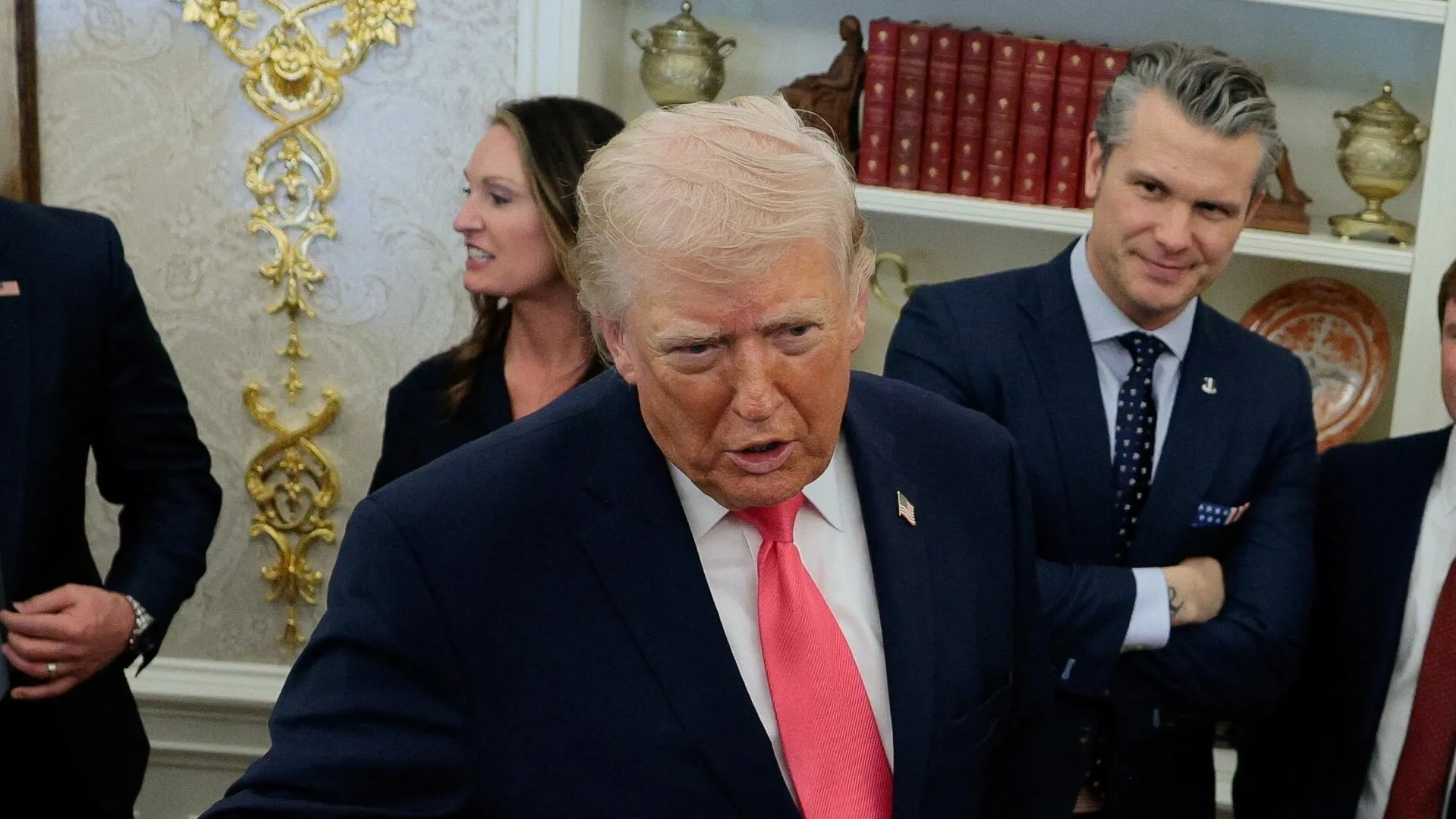
WASHINGTON — President Trump said Tuesday that Iran wants to “make a deal” with the United States to end the war in the Middle East, saying that negotiations are ongoing with the conflict in its fourth week.
Iran has publicly denied that talks are happening. But Trump told reporters during an Oval Office event that negotiations are underway and being led by Vice President JD Vance and Secretary of State Marco Rubio.
“I’d like to think we are in a good bargaining position,” Trump said.
Trump said he remains skeptical of Tehran’s intentions, saying he doesn’t necessarily “trust them,” but indicated that he is encouraged to continue talks after receiving what he described as a “very big present worth a tremendous amount of money” from Iran.
“I am not going to tell you what the present is,” Trump told reporters. But he said it was a “significant prize” related to “oil and gas” that signaled to him that he was “dealing with the right people.”
Conflicting messages over the diplomatic efforts between Washington and Tehran come as Pakistan has offered to host peace talks in Islamabad aimed at ending the hostilities, which have killed more than 2,400 people, further destabilized the Middle East and disrupted global oil markets.
“Pakistan welcomes and fully supports ongoing efforts to pursue dialogue to end the WAR in Middle East, in the interest of peace and stability in region and beyond,” Prime Minister Shehbaz Sharif wrote on X.
Any potential talks between the United States and Iran would face significant challenges. Key U.S. demands — particularly related to Iran’s ballistic missile and nuclear programs — remain difficult to resolve, even though Trump claims Iran has already agreed to concessions related to its ability to have nuclear weapons.
It is also unclear who within Iran’s leadership would be willing to negotiate, especially as Israel has vowed to keep targeting Iranian leaders after killing several already.
Trump has not publicly responded to Pakistan’s offer to act as an in-between for the United States and Iran. He also sidestepped a question about a New York Times report that said the Saudi crown prince, Mohammed bin Salman, has been pushing him to continue the war against Iran.
The president instead expressed confidence in his senior advisors handling the negotiations with Iran. He did not specify who U.S. officials are engaging with, but insisted they are “talking to the right people.”
When asked by a reporter why he had agreed to a cease-fire with the Iranians, Trump said: “They are talking to us, and they’re making sense.”
As the talks continue, Trump said that the United States is “way ahead of schedule” in its war with Iran, a nation that he said was so battered that it had no choice but to come to the negotiating table. Iran, however, showed on Tuesday that it still has firepower as it fired a new wave of missiles at Israel, Iraq and other gulf nations.
Iran fired at least 10 waves of missiles at Israel. In Tel Aviv, a missile with a 220-pound warhead slammed into a street in the city center, blowing out windows of an apartment building and sending smoke billowing. Four people suffered minor wounds, rescue worker Yoel Moshe said.
In Kuwait, power lines were hit by air defense shrapnel, causing partial electricity outages for several hours. Bahrain said it was attacked with missiles and drones, and that an Emirati soldier serving with its forces had been killed. The United Arab Emirates said air defense systems responded to similar attacks, and Saudi Arabia said it destroyed Iranian drones targeting its oil-rich Eastern Province.
Israel pounded Beirut’s southern suburbs, saying that it was targeting infrastructure used by the Iran-linked Hezbollah militant group, and carried out an extensive series of strikes on Iranian “production sites,” without providing more information.
On Tuesday, Defense Minister Israel Katz said Israel intended to seize Lebanon’s south Lebanon to a create a “security zone.”
Speaking at an assessment meeting with the Israeli military’s chief of staff, Katz said the military would control up to the Litani River, a waterway that runs through south Lebanon, meeting the Mediterranean some 20 miles north of the border with Israel.
“Hundreds of thousands of residents of southern Lebanon who evacuated northward will not return south of the Litani River until security for the residents of the north [of Israel] is ensured,” he said.
His words were the clearest articulation yet of Israel’s plans in Lebanon, going far beyond the “limited and targeted ground operations” announced by the Israeli military earlier this month.
Lebanon, meanwhile, took steps to undercut Tehran’s influence in the country and its support for Hezbollah. In a statement released on X on Tuesday, Lebanese Foreign Minister Youssef Raggi said the government was expelling Iranian Ambassador Mohammad Reza Shibani and declared him persona non grata. He gave Shibani until Sunday to leave the country.
Hezbollah condemned the move and called it a “grave national and strategic mistake.” Political figures aligned with the group also issued public statements urging the Iranian ambassador to ignore the decision.
In Washington, Trump said he would like to find a resolution that would avoid further casualties and damage to critical infrastructure in the region.
“If we can end this without more lives being down, without knocking out $10-billion electric plants that are brand new and the apple of their eye, I’d like to be able to do that,” he said. “But they can’t have certain things.”
Defense Secretary Pete Hegseth, meanwhile, told reporters that he would rather “negotiate with bombs.”
“The president has made it clear that you will not have a nuclear weapon. The War Department agrees,” Hegseth said. “Our job is to ensure that, and so we’re keeping our hand on that throttle, as long and as hard as is necessary to ensure the interests of the United States of America are achieved on that battlefield.”
His comments came as thousands of U.S. Marines were on their way to the region, raising speculation that the U.S. may try to seize Kharg Island, which is vital to Iran’s oil network. The U.S. bombed the Persian Gulf island more than a week ago, hitting its defenses but saying it had left oil infrastructure intact.
The Pentagon declined to comment on the deployment.
Ceballos and Quinton reported from Washington. Times staff writer Nabih Bulos in Beirut contributed to this report.
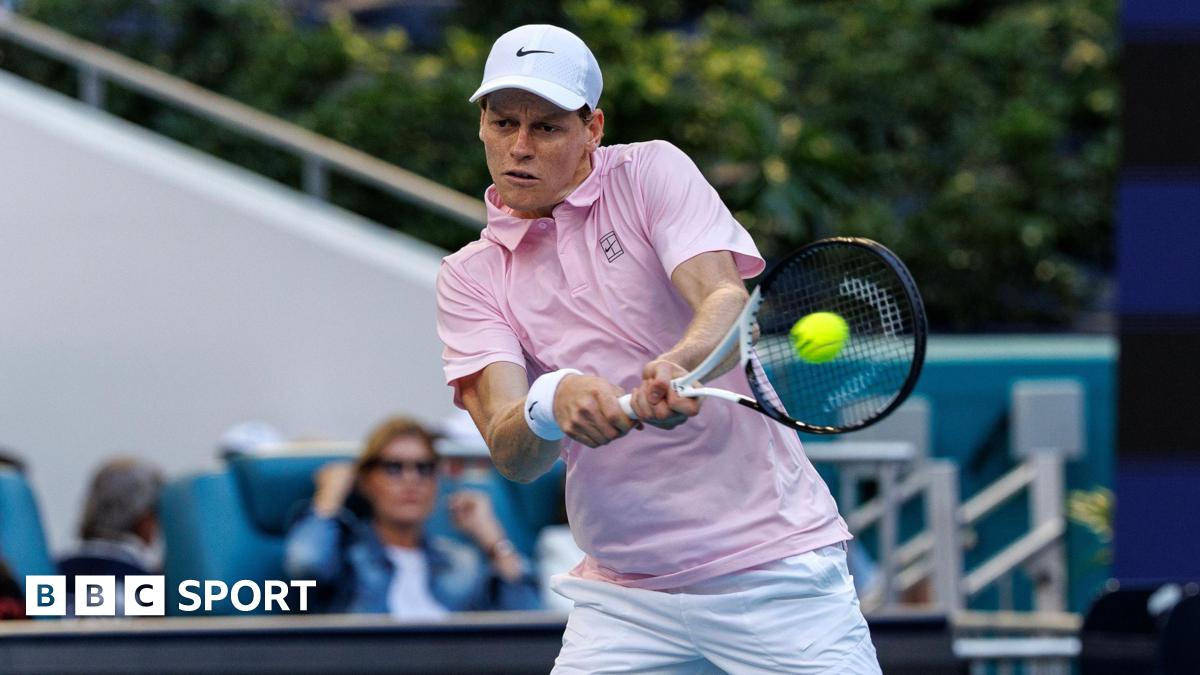
Miami Open: Jannik Sinner extends record winning run
Jannik Sinner extended his remarkable run with a 7-5 7-6 (7-4) win over Alex Michelsen at the Miami Open.
The Italian world number two claimed his 25th and 26th consecutive set wins at ATP Masters 1,000 events during his win over Corentin Moutet on Monday – setting a new record.
Sinner made it 28 sets in a row by beating Michelsen but did not have it all his own way. Having taken the first set, he fell 5-2 down in the second before coming back to win on a tie-break.
The four-time Grand Slam winner has triumphed at the past two Masters 1,000 tournaments – at Indian Wells earlier this month and Paris in November – without losing a set.
In the women’s draw, Coco Gauff takes on Belinda Bencic in a quarter-final later on Tuesday, while Karolina Muchova was the first to power into the semis with a 7-5 7-6 (7-5) win against Canada’s Victoria Mboko.
Third seed Elena Rybakina ended Talia Gibson’s run late on Monday with a comprehensive 6-2 6-2 win to move into the last eight.
The 21-year-old Australian had won 11 of her past 12 matches but was outclassed by two-time Grand Slam champion Rybakina, who will face fifth seed Jessica Pegula on Wednesday.
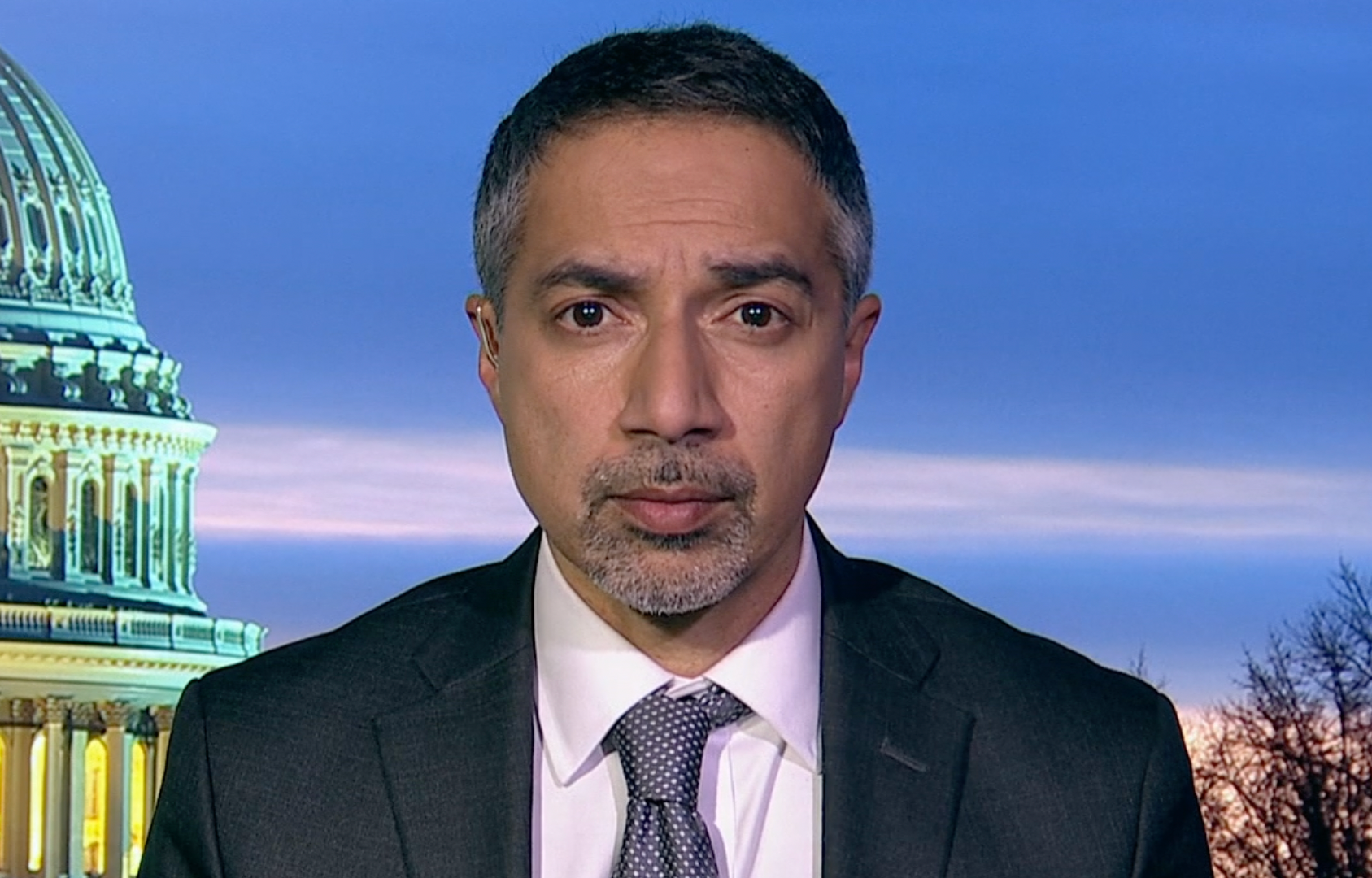
Parsi: No deal ‘’without both sides giving something to the other’ | US-Israel war on Iran
Trita Parsi, Vice President of the Quincy Institute, argues that Iran is unlikely to agree to end the war without sanctions relief, while there is little sign Donald Trump is willing to offer meaningful concessions, adding that a deal remains unlikely until then.
Published On 25 Mar 2026

OpenAI pulls AI video app Sora as concerns grow on deepfake videos | Social Media News
This is first big step by the ChatGPT maker to focus its business on potentially more lucrative areas, such as coding tools.
Published On 25 Mar 2026
OpenAI is shutting down its social media app Sora, which went viral towards the end of last year as a place to share short-form videos generated by artificial intelligence but also raised alarms in Hollywood and elsewhere.
OpenAI said in a brief social media message on Tuesday that it was “saying goodbye to the Sora app” and that it would share more soon about how to preserve what users had already created on the app.
Recommended Stories
list of 4 itemsend of list
“What you made with Sora mattered, and we know this news is disappointing,” it said.
The company behind ChatGPT released Sora in September as an attempt to capture the attention, and potentially advertising dollars, that follow short-form videos on TikTok, YouTube or Meta-owned Instagram and Facebook.
But a growing chorus of advocacy groups, academics and experts expressed concerns about the dangers of letting people create AI videos on just about anything they can type into a prompt, leading to the proliferation of nonconsensual images and realistic deepfakes in a sea of less harmful “AI slop”.
OpenAI was forced to crack down on AI creations of public figures – among them, Michael Jackson, Martin Luther King Jr and Mister Rogers – doing outlandish things, but only after an outcry from family estates and an actors’ union.
Disney, which made a deal with OpenAI last year to bring its characters to Sora, said in a statement on Tuesday that it respects “OpenAI’s decision to exit the video generation business and to shift its priorities elsewhere”.
On Monday evening, Walt Disney and OpenAI teams were working together on a project linked to Sora. Just 30 minutes after the meeting, the Disney team was blindsided with word that OpenAI was dropping the tool altogether, a person familiar with the matter said.
OpenAI announced the move publicly on Tuesday.
“It was a big rug-pull,” according to the person, who requested anonymity to discuss the matter.
Messy process
The move is the first big step by the ChatGPT maker to focus its business on potentially more lucrative areas, such as coding tools and corporate customers.
But the abrupt cancellation of Sora illustrates how messy the streamlining process may become as OpenAI prepares for a stock market debut that could come as early as later this year.
The Sora decision means the end of a blockbuster $1bn deal between Disney and the ChatGPT maker that was announced a little more than three months ago. As part of the three-year deal, Disney said it would invest $1bn in OpenAI and lend more than 200 of its iconic characters to be used in short, AI-generated videos.
But the transaction between the companies never closed, two other people familiar with the matter said, and no money changed hands.

Watch the moment pregnant Molly-Mae Hague is left speechless as Tommy calls her a ‘piece of a***’ in front of baby Bambi
MOLLY-Mae Hague was left speechless after boyfriend Tommy Fury called her a “piece of a***” in front of their daughter Bambi.
The Love Island icon, 26, is currently pregnant with their second baby after the couple got back together last year.
The couple are getting ready to welcome baby number two, after their daughter Bambi, three, was born in 2023.
Molly-Mae and Tommy often keep fans up-to-date with their family life at home, since reuniting after their split.
Today they shared a hilarious moment in the boxer’s latest YouTube vlog called: “Spend a weekend with me.”
In the video the couple were seen in the car with Bambi in the backseat.


The conversation then turned to Molly saying that she “never looked worse”.
Tommy then quickly said that he “disagreed”.
“I think you look very beautiful. All of your luscious long blonde locks.” the boxer told Molly.
“And it’s very nice to have a piece as good as you in the front seat of the car.”
Molly then quickly asked; “A piece? What do you mean a piece?
To which Tommy replied with a grin: “One piece of a**!”
Molly then chuckled: “Babe, I’m your pregnant missus!”
She then added: “Terrible!”
It comes as Molly-Mae and Tommy quietly broke their baby news to family and close pals months ago, but shared a surprise video with fans in February.
The mum posted a sweet black and white clip on Instagram filmed on January 23, captioning it: “Soon to be four.”
It included Bambi who was wearing a “big sister” jumper.
Molly had previously expressed her desire to expand her family with Tommy in scenes aired on her Amazon Prime documentary in January.
Opening up about the future, she revealed: “All I want in this life is to be with him, and to have another baby with him, and to grow old as a family.
“And to live in a nice house together and have a nice life together. That’s all I want.”
Molly also dropped various clues about her pregnancy before announcing her joyous news, which is said to have strengthened her relationship with boxer Tommy.
A source told The Sun: “Finding out Molly is pregnant has really helped bring them close together again.
“Tommy is determined to do things right this time he has cancelled all of his summer trips with his friends, as he wants to stand by Molly every step of the way.
“Their new home is in a better place for both of them and has more than enough space for two children.”
The couple co-parented Bambi following their messy split in August 2024 – following reports Tommy cheated on her during a lads’ holiday.
Molly-Mae and Tommy Fury’s relationship timeline

From Love Island to a diamond ring and baby – we look at how Molly and Tommy have got to where they are today.

Plans for forum to replace scrapped USC governor’s debate fall apart
A proposed gubernatorial forum hastily cobbled together in the hours after USC canceled its Tuesday debate fell apart because the candidates of color who were excluded from the previously planned event were unable to show up in person at KNBC-TV’s studio in Universal City, according to multiple sources.
Facing mounting pressure that its debate selection criteria excluded every candidate of color, the university canceled its debate late Monday. On Tuesday morning, billionaire Tom Steyer — a Democrat — proposed holding an alternative face-off, with KNBC moderating. But the candidates who had not been invited to the USC debate had already made other commitments.
“A lot of this came out of nowhere — there’s a debate and you’re not invited, followed by there’s no debate, and then maybe we should all hang out and have a conversation,” said Kyle Layman, a strategist advising former U.S. Health and Human Services Secretary Xavier Becerra.
USC officials declined to comment on Tuesday’s developments — as did KABC-TV, one of the broadcast partners of the canceled debate. KNBC did not respond to a request for comment, but someone involved with planning a potential debate there said pulling together such an event in just a few hours was impossible, and also unfair to the candidates who had made other plans after initially being excluded from the USC debate.
“We looked into the possibility of doing something. It just wasn’t possible because of the last-minute logistics. It was not feasible,” said the person, who asked for anonymity to speak candidly. “We couldn’t get everybody here.”
The fact that the candidates excluded from the USC debate couldn’t find a way to participate in Tuesday evening’s alternative forum irritated some people involved in the planning, however. Becerra, state Supt. of Public Instruction Tony Thurmond, former Los Angeles Mayor Antonio Villaraigosa and former state Controller Betty Yee had loudly protested not being invited to the USC event.
“This is like probably one of the last opportunities they have to be with other leading contenders of the race, so why not take this opportunity?” said someone who took part in conversations about the proposed last-minute debate, who asked for anonymity to speak openly. “If the whole thing is about bringing your message to the voters, making sure voters have as much information as possible, talking about the issues that matter, wouldn’t you want to take every opportunity to do that?
“If you’re going to talk a big game about taking your message to voters, the importance of debates, why not do it?” this person said.
Becerra, Thurmond, Villaraigosa and Yee have reportedly formed an informal pact not to participate in any debate that does not include all of them, which Yee referenced in a Tuesday afternoon news conference.
“The idea that none of the candidates of color are going to be joining a debate is just inappropriate for a state like California,” Yee said. “We also need to have a commitment from all of the debate sponsors that they will include all of us going forward.”
Yee and Thurmond were not invited to the next major televised debate, which will take place April 1 at Fresno State University. Becerra and Villaraigosa had previously confirmed their attendance, according to a news release from the Western Growers Assn., one of the event’s sponsors.
And all four candidates of color, along with San José Mayor Matt Mahan, were not invited to a debate on April 22 in San Francisco that will be hosted by KRON-TV and broadcast on Nexstar Media Group stations throughout California.
“We don’t need gatekeepers,” Mahan said in a statement Tuesday evening. “I’m calling on my fellow candidates to work together to organize our own debates — so we can take our ideas for a better California to every corner of California. Let’s let the voters truly decide.”
The scrapped USC debate was going to be hosted by the institution’s Dornsife Center for the Political Future and co-sponsored by KABC and Univision. Six candidates had been invited to participate: Democrats Rep. Eric Swalwell (D-Dublin), former Orange County Rep. Katie Porter, Mahan and Steyer; along with the leading Republicans, conservative commentator Steve Hilton and Riverside County Sheriff Chad Bianco.
Candidates and elected officials called the criteria used to determine participation in the debate biased because it included Mahan, a white candidate who is polling near the bottom of the pack but is supported by notable names in the USC community. Hours after the debate was canceled, Steyer’s campaign sought to create an alternate event that would include all of the candidates.
“We were trying to do the right thing upon learning that the debate was canceled at USC,” said a member of Steyer’s campaign who asked for anonymity to speak candidly. “Tom immediately was like, ‘We can do something alternative.’ People want to hear from the gubernatorial candidates. It was on the table. It was offered.
“NBC couldn’t get all the candidates here, but we tried,” this person said. “Given the short amount of time we were trying to put this together, it ultimately could not happen because not all the candidates could get to the studio.”
Thurmond, who was in Sacramento and Richmond on Tuesday, joined a political influencer on YouTube Tuesday evening, while Yee attended previously scheduled events with the East Area Progressive Democrats and a women’s group in the L.A. area. Villaraigosa had lined up other interviews at his Wilshire campaign office, Becerra was traveling, and Porter was scheduled to host a livestream on her Instagram account Tuesday evening.

Prep baseball: ECR wins first game of series against Birmingham
Since he became head coach at Birmingham in 2007, Matt Mowry is 0 for 18 when it comes to winning a West Valley League baseball title. He’s won five City titles but the Patriots haven’t been able to figure out how to win a league title.
A showdown against defending City champion El Camino Real on Tuesday didn’t start or end well for the Patriots. The Royals (10-3, 4-0) scored five runs in the first inning on six hits and coasted to an 8-3 win over Birmingham (10-2, 3-1).
The big hits in the first inning were an RBI double by JJ Saffie, a two-run double by Blake Dubin and an RBI single by Ryan Hauptman. For the second consecutive game, Birmingham pitcher Nathan Soto couldn’t make it out of the first inning. ECR starter Jackson Sellz, celebrating his 17th birthday, threw six innings before Hauptman came in to get the save. Ryan Glassman, Macai Friedman and Shane Bogacz each had two hits.
Birmingham is getting help starting Friday when transfers Masen Ruiz (Chatsworth), Toni Mendoza (Chatsworth) and Larkin Fleming (Sherman Oaks Notre Dame) become eligible. All could become starters. The two teams play again twice next month.
Fullerton 7, Ocean View 5: Luke Gonzalez had two doubles to help Fullerton come back from a 5-3 deficit.
Los Alamitos 4, Marina 0: Ryan Deck struck out seven, walked none and gave up two hits in the shutout. Cruz Derrico finished with three hits.
St. Bernard 5, Bishop Amat 4: Juan Sandoval struck out five in a complete game for St. Bernard.
Newport Beach 9, Edison 0: Gavin Guy struck out six in 5 1/3 innings and also hit a three-run home run.
Santa Margarita 2, Servite 0: Sophomore Tyler George struck out four, walked none and threw a two-hit shutout. He also hit a home run.
Santa Monica 10, Leuzinger 1: Ryan Breslo had three hits for Santa Monica.
Oaks Christian 5, Newbury Park 2: Luke Puls, Ryan Sheffer and Oliver Dauskurdas each had two hits for Oaks Christian (9-2).
Calabasas 10, Thousand Oaks 9: The Coyotes handed Thousand Oaks its first defeat after 10 consecutive victories in a wild Marmonte League opener. The Lancers wiped out an 8-1 deficit with seven runs in the fifth inning to tie the score. Conner Kingston ended the game with a scoreless seventh for the save. Landon Carson had four RBIs for the Lancers. Michael Morales had three hits for the Coyotes.
Westlake 2, Agoura 1: Jaxson Neckien had two hits for the Warriors.
Sherman Oaks Notre Dame 10, Crespi 0: Malakye Matsumoto hit a grand slam and threw two scoreless innings of relief for 11-0 Notre Dame. Beckett Berg threw five scoreless innings with four strikeouts.
Sierra Canyon 8, Chaminade 2: Isaias Tirado and Aiden Jahng each hit home runs and Armando Solorio threw four shutout innings.
St. Francis 6, Bishop Alemany 4: Daniel Izaguirre had three hits for St. Francis in the Mission League win. Brody Thompson, Chase Stevenson and Alex Noble hit home runs for Alemany.
La Mirada 5, Gahr 1: Jacob Oropeza threw 3 2/3 innings of scoreless relief.
El Modena 3, Villa Park 0: Three pitchers combined on a no-hitter.
Softball
Huntington Beach 17, Fountain Valley 0: Bree Carlson hit three home runs for the Oilers.
Murrieta Mesa 7, Great Oak 0: Lilly Hauser struck out 13 and also had a two-run double to lead unbeaten Murrieta Mesa.
Oaks Christian 9, Newbury Park 3: Giabella Otani had two hits and three RBIs.

Another projectile strikes premises of Iran’s Bushehr Nuclear Power Plant, Iran says

Iran said Tuesday that a projectile hit within the premises of its nuclear power plant in Bushehr, southern Iran. Photo by Abedin Taherkenareh/EPA
March 24 (UPI) — An unidentified projectile struck the grounds of Iran’s Bushehr nuclear power plant on Tuesday night, according to Iran’s Atomic Energy Organization, the second time in a little more than two weeks that the facility has been threatened by the ongoing war.
The projectile struck at 9:08 p.m. local time, resulting in no casualties or damage, it said in a statement.
“Attacking peaceful nuclear facilities is not only a violation of international regulations and rights, but also seriously endangers #regional security,” Iran’s AEO said in a post tagging the United Nations nuclear watchdog, the International Atomic Energy Agency.
“It is expected that international institutions will adopt a responsible and transparent stance in response to such actions.”
The IAEA said it was informed of the incident by Iran, adding that the plant was operating normally.
The agency’s director-general, Rafael Grossi, reiterated his call “for maximum restraint to avoid nuclear safety risks during conflict,” the IAEA said in a statement.
The incident comes eight days after an unidentified projectile struck near the plant on March 17, the first reported strike near Bushehr since the war between Iran and the United States and Israel began late last month.
Located near Bushehr city on Iran’s southwest Persian Gulf coast, the Bushehr plant began construction in 1975, but its original German contractor abandoned the project following the Islamic Revolution four years later. In the mid-1990s, Russia agreed to complete Bushehr Unit 1, Iran’s first reactor, which began operating in 2011, according to the U.S. Congressional Research Service.
What we know about the US’s 15-point plan Iran proposal | US-Israel war on Iran
US media is reporting the Trump administration has proposed a temporary ceasefire and a 15-point plan to end the war on Iran. The reports emerge as Trump claims the US is already talking to Iranian officials – a claim Iran has vehemently denied.
Published On 25 Mar 2026

Zendaya shows off ‘wedding ring’ as she wears yet another white gown after ‘secret wedding to Tom Holland’
ZENDAYA fuelled speculation she’s tied the knot with Tom Holland again tonight as she wore a gold wedding band to the Paris premiere of her new film The Drama.
She’s certainly lived up to the film’s name in recent weeks as the world clamours to know if she and fellow A-lister Tom, 29, are in fact man and wife.
White was once more her colour of choice tonight in the French capital as she posed with co-star Robert Pattinson, 39.
The pair recreated their goofy on-screen chemistry as they high-fived and smiled in front of the cameras and were suitably dressed for the occasion; the new film is about a couple unravelling on their wedding week.
Stunning Zendaya, 29, looked a Hollywood siren through and through with her short curls and glamorous jewellery. Robert was groom-like in his stylish black suit.
Her golden band was previously on show at the 19th annual Essence Black Women in Hollywood earlier this month.


And Zendaya addressed speculation during a recent appearance on Jimmy Kimmel Live.
The host asked the star if she was aware of AI photos circulating of her and Tom’s so-called ‘wedding’.
Zendaya replied: “Many people have been fooled by them.
“While I’ve been out and about in real life and people are like ‘oh my god your wedding photos are gorgeous’ and I was like ‘babe they’re AI’.
“They’re not real! They’re not real!”
Zendaya admitted that some loved ones had been fooled by them and also supposedly unhappy they were not invited.
The US actress wore a bridal-style gown at the Los Angeles premiere. In fact it was the same frock she wore to the Oscars in 2015.
She claimed that she only chose the strapless Vivienne Westwood number to promote the movie — and to relive her first appearance at the Academy Awards as a teenager.
Zendaya told interviewer Maura Higgins, 35, on the red carpet: “We just happened to be wearing white a lot.
“But I didn’t want that to be the only theme.
“And I know that the phrase is, ‘Something old, something new, something borrowed, something blue.’ So I started with something old.
“This is a dress that I wore when I was 18 years old to the Oscars actually — my very first Oscars.
“It was a very important moment for me in my life and my career but also for my family, for my folks.
“So that moment meant a lot for me so this felt like the right time to bring this one out of the archive.
“And also, it happened to be a wedding dress, so that worked out too.”
Zendaya has been dating her Spider-Man co-star Tom since 2021.
Her stylist Law Roach first started wedding rumours, claiming the couple had tied the knot in secret.
He said: “The wedding has already happened. You missed it.”
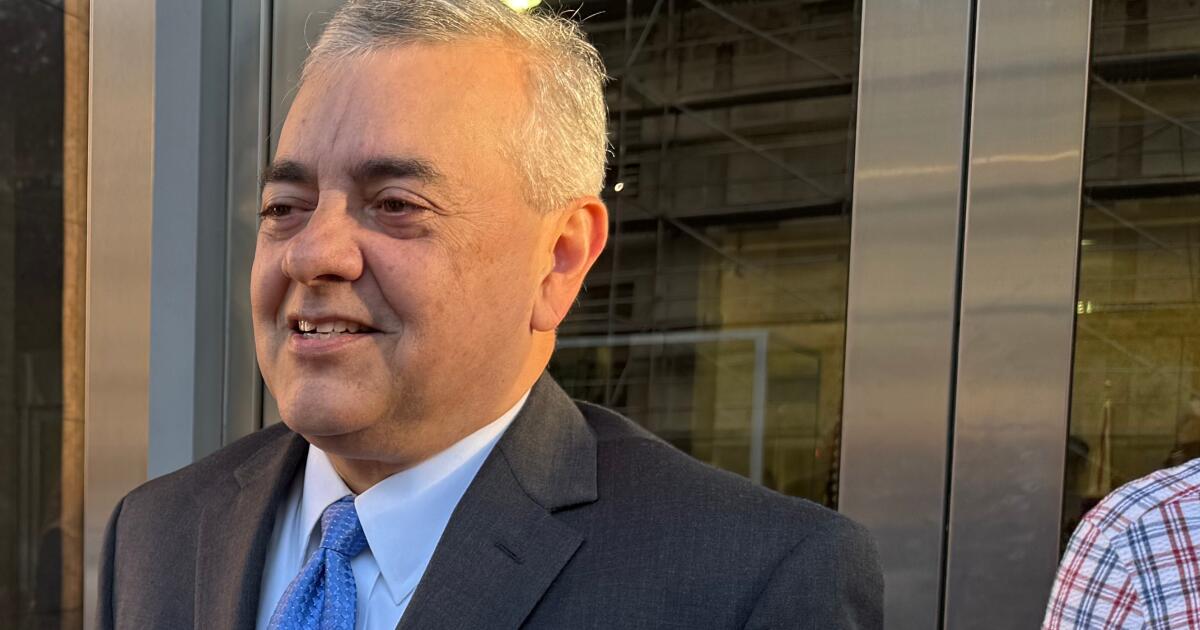
Rubio testifies he didn’t know of allegations an ex-lawmaker was lobbying for Venezuela’s Maduro
MIAMI — Secretary of State Marco Rubio testified in court that he had no knowledge that former Florida congressman David Rivera was lobbying on behalf of Venezuela’s government — as prosecutors later alleged — when he met with his longtime friend to discuss U.S. policy toward the South American country several times at the start of the first Trump administration.
“I would’ve been shocked” had I known, Rubio said in almost three hours of testimony Tuesday at Rivera’s federal trial in Miami.
Rivera and an associate were charged in 2022 with money laundering and failing to register as a foreign agent after being awarded a $50-million lobbying contract by Nicolás Maduro’s government.
Prosecutors allege that the goal of the lobbying effort was to persuade the White House to normalize relations with Venezuela, while Rivera’s attorneys argue that the three-month contract, which ended before Rivera met with Rubio, was focused exclusively on luring Exxon Mobil back to Venezuela — commercial work that is generally exempt from the Foreign Agents Registration Act.
As part of his work, Rivera and his co-defendant are accused of trying to arrange meetings for then-Foreign Minister Delcy Rodríguez — now Venezuela’s acting president — in Dallas, New York, Washington and Caracas, Venezuela, with White House officials, members of Congress and the chief executive of Exxon.
Rubio testifies, an unusual move
In sometimes deeply personal testimony Tuesday, Rubio discussed at length friendships that date back to the start of his political career as an aide to Bob Dole’s 1996 presidential campaign and a West Miami council member.
Testifying in a packed courtroom with heightened security, Rubio said he and Rivera became “very close” when they overlapped as members of the Florida Legislature. The two Cuban American Republicans co-owned a house in Tallahassee, celebrated family events together and ardently opposed Venezuela’s socialist government when both went to Washington at the same time — Rubio elected to the Senate, Rivera to the House.
So when Rivera texted Rubio in July 2017 that he needed to see him urgently to discuss Venezuela, they agreed to meet the next day, a Sunday, at a friend’s home in Washington where the then-senator was staying with his family, Rubio said.
At the meeting, Rivera informed Rubio that he was working with Raul Gorrín, a media magnate in Venezuela, on what he described as a plan for Maduro to step aside.
“I was skeptical,” said Rubio, adding that the Maduro government was full of “double dealers” constantly pitching unrealistic plans to unseat Maduro. “But if there was a 1% chance it was real, and I had a role to play alerting the White House, I was open to doing that.”
Rubio said he had no knowledge Rivera was himself working for Maduro, as prosecutors would later allege. Rubio said he doubted Gorrín would betray Maduro even when the former congressman opened his laptop and showed millions of dollars in a Chase bank account that he was told were payments from the businessman to Venezuela’s opposition.
“It was an impressive amount,” Rubio said. “He didn’t tell me whose account it was. He said it was to support the opposition.”
Two days later, borrowing talking points provided by Rivera, Rubio wrote and delivered a speech on the Senate floor signaling the U.S. would not retaliate against Venezuelan insiders who worked to push Maduro from power.
“He provided me with insight into some of the key phrases that regime insiders would’ve wanted to hear to know this was serious,” Rubio testified. “No vengeance, no retribution.”
Rubio also spoke to Trump, alerting the president in his first term that there may be something “brewing” with Venezuela.
‘A total waste of my time’
But the peacemaking effort collapsed almost immediately. At a second meeting at a Washington hotel, Gorrín failed to produce a promised letter from Maduro to Trump that he wanted Rubio to hand-deliver to the president.
“It was a total waste of my time,” Rubio testified.
Shortly afterward, Trump imposed heavy sanctions on Maduro and members of his inner circle for their decision to go forward with what Rubio called a “fake election” to empower a constituent assembly that undercut the opposition-controlled legislature.
By that time, the senator hewed closely to the Trump administration’s hard line. He taped a rare 10-minute address to the Venezuelan people in July 2017, a day after the divisive election, that was broadcast exclusively on Gorrín’s Globovision network.
“For Nicolás Maduro, who I am sure is watching, the current path you are on will not end well for you,” Rubio said in the televised address.
On the stand, Rubio said that had he known Rivera was working with Gorrín on behalf of Maduro, he never would have agreed to deliver the address on the network.
But Rivera said Rubio’s testimony backed his defense that as a lifelong opponent of communism he never worked to strengthen Maduro’s grip on power.
“Marco Rubio made it abundantly clear today that everything we worked on together in 2017 was meant to remove Maduro from power in Venezuela,” he said in a statement.
Throughout his testimony Rubio, a lawyer, spoke calmly and in command of granular details of U.S. policy toward Venezuela over the past decade, even as he struggled to recall the specifics of his text exchanges with Rivera on Venezuela matters.
His testimony was highly unusual. Not since Labor Secretary Raymond Donovan testified at a Mafia trial in 1983 has a sitting member of the president’s Cabinet taken the stand in a criminal trial.
As if to underscore the uniqueness of his appearance in federal court, Rivera’s attorney, Ed Shohat, asked Rubio to sign a copy of his 2012 autobiography, “An American Son,” at the conclusion of his testimony.
Rivera and his co-defendant, political consultant Esther Nuhfer, are among a small number of friends and family Rubio thanks in the acknowledgment section of his memoir.
Goodman writes for the Associated Press.

How Dodgers’ Shohei Ohtani can put himself in the 2026 NL Cy Young conversation
Shohei Ohtani’s three straight strikeouts in the fourth inning of his final spring start Tuesday featured a different putaway pitch for each.
He got Angels slugger Jorge Soler to whiff on a sweeper. Jeimer Candelario went down on a curveball. And Jo Adell struck out on a fastball.
“Just shows the confidence he has and different ways he had to attack guys, to get ahead and also put guys away,” manager Dave Roberts said after the Dodgers’ 3-0 loss to the Angels in the Freeway Series finale. “And today the feel was really good, even better than the first outing.”
Pretty much everything was clicking for Ohtani heading into the regular season, even though it was only his second spring training start on the mound. Ohtani recorded 11 strikeouts in four-plus innings. He held the Angels to four hits, three of which were consecutive singles in the fifth, and was charged with three runs, all scored in the fifth.
For the first time in three years, Ohtani is set to begin the season as a fully healthy pitcher. And it will be the Dodgers’ first time managing his two-way schedule all year. Limited the last two seasons by his recovery and build-up from elbow surgery, Ohtani last made 20-plus starts in 2023 with the Angels.
“The desire is high,” Roberts said when asked about Ohtani’s aim to pitch wall to wall. “I think it’s realistic. Then the bigger question is, how are we going to manage that and navigate it?”
Thinking through the plan going into the season, Roberts floated the idea of giving Ohtani a little extra rest between starts. Dodgers starters are already on a six- to seven-day rotation. But a six-man starting pitching group gives the team flexibility as they map out their pitching plan.
“My intent is to be in the rotation under normal rest, normal circumstances,” Ohtani said through interpreter Will Ireton last week in Arizona. “Now if management thinks that I need extra rest, I’ll take it. But I’ll let management handle that. Just looking at our roster, we have a lot of pitchers. It doesn’t hurt to rest more.”
Ohtani’s in-game limits, after a build-up slowed by his participation in the World Baseball Classic as a position player, will be adjusted before each start. But his Freeway Series outing Tuesday set him up well. He stretched out to 86 pitches.
“When you’re talking about the first game of the season, could he get through six innings? Could he touch the seventh? Yes,” Roberts said Tuesday afternoon. “But he won’t touch the eighth inning. So there’s got to be some responsibility as far as how we manage him.”
When it comes to awards, Ohtani is going after a third World Series title. But his trophy case is well stocked with individual accolades too. He’s won four MVPs, five All-Star selections, four Silver Sluggers and a Rookie of the Year award.
The Cy Young, however, has remained elusive. He came close in 2022, when a 2.33 ERA and league-leading 11.9 strikeouts per nine innings earned him a fourth-place finish in the American League. It was the only time in his career that he crossed the 25-start threshold, with 28.
“I would never want to sacrifice our chance of winning and performing in the postseason,” Ohtani said. “So I think that’s really the No. 1 goal in my mind. Just because I want to try to win the Cy Young and throw more innings, that’s not necessarily the priority over winning a championship. So with that being said, if there’s a situation where there’s some injuries and I do have to pitch on shorter rest, I’m happy to do so.”
Would showing that he can make regular starts all year automatically put him in the Cy Young conversation?
“Oh yeah,” Roberts said. “Because of just talent, ability, will. If he does that, he’ll be in the conversation, absolutely. I have no doubt about that.”
Of course, besides reigning NL Cy Young winner Paul Skenes, Ohtani would also be competing for the award with his own teammate, Yoshinobu Yamamoto, who enters the season with the edge.
If Ohtani continues to pitch like he did on Tuesday, while building up the rest of the way, he and the Dodgers will be in good shape.
“It was another good one for him,” Roberts said, “and he’ll be ready to go.”
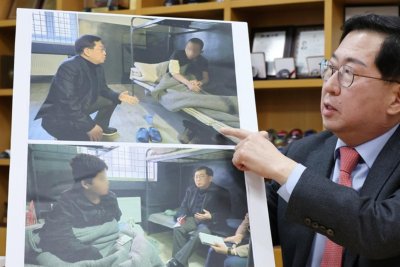
Ukraine says captured North Korean soldiers granted POW status

Yoo Yong-weon, a lawmaker of South Korea’s ruling People Power Party, speaks during an interview with Yonhap News Agency about his recent meetings with two North Korean soldiers captured by Ukraine at the National Assembly in Seoul, South Korea, 07 March 2025. The two photographs Yoo is holding were taken from his meetings with the soldiers in Kyiv on 25 February 2025. Photo by YONHAP / EPA
March 24 (Asia Today) — Ukraine’s Defense Ministry has told a South Korean civic group that two captured North Korean soldiers are recognized as prisoners of war and are being protected under the Geneva Convention on the treatment of POWs.
According to a reply disclosed Tuesday by an emergency committee campaigning for the soldiers’ transfer, the Ukrainian ministry said the men are being guaranteed contact with the outside world, access by international monitors and human rights organizations, and other protections required under international humanitarian law.
The ministry also said the principle of non-refoulement, which bars forced return to a country where a person may face harm, is being taken into account in their treatment.
The statement aligns with remarks made March 6 by South Korean Foreign Minister Cho Hyun, who said he had received assurances from his Ukrainian counterpart that the soldiers would not be repatriated to North Korea or Russia. (Yonhap News)
The civic group, however, said the two men remain in a military detention facility under the authority of Ukraine’s Defense Ministry and still hold legal POW status, leaving open the possibility that they could become subjects of negotiations between governments.
The group said the soldiers should be shifted from military custody to an internationally protected status. It called for their transfer to a civilian protection facility and urged direct involvement by the U.N. refugee agency, the U.N. human rights office and the International Committee of the Red Cross.
It also proposed that procedures begin to determine whether the two soldiers should receive refugee status or another form of international protection.
Photo made available by the Emergency Committee for the Free Repatriation of North Korean Soldiers shows a reply from Ukraine’s Defense Ministry regarding two captured North Korean soldiers. /Provided by the committee
— Reported by Asia Today; translated by UPI
© Asia Today. Unauthorized reproduction or redistribution prohibited.
Original Korean report: https://www.asiatoday.co.kr/kn/view.php?key=20260324010007333
Coastal city with azure waters less than 3 hours from UK has £13 flights and 21C in April
This sun-soaked city that welcomes more than 3,000 hours of sunshine a year and a tropical climate, is a haven for holidaymakers seeking a quieter escape from the tourist crowds

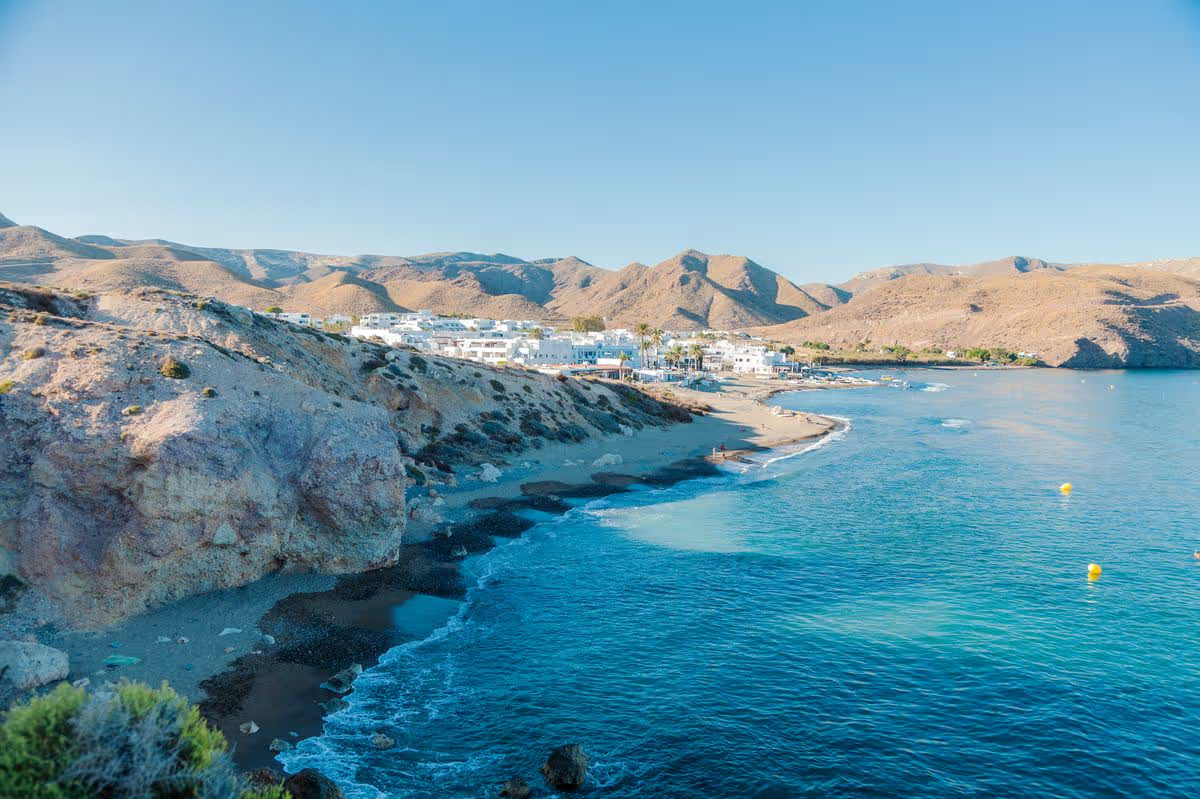
This beautiful coastal city, with nearby towns, is a lesser-known destination (Image: Getty Images)
A beautiful coastal city, less than three hours from the UK, offers a scenic escape with 21C April temperatures and £13 flights.
Almería, in southeast Spain, is set against the diverse landscapes of volcanic beaches, azure waters, and dramatic desert, with balmy rays and virtually year-round sunshine. It’s a lesser-known destination compared to the likes of Costa del Sol, with quieter beaches and a laid-back atmosphere for a more authentic Spanish experience.
Due to its location near the Tabernas Desert, Almería is known as the ‘desert coast’ and enjoys a warmer, drier climate than neighbouring areas. It welcomes more than 3,000 hours of sunshine a year and only around 26 days of rainfall, making it a highly desirable sun-soaked destination.
READ MORE: ‘Secret’ beach praised for crystal-clear waters and ‘dream-like’ beautyREAD MORE: ‘I’ve been to every country in the world and my favourite was so good I moved there’
In April, visitors can expect to bask in a balmy 21C and enjoy eight hours of blistering sunshine. During the summer months, temperatures can creep up to 32C, with an inviting 12 hours of sunshine every day, and a warm 24C in the turquoise sea.
Aside from the inviting climate, the coastal city offers an affordable holiday, with flights from London to Almería starting at £13 in April, or £17 from Manchester, according to Skyscanner. What’s more, prices don’t rise too much during the peak summer season, with flights from Manchester to Almería costing from £28 one-way in July, or from £33 departing from London.
Once you’ve arrived in the pretty Spanish city, the appealing prices only continue. Travel experts at First Choice found that a beer could set you back just £3 (€3.50) in Almería, while a three-course meal for two typically costs between £25 (€30) and £30 (€35).
Alongside its stretches of golden-sand beaches, crystal-clear blue waters, and diverse landscapes, there’s plenty to explore in the Spanish region. The walkable, compact city centre is brimming with charm, from its Gothic and Renaissance architecture to ancient landmarks, narrow streets and bustling tapas bars.
Almería is renowned for its huge tapas culture and vibrant bars, so you’ll often get free tapas with every drink, as you dine alongside Spaniards. There’s also the 16th-century cathedral towering over the streets, the Plaza Vieja with its beautiful architecture and palm trees, and the main shopping area of Puerta de Purchena, which is brimming with boutique shops.
Away from the city is the protected Cabo de Gata-Níjar Natural Park, with volcanic cliffs, hidden coves, and some of the most stunning Spanish beaches. There’s also the striking Tabernas Desert that you can explore during a guided day tour, as well as the charming whitewashed hilltop village of Mojácar.
The village may look recognisable to some as it was famously used as the backdrop for major Hollywood movies, including Indiana Jones, and the hit TV series Game of Thrones. There’s even the opportunity to visit the preserved Wild West film set of MiniHollywood Oasys, which offers various shows and attractions in a setting that will transport you straight onto the set of Indiana Jones.
Do you have a travel story to share? Email webtravel@reachplc.com

Oil price slides as Trump talks up Iran peace negotiations
The US president said talks to end the war are underway with Iran – a claim that officials in Tehran have disputed.
Source link

Taylor Frankie Paul says her daughter is reliving domestic dispute
Taylor Frankie Paul might have whiplash in the wake of a leaked video that derailed her “Bachelorette” debut, but she says her kids are also feeling the sting.
Last week, the embattled reality TV star was gearing up for Sunday’s launch of “The Bachelorette” when a video of a 2023 domestic dispute between Paul and Dakota Mortensen (her then-boyfriend and the father of her youngest son) was leaked to TMZ.
Paul’s initial claim to fame was launching #MomTok in 2020, which precipitated the 2024 Hulu series “The Secret Lives of Mormon Wives.” Although the incident was documented both in court records and on the first season of the reality series (a portion of Paul’s arrest was shown via police bodycam in Episode 1), the recently leaked video showed some of the altercation.
Paul is seen arguing with Mortensen, she is filmed kicking toward him, and throwing metal barstools across the room toward him. Paul’s daughter was on the couch at the time of the altercation, and toward the end of the video, she is heard crying while Mortensen says, “Stop throwing stuff and help your daughter.”
Paul later pleaded guilty to one count of aggravated assault, and four other charges were dropped.
As the leaked video made its way across the internet, content creators jumped to post commentary. Tiktok user @turtzc posted a take slamming Mortensen for allegedly leaking the video on their son’s 2nd birthday. “The fact that Dakota did this to the mother of his child on his child’s birthday tells you everything you need to know about Dakota,” he said.
Paul replied to the video, writing, “Worst part is my daughter having to relive and see it all over again years later after extensive work with her and apologies to her about that night.”
She added that her son’s birthday was “taken from him.”
Mortensen has denied that he leaked the video. He told ET that his “No. 1 priority” is protecting his and Paul’s son.
Paul spoke with the outlet and said, “I’ve never touched my children, so for me to see those headlines has been heartbreaking. I’m all for taking responsibility for my own life and actions. There is more to the story, and it just sucks to be known as the crazy girl.”
To make matters worse, reports surfaced that Paul and Mortensen were involved in another dispute in late February. Utah’s Draper City Police Department confirmed that there is an open investigation. As a result of the inquiry, Paul has temporarily lost custody of Ever, the son she shares with Mortensen.
Last week, Paul sat down with “Good Morning America” shortly after the video leaked and news that production on “Secret Lives” had paused.
Paul said it was “hard to say” how she envisioned her future on the show.
“It’s hard to see past this,” she said. “I’m not gonna lie. In this moment it’s just so heavy when your life is broadcast out there in these headlines. It’s like the end of the world. That’s what it feels like. … I will say I’ve been here before, and I got through it and, you know, shared my story and my light. So I’m hoping that I can do that again.”
Melania Trump hosts world counterparts and tech reps to discuss children, education and technology
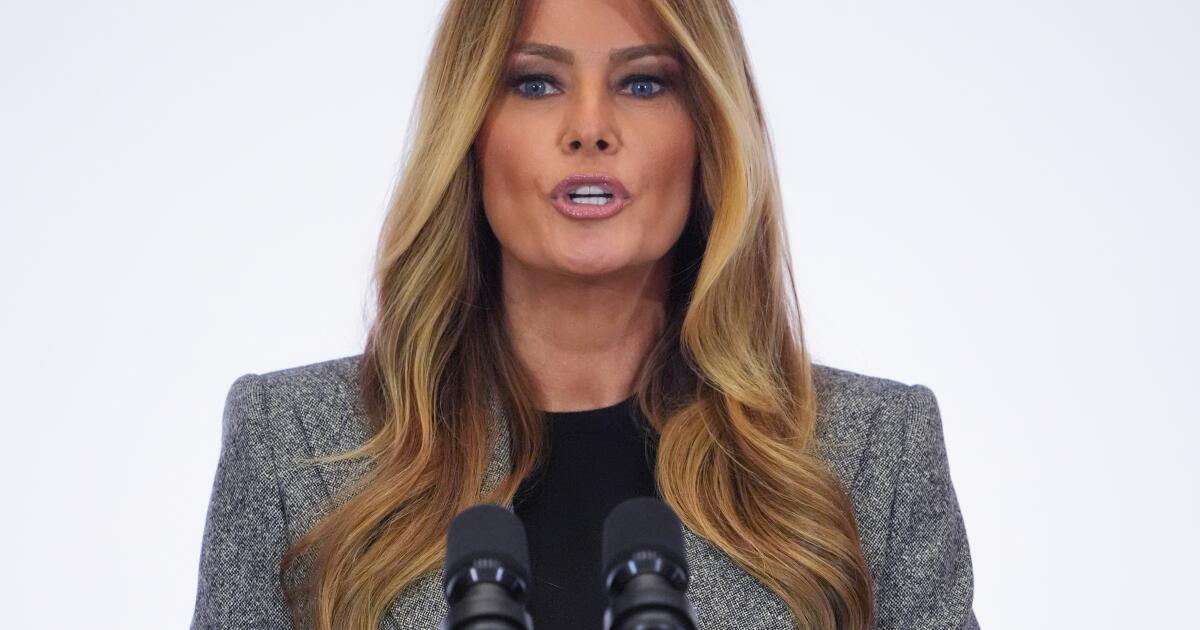
WASHINGTON — Melania Trump on Tuesday called on nations to work together to improve access to education and technology for children around the world, delivering her plea as she addressed a gathering of her counterparts from more than 40 countries.
The first lady’s Fostering the Future Together initiative, which she announced last year, and an inaugural two-day summit that she opened Tuesday are examples of how Melania Trump has expanded her portfolio to embrace global issues.
“As people we dream. As leaders we progress. As nations we will build,” she said in opening remarks. “Beginning today, let’s accelerate our new global alliance, this bond, to positively impact the progress of our children.”
She called on participants to host regional meetings, conduct research studies, begin new partnerships and collaborate with another member country “to cultivate the skills young people need to be successful in this rapidly evolving world.”
She said the goal of empowering children will be achieved by creating innovative programs, advocating for supportive education policies, sponsoring tech-focused legislation and building strong public-private partnerships.
“This room is filled with extraordinary human capital,” the first lady said. She urged the leaders seated around a large U-shaped table in a State Department auditorium to “harness it to elevate your children, to empower your people and to accelerate your economies.”
The gathering included technology companies such as Microsoft, Google and OpenAI.
Among those participating were Olena Zelenska, the spouse of Ukrainian President Volodymyr Zelensky, and Sara Netanyahu, the wife of Israeli Prime Minister Benjamin Netanyahu.
The first lady announced the Fostering the Future Together initiative during the U.N. General Assembly session last fall.
Superville writes for the Associated Press.
Feds threaten SJSU funding as transgender athlete feud escalates
The U.S. Department of Education’s Office for Civil Rights set a deadline Tuesday that sounds much like two earlier deadlines, giving San José State University 10 days to comply with a list of athletics-related demands or face enforcement action, including the termination of the university’s federal funding.
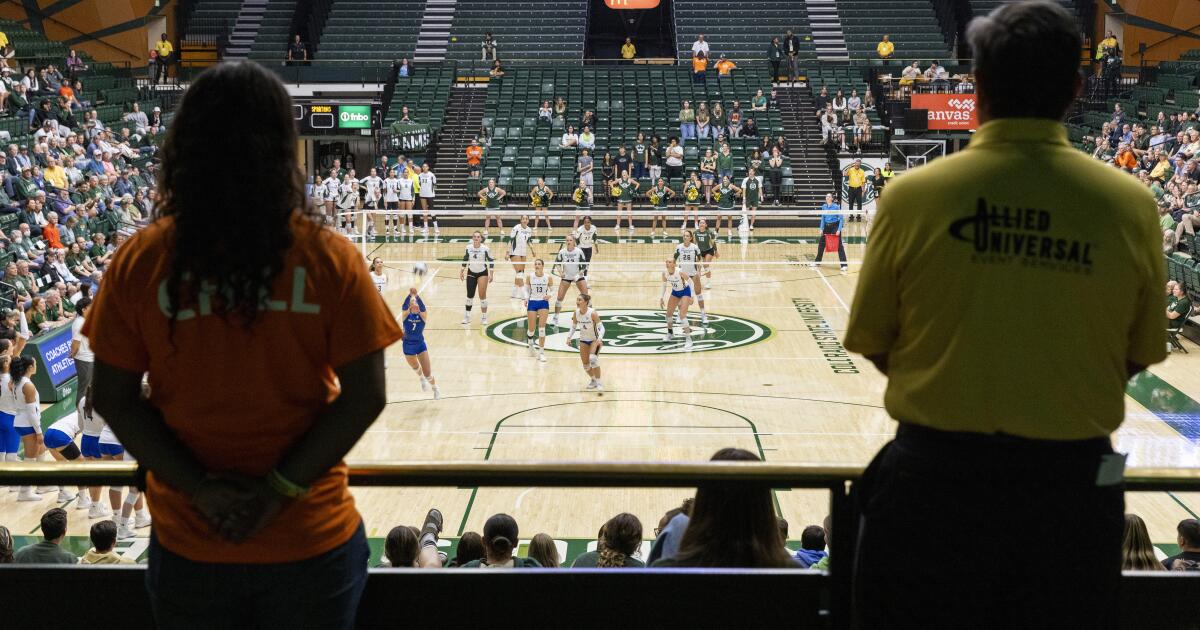
This is the third 10-day deadline issued by the OCR to SJSU, the first in January and the second having expired last weekend. All three concern the same case, that of a transgender woman who played on the school’s women’s volleyball team from 2022 to 2024.
A federal investigation was launched in February 2025 after controversy over Blaire Fleming disrupted the 2024 volleyball season. Four Mountain West Conference teams — Boise State, Wyoming, Utah State and Nevada-Reno — chose to forfeit matches to SJSU.
The probe concluded that SJSU’s policies “allowing males to compete in women’s sports and access female-only facilities deny women equal educational opportunities and benefits.”
SJSU pushed back, insisting it followed the law in allowing Fleming to play. SJSU president Cynthia Teniente-Matson wrote in a March 6 letter to the campus community that the university “vigorously disputes the conclusions that OCR reached. … Our position is simple: We have followed the law and cannot be punished for doing so.”
SJSU requested that the OCR rescind its findings and close its investigation. Instead, the federal agency redoubled its efforts, with the latest salvo a “letter of impending enforcement” issued Tuesday and accompanied by a statement from U.S. Assistant Secretary for Civil Rights Kimberly Richey.
“We have provided SJSU with multiple opportunities to resolve its Title IX violations with common sense actions: separating male and female athletes based on their biological sex, keeping men out of women’s locker rooms and bathrooms, restoring rightfully earned titles and accolades to female athletes, and apologizing to the women forced to forfeit competitions to protect themselves,” Richey said. “Yet, SJSU remains obstinate, choosing a radical ideology over safety, dignity, and fairness for its own students.
“With today’s action, the Department is putting the university on notice: comply with the law or risk losing its federal funding.”
SJSU enlisted the support of the California State University system, which sued the Department of Education on March 6 to challenge its allegedly “lawless overreach” and block the federal government from cutting funding to SJSU if the school does not agree to a proposed itemized resolution agreement.
“Whether and under what conditions transgender women should be allowed to compete in women’s athletics has been hotly contested,” the CSU lawsuit said. “But this case is not about that issue. It is about the Department’s attempt to punish SJSU, even though the law in the Ninth Circuit has been and is clear. Under Ninth Circuit law, Title IX and the Equal Protection Clause protect transgender students from discrimination.”
Suing the Education Department “is not a step we take lightly,” Teniente-Matson said. “However, we have a responsibility to defend the integrity of our institution and the rule of law, while ensuring that every member of our community is treated fairly and in accordance with the law.”
An estimated two-thirds of SJSU students receive federal financial aid totaling about $130 million annually, according to Cal State University. Losing federal funds could also disrupt $175 million in research.
The Office of Civil Rights’ proposed resolution agreement, which SJSU dismissed out of hand, contains the following demands:
1) Issue a public statement that SJSU will adopt biology-based definitions of the words “male” and “female” and acknowledge that the sex of a human — male or female — is unchangeable.
2) Specify that SJSU will follow Title IX by separating sports and intimate facilities based on biological sex.
3) State that SJSU will not delegate its obligation to comply with Title IX to any external association or entity and will not contract with any entity that discriminates on the basis of sex.
4) Restore to female athletes all individual athletic records and titles misappropriated by male athletes competing in women’s categories, and issue a personalized letter of apology on behalf of SJSU to each female athlete for allowing her participation in athletics to be marred by sex discrimination.
5) Send a personalized apology to every woman who played in SJSU’s women’s indoor volleyball from 2022 to 2024, beach volleyball in 2023, and to any woman on a team that forfeited rather than compete against SJSU while a male student was on the roster — expressing sincere regret for placing female athletes in that position.
In a related lawsuit, a Colorado district judge this month deferred ruling on motions to dismiss former SJSU volleyball player Brooke Slusser’s lawsuit against the California State University system. Slusser alleged that she was made to share bedrooms and changing spaces with Fleming without being informed that Fleming is transgender.
Judge Kato Crews dismissed the Mountain West Conference as a defendant but said he wants to put the rest of the case on hold until after a Supreme Court ruling in B.P.J. v. West Virginia, which is expected to come in June.
The B.P.J. case went to the Supreme Court after a transgender teen sued West Virginia to block a state law that prevents males from competing in girls’ high school sports.
S. Korea weighs co-sponsorship of U.N. North Korea rights resolution

Photo shows Foreign Ministry spokesperson Park Il speaking at a briefing in Seoul on March 12. Photo by Asia Today
March 24 (Asia Today) — South Korea is taking a cautious approach to whether it will join as a co-sponsor of an upcoming United Nations resolution on North Korean human rights, officials said Tuesday, citing a need to balance diplomacy with Pyongyang and international cooperation.
The resolution is expected to be adopted at the current session of the U.N. Human Rights Council later this week.
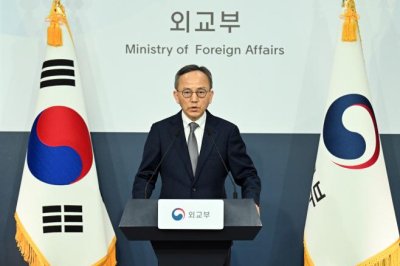
Foreign Ministry spokesperson Park Il said the government’s position remains that improving human rights in North Korea is important and that Seoul will continue to work with the international community. However, he said the decision on co-sponsorship is still under review.
“The issue is being considered comprehensively, taking into account the government’s efforts toward peaceful coexistence on the Korean Peninsula and the content of the resolution,” Park said at a regular briefing.
He added that the government’s cautious stance does not signal opposition, but reflects the complexity of factors involved, and that a decision will be made through consultations among relevant agencies.
A ministry official said there is a procedural window allowing countries to join as co-sponsors within two weeks after the resolution is adopted, giving Seoul time to assess its position.
The deliberations come amid strained inter-Korean relations and President Lee Jae-myung’s call to pursue even limited openings for dialogue with North Korea.
South Korea previously joined as a co-sponsor of a similar resolution at the U.N. General Assembly last November, easing concerns that the current administration might withdraw from such efforts.
Separately, the Unification Ministry has signaled a willingness to ease tensions. Unification Minister Chung Dong-young recently made conciliatory remarks, including urging North Korea not to miss opportunities for dialogue with the United States.
Civil society groups have urged the government to take a more active role. The International Federation for Human Rights and the Transitional Justice Working Group said in a joint letter to Lee that declining to co-sponsor the resolution would send a troubling signal domestically and internationally.
They warned that overlooking human rights concerns may create only a temporary easing of tensions, while leaving underlying instability unresolved and making lasting peace more difficult to achieve.
— Reported by Asia Today; translated by UPI
© Asia Today. Unauthorized reproduction or redistribution prohibited.
Original Korean report: https://www.asiatoday.co.kr/kn/view.php?key=20260324010007372

Wednesday 25 March Greek Independence Day around the world
In 1821, the Greeks rose up against the Ottoman Empire which had occupied Greece for almost 400 years, leading to the war of independence.
Bishop Germanos of Patras raised the Greek flag at the monastery of Agia Lavras, inciting the Peloponnese to rise against the oppressors.
While the exact date probably may not have been March 25th, it is acknowledged to have occurred in late March and it was gradually associated with the religious Feast of the Annunciation.
On this day in the Orthodox calendar, the archangel Gabriel appeared to the maiden Mary and informed her that she was pregnant with the divine child.
The first modern Greek state was founded in 1828 under the name “Hellenic State” and consisted of the Peloponnese and part of Central Greece. The first governor was John Kapodistrias who founded schools and orphanages and helped make great advances in the development of the Greek economy and education.
Kapodistrias is still honoured in Greece today; the Greek euro coin of 20 cents bears his face.

NHS waited two days before raising alarm about meningitis outbreak
Experts say the wait was indefensible and possibly delayed identification of the outbreak.
Source link