


Oil prices rise higher as Iran denies US talks, dimming deescalation hopes | US-Israel war on Iran News
Brent crude tops $104 a barrel as hopes fade for deescalation in US-Israel war on Iran.

Published On 26 Mar 2026
Oil prices have climbed higher amid fading hopes of deescalation in the Iran war following Tehran’s denial that talks with the United States are under way.
Futures for Brent crude, the international benchmark, rose nearly 2 percent on Thursday to top $104 per barrel after Tehran dismissed reports of direct negotiations with US President Donald Trump’s administration.
Recommended Stories
list of 4 itemsend of list
The rise comes after oil prices eased on Wednesday following reports that Trump had shared a 15-point plan for ending the war with Iran.
Asian stock markets opened lower on Thursday, with Japan’s Nikkei 225, South Korea’s KOSPI and Hong Kong’s Hang Seng Index all seeing losses.
Iranian Foreign Minister Abbas Araghchi said in an interview with state media aired on Wednesday that Tehran was not engaged in direct talks with Washington and has “no intention of negotiating for now”.
White House Press Secretary Karoline Leavitt warned on Wednesday that Iran would be “hit harder” than ever before if Tehran did not accept military defeat.
Iran’s effective closure of the Strait of Hormuz, a conduit for one-fifth of global oil supplies, and its attacks on energy facilities across the Middle East have prompted a surge in energy prices worldwide.
Oil prices are up more than 40 percent compared with before the US and Israel launched strikes on Iran on February 28, prompting numerous countries to implement fuel rationing and other energy conservation measures.
Market-watchers say prices are likely to rise further until shipping is free to traverse the strait, despite efforts by countries to bolster supply by tapping emergency stockpiles in coordination with the International Energy Agency.
While Tehran has repeatedly claimed that the strait is open to ships that are not aligned with its enemies, daily transits have all but collapsed since the start of the conflict.
Four vessels were tracked transiting the waterway via their automatic identification systems on Tuesday, down from an average of 120 daily transits before the conflict, according to maritime intelligence firm Windward.

Security guard at center of Chappell Roan controversy breaks silence
Security guard Pascal Duvier, most recently infamous for allegedly scolding 11-year-old Ada Law at a hotel in São Paulo, is clearing the air.
Duvier issued a statement on Instagram on Wednesday night following four days of back-and-forth social media claims from soccer star Jorginho, his wife, Catherine Harding (singer-songwriter Cat Cavelli), and pop star Chappell Roan, who denied involvement in an incident that left Ada (the biological daughter of Jude Law and Harding) in tears ahead of her birthday celebration.
As a result of the controversy, speculation around Roan’s treatment of her fans has flooded social media for days. The “Hot to Go!” hitmaker has been vocal in the past about setting boundaries with fans and paparazzi, as well as her complicated relationship with fame.
Duvier, who insists he was not working for Roan at the time of the incident, began his statement saying that he does not normally address online rumors, “but the accusations currently circulating are false and constitute defamation.”
“I take full responsibility for the interactions on March 21st,” he wrote. “I was at the hotel on behalf of another individual, and I was not part of the personal security team of Chappell Roan.
“The actions I took were not on behalf of Chappell Roan, her personal security team, her management, or any other individuals. I made a judgment call based on information we obtained from the hotel, events I had witnessed in the days prior and the heightened overall security risk of our location. My sole interaction with the mother was calm and with good intentions, and the outcome of the encounter is regretful.”
Roan headlined Lollapalooza Brazil over the weekend, and Jorginho was in attendance along with his wife and stepchild. While there, the footballer said the 11-year-old (whom he did not name) thought she spotted the pop star at their São Paulo hotel.
The girl passed by Roan’s table “to confirm it was her, smiled, and went back to sit with her mum. She didn’t say anything, didn’t ask for anything,” he wrote.
Jorginho alleged that, after the girl sat down, a “large security guard” interrupted their breakfast to scold them. The guard allegedly told Harding “she shouldn’t allow [her] daughter to ‘disrespect’ or ‘harass’ other people.”
The girl was “extremely shaken and cried a lot,” said Jorginho, a player for the Brazilian club Flamengo whose legal name is Jorge Luiz Frello Filho.
On Sunday, Roan responded on Instagram, seemingly baffled by the swirling controversy. She insisted the guard was not her personal security and that no one had approached her.
“I did not ask the security guard to go up and talk to this mother and child. … They did not come up to me. They weren’t doing anything.
“I do not hate people who are fans of my music. I do not hate children.”
Three days ago Harding also responded to the brouhaha, posting her own video on Instagram in an attempt to bring some clarity following Roan’s statement. “So 100% this security guard was not a security guard of the hotel, that’s what I can say,” she said. “He looks after artists.
“So I don’t know if it was her personal security guard, but he was with her. So that is all I know. Did she send him to do it? Again, I don’t know.”
Duvier, a “protection specialist” and martial artist, according to his Instagram bio, worked for Kim Kardashian in 2016.
Times Deputy Editor Amy Hubbard contributed to this report.

Kawhi Leonard scores 27 points, Darius Garland 24 as Clippers beat the Raptors
Kawhi Leonard had 27 points, Darius Garland added 24, and the Clippers beat the Toronto Raptors 119-94 on Wednesday night.
Bennedict Mathurin had 23 off the bench and Brook Lopez scored 11 of his 14 points in the first quarter for the Clippers, who have won three in a row.
The Clippers stayed a half-game ahead of the Portland Trail Blazers for eighth in the Western Conference.
Brandon Ingram had 18 points, Sandro Mamukelashvili chipped in with 13, but the Raptors have now lost three straight.
Toronto dropped into sixth in the Eastern Conference, one game behind the Atlanta Hawks, and is a half-game ahead of the Philadelphia 76ers in seventh.
With Lopez setting the tone, the Clippers outscored the Raptors 23-9 over the final 6:10 of the first quarter to open a 14-point lead.

Kawhi Leonard shoots over Raptors forward Collin Murray-Boyles in the first half.
(Eric Thayer / Los Angeles Times)
The Raptors found themselves trailing by 22 in the second quarter before a late 11-1 run cut the gap. However, Toronto could have cut into the advantage even more had it capitalized better on 10 offensive rebounds or from the free-throw line, where it shot 14.3% (one for seven) in the period.
Mamukelashvili hit consecutive three-pointers as the Raptors tried to make one more push late in the third quarter, only for the Clippers to pull away again, with Garland making a 35-footer at the buzzer.
The Clippers were 19 for 24 from the free-throw line and outscored Toronto there by 15 points.
Raptors center Jakob Poeltl was briefly forced out of the game after sustaining a cut near his left eye going up for a rebound early in the second quarter and finished with 10 points.
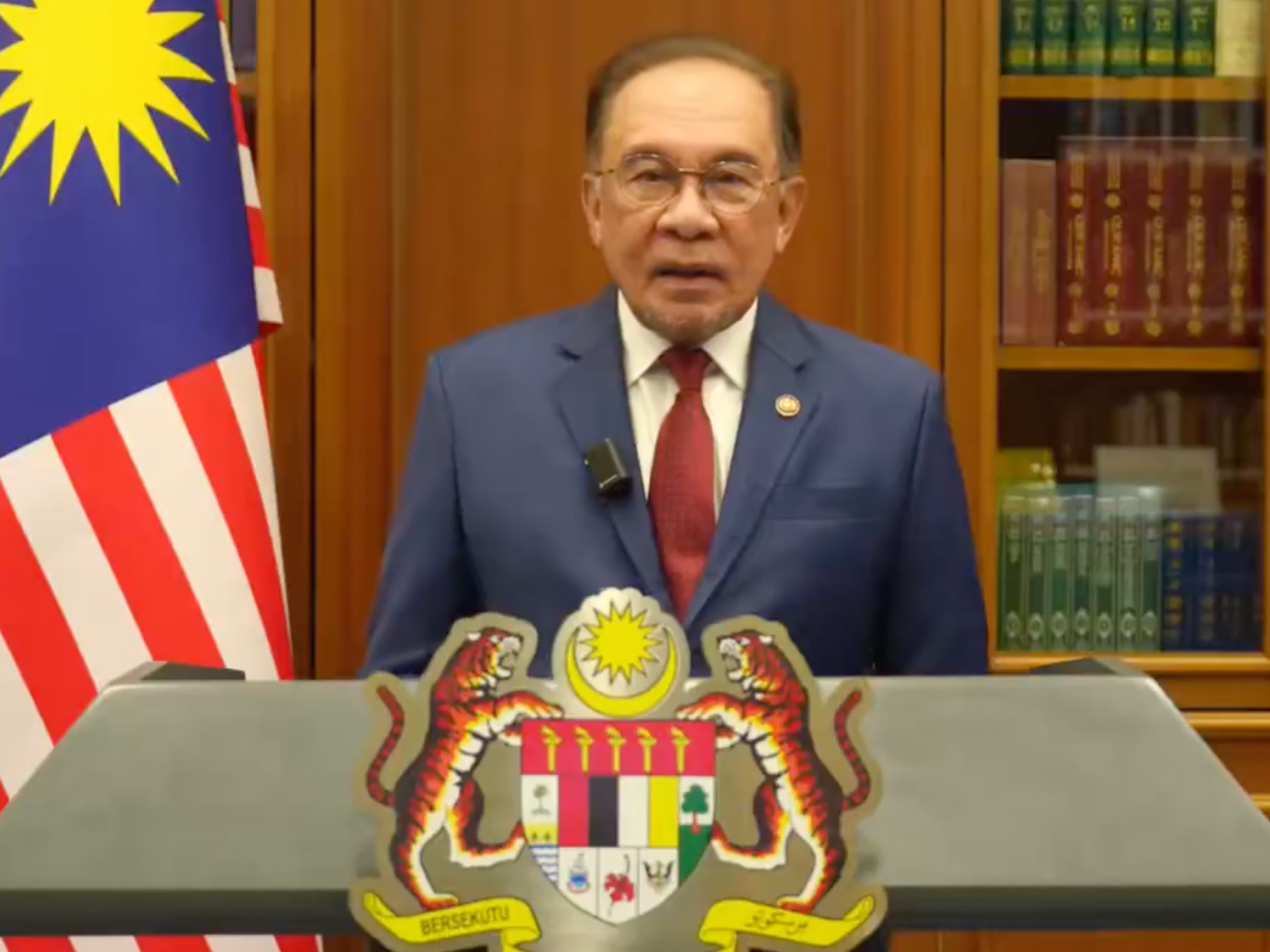
Malaysia’s prime minister says Iran talks should end war | US-Israel war on Iran
Malaysia’s Prime Minister Anwar Ibrahim said any talks with Iran must aim to end the war, not serve as a “tactical advantage” or temporary pause. He reaffirmed Iran’s right to defend its sovereignty while urging restraint to avoid wider regional fallout. His comments come as the US warns Iran to accept defeat or face being “hit harder”.
Published On 26 Mar 2026

First Series-Produced KF-21 Fighter Rolled Out In South Korea
South Korea today rolled out the first series-produced example of its homegrown KF-21 fighter. This major milestone in the program also underscores just how quickly it has progressed, with the rollout coming a little over five years since the first prototype of the fighter was unveiled. The development schedule is especially impressive when compared with other new-generation fighter programs, although Seoul has taken some notable shortcuts to meet this aggressive timeline.
An official Republic of Korea Air Force video commemorates the rollout of the first series-produced KF-21:

KF-21 양산 1호기 출고 | 불모의 땅에서 항공 강국으로
The first series-production KF-21 — also known as the Boramae, meaning hawk in Korean — is a two-seater, unveiled in a ceremony today at the Korea Aerospace Industries (KAI) headquarters in Sacheon, southeast of Seoul.
President Lee Jae Myung told guests that the fighter symbolized South Korea’s “aspirations for self-reliant defense,” and said he was committed to establishing the country as one of the world’s top four defense powers.
“South Korea has finally secured weapons to protect peace with its own technology, not only on land and sea but also in the air,” Lee added.

There is no doubt that South Korea is fast emerging as a major player when it comes to defense manufacturing, and, increasingly, this is reflected in high-profile exports, too.
As well as the KF-21, Lee also took time to mention the country’s K9 self-propelled howitzer and Cheongung surface-to-air missile system, both of which have secured lucrative foreign sales. In the military aircraft sector, KAI’s T-50/FA-50 advanced jet trainer/light combat aircraft has also proven a force to be reckoned with in terms of global sales.

Returning to the KF-21, the jet was developed to replace South Korea’s now-retired F-4E Phantom II and still-active F-5E/F Tiger II fighters.
The program was formally launched in 2016, followed by the roll-out of the first prototype in April 2021, and the first flight of a prototype in July 2022. In May 2023, the KF-21 was provisionally judged “fit for combat.”

A total of six prototypes have been built and flown, two of these being completed in the two-seat version of the jet.
Previously announced plans call for the Republic of Korea Air Force (ROKAF) to receive 40 KF-21s by 2028 and have a full fleet of 120 aircraft deployed by 2032.
As to how South Korea got to this stage so fast, it has adopted a notably different approach from other next-generation fighter programs.
The KF-21 has never been billed as a fifth-generation fighter with all of the advanced features and capabilities that this entails. Instead, Seoul refers to it as a “4.5-generation fighter jet,” using nomenclature that’s more commonly used to define the new or significantly modernized fighters that appeared from the 1990s onward.
Unlike a ‘true’ fifth-generation fighter, the airframe design of the KF-21 is not primarily driven by stealth, and its level of sensor fusion is at a notably less advanced level than found in the F-35, for example.
For the ROKAF, a more austere fighter is less of an issue, since it is already receiving the U.S.-supplied F-35A.

At the same time, the KF-21 will bring a host of advanced features that wouldn’t be out of place on a more ambitious design.
These include an active electronically scanned array (AESA) radar and infrared search and track (IRST). Its armament will also include beyond-visual-range MBDA Meteor air-to-air missiles with ramjet propulsion and, reportedly, locally produced long-range cruise missiles, too.

There is also scope for further improvements, which would bring the KF-21 up to a standard much closer to a fifth-generation jet.
In its initial form, the KF-21 carries its weapons externally or semi-conformally, although the future Block 3 version of the jet is planned to feature internal weapons bays.
Other advanced versions of the jet are also being considered, including an escort jamming platform, a concept for which was revealed at the rollout ceremony today.
South Korea is also embracing the concept of crewed/uncrewed teaming to further enhance the capabilities of the KF-21.
Seoul expects to have its KF-21s working closely with homegrown stealth drones, as a means of boosting the potential of the crewed fighter as well as maximizing “combat mass.” In this regard, the existence of a two-seat version should have particular benefits, with the rear cockpit accommodating a dedicated drone controller. You can read more about the concept here.

In terms of raw performance, the KF-21 is no slouch, either, with claims of better kinematic performance than an F-16C.
By avoiding some of the aspects of fighter development that traditionally consume exorbitant time and funds, KAI has managed to leapfrog many other potential rivals. At the same time, a gap of five years between the rollout of the prototype and the first series-produced example compares to roughly 11 years between the first flight of the prototype X-35 Joint Strike Fighter and the first flight of the first full-production airframe, F-35A AF-6.
For Russia, too, there was a full 10 years between the first flight of the prototype T-50 in 2010 and the first flight of the first full-production Su-57 Felon airframe in 2020.
That’s not to say that the KF-21 hasn’t faced any problems. In particular, there has been a tricky relationship with Indonesia, which joined the program as a junior partner before becoming locked in disputes over costs and workshares.
According to the latest reports, Seoul plans to sign a deal to export 16 KF-21s to Indonesia. Today, President Lee also said that South Korea would seek other partner nations to further strengthen the competitiveness of its defense industry, perhaps also including the KF-21.

Increasingly, South Korea is developing a wide range of locally made air-launched weapons, avoiding reliance on arms imports and, at the same time, allowing Seoul to offer these for export itself without facing potential restrictions like the U.S. government’s International Traffic in Arms Regulations (ITAR).
With South Korea’s growing pedigree as a supplier of higher-end arms, the KF-21 could well become a very attractive export prospect. In the meantime, however, the rollout of the series-produced jet brings the first delivery to the ROKAF a step closer and, with it, underscores the continued modernization of the air arm.
Contact the author: thomas@thewarzone.com

Married At First Sight Australia fans tell groom to ‘stop wasting everyone’s time’
Married At First Sight Australia groom Steve sparked controversy during Intimacy Week

Rebecca was in tears minutes into the latest episode(Image: Channel 4)
Fans tuning into the latest episode of Married At First Sight Australia branded one groom a ‘complete clown’ after his wife departed the programme mere minutes into the instalment.
Audiences in the UK are presently enjoying the newest series of the reality dating programme from Australia, where couples encounter each other for the very first time at the altar and develop their relationship from that point onwards. The outcomes thus far are predominantly mixed to say the least.
This week has witnessed the couples participating in intimacy week. As part of this, expert Alessandra Rampolla recently encouraged all the brides to embrace their ultimate fantasy with their partner.
However, not every evening proceeded according to plan. This was particularly true for Rebecca and Steve. Rebecca was shown browsing at an adult shop and purchased some outfits she believed her husband might appreciate seeing her model, reports OK!.
Regrettably for her, he displayed considerable apathy towards the prospect of her dressing up for him. In his own words, he stated: “I didn’t say don’t do it. I just said it would make me very uncomfortable if it happens.”
He subsequently dismissed the notion that Rebecca’s sole motivation for participating in the programme was to find love. He asserted that he ‘was sure’ there must be alternative reasons and suggested people don’t disclose everything in their audition tapes.
The situation only deteriorated for him as he joked to expert Alessandra that he didn’t have an earpiece in his ear to provide him with the correct responses. Misinterpreting his comment as a jab at her, she retorted sharply: “Honestly the lack of respect you are showing me here to someone who is trying to help you is appalling. Tread lightly. I don’t take to this well.”
Other grooms even confessed to the camera that they believed he was acting selfishly, with one suggesting that a 50 year old man should know how to address a woman. Steve insisted he wasn’t referring directly to Alessandra, but she questioned who else his remark could be aimed at.
Later, during his on-camera interview with producers, he admitted that he hadn’t absorbed much from his conversation with Alessandra, largely dismissing everything that transpired. He also mentioned that he chose to withdraw and felt there was a lot of contradiction in the room.
Viewers at home were quick to react to the latest developments. One person commenting on the MAFS subreddit said: “So what are Steve’s ulterior motives for being here? if he’s so sure there has to be some.” Another viewer remarked: “Ugh.. Steve is becoming more and more awful…”
While Rebecca initially left the flat, she returned after spending a night apart, but then it was soon Steve’s turn to depart. After making no headway following his session with Rebecca, he packed up and left.
Viewers were left astonished by his decision, with one commenting: “Rebecca deserves a lot better. Cos what is this “so much for me” business. What exactly is she doing?? I’m so confused.”
Another responded: “Goodness Steve is diabolical and such a liar, he hasn’t tried.” While someone else pleaded: “Steve should just leave, he clearly doesn’t fancy or want Rebecca. Stop wasting everyone’s time.”
Meanwhile, one fan questioned on X: “Did Steve realise he was on a tv programme?! #mafsau”, another posted: “If Steve is SO conservative, why even apply for this show, knowing what it’s all about #mafsau” while a different audience member added: “Did Steve not watch #MAFSAU before he applied?”
Married at First Sight Australia continues tomorrow at 7.30pm on E4 and streaming on Channel 4.

Center Parcs summer holiday prices compared to Butlin’s and Haven
The cost of a family summer staycation can vary significantly

Center Parcs Whinfell Forest(Image: Daily Record)
With the UK experiencing some milder weather this week, and with April just around the corner, many parents are likely thinking ahead to the summer holidays. As children are off school for, usually, around six weeks, the summer is an ideal time to take a family trip.
However, as anyone who has looked at going abroad over the summer will know, prices jump up significantly while the schools are closed. Going on a break in the UK, then, can be a more affordable option. But how much it will cost you depends on where you go – and prices can differ hugely.
We have compared the price of a week-long break at some of the UK’s best loved holiday parks. Prices are based on the cheapest accommodation available for seven nights, from August 7, for a family of four.
Starting with Center Parcs, a week’s stay in a Woodland Lodge at the Whinfell Forest resort will set you back from £2138. The lodge has two bedrooms, a kitchen, a bathroom and an extra toilet, and comes with a dishwasher, brick-built barbecue stand, furnished private patio, safe, a cot and a highchair, a fully-equipped kitchen, a 40″ flat screen TV, and more.
Over at Butlin’s in Skegness, a family of four can book a Comfort Room for the same dates from £962. There are two bedrooms – one with a double bed, the other with two single beds – as well as a bathroom. However there is no kitchen, and no other facilities are mentioned on the booking site – and towels and housekeeping are not included.
And at Haven’s Marton Mere site, a family of four can book a break from £639 – although this jumps to £809 if you want access to swimming pools, activities, and entertainment venues. The cheapest accommodation is the Saver Caravan which is described online as having two bedrooms, a bathroom, and a kitchen.
Other facilities mentioned on the Haven website include a heater or gas fire in the lounge, a 32″ TV, an under-counter fridge, and beds being made up ahead of your arrival.
All of the above prices were correct at the time of publication. Across all three holiday parks there are a range of accommodation available, with these varying in price. The types of accommodation mentioned in this article were the cheapest available at the time of publication.
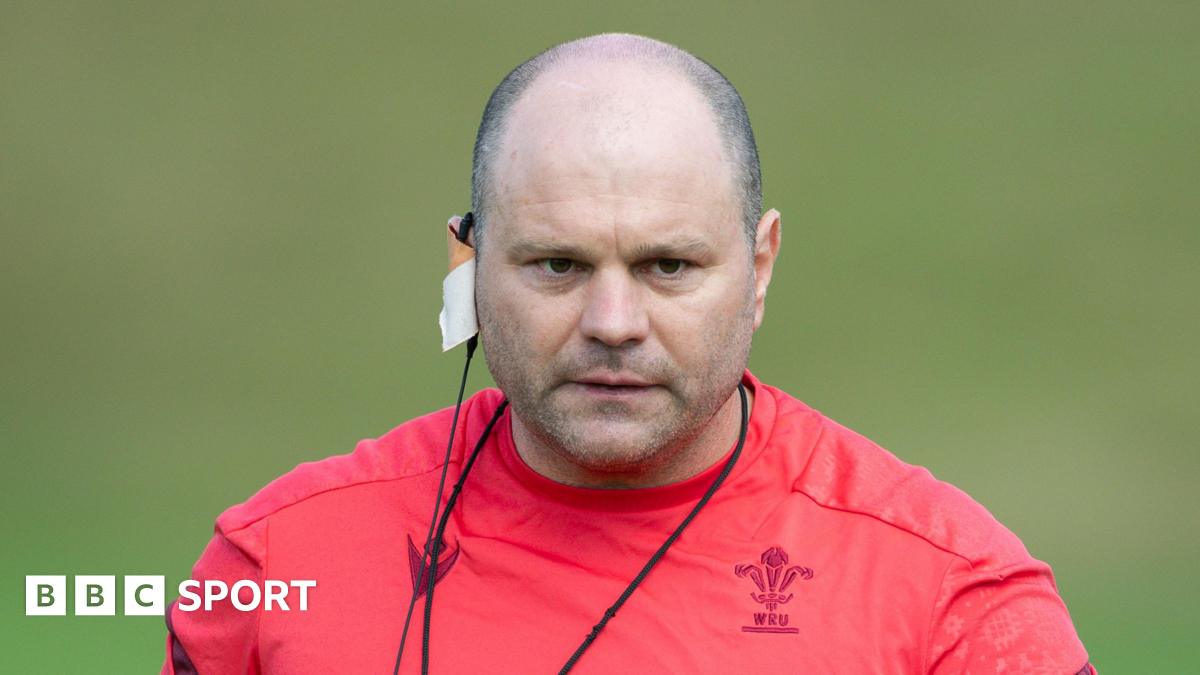
Women’s Six Nations: We know we need to improve – Wales coach Sean Lynn
Among those individuals is Tyrone Holmes, who was appointed Wales’ new defence coach after three years in the same role with Scotland.
Lynn says he has been very impressed with the South Africa-born former flanker and expects to see a “big improvement” in that area, especially with Holmes being full-time.
“It’s what we will be needing to be competitive,” said Lynn, who admits his side were “bullied off the park” in their World Cup opener against Scotland.
Brython Thunder coach Ashley Beck will attempt to revive Wales’ stale attack, while Exeter Chiefs head coach Steve Salvin will be working with the forwards on an interim basis.
“It’s new voices, new faces and big energy,” said Lynn.
“What we’re going after is that consistency, every coach who’s coming in is making sure that we are following the process.
“I want us to be more hard-working, competitive, and when you’re in those competitive games and you find those winning moments, those game-changing moments, that’s where I feel this team can grow.”

US jury finds Meta, Google, liable in social media addiction trial | Social Media
A Los Angeles jury has found Alphabet’s Google and Meta liable for $6 million in damages in a landmark social media addiction lawsuit. The case involved a 20-year-old woman who said she became addicted to the apps at a young age due to their platform design. Meta says it plans to appeal the decision.
Published On 26 Mar 2026
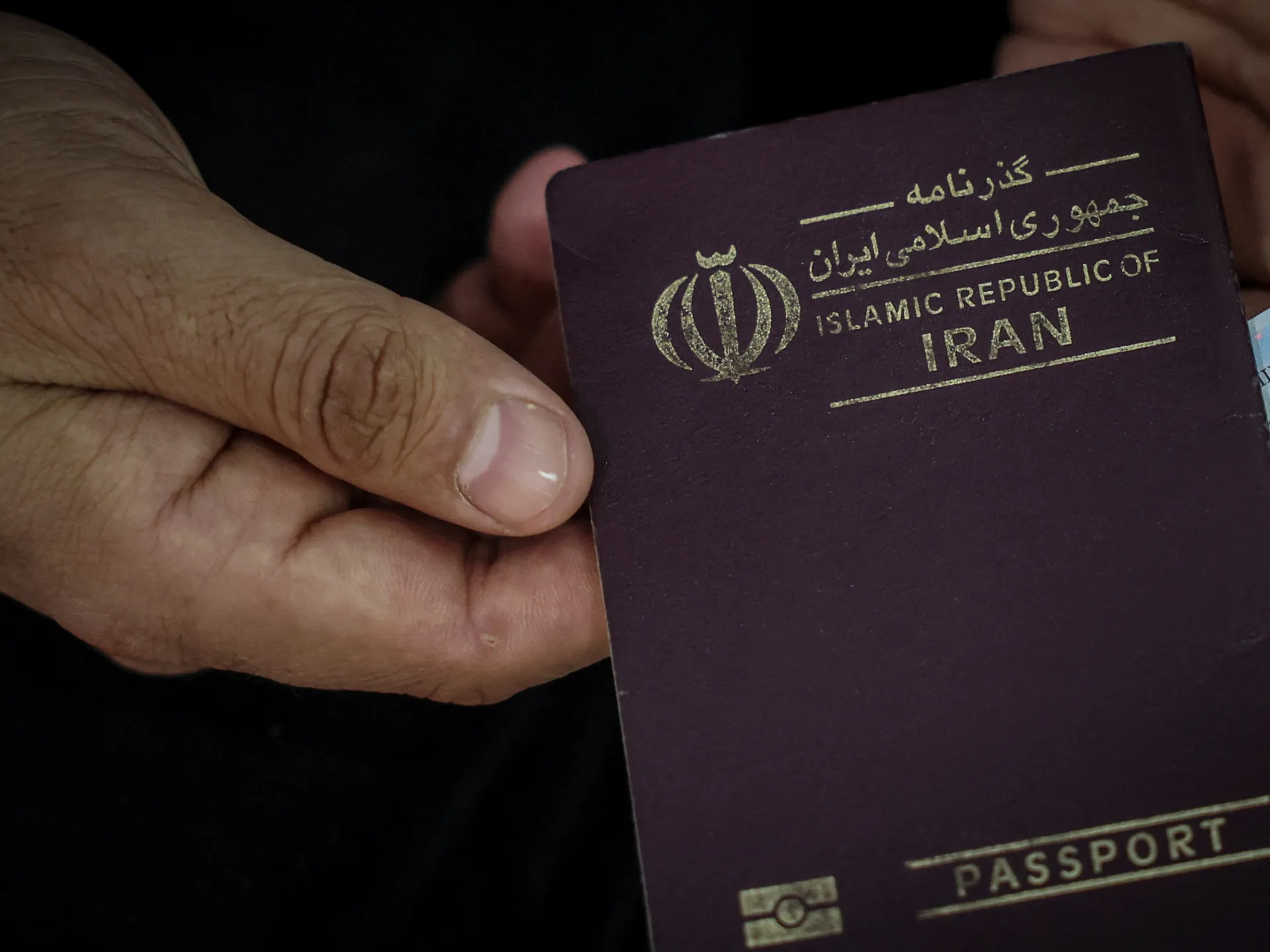
Australia bans visitors from Iran amid war in the Middle East | US-Israel war on Iran News
Home Affairs Department said decision to ban Iranian visitors amid the war on Iran was in Australia’s ‘national interest’.
Australia has temporarily banned visitors from Iran, claiming that the United States-Israeli war on the country has increased the risk that Iranian passport holders could refuse or be unable to fly home once their short-term visitor visas expire.
Australia’s Department of Home Affairs said on Wednesday that the restrictions on Iranian visitors would be for a period of six months, describing the move as in the “national interest amid rapidly changing global conditions”.
Recommended Stories
list of 4 itemsend of list
“The conflict in Iran has increased the risk that some temporary visa holders may be unable or unlikely to depart Australia when their visas expire,” the Home Affairs Department said in a statement.
“This measure gives the Government time to assess the situation properly, while still allowing flexibility in limited cases,” it said.
The ban applies to Iranian citizens who are currently outside Australia – even if they have an Australian visitor visa for tourism or work.
Exceptions to the ban include Iranian citizens already in Australia, those currently in transit to Australia, spouses, de facto partners, or dependent children of Australian citizens, and those with permanent visas.
Exemptions will also be considered on a case-by-case basis, such as for the parents of Australian citizens, the department said.
Home Affairs Minister Tony Burke said decisions on who can remain permanently in Australia should be made by the government and should not be the “random consequence of who booked a holiday”.
“There are many visitor visas which were issued before the conflict in Iran that may not have been issued if they were applied for now,” he said.
Burke added that the government is monitoring developments and “will adjust settings as required to ensure Australia’s migration system remains orderly, fair and sustainable”.
The Sydney-based Asylum Seekers Centre said in a post on social media that the ban on Iranian visitors was the result of a “shameful new law” rushed through Australia’s parliament that “threatens the very foundations of Australia’s onshore protection programme” for those seeking safety.
“For years, politicians have been stressing the importance of seeking safety through so-called legal routes,” the group said.
“Now, in the face of an international humanitarian crisis, the government is slamming the door shut and blocking a key pathway for people seeking safety today and in the future,” it said.
Earlier this month, US President Donald Trump called on Australian Prime Minister Anthony Albanese to give the Iranian women’s football team asylum in Australia amid fears that players may face repercussions at home for failing to sing their national anthem before a Women’s Asian Cup 2026 match in Queensland.
Albanese later told reporters that five team members had sought assistance and “were safely located” by Australian authorities.
In total, seven players and officials were granted asylum in Australia, though five team members later reversed their decision to stay in Australia and chose to return home.
The Iranian team had arrived in Australia to participate in the football tournament before the US and Israel launched their attack on Iran on February 28.
According to Australian government figures up to 2024, more than 90,000 Australian residents were born in Iran, and large diaspora communities are present in major cities such as Sydney and Melbourne.

Strictly Come Dancing’s Nadiya Bychkova given another chance by bosses after ‘axe’
Nadiya Bychkova has seemingly been handed another chance from the bosses of Strictly Come Dancing just hours after she announced her departure from the series

Nadiya Bychkova is said to be wanted as a choreographer for Strictly Come Dancing(Image: CREDIT LINE:BBC/Ray Burmiston)
Nadia Bychkova has seemingly been handed another chance from the bosses of Strictly Come Dancing. The TV star, 36, confirmed on Wednesday that she had left her role as a professional dancer on the BBC Saturday night favourite after almost a decade of performing with celebrities like Blue singer Lee Ryan, Bros star Matt Goss and Chris Robshaw.
It came just days after Karen Hauer announced she was leaving the series after 14 years, but just hours later it has emerged that bosses are reportedly keen to snap her up as a choreographer.
A source said: Nadiya is so recognisable with viewers and bosses felt it would be a real loss to lose her from the Strictly family altogether. After a few conversations, they reportedly offered her a choreography role which she is very open to.
READ MORE: BBC issues strong statement after latest Strictly star quits show in string of exitsREAD MORE: BBC’s brutal strategy behind Strictly Come Dancing axings will rile loyal fans
**Ensure our latest headlines always appear at the top of your Google Search by making us a Preferred Source. **Click here to activate** or add us as your Preferred Source in your Google search settings.**
Speaking to The Sun, the source added: “Obviously, she is sad to no longer be dancing but recognises she will have great scope for more lucrative commercial opportunities now, and can explore exciting new projects.”
The news comes after reports of a bloodbath amongst the Strictly professional dancers ahead of the next series. Karen and Nadiya are two of the number of stars rumoured to have been axed by BBC bosses. Gorka Marquez, Luba Mushtuk, and Michelle Tsiakkas have all been said to have been axed in a bid for bosses to get “fresh faces” in the professional line-up.
Nadia gushed: “There is something truly special about being part of a programme that plays such a big part in so many people’s lives and I want to thank all those who have sent beautiful messages over the last few weeks and those who have voted, shouted, supported, celebrated and cheered during every series.
“I also want to take a moment to appreciate all those who have helped me along the way: my partners, my fellow professionals, the judges and brilliant people behind the scenes,” Nadiya wrote. “I joined the show as an athlete and a double world champion. Along the way I have learned so much about myself and other people. I have grown, not only professionally, but personally and creatively.”
Speaking about her time on the BBC show, the dancer continued: “Strictly has allowed me to discover new sides of myself, develop new skills, and evolve as an artist in ways I will always be grateful for.
“This isn’t the end… I look forward to being part of the Strictly world for many years to come in ways I am beginning to explore,” Nadiya insisted. “I’ve changed a lot since I first stepped onto that dance floor, not just as a performer, but as a person and I can honestly say I’ve never felt more like myself.”
Looking ahead Nadiya continued: “I’m excited to have time to focus on new projects, and to spend more precious time with my beautiful daughter. Life feels full of possibilities.” She said: “I danced before Strictly, I loved dancing on the show and I plan to keep dancing for many years to come. Thank you for all the love and support along the way,” before signing the message off with a white heart emoji.
The BBC also released a statement in the wake of Nadiya’s announcement. It read: “We would like to say a huge thank you to Nadiya Bychkova for her incredible contribution to Strictly Come Dancing. Since joining the show nine years ago, Nadiya has brought elegance, artistry, and unwavering dedication to the ballroom, and she will always remain a cherished member of the Strictly family.
“Over the years, Nadiya has delivered countless memorable performances, showcasing not only her exceptional talents as a dancer and choreographer but also her brilliance as a teacher to all her celebrity partners.
“A consummate professional, Nadiya embodies the very best of what Strictly stands for. We are deeply grateful for everything she has given to the show and wish her every success for the future.”
Like this story? For more of the latest showbiz news and gossip, follow Mirror Celebs onTikTok,Snapchat,Instagram,Twitter,Facebook,YouTubeandThreads.

Americans Are Electing a Supreme Court Too
John C. Yoo, a law professor at UC Berkeley, is a visiting scholar at the American Enterprise Institute and a former Bush administration Justice Department official.
His cancer surgery over the weekend reminds us that Chief Justice William Rehnquist, appointed to the Supreme Court by President Nixon, is not going to be on the court forever.
Neither is John Paul Stevens — a Ford appointee and, like Rehnquist, a World War II veteran. Nor is the third most senior justice, Sandra Day O’Connor, who has now served through six presidential terms.
Their successors will control national policy on the most sensitive and profound political questions of our day –abortion, race, religion and gay marriage. And that means that the most important domestic issue confronting a President Bush or a President Kerry will be his appointments to the Supreme Court.
The court’s current lineup hasn’t changed since 1994 — the longest period without a new justice since the Marshall court of the early 1800s. In the last century, by my calculations, justices on average retired when they were 71 years old after about 14 years on the court.
In 2005, Rehnquist will be 81 and will have served on the court for 33 years. Stevens will be 85 and will have served for 30 years. O’Connor will be 75 and will have served for 24 years. Others are not far behind: Justice Ruth Bader Ginsburg, a Clinton appointee, will be 72, with 12 years’ service. Justice Antonin Scalia and Justice Anthony Kennedy will be 69, with 19 and 17 years respectively. Only Justice Clarence Thomas will be below the age of 65.
Even one new justice could profoundly affect a court that is closely divided on important social issues. And two new justices could shift national policy dramatically.
Slim 5-4 majorities stand behind the decisions that have struck down prohibitions on partial-birth abortion, approved affirmative action programs in colleges and universities, allowed the use of vouchers at private religious schools and restricted use of the death penalty.
Only a one-vote margin has supported restricting Congress’ regulatory power in favor of the states, which affects anti-discrimination, criminal and environmental laws.
A 5-4 majority last term agreed that the nation was at war after the Sept. 11 attacks and that the president and Congress could authorize the detention of “enemy combatants” in the war on terror.
A 6-3 margin defends the basic right to abortion first recognized in Roe vs. Wade and the expansion of gay rights in Lawrence vs. Texas that has spurred efforts for a constitutional amendment to prohibit same-sex marriage.
With a closely divided Senate a certainty, Supreme Court confirmation hearings in the next four years could make the outrages of the Robert Bork and Clarence Thomas hearings look tame. And the filibuster, used by Democrats to block Bush’s lower-court nominees, may be only the beginning of procedural shenanigans.
Just how bloody a battle might be, however, depends on which justice resigns and which candidate wins. A Bush nominee replacing the reliably conservative Rehnquist wouldn’t change the court’s status quo or draw a massive fight. If John Kerry wins, however, his choice to replace Rehnquist would mean major change and, most likely, a knock-down, drag-out struggle.
A more politicized nomination and confirmation process is the Supreme Court’s own doing. Over the last half-century, it has arrogated power — weakening the role of states and even Congress — when it comes to many political and moral questions. The only way for interest groups and citizens to change policy on abortion, affirmative action or gay rights is to change the justices on the Supreme Court.
Despite bruising confirmation proceedings, however, history shows that it is the president who still makes the decisive choice when it comes to the court. In the last century, the Senate has confirmed 89% of the president’s nominees to the Supreme Court. Twelve of the last 14 nominees have taken their seats on the court.
Both candidates are well aware of the stakes, and both are certainly readying nominees. Kerry has said he would nominate a jurist who would protect abortion rights. According to the New York Times, Bush told donors that he expected to replace one justice shortly after his reelection and that he might be replacing as many as four in a second term. His role models for nominees, he has said, are Scalia and Thomas.
But either candidate could be surprised. Republican President Eisenhower chose Chief Justice Earl Warren and Justice William Brennan, whose late-blooming activist tendencies caused him to consider their appointments the biggest mistakes of his presidency. The first President Bush appointed David H. Souter, who has evolved toward the liberal end of the spectrum.

Prep baseball roundup: Anthony Murphy vs. Striker Pence matchup produces excitement
Two future high major-league draft picks, Anthony Murphy of Corona and Striker Pence of Corona Santiago, showed off their talents Tuesday. Corona rallied for a 9-7 victory.
Pence, who touched 99 mph, struck out Murphy for one of his six strikeouts in 3 2/3 innings. He left the game with a 3-2 lead. Then Murphy hit a home run off Pence’s replacement, Thomas Padilla, to tie the score. Murphy was on the mound in the seventh to strike out Pence and get the save. Pence finished with two RBI singles.
“Those are two amazing baseball players and what a treat for them to get after it,” Corona coach Andy Wise said.

Striker Pence of Corona Santiago gets excited against Corona.
(Craig Weston)
The two went to middle school together. Murphy, a senior center fielder, is shaping up as a potential first-round pick. Pence, a sophomore, might reclassify to be eligible for the 2027 draft.
Errors played a big part in the game. Corona committed three errors, making it 20 errors in its last three games. An error by Santiago opened the door for a six-run sixth by the Panthers. Danny De La Torre had the big hit, a two-run double.
Corona’s defense is expected to get a lot better come Friday when infielders Joseph Flores and Kobee Finnikin become eligible after the sit-out transfer period ends.
Southern California teams got their first chance to show how good Southern California baseball is during Wednesday’s opening games of the National High School Invitational in Cary, N.C. Three came away with dominant wins.
Orange Lutheran received 16 strikeouts from Gary Morse, tying a tournament record, in a 3-0 win over Colorado Regis.
Unbeaten St. John Bosco (8-0) got two hits and two RBIs from Jack Champlin in a 14-1 win over Tennessee Nolensville.
Harvard-Westlake took care of North Carolina Wakefield 16-0 in five innings. Justin Kirchner struck out 10 and Ethan Price had three hits.
In the quarterfinals on Thursday, Harvard-Westlake will play Florida Venice, Orange Lutheran will face Florida Trinity Christian Academy and St. John Bosco will take on Arizona Casteel.
Servite 11, Santa Margarita 2: Eli Rubel had a triple, double and three RBIs for the Friars.
Tesoro 2, Aliso Niguel 1: Corwin Allard threw a complete game with six strikeouts and one walk for Tesoro.
Newport Harbor 8, Edison 2: Keaton Anderson struck out four in six innings. Grant Horsley had two hits.
Huntington Beach 8, Edison 4: Dane Cunningham, Ely Mason and Jaxon Greer hit home runs for Huntington Beach. Cunningham had three hits.
Villa Park 13, Foothill 0: Aiden Young went four for four with five RBIs and Logan Hoppie threw the shutout.
Sherman Oaks Notre Dame 11, Crespi 1: AJ LaSota struck out five, walked none and gave up two hits in five scoreless innings. Troy Trejo and Benett Pace each had two hits and two RBIs. Freshman Anthony Daniel had three hits.
Bishop Alemany 5, St. Francis 1: Matthew Serrano gave up two hits in six innings and Alex Noble contributed three hits for the Warriors.
Sierra Canyon 11, Chaminade 2: Brayden Goldstein went three for three with three RBIs.
Hart 3, Ventura 2: Jaiden Chan had the walk-off hit for Hart. Malachi Wobrock threw a complete game.
West Ranch 11, Canyon 1: Blake Johnson hit a three-run home run for West Ranch. Josh Price had two hits and four RBIs.
Saugus 11, Valencia 2: Joey Nuttall finished with three hits for Saugus. Logan Feldman added four RBIs.
Simi Valley 11, Camarillo 1: Ryan Whitson and Kai Stones each had three RBIs for Simi Valley.
Rancho Christian 3, Valley View 2: Jake Brande struck out 10 in a complete game.

South Korea urges ‘peaceful coexistence’ over unification focus

Unification Minister Chung Dong-young, South Korea’s point man on inter-Korean relations, attends a ceremony to mark his inauguration at the government complex in Seoul, South Korea, 25 July 2025. File. Photo by YONHAP / EPA
March 25 (Asia Today) — South Korea’s unification minister called for a shift in policy toward “peaceful coexistence” with North Korea, emphasizing that the approach does not mean abandoning unification but rather institutionalizing peace on the Korean Peninsula.
Unification Minister Chung Dong-young made the remarks Wednesday during an academic conference co-hosted by the ministry and a state-run research institute, where officials and experts discussed ways to end hostilities and establish a lasting peace framework.
Chung said Seoul should redesign its Korean Peninsula policy with peaceful coexistence at the center, arguing that formalizing stable relations between the two Koreas could open the door to broader dialogue.
“This is not about giving up unification, but about institutionalizing peace,” Chung said. “If peaceful coexistence is established politically, economically and legally, any issue between the two sides can be addressed.”
He added that discussions among relevant countries on building a peace regime, alongside a basic inter-Korean agreement, would be key to resolving long-standing tensions.
Chung also described North Korea’s recent push for a “two hostile states” framework as a structural shift that should be turned into an opportunity to move beyond confrontation.
“We must end the hostility and conflict that have devastated inter-Korean relations and create a relationship where there is no need to fight,” he said.
The minister avoided directly using the term “North Korea” during his remarks, instead referring to “the North” and its formal state name, a choice some analysts interpret as reflecting a more conciliatory tone.
Chung reiterated that the Korean Peninsula remains technically at war and said the starting point for peace is formally ending the conflict. He stressed that improving relations between Pyongyang and Washington would be essential and urged North Korea not to miss opportunities for dialogue with the United States.
He also said the South Korean government would act as a “pacesetter” to help sustain momentum for U.S.-North Korea talks while fulfilling its role as a key stakeholder in peninsula affairs.
At the same event, former intelligence chief Seo Hoon underscored the continued relevance of a “top-down” approach centered on leader-level diplomacy.
“The more uncertain and difficult the conditions, the more powerful summit diplomacy becomes,” Seo said, calling for a potential fourth meeting between U.S. and North Korean leaders.
Seo noted that past summit diplomacy led to repeated exchanges between former U.S. President Donald Trump and North Korean leader Kim Jong Un, arguing that even limited agreements or renewed dialogue could be meaningful steps forward.
— Reported by Asia Today; translated by UPI
© Asia Today. Unauthorized reproduction or redistribution prohibited.
Original Korean report: https://www.asiatoday.co.kr/kn/view.php?key=20260325010007733

Harrison: ‘There is going to be some kind of a military escalation.’ | Donald Trump

‘Despite all of the talk of diplomacy, there is going to be some kind of a military escalation.’
Ross Harrison, Senior Fellow at the Middle East Institute, says public talk of diplomacy between the US and Iran is hiding hardline positions, warning that despite the messaging, the situation is still likely heading toward military escalation.
Published On 26 Mar 2026

Brits’ fury about Huw Edwards’ ‘disgraceful’ sentence after Martin Clunes TV drama
Huw Edwards, the lead presenter of BBC News at Ten for 20 years, was spared jail at Westminster Magistrates’ Court after pleading guilty to three charges of making indecent images of children

Huw Edwards is pictured leaving Westminster Magistrates’ Court after he was spared jail(Image: PA)
Furious viewers have blasted Huw Edwards’ “disgraceful” sentence after a shocking TV drama detailed his crimes.
The shamed broadcaster, 64, was spared jail despite admitting three charges of making indecent images of children. His case was explored in Channel 5’s Power: The Downfall of Huw Edwards on Tuesday night, in which Martin Clunes played the presenter.
The 90-minute programme showed how Edwards groomed a teenager, paying him for sexual photos and videos. After it was broadcast, one viewer said: “First time in ages I flicked on terrestrial telly — and wow, it laid bare exactly what a monster he was.” Another summed up public anger by adding: “He should be watching this behind bars.” A third viewer said: “His sentence was disgraceful, considering what a sick creep he was.”
Nearly two million people tuned in to see Clunes, 64, portray the broadcaster, who had a vile double life. He was praised for his “compelling” and “career-defining” performance.
READ MORE: Huw Edwards’ publicist leaves GMB hosts speechless as ‘car crash’ interview sparks backlashREAD MORE: Where you’ve seen Power: The Downfall of Huw Edwards’ Ryan actor before
The programme showed Edwards sentenced to a six-month jail term, suspended for two years. Viewers described the drama as compelling but also as “uncomfortable” as it laid bare the sick nature of Edwards’ crimes.
“I don’t get why Huw isn’t in prison. He needs to pay for what he’s done. It’s fact,” one viewer posted on X, which was known as Twitter. Another on the platform said: “Watching Power. Martin Clunes is excellent but it’s very uncomfortable viewing. How did Huw Edwards escape prison?”
Katie Jones, a mum who watched the show, wrote online: “I watched simply because I wanted to understand why NO jail time for EDWARDS. Was it cos he claimed to be suffering from a mental breakdown? It’s a must watch — difficult subject told well.” A shocked viewer agreed: “He should have been jailed. He’s a paedophile. He’s not sorry.”
Edwards paid a troubled teenager thousands of pounds, which the lad spent on drugs. The youngster was played by Emmerdale actor Osian Morgan. Osian, who was also in Waterloo Road in 2023, was praised for his acting in the harrowing drama.
Father-of-five Edwards was charged after the arrest of another paedophile, Alex Williams, who had sent him 377 images via WhatsApp. Westminster Magistrates’ Court the star, who was the lead presenter of BBC News at Ten for 20 years, sent 41 indecent images of children, some showing a victim aged between seven and nine.
Child protection charities have slammed the sentencing. Emma Hardy, of the Internet Watch Foundation, said: “We must never forget children are at the heart of this story — children who have suffered, and who suffer again each time imagery of them at their most vulnerable is reshared.
“Perhaps most worryingly, there is nothing to stop this happening again. WhatsApp, and other apps which use the extreme end-to-end form of encryption, are still failing to prevent the upload of known child sexual abuse imagery.
“While some platforms are now choosing not to use this kind of encryption because of safety fears, there remain whole swathes of the internet where this dangerous and illegal content can still be shared undetected and unopposed. The tools to help stop the next Huw Edwards are here, they work, and they do not impact on individuals’ privacy. It’s time to use them.”

Most Americans say U.S. military action against Iran has gone too far, a new AP-NORC poll finds
WASHINGTON — Most Americans believe recent U.S. military action against Iran has gone too far, and many are worried about affording gasoline, according to a new AP-NORC poll.
As the war launched by the U.S. and Israel continues in its fourth week, the survey from the Associated Press-NORC Center for Public Affairs Research indicates that while President Trump’s approval rating is holding steady, the conflict could be swiftly turning into a major political liability for his Republican administration.
While Trump is deploying more warships and troops to the Middle East, about 59% of Americans say U.S. military action in Iran has been excessive.
Meanwhile, 45% are “extremely” or “very” concerned about being able to afford gas in the next few months, up from 30% in an AP-NORC poll conducted shortly after Trump won reelection with promises that he would improve the economy and lower the cost of living.
There is significant support for at least one of the president’s objectives, which is preventing Iran from obtaining a nuclear weapon. About two-thirds of Americans say that should be an “extremely” or “very” important foreign policy goal for the U.S. However, they are just as likely to say it’s important to keep U.S. oil and gas prices from rising — a juxtaposition that could be difficult for the White House to manage.
About 4 in 10 U.S. adults continue to approve of Trump’s performance as president, which is unchanged from last month. His approval on foreign policy, while slightly lower than his overall approval, also largely held steady.
Trump has left unclear his next steps on Iran. Despite escalating threats, he’s also suggested diplomatic talks could resolve the fighting. Americans remain broadly apprehensive about Trump’s ability to make the right decisions on the use of military force outside the U.S., and they mostly oppose more aggressive steps, such as deploying ground forces.
Republicans and Democrats prioritize keeping gas prices low
Keeping the price at the pump down is the rare goal that unites Americans in both major political parties.
About three-quarters of Republicans and about two-thirds of Democrats say it’s highly important to prevent U.S. oil and gas prices from going up.
However, concern about the current situation isn’t evenly felt. Only about 3 in 10 Republicans said they’re “extremely” or “very” worried about affording gas in the next few months, as opposed to about 6 in 10 Democrats.
Trump’s focus on Iran’s nuclear program also appears more compelling to Republicans than to Democrats. About two-thirds of Americans say the U.S. should prioritize keeping Iran from obtaining a nuclear weapon, but about 8 in 10 Republicans say this is at least “very” important, compared with about half of Democrats.
The war has exacerbated political debates over the role that Israel should play in U.S. foreign policy, especially since Israeli Prime Minister Benjamin Netanyahu was a leading voice for attacking Iran. Only about 4 in 10 U.S. adults say preventing Iran from threatening Israel should be a high priority.
Toppling Iran’s leaders is viewed as slightly less important. Only about 3 in 10 say it’s at least “very” important for the U.S. to replace Iran’s government with one that’s friendlier to U.S. interests.
Most Americans say U.S. action has gone too far in Iran
As Trump provides mixed messages on whether the Iran war will end soon, about 9 in 10 Democrats and about 6 in 10 independents say the Iran attacks have “gone too far.”
Republicans are more divided. About half of Republicans say the U.S. military action has been “about right,” but relatively few want to see it go further. Only about 2 in 10 Republicans say the U.S. military action has not gone far enough, while about one-quarter say it’s gone too far.
Recent AP-NORC polling has found that about 6 in 10 Americans say Trump has “gone too far” on a range of issues, including his approach to tariffs and presidential power. That number, which is broadly reflective of his overall approval, signals that while Trump’s actions in Iran are unpopular, it’s still comparable to other controversial moves he’s taken as president.
Further entrenching the U.S. in the war could change that, depending on what happens next. About 6 in 10 Americans “somewhat” or “strongly” oppose deploying U.S. troops on the ground to fight Iran, including about 8 in 10 Democrats and roughly half of Republicans. Just under half of Americans oppose airstrikes targeting Iranian leaders and airstrikes against military targets in Iran, while about 3 in 10 are in favor and about 3 in 10 don’t have an opinion.
Many Americans distrust Trump on use of military force abroad
About half of U.S. adults have “only a little” trust or “none at all” in Trump when it comes to making the right decisions about the use of military force outside the U.S., in line with an AP-NORC poll from February.
About 34% of U.S. adults approve of the way Trump is handling foreign policy, similar to 36% in February. That measure has been consistent in recent months despite a cascade of actions, including confrontations over Greenland and an attack on Venezuela, that have generated controversy at home and abroad.
It’s also very similar to Trump’s approval on Iran in the new poll, which found that 35% of Americans have a positive view of his handling of that issue.
Sanders and Catalini write for the Associated Press. The AP-NORC poll of 1,150 adults was conducted March 19-23 using a sample drawn from NORC’s probability-based AmeriSpeak Panel, which is designed to be representative of the U.S. population. The margin of sampling error for adults overall is plus or minus 4 percentage points.

Women’s Champions League highlights: Manchester United 2-3 Bayern Munich
Manchester United fan Pernille Harder scored twice against her childhood club at Old Trafford as Bayern Munich gained a precious first-leg advantage in their Champions League quarter-final tie.
REPORT: Manchester United 2-3 Bayern Munich
Available to UK users only.

Trump says Iranian leaders want deal ‘so badly’ but fear retaliation | US-Israel war on Iran
Donald Trump said Iran is negotiating with the US but is “afraid to say it”. Speaking at a Republican fundraising dinner, Trump said that Iran’s leaders fear they could be “killed by their own people” or by the US.
Published On 26 Mar 2026

Managing finances with ADHD is overwhelming, says Norwich woman
These instances can often come at a financial cost, sometimes referred to as the “ADHD tax”, such as paying late fees and penalties for administrative delays, replacing frequently lost items, missing appointments or pre-booked travel, impulsive purchases and budgeting issues.

Jessi Draper unloads about estranged hubby Jordan Ngatikaura
Escorts. Surveillance. Blackmail. Sex parties?
Jessi Draper of “The Secret Lives of Mormon Wives” is accusing her estranged second husband, Jordan Ngatikaura, of being involved in pretty much all of the above.
Ngatikaura filed for divorce Thursday in Utah after five years of marriage to Draper. Though that was far from the start of their marital problems, she told Alex Cooper during Wednesday’s episode of “Call Her Daddy” — which was taped Friday — that the dissolution filing was something they had agreed to do together. Then he changed his mind, she said, and she got the news via TMZ.
“I’m the one who ended it. I told him on Friday the 13th, so not that long ago, and I just said I want a divorce. He definitely didn’t want it. And now he’s the one rushing to do it, which is a little strange,” Draper told Cooper.
Also strange, in her view, was his choice to state on the documents that she had had an affair, though they had agreed previously that the reason would be the tried-and-true and totally non-gossipy “irreconcilable differences.” Plus Draper had only kissed another man twice, she said. She never had a physical affair with Marciano Brunette of “Vanderpump Villa,” though their emotional affair was a big part of the third season of “Mormon Wives.” Also, Utah is a no-fault state when it comes to divorce.
The Times was unable to contact Ngatikaura on Wednesday for comment on Draper’s allegations.
During the chat, Draper called her estranged husband “calculated” and “emotionally abusive” and said he told her he had been advised by someone to file on his own. She also admitted to Cooper that their marriage most likely was what it was because she went too quickly from divorcing her first husband to starting a relationship with her second.
That said, Draper said that right before Season 1 of “Mormon Wives” dropped on Hulu in September 2024, she was given “proof” that Ngatikaura had been using an escort service in Texas. At the time, she presented her evidence to him, she said, only to have him say it had probably been generated by AI.
Draper also said she had heard rumors of “sex parties” that he allegedly attended, though her sourcing on that allegation was definitely of the friend-of-a-friend-who-was-there variety. She further claimed that Ngatikaura had listened in on her personal conversations via cameras in her house — cameras she said he unplugged when he moved back into the house and she moved to a hotel — and had blackmailed her, threatening to post texts between her and Brunette online.
“Any time he was mad at me, he’s like, ‘I’m going to post them. I’m going to ruin your life,’” Draper told Cooper.
One day, she said, Ngatikaura told her he believed in traditional gender roles and that he should be in his masculine and she in her feminine, and therefore she should do Pilates every day. That led to a fight, during which he threatened to post the texts he had been keeping in a draft in his phone. Nobody knew yet what had happened between her and Brunette, and she worried that exposing everything would hurt her business, where she employs dozens of people.
“I went to go grab his phone. I was like, ‘Jordan, no … This could ruin everything.’ And he goes, ‘OK.’ And I’m freaking out. So, I’m trying to get his phone. I’m kind of chasing him, trying to get it. He pulls out his phone, starts recording me, and he’s like, ‘What are you going to do? What are you going to do? Are you going to be like, “Taylor, should I call the cops?”’ (referring to her embattled co-star and best friend, Taylor Frankie Paul, whose season of “The Bachelorette” was nixed before it aired).
“I was like, ‘Whoa,’ ‘cause he’s friends with Dakota [Mortenson, Paul’s on-and-off boyfriend], so he’s like hearing things like that, obviously, and he’s baiting me and he’s trying to be like, ‘Oh, oh, what are you doing?’ And that was the moment where, for me, I was like, ‘What am I doing? I am chasing around my husband trying to get his phone so he doesn’t blackmail me. This is not healthy.’ And I literally left him the next day,” she said.
“I was like, this can’t happen anymore.”

Thursday 26 March Independence Day in Bangladesh
In 1947, India was partitioned by the British, creating the ‘Dominion of Pakistan’, which was two separate regions to the northwest and northeast of India. The new dominion was governed by West Pakistan, which led to friction between the two regions, with the first signs of a movement for autonomy for East Pakistan appearing in 1949.
In the 1970 general elections, the Bangla-based Awami League, led by Sheikh Mujibur Rahman won an overall majority, but the West Pakistani regime was reluctant to hand over power. On March 25th 1970, Pakistani troops were used to quell the growing unrest.
This led to the Independence of Bangladesh being declared by Sheikh Mujibur Rahman on March 26th 1971 and marked the start of the war of Independence. In November 1970, India entered the war, supporting East Pakistan. This led to victory for East Pakistan on 16 December 1970 (marked by the Victory Day holiday).
On gaining its independence, East Pakistan was renamed Bangladesh.