


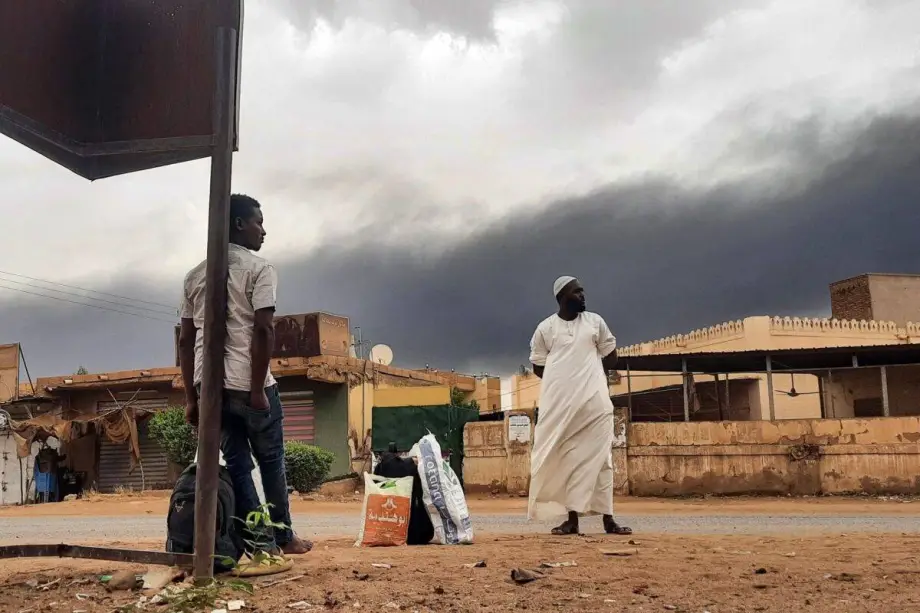
Sudan: Fierce battles in Khartoum and international warnings of famine – Middle East Monitor
The Sudanese army and the Rapid Support Forces (RSF) exchanged artillery and missile fire from their positions in Khartoum, Omdurman and Bahri, while a UN official warned that famine is threatening the country.
Army forces bombed RSF sites in the Riyadh neighbourhood and Sports City, south of Khartoum.
From their positions east of Khartoum, the RSF launched artillery shelling, targeting army camps in the capital and the General Command.
This comes as the Sudan People’s Liberation Movement (SPLM), led by Abdel Aziz Al-Hilu, resumed its bombing of the city of Kadugli, the capital of South Kordofan State, after having ceased for weeks.
SPLM bombed the city with artillery and Katyusha rockets from the east and north.
In South Darfur state, about 80 people were killed over the last three days in the tribal conflict between the Beni Halba and Salamat tribes near the city of Buram. The conflict between the two tribes has broken out several times and led to the death and injury of dozens.
A UN official has warned that the ongoing conflict could mean more than six million people face the threat of famine.
The deputy head of the United Nations Office for the Coordination of Humanitarian Affairs (OCHOA) in Sudan said that the general situation in the country is catastrophic.
READ: Sudan medics warn that cholera and dengue fever are spreading
Sudanese medical sources reported that 18 people died and 265 were infected with cholera in the state of Gedaref, bordering Ethiopia, while medics warned of an outbreak of cholera and dengue fever across the country with the start of seasonal rains and the effects of the war on the health system there.
The Sudanese Medical Association reported that 3,398 cases of dengue fever were recorded in the states of Gedaref, Red Sea, North Kordofan and Khartoum from mid-April to mid-September.
The war has forced more than 4.2 million people to flee their homes and about 1.2 million to cross into neighbouring countries.

Rivals Season Three starts filming with huge changes to Jilly Cooper’s books
EXCLUSIVE – boss of hit Disney+ show Rivals says plans are well underway for filming of Season three and he was able to discuss some big story ideas with Jilly before her sad death in 2025.

Alex Hassell and Bella Maclean are two of the central stars of Rivals, and their characters could have a romance in future seasons.(Image: PA)
Rivals bosses have confirmed Season three is heading to Disney+ in 2027 – with more changes expected from the book’s storylines.
Fans of the hit series, based on Jilly Cooper’s Rutshire Chronicles novels, are eagerly awaiting episodes 7-12 of Season two which will launch on the streaming platform on November 11. And now it seems there won’t be too long to wait for even more episodes.
Speaking at a special tribute night to Jilly Cooper at the Cheltenham Literature Festival, Rivals executive producer Dominic Treadwell-Collins praised the cast and crew for being so close and creating a fantastic atmosphere on set. He also says big upcoming storylines already had Jilly’s approval before her death.
Dominic said: “I’ve never worked on a show where everyone has come back for season two. All the heads of department came back. Almost everyone is coming up with season three. That just doesn’t happen. But we are ambitious, and we look at every scene rigorously and say, how could it be better?”
“We had Jilly’s notes for season one and all the way through season two. We talked to her about our plans for season three and beyond. So she’s checking on us, and we’ve got her seal of approval on big, things, big story points. We start filming in March and it is odd writing without Jilly.”
Referring to Jilly, who died in October last year, he added: “She was a friend and she became a sort of fairy godmother to all of us. And how lucky we were to have Jilly Cooper as our friend.”
Rivals has been a huge success since it launched in October 2024 with cast including David Tennant, Alex Hassell, Aidan Turner, Emily Atack and Katherine Parkinson.
At the same event Jilly’s daughter Emily Tarrant added that her mum had loved Rivals and the way it gave her books a new lease of life. She added: “She was joyous about it, so thrilled to see all her characters come to life.”
Disney+ have said Season Three will see the stakes become even higher for some of the characters. Announcing Season Three earlier in the year they said: “New romances blossom, old flames rekindle and shocking secrets will be spilled in this third series which takes everyone’s favourite rivalries to the next level. In a world of power, passion and betrayal, everyone has something to lose.”
Jilly’s agent Felicity Blunt, who also acts as en executive producer on Rivals, insisted the late writer understood that the TV version of her books couldn’t be exactly the same and would feature shock deaths or new characters.
Felicity said: “She really understood what it takes to take a book and translate it to screen, and then it can’t be this sort of slavish reproduction of what works in the text, like it has.
“There is a totally different three-dimensional quality to making a piece of great television, and she was the first person to bless any decision that deviated from the book, and really understood why.”
* Rivals Rivals Season 2, Part 2 will premiere on Wednesday, November 11 on Disney+.
Like this story? For more of the latest showbiz news and gossip, follow Mirror Celebs on TikTok, Snapchat, Instagram, Twitter, Facebook, YouTube and Threads.


Pretty Greek island to CLOSE its only airport until next year with all flights suspended
ONE island in Greece is scheduled to close its only airport for four months for major work to its runway.
Chios Airport is set to suspend all flights from November 15 until March 15 2027.
The island is the fifth biggest in Greece with around 50,000 residents – but it is set to be shut off to visitors for four months.
Work includes extending and upgrading to be ready for the tourist season next summer, according to the Hellenic Civil Aviation Authority (HCAA).
Currently the runway is short at 1,511 meters long which means that wide bodied aircraft cannot land here.
It only takes smaller propeller planes or narrow-body aircraft.


So to get to the island, tourists including Brits, need to fly to Athens or Thessaloniki before taking a smaller connecting plane over to the island.
However, this is set to change as work on the runway will see it extended to be 1,799m long which means that it will be able to accommodate much larger types of aircraft.
During the works, emergency flights will be permitted to land, which includes medical evacuations, search and rescue.
However, there is some opposition to the plans.


President of the Chios chamber of commerce Pantelis Legatos said: “The early closure will seriously affect the economy and society of the island, especially during the holiday season (Christmas, New Year), when people have planned trips, family visits and medical appointments.
“Chios, as a border island 5 miles from Turkey, depends on the air connection with the capital for health, entertainment and freedom reasons.”
The original plan was to close the airport on January 15 which is months later than the current schedule.
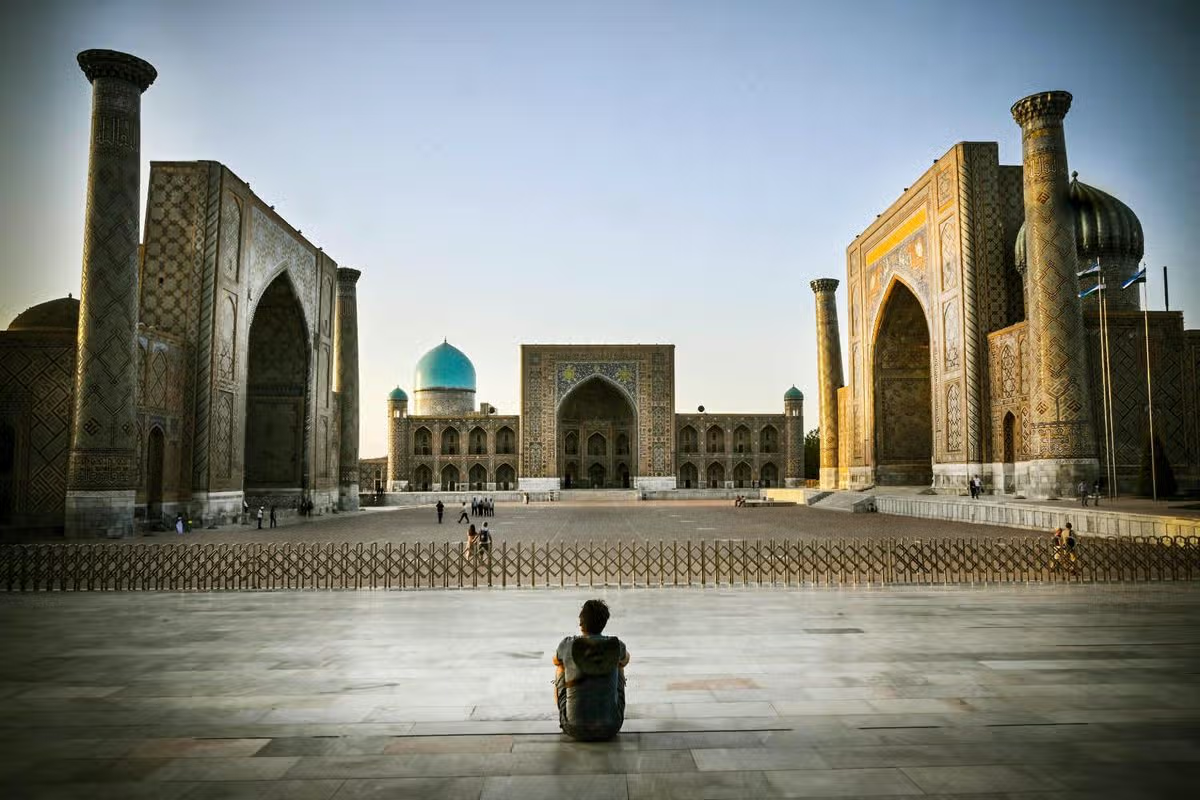
I found £4.7k-a-day holiday that might be the most ridiculous thing I’ve ever seen
The National Geographic’s ‘Around the World by Private Jet’ trips take in some of the world’s most amazing destinations including Kyoto, Seoul, Singapore and many more places, but they come at a cost

Passengers will stop off at Samarkand in Uzbekistan(Image: AFP via Getty Images)
National Geographic’s new private jet trip is the most expensive holiday I’ve ever seen, and possibly the most ridiculous.
The 23-day private jet trip is a wildlife adventure through Asia and Africa, starting with a welcome dinner in Singapore. You’ll then fly to Borneo to meet orangutans and sun bears before cruising the Kinabatangan River. In India, the journey continues to Jaipur, then Ranthambore National Park to search for tigers.
Next come safaris in Sri Lanka’s Yala and Bundala parks, then the Maldives, and jetting on to Madagascar where Nosy Be offers lemurs, chameleons and snorkelling. In South Africa, Phinda Private Game Reserve brings Big Five safaris, and in Rwanda, guests trek to see mountain gorillas. The trip concludes in Rome before guests are jetted back home.
Do you have a travel story to share? Email webtravel@reachplc.com
And all of that for the low, low price of $144,995 (£108,700) per person, or $6,304 (£4,726) a day. As well as needing more disposable cash than most people will enjoy in a lifetime, there is another big issue with the trip – which is one of five private jet itineraries Nat Geo offers.
Each passenger onboard the chartered Boeing 757, which has been modified to cut the standard 233 seats to 80 business class spots, is responsible for 7,851 kg CO2e (calculated using the Travel Impact Model). By some calculations, the annual “carbon budget” is as low as 700kg CO2e per year. The average Brit produces 8,000kg of CO2e over a year.
As this record-breaking hot and dry summer has made abundantly clear, the Earth is in a perilous position. We’re not just edging but moving closer, rapidly, to breaching and then going well past the 1.5C global warming level set out by the Paris Agreement. This doesn’t mean hot summers on the beach; it means climate breakdown, droughts, famines and heat deaths.
As the UN warns: “Exceeding 1.5°C could also trigger multiple climate tipping points, such as breakdowns of major ocean circulation systems, abrupt thawing of boreal permafrost, and collapse of tropical coral reef systems, with abrupt, irreversible, and dangerous impacts for humanity.”
The Nat Geo trip appears at odds with the company’s own corporate responsibility policy, which states: National Geographic activities, products, and services should be designed in such a way as to minimise negative environmental impacts and optimise positive environmental impacts. This commitment is reflected in the “Sustainability Guidelines” set forth in the Brand Standards Guidelines.
National Geographic did not respond to requests for comment.
Flying is a particular problem, as currently, most people don’t fly. 80% of people have never flown. As the world gets richer and more people step aboard a plane, emissions will soar. As other sectors decarbonise, aviation keeps growing and polluting more.
The independent Climate Change Committee projected that aviation’s proportion of UK greenhouse gas emissions will increase from 7% in 2022 to 9% in 2025, 11% in 2030 and 16% in 2035.
Katie Thompson, CEO and founder of environmental aviation charity Bumprints, is a former commercial jet pilot and private jet industry worker who now refuses to fly.
“I started looking at climate and everything changed. No one talks about it in the aviation industry; it’s a complete elephant in the departure lounge. You study a lot to be a pilot, but the whole time, climate was never mentioned. You know a lot about weather, but the whole topic of climate change is completely absent,” Katie told the Mirror. “It’s easier not to talk about it. You fall in love with the world by travelling in it, but then you have to protect it.”
Katie argues that the National Geographic private jet trip is at odds with the organisation’s ethos. “If you really care about wildlife, you need to think about what’s happening to their habitats. It’s 100% human-induced warming that’s causing devastation and the sixth mass extinction. Then you connect the dots between your life choices and what’s happening. If you added up the carbon of just that trip, it would blow through hundreds of people’s annual budgets,” she said.
“Booking this kind of holiday is so completely out of line with that. It’s really hard to justify this. I am jealous because I want to go on this trip, but I couldn’t. Some people are still living as if we’re in the 1970s and this felt like a future problem.”
Katie urged people to be more conscious passengers, in part by checking the predicted emissions of different services on Google Flights. These can vary considerably on the same route, with some three times lower than others.

Ohtani’s health, salary cap, Mark Walter loom large for Dodgers
What we know: The Dodgers lost. Their season is no more. Their three-peat dream has been dashed. Their winter is upon us.
What we don’t know: What the future holds, in what could be a turbulent winter for the Dodgers and for all of Major League Baseball.
Here are four things we don’t know about the Dodgers, but well worth keeping an eye on:
Shohei Ohtani

Just three short months ago, we wondered whether Ohtani would win his fifth most valuable player award and his first Cy Young Award. Has the time come for the Dodgers to consider curtailing his pitching?
As the Dodgers trudged through the playoffs, we endured daily drama over where in the lineup Ohtani would bat (first, second, fourth, fifth or sixth) and what he could produce despite playing through multiple injuries.
We’ll soon get a better understanding of those injuries, and whether rest, rehabilitation and/or surgery might be recommended for each one. We’ll also get a better sense of what the future might hold for Ohtani as a two-way player, and for his potential to perform at an elite level on both sides of the ball.
Ohtani said he plans to resume pitching next year. He is 32. He just completed his 14th professional season.
Ohtani has pitched more than 132 innings once since 2016, when he was 22 and playing for the Nippon Ham Fighters.
In his three seasons with the Dodgers, this was the first that did not involve rehabilitation from elbow surgery. He started 14 games before a knee injury prevented him from pitching any more this season.
Payroll

Dodgers pitcher Tarik Skubal walks off the field during Game 1 of the NLDS.
(Eric Thayer / Los Angeles Times)
Major league owners are poised to shut down the sport this winter, in pursuit of a salary cap designed to restrain the Dodgers, since they won’t restrain themselves.
The owners’ initial proposal set a salary cap of $245 million next year. The Dodgers already have $347 million committed to 14 players next year, according to Cot’s Baseball Contracts.
Under a cap, the owners have promised a transition period to account for existing commitments, and an actual negotiated cap could be higher.
Even if the players do not agree to a cap — and they insist they won’t — whatever economic system that would emerge from collective bargaining would be almost certain to make it painful for the Dodgers to spend so freely.
Whatever the case, the Dodgers could face the kind of difficult roster choices they often have papered over with money this decade. Two closers for $141 million? Good luck with that.
And would they be able to fit soon-to-be free agent Tarik Skubal into their payroll? Skubal might well sign before the lockout is expected to start in December, but there is nothing agent Scott Boras loves more than pitching a marquee free agent to a new owner. The two other Southern California teams — the Angels and San Diego Padres — both have one.
Age

Dodgers president of baseball operations Andrew Friedman, left, and general manager Brandon Gomes have decisions to make about their aging roster.
(Luke Hales / Getty Images)
When Andrew Friedman made his name as the general manager of the Tampa Bay Rays, he did it in large part by taking advantage of one market inefficiency within the American League East: He beat up on the Boston Red Sox and New York Yankees because they were stuck with rosters crowded with aging stars on big contracts. The Rays couldn’t have done that even if Friedman had wanted to.
He didn’t want to do it too much in Los Angeles, because it compromises roster flexibility. But, after seven National League West titles and no World Series championships, ownership went all in: Mookie Betts (12 years, $365 million), Freddie Freeman (six years, $162 million), Ohtani (10 years, $700 million), Yoshinobu Yamamoto (12 years, $325 million), Tyler Glasnow (five years, $137 million), Blake Snell (five years, $182 million), Will Smith (10 years, $140 million) and Kyle Tucker (four years, $240 million).
It worked: three rings in six years. Now the bill comes due.
The Dodgers fielded the oldest group of position players in the major leagues this season. Ohtani and Betts are under contract through their age-39 seasons; Smith will be 38 when his deal’s up, Yamamoto and Max Muncy 37, Snell 36, Glasnow 35.
Something to watch this winter: Freeman is 37, signed through next year. He would like to play until 40 and finish his career here. That would take a two-year extension. Would the Dodgers say no?
Ownership
Mark Walter’s insurance empire is under investigation by federal authorities — and the subject of discussions with state regulators — over allegations the businesses he controls failed to properly follow laws designed to protect investors.
Walter’s company has denied wrongdoing, and neither Walter nor his businesses have been charged with a crime. He is, however, a defendant in multiple civil lawsuits in which insurance policyholders claim he and several of his companies committed fraud and breach of contract.
Walter may need more than $20 billion to satisfy regulators by recapitalizing insurance companies. He abruptly sold the Lakers in August, in a deal that valued the team — not just Walter’s controlling interest — at $12.5 billion. He and fellow Dodgers co-owner Todd Boehly also sold a small stake in English soccer club Chelsea FC last month for about $1.27 billion, the Financial Times reported. It is uncertain how Walter would provide the rest of the money for recapitalization.
“Regarding the Los Angeles Dodgers, to be clear, the team is not being sold,” Walter’s holdings company said in a statement last month.
It is uncertain whether a resolution with insurance regulators would satisfy the Department of Justice, which reports to President Trump. In July, when the Dodgers visited the White House, Walter presented Trump with an official World Series championship ring with his name engraved on it. He also sold the Lakers to former Disney chief Bob Iger and venture capitalist Joshua Kushner, the brother of Trump’s son-in-law.
Major League Baseball is monitoring the situation and could conduct its own review after the state and federal matters are concluded.

Elderly man forcibly detained at Elbit Systems protest in Germany | Protests
An elderly man was forcibly restrained by police during a protest against Israeli weapons manufacturer Elbit Systems in Ulm, Germany. The man was seen bleeding after officers forced him to the ground.
Published On 19 Oct 2026
France’s Macron declines minister’s resignation after violent protests | Protests News
Interior Minister Laurent Nunez acknowledges that police ‘lost control’ during weekend protests.

Published On 19 Oct 2026
French President Emmanuel Macron has declined Interior Minister Laurent Nunez’s offer to resign after nationwide demonstrations by students protesting educational conditions and groups angry over the high cost of living turned into widespread riots and looting, the Elysee presidential office says.
Macron said Nunez should stay in his position to ensure the chain of command is maintained within the police and security forces and asked the interior minister to establish new methods to deal with looters, the Elysee said in a statement on Monday.
Recommended Stories
list of 4 itemsend of list
The president also asked Nunez to “take all necessary steps to ensure transparency over the failures in planning and intelligence that led to the violence”, the statement added.
The Ministry of the Interior said more than 2,300 people were arrested and almost 1,000 police and gendarmes injured in protests on Saturday. Injuries were also reported among protesters, with one demonstrator’s hand blown off by a police crowd-control grenade.
The nationwide demonstrations brought together students demanding better conditions in the French education system and residents protesting against the high cost of living and faltering public services.
More than half a million people took part in the protests on Saturday. Looting, arson and damage to property occurred in many cities, with masked rioters attacking town halls, police stations and other government buildings.
Nunez acknowledged on Monday that police “lost control” during the protests.
“On Saturday in some major cities, you couldn’t look shopkeepers in the eye after hundreds of shops had been looted and tell them we hadn’t lost control,” Nunez said.
Nunez acknowledged a “lack of anticipation” in the deployment of security forces on Saturday, saying their numbers were insufficient to deal with the large crowds of rioters and looters on the fringes of the demonstrations.
He estimated that 60,000 law enforcement personnel were deployed across the country that day.
“Given the damage that has been caused, it was only right that I should hand in my resignation,” Nunez said.
Looting continued on Sunday, and Paris Mayor Emmanuel Gregoire said on Monday that about 30 shops had been targeted in the capital the previous day, describing the scenes as “unbearable”.
Nunez said about 350 people were arrested in Paris on Sunday and overnight.
Nationwide, more than 2,330 people were taken into police custody over the weekend, 70 percent of whom were adults, Justice Minister Gerald Darmanin said.
The violent weekend demonstrations followed weeks of protests by high school students against overcrowded classrooms, teacher shortages and underinvestment in education, the biggest youth-led protest movement in the country in recent memory.

Celebrity Traitors’ Sebastian Croft bravely opens up on childhood trauma and how it shaped his career
SEBASTIAN Croft has opened up about how he was cruelly ‘bullied’ and ‘ostracised’ back in school.
The Celebrity Traitors star, who is known for appearing in series such as Game of Thrones, quit school at 16 after facing backlash over his sexuality.
“I had a really difficult few years,” said Sebastian – who is affectionately known as Bash – in a new interview with the i Paper.
The star, who is openly queer, explained that he was “outed” by a classmate he was having a secret relationship with.
“I don’t blame the other boy who did it, because he was obviously just also trying to navigate the fact that he was getting chipped for being gay.
“But it was a really lonely and difficult time in my life. I would leave school and be an actor and be doing the thing I loved the most, and be with other like-minded people, and feel so liberated in myself, and then I go back to school and be bullied and ostracised,” said Sebastian, who is now 24.


The actor attended a boarding school just outside of Oxford, where he grew up.
Sebastian rose to prominence after having his TV debut on Game Of Thrones as a young Ned Stark.
Playing the younger version of Sean Bean’s character, he appeared in Winterfell via Bran Stark’s greenseeing flashbacks in the episodes Home and The Door.
He later bagged a spot in Netflix’s Heartstopper.
Here, he began a romance with co-star Joe Locke which lasted three years – but the pair never went public about the relationship.
Over the years, he has earned acclaim for his roles, including a BAFTA Children’s Award nomination for his starring turn as Atticus in Horrible Histories: The Movie – Rotten Romans.
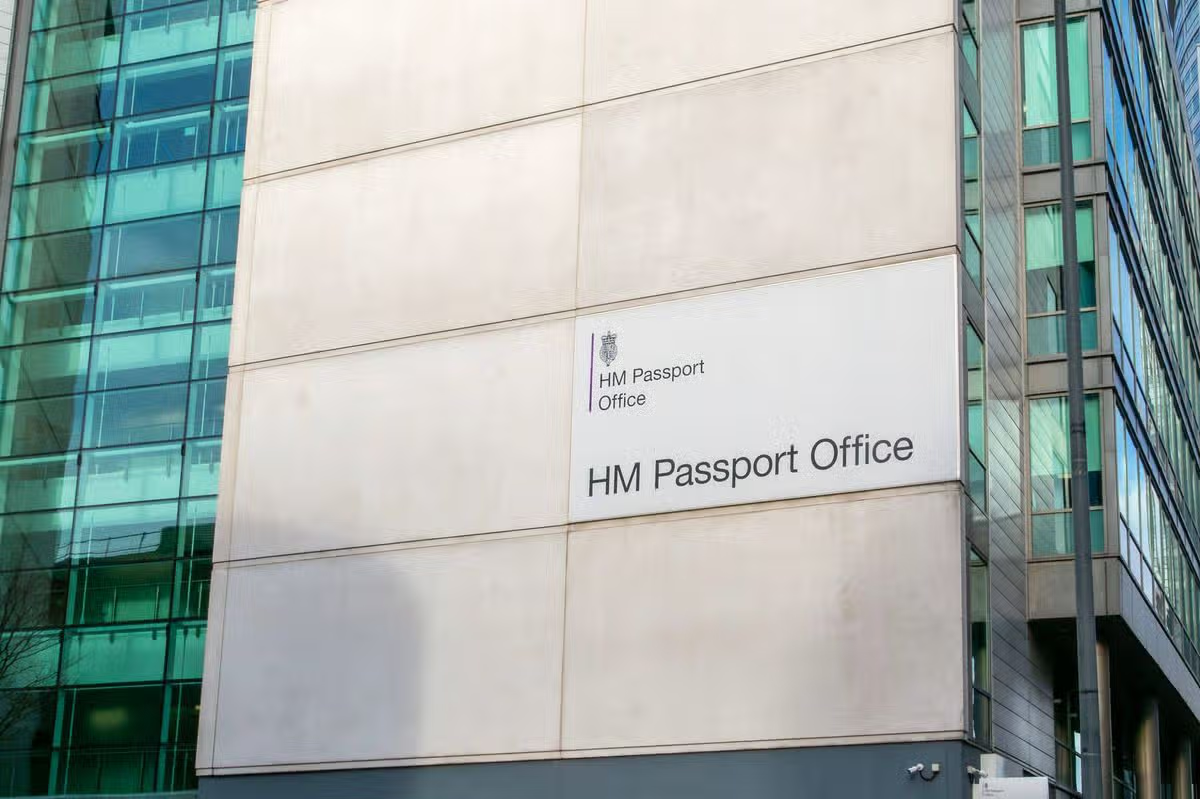
‘As soon as possible’ British passport alert – what you need to know
Need to know
HM Passport Office has issued an update

HMPO issued an update on Friday(Image: Geography Photos/Universal Images Group via Getty Images)
HM Passport Office urgent alert to UK passport holders – what you need to know:
- HM Passport Office (HMPO) has issued an alert to British passport holders, urging those who have lost their passport to act “as soon as possible”.
- HMPO shared the warning on X, formerly Twitter, stating: “Lost your passport? Report it as soon as possible. Doing so helps protect against misuse and allows you to apply for a replacement.” GOV.UK guidance adds that reporting a lost or stolen passport straight away will “reduce the risk of anyone else using your passport or your identity”.
- It’s worth knowing that your passport never truly belongs to you. It remains government property and can be revoked or withdrawn at any point. A passport can also be withheld or confiscated if the holder is under suspicion of a serious crime, on bail, or has been repatriated to the UK at the government’s expense without repaying the sum.
- For those who urgently need a replacement, a one-day service is available for adult passport renewals at a cost of £239.50, with the new passport ready to collect four hours after your appointment. Note that the earliest you can get an appointment is two days after applying, and you must surrender your old passport at the appointment.
- Those who find themselves abroad without valid travel documents can apply for an emergency travel document, which will automatically cancel any existing passport as part of the process.
READ THE FULL STORY: ‘As soon as possible’ alert as UK passport holders told to ‘reduce risk’
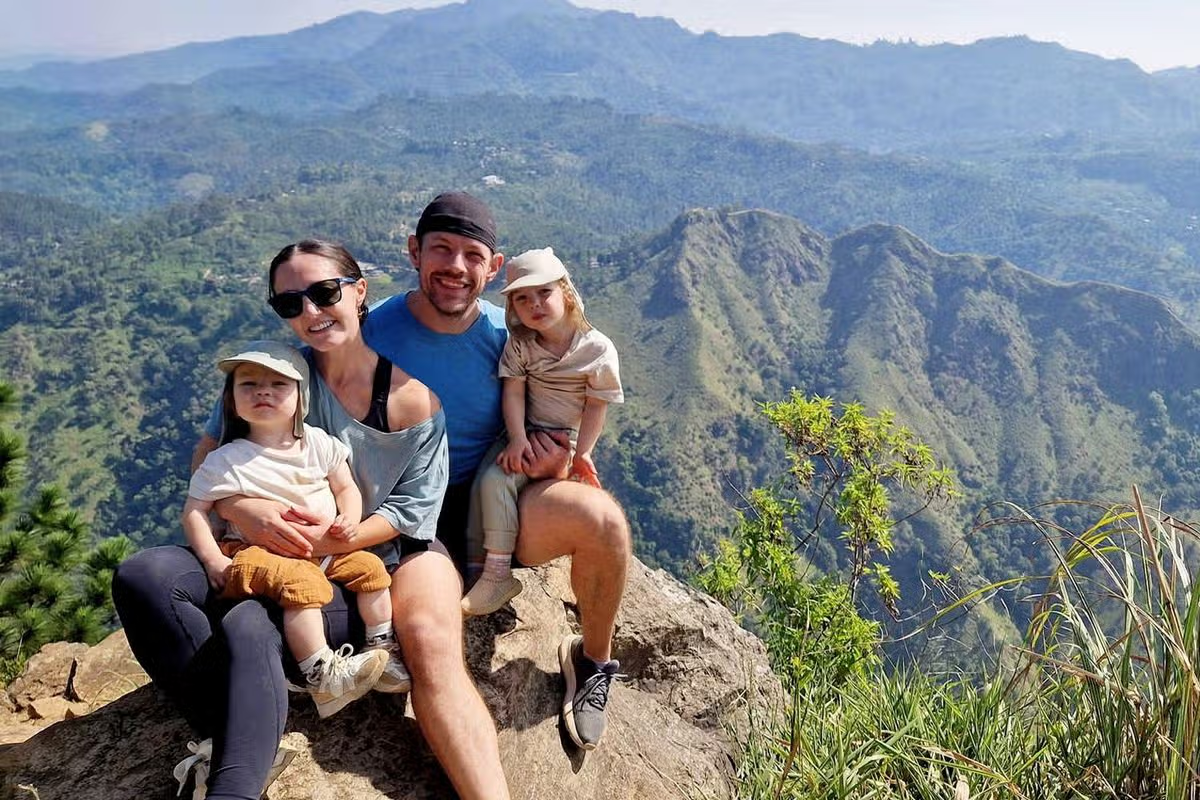
Family ‘sold everything’ to leave UK and travel the world on £30 a day
They bought a one-way ticket to Sri Lanka and have been travelling ever since

They decided to embark upon their adventure after wanting more time with their two children before they started full-time nursery(Image: Ruth Rowe/SWNS)
A couple say they have saved around £36,000 by ditching the UK to travel the world with their children while living out of two suitcases on a budget of just £30 a day.
Ruth and Steven Rowe “sold everything” they owned and bought a one-way ticket to Sri Lanka back in 2023 and have been travelling ever since. They decided to embark upon their globe-trotting adventure after wanting more time with their two children before they started nursery and school.
Ruth was also not a fan of the cold and wet British weather, so the pair are now world-schooling their kids, Aurora, four, and Atlas, three, in exotic locations instead. The family have already been to 17 different countries, ticking off bucket-list destinations such as Costa Rica, Guatemala, Ecuador, and Indonesia.
Saving thousands of pounds a year
They stay four weeks at a time in Airbnbs and have visited the likes of Thailand, Malaysia, Cyprus, USA, Colombia and Peru – all while saving around £12,000 a year. They have spent the last five months living and travelling around India and next year they plan to tour 10 more countries across Europe in a campervan.
Ruth, 34, and Steven, 35, had been renting a barn conversion in the village of Eardisley, Herefordshire, and had both children during the Covid-19 pandemic. But they had always thought about travelling full-time, so they sold “pretty much everything” on Facebook Marketplace or via car boot sales and set off with a couple of suitcases of clothes and a few toys.
They currently have no plans to return full-time and want to continue world schooling – while spending around £2,000 a month, compared to £3,000 back in the UK.
Ruth said: “We had travelled before and for us it got to the stage where we were going to put the kids into nursery and it just didn’t feel like the right time. We wanted more time with them as we know those early years are precious, so we thought, why not just do it? So we did.
“We sold pretty much everything we owned, which was an exhilarating experience – we mainly sold it through Facebook Marketplace and car boot sales. So our car, our furniture, everything but a couple of memory boxes with some of the children’s things inside and a few clothes.
“We set off at the start with two big suitcases – a medium and a small one – and a stroller. And since then we’ve downsized to just two suitcases – it is really surprising how little you really need.
“Possessions don’t make you happy, life experiences do. We bought a one-way ticket to Sri Lanka not knowing if or when we were coming back and we haven’t stopped since.
“We’ve been travelling full-time ever since, slow-exploring the world as a family, while my husband runs his coaching business remotely and we embrace world schooling on the road. It’s been beautiful, chaotic, challenging and incredibly freeing.”
Children educated along the way
The couple say their children are now educated through “life experiences” – whether that be picking up Spanish in Latin America or learning about volcanoes while hiking in Peru. They say giving the kids no screen time whatsoever on their travels has helped them to become more patient and creative.
Ruth added: “They are also learning counting through things like paying a tuk-tuk driver in different currencies and the first time Aurora ever wrote her name was in sand on a beach with a stick. We give them no screen time at all, which I think has taught them patience on their travels and to be more creative when they are bored sitting on a bus.
“They thought the TV back home was a radio, as we’d only use it for Spotify, and we think that’s allowed their imagination to flourish. I have just seen their confidence grow so much and of course there’s no way of really telling how they would have been at home, but they are just so open and talk to anyone – young and old.
“I will sit down and teach them some reading and phonics and writing, but we’re not rigid with it and it’s still very much about learning through playing. It wasn’t a case of we hated the UK – we just love the world. But I was never a fan of the cold and rain, so that is something I don’t miss. The only thing I miss is friends and family and also British chocolate.”
How they support themselves on travels
The couple also support themselves financially via Steven’s online coaching business, which he can still run wherever they are in the world.
Steven said: “These positive environments have brought such positive developments so far in our children. Atlas was swimming independently at two.
“This way, they get one-to-one without being part of the larger school system, which we have no issue with, we just see the benefits from doing it this way. We make sure the children are at the centre of what we do, we always research kids’ clubs and activities wherever we stay.
“They are loving learning about all the wildlife too – we had iguanas and sloths outside our doors in Costa Rica. Aurora had surf lessons in Bali and will be sandboarding in the Peruvian desert, it’s magical for them. We use Airbnbs mainly, but I’ve been working out of little cupboards in some places – it has been challenging at times, but we’re in a fortunate position.”
The countries they have visited so far
Sri Lanka
Indonesia
Thailand
Malaysia
Cyprus
USA
Guatemala
Costa Rica
Colombia
Ecuador
Peru
Bolivia
Brazil
India
Nepal
Portugal
Morocco
Follow their travels via Instagram.
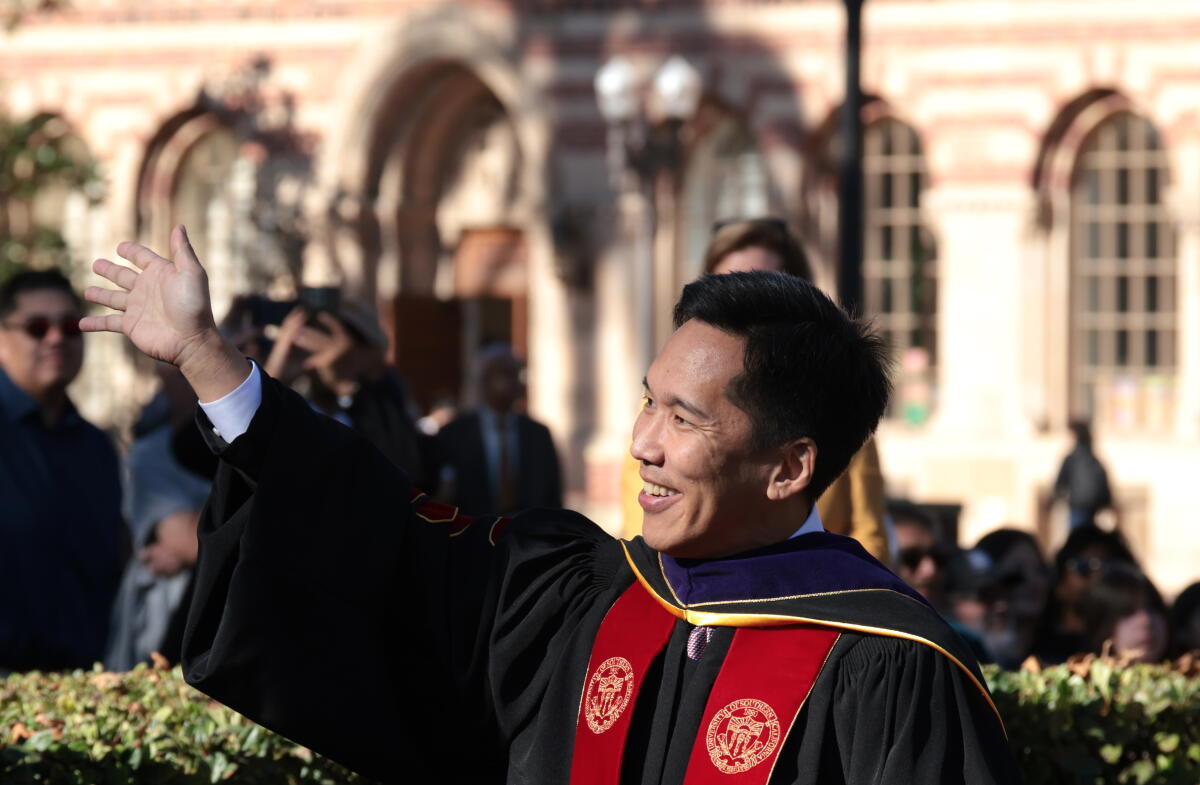
USC’s new President Beong-Soo Kim faces high stakes on Trump, trust and Trojan football
Eyo-Dae Kim and Susan Kim attended the University of Southern California decades ago, two international students with little money and no family in the U.S. On Friday, their son, Beong-Soo Kim, stood before an Alumni Park crowd and was formally installed as the 13th president of their alma mater.
“It is wonderful to have you here, Dad, facing the same library where you and Mom studied together at USC,” Kim, 53, said to his father, who took doctoral courses in economics. Kim’s late mother fled during the Korean War and earned a USC master’s degree.
“They certainly would never have imagined, as international students, that this day could possibly come,” Kim had said earlier.
In a wide-ranging interview before the event, Kim — who was appointed in February after holding an interim presidential role — said he leads USC at a time of promise and deep challenges:
The Los Angeles Memorial Coliseum, leased and operated by USC, will be a showcase site for the 2028 Olympics. A recent $200-million gift is fueling a university-wide push into artificial intelligence. USC admitted 12.6% of first-year applicants this fall for sought-after slots.

Beong-Soo Kim was formally installed as USC’s 13th president during an investiture ceremony Friday.
(Myung J. Chun / Los Angeles Times)
Yet he faces steep hurdles. The former federal prosecutor who spent five years as USC’s general counsel inherited a deficit of more than $200 million. Among his first actions, Kim approved the layoffs of more than 900 workers and ordered deep cost-saving measures. USC is still recovering from years of scandal and controversy that scarred its national reputation, including a $1.1-billion payout to settle sexual abuse allegations against a campus gynecologist, its involvement in the “Varsity Blues” admissions bribery scheme and its handling of pro-Palestinian protests.
Then there is Trojan football.
Fans chanted this month for the firing of football coach Lincoln Riley — after years of underachieving — though the Trojans have defeated Washington and Penn State after an Oregon loss.
Although fans and analysts have soured at times on Riley — whose pay exceeds $11 million and whose reported buyout is about $70 million — Kim declined to say whether USC could afford a coaching change, saying, “We’re not thinking about that.”

-
Share via
Amid fan chants to fire Trojan football coach Lincoln Riley, USC President Beong-Soo Kim declined to say whether USC could afford a coaching change, saying “we are laser-focused on the next game.”
“We are laser-focused on the next game, and then the game after that, and really having the best possible season that we can have in football,” he said.
After the stinging rounds of layoffs, Kim said, the university expects to “significantly exceed” the roughly $30-million surplus he forecast for USC earlier this year during his state-of-the-university speech, though final numbers are pending.
In his speech, Kim said that public trust in universities has declined and “we must regain trust by earning it.” USC is among the elite universities targeted last year by the Trump administration over alleged campus antisemitism, though it has not faced major federal funding freezes or lawsuits as the UC system has.
On Friday, deans and faculty in academic regalia processed into Alumni Park, where the Trojan Marching Band accompanied the national anthem as temperatures climbed toward the 90s during the nearly two-hour ceremony.
USC religious life dean Varun Soni opened an invocation by describing the cello’s sound post — a small wooden piece called its “soul” in Italian and French — and comparing it to the soul of a university. Kim, a cellist, later joined USC Thornton School of Music students to play “Prelude,” the first movement of Grieg’s “Holberg Suite,” Op. 40, as Kaufman School of Dance students performed.
Morton Schapiro, Northwestern’s president emeritus and a former USC dean, represented visiting academic delegates and praised Kim’s “creativity, character and commitment to community” before Suzanne Nora Johnson, chair of the Board of Trustees, formally installed Kim. Jewish, Christian, Muslim, Hindu, Buddhist and humanist blessings closed the ceremony. In the afternoon, a “Trojan Family celebration” in McCarthy Quad was scheduled to feature food stalls and performances by singer-songwriters Aloe Blacc, a USC alumnus, and Allen Stone.
Money, medicine and priorities
When he took over as interim president in 2025, upon the departure of Carol Folt, Kim immediately confronted the university’s financial crisis. The campus had long spent more than it brought in, an imbalance driven by rising athletics costs, pandemic expenses and major legal settlements. A weak year for USC’s health system deepened the shortfall. Kim maintained a hiring pause, stopped merit raises and took “a hard look at a lot of our administrative expenses and our operations,” he told The Times.
Keck Medicine of USC took a significant hit in the layoffs after running a deficit in the tens of millions in recent years. Last month, dozens of layoffs took place at the Viterbi School of Engineering.
Kim said Keck’s performance “has been good, but it can get better.” The health system is “making very positive progress” to cut expenses while focusing on “patient care, patient quality.”
Across campus, he credited staff and faculty with “stepping up, asking how can we do more with less.”
USC is also challenging a faculty union before the National Labor Relations Board. Non-tenure-track faculty voted in June to join United Faculty-UAW, with about 70% in favor. USC has asked the labor board to review the decision that allowed the vote, arguing the union is too broad. Faculty leafleted Friday during Kim’s event.
Kim said he wants USC to build strong partnerships with Los Angeles industries, including entertainment, biotechnology, sports and “the new space economy.”
He cautioned in his speech that “great universities do not become greater by trying to do everything.”
During the interview, he did not say which university programs need to shrink but said such decisions will come through a strategic plan that will “engage the whole community.”
“One of the things that I frankly pride myself on as a university president is that I readily admit that I don’t have all the answers, and certainly not the best answers,” he said.

Beong-Soo Kim speaks at USC’s commencement in May.
(Jason Armond / Los Angeles Times)
Admissions
A pressing debate — particularly within the University of California system — is whether standardized tests should be required for admissions. Many of the nation’s most elite institutions have recently turned away from test-blind or test-optional admission policies. UC, which does not consider SAT scores in admissions, is reviewing whether to resume SAT and ACT requirements.
Kim said USC, which is test-optional, is studying the issue too. USC considers SAT and ACT scores if applicants submit them but does not require them.

-
Share via
As the University of California evaluates whether to reintroduce SAT and standardized testing requirements for admission, USC President Beong-Soo Kim said USC is also looking at the question. He said USC, which is test-optional, has not made a final decision.
“It’s absolutely something that has been under discussion, particularly with respect to STEM students,” he said, referring to science, technology, engineering and math majors. He cautioned that no final decision has been made and that the new provost, David Madigan, will be looking at the issue.
Kim said UC’s test-blind policy is “one of the contextual factors that we have to consider.” Many California students who plan to apply to UC skip the tests, and many of them also apply to USC, he said.
USC said last year it would keep weighing applicants’ family ties to the university despite a state ban on legacy and donor preferences. In 2024, while the ban was pending, USC said it would “comply with state law” if it were signed. Schools that keep the preferences are listed publicly as out of compliance and must report more admissions data to the state.
Kim said USC chose to keep “considering whether someone is a member of the Trojan family” as one of many factors. He said he is “actually quite proud” that USC maintained its “holistic admissions practices” in a way that “provides more transparency about our admissions.”
Image and trust
Legacy preferences have fed a stereotype of USC as a college for the wealthy and well connected. Kim disputed that image.
He pointed to USC’s transfer students, Pell Grant recipients and first-generation students. USC opens its doors to “so many people in California, throughout the country, and throughout the world,” he said.
Still, Kim acknowledged that trust in education has fallen, though he said that trust in American institutions “across the board has been declining.”

-
Share via
USC violates state law by considering legacy and donor ties in admissions, a practice President Beong-Soo Kim defended as part of a holistic review while touting the university’s transparency in reporting admissions data to the state.
“Some might have to do with events from several years ago,” he said.
He did not say which events, though USC has had its share. As general counsel, Kim helped steer it through the aftermath of the national Varsity Blues admissions bribery scandal and the sex abuse payout to former patients of campus gynecologist George Tyndall, the largest in higher education history.
His answer to falling trust has been the Open Dialogue Project, which he launched in October 2025 to bring clashing views to campus. Guests have included National Institutes of Health Director Jay Bhattacharya, former ACLU President Nadine Strossen and legal scholar Jonathan Turley.
In September, the Foundation for Individual Rights and Expression gave USC its top “green light” rating for several speech policies. After the group recalculated its college free speech rankings, USC rose from 198th to 37th out of 261 schools.
White House pressure
Last fall, the Trump administration invited USC and eight other universities to sign a higher education compact offering favorable access to federal research grants. Signers would cap international undergraduates at 15%, require the SAT or ACT and freeze tuition for five years.
USC rejected the compact last October — about two weeks after the administration offered it.
Some faculty viewed USC’s initial reluctance to reject the overture as a sign it was unwilling to openly challenge Trump’s education demands. They also point to USC’s closure of its university-wide Office of Inclusion and Diversity last year amid a federal anti-DEI push and its removal of pages for cultural heritage months from its “Culture Journey” website earlier this year.
Kim disagreed that USC bends quickly to the White House.
“It would have been highly presumptuous for me just to make a rash decision about what we were going to do without listening,” he said of the compact.
International students have also faced pressures, as the government restricts some visa programs and significantly increases costs for others.
About 26% of USC students are international, with 15% of the undergraduate population coming from other nations. Kim said international students “have been part of USC for decades” and called their presence “a win-win.”
AI risks
USC is also leaning into artificial intelligence, with a $200-million gift from Nvidia board member Mark Stevens and his wife, Mary Stevens, meant to infuse AI across the campus and recruit AI researchers.
But leaders of OpenAI and Anthropic have warned that the technology’s fast development poses serious risks to jobs and human existence.
“We have to take those warnings very seriously,” Kim said. Universities, he said, can help clarify what it means for AI to be “aligned” and “safe.”
Kim said USC wants to make sure its students “are leading in terms of how to use it ethically, how to use it morally.”
The future
On July 14, 2028, the Coliseum — USC’s campus-adjacent home stadium — will share the Olympics’ opening ceremony with SoFi Stadium in Inglewood.
Kim said he hopes Olympic visitors will see “a university that has an incredible Olympic tradition,” but also one whose reach goes well beyond sports.
The Games will also bring alumni and students “from across the globe,” he said. “I think that’s going to make for a very magical moment.”
In pro-Palestine hub of Athens, Israeli buyers increase local resentment | Property News
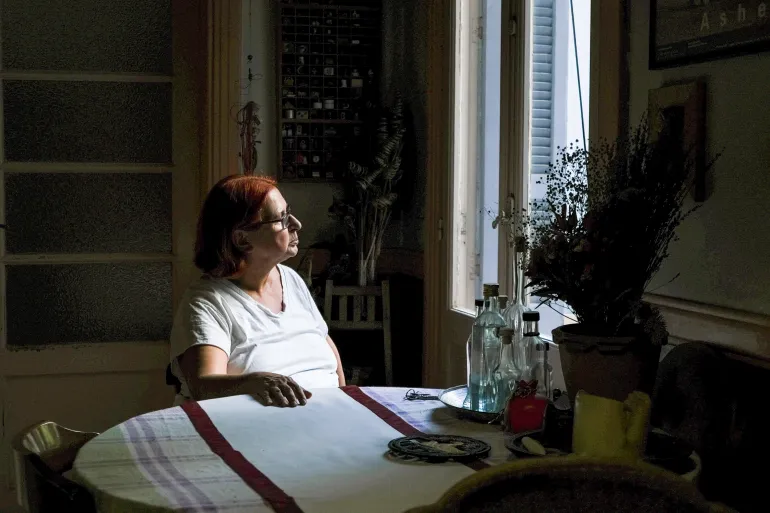
Athens, Greece – Tonia Katerini, a 69-year-old architect, leaned into her computer, scrolling through the property contracts that she said are remaking her neighbourhood.
Across Exarchia, the Athens district long known for its radical left-wing politics, flats are being bought up and turned into short-term rentals, pushing out the people who live there.
For months, Katerini and a group of neighbours have been digitally mapping foreign purchases using public records, marking them with red dots.
She zoomed out from her street on the map; it was a sea of red.
The balcony doors of her flat, where she has lived since 1986, were open and noise from the cafes below drifted in past the plants and stacks of architectural plans.
Her group says much of the money behind the rentals is Israeli; by their count, more than half of the area’s new company-run hotels and rentals .
In a neighbourhood where Palestinian flags hang from balconies and solidarity slogans cover the walls, that has caused friction.
On her own cobbled street, where the noise of arriving tourists rolling their suitcases wakes her in the morning, Israeli investors have bought two buildings, she said. The flat below hers belongs to one such company.
“They are nice guys we have downstairs,” she said. “It’s an Israeli company.”

A few streets away, a residential building is streaked with black paint.
“Airbnbs leave us homeless,” reads one slogan across its facade. “Zionists not welcome,” reads another.
Such buildings are easy to spot. Instead of residents’ names, the buzzer panels show only numbers and a keypad by the door releases keys for Airbnb guests.
Across the neighbourhood, activists have splattered keypads and facades with red paint.
They say short-term rentals are driving an aggressive gentrification that is pricing out locals and erasing the area’s identity.
Foreign money has poured into Greek property in recent years: non-residents invested a record 2.75 billion euros ($3.2bn) in Greek real estate in 2024, according to the Bank of Greece, before easing last year.
No official figures break down foreign buyers in Athens by nationality. But an annual survey of completed sales by the agency network RE/MAX Hellas found that Israelis were the largest group of foreign buyers in Attica, the region around the capital, ahead of buyers from Turkiye and Lebanon, reported the Greek weekly To Vima.
Exarchia’s political activism runs deep. In 1973, students at the nearby Athens Polytechnic rose up against the US-backed military government, which fell the following year.
In 2008, police shot dead Alexandros Grigoropoulos, a 15-year-old Greek student, in Exarchia, provoking protests that spread across the country. It came, Katerini said, like “fire on dry land”.
As Greece’s debt crisis deepened, that anger on the streets helped propel the left-wing Syriza party to power in 2015.

‘Tenants displaced, apartment blocks emptied’
Chrysoulla Papageorgiou, a schoolteacher who has lived in Exarchia for 24 years, is a familiar face on its streets. Earnest and straight-talking, the 46-year-old remembers it as “a neighbourhood of solidarity”.
The change came slowly, then quickened. At first, small owners rented out a spare room. After the COVID-19 pandemic, companies began buying entire blocks.
“Overnight, tenants were displaced and apartment blocks emptied,” she said.
Bars opened, spilling tables and chairs across pavements on streets that had once been quiet.
Rents rose and migrants and low-income families, many living in basements and on the lower floors, were the first to go. Schools lost pupils and old bookshops, traditional cafes and grocers closed.
For years, Exarchia residents sheltered refugees in occupied buildings. Sitting on prime real estate, they were among the first buildings police emptied and then sold, Papageorgiou said.
“Half were squats,” she said. “Now we have only one.”
That last building is draped in painted sheets declaring solidarity with the families inside. Neighbours help make sure the children get to school.

Since 2022, Exarchia Square, long the heart of the neighbourhood’s protests, has been a fenced-off construction site for a new metro station that many residents fought against. Riot police, Papageorgiou added, are now a daily presence.
The aim, she believed, is to turn central Athens into somewhere “purely touristic”.
In recent years, buyers have been “almost only Israeli”.

Near the square hangs a large Palestinian flag. Tourists sometimes scrawl anti-Palestinian messages on its white stripe, and activists paint it white again.
Foreign buyers, Katerini said, see Greece as a safer place for their money than Israel itself, and in Athens “the government is very friendly with Israel”. In August, Athens signed a missile deal with Israel worth $3.5bn.
‘A very good opportunity’ for investors
Vagelis Lazaridis, a stocky real estate agent who heads a branch of the Athens-Attica Real Estate Agents’ Association, talks about his trade with passion. He said the reasons for the investments were purely practical.
Exarchia “was a run-down area” which made it “a very good opportunity”, he said.
It is beside the centre, close to the metro and to universities full of students from abroad. Unlike Plaka, beneath the Acropolis, it has few building restrictions.
Once a handful of buyers arrive, he said, others follow.

Greece to become ‘far less appealing’ for Israeli buyers
The government is now trying to cool the market.
Prime Minister Kyriakos Mitsotakis announced last month that the transfer tax for homebuyers from outside the European Union would rise from 3 percent to 15 percent from next July.
“The party is over in Greece,” The Jerusalem Post wrote in a recent report. “The country, which in recent years has become a preferred destination for Israelis seeking real estate investments at reasonable prices and with attractive yields, is about to become far less appealing.”
Lazaridis said agents’ associations oppose the plan, which has yet to become law. It “may not take effect, or may be postponed”, he said.
Agents expect some non-EU buyers to speed up purchases before the deadline, reported the Greek news site in.gr.

‘Fewer Airbnbs’
Not everyone in the trade sees an unstoppable tide.
Iryna Rondyak, who is originally from Ukraine, runs her own estate agency near Exarchia. She said that when Israeli buyers began arriving about a decade ago, they made up about 60 percent of her foreign clients, many buying whole office buildings to turn into hotels.
Until around 2024, foreigners accounted for about 70 percent of her sales, she said.
This year, it is about 30 percent, as state-backed mortgages for young Greeks, under a scheme called “Spiti mou” (My Home), attract local buyers back.

She credits new rules for the turnaround.
No new short-term rental licences are being issued in central Athens, including Exarchia, and in September the freeze was extended to the end of 2027, reported To Vima.
Properties bought under Greece’s “golden visa” residency scheme can now only be let long-term. While a cheaper route into the scheme, at 250,000 euros ($280,000), rewards investors who convert empty office buildings into flats.
“Anyone living in Greece couldn’t find a home in the centre. Everything was on Airbnb,” she said. “Now there are far fewer.”
It is “a little better,” she said, but “the problem still exists”.
Rents remain high, at 10 to 15 euros ($12 to $17) per square metre, even in the southern suburbs, she said. Many flats sit empty because owners find renting them out is not worth the tax bill.

Residents are less convinced.
The rental freeze is temporary, they say, and investors with enough money can still find ways in. Nor does it undo what has already happened: many of the neighbourhood’s buildings are already short-term rentals.
Back in Exarchia, Papageorgiou counts herself lucky.
Her landlady, whose family has lived in the area for generations, refuses to raise the rent as an “act of resistance”.
Papageorgiou said jokingly that her landlady’s accountant has told her she is ruining the market.

Losing Cuba, the global trickster | Opinions
Cuba is once again in the United States’s crosshairs. Washington’s operation in Venezuela at the start of the year is largely seen to have paved the way for a similar undertaking on the Caribbean island. Recent media reports have revealed US military activity nearby while US officials have repeatedly said they want “Cuba to be free”.
When and how the US may strike is still unclear. But indications are that the Cuban Revolution may be nearing its end. That is reason enough to pause and reflect on the outsized role this nation of 10 million has played on the world stage.
When thinking of the Cuban presence on the global geopolitical scene, the figure of Eshu, the most powerful spirit in Cuban Santeria comes to mind. Derived from the beliefs of the Yoruba people, Eshu is a divine messenger, the guardian of the crossroads and mediator between the past and the future.
In stories, Eshu is often portrayed as a mischievous elder, one whose antics are used to teach humility and morality. As a character, Eshu is a classic trickster, an archetype commonplace to many traditions that functions to challenge established norms, subvert power structures and reveal hidden truths.
It’s hard to imagine a more apt analogy for Cuba than Eshu, the trickster, foil to US hegemony. At its best, trickster Cuba forced an open debate on what kind of world we might aspire to and held the empire to account, at times even pushing the US towards its better angels, however begrudgingly. At its worst, it held up an uncomfortable mirror to US power.
It is a potent formula, one struck upon from the very earliest days of the revolution. In September 1960, just a year after taking Havana, Cuban leader Fidel Castro found himself visiting New York to address the United Nations General Assembly. Wary of his anti-imperialist rhetoric, a Cold War-obsessed US government put pressure on several prominent hotels to refuse service to Castro and his entourage. But the Cubans were not to be deterred. Instead, they went uptown to Harlem and found a place at the Hotel Theresa.
Photographers and TV camera people flocked there. A media sensation ensued. And Castro used the opportunity to draw comparisons between the plight of the Cuban delegation and that of Black Americans being refused service in the segregated South.
This landed like a bomb in the middle of the burgeoning civil rights movement. It was an awkward contrast, not just because of the optics but because of the location, not in the heart of Jim Crow, but in a liberal northern city, New York, the cradle of American civilisation. This was the first, but not the last time that Cuba, the trickster, would strike.
In the following years, the revolutionary government developed its programme of Cuban Internationalism, which inevitably stood as a counter to US soft power efforts in the developing world through organisations like the Peace Corps and USAID.
Cuba would send as many as 400,000 doctors, not to mention engineers, agricultural technicians and other professionals, to 164 countries across the world. This material solidarity garnered great affection for Cuba among many countries in the Global South, countries as disparate as Venezuela, South Africa and Vietnam, where characters like Castro and Che Guevara are as recognisable as national heroes like Simon Bolivar, Nelson Mandela and Ho Chi Minh. In these same countries, American leaders are remembered too, often in far less flattering terms.
Other examples of Cuba’s trickster antics abound. Perhaps most notable is the Cuban armed forces’ sound military defeat of the Bay of Pigs invasion, which, while carried out by Cuban exiles, was supported and funded directly by the CIA.
There is also the revolution’s support for the Palestinian liberation movement and the antiapartheid struggle even as the US provided diplomatic cover and military aid to Israel and the apartheid regime in South Africa.
From 1975 to 1991, more than 300,000 Cuban soldiers fought alongside forces in Angola, eventually emerging victorious in a proxy conflict with the US. Operation Carlota, as it was called, would not only liberate Angola and neighbouring Namibia, but it would precipitate the downfall of South African apartheid as well. According to former South African President Nelson Mandela, Cuba’s intervention in Angola “destroyed the myth of the invincibility of the white oppressor”.
Castro himself has carried the spirit of Eshu. The Cuban leader reportedly survived more than 600 assassination attempts and died of natural causes at the age of 90.
And there are the many ways that Cuba has defied the “third world” label so often foisted upon it by beating the US in literacy rates, infant mortality and life expectancy at various points in its revolutionary history.
But beyond all of this, there is the sheer fact of the revolution’s survival. For more than 60 years, the US has imposed a severe economic embargo against the island. The embargo – the world’s longest – has been intensified at various points, specifically after the fall of the Soviet Union as Cuba reeled from a profound economic crisis.
Despite this regime of maximum pressure from the world’s largest superpower, the revolution nevertheless persevered through the crisis of the 1990s by diversifying and liberalising the economy and by drawing upon its well-established programme of internationalism in the Global South. Not only that, but it managed a nationwide sustainable agricultural revolution in the process, a feat for any nation, but perhaps unsurprising for Cuba, given its trickster nature.
But tricksters also work in unexpected, even contradictory ways. Despite these accomplishments, the denial of political rights and the repression of the freedoms of expression and assembly have been the Cuban Revolution’s greatest failings.
Speech is not free in Cuba. Access to information and the internet is heavily restricted, and recent popular protests have been violently extinguished.
Such dynamics have long been pointed to by detractors as evidence of Cuba’s inherent authoritarian nature. But in this regard, Cuba is not the US’s opposite, but rather its peer.
The US in 2026 is a country facing its own rash of unfreedoms: comical levels of corruption; the erosion of democratic institutions; the embrace of AI and the panopticon surveillance it enables; continual attacks on free speech, voting rights and the media; extrajudicial killings of US citizens by masked agents of the state; and an increasingly monarchical presidency. All of which is to say nothing about the spectre of the infamous detention facility at Guantanamo Bay, still home to 15 detainees from the “global war on terror”, raised once more in relation to President Donald Trump’s brutal immigration crackdown.
One cannot help but be struck by the ways that the Trump administration appears to emulate countries like Cuba or Russia or Iran that it rhetorically maligns.
But in this way, Cuba carries on in its role as the foil to American power. In its repression, it reflects the creeping authoritarian inclinations that characterise the Trump administration. Tricksters, after all, are themselves morally ambiguous. And if the greatest flaw of the US has always been that it fails consistently to live up to its most laudable ideals, then in this sense, it is no different to Cuba and its revolution.
With the US poised and ready and with the conditions in Cuba deteriorating rapidly, we may be witnessing the final days of the revolution. That begs the question: When the day comes that Eshu no longer guards the crossroads, what then? What becomes of the world when there is nothing but unquestioned empires and techno-feudal overlords? Without tricksters to confound their power, will we revert to the revanchist past or tumble into some kind of dystopian future?
If and when the revolution finally falls, there will no doubt be cheering on the streets of Miami. But there will be tears elsewhere – tears not just for the revolution, but for the alternative that it represented, however flawed. Perhaps if the US had listened more or differently, they would have heard the lesson that Eshu was trying to teach.
The views expressed in this article are the author’s own and do not necessarily reflect Al Jazeera’s editorial stance.

ITV confirm The Party replacement as finale of psychological thriller airs tonight
Luke Evans and Tom Cullen’s ITV drama The Party is set to be replaced in the televisions schedule with a new “scandalous” and “provocative” drama starring Dominic Cooper and Romola Garai

The fifth and final episode of The Party airs on ITV1 tonight(Image: ©ITV)
ITV’s gripping drama starring Luke Evans and Tom Cullen ends this evening.
The Party is a five-part series based on the acclaimed novel by Elizabeth Day, starring Evans as Martin Gilmour, a journalist shaped by his lifelong friendship with the wealthy and charismatic politician Ben Fitzmaurice, played by Cullen.
Raised alone by his working-class mum, Sylvia Gilmour, played by BAFTA award-winning Joanna Scanlan, Martin wins a scholarship to an elite boarding school, where he first meets Ben. They forge an unbreakable bond, as Ben and the Fitzmaurice’s give Martin the sense of belonging he has always craved.
In turn, Martin remains unflinchingly loyal to Ben through even the greatest crises. Three decades on, Martin is invited to Ben’s lavish birthday party at the Fitzmaurice’s country pile. The news of the Conservative leader’s resignation threatens to derail Ben’s party as he considers announcing his intention to stand.
Martin fears the publicity that Ben’s bid would bring, dredging up the secrets of their past with tragic consequences. The drama moves between the shocking events of the party and the police investigation that follows, with flashbacks to Martin and Ben’s lives at school, university and London party days.
What unfolds is a gripping exploration of identity, privilege and devotion, combined with a tender ode to anyone who has fought to live authentically.
The synopsis for the fifth and final episode which airs tonight (Monday, October 19) reads: “Martin confronts Ben with a gun in his hand. Years of pain andanger spill out. But Ben grabs the gun and reveals the depths of his own despair. A gunshot rings out.
Serena discovers Martin covered in Ben’s blood and tells the police she saw Martin with the gun. Martin once again finds himself in custody. With the evidence mounting against Martin,Ben fights for his life in hospital.
In the chaos of the party aftermath at Denby Hall, Jarvis’s stash of cocaine is found by the police and he is arrested. Only Ben can save Martin, but will he recover? And will he tell the truth?”
It yet to be confirmed f The Party will return for a second series but cast member Lydia Leonard, who plays Serena Fitzmaurice, has hinted that it could be on the cards.
When asked how viewers will react to watching the series, she previously told ITV: “I hope it will have people saying to their friends, ‘Have you seen this amazing drama?’.
**Ensure our latest TV stories always appear at the top of your Google Search by making us a Preferred Source. Click here to activate or add us as Preferred Source in your Google search settings**
“I think it’s gripping and suspenseful and surprising. I hope it will leave audiences wanting to know what happens to these characters next. I mean, Elizabeth has written a sequel that is just waiting to be adapted for television.”
The Party will be replaced in the schedule with a new “scandalous” and “provocative” drama titled Adultery starring Dominic Cooper and Romola Garai as Tom Kirkman and Beth Brookes, who meet after a chance encounter and get involved in a heady affair that risks tearing apart both of their families.
Episode one will air this Sunday (October 25) at 9pm and the second instalment with follow on Monday (October 26) at 9pm.
The full series of The Party is available to watch on ITVX
East Africa Moves to Create Payments Market
Fast-track settlement is making East African payments easier—and a new strategy emerges.
This article appears in the October 2026 issue of Global Finance Magazine.
East Africa is beginning to transform the national payment systems used by millions of businesses and consumers into infrastructure for a more integrated regional market. Rather than building an entirely new platform, the emerging strategy is to connect existing systems, enabling money to move between countries more quickly and with less friction.
Rwanda and Tanzania are at the forefront of that effort, working to connect Tanzania’s Instant Payment System (TIPS) with Rwanda’s National Payment Switch (RSwitch) to create an instant-payment corridor under the Cross-Border Payment System Masterplan of the East African Community (EAC).
The work is moving beyond policy discussions into the technical, operational, and regulatory arrangements required to make the system function. Its significance, however, extends beyond faster remittances. If national payment systems become interoperable, businesses could pay suppliers, receive payments from customers, and settle commercial transactions across borders more easily than under traditional arrangements.
Small and midsize enterprises, banks, fintech companies, and mobile-money operators could all benefit if regional payments begin to match the speed and convenience of domestic transactions.
This Rwanda-Tanzania initiative offers the most immediate test of the concept, but it is not the only example of East Africa’s emerging payments architecture. Kenya’s Pesalink, the country’s instant-payment network, connected to the Pan-African Payment and Settlement System (PAPSS) in February. The partnership enables instant, round-the-clock payments from PAPSS participants to banks and mobile-money operators on the Pesalink network in Kenya, with transactions settled in local currencies.
Those two developments illustrate different routes toward the same objective. Rwanda and Tanzania are connecting their national instant payment systems directly, while Kenya is linking its domestic infrastructure to a wider continental network. Together, they suggest that African payments integration may depend less on building a single system than on making existing systems work together.
EAC’s Regional Masterplan
A broader regional effort is also moving into implementation. On August 24, the EAC announced the establishment of three technical working groups to support implementation of its Masterplan. The Masterplan is “anchored on four key pillars”: governance and regulation, infrastructure, inclusivity, and capacity building. It includes 20 strategic initiatives to strengthen cross-border payment systems.

MDU Capital
Total trade for members of the EAC in 2025 is reported at $156.6 billion, including $19.3 billion among partner states, underscoring the system’s commercial implications. As goods and services move more freely across the region, the financial infrastructure supporting those transactions will also need to become easier to use.
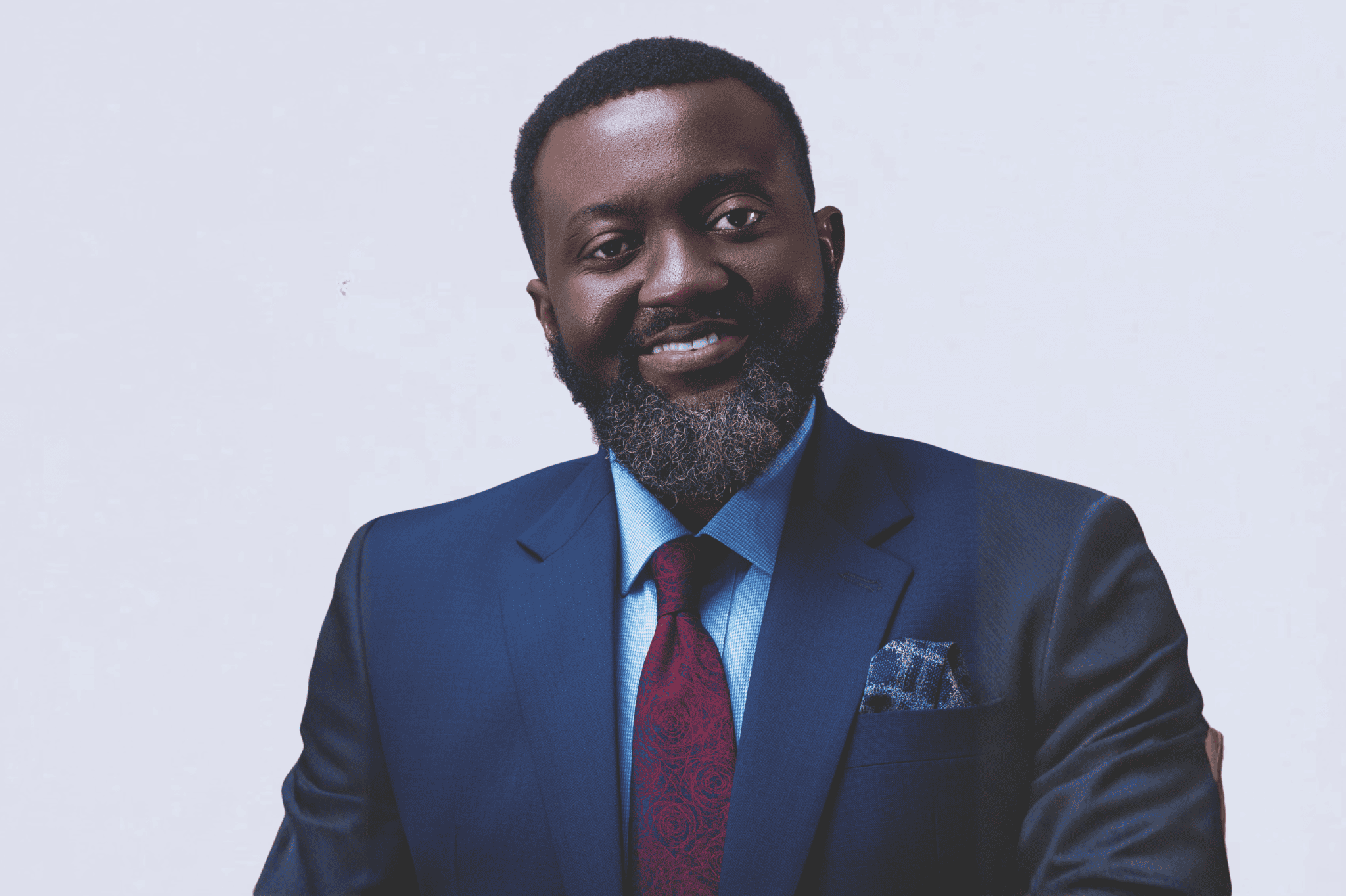
“East Africa’s push for interoperable payments could fundamentally change the economics of regional trade,” said Robert Omotunde, executive director and chief investment officer of Lagos-based asset management and advisory firm MDU Capital. “The significance goes beyond making cross-border transactions faster or cheaper; it is about creating the financial infrastructure through which African businesses can trade more seamlessly across borders.”
As the African Continental Free Trade Area expands markets for cross-border businesses and increases demand for payment systems that support that commerce, opportunities could eventually extend beyond the EAC. Faster settlement, lower transaction costs, and greater use of local currencies could reduce some of the financial friction that still accompanies regional trade. While East Africa is beginning to connect payment systems already embedded in its banks, mobile-money networks, and the wider financial system, the region faces the challenge of ensuring those connections operate reliably across different regulatory and monetary environments.
Vincent Nwanma is a contributing writer based in Nigeria.

British nan fighting for life in Turkey as family faces £25,000 hospital bill
Amanda Cannon was taken ill while on holiday with her daughter

Amanda Cannon is fighting for her life in Turkey(Image: Marisa White/SWNS)
A British nan is fighting for her life in Turkey after suffering a heart attack while on holiday as her family faces a £25,000 hospital bill.
Amanda Cannon, 58, was rushed to intensive care after collapsing during a trip with her daughter Marisa White on October 10. The grandmother-of-nine from Redhill, Surrey, reportedly went without oxygen for 10 minutes after suffering what doctors believe was an epileptic seizure and cardiac arrest.
She is currently on life support in a private hospital in Antalya, Turkey. Relatives say her treatment is costing around €3,500 (£3,000) a day, with the bill already reaching €30,000 (£25,000).
Hannah Cooper, the mum of Amanda’s grandchildren, flew to Turkey with her five-year-old daughter after receiving a distressing call from Marisa. She said Amanda suddenly “jolted backwards”, turned blue and stopped breathing. Marisa immediately began CPR before paramedics arrived and took over.
No travel insurance
But because she has no travel insurance, her former daughter-in-law Hannah said Turkish medics would not stop treatment for religious reasons. They fear the mounting costs could run into hundreds of thousands of pounds if her condition does not improve.
Hannah, 33, from Shoreham-by-Sea, Sussex, told Talk to the Press: “She’s now in a deep coma. She’s got kidney failure, liver failure. They said there’s a 20 per cent chance that she’ll wake up and if she does, she’ll be in a vegetative state.”
She added: “I got a phone call from her daughter saying that she just suddenly jolted backwards, went grey, purple, blue, started foaming from the mouth and stopped breathing. Her daughter gave her CPR. Then when the ambulance got there, they took over. She went without oxygen for about 10 minutes.”
Doctors later told the family Amanda had suffered what appeared to be a seizure as well as a heart attack. She was placed on life support and remains in coma.
Amanda travelled to Turkey with daughter Marisa, who Hannah said suffered from many severe physical and mental health conditions. Concerned she would struggle to deal with the crisis alone, Hannah booked flights and travelled out to support her.
She said: “She doesn’t have the mental capacity to cope with what’s going on. The language barrier is so hard. We have to keep going on Google Translate to speak to the doctor because he doesn’t understand us and we don’t understand him.”
Medical costs stacking up
As the family tried to come to terms with Amanda’s condition, they were shocked to learn of the mounting medical costs. Hannah said she received a phone call asking for £5,000 shortly after Amanda was admitted.
She said: “I said to them that I don’t have £5,000, but I’d be flying over to Turkey. Since then, I’ve had several emails asking for payment.”
Hannah later discovered Amanda’s stay in the private intensive care unit was costing around €3,500 every day. She also revealed that the hospital wouldn’t release her to a public one until they cleared half of the bill.
Hannah said: “I’ve asked for a transfer to a state hospital where it would still cost money, but not like this.”
The family launched a GoFundMe appeal with an initial target of £15,000, but now fear the total bill could be far higher. Despite no longer being with Amanda’s son, Hannah said the 58-year-old has remained a huge part of her life.
She said: “She’s been like a second mum to me for 17 years. She’s always been my biggest supporter.”
Toll on family
The ordeal has also taken a toll on Amanda’s grandchildren.
Hannah said: “My eldest is asking a lot of questions and is upset. My little girl just keeps saying she wants to see her nan.”
She said doctors would either wait until Amanda was biologically dead or keep her alive. Hannah and her daughter are set to return to the UK on Sunday, October 18, while Marisa plans to fly back to Turkey after collecting medication.
Hannah concluded: “We’re upset, shocked and confused. We just don’t know what’s going to happen next.”
The fundraiser can be found on GoFundMe.
Why free agent Tarik Skubal doesn’t believe this is end of an era for Dodgers
Dodgers left-hander Blake Snell, sitting next to soon-to-be free agent Tarik Skubal at their lockers in the aftermath of their team’s elimination from the National League Championship Series elimination, made a promise:
“I’ll be recruiting,” he interjected with a smile, as Skubal declined to comment on free agency, saying it was too soon to try to predict what the future would hold for him.
That would be Snell’s side project between rounds of video games — 2K specifically. (Skubal admittedly “sucks” at the game, but Snell says his teammate “has heart, though.” The rest can be taught.)
The Dodgers, after falling short of a three-peat, will look a little different next year. Skubal, whom they acquired at the trade deadline to boost their chances at a World Series title, is set to hit free agency. So are perennial postseason performer Kiké Hernández and high-leverage relievers Alex Vesia, Evan Phillips and Blake Treinen. On Thursday, clubhouse leader and 2025 World Series hero Miguel Rojas announced his retirement.
The expected lockout, and MLB’s insistence on a salary cap in their CBA proposals, have also cast doubt on what the system will look like next year — whenever the season begins.
Not to mention, the stars in the Dodgers’ lineup, already the oldest in the majors (weighted by at-bats and games played), will be another year older.
Could this be the end of an era?
“I don’t feel that at all,” Skubal said. “It’s hard to win the World Series, and this group has done it the last two seasons. Obviously, not this year, but … I think that this group is incredibly talented. And the preparation and the work ethic that this group has — I don’t buy into that narrative.”
Said Snell: “We’re only getting better.”
Plenty of people outside of the Dodgers’ downcast clubhouse Thursday evening saw the Brewers’ four-game sweep of the defending back-to-back champions as the fall of a dynasty. But the players inside fervently disagreed.
“When you have Shohei Ohtani on your team, Yoshinbou Yamamoto, Freddie Freeman, Mookie Betts and the years ahead of these guys, you can never think that it’s going to be the end,” Rojas said. “And I know this organization so well, they’re not going to be satisfied with this loss. I think they’re going to move forward and continue to improve the team in any capacity, and I believe that we’re going to be even better next year.”
Said Hernández: “I don’t know what’s going to happen with me personally, moving forward for next year. But this team is well-positioned to keep winning and keep competing deep into October. So not only is this locker room very talented, but there’s a lot of guys knocking on the door in the minor-league system that can be really impactful players. So the organization is in good hands.”
Rookie Josue De Paula showed down the stretch, and with his plate discipline even in high-octane moments in the postseason, just how impactful the young players in the Dodgers’ system could be. And there are more behind him.
This offseason, the Dodgers front office will try to strike a balance between continuity and fresh faces. For some of their impending free agents, who spoke highly of the organization, that meant uncertainty in the immediate aftermath.
“I love this place,” Hernández said. “I’ve played for three other teams, but every time I look at my career, I obviously go back to this place. I’ve been here the longest. I hope I get back. I feel like I have a lot left. … I would love to have one more try, trying to win another one. But I don’t really know what’s going to happen.”
Vesia, too, said he’d love to return.
“From the coaching staff, to the front office, to the players that have taken me under their wing, have helped mold and shape me into who I am and how I carry myself, how I go about my business,” Vesia said of his six years in the organization. “And if it wasn’t for the people in this room, I would not be where I’m at today. So, very thankful. This whole experience has been life-changing.”
Skubal is in a unique situation. In line to be the top free agent pitcher in this year’s class, he held his cards closer to the vest. But he gave a glowing review of his time with the Dodgers.
“It was an honor and a privilege to be here and compete with these guys, and to wear L.A. across your hat and across your chest,” he said. “It’s something that I took a lot of pride in. And, obviously, didn’t end the way that I wanted it to. But that’s life. That’s baseball. I had a ton of fun here, and I loved competing with these guys.”
China’s economy grows 4.5 percent in Q3, beating forecasts | Business and Economy News
GDP growth picks up from Q2 amid AI-driven boom in exports.

Published On 19 Oct 2026
China’s economy has grown faster than expected in the most recent quarter amid booming exports underpinned by artificial intelligence, according to official figures.
China’s gross domestic product (GDP) expanded 4.5 percent in the July-September period from the same quarter a year earlier, picking up from 4.3 percent growth in the second quarter and beating most analysts’ forecasts, figures released on Monday by the National Bureau of Statistics showed.
Recommended Stories
list of 4 itemsend of list
During the first nine months of the year, GDP grew 4.6 percent year-on-year, according to the preliminary figures.
While China’s technology-related exports have surged during the AI boom, growth in the world’s second-largest economy has been dampened by weak domestic demand and a sagging property market.
China’s ruling Communist Party has set a GDP growth target of 4.5 to 5 percent for 2026, which would be among the slowest expansions in decades, excluding during the COVID-19 pandemic.
Chinese exports surged more than 16 percent in the first three quarters of the year to reach 23.19 billion yuan ($3.47bn), according to the official data, largely due to strong demand for semiconductors and other tech-related goods.
Retail sales, a key measure of domestic consumption, increased 1.1 percent year-on-year in September and 2.6 percent during the first nine months of 2026.
Industrial production, which measures output in sectors such as manufacturing and mining, rose 5.5 percent in September, taking growth in the first three quarters to 5.3 percent.
Investment in fixed assets, which covers spending on real estate, factories and machinery, edged up 0.7 percent last month but contracted 7.2 percent during the January-September period.
Zhiguo He, a finance professor at Stanford University’s Graduate School of Business who studies the Chinese economy, said that while China’s economy is on track to hit official targets, Beijing will be wary of the continuing reliance on export-driven growth.
“I expect Beijing is getting 4.5 percent as wanted,” He told Al Jazeera.
“A managed slow slowdown is the best Beijing can hope for,” he said.
“Real estate is still shrinking. This is what Beijing wanted and a good thing, and China’s households have been adapting their expectations based on this.”

Mbappe scores two, Guler one, as Real Madrid find form before El Clasico | Football
Real Madrid beat Sevilla 4-1 a day after Barcelona thrashed Real Betis 5-2, as the Spanish giants prepare for El Clasico.
Published On 19 Oct 2026
Kylian Mbappe scored twice as Real Madrid closed the gap on La Liga leaders Barcelona to six points with a 4-1 win over Sevilla at the Santiago Bernabeu, a week before the rivals meet.
Despite the absence of suspended Vinicius Jr, Real produced the fluid attacking football the team had been lacking of late, with Arda Guler again orchestrating their best work on Sunday.
After a stale opening, the Turkish international sparked the match into life.
Sevilla appealed for a red card following an incident involving Guler and Peque Fernandez, but Guler responded minutes later by collecting Yan Diomande’s pass and arrowing a shot into the top corner.

Mbappe scored an equally impressive second in the 37th minute, turning brilliantly to burst through on goal before calmly beating Odysseas Vlachodimos.
Fede Valverde, restored to right back by coach Jose Mourinho, made a crucial block to deny Felix Correia just before the hour as Sevilla threatened to work their way back into the contest.
Diomande then exploited the space created by Sevilla’s more adventurous approach, evading his marker before sending Mbappe in behind the defence. Andres Castrin brought down the French forward, who got to his feet to convert the resulting penalty and effectively settle the contest.
Substitute Manu Bueno reduced Sevilla’s arrears with a composed finish 10 minutes from time after Mbappe cheaply surrendered possession deep inside his own half.
Diomande restored Real’s three-goal advantage two minutes later, capping a fine display with a thunderous strike.
Eder Militao received a warm ovation when he came on in the 85th minute for his first appearance since undergoing hamstring surgery in April.
Mourinho will take encouragement from one of the most complete performances of his second spell at Real as they prepare for next Sunday’s pivotal meeting with Barcelona.
Real, who have won three straight games in all competitions following the international break, climbed to third on 21 points, one behind Atletico Madrid, while Sevilla are sixth on 14.

Earlier on Saturday, Barcelona beat Real Betis 5-2 to make it nine wins from nine and stretch their blistering league tally to 39 goals.
Lamine Yamal lit the fuse with a dazzling opener before Rodri, Gabriel Jesus, Eric Garcia and substitute Dani Olmo joined the party, while Valentin Gomez and Ez Abde replied for Betis, who played much of the second half with 10 men after Facundo Bernal was sent off for head-butting Lamine.
Barca moved to 27 points, five above Atletico, who won 1-0 at Espanyol, while third-placed Betis have 19 and Real Madrid sit fourth on 18 before welcoming Sevilla on Sunday.
Elsewhere, Osasuna withstood second-half pressure from Racing Santander to win 2-0 in Jagoba Arrasate’s first game back as manager.
Two flying saves from Ionut Radu denied Alaves a point in a 2-1 defeat to Celta Vigo, while Real Sociedad won 5-2 at Malaga.

Ex-HFPA member settles lawsuit against Golden Globes group
The four-year legal battle of a former member of the Hollywood Foreign Press Assn. who sued the organization behind the Golden Globes over allegations of sexual harassment, discrimination and breach of contract, has ended.
Husam “Sam” Asi, a long-standing member of the HFPA who had been expelled from the group in 2022, filed to settle and dismiss his lawsuit with prejudice on Tuesday in Los Angeles County Superior Court.
Terms of the settlement were not disclosed.
Asi was not immediately available for comment.
“The HFPA is pleased to resolve its litigation with Dr. Asi on mutually agreeable terms and wishes Dr. Asi the best in his future endeavors,” said a spokesperson for the HFPA in a statement to The Times.
Asi sued the HFPA in May 2022, three months after the organization put him on probation following allegations of sexual misconduct that were first reported in the Wrap, prompting a third-party investigation into him.
At the time, he denied the misconduct allegations, calling them baseless. “Of course, I deny them, I deny them all, they are ludicrously absurd,” he told The Times then.
Asi represented the United Kingdom and the Middle East for the association from 2010 to 2022 and was a Palestinian journalist for the BBC Arabic service and a columnist for pan-Arab newspaper Al-Quds Al-Arabi. In his lawsuit, he alleged that the HFPA was “weaponizing false sexual misconduct allegations” in retaliation for “his attempts to hold it accountable.”
According to his lawsuit, Asi said he had “been subjected to and endured a pattern of sexual harassment, hostile behavior, racial epithets and discrimination, and retaliatory conduct, none of which was ever investigated or handled according to HFPA’s bylaws and procedures.”
Asi further alleged that the organization issued a news release announcing that it was putting him on probation “without informing him or communicating with him and contrary to their own bylaws.”
The HFPA denied Asi’s claims.
A flurry of litigation ensued over the next four years.
In July 2022, the HFPA filed a special motion to strike nine of Asi’s 14 causes of action under California’s anti-SLAPP statute, arguing its statements to the press were protected activity.
In October 2023, a year after an L.A. County Superior Court judge denied the HFPA’s anti-SLAPP motion, an appeals court reversed much of that decision and granted the organization’s motion to strike seven of the 14 accusations Asi had filed against it.
The HFPA filed another motion to dismiss Asi’s complaint, based on his “failure to comply with the court’s orders,” in August, stating that it planned to file a motion “to deem Asi a vexatious litigant.”
According to the court docket, a contempt hearing was scheduled for November.
The organization has undergone a series of reforms and changes over the last five years in order to rehabilitate its image and revive its relationship with Hollywood.
NBC had dropped the broadcast of the 2022 Globes and studios including Netflix and WarnerMedia cut ties with the HFPA following a 2021 Los Angeles Times investigation that raised questions about the group’s ethical and financial lapses and revealed that not one of its then-87 members was Black.
Todd Boehly, the billionaire chairman of private equity firm Eldridge Industries, acquired the Golden Globes in 2023, dissolved the nonprofit HFPA and converted the awards show into a for-profit enterprise.
In July, original founding HFPA members filed an antitrust lawsuit in federal court against media mogul Jay Penske, Penske Media Corp., the Golden Globe Foundation and others, alleging the acquisition of the popular awards show was a “sham process tainted by fraud.” The plaintiffs are seeking damages of at least $150 million.

Starboard sees growth potential in Skyworks after Qorvo deal – report (SWKS:NASDAQ)

Michael Vi
Starboard Value sees significant upside in Skyworks Solutions (SWKS), viewing the chipmaker as undervalued following its acquisition of Qorvo (QRVO), Bloomberg reported, citing people familiar with the matter.
The activist investor sees potential value in the companies’ complementary product portfolios and merger-related cost