In a Venezuela whose infrastructure has been abandoned to the past, it is easy to forget that even here the famous phrase “the future is already here, it’s just not evenly distributed” still applies. In many ways it perfectly encapsulates the contradictions of Venezuelan society, a country where running water and electricity is far from a certainty and yet adoption of payment technologies and cryptocurrencies far outpaces that of developed countries. Whatever one thinks of the usefulness and value of these technologies, we can expect even more contradictions in the coming age of AI.
The future and AI will arrive in Venezuela, but to whose benefit? And for which purposes?
Before answering these questions I think it’s helpful to understand the technology which is AI through Jensen Huang’s analogy of a five layer cake, where Layer One is the top and Layer Five the bottom.
One – AI Applications (Claude Code, Copilot, ChatGPT, etc)
Two – AI Models (Claude-Opus, GPT5, Llama, etc)
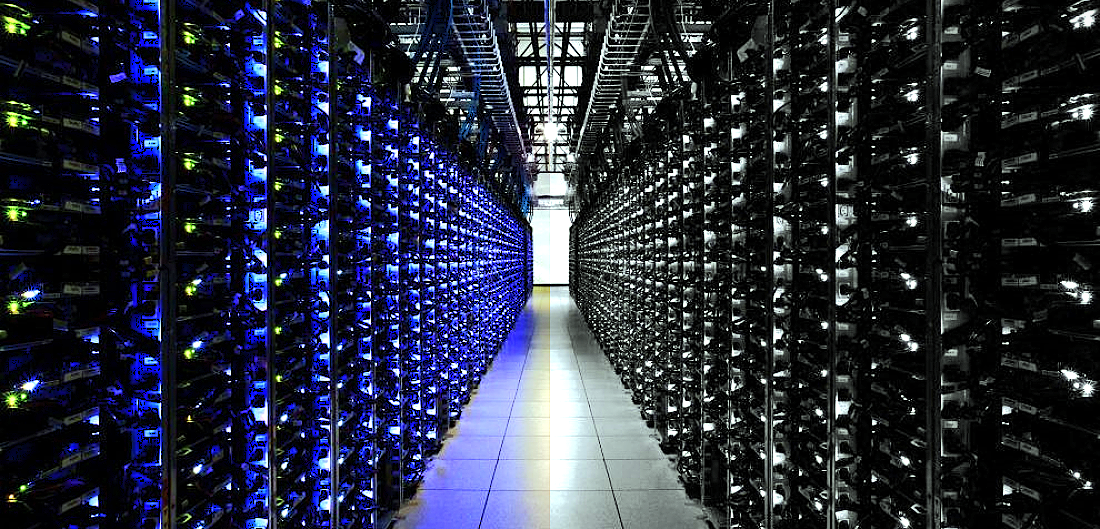
Three – Cloud Data Center Infrastructure
Four – Chips and Computing Infrastructure
Five – Energy
Each layer of the cake requires the one below to stand. These are complicated supply chains that allow for the incredible technology that is modern generative AI.
In the case of Venezuela we can forget about having much to do with Layers Two and Four. These simply require too much know-how that the engineers and manufacturers in Venezuela do not have. We cannot compete with factories in Taiwan or China nor can we compete with computer and electrical engineers making millions of dollars a year in Silicon Valley. For a few decades at least.
Let’s look at how we can expect the other three to apply to Venezuela.
The first layer of the cake, even if these applications are not made in Venezuela (and most won’t be), they will not be difficult to deploy as these companies will offer (as they do now) software-as-a-service (SaaS) products whose infrastructure can run anywhere else in the world. The use of these tools requires little more than an internet connection and we can expect some level of widespread adoption, but likely not much in terms of cutting-edge innovation.
Because of the insatiable demand from AI companies for energy and places to put their datacenters where it’ll be the most profitable, Venezuela is attractive with its much lower-cost energy in relative terms.
Before discussing more of possible AI applications in Venezuela, let’s consider layers three (cloud datacenter infrastructure) and five (energy). These are where Venezuela is more relevant than may first meet the eye.
As you can see the entire cake relies on one base: energy. Energy and its cost is the main constraint for the entire supply chain of AI and the main reason why companies like Anthropic and OpenAI remain unprofitable despite tens of billions of dollars in revenue.
Venezuela is a potential powerhouse for energy production. Not only does it have incredibly high oil reserves but also impressive hydropower, and an extremely underdeveloped solar and wind industry.
In her bid to ask for international support, opposition leader María Corina Machado has framed Venezuela’s future as an energy hub for the Americas. Because of the insatiable demand from AI companies for energy and places to put their datacenters where it’ll be the most profitable, Venezuela is attractive with its much lower-cost energy in relative terms.
If only it had a functioning grid.
The focus on fixing this enormous issue during this stabilization phase of the American plan is no accident. The world, as has been the case since it first found oil, looks to Venezuela for the energy it can provide. One could see this negatively in that Venezuelans will have to compete with large multinational AI companies for energy, but the “stability” in the political environment that these companies require could incidentally be good for Venezuelans.
Stability of governance and respect of property rights is crucial for any company looking to make hypothetical data center or energy investments since this infrastructure takes multiple years to develop, if not decades. A return to true law and order and unassailable property rights would be an undeniable boon to the economy.
What applications may we see?
Local corporations will probably use AI-powered enterprise software as many others in the world. Though the Venezuelan entrepreneurial spirit keeps surprising, it seems likely that Venezuelan businesses will be not quite at the cutting edge but still positioned to take advantage of AI.
The area of most interest, or rather most concern, is how the government might use these tools. The Venezuelan government has laid out their first risk-based ethical code for AI, largely modeled after the EU’s AI Act. Whether or not this translates to law, remains to be seen, but they have spoken about their commitment to “humanist” AI which disavows use cases such as manipulation, mass surveillance and disinformation. These are great values to strive for, but the government’s respect for its own laws, let alone ethical codes, has been more than lacking.
AI gives tyrants around the world exactly what they want: an army of intelligent capable agents who can’t say no and don’t need to be fed or housed.
In its ability to perform thinking tasks with lightning speed in a parallelizable manner, AI is a technology which tyrants in years past must have wished they had access to. A virtual army of bureaucrats (which the Venezuelan State already has in human form) observing citizens and making small decisions, putting names on lists, logging personal connections, building political profiles as well as modeling how likely a person would be to vote a certain way or become an annoying political activist, thus saving intelligence agencies hundreds of thousands of man-hours a year. Relying less on actual humans to want to do the work of spying on their own people or even themselves.
AI agents can screen social media and the internet for any sign of online political coordination and connect that to their already centralized data systems, which could be used to target or deny access to benefits for anyone who the AI has decided is toxic to your agenda.
When you are unpopular and attempting to maintain control over a population, technology is your friend because you can leverage your human capital much further, to do what you need done without the need to grow your network of trusted people. AI gives tyrants around the world exactly what they want: an army of intelligent capable agents who can’t say no and don’t need to be fed or housed.
At the moment, Venezuela’s future hangs in the balance, leadership going forward is unclear but one thing is clear. It will not be more of the same. The only permanent thing in the world is change, and the future will arrive in Venezuela. The question is: how will it be distributed? Who will get the benefits?
As always, it will benefit those with power. The question is: who will have power?