



Museum in one of the UK’s ‘most underrated’ suburbs to close ahead of glow-up this summer
THE UK is home to many amazing galleries and museums but one gallery in one of the UK’s coolest neighbourhoods is closing for the entire summer.
The William Morris Gallery in Walthamstow, East London, will be partially closed from June 22 and then fully closed between July 20 and September 20 as part of a huge upgrade.

However, the onsite cafe will be closed for less time, remaining open until July 26 and then reopen from August 8.
The closure comes as the free-to-visit gallery will undergo a massive overhaul with both building and visitor experience improvements, as well as the gallery’s items being moved around.
All the items currently inside the gallery, which include tiles, rugs and even the artist’s coffee cup, will be rehung and a number of new objects will be added to the collection.
The new items will be based around women’s history, South Asian and Islamic art and art themed on design, politics and the environment.
Read more on travel inspo


The renovation of the gallery – which sits in the 18th-century manor house which was home to the artist and his family between 1848 and 1856 – will take place over several stages.
During the first stage, which will take place from June 22 to July 19, the first-floor galleries will be closed but the ground floor galleries, cafe and shop will remain open.
The second stage will take place from July 20 to 26, during which all galleries and the shop will be closed but the cafe will remain open.
Between July 27 and August 7 the entire building will be closed, with just the cafe reopening on August 8.
It won’t be until September 21 when the gallery will gradually start to reopen.
Though, the gallery will be hosting a number of events in the surrounding park over the summer including a family trail inspired by the gardens Morris loved and artist-led workshops.
Home to the world’s largest collection of Morris’s work, the gallery is also in one of London’s “most underrated” suburbs – Walthamstow – according to a number of visitors.
The destination has even previously been named the ‘coolest’ neighbourhood in the UK by The Telegraph.
Near to the gallery, you can head to God’s Own Junkyard, which is home to the largest collection of vintage and new neon signs in Europe and is free to visit.
The attraction is even home to some signs that have featured in big blockbuster movies such as Charlie and the Chocolate Factory and Batman.
Make sure to head to Big Penny Social as well, which is home to a bar, restaurant, beer garden and events space.
The venue often hosts fun events too, from football viewings and flea markets.
Or for a nice walk, wander through Walthamstow Wetlands, where you can explore a number of paths and spot local wildlife.
There’s also many independent shops and cafes to dive into in Walthamstow Village, as well as cosy pubs for a tipple or Sunday roast.
If you want to try something more local, grab a bite to eat at the historic Walthamstow Market – Europe’s longest outdoor street market – such as Caribbean food and pie and mash.
The market is on each day except for Sundays and Mondays.
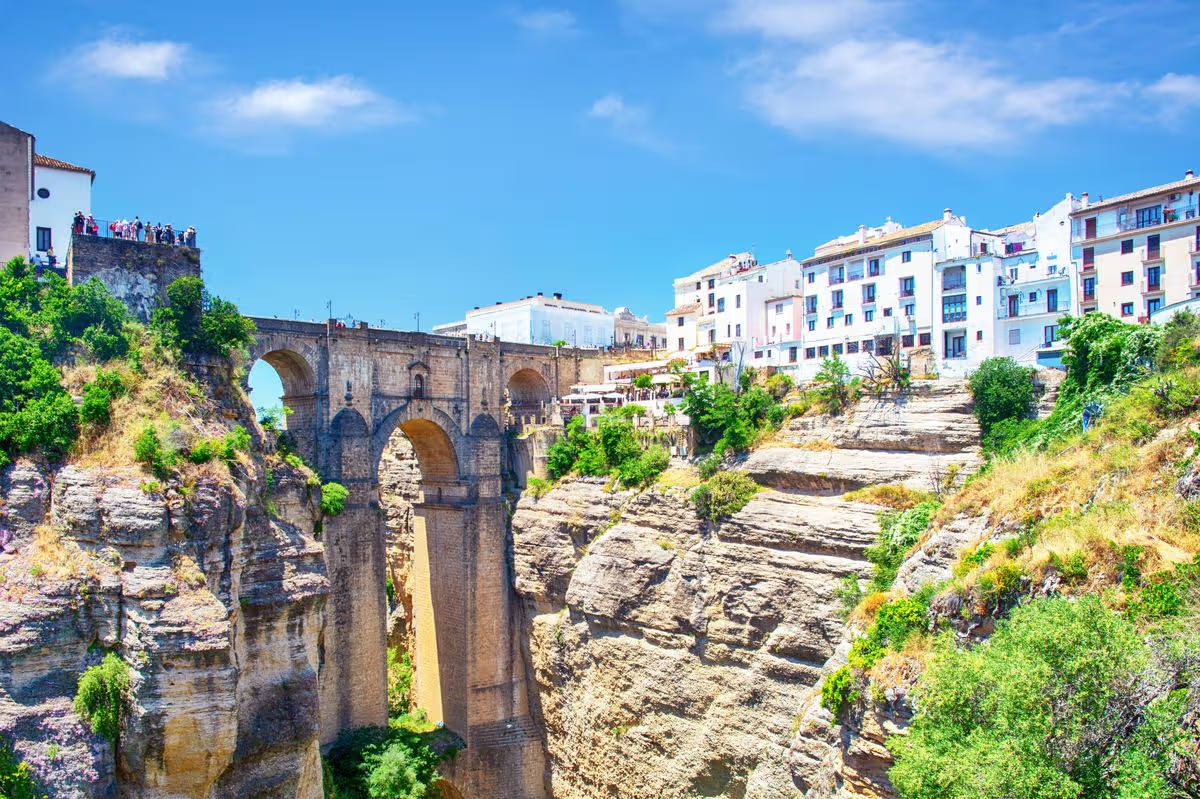
Gorgeous Spanish ‘hidden gem’ near Malaga with stunning views and fewer crowds
Spain is one of the most popular holiday destinations for Brits, but if you want to avoid the crowds, one holidaymaker has shared a ‘hidden gem’ with stunning views and rich history

A holidaymaker claims to have found a ‘hidden gem’ in historic city near Malaga (stock image)(Image: Getty Images)
When it comes to summer getaways, Spain consistently ranks as one of the most beloved destinations for British holidaymakers, and it’s not hard to see why. Nestled in Southern Europe, it enjoys pleasant weather all year round, with summer temperatures frequently soaring to 30 degrees on a daily basis.
Even during quieter months, visitors can expect comfortable temperatures of around 20 to 25 degrees. With the mainland just a short two-hour flight from the UK – although the Canary Islands can take up to four hours to reach – many Brits consider it the ideal distance for a break.
That said, Spanish authorities have previously voiced frustration with the sheer volume of tourists flocking to the country, leaving hotspots such as Mallorca and Palma absolutely packed to the rafters during the summer months.
Now, however, one traveller named Andrew McDonnell claims to have uncovered one of Spain’s best-kept secrets – a destination that delivers scorching summers and stunning scenery, without the overwhelming crowds. He took to TikTok, where he has amassed more than 12,100 followers, to share highlights from his trip to the historic southern Spanish city.
“One of Spain’s hidden gems left me truly speechless,” read the caption accompanying his post.
Ronda is a stunning mountaintop city situated in the Málaga province of Andalusia in Southern Spain. It is renowned for its dramatic position perched atop the sweeping El Tajo gorge, which divides the city’s 15th-century new town from its ancient old town, which dates back to the era of Moorish rule.
The iconic Puente Nuevo, a striking stone bridge that spans the dramatic gorge, features a viewpoint offering breathtaking views. The new town’s Plaza de Toros, a legendary 18th-century bullring, remains one of the city’s most instantly recognisable landmarks.
Ronda is also widely regarded as the birthplace of modern bullfighting, with a bullring dating back to 1784. Although the bullring remains open to visitors, actual bullfights are an increasingly rare sight, with just one symbolic event staged there annually during the Corrida Goyesca, as part of the Feria de Pedro Romero, which traditionally takes place in the last week of August.
Beyond its rich and fascinating history, the city also possesses a romantic charm that has captivated poets and writers for centuries, bolstered further by its spectacular mountaintop setting, widely considered one of the most stunning locations in the entire country.
Being a compact town, everything is easily reachable on foot. And while it stands as one of the most celebrated of Andalusia’s ‘pueblos blancos’ (white villages), it has managed to avoid the mass tourism that has overwhelmed its coastal neighbours, such as Malaga.
Andrew went on to say: “Ronda is one of those places that simply doesn’t need any words to be described, because being there and seeing it for yourself is enough. The content really doesn’t do this place any justice for how spectacular it is.”
And situated in Southern Spain, you can anticipate the typical Mediterranean climate, featuring hot, dry summers and cool, wet winters.
Thanks to its elevated position (roughly 739 metres), it does see chillier winters and occasionally hotter summers than neighbouring coastal resorts.
As it’s just 100km from Malaga, roughly an hour and a half’s drive away, Ronda serves as an ideal day trip during your holiday, or a peaceful and relaxing base for your next Spanish getaway.

Text too small, and other legitimate reasons to give up on a book and go on your phone
THE sun is shining, out-of-office is on, it’s a perfect time to read a good book but you don’t want to. Use one of these excuses to squint at your phone instead:
‘The text’s too small’
After several attempts to use a two-finger gesture to zoom in, you irritably decide that with all its densely-packed words in daunting paragraphs, lack of tabs and unwillingness even to impose a comforting pop-up, this book is refusing to meet you halfway. What are you meant to do, get your glasses? They’re all the way inside. F**k that.
‘Too many pages’
The comforting endless scroll of social media means you have no idea how much you’re reading, even when you’re an hour deep into a Reddit thread about Heated Rivalryships. Books, on the other hand, can’t even be held without revealing an intimidating number of pages and exhausting you before you even start, so you don’t.
‘There’s no comment section’
When you come across a villain online there immediately follows a long comment section where hundreds agree on what a monumental arsehole they are. Bad guys in books require you to make your own judgement and then stick with it all the way to their eventual comeuppance. Justice is delayed too long when you’re ready to condemn now.
‘It’s too slow’
Page after page of description of some bloody Victorian workhouse. Can’t they just jump-cut between one paragraph and the next? Include explanatory captions? Couldn’t this be condensed down to a 15-second Instagram reel? What was Charles Dickens thinking, not pivoting to short-form video?
‘There’s no tits in it’
Social media these days has, like all other media, discovered the lowest common denominator and it’s boobs. Novels? You’ll struggle to find one which has an actual picture, even in medical textbooks. Compare that to any app. Even LinkedIn has tits these days.
David Hockney, whose art celebrated sun-drenched Los Angeles, dead at 88
David Hockney, the innovative and prolific British artist who arrived in Los Angeles in 1964, soon celebrating its sun-drenched life and landscapes in colorful, wildly popular paintings, has died.
He was 88.
Calling himself “an English Los Angeleno,” Hockney immortalized the city’s sparkling swimming pools, palm trees and beautiful young men, then went on to experiment with intricate photo collages, portrait suites, painted and filmed images of Yorkshire landscapes, iPad drawings and more.
Since his Pop Art paintings in the early ‘60s at London’s Royal College of Art, Hockney was rarely out of the limelight and, more important, rarely out of fresh ideas for how to draw, paint, film, print, photograph or otherwise express his creativity. The David Hockney Foundation owns more than 8,000 of his works, including about 200 sketchbooks, more than 230 self-portraits, opera designs and portraits of family and friends.
Hockney loved Hollywood — the people and the place — and liked to say he was brought up in England and Hollywood because of the time he spent at the movies. His peroxide blonde hair reportedly was inspired when he was a student and saw Clairol TV ads claiming “blondes have more fun.” But it was his interest in everything from Elvis Presley to the Hubble Space Telescope and his sense of humor that set him apart. Time Magazine art critic Robert Hughes once called him “the Cole Porter of modern art.”
He was open about being gay, even when homosexuality was outlawed in Britain. His early love affair with artist Peter Schlesinger, a younger man he met when teaching a summer drawing class at UCLA in 1966, inspired Hockney’s monumental 1972 painting “Portrait of an Artist (Pool with Two Figures),” a centerpiece of Jack Hazan’s 1974 film “A Bigger Splash.” The painting’s 2018 auction at Christie’s drew a record $90 million for a living artist.
He was a dedicated reader and student of art, paying homage in his work to Picasso and Cubism as well as to Monet, Matisse, Van Gogh and Cezanne. A lover of opera, he often had it playing loudly in the studio and enjoyed taking visitors on curated car trips through the Hollywood Hills or Malibu while listening to Wagner. He designed sets for major companies in Los Angeles, Chicago, New York, London and elsewhere over the years, and some of his set models were later shown in museums.

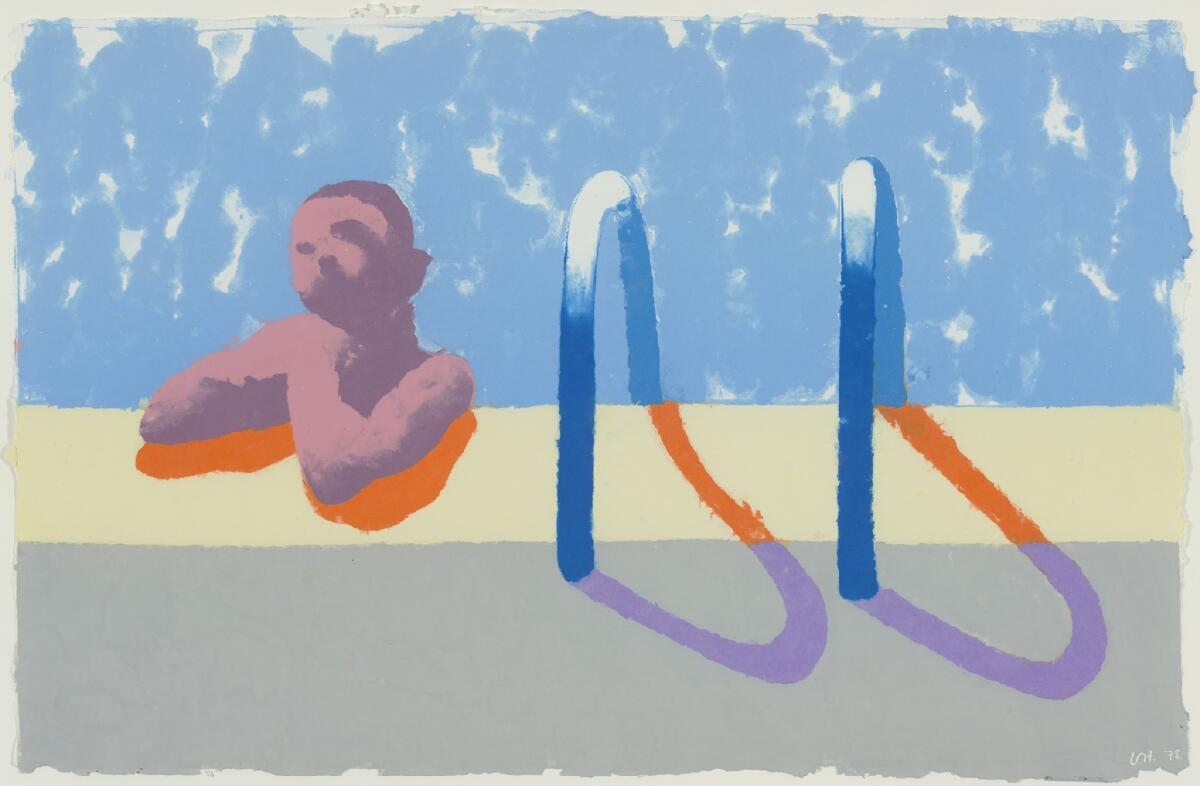
David Hockney’s work “Gregory in the Pool (Paper Pool 4)” is part of his solo exhibition “David Hockney: Perspective Should Be Reversed” at the Palm Springs Art Museum in Palm Springs. (Courtesy of the Palm Springs Art Museum)
(Courtesy of the Palm Springs Art Museum)
His solo shows drew enormous crowds to the Los Angeles County Museum of Art as early as 1988. In 2017 a major retrospective of his work, keyed to his 80th birthday, was presented at New York’s Metropolitan Museum of Art, Paris’ Centre Pompidou and London’s Tate Modern. Chronicling Hockney’s arrival as an important artist in the “ravishing” Met retrospective, the New Yorker writer Andrea K. Scott called it “a revelation.” It was, she wrote, “a retort to all the eye-rollers,” including herself, who dismissed his work “as, at best, a guilty pleasure.”
In 2012 he received the coveted Order of Merit, which Queen Elizabeth II presented to him at Buckingham Palace.
David Hockney was born the fourth of five children to a working-class family in Bradford, Yorkshire, on July 9, 1937. He has said he started “making marks on paper” at 8 and received private painting lessons before moving on to Bradford School of Art in 1953. The first painting he sold was a portrait of his father in 1955. He attended the Royal College of Art in London from 1959 until his graduation in 1962 and received the school’s Gold Medal.
After college he did not slack off, noted his biographer Christopher Simon Sykes. In his 2014 book, “Hockney: The Biography,” Sykes pointed out that the artist’s first flat had a chest of drawers near the bed on which he had painted, in large capital letters, the words “get up and work immediately.”

David Hockney in 2017.
(Catherine Opie, Courtesy of Regen Projects, Los Angeles and Lehmann Maupin, New York, Hong Kong and Seoul.)
Hockney lived by that command for the rest of his life, turning out canvas after canvas, photo after photo. In the ‘80s came his extraordinary multi-image photographic collages of friends including writer Christopher Isherwood and artist Don Bachardy and such landmarks as the Brooklyn Bridge, Grand Canyon and Pearblossom Highway.
“The Polaroids started oddly enough when I’d just finished a long period of work in the theater, which is of course playing with perspective and illusion,” he once told The Times. “People say, ‘You are a painter, and photography is a sideline.’ But nothing is a sideline for me.”
That included his continuing fascination with technology. The artist’s long career swept in artworks made not only on cameras and canvases, but on such things as fax machines and photocopiers. Hockney liked to experiment, whether it was with state-of-the-art printing devices or centuries old painting techniques. He went several times to a show of portraits by Jean Auguste Dominique Ingres at London’s National Gallery in 1999 and was greatly taken with the photographic’ quality of Ingres’ 19th century drawings. Certain that Ingres had used something optical to achieve that quality, Hockney bought himself a camera lucida, a small device that works like a prism. He then applied Ingres’ methods–as Hockney imagined them–to his own portraits of friends and family, and in 2001, he published “Secret Knowledge,” exploring his theories on early artistic uses of optical devices.
His death was confirmed by the Associated Press and New York Times.
Isenberg is a former Times staff writer
After uncertainty, a good sign for 2028 Games transportation funding
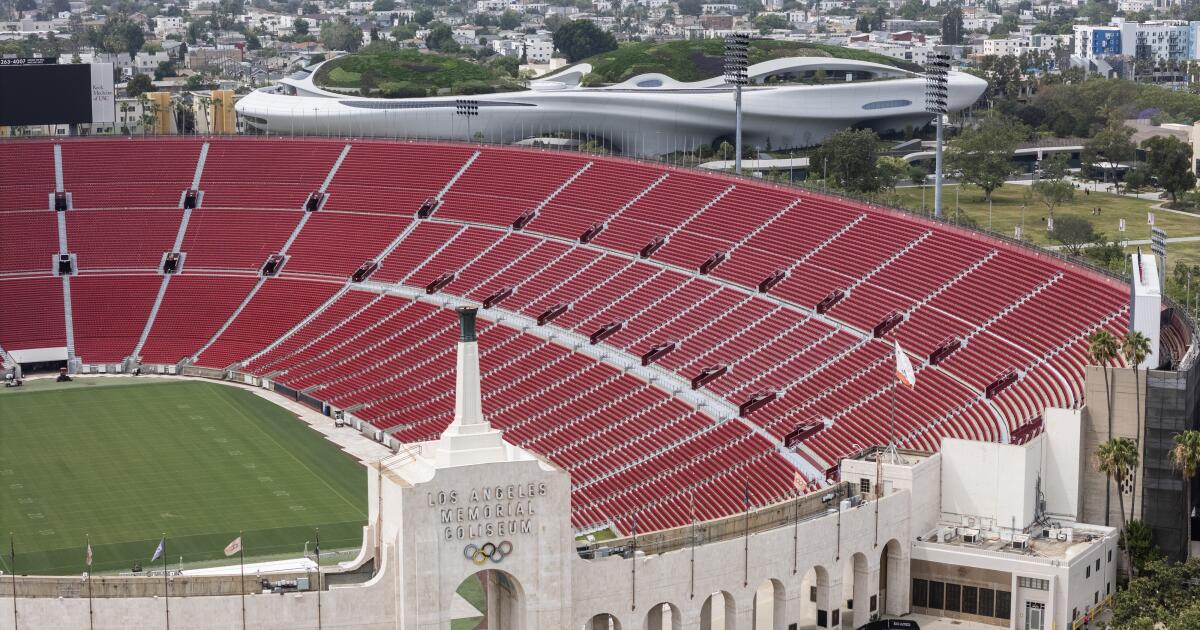
WASHINGTON — The House Appropriations Committee has approved $875 million to fund public transportation for the 2028 Olympic Games, a positive sign for LA28 after the exclusion of Olympics transit funding from President Trump’s fiscal year 2027 budget request this spring.
The funding must be passed by Congress in a future spending bill — part of a lengthy 2027 budgeting process that is underway now — but its approval in committee last week is a crucial signal of investment from Washington after weeks of uncertainty.
“We are encouraged by the House Appropriations Committee’s action,” spokesperson Maya Pogoda of the Los Angeles County Metropolitan Transportation Authority said in a statement, “and we look forward to continuing to work with the Senate and the White House to make America’s Games the best ever in history.”
LA Metro has sought $2 billion in federal funding for the planned transit service for the Games, which includes leasing buses, hiring drivers and building temporary depots. With the clock ticking to start projects that require significant lead time to be completed before the Games, the absence of any funding in Trump’s budget request in April had raised concerns among lawmakers and other stakeholders.
In recent weeks, the transit authority, the city and LA28 had publicly pressed for federal funding; LA28 Chief Executive Casey Wasserman reportedly met with lawmakers on Capitol Hill in April.
“The House Appropriations Committee’s most recent transportation bill is another positive signal of the continued bipartisan support in Congress to provide federal transit money for the Games,” LA28 spokesperson Jacie Prieto Lopez told The Times.
The inclusion of the funding in the bill conveyed bipartisan support for the Games, an event that Trump — who places an outsize importance on displays of patriotism — is likely to want to see go well during his tenure.
“This is on the American stage,” said former Los Angeles County Supervisor Zev Yaroslavsky, who was on the City Council during the 1984 Olympic Games. “The success of the Games are the success of the country.”
The Olympics item was included in the fiscal year 2027 transportation funding bill approved by the House Appropriations Committee last week. In its report, the committee noted that the funding is intended for all host cities, including those outside California.
“The 2028 games will put our nation on center stage, and this investment will help ensure that we are prepared to meet the moment and showcase why the United States is the best country in the world,” Rep. Steve Womack (R-Ark.), who chairs the subcommittee that put forth the bill, said in a statement.
The Games in Los Angeles are expected to draw massive crowds and will be the first Summer Olympics held in the United States since Atlanta hosted in 1996. More than 4 million tickets were sold during LA28’s first ticket release; a second ticket drop is coming in August.
The massive event requires federal involvement not just on funding but also on issues including athlete visas and the import of Olympic horses.
LA Metro has planned to lease 1,700 buses from transit agencies across the country, build three temporary transit depots and create dedicated traffic lanes for athletes, officials and others as required by the International Olympic Committee. Metro estimates that 1 million additional trips per day will be taken during the 16-day Games.
It’s crucial for federal funding to come through in a timely manner, Yaroslavsky said, particularly given the scope of the security and transportation considerations for the sprawling Games.
“The city and the LA28 committee need to know that this money is going to be made available,” Yaroslavsky said. “This has to be in place long before the Games start.”

Opening day of World Cup brings wins for Mexico and South Korea
Mexico wins World Cup opener
From Eduard Cauich: FIFA president Gianni Infantino described Mexico City Stadium as a venue “blessed by the gods” and a “true cathedral of soccer.”
Azteca Stadium, as most people know it, is steeped in soccer history and is now the only venue to host three World Cup opening ceremonies. But the Mexican national team had never much World Cup success at the venue.
On Thursday, spurred on by most of the 80,824 fans in attendance and forwards Julián Quiñones and Raúl Jiménez, Mexico managed to defeat South Africa 2-0 and securing its first opening match victory.
Mexico opened the scoring in the ninth minute when Quiñones capitalized on a defensive error by South Africa and fired a shot down the middle, between the legs of goalkeeper Ronwen Williams. The striker, a top scorer in the Saudi Pro League, immediately ran off to celebrate with the bench, marking the first goal of the tournament. The crowd responded by throwing beer into the air.
Mexico continued to press with numerous chances in the first half, including another shot by Quiñones that hit the post and another great save by Williams, who was South Africa’s best player.
“We were far superior in the first half; we could have been up 3-0,” Mexico coach Javier Aguirre said.
U.S. vs. Paraguay: Breaking down the challenges in World Cup opener
FIFA World Cup Day 1: Live updates, TV schedule, players to watch and group previews
Click here for complete TV schedule, groups and players to watch
Today’s World Cup TV schedule
Noon, Canada vs. Bosnia-Herzegovina, Fox, Telemundo
6 p.m. U.S. vs. Paraguay, Fox, Telemundo
Saturday’s World Cup TV schedule
Noon, Qatar vs. Switzerland, Fox, Telemundo
3 p.m., Brazil vs. Morocco, FS1, Telemundo
6 p.m., Haiti vs. Scotland, FS1, Telemundo
9 p.m., Australia vs. Turkey, FS1, Telemundo
Sunday’s World Cup TV schedule
10 a.m. Germany vs. Curacao, Fox, Telemundo
1 p.m. Netherlands vs. Japan, Fox, Telemundo
4 p.m. Ivory Coast vs. Ecuador, FS1, Telemundo
7 p.m. Sweden vs. Tunisia, FS1, Telemundo
Ohtani hurts knee in Dodgers’ victory
From Maddie Lee: The Dodgers couldn’t have asked for better timing, as Shohei Ohtani’s leadoff spot came back around.
In a game the Dodgers would go on to win 8-6 over the Pirates, they were clinging to a two-run lead in the top of the seventh inning against the Pirates on Thursday. With one out and runners on first and second, the Dodgers superstar, who had already reached base four times, was due up.
Instead, Santiago Espinal stepped up to the plate as a pinch-hitter.
Ohtani left the game with inflammation in his left knee, the Dodgers announced.
“Just wanted to be smart and not push it,” manager Dave Roberts said. “So I feel good about him being in there [Friday]. But obviously with the travel [to Chicago Wednesday night], we’ll just kind of see how he comes in.”
Roberts described the injury as “discomfort” at the back of Ohtani’s knee, around where the hamstring attaches. Though Ohtani underwent surgery on the same knee in 2019, that was to address bipartite patella, on the other side of the knee.
How the Dodgers plan to shuffle catchers with Will Smith on the injured list
Rams cancel minicamp
From Gary Klein: Unless they are in Maui, as they were last year, Rams coach Sean McVay annually opts to cancel mandatory minicamps after the initial report day.
This year, McVay avoided any pretense of suspense.
On Thursday, he announced to his players that after fulfilling some broadcast media responsibilities on Monday, they would not have a minicamp and break until they report to training camp at Loyola Marymount in late July, a Rams official said.
McVay’s announcement came about a week after San Francisco 49ers coach Kyle Shanahan canceled minicamp, and Seattle Seahawks coach Mike Macdonald did the same.
The Rams play the 49ers in their Sept. 10 season opener in Melbourne, Australia.
Stanley Cup Final Game 5
Andrei Svechnikov scored twice and Sebastian Aho added a second-period goal in a breakout game for Carolina’s top-line performers, helping the Hurricanes beat the Vegas Golden Knights 4-2 on Thursday night to move one victory away from the Stanley Cup.
Captain Jordan Staal added his fifth goal in the series on a night when Carolina overcame multiple hiccups from these playoffs, from a shaky power play to being outplayed in the second period of this series.
And there had been the waiting game for Aho and Svechnikov — two roster mainstays in an eight-year postseason run — to find a better offensive groove.
This day in sports history
1920 — Man o’ War wins the Belmont Stakes, which was run at 1 3/8-miles, in 2:14 1/5. He shatters the world record by 3 1/5 seconds and sets the American dirt-course record for that distance.
1930 — Max Schmeling beats Jack Sharkey on a fourth-round foul for the vacant heavyweight title in New York. Schmeling becomes the first German — and European — heavyweight world champion.
1939 — Byron Nelson wins the U.S. Open in a three-way playoff with Craig Wood and Denny Shute.
1948 — Citation, ridden by Eddie Arcaro, wins the Belmont Stakes and the Triple Crown with an eight-length victory over Better Self. It’s Arcaro’s second Triple Crown. He rode Whirlaway in 1941.
1948 — Ben Hogan wins the U.S. Open with a record 276, five fewer than Ralph Guldahl’s 1937 record.
1954 — Milwaukee Braves spot starting pitcher Jim Wilson throws first no-hitter in history of County Stadium when he blanks Philadelphia Phillies, 2-0.
1979 — Bobby Orr becomes the youngest player in NHL history to be selected for the Hockey Hall of Fame. The 31-year-old is inducted months after officially ending his NHL career as the Hall waives its usual three-year waiting period.
1981 — Larry Holmes stops Leon Spinks in the third round for the WBC heavyweight title in Detroit.
1983 — Patty Sheehan wins the LPGA championship by two strokes over Sandra Haynie.
1984 — 38th NBA Championship: Boston Celtics beat Lakers, 4 games to 3, to win the championship title.
1990 — Egypt, a 500-1 shot, stuns the Netherlands when Magdi Abdel-Ghani makes a penalty kick with eight minutes remaining to tie the World Cup favorites 1-1.
1991 — The Chicago Bulls win the first NBA championship in the team’s 25-year history with a 108-101 victory in Game 5 over the Lakers. MVP Michael Jordan scores 30 points, Scottie Pippen has 32 and John Paxson 20.
2002 — NBA Finals: Lakers beat New Jersey Nets, 113-107 for a 4-0 sweep and 3rd straight title; MVP: Shaquille O’Neal for 3rd consecutive Finals series.
2005 — Annika Sorenstam closes with a 1-over 73 for a three-shot victory over Michelle Wie in the LPGA Championship. The 15-year-old Wie shoots a 69 to finish second. It’s the highest finish by an amateur in a major since 20-year-old Jenny Chuasiriporn lost a playoff to Se Ri Pak in the 1998 U.S. Women’s Open.
2008 — The Boston Celtics overcome a 24-point deficit and beat the Lakers 97-91 to take a commanding 3-1 lead in the NBA finals. No team has ever overcome more than a 15-point deficit after the first quarter, and the Celtics post the biggest comeback in the finals since 1971.
2009 — Pittsburgh’s Max Talbot scores two second-period goals as the Penguins beat the defending champion Detroit Red Wings 2-1 in Game 7 and win the Stanley Cup at Detroit’s Joe Louis Arena.
2011 — The Dallas Mavericks win their first NBA title by winning Game 6 of the finals in Miami, 105-95. Jason Terry scores 27 points and Dirk Nowitzki adds 21 as the Mavericks win four of the series’ last five games.
2013 — Andrew Shaw scores on a deflection in triple overtime to lift the Chicago Blackhawks to a 4-3 victory over the Boston Bruins in a riveting Game 1 of the Stanley Cup finals. The Blackhawks gets third-period goals from Dave Bolland and Oduya to erase a 3-1 deficit.
2016 — Sidney Crosby sets up Kris Letang’s go-ahead goal midway through the second period and the Pittsburgh Penguins win the fourth Stanley Cup in franchise history by beating the San Jose Sharks 3-1 in Game 6 of the Stanley Cup final.
2017 — Kevin Durant caps his spectacular first season with the Warriors by bringing home an NBA championship. Durant, who joined Golden State last July, scores 39 points in a finals-clinching 129-120 victory over LeBron James and the Cleveland Cavaliers.
2019 — Stanley Cup Final, TD Garden, Boston, MA: St. Louis Blues beat Boston Bruins, 4-1 for a 4-3 series victory; first title in franchise history.
2021 — Danish soccer midfielder Christian Eriksen suffers an on-field cardiac arrest during a Euro 2020 match with Finland in Copenhagen. Eriksen is revived with a defibrillator and the game controversially continues with a 1-0 Finland win.
2023 — NBA Finals: Denver Nuggets beat Miami Heat 94-89 to win the franchise’s first Championship; clinch series 4-1; MVP: Denver C Nikola Jokić.
Compiled by the Associated Press
This day in baseball history
1922 — Hub Pruett struck out Babe Ruth three consecutive times, and the St. Louis Browns beat the New York Yankees 7-1.
1928 — Lou Gehrig of the New York Yankees had two triples and two homers in a 15-7 victory over the Chicago White Sox.
1939 — The Baseball Hall of Fame was dedicated at Cooperstown, N.Y.
1954 — Milwaukee’s Jim Wilson pitched the year’s only no-hitter, blanking the Philadelphia Phillies 2-0.
1957 — Stan Musial of the St. Louis Cardinals broke the National League record for endurance when he played in his 823rd consecutive game. The previous mark was established in 1937 by Pirates first baseman Gus Suhr.
1959 — The San Francisco Giant’s Mike McCormick tossed a 3-0, five-inning no-hitter against the Philadelphia Phillies. Richie Ashburn singled in the top of the sixth for the Phillies, but the hit didn’t count because the game was stopped by rain.
1962 — In Milwaukee’s 15-2 rout of the Dodgers at County Stadium, the Aaron brothers both homer in the same game with Tommie connecting in the bottom of the eighth after his older brother Hank had hit one out in the second.
1970 — Dock Ellis of the Pittsburgh Pirates hurled a 2-0 no-hitter in the first game of a doubleheader against the San Diego Padres. Ellis walked eight and hit a batter, and Willie Stargell hit two homers.
1981 — Thirteen games were canceled due to the players’ strike.
1997 — After 126 years, baseball broke its tradition and played interleague games. The San Francisco Giants beat the Texas Rangers 4-3.
1999 — Cal Ripken went 6-for-6, homering twice and driving in six runs as the Baltimore Orioles scored the most runs in franchise history with a 22-1 rout of the Atlanta Braves.
2006 — Jason Grimsley was suspended 50 games by Major League Baseball, less than a week after federal agents raided his home during an investigation into performance-enhancing drugs.
2007 — Justin Verlander pitched a no-hitter to lead the Detroit Tigers over the Milwaukee Brewers 4-0. Verlander struck out a career-high 12, walked four and benefited from several stellar defensive plays.
2009 — Chicago right fielder Milton Bradley had a bad day at Wrigley Field. Bradley lost Jason Kubel’s pop-up in the sun for a single, couldn’t catch Michael Cuddyer’s RBI bloop double, made a baserunning blunder and, most egregiously, flipped the ball into the stands after catching Mauer’s one-out sac fly.
2009 — New York Mets second baseman Luis Castillo dropped Alex Rodriguez’s lazy popup with two out in the ninth inning as two runs scored, helping the Yankees escape with a wild 9-8 victory over the Mets.
2010 — Daniel Nava hit the first pitch he saw as a big leaguer for a grand slam — only the second player to do it — leading the Boston Red Sox to a 10-2 rout of the Philadelphia Phillies. Nava connected on a fastball from Joe Blanton in the second inning. Kevin Kouzmanoff hit a slam on the first pitch he saw Sept. 2, 2006, for Cleveland against Texas.
2011 — Realignment is on the table again as Major League Baseball and the Major League Baseball Players Association are in discussions to renew the collective bargaining agreement, which expires on December 11th. One of the options being discussed would see one team moving from the National League to the American League to create two 15-team leagues, with the Houston Astros the likeliest candidate for a move.
2012 — Alex Rodriguez ties Lou Gehrig’s record by hitting his 23rd career grand slam.
2016 — Sam Cohen put UC Santa Barbara into its first College World Series with a pinch-hit grand slam in the bottom of the ninth inning for a 4-3 victory over second-seeded Louisville 4-3 in the Super Regionals.
2017 — Royce Lewis, a high school shortstop from California, is selected first overall by the Minnesota Twins in the 2017 amateur draft.
2018 — Tigers 1B Miguel Cabrera suffers a season-ending injury when he tears a biceps tendon while swinging at pitch in the third inning of a game against the Twins. He had already missed all but one game of May with a hamstring injury.
Compiled by the Associated Press
Until next time…
That concludes today’s newsletter. If you have any feedback, ideas for improvement or things you’d like to see, email me at houston.mitchell@latimes.com. To get this newsletter in your inbox, click here.
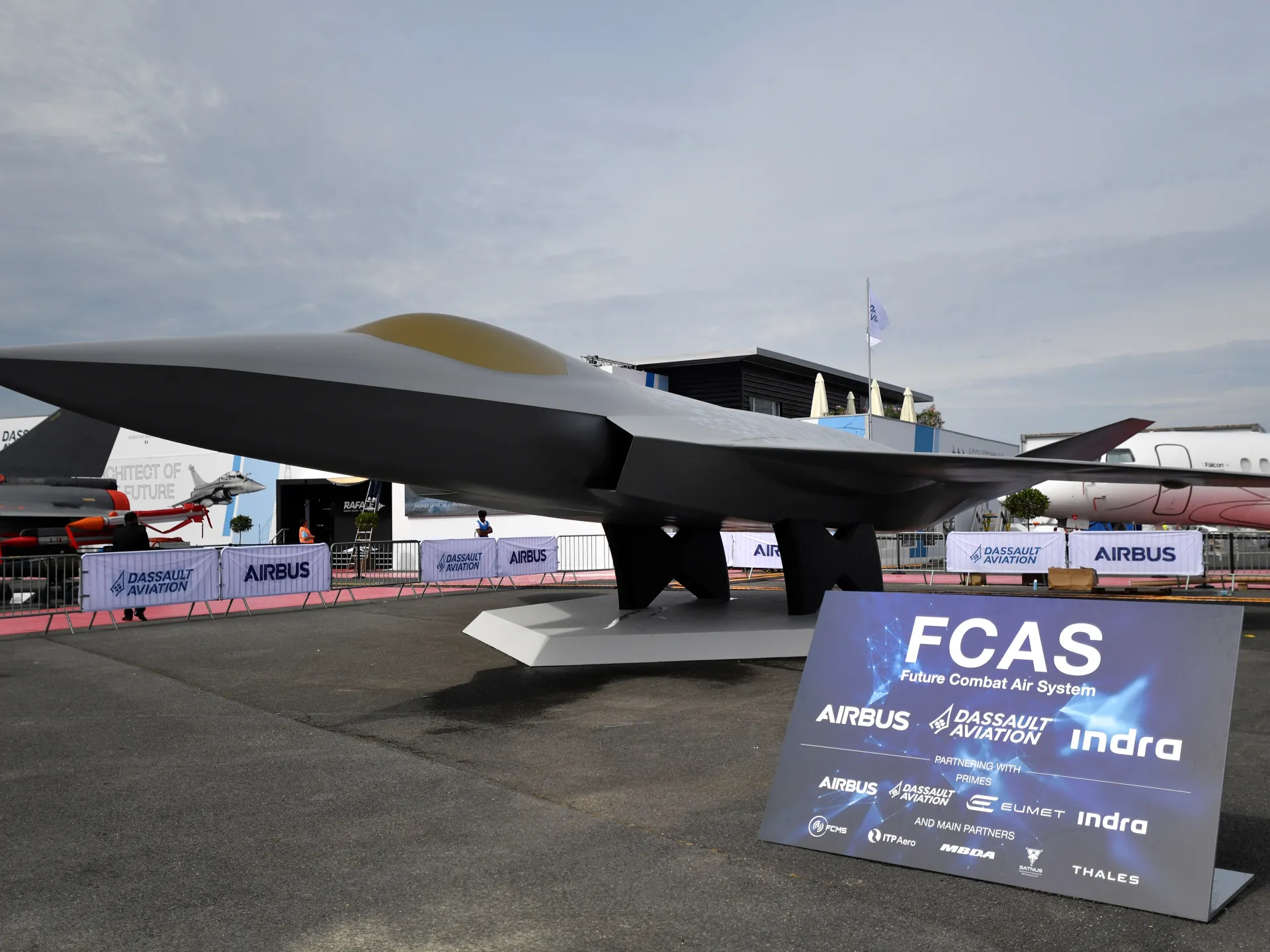
France-Germany jet plans crash: Can Europe end reliance on US for security? | Military
France and Germany have announced this week that they are ditching a landmark project to jointly develop a sixth-generation fighter jet.
French President Emmanuel Macron confirmed on Monday that the project is being terminated, in what is being seen as a major blow to efforts to boost defence cooperation between European Union states, a key issue amid uncertainty cast by United States President Donald Trump over the readiness of the US to help defend its NATO allies.
Recommended Stories
list of 4 itemsend of list
Trump’s disdain for Europe’s reliance on the US has been building for years.
Since 2019, the US president has been flirting with the idea of obtaining Greenland.
His remarks about his desire for the island, a self-governing territory which is part of the Kingdom of Denmark, built to a crescendo at the start of this year, with European leaders signalling their displeasure with the idea and Trump even threatening additional trade tariffs on those countries standing in his way.
Both Denmark and Greenland have repeatedly stated that the island is not for sale.
At one point, before Trump backed down after agreeing to a “framework of a future deal” on Greenland during a January meeting with NATO’s Mark Rutte in Davos, it seemed as if the US might even try to take the island by force – a notion that would have been inconceivable before the era of Donald Trump.
The threat of military action set off alarm bells in European capitals.
In addition to all this, Trump has withdrawn much of the US’s support for Ukraine and has consistently berated his European NATO partners for not spending enough on their own defence for years, outright urging them to reduce their reliance on the US for military protection.
More recently, Europe’s refusal to join the US-Israeli war on Iran, which began with strikes on Tehran on February 28, has further irked the US president and deepened concerns that a widening transatlantic rift could weaken the continent’s security and embolden Russia.
Until this week, a counterweight to these burgeoning concerns was in hand – the Future Combat Air System (FCAS) project, a landmark pact to jointly develop a next-generation fighter jet involving France, Germany and Spain.
But disagreements over whether France’s Dassault Aviation, or Airbus, which also represents Germany and Spain, should take the lead on the project have ultimately led to its collapse.
Analysts, however, say all hope is not lost: despite the dissolution of the bellwether venture, Europeans can indeed become strategically autonomous, they say – but the road there runs through shared military integration, rather than shared political aspiration.
The FCAS hoopla does “highlight the limitation of Europe’s defence industrial landscape, where national needs sometimes clash with the broader goal of defence integration”, Giuseppe Spatafora, a policy analyst at the European Union Institute for Security Studies, told Al Jazeera.
“But we also shouldn’t overestimate its impact.”
Setback, not collapse
According to Jamie Shea, a retired NATO official and associate fellow with the International Security Programme at Chatham House, FCAS’s dissolution is certainly a setback – but does not spell the collapse of European defence integration in its entirety.
“It was the type of high-tech, innovative and future-oriented programme that Europeans need to be able to achieve successfully if they are to become strategically autonomous and break their dependence on the US for major weapons systems,” Shea told Al Jazeera.
It had been hoped that FCAS would move the needle forward, particularly in the areas of artificial intelligence (AI), space, data fusion, and the manned and autonomous systems interface space, he said.
Others would have additionally joined the project as it gained momentum, as Spain did, he added, potentially creating a domino effect in next-generation defence technologies across the continent.
But, crucially, Spatafora said, the project dates back to 2017 – a different era, before Russia’s full-scale war on Ukraine and before Trump’s return to the White House.
“Nowadays, the project might be designed differently to reflect the scenario,” he said.
“But it doesn’t affect the broader trend in Europe towards reducing dependencies on US military systems and strengthening its own defence capabilities.”
France and Germany will continue with some components of FCAS, such as its “combat cloud” feature, which will increase Europe’s cyber command-and-control capabilities, said Spatafora.
Airbus and a number of other German companies are also seeking to continue the programme in other areas, particularly software architecture and drone technology, Shea said.
“So there may be benefits for European defence and its defence technology base even if a manned fighter aircraft is not built,” said Shea.
Furthermore, there are “scores” of other joint defence projects being launched in Europe at the moment, even if they are not quite as ambitious as FCAS, he added.
Guntram Wolff, a senior fellow at the European think tank Bruegel, similarly urged against alarmism.
“I would not interpret this decision overly negatively,” Wolff told Al Jazeera.
“FCAS was a very complicated project and its military relevance may well be overstated at a moment of increasing importance of cheap autonomous systems. In part, the decision also reflects a reassessment of whether the high cost was really warranted.”
Europe, meanwhile, has other strengths it can build on, the analysts said.
The continent is strong in shipbuilding, submarines, short-range missiles and air defence – with systems like the German IRIS-T and the French-Italian SAMP/T – and has demonstrated it can build capable fighter jets, such as the Eurofighter Typhoon, Tornado and Gripen programmes have shown, Shea said.
Lessons and challenges
Europe’s main problem is underinvestment and the difficulty it has in scaling up to the level of mass production that modern warfare demands, said Shea.
This issue was brought into sharp focus this week when the UK’s secretary of state for defence dramatically resigned from government over defence funding.
He simply cannot keep the country safe on what he has been given to spend, he said. In his resignation letter to the prime minister, he wrote: “You have been unable and the Treasury has been unwilling to commit the resources that the nation needs to defend the country at this time of rising threats,” he wrote.
Ultimately, European nations are going to have to come together if they have any hope of matching US military might in the future, analysts say.
“It is the challenge of integrating all systems and all domains into a single battlefield management space where the US is in advance of the Europeans,” Shea said.
“Drones, which Russia and Ukraine are producing in the millions, are a case in point. Even the US suffers from weapons shortages as we have seen in the Iran war,” the former NATO official added.
Spatafora echoed the idea that the Russia-Ukraine war has lessons to offer the rest of Europe.
“The lesson of the war in Ukraine is that, in order to deter and defend itself properly, Europe needs cheap, mass-produced capabilities,” he said.
FCAS was about a very expensive capability, “so it was not really the key need for Europe’s deterrence today”, the analyst said.
The more pressing question that FCAS raises is how European nations will coordinate large projects which single countries cannot produce on their own and which could clash with the interests of numerous national industries. This is the conundrum which will likely shape the design of future EU instruments to support cooperative defence projects, said Spatafora.
Another challenge facing the continent is that major platforms like aircraft, ships or land warfare vehicles can take decades to develop, and contracts signed today will yield equipment that will not be on the battlefield before 2040, Shea said.
Europe will need to upgrade its current capabilities – recent upgrades to the Eurofighter jet and the Leopard tank are examples he cited – and look for gap-fillers elsewhere.
Spatafora argues that the FCAS collapse should not push European countries back towards reliance on American systems – or at least not more than they already have.
“The Trump administration’s approach and the depletion of stock after the Iran war have significantly reduced the reliability of US supplies,” he said.
The reliability of US guarantees, he added, depends on other assets – long-range missiles, forward-deployed troops, command-and-control infrastructure – “rather than on a next-generation fighter jet”, the analyst added.
‘Military requirements’ over ‘political ambition’
The FCAS failure is certainly good news for Russia, Shea said, “and also for the US, which will hope to sell Europe even more F-35s and maintain Europe’s traditional dependency on US military equipment”.
A rebound from the collapsed project, therefore, he argued, is necessary. But that is already in the works, analysts say, as Europe is already turning away from US dependability.
They point to the high likelihood of renewed interest in the UK-Italy-Japan Global Combat Air Programme (GCAP) for a sixth-generation stealth fighter jet, in European Space Agency military space capabilities, and in EU defence financing mechanisms like the Security Action for Europe (SAFE).
Joint ventures with Ukraine, which, under fire from Russia for four years, has mastered mass production of drone technology and AI, should also help keep Europe up to speed in key areas, Shea added.
“The US has proven to be unreliable, or simply unable to remain committed to Europe, and the defence budgets are growing,” Spatfora said.
Washington will continue to remain relevant for certain capabilities – nuclear deterrence above all – but over time, European countries will seek to develop more and more on their own.
The ultimate lesson of FCAS, however, Shea argued, is that defence integration “has to be driven by military requirements rather than political ambition”.
Cooperation between France and Germany has always been difficult, he said – they have large defence companies “that do not want to play second fiddle to the other”, he said.
A more promising model, he said, is the joint UK-Norway agreement to produce a new destroyer-class warship, with BAE Systems as the main contractor and smaller Norwegian companies participating.
“Both countries operate in the North Atlantic and the Baltic Sea and share exactly the same concept of what the ship should be,” explained Shea.
“So it is this model of bottom-up, natural cooperation rather than top-down political cooperation that Europe needs to pursue.”
A year after Air India crash killed 260: Do we know what happened? | Aviation News
Friday marks one year since a deadly Air India Boeing crash, which killed 260 people in a densely populated suburb of the city of Ahmedabad in India’s western state of Gujarat.
Families of those killed gathered at the site on Friday to mark the anniversary of the disaster, but they are still waiting for answers about what caused the plane to come down shortly after takeoff from the nearby airport.
Indian authorities are expected to issue an interim report in the coming days, another source of frustration for the victims’ relatives, who had been hoping for a definitive finding and a final disclosure. Media reports, citing unnamed sources, suggest that Indian investigators will delay issuing a final report into the crash, citing the need to complete an analysis of the plane’s engines.
Under international aviation rules, a final report is due “if possible” within a year of an accident. If an investigation goes on for longer, an interim statement should be issued on each anniversary.
What happened to the Air India plane?
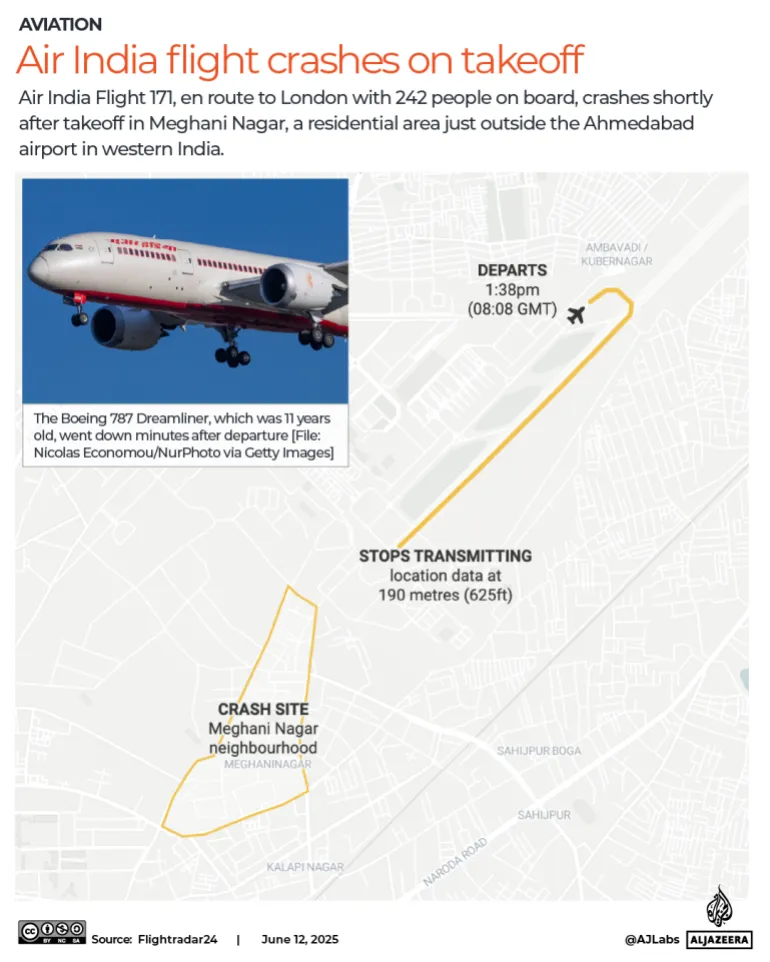
Flight AI171, an Air India Boeing 787 Dreamliner plane which had taken off only moments before, en route to London Gatwick, crashed into a medical college hostel in the residential area of Meghani Nagar, close to the international airport on the edge of India’s western city of Ahmedabad.
According to flight tracking website Flightradar24, the plane’s final signal was received seconds after takeoff at 1:38pm local time (08:08 GMT). It had reached an altitude of 625 feet (190 metres) before crashing back to the ground outside the airport.
The plane had issued a mayday alert to air traffic control just before all communications from the aircraft ceased.

How many people died in the crash?
Of the 242 people on board, all except one passenger were killed. These included 169 Indian nationals and 52 British nationals. A total of 260 people died, as 19 people on the ground close to the crash site were also killed. Another 67 people near the site were injured.
The sole survivor on board the plane, Vishwash Kumar Ramesh, is a British national whose brother was killed in the crash.
On Thursday, Ramesh’s representative, Sanjiv Patel, told the UK’s Guardian newspaper that Air India had paid £21,500 ($28,800) in compensation to Ramesh to help support his wife and their five-year-old son. It is not clear whether similar payments have been made to other families.
Relatives of the victims are meeting on Friday at a conference organised by lawyers, along with aviation and air safety experts, in Ahmedabad. They are due to hold a candlelight vigil after sunset.

What have preliminary reports shown?
This was the world’s first airliner crash involving a 787 Dreamliner, a Boeing model that has been in service since 2011.
In accordance with international aviation law, India’s Aircraft Accident Investigation Bureau (AAIB) published a preliminary report one month after the disaster.
That 15-page document said the fuel supply to the jet’s engines had been cut off moments before the crash, raising questions about possible pilot error.
It also published a conversation between the captain and his copilot about the fuel supply being cut off – two brief sentences that prompted theories of pilot suicide.
The report was met with strong criticism.
It did not state why the fuel switches were turned off – whether it was the fault of a pilot, or a result of a malfunction.
The preliminary report did not make any safety recommendations to Boeing or engine maker GE Aerospace, suggesting no technical issues had been discovered.
The crash also hit Air India at a sensitive stage of its post-privatisation turnaround, which has been slowed by supply-chain snags, an airspace ban imposed by Pakistan on Indian carriers and, more recently, the US-Israeli war on Iran.
What’s the latest on the investigation?
Under international rules, a final report is due “if possible” within a year of an accident, but sometimes investigations take longer. If it cannot be completed, therefore, an interim statement should be issued on each anniversary. With investigations continuing, the AAIB is expected to issue only an interim report at this stage.
The Federation of Indian Pilots union has been pushing for investigators to seek more technical data about the plane from Boeing and Air India to allow for a “rebuttal of the pilot suicide theory being explored by the AAIB”.
“It [an interim report only] will cause more speculation and more misunderstanding,” Charanvir Randhawa, the union’s president, told reporters at a packed news conference in Ahmedabad ahead of the anniversary of the crash.
“We have requested the Indian government and India’s Aircraft Accident Investigation Bureau (AAIB) not to come out with any interim report.”
A cockpit recording of dialogue between the two pilots of the Air India 787 before it crashed supported the view that the captain cut the flow of fuel to its engines, according to US officials’ early assessment reported by Reuters last year.
But the AAIB said at the time it was “too early to reach any definite conclusions”.
Investigators conducted engine testing in April and visited France last month as part of their analysis of the engine management unit, a source told Reuters on the condition of anonymity, as the information is not public.
On Thursday, Bloomberg also reported that the final report into the crash can be expected within three months, once studies of the engines, which had been sent to the US for examination, are concluded.
The captain’s father has asked India’s top court to order an independent investigation that examines possible causes other than deliberate pilot action – a cause that has been suspected in some other fatal crashes and was confirmed in the case of Germanwings Flight 9525, which crashed into the French Alps in 2015, killing all 150 people on board.
Just 6 weeks until the school summer holidays! Cheap all inclusive deals abroad where kids go FREE
FAMILIES have just six weeks until the school summer holidays begin – and it’s not too late to book a bargain all-inclusive family holiday.
While the summer holidays usually signal a massive jump in holiday prices, we’ve found all inclusive holiday deals that will actually SAVE you money.
Plus, by packing flights, hotel, meals, drinks and snacks into a single all-inclusive deal, you won’t need to worry about extra costs once you’re abroad.
To make holiday budgets stretch even further, brands like Loveholidays and On the Beach are offering free child places across a range of hotels.
We’ve rounded up a selection of week-long, all inclusive holidays in July and August with FREE child places.
This means you can secure a week in the sunshine with unlimited ice lollies, drinks, kids’ clubs, and pool access while one of the little ones travels for nothing.
Read more on all inclusives


Here’s our pick of bargain all-inclusive family holidays from £368pp.
Costa Brava, Spain
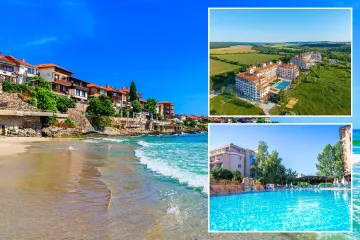
With an on-site disco bar, kids splash pool and a free shuttle to the nearest sandy beach, you can’t really go wrong with a break at this Costa Brava resort.
The Santa Susanna Resort Affiliated by Fergus has plenty of activities for kids to burn off their energy – plus relaxing spots for parents to unwind, too.
There’s a pool with a splash zone and water features, an action-packed kids club and evening discos that children will love – plus unlimited ice lollies.
And for the grown-ups, there’s two bars where you can grab an ice-cold beer or cocktail – one of which is by the pool.
Loveholidays offer a 7 night stay from August 18 including flights for £368pp with one child staying for free – and is currently £198 off.
Book a 7 night all inclusive stay at Santa Susanna Resort Affiliated by Fergus for £368pp.
Antalya, Turkey
The all inclusive Sun Star Beach has a massive outdoor pool with a waterslide, four lively bars, and its very own private beach.
When parents need a breather from baking in the Mediterranean sun, you can slip away to the on-site spa.
Here you’ll find a sauna, a traditional Turkish bath and soothing massage treatments – plus a gym if you want to squeeze in a workout.
There’s also a kids club and activities program, as well as sports on the beach like beach volleyball. water skiing and jet skiing.
Out and about, the vibrant bars, restaurants, and shops of Mahmutlar are right on your doorstep.
Loveholidays offer a 7 night stay from August 31 including flights for £469pp with one child staying for free. This break is currently £40 off, too.
Book a 7 night all inclusive stay at Sun Star Beach for £469pp
Agadir, Morocco
El Pueblo Tamlelt is a tropical-feel Moroccan resort with 11 acres of lush gardens, just steps away from the beach.
Plus it’s only 15 minutes from the airport, so you’ll be landed and on a lounger in no time.
Every modern room comes with a private balcony or terrace, and the all-inclusive deal keeps kids happy with an all-you-can-eat buffet and poolside snacks like pizza and burgers.
When you’re ready to explore, Agadir’s bustling centre is just a 10-minute taxi or bus ride away.
Wander the palm-lined promenade or head to the Agadir Oufella Ruins for spectacular mountaintop views over the city.
On the Beach offer a 7 night stay from August 19 including flights for £433pp with children 2 and under staying for free. This holiday is currently £166 off full price.
Book a 7 night all inclusive stay at El Pueblo Tamelt for £433pp
Crete, Greece
The Club Lyda Hotel in Gouves is a great value option for families looking for an affordable Greek island holiday.
This large, village-style resort sits within walking distance of local soft sand beaches and offers a budget-friendly all-inclusive package.
The hotel has a large outdoor swimming pool plus a kids pool, as well as plenty of loungers out on the terrace for sunbathing.
This resort caters to families with little ones, with a kids club, children’s swimming pool and activity program that runs all day long.
Meals are served buffet-style in the main restaurant, which cooks up a rotating mix of traditional Greek dishes and familiar favourites.
If you want to explore beyond the resort, The Dinosauria Park is just a 10-minutes away by car or taxi, plus there are three waterpark options within 20 minutes’ drive.
Loveholidays offer a 7 night stay from August 18 including flights for £489pp with one child staying free. This deal saves £97 off full-price, too.
Book a 7 night all inclusive stay at Club Lyda Hotel for £489pp
Bodrum, Turkey
The Tiana Beach Resort is a budget-friendly base in the glamorous resort of Bodrum, offering a luxurious-feeling family holiday for less.
Here there’s pretty garden paths that will lead you straight down to the sea, with a stretch of private beach with a range of water sports.
Back at the hotel, there’s a pool surrounded by plenty of sun loungers and parasols, plus sports like tennis and volleyball.
Plus the spa and sauna with treatments like massages is the cherry on top.
It’s about half an hour’s drive to the centre of Bodrum, where you can visit its massive castle or stroll along the glitzy marina and dip into bars and seafood restaurants.
On the Beach offer a 7 night stay from August 17 including flights for £518pp. This saves you £172 off full-price.
Book a 7 night all inclusive stay at Tiana Beach Resort for £518pp
*Prices correct at the time of publication.

How to get free tickets to the biggest family shows in the UK this summer
IF YOU are looking for activities to do this summer holiday, look no further as you can get free theatre tickets for kids.
London Theatre‘s Kids Week will return between July 20 and August 31 where kids can go for free – ideal for school summer holiday fun.


Any child aged 17 or under will go free to the theatre when accompanied by an adult who pays for a full price ticket.
Two additional children can then also attend for half price.
Shows include the new Beetlejuice from £40 for an adult and a child or the new Hunger Games production from £36.88 for an adult and child.
If you are more of a Disney family, you can head to The Lion King from £45 for an adult and child or experience Hercules from £50.16 for an adult and child.
Read more on travel inspo


There’s also the popular show Wicked, from £46 for an adult and child.
Cheaper shows include The Tiger Who Came To Tea, costing from £17.46 for an adult and child.
Or there’s The Gruffalo at The Lyric costing from £24.06 for an adult and child.
In total, there are 54 shows participating in Kids Week.
And it isn’t just the stage shows that will be fun to see, there will also be activities before and after some performances.
For example, there’s a dance workshop at the Paddington Bear Experience for three to eight-year-olds on August 18.
For slightly older kids aged between six and eight-year-olds, Hercules is hosting a singing and dancing workshop on July 23.
And nine to 17-year-olds can have a go at game creation at Monopoly Lifesized on August 25.

Why I love Britain’s first ever seaside resort
THE birthplace of the British seaside resort is celebrating 400 years
this summer – and it’s not where you might expect.
Scarborough is England‘s oldest coastal resort and it’s starting a summer of celebrations marking four centuries since its spa waters were found – so it was only right that I took a trip up to the North Yorkshire Coast.

It’s easy to see why tourists have been flocking to Scarborough for centuries and why it’s been nicknamed Scarbados, in a nod to the Caribbean island known for its lovely beaches and chilled-out vibe.
While the weather might not be quite as tropical as Barbados, there
are two beaches to choose from, a historic castle on the headland
between, popular parks offering lots of attractions and even one
Britain’s best waterparks, all within walking distance.
There’s something for everyone here, no matter what you enjoy about a day at the seaside, and it feels like you can have about five different days
out rolled into one.
I took on a spa-to-spa walk of about an hour, setting off near the
site of the original spring and spa in South Bay.


This is where it all started for the town as a coastal resort, when Thomasin Farrer spotted a natural spring in 1626 and discovered the waters were packed with minerals.
Soon, people were travelling from across the country to take
the waters and enjoy the sea air.
The spa building is now an entertainment venue where you can enjoy comedy, music and kids’ shows throughout the year.
It’s here that you’ll find the historic cliff lift, which celebrated its 150th anniversary last year.
And there’s also a striking glazed veranda with a black and white floor overlooking the North Sea.
Walking along the front, South Bay is home to many of the chippies
that won Scarborough the title of the fish and chip capital last year,
with almost 100 takeaways to choose from.
With wide golden sands, a big wheel, arcades aplenty and rides at Luna Park, you’ll want to head here if you love a bit of seaside hustle and bustle.
My favourite find was heading up to Scarborough Castle, which is
looked after by English Heritage and offers lovely views out over both
beaches and beyond.
It’s got a very special vibe, somehow managing to be at the heart of the town and feeling like a secluded secret spot at the same time.
Walking down to North Bay, which has a quieter vibe than its sister
sands to the south, and then around to Peasholm Park, this part of
Scarborough feels more like the beaches of my childhood.
If you love an aquarium, Scarborough North Bay Railway runs up to the pyramids that house the town’s Sea Life centre.
There’s lots to do in this green space, with the wooden pagodas at its entrance mirroring the oriental-inspired grounds within.
During the summer months, you can catch model boats recreating a naval battle on the lake at 3pm on Mondays, Thursdays and Saturdays.
Or take a ride on the park’s historic water chute that’s coming up to its centenary and catch a show at the open air theatre, with the likes of Alanis Morissette and Michael Buble performing this year.
I finished my scuttle around Scarbados with a trip to the spa at
Alpamare, the town’s waterpark that opened a decade ago and has
recently gone up for sale after being run by Yorkshire theme park
Flamingo Land for a couple of years.
I loved the sea view from the upstairs sauna and the warm outdoor pool
was a treat in the sunshine.
But a firm favourite was definitely chilling out in the hay bath, a unique stable-inspired sensory room lined with troughs of freshly cut hay and swinging beds hanging from the ceiling.
It’s the perfect place to while away a few hours – kids can take on
the flumes, wave pool and splash pad downstairs, while adults can head
up to the spa to enjoy steam rooms, relaxation spaces and a terrace
with open air showers and sunbeds.
This year is a great time to visit Scarborough as there’s free
festivals, a trail of 10 huge deckchairs at tourist spots across the
town and even some fabulous illuminations when the nights draw in to
mark the end of the year of celebrations.
So scoot over to Scarborough if you’re after a seaside treat of a town
that started the traditional trip to the coast beloved of Brits all
those years ago.
My favourite underrated European family holiday dupes for a BETTER time and less money

IF you’re looking to travel on the cheap this summer, we’ve got some of the best lesser-known destinations that offer the same (or better) holidays, with fewer crowds and much less money.
I’m a travel expert, mum of two and influencer with 335,000 followers on Instagram, where I share tips on my page @thetravelmum on how to travel the world without spending a fortune.
It’s totally possible to discover a more authentic experience, friendlier prices, and a slower pace that actually suits families far better in destination dupes.
And you don’t have to forgo the convenience and reassurance of things like budget-friendly flights, easy airport transfers, family-friendly dining options, and good quality healthcare.
I am on a mission to help families travel more and not spend too much doing it.
So I’ve rounded up some great options from across Europe, some of which are not many miles away from the very well-known resorts…
Instead of Santorini… try Naxos
Santorini is known for its picture postcard views, but it comes with high prices and crowds.
Hop on one of the regular ferries from Santorini (one hour 15 minutes) or Mykonos (35 minutes), and find yourself in Naxos.
Naxos still has all the charm and style of the better-known Cycladic islands – think white-washed hilltop villages, clear blue waters and traditional tavernas, but with lower cost accommodation, food and activities.
The other huge plus for families is that Naxos has stretches of sandy beaches gently sloping into the sea, which you won’t find in Santorini.
Staying here, I’d recommend checking into the Golden Sun Hotel.
I’ve stayed at this hotel myself, and it’s in a great setting right on the beach.
The rooms have large balconies, which are perfect for sitting out in the evening once the kids are in bed.
BOOK IT
*If you click on a link in this article, we will earn affiliate revenue.
A seven-night break for a family of four from August 11 in a Family Suite with a Sea View starts from £2,268 – or £81pppn.
You can get this deal on Booking.com.
Instead of the Algarve…try the Silver Coast
The Algarve region in Southern Portugal, with its popular resorts such as Albufeira and Vilamoura, attracts 5 million tourists annually.
Of course, most of which is concentrated in the peak summer months – sending prices skyrocketing during school holidays.
Instead, take a flight into the capital city of Lisbon or Porto, and within as little as an hour’s drive, base yourself on the Silver Coast – or Costa de Prata in Portuguese.
The region stretches along the country’s Western coastline, offering a varied mix of beautiful beaches, fresh seafood, picturesque fishing villages and medieval towns.
Places like Nazare, Obidos and Peniche offer a more local feel than some of the Algarve’s heavily developed resort areas, and it is a great choice for families wanting a more traditional Portuguese experience, without giving up beach days or reliable sunshine.
Perhaps check into the Ohai Nazare Outdoor Resort, which has a free waterpark and activities like basketball and volleyball for the kids.
There’s even a food shop service, as well as an on-site supermarket for essentials.
BOOK IT
*If you click on a link in this article, we will earn affiliate revenue.
A seven-night stay for a family of four from August 12 in one of the Bungalows which comes with a double bed and two single beds starts from £2,483 – or £88pppn.
You’ll find this deal here on Expedia.
Instead of Split… try Trogir
Croatia has firmly cemented itself as a great destination for families – it’s one of our favourite European countries to visit.
With its rise in popularity, flights are now widely available from many UK airports, but the downside is that tourist hotspots quickly become crowded.
Split, Croatia’s second-largest city, draws crowds wanting to experience its mix of beautiful beaches, historic streets and easy connections to other parts of the country.
But, just a 30-minute drive from Split, you can find Trogir – a UNESCO World Heritage town.
Trogir offers many of the same benefits as Split – beautiful Adriatic scenery, historic streets, waterfront restaurants and easy access to island boat trips, but in a much more manageable setting for families.
While Split can feel crowded, busy and expensive during the summer months, Trogir has a calmer atmosphere that makes travelling with children far less stressful.
Its compact old town is easy to explore on foot, the promenade feels more relaxed, and there’s less traffic and noise.
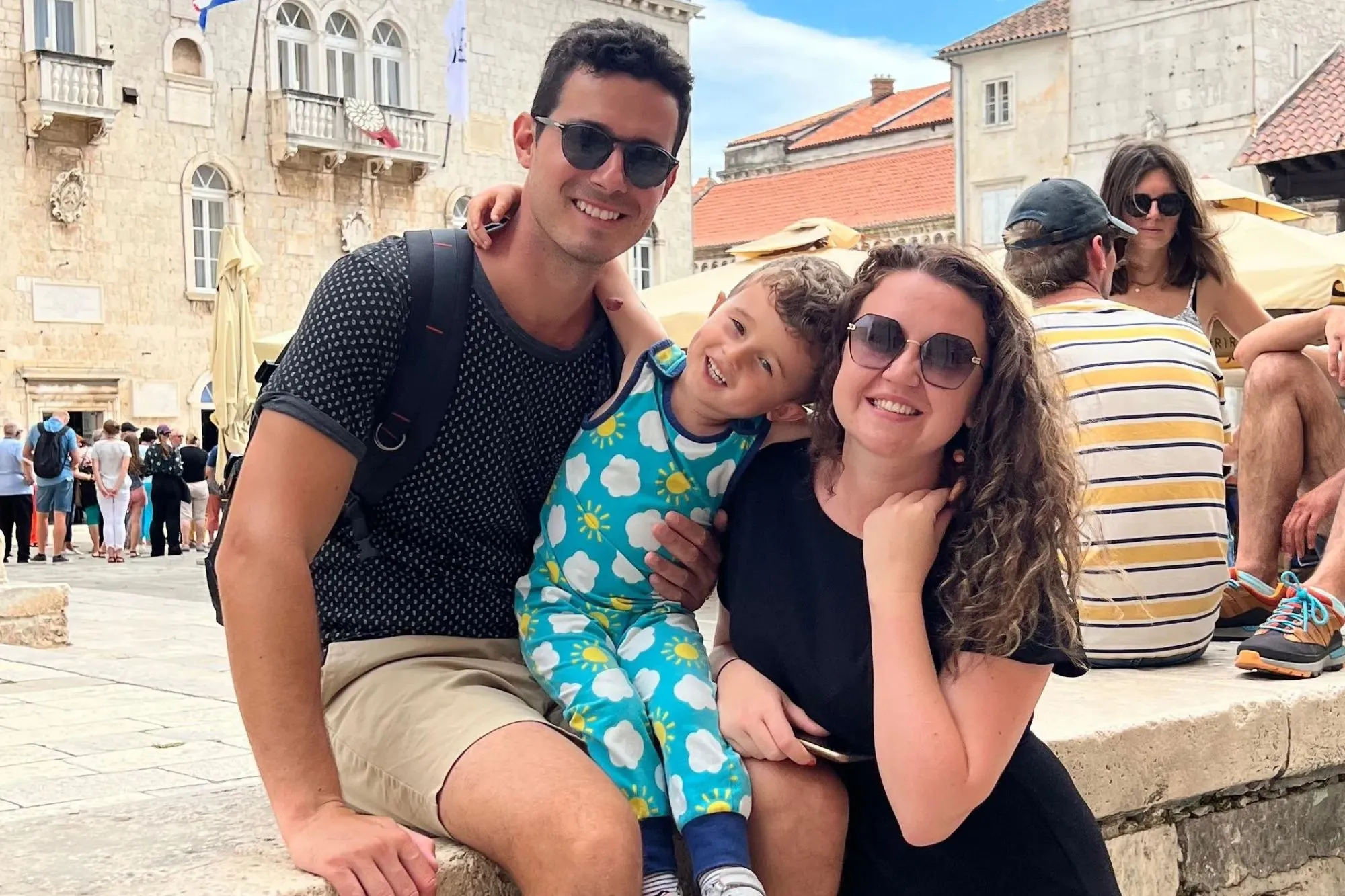
I’d recommend a stay at Amadria Park Camping Trogir, which has sea views, a huge swimming pool and three on-site restaurants.
This is another one I’ve stayed in, and I’d say don’t discount a lodge holiday, this site has fab facilities and is in a really pretty setting.
It has great transport links too.
BOOK IT
*If you click on a link in this article, we will earn affiliate revenue.
A seven-night stay in a Standard Mobile Home from August 27 for a family of four starts from £2,924 – or £104pppn.
This includes return flights from Birmingham Airport, luggage and transfers.
You can get this deal with Jet2Holidays.
Instead of Tenerife… try La Palma
The Canary Islands are a family go-to for year-round sun without the long-haul flight. When other European options can’t guarantee the weather, the Canaries are usually a safe bet.
This means there isn’t really a low season, and while demand is high, so are the prices.
So, admittedly, this one might take a little more effort to get to, but we think it could be worth it.
La Palma – nicknamed ‘La Isla Bonita’, is reachable directly from a few UK airports, and actually, as of 2026, you can now book a package holiday there through Jet2Holidays, or the alternative is a short 30-minute flight or a 2-and-a-half-hour ferry from Tenerife.
While Tenerife has huge resorts known for lively nightlife and giant waterparks, La Palma is quieter, greener and better suited to families looking for a more peaceful escape.
Check into La Palma Princess, which has all-inclusive packages with TUI.
The hotel itself has spacious rooms as well as six swimming pools for kids to splash about in, and there’s a kids’ club for little ones too.
BOOK IT
*If you click on a link in this article, we will earn affiliate revenue.
A seven-night stay at La Palma Princess for a family of four in August starts from £869pp or £124pppn.
This is for a Twin Room with balcony or terrace and includes return flights to Manchester Airport.
You can get this deal with TUI.
Instead of the Amalfi Coast… try Puglia
The Amalfi Coast is a bucket list destination for many, synonymous with luxury and romance, not necessarily things that go hand in hand with family travel.
That said, there are plenty of places along the Amalfi Coast that are great for families – but they’ll come at a premium price.
If you’re dreaming of la dolce vita but have children in tow and a more conservative budget, take a look at Puglia – along the southeastern coast. Puglia tends to be better value across the board, from accommodation to restaurants.
The region is easy to reach too, with flights from the UK into Bari or Brindisi, both offering straightforward transfers to coastal towns such as Otranto, Vieste, and Monopoli.
Instead of tight cliffside roads, families get open countryside, historic sites, and some of Italy’s best sandy beaches.
It’s not the same as the Amalfi Coast, but it still delivers on Italian beauty and culture, and you’ll have more space to enjoy it.
If you’re looking at where to stay, can you really go wrong with Eurocamp?
Centro Turistico San Nicola Eurocamp sits right on the seafront and even has a private beach for guests.
Steps away from the sand is a restaurant, bar and pizzeria – there’s also lots of activities, a big kids’ playground too and evening entertainment.
BOOK IT
*If you click on a link in this article, we will earn affiliate revenue.
A Comfort Lodge at the Eurocamp sleeps up to six people.
For a seven-night stay from August 28, this works out at £753 per party – or £18pppn.
You can book this deal with Eurocamp.
Instead of the Swiss Alps… try the Julian Alps
For families looking for an Alpine experience – be it for winter sports or an alternative summer break, instead of the high-cost, premier resorts across the Swiss Alps, we’d recommend considering Slovenia’s answer – the Julian Alps.
Still delivering on dramatic mountain scenery, crystal clear lakes and fresh Alpine air, you can take your pick of adventures – hikes, cycle trails, watersports and snow sports – depending on when you visit.
Take a flight from the UK to Ljubljana, Slovenia’s capital; from there, the towns of Bohinj or Bled both make great bases to explore.
Bled is known for Lake Bled, with its striking church and castle sitting on a tiny island. It’s also doable on public transport if you don’t fancy hiring a car.
Along with mountain views, Apartments Vitranc has family rooms with a separate sleeping and dining area as well as a kitchenette.
One major plus here is that children stay free – and don’t forget to check out the hotel pool.
We’ve got a Slovenia trip on our agenda for this year, and this place looks like it’s well placed to be a great base to explore this beautiful area, and it has a pool for the kids to enjoy too.
BOOK IT
*If you click on a link in this article, we will earn affiliate revenue.
A four-night stay from August 17 for a family of four at these apartments starts from £784 – or £49pppn.
This is for a one-bedroom apartment that has a balcony and a mountain view.
You can book this deal with Hotels.com.
Instead of Rome… try Verona
Italy’s capital, Rome, home to some of the world’s most famous sites and ancient ruins, is a tourist hotspot all year round.
The crowded attractions, their sprawling size and long queues, can make it tricky to navigate with younger travellers in tow.
Whereas in Verona you can still experience Roman history, meander across beautiful piazzas, take in the riverside views and enjoy the incredible Italian cuisine, without the intensity of the capital city.
Another great selling point of Verona is its accessibility, served by its own airport, or easily reachable from Milan or Venice, it opens up more options to snap up cheap flights, and even incorporate a couple of cities into one trip.
If staying in Verona, check Dimora Giardino di Giulietta, a family-run hotel with a pretty patio area and spacious family rooms.
BOOK IT
*If you click on a link in this article, we will earn affiliate revenue.
A four-night break for a family of four from August 18 in a Family Room at Dimora Giardino di Giulietta starts from £372 – or £23.25ppn.
You can book this deal on Booking.com.
Instead of Paris … try Lille
Fancy some French city culture without the crowds of Paris – then why not give Lille a go?
Not only is it reachable in just one hour and 20 minutes on the Eurostar from London, but its compact layout and fab public transport system make navigating, especially with a pushchair, much more manageable.
Known for its art and food scenes, there are plenty of fun, family-friendly attractions to fill a few days of slower-paced exploring, too.
Such as Cita-Parc, an amusement park with rides, or Lille Zoo, within walking distance from the city centre, which is home to over 400 animals, and entry is a very budget-friendly €6 (£5.19) for adults, €3 (£2.60) for children aged 5-17.
Wear kids out running around the huge Grand-Place square, before enjoying a stroll through the Vieux-Lille (old town) and stopping for a chocolat chaud and pastries.
Another added bonus is that dining and accommodation are much more affordable than in the capital, too.
This place is basic, yet a practical choice for visiting the city as it’s next to the station – and within walking distance of all the main sights.
Make sure to book a Prestige Room for a family of four.
BOOK IT
*If you click on a link in this article, we will earn affiliate revenue.
A four-night stay in a Prestige Room at the Rosa Hotel right in the city centre from August 11 starts from £369 – or £23pppn.
You can book this deal with Expedia.
Jen Carr, the family travel expert and founder of The Travel Mum, shares the best affordable holiday deals for families throughout the week – here.
Jen’s new book ‘Yes You Can Travel With Kids’ is available now on AMAZON.
*Price correct at time of publication.

Big Wowcher offer features stay at TV Chef’s UK spa hotel with 3-course meal and breakfast for £139

IF you’re into amazing food, glam hotels and total peace and quiet in the countryside, you’re in luck.
Wowcher have a deal offering a luxurious overnight stay for two at Marco Pierre White’s Country House Hotel, The Rudloe Arms, for only £139.
The offer saves you a massive 42% off a full-price stay and includes an overnight break for two, as well as a three-course dinner and a cooked breakfast in the morning.
Whether you’ve got an occasion coming up, want to treat someone special or just want to switch off in the countryside – this bargain break is the ultimate excuse to pack your bags.
The four-star Wiltshire hotel sits in the pretty village of Corsham near the Cotswolds, surrounded by rolling hills and forest with plenty of scenic woodland walks.
The Rudloe Arms is an adults-only property built for relaxation, with its own orchards, gardens and a pond for scenic strolls.


Inside you can sit down for a cocktail in the snazzy Mousehole Bar, plus the Garden Room Restaurant in which dinner is served is full of warm lighting and vibrant greenery.
When it comes to rooms, each is individually designed with a charming countryside feel.
Large beds are topped with plush bedding, plus an ensuite bathroom stocked with luxurious toiletries.
Plus you can dine like royalty with a three-course dinner menu curated by celebrity chef, Marco Pierre White.
The dinner menu is seasonal and uses many local, high-quality ingredients with tasty meat, fish and vegetarian options.
If you fancy extending your trip to a two-night stay, the deal gets even better because dinner is included on both evenings.
After a restful night’s sleep guests can head back down to the Garden Room for a hearty cooked breakfast to fuel your next day.
Breakfast comes as your pick of a hot dish served with toast, marmalade and tea or French-pressed coffee.
While it might be tempting to hide away in your luxury room all day, there is plenty to see right on your doorstep.
The hotel is perfectly positioned for exploring top sights in the West Country. You can easily wander into the market town of Corsham for its pretty stone buildings and traditional pubs.
If you want to venture a little further, you’re on the edge of the Cotswolds here, plus the famous architecture of Bath is within easy driving distance.
Deals this good rarely stick around for long. This offer is available until June 30, so make sure to get in early to bag your early summer break.
To redeem the deal simply select the dates you’d like to visit on Wowcher’s website. Once you’ve booked and paid you’ll receive a code by email.
Then simply redeem the code, pack your bags and enjoy your break!

Derek Chisora leads arrivals for Towie star Jake Hall’s funeral after tragic death aged 35 in Majorca during villa party

CELEBRITIES are turning up in droves for Jake Hall‘s funeral this afternoon.
Boxer Derek Chisora is among the celebrities arriving at Grade-I church St Mary the Virgin, in Wanstead, London, for the service.
Cops found the 35-year-old former reality show star in a pool of blood after he ran through a single-glazed glass door.
He was found dead at a Spanish holiday villa with head injuries after a night out partying on May 6.
Officers were called to the rented house in Santa Margalida in the north of the holiday island at around 7.30am.
Police quizzed four men and two women staying at the house.
They reportedly told officers that they had been out in the evening and continued partying after returning to the property in the early hours.
Authorities have not released the nationalities of the others who were at the property.
The Guardia Civil confirmed there was no “criminal activity”.
Hours before he died, he shared a last post on Instagram vowing to “remember the good things”.
Set to the Rolling Stones’ classic Beast of Burden, it showed him enjoying painting, Spanish scenery and fashion.
It was captioned: “Life is bollocks sometimes but I’m gonna try remember the good things – ️ looking through things – I’m just making art – in many forms.”
Footballer and model Jake leaves behind the mother of his child, Misse Beqiri, who he had an on-off relationship with since 2016.
The couple share a daughter, River, who was born in November 2017.
Misse posted an emotional tribute, writing: “There was no way you were ever supposed to go. My heart is shattered, and so is our daughter’s.
“You lit up every room you walked into – your smile, your charm, your energy filled the air.”
She then paid tribute to his love of music and creativity, as well as how many people really loved him.
Chloe Lewis also posted a tribute to her “first love” at the time of his death,
Chloe, who began a 10 year relationship with Jake when she was 16, shared a collection of photos on Instagram from their time together and wrote heartbreaking words that moved celeb pals including Michelle Keegan and Ferne McCann.
“My first love, my childhood sweetheart,” began Chloe. “A love that taught me so much about life and myself, and even more so now your presence is no longer here.”
In their early 20s Towie turned them into stars, but fame had a detrimental impact on their relationship.
Chloe said neither of them wanted to be in the public eye and the pressures of the show put a strain on their romance.
Leading tributes to the star at the time of his death was legendary DJ Fat Tony, who shared an image of the star and captioned it: “Devastating news we Love you such an awful loss to the world you beautiful man x.”
Blue’s Antony Costa wrote: “So sad, what a lovely bloke you were mate R.I.P.”
Love Island’s Jack Fincham wrote on a picture of the pair posted on Instagram: “Cannot believe what I have just read. Condolences to Jake’s family a very sad day. Rest in perfect peace mate.”
Jake first shot to fame on The Only Way Is Essex in 2015, where he famously dated Chloe Lewis before quitting the show in 2024.
House Democrats ask new ICE director to roll back policy on visits
WASHINGTON — Dozens of House Democrats are asking the new director of Immigration and Customs Enforcement to roll back a policy that they say hinders their ability to speak with detainees during oversight visits.
The new policy requires that lawmakers identify detainees by name at least two business days before a visit and provide a signed consent form from each detainee. It’s the latest point of conflict in an ongoing battle over when and how lawmakers can inspect immigration facilities.
In a letter Thursday to acting ICE Director David Venturella, Rep. Mike Levin (D-San Juan Capistrano) and 77 other members of Congress, including two dozen from California, argued that they need to conduct constant oversight of immigration facilities because of historic levels of reports regarding the mistreatment of detainees, deaths in custody and substandard facility conditions.
“This Administration has enabled a revolving door of arbitrary policies, directives, and guidance on member access to facilities or on communication with detainees designed to hinder any productive oversight,” they wrote.
The letter was written in response to the new policy, which was outlined in a memo last month.
In the letter, Levin and the other members wrote that detainees have a hard time accessing the visitation form because it is at times unavailable at a detention center’s law library. They said it limits their ability to speak broadly with detainees, particularly those from vulnerable populations, such as the elderly.
Detainees previously used a sign-up sheet to meet with members of Congress or just started talking to detainees they encountered during facility tours.
In the memo outlining ICE’s new policy, then-acting director Todd Lyons said the increased visits by members of Congress have become a burden and a time suck. Homeland Security didn’t immediately reply to a request for comment, but previously said that the policy doesn’t prevent lawmakers from speaking with detainees.
Levin said the increase in visits was necessary because the agency slashed staffing of its oversight offices. The letter notes that for next fiscal year, the president requested additional cuts to the Homeland Security Office of Inspector General.
“These actions, coupled with the constant changes to policies surrounding member access to facilities, reveal a clear attack on the levers that ensure government transparency at every level,” the members wrote.
Democratic House members sued the Trump administration last July after they were repeatedly denied access to immigrant detention facilities in California and across the country.
Homeland Security officials previously implemented a policy requiring lawmakers to give seven days’ notice before a visit, but that policy was temporarily blocked in federal court.
This week, lawyers said a Belizean man who helped organize hunger strikes at the Adelanto ICE Processing Center was moved to facilities out of state and scheduled to be deported after he spoke to three members of Congress about conditions at the detention center in San Bernardino County.
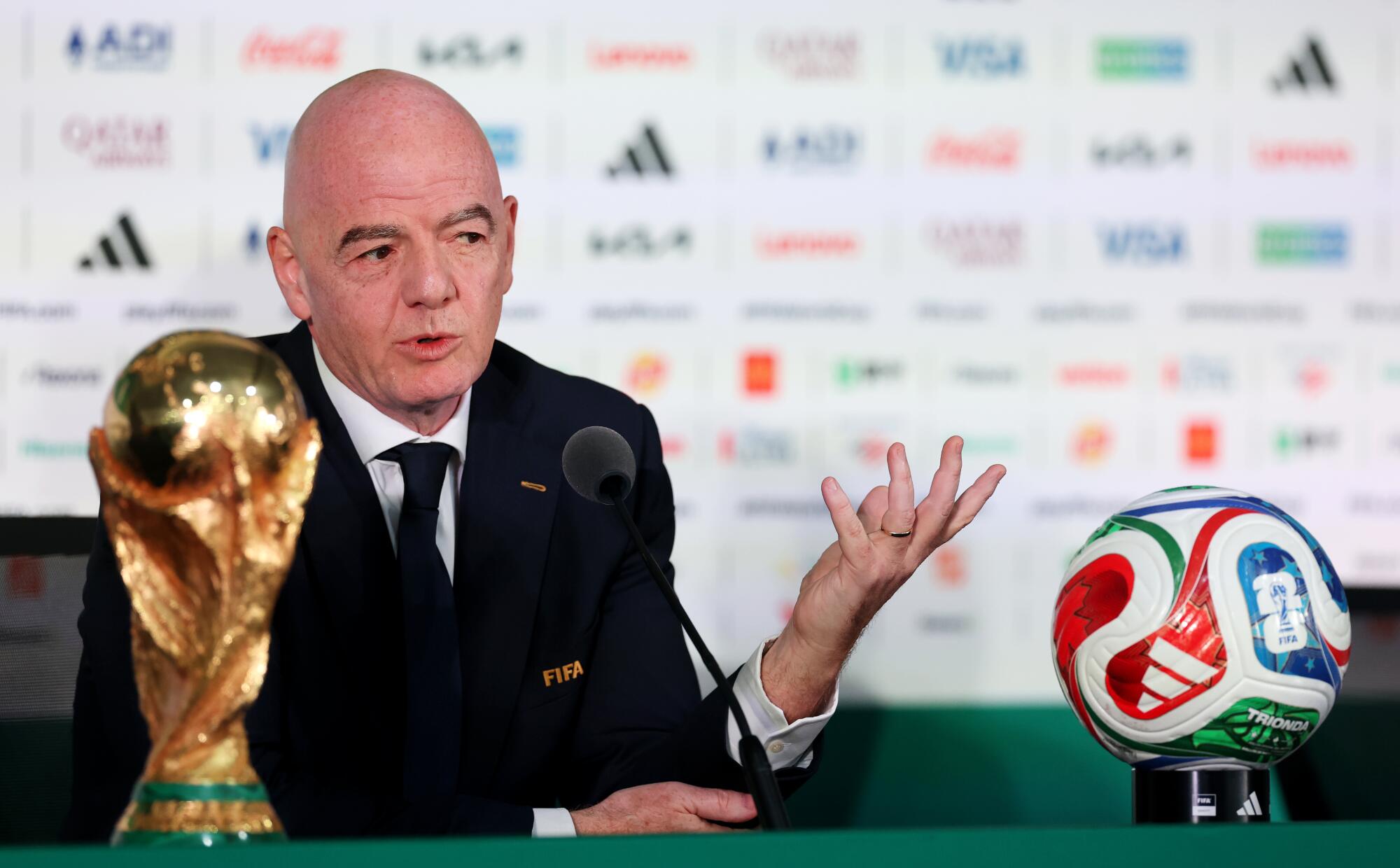
U.S. opens World Cup with hope soccer brings joy, eclipses angst
In many ways, the most ambitious World Cup in history — which kicked off Thursday in Mexico City — has inspired more angst than anticipation, more fear than fervor.
The competition, returning to North America for the first time in more than three decades, has expanded to 48 teams and 104 matches, to be played over 39 days in 16 cities in the U.S., Mexico and Canada. The complex planning was eight years in the making.
Yet even before the competition opened with Mexico facing South Africa at the iconic Estadio Azteca, it has been marred by a number of controversies that threaten to overshadow the soccer and cloud the tournament’s legacy.
“I view this World Cup as the most politically combustible World Cup in recent history. And that’s saying something,” said Jules Boykoff, a political science professor at the University of Portland and author of eight books on the politics of international sport.
“We’re in uncharted territory in many ways.”
Relations between the host countries, once strong, have been strained by the Trump administration’s tariff policies and disagreements over border security. Travel bans have barred potential World Cup visitors — and even support staff and match officials — from entering the U.S. and others are fearful of making the trip, worried about ICE raids and immigration roundups.
The U.S. is at war with a tournament qualifier, Iran. And Iran has fired missiles and drones on Jordan, Qatar and Saudi Arabia, nations that also are World Cup participants.
The International Sports Press Assn. said Iranian and African journalists have been denied visas to cover games in the U.S., and Iran protested after more than a dozen members of its support staff had their requests to enter the U.S. rejected. The Iranians, who were forced to move their training base from Tucson to Tijuana, will spend limited time in the U.S. during group-play games that will take place in Inglewood and Seattle.
Players and journalists from Senegal, Uzbekistan and Iraq have been detained at U.S. airports for up to seven hours by immigration officials. Then on Monday, Omar Artan, a decorated referee and the first Somali official selected to work a World Cup, was turned away at Miami International Airport.
In addition, ticket prices have been so high and the lottery process for obtaining them so opaque, the attorneys general of New York and New Jersey have begun formal investigations into FIFA practices. Other states, including California, hosting tournament matches have begun asking questions as well.
All that has conspired to produce a World Cup that is struggling to catch on with the public. According to a recent poll by Yougov.com, a majority of Americans — 54% — say they are not at all interested in the tournament and nearly six in 10 say they will not watch any matches.
“People are just in a bad mood,” Boykoff said. “It’s a tough time.”
FIFA president Gianni Infantino remains optimistic, promising this will be “the biggest, the most inclusive, the greatest FIFA World Cup ever.” He made the same claim about the 2022 World Cup in Qatar and the 2018 tournament in Russia.

FIFA president Gianni Infantino speaks during a news conference on Wednesday before the start of the World Cup.
(Carl Recine / Getty Images)
“The World Cup should be understood as both a global sporting celebration and a major commercial enterprise, with these two dimensions being mutually enforcing rather than contradictory,” said Steve Georgakis, a lecturer on sports studies at the University of Sydney and a frequent author on soccer.
This year’s tournament is projected to swell FIFA’s coffers by nearly $9 billion and the TV ratings, it says, will be massive.
“Its universal appeal combined with the participation of 48 nations ensures that it remains a genuinely global sporting event,” Georgakis said.
Boykoff has his doubts.
“In this particular political moment, with the Trump administration being erratic and impulsive and needing a win from this tournament and the fact there’s so many moving parts geopolitically, I don’t have confidence that it’s just going to end up being a soccer-focused next five weeks,” he said.
This is not the first World Cup to kick off under some kind of black cloud.
The 1974 tournament in West Germany was tarred by the geopolitical fallout of the 1973 Yom Kippur War. Four years later Argentina’s military dictatorship used the World Cup to sportswash a “Dirty War” in which as many as 30,000 people were tortured, murdered and disappeared.
The 2010 and 2014 World Cups were troubled by cost overruns and delays in the construction of stadiums and other infrastructure and the threat of labor unrest while global outrage over human rights violations and discrimination against women and LGBTQ people hung over the last two tournaments.
Those issues never fully disappeared but were overshadowed by the brilliance of the soccer. Jonathan Wilson, a columnist with the Guardian and author of “The Power and the Glory: The History of the World Cup,” expects the same this summer.
“The other stuff will still be there in the background,” he said, “but fundamentally the football will, for the vast majority of people, take over. It’s just sort of a natural cycle.”

Argentina star Lionel Messi controls the ball during an international friendly against Iceland on Tuesday.
(Butch Dill / Associated Press)
And as with every World Cup, there undoubtedly will be unforgettable moments.
Argentina’s Lionel Messi and Portugal’s Cristiano Ronaldo, the top scorers in soccer history, will be playing in their sixth and final World Cups — Messi chasing a second straight title and Ronaldo pursuing the only prize that has eluded him.
Kylian Mbabbe will be trying to take France to a third consecutive final while young superstars like Erling Haaland of Norway and Lamine Yamal of Spain will be looking to put their mark on their first World Cups.
Four teams — Jordan, Curacao, Cape Verde and Uzbekistan — have qualified for the tournament for the first time.
And there will be other storylines no one saw coming, all of which will contribute to the narrative of this World Cup.
“Major sporting events have a way of capturing public attention and shifting the conversation toward what is happening on the field rather than off it,” Georgakis said.
How much the actions of the Trump administration affect that calculation remains to be seen.
There are travel restrictions in place that fully or partially bar citizens from 39 countries — including a number of World Cup participants — from entering the U.S. And the administration has said ICE and Homeland Security personnel will have a visible presence at World Cup venues, including SoFi Stadium in Inglewood, where the American team will begin play Friday.
“There will be federal agents,” confirmed L.A. County Sheriff Robert Luna, who added that he could not guarantee immigration sweeps would not take place. “ They told us that specifically would not be occurring,” he said. “Any of that’s subject to change.”

Mexico fans celebrate during a watch party at Plaza Mexico in Lynwood on Thursday.
(Kayla Bartkowski / Los Angeles Times)
The difficulty in obtaining visas and the fear of being rounded up by immigration agents are being blamed, in part, for less-than-expected tourist traffic. Hotel operators in all 11 World Cup host cities say bookings for the tournament are well below projections. Several countries have issued warnings about travel to the U.S.
Then there are the own goals from FIFA over tickets and parking prices as high as $900 at some stadiums, weather issues and a short-lived ban on water bottles.
FIFA has defended its policies on ticket prices by arguing that premiums are necessary to maximize revenue, which it will invest in global soccer development. Variable, market-based pricing, it said, simply reflects standard entertainment practices in North America. The organization did, however, reverse its ban on fans bringing bottles into games. Spectators are now allowed to enter stadiums with one soft, plastic 20-ounce water bottle.
And despite a warning from climate scientists that one in four World Cup games could be played in dangerously hot conditions, FIFA will start 40 of them at 3 p.m. or earlier local time, the warmest time of day, to accommodate European TV viewers.
Georgakis said the play on the field will have to overcome all those issues if this World Cup is to earn a favorable place in history.
“Ultimately the success of the World Cup will be judged by what happens on the field,” he said. “If the football is compelling, dramatic and memorable, the tournament will likely be remembered as a great World Cup. If the play falls short, then the off-field issues such as ticket prices, extreme heat, ICE enforcement activities, the Trump administration will receive great attention and could shape perceptions of the event.”

Tehran dismisses announcement of U.S.-Iran peace deal as ‘speculation’

June 12 (UPI) — Iran said it had yet to make a final decision on an agreement with the United States to end the war, despite U.S. President Donald Trump saying it was a done deal that could be signed as early as this weekend.
Speaking on Thursday night, Iranian Foreign Ministry spokesman Esmaeil Baqaei said Tehran was reviewing a proposal brokered by Qatar and Pakistan but dismissed reports agreement had been reached as “speculation,” adding that “nothing has been finalized.”
“So far, Iran has not reached a final conclusion on the agreement. Whenever we reach a conclusion that the text of the [memorandum of] understanding is in the interest of the Iranian nation, we will announce it.
“The status of negotiations was clear to us from the beginning and a major part of the text had been finalized, but the Americans kept changing their positions,” said Baqaei who stressed Iran would never retreat from or compromise “on what it defines as its red lines.”
Baqaei’s comments came hours after Trump called off planned large-scale strikes against Iran, including Kharg Island, from which 90% of Iran’s crude oil exports are shipped, saying the Iranian leadership, and other regional powers, had approved “final points” of a deal to end the war.
“Based on the fact that discussions with the Islamic Republic of Iran have been brought to the highest level of Iranian leadership and approved, I have, as President of the United States of America, cancelled the scheduled strikes and bombings against Iran this evening,” Trump said Thursday afternoon.
Trump later said the deal was “subject to finalization of documents, which should get done, over the next few days” and that there would “probably” be a signing ceremony, with Europe the most likely location.
The status of the Strait of Hormuz was also in contention with an announcement by U.S. Central Command that the key shipping route was not controlled by Iran and was “open for transit” to all vessels not in breach of the U.S. blockade of Iran, contradicted by Baqaei.
“The Strait of Hormuz remains closed due to illegal U.S. actions,” he said.
Trump has stated an agreement to end the fighting was imminent on multiple occasions since a cease-fire, originally for two weeks, came into force on April 28.
The deal being negotiated is a memorandum of understanding extending the cease-fire for 60 days to allow larger negotiations on the main issues, including Iran’s stockpile of enriched uranium and its nuclear program.
Oil prices reacted strongly to the developments overnight with both Brent crude, the international benchmark, and West Texas Intermediate, falling sharply in the global market. The Brent contract for August delivery was down $3.83 a barrel at $86.54 in mid-morning trade in London on Friday while American crude for July delivery was changing hands at $83.88 a barrel, down $3.83.
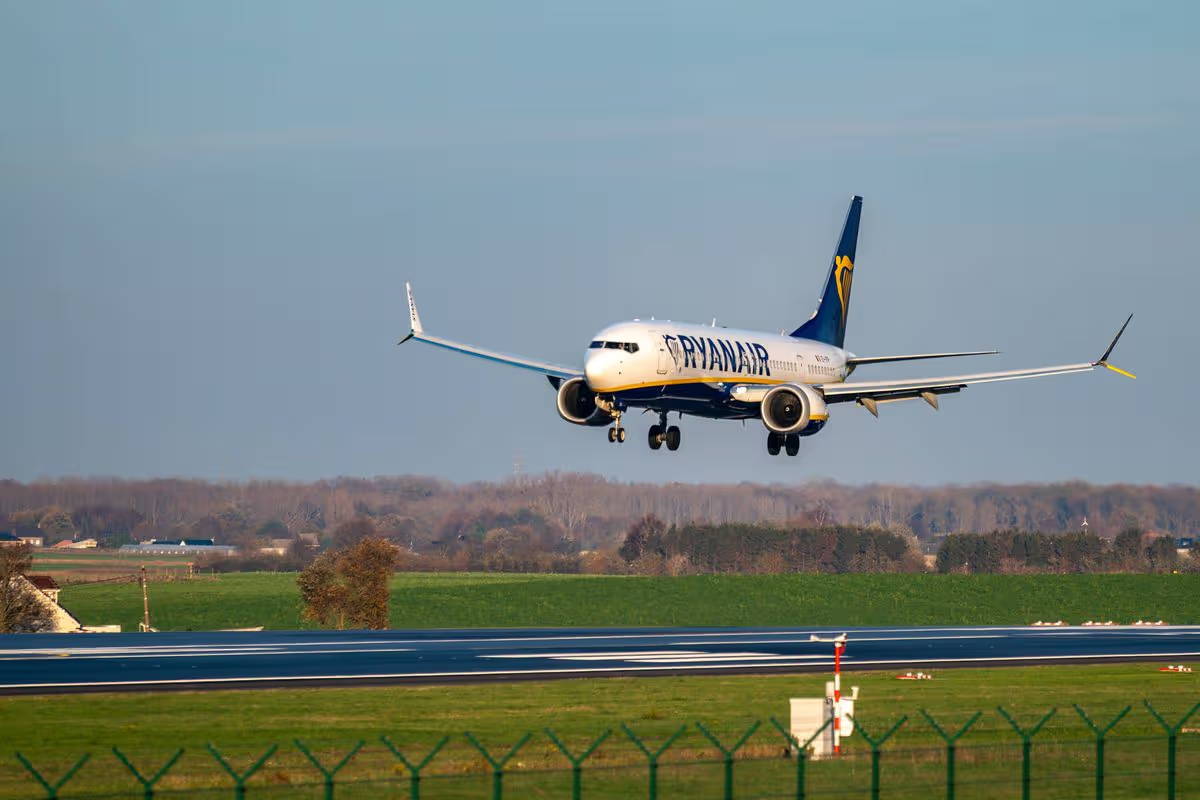
Major Ryanair change could impact millions of passengers
Ryanair is threatening to withdraw five aircraft and cancel 20 routes

The move could happen as early as this winter(Image: Michael Mulkens via Getty Images)
A major Ryanair move could impact millions of passengers, with 20 routes axed and around 150 jobs lost.
The budget airline could withdraw planes from its Charleroi base as soon as this winter if Belgium goes ahead with plans to double its tax on airline tickets. “But we are not going to completely close the Charleroi base,” said Ryanair CEO Michael O’Leary during a press visit to the company’s headquarters in Dublin. The federal government is looking to double the airfare tax on flights exceeding 500 kilometres from next year, pushing it up from 5 to 10 euros.
This would bring the levy in line with that applied to short-haul flights, although the tax on these is also set to rise to 11 euros. Finance Minister Jan Jambon made clear this week that he has no plans to reverse the decision.
As a result, Ryanair would remove five of its 19 aircraft currently operating out of Charleroi from this winter. Twenty routes would be scrapped, 15 at Charleroi and five at Zaventem representing a loss of two million passengers per year, Mr O’Leary confirmed.
Ryanair warns that scaling back its Charleroi operations would also put approximately 150 jobs at risk, though affected pilots and cabin crew, many of whom are foreign nationals, would be offered positions at alternative bases. However, “we want to grow in Belgium,” Mr O’Leary said.
“Ryanair aims to increase passenger numbers from 208 million in 2025 to 300 million in the coming years. We want to achieve some of this growth at Charleroi and Zaventem, but for that to happen, the tax on airline tickets must be eliminated, and airport fees must be reduced.”
According to Ryanair’s chief executive, if the tax on airline tickets is not raised, no aircraft will be withdrawn from Charleroi Airport and the situation will remain unchanged. Should the tax be scrapped entirely, it would open the door to further expansion across Belgium.
Ryanair has put forward a growth strategy projecting almost 50% more passengers in Belgium by 2030, pushing the total to 16 million. The Irish carrier would then reopen its base at Brussels Airport, a hub it continues to operate from but where it no longer stations any aircraft, and would even weigh up flights to and from Liège.
This ambitious expansion plan will only come to fruition, however, if all of Ryanair’s demands are met, most notably a loosening of restrictions on night flights in Brussels. On the flip side, any hike in the airline ticket tax would result in a scaling back of operations.
The closure of the Charleroi base isn’t under consideration, though. “Normally, we would never close Charleroi,” said O’Leary. “We’re not going to threaten to close Charleroi. It’s one of our largest bases, and we’ve invested a lot of time and effort in developing this airport over the last thirty years. But in the long term, we could reduce the base to, say, 10 aircraft.”
O’Leary also touched on the soaring cost of aviation fuel, a result of the conflict in the Middle East. The airline has locked in 80% of its fuel requirements until next March at an average cost of $67 per barrel, while the current rate stands at $100 or above.
“We aren’t hedging for the following period yet, as we anticipate prices falling in the coming months. But we could be wrong. If prices haven’t fallen by September, we’ll start to worry.”
With consumer uncertainty prevailing, O’Leary doesn’t expect any fare rises this summer. “Fares should remain stable. We need to incentivise people to travel by offering slightly lower prices” than the 3% to 5% increase that had been forecast.

Airports’ four-letter code you won’t want to see on your boarding pass
One code can mean it takes longer to get through security. Here’s the code many travellers dread seeing on their boarding pass and what it means for their flight if they get it

Getting through security may take longer(Image: Getty)
Navigating the airport can be an exhausting ordeal. In an ideal world, we’d sail through the security queue to give ourselves time to browse the perfumed duty free outlets or enjoy a relaxed coffee, but there are many bottlenecks where you can find yourself delayed.
One indication that your journey through the airport might not run as smoothly as you’d hope can be identified once your boarding pass has been printed. Check-in personnel will often add codes to your ticket alerting airport staff to watch for particular things, and there’s one code travellers really won’t want to encounter if they’re jetting off to the World Cup.
Those flying to or from the United States may notice SSSS on their boarding pass, which stands for Secondary Security Screening Selection or Secondary Security Screening Selectee. Essentially, this code indicates you’ve been chosen for extra inspection, and this can be for a wide range of reasons.
Certain airlines won’t print SSSS, but may have their own method of flagging that a passenger requires additional screening. For instance, Southwest Airlines reportedly uses a chequerboard pattern which appears on boarding passes.
Citizens of particular countries, such as those with sanctions or political tensions with the USA, may be more likely to encounter SSSS on their boarding pass. But the Transportation Security Administration (TSA) remains tight-lipped about the precise criteria that could see your name flagged in this manner, reports the Express.
The ACLU (American Civil Liberties Union) has previously claimed that “TSA maintains a “Selectee List” (sometimes called the “Automatic Selectee List”) of people who are automatically and intentionally selected for enhanced screening every time they fly.”
However, there are other factors that could see passengers flagged for additional screening, including making one-way bookings and purchasing tickets with cash. Travellers who have previously passed through high-risk countries, regularly visit ‘unusual’ destinations, or display other flight patterns deemed suspicious may also find themselves subjected to extra screening.
Having a name similar to someone on a Department of Homeland Security watch list could be yet another reason you end up with additional security checks, and could even result in you being denied boarding. Passengers who are repeatedly flagged for extra screening can apply for the DHS Traveler Redress Inquiry Program (DHS TRIP), and if approved they’ll receive a Redress Control Number to use when booking flights, which should make their travels considerably smoother.
If you do spot SSSS or a similar code on your boarding pass, there’s no need to panic. More often than not, it simply means you’ll require some additional time to clear security.
Typically this involves an enhanced pat-down, a manual inspection of carry-on bags, and possibly the use of a handheld metal detector as you pass through the security lane. Travellers should make sure they adhere to their airline’s advice on when to arrive at the airport, as this will guarantee they have sufficient time to clear any additional security checks.
In the USA, the TSA advises arriving a minimum of two hours before domestic flights and three hours ahead of international departures.
Have a story you want to share? Email us at webtravel@reachplc.com

The bizarre rule that could see you stranded last-minute on your Greek island holiday this summer
YOU’D expect delays at an airport this summer because of EES checks or bad weather, but what about turtles?
On the island of Zante in Greece, the conservation of its loggerhead turtles has seen passengers ‘stranded’ due to a night-time flight ban .

The summer months in Zante are the most important for the island’s loggerhead turtles which are also called ‘Caretta caretta’.
The turtles nest on the beaches between May and August during the night.
But this can be easily disrupted if there are loud noises and lights from aircraft nearby.
So to safeguard the turtles, a night-time flight ban is in place between 10PM and 5AM.


While this is great for nature, it can mean some passengers can find their travel plans disrupted.
The woman found that when her flight was suddenly cancelled late at night, she had to wait until the following morning for it to be rescheduled.
She previously said on TikTok: “Basically, my flight home was meant to be at 10pm, and at five to 10 I knew we’d be delayed as we weren’t boarding the flight.
“But at literally five to 10 they announced on the speaker ‘sorry everyone, flight has been delayed until tomorrow.”
She added: “Basically, pretty much everything at Zante Airport shuts at 10pm. So if you have booked a really late flight and it gets delayed for whatever reason, past 10pm, they will just delay you to the next day.”
Her journey home was delayed all-in-all for 24 hours.
It’s well known by airlines and Skyscanner even has a warning on its website about the restriction.
It says: “Do take note that during the summer, flight operations are purposefully paused between 10 PM and 5 AM to safeguard the sea turtles nesting near Kalamaki beach, ensuring minimal disruption to nature while maintaining an efficient travel experience for you.”
The restriction isn’t new and was first brought in during the early 1990s to safeguard loggerhead sea turtles.
The turtles are strictly protected under EU law and the species is considered ‘vulnerable’ across the world.
Zante is an important place for the animals as 80 per cent of loggerhead sea turtles in the Mediterranean nest on the island.
For visitors who head to Zante, they’ll find that aside from its famous Shipwreck Beach, one of the other most popular attractions is seeing the loggerhead turtles.
Your best chance of seeing them is by heading to the Marine Park and going on a diving excursion.
Laganas Bay is a prime spot for turtle-spotting as many of them nest on its shores.
They’re easily seen in the waters too because it’s so shallow.

easyJet reveals the cheapest day to fly and how to find ‘bargain flights’
Passengers wanting to fly with easyJet could get some pretty cheap deals

Passengers flying with easyJet can use their helpful tool to secure the best deals(Image: Getty)
Booking flights can be expensive, with many people clicking on random days of the week to find the best deal. But did you know two days of the week are likely to be better than the rest?
Travel experts at easyJet say that while the ‘cheapest day to fly’ often depends on factors like destination and flight availability, there are two days of the week you really want to look out for. The airline says: “The cheapest day of the week to fly can vary depending on the destination, flights available, and time of year.
“However, we’d recommend being flexible with your dates and considering flying outside of peak weekend flight times. By booking to fly on Wednesday or Thursday rather than Friday, you can find bargain flights (and get more time at your destination!).”
What is the cheapest month to fly in?
The low-cost airline also noted that the start and end of the year are key periods to look for if you want a trip that won’t break the bank. It adds: “The cheapest month to fly often depends on the destination and the type of trip you’re planning.
“For traditional warm-weather destinations in Spain or Italy, you can often find the cheapest plane tickets in the winter months of January and February. If you’re booking a trip to the mountains or traditional winter destinations like Finland, you’ll often find cheaper flights in November or March.”
As one of the world’s largest airlines, it operates a fleet of 355 aircraft, connecting 164 airports in 38 countries through 1,207 routes. While booking flights during these specific days and months is not a guarantee of the best deal, it urges people to use its Low Fare Finder when searching for the cheapest flight dates to secure the best deals.
Mum blocked from easyJet flight and left £700 out of pocket
In other easyJet news, a mother was prevented from boarding an easyJet flight with her family and lost £700 after being caught out by a crucial passport rule.
Bolaji Omisade was looking forward to a family trip to Greece and arrived at London Gatwick Airport with her husband and three sons. However, after checking in at the airport, easyJet staff informed her that she was not permitted to board the flight.
Confused by the situation, she was informed at check-in that, although her passport had not yet expired, it was no longer valid for travel due to passport regulations. You can read the full story here to make sure that you don’t fall foul of the same rule.
The Spanish city where you can get five-star stays for under £40pp & it’s 37C next week
IF you’re looking for five-star stays on the cheap, check out Zaragoza in northeastern Spain.
The city has rooms in luxury hotels for as little as £79 per night for two people, as well as a thriving tapas scene – and it’s going to be very hot next week.
The Hotel Price Index from Hotels.com found that Zaragoza is the cheapest destination for five-star hotels in the whole of Europe.
The report revealed that you can stay in luxe rooms for an average price of £120 – but Sun Travel has found five-star stays for under £80 per night.
The first is Reina Petronila which is a short walk to the city centre and plenty to do at the hotel itself.
It has a long indoor pool, spa with a sauna, gym, bar and on-site restaurant.


In the morning there’s a buffet breakfast which one guest described it as the “best part” of their stay.
Rooms range from single to Junior Studio Suite which sleeps up to two but has a self-contained dining and kitchenette.
Visitors have described it as “beautiful” another called it “value for money“.
You can book a one-night stay in the Reina Petronila from £79 per night (or £39.50pppn).
Hotel Palafox is another five-star hotel found in the Old Town, it’s very near the train station too so it’s in a prime location for visitors.
On-site there’s an Aragonia restaurant which serves up local dishes as well as a sauna, gym and pretty terrace.
The gem of the hotel is the seasonal outside pool surrounded by sun umbrellas and parasols.
Rooms range from singles to grand suites and start from £81 per night (or £40.50pppn).
After a restful night, there’s plenty to do in Zaragoza which sits on the banks of the Ebro River.
And if you fancy a visit soon, the city is set to reach highs of 37C next week.
For tapas, head to El Tubo which has maze-like and narrow streets filled with restaurants.
The small dishes are generally served from 1-4pm and 8pm-midnight.
Some tapas specialities here include Ternasco de Aragón (lamb), migas (fried breadcrumbs), and borraja which is local wild greens.
It’s also a prime bar-hopping spot during the evenings.
If anyone is heading there as a family, there’s lots to keep children entertained like the aquarium and the Emoz origami museum is filled with tiny paper treasures.
The city has some impressive buildings, some of which are Basilica de Nuestra Senora del Pilar and Palacio de la Aljaferia.
Further afield, visitors can take a day trip to the Monasterio de Piedra which is a national park that has lots of pretty waterfalls.
Brits can fly directly from London Stansted to Zaragoza from £18 with Ryanair in June.
Here are the cheapest five-star stays abroad…

These are the destinations where you’ll find the cheapest five-star hotels from Hotels.com…
- Nha Trang, Vietnam (£70)
- Zaragoza, Spain (£120)
- Wrocław, Poland (£120)
- Tirana, Albania (£130)
- Riga, Latvia (£130)
- Zagreb, Croatia (£130)
- Sofia, Bulgaria (£135)
- Heraklion (Crete), Greece (£135)
- Tallinn, Estonia (£140)
- Santo Domingo, Dominican Republic (£140)