



Saudi Arabia cancels 2026 ‘Davos in the Desert’ amid Houthi attacks | Business and Economy News
Riyadh postpones flagship investment conference until 2027, orders government staff to work from home.
Published On 20 Oct 2026
Saudi Arabia’s Future Investment Initiative (FII) conference has been postponed until next year, according to a statement on the official website, as deadly strikes by the Iran-backed Houthis against the kingdom continue.
The annual event was due to start next week on October 26 and run through October 29, with a date next year to be announced “very soon”, the statement released on Tuesday said.
Recommended Stories
list of 3 itemsend of list
FII Institute chief executive officer Dr Maha Bint Mishari Al Saud said the decision “comes from a deep commitment to our partners, members, speakers and delegates”.
“Because this is our landmark tenth edition, we want to ensure it delivers the full scale, extraordinary quality, and unforgettable impact that our community has come to expect and truly deserves,” she said.
Informally dubbed “Davos in the Desert”, a nod to the World Economic Forum’s annual meeting in Switzerland, the state-backed conference showcases the kingdom’s ambitious investment plans in a bid to attract billions of dollars needed to fund its economic transformation away from hydrocarbons towards tourism, sport and technology.
Expected speakers included: Alphabet & Google’s president and chief information officer, Ruth Porat; Goldman Sachs Group chairman and CEO David Solomon; and BlackRock chairman and CEO Laurence Fink, according to the FII website.
![Smoke and flames rise from King Khalid Airport, after Yemen's Iran-backed Houthis said they attacked the airport, in Riyadh, Saudi Arabia, October 8, 2026, in this screengrab obtained from a social media video [Reuters]](https://i0.wp.com/www.aljazeera.com/wp-content/uploads/2026/10/2026-10-12T233040Z_1811944814_RC231OANP5EH_RTRMADP_3_IRAN-CRISIS-SAUDI-YEMEN-WARNINGS-1792451959.jpg?w=640&ssl=1)
Fighting between a Saudi-led coalition supporting Yemen’s internationally recognised government and the Iran-aligned Houthis has escalated in recent weeks.
The Houthis, also known as Ansar Allah, have hit military, energy and civilian infrastructure across Saudi Arabia, including Riyadh’s international airport, killing at least 18 people and injuring hundreds more.
Government staff to work from home
Government agencies in the Saudi capital, Riyadh, have told employees to work from home, one worker and two consultants told the AFP news agency, as the city comes under repeated attack from the Houthis.
The Kingdom Centre, a 99‑storey tower in downtown Riyadh that houses the International Monetary Fund’s regional office, also requested workers stay away until further notice.
On Sunday, an employee of a government agency in the capital received a message saying, “It has been decided to implement remote work from Monday to Thursday this week”. The message added: “We ask everyone to continue their activities as normal.”
Companies based in the King Abdullah Financial District, which hosts offices of major United States firms, have also asked employees to work from home, according to other sources.

Alesha Dixon hits out as Britain’s Got Talent hopeful slams The Voice’s Cheryl Tweedy
Alesha Dixon leapt to the defence of her The Voice UK co-star Cheryl Tweedy after a contestant on Britain’s Got Talent attempted to criticise the Girls Aloud singer

Alesha Dixon is said to have furiously defended Cheryl Tweedy(Image: Getty Images)
Alesha Dixon instantly supported Cheryl Tweedy following a scathing comment from a Britain’s Got Talent hopeful. Although Alesha is currently appearing on the ITV talent show as a judge, next year she will take on a new role.
The singer will join Stacey Solomon, taking over from Emma Willis, as the pair join forces to host The Voice UK. The singing competition, which also airs on ITV, has undergone a major shake-up, with longstanding coach Sir Jom Jones axed.
Instead, Will.i.am will be returning alongside Kelly Rowland. Girls Aloud singer, Cheryl Tweedy, will join the panel alongside rapper Aitch. And it appears Alesha has already formed a strong bond with Cheryl.
To see more of the stories you love from The Mirror and to find them easily in Google, make us your preferred source. Free and easy to do, just click on the link here to find more from The Mirror at the top of your feed.
During filming for Britain’s Got Talent in Blackpool, it’s reported that a contestant attempted to criticise Cheryl’s vocal abilities. The Sun reports that Alesha hit back instantly.
The Mis-Teeq star slammed her red buzzer halfway through the hopeful’s act and used her feedback to make it clear that she wouldn’t allow his comments. “You don’t come after a mate of mine,” the singer fumed.
Although fans won’t see Cheryl taking on her full-time role as a coach until next year, they were, however, treated to a glimpse earlier this month. The singer joined her pal Will during the Battles Round of the ITV competition.
During the episode, Will revealed that he had been trying to get Cheryl to join him for the past 13 years. Cheryl knows exactly what it takes to make it in the music industry, having found fame after being selected for Girls Aloud on Popstars: The Rivals in 2002.
Speaking to Team Will, the Call My Name songstress said: “I’m so excited for you. You couldn’t be in better hands than you are with my man Will. Will and I have collaborated a lot over the years, so we know what it’s like for two very different artists to come together. I wish you all the very best for what you’ve got today, and I’m excited to see you all!”
Reflecting on her own experience, having found fame on Popstars, Cheryl said during a solo interview: “I have stood in the shoes that the contestants are standing in, and I know what it feels like to perform in this environment. You’ve just got to know that you’re good, or you wouldn’t be here.”
Cheryl’s decision to sign up for the show marks a return to television after a lengthy break from the spotlight. In recent years, Cheryl has turned her attention to family life and has only taken on brief work spells, including her West End debut in 2:22 A Ghost Story.
While she once dominated the music industry and became the first female artist to have five records debut at Number One, her last single, Let You, was released in 2019 and peaked at Number 57 on the Official Charts Company.
Like this story? For more of the latest showbiz news and gossip, follow Mirror Celebs on TikTok, Snapchat, Instagram, Twitter, Facebook, YouTube and Threads.
Californians accused of voter fraud react with shock, confusion, anger
At the federal courthouse in downtown Los Angeles late Monday, several green card holders arrested in a crackdown on alleged California voter fraud expressed confusion over the charges — with some saying they had no recollection of registering to vote, as Trump administration officials accuse them of doing.
Among them was Ana Domínguez, 60, a native of El Salvador living in Long Beach as a lawful permanent resident. Federal authorities accused her Monday of fraudulently registering to vote in July 2006 and then lying about it in her naturalization paperwork in March 2026.
Domínguez said she did not have any memory of registering to vote.
Another man accused of the same crimes as Domínguez said the same: He wasn’t aware of ever registering to vote, as federal prosecutors claimed he had.
Both were among the 28 people charged with federal election-related crimes Monday, including fraudulent voter registration and making false statements in a naturalization application. Federal prosecutors and high-ranking Justice Department officials had touted the arrests during a news conference hours before as proof that California elections are corrupted by noncitizen voters — as President Trump has long alleged.
State officials said the isolated instances of noncitizens voting, if accurate, are not evidence of widespread voter fraud. They also raised questions as to whether the charges could be trusted to be accurate — citing similar accusations being disproved elsewhere in the country.
Election experts have said many instances of noncitizens registering to vote are a result of administrative error or confusion on the part of the immigrant — not intentional criminality.
“We know from past experience that sometimes people register to vote accidentally, as when there is a mistake at the DMV,” Rick Hasen, director of the Safeguarding Democracy Project at UCLA School of Law, wrote Monday in a blog post. “There is only a crime if the government can prove willful violations of federal law.”
Four of the defendants charged Monday had initial court appearances later that afternoon. Beforehand, more than a dozen of their loved ones milled around the federal courthouse in downtown L.A., antsy and clearly worried.
One woman, her baby and young daughter in tow, struggled to find the right courtroom. Another woman — Domínguez’s daughter — cried in the hallway as she waited for her mother’s case to get called up. When Domínguez moved to stand before the judge, she blew a kiss to her husband and daughter in the second row. She wore a black back brace and her legs were cuffed.
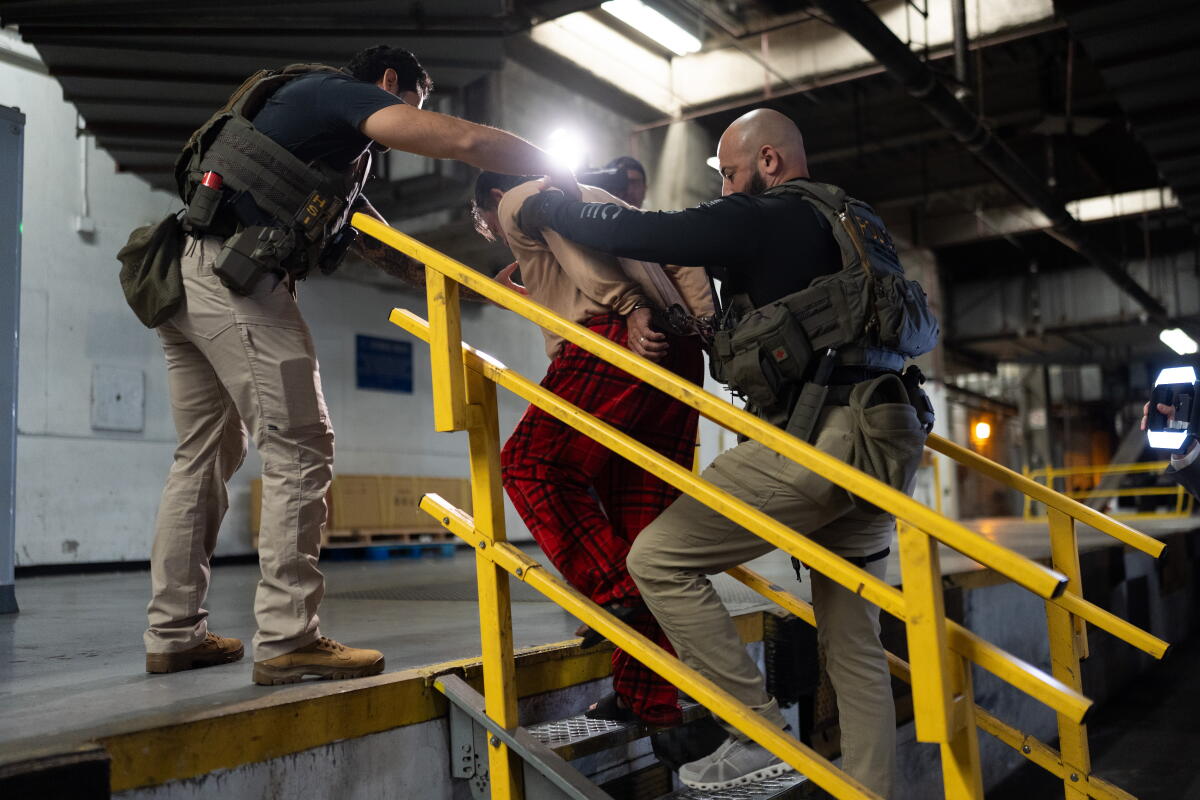
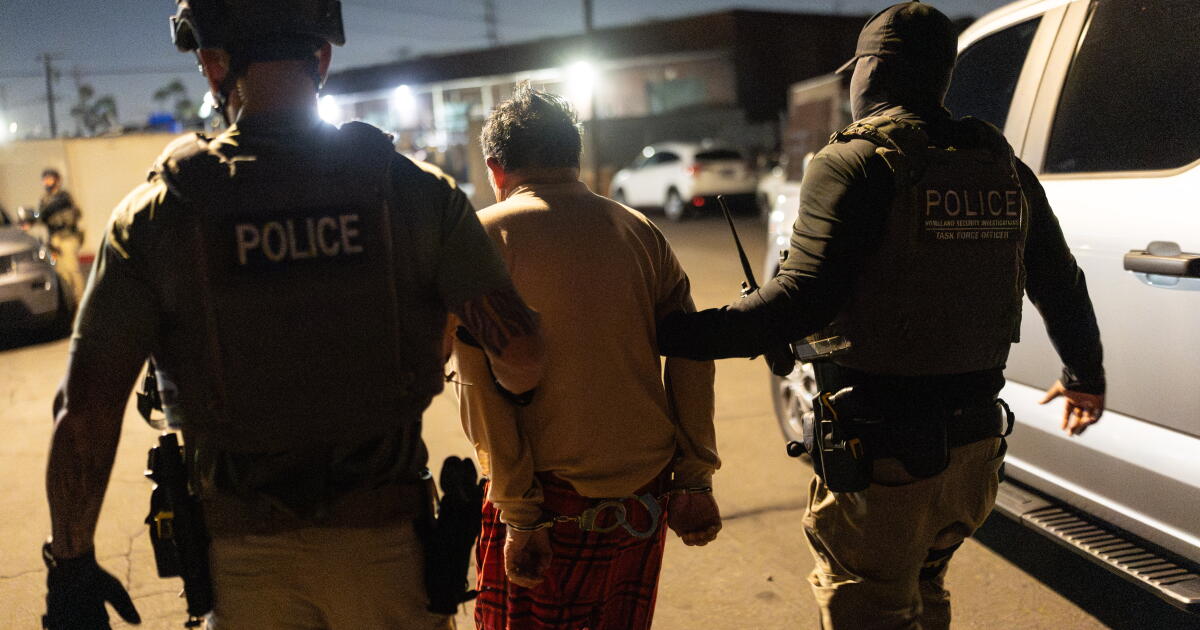
A third defendant — Omar Muñoz, 72, a lawful permanent resident from Belize whose arrest at his home in Commerce was captured by photographers in images transmitted around the world — shuffled into a court room shackled at the waist, his feet cuffed, still wearing the red and black pajama pants he’d been arrested in.

Homeland Security Investigations task force officers escort a suspect accused of illegally registering to vote to a processing facility at Federal Building in Los Angeles on Monday.
(Jae C. Hong/AP Photo)
Muñoz was charged with fraudulently registering to vote in September 2019, and then voting in 2020, twice in 2022 and again in 2024. He is also accused of lying on his application to become a naturalized U.S. citizen, when he claimed to have never falsely claimed to be a U.S. citizen in the past.
In the court room, Muñoz held a hand over his heart as he waved to his family in the first row of the gallery.
Hasen, the UCLA expert, wrote that the government’s blasting out images of Muñoz being arrested was clearly “meant to convey that the problem of noncitizen voting in California is both pervasive and serious, crimes that are undetected by willfully ignorant California election officials.”
But the reality, he wrote, “is likely far different,” with voter fraud limited to isolated cases, some with less nefarious intent.
First Assistant U.S. Atty. Bill Essayli, the top federal prosecutor in Los Angeles, said Monday that the cases represent strong federal work to ensure that noncitizens aren’t negating the votes of eligible U.S. voters — a problem he said California officials have refused to recognize despite federal authorities providing the proof.
Essayli dismissed the idea that those charged may have been unaware of what they were doing. “You have to go out of your way to register to vote, it’s not something that just happens to you,” Essayli said.
José Antonio Bañuelos-Díaz, 42, a Mexican national and West Adams resident, appeared in court wearing a reflective vest with the name of a landscaping company, blue jeans and boots with the American flag on them. He’d been on his way to work when he was arrested.
During the hearings, the defendants only spoke to acknowledge that they reviewed and understood the charges against them. In every case, the federal prosecutor said the government was not seeking detention.
The magistrate judge ordered the four released on personal recognizance and said they were not required to be under supervision. They are all set to appear in court for a preliminary hearing on November 9. Their deputy federal public defenders did not respond to a request for comment.
Lliani Orantes, Muñoz’s daughter and a nurse who was born in the U.S., said her father had been hauled out of the family home by federal authorities after they swarmed and cordoned off the block. She said the family was rushing to figure out what happened, including whether Muñoz could have been confused with younger relatives of the same name, including a U.S.-born son who is a registered voter.
Orantes also expressed frustration with the handling of her father’s arrest — to which federal authorities had clearly alerted some media, who were brought along for the raid.
She said her father is recovering from cervical surgery, rotator cuff repair on a shoulder and a double knee replacement, and that he was pulled out of the family’s home “like he was a dog” as part of what she described as a “political ploy, an example used for the operation” — which federal authorities dubbed “Operation Protect the Vote.”
“They’re trying to instill fear in society,” she said.
“We have so much more in the world to be dealing with, do we really need to focus on these little things that could be taken care of in a different fashion? In a different way? Like, hey, somebody from immigration visit the home,” she said.

Acting United States Deputy Atty. Gen. Trent McCotter speaks at a news conference Monday to announce charges against 28 people in California accused of illegally registering to vote as noncitizens.
(David Butow/For The Times)
California Atty. Gen. Rob Bonta — who is defending the state and top election officials for the state and Los Angeles County against a lawsuit from the Justice Department alleging they are not treating alleged voter fraud by noncitizens seriously enough — said Monday that voting illegally is wrong and “one off, isolated incidents” of it should be prosecuted.
But Bonta denied that there is widespread voter fraud in the state, called 28 cases brought out of the 23 million registered voters in California a “drop in the bucket,” and said he’d be watching how those cases play out in court.
“We’ll see what the facts show, and whether they’ll have to drop charges or whether they’ll be able to prosecute,” he said.
About 3 p.m. Monday, the four defendants at the downtown courthouse were released and exited the court room, some to family members waiting in the hallway to hug them.
Domínguez wiped away tears as she recounted her arrest, showing bruises on her wrists from the handcuffs.
“They were accusing me of voter fraud since 2006,” she said. Domínguez said the accusations don’t even make sense considering she has never voted.
“If I would have committed all those frauds about voting registration and whatever they’re saying, since 2006, wouldn’t you imagine that I would have been voting all these other years?” she asked.
In a visual presentation at their news conference, federal authorities alleged that 21 of the 28 people charged had actually voted. Domínguez was not one of them.
Domínguez said she’s been a lawful permanent resident since the late 1980s, and that she applied for U.S. citizenship earlier this year. As part of the application process, she said she told an immigration agent that the only people registered to vote in her household were her husband, who previously became a U.S. citizen, and her daughter, who was born in the country.
Since then, Domínguez said she has just been waiting on the citizenship ceremony, “but it never came through.”
Instead, she was arrested Monday when she was about to leave for work as an administrative assistant.
“I never, ever in my entire life … thought this would ever happen to me,” she said.

Acting U.S. Deputy Atty. Gen. Trent McCotter stands next to a display showing photos of people charged with illegally registering to vote during a news conference on Monday.
(Jae C. Hong/AP Photo/Jae C. Hong)
Muñoz and his family gathered outside the courthouse. Muñoz, who declined to comment on the charges against him, said he’d been up to have coffee early that morning when he heard the commotion outside. Agents said if he didn’t open the door, they’d break it down.
He described seeing helicopters, at least eight cars and several agents from different agencies descending on his home, and recalled thinking, “What movie am I in?”
“That’s a lot of money. Taxpayers paying for that,” he said. “They could have sent me a letter saying report to the court.”
Muñoz — who said he came to the U.S. legally in 1975 and has “paid all my taxes” since — said he explained to the arresting agents that he’d had six surgeries recently and they “didn’t care.” He said he didn’t learn about the charges against him until four hours later.
Muñoz’s son, Omar Muñoz Jr., questioned why federal agents didn’t take his father’s age and ailments into consideration.
“We understand that there’s a procedure that has to be addressed at court. But 5 in the morning, handcuffed? It’s just the way everything was done, and what my mom had to go through. It’s not just an impact on my father’s health, but also on my mom,” he said. “There is a law, we understand that. But innocent until proven guilty.”
Muñoz’s wife, Esmeralda, echoed her son’s questions about why so many agents were deployed to their home.
“Seriously? All these people just to come for an elderly person,” she said she told a federal agent. “It’s unbelievable.”
Air force member dies after rappelling accident at Navy-UTSA game
A decorated Air Force service member of 15 years died after a rappelling accident that took place during a salute to the military Saturday before the Navy-University of Texas at San Antonio game at the Alamodome.
U.S. Air Force Tech. Sgt. Ian Patterson was a Tactical Air Control Party instructor assigned to the 6th Combat Training Squadron, Detachment 2, Joint Base San Antonio, according to a news release by Nellis Air Force Base Public Affairs.
“This tragedy is felt deeply across the 57th Wing,” U.S. Air Force Brig. Gen. Scott C. Mills, 57th Wing commander, said in the release.
“Tech. Sgt. Patterson and his service mattered immensely to our wing, and to the family, friends, and teammates who had the privilege of knowing and serving alongside him. Our team is now focused on standing beside Ian’s family, loved ones, and fellow Airmen as we navigate this profound loss together.”
Patterson received several medals for his service and achievements, according to the Nellis Air Force Base Public Affairs, including the Air and Space Commendation Medal with three oak leaf clusters. In 2022, he was named the Air Force Special Warfare Enlisted Instructor of the Year at the Headquarters Air Force level.
Details surrounding the accident are under investigation, according to the news release.
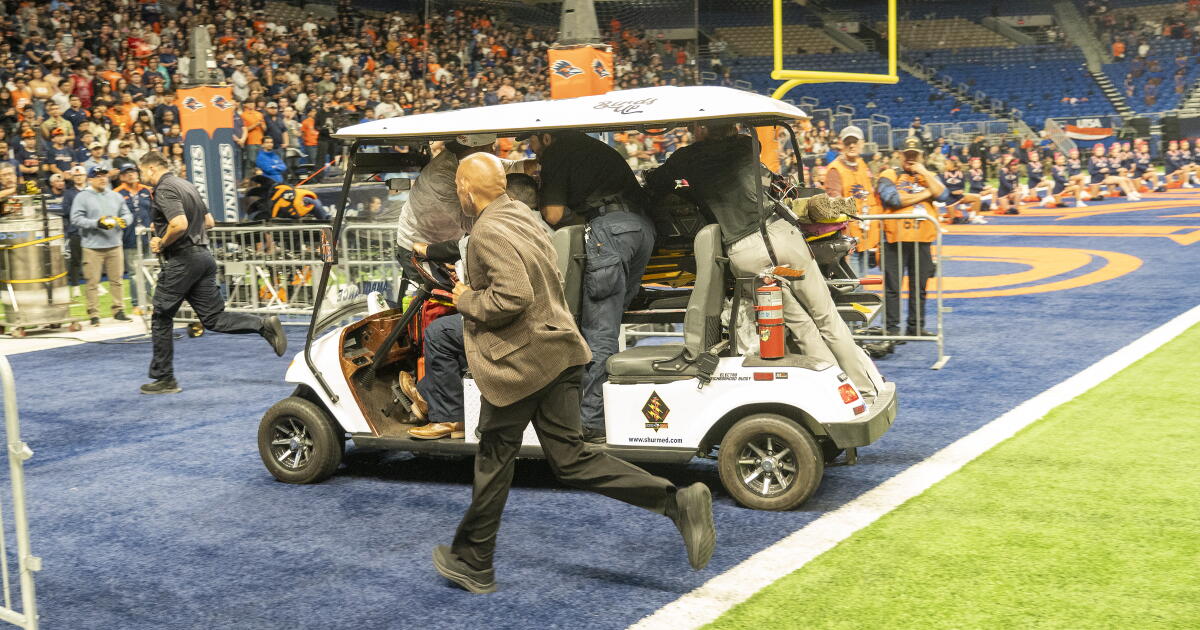
Video on social media appears to show Patterson rappelling from the arena’s rafters on a rope, and plummeting fast to the ground. He was treated on the field for several minutes and then taken away on a gurney.
Patterson later died at a local hospital, according to Nellis Air Force Base Public Affairs.
The football game between the two American Conference teams proceeded after a brief delay. The decision to play was made after a meeting that included conference commissioner Tim Pernetti, representatives from Navy and UTSA, Alamodome management and local authorities, according to a statement released by the American Conference.
“At the time of those discussions, Nellis Air Force Base Public Affairs had not publicly confirmed the service member’s condition,” the statement reads. “… In accordance with conference bylaws and with the support of both participating member institutions, the conference made the decision to continue the game. Respect for the family’s privacy and adherence to the military’s notification process guided the decision to mitigate speculation about the service member’s medical status and avoid additional distress for his family.”
The conference added that it extends “our deepest condolences to his family, friends, teammates and members of the 57th Wing who had the privilege of serving with him. We honor his service and join the military community in mourning his loss.”
UTSA president Taylor Eighmy also released a statement expressing “profound sadness.”
“In moments like these, words can offer only so much comfort,” Eighmy wrote. “But I hope the service member’s family, his fellow airmen and all those grieving know that they are in our thoughts and prayers. We stand together in sadness, united by our compassion for one another and our heartfelt support for all those whose lives have been touched by this tragedy.”
The UTSA vice president for intercollegiate athletics, Lisa Campos, said in a statement: “Moments like these remind us that we are all part of something much greater than a game. They remind us of the importance of standing together, supporting one another and finding strength in the bonds that unite us, especially in times of profound sadness. Today, our hearts are with this service member’s family, his fellow airmen and everyone impacted by this heartbreaking tragedy.”
The Associated Press contributed to this report.

‘Release Epstein files’, protester interrupts JD Vance’s speech | Donald Trump News
A protester demanding the release of the Epstein files interrupted US Vice President JD Vance at a North Carolina rally for Republican midterm candidates. After claiming illegal border crossings had fallen to zero, Vance joked that the protester was one who had slipped through.
Published On 20 Oct 2026
Germany Drops Boeing MQ-28 Ghost Bat Rapid Procurement Plan
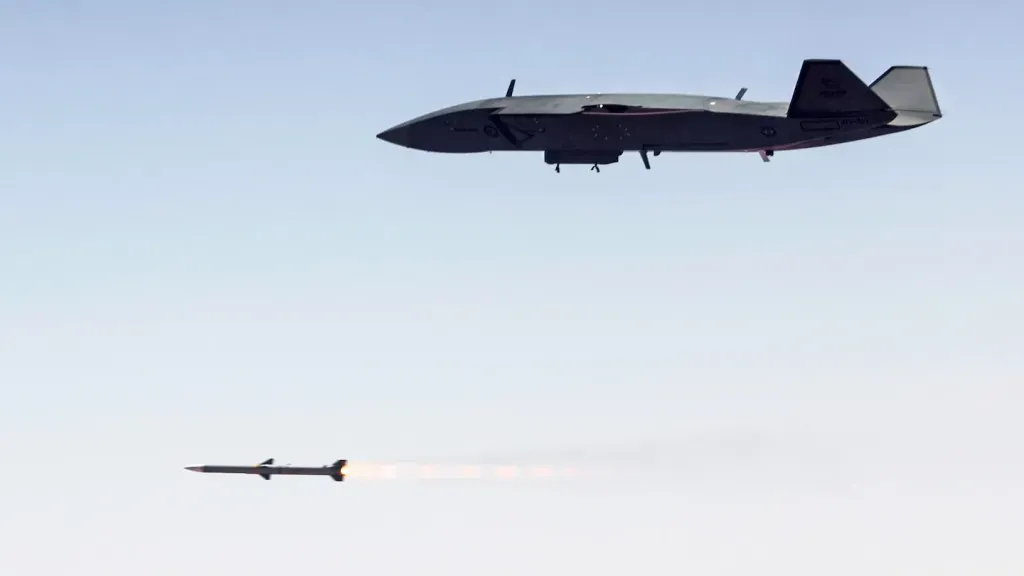
Germany appears to have dropped plans to directly procure the larger, Block 3 version of Boeing’s MQ-28 Ghost Bat collaborative combat aircraft (CCA), leaving doubts over Berlin’s ambitions to field uncrewed combat aircraft alongside its crewed fighters before the end of the decade.
Boeing confirmed to Breaking Defense that Germany’s Ministry of Defense had informed the company it would not proceed with a direct acquisition of the drone, which had previously been lined up. The decision, first reported by Politico, represents a setback for Boeing’s effort to position the Ghost Bat as a candidate for Berlin’s planned CCA capability, something that had seen it announce a partnership with Rheinmetall, the largest arms manufacturer in Germany, earlier this year.
“With Boeing Defense Australia as a partner, we are laying the groundwork to optimally tailor the MQ-28 to the Bundeswehr’s requirements,” said Armin Papperger, CEO of Rheinmetall AG, in March of this year. “As a system integrator, we ensure that integration, operation, and further development come from a single source while simultaneously strengthening industrial value creation in the form of an industrial hub in Germany and Europe. We see revenue potential for Rheinmetall in the range of three-digit millions of euros.”
The move does not necessarily mean the MQ-28 is out of contention for Germany’s wider program. Instead, Berlin appears set to move toward a different acquisition approach, with competing designs potentially having an opportunity to demonstrate their capabilities before a selection is made.
A Boeing spokesperson told Breaking Defense the company “stands ready to support” its German customer on the next steps, while referring questions about the decision to the German Ministry of Defense.

The ministry declined to discuss the specific procurement with the same outlet, citing regulations governing public contracting and the need for such matters to be addressed by parliament.
“[As a] matter of principle — and regardless of the specific case in question — we cannot provide information regarding potential procurement projects,” a ministry spokesperson told Breaking Defense.
Germany has set an ambitious goal of fielding CCAs by 2029. These uncrewed aircraft are intended to operate alongside crewed fighters such as the Eurofighter, extending their reach, adding sensors and weapons, and giving air forces additional options for conducting high-risk missions.

However, the reported change in Berlin’s acquisition plans raises questions about whether that deadline remains achievable.
According to Politico, Germany is now looking toward the early 2030s for the capability to arrive, with flight testing expected to begin in 2027. That would suggest the original target was based around the introduction of the MQ-28, which has already undergone extensive testing, rather than a newer design. The reshuffle could now give prospective suppliers additional time to demonstrate their designs.
The reported new timeline suggests that Germany’s CCA effort could be entering a more competitive and potentially longer development phase.
There is also a question about the degree of operational capability that will initially be fielded by the given date. Getting a CCA into meaningful frontline service is a very significant task, calling for integration with crewed fighters, communications systems, mission-planning networks, weapons, and sensors. Then there is also testing, certification, training, and the establishment of supporting infrastructure. For Germany in particular, getting a military drone, let alone an armed one, cleared to operate routinely in commercial airspace has long been an issue.
If Germany acquired the Ghost Bat directly, it would have offered a route to a CCA capability without having to begin an entirely new aircraft development effort.
However, the MQ-28 was always one of a larger field of candidate aircraft.
A week ago, Airbus and Kratos Defense & Security Solutions announced the first flight of their U740 Valkyrie uncrewed combat aircraft, a Europeanized version of the XQ-58A Valkyrie. Airbus is simultaneously working on its larger U760 Ravenstorm, intended for service in the early 2030s, and the company has previously pitched a stealthy CCA-like concept known as Wingman.
Other entrants include Anduril, General Atomics partnered with Germany’s INTEC, as well as Lockheed Martin. Meanwhile, Helsing and Hensoldt are pursuing the homegrown CA-1 Europa, very much an MQ-28 lookalike.

Germany may not be looking for a single drone to do everything, a point we have discussed in the past:
“One option might be a split high-low approach that could pair more capable, longer-range systems for deep-strike missions with cheaper, attritable collaborative combat aircraft that can fly alongside crewed fighters. At this point, it should also be noted that CCAs could also give older fourth-generation fighters a new lease on life, boosting their lethality and survivability by extending their sensor reach, adding weapons capacity, and allowing uncrewed aircraft to take on more dangerous tasks.”
At the same time, Germany continues to define its requirements for a capability described in media reports as a Jagdbomberdrohne, or fighter-bomber drone. Berlin has yet to publicly clarify its intended concept of CCA operations, including whether the Luftwaffe envisions an uncrewed wingman operating alongside crewed fighters, a platform capable of carrying out long-range strike missions independently, or a system designed to perform both roles.
There are signs that the strike mission is being prioritized, at least initially, with a reduced emphasis on air-to-air missions. This is essentially the reverse of the U.S. Air Force’s CCA effort.
Since Germany is set to receive the F-35 stealth fighter, there is also an argument that Berlin could place more orders for the crewed jet. This could have the dual role of filling the gap left by the collapse of the pan-European Future Combat Air System (FCAS), specifically its sixth-generation crewed fighter, and the delayed introduction of the first operational CCAs. Germany is also looking forward to receiving more Eurofighters.

Germany’s evolving CCA plans form part of a broader effort by Western air forces to develop uncrewed aircraft capable of working alongside advanced fighters. These systems are intended to expand the number of available platforms, distribute sensors and weapons across a larger force, and potentially take on missions that would otherwise expose pilots and expensive crewed aircraft to greater risk.
Boeing’s Ghost Bat could still have an opportunity to compete, depending on the structure of the eventual acquisition process and the requirements Berlin establishes.
However, with testing reportedly planned from 2027 and operational fielding potentially slipping into the early 2030s, the original 2029 ambition for an operational German CCA appears increasingly uncertain.
Contact the author: thomas@thewarzone.com

Tuesday 20 October Revolution Day in Guatemala
In 1929 the economic ravages of the Great Depression were being felt worldwide, including Central America. It caused high levels of unemployment and unrest in Guatemala.
To stop the country descending into chaos, the Guatemalan authorities needed someone to take control and give strong leadership. They looked to Jorge Ubico, who had earned a hardman reputation as a provincial governor. Ubico won the 1931 elections, which wasn’t a great shock to the pollsters given he was the only candidate.
Ubico set about his task of improving the country’s economic fortunes and imposed an over-zealous and punitive set of labour laws.
He effectively militarised the country, by making each provincial governor a general and putting military officers in charge of many government posts.
During the second world war, he gave support to the Americans (mainly to annoy Mexico) but that didn’t stop him openly admiring the achievements of European fascists such as Franco in Spain and Mussolini in Italy.
Napoleon Complex
It’s not known what posters if any, the teenage Ubico had on his bedroom wall, but Napoleon would have been a safe bet as he was like a dog with a Bonaparte when it came to Napoleon. Ubico considered himself to be “another Napoleon”. He surrounded himself with statues and paintings of Napoleon, regularly commenting on the similarities between their appearances. Though he wasn’t particularly short – but then neither was Napoleon, despite what British propaganda might have us believe.

Princess and Junior Andre look stressed as they team up for Celebrity Race Across The World in first look at new series
THINGS look like they’re about to get tense for Princess and Junior Andre in a first look at their mission on Celebrity Race Across The World.
The offspring of Peter Andre and Katie Price jetted off to take part in the BBC series at the start of the year, and the show will return to screens next week, on October 28.
But in preview images from the show, Princess, 19, and Junior, 21, look to have their work cut out for them.
Geared up in t-shirts and trainers, brandishing massive green backpacks, the pair are seen in the snaps looking stressed out as they face the TV challenge.

Branded “the wildest race yet” by the show’s producers, the siblings are pictured poring over a map and a compass, working out which direction they’ll need to head.
The pair will start their race in Kuching, in the Malaysian state of Sarawak in North West Borneo, and attempt to navigate their way to the final destination of Melbourne, Australia.


Despite their pop star dad Peter hailing from Down Under, the brother and sister team don’t look too sure about making the nearly 3,500 mile voyage.
The siblings will compete against singer-songwriter Ella Eyre and her childhood friend Nana, veteran sports broadcaster Jeff Stelling and his son Matt, and musician Sam Ryder with his best friend and tour manager Kaz.
Bosses rushed to sign up the pair after the success of ITV2’s The Princess Diaries, which featured influencer Princess and her big brother, who is taking after Peter’s footsteps with dreams of a singing career.
A source said earlier this year: “Princess and Junior have proven themselves to be well-mannered, hardworking kids and opportunities continue to come their way.
“Execs were impressed with the ratings for The Princess Diaries but also how they came across.
“They’re brilliant signings for Celeb Race as they bring with them a younger audience.
“But bosses are also looking forward to seeing how they cope with the stripped-back style of travelling as they’re more at home in five- star hotels than a hostel.”
Junior and Princess left London to start work on the show in February, amid the start of the controversy surrounding their mum Katie’s whirlwind wedding to Lee Andrews.
Now, eight months on, the marriage has fallen apart, with Katie bracing herself for a complicated divorce in the wake of Lee’s conman behaviour and stint in jail.
Fans of the famous offspring will be able to chart Junior and Princess’ mission when Celebrity Race Across The World returns to iPlayer and BBC One next Wednesday.

Fifth Third expects 2.5%-3.5% Q4 net interest income growth as it targets $200M-$300M buybacks (NYSE:FITB)
Management is targeting loan and deposit expansion, notably in Texas and through Innovation Banking, with outlook for growth in net interest income, reduction in noninterest expense, and active pursuit of revenue synergies in wealth and commercial banking.

British Airways flight forced to divert from Heathrow to Gatwick due to strict rules
A British Airways flight from a tourist hotspot was forced to divert in the early hours to land at Gatwick rather than Heathrow

A British Airways jet was forced to land at Gatwick(Image: Ceri Breeze via Getty Images)
A British Airways flight has been forced to divert from Heathrow to Gatwick after falling foul of strict rules over its landing time.
The BA707 flight from holiday hotspot Larnaca was diverted to the London airport after the four hour journey, according to AirNav Radar.
The flight had to be diverted to Gatwick after missing the curfew at Heathrow.
The plane left the Cyprus airport at 9.32pm, over three hours after scheduled take off.
It then landed at Gatwick at 12.12am on Tuesday.
Flights heading to Heathrow are often diverted to Gatwick or other regional hubs if they miss Heathrow’s strict nighttime curfew.
Heathrow enforces rigorous restrictions on movements late at night in order to reduce noice pollution for the millions of residents that live under its flight paths.
The core curfew means that scheduled flights are heavily restricted to land and take off between 11pm and 6am.
The airport operates under a strict ‘night quota’ system between 11pm and 6am which limits both the absolute number of flights allowed to land and the total amount of aircraft noise allowed.
Unless an official emergency is declared then air traffic control will deny landing rights past the curfew, forcing a diversion.

L.A. City Charter Amendment PRK voter guide: More money for parks
p]:text-cms-story-body-color-text”>
Dozens of groups have lined up behind the proposal, including the Trust for Public Land, TreePeople, Friends of the Los Angeles River and many others. At City Hall, the measure is backed by Rodriguez and several other council members as well as City Controller Kenneth Mejia.
Rodriguez and Mejia signed the ballot argument in favor of Charter Amendment PRK, as did Rev. Gregory Boyle, founder of Homeboy Industries, Nicole Chase, president and chief executive of the Boys & Girls Club of the San Fernando Valley, and several others.
Backers of the measure say the parks department provides an essential safety net for the city’s low-income residents, offering summer camps, sports activities and senior programs for free or at reduced prices.
When temperatures soar, the city’s recreation centers welcome residents who lack air conditioning. During emergencies, those facilities are converted into places of refuge from fires, floods or other disasters.
Despite those varied responsibilities, the department has been underfunded for years, said Tori Kjer, executive director of the Los Angeles Neighborhood Land Trust, who pushed for the measure to reach the ballot.
“If you talk to many Angelenos, they are unhappy with their local park, and that is because we have not funded it with the resources it needs,” she said.
Kjer said the department never recovered from the 2008 recession, when city leaders cut staffing by more than 25%, leaving it with about 1,500 workers last year. The city also began charging the department for the cost of water, electricity, trash pickup and other city services.

Lakers waive former first-round pick Dalton Knecht before opener
The Lakers waived former first-round pick Dalton Knecht on Monday to reach the NBA’s maximum roster requirements before the season begins this week.
The 17th overall pick in the 2024 draft had fallen out of the rotation in the last two seasons but had a chance to prove himself during training camp and the preseason, when the Lakers had 16 players on guaranteed contracts. Knecht, who averaged 4.2 points per game and 10.2 minutes per game last season, played just 14 combined minutes in the last two preseason games.
Knecht’s role had greatly diminished since he flashed his scoring potential as a rookie. After scoring 37 points in a win over the Utah Jazz in November 2024 and tying the single-game rookie record with nine made three-pointers, Knecht looked as if he could have been the steal of the draft. But after a trade to Charlotte for center Mark Williams was rescinded, Knecht never settled back into the rotation.
The Lakers brought in nine new players during an offseason roster overhaul, further burying Knecht on the forward depth chart.
“The team changed,” Lakers coach JJ Redick said of Knecht ahead of the Lakers’ preseason finale last Friday. “The needs changed, the fit changed. I think he got better as a player over the last two years.”
The Lakers looked into acquiring center Jericho Sims from the Milwaukee Bucks during the preseason in exchange for Knecht, sources close to the situation but not authorized to speak publicly told The Times. But talks broke down when the Lakers were unwilling to part with multiple second-round draft picks.
The Lakers, who wanted to solidify their backup center position behind Walker Kessler, have only three second-round draft picks (2031, 2032 and 2033) available to trade. They already don’t control their first-round pick until 2032 after sending two first-round picks and two first-round pick swaps to Utah to acquire Kessler this summer.
Knecht was given an “excused absence” from practice Monday, Redick said. The deadline for teams to reach the maximum of 15 standard contract players was 2 p.m. PDT Monday before regular-season games begin Tuesday. The Lakers open their season Wednesday at Crypto.com Arena against the Golden State Warriors.
Redick also said guard Bronny James was excused from practice, noting there were players who were “under the weather.” The third-year guard who was picked 55th overall in the same draft as Knecht remained on the Lakers’ updated roster.
James worked his way into the postseason rotation last season while the Lakers were struggling with injuries to their backcourt. He averaged 2.9 points and 1.2 assists during the regular season while shooting 38.6% from three.
Injury update

Lakers guard Collin Sexton speaks during the team’s media day in El Segundo on Sept. 28.
(Eric Thayer / Los Angeles Times)
For the first time since training camp started, Collin Sexton was a full participant in practice with the Lakers on Monday. Still, Sexton wasn’t ready to fully commit to playing in the Lakers’ season-opener Wednesday.
Sexton missed all five preseason games and a lot of practices with a lower right leg injury.
Sexton, who said he felt good at practice, was asked about playing against the Warriors.
“We’ll be taking it day by day,” he said. “At the end of the day, I had a really good practice today, felt good. Super excited to be back out there with the guys, so I look forward to it.”
Sexton said he had some “tightness and stuff” in his lower leg, “but I feel pretty good.”
He was asked what caused the injury.
“Nothing particular,” Sexton said. “I think we figured it out and now we’re just moving forward and just continue to get these reps in, continue to play five on five, and get out there as soon as possible.”
Sexton is a 6-1 point guard the Lakers signed to back up Luka Doncic and Austin Reaves in the backcourt. The Lakers signed him to a two-year, $19.2-million deal.
“He’s another guy that can bring the ball up and can create his own [mismatch],” Doncic said. “So we’re excited to have him back.”
Second-year forward Adou Thiero and rookie guard Cameron Carr both missed practice Monday.
But having Sexton back was a good sign for the Lakers.
“It felt good, super excited to be back out there, honestly, just getting out there and getting up and down, legs felt a little heavy, but it was great,” Sexton said. “It was definitely a great day, great practice for the team as well, and the guys were really competing.”
Children among six killed in Russian drone strike on Ukraine park | Russia-Ukraine war
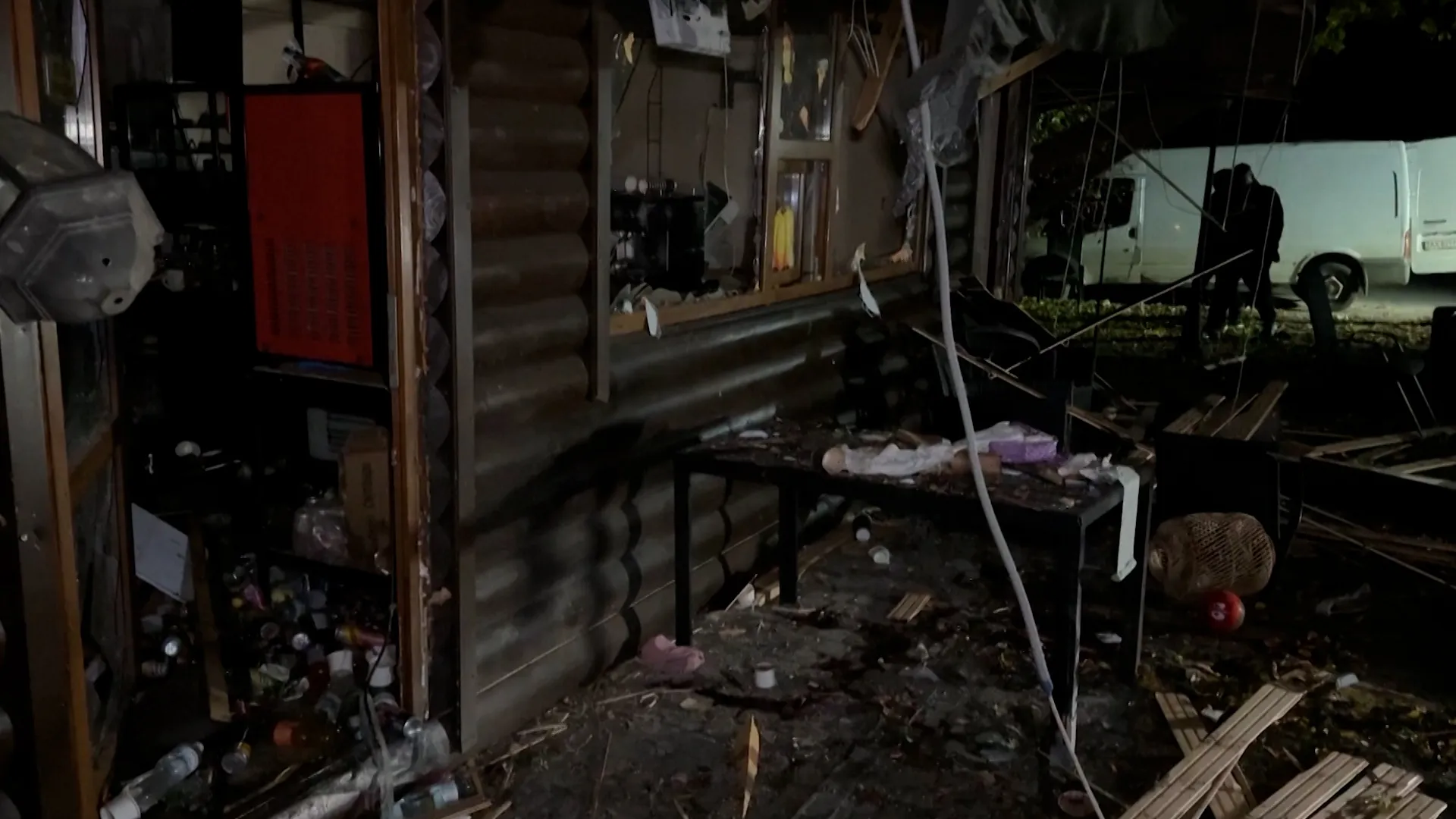
A Russian drone strike on a park in Ukraine’s north-eastern Kharkiv region has killed six people, including three children. The attack comes amid growing concerns over Ukraine’s air defences and Donald Trump’s moves to import Russian diesel.
Published On 19 Oct 2026

Tehran rejects any role in plot to kill leaders of German Jewish groups | Conflict News
Tehran summons envoy in tit-for-tat move after Berlin summoned ambassador to Iran.
Published On 19 Oct 2026
Iran’s Ministry of Foreign Affairs has summoned Germany’s ambassador after a court in Hamburg found two men guilty of plotting to kill two leaders of Jewish organisations at Tehran’s behest, accusing Berlin of leveling “baseless political allegations”.
The decision to summon envoy Axel Dittmann came after Germany summoned the Iranian ambassador, Majid Nili Ahmadabadi, on Monday over allegations that Tehran was behind the plot to assassinate the two pro-Israel public figures.
Recommended Stories
list of 3 itemsend of list
“Levelling security-related accusations against Iran has long been a tactic employed by the Zionist regime and certain Western nations,” Iran’s Foreign Ministry said in a statement broadcast by official news agency IRNA.
“Attempting to provide a judicial face to baseless political claims not only fails to lend any credibility to such allegations but also undermines the standing of the German judiciary itself,” the statement added.
Hamburg conviction
Berlin’s allegations stem from a court case involving two men, a Danish national and an Afghan national, who were convicted in a Hamburg court on Thursday for planning to target the president of Germany’s main group representing the Jewish community and the head of the German-Israeli society.
The German Foreign Ministry said on X that the Iranian ambassador had been summoned, adding Tehran would not be allowed to “threaten our free society”.
“The malicious assassination attempts against Josef Schuster and Volker Beck will have legal consequences,” it added.
“We do not tolerate attacks on Jewish life and on those who defend it anywhere, and certainly not in Germany.”
The Dane, partially identified as Ali Hassan S, was jailed for eight-and-a-half years. The Afghan, who was recruited as his accomplice, was sentenced to four-and-a-half years.
Iran’s intelligence service steered the two men, the court said. The pair were arrested in Denmark last year and extradited.
In sentencing the men, the judge said they were guilty of “terrorist activities orchestrated by Iran”.
At the time they were charged, the Iranian embassy in Berlin released a statement rejecting what it called “unfounded allegations made at the behest of Iran’s enemies”.

Academy Museum Gala: 10 best-dressed stars on the red carpet
In a year chock-full of museum galas, the Academy Museum of Motion Pictures’ Saturday night soiree was especially star-studded.
The sixth annual fundraiser honored Oscar winner Charlize Theron with the Icon Award, filmmaker and composer John Carpenter with the Luminary Award and Academy Award nominee Colman Domingo with the Vantage Award. Theron, who starred this year in presumed best picture frontrunner “The Odyssey,” and Domingo, who appeared in “Disclosure Day” and “Michael,” stole the red carpet spotlight. Other red carpet standouts included Kendall Jenner, Jessica Biel and Teyana Taylor.
The gala, which raised over $14 million for the Academy Museum’s exhibitions, screenings and education programs, also tapped one of the biggest entertainers in the world to perform: Taylor Swift.
Swift’s country ballad “I Knew It, I Knew You” from “Toy Story 5” is an Oscar contender for original song.
The gala was co-chaired by Tom Ford, Robert Rodriguez, Steven Spielberg and Kate Capshaw. The host committee included Jessica Alba; Judd Apatow and Leslie Mann; Autumn Durald Arkapaw; Adrien Brody and Georgina Chapman; Jon M. Chu; Kirsten Dunst; Nicholas Galitzine; Ludwig and Serena Göransson; Regina Hall; Kate Hudson; Jessica Lange; Greta Lee; John Legend and Chrissy Teigen; Rami Malek; Demi Moore; Olivia Munn; Gina Prince-Bythewood; Questlove; Da’Vine Joy Randolph; Seth Rogen and Lauren Miller Rogen; Bird Runningwater; and Teyana Taylor. Chu was a co-chair for last year’s event.
Here are the 10 best looks from the red carpet.
Kendall Jenner

Kendall Jenner was decidedly absent from Sunday’s Victoria’s Secret Fashion Show, but commanded the Academy Museum Gala on Saturday in a black-and-white polka-dotted Valentino gown.
(Emma McIntyre / Getty Images for Academy Museum)
Sabrina Carpenter

Sabrina Carpenter brought a pop of color to the beige carpet in a custom Giorgio Armani Privé gown with side cutouts and crystal tassels cascading down the back.
(Emma McIntyre / Getty Images for Academy Museum)
Jessica Biel

Jessica Biel brought sexy back in a black velvet halter gown with a thigh-high slit.
(Emma McIntyre / Getty Images for Academy Museum)
Alexa Demie

Alexa Demie is a goddess in another standout feather-trimmed look: a mint green custom Chanel gown.
(Emma McIntyre / Getty Images for Academy Museum)
Eiza Gonzalez

Eiza Gonzalez looked timeless in Ralph Lauren.
(Emma McIntyre / Getty Images for Academy Museum)
Kate Hudson

No one does Old Hollywood glamour quite like Kate Hudson, who was radiant in custom Armani Privé.
(Emma McIntyre / Getty Images for Academy Museum)
Taylor Swift

Taylor Swift dazzled in Dior — her best look to date.
(Emma McIntyre / Getty Images for Academy Museum)
Colman Domingo

Honoree Colman Domingo sparkled in a Valentino sequin blazer.
(Emma McIntyre / Getty Images for Academy Museum)
Teyana Taylor

Teyana Taylor turned heads in a robin’s egg blue Schiaparelli bustier dress.
(Emma McIntyre / Getty Images for Academy Museum)
Adria Arjona

Adria Arjona looked elegant in a strapless black dress with a white neckline.
(Emma McIntyre / Getty Images for Academy Museum)
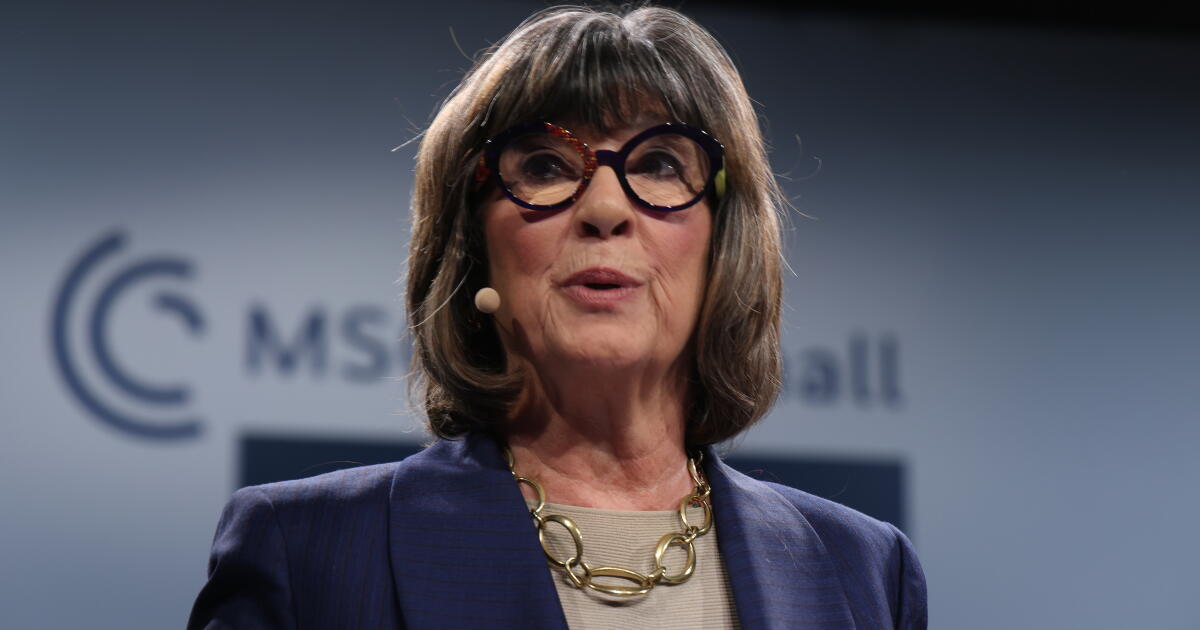
Longtime international correspondent Christiane Amanpour will exit CNN in June
Christiane Amanpour, CNN’s chief international anchor whose intrepid reporting became a symbol of the network’s global reach and influence, announced Monday she will end her 43-year run in June.
Amanpour, 68, told colleagues in a memo she will step away from her eponymous daily CNN program at the end of the year. She will continue her Saturday program, “The Amanpour Hour,” until May before exiting the following month.
Amanpour was one of CNN’s first breakout stars, traveling the world to report on global hot spots and helping build CNN’s strong reputation for international coverage, especially in war zones. She was front and center as the network delivered images of the first Gulf war, the Bosnian war and conflicts in Rwanda, Afghanistan, Ukraine and Iran.
Amanpour’s announcement arrives as CNN faces uncertainty under new ownership. Skydance absorbed the network as part of its $111-billion merger with Warner Bros. Discovery. International bureaus are expected to be the first place where CNN and Skydance’s CBS News are expected to consolidate resources. Deliberations over editorial direction are likely to be intense.
There have been reports of internal strife at the London bureau at CBS News over the tone of its Middle East coverage since Bari Weiss, a strong supporter of Israel, took over as the network’s editor in chief last year. Weiss replaced Claire Day, a longtime veteran of the network, with Shayndi Rice, a former Wall Street Journal editor, overseeing all of the network’s international operations.
In a memo to staff obtained by The Times, CNN Worldwide Chairman and Chief Executive Mark Thompson said he has discussed Amanpour’s future for several months. “Like so many CNNers who will hear the news today, I’m very sorry to see her go, but I’ve come to accept that this is the right time for her, both personally and professionally,” he wrote.
Amanpour did not offer a reason for her departure, devoting most of her memo to thanking the production crews who worked with her over the years. She said she will continue to co-host “The Ex-Files,” a podcast she co-hosts with her ex-husband Jamie Rubin, a former journalist who served in the State Department during the Clinton administration.
Amanpour was born in London and raised in Tehran. Her family fled Iran in 1979 during the Islamic Revolution. She arrived at CNN in 1983, working as a news desk assistant in Atlanta and then at its New York bureau with the ambition of becoming a foreign correspondent.
Amanpour’s reporting from war zones and ability to land interviews with global leaders made her one of the most recognizable journalists in the world. During her time at CNN, she served as a contributor to the CBS newsmagazine “60 Minutes.” She also served as anchor of the ABC News Washington roundtable program “This Week” from August 2010 to December 2011.
Amanpour’s work has been recognized with 16 News and Documentary Emmy Awards, four Peabody Awards, two George Polk Awards and three DuPont-Columbia Awards.

Rams injuries sideline Davante Adams, Poona Ford, Kobie Turner
The Rams lost much more than a game to the Arizona Cardinals.
They lost four key players because of injuries.
Receiver Davante Adams suffered a ruptured hamstring and will be sidelined six to 10 weeks, defensive lineman Kobie Turner sustained a groin strain and will be out several weeks and defensive lineman Poona Ford suffered a season-ending triceps injury, coach Sean McVay said Monday.
Kicker Blake Grupe was placed on injured reserve after leaving Sunday’s 18-16 defeat because of a knee injury.
“These are adverse moments and we’ve got to be able to push through and do hard things,” McVay said during a videoconference with reporters, “and that’s exactly what this situation entails.”
The Rams are 2-4 heading into Sunday’s game against the Raiders in Las Vegas.
A team that began the season as the Super Bowl favorite now must engineer turnarounds similar to those they pulled off in 2023 and 2024 to qualify for the playoffs.
“There’s no sense of panic,” safety Quentin Lake said during a videoconference, “but I think for us now there has to be a sense of urgency.”
On Sunday, the Rams will once again be without edge rusher Myles Garrett, who has been on injured reserve following left knee surgery after the season opener. McVay said the Rams would not open Garrett’s 21-day window to return this week.

Rams defensive end Myles Garrett stands on the field before Sunday’s loss to the Cardinals at SoFi Stadium.
(Gregory Bull / Associated Press)
All-Pro cornerback Trent McDuffie, who sat out against the Cardinals because of a groin injury, is “progressing” and his status for the game against the Raiders will be determined late in the week, McVay said.
Adams, 33, is in his 13th NFL season. The three-time All-Pro, who led the NFL with 14 touchdown catches last season, has 30 receptions for 480 yards and four touchdowns.
Adams’ absence leaves the Rams with receivers Puka Nacua, Jordan Whittington, Konata Mumpfield, Tutu Atwell and rookie CJ Daniels.
McVay said the Rams would explore possibly adding a receiver.
Turner has made 22 tackles and has broken up two passes. Ford has 15 tackles, one for a loss.
Aaron Donald and Braden Fiske are the remaining starters, and Tyler Davis, Larrell Murchison and Ty Hamilton will assume larger roles.
Grupe, signed last week to replace Harrison Mevis, made a 44-yard field goal in the first quarter against the Cardinals. But he was injured during the ensuing kickoff when he knocked the returner out of bounds.
McVay said the Rams were making inquiries about available kickers.
“We’ve taken some shots this year,” McVay said of the rash of injuries. “We’ve got to be able to get up and keep swingin’.
“This is a good test.”

Could your halal pension be funding Israel’s military? | Explainer News
HSBC’s ‘sharia-compliant’ fund invested over $100 million in companies linked to Israel’s military, raising questions about where the savings and investment of Muslims might end up going. Al Jazeera’s Lina-Serene explains.
Published On 19 Oct 2026
Russian Satellite’s Unprecedented Shadowing Of A Very Particular Radar Imaging Satellite Is A Big Deal
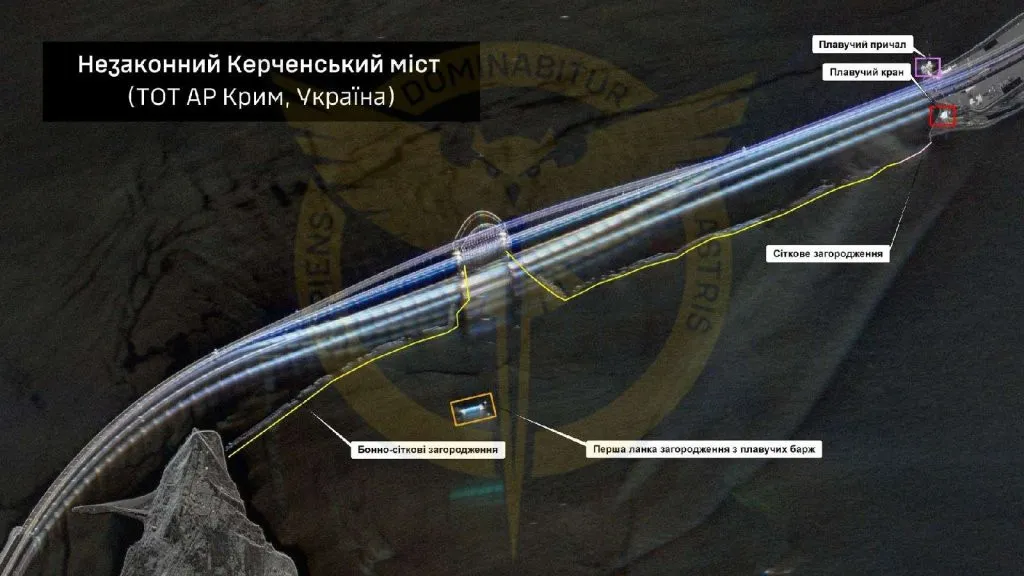
A Russian satellite, Kosmos 2612, may have passed within approximately 85 feet (26 meters) of a U.S.-registered satellite belonging to commercial imagery provider ICEYE. This would be an extraordinarily close and potentially dangerous pass-by for two objects in space traveling at thousands of miles per hour. For weeks beforehand, ICEYE-X36, which would be of special interest to Russia, had already found itself in increasingly close orbital alignment with its pursuer. The two satellites now look to be drifting further and further apart, but the episode has been a clear sign of what is to come as the potential for conflict in space only continues to grow.
Publicly available space tracking data from the satellitemap.space and orbitalradar.com websites show that Kosmos 2612 (also written sometimes Cosmos 2612 and abbreviated K2612) and ICEYE X36 had their especially close encounter at approximately 16:07 UTC today. Private space services company LeoLabs also told TWZ today that it could not “confirm or contradict what other data sources have stated publicly,” but that it has “high-confidence that the objects came within approximately [emphasis in the original] 500 meters [1,640 feet] of each other.” Kosmos 2612 had been making progressively closer passes by ICEYE X36 in recent days.
“COSMOS 2612 closed from hundreds of kilometers away to extreme proximity to ICEYE-X36. It then maneuvered around ICEYE-X36, remained nearby for an extended period, and then began moving away,” LeoLabs also stated in a report assessing the situation, which was updated today and provided to TWZ. “The latest observations show the spacecraft strongly diverging and confirm that the close-proximity activity had ended.”
LeoLabs’ broader assessment here is supported by data from other publicly available sources, as seen below.
Additional context
None of the distances stated earlier may seem especially close, let alone worrisome, by terrestrial standards. However, this is absolutely abnormal for operations in space that are not being directly coordinated by the parties involved. As a point of reference, in 2020, another Russian satellite, Kosmos 2542, came within 150 to 300 kilometers (93 to 186 miles) of USA 245, a KH-11 spy satellite, and became a major international news story.
“We are aware of the situation and tracking it closely,” a spokesperson for ICEYE’s U.S.-based division told TWZ this morning. “Our constellation architecture is designed for continuity and resilience.”
ICEYE was founded in Finland, but now has offices globally. The company specializes in providing imagery via synthetic aperture radar (SAR) from satellites like ICEYE X36, which was launched in 2024.
SAR has the benefit of being able to capture images day or night, and regardless of bad weather or other obscurants like heavy smoke. There are trade-offs in terms of the kinds of details typically visible via SAR compared to what is seen in visual spectrum imagery. Ukrainian authorities have been utilizing ICEYE imagery for years now, including for targeting purposes, as part of the ongoing conflict with Russia. There have been reports in the past that ICEYE X36 has been operating more directly under the control of the Ukrainian government, but this has not been confirmed.

Kosmos 2612 is one of six satellites (Cosmos 2609 through Cosmos 2614) the Russian military launched via a single Soyuz-2.1b rocket on April 17. The exact purpose and configuration of these satellites are unconfirmed. However, they appear to be so-called inspector types capable of rendezvousing and maneuvering close to other objects in space. We will come back to this later on.
What is clear is that Kosmos 2612 has spent the past three weeks deliberately maneuvering to extremely closely shadow ICEYE X36.
“Over two weeks beginning on September 30, 2026, Cosmos 2612 executed a series of new maneuvers that brought it back into coplanar alignment and placed it at nearly the same altitude as the commercial satellite,” Clayton Swope, Deputy Director of the Aerospace Security Project and Senior Fellow at the Center for Strategic and International Studies (CSIS) think tank in Washington, D.C., along with Research Assistant Chantal Li, wrote in an analysis of the situation just last Thursday.
“According to current orbital elements, the Russian #KOSMOS 2612 satellite is now within 1-2 km [0.6 miles to 1.2 miles] of #ICEYE-X36,” Dr. Marco Langbroek, currently a lecturer on Space Situational Awareness at the Faculty of Aerospace Engineering of Delft Technical University in the Netherlands, wrote in a thread on X on Saturday. “Based on current elements, it might come within meters of the latter within a few hours from now. This is an #RPO [rendezvous and proximity operation] without consent.”
“New TLEs [two-line elements] show that K2612 made a manuever [sic] on Oct 16 and is now stationkeeping within 5 km [3.1 miles] or less of ICEYE X36,” Jonathan McDowell, an astrophysicist and astronomer, who previously worked for the Harvard-Smithsonian Center for Astrophysics and has long been tracking objects of interest in orbit, also wrote in a series of posts on X on Saturday. “To my knowledge this is the first LEO [low Earth orbit] rendezvous of two active satellites where the owner of one of the sats did not give approval.”
McDowell later clarified that “close passes” of objects in orbit had certainly occurred previously, “but not I think rendezvous [sic] (matching velocity vector).”
“This is the most advanced and potentially dangerous uncooperative RPO we’ve observed,” Adam Marsh, LeoLabs vice president for technical solutions, separately told Breaking Defense.
Unprecedented orbital maneuvering
As underscored by the previous interaction of Kosmos 2542 and USA 245, close shadowing of satellites in orbit is certainly nothing new. The U.S. government, as well as Russia and others, have been observed engaging in this kind of activity in the past. At the same time, just how close Kosmos 2612 got to ICEYE X36, and how long they spent in close alignment, are, at the very least, highly unusual.
“It’s important to note that ‘red’ on ‘blue’ engagements, such as this, are relatively uncommon in Low Earth Orbit (LEO),” LeoLabs’ report points out. At the same time, “this was not a routine conjunction or ‘fly by.’ The sequence included a controlled approach, changes in relative position, close-proximity loitering, additional small maneuvers, and a controlled departure. The behavior is consistent with sophisticated rendezvous and proximity operations (RPO).”
On top of this, there are other signs that what just happened between Kosmos 2612 and ICEYE X36 may follow a Russian playbook of sorts that could also be used in a prelude to an on-orbit anti-satellite attack.
Within weeks of their launch in April, Kosmos 2610, 2611, 2612, 2613, and 2614 had all moved orbital planes shared by multiple ICEYE satellites. Three of them subsequently made close passes by ICEYE X36, specifically, but none of them initially kept station with it. ICEYE CEO Rafal Modrzewski did say “the company later moved its satellite, prompting further Russian manoeuvres [sic],” according to a story Reuters published last week.
To take a step even further back, before Kosmos 2542 was caught shadowing USA 245 in 2020, there were reports that the U.S. spy satellite had shifted its orbit. This was possibly prompted by the movements of another Russian ‘inspector,’ Kosmos 2543. This does not appear to have ever been confirmed.
While in space, Kosmos 2542 had deployed Kosmos 2543 in November 2019. Then, on July 23, 2020, the U.S. military said that it had detected Kosmos 2543 itself launching a smaller object in what it described as a test of a space-based anti-satellite weapon. In a subsequent interview with Time, then-Chief of Space Operations Gen. John “Jay” Raymond, U.S. Space Force’s top uniformed officer, disclosed that American forces had first observed Russian “nesting doll” satellites – a reference to traditional Russian matryoshka dolls – similarly demonstrating the “characteristics of a weapon system” in 2017.
U.S. officials have been warning for years that Russia’s growing array of inspector-type satellites, ostensibly designed to examine other assets the country has in orbit if they break down or otherwise malfunction, are inherently dual-purpose in nature. Beyond launching projectiles, a host of other modes of attack, kinetic and non-kinetic, are enabled by the underlying ability of a spacecraft to maneuver very close to other objects in orbit and hold that position. This includes the use of grappling arms to cause damage or just tow a satellite out of orbit, spraying aerosols to harm or impair optics and solar panels, and electronic warfare jamming. A satellite could turn out to be the weapon itself, becoming a kinetic interceptor that smashes into its target on command.

One satellite shadowing another closely in orbit allows various kinds of intelligence gathering, as well. Collection of imagery and signal emissions can offer valuable details about a target’s capabilities and vulnerabilities, as s well as how it is being used in a particular context.
“As observed by LeoLabs Global Radar Network and analyzed by our team, COSMOS 2612 demonstrated a sequence of capabilities that could be used to inspect, characterize, shadow, or potentially interfere with another spacecraft,” according to LeoLabs’ report. “These actions require planning, maneuverability, precise navigation, and significant fuel. They may also indicate the use of onboard sensors capable of measuring the relative position of another spacecraft.”
What has just transpired between Kosmos 2612 and ICEYE X36 highlights how just a viable threat of attack can be disruptive in its own right. Simply forcing an imagery-gathering satellite out of position could prevent it from collecting over an intended area, or at least doing so in the most effective manner.
Furthermore, satellites only have a limited amount of fuel with which to maneuver in any way after reaching orbit. Harassment in space that forces them to burn off that finite resource at a higher-than-expected rate could reduce their total operational life expectancy, as well as further limit their effectiveness and make them more vulnerable to attacks or accidents. Debris in space is a steadily growing hazard that satellites increasingly need to dodge.

How Much Junk Is There In Space? | Earth Science
The United States, among others, has been actively pursuing on-orbit refueling capabilities to help address these issues. Last month, American officials also made the bombshell admission that there are unspecified U.S. weapon systems in orbit now, ostensibly for defensive purposes amid growing threats from Russia, as well as China. Both of those countries, among others, have been actively developing and fielding various anti-satellite capabilities inside and out of the Earth’s atmosphere.
“We can only speculate about the operation’s goal, but it could have been anything from simply intimidation to outright destruction or sabotage of a U.S.-registered satellite,” CSIS’ Clayton Swope told TWZ directly today in light of the new developments regarding Kosmos 2612 and ICEYE X36. “Perhaps the operation is on hold. There are, however, several other satellites that shadowed ICEYE X36 back in May that could be brought in[to] action too.”
Attribution and broader ramifications
It is important to point out that space, as a domain, inherently creates complications when it comes to attributing any form of attack, should one occur. Satellites do suffer mishaps, sometimes with catastrophic results, the causes of which are not always clear.
Just in January, a Russian inspector satellite launched in 2014 appeared to break up unexpectedly. Sometime around the end of July, the Chinese reconnaissance satellite Yaogan 50-02, which had only been launched some four months earlier, also broke up in orbit. On Sept. 13, a similar fate befell the U.S. Cold War-era Farrah III spy satellite, also known as USA 32. At the time of writing, no firm evidence has emerged to indicate any of these incidents were the result of hostile action rather than accidents of some kind.
“While the intention behind COSMOS 2612’s behavior remains uncertain, the deliberate nature of the activity, the fuel required to conduct this activity, and the proximity to a Western commercial imaging satellite make the event strategically important,” LeoLab’s report notes. “This event, and the capabilities demonstrated, do not establish hostile intent. It does, however, demonstrate capabilities that could support intelligence collection, on-orbit inspection, coercive signaling, interference, or preparation for future counterspace operations.”
It is very possible, if not highly probable, that Kosmos 2612’s recent activities will be indicative of a trend going forward. Aggressive and potentially dangerous maneuvering by armed forces in close proximity to each other is not uncommon within the atmosphere, especially in the air and at sea. Extending a variation on those tactics into the space domain would make sense, especially given the central role that capabilities in orbit increasingly play in modern military operations globally. Those roles extend to early warning, general intelligence gathering, weapons guidance, near-real-time communications, and beyond.
American officials have already said in the past that American assets in space are routinely the target of “reversible attacks,” meaning ones that do not cause permanent damage. That also speaks to the difficulty of attribution if there is no lasting effect or impact to draw attention to.
The U.S. government’s long-time monopoly on the space domain has also been steadily eroding in recent years, especially in light of China’s massive expansion of its intelligence-gathering and other satellite constellations. The scale and scope of what commercial satellite imagery and other space services providers, like ICEYE, offer today have led to a further democratization of space-based capabilities to countries like Ukraine that do not possess significant, if any, constellations of their own.

All of this, in turn, has increasingly driven the U.S. military, specifically, to plan for more proactive operations and potential direct conflict in orbit to ensure it retains its edge going forward. The aforementioned disclosure of U.S. on-orbit weapons is indicative of those developments and an accompanying shift in U.S. policy to be more open about counter-space capabilities.
More details may yet emerge about Kosmos 2612 and its recent rendezvous in orbit with ICEYE X36, but it already points to how space has become an increasingly likely potential zone for direct conflict going forward.
Contact the author: joe@twz.com

Charli XCX brings ‘Music, Fashion, Film’ to the Kia Forum
What’s the opposite of a victory lap?
One answer arrived this year in the form of “Music, Fashion, Film,” Charli XCX’s bracing follow-up to 2024’s Grammy-winning “Brat.” An emotionally complicated dance-pop album about the relationship between power and vulnerability, “Brat” struck a nerve in a weird cultural moment and finally brought Charli the kind of stardom she’d been openly seeking for ages. In the LP’s immediate aftermath, the English musician hungrily scooped up the spoils of her success — playing Coachella’s main stage, starring in a highbrow mockumentary, soundtracking Hollywood’s latest take on “Wuthering Heights.”
Yet “Music, Fashion, Film” wonders what it all meant. It’s a digitally enhanced rock record — probably 2026’s best thing-with-guitar — that cycles through thoughts on ambition and trend-chasing before landing with a moving sense of serenity on the idea that everybody dies and takes their accomplishments with them.

-
Share via
“No One Lasts Forever” is the album’s final track, and Sunday night that was also Charli’s closer at Inglewood’s Kia Forum, where she headlined the second of two shows over the weekend.
Structurally, the concert bookended songs from “Brat” (for which she was accompanied by prerecorded tracks) with stuff from “Music, Fashion, Film” (for which a scuzzy live band backed her up). There were stray oldies too, including “Constant Repeat,” which she introduced as one of the first songs she wrote about her husband, George Daniel — “even though it’s not exactly truthful,” she added — and the landmark hyperpop cut “Vroom Vroom.”
She also did “House,” a spooky goth-folk song from “Wuthering Heights” that had her writhing on the stage in the white-hot heat of a single spotlight — a sex kitten turned scream queen (or perhaps vice versa). And she brought out Adéla, the Slovakian singer famously booted from the reality show that created Katseye, to do her viral hit “Nicole Kidman,” which is just one of a handful of rough-edged pop hits this year that demonstrate “Brat’s” lasting influence.
Indeed, what was illuminating about the middle of the show — basically a half-hour-long club night with strobes cranked happily to here’s-the-seizure-you-ordered — was seeing how very un-tired Charli’s fans are of being pulverized by songs like “Club Classics,” for which she donned her Superman’s-cape sunglasses, and “Guess,” during which pairs of underwear rained down on the audience in a nod to the music video for the song’s remix with Billie Eilish.
Charli had opened with the new album’s “Rock Music,” in which she declares that “the dance floor is dead”; here, her sarcasm fooled precisely nobody.
My favorite part was the home stretch of tunes from “Music, Fashion, Film”: “Camera,” a startlingly frank confession of her movie-star aspirations; “Magic Metal Montana,” a deeply tender ode to her friend and collaborator A.G. Cook; “SS26,” a jittery electro-punk jam about “walking on a runway that goes straight to hell.”
I love the strange emotion in these songs — the feeling that you might as well say what you want because the only thing more embarrassing than taking a risk is not taking one.
At some point, Charli lit up a cigarette and waved it around like someone who’d discovered a critical truth. What were they gonna do — make her end the concert early?
Define early; better yet, define late.
Federal officials charge 28 in California noncitizen voting case
Federal authorities have charged 28 people from across California with illegally registering to vote or casting ballots in federal elections despite not being U.S. citizens — again escalating an election battle between the state and the Trump administration just weeks before the Nov. 3 midterms.
Authorities said 11 of the 28 were arrested as of Monday morning and that the 17 others “will be in custody in the near future.” Some of the 28, all of whom are lawful permanent residents of the U.S., are charged with lying about registering or voting on their naturalization paperwork, officials said; 21 of them are suspected of casting votes, some in multiple elections. None are undocumented immigrants, a favorite target of President Trump and a group he has accused of infiltrating U.S. elections in the past.
Those charged represent a tiny fraction of the 20,000 “likely noncitizens” that the Justice Department alleged are on California rolls just last week, and an even tinier fraction of the more than 190,000 noncitizens the Trump administration alleged were on state rolls as recently as July.
State officials have previously warned, along with independent elections experts, that the Trump administration has badly overstated voter fraud claims in other states. In Nevada, for example, officials recently found that all 185 people the Justice Department flagged as potential noncitizens were in fact citizens. The administration has repeatedly revised downward its estimate for how many “likely noncitizens” are on California’s rolls.
Acting Deputy Atty. Gen. Trent McCotter cast the arrests during a Monday news conference as proof that California voter rolls are corrupted and need to be purged to prevent noncitizens from negating the legitimate votes of U.S. citizens, and that California officials who have rebuffed recent Trump administration efforts to purge the state’s rolls are willfully obstructing justice.
“This Department of Justice will not look the other way while non-citizens vote in federal elections,” McCotter said. “Unfortunately, the same can’t be said for California and L.A. County.”
State and local officials — some of whom are being sued by the Justice Department over their handling of the broader claims — said voter fraud should be taken seriously, but that isolated cases are not evidence of widespread problems and that any voting allegations from the Trump administration must be viewed with skepticism.
Los Angeles County Supervisor Janice Hahn referred to Monday’s arrests as “voter intimidation and a blatant attempt to undermine trust in our midterm elections.”
“These arrests are being used to paint a picture of widespread voter fraud when we know that is not the case,” Hahn said. “California has laws in place to protect the integrity of our elections, and L.A. County is fully abiding by them.”
California Atty. Gen. Rob Bonta’s office said the 28 individuals charged Monday “represent a tiny fraction” of California’s 23 million registered voters, and that the Trump administration has not shown “evidence of widespread voter fraud, even if the allegations are true.”
Shifting claims
For months, federal prosecutors have been issuing grand jury subpoenas for voter records in California — suggesting a sweeping criminal investigation was underway.
In July, Homeland Security Secretary Markwayne Mullin asserted in a letter to California Secretary of State Shirley Weber that California may have more than 190,000 noncitizen voters on its rolls. Last week, McCotter wrote letters to Weber and Dean Logan, head of the L.A. County Registrar-Recorder/County Clerk’s office, giving them 48 hours to set aside the ballots of about 20,000 voters the Justice Department said were “likely noncitizens.”
When Weber and Logan balked at the demand — arguing the Justice Department had provided no proof the voters were ineligible, had presented similar and inaccurate claims in other states and had made the request too close to the upcoming election — the Justice Department sued Thursday, asking a court to immediately intervene and force the state and L.A. County to comply with McCotter’s demands.
In a filing in that case Monday, federal authorities cited the latest charges as more reason for the court to intervene, and before the election, to segregate out the flagged ballots until those voters’ citizenship can be verified — again raising uncertainty as to their citizenship status despite alleging during their news conference Monday that all were permanent residents.
“This Court should order California to set aside vote-by-mail ballots from likely noncitizens in the federal election — including any ballots cast by the individuals charged with [federal election] crimes this morning — until the voter’s citizenship status can be determined,” federal attorneys wrote.
The Trump administration’s apparent uncertainty about the citizenship of the voters it has flagged — and even those it’s charged — has been a focus of state and local officials. Bonta and others have questioned the drop from 190,000 to 20,000 and repeatedly pointed to what occurred in Nevada, where federal officials initially flagged more than 15,000 potential noncitizen voters. Independent election experts have also highlighted those discrepancies.
Rick Hasen, director of the Safeguarding Democracy Project at UCLA School of Law, wrote online Monday that the data the federal government relies on to find purported noncitizens are “unreliable.” He wrote that the Justice Department’s demands on California risk “disenfranchising thousands of voters, and from DOJ’s track record, the lion’s share will be eligible voters.”
David Becker, executive director of the nonpartisan Center for Election Innovation & Research, said the 28 alleged noncitizens charged represent “.0001% of California voters,” and that the Trump administration charging 28 people days after flagging 20,000 “raises serious questions as to whether DOJ has any evidence at all supporting their claims on the other 19,972 on their list.”
McCotter said the original 190,000 figure was “the ceiling,” while “20,000 is the floor” — with the larger figure representing individuals the administration had low, medium or high levels of confidence were noncitizens, and the smaller figure representing only those it has high confidence are noncitizens.
“So there’s not inconsistency between those numbers. They’re just looking at different levels of confidence,” he said.
McCotter also said the notion that a federal list of more than 15,000 alleged noncitizens in Nevada had resulted in zero noncitizens being found was a “false storyline,” in part because the larger group was never vetted by the state. However, he also acknowledged that the 185 that were vetted — and found to be citizens — were those the federal government had held “high confidence” in being noncitizens.
How the Justice Department further zeroed in on the 28 charged individuals also was not entirely clear.
U.S. Atty. Craig Missakian, the top federal prosecutor in Northern California, said prosecutors compared information from Homeland Security with voter information they subpoenaed from Weber’s office and various county election offices. Some of the criminal complaints said Homeland Security Investigations received investigative referrals from its Identity and Benefit Fraud Unit, which provided “relevant information regarding alleged voter fraud or related identity-based fraud indicators.”
Kevin Murphy, special agent in charge of Homeland Security Investigations in San Diego, said the underlying investigations were not “based on assumptions or a single piece of information,” but required “thorough investigative work, coordination, and a commitment to ensuring that enforcement action is supported by the facts.”
Those charged include 13 people from the Central District of California, who live in Los Angeles, Long Beach, Rancho Palos Verdes, Anaheim, West Covina and other cities. They hail from a mix of nations, including Belize, Canada, El Salvador, Guatemala, Honduras, India and Mexico. Five others were charged in the Northern District of California, with one from San Francisco and others from the wider Bay Area; four in the Southern District and six in the Eastern District.
First Assistant U.S. Atty. Bill Essayli, the top federal prosecutor in L.A., dismissed the idea that such fraud is rare or that Trump officials are overstating the threat. “This is not a conspiracy theory,” Essayli said. “This is not made-up stuff.”
Essayli specifically highlighted the case of a 72-year-old Omar Munoz from Belize, who was arrested in a pre-dawn raid Monday at his home in Commerce. Federal authorities allege that he fraudulently registered to vote in 2019, voted in 2020, twice in 2022 and again in 2024. He is also accused of lying on his naturalization application.
In federal court downtown late Monday, Munoz’s daughter Lliani Orantes, a nurse born in the U.S., said the family was trying to figure out what happened, after federal officials swarmed their block and took her father, who is recovering from a recent surgery.
She said her brother, a registered voter, shares her father’s name, as does a nephew, and the family is wondering if it is all a mix-up. “Did the names get misconstrued,” she wondered.
McCotter said in the last seven weeks, the Trump administration has charged 113 people across 20 states with voting-related crimes. More than 154 million people voted nationally in the 2024 presidential election.
What’s ahead
Federal officials said their work — dubbed “Operation Protect the Vote” — would continue through the election and beyond.
Essayli said California’s own process for verifying voters’ citizenship, including requiring that they attest to being a citizen when they register, is insufficient. He said California election officials have “no idea who is a citizen,” but also know “they have noncitizens who are getting ballots as we speak” and several years ago admitted in an audit that noncitizens were being registered at the DMV.
“When we submit a list of 20,000 noncitizens to California that we are pretty sure are not citizens, it is outrageous that the response from the state is, ‘We don’t believe you and we’re not even going to look at it,’” he said. “That is not good faith actors. They are being complicit.”
McCotter said there “may be some names” on the list of 20,000 flagged voters “who, it turns out, ultimately are citizens.” He said federal authorities are “not perfect,” which is why they’ve asked California officials to work with them. “We could knock through most of these names pretty quickly, probably in a day or two, if California would work with us.”
He said the timeline — amid an ongoing election — was due to state officials refusing to cooperate sooner. “It’s an emergency of their own creation.”

12 of the most beautiful UK attractions that are perfect in autumn from island castles to Japanese gardens
LEAVE it to the Americans to come up with a name for gawping at trees.
Leaf peeping was a phrase coined in the Sixties in Vermont and it’s now caught on here.
And no wonder, as Britain puts on a dazzling show every autumn, though this year it will be harder to time.
After the hot, dry summer, the National Trust predicts vibrant but patchy colour, with some gardens running late and others early.
Jacob Lewis reveals the best spots to head to in the next few weeks.
SHEFFIELD PARK & GARDEN, EAST SUSSEX
FOUR lakes double the colour at this Grade I-listed garden, which was planted for autumn.


The tupelo trees turn bright red, and one variety changes colour around ten days ahead of the rest.
By the water, swamp cypresses glow amber.
You can even arrive by steam on the Bluebell Railway, whose station is a 15-minute walk away.
Cost: £19 adults, £9.50 children — National Trust members free.
RICHMOND PARK, LONDON
BELLOWING stags are the soundtrack in October, when the red deer rut reaches its peak.
Head for the Isabella Plantation, a woodland garden where Japanese maples flare crimson and winged spindle bushes turn rosy scarlet.
Entry is free, but keep one eye on the leaves and the other on the stags, keeping at least 50m away.
Cost: Free entry and parking.
WESTONBIRT, THE NATIONAL ARBORETUM, GLOUCS
NEARLY 300 varieties of Japanese maple grow here, setting the Acer Glade ablaze.
A new trail through Silk Wood this year is themed around nine Japanese ideas about the seasons. Book ahead.
Cost: £19 weekdays or £22 weekends, children £5.
BLICKLING ESTATE, NORFOLK
BEECH, oak, lime and sweet chestnut are mirrored in the lake in front of this Jacobean mansion.
Follow the two-mile Lake Walk, then head into the Great Wood, where the beeches glow amber and a pyramid-shaped mausoleum stands among the trees.
Cost: Free entry to parkland — parking £5, NT members free.
CANNOCK CHASE, STAFFS
NOT every tree that turns gold is a broadleaf.
Larches are conifers that drop their needles in winter, and here they blaze yellow against the dark pines.
Follow the Sherbrook Valley trail to the stepping stones, with beeches adding copper along the way.
Cost: Free entry — parking from £1.20.
SHERWOOD FOREST, NOTTS
ROBIN Hood’s old stomping ground is at its best when the oaks turn russet.
Pay your respects to the Major Oak, the giant at its heart thought to be up to 1,200 years old.
Sadly, the ailing tree died this year after suffering drought and heatwaves, but it still stands as a monument.
Oaks turn late, so there’s still plenty of time.
Cost: Free entry — parking £7, RSPB members free.
HARDCASTLE CRAGS, WEST YORKS
BEECH, oak and birch cling to the sides of this steep valley, near Hebden Bridge, above the tumbling Hebden Water.
Follow the riverside path to Gibson Mill, a cotton mill built around 1800, then grab a drink from its Weaving Shed Cafe and sit out by the millpond, hemmed in by trees.
Cost: Free entry — parking £5–£8, NT members free.
LOUGHRIGG TARN AND ELTERWATER, CUMBRIA
FOR the classic Lake District postcard view, walk the easy four-mile loop from Elterwater village via Skelwith Bridge to Loughrigg Tarn.
On a still day, the Langdale Pikes, the craggy peaks at the head of the valley, are reflected in the water, framed by turning woodland.
Cost: Free entry — paid parking, NT members free.
ALLEN BANKS AND STAWARD GORGE, NORTHUMBERLAND
KEEP an eye out for elusive red squirrels in this deep gorge carved by the River Allen.
Most of its beeches were planted in the 19th century, and they spill copper and gold colours down the valley sides.
The riverside path then leads to medieval ruins and a Victorian summer house.
Cost: Free entry — parking £3–£5, NT members free.
COED Y BRENIN, SNOWDONIA
PISTYLL Cain plunges into a dark pool deep within the 9.000-acre King’s Forest.
You can reach it via a 2.2-mile walk beside the River Mawddach, leaving conifers behind for broadleaf woods and the ruins of old gold mines.
Cost: Free entry and parking at Tyddyn Gwladys.
LOCH AN EILEIN, CAIRNGORMS
A RUINED 13th-century castle on an island steals the show here.
In autumn, the birch, rowan and aspen of the ancient Rothiemurchus Forest flare gold against the dark Scots pines.
The flat 3.5-mile loop is easy for kids. Scotland turns first, so don’t hang about.
Cost: Free entry — parking £5 per car.
TOLLYMORE FOREST PARK, CO DOWN
GAME Of Thrones fans will recognise this forest at the foot of the Mourne Mountains, which was used as a filming location.
Walk the River Trail along the River Shimna, crossing stepping stones and some of its 16 bridges beneath beech and oak.
Cost: Free on foot — £5 per car.