






Newspapers weigh in on election; Obama loses support since 2008
Do newspaper endorsements for president still matter? Certainly not as much as they once did, but that doesn’t stop most newspapers (including this one) from exercising their 1st Amendment right to spout off about their choice of candidate, and it doesn’t stop the presidential campaigns from breathlessly reporting each and every endorsement as if it were handed down by the Oracle of Delphi.
So who’s winning the endorsement race?
That all depends on how you look at it.
According to Editor & Publisher, the longtime bible of the newspaper business, the tally as of Saturday was 112 for Republican Mitt Romney and 84 for President Obama. That list didn’t include papers from Sunday, when many delivered their endorsements, but it suggested a shift from 2008, when E&P;’s final tally showed daily newspapers — which historically have skewed Republican — endorsing Obama over Republican John McCain by a better than 3-2 margin, 296 to 180
The American Presidency Project at UC Santa Barbara has also been tracking endorsements, but it limits its list to the 100 largest newspapers. On average, they tend to have more liberal editorial pages, presumably reflecting their locations in Democratic-leaning big cities. As of Sunday, the project showed 33 endorsements for Obama and 27 for Romney. (Although most newspapers have issued their endorsements by now, a significant number are apparently waiting for the final week of the campaign.)
The tally reflects some notable gains for the GOP, however. According to the American Presidency Project, nine of the 100 top newspapers have switched sides from Obama to Romney since 2008, whereas only one went the other direction.
Among those abandoning the president was his Arlington Heights, Il., Daily Herald in his home state, which cast its lot — albeit a bit hesitantly– with Romney on Sunday.
“We believe that Barack Obama and Mitt Romney are good and decent men who care about the country,” the newspaper wrote. “We believe each possesses extraordinary skills and talent. But, philosophically, it is clear that one trusts government too much; the other appears to trust it too little.” The editorial went on to criticize “the tone of Obama’s relentless insinuations that wealthy Americans refuse to pay their fair share. That tone is divisive and damaging for the nation and for our economy. It creates villains and victims, and unfairly so.” That, it said, was, “ultimately, the point where we must break with him.”
The San Antonio Express-News was the only one of the big papers to go the other way. It had endorsed McCain in 2008. This year, it said that while Obama has “had his failings,” such as a failure to pursue immigration reform and to tackle the debt crisis, “These shortcomings … don’t justify a change in leadership, particularly when many of Mitt Romney’s proposals — such as an across-the-board 20 percent cut in taxes and the elimination of unspecified itemized deductions — invite skepticism.”
Concluded the Express-News: “No candidate has all the right policies — that includes Barack Obama. But having weathered the challenges of the last four years, we believe he is in a better position to guide the nation over the next four years — and has earned from voters the privilege to do so.”
It is probably in the nature of newspaper editorials to stop short of adulation and unbridled enthusiasm. That certainly is the case with virtually all the endorsements of Obama and Romney, very few of which are wholehearted.
The Chicago Tribune (owned by the Tribune Co., which also owns The Times) endorsed Obama, but its editorial page editors said, “On questions of economics and limited government, the Chicago Tribune has forged principles that put us closer to the challenger in this race, Republican Mitt Romney. We write with those principles clearly in our minds. Romney advocates less spending, less borrowing — overall, a less costly and less intrusive role for government in the lives of the governed.” So why not just endorse Romney? The Trib concluded that he had been “astonishingly willing to bend his views to the politics of the moment: on abortion, on immigration, on gun laws and, most famously, on healthcare.”
And several newspapers that did endorse Romney expressed the hope that, if elected, he would turn out to be the moderate Romney, not the “severe” conservative he presented himself to be in the Republican primaries.
“Let us stipulate,” said the Houston Chronicle, the largest newspaper to switch from Obama in 2008 to Romney this year. “The Mitt Romney we are endorsing is the Massachusetts moderate who worked successfully alongside an 88 percent Democratic majority in the state Legislature to produce what the Obama administration says became its model for national healthcare reform.”
Not everyone was so equivocal. The New York Post, never known for mincing words, did not choose this occasion to begin.
“Four frustratingly long years ago, a war-weary and economically battered America took a flier on a savior,” the Post wrote.
Next paragraph, in full: “It didn’t work out.”
Some newspapers that endorsed candidates in 2008 decided not to pick anyone this year. The Oregonian, in Portland, supported Obama four years ago, during a campaign in which he held one of his largest rallies in that city. The paper sounded a bit miffed this year when it said it wasn’t endorsing anyone this time around because the candidates hadn’t campaigned in Oregon. “The access and close observation that inform our endorsements for state and local offices and Congress do not apply in a national race; our CNN-level view of the presidential race is similar to everyone else’s,” the paper said.
The New York Times was the largest of the nation’s newspapers to endorse a candidate. It concluded Saturday that Obama “has formed sensible budget policies that are not dedicated to protecting the powerful, and has worked to save the social safety net to protect the powerless.” Romney, it said, “has gotten this far with a guile that allows him to say whatever he thinks an audience wants to hear. But he has tied himself to the ultraconservative forces that control the Republican Party and embraced their policies, including reckless budget cuts and 30-year-old, discredited trickle-down ideas.”
The two largest newspapers in the country, the Wall Street Journal and USA Today, do not usually issue formal endorsements, although the Journal has made no secret of its strong preference for Romney.
The Los Angels Times, for what it’s worth, endorsed Obama and followed up with an explanation from Editorial Page Editor Nick Goldberg of why the newspaper endorses anyone at all, given its mandate to be nonpartisan and unbiased in its news articles. The article contained one reminder of the historically less-than-awesome power wielded by newspaper endorsements: The Times’ first endorsement, in 1884, was for Republican James G. Blaine.
Remember him?
mitchell.landsberg@latimes.com
Twitter: @LATlands

Prep baseball: Orange Lutheran wins national tournament title
This week began with Orange Lutheran having played in only four baseball games while others had played in 10 or more. The Lancers were saving their best to come and it certainly showed when they won four consecutive games to capture the National High School Invitational on Saturday in Cary, N.C.
After needing consecutive walk-off hits to win in the quarterfinals and semifinals, Orange Lutheran (7-1) had more nerve-racking moments before knocking off defending champion Venice (Fla.) 7-6. In the bottom of the seventh, Venice put two runners on with two outs before Anthony Tomminelli got a strikeout to secure the win.
Orange Lutheran started fast with a two-run triple by CJ Weinstein in the first inning. Eric Zdunek finished with two hits and two RBIs while Brady Murrietta added two hits. The Lancers have about 24 hours to celebrate because next week they face St. John Bosco in a critical three-game series in the Trinity League.
Harvard-Westlake 10, Arizona Casteel 8: Jake Kim flexed his muscles for the second consecutive game, hitting a home run and double to finish with three RBIs. Ethan Price had a two-run double. Freshman Nate Englander had two hits and three RBIs.
Jacksonville (Fla.) Trinity Christian 5, St. John Bosco 0: The Braves return home from North Carolina with a 9-2 record and set to face Orange Lutheran this week in a three-game Trinity League series. Jack Champlin had two hits in the loss.
Aquinas 4, Gloucester 0: Eli Martinez threw the shutout with seven strikeouts.
Air strikes in Iraq kill three PMF fighters, two police | US-Israel war on Iran News
Ex-paramilitary group, set up to fight ISIL, but now integrated in Iraqi forces, blames US and Israel.
Published On 28 Mar 2026
Air strikes targeting Iraq’s Popular Mobilisation Forces (PMF) have killed three fighters and two Iraqi police, as the US-Israeli war on Iran continued to spill over Iraq’s eastern border.
An Iraqi security source told Al Jazeera that Saturday’s double-bombing of the PMF’s headquarters near northern Iraq’s Kirkuk Airport also wounded two other fighters and six Iraqi soldiers.
Recommended Stories
list of 3 itemsend of list
A statement from the ex-paramilitary coalition, which is now integrated into the regular Iraqi army, blamed the United States and Israel, saying that those killed had been “subjected to a treacherous Zionist-American” attack.
Separately, the Reuters news agency quoted security sources as saying that two members of the Iraqi police were killed in an air strike targeting the PMF in Mosul, about 105 miles (170km) northwest of Kirkuk.
Reporting from Baghdad, Al Jazeera’s Nicolas Haque said that Iraq was turning into an “expanding battleground” in the crisis, which began on February 28 with US-Israeli strikes on Iran and now threatens to engulf the region in a protracted conflict.
Since the war broke out, pro-Iran armed groups within the PMF, which was formed on the orders of Najaf-based Grand Ayatollah Ali Sistani in 2014 to fight ISIL (ISIS), have claimed responsibility for attacks on US interests in Iraq and beyond and have themselves been targeted.
Haque said the PMF takes its orders from Baghdad, but some factions are loyal to Tehran.
“That makes it very difficult for Baghdad to hold all of this together. Up until the war, the government successfully brought everybody around the table [and] was able to manage the different factions,” he said.
But as the war expands into Iraq, Baghdad has found itself “on a tightrope” between the US and Iran, said Haque.
“They can’t afford to turn their back on their biggest neighbour, Iran. Nor can they afford to turn their back on the United States,” he said, noting the economic and security ties between Baghdad and both countries.
Saturday also saw two drones targeting an airbase serving as a hub for US and coalition forces near Erbil airport in Iraq’s semi-autonomous Kurdish region. Haque said the US C-RAM air defence system was activated and intercepted the drones.
Iraq attacks ‘a worrying development’: Macron
In parallel, Kurdish news outlet Rudaw reported a drone attack on the house of Nechirvan Barzani, president of the Kurdish region, in the western town of Duhok.
Masrour Barzani, the prime minister of the Kurdistan Regional Government in northern Iraq, condemned “in the strongest terms” the assault.
“Once again, we call on the federal government to act on its responsibility, bring these outlaw criminals to justice, and curb the continued terrorist attacks carried out by these groups,” he said in a statement.
French President Emmanuel Macron said on X that he had spoken to Barzani, calling increased attacks in Iraq a “worrying development”.
In other developments, the Iraqi Ministry of Defence said on Saturday that a drone had crashed into the southern Majnoon oilfield “without detonating, causing no damage or injuries”.
Iran war live: Tehran warns US, Israeli universities; Houthis fire missiles | US-Israel war on Iran News
Live updatesLive updates,
Antiwar protesters rally in Tel Aviv and US cities, as attacks kill a family of four in Iran’s Bushehr province and damage a water facility in Khuzestan.
Published On 29 Mar 2026
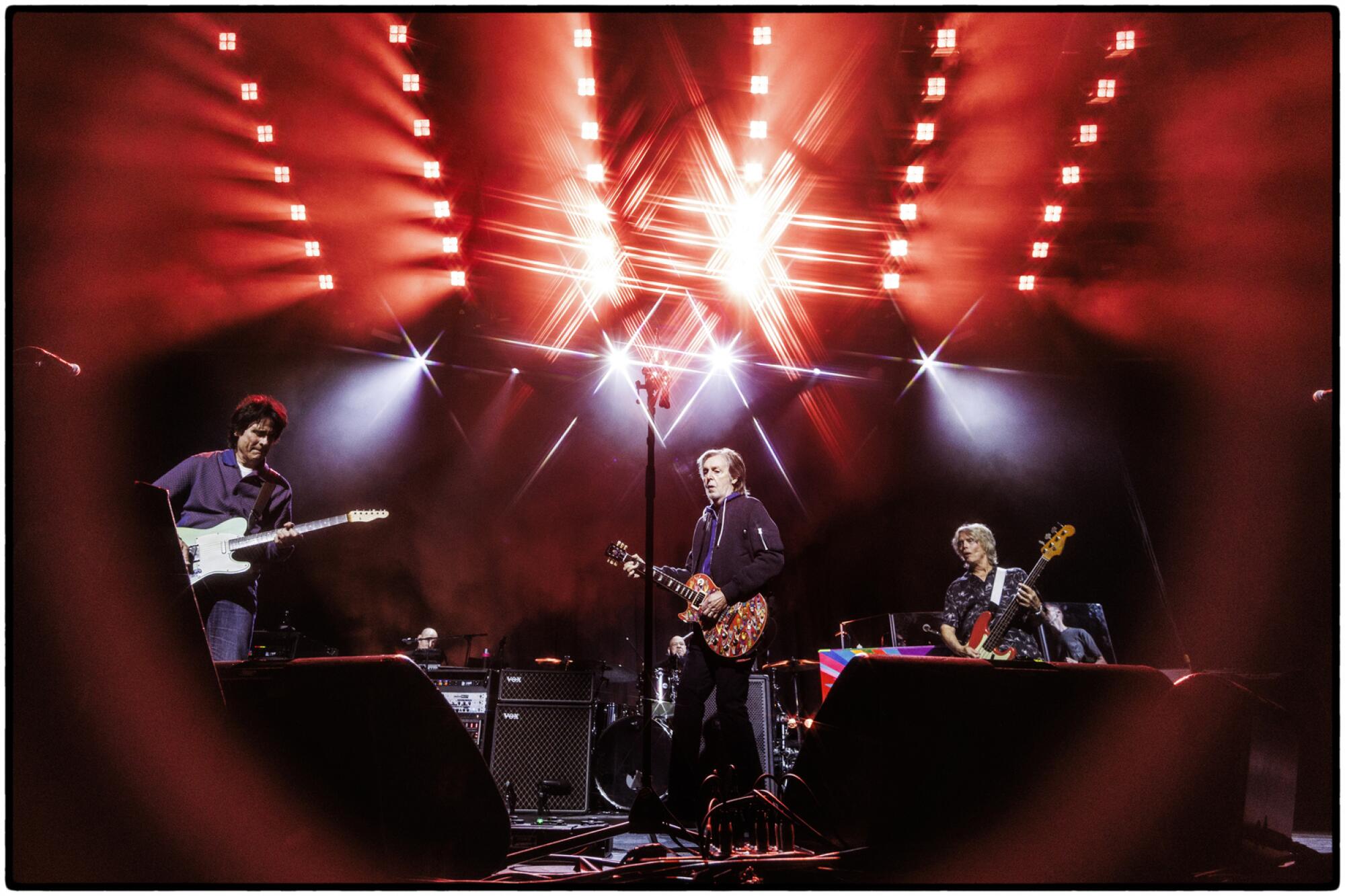
Paul McCartney at the Fonda: a rock legend in thrilling close-up
Paul McCartney sauntered onto the stage of the Fonda Theatre, took in the 1,200 faces before him — “I can see the whites of your eyes,” he said — then offered up a brief history lesson about where we’d gathered Friday night.
The Fonda, he told us, opened 100 years ago; back then, he added, it was called the Music Box.
“Cool little place, innit?”
At 83, McCartney is well into his cool-little-place era.
Last year the rock legend played a string of concerts at New York’s tiny Bowery Ballroom while in town for “Saturday Night Live’s” 50th anniversary; a few months after that, he hit the Santa Barbara Bowl as a kind of warm-up for the latest leg of his Got Back world tour.

Paul McCartney and his band during sound check for Friday’s show.
(MJ Kim)
Friday’s underplay — the first of two instant sell-outs at the Fonda — came as McCartney is drumming up interest in a new studio album he’ll release in May. Outside the venue, a double-decker bus was parked with signage advertising the LP, which is called “The Boys of Dungeon Lane” after a road in his Liverpool hometown.
But that hardly seemed like the purpose of the show itself, which lasted about an hour and 40 minutes and didn’t even include a performance of the album’s lead single. The truth is that Sir Paul genuinely appears to get a kick out of these intimate gigs — out of standing right in front of a crowd and doing the magic trick that is a song like “Get Back” or “Jet” or “Got to Get You Into My Life.”
And why wouldn’t he?
If a Paul McCartney concert in an arena or a stadium is a finely honed spectacle of boomer nostalgia and industrial-strength charm, one of his shows in a club or a theater is a chance to play music, which after six and a half decades still clearly turns his wheels.
You wouldn’t say the shows remind McCartney that he’s a regular guy. (Those six and a half decades have made him anything but.) What they might do, though, is remind him why he became so widely adored — valuable self-knowledge for an artist whose great subject has always been the transformative power of love.
Here, as in Santa Barbara, he and his seven-piece band (which featured three horn players) did a pared-down version of the most recent Got Back set, opening with a killer one-two punch — “Help!” into “Coming Up” — that alone said plenty about McCartney’s range and endurance.
“Let Me Roll It” had a funky swagger, while “Getting Better” chugged with cheerful insistence; “I’ve Just Seen a Face” showed off the group’s crisp harmonies and “Lady Madonna” its tight rhythmic interplay. After “Let ’Em In,” McCartney asked his band member Brian Ray to show off the song’s all-important bass line: a single note plucked over and over and over again.

Friday’s show was the first of two at the Fonda.
(MJ Kim)
He did a few other comic bits, including a memory of Tony Bennett singing without a microphone as a way to demonstrate the excellent acoustics of a concert hall — the punch line was that he later saw Bennett do the same thing at the Beverly Hilton — and some gentle ribbing of the folks sitting up in the “posh seats” of the Fonda’s balcony. Among them, McCartney pointed out, was Morgan Neville, director of the recent “Man on the Run” documentary about McCartney’s life in the aftermath of the Beatles’ breakup.
He also noted that his wife, Nancy Shevell, was in the house and dedicated “My Valentine” to her; truth be told, that one was a bit dreary, as was “Now and Then,” the so-called last Beatles song released in 2023 using machine learning to complete a scratchy demo left behind by John Lennon.
“Thank you, John, for writing that lovely song,” McCartney said afterward, which made it a little harder not to like.
In any event, there were more classics to come, not least a buoyant “Ob-La-Di, Ob-La-Da” and a “Let It Be”/“Hey Jude” twofer that inspired such a lusty singalong that McCartney probably could’ve gotten away with lip-syncing if he’d wanted to.
But of course he didn’t want to — that was kind of the whole point.

Channel Springwatch and immerse yourself in a nature reserve
CHANNEL Springwatch and immerse yourself in a nature reserve, says writer Mia Lyndon.
THE PAD
You’ll be able to call kingfishers, cranes and thousands of other beautiful birds your neighbours here.
Tucked inside Slimbridge Wetland Centre, just half an hour’s drive south of Gloucester, are five shepherd’s huts, each with their own pond and mini wetland, and sleeping between two and four people.
We spotted rabbits and foxes from our snug digs among the 100 acres of lush landscape, plus every hut is kitted out with a vintage-style oven, waterfall shower (with excellent water pressure, FYI) and spacious decking.
Owl-shaped curtain hooks and a cuddly mallard doorstop only add to the charm.
EXPLORE
Make the most of your unlimited access to the wetland centre and feed wildfowl on Swan Lake, before bobbing along on an hour-long canoe tour, £10 per person, to get closer to diving ducks and water voles.
Or hunt down egrets, stalks and grass snakes with the help of friendly driver Chris on a Wildlife Safari – £5 per adult, £3.50 per child (wwt.org.uk).
Find yet more stunning views at Miserden Gardens and wander past elegant topiary, lush fruit trees and herds of roaming deer in this exquisite 17th-century walled garden. Entry costs £12 and under-16s are free (Miserden.org).
Meanwhile, thronging with vibrant indie stores, quaint Stroud is a short drive away.
Pop into the buzzy Malthouse Collective for two storeys of vintage clothes, hand-poured candles and fab local art (Themalthousecollective.co.uk), then hit Made In Stroud for pretty pottery and jewellery (Madeinstroud.co.uk).
Alongside a sweet miniature railway, Stroud’s Stratford Park is home to the Museum In The Park – check out local artefacts, oil paintings and even a Gloucestershire Stegosaur fossil. Entry is free (Museuminthepark.org.uk).
REFUEL
Hunker down with a tasty (and very generous) Full Monty English brekkie, £13, at The Tudor Arms, which sits beside the Gloucester And Sharpness Canal and is just a 10-minute stroll from your bed (Thetudorarms.co.uk).
For a laid-back yet impressive dinner, hike over to The George Inn for dishes such as succulent venison steak with chocolate and red wine sauce, £25, followed by tangy home-made blackcurrant and orange cheesecake, £7 (Quality-inns.co.uk).
Or gaze across rolling valleys at The Bell Inn at Selsley, while tucking into fluffy smoked Hereford cheese croquette, £19, and warming cinnamon milk pie, £9.
Don’t miss the Romanian Calusari white, £6.50 a glass – it’s zippy, fresh and absolutely delicious (Thebellinnselsley.com).
Elsewhere, there are cosy cafes aplenty in Stroud, but the irresistible ginger and date crumble cake, £3.90, at buzzy Woodruffs helps it reign supreme (Woodruffsorganiccafe.co.uk).
Book it
Stays for two at Warblers’ Meadow, Slimbridge, cost from £150 per night (wwt.org.uk/wetland-centres/slimbridge).
Early Balloting Means Early Problems
A record wave of early voting promises to cut crowding on election day, but the trend has also front-loaded this year’s election with problems — long lines at early-voting stations, missing absentee ballots and controversy over retooled rules for early balloting.
Analysts and opinion surveys project that more than 26 million of an estimated 120 million voters might cast their ballots before the traditional start of polling — at midnight on election eve in Dixville Notch, N.H.
Despite hopes that early voting would reduce anxiety after a highly contentious 2000 election, a recent survey found that 40% of Americans believe that most of the problems exposed in that election have not been corrected. And nearly half of Americans in another survey said they think this year’s results will be challenged in court.
Many local election officials share those fears. Already overtaxed by voting that now lasts for weeks, some doubt that their work will be finished Tuesday.
“It will not be over on Nov. 2, and you can put that on the record,” said Susan Miller, elections director for Colorado’s Jefferson County. “We have 12 days to certify provisional ballots. In Colorado, there is more than likely to be a recount.”
Miller says she has already been told about four or five groups that might file lawsuits to challenge results in her county, which includes the town of Golden. She worries that “another Florida” — with its 36-day recount and disputed ballots — could become a self-fulfilling prophecy.
“We’ve been working six-day weeks, 12-, 14-hour days for a month,” Miller said. “When the public calls and says they don’t trust us, it breaks my heart…. We’re at the point where we don’t care who wins. We just want him to win by a landslide. Then we don’t have to recount the ballots.”
The Washington-based Committee for the Study of the American Electorate has projected turnout as high as 60% this year (compared with 54% in 2000), which would mean voting by more than 120 million Americans. Twenty-two percent of them, or more than 26 million, planned to cast votes before Tuesday, according to the National Annenberg Election Survey.
That trend has been evident across the country, in states where the presidential election is close and where it is not, such as California.
In Palm Beach County, Fla., requests for absentee ballots have more than doubled, and retirees and others have waited as long as two hours in line at satellite voting stations. Iowa has seen a nearly 55% jump in absentee ballot requests. New Mexico’s secretary of state expects half of her votes to be cast before Tuesday. The number of residents on the Hawaiian island of Oahu asking for mail-in ballots has spiked by nearly 82%.
In California, an enormous jump in absentees has been led by Orange County, with an increase of 200,000 to about 450,000. Los Angeles County has seen a more modest 18% increase, to 740,000, said Conny McCormack, the county’s registrar-recorder.
Officials nationwide say the deluge of early voting has them in effect running two elections — requiring extra staffing and long shifts to handle absentees and then a second push to prepare election day polling places.
“It’s time-consuming and tiring,” McCormack said.
Most of those voting by mail will avoid such a crunch and should have their ballots counted without glitches, experts said. But there already have been some trouble spots.
In Broward County, north of Miami, officials have been deluged with hundreds of complaints from voters who say they never received their absentee ballots. U.S. Postal Service investigators were trying to find an undetermined number of the 60,000 ballots the county mailed out Oct. 7 and 8.
“That is something beyond our control,” said the county’s deputy supervisor of elections, Gisela Salas. “We really have no idea what’s going on.” Salas advised voters who did not receive their ballots to go to the county’s early-voting stations.
But Florida’s voting stations — at libraries, city halls and other civic buildings — have not necessarily made balloting easier.
In Del Rey Beach, Judy Sternberg nearly fainted after a two-hour wait in the sun. Paramedics came to her aid, but Sternberg, 69, was not about to go home.
“They really wanted me to come back a day later,” said Sternberg, who voted for President Bush. “I said, ‘I am not coming back. I am voting.’ ”
Attempts to clarify rules since the 2000 election have not eliminated disputes, particularly over how mail-in ballots should be treated. One of the most emotional and politically charged disagreements has been over military ballots from overseas.
Republican Sen. Rick Santorum of Pennsylvania has been pressuring Democratic Gov. Ed Rendell to accept ballots from military personnel up to 15 days after the election.
Rendell has declined, saying he had already attended to the issue by making special accommodations for two counties, Venango and Huntingdon, which have presented evidence that military personnel got their ballots late. Those service members got new absentee ballots by express mail, with prepaid express mail envelopes in which to send their completed ballots back.
A federal judge last week backed Rendell, saying that overseas military voters should cast their ballots by Tuesday.
But other states, including Arkansas, Colorado and Florida — will allow absentee ballots from overseas to arrive at elections offices as much as 10 days after the election, as long as they were postmarked by Tuesday.
Another group that has complained about access to absentee ballots is college students. Although well over half of collegians this year plan to vote absentee, according to a Harvard University study, six states have laws that can make that difficult. In Louisiana, Tennessee, Michigan, Illinois, Nevada and West Virginia, voters must cast their first ballot in person, according to election watchers at Rock the Vote.
That means young people from those states who attend out-of-state universities may not get to vote, said Hans Riemer, Washington director for Rock the Vote.
“This is really made to disenfranchise college students,” Riemer said.
An additional concern could be presented to students in New Hampshire, who are warned on the secretary of state’s website that establishing their residence in the Granite State could affect insurance and some types of financial aid.
“This is a totally outrageous, preposterous, outlandish intimidation of young people,” Riemer said of state restrictions that affect students.
Not surprisingly, supporters of both Bush and Sen. John F. Kerry have claimed their side is getting the best of the early voting.
In most jurisdictions it is impossible to tell who is right. But a few states record the party affiliation of those voting absentee or at early voting locations.
In Polk County, the most populous in hard-fought Iowa, Democrats had a nearly 2-to-1 edge in early ballots cast — 32,924 to 17,340.
In Los Angeles, McCormack was crossing her fingers that voters were prepared for a long ballot, jammed with state propositions. If not, she predicted, “it could be really ugly.”
Gary Smith, the Forsyth County, Ga., director of elections, said many of his colleagues had taken to reciting what he called the “night-before prayer”:
“Dear God, don’t let this election be close.”
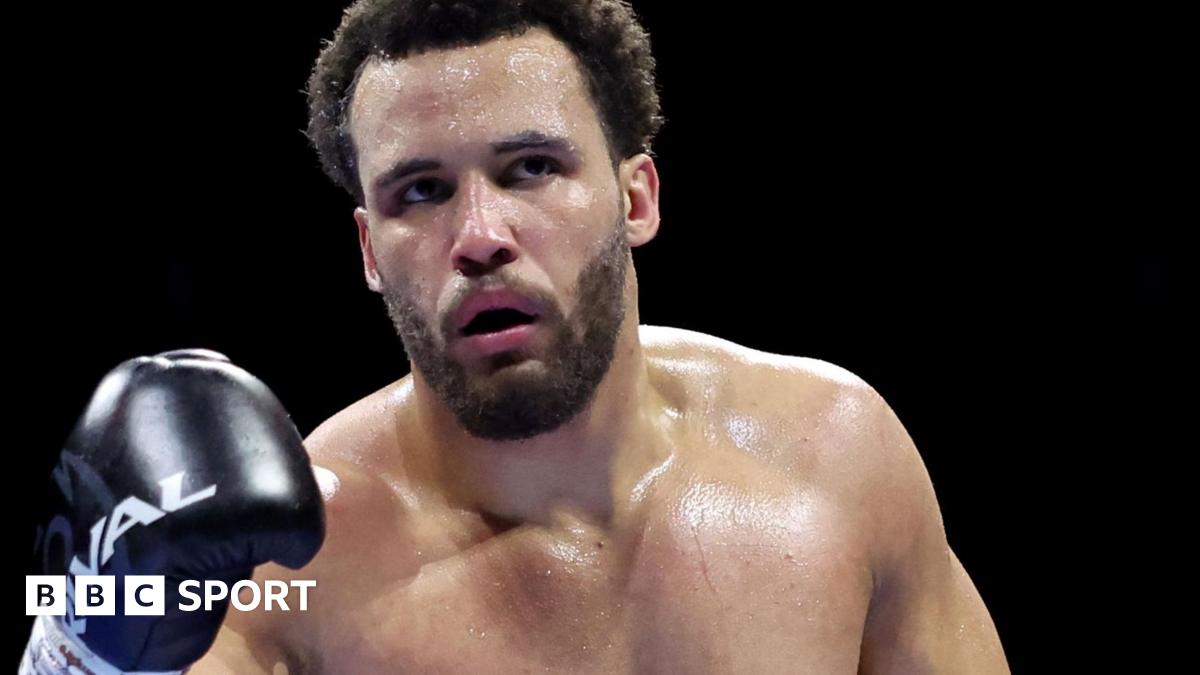
Itauma vs Franklin: Moses Itauma wins step-up fight with crushing fifth round stoppage
Around 16,000 fans packed into the Manchester arena bought into the Itauma buzz, greeting him with a warm roar as he was walked to the ring by British rapper Meekz.
Itauma – the prodigy who was sparring seasoned professionals while still at school – was in wonderful form from the first bell, using his speed and variation to send Franklin backtracking.
In truth, the knockout felt inevitable even when 32-year-old Franklin managed to recover from a third-round right hand that sent him crashing to the floor.
Working behind a jab and picking his shots wisely, Itauma avoided anything reckless. “It’s a breakdown job,” trainer Ben Davison aptly told him between rounds.
This was another night that thrilled and told us a little more about the rising heavyweight.
Itauma’s devastating power is undeniable, once again on display as he dispatched a seasoned opponent inside the first half of the fight.
But the bigger questions remain.
His chin has yet to be properly tested. Franklin landed a right in the fourth, and Itauma just smiled, but he will face bigger punches in the future.
And while the knockouts keep coming, he is still unproven beyond six rounds, with his engine and endurance untested at the highest level.
Promoter Warren expects Itauma to fight for a world title this year.
Within boxing circles, that talk may be slightly premature but Itauma is keeping pace with two-time world champion Anthony Joshua.
At the same stage of his career, Joshua beat Gary Cornish to register a 14th stoppage and was selling out the O2 Arena. Itauma is on a similar trajectory, almost filling the Co-op Live Arena – and arguably facing higher-level opponents along the way.
The key step-up for Joshua came in his 15th fight: a win over Dillian Whyte for the British title, which developed his resolve and enhanced his profile.
By his 17th, he was world champion after defeating Charles Martin.
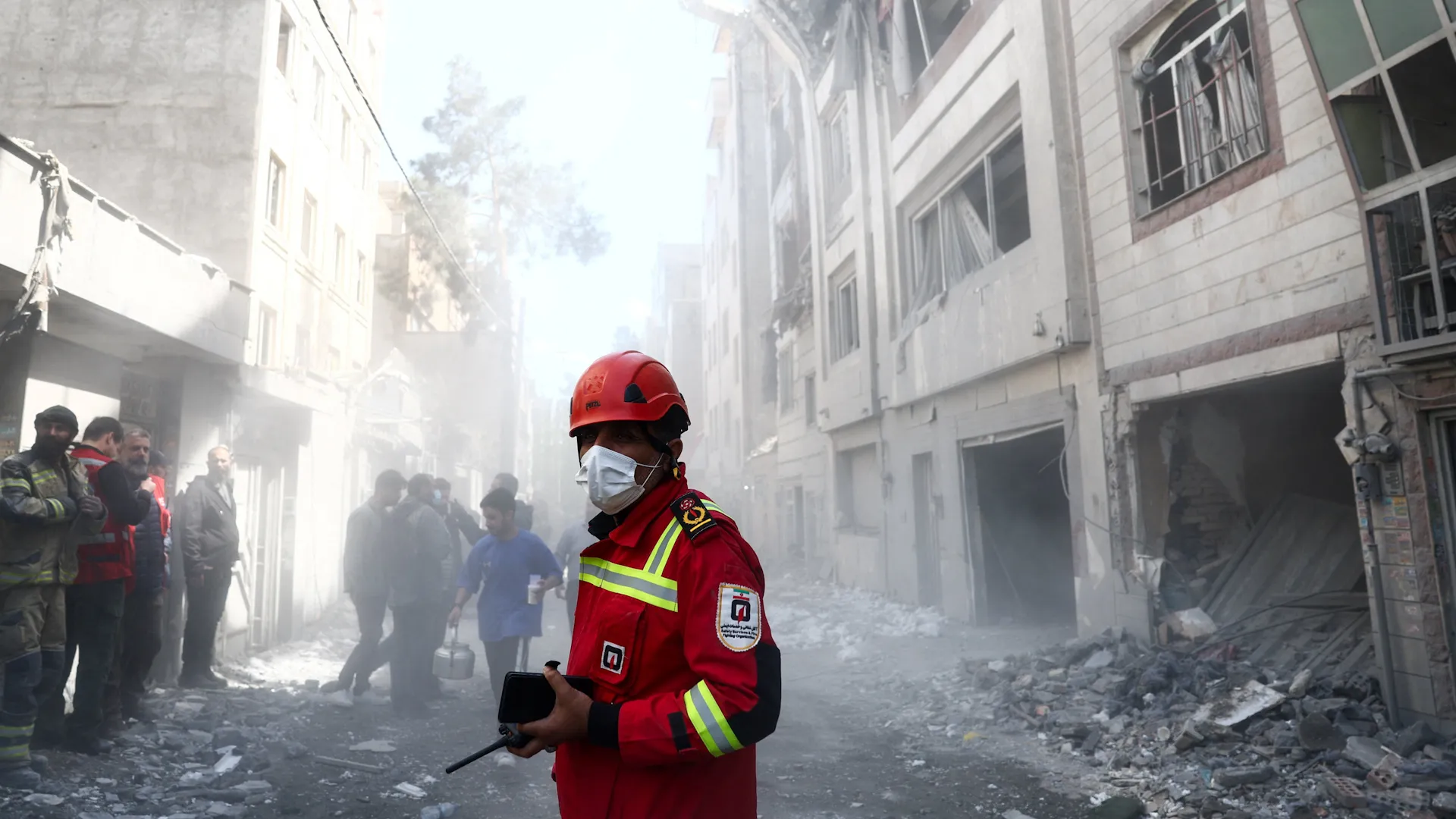
Key moments in first month of US-Israeli war on Iran | Newsfeed
One month after US and Israel launched strikes on Iran, the conflict has escalated across the Middle East. From leadership assassinations to economic disruption, the war is reshaping the region and destabilising the global economy.
Published On 28 Mar 2026
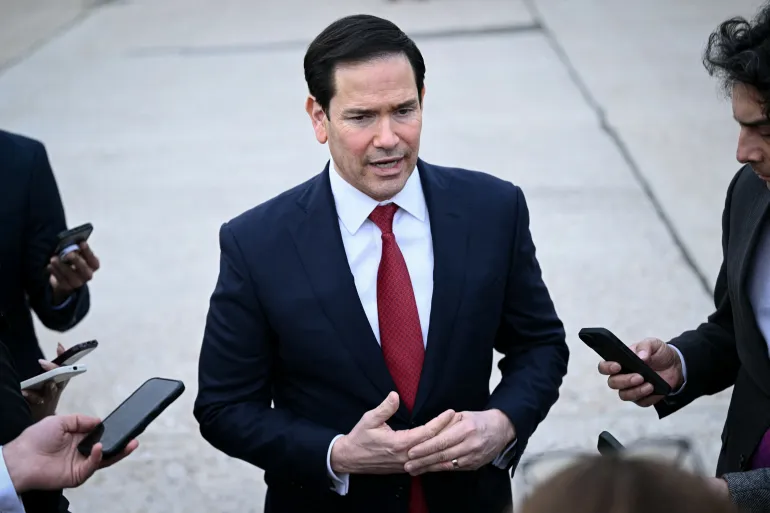
Vice President JD Vance tops CPAC’s straw poll to be US president in 2028 | Elections News
For the second year in a row, United States Vice President JD Vance has topped the straw poll at the 2026 Conservative Political Action Conference (CPAC), one of the biggest right-wing gatherings in the country.
The poll is a bellwether – albeit, not necessarily an accurate one – for who might ultimately become the Republican nominee for the next presidential race.
Recommended Stories
list of 3 itemsend of list
During this year’s four-day conference, attendees were asked which candidate they would prefer at the top of the Republican Party ticket for the 2028 election.
The results were revealed on stage Saturday. Vance had swept up 53 percent of the votes cast by nearly 1,600 attendees.
But rising up the ranks was another senior official under US President Donald Trump: his top diplomat, Secretary of State Marco Rubio. A former senator from Florida, Rubio notched 35 percent of the vote.
It was a markedly improved standing for Rubio, who tied for fourth place at last year’s CPAC straw poll.
That poll, taken within weeks of Trump starting his second term, showed Vance with 61 percent support, former Trump adviser Steve Bannon with 12 percent, and Florida Governor Ron DeSantis with 7 percent. Rubio and Representative Elise Stefanik both earned 3 percent.

Attendance at CPAC, an annual conference, tends to skew away from the political centre and farther to the right.
Speakers at this year’s conference included Senator Ted Cruz of Texas, Iranian opposition leader Reza Pahlavi, and Eduardo and Flavio Bolsonaro, the sons of Brazil’s former far-right president Jair Bolsonaro, who was imprisoned last September for attempting to subvert his country’s democracy.
But this year’s straw poll comes at a critical time for the Republican Party.
Less than eight months remain until November’s midterm elections in the US, and Republicans are hoping to defend their congressional majorities at the ballot box.
Trump, long the standard-bearer for his party, has seen his approval numbers sink since his return to office in 2025. Earlier this week, a survey from the news agency Reuters and the research firm Ipsos found that only 36 percent of US citizens approved of his job performance, a new low.
The ongoing war in Iran and economic frustrations, including rising gas prices linked to the conflict, are among the factors contributing to the slump.
While Trump has teased he may seek a third term, US law prevents modern presidents from serving more than two. His second presidency is set to expire in 2028.
That leaves an open question as to who may succeed the 79-year-old Republican.
Vance, a veteran and former single-term senator from Ohio, is seen to represent a more isolationist branch of Trump’s “Make America Great Again” (MAGA) base. He has generally been opposed to US involvement in foreign conflicts, though he has defended Trump’s decision to join Israel in joint strikes on Iran.
Rubio, meanwhile, has a longer political resume than Vance and is seen to be more hawkish towards regime change, particularly in his family’s ancestral home of Cuba. He served as a senator for Florida from 2011 until his unanimous confirmation as secretary of state in 2025.
Both men had been critical of Trump before joining his administration. Vance once called Trump “unfit” for office, and Rubio derided Trump as a “con artist” and an “embarrassment” when he was a rival candidate for the 2016 Republican presidential nomination.

CPAC tends not to survey participants about who should be president when a Republican is already in the Oval Office.
But the straw polls it held before and after Trump’s first term, from 2017 to 2021, have shown a noticeable realignment in the Republican Party.
In the decade leading up to the 2016 election – Trump’s first successful campaign for office – moderate Republican Mitt Romney and libertarian Rand Paul consistently topped the CPAC straw polls.
Ever since his first term, however, Trump has trounced the competition.
Despite his 2020 election defeat, he still topped the straw poll in 2021, with 55 percent support, and his numbers climbed each successive year, through to his re-election in 2024.
Experts have noted that the Republican Party has largely consolidated around Trump’s politics, with the few remaining moderate and critical voices increasingly marginalised.
The CPAC straw poll, however, is not always accurate. Ahead of Trump’s victory in 2016, the majority of straw poll participants backed Senator Cruz of Texas to be the next president. Trump came in third place with 15 percent support, trailing Rubio at 30 percent.

Tommy Fury risks pregnant Molly-Mae’s wrath after announcing huge fight the day after her due date
TOMMY Fury has risked pregnant Molly-Mae’s wrath after announcing a huge fight the day after her due date.
Last month, the Love Island icon, 26, thrilled fans when she announced that she and Tommy Fury, also 26, were expecting their second child together.
Tommy has now taken to Instagram to announce that he is taking on Eddie Hall on June 13 at the AO Arena Manchester.
Tickets go on sale Sunday and it will be shown live exclusively on DAZN.
The post has received over 130k likes and almost 1500 comments as fans eagerly await the outcome of the fight.
One boxing fan wrote: “Let’s Go!”
Another said: “This is wild!”
While a third said: “I’m here for this.”
However, a fan asked Molly-Mae: “Does this mean Tommy is missing the birth of your second child?”
Since revealing the couple’s big news last month, where Molly-Mae said she was already six months pregnant, she has been teasing fans with little snippets and clues about her unborn baby.
In her latest Instagram post called “bits and bobs” she shared a slew of snaps of her second pregnancy journey.
This included pics with her and Tommy’s first child, Bambi, three, plus stunning baby bump photos.
But it was the photo of her baby scan that really stood out and revealed her due date.
In the sweet snap, the scan had been flashed up on the big screen in their movie room, with Molly and Tommy’s daughter pointing to it.
But if you look closely at the photo, it gives away when the influencer’s baby will be born.
The picture revealed she was 24 weeks and 6 days pregnant when she had the scan on February 26.
This therefore means her due date is June 12 which is only one day before Tommy’s big fight.
Molly-Mae recently raised concerns when she visited Ash End House Children’s Farm with Bambi where she shared a photo of the “three days old” lambs
As she showed off some young lambs on her Instagram stories, it sparked worry as there is a risk of contracting disease from animals who’ve recently given birth.
.The Children’s Farm has a section on its website dedicated to safety and measures pregnant women can take to reduce the risk of infection.
Her farm trip comes after she revealed she’s having trouble breathing during her pregnancy and is concerned it might lead to her becoming addicted to nasal sprays.
Molly went on to admit she is not suffering from a cold or any illness but still finds herself feeling as though she cannot breathe in the morning – leading to her reaching for the sprays every day.
She said: “I don’t have a cold. I don’t feel ill but I wake up and I can’t breathe.”
But she assured fans she was feeling well within herself and her pregnancy as she nears her due date.
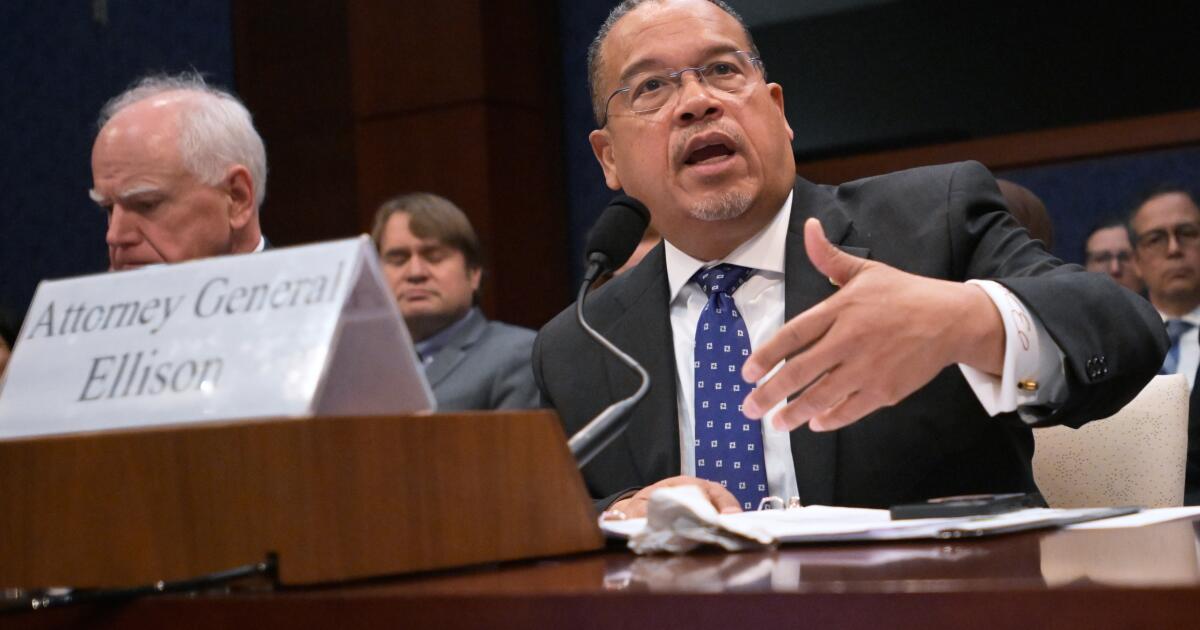
Judge dismisses DOJ suit over Minnesota tuition for undocumented students
Minnesota public universities can continue to offer in-state tuition and scholarships to some immigrants in the country without legal status, a federal judge ruled Friday, dismissing a lawsuit filed by the U.S. Justice Department last summer that attempted to halt the programs.
The decision follows a series of clashes between the federal government and Minnesota officials over immigration enforcement.
U.S. District Judge Katherine Menendez said in her decision that the federal government failed to prove that programs offering in-state tuition for immigrants without legal status discriminated against U.S. citizens.
The federal lawsuit named Democratic Gov. Tim Walz and Democratic state Atty. Gen. Keith Ellison as defendants, along with the state’s Office of Higher Education. It said Minnesota law discriminates against U.S. citizens because it provides in-state tuition and scholarships to students living in the U.S. illegally if they attended a Minnesota high school for three years, and U.S. citizens who attended schools outside of the state cannot receive the same benefits. States generally set higher tuition rates for out-of-state students.
The federal government said those state statutes “flagrantly” violate a federal law that prevents states from providing preferential benefits to immigrants in the U.S. illegally regardless of whether or not they meet residency requirements.
“No state can be allowed to treat Americans like second-class citizens in their own country by offering financial benefits to illegal aliens,” U.S. Atty. Gen. Pam Bondi said in a statement after the lawsuit was filed last year.
Menendez said the Justice Department misinterpreted the law, enacted during the Clinton administration, because anyone who attended a Minnesota high school for at least three years are granted the same public benefits, regardless of their U.S. residency or immigration status.
She also said the federal government didn’t have standing to sue the state attorney general or governor since neither has the power to change the state laws that determine tuition eligibility.
Ellison celebrated the decision in a statement Friday.
“Today, we defeated another one of Donald Trump’s efforts to misconstrue federal law to force Minnesota to abandon duly passed state laws and become a colder, less caring state,” he wrote.
The funding for immigrants without legal status represents an “investment for our state to do everything we can to encourage a more educated workforce,” Ellison wrote.
The U.S. Justice Department didn’t respond to an email request for comment Friday.
The department has filed similar lawsuits this month against policies in Kentucky and Texas. Last week, a federal judge in Texas blocked that state’s law giving a tuition break to students living in the U.S. illegally after the state’s Republican attorney general, Ken Paxton, said he supported the legal challenge.
In discussing the Texas case last year, Bondi suggested more lawsuits might be coming.
Florida ended in-state tuition eligibility for immigrants living in the U.S. illegally. At least 22 states and the District of Columbia have laws or policies granting the in-state benefit, according to the National Immigration Law Center. Those states include Democratic-led California and New York, but also Republican states including Kansas and Nebraska.
According to the center, at least 13 states in addition to Minnesota allow immigrant students without legal status to receive financial aid and scholarships on top of in-state tuition.
Riddle writes for the Associated Press.
Luka Doncic will serve one-game suspension for techs on Monday
The NBA gave Luka Doncic one mulligan. The league wouldn’t grant the Lakers superstar a second.
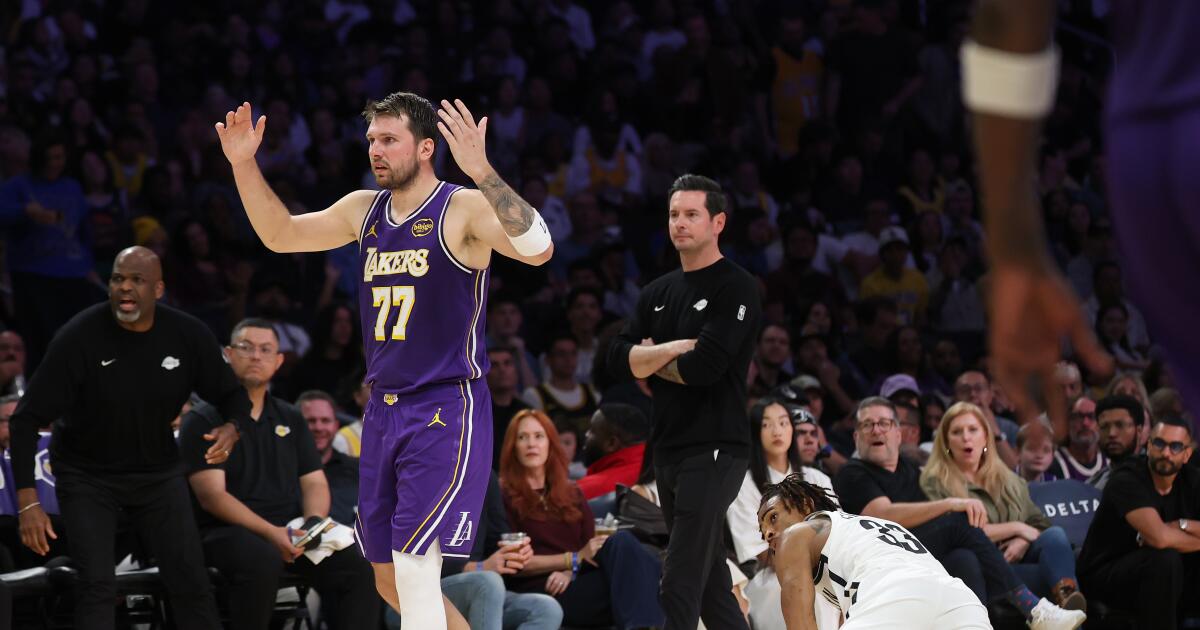
Doncic will serve a one-game suspension because of technical foul accumulation, the NBA announced Saturday, sidelining him for Monday’s game against the Washington Wizards after he picked up his 16th technical foul of the season in the Lakers’ win over the Brooklyn Nets on Friday.
Doncic said he was trying to get away from Brooklyn’s Ziaire Williams when he pushed the Nets forward aside with 5:12 remaining in the third quarter. Doncic had just been called for an offensive foul while the Lakers were attempting to inbound the ball. Williams was shouting in Doncic’s direction. Doncic attempted to move past Williams and the 24-year-old from Lancaster then waved his arm behind him and slapped Doncic in the throat. Both were given technical fouls.
Doncic said referees told him his push was “exaggerated.”
“Which was obviously [not the case],” said Doncic, who scored 41 points with eight rebounds and three assists in the win.
This is the second time in a week that Doncic has faced the mandatory suspension after getting his 16th technical foul, but he avoided the fate after the NBA rescinded a technical he picked up against Orlando on March 21. The reversal kept Doncic available for the Lakers’ matchup with Eastern Conference-leading Detroit on March 23 in which Doncic scored 32 points, but missed the potential game-tying three at the buzzer of a tense 113-110 Lakers loss that ended a nine-game winning streak.
Monday’s game will likely not have the same drama.
The Wizards (17-56) have lost 17 of their last 18 games. The only win came against the Utah Jazz, another team that’s attempting to position itself for the lottery more than the playoffs. Washington will be without Trae Young (quad) and Anthony Davis (finger), the team’s two major midseason acquisitions.
With another bottom-feeding team coming to Crypto.com Arena, Doncic and the Lakers might actually benefit from resting the superstar. He played through left hamstring soreness Friday, and the Lakers (48-26) host the playoff-bound Cleveland Cavaliers on Tuesday. The days between Friday’s win and Monday’s game will be the Lakers’ first two-day break since the All-Star Game.
Doncic, the NBA’s leading scorer, has charged into the most valuable player conversation by helping lift the Lakers into third place in the Western Conference. He has scored 30 or more points in 12 consecutive games, the longest such streak for his career.
The Lakers have won 15 of their last 20 games with Doncic averaging 35.5 points per game during the span. With 102 steals on the season, including three against the Nets, Doncic also became the first Laker since Kobe Bryant in 2012-13 averaging 30 or more points per game with 100 or more total steals.
The Lakers could also be without guard Marcus Smart, who has missed the last three games because of a right ankle contusion. He also suffered a hip injury in a separate fall against Orlando, but he is showing improvement and remains day-to-day, Lakers coach JJ Redick said Friday.
Nepal’s former prime minister arrested over protest crackdowns
The former prime minister of Nepal was arrested early Saturday for his role in protesters being killed by police during youth-led rallies in September 2025 that spread nationwide over social media bans, government corruption and a weak economy. File Photo by Narendra Shrestha/EPA
March 28 (UPI) — Nepal’s former prime minister, KP Sharma Oli, was arrested on Saturday for crackdowns during protests last year, which more than 70 people being shot by police.
Former Home Minister Ramesh Lekhak was also arrested for the response to the so-called Gen Z protests, which started after the government shutdown access to social media sites and inspired larger protests across the country over government corruption and a faltering economy.
Oli, whose administration deployed the Nepali Army after violence as police employed brutal tactics to quell the initial rallies, including shooting people in their teens and early 20s, resigned as a result of the protests.
Oli and his attorneys have accused the new government of Balendra Shah and his cabinet has said that the arrests were unnecessary and illegal because neither is likely to flee the country.
“No one is above the law,” new Home Minister Sudan Gurung wrote on Instagram, The Guardian reported.
“We have taken former Prime Minister KP Sharma Oli and former Home Minister Ramesh Lekhak under control,” said Gurung, who was a significant figure in the protests. “This is not revenge against anyone, just the beginning of Justice.”
Shah, a former hip hop artist, ran partially on promises of holding former government officials accountable for the crackdowns and allowing police to shoot protesters, The BBC reported.
The day after police shot protesters at the youth-led rallies, the protests spread, with government offices set on fire, even more protesters killed and Oli’s resignation.
A government panel that investigated the protests recommended that Oli, Lekhak and other officials be tried for their roles in the deaths.
Although the panel’s report does not show that police were ordered to fire on protesters, it said that “no effort was made to stop or control the firing and, due to their negligent conduct, even minors lost their lives.”
If convicted, the men face up to 10 years in prison.

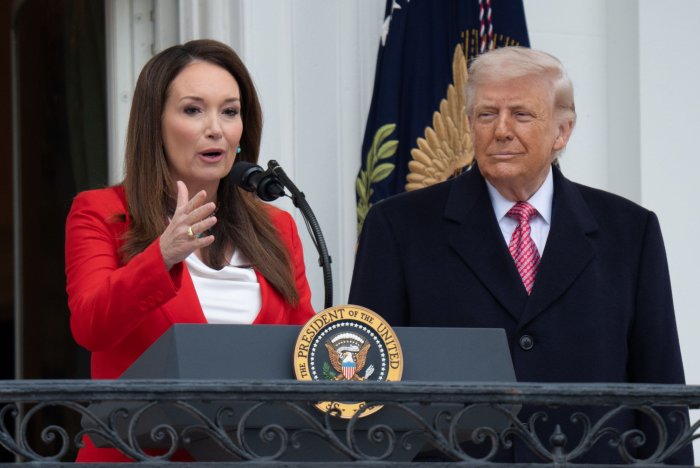
President Donald Trump stands with U.S. Secretary of Agriculture Brooke Rollins during an event celebrating farmers on the South Lawn of the White House on Friday. Photo by Aaron Schwartz/UPI | License Photo
Reza Pahlavi pledges to ‘make Iran great again’ at 2026 CPAC conference | US-Israel war on Iran News
Iranian opposition leader calls on Trump administration to ‘stay the course’ as the US and Israel continue to wage war on Iran.
Published On 28 Mar 2026
Amid questions about the future of Iran’s government, the son of the former shah has pitched himself to a right-wing summit in the United States and received a raucous welcome.
Reza Pahlavi spoke at the Conservative Political Action Conference (CPAC) in Texas on Saturday, urging US President Donald Trump not to cut a deal with Iran and instead seek regime change.
Recommended Stories
list of 3 itemsend of list
“Can you imagine Iran going from ‘Death to America’ to ‘God Bless America’?” the self-styled crown prince asked his audience in Grapevine, Texas.
“President Trump is making America great again. I intend to make Iran great again,” he added, receiving a standing ovation from the crowd.
His remarks came on the one-month anniversary of the US and Israel’s decision to launch a war against Iran. As the conflict enters its second month, at least 1,937 people in Iran have been killed, and tens of thousands more injured, with no end to the fighting in sight.
Pahlavi has become a central opposition figure in the Iranian diaspora, with a loyal base of supporters who often carry his image, along with Iran’s pre-revolutionary flag, at protests around the world.
During his speech, some in the audience chanted, “Long live the king!”

While some in the Iranian diaspora have expressed reservations about the US-Israeli attacks and their effect on the future of Iran, Pahlavi has emerged as an outspoken supporter of Trump, aligned with the administration’s most hawkish figures.
“This regime in its entirety must go,” he said on Saturday.
Analysts have warned that the Iranian government is not likely to collapse and could emerge from the conflict more hardened than before. Some exiles, meanwhile, have been criticised for lending their voices to support the US-Israeli war despite the heavy toll on Iranian civilians.
Trump has himself previously downplayed the possibility that the son of the former shah, who was expelled from Iran during the country’s 1979 revolution, could play a central role in Iran if the current government were to collapse.
Earlier this month, Trump said that Pahlavi “looks like a very nice person“, but indicated that the shah’s son lacks popularity in Iran.
“It would seem to me that somebody from within, maybe, would be more appropriate,” Trump had said.
Divides within the US right over the war in Iran were also in evidence at CPAC. Polls suggest that, while the war is widely unpopular among US voters, Republicans support it by large margins.
In a Pew Research Center poll, for instance, 71 percent of Republican voters felt the US had made the right decision to attack Iran. Overall, among voters regardless of party, 59 percent opposed the initial strikes.
Still, a handful of influential voices on the US right, such as Tucker Carlson and Steve Bannon, have emerged as vocal critics of the war. Younger activists have also expressed frustration with what they see as a betrayal of Trump’s promise to avoid military adventures overseas.
“We did not want to see more wars. We wanted actual America First policies, and Trump was very explicit about that,” Benjamin Williams, a 25-year-old marketing specialist for Young Americans for Liberty, told The Associated Press. “It does feel like a betrayal, for sure.”

‘I work in TV and the Britain’s Got Talent blunder was just a secret ploy’
A TV insider has shared what they claim is the real reason behind a ‘blunder’ on ITV’s Britain’s Got Talent

BGT fans spotted a blunder during a magician’s act last week(Image: ITV)
A TV insider has revealed what he claims is a behind-the-scenes Britain’s Got Talent secret ploy following a ‘blunder’ during a recent episode of the ITV programme.
The hit talent competition recently made a triumphant return to our screens as judges Simon Cowell, Amanda Holden, Alesha Dixon and KSI reunited with presenters Ant and Dec in the hunt for Britain’s next talented superstar.
Contestants have pulled out all the stops in an attempt to impress the panel and secure a life-changing £250,000 cash prize and a coveted slot at the Royal Variety Performance.
Amongst the numerous performers who have graced the stage so far is magician Fabian Fox and BGT fans know full well that magic acts are amongst the most-loved performances on the programme.
Last weekend the young magician introduced himself to judges Amanda Holden, KSI, Alesha Dixon and guest judge Stacey Solomon, while two large platforms with curtains attached stood behind him on the stage, reports Belfast Live.
However, his trick sparked conversation amongst fans as he ‘transported’ a woman and man from one of the platforms to the other using his own powers.
The way viewers were going to be able to tell that it was the same woman transported onto the platform was that she was going to be holding one white sports trainer at the point of teleportation.
Yet viewers watching at home were swift to notice an editing blunder as initially the lady was holding a trainer with the laces undone, then, when she “teleported” to the other platform, the laces were mysteriously tied up.
According to TikTok user @adamjamesonTV, who works in television, it was no accident and programme producers did that deliberately to attract more audiences.
Mirror has approached ITV for comment.
In footage shared to his account, he displayed an image of the ‘error’ and stated: “So everybody thinks this was an editing blunder on Britain’s Got Talent but they’re wrong.
“First of all, this edit is seen by so many people before it actually gets broadcast. There’s no way on earth they missed it.”
He went on: “Second of all, the fact that they kept this blunder in means that he’s definitely not going to win the show. Their argument will be that they’re showing the act as it was and therefore they’re doing nothing to manipulate the performance.
“However, their real reason is the fact that you guys will all stick it on social media and talk about the show. If you’re talking about the show, the show gets more viewers and the traction gets bigger. Essentially, he’s just become another pawn in Britain’s Got Talent’s machine.”
He concluded: “If they wanted him to win, they would have cut this bit out, gone to a wide shot and nobody would have known. But whether you like it or not, Britain’s Got Talent is not about having a fair talent competition. It’s about viewers and viewers equals money.”
Britain’s Got Talent airs Saturday nights on ITV and ITVX.
At CPAC, a young-old conservative divide over Iran war
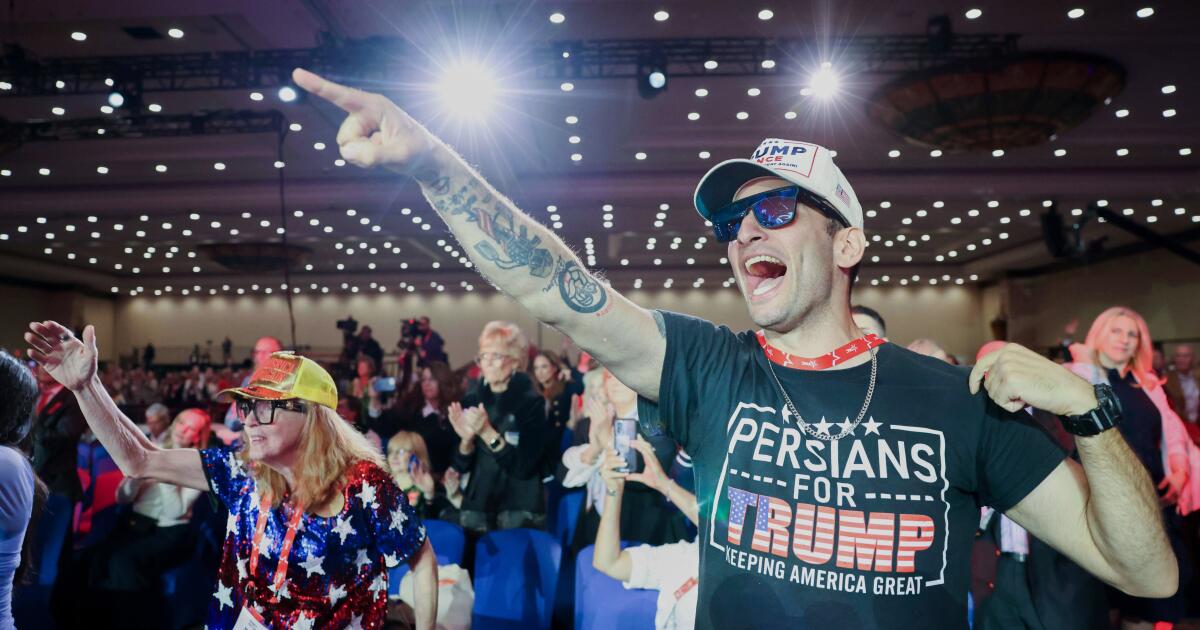
GRAPEVINE, Texas — A generational divide over the Iran war surfaced between older attendees and their political heirs at this year’s Conservative Political Action Conference, as the group’s leaders pleaded for unity in a challenging midterm election year for Republicans.
Younger conservatives at CPAC, which concluded Saturday, spoke of disappointment and even betrayal over President Trump’s war against Iran, saying in interviews with the Associated Press that the president’s actions run counter to his many pledges to oppose foreign entanglements.
Meanwhile, older conservatives were looking past Trump’s campaign criticism of military action to achieve regime change, arguing that the war in Iran is a pragmatic act necessitated by threats to the United States.
The bright dividing line emerged in conversations with a dozen participants on either end of the age spectrum who gathered this week for the annual meeting of conservatives, being held outside Dallas. That split could reflect flagging enthusiasm for Trump among some younger voters, a potentially troubling sign for Republicans heading into midterm elections and for the conservative movement as it looks beyond Trump’s tenure.
“We did not want to see more wars. We wanted actual America-first policies, and Trump was very explicit about that,” said Benjamin Williams, a 25-year-old marketing specialist for Young Americans for Liberty. “It does feel like a betrayal, for sure.”
Worries about sending troops to Iran
Williams, from Austin, Texas, said he worries about his friends in the military, especially his Air Force officer brother. More broadly, he sees the war as an unnecessary disruption to the stability in the Middle East that could have long-term negative effects on the U.S. economy.
“Trump’s rhetoric was very important for people of my generation,” Williams said.
Auburn University sophomore Sean O’Brien’s support for Trump has slipped, especially with his talk of sending U.S. ground troops into Iran. “I’m not happy,” he said.
Sending troops into Iran, he said, “would be full betrayal.”
With at least 1,000 troops from the 82nd Airborne Division deploying in the Middle East, O’Brien said, “That’s what keeps me up at night.”
Older attendees’ views
Older CPAC participants were far more supportive of the war effort, describing Trump as wisely responsive to what they described as the threat Iran posed. Several suggested that Trump did not initiate the war, but that Iran had decades ago.
“I don’t believe he started a new war. He was acting in response to a 40-year-old war by Iran,” said 70-year-old retired defense contractor Joe Ropar of McKinney, Texas. “How long were we supposed to wait? I think he did what he had to do when he had to do it.
“Do nothing? I’m not on board with that,” Ropar said.
Echoing a common theme from older participants, Kelle Phillips said Trump’s decision was a pragmatic reaction to a real threat that overrules the best hopes of campaign rhetoric.
“You campaign on what you want to do and then the world’s dynamics happen,” said Phillips, a 61-year-old author and religious instructor from Frisco, Texas. “I think the difference is if you have someone in the Iranian regime who wants to destroy America, you can’t reason with them.”
Trump’s goals in Iran, James Scharre believes, are short-term and not a concern for those adverse to a long slog overseas.
Scharre, 61, also interprets Trump’s steadfast campaign opposition to regime change as a preference, not an ironclad promise.
“I think he said he was against it,” he said. “Trump is a wise leader. He does what works. And I’m for it.”
High-profile conservatives also split
Cracks in the conservative coalition began appearing early in the war, led by influential opinion leaders like podcaster Tucker Carlson, a staunch opponent of the Iran war.
Joe Kent recently quit his post as Trump’s director of the Center for Counterterrorism at the Department of Homeland Security, saying in his departure statement that “I cannot in good conscience support the ongoing war in Iran” and that “Iran posed no imminent threat to our nation.”
Right-wing podcaster Stephen K. Bannon, a longtime Trump advisor and former White House aide who is expected to speak at CPAC, has worried aloud that a protracted Mideast military engagement would cost Republicans support by pushing some conservatives to sit out the November midterms.
This comes at a time when Republicans’ hold on the U.S. House is in jeopardy and the GOP’s thin Senate majority is not as secure as it appeared just a few months ago.
A recent survey from the Associated Press-NORC Center for Public Affairs Research indicates that while Trump’s approval rating is low but holding steady, the conflict could be turning into a major political liability for his administration. About 59% of Americans say U.S. military action in Iran has been excessive, the poll found.
Calls for unity
CPAC Chairman Matt Schlapp acknowledged conservatives were divided over Iran and said the convention’s annual straw poll will include a question about it. The results were to be released later Saturday.
“Any consensus is still to be determined. I think people trust President Trump, so I don’t think there’s been any shaking of his support,” Schlapp told the AP. “But I think underneath there’s concern about where does this lead.”
Tiffany Krieger, a 20-year-old sophomore at the University of Pittsburgh, said her onetime level-10 support for Trump has dipped to 5 over the war.
“It seems like the love for him is plateauing. We see our party splitting apart and we’re supposed to be united,” said Krieger, of Harrisburg, Pa. “I think this issue with the war has put a line through the conservative movement.”
Almost if addressing Krieger directly, Mercedes Schlapp, senior fellow for the CPAC foundation, opened Thursday’s session of the conference in Texas with a direct appeal.
“We cannot divide from within,” she told an audience of hundreds from the stage at the convention center. Referring to political opponents, she added: “Let’s stay united. They want us divided.”
Beaumont writes for the Associated Press.

How Clarke’s Scotland are becoming an enigma
The truth about this contest is if it wasn’t a World Cup year the entire thing would be largely irrelevant, but it’s deeply irrelevant because Scotland are on the clock now.
Time is ticking. Ivory Coast on Tuesday, Curacao on 30 May, a flight to America the next day, a final friendly in New Jersey in early June – and then the big show.
Scotland need momentum, they need to crash rather than limp into the World Cup, they need to hit the ground running. They had, and did, none of these things at the Euros in Germany. The power they had in qualification dissipated during the warm-up games. They arrived at the Euros searching for confidence and failed to find it.
That would have been one of the big takeaways from that tournament – the need to hold on to the energy and feelgood that got them there in the first place.
Scotland still have time to regain it before America. A rousing performance against Ivory Coast – ranked 35 in the world to Scotland’s 20 – in Liverpool and they’ll be where they want to be. After that, Curacao at home. A win against the world number 82 to send them on their way, surely?
Clarke’s team are becoming a bit of an enigma, a curiosity that’s hard to read. The performances rise and fall. It’s hard to get an angle on where they’re at.
Take their games in qualification. Tremendously resilient in Copenhagen in getting a goalless draw in round one, ultra professional in beating Belarus in round two.
Then, a bizarre 3-1 win at home to Greece on a night when the visitors were by far the better side, followed by a 2-1 win against Belarus that led to so many players, and Clarke, expressing disappointment in the most brutal and graphic terms. John McGinn described the pair of victories as “jobby” performances.
Next, to Greece. Losing 3-0 – it could have been been five had it not been for Craig Gordon’s heroics – Scotland rallied and eventually lost 3-2. They were heading for the play-off until Belarus did them the most enormous favour in Copenhagen.
So, a mix of bottle and luck got them to the big showdown against Denmark where sheer class and never-say-die took them the rest of the way. This Scotland team has many faces.
Saturday was a return to their reserved selves when, really, you wanted to see the warriors of November, or at least a version of them. All eyes on Tuesday night, then, and Scotland’s search for the intensity and vitality we know they have.
Clarke has promised six or seven changes. The new blood need to infuse Scotland with some verve. Now is not the time to go into their shell. Against Ivory Coast, they need to come out fighting.
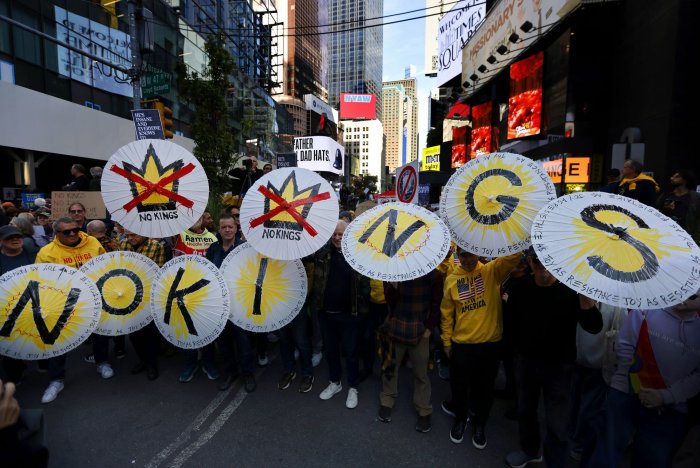
More than 3,000 No Kings events expected across globe Saturday
Thousands of protesters against the Trump administration policies rallied as part of the nationwide No Kings protest in front of City Hall in downtown Orlando, Fla., on October 18. No Kings organizers expect even more people to turn out for protests Saturday. File Photo by Chris Chew/UPI | License Photo
March 28 (UPI) — Thousands of cities across the United States — and internationally — were set to hold a series of so-called No Kings events Saturday to protest the President Donald Trump‘s policies.
The organization, which formed in response to the Trump presidency, said it expects Saturday to “be the biggest protest in U.S. history.” There are more than 3,000 demonstrations planned, including some in Canada, Mexico, Iceland, Kenya and Ecuador.
Saturday marks the third No Kings protest held since the start of Trump’s second term. More than 5 million people took part in the first protest on June 14, Trump’s birthday, and the second in October drew about 7 million people, The Hill reported.
Among the Trump actions the No Kings organization opposes are the increased immigration actions, what it describes as threats to “overtake elections,” and gutting the Affordable Care Act, environmental protections and education resources.
The group has also recently opposed Trump’s actions in Iran, launching attacks on the Gulf nation without congressional approval, a consequence of which has been skyrocketing oil prices, The Guardian reported.
“Find your local No Kings event to make it clear that America rejects the regime’s brutality at home and abroad,” the organization said on its website.

Protesters gather in Times Square for the “No Kings” demonstration and march down Seventh Avenue in New York City on October 18th, 2025. Photo by Peter Foley/UPI | License Photo
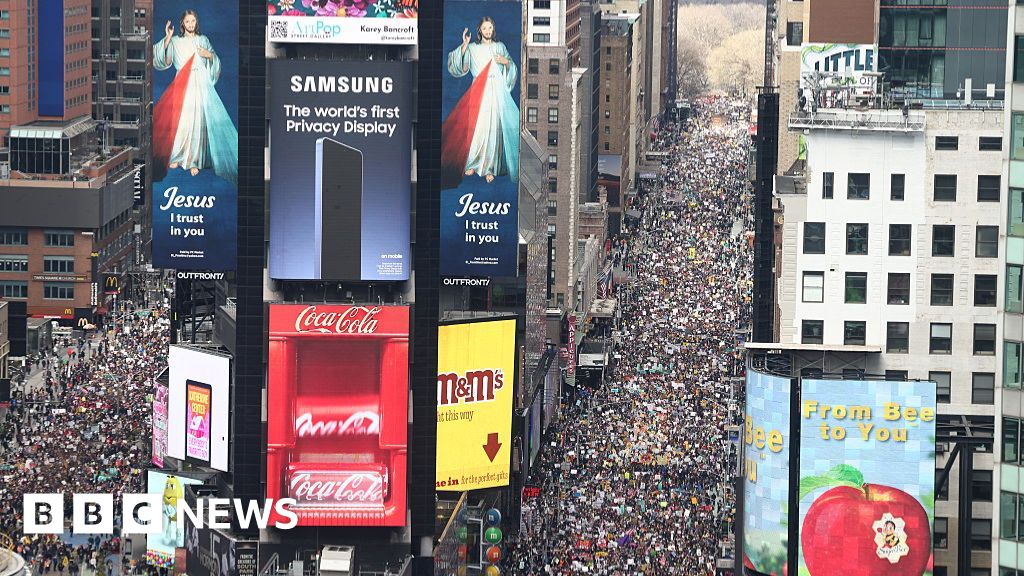
No Kings protests across the US rally against Donald Trump
The demonstrations against the Trump administration are set to sweep cities across the US on Saturday.
Source link

Joel Kinnaman on most brutal scene in his new Netflix crime drama Detective Hole
We spoke exclusively to Altered Carbon and For All Mankind actor Joel Kinnman about his brand-new Netflix crime drama Jo Nesbø’s Detective Hole
Netflix has dropped a brand new crime drama that’s perfect for audiences looking for their next binge watch.
Jo Nesbø’s Detective Hole is adapted from the internationally best-selling author’s acclaimed books and follows alcoholic but brilliant detective Harry Hole (Tobias Santelmann) as he tries to hunt down a brutal serial killer on the prowl in Oslo, Norway.
However, Harry is also trying to take down corrupt fellow detective Tom Waaler (Joel Kinnaman) as the two men try to out-wit each other.
The nine-part series, which can be described as Luther meets Line of Duty, has some gruesome moments putting it in on par with Idris Elba’s BBC detective drama.
In a recent interview with the Mirror’s publishers Reach Plc, Detective Hole star Joel Kinnaman broke down perhaps the most stomach-churning moment in the show and shared some surprising behind-the-scenes insight into bringing the grisly scene to life.
Get Netflix free with Sky
This article contains affiliate links, we will receive a commission on any sales we generate from it. Learn more
Sky is giving away a free Netflix subscription with its new Sky Stream TV bundles, including the £15 Essential TV plan.
This lets members watch live and on-demand TV content without a satellite dish or aerial and includes hit shows like Stranger Things and The Last of Us.
WARNING: This article contains major spoilers from Jo Nesbø’s Detective Hole on Netflix
The scene in question saw Kinnaman’s sociopathic police officer Waaler luring an unsuspecting man into public toilets on the promise of sexual favours, before castrating and murdering his victim.
Kinnaman said: “When we were shooting that, that’s where you really felt like this big budget was coming in because that penis prosthesis was so perfect. It felt very real holding it.” Adding: “It was a very realistic experience.”
Despite the sequence proving a tough watch, filming it was another matter for Kinnaman and the rest of the crew.
The star joked that every time the prosthetic appeared, he would “make a soundtrack” for its entrance.
“It was pretty hard to keep from laughing but then when he got into it, it became sort of horrifying,” he said.
Adding: “It was a very strange feeling. It was very strange to do it, but I enjoyed it.”
Addressing joining the crime drama, the Swedish-American actor said he was “very excited” about the idea of playing the Swedish character in a Netflix production, which he said would make it “accessible” to audiences.
Kinnaman went on to say that he was excited to step into acclaimed crime author Nesbø’s world and the character of Waaler, saying: “I’ve never got to play this kind of mouth-watering, crazy role. So fun and such an opportunity.”
The star went on to say about Waaler’s mindset: “He’s sort of morally conflicted and he’s driven by his sexual confusion and his sexual desires and his strive for power and power games. But what is also fuelling all of this is his childhood trauma.
“I sort of play him as a malignant narcissist on the scale of psychopathy. That was sort of the hypothesis that I was playing off of and that’s someone… he’s not born a psychopath, but he has been damaged at a young age.
“And then it veers, it makes his personality veer off in this direction and course.”
Kinnaman said that childhood trauma had created a lack of empathy in Waaler that led to his extremely violent behaviour.
Jo Nesbø’s Detective Hole is streaming on Netflix now
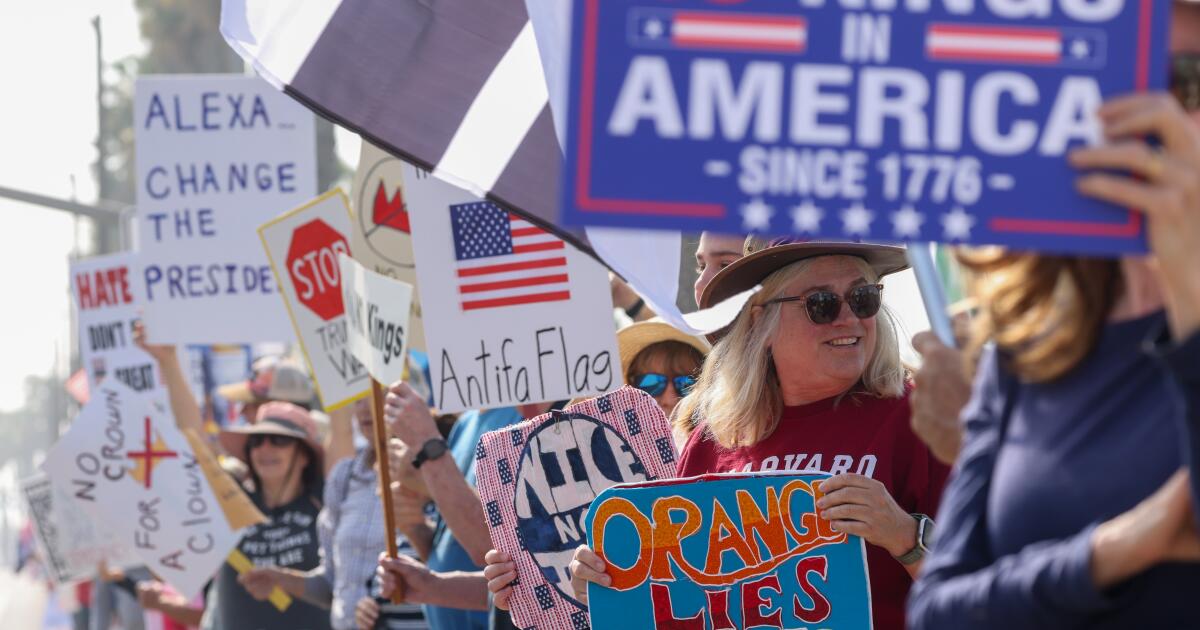
‘No Kings’ rallies draw millions protesting Trump globally
A rolling wave of “No Kings” protests swelled through America’s small towns and big cities Saturday, with crowds gathering to blast President Trump, Immigration and Customs Enforcement crackdowns, the war in Iran and high gas and food prices.
Saturday’s demonstrations were expected to draw millions of people nationwide, including thousands for a downtown Los Angeles rally. More than 40 protests were planned for L.A., Orange and Ventura counties, part of the national “No Kings Day of Nonviolent Action.”
No Kings Coalition organizers were hoping that turnout for the rallies in all 50 states could combine to form the largest single-day protest in U.S. history. They pointed to growing anger over the country’s direction, including fatal ICE shootings and troops dispatched to the Middle East, since the first “No Kings” demonstration was held last June.
On Saturday morning, hundreds gathered around the reflecting pool at Pasadena City College. A band rolled through with a fascism-themed parody of Johnny Cash’s “Folsom Prison Blues.” Sign-toting protesters lined Colorado Boulevard, drawing a constant stream of honking from the cars driving by. For many, the Iran war was top of mind.
“Every time we protest, there’s something completely new, which speaks to the chaos of the Trump administration,” Cindy Campbell told The Times. “ICE raids last year, Epstein files a few months ago. Now, war.”
“This administration doesn’t serve us. It serves billionaires,” said Kent Miller, of Monrovia, who participated in the Pasadena protest. “War with Iran is only making life harder for working people.”
Miller pointed to a Chevron gas station advertising gas for $6.45 per gallon.
“See?” he said.
National coordinators said there has been increased interest in smaller communities, including Republican bastions, with higher-than-expected attendance during Saturday’s protests.
“I’m out here because I’m disgusted with what I’m seeing,” said Kersty Kinsey, a mother who was protesting near the Beaufort, S.C., City Hall. “People are suffering, and he’s playing golf. People are suffering, and he’s going other places and blowing things up.”
In Beaufort, an antebellum city founded in 1711, an estimated 3,000 people turned out — a marked increase over earlier “No Kings” rallies, said Barb Nash, one of the coordinators. Amid the moss-draped live oaks and blooming pink and white azaleas, a person in a purple Barney dinosaur costume held a sign reading: “Dino’s for Democracy.” A young girl handed out homemade “Resistance Cookies.”
Los Angeles coordinators said they expect more than 100,000 people at the local events, which were being planned for Beverly Hills, Burbank, West Covina, West Hollywood and Thousand Oaks. One group planned a “Road Outrage” car caravan to motor through Mid City with flapping flags calling for “No War,” and “ICE Out of LA.” At a Torrance gathering, cars honked, protesters waved flags, and a person in an inflatable green cow costume hoisted a large American flag.
The White House, in a Saturday statement, dismissed the protests as a “Trump Derangement Therapy Session.”
Organizers said they have been particularly encouraged by the surge of interest from groups in rural communities that wanted to join the loose-knit No Kings Coalition and hold protests.
Jaynie Parrish, founder of the Arizona Native Vote project, started planning a protest for her tiny town of Kayenta, on the Navajo Nation in northern Arizona, only earlier this week.
“My dad, who’s a [military] veteran and an elder, said: ‘We should go,’ and I said, ‘OK,’” Parrish told The Times.
“Our folks don’t always protest for things, but this was very important,” Parrish said. “A lot of our families are feeling the impacts right now of higher prices and things being cut. A lot of our healthcare benefits are being cut … and our tribal sovereignty is being threatened.”
Upbeat Midwestern activists withstood whipping winds to form a line of protesters stretching nearly three blocks of Burlington Avenue in Hastings, Neb. Under the crisp blue skies, one of the protesters, Drew Fausett, told The Times in a phone interview that he is a registered Republican in the decidedly red state.
“My politics haven’t really changed — but the party around me has,” Fausett said. “It used to be the two parties were two sides of the same coin, and they would work together — but not anymore.”
He and his wife, Becky, have attended “No Kings” and other protests because “it’s the only way to show that people have different opinions,” he said. “People are out here speaking for their families and their neighbors. That’s what this is all about.”
Trump’s policies are hurting many in Nebraska — including farmers, said Debby Thompson, one of the Hastings organizers.
“We want to urge our representatives in Congress to not just rubber stamp whatever Trump wants because it’s really hurting rural folks and farmers,” Thompson said. “The tariffs and huge increase in prices on fertilizer are hitting farmers really hard.”
The “No Kings” campaign sprouted in June as an act of defiance on Trump’s 79th birthday. He wanted a military parade in Washington to mark his milestone, and anti-Trump protesters came out in force — an estimated 5 million people around the country — with their own display. At the time, Trump’s second-term policies were coming into focus, including ramping up immigration raids, deploying the National Guard to L.A. in response to protests, and mass firings within the federal government.
A subsequent event in mid-October drew even larger crowds, with an estimated 7 million people protesting around the country.
Saturday’s event coincided with a dip in Trump’s approval ratings. A Reuters/Ipsos poll last week found 36% approve of Trump’s job performance, marking the lowest level since his return to office last year. In a separate Fox News Poll released last week, 59% disapproved of his job performance.
“Since the last ‘No Kings,’ we’re seeing higher gas prices and groceries, all while there’s an illegal war in Iran,” national organizer Sarah Parker of the organization 50501 said during a Thursday press briefing. “We’ve also seen our neighbors executed — American citizens executed.”
Widespread protests and candlelight vigils followed January’s fatal shootings by ICE agents in Minneapolis of Renee Good, a 37-year-old mother of three, and Alex Pretti, a 37-year-old intensive care unit nurse.
“The defining story of this Saturday’s mobilization is not just how many people are protesting — but where they are protesting,” Leah Greenberg, co-founder of Indivisible, said during the press briefing. She said two-thirds of the RSVPs to national organizers came from outside of major urban centers.
The Los Angeles event was organized by the local chapter of 50501 (short for “50 protests, 50 states, 1 movement”) and other progressive groups, including the ACLU, Human Rights Campaign, Indivisible and Public Citizen, as well as labor unions such as Unite Here Local 11 and the Service Workers International Union.
“There’s an affordability crisis in this country — people can’t afford groceries or healthcare,” Joseph Bryant, SEIU executive vice president, said in a statement. “But this administration is focused on expanding its power, starting unnecessary wars that benefit billionaires, and targeting immigrants and citizens who dare to stand up for them.”