



U.S. fans enjoy inexpensive World Cup energy at Coliseum
Tickets to watch the U.S. dominate Paraguay 4-1 on Friday night at Inglewood’s SoFi Stadium cost a fortune. But roughly nine miles north, fans such as Jose Santiago and Ivan Gonzalez enjoyed the match at a fraction of the price.
The pair each paid $10 for a ticket to watch the Stars and Stripes flourish in their first World Cup game on home soil in 32 years on big screens at the packed Coliseum on Day 2 of the Los Angeles FIFA Fan Festival.
“We bought these tickets [at the] last minute, not knowing what to expect,” said Santiago, of Fullerton. “And so far, we’ve been blown away. We definitely want to come back.”
“It’s dope,” added Gonzalez, of Yorba Linda. “You feel it. You feel the game. You feel the atmosphere. It’s fun. Everyone’s into it right now.”
Food and drink options. Pop-up tents featuring brands such as Galaxy and LAFC. A rare on-field experience at the home of USC football. And, of course, some good ‘ol collective effervescence.
“It makes you still feel like you’re a part of it,” Santiago said of his viewing experience. “It still makes you feel like you’re at the stadium, because we’re all watching the game.”
The U.S. took care of business in its World Cup opener. Presumably, those who could afford the intimidating ticket and parking prices at SoFi Stadium considered the experience worthwhile.
Santiago and Gonzalez, however, spoke for many who cherished their inexpensive night at the Coliseum, in the City of Angels itself, during their nation’s statement victory.

Fans cheer during a watch party at the Coliseum during the U.S. win over Paraguay Friday night.
(Mario Tama / Getty Images)
Several other attendees would agree — even those who aren’t backing the U.S.
Take Charlotte Cabeca, a 37-year-old from downtown L.A., is primarily rooting for Colombia — as well as “anybody from South America” — but was still grateful for the opportunity to watch the beautiful game with other fans at a bargain.
“It’s so fun,” Cabeca said with a laugh, as “USA” chants rang in the background. “It’s a really kid-friendly and family-oriented [environment.] It’s not as hectic as I had anticipated.”
Cabeca said she’ll attend more fan events in L.A. throughout the tournament, as Friday marked “the closest we can get [and] that we can afford” compared to actually attending a World Cup match.

U.S. fans celebrate during a watch party at the Coliseum as Americans beat Paraguay during the World Cup Friday.
(Mario Tama / Getty Images)
Perhaps more important, though, Cabeca appreciates the community engagement unfolding before her eyes.
“I love that the city is coming together,” Cabeca said. “I feel the unity. And even these fanfests, they bring us together. So even if we’re not at the game, it still brings all of us together as a country.
“It’s awesome. The traffic is not helpful, but other than that, it’s exciting. I really feel like everybody is for soccer right now, and that’s what we need right now to heal and be happy together.”
While Friday was a night of smiles, chants and relative affordability, there remain fans who wish FIFA and the U.S. would do more to make the World Cup more accessible, particularly by making everything, well, cheaper.
“Obviously, football is a very hard sport to monetize, because we don’t have the breaks like the NFL,” Kunal Mehrotra, a 25-year-old soccer fan from Koreatown, prefaced before saying, “Without the fans, it isn’t really a World Cup. So, it is disappointing from the U.S., and it’s not just the tickets. … It really shows that the U.S. is in it for the money and not at all for the football, which is disappointing.”
“It’s pretty ridiculous,” added Monica Unzueta, a Maywood resident and fan of Mexico and Spain. “But aye, at least FIFA’s holding some events. I mean, they should be free. But, I don’t know — that’s just FIFA.”
While they’d rather attend a World Cup game live, as Mehrotra and Unzueta noted, that isn’t realistic for most residents.
So, nights such as Friday at the Coliseum are the next-best thing.

A fan wears an American flag during a World Cup watch party at the Coliseum on Friday.
(Mario Tama / Getty Images)
And for fans such as Tyler David, a 24-year-old from Tampa, Fla., the trip to the home of the Trojans couldn’t have gone better.
“Beyond belief,” David said. “And it’s so cool to see everybody and the cultures colliding. Love it.”
Oh, and the USA’s big victory was splendid for fans too.
“Dude, absolutely magnificent,” David said, in disbelief of the U.S. leading 3-0 after 45 minutes against Paraguay. “Christian Pulisic, [coach Mauricio] Pochettino, all the guys, [Timothy] Weah. They’re playing at the top of the charts right now. I love to see it on the home soil in L.A.
“It’s getting me fired up; the fan base, the environment, the atmosphere — through the freaking roof.”

Trump claims US kills Venezuela’s Tren de Aragua gang leader | Crime News
President Donald Trump has posted a video of a ‘swift and lethal’ US strike he claims has killed the leader of Venezuela’s Tren de Aragua gang. Trump said Venezuela helped the US with the strike on Hector Rusthenford Guerrero Flores.
Published On 13 Jun 2026

Hotel guests’ urgent warning as 6-month cyberattack on major chain shares booking data
The chain confirmed information exposed in the breach includes ‘certain guests names, email addresses, telephone numbers, and/or home addresses, along with other reservation details’

Hotel guests have been warned they might be targeted(Image: Getty)
Hotel guests have been warned to watch out for convincing scam messages after a data breach at a major hotel chain. Data including personal details of people booked to stay at one of the chain hotels was exposed over a six month period.
BWH Hotels, the parent company for WorldHotels, Best Western Hotels & Resorts, and Sure Hotels notified customers of the breach in an email when it said “certain guests’ names, email addresses, telephone numbers, and/or home addresses, along with other reservation details” had been accessed between October 14, 2025 and April 22. It added: “Importantly, payment and other financial information was not stored in the affected system and therefore was not accessed.”
It confirmed the firm had taken action to stop the unauthorised access and that it was also taking steps to strengthen safeguards to stop any further breaches. And they urged any affected customers to take steps to ensure any scammers did not take advantage of them, warning them to be extra vigilant about unexpected emails, texts, WhatsApp messages or calls referencing hotel stays.
Now privacy experts have warned the concern is not only what was stolen, but how that information could be used next. Hotel booking data can make follow-up scams look far more believable because criminals may be able to reference real stays, dates, locations or reservation numbers.
Peter Nguyen, a privacy expert from Protect My Data, says travellers should not dismiss this kind of breach just because payment details were not exposed. “A hotel reservation contains more useful information than people realise.
“A scammer does not always need your card number to target you. If they know your name, phone number, hotel, stay dates and booking reference, they can make a fake message look extremely convincing.
“That is the risk with travel data. It gives criminals context. Instead of sending a vague scam, they can contact you with details that feel personal and accurate.”
Nguyen says guests should be especially careful with any unexpected message claiming there is a problem with a booking, payment, refund or reservation. He warned a scammer could pretend to be from the hotel, a booking platform, customer support team or payment department.
The message may claim a card needs to be reverified, a stay could be cancelled, a refund is waiting, or extra information is needed before arrival. He said: “The most dangerous message is one that sounds helpful. It might say your booking needs confirming, your payment failed, or your refund is ready. Because it references a real hotel stay, people are more likely to click.
“If the message asks for payment, codes, logins or verification, do not engage through that message. Go directly to the hotel or booking platform yourself.”
Nguyen says WhatsApp and SMS messages are particularly risky because they feel more direct. “A text or WhatsApp message creates urgency. It feels like someone is dealing with your booking right now. That pressure makes people act faster than they would with an email.”
BWH Hotels’ own warning urged customers not to engage with suspicious communications asking for payment, codes, logins or verification, even if they reference a BWH Hotels property or an upcoming reservation.
Why reservation data is so valuable
Many people worry most about card details in a breach, but Nguyen says contact and booking information can still create serious risk. He explained: “Names, phone numbers and email addresses are the starting point for phishing. Add reservation details and the scam becomes much more targeted.”
“A criminal could send a message saying, ‘Your stay at this property on this date needs confirmation.’ That feels completely different from a generic scam email because it contains something real.”
He said postal addresses can also make scams more credible. He explained: “If a scammer has your address, they can make a fake message feel more official. They might use it in a fake invoice, refund notice, complaint response or identity check.”
Special requests may also reveal details guests did not expect to become part of a security issue. “People sometimes include personal information in hotel requests, such as accessibility needs, arrival times, family arrangements or reasons for travel. Even small details can help scammers tailor their approach.”
What guests should do now
Nguyen says anyone who has stayed with, or booked through, a BWH Hotels property during the affected period should be alert, but not panic. He added: “The first step is awareness. If you receive a message about a Best Western, WorldHotels or SureStay booking, slow down and verify it independently.”
He advised guests to avoid clicking links in unexpected messages. “Open the official hotel website yourself, use the original booking confirmation, or contact the property through a trusted number,” he said. “Do not use a number or link sent in a suspicious message.”
Guests should also be careful if they are asked to confirm personal information, he said. “A genuine hotel may need basic details to find your booking, but they should not ask for banking codes, account passwords or card security codes through an unexpected message.”
If someone has clicked a suspicious link or shared card details, Nguyen says they should contact their bank immediately. He warned: “Speed matters. If you entered payment details, call your bank straight away. If you entered a password, change it immediately, especially if you use it anywhere else.”
He also recommends securing email accounts, as email is often the route scammers use to reset other accounts. “Your email account is the front door to much of your digital life,” he said. “Use a strong, unique password and switch on two-factor authentication.”
Why this warning matters for summer travel
The breach comes as many travellers are booking summer stays, weekend breaks and last-minute trips. Nguyen says that makes hotel-related scams especially dangerous.
“Travel season gives scammers a huge advantage. People are expecting hotel messages, payment reminders and booking updates. That makes fake messages easier to hide among real ones.”
He says guests should be particularly wary of messages close to their check-in date. “A message sent shortly before a stay can create panic. If it says your room will be cancelled unless you act now, that is exactly when you need to stop.”
The safest rule, Nguyen says, is to treat unexpected booking messages as suspicious until proven otherwise. He said: “If a message knows your hotel and dates, that does not automatically make it real. It may simply mean the scammer has booking data. Do not let accurate details rush you into clicking. Verify through the official route every time.”
In its email, signed by Bill Ryan Chief Technology Officer of the hotel chain and sent last month, it said: “BWH Hotels, the parent company for WorldHotels, Best Western Hotels & Resorts, and Sure Hotels, takes the privacy and security of our guests’ personal information very seriously. We are writing to let you know that on April 22, 2026, we identified unauthorised activity in one of our web applications that houses certain guest reservation data.
“We have learned that certain guests’ names, email addresses, telephone numbers, and/or home addresses, along with other reservation details (e.g., reservation numbers, dates of stay, and any special requests) for reservations in our system were accessed by an unauthorised third‑party between October 14, 2025 and April 22, 2026, including yours. Importantly, payment and other financial information was not stored in the affected system and therefore was not accessed.
“Upon discovering the incident, we immediately took the application offline and revoked the unauthorised access. We have engaged leading external cybersecurity experts to support our incident response efforts and to assist with the further strengthening of existing safeguards.
“We advise guests to be extra vigilant when viewing any unexpected or suspicious communications about hotel stays. If you receive a suspicious communication such as an unexpected email, text, WhatsApp message, or telephone call that asks for payment, codes, logins, or “verification,” even if they reference a BWH Hotels property or an upcoming reservation, do not engage. Navigate to sites directly rather than clicking links.
As part of protecting your personal information and to prevent payments to fraudulent parties, here are some precautions you can take:
- Stay alert for suspicious sender addresses, urgent or unexpected unsolicited requests, and strange links, especially any unexpected request for payment or personal information. Treat any suspicious request with caution. If you have a question regarding a suspicious request, please contact our customer service team
- Scammers may create webpages that closely resemble legitimate hotel booking pages. Always review the web address before entering payment details. If a page looks unexpected or unfamiliar, stop and verify it with our customer service team before proceeding. If you entered or shared any payment (credit card) information in response to a scam, please immediately report it to your financial institution and follow security steps they recommend. If you have any questions, please contact BWH Hotels’ data protection office at dpo@bwh.com

The hidden Kent staycation with luxury cabins, hot tubs and rabbits hopping outside the door
Cabü by the Sea in St Margarets, Kent, is a luxury coastal cabin staycation for city dwellers seeking coastal charm without a long journey – and it’s less than two hours’ drive away

Pretty perfect: the pool is ideal for a dip on warm summer days(Image: Cabü)
At Cabü by the Sea, baby rabbits hop playfully across the grass. “They’re quite used to us,” our host explains as she guides us towards our cabin.
“But they dig everywhere, so do watch out for burrows.”
It’s a fitting welcome to our time at this wonderfully wholesome retreat. Cabü consists of a grassy expanse dotted with luxurious one, two and three-bedroom cabins, nestled against the sea wall in St Margarets, one of those tranquil coastal villages in Kent’s overlooked corner, where Dungeness extends a languid arm into the English Channel.
Uncomplicated and serene, the atmosphere washes over you the moment you arrive, reports OK!.
Discovering the ideal seaside cabin
This spot is defined by thoughtful touches. The log burner is already stacked and primed to ignite with just one match.
Plush, generously soft towels hang in the bathroom, with striped versions on the upper shelf – designated for beach and pool. In the kitchen, there’s a picnic hamper ready should you wish to prepare something for the shore.
If you’d rather not have to do it yourself, simply order from the onsite shop.
Each designer lodge resembles something plucked straight from the pages of a cabin lifestyle book (I know, because they’ve left a copy beside the kingsize bed). It’s difficult not to instantly embrace the notion that owning a modest cabin of your own could be the solution to life’s pressures. It certainly seems that way while you’re here.
Making the most of your time at Cabü
Cabü is a spot where simple pleasures take centre stage, with a handful of added treats thrown in. There’s a pool (fenced off, so you needn’t fret about little ones wandering), and alongside it sits the sitooerie – a space blending indoors and out, where families can bond over the pizza oven and toast marshmallows side by side.
Without children in tow, we hired our own barbecue, grilled burgers on the decking, and gazed at the stars instead.
There’s also the spa facilities you can reserve by the hour – generous wooden hot tubs, a sauna and an icy plunge pool complete with a bracing bucket shower. Steel yourself and give them all a go – it’s absolutely brilliant.
What to explore in the surrounding area
We left the car untouched throughout our visit, opting instead to borrow bikes for the seven-mile ride to Dungeness (the Fish Roll at the Dungeness Snack Shack is essential), where the 21st Century seems to dissolve amid the stark, post-apocalyptic stretch of shingle and weathered boat hulls. Head the opposite way and Dymchurch (3 miles) offers classic seaside charm with fairground rides, fish and chips and ice cream, plus superb meals at Coffee Lounge.
Can’t manage the distance? Fear not, because there’s an authentic miniature steam railway covering the entire route, with a station just a 10-minute stroll away.
How to book your own cabin getaway
Prices start at £375 for a 2-night break in a studio cabin. Studio, 1, 2 and 3 bedroom cabins are on offer, including dog-friendly choices and one featuring a private hot tub.
Visit cabu.co.uk or ring 01303 669033.
Journey into the midnight sun: my solo road trip to the top of Norway | Road trips
It’s midnight, in June. Powder pink and dark grey clouds drift across a pallid sky, the palette reflecting in the motionless water of Lake Inari. Islets of pine and just-budding birch create pools of distorted shade close to the horizon of this 420 sq mile (1,080 sq km) lake in Lapland, northern Finland. There is not a sound. It’s so silent, I barely breathe to avoid disturbance. Only me, the lake and a moonbeam-coloured moth, whose wingbeat is inaudible.
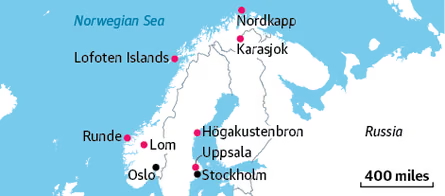
I am sat beside my car-sized campervan, with mesmerised reverence for the rose-tinged panorama. I do not wish to go to bed and miss this moment. And I am loving the wild freedom and deliciousness of being entirely alone, with nobody in the world knowing my exact whereabouts. Ordinarily, I would be long asleep by midnight, exhausted after a day of work and family life. But I have left my husband and (adult) children at home in England for an eight-week solo camping adventure through Denmark, Sweden, Finland and Norway, with the singular aim of reaching Nordkapp (North Cape) and Knivskjellodden, Europe’s northernmost point at the top of Norway, in time for midsummer.

Earlier in the day, I’d met Father Christmas. “If you’re driving north, be careful of the reindeer,” the costumed gentleman said as I sat beside him at Santa Claus’s Main Post Office in Rovaniemi, the capital of Finnish Lapland, a place considered over-touristy in winter, but certainly not during my summer visit.
“We have 230,000 reindeer here in Finland, but only one of them has a red nose.” As it happens, I see countless reindeer, in Finland, as well as Norway and Sweden, creeping through forests and grazing at the coast. Not Rudolph to my knowledge, but many females with calves, all legs and ears.
My meetings with reindeer and the night beside Lake Inari are two of many memorable experiences on my road trip through the Land of the Midnight Sun, so called because north of the Arctic Circle the sun doesn’t set below the horizon during the summer months. It doesn’t set for long south of it either, including in Denmark, where (after I’d driven my campervan from the UK via Germany) my Nordic adventure started in Rødby, on the island of Lolland.
Other than reaching Nordkapp, I have no plan; no accommodation booked either. Instead, I am utilising the popular practice of Allemansretten (everybody’s right, as it’s known in Norway), which is also legal in Finland and Sweden: the right to stop off-grid overnight on uncultivated land, leaving without a trace. On my journey I’m able to park up and stay overlooking fjords, beside mountain passes, with lake or coastal views.
From the flat plains of Lolland, Denmark’s fourth-largest island, my route north takes me to Helsingør for the ferry across the Øresund to Helsingborg in Sweden, leaving a rear-view image of Kronborg Slot – “Hamlet’s Castle” – at dawn.
Luminous lupins and puce pinks litter the roadsides of my 370-mile cross-country route to Sigtuna, 30 miles north-west of Stockholm. The lakeside settlement of colourful timber houses is Sweden’s oldest town. Half an hour’s drive north is Linnaeus’ Hammarby, a pretty 18th-century farm that once belonged to Carl Linnaeus, the botanist who developed the binomial system of naming species we use today.
Hammarby is wonderfully representative of this Uppland region of Sweden. I walk 10 miles through the cultivated countryside along the Dannmark Trail between Linnaeus’s farm and Uppsala, a route he would walk with his biology students for nature studies. Students at Uppsala University (where Linnaeus was a professor) are celebrating finals when I arrive, mingling around ice-cream cafes and in floral parks and botanical gardens. Nearby, the vast twin spires of the city’s rust-red cathedral protrude above blossoming rowan trees.
From Uppsala, I follow the E4, a road that reaches the border with Finland, covering more than 600 miles over six days. Along the way I cross Scandinavia’s longest suspension bridge, the Högakustenbron, at the Höga Kusten, or High Coast, a Unesco world heritage site.
Vast stretches of empty road lined with little but pine trees provide a chance for contemplation. But it’s not until I arrive in the colourful town of Karasjok days later, having crossed from Finland into Norway, that I truly understand the scale of the Nordics. For Karasjok feels very far north, yet it is still a four-hour drive to Nordkapp.
Karasjok is the Norwegian administrative centre for the indigenous Sámi population of Sápmi, the cross-border cultural region that includes parts of Norway, Sweden, Finland and Russia. The parliament building resembles a traditional lavvu tent and, nearby, Sápmi Park offers an introduction to Sámi traditions.
Leaving Karasjok, the road winds its way alongside Porsangerfjorden, passing fishing hamlets, waterfalls, shaly mountain cliffs and tremendous viewpoints before dipping beneath the Arctic Ocean by tunnel to reach Magerøya, the island upon which Nordkapp sits. I chance upon fine weather as I climb beyond Honningsvåg, one of Norway’s northernmost towns, over snowy mountain plateaux to reach Nordkapp. A tear forms in the corner of my eye. I am alone, about 2,500 miles from home by the quickest route, and I wish my family could see what I can. But this is a solo adventure, and I have reached my goal, staying up all night to watch as the midnight sun sends orange beams across the Arctic Ocean. Captivating.
It is not by the quickest route that I return home, though. My journey back south through Norway (and ultimately Sweden and Denmark, too) is contorted, meandering west and east. Picnics beside turquoise sea coves on the Lofoten Islands, watching pods of dolphins in the Norwegian Sea. Bulging rivers and thundering waterfalls in Saltfjellet national park. Then small farms and meadows with emerald stripes of hay, amassed buttercups, and long lakes through the region of Trøndelag. It is Norway bursting into colour after the bleached landscapes of the north. Occasionally I’ll put in a long stretch in one day – 200 miles or so. Other days, I simply stay put, enjoying the view or stepping out for long walks.
Atlanterhavsvegen – a 22-mile national scenic route across skerries and strung together by bridges – is captivating. Then Runde, one of Norway’s westernmost islands, renowned for a colony of puffins that breed on the cliffs here. A steep mountain walk across the island reveals clusters of people perching on cliff edges in the hope of witnessing the spectacle of birds coming in to roost.
But it is the east of the island where I park up and sit alone for days, watching an otter swimming among the lichen-speckled black rocks, alerted by a clatter of ducks and ducklings, shelducks, wigeon and oystercatchers. Keeping my distance, I observe parent gulls sheltering fluffed-up chicks as curlew call overhead. Orchids, sea campion, clover and a host of other flowers smother the coastal ground. A memorable time.
So, too, my wild camp at the summit of Sognefjellet mountain pass, the highest road in Scandinavia. I set out from Lom, an attractive town that sits between three national parks and possesses a famous stave church and the fascinating Norwegian Mountain Centre. The road, also a designated national scenic route, runs alongside the pretty Bovra River initially, then climbs into some of Norway’s wildest scenery. My overnight is cold, with huge frozen lakes of glacial blue and roadside snow above the height of the campervan. In the morning, as Nordic skiers and a pack of snowmobiles head out to nearby glaciers, I brush snowflakes from my windscreen to begin the descent to the green and luscious Sognefjord. It’s as if I have stepped through a wardrobe and imagined the wintry summer scene.
I appreciate that being alone by choice is entirely different to loneliness. I am often asked of my solo travels, “Don’t you ever get lonely?” I can feel lonelier, I explain, in a crowded room than camping in the wild. Yes, leaving family behind creates a sense of “wish you were here”; special moments I’d like to share. Then again, this adventure is understanding that the memory is mine alone. The thrill, the excitement, the calm and occasionally the trepidation. I’d do it all again tomorrow.
The writer travelled in her own campervan, using Scandlines ferries between Puttgarden, Germany, and Rødby, Denmark. In the UK and Europe, hire of Roadsurfer’s smaller vehicles starts at £49 a night

Ukraine Sees AI Driving Next Revolution in Warfare
Ukraine’s defence ministry believes artificial intelligence is set to fundamentally transform modern warfare, as Kyiv accelerates efforts to integrate AI into battlefield operations amid its ongoing war with Russia.
According to Danylo Tsvok, head of Ukraine’s Defence Ministry AI Research Centre, the country is already employing artificial intelligence across multiple military functions, including drone operations, battlefield planning, intelligence analysis, and missile attack assessments.
The centre, established in March, is part of a broader effort to make data driven decision making a core component of Ukraine’s defence strategy. Officials envision a future where AI systems, sensors, drones, command centres, and weapons platforms operate through a unified digital network capable of processing battlefield information and recommending military actions in real time.
Why It Matters
Ukraine’s experience is increasingly being viewed as a preview of how future wars may be fought. The conflict has already demonstrated the growing importance of drones, autonomous systems, and real time intelligence, but AI could push military operations into an entirely new phase.
Rather than merely supporting commanders, future AI systems may become central to battlefield decision making by processing vast quantities of data faster than human operators can manage. This could dramatically shorten the time between identifying a target and launching an attack.
The implications extend far beyond Ukraine. Military planners around the world are closely monitoring the conflict as a testing ground for next generation warfare technologies.
The Rise of AI Driven Combat
The war has already evolved into a technological competition in which both Ukraine and Russia are attempting to gain advantages through automation, data analysis, and autonomous systems.
Ukraine is working toward a battlefield operating system capable of integrating information from drones, reconnaissance assets, weapons systems, and frontline units into a single decision making framework. The objective is to create a comprehensive operational picture that enables faster and more effective responses.
Russia is pursuing similar capabilities, particularly in drone warfare and strike planning, creating what Ukrainian officials describe as an emerging competition between military operating systems rather than simply armies.
Global Defence Implications
The conflict has attracted significant attention from defence technology firms and AI developers seeking real world operational data. Companies and governments increasingly view Ukraine as one of the most important testing environments for military AI applications.
The lessons learned from the war could influence defence procurement, military doctrine, and security planning across NATO, Asia, and other regions facing evolving security challenges.
As AI becomes more deeply embedded in military systems, countries may be forced to rethink command structures, training requirements, and the role of human decision makers in combat.
Key Stakeholders
- Ukraine military
- Russian military
- Defence technology companies
- NATO members
- Artificial intelligence developers
- Defence ministries worldwide
- Military planners and strategists
Future Outlook
Over the next three to five years, military competition is likely to shift increasingly toward AI enabled command systems, autonomous platforms, and integrated battlefield networks.
Countries capable of rapidly processing information and converting it into actionable decisions may gain a significant operational advantage. At the same time, concerns about autonomy, accountability, and human oversight will become more prominent as AI systems assume larger roles in combat operations.
The race to integrate AI into warfare is expected to intensify, making technological superiority as important as traditional military strength.
Analysis
Ukraine’s assessment points to a deeper transformation than simply adding artificial intelligence to existing weapons systems. What is emerging is a shift from platform centric warfare to data centric warfare, where military advantage depends less on the number of tanks, aircraft, or soldiers and more on the ability to collect, process, and act on information faster than an opponent.
The most significant aspect of this transition is the compression of decision making time. Historically, military success depended on commanders interpreting information and issuing orders. AI has the potential to reduce that cycle from hours or minutes to seconds, creating a battlefield where speed of analysis becomes as important as firepower.
This evolution could fundamentally alter military hierarchies. If AI systems become capable of generating reliable operational recommendations faster than humans can assess them, commanders may increasingly act as supervisors rather than primary decision makers. The challenge will be balancing military effectiveness with accountability and ethical oversight.
The Ukraine conflict is therefore becoming more than a territorial war; it is also serving as a laboratory for the future of warfare. The countries that emerge with the most effective integration of AI, autonomous systems, and battlefield data networks may define military power for decades to come. In this sense, the competition between Ukraine and Russia increasingly resembles a contest between technological ecosystems, foreshadowing a future in which wars are won not only through weapons but through algorithms and information dominance.
With information from Reuters.

Gogglebox fans say ‘about time’ as much-loved duo return to Channel 4 show
A brand-new series of Celebrity Gogglebox kicked off this month as Channel 4 fans saw some familiar faces on their screens.

Celebrity Goggelbox fans were thrilled by the return(Image: Channel 4)
There’s good news for Celebrity Gogglebox fans as a beloved duo has made their return to the programme.
The popular Channel 4 programme, which first aired almost seven years ago, made its return to screens last week for a brand new season.
Last week, viewers saw some familiar favourites back on the show, giving their thoughts and reactions to the latest television offerings.
These included the likes of Shaun Ryder and Mark ‘Bez’ Berry, Vicky Pattison and Pete Wicks and Jennifer Saunders with her daughter Beattie.
While there were also some new additions, such as George Clarke and Max Balegde, Julian Clary and Nigel Havers and Olivia Attwood with her mum Jennifer, one duo was noticeably absent.
Rylan Clark and his mum, Linda, first joined the programme back in 2019 and have been firm staples on the beloved show.
Although they may have missed the first episode of the new series, they were back in action this Friday (June 12).
Sharing a clip on Instagram, the 37-year-old said: “Guess who’s back on Gogglebox… It’s Linda! We are very excited to be back this Friday night.”
Turning the camera to his mum, Rylan asked if she was excited to be back on the show, and she confirmed she was. He finished off the video by adding: “Right, we’ll see you Friday night!”
It wasn’t long before people commented on the post, with many thrilled to see them back on the show.
One person said: “Love you guys. So good to see you back and looking lovely as always.” Someone else shared: “Hey Linda, about bl**dy time.”
Another fan added: “Glad you are both back, was hoping you would.” While one person commented: “I wondered where you guys were last week!!! Good to have you back again. Love your banter.”
Someone else shared: “Delighted to hear this news – missed the pair of you last week & was hoping you would be back.” As another person added: “Good to see you back Linda..and Rylan of course. Cannot wait to see you both back on.”
While on X, one person said: “Rylan and his mum back.” As another added: “I love @Rylan’s mum so much.”
Celebrity Gogglebox is available to watch on Channel 4

Supreme Court says California farms can restrict union access
WASHINGTON — The Supreme Court on Wednesday struck down part of a historic California law inspired by Cesar Chavez and the farm workers union, ruling that agricultural landowners and food processors have a right to keep union organizers off their property.
The justices by a 6-3 vote said the state’s “right of access” rule violates property rights protected by the Constitution, which states private property shall not be “taken for public use without just compensation.”
Writing for the court, Chief Justice John G. Roberts Jr. said “the access regulation is not germane to any benefit provided to agricultural employers or any risk posed to the public…The access regulation grants labor organizations a right to invade the growers’ property. It therefore constitutes a per se physical taking,” he wrote in Cedar Point Nursery vs. Hassid.
He cited as precedents a pair of California cases. One ruled for the owner of a beachfront home in Ventura who objected to giving the public access to the shore and a second from 2015 which ruled for a grape grower from Fresno who objected to giving his grapes to a government-sponsored cooperative.
“The upshot of this line of precedent is that government-authorized invasions of property — whether by plane, boat, cable, or beachcomber — are physical takings requiring just compensation,” Roberts said.
The three liberal justices dissented. They described the rule as a regulation, not a taking of property.
The California Legislature in 1975 became the first in the nation to extend collective bargaining rights to farm workers. Months later, a new agricultural labor board adopted the “right of access” rule to allow organizers to seek out those who were working on farmland.
Earlier this year, the state’s lawyers said the rule was still needed because farm laborers often worked in remote areas and were not fully aware of their rights to join a union.
It has come under attack in recent years by agribusinesses that have called it a “union trespassing” rule that violates their property rights.
A lawyer for the Pacific Legal Foundation, which represented the farm owners, cheered the ruling as “a huge victory for property rights.” It “affirms that one of the most fundamental aspects of property is the right to decide who can and can’t access your property,” said Joshua Thompson, a senior attorney for the group, based in Arlington, Va..
Karla Walter, a director of employment policy for the liberal Center for American Progress, called it a major setback for union organizing.
“Today the Supreme Court’s conservative majority overturned nearly a half-century of progress for California’s farm workers, who have struggled to exercise their right to bargain for decent wages and to protect their health and safety,” she said. “Reaching farm workers — the overwhelming majority of whom are Latinx and migrant workers — where they work is critical to protecting their rights and interests.”
The case decided Wednesday began in 2015. The owners of the Fowler Packing Co. in Fresno, which produces grapes and citrus fruit, refused to allow union organizers onto their property.
A few months later, union organizers entered a strawberry packing plant near the Oregon border and disrupted the work, according to Mike Fahner, owner of the Cedar Point Nursery.
The two companies then joined in a lawsuit seeking to have the California union access regulation declared unconstitutional. They lost before a federal judge and the 9th Circuit Court of Appeals in San Francisco, but the Supreme Court voted to hear their appeal.
Lawyers for the Pacific Legal Foundation representing the farm owners argued the Constitution “forbids the government from requiring you to allow unwanted strangers on to your property.”
In defense of the rule, California officials called it a temporary regulation of property, not a taking of the grower’s land. Union organizers may enter a farm for one hour before the start of the workday or for an hour at the end of the day.
The state’s lawyers said the rule is similar to federal and state laws that allow meat and poultry inspectors to go into packing plants or health and safety inspectors to visit warehouses, manufacturing plants or construction sites.

Angels survive bases-loaded scare in ninth to defeat Rays
Trey Mancini hit a two-run triple to give the Angels an early lead, rookie Sam Aldegheri tossed five strong innings, and Ryan Zeferjahn struck out Cedric Mullins with the bases loaded in the ninth in a 4-3 win over the Tampa Bay Rays on Friday.
Zeferjahn walked Junior Caminero on four pitches after replacing Mitch Farris with two on and two outs. He struck out Mullins swinging on a 2-and-2 pitch for his second save, sealing the Angels’ third straight win and fourth in five games.
Aldegheri (2-1) gave up two runs (one earned) and three hits with three walks in his second start this season and the seventh of his career.
Mike Trout and Jo Adell had back-to-back, one-out singles off Shane McClanahan (6-4) in the first inning, and Mancini followed with a two-out triple for a 2-0 lead.
Oswald Peraza led off the third with a double, and Nick Madrigal drove him in with a two-out single before stealing second and scoring on Logan O’Hoppe’s single for a 4-0 advantage.
Aldegheri gave up a hit and walked two in the first inning, then retired 10 straight before walking Chandler Simpson to start the fifth. Nick Fortes reached on a fielding error by shortstop Zach Neto, and Taylor Walls’ bunt single loaded the bases with no outs.
Aldegheri struck out Yandy Díaz looking, but Jonathan Aranda singled to left to cut it to 4-2. Caminero hit into a double play to end the rally.
Simpson robbed Adell of a homer in the eighth to keep the Rays within two, and Aranda cut it to 4-3 with a two-out single off Farris before Zeferjahn finished.
McClanahan gave up four runs and eight hits in four innings but struck out seven. Mason Englert pitched four shutout innings and gave up four hits and two walks.
U.S. Navy Captain and NASA Artemis II astronaut Victor Glover threw out the ceremonial first pitch to Trout.
Up next: Rays RHP Griffin Jax (1-4, 4.15) starts Saturday opposite Angels RHP José Soriano (7-4, 2.96).

Justice Department approves Paramount-Warner Bros. merger
The Justice Department of Friday approved the proposed Paramount Skydance merger with Warner Bros. Discovery, which will pave the way to the creation of an entertainment monolith. Photo by Allison Dinner/EPA
June 12 (UPI) — The U.S. Department of Justice on Friday said the proposed merger between Paramount Skydance and Warner Bros. Discovery does not harm competition or consumers in the United States.
The Justice Department said that it finds the proposed merger is unlikely to harm competition among similar companies or the ability of American consumers to access video-based media, it said in a press release.
Paramount in January hiked up its offer well beyond what Netflix had offered for the entertainment conglomerate, circumventing the streaming leader from acquiring it, and triggering antitrust investigations in a number of nations both operate in.
At least ten state attorneys general said last week they would sue the federal government to stop the proposed merger, which would create a monolith company comprised of several of the most significant companies in television, film and entertainment.
“This investigation included a review of reams of documentary evidence, hours of deposition testimony of senior-level executives, interviews with third-party witnesses and staff-led meetings with the parties themselves,” the Justice Department said in the release.
“These investigative efforts all led to the same conclusion: The film and television industry is highly dynamic and the proposed transaction is not likely to harm competition or American consumers,” the department said.
The Justice Department said in the release that, among other discoveries that drove its decision, the fact that Warner Bros. has “been a repeated acquisition target in the media and entertainment industry” shows that it is appropriate to approve the merger.

President Donald Trump speaks to reporters about restoring commercial fishing access to areas of the Pacific during a signing ceremony in the Oval Office of the White House on Thursday. Photo by Jim Lo Scalzo/UPI | License Photo
I visited UK’s ‘most popular seaside town’ but found a better beach 20 minutes away
It is one of the most popular holiday destinations in the UK but a 20-minute drive away you’ll find a much better beach.

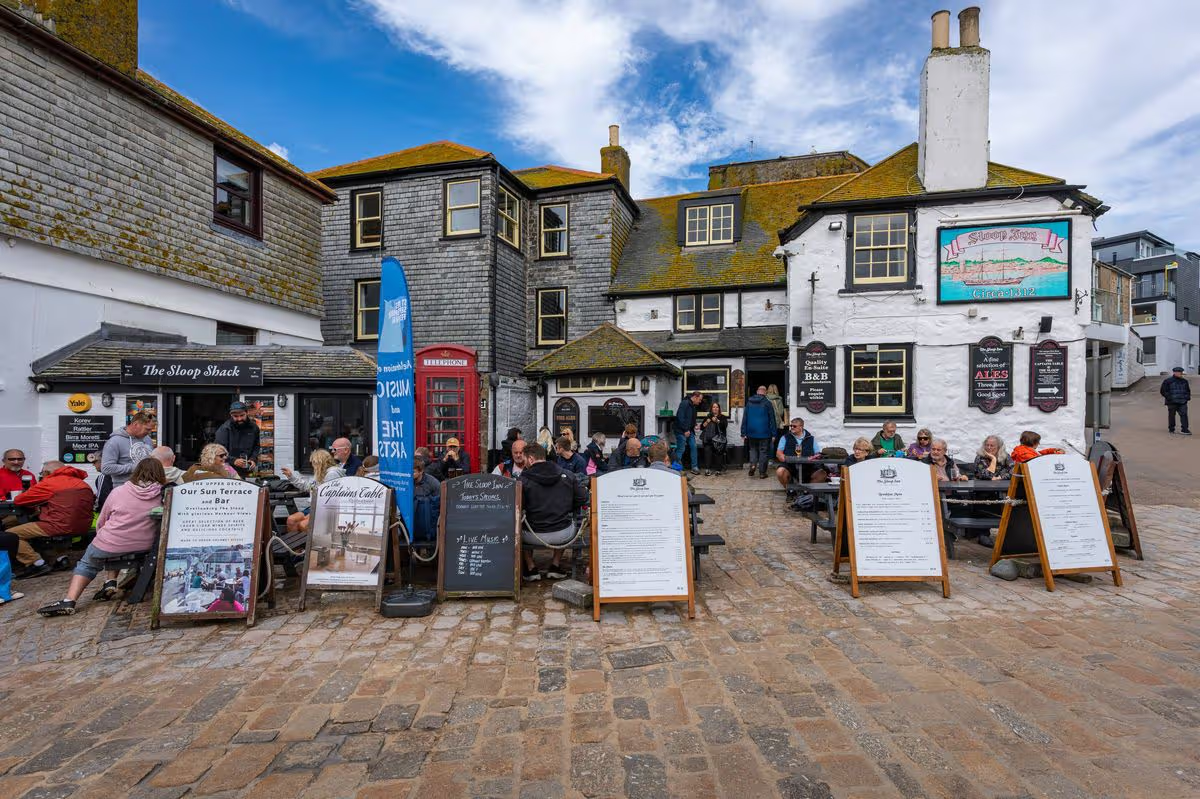
St Ives is set to be one of the busiest holiday destinations in the UK this summer thanks to what it has to offer visitors — pictured is The Sloop Inn, one of the oldest inns in Cornwall(Image: Milos Ruzicka via Getty Images)
Cornwall is famous around the UK and beyond for its beauty, whether it’s the quintessential seaside towns and villages, seafood, dramatic cliffs, golden beaches or azure sea. Each beach and cove has its own unique charm, but some, like St Ives on the north-west coast, are more famous than others. In fact, it is going to be the most popular place for staycations in the UK this year, according to Sykes Holiday Cottages.
And that’s just the latest accolade for the town, which has also been called the “artsiest” in Cornwall. In 2011, the postcard-perfect town outshone rivals from Spain, France and Italy to be named one of Europe’s top beach destinations. However, despite its picturesque appeal, when I visited during a recent summer I found that St Ives was marred by murky waters and an overwhelming number of tourists (including me, of course). And those considering a Cornish getaway might discover a more enchanting spot just around the corner, just like I did.
Is St Ives a good place to visit?
In short, yes. St Ives is brimming with attractions, boasting five sandy beaches and a gently sloping shoreline perfect for families and those looking to bask in the sun. The beachfront is well-equipped with amenities including lifeguard patrols from Easter through September, deck chair rentals and water sports equipment available for hire, including kayaks, stand-up paddleboards and more. On a sunny day, Porthmeor Beach buzzes with activity, earning its reputation as the town’s “premier” beach.
Just beyond the beachfront, visitors can explore a delightful labyrinth of narrow lanes lined with pastel cottages, which play host to several restaurants, bars and cafes. Local dining spots serve up authentic Cornish fare, with traditional dishes like pasties, crab and mussels. It’s also been called “Cornwall’s art mecca” by virtue of being home to the Tate, the Barbara Hepworth Museum and Sculpture Garden, historic studio Leach Pottery, the award-winning Porthminster Gallery and a swathe of smaller indie galleries.
If you’ve never been, like I hadn’t until last summer, it’s a must-visit. Arriving with high hopes, the bay looked breath-taking from afar (that is, from the bustling car park at the top of the town). The honey-coloured stone buildings in the streets below were inviting but once I set foot on the beach reality hit.
Families and groups occupied every bit of sand on a weekday afternoon in July. Even at 4pm, Porthmeor beach was still crowded, including its far side. With a Cornish pasty in hand, I finally found a spot to sit, only to be met by an army of seagulls that had clearly spent the day gorging on litter left on the sand.
The real let-down came when I went for a quick swim in the sea. Having visited Kynance Cove and Pedn Vounder Beach just days before, I was underwhelmed by the slightly murky water that seemed polluted by heavy footfall and frequent boat activity. I questioned why I was swimming here when Cornwall is home to so many clear, secluded coves.
Is there a better alernative?
Later that same evening, when I drove further up the coast towards Hayle, I discovered a gem. Gwithian Towans Beach is at the far end of St Ives Bay and boasts a wide, spacious sandy beach that is popular for surfing but rarely crowded. It’s approximately a 24-minute drive via the Hayle Bypass to this incredible beach, which is backed by massive dunes perfect for a long walk.
When the tide recedes, the nearby Godrevy Beach seamlessly blends with Gwithian to create a vast expanse of beach. At high tide, it transforms into a distinct cove, framed by cliffs and the National Trust-owned headland. Situated at the far end of St Ives Bay, Godrevy Beach is a neighbouring treasure, famed for its iconic lighthouse and a small colony of seals.
The water here is noticeably clearer, likely due to its exposure to Atlantic swells that disperse sediments. A swim here is invigorating and less daunting than in St Ives itself. On the beach, you can find a private spot behind dramatic rocks, even on a bustling afternoon. However, the true marvel of this westerly location is the sunset views.
Is there parking?
Parking is available at the top of the headland in a National Trust car park, from where it’s a short walk down to Gwithian beach for a quick dip. This is arguably more accessible for visitors than parking at the top of St Ives and navigating the steep streets down to the shoreline there. Facilities are somewhat limited, with a small cafe and surf shop at Gwithian and a National Trust cafe at Godrevy. Limited toilet and shower facilities are available in the Gwithian parking areas.
UK court jails Palestine Action activists on ‘terrorism’ charges | Israel-Palestine conflict
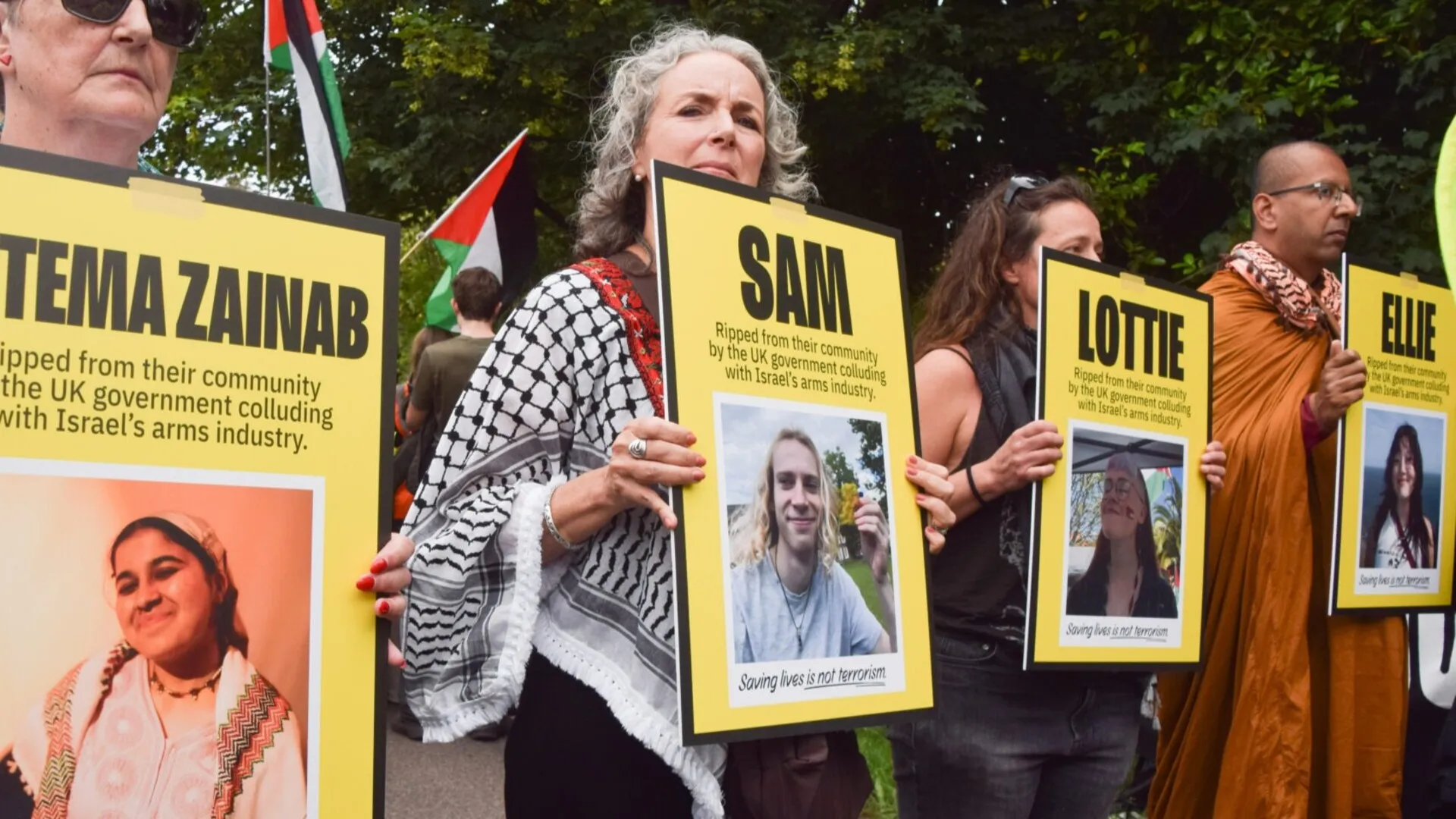
A UK court has sentenced four pro-Palestine activists to jail for a raid on an Israeli arms factory near Bristol in 2024. Palestine Action says their aim was to ‘dismantle drones and weaponry’ they believed would be used to kill people in Gaza.
Published On 13 Jun 2026

‘No-one knew how bad it was’ says Katie Price as she opens up on breakdown & unseen ‘dark moments’ in explosive TV doc’
KATIE Price has said that nobody knew just how bad things were for her when she experienced some very ‘dark moments’ in her life.
The TV star, 48, is gearing up for the release of her upcoming tell-all docuseries, Katie Price: Nothing to Hide – in which she will recount her 2018 and 2021 breakdowns.


Her candid and unfiltered account of three decades in the spotlight is coming to Sky and NOW on July 8.
This week, Katie attended the Sheffield DocFest where she revealed that during her darkest moments and confessed ‘no-one knew how bad it was’, with this set to play out in her new series.
Katie suffered a major mental breakdown in around 2018 following a build-up of traumatic events in her life, she then suffered another in 2021.
She experienced severe depression, suicidal thoughts, and even checked into The Priory amid her breakdown.


Speaking about this at the DocFest event ahead of her Sky show dropping next month, Katie got candid and confessed: “When I had my breakdown, I don’t think people really knew how bad it was, and how it affected people in my life.
“To hear that my loved ones cried and how much they loved me is like a wake-up call for me.
“There are some really dark moments [in the series] but at the same time, uplifting.
“People have to remember that it’s actually my life, so if you’re exhausted just watching it, imagine how exhausting it is for my little pea brain.
“But I really enjoyed doing it.
“I said they should do 10 parts and they wanted to, but we were lucky to push it to four [episodes].
“There’s still so much you could put in it. Even from what you’re reading today.”
Elsewhere at the event, Katie said: “I’m an open book.
“When [the team] came to me about the documentary, I got excited because something about me and my life is perfect.
“The media narrative is so different to what I’m really like but as you say, every day, even now, there’s always something.
“My life could actually be a soap story – it just doesn’t stop. I’m normal but it’s a weird world I live in. I can’t explain it.”
She also touched on being authentic.
“I have nothing to hide, and when they asked me, ‘are there any areas you don’t want us to go?’, I said, no! You can talk to absolutely anyone you want and you can talk to me about anything you want,” she confessed.
“Luckily the duty of care was amazing. Sometimes after two hours [of interviews], I couldn’t do any more.
“There are moments where I’ve had therapy to get over some of the things in my life, and I had to relive them.
“But I think this is what makes a good show, and I love watching documentaries.
“So many people are so manufactured and they’re in on the edits, so they look like a polished turd, basically. I am not that!
“Even I’m cringing at some of the stuff in the first episode! I haven’t had time to reflect on anything in my life because there’s always the next thing, and the next thing.”

Married to HIV – Los Angeles Times
President Bush returns from Africa, where he justifiably touted the success of his AIDS relief initiative, to face a battle with Congress over that laudable program. Bush wants to nearly double funding, to $30 billion over the next five years, for the President’s Emergency Plan for AIDS Relief; the House wants to spend $50 billion and expand the program to fight malaria and tuberculosis. But that $20-billion dispute probably won’t generate as much heat as the provision in the bill, written by the late Rep. Tom Lantos (D-Burlingame), killing the requirement that one-third of all funds spent on AIDS prevention go to programs that promote abstinence until marriage. The State Department and some House Republicans oppose the bill, which is now spearheaded by Rep. Howard L. Berman (D-Valley Village) and is slated to be considered by a House committee next week.
The religious right has begun whipping up the hysteria, calling the Lantos bill the “Pro-Aborts Emergency Plan for Abstinence Reduction.” In fact, the bill would do nothing to alter the long-standing ban on U.S. funding for abortion. What it would do is increase the availability of contraception for poor African women — and that is desperately overdue.
Religious groups are fixated on the need to stop HIV transmission through premarital and extramarital sex, but what’s killing African women by the millions is https:///unprotected sex with their husbands. Yet the United States spends more on promoting abstinence and fidelity programs ($198 million in fiscal 2007) than on promoting condom use ($147 million in 2007). Roughly 10 million African girls under the age of 18 are married each year, many to older men who seek HIV-free brides. To those wedded to HIV-positive men, marriage often means a death sentence. They have little power to control their husbands’ condom use or extramarital behavior; they are more likely than young men to contract HIV; and those who know they’re infected and do not want to bear children often have no access to contraception.
By providing life-saving drugs to HIV-positive pregnant women, the president’s program claims to have prevented 157,000 infants from becoming infected. This is a huge accomplishment. What the U.S. funding hasn’t done is reduce unwanted pregnancies. In a clinic in Uganda where pregnant HIV-positive women were receiving anti-retroviral treatment, 93% reported that their pregnancies were unintended. It’s no surprise that many HIV-positive women do not wish to bear children whom they might infect with the virus or leave orphaned. It’s cruel to deny contraception to such poor and sick women should they desire it. And as a public health matter, it’s far cheaper to prevent unwanted pregnancies than to prevent mother-child HIV transmission. Yet U.S. funding for family planning has flat-lined.
Although some U.S. religious conservatives find contraception objectionable, most Americans do not. Congress should take note and expand funding for family-planning programs to help the HIV-positive girls and women.

World Cup 2026: VAR makes ‘mistaken identity’ history as strange booking confuses fans
The United States opened their World Cup campaign with a fine win – but not before a sequence of events that left everyone inside SoFi Stadium scratching their heads as the video assistant referee (VAR) made history.
The co-hosts were comfortably leading Paraguay 3-0 when confusion reigned in the Group D game.
Veteran defender Tim Ream, 38, conceded a free-kick and was shown a yellow card for his ‘challenge’ on Miguel Almiron.
After the free-kick was taken, Dutch referee Danny Makkelie was sent to the screen by the VAR and overturned his decision – something officials have not previously been allowed to do.
After rescinding Ream’s caution, Makkelie instead booked former Newcastle United forward Almiron, who had clearly dived.
It is the first VAR intervention for mistaken identity at the World Cup, even if it perhaps was not used in the way most expected it to be.
Fifa has introduced of a number of rule changes for the tournament, with Pierluigi Collina, the head of referees, requesting one specifically for mistaken identity.
The rule states that if a player is booked or sent off – but the foul was actually committed by the opposition team – the decision can be changed.
Another new law is second yellow cards leading to a red card can be reviewed, but not first yellow cards. The only reason referee Makkelie was able to rescind the decision was by using the mistaken identity law.
The officials allowed the game to restart before stopping, which also confused fans as normally once the game resumes it cannot be pulled back.
Former Everton and Wales defender Ashley Williams, speaking to BBC Sport, added: “They let them take the free-kick, which was bizarre but clearly the right decision.
“It’s the first time we have seen it but fair play.”
Former England midfielder Danny Murphy, who was co-commentating for BBC Sport, added: “Any adaptation of the rules which means diving gets more punishment is good.”
The United States, managed by former Tottenham boss Mauricio Pochettino, won the match 4-1 to get their campaign off to a winning start in front of a jubilant home crowd.
Following an own goal by Damian Bobadilla, the US led 3-0 at half-time after Folarin Balogun scored twice.
In doing so he became just the second US player to score more than once in a World Cup match.
Paraguay pulled one back through Brazilian-born Mauricio before the goal of the night from substitute Giovanni Reyna, who curled a 20-yard shot home with the outside of his right foot with the final kick of the game.

Canada World Cup opener splits Bosnian fans among two ‘home nations’ | World Cup 2026

Thousands of Bosnia fans turned Toronto blue as they marched to the chants of ‘Free Palestine’ in Toronto.
Toronto, Canada — Nadia, a Bosnia and Herzegovina supporter who did not share her surname, stood out in her deep blue shirt as a sea of red-adorned Canada fans swarmed around her outside the Toronto Stadium an hour before kickoff to their FIFA World Cup 2026 opening game.
With the blue and yellow Bosnian flag draped around her, she found herself among the minority of “away” fans on Canadian soil on Thursday, less than two weeks after her team was given a warm welcome to the World Cup cohost nation.
Recommended Stories
list of 4 itemsend of list
It reminded Nadia, an immigrant, of her arrival in Canada in the mid-1990s when her family fled the Bosnian genocide that killed about 100,000 people and displaced more than two million.
“I wish I had space for two hearts so I could properly support both my countries,” Nadia told Al Jazeera when asked about her allegiance as loud roars of the crowd spilled out of the stadium behind her.
Nadia admitted her heart was ultimately with Bosnia, but the Canada cap she sported was a nod to the country that became home when she had to flee hers.
Earlier in the day, thousands of Bosnia supporters turned Toronto into a sea of blue as they marched towards the match venue in the city’s downtown while chanting “Free Palestine” to thunderous claps.
“They [Palestinians] should be free, enough with the wars and genocide,” Nadia said as her eyes welled up with tears. She took a deep breath before adding: “There is so much suffering, especially for the children.”
Cultures blend in Toronto
Dan, a Bosnia supporter in his 40s, was the same age as his primary school-aged son when he fled the genocide in his country.
The father-and-son duo enjoyed the game and soaked in the atmosphere among the 45,000-plus fans at the stadium before heading back slightly upset with the draw.
The day Canada opened its first World Cup became an amalgamation of immigrant Bosnian fans’ identities as they shared high fives and traded jerseys with their opposing numbers.
Every shade of skin colour and a multitude of mother tongues made the stadium and a nearby fan festival a microcosm of Toronto’s reputation as a multicultural hotspot.
The fan festival boasted the full spectrum of football enthusiasts — the hardcore supporters with expert analyses, laced with expletives at missed chances, and those in attendance purely for the vibes.

Football aside, several Canadian fans abhorred the immigration policies of their neighbour to the south. They were proud to be known for their hospitality at the 48-nation tournament across North America.
Admir, a travelling Bosnian fan, was full of praise for Canadian hospitality when he arrived from New Jersey.
“Everyone from ordinary people to stadium support staff to restaurant owners have been so accommodating since we got here,” he told Al Jazeera ahead of kickoff.
Compared with the barrage of immigration nightmare stories of World Cup supporters trying to enter the US, his journey to Canada was seamless.
Despite his home state hosting eight World Cup matches, Admir chose to pay an exorbitant price for tickets to see Bosnia, who returned to the World Cup after 12 years following a fairytale qualification.
The sun had drained most fans of their energy after the match, but not Tanya, who drove seven hours from New York to Toronto on Thursday morning.
“The atmosphere at the fan festival was amazing; Toronto has been great.”
“I think our boys played pretty well,” she said of the match. “We didn’t win, but it wasn’t a loss either.”


USA hit Paraguay for four in dream start to their World Cup campaign | World Cup 2026 News
USA beat Paraguay 4-1 in Los Angeles as each of the three World Cup cohosts have now staged a game in the 2026 edition.
Published On 13 Jun 2026
The United States could scarcely have scripted a better start to their World Cup as a Folarin Balogun brace and a Gio Reyna curler fired the cohosts to a 4-1 drubbing of Paraguay in front of Hollywood royalty in Los Angeles.
The hosts took the lead in the tournament’s first game on US soil within seven minutes thanks to an own goal, and by the end of an utterly dominant half, the home fans were in dreamland, their side up by three.
Recommended Stories
list of 4 itemsend of list
Tom Cruise, Leonardo DiCaprio and Paris Hilton were among a sold-out 70,492 crowd as the US – cohosting the tournament with Mexico and Canada – piled wave after wave of attacks on the South Americans, with Reyna polishing off the win late in stoppage time after Mauricio had pulled one back.
The win and emphatic scoreline put the US in a favourable position already to progress from Group D, which also contains Australia and Turkiye.
The night’s only potential sour note was the half-time withdrawal of Christian Pulisic, the US attacking talisman who is carrying the hopes of the nation as they attempt a deep run into the World Cup knockouts for the first time since their quarterfinal appearance in 2002.
Paraguay could not have been more obliging guests from kickoff. In the seventh minute, Weston McKennie picked up the ball in the centre circle and drove upfield, finding Pulisic.
Pulisic darted between two defenders and returned the ball to McKennie, whose pass to striker Balogun was bundled into his own net by a hapless Damian Bobadilla.
The stadium erupted, and a US onslaught began.
The hosts oozed confidence. Both McKennie and Tillman played backheel through balls into the area, while captain Tim Ream sprayed out passes from the heart of defence.

Balogun had a goal ruled out in the 28th minute. He had strayed offside, as had Pulisic in the buildup.
But the Monaco striker had the ball in the net again three minutes later, thanks to a superb ball down the left flank by Antonee Robinson to Pulisic, whose cross to Balogun took a slight fortuitous deflection.
The US added a third on the cusp of half-time. Tillman found Balogun down the right, who evaded Omar Alderete’s challenge, skipped inside Gustavo Gomez and curled his shot perfectly into the top left corner.
It could have been four or five, with Chris Richards – returning from injury – flashing a header barely an inch wide. The US had 75 percent possession in the first half.
Now, without the dangerous Pulisic, the hosts sat back slightly in the second half.
Paraguay finally offered a threat. Their dangerous forward Julio Enciso, who started despite a hamstring injury, picked up the ball on the edge of the area and fed in Brazil-born substitute Mauricio, who pulled one back.
Reyna scored a superb fourth with the outside of his right foot that curled just inside the far post.
The game had been preceded by a Tinseltown-style opening ceremony. Katy Perry delivered the headline performance, accompanied by singers Future, Tyla, Anitta and K-pop singer Lisa.
Performers danced around a giant World Cup trophy beneath enormous “FIFA” letters in the gold favoured by US President Donald Trump – who did not attend, instead wishing the team luck via phone before kickoff.

Jon Snow ‘living quietly’ out of spotlight months on from making Alzheimer’s documentary
The award-winning journalist takes centre stage one last time in an extraordinary new film made for Channel 4

In the new film Jon uncovers one of the worst mining and ecological disasters of modern times.(Image: Channel 4)
Former newsreader Jon Snow Is now “living a quieter life” months on from filming a documentary with Channel 4 about having Alzheimer’s disease.
The 78-year-old cancelled a planned appearance on a panel at the Sheffield Documentary festival on Friday which coincided with a screening of Jon Snow : A Last Big Story which shows him navigating life with Alzheimer’s.
The film, which shows the beginnings of his memory fading, actually finished filming last year. Asked how he was now, the Executive Producer Ben de Pear who also worked with Jon for many years on Channel 4 News said: “He has been in Zimbabwe(on holiday) and I spoke to him recently. He was his usual self, he was feisty, funny and really excited about the film coming out. Jon is living a quieter life but I think he is still interested and engaged in the world and still fascinated by people. When he goes to the supermarket he still ends up speaking to people for 20 minutes each.”
On the original plan of him being at the event in person, Ben added: “To be honest some days it is good and he could have been on stage, we could have had a discussion and some days it’s worse. That is the nature of the disease.” He told the audience that Jon “sent his love” before the screening began.
Ben and director, Laura Warner also spoke about the unusual circumstances around making the emotional film and then showing it to Jon and his wife, Dr Precious Lunga.
Laura said she would start each day explaining who she was and what film she was making to make sure Jon was still happy. She added: “Every day we would have to re-consent Jon and he would ask why there were cameras and we would explain.
“He was extremely engaged and leading the story. But there would come a time every day, around about sort of sunset, I think it is called sundowning where Jon would really start to struggle. The cameras went down at that point every day and we would look after him.”
On the final edit, Laura recalled: “Jon and Precious watched it several times in terms of giving it send off. It was really important to Precious that he viewed it by himself the first time, so he wasn’t influenced by her reaction too it or anyone else’s.
“He had a really emotional reaction to it because I think it was the first time he had seen himself with the condition.”
Ben added: “Precious loves the film, she thinks it is really important.”
The film also sees Jon discover a news story whilst on holiday in 2025, which leads an investigation into a Zambian community whose land and water were impacted by a mining disaster.
As the Mirror previously reported, he speaks in the film about his own mortality, and seems happy with the life he has.
Jon says: “A strange old business life. I had a good innings of it. It’s understandable, you can be worried about death, but to be worried about growing older is irrelevant. It’s absurd. How old is older? You’re going to die tomorrow or the next day. Stop worrying and get on with it.”
His wife Precious says of the film: “I want it to be a story of love, laughter, acknowledging that times are hard. I don’t shy away from the fact that it’s hard caring for someone with Alzheimer’s. But we can also be on the lookout for opportunities that would lessen that burden. And yeah we do that by having our little adventures.”
* Jon Snow: A Last Big story will be available to watch and stream on Channel 4 on Sat June 20 at 8pm.
Like this story? For more of the latest showbiz news and gossip, follow Mirror Celebs on TikTok, Snapchat, Instagram, Twitter, Facebook, YouTube and Threads.

Trump says U.S. military strike killed leader of Tren de Aragua gang
WASHINGTON — President Trump said Friday that a “swift and lethal kinetic” U.S. strike has killed Hector Rusthenford Guerrero Flores, whom he called “the infamous leader” of the Tren de Aragua gang.
Tren de Aragua has been labeled by the United States as a terrorist organization. Guerrero Flores was charged in a New York federal court with racketeering conspiracy and other crimes, including lending support to terrorists in crimes that stretched more than a decade, authorities announced in December.
Defense Secretary Pete Hegseth posted on X that the strike occurred earlier in the week on a Tren de Aragua compound in Venezuela.
U.S. Atty. Jay Clayton alleged at the time that the gang is responsible for countless acts of violence, extortion and drug trafficking in North America, South America and Europe. Trump nominated Clayton on Thursday to be director of national intelligence.
The U.S. State Department had offered rewards of up to $5 million for information leading to Guerrero Flores’ arrest.
In a post on his social media site, Trump wrote, “Tren de Aragua terrorists no longer have safe haven in Venezuela or anywhere else and, under my leadership, we will find these vicious murderers and drug lords anytime, anyplace, and send them to the depths of hell where they belong.” Trump’s post referred to Guerrero Flores by his alias, Niño Guerrero.
Hegseth said, “The operation underscores the shared U.S. and Venezuelan commitment to take the fight to narco-terrorists and deny them any safe haven in our hemisphere.”
Venezuela’s ministry of communications did not immediately respond to a request for comment on the operation.
Trump has taken a series of extraordinary actions against the gang, including a series of strikes on small boats his administration has accused of smuggling drugs to the U.S.. At least 207 people have been killed in boat strikes by the U.S. military in the eastern Pacific Ocean and Caribbean Sea since the Trump administration began the campaign in early September.
Independent investigations, by the Associated Press and others, have raised questions about the boat passengers’ alleged connection to drug trafficking. And, in any case, many legal experts say the boat attacks amount to extrajudicial killings in violation of international law.
Trump and administration officials have consistently blamed Tren de Aragua for being at the root of the violence and illicit drug dealing that plague some U.S. cities. The president spent months repeating the claim — contradicted by a declassified U.S. intelligence assessment — that Tren de Aragua had operated under Venezuelan President Nicolás Maduro’s control. The U.S. invaded Venezuela and seized Maduro in January to face U.S. drug charges.
Tren de Aragua originated more than a decade ago at an infamously lawless prison in Venezuela’s central state of Aragua. The gang has expanded in recent years as millions of Venezuelans migrated to other Latin American countries or the U.S. in search of better living conditions.
Guerrero Flores returned to the prison in Aragua on murder and other convictions in 2013, when Venezuela’s crisis began and corruption, mismanagement and a drop in crude prices wrecked the oil-dependent economy. Guerrero Flores and a few other inmates saw a profitable opportunity as the government neglected prisons.
They assumed control and administration of the prison, establishing a system that controlled the entire inmate population through force and extortion. Over time, they transformed the lockup into a sort of city that included a zoo, baseball field, casino and restaurants. Guerrero Flores had his own lavish suite.
The size of the gang is unclear. Countries with large populations of Venezuelan migrants, including Peru and Colombia, have accused the group of being behind a spree of violence in the region. Still, unlike other criminal organizations from Colombia, Brazil and Central America, Tren de Aragua has no large-scale involvement in smuggling cocaine across international borders, according to InSight Crime, a think tank that tracks crime across Latin America.
In Venezuela, gang leaders have long been known to participate in various illegal activities, including illicit gold mining.
Weissert writes for the Associated Press. AP writer Regina Garcia Cano in Mexico City contributed to this report.

World Cup: U.S. offense shines in win over Paraguay
It was a game eight years in the making. The first World Cup match on American soil in more than a generation and the start of a tournament that has the potential to alter the direction of soccer in this country for the next generation.
And the U.S. seized on every bit of that opportunity Friday, with Christian Pulisic setting up two goals and Folarin Balogun scoring twice in his World Cup debut, sparking an impressive 4-1 victory over Paraguay in a game that was far more one-sided than the score indicated.
The U.S., which needed a big effort to start the tournament, was on the front foot from the start, going in front to stay in the seventh minute — although it was Paraguayan midfielder Damián Bobadilla who got credit for the goal after stepping in front of Balogun and deflecting in a cross from Weston McKennie.
Pulisic, the American star who is under intense pressure to perform in this tournament, set up the goal, pushing the ball between a pair of defenders before poking it on for McKennie in the center of the box. Bobadilla then did the rest, inadvertently sticking his right foot in front of the ball and bouncing it by Paraguayan keeper Orlando Gil.
Balogun appeared to double the lead coming out of the hydration break midway through the opening half, but the goal was negated by an offside call. That only delayed the second goal, however, with Balogun making it 2-0 by one-timing in a perfect feed from Pulisic from the penalty spot in the 31st minute.
Balogun added to the U.S. advantage just before the intermission, running on to a perfectly weighted through ball from Malik Tillman, stepping through a challenge from Omar Alderete entering the penalty area and turning around Paraguayan captain Gustavo Gómez before left-footing a shot into the top left corner to complete his first brace for the national team.
Gil was just a spectator on the play, with no chance to best the save. The goal marked the first time Paraguay had given up three scores in a World Cup game — much less one half — since 2002 and it came at the end of what was arguably the best opening 45 minutes a U.S. team has played in the tournament in decades.
Gio Reyna scored the fourth U.S. goal on the final play of the game.
Pulisic left in favor of Sebastian Berhalter to start the second but the U.S. continued to dominate in every way it was possible to dominate, controlling the ball for nearly 60 of the 90 minutes and completing more than twice as many passes. Paraguay’s first shot on goal didn’t come until the 73rd minute when Mauricio, a halftime substitute, took advantage of a slow-reacting U.S. defense to pull a goal back.
U.S. coach Mauricio Pochettino also got a solid game out of center back Chris Richards, playing for the first time since tearing two ligaments in his left ankle a month ago.
The Americans will face Australia in the second of three group-stage games next Friday in Seattle, where a draw will all but guarantee them a spot in the round-of-32, something Pulisic said should be just the first objective for this team.
This World Cup is the largest and most ambitious sporting event in history, with three host countries — Canada and Mexico, in addition to the U.S. — and a record 48 teams playing 104 games in 16 cities spread across four time zones. A long run by the American team, playing on home soil, could excite a nation and give soccer the kind of boost it hasn’t seen since 1994, the last time a World Cup was played here.
It could also change the narrative of a tournament whose run-up was clouded by outrageously high ticket prices, travel bans, the threat of ICE raids at tournament venues and the war in the Middle East, the first to pit a World Cup host against a World Cup qualifier.
And the U.S. portion of that tournament opened with pomp despite those circumstances, with Thai pop star Lisa, Nigerian recording artist Rema and Brazilian singer Anitta headlining a 10-minute mini concert staged before a massive replica of the World Cup trophy set over a blue map of the U.S. Katy Perry mounted a stage of her own an hour later to debut her song “Wonder” as the flags of the 48 participating countries circled around her.
President Trump did not attend the game, just as Mexican president Claudia Sheinbaum skipped her country’s opener Thursday in Mexico City and prime minister Mark Carney missed Canada’s first game Friday in Toronto. Secretary of State Marco Rubio took Trump’s place in the Hollywood-heavy crowd of 70,492 that packed SoFi Stadium, one which included Tom Cruise, David and Victoria Beckham, Halle Berry, Rob Lowe, Becky G, Jaime Foxx, Paris Hilton, Bill Gates, Justin Trudeau and Kareem Abdul-Jabbar.
That crowd was a sea of blue and red — the U.S. and Paraguay share the same colors — but the cheering was primarily for the Americans since Paraguay rarely mounted a threat.

EU agrees launch of accession process for Ukraine and Moldova | European Union News
Progress for Kyiv’s membership bid given the green light after Hungary’s new government lifts Budapest’s veto.
Published On 12 Jun 2026
The European Union has announced that the accession process for Ukraine and Moldova will launch next week.
At a meeting in Brussels on Friday, ambassadors from the 27 EU nations agreed to officially recommence negotiations with the two countries in Luxembourg on Monday.
Recommended Stories
list of 3 itemsend of list
EU leaders agreed to open accession talks with Ukraine and Moldova in December 2023. However, negotiations were paused due to opposition from Hungary, led at the time by pro-Russian Prime Minister Viktor Orban, to Kyiv’s membership bid.
Both Kyiv and Chisinau view EU membership as additional security against Russian aggression. Moscow insists that maintaining control over its “near abroad” – its term for the post-Soviet states – is key to its national security.
“All member states agreed to open the first accession negotiations cluster with Ukraine and Moldova,” European Council President Antonio Costa and European Commission President Ursula von der Leyen said in a joint social media post.
Hungary’s new government, which took power in May, agreed last week to drop Orban’s veto, allowing the accession process to resume.
“This is a recognition of the determination, courage and hard work shown by both countries in advancing reforms, even in the face of immense challenges,” Costa and von der Leyen said.
“Enlargement is a strategic choice,” they said, adding, “In a world marked by growing uncertainty, a larger European Union is in our common interest.”
Entry negotiations with Kyiv were formally opened in June 2024, kickstarting a complex process that usually takes years and involves negotiations on everything from agriculture to the rule of law.
The move was largely symbolic, intended as a powerful show of support for Ukraine after Russia’s full-scale invasion in 2022.
New Hungarian Prime Minister Peter Magyar struck a deal with Kyiv on the rights of Ukraine’s Hungarian ethnic minority last week. The issue has long been a sticking point between the neighbouring countries.
But Magyar has said Hungary does not support a fast-track procedure for Ukraine to join the EU.
He said Budapest will hold a referendum on Ukraine’s membership, should it “succeed in closing all 33 accession chapters within the next 10 to 15 years”.
Talks will begin on Monday with the opening of the “fundamentals” section of the process, Costa and van der Leyen said in their statement.
This covers basic principles such as rule of law that the two candidate countries will be expected to adhere to.

Iran war live: US, Tehran signal peace deal within reach but not signed yet
Four activists from Palestine Action jailed by a British court over protest raid on Israeli arms firm in UK.
Source link