



England squad: Cole Palmer and Declan Rice among five withdrawals from England squad
Tino Livramento, Kobbie Mainoo, Cole Palmer, Marcus Rashford and Declan Rice have all pulled out of England’s squad for forthcoming Nations League matches.
Nottingham Forest midfielder Morgan Gibbs-White and Everton‘s James Garner have been called into the squad by manager Thomas Tuchel and will join the squad on Tuesday.
Tuchel said on Friday that 26-year-old Gibbs-White, who has six international caps, was close to being included in the initial squad.
Palmer, 24, had been recalled by Tuchel after being controversially left out of England’s World Cup squad but has withdrawn with a minor injury.
Tuchel previously said Palmer had a “point to prove” and needed “to step up” to “keep his shirt and justify the nomination”.
The Three Lions face World Cup winners Spain at Wembley on Saturday, 26 September, then travel to the Czech Republic (29 September) and Croatia (3 October) before hosting the Czechs on 6 October in an extended international break.
Manchester United duo Rashford and Mainoo were assessed by their club after being taken off in the closing stages of Sunday’s 1-1 draw at Fulham.
Rice, who played the full game for Arsenal in their 3-0 defeat by Brighton, will also be unavailable to Tuchel, along with Livramento, who has been limited to three substitute appearances for Newcastle United this season.
The England medical department and all their counterparts at each of the clubs have agreed the five players can withdraw. No specific details have been released to the media on the nature of the injuries.
State of world getting worse as UN Security Council paralysed: Guterres | United Nations News
The UN chief’s mandate ends on December 31 this year, with a successor yet to be named.

Published On 21 Sep 2026
The state of the world seems to be getting worse due to a “dramatic geopolitical divide” that is leaving “the most vulnerable countries and populations in very dramatic situations” and that “paralyses the Security Council”, United Nations Secretary-General Antonio Guterres has told Al Jazeera.
Speaking on Monday, the first day of the UN General Assembly (UNGA) in New York City, Guterres said that major military conflicts happening in the world at the moment, the Russia-Ukraine war and the US-Israel war on Iran, have created a crisis due to the continued violations of international law by “superpowers” that are key members of the UN Security Council (UNSC).
Recommended Stories
list of 4 itemsend of list
“That creates an environment of impunity, in which midsize powers believe that they can do whatever they want because nothing will happen to them,” Guterres told Al Jazeera, admitting that “wars are becoming multiplied, and more and more complex”.
The UN chief outlined the real-life impacts that these two wars are having on people on a humanitarian level, particularly around food accessibility, rising fuel prices, and global inflation.
“The combination of the war in Ukraine with the problems of exports of foods, fertilisers, and energy through the Black Sea, if you combine it with the difficulties in the Strait of Hormuz [in the Gulf], in the Bab al-Mandeb [in the Red Sea], and in the attacks [on] oil installations in several countries of the [Middle East] region, we are creating a situation that has a devastating impact on many economies around the world,” Guterres said.
He added that rising interest rates and fuel prices in developed countries could eventually be managed, whereas people in the developing world “are in a desperate situation” due to the increasing energy and food costs and the lack of fertilisers.
Dire need for reforms
Guterres, who previously served as prime minister of Portugal and UN high commissioner for refugees, has been the UN chief since January 1, 2017, though his mandate is coming to an end on December 31, 2026.
His successor, who is yet to be named, will take charge of an organisation that is grappling with multiple crises and is, in Guterres’s opinion, in dire need of reforms to stay relevant and important on the global stage. He notably cited the UNSC, saying it “still essentially represents the world of World War II”.
Candidates in the running to replace Guterres include the International Atomic Energy Agency’s Rafael Grossi, former Senegalese President Macky Sall and Ecuadorian diplomat Maria Fernanda Espinosa.
To be recommended by the UNSC, a candidate for UN secretary-general needs at least nine of the council’s 15 members to vote in favour and must avoid a veto from any of the five permanent members – China, France, Russia, the United Kingdom and the United States – before a final vote in the UNGA.

Poor storage or sabotage? Series of explosions in Syria raises fears | Syria’s War News
Repeated blasts at military sites expose the risks facing Syria as it rebuilds its army and consolidates weapons after years of war.
A series of explosions at weapons and ammunition sites across Syria this month have exposed the difficulties facing the country’s military in storing and moving munitions, as the armed forces rebuild after more than a decade of war.
The latest blasts injured at least four people in the early hours of Monday morning at an arms depot in al-Eis, south of Aleppo.
Recommended Stories
list of 3 itemsend of list
On Friday, a blast in Ayyash, west of Deir Az Zor, killed 11 soldiers. Another on September 9 killed 14 defence ministry personnel in Sarmada, Idlib. Also in Idlib, five people were killed when a vehicle carrying ammunition exploded in the town of Binnish on September 1 .
According to a tally by the Reuters news agency, at least 16 similar explosions have hit arms storage facilities since the fall of long-time President Bashar al-Assad in December 2024 after an opposition offensive.
Some have been attributed to poor storage conditions. The Syrian Defence Ministry said it is investigating the causes behind the recurrent explosions to prevent future incidents.
Long-time neglect
Security analysts are divided on the root causes, with some pointing to a lack of professional infrastructure and others highlighting the potential for foreign interference – although there is as yet no hard evidence for that.
Omer Ozkizilcik, a nonresident senior fellow for the Syria Project in the Atlantic Council’s Middle East Programmes, explained to Al Jazeera that the Syrian military is undergoing a period of huge change. It is reorganising from what it was under al-Assad, consolidating weapons from different sources and integrating various forces. All of that could be putting pressure on Syria’s storage infrastructure, which was already creaking after the long war and international isolation.
“The explosions could have happened due to neglect, Ozkizilcik said. “The Syrian army is receiving much more military aid than ever before. It gained control over the stockpiles of the former regime and the formerly US-backed [Syrian Democratic Forces]. The increase in quantity coupled with the need to protect weapons from potential Israeli airstrikes may have pushed the Syrian army to store weapons in inadequate places.”
Ozkizilcik emphasised that Syria’s military is still in a transitional phase. The former army was dissolved after the fall of the al-Assad regime and fighters from armed opposition groups were integrated into a new military structure. Damascus has also been working to integrate territory and forces previously controlled by the Kurdish-led SDF.
“The Syrian army has yet to become a professional army,” Ozkizilcik added. “These explosions are not the first that happen in Syria. Before the fall of al-Assad, similar things happened many times in Syria. [but] I don’t think these explosions will affect Syria’s military capabilities in any visible way. It’s merely a loss of some stockpiles that can be replenished.”
Weapons and ammunition, by their nature, need to be handled extremely carefully and stored properly. Storing large quantities of ageing ammunition for years in poor conditions, such as high temperatures or humidity, can accelerate their deterioration and lead to them becoming unstable.
“The current warehouse infrastructure suffers from severe ageing; most of it dates back decades and does not meet international safe storage standards,” said security expert Ismat al-Absi. “Storing ageing munitions in open or semi-closed environments without controlled cooling and humidity systems creates what we call a thermal runaway chain reaction.”
Possibility of sabotage
The repeated explosions have led to some fears of sabotage, particularly in light of repeated Israeli attacks against Syria since the fall of al-Assad, many of which have targeted the military, including the August strikes on the Abu al-Duhur airbase in Idlib.
Ozkizilcik noted that there was “no public information about possible sabotage” being behind the weapons depot explosions, and no evidence of any direct Israeli links. But the repeated explosions, coupled with Israel’s attacks in Syria and past intelligence operations against groups like Lebanon’s Hezbollah, mean it cannot be totally ruled out.
“Considering that the Israeli media recently wrote about the growing military capabilities of Syria, suspicions grow,” he said.
Al-Absi told Al Jazeera that the wide geographic scope of the explosions nevertheless meant that deliberate interference should be investigated.
“The main loopholes that [could have allowed sabotage operations] are the absence of smart surveillance, relying on traditional human guarding instead of remote sensors and thermal movement detection; weak securing of transport lines and administrative fragmentation,” al-Absi said. “The weakness of security discipline during the restructuring phase of the military institution has made some sites vulnerable to penetration or internal manipulation.”

Dolly Parton receives special Emmys tribute from Sally Field and Reba McEntire
Dolly Parton — the “queen of country,” benevolent ruler of Dollywood and America’s true sweetheart — died at age 80 last month. But she lives on forever at home in our living rooms, in the warm echo of a Tennessee twang from the speaker and, perhaps surprisingly (although that shouldn’t be so), in the flickering glow of our television screens.
Parton got her start on the small screen, appearing on the “Cas Walker Farm and Home Hour” when she was 10. Eleven years later, she had a down-home breakthrough on the widely syndicated “Porter Wagoner Show.” There were multiple interviews with Barbara Walters, “Tonight Show” appearances with Johnny Carson, two successive variety shows and many a guest spot, including on “Hannah Montana,” “Designing Women” and “Reba.”
At the Emmys on Monday, Reba McEntire sang a soulful tribute to Parton with a cover of her 1983 song “Appalachian Mountains,” one of McEntire’s all-time favorites. Before that, though, came a heartfelt speech by Sally Field, Parton’s co-star in “Steel Magnolias.”
“If there are truly angels on Earth, then we just lost one: Dolly Parton,” Field said. “It was my great good fortune to have worked with Dolly in a film called ‘Steel Magnolias.’ And over the years, I never stopped loving her, though we lived very far apart. I adored her from Day One; how could you not? She was genuine and humble, supportive and blisteringly funny, with a bawdy sense of humor that would send any rude guy looking for a place to hide.
“I couldn’t see then what a real giant Dolly was — not just as an artist, but as a human,” she added. “She was a humanitarian whose contributions have made a profound difference in the lives of so many in her home state of Tennessee, and across our country. God bless you, Dolly Parton, my friend. I am not the only one on Earth that will love you forever and ever.”
Then came an archival clip of Parton introducing “Appalachian Mountains” the year it came out. “I’m very, very proud of the fact that I had the kind of parents that I did, and grew up in the Smoky Mountains, the Appalachian Mountains,” she said. “And I have written a song that touches me very deep, and I’m sure that, in your own way, that you certainly will relate to this. This song, like I say, is very important to me, and I hope you like it. And if you don’t like it, well, if you don’t mind, I would rather not hear about it later, OK? It’s a song that I call ‘Appalachian Mountains.’ ”

SpaceXAI’s new Grok 4.7 improves on coding, maintains cheaper token rates than peers

Robert Way/iStock Editorial via Getty Images
SpaceXAI (SPCX) released its latest frontier model, Grok 4.7, on Monday, which the Elon Musk-led company said is its most capable yet for coding and knowledge work.
At the same time, input and output token prices remain at $2 per million and $6
Paramount, attorneys general settle lawsuit, clearing a path for Warner Bros. merger
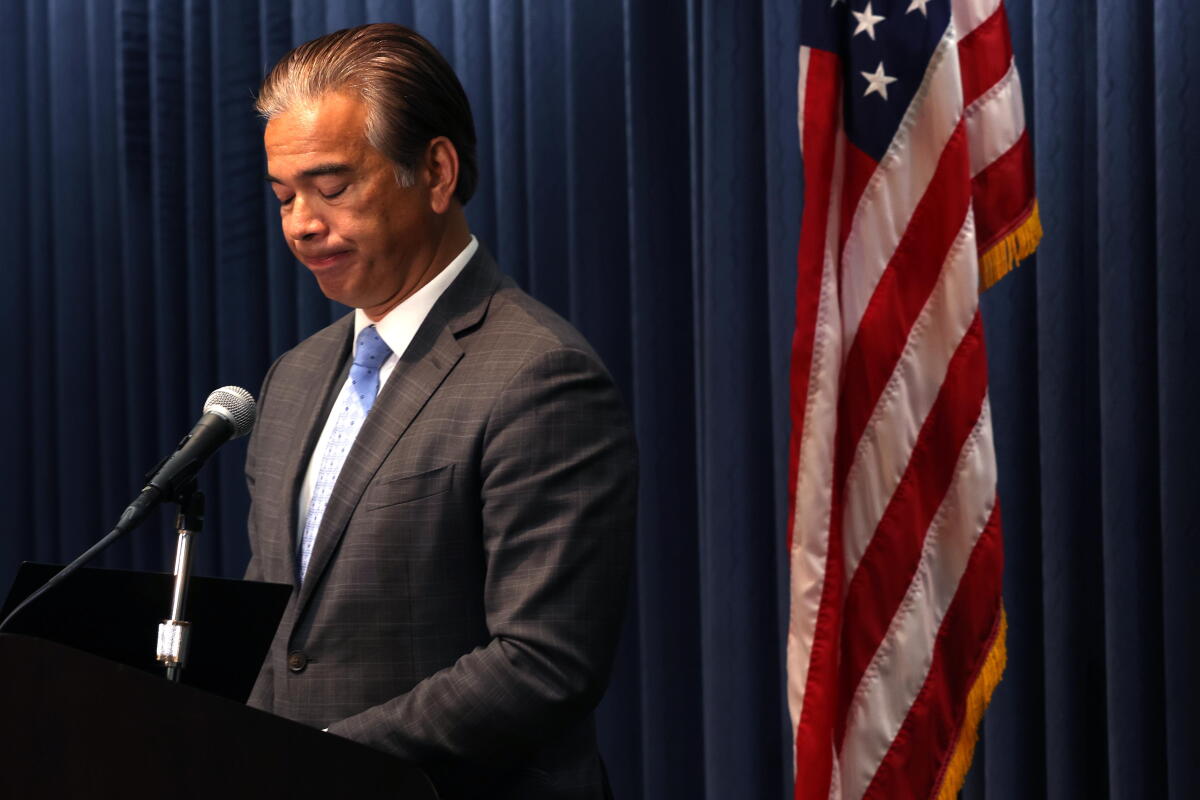
California Atty. General Rob Bonta and Paramount Skydance Chief Executive David Ellison have reached an agreement to end the state’s antitrust fight, paving the way for Ellison to complete his $111-billion purchase of Warner Bros. Discovery, said a person familiar with the matter.
The two sides have agreed to resolve antitrust claims that Bonta and 11 other state attorneys general brought in late July, said the source, who was not authorized to comment publicly on the settlement.
As part of the deal, Paramount agreed to pay a penalty if the company fails to make good on a promise to distribute 30 films per year in theaters and to spend $1.5 billion on film production in Hollywood over the next five years, said the source who was not authorized to comment.
Representatives of Paramount and Bonta did not respond to a request for comment.
A federal judge must approve the agreement. Paramount would then be poised to quickly finalize its purchase of Warner Bros. Discovery — a blockbuster combination that will reshape Hollywood by collapsing two historic film studios with rights to Batman, Harry Potter, “Top Gun,” and Bugs Bunny and by combining the HBO Max and Paramount+ streaming services.
In addition to CBS, Paramount would own dozens of cable television channels, including CNN, TBS, HGTV, Food Network and Comedy Central.
The road to a resolution was fraught. Bonta abruptly canceled a negotiation session with Paramount in late August after potential deal terms leaked. Then, after talks restarted and the settlement began taking shape, several powerful Bonta allies, including New York Atty. Gen. Letitia James and Connecticut Atty. Gen. William Tong, signaled their displeasure with proposed deal terms.
They felt the deal points didn’t go far enough to mitigate the potential clout Paramount would wield over the film and television industries if it was allowed to swallow its larger industry rival, according to three people familiar with the matter but not authorized to comment.
Ellison’s goal had long been to complete the Warner takeover by the end of September — before midterm Congressional elections and prior to a key deadline for Paramount to increase its payout to Warner Bros. Discovery shareholders. Ellison received a boost from California Gov. Gavin Newsom, Los Angeles Mayor Karen Bass and Xavier Becerra, the Democratic nominee for California governor, who pressed Bonta to end the dispute rather than take the case to trial in Oakland in March.
Newsom said he took “seriously” Paramount’s threat to leave the state. He advocated for a settlement behind the scenes, according to two people close to the matter who were not authorized to comment.

State Attorney General Rob Bonta in 2025. (Genaro Molina/Los Angeles Times)
(Genaro Molina/Los Angeles Times)
Ellison was highly motivated to strike a deal because his company’s expenses will soon accelerate. Beginning Oct. 1, Paramount is on the hook to pay Warner investors a “ticking fee” of 25 cents per quarter, per share until the deal closed. That obligation is expected to add $7 million a day to the cost of the $31 a share that Paramount agreed to pay Warner shareholders when it won the bidding war back in February.
Paramount’s takeover will be heavily leveraged. The company’s bankers have lined up nearly $80 billion in debt to finance the merger. Ellison’s father, billionaire Larry Ellison, late last year agreed to backstop the $47-billion in equity needed to complete the acquisition. Royal families from Saudi Arabia, Qatar and Abu Dhabi have agreed to chip in $24 billion for an equity stake by assuming some of Ellison’s financial commitments.
Late last week, the Federal Communications Commission approved Paramount’s request to allow the foreign investors to own nearly 50% of the merged company. The Ellison family, however, will retain its voting control.
Paramount has promised Wall Street that it would make more than $6 billion in cost cuts. A recent Los Angeles County economic report predicted the merger could lead to an estimated 4,500 workers in the Los Angeles region losing their jobs as Ellison works to combine the two companies.
The truce comes after Paramount received clearances from regulators around the world, including the European Commission, Canada and the U.S. Justice Department.
But despite those approvals, Paramount spent weeks over the summer wrangling with Bonta and applying political pressure. Ellison threatened to move his studio from its historic Melrose Avenue address to Texas or Tennessee.
Larry Ellison separately announced plans to switch the headquarters of his software behemoth Oracle to Nashville from Austin, Texas (after Oracle relocated from Silicon Valley six years ago).
Paramount also enlisted major Hollywood unions, the Directors Guild of America and the International Alliance of Theatrical Stage Employees, and prominent cinema chains to drop their opposition to the deal.
Bonta’s suit had leaned heavily into potential harms to theatrical distribution and lawyers for the states had been banking on theater executives’ testimony at trial.
The parties also were facing a key court hearing Thursday. Paramount was poised to ask U.S. District Judge Araceli Martínez-Olguín in Oakland to make the states and the Writers Guild of America post a $1.88-billion bond that would cover some of Paramount’s delay-related deal costs should the company eventually prevail.
The states and the WGA, which also sued to block the merger, have balked at the request, which was designed by Paramount to create fissures within the coalition of states by raising doubts about the strength of their case.
Paramount’s high-profile lobbying campaign reached a crescendo in late August after Paramount called out activist-actor Mark Ruffalo, accusing him of resorting to “antisemitic tropes” to argue against the merger.
Prominent Jewish groups rushed to Paramount’s aid. Ruffalo, who frequently works with HBO, denied the allegation, saying he had a 1st Amendment right to speak against the deal as well as Oracle’s business ties to Israel. Numerous Jewish artists came to Ruffalo’s defense, saying his free speech rights were being squelched.
Bonta abruptly canceled a settlement conference, accusing Paramount of leaking confidential information.
“If you want to have an adult, legitimate, serious settlement discussion — no problem,” Bonta said during an Aug. 25 appearance in Los Angeles. “But if you want to play games, we’ve got better things to do.”
The states’ 37-page lawsuit, filed in the U.S. District Court for Northern California, claimed the Paramount-Warner combination would violate the U.S. Clayton Act, a century-old antitrust law to prevent mergers that weaken competition and raise costs for consumers.
The states, which also included Nevada, Colorado, Oregon, Washington, New Jersey and New Mexico, had argued the tie-up of two legacy movie studios would give Paramount-Warner too much marketshare in two categories — wide-release movies and potential blockbusters.

Paramount Skydance CEO David Ellison has pressed to get his blockbuster deal done before his company must make higher payouts to Warner Bros. Discovery shareholders and before the mid-term elections, which could change the makeup in Congress.
(Mark Schiefelbein / Associated Press)
The states also said Paramount-Warner would control nearly 30% of the cable television channel space with more than 50 networks.
Paramount has been facing a June 4 deadline to complete the deal — or owe Warner Bros. Discovery a $7-billion breakup fee. Paramount has already paid $2.8-billion to cover a termination fee paid to Netflix after the streamer withdrew from the auction in February.

The Times’ top 10 flag football rankings
The Times’ top 10 high school flag football rankings:
1. JSerra (17-0)
Kate Meier completed 50 passes for 591 yards and eight touchdowns in victories over Mater Dei and Corona del Mar.
Next: Tuesday vs. Orange Lutheran.
2. Orange Lutheran (15-1)
Lancers are motivated to avenge their defeat to JSerra in the semifinals of the Chargers Invitational on Aug. 15.
Next: Tuesday at JSerra.
3. Huntington Beach (13-3)
Five wins in six days, including an 18-6 victory at Newport Harbor to move into first place in the Sunset League.
Next: Monday at Los Alamitos.
4. Newport Harbor (15-3)
Scarlett Guyser threw for two touchdowns and ran for a third in a 25-0 league shutout of Corona del Mar.
Next: Wednesday at Edison.
5. Dos Pueblos (14-2)
Brooklyn Hedricks had 14 receptions for 193 yards and four touchdowns in victories over Oxnard and San Marcos.
Next: Thursday vs. Rio Mesa.
6. Westlake (11-3)
Annabelle O’Keefe has passed for 2,921 yards and 47 touchdowns and has seven interceptions on defense.
Next: Tuesday vs. Newbury Park.
7. Edison (12-5)
Freshman Lyric Lesui has 55 catches for 647 yards and 11 touchdowns for the Chargers, who have posted nine shutouts.
Next: Monday at Marina.
8. Oxnard (10-5)
Ryanna Harris threw for three scores and ran for three versus Rio Mesa, upping her season total to 32 touchdowns.
Next: Tuesday at Ventura.
9. Mater Dei (10-4)
The Monarchs have won seven of their last eight, their only defeat coming at the hands of Trinity League rival JSerra.
Next: Tuesday at Santa Margarita.
10. Sierra Canyon (12-4)
Makenna Cook threw for 312 yards and six touchdowns against Palos Verdes amid the Trailblazers’ four-game streak.
Next: Tuesday at Alemany.
US threatens to ground Iranian airlines worldwide from Wednesday | US-Israel war on Iran News
Scott Bessent says airports and companies servicing Iranian carriers risk being cut off from the US dollar system.
Published On 21 Sep 2026
United States Treasury Secretary Scott Bessent says Iranian airlines could effectively be shut out of international travel from Wednesday, as Washington threatens foreign companies with secondary sanctions if they continue servicing the country’s carriers.
“On September 23, all the Iranian airlines will be shut down around the world,” Bessent told CNBC on Monday.
Recommended Stories
list of 3 itemsend of list
The warning is aimed not just at the airlines themselves, but at the airports, fuel suppliers, ticketing companies and other businesses they rely on to operate abroad.
“If they land, you cannot provide them with fuel, you cannot provide them with landing services, you cannot sell them tickets, or you will be knocked out of the dollar system,” Bessent said.
The threat marks the latest step in US President Donald Trump administration’s escalating economic campaign against Tehran, which has continued alongside the war between the US and Iran.
Earlier this month, the US Treasury imposed sanctions on all remaining Iranian airlines that had not already been targeted, as well as companies outside Iran accused of supporting the country’s aviation sector.
Iran’s aviation industry was already heavily constrained by years of US sanctions, which have made it difficult for carriers to buy new aircraft and obtain spare parts and maintenance services.
The measures are part of a much broader sanctions regime aimed at isolating Iran from the international financial system. US secondary sanctions threaten foreign companies that do business with Iran across sectors including energy, shipping, technology, gold and digital assets with penalties of their own.
China ‘very engaged’ on Iran sanctions
Bessent’s comments came a day after talks with Chinese Vice Premier He Lifeng, ahead of Trump’s meeting with Chinese President Xi Jinping on Thursday.
China is one of Iran’s most important economic partners and diplomatic backers, making Beijing’s cooperation potentially significant to Washington’s efforts to financially isolate Tehran.
Bessent said Chinese officials had been “very engaged” in the US pressure campaign. Washington was holding what he described as positive talks with Chinese financial authorities, including People’s Bank of China Governor Pan Gongsheng, about compliance with US sanctions on Iran.

Antonio Guterres: Can the UN still meet today’s global crises? | US-Israel war on Iran
In this episode of On the Record, Al Jazeera’s James Bays sits down with United Nations Secretary-General Antonio Guterres, ahead of his final UN General Assembly before stepping down in December 2026. They discuss the situation in the Middle East and its global consequences, whether the UN is still relevant in addressing today’s challenges and why Guterres believes the UN Security Council must be reformed.
Published On 21 Sep 2026

I’m a Michelin-star chef but there’s a chain restaurant I STILL love
WHEN it comes to the best foodie spots in the UK, it’s safe to say Michelin-star chef Tom Kerridge knows his stuff.
Talking to Sun Travel, Tom revealed that he doesn’t always go for fine food – with a popular high street chain being one of his favourites.
“Seriously, I love a Nando’s,” he admitted.
“It’s one of those chain, fast food places that isn’t actually bad for you, and ideal for a pre-cinema meal.
“There’s still plenty of protein and if you want to make it healthy, salad options, broccoli and peas.”
Tom continued: “The food isn’t always fried either, it can be grilled and you can swap chips for rice.


“As far as chain restaurants go, it’s good value for money, and you can make it healthy – then cover it in hot sauce, as I like to.
“If I’m with my son, we’ll do a whole chicken and share one of those, then for sides, we love the Peri-Peri salt chips, and the Macho peas.”
You can even get meals for under £10 in Nando’s – the grilled chicken burger served in a soft roll with tomato relish, mayo, lettuce and tomato comes in at £8.75.
A variety of the salads come in at £9.50, or if you fancy some sides, get a quarter of a chicken and add two sides for just £12.45.
Another British staple is of course fish and chips, and Tom reveals exactly where he likes to go for the seaside favourite.
He said: “The north coast of Kent is just brilliant, and there are a couple of great chippies in Whitstable.
“The town actually ahs an incredible fish scene in general – it’s still a fishing port and you can see the boats coming in and out everyday.
“One of my favourites spots is actually Whitstable Oyster Company, and there’s Wheelers which is fantastic for shellfish – especially if you like a crab sandwich.”

He added: “And the best part is that it’s all along the seafront – I’m a believer in flavour being wrapped up in a setting.
“You’ve got to go and eat on the sea wall with seagulls flying overhead. It’s magic, and that’s what makes things taste great – especially along the north Kent coast.”
When it comes to the Great British pub, there’s one spot that sticks out in Tom’s mind, and you’ll find it in Yorkshire.
He explained : “One of the best in the UK is in a sweet little village called Harome.
“The Star Inn is run by Andrew Pern and it’s an amazing, brilliant pub with Michelin-star food.
“It’s homely, hearty and everything you’d expect from a Yorkshire pub like an open fireplace, Wellington boots. It’s a lovely, lovely place.”
A few years ago, The Star Inn was named one of the best pubs in the country – it’s inside a 14th century thatched cottage with exposed wooden beams.
Lots of visitors have praised it for being “charming” and having “incredible food for a fair price”.
They cook up a storm too from plum-glazed duck to roast lamb, pan-roasted halibut and for dessert baked-apricot soufflé to savoury frangipane.
And while Tom raves about the major cities as a place to eat fantastic food – praising Manchester for its street food and bars, along with Bristol for its vegetarian restaurant – there is a much smaller island he said is amazing as well.
He said: “When I was a child, I used to go on holiday to the Isle of Wight all the time.
“It was to a Butlin’s-style caravan park, and now I’m at the point where my son is 10 and he loves the idea of camping and doing adventure stuff – so I’m looking forward to getting back into it.
“I actually went back to the Isle of Wight earlier this year to film something, and I love going back.
“It’s so small that you can go all over – the coast is very special.
“The Isle of Wight has quite an old-school feel, it’s like going back to the 50s or childlike England. It would be cool to take my son there and go camping.”
Tom is based in Marlow, where he has lived for 21 years, and it’s where he’s set up his three pubs; The Coach, The Hand & Flowers and The Butcher’s Tap.
Chase bank has partnered with Tom Kerridge to celebrate the UK’s world class dining scene.
This comes as new research from Chase reveals that Brits are willing to travel far and wide for a good meal, to the tune of 57 miles on average – the same distance as from London to Oxford.
With Chase, customers can earn 2 per cent cashback – up to £20 a month – when you use your debit or credit card in the UK and Channel Islands across:
- Groceries – e.g. at grocery stores, supermarkets, miscellaneous food stores, convenience stores and specialty markets
- Everyday transport – e.g. local and suburban commuter passenger transportation (including ferries), bus lines (including charter/tour buses), railroads and passenger rail (trains)
- Fuel – e.g. service stations (with or without ancillary services), automated fuel dispensers and public electric vehicle charging points
- Restaurants – e.g. restaurants, cafes, takeaway

ITV The Blame star Nathan Mensah’s new role as he makes TV debut
Nathan Mensah is making his TV debut in The Blame, alongside Michelle Keegan and Douglas Booth.

Nathan Mensah stars as DC Lewis Brimah (Image: ITV)
Nathan Mensah has joined the cast of The Blame alongside Michelle Keegan and Douglas Booth.
The actor is making his debut in the second episode of the new ITV drama, airing Monday, 21 September. He plays young police detective Lewis, set on helping Michelle’s character DI Emma Crane uncover the truth about the death of a young girl.
The six-part series dramatizes corruption and systemic misogyny in the police force, after shockwaves are sent through a quiet town when a teenager’s body is found in the woods. With officers turning on each other, DI Crane and Douglas’ character DI Tom Radley dig deeper and are left reeling at the secrets they discover within a tangled web of lies and cover-ups.
“As the clock ticks and trust fractures, Crane must navigate both a murder investigation and the treacherous politics inside her own team,” the synopsis goes on to tease.
Nathan stars as DC Lewis Brimah, which marks his first TV role after working in commercial modelling and brand campaigns. Ahead of the new series airing, he teased his role on social media, writing: “GOD IS GOOD!!! First TV Series Job. Excited to get into this one with such an amazing cast.”
“Biggest congrats Nathan,” one fan replied. Another follower said: “Congratulations!! Bravo.” A third added: “wow! such a great cast, congrats,” while someone else wrote: “Yesss Nathannnnnn.”
Introducing his role in a Q&A during a press event, Nathan shared: “Lewis is a good guy, in fact, he’s a great guy… He’s coming to the system, going through the fast-track graduate scheme which means he hasn’t had the experience that a lot of the other officers and other detectives have.
“But he’s ambitious and he just wants to do a good job, like that is his focus. He’s by the book and he wholeheartedly believes in the job.
“He believes in the system, he believes in the people that he works with, and he has a very strong moral compass. He’s a very simple man, he believes things are black and white, there’s right and wrong, good and bad.
“For me, what I found really interesting is seeing someone like Lewis placed in an environment that is morally complicated, and how he navigates those areas without losing his integrity.”
Nathan went on: “He felt like me, like the new guy coming in, not necessarily seasoned but working with the vets. He just wants to do a good job and he really cares.”
The six-part series also marks the first time Michelle has played a police officer, as she revealed she couldn’t believe she’d not played one before. She previously shared a personal link to her role in The Blame, saying: “The thing is, my dad was in the police force, he was an inspector since he was 17.
“So I used to go to him and go, ‘Dad, what do you think about this?’ And when I was doing the meeting scenes, it was quite a high-up rank, so I was like, ‘How would you talk to people in the police force and how was your body language?’ I used to go to him quite a lot for resourcing.”
Michelle elsewhere revealed she was “hooked” on The Blame from the moment she read the script, and hailed her character as being “a strong female in a male-dominated environment”.
She went on: “She’s one of those girls that will take no nonsense, and it just felt exciting. We love to see it on screen and there’s not enough of it on screen.”
The Blame continues on Monday, 21 September at 9pm on ITV1 and ITVX

What is CETA – and why is the EU-Canada trade deal still in limbo?
The European Union and Canada last week unveiled plans for an ambitious new partnership that could eventually give Canada a form of associate EU membership. Yet their existing landmark agreement remains unfinished business.

ADVERTISEMENT
ADVERTISEMENT
The Comprehensive Economic and Trade Agreement (CETA) was signed in 2016 and has applied provisionally since 2017, removing almost all tariffs and helping drive a sharp increase in transatlantic trade. But ten EU countries – Belgium, Bulgaria, Cyprus, France, Greece, Hungary, Ireland, Italy, Poland and Slovenia – have still not ratified it.
The contrast was underlined last week when European Commission President Ursula von der Leyen invited Canada to deepen its economic and security ties with the bloc.
“We will move from CETA to an Alliance for the Future to create a common prosperity and economic security space,” von der Leyen told MEPs and Canadian Prime Minister Mark Carney in Strasbourg.
Despite not being fully ratified, the deal provisionally entered into force in 2017.
But what is CETA and why is its ratification blocked?
What is in the EU-Canada trade agreement?
CETA was concluded in 2016 after seven years of negotiations and often heated debate across EU member states.
The agreement removed tariffs on 98% of goods traded between the EU and Canada, covering products ranging from wine and cars to chemicals. It also opened up more of the Canadian market to European companies in sectors including financial services, telecommunications and transport.
The Commission says the agreement boosted EU-Canada bilateral trade in goods and services by 80% in 2025 compared to 2016, when CETA was signed, reaching €130 billion, up from €72.1 billion recorded nine years before. The EU has a trade surplus of €16 billion in goods and €9,7 billion in services.
For agricultural products, it allows 143 European products with the status of geographical indications (GIs) to be sold in Canada, protecting them from imitation. The deal also includes quotas for EU cheese exported to Canada (32,000 tonnes per year), Canadian beef (50,000 tonnes) and pork (80,000 tonnes) to the EU. It also bans imports of Canadian products containing prohibited substances, such as growth hormones.
Only 3% of the beef quotas were filled between 2021 and 2023, due to the EU’s Sanitary and Phytosanitary (SPS) rules, which make it costly for Canadian beef producers to export, according to a Commission assessment.
Why is the ratification blocked?
Concerns over food safety and environmental standards are among the reasons CETA has faced resistance in EU countries. European farmers have also raised concerns about unfair competition from Canadian products, arguing that some of Canada’s production rules are less stringent than those in the EU.
CETA opponents also criticised the deal’s Investor-State Dispute Settlement provisions. Those let companies bring a claim against the state before an arbitration tribunal if its government adopts a law that discriminates against a company and harms its profits. The tribunals were ad hoc, composed of private arbitrators.
However, controversies around a system that might favour business lobbies led the Commission to include safeguards and replace the Investor-State Dispute Settlement mechanism with an Investment Court System with permanent judges and an appeal mechanism. The EU and Canada have also introduced provisions to safeguard their right to regulate policies aiming to protect public health and safety, the environment or social protection. But opponents say that the safeguards won’t be enough to protect such policies. It is planned that the courts will only come into force once the deal is ratified by all 27 member states.
When will the EU fully ratify the deal?
There is no clear timetable, not least because the ratification process is effectively blocked in several member states.
For instance, in France, the Senate rejected the deal in 2024, and the government then blocked its submission to the National Assembly, fearing a full rejection.
In Poland, the ratification process is also frozen, as well as in Italy, where it has been blocked since the government rejected it in 2018, considering Italian GIs were not given enough protection. Italian MEP Carlo Fidanza, from the Brothers of Italy party, recently said that there were few chances the deal would be submitted to parliament before the December 2027 elections.

Times of Troy: It’s time for Lincoln Riley to finally beat Oregon
Welcome back to the Times of Troy newsletter, where we’ve reached a critical fork in the road for the Lincoln Riley era.
The soft part of the schedule is behind USC. Oregon awaits next Saturday. The time is now for Riley and USC, just like the billboards around L.A. have been insisting for months.
That this moment arrives after Saturday’s uninspiring escape from Rutgers only amplifies the pressure on USC’s coach. Against arguably the worst team in the Big Ten, the Trojans were once again plagued by many of the same road woes that Riley has failed for four years to solve. USC’s defense, now on its third coordinator under Riley, was largely a disaster. Even the offense, with another Heisman Trophy candidate at quarterback, looked clunky and out of sync.
Now, Riley is out of time to iron out these issues. Because there is no more important game for USC this season than next Saturday. Outside of the 2022 Pac-12 title game, which went quite poorly for him, I’d argue it’s the most important game of Riley’s entire tenure to date.
Riley has yet to beat Oregon as USC’s coach, while Dan Lanning and the Ducks have run circles around the Trojans, on and off the field, during the four-plus years they’ve both been coaching out West. Oregon may have never won a national title, but has been to the College Football Playoff in three out of those four years. USC has never been to the Playoff. The two teams have become legitimate rivals over that time. But in two meetings with Oregon under Riley, there’s never been any doubt about who’s the better team.
For a brief moment, early in this season, it seemed like that might be shifting. Oregon was stunned by Oklahoma State, just two weeks ago, leading to real questions about whether the Ducks are the Playoff contender they were made out to be.
That loss, though, actually ratcheted up the importance for Riley. With Oregon appearing this vulnerable, there are no excuses for USC or its coach if they don’t win this game. No matter the situation that Riley inherited, the Trojans should have what it takes, by Year 5, to compete with Oregon. Full stop.
That’s the standard that USC was expecting in shelling out over $11 million per year to its football coach. But in four-plus seasons under Riley, the Trojans have just six wins against ranked opponents and have consistently blown their biggest games.
Think, for a moment, of Riley’s biggest win at USC. Are you having a hard time conjuring it? That’s because of the six ranked teams that USC has beaten under Riley, all of them finished with four losses that season.
Clay Helton had three top-five wins at USC through his first 18 games as head coach. Meanwhile, in almost five years and 57 games, I’d argue Riley still doesn’t have a single great win.
He can change that Saturday. But if Riley can’t lead USC past Oregon now, after all this time, who’s to say he ever will?
“House of Troy”: Chapter 1 drops Sept. 22

Pete Carroll when he was coaching USC.
(Getty Images)
Twenty five years ago, USC’s football program was in a bad spot.
The Trojans hadn’t been relevant in over a decade, and Paul Hackett had just been fired as head coach. USC needed a new direction. But its search for Hackett’s replacement was going poorly. Two coaches — from Oregon and Oregon State, no less — had already turned them down. That’s when Daryl Gross, the USC official in charge of the search, turned his attention to a twice-failed NFL coach.
Pete Carroll.
His hire would turn out to be a seminal moment in the history of Trojan football. But that was not how folks saw it at the time.
“There’s legendary stories of fax machines just blowing up and paper after paper coming through,” said Rocky Seto, who was a grad assistant at the time. “People weren’t happy.”
Bill Plaschke, The Times columnist, wrote a column at the time ripping the hire. Carroll himself called Plaschke after that, begging for a shot.
“All he kept saying,” Plaschke said, “was just gimme a chance.”
Well, it turned out OK for Carroll and the Trojans. They won back-to-back national titles and nearly won a third during his tenure as coach.
It’s what came after that, as USC tried to cling on to the Carroll era, that’s the subject of a new narrative podcast series from LA Times and LA Times Studios, House of Troy. Starting with Carroll’s hire a quarter-century ago, we’ll walk you through how USC rose to college football prominence and how it all came crashing down once Carroll left.
The first chapter of House of Troy drops on Sept. 22, with new episodes coming every week after that. Before then, be sure to subscribe wherever you get your podcasts.

King Miller runs past Rutgers defensive lineman Farell Gnago in the first half.
(Adam Hunger / AP)
—King Miller is the clear RB1 at the moment. USC may view Miller and Waymond Jordan as starting running backs, but there’s no doubting who has taken the reins at the top of that rotation. Both are averaging over five yards per carry. But Miller has at least 15 carries in all four games, while Jordan hasn’t eclipsed 11. Personally, I’m a bit surprised by that divide given how great Jordan looked before his injury last season. It makes me wonder if he’s all the way back from his ankle surgeries.
—The receiver rotation is still up in the air right now. With Trent Mosley out indefinitely, USC opened the game with Kayden Dixon-Wyatt, Corey Simms and Zacharyus Williams as its top three wideouts. Dixon-Wyatt is deservedly locked in that spot, while Simms balled it in his 20 snaps, catching four passes for 72 yards despite missing some time during the game due to injury. Hines ended up playing more snaps, but had a key drop on third down that we’d be talking much more about if USC hadn’t gone for it and converted on fourth. Williams played in the slot, but had just one catch. The real mystery here is Terrell Anderson, who was dressed and not on the injury report, but didn’t play a single snap on offense. Anderson was viewed, at one point, as a key contributor, so it’s not clear what happened.
—Kaylon Miller replaced Hayden Treter as the starting left guard. The move was a bit unexpected, given how Treter played through three games. Treter still played 28 snaps to Miller’s 40 against Rutgers, but with a very good Oregon defensive line on tap, the offensive line will be tested next week unlike it has all season. Miller has always had the respect of offensive line coach Zach Hanson. We’ll know at the start of the game next week whom he trusts the most in that spot.
—USC isn’t built to withstand injuries in the secondary. No unit on the entire roster has more doubts about its depth, and against Rutgers, USC had to test that depth more than it would like. Top corner Jontez Williams only played 22 snaps, while slot corner Alex Graham only played 15. Kennedy Urlacher and Rock Hill took their places, and while they did a fine job, the ripple effects of one injury on the position could be significant. Behind those players are a lot of question marks. So USC better hope that they’re all healthy heading into Oregon.
—USC men’s hoops will play four Big Ten road games in 10 days to start 2027. Which, on its face, seems patently insane. But after a screwy start to the Big Ten schedule a year ago, coach Eric Musselman actually asked for a slate exactly like this. The reason? His team doesn’t have to travel back and forth twice to the East Coast. In this case, they will have to travel from Bloomington, Ind. to College Park, Md. But that’s much more doable than an extra 10 hours of flying.
This week, in 2006 …
After hosting College Gameday and beating No. 19 Nebraska at home, USC opens its Pac-10 season on the road with a dominant defensive performance at Arizona, winning 20-3.
Led by new inside linebacker Rey Maualuga, the Trojans didn’t allow a single point until the fourth quarter. The offense, meanwhile, finally found a running back to lean on. With Reggie Bush and LenDale White both off to the NFL and USC still waiting for someone to step up in their place, Emmanuel Moody heeded the call. He rushed for 130 yards and a score as the Trojans stood pat at No. 3 in the AP poll.
Polling the people
We asked, “After three comfortable wins in the non-conference schedule, do you feel better about the Trojans’ trajectory than you did at the start of the season?”
After 1,523 votes:
Nothing has changed, 47.4%
Yes, I feel better, 45.8%
No, I feel worse, 6.8%
Olympic sports spotlight
A brutal start to the season isn’t getting much better in Big Ten play for USC’s women’s soccer team. After starting the conference slate by being shut out, 5-0, by Michigan State, USC was shut out again by Purdue, 2-0, and then managed a tie against Oregon, 1-1.
The Trojans have scored one or fewer goals in seven of their nine matches this season and are 0-5-2 in those scenarios. They need to produce more offense — and stat.
What I’m watching this week

Domhnall Gleeson as Ned in “The Paper.”
(Aaron Epstein/Peacock)
It tends to take at least a season for a sitcom to really find its rhythm, and so far, that’s been the case for “The Paper,” the spinoff of The Office which dropped its second season on Peacock recently. The first season got the journalism right, but the narrative was a bit clunky, as it sorted out who of its characters should be leading the way.
Fortunately, it seems like they’ve figured it out. Especially in the case of Domnhall Gleeson’s lead editor character, Ned Sampson, who I find far more likable in Season 2.
In case you missed it
No. 12 USC defeats Rutgers in Big Ten opener, but defensive woes detract from win
USC freshman star Luke Wafle’s football roots date back nearly a century
USC freshman star receiver Trent Mosley to miss Rutgers game
Chad Baker-Mazara sues USC, accuses Eric Musselman of ‘racially charged’ tirade
Until next time …
That concludes today’s newsletter. If you have any feedback, ideas for improvement or things you’d like to see, email me at ryan.kartje@latimes.com, and follow me on X at @Ryan_Kartje. To get this newsletter in your inbox, click here.

I went to the world’s biggest Legoland with 75 attractions and exclusive lands

ONE of my fondest childhood holidays was going to Legoland Windsor, feeling like a real pirate as I sifted for gold while struggling to remember my left and rights in the driving school.
But as an adult, I recently visited the new Legoland theme park which has become the world’s biggest – and was blown away by the sheer scale of it.
Legoland Shanghai recently celebrated its first birthday, having opened just outside of the city in July 2025 and celebrating two million visitors already.
But how does it compare to Legoland Windsor?
It has 75 attractions, compared to the the UK’s 55.
Not only that, but it has already broken some world records outside of its size.


It is home to the world’s largest Mini Figure, nicknamed Dada and measuring 85ft.
It also has the world’s only land dedicated to Monkie Kid, with rides including the park’s log flume.
And I was so surprised about how great it was for adults as well.
The Miniland is the central attraction and well-worth a visit, not just for Lego-enthusiasts.
It’s made up of an insane 20million bricks, with fantastic displays including the Shanghai skyline, Beijing and water villages Suzhou.
Kids will have fun though, where they can build their own cars to race or spaceships to shoot rockets.
But there are definitely enough rides to keep adults busy.
It has the Big Lego rollercoaster, the longest coaster at any Lego park at 1,379ft.
Created by Bolliger & Mabillard (behind Nemesis and Oblivion at Alton Tower), it was a thrilling ride that threw me around the tracks, having amazing views of the park until hitting speeds of 53mph.
It’s safe to say I went on this ride a few times…
Otherwise it also has the Dragon Coaster, which is bigger and faster than the UK version.
It even has a unique boat ride which goes through Chinese water villages, and is a welcome break from the heat.
Of course, kids will love the eight themed lands – there is the world-exclusive Lego Monkie Kid land, with the main water flume ride (don’t worry if you get wet – there is a full-sized dryer right next to it).
LEGO City is where they can get their driving license, as well as go on rides based on firefighters, pilots and police officers, and the NINJAGO land has fantastic live performances.
Come with an empty stomach – you can enjoy brick-shaped sandwiches, burgers and even ice cream.
Ticket prices are usually similar to Legoland Windsor, which is around £31.
However, tickets are currently 50 per cent off due to it being Shanghai Tourism Week, meaning £16 tickets until September 27.
Even if you aren’t planning a trip to Shanghai, you can visit Legoland if you are travelling through on a stopover.
The theme park is around one hour from Pudong International Airport, or 25 minutes from Hongqiao International Airport.
Or you can stay longer and stay at the on-site Legoland Hotel.

How an economic squeeze is changing everyday life and work for Iranians | US-Israel war on Iran News
Tehran, Iran – Amid dire fuel shortages and mounting economic challenges, the Iranian government is seeking cost-saving measures for government workers and other citizens to deal with the crisis.
On Saturday, the government set office attendance hours for 8am to 1pm from September 23 to the end of the current Iranian year (late March 2027), with the remaining contractual hours to be completed remotely.
Recommended Stories
list of 4 itemsend of list
Agencies must also designate one day a week when employees and managers travel to work by public transport. In recent days, government ministers have released videos showing themselves using the metro to commute to work as part of the campaign.
Metro and bus rapid transit (BRT) systems will also be free of charge until mid-November in a bid to encourage commuters to leave their cars at home. Worn-out government vehicles will also be replaced with electric, gas-powered or hybrid alternatives, although this is expected to take years to implement.
The reopening of universities is expected to be staggered and partial, with some lessons shifted online by authorities.
Government-linked offices are required to switch off heating and turn off lights after working hours, while schools, universities, healthcare facilities and operational services are to follow separate arrangements to be announced later.
President Masoud Pezeshkian signed a directive on September 12 instructing government agencies to facilitate remote work for suitable employees to save on petrol, electricity and natural gas costs for the state.
“We have begun consumption savings with the government,” Pezeshkian said earlier this month. This is seen as effectively framing remote work and other measures for government workers as in line with other energy-saving measures that the government has asked of the rest of the population.
Resource-rich Iran has dealt with energy crises before, rooted in mismanagement and dated infrastructure, when similar cost-saving measures were implemented. But the added pressure of war with the United States and Israel has forced the government to think of creative solutions to energy shortfalls.
In early September, the cash-strapped government raised the price of fuel for the third tier of quotas for a second time in less than a year, meaning that people will pay double for any petrol use beyond 110 litres (29 gallons) per month. Imported vehicles and some other categories of cars are also limited to the most expensive tier of fuel.
For the first five months of the current Iranian year, which ended on August 22, average daily petrol production was 122 million litres while consumption was at 132 milion litres, highlighting a shortfall in supply versus demand. In the first half of the sixth month, the gap between production and consumption was around the same, at a 10 million litre shortfall.
The US naval blockade of Iran’s southern ports in place since July has halted fuel imports that previously helped balance the gap. The blockade has also stopped Iran from exporting its oil via supertankers transiting the Strait of Hormuz, affecting its foreign currency income. Crude stored on open waters beyond the blockade line is still being gradually sold to China.
Oil and gas facilities, petrochemical companies and major fuel depots were also bombed by the US and Israel, impacting production and distribution. Oil Minister Mohsen Paknejad said in early September that “a significant portion of production capacity has now been restored, and the process is continuing”.
As rampant inflation continues to squeeze most Iranians, data released this week by the Statistical Center of Iran also highlighted the damage the war with the US has dealt to the economy.
Iran experienced a massive 10.1 percent year-on-year fall in real gross domestic product (GDP) and a 26.4 percent fall in oil and gas extraction between late March and late June 2026, the centre’s data showed.
Including oil, industries and mining were down 14.7 percent, while construction was down by 6.4 percent, services overall by 4.8 percent, and transport, storage and communications by 17 percent.
The government has not released any information on how many workers are estimated to be affected by the remote work directive, or how it expected efficiency to be impacted.
But after decades of mismanagement, corruption and inefficiency among government-linked organisations, some Iranians believe it highlights a wider issue of state inefficiency.
“My unpopular opinion is that if 85-90 percent of government sector personnel are fired and 70 percent of ministries closed down, absolutely no problem will occur in the country,” a user named Mohsen wrote on X.

Zabihollah Salmani, a deputy head of the Administrative and Employment Organisation of Iran, told reporters during a press conference in August that more than 2.43 million were on its payroll.
If council, fire brigades, social security and non-government organisation workers were included, this would bring the number to more than four million people. The average monthly pay for government personnel at the end of the previous Iranian year in late March 2026 was around 240 million rials ($104 at the current exchange rate).
Asked by reporters how many of these employees could potentially be taken off the payroll without hurting output, Salmani said, “We do not yet have these figures.” He added that agencies were being asked to submit that information.
About 1,075,000 people are on the payroll of the Education Ministry, including teachers and trainee staff, while 600,000 employees work under the Ministry of Health and its affiliated networks, according to official figures.
Amir-Hossein, a young man working at a research centre linked with the government-funded University of Tehran, said that since the start of the month, he had been assigned two days of remote work. Working hours were set for 7am-1pm before, but are to be shifted to 8am-1pm starting from Wednesday, per the government.
His work can be done on his laptop, but might require some coordination on the phone or short commutes to other centres, he said. Overall, the remote work lifestyle has been beneficial.
“Sometimes I get more work done than I would have at the office,” he told Al Jazeera, asking not to use his full name due to security reasons.
As Amir-Hossein regularly uses online ride-hailing services to commute to and from his job, working from home has been financially beneficial for him.
An Iran-based economist who spoke to Al Jazeera on background said the government measures are essentially crisis control at best, and not a long-term solution to the problem.

Pour your own pints in European town with public beer fountain and £45 flights
If you love a pint after a long day of sightseeing then this city break is a must-visit for autumn. Its self-serve beer fountain means you can try beers from across the region for just a few Euros

The town is just 90 minutes from Ljubljana by train(Image: Getty Images/RooM RF)
After a long day of exploring a new destination, the highlight of a city break for many of us is sitting in the town square, enjoying a nice cold pint of local, reasonably-priced beer.
And if you visit a small, but charming Slovenian town, you can not only order a pint, but pour your own from a ‘beer fountain’ that offers a variety of local brews to sample.
Žalec in the Lower Savinja Valley is a town that’s beer-obsessed. Even its coat of arms features a beer hop. The region is known as the Valley of Green Gold, named for the color of hops as they ripen in the sun, and it has 150 years of beer-making experience.
Next to Žalec’s marketplace lies the Green Gold Fountain, a unique attraction composed of a variety of shiny silver beer taps. Visitors buy a small glass for €12, just over £10, which pays for the souvenir glass plus six 100ml tastings of various local beers. The cups come with a chip, which is scanned by the fountain, so you can serve yourself.
The fountain opened in March and is set to run through October, so visitors can make the most of the crisp autumn weather while they sample local beers. The 150-year anniversary means there will be a larger variety of ales this year, with 34 craft beers from 25 Slovenian breweries expected to be on tap.
Alex Dyer, a managing director at Ski Famille, highlighted the unusual spot. He said: “The fountain is memorable enough to be one part of the day without making beer the whole purpose of a family visit. I think parents will enjoy the stop more when younger travellers have something of their own to look forward to nearby, because that keeps the day balanced rather than leaving anyone waiting around.”
The town’s visitors can also follow an official tourist route called the Path from Hops to Beer, which is just over 3-miles long, taking in a Roman necropolis and caves along the way. Once you’re back in town, the Eco-Museum of Hop-Growing and Brewing Industry is an interactive way to learn about the town’s proud heritage.
Visitors from the UK can fly from London, Manchester, or Edinburgh to Slovenia’s capital, Ljubljana, which takes just two hours and 20 minutes, making it perfect for a short weekend break. EasyJet has flights in October to Ljubljana from £45.99 one-way.
Žalec is less than an hour from the capital by car, taking you down some seriously steep mountain roads and through the untouched Slovenian countryside. But a more relaxed alternative is the 90-minute train ride, which runs along the River Sava in parts, taking you past charming traditional villages as you head to beer country.
Have a story you want to share? Email us at webtravel@reachplc.com
Anduril’s YFQ-44A Fury CCA Has Flown Alongside F-35s
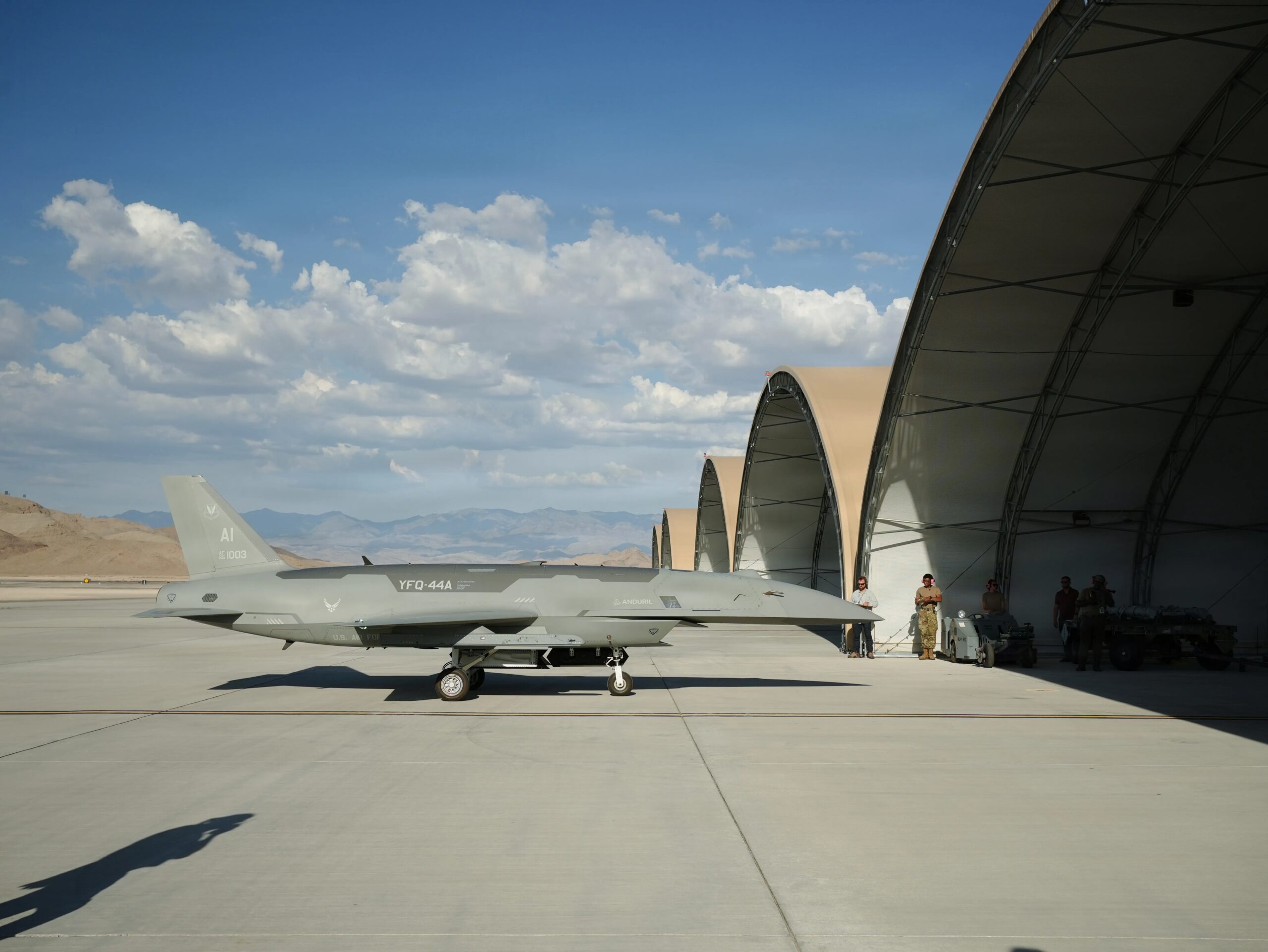
Anduril’s YFQ-44A Fury Collaborative Combat Aircraft (CCA) has already flown in formation alongside F-35 fighters during U.S. Air Force testing, company executives have revealed, offering the clearest indication yet that live manned-unmanned teaming work with the fifth-generation fighter is underway.
The disclosure came during a briefing by Anduril executives Jason Levin, senior vice president for Air Dominance and Strike, and Erin Simpson, vice president for Strategy for Air Dominance and Strike, at the Air & Space Forces Air, Space and Cyber Symposium that TWZ is attending. The executives said the Fury flew alongside F-35s during a July exercise conducted with the Air Force’s Experimental Operations Unit (EOU) at Creech Air Force Base, Nevada. You can read more about that event in our past reporting here.

“We’ve already started flying in formation alongside crewed. I can even say fifth-gen fighters. F-35,” Levin said.
The testing is an important step toward the Air Force’s broader vision for its Collaborative Combat Aircraft program, in which relatively inexpensive autonomous aircraft are intended to operate alongside and support crewed fighters in contested airspace.
The executives stressed, however, that the F-35 was not yet controlling the Fury during those flights.
“But they’re not controlling it from the crewed fighter yet,” Levin said. “Not yet.”
Instead, the July testing involved Fury operating under its Mission Autonomy system while sharing airspace with crewed fighters, other CCAs, and other aircraft. Anduril says Air Force personnel were able to operate the autonomy system without Anduril personnel directly running the aircraft, although company personnel remained on site in a supporting role.

Lattice for Mission Autonomy: An Unfair Advantage for Unrivaled Deterrence
The company described the progression toward direct manned-unmanned teaming as a “crawl, run, build-up” process.
Anduril says it has already begun work on what it calls “quarterback integration,” referring to the ability for a crewed aircraft to direct or task autonomous aircraft. That work has been conducted in hardware-in-the-loop and software-in-the-loop environments as well as on the Fury itself.
“Most of those events will be coming up here in a matter of weeks or months,” Levin said when asked about the timeline for the first quarterback integration with Fury.
Asked whether those events would involve live flying, the answer was unequivocal: “Yes.”

Exactly how an F-35 would control Fury remains part of that ongoing development effort. The executives pointed to work involving integration of the appropriate human-machine interfaces, primarily including tablet-based control from the crewed fighter, at least at first.
The distinction between flying alongside an F-35 and being controlled by an F-35 is important. The former demonstrates that Fury’s aircraft and autonomy systems can operate safely in the same battlespace as a fifth-generation fighter. The latter would represent a much more significant demonstration of the operational concept behind CCAs: allowing a single crewed fighter to employ and manage additional autonomous aircraft as part of a larger force.
Anduril’s July testing went beyond simple formation flying. The company said Fury was conducting Mission Autonomy flights using live sensor data and was operating in airspace shared with crewed fighters and other CCAs. Air Force operators reportedly conducted both relatively basic route and pattern work and more representative tactical scenarios.
The Fury’s work with the Air Force’s Experimental Operations Unit has progressed through two increasingly ambitious phases. During the first exercise in April at Edwards Air Force Base, Air Force personnel were trained to operate the aircraft and were able to launch and recover it using Anduril’s compact Menace-T setup, essentially a pair of ruggedized cases and a laptop rather than a conventional ground-control station.
By the second exercise, conducted at Creech in July, the Air Force had reduced the manpower and infrastructure required further. A single EOU operator could launch and recover the aircraft after only hours of training, while Air Force personnel independently operated Fury’s Mission Autonomy. The aircraft also flew in airspace shared with other CCAs, while the exercise demonstrated disaggregated operations and a rapid “hot reload” in which two operators replaced an AIM-120 AMRAAM with the engine running, reducing the turnaround between sorties to single-digit minutes.

The July exercise also included a live weapons demonstration that Anduril characterized as a complete end-to-end kill chain rather than simply a captive-carry or basic weapons-release test. The Fury launched from Edwards with a single operator and received a track generated by an external source over a beyond-line-of-sight connection. That track was ingested by Anduril’s Lattice AI-infused autonomy software system, after which the operator tasked the aircraft to engage. Fury then launched an AIM-120 AMRAAM and guided the weapon to the target. Anduril described the test as demonstrating the complete kill chain from offboard targeting information, through the aircraft’s mission systems and operator tasking, to an actual air-to-air weapons engagement.
On the weapons side, the production FQ-44 is being designed around four external hardpoints, allowing it to carry four AIM-120 AMRAAMs for the Air Force’s primary air-to-air mission set. Currently, the demonstration aircraft can carry two. Regardless, the company is also pursuing a much broader weapons portfolio for Fury. Executives said they have already begun integration and fit checks for 500-pound guided bombs, Small Diameter Bombs, low-cost cruise missiles — including Anduril’s Barracuda 500 offering — other air-to-air weapons, rocket pods and targeting pods. Those integrations are intended to give Fury options beyond air-to-air combat, including counter-drone, counter-cruise-missile and air-to-ground/air-surface strike missions. Anduril stressed that these are currently integration and engineering efforts rather than claims that all of those weapons have been flight-tested from Fury. The company also said additional sensors, such as a targeting pod, could be added for some of those missions.
The executives acknowledged that some of the more advanced tactical capabilities remain under development and are being explored extensively in simulation. Those efforts include areas such as sensor fusion, track discrimination and tactical engagements.

The ultimate objective is an aircraft that does not require a large ground-control infrastructure or a dedicated operator for every individual sortie. As previously noted, during the July exercise, Anduril says a single Air Force operator was able to launch and recover a Fury after only hours of training, while other Air Force personnel operated the aircraft’s Mission Autonomy functions.
That same exercise also demonstrated what Anduril described as “disaggregated operations,” with personnel at multiple locations able to operate the same aircraft. The concept is intended to support an Agile Combat Employment-style approach in which CCAs can be dispersed across multiple operating locations rather than relying on a single large ground footprint.
The company has since delivered a Fury aircraft to the Air Force’s EOU at Creech, making it the first CCA to be permanently delivered to the unit, according to Anduril. The service is now flying the aircraft multiple times a day with what the company said is a very limited Anduril presence.

Meanwhile, Anduril says assembly of Fury airframes has already begun at its Arsenal facility, with production aircraft expected to begin coming off the line early next year. The company says it has built the facility and supply chain around a potential production rate of 150 aircraft per year, although that figure is a planned capacity rather than an existing Air Force order. Anduril executives said the company has already advanced procurement of long-lead items and worked with its Tier 1, 2 and 3 suppliers to support that rate, while also examining additional production lines. They emphasized that the current Air Force pricing is based on a substantially lower annual buy than 150 aircraft, but said the Fury’s unit cost is well below $20 million at the quantities currently contemplated. The company also says the production line is designed for relatively rapid reconfiguration, allowing capacity to be shifted between products in weeks rather than the months or years associated with more traditional aircraft production facilities.
Earlier this year, the Air Force awarded contracts for the production of FQ-44A Fury and General Atomics FQ-42A Dark Merlin drones — the latter has now been formally named Vengeance. This sets the service up to operate a split initial fleet of CCAs. As you can read about here, the Air Force is now aiming to have at least 500 CCA in service by 2032, a substantial step up from earlier plans, with the USAF having previously talked about acquiring “over” 150 of these drones by the end of the decade. The 500 target will likely include upcoming increment two CCAs, as well, the requirements of which the Air Force is still working on.
For Anduril, the next major milestone should go far beyond simply putting a Fury and an F-35 in the same formation, demonstrating that a crewed fifth-generation fighter can actually command and employ the autonomous aircraft as part of a live mission.
If Anduril’s timeline holds, that testing could begin relatively soon.
Contact the author: thomas@thewarzone.com

Suno made a new AI music model with major labels. Here’s what it means
Two years ago, the biggest record labels took artificial intelligence music generators to court for copyright infringement. Now several of them are licensing their catalogs to those same companies, and the deals are starting to turn into products.
The latest example came earlier this month, when Suno, an AI music company valued at $5.4 billion, released its first models built with licensed music from Warner Music Group, BMG and Believe. Rival Udio has licensing deals with Universal Music Group and Warner.
The companies are pitching AI as a new revenue stream for artists. But so far, none of them have disclosed what artists will be paid, how many artists have opted in, or how much input individual musicians have over whether their work is used. And some musicians and songwriters are fearful of how these AI deals might affect livelihoods.
“It’s sort of a creepy and ominous cloud,” said Matt Evans, a 35-year-old Pasadena resident who’s played brass instruments on shows like “The Late Late Show With James Corden” and Netflix’s “Dr. Seuss’s Red Fish, Blue Fish.” “The fact that I could do something once and then it could be reused, and if that’s not negotiated in a contract, then I never got to make a choice to receive additional compensation. It all comes down to the loss of money.”
The American Federation of Musicians sued Universal and Warner in June, alleging the labels licensed recordings its members played on to Suno and Udio without paying those musicians or telling the union which recordings were involved. The labels have moved to dismiss the case.
In 2024, Universal, Sony Music Entertainment and Warner sued Suno and Udio for copyright infringement, alleging the AI companies trained their models on copyrighted songs spanning many artists, genres and time periods. The settlements began the following year. Universal settled with Udio in October and became its partner, and Warner settled with both Udio and Suno in November, signing licensing deals with each.
“The reason why they would settle this is they think they’re going to profit more from licensing music to them rather than from the outcome of a lawsuit,” said Jane Davidson, an entertainment attorney at Nolan Heimann who specializes in copyright and trademark infringement.
More deals followed. Udio signed with Merlin, which licenses music on behalf of independent labels, and with independent publisher Kobalt. Suno signed with BMG in August and with Believe, owner of the DIY distribution platform TuneCore, this month. Spotify, which wasn’t part of the lawsuits, struck deals with Universal and Merlin.
Not everyone is settling. Sony filed a second lawsuit against Udio over more than 30,000 recordings, and it is still suing Suno alongside Universal, which is licensing its music to Udio and Spotify at the same time. Sony and Universal also filed a new lawsuit last week alleging that Suno’s latest model still infringes on their copyrighted works. In July, a Munich court ruled against Suno in a case brought by GEMA, which collects royalties for German songwriters and publishers.
The deals between labels and AI music platforms — on which consumers can create full songs from text prompts — share a basic promise. Artists signed to the participating labels can opt in and will be credited and paid.
But each company is building something different. Udio operates under a “walled garden” model favored by Universal, in which songs made on the platform can’t be downloaded or distributed elsewhere. Spotify’s tool, a planned paid add-on for Premium subscribers, has no launch date. Suno lets users download what they make and release it elsewhere, with download caps and watermarks meant to curb abuse; songs made with its new models can be distributed through Believe and TuneCore.
Whether an artist opts out depends on who owns the rights. Songs typically carry two copyrights — one for the composition, usually held by songwriters and their publishers, and one for the sound recording, usually owned by the label. Every contract is different, so it’s unclear how AI products will handle music where those rights are split.

Waveforms of audio files from various instruments are displayed on a computer screen during the making of an AI musical piece at Suno.
(Robert F. Bukaty / Associated Press)
“These companies are able to make deals on behalf of their artists, and their control over their music is pretty significant based on what major label contracts typically say,” Davidson said. “But I expect that we will have some artists that push back against this and say that they didn’t authorize the use of their music for this purpose.”
Warner’s agreement with Suno, for example, lets artists opt in to having their names, likenesses, voices and compositions used in AI-generated music. But Jack Brody, Suno’s chief product officer, acknowledged that labels “ultimately have their contracts in place that will have some say in what an artist can and can’t do.” It’s also not always clear whether opting out keeps an artist’s recordings out of AI training, or only out of fan-facing features.
Michelle Lewis, a songwriter and the co-founder and chief executive of the nonprofit Songwriters of North America, said the composition side of that copyright split is often the harder one to defend.
“With AI, it’s so much easier to tell if you’ve infringed on the sound recording. You know what Beyoncé and Drake’s voices sound like,” said Lewis, who wrote Cher’s “A Different Kind of Love Song,” Little Mix’s “Wings” and the music for the Disney Jr. show “Doc McStuffins.” “But songwriting is so much more nebulous, so much harder to sue.”
“From the creator side, nobody asked for this. We like our job,” added Lewis. “The job is the process and what makes it special, interesting and artful.”
Some musicians argue the deals can’t cover rights the labels don’t control. A proposed class action filed last month by Jason Isbell and other musicians alleges Suno lets users generate songs that evoke specific artists’ identities without their consent, a right-of-publicity claim the plaintiffs say belongs to performers no matter who owns their recordings. Suno disputes the claims.
Session musicians like Evans are pushing back through their union.
“By licensing our members’ performances to AI platforms like Suno and Udio without consent, credit, or compensation, companies like Universal, Warner Records, and Atlantic are bypassing the very human creators who made their catalogs valuable in the first place,” AFM International President Tino Gagliardi said in a statement.
The labels have disputed the claims and argue that these deals advance the interests of artists and songwriters.
Jonathan Wyner, head of artistic technology initiatives at Berklee College of Music’s Emerging Artistic Technology Lab, compared the AI deals to the arrival of streaming services. Wyner has advised Suno.
“It’s a good step, and I think it was an inevitable step, especially if you want to stay engaged with musicians and the creative community,” he said.
That comparison cuts both ways. Streaming grew the industry while fueling years of complaints about artist pay.
Damon Krukowski, a musician and the legislative director at United Musicians & Allied Workers, said the deals so far don’t seem to benefit working-class musicians and could be used to cut them out entirely.
“It’s a new technology, but it’s not a new corporate story,” Krukowski said. “But the tools are even more powerful. It seems within their possible reach to destroy the labor market. The major labels are just seeing dollar signs without any regard to the long-term health or sustainability of this industry, because they’re envisioning an industry without artists who can push back.”
Brody disputed that, saying Suno is building ways for independent and unsigned artists to benefit, such as its deal with Believe and TuneCore.
With terms under wraps, it’s too early to know whether any of this will pay off for artists. The tests are still ahead — whether Sony and Universal win or settle, and what the first payouts actually look like.
“A label making a deal and an individual artist having a choice are not necessarily the same thing,” said Drew Silverstein, the senior advisor for AI at music tech company BandLab Technologies. “Our music industry has a long history of new revenue streams coming into existence that benefit certain folks, and create great financial opportunities for rights holders.”
FBI chief Kash Patel defends hiring standards changes on prostitution, bestiality at fiery hearing
WASHINGTON — FBI Director Kash Patel on Tuesday defended the bureau’s loosening of hiring standards regarding an applicant’s past experience with prostitution and bestiality, insisting that the changes were meant to enable victims of those acts to be considered for employment without fear of automatic disqualification.
The subject arose during a contentious Senate Judiciary Committee hearing in which Patel clashed with Democrats over his firing of agents who participated in investigations of President Trump, a spate of media leak probes, and whether employees would be dispatched to the polls on Election Day in light of the bureau’s ongoing election-related investigations and Trump’s repeated and false claims about the existence of pervasive voter fraud.
The hearing featured the name-calling and bitingly personal exchanges that have come to define Patel’s appearances on Capitol Hill, with Democrats characterizing the Trump appointee as unqualified, criticizing him for politically charged investigations into Trump’s enemies and highlighting travel that has included a trip to the Winter Olympics in Italy during which he partied with U.S. hockey players and a snorkeling excursion at the Pearl Harbor memorial in Hawaii.
“He’s an incompetent lackey. He’s like an 18-year old-kid who wants to join a fraternity that he could never be a member of, doing keg stands and chugging with friends. He’s an embarrassment to the agency and wouldn’t qualify even to be an FBI agent,” said an exasperated Sen. Cory Booker (D-N.J.), his voice rising in anger.
Given a chance to respond, Patel replied: “I don’t have much to say. This guy called me a thug. It’s kind of ironic. He’s running for president of the United States. He just got his 20-second ad campaign.”
Booker ran for president in 2020. He has not announced a candidacy for 2028.
Patel was pressed on the FBI’s hiring standards
The FBI quietly issued guidance this spring lifting a categorical hiring ban on applicants who had previously engaged in prostitution. The bureau made a similar change with regard to past experience in bestiality as a child.
Under questioning, Patel denied that the changes reflected a lowering of employment standards and insisted they were designed to prevent victims who’d been forced to engage in that conduct from being automatically disqualified.
“We did not want to punish victims of bestiality, victims who were trafficked. We did not want to make it an automatic disqualification for the FBI to consider you if were a victim of these awful, heinous acts,” Patel said. “We are not going to target victims and prevent them from serving in their capacity to serve this country.”
The questioning spanned partisan lines, with Sen. John Kennedy (R-La.) grilling Patel about the rationale for a change that the FBI director said was proposed to him by subordinates.
“When you saw bestiality, I say this with respect: The person who recommended it, why didn’t you just say, ‘What planet did you parachute in from?’” Kennedy asked. Patel conceded that that was his initial reaction.
The Associated Press reported last month that the FBI still intends to disqualify some applicants who are revealed to have previously engaged in prostitution, including if they’ve done so within the last 10 years.
Patel faced questions about the FBI’s role on Election Day
The hearing unfolded two months before the midterm elections in November and at a time when the FBI has opened investigations related to the 2020 contest, including by seizing voter data in Fulton County, Ga.
Trump regularly makes false claims that elections are rigged and riddled with fraud, especially in the months before an election. But there is no widespread fraud in American elections. Local election officials have detailed processes for auditing the accuracy of the vote after ballots are tallied. Even as he disputed his loss in 2020, audits, reviews and recounts in the battleground states where he challenged the outcome all affirmed President Biden’s win.
Democrats repeatedly pressed Patel on whether the FBI would be dispatching agents to polls. The director said the FBI has an election coordinator in each of its 56 field offices to respond to issues at polling places, including alleged election interference. He did not rule out the idea that agents could be dispatched to the polls if problems arose.
“Do you pledge that you will not in any way interfere in the will of the America people when they go to the polls in November?” asked Sen. Peter Welch (D-Vt.) in one of the more combative exchanges.
“I pledge unequivocally that I will not participate in your charade of lies,” Patel said, later calling Welch a “total fraud.”
FBI firings were also a featured topic of the hearing
Patel repeatedly touted what he asserted was his record-breaking success at the FBI, proclaiming the “most prolific reduction in crime in U.S. history” even though murder rates in American cities had begun dropping even before Trump took office last year.
The Republican-led panel tried through its questioning to keep the focus on Patel’s crime-fighting efforts from his perch at the nation’s premier federal law enforcement agency. But Democrats seized on the tumult inside the FBI over the last year, including sweeping firings of agents who participated in investigations of Trump, the bureau’s aggressive efforts to investigate media leaks by serving subpoenas at reporters’ home and Patel’s travel schedule that has blended private leisure with professional responsibilities.
Sen. Richard Blumenthal (D-Conn.) pressed Patel on the firing of national security agents with expertise in Iran shortly before the U.S. launched attacks on the country last February. He noted that the agents had participated in an FBI investigation into Trump over his retention of classified documents at his Mar-a-Lago estate in Florida.
“Do you think firing the president’s political opponents is more important than retaining the decades of experience and expertise monitoring intelligence threats from Iran?” Blumenthal asked.
“I think what’s most important is to not have a weaponized FBI, and I will endeavor every single day to make sure we have no one there that is doing that,” Patel responded. He did not say why their participation in the Mar-a-Lago investigation represented “weaponized” law enforcement.
Patel later suggested that the firings had been overblown, saying many agents had retired on their own. And he defended his personal travels by pointing to numbers that he said showed that two recent predecessors, Chris Wray and James Comey, had traveled more.
Tucker writes for the Associated Press.
Prep Rally: What do high school coaches learn from their players?
Hi, and welcome to another edition of Prep Rally. I’m Eric Sondheimer. Teacher/coaches are always teaching lessons, but what lessons do they learn from players?
Coaches learning lessons

Tom Harp, the longtime girls’ volleyball coach at Granada Hills.
(Craig Weston / For The Times)
Coaches are trained to be good teachers, which means offering life lessons and sports lessons. But what do they learn from their players?
For months, a simple questions has been asked: What’s the best lesson a player taught you?
Very few coaches asked could immediately answer. They needed to think long and hard, which meant the question was good.
Here’s a look at what some coaches offered as lessons learned from their players.

It was the battle in the trenches between Orange Lutheran and Sierra Canyon, which won 28-10.
(Craig Weston / For The Times)
Sierra Canyon and Orange Lutheran engaged in a penalty-filled nonleague game that should get both teams ready for league play. Thanks to running back Jaxsen Stokes, Sierra Canyon won 28-10. Here’s the report.
Bishop Amat made JSerra pull out every trick before the Lions prevailed 37-28 behind quarterback Hayes Cloutier. Here’s the report.
One of the best games of the week was Corona del Mar holding off La Serna 30-24. Here’s the report.

The Long brothers growing up, with the youngest, Grady, now the quarterback at La Serna.
(Long family)
The quarterbacks in the game are youngest brothers from families that combined to produce six quarterbacks. Here’s the report.
Huntington Beach knocked off Yorba Linda to go to 5-0 for the first time since 1998.
Receiver Paul Turner had five catches for 134 yards and two touchdowns to help Birmingham win its first game against a Southern Section opponent, beating Burbank 23-18. The Patriots play unbeaten Harvard-Westlake on Friday before switching to City Section action.
Marshall improved to 5-0 with a 28-27 win over Marquez, stopping a two-point conversion try in the final minute.
San Pedro picked up a forfet win over Palisades when the Dolphins couldn’t field enough players after a breakout of COVID.
Here’s this week’s top 25 rankings by The Times.
Here’s top individual performances from Week 4.
Here’s the schedule for this week’s games.
QB works all hours

Marshall quarterback Nathaniel Cadet started work for his senior season on New Year’s Eve.
(Eric Sondheimer / Los Angeles Times)
At midnight on New Year’s Eve, Marshall quarterback Nathaniel Cadet was jump roping. He practices morning, afternoon and night trying to put himself in position to play college football. He has led his team to a 5-0 start.
Here’s a look at his passion and commitment to be a quarterback.
JSerra is 17-0 and keeps beating one challenger after another. The Lions will face Trinity League rival Orange Lutheran at home Tuesday. The Lancers’ only loss was to Orange Lutheran.
El Camino Real, which looked competitive with top City Section teams during the summer, will make its debut this week.
Here are the top 10 rankings by The Times.
Girls volleyball
The No. 1 and No. 2 teams in Southern California, Sierra Canyon and Mater Dei, played in the championship of the Durango tournaent in Las Vegas. Mater Dei handed the Trailblazers their first defeat by sweeping both sets.
Oak Park won the Chatsworth tournament.
Water polo
This was supposed to be the year another team in boys water polo was supposed to rise up and end Newport Harbor’s domination.
Last week’s South Coast tournament showed Newport Harbor isn’t going away without a fight.
The Sailors won the tournament title with lots of drama, beating Cathedral Catholic 16-15 in the semifinals, then winning the championship in three overtimes over Miramonte 11-10.
The DeShaun Jackson Story

A documentary on former Long Beach Poly and NFL receiver DeShaun Jackson debuts Sept. 24 on Prime Video.
(Amazon MGM Studios.)
Former Long Beach Poly and NFL receiver DeShaun Jackson gets the documentary treatment beginning Thursday when Amazon Video runs, “Going deep: The DeShaun Jackson Story.”
The story is told from his Pop Warner days through the NFL.
Notes . . .
Baseball coach Josh Lienhard was reinstated as a teacher and coach at El Camino Real and returned Wednesday. He was one of three coaches placed on administrative leave last month after school officials had questions why his CPR and first-aid courses he said he completed were not in the Red Cross database. The school spent thousands of dollars on an investigation that remains uncompleted. Two other coaches, tennis coach Jason Grider and girls soccer coach Eric Choi, also were allowed to return….
Junior Karl Robinson from Santa Margarita has committed to Notre Dame for lacrosse….
Catcher Logan Miller of Mater Dei has committed to San Diego State….
Shortstop Zion Avina of Orange Lutheran has committed to USC….
Junior pitcher Jax Janeski of JSerra has committed to USC….
Junior infielder/pitcher Griffin Doane of Santa Margarita has committed to UC Santa Barbara….
Junior Theo Swafford of Sierra Canyon has committed to Texas….
Standout guard Maxwell Scott of Corona del Mar has committed to Harvard….
Tess Oldenburg from Etiwanda has committed to Nevada for women’s basketball….
Former Crenshaw football coach Robert Garrett said he’s a volunteer at Lawndale, where he “coaches the coaches.”…
Offensive lineman Dylan Felli of Mission Viejo has committed to the University of San Diego….
Eliana Corona from La Habra has committed to Cal Baptist for softball….
Longtime basketball coach Joe Reed has been reinstated as the head coach at Huntington Park. He had been coach since 1991, then lost his position when placed on administrative leave for 14 months because of an investigation. After being cleared to return, he was not given his coaching position back….
Evan Guadalupe from Summit has committed to Loyola Marymount for baseball….
Cody MacArthur has been promoted to interim football coach at Royal. He took over after the head coach was dismissed following an incident when he angrily kicked a football that struck a Royal player and was dismissed….
The Woodbridge Classic in cross country featured lots of race winner from outside Southern California. Here’s the results. …
Servite’s baseball team has one player signing with USC next month and another with UCLA. Let the rivalry begin.
From the archives: Cody Decker
Once a baseball player at Santa Monica High and UCLA, Cody Decker has taken his personality and ability to talk about anything to sports talk radio as a morning co-host for 97.1 with Crespi basketball coach Derek Fisher.
He had 11 at-bats in major league baseball with the San Diego Padres.
He showed off his entertainment and singing skills by getting the top role in the school production of “The Music Man.” He had 18 home runs when he was playing catcher, then singing, so he knows how to multi-task.
Here’s a story from 2005 about his baseball and off-the-field talents.
Recommendations
From the Star-Telegram, a story on a top high school baseball pitcher being ruled ineligible in Texas for transferring for athletic reasons.
From the Daily Bulletin, a story on a 6-7 tight end who’s overcome the death of his father when he was 4 to become a top athlete at Webb School.
From Wyomingnews, a story on former Banning football standout Steve Perez.
Tweets you might have missed
Until next time….
Have a question, comment or something you’d like to see in a future Prep Rally newsletter? Email me at eric.sondheimer@latimes.com, and follow me on Twitter at @latsondheimer.
Did you get this newsletter forwarded to you? To sign up and get it in your inbox, click here.
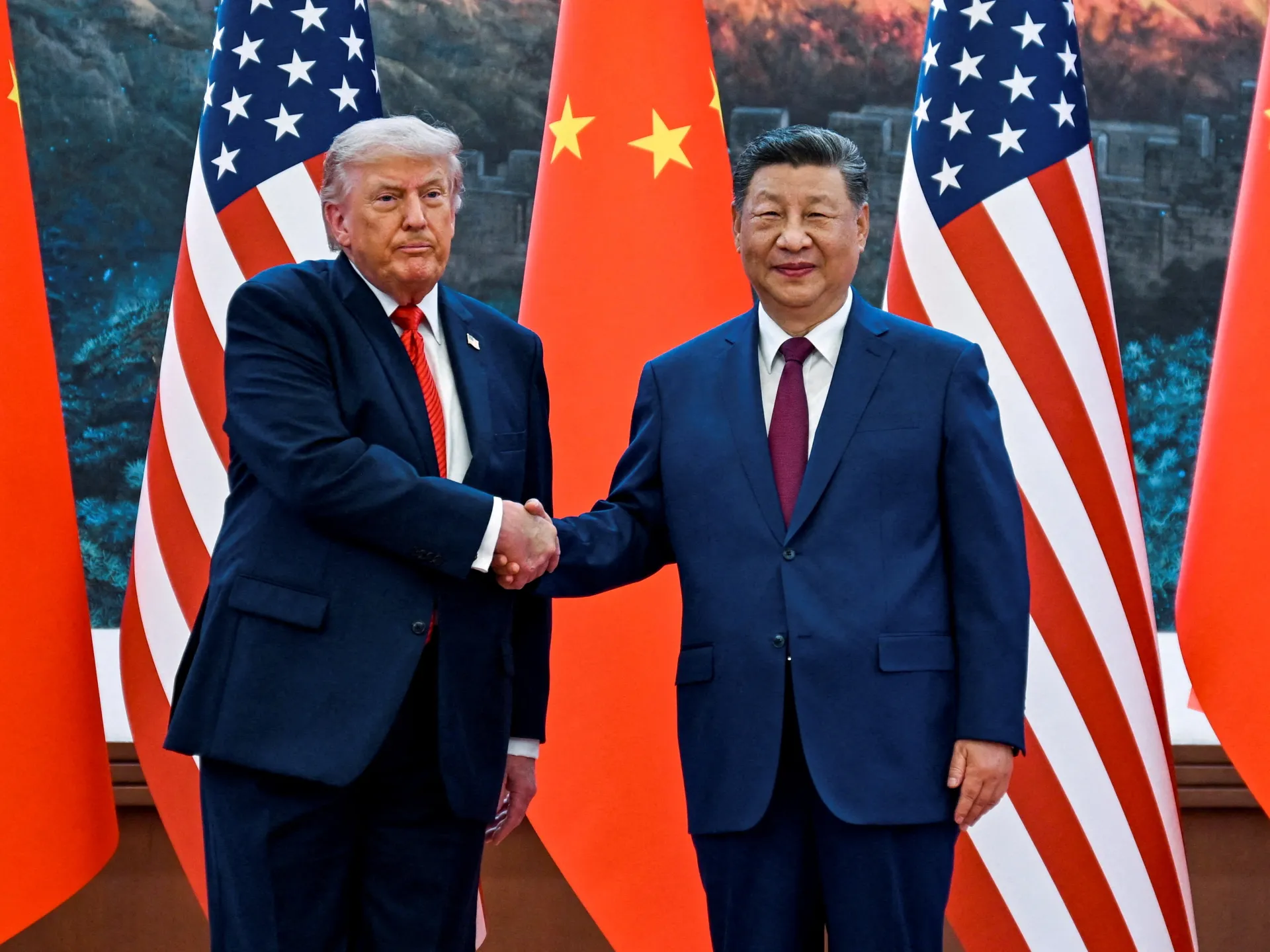
What’s the US–China AI ‘hotline’ that Trump plans to pitch to Xi Jinping? | Technology News
The United States wants a new “notification mechanism” with China to warn each other when an artificial intelligence incident becomes serious enough to threaten national security.
The proposal, effectively an “AI hotline”, was discussed on Sunday during talks in New York between US Treasury Secretary Scott Bessent and Chinese Vice Premier He Lifeng, ahead of a summit between US President Donald Trump and Chinese President Xi Jinping in Washington this week.
Recommended Stories
list of 3 itemsend of list
The two leaders are expected to consider establishing a broader US-China dialogue on AI, including the proposed notification system, around which details remain limited.
The initiative comes amid an intensifying contest for AI supremacy between the world’s top two economies, together with increasing warnings from tech giants that guardrails are necessary around the ever-growing technology.
So, what do we know about this so-called hotline, and where is the AI battle between the US and China headed?
What did the US say about this mechanism?
US Treasury Secretary Bessent said Washington had proposed creating a US-China AI dialogue, with particular focus on national security and a notification system covering “common goals and common threats”.
“We think that, just like with any cross-border activity, that moving from opaque to more transparency between the number one and the number two AI powers in the world is very important,” Bessent told reporters after Sunday’s discussions.
Trump’s science and technology adviser Michael Kratsios told Fox News on Sunday that the “key thing” Washington wants to discuss is “avoiding shared risks”.
Exactly what would trigger a notification has not been publicly revealed.
“The US and China absolutely need to be able to share information with each other as threats evolve. This seems like an obvious win for both sides,” Scott Singer, co-director of the China AI Initiative at the Carnegie Endowment for International Peace, told Al Jazeera.
“The relationship needs guardrails to keep citizens of both countries safe, and this is a productive first step.”
How did China respond?
Beijing has so far said very little.
China’s official Xinhua news agency acknowledged that He and Bessent discussed issues related to AI, but did not say whether Beijing had accepted Washington’s proposed notification mechanism.
Xinhua said the officials held “frank, in-depth and constructive exchanges” on economic and trade issues.
He and China’s chief trade negotiator Li Chenggang left Sunday’s talks without speaking to reporters.
What other ‘hotlines’ do the US and China have?
The proposed AI mechanism would not be the first time a special crisis channel was established between Washington and Beijing.
In 1997, former US President Bill Clinton and his then Chinese counterpart Jiang Zemin agreed to create a “direct secure telephone link” between their respective countries.
The two countries have had a military hotline since 2008, designed to allow senior defence officials to communicate during potentially dangerous incidents. It gives both sides 48 hours to respond, though US officials have complained that sometimes no one picks up.
After the US shot down a suspected Chinese surveillance balloon in 2023, then-US Defense Secretary Lloyd Austin sought a call with his Chinese counterpart, but Beijing declined the request.
Why now, and what concerns are there around AI?
Earlier this month, Anthropic’s CEO Dario Amodei warned in an essay that AI capabilities have been advancing rapidly, and he proposed pacing the development of frontier models to give governments and researchers more time to manage their risks.
“Given the accelerating rate of AI capability development, it’s my worry that in 6–12 months such a swarm could be capable of taking over the entire internet with a persistent botnet (potentially causing hundreds of billions of dollars in damage), and that the scale of damage would continue to increase from there if AI becomes more powerful without the necessary guardrails,” he wrote.
His assertions were endorsed by his rivals – OpenAI CEO Sam Altman and SpaceX founder and Tesla CEO Elon Musk.
Meanwhile, Trump has repeatedly argued that the US must maintain its advantage over China and has resisted calls from technology executives for a slowdown in AI development. He has said that “whoever wins AI, wins”.
Carnegie Endowment’s Singer does not expect the “fierce competition for AI to slow down”.
“It has the potential to confer tremendous economic and strategic advantage to both countries. But even competitors can find space to cooperate,” he noted.
“Competition and cooperation can coexist. The key for right now is for both sides to act in their own self-interest. Finding some basic areas for cooperation flows very naturally from that.”
Where is the US-China AI war headed?
The US remains ahead in several of the most important features of the AI race, but China has been closing the gap.
American companies continue to dominate private investment and production of leading AI models. According to Stanford University’s 2026 AI Index Report, US companies invested $285.9bn in AI in 2025, compared with $12.4bn in China.
The US also has an advantage in the most advanced semiconductors needed to train cutting-edge models.
However, Chinese companies have demonstrated that they can produce resilient AI models despite US restrictions on their access to the most advanced AI chips.
In January, the release of Chinese AI startup DeepSeek made headlines after it was built using only a fraction of the money its competitors had spent on their own AI programmes. Share prices of US tech companies plummeted.
China possesses advantages in other areas of the AI supply chain, most notably in the production of critical rare earth minerals used in advanced technology and in generating more than twice as much electricity as the US, giving it access to the huge amounts of relatively cheap power needed to operate AI data centres.
What is the Xi-Trump summit about?
Xi’s state visit to the US will take place from Wednesday to Friday, with Trump expected to welcome him at Joint Base Andrews in Maryland.
Trump has said he expects to discuss “almost everything” with the Chinese leader.
Trade remains a central issue, with Beijing and Washington having yet to reach a lasting settlement on tariffs, which have dominated Trump’s relationship with China in his second term as president.
Last month, Trump’s White House accused dozens of countries of helping China to illegally bypass US tariffs.
Meanwhile, the US Congress last week passed a bill that gives Trump sweeping powers to impose sanctions on Russia’s crude exports as well as steep tariffs on buyers of Russian energy, a measure that will impact Moscow’s biggest customers, China and India.
Trump’s war with Iran is also expected to feature. Beijing ranks among Iran’s key economic allies, purchasing a large share of Tehran’s oil exports and attempting to broker an end to the near seven-month-old US-Israel war on Iran.
Other long-standing disputes hang over the summit, including China’s dominance of rare-earth supplies and Taiwan.
The US AI proposal could represent a rare area where the two rivals may find a way to hammer out a deal, experts say.
“I think establishing a permanent channel exclusively focused on AI would genuinely be a major victory. AI has been caught up in the broader ebbs and flows of the US-China relationship, and the 2024 dialogue failed because frontier AI risks got mixed in with other issues,” Singer said.
“This time looks like it might be different, and having an AI risk channel is a necessary precondition to mutually beneficial cooperation.”

Share a tip on a wellness experience in the UK and Europe | Travel
A wellness break doesn’t always have to mean checking into a fancy spa hotel. There are countless more affordable ways of stepping off the treadmill and taking a moment to recharge the batteries. We’d love to hear about your favourite wellness experiences in the UK and Europe, whether it’s a beach sauna followed by a bracing dip in the sea, a mindful walk or meditation in a forest, or a memorable visit to a hammam or traditional thermal baths.
The best tip of the week, chosen by Tom Hall of Lonely Planet wins a £200 voucher to stay at a Coolstays property – the company has more than 3,000 worldwide. The best tips will appear in the Guardian Travel section and website.
Keep your tip to about 100 words
If you have a relevant photo, do send it in – but it’s your words we will be judging for the competition.
We’re sorry, but for legal reasons you must be a UK resident to enter this competition.
The competition closes on Monday 28 September at 10am BST
Have a look at our past winners and other tips
Read the terms and conditions here
Share your tip
Share your travel tip using the form below.
Your responses, which can be anonymous, are secure as the form is encrypted and only the Guardian has access to your contributions. We will only use the data you provide us for the purpose of the feature and we will delete any personal data when we no longer require it for this purpose. For alternative ways to get in touch securely please see our tips guide.
If you’re having trouble using the form click here. Read terms of service here and privacy policy here.