


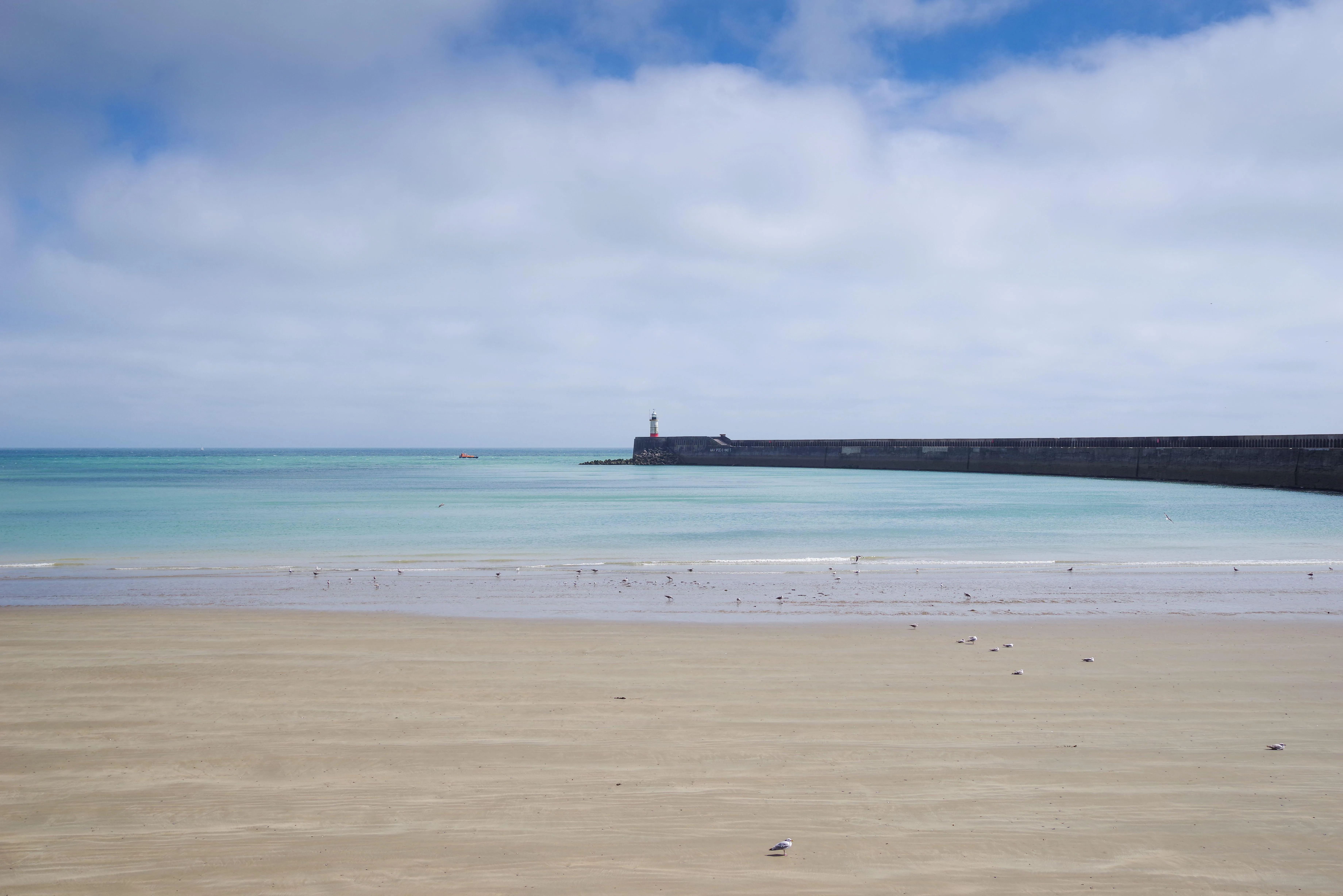
The English beach that could soon reopen to the public

A BEACH in the UK that has been closed for nearly two decades could soon welcome tourists back.
Newhaven West Beach in Sussex is – bizarrely – owned by French company Newhaven Port and Properties.
The sandy beach was closed to the public back in 2008, claiming it is “too dangerous” to reopen.
However, a new bill being backed by parliament could see it force to reopen to both locals and tourists again.
If passed, it would not only see it reopen but would also require them to have safe public walking routes onto the beach where access is allowed.
James MacCleary, local Liberal Democrat MP, said: “West Beach is not just a strip of sand. It is part of Newhaven’s history, its identity and its community life.


“For 17 years, local families – including my own – have been denied access to a beach where generations once swam, played and made memories. That cannot be right.
“My West Beach Bill is about fairness. It is about standing up for a community that has been shut out of its own seafront for far too long.
“Of course safety and harbour operations matter. But they cannot be used forever as a blanket excuse to keep people away from a much-loved public amenity.
“This is the first parliamentary bill that attempts to put the right of access to West Beach into law. It sends a clear message: Newhaven deserves its beach back. The Government must now adopt this Bill and make it Law”.
It comes head of plans for a multi-million pound upgrade of Newhaven to turn it back into a popular seaside resort.
The current ferry port allows Brits to travel to Dieppe in France in just four hours.
Last year, Newhaven Fort reopened last year after a £7.5million makeover which included an escape room and adventure playground.
A splash park and playground, as well as new restaurant and outdoor gym are planned for the seafront.
The UK’s biggest waterpark nearly opened in Newhaven as well, although these plans were scrapped in 2012.

I was transported into the first ever world of Paw Patrol at Chessington’s new land with rides for EVERY age
IF you are stuck for ideas for the kids this summer, no need to panic…just yelp for help and the heroes of hit kids cartoon Paw Patrol will come to the rescue.
As a mum of three, over the past decade I have watched more than my fair share of the hit Nickelodeon kids show which follows the rescue exploits of a team of talking, cartoon puppies under the supervision of 10-year-old boy Ryder.
So when I heard the ‘World of Paw Patrol’ was opening at Chessington World of Adventures, I knew I could waste no time in assembling my pups to check it out.
The new £15million land vibrantly brings to life the cartoon’s world of Adventure Bay making young visitors feel as though they have just stepped directly into the cartoon.
Cleverly designed with little ones in mind, it covers 1.4 acres, although the land manages to have a safe, self-contained feel.
From the trees, to the vehicles, to the models of the characters which populate the land-they all look exactly like they have been transplanted from the show.


And standing, beaconlike at the centre is the iconic Paw Patrol Lookout Tower which famously serves as Pup HQ in the show.
Four brand new rides bring the pup’s adventures to life in thrilling style.
The World of Paw Patrol’s flagship attraction is Chase’s Mountain Mission, a small scale rollercoaster aimed at younger children (although they still have to be 0.9m tall to ride).
It’s a well thought out experience as children enter the coaster at the bottom of the Lookout Tower via sliding doors – just like in the show where they are then given the sensation of shooting to the top in a lift – again just like in the show.
A video brief on their ‘mission’ tells them the town’s chicken mad and gaff prone Mayor (who ardent viewers know is often the subject of rescue efforts) has been left stranded on a tightrope thanks to a pesky, baguette eating eagle and kids are asked to help.
Young adventurers then emerge at the rollercoaster’s loading station for the ride – while hardly white-knuckle, it has a few bends and zips along at a pace perfect as an entry level rollercoaster for more nervous riders.
But our family favourite Paw Patrol was without doubt Zuma’s Hovercraft Adventure.
The orange boats look exactly like they could have floated straight from the show.
There is a claim to fame here too as it is the UK’s first ‘drifter’ ride meaning it gives the sensation of hovering above ground.
It is super spinney and fast and kids get to pull a leaver in the car to make it rocket out at an angle.
It’s thrilling, kind of like a cross between a bumper car and the fairground waltzer.
Even my eldest son who is 12 wanted to repeatedly ride this one…
Marshall’s Firetruck Rescue sees young thrillseekers whooshed around horizontally, yet fairly gently, in a giant red bus.
“It makes my tummy go funny!” Estella squealed with glee.
And youngsters get to soar high in the sky again above World Of Paw Patrol in soar high in Skye’s dazzling pink helicopters.
At its centre of the land isn’t the rides but ‘Rubble and Rocky’s Playzone.’
This is a gloriously, undulating and colourful play areas where younger visitors can explore Adventure Bay on their own terms.
They can crawl through tunnels, barrel down mini slides and clamber around the familiar sites from the show like Rocky’s waste truck and Captain Turbot’s Sea Patroller.
There is also a cute designated snack stand serving Paw Patrol branded treats and, of course, the obligatory gift shop – but parents beware, because boy what a gift shop it is!
For pup mad kids it will be heaven with aisles and aisles of every piece of Paw Patrol merchandise you can think of, including an entire wall of soft toy versions of the characters.
And if you are parent to a total pup nut you might consider an overnight stay in one of the five brand new PAW Patrol-themed hotel rooms at Chessington’s resort hotel.
Each room sleeps up to two adults and three children.
Young ones would no doubt happily spend all day in World of Paw Patrol, but if course entry price also gives you free reign of all that Chessington has to offer including animal attractions, shows and brilliant thrill rides.
So for a family like mine, with kids spanning in age from 5 to 12, it offers a great day out with something for everyone.
What could be more Pawsome than that?
Tickets to Chessington start from £32pp while PAW Patrol hotel stays start from £155 for a family of four (including breakfast, early ride access and bronze fast-track pass)

Seoul shares shoot up nearly 6.5 pct to over 7,300 on chip rally, Mideast hopes; won rises

Employees take part in a ceremony at the trading room of Woori Bank in Seoul on Wednesday to celebrate the benchmark KOSPI closing at an all-time high of 7,384.56. Photo by Yonhap
South Korean stocks shot up nearly 6.5 percent Wednesday, extending a record-breaking run to top the 7,300-point mark, driven by a semiconductor rally and optimism for a potential peace deal in the Middle East. The local currency also strengthened against the U.S. dollar.
The benchmark Korea Composite Stock Price Index (KOSPI) added 447.57 points, or 6.45 percent, to a fresh record high of 7,384.56.
It marked the second-largest daily gain in terms of points following 490.36 points reached on March 5.
Trade volume was heavy at 984.4 million shares worth 58.2 trillion won (US$40 billion), with losers outnumbering winners 199 to 677.
Foreigners bought 3.1 trillion won worth of local shares, while institutions and individuals dumped a net 2.3 trillion won and 571.2 billion won, respectively.
Overnight, U.S. President Donald Trump said he would pause operations to escort ships through the Strait of Hormuz as part of efforts to reach a final agreement with Iran.
The KOSPI opened 2.25 percent higher to surpass the landmark 7,000-point threshold for the first time and extended the gains throughout the session.
The main index has been on a bullish run in recent months, surpassing the 5,000-point mark in late January and topping another milestone of 6,000 points in February.
After recouping its losses in March following the outbreak of the U.S.-Iran war in late February, the KOSPI breached the 7,000-point level on continued optimism over the artificial intelligence (AI) boom and hopes for the reopening of the key waterway.
“Global tech giants’ strong performances and the strengthened value chain for AI data centers boosted the AI-related shares,” Lee Kyung-min, an analyst at Daishin Securities, said. “In particular, the market’s top-three shares of Samsung Electronics, SK hynix and SK Square led the rally.”
Top-cap Samsung Electronics surged 14.41 percent to close at 266,000 won, pushing its market capitalization above 1.5 quadrillion won and becoming the second Asian company to surpass the $1 trillion milestone after Taiwan Semiconductor Manufacturing Co.
SK hynix soared 10.64 percent to 1.6 million won, and AI investment firm SK Square jumped 9.89 percent to 1.1 million won.
Hanmi Semiconductor, a chip manufacturing company, rose 4.37 percent to 394,500 won, and LG Electronics vaulted 8.17 percent to 154,900 won.
However, shipbuilding and defense shares dropped. Major shipyard HD Hyundai Heavy Industries fell 4.71 percent to 648,000 won, and defense giant Hanwha Aerospace lost 2.18 percent to 1.4 million won.
Leading biotech firm Samsung Biologics declined 0.34 percent to 1.48 million won, and top mobile carrier SK Telecom backtracked 1.95 percent to 95,500 won.
The Korean won was quoted at 1,455.1 won against the U.S. dollar at 3:30 p.m., up 7.7 won from the previous session.
The quotation marks the highest since February 27, when the currency closed at 1,439.7 to the greenback.
Copyright (c) Yonhap News Agency prohibits its content from being redistributed or reprinted without consent, and forbids the content from being learned and used by artificial intelligence systems.
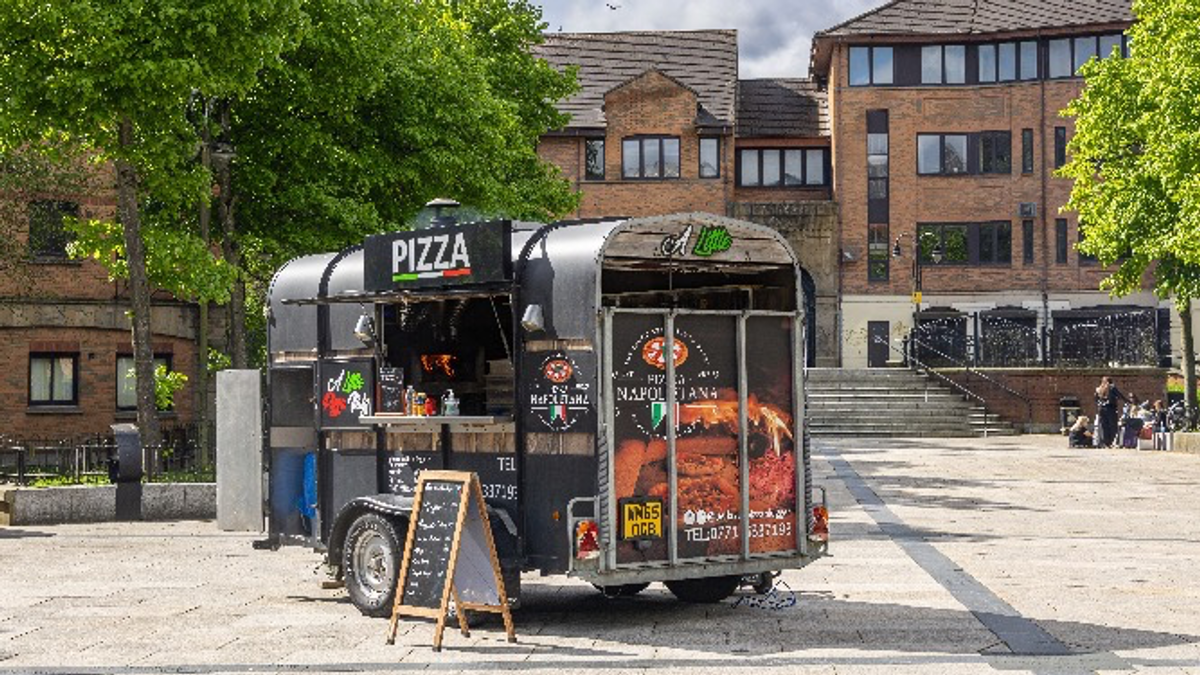
Pop-up pizza van makes village ‘almost like London’
THE sight of a single takeout pizza van has caused villagers to think their town is now on a par with London, it has emerged.
Having grown accustomed to their Nisa and a chippie that takes half an hour to drive to, residents of a Gloucestershire village believe they are about to become the new Shoreditch thanks to a van that sells overpriced pizzas.
Local Donna, not her real name, said: “I thought food trucks were something MasterChef made up for the telly. Yet there it is, in all its dazzling, gentrified glory for a pleb like me to enjoy.
“I phoned my kids who live in Camden to tell them I tried something called fior de latte on my margherita. They already knew what it was thanks to their swanky university education, and suggested I try an anchovy topping next. It’s all very cosmopolitan.
“The young lad who runs it says you can’t move for food trucks like this in the big city. Apparently they even sell Asian-fusion tacos and curried lentil dishes. Sounds a bit extravagant for our tastes but each to their own.
“Maybe if the novelty of pizza served out of a van catches on we’ll be treated to other London perks like a Gail’s and unaffordable housing. We can only dream.”
Pizza cook Jack, not his real name, said: “A place like this is perfect for entrepreneurs. I could serve these hicks reheated Pizza Express ready meals and they’d never know.”

The tiny Irish island with famous goat farm, rugged walks and basking sharks perfect for day trip — with €9 ferry rides

THIS stunning Irish island has rugged coastal walks, homemade goat’s cheese and some of the best wildlife spotting in the country.
Cape Clear Island lies just eight miles off the coast of West Cork and is Ireland’s most southerly inhabited Gaeltacht island.
Visitors can reach the remote spot by ferry from Baltimore, with the journey taking around 40 minutes.
The island is known for its sparkling waters, dramatic coastline and wildlife-filled seas, where dolphins, whales and basking sharks can often be spotted.
And once on land, visitors can explore walking trails, visit the famous goat farm or enjoy a pint and a bite to eat before catching the ferry home.
Ferry tickets to the remote island start at just €9 for children’s tickets.
Cape Clear Island is three miles long and one mile wide.
As a Gaeltacht island, the majority of people living there speak Irish, or Gaeilge.
Adult return tickets from Baltimore to Cape Clear cost €20, while children’s tickets cost €9.
There are also special family packages, including two adults and two children, for €50 return.
The island is a popular destination during the summer months with secondary school students looking to improve their Irish language skills on immersion courses.
The hillsides are covered in heather, gorse and other wildflowers, while the water sparkles beneath.
While on the ferry, passengers have a good chance of spotting wildlife beneath the waves.
Dolphins, basking sharks and even whales are known to frequent the waters surrounding Cape Clear.
From higher ground on the island, harmless basking sharks can often be seen lazily gliding through the waters close to shore.
And a number of companies provide boat tours specifically for dolphin and whale watching.
GOAT FARM
Once you’re on the island, there’s plenty to do to keep busy — including visiting the Cape Clear Goat Farm, or Cléire Goats.
The quaint farm was established in 1979 and is located near the Cape Clear Heritage Centre.
Visitors can meet the friendly goats and try delicious homemade goat’s cheese and ice cream.
And if visitors attend the farm between 10am and 12pm, they’ll get a chance to see the goats being milked.
There’s also the main heritage centre, the Fastnet Rock Lighthouse, which can be toured, and a world-renowned birdwatching observatory to visit.
There are also plenty of places to go for a paddle in the sea, or to kayak further out.
And on land, there are a number of walking routes that allow visitors to explore every inch of the island’s beauty.
FOOD AND ACCOMMODATION
Cape Clear has a small number of restaurants and bars that provide hearty meals and drinks.
There’s a farmers’ market every Sunday, a small grocery shop and a tourist shop.
Many people who visit the island choose to do a day trip, arriving on the ferry in the morning and leaving again in the evening.
But for those hoping to stay overnight, there are some accommodation options.
There are a few apartments, cottages and houses to rent.
There is also the Chléire Haven glamping site, which is a family-friendly camping site open from April to September.
There’s the Ard na Gaoithe B&B, which provides an early breakfast for guests and encourages Irish speaking.
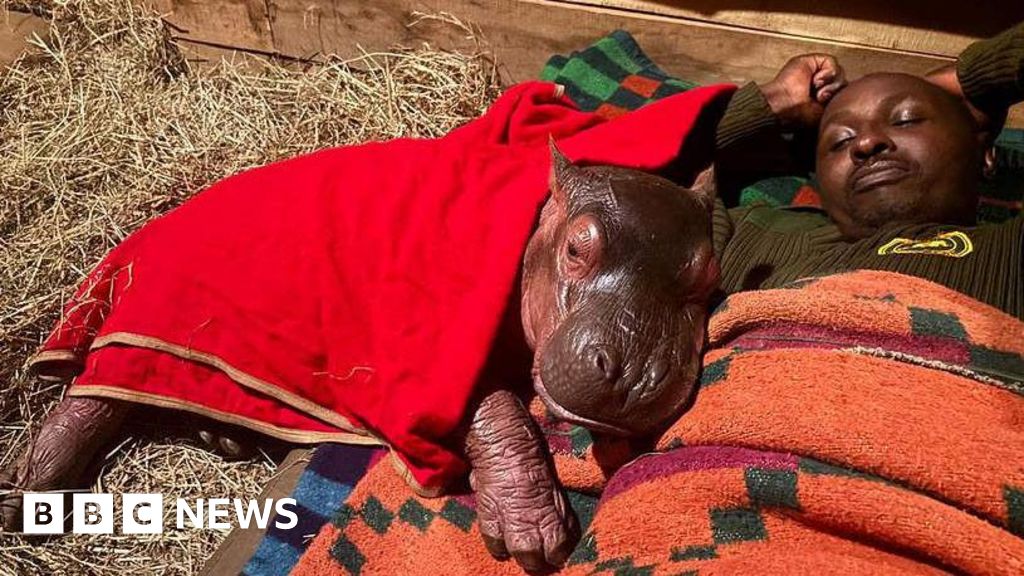
Orphaned baby hippo to be hand-reared by keepers at Kenya sanctuary
The baby hippo, which has been named Bumpy, was found clinging to its lifeless mother at a lake.
Source link

Inside Amandaland star Lucy Punch’s life with famous partner in LA
Amandaland star Lucy Punch is back with series two of her popular comedic series. We’ve taken a deep dive into her relationship off-screen
Amandaland: Lucy Punch and Joanna Lumley star in trailer
British actress Lucy Punch has kept her relationship largely out of the public eye.
As one of the UK’s brightest talents, the 48-year-old has often let her craft take centre stage and is now widely recognised for her role as Amanda in her BBC comedic series, Amandaland.
Playing a charismatic mother of two, the spin-off to BBC’s Motherland, focuses on Amanda’s struggle to raise two teenagers as she downsizes from Chiswick to South Harlesden.
Away from the spotlight, actress Lucy has two children of her own who she shares with a famous artist. As series two of Amandaland gets underway, we’ve taken a closer look inside her relationship.
Who is Lucy in a relationship with?
Lucy previously spoke about her long-term relationship with artist Konstantinos ‘Dinos’ Chapman, with whom she shares two children.
Originally from London, Dinos, 63, was one half of the renowned British visual art duo The Chapman Brothers, working alongside his brother Jake. However, the pair split in 2022, and Dinos has since pursued his work independently.
Speaking to The Guardian in 2022, Dinos shared his take on their split. He said: “Nothing about our practice was amicable. It was never a love-in. It was always tinged with a certain seething disdain for each other so I guess at some point that reached critical mass, and we decided to go our separate ways.”
Where did Lucy and Dinos meet?
According to reports, Lucy and her partner reportedly met in Hollywood, where they later decided to reside permanently with their two children.
Reflecting on how they balance their busy schedules, Lucy previously told The Times: “We don’t have normal jobs so we can, in a very mismanaged, chaotic way, divide up childcare.”
Speaking of making a home in Laurel Canyon, in LA, she continued: “I’ve always got one foot out the door, wherever I am. I never got round to getting a green card. I’m on these rolling visas, which is ridiculous. I have a home there and I have two American children. But I can’t commit to anywhere. I get itchy feet. I like being a little bit here and a little bit there.”
Who are Lucy’s children?
Lucy and Dinos have two sons, whose names have not been disclosed. In 2025, Metro revealed the two boys were aged seven and three.
Like many Los Angeles residents, Lucy and her family were forced to leave their home in January 2025 as wildfires spread across the city.
Sharing insight into how her family dealt with the chaos, the actress said one of her sons treated the experience as if it were a holiday, thanks to how much fun they’d had while away.
In a rare remark about her children, the star told The Independent how she kept them occupied while wildfires swept through areas near their Los Angeles home. She said: “Meanwhile, we’d been looking at our phones, going ‘help’ and crying.
“It’s such a small window when you’re a kid, so I’m just trying to make it magical until they’re confronted with teenagerdom and the reality of life.”
Amandaland series two airs Wednesday, 6 May 2026, on BBC One at 9PM and BBC iPlayer

Contributor: Xavier Becerra shows that his loyalty lies with fossil fuels
In June 2017, with President Trump newly installed in office for the first time, one of the biggest battles with the administration was about oil. He’d just named the chief executive of Exxon Mobil, Rex Tillerson, as his secretary of State, even though great reporting — in this newspaper among others — had recently shown that the company knew all about, and lied all about, climate change as far back as the 1980s.
Back east, the attorneys general of New York and Massachusetts were trying to take the oil giant on, initiating investigations of the company to try to hold it accountable. Environmental advocates and consumer groups were pressing hard for California Atty. Gen. Kamala Harris to join in, and she seemed to be considering it. Then she left the office to assume her new U.S. Senate seat, and the decision fell to her replacement, Xavier Becerra — now a leading candidate for California governor.
As I wrote in these pages at the time, it was a great test for him, and a great curiosity that he was staying silent, “since the rest of Sacramento is hard at work dealing with climate change.” I was not the only one who noticed. Seventy thousand Californians signed petitions demanding action. Eight California representatives in Congress — including Jared Huffman and Ted Lieu — sent him a letter demanding a “vigorous” inquiry and pointing out that it was particularly important because the newly elected Trump administration was clearly favoring the oil industry. “California has led the world in responding to the dangers of climate change, and we know that it will continue to do so,” they wrote. “You now have a leading role in that effort.” But ultimately Becerra did not have a leading role, or indeed any role at all: He punted, as this editorial page pointed out. What Sen. Ted Cruz (R-Texas) is now trying to do by statute — immunize the big oil companies from prosecution for climate liability — Becerra accomplished by sheer silence.
In the years since, of course, California has paid a huge price for our inaction on climate. Just looking at wildfire, there were of course the great blazes that Los Angeles County will never forget in 2025, but also the 2020 August Complex fire in Humboldt and Mendocino counties, the 2021 Dixie fire up north, the 2017 conflagration across Napa and Sonoma counties, the 2017 Thomas fire in Ventura and Santa Barbara counties, the 2018 Camp fire that devastated Paradise — the list goes sadly on and on and on.
Meanwhile, Big Oil and its friends at Big Utility have racked up huge profits, and Californians have faced ever higher bills. An unhobbled oil industry played a huge role in reelecting Trump in 2024 and in taking us to war with Iran.
And through it all, during his years as attorney general, Becerra did little or nothing to help. As I said all those years ago, it’s a mystery why, though I fear the mystery gets clearer with each campaign funding filing over his long career. As California’s top prosecutor, he took big donations from oil industry giants such as Chevron, and also from energy companies Sempra and Southern California Edison. As a member of Congress, he took larger checks from Pacific Gas and Electric and Edison International.
This time around, as he seeks the governor’s office, Chevron has maxed out its contributions to his campaign, the first time they’ve found a gubernatorial candidate to back in a decade. Meanwhile, across the country, leading progressives have signed a pledge refusing fossil fuel donations. Another gubernatorial contender, Katie Porter, is among them. Needless to say, Becerra is not.
The California chapters of Third Act — a group of Americans over 60 that I helped found — canvassed their members last month and issued an endorsement of Tom Steyer, on the grounds that he had worked hard over the years to address energy and climate issues. Instead of taking money from Big Oil, he’s given money, time and counsel to those of us volunteering in the fight against the industry. In fact, I think that whether one is most concerned about lowering utility bills with clean energy or protecting California’s forests, beaches and insurance rates from the global warming threat, he’d be the most climate-conscious elected official in America.
But Third Act was also founded to help protect our democracy. And that means disconnecting public policy from campaign donations. We need leaders who will do the right thing for us, not for their donors. Steyer has called on Becerra to return his donations from Big Oil. That would be a start, but it doesn’t really make up for the wasted decade we’ll never get back.
Bill McKibben is the founder of Third Act and the author, most recently, of “Here Comes the Sun: A Last Chance for the Climate, a Fresh Chance for Our Civilization.”
Should we ban airport breakfast beers? Our travel experts’ debate this ‘sacred British holiday tradition’

RYANAIR boss Michael O’Leary has made the headlines today, calling for an early-morning ban on airports serving alcohol to passengers.
He’s calling for the big change following a rise in badly behaved passengers that have caused flights forced to divert.

He told The Times: “It’s becoming a real challenge for all airlines
“I fail to understand why anybody in airports bars is serving people at five or six o’clock in the morning. Who needs to be drinking beer at that time?
“There should be no alcohol served at airports outside [those] licensing hours,” he said. “We have been calling for many years for a limit of two drinks per person per airport, why don’t you limit people by boarding pass?”
So should we be banning morning beers at UK airports? Our travel experts go head to head…


‘Please don’t deny hard-working Brits this small holiday pleasure’ says Caroline McGuire, Head of Travel (Digital)
AIRPORT breakfast beers are one of those quirky British traditions, much like the Wetherspoons table number game and the dirty birthday pint.
It is pretty much guaranteed that you will see a number of sleepy-eyed Brits sinking a lager at the airport pub, no matter what time of day you arrive.
While I personally can’t stomach a drink before midday, I’m also not a fan of telling hard-working Brits how they can spend their precious seven days of holiday that they’ve been saving for all year.
Michael O’Leary has long called for there to be a two-drink limit on people drinking at airports and that is something that feels like a reasonable compromise to me.
But to ban airport bars from serving any booze outside of normal UK licensing hours – typically from around 10 or 11am – seems pretty unfair when passengers can still buy a drink on the actual Ryanair flight.
Pubs are under a huge amount of financial stress these days, thanks to a raft of anti-hospitality measures introduced by our current chancellor, Rachel Reeves.
Around two pubs are closing in the UK each day – more than 2,000 since the outbreak of the coronavirus pandemic in 2020, should we really be penalising them any further?
Add to this the fact that pubs pay an extremely high rent for their airport locations, do we want to see boozers also disappearing from here too?
I’m not sure that cutting out morning drinking will see the solution to the problem that airlines are clearly having such a huge issue with, because it won’t have any effect on the thousands of flights that fly out of the UK post-midday.
I’ve been on more late-evening Ryanair flights to Ibiza than I care to remember, when I have deep sympathy for the cabin crew serving very rowdy passengers.
Mr O’Leary has been in the industry for a long time, in fact he’s one of the most experienced airline bosses in the business, and we should be listening when he says it’s a huge problem that needs sorting.
The measures he has taken in recent years to hold disruptive passengers to account with huge court fines is clearly a huge step in the right direction, although I appreciate this is a time-consuming and costly process.
But banning the small joy of a breakfast beer in these stressful modern times, with everything that’s going on in the world? Please no.

‘More drastic measures are needed’ says Kara Godfrey, Deputy Travel Editor
LOOK, I get it – you finally got that time off work, and you’re ready for a week of sunshine and relaxing.
But it has forever baffled me as to how that translates to a pint of beer or glass of champagne at 6am when normally you wouldn’t even be awake.
I can’t think of anything worse than sinking a Guinness when I’m waiting for my flight, and certainly don’t want that sloshing around in my stomach before a long journey.
If people could restrain themselves then a ban wouldn’t be needed but sadly, without airports willing to put a cap in place, it seems more drastic measures are needed.
Haven’t we all been on that awful flight where rowdy passengers just make it worse for everyone?
With Ryanair saying that as many as a flight a day are being diverted, those costs are likely to be passed onto the passenger too.
So those drunken idiots are essentially going to make your flight more expensive.
Maybe a full ban is too far, but I would say that a drink limit is definitely needed.
I’d back airports being required to scan boarding passes, with a cap on 1-2 boozy beverages before you get on a plane.
Lets save it for the all-inclusive pool bar, guys.
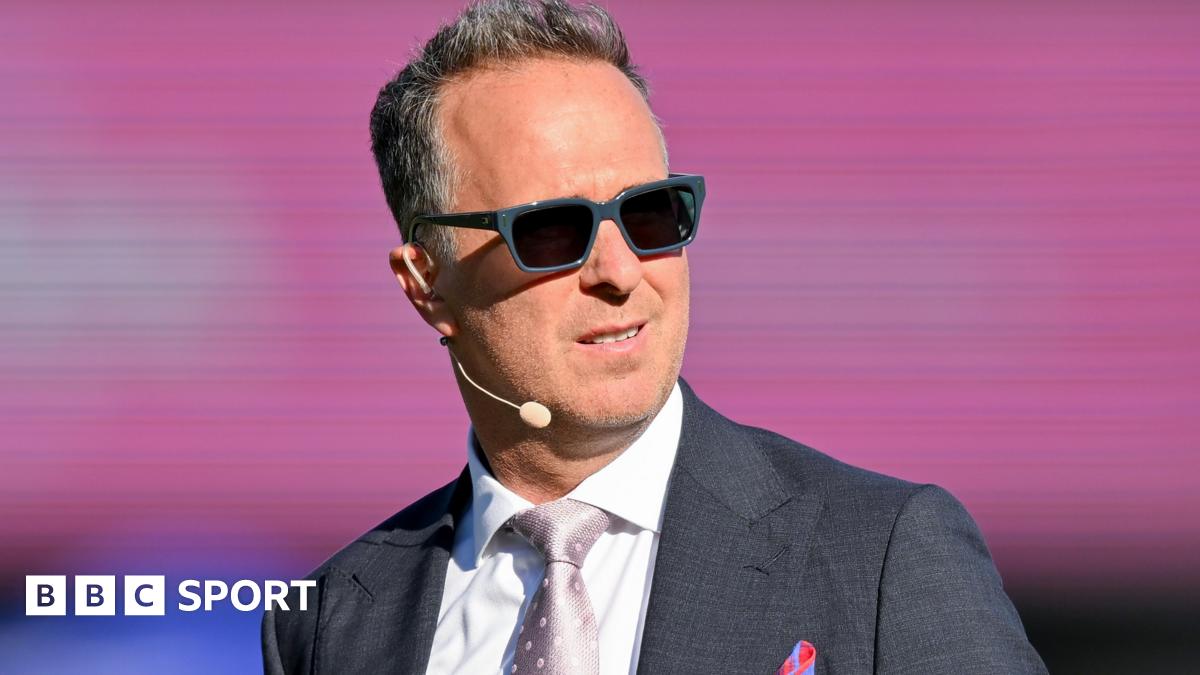
Michael Vaughan says wait to appoint new England selector is ‘ridiculous’
Former captain Michael Vaughan says it is “ridiculous” England are yet to appoint their new national selector.
The process to name the successor to Luke Wright, who announced he was stepping down on 22 January and left after the T20 World Cup concluded in March, has reached the final stages, with interviews for the position held this week.
There have already been four rounds of action in the County Championship and England are set to name their squad for the first Test against New Zealand in two weeks’ time.
“It’s ridiculous how they’re announcing a selector so late,” Vaughan said on the Stick to Cricket podcast.
“I wanted the selector there on 1 April, going out, having a look, gathering information.
“Luke Wright quit at the back end of Australia. We knew didn’t we?
“It’s a long time, four months, to find someone.”
Spain says Canaries will take Hantavirus-infected ship, islands say ‘no’
Dutch cruise ship MV Hondius, which has a suspected hantavirus outbreak onboard, was due to set sail from Cape Verde for the Canary Islands on Wednesday after Spain agreed to allow passengers and crew to disembark there. File Photo by Elton Monteiro/EPA
May 6 (UPI) — A cruise ship with a hantavirus outbreak onboard that has killed at least three people and sickened more was due to set sail for the Canary Islands on Wednesday after Spain agreed to allow passengers and crew to disembark there.
The Spanish Health Ministry said in a post on X that it had agreed to “host the MV Hondius in the Canary Islands in compliance with International Law and humanitarian spirit” at the request of the World Health Organization and the European Center for Disease Prevention and Control.
It was believed that 14 Spanish citizens are among the 149 British, American and passengers from 20 other countries stranded aboard the Dutch-flagged vessel which is at anchor off the main Santiago island of Cape Verde which on Monday said it would not allow the Hondius to dock on “public health protection” grounds.
The ministry didn’t say to which port in the islands the Hondius was headed but said it would depart Cape Verde upon completion of “a thorough examination of the ship” by ECDC officials to identify those who needed to be urgently evacuated from the ship for emergency medical care.
The BBC reported two crew members, including the ship’s British doctor, and a passenger were due to be transferred to the Canary Islands by air ambulance.
“The specific port has not yet been determined. Once there, crew and passengers will be properly examined, treated, and transferred to their respective countries. The process will be carried out using a common case and contact management protocol developed by the WHO and the ECDC, and will have all the necessary safety guarantees,” said the Spanish health ministry.
“Both medical care and transfers will be carried out in special spaces and transports specifically set up for this situation, avoiding all contact with the local population and ensuring the safety of healthcare personnel at all times,” it added.
However, it was unclear if the ship would be permitted to dock in the Canaries after the island’s president, Fernando Clavijo, posted on X on Wednesday that he would not allow the Hondius to enter without “sufficient information” to guarantee the safety of residents.
“Today I have requested a meeting with [Spanish] President [Pedro] Sanchez due to the lack of coordination and information regarding the cruise ship affected by a hantavirus outbreak. The Canaries always acts with responsibility, but it cannot accept decisions taken behind the backs of the Canary Islands institutions and without sufficient information to the population,” he wrote.
Two passengers died during the Hondius’ five-week Antarctica-South Atlantic cruise and the wife of one of the deceased died in Johannesburg en route back to her home in the Netherlands. She and a 69-year-old Briton, who is being treated in hospital in South Africa, are confirmed hantavirus infection cases.
World Health Organization officials said Tuesday said there may have been human-to-human transmission of the virus as they had identified it as the South American Andes strain which, while it originates from rodent droppings in common with other Hantavirus variants, can jump between humans through close direct contact.
Prices for the Oceanwide Expeditions cruise, which starts from Ushuaia in Argentina, the world’s southernmost city, taking in the Antarctic Peninsula and the islands of South Georgia, St. Helena and Cape Verde, start from $19,025.

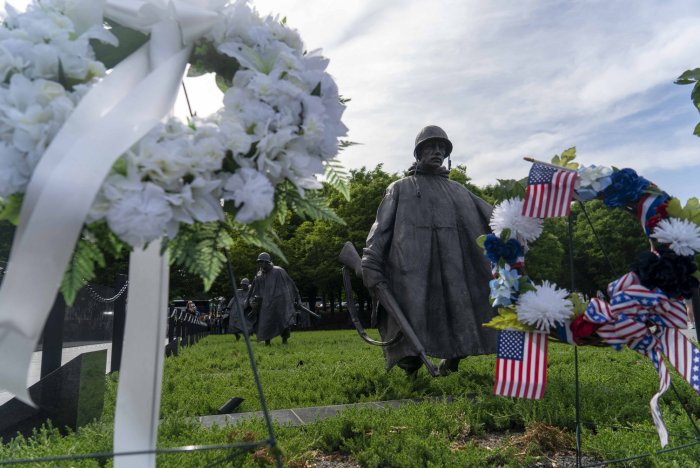
Wreathes are seen amongst the statues at the Korean War Veterans Memorial during Memorial Day weekend in Washington on May 27, 2023. Memorial Day, which honors U.S. military personnel who died while in service, is held on the last Monday of May. Photo by Bonnie Cash/UPI | License Photo
.
Last gambling resort in Primm, Nev., is set to close by July
Primm Valley Resorts, the last full-time casino among a cluster of three off Interstate 15 in Primm, at the California-Nevada border, is permanently closing, according to a termination notice sent to employees on Tuesday.
The letter, posted by Las Vegas insider publication Las Vegas Locally, noted that employees who worked at Primm Valley would be let go by July 4. It’s not known if the casino will close that day or before.
An email to Primm Valley Resorts owner Affinity Gaming was not immediately returned.
Primm Valley was the last of three operating casino resorts in Primm, formerly known as State Line. The castle-shaped Whiskey Pete’s opened in 1977, followed by Primm Valley in 1990 and Buffalo Bill’s in 1994.
In a letter to the Clark County Board of Commissioners, Erin Barnett, Affinity’s vice president and general counsel, wrote in October 2024 that “traffic at the state line has proved to be heavily weighted towards weekend activity and is insufficient to support three full-time casino properties.”
Along with Primm Valley Resorts, Primadonna Co. LLC, owned by Affinity Gaming, is closing the Primm Center gas station and the Flying J truck stop located at Whiskey Pete’s; that casino closed in December 2024.
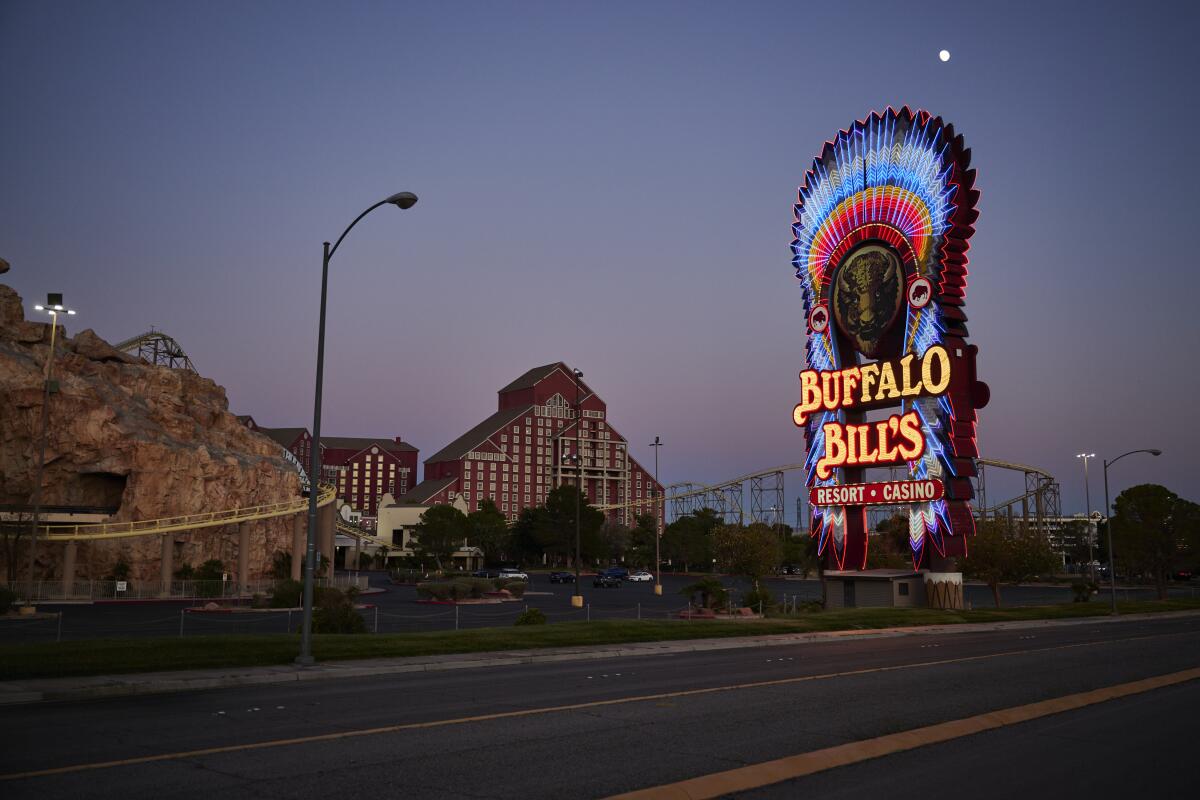
The termination notice comes nearly a year after Affinity Gaming ended 24/7 operations at Buffalo Bill’s Resort on July 6. The casino opened on days in which its concert venue, the Star of the Desert Arena, hosted special events.

Lights glow on the Buffalo Bill’s Resort and Casino sign on July 6, 2025, in Primm, Nev.
(Bridget Bennett / For The Times)
It’s unclear what happens to music and magic acts booked until July 25.
It’s not known how long other Affinity-owned properties in the area, such as the popular Lotto Store on the California side of the border, will continue to operate. Nevadans have been known to drive for several miles and wait in long lines to buy Powerball tickets, particularly when jackpots creep into 10 figures.
The notice informed employees “this action is expected to result in the permanent termination of employment for all employees at these locations.”
As late as September, Primm Valley Resorts emailed media members promoting renovated rooms and signature experiences at its final resort.
Primm once shined as one of Nevada’s more popular gambling resorts. The three-casino complex served as a less expensive, less flashy, slightly more kitschy alternative to Las Vegas that benefited from being a good 45 minutes closer to Los Angeles than Sin City.
Several factors have contributed to Primm’s slow decline, including the COVID pandemic and increased competition from casinos popping up on tribal lands in California.
Those newer casinos are easier to get to than Primm from key Southern California population centers, reducing the value proposition.
‘Operation Epic Fury’ has ended: Is the Iran war over? | US-Israel war on Iran News
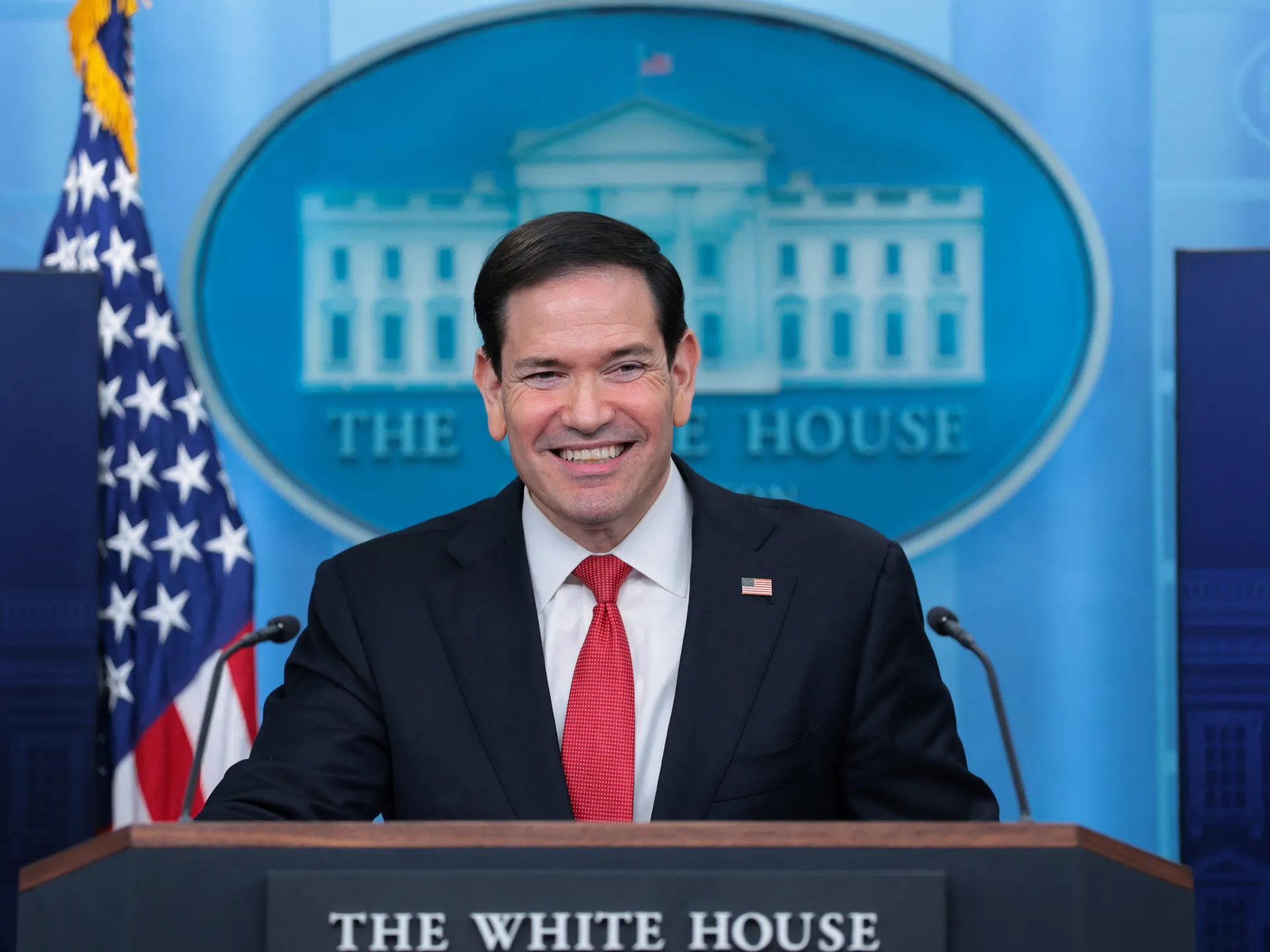
United States Secretary of State Marco Rubio told reporters on Tuesday that Operation Epic Fury – the US-Israeli strikes on Iran which commenced on February 28 and prompted a regional conflict – had concluded as its objectives had been achieved. Washington now prefers “the path of peace”, Rubio said.
On the same day, US President Donald Trump announced that the US military operation to escort stranded ships out of the Strait of Hormuz – “Project Freedom”, which was launched the day before – had been paused.
So, does this mean the US-Israel war on Iran is over?
What did Rubio say about Operation Epic Fury?
In a media briefing at the White House on Tuesday, Rubio told reporters that Operation Epic Fury was over.
“The Operation Epic Fury is concluded. We achieved the objectives of that operation,” Rubio said.
“We’re not cheering for an additional situation to occur. We would prefer the path of peace. What the president would prefer is a deal,” he said, referring to Pakistan’s efforts to arrange direct talks between Iran and the US.
The first round of these, in Islamabad last month, ended without a resolution. Both sides have submitted new proposals since then.
“The on-again, off-again talks with Iran, alongside Trump’s abrupt about turn on ‘Operation Freedom’ to guide vessels out of the Strait of Hormuz has created unwelcome frenzy in the Gulf,” Burcu Ozcelik, a senior research fellow for Middle East security at UK-based think tank Royal United Services Institute (RUSI), told Al Jazeera.
“It also reflects the highly fraught and almost frantic diplomatic backchannelling aimed to extract deep concessions from Tehran on the nuclear issue that will lock in commitments that exceed previous conditions, and which will convince the US to lift the blockade on Iranian ports and unlock sanctions relief – thereby effectively ending the war.”
Ozcelik explained that Iran, on the other hand, wants guarantees that this will be the end of the war, rather than just a pause.
What did Trump say about Project Freedom?
The same day, Trump told reporters that Project Freedom had been paused “based on the request” of Pakistan and other countries, and the “fact that Great Progress has been made towards a Complete and Final Agreement” with representatives of Iran.
Project Freedom was the US forces’ operation to escort stranded ships through the Strait of Hormuz that Trump announced the day before. It had appeared to signal a direct challenge to Iran’s closure of the strategic waterway, through which 20 percent of the world’s oil and liquefied natural gas (LNG) supplies are shipped in peacetime. Iran’s threats to attack ships in the strait have blockaded it since the US-Israel attacks on Iran began. Then, the US announcement of a naval blockade on Iranian ports added to the standoff around the strait.
After Trump announced Project Freedom, Iran said ships trying to use the strait without permission from the Islamic Revolutionary Guard Corps (IRGC) would be fired on, igniting fears of a return to war. His announcement triggered a war of words between the US and Iran, with claims and counterclaims about strikes continuing throughout the day.
First, Iran’s Fars agency claimed it had hit a US warship with drones after it ignored orders to turn back from the Strait of Hormuz. US Central Command (CENTCOM) denied a US ship had been struck, however, and instead claimed to have sunk at least six IRGC vessels. Iran denied that. Tehran then published a new map extending its claimed area of control over the strait into UAE waters, raising fears of a new regional confrontation.
The UAE accused Iran of launching strikes on its Fujairah port, the site of an important oil pipeline, which sparked a fire in an oil refinery.
On Tuesday, the US operation had been stopped, according to Trump.
“We have mutually agreed that, while the [US] Blockade will remain in full force and effect, Project Freedom (The Movement of Ships through the Strait of Hormuz) will be paused for a short period of time to see whether or not the Agreement can be finalized and signed,” he wrote on his Truth Social platform.
Iran has not immediately responded to this.
Shahram Akbarzadeh, a professor in Middle East and Central Asian politics at Australia’s Deakin University, told Al Jazeera that while it is difficult to determine exactly why Trump has paused Project Freedom, the pause comes against the backdrop of growing antiwar public opinion in the US.
“At the same time, Trump may be losing patience with the war; he says he has time to drag this out,” Akbarzadeh said.
“But in reality, Trump has a short attention span and needs to secure a win – soon. Pausing Project Freedom allows diplomacy to pick up pace, bringing US and Iran closer to a deal that Trump would label as a win.”
Is this the end of the war on Iran?
Not exactly. Akbarzadeh said pausing Project Freedom could serve as “the beginning of the end for the war”.
“We know that the Iranians are desperate for an end, so there is little chance of them resuming attacks on US Navy if Trump sends explicit signals that diplomacy has a green light,” he said.
However, he added, “The problem is that we have been here before. Earlier opportunities were squandered because Israel insisted that the US could get a better deal or because Trump misread the situation and expected the military option to grant him more concessions.”
What happens next?
It is difficult to predict this, but neither side appears to want a return to full-scale war, so both are likely to prioritise a diplomatic way out, Akbarzadeh said.
Still, “neither can afford to be seen as the loser,” he added. “They feel their public image needs to be preserved for their own respective domestic audience. This complicates negotiations and reaching a deal.”
Ozcelik said what happens next “will be determined by what the fractured leadership in Tehran commits to on the nuclear file.
“While it has rejected that talks involve curbs on Iran’s nuclear programme, this type of posturing has aimed to assuage domestic, hard-line and Iranian nationalists who are rattled by the US-Israel strikes and see nuclear issues from a nationalist, sovereign rights perspective.”
She predicted that the United Nations may soon issue a formal condemnation of Iran for unilaterally blockading the Strait of Hormuz.
“But the real pressure, mounting by the day, is the economic one – that shutting the strait is imposing punishing costs on Iran’s economic recovery prospects,” she said.
“Despite rhetoric on resilience and survival, the remaining Iranian leadership is undeniably concerned about the costs of the war. The possibility of renewed military strikes against Iranian critical infrastructure and the destabilising impacts these would inevitably have might be finally forcing Tehran’s hand,” Ozcelik concluded.

Olivia Attwood shows off £26k designer bag after wild birthday celebrations as she jets off to US again
OLIVIA Attwood is certainly embracing the luxury lifestyle after forking out for a handbag worth close to what many Brits take home in a year.
The bag, equivalent to around eight months’ pay for the average worker, was bought by Olivia a few months before turning 35.
Sharing snaps online, Olivia wrote: “I got this baby in Paris in Jan and today is her first day out,” before adding: “Taking her on an adventure.”
The former Love Island star is continuing her celebrations by jetting off to the US – taking her new handbag with her.
The £26k Hermès Birkin Olivia was travelling with appears to be a Birkin 30 in Rouge H leather with palladium hardware – one of the fashion house’s most sought-after styles.
Birkin bags are famously difficult to buy, with shoppers often facing years-long waiting lists and needing a strong purchase history with Hermès before being offered one.


The stunning star celebrated her birthday over the weekend as she hosted what she called “Olivia’s Birthday Bender” with pals.
The TV favourite was all smiles in green as she was presented with a birthday cake featuring the message “Another year around the pole” alongside a naked Barbie doll.
There was no sign of rumoured boyfriend Pete Wicks in the official snaps shared by Olivia.
However, eagle-eyed fans spotted him in Olivia’s vlog from the night where he was seen smiling in the reflection of a mirror.
Longtime friends and radio co-hosts Olivia and Pete were caught snogging in a popular bar in Soho earlier this year before jetting off to France on a secret holiday last month.
A source close to the pair previously told us they were “dating and enjoying their time together.”
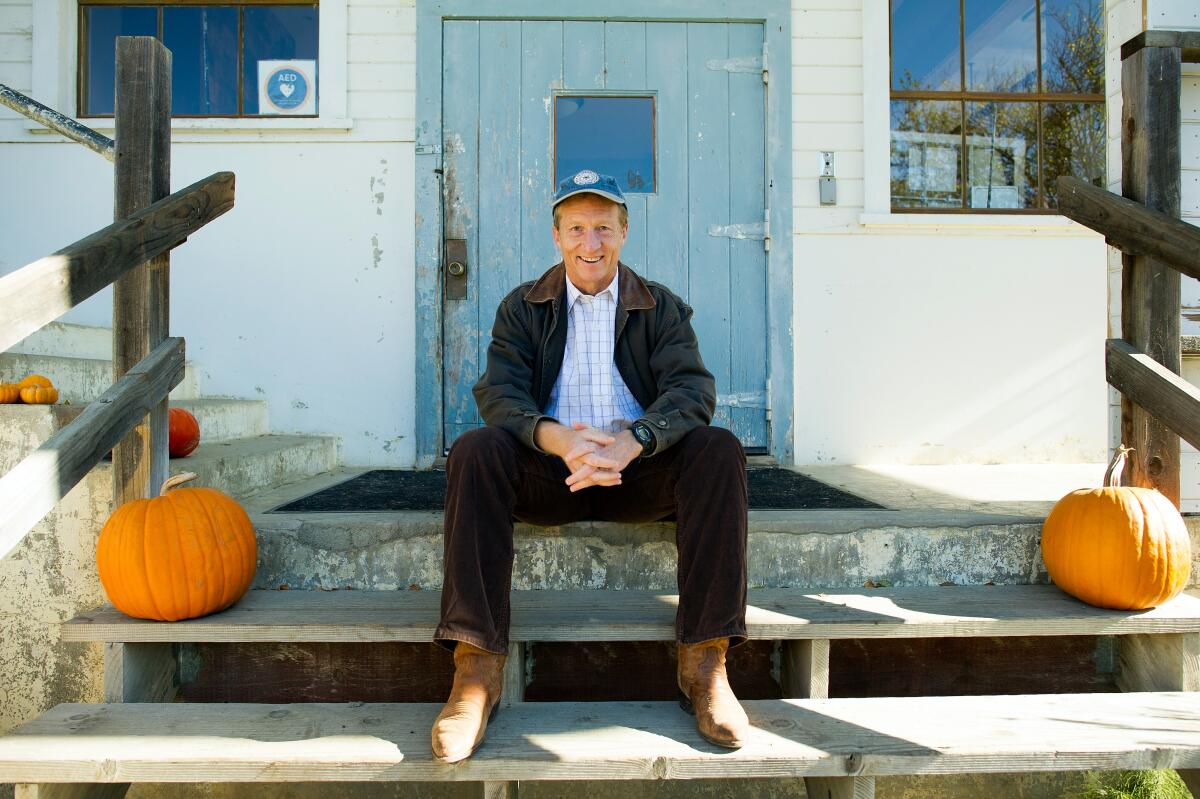
Tom Steyer tries to sell voters on his own personal change
Tom Steyer is trying to sell himself to voters as an agent of change.
He has vowed to take on entrenched political and economic forces to create affordable housing, make the wealthy pay more in taxes, lower energy bills and protect the environment.
But perhaps the biggest change he is selling is his own.
The hedge-fund billionaire turned climate activist has faced criticism throughout his campaign for past investments in coal plants and private prisons, to name a few, that helped build his fortune and gave him the means to spend more than $150 million of his own money in his quest for the governor’s mansion.
Steyer’s prolific spending has blanketed the airwaves with television ads and helped propel him near the top of an unsettled gubernatorial field in the polls.
The 68-year-old San Franciscan has helped put many Democratic candidates in office as one of the party’s biggest political donors in the past two decades, but has never held public office himself.
He spent more than $340 million in the 2020 Democratic presidential primary, but dropped out after placing third in the primary in South Carolina, where he had invested heavily.
There is a long tradition of wealthy, self-funding candidates, and the results are mixed at best. Billionaire Michael Bloomberg spent more than $260 million to win three terms as New York City mayor. But he spent more than $1 billion on a 2020 presidential bid and lasted only four days longer in the race than Steyer. Two years later, real estate developer Rick Caruso spent more than $100 million in an effort to become Los Angeles mayor but lost handily to Karen Bass.
Hoping for a better result in his current race, Steyer has staked out a position as the most progressive candidate in the field — touting an endorsement from the Bernie Sanders-affiliated Our Revolution. He’s picked up other key endorsements, too, from the California Teachers Assn., California Nurses Assn. and numerous environmental groups.
But he faces the challenge of convincing enough liberal voters to support a billionaire with controversial past investments the same year a tax on billionaires, currently enjoying strong support, is poised to be on the November ballot.
“This election is about who you can trust to fight for you,” former Rep. Katie Porter said during an April 22 gubernatorial debate in San Francisco. “One candidate is a billionaire who got rich off polluters and ICE prisons and is now using that money to fund his election.”
Steyer said he understands the broad concerns about his wealth and is willing to vote for the billionaires’ tax in November.
“I know that people are skeptical of billionaires, and I’m skeptical of billionaires,” Steyer said Tuesday in an interview with The Times. “But if you look at this race, I’m the only progressive in the race. I’m the person who’s taking on the corporate special interests.”
He pointed to the millions spent by a super PAC supported by the real estate industry and Pacific Gas & Electric — which Steyer has pledged to break up to bring down utility costs — as evidence that he is the candidate most feared by moneyed interests in the state.
“The companies that are running up the costs are fighting like hell, because that’s how they make their money,” he said. “But somebody’s got to stand up to them.”
The departure of former Rep. Eric Swalwell from the race last month after sexual assault allegations doesn’t appear to have resulted in a major surge of support for Steyer. Rather, it is Xavier Becerra, the former Health and Human Services secretary, who seems to have gained momentum.
But veteran California pollster Mark Baldassare said that he hasn’t counted out Steyer yet.

Tom Steyer, in 2013, as he was campaigning against the Keystone XL oil pipeline.
(David Paul Morris / Bloomberg)
“It would be easy to say that he’s reached his peak, except for the fact that there are so many undecideds and Steyer has so many resources at his disposal,” said Baldassare, the statewide survey director for the Public Policy Institute of California.
Steyer has poured at least $875 million into federal and state political committees since 2010, according to an analysis conducted for The Times by OpenSecrets, and federal and state campaign finance records. That total includes the nearly half a billion dollars he has spent on his two races.
In 2013, Steyer left his investment firm and launched NextGen Climate, a progressive political action group geared toward addressing climate change. He has given nearly $270 million to a super PAC affiliated with the group, which was later renamed NextGen America.
The committee has spent tens of millions of dollars on campaigns opposing fossil fuel interests and supporting progressive candidates, though Steyer’s financial support for the group has decreased as he has run for office.
The billionaire also established his climate bona fides by opposing the Keystone XL pipeline during the Obama administration, which became a national proxy fight over climate policy, and by backing environmental ballot measures in California.
Among them was a $5-million investment in 2010’s “No on Prop. 23” campaign, which defeated a conservative effort to overturn California’s greenhouse gas emission reduction law.
Two years later, Steyer invested about $29.5 million in Proposition 39, a winning measure to recoup money from corporate tax breaks to help pay for clean energy projects.
Privileged upbringing and a ‘desire to compete’
Steyer’s unconventional path to politics began with a privileged upbringing on the Upper East Side of Manhattan. He studied at the elite Buckley School and Philips Exeter Academy before attending college at Yale University, where he captained the men’s soccer team and graduated in 1979.
After a brief stint on Wall Street, he got a master’s degree in business administration at Stanford University, where he met his future wife, Kat Taylor. They wed on the Stanford campus in 1986.
Steyer worked hard — very hard — at making money.
He was one of several “Wall Street Prodigies” featured in a Wall Street Journal profile from the same year he was married.
Steyer’s work began at 5 a.m. in the office and he seldom took days off — he fretted he wouldn’t have time for a honeymoon.
He eschewed the trappings of wealth — driving an eight-year-old Honda — motivated instead by a “desire to compete, excel and keep struggling to do better.”
Steyer began cutting political checks soon after, but his real emergence as a major political donor came during the 2004 presidential campaign, when he pledged to raise more than $100,000 for John Kerry’s campaign and was talked about as a potential political appointee at the U.S. Treasury Department in a Kerry administration.
Steyer hired Kerry to join his sustainable investment company Galvanize in 2024. Steyer stepped down from the company before entering the governor’s race.
The year 2004 was pivotal for another reason.
A group of students at his two alma maters, Yale and Stanford, along with those at a handful of other elite universities, began a campaign to pressure the endowments at their institutions to stop investing with Steyer’s hedge fund, Farallon Capital Management.
They cited concerns about some of the firm’s investments, including a coal burning plant in Indonesia and a joint venture between Farallon and Yale to pump out water from an aquifer in Colorado adjacent to the Great Sand Dunes National Park.
“Stated simply, we do not want our universities to profit from investments that harm other communities,” the students wrote in an open letter to Steyer. “We are concerned about the impact some of Farallon’s recent investments have had.”
Steyer told the students he appreciated “the importance of the issues that you raise,” but defended his firm’s work, saying that it acted “responsibly and ethically.”
Looking back on that time now, Steyer said it was a turning point.
“I think that experience really was a wake-up call to me,” he said. “It’s when I started to very seriously consider leaving Farallon. I really felt like if I was going to be the person with my values, I was going to have to leave and be independent and do what was right.”
Three years later, Steyer and his wife began their initial pivot to public service, opening a bank in Oakland that would cater to low-income customers

Tom Steyer, seeking the Democratic presidential nomination, greets people at an event in Des Moines, Iowa, in 2019.
(Scott Olson / Getty Images)
But this initial venture highlighted the inevitable collision course between Steyer’s burgeoning activism and his firm’s investments.
At an event that year with then-Gov. Arnold Schwarzenegger and Oakland Mayor Ron Dellums, Steyer and Taylor pledged $1 million in loans to support vulnerable people in Oakland facing foreclosure in the wake of the subprime mortgage crisis.
Left unsaid was the fact that Steyer’s firm had extensive financial ties to San Diego’s Accredited Home Lenders, one of the biggest subprime mortgage lenders in the country.
The transformation to climate activist
Steyer and his wife began writing bigger philanthropic checks and in 2010 took the Giving Pledge, promising to donate at least half of their wealth before they died.
In 2009, they gave $40 million to endow the TomKat Center for Sustainable Energy at Stanford, the first of several multimillion-dollar gifts to Stanford and Yale to support climate-focused ventures. They pledged $7 million to create the Steyer-Taylor Center for Energy Policy and Finance, also at Stanford, in 2010. It closed last year after its endowment came to an end.
And in 2011, the couple donated $25 million to Yale to help establish an Energy Sciences Institute focused on developing sustainable energy solutions.
But even as Steyer undertook his public transformation from investor to climate activist, his firm continued to make decisions out of step with his newfound commitment.
In 2011, for example, the firm purchased 1.8 million shares of BP, a year after the Deepwater Horizon oil spill, in which a BP-operated project dumped nearly 5 million barrels of oil into the Gulf of Mexico.
Steyer resigned from the firm at the end of 2012, though he still has millions of dollars invested in the firm .
Environmentalists have largely been willing to forgive Steyer’s past investments.
“There’s no question he’d be the most knowledgeable and committed climate advocate that’s ever held really high office in America,” climate activist and author Bill McKibben recently told Politico.
While the nonprofit California Environmental Voters has endorsed both Katie Porter and Tom Steyer in the race, Steyer, in particular, has “taken on Big Oil dollar for dollar, toe to toe, and beaten them,” said Mary Creasman, the group’s chief executive.
“He has made this his career and his investment and his passion, so it’s authentic, and voters see that,” she said.
Leah Stokes, an associate professor of environmental politics at UC Santa Barbara, said she’s impressed by Steyer’s climate track record and progressive campaign platform, noting that he’s been an active presence in California’s climate movement for more than 15 years.
That includes not only his work on ballot initiatives and clean energy technology, but also his focus on biodiversity loss and carbon sequestration at his 1,800-acre TomKat Ranch in Pescadero, where researchers are studying regenerative agriculture.
But Steyer has also played a role in elevating climate into a national political issue — including in the early 2010s when it wasn’t a “politically hot topic,” Stokes said.
“He has been willing to spend an enormous amount of his personal money on elections on climate — whether it’s propositions, whether it’s himself running for president on basically a climate platform, whether it’s the Next Gen giant voter turnout campaign,” she said. “I think he has recognized … that politics is where we have to invest our time if we want to make a difference on the climate crisis.”
Despite concerns raised about Steyer’s early investments into fossil fuels through Farallon, Stokes said she’s more apt to criticize candidates who are taking money from oil companies today, such as Becerra, who accepted a $39,200 donation from Chevron for his gubernatorial campaign.
She was also heartened by the fact that Pacific Gas & Electric has funded a $10-million PAC opposing Steyer, because she said it indicates that he aims to hold utility companies accountable for skyrocketing electricity prices amid soaring profits.
“We could actually have a shot here at having somebody who cares about climate change, who wants to hold utilities accountable, who wants to hold big polluters accountable,” Stokes said. “That would just be transformative.”
Energy costs weigh heavily on voters
Steyer’s focus on climate issues and energy affordability could also be a strategic boon in the governor’s race.
Sixty percent of voters in the state see climate change as a major threat to the country and believe that the government is not doing enough to address it, according to polling from the Public Policy Institute of California.
“Californians connect the dots between what’s going on with extreme climate and wildfires and climate,” said Baldassare, the institute’s survey director.
Recent polling has also shown that voters are very concerned about energy affordability and rising utility costs, with 13% of Americans naming it as the most important financial problem facing their family — a 10-point increase from last year, according to an April Gallup poll.
Overall, energy costs tied housing costs as the second-biggest concern following the high cost of living, the poll found.
In November, Democrats who campaigned heavily around energy affordability swept the field in key races in New Jersey, Virginia and Georgia. Residential electric prices increased nearly 11% between January 2025 and this February, according to the latest available data from the U.S. Energy Information Administration.
“Voters are supporting candidates who are leaning into these issues,” Creasman said.
Wieder reported from Washington and Smith from Los Angeles.

Duckens Nazon: Haiti’s record scorer on facing Scotland at World Cup and escaping Iran
With domestic football in Iran suspended because of the ongoing conflict, Nazon is following an individual training programme to prepare for the World Cup.
The Haiti squad have become heroes for leading the nation back to football’s grandest stage, where they will make just their second appearance at the finals.
Nazon acknowledges that the players are now “part of the country’s history” but insists they will play without “extra pressure”, starting with their opener against Scotland.
“We are ambassadors of our country and we know we have a responsibility,” he says. “We know the young people also see us as examples.
“But we don’t have to put extra pressure on ourselves and, when we play for our country, it’s more a mission and we do it with passion and with love.”
On loan at St Mirren from Belgian club Sint-Truiden for the second half of the 2018-19 season, Nazon “had a story” in Scotland. It was short-lived, though.
The forward played 12 games, scoring twice, but said he was “not ready for this kind of aggression and fight” in Scottish football, while the weather also played a part.
“I remember one game we had sun, snow and rain,” he recalls. “After this, I was like, OK, I’m done.”
Weather is unlikely to be an issue for Nazon this summer in North America. The striker, a friend of Scotland defender Dominic Hyam – with whom he played at Coventry – did, however, voice concerns about inflated ticket prices for the upcoming World Cup matches.
“There is only one thing that starts to go in my brain – it’s the ticket prices,” he says. “Hopefully this is not going to affect the crowd and people coming to the stadium, because we want this atmosphere.
“We want this energy around us. I’m looking forward to seeing Scottish people and Haitian people in the stadiums. This is going to be important.”

Center Parcs launches new festival-like family attraction in time for summer
A NEW festival style experience is coming to Center Parcs this summer.
The Sherwood Forest retreat has revealed plans for its Forest Summer Social.

Starting this month, the Woodland Garden will be transformed into a huge attraction, with an outdoor cinema in the centre.
This will show everything from films like Mamma Mia and Frozen to live sports such as the World Cup and F1.
Guests will be able to prebook deckhairs and popcorn, or can turn up with their own blankets.
Also in the Woodland Garden will be activities such as the Forest Craft Room for arty activities, as well as the Family Nature Quest.
Read more on Center Parcs


Light up the Forest will let guests use bicycle power to light up the woodlands too.
The Summer Social Kitchen will be serving street food while drinks will be on offer at the Aspall Bar.
All of the experiences are included in the stay excluding the Forest Craft Room and any food and drink.
The new experience will run from May 25 to August 31.
Other new activities at Sherwood Forest include the Treetop Glider, a wires ride that launched earlier this week, and new padel tennis courts.
It is also the only park to have The Dozing Duck, a lounge area with breakfast and lunch as well as a playground, shuffleboard and crazy pool.
Kids will also love the VOYA Teen Glow Facial, the first spa treatment in the UK designed for younger skin.
And guests can buy exclusive Joules x Center Parcs merchandise at Sherwood Forest, with bags, t shirs and hats.
New premium lodges opened across Sherwood Forest too – here’s what they look like.
Tempted? Here’s how to get a more affordable Center Parcs holiday.

New ‘contingency’ plan to ‘conserve jet fuel’ could mean changes to 2026 flights
The UK Government has relaxed a rule for airlines which could see some summer flights dropped to save jet fuel

Flight services could be consolidated at no penalty to airlines(Image: Jackyenjoyphotography via Getty Images)
Travellers could find their UK flights rescheduled as the Government relaxes a particular rule that airlines rarely risk breaking. Holiday-makers should be aware that their plans may be changed to avoid journeys that would result in “wasted fuel”.
Transport Department officials say airlines may consider scrapping certain services following the introduction of a temporary rule change that allows carriers to merge flights and combine passengers. The idea is meant to cut the total number of aircraft departing, aiming to preserve jet fuel and provide holidaymakers with reassurance that trips won’t be cancelled altogether.
Rather than axing flights at short notice, the idea is to “reduce wasted fuel from flying near-empty planes”. To maximise the use of airport departures, airlines would reassess their schedules and could transfer passengers from under-booked services that haven’t sold a decent proportion of seats onto similar flights.
The Government claims these “contingency preparations” are meant to “give families greater confidence when travelling this summer”. While airlines have always been able to cancel and rebook flights, doing so typically came with a future risk to their business, reports the Express.
Addressing the update, Transport Secretary Heidi Alexander said: “Since the closure of the Strait of Hormuz, the government has been monitoring jet fuel supplies daily and working with airlines, airports and fuel suppliers to stay ahead of any problems. There are no immediate supply issues, but we’re preparing now to give families long-term certainty and avoid unnecessary disruption at the departure gate this summer.
“This legislation will give airlines the tools to adjust flights in good time if they need to, which helps protect passengers and businesses. We will do everything we can to insulate our country from the impact of the situation in the Middle East.”
The measures being considered by the government go further by enabling airlines to plan ahead and act on the most reliable information available on fuel supply or the wider ramifications of the Middle East conflict, rather than waiting for shortages to materialise. The government remains engaged in planning for various contingencies to boost flexibility around jet fuel supply, and domestic jet fuel production has risen. The UK sources jet fuel from multiple countries that don’t rely on the Strait, including the United States.
Explaining how flight consolidation works, TikTok user and travel specialist Kate Donnelly (@Thedonnellyedit) said: “If an airline has four flights operating to the same destination across a day, they might look at them and see two are half empty, so they might combine them and cancel one of those flights altogether. This would mean they are obviously saving on the amount of jet fuel they are using and overall cost.”
If a flight experiences a significant delay, passengers are entitled to care and assistance, including food, drink and overnight accommodation where necessary. Generally, delays that warrant this include at least two hours for short-haul, three hours for medium-haul and four hours for long-haul.
Rob Bishton, chief executive of the UK Civil Aviation Authority, said: “Passengers in the UK are well protected by some of the strongest rights in the world, offering reassurance if disruption does occur. Airlines have a duty to look after their passengers when they face disruption, and should offer a choice between a refund or alternative travel arrangements, including with another airline, if a flight is cancelled.
“Relaxing the rules around slots at airports will allow airlines more flexibility and so we expect them to give passengers as much notice as possible of cancellations during this period.”
If the airline cancels your flight, you’re legally entitled to a choice between being rerouted or receiving a refund. Find out more about your rights following a flight cancellation here.
North Korea revises constitution to drop reunification goal

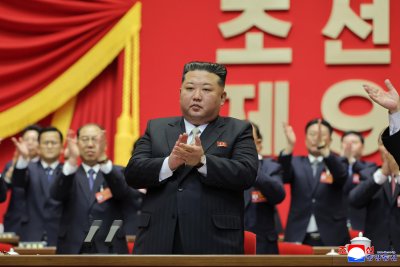
A revised North Korean constitution removes references to reunification with the South, a document shared by Seoul’s Unification Ministry showed Wednesday. Kim Jong Un, seen here at a party congress in February, was officially elevated to head of state. File Photo by KCNA/EPA
SEOUL, May 6 (UPI) — North Korea has revised its constitution to remove all references to reunification with South Korea, a document shared by Seoul’s Unification Ministry showed Wednesday, formalizing leader Kim Jong Un’s push to redefine inter-Korean ties as relations between two separate states.
The document, which was shared at a news conference by the ministry, removes language calling for the “peaceful reunification” of the Korean Peninsula that had been part of the North’s constitution since a 1992 revision.
The new version codifies a policy shift Kim first laid out in 2024, when he abandoned Pyongyang’s long-standing goal of reunification and defined South Korea as an adversary.
At a March meeting of North Korea’s rubber-stamp legislature, where the revision is believed to have been adopted, Kim called for recognizing South Korea as the “most hostile state.”
However, the revised constitution did not define South Korea as a “primary foe” or “hostile state,” despite Kim’s increasingly confrontational rhetoric toward Seoul, Yonhap News Agency reported.
The new constitution also introduces language defining North Korea’s territory as bordering China and Russia to the north and South Korea to the south.
It does not specifically address maritime boundary lines, including the de facto maritime border in the Yellow Sea known as the Northern Limit Line. The NLL, which was drawn unilaterally by the U.S.-led United Nations Command after the Korean War, has long been a source of tension between the two Koreas.
The waters around the boundary, which Pyongyang does not recognize, have been the site of multiple naval clashes since the 1950-53 Korean War ended in an armistice, including the 2010 including the North’s 2010 torpedo attack on a South Korean warship that left 46 dead.
In January 2024, Kim called the line “illegal” and warned that even the slightest violation of the North’s territory would be considered a “war provocation.”
South Korean President Lee Jae Myung has sought to ease inter-Korean tensions since taking office in June, calling for the resumption of dialogue and making conciliatory gestures such as dismantling border propaganda loudspeakers.
Pyongyang has largely ignored those overtures while continuing to expand its military posture. In April, North Korea conducted several weapons tests, including tactical ballistic missiles with cluster bomb warheads and electronic warfare systems.
The revision also elevates Kim’s position as “head of state,” further consolidating his authority over state affairs and the country’s nuclear forces.

The Making of the Boko Haram Army
On a hauntingly cold night in 2008, a 28-year-old impressionable fan of Mohammed Yusuf sat in the latter’s compound in the London Ciki area of Maiduguri, northeastern Nigeria, at 1 a.m., placed his hand in his, and swore to give his life for Boko Haram. He would advance to become a top commander in the terror group.
That night, the Man was accompanied by a few trusted friends, all of whom pledged their allegiance to the cause. Yusuf started by reciting eight commandments to the small group and asking that they swear to abide by them. He made it clear they could refuse to join the army, in which case, they were not to disclose any of the things that happened that night to another living soul.
Many of them would die in battle in the years that followed, and Yusuf himself would be killed in a matter of months, but the Man would survive. He had been led there by his friend, who had also been led there by his own friend.
Mohammed Yusuf, the founder of the Boko Haram terror group, was preparing to wage war against the Nigerian state and was assembling what would later become an army. This army would go on to kill over 35,000 people between 2009 and 2020, indirectly lead to the death of over 300,000 others, and displace over two million more. Through fieldwork involving extensive interviews with a few first-generation members of the terror group who are still alive, victims, and a review of nearly 100 archival materials, such as newspapers and videos, this report documents the strategy that made that army possible.
Since his preaching was still largely peaceful at the time, Yusuf recruited men covertly, so as not to alert the government to the war he was planning.
But the story of the Man’s radicalisation began long before that night. As far back as 1995 and 1996, the Man, then merely a boy, had begun to listen to Mohammed Yusuf’s preaching, agreeing with a lot of the things he was hearing. But beyond Yusuf, the Man was also an ardent follower of Sheikh Jafar Mahmud, who had been schooled at the University of Madina, Saudi Arabia, a feat he found astonishing.
“That time, I was impressed with the way Malam [Mohammed Yusuf] was. He was a young man like me–he was just a bit older than me. But he was so educated, and that was my dream, too. To become so knowledgeable about the religion,” the Man told me one October afternoon in 2025 in northeastern Nigeria. We were sitting on a mat just outside a rafia hut.
“He had started becoming popular among the Izala and the Abba Aji students, just like how the likes of Gambo Kyari, Bukar Mustapha, Umoru Mustapha, and the rest were popular then. Like Malam Ibrahim Gomari, Bashir Kashara, who was killed, and so on. He [Mohammed Yusuf] was their peer when it came to Islamic scholarship.”
His ideologies aligned with those of scholars like Sheikh Jafar, who was based in Kano but was preaching regularly at and leading prayers at the Indimi mosque every Ramadan in Maiduguri. In 1999, Yusuf’s fame began to rise beyond his immediate community, his words taking root in the minds of young men and women all across Borno State. The support and fandom were massive. The Man thinks this was due to two things.
“One, he was very young then. Two, he used to preach in both Hausa and Kanuri.” This enabled him to reach a wider audience without a language barrier, as these were among the most widely spoken languages in Borno State.
Over time, around 2000 and 2002, his preaching began to diverge from that of the likes of Sheikh Jafar and other revered scholars popular at the time. He began to speak against Western education, voting, democracy, and modern science and civilisation. He preached about a radical form of religion that had total government control over the people’s private and public lives.

In about 60 videos of him around this time that HumAngle reviewed, each 3-6 minutes long, he can be seen preaching against democracy and the West. “The thing the West brought is apostasy,” he said in one of them. “We reject it. This democracy is not good. These soldiers are not genuine soldiers–they do not protect the religion of Islam… God said we should kill them. Allah said in the Qur’an that he would humiliate the enemy by our hand. Did you think he meant our hands holding prayer beads?” and here he chuckles. “Of course not,” he answered himself to the ecstatic screams of his congregation. “He was referring to our hands wielding guns.”
At this time, many of the scholars he used to be known with began to withdraw from him. Rather than see this as the alarm that the larger public saw it as, the Man and many young people like him saw it as a sign of legitimacy. They saw Yusuf as brave, courageous, and unwavering.
“We believed what he was preaching was the truth because what he was saying regarding the government, jihad, correlated with Qur’an verses and hadiths,” he said. He quoted verses from Chapters Ahzab and Taubah to back up his claim, saying that the scriptures had already said that nothing could change the world if not jihad, which he personally interpreted as war.
Islamic scholars have long disproved this interpretation of scripture and the word ‘jihad’. HumAngle shared the Man’s interpretation of the verses in Ahzab and Taubah with a prominent Islamic scholar, Prof. Ibrahim Maqari, who currently serves as the Chief Imam at the central mosque in Abuja, the federal capital. He said the interpretation was inaccurate.
“Those verses have been taken out of context. Islam is very clear on there not being compulsion in religion,” he said. “Islam allows war only when war is brought upon you. In that sense, you have a responsibility to fight back in order to protect yourself. There are laws on how warring parties must treat even animals and trees–how can the same religion be used as an excuse to slaughter innocent, unarmed populations, if even animals and trees are expected to be protected even in times of war?”
He also offered an additional, but often ignored, definition of the word: restraint, whether emotional or mental.
“To stay away from what one craves but has been outlawed by Islam could also be a form of jihad.”
The Boko Haram group views it differently. “Jihad means blood must be spilt,” the Man said.
Following his split with Sheikh Jafar, Yusuf stopped preaching at the Indimi mosque and began preaching in his home, then at the Al’amin Daggash Mosque for several months before he was kicked out again, before eventually establishing the Markaz (Ibn Taimiyya) mosque.
“Only about 40-50 of us went with him then. That was 2002–2003. With the help of Allah, after like two years, Markaz couldn’t even contain people; we could not even count the number of students anymore.”

There were very few journalists or researchers at the time who were able to accurately document this sociological (and religious) revolution. One of them was Ahmad Salkida, who dispatched the first-ever news article on Mohammed Yusuf in 2006 and was the first to alert the public to what was brewing. He observed in one report that Yusuf enjoyed wide acceptance from young people at the time because of the effects of bad governance and the resulting socioeconomic inequalities—corruption, rampant inequality, lack of education.
By appealing to a shared victimhood philosophy, he created an Us (victims) Vs Them (the government/the oppressor) dichotomy and garnered a large following. The weaponisation of a sense of community to further genocidal violence is a tactic that is recurring in speeches of warlords or leaders of violent movements. It was apparent in the popular 1943 speech made by Heinrich Himmler, one of the key military leaders who executed the Holocaust. In it, he frames the killing of jews as a moral obligation, while making the Nazis out to be the victims. “We have a moral right, we had the duty to our people to do it, to kill [some use the word ‘destroy’ here as the original speech was in German] these people who would kill us… We have carried out this most difficult of tasks in a spirit of love for our people,” he said in the speech.

As the number of his students and followers began to increase, Yusuf decided it was time to take his message beyond his house and Maiduguri. He began to travel to Konduga, Bama, and Gwoza. He soon went beyond Borno State into Yobe State, to places like Potiskum, Gashua, Geidam, and others. He also went to Bauchi.
“We started getting senior students like Abu Mohammed Bauchi, Abu Maryam, etc. It later crossed to Kano, and there, we got senior scholars, even though they later withdrew.”
It was at this time, when his preaching became regular in Bama, that Fatima, another first-generation member of the group, began to attend. Alongside her entire family, she became a loyal follower of Yusuf. She took the bay’ah in a way that resembled what the Man described.
“We were gathered around 4 p.m. and then separated into men and women, then took the oath,” she recalled. At this time, the preaching was mainly that the government did not have their best interest at heart, and did not care about Islam. Fatima went alongside her parents and husband. She remembers being told that the Nigerian constitution was forbidden for them to follow or abide by. They also told them that they might be killed, but they should rest assured that they would go straight to paradise if that happened.
“There are people, these days, who claim that the drinking of blood is somehow part of the oath-taking process. This is not true. At least, not during our time,” she said.
The preachings, at this time, had started to grow more and more radical and inciting.
“This caused some people to lose their wives, some their parents, some their trading partners, and some to destroy their school certificates,” the Man said. Young people, in compliance with the very foundation of Boko Haram, which directly translates to “Western education is forbidden”, began to publicly burn school certificates that they had already acquired before they became radicalised.

“We all knew this was going to happen; it wasn’t a secret,” the Man said of the eventual uprising. “There are scholars who would preach saying we have to shed blood in this country, but once they are done preaching, you will see them with the same government they are criticising in their houses, with cars given to them. But Malam was never like that. He was never in cahoots with the government, so we all believed in him and that he was going to carry out what he had intended–the war.”
The early army
The Man claimed that Yusuf first appointed 11 close friends, whom he termed his commanders. They were the first members of the Boko Haram army. He sat with these 11 and explained the reason for the war, assuring them it would happen soon. He told them they each must be willing to sacrifice their lives if it came to that, and also bring men who believed in the cause and would be willing to do the same.
He trained them for an initial period of nine months. Some CDs were played for them on war preparation. There were long periods of preaching and indoctrination.
“Some of these men are in prison, but most of them have died. The only person who is not in prison and is alive was released from prison two years ago: Mohammed Idris. He was imprisoned in 2009. There is Usman Sidi in the Malam Sidi deradicalisation centre in Gombe, and Ibrahim Agaji, who is still in prison. And so on.”
It was one of these first 11 commanders who reached out to the Man, inviting him to join the army. Yusuf had mandated that each of them come with three trusted men who could join. This was not as easy as it sounded, especially because speaking to the wrong person could jeopardise the entire plan if they chose to go to the authorities with what they knew. When the commander reached out to the Man, he explained this, adding that he himself did not know up to three people he could trust, only the Man. He asked the Man to bring the other two. He, too, only trusted one person and asked that person to bring one person as well. In that way, the commander fulfilled his assigned quota of three. Soon, the 11 commanders and their individual recruits totalled 40. Together, they formed the first version of the army, gathering in Yusuf’s house that night in the London Ciki area of Maiduguri and taking the bay’ah after listening to the commandments.
“The first commandment was that we must agree to give our lives if it came to it; then, seeking Islamic knowledge to understand our ancestors; we must also not do things except as stated in the books, whether we like it or not; then, there was confidentiality. I have forgotten most of the conditions. There were like eight conditions. If you agree to them, Malam would take your hand and hold it as you took the bay’ah. You would promise never to discuss it with anyone. If you do, it’s like you have betrayed the religion.”
After that night, they proceeded to undergo a four-month intensive period of prayer and training. They had access to one man, Habib, who used to be a sergeant in the Nigerian Army but whom Yusuf had won over with his preachings. He trained them in combat. Yusuf had also won over one medical doctor, a prominent consultant from Yola known as Abu Adam. He equipped them with basic medical skills, including how to remove a bullet lodged in a wound and how to stitch a wound.
“To this day, whenever my kids get sick, I am able to administer injections for them once they are prescribed and I buy them, because of the skills I learned from that doctor,” the Man said.
The initial group of 40 was also mandated to come with recruits – some were mandated to come with up to 10 recruits each, others were mandated to come with only three – and in that way, the army expanded little by little. Once they were in their hundreds, Yusuf broke them into battalions and named each battalion after an Islamic historical figure. The Man was under the Zubair Ibn Awwam battalion. Those who later moved to the Timbuktu triangle were named after Umar Farouk. Each of the 11 commanders was also assigned four sub-commanders known as Munzir. The Man was a Munzir at this time. Each Munzir was in charge of about 70–100 people. The Munzirs, in turn, appointed people they called the Naqeeb, each of whom had 25 people under their care. This system made organising easier.

“Whenever Mohammed Yusuf says to the leader of Zubair Ibn Awwam battalion, ‘I want you to gather your people for me,’ the leader would look for other Munzirs and me. At that time, four of us were Munzirs under that battalion: Mohammed Sani Tela, Bako Mai Madara, Abdullahi, and me. So, when Malam says to our commander, ‘Gather your people for me,’ he would just call us (the Munzirs) and say, ‘Gather your people.’ If, for example, I have 100 people under my care, how would I reach them? They’re too much for me, so I would call my Naqeeb and tell them to each bring the 25 people under their individual care. You see, this way it is easier for both me and my superior because 25 people are not a lot to gather.”
“That time, we had not yet relocated to the forest. This all happened in Maiduguri,” he clarified.
There were several locations used for training in Bauchi and Biu in Borno. As things began to heat up, with preparation for the war being heavily underway, Yusuf got word that the government suspected a war was brewing and planned to attack him and his followers. He was invited multiple times by the DSS and the police in both Maiduguri and Abuja, where he was detained briefly and interrogated over those allegations. He denied arming or preparing for war.
“Since they were planning to attack us, we were supposed to also get ready for them. Before they attack us, let’s attack them. We should just be prepared. So we got ready as much as we could. We got our war arms–Malam and a few people had been getting the arms ready all this time with the help of the former sergeant in the Nigerian Army.”
Just then, they began to face some logistical challenges. Some members of the group who had been entrusted with guns in the past few months of preparation and had been told to bury them for safekeeping suddenly said they no longer remembered where they had buried the guns. This caused a setback with planning, and Yusuf, at first, found it puzzling.
“But he later said we are going to be optimistic, whether they did not buy it, whether they cheated, or they did buy it and truly couldn’t find the place they buried it, it was still amusing. But he said we will not dwell on this, we will just seek Allah’s help with what we have with us.”
According to another source, another setback in the arms gathering department involved a man known as Aliu Tashaku, whom Yusuf met and presumably radicalised during one of his detentions at the Police headquarters in Abuja. Tashaku was later accused by Yusuf and several Boko Haram leaders of defrauding the group. They say he collected millions of naira with a promise to deliver dozens of AK-47 rifles, which he never fulfilled.
Still, plans continued. From Friday to Sunday, dawn till dusk, they were trained to use the guns they did procure: how to cock and shoot them. “Only a few of us were taught how to wield guns. Just the leaders. Not everyone.”
Finally, on that fateful day in June 2009, the ‘helmet’ incident happened. The incident has since been regarded as the beginning of the war. Some even say it was what caused it.
“I need you to understand,” the Man said, “that the helmet incident was not what led to the war. We had already assembled the army, gathered arms and supplies, and put the structure in place.”
What the incident did was accelerate the inevitable.
The helmet incident
In January 2009, authorities in Borno announced that anyone wishing to ride a bike in Maiduguri must wear a helmet as a safety precaution. The Boko Haram group did not agree with the rule (“how dare an illegitimate body tell us what to do?”). And so on that fateful day in June 2009, they came out en masse to bury four members who had died in a motor crash, flooding major roads. Many of them rode on bikes, and there was not a single helmet in sight. The police formed a blockade and refused to let them through, daring them to cross a particular line. They crossed the line, literally, and the police opened fire on the unarmed crowd. It was an act of extrajudicial violence, but for a people who already fancied themselves a parallel and legitimate government, the sect saw it as an act of war. And so they responded, warring for five days and killing indiscriminately across Borno, Yobe, and Kano. A review of Daily Trust newspapers during the whole week showed that the war dominated its front pages from July 27 to July 31 2009. Reports say that up to 800 people were killed. Abubakar Shekau, who was second-in-command at the time and would later lead the violent group after Yusuf, was wounded.
Yusuf himself was in Kaduna, northwestern Nigeria, on the day of the helmet incident. Sources say he flew into a rage when he learned of it. It was when he returned that he became more public and explicit about the war that must be fought, since the state, he said, had drawn first blood.

“He preached that if we didn’t do anything about these soldiers talking about helmets, there wouldn’t be peace, so at that time, he had not yet been captured. It wasn’t long after that the war happened in July, when everything became messy in Markaz. He spoke during evening prayers that this war was beyond us. For three days, it was like victory was on our side, but now security forces were well prepared, planning to attack us, and the little we had was already finished, and our senior commanders were all dead, so he said everyone should just find their way. That was when we went out, that was when he was arrested.”
The last time the Man saw Yusuf, they were trying to escape from their location as authorities advanced. One of his students insisted that Yusuf hop in his car so they could leave together, but Yusuf refused. By this time, he had sustained a bullet wound to the arm. And so when news of his capture and eventual summary execution arrived, it did not come entirely as a shock to the Man.
Ahmad Salkida, who was being held in a cell at the police headquarters at the time Yusuf was killed there, wrote that over 50 policemen emptied bullets into his body, making sure to avoid his head so that his identity could never be disputed.
In a video of Yusuf’s remains that HumAngle obtained, there were tens of bullet wounds, his body mangled as though slashed open repeatedly, the inner bloody flesh hanging out in several places. The only body part that remained unwounded was his head. His eyes remained open, as though staring straight ahead. In the background, voices could be heard worrying about the stench. In another video I reviewed, this time of Yusuf being interrogated after he was arrested, he was questioned about medical supplies and arms being found in his home. This corroborates the Man’s accounts about medical supplies and arms having already been gathered.
Later, the government claimed he had been trying to escape when he was shot and killed. The execution drew nationwide condemnation, and the then-President Umaru Musa Yar’adua ordered a probe into the officers responsible.
In the immediate aftermath, authorities went on a hunt for all members of the group. So the premature army and other followers of the group dispersed, and the Man himself relocated to Gwagwalada in Nigeria’s federal capital, Abuja.
He lived there for about two years with his wives and children, until one day, when former associates found him. Abubakar Shekau had healed, emerged from hibernation, and was ready to lead the army into war, the associates told him. He had sent them to him to deliver the message, and they would do so to as many key members of the army as they could find. They put him in touch with Shekau on the phone.
“We spoke, and he said he was in good health, and he tasked me with gathering the people from my battalion and to lead them since our leader, as I told you, got captured and was only released last year. That was when I felt the weight of the world on my head because we were in hiding, and now we were being told we were to continue with operations.”

And so the work of regrouping commenced. The structure that Yusuf had put in place helped in this process. Each commander searched for his Munzirs, and each Munzir searched for his Naqeebs. It was not as easy as it would have been were they all still in Maiduguri and not in hiding, because now they were scattered everywhere, and some people had even died.
HumAngle gathered that at this time, several members whom Yusuf facilitated in their travels to North Africa for arms training and other terrorism-related operations, a clear signal that preparations for war were underway long before the July 2009 ma’araka, returned to boost the army Shekau was assembling. Many of them were unable to return by the time the conflict erupted.
Once they had regrouped, the strategic efforts to topple the Nigerian government and establish what they believed to be an Islamic state started. This strategy, mainly, had to do with bombings, abductions, assassinations, and taking control of certain villages and towns to be able to forcefully radicalise and loot.
“We bombed towns, mosques, markets, and churches, too. We were the ones who put everything together. We later realised staying in town would not work because they started arresting our people. So we went to the forest.”
When the group migrated to Sambisa Forest, they turned it into their daulah – the “sovereign territory” – and operated fully from there. But this, in no way, lessened the brutality of the operations. This brutality was due, in part, to the fact that they had run out of supplies and money and were frantic. The Man had sold the lands he owned and used the money to purchase arms, and so had many others. Yusuf’s death had decimated a lot of plans. So they began to take villages.
On the surface, when villages fell to them, it was because they wanted to recruit or radicalise. But they were aware that no village or town could stay in their grip for long, as the Nigerian Army would eventually take it back. So, the more urgent reason was to loot the banks in the villages as soon as they took possession.
“We held towns for months, except for places like Mubi, which wasn’t held for long but which still yielded us a lot of money because it had like nine to ten banks then. Only three banks were looted before the soldiers came and took over the town. So we started using the money, though a jet came and burnt down the money later on.”
HumAngle has interviewed dozens of people who were stuck in villages like Bama, Kirawa, Gwoza, Kumshe, Boboshe, Andara, and many others, during the periods when Boko Haram held the villages hostage. They described a heavily militarised setting, with people being killed on often unfounded allegations of spying. Baana Alhaji Ali, a man who used to be a trader in Andara before it fell to Boko Haram, told me that many of the laws sought to take complete control of their lives. “They refused to let us go out of the village; they imposed their laws on us; they said we shouldn’t allow our women to fetch water, gather firewood, and that we should be doing all that for them. Our women were never to be seen publicly. They took foodstuff away from us.”
During this time, the government was announcing on the radio that if anyone was brave enough to escape the villages and make it to Maiduguri, the capital city, they would be safely accepted and put into Internally Displaced Persons (IDP) camps. Thousands of people took the risk. Some were caught by the terrorists and brutally killed, but others made it out safely. Tragically, many of them were intercepted on the road and profiled by the Nigerian Army as members of the terror group. They went on to be detained without trial at detention centres like Giwa barracks, Borno Maximum Security prison, and Wawa military cantonment for about a decade. Some of them died. Others disappeared and have never been seen again. Baana and his family made it to Cameroon, where the local army transferred them into the hands of the Nigerian Army in Banki, a border town. While his wife and children were allowed to go, Baana was detained on allegations of being part of the terror group and held for seven years in conditions that bring tears to his eyes to recount.
“We didn’t get enough water … some people died of thirst,” he said. “There were about 400 people in one cell, and people died from the heat … We didn’t have proper toilets at first, just plastic buckets to urinate and defecate. People would take them out when they were full and empty them.”

Amid all these, when taking villages became no longer sustainable, the Man said, they began to abduct for money. Though the Chibok abduction of 276 schoolgirls, as has already been extensively reported, was not planned but executed by lower Boko Haram members on their way back from a different assignment, it turned out to be one of their most successful money-making attempts. The Man says up to ₦300 million was paid as ransom for each girl who was released. Reports show that between 2016 and 2018, 103 girls were released, with the BBC reporting that $3.3 million was paid for them. The government, officially, insists that no ransom was paid.
“Abducting the Chibok girls became a blessing for us all in the forest because it touched the whole world. We got a lot of money. Money was made that time! At the time, the group was already facing financial difficulties. You know, when we first migrated to the forest, we would go and break into a shop and steal money, or steal cows and sell. We were struggling financially.”
The Man lived in Sambisa for over a decade with his three wives and nine children. He held numerous positions, including commander, judge, and, later, member of the Shura council.
Once in Sambisa, under the heavy-handedness of Shekau, he began to find ideological differences between what Shekau was doing and what he himself believed the scriptures said to do. This is a popular complaint among members of the group. Shekau believed deeply in violence and had no patience for negotiations. He believed that anyone who did not live in the daulah deserved to be killed. Hence, the bombing of markets, motor parks, mosques, churches, and other public places within state-controlled territories.
“We, on the other hand, believed our target was the Nigerian security forces and those who deserved it. We all agreed on that, but carrying out attacks on mosques, churches, motor parks, and killing children? We were not in support of Shekau doing that,” the Man said of himself and a growing group that had begun to plan to rebel.
“With Shekau, anybody that does not live within those forests, even if he prays, even if he goes to the Holy Ka’abah in Saudi Arabia to pray, then comes back every day, he sees him as a non-believer. He can be killed, and his money or belongings can be collected.”
There were also allegations of witchcraft against some elderly women in the group, who would then be stoned to death and sometimes beheaded. According to Fatima, the follower from Bama, things escalated wildly during that time and caused many people to fear.
And so in 2016, a faction led by Mamman Nur, another high-ranking member, decided to break away into what is now known as the Islamic State West Africa Province (ISWAP), linked to the global Islamic State (IS) group.
ISWAP, at the time and perhaps even now, fancied itself purer and less violent than the Shekau-led sect. Still, over time, the Man began to feel as though even they were “not honest about the work they were doing.”
As he spoke, it became clear to me that though he was no longer part of the group, he still believed in the cause and thought there was an “honest” or “right” way to do it. And so I asked: Why did he leave the terror group and return to state-controlled territories?
He paused for a moment, then asked, “Are you a Muslim?”
I said yes.
“So you know about the Islamic Khalifs?” he enquired.
“Yes, Ali, Umar Ibn Khattab, Usman Ibn Affan and the rest?”
He nodded in satisfaction. “Those people you mentioned were among the Prophet’s most knowledgeable and trusted advisors. So, whenever they spoke or offered counsel during that time, they were listened to and taken seriously. We were supposed to be that for ISWAP, but whenever we spoke up against things that were wrong, nobody listened to us. It was made as though we were the ones spoiling people, even when all we were doing was finding them ease.”
He explained that his decision to leave was the culmination of many things, not just one, but the refusal to listen to him and his peers made it clear that the original cause, which he believed in and was once prepared to lay down his life for, no longer existed.
Leaving was risky because he was very high-ranking, he said. It meant that he could never just change his mind and decide to go back because he would be executed. It meant he would leave behind all the wealth he had acquired over the past decade. It also meant he would leave behind a life of status and comfort and take on an uncertain future, doubtless filled with hardship.
Finally, in 2024, less than two full years ago, he defected with his entire family and surrendered to the Nigerian state. He underwent the Borno state-modelled deradicalisation programme – which is different from Operation Safe Corridor – and offered up his services to the state to aid its fight against the insurgency. He provides regular high-level intel to the government, remains a law-abiding citizen, and in return, the state pays his house rent.
“They paid last year, and they just renewed it this year,” he said.
Towards the end of our interview, I asked what he would do if a young man came to him today seeking guidance on how to join Boko Haram.
“Kai. I’ll stop him!” he said immediately. “I can’t tell anyone to go, I am even trying to tell those there to come back. I won’t advise anyone to go because if that’s the case, I wouldn’t have come back.”
His own children now go to school. I ask what has changed to make him agree to them going to school, especially since the very foundation of the insurgency was that school was forbidden.
“There were a lot of mistakes I made from the start, and I admit this without shame. One thing we didn’t understand then was that, despite our fears about the ills of Western education, it was still useful. Now, I have come to understand that I only need to arm my children with a good upbringing at home and Islamic knowledge, so that when they come across any harmful teachings in school, they would have the sense to not take them to heart… I have a daughter who has graduated from secondary school, a son who is now in SS1 and another who is going to JSS1 soon.”
I spoke to several other former members whose children are now in school and who now share the same line of thinking.
The Man is now engaged in efforts to deradicalise young people at risk of falling into the same errors he made many years ago. Sometimes, he posts videos on TikTok, countering violent extremism and challenging violent interpretations of scripture.
Researchers insist that accepting surrenders from people like the Man has always been integral to counter-terrorism efforts worldwide. But many Nigerians, especially those who have lost loved ones, feel differently, because there is still so much suffering, there is little justice and chance of reparations to those who have been wronged, and the institutional failures that led those young boys to Yusuf’s house that cold night in 2008 to take the bay’ah still remain.
Before the war, Baana Alhaji Ali, the man who fled with his family when Boko Haram attacked his village and was subsequently held for seven years in detention, was a trader who lived peacefully with his family. Now, he lives in a tarpaulin tent in Nguro Soye, cramped with his family, with no access to education, healthcare, or basic amenities. The past decade has seen him in prison, in a camp for internally displaced persons, and now in a resettlement site.
When I talked to his wife about their feelings about former combatants being allowed back into the community, she was angered.
“All I can say is that we have been cheated, we have been violated, and we have been dehumanised.”
HumAngle has chosen to use the phrase “the Man” to anonymise the central source for this story in order to protect him from harm.
Full list of 40 countries where you need two blank passport pages – or will be turned away at the airport

A PASSPORT rule you might not be aware of could be set to ruin your holiday this year. With summer about to kick off, millions of Brits will be preparing to jet off on a sun-soaked getaway abroad. But there is one passport rule that could stop you entering certain countries that you may have…
Source link

Disney’s theme parks revenue holds steady, despite national economic concerns
Walt Disney Co.’s theme parks and cruise line business is holding steady despite national concerns about discretionary consumer spending and higher gas prices.
The Burbank media and entertainment giant’s experiences division reported $9.5 billion in revenue in its fiscal second quarter, up 7% compared with the same period a year ago.
The increase was due to higher guest spending at Disney’s domestic parks and experiences, which reported a 6% bump in revenue to $6.9 billion, and more capacity on the company’s cruise line with the introduction of two new ships. The segment saw a 5% increase in operating income to $2.6 billion for the three-month period that ended March 28.
Disney’s theme parks segment was under close scrutiny given the national conversation about rising consumer costs and gas prices due to the U.S.-Iran war. Analysts had wondered whether consumers would tighten their belts and forgo vacations given the higher travel costs.
Disney did see a 1% decline in attendance at its U.S.-based parks compared with the prior year, which the company attributed to “continued softness” in international visitors, but said it was starting to move past those issues. Company executives have previously said Disney pivoted marketing and promotional efforts to attract local visitors.
Last quarter, executives indicated that results in the company’s second fiscal quarter could be affected, in part, by “international visitation headwinds,” a nod to the lower number of foreign visitors now traveling to the U.S.
Though the heightened economic uncertainty around the world could have a “potential impact” on the business, Disney Chief Executive Josh D’Amaro and Chief Financial Officer Hugh Johnston said in a shareholder letter Wednesday that the company was “encouraged by current demand.” The company expected that fiscal third-quarter domestic attendance numbers would improve, they wrote.
The company’s overall earnings were powered by its entertainment business, which posted revenue of $11.7 billion, up 10% compared with the prior year’s quarter.
That growth was driven by big gains for Disney’s streaming services — Disney+ and Hulu — which raked in nearly $5.5 billion in revenue, an increase of 13% compared with 2025, thanks to higher subscription fees from user growth and more advertising revenue. Operating income for the streaming business jumped 88% to $582 million.
Disney’s entertainment segment also had a stronger quarter at the theatrical box office, with standout performances from 20th Century Studios’ “Avatar: Fire and Ash,” the animated sequel “Zootopia 2” and Pixar’s “Hoppers.”
Overall, the company reported $25.2 billion in revenue, a 7% bump from the prior year. Income before income taxes totaled $3.4 billion, an increase of 9% compared with the same period in 2025, while operating income rose 4% to $4.6 billion. Earnings per share, excluding certain items, was $1.57, compared with $1.45 a year earlier.
Disney’s sports segment, which includes ESPN, reported revenue of $4.6 billion, a 2% increase from the same period in 2025. It brought in operating income of $652 million, a 5% slide that the company attributed to higher sports rights costs and the absence of UFC pay-per-view revenue compared with last year.
Disney also alluded to the company’s view of artificial intelligence as a “meaningful long-term opportunity,” saying it could play a role in content creation and production, monetization, workforce productivity, consumer and guest experiences and enterprise operations.
“At the same time, we are committed to implementing AI in a way that keeps human creativity at the center of everything we do and respects creators and the value of our intellectual property,” D’Amaro and Johnston said in the shareholder letter.
After noting OpenAI’s closure of the text-to-video AI tool Sora, which Disney had planned to invest in, D’Amaro and Johnston said the company will “continue to explore” commercial opportunities with OpenAI and other companies.