



Abortion Foes Call Bush’s Dred Scott Reference Perfectly Clear
WASHINGTON — President Bush left many viewers mystified last week when, answering a question in his debate with Democratic challenger John F. Kerry, he invoked the 1857 Dred Scott decision that upheld slavery.
The answer seemed to be reaching far back in history to answer the question about what kind of Supreme Court justice Bush would appoint. But to Christian conservatives who have long viewed the Scott decision as a parallel to the 1973 Roe vs. Wade ruling legalizing abortion, the president’s historical reference was perfectly logical — and his message was clear.
Bush, some felt, was giving a subtle nod to the belief of abortion foes, including Supreme Court Justice Antonin Scalia, that just as the high court denied rights to blacks in the Scott case it also shirked the rights of the unborn in Roe, which many conservatives call the Dred Scott case of the modern era.
“It was a poignant moment, a very special gourmet, filet mignon dinner,” said the Rev. Louis P. Sheldon, chairman of the Traditional Values Coalition, a prominent conservative advocacy group based in Washington. “Everyone knows the Dred Scott decision and you don’t have to stretch your mind at all. When he said that, it made it very clear that the ’73 decision was faulty because what it said was that unborn persons in a legal sense have no civil rights.”
Sheldon, who said he confers frequently with Bush and his senior campaign advisors on outreach to religious conservatives, though not in this instance, credited the use of Dred Scott with raising the abortion issue to “a very high level” and “back to the front burner.”
“It didn’t just slip out by accident,” Sheldon said.
Douglas Kmiec, a Pepperdine University constitutional law professor who served as a lawyer in the Reagan and first Bush administrations, said the reference instantly struck him for its appeal to abortion opponents, advocates for judicial restraint and even civil rights advocates who regard the Scott case as the court’s all-time worst moment.
“I thought it had so many constituencies that could applaud that comment; it was one of the most intelligent things that I heard in the debate,” he said.
Bush’s remark Friday came after a questioner in the St. Louis debate — which occurred just miles from the courthouse where Scott filed his lawsuit seeking his freedom — asked whom he might appoint to the court should there be a vacancy.
Kerry and other Democrats, looking to mobilize their base, have warned that Bush would fill vacancies with judges who would overturn Roe. Bush has often said that he believes in appointing justices who would not legislate from the bench.
He repeated that refrain Friday night but did not mention abortion in his answer. Instead, he pointed to Dred Scott as an example of a court action he found objectionable, along with another favorite citation of religious conservatives: the 9th Circuit Court of Appeal’s ruling that the reference to God in the Pledge of Allegiance was unconstitutional.
“Another example would be the Dred Scott case, which is where judges years ago said that the Constitution allowed slavery because of personal property rights,” Bush said. “That’s a personal opinion. That’s not what the Constitution says. The Constitution of the United States says we’re all — you know, it doesn’t say that. It doesn’t speak to the equality of America.”
That answer left many wondering what he meant.
Bush campaign spokesman Scott Stanzel said Tuesday that the president did not intend to draw a parallel between the slavery and abortion cases, but that he was merely giving voters an example of a case in which he felt the court erred.
But Bush has a history of using language with special meaning to religious conservatives, a critical portion of his base that senior strategists have said will assure his reelection only if they turn out in larger numbers than in 2000.
Bush himself is an evangelical Christian, and his speeches are frequently sprinkled with phrases that sound merely poetic to many, but to others sound a more spiritual theme.
His reference in many campaign speeches to his belief in a “culture of life” often draws the loudest applause from his largely conservative audiences.
In his State of the Union this year, he spoke of the nation’s “grace to go on” despite its grief over terrorist attacks, and in a subtle reference to religious texts that refer to divine service as a time “set apart,” he said: “Having come this far, we sense that we live in a time set apart.”
Activists and legal scholars on both sides of the abortion debate said Tuesday they believed the president was sending a signal to that base.
Bush, who opposes abortion, has walked a careful line on the issue in a campaign in which women make up a large portion of undecided voters. Abortion has been overshadowed this year in the culture wars by gay marriage, but activists say it remains a motivating force for many.
Polls show a majority favor abortion rights. Critics say the Dred Scott reference was an attempt by Bush to make his point without alienating moderates who might decide the election.
“The minute he said it, I said to myself, ‘Here he goes,’ ” said Eleanor Smeal, president of the Feminist Majority. “He’s not going to say to anybody that he would pick a Supreme Court justice that’s opposed to Roe vs. Wade because he’s afraid that would cost him. So he’s trying to keep his base riled up in a way that won’t offend moderate women.”
Harvard University law professor Laurence Tribe, a Bush critic who has written extensively about the abortion debate, said Bush was signaling that he believed there was a direct parallel between women who would abort a fetus and slave masters of the 19th century.
Tribe pointed to Scalia’s dissent to a 1992 ruling that upheld Roe, in which the justice drew the parallel. Scalia wrote that both cases focused on issues of “life and death, freedom and subjugation.”
“He’s talking in code, but it’s not obscure code,” Tribe said of Bush. “This has been a fixture in the talking points of the religious right for years.”
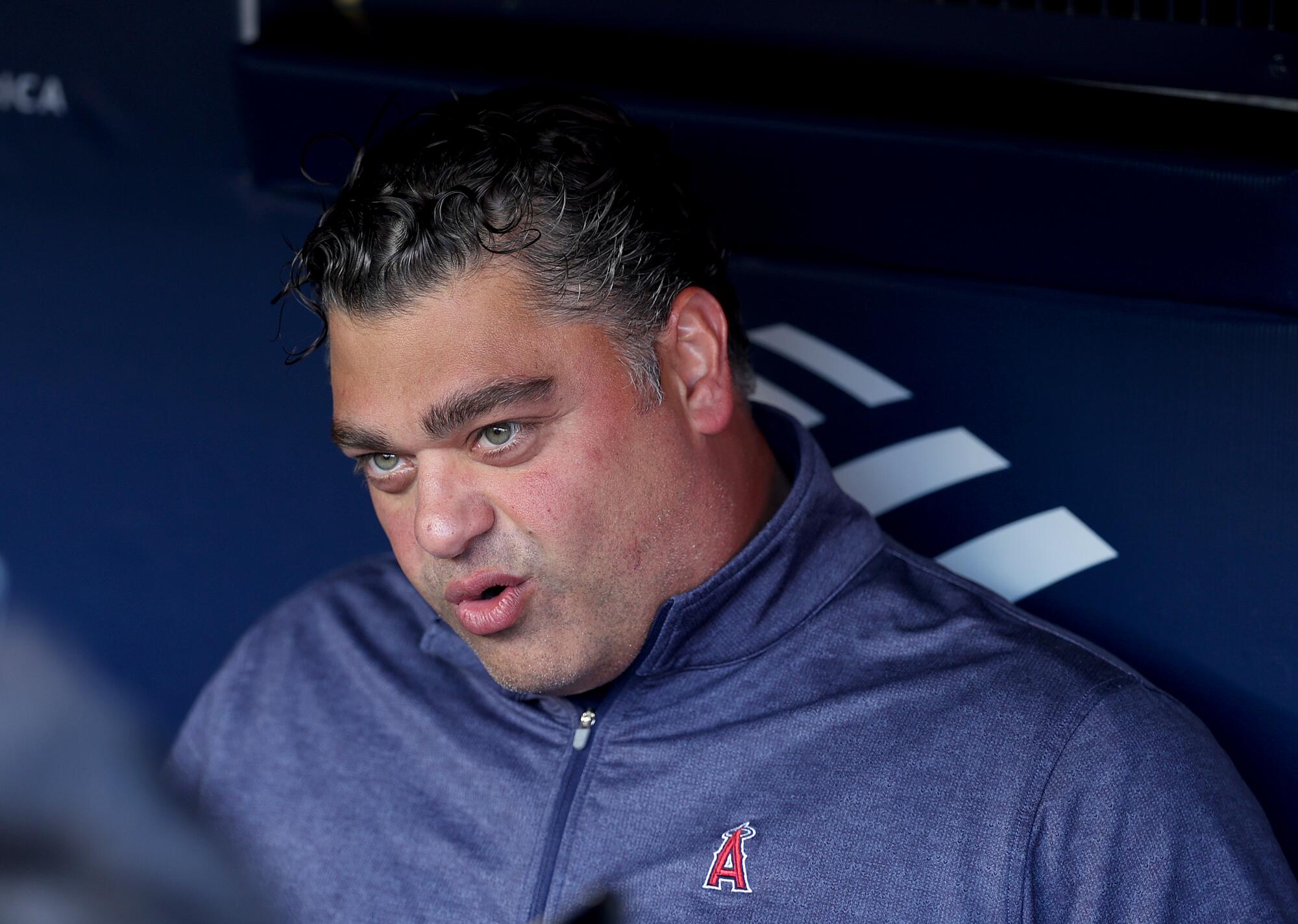
Angels GM says team is ‘very competitive’ but are fans fed up?
I walked around a street fair in Irvine over the weekend, checking out the crowd while waiting for my daughter’s dance team to perform. We were a few short miles from Angel Stadium, but you wouldn’t have known it: lots of people wearing Dodgers caps, someone wearing a Shohei Ohtani cap, someone else wearing an Ohtani jersey, someone else wearing a Clayton Kershaw jersey, a dog wearing a Dodgers bandana, and people repping the Padres, Giants, Athletics and Yankees.
After 25 minutes, someone walked by in an Angels cap.
If the passion wanes, apathy can set in. I wondered if that is where the Angels might find themselves now, with a slice of their fan base finding a more enjoyable way to spend its summers than watching one losing season after another, and with the shadow of baseball’s best team extending ever more securely into Orange County.
Something else happened over the weekend that made me wonder. On the heels of a winless road trip, and on the day before the Angels would claim the worst record in the major leagues, Angels general manager Perry Minasian said this to reporters: “Our best baseball is in front of us. There’s no doubt about that.”
No doubt?

Angels general manager Perry Minasian declined to predict in the team would make the playoffs this season.
(Elsa Garrison / Getty Images)
On the Angels’ broadcast the previous night, reporter Erica Weston presented play-by-play announcer Wayne Randazzo with a birthday gift: a figurine of Grogu, a character in the Star Wars family. Randazzo said he would keep Grogu in the broadcast booth, as a good luck charm for the Angels.
“We certainly could use one,” Randazzo said.
Minasian, the sixth-year general manager, has yet to deliver a team that finished better than 17 games out of first place. On Wednesday, I asked him to explain why he was so confident in saying he had “no doubt” the team’s best days were ahead.
“We’ve been very competitive,” Minasian said. “Our wins and losses aren’t where we want them to be, but we have lost a lot of one-run games, a lot of tough games.”
The Angels have lost six one-run games. So have the Yankees, the team with the best record in the American League.
The Angels’ run differential is minus-14. They are four games behind in the AL West, where the first-place Athletics have a .500 record and a minus-21 run differential. You never know.
So far, however, the Angels’ offense is all about the three true outcomes: They strike out the most of any major league team and rank among the top six in walks and home runs, but they do not rank among the top 10 in runs. Only five teams have given up more runs.
“Going to the bullpen has been a harbinger of danger for the Angels,” Randazzo told viewers. The Angels’ bullpen entered Wednesday with a 5.35 earned-run average, the highest in the AL.
Owner Arte Moreno cut payroll this year, amid the implosion of the FanDuel regional sports networks. Edwin Díaz was not walking through the bullpen door.

Angels owner Arte Moreno.
(Ashley Landis / Associated Press)
But the Dodgers find solid bullpen arms in ways beyond buying them: Evan Phillips was cast off by the Baltimore Orioles during a 110-loss season; Alex Vesia was acquired from the Miami Marlins after putting up an 18.69 ERA in his first five major league games.
“We’ve had guys like that,” Minasian said.
He cited Brock Burke, a waiver claim who gave the Angels two solid seasons in middle relief. Minasian traded him last winter for outfielder Josh Lowe, and any general manager would trade a middle reliever for a middle-of-the-order bat. To this point, Lowe has a .198 on-base percentage and a .287 slugging percentage.
Lowe is but a data point in illustrating this primary point: Minasian’s margin for error is smaller than it otherwise would have been if Moreno had not withdrawn from the market for top-tier free agents or had approved trading Ohtani for elite prospects that would have accelerated rebuilding. Smaller, but other teams do more with less.
“We’ve got to be able to develop our own players,” Minasian said.
On the day Minasian said he had “no doubt” better days were ahead for his team, the Angels, their triple-A affiliate and their double-A affiliate all were in last place.
Analysts perennially rank the Angels’ farm system among baseball’s worst. Minasian said he’ll put his faith in four homegrown starters: José Soriano, Reid Detmers, Jack Kochanowicz and Walbert Ureña. Their combined ERA so far: 2.99.
“When you look at good teams and sustainable winners, they build rotations, whether that’s through trades or free agency or your own,” Minasian said. “We’re doing it with our own. You can’t microwave that overnight.”
You can’t make fans wait forever for October either. Angels fans have heard enough about building a competitive team and needing patience.
They have not seen their team in a playoff game in 12 years. When are they going to see that?

Angels pitcher Walbert Ureña delivers against the New York Mets at Angel Stadium on May 1.
(Luke Hales / Getty Images)
“I’m not in the prediction business,” said Minasian, whose contract expires after this season. “They’re going to see a team that plays hard every day. They’re going to see young, talented players day in and day out.”
That’s fine, but when are they going to see a winning team?
“The proof will be in the pudding,” he said. “It doesn’t matter what I say. I could say all these things. At the end of the day, we’re going to go play 162 games. We’ll see where we end up and who’s done what, and we’ll go from there.”
On Wednesday, the Angels won a series for the first time since April 12. They’re 3-2 with Grogu in the broadcast booth.
The schedule gets more challenging: a trip to Toronto and Cleveland, then back to the Big A to play the Dodgers. The same distant Angel Stadium seat available on the resale market for Wednesday’s game for $5 (fees included) is available for $103 for the opener of the Dodgers series.
Orange County loves a winner. There was a long line at that Irvine street fair to collect souvenirs from one booth — the one for the Anaheim Ducks.

This ‘must-have’ travel gadget can save you up to £200 at the airport

THERE’S nothing worse than getting caught out by dreaded overweight baggage fees at the airport.
Thankfully this nifty gadget can help you avoid forking out up to hundreds in extra luggage charges.

MYCarbon Portable Luggage Scale, £6.98 (was £10.99)
The luggage scale is currently on sale at 36% off. It originally sold at £10.99 and it costs only £6.98 today.
Even if you’ve made sure your bag or suitcase fits within your airline’s sizing limits, that doesn’t mean it won’t become too heavy.
Airlines can charge extortionate fees for overweight luggage.
Read more on travel gadgets
British Airways, for example, charges you a heavy bag charge of £65 even if your luggage is just 1kg over the 23kg weight limit.
This applies to both the way there and the way home, so this expensive mistake could cost you £130.
Jet2 and easyJet charge a fee of £12 per kilo you are over the weight limit.
This means that if you overpack to the 32kg limit for a standard 15kg bag, you would be charged a stinging £204.
That’s twice the cost of some city breaks just to bring your suitcase with you.

MYCarbon Portable Luggage Scale, £6.98 (was £10.99)
Avoid getting caught out and having to fork out a fee by using this nifty at-home luggage scale.
The gadget has nearly 27,000 reviews, the large majority of which are 5-star and praise how easy it is to use.
One happy shopper shared: “I can confidently say it is a must-have for anyone looking to avoid those dreaded “overweight” fees at the airport.
“It’s rare to find a gadget that is both simple and incredibly effective, but this hits the mark.”
He continued to write: “If you want a scale that is sturdy, comfortable to hold, and accurate, look no further. It does exactly what it promises with zero hassle”.
Another delighted reviewer said: “Before discovering this scale, I often faced the stress and uncertainty of whether my luggage would meet airline weight restrictions.”
“With the MYCARBON scale, those worries are a thing of the past”.
While there are luggage scales at some airports, it’s much easier to weigh your bags at home then take out what you don’t need, rather than find out at the airport that it’s already too late.
Plus nobody wants to be stuck buying a new suitcase at the airport, where prices are often hiked for passengers in a pinch left with no choice.
And who wants to essentially pay for their holiday twice just because you forgot to weigh your luggage at home?
It’s even been reported that some airline staff are rewarded with ‘bonuses‘ for catching out passengers with oversized baggage.
Avoid those pesky fees by using this scale – you can even pack it and bring it with you on holiday to make sure that your bags aren’t over the weight limit from any shopping you do abroad.
MYCarbon Portable Luggage Scale, £6.98 (was £10.99)
Prices correct at time of publication.
Oil prices jump as US, Iran trade fire in Strait of Hormuz | Oil and Gas News
Brent crude rises amid clashes in critical waterway.
Published On 8 May 2026
Oil prices have jumped after clashes between United States and Iran in the Strait of Hormuz pushed their tenuous ceasefire to the brink.
Futures for Brent crude rose as much as 7.5 percent during a volatile trading session on Thursday, before easing as Asia’s markets opened on Friday morning.
Recommended Stories
list of 4 itemsend of list
The international benchmark stood at $101.12 per barrel as of 03:00 GMT, down from the day’s high of $103.70.
The latest rise came after the US and Iran exchanged fire in the critical strait, a conduit for about one-fifth of global oil and natural gas supplies, despite the truce announced between the sides on April 7.
US Central Command (CENTCOM) said it launched strikes on Iran after three US Navy guided-missile destroyers came under attack from Iranian missiles, drones and small boats in the strait.
Iran’s Khatam al-Anbiya Central Headquarters earlier accused the US of violating the ceasefire by attacking an Iranian oil tanker and another vessel in the vicinity of the waterway.
The Iranian military headquarters also accused the US of targeting civilian areas, including Qeshm Island.
US President Donald Trump on Thursday appeared to downplay the clashes, saying the ceasefire remained in effect, while Iran’s state-run Press TV said the situation had gone “back to normal”.
Shipping in the strait has been at a near standstill since late February amid the threat of Iranian attacks on the massive oil tankers that usually transport much of the world’s energy supplies.
Brent prices are up about 40 percent compared with before the war amid an estimated shortfall in daily production of 14.5 million barrels.
Asian stock markets opened lower on Friday amid the heightened tensions, with Japan’s benchmark Nikkei 225, South Korea’s KOSPI and Hong Kong’s Hang Seng Index each falling more than 1 percent.
On Wall Street, the benchmark S&P 500 fell about 0.4 percent overnight after hitting an all-time high the previous day.

USAF Is Going To Explore What Will Finally Replace The B-52
With the U.S. Air Force set to still be flying B-52s at least into 2050, at which point the youngest examples will be some 88 years old, it has become common to quip about the bombers staying in service forever. However, the Air Force is now looking to conduct a formal review of its requirements to see whether the development of a successor might be warranted, and potentially sooner rather than later.
The Air Force is asking for $1 million in its budget request for the 2027 Fiscal Year to conduct a New Heavy Bomber Analysis of Alternatives (AoA). Aviation Week was the first to report on the appearance of this AoA in the service’s budget documents. All branches of the U.S. military routinely use the AoA process to assess available options and further refine requirements for new weapon systems and other capabilities.
The Air Force currently has 76 B-52Hs in service. The last of these aircraft rolled off Boeing’s production line in 1962, though they have received numerous upgrades in the decades since then. These bombers continue to be in high demand as conventional long-range strike platforms, as evidenced by their heavy use in the latest conflict with Iran. They also play a key role in the air leg of America’s nuclear triad.

“A Heavy Bomber Analysis of Alternatives will begin in FY27 [Fiscal Year 2027] to analyze the future long range strike requirements to determine future B-52 requirements and costs and/or a new heavy bomber aircraft configuration and costs,” the Air Force’s latest proposed budget explains.
More specifically, the newly requested funding will support “initial planning activities to develop key performance parameters, key system attributes, and additional performance attributes for a follow-on heavy bomber in the USAF,” per the service’s budget documents. “The FY27 work scope will include key planning activities for programmatic, requirements, capabilities, and vendor options that could field [sic] in the future.”
The $1 million in funding for the AoA would come through a line item titled “Advanced Concept Demonstration” contained within the section of the Air Force’s budget for “B-52 System Improvements.” The service did not ask for or receive any money for this particular line item in Fiscal Year 2026, but did get nearly $4 million in funding for it in the preceding fiscal cycle.
The Fiscal Year 2025 funding supported a “classified Proof of Concept demonstration on the B-52,” according to the budget documents.
The Air Force is already in the midst of a massive, multi-billion-dollar modernization effort for the B-52 fleet. In the coming years, the bombers are set to get new engines, radars, communications capabilities, and more, as you can learn about in more detail here. The upgrades are so substantial that the aircraft will be redesignated B-52Js in the process. A host of new ordnance, including advanced hypersonic missiles and new nuclear weapons, is set to be integrated onto the B-52 fleet, as well.

B-52 Future Stratofortress: The Upgrades That Will Transform The B-52H Into The B-52J

Based on the Air Force’s current force structure plans, the B-52 is set to outlast both the B-1 and B-2 bombers, and serve alongside the forthcoming B-21. Despite its age, the B-52’s design has certain unique benefits, especially the space underneath its wings for the carriage of outsized payloads, including very large munitions. This has also led the bombers to play important roles in research and development and test and evaluation efforts in the past, including air-launching large crewed and uncrewed aircraft.


There is really nothing like the B-52 in production today anywhere globally, which has further contributed to its long service life. There is only one company in the United States currently building heavy bombers of any type, Northrop Grumman, with the B-21. The stealthy Raider is a very different aircraft designed to meet a very different set of requirements from the B-52, hence the Air Force’s stated plan to operate the two aircraft together for decades to come.

The Air Force’s budget documents do not specify any particular design or other requirements for a follow-on heavy bomber. One possibility could be an aircraft with a blended wing body (BWB) planform, something the service has already been exploring for other mission sets. A BWB aircraft could offer a limited degree of low-observability (stealthiness), as well as significant internal payload capacity, including the ability to carry outsized stores. This could also be paired with Air Force plans for a next-generation aerial refueling tanker, which we will come back to in a moment.

Whatever design requirements might emerge, a new heavy bomber to supplant the B-52 would not need to be as complex as the B-21. Still, it could involve a costly development cycle and risk, with few, if any, additional customers beyond the Air Force on the horizon. Today, only the United States, Russia, and China fly heavy bombers of any kind. Other countries, such as Australia, could be interested if the aircraft was uniquely cost-effective and could be exported.

The New Heavy Bomber AoA might also consider more radically different options for meeting even just some of the requirements that the B-52 fulfills today. As a tangential example, the Air Force has looked at a very wide array of concepts for next-generation aerial refueling capabilities, including stealthy, BWB, and business jet-based tankers, as well as packaging an aerial refueling boom in a ‘buddy store’ type pod that a fighter could carry.
The Air Force’s desire to conduct this AoA now also raises questions about the future of its existing B-52 modernization plans and the expected service life of the bombers. From what has been publicly disclosed to date, a fully upgraded force of B-52Js is still a decade away, at least, from becoming a reality. The re-engining effort and work on the new radars, the two biggest ticket items in the upgrade package, have also been beset by delays and cost growth.
Deciding to conduct an AoA does not commit the Air Force to pursue any particular course of action. As the budget documents note, the new heavy bomber review is also set to explore “future long range strike requirements to determine future B-52 requirements” that do not necessarily lead directly to a full follow-on program. We do not know what the service may have already concluded in this regard from the results of the classified demonstration in Fiscal Year 2025, either.
Regardless, despite the jokes, the B-52 cannot fly forever. At some point, the airframes will simply age out. The service is now clearly looking to put serious thought into what might come next.
Contact the author: joe@twz.com

James Cameron sued by Q’orianka Kilcher over ‘Avatar’ design
“Yellowstone” and “The New World” actor Q’orianka Kilcher has taken legal action against filmmaker James Cameron, Disney and others she says used her likeness in the wildly lucrative “Avatar” film franchise without her knowledge.
Kilcher, 36, filed her complaint Tuesday in California Central District Court and is suing on numerous counts including misappropriation of likeness, invasion of privacy and interfering with possible financial gain. She is seeking an unspecified amount in damages and a jury trial. The parties involved in the making of the “Avatar” film series “commercially exploited [Kilcher’s] likeness in developing and continuing the Avatar franchise” and “systematically avoided alerting or crediting her,” the lawsuit states.
Disney and a legal representative for Cameron did not immediately respond to a request for comment on Thursday. Cameron’s production company Lightstorm Entertainment, a California-based laser scanning studio and a New Zealand-based VFX firm are also among the co-defendants.
The claim at the core of Kilcher’s lawsuit is that Cameron in 2005 “extracted, replicated and commercially deployed her facial likeness” from a photo of a 14-year-old Kilcher as Pocahontas in the Terrence Malick film “The New World” and used it to inform the facial characteristics of Neytiri, a key character in the “Avatar” franchise played by Zoe Saldaña. Cameron spoke of Kilcher’s influence on the character in an interview with French YouTube channel Konbini. In the video, published in 2024 and noted in the lawsuit, James references the original sketch work for Neytiri. “The source for this was a photograph that was in the L.A. Times as part of the promotion for ‘The New World,’” he said. “It’s a young actress named Q’orianka Kilcher, who played Pocahontas in ‘The New World.’”
He adds in the video: “This is actually her lower face. She had a very interesting face. And I wound up meeting her years later and I gave her a signed print of this [sketch].”
The lawsuit alleges that the final look of Neytiri featured in the “Avatar” films “was not a fleeting inspiration or vague homage; it was a literal transplant of a real teenager’s facial structure into a blockbuster movie character.” In the 2024 interview, Cameron said the model of Neytiri had come to resemble Saldaña after she was cast. The first “Avatar” film was released in 2009 and grossed more than $2.9 billion.
The complaint also claims that the design process for Cameron’s Na’vi character moved on without Kilcher’s consent and that she was not compensated for influencing Neytiri’s design, further alleging that the film team’s actions “violated child performer laws and privacy laws designed to protect minors.” According to the lawsuit, the team behind “Avatar” did not “even attempt to have Plaintiff audition for the role of Neytiri” and refused the actor after her agent attempted to book a reading for the sci-fi epic.
Kilcher accuses Cameron of “creating a misleading narrative that she was simply unavailable” to appear in the original “Avatar” film and of leading her on with the idea of potentially appearing in later “Avatar” movies. Cameron released “Avatar: The Way of Water” in 2022 and “Avatar: Fire and Ash” in 2025.
The lawsuit said Cameron and Kilcher crossed paths at a Hollywood environmental charity event in 2010 and he instructed her to later pick up a “surprise gift” at his production offices. According to the lawsuit, Cameron gifted Kilcher a framed and signed print of the original Neytiri sketch with the note: “Your beauty was my early inspiration for Neytiri. Too bad you were shooting another movie. Next time.” Kilcher said she found the note confusing at the time. She had also contacted Cameron over the years, but “nothing concrete materialized,” according to the lawsuit.
The 99-page complaint describes Kilcher as an Indigenous actor-activist, noting she is of Quechua-Huachipaeri heritage. The lawsuit also alleged Cameron’s actions were hypocritical of his films’ messaging and detailed public backlash Cameron and the films faced for its depictions of Native groups.
“The result was a highly lucrative film franchise that presented itself as sympathetic to Indigenous struggles,” the lawsuit said, “all while silently exploiting a real Indigenous youth behind the scenes.”
According to her complaint, Kilcher “learned of the betrayal Cameron had kept from her” in August 2025, after video of the filmmaker discussing Neytiri’s design came across her social media feed. She “was shocked, heartbroken, and felt utterly betrayed,” and was motivated to reexamine and scrutinize archival “Avatar” materials. That included behind-the-scenes footage featured in a recent Blu-ray DVD release and an “Avatar” production art book, which, according to the lawsuit, did not credit the actor. The suit includes several side-by-side photos of Kilcher in “The New World” and various Na’vi characters from “Avatar” material.
In addition to damages and a jury trial, Kilcher seeks a public statement acknowledging her contributions and correcting “any false or misleading statement about her,” and payment of profits attributable to the “unauthorized” use of the actor’s likeness and identity.

OmniAb forecasts $28M-$33M 2026 revenue as partner milestones lift outlook (NASDAQ:OABI)
Earnings Call Insights: OmniAb, Inc. (OABI) Q1 2026
Management view
-
“OmniAb delivered a very strong start to the year, largely driven by advancement of our partner programs,” said President, CEO & Director Matthew Foehr, adding, “The progression of these programs gives us a growing line of sight
Seeking Alpha’s Disclaimer: This article was automatically generated by an AI tool based on content available on the Seeking Alpha website, and has not been curated or reviewed by humans. Due to inherent limitations in using AI-based tools, the accuracy, completeness, or timeliness of such articles cannot be guaranteed. This article is intended for informational purposes only. Seeking Alpha does not take account of your objectives or your financial situation and does not offer any personalized investment advice. Seeking Alpha is not a licensed securities dealer, broker or US investment adviser or investment bank.

Newsom vows to move forward with Delta water tunnel in California
SACRAMENTO — Gov. Gavin Newsom said his administration is “moving forward aggressively” to continue laying the groundwork for a giant tunnel beneath the Sacramento-San Joaquin River Delta to replumb the state’s water system.
“We got to move faster. Move faster,” Newsom said to regulators during a speech Thursday at a conference held by the Assn. of California Water Agencies. “We all have to be held to a higher level of accountability.”
California’s 40th governor provided a chronological look back at his water policies since taking office in 2019 and asserted the need to continue his effort to modernize state infrastructure to provide for cities and farms into the future.
Newsom cast the tunnel as a “climate adaptation project,” noting that climate change is projected to shrink the amount of water the state can deliver with its current infrastructure.
With his term expiring at the end of the year, Newsom acknowledged that he will soon “pass the baton” on water policy to the next governor. Democrat or Republican, that person could decide the fate of his signature water project.
“The Delta Conveyance, if we had it last year alone, would have provided enough water, in terms of what we could have captured with an updated system, enough water for 9.8 million Californians’ needs for over a year,” Newsom said. “We’ve got to get that done.”
Water has been a focus of the Newsom administration since his first day in office, when the governor took his cabinet to Monterey Park Tract, a rural Central Valley community that lacked access to safe drinking water.
Described by Newsom as “the forever problem” in California, water policy is also among the most politically contentious issues in the state.
The tunnel would create a second route to transport water from new intakes on the Sacramento River to the south side of the Delta, where pumps send water into the aqueducts of the State Water Project.
The project is particularly acrimonious, drawing out geographical battles between north and south and thorny fights between officials who want to build the tunnel and environmentalists and Delta residents seeking to protect the local ecosystem and their way of life.
Newsom and other supporters have said the tunnel would protect the state’s water system as climate change intensifies severe droughts and deluges. Opponents call the project a costly boondoggle, arguing it’s not necessary and would destroy the Delta.
It’s been mired with regulatory hurdles and other challenges for years.
The State Water Resources Control Board is considering a petition by the Newsom administration to amend permits so water could be tapped where the tunnel intakes would be built.
There have also been other complications. A state appeals court in December rejected the state’s plan for financing the project, and the California Supreme Court in April declined to take up the case. The state Department of Water Resources said it still plans to issue bonds to finance the project.
Other court challenges by Delta-area counties and environmental groups are also pending.
Whether the project is ultimately built may hinge on whether large water agencies, including the Metropolitan Water District of Southern California, decide to participate and pay for its building.
State officials have said that the tunnel, called the Delta Conveyance Project, ultimately would be paid for by participating water agencies.
The state estimated in 2024 that the tunnel would cost $20.1 billion, while opponents say it could cost three to five times more than that.
In the last seven years, California has invested $11 billion in water infrastructure, Newsom said.
The Democratic governor reflected on other parts of his water policies, saying he has prioritized securing funds to provide clean drinking water to more communities where Californians live with contaminated tap water.
He said while there has been progress in bringing safe drinking water to more communities, there is still “a lot more work to be done.”
Newsom touted his administration’s investment in replenishing groundwater in the Central Valley and its efforts supporting plans to build the Sites Reservoir near Sacramento.
Newsom said the Sites Reservoir is critical for the state’s future, and he indicated some frustration about the pace at which it’s advancing.
“We’ve got to do the groundbreaking at Sites,” he said. “If you can’t agree to an off-stream investment in this world of weather whiplash, we’re as dumb as we want to be.”
He said his administration has also made progress on environmental projects including restoring wetlands around the shrinking Salton Sea, removing dams on the Klamath River, and developing a strategy to help salmon, which have suffered major declines in recent years.
Touching on issues that generate heated debate, Newsom talked about a controversial plan for new water rules in the Delta that relies on so-called voluntary agreements in which water agencies would contribute funding for wetland habitat restoration projects and other measures.
Newsom described the approach, called the Healthy Rivers and Landscapes program, as a solution to break away from the traditional conflict-ridden regulatory approach and improve the Delta’s ecological health.
“Got to maintain the vigilance on these voluntary agreements. At peril, we go back to our old ways,” he said.
Environmental advocates argue that the proposed approach, which is widely supported by water agencies, would take too much water out of the Delta and threaten native fish that are already in severe decline.
Newsom said climate change is increasingly driving “weather whiplash” in California and that the state must prepare. He noted that his tenure included the extreme drought from 2020-22, followed by extremely wet conditions in 2023, which revived Tulare Lake on thousands of acres of farmland.
He said the state needs to manage water differently because the effects of climate change have been apparent over the last several years: “The hots were getting a lot hotter, the dries were getting a lot drier, and the wets were getting a lot wetter.”

Rory McIlroy cards 70 in first round at Quail Hollow in Truist Championship
Rory McIlroy posted a first round of 70 at the Truist Championship as he began his challenge to win at Quail Hollow for a fifth time.
The 37-year-old from Northern Ireland made 17 pars before his only birdie of a one-under round came at the 18th hole.
American Matt McCarty set the early pace with an eight-under-par 63 at the event in Charlotte.
England’s Harry Hall managed six birdies and one bogey as he ended the opening round with a five-under 66.
Compatriots Tommy Fleetwood, whose round included an eagle on the 10th, and Alex Fitzpatrick, fresh from securing tour membership, are on four under after 67s.
England’s Matt Wallace and Justin Rose both signed for level-par rounds of 71, while Scotland’s Robert MacIntyre was two over with one to play when play was halted late in the evening because of inclement weather.
The tournament is the last event before the US PGA Championship takes place at the Aronimink Golf Club in Pennsylvania from 14-17 May.

U.S. strikes Iranian military sites after attacks on warships

U.S. Navy Arleigh Burke-class guided-missile destroyer USS Rafael Peralta, left, is one of three warships reported to have been attacked by Iranian missile and drone Strikes on Thursday. File Photo by Mass Communication Specialist 1st Class Ryre Arciaga/U.S. Navy/UPI
May 7 (UPI) — U.S. Central Command said Thursday that American forces struck Iranian military sites responsible for “unprovoked” missile, drone and boat attacks on U.S. warships in the Strait of Hormuz.
“U.S. forces intercepted unprovoked Iranian attacks and responded with self-defense strikes as U.S. Navy guided-missile destroyers transited the Strait of Hormuz to the Gulf of Oman,” CENTCOM said in a statement.
CENTCOM said Iran had targeted the USS Truxtun, the USS Rafael Peralta and the USS Mason.
“No assets were struck,” it said.
The U.S. strikes targeted the Bandar Abbas and Qeshm ports near the strait, CBS News and CNN reported, each citing unnamed U.S. officials.
The attacked Iranian facilities included “missile and drone launch sites; command and control locations; and intelligence, surveillance and reconnaissance nodes,” according to CENTCOM.
After the U.S. vessels had transited the strait, President Donald Trump promptly took to social media to post a warning to Iran.
“Missiles were shot at our Destroyers, and were easily knocked down,” he wrote. “Likewise, drones came, and were incinerated while in the air. They dropped ever so beautifully down to the Ocean, very much like a butterfly dropping to its grave! A normal Country would have allowed these Destroyers to pass, but Iran is not a Normal country. They are led by LUNATICS.”
Iran’s elite Islamic Revolutionary Guard Corps Navy said in a statement carried by Iranian state-owned outlet Press TV that it attacked the U.S. warships in response to an alleged U.S. cease-fire violation as well as a U.S. attack on an Iranian tanker near the Iranian city of Jask.
Iranian forces caused “significant damage” to the U.S. warships, it said.
A spokesperson for the Khatam al-Anbiya Central Headquarters also said the Iranian strikes were in response to the “aggressive, terrorist and outlaw” U.S. military, Press TV reported.
The attacks come after Trump earlier this week called off Project Freedom, a U.S. military operation to escort ships through the Strait of Hormuz, as Washington and Tehran try to reach an agreement to end the war.
Despite the attacks, Trump told reporters that the fragile cease-fire that halted the war that began in late February was still intact.
“They trifled with us today. We blew them away,” Trump told reporters Thursday evening.
“If there’s no cease-fire, you’re not going to have to know. You’re just going to have to look at one big glow coming out of Iran.”

The Palestinian shot dead hours before his son was born | Israel-Palestine conflict
Nayef Samaro, 26, left work in Nablus to run errands for his wife, who was hours away from delivering their first son by C-section. He was excited, despite the Israeli army raiding his city.
An Israeli soldier shot Nayef in the head, leaving him to bleed out in the street. He never saw his son.
Published On 8 May 2026

I’m a lesbian – men don’t know how to pleasure girlfriends, says Cara Delevingne in veiled swipe at famous exes
CARA DELEVINGNE has dated a handful of famous blokes, including Harry Styles and Jack O’Connell.
And I bet they’ll be wishing it never happened, after she hinted they were bad in bed.
Cara, who has come out as a lesbian six years after saying she was pansexual, was speaking on stage at the “confessional” segment during Rosalia’s gig at London’s O2 Arena on Wednesday.
She said: “If you didn’t know this already I’m a lesbian and my weakness used to be straight women.
“I don’t know why, it’s just because they weren’t really straight. It’s the challenge but it’s also because I generally don’t think anyone is fully straight.
“Also, I don’t think men knew how to pleasure their girlfriends well enough.”
READ MORE ON CARA DELEVINGNE
In 2013, she had a short relationship with Jake Bugg and was reported to have had a fling with Harry.
Cara had brief romances with Miley Cyrus and actress Michelle Rodriguez, before dating Skins actor Jack.
She’s been seeing Leah Mason, a singer known as Minke, for almost four years.
In front of the 20,000-strong crowd, she added: “I’m in a committed relationship but the thing is I used to always love being the dominant one, I love to take control.
“But I think it’s because I’m actually scared of being seen.
“I’m scared to be submissive because I didn’t want to receive love but now I think I’m ready.”
Man who sprayed vinegar at Rep. Ilhan Omar during town hall pleads guilty to assault
MINNEAPOLIS — A man who sprayed vinegar at Democratic U.S. Rep. Ilhan Omar at a town hall meeting in Minneapolis pleaded guilty to assault Thursday in federal court after reaching a deal with prosecutors.
Anthony Kazmierczak, 55, is awaiting sentencing.
Kazmierczak, dressed in bright orange jail clothing, gave only a fragmentary explanation Thursday of the Jan. 27 assault, which came as the city was already on edge after the fatal shootings of two people by federal agents during a White House crackdown that brought thousands of immigration officers to Minnesota.
After being asked what he remembered of the assault, he told U.S. District Judge Joan N. Ericksen: “It’s fuzzy.”
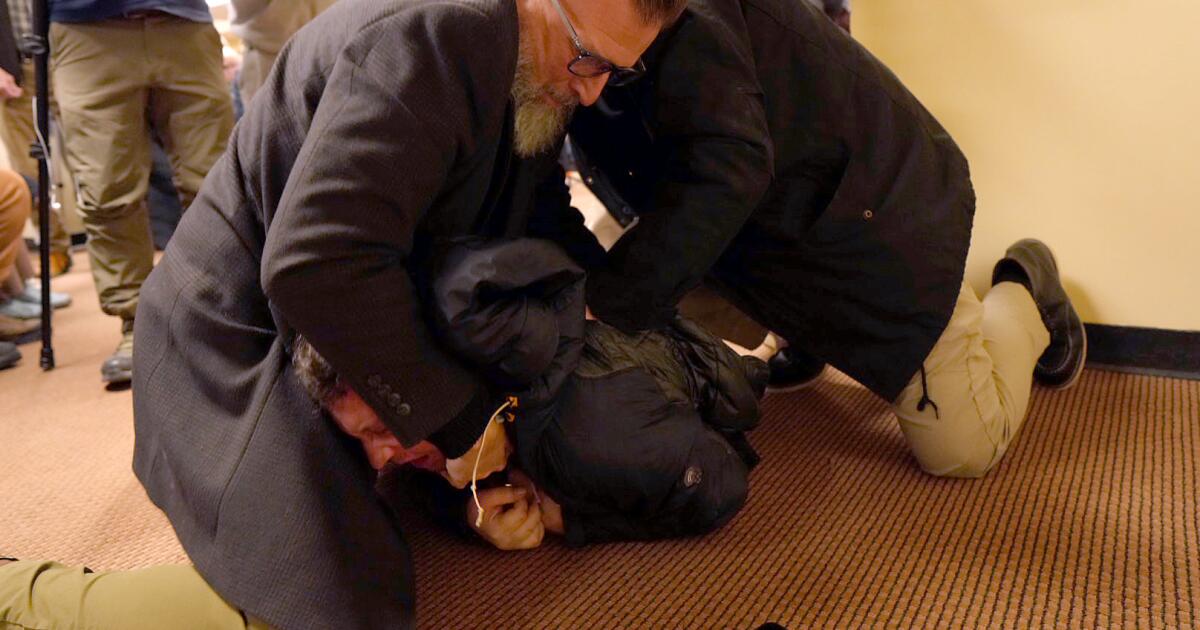
Kazmierczak, who was in the audience during Omar’s January town hall, leaped up when the representative called for the ouster of then-Homeland Security Secretary Kristi Noem. He sprayed liquid from a syringe as court documents say he shouted that Noem would not resign and that Omar was “splitting Minnesota apart.”
Security officers tackled Kazmierczak, who told them the liquid was vinegar.
“I didn’t want anybody to think she was in danger,” he said Thursday.
Omar, who was not injured, continued with the town hall after the arrest.
Authorities later determined he’d sprayed her with a mixture of water and apple cider vinegar. He was charged with assaulting a U.S. officer.
Court documents say Kazmierczak, a critic of Omar who has made online posts supportive of President Trump, told a close associate several years ago that “somebody should kill” her.
Omar, a refugee from Somalia, has long been a target of Trump’s anti-immigrant rhetoric. After she was elected seven years ago, Trump said she should “go back” to her home country. He has described her as “garbage” and said she should be investigated.
Trump has also accused Omar of staging the attack, telling ABC News, “She probably had herself sprayed, knowing her.”
On Thursday, Kazmierczak told Ericksen that he was being treated for Parkinson’s disease, and that he’d been diagnosed with ADHD, or attention-deficit/hyperactivity disorder, and a form of post-traumatic stress.
After his arrest, his then-attorney said that he did not have access to the medications he needed for Parkinson’s and other serious conditions.
Minnesota court records show that Kazmierczak, who was convicted of felony auto theft in 1989, has been arrested multiple times for driving under the influence and has had numerous traffic citations. There are also indications he has had significant financial problems, including two bankruptcy filings.
In social media posts, Kazmierczak had criticized former President Biden and referred to Democrats as “angry and liars.” Trump wants the U.S. to be “stronger and more prosperous,” he wrote.
Threats against members of Congress have increased in recent years, peaking in 2021 following the Jan. 6 attack on the U.S. Capitol by a mob of Trump supporters before dipping slightly, only to climb again, according to the most recent figures from the U.S. Capitol Police.
Sullivan writes for the Associated Press.

Prep talk: Talented eighth-grade basketball player Bryce Bible is headed to St. John Bosco
St. John Bosco has lost 6-foot-8 McDonald’s All-American Christian Collins to graduation, but the Braves are getting another promising 6-8 player to replace him, incoming freshman Bryce Bible, who announced on Thursday he will enroll at the Bellflower campus.
Bible is the son of Bruce Bible, who works for Sierra Canyon’s football program. He also considered the Trailblazers and Long Beach Millikan.
Bryce is tall and lanky with the ability to score in many different ways.
This is a daily look at the positive happenings in high school sports. To submit any news, please email eric.sondheimer@latimes.com.
Dictator’s EU island with giraffes now open to the public with £35 UK flights
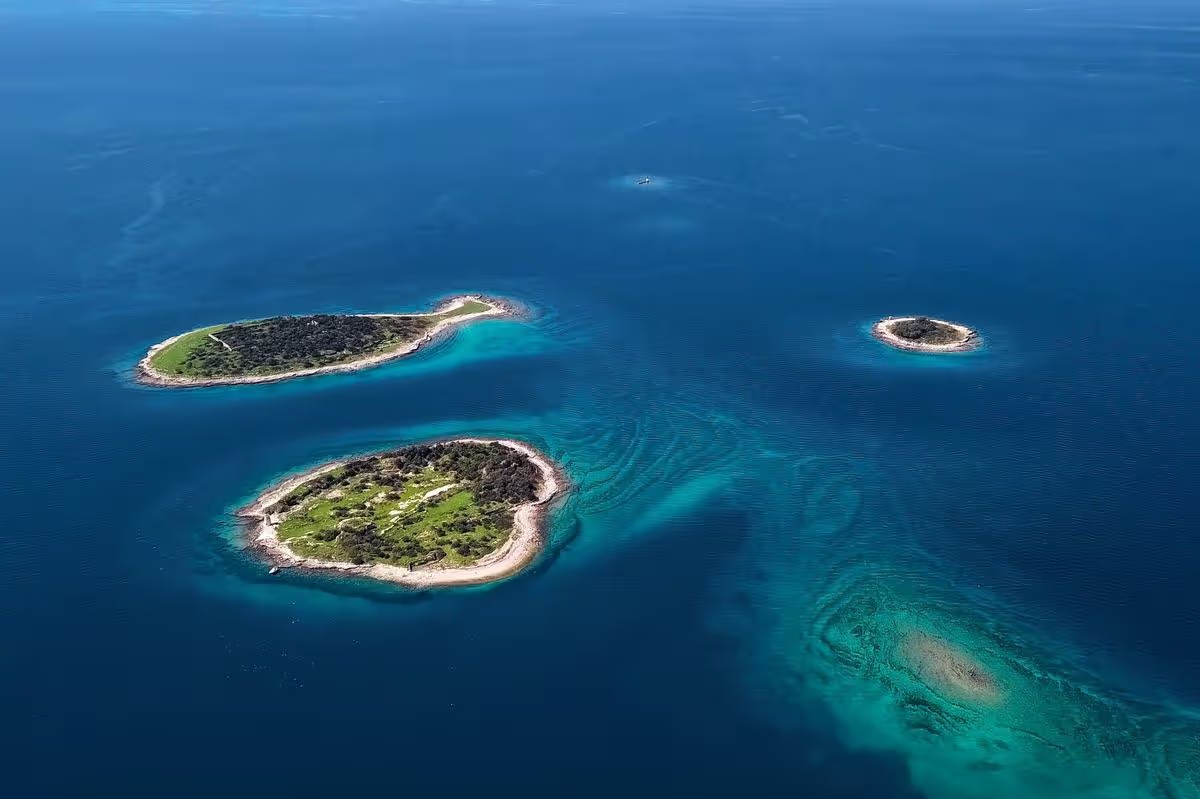
Brijuni National Park in Croatia is one of Europe’s most fascinating destinations – from real dinosaur footprints and an elephant gifted by Indira Gandhi to the vintage Cadillac that once carried Queen Elizabeth II

(Image: rusm via Getty Images)
Brijuni may be one of Croatia’s tiniest islands, but it boasts one of Europe’s most extraordinary travel tales.
Situated just off the coastline near Pula, it is home to Brijuni National Park, where visitors can discover genuine dinosaur footprints, an elephant presented as a gift by Indira Gandhi, a car in which Queen Elizabeth toured the island, and the former private hideaway of Yugoslav leader Josip Broz Tito.
For many years, the island was shut off from the public on the orders of the dictator, who resided there alongside a remarkable collection of exotic animals, bestowed upon him by world leaders.
With Tito long since gone, the island now welcomes tourists. And getting there couldn’t be simpler, with direct flights from London to Pula available from May, with prices beginning at around £35–£40.
Local guide and villa rental company Villsy founder Toni Hrelja explained: “Brijuni may look like a classic Mediterranean paradise, but its history is anything but typical,” says Toni Hrelja, local guide and founder of Villsy, a villa rental company.
READ MORE: Little-known Greek island is ‘world’s most relaxing destination’ with pristine beaches and 25C in JuneREAD MORE: UK government issues plea to Brits who have holidays booked amidst jet fuel crisis
“Thanks to its time as a private residence for former Yugoslav leader Tito, the islands became home to exotic animals gifted by political leaders; and today, you can still see them, or their descendants, grazing freely. It’s a bizarre, fascinating slice of history you simply wouldn’t expect in Croatia.
“Spring is one of the best times to visit, everything is green, temperatures are mild, and you avoid the peak summer crowds. You get the full experience without the heat.” Brijuni National Park comprises 14 islands, with the largest, Veliki (Big) Brijun, home to the main attractions. Despite its name, it’s fairly compact (5.6 km2), making it ideal to explore in a single day.
More than 30 animals inhabit the island, including Lanka, a 54 year old elephant. She arrived in 1972 as a gift from former Indian Prime Minister Indira Gandhi and is renowned for her calm nature and engagement with visitors.
The zebras represent another legacy of the Non-Aligned Movement, a herd presented in the 1960s by an African leader.
One of Tito’s most cherished pets still resides on the island: Koki, an African grey parrot with a notoriously mischievous personality. Famous for “talking” to tourists, he’s equally likely to catch visitors off guard with the odd insult. He is also known for shouting “Tito! Tito! Tito”.
Alongside these star animals, the safari also features ostriches, llamas, Somali sheep and Indian cattle (zebu).
The animals serve as the walking and (talking) legacy of Tito, but there’s one mechanical memento of the dictator’s era.
If you’re prepared to spend a bit extra, you can hire a ride in a vintage Cadillac Eldorado, presented to Josip Broz Tito by Croatian emigrants in Canada. The 1953 convertible remains in immaculate condition and continues to be one of the park’s most sought-after attractions. “Tito used it to drive around the island, but what makes it special is who sat in it. Leaders like Indira Gandhi and Queen Elizabeth II were among its passengers,” Toni added.
“Once you’ve explored the safari, it’s time to discover the island’s other highlights. I recommend taking the tourist train (especially if you’re with kids), hiring a bicycle or a small electric golf cart. One of my favourite spots is the pine tree avenue.”
These pine trees are more than 100 years old and soar to heights of up to 25 metres, forming a striking landscape.
Brijuni boasted a fascinating history long before it became a political haven for Non-Aligned Movement leaders. During the 5th and 6th centuries, the islands served as a crucial strategic outpost for the Byzantine Empire.
“The Byzantine remains are another fantastic spot for photography and offer a glimpse into the island’s layered history. The ruins look like a giant stone puzzle,” Toni said.
Gandhi’s elephant isn’t the largest creature to have roamed Brijuni. The islands contain over 200 genuine dinosaur footprints, dating back approximately 130 million years to the Early Cretaceous period.
Croatia is a short-haul destination, roughly a 2.5-hour flight from the UK. From May onwards, reaching Brijuni is straightforward, with direct flights from London to Pula available from around £35 with easyJet, Jet2 and Ryanair.
Direct flights also operate from Birmingham and Bristol. Pula Airport sits 13 kilometres from Fažana, the port where travellers can board a boat to the national park.
The most convenient way to purchase tickets for Brijuni National Park is online. Guided tours generally cost approximately £30–£35 for adults and roughly £13 for children, depending on the season, with marginally reduced prices in spring.
Lodging is available on the island, spanning from hotel rooms to luxury villas, although many tourists opt to base themselves on the mainland and rent a villa in Istria, treating Brijuni as a day trip.

Ryanair announces major flight schedule update ‘until March 2027’
The UK budget airline has announced that no changes will be made to its summer schedule as jet fuel prices hike due to hedging fuel contracts before the outbreak of war

Ryanair has announced that they will not be making any flight changes until March 2027(Image: GordZam via Getty Images)
Ryanair has announced that they will not be making any flight changes until March 2027 due to fuel costs.
The budget airline said that its summer schedule will not change because it had hedged its fuel contracts before the Iran war broke out.
The announcement comes after airlines have been given the go ahead to run less flights this holiday season, with several having already made cancellations.
It has been confirmed by the EU transport commissioner that airlines that cancel flights due to fuel shortages will have to compensate passengers under European law, however this could differ in the UK.
Since the outbreak of war on February 28, the cost of fuel has spiked and the closure of the strait of Hormuz has blocked off the shipping passage from the Middle East.
However, Ryanair have confirmed that they have fuel supplies until March 2027 and will not be cutting down flights over the coming months.
A spokesperson for the airline said: “As Ryanair has hedged 80% of our jet fuel to March 2027 at $67 per barrel – less than half current spot prices – we do not plan any cuts to our schedule this summer.”
Elsewhere, plans are being made to put together realistic flight schedules so passengers don’t face last minute disruption.
A UK government spokesperson said: “UK airlines are clear that they are not currently seeing a shortage of jet fuel. Aviation fuel is typically bought in advance and airports and suppliers keep stocks of bunkered fuel to support their resilience.
“We continue to work with fuel suppliers, airports, airlines and international counterparts to keep flights operating. We are also consulting on measures to help airlines plan realistic flight schedules which will avoid last-minute disruption and protect holidays.”
Last week, it emerged that penalties for airlines that cancel UK flights because of jet fuel issues have been eased.

Friday 8 May Anniversary of the election of Pope Leo XIV in Vatican City
Pope Leo XIV is the 267th Pope and replaced Pope Francis, who had been Pope since 2013 until he died in 2025.
He is the first American to fill the role of Pope, although he is considered as much a cardinal from Latin America because of the many years he spent as a missionary in Peru, before becoming a bishop there.
Born in Chicago in 1955 to parents of Spanish and Franco-Italian descent, Prevost served as an altar boy and was ordained as a priest in 1982. Although he moved to Peru three years later, he returned regularly to the US to serve as a pastor and a prior in his home city.
He has Peruvian nationality and is fondly remembered as a figure who worked with marginalised communities and helped build bridges.
He spent 10 years as a local parish pastor and as a teacher at a seminary in Trujillo in northwestern Peru.

Trump’s FEMA review council recommends widespread changes

May 7 (UPI) — A group appointed by President Donald Trump made its final recommendations Thursday on changes to the Federal Emergency Management Agency, suggesting moves that would put more responsibility back on states and other authorities.
The changes also include reviews of agency staffing and privatizing flood insurance, The Hill reported.
“We need to refocus FEMA to get it back on what its mission originally was,” Homeland Security Secretary Markwayne Mullin said. FEMA is part of Homeland Security.
Panel members said FEMA has become too involved in politics, specifically mentioning state assistance during the coronavirus epidemic, The New York Times reported. Recommendations included changes in how FEMA helps state and local governments with financial recovery.
“Disaster response is complicated and increasingly expensive,” the final report said. “With taxpayers bearing the burden of funding emergency management in the United States, it is the responsibility of every American to embrace their individual responsibility to lessen this burden by being prepared for disasters. … As our nation returns ownership of emergency management back to local communities and their states, tribes and territories, we encourage every American to review their insurance policies and personal disaster plans as well as engaging with their local community leaders to be better prepared when disaster strikes.”
Trump has said that FEMA’s work is too expensive and that state governors should be able to manage more on their own, the Times reported. He has also suggested in the past that the agency should “go away” entirely.
The changes recommended by the report would require congressional approval. They include tweaks meant to make the reimbursement process, once approved, quicker and more direct, and changes meaning the FEMA plays less of a role in helping disaster survivors find housing.
“These recommendations are all about accelerating federal dollars, streamlining the process, making it less bureaucratic, so that Americans can get the help they need on the worst day of their lives,” said former Virginia Gov. Glenn Youngkin, a member of the council. “And this is not a moment for bureaucracy, it is a moment for action, it is a moment for clarity.”
The Environmental Defense Fund said in a statement that Americans are facing increasingly severe weather and the council’s recommendations “don’t meet this reality.”
“The proposed changes would leave communities without the necessary funding, information and access to insurance to stay prepared and safe when disasters strike,” said Will McDow, the fund’s associate vice president for coasts and watersheds.
The group said the proposed changes would “shift enormous burdens onto states and communities and reduce government efficiency.”

Two Islamic-State linked Australian women charged with crimes against humanity
A third woman who also returned to Australia from Syria was charged with joining a terrorist organisation.
Source link

Netflix shares thrilling update on Ricky Gervais series perfect for After Life fans
Fans missing Netflix’s hit comedy-drama series After Life should definitely mark their calendars for Ricky Gervais’ next project

Netflix shares thrilling update on Ricky Gervais’ next series(Image: NETFLIX)
The popular Netflix dramedy concluded four years ago.
Netflix has shared an exciting new look at Ricky Gervais’ next series and it looks like a must-watch for After Life fans.
It’s the star’s first series for the streamer since the hit dramedy wrapped up in 2022, concluding the tragically funny story of bereaved journalist Tony Johnson.
This time, Ricky is returning to the world of animation for an original animated series that will definitely have fans of The Ricky Gervais Show with Stephen Merchant and Karl Pilkington feeling nostalgic.
Alley Cats is created and directed by the Office star, who also takes on the leading role as a member of a gang of stray cats.
Netflix teases “the series follows the trials and tribulations of a group of feral British cats who seek companionship while ruminating about the struggles of everyday life”.
“From the funny to the absurd, the series is packed with Gervais’ signature style of heart and social commentary that audiences have come to expect,” the streamer’s synopsis adds.
It also boasts exceptional 2D animation by award-winning British animation studio, Blink Industries (Dead End: Paranormal Park, Don’t Hug Me I’m Scared).
This week, Netflix confirmed the release date for the new series as Friday, 7th August, with all six episodes of the first season dropping at once.
Co-starring with Ricky is a stellar line-up of British talent, including some frequent collaborators who have worked with him on After Life and other projects.
Tom Basden (The Ballad of Wallis Island), Andrew Brooke (PhoneShop), David Earl (Derek), Kerry Godliman (Trigger Point), Jo Hartley (Adolescence), and Diane Morgan (Motherland) complete the main cast. All of them have also previously appeared in After Life.
Natalie Cassidy (EastEnders) and Tony Way (After Life, Mandy) will also be taking on featured roles.
The new image features fans’ first look at the cast of cats, nestled together next to some wheelie bins as they look out over a city skyline.
Watch Unchosen on Sky for free
This article contains affiliate links, we will receive a commission on any sales we generate from it. Learn more
Sky is giving away a free Netflix subscription with its new Sky Stream TV bundles, including the £15 Essential TV plan.
This lets members watch live and on-demand TV content without a satellite dish or aerial and includes hit shows.
This includes the brand new UK drama Unchosen, starring Asa Butterfield and Christopher Eccleston.
Netflix’s announcement has already sparked excitement amongst fans, who can’t wait for the After Life cast to return to Netflix for more laughs.
One X user said: “I’m laughing at this already after reading the cast.. This is going to be fun.”
“If it’s created by Ricky Gervais, I’ll give it a shot,” someone else replied. And another fan predicted: “Ricky Gervais doing adult animation? That cast is ridiculously stacked. Alley Cats might be the sleeper hit of August.”
Alley Cats premieres Friday, 7th August on Netflix.
Trump’s latest 10% tariffs found unlawful by U.S. trade court
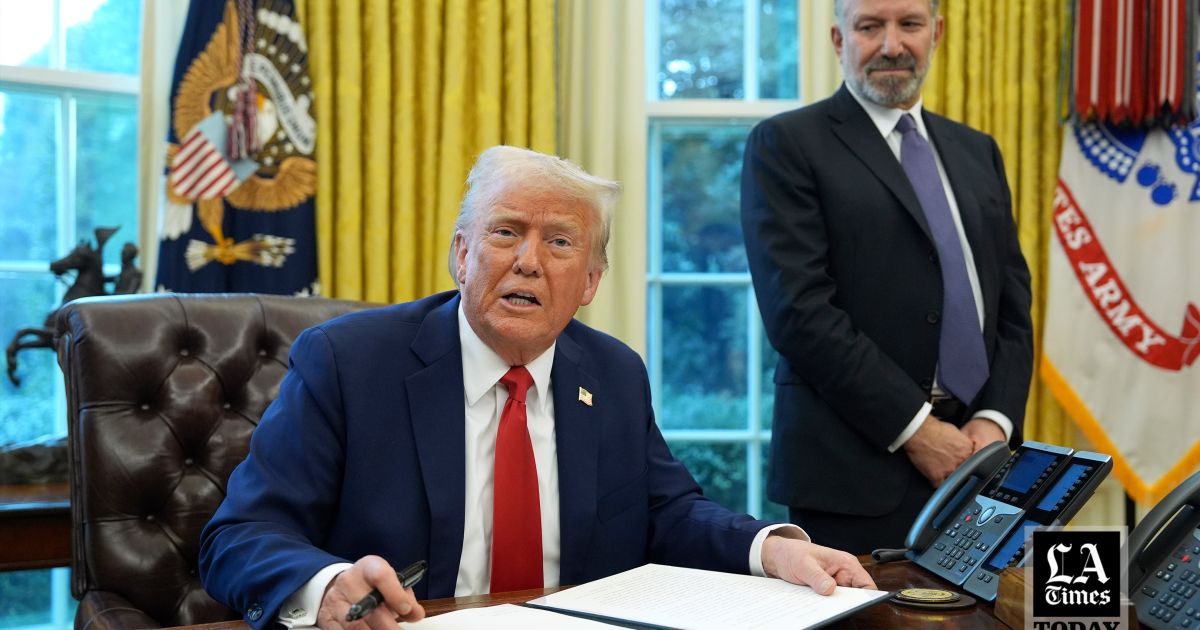
NEW YORK — President Trump’s 10% global tariffs were declared unlawful by a federal trade court in a fresh blow to the administration’s economic agenda, several months after the U.S. Supreme Court vacated earlier levies he’d imposed.
A divided three-judge panel at the U.S. Court of International Trade in Manhattan on Thursday granted a request by a group of small businesses and two dozen mostly Democrat-led states to vacate the tariffs. Trump imposed the 10% duties in February under Section 122 of the Trade Act of 1974, which had never previously been invoked.
The court for now only immediately blocked the administration from enforcing the tariffs against the two companies that sued and Washington state, making clear that it was not issuing a so-called universal injunction. The panel found that the other states that sued lacked standing because they aren’t direct importers, instead arguing that they were harmed by having to pay higher prices for goods when businesses passed on tariff costs.
It wasn’t immediately clear what the ruling would mean for now for other importers that had been paying the contested levies.
The majority of the panel rejected the administration’s stance that “balance-of-payments deficits” — a key criterion for imposing the Section 122 tariffs — was “a malleable phrase.” They concluded that Trump’s proclamation imposing the levies failed to identify that such deficits existed within the meaning of the 1974 law, instead using “trade and current account deficits to stand in the place.”
The decision is the latest setback for the president’s effort to levy tariffs without input from Congress. Earlier duties — overturned by the Supreme Court on Feb. 20 — were issued under a different law, the International Emergency Economic Powers Act, or IEEPA. In that case, the justices ruled Trump had exceeded his authority, kicking off a legal scramble by importers for almost $170 billion in refunds.
The U.S. Justice Department could challenge the trade court’s latest ruling by taking the case to the U.S. Court of Appeals for the Federal Circuit, which ruled against the Trump administration during the last tariff fight.
Section 122 allows presidents to impose duties in situations where the U.S. faces what the law defines as “fundamental international payments problems.” Even before Trump issued the tariffs, economists and policy experts debated whether the president would be able to build a solid legal framework using the statute.
In a proclamation declaring the use of Section 122, Trump said that tariffs were justified because the U.S. runs a “large and serious” trade deficit. He also pointed to the negative net flows of income from investments Americans have overseas and other things that showed the U.S. balance-of-payments relationship with the rest of the world was deteriorating.
Under the law, presidents have the ability to impose tariffs on goods imported into the U.S. on a short-term basis to address concerns about how money is flowing in and out of the country. Those concerns include “large and serious United States balance-of-payments deficits” and an “imminent and significant depreciation of the dollar.”
Unlike other legal options Trump might pursue to impose tariffs, Section 122 can be invoked without waiting for a federal agency to conduct an investigation to determine whether the levies are justifiable. But they can still be challenged in court.
The small businesses and states that sued argued that Section 122 became outdated when the U.S. ditched the gold standard decades ago. They say Trump improperly conflated “balance-of-payments deficits” with U.S. trade deficits in order to justify using the law.
They also allege that Trump’s order announcing the Section 122 tariffs was “riddled with omissions and mischaracterizations” around the meaning of a balance-of-payments deficit. The trade deficit cited by Trump is just one part of calculating the country’s balance of payments position, the states say.
Under Section 122, the president can order import duties of as much as 15%. The executive action can last 150 days, at which point Congress would have to extend it. Trump has said he would aim to increase the rate to 15% from 10%.
The states argue that Trump’s new tariffs violate other requirements in Section 122, including that such duties not be discriminatory in their application. The states argue that Trump’s new tariffs improperly exempt some goods from Canada, Mexico, Costa Rica, the Dominican Republic, El Salvador, Guatemala, Honduras and Nicaragua.
According to the complaint, the Trump administration conceded during the previous litigation over his IEEPA tariffs that trade deficits “are conceptually distinct from balance-of-payments deficits.”
The clash over Section 122 emerged just as the legal fight over refunds from Trump’s IEEPA tariffs began to heat up. A different judge in the Court of International Trade, U.S. Judge Richard Eaton, is overseeing the massive refund effort and ordered Customs and Border Protection to give him regular updates on a largely automated process the government will use to issue most refunds.
Larson and Tillman write for Bloomberg.

Kyle Loftis death: Street racing media pioneer dies at 43
Kyle Loftis, who started filming street racing with a point-and-shoot camera and went on to become a pioneer in car culture media, has died, his company confirmed Wednesday. He was 43.
“We are extremely saddened to share that Kyle Loftis, the founder of 1320video, passed away last night,” the company wrote in a statement posted on social media. “We are in a state of shock.”
No cause of death has been disclosed.
The Sarpy County Sheriff’s Office and Gretna Fire Department in Nebraska responded to Loftis’ home Tuesday night, a spokesperson for the sheriff’s office said in a statement emailed to The Times.
“Loftis was declared deceased; his death is not suspicious,” the spokesperson wrote. “Out of respect for privacy, we will not be releasing further details.”
According to his LinkedIn page, Loftis attended the University of Nebraska at Omaha from 2000-2005 and earned a bachelor’s degree in management of information systems.
It was there, Loftis said in a 2023 video on his company’s YouTube channel, that his interests in car stereos and photography evolved into a passion for street racing — in particular, capturing races in still photos and on video and making that media available to fans.
“I’m a hardcore ‘car nut’ that’s taken his love for cars and turned it into the most amazing ‘job’ of my life,” Loftis wrote on LinkedIn. “Through my business, 1320Video, I’m able to experience the craziest & best automotive events (fitting my tastes) and share them with millions of people around the world!”
Back in the early days, Loftis posted his work on message boards and sold it on DVDs. For nearly 10 years after college, he worked for PayPal while building his motorsports media business on his own time. He dedicated himself to 1320Video full time starting in January 2015.
Currently, 1320Video has nearly 4 million subscribers on YouTube, more than 6 million followers on Facebook and nearly 3 million followers on Instagram.
“Kyle’s passion for motorsports inspired millions of people around the world and we will never forget what he has done to grow our beloved sport,” 1320Video wrote. “Kyle was a beam of light at every gathering… his enthusiasm, kindness, and creativeness was contagious.
“Let us pray that Kyle is in a better place.”
Garrett Mitchell — the YouTuber and stock car racer known as Cleetus McFarland — posted a tribute to his longtime friend on Facebook.
“Completely shocked about the loss of Kyle,” Mitchell wrote. “The most influential person on my life. We’re crushed. Please pray for his Mother and close friends, they need it most.”