


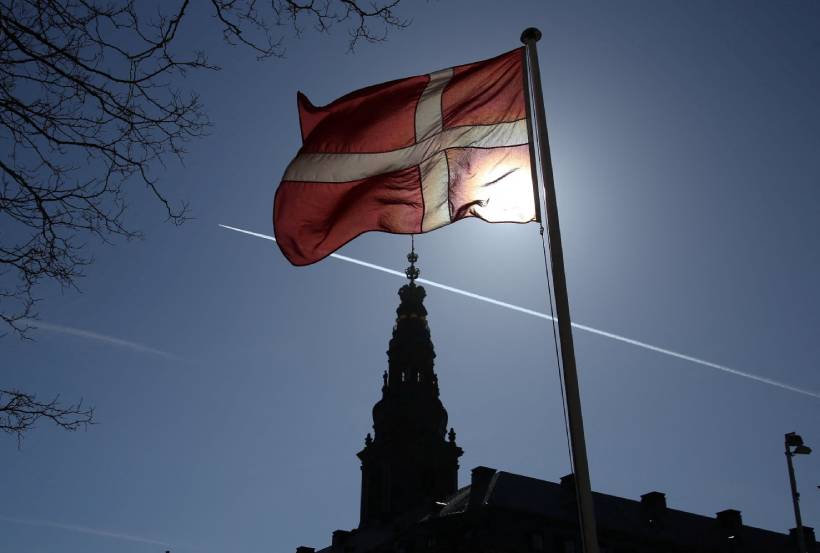
Could a New US Greenland Deal End the Arctic Standoff?
The United States, Denmark and Greenland are preparing to sign an agreement that could reshape the American military presence in the Arctic and ease a diplomatic dispute that has strained relations within NATO.
US President Donald Trump is due to meet Danish Prime Minister Mette Frederiksen and Greenland Prime Minister Jens Frederik Nielsen in New York on Tuesday for a trilateral signing ceremony. The agreement is expected to allow Washington to expand its military infrastructure on Greenland, a strategically located and mineral rich territory of the Kingdom of Denmark.
The deal follows months of tension after Trump refused to rule out using military or economic pressure to bring Greenland under US control. The comments triggered a diplomatic crisis with Denmark and raised concerns about divisions within NATO.
The US military presence is set to expand
The agreement is expected to give the United States access to two additional military sites in Greenland, alongside the existing Pituffik Space Base.
Stay ahead of the geopolitical week.
MD Briefing delivers expert analysis across five global fronts — the Indo-Pacific, energy, geoeconomics, European security, and the Middle East — every Monday morning. Free.
One of the proposed locations is Narsarsuaq, a former Cold War airbase where only a small population remains. The other is Mestersvig, which is currently used by the Sirius Dog Sled Patrol, an elite Danish special forces unit.
The expansion would significantly increase the US military footprint on the island and mark the first major expansion of American military infrastructure there since the Cold War.
During that period, the United States operated 17 installations in Greenland and had more than 10,000 personnel on the island.
Greenland’s location between North America and the Arctic gives it considerable strategic importance. Its geography also places it close to major Arctic routes and areas of growing competition involving Russia, the United States and other NATO members.
NATO could play a larger role
Danish Foreign Minister Lars Lokke Rasmussen has said the agreement would place Arctic security more firmly within NATO’s collective framework rather than leaving responsibility primarily to Washington and Copenhagen.
That could be significant because the Greenland dispute exposed tensions within the alliance at a time when NATO members are already facing growing security concerns in the Arctic.
The Arctic has become increasingly important to NATO because of its geography, military access and emerging economic opportunities. Greater US military activity in Greenland could therefore become part of a wider alliance approach to Arctic security.
However, the precise role NATO would play remains unclear because the full text of the agreement has not yet been published.
What happens to Greenland’s sovereignty?
The agreement also leaves questions about the balance between US security interests, Danish sovereignty and Greenland’s aspirations for greater autonomy.
Greenland is a self governing territory within the Kingdom of Denmark. Its government has repeatedly maintained that decisions about Greenland’s future must involve Greenlanders themselves.
Trump said on Friday that the agreement would give the United States “permanent control over security, and all other needs, in Greenland.”
Denmark has not endorsed that description. Copenhagen has instead said that the agreement respects the kingdom’s sovereignty and Greenland’s right to self determination.
It remains unclear whether the agreement will modify the 1951 US Denmark defence treaty, which has provided the legal basis for America’s military presence on the island, or establish a separate framework.
From acquisition ambitions to military access
The agreement represents a significant shift from Trump’s earlier push to acquire Greenland outright.
Greenland is roughly three times the size of Texas but has a population of only about 57,000 people, concentrated in small communities along its coastline. The island is also rich in natural resources, adding an economic dimension to its strategic importance.
Trump’s earlier comments about potentially using economic or military pressure to obtain Greenland created an unusual dispute between the United States and Denmark, both members of NATO.
The new agreement appears to offer a different approach: rather than changing Greenland’s sovereignty, Washington would gain a substantially larger military presence on the island.
Why does Greenland matter to the US?
Greenland’s strategic location makes it important to North American and Arctic defence. It sits between the United States, Europe and the Arctic and can provide access for monitoring activity across the region.
For Washington, expanding military infrastructure could strengthen its ability to monitor Arctic air and maritime activity and support wider North American defence.
For Denmark and Greenland, however, the issue involves more than military strategy. Any expansion of US activity has to operate within Denmark’s sovereignty over the territory and Greenland’s right to determine its political future.
The agreement therefore seeks to address two competing pressures at once: the United States’ desire for greater Arctic security access and Denmark and Greenland’s insistence that such cooperation must not amount to a transfer of sovereignty.
If signed as expected, the deal could mark a new phase in the Arctic relationship between the three governments. It would not resolve every disagreement over Greenland’s future, but it could replace the earlier confrontation over US acquisition with a more structured framework for American military access and NATO security cooperation.
With information from Reuters.

Zara Larsson looks out of this world in an electric purple bikini for extraterrestrial-themed beach photoshoot

POP star Zara Larsson has made waves rocking a purple bikini on Instagram in a striking, nighttime photoshoot.
The Swedish singer, 28, can be seen posing on a beach, bathed in dark lighting with dramatic flash photography and an E.T vibe.
The blonde bombshell can be seen wearing a tiny metallic purple string bikini paired with her long blonde hair down with decorative glowing star stickers scattered across her skin.
The visual highlights several dynamic poses, including standing centered within a mesmerising circular swirl pattern carved into the sand, crouching low to the ground and striking side-profile silhouettes.
Injecting a touch of humour into the artistic drop, the post also features a playful product shot of a water bottle sitting upright in the middle of the sand ripples.
The post quickly drew hundreds of thousands of likes and a flood of enthusiastic comments from fans praising her look.
Fans commented: “God is a woman.”
A second playfully wrote: “She can just do that with the sand btw.”
A third added: “BODY WAS SCULPTED FROM THE GODS.”
Zara recently addressed the White House social media team’s use of her song Midnight Sun in a TikTok video featuring Immigration and Customs Enforcement (ICE) operations captioned ‘Never ending deportations’.
Most read in Entertainment
In a response shared on TikTok, Larsson expressed her sadness and heavy heart regarding the situation.
She shared a message directed at the creators of the video and wrote: “I wish I could talk to you, and I wish I could help you remember that you and I, we aren’t that different at all.
“And we’re not that different from the people in the video, either.
“The biggest difference between us is that we were dealt a different hand in life.”
The singer continued: “I consider myself so lucky with the life that I’ve been dealt.
“The fact that I’m born in Sweden, I’ve had an education and I’ve had all these opportunities just sort of laid out in front of me.
“I can travel and get to do all these amazing things. That’s luck.
“There are people out there who are not that lucky, and they want to have a better life for their families or for themselves and their children.
“I just don’t understand how it could be the worst thing in the world to be an undocumented immigrant.”
Larsson continued: “This video is so dehumanizing. These people in the video are real people.
“It’s so crazy how everything is so meme-ified, especially ‘Midnight Sun,’ which is about feeling connected to nature, the universe and people, essentially.
“And this just creates this massive divide between people. I just don’t get it. It’s so f***ing uncool… You guys are such f***ing losers, like it’s crazy.”
New Trump policy may strip unaccompanied migrant children of protected status
Under a policy set to take effect Sunday, the U.S. government could strip young immigrants of their status as unaccompanied minors, causing them to lose special protections when they apply for asylum and making them more likely to be deported.
The plan is laid out in an internal memorandum sent May 31 by John Lafferty, chief of the asylum division at U.S. Citizenship and Immigration Services, and detailed in subsequent guidance, both obtained by The Times. The shift in policy involves when federal officials determine whether a young migrant is an unaccompanied minor.
According to the memos, an asylum officer with USCIS will have to assess whether the individual at the time of filing for asylum lacked lawful immigration status, was younger than 18 and had no parent or legal guardian in the United States available to provide care and physical custody.
Unaccompanied minors who are in federal custody are often released to sponsors in the United States such as a parent or close relative and could be living with them at the time they file their application — meaning that many may not be considered to be unaccompanied minors under this new policy. From October 2018 to May 2019, more than 46,000 minors were released to sponsors, according to the Department of Health and Human Services.
If the children are found no longer to be unaccompanied minors, they will not be entitled to certain special protections, including an asylum interview with a USCIS officer instead of having to make their case in an immigration court setting.
“USCIS continues to take actions to ensure that we carry out our duties in a manner that is fully in line with the letter of the law,” agency spokeswoman Jessica Collins said in a statement. “Ultimately, Congress must reform the law to address the underlying issues fueling the border crisis and encouraging unaccompanied minors to make the dangerous journey to the United States.”
In recent years, USCIS officers have considered an asylum applicant to be an unaccompanied minor if that was what Immigration and Customs Enforcement or Customs and Border Protection agents had determined when they first had contact with the migrant.
Under this new policy, which rescinds an Obama-era memorandum, USCIS officers will independently determine whether an individual was an unaccompanied minor when they filed their application.
USCIS is “basically relitigating whether or not a child at the time of filing was an unaccompanied minor or not,” said John Amaya, who served as the counselor to the director of USCIS from 2014 to 2015.
Judge Ashley Tabaddor, the president of the National Assn. of Immigration Judges, said that the new policy could potentially have “a profound effect on the children’s ability to seek asylum.”
“The asylum officer interview is a much less adversarial process that is thought to give the child a better and more comfortable setting,” she said.

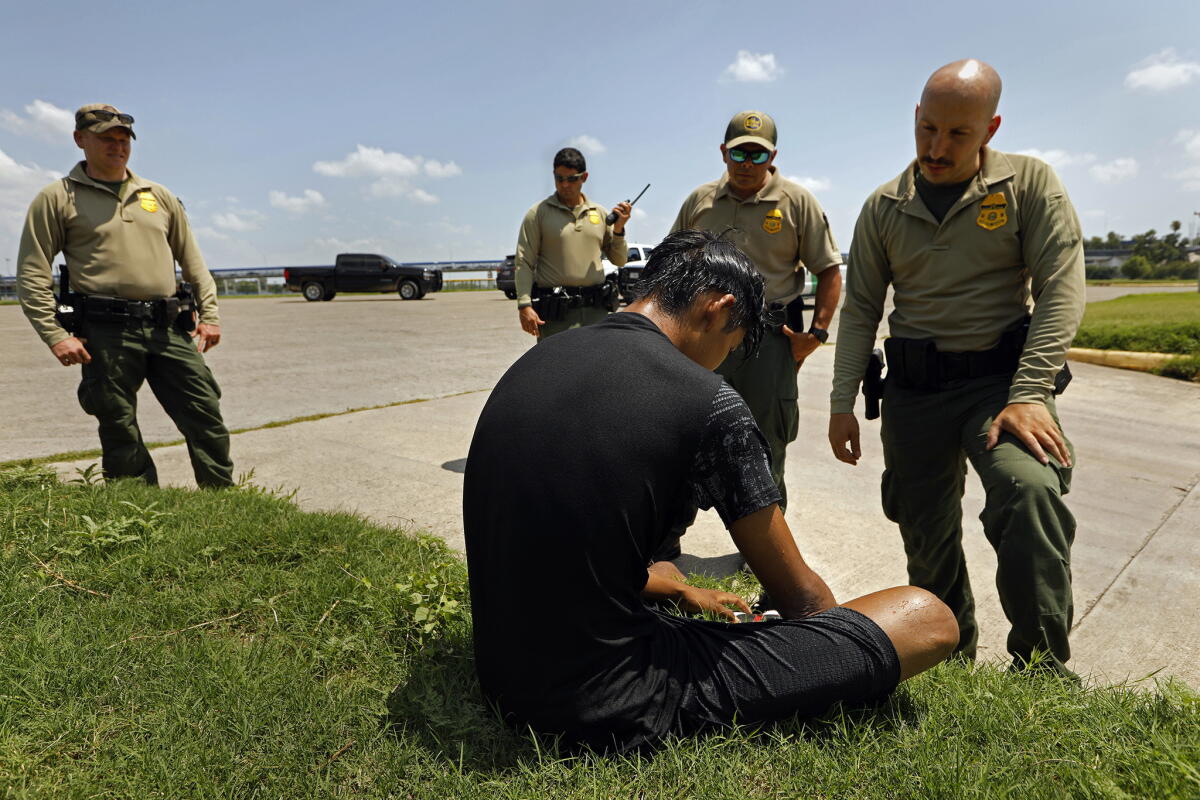
U.S. border patrol agents attend to a minor who had just swam across the Rio Grande River from Mexico to Del Rio, Texas.
(Carolyn Cole / Los Angeles Times)
Federal asylum officers have been rushing to process as many unaccompanied minor applications as possible before the change takes effect Sunday, USCIS personnel told The Times, speaking on condition of anonymity to protect against professional retaliation.
The change is the latest in the Trump administration’s efforts to make it more difficult for immigrants, including children, to seek asylum.
It comes during a week in which the acting head of CBP announced his resignation amid reports that his agency held some 300 children in unsanitary conditions in a remote Border Patrol station in Clint, Texas. A photograph showing the bodies of a father and his nearly 2-year-old daughter lying face down in the Rio Grande along the border also has gone viral in recent days.
Migrant deaths have continued along the border this year with the number crossing illegally surging to nearly 600,000, more than half of them families.
Federal asylum officers themselves have criticized Trump, saying his policies are putting people, including children, at risk.
On Wednesday, a union representing officers filed a brief in support of a lawsuit against a Trump policy forcing asylum seekers back to Mexico to await their court proceedings in the United States. The policy “abandons our tradition of providing a safe haven to the persecuted and violates our international and domestic legal obligations,” the brief states.
USCIS acting Director Ken Cuccinelli, an anti-immigration hard-liner who often casts doubt on asylum seekers as engaging in fraud, slammed his own employees, saying the brief was “an attempt by the union to score short-term political points.”
Michael Knowles, president of the union, told The Times his members were “taking the risk” because “we’re being asked to do things that are wrong, as a matter of conscience, and our training as federal employees.”
The policy taking effect Sunday reverts to procedures implemented under the 2008 Trafficking Victims Protection Reauthorization Act. At that time, asylum officers made “independent factual inquiries” to determine whether individuals filing applications met the criteria to be designated as unaccompanied minors and were thus under the jurisdiction of USCIS.
Ur Jaddou, a chief counsel to USCIS under President Obama, said that new procedures in 2013 allowing USCIS to adopt prior determinations made by ICE and CBP were implemented because “it was a waste of time and confusing” for USCIS to make a decision on unaccompanied minor status after one was made by other DHS branches.
“This new memo goes backward,” Jaddou said.
Lafferty, who wrote the memo, presented the change as one in keeping with a October 2018 decision by the Justice Department’s Board of Immigration Appeals. The decision dealt with whether USCIS or an immigration judge has initial jurisdiction over the asylum application of an individual who was previously determined to be an unaccompanied minor but had turned 18 before filing their application. The board held that the immigration judge has jurisdiction to determine that the individual no longer qualified as a minor at the time of filing.
The new procedures may put legal clinics that work with these minors in a tough position. Patricia Ortiz, program director for the Esperanza Immigrant Rights Project, said some of their clients are released from federal custody very close to their 18th birthday, and attorneys may not have enough time to file their application before they become adults.
Unaccompanied minors are currently exempt from the standing one-year deadline to file asylum applications. Ortiz worries that if her clients are no longer considered to be unaccompanied minors, the fact they have not applied within one year would jeopardize their applications. She said some don’t apply within a year because they don’t have the support necessary to complete an application or may only be comfortable disclosing asylum facts after months of therapy.
Once they are no longer able to have their cases heard by asylum officers, she said, children could be kept in legal limbo with the rest of those whose cases are backlogged in immigration court. This wait could make it more difficult for them to give testimony that helps their cases.
“Children forget,” she said. “They forget details; they forget what happened.”
Miller reported from Los Angeles and O’Toole from Washington.
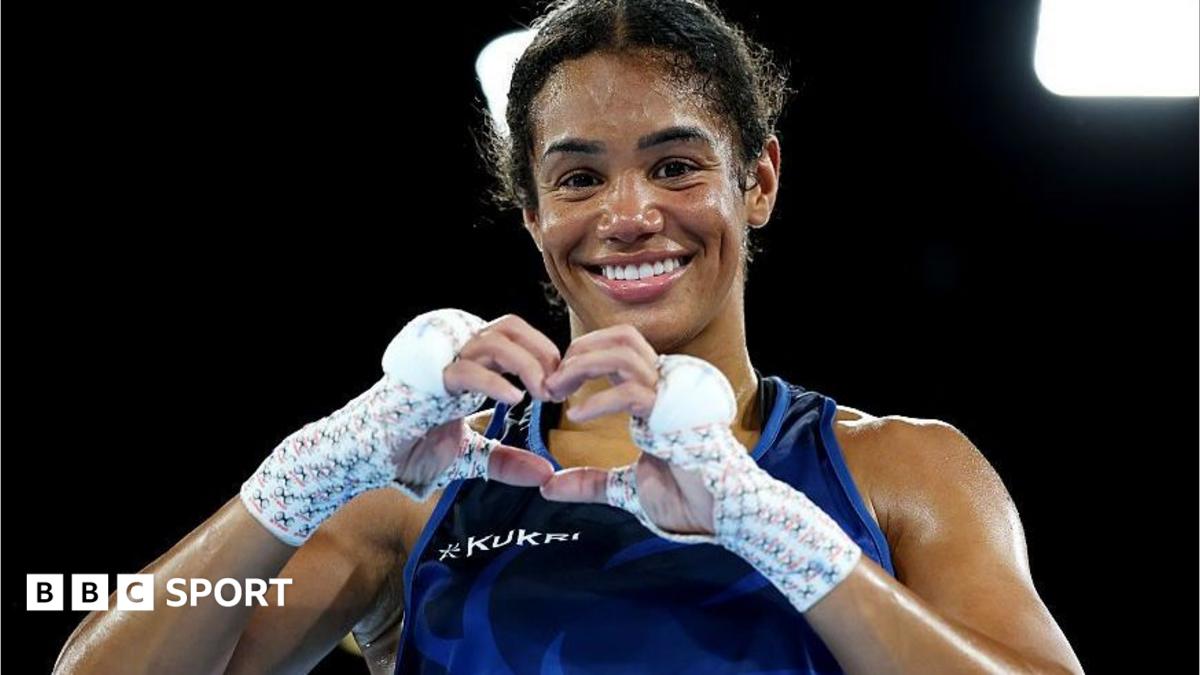
European Boxing Championships: Chantelle Reid, Damar Thomas & Abdul Burton guarantee medals after reaching semi-finals
Great Britain are guaranteed at least three medals at the European Boxing Championships in Bulgaria after Chantelle Reid, Damar Thomas and Abdul Burton reached the semi-finals.
Reid cruised to a 5-0 win over Ireland’s Evelyn Igharo in a women’s light-middleweight contest at the Asics Arena Sports Hall in Sofia.
The 28-year-old Commonwealth Games silver medallist will face Serbia’s Milena Matovic in the last four on Wednesday.
Thomas won by the same margin in a men’s super-heavyweight fight against Georgia’s Nikoloz Begadze and the 21-year-old will take on Mahammad Abdullayev of Azerbaijan in the semi-finals.
Burton, 20, beat home favourite and Olympic bronze medallist Javier Ibanez 3-2 to secure a meeting with Turkey’s Semih Gumus.
“Sometimes you have got to dig in and when things went against me I had to get stuck in and show who I was,” Burton said.
“I am young, hungry and here to take over.”
Lauren Mackie, Amy Broadhurst, Callum Makin and Oladimeji Shittu are all due in quarter-final action on Wednesday, but over half of Britain’s squad of 15 are now out.
On Tuesday, flyweight Ruby White was beaten 3-2 by Olympic silver medal winner Hatice Akbas of Turkey while Emily Asquith suffered a 5-0 defeat in her light-heavyweight bout with Ireland’s Lisa O’Rourke.
In the men’s heavyweight division, Commonwealth Games champion Isaac Okoh bowed out with a 3-0 defeat by Germany’s Kevin Lebowski.

Trump: US-Iran meeting at UN was ‘very good’ | Donald Trump News
US President Donald Trump says he had a ‘very good’ three-hour meeting with Iranian officials at the UN as the White House and Tehran explore a possible deal to end the monthslong conflict. Trump described the choice for Iran as “potential greatness” or “obliteration”.
Published On 22 Sep 2026

Can Britain Secure a Role in the EU’s Made in Europe Plan?
Britain is seeking a closer economic relationship with the European Union by asking to participate in the bloc’s “Made in Europe” industrial strategy, as Prime Minister Andy Burnham argues that the UK and EU face many of the same economic and industrial challenges.
Travelling to New York for his first United Nations General Assembly as prime minister, Burnham said Britain would seek to become a “trusted partner” in the initiative, which is intended to strengthen European production and reduce dependence on Chinese components.
“Europe’s argument is not with us,” Burnham told reporters on Monday. He said Britain and the EU faced similar pressures, particularly in industries such as steel, and argued that the UK should not face unintended consequences from a policy aimed at addressing dependence on China.
The British government has warned that excluding UK companies could disrupt established supply chains and create additional trade barriers between Britain and EU member states.
Stay ahead of the geopolitical week.
MD Briefing delivers expert analysis across five global fronts — the Indo-Pacific, energy, geoeconomics, European security, and the Middle East — every Monday morning. Free.
Why Britain wants access
The EU’s Made in Europe initiative is part of a broader effort to increase domestic industrial capacity and reduce reliance on overseas supply chains, particularly those involving China.
For Britain, exclusion could have consequences for sectors that remain closely integrated with European markets. The automotive industry, for example, relies on supply chains that cross the English Channel in both directions. Industry representatives have warned that excluding British manufacturers from European incentives and procurement opportunities could affect the competitiveness of both British and European companies.
British officials therefore want the EU to treat the UK as a partner in the initiative rather than as an external supplier.
Burnham has argued that British participation would reflect the practical connections that remain between the UK and European economies despite Brexit.
A wider attempt to rebuild UK EU ties
The dispute over Made in Europe is taking place as Burnham’s government seeks to deepen Britain’s relationship with the EU.
The UK government has already been pursuing closer cooperation with European countries in areas including defence, technology and manufacturing. Finance Minister John Healey recently urged EU counterparts not to exclude Britain from the bloc’s industrial strategy.
The government has also been seeking greater cooperation on European security. However, negotiations over British participation in the EU’s SAFE defence fund broke down, creating another obstacle to the government’s efforts to expand cooperation with Brussels.
Burnham has said he wants to move further and faster in rebuilding ties with the EU. His government has also been working toward a UK EU summit that was delayed following the change in prime minister.
The challenge inside Europe
Britain’s request for access is not simply a matter of negotiating with EU institutions. Member states also have different interests in how far the bloc’s industrial policies should extend to non member countries.
The proposed policy is intended to direct European economic activity toward European production and strengthen industrial resilience. Extending its benefits to British companies could therefore raise questions about what obligations Britain would have in return and how EU based businesses would compete with UK firms.
There are also broader questions about the meaning of the UK’s post Brexit relationship with the bloc. The British government is seeking closer economic and security cooperation without reversing the country’s decision to leave the EU.
That creates a difficult balance. London wants greater access to European programmes and markets, while Brussels must determine the conditions under which a non member state can participate in policies designed partly to strengthen the EU’s own industrial base.
What comes next?
Burnham’s immediate objective is to secure British participation in the Made in Europe framework while avoiding new barriers for industries whose supply chains remain closely connected to the continent.
The issue could become part of wider negotiations over the future of UK EU relations. Burnham has said his focus is on a renewed summit with European leaders, which he hopes can take place before the end of the year.
The outcome will indicate how far Britain and the EU can move toward closer economic cooperation without reopening the fundamental question of Britain’s membership.
For London, the argument is that Britain and Europe face shared challenges from global supply chain disruption and dependence on foreign production. For the EU, the question is how to strengthen European industrial capacity while determining the appropriate role for a neighbouring non member economy.
The debate over Made in Europe therefore reflects a broader post Brexit question: how closely can Britain integrate with European economic and security structures while remaining outside the bloc?
With information from Reuters.

Coronation Street ‘killer’ Lucy’s next victim ‘sealed’ as ‘truth about mum’s death airs’
Coronation Street’s Sally Metcalfe may need to watch out as Lucy Parkinson attacked her on the ITV soap, before Lucy made a sinister comment about her murdered mother Rachel

Did Lucy Parkinson have something to do with her mum Rachel’s death on Coronation Street?(Image: ITV)
Did Lucy Parkinson have something to do with her mum Rachel’s death on Coronation Street?
Fans fear it’s the case, and that her next victim may be lined up. Troubled teen Lucy has been lashing out ever since her mum Rachel’s death, and her father Richie’s imprisonment for the crime.
Tim Metcalfe’s cousin Richie had been charged, while he claimed it was self-defence, and that Rachel was abusive. Lucy backed this up and since then, private conversations have revealed Richie has asked Lucy to stick to his story.
Lucy’s been having nightmares though, with it clear she is struggling. With her making weird comments at times and displaying confusing behaviour, it was the latest comment, and her attacking Tim’s wife Sally Metcalfe, that has now rung alarm bells.
Sally had found a worrying drawing by Lucy, of a woman clutching her head. Sally asked if it was meant to be her mum and as Lucy grabbed it, it ripped and she blamed Sally.
Lucy started throwing things into her bag and was quite frantic, as Sally tried to calm her down. Suddenly, Lucy launched her phont at Sally, with it hitting her at speed, right in Sally’s face.
Sally was horrified, and the incident also left her with bruises. Lucy rushed off before being confronted by Tim, while he and Sally also discussed the situation.
With Sally and Tim taking Lucy in after Richie’s arrest, Sally is concerned Lucy needs more help than they can offer her. But perhaps Sally needs to watch out, as Lucy made a worrying admission to her dad Richie in a secret phone call.
As Tim slept on the sofa, a troubled Lucy told her dad how “it happened again”, before suggesting she had done something to her mum Rachel. Whether it was linked to Rachel’s death was not made clear, but Richie’s comments certainly teased the pair were hiding something.
Lucy said to him: “Dad, it’s happened again. I lost it this morning. I threw a phone at Sally. There’s something bad inside of me. What if I done to her what I done to mum.”
Richie replied: “It was your mum’s fault that happened, not yours. Just remember that. I’ll keep doing everything I can to protect you.” So what is Lucy talking about, and will Sally need to be careful?
Coronation Street airs weeknights at 8:30pm on ITV1 and ITV X. * Follow Mirror Celebs and TV on TikTok , Snapchat , Instagram , Twitter , Facebook , YouTube and Threads .

Testimony Leaves One Question: Who’s Lying? : Dilemma: Statements are so irreconcilable that nomination can survive only if Hill’s credibility doesn’t.
WASHINGTON — Supreme Court nominee Clarence Thomas and law professor Anita Faye Hill gave sworn testimony Friday so starkly irreconcilable that members of the Senate–and millions of other Americans–could not avoid a simple but devastatingly difficult question: Who is lying?
Thomas, eloquent in his injured defiance, “categorically denied” that he ever had asked Hill for a date or talked to her about sex. “I cannot imagine anything that I said or did to Anita Hill that could have been mistaken for sexual harassment,” he said.
An hour later, Hill delivered a prepared statement that was staggering in its specificity. Among other things, she said, Thomas “spoke about acts that he had seen in pornographic films involving such matters as women having sex with animals and films showing group sex or rape scenes.”
After such testimony, there seemed no way to finesse the allegations with a compromise. This could not be put down to differing interpretations of events or a regrettable misunderstanding. Thomas’ nomination could survive only if Hill’s seeming credibility did not.
As a result, members of the committee–almost all of them lawyers–quickly turned the hearing into the highly adversarial “trial” that they had vowed to avoid.
They bombarded Hill with the kinds of questions lawyers use to impeach, confuse and trip up witnesses in criminal trials. And, like the complaining witness in a rape trial, she became a defendant–called on to explain and justify her motives and her conduct in minute detail.
The Republicans, serving as the defense attorneys for Thomas, tried to shake Hill’s testimony by suggesting that she had “fantasies” about a more personal relationship with the fast-rising chairman of the Equal Employment Opportunity Commission.
They suggested that she had had such fantasies before, about at least one other associate.
Why did she wait so long to go public with her accusations? Sen. Arlen Specter (R-Pa.) asked. Why did she follow Thomas from the Department of Education to the EEOC? she was asked again and again in different ways?
Because she feared retaliation, Hill said in response to the first question. And because, as a special assistant to Thomas, she might not have been kept on by his successor at the Education Department, she replied to the second.
Did she not understand that, under civil service rules, she was protected? No, she said, and President Reagan at that time was trying to abolish the entire Education Department.
Why did she maintain a “cordial” relationship with Thomas after years of allegedly abusive treatment? Because she was afraid he would retaliate, she answered.
Back and forth, through the day and into the evening, the interrogation and the answers continued. The Democrats, apparently afraid of appearing partisan, only occasionally rose to Hill’s defense.
As an explosive face-to-face clash over who was telling the truth, the scene recalled the 1948 hearing in which Whittaker Chambers charged ex-State Department official Alger Hiss with being a closet communist.
But times have certainly changed. If a person’s communist sympathies were the most personal of secrets in the politics of the late 1940s, even sex was not entirely private in the politics of the 1990s.
Later Friday night, it was Thomas’ turn to answer questions, and he immediately went on the offensive, calling the hearing a “travesty” that “should never occur in America.” And he suggested that his attackers were motivated by racism. “From my standpoint as a black American, as far as I’m concerned, it is a high-tech lynching for uppity blacks,” he said.
Under solicitous questioning by Republican Orrin G. Hatch of Utah, Thomas repeated his unqualified denial of Hill’s allegations. And, although professing himself baffled as to her motives, he gently suggested that she may have been disgruntled at failing to win a promotion while on his staff, that she sometimes had temper tantrums and that an aide had once warned him she was his “enemy”–a suggestion that, he said, he had loyally dismissed out of hand.
Faced with such testimony, how could the senators, or the millions watching on television, decide who was telling the truth?
Congressional committees rarely face such directly contradictory testimony, but judges and jurors do in courtrooms every day. And criminal law experts say that jurors rely on three means of judging the truth: the demeanor of the witnesses, the detail of their testimony and their motivations for telling the truth.
Both Thomas and Hill spoke with the demeanor of truthful witnesses. Both described themselves as the real victims of the bitter controversy.
During his five days of testimony in mid-September, Thomas often seemed hesitant and uncertain as he discussed his legal views. But, in his opening statement Friday, he spoke with force and emotion as he angrily denied Hill’s allegations.
“I have been racking my brains and eating my insides out trying to think of what I could have said or done to Anita Hill to lead her to allege . . . that I talked with her about pornographic or X-rated films,” he declared.
Thomas noted that he had written his own statement without the help of political handlers or advisers and said that he was “shocked, surprised, hurt and enormously saddened” by Hill’s accusations. “I have not been the same person since. I am a victim of this process.”
Hill, a 35-year-old University of Oklahoma law professor, seemed to be nervous and reluctant as the hearing began. But, as she testified, her confidence seemed to grow. She spoke in the quiet but firm manner of a person forced to recount painful incidents in her past.
“It is only after a great deal of agonizing consideration and a great number of sleepless nights that I am able to talk of these unpleasant matters to anyone but my close friends,” she said.
Hill gave far more detail than Thomas. She spoke of lunches in government cafeterias and meetings in Thomas’ office. She said that he once spoke of a pornographic film actor named “Long Dong Silver” and that he talked of his own anatomy. The explicit details surprised committee Republicans, because her account of Thomas’ sexual comments went beyond what FBI agents reported after interviewing her.
She recounted in some detail her humiliation and dismay at Thomas’ behavior. In 1983, she said, she entered a hospital for an acute stomach pain that she blamed on stress over sexual harassment.
Thomas spoke more generally, explaining how he hired Hill and how they had worked together. In his opening statement, Thomas said that he would not enter into specific discussions of strictly “private” matters.
Who had a motivation for not telling the truth?
Committee Republicans tried with increasing force as the hearing wore on to suggest that Hill might have reason for concocting a “fantasy” about Thomas. Specter, a former Philadelphia prosecutor, tried with little visible success to suggest that she came forward with her 11th-hour accusations because she wanted to derail Thomas’ confirmation to the Supreme Court.
“Are you a scorned woman?” asked Sen. Howard Heflin (D-Ala.) “Are you a zealot (sic) civil rights believer? Do you have a martyr complex? Are you interested in writing a book?”
Heflin’s questions, nominally critical, were a friendly ploy. They gave Hill an opportunity to attempt to convince her audience that she had no reason to lie and nothing to gain from making up such a story.
“I’m not given to fantasy,” Hill said. “I can only tell you what happened.”
Hill’s sexual harassment charges were especially powerful because her supervisor, Thomas, was then EEOC chairman. As such, he was the nation’s chief official with responsibility for enforcing federal laws against sex discrimination and sexual harassment.
By nightfall, Heflin, a former chief justice of the Alabama Supreme Court, summed up the day’s proceedings–and how the contradictions might be resolved.
“I, and I suppose every member of this committee, have to come down to the ultimate question of who’s telling the truth,” Heflin said.
“My experience as a lawyer, a judge, is that you listen to all the testimony and then you try to determine the motivation for the one that is not telling the truth.”

England v Sri Lanka First ODI – England win by 86 runs at Chester-le-Street – Highlights
England maintained their excellent one-day form as they eased to a comfortable victory against Sri Lanka, as Will Jacks’ stars with bat and ball to help the home side to an 89-run win at Chester-le-Street in the first ODI.
READ MORE: Jacks stars as England grind out win over Sri Lanka
Available to UK users only.
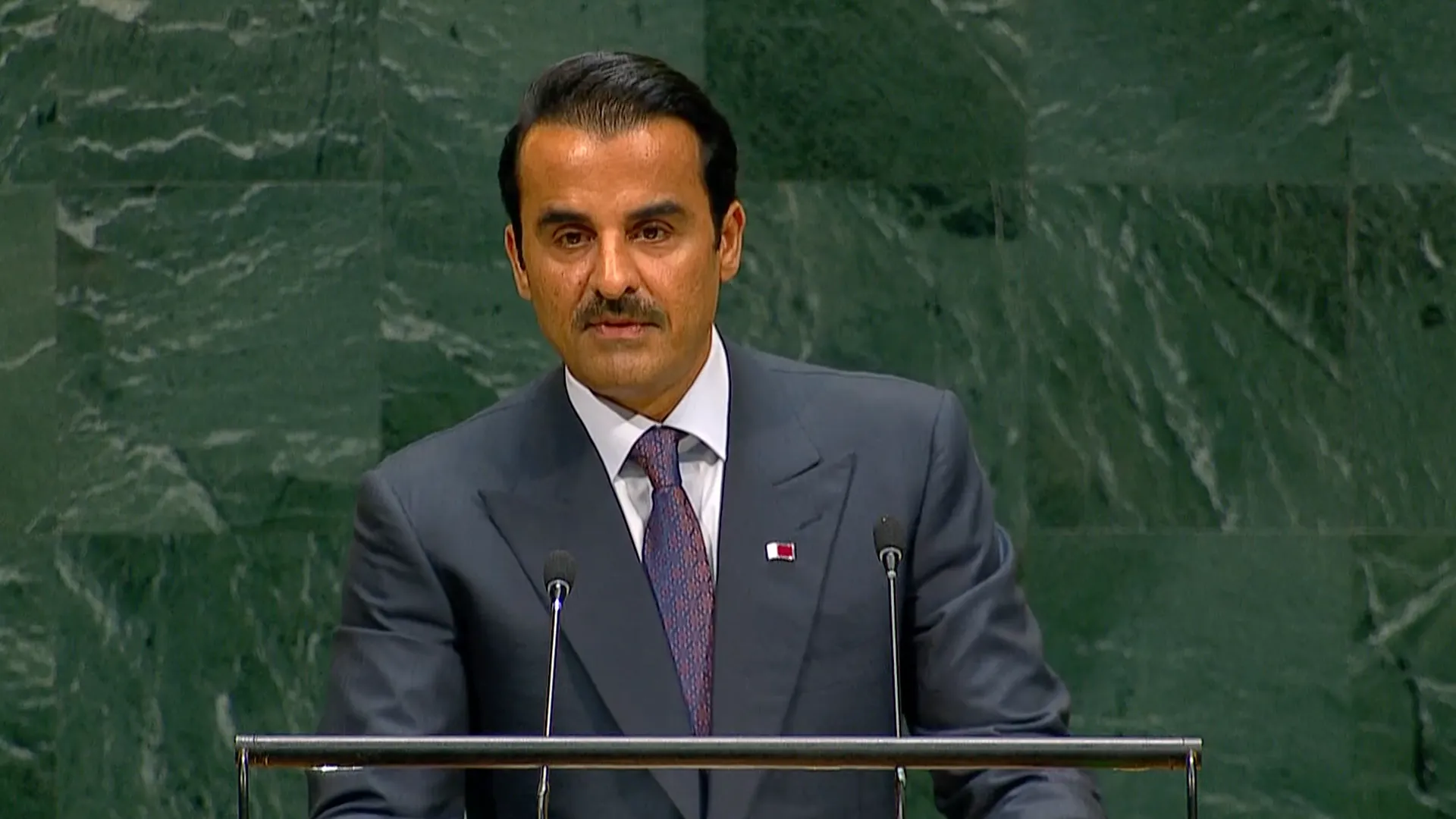
Qatar denounces Israeli aggression across the region | Conflict
Qatari Emir Sheikh Tamim bin Hamad Al Thani has denounced Israeli aggression in neighbouring countries, saying Israel openly declares it will not abide by its agreements in Lebanon.
Published On 22 Sep 2026
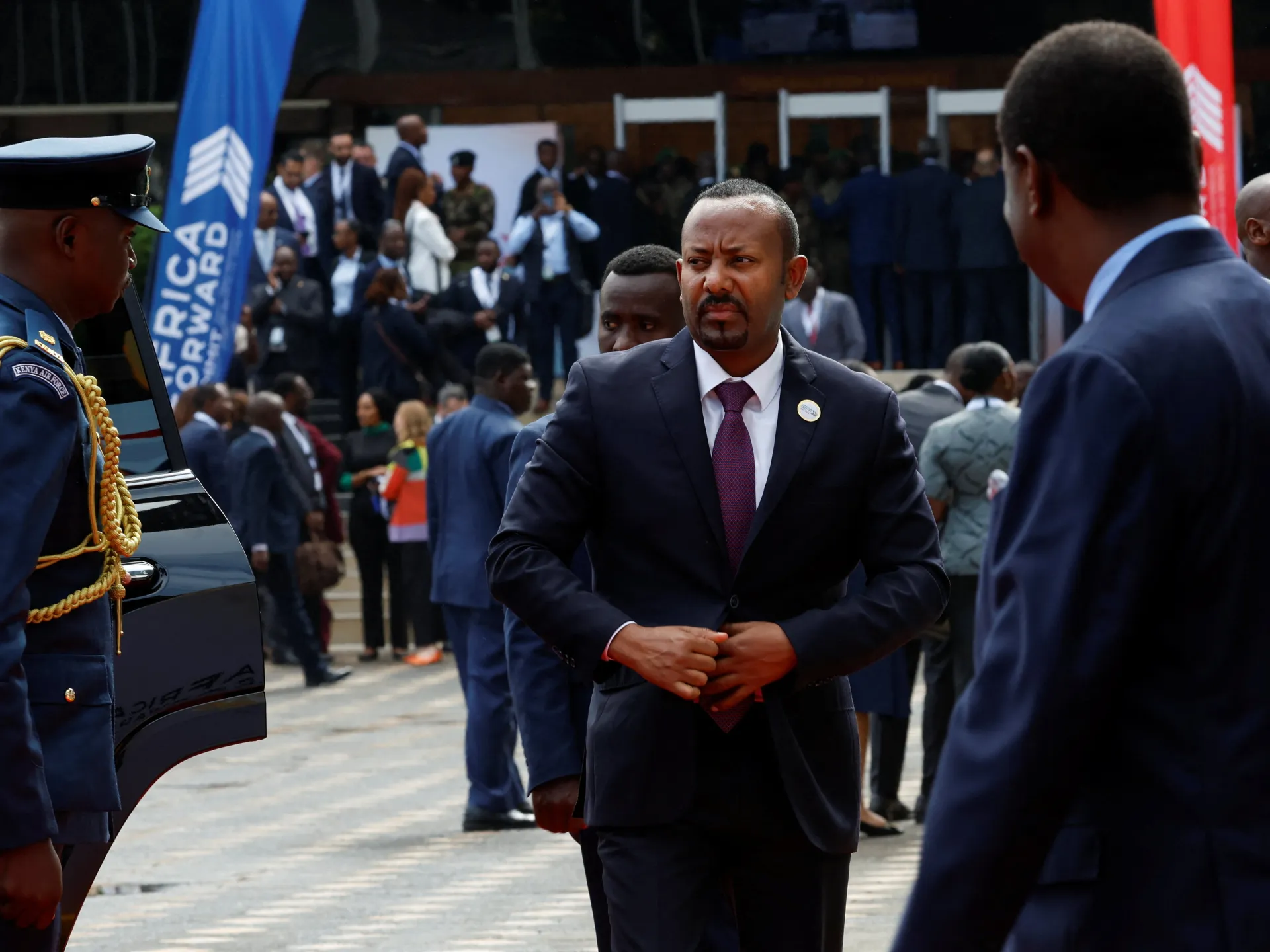
Is Ethiopia heading towards renewed civil war? | Abiy Ahmed News
Seven armed groups announce alliance to topple government.
Despite decades of peace deals and ceasefires, armed groups in Ethiopia have continued to battle each other, as well as the military. Now, some of these former rivals have formed an alliance to push out the government in Addis Ababa.
They warn Ethiopia is on the brink of disintegration, and blame Prime Minister Abiy Ahmed. Abiy says the country can defend itself, but Ethiopians fear they could be on the verge of another civil war.
So, could these former rivals, with deep political and ideological divides, achieve their common objective?
Presenter:
Rob Matheson
Guests:
Samuel Getachew – Political commentator who specialises in Ethiopian affairs
Ngala Chome – Horn of Africa analyst
Kjetil Tronvoll – Professor of peace and conflict studies at Oslo New University College
Published On 22 Sep 2026

Taylor Tomlinson turns off the mic to tell all in ‘Actually, Nevermind’
There’s an alternate universe where Taylor Tomlinson is a young adult fantasy author holed up in a cabin miles from civilization.
“ I don’t know if you have some sort of backup career or backup life that you go to in your head when you’re overwhelmed or fed up with your career or whatever process you’re in,” she asks in the lobby of the Four Seasons Hotel Denver ahead of a two-show night. “That was in the back of my head, [I was] like, ‘Well, I could just move to the woods and write books.’”
In this world, she’s a 32-year-old comedian with four Netflix stand-up specials and a two-season stint as the host of late-night game show “After Midnight.”
Her manager told her that people would probably be more interested in her memoir before a series centering on magic and dragons, so she started writing her own story two years ago.
A self-diagnosed workaholic, Tomlinson spent 10 years constantly moving. From a combination of mold exposure and severe burnout from filming “After Midnight” on weekdays and performing in different cities on weekends, she fell ill for months and was forced to take a break.
In that time, she wrote “Actually, Nevermind.” Coming out Tuesday, the autobiographical essay collection delves into the aspects of life that she changed her mind about since her mother died when she was 8 years old.
“Actually, Nevermind” opens with an eclectic mix of three quotes from “Anne of Green Gables” by Lucy Maud Montgomery, celebrated writer Joan Didion, and the 2001 Anne Hathaway-led comedy film “The Princess Diaries.” Tomlinson wanted a combination of funny and serious excerpts capturing grief, but also a quote about evolving as a person.
In the classic coming of age novel “Anne of Green Gables,” a young Anne Shirley states, “I’m not a bit changed — not really. I’m only just pruned down and branched out. The real me — back here — is just the same.”
That’s the essence of Tomlinson’s realizations in her book — she’s growing into herself but that girl who started performing stand-up shows on the church circuit at 16 is still in there.
Tomlinson has a bit from her first Netflix special “Quarter-Life Crisis” about your 20s being a period to “fish trash out of the lake before it freezes over.” She asks how I’m enjoying my 20s, to which I bluntly reply, “It’s a nightmare.”
“ My 20s were a nightmare, too, and I was waiting to be 30, and I was like, ‘When I turn 30, I’m going to be solidified and great.’ And then I turned 30, and it was like the last two years I have probably changed just as much, if not more, than I did in my 20s,” she says. “It’s been much rockier than I anticipated.”
In speaking with her friends, she realized they also felt a disconnect between the lives they envisioned for themselves and their realities. Tomlinson channeled that uncertainty into a jumping-off point for her book.
She reflected on when she began questioning the trajectory of her life and traced it back to her mother’s death.
“ I didn’t know if I was even going to write about my mom at all when I first got the book [deal] because I was like, ‘Well, I talked about it in ‘Look At You,’ and I’ve talked about it in interviews,’ but that’s the thing about losing a parent or any big traumatic grief event is you’re always getting hit by waves of it, and then you’re always untangling it,” she says.
In creating “Actually, Nevermind,” Tomlinson pored through her mother’s diary, deciding to include a few excerpts in the finished book. For most of Tomlinson’s life, she regarded her mother as a flawless, devout Christian whom she desperately yearned to impress.

Drawing on her mother’s diary, estrangement from her father and complex sibling bonds, Tomlinson confronts impossible standards, relinquishes parentified guilt and reframes what family means after loss.
(Sela Shiloni)
Her mother married young, so she tried to hit that milestone, too.
“I didn’t manage it and self-sabotaged a lot,” she says. “Now, I’m grateful that I didn’t get married young, but at the time it was all I wanted because I wanted to fit in and I wanted to be someone she would’ve liked, someone she had things in common with.”
Through reading her mother’s diary entries, Tomlinson began to heal from the impossible standards she set for herself to follow in her mother’s footsteps.
“ She was sort of this perfect, infallible character in my brain for so much of my childhood, so it was helpful to read about her being like, ‘I’m nervous about getting married. We got pregnant on accident,’” Tomlinson says. “There’s stuff I didn’t include about arguments she had with my dad in college. It was just very human, and it was very encouraging to go, ‘Oh, it wasn’t like this perfect frictionless decision for her.’ It’s not like she just nailed it and did everything perfectly.”
One of Tomlinson’s largest shifts in perspective was no longer feeling parental responsibility toward her three younger siblings.
“ I went from their sister to a weird half parent figure when I was still a kid,” she says. “And I made all these missteps because I was also a kid. And then young adulthood was confusing because I had been waiting for everyone to get old enough to be friends with me.”
Now, Tomlinson’s siblings all take care of each other in their own ways. She refers to them as her “soul mates” and feels guilty wishing for a romantic partner when she already has three lifelong best friends.
While Tomlinson remains close with some of her mother’s relatives, she has been estranged from her father for five years. She writes about the sadness of not speaking to someone you feel so alike, but she doesn’t go into extreme detail about cutting ties.
“ There’s some things you just want to keep for yourself, you know?” she says. “You don’t want every painful private detail about who you are and what’s happened to you available to Google because it just makes you feel like you’re a raw nerve walking around, and you can’t get it back once you’ve shared it.”
“And you want something to say on a fifth date,” she jokes.
After processing the heartache of losing another parent in a different way, Tomlinson allowed herself to miss the good memories with her father and assuage any longing for revenge.
In her essay “I’m Gay Now,” Tomlinson explores her bisexuality and the transition from chasing male validation to feeling comfortable in herself. She came out at around 28 years old. Part of what took her until then was feeling the need to prove that she deserved to identify as queer.

In essays on sexuality, faith and ambition, she trades the pursuit of perfection for hard-won self-acceptance, exposing a more vulnerable offstage self still learning to do her best.
(Sela Shiloni)
“ I think that’s just a theme throughout my entire life,” she says. “I felt like I needed to earn the label of comedian. I felt like I needed to earn the label of queer. I needed to earn love.”
Her brother helped her understand that she didn’t have to achieve the title — she’s always been gay.
With all of her adulthood realizations, Tomlinson also reflects on what she wishes she could tell her younger self. Talking to a 16-year-old Taylor, she writes, “The most valuable thing about us cannot be all the things we haven’t done.”
“ So much of my childhood was like, ‘Don’t drink, don’t do drugs, don’t have sex. Don’t step out of line,’” she says. “I wanted to experience things more than I wanted to be this pure version of myself that was performing for the Lord.”
“Actually, Nevermind” is a reflection of Tomlinson when she puts down the microphone, and she is nervous for readers to see that side of her.
“ I feel pretty good about me on stage. Me in the room, I feel really insecure about,” she says. “I’ve gotten to a place where I feel pretty confident about taking up like 45 minutes to an hour and a half of your time. Eight hours, I think, is what the audiobook is. I’m like, ‘Eight hours is a lot more than that.’ So it’s been a real test of confidence.”
After years of chasing perfection, Tomlinson says she finds comfort in knowing that she may never be the world’s greatest anything.
“ In my 20s, I think I was always trying to be the best,” she says. “And now I’m like, ‘I’m going to do my best.’”
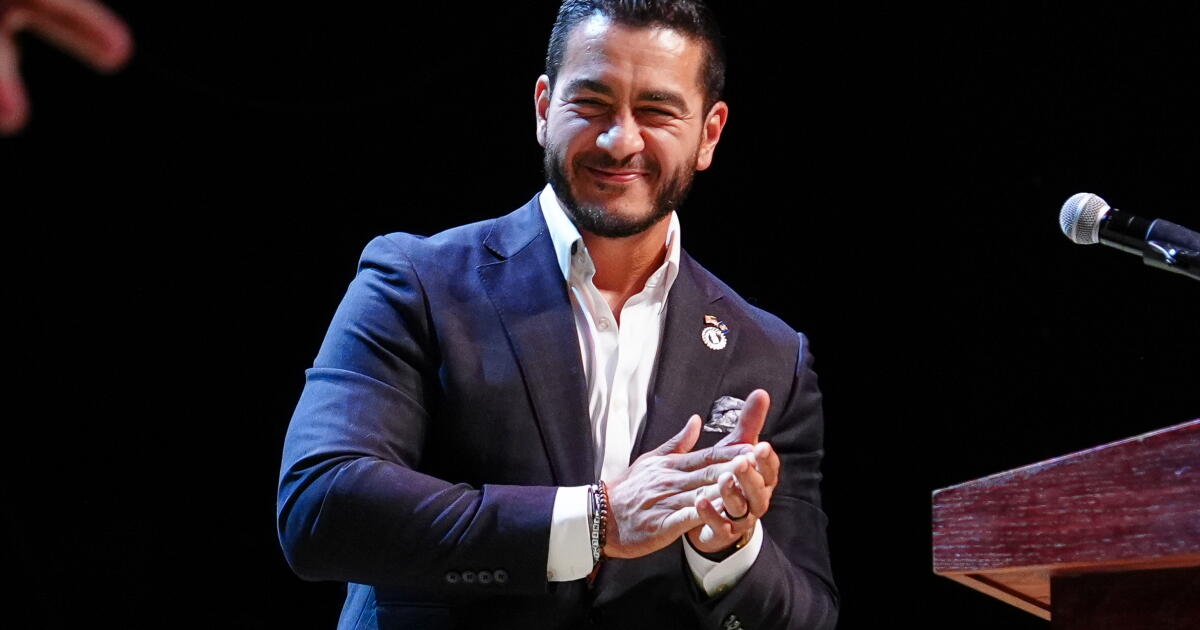
Abdul El-Sayed says Kamala Harris’ visit for his Michigan U.S. Senate race is about Democratic unity
DETROIT — Michigan U.S. Senate nominee Abdul El-Sayed said Tuesday that he wants Kamala Harris’ midterm campaign stop in Detroit to unify Democrats in the key swing state where their party’s factions were on full display in a hotly contested primary earlier this year — and in Harris’ 2024 presidential defeat.
“We’re building an electoral coalition here,” El-Sayed said, speaking about the economy hours ahead of a planned appearance with the former vice president.
An unapologetic progressive, El-Sayed downplayed his differences with Harris over the Biden administration’s support for U.S. military aid to Israel. El-Sayed has called Israel’s military actions in Gaza a genocide against Palestinians. Israel rejects that position, but it aligns El-Sayed with many voters in Michigan’s large Arab American community and with progressives who withheld their votes from Harris in 2024, when the state tipped narrowly to Republican Donald Trump.
That election “ended where it did because we could not find the places of agreement to be able to bring people together or move in the direction that we need to move,” El-Sayed said, emphasizing that he and Harris both want to help voters who are struggling economically.
Harris, the first Black vice president, remains popular among Black voters who anchor the Democratic base in Detroit and who leaned in favor of El-Sayed’s primary opponent, Rep. Haley Stevens, in the August primary. El-Sayed said Harris, who will attend a roundtable on Black maternal health with him and separately join an event hosted by the Detroit chapter of the NAACP, is a critical advocate in helping him close ranks as he tries to defeat Republican Mike Rogers.
“Her presence here speaking to communities that were really empowered by her voice throughout her political career, I think will help us to continue to bring our coalition together,” El-Sayed said.
El-Sayed vs. Rogers is a critical contest for Senate control
The Democrat’s matchup against Rogers, a former congressman, will help determine control of the Senate for the final two years of Trump’s presidency. If Democrats hold the seat, which was opened by Sen. Gary Peters’ announced retirement, they’d still need to win at least four more currently held by Republicans to flip the chamber. A Rogers victory would narrow Democrats’ path to a majority.
Rogers’ campaign framed Harris’ visit as a sign of weakness for both Democrats.
“Abdul is so desperate that he’s parachuting Kamala Harris into Michigan to save his flailing campaign,” said Alyssa Brouillet, Rogers’ spokesperson.
Rogers has been campaigning in Detroit, a predominantly Black city where his campaign is optimistic he can pick up support from voters hesitant to support El-Sayed.
Black voters could prove especially critical as El-Sayed also faces pressure among white Jewish voters who typically back Democrats.
“Jews in Michigan are currently scared” by their Senate options, said Barry Goodman, a Democratic National Committee member and major Michigan fundraiser in the party. Goodman backed Stevens in the primary.
The race is also seen as another referendum on progressives’ viability in battleground races. El-Sayed is running to the left of the Democratic Party establishment, including advocating for universal healthcare.
Goodman described himself and many other Jewish Democrats as “holding our noses and voting for Abdul” because they “believe in the Democratic ticket and they believe that one man can help win the Senate but can’t destroy the Senate.” Other moderates, Goodman said, are still deciding whether to back Rogers or sit out the Senate race.
El-Sayed has attempted to soften his approach on Israel and Gaza. He has apologized for some past controversial comments and said he is committed to Jewish safety.
Michigan will also be a key state for the 2028 Democratic presidential primary
For Harris, the trip comes as questions swirl about her intentions to run for president again. Under the Democratic National Committee’s recently revised nominating calendar, Michigan now will hold the fifth presidential preference primary in 2028.
It’s unclear whether Harris will use the trip to restate or recalibrate her past statements on Israel. But campaigning with El-Sayed is notable, nonetheless, given her past tensions with Democrats’ left flank.
“She probably figures she won’t lose her establishment folks, so maybe she makes gains to her left,” Goodman said.
Harris has said she’s in no rush to announce whether she will run in 2028. But ahead of Election Day this November, she also has campaign stops planned in Nevada and Georgia, two other important states on the political map.
Ganun and Barrow write for the Associated Press. Barrow reported from Atlanta.

Tennis: British player Tara Moore’s latest legal bid over doping ban dismissed by US court
In April 2022, Moore tested positive for nandrolone and boldenone at a WTA 250 event in Bogota, with an independent tribunal ruling in December 2023 that contaminated meat was the source.
Moore, who was Britain’s leading women’s doubles player at the time of the failed test, was found to bear “no fault or negligence”, but the International Tennis Integrity Agency (ITIA) appealed against the decision.
Last year, the Court of Arbitration for Sport (Cas) ruled in favour of the ITIA and Moore was banned until 2028.
Moore then initiated proceedings with the American Arbitration Association, in which she claimed the WTA’s “failure to warn against eating meat in Colombia was a direct cause of her positive test result and the harm that followed”.
The arbitrator supported the ruling made by Cas and dismissed the case against the WTA.
In response, Moore filed a motion against the decision at the United States District Court in New York.
Moore, who was ranked a career-high 77th in the world in 2022, claimed she was denied a fair hearing by the arbitrator.
The motion detailed how Moore was seeking “no less than $20m in compensatory damages” after claiming the WTA “stayed silent in the face of a known and specific danger and then shifted the blame for its own negligence” to the player.
On Friday, United States district judge Andrew Carter found Moore’s challenge was “not justified” on a legal basis.
The WTA and ITIA have been approached for comment.
Trump says US officials met for three hours with Iranian delegation | Donald Trump News
DEVELOPING STORYDEVELOPING STORY,

Published On 22 Sep 2026
US President Donald Trump has told reporters at the United Nations that US officials had a “very good” three-hour meeting with the Iranian delegation.
“They had a very good meeting, a very productive meeting,” Trump said, adding that the meeting on the sidelines of the UN General Assembly in New York lasted about three hours.
“They have another one scheduled in the very near future.”
More to come…

Sudan’s historical famine echoes through latest hunger crisis | Sudan war News
Sudan’s collective memory has long carried stories of famine-induced tragedies. Now, as war pushes the country deeper into a catastrophic food crisis, historians and humanitarian activists fear that some of those horrors are being repeated.
The ongoing war between the Sudanese army and the paramilitary Rapid Support Forces, which erupted in April 2023, has plunged the country into one of its worst modern food crises, with conditions deteriorating sharply since 2024.
Recommended Stories
list of 3 itemsend of list
Sudan has endured severe famines before, often triggered or made worse by drought and other environmental shocks. However, the current hunger crisis, which has triggered famines in Sudan in 2024 and 2025, has been brought on by a man-made factor: war.
Past starvation
One of the earliest recorded major food crises in what is now Sudan occurred in 1684, during the Funj Sultanate. The crisis, which lasted several years, brought severe grain shortages across central Sudan. Historical accounts describe people driven to desperation, and in some cases forced to eat dog meat. The hunger triggered mass displacement, as well as a deadly smallpox outbreak.
Similar climate-driven crises were recorded in 1750 and again between 1835 and 1838 during a period of Ottoman-Egyptian rule, exacerbated by severe drought and low water levels in the River Nile.
The famine most deeply embedded in Sudanese popular memory occurred between 1888 and 1889, during the rule of Khalifa Abdullahi al-Taashi.
Drought, locust infestations and conflict combined to cause widespread hunger and death. Some historical estimates put the death toll at more than one million people, although precise figures from the period are difficult to establish. The crisis was reported to have been so severe that some families shut themselves inside their homes to die rather than going out to beg for food.
Sudan experienced more periods of food shortages during the 20th century. Droughts and poor harvests during the colonial period of the first half of the century forced the authorities at times to import grain from abroad.
Then, in 1984, during the rule of President Jaafar Nimeiri, a devastating drought hit western Sudan, including Darfur and Kordofan, where there were widespread crop and livestock losses, displacing hundreds of thousands of people from rural areas to the capital, Khartoum.
Man-made catastrophe
Unlike many of those historical crises, the current famine is distinctly man-made.
War has disrupted agricultural production and trade, forced farmers to leave their land, and made it difficult to move food and humanitarian aid across the country.
Abdullah al-Tijani, a social historian and humanitarian activist, noted the unprecedented scale of the current disaster.
“Most previous famines were often confined to specific regions, as happened in 1984, or areas in southern Sudan before its secession in [2011], while the capital and major cities continued to have the necessities of life and services,” al-Tijani told Al Jazeera.
This time, he said, hunger and the collapse of basic services have spread across the entire country.
“A comprehensive food crisis has struck the heart of major urban and agricultural centres in the states of Khartoum, Gezira, Sennar, Darfur, and Kordofan, causing millions of citizens to be displaced inside and outside the country,” al-Tijani added.
He pointed to what he described as the “systematic destruction of infrastructure, disruption of large agricultural projects, and targeting of markets, bakeries, and crops, along with disrupting the banking system and communication networks, which isolated entire regions”.
Al-Tijani also cited the “restrictions on humanitarian access and delays in granting transit permits for relief workers”. He accused the warring parties of using control over food supplies as a tool of war, while warning that international funding has fallen short of the size of the crisis.
Lost agricultural potential
The scale of the crisis is stark because of Sudan’s agricultural potential. The country has immense resources, including roughly 200 million acres (81 million hectares) of arable land, abundant water from the Nile, and extensive livestock resources, but Sudan’s potential as a global breadbasket remains unfulfilled.
Mohammed Abdul Rahman, an economic researcher, explained that the current food security crisis reflects a clear development gap, and a longstanding weakness in Sudan’s agricultural sector compounded by war.
“Wars and armed conflicts are among the most influential factors on food production,” Abdul Rahman said, “along with the displacement of farmers from their lands, the absence of political stability and agricultural policies, weak funding and government guarantees, and reliance on traditional farming methods.”

Strictly legend brands new host Josh Widdicombe ‘lost and nervous’
EXCLUSIVE: Strictly Come Dancing legends Vincent Simone and Brendan Cole have had their say on the divisive new presenting trio of Josh Widdicombe, Emma Willis and Johannes Radebe.

Strictly Come Dancing’s Josh, Emma and Johannes hosted for the first time on Saturday(Image: CREDIT LINE:BBC/Guy Levy)
Strictly legend Vincent Simone has branded one new host of the hit dance show ‘lost and nervous’ after their debut showing on Saturday. He didn’t hold back as he laid bare his thoughts – but he did hold special praise for another, admitting they pleasantly surprised him.
All eyes were on the new trio of presenters on Saturday night prime time as Emma Willis, Josh Widdicombe and Johannes Radebe took centre stage after the exit of Claudia Winkleman and Tess Daly. But Josh felt the wrath of Vincent, who labelled him a “lost lamb” before saying he hopes it’s just first show nerves.
Speaking exclusively to the Mirror, Vincent went on: “Emma, professional as always. But I’m sure she was probably as nervous as everybody else. There’s a huge amount of pressure on their shoulders to hold a show together which is essentially new but old.”
And he admitted Johannes’ style shocked him. “Johannes surprised me in a good way,” he said. “I thought he was going to be all flamboyant, running around, talking about himself.
“I don’t know the guy, I’ve met him a couple of times but I thought he seemed really professional and seemed like he was doing a really good job as a host. I heard he was just going to be roaming around, talking to the couples and what have you.
“He would have been as nervous as hell. They all would have been. Given that, I think he did a good job.”
The opinion was matched by Brendan Cole, who also had his say on the new hosts, admitting he would have hoped for a Bruce Forsyth vibe to take the hot seat. He said: “I wanted the old-school class of the likes of Brucey [Bruce Forsyth].
“There aren’t many around that good that you could choose from, but it’s a big world out there. I’m sure they could be found. I want somebody old school. I want somebody triple threat – actor, singer, dancer. Somebody who, when they’re at the helm like Brucey was, absolutely knows showbiz like the back of their hand.”
But despite his disappointment, he held out praise for Johannes too. “I liked Johannes, actually. He did really well for the first show. I didn’t know what his role was going to be, and I think he held himself very, very well.”
Fans also had their say shortly after the launch show on Saturday and were divided in their opinions. Taking to X, formerly known as Twitter, one fan said: “I know it’s only the first few minutes, but I just cannot gel to there being three hosts #strictly.”
Another defended the line-up, adding: “3 presenters was an interesting choice by producers but Emma, Johannes and Josh really do work together. Natural already.” And it was also backed by no-nonsense judge, Craig Revel-Horwood who branded the new trio “fabulous”.
Vincent and Brendan were talking to the Mirror on behalf of Sky Vegas.
Like this story? For more of the latest showbiz news and gossip, follow Mirror Celebs on TikTok , Snapchat , Instagram , Twitter , Facebook , YouTube and Threads .
Last Canteen is a post-apocalyptic bar hiding in L.A.
Normally when a telephone rings inside a bar, it’s the duty of the staff to pick it up. But when an old-timey rotary dial phone suddenly springs to life at the Last Canteen, it’s up to guests to decide what to do next.
Answer it — or attempt to make a call from it — and you’ll encounter one of dozens of pre-recorded messages. They’re calls from an imagined future, one when a war-torn America is on the mend from some sort of apocalyptic catastrophe. They’re messages, perhaps, for the bar’s fictional founder, a shotgun-carrying mysterious woman known for her mean bartering skills, or maybe if you’re lucky, you will dial into what sounds like an early 20th century party line and hear from those looking for a date in the Valley, now a neutral zone among warring factions.
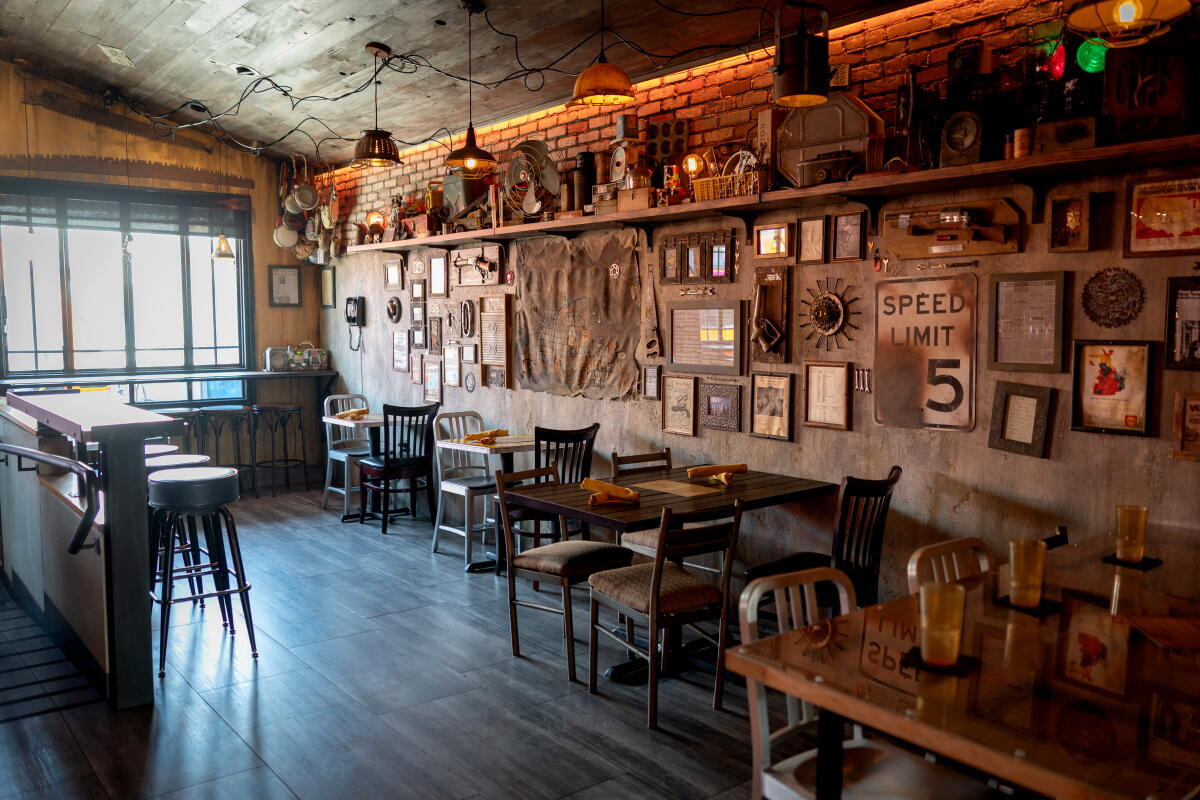
The Last Canteen, situated on a stretch of Ventura Boulevard that’s just a short walk from the Universal City metro and minutes from Universal Studios Hollywood, is a new restaurant and bar that looks lifted from a theme park. It also feels like a throwback to an earlier time, when Los Angeles was an epicenter of the themed restaurant.
Southern California has a storied history when it comes to themed establishments. There’s our penchant for food-shaped eateries, of course — see our giant doughnuts or the Tail o’ the Pup — but dinner with a side of story is a Los Angeles-area staple that predates any corporate chains such as Rainforest Cafe or Chuck E. Cheese. From the long-forgotten Jail Cafe in the 1920s to our region’s birth of the tiki bar to the themed restaurant explosion of the ‘80s and ‘90s, when even Steven Spielberg got into the action with the submarine-focused DIVE! in Century City, the themed restaurant has long found a receptive audience in Southern California.
And the Last Canteen feels especially built for our moment.

The Last Canteen’s three founders were going for a lived-in feel.
(Eric Thayer / Los Angeles Times)
Taking influence from the likes of “Mad Max,” “Fallout” and a host of other dystopian, postapocalyptic media, the Last Canteen is a bar for an era — and a city — when the future seems especially uncertain. Whether it’s AI, corporate consolidation, inflation or the struggles of Hollywood that’s got you down, the Last Canteen wants to be your “Cheers” of sorts.
“It’s not the brightest of times, I would say for most of the world, but certainly younger generations are feeling like we got the rug pulled over us — the state of the economy and corporate overreach,” says Jimmy Clements, 32, who founded the Last Canteen with two other friends from the hospitality industry.
“We always joke that the world is ending, but there’s some charm in fully embodying what that would mean, and realizing there’s something on the other side,” he adds. “That’s what attracts me to the genre. OK, the worst thing possible happened, but there’s still people on the other side. We still need community and a place to eat and drink.”

A grenade fashioned out of a baseball is one of the items hidden in the Last Canteen.
(Eric Thayer / Los Angeles Times)
Or as Clements’ partner TJ Lewis says, “Who doesn’t watch ‘Mad Max’ and dream of riding on top of a crazy car with a spike in your hand?”
Despite a potentially bleak concept, the Last Canteen is open and welcoming. The color palette is soft, leaning heavily on dust-like sandy vibes, the cocktail menu takes influence from the fruity, complex world of tiki bars, and a sense of humor permeates the main dining room.
Yes, a demolition bomb, which is actually a movie prop from Angelina Jolie’s “Unbroken,” hangs from the ceiling, but take a moment to explore the venue and you’ll find grenades colorfully fashioned out of baseballs, or rewritten maps of the Valley in its new “Wasteland” era. Universal Studios’ famed minion still stands, but the Ikea is now a “hall of justice.”
Newspapers dot the walls. They’re filled with fiction that tell of the bar’s new reality, giving the place a sense of history and lore. One article, for instance, speaks of a battle that broke out near the remnants of US-101 next to the old “sidewalk stars site.” Another tells of how the bar’s founder took over the land where the establishment now stands. By force, of course. And don’t miss the beer taps, fashioned out of bullets, guns and baseball bats.

The Last Canteen is a themed bar that feels ripe for our era, one in which the future is filled with uncertainty.
(Eric Thayer / Los Angeles Times)
“It’s the difference for us between immersive and themed,” says Lewis. “Like the Hard Rock Cafe is themed. It’s got music on the wall, but you don’t feel like you’re at a concert when you’re there. It’s not immersive. What we were really going for is a lived-in space. We didn’t cover this in ‘Max Max’ posters. It is in the world of. It’s really open-ended. All the details on the wall help paint a picture.”
Of course there were limits. The team jokes that if they really wanted to exploit the dystopian theme, then drinks should likely be served in red plastic cups. Instead, the Last Canteen has proper drinkware, but each type of glass does come from a different set, as the owners wanted to give it a found materials vibe. The menu doesn’t stray too heavily from bar fare, and there are bowls of bison chili ($18), a burger ($18), a charcuterie plate ($21) and, of course, a “Last Meal,” which is a half grilled cheese, a cup of chili and a glass of sarsaparilla ($25).
The cocktail program, however, is extensive. The blackberry-infused Blackthumb or the spiced A Torch or Rosemary feel like darker twists on brighter, lively tiki fare. For those craving the latter, there is currently a frozen version of a Zombie. Bar founders Clements, Lewis and Drew Aloe say the menu, both cocktails and food, will change seasonally.

The Last Canteen founders Jimmy Clements, from left, TJ Lewis and Drew Aloe.
(Eric Thayer / Los Angeles Times)
And the tiki influence is no accident. The three cite the Disneyland Hotel’s Trader Sam’s as the Last Canteen’s primary influence. Also an inspiration? Oga’s Cantina at Disneyland’s Star Wars: Galaxy’s Edge. Theme parks were on their mind as much as the apocalypse.
“What they do so well is they feel really lived in,” Clements says of Trader Sam’s and Oga’s. “It doesn’t feel like a cute homage. You walk in the door and you’re somewhere else.”
And guests are noticing.
“We had someone opening weekend tell me that this feels like an end-of-the-world Trader Sam’s. Thank you. That’s all we want,” Lewis says.
This week in SoCal theme parks

Fast & Furious: Hollywood Drift is now in daily operations at Universal Studios Hollywood.
(Ronaldo Bolaños / Los Angeles Times)
- New coaster. New accolades. New noise complaints. Universal Studios Hollywood officially opened its Fast & Furious: Hollywood Drift last week after months of running the thrill ride in a soft open phase. Fans were happy, with some even calling it the “best” coaster in SoCal. But nearby neighbors in Toluca Lake still want change, arguing that the sound of rider screams from the coaster is disrupting their lives.
- Calling all Disney film buffs. Starting this Sunday, Santa Ana’s Frida Cinema will begin hosting a weekly “Walt Disney Studios” film series hosted by historian/educator Jeff Kurtti. First up is “20,000 Leagues Under the Sea,” which will also feature a presentation from artist/designer Kevin Kidney, who over the years has contributed to many a Disney parks project. Other Sunday screenings will include “Alice in Wonderland,” “Disneyland Handcrafted,” “Swiss Family Robinson” and more. Check out the full series here.
- And speaking of “Disneyland Handcrafted.” It’s the last call for tickets to a stellar Disneyland history and charity event at Santa Ana’s Bowers Museum, which on Sunday will screen the Leslie Iwerks documentary as well as host a reception and panel. Historian and author Tim O’Day will moderate a talk that includes the film’s producer, Mark Catalena, former Imagineer-turned-historian Tom Morris and current Imagineer Emily “Emo” O’Brien, who oversees creative at Disneyland and is leading the team behind the just-announced makeover of Tomorrowland. Tickets start at $125 and are on sale now.
Ride report

The concluding, trippy scene in Inked, a new maze from Knott’s Scary Farm.
(Todd Martens / Los Angeles Times)
As we get deeper into Halloween season, I wanted to highlight another haunted maze, this one being the best one at this year’s Knott’s Scary Farm event. Inked is the maze, and it’s set in a 1930s cartoon studio. While of course having the requisite number of scare actors who will pounce on guests after they turn any corner, the maze also charms as it features original animation in the style of Disney’s classic “Silly Symphony” cartoons. Nearly every room in the haunted house boasts a cartoon scene starring a cutesy ghost, a little cat and an often sad pumpkin man.
The story is the drawn figures have come to life and are now murderous, but you’ll wish you could stop and watch a graveyard short or hang with a jazzy skeleton band. Giant pumpkin heads are animated with cartoon eyes and a mirror-heavy psychedelic scene, pictured above, brings the maze to a fiery conclusion. Knott’s is perhaps relying too heavily on returning mazes of late, but Inked is a winner.
Tell us your stories. Ask us your questions.
Have a theme park tale to share? Whether it was a good day or less-than-perfect day, I would love to hear about it. Have a question? A tip? A fun photo from the parks to share? Email me at todd.martens@latimes.com. I may feature your note in an upcoming newsletter.
Ride on,
Todd Martens
P.S.
Magic Mountain’s currently shuttered X2 coaster has been in the news of late.
The X2 ride has for years been the Valencia park’s crown jewel, the first roller coaster in the world that spun riders 360 degrees in their seats. It even topped my ranking of thrill rides at the park. I wrote that it was a risky choice, as the coaster is not for the faint of heart. Its seats extend off the track, giving you a sensation of flight at its most chaotic, with an assortment of loops that suddenly shift direction and segue into drops. Due to the constantly changing direction of its seats, the path of the track can be hard to discern.
But X2 has come under close inspection after several lawsuits allege people were injured on the ride. Six Flags shut down X2 in July amid a state investigation into the coaster. The Times’ Fedor Zarkhin has the story.
Trump administration to remove 760,000 Affordable Care Act enrollees over fraud claims
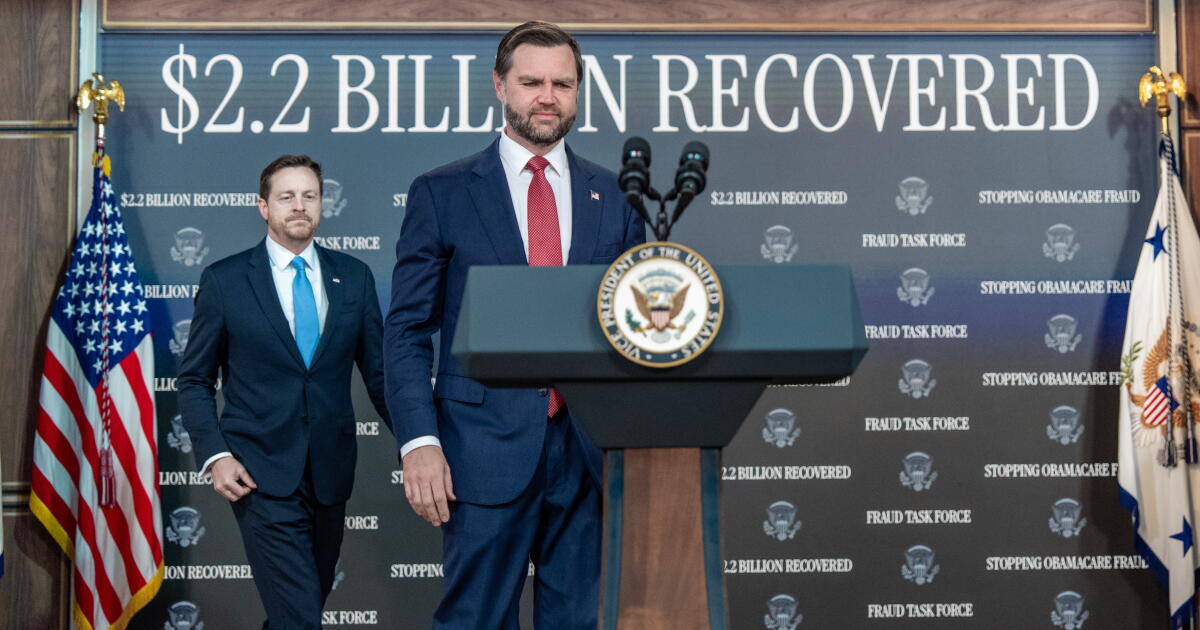
WASHINGTON — Vice President JD Vance and other Trump administration officials said Tuesday they plan to remove 760,000 Affordable Care Act enrollees from public healthcare exchanges, alleging that the individuals were fraudulently enrolled in the program, or simply do not exist.
Vance said the discovery and canceled subsidy payments for hundreds of thousands of people from the exchanges would result in $2.2 billion in cost savings.
“We’re actually making sure that the people receiving Obamacare subsidies are actually entitled to receive them,” Vance, who leads a government-wide task force to eliminate fraud, said in a public address at the White House, Tuesday. He was flanked by Dr. Mehmet Oz, the administrator for the Centers for Medicare and Medicaid Services, and other administration officials.
The Trump administration also announced a six-month suspension on new brokers who sign up enrollees for healthcare coverage, who officials say commit a disproportionate amount of the fraud they uncovered.
Tuesday’s announcement is the latest in an administration-wide initiative to address fraud around the country, including in federal healthcare programs, which officials say is needed to rein in runaway spending and protect taxpayers.
The announcement comes as inflation and rising healthcare costs pressure the Trump administration to come up with a plan to bring down costs for Americans heading into the midterms.
The price of ACA insurance has skyrocketed for many Americans during Trump’s second term, after Republicans opposed extending COVID-era subsidies that had helped offset the costs of health insurance for most enrollees during Biden’s term.
Premiums doubled or tripled for many enrollees, prompting millions to downgrade their plans or exit the program entirely after the Republican-led Congress allowed the subsidies to expire this year.
Roughly 19.2 million Americans are actively enrolled in ACA marketplace health plans as of early 2026, according to the HHS website.
The White House referred The Associated Press to the Vice President’s team for additional comment on bigger plans to address healthcare affordability.
The Wall Street Journal first reported the news of the Trump administration’s plan to remove ACA enrollees from public exchanges.
Hussein writes for the Associated Press. AP writer Michelle Price contributed to this report.
Giants’ Jaxson Dart avoided ‘devastating’ knee injury against Rams
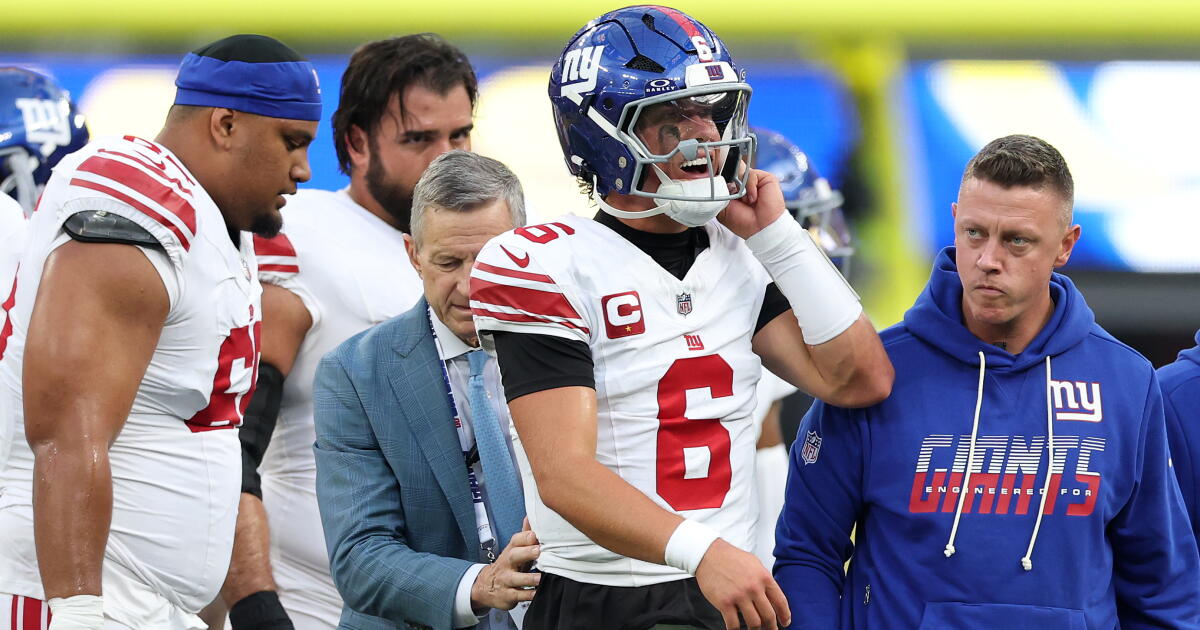
New York Giants quarterback Jaxson Dart appears to have avoided a “devastating outcome” after leaving Monday night’s game against the Rams with a left knee injury, coach John Harbaugh told reporters following his team’s 28-6 loss at SoFi Stadium.
Harbaugh stopped short of confirming the multiple media reports that Dart suffered a sprained MCL when his leg bent in an unnatural manner after he was hit hard by Rams linebackers Byron Young and Josaiah Stewart early in the first quarter.
“That’s in the neighborhood of it, I would say,” Harbaugh said of those reports after the his team’s 28-6 loss. “We’ll get an MRI tomorrow and have a real good feel for it, and give you more information from there.”
SNY Giants reports that Dart could miss two to four weeks with the injury. Still, it could have been much worse. A torn ACL could have ended the season for the second-year quarterback who missed two games last year after sustaining a concussion.
“Never play to hurt anybody,” Young, a fourth-year player and 2025 Pro Bowl selection for the Rams, posted in an Instagram Story after the game. “I pray for a healthy recovery.”
Former NFL quarterbacks Peyton and Eli Manning seemed to fear the worst while watching the situation unfold live on their alternative broadcast of the game on ESPN2.
“Oh no. Oh no. No, no, no, no, no,” Peyton Manning said as he watched Dart writhe on the ground while holding his knee. “That is not what we want to see. Gosh!”
“Tough to watch,” Eli Manning said as a replay aired. “Hate to see that. Hope he’s OK.”
Dart was able walk off the field and into the locker room gingerly but under his own power. ESPN’s Jordan Raanan reported that the former USC and Mississippi quarterback actually wanted to return to the game but was not allowed to do so by his team.
Instead, Dart watched the second half from the sideline in street clothes, with video appearing to show him telling someone, “They wouldn’t let me come back out.”
Veteran quarterback Jameis Winston filled in for Dart and completed 11 of 27 passes for 111 yards with one interception.
Dart was one of several key Giants (1-1) players to suffer injuries during the loss. Top pass rusher Brian Burns sprained his left ankle and left tackle Andrew Thomas sustained an apparent lower-body injury, with neither player returning to the game.
Wide receiver Malik Nabers had to pop his right shoulder into place after dislocating it during the first quarter. He stayed in the game but indicated afterward he would undergo X-rays the next day.
The Associated Press contributed to this report.

Turkiye school shooting leaves 11 pupils wounded | Newsfeed
Eleven pupils were wounded after a student opened fire near a secondary school in Manisa, western Turkiye, on Tuesday morning, with two reported to be in critical condition. The suspect was detained shortly after the attack while authorities continue to investigate the motive.
Published On 22 Sep 2026
‘War crime’: Jordan’s king slams Israeli West Bank expansion | Occupied West Bank
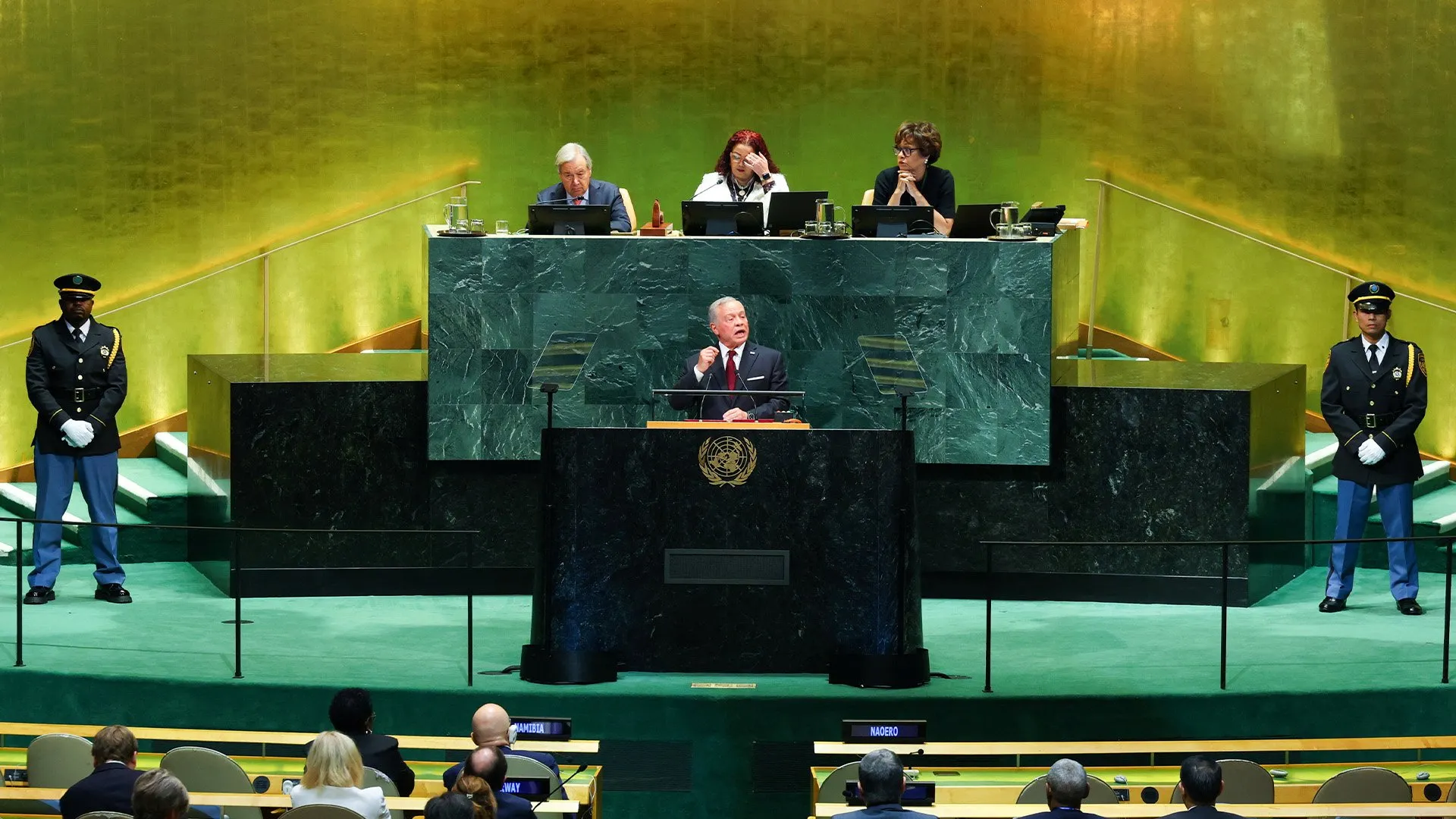
Jordan’s King Abdullah II decried Israeli settler incursions in the occupied West Bank as a strategy of ‘forced displacement’ that should be considered a war crime.
Published On 22 Sep 2026