






Emmerdale Claire King’s devastating health condition she’ll never recover from
Emmerdale’s Claire King has suffered from a debilitating health condition for several decades

Emmerdale legend Claire King has candidly opened up in the past about her health battles.
Claire has been a firm favourite on the long-running soap since 1989 – and as the man-eater queen of the village Kim Tate, she has played a part in several big storylines.
From her many feuds in the Dales to faking her own death, her time on the show has not been short of drama over the years.
Kim’s also been involved in several famous romances – including her affair and marriage to Frank Tate (Norman Bowler) and her recent romance with Will Taylor (Dean Andrews), who sadly died at Christmas last year.
And on the soap recently, Kim was left fighting for her life after her horse Ice was spooked by shooters on the Home Farm estate and she was thrown off. Although managing to make a recovery, her beloved horse had to be put to sleep after sustaining a horrific injury.
However, away from the soap Claire has faced her own health battles. Over the years, she has been open about her struggle with rheumatoid arthritis over the years.
Claire told OK!: “When I was first diagnosed I was worried, as I was ignorant of the ins and outs of it. I was only in my twenties.
“Over the years they’ve improved various treatments, so my doctors are very good. I manage it. I have various pills and injections every week and I just get on with it. There are certain things I can’t do at work, like wearing killer heels for more than five minutes.
“And the costume department has to do up all of my buttons, as it takes me ages. Doing my hair and make-up takes me a bit longer too, as I’ve got metal in some of my fingers.”
She also said: “I struggled to go to work and do the things I love, like horse-riding, because of the terrible pressure it put on my knees.
“I can certainly relate to the ‘invisible disease’ – although my symptoms don’t always show, it doesn’t mean I’m not in pain or feeling exhausted.”
Meanwhile talking to Health Awareness, Claire revealed: “My joints swelled up, and my knees felt like someone had hit them with a mallet.” Making a heartbreaking confession, Claire added: “You just think, ‘this is an old person’s disease, am I going to end up in a wheelchair?’.
“There was very little treatment available at the time. You just tend to think the worst.”
**For the latest showbiz, TV, movie and streaming news, go to the new ** Everything Gossip ** website**
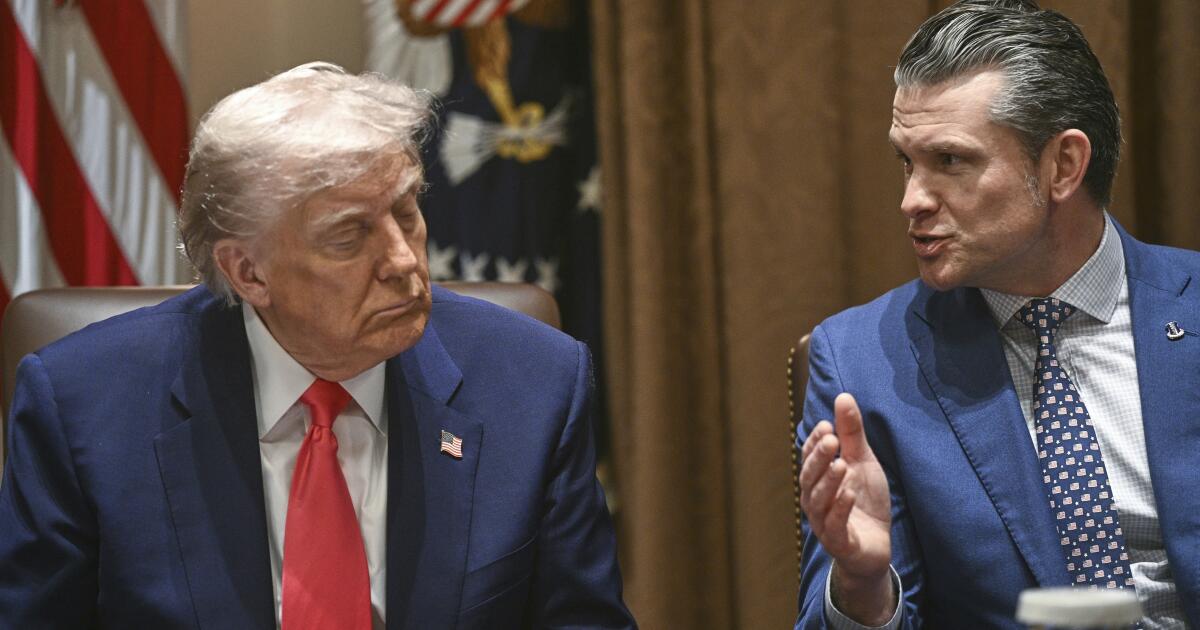
Justices block troop deployment in Chicago; 3 conservatives object
WASHINGTON — The Supreme Court ruled against President Trump on Tuesday and said he did not have legal authority to deploy the National Guard in Chicago to protect federal immigration agents.
Acting on a 6-3 vote, the justices denied Trump’s appeal and upheld orders from a federal district judge and the 7th Circuit Court of Appeals that said the president had exaggerated the threat and overstepped his authority.
The decision is a major defeat for Trump and his broad claim that he had the power to deploy military forces in U.S. cities.
In an unsigned order, the court said the Militia Act allows the president to deploy the National Guard only if U.S. military forces were unable to quell violence.
“At this preliminary stage, the Government has failed to identify a source of authority that would allow the military to execute the laws in Illinois. The President has not invoked a statute that provides an exception to the Posse Comitatus Act,” the court said.
Conservative Justices Clarence Thomas, Samuel A. Alito Jr. and Neil M. Gorsuch dissented.
The 9th Circuit Court of Appeals had allowed the deployments in Los Angeles and Portland, Ore., after ruling that judges must defer to the president.
But U.S. District Judge Charles Breyer ruled Dec. 10 that the federalized National Guard troops in Los Angeles must be returned to the control of California Gov. Gavin Newsom.
Trump’s lawyers had not claimed in their appeal that the president had the authority to deploy the military for ordinary law enforcement in the city. Instead, they said the Guard troops would be deployed “to protect federal officers and federal property.”
The two sides in the Chicago case, like in Portland, told dramatically different stories about the circumstances leading to Trump’s order.
Democratic officials in Illinois said small groups of protesters objected to the aggressive enforcement tactics used by federal immigration agents. They said police were able to contain the protests, clear the entrances and prevent violence.
By contrast, administration officials described repeated instances of disruption, confrontation and violence in Chicago. They said immigration agents were harassed and blocked from doing their jobs, and they needed the protection the National Guard could supply.
Trump Solicitor Gen. D. John Sauer said the president had the authority to deploy the Guard if agents could not enforce the immigration laws.
“Confronted with intolerable risks of harm to federal agents and coordinated, violent opposition to the enforcement of federal law,” Trump called up the National Guard “to defend federal personnel, property, and functions in the face of ongoing violence,” he told the court in an emergency appeal filed in mid-October.
Illinois state lawyers disputed the administration’s account.
“The evidence shows that federal facilities in Illinois remain open, the individuals who have violated the law by attacking federal authorities have been arrested, and enforcement of immigration law in Illinois has only increased in recent weeks,” state Solicitor Gen. Jane Elinor Notz said in response to the administration’s appeal.
The Constitution gives Congress the power “to provide for calling forth the militia to execute the laws of the union, suppress insurrections and repel invasions.”
The Militia Act of 1903 says the president may call up and deploy the National Guard if he faces an invasion, a rebellion or is “unable with the regular forces to execute the laws of the United States.”
Trump’s lawyers said that referred to police and federal agents. But after taking a closer look, the court concluded it referred to the regular military forces. By that standard, the president’s authority to deploy the National Guard comes only after the military has failed to quell violence.
But on Oct. 29, the justices asked both sides to explain what the law meant when it referred to the “regular forces.”
Until then, both sides had assumed it referred to federal agents and police, not the military.
Trump’s lawyers stuck to their position. They said the law referred to the “civilian forces that regularly execute the laws,” not the military.
If those civilians cannot enforce the law, “there is a strong tradition in this country of favoring the use of the military rather than the standing military to quell domestic disturbances,” they said.
State attorneys for Illinois said the “regular forces” are the “full-time, professional military.” And they said the president could not “even plausibly argue” that the U.S. soldiers were required to enforce the law in Chicago.
California Atty. Gen. Rob Bonta and Newsom filed a brief in the Chicago case that warned of the danger of the president using the military in American cities.
“On June 7, for the first time in our Nation’s history, the President invoked [U.S. law] to federalize a State’s National Guard over the objections of the State’s Governor,” they said.
“President Trump and Defense Secretary Hegseth transferred 4,000 members of California’s National Guard — one in three of the Guard’s total active members — to federal control to serve in a civilian law enforcement role on the streets of Los Angeles and other communities in Southern California.”
That has proved to be “the opening salvo in an effort to transform the role of the military in American society,” they said. “At no prior point in our history has the President used the military this way: as his own personal police force, to be deployed for whatever law enforcement missions he deems appropriate.
“What the federal government seeks is a standing army, drawn from state militias, deployed at the direction of the President on a nationwide basis, for civilian law enforcement purposes, for an indefinite period of time,” they said.

Lindsey Vonn continues to defy time, qualifying for Winter Olympics
It’s been one surprise after another lately from Lindsey Vonn. And the announcement that the 41-year-old slopes queen has qualified for the Milano Cortina Olympics in February isn’t the last of it.
It might have been her post on Instagram that stated unequivocally that this will be the end.
“I am honored to be able to represent my country one more time, in my 5th and final Olympics!” Vonn said.
Vonn’s remarkable and inspiring comeback from injuries and a seven-year hiatus from top-level competitive skiing has injected the U.S. team narrative with an irresistible story line. That her quest will culminate in the mountains of northern Italy just two months from now will make it must-watch television and social media video.
The last two weeks have thrust Vonn back onto the international stage as well as the podium, which she climbed in four of her first five races this season. That includes a spectacular win in the downhill in St. Moritz, Switzerland, on Dec. 12.
That marked her first World Cup victory since 2018. And now it’s official that Vonn will compete in her fifth Olympics where she won gold in the downhill and bronze in the super-G at the 2010 Games in Vancouver and bronze in the downhill in the 2018 Games in PyeongChang.
Much of the astonishment circles back to her age. Vonn’s win in St. Moritz made her the oldest woman to win a World Cup race — by seven years. Federica Brignone of Italy set a record a year ago when she won 10 races at age 34.
She also is the first World Cup winner with titanium implants in her right knee. And she’ll become the first quadragenerian to lead the U.S. Alpine skiiing squad seven years after she had all but retired.
In a moving column on Feb. 10, 2019, at the World Championships, The Times’ Helene Elliott wrote what essentially was a sendoff for Vonn: “She went all out to the very end, because that’s the only way Lindsey Vonn knew how to ski. She was bruised and battered as she went to the start gate on Sunday for the final race of her career, sore all over and her right eye blackened by the impact of a crash she suffered during a super-giant slalom race earlier in the week at the World Championships. Her ligaments tore and her bones sometimes broke but her competitiveness was never dimmed, never dented, never compromised.”
Well, 2026 is around the bend and Vonn is back and intact, her competitiveness never compromised still. She has not officially qualified for the Olympics in the super-G, but she’s the fastest American and No. 3 in the world, so count on that as her next headline.
“Lindsey qualifying for the 2026 Olympic team is a testament to her resilience and dedication, and the remarkable results she’s delivered on the World Cup this season,” Sophie Goldschmidt, U.S. Ski & Snowboard’s president and CEO, said in a statement. “She’s proven once again that elite performance isn’t just about past success, it’s about rising to the moment, race after race.
“We’re thrilled to cheer her on at the Olympics.”

How will Syria deal with its growing security challenges? | Syria’s War
Renewed fighting between army and SDF highlights volatility.
As the year comes to an end, a deal between the Syrian government and the Kurdish-led Syrian Democratic Forces was expected to come into force.
Instead, fighting has erupted between the two sides in the northern city of Aleppo.
They later agreed to stop the fighting, while blaming each other for the violence.
That deal was supposed to lead to the SDF integrating with the army, but it is stalling on how that should be implemented.
This renewed tension comes as Damascus faces other threats, ranging from ISIL (ISIS) to recurrent conflicts with the Druze community and continuing attacks by Israel.
So what does this complex security situation mean for Syria, a year after the fall of Bashar al-Assad?
Presenter: Dareen Abughaida
Guests
Haid Haid – Researcher at Chatham House
Steven Heydemann – Professor and Middle East Studies programme director at Smith College
Omer Ozkizilcik – Nonresident fellow for the Syria project in the Atlantic Council’s Middle East programme
Published On 23 Dec 2025
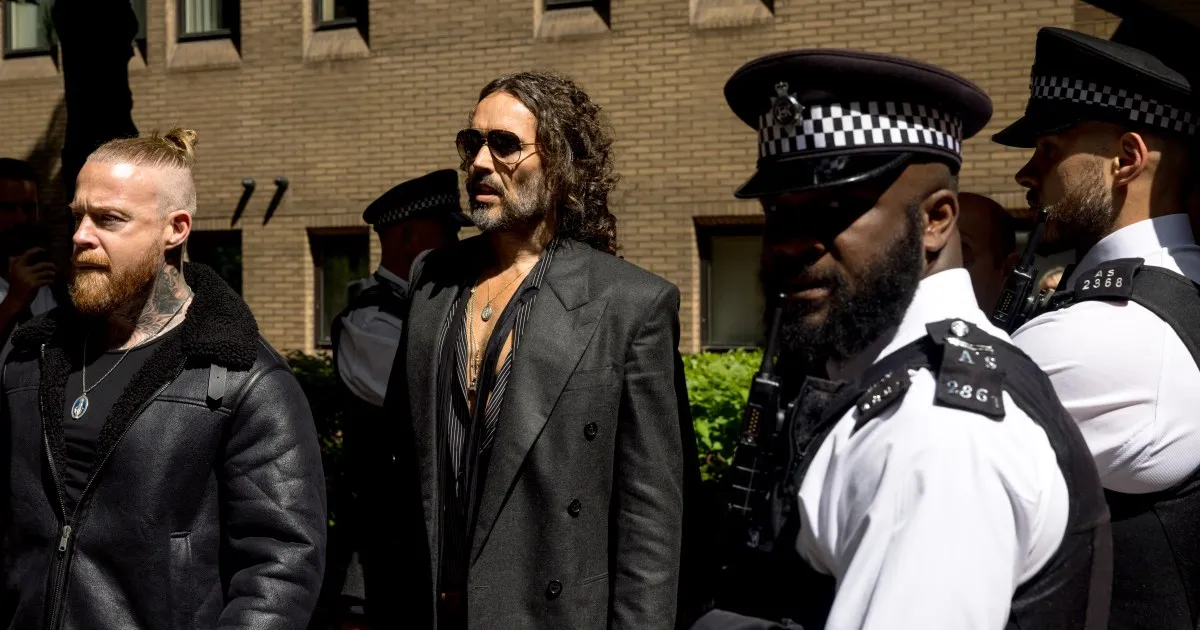
UK police say comedian Russell Brand charged with two more sex offences | Crime News
The 50-year-old comedian is already facing similar charges, including rape and sexual assault, involving four women.
Published On 23 Dec 2025
British authorities have brought new counts of rape and sexual assault against comedian Russell Brand, who is already facing similar charges involving four women.
The United Kingdom’s Crown Prosecution Service (CPS) said on Tuesday that the new charges – one count of rape and one of sexual assault – against Brand were in relation to two further women. The alleged offences took place in 2009, the CPS said.
Recommended Stories
list of 3 itemsend of list
Brand, 50, had already been charged in April with two counts of rape, two counts of sexual assault and one count of indecent assault. The charges were brought after an 18-month investigation launched when four women alleged they had been assaulted by the comedian.
Prosecutors said these offences took place from 1999 to 2005, one in the English seaside town of Bournemouth and the other three in London.
Brand pleaded not guilty to those charges in a London court.
He is expected to appear at Westminster Magistrates’ Court on January 20 in relation to the two new charges. A trial has also been scheduled for June 16 and is expected to last four to five weeks.
The Get Him to the Greek actor, known for risque stand-up routines and battles with drugs and alcohol, has dropped out of the mainstream media in recent years. He built a large following online with videos mixing wellness with conspiracy theories as well as discussions about religion.
When the first group of charges was announced in April, Brand said he welcomed the opportunity to prove his innocence.
“I was a fool before I lived in the light of the Lord,” he said in a social media video. “I was a drug addict, a sex addict and an imbecile. But what I never was, was a rapist. I’ve never engaged in nonconsensual activity. I pray that you can see that by looking in my eyes.”
Detective Chief Inspector Tariq Farooqi said the women involved in the case “continue to receive support from specially trained officers”.
He added the police investigation was ongoing and urged “anyone affected by this case or anyone with information to come forward”.

Full Taylor Swift statement ‘confirming’ new album
Need to know
The American superstar has hinted that her 13th album is in the works just two months after the release of her latest project.

Everything you need to know about Taylor Swift’s latest music update
- Taylor Swift has teased that she is working on a new album just two months after the release of her latest project, The Life Of A Showgirl. The American popstar has just released the final two episodes of her The End of An Era docuseries, which is currently available to stream on Disney+.
- Featuring six episodes, the documentary takes fans behind the scenes of Taylor’s hugely successful Eras Tour. In its series finale, the musician looks back on her recent accomplishments and sheds light on her next move.
- At the end of the episode, a title card appears on screen, stating: “On December 8, 2024, after 149 shows in 21 countries around the world, The Eras Tour had its final curtain call.”
- It continues: “On May 30, 2025, Taylor purchased all of her previous work, thanking her fans for their support in making it possible.” A third caption states: “On August 26, 2025, Travis and Taylor announced their engagement.”
- The final statement then reveals: “On October 3, 2025 Taylor released her 12th studio album ‘The Life Of A Showgirl’ the biggest album of her career… to date.” Swifties have latched onto the phrase “to date” as confirmation that the Cruel Summer singer already has her 13th record in the pipeline.
READ THE FULL STORY: Taylor Swift fans in a frenzy as star ‘confirms’ new album with cryptic statement

Why California’s milk cartons may lose their coveted recycling symbol
California milk cartons may lose their coveted recycling symbol, the one with the chasing arrows, potentially threatening the existence of the ubiquitous beverage containers.
In a letter Dec. 15, Waste Management, one of the nation’s largest waste companies, told the state the company would no longer sort cartons out of the waste stream for recycling at its Sacramento facility. Instead, it will send the milk- and food-encrusted packaging to the landfill.
Marcus Nettz, Waste Management’s director of recycling for Northern California and Nevada, cited concerns from buyers and overseas regulators that cartons — even in small amounts — could contaminate valuable material, such as paper, leading them to reject the imports.
The company decision means the number of Californians with access to beverage carton recycling falls below the threshold in the state’s “Truth in Recycling” law, or Senate Bill 343.
And according to the law, that means the label has to come off.
The recycling label is critical for product and packaging companies to keep selling cartons in California as the state’s single-use packaging law goes fully into effect. That law, Senate Bill 54, calls for all single-use packaging to be recyclable or compostable by 2032. If it isn’t, it can’t be sold or distributed in the state.
The labels also provide a feel-good marketing symbol suggesting to consumers the cartons won’t end up in a landfill when they’re discarded, or find their way into the ocean where plastic debris is a large and growing problem.
On Tuesday, the state agency in charge of waste, CalRecycle, acknowledged Waste Management’s change.
In updated guidelines for the Truth in Recycling law, recycling rates for carton material have fallen below the state threshold.
It’s a setback for carton manufacturers and their customers, including soup- and juice-makers. Their trade group, the National Carton Council, has been lobbying the state, providing evidence that Waste Management’s Sacramento Recycling and Transfer Station successfully combines cartons with mixed paper and ships it to Malaysia and other Asian countries including Vietnam, proving that there is a market. The Carton Council persuaded CalRecycle to reverse a decision it made earlier this year that beverage cartons did not meet the recycling requirements of the Truth in Recycling law.
Brendon Holland, a spokesman for the trade group, said in an email that his organization is aware of Waste Management’s decision, but its understanding is that the company will now sort the cartons into their own dedicated waste stream “once a local end market is available.”
He added that even with “this temporary local adjustment,” food and beverage cartons are collected and sorted in most of California, and said this is just a “temporary end market adjustment — not a long-term shift away from historical momentum.”
In 2022, Malaysia and Vietnam banned imports of mixed paper bales — which include colored paper, newspapers, magazines and other paper products — from the U.S. because they were so often contaminated with non-paper products and plastic, such as beverage cartons. Waste Management told The Times on Dec. 5 that it has a “Certificate of Approval” by Malaysia’s customs agency to export “sorted paper material.” CalRecycle said it has no regulatory authority on “what materials may or may not be exported.”
Adding the Sacramento facility to the list of waste companies that were recycling cartons meant that the threshold required by the state had been met: More than 60% of the state’s counties had access to carton recycling.
At the time, CalRecycle’s decision to give the recycling stamp to beverage cartons was controversial. Many in the environmental, anti-plastic and no-waste sectors saw it as a sign that CalRecycle was doing the bidding of the plastic and packaging industry, as opposed to trying to rid the state of non-recyclable, polluting waste — which is not only required by law, but is something state Atty. Gen. Rob Bonta is investigating.
Others said it was a sign that the Truth in Recycling law was working: Markets were being discovered and in some cases, created, to provide recycling.
“Recyclability isn’t static, it depends on a complicated system of sorting, transportation, processing, and, ultimately, manufacturers buying the recycled material to make a new product,” said Nick Lapis, director of advocacy for Californians Against Waste.
He said this new information, which will likely remove the recycling label from the cartons, also underscores the effectiveness of the law.
“By prohibiting recyclability claims on products that don’t get recycled, SB 343 doesn’t just protect consumers. It forces manufacturers to either use recyclable materials or come to the table to work with recyclers, local governments and policymakers to develop widespread sustainable and resilient markets,” he said.
Beverage and food cartons — despite their papery appearance — are composed of layers of paper, plastic and sometimes aluminum. The sandwiched blend extends product shelf life, making it attractive to food and beverage companies.
But the companies and municipalities that receive cartons as waste say the packaging is problematic. They say recycling markets for the material are few and far between.
California, with its roughly 40 million residents, has some of the strictest waste laws in the nation. In 1989, the state passed legislation requiring cities, towns and municipalities to divert at least 50% of their residential waste away from landfills. The idea was to incentivize recycling and reuse. However an increasing number of products have since entered the commercial market and waste stream — such as single use plastics, polystyrene and beverage cartons — that have limited (if any) recycling potential, can’t be reused, and are growing in number every year.
Fines for municipalities that fail to achieve the required diversion rates can run $10,000 a day.
As a result, garbage haulers often look for creative ways to deal with the waste, including shipping trash products overseas or across the border. For years, China was the primary destination for California’s plastic, contaminated paper and other waste. But in 2018, China closed its doors to foreign garbage, so U.S. exporters began dumping their waste in smaller southeast Asian countries, including Malaysia and Vietnam.
They too have now tried to close the doors to foreign trash as reports of polluted waterways, chokingly toxic air, and illness grows — and as they struggle with inadequate infrastructure to deal with their own domestic waste.
Jan Dell, the founder and CEO of Last Beach Cleanup, released a report with the Basel Action Network, an anti-plastic organization, earlier this month showing that the Sacramento facility and other California waste companies were sending bales of carton-contaminated paper to Malaysia, Vietnam and other Asian nations.
According to export data, public records searches and photographic evidence collected by Dell and her co-authors at the Basel Action Network, more than 117,000 tons or 4,126 shipping containers worth of mixed paper bales were sent by California waste companies to Malaysia between January and July of this year.
Dell said these exports violate international law. A spokesman for Waste Management said the material they were sending was not illegal — and that they had received approval from Malaysia.
However, the Dec. 15 letter suggests they were receiving more pushback from their export markets than they’d previously disclosed.
“While certain end users maintain … that paper mills are able to process and recycle cartons,” some of them “have also shared concerns … that the inclusion of cartons … may result in rejection,” wrote Nettz.
Dell said she was “pleased” that Waste Management “stopped the illegal sortation of cartons into mixed paper bales. Now we ask them and other waste companies to stop illegally exporting mixed paper waste to countries that have banned it.”

Justin Herbert among five Pro Bowl selections for the Chargers
Five Chargers were named to the AFC’s Pro Bowl squad Tuesday, including the team’s “quarterbacks” on both sides of the ball.
Both quarterback Justin Herbert and safety Derwin James Jr. received the honor. They are joined by outside linebacker Tuli Tuipulotu, tackle Joe Alt and kicker Cameron Dicker.
Herbert, receiving Pro Bowl recognition for the second time, is the third player in NFL history to begin a career with six consecutive seasons with at least 3,000 yards passing and 20 touchdowns.
James, a five-time Pro Bowl pick, is the only defensive back in the NFL this season to collect at least 80 tackles (five for loss) with multiple sacks and interceptions.
Dicker is the most accurate kicker in NFL history and the team’s Walter Payton NFL Man of the Year club winner. He leads all AFC kickers with 36 made field goals and 141 points scored.
Tulipulotu, a former USC standout, is ranked third in the NFL with 13 sacks, and has a career-high 20 tackles for loss.
The only surprise in that group is Alt, who made the transition from right to left tackle after left tackle Rashawn Slater suffered a season-ending injury in training camp. Alt was a stalwart on the line for the first three weeks of the season before sustaining an ankle injury 10 snaps into the Week 4 game against the New York Giants. He returned in Week 8 to face Minnesota, but was carted off in Week 9 at Tennessee an injury to the same ankle, this time requiring season-ending surgery.
Nonetheless, he’s an outstanding tackle and earned his first Pro Bowl honor, which is determined by the consensus votes of fans, players and coaches.
Four more Chargers were named Pro Bowl alternates: outside linebacker Khalil Mack, linebacker Del’Shawn Phillips for special teams, cornerback Donte Jackson and fullback/defensive lineman Scott Matlock.
Protests over fuel subsidy cut leave police injured in Bolivia

Members of the Bolivian Workers’ Union clash with police during a protest demanding the repeal of a law that removes fuel subsidies in La Paz, Bolivia, on Tuesday. Photo by Luis Gandarillas/EPA
Dec. 23 (UPI) — At least four law officers were injured Tuesday in La Paz during clashes between marchers from the Central Obrera Boliviana, the country’s largest labor federation, and police as protests intensified over the government’s decision to end fuel subsidies.
President Rodrigo Paz issued a decree Dec. 18 eliminating fuel subsidies that had been in place for nearly 20 years. He also declared an “economic, financial and social emergency” to justify the reform and paired the measure with a 20% increase in the minimum wage to cushion its impact.
As a result of the decision, gasoline and diesel stopped being sold at state-controlled prices of about 53 cents per liter and shifted to prices reflecting the real cost of imports, leading to increases of nearly 200% for consumers.
According to reports by the Bolivian newspaper El Deber, the incidents that left police officers injured occurred near Plaza Murillo, close to the government palace, when miners and transport workers attempted to approach areas secured by law offivers.
The Ministry of Government said the injured officers were attacked with stones and blunt objects while carrying out public order duties.
Police said a miner was detained for allegedly throwing fireworks and dynamite. Labor leaders, meanwhile, criticized using tear gas to disperse demonstrators.
Union leaders warned that protests will continue unless their main demand is met — the repeal of the decree that eliminated fuel subsidies.
Bolivia’s Human Rights Ombudsman’s Office said that after the fuel price changes, fares for interdepartmental, interprovincial and urban transportation rose by as much as nearly 200% in several regions, according to La Razón.
After inspections at transport terminals and hubs in La Paz, Cochabamba and Santa Cruz, the ombudsman’s office documented widespread and unilateral fare hikes that in many cases doubled or even tripled prices, directly affecting the cost of living for Bolivian families.
El Deber reported that similar protests were recorded in Santa Cruz, including temporary road blockades and clashes with police, amid growing public anger over the impact of higher fuel prices on transportation and household expenses.
Authorities reiterated calls for dialogue and warned they will not tolerate violence, while unions said they will maintain mobilizations until the government reviews the measure.

Jackson scores two goals as Senegal defeat Botswana at AFCON | Africa Cup of Nations News
Two goals in 18 minutes from forward Nicolas Jackson set the tone for Senegal’s Group D win over Botswana at AFCON 2025.
Published On 23 Dec 2025
Bayern Munich striker Nicolas Jackson grabbed a brace as Senegal eased to a 3-0 victory over Botswana in the Africa Cup of Nations (AFCON) on Tuesday.
Jackson, on loan at the Bundesliga giants from Chelsea, struck either side of half-time in Tangier, with Cherif Ndiaye completing the scoring late on.
Recommended Stories
list of 4 itemsend of list
The victory took Senegal to the top of the table in Group D on goal difference, ahead of the Democratic Republic of the Congo (DRC), who beat Benin 1-0 in Rabat earlier.
It was a predictable outcome to the first match of the tournament for both teams as Senegal are 119 places above Botswana in the world rankings.
Senegal and DRC, both former champions, are expected to fill the top two places and qualify for the round of 16.
Benin and Botswana will view their clash on Saturday as a must-win affair, giving potential victors a chance to fill one of four places in the knockout stage reserved for third-placed teams.
Torrential rain greeted the teams as they walked onto the pitch at the 75,000-seat stadium, the biggest by capacity of the nine being used in Morocco for the tournament.
Senegal had a great chance to take the lead within three minutes in a one-on-one situation, but goalkeeper Goitseone Phoko blocked a shot by Jackson.
Two-time African Player of the Year Sadio Mane, Iliman Ndiaye and Jackson all came close to breaking the deadlock as the Teranga Lions dominated possession, while the Zebras defended in depth.

Botswana waste chance
While Senegal and former Chelsea goalkeeper Edouard Mendy was a mere spectator, Phoko was constantly in action, using his hands, feet and legs to keep the West Africans at bay.
But endless Senegalese pressure finally reaped a reward in 40 minutes when Germany-born Ismail Jakobs and Germany-based Jackson combined to put one of the title favourites ahead.
Jakobs cut in from the left and pulled the ball back to Jackson, who reacted instantly, using his left foot to steer the ball wide of Phoko and into the net.
Botswana, who qualified at the expense of the 2026 World Cup qualifiers Cape Verde, finally threatened to score in added time at the end of the opening half.
But they failed to take advantage of a free kick just outside the area. A weak shot was deflected for a corner that was overhit and went out of play beyond the far post without being touched.
A flowing move from midfield with quick, crisp passing set up Jackson to double the lead after 58 minutes.
When the ball was worked to him in the box, the 24-year-old rounded Mosha Gaolaolwe and tapped home.
Cherif Ndiaye put the cherry on the cake for Senegal as he finished smartly at the end of another fine team move in the 90th minute.
Confident his team were cruising to victory, Senegal coach Pape Thiaw introduced 17-year-old Ibrahim Mbaye from European champions Paris Saint-Germain midway through the second half.
The teenage striker last month became the youngest Senegalese scorer in an international when he netted in an 8-0 rout of Kenya in an AFCON warm-up match.

The battle for control of Warner Bros.: Everything you need to know
p]:text-cms-story-body-color-text clearfix”>
Netflix and Paramount are locked in an epic tug-of-war for HBO and Warner Bros. — the historic film factory behind Batman, Harry Potter, Scooby-Doo, “Casablanca” and “The Matrix.”
Warner Bros. Discovery awarded the prize to Netflix, prompting Paramount to mount a hostile takeover bid valued at $108 billion for all of the Warner assets, which also include CNN, TBS, HGTV and TLC. The Larry Ellison-backed media company, run by his son David Ellison, has asked Warner shareholders to sell their shares to Paramount.
Warner Bros.’ sale has become the industry’s game of thrones.
The streaming king, Netflix, hopes to buy a chunk of the company — HBO, HBO Max, Warner Bros. film and TV studios and the 110-acre lot in Burbank — through its $82.7-billion deal. Not included are Warner’s basic cable channels, which are set to be spun off into a separate, publicly-traded company called Discovery Global.
Both deals would fundamentally reorder Hollywood and raise antitrust concerns. Netflix would boast more than 400 million subscribers worldwide, furthering its market dominance. And Paramount’s takeover would combine two major film studios and two leading news organizations, CNN and CBS News, under Ellison family control.
Here’s a look at how we got here:
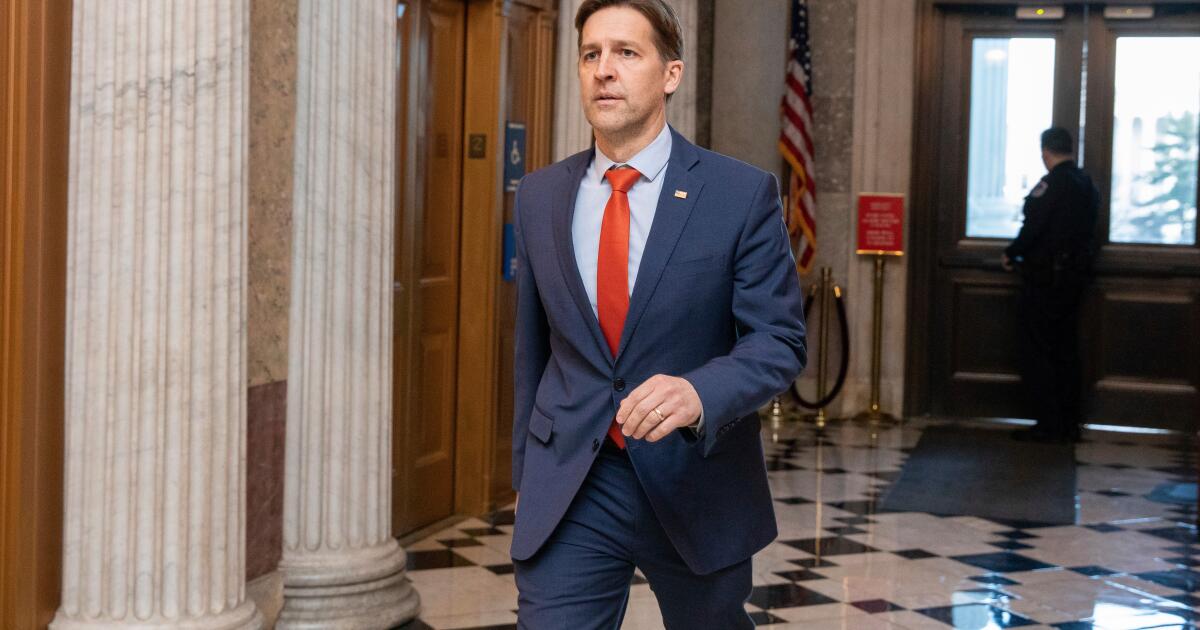
Former Nebraska U.S. Sen. Ben Sasse reveals advanced pancreatic cancer diagnosis
Former Nebraska U.S. Sen. Ben Sasse, a conservative who rebuked political tribalism and stood out as a longtime critic of President Trump, announced Tuesday he was diagnosed with advanced pancreatic cancer.
Sasse, 53, made the announcement on social media, saying he learned of the disease last week and is “now marching to the beat of a faster drummer.”
“This is a tough note to write, but since a bunch of you have started to suspect something, I’ll cut to the chase,” Sasse wrote. “Last week I was diagnosed with metastasized, stage-four pancreatic cancer, and am gonna die.”
Sasse was first elected to the Senate in 2014. He comfortably won reelection in 2020 after fending off a pro-Trump primary challenger. Sasse drew the ire of GOP activists for his vocal criticism of Trump’s character and policies, including questioning his moral values and saying he cozied up to adversarial foreign leaders.
Sasse was one of seven Republican senators to vote to convict the former president of “ incitement of insurrection ” after the Jan. 6, 2021, attack on the U.S. Capitol. After threats of a public censure back home, he extended his critique to party loyalists who blindly worship one man and rejected him for his refusal to bend the knee.
He resigned from the Senate in 2023 to serve as the 13th president of the University of Florida after a contentious approval process. He left that post the following year after his wife was diagnosed with epilepsy.
Sasse, who has degrees from Harvard, St. John’s College and Yale, worked as an assistant secretary of Health and Human Services under President George W. Bush. He served as president of Midland University, a small Christian university in eastern Nebraska, before he ran for the Senate.
Sasse and his wife have three children.
“I’m not going down without a fight. One sub-part of God’s grace is found in the jawdropping advances science has made the past few years in immunotherapy and more,” Sasse wrote. “Death and dying aren’t the same — the process of dying is still something to be lived.”

Sivert Guttorm Bakken: Norwegian biathlete dies aged 27
Norwegian biathlete Sivert Guttorm Bakken, who had been hoping to compete at the Winter Olympics in February, has died aged 27.
Bakken returned to competition in 2024, having been kept out since 2022 with the heart condition myocarditis.
The president of the International Biathlon Union said his return to the sport had been “a source of immense joy”.
“Sivert’s comeback to biathlon after a period of great hardship was a source of immense joy for everyone in the biathlon family and an inspiring demonstration of his resilience and determination,” Olle Dahlin said.
“His passing at such a young age is impossible to comprehend but he will not be forgotten and he will forever remain in our hearts.”
Local media reported that Bakken was found dead in his hotel room in Lavaze, in the Italian Alps, where he had been attending a training camp.

Is Israel’s government waging war on Al Jazeera and the media? | Israel-Palestine conflict News
The Israeli government is cracking down on critical media outlets, giving it unprecedented control over how its actions are presented to its citizens.
Among the moves is the so-called Al Jazeera Law, which allows the government to shut down foreign media outlets on national security grounds. On Tuesday, the Israeli parliament approved the extension of the law for two years after it was introduced during Israel’s genocidal war on Gaza to essentially stop Al Jazeera’s operations in Israel.
Recommended Stories
list of 4 itemsend of list
Separately, the government is also moving to shut down the popular Army Radio network, one of two publicly funded Israeli news outlets. The radio station is often criticised by the Israeli right wing, which views Army Radio as being biased against it.
Israelis are still reliant on receiving their news from traditional outlets with about half relying on broadcast news for information on current affairs and about a third similarly relying upon radio stations.
The tone of the media that is allowed to publish and broadcast is important. According to analysts inside Israel, the selective broadcasting of Palestinian suffering during Israel’s war on Gaza has helped sustain the carnage and reinforced a sense of grievance that allows for Israel’s continued assaults on Gaza as well as regional countries, such as Syria, Yemen and Lebanon.
Despite what observers characterise as a media environment firmly rigged in its favour, the far-right government of Prime Minister Benjamin Netanyahu, which contains ministers convicted of “terrorism” offences and others who have repeatedly called for the illegal annexation of the occupied West Bank, is looking nevertheless to bypass legal checks on its control of the media and bring more of Israel’s information feed under its control.
Let’s take a closer look.
Because the government believes it is too critical.
Israeli politicians have long complained about how the war in Gaza has been covered in both the international and domestic media.
But the government added a new accusation in November, partly blaming the media for the Hamas-led attacks on southern Israel on October 7, 2023.
“If there hadn’t been a media entirely mobilised to encourage refusal [to volunteer to reserve duty] and reckless opposition to the judicial reform, there wouldn’t have been such a rift in the nation that led the enemy to seize the opportunity,” Communications Minister Shlomo Karhi said as he introduced a bill to increase government control of the news environment, referring to attempts by the Israeli government to reduce the independence of the judiciary.

In addition to the ‘Al Jazeera Law’, there are three items of legislation under way: a plan to privatise Israel’s public broadcaster, Kan, the move to abolish Army Radio, and an initiative to bring the media regulator under government control.
Both Army Radio and Kan, the other state-funded outlet with editorial independence, have carried numerous reports critical of the government.
This week, Kan aired an interview with Netanyahu’s former spokesperson Eli Feldstein, who told the broadcaster that the prime minister had instructed him to develop a strategy to help evade responsibility for the October 7 attacks.
Meanwhile, Israeli Defence Minister Israel Katz, justifying the move to shut down Army Radio, said on Monday that the outlet had become a platform to attack the Israeli military and its soldiers.
Israel is also potentially changing the way it regulates its media. In November, the Israeli parliament pressed ahead with a bill that would abolish existing media regulators and replace them with a new authority appointed by the government, potentially allowing for even greater state interference.

Lastly, Israel has also codified into law the emergency legislation banning foreign media outlets whose output it disagrees with. It was first enacted as emergency legislation in May 2024 when Israel used it to ban Al Jazeera from its territory, and it was then used in the same month to halt the activity of The Associated Press after the government accused the United States-based news agency of sharing footage with Al Jazeera.
Under the new law, the communications minister – with the prime minister’s sign-off and the backing of a ministerial committee – may halt a foreign broadcaster’s transmissions if the prime minister accepts a professional assessment that the outlet poses a security threat. The minister can also shut the broadcaster’s offices, confiscate equipment used to produce its content and block access to its website.
Have the moves been criticised?
The International Federation of Journalists (IFJ) and the United Kingdom’s National Union of Journalists have criticised Israel’s decision to legislate against foreign media platforms it deems a security threat.
In a statement, IFJ General Secretary Anthony Bellanger said: “Israel is openly waging a battle against media outlets, both local and foreign, that criticise the government’s narrative: that is typical behavior of authoritarian regimes. We are deeply concerned about the Israeli parliament passing this controversial bill, as it would be a serious blow to free speech and media freedom, and a direct attack on the public’s right to know.”
The attempt to shutter Army Radio has also been heavily criticised with Israeli Attorney General Gali Baharav-Miara declaring the move unlawful and accusing Netanyahu’s coalition of making public broadcasting “weakened, threatened and institutionally silenced and its future shrouded in mist”.
Baharav-Miara has also criticised the move to place media regulation under government control, saying the bill “endangers the very principle of press freedom”.
Not very.
The Israeli media have overwhelmingly been a consistent cheerleader of the Israeli government’s actions in Gaza, where more than 70,000 Palestinians have been killed by Israel, and in the occupied West Bank.
The suffering of Palestinians is rarely shown, and when it is, it is often justified.
Even as Israel has killed more than 270 journalists and media workers in Gaza, the Israeli media have provided cover for the actions of its government and military.
That means Israelis often don’t recogise the hypocrisy of their government’s statements.
An example came in June after Iran struck an evacuated hospital during the 12-day war between Israel and Iran. The Israeli government called the incident a war crime, and the Israeli media reflected that outrage.
But the attack came after Israel had been accused by a variety of organisations, including the United Nations, of systematically destroying Gaza’s healthcare system with medical workers targeted for arrest and frequently tortured despite their protection under international law.
“The Israeli media … sees its job as not to educate – it’s to shape and mould a public that is ready to support war and aggression,” journalist Orly Noy told Al Jazeera from West Jerusalem in the wake of the strike on the Israeli medical centre. “It genuinely sees itself as having a special role in this.”
UK police drop probe into Bob Vylan’s chants about Israeli military | Music News
Police say there is ‘insufficient evidence’ to bring charges after investigating comments made at Glastonbury festival.

Published On 23 Dec 2025
British police have said they will take no further action over comments made by punk-rap duo Bob Vylan about the Israeli military during a performance at the Glastonbury music festival in June.
Avon and Somerset Police said on Tuesday that the remarks did not meet the criminal threshold required for prosecution “for any person to be prosecuted”.
Recommended Stories
list of 4 itemsend of list
During the performance, the group’s lead singer – Pascal Robinson-Foster, known by his stage name Bobby Vylan – led chants of “death, death” directed at the Israeli military over its genocidal war in Gaza.
Police said there was “insufficient evidence to provide a realistic prospect of conviction”. The force added that it interviewed a man in his mid-30s and contacted about 200 members of the public as part of the investigation.
The chant, which was livestreamed by the BBC as part of its Glastonbury coverage on June 28, prompted a widespread backlash. The broadcaster later apologised for transmitting what it described as “such offensive and deplorable behaviour”, and its complaints unit found the BBC had breached editorial guidelines.
Avon and Somerset Police said it had considered the intent behind the words, the wider context, relevant case law and freedom of expression issues before concluding the investigation.
“We believe it is right this matter was comprehensively investigated, every potential criminal offence was thoroughly considered, and we sought all the advice we could to ensure we made an informed decision,” the statement said.
“The comments made on Saturday 28 June drew widespread anger, proving that words have real-world consequences.”
Following the performance, the United States revoked the visas of Bob Vylan, forcing the cancellation of a planned US tour scheduled to begin in October.
Bob Vylan have launched defamation proceedings against Irish broadcaster RTE, alleging it falsely claimed they led anti-Semitic chants during the Glastonbury performance.
In July, the British police also dropped an investigation into the Irish-language rap group Kneecap after chants of “Free Palestine” during a performance.
Detectives sought advice from the Crown Prosecution Service and decided to take no further action, citing “insufficient evidence to provide a realistic prospect of conviction for any offence”.

Ukraine’s own ‘Dancing with the Stars’ is back on for a special episode with wartime heroes
KYIV, Ukraine — Before the war, Ukraine’s own “Dancing with the Stars” was a cherished and popular television show, dazzling the audiences with performances by celebrities and professional dancers. The show is now back on for one special episode — this time with Ukrainian wartime heroes as the stars, underscoring the nation’s resilience in difficult times.
Many still remember how President Volodymyr Zelensky — then an actor — won the dance competition in 2006, the year that “Tantsi z zirkamy” as the show is known in Ukrainian, first debuted.
In the new, special episode, the dancers perform with prosthetic limbs, showcasing their strength in overcoming adversity. The lineup of participants includes public figures who rose to prominence since Russia’s full-out war on Ukraine was launched in February 2022.
But like all of present-day Ukraine, the show — which is part of an international franchise — has had to deal with a multitude of wartime challenges, including frequent power outages.
All the proceeds will go to the Superhumans Center, a specialist clinic for the treatment and rehabilitation of war-wounded victims.
A new reality
During a prerecording last week, dancers spun, leapt and glided under the sparkle of lights, some seamlessly integrating their prosthetic limbs into the choreography.
For creative producer Volodymyr Zavadiuk, every segment of the show is precious, creating something special during tough times.
“It’s about our resilience and it’s about our future,” said Zavadiuk, who also heads Big Brave Events and the Big Entertainment Shows department at 1+1 Media.
Among the performers was Ruslana Danilkina, a war veteran who lost her leg in combat in 2022 and is now renowned in Ukraine for dedicating herself to helping injured troops adapt to life with prosthetics.
She delivered a passionate performance centered on reclaiming her womanhood following the traumatic injury.
Also back in the show is beloved dancer Dmytro Dikusar, this time as a competition judge. He juggled filming and serving with his platoon on the front lines.
Ukrainian rock musician Yevhen Halych sat in the makeup chair ahead of his number, reflecting on his own determination to bring back the show.
“We are filming this project in a country where there is a war. … We have power cuts, we may have an air alert, it could be bombing,” he said. “What do I feel? I feel a genuine desire to live a full life, no matter what happens.”
Wartime challenges
Producing the show’s special episode has been no easy feat in time of war. A live broadcast was impossible — a Russian attack can happen at any time. Then there were the technical obstacles: during last week’s recording, a key generator malfunctioned.
When the show airs on Sunday, audiences will vote for their favorite.
Danilkina, who was only 18 years old when she lost her leg and who today works at the Superhumans Center, enthralled everyone with her passionate performance, her prosthetic limb artfully integrated into her routine.
“Our dance number is about life. It’s about accepting love,” she told The Associated Press after her performance. “Because in reality, when your body is wounded, it’s very difficult to love yourself. And allowing someone else to love you is even harder.”
Her injury was not the end of her life, she said, and now she wants to show “thousands of wounded boys and girls who are starting their lives over again” that it’s not the end of theirs.
For veteran Ivan Voinov and his wife of three months, Solomiia, the show was more than just a dance performance: it was the second time they had danced together since his injury, the first time was at their wedding.
Solomiia Voinov smiled shyly, recounting how she had long tried to persuade Ivan that they should dance until he gave in.
“We don’t take our eyes off each other while dancing, and it’s a great connection,” she said. “I’m happy.”
Voinov said he was already planning their next dance — a bachata, a fast-paced, hip-swaying style of dance that originated in the Dominican Republic.
“We will be able to continue dancing,” he said. “It means that there is a future.”
Kullab and Stepanenko write for the Associated Press. AP videographer Alex Babenko in Kyiv, Ukraine, contributed to this report.

In San Francisco, mayor’s troubles not just personal
SAN FRANCISCO — He’s considered a darling of Democratic Party politics, a smooth-talking young millionaire with Kennedy good looks who has basked in the media limelight while being courted as a possible national political figure.
But beneath the surface, Mayor Gavin Newsom’s Camelot has been crumbling.
After admitting in the last five days to adultery and alcohol abuse, Newsom has suffered a public political meltdown that has rocked City Hall and led one San Francisco supervisor to call for his resignation.
The 39-year-old mayor, who is running for reelection in November, acknowledged last week that he had an affair with the wife of a longtime aide. On Monday, he announced he would seek counseling because he had “come to the conclusion that I will be a better person without alcohol in my life.”
But the mayor’s problems appear to run deeper than behind-the-scenes indiscretions, raising questions about his ability to lead one of America’s largest cities.
Critics and backers alike now acknowledge that Newsom has become disengaged, reluctant to grapple with such critical issues as the city’s soaring homicide rate among black residents. In recent months, he has even refused to meet with supervisors — longtime supporters included.
In this famously forgiving place, some at City Hall say the mayor should be granted the leeway to deal with his problems while in office. Others express pent-up frustration and question whether he should continue to run for a second term.
Supervisor Jake McGoldrick on Tuesday called for Newsom’s resignation.
“If he lived by any code of honorable behavior, he would have a personal epiphany and do the right thing,” McGoldrick said. “The only epiphany he’s had is ‘How do we spin this?’ ”
Supervisor Michela Alioto-Pier, a longtime Newsom ally, said it was too early to call for any political heads.
“Most people grapple with things in their lives, but most don’t have to do it publicly — and the mayor has taken that courageous step,” she said. “If anyone should call for his resignation, it should be city residents, and they haven’t done that.”
Meanwhile, public reaction to the mayor’s admissions appears to be mixed. Local newspaper websites have run the gamut — with comments supporting Newsom running about equal to those expressing anger and even vitriol.
As she lunched at a Financial District salad bar Tuesday, Adriana Pietras, 25, a paralegal, said Newsom’s actions have changed the way she views the mayor. “I don’t think he should resign,” she said, “But I’m not sure he should run again.”
Nearby, another voter said the mayor should leave office today.
“His transgression was a serious integrity issue,” said the man, who asked not to be named. “But he won’t ever resign. He’s a politician. Bill Clinton’s precedent gives him hope he can survive this.”
Elected to the mayor’s office in 2003, Newsom, a former supervisor, quickly won the adulation of San Franciscans with his forceful stance in support of same-sex marriages. Images of thousands of gay and lesbian couples receiving marriage licenses at San Francisco’s gilded City Hall were seen around the world.
Although some believed Newsom’s stand was too radical for the mainstream and contributed to the Democrats’ 2004 national election losses, his cachet continued to grow. Newsom’s image, with his slicked-back hair and aquiline nose, appeared on the covers of national news magazines.
He was, said Simon Rosenberg, founder of the New Democrat Network, which cultivates progressive political leadership, “arguably the single most promising Democrat under 40 in the country.”
“Whatever ‘it’ is,” Rosenberg said in 2004, “I think Gavin’s got it.”
Newsom took on celebrity status with an eager staff of aides and an aggressive spokesman with experience on national campaigns. News releases gushed about the mayor’s accomplishments.
He crafted a plan to offer healthcare to every resident. He touted San Francisco as among the world’s greenest cities and promised to provide free wireless access citywide.
But some community and business leaders have complained that the mayor’s inaccessibility may have cost the city dearly: the San Francisco 49ers suddenly announced in the midst of negotiations for a new stadium that the team was looking to move to nearby Santa Clara — in part because the team owner couldn’t get Newsom on the phone.
City government, meanwhile, is deadlocked as the mayor faces off against critics on the Board of Supervisors who characterize Newsom’s style as distant and arrogant. In November, supervisors brought a nonbinding ballot measure to voters suggesting that the mayor attend meetings to submit to “question time.”
Voters approved it. But Newsom dismissed it as a political gesture. Instead, he promised to hold community town hall meetings.
In response, angry residents showed up at one Newsom appearance dressed in chicken costumes.
Relations had so soured by January that in his inaugural speech as president of the Board of Supervisors, Aaron Peskin pointedly denounced an arrogant style-over-substance administration, saying, “We will lead by deeds and actions, not by hollow pronouncements and press releases.”
Newsom’s personal life first became controversial last fall after he briefly dated a woman who wasn’t old enough to drink legally.
Through it all, Newsom seemed to tire of the spotlight. Perhaps, he told the local media, he wouldn’t run for reelection after all. Perhaps he would just return to private life.
Then it all came crashing down.
Last Thursday, Newsom admitted having an affair with his former appointments secretary, the wife of one of his most trusted aides. The affair reportedly took place while the mayor was splitting from his then-wife, attorney and television analyst Kimberly Guilfoyle.
His plans for rehab followed on Monday — creating a stir in the national news media that Newsom has so often courted.
Tuesday’s headline in the New York Post: “S.F. ‘Sex’ Mayor in Booze RX.”
McGoldrick, the supervisor, called the headline a fitting comedown for a mayor “who lives by PR.”
“When that gets tarnished, there’s not much left,” he said.
Supervisor Bevan Dufty, a longtime Newsom friend, has called on McGoldrick to be patient, saying that Newsom needs time to heal.
But even Dufty said that the mayor’s personal crisis has taken a toll on city government.
“He has been profoundly unhappy in personal life and in aspects of his job, and that has shown,” he said. “He has taken umbrage at every turn. He’s been disdainful of me and my colleagues. It’s hard, especially since I viewed myself as an ally.”
Joel Benenson, a Democratic pollster and strategist, said it would be hard for Newsom to win higher office.
“American voters do have the capacity to forgive. They believe in redemption,” he said. “But while you can come back from an affair, it’s apparent he has crossed the line. He would have to spend too much time explaining alcohol abuse and what he did to his friend’s family. It would come to define him.”
As for Newsom’s future in City Hall, the debate continues.
“I’ve lived through three mayors — I know what it takes to get the job done,” said Supervisor Tom Ammiano. “I’m not calling for him to resign, but I don’t think he should run again. That would be traumatic” for the city.
But Dufty insisted that Newsom is up to the job.
“There’s no question he’s enormously talented,” he said. “The ultimate question is, ‘Is this what he wants to do?’ When it comes to a second term, the commentary is, ‘The only person running against Gavin Newsom is Gavin Newsom himself.’ ”
lee.romney@latimes.com
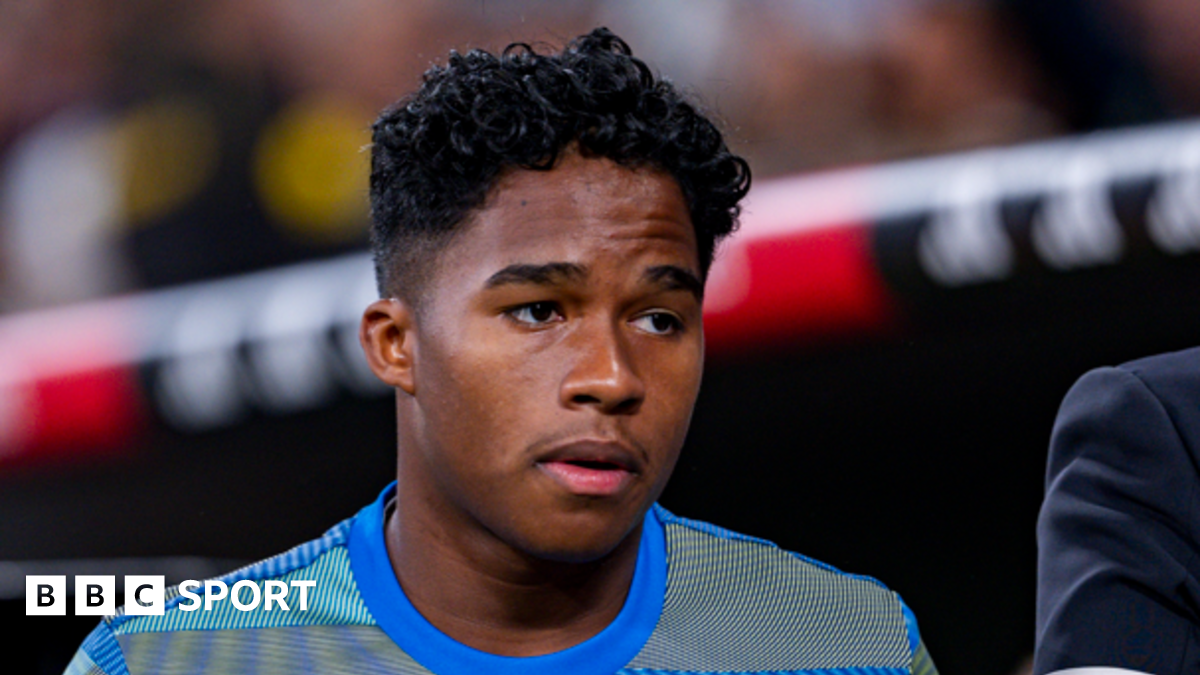
Real Madrid forward Endrick to join Lyon on loan
Real Madrid and Brazil forward Endrick has agreed to join French side Lyon on loan until the end of the season.
The highly-rated 19-year-old signed for the Spanish giants in the summer of 2024 from Palmeiras after winning back-to-back Brazilian league titles.
However, after making 37 appearances in the 2024-25 campaign he has seen his opportunities limited at the Bernabeu this term under Xabi Alonso, featuring on just three occasions.
The teenager has scored three goals in 14 matches for Brazil but his last international cap came in March during a 4-1 World Cup qualifying defeat against Argentina in Buenos Aires.
Endrick will be hoping that his switch to Ligue 1 allows him to impress and force his way back into the Brazil squad in time for next summer’s World Cup in the United States, Canada and Mexico.

Visa: E-commerce, electronics drive holiday spending up 4%
Dec. 23 (UPI) — U.S. consumers showed steady confidence this holiday season, with retail spending up 4.2% from last year, according to preliminary data via Visa released Tuesday.
Despite ongoing economic challenges, shoppers continued to buy especially tech and personal items. The analysis — based on Visa payments data from Nov. 1 over a seven‑week period — excluded auto, gas and restaurant categories and wasn’t adjusted for inflation.
Michael Brown, principal U.S. economist at Visa, said the “underlying surprise” was that U.S. consumer spending “is holding up reasonably well in light of softer consumer confidence than we had this time last year and a number of headwinds and concerns about inflation.”
In-store purchases made up 73% of total spending, though online sales rose by 7.8% and were the main source of growth fueled by convenience and early holiday deals.
Brown said the 2025 holiday season signaled a clear change in shopping habits, driven in part by artificial intelligence reshaping how consumers discover products and compare prices.
“We are seeing consumers use AI in a big way in comparison shopping and then helping to narrow down that perfect gift,” Brown told CNBC.
Electronics saw the strongest gains, with sales up 5.8%, driven by demand for newer, high-powered devices linked to the AI boom.
Apparel and other accessories rose 5.3% and general merchandise retailers offering one-stop shopping recorded a 3.7% increase.
But home-focused categories lagged. Spending on building materials and garden supplies slipped 1% and furniture and home furnishings were nearly flat edging up just 0.8%.
Although overall retail growth appears solid, the figures are not adjusted for inflation, meaning actual inflation‑adjusted gains were likely smaller once Consumer Price Index data was fully factored in.
Meanwhile, a recent survey found that 41% of Americans intended to cut back on holiday spending this year, which was up six points from 2024.
“This is the first holiday shopping season where roughly half of the consumers in that survey responded that they are going to leverage AI for one of those two tasks,” Brown added.

New Yorkers gather for near Times Square at SantaCon NYC on Saturday as part of the annual worldwide event where thousands dress as Santa or other festive characters for a day of drinking, parading through city streets and celebrating the holidays. Photo by John Angelillo/UPI | License Photo
Israeli forces demolish shops in raids near occupied East Jerusalem | Israel-Palestine conflict News
Commercial premises among buildings facing demolition as military incursions intensify near Qalandiya and Kafr Aqab.
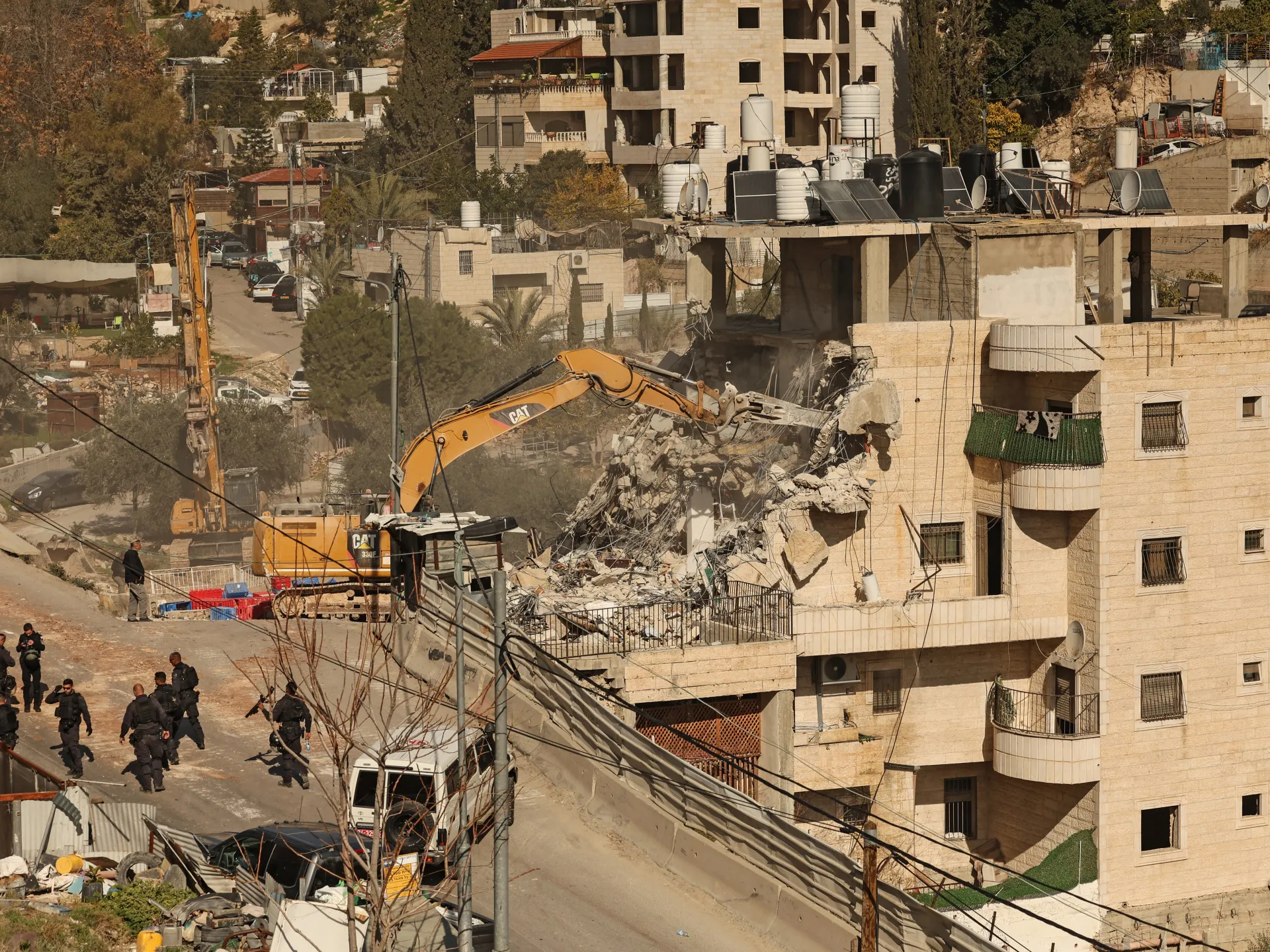
Israeli forces have begun demolishing shops in the vicinity of the Qalandiya refugee camp, north of occupied East Jerusalem, as part of a wider military incursion across several Palestinian neighbourhoods, witnesses and medical officials say.
The raids, which began early on Tuesday, have extended into the nearby town of Kafr Aqab, where Israeli troops deployed in large numbers, carried out house searches and forcibly evicted residents from their homes, according to local media reports.
Recommended Stories
list of 3 itemsend of list
The Palestine Red Crescent Society said its medical teams treated at least three people injured during the raids in Qalandiya and Kafr Aqab. The injuries included a bullet wound to the thigh, wounds caused by shrapnel from live ammunition, and injuries resulting from physical assault.
The Jerusalem governorate reported that at least three Palestinians were injured by Israeli forces’ gunfire, in addition to dozens of cases of suffocation caused by the firing of tear gas and stun grenades, the Palestinian Wafa news agency reported.
Several Palestinians were detained during the large-scale incursion that was also accompanied by the deployment of military vehicles and bulldozers.
Among those arrested are Anan Mohammed Taha and his father, Mohammed Taha, residents of the Qalandiya refugee camp, Wafa said.
‘Intimidation’ and ‘anxiety’
Residents said Israeli forces ordered several families to evacuate their homes, with at least three houses converted into temporary military outposts in Kafr Aqab. Homeowners were reportedly told the operation would continue until at least Wednesday morning.
Israeli forces also stormed the youth club inside the Qalandiya refugee camp and turned the facility into a military base, according to Al Jazeera Arabic’s correspondent.
Journalists covering the operation were also targeted, including Al Jazeera Arabic reporters, with Israeli forces firing stun grenades and tear gas canisters in their direction during the raid in Kafr Aqab.
According to the Jerusalem governorate authorities, stun grenades were also fired directly towards students in the area as they were returning home from school, while private surveillance cameras were seized.
Al Jazeera’s Nida Ibrahim, reporting from Kafr Aqab, said Israeli forces are continuing to “intimidate” Palestinians.
“They have raided Palestinian stores, Palestinian shops, and they’ve destroyed some of the plaques, some of the advertisement billboards that were here”, in an attempt to further cripple the Palestinian economy, Ibrahim said.
“This is part of the anxiety that Palestinians live through day in and day out as these Israeli raids continue on a daily basis,” she added.
Israeli incursions across the West Bank average “60 raids per day”, Ibrahim said.
In addition to the demolitions, Israeli forces confiscated goods from commercial shops in the Qalandiya refugee camp, Kafr Aqab and parts of northern Jerusalem, citing alleged unpaid municipal taxes.
Most Palestinians living in these areas hold Jerusalem residency identification cards. Residents say they are subject to high municipal taxes while receiving few basic services.
Separately, confrontations were also reported in the town of Beit Furik, east of Nablus in the occupied West Bank, after Israeli forces stormed the area.
Russell Brand charged with fresh offences including rape and sexual assault against two more women

RUSSELL Brand has been charged with further offences including rape and sex assault against two more women.
The comedian, 50, was previously accused of two counts of rape and sex assaults between 1999 and 2005 in Bournemouth and London.
The Met today confirmed they have authorised further charges against Brand.
These include one count of rape and one count of sexual assault against two women.
Officers confirmed these are in addition to the previous charges, which involve four alleged victims.
Brand will appear at Westminster Magistrates’ Court on January 20 in relation to the new alleged offences.
Detective Chief Inspector Tariq Farooqi from the Metropolitan Police who is leading the investigation said: “The women who have made reports, including those connected to the two new charges, continue to receive support from specially trained officers.
“The Met’s investigation remains ongoing, and detectives urge anyone affected by this case, or anyone with information, to come forward and speak with police.
“A dedicated team of investigators can be reached via email at CIT@met.police.uk.
“Support is also available through the independent charity Rape Crisis by contacting the 24/7 Rape and Sexual Abuse Support Line.”
Brand is currently facing trial after pleading not guilty to two counts of rape, two counts of indecent assault and two counts of sexual assault.
A trial set to last between four and five weeks has been set for June 3, 2026.
The Met Police launched a probe into the TV presenter in September 2023 after The Sunday Times and Channel 4’s Dispatches published an investigation into allegations over his treatment of women.
Following the charge, Brand told his 11.3million X followers that he was “never a rapist”.
He added: “I’ve always told you guys that when I was young and single, before I had a wife and family… I was a fool, man.
“I was a fool before I lived in the light of the Lord… I have never engaged in non consensual activity, I pray you can see that by looking in my eyes.”
At the height of his fame, Brand starred in a number of Hollywood films, including Forgetting Sarah Marshall and Get Him to the Greek.
He was also an in-demand stand-up comic and presented on Big Brother spin-off shows Big Brother’s Big Mouth and Big Brother: Celebrity Hijack.
Brand presented a BBC Radio 2 show between 2006 and 2008 but was forced to resign after he left a “lewd” voicemail for Fawlty Towers actor Andrew Sachs about his granddaughter.
He has in recent years reinvented himself as an anti-woke political podcaster after splitting his time between the US and UK.
Brand, who was previously married to pop star Katy Perry, shares three children with his wife, Laura Gallacher, 37.
Why Maduro’s Alliance with Russia Matters for European Security
We live in an interdependent world where no country or region is exempt from the effects of developments elsewhere. The transition into autocracies in other countries is not the exception. Autocratisation has escalated into a global wave. According to the latest V-Dem report, 45 countries are currently moving towards autocracy, up from just 16 in 2009, while only 19 are democratising. By 2024, 40% of the world’s population lived in autocratising countries.
Autocratic expansion represents a threat to liberal democracies in Europe and beyond, as political science’s only near-lawlike finding holds: democracies do not wage war against each other. In contrast, an autocratic Russia invades Ukraine and might quite possibly very soon attack the rest of Europe, as NATO’s General Secretary Mark Rutte alerted in Berlin on December 12: “We are Russia’s next target, and we are already in harm’s way… we must act to defend our way of life now”.
The link between democracy and peace was also at the centre of this year’s Nobel Peace Prize ceremony. In his address, Jørgen Watne Frydnes, Chair of the Norwegian Nobel Committee, emphasised that democracy is not only essential for peace within national borders, but also for peace beyond them. The award to Venezuelan opposition leader María Corina Machado, who insisted that the prize belongs to all Venezuelans, underscored that message.
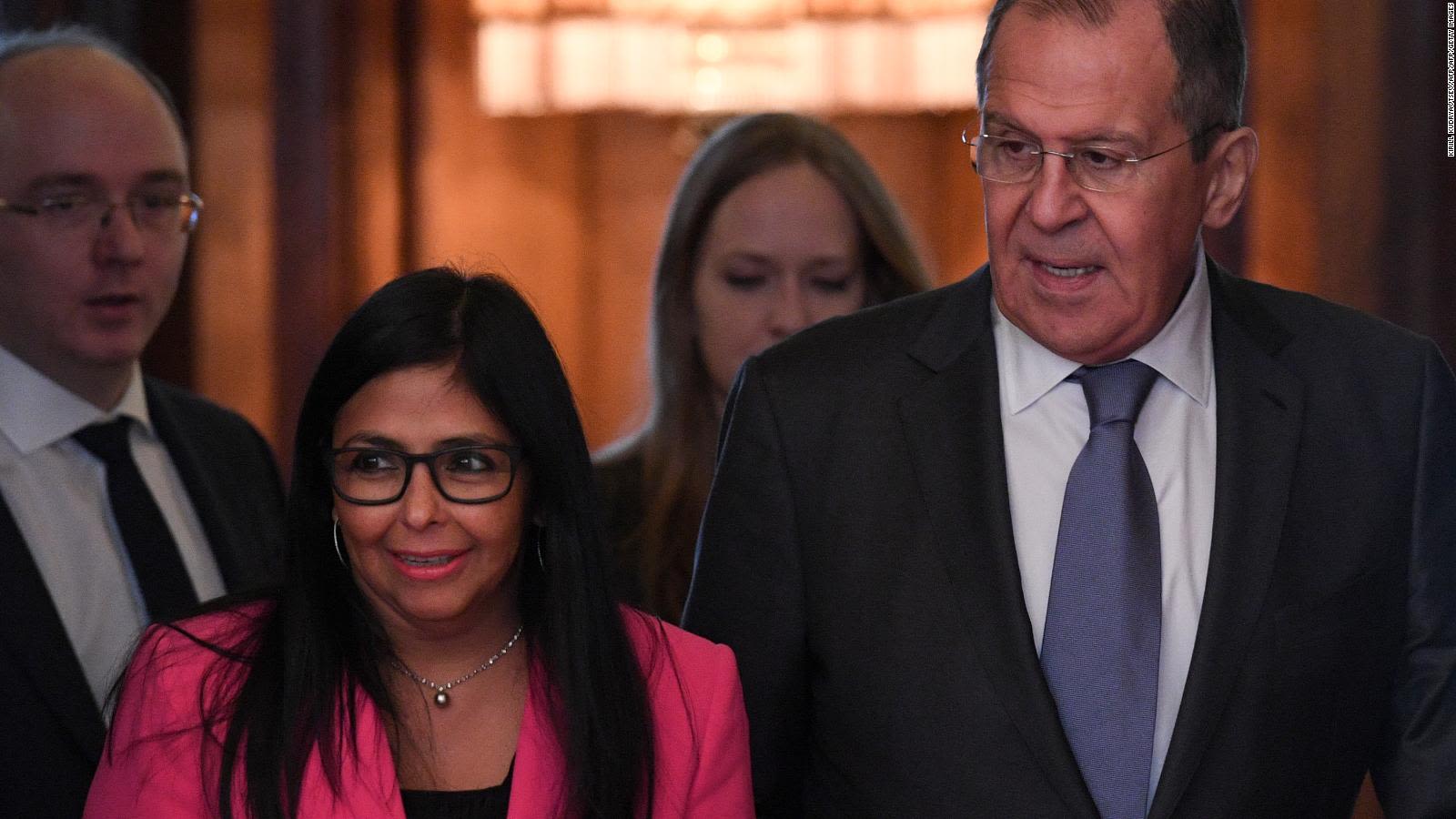
Russia illustrates this connection with unusual clarity, and the Maduro regime is a close ally of the regime directly threatening Europe. Since Chávez, under whose rule Venezuelan democracy collapsed no later than between 2002 and 2007 (according to V-Dem), the Venezuelan regime has deepened its ties with China and Russia. The latter, particularly, became an important partner in the military and security realms. By providing weapons, equipment and intelligence support, Russia secured a geopolitically strategic foothold in South America. This allows Putin to project power into the Western hemisphere and to undermine US and European strategic interests.
Venezuela’s partnership with Russia follows a foreign policy logic of influence projection within the United States’ regional sphere, much as Washington has done in Eastern Europe. This relationship has taken the form of military cooperation, with Venezuela—alongside Nicaragua—becoming one of Russia’s main partners in Latin America.
A democratic Venezuela could reintegrate into Mercosur, opening an additional market under the forthcoming EU-Mercosur agreement—one of the EU’s tools for diversifying trade partners and reducing excessive economic dependencies.
While earlier cooperation included a visit of nuclear-capable Russian bombers to Venezuela in 2018, more recent ties have focused on military diplomacy: high-level defence meetings, training exchanges, and joint participation in initiatives such as the International Army Games. But despite Russia’s growing resource constraints following its invasion of Ukraine, reports of the construction of a new ammunition factory in Maracay (Aragua) and the presence of Russian “Wagner” mercenaries in Venezuela exemplify the possibility of going back to further military cooperation. The ammunition factory would specifically produce a version of the AK-130 assault rifle (developed in the Soviet Union) and a “steady supply” of 7.62mm ordnance under Russian license in spite of sanctions to avoid Russian ammunition exports.
Beyond the military sphere, Venezuela currently cooperates with Russia to mitigate the effects of Western sanctions. Together with Iran, both countries share shadow shipping networks that allow sanctioned oil exports to continue flowing, primarily towards China (surprise! Another autocratic country).
Thus, from a European Security perspective, Venezuela isn’t really a distant or marginal case. A Russia-aligned autocracy in South America strengthens Moscow’s global reach at a time when Europe is already struggling to contain Russian aggression on its own continent. Supporting democratic survival or democratisation abroad is not only a normative commitment, but a strategic interest: Europe’s democratic stability—and its own way of life—are reinforced when democracies elsewhere endure.
Democratisation in Venezuela could bring concrete benefits. It would weaken Russia’s standing among authoritarian partners that depend on its support and reduce diplomatic alignment against European priorities in multilateral forums. Such alignment was evident, for example, in the 2014 UN resolution condemning Russia’s annexation of Crimea, where several Latin American governments sided with Moscow. Moreover, a democratic Venezuela could reduce the US’ attention diversion from the Russia war on Ukraine, and it could weaken Russia’s potential leverage when looking for US-concessions, in exchange for their own concessions in Venezuela.
But this is also about not missing opportunities. A democratic Venezuela could reintegrate into Mercosur, opening an additional market under the forthcoming EU-Mercosur agreement—one of the EU’s tools for diversifying trade partners and reducing excessive economic dependencies. At a time when economic strength has become an existential priority for Europe amid rising geopolitical tensions, this matters. Before Mercosur, and in the more immediate period following a transition, Venezuela would require substantial investment to rebuild its economy. Historical economic and social ties already exist, shaped in large part by post–Second World War European migration to the country.
Repression is not confined to Venezuelan citizens. More than 80 foreign political prisoners have been reported, including Europeans from Italy, Spain, Poland, Portugal, Hungary, Ukraine and the Czech Republic.
In the path towards the stabilisation of Venezuela as a partner to democracies—instead of being a source of autocratic threat—the democratic mandate expressed by Venezuelans on 28 July 2024, when we elected Edmundo González Urrutia as president, is a crucial element to consider. González has since identified María Corina Machado as his intended vice-president in a potential transition.
In regards to the question about how to get there, the equation toward a democratic Venezuela does not only include measures to weaken the Maduro regime’s repressive capacity, but also strengthening democratic actors inside and outside the country. Many of these active citizens often move within resource-limited bounds—juggling work, precarious living situations and scarce resources for essential tools such as websites, digital security, travel for advocacy, and organisational infrastructure. Migrants in early integration phases do not necessarily count with abundant financial resources, yet they invest what they have into their democratic efforts.
At the same time, the regime’s repressive reach extends beyond Venezuela’s borders. Recent transnational attacks like the murder attempt against Luis Alejandro Peche and Yendri Velásquez in Colombia, the attempted attack on Vente Venezuela’s Alexander Maita, and the assassination of Ronald Ojeda in Chile highlight efforts to intimidate political mobilization even outside the country.
But repression is not confined to Venezuelan citizens. More than 80 foreign political prisoners have been reported until this month, including Europeans from Italy, Spain, Poland, Portugal, Hungary, Ukraine and the Czech Republic. Thus, limiting the regime’s repressive capacity is vital to incentivize crucial pro-democracy mobilization.In summary, Europe faces a choice. Supporting Venezuelan democratisation is not only a matter of global democratic solidarity, human rights, or European soft power in Latin America. It is a matter of self-preservation. The collapse of Venezuela’s once-stable 40-year democracy and Russia’s war on Ukraine both serve as reminders that democracy—and the peace it sustains—is not a given. It must be embodied, defended, and actively built when necessary.