


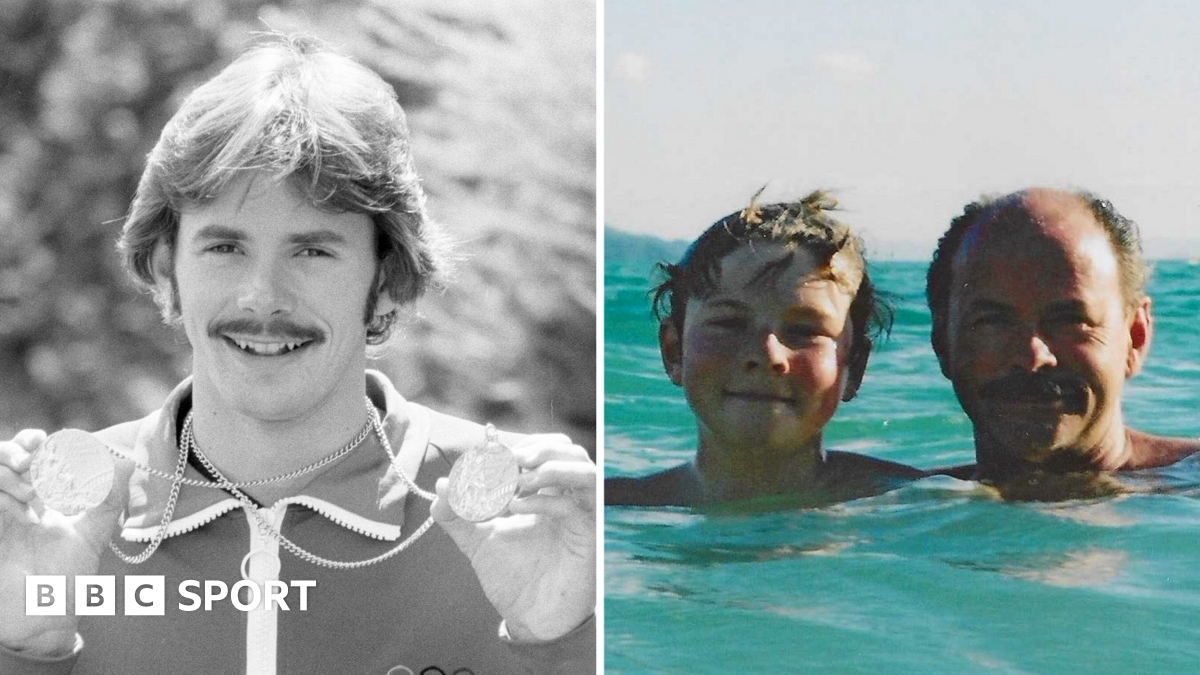
David Wilkie’s son chasing his iconic world record time from 1976 Montreal Olympics
Reaching his father’s time will be hugely challenging – some might say impossible.
“Most people who know swimming will be like, ‘he has no chance’,” Adam says. “But I want to try.”
But Adam says the 12 months ahead are about more than strokes, leg kicks, minutes and seconds.
Having not swam seriously since he was 18, he only got back into the sport after his father’s death to “feel connected to him” as he grieved.
Adam hopes to travel to some of the pools his father swam in, including in Sri Lanka – where David was born to Scottish parents, in Scotland itself, Miami and even Montreal.
He will also raise money for Sports Aid, who help support youngsters with the expense that come with chasing sporting dreams, and take advice from his dad’s former team-mates.
“Doing this challenge has allowed me to go back through his life,” Adam says.
“My dad retired at 22, long before I came along, so it’s a part of his life that I didn’t necessarily know that much about.
“I’m hoping I’ve got a lot of his swimming genes, so we’ll see as the year unfolds.
“I want this story to demonstrate how amazing swimmers are, how hard this sport is and how much effort, time and work these guys and girls put in to get to where they are.
“And I want to demonstrate how good my dad was.”

Over 2,000 join peace marathon honoring Korean religious leader

Pope Francis (3-R, 1936-2025) talks with Han
Yang-Won (2-L, 1924-2016), chairman of the Association of Korean Native
Religion, as he meets with South Korea’s religious leaders at Myeongdong
Cathedral in Seoul, South Korea. File. Photo by JUNG YEON-JE / EPA
April 14 (Asia Today) — More than 2,000 people took part in a marathon in southwestern South Korea to honor the legacy of Han Yang-won, a spiritual figure known for promoting coexistence and peace.
The third Haepyeong Marathon was held Saturday in Namwon, North Jeolla Province, the hometown of Han, who died in 2016. The event was organized by the Association for Coexistence and Peace and supported by the Ministry of Culture, Sports and Tourism.
The marathon commemorates Han’s lifelong efforts to promote interfaith harmony and shared national values. The event name comes from his pen name “Haepyeong,” reflecting his core philosophy of coexistence and peace.
Organizers said this year’s event also aimed to express solidarity with people affected by ongoing conflicts around the world and to call for an end to war.
Participants ran 5-kilometer and 10-kilometer courses, with ages ranging from 5 to 78, highlighting a cross-generational turnout.
“The message of coexistence and peace is more urgent than ever in a world marked by conflict,” said Kim Dong-gyu, secretary-general of the organizing group. “We hope this event can help inspire a future where people live together in peace.”
Han was a leader of a Korean indigenous religious tradition that incorporates elements of Confucianism, Buddhism and Taoism. He also founded a national council of Korean religions in 1985 and led it for more than three decades.
He was posthumously awarded one of South Korea’s highest civilian honors in 2017 in recognition of his contributions to religious harmony.
— Reported by Asia Today; translated by UPI
© Asia Today. Unauthorized reproduction or redistribution prohibited.
Original Korean report: https://www.asiatoday.co.kr/kn/view.php?key=20260414010004375
US forces kill 4 people in latest strike on vessels in eastern Pacific | Donald Trump News
The killings mark the fourth US deadly strike in the past four days on vessels in the eastern Pacific Ocean.

Published On 15 Apr 2026
The US military has killed four more people in its fourth deadly attack on vessels in the eastern Pacific Ocean over the past four days.
US Southern Command (SOUTHCOM) announced the attack in a social media post on Tuesday, alongside a video that showed a stationary boat with outboard engines being hit by a missile and exploding into a huge ball of flames.
Recommended Stories
list of 4 itemsend of list
SOUTHCOM, which is responsible for US military operations in Latin America and the Caribbean, claimed that the four people killed were “narco-terrorists”, but provided no evidence to support its claims.
Justification for the lethal attack, according to SOUTHCOM, was due to intelligence – details of which were not provided – that confirmed that “the vessel was transiting along known narco-trafficking routes in the eastern Pacific and was engaged in narco-trafficking operations”.
The latest killing of people on board vessels in international waters in the eastern Pacific Ocean and Caribbean brings the overall death toll to at least 175 since early September, when US President Donald Trump ordered the attacks to stop what the White House claims are Latin American cartels transporting drugs to the US.
Tuesday’s killings came after two people were killed in a US strike on Monday, and five people were killed in two separate strikes on Saturday, also in the eastern Pacific.
The Associated Press news agency reported that the US coastguard has suspended a search for one survivor from the two attacks reported on Saturday.
International legal experts and rights groups say the US military campaign amounts to “extrajudicial killings” in international waters and that the attacks have targeted civilian fishing boats.
Legal experts have said that if some vessels were involved in drug trafficking, those on board should face the law, rather than deadly attacks.
Critics have also questioned the effectiveness of the US military operation in part because the fentanyl behind many fatal overdoses in the US, which Trump has used to justify his campaign, is typically trafficked to the US over land from Mexico, where it is produced with chemicals imported from China and India.

Inside Justin Bieber’s Coachella party where Hailey ‘turned away’ girls and Kendall Jenner ‘got close’ to Jacob Elordi

JUSTIN Bieber’s private Coachella after-party had a guest list so exclusive that promoters and influencers who were initially invited wound up being turned away, The U.S. Sun can reveal.
The pop star was supported by the Kardashian-Jenner clan, along with actor Jacob Elordi, who was seen with them in the crowd – and later cozying up with Kendall at the after-party.
Following Bieber’s headlining set on Saturday night in Indio, California, the star hosted a blowout bash with wife Hailey and A-list friends.
Kendall, 30, and Jacob, 28, were reportedly “all over each other” at the after-party.
A source told The U.S. Sun that the party was ultra-exclusive and hosted by Bieber’s new fashion brand, Skylrk, which also had a pop-up at the festival.
“Many people were turned down who had previously been invited,” they claimed.
“Promoters also had a lot of girls on their guest lists and I heard Hailey was turning them away.”
Influencer Zach Clayton echoed this by sharing a video on his TikTok showing a guy complaining, “They cut all my guest list off.”
He explained he invited 20 girls and they were all denied, joking that Hailey is a “boss,” and she was likely the reason they were not given access to the private event.
An insider also told The U.S. Sun that the party was off-grounds, as it’s well known Bieber purchased a $16.6 million estate in the ultra-exclusive Madison Club in nearby La Quinta.
Most read in Entertainment
The U.S. Sun has reached out to the Biebers’ reps for comment.
Kylie and other Kardashian family members also own property in the guard-gated community.
A source told The U.S. Sun that Kendall and Jacob are not serious but were seen getting close in the early hours.
“Kendall is 100 percent Jacob’s type. I heard they’re having fun and he hung out with her Sunday, too,” they said.
Australian Jacob has been single since splitting from influencer Olivia Jade Giannulli in October 2025.
The pair had an on-and-off relationship from December 2021 through late 2025.
They last stepped out together at a Frankenstein screening in New York on January 14, but are said to be over.
“Him and Olivia are so done,” the insider added.
The U.S. Sun reached out to Kendall and Jacob’s reps for comment.
Kendall was seen at the festival dressed casually in a pair of white denim shorts, a white tank top, an Adidas hat, and shades.
Jacob wore Bieber’s merchandise, including a black Swag cap, and was seen sneaking through the crowd as he enjoyed the set with the Kardashian-Jenners.
Meanwhile, Kendall has been single since her brief romance with rapper and actor Bad Bunny.
Following their December 2023 breakup, they were spotted together again in May 2024.
Kendall was also seen at the Super Bowl in February, awkwardly dancing to his halftime performance, while the rapper had reconnected with his ex-girlfriend, Gabriela Berlingeri.
Kendall’s new romance with a movie star has tongues wagging, as her sister, Kylie Jenner, is dating Oscar-nominated actor Timothee Chalamet, who was also seen at the festival.
Both actors were highlighted as key figures of this year’s awards season, often appearing together at events.
Kim Kardashian was also seen at Coachella, hiding in the crowd with new love Lewis Hamilton as they tried to go incognito.
Kendall, Kylie, and Kourtney were seen earlier in the weekend at the annual 818 Outpost event, which promoted the family’s brands, along with Hailey Bieber’s skincare line, Rhode.
Justin Bieber will return to the stage this weekend after a headline Coachella set that sharply divided fans.
The pop star opted for a stripped-back, intimate performance style — at times sitting behind a laptop, taking requests, and playing a mix of old music videos, childhood clips, and viral moments.
Some critics labeled the set “lazy” and “low effort,” arguing it lacked the polish expected from a major headliner.
Others, however, praised the nostalgic feel, as Bieber revisited his biggest hits alongside newer material.

Businessman a Harsh, Blunt Political Force : Ventura: Thrift store magnate Ray Ellison is called by some a man of integrity. To others, he’s the godfather of mudslinging.
Thrift store millionaire Ray Ellison leaned back in his office chair and laughed.
He knows a liar when he sees one, he said. And he knows a liberal. He doesn’t like either.
“I called him a slimeball, scum-sucking liar,” said Ellison, 65, reciting a description of then-Ventura Mayor Dennis Orrock that he painted on a truck parked near a freeway in 1984.
Ellison took on the mayor’s ally the following year, dubbing Councilwoman Pati Longo “The Phony with The Toni” in full-page newspaper ads that declared her a liar, too.
In 1991, Ellison’s large ads depicted Councilman Donald Villeneuve astride a defecating bull, stating: “Screw the Marketplace.” Last fall, two councilmen and a challenger were featured as smiling fish in ads titled: “A Fish Stinks From The Head. Take A Sniff of These.”
Of the forces that have reshaped Ventura’s political landscape in recent years–pushing campaigns to increasingly personal attacks–none has been consistently harsher than Raymond W. Ellison.
Spending tens of thousands of dollars, including at least $14,000 last fall, Ellison has been described by critics as Ventura’s godfather of mudslinging.
“Based on the ads he ran, I would judge him to be venal and mean, coarse and crass,” said former Councilman Todd Collart, defeated Nov. 5 after he was caricatured as a smelly fish. “He continues to set lower and lower standards to be aimed for by others. And that works against good people seeking elective office.”
Councilman Gary Tuttle–also featured in the “fish ads”–said he considered not running for a second term last year because of Ellison.
“I knew he was going to come after me, and I had to think, ‘Do I want to put my family through this?’ ” he said. “My mom, my wife, my sisters, they got very upset. The Tuttle name has always been a positive in this community.”
Even some candidates backed by Ellison distanced themselves from his methods. Newly elected Councilwoman Rosa Lee Measures called a press conference before the election to say she was not associated with Ellison, and asked that he cancel future ads.
Councilman James Monahan, a recipient of Ellison political assistance for 16 years, said recently that he does not condone his friend’s advertisements, because they “can have a negative effect on everyone. You can turn people off.”
But to many of Ellison’s political allies and friends, the Ventura businessman is far more complicated and admirable than his crude public persona might suggest. And his opinions–though presented in a blunt style–air the frustrations of Ventura’s business community, they said.
Supporters say Ellison holds work, family and religion most dear–that he is generous in his donations to church and charity and in his employment of society’s least employable.
A high school dropout turned business whiz, Ellison says he started the nation’s first privately owned thrift store in 1948 with money he earned as a paratrooper in World War II. Now semi-retired, he claims about 1,300 employees in the 28 stores he and his two sons own or operate in seven states.
Officials at organizations for war veterans say Ellison’s thrift stores keep them in business by paying the charities millions of dollars a year for donated goods or by operating charity-owned stores at a healthy profit.
“The United States could use more Ray Ellisons,” said Jim Pechin, business manager for the Vietnam Veterans of America in Washington. “We probably wouldn’t be here today without Ray, because he developed our funding base.”
Locally, Ellison donates to charity golf tournaments and gives time and money to the First Baptist Church of Ventura. In recent days, he helped decorate the church for Christmas dinners–then washed dishes afterward.
“He’s just a very helpful, generous man,” said Nick Bailey, a church associate pastor. “He’s not afraid when he sees needs in the church community and in the ministry here to be a part of the solution.”
*
Ventura attorney William D. Fairfield, who has known Ellison for 20 years, said of his friend:
“I have tremendous respect for this man–for his integrity, for his business acumen, for him as a family man. And I think he’s done more for this community than any single individual by asking public officials to be accountable.”
Banker Bob Alviani, president-elect of the Ventura Chamber of Commerce, said the comments of Ellison–whose philosophy is pro-growth, pro-business and anti-government waste–reflect the sentiments of others.
“I don’t think Ray Ellison is alone in his feelings or alone in how he expresses his opinion,” Alviani said. “If he wants to pay the price to say what he’s saying, fine. If you take it to heart, fine. If you choose to ignore it, fine too.
“The wonderful thing about our politics in this country is that a person has a right to say whatever they want,” Alviani said.
Gruff, lean and balding, Ellison is skittish about public attention. He wants to have his say every so often in political advertisements and letters to the editor, and leave it at that.
But the nature of his business–and his family’s pioneer role in it–have prompted a series of television and newspaper reporters to knock at his door.
“I’ve had lots of stories,” Ellison said in a recent interview. “You name it–NBC, CBS, ’60 Minutes,’ ‘The Today Show.’ . . . It’s a big pain in the ass.”
The theme of those stories, including a 1987 investigation by The Times, has been that private thrift store operators such as Ellison use charities’ names to collect tax-deductible donations of clothes and household goods, then sell them for large profits, most of which go into the pockets of the operators and not the programs of charities.
*
The Times’ investigation found that private thrift store operators nationwide typically made $1.50 for each $1 the charities got. Ellison, his extended family and the Ellisons’ former employees dominate the private thrift store industry, The Times found.
But in Ray Ellison’s case, the charities generally have not complained about the revenue they receive from the stores he owns or manages for them. They say their share of profits is higher than industry standards. For instance, charity profits reach about $1.45 million a year–about two-thirds of the total profit–at five stores owned by the Disabled American Veterans organization of Colorado and operated by Ellison.
“Ray runs the Cadillac of the thrift store management,” said Fred Friedrich, president of the DAV’s Colorado thrift store committee. “The guy’s good. He’s got a lot of respect out here.”
Ellison’s Ventura-based M & M Management wrote checks totaling $7 million to veterans’ groups last year, including $4 million in profit from the 28 stores, he said. He won’t say how much his company earned, but he has prospered.
Ellison and his family valued M & M at $5 million in 1985, according to public records. His two sons, Matthew and Mark, and the husbands of his two daughters all work in the family business, Ellison said.
Ellison’s 142-acre ranch just north of Ventura is for sale for $3 million. He has a condominium in Colorado, where he spends summers and holidays. His family owns most of the 28 stores they operate. He’s a real estate developer in Texas, where he recently sold 40 acres to Wal-Mart, and in Washington state, where he’s building a 180-house subdivision and shopping center.
Ellison’s prosperity is surely greater than he could have imagined as a Depression-era son of a Salvation Army officer. As a boy, he said he struggled in school because of frequent family moves along the West Coast, and dropped out in ninth grade.
*
But he began to learn the skills that would make him rich. He remembers watching his parents directing teams of men sorting salvaged goods for the Salvation Army.
Family lore credits his mother, Stella, with coining the term “thrift shop” as the Ellisons helped the Salvation Army transform its bulk salvage operation into a retail one in the 1930s.
Eventually Ellison’s father, Orlo, and four uncles all entered the private thrift store business. But it was young Ray and one uncle who Ellison said started the first private thrift store 46 years ago in Santa Ana with $3,500.
By 1965, Ellison, who lived in Ventura briefly in 1947, had returned to the city with his wife, Sue, a Westmont College graduate, to raise his two sons and two daughters, Ellison said.
Since then, Ellison has left a legacy of hard work and hard feelings.
Even in semi-retirement, the Montana-born Ellison said it is not uncommon for him to arrive at M & M’s national accounting office on Main Street in Ventura by 4 a.m.
“Get your buns out of bed, get your work done before the traffic gets too heavy, then go home and enjoy your family,” Ellison once wrote.
In a recent written statement, Ellison described his children and their spouses, all Ventura residents, as loving and hard working. “Neither they, or my wife and I attend social functions, bridge parties, or have our names associated in any way with playing Santa Claus. Our lives focus around our families, church, friends and business,” he wrote.
Despite such tendencies, Ellison has become well known, first as the Ventura Keys homeowner who led a successful seven-year legal battle against the Ventura Port District to force dredging at the mouth of Ventura Harbor.
The 1968 case cost Ellison $50,000 in fees, but is now cited in law school textbooks as an example of a citizen forcing government to keep its word, he said. More recently, he lost two lawsuits that challenged Ventura County’s General Plan and rezoning policies because of changes he claimed lowered the value of his ranch.
“I have no use for people who lie or abuse their authority to rule over me,” he said in a written explanation of the lawsuits. “I give due respect to every type of authority until that body proves unworthy.”
*
Ellison’s dramatic public entry into Ventura politics came in 1984, when he warned the Ventura City Council not to appoint attorney Dennis Orrock mayor, then attacked Orrock so tenaciously that the new mayor asked the council to appoint an ethics committee to investigate the charges.
On one large sign he placed near a freeway on-ramp, Ellison wrote: “For sale cheap, slightly used mayor. Outstanding qualifications. Unethical. Deceitful. Lies Frequently.”
“I still have the sign,” Ellison said with a laugh.
Ellison claimed Orrock, who years before had represented Ellison and other investors in an ill-fated business deal, knew or should have known that the deal’s promoter had failed elsewhere with similar proposals.
Orrock denied the accusation. And after hours of testimony, all carried on local cable television at Ellison’s expense, the ethics committee cleared Orrock of any wrongdoing.
“That was the first time it got nasty,” remembered John McWherter, a councilman for 18 years ending in 1991. “That was the first time that a personal vendetta had come into City Council politics.”
Orrock said he has not seen or spoken with Ellison since. And despite the “hurtful memories,” he even jokes about the experience.
“In 1984, he elevated me to one of 10 movers and shakers in the area, because I was on the front page of the newspaper for 23 days,” Orrock said. “I don’t know what motivates Mr. Ellison. The guy is kind of an enigma.”
Ellison said his motive was that Orrock was not fit to be mayor. The hearings were a whitewash, Ellison said, but that was OK because Orrock did not seek another council term.
“It was my intention that he never run again for anything,” Ellison said. “I didn’t care about the (lost investment). The money didn’t mean squat. I cared about who would represent the city.”
In 1985, Ellison took on Pati Longo. The councilwoman–whose politics were conservative and pro-business like Orrock’s and Ellison’s–had defended Orrock in his squabble with Ellison.
*
Ellison bought a series of newspaper ads attacking her as a phony who had lied to the grand jury. He cited her admissions that she had been evasive when asked if she’d discussed the closed-door proceedings with others.
“I figured the public had a right to know, because she would have been mayor,” Ellison said.
Longo, who lost her bid for reelection, said she thinks Ellison’s reason for challenging both her and Orrock, and in opposing Villeneuve in 1991 and Collart last year, was to improve Monahan’s chances of being mayor.
“Ray Ellison’s motivation was that Jim Monahan had always been his resident politician,” Longo said. So when Monahan had a chance at the mayoralty, Ellison attacked the favorite, she said.
Villeneuve said he also sees a connection between Ellison’s attacks and Monahan’s political fortunes and agenda.
“His interest in politics is in the form of personal vendetta for somebody he disagrees with in ideology or most often in a very personal sense,” Villeneuve said. “He attempts to parallel his protege, Jim Monahan. I’ve had to sit and listen to Jim Monahan extolling the virtues of Ray Ellison. It’s almost hero worship.”
Both Monahan and Ellison said they are friends who generally see eye-to-eye politically. Ellison will occasionally check with Monahan on issues, they said. Ellison said he doesn’t follow politics closely and will ask Monahan about his reelection plans and the voting records of other council members. But he said he doesn’t ask Monahan’s advice.
“I know that Jim can fill me in if I’m wrong on how somebody has voted,” Ellison said. “I don’t even take the (local) newspaper. I don’t go to council meetings any more. I haven’t for many years. I can get behind on my facts. So I call Jim, or somebody else, but normally Jim.”
Monahan said he has never recommended who Ellison should oppose or support in an election.
“Believe me, he knows how to make up his own mind,” the councilman said. “Ray’s the kind of guy who’s a loner. He does everything on his own.”
*
Monahan said Ellison has helped Ventura politics by bringing information to voters, but he said he didn’t care for the recent fish ads, and thought the Orrock hearings were an unnecessary “dog-and-pony show. That was a sad day for everybody.”
If Ellison opposed Orrock and Longo for perceived ethical shortcomings, he said he opposed Villeneuve two years ago and Collart, Tuttle and environmentalist challenger Steve Bennett this year because he did not agree with their politics.
“They’re discouraging almost carte blanche what needs to be done to rejuvenate the city. What it amounts to is no growth,” he said. “They don’t allow anything that will generate money. They spend hundreds of thousands of dollars on stupid studies.”
That was as detailed as Ellison got in critiques of his political opponents during two recent interviews. He had trouble remembering what he had written about them in campaign ads. At one point, he read his Villeneuve ad to refresh his memory about the councilman’s principal flaws.
“Let’s see what I had to say here,” he said. “Well, yeah, I did look up his votes. I ought to keep this crap (advertisements). . . . I don’t remember them. I just make them up and forget about them.”
In the Villeneuve ads–as with his fish ads–Ellison stated his pro-business philosophy and lashed his “liberal” opponents. He said his colorful headlines were only a way to grab voters so they will read his full message.
“You have to get people’s attention,” he said.
He does that. For example, in a Villeneuve ad segment titled “To Wee or Not to Wee,” Ellison repeated a second-hand comment Villeneuve allegedly made at a City Hall urinal during a break in a hearing about dredging the Ventura Keys.
Villeneuve and former Mayor Richard Francis, who had battled Monahan before leaving the council in 1991, said they responded with their own negative campaign this fall.
*
Some of their “Anyone but Monahan” ads were more personal and biting than Ellison’s fish ads, especially a radio spot late in the campaign.
“I knew his ads were coming,” said Francis, a Ventura attorney. “I didn’t want to start slinging mud, but if mud is going to get slung and you’re going to get dirty anyway, you may as well get into the fray.”
Monahan doesn’t accept that explanation. “Richard Francis took a personal attack on me that was far worse than Ray’s comments about these other three,” he said.
Nor does Monahan think it’s fair that Ellison is seen as “the special interest in the black hat,” while Patagonia, an environmentalist clothing company that spent about $15,000 in the last campaign, “is seen as the special interest in the white hat.”
Patagonia owner Yvon Chouinard “doesn’t give a damn about anybody else’s business but his own,” Monahan said. “Ray Ellison cares about everybody’s business, and he’s willing to stick his neck out for it.”
Patagonia spokesman Paul Tebbel said the big difference between the two is that Patagonia endorses candidates positively, while Ellison attacks them personally.
“He’s strongly within his rights to do that,” Tebbel said, “I just hate to see Ventura politics reduced to who can put out the strongest negative ad.”
Ellison did also buy some endorsement ads last fall, backing Measures, Monahan and Clark Owens.
Whether Ellison has had much impact on election results is an open question. Longo, Villeneuve and Collart, who all lost their races after Ellison’s criticisms, think he has. Tuttle, who placed only fourth last fall, does too.
Others, including McWherter and Monahan, said that Longo, Villeneuve and Collart were vulnerable anyway.
As for himself, Ellison thinks his types of ads work. “I think it’s very effective,” he said.
Ellison said he recognizes the personal pain his ads may cause. Public criticism following news stories about his thrift stores has hurt his family too, he said.
“I feel sorry about that,” he said. “They all have kids. Just like our kids went to school and had to put up with having negative things said about their dad. It’s hard on them. But they become accustomed to it over a period of time. . . . It goes with the territory.”
Yet Ellison felt compelled to write a letter of explanation to Collart shortly after the councilman lost in November.
“I imagine you consider me a callous and insensitive disgrace to society,” Ellison wrote.
He said he respected Collart and considered him truthful. “I wish you well, apologize if you took personal offense to my methods, and thank you for your service,” he wrote.
But within the same letter may be an indication of things to come during the campaign of 1995.
While praising Collart for being true to campaign promises, Ellison chastised those “who forgot . . . what they were elected to do.” He pointedly mentioned Mayor Tom Buford and former Mayor Greg Carson as examples of two who have “breached their stated positions.”
*
Carson and Buford, both originally backed by the business community, have been criticized by some businessmen for votes over the last two years. And Ellison referred to Carson in his fish ads as a weak conservative enticed by liberals with the promise of the mayor’s job.
Nursery owner Carson, who describes himself as a moderate and insists he’s broken no promises, said he first felt Ellison’s sting after council members chose him mayor two years ago.
Ellison immediately telephoned Carson to tell him he had considered him “a nice young man,” but now believed he was a jerk, Carson said. “He was upset because Jim Monahan didn’t become mayor.”
Carson said he considers Ellison’s ads detrimental to Ventura politics, and he said the specter of Ellison would not deter him in 1995.
“Somebody like Ray Ellison doesn’t scare me,” Carson said. “If anything, people like Ray Ellison would be a reason I would run.”
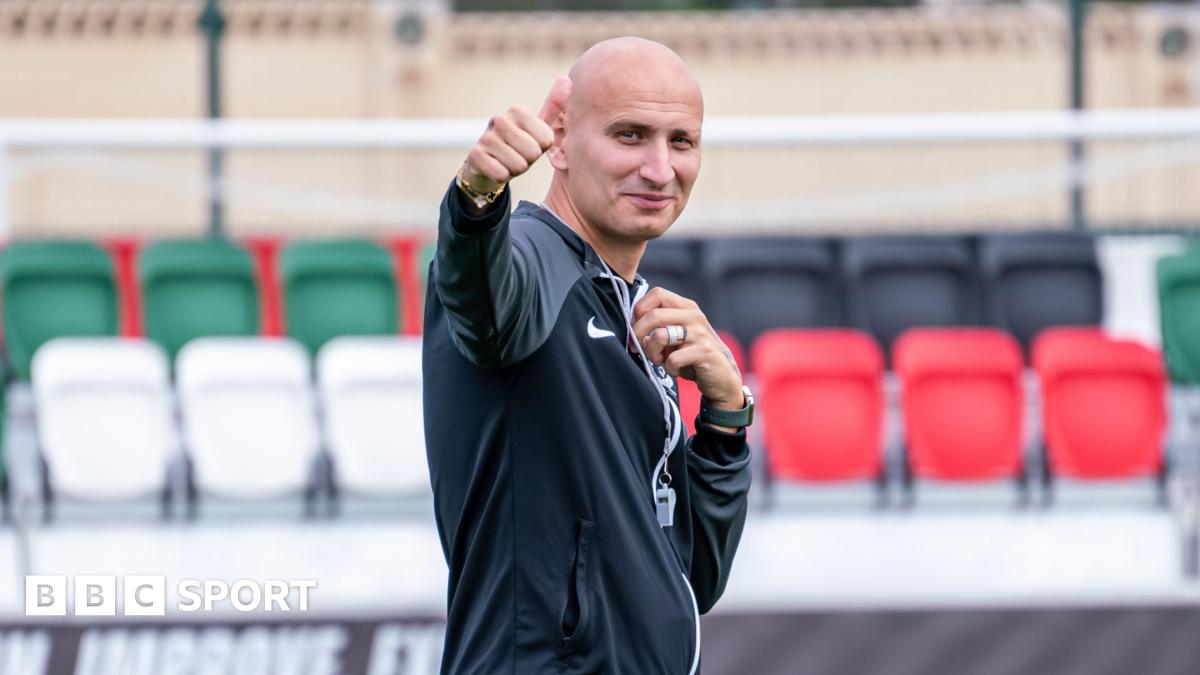
Jonjo Shelvey quits playing to manage UAE minnows
Former England midfielder Jonjo Shelvey has retired from playing and will take over as manager of third-tier United Arab Emirates side Arabian Falcons FC.
The 34-year-old had been playing for the Dubai club, who were formed in 2023, since September – alongside ex-Manchester United midfielder Ravel Morrison.
Former Crystal Palace midfielder Jason Puncheon is the club’s co-owner and head of football operations.
Shelvey, who played for Liverpool and Newcastle among others, made headlines earlier this season when he told BBC Sport: “I don’t want my children growing up in England any more.
“We’re very lucky that we lived in a nice part of the UK but where I’m from, originally, you can’t have nice things in my opinion.”
A documentary will follow Shelvey trying to lead Arabian Falcons to promotion in the final five games of the season.
He said: “My ambition is to climb to the very top of management and this is the perfect project to prove myself and what I’m capable of.”
Shelvey started his playing career at Charlton Athletic and played in the top flight for Liverpool, Swansea, Newcastle and Nottingham Forest.
He also featured for Blackpool, on loan, Turkish sides Caykur Rizespor and Eyupspor and briefly Burnley before moving to the UAE.
Shelvey won six caps for England, in 2012 and 2016 – all under Roy Hodgson.

Justice Department asks court to dismiss Jan. 6 convictions of Proud Boys, Oath Keepers members

1 of 3 | Stewart Rhodes, founder of the far-right extremist group the Oath Keepers, is among those Jan. 6, 2021-related convictions the Justice Department is seeking to dismiss. File Photo by Bonnie Cash/UPI | License Photo
April 14 (UPI) — The Justice Department on Tuesday asked a federal court to dismiss the convictions of Proud Boys and Oath Keepers members who were found guilty of leading and organizing the Jan. 6, 2021, riot and attack on the U.S. Capitol.
The request includes 12 former members of the groups, all of whom prosecutors said were ringleaders of the attack. After his return to office in 2025, President Donald Trump pardoned most of those who were convicted for their parts in the riot, a move affecting more than 1,000 people. However, the sentences of some, including these 12, were commuted to time served instead, freeing them from prison though the convictions remained.
The group involved in the Justice Department request on Tuesday includes Stewart Rhodes, a leader of the Oath Keepers who was sentenced to 18 years in prison for seditious conspiracy and other charges. Prosecutors said Rhodes and other Oath Keepers “began plotting to oppose by force the lawful transfer of presidential power” after the 2020 election, CBS News reported.
Others whose sentences were commuted are Proud Boys leaders Ethan Nordean, Zachary Rehl, Dominic Pezzola and Joseph Biggs, who were also convicted of seditious conspiracy for their role.
Appeals involving this group have continued, and the Justice Department requested Tuesday that federal appeals panels vacate the earlier convictions and drop the cases in whole.
“The United States has determined in its prosecutorial discretion that dismissal of this criminal case is in the interests of justice,” wrote Assistant U.S. Attorney Daniel Lenerz in the filing, Politico reported.
Greg Rosen, former chief of the Justice Department’s Capitol Siege Section, criticized the move, CBS News reported.
“It’s a reminder of what drove the pardons in the first place-the political violence is acceptable as long as your politics align,” he told CBS News. “And it’s a continuing and sad commentary on the current state of the department.”

Israel and Lebanon hold direct talks for first time in decades | Israel attacks Lebanon
After the first direct talks in decades, Israel and Lebanon have agreed to begin ongoing negotiations for the ‘security of both countries’. Al Jazeera’s Mike Hanna explains why US Secretary of State Marco Rubio sees this ‘milestone’ meeting as just the ‘start of the process’.
Published On 15 Apr 2026

I’m A Celeb’s Beverley Callard admits she’s ‘trying to be strong’ after cancer update
Coronation Street icon Beverley Callard, who played Liz McDonald on the ITV soap for 30 years, has admitted she is “trying to be strong” after receiving a cancer update

Beverley Callard has shared a cancer update with her followers (Image: INSTAGRAM/beverleycallard)
Beverley Callard has admitted she is “trying to be strong” after receiving a cancer update. The actress, 69, who is best known for having starred as Rovers Return landlady Liz McDonald on Coronation Street, recently located to Ireland with her husband Jon McEwan so she could star in the BBC soap Fair City.
But just before filming her first scenes, the star, who can currently be seen competing on the pre-recorded I’m A Celebrity…South Africa series, received a call informing her that she had been diagnosed with the early stages of breast cancer and underwent her first bout of surgery shortly afterwards.
Beverley underwent the initial operation in March and expected to receive her results, which will indicate whether she is cancer-free or not, around four weeks later, but received one setback at the beginning of April when she heard that there was a “backlog” in the system. On Tuesday evening, Beverley took to Instagram once again to update her followers once again on the situation.
READ MORE: Corrie legend Beverley Callard tearfully admits she’s ‘in denial’ amid cancer diagnosisREAD MORE: I’m A Celebrity’s Bev Callard slams ‘crazy’ Coronation Street decision
Beginning with a sigh, she said: “Oh well, I’ve been painting all day again and I’ve nearly finished it, which is amazing. God, I’ve put some hours in that room, but I really want it finished for when Jon gets back. As you know, I’m waiting for my results, which has made me paint for England, well, for Ireland!
“Anyway, I got a text just a couple of hours ago. It says that my consultant is away at the moment, but there is someone else who I have seen before, another consultant, who wants to discuss my results on Thursday at 12 o’clock, so I’ve got a consultation then. I don’t know what that means. So I’m sort of like, ‘Okay… I just thought that the nurse was going to ring.’
“I spoke to one of the cancer nurses last week, she was great, and she said they would ring me as soon as they know anything. So I’m thinking, ‘Well, why have they not rung me then?
“Or am I mistaken? I don’t know but I will know more on Thursday at 12 o’clock so I will be glad when Jon is home. I wasn’t going to tell him but [my daughter] Rebecca said to tell him, so I have just told him. There we are. I just wondered if this has happened to anyone else. Lots of love everyone – I’m being strong.”
Beverley, who is also known for starring in the classic sitcom Two Pints of Lager and a Packet of Crisps alongside Sheridan Smith, Natalie Casey and Will Mellor, wrote in the caption: “Had a bit of a weird update and not sure how to feel about it…trying to be brave and strong.”
The soap icon was immediately supported by fans following the update, with one writing in the comments section: “I got called in Monday, 2 hour drive, for follow up results from my scan after lung surgery from recurrance after 2yrs (not breast cancer) I had health anxiety for 2 weeks waiting for the appointment day thinking it must be bad or oncologist would just phone.
“Was in office 5 mins, she said all clear, we’ll do another scan September. It’s not always bad but i think they sometimes forget the anxiety of the wait. Sending love,” (sic), whilst another said: “Stay positive Bev. Be as strong as you were in the jungle darling, You’ve got this, beautiful lady!”
Trying to reassure her, a third wrote: “This is the phone call the nurse promised. The dr has to speak to you because, whatever the outcome, there will be a treatment plan which they need to go through with you. Try not to worry – it doesn’t mean it’s bad news xxx”
If you have been affected by this story, advice and support can be found at Breast Cancer Support.
Like this story? F or more of the latest showbiz news and gossip, follow Mirror Celebs on TikTok , Snapchat , Instagram , Twitter , Facebook , YouTube and Threads .

Gloo forecasts $190M 2026 revenue while targeting adjusted EBITDA profitability in Q4 2026 following EMD deal (NASDAQ:GLOO)
Earnings Call Insights: Gloo Holdings (GLOO) Q4 fiscal 2025
Management View
- “Q4 was a strong quarter for Gloo that exceeded our guidance” (CEO Scott Beck), adding “we more than quadrupled our revenue compared to the prior year period” and “we also exited 2025 with a
Seeking Alpha’s Disclaimer: This article was automatically generated by an AI tool based on content available on the Seeking Alpha website, and has not been curated or reviewed by humans. Due to inherent limitations in using AI-based tools, the accuracy, completeness, or timeliness of such articles cannot be guaranteed. This article is intended for informational purposes only. Seeking Alpha does not take account of your objectives or your financial situation and does not offer any personalized investment advice. Seeking Alpha is not a licensed securities dealer, broker or US investment adviser or investment bank.

Justice Department moves to toss seditious conspiracy convictions of Oath Keepers and Proud Boys
WASHINGTON — The Justice Department on Tuesday asked a federal appeals court to throw out the seditious conspiracy convictions of Proud Boys and Oath Keepers leaders who were sentenced to prison terms for leading members of the far-right extremist groups in attacking the U.S. Capitol to keep President Trump in the White House more than five years ago.
Trump commuted the prison sentences of several Proud Boys and Oath Keepers leaders in January 2025 in a sweeping act of clemency for all 1,500-plus defendants charged in the Jan. 6, 2021, attack.
The request by the Justice Department would go a step further and erase the convictions for the extremist group leaders, including Oath Keepers founder Stewart Rhodes.
In court filings, prosecutors asked the U.S. Court of Appeals for the District of Columbia Circuit to vacate the convictions so that the government can permanently dismiss the indictments.
“The government’s motion to vacate in this case is consistent with its practice of moving the Supreme Court to vacate convictions in cases where the government has decided in its prosecutorial discretion that dismissal of a criminal case is in the interests of justice — motions that the Supreme Court routinely grants,” prosecutors wrote in a court filing signed by U.S. Atty. Jeanine Pirro.
Juries in Washington convicted the Proud Boys and Oath Keepers leaders of orchestrating violent plots to stop the peaceful transfer of power after Trump’s 2020 election loss to Democratic President Biden.
Kunzelman and Richer write for the Associated Press.

UCLA football coach Bob Chesney says defense is improving
Spring practice continued for the UCLA football program Tuesday morning at Spaulding Field and for the most part head coach Bob Chesney was pleased with his team’s progress.
It marked the sixth of 14 practices leading up to the annual spring game on May 2 at the Rose Bowl.
“The defense took strides today,” said Chesney, who was hired as the Bruins’ 20th head football coach on Dec. 26, replacing DeShaun Foster (fired after an 0-3 start in 2025) and interim coach Tim Skipper. “There were a couple turnovers in there. This was our second day with the officials, it was a different group and they were throwing some flags today. We just have to understand the game we’re in. As you get further along the referees step aside, but early in the season they’re excited to do their jobs and we gave them enough to throw laundry at so we’ll go back and check it all out.”
Receiver Semaj Morgan caught a touchdown pass from quarterback Nico Iamaleava, tight end Brayden Lofton made several fine catches, Troy Leigber rushed for a touchdown, and Donavyn Pellot and Robert Stafford III had interceptions on defense as the squad is motivated to rebound from a 3-9 season (3-6 in Big Ten) — its worst since its debut season under Chip Kelly in 2018.
“Practice six is usually when it dips a little bit,” said Chesney, who led James Madison to the Sun Belt Conference championship and a berth in the College Football Playoff last season. “On defense we did not, on offense we probably slowed down just a little bit. I didn’t feel a dip from the group, which is great, but usually around now is when that starts to happen. [Practices] six, seven, eight are a little bit of a fight and then you gotta come back when you get to nine, 10 and 11. I thought they did a good job today, not a great job, but you have those days. It’s the nature of the beast. I didn’t see any steps backward from anybody, just a little bit of a lull from what they were bringing the other day. ”
One position group that has impressed Chesney since he arrived in Westwood is running back — a unit that returns a number of players.
“Everybody has their pluses and minuses, everyone has things they’re really good at and things they’re mediocre at and our job every day is taking what’s mediocre and turning it into good — and eventually great — and playing to their strengths,” Chesney said. “Each of them has their own running style. I’ve been impressed with them, they’re one of the stronger groups on this team. It’s necessary as a running back for that to be the case. You have to be durable enough, you have to keep your pad level low and keep your body healthy because there’s probably not another position out there that takes as much of a beating … you’re getting tackled by guys who are sometimes much bigger than you.”
Defensive back Scooter Jackson was not at Tuesday’s practice but Chesney expects him to be back Thursday. Offensive lineman Jordan Davis is dealing with a shoulder injury.
“He’s got range, he just doesn’t feel like he has the full strength yet … but he’s close,” Chesney said of Davis. “On Saturday it was a little worse than it is today, so he’s slowly getting better.”
Chesney praised cornerback DJ Barksdale, an All-Sun Belt selection who transferred from James Madison — a player he knows well.
“The nickel and slot corner is important in the bubble game and the screen game,” Chesney said. “You’ve got to be able to fight through some things physically. You’re also tied in a lot as the bonus in the run game and then there’s times when you’re not there and you’re playing straight man-to-man on the other team’s quickest, best receiver so the skillset you’ve got to carry, the confidence you’ve got to carry and the physicality you’ve got to carry is significant. DJ possesses all of those.”
Chesney is excited about the depth in the defensive backfield.
“Rob [Stafford] did a good job,: he said. “In the red zone he’s been really sticky in coverage and he’s done a really nice job. He’s starting to click with his playbook and understand it and that’s kind of where everyone is at this stage of the game, we’re in practice six so everything we’ve done up to this point is six days of full speed stuff. Osiris [Gilbert] made a really big play on a ball that we had trouble with Saturday. To learn and carry that over from the previous practice into the film room and actuality execute it out here was great to see. Jhase McMillan is doing a great job. We’re rotating them through, we put them in different positions to test them in fire and see who can handle all of it. They’re a little more involved in the running game now, Cover 2 things and corner pressures, blitzing off the edge, they’ve done a really nice job.”
Asked who has stood out in the trenches, Chesney cited Aiden Gobaira, Julian Armella and Riley Robell.
“What’s impressed me most about Julian is his passion for this game,” Chesney said. “He’s got to harness that the right way. I’m sure there’s moments when you play with that much emotion and passion it can tip over, but I’ve been impressed with that part. He uplifts a lot of people when he’s out there. There’s never a moment where he’s just out here and it’s not important — it’s all important to him and that’s infectious.”
Pressuring the quarterback is a defensive priority for Chesney and his staff. A year ago the Bruins tied for last in the Big Ten in pass defense, allowing opponents to complete 66% of their passes.
“On the defensive side we have to continue to take bigger steps,” he said. “Our pass rush looks good, the interior pass rush is something we have to work on. A lot of the games that we’re playing inside we’ve got to continue to fine tune things because obviously the offense knows they’re coming and the element of surprise gets defeated The defense is doing a nice job setting them up, then it’s cool watching the chess match go on between both sides.”
Chesney is known for his emphasis on special teams and the Bruins ran drills throughout Tuesday’s practice focused on that phase of the game.
“I don’t want it to be an afterthought — I want to make sure it’s involved in everything we do,” Chesney stated. “I want it to feel like a game as much as it possibly can but I also want our long snapper, our holder, our kickers and our protection guys to know that the whole team is relying on you so when we put them in those situations at the end to pin the ball, they have to know they have to hold up their end of the bargain.”
What has surprised Chesney most in his first few months in Westwood?
“The alums who come out continually and who like being around this program is something I’d hoped for,” Chesney said. “I understood that practices were maybe different and closed and not open to everybody before, but it’s open to all of our alums and to high school coaches. I’d hoped it would happen and to see it actually transpiring day to day is exciting.”
UCLA’s next practice is Thursday on Spaulding Field at Wasserman Football Center.

TUI, easyJet and Jet2 hand luggage rules from banned items to latest liquid restrictions
TUI, easyJet, Jet2 and British Airways hand luggage rules aren’t just about what the airlines will let you bring onboard – passengers are subject to airport rules too

There are some common items that are banned in hand luggage (Image: Getty Images/Stock Image)
Brits heading on their holidays will want to take note of hand luggage rules – and not just the ones that help you swerve those pesky extra fees.
While many of us fly with different airlines including TUI, easyJet, Jet2 and British Airways, hand luggage rules aren’t just about what these firms allow; they’re also dependent on your airport, destination and other factors. These restrictions are universal across various airlines when departing from the UK, but it’s important to note that there could be different rules at the airport you’re flying back into the UK from.
If you’re found to be carrying a prohibited item in your hand luggage, it could be confiscated at airport security. On the UK government website, it states: “Airport security staff will not let anything through that they consider dangerous – even if it’s normally allowed in hand luggage.”
READ MORE: Ryanair check-in warning for Brits who risk paying extra £55 per person at the airportREAD MORE: Unexpected item most people take on holiday could get you stopped at airport security
Therefore, it’s vital to check any hand luggage restrictions before arriving at the airport to ensure a safe and seamless journey. It’s also important to check the size limits for your carry-on bag before your flight, as they vary by airline.
List of common items banned in hand luggage
Corkscrew: but it is allowed in hold luggage.
Knife (with a sharp or pointed blade and/or blade longer than 6cm) – but it could be allowed in hold luggage depending on the airline.
Large scissors (with blades longer than 6cm) – but it could be allowed in hold luggage depending on the airline. However, you can carry small scissors, such as sewing or embroidery scissors, in your hand luggage, but the blade must be shorter than 6cm.
Fireworks, flares and other pyrotechnics (including party poppers and toy caps): these are also not allowed in hold luggage.
Non-safety matches: and they are not allowed in hold luggage either. However, safety matches are allowed in hand luggage, but not in hold luggage.
Liquids: The majority of UK airports require liquids to be under 100ml; however, some airports have scrapped this rule. This includes: Birmingham, Bristol, Edinburgh, London Gatwick, London Heathrow, London City, Teesside, Belfast International, Belfast City, and Newquay. As rules have evolved, it’s advisable to check directly with the airport for both your outbound and inbound flights, as countries outside the UK may also impose different restrictions. The government outlines that you cannot take frozen liquids, including frozen breast milk, in your hand luggage, but there are some exceptions to the 100ml rule. Passengers are allowed to take “liquid containers up to 2 litres through security at all UK airports” for medical purposes, special dietary requirements, or baby food or milk. Liquids above 100ml purchased at the airport or from duty-free can be taken on board.
Cigarette lighters : they must be placed in a resealable plastic bag in carry-on luggage and kept on you throughout the flight. The government states that passengers may carry only one lighter on board an aircraft, and it cannot be packed in hold luggage.
Niche items banned in hand luggage
Heavy bats and sticks (including baseball, softball and cricket bats): – although they are allowed in hold luggage.
Golf clubs, darts, walking/hiking poles, catapult, crossbow and martial arts equipment (including knuckledusters, clubs, coshes, rice flails and nunchuks): but they are all permitted in hold luggage.
Firearms (including replica firearms): but they could be allowed in hold luggage, so it’s best to check directly with your airline before travel.
Harpoon or spear gun: but they might be allowed in hold luggage, so check directly with your airline before travel.
Work tools: this includes drills, a tool with a blade or shaft longer than 6cm, Stanley knife, saw, screwdriver, hammer, pliers, wrench or spanner, bolt gun or nail gun, crowbar and blowtorch). However, they can be taken in hold luggage.
Do you have a travel story to share? Email webtravel@reachplc.com

Iran war live: Trump says war ‘close to over’, Israel pounds Lebanon | Israel attacks Lebanon News
Live updatesLive updates,
US president says second round of talks could be held in Pakistan as blockade of Iranian ports continues.
Published On 15 Apr 2026
Haiti’s Culture Ministry fires workers over citadel stampede that killed 25 | Government News
At least nine people have been arrested following the stampede, including police officers and ministry employees.
Published On 15 Apr 2026
Haiti has begun three days of national mourning, following a deadly stampede at the Citadelle Laferriere in the northern part of the country.
At least 25 people were killed in the crush that formed at the entrance of the popular tourist site on Saturday, with some visitors pressing to exit while others pushed to enter.
Recommended Stories
list of 3 itemsend of list
On Tuesday, the Ministry of Culture and Communication announced that two government officials were fired in the aftermath of the stampede.
One, a director with the Institute for the Preservation of National Heritage, was accused of “serious negligence”. The other, who served in the Ministry of Culture and Communication, was criticised for “biased passivity”.
“The Ministry of Culture and Communication, without going into the details of the criminal investigation, believes that the tragedy at La Citadelle is the result of administrative negligence,” it said in a statement.
The government, it added, “will fully assume its responsibilities”, as the event “must outrage the public conscience”.
The tragedy marks one of several crises the Haitian government is facing as it approaches its first round of general elections later this year.
Already, nine suspects have been arrested in connection with the deadly stampede, including five police officers and two employees from the Institute for the Preservation of National Heritage.
The crush of people took place as a local DJ held an event at the citadel, a 19th-century fortress commissioned after the Haitian Revolution, when Haiti’s enslaved population overthrew French colonial rule.
Since its construction, the citadel has become a symbol of Haitian sovereignty.
But the stampede on Saturday was exacerbated by stormy weather conditions, as rain pummelled northern Haiti and participants at the event ran for cover.
Elsewhere in the country, approximately 12 people died due to the heavy downpours, and at least 900 homes and one hospital have been flooded.
The Haitian government has also been grappling with the threat of gang violence, particularly since the assassination of then-President Jovenel Moise in 2021.
His death left a power vacuum in the government that criminal networks have sought to exploit. Federal elections have been repeatedly postponed for much of the last decade.
Earlier this month, a United Nations-backed Gang Suppression Force began to arrive in the country to help address the violence.
From March 2025 through mid-January of this year, the UN has counted at least 5,519 gang-related deaths in Haiti. Roughly 16,000 people have been killed since 2022, and more than 1.5 million have been displaced.
Authorities called for more aid on Tuesday, as the violence continued. In the Marigot commune, seven people were killed and a police station was burned in an overnight gang attack.
Marigot Mayor Rene Danneau described the victims as informants who helped the police. He called on Haiti’s government to step in.
“We are asking the prime minister to take all necessary measures,” he told Radio Television Caraibes.

Alix Earle v. Alex Cooper: The feud explained
Alex Cooper just asked Alix Earle what many extremely online people are wondering: “What’s the beef?”
Rumors of a feud between Cooper, the 31-year-old host of the “Call Her Daddy” podcast, and Earle, the 25-year-old mega-famous influencer, have been circulating for some time, but this week Cooper addressed the conflict online in a video that invited Earle to finally air out the dirty laundry.
Cooper said in a TikTok video Monday that she was embarrassed responding to the internet-fueled drama, but after being inundated with tags, comments and direct messages, she decided making a statement was long overdue.
“Alix Earle, hey girl, the passive-aggressive reposts and the likes and the commenting on things. I gotta call you out here,” Cooper said. “You’re gonna need to get specific and just say what you gotta say about me. There’s no NDA, no one is stopping you. Stop hiding behind other people, and just say it yourself. What’s the beef?”
Cooper continued that she was tired of waking up and seeing Earle using “fake drama to distract” and that she’s not interested in participating. “I know what happened, and so do you,” she said. “So talk, unless the fake narrative that you’re creating happens to be way more interesting than the truth, I have nothing to hide when it comes to you and me.”
While the cryptic video confirmed the beef, Cooper still didn’t offer any explanation as to what initially caused the turmoil between them. But thanks to internet culture, there are theories, and receipts to back them. The ball is now in Earle’s court.
August 2023
Cooper launched the Unwell Network, a Gen-Z-focused media company spotlighting “unique voices that embrace social challenges and personal insecurities through honest conversation.” One of the first big names to sign with Unwell was Earle, who, according to Cooper at the time, has a unique presence that captivates audiences.
“I feel honored to be at a place in my career where I can pass along knowledge and advice for a new generation of creators to flourish,” Cooper said in a statement.
February 2025
Online speculation that there may be a feud between Cooper and Earle picked up when Earle didn’t attend Unwell’s Super Bowl party in New Orleans, even though she was reportedly in the Big Easy at the time with her friends and then-boyfriend, Miami Dolphins wide receiver Braxton Berrios.
February 2025
Weeks after Earle was MIA at Unwell’s Super Bowl shindig, Variety reported that the production company dropped Earle’s “Hot Mess” podcast. Sources told Variety that SiriusXM would no longer sell ads for Earle’s show and that the Unwell Network renounced all rights to “Hot Mess” so that Earle would be able to “freely explore future opportunities.”
A few days after news dropped that “Hot Mess” was nixed, Earle posted a TikTok update responding to the chatter online about her work saying she also had “no idea what’s going on.”
March 2025
Earle posted an update to TikTok regarding the future of “Hot Mess.”
“I have to put a pause on podcasting right now for the foreseeable future,” she said. “Don’t really want to get into the details of it all, and I kind of can’t get into the details of it all right now, but I’ve loved it so, so much, and I’m really proud of what I built with the podcast.” Earle added that she would be pivoting to vlogging for the foreseeable future.
May 2025
The Wall Street Journal published a feature on Earle, writing that the relationship between the influencer and her podcast network had unraveled. Earle told the outlet, “That was, behind the scenes, a little bit of a hot mess.”
“We have plans to bring things back, elevate things,” she said of the show. “It might look a little different, but I’m excited to see what we do with it.”
August 2025
Earle seems to be in the mood for revenge. “My Co–Star told me that I can start…today. I mean, is this my time that I’ve been waiting for to go? I have so much information. We could go,” she said, referring to her horoscope, in a TikTok video as she sipped an iced coffee. “I think I’m losing my mind … but I wake up every day, and I’m like, ‘What should I do, Co-Star?’ And today, it’s like, ‘Revenge. Let’s go get ’em.’”
In the comment section, one fan replied to egg on the content creator, “Yes, tell us what happened with Alex Cooper thank you.”
Earle quipped back, “How much time do you have?”
October 2025
Cooper returns the slight with an Instagram post promoting an Unwell event in Las Vegas that seemingly mocked Earle’s performance on “Dancing With the Stars” by using the same song — “Circus” by Britney Spears — and including a caption that began, “How much time do you have? Cause we could go all night … “
April 2026
Earle reposts a TikTok video that likens Cooper to the grim reaper. The post describes Cooper as an ambulance chaser who preys on people who have just gone through a horrific accident so she can get the exclusive.
April 2026
Cooper catches wind of Earle’s repost and finally addresses the beef in the aforementioned TikTok, telling Earle to “Just say it yourself. What’s the beef?” Earle responded by reposting Cooper’s video with the comment, “Okay on it!!”
Since Earle and Cooper took their fight to the internet streets this week, speculation has flooded social media. Dave Portnoy, the founder of Barstool Sports who first put “Call Her Daddy” on the map in 2018, also weighed in.
On Monday’s episode of the “Chicks in the Office” podcast, Portnoy, who knows the feuding women well, said that while there have been rumors of jealousy between the women, he thinks the feud stems from conflicting business interests and contract disputes.
“I think people know this about Alex Cooper at this point — she’s a savage,” he said. “She’s a businesswoman, boss lady, savage.”
But will prying eyes across the interwebs ever learn the whole story? It’s anyone’s guess.
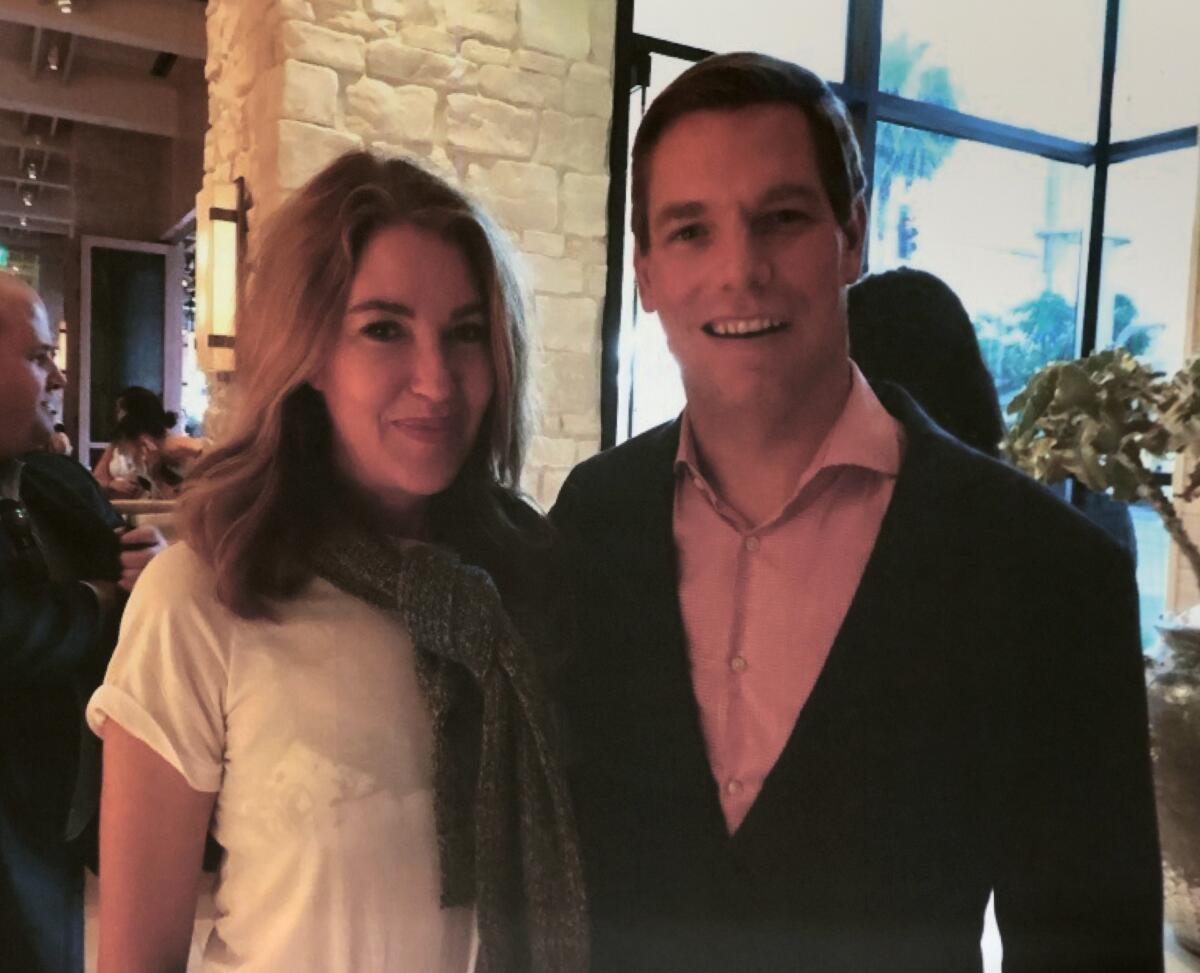
Another woman accuses Swalwell of sexual assault; says she was drugged in Beverly Hills in 2018
Another woman came forward Tuesday to describe rape allegations against Rep. Eric Swalwell, who announced his resignation from Congress on Monday amid a torrent of sexual misconduct accusations.
Lonna Drewes said at a news conference called by her attorneys that she was drugged and raped by Swalwell (D-Dublin) in 2018 while she was working as a model in Beverly Hills.
Drewes said she met Swalwell three times as she was growing her fashion software company and toying with the idea of a political career.
On the third occasion, she said, she believed he drugged her glass of wine. She said they were supposed to go to a political event and they stopped by his hotel room to retrieve some paperwork.
She said she found herself incapacitated despite having had only one drink.
“He raped me and he choked me and while he was choking me I lost consciousness and I thought I died,” she said. “I did not consent to any sexual activity.”
Swalwell’s attorney Elias Dabaie did not immediately respond to a call or email requesting comment. Swalwell has previously denied allegations against him, while acknowledging undefined “mistakes.”
Swalwell and his team threatened legal action against several individuals over the claims, Dabaie previously confirmed to The Times.

Lonna Drewes, left, says she met Rep. Eric Swalwell (D-Dublin) on three occasions in Beverly Hills in 2018. She says he sexually assaulted her on the third occasion.
(Myung J Chun / Los Angeles Times)
Drewes said she didn’t undergo a rape kit test, but disclosed the assault to people close to her and described it in her calendar. She did not have contact with Swalwell again, one of her attorneys said.
Drewes said she had no interest in Swalwell romantically and was drawn to his friendship, she said, in part because he touted connections that she believed could help her grow her businesses. She was in a relationship at the time, and he had a pregnant wife, she said.
The alleged rape had a severe impact on her mental health, causing her to self-medicate, she said. She said she also went to therapy sessions at a sexual assault center.
“I did not want to live anymore,” she said. “I cried all the time for years.”
She said she’d been considering a run for Beverly Hills City Council at the time. After the incident, she said, she feared a political backlash and felt like she had no choice but to remain silent.

Lonna Drewes walks behind her lawyer Arick Fudali during a news briefing in Beverly Hills on Tuesday.
(Myung J. Chun / Los Angeles Times)
“My delay in taking action against Eric was driven by fear, not doubt,” she said. “I have never doubted what happened.”
The L.A. County Sheriffs Department said Tuesday that it is investigating the case.
“The investigation remains in its preliminary stages and is ongoing,” the department said. “Investigators are in the process of gathering information, reviewing available evidence and conducting follow-up inquiries as part of a comprehensive investigative process.“
A spokesperson for the L.A. County district attorney’s office said the Sex Crimes Division had been assigned to work with law enforcement partners in an unfolding investigation.
Arick Fudali, one of the attorneys representing Drewes, said he hoped his client’s account would encourage other women to come forward.
“This is not about Democrat versus Republican,” Fudali said. “This is about accountability versus silence.”
“Lonna deserves what all women deserve — autonomy over her own body,” said attorney Lisa Bloom.
Bloom is well-known for representing high-profile victims of sexual misconduct, including women in cases against actor Bill Cosby and commentator Bill O’Reilly. Bloom said they would be providing text messages, journal entries and photographs to the police. Those include a photo of Drewes and Swalwell at the opening of a restaurant called Avra that was displayed Tuesday for reporters.
Bloom said she wanted to assist with an investigation by the Manhattan district attorney, who has opened a case into allegations against Swalwell. She said three other women have reached out to her.
Swalwell, who has served in the House of Representatives since 2013, has said he plans to fight the “serious, false” allegations made against him.
“However, I must take responsibility and ownership of the mistakes I did make,” Swalwell wrote in a statement Monday.
Bloom called Swalwell’s recent statements about the accusations against him “blather and spin” and a “slap in the face” to victims.
“Stop it,” she said. “Own your behavior.”
Swalwell had been a Democratic front-runner in the hotly contested and crowded race to be California’s next governor. Then in two bombshell reports in the San Francisco Chronicle and CNN on Friday, women accused the congressman of sexual assault and misconduct.
Candidates in the California gubernatorial race reacted to the new allegations with horror.
“The level of my disgust and outrage just continues to grow,” former state Controller Betty Yee told The Times after a business forum in Sacramento. “The fact that this is still being uncovered, that it could be bigger than what we already know?”
Swalwell said he would resign from his congressional seat under intense pressure from lawmakers of both parties. The resignation came on the heels of the House Ethics Committee opening an investigation into the sexual misconduct allegations and bipartisan threats to expel him from the House if he did not resign as women continued to come forward.
One woman told CNN that after messaging with Swalwell about her interest in Democratic politics last year, she met him for drinks and tried to deflect his advances without jeopardizing potential job opportunities. She said she began to feel “really fuzzy” and intoxicated and later found herself in his hotel room with no memory of how she got there.
Another woman, a former staff member who accused Swalwell of rape, told CNN she met him for drinks in 2019, blacked out and awoke naked in his hotel bed and could tell she had had intercourse. She said that in a separate encounter years later, he forced himself on her while she was too intoxicated to consent and despite her protests.
Gov. Gavin Newsom on Tuesday called a special election for Swalwell’s Alameda County seat on June 16, two weeks after the state’s regularly scheduled primary. If no candidate receives 50% of the vote, a second special election will be held on Aug. 18.
The June 2 regular primary and Nov. 3 general election will decide who will represent the recently reconfigured district for the next term, starting in January 2027. The special election decides who will represent the district for the remaining months of Swalwell’s term.
Times staff writers James Queally, Dakota Smith and Seema Mehta contributed to this report.

Wednesday 15 April Public Holiday in Tarija Bolivia
Tarija in southern Bolivia is one of Bolivia’s oldest settlements. It was founded on July 4th 1574 by the conquistador Luis de Fuentes and was named in honour of Francisco de Tarija, who was the first Spaniard to visit the valley. At the forefront of nationalism in the region, Tarija declared independence from the Spanish rule in 1810.
While such declarations were ignored by the Spanish, this act of insurrection would lead to conflict, when on April 15th, 1817 at the Batalla de la Tablada, Tarija’s citizens won a major victory over the Spanish forces. The 1817 victory at Tarija is seen as an important milestone in the country’s history and is commemorated in the city with this public holiday.
After the War of Independence and despite interest from Argentina, Tarija opted to become part of Bolivia, which won its independence and formally established itself as a Republic in 1825.
Interestingly for the first 100 years after the battle, the battle was commemorated on May 4th. It was only when a historian made the correction that it was moved to April 15th.
Cultural festivals take place in Tarija during the entire month of April in what has come to be called the April Days of Tarija (“Los Abriles de Tarija”). The festival revolves around the La Tablada anniversary celebrations and the central event is held on April 15th and 16th.
Cultural events include concerts, dance and theatre. Other events throughout the month also include fairs and handcrafts as well as the traditional Livestock Show and Rodeo Chapaco.
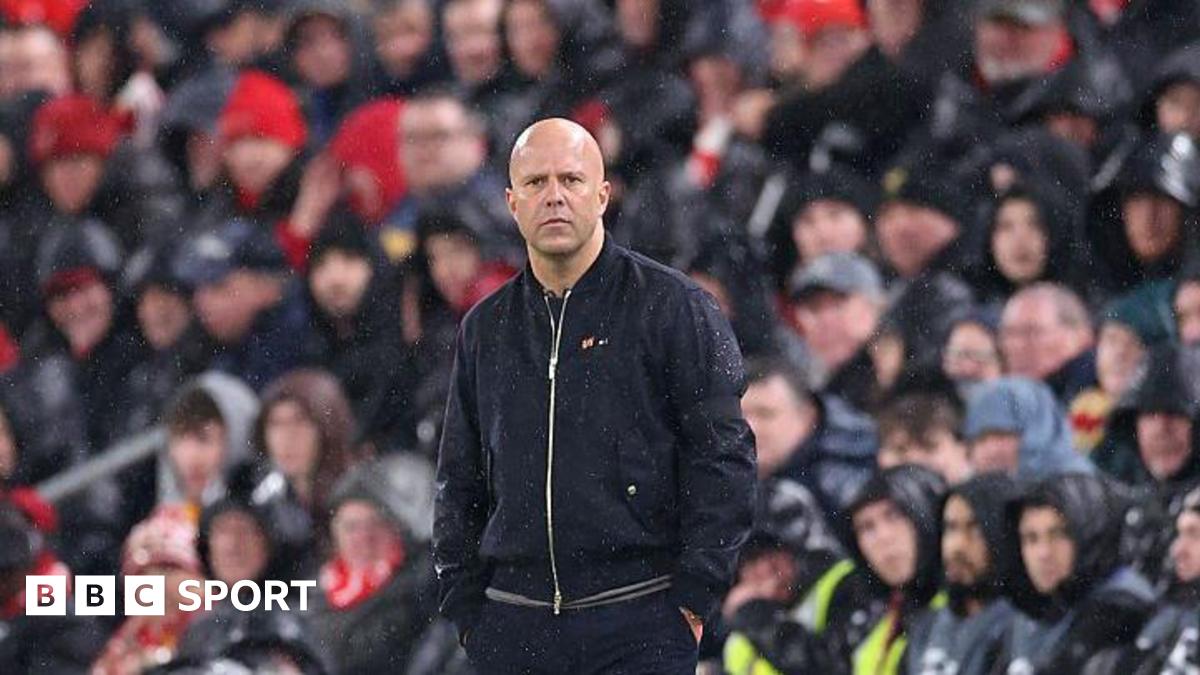
Champions League: Arne Slot’s Alexander Isak gamble backfires as Liverpool’s silverware hopes end
Less than a year on from the day Liverpool won the Premier League title, Arne Slot’s side find themselves in a position where their season rests on qualifying for the Champions League.
For Slot, perhaps his future does too. There will be no silverware and the Dutchman has already said failing to have Champions League football next season would mean this would “definitely not be an acceptable season”.
This was Liverpool’s 17th defeat of the campaign but it came after arguably one of their better performances. Until Ousmane Dembele’s 72nd-minute strike for Paris St-Germain, Liverpool battled admirably against the champions of Europe.
“It was an intense match between two teams who played really good football,” said PSG head coach Luis Enrique.
For Liverpool, there is no shame in getting knocked out by this PSG side. Luis Enrique’s side are a joy to watch and play with confidence when in possession.
But the worry for Liverpool is they have gone backwards.
When these two sides met in the Champions League last 16 last season, PSG were the better side across the two legs but they needed a penalty shootout to knock Liverpool out.
This time around, they outclassed Slot’s side in Paris and, while there were spells on Tuesday night when Liverpool threatened, the final scoreline of 4-0 across two legs was fair.
“Of course we are very disappointed because I think there were parts of the second half where you could feel ‘if we could just score now, this could become a very special night’,” said Slot.
“But the future looks very bright for this team, for this club. We have showed we can compete with the champions of Europe in our stadium. To be the dominant team, not many teams can be dominant against PSG and create as many chances as we did,” he added.
At Anfield, Liverpool’s xG was 1.94 compared with the 0.18 at the Parc des Princes last week.
So there were positives to take, but there is still plenty to be done before they can be considered serious contenders on the European stage again.
After the match, Mohamed Salah waved goodbye to the Anfield crowd after playing his last game for Liverpool in the Champions League.
Now the question is whether Slot and Liverpool will be back in the Champions League next season.

Circle targets South Korea to challenge Tether dominance

Comparison of stablecoin market share in South Korea shows Tether dominating domestic trading, while USD Coin leads in global on-chain payment volume. Data from Bank of Korea and CoinDesk. Graphic by Asia Today and translated by UPI
April 14 (Asia Today) — Circle is stepping up efforts to expand its stablecoin footprint in South Korea, aiming to challenge the dominance of Tether through a dual strategy focused on trading and payments.
Tether currently accounts for more than 80% of stablecoin transactions in South Korea and over 60% globally, according to industry data. Circle’s USD Coin, or USD Coin, holds a much smaller share in Korea, at around 10%.
Industry officials said Circle recently met with major South Korean exchanges, including Upbit, Bithumb and Coinone, to expand USDC trading and improve accessibility. The move is aimed at securing liquidity in one of the world’s largest cryptocurrency markets.
Circle CEO Jeremy Allaire visited South Korea this week and signed agreements with local exchanges and fintech firms to promote stablecoin adoption.
With Dunamu, the operator of Upbit, Circle is working on initiatives focused on regulatory compliance, transparency and user education. With Bithumb, the companies agreed to explore integration of multi-chain digital asset infrastructure and stablecoin technologies. Promotions such as fee discounts and airdrops are also being used to boost USDC trading on platforms like Coinone.
Beyond exchange trading, Circle is also expanding its payment infrastructure. The company is promoting its proprietary network to support real-world payments and cross-border transfers, including partnerships with South Korean fintech firm Hecto Financial.
Analysts say this reflects a broader strategy to compete with Tether not only in trading volume but also in real-world financial use cases.
USDC is backed by cash and U.S. Treasury assets and publishes regular disclosures, a structure that has made it attractive to financial institutions. It also operates across multiple blockchain networks, offering flexibility in transaction speed and fees.
Data suggests USDC has gained traction in payments and transfers. According to industry estimates, its on-chain transaction volume reached about $17 trillion last year, exceeding Tether’s roughly $12.9 trillion, indicating stronger usage in real-world transactions rather than exchange trading.
Experts say competition between the two stablecoins is shifting from market share to function.
“Stablecoin competition is no longer about issuance volume but about use cases,” said Gautam Chughani of CoinShares, adding that USDC is expanding rapidly in payments and institutional finance.
Analysts say Tether is likely to maintain its strength in trading liquidity, while USDC could gain ground through integration with the broader financial system.
Circle said it does not plan to issue a Korean won-pegged stablecoin directly, signaling instead that it may participate as a technology provider in a future bank-led consortium structure.
— Reported by Asia Today; translated by UPI
© Asia Today. Unauthorized reproduction or redistribution prohibited.
Original Korean report: https://www.asiatoday.co.kr/kn/view.php?key=20260415010004432

Stormzy's stab vest goes on display in landmark exhibition of Black British music
The Banksy-designed vest features alongside artefacts from Shirley Bassey, Sade and Craig David.
Source link

‘Dr. Pimple Popper’ Sandra Lee is coming back from a stroke
Last fall, “Dr. Pimple Popper” suddenly became a patient herself.
Dr. Sandra Lee, the reality TV dermatologist and surgeon known for tackling ick-inducing skin situations on camera, had a bad day a week before Thanksgiving 2025 while she was taping new episodes of her show at her Upland office.
“I had what I thought was a hot flash. I got super sweaty and didn’t feel like myself,” she told People in an interview published Tuesday. She said she finished the shoot and then headed to her parents’ nearby home, where that evening she experienced shooting pains in one leg and later had trouble navigating down a flight of stairs in the middle of the night.
When she awakened the next day, she said, her left side wasn’t working properly and she was having trouble speaking clearly. It was definitely more than a hot flash.
Her doctor dad — also a dermatologist — told her to get herself to an ER, where she had an MRI that showed evidence of an ischemic stroke, where a vessel supplying blood to the brain gets obstructed. The diagnosis was a shock.
“As a physician I couldn’t deny that I had slurred speech, that I was having weakness on one side,” she said, “but I was like, ‘Well, this is a dream, right?’”
Lee, 55, said unmanaged cholesterol levels and high blood pressure were likely contributors to the stroke, plus the stress of balancing her real-life practice with the demands of “Dr. Pimple Popper.” She returned to production in January, she said, though she was more than a little freaked out.
“I don’t like that I don’t have total control of my left hand or the grip wasn’t as strong. If I feel like I’m not at my best — it’s very scary,” Lee said.
Her neurologist told the outlet that Lee’s symptoms are pretty much gone. Lee said she still notices slight differences when she speaks.
The TV doc is on blood thinners now and is still doing some physical therapy after spending two months post-stroke working through PT and occupational therapy. Lee had to make sure her left hand, among other body parts, was functional and that her balance and movement bounced back.
She does, after all, do precise procedures on camera for the Lifetime audience.
And with new episodes of “Dr. Pimple Popper” set to debut Monday for the first time since 2023, Lee remains fascinated by the people who spend time watching her do extractions and excisions, both on the show and online.
“People watch the videos over and over again because it helps them go to sleep at night,” she told People. But, she added, “Others watch it like it’s a scary movie or a roller coaster.”