


‘It took 7 years to get my British passport but I still do 1 thing at EU airports’
Selen Ozcan, who has dual citizenship, claims that, despite finally obtaining a British passport, she still puts it to one side while travelling as her original passport is ‘stronger’

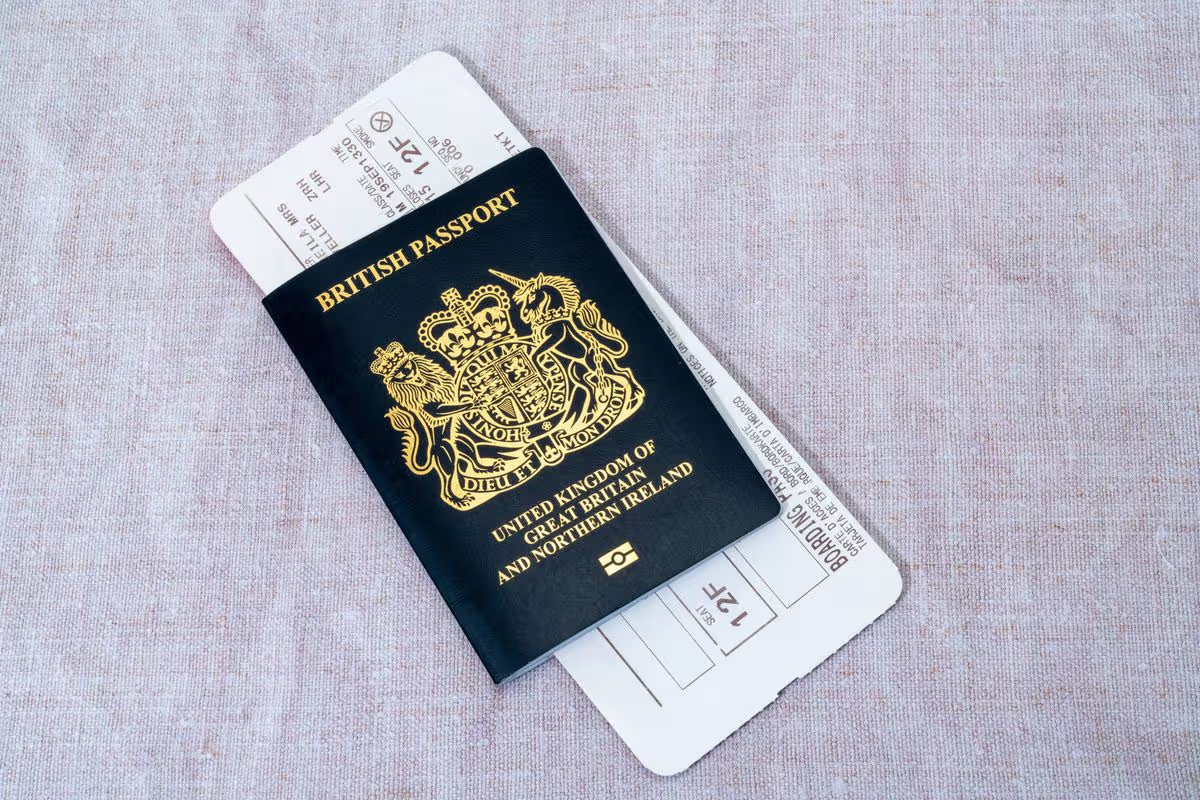
A woman claims her first passport is ‘stronger’ than her British one (stock image)(Image: clubfoto via Getty Images)
A woman who endured a seven-year battle to secure a British passport has shared her clever airport time-saving technique. Selen Ozcan, who splits her time between London and Bahrain, used TikTok to showcase her trick in a brief video.
The travel content creator now possesses dual citizenship, and always keeps her native Romanian passport to hand as well. While navigating security at an airport, Selen posted footage with the caption: “When the immigration line is too long so I have to pull out the stronger passport.” Brandishing her blue British passport, she swiftly moved it aside to display her maroon Romanian one beneath.
During Britain’s membership of the European Union, UK nationals enjoyed the freedom to visit, reside, work, or study in member states without requiring a visa. However, this privilege ceased when the Brexit transition period concluded on December 31, 2020.
Consequently, British passport holders can no longer access the – typically faster – EU citizen border control lanes at airports.
“British citizens also usually need to have their passport stamped upon entry/exit to the EU unless they are family members of EU citizens and resident in the EU,” the Government clarifies online.
Writing in response to Selen, one TikTok user remarked: “Got my British kid a Romanian passport and now she’s my fast track pass through EU airports haha. My missus is Romanian.”
Another person recounted a similar scenario, saying: “All my UK boys had to wait 15 minutes in a queue at Amsterdam Airport. I skipped all that with my Romanian passport.”
A third commenter argued: “Romania passport is just stronger than UK when entering Schengen and EU. But UK has more access than Romania worldwide.”
While a fourth TikTok user pointed out to Selen: “Travel to USA with Romanian passport and you’ll see the difference between British and Romanian. No offence intended.”
The Henley Passport Index evaluates the world’s passports based on how many destinations holders can enter without needing to obtain a visa beforehand.
“The index is based on exclusive data from the International Air Transport Association (IATA) – the largest, most accurate travel information database – and enhanced by Henley & Partners’ research team,” Henley & Partners clarify.
Covering 199 passports and 227 travel destinations, the index receives monthly updates. Based on Henley & Partners’ figures, Singapore claims the top spot with the “strongest” passport, granting visa-free entry to 192 countries.
Japan, South Korea, and the United Arab Emirates share second position with 187, while Sweden occupies third with 186.
Britain sits in joint sixth alongside Malaysia and Poland, offering access to 183 destinations – actually ranking higher than Romania, which shares 11th place with Bulgaria, at 177.

‘AI helped pick the first thousand targets in Iran’
‘AI helped pick the first thousand targets in Iran’
Source link

Delivery driver threatened at gunpoint in attack on police station
A senior police officer says everything points towards dissident republicans being responsible.
Source link

When will new episodes of Celebrity Ex on the Beach Season 4 be released?
Celebrity Ex on the Beach returns for Season 4 with an all-star cast including Helen Flanagan and Jedward’s John Grimes

Daisy May Cooper will be the new narrator for Celebrity Ex on the Beach(Image: Paramount+)
A brand new and explosive series of Celebrity Ex on the Beach has returned to screens with an all-star cast searching for romance.
The popular reality dating programme has made its eagerly awaited comeback to Paramount Plus today (Tuesday, March 31) for its fourth series with Daisy May Cooper as the new narrator.
As the heat intensifies in Tenerife, eight single celebrities are seeking love, but there’s a catch. Their former partners will be lurking, poised to appear at any point.
An official synopsis states: “This season, temperatures rise as eight single celebrities touch down on the stunning shores of Tenerife in search of love but as ever, their exes are waiting in the wings, ready to crash the party.”
It continues: “Celebrities including Corrie actress Helen Flanagan, TOWIE’s Dani Imbert, Love Island star Toby Aromolaran, and pop phenomenon Jedward’s John Grimes, are among the famous faces diving headfirst into the drama and putting everything on the line for a real shot at love.”
The synopsis adds: “With exes such as Curtis Pritchard, Ronnie Vint and Rogan O’Connor ready to make their dramatic entrance into the Villa, how will the singles cope when faced with their former flames seeking closure, truth or even worse, revenge?”
Celebrity Ex on the Beach episode release schedule
Series 4 has launched on Paramount Plus today (March 31) with the programme streaming exclusively on the platform, reports OK!. Episodes will subsequently be released weekly, every Tuesday. This season has seen the release of 10 episodes, with the episode release dates as follows:
- Episode 1 – Tuesday, March 31
- Episode 2 – Tuesday, April 7
- Episode 3 – Tuesday, April 14
- Episode 4 – Tuesday, April 21
- Episode 5 – Tuesday, April 28
- Episode 6 – Tuesday, May 5
- Episode 7 – Tuesday, May 12
- Episode 8 – Tuesday, May 19
- Episode 9 – Tuesday, May 26
- Episode 10 – Tuesday, June 2
Celebrity Ex on the Beach cast
- Amy Kenyon, 28, known for: Married at First Sight UK
- Chase DeMoor, 29, known for: Too Hot to Handle
- Dani Imbert, 27, known for: The Only Way is Essex
- Freddie Powell, 32, known for: Love is Blind UK
- Helen Flanagan, 35, known for: Coronation Street
- Izzy Fairthorne, 26, known for: Too Hot to Handle
- John Grimes, 34, known for: The X Factor
- Toby Aromolaran, 26, known for: Love Island
Celebrity Ex on the Beach trailer
A thrilling first look trailer was previously unveiled, showcasing the eight celebrities making their grand entrance on the beautiful beaches of Tenerife in pursuit of romance. The intense snippets provide viewers a glimpse into the drama and turmoil they can anticipate, complete with numerous reconciliations and splits.
The trailer, filled with anticipated jaw-dropping twists, features Curtis Pritchard confessing he was “telling the truth”, while another clip shows Helen Flanagan questioning: “Am I just being deluded?”
Celebrity Ex on the Beach can be watched on Paramount Plus.

Taiwan: Powering Ahead
| VITAL STATISTICS |
|---|
| Location: North Asia |
| Neighbors: China, the Philippines |
| Capital City: Taipei |
| Population (2025): 23.2 million |
| Official Language: Mandarin Chinese |
| GDP per capita (2025): $39,000 |
| GDP growth rate (2025): 7.71% |
| Inflation (2025): 1.66% |
| Currency: New Taiwan dollar |
| Investment Promotion Agencies: Ministry of Economic Affairs (MOEA), Department of Investment Promotion (DOIP), Bureau of Industrial Parks (BIP) |
| Investment incentives: Streamlined approvals; dedicated project managers for projects over NT$500 million ($15 million); R&D tax credits; investment tax credits up to 25% on investment in key supply chains or advanced processes; location-based incentives in science parks, industrial parks, and free-trade zones; relaxed visas for talent attraction, including the Employment Gold Card program for skilled talent |
| Corruption Perceptions Index rank (2024): 25/180, where 180 is most corrupt |
| Political risks: The administration of President Lai Ching-te faces an opposition-controlled legislature that often blocks budget proposals, risking policy paralysis or destabilization in the face of Chinese interference |
| Security risks: Potential for naval blockade, military attack, or full-scale invasion by China |
No other developed market has demonstrated the impact of AI and high-performance computing booms more dramatically than Taiwan. And the data suggests that these booms are not about to turn to bust anytime soon, despite fears of overheating and a decline in external demand for Taiwan’s exports.
A forced unification with China might render it a no-go area for numerous investors. But ignoring that wildcard scenario, there is no escaping the fact that Taiwan is now a lynchpin of the global supply chain and, by extension, the global economy, as well as a significant destination for investment and trade: the latter being a position on which the island’s economy and its 23.2 million population depend.
Taiwan sits at the center of the global hi-tech supply chain thanks to its pre-eminence in semiconductor manufacturing, AI, and 5G telecommunications. Thanks to investment incentives and an environment fully open to growth and cooperative opportunities, the island is a magnet for foreign direct investment (FDI), led by the Netherlands and followed by the US, which held $19.3 billion in FDI as of 2023.
FDI is critical, given Taiwan’s self-imposed debt ceiling and the cap it imposes on public spending. The Department of Investment Promotion provides streamlined services to foreign investors in a bid to boost FDI, making dedicated project managers available for investments above $15 million and R&D subsidies.
Still, some international investors worry about the dominance of Taiwan’s state-owned enterprises, claiming they distort fair-market practice and lack regulatory transparency.
That said, Taiwan stunned with full-year 2025 GDP growth of 7.71%, an upward revision from the initial 7.63% estimate in January by the Department of Statistics and a figure that wrongfooted all but a handful of economic forecasters.
That result marked Taiwan’s fastest pace of economic expansion in 15 years and smashed forecasts from the likes of the International Monetary Fund and the Asian Development Bank, which ranged from 2.9% to 5.1% for 2025 when the year kicked off.
Last year’s economic performance was superlative across the board, boosted by a tidal wave of global demand for the AI-related exports that power Taiwan’s economy, notably semiconductor manufacturing capacity that has propelled the island from developing to developed status in less than a generation.
Exports surged by 35%, quarterly growth in the last three months of the year was an eye-popping 12.68% year-on-year—the highest in 38 years—and stocks advanced strongly, pushing the TAIEX into the global top 10 by market capitalization early this year as the index hit a 100 billion New Taiwanese dollars ($32 billion) valuation for the first time.
Excessive Concentration?
| PROS |
|---|
| Preeminence in global semiconductor supply chain |
| Foreign investor-friendly policies, including numerous incentives |
| Low domestic interest rate and inflation |
| Strong correlation of growth and investment with the global AI boom |
| Political stability |
| Strong official institutions |
“We have upgraded our GDP growth forecast for this year to 6%, which is a totally crazy rate for a developed economy,” says Alicia Garcia-Herrera, chief economist for Asia Pacific at French finance giant Natixis in Hong Kong and a senior fellow at the Brussels-based economic think tank the Bruegel Group.
“Bear in mind Japan grew last year by just 1.1%,” she added. “A milestone indicator of the country’s economic success has been its overtaking both Japan and South Korea in terms of GDP per capita, which hit $39,477 last year.”
The fly in the ointment, Garcia-Herrera notes, is that growth is concentrated in the semiconductor sector “and its ancillary industries such as packaging, which are all dependent on demand from that one single sector.”
Taiwan’s focus on exports, particularly semiconductors, has provoked grumbles that the basic stance of the Central Bank of the Republic of China is to keep the Taiwan dollar artificially low, crowding out other domestic industries and exposing the economy to concentration risk via dependence on tech-related exports.
| CONS |
|---|
| Geopolitical tensions with China |
| Overexposure to the global AI boom |
| Risk from excessive capex spending related to AI |
The currency dramatically strengthened against the dollar in May, down to 28.85% as the result of inbound investment flows and generalized the dollar’s weakness versus other Asian currencies.
The new Taiwan dollar subsequently weakened as the result of reported central bank intervention, to stand in late January at 31.7 to the dollar and renewing the view that the currency is artificially undervalued. Rates are ultra-low across the yield curve for government bonds, which range from 1.21% for two-year to 1.43% for 10-year issues, anchored by a 2% policy rate.
In this context, a remarkable feature of last year’s growth was the absence of overheating in the economy, with the CPI at just 1.66%, allowing the central bank to hold the policy rate steady: a stance it is expected to maintain this year.
“The strong concentration on exports leaves the economy vulnerable to a slowdown in its key trading partners and reduced global AI demand,” cautions Sagarika Chandra, director of APAC sovereigns at Fitch Ratings in Hong Kong. “Taiwan’s electrical equipment exports as a share of total exports are relatively large, at around 43%, and weaker demand for such exports is likely to have a substantial negative impact on growth through lower exports.”
FDI Surges
Inbound and outbound FDI has played a significant role in Taiwan’s economic trajectory. The former surged 44% last year, to $11.39 billion, driven by technology and services, including semiconductor manufacturing, AI, renewable energy, and financial services. Investment incentives available for inbound FDI include special tax treatment and set-up support from Invest Taiwan, a government agency.
Mainland China has dominated inbound FDI recent years, but as Taipei seeks to strengthen economic ties beyond its neighbor into Southeast Asia and the US, inbound FDI from the mainland shrank by 65.4% last year.
As Taiwan shudders at the prospect of the Trump administration slapping tariffs on its semiconductors the island has committed to its biggest-ever outbound FDI undertaking, the construction of a $250 billion semiconductor manufacturing plant in the US by Taiwan Semiconductor Manufacturing Corporation (TSMC). In return, Taiwan is to receive a tariff exemption on microchips and a reduction in overall tariffs on other products.
Observers doubt the manufacturing shift will prove a significant liability.
“The offshoring of semiconductors, in my opinion, is not a big problem for the country,” says Garcia-Herrera, “because if Taiwan continues to serve all that global demand from Taiwan, all the resources will only go to the semiconductor industry, whether it’s green energy, water, the best talent, you name it. So offshoring is a good idea, because it frees up domestic resources.”
In 2026, Fitch expects the economy will continue to benefit from the increased production and investment by some advanced AI chip producers, even if there is some moderation in demand, according to China. We expect the US–Taiwan trade agreement, which reduced tariffs to 15% from 20% previously, could offer near-term relief for Taiwan’s semiconductor export-driven economy, creating a more level playing field for key export sectors.”
More concerning, Taiwan is extremely dependent on energy imports: almost 98%, according to data from the US Energy Information Administration. That’s an alarming figure given the needs of the island’s energy-intensive tech sector and its vulnerability to a potential naval blockade. Renewable energy is therefore expected to be a more significant variable in Taiwan’s economic trajectory.
It has a long way to go. Just 12% of the 288 terawatt hours the island generated in 2024 came from renewables, with the bulk coming from natural gas (42%) and the rest from coal (39%) and nuclear power (4%). But this could present an opportunity for further FDI.
“Renewable energy will be vital for Taiwan’s economic development regarding the decarbonization trend and compliance requirements from the international value chain, especially the semiconductor industry,” points out Ching-Wen Huang, director for renewables and sustainability advisory at sustainability consultancy NIRAS. “Taiwan has a relatively open renewable energy market for foreign companies,” he says, “and the government is truly welcoming foreign investment and corporations in the development and supply chain.
The post Taiwan: Powering Ahead appeared first on Global Finance Magazine.

Spain 13 airport strikes Tuesday update as aircraft take off ‘without luggage’
Passengers arrive to discover their posessions have been left behind as days of walkouts start at sites – full list

Trolleys to transport suitcases in Terminal T4 of Adolfo Suarez Madrid-Barajas Airport, this Easter, as two ground handling strikes at Groundforce and Menzies airlines hit(Image: Getty Images)
Passengers flying from 13 Spanish airports hit by strike action have landed to discover all their luggage has been left behind, local media has reported. Canarias said the first day of the strike by Groundforce workers, the ground handling operator that services Air Europa flights, resulted in continuous delays across all the airline’s flights and passengers arriving at Canary Island airports without their luggage, having had to leave it behind at their point of origin.
Alternating work stoppages are taking place between 5 and 7 am, 11 am and 5pm, and 10 pm and midnight, the first day of the strike affected 13 Spanish airports, three of them on the islands of Gran Canaria, Lanzarote, and Fuerteventura, where delays occurred throughout the day. These delays did not originate at the island airports but rather on flights arriving primarily from Madrid, Barcelona, and Bilbao, with delays approaching an hour.
Airports impacted are Barcelona-El Prat, Madrid-Barajas, Ibiza, Palma de Mallorca, Gran Canaria, Tenerife, Fuerteventura, Bilbao, Lanzarote, Alicante, Valencia and Malaga. The Groundforce strike is scheduled for this Wednesday (April 1) and Good Friday (April 3), with the possibility of becoming indefinite.
Because the aircraft operate on a network, delays accumulated throughout the day, causing significant disruptions to flights departing from the three affected airports in the archipelago. At major airports on the Iberian Peninsula, such as Madrid, Barcelona, and Bilbao, planes departed without luggage in their holds throughout Monday, leaving many passengers arriving at their destinations without their belongings.
READ MORE: Spain 12 airports strike Monday update on flights delayed as lawyer says ‘get there 3 hours early’READ MORE: Spain airport strikes warning as Easter travellers face severe delays
It’s worth remembering that the most affected route is Madrid-Gran Canaria, on which Air Europa operates seven flights daily. According to Orlando Robledano, secretary of the aviation sector at the UGT union, the strike’s impact on Canary Island airports has been reduced due to the minimum services imposed by Groundforce on all Lanzarote Airport employees. Even members of the works council received this notification requiring them to comply with these minimum services, making it impossible to achieve the level of participation required for a strike of this nature.
This, coupled with the fact that domestic flights at Canary Island airports are protected and must be serviced regardless of delays, meant that the problems were less severe at the islands’ airports than at those on the mainland. Other affected airports include Alicante, Valencia, Palma de Mallorca, Ibiza, and Málaga.
Hosteltur reported that strikes at Canary Island airports during the peak days of Holy Week, between Maundy Thursday (April 2) and Easter Monday (April 6) may be called off as workers at Menzies—who provide check-in, boarding, and baggage services to airlines such as Norwegian, EasyJet, and British Airways—along with the works council and their union representatives from UGT, are close to reaching an agreement to call off the strike that was set to affect nearly 3,000 of the group’s employees in Spain, 600 of them in the Canary Islands.
At least six planes took off from Madrid-Barajas Airport on Monday without their passengers’ luggage due to an indefinite strike by the ground handling company Groundforce. On this first day of the strike, disruptions are being reported at all airports, although the most significant impacts are felt in Madrid and Barcelona, according to union sources, Telecinco reported.
Passengers report long queues and checked baggage left on the tarmac during the first day of the strike The indefinite strike by Groundforce ground staff began this Monday at Barcelona Airport, with protests taking place at three different times. The affected services are all those related to ground handling.
Long queues were reported at Barcelona’s El Prat Airport, where Alberto García said: “There have been some delays, and some planes have even departed with very little luggage. It was the protesters themselves who informed passengers that their bags would not arrive on time.
“The unions continue fighting for their objective and are demanding that the company comply with the wage agreements stipulated in the collective bargaining agreement.” At this time, many people have seen their flights significantly delayed or have had their luggage left behind.
In Madrid, people have had to wait for extended periods to check their luggage. Some report waiting for “four or five hours.”
Many planes, especially those arriving from Madrid, “are arriving without luggage, and the problems are spreading,” a UGT spokesperson told Europa Press, adding that “there is no guarantee that luggage will arrive.” The delays “affect not only direct flights but also many connecting flights, since passengers arrive without their luggage and therefore miss their next flight.”

The real questions for courts after Bianco seized Riverside County ballots
Riverside County Sheriff Chad Bianco says he’d like to be our governor, but more and more, it’s looking to me like the real goal for the far-right provocateur is just to be MAGA-famous.
That’s cool. That’s fine. Honestly, who in Southern California hasn’t dreamed of their 15 minutes? And he certainly has the cop-stache to play the role of rogue Wild West lawman.
But Bianco’s bid for celebrity may help extremists take down American elections, and that is a problem — one California needs to deal with quickly, before the midterms suffer from his antics. There are two separate issues at play here, both of which state courts will be asked to weigh in on in coming days — Bianco apparently is putting his so-called investigation on hold until those cases bring some measure of clarity, and hopefully sanity.
First, are California sheriffs answerable to anyone, or are they a law unto themselves? Second, who in California can legally handle and count ballots according to law, if state law does in fact matter?
The fact that these two issues are coming up now — together— is no accident. President Trump’s election fraud claims have been moving toward this moment for years, largely out of the consciousness of mainstream voters, but very much intentionally pushed by those who would like to see MAGA officials remain in power, even at the cost of democracy.
The real question being answered right now in Riverside — the one we should all be clear on — is, if Republicans want to invalidate election results that don’t go their way this November, what’s the nitty-gritty of actually doing that?
Bianco is attempting an answer.
“This is about more than just what Sheriff Bianco is doing,” said Matt Barreto, faculty director of the UCLA Voting Rights Project. “… It shouldn’t happen. And again, it doesn’t matter if Democrats are winning or Republicans are winning, no sheriff should come in and take over possession or counting of ballots.”
By now, you’ve probably heard that Bianco has obtained multiple secret, sealed search warrants from a buddy judge that allowed him to spirit away hundreds of thousands of ballots in his county from November’s Proposition 50 election.
Bianco claims he has the right to seize these ballots and investigate as he sees fit — and it’s not our business or anyone else’s, not even state Atty. Gen. Rob Bonta, who ordered Bianco to stop what he was doing until Bonta could review it.
Bianco has largely ignored that order, instead scooping up even more ballots late last week — all but giving Bonta a certain finger reserved for simple communication. Fox News loved it. Bianco’s admission Monday that he is pausing his effort is the first hint that even he may see he’s gone too far.
But Bianco’s hubris is in line with the attitude of many so-called constitutional sheriffs, a national movement by some far-right elected lawmen that Bianco has been associated with, though he’s never claimed outright affinity.
These extremist sheriffs misguidedly believe that they are above both state and federal law, and get to decide for themselves what’s constitutional or not in their jurisdictions — and therefore what’s law and what’s not.
Since about 2020, empowered by successes in ignoring pandemic restrictions, these sheriffs have dived deeper and deeper into the election fraud movement that Trump loves so much, claiming increasing rights to investigate alleged fraud. Though their national organization doesn’t publish its membership list, media and other tracking show there are at minimum dozens of these like-minded lawmen across the country, likely closely watching Riverside County.
Some election experts now worry that if Bianco is successful in the courts in retaining the right to take ballots, it will give a dangerous legal precedent that empowers other constitutional sheriffs to do the same at the midterms. Only then it would be fresh, uncounted ballots — leaving these far-right sheriffs in charge of providing results instead of trained, trusted elections officials.
“What happens if the ballots have not been properly counted by the right people yet and a sheriff decides they want to go confiscate them?” said Chad Dunn, co-founder of UCLA’s Voting Rights Project and the trial lawyer who successfully halted Texas’ gerrymandering effort, for now anyway.
“Once the chain of custody … is broken, as they have been with these, you’ll never count them in a way that you’ll be able to get reasonable confidence from the public,” Dunn said. “It puts the entire election process in jeopardy.”
The constitutional sheriffs would become the boots on the ground for Trump’s election deniers to implement their will, seizing ballots as they see fit and creating such a crisis of confidence that it’s likely we the voters would never accept the results, Republican or Democrat.
It could even give Republican Speaker of the House Mike Johnson a plausible reason — an ongoing fraud investigation — not to seat elected Democrats, stalling as he did with Arizona’s Adelita Grijalva last year after she won a special election.
The Voting Rights Project, along with Democratic gubernatorial candidate Xavier Becerra, filed a lawsuit last week asking the state Supreme Court to uphold the laws that govern how ballots are handled in California — basically protecting that chain of custody and making it clear sheriffs can’t ignore it and are not part of it.
“They do not, under California law, have the right to take ballots away from the Registrar of Voters, and they do not, under California law, have the right to count or handle ballots,” Barreto said. “There’s no question that it violates California election law.”
Separately, Bonta’s office filed its own action, with that issue of constitutional sheriffs front and center. Bonta is asking courts to tell Bianco that he’s not a law unto himself, and does in fact answer to the state attorney general.
This issue of whether sheriffs have any legal duty to listen to the state’s top law enforcement officer has long been one of Bonta’s fights — he argued about it with then-L.A. Sheriff Alex Villanueva in another public corruption fiasco over then-L.A. County Supervisor Sheila Kuehl.
I’m guessing Bianco will refer Bonta back to that simple communication of a single finger, much the same as Villanueva did.
But it’s long past time that the state decide just how powerful sheriffs are, for the good of the country this time. The state Legislature has repeatedly kicked the can on clarifying the issue, a failure on their part.
Legislators could amend the state Constitution to make sheriffs appointed instead of elected — the same as police chiefs. Then boards of supervisors could hire and fire them just like other law enforcement leaders.
With the Legislature’s resounding absence on the issue, we have to rely on courts. That’s likely to be a long battle.
In the meantime, Bianco is up to his mustache in attention. This has become a national story, boosting his profile throughout the MAGA-verse as a champion of election deniers everywhere.
Whether Bianco wins or loses these legal battles, resumes his investigation or not, he’s won the attention battle — he’s even polling at the top in the gubernatorial race, thanks to the 8 million Democrats who refuse to drop out.
Riverside County, once as red as it comes, is increasingly purple, Barreto points out. Bianco’s tenure as elected sheriff may not last forever. His shot at governor, despite the polls, is unlikely.
But maybe Fox News will be so impressed with his aggressive rants that he’ll get an offer. Maybe Trump, known for watching it, will like what he sees. So many possibilities from the publicity.
And so much real damage to democracy.

Rugby World Cup 2027: Canberra to host warm-up between Australia and Ireland
“The rugby community in Canberra is deeply passionate and holds a great appreciation for international touring teams, as we witnessed last year when the biggest GIO Stadium Canberra rugby crowd in 20 years packed the venue for the Brumbies’ thrilling match against the British & Irish Lions,” said Rugby Australia CEO Phil Waugh.
“The Wallabies are looking forward to playing their first Test match at GIO Stadium Canberra in 10 years – and their first ever against Ireland in Canberra – as both teams finalise their preparations for the eagerly-anticipated home Rugby World Cup.
“On behalf of Rugby Australia, I would like to extend my sincere thanks to ACT [Australian Capital Territory] Chief Minister Andrew Barr and Deputy Chief Minister Yvette Berry for their support of Test rugby during an incredibly exciting period for the game in our country.”
The sides will meet beforehand as Ireland make the trip to Sydney to begin their Nations Championship summer tour on Saturday, 4 July, before facing Japan one week later and rounding off in Auckland against New Zealand on 18 July.

Italy denies the US military use of its air bases to attack Iran | US-Israel war on Iran
Italian press reports that the government has refuse to authorise US to land bombers at a base in Sicily for transit to the Middle East, where they could be used to strike Iran.
Published On 31 Mar 2026
Caster Semenya pledges to fight against Olympic gender-testing policy | Athletics News
‘We’re going to be vocal about it, we’re going to make noise until we’re heard,’ South Africa’s gold medallist says.
Published On 31 Mar 2026
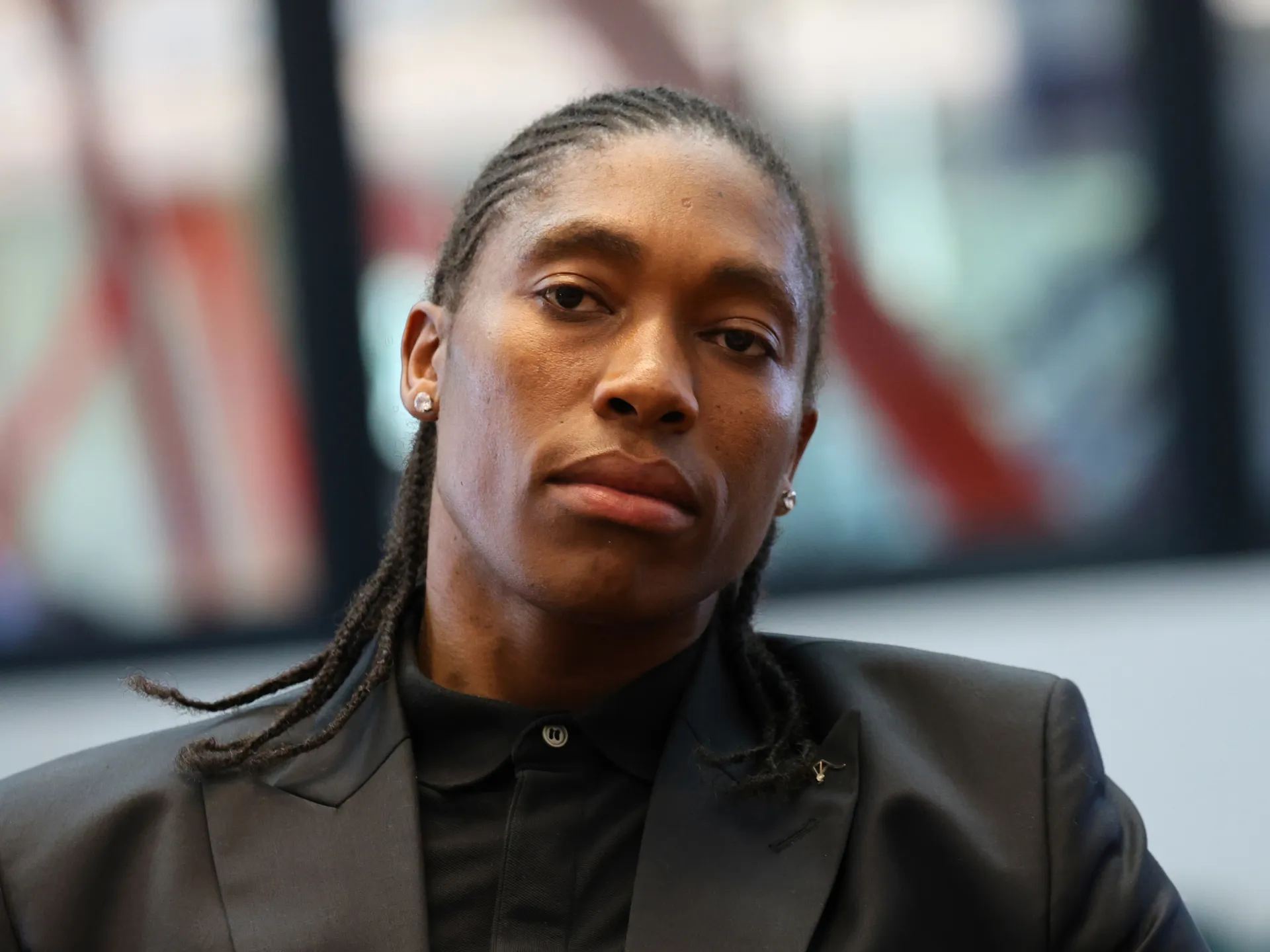
Double Olympic champion Caster Semenya says she intends to fight against the introduction of gender testing for the female category at the Olympics, a policy the South African insists “undermines women’s rights”.
The International Olympic Committee (IOC) unveiled the policy last week and it is expected to become a universal rule for competitors in female elite sports after years of fragmented regulation that led to controversy.
Recommended Stories
list of 4 itemsend of list
Semenya has been at the centre of one of those controversies due to her long-running legal case against World Athletics over her right to compete on the track despite having a Difference of Sexual Development (DSD).
“We’re going to be vocal about it, we’re going to make noise until we’re heard,” the 35-year-old athlete told the Reuters news agency on Monday.
“Now it’s a matter of women standing for themselves to say, ‘Enough is enough.’ We are not going to be told how to do things.
“If really we are accepted as women to take part, why does my appearance or my voice, why do my inner parts need to be a problem to take part in the sport?”
DSDs are a group of rare conditions involving genes, hormones and reproductive organs. Some people with DSDs are raised as female but have XY sex chromosomes and blood testosterone levels in the male range.
The IOC policy document said including “androgen-sensitive XY-DSD athletes” in the female category in events that rely on strength, power or endurance “runs fundamentally counter to ensuring fairness, safety and integrity in elite competition”.
Semenya, who won two Olympic and three world titles in the 800 metres before being limited to shorter events, believes the IOC got the science wrong.
Semenya said “there’s no science” that XY-DSD gave an athlete an advantage. “I’ve been there, I’ve done that. There’s no such thing as that,” she said.
“There are people who are delusional. There are people who are convinced because a woman is masculine, a woman is born with intersex conditions, the DSD, they’ve mentioned all those things [that they have an advantage].
“But what I say is that if you’re going to be a great athlete, it’s through hard work.”
The test that will be applied to all athletes who want to compete in the female class will be conducted by a cheek swab or saliva analysis.
There will be further investigation for any athletes who test positive for the SRY gene, which is on the Y chromosome and triggers the development of male characteristics in mammals.
“What this decision does, it undermines women. It undermines women’s dignity. It violates women’s rights because we know historically, these [tests] have failed before,” Semenya said.
“Women need to be celebrated. Women are not supposed to be questioned about their gender. Why that is their physique? Why it is how they look like? It doesn’t matter. Neither also the hormone level. Those are the things that are obviously genetics that cannot be controlled.”
Semenya said IOC President Kirsty Coventry, the first woman and first African to hold the office, had failed to properly consult her or other athletes living with DSDs about the policy.
“They sent us a letter the day they were going to publish [the new policy],” she said.
“If you’re going to consult, consult with a genuine heart. Don’t consult because you’re ticking the box. Unfortunately, they have ticked a wrong box.”

Strictly’s Gemma Atkinson opens up on being betrayed by ‘horrible’ ex after mum’s warning
Gemma Atkinson is now in a happy relationship with Strictly pro Gorka Marquez, but she didn’t mince words about one past flame, whom her mum described as having “bad energy”

Gemma Atkinson(Image: ITV)
Gemma Atkinson has shed light on the actions of a “horrible” ex-boyfriend, whom her mum once described as having “bad energy”. We’ve all experienced youthful missteps in love, and it appears the former glamour model is no different, having suffered a painful betrayal at the hands of an opportunistic former partner.
Gemma is now in a happy relationship with Strictly Come Dancing star Gorka Marquez, with whom she shares two children, Mia and Thiago, but she didn’t mince words about this one past flame.
Indeed, when she and Gorka were asked if they’d ever had a partner that their parents hadn’t “got on with”, she hit out at one boyfriend from her past and described him as both a “b*****d” and a “cretin”.
Speaking in a short clip for the Lost in Translation podcast, in collaboration with Hits Radio, Gorka revealed that his mum tended to like “every partner” until they were no longer together.
Gemma said: “I dated one lad years ago; I was only about 17, 18. He was a b*****d. He’s the only person who’s ever sold a story on me. He was such a cretin. I introduced him to my mum.
“And, as soon as he left, my mum went, ‘I don’t like him; he’s got a bad energy about him’. Of course, I kicked off with her, ‘You’re wrong!’ Introduced him to the girls….
“Laura went, ‘Don’t know what it is about him, Gemma, but I just wanna batter him’. I was like, ‘Why? You’re all wrong’. A year later, turned out to be a right cretin. Sold a story on me, took money, was horrible.
“They were all right, so my advice, if your mum doesn’t like a partner on the first meeting, there might be a good reason for it. They say mums know best.”
Gemma also advised people to always trust a dog’s judgement if it “doesn’t like a person”, before adding that she doesn’t trust people who don’t like dogs, as Gorka proceeded to add a touch of humour to the chat.
He joked that he’s “never liked dogs”, has faked it for eight years, and that, in fact, his “name is not Gorka”.
Gemma, who played Lisa Hunter on Channel 4 soap Hollyoaks, developed a romance with Gorka when they met on the Strictly set back in 2017; four years later, Gorka popped the question, and they got engaged in 2021.
She has reportedly had something of a colourful romantic life, being linked to actors and sportsmen, including footballers Marcus Bent and Cristiano Ronaldo. Sadly, Gemma claimed that she was cheated on in the relationship she had prior to Gorka.
Not naming names, Gemma told Hits Radio: “It wasn’t that long ago, it was my fella before Gorka, we went on holiday.
“We met in the Bahamas and while we were there I took a picture of a sunset because it was a really lovely sunset, and I put it on me Instagram. I thought nothing of it.
“He put the same picture as his WhatsApp profile picture and a few days later I got this message on Instagram from this girl and she was like, ‘Woman to woman, can I ask you were you with (him) recently?’
“‘Because my boyfriend told me he was in Florida with the lads and the picture you put on Instagram he has put as his WhatsApp profile pic’.”

From Reactive Insurance to Proactive Investment
As climate change threatens insurability, adaptation finance has become a mechanism for capturing value.
When Neptune Insurance, the largest private flood insurance provider in the US, went public last October, it quickly achieved a multibillion-dollar valuation. For investors, it signaled that climate adaptation can be both profitable and scalable and that markets are becoming willing to reward business models built around adaptation rather than avoidance.
Built on AI-powered underwriting that integrates satellite imagery and forward-looking climate data, Neptune operates on the assumption that accurately pricing climate risk can restore insurability rather than signaling a retreat from it. During Hurricane Helene, the St. Petersburg, Florida-based company posted an 18% loss ratio—dramatically outperforming the federal government’s National Flood Insurance Program—while offering premiums 30% to 40% lower than alternatives.
“What we’re seeing in real time is that properties once considered uninsurable become insurable again when they’re rebuilt to modern codes and elevated,” says CEO Trevor Burgess. “That’s climate adaptation in practice.”
The potential is significant. The global investment opportunity for climate adaptation solutions is projected to grow from $2 trillion today to $9 trillion by 2050, according to a report from GIC, the Singapore sovereign wealth fund. The 2025 report, conducted with consultancy Bain, forecasts annual revenues from climate adaptation solutions—including weather intelligence systems, wind-resistant building components, flood protection infrastructure, and water conservation technologies—growing from approximately $1 trillion today to $4 trillion by 2050.
P&C Innovation
That potential is one reason the insurance industry is exploring new ways to help clients manage their risk.
“The change in insurers’ mindset to adopt innovative and transformative solutions is much higher than I have ever seen, especially in P&C insurance, where carriers are leading with AI-led solutions to study and manage climate risk,” observes Adil Ilyas, who heads the insurance group at Genpact, a professional services and technology consultancy specializing in digital transformation and AI. He points to AXA, Zurich, Allianz, and others that have launched parametric insurance solutions that give organizations fast-acting liquidity and cash flow following a disruptive event.
The acceleration of climate change adds urgency to opportunity. On LinkedIn, Allianz board member Günther Thallinger wrote in March 2025 that climate change is on the way to transforming life as we know it: “We are fast approaching temperature levels—1.5°C, 2°C, 3°C—where insurers will no longer be able to offer coverage for many of these risks. The math breaks down; the premiums required exceed what people or companies can pay. This is already happening. Entire regions are becoming uninsurable.”
A 2025 Allianz report, “Climate Risk and Corporate Valuations,” looks at industries facing accelerating risk, disrupted coverage, and fundamental questions about the future insurability of assets.
“We’re seeing a massive repricing event that’s going to unfold over the next couple of decades,” says Lead Investment Strategist and co-author Jordi Basco Carrera. “The question is whether it happens in an orderly way or whether we see a disorderly transition that creates much more volatility and destruction of value.”
The report examined how different climate scenarios would affect corporate valuations across 10 sectors in the US and Europe, using discounted cash flow models and interest coverage ratios.
Under the Net Zero 2050 scenario, representing aggressive climate policy with ambitious carbon-reduction targets, European real estate faces a staggering 40% correction in valuations. Telecommunications and consumer staples also see major setbacks. In the US, the healthcare and consumer discretionary sectors would each drop by roughly 16% while energy and basic resources face smaller declines of 6% to 7%, reflecting partial adaptation through renewables and critical materials demand.
The alternative—a delayed transition scenario where policy intervention is postponed—creates even more dangerous dynamics.
“A delayed transition is not a soft landing,” Basco Carrera observes. “It’s storing up energy for a much more violent adjustment later. The sectors that look like they’re benefiting in the short term are accumulating hidden risks.”
For CFOs managing enterprise risk, either scenario creates a new urgency. Traditional insurance would not be able to adequately protect against the systematic repricing of asset values driven by climate transition policies. Coverage typically compensates for discrete physical losses—a flooded warehouse, a storm-damaged facility—but offers no protection against the gradual or sudden devaluation of entire portfolios as carbon-intensive business models become economically unviable.
From Valuation Risk To Investment Opportunity
This is where adaptation finance enters as not just risk management, but a mechanism for capturing value during the transition.
Sectors that invest early in climate adaptation show remarkable resilience across all scenarios, according to Allianz’s research. Technology and healthcare demonstrate strength under every climate pathway analyzed while energy sectors that diversify into renewables and utilities and upgrade infrastructure face smaller corrections than those maintaining status quo operations.
Allianz’s research methodology was innovative, Basco Carrera notes, using data from the Network for Greening the Financial System (NGFS), a voluntary, international group of central banks and others launched in 2017 to manage climate-related risks in the financial sector.
“We integrated three NGFS transition scenarios into traditional financial valuation methods,” he explains. “This lets us see not just which sectors face risk, but specifically how much value is at stake and over what timeframe. That granularity is what CFOs need to make capital allocation decisions.”
The analysis introduced the concept of “Climate Elasticity of Demand,” measuring how global warming affects demand for goods and services. What emerged is a sophisticated view of how climate change will reshape entire markets, not just damage individual assets. Companies producing flood-resistant construction materials, for instance, don’t simply benefit from replacing damaged components after disasters. They capture sustained market share as building codes tighten, insurance companies mandate resilience standards, and property developers recognize that climate-resilient buildings command premium valuations.

Commercial real estate provides an example of adaptation intelligence in practice.
Munich Re’s Location Risk Intelligence tool helps users determine their climate-related expected annual losses, according to Thomas Walter, Munich Re product marketing manager. A US-based real estate investment company using the tool to evaluate a multimillion-dollar building purchase found that the building sat in a highly flood-prone area, which led the company to walk away. Within months, a severe flood hit the building.
“They avoided both losses and depreciation,” Walter says.
Returns Beyond Avoided Losses
The investment case for adaptation strengthens when the full spectrum of value creation—not just avoided disaster costs—enters the picture.
The World Resources Institute, a global research nonprofit based in Washington, DC, analyzed 320 adaptation and resilience projects across agriculture, water, health, and infrastructure. Its research found that cumulatively, the analyzed investments cost over $133 billion and were expected to generate $1.4 trillion in benefits over 10 years. Individual investments generated an average return of 27%.
These figures are likely too low, says WRI senior fellow Carter Brandon: “We found that only 8% of investment appraisals estimated the full monetized values of these dividends, suggesting that the $1.4 trillion and the average rate of return are likely substantial underestimates.”
In a recent WRI report, Brandon and colleagues put forth a “Triple Dividend of Resilience” framework that addresses avoided losses from climate events, induced economic development, and additional benefits.
“By positioning portfolios to respond swiftly to emerging climate policies and market dynamics, investors not only limit potential losses but also capitalize on opportunities presented by the growing green economy,” Brandon contends.

I visited the UK city that invented the hot cross bun 665 years ago
HOT cross buns; sticky, sweet, delicious and a sign that Easter is on its way – but where did the original bun come from?
Ironically, the origins are in my stomping ground of St Albans, so I went to see where it all began – and you can still buy a classic bun now.
In trying times, nothing quite provides comfort like a freshly-baked bun.
That was certainly Brother Thomas Rocliffe’s thinking when he handed
out his humble creation to the poor and disgruntled townspeople of St.
Albans back in 1361, a couple of decades before the Peasant Revolt.
The 14th century monk had just invented a treat that would become a
symbol of Easter for hundreds of years to come: the hot cross bun.
Back then, it was known as the Alban bun.


The original recipe relied on a traditional bread dough, laced with exotic spices and dried fruit, which was then rolled into balls and scored with a cross symbol ahead of baking.
Today, the buns we see in supermarkets feature a piped cross, not
scored, and they are a little more sweet and cake-like in flavour,
relying primarily on cinnamon for spice.
If you’re keen to sample the traditional version, though, Brother
Thomas’ original recipe is still being baked today within the same
centuries-old walls of St Albans Cathedral, where it was first
concocted.
The ingredients are a secret, of course, but those heading down this
Easter may be lucky enough to uncover them with the help of one of the
cathedral’s expertly knowledgeable guides.
“How much did Rocliffe charge?” my guide asks me. “One a penny? Two a penny?”
The answer is still unknown – but just shy of a fiver seems more apt in these times, I tell him.
These buns weren’t just for Easter in Rocliffe’s era. In fact, in the
mid-1500s they became an emblem of protection and soared in
popularity.
Everyday folk would buy them year round and nail them to
their doors under the belief that it would stop their houses from
burning down.
Queen Elizabeth I was not amused by such superstitions, though, so
banned the sale of the hot cross bun (it’s colloquial name by this
point) on all dates except for Christmas, funerals and, of course,
Good Friday.
Traditions change over time and now most of the local bakeries in St
Albans sell the treat at Easter only, including the cathedral’s
Abbot’s Kitchen.
Head baker Graca whips up a whopping 120 of these buns a day at this
time of year and locals will order in batches – a sign that they’re
still adored in these parts.
Round, fluffy and fresh out of the oven, the original Alban Bun is definitely a massive step above the supermarket variations.
I love its breadlike flavour and whack of cardamom. The
fact that it’s not overly sweet means you can eat three in a row –
what a win.
After tucking into them, make sure to explore the rest of the cathedral.
Daily tours are thoroughly fascinating – and completely free, although
donations are heavily relied upon, so don’t forget to pop some cash in
the box on your way out.
If you’re looking for even more historic fun to sink your teeth into,
the city’s Verulamium Park is brimming with Roman history and the
remains of old, slightly battered walls can still be seen as you
wander among the greenery.
Make sure to detour for a stroll along the River Ver, too, one of few
remaining chalk rivers in the UK.
Then you can reward your efforts with a pint at one of the many cute and quirky pubs.
St Albans is reportedly home to more pubs per square mile than any other city in the UK, so it would be rude not to sample its tipples.
The Boot, in the city centre serves proper ales alongside its Mexican
themed food menu, meanwhile Ye Olde Fighting Cocks, at the foot of the
cathedral’s hill, claims to be one of the oldest boozers in the
country and has a lovely pub terrace.
I wonder if Brother Thomas ever sunk a few in here.
Here’s where you’ll find the best buns in St Albans…

St. Albans is not short of excellent bakeries and in the name of good
journalism I made sure to try them all.
Here’s two of my other picks.
Proto Artisan Bakery
Sticky on the outside, with a glossy glaze, and fluffy on the inside, these buns look more akin to the ones you see in the shops, but are ten times more flavourful.
Baked fresh everyday, they are crammed with a great amount and variety of dried fruit and soft and light in texture, it needs nothing more than a slab of butter.
Glaze Bakery
A minutes’ walk from the cathedral’s entrance, this bun
is as delicious as the above.
The cross is not piped, but made from laminated dough that puffs up in the oven. The shiny crust is sprinkled with sugar crystals. Owner Oli recommends toasting it and eating with Marmite.
BLOB: See enjoystalbans.com or visit @enjoystalbans on social media.
For more on Hertfordshire, this beautiful English village is home to one of Britain’s best pubs.
And here are our favourite British beer gardens with some in cosy villages, and Cotswolds pubs.

Low on PTO? Join the Gen Z travelers taking international ‘microtrips’
One Friday night last year, Akylah Cox and her boyfriend took a red-eye flight from Pennsylvania to Dublin for a whirlwind adventure. The trip lasted less than 30 hours. They hit up an impressive number of spots: the Guinness Storehouse, the Book of Kells experience at Trinity College, Ha’penny Bridge, Capel Street for thrifting (“I gave myself only 30 minutes to do this, but it had to get done,” Cox says) and the Celtic Nights dinner and show.
They were back home on Sunday and went to work the next day.
She shared her experience on TikTok with the caption, “Was this crazy?!” The responses varied.
“I would be tired the rest of the week,” one person commented with two woozy-face emojis.
“This inspired me!” another said.
“I’m tryna be this level crazy,” commented another.

Akylah Cox and boyfriend Akram Imam in Dublin in February 2025.
(Akylah Cox)
For Cox, who was working full time in engineering and pursuing an MBA while her boyfriend was completing his medical residency, creating an ultra-compacted itinerary was the only possible way to travel. And she loves the practice. On TikTok, she shares her itineraries for “microtrips” — short, usually international trips lasting 24 to 72 hours.
“You can just leave,” says Cox, who lives in Chicago. “You can have that quick break, that quick reset.”
She’s part of a new wave of travelers, particularly Gen Z, opting for these types of trips over extended vacations, according to an AirBnb trend report. Partly fueled by a viral TikTok trend in which people break down how they spent one to two days in another country, young travelers are no longer waiting for spring break or to accumulate paid time off to cross destinations off their bucket lists. A recent Expedia survey found that 25% of Gen Z and millennial travelers said they plan to take a microtrip in 2026, with Toronto; Nassau, Bahamas; and San Juan, Puerto Rico, being the most popular destinations.
“Short trips can fit busy schedules much better than a longer vacation can, which allows more people to explore the world without committing to long absences from work or family,” says Airbnb communications lead Ali Killam. “I think people are really embracing this idea that even brief changes of scenery can really recharge you, your mind and spirit.”
Another driver of the trend could be the fact that younger generations consider travel a top priority in their lives. In 2023, Gen Z and millennial travelers took an average of five trips per year, compared with Gen Xers and baby boomers who took less than four. Gen Zers and millennials allocate an average of 29% of their income for travel, reports the management consulting firm McKinsey & Co. (though a study last year by Savings.com found that a growing number of parents are helping their adult children out financially more than ever). Among younger generations, there’s also a mantra of doing things “for the plot” and taking chances because the future feels uncertain.
“Younger millennials and Gen Z are really creating their own version of the American dream, which I think is really based off of experiences and the memories that you’re able to create,” said N’Dea Irvin-Choy, 30, an L.A.-based content creator who posts about luxury travel, skiing and tennis experiences.
Kareen Hill, 27, of New York, is another microtrip crusader on social media. Since October, he’s been taking trips to explore the food scenes of various cities. In January, he went to London for two days and posted a recap video on TikTok that received more than 1.5 million likes. He now tries to take a trip, either international or domestic, about every two weeks.
“I just realized you do have free will,” says Hill, who works at an airport. “Like why not?”

N’Dea Irvin-Choy at the Eiffel Tower in Paris, left, and Kareen Hill at the Colosseum in Rome.
(N’Dea Irvin-Choy; Kareen Hill)
Beyond convenience, microtrips can also be more affordable than longer trips — an important factor as oil prices rise and airfares are already beginning to surge. With the help of credit card points and a travel credit, Cox’s trip to Dublin was just under $450. She says these quick trips are a “low barrier to entry” to international travel because you only have to plan an itinerary for one or two days. And the more flexible you can be on the timing or destination, the better chance you’ll have at finding deals.
Another benefit is how short trips force you to be intentional about how you spend your limited time. “You can get a lot more done than maybe you think you can,” she said. During a three-day trip to Japan with her mother and grandparents in May (not including the travel time), they were able to squeeze in a food tour and multiple tourist attractions in Tokyo and Mt. Fuji.
Of course, a common concern about microtrips is how exhausting they can be, especially if you’re traveling across time zones. And, yes, the fatigue can be real and travelers should certainly consider their bodies’ limits. But the purpose of these trips is to explore a destination rather than relax, Cox says. Once you’re in that mindset, you can better embrace the experience. “You really don’t have the impact of jet lag because you’re purely running on adrenaline,” she says.
Want to take a microtrip yourself? Here are some tips:
- Book the earliest flight possible to your destination and the latest flight back so you can optimize your time, advises Irvin-Choy. Definitely try to opt for nonstop flights.
- Make it easy to move around your destination. Hill says it’s best to avoid checking a bag and to pack light. Cox recommends booking a hotel that allows you to store your bag even if your room isn’t ready.
- Prioritize your “musts.” For each of her microtrips, Cox uses the same formula: Pick three must-do activities or sights and plan the rest of your trip around those. One of her favorite things to do in any new city she’s visiting is go on a food tour.
- Prepare to jump back into the grind at home. Irvin-Choy recommends parking your car at or near the airport, which can sometimes be cheaper than opting for a ride share when it’s such a short trip. You also might want to wear your work clothes on the plane, so you can head straight into work if necessary.
- And finally, don’t forget to get some rest during your trip — even if it’s on the plane. “That’s the hardest part when it’s so short,” Irvin-Choy says. “But make sure you get some sleep at some point during the weekend.”

Mike Gatting among ex-Middlesex players calling for chair to stand down
Middlesex declined to respond formally when approached by BBC Sport but are open to meeting with the group.
They will begin the new campaign under a new coach after former New Zealand batter Peter Fulton was appointed in February.
Richard Johnson left last June after a run of poor results and Dane Vilas had been in interim charge since.
The letter comes at a tumultuous time for the Lord’s-based club – and follows financial issues at Sussex and a reported revolt by former players at Lancashire, external.
As part of a view to securing private investment, Middlesex are looking into moving away from their current home where they have been long-standing tenants of the Marylebone Cricket Club (MCC) for 160 years.
Though they have made recorded profits since, they were fined for breaches of financial regulations in 2023 amid financial struggles.
Chief executive Andrew Cornish is currently on a leave of absence, external amid an investigation being carried out by the Cricket Regulator. The absence of a CEO makes decision-making at board level difficult.
In the letter, the former Middlesex players are critical of the fact only one member of the club’s board, former England bowler Steven Finn who joined in 2024, has playing experience in first-class cricket. It is understood no other players have applied in recent years.
Radley, Emburey, Selvey and Ramprakash have all had stints as Middlesex president since 2013. Gatting was on the club’s board until recently.
They have called on the club’s members to attend this month’s Annual General Meeting “in numbers” to “seek answers”.
Middlesex committed to a governance review at a recent members’ forum.

S. Korea to remove ‘China (Taiwan)’ label from e-arrival system after Taiwan’s protest

South Korea will remove the “China (Taiwan)” label from its e-arrival system, a foreign ministry official said Tuesday, after Taiwan changed South Korea’s name in its immigration system from “Korea” to “Korea (South)” in protest.
Seoul plans to remove the “last point of departure” and “next destination” fields from e-arrival cards, where the island nation had been listed as “China (Taiwan),” the official told reporters. It will remain listed as Taiwan in the country and region field.
“We have reviewed the matter and are moving forward with plans to remove the ‘last point of departure’ and ‘next destination’ fields from the electronic arrival card,” he said.
The official said the paper arrival cards already do not include those fields, and that the move is part of efforts to streamline the system, improve convenience for visitors from Taiwan, and align the paper and electronic arrival formats.
The Ministry of Justice is handling the matter in line with relevant procedures, the official said.
Seoul’s decision came after Taiwan called for a “correction” in its labeling as “China (Taiwan)” on e-arrivals, saying it has changed South Korea’s name in its immigration system from “Korea” to “Korea (South)” in a reciprocal measure.
Taipei had warned that it would take further corresponding steps if it sees no positive action from Seoul by the end of this month.
Taiwan’s foreign ministry said Tuesday that it has learned Seoul was under an “internal administrative and technical review” to update its e-arrival card system. It said Taiwan will temporarily suspend its own change to the e-entry registration.
Seoul noted that the decision was not made in response to Taiwan’s stated March 31 deadline for possible additional measures over the labeling, but was intended to address the issue in a way that promotes practical, unofficial cooperation with Taiwan.
Taiwan is also reportedly expected to take reciprocal steps to restore “Korea” in its foreign residents’ certificates.
Seoul’s decision to remove the two fields will be applied to all countries.
South Korea severed official diplomatic ties with Taiwan in 1992, when it established formal relations with mainland China. Since then, the two sides have maintained practical ties in an unofficial manner.
China considers Taiwan, self-governed since it broke away from the mainland in 1949, as part of its territory that must be reunified by force if necessary, and it has strongly objected to any country that challenges this stance.
“We maintain necessary communication with China on matters of mutual interest,” the Seoul official added.
Copyright (c) Yonhap News Agency prohibits its content from being redistributed or reprinted without consent, and forbids the content from being learned and used by artificial intelligence systems.

Sudan war ‘being fought on women’s bodies’: Survivors detail sexual assault | Sudan war News
In a new report, Doctors Without Borders says sexual violence is the ‘defining feature’ of the conflict in Sudan.
Hanaan was 18 years old when she was raped by members of the Rapid Support Forces (RSF), a paramilitary group accused of committing widespread “war crimes” during nearly three years of fighting against Sudan’s army.
She was walking alongside a female friend to her makeshift home in an encampment for displaced people in South Darfur, when four men on motorbikes stopped them and asked where they were going.
Recommended Stories
list of 3 itemsend of list
“Two took each girl, and they raped us,” she told Doctors Without Borders, an international medical NGO known by its French initials MSF.
“I feel uncomfortable in my body, heavy. I don’t feel pain, apart from in my back – because they beat me, they beat me with their guns on my back,” she said.
Hanaan – not her real name – shared her testimony as part of a report released by MSF on Tuesday, which details the widespread use of sexual violence as a weapon in Sudan’s ongoing brutal civil war.
The NGO said 3,396 survivors of sexual violence sought treatment in MSF-supported health facilities across North and South Darfur between January 2024 and November 2025.
The data, presented in the report titled, There is Something I Want to Tell You…, was drawn from MSF programmes in just two of Sudan’s 18 states and reflects only a fraction of the crisis, while the true scale of the phenomenon remains unknown.
Women and girls accounted for 97 percent of survivors treated in MSF programmes. The RSF and allied militias were found to be primarily responsible for the systematic abuse.
Children among the survivors
“Sexual violence is a defining feature of this conflict – not confined to front lines, but pervasive across communities,” Ruth Kauffman, MSF emergency health manager, said in a statement.
“This war is being fought on the backs and bodies of women and girls. Displacement, collapsing community support systems, lack of access to healthcare and deep-rooted gender inequalities are allowing these abuses to continue across Sudan.”
Following the RSF’s capture of el-Fasher, the capital of North Darfur, on October 26, 2025, MSF treated more than 140 survivors fleeing to Tawila. Among them, 94 percent were attacked by armed men, with many reporting assaults along escape routes.
The assaults “deliberately targeted non-Arab communities as a means of humiliation and terror, echoing previous RSF atrocities such as the dismantling of Zamzam camp”, the report said. The RSF took control of famine-hit Zamzam camp in the western Darfur region after two days of heavy shelling and gunfire in April 2025.
Survivors described attacks not only during fighting, but in everyday settings, such as fields, markets and displacement camps.
Children were also among the survivors. In South Darfur, one in five survivors was under 18, including 41 children younger than five, the organisation said.
MSF called on the United Nations, donors and humanitarian actors to urgently scale up health and protection services in Darfur and all of Sudan, and on all parties to the conflict to cease and prevent sexual violence and hold perpetrators accountable.

Linea Personal is all in with LP ‘Todo ø Nada
Is there room in corridos tumbados for a little bit of R&B soul? Linea Personal is betting on it.
For three years, the música Mexicana band Linea from Stockton has been perfecting its sophomore album, “Todo ø Nada,” a 13-track project that incorporates elements of melodic trap, R&B, blues and corridos tumbados.
“It’s slow music, the lyrics transmit good feeling and it’s moody,” said frontman Gustavo Raya Garcia following the album’s release on March 26. “Our R&B style is a lot different from these [corrido] artists.”
At its core “Todo ø Nada” is a sad sierreño escapade that heavily has boisterous elements of corrido tumbados — often through wailing high-pitch strumming from a requinto and thunderous tololoche plucks, most notable in tracks like “Motorola” and “Tarot.”
But most distinct from the LP is the blues-infused “Caperuzita,” which kicks off the album with an ethereal, pitch-shifting cry that wades through the backdrop as an omniscient spirit — an interpolation inspired by Future’s “Wait for U” (featuring Drake and Tems) — while sounds of a banjo speckle about. The band also isn’t afraid to tap into other genres by infusing a drunken, jazzy trumpet into the sex positive “Ülala” — whose infatuating lyrics were partially inspired by the chorus line in Luther Vandross’ ”Never Too Much.”
“R&B is our original sound and we wanted to bring that back to this album but a little different,” said Raya Garcia “We wanted it to have a little bit more feeling to it. That’s why we added new instruments.”
For the group — which includes frontman Raya Garcia, his brother and secondary voice Aidan Raya Garcia, requinto player Jorge Ontiveros Zúñiga and guitarist Edgar Lozoya Verduzco — bringing “Todo ø Nada” to fruition was a total slow burn.
The band — who gained traction through their 2024 hustler melodies “Holanda” and the melancholic “Hennessy” — was often stuck in lengthy creative meetings at Street Mob Records, the record label founded by Fuerza Regida’s Jesús “JOP” Ortiz Paz, who signed the band in 2021.
“It taught us a lot of patience and a lot of faith in God’s timing,” said Raya Garcia. “We really wanted this album to come out a year ago, but things happened for a reason.”
To help fuel their creative flow, the group went down to a beach retreat in San Carlos, Sonora, right Mexico’s Gulf of California. They compiled a total of 50 songs, then narrowed it down to the 13-track list.
“What we look at is the lyrics,” said Edgar Lozoya Verduzco, the group’s producer. “The one we were not too sure about was ‘P— Alcohol’ because it was too explicit.”
But at the end of the day, Lozoya Verduzco wanted to push against the grain with the obscenity-laced track whose lyrics’ double meaning are reminiscent of those in Lil Wayne’s 2008 “Lollipop.”
“We’re not scared to try something new,” said Lozoya Verduzco.

(Cat Cardenas / For De Los)
With the release of “Todo ø Nada,” Linea Personal hopes it can continue to build on the momentum achieved by many of its Mexican American contemporaries — including corrido tumbado forefather Natanael Cano and its mentor, Fuerza Regida. According to Spotify, corridos accounted for 77% of all música Mexicana streaming in 2023.
“We are inspired a lot [by these acts], we see their mentality,” said Lozoya Verduzco. “We need need to be exactly like that or work 10 times harder.”

Is this the UK’s best rail journey? Much-loved fish & chip trains are back and it starts from a Victorian seaside town
THE North Norfolk Fryer is returning to the tracks this summer.
Onboard, passengers can enjoy chippy tea and ice cream dessert to make it feel like being at the seaside – but on a heritage steam train instead.
The Norfolk Fryer picks passengers up from Sheringham Station in Norfolk and embarks on a 90-minute return journey to Holt.
Onboard, guests will be served up local fish and chips – and to finish, a tub of Ronaldo’s ice cream.
There’s also a bar onboard for anyone wanting to enjoy a tipple.
The trains run from Sheringham to Holt and back with the return journey taking around 90 minutes.


Diners will get to enjoy their chippy tea and countryside views in either the Gresley Buffet Car, which has been fully restored with a 1930s art deco interior or in one of the 1950s British Railways carriages.
A table for two in First Class starts from £87.50 while a table for two in regular seating is £79.50.
There are also options to sit in tables of three or four if you fancy gong as a group.
Seats are bound to go quickly and you’ll need to book in advance on their website.
The trains set off every Wednesday from April 1, 2026 at 6.30PM.
There are other experiences onboard too from sausage and mash dinners, to brunch, cream tea and even gin trains.
For even more fish and chips, fans of the seaside classic should head up to Whitby.
Here you’ll find Trenchers, which was awarded ‘Restaurant of the Year’ title at the National Fish and Chips Awards 2026.
The awards are considered the ‘Oscars’ of the fish and chip industry and at this spot you can eat in or take away their seaside fish suppers.
You can opt for plaice with chipped potatoes, lemon and homemade tartare sauce for £20.95.
Or try out the cod with chipped potatoes, lemon and homemade tartare sauce in three sizes: small for £15.95; medium for £19.95 and large for £21.95.
Then for takeaway, you could grab cod and chips, haddock and chips or scampi and chips all for £13.50 each.
There’s a children’s menu too.
If you fancy a full on stay in Whitby – check out this hotel…

*If you click on a link in this box, we will earn affiliate revenue
Whitby, North Yorkshire
With a history of sailors and vampires, a dramatic coastal path, and the very best in pints and scampi, it takes a lot to beat Whitby. Pop in the amusements, eat award-winning fish and chips, and board the all-singing Captain Cook boat tour on the harbour. The Royal Hotel overlooks the harbour with stays from just £68 per room.
Check out the most affordable seaside town for fish and chips with an award-winning beach.
And check out this pretty ‘seaside’ town 1 hour from London named best half term day trip – with popular fish and chips & 800-year-old pub.

No Luka Doncic, no problem for Lakers in blowout win over Wizards
The Lakers followed the lead of their oldest member, the triple-double producing LeBron James, in dispatching the Wizards 120-101 at Crypto.com Arena on Monday night.
Two days off between games left James looking spry, with lob dunks and dunks on the fast break contributing to his 21 points, 12 assists and 10 rebounds. James was eight for 16 from the field in notching his third triple-double of the season and the 125th of his 23-year NBA career, ranking him fifth all time.
At 41 years and 90 days old, James once again became the oldest player in league history to record a triple-double, passing his previous mark (41 years, 79 days).

Lakers star LeBron James dunks against Washington at Crypto.com Arena on Monday.
(Robert Gauthier / Los Angeles Times)
“I mean, I’ve had moments more this year and last year that I’ve enjoyed more in the moment,” James said. “It’s pretty cool to know that I’m at this point in my career (and) I’m still able to do those things, man. It’s super dope. It’s super humbling. And I just try to put the work in and continue to put the work in and those are the results of it.”
James achieved the triple-double despite playing just 33 minutes.
“Yeah, I don’t know what to say. He’s very praise-worthy,” Lakers coach JJ Redick said. “I tried to give every version of the same soliloquy about his longevity. But I don’t have anything for you tonight.”
For James and his teammates, Sunday’s practice had “value” because it allowed them to clean up some things, do some “teaching” and get some “reps” that will pay off with the playoffs approaching.
They put that into action against the Wizards, but the Lakers did so without star guard Luka Doncic, who did not play after being given a one-game suspension by the NBA for his 16th technical foul.
Austin Reaves took over the primarily ballhandling duties with Doncic out, running the show in delivering a near double-double with 19 points and nine assists. Reaves was just four for 11 from the field and he missed all four of his three-point attempts, but he was 11 for 12 from the line.

Lakers guard Luke Kennard, center, drives between Washington’s Tre Johnson, left, and Jamir Watkins during the first half Monday.
(Robert Gauthier / Los Angeles Times)
Backup center Jaxson Hayes was outstanding in scoring 19 points on eight-for-eight shooting, including a three-pointer with six minutes and 41 seconds left.
Luke Kennard had 19 points off the bench, knocking down four of five from three-point range.
Deandre Ayton was a force for the Lakers, his efficient five-for-five shooting leading to 12 points, seven rebounds and three blocks.
Each of them played their part to help the Lakers win for the 12th time in 13 games and limit the effect of Doncic’s absence.
Doncic leads the NBA in scoring (33.7 points per game), is fourth in assists (8.2), second three-pointers made (4.0) and first in points scored in the first quarter (12.0). He’ll return against the Cleveland Cavaliers on Tuesday night.

“Yeah, I mean we had a professional approach,” James said. “We came in, we got the job done, understanding it doesn’t matter who we’re playing, we’re still trying to build habits for the postseason. So, a good win for us.”
Although the Lakers won handily, it was against a Wizards team tied for the worst record in the NBA (17-58). Washington has lost 18 of its past 19 games.
For the Lakers (49-26), the game was about making strides from a practice they rarely get to have.
“The value is being able to continue to improve,” Redick said before the game. “And again, I said this, we’ve placed a heavy emphasis on what we’re teaching in film and what we’re cleaning up in film, because we haven’t had court time to do that. So [Sunday], it was some of the game clean-up stuff. All the guys got some reps doing some things that they probably won’t do during a real game.”

U.N. Human Rights Council adopts North Korea resolution

The U.N. Human Rights Council adopted a resolution condemning North Korea’s human rights violations during a session in Geneva Monday. The Council’s 61st session opened on Feb. 23, as seen in this file photo. File Photo by Valentin Flauraud/EPA
SEOUL, March 31 (UPI) — The United Nations Human Rights Council adopted a resolution condemning North Korea’s human rights violations, with South Korea joining 49 other countries as a co-sponsor despite speculation it might withhold support as it seeks to improve relations with Pyongyang.
The resolution was adopted by consensus at the Council’s 61st regular session Monday in Geneva. It expresses “deep concern about the systematic, widespread and gross human rights violations in the Democratic People’s Republic of Korea [and] the pervasive culture of impunity and lack of accountability for such violations.”
The measure urges Pyongyang to undertake sweeping reforms, including dismantling political prison camps, ending forced labor and ensuring freedom of expression and movement.
The Council has adopted a North Korean human rights resolution every year since 2003.
South Korea had reportedly weighed opting out of co-sponsorship this year, as the administration of President Lee Jae Myung pursues renewed engagement with the North and seeks to ease tensions on the Korean Peninsula.
However, Seoul ultimately decided to join as a co-sponsor “following in-depth consultations among relevant government agencies,” Foreign Ministry spokesman Park Il said at a press briefing Tuesday.
He pointed to the resolution’s references to humanitarian issues such as abductions and reunions for separated families, as well as language supporting dialogue and engagement.
“It was by taking all these aspects into account that we decided to participate as a co-sponsor,” Park said.
South Korea also backed a similar U.N. resolution at the General Assembly in November. Seoul had co-sponsored such measures from 2008 through 2018, but stepped back during a period of inter-Korean detente between 2019 and 2022 under then-President Moon Jae-in.
The latest resolution comes as Seoul weighs how to balance engagement with Pyongyang against pressure to address its human rights record.
President Lee has taken conciliatory steps since taking office in June, including restricting activist groups from sending propaganda leaflets across the border.
Last week, Human Rights Watch and more than two dozen organizations and individuals urged Lee’s government to continue supporting the resolution, warning in an open letter that recent policy moves “signal a troubling shift away from support for the victims of the North Korean government repression.”
“Sustainable peace on the Korean Peninsula cannot be achieved by excluding human rights,” the letter said. “Dialogue and engagement need to go hand in hand with the protection of human rights and accountability.”
North Korea has long rejected such resolutions as hostile acts, accusing the United Nations and Western countries of using human rights as a pretext to undermine its government.
Speaking at a session ahead of the vote Monday, North Korea’s deputy permanent representative to the United Nations in Geneva, Kang Myong Chol, said Pyongyang “categorically rejects” the measure.
“We condemn it as a falsified document motivated by ulterior political objectives of undermining the dignity of my country and discrediting its ideology and system,” Kang said.
A recent report by the U.N. special rapporteur found that the country’s human rights situation has “shown no improvement” over the past decade and in many cases has worsened, despite limited engagement with international mechanisms.
The report cited persistent restrictions on movement, expanded surveillance and the continued use of forced labor, as well as growing difficulty for citizens attempting to leave the country.
The resolution was adopted without participation from the United States, which withdrew from the Human Rights Council after President Donald Trump signed an executive order ending U.S. membership in February 2025.

Three charged with murder over death of girl, 16
Three people are due to appear in court over the death of Chloe Watson Dransfield in Leeds.
Source link