


Trump administration charges 30 more people for Minnesota church protest | Donald Trump News
The administration of United States President Donald Trump has broadened its prosecution of the protesters involved in a church demonstration to 39 people, up from nine.
The demonstration was part of a backlash to Trump’s deadly immigration surge in the midwestern state of Minnesota, but officials have sought to frame the protest as an attack on religious freedom.
Recommended Stories
list of 3 itemsend of list
Attorney General Pam Bondi announced the expanded indictment on Friday in a message posted to social media.
“Today, [the Justice Department] unsealed an indictment charging 30 more people who took part in the attack on Cities Church in Minnesota,” Bondi wrote. “At my direction, federal agents have already arrested 25 of them, with more to come throughout the day.”
She added a warning to other protesters who might seek to disrupt a religious service.
“YOU CANNOT ATTACK A HOUSE OF WORSHIP,” Bondi said. “If you do so, you cannot hide from us — we will find you, arrest you, and prosecute you. This Department of Justice STANDS for Christians and all Americans of faith.”
Appealing to Christian voters
Since taking office for a second term, Trump has sought to appeal to Christian conservatives by launching initiatives, for example, to root out anti-Christian bias and prevent alleged acts of Christian persecution, both domestically and in countries like Nigeria.
But critics have accused his administration of attempting to stifle opposition through its prosecution of the Minnesota protest attendees.
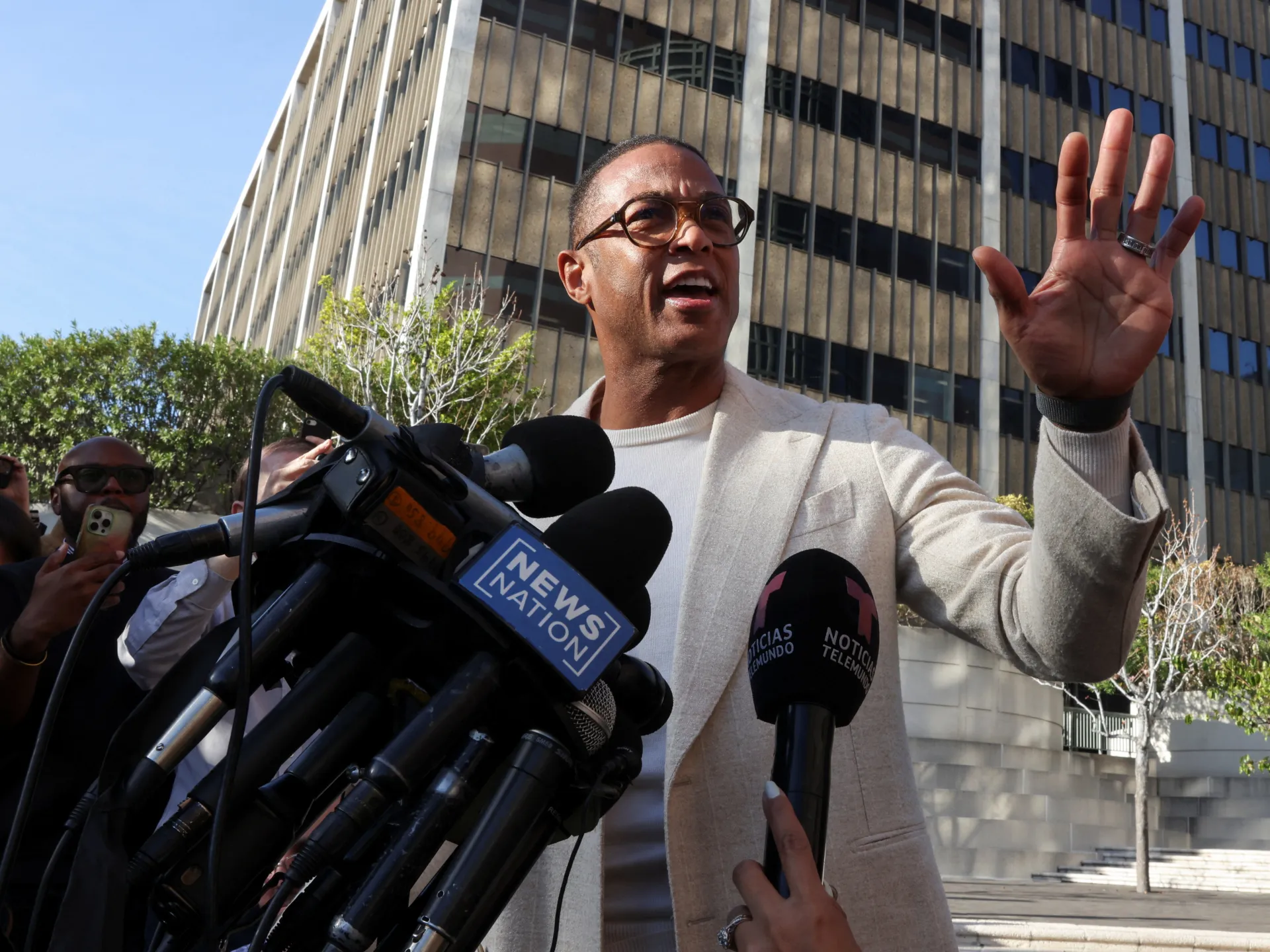
Some of those indicted deny even being a part of the January 18 protest. Defendants like former CNN anchor Don Lemon and reporter Georgia Fort say they attended in their capacity as journalists.
Both have pleaded not guilty to the charges and have publicly questioned whether their prosecution is an attempt to curtail freedom of the press.
The superseding indictment, filed on Thursday, levies two counts against the 39 defendants, accusing them of conspiracy against the right of religious freedom and efforts to injure, intimidate or interfere with the exercise of religious freedom.
“While inside the Church, defendants collectively oppressed, threatened and intimidated the Church’s congregants and pastors by physically occupying the main aisle and rows of chairs near the front of the church,” the indictment reads
It also describes the protesters as “engaging in menacing and threatening behavior” by “chanting and yelling loudly” and obstructing exits.
A magistrate judge on January 22 initially rejected the Justice Department’s attempt to charge nine attendees who were at the protest.
But the department sought a grand jury indictment instead, which was filed on January 29 and made public the next day.
A reaction to Trump’s immigration surge
The protest, dubbed “Operation Pullup”, was conceived as a response to the violent immigration crackdown that had unfolded in Minnesota.
Many of the enforcement efforts centred on the metropolitan area that includes the Twin Cities: St Paul and Minneapolis.
Trump had repeatedly blamed the area’s large Somali American population for a welfare fraud scandal involving government funds for programmes like Medicaid and school lunches.
In December, the Trump administration surged federal immigration agents to the region, nicknaming the effort Operation Metro Surge. At its height, as many as 3,000 agents were in the Minneapolis-St Paul area.
But the effort was plagued by reports of excessive violence towards detainees and protesters alike. Videos circulated of officers breaking the car windows of legal observers, pepper-spraying protesters and beating people.
Officers also engaged in the practice of entering homes forcibly without a judicial warrant, which advocates described as a violation of the Fourth Amendment of the Constitution. Cases of unlawful arrests were also reported.
But a turning point came on January 7, when an agent with Immigration and Customs Enforcement (ICE) was caught on camera shooting into the vehicle of 37-year-old mother Renee Good. She died, and her killing sparked nationwide protests.
Operation Pullup took place at Cities Church in St Paul less than two weeks later.
It was intended as a demonstration against the church’s pastor, David Easterwood, who serves as a local official for ICE.
Several protesters have indicated that they are prepared to fight the government’s charges over the incident, citing their First Amendment rights to free speech.
Some also said that they intended to remain vigilant towards government immigration operations, even after Trump administration officials announced Operation Metro Surge was winding down in mid-February.
“This is not the time to be Minnesota Nice,” one protester, civil rights lawyer Nekima Levy Armstrong, wrote on social media last week. “It’s time for truth, justice, and freedom to prevail.”

The fashion and art at Frieze L.A., captured in photos

Erica Mahinay, showing with Make Room Gallery at Frieze L.A.

Some art shows are not just about the art. At Frieze L.A., it’s also about seeing — and being seen.
On Thursday morning, over 100 artists, gallerists and collectors representing 24 countries wafted into the maze that is Frieze at the Santa Monica Airport and transformed the space into a winding runway. The dress code was eclectic and appropriately L.A.: hyper-curated and nonchalant. Archival Mugler was paired with reconstructed relaxed denim. Silk pajama pants slouched over Wales Bonner loafers. And much like the works on display, attendees dared to be visually undefinable.
This year, the four-day frenzy is expected to draw about 30,000 attendees to exhibitions both in and outside the tent, including public installations from Frieze Projects’ “Body & Soul,” and the Focus section curated by Essence Harden, which spotlights young and lesser-known artists.

Storm Ascher, left, founder of Superstition Gallery and Greg Ito pictured with his solo booth, “A Cautionary Tale,” in the Focus Section curated by Essence Harden.


Undeniably, the art this year is a product of now. Outside, Patrick Martinez welcomes guests with neon quotes supporting immigrant rights. Across the tent, in a display of performance art, Amanda Ross-Ho continuously pushes a giant, inflatable Earth around a soccer field, symbolic of “the labor it takes to just keep things going all the time.” Walking around the fair, a shared sentiment of post-fire rejuvenation, cultural collaboration and a pride for the Los Angeles community was deeply felt.


Angeleno and artist Sharif Farrag said he’s “excited to show in the city [he] grew up in.” His ceramic collection “Hybrid Moments” with Jeffrey Deitch is a cultural analogy for his childhood. “I hope my work can reflect the times we’re in through a lens of color,” he said, “and the flora and fauna of L.A.”

Nicole Reber, an L.A.-based real estate agent, was giving “’90s sparkle princess,” coupling a pair of Chanel loafers with a vintage Escada jacket that’s “highly underrated.” She came to Frieze to scope out the next addition to her home. “There’s something valuable about living and collecting art,” she said. “It’s a chance to live with somebody else’s energy.”

Dr. Joy Simmons wore a calf-length button-down by South African designer Thebe Magugu. Collecting art, like clothes, is her way of exploring the diaspora. “I just want to find something that’s different,” she said. “[African American artists] bring a different kind of color palette and excitement to the art world.”

Sharon Coplan Hurowitz came to Frieze with her “support animal, ‘Hector.’” The pebble grain Thom Browne shoulder bag, though, was no size comparison to the 10-foot John Baldessari sculpture she stood in front of. Coplan, who recently authored a catalog of Baldessari’s notable art, is excited to see support for his archival works.


Nevine Mahmoud sculpture at Sebastian Gladstone Gallery
Sebastian Gladstone, owner of namesake New York and L.A. galleries, said he loves the L.A. art community because it brings together “people that would never mix otherwise.” If he could describe “good” art in a sentence, it would be: “an alchemy where there’s a mystery of its creation, and how it makes you feel.”

Kibum Kim, partner at the Commonwealth and Council gallery

rafa esparza at Commonwealth and Council booth
Kibum Kim, a partner at the Commonwealth and Council gallery, said sifting through Frieze is like making “Sophie’s choice.” He wore a jacket from Jakarta-based brand Tanah le Saé, adorned with mixed-matched buttons. In a similar spirit of upcycling, his exhibition shows Rose Salane’s newest project from Pompeii featuring rocks and other ephemera taken from the historic site.

William Escalera, left, and Francisco George
Francisco George, a longtime art collector and docent at LACMA, is a Frieze regular. To him, good art “grabs your attention and keeps it. It communicates.” He visits the fair with his husband, William Escalera, who this year is looking for art that incorporates textiles. “It’s different,” he said.

Gallerist Susanne Vielmetter
Gallerist Susanne Vielmetter layered an Issey Miyake Pleats Please dress with a skirt from J.Crew underneath. At Frieze, she never knows whether it’s going to be cold or hot in the tent. “It’s an onion look,” she said. Although she is particularly excited to display paintings by Alec Egan, depicting the trauma of the Palisades fire, she is glad that the fair is bustling and joyous. “People are just done with doom and gloom,” she said. “They’re positive, they’re energetic, they want to go back to collecting.”


Shio Kusaka, left, and Jonah Wood


An artwork by Jade Guanaro Kuriki-Olivo, aka Puppies Puppies

Conny Maier wears a Healthy Boy Band tee and MISBHV biker shorts.


Jwan Yosef and Steven Galloway


Davida Nemeroff of Night Gallery


Soshiro Matsubara, showing with Bel Ami

Soshiro Matsubara, Bel Ami

Kelly Wall with her installation


Power, politics and a $2.8-billion exit: How Paramount won Warners
The morning after Netflix clinched its deal to buy Warner Bros., Paramount Skydance Chairman David Ellison assembled a war room of trusted advisors, including his billionaire father, Larry Ellison.
Furious at Warner Bros. Discovery Chief David Zaslav for ending the auction, the Ellisons and their team began plotting their comeback on that crisp December day.
To rattle Warner Bros. Discovery and its investors, they launched a three-front campaign: a lawsuit, a hostile takeover bid and direct lobbying of the Trump administration and Republicans in Congress.
“There was a master battle plan — and it was extremely disciplined,” said one auction insider who was not authorized to comment publicly.
Netflix stunned the industry late Thursday by pulling out of the bidding, clearing the way for Paramount to claim the company that owns HBO, HBO Max, CNN, TBS, Food Network and the Warner Bros. film and television studios in Burbank. The deal was valued at more than $111 billion.
The streaming giant’s reversal came just hours after co-Chief Executive Ted Sarandos met with Atty Gen. Pam Bondi and a deputy at the White House. It was a cordial session, but the Trump officials told Sarandos that his deal was facing significant hurdles in Washington, according to a person close to the administration who was not authorized to comment publicly.
Even before that meeting, the tide had turned for Paramount in a swell of power, politics and brinkmanship.
“Netflix played their cards well; however, Paramount played their cards perfectly,” said Jonathan Miller, chief executive of Integrated Media Co. “They did exactly what they had to do and when they had to do it — which was at the very last moment.”
Key to victory was Larry Ellison, his $200-billion fortune and his connections to President Trump and congressional Republicans.
Paramount also hired Trump’s former antitrust chief, attorney Makan Delrahim, to quarterback the firm’s legal and regulatory action.
Republicans during a Senate hearing this month piled onto Sarandos with complaints about potential monopolistic practices and “woke” programming.
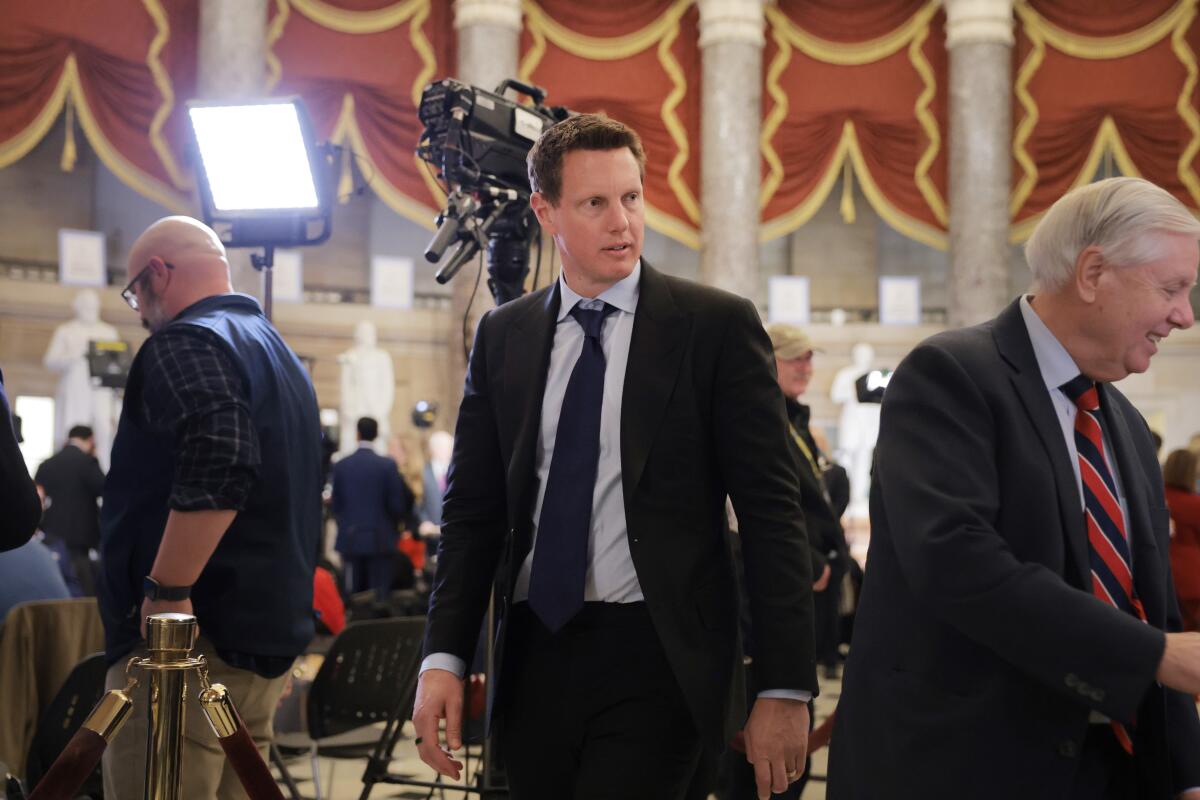
David Ellison skipped that hearing. This week, however, he attended Trump’s State of the Union address in the Capitol chambers, a guest of Sen. Lindsey Graham (R-S.C.). The two men posed, grinning and giving a thumbs-up, for a photo that was posted to Graham’s X account.

David Ellison, the chairman and chief executive of Paramount Skydance Corp., walks through Statuary Hall to the State of the Union address at the U.S. Capitol on Feb. 24, 2026.
(Anna Moneymaker / Getty Images)
On Friday, Netflix said it had received a $2.8-billion payment — a termination fee Paramount agreed to pay to send Netflix on its way.
Long before David Ellison and his family acquired Paramount and CBS last summer, the 43-year-old tech scion and aircraft pilot already had his sights set on Warner Bros. Discovery.
Paramount’s assets, including MTV, Nickelodeon and the Melrose Avenue movie studio, have been fading. Ellison recognized he needed the more robust company — Warner Bros. Discovery — to achieve his ambitions.
“From the very beginning, our pursuit of Warner Bros. Discovery has been guided by a clear purpose: to honor the legacy of two iconic companies while accelerating our vision of building a next-generation media and entertainment company,” David Ellison said in a Friday statement. “We couldn’t be more excited for what’s ahead.”
Warner’s chief, Zaslav, who had initially opposed the Paramount bid, added: “We look forward to working with Paramount to complete this historic transaction.”
Netflix, in a separate statement, said it was unwilling to go beyond its $82.7-billion proposal that Warner board members accepted Dec. 4.
“We believe we would have been strong stewards of Warner Bros.’ iconic brands, and that our deal would have strengthened the entertainment industry and preserved and created more production jobs,” Sarandos and co-Chief Executive Greg Peters said in a statement.
“But this transaction was always a ‘nice to have’ at the right price, not a ‘must have’ at any price,” the Netflix chiefs said.
Netflix may have miscalculated the Ellison family’s determination when it agreed Feb. 16 to allow Paramount back into the bidding.
The Los Gatos, Calif.-based company already had prevailed in the auction, and had an agreement in hand. Its next step was a shareholder vote.
“They didn’t need to let Paramount back in, but there was a lot of pressure on them to make sure the process wouldn’t be challenged,” Miller said.
In addition, Netflix’s stock had also been pummeled — the company had lost a quarter of its value — since investors learned the company was making a Warner run.
Upon news that Netflix had withdrawn, its shares soared Friday nearly 14% to $96.24.

Netflix Chief Executive Ted Sarandos arrives at the White House on Feb. 26, 2026.
(Andrew Leyden / Getty Images)
Invited back into the auction room, Paramount unveiled a much stronger proposal than the one it submitted in December.
The elder Ellison had pledged to personally guarantee the deal, including $45.7 billion in equity required to close the transaction. And if bankers became worried that Paramount was too leveraged, the tech mogul agreed to put in more money in order to secure the bank financing.
That promise assuaged Warner Bros. Discovery board members who had fretted for weeks that they weren’t sure Ellison would sign on the dotted line, according to two people close to the auction who were not authorized to comment.
Paramount’s pressure campaign had been relentless, first winning over theater owners, who expressed alarm over Netflix’s business model that encourages consumers to watch movies in their homes.
During the last two weeks, Sarandos got dragged into two ugly controversies.
First, famed filmmaker James Cameron endorsed Paramount, saying a Netflix takeover would lead to massive job losses in the entertainment industry, which is already reeling from a production slowdown in Southern California that has disrupted the lives of thousands of film industry workers.
Then, a week ago, Trump took aim at Netflix board member Susan Rice, a former high-level Obama and Biden administration official. In a social media post, Trump called Rice a “no talent … political hack,” and said that Netflix must fire her or “pay the consequences.”
The threat underscored the dicey environment for Netflix.
Additionally, Paramount had sowed doubts about Netflix among lawmakers, regulators, Warner investors and ultimately the Warner board.
Paramount assured Warner board members that it had a clear path to win regulatory approval so the deal would quickly be finalized. In a show of confidence, Delrahim filed to win the Justice Department’s blessing in December — even though Paramount didn’t have a deal.
This month, a deadline for the Justice Department to raise issues with Paramount’s proposed Warner takeover passed without comment from the Trump regulators.
“Analysts believe the deal is likely to close,” TD Cowen analysts said in a Friday report. “While Paramount-WBD does present material antitrust risks (higher pay TV prices, lower pay for TV/movie workers), analysts also see a key pro-competitive effect: improved competition in streaming, with Paramount+ and HBO Max representing a materially stronger counterweight to #1 Netflix.”
Throughout the battle, David Ellison relied on support from his father, attorney Delrahim, and three key board members: Oracle Executive Vice Chair Safra A. Catz; RedBird Capital Partners founder Gerry Cardinale; and Justin Hamill, managing director of tech investment firm Silver Lake.
In the final days, David Ellison led an effort to flip Warner board members who had firmly supported Netflix. With Paramount’s improved offer, several began leaning toward the Paramount deal.
On Tuesday, Warner announced that Paramount’s deal was promising.
On Thursday, Warner’s board determined Paramount’s deal had topped Netflix. That’s when Netflix surrendered.
“Paramount had a fulsome, 360-degree approach,” Miller said. “They approached it financially. … They understood the regulatory environment here and abroad in the EU. And they had a game plan for every aspect.”
On Friday, Paramount shares rose 21% to $13.51.
It was a reversal of fortunes for David Ellison, who appeared on CNBC just three days after that war room meeting in December.
“We put the company in play,” David Ellison told the CNBC anchor that day. “We’re really here to finish what we started.”
Times staff writer Ana Cabellos and Business Editor Richard Verrier contributed to this report.

Formula 1's new golden age of celebrity may have just begun
As the eighth series of Netflix’s hugely popular Drive To Survive is released this weekend, has Formula 1 become one big celebrity playground?
Source link

Saturday 28 February Andalucía Day in Andalucía Spain
Known as ‘Día de Andalucía’, this holiday commemorates the Statute of Autonomy of Andalucia referendum held on February 28th 1980, in which the Andalusian people voted for the statute that made Andalusia an autonomous community of Spain.
Depending on what day of the week that February 28th falls on, the holiday may be extended to bridge the weekend or moved if it falls on a weekend. While these may not be official holidays, many businesses and shops may close on these days.
With over eight million inhabitants, Andalucia is the largest autonomous community in terms of population and the second-largest in area. The Andalucian autonomous community is officially recognised as a nationality within Spain.
The word Andalucia derives from Vandalucia, the ‘land of the Vandals’, referring to the German tribe that settled there in the 3rd and 4th centuries AD.
Christopher Columbus left for his famous 1492 journey, which led to the discovery of America, from the Andalusian harbour Huelva.
To mark the Day of Andalucia, many towns are decorated with the flag of Andalucia, and green and white bunting is a common sight. Cultural competitions are often held in conjunction with the day.
A hymn is also sung to mark the day. It is a composition by José del Castillo Díaz with lyrics by Blas Infante, inspired by ‘the Holy God’, a popular religious song that the peasants and day labourers of some Andalusian regions sang during the harvest.
[Editorial] Kim declares South no longer ‘fellow countrymen’; is Seoul’s outreach still viable?

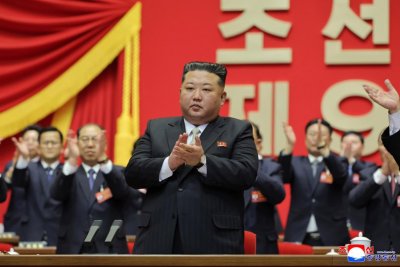
North Korean leader Kim Jong Un (C) and officials applauding during the fourth day of the Ninth Congress of the Workers’ Party of Korea (WPK) in Pyongyang, North Korea, 22 February 2026 (issued 23 February 2026). According to KCNA, North Korean leader Kim Jong Un has been re-elected as the general secretary of the ruling Workers’ Party. Photo by KCNA / EPA
Feb. 27 (Asia Today) — Kim Jong Un declared that North Korea would “permanently exclude” South Korea from the category of fellow countrymen and said there was “absolutely nothing to discuss” with what he called the “most hostile entity.”
In a report delivered at the ruling party congress held on Feb. 20-21, Kim warned that if Seoul “damages our security environment,” Pyongyang could take unspecified actions, including threats implying the “complete collapse” of South Korea through nuclear force. The remarks reaffirmed North Korea’s “two hostile states” doctrine and amounted to one of its most belligerent statements toward the South in recent years.
Kim’s speech appeared to directly rebuff the conciliatory approach pursued by President Lee Jae-myung. Upon taking office, Lee outlined three principles for inter-Korean relations: respect for the North Korean regime, no pursuit of absorption-style unification and the exclusion of hostile acts. At the U.N. General Assembly in New York last September, he proposed the “END Initiative,” aimed at encouraging denuclearization through exchanges and normalization of relations.
Seoul has since halted loudspeaker broadcasts along the Military Demarcation Line, suspended National Intelligence Service broadcasts toward the North, made the Rodong Sinmun more publicly accessible and expressed regret over civilian drone incursions. The administration has also sought to restore the Sept. 19 inter-Korean military agreement, a move that has drawn criticism from some within the military and from U.S. officials.
According to reports, Gen. Xavier Brunson, commander of U.S. Forces Korea, conveyed concerns to the chairman of the Joint Chiefs of Staff that restoring the no-fly zone near the border could “constrain the ROK military’s readiness posture.”
Despite these gestures, Kim dismissed Seoul’s stance as a “clumsy deception and a poor performance.” While rejecting dialogue with the South, he left open the possibility of improved ties with Washington, saying there would be “no reason we cannot get along well” if the United States abandons what Pyongyang calls a hostile policy.
The contrast underscores a long-standing North Korean strategy often described as engaging Washington while sidelining Seoul. The editorial argues that Seoul’s current peace roadmap has effectively stalled, with little progress in efforts to leverage improved ties with Beijing to moderate Pyongyang’s stance.
While peaceful coexistence remains a stated goal, Kim’s latest remarks raise renewed questions about whether continued unilateral conciliatory measures can alter North Korea’s strategic calculus.
— Reported by Asia Today; translated by UPI
© Asia Today. Unauthorized reproduction or redistribution prohibited.
Original Korean report: https://www.asiatoday.co.kr/kn/view.php?key=20260226010008101

Israel’s Fighter Force Stands To Be Far More Effective With Full USAF Tanker Support In A War With Iran
The U.S. Air Force now has at least 14 aerial refueling tankers forward-deployed in Israel ahead of potential strikes on Iran. Beyond supporting U.S. aircraft, an equally important role the tankers — and those spread across the region — could play is refueling Israeli fighters joining in the fight. The Israeli Air Force’s (IAF) entire tanker fleet consists of just seven nearly antique KC-707s, which imposes inherent limits on range, loiter time, sortie rates, loadout options, and other aspects of tactical air operations. Giving the IAF the full tanking resources of the U.S. would unlock its full combat potential.
Nine KC-46s and five KC-135s have arrived at Ben Gurion Airport since the start of this week. Ben Gurion is Israel’s main international airport, and is situated just to the southeast of Tel Aviv, roughly in the center of the country.
At least 11 U.S. Air Force F-22 Raptors are also now forward-deployed to the IAF’s Ovda Air Base in the southern tip of Israel. The F-22s had flown there after making a stop at RAF Lakenheath in the United Kingdom. A 12th Raptor reportedly had to return to Lakenheath due to a technical issue, but whether it may now have made its way to Israel is unclear.
The tankers at Ben Gurion and the F-22s at Ovda are relatively small parts of the massive buildup of U.S. military forces across the Middle East in recent weeks. The large influx of U.S. airpower has caused crowding at other available bases in the region that sit outside the range of Iran’s short-range ballistic missiles and other standoff weaponry, which clearly played a part in deciding to utilize Israeli facilities for the deployment of additional aircraft. Israel would also be under threat of heavy retaliation in the event of any new U.S. operation targeting Iran. U.S. aircraft in Israel would be well-positioned to help provide more immediate defense against incoming Iranian threats, but those assets could also contribute heavily to strikes on Iran.
At the same time, as TWZ has previously noted, there are very strong signs that Israeli forces will be fully integrated into the defensive and offensive components of any potential new U.S. operation against Iran. The KC-46s and KC-135s now at Ben Gurion are a tanker force twice as big as what the IAF has in its inventory today. Each KC-46 also carries more fuel to offload to receivers than a KC-707 or a KC-135. All of this could offer a major boost in aerial refueling capacity, and the operational benefits that come along with that, to Israeli forces.

From the very start of what became the 12 Day War between Israel and Iran, TWZ pointed out that committing U.S. tankers to the fight could have massive force multiplying impacts for the IAF. In the weeks that followed, there were reports that the United States had done just this, but clandestinely and to a very limited degree, to help sustain the Israeli air campaign. The U.S. Air Force subsequently denied that this had been the case, after which we delved deep into what Israel would have otherwise had to have done to keep up the operational tempo.
As we wrote:
“Fitting as much external fuel on the fighters – the IAF’s F-15 fleets and F-16Is are all notably fitted with conformal fuel tanks and have the ability to carry drop tanks – was clearly necessary. Even dropping external tanks once they are empty to maximize range appears to have been part of the plan during the initial high-volume strikes. While drop tanks are expendable, they are not cheap and are usually retained unless performance has to be regained due to enemy threats or an in-flight emergency occurs. Dropping them to maximize an aircraft’s range is also an established tactic, but not a very sustainable one over the long term. It’s also one that is not needed if tanker support is readily available, nor is equipping the jets with maximum external fuel in the first place, in many circumstances.”
“Flying very carefully planned flight profiles to squeeze every bit of efficiency out of the range of IAF tactical jets was also clearly a tactic employed, although it leaves very little margin for error or combat contingencies. In addition, we know that Israel’s F-35Is have been tweaked to provide extra range. We don’t know exactly what this entails, and it could be a cocktail of measures, from software tweaks to internal or external fuel tanks. Regardless, it was reported that many IAF fighters landed on fumes after their initial sorties.”
“Regardless, maximizing Israel’s fighter force of close to 300 aircraft (total inventory, not what is actually available at any given time) in the opening waves of the war with just seven tankers may have been a feat that can be explained by careful planning, drop tanks, and the use of long-range standoff weaponry, at least early on. As the war continued, the magnitude of the sorties may have dropped, but the geographical depth and power of their strikes increased. These operations were sustained for nearly two weeks.”
“During the conflict, TWZ discussed how, at a certain point, Israel would have to drastically reduce its cadence of operations or wrap up the war. If the U.S. had not struck Fordow with B-2s, it’s possible the war would not have ended until the IDF was able to deal with that very hardened target, which would have likely required a ground operation very deep into a highly-defended area of Iran. Strikes would have eventually slowed as the IAF’s sortie rates degraded, and especially those of its overworked and geriatric tankers.”
As an aside, Israeli Ambassador to the United States Yechiel Leiter offered what looks to be the first official confirmation that range-extending fuel tanks for the F-35I are in service in an interview earlier this month. “We developed fuel tanks that extend the aircraft’s range without compromising stealth,” Leiter told the Israel Hayom newspaper.
Questions remain about these tanks, including whether they are internally or externally mounted. To date, no pictures have emerged that definitively show them fitted to an F-35I.

Regardless, truly robust tanker support would fundamentally change the IAF’s planning processes and operational possibilities. Access to the USAF’s tanker ‘bridge’ that will cover large swathes of the Middle East, keeping combat aircraft in the fight, will be an unprecedented operational reality for the IAF. More aerial refueling capacity would enable tactical jets to fly further, loitering over areas of the battlespace longer, and carry heavier ordnance loads. Greater reach and time on station could be extremely valuable when hunting for mobile high-value targets, like Iranian ballistic missile launchers. More range and loiter time could be equally important for responding to large waves of incoming Iranian missiles and drones in retaliation.
Far greater tanker support would also provide much higher safety margins for aircraft returning low on fuel from longer-range and/or long-duration missions. As noted earlier, it was reported that IAF fighters often landed on fumes after their initial sorties during the 12 Day War. It is somewhat shocking that aircraft were not lost to fuel starvation alone considering how closely they were operating to the edge of their endurance. Tankers forward-deployed in Israel could be similarly critical for providing recovery tanking, giving IAF aviators an extra margin of flight time, especially if everything doesn’t go as planned. The same can be said for U.S. fighter aircraft operating out of Israel. The F-22 has a notoriously short combat radius, for instance. Fuel starvation was an issue even in the mission to capture Maduro, for instance.
All around, U.S. tankers refueling Israeli jets during a future operation against Iran could only help greatly magnify the contributions of the latter, which would already be substantial in this scenario. IAF involvement would add hundreds of fighter aircraft, unique munitions, and more to the equation. On top of materiel aspects, Israeli pilots would bring immense experience about operations over Iran gained during the 12 Day War, as well as the benefits of analysis of lessons learned from the conflict. The rest of the Israel Defense Forces (IDF) and the Israeli intelligence apparatus would be able to provide other kinds of critical support.

12 Days of Precise Action
All of this also underscores the importance of Israel’s effort now to acquire a new fleet of six KC-46 tankers to replace its aging KC-707s. At least as of 2022, Boeing was expected to deliver the first KC-46s to the IAF before the end of this year.
It is still to be seen whether the U.S. will launch a new operation against Iran, and what role Israel will play if that decision is ultimately made. Many other questions remain to be answered, as well, as TWZ just recently explored in detail.
“It’d be nice if we could do it without, but sometimes you have to do it with,” U.S. President Donald Trump told reporters as he left the White House earlier today in response to a question about possible strikes on Iran. “We have the greatest military anywhere in the world. There’s nothing close. I’d love not to use it, but sometimes you have to.”
“They should make a deal, but they don’t want to quite go far enough. It’s too bad,” Trump also said today. “We’re not happy with the negotiation.”
“I met Vice President J.D. Vance today and shared details of the ongoing negotiation between the United States and Iran and the progress achieved so far,” Omani Foreign Minister Badr Albusaidi also wrote in a post on X today. “I am grateful for their engagement and look forward to further and decisive progress in the coming days. Peace is within our reach.”
U.S. and Iranian officials met in Oman yesterday for a second round of talks aimed at avoiding a conflict, and focused on Iran’s nuclear ambitions. The results of that engagement were inconclusive, though there are publicly stated plans for another round of talks next week.
If the U.S. government does decide to take action against Iran, the tankers at Ben Gurion are among the forces now in place to swing into action, and could easily find themselves refueling Israeli jets, as well as American ones. U.S. Air Force tanker support would be a massive force multiplier for the IAF that would allow it to have an even greater impact than it had in the 12 Day War.
Contact the author: joe@twz.com

Paramount-Warner Bros. deal stirs fears about what it means for CNN
As the media industry took stock of Paramount Skydance’s startling acquisition of Warner Bros. Discovery, one question lingered on the minds of many in the news business and beyond: what will this mean for CNN?
The iconic 24-hour cable news network is among the various Warner Bros. assets that would be scooped up by Paramount in a deal announced Thursday that could transform the media landscape.
Paramount has undergone a swift transformation under Chief Executive David Ellison following his family’s acquisition of the company last summer. These changes reached CBS News almost immediately with the appointment of Bari Weiss, the controversial Free Press co-founder, as its new editor in chief.

Bari Weiss moderated a town hall with Erika Kirk, widow of slain conservative activist Charlie Kirk.
(CBS via Getty Images)
Weiss’ tenure so far has been rocky.
Her decision to pull a “60 Minutes” story about conditions inside an El Salvador prison that housed undocumented Venezuelan migrants from the U.S. received widespread criticism and accusations of political motivation. The network said the story was held for more reporting, and the segment eventually aired.
There was more upheaval last week at the news magazine, when “60 Minutes” correspondent and CNN news anchor Anderson Cooper announced that he’d be leaving to spend more time with his family.
And earlier this year, a veteran producer at “CBS Evening News With Tony Dokoupil” was fired after he expressed disagreement about the editorial direction of the newscast.
Now, the concern is that similar changes could be in store for CNN, which has long been a target of President Trump’s ire. He has personally called for the ouster of hosts at the network who have questioned his policies.
CNN Worldwide Chief Executive Mark Thompson tried to quell some of those fears, particularly inside his own newsroom.
In an internal memo dated Thursday and obtained by The Times, Thompson urged employees not to “jump to conclusions about the future” and try to concentrate on their work.
“We’re still near the start of what is already an incredibly newsy year at home and abroad,” he wrote in the note. “Let’s continue to focus on delivering the best possible journalism to the millions of people who rely on us all around the world.”

Chairman and CEO of CNN Worldwide Mark Thompson and media editor for Semafor, Maxwell Tani, speak onstage.
(Shannon Finney / Getty Images for Semafor)
CNN declined to comment beyond Thompson’s memo.
Ellison has said his vision for a news business is one that is ideologically down the middle.
“We want to build a scaled news service that is basically, fundamentally in the trust business, that is in the truth business, and that speaks to the 70% of Americans that are in the middle,” he said during a Dec. 8 interview on CNBC, shortly after Warner said it had chosen Netflix as the winning bidder for its studios, HBO and HBO Max. “And we believe that by doing so that is for us, kind of doing well, while doing good.”
Ellison demurred when asked whether Trump would embrace him as CNN’s owner, given the president’s past criticisms of the network.
“We’ve had great conversations with the president about this, but … I don’t want to speak for him in any way, shape or form,” he said.
First Amendment scholars have raised concerns about press freedom and free speech rights under the Trump administration, particularly after last month’s arrest of former CNN journalist Don Lemon and the Federal Communications Commission’s pressure on late-night hosts like Jimmy Kimmel and Stephen Colbert.
Press freedom groups have long asked questions in other countries about how authoritarian regimes use their power and “oligarchical alliances to belittle, silence, and punish independent journalistic voices, or to steer media ownership toward … a preferred version of the truth,” said RonNell Andersen Jones, a 1st Amendment scholar and distinguished professor in the college of law at the University of Utah, in an email.
“We see them asking at least some of these questions about the U.S. today,” she wrote.
Apprehension about the merger also extends beyond its implications for CNN and the media business.
Lawmakers such as Rep. Laura Friedman (D-Glendale), Sen. Adam Schiff (D-Calif.) and Sen. Cory Booker (D-N.J.) have raised concerns about how the consolidation of two major Hollywood studios could affect industry jobs and film and television production — which has significantly slowed since the pandemic, the dual writers’ and actors’ strikes in 2023 and corporate cutbacks in spending.
Sen. Elizabeth Warren (D-Mass.) called the deal an “antitrust disaster” that she feared could raise prices and limit choices for consumers.
“With the cloud of corruption looming over Trump’s Department of Justice, it’ll be up to the American people to speak up and state attorneys general to enforce the law,” she said in a statement.
Already, California Atty. Gen. Rob Bonta has said the merger isn’t a “done deal,” adding that he is in communication with other states attorneys general about the issue.
“As the epicenter of the entertainment industry, California has a special interest in protecting competition,” he posted Friday on X.
Ellison addressed some of these concerns in a statement Friday.
“By bringing together these world-class studios, our complementary streaming platforms, and the extraordinary talent behind them, we will create even greater value for audiences, partners and shareholders,” he said. “We couldn’t be more excited for what’s ahead.”
Times staff writer Meg James contributed to this report.

Trump orders federal agencies to stop using Anthropic’s AI after clash with Pentagon
President Trump on Friday directed federal agencies to stop using technology from San Francisco artificial intelligence company Anthropic, escalating a high-profile clash between the AI startup and the Pentagon over safety.
In a Friday post on the social media site Truth Social, Trump described the company as “radical left” and “woke.”
“We don’t need it, we don’t want it, and will not do business with them again!” Trump said.
The president’s harsh words mark a major escalation in the ongoing battle between some in the Trump administration and several technology companies over the use of artificial intelligence in defense tech.
Anthropic has been sparring with the Pentagon, which had threatened to end its $200-million contract with the company on Friday if it didn’t loosen restrictions on its AI model so it could be used for more military purposes. Anthropic had been asking for more guarantees that its tech wouldn’t be used for surveillance of Americans or autonomous weapons.
The tussle could hobble Anthropic’s business with the government. The Trump administration said the company was added to a sweeping national security blacklist, ordering federal agencies to immediately discontinue use of its products and barring any government contractors from maintaining ties with it.
Defense Secretary Pete Hegseth, who met with Anthropic’s Chief Executive Dario Amodei this week, criticized the tech company after Trump’s Truth Social post.
“Anthropic delivered a master class in arrogance and betrayal as well as a textbook case of how not to do business with the United States Government or the Pentagon,” he wrote Friday on social media site X.
Anthropic didn’t immediately respond to a request for comment.
Anthropic announced a two-year agreement with the Department of Defense in July to “prototype frontier AI capabilities that advance U.S. national security.”
The company has an AI chatbot called Claude, but it also built a custom AI system for U.S. national security customers.
On Thursday, Amodei signaled the company wouldn’t cave to the Department of Defense’s demands to loosen safety restrictions on its AI models.
The government has emphasized in negotiations that it wants to use Anthropic’s technology only for legal purposes, and the safeguards Anthropic wants are already covered by the law.
Still, Amodei was worried about Washington’s commitment.
“We have never raised objections to particular military operations nor attempted to limit use of our technology in an ad hoc manner,” he said in a blog post. “However, in a narrow set of cases, we believe AI can undermine, rather than defend, democratic values.”
Tech workers have backed Anthropic’s stance.
Unions and worker groups representing 700,000 employees at Amazon, Google and Microsoft said this week in a joint statement that they’re urging their employers to reject these demands as well if they have additional contracts with the Pentagon.
“Our employers are already complicit in providing their technologies to power mass atrocities and war crimes; capitulating to the Pentagon’s intimidation will only further implicate our labor in violence and repression,” the statement said.
Anthropic’s standoff with the U.S. government could benefit its competitors, such as Elon Musk’s xAI or OpenAI.
Sam Altman, chief executive of OpenAI, the company behind ChatGPT and one of Anthropic’s biggest competitors, told CNBC in an interview that he trusts Anthropic.
“I think they really do care about safety, and I’ve been happy that they’ve been supporting our war fighters,” he said. “I’m not sure where this is going to go.”
Anthropic has distinguished itself from its rivals by touting its concern about AI safety.
The company, valued at roughly $380 billion, is legally required to balance making money with advancing the company’s public benefit of “responsible development and maintenance of advanced AI for the long-term benefit of humanity.”
Developers, businesses, government agencies and other organizations use Anthropic’s tools. Its chatbot can generate code, write text and perform other tasks. Anthropic also offers an AI assistant for consumers and makes money from paid subscriptions as well as contracts. Unlike OpenAI, which is testing ads in ChatGPT, Anthropic has pledged not to show ads in its chatbot Claude.
The company has roughly 2,000 employees and has revenue equivalent to about $14 billion a year.
Ex-MLB pitcher Dan Serafini sentenced to life in prison for murder
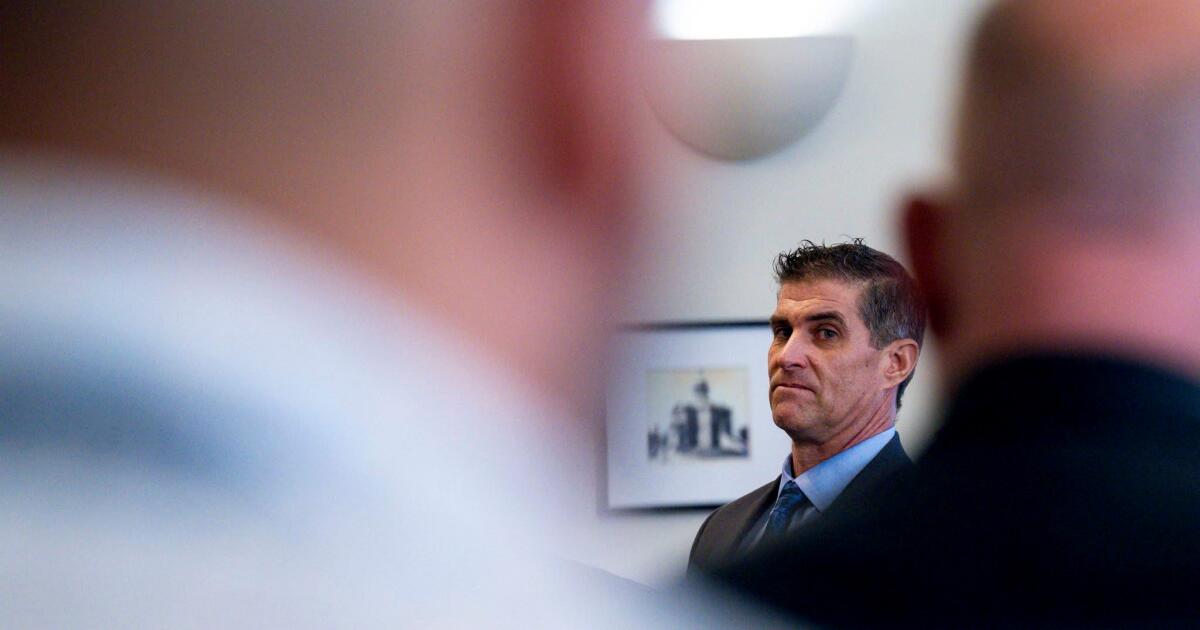
Former Major League Baseball pitcher Dan Serafini was sentenced to life in prison without the possibility of parole on Friday for the 2021 first-degree murder of his father-in-law and attempted murder of his mother-in-law in Lake Tahoe.
Serafini, who pitched for six MLB teams during a 22-year professional career that ended in 2013, killed Gary Spohr, 70, and seriously injured Wendy Wood during a burglary of their home on the west shore of Lake Tahoe.
He was convicted in July after a six-week trial and made two unsuccessful appeals, denied a new trial only a week ago. During his ruling, Placer County Superior Court Judge Garen J. Horst said Serafini, 52, was a “liar, manipulator, arrogant and someone who has a loose relationship with the truth.”
The jury also found Serafini guilty of first-degree burglary and found the special circumstance allegations of lying-in-wait and felony murder, as well as related firearm allegations, to be true.
Serafini broke into the Spohr’s home while the couple was boating with their grandsons and daughter Erin Spohr — Serafini’s wife. He waited in a closet until his family left and shot them both in the head upon their return, according to prosecutors.
Wood took her own life in 2022 at age 69. After a year of rehabilitation after the shooting, she had regained her ability to read and write, as well as to hike and ride a bicycle, according to her daughter, Adrienne Spohr. But she battled disability and depression.
Samantha Scott, a nanny employed by Serafini and Erin Spohr to watch their two young children, pleaded guilty to being an accessory to the crimes. She testified in 2025 that she drove Serafini to the crime scene, believing it was for a drug deal.
Scott also testified that she saw Serafini with a gun and a silencer made of PVC pipe in his backpack. She testified that she dropped him off near the Spohr’s home and later saw him discard items from his backpack after they crossed the Nevada state line.
“When I learned that my sister’s husband Daniel Serafini and sister’s close friend Samantha Scott were arrested for the shooting of my parents, I was shaken to my core,” Adrienne Spohr said in a statement to the court. “This was a heinous, calculated crime. My parents had been incredibly generous to Daniel Serafini and Erin Spohr throughout their marriage.”
The Minnesota Twins made Serafini their first-round draft pick in 1992 out of Junipero Serra High in San Mateo, Calif., the same school that all-time home run king Barry Bonds attended. Serafini made his big-league debut in 1996 with the Twins and pitched with the Chicago Cubs, San Diego Padres, Pittsburgh Pirates, Cincinnati Reds and Colorado Rockies.
Serafini pitched in Japan from 2004 to 2007 before returning to the United States. He was suspended for 50 games in 2007 for using performance-enhancing drugs that he blamed on medication he took in Japan. He also pitched for Italy in the 2013 World Baseball Classic.
Serafini’s bar in Sparks, Nev., was featured on an episode of “Bar Rescue” in 2025. The bar’s named was changed from the Bullpen Bar to the Oak Tavern as part of the makeover, but not before Serafini’s financial woes were described: He blew through $14 million in career earnings and took a $250,000 loan from his parents.
Prosecutors said Serafini’s crimes were driven by anger and financial distress. Evidence was presented that he made threats and spoke about wanting his in-laws dead for many years. He and Gary Spohr also had disputes over a $1.3 million loan intended for Erin Spohr’s horse ranch business.