


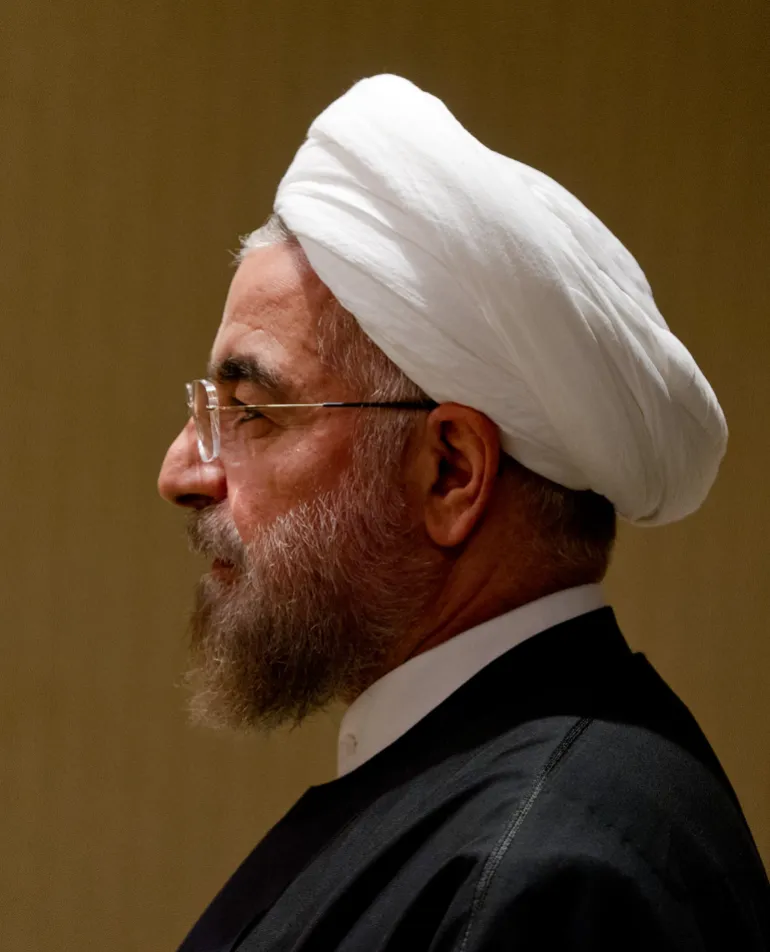
Iran’s succession question: Rouhani’s name resurfaces amid leadership void | Israel-Iran conflict
In Iran’s major turning points, Hassan Rouhani’s name tends to resurface – even when he is no longer at the centre of decision-making. And as the Islamic Republic enters a sensitive transitional phase after Supreme Leader Ali Khamenei was killed in a joint United States-Israeli strike, the question of which figures might be used to calm the domestic arena or rebalance power inside the system has returned to the forefront.
Rouhani, Iran’s former president (2013–2021), a Muslim leader with a doctorate in law, is not an outsider to the system he once promised to “reform”. He is a product of it: a longtime parliamentarian, a veteran of the national-security apparatus, and a former chief nuclear negotiator who rose to the presidency in 2013 as a pragmatist offering economic relief through diplomacy.
The long road through parliament
Rouhani was born in 1948 in Sorkheh, in Iran’s Semnan province. He received religious training in the Hawza system (Islamic religious seminary), then studied law at the University of Tehran, before earning a PhD in law from Glasgow Caledonian University in 1999.
After the revolution, he built his career through parliament. He was elected to the Majlis (Iran’s legislature) for five consecutive terms between 1980 and 2000, giving him practical political experience and longstanding relationships within the elite.
That background explains part of his later image as a “consensus man” more than an ideological confrontational leader: someone who moves within the rules of the game, not outside them.
A ‘third road’ in Iran’s post-revolution politics
To understand Rouhani’s political brand, it helps to place it in a longer arc of post-1979 ideological currents inside the Islamic Republic – an arc often described in Iranian political writing as a sequence of competing “discourses” that nonetheless remained anchored to the revolution and the system’s religious-constitutional framework.
Iran moved through phases that emphasised different priorities: currents sometimes described as “Islamic left”, “Islamic liberalism”, and a more market-oriented turn under former leader Hashemi Rafsanjani; then a period of “Islamic democracy” and “civil society” associated with Mohammad Khatami; followed by a social-justice-heavy, populist register under Mahmoud Ahmadinejad.
That’s when Rouhani arrived with the language of e‘tedal –or “moderation”.
Within that framework, “moderation” presents itself as an attempt to balance what supporters call the system’s two pillars: the “Republic” (pragmatism, governance, responsiveness) and the “Islamic” (ideals, clerical authority, revolutionary identity). This balance became central to Rouhani’s pitch in 2013: He promised to reduce external pressure, restart economic growth and lower domestic polarisation without challenging the authority structure that ultimately constrains any elected president in Iran.

The negotiator and president
Between 2003 and 2005, Rouhani led Iran’s delegation in nuclear negotiations with the “European troika” (Britain, France and Germany). He gained a reputation as a “pragmatist” among Western diplomats, while Iranian hardliners accused him of making concessions.
Later, that record became a pillar of his 2013 presidential campaign: a negotiator rather than a confrontationist.
In June that year, Rouhani won the presidency in the first round with more than 50 percent of the vote, avoiding a run-off in an election that saw high turnout.
Rouhani’s signature achievement was the 2015 nuclear agreement, the Joint Comprehensive Plan of Action (JCPOA), negotiated between Iran and the P5+1 – the US, China, Russia, France, United Kingdom and European Union.
Under the deal, the US and its allies lifted the bulk of sanctions imposed on Iran, and allowed Tehran access to more than $100bn in frozen assets. In exchange, Iran agreed to major caps on its nuclear programme.
At home, Rouhani sold the deal as a route to normalise the economy and curb inflation.
2017: A second mandate – and first brush with Trump
In May 2017, Rouhani won a second term with about 57 percent of the vote. Many inside Iran read the result as a bet by the country’s people on continued “opening” and reduced isolation.
But the power equation within Iran did not change. The presidency manages day-to-day governance, but it does not decide alone on the security services, the judiciary, the Revolutionary Guards or the core media architecture.
The diplomatic opening proved short-lived. In 2018, US President Donald Trump, in his first term, withdrew Washington from the JCPOA and reimposed sweeping sanctions, sharply limiting the economic gains Rouhani had promised. The reversal weakened Iran’s pragmatists and reformists, who had invested political capital in defending the agreement as the best available route out of isolation–while giving hardliners new ammunition to argue that negotiations with the US cannot deliver durable relief.
Post-presidential year – and a return from political exile?
Rouhani’s presidency ended in 2021, and with the rise of conservative dominance within Iran’s politics, he appeared to be gradually pushed to the margins. He then became a member of Iran’s Assembly of Experts – the body constitutionally empowered to choose the supreme leader.
But in January 2024, the Reuters news agency reported that the Guardian Council barred Rouhani from running again for the Assembly of Experts.
Two years later, after the February 28 strike that killed Khamenei, the country – according to the constitution– entered a temporary arrangement phase until the Assembly of Experts selects a new leader. President Masoud Pezeshkian, Supreme Court Chief Justice Gholam-Hossein Mohseni-Ejei and Guardian Council member Ayatollah Alireza Arafi form the interim leadership council that are in charge until the Assembly of Experts announces its pick for the next Supreme Leader.
And from the hushed conversations and chatter that have emerged from within Iran’s elite circles over potential candidates for the supreme leader’s role, Rouhani’s name has resurfaced.
That possible return to political life, analysts say, is a testament to what Rouhani represents in Iran’s factional geometry: a governing style that privileges tactical compromise, economic management and controlled engagement – while remaining fundamentally loyal to the Islamic Republic’s constitutional-religious architecture.
As Iran plans Khamenei’s succession, it faces a central question: whether to broaden legitimacy by incorporating pragmatic faces or double down on a security-first posture. Rouhani sits at that crossroads – not the architect of the system, and no longer a principal decision-maker, but a durable indicator of how far Iran’s establishment is willing to bend without breaking.

Full list of people who can now get a third off train fares
Seven extra groups now qualify for a Disabled Person’s Railcard including blue badge holders

The eligibility criteria for a Disabled Persons Railcard have been expanded(Image: Getty)
More people will now qualify for reduced-price rail journeys across the UK. Seven additional categories are now eligible for a Disabled Person’s Railcard after the scheme was broadened on March 1.
This railcard grants the holder and an accompanying adult a one-third discount on most train tickets throughout England, Scotland and Wales. It presently costs £20 for one year or £54 for three. Until this month, the Disabled Person’s Railcard had exclusively been available to those claiming particular benefits or living with certain medical conditions. From March 1, it continues to be available to those individuals, but the criteria has been widened.
It now encompasses a wider spectrum of visible and non-visible disabilities. Individuals who now qualify include those who:
- Have a blue badge
- Have a disabled person’s bus pass (England, Scotland and Wales)
- Have a disabled person’s Freedom Pass (London only)
- Can’t drive on medical grounds
- Receive Armed Forces Compensation Scheme benefits
- Receive Industrial Injuries Disablement Benefit for 20 per cent degree of disablement or higher
- Are without speech
Other people who still qualify
The existing qualifying criteria for a Disabled Person’s Railcard remains valid, which means you can hold a railcard if you:
- Receive Personal Independence Payments or Adult Disability Payment
- Receive Disability Living Allowance or Child Disability Payment at either the higher or lower rate for the mobility component, or the higher or middle rate for the care component
- Have a visual impairment
- Are registered as deaf or use a hearing aid
- Have epilepsy and receive drug treatment for it
- Receive Attendance Allowance, Severe Disablement Allowance or Pension Age Disability Payment
- Receive war pensioner’s mobility supplement
- Receive war or service disablement pension for 80 per cent or more disability
- Buy or lease a vehicle through the Motability scheme
From September 2026 it is intended that the scheme will broaden further allowing even more people to apply for a card. On the Disabled Persons Railcard website, it states: “Phase 2, launching in September 2026, will further extend eligibility to disabilities and conditions that require professional health evidence and more detailed assessment, including some long-term or degenerative medical conditions, and neurodiversity where it has a substantial impact on a person’s ability to travel by train.
“More detailed evidentiary requirements will be made available for this phase closer to implementation in September 2026.”
It is worth noting that if you already hold one of these railcards, the changes won’t affect you. The website states: “These upcoming changes to the eligibility criteria won’t affect your current Railcard or your eligibility. You can continue using your Railcard as usual without any disruption.”
How to apply
You can submit an application online here. You can select a digital card accessible via your mobile, which becomes available within five working days.
Alternatively, you can choose a physical card, which may take up to 15 days to reach you by post. The application process should require no longer than 10 minutes to finish.
Before starting, you must ensure you have the following prepared:
- A valid debit or credit card
- Documentary evidence of the Railcard holder’s disability that can be scanned and uploaded as a file
- A passport-style photograph (it can even be captured with your phone)
You cannot submit an application in person at a railway station but you can apply by post. To do this, you can download a Disabled Persons Railcard application form online or obtain an application form from any staffed station ticket office.
You will then need to fill in and return this application, together with the required evidence of disability and payment to:
National Railcards
PO box 8626
SWADLINCOTE
DE11 1JA
A complete list of what is recognised as documentary evidence of the disability can be located online here.

Deadliest Catch star Todd Meadows’ death caught on camera as heartbroken mum begs for footage to never be released
THE mother of Deadliest Catch star Todd Meadows has pleaded for footage of her son’s death never to be aired.
Cameras were rolling when Meadows went overboard off the coast of Alaska last week.
The 25-year-old fell into the freezing waters of the Bering Sea while filming the long-running Discovery Channel series.
His body was recovered ten minutes later, but attempts to resuscitate him were unsuccessful.
His mother, Angela, told TMZ: “We don’t want to see any footage of the accident and do not want Discovery to air any of that footage or make money off of our son’s death.
“We hope they only air good things of Todd on that boat.”


Instead, Angela said the family has requested footage of Todd crabbing so they can remember him doing what he loved.
The family is still waiting for a definitive answer about how he died, but Angela says she has been assured her son did not suffer in his final moments.
“We don’t want to put the blame on anyone, but someone has to take responsibility. We will have justice for Todd,” she added.
A spokesperson for the US Coast Guard said that on February 25, just after 5pm local time, officials were alerted that Meadows had gone overboard.
The alarm was raised by the fishing vessel Aleutian Lady, which reported he fell into the water about 170 miles north of Dutch Harbour, near Alaska.
Captain Rick Shelford confirmed the devastating loss in a Facebook post, calling February 25 “the most tragic day in the history of the Aleutian Lady on the Bering Sea.”
“We lost our brother, Todd Meadows,” he wrote.
“Todd was the newest member of our crew, he quickly became family. His love for fishing and his strong work ethic earned everyone’s respect right away.
“His smile was contagious, and the sound of his laughter coming up the wheelhouse stairs or over the deck hailer is something we will carry with us always.”
Discovery Channel also released a statement: “We are deeply saddened by the tragic passing of Todd Meadows.
“This is a devastating loss, and our hearts are with his loved ones, his crewmates and the entire fishing community during this incredibly difficult time.
“Our hearts are broken in a way that words can’t fully express.”
Todd is survived by three sons, and a GoFundMe has been started to support them.
The Bering Sea – known for its shallow depth, volatile weather, and freezing temperatures – is widely regarded as one of the most dangerous bodies of water in the world.
The hazards of the job are well-known among those who work the waters.
Captain Sig Hansen has previously described facing “life-threatening situations” at sea.
“We’ve had events where the boat was icing down to the point where I thought there was no return, he told Fox News.
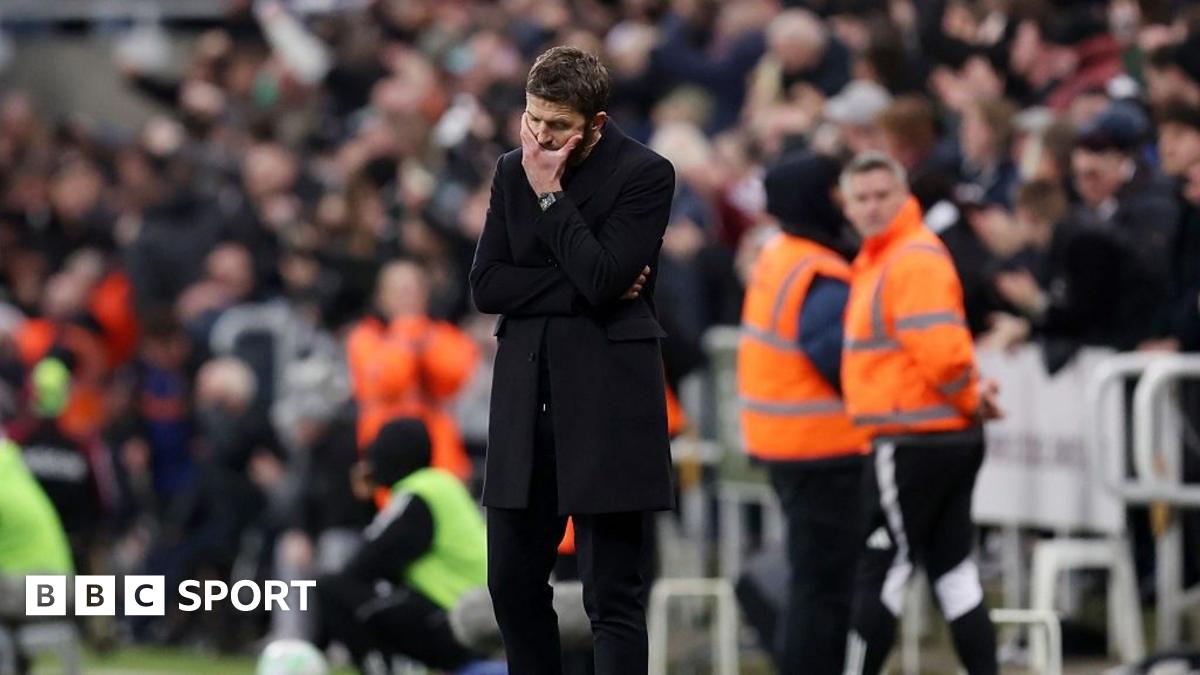
Carrick looks for ‘lessons’ after first Man Utd loss
But results never tell the whole story.
Four games ago at West Ham, Manchester United were “stodgy'” by Carrick’s own admission. It took an injury-time Benjamin Sesko goal to salvage a point.
At Everton, Sesko finished off the only notable passage of play from either side. On Sunday, Manchester United‘s response to going behind early to Crystal Palace was muted until Matheus Cunha won the penalty that also brought the red card that turned the game on its head.
Carrick’s team have been getting results. However, their most-recent performances have not matched those that beat Manchester City, Arsenal and Fulham at the start of his time at the helm.
Cunha and Bryan Mbeumo have not been a goal threat; Kobbie Mainoo’s performance levels have dipped, while penetration from full-back areas has reduced.
It is a basic reality that they do not have limitless numbers of top-quality players. By the final whistle at St James’ Park, Matthijs de Ligt, Mason Mount, Lisandro Martinez, Noussair Mazraoui and Patrick Dorgu were all absent because of injury. Casemiro and Luke Shaw were off the pitch feeling the effects of two hard games in four days. Carrick does not have the squad depth to cover those losses and still keep standards high.
So, embarrassingly, Manchester United lost against 10 men for the second time in just over three months. The damage was done by William Osula – a player who, as an 11-year-old, appeared on the pitch at Old Trafford to collect a Soccer Schools World Skills final victory prize.
His goal came after he got the better of Tyrell Malacia, who was making only his second appearance of a season he started as a member of Amorim’s ‘bomb squad’. The previous one was against Newcastle too.
The damage is not too bad though. Liverpool lost 24 hours earlier against the league’s bottom club before Aston Villa suffered a heavy home loss to Chelsea on Wednesday.
Manchester United remain third. They remain, out of the sides scrapping it out for three Champions League places in addition to the ones Arsenal and Manchester City will claim, the ones with no European or domestic cup distractions.
“We need to learn from this,” said Carrick.
“There is no sense in not learning lessons and understanding how tonight happened.
“We can’t lose sight of the bigger picture though – we have put ourselves into a position that can be really exciting.
“We’ve got to be positive going into the next game and look forward to it because there is a lot to play for.”
Carrick is right about that.
He needs to make sure his team’s response to this defeat is just as sure footed.

South Korea uses tech, data to modernize reservist training

Reservists participate in simulated firing training during the first reserve forces exercise of the year at the Army’s 51st Infantry Division science-based reservist training center in Pyeongtaek, South Korea, on March 3, 2026. Photo by Yonhap News Agency
March 4 (Asia Today) — South Korea’s Army has begun its 2026 reservist training program using advanced simulation and data systems designed to improve combat realism and tactical efficiency.
At a science-based reservist training center in Seoul’s Seocho district on Wednesday, reservists trained with the Multiple Integrated Laser Engagement System, known as MILES, which uses laser signals and sensors to determine hits during simulated combat.
When a reservist was struck during a mock urban battle exercise, the equipment immediately sounded an alert indicating the participant had been “killed,” demonstrating the system’s ability to provide instant and objective combat assessments.
The Army said the system replaces earlier exercises that relied heavily on instructor judgment. Instead, the equipment records hits and performance data in real time, allowing trainees to review their results and identify areas for improvement.
Officials say the new approach encourages a more participatory training model in which reservists track their own performance and refine their skills based on data.
Indoor firing range reduces noise complaints
The facility also includes an indoor shooting range equipped with advanced soundproofing designed to address long-standing noise complaints from nearby residents.
Army officials said the range is quiet enough that it is difficult to detect gunfire outside the building.
Transparent ballistic acrylic panels at each firing lane and automated fire-control systems were installed to improve safety. Reservists monitor their shooting results in real time on digital displays during training.
The Army said the technology helps transform the facility from a traditional military site into security infrastructure that can coexist more easily with surrounding communities.
VR simulations recreate urban battlefields
Reservists also trained in virtual reality simulations using a three-screen system that recreates realistic urban environments.
The scenarios include detailed digital models of locations such as Seocho Station and the COEX underground shopping mall in Seoul’s Gangnam district.
Participants wearing helmets equipped with spatial-recognition technology practiced navigating the terrain and conducting simulated urban combat operations without the constraints of real-world training space.
Smart systems streamline training process
An information and communications technology management system links multiple stages of the training process.
Reservists register by scanning identification cards when they arrive, after which smartwatches and kiosks connect them to a network that manages equipment distribution, firing exercises, tactical drills, evaluation and discharge.
The Army plans to expand the system to additional training facilities and introduce more simulation-based exercises.
Officials said 29 science-based reservist training centers have been built nationwide so far, including one scheduled for completion in Busan later this month.
New facilities are also planned this year in Mokpo, Daejeon, Chilgok, Yeongcheon and Andong. The Army ultimately plans to operate about 40 such centers nationwide.
Col. Park Hyun-gyu, head of the Army’s reservist training policy division, said the program aims to improve readiness while making training more efficient.
“The science-based system enhances training results while minimizing inconvenience for participants,” Park said. “It will strengthen the combat readiness of our reservists while creating a training environment that can coexist with local communities.”
— Reported by Asia Today; translated by UPI
© Asia Today. Unauthorized reproduction or redistribution prohibited.
Original Korean report: https://www.asiatoday.co.kr/kn/view.php?key=20260304010001086

Israel tightens siege on Gaza amid Iran war | Newsfeed
Israel closes Gaza crossings amid war with Iran, raising fears of famine. Tareq Abu Azzoum explains.
Published On 5 Mar 2026
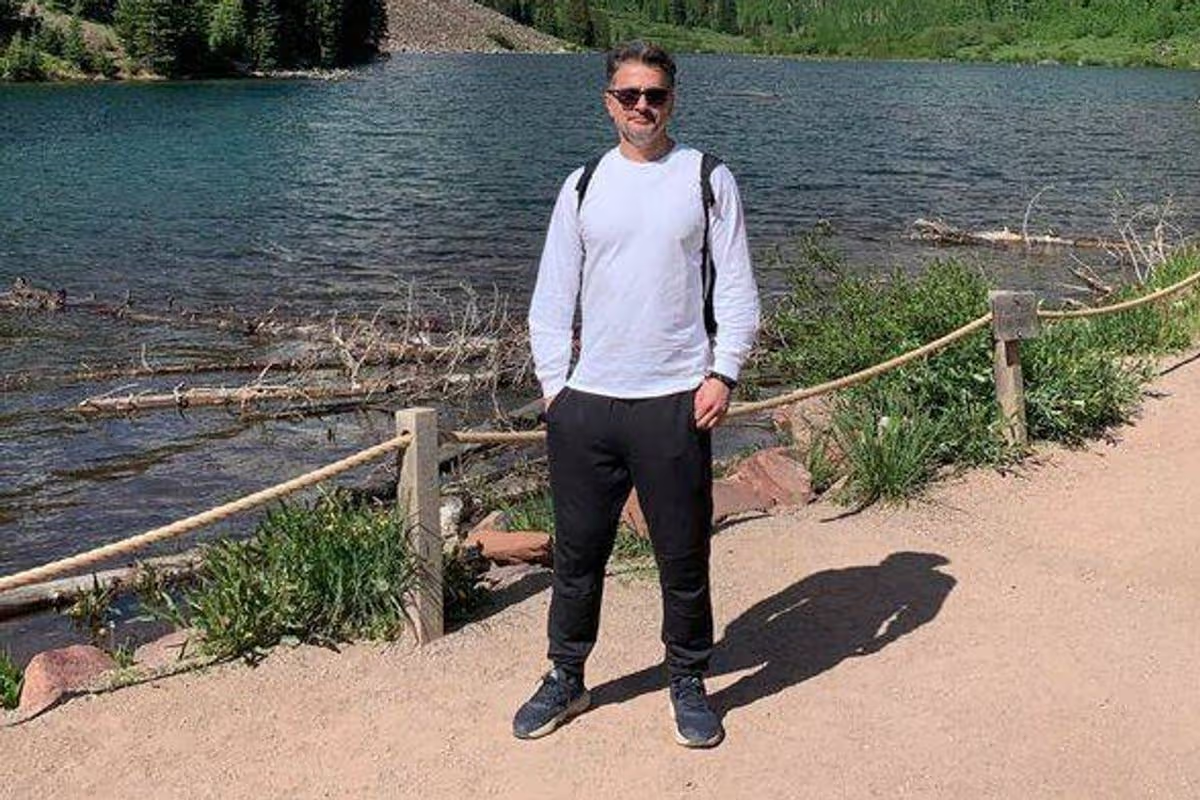
I went to the US state with 125 billionaires and endless rows of private jets
A travel writer explores Aspen and Snowmass in Colorado’s Rocky Mountains, discovering stunning Maroon Bells views, cowboy culture, rodeos and summer adventures in America’s most affluent mountain resort

(Image: Chris Granet)
The guide’s instructions were crystal clear: “Keep both hands on the handlebars. Don’t look around. Don’t take photos.”
Yet I simply couldn’t resist. The scenery was far too stunning and I found myself compelled to capture videos of the breathtaking alpine vista surrounding us whilst coasting down from the Maroon Bells, the twin peaks situated behind the twin towns of Aspen and Snowmass, their snow-covered summits still clinging to winter’s final traces despite it being late June.
This stretch of Colorado’s Rocky Mountains is more renowned for its skiing and cold-weather pursuits, yet during summer it transforms into a paradise for those keen to discover the terrain no longer concealed beneath snow.
I’d travelled in from Denver, departing the state capital bathed in evening sunlight as we glided over the snow-dusted peaks. Lines of private aircraft filled the tarmac at tiny Aspen airport.
I’d never witnessed so many. Then again, this ranks among the wealthiest regions in the US, with as many as 125 billionaires possessing homes here, reports the Express.
Tourists appear to be predominantly wealthy or “aspirational”. Imagine the south of France or Dubai, but with ranch culture.
Our accommodation was the stylish W, positioned in Aspen’s heart and near the cable car terminal. It proved as contemporary and fashionable as the other W properties I’ve experienced, though more compact in size – less ostentatious, more intimate.
After refreshing ourselves, I met my tour party on the rooftop terrace where we sipped cocktails as the sun descended with golden beams caressing Mount Aspen. Drinks finished, we headed off for dinner through Aspen’s charming, tree-lined streets, which reveal little evidence of its rough-and-ready heritage as a silver mining settlement.
Following the collapse of the silver boom, Aspen’s prosperity plummeted and only bounced back after being transformed into a ski resort in the mid-20th century. I realised I was struggling slightly to walk.
The booze? No, the 8,000ft elevation (the thin mountain air would leave me breathless for the following few days).
The evocative Steakhouse No. 316 was softly illuminated with stylish Old West-inspired décor. My fillet steak arrived cooked to medium-rare perfection and accompanied by a zesty margarita.
Annoying jetlag brought the evening to an early close, wiping me out by 11pm, then jolting me awake at 3.30am. At least it guaranteed I was first down for breakfast.
I sampled elk sausage and eggs – my initial encounter with the magnificent creatures that continue to inhabit the area – robust, smoky, and as delicious as they are striking. Poor elk.
The morning’s programme featured e-biking up the valley through attractive wetlands (the power-assisted pedalling a blessing) and a stop at the trendy Aspen Art Museum, with its six galleries of contemporary art.
We had lunch at the museum’s rooftop restaurant. Its cuisine may have been uninspiring, but the panorama of Mount Aspen was as stunning as the staircase leading up there.
Every local we encountered that day was incredibly welcoming, stepping aside for us with beaming smiles or cheerful greetings. Despite Aspen’s prestigious reputation, it was refreshingly free from the snobbery you might anticipate in comparable British or European ski resorts.
After lunch, we browsed the souvenir shops. The standout was Kemo Sabe, a Western-themed boutique selling bespoke cowboy gear. It’s every bit as pricey as it is stylish – hats typically cost $1,000. I spotted a basic leather hatband priced at $8,776.
Surely nobody’s quite that ambitious?
Maintaining the Western atmosphere, dinner was at Hotel Jerome, an impressive structure built in the 19th century to rival London’s Savoy. Its bars and restaurants radiated a gentler Western appeal, though the seven-course tasting menu proved disappointing.
Nevertheless, the cocktails were superb and the heritage tangible.
The magnificence continued as we strolled to the nearby Wheeler Opera House for an Emmylou Harris performance. I’d never encountered her work, and the 77-year-old, 14 Grammy-winning folk artist exposed my ignorance as her captivating voice echoed throughout the elegant Victorian-era venue.
Following another night of jet-lag-shortened sleep, I was grateful we caught a cable car to Mount Aspen’s peak for an outdoor yoga session where I loosened my weary muscles whilst overlooking the mountains.
Lunch was back down at the Ajax Tavern beside the cable-car station. Its signature truffle fries were superb, but the signature double beef burgers were rather mediocre.
That sunny evening we travelled onwards to Snowmass, 15 minutes down the valley, pausing at the rodeo. But this wasn’t just any rodeo, this was the Snowmass Rodeo – packed with well-Cuban-heeled cowboys and girls sporting Kemo Sabe hats and designer sunglasses.
Nevertheless, it felt pleasantly down-to-earth, with cheerful families and grins everywhere. Events ranged from children’s sheep-riding (yes, really), bullock lassoing and barrel-racing, building up to bull-riding.
Snowmass Village itself possesses a distinctly different atmosphere from Aspen. Here, the resort has been constructed around the skiing – rather than the other way round – with an extensive network of trails and pistes spreading up the enormous Snowmass Mountain.
During summer, the tree-covered slopes become a mountain biker’s dream, boasting over 50 miles of trails. As we ascended via gondola up the Elk Camp side of the mountain, we observed as they hurtled down, tearing up trails.
Entertaining, but we found our excitement from the Breathtaker Alpine Coaster, a roller coaster nestled in the forest where you race downhill in toboggans, my bum squeaking as noisily as the brakes.
From the cable-car terminal, there’s a chairlift ascending to the summit of Elk Camp. Regrettably, it was chilly and wet up there and the views of the Maroon Bells hidden by cloud.
A quick stop for pizza energised us for the descent into Aspen’s tree woods above the village. The afternoon sun illuminated their silver bark and created lengthy shadows.
Combined with the birdsong and post-rain scents, it felt enchanting. Snowmass’s nightlife is considerably more low-key than that of Aspen.
We ate at Aurum, an upscale Mediterranean/American fusion eatery – more outstanding steak and cocktails – and also at Kenichi, a Japanese restaurant serving not only the finest food of the entire trip, but the best Japanese cuisine I’ve ever experienced.
Zane’s and The Tavern are well-loved local watering holes – the former a relaxed sports bar, the latter buzzing with boisterous young punters drowning out the gravelly old country singer.
Our last morning kicked off with that bike ride down from Maroon Bells. The sight of the twin peaks looming majestically over the unspoilt Maroon Lake was nothing short of spectacular.
And, thankfully, the journey back to Aspen was downhill the entire way. After such a stunning trip, in every sense of the word, it was a thoroughly fitting send-off.
Book the holiday

Hollywood still undervalues Latinas. “Real Women Have Curves” author gives them the spotlight
LIFE Film Festival (Latina Independent Film Extravaganza) returns to Los Angeles this week for its 13th year. Founded by “Real Women Have Curves” playwright Josefina López, the festival will screen over 60 short films and four feature movies at Casa 0101 in Boyle Heights, and for the first time at Cinépolis in Pico Rivera.
From Thursday to Sunday, LIFE Film Festival will offer a series of workshops and networking opportunities where aspiring filmmakers will have a chance to learn from Latinas in Hollywood, like Emmy Award-winning editor Michelle Tesoro, who worked on Netflix’s “The Queen’s Gambit” and the 2023 film “Maestro.”
Since López founded LIFE Film Festival in 2013, her commitment remains the same: to celebrate Latino stories in cinema and empower the next generation of Latina filmmakers.
As a Chicana screenwriter and producer for over 30 years, López knows firsthand the underrepresentation of Latinos in Hollywood films. “Latinos are the majority here in California, and we’re still rendered invisible, even though the industry is right in our backyard,” López said. “They just really don’t want to invest in our stories.”
According to UCLA’s 2025 Hollywood Diversity Report, which looked at the 104 top-performing English-language movies released in 2024, only 1% of leading roles went to Latinos; less than 5% of directors were Latino; and approximately 2% of writers were Latino in last year’s top movies. Latinos make up nearly 20% of the U.S. population.
When it comes to gender, the disparities were even more glaring. There were zero Latina directors and screenwriters in the top theatrical movie releases of 2024. In front of the camera, the numbers weren’t that much better. Less than 1 in 50 movie roles went to Latinas.
“I never knew anybody in my family who was a screenwriter, and now I’m a WGA screenwriter and I’m giving back to my community,” LIFE Film Festival co-director Cristina Nava said. “I could be the tia [to] one of these filmmakers.”
López’s response to underrepresentation extends beyond opening doors. With LIFE, she says she wants to support storytellers who are challenging Latino stereotypes. “There are all sorts of Latinos,” López said. “Yes, we are the immigrants, the servants, but we’re more than that.”
Every year, LIFE recognizes a Latina moviemaker whose work has reshaped representation within the entertainment industry, with the Lupe Ontiveros Award.
Created by López to honor the legendary Mexican American actress, the award is bestowed to a filmmaker whose work amplifies Latino voices. This year’s honoree is “Encanto” Oscar-winning producer Yvett Merino.
In her 35 year-long career, Ontiveros played the role of maids and housekeepers over 150 times. López believed that Hollywood was wasting her friend’s talents and promised to cast her as a more complex and interesting character.
López kept her word, casting Ontiveros as Carmen, the hardworking, hysterical mother in “Real Women Have Curves.” “We have to keep telling stories so that all these talented Latino actors have better opportunities than to play stereotypes,” she said.

Stephen A. Smith’s calls Pelicans’ Zion Williamson a ‘food addict’
p]:text-cms-story-body-color-text clearfix”>
Williamson has been listed as 6-foot-6, 284 pounds since New Orleans selected him out of Duke with the No. 1 overall pick in the 2019 draft. His weight and fitness level have been regularly criticized, and the amount of time Williamson has missed because of injuries hasn’t helped (including all of the 2021-22 season following offseason right foot surgery).
After playing only 30 games last season because of a left hamstring strain and a lower back injury, Williamson reported for 2025-26 looking trim and in shape. He told reporters that he and Pelicans trainer Daniel Bove had come up with a strategy to address his fitness while rehabbing his hamstring and that he stuck to it.
“I haven’t felt like this since college, high school,” Williamson said at the time, “where I can walk in the gym and I’m like just, ‘I feel good.’”
Williamson has played in 46 of the Pelicans’ 63 games this season, already the third-most games he has played in his seven NBA seasons. In a recent interview with ESPN’s Malika Andrews, Williamson addressed how the past criticism affected him mentally.
“I would say the most difficult point was when I missed my third year with a broken foot, and there was a lot of criticism on my weight, my care for the game, etc.,” Williamson said. “But … while people were saying what they’re saying — and everybody’s entitled to their own opinion, it is what it is — I’m in Portland rehabbing, not knowing if my foot’s gonna heal, and it was frustrating. It was very frustrating.
“I was low. I was really low because I just wanted to play basketball. I just wanted to play the game I love, but every time you turn the TV on, every time I check my phone, it was nothing but negative criticism, man. At the time, it did a lot, like I said, it did a lot, but it was a blessing in disguise, and I learned from it and I grew from it.”

South Korea ruling party bills spark judicial independence debate

A chart outlines key legislative proposals promoted by South Korea’s ruling Democratic Party, including expanding the Supreme Court, abolishing the prosecutor’s office and revising criminal statutes. Graphic by Asia Today and translated by UPI
March 4 (Asia Today) — A series of legislative proposals by South Korea’s ruling Democratic Party has sparked debate over judicial independence, as critics argue the measures could affect ongoing criminal cases involving President Lee Jae-myung.
The legislation includes proposals to expand the Supreme Court, introduce constitutional review of court rulings and abolish the crime of breach of trust. Legal experts say the bills, combined with calls to drop certain prosecutions, raise concerns that lawmakers could influence judicial proceedings.
Five criminal cases involving Lee are currently paused while he serves as president. As the National Assembly moves forward with legal revisions, some members of the legal community warn the changes could intersect with those trials.
National Assembly inquiry targets prosecution investigations
According to political sources, the Democratic Party has launched a parliamentary committee seeking a national investigation into what it calls politically motivated prosecutions under the previous administration.
The committee plans to examine several high-profile cases involving political figures, including the Daejang-dong development case and allegations involving transfers of funds to North Korea.
Party officials have also urged prosecutors to withdraw indictments in cases involving Lee.
The move has prompted criticism from legal observers who say the National Assembly should not interfere in criminal proceedings.
Judicial reform bills move quickly through parliament
The Democratic Party has advanced three major judicial reform bills in recent weeks.
The legislation would expand the number of Supreme Court justices from 14 to 26, allow the Constitutional Court to review final court rulings through a judicial complaint system and introduce a new criminal offense for officials who deliberately misapply the law in judicial decisions or investigations.
Supporters say the reforms are aimed at addressing structural issues within the judiciary.
However, some legal analysts say the proposals could alter the balance of power within the court system and influence the legal environment surrounding ongoing cases.
Breach of trust law could affect corruption cases
Another proposal under discussion involves abolishing the criminal offense of breach of trust, which has been used in several major corruption investigations.
If the law were repealed, legal experts say it could affect cases related to development projects in Daejang-dong and Baekhyeon-dong as well as allegations involving misuse of a provincial government corporate credit card.
Under South Korean law, when a criminal statute is repealed after an alleged offense, courts may dismiss charges related to that statute.
Concerns raised over separation of powers
Some lawyers say the pace and scope of the legislative initiatives raise broader concerns about the balance between the legislative and judicial branches.
“The outcome of trials should be determined in court,” one attorney who previously served as a senior prosecutor said. “If lawmakers change laws in ways that directly affect ongoing cases, it raises questions about the separation of powers.”
Supporters of the legislation argue the reforms are necessary to improve accountability within the justice system.
Debate over the proposals is expected to continue as the National Assembly reviews the measures during the current parliamentary session.
— Reported by Asia Today; translated by UPI
© Asia Today. Unauthorized reproduction or redistribution prohibited.
Original Korean report: https://www.asiatoday.co.kr/kn/view.php?key=20260305010001168

The Last Time A U.S. Navy Submarine Sunk An Enemy Ship In Combat
Today’s sinking of an Iranian warship by a U.S. Navy nuclear attack submarine is a hugely significant event in the annals of military history. After all, you have to go back to the final days of World War II to find the last time a U.S. submarine sank an enemy vessel. Since then, however, submarines under the flags of different navies have sunk vessels in combat.
You can catch up with our coverage of the sinking of the Iranian warship here.
In fact, there are some varying accounts as to which U.S. Navy submarine was the last to sink an enemy vessel. The situation at sea as World War II was drawing to a close in the Pacific was a chaotic one, with an increasingly deadly U.S. Navy submarine force tearing through the remnants of Japanese shipping, with subs racking up multiple victories in a short space of time.

With the Imperial Japanese Navy (IJN) in disarray and with Japan still reeling from the two atomic bombs dropped on it, what was left of its seagoing force provided relatively easy pickings for U.S. submarine commanders.
As such, it was on VJ-Day, or Victory over Japan Day, that U.S. subs claimed their last victims before today’s action.
According to available records, on August 14, 1945, the same day that saw President Harry S. Truman announce Japan’s unconditional surrender, two U.S. submarines sank three Japanese warships.
The first victim — a Japanese submarine — appears to have fallen to the USS Spikefish (SS-404).

Commissioned in June 1944, the Spikefish was a Balao class submarine, the Navy’s largest submarine class, with 120 boats completed. With a surfaced displacement of 1,526 tons, the Balao was around 311 feet long and had a speed of 20 knots surfaced, reduced to 8.75 knots submerged. Moving on the surface at a speed of 10 knots, the boats could cover 11,000 nautical miles.
As of the night of August 13, 1945, the IJN transport submarine I-373 was surfaced in the East China Sea, southeast of Shanghai. Transport submarines of this type were used by the Japanese to transport troops and supplies between mainland Japan and remote islands. Spikefish sighted the Japanese sub on its radar at 8:10 p.m. and also detected emissions from its air-search radar. Spikefish got closer before losing visual contact, after which the I-373 disappeared below the waves. Just after midnight, Spikefish regained radar contact. At 4:24 a.m., Spikefish fired a spread of six Mk 14 torpedoes at a range of 1,300 yards. Two of the torpedoes hit I-373, sinking it. Spikefish surfaced and found five survivors in the water, all of whom refused rescue, a grim reflection of the bitter fighting at this late stage of the Pacific conflict. One IJN crew member was forcibly brought aboard the U.S. sub; his 84 compatriots died.
In previous days, the USS Torsk, a Tench class submarine, commissioned in December 1944, had been marauding in and around the Tsushima Strait, which lies between Korea and Japan. Here, the boat had been picking off Japanese merchant vessels and warships.

The Tench class was essentially an improvement of the earlier Balao and Gato classes, moderately bigger but more strongly built and with more fuel. These boats had a surfaced displacement of 1,570 tons, were also around 311 feet long, and had similar surfaced and submerged speeds to the Balao. Thanks to their additional fuel capacity, the Tench boats had a range of around 16,000 nautical miles.
On August 14, Torsk encountered a medium-sized Japanese cargo ship accompanied by the Japanese Type C escort vessel CD-47, off Maizuru in the Sea of Japan. At 10:35 a.m., Torsk launched a Mk 28 torpedo, an experimental type with acoustic homing. The torpedo smashed a hole in the stern of the escort, which quickly went below the waves. An attempt was made to sink the cargo ship, too, as it entered harbor, but the torpedoes missed.

At around midday, a second Type C escort vessel, CD-13, arrived, apparently in pursuit of Torsk. After firing off a Mk 28 torpedo, Torsk dived for safety. From a depth of 400 feet, Torsk launched a Mk 27 torpedo, a weapon known as “CUTIE,” this time with passive homing. The hydrophone operator on the Torsk then detected a large explosion, indicating the Mk 28 had found its target. The Mk 27 impacted moments later.

While the timings are not entirely clear, CD-13 is widely identified as being the last Japanese warship to be sunk in World War II, and therefore the last enemy vessel to have been sunk by a U.S. submarine until today.
The war still wasn’t over for Torsk, however. With more patrol vessels arriving, plus patrol aircraft, the submarine had to remain submerged for more than seven hours after CD-13 went under. After this date, other Japanese vessels would continue to be sunk by mines that had been laid earlier, including by submarines.
Torsk received two battle stars for its World War II service and is today preserved in the Historic Ships collection in Baltimore.

At a press conference today, Secretary of War Pete Hegseth said that the sinking of an Iranian warship by an as-yet unidentified U.S. submarine marked the “first sinking of an enemy ship by a torpedo since World War II.”
This is not true.
The Torsk may have been the last U.S. submarine to have sunk an enemy ship prior to today, but other navies have achieved the same feat.
Back in 1971, during the Indo-Pakistan War, the Indian Navy frigate INS Khukri was sunk by the Pakistan Navy submarine PNS Hangor. The Khukri, with a displacement of around 1,200 tons, became the first warship anywhere to fall prey to a submarine since the end of World War II.

The Falklands War, fought in the South Atlantic in 1982, between the United Kingdom and Argentina, saw the first instance of a nuclear-powered submarine sinking an enemy vessel.
On May 2, 1982, in a somewhat controversial incident, the Argentine Navy cruiser ARA General Belgrano was sunk by a torpedo launched by the British nuclear-powered attack submarine HMS Conqueror, with the loss of over 300 crew.

The controversy around the incident centers upon the fact that General Belgrano was targeted when it was outside a so-called ‘total exclusion zone,’ covering a 200-nautical-mile radius from the Falklands. While there were subsequent protests about the legality of the action, the fact remains that the British had previously warned Argentina that any ships that posed a potential threat to its own task force would be sunk.

Until the sinking of the Russian Navy’s Slava class cruiser Moskva by Ukrainian anti-ship missiles in 2022, the sinking of the General Belgrano was the last time a cruiser was fully destroyed by enemy action.
Another disputed incident occurred in 2010, with the sinking of the South Korean warship ROKS Cheonan.
On March 26, 2010, the Cheonan, a Pohang class corvette, sank in the Yellow Sea, off the country’s west coast, killing 46 of the 104 personnel on board. Exactly why the warship sank remains a matter of conjecture, although a South Korean-led investigation concluded that the vessel was sunk by a North Korean torpedo fired by a midget submarine. The U.S. Navy also stated that the sinking was caused by a non-contact homing torpedo that exploded near the ship. North Korea denied responsibility.

The manner of the sinking certainly appears consistent with a torpedo hit, with an explosion reported near the stern of the ship that caused it to break in half soon afterward.
Since then, the closest we have come to seeing submarines destroying other vessels has been sinking exercises (SINKEX) and similar tests. At times, these have also provided a rare glimpse into the effects of potential adversaries’ submarine weapons capabilities. Case in point, the sinking of a decommissioned Chinese amphibious landing ship by a People’s Liberation Army Navy submarine, seen in the video below:
The cloak-and-dagger nature of submarine operations means that many details about their use in combat remain closely guarded secrets. In the case of the Cheonan, we may never exactly know what happened to it. For the time being, we also await more information about today’s sinking of the Iranian frigate. What is certain, however, is that this was an unprecedented event, at least as far as the modern U.S. Navy is concerned, and a truly rare action by any standards.
Contact the author: thomas@thewarzone.com

Thursday 5 March Missionary Day in French Polynesia
French Polynesia, the only overseas country of France, is a collection of over 100 islands and atolls in the South Pacific Ocean. Its remote location means it was one of the last places on Earth to become inhabited by humans.
The first inhabitants arrived from Western Polynesia in about 200 AD. The islands were sighted by the great Portuguese explorer Ferdinand Magellan in 1521.
Most of the major colonial powers explored the various islands and the islander’s first encounter with Christian missionaries was with Spanish priests who would stay on the islands for up to a year.
In March 1797, Protestant missionaries from the London Missionary Society (LMS) arrived, establishing a permanent presence in Polynesia.
The LMS had been formed a few years earlier with the intention of spreading Christianity across the world.
The ‘Duff’ arrived in Matavai Bay, Tahiti on March 5th 1797, with seventeen missionaries who intended to build friendships with the locals, build a mission house for sleeping and worship, and learn the native language. The missionaries faced initial resistance from the locals who had seen the arrival of earlier European ships bring new and unknown diseases to the islands. Eight of the seventeen missionaries left when the next British ship arrived in Tahiti.
The ones that stayed eventually had success in converting the locals including Pomare II, the king of Tahiti, who was converted from traditional beliefs to the Reformed tradition. This conversion formed the basis for the Maohi Protestant Church which is the largest in French Polynesia with followers accounting for more than half the population.

Anna and Mandi Vakili reveal plans to share their boyfriends’ identities after growing fed-up of keeping them secret
ANNA and Mandi Vakili admit they’re desperate to reveal their boyfriends’ identities after years of using nicknames to keep them secret.
The Sisters in the City podcast hosts’ other halves have been shielded from the public eye, with Anna referring to her man as ‘Cowslick’ while Mandi’s fella is known as ‘Gingerbeard’.
Neither had any say in the moniker they were given, and the girls admit they hate them.
But it might just be a matter of time before the pseudonyms are discarded.
Speaking exclusively to The Sun, Anna, 35, says: “I’m just so ready to put his face out there now.
“I just feel like this whole hiding his face has become such a long and annoying… like my poor editor has to keep blurring his face out in the YouTube vlogs and I want to take cute pictures with him and put it on my Instagram and I can’t do that, so I’m like maybe I’m past the stage of hiding his face.


Mandi, 34, adds: “I feel like the nickname though is kind of a comedic side of it and it’s stuck now. I love my boyfriend having a nickname. It just makes all of the serious stuff a little less serious when I’m calling him Gingerbeard.”
Chiming back in, Anna says: “But the only problem I have is that my boyfriend hates his nickname Cowslick, he’s really like recently he’s trying to like protest against his nickname.”
Her sister playfully jokes: “He has no choice though, he’s got no legal rights.”
It was four years ago that the girls came up with the names as they launched their podcast, which has grown massively and now has 108,000 subscribers on YouTube.
Initially, it was the boyfriends who were desperate to avoid any mention on the pod, and that was before listening figures began to soar.
They settled on the names to highlight parts of their appearance that differed from one another.
There have been ups and downs in Anna’s on/off relationship during that time, which she admits has had “toxic” moments, though things are currently going smoothly.
Last week, she bravely shared her most personal story to date, revealing she suffered a miscarriage just days after discovering she was pregnant. It was met by widespread support and praise from listeners who were moved by the story, as was Mandi beside her sibling in the studio.
Meanwhile, Mandi’s relationship has been stable throughout, with the odd bicker coming on holiday or off the back of pranks and other media appearances.
Reflecting on the early days of the podcast and deciding how much personal information to share, Anna says: “At the beginning there was arguments,” says Anna.
Mandi continues: “When it was like we were becoming really popular and everyone was starting to know that we’re talking, their friends and their community, then they were causing a scene about ‘we don’t want to be talked about’, and now are they have given up. They accept it now.”
She continues: “I’ve been thinking about this reveal, but it needs to be major. You know what, I thought about a really good reveal would be like come to our next tour because we’re going to do a Gingerbeard and Cowslick reveal on stage and sell tickets at the same time.”
While their other halves’ faces might be under wraps for now, Mandi and Anna’s certainly aren’t.
The duo have teamed up with Adored.by to create their own brow and lip edit so fans can replicate their flawless aesthetic.
The new range follows a previous release with beauty influencer Lottie Tomlinson, which the girls were a big fan of.
Anna says: “We liked how they tailor the collection to the influencer so it’s not like we just put our name on the product. It’s inspired by us, our podcast, our personality, our makeup looks, so it’s just literally us in a makeup brand.”
Mandi says: “We knew it was going to be like really unique and it wasn’t going to be the same as other ranges they do because they want influencers to create an edit which reflects them and their brand so that’s what Adored by has done with us right now.
“All of the products, the shade, the names, all of them have been chosen and tailored by us, so it’s really exciting.”
She called the importance of good brows and lips “game-changing” an said it could take a 10 out of 10 looker down to a two if not styled correctly, and vice versa.
The girls were committed to putting out products that they personally use and this is reflected in their combo kits.
Mandi says: “We chose shades that we love, you know there are so many shades and everybody likes a different shade but we chose Anna’s lip kit, my lip kit, is our sort of go-to and we always get asked like what’s your lip combo?
She continues: “They say men always notice a woman’s lips so lips are very important.”
But perfection isn’t the goal for the girls, it’s rather about feeling comfortable in your appearance whatever the situation or style.
Anna says: “I feel because of our podcast we’re quite relaxed attitude, because like what’s perfect? I think like that’s so like old news now, people like to relate to people that are real.”
“We love glamming up, we love doing our makeup but we’re in tracksuits on podcast.”
Mandi says: “When you do a podcast you’re just sort of in like an environment, you’re in a kind of dynamic where we’re sitting on a sofa gossiping together, we’re not like catwalk supermodels.
“People want to see the real us, they don’t want to see perfect looking two girls, they just want to see like two real people, but I feel like there’s a balance between being content with how you look but also wanting to glam up and do your makeup, put your heels on and get going.
“At the moment we’re just adorned by Adored By, you know, so we’re really excited about the launch and showing everyone how we do our lips and brows with these products.”
Anna and Mandi have collaborated with Adored.by on the newest makeup edit now available to shop on www.adoredby.com

Senate rejects resolution to limit hostilities in Iran
WASHINGTON — Senate Republicans blocked a war powers resolution Wednesday designed to withdraw U.S. forces from hostilities in Iran, as the Trump administration accelerates its military campaign in a conflict that has killed hundreds, including at least six American service members.
The motion failed in a vote of 47-53.
In addition to pulling out military resources from the Middle East, the measure — introduced by Sens. Chuck Schumer (D-N.Y.), Adam Schiff (D-Calif.) and Tim Kaine (D-Va.) — would have required Congress’ explicit approval before future engagement with Iran, a power granted to the legislative branch in the Constitution.
The House, where Republicans also hold an advantage, is scheduled to weigh in on a similar measure Thursday. Even if both Democratic-led measures were to succeed, President Trump was widely expected to veto the legislation.
“We are doing very well on the war front, to put it mildly,” President Trump said at a White House event on Wednesday afternoon. The president, who has come under scrutiny for offering shifting explanations on the war’s endgame, said that if he was asked to scale the American military operation from one to 10, he would rate it a 15.
Democrats dispute that Trump possesses the authority to wage the ongoing operation in Iran without explicit congressional approval.
Acknowledging the measure was unlikely to succeed, they framed the vote as a strategy to force lawmakers to put their support for or opposition to the war on record.
“Today every senator — every single one — will pick a side,” Schumer said. “Do you stand with the American people who are exhausted with forever wars in the Middle East, or stand with Donald Trump and Pete Hegseth as they bumble us headfirst into another war?”
Senate Majority Leader John Thune (R-S.D.) and most of his Republican colleagues have maintained that the president carried out a “pre-emptive” and “defensive” strike in Iran, giving him full authority to continue unilateral military operations.
Republicans saw the vote as the “last roadblock” stopping Trump from carrying out his mission against the Islamic Republic.
“I think the president has the authority that he needs to conduct the activities and operations that are currently underway there. There are a lot of controversy and questions around the war powers act, but I think the president is acting in the best interest of the nation and our national security interests,” Thune said at a news conference.
Senators largely held to party loyalties, with the exception of Kentucky Republican Rand Paul, who broke ranks to support the measure, and Pennsylvania Democrat John Fetterman, who opposed it.
The vote comes as Defense Secretary Pete Hegseth said Wednesday that the war against Iran is “accelerating,” with American and Israeli forces expanding air operations into Iranian territory. He pointed to evidence released by U.S. Central Command of a submarine strike on an Iranian warship, and also lauded other strikes throughout the region as civilian casualties in Iran surpassed 1,000 on the fourth day of the conflict, according to rights groups.
“We’re going to continue to do well,” Trump said Wednesday. “We have the greatest military in the world by far and that was a tremendous threat to us for many years. Forty-seven years they’ve been killing our people and killing people all over the world, and we have great support.”
Republicans blocked a similar war powers vote in January after the president ordered U.S. special forces to capture and extradite Venezuelan President Nicolás Maduro in Caracas on drug trafficking charges.
GOP leaders argued that the outcome of that mission equated to a quick success in the Middle East, despite an uncertain timeline from the Department of Defense.
In the House, lawmakers will vote on a separate war powers effort Thursday. That bill is led by Rep. Ro Khanna (D-Calif.) and Rep. Thomas Massie (R-Ky.), the two lawmakers who authored the Epstein Files Transparency Act.
“Instead of sending billions overseas, we need to invest in jobs, healthcare, and education here,” Khanna said on X.
In addition to that proposal, moderate Democrats in the House have introduced a separate resolution that would give the administration a 30-day window to justify continued hostilities in the Middle East before requiring a formal declaration of war or authorization from Congress.
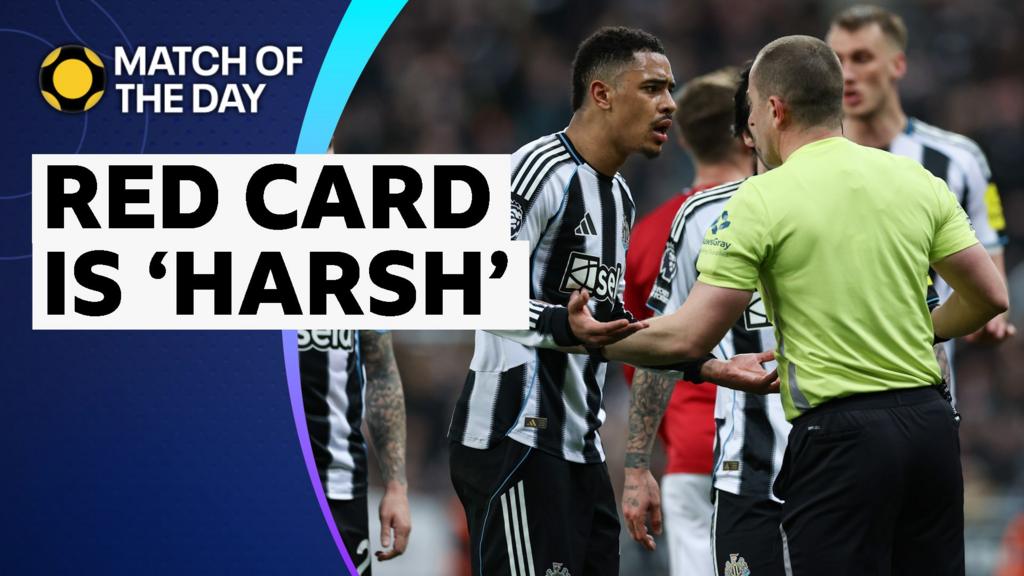
Did Ramsey deserve to be sent off?
Match of the Day pundits Micah Richards and Danny Murphy discuss if Newcastle’s Jacob Ramsey’s second yellow card for diving was deserved.
Source link

Supreme Court weighs freight broker liability in negligent hiring case

WASHINGTON, March 4 (UPI) — The Supreme Court on Wednesday considered whether the brokers who connect shippers with trucking companies can be held liable for irresponsible drivers.
The case, Montgomery vs. Caribe Transport II LLC, stems from a 2017 incident in which Shawn Montgomery, the petitioner, suffered significant injuries after a tractor-trailer hit his parked truck on the side of an Illinois highway.
A key part of the case is the interpretation of part of the Federal Aviation Administration Authorization Act of 1994. It prevents state laws “related to a price, route or service” of trucking companies or brokers that connect them to shippers.
However, the statute also provides an exception, stating that it will “not restrict the safety regulatory authority of a state with respect to motor vehicles.”
The outcome could redefine liability standards for freight brokers and impact the broader transportation industry and interstate commerce landscape.
The driver of the tractor-trailer, Yosniel Varela-Mojena, had been involved in a crash months earlier, but was still employed by Caribe Transport II, an interstate trucking company. Freight broker C.H. Robinson recruited Caribe II to deliver a cross-country shipment. After the crash, Montgomery sued the broker for negligent hiring under Illinois state laws.
During the arguments, the two sides disagreed about whether the phrase “with respect to motor vehicles” includes brokers.
“We do believe that ‘with respect to motor vehicles’ is the crucial question here,” said Theodore Boutrous Jr., Caribe II’s counsel. He argued Congress did not intend for brokers to be included.
The attorney for the United States agreed that the two different sections of the law being discussed should, in context, be taken altogether to mean that brokers are not included in the realm of “motor vehicles.”
“Paragraph one uses the phrase ‘with respect to the transportation of property,’ [and] paragraph two [says] ‘with respect to motor vehicles,'” said Sopan Joshi, assistant to the U.S. solicitor general. “That seems like a conscious choice that Congress made to parallel the language, but change the noun to a much narrower noun.”
Associate Justice Brett Kavanaugh questioned Paul Clement, Montgomery’s counsel, on how brokers would address safety concerns if the court were to rule in favor of Montgomery and say that brokers are liable for consequences of negligent hiring.
For instance, Kavanaugh suggested drivers should be proficient in English to ensure safety. In April 2025, President Donald Trump signed an executive order to enforce English-language requirements for commercial motor vehicle drivers.
“If you’re hiring drivers who can’t read the signs, that seems like a safety issue,” Kavanaugh said.
Clement said brokers could work with larger trucking companies with deeper pockets and check that they have adequate programs in place to test drivers for drug use, check on prior accidents and address other potential concerns.
“One of the reasons, I think, that you do want [brokers] to have some duty of care in these circumstances is this is a margin business,” Clement said. “If they don’t have any sort of incentive to internalize any of the cost of not asking the question, they really have no good reason to ask the question. They want the cheapest carrier.”
Associate Justice Ketanji Brown Jackson asked Joshi to explain why he thought Congress did not think brokers should share responsibility for safety given the language in the 1994 law.
“The problem, I think, with the argument in the way that you’ve set it up is that you are assuming away any responsibility that a broker might have for safety,” Jackson said.
Joshi argued that Congress did not intend for brokers to have responsibility regarding safety and could have worded the law differently if it did.
“Congress has an entire chapter, several chapters, of the U.S. Code in Title 49 that deal with safety addressing carriers, safety of motor vehicles, driver qualifications, and they’re all addressed at carriers,” Joshi said. “Not a single one is addressed at brokers.”
Joshi acknowledged that the Federal Motor Carrier Safety Administration is “understaffed,” “overworked” and unable to review all of the federally registered carriers. However, he said Congress has provided ways of bringing consequences against carriers who violate federal requirements and regulations.
In his closing rebuttal, Clement told the court that 94% of registered carriers on the road do not have meaningful federal safety inspections — a number derived from 2021 Federal Motor Carrier Safety Administration data.
He said state tort law could provide a “backstop to the federal system.”
“This case doesn’t have to be that hard. The thing that triggers state tort liability is an 80,000-pound motor vehicle. That’s what devastatingly injured my client,” Clement said.
The court is expected to issue a ruling by summer.

Iran live: US Senate backs Trump’s attacks on Tehran, Israel pounds Lebanon | Israel-Iran conflict News
Live updatesLive updates,
US and Israel bombard Iran as Israeli forces hammer Lebanon and the widening conflict causes energy prices to spike.
Published On 5 Mar 2026