



Can Russia help fill the global energy gap? | US-Israel war on Iran
Higher crude prices due to the disruption in the Strait of Hormuz have helped Russia earn more from energy exports.
One nation that’s hoping to gain from the United States-Israel war on Iran is Russia, the world’s third largest oil producer. Higher crude prices due to the disruption in the Strait of Hormuz have allowed Russia to earn more from its oil and gas exports. A sanctions waiver announced by the US is also helping Moscow.
But its revised budget plans are at risk after repeated Ukrainian attacks on its ports and oil refineries. Russia has banned petrol exports to protect against domestic fuel shortages. So can Russia help fill the global energy gap, or is its capacity already under threat?
Published On 1 Apr 2026

UK will seek closer ties with EU in light of Iran war, Starmer says
It comes as UK-US relations have been strained by the PM’s refusal to be dragged further into the Iran war.
Source link

BBC adds new episodes of ‘television’s most stressful thriller’ to iPlayer
The Irish drama has already been compared to Line of Duty

All episodes are now on BBC iPlayer
The BBC have added new episodes of ‘television’s most stressful thriller ‘ to their iPlayer service as it prepares to return to our screens this weekend.
All episodes of Hidden Assets are now available to stream at no extra cost on the platform. This includes its recently released third season, which was previously only available via Acorn TV late last year.
Those who are caught up to the most recent chapter of Hidden Assets can settle down to the latest episodes as they air each Saturday on BBC Four at 9pm. Otherwise, the complete collection is already available to stream on iPlayer right now.
The series is actually a joint Irish-Belgian-Canadian production. It is developed and written by Peter McKenna who previously penned other hit crime dramas including Kin and Gangs of London.
Each season contains six episodes, meaning those who have yet to watch any of it have plenty to catch up on. However, it should be a quick binge watch with fans and critics claiming it does not take long for viewers to be hooked.
For those that have yet to see any of the series, the first season is set in present day Shannon, County Clare, Ireland, its Free Zone and airport, and the port of Antwerp, Belgium. The plot focuses on the Irish Criminal Assets Bureau (CAB) and the Belgian Counter Terrorism Unit (CTU).
The second is also set between Antwerp and County Clare (Limerick, specifically). Meanwhile, the third series is set in Dublin and Bilbao where CAB joins forces with Ertzaintza detectives.
According to the synopsis, the narrative begins when evidence from a raid links a small-time drug dealer to a series of bombings in Belgium. This leads to Irish detective Emer Berry heading to Antwerp, where she’s confronted by Christian de Jong of the anti-terrorism squad. Together, they begin to untangle an international conspiracy involving drugs, terrorism, and corrupt business and political leaders.
While it hasn’t received enough professional reviews to warrant a score on Rotten Tomatoes, plenty sing its praises. The Guardian simply labelled it as ‘television’s most stressful thriller’ upon its return while one reviewer called it “a first-rate Irish crime drama series with Scandi-noir twists.”
Fans have been just as vocal for the series and recommending it to others. One posted online: “Brilliant Irish police thriller so much better than the BBC’s Northern Irish attempt, ‘Blue Lights’.”
Another added: “Compelling drama. Well written , directed and acted. Could not wait to see next episode and good ending. Definitely recommend. As good as Line of Duty.”
While someone else claimed: “Ever since Love/Hate we’ve been waiting for a gripping Irish Crime series to come along and here it is.” And another commented: “Right away you get sucked into the storyline and get caught up in the action. The acting is first class from all. I’m already looking forward to the next episode.”
Hidden Assets airs Saturday at 9pm on BBC Four and is streaming on BBC iPlayer.

How to find cheap flights as ex-flight attendant shares best days to book
You could find huge savings on your next flight by following three tips from a former flight attendant – including booking your trip on a certain day of the week

Booking at certain times could get you a better deal on your flight (stock photo)(Image: mihailomilovanovic via Getty Images)
The day you choose to book your flights can influence the price you pay. Holidays can become costly rapidly if you’re unaware of how to hunt for the best bargains, including your destination, accommodation, and which flight to select. Securing the finest deals can be challenging, and it can hinge on seemingly arbitrary factors, such as when you browse.
According to a former flight attendant, there are some straightforward steps you can take to cut costs on your next plane ticket. Bianca, who has been sharing travel tips online since departing her flight attendant role three years ago, posted a video on social media in which she encouraged travellers to capitalise on several flight hacks, including booking flights on particular days of the week, and even which time of day is optimal.
She said: “Do not book another flight until you do these things.”
1. Book flights on particular days
Bianca explained it doesn’t matter which day of the week you actually fly, but you should purchase your tickets on a Tuesday, Wednesday, or Saturday. She maintained airlines frequently offer superior deals or more affordable seats on those days, irrespective of which day you’re actually intending to travel.
She said: “Book your flights only on a Tuesday, a Wednesday, or a Saturday. I mean book your flights on those days. Which means you’re going to sit down on one of those days and you’re going to book your flight. The flight can be on any day, but you’re going to book it on those days. They’re cheaper [and have] better deals.”
2. Always use incognito mode
The former flight attendant implored everyone to utilise incognito mode on their web browser, or to employ a virtual private network (VPN) to keep their browsing data concealed from the website they’re using to arrange their flights. This could help secure a more economical deal on your flights – though that’s not always guaranteed.
She said: “You’re going to use a VPN or incognito mode, depending on what device you have and depending how well it works on your device. If incognito mode does not do enough, then get a VPN.
“You generally just don’t want your demographic to show where you are when you’re going to buy a flight. Because they [websites] will literally rack up the prices of flights based on where you live. I know it’s crazy, but they do it.”
3. Book flights in the morning
If you’re after the best bargains on flights, you’ll need to rise early – or stay up late. Bianca maintains that, alongside booking flights on Tuesdays, Wednesdays, and Saturdays, you should also attempt to purchase your tickets between 3am and 4am.
She explained: “Three or four in the morning, if you’re a night owl, this is all for you. This is the best time to book your flights. [There are] cheaper deals [because] flights drop in the middle of the night. I’m telling you, it’s the best time.”
Commenters on Bianca’s post expressed gratitude for her tips, with many stating they’d be implementing them to obtain a more affordable flight for their forthcoming summer holidays.
One person said: “Okay, I’m going to travel.”
Another commented: “Thank you, sis! This is good.”
A third endorsed the advice, stating: “Yup, I bought my flight to LA in the middle of the night and paid $150 (£112) round trip.”

Travel expert reveals two big reasons why you want to avoid seat 30F on a flight
As you begin to book seats on flights for the trips ahead of you this summer, there’s something you may want to consider when it comes to the most fuss-free flight

If you end up with one of these seats you might want to reconsider (Image: Getty Images)
Ahead of your big holidays this year you may be starting to look at your flights, or maybe you’re checking in and choosing your seats last minute; either way, you might want to hear this.
Most planes have a handful of seats that tend be located in the same place. Some with extra leg room, others with less, some in between windows, and some even on their own. Those boarding these flights and helping to keep everything streamlined know no more about those inside of those planes than anyone else.
That’s why it would be smart to consider this key piece of seat advice from Andrea Platania, operations manager at the airport transfer platform Transfeero. According to the firm’s onboard knowledge, there are a handful of seats that passengers continuously regret going for, and it may not be the ones that have even crossed your mind.
Seat 30F is a clear seat to avoid booking on a standard aircraft, along with 30E, as these tend to be located close to the toilets. In turn, the area tends to see a lot more disruption as people queue in the aisle or pass the seat to go in and out of the toilet.
READ MORE: Save £25 on new UK passport costs before April 8 price hikeREAD MORE: EasyJet launches UK flights to underrated European city with 300 days of sunshine
He explained: “It’s not just about proximity, it’s about the constant movement around you.” He further claimed that these areas can quickly become gathering points during flights.
The expert shared: “The toilet doors opening and closing, people chatting as they wait, and general foot traffic all add up. If you’re hoping for a quiet, relaxed journey, these seats make that much harder.”
While these are notoriously standout bad seats, the specifics don’t quite stop there, especially in the 30 zone. Typically, seats 30A and 30F can’t be reclined as much as others.
This is worth noting for those particularly long journeys of yours, such as longer-haul flights. Andra suggested: “If you’re on a flight where you’re hoping to rest or even just sit comfortably, not being able to recline makes a big difference.” You end up feeling much more tired by the time you land.”
Adding to the already growing list of reasons as to why you might want to avoid these seats is time. If you’re a quick traveller, you have a short transfer time, you’ve got another flight to catch, or you just like to be efficient, you will not be cutting time by sitting in these seats.
These seats typically are some of the very last to leave the aircraft, according to the expert. Passengers in these rows often are left waiting longer as they have to allow time for almost everyone to disembark.
“It might not sound like a big deal, but when you’re eager to get off or have a connection to catch, it can feel like a long delay,” Andra said.

Transatlantic rift widens as Trump lashes out at NATO allies over unpopular Mideast war
LONDON — President Trump has said he is strongly considering pulling the U.S. out of NATO, ratcheting up his criticism of European allies and exposing a wider rift in the transatlantic alliance — this time over America’s war alongside Israel against Iran.
While Trump’s talk of a possible NATO pullout dates back years, the comments to Britain’s Telegraph newspaper, published Wednesday, were among the clearest and most disparaging yet — suggesting the fracture has deepened perhaps to a point of no return.
Asked whether he would reconsider U.S. membership in the alliance after the war on Iran ends, Trump replied: “Oh yes, I would say (it’s) beyond reconsideration.”
Contacted by The Associated Press, NATO did not provide an immediate comment.
British Prime Minister Keir Starmer, asked about the comment, said Britain was “fully committed to NATO” and called it “the single most effective military alliance the world has ever seen.”
Many European leaders have felt political pressure over the war, which faces opposition in their countries and has sent petroleum prices soaring as Iran has effectively shut the Strait of Hormuz, the narrow waterway between Iran and Oman through which about one-fifth of the world’s oil passes.
“Whatever the pressure on me and others, whatever the noise, I am going to act in the British national interest in all the decisions I make,” Starmer said Wednesday.
Long-simmering tensions within the alliance have bubbled up again over the war. As energy prices have spiked, Trump has been desperate to get countries to send their ships to the Strait. He’s called his NATO allies “cowards,” pulling at any rhetorical lever he can to get help with the fallout of a war that no ally was consulted on or asked to take part in.
For years, Trump has berated America’s European allies, urging them to assume greater responsibility for their own security and spend more on defense. He has argued that the U.S. has done more for them than the other way around.
A U.S. pullout would essentially spell the end of NATO, which flourished for decades under American leadership.
On Truth Social on Tuesday, Trump lashed out at countries “like the United Kingdom, which refused to get involved in the decapitation of Iran,” and suggested they buy U.S. oil or go to the Strait of Hormuz themselves “and just take it.”
He also wants allies to help fix damage from the war that they had no part in starting.
The U.K. is working on plans that could help assuage Trump.
On Thursday, Foreign Secretary Yvette Cooper will host a virtual meeting of 35 countries that have signed up to help ensure security for shipping in the Strait after the war. Starmer said military planners will also work on a postwar security plan for the strait.
The backdrop: NATO not on board to join U.S. in war
NATO is built on Article 5 of its founding treaty, which pledges that an attack on any one member will be met with a response from them all.
As the Iran war has spread, missiles and drones have been fired toward NATO member Turkey and a British military base on Cyprus, fueling speculation about what might prompt NATO to trigger its collective security guarantee and come to their rescue.
The alliance has not intervened or signaled any plan to. Secretary-General Mark Rutte — who has voiced support for Trump and America’s role in the alliance — has been focusing mostly on Russia’s war against Ukraine, which borders four NATO countries.
NATO operates uniquely by consensus. All 32 countries must agree for it to take decisions, so political priorities play a role. Even invoking Article 5 requires agreement among the allies. Turkey or the U.K. cannot trigger it alone.
In the Mideast war, Trump has bristled at the across-the-board rejection from European and other allies, and even rival China, to help secure the Strait of Hormuz.
Many European Union and NATO member country leaders have fumed since the war’s outset on Feb. 28 because they weren’t informed ahead of time, seen as a break with precedent.
Trump insisted he needed the element of surprise, and he spoke out about possible military action and visibly built up U.S. forces in the region in the run-up to the war.
Rising voices, and tougher action, from Europe over the Mideast war
European leaders have called for the war to stop and want the United States and Iran to return to negotiations over Tehran’s nuclear program, which America and Israel see as a threat.
The vocal opposition in Europe to Trump’s war against Iran has started to turn into action.
Spain — the most vocal critic in Europe — on Monday said it closed its airspace to U.S. planes involved in the Iran war.
Early last month, France agreed to let the U.S. Air Force use a base in southern France after receiving a “full guarantee” from the United States that planes not involved in carrying out strikes against Iran would land there.
Other countries have spoken out against it: Frank-Walter Steinmeier, Germany’s largely ceremonial president, last week called the aggression against Iran a “dangerous mistake” in violation of international law.
U.S. relations with Europe had already soured in recent months over Trump’s call for Greenland — a semiautonomous territory of stalwart NATO ally Denmark — to become part of the United States, prompting many EU countries to rally behind Copenhagen.
Lawless and Keaten write for the Associated Press. Keaten reported from Geneva. AP writer Lorne Cook in Brussels contributed to this report.

Daniel Wiffen: Olympic gold medallist open to changing training base after Irish Open
Wiffen said he is expecting “to swim the best ever so I don’t have to make a decision” across the 200m, 400m, 800m and 1500m events he will be competing in, despite his recent lack of competitive action.
He outlined his goals as swimming the 400m around 4.33 seconds, the 800m below 7.42 seconds and the 1500m under 14.40 to assess whether his time spent in California has been successful.
The County Armagh man also cited Dublin as a potential future base if he does decide to move, but emphasised that doing so would be heavily dependant on his performances in Bangor.
“If I’m around those times, under or around PB, then that’s great. That obviously means the training is working, and if it doesn’t work then I [have to figure out] what I’m going do after,” he added.
“I’m thinking of coming back to Dublin if it doesn’t go well, but, we have to see. If I swim lights out in Bangor, then my decisions obviously can’t have been made.”
Wiffen also explained the main differences he has encounter between training in England and in the US, where they use yardage instead of metres.
“The training is just quite different and, even though I don’t swim a lot of yards, I just think being in America is fun. There’s quite a lot of distractions, and it’s a good lifestyle but, it’s not the same as what Loughborough was like,” he said.
“[It was] all about grind, very similar weather to Ireland and I love swimming in the rain and when the weather is dull. When you’re in the sun everything becomes a lot harder and the motivation becomes a lot harder.
“When I’m swimming in California, my motivation is I’m with a really good training group and everybody’s pushing each other, where as in Loughborough, I feel like it was more self-motivation, I was getting there because I wanted to win.
“I wanted to do all these things where I feel like another group is kind of pushing me to swim fast, which I like, but I think I want a bit of the self-motivation back, so we’ll have to see how the next week goes.”

Major UK airport to get new night trains
ONE of Britain’s biggest airports is set to get new overnight trains that’ll provide transport for thousands of passengers a year.
The new service will connect late night arrivals and early morning departures from the airport to stations across the line, meaning more passengers can travel sustainably.

Great Western Railway (GWR) has announced it will be trialling overnight train services between Reading and Gatwick Airport.
Currently, over 20% of Gatwick passengers can’t use rail services from the Thames Valley due to the earliest and latest trains excluding many flight times.
But the trial will enable thousands of passengers to use rail transport on their journey to the airport.
Current services only run between 4:30am and 11:30pm, leaving a big gap for commuters and holidaymakers trying to get to the airport.


GWR said: “We’re very pleased to announce that through partnering with Gatwick Airport, this summer we will trial overnight services between Reading and the airport along the North Downs Line.
“The trial will involve GWR running overnight services on Friday and Sunday nights from 5 June to 11 September 2026.
“Services will run approximately every 2 hours and will call at Reading, Wokingham, Guildford, Dorking Deepdene, Reigate, Redhill and Gatwick Airport.”
The trial means the rail company can measure passenger numbers and work out whether overnight services work operationally and commercially.
If it is successful, the new service hours will mean late night and early morning flight passengers across the network can travel by rail whilst making it easier for shift workers to commute.


Environmental groups accuse Mexico of lying about source of oil spill in the Gulf
MEXICO CITY — Environmentalist groups accused Mexico’s government of lying about the source of a massive oil spill in the Gulf of Mexico, something authorities promptly denied.
The spill of off the coast of the southern state of Veracruz has spread more than 373 miles and into seven nature reserves. Turtles and other marine life have been found on sea shores coated in oil, and fishermen have been unable to work in waters they have fished for decades.
Mexico’s government reported that 800 tons of hydrocarbon-laden waste have spilled into the ocean. The government said the spill started in March and the sources were a ship anchored off the coastal state of Veracruz and two sites from which oil naturally flows.
On Monday, a group of 17 organizations — including Greenpeace Mexico, the Mexican Alliance Against Fracking and the Mexican Center for Environmental Rights, or CEMDA — contradicted that claim and said that satellite images they captured show the root of the spill was actually a pipeline from Mexico’s state-run oil company, Pemex, and that a large oil slick appeared in early February.
“All this lack of information is causing massive economic and environmental damage. So far no one has been held accountable,” Margarita Campuzano, spokesperson for CEMDA, said Tuesday.
Images from February circulated by the activists match images obtained by The Associated Press on Tuesday through Copernicus, the European climate agency. The photos show a boat floating over a sea clouded with what the groups say is oil, which appears to be streaming out of a platform.
The groups said that the boat in the images is Árbol Grande, which specializes in pipeline repair — implying that the government knew about the spill before it had reported it and “hid it.”
Pemex called the information and images circulated by the groups “inaccurate” and said the Árbol Grande boat traverses the Gulf of Mexico continually, “carrying out preventive inspections of platforms and specialized spill response operations.”
Campuzano called for greater transparency and more aggressive investigations by authorities.
“They’re trying to dilute their responsibility when technology makes it very easy to know where this occurred and who is responsible,” she said.
Mexican President Claudia Sheinbaum on Tuesday denied the accusations during her morning press briefing and said that up until now, “no leak has been reported” in state oil infrastructure and that such natural seeps in the Gulf have happened in the past.
She said the government was investigating with scientists whether the spill was “due to these natural seeps in the area, which have been reported on many occasions and are well-documented in scientific literature, or a leak from one of the facilities.”
Sheinbaum said that it was more probable that the spill came from the natural seeps, and added that teams were hard at work cleaning up the spill and mitigating the effects.
While government officials recognized the impacts on turtles, birds and fish, and the spread to protected ecosystems, they also insisted that it had not caused “severe environmental damage.”
The accusations come as environmental groups in the United States have also raised alarm after the Trump administration exempted oil and gas drilling in the Gulf of Mexico from the Endangered Species Act, saying environmentalists’ lawsuits threatened to hobble domestic energy supplies during the U.S.-Israeli war with Iran.
Critics said the move could harm marine life and also doom a rare whale species.
Janetsky writes for the Associated Press. Associated Press writer Teresa de Miguel in Mexico City contributed to this report.

Look: Google celebrates the launch of Artemis II with a Doodle
 Google’s Doodle is celebrating the launch of Artemis II. The mission will send astronauts around the moon and back for the first time in 50 years.
Source link

Starmer holds off from emergency measures but warns storm is coming
The prime minister used a Downing Street news conference to make three big calls on the Iran war and cost of living pressures.
Source link

The week’s bestselling books, April 5
Hardcover fiction
1. The Night We Met (Indie Exclusive Edition) by Abby Jimenez (Hachette Book Group: $30) Friendship, missed connections and life-altering split-second decisions converge after one fateful night.
2. The Correspondent by Virginia Evans (Crown: $28) A lifelong letter writer reckons with a painful past.
3. Kin by Tayari Jones (Knopf: $32) The bond between two lifelong friends in the South is tested as they take different paths in life.
4. Heart the Lover by Lily King (Grove Press: $28) A woman reflects on a youthful love triangle and its consequences.
5. Vigil by George Saunders (Random House: $28) A spirit guide must shepherd the soul of a dying, unrepentant oil tycoon into the afterlife as he confronts his legacy of corporate greed all while supernatural visitors demand a reckoning.
6. Brawler by Lauren Groff (Riverhead Books: $29) A collection of short stories tackling the relentless battle between humanity’s dark and light angels.
7. Judge Stone by James Patterson and Viola Davis (Little, Brown & Co.: $32) The bestselling author and Oscar-winning actor team up for a small-town legal thriller.
8. Half His Age by Jennette McCurdy (Ballantine Books: $30) A teenager embarks on a secret relationship with her teacher.
9. Once and Again by Rebecca Serle (Atria Books: $27) A family of women have an astonishing gift: the ability to redo one moment in their lives.
10. Daughter of Egypt by Marie Benedict (St. Martin’s Press: $29) A young woman in the 1920s unearths the truth about a forgotten pharaoh, rewriting both of their legacies forever.
…
Hardcover nonfiction
1. A World Appears by Michael Pollan (Penguin Press: $32) An exploration of consciousness and a meditation on the essence of our humanity.
2. Strangers by Belle Burden (The Dial Press: $30) A woman explores her marriage, its end and the man she thought she knew.
3. The Best Dog in the World by Alice Hoffman (editor) Fourteen authors celebrate the life-changing bond with their canine companions in a collection of essays. (Scribner: $22)
4. Young Man in a Hurry by Gavin Newsom (Penguin Press: $30) The California governor tells his origin story.
5. You with the Sad Eyes by Christina Applegate (Little, Brown & Co.: $32) The actor opens up about her tumultuous childhood, her five-decade-long career and the MS diagnosis that upended it all.
6. Kids, Wait Till You Hear This! by Liza Minnelli (Grand Central Publishing: $36) The entertainment legend shares her story.
7. One Day, Everyone Will Have Always Been Against This by Omar El Akkad (Knopf: $28) Reckoning with what it means to live in a West that betrays its values.
8. Lessons From Cats for Surviving Fascism by Stewart Reynolds (Grand Central Publishing: $13) A guide to channeling feline wisdom in the face of authoritarian nonsense.
9. History Matters by David McCullough (Simon & Schuster: $27) A posthumous collection of essays from the Pulitzer-winning historian.
10. Writing Creativity and Soul by Sue Monk Kidd (Knopf: $29) A look at the mysteries, frustrations and triumphs of being a writer.
…
Paperback fiction
1. Project Hail Mary by Andy Weir (Ballantine: $22)
2. Theo of Golden by Allen Levi (Atria Books: $20)
3. Dungeon Crawler Carl by Matt Dinniman (Ace: $20)
4. Martyr! by Kaveh Akbar (Vintage: $20)
5. I Who Have Never Known Men by Jacqueline Harpman (Transit Books: $17)
6. Remarkably Bright Creatures by Shelby Van Pelt (Ecco: $20)
7. Heated Rivalry by Rachel Reid (Carina Press: $19)
8. Tomorrow, and Tomorrow, and Tomorrow by Gabrielle Zevin (Vintage: $19)
9. Parable of the Sower by Octavia E. Butler (Grand Central: $20)
10. The God of the Woods by Liz Moore (Riverhead Books: $19)
…
Paperback nonfiction
1. The Beginning Comes After the End by Rebecca Solnit (Haymarket Books: $17)
2. The Artist’s Way by Julia Cameron (TarcherPerigee: $24)
3. The Wager by David Grann (Vintage: $21)
4. I’m Glad My Mom Died by Jennette McCurdy (Simon & Schuster: $20)
5. All About Love by bell hooks (William Morrow Paperbacks: $17)
6. The Demon of Unrest by Erik Larson (Crown: $22)
7. Raising Hare by Chloe Dalton (Vintage: $21)
8. Slouching Towards Bethlehem by Joan Didion (Farrar, Straus & Giroux: $18)
9. Braiding Sweetgrass by Robin Wall Kimmerer (Milkweed Editions: $22)
10. When the Going Was Good by Graydon Carter (Penguin Books: $22)

The Dollar Dilemma | Global Finance Magazine
War, tariff volatility, and shifting capital flows challenge the global currency order—even as markets prove resilient.
When Japan’s largest automaker reported 2025 results last May, it said its earnings were hit by $4.6 billion in foreign-exchange losses due to the US dollar’s decline. This month, Toyota has a new concern: the war in Iran that has spread throughout the Persian Gulf. The company sold 325,000 cars to the region in 2025, but the fighting and the closure of shipping lanes through the Strait of Hormuz could further decrease earnings.
Even more damaging, the company is forecasting a roughly $9.6 billion drag on earnings in 2026 due to President Trump’s on-again, off-again tariffs. “The impact of US tariffs,” Toyota CFO Kenta Kon said, “is a significant rise from our initial forecasts.”
The global economy entered 2026 already on shaky ground. The Trump administration’s sweeping tariff policies weakened the dollar and heightened trade fears, while a Supreme Court decision on those tariffs added fresh uncertainty, even as inflation was slowly easing. Then, on February 28, US and Israeli forces launched strikes on Iran, oil prices surged, and the dollar bounced higher in a flight to safety.
The Strait of Hormuz, which carries about 20% of global oil and LNG exports, effectively closed after Iranian threats and tanker attacks, sending oil prices from about $70 to more than $110 a barrel within days. Oil-import-dependent economies such as Japan, South Korea and China were especially vulnerable to the war’s aftershocks.
Higher oil prices. Uncertainty about tariffs. The dollar boomerang. Corporate finance executives face a new series of challenges: Higher oil prices, etc. However, despite short-term headwinds for business, global analysts remain relatively optimistic about the long-term economic outlook, even with the war’s sudden shadow over markets.
While energy concerns increased as war clouds gathered over the Persian Gulf, analysts largely believed that the global economy would revert to a pattern similar to the pre-war period: a gradually declining dollar, reduced foreign investment in US assets, and inflation that persistently prevents central banks from lowering interest rates. A key sign of market consensus was that, by mid-March, the forward price of oil for October delivery was $79 per barrel, compared to its temporary $110 spike after the war began. But the uncertainty surrounding the objectives and duration of the attacks on Iran by the US and Israel has kept oil prices bouncing around $100 per barrel.
Aside from the currency issue, several factors have contributed to relatively positive economic forecasts despite the fighting in the Gulf. The Trump administration maintains, despite its forecast having been extended, that the disruption to energy supplies will be relatively short-lived. “You’re seeing a little bit of a fear premium in the marketplace, but the world is not short of oil or natural gas,” said Energy Secretary Chris Wright on CNBC in early March. “Worst case is a few weeks, not months.”
As Dollar Falters, China Moves In
The dollar had a tough year in 2025, dropping about 12% against a basket of other major currencies. Although US administrations usually support a strong dollar, President Donald Trump broke that tradition and said it was “great” that the dollar was falling on global markets, which caused it to tumble even more.
The dollar’s decline triggered a significant shift into gold, which increased in value by 60% in 2025, reaching a record price of $5,110 per ounce. European stocks saw their largest inflows ever in February as investors moved away from the United States.

Marc Chandler, chief market strategist at Bannockburn Global Forex, said that for much of 2025, foreign investors had been buying US equities while shorting the dollar as a hedge. “Now that US equities are declining, they have to buy back their short-dollar hedge,” Chandler said. “I’m not convinced that what we’re seeing in the dollar is much more than unwinding positions, rather than people flocking to the US as a safe haven.”
Mark Sobel, former head of international finance at the US Treasury, wrote in a March 2025 op-ed for the Financial Times that the dollar’s dominance was slowly eroding. “Like termites eating away at a house’s woodwork, Trump’s dysfunctional policies are eating away at its support and rendering the US currency acutely vulnerable to future shocks,” Sobel said.
A weaker dollar is not just a market story—it is reshaping currency dynamics globally, with China at the center. The Chinese government intervened on February 27 to stop the renminbi’s appreciation against the dollar, which had increased by 7% since last April. The People’s Bank of China (PBOC) announced it would eliminate the 20% reserve requirement on foreign exchange forward contracts and stated it would keep the renminbi’s exchange rate at a “reasonable and balanced level.” The higher value of the renminbi did not hurt Chinese exports—the country recorded a $1.2 trillion trade surplus in 2025.
China’s government has used the weaker dollar to strengthen the renminbi’s role in trade finance and payments, with officials claiming the currency is now the world’s largest trade-finance currency. Chinese companies have been gradually decreasing dollar transactions. The dollar’s share of cross-border transfers has dropped from 80% in 2010 to about 40% in 2025, mainly due to increased renminbi flows. The renminbi’s share of global trade has grown from 2% in 2021 to over 7%, a notable rise but still not enough to threaten the dollar’s dominant position in world trade.
In Japan, as inflation rises, the Bank of Japan is expected to increase interest rates, according to Mitsubishi UFJ Financial Group. While the Federal Reserve in the US has kept rates steady through its mid-March meeting. The BOJ’s move to tighten policy after ending its negative interest rate policy is seen as a factor aiding yen appreciation.
Europe has been significantly affected by the rise of the euro, which appreciated nearly 12% against the dollar in 2025. “I have watched the dollar rate with concern for some time,” German Chancellor Friedrich Merz said. “The dollar course is a considerable extra burden for the German export economy.” Dirk Jandura, head of the BGA, Germany’s wholesale and foreign trade association, said the strength of the euro was causing exporters “great concern.” The dollar’s easing, though, has softened some of that impact.
Economy Shows Resilience
Supporting the Trump administration’s more optimistic oil outlook, the International Energy Agency agreed in early March to release 400 million barrels of oil to address the supply disruption—the largest such action in the organization’s history. The move reinforced officials’ view that any price spike would likely be short-lived, lasting weeks rather than months. The 32 member countries still have about 1.4 billion barrels of emergency reserves that can be tapped if the shortage worsens.
“The rise in crude oil prices to date does not represent a shock of the magnitude seen in earlier episodes,” said J.P. Morgan analysts Bruce Kasman and Nora Szentivanyi. “At [about] $100 a barrel, Brent crude is less than 35% above its two-year trailing average. To deliver a shock similar in size to the Russian invasion, crude oil prices would need to move close to $150 and remain at this elevated level for several months.”
Joe DeLaura, an energy analyst at Rabobank in the Netherlands, urged companies to have a plan in place to make quick decisions involving their energy supplies. “Start assessing your supply chains and your access to capital markets,” DeLuca told a webinar in March. “Are you shoring up relationships? Are you able to have critical redundancy in your supply chains, especially for key inputs like energy? One of the ways to take advantage of this is by looking further out on the curve and take advantage of volatility when it swings in your favor.”

Unlike in 1973, when a Middle East oil embargo caused inflation to soar, the United States now exports both petroleum and liquefied natural gas. Therefore, the war is unlikely to significantly impact the US economy in 2026, as it would require a “very severe scenario” for US economic growth to contract, according to Oxford Economics. “We have a view that the US dollar is going to broadly continue to somewhat weaken,” said Daniel Moseley, associate director for scenarios and macro modeling, at Oxford Economics.
Asia Hit Hard
The Iran War most heavily affects Asia. According to the US Energy Information Administration, 84% of crude oil and 83% of LNG travels to the region. I would also say war in Iran. China, India, Japan, and South Korea are the leading destinations for Persian Gulf crude oil, but Thailand and Vietnam also rely heavily on imported energy.
Companies like Toyota have limited options but to cut costs. One strategy is localizing their supply chains. The company announced in February that it plans to invest $10 billion in the US over the next five years to increase production of its most valuable hybrids. It is also reducing production of lower-value models and stated it will implement three price hikes in 2026 to compensate for the “double whammy” of a weaker dollar and US tariffs.
Rajiv Biswas, CEO of Asia-Pacific Economics in Singapore, states that a major concern in Asia is that a prolonged energy shortage could lead to a surge in inflation, prompting central banks to increase interest rates. China’s government, for instance, ordered refiners to halt diesel exports, seemingly worried that supplies could run low during a lengthy conflict.
Biswas stated that the Persian Gulf is also a major shipping route for urea and sulfur used in fertilizer production. This means “the agricultural sectors of many Asian developing countries could also be hit by lack of essential inputs,” as well as the US, right as the Spring planting season begins. Additionally, Brazil, the world’s leading soybean producer, imports most of its urea from Qatar and Iran. India depends on Saudi phosphate exports.
Europe Needs To Urgently Use AI
No European industry was more affected by the dollar’s rise than automobile manufacturing. At luxury carmaker BMW, for instance, revenues fell 5.9%, with half of the decline attributable to the strength of the euro, which created a $670 million headwind. Additionally, US tariffs reduced earnings and imports from China and limited sales to Europe.
“If you take all these elements together, the headwind is bigger than the tailwind, which we’re working on,” BMW CFO Walter Mertl said. He added that the company had cut costs by $2.6 billion to boost profitability. “We are working on all cost elements,” Mertl said, including capital expenditures, research and development spending, and sales and general expenses.
To hedge against a weakened dollar that makes their exports more expensive, European companies need to do more than cut costs. These companies need to invest urgently in cutting-edge technologies, such as artificial intelligence, to make them more competitive in the global marketplace, says Marcello Messori, a professor at the Schuman Centre of the European University Institute in Milan.
“Europe needs to look at artificial intelligence and how it is compatible with the green transition and try to exploit these specific sectors,” Messori says. “Between the current European specialization in mature technologies and the technological frontier, there are a lot of opportunities that you can exploit between those extremes.”
One company leading this approach is Siemens, once known for low-profit industrial machinery. CEO Roland Busch stated that the company has strong growth prospects because it has focused on adopting new technology. “We are in a good place because we are offering what the world needs,” Busch said. “We are positioned along secular growth drivers: automation, digitalization, electrification, sustainability, and artificial intelligence.”
Messori emphasizes that the European Union must speed up efforts to unify financial markets to create a larger pool of venture capital. He notes that Sweden boasts a thriving startup economy. However, established companies often relocate quickly to the US, where capital markets are more accessible.
While the results of wars rarely match initial predictions, the consensus among analysts is that by year’s end, the Iran war may be seen as an economic distraction rather than a strategic turning point. The forces that defined markets before the conflict—moderating inflation, steady demand, and resilient consumer spending—are expected to keep the global economy on track. The dollar, meanwhile, is likely to remain volatile but broadly weaker over time, as structural pressures and shifting capital flows continue to test its dominance.
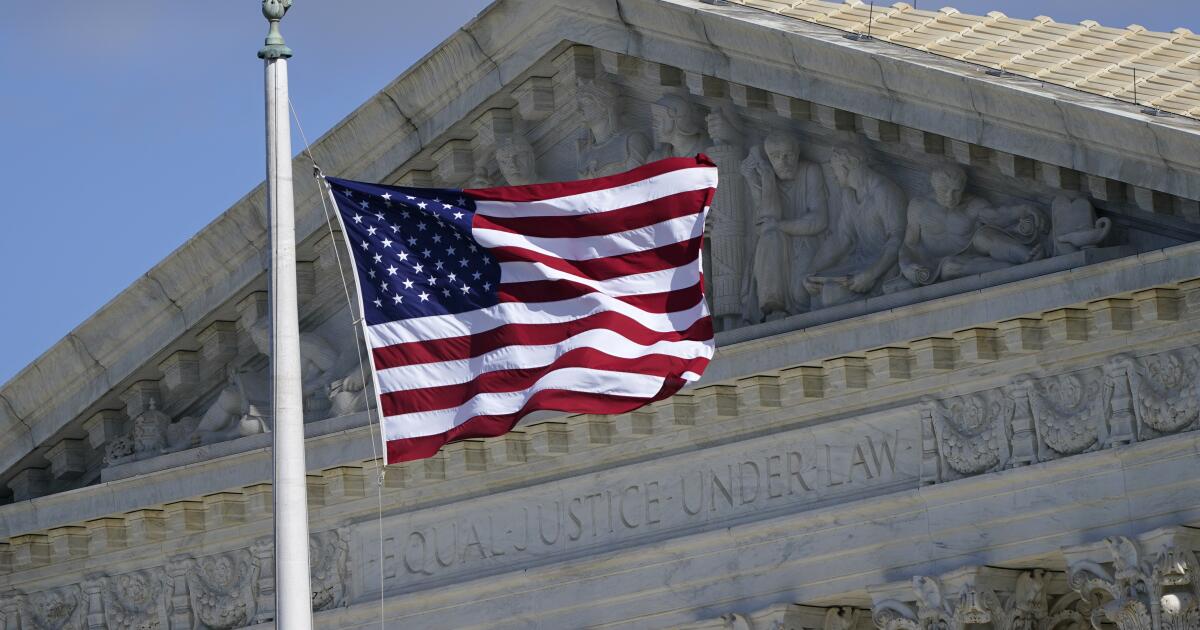
Supreme Court weighs Trump’s bid to end birthright citizenship
WASHINGTON — The Supreme Court on Wednesday will hear President Trump’s claim that he has the power to revise the Constitution and to end birthright citizenship for babies born in this country to parents who were here unlawfully or temporarily.
Trump proposed this potentially far-reaching change in an executive order. It has been blocked by judges across the country and has never been in effect.
His lawyers contend they seek to correct a 160-year misunderstanding about the Constitution’s promise that “all persons born” in this country are deemed to be citizens.
The president’s executive order “restores the original meaning of the citizenship clause” and would deny “on a prospective basis only” citizenship to the “children of temporarily present aliens and illegal aliens,” Solicitor Gen. D. John Sauer wrote in his appeal.
But the first hurdle for Trump and his lawyers may concern the powers of the president.
In February, the court blocked Trump’s sweeping worldwide tariffs on the grounds the Constitution gave Congress, not the president, the power to impose import taxes.
By comparison, the president has even less power to set the rules for U.S. citizenship. The Constitution gives Congress the power to “establish a uniform rule of naturalization.”
After the Civil War, Congress adopted a civil rights act in 1866 that said “all persons born in the United States and not subject to any foreign power, including Indians not taxed, are hereby declared to be citizens of the United States … of every race and color.”
To make sure that rule stood over time, it was added to the Constitution in the 14th Amendment. Its opening line says: “All persons born or naturalized in the United States and subject to the jurisdiction thereof are citizens of the United States and of the State wherein they reside.”
In 1898, a conservative Supreme Court upheld that rule and affirmed the citizenship of Wong Kim Ark. He was born in San Francisco to Chinese parents who later returned to China.
“The 14th Amendment affirms the ancient and fundamental rule of citizenship by birth within the territory,” the court said. “In clear words and in manifest intent, [it] includes the children born, within the territory of the United States, of all other persons, of whatever race or color.”
In 1952, when Congress revised the immigration laws, it added the same provision without controversy. Lawmakers set multiple rules for deciding disputes over American parents who live abroad, but the first rule was simple and undisputed.
“The following shall be nationals and citizens of the United States at birth: a person born in the United States and subject to the jurisdiction thereof,” the law said.
Critics say Trump’s plan could replace a clear and simple rule with a confusing and complicated one. States would have to look into the history and legal status of a newborn’s parents to decide whether they met the new qualifications.
Until now, a valid birth certificate had been sufficient to establish a person’s U.S. citizenship.
Last week, Trump was urging Senate Republicans to pass a new election law that would require millions of Americans to present a birth certificate as proof of their citizenship if they register to vote or move to a new state.
“Proving citizenship to vote is a no brainer,” the White House said.
This week, however, Trump’s lawyers are urging the court to rule that their birth in this country is not proof of their citizenship.
There is a “logical inconsistency” here,” said Eliza Sweren-Becker, a voting rights expert at the Brennan Center.
In the legal battle now before the court, the key disputed phrase is “subject to the jurisdiction.” That has been understood to mean that people within the United States are subject to the laws here, except for foreign diplomats and, for a time, Native Americans who lived on tribal reservations.
But Sauer contends it excludes newborns who are “not completely subject to the United States’ political jurisdiction” because their parents are in this country unlawfully.
Lawyers for the American Civil Liberties Union called this a “radical rewriting” of the 14th Amendment, which says nothing about the parents of a newborn child.
If upheld, this order could apply to “tens of thousands of children born every month, “ they said, “devastating families around the country.” But worse yet, they said, the outcome “would cast a shadow over the citizenship of millions upon millions of Americans, going back generations.”
Some legal experts predict the court may rule narrowly and reject Trump’s executive order because it conflicts with federal immigration laws. Such a ruling would be a defeat for Trump, but it could allow Congress in the future to adopt new provisions, including a limit for expectant mothers who enter this country to give birth.

Luka Doncic makes history in Lakers’ victory over Cavaliers
From Thuc Nhi Nguyen: Luka Doncic, with the eyes of five defenders fixed on him in the paint, faked a lob pass. He threatened to wrap a pass around Cleveland center Thomas Bryant’s back. Instead, the Lakers superstar pulled up straight over the top of Bryant’s outstretched arm, dropping a fadeaway jumper softly through the net.
Doncic smiled toward the Lakers’ bench as he backpedaled. He shrugged at himself.
Doncic brought back all his old tricks after serving a one-game suspension and capped his torrid March with 42 points, 12 assists, five rebounds and no turnovers in the Lakers’ 127-113 rout of the Cavaliers (47-29) on Tuesday night at Crypto.com Arena.
Doncic, who was suspended for Monday’s game against the Washington Wizards because of technical foul accumulation, joined Michael Jordan as the only players in NBA history to score 600 points in the month of March. He is one of just 10 players to score 600 points in a month.
“You can see he’s the MVP,” forward Rui Hachimura said.
Doncic, in the NBA most valuable player conversation with Oklahoma City’s Shai Gilgeous-Alexander, San Antonio’s Victor Wembanyama and Denver’s Nikola Jokic, scoffed at the suggestion that he state his case for the coveted award.
He’ll let his numbers speak: A league-best 33.8 points per game, the only player averaging 30 points a game with more than 100 steals this season and the third-youngest player to reach 15,000 career points.
Shohei Ohtani shines in his 2026 pitching debut

Dodgers pitcher Shohei Ohtani delivers during the third inning of a 4-1 win over the Cleveland Guardians at Dodger Stadium on Tuesday night.
(Ronaldo Bolanos / Los Angeles Times)
From Maddie Lee: The sprinkling of rain over Dodger Stadium on Tuesday night added a new element to what’s already a familiar sight: Shohei Ohtani walking off the mound and immediately strapping on the various guards and batting gloves he wears to hit.
In the Dodgers’ 4-1 win — as Ohtani held the Guardians to one hit through six scoreless innings in his 2026 pitching debut — it happened twice.
The first inning was guaranteed. But after throwing a scoreless fifth, Ohtani again was due up to lead off the bottom half of the inning.
He appeared to realize just that as he reached the far end of the dugout. Ohtani pivoted and jogged to the opposite entrance, where he handed off his hat and glove to start the well-practiced routine.
UCLA eager to show what it has learned

UCLA guard Gabriela Jaquez, left, drives to the basket past Duke center Arianna Roberson during the Bruins’ Elite Eight win in the NCAA women’s basketball tournament on Sunday.
(Eric Thayer / Los Angeles Times)
From Anthony Solorzano: With Kendrick Lamar’s “tv off” blaring outside the Mo Ostin Basketball Center, a crowd of cheering fans gave the UCLA women’s basketball team a fitting sendoff Tuesday as they left Westwood for Phoenix.
The Bruins are back in the Final Four, where they’ll play Texas — the only team that has beaten them this season — and begin a final push to win what they hope will be their first national championship since 1978.
Last year, UCLA fell to Connecticut in the Final Four, a loss that has made the Bruins hungrier for a title.
“Experience is such an important teacher, for me, as well as for [the team],” said UCLA coach Cori Close. “I just think there’s been a clarity of focus.”
Clippers locked into a play-in spot

Portland’s Brandon Ingram, left, controls the ball in front of the Clippers’ Derrick Jones Jr. during the first half of the Clippers’ 114-104 loss Tuesday night at Intuit Dome.
(Ronald Martinez / Getty Images)
From the Associated Press: Deni Avdija had 28 points, 11 rebounds and eight assists, Jrue Holiday hit seven threes and finished with 30 points, and the Portland Trail Blazers snapped the Clippers’ five-game win streak, 114-104 on Tuesday night.
The Clippers (39-37) are eighth in the Western Conference, a half-game in front of the ninth-place Blazers (39-38). The loss locked the Clippers into the NBA play-in tournament. They lead the season series against the Blazers 2-1, with the teams playing again on April 10 in Portland.
Toumani Camara scored 17 points and Scoot Henderson added 15 for the Trail Blazers.
Clippers-Trail Blazers box score
José Soriano and Angels shut out Cubs

Angels starter José Soriano delivers in the fourth inning of a 2-0 win over the Chicago Cubs at Wrigley Field on Tuesday night.
(Zoe Davis / Getty Images)
From the Associated Press: José Soriano pitched two-hit ball over six scoreless innings for the second time in two starts, and the Angels beat the Chicago Cubs 2-0 on Tuesday night.
Logan O’Hoppe hit a two-run single with two outs in the sixth against reliever Phil Maton (0-1), and that was all Soriano (2-0) needed on a cold and windy night at Wrigley Field.
The 27-year-old right-hander threw 90 pitches, striking out four and walking two. He was coming off a terrific performance in the Angels’ 3-0 win at Houston on opening day.
Chase Silseth pitched around a single by Nico Hoerner and walk to Moisés Ballesteros in the seventh. Drew Pomeranz worked 1⅓ innings against his former team, and Jordan Romano got two outs for his second save.
Inside the tense NFL vs. referees labor dispute

Detroit Lions coach Dan Campbell, left, speaks with referees during a game against the Rams at SoFi Stadium in December.
(Harry How / Getty Images)
From Sam Farmer: With the NFL and referees union at a negotiating impasse, the league has put in place a safety net in case replacement game officials are required for the upcoming season.
Team owners approved a rule Tuesday allowing the league to intervene from its New York headquarters and correct officiating errors in real time using replay technology. The rule would be in effect for one year only and would be triggered if the NFL and NFL Referees Assn. cannot agree on the fundamental issues of accountability, compensation and working conditions.
“There is frustration among ownership about the state of the negotiations,” said NFL executive Jeff Miller, responsible for overseeing the league’s communications and public affairs. “What we’ve been crystal clear on is that this is an opportunity for us to improve the state of our officiating.”
Tiger Woods failed field sobriety tests

Golfer Tiger Woods stands by his overturned vehicle in Jupiter Island, Fla., March 27.
(Jason Oteri / Associated Press)
From Steve Henson: Tiger Woods failed field sobriety tests after crashing into another vehicle last week, and had bloodshot eyes and two hydrocodone pills in his pants pocket, according to a probable cause arrest affidavit released Tuesday.
Woods, 50, told investigators he did not notice the vehicle in front of him had slowed because he was looking at his cellphone and changing the radio station, the affidavit said. His Land Rover rolled onto its side after hitting a Ford-F150 pickup truck pulling a small trailer.
The prescription opioid pills were found during a search after his arrest on suspicion of driving under the influence, causing property damage and refusal to submit to a lawful test. Woods told deputies he had taken prescription medications earlier that day.
John Thorrington keeps LAFC striving for best results

Coach Marc Dos Santos, left, and general manager John Thorrington have LAFC off to a 4-0-1 start in MLS play this season.
(Courtesy of LAFC)
From Kevin Baxter: John Thorrington must be the luckiest general manager in MLS.
Just consider the evidence: In his 10 years with LAFC, Thorrington has hired three coaches and each one has been better than the last. How many other executives have a track record like that?
Then again, maybe it’s not luck. Maybe Thorrington simply has been the best general manager in the league over the past decade.
“Either one. Doesn’t really matter,” Thorrington said when asked for the secret to his success. “The results are what matter.”
Jaden Ivey waived by Bulls for ‘conduct detrimental’

Chicago Bulls guard Jaden Ivey is defended by Denver Nuggets forward Spencer Jones on Feb. 7.
(Erin Hooley / Associated Press)
From Chuck Schilken: The Chicago Bulls announced Monday that they have waived guard Jaden Ivey for “conduct detrimental to the team,” soon after the former first-round draft pick made anti-LGBTQ+ comments on Instagram Live.
The move came less than two months after Chicago acquired Ivey from the Detroit Pistons. In recent days, the fourth-year player has posted several videos on Instagram in which he speaks at length about his religious beliefs.
Ivey recorded another such video Monday soon after learning of his release by Chicago. In it, he held firm to his convictions and predicted he would have trouble landing another NBA job because of them.
This day in sports history
1930 — American golfer Bobby Jones starts his Grand Slam season by winning the Southeastern Open.
1938 — Joe Louis knocks out Harry Thomas in the fifth round in Chicago to retain his world heavyweight title.
1940 — Governor Herbert Lehman of New York signs the Dunnigal bill, which legalizes pari-mutuel wagering and outlaws bookmakers at the state’s racetracks.
1954 — Detroit Red Wings right wing Gordie Howe scores 2 goals and an assist, and sets a Stanley Cup playoff record for fastest goal from the start of a game (:09).
1972 — The first collective player’s strike in major league history begins at 12:01 a.m. The strike lasts 12 days and cancels 86 games.
1973 — Boston’s John Havlicek connects on 24 field goals and finishes with 54 points the Celtics defeat Atlanta, 134-109, in Game 1 of the Eastern Conference semifinals.
1978 — NY Islanders RW Mike Bossy becomes first NHL rookie to score 50 goals in a season.
1981 — Edmonton C Wayne Gretzky has an assist (his 103rd) to break Bobby Orr’s 10-year mark for most assists in a single NHL season.
1984 — Southern Cal beats Tennessee 72-61 for the NCAA women’s basketball title.
1985 — Villanova shocks Georgetown with a 66-64 victory to win the NCAA basketball title. The Wildcats, led by Dwayne McClain’s 17 points, shot 79 percent from the field, making 22 of 28 shots, and added 22 of 27 free throws.
1989 — Jim McAllister of Glassboro State hits four home runs and drives in nine runs in four at-bats in a 21-5 five-inning rout of Delaware State.
1990 — Betsy King holds on for a two-stroke victory over Kathy Postlewait to win the LPGA Dinah Shore tournament.
1991 — Duke ends years of frustration with a 72-65 victory over Kansas for its first national title in five championship game appearances and nine trips to the Final Four.
1992 — A week before the Stanley Cup playoffs are set to begin, the NHL players strike for the first time in the league’s 75-year history. The strike lasts 10 days.
1996 — Kentucky wins its first national title in 18 years with a 76-67 victory over Syracuse.
1999 — Detroit Pistons G Joe Dumars becomes 10th player in NBA history to play 1,000 games with the same team.
1999 — Philadelphia 76ers head coach Larry Brown wins his 900th pro game.
2000 — Michelle Kwan wins her third World Figure Skating title by pushing through all seven triple jumps. The triple toe-triple toe lifts Kwan above Russians Irina Slutskaya and last year’s champion, Maria Butyrskaya.
2001 — 20th NCAA Women’s Basketball Championship: Notre Dame beats Purdue, 68-66.
2002 — With Juan Dixon and Lonny Baxter leading the way, Maryland wins its first national championship with a 64-52 victory over Indiana.
2007 — Morgan Pressel becomes the youngest major champion in LPGA Tour history with a game well beyond her 18 years, closing with a 3-under 69 at the Kraft Nabisco Championship. Pressel plays her final 25 holes over Mission Hills without a bogey as Suzann Pettersen blew a four-shot lead with four holes to play.
2007 — American super swimmer Michael Phelps smashes his own world record in the 400m individual medley (4:06.22) to win his record 7th gold medal at the World Championships.
2011 — Jarome Iginla scores his second goal of the game with 5:03 left to reach 1,000 points and help Calgary rally to beat St. Louis 3-2.
2016 — Golden State Warriors consecutive home winning streak ends at 54 games.
2018 — Arike Ogunbowale hits a 3-pointer with a tenth of a second left to give Notre Dame a 61-58 win over Mississippi State and its first women’s national championship since 2001. Notre Dame, trailing 30-17 at halftime, pulls off the biggest comeback in title game history, rallying from a 15-point deficit in the third quarter and a five-point deficit in the final 1:58.
2020 — All England Lawn Tennis Club cancels Wimbledon for the first time since World War II because of the COVID-19 pandemic; entire grass-court season abandoned.
Compiled by the Associated Press
Until next time…
That concludes today’s newsletter. If you have any feedback, ideas for improvement or things you’d like to see, email me at houston.mitchell@latimes.com. To get this newsletter in your inbox, click here.

Five things that happen the second you enter London, by your terrified mum
LONDON is the most dangerous place in the country according to your mother who last visited in 1981 for the Royal Wedding. This is what she thinks happens there:
Your phone will get stolen
Every resident of London has their phone stolen by youths on e-bikes at least five times a day. It’s in the Mail. Statistically, that means your phone will be snatched within 28 seconds of getting off the train then twice again before lunch. You’d be much better visiting somewhere safer, like Banbury or Dubai.
You’ll encounter a migrant
Not that there’s anything wrong with migrants, of course. They’re perfectly welcome to seek refuge in London so long as they stay there. It’s just they sell vapes and aren’t qualified to cut hair and I don’t understand why they can’t be migrants in their own country. It would save them the trouble of crossing the Channel.
You’ll commit knife crime
They’re all at it: wealth managers, PR girls, Tube drivers. Everyone in London indulges in knife crime on a daily basis. Honestly, before you’ve got to Cockfosters you’ll find a big deadly blade in your coat pocket and a burning desire to use it. Do you really want to stab someone just for having the wrong postcode when you could stay here in Uttoxeter?
You’ll question your entire identity
London is a diverse, multi-cultural melting pot, and worse they think that’s normal. Even just a day trip to the Big Smoke can have you reassessing whether you’re heterosexual or need to mix race. And the evidence shows that makes property prices go through the absolute roof.
You’ll get gentrified
You as you are? Not good enough for fancy Londoners. They’ll tear down your charming, homely features and replace them with a soulless glass-and-steel construction too expensive for anyone who isn’t a finance wanker to enjoy. Bad enough, but when you come back here you’ll look terribly out-of-place and your friends will rightly bully you.

Spain hotspot ‘doubles’ charge for UK travellers from today
Depending on where people stay, they could be paying more than £13 a night in the municipal surcharge

The Las Ramblas district of Barcelona, Spain. People visiting are to be hit by new charges from April 1(Image: Getty)
UK travellers to Spain have been told of a ‘doubling’ of a charge for all tourists going to a popular hotspot from today. It has been reported in Spain that the doubling of the municipal surcharge comes into effect on April 1.
Depending on the type of accommodation, tourists may pay up to €15 more per night in Barcelona. This is due to an increase in the tourist tax on the one hand now ranging from €1 to €7 depending on the category of accommodation and a municipal tax which rises from €4 to €8.
Applicable to stays in hotels, hostels and short-term rentals, these taxes can, when combined, amount to up to €15 per night per person, LeFigaro reported.
The measure was announced in March 2025 but was only approved by the Catalan parliament a few weeks ago. Barcelona City Council has voted in favour of increasing the council tax by one euro per year until 2029. The aim is to tackle the housing crisis. Residents regularly protest against rising rents, which they believe are partly due to the growing number of short-term rentals such as Airbnb.
In a four-star hotel – which accounts for nearly half of the local hotel stock – a two-night stay for a couple could therefore cost up to €45 more. Cruise ship passengers must also pay these taxes: they will pay €12 – instead of €8 – if they disembark for more than twelve hours, or €14 (instead of €11) if they stay for less than twelve hours. One exception remains for a specific category of accommodation: hostels listed in the Generalitat de Catalunya’s Youth Hostel Register, for which the fee remains at €1.
With these new rules, the Autonomous Community of Catalonia hopes to raise 200 million euros a year. On its website, the Catalan government states that “25% of the revenue from the tourist tax will be allocated to the Generalitat’s housing policies, whilst 75% will be channelled into the Tourism Promotion Fund, [in particular] for housing policies [and] economic development policies.”
With the new regulation, the tax will rise to seven euros per night in five-star accommodations in Barcelona and to 3.40 euros in four-star accommodations. It will also be more expensive for cruise passengers, especially those disembarking in the Catalan capital. Those staying for less than 12 hours will pay six euros in Barcelona and 4.50 euros in the rest of the ports in Catalonia , 20 Minutos reported.
The tax increase will be phased in over two years. The first increase will take place this April, while the remainder will be implemented a year later, in April 2027. At that point, the tourist tax will be completely doubled. However, in Barcelona, the increase will be more immediate and will begin this month to address the high tourist pressure the city experiences, unlike the rest of Catalonia.
The revenue from the tourist tax will be divided into two parts. 25% of the total income will be allocated to housing policies of the Generalitat (Catalan government), one of the main pillars of Catalan President Salvador Illa’s policies. The remaining 75% of the revenue will be integrated into the Tourism Promotion Fund.
The increase in the tourist tax in Catalonia already has the support of a majority of the parliamentary groups, as well as the backing of a large part of the population. This is especially true in Barcelona, where overtourism has wreaked havoc on both housing and community life. In fact, in the Catalan capital, there have already been demonstrations by residents against the massive influx of visitors, and proof of this is that 76.7% of the population says the city has reached its maximum capacity for receiving tourists.
These data are reflected in the latest survey on tourism perception in Barcelona, published by the city council itself, in which 56% of residents support the increase in the tourist surcharge.
Public support for the increase in the tourist tax contrasts sharply with the total opposition from the Catalan tourism sector. Following the announcement of the agreement between the PSC, ERC, and Comuns parties, business owners in Catalonia’s tourist accommodation sector expressed their “total and unanimous rejection.” The employers’ association Confecat asserted that the measure is “improvised, lacking strategic rigour, disconnected from the country’s real needs, and driven solely by revenue collection.”
Furthermore, the Catalan Federation of Tourist Apartments (Federatur) warned that the tax increase will lead to a loss of competitiveness for the region and make Catalans’ holidays more expensive. This position is also supported by other employers’ associations, trade groups, and federations within the sector, such as Foment del Treball, the Barcelona Hotel Guild, Pimec, and the Barcelona Tourist Apartment Association.
According to Jordi Clos, president of the Hotel Association, there is some concern among representatives of the tourism sector about how the tax increase will affect business. “It will be necessary to monitor the impact this measure may have to prevent a significant and lasting decline,” he stated after the Catalan Parliament approved the increase in February.
Supreme Court to hear arguments in birthright citzenship case
April 1 (UPI) — The U.S. Supreme Court is hearing oral arguments in a case on Wednesday that could reshape what it means to be a U.S. citizen.
The case, Trump vs. Barbara, is over President Donald Trump‘s Jan. 20, 2025, executive order “Protecting the meaning and value of American citizenship,” which seeks to change the application of the Citizenship Clause, ending birthright citizenship.
In his executive order, Trump argued that the 14th Amendment of the U.S. Constitution “has never been interpreted to extend citizenship universally to everyone born within the United States.”
The law of the land, as it has been recognized since the ratification of the 14th Amendment in 1868, has been that “all persons born or naturalized in the United States, and subject to the jurisdiction thereof, are citizens of the United States and of the State wherein they reside.”
Trump’s executive order remains blocked from taking effect, with lower courts affirming that his attempt to end birthright citizenship is unconstitutional. In December, the Supreme Court agreed to take up the case, beginning with oral arguments starting on Wednesday.
U.S. Solicitor General John Sauer will argue on behalf of the Trump administration.
“If the Trump executive order is upheld, it would mark an enormous change in how the United States understands who is a citizen and who is not,” Kate Masur, John D. MacArthur Professor of History at Northwestern University, told UPI.
Masur filed an amicus brief supporting a challenge to Trump’s executive order.
“There’s certainly never been a president who issued an executive order trying to undermine birthright citizenship in this way,” Masur said. “Congress has repeatedly, through legislation, affirmed birthright citizenship and the Supreme Court has also affirmed birthright citizenship.”
The Trump administration’s argument against birthright citizenship hinges on its interpretation of the term “jurisdiction” in the context of the clause “subject to the jurisdiction thereof.”
In an amicus brief by Sen. Ted Cruz, R-Texas, Sen. Lindsey Graham, R-S.C., and other Republican lawmakers, they contest that the authors of the 14th Amendment could have written “subject to the laws.” Instead, the use of the term “jurisdiction” requires “allegiance” to the United States.
“Allegiance is also a reciprocal relationship. The person must be present with the consent of the sovereign, a factor on which this Court extensively relied in United States v. Wong Kim Ark,” the Republican lawmakers argue. “But illegal aliens and their children are present in the United States without consent, i.e., only by defying its laws.”
The lawmakers also argue that their interpretation of total allegiance looks to “early English caselaw.”
The challenges to birthright citizenship by Republicans are not new, Masur said.
The Wong Kim Ark case that the Republican lawmakers referred to affirmed birthright citizenship under the 14th Amendment. The case was brought on when the U.S. government denied the son of Chinese Immigrants, Wong Kim Ark, re-entry into the United States.
Ark, who was born in San Francisco, had taken a trip to China and was detained upon his return to the United States. The case took place in 1898, more than a decade after the passage of the Chinese Exclusion Act, which prohibited Chinese workers from seeking citizenship in the United States.
Since Wong Kim Ark, there have continued to be opponents of birthright citizenship, though the immigrant groups their movements targeted have changed. Since the 1990s, immigrants from Spanish-speaking countries have largely been the central focus of those seeking to end birthright citizenship.
Former Sen. Steve King, R-Iowa, repeatedly introduced legislation on Capitol Hill trying to end birthright citizenship. His most recent effort was in 2015. In 2019, King was removed from all committee assignments after defending white supremacy and white nationalism, following years of racist comments throughout his 17-year career.
“The thing that these movements have in common over time is their desire to limit who among people born in the United States gets to be a citizen,” Masur said. “Usually it is driven by various anti-immigrant sentiments.”
Daisy Hernandez, author of Citizenship: Notes on an American Myth, told UPI that there are modern examples of what happens when birthright citizenship is taken away.
The Dominican Republic amended its constitution in 2010 to remove birthright citizenship for Haitians in the country. In 2013, it made the law retroactive to 1929, removing the citizenship of an estimated 200,000 people overnight.
“That is an example of what would happen in the United States. However, for us it would happen in terms of millions of people,” Hernandez said.
Children of immigrants who have their citizenship revoked become stateless, Hernandez explained. With no country to call home, they are left adrift without the right to exist anywhere.
“Statelessness means that you have no government which you can turn to in any way,” she said. “It means you do not have any documentation of any kind. You don’t have documentation that you have a right to be anywhere. The philosopher Hannah Arendt said ‘citizenship is the right to have rights.’ You need a government to recognize that you have rights.”
There are more than 4 million children in the United States who have parents who are undocumented immigrants.
If Trump’s executive order is allowed to stand by the Supreme Court, Hernandez and Masur said the United States could return to an era of the 19th century when citizenship varied from state to state.
“It is really jarring to remember once upon a time certain states within the United States recognized the citizenship and humanity of Black Americans and we had other states that did not,” Hernandez said. “So are we going to end up in a situation where a child born to an undocumented parent is recognized as a citizen as long as they stay within the state of New York or of Massachusetts but would then become stateless if they crossed into Connecticut or further south or further west?”
Most countries in the Western Hemisphere recognize birthright citizenship. The Dominican Republic and Colombia are rare exceptions.
“We have always understood being American as being very closely tied with birthright citizenship,” Hernandez said. “It would be a collapse of how we understand American identity in the United States.”

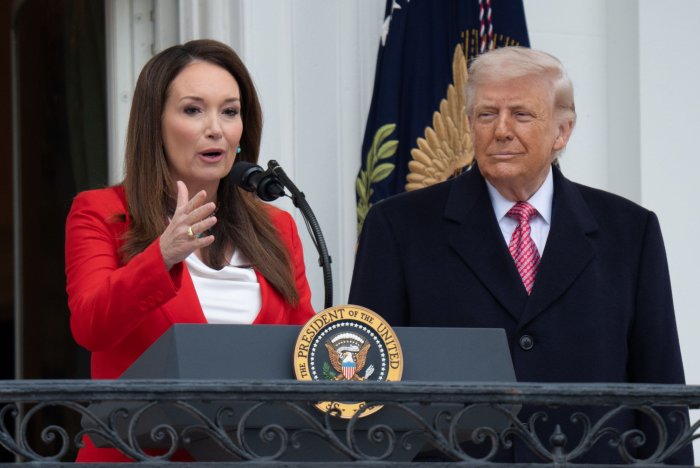
President Donald Trump stands with U.S. Secretary of Agriculture Brooke Rollins during an event celebrating farmers on the South Lawn of the White House on Friday. Photo by Aaron Schwartz/UPI | License Photo

West Bank strikes over Palestinian-only death penalty | Israel-Palestine conflict
A general strike swept the occupied West Bank after Israel passed a death penalty law that only targets Palestinians, sparking international condemnation and protests.
Published On 1 Apr 2026

Scott Mills’ ‘work wife’ Tina Daheley breaks silence on why she’s been missing from Radio 2 after he’s axed by BBC
SCOTT Mills’ “work wife” Tina Daheley has revealed the “real reason” she was missing from Radio 2 this week.
It was revealed this week that fan-favourite host Scott had been fired from his Radio 2 Breakfast Show over allegations surrounding his “personal conduct.”
The Sun understands that his contract was terminated within five days of the complaint being made.
It then came to light how Scott’s sacking was linked to a complaint about a 2016 police probe into historic “serious sexual offences” against a teenage boy, with the timeline of proceedings showing the BBC took seven years to act.
Scott’s co-presenter Tina took to social media on Wednesday to admit that it’s been an “awful week” after she went “missing”.
She shared a photo of herself in bed with a cup of tea and wrote: “Good morning! Just about recovered from this awful cold/flu.


“I’ve had for the past week (being parent to a primary school aged child is like having a subscription service to viruses!).”
Tina then revealed when she would be returning to her hosting duties.
“Good news is I’m over the worst of it and looking forward to spending two weeks with my family over the Easter hols from tomorrow after what’s been an incredibly difficult past week,” she said.
“I’ll be back on the radio Tuesday 21st April.”
It comes after Scott’s podcast was pulled by the BBC.
His Mercedes-Benz Vans Under the Bonnet: On the Road podcast has also been taken off Spotify.
The four part series created in 2025 with the Under the Bonnet report, shone the spotlight on varying issues for van drivers including everything from road conditions to mental health.
Scott has previously opened up on his own mental health battles and the podcast saw him reveal how 65 per cent of drivers had also struggled.
Yet when users search for it on Spotify, from a Google link that previously worked, a caption now states: “Couldn’t find that podcast.
“Search for something else?”
The BBC have also removed him from a Race Across The World podcast and pulled scenes he filmed for EastEnders.
Yesterday, we exclusively reported how charity Neuroblastoma UK dropped him as a patron.
Recently, we reported how Scott had been wiped from the BBC’s social media.
It comes after it was confirmed the Scott Mills Bridge at the M3 service station was now set to be re-named.
Additionally, The Sun was first to report how his Eurovision replacement is his fellow BBC Radio 2 DJ, Sara Cox.
Since 2011, he has commentated on the semi-finals, which air on BBC One on Tuesday and Thursday in the week leading up to the grand final.
Scott Mills Scandal in Brief
SCOTT Mills has been sacked from BBC Radio 2 – yet what’s happening?
- Scott Mills has been sensationally sacked by the BBC in a “tense” meeting with bosses
- The sudden axing is understood to be linked to a 2016 police probe into historical sex offences involving a teen boy
- Mills was questioned by police under caution in 2018 but the case was dropped in full due to a lack of evidence it is understood
- The race is now on to find a replacement for Mills, with fellow BBC DJ Gary Davies standing in
- And uncertainty now surrounds his future projects
In recent years, he has been joined by Rylan Clark to commentate on the shows, as well as the final live on Radio 2.
It comes after it transpired the broadcaster was questioned by police under caution in 2018 – when he was in his 40s, the Mirror reports.
The interview was related to alleged offences which took place between 1997 and 2000.
The case was dropped in full due to a lack of evidence.
A Metropolitan Police spokesperson told The Mirror: “In December 2016, the Met began an investigation following a referral from another police force.
“The investigation related to allegations of serious sexual offences against a teenage boy.”
The spokesperson said a man, who was in his 40s at the time of the interview, was questioned by police under caution in July 2018.
“A full file of evidence was submitted to the Crown Prosecution Service, who determined the evidential threshold had not been met to bring charges,” the Met said.
“Following this advice, the investigation was closed in May 2019.”
The allegations, which did not result in any charges, were reported to have taken place between 1997 and 2000.
Scott began at Radio 1 in 1998 presenting the early morning slot before earning his own breakfast show The Scott Mills Show.
Scott’s pals have also claimed they “can’t reach him” amid the “teen boy sex probe”.
A BBC spokesperson told The Sun: “While we do not comment on matters relating to individuals, we can confirm Scott Mills is no longer contracted to work with the BBC.”
Most Californians still disapprove of immigration crackdown, poll says
WASHINGTON — Two-thirds of California voters disapprove of President Trump’s immigration policies and a majority believe those policies are discriminating against Latinos, according to a new poll.
Nearly half of the voters said they were concerned that they, a family member or a close friend could be detained because of Trump’s immigration policies.
The findings of the UC Berkeley Institute of Governmental Studies poll, released Wednesday, show that most Californians haven’t budged on their thoughts about the president’s approach to immigration since he returned to office. A poll last August similarly showed strong disapproval of the Trump administration’s approach to immigration enforcement.
The poll, which was conducted for the Los Angeles Times, showed the usual division along party lines when voters were asked whether they trust the U.S. Border Patrol and Immigration and Customs Enforcement, whether agents should wear masks while on duty, and whether Latinos are being discriminated against.
“This suggests that a significant number of voters see ICE infringement on the individual rights of the undocumented as also potentially leading to broader infringements on citizens’ rights,” said G. Cristina Mora, co-director of the institute and a sociology professor at UC Berkeley who studies race and immigration.
“Latino voters also seem to particularly worry about the way that racism is motivating current immigration practices,” she said, which is likely tied to the Supreme Court’s approval of immigration agents detaining people on the basis of their perceived race, ethnicity, language or occupation.
The overall disapproval among voters of Trump’s immigration policies — 64% — was down a bit from the August poll, in which 69% of respondents said they disapproved of how immigration enforcement was being carried out in California.

Republicans appear to be more approving of immigration policies now, with 86% saying they approve of Trump’s immigration policies — up from 79% approval of enforcement in California last August.
Mora said the tilt among California Republicans toward the Trump administration could be due, in part, to the framing of the question, which asked about “President Trump’s immigration policies.”
Any time Trump’s name is included, Republicans are more likely to agree with him, she said. The same effect is seen when asking about other issues, such as the economy.
Another factor could be the timing, Mora said. Last summer, federal agents conducted widespread raids in Los Angeles before moving on to target other cities, such as Chicago and Minneapolis.
Now that the administration has shifted away from some tactics that resulted in escalations of violence, Republicans are “falling in line” again with the administration, she said.
“My hunch is it was shocking,” Mora said of the immigration raids last summer. “Things have normalized because the tension is somewhere else.”
Seeking to de-escalate after two protesters were shot and killed by federal agents in Minneapolis, the president tapped his border advisor Tom Homan to take control of the immigration enforcement operation there.
Republican strategist Ford O’Connell said that’s why voters are more supportive.
“Tom Homan being in charge and publicly taking a much lighter touch and appearing reasonable to the average voter is why you’re seeing this turnaround,” he said.
But Democratic strategist Maria Cardona said that that’s wishful thinking and that ICE’s approach hasn’t substantially changed.
“It only went down five points,” she said, referring to the disapproval of Trump’s policies. “That’s not the American people being on the side of the administration — it’s that they’re not seeing American citizens murdered on their screens every day.”
One question saw strong division among Republicans: Should immigration agents be allowed to enter the homes of suspected undocumented immigrants without a judge-approved search warrant?

Among California Republicans, 45% said no, 38% said yes, and 17% said they have no opinion.
O’Connell said that’s because Republicans strongly value civil liberties, especially around property.
Republicans were more strongly in favor of a different policy, allowing ICE agents to wear masks while on duty. While 91% of Democrats opposed the policy, 68% of Republicans favored it.
In the August poll, 45% of Republicans said federal agents should be required to show clear identification when carrying out their work. That desire for identification doesn’t appear to extend to being fully identifiable by face.
O’Connell said Republicans understand the concern over agents increasingly being doxxed.
“The administration wants to find a happy medium there, whether it’s a nameplate or a badge number,” he said. “There is wiggle room.”
Nearly 7 in 10 respondents said they want state and local authorities to intervene when they witness unlawful detentions or excessive use of force by federal immigration agents.
Voters were also asked about their level of concern that they, a family member or a close friend could be detained because of Trump’s immigration policies. While 85% of Republicans said they are not too concerned or not concerned at all, 63% of Democrats said they are somewhat or very concerned.

Overall, nearly half of the respondents, 45%, said they are somewhat or very concerned. Among racial and ethnic groups, 62% of Latino voters, 46% of Black voters and 43% of Asian or Pacific Islander voters said they are somewhat or very concerned.
“The Latino community has always wanted to think the best of this country and they still do,” Cardona said. “Our positivism, our optimism, our hope in a better future is second to none. I think that’s what you’re seeing in those numbers, even as our community feels totally attacked.”
Mora said the high concern among Black residents is notable because, while most Black Californians aren’t immigrants themselves, Los Angeles has one of the largest concentrations of Blaxicans — the children of one Black parent and one Latino parent.
Beyond intermarriages, Black residents in California are also likely to have immigrant friends or neighbors, she said.
O’Connell took a different view: “I don’t think we can glean anything from it other than how one party focuses more on identity politics than the other.”
The Institute of Governmental Studies poll was completed online in English and Spanish from March 9 to 15 by 5,109 registered voters in California.

World Men’s Curling Championships: Scotland beat Germany and South Korea, face China next live on BBC
After the China tie, Team Whyte, who are ranked in the world’s top five but are making their debut at this level, continue the round-robin against Norway (02:00). They conclude it with matches against the Swiss and Czech Republic on Thursday, with the tie with Switzerland available to watch on the BBC Sport website and app.
Whyte – along with Robin Brydone, Euan Kyle and Craig Waddell – are representing Scotland after world top-ranked rink Team Mouat elected not to compete after their silver medal at the Olympics in Cortina earlier this year.
The top six progress, with the top two going straight into the semi-finals and the other four teams competing to join them.
“We have two tough games [on Wednesday] in China and Norway,” said Whyte.
“Both teams seem to be playing quite well, so if we can try to come out firing and put in some good performances then that would be great to allow in the last stage to maybe get us two more wins and hopefully secure us the semi-final spot.
“However, there are a lot of teams around that area that could easily also get that semi-final spot, so there a lot of big games still to be played, but we are feeling positive.”