



Venezuela Urges ‘Good Faith Negotiations’ on Essequibo Territorial Dispute
The territorial dispute flared up over the discovery of massive offshore oil deposits. (Archive)
Mérida, February 18, 2026 (venezuelanalysis.com) – The Venezuelan government commemorated the 60th anniversary of the Geneva Agreement and urged Guyana to engage in “good faith negotiations” to settle the longstanding dispute over the Essequibo Strip.
In a statement published on Tuesday, Caracas celebrated six decades of the agreement and reiterated that the treaty is “the only valid legal instrument for reaching a mutually acceptable solution to the dispute” over the 160,000 square-kilometer territory.
The 1966 accord, signed by Venezuela, the United Kingdom, and British Guiana, a British colony at the time, saw the different parties pledge to find an agreeable solution to the border issue.
The Venezuelan government’s communique noted that the treaty was submitted to the United Nations, arguing that it overruled the controversial 1899 arbitration ruling which awarded the territory to the United Kingdom.
The text also reaffirmed Venezuela’s sovereignty claim over the resource-rich territory and referenced the popular mandate from the December 3, 2023, referendum that saw over 90 percent of respondents back the country’s rights over the Essequibo Strip.
“The only possible solution to the territorial controversy is to engage in good faith negotiations, to achieve a satisfactory arrangement for the two parties that signed the Geneva Agreement,” the declaration concluded.
The Guyanese government responded on Wednesday with its own statement, arguing that the Geneva Agreement did not annul the 1899 Arbitral Award but rather established a framework for resolving the dispute that arose when Venezuela questioned the border’s validity in 1962.
Georgetown likewise noted that, in January 2018, the Secretary-General of the United Nations determined that the “good offices” mechanism had been unsuccessful in resolving the dispute.
“In accordance with Article IV (2) of the Geneva Agreement, the Secretary-General decided to submit the case to the International Court of Justice (ICJ) as the final means of resolution. Both Guyana and Venezuela were bound by that decision.”
Hours later, the Venezuelan government issued a second statement accusing Guyana of attempting to distort the spirit of the Geneva Agreement and reiterating Caracas’ position rejecting the ICJ’s jurisdiction over the border controversy.
“Venezuela will not recognize any decision emanating from the International Court of Justice on the territorial dispute surrounding Guayana Esequiba,” the document read.
Despite rejecting the Hague-based court’s authority on the matter, the Venezuelan government participated in a documentation-gathering process before the ICJ during 2023 and 2024. Acting President Delcy Rodríguez, then vice president, led the country’s legal efforts.
In August 2025, Caracas submitted further evidence backing its Essequibo sovereignty claim and challenging Georgetown’s historical and legal arguments. The case will advance to the oral hearings phase in May 2026.
In January, the Guyanese Minister of Foreign Affairs and International Cooperation, Hugh Todd, claimed that the ICJ’s ruling would be binding for both nations and that the case was now in the hands of “the highest and most respected judicial authority in the world.”
The longstanding territorial controversy flared up in 2015 after ExxonMobil discovered and began exploiting massive offshore oil reserves. Venezuelan authorities have raised their sovereignty claims and criticized Guyanese counterparts for giving drilling permits to multinational corporations in undelimited waters.
Caracas has also criticized the US’ interference in the issue, with successive administrations offering their full backing to Georgetown. Venezuelan authorities have accused Washington of stoking regional tensions amid plans to establish military bases in Guyana.
Edited by Ricardo Vaz in Caracas.

CBS’s Bari Weiss pulls out of UCLA lecture
UCLA has canceled an upcoming lecture featuring CBS News editor-in-chief Bari Weiss.
Weiss was scheduled to give the annual Daniel Pearl Memorial lecture on Feb. 27, about “The Future of Journalism.” But according to the university, the program will not move forward as scheduled, after Weiss’ team withdrew from the event.
A source familiar with the UCLA program said the lecture was canceled due to security concerns from Weiss, despite the public university offering to obtain additional security for the event, the source said. The Daniel Pearl Memorial lecture series honors the late journalist and is considered the capstone of the university’s Burkle Center for International Relations. Previous speakers include journalists Jake Tapper, Anderson Cooper and Bob Woodward.
According to the source, several employees at both the Burkle Center and the International Institute expressed opposition to Weiss speaking on campus. The university was also expecting a large number of students to protest the event.
Neither Weiss nor CBS immediately responded to a request for comment.
Weiss founded the media company, The Free Press, which was purchased in October by Paramount, CBS’ parent company. Following the $150 million purchase, Weiss was installed as editor-in-chief of CBS News.
Two months after taking on the new role, Weiss made the widely panned decision to pull a “60 Minutes” episode that examined the alleged abuse of deportees sent from the U.S. to an El Salvador prison. The decision earned Weiss heavy criticism and accusations that the move was politically motivated.
The canceled UCLA lecture comes at a time of ongoing organizational upheaval at CBS, which this week made headlines amid an escalating battle with its own late-night talk host, Stephen Colbert, over the FCC’s effort to enact stricter enforcement of the equal-time rule.

Champions League: What happened on Real Madrid bench and tunnel after Vinicius Jr racism allegation?
Champions League Match of the Day pundit Guillem Balague, who attended Real Madrid’s match at Benfica on Tuesday, explains the aftermath of the alleged racist incident between Vinicius Jr and Gianluca Prestianni.
READ MORE: Vinicius: Eight years at Real Madrid, 20 cases of alleged racist abuse
Available to UK users only.
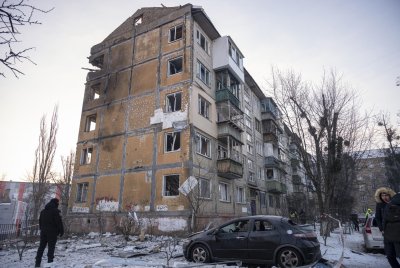
UNICEF: A third of Ukrainian children are displaced by war

A Russian drone strike on a five-story residential building in Kyiv, Ukraine, shows why a third of Ukrainian children are displaced, as reported by UNICEF on Tuesday. Photo by EPA/Stringer
Feb. 18 (UPI) — As the Ukraine war nears its fifth year, more than a third of Ukrainian children remain displaced following Russia’s invasion of its neighboring nation.
Russian forces invaded Ukraine on Feb. 24, 2022, which has led to the displacement of 2.59 million Ukrainian children, UNICEF reported on Tuesday.
The number of displaced children includes 791,000 who are still inside Ukraine and nearly 1.8 million who are refugees living outside of the country’s borders. Russian forces also have taken many Ukrainian children and relocated them to Russia.
“Millions of children and families have fled their homes in search of safety, with one in three children remaining displaced four years into this relentless war,” said UNICEF Regional Director for Europe and Central Asia Regina De Dominicis.
“For children in Ukraine, safety is increasingly hard to come by as attacks on civilian areas continue across the country,” De Dominicis said. “In many ways, the war is following these children.”
Many children and their families have been forced to flee their homes several times during the war as Russian forces targeted civilian areas.
A recently published UNICEF survey showed that a third of teen respondents between age 15 and 19 said they moved at least two times due to safety reasons so far during the war.
Bombardments by Russian artillery, attack drones and ballistic missiles have killed or injured more than 3,200 children since the war started.
Each year, the number of dead and injured has increased among Ukraine’s children, according to UNICEF.
“Obligations under international humanitarian law must be upheld, and every possible measure to protect children and the civilian infrastructure they rely on must be taken,” De Dominicis said.
“Every child has the right to grow up in safety, and without exception that right must be respected.”
Many of the support services for the country’s children also have been damaged or destroyed, including more than 1,700 schools and other education facilities, which deprives a third of Ukrainian children from attending school on a full-time basis.
Russian strikes on Ukraine’s energy infrastructure have deprived millions of Ukrainian children and their families of the power needed to heat their homes and water during the country’s extremely cold winters.
Babies and young children are especially vulnerable to harm due to a lack of electrical power, which could lead to hypothermia and respiratory illnesses.
More than 200 medical facilities also have been damaged or destroyed in Ukraine over the past year and many more before then.
The stress of the ongoing war is putting a severe mental strain on Ukraine’s children, who often experience a constant fear of attacks that force them to seek shelter in basements and remain isolated while at home.
About a fourth of Ukrainian youth between age 15 and 19 say they are losing hope for the country’s future.
UNICEF officials said they are working with local and national authorities to support Ukrainian children and provide them and their families with safe water, healthcare, food, educational support, mental health services and similar needs.
Russia-Ukraine war: List of key events, day 1,456 | Russia-Ukraine war News
These are the key developments from day 1,456 of Russia’s war on Ukraine.

Published On 19 Feb 2026
Here is where things stand on Thursday, February 19:
Fighting
- Russian forces launched multiple attacks on Ukraine’s Zaporizhia region, killing one person and injuring seven others over the past day, the region’s military administration said on the Telegram messaging platform.
- The attacks involved 448 drones as well as 163 artillery strikes, causing damage to 136 homes, cars and other structures, the military administration said.
- Russian forces also continued shelling Ukraine’s Donetsk region, forcing 173 people, including 135 children, to evacuate front-line areas over the past day, regional governor Vadym Filashkin said on Telegram.
- A 54-year-old man was killed in a Russian attack in the Nikopol district of Ukraine’s Dnipropetrovsk region, Governor Oleksandr Hanzha said on Telegram.
- Russian attacks also left many people without electricity across Ukraine, according to the Ministry of Energy, including more than 99,000 households in the Odesa region.
- In Russia, one person was killed in a Ukrainian drone attack on the village of Aleynikovo in the country’s Bryansk region, Governor Alexander Bogomaz said.
- Russia’s Ministry of Defence said that Russian forces seized the village of Kharkivka in Ukraine’s Sumy region and Krynychne in the Zaporizhia region, according to Russia’s state news agency TASS.
- Ukrainian battlefield monitoring site DeepState said that Russian forces advanced in Nykyforivka in Ukraine’s Donetsk region.
- Russian forces shot down 155 Ukrainian drones, 11 rocket launchers, and two guided aerial bombs in a 24-hour period, Russia’s Defence Ministry said, according to TASS.
Peace talks
- Negotiators from Russia and Ukraine concluded the second of two days of US-mediated talks in Geneva, with both sides describing the negotiations as “difficult”.
- Ukrainian President Volodymyr Zelenskyy said that although “progress has been made … for now, positions differ because the negotiations were difficult”.
- President Zelenskyy later told the Piers Morgan Uncensored current affairs show that Russia and Ukraine were close to defining terms for how a potential ceasefire would be monitored, but progress on “political” issues had been slower, including on the most divisive issue of control of territory.
- In Washington, White House spokeswoman Karoline Leavitt said there was “meaningful progress made” with pledges “to continue to work towards a peace deal together”, and more talks are expected in the near future.
- Vladimir Medinsky, Russia’s top negotiator, said the two days of talks in Geneva were “difficult but businesslike,” telling reporters that further negotiations would be held soon, without specifying when.
- Rustem Umerov, the head of Kyiv’s negotiating team, said that the second day had been “intensive and substantive” and that both sides were working towards decisions that can be sent to their presidents, he said.
Politics and diplomacy
- Ukraine imposed sanctions against Belarusian President Alexander Lukashenko, promising to “increase countermeasures” against Minsk for supporting Russia’s war against Ukraine, including through providing relay stations for Russian drone attacks on Ukraine, Zelenskyy said on social media.
- United States Senator Jeanne Shaheen of New Hampshire along with three other US senators from the Democratic Party visited Kyiv.
- Shaheen told reporters that she “would hope that we would see a stronger effort and some real work when we get back to put pressure on Putin”.
Sport
- Estonian Foreign Minister Margus Tsahkna said in a post on Telegram that “allowing Russian and Belarusian athletes to participate in the Milano-Cortina Paralympics while Russia continues its full-scale war against Ukraine is a disgrace”.
- Estonian Public Broadcasting company Eesti Rahvusringhaaling announced it would not broadcast the games in protest at the decision to allow the Russian and Belarusian athletes to compete under their own flags.

Channel 5 viewers ‘in tears’ as surgeon races against time to save 88-year-old
The new Channel 5 programme follows the lives of working surgeons and left viewers moved

Viewers were impressed by new Channel 5 show The Surgeon(Image: Channel 5 screengrab)
Channel 5 viewers were emotional as a doctor battled to save an elderly lady in new series The Surgeon.
The TV series, which started on Channel 5 on Wednesday (February 18), shines a spotlight on doctors, with episode one focusing on bowel cancer surgeon Daren Francis. His first patient was a retired nurse named Doris, who worked for the NHS for over 50 years, with the narrator explaining that it was a “life-threatening emergency” after a blockage was discovered in her bowel.
The doctor had to operate before the bowel ruptured, admitting it was “a major operation” with increased risks given that Doris was 88.
Doris had said that she was in “excruciating” pain, with her daughter explaining further: “Mum was very sick and we weren’t sure whether to come or not because mum doesn’t like to be a nuisance. She doesn’t like, you know, I think being a retired nurse, I think she just doesn’t want to be a bother.”
Dr Francis told her: “It looks like the bowel’s blocked with a growth or a little lump. And that, we’ve got to consider is potentially a malignant or a cancerous growth.
“The plan is to take you to the operating theatre, general anaesthetic, you’ll be asleep, and make a cut in your tummy up and down. And then remove that piece of bowel, which is blocking the rest of the bowel.”
He continued: “So if we leave it there, the bowel can get stretched and stretched, and then eventually it could pop. Time is of essence. So we need to get on and do this. Otherwise, we’ll be in trouble.”
The programme then documented the successful operation, with viewers impressed by the surgeon’s skill. At the end of the episode, it was announced that Doris was recovering at home.
One viewer posted on X, which was formerly Twitter: “3 mins in and I am crying already! surgeons are so compassionate, skilled and amazing!”
Another shared a crying emoji as they posted “What a bloke. Skill and perfect bedside manner with patients.”
Someone else remarked: “”The Surgeon on 5 is phenomenal TV. Daren is an incredible human being. Amazing.”
Another impressed viewer said the surgeon was “fantastic”, as somebody else commented: “People talk about miracles but people like Daren create them here and now for people using his phenomenal surgery skills. Awe inspiring.”
“Never get tired of watching programmes like The Surgeon,” posted another viewer. “Skills beyond belief.”
For the latest showbiz, TV, movie and streaming news, go to the new **Everything Gossip** website.
Ensure our latest headlines always appear at the top of your Google Search by making us a Preferred Source.** Click here to activate**** or add us as your Preferred Source in your Google search settings.**
The Surgeon airs on Channel 5.
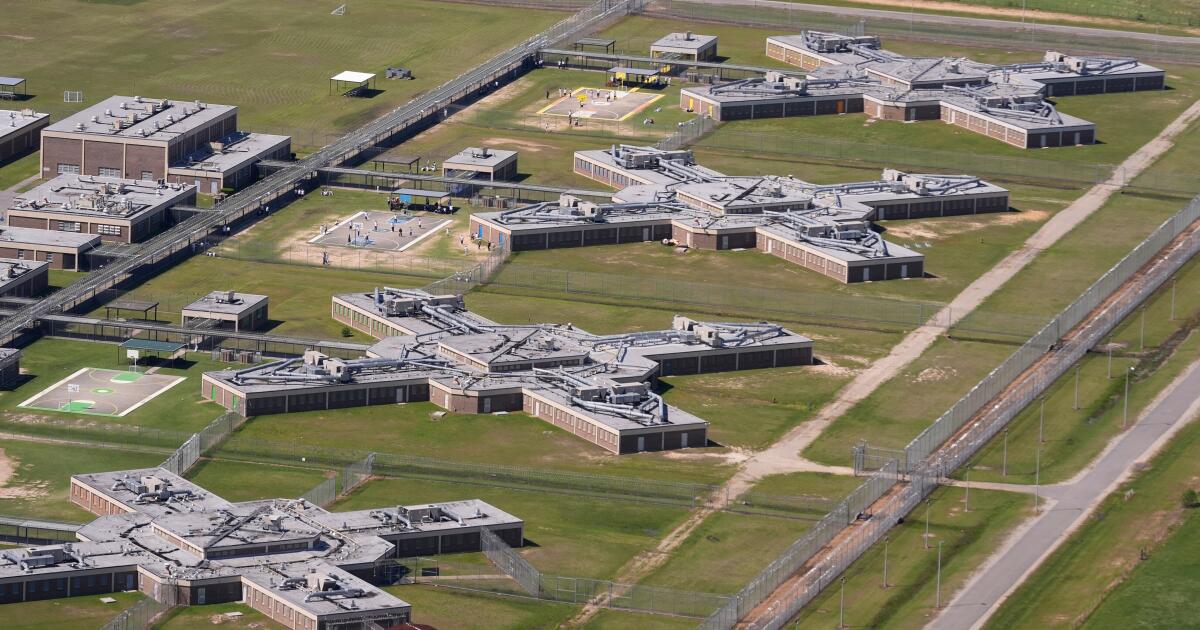
Senators decry surge in ICE detention deaths, cite poor medical care
WASHINGTON — At Immigration and Customs Enforcement detention facilities across the country, detainees go without medicine for serious health conditions, endure miscarriages while shackled and are dying in record numbers, a group of U.S. senators said.
In a letter sent Friday to Homeland Security Secretary Kristi Noem and ICE senior official Todd Lyons, 22 Democratic lawmakers alleged that a “dramatic” surge in deaths in federal immigration custody is a “clear byproduct” of the Trump administration’s mass deportation agenda and rapid expansion of detention.
“Each death in ICE custody is a tragedy and, based on the evidence available from agency records, 911 calls, and medical experts, many could have been prevented if not for this Administration’s decisions,” the senators wrote. The letter, released Tuesday, was led by Illinois Sen. Dick Durbin and signed by California Sen. Alex Padilla.
At least 32 people died in ICE custody in 2025, they asserted. That’s triple the previous year’s total and more deaths than were recorded during the entire Biden administration. ICE has reported seven deaths so far this year, as well as seven in December alone.
In the letter, the senators demanded detailed information about the agency’s death investigations, medical standards and oversight procedures.
The Department of Homeland Security, which oversees ICE, did not respond to the allegations but has repeatedly defended its detention standards. In a statement, ICE said it is “committed to ensuring that all those in custody reside in safe, secure and humane environments,” adding that detainees receive medical, dental and mental health screenings within 12 hours of arrival, full health assessments within 14 days and access to 24-hour emergency care.
The lawmakers’ warning comes amid mounting allegations that detention facility staff have withheld critical medication, delayed emergency responses and failed to provide adequate mental health care.
The agency came under flak recently after a Texas medical examiner ruled the January death of a Cuban immigrant a homicide after witnesses said they saw guards choking him to death.
In Calexico, Calif., Luis Beltrán Yanez-Cruz, 68, died after more than a month in detention, records show; the Honduran national’s family alleged that he repeatedly reported worsening stomach and chest pain but received only pain medication.
The recent rise in deaths coincides with a dramatic expansion of the detention system. Funding for ICE roughly tripled after Congress passed the One Big Beautiful Bill Act. The agency has used the funds to increase detention capacity, holding more than 67,000 people nationwide after reaching a historic high of approximately 73,000, many of whom have no criminal history, the letter says.
Last week, the Trump administration announced $38.3 billion in partnerships with private prison corporations, including GEO Group and CoreCivic, to further scale up detention space. One planned facility near Phoenix will cost $70 million and span the equivalent of seven football fields, according to the lawmakers. ICE has also reopened facilities that were previously shuttered over chronic staffing shortages and medical concerns.
Concerns about conditions have extended to California. Last month, Padilla and Sen. Adam Schiff toured a for-profit detention center in California City after reports of unsafe facilities, inadequate medical care and limited access to attorneys.
“It’s the tragic result of a system failing to meet the most basic duty of care,” Padilla said in a statement, citing reports of mold in food, unclean drinking water and barriers to medical care.
A federal judge recently ordered the administration to provide adequate healthcare and improved access to counsel at the facility, concluding that detainees were likely to “suffer irreparable harm” without court intervention.
In their letter, the senators argued that the rapid growth of the detention system has outpaced oversight and accountability. They cited internal audits documenting violations of detention standards, allegations that ICE failed to pay third-party medical providers for months and analyses of 911 calls from large facilities showing repeated cardiac events, seizures and suicide attempts.
“Rather than accepting responsibility for deaths in government custody and providing detailed facts about the circumstances of each death,” the senators wrote, “the Department of Homeland Security has attempted to smear deceased individuals’ reputations by emphasizing details about their immigration status and their alleged wrongdoing.”
As detention capacity continues to expand, the climbing death tallies underscore the extent to which the Trump administration has overhauled the immigration detention system, and Democrats say the results are fraught.
The opposition party has grown more unified after the fatal shootings of two U.S. citizens by federal agents in Minnesota, which coincided with reports of record high detention deaths in December.
Discord culminated in a partial government shutdown that began Friday when Senate Democrats refused to fund the Department of Homeland Security until the Trump administration agrees to reform at the agency.

Arsenal title race: ‘Bottle word will be used’ for Gunners after Wolves draw
After blowing a two-goal lead to draw against the Premier League’s bottom club Wolves, there will be no dodging the questions on whether Arsenal are mentally ready to end their 22-year wait to become champions.
For the first time really this season, the title race is not completely in the control of Mikel Arteta and his players.
If Manchester City – five points behind in second place – win all of their remaining 12 games, which includes a home meeting against Arsenal, they will finish first.
The same, though, can be said for the Gunners, who have 11 matches left – and they win the April encounter at Etihad Stadium.
But after dropping four crucial points in successive draws against Brentford and Wolves, they are in danger of being haunted by the ghost of past failures.
Three successive runners-up finishes, two of them to Pep Guardiola’s men, provide a constant reminder.
Former Arsenal forward Alan Smith admitted “that word bottle will be used quite a bit in the next few days”.
The scenario seemed a lot different when Piero Hincapie slotted home his first goal for the club in the 56th minute, adding to Bukayo Saka’s fifth-minute opener.
But the Gunners lacked the control and ruthlessness to finish off a Wolves side that had lost their nine previous meetings and are heading for the Championship.
The hosts showed remarkable spirit to fight back with Hugo Bueno’s 20-yard curler giving them hope. Then, in the fourth minute of added time, 19-year-old Tom Edozie – off the bench for his senior debut – pounced on a mix-up between Arsenal pair David Raya and Gabriel and his shot went in off Riccardo Calafiori for a dramatic, dreamy leveller.
Arsenal next face London derbies with Tottenham and Chelsea and they have worryingly started to wobble at a decisive stage in the season.
Arteta knows his side will come under fire and scrutiny.
“Any opinion you have to take it on the chin,” he said. “Any bullet, take it, because we didn’t perform at the level required.
“Anything anyone says can be right because we didn’t do what we had to do. The way to do it is on the pitch on Sunday [against Spurs].”
Wolves boss Rob Edwards said his side “knew there is a massive pressure” on Arsenal at the minute – and they capitalised on that.
The Gunners have not been performing at their best since the start of 2026 and won only two of their last seven league matches, with victories against Leeds and Sunderland.
Arteta added: “Certain basics we have to do, we did them so poorly, one after the other.
“It is better not to judge it. We are all too emotional about it. You have to take the hit because we deserve it. It is very easy with emotion to say things that can damage the team. Everyone wants to do their best.”
Only Crystal Palace and West Ham (both eight) have dropped more points from winning positions in the league in 2026 than Arsenal (seven) and the Gunners have now failed to win from a leading position in three of their last five league games.
This was also the first time in Premier League history that a side starting the day bottom of the table avoided defeat to the leaders, despite trailing by two or more goals.
“It feels like a pivotal moment, a vital one, maybe a turning point,” Smith added on Sky Sports.
“It’s in Manchester City‘s hands now. With their experience and Guardiola’s experience they will really fancy it now. They can almost feel the nerves of the Arsenal team watching that.
“Having been 2-0 up against the team rock bottom on nine points is just not good enough for the team hoping to win the title. It doesn’t bode well for Arsenal to be able to handle the pressure.”

South Korea weighs strategy as U.S.-China rivalry deepens

Fireworks erupt during the launch ceremony of the new 8,200-ton Aegis destroyer Dasan Jeong Yak-yong at the HD Hyundai Heavy Industries shipyard in the southeastern city of Ulsan, South Korea, 17 September 2025. The 170-meter-long, 21-meter-wide destroyer is equipped with advanced stealth features and enhanced detection and interception capabilities against ballistic missiles. File. Photo by YONHAP / EPA
Feb. 18 (Asia Today) — South Korea faces mounting strategic pressure as rivalry between the United States and China intensifies across the Indo-Pacific, raising questions about how Seoul should balance its security alliance with Washington and its economic ties with Beijing.
Analysts say the regional balance of power is entering a new phase. U.S. carrier strike groups continue to patrol the Western Pacific and longstanding alliances remain intact. Yet some experts argue Washington’s long-term strategy integrating economic, diplomatic and industrial policy lacks consistency.
In the March-April issue of Foreign Affairs, U.S. Indo-Pacific strategist Jack Cooper wrote that while American military power remains strong, its broader strategic integration has weakened. In an article titled “Asia After America,” he argued that policy shifts between administrations and the U.S. withdrawal from the Trans-Pacific Partnership have left gaps in regional economic leadership.
Cooper said the issue is not U.S. withdrawal but uncertainty over long-term strategic continuity. For allies, he wrote, the question is who shapes the regional order beyond crisis intervention.
Meanwhile, China has continued expanding its footprint through militarization of artificial islands in the South China Sea and sustained military activity near Taiwan. Beijing is also deepening regional economic integration through the Regional Comprehensive Economic Partnership and the Belt and Road Initiative, often referred to as the New Silk Road.
South Korea sits at the center of these tensions. Its security rests on its alliance with the United States, while China remains its largest trading partner. Key sectors such as semiconductors, batteries and artificial intelligence are directly exposed to U.S.-China competition.
Jung Seong-jang, vice president of the Sejong Institute, said in an interview that a Taiwan contingency could directly affect South Korea by disrupting critical sea lanes of communication.
A 2023 report by the Korea Institute for International Economic Policy found that 33.27% of South Korea’s maritime trade passes through or near the Taiwan Strait. The institute estimated that disruption of major shipping routes in the area could cause economic losses of about 445.2 billion won ($334 million) per day, based on current exchange rates.
Jung cautioned that direct South Korean military involvement in protecting sea lanes could heighten tensions with China, while North Korea might exploit regional instability to escalate provocations.
Joo Eun-sik, head of the Korea Institute for Strategic Studies, outlined several policy recommendations.
First, he called for deeper integration of the U.S.-South Korea alliance, including coordinated planning in maritime security, missile defense, space and cyber domains to strengthen deterrence against so-called gray-zone threats.
Second, he urged a combined economic and security strategy, strengthening supply chain cooperation and expanding investment in strategic technologies. He said South Korea’s defense industry should function not only as an export sector but as part of a broader strategic network.
Third, he emphasized maritime capabilities, describing sea routes from the Strait of Malacca through the South China Sea and Taiwan Strait as vital to South Korea’s economy. Expanding blue-water naval operations, submarine forces, maritime patrol and unmanned systems, he said, is essential.
Finally, he highlighted the need to build strategic autonomy within the alliance framework by investing in independent intelligence, surveillance and reconnaissance capabilities, space monitoring systems and layered missile defense.
Analysts say the Indo-Pacific order remains unsettled. Whether South Korea becomes a passive bystander or an active architect of its own strategy may depend on how effectively it integrates security, industry and technology into a coherent national plan.
— Reported by Asia Today; translated by UPI
© Asia Today. Unauthorized reproduction or redistribution prohibited.
Original Korean report: https://www.asiatoday.co.kr/kn/view.php?key=20260218010005435

ICBM-Guarding Security Forces Will Need Fresh Tactics To Defend New Sentinel Silos
The construction of new silos for the U.S. Air Force’s future LGM-35A Sentinel intercontinental ballistic missiles (ICBM) means that units charged with defending them will have to update their tactics, techniques, and procedures (TTPs). Air Force Security Forces personnel regularly train to protect existing silos housing LGM-30G Minuteman III ICBMs, as well as associated launch facilities, or even recapture them if necessary. The need for totally new silos and other infrastructure has been a major issue for the Sentinel program, contributing significantly to delays and cost overruns that triggered a total restructuring that is still ongoing.
The Government Accountability Office (GAO), a congressional watchdog, highlighted how Sentinel will impact Air Force Security Forces units in a brief report released earlier today. This comes a day after the Air Force put out its own update on the new ICBM program, stating that the current goal is for the restructuring effort to wrap up before the end of the year and for the first launch of a prototype LGM-35A to occur in 2027. The hope now is that Sentinel will begin entering operational service sometime in the early 2030s. The original schedule had called for the missiles to reach initial operational capability in 2029.

“DOD will need to complete Sentinel launch facility test and evaluation activities early in the transition to inform DOD and Air Force security policy updates,” the GAO report says. “Because security forces incorporate these updates into unit-level operating instructions, these policy updates will be needed to train Air Force security forces for the transition.”

The report does not elaborate on the changes that will be required. As noted, Security Forces personnel currently assigned to Air Force Missile wings train to protect the Minuteman III force above and below ground. There are currently 400 LGM-30Gs loaded into silos spread across five states. Sentinel is said to offer greater range and improved accuracy, as well as reliability and sustainability benefits, over the aging Minuteman IIIs, which first entered service in 1970. The development of a new ICBM also offers the opportunity for the inclusion of survivability improvements and other additional capabilities.

An Air Force news release from 2019 describes one potential “recapture and recovery” scenario used in a routine training:
“The training simulated a hostile’s attempt to capture a nuclear asset. Security forces Airmen, who arrived by both Humvee and helicopter, began to combat the threat and worked their way toward retaking control of the launch facility. After neutralizing the threat, recapturing and securing the launch facility, the Airmen performed self-aid buddy care and tactical combat casualty care.”
The video below shows scenes from a recapture and recovery exercise conducted as part of the larger Global Thunder 23 exercise.

91st Missile Wing participates in Global Thunder 23
Terrorists or other hostile actors could also seek to break into silos or launch facilities just to damage or destroy them. Even if they could not trigger a nuclear detonation, blowing up an ICBM inside its silo would have significant operational, environmental, and other ramifications.
The Air Force had originally said it would reuse Minuteman III silos and other existing infrastructure for Sentinel, but subsequently determined that was no longer a viable course of action. As such, new silos and launch control facilities could easily come with substantially different physical layouts that would affect the tactics, techniques, and procedures for securing them. The LGM-35A missiles will also be completely different from the existing LGM-30Gs, and there could be additional notable differences in how the Sentinels are married together with their new ground-based infrastructure. All of this could further impact how Security Forces personnel prepare themselves for a variety of contingencies, including any potential for accidental detonations or launches.


In its update about Sentinel yesterday, the Air Force shared that prime contractor Northrop Grumman is set to start building a prototype launch silo at the company’s facility in Promontory, Utah, this month. “This crucial effort will allow engineers to test and refine modern construction techniques, validating the new silo design before work begins in the missile fields,” according to the release.
There’s a strong possibility that a prototype silo could also be used to help develop and refine new Security Forces TTPs in future, as well.
Site defense is also just one aspect of the elaborate and costly security ecosystem in place now for the Minuteman III force. This includes protection for ICBMs while they are being transported via transporter-erector trucks, as well as loaded or unloaded into silos. All of this will also have to adapt to the future Sentinel missiles and their new facilities. The Air Force has already been modernizing certain aspects of nuclear force protection capabilities, including the acquisition of new MH-139A Grey Wolf helicopters to replace aging UH-1Ns used to provide air support over the silo fields and for convoys on the move. An MH-139A was used to escort a Minuteman III convoy for the first time in January.

In terms of other Sentinel-related infrastructure work, “this summer, prototyping activities at F.E. Warren AFB [Air Force Base, in Wyoming] will validate innovative utility corridor construction methods, which are key to streamlining the installation of thousands of miles of secure infrastructure and fielding the system faster,” the Air Force’s release added. “Meanwhile, foundational construction on permanent facilities is already well underway. The first of three new Wing Command Centers is taking shape at F.E. Warren AFB, and critical test facilities are being erected at Vandenberg SFB [Space Force Base, in California] to support the future flight test campaign.”
So-called Site Activation Task Force (SATAF) detachments are also helping lay the groundwork for the transition from Minuteman III to Sentinel at F.E. Warren and Vandenberg, as well as Malmstrom Air Force Base in Montana and Minot Air Force Base in North Dakota. It should be noted that Vandenberg does not currently host operational ICBMs, and is not set to do so in the future, but is used for routine test launches. The Air Force also says that the planned first launch of a Sentinel in 2027 will be from a pad rather than a silo.

US Air Force launches Minuteman III ICBM from Vandenberg in unarmed test
The Air Force is otherwise hopeful that the ongoing restructuring effort will reduce the chance for further schedule risks to the Sentinel program and, by extension, cost growth.
“We certainly have not lowered the bar, and we certainly have not taken on any risk by doing this,” Air Force Gen. Dale White, the new Direct Reporting Portfolio Manager (DRPM) for Critical Major Weapon Systems (CMWS), told Breaking Defense in an interview published yesterday. The DRPM CMWS role was established last August to create a “single empowered leader” to manage Sentinel and other top-priority Air Force weapon systems programs, including the F-47 sixth-generation fighter and B-21 Raider stealth bomber.
“The restructured program incorporates key lessons learned to ensure maximum efficiency,” the Air Force’s release explained. “The decision to build new silos, for example, avoids the unpredictable costs and safety hazards of excavating and retrofitting 450 unique structures built over 50 years ago, and is a prime example of choosing a path that delivers capability with greater speed and less risk.”
“Sentinel program officials continue to evaluate options to potentially redesign portions of the weapon system for cost reductions and are looking at avenues to minimize further schedule delays,” GAO’s report today also noted. “For example, the Air Force is reevaluating system requirements and evaluating changes to the acquisition strategy – both of which could limit further cost and schedule growth.”
GAO’s report did still highlight continued concerns about potential challenges for Sentinel, including in relation to software development for the missiles and work on the extensive new ground infrastructure. As noted, the need for all-new silos has already been a central factor in delays and cost overruns, despite the hope that this will prove less risky in the long run. There are also concerns about sustaining the Minuteman III force beyond 2036, when the transition to Sentinel was originally supposed to be complete. A seamless replacement process is critical to ensuring that the land-based leg of America’s nuclear triad remains a credible deterrent capability throughout.

“I think Sentinel is going to be a bit easier with some of the things we’re designing into the program, the digital infrastructure, the open architecture,” Air Force Gen. Stephen Davis, head of Air Force Global Strike Command (AFGSC), told TWZ in an interview last month. “I think it will make it easier to upgrade and keep that missile relevant. I don’t have any worries about being able to do that in the future.”
Overall, the Sentinel is categorized as “megaproject” by GAO, defined as something that “costs $1 billion or more, affects 1 million or more people, and runs for years.” Such efforts “are extremely risky ventures, notoriously difficult to manage, and often fail to achieve their original objectives,” according to the Congressional watchdog.
A revised cost for Sentinel has yet to be released. However, when the Air Force announced the restructuring effort back in 2024, the total acquisition costs were projected to rise to approximately $140.9 billion, an 81 percent increase over the original estimates.
Even if the restructured Sentinel plan holds going forward, the program will still be immensely complex and resource-intensive, and have many different facets, including changes to how Security Forces units operate going forward.
Contact the author: joe@twz.com

Traitors winner reveals £48K prize money is going on ‘full survival’ after he quit job
Stephen Libby – who won The Traitors alongside Rachel Duffy – has confessed he has gone “full survival” with his winnings after quitting his job

Stephen and Rachel won The Traitors(Image: CREDIT LINE:BBC/Studio Lambert/Paul Chappells)
Just last month Stephen Libby, was crowned the winner of The Traitors in a dramatic and nail-biting final watched by a staggering 9.6million viewers. Despite the hit BBC series, being filmed last year, the Scotsman, has only just received his £47,875 prize money.
The share of the total £95,750 was spilt between Stephen, 32, and his fellow co-Traitor Rachel Duffy, 42, who also made the final.
“I have the money, but I’ve not spent it,” says the former cyber security consultant. “I’ve left my job, so right now it’s going on full survival. It’s going to my London rent and things like that, so I’ve not made any plans for it just yet.”
The London-based star – who is originally from the Isle of Lewis in Scotland – confesses he is not tempted to jump onto the property ladder with his winnings.
“I don’t know what properties could be bought in London with the money that I just received. Maybe 40 years ago I might have been able to, but not anymore,” he tells The Mirror at the C abaret press night in the Kit Kat Club.
Ensure our latest headlines always appear at the top of your Google Search by making us a Preferred Source. Click here to activate or add us as your Preferred Source in your Google search settings.
Stephen and Rachel may have been Traitors on the gripping gameshow fronted by Claudia Winkleman, but they remained loyal to each other until the very end.
Tragically, Rachel’s mother, Anne – who suffered from Parkinson’s disease and dementia, passed away just days after the final, meaning she couldn’t create new memories with her mum, like she had planned to with the winnings.
“I speak with Rachel all the time. We are on the phone every day almost. We are really close, and I love her family,” he shares. “She’s had nothing but all the support of myself and all the cast as well.
“I’ve met her children and husband, Sean – they’re lovely. I went over to [her home city] Newry in Northern Ireland last year, and she took me for a lovely meal to Friar Tucks,” he adds.
Earlier this month, Stephen, made his This Morning debut, where he presented the fashion segment of the programme, alongside his style icon, Anneka Rice.
“It was so much fun. I was very nervous because it’s very different doing interviews and being asked questions, to then having to present something and leading it. That happened so quickly after being on The Traitors that I just didn’t know if I was ready for it, but I had so much fun,” he says.
Incredibly, TV star, Anneka, 67, is rumoured to take part in the celebrity version of The Traitors later this year, alongside actors, Danny Dyer and Richard E. Grant.
Luckily, Stephen has no regrets about his spell on the show, and is already settling into his new showbiz life.
“I’ve been to a couple of awards ceremonies, and I guess it’s just been so nice to see that everyone watches The Traitors,” he admits, “Everyone who I bump into says, ‘I loved you on the show,’ so it’s lovely. I feel very overwhelmed.”
Stephen spoke to the Mirror at the Cabaret press night in the Kit Kat Club.

Thursday 19 February Losar in Bhutan
Losar means New Year (lo – year, sar – new) in Tibetan. It is the most important festival in the Tibetan calendar.
The origins of Losar can be traced back to pre-Buddhist period and the Bon religion and was most likely celebrated to mark the winter solstice. To mark the beginning of the end of Winter, festivities included offering large quantities of incense to the local spirits and deities. When the region converted to Buddhism, the date was shifted by Buddhist monks to match up with their lunar calendar.
The Tibetan New Year period lasts for fifteen days, with the first three days and New Year’s Eve being the main celebrations
On Tibetan New Year’s Eve, a custom is making a special noodle dish called guthuk. In the dish are dumplings with different ingredients inside them. Finding a certain ingredient is a light-hearted omen for the coming year. Finding a white coloured ingredient such as rice or salt is considered a good omen; finding a pebble means good luck; finding a chilli means the person is talkative and finding a black ingredient means you have are ‘black-heated’. Interestingly, in some European Christmas customs, finding coal in your presents means the same thing.
On Tibetan New Year’s Eve, the monks do a protector deities’ puja (ceremony) to drive out evil spirits. and begin preparations for the Losar celebrations.
On the first day of the new year, people rise early and place water and offerings on their household altars to ensure a good harvest.
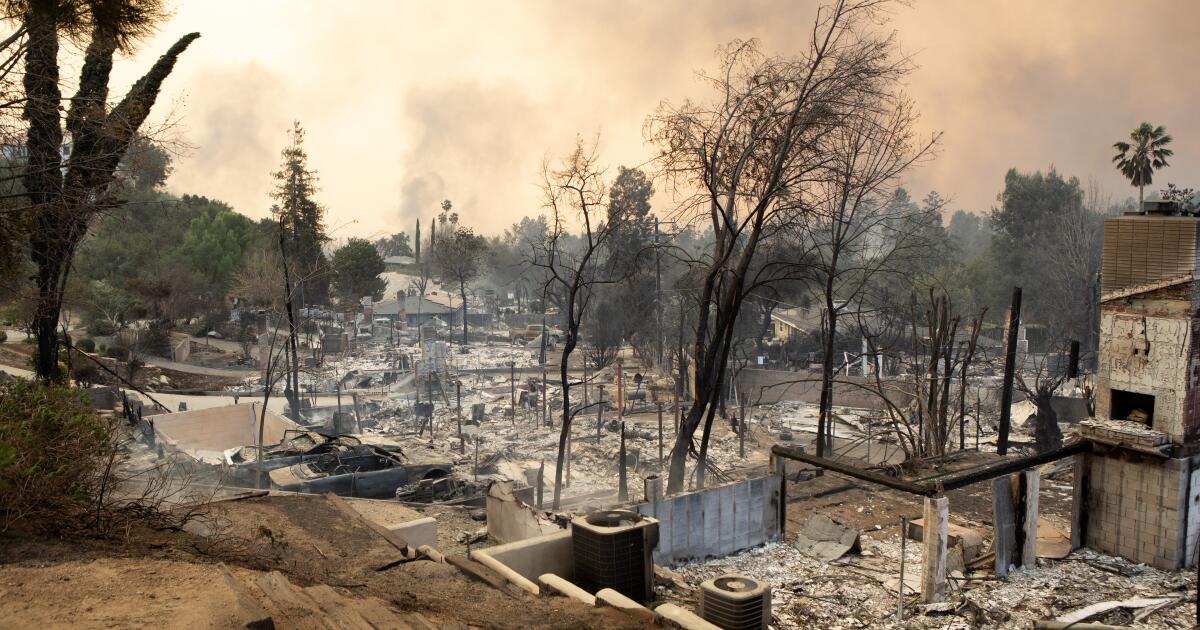
L.A. County prosecutors probing whether Edison should be criminally prosecuted for Eaton fire
The Los Angeles County District Attorney is investigating whether Southern California Edison should be criminally prosecuted for its actions in last year’s devastating Eaton wildfire, which killed 19 people and left thousands of families homeless, the company said Wednesday.
Pedro Pizarro, chief executive of Edison International, told Wall Street analysts during an afternoon conference call that the company was cooperating with the District Attorney’s office. He said he didn’t know the magnitude of the investigation.
The company said in its annual 10-K report, which was released Wednesday, that it “could be subject to material fines, penalties, or restitution” if the investigation “determined that it failed to comply with applicable laws and regulations.”
“SCE is not aware of any basis for felony liability with regards to the Eaton Fire,” the report said. “Any fines and penalties incurred in connection with the Eaton Fire will not be recoverable from insurance, from the Wildfire Fund, or through electric rates.”
The District Attorney’s office declined to comment.
The investigation into the fire, which destroyed a wide swath of Altadena, has not yet been released. Pizarro has said that a leading theory of the fire’s cause is that a century-old transmission line in Eaton Canyon, which had not carried power for 50 years, somehow re-energized and sparked the fire.
Edison executives have said they didn’t remove the line because they believed it would be used in the future.
Company executives knew idle transmission lines could spark wildfires. In 2019, investigators traced the Kincade fire in Sonoma County, which destroyed 374 homes and other structures, to a transmission line owned by Pacific Gas & Electric that was no longer in service.
The Times reported in December how Edison fell behind in maintenance of its transmission system before the fire.
Despite the dangerous Santa Ana wind conditions on Jan. 7, 2025, Edison decided not to shut down the transmission lines running through Eaton Canyon. Pizarro has said the winds that night didn’t meet the company’s threshold at the time for turning off the lines.
Pizarro told investors on the call Wednesday that he continued to believe that the company had acted as a “reasonable utility operator” before the deadly fire.
Under state law, if a utility is determined to have acted reasonably it can be reimbursed for all or most of the damages of the fire by a state wildfire fund.

U.S. men defeat Sweden in overtime, advance to Olympic hockey semifinals
MILAN — The U.S. men haven’t stood on the podium at the end of an Olympic hockey tournament in 16 years and haven’t played for a medal in 12.
In fact, it’s been so long since an American hockey team took home a prize from the Winter Games none of the players on this year’s team, the second youngest in the Milan-Cortina competition, had finished high school the last time it happened.
No one on the team was even alive the last time the U.S. won gold in 1980.
This team has a chance to end that drought after beating Sweden 2-1 in overtime Wednesday to advance to Friday’s semifinals, where they will play Slovakia. The win was the Americans’ first over Sweden in an Olympic tournament in nine games dating to 1960.
The winning goal came from Quinn Hughes 3:27 into the extra period. Canada also advanced to the semifinals, overcoming one-goal deficits twice to beat Czechia 4-3 in overtime. Canada will play Finland, another overtime winner, in its semifinals.
The first U.S. goal came from Dylan Larkin of the Detroit Red Wings but Sweden forced the overtime when it pulled its goalie, allowing Mika Zibanejad to score on a slap shot from the left circle with 91 seconds left in regulation.
Hughes, a Minnesota Wild defenseman, then ended things, circling around the ice to create space, then skating into the high slot and blasting a shot between two defenders and past Swedish goalie Jacob Markstrom.
“Quinn, he’s a special player,” said defenseman Noah Hanifin of the Vegas Golden Knights. “So much swagger and confidence on the ice. And he’s always looking to take over. He did that for us in overtime.”
The game began like a heavyweight title fight, with both teams cautiously probing the other for weaknesses. The U.S. finally found one midway through the second period with Larkin deflecting in a one-timer from Jack Hughes at the blue line. Hughes’ shot was headed directly into the pads of Markstrom, who was perfectly positioned for an easy save, before Larkin, perched on the doorstep, reached out to deflect the puck by Markstrom on his gloved side.
The Americans haven’t trailed since the middle of the second period of their second game. But losing a lead with just 1 ½ minutes to play tested the team’s “character, just the will to win,” forward Brady Tkachuk said.
“That’s something that can deflate you and end your tournament, if you don’t just put your mind back in a good spot,” he added. “It shows the character being able to bounce back get that one.”
“That’s a big momentum shift. But there wasn’t any panic,” Charlie McAvoy added. “I got back to the bench [and] it’s just you’ve got to flush it. That was kind of what I was saying to myself. It’s a tie game now.”

Dylan Larkin (21) is congratulated by U.S. teammates on the bench as he skates off the ice after scoring a goal against Sweden during the second period Wednesday.
(Hassan Ammar / Associated Press)
It didn’t stay that way for long before Hughes broke Sweden’s heart, beating Markstrom cleanly. Markstrom was otherwise spectacular, making 38 saves — two with his helmeted head and probably deserved a better fate.
In the last two Olympic tournaments the Americans, playing without NHL players, were bounced in the quarterfinals while Canada got no further than the bronze-medal game. The top pros didn’t participate in the 2018 Games because of a dispute between the NHL and the International Olympic Committee regarding insurance, travel costs and marketing rights. They were held out four years ago over scheduling complications caused by the coronavirus pandemic.
Not surprisingly, getting some of the best players in the world back has made a difference, with the unbeaten Canadians rolling to a tournament-best plus-18 goal differential while the averaged 4 1/2 goals a game in their four wins.
“It’s been unreal,” Hanifin said of the tournament. “It’s so fun to be a part of. Anytime you get into these one-game eliminations, anything can happen so you’ve got to be to be prepared.
“But that’s part of what makes the Olympics so special and hard to win.”
Canada’s comeback spoiled good performances by a pair of Anaheim Ducks. Defenseman Radko Gudas got an assist on the Czechs’ first score while NHL teammate Lukas Dostal turned away 37 shots in goal. But Montreal Canadiens’ captain Nick Suzuki got a fortunate bounce on a deflection to tie the score with 3:27 left in regulation before Vegas’ Mitch Marner scored the game-winner 82 seconds in overtime for Canada, which led for less than six minutes.
On his way to the dressing room, Gudas picked some snow off the ice and kissed it. At 35, this was his second and likely last Olympic tournament.
“It’s a mix of emotions, because you feel sad but proud in the same time,” said Dostal, who was playing in his first Olympics. “It hurts. It’s probably gonna hurt for a long time.”
The victory might have come at a high cost for Canada, which saw captain Sidney Crosby limp to the dressing room in the second period following a collision with Gudas along the boards. Crosby, who has two goals and four assists in the tournament, will undergo an MRI exam on Thursday; his status for Friday’s semifinal is unknown.
For the U.S. and Canada, two more wins brings a gold medal while a loss Friday means that dream is over.
“It’s a one-game tournament,” Canada’s Tom Wilson said. “It’s not seven games. It’s a one-game tournament. And everybody thinks they can win.”

White House says Iran would be ‘wise’ to take deal amid military buildup | Donald Trump News
White House spokesperson Karoline Leavitt has said Iran would be “wise” to make a deal, as the United States surges further military assets to the Middle East.
Her statement came as part of a series of veiled threats from officials under US President Donald Trump, a day after US and Iranian representatives held a second round of indirect talks this month.
Recommended Stories
list of 3 itemsend of list
The two sides appeared to offer differing accounts of the talks. Iranian officials said both parties had agreed on “guiding principles”, but US Vice President JD Vance said Iran had yet to respond to all of Washington’s “red lines”.
During a news conference on Wednesday, Leavitt articulated the Trump administration’s position that Iran needs to accede to US demands.
“Iran would be very wise to make a deal with President Trump and with his administration,” she told reporters.
Trump, who has repeatedly threatened Iran with military action in response to its crackdown on protests last month, also referenced a possible escalation in a post on Truth Social on Wednesday.
The post warned Prime Minister Keir Starmer of the United Kingdom against a deal agreed to last year that would see London cede control of the Chagos Islands, strategically located in the centre of the Indian Ocean.
The deal nevertheless allows the UK and US to continue to lease and operate a joint airbase on the largest island, Diego Garcia.
“Should Iran decide not to make a Deal, it may be necessary for the United States to use Diego Garcia, and the Airfield located in Fairford, in order to eradicate a potential attack by a highly unstable and dangerous Regime,” Trump wrote.
“An attack that would potentially be made on the United Kingdom, as well as other friendly Countries.”
Meanwhile, speaking from the sidelines of an International Energy Agency (IAE) meeting in Paris, France, US Energy Secretary Chris Wright warned that Washington would deter Tehran from acquiring nuclear weapons “one way or the other”.
“They’ve been very clear about what they would do with nuclear weapons. It’s entirely unacceptable,” Wright said.
Military buildup
The threats come as the US appears to be surging more military assets to the Middle East, raising the spectre of escalation.
As of Wednesday, the Pentagon had one aircraft carrier, the USS Abraham Lincoln, nine destroyers and three littoral combat ships in the region, with an anonymous US official telling the AFP news agency more were on the way.
That includes the world’s largest aircraft carrier, the USS Gerald R Ford, which is en route from the Atlantic Ocean.
The US has also sent a large fleet of aircraft to the Middle East, according to open-source intelligence accounts on X and flight-tracking website Flightradar24.
That deployment appears to include F-22 Raptor stealth fighter jets, F-15 and F-16 warplanes, and the KC-135 aerial refuelling aircraft that are needed to sustain their operations, according to the trackers.
The US had previously surged aircraft and naval vessels to the region ahead of strikes on three Iranian nuclear sites in June of last year, which came at the end of a 12-day war between Israel and Iran.
Iran does ‘not want war’
For his part, Iranian President Masoud Pezeshkian said on Wednesday that the country did “not want war” but would not give in to US demands.
“From the day I took office, I have believed that war must be set aside. But if they are going to try to impose their will on us, humiliate us and demand that we bow our heads at any cost, should we accept that?” he asked.
Pezeshkian spoke shortly after Iran’s Islamic Revolutionary Guard Corps launched exercises on Monday in the Strait of Hormuz, in a show of military might.
Iran’s Supreme Leader Ayatollah Ali Khamenei has previously warned that any new US strikes would lead to wider regional escalation.
Iran’s Ministry of Foreign Affairs said in a statement on Wednesday that its top diplomat Abbas Araghchi had spoken by phone with the head of the United Nations nuclear watchdog, Rafael Grossi.
Grossi “stressed the Islamic Republic of Iran’s focus on drafting an initial and coherent framework to advance future talks” on its nuclear programme, according to the statement.
Trump withdrew from the Joint Comprehensive Plan of Action (JCPOA), which saw Iran curtail its nuclear programme in exchange for sanctions relief, during his first term in 2018. In the years since, he has imposed a “maximum pressure” campaign that includes new sanctions.
Efforts to strike a new nuclear deal have repeatedly stalled since Trump’s first term.
Tehran has called for the latest round of talks to focus solely on its nuclear programme, which it maintains is used only for civilian purposes. It has also indicated it is willing to make concessions in exchange for the lifting of sanctions.
Washington has pushed for wider demands that are considered non-starters for Iran, including limits on its ballistic missile programme, although its demands during the latest round of talks were not immediately clear.

Gaza death toll exceeds 75,000 as independent data verify loss | Israel-Palestine conflict
The true human cost of Israel’s genocidal war on the Gaza Strip has far exceeded previous official estimates, with independent research published in the world’s leading medical journals verifying more than 75,000 “violent deaths” by early 2025.
The findings, emerging from a landmark series of scientific papers, suggest that administrative records from the Gaza Ministry of Health (MoH) represent a conservative “floor” rather than an overcount, and provide a rigorous bedrock to the scale of Palestinian loss.
The Gaza Mortality Survey (GMS), a population-representative household study published in The Lancet Global Health, estimated 75,200 “violent deaths” between October 7, 2023 and January 5, 2025. This figure represents approximately 3.4 percent of Gaza’s pre-conflict 2.2 million population and sits 34.7 percent higher than the 49,090 “violent deaths” reported by the MoH for the same period.
The Gaza Health Ministry estimates that as of January 27 this year, at least 71,662 people have been killed since the start of the war. Of those, 488 people have been killed since the declaration of a ceasefire in the Gaza Strip on October 10, 2025.
Israel has consistently questioned the ministry’s figures, but an Israeli army official told journalists in the country in January that the army accepted that about 70,000 people had been killed in Gaza during the war.
Despite the higher figure, researchers noted that the demographic composition of casualties – where women, children, and the elderly comprise 56.2 percent of those killed – remains remarkably consistent with official Palestinian reporting.

Scientific validation of the toll
The GMS, which interviewed 2,000 households representing 9,729 individuals, provides a rigorous empirical foundation for a death toll.
Michael Spagat, a professor of economics at Royal Holloway University of London and the study’s lead author, found that while MoH reporting remains reliable, it is inherently conservative due to the collapse of the very infrastructure required to document death.
Notably, this research advances upon findings published in The Lancet in January 2025, which used statistical “capture-recapture” modelling to estimate 64,260 deaths during the war’s first nine months.
While that earlier study relied on probability to flag undercounts, this report shifts from mathematical estimation to empirical verification through direct household interviews. It extends the timeline through January 2025, confirming a violent toll exceeding 75,000 and quantifying, for the first time, the burden of “non-violent excess mortality”.
According to a separate commentary in the same publication, the systematic destruction of hospitals and administrative centres has created a “central paradox” where the more devastating the harm to the health system, the more difficult it becomes to analyse the total death toll.
Verification is further hindered by thousands of bodies still buried under rubble or mutilated beyond recognition. Beyond direct violence, the survey estimated 16,300 “non-violent deaths”, including 8,540 “excess” deaths caused directly by the deterioration of living conditions and the blockade-induced collapse of the medical sector.
Researchers highlighted that the MoH figures appear to be conservative and reliable, dispelling misinformation campaigns aimed at discrediting Palestinian casualty data. “The validation of MoH reporting through multiple independent methodologies supports the reliability of its administrative casualty recording systems even under extreme conditions,” the study concluded.
A decade of reconstructive backlogs
While the death toll continues to mount, survivors face an unprecedented burden of complex injury that Gaza’s decimated healthcare system is no longer equipped to manage. A predictive, multi-source model published in eClinicalMedicine quantified 116,020 cumulative injuries as of April 30, 2025.
The study, led by researchers from Duke University and Gaza’s al-Shifa Hospital, estimated that between 29,000 and 46,000 of these injuries require complex reconstructive surgery. More than 80 percent of these injuries resulted from explosions, primarily air attacks and shelling in densely populated urban zones.
The scale of the backlog is staggering. Ash Patel, a surgeon and co-author of the study, noted that even if surgical capacity were miraculously restored to pre-war levels, it would take approximately another decade to work through the estimated backlog of predicted reconstructive cases. Before the escalation, Gaza had only eight board-certified plastic and reconstructive surgeons for a population exceeding 2.2 million people.
The collapse of the health system
The disparity between reconstructive need and capacity is exacerbated by what researchers describe as the “systematic destruction” of medical infrastructure. By May 2025, only 12 of Gaza’s 36 hospitals remained capable of providing care beyond basic emergency triage, with approximately 2,000 hospital beds available for the entire population, down from more than 3,000 beds before the war.
“There is little to no reconstructive surgery capacity left within Gaza,” the research concluded, warning that specialised expertise like microsurgery is almost absent. The clinical challenge is further compounded by Israel’s use of incendiary weapons, which produce severe burns alongside blast-related fractures.
The long-term effect of these injuries is often irreversible. Without prompt medical treatment, patients face high risks of wound infection, sepsis, and permanent disability. The data indicate that tens of thousands of Palestinians will remain with surgically addressable disabilities for life unless there is a huge international increase in reconstructive capacity and aid.

The ‘grey zone’ of mortality
Writing in The Lancet Global Health, authors Belal Aldabbour and Bilal Irfan observed a growing “grey zone” in mortality where the distinction between direct and indirect death becomes blurred. Patients who die of sepsis months after a blast, or from renal failure after a crushing injury because they cannot access clean water or surgery, occupy a space that risks understating the true lethality of military attacks.
Conditions have only deteriorated since the data collection periods. By late 2025, forced evacuations covered more than 80 percent of Gaza’s area, with northern Gaza and Rafah governorates facing full razing by Israeli forces. Famine was declared in northern Gaza in August 2025, further reducing the physiological reserve of injured survivors and complicating any surgical recovery.
This series of independent studies serves as an urgent call for accountability and an immediate cessation of hostilities. “The healthcare infrastructure in Gaza is being repeatedly decimated by attacks despite protection by international humanitarian law,” researchers stated. They underscored that the only way to prevent the reconstructive burden from growing further is an immediate end to attacks against civilians and vital infrastructure.

Sam Thompson shares health update after undergoing surgery to remove cyst on vocal cords
SAM Thompson has shared a health update after undergoing surgery to remove a cyst on his vocal cords.
The TV favourite, 33, revealed in January that he would be having the surgery, and underwent the procedure on Tuesday.
A day later, Sam shared a snap of him back home as he updated fans on his recovery.
Wearing a T-shirt underneath a zip up hoodie, Sam smiled for the selfie and wrote: “Day 1 of no speaking… I am so bored.
“Although I am LOVING seeing all the cat memes you’re sending!!”
In a video shared from hospital on Tuesday, Sam was seen in his medical gown as he said: “I’m having vocal cord surgery – this has been in the diary for a while, I had a cyst on my vocal cords.
Read More on Sam Thompson


“It’s because I talk to much and shout too loudly and I keep losing my voice really easily.
“So yeah they are cutting it out, they are putting me to sleep, I’ve never been put to sleep before.
“I’m a bit nervous, I don’t like not being in control.”
Sam first revealed the surgery on his podcast with BFF Pete Wicks.
A vocal cord cyst is a benign lesion which may cause a hoarse voice.
They often occur in those who over-use their voice, such as singers, professional speakers and broadcasters and the cysts happen when glands that produce mucus in the throat get blocked up.
According to NHS after-care advice from London-based Guys and St Thomas’, they state: “For the first three days after the operation, we recommend that you do not speak or use your voice at all.
“This is to allow healing time for the surface of your vocal cord or cords around the site of the surgery.”
They state whispering, laughing or humming should also be avoided.

Rep. Kevin Kiley measure would block key element of proposed California wealth tax
WASHINGTON — As progressives seek to place a new tax on billionaires on California’s November ballot, a Republican congressman is moving in the opposite direction — proposing federal legislation that would block states from taxing the assets of former residents.
Rep. Kevin Kiley (R-Rocklin), who faces a tough re-election challenge under California’s redrawn congressional maps, says he will introduce the “Keep Jobs in California Act of 2026” on Friday. The measure would prohibit any state from levying taxes retroactively on individuals who no longer live there.
The proposed legislation adds another layer to what has already been a fiery debate over California’s approach to taxing the ultra-wealthy. It has created divisions among Democrats and has placed Los Angeles at the center of a broader political fight, with Bernie Sanders set to hold a rally on Wednesday night in support of the wealth tax.
Kiley said he drafted the bill in reaction to reports that several of California’s most prominent billionaires — including Meta Chief Executive Mark Zuckerberg and Google co-founders Larry Page and Sergey Brin — are planning to leave the state in anticipation of the wealth tax being enacted.
“California’s proposed wealth tax is an unprecedented attempt to chase down people who have already left as a result of the state’s poor policies,” Kiley said in a statement Wednesday. “Many of our state’s leading job creators are leaving preemptively.”
Kiley said it would be “fundamentally unfair” to retroactively impose taxes on former residents.
“California already has the highest income tax of any state in the country, the highest gas tax, the highest overall tax burden,” Kiley said in a House floor speech earlier this month. “But a wealth tax is something unique because a wealth tax is not merely the taxation of earned income, it is the confiscation of assets.”
The fate of Kiley’s proposal is just as uncertain as his future in Congress. His 5th Congressional District, which hugs the Nevada border, has been sliced up into six districts under California’s voter-approved Proposition 50, and he has not yet picked one to run in for re-election.
The Billionaire Tax Act, which backers are pushing to get on the November ballot, would charge California’s 200-plus billionaires a onetime 5% tax on their net worth in order to backfill billions of dollars in Republican-led cuts to federal healthcare funding for middle-class and low-income residents. It is being proposed by the Service Employees International Union-United Healthcare Workers West.
In his floor speech, Kiley worried that the tax, if approved, could cause the state’s economy to collapse.
“What’s especially threatening about this is that our state’s tax structure is essentially a house of cards,” Kiley said. “You have a system that is incredibly volatile, where top 1% of earners account for 50% of the tax revenue.”
But supporters of the wealth tax argue the measure is one of the few ways that can help the state seek new revenue as it faces economic uncertainty.
Sanders, an independent from Vermont who caucuses with the Democrats, is urging Californians to back the measure, which he says would “provide the necessary funding to prevent more than 3 million working-class Californians from losing the healthcare they currently have — and would help prevent the closures of California hospitals and emergency rooms.”
“It should be common sense that the billionaires pay just slightly more so that entire communities can preserve access to life-saving medical care,” Sanders said in a statement earlier this month. “Our country needs access to hospitals and emergency rooms, not more tax breaks for billionaires.”
Other Democrats are not so sure.
Gov. Gavin Newsom, who is eyeing a presidential bid in 2028, has opposed the measure. He has warned a state-by-state approach to taxing the wealthy could stifle innovation and entrepreneurship.
Some of he wealthiest people in the world are also taking steps to defeat the measure.
Brin is donating $20 million to a California political drive to prevent the wealth tax from becoming law, according to a disclosure reviewed by the New York Times. Peter Thiel, the co-founder of PayPal and the chairman of Palantir, has also donated millions to a committee working to defeat the proposed measure, the New York Times reported.

Lorenzo Hernandez is named football coach at Whittier High
Lorenzo Hernandez, who was the football coach at Garfield for 24 years until stepping down after the 2024 season, is coming out of retirement to become head coach at Whittier High. He met with his new players Wednesday afternoon.
Hernandez helped elevate the Garfield program beyond the annual Garfield vs. Roosevelt rivalry game, with the Bulldogs becoming one of the best in the City Section year after year. He has been the school’s athletic director.
He rejoins former Garfield principal Andres Favela, who’s the principal at Whittier.
Whittier will be switching leagues in the fall, moving from the Del Rio League, in which the team has won one league game in the last three years.
Hernandez said he received approval from his family to return to coaching and sees Whittier similar to Garfield in receiving strong neighborhood support.

Department of Education backs down on anti-DEI directive after lawsuit

Feb. 18 (UPI) — A federal court gave a final ruling Wednesday negating the Department of Education’s 2025 directive that sought to prevent federally funded schools and universities from practicing diversity, equity and inclusion.
The U.S. District Court in New Hampshire issued the ruling that permanently invalidated the “Dear Colleague” letter of Feb. 14, 2025, after the Department of Education backed down from the lawsuit. The letter, signed by Craig Trainor, who was then the acting assistant secretary for Civil Rights at the Department of Education, told schools they had 14 days to comply with the directive or face consequences, including loss of funding. Trainor cited the Supreme Court‘s 2023 ruling on Students for Fair Admissions vs. Harvard, which effectively ended affirmative action.
Soon after, the American Civil Liberties Union, the ACLU of New Hampshire, the ACLU of Massachusetts and lawyers for the National Education Association, filed suit to block enforcement of the letter. The Center for Black Educator Development and several New Hampshire School Districts later joined the case as plaintiffs.
In April, the court issued a preliminary injunction stopping the Department of Education from enforcing the new ruling.
District Court Judge Landya McCafferty ruled earlier in the case that the letter’s “isolated characterizations of unlawful DEI” conflicted with the term’s meaning, saying that DEI is fostering “a group culture of equitable and inclusive treatment.”
McCafferty said the plaintiffs were likely to succeed in proving that the letter was vague, viewpoint discriminatory and unlawfully imposed new legal obligations.
Plaintiffs said they were pleased with the decision.
“This ruling affirms what educators and communities have long known: celebrating the full existence of every person and sharing the truth about our history is essential,” Sharif El-Mekki, CEO at The Center for Black Educator Development, said in a statement. “Today’s decision protects educators’ livelihoods and their responsibility to teach honestly.”
“While [President Donald] Trump and [Secretary of Education Linda] McMahon want to ban diversity, equity, and inclusion, educators know these values are at the core of our nation,” Becky Pringle, president of the National Education Association, said in a statement. “The Trump administration’s unlawful Dear Colleague letter and certification requirement have now been vacated and abandoned, underscoring how badly Trump and McMahon overreached in their attempt to interfere with curriculum and instruction.”

FCC reject claims of censorship, announces probe into US show The View | Entertainment News
Brendan Carr, the chair of the Federal Communications Commission (FCC) in the United States, has confirmed that the agency launched an investigation against ABC’s daytime talk show The View over a recent appearance by a politician.
In comments to reporters on Wednesday, Carr indicated the probe would examine whether The View violated a new interpretation of an “equal time” rule implemented under President Donald Trump.
Recommended Stories
list of 3 itemsend of list
Fox News had been the first to report on the investigation in early February. The segment in question involves an appearance from Texas state Representative James Talarico, a Democrat who is vying for the US Senate.
The confirmation comes as Carr attempted to shut down claims that the government censored an interview between Talarico and late-night talk show host Stephen Colbert.
“There was no censorship here at all,” Carr said.
“Every single broadcaster in this country has an obligation to be responsible for the programming that they choose to air, and they’re responsible whether it complies with FCC rules or not, and it doesn’t, and those individual broadcasters are also going to have a potential liability.”
The controversy with Colbert likewise stems from the Trump administration’s decision to shift definitions under the “equal time” rule.
What is the ‘equal time’ rule?
The rule is part of section 315 of the 1934 Communications Act. Under that law, if a broadcaster allows one candidate for public office to use its facilities, it is required to “afford equal opportunities” to all other candidates in the same race.
But the law includes exceptions for “bona fide newscasts” and “bona fide news interviews”.
For nearly 20 years, talk shows and late-night comedy programmes were included in those categories.
In January, however, the FCC issued new guidance (PDF) that significantly narrows how it interprets the “bona fide news” exemption. In a memo, it described daytime talk shows and late-night comedy as “entertainment programs” that fall outside the exception.
“The FCC has not been presented with any evidence that the interview portion of any late night or daytime television talk show program on air presently would qualify for the bona fide news exemption,” the memo reads.
The commission also suggested that many such programmes are “motivated by partisan purposes” and are therefore not “bona fide” news.
The new interpretation of the “equal time” rule, the FCC argued, is designed to “ensure that no legally qualified candidate for office is unfairly given less access to the public airwaves than their opponent.”
Controversy with Colbert
That new interpretation came roaring into the spotlight on Monday, after a broadcast of the CBS comedy programme The Late Show with Stephen Colbert.
In one of his opening segments, Colbert alleged that the network lawyers barred him from airing a planned interview that night with Talarico.
“Let’s just call it what it is,” Colbert told his audience. “Donald Trump’s administration wants to silence anyone who says anything bad about Trump on TV, because all Trump does is watch TV. OK? He’s like a toddler with too much screen time.”
Trump has previously criticised both Colbert’s show and The View for what he considers a left-wing slant.
Instead of broadcasting his interview with Talarico on network television, Colbert instead posted the segment on the programme’s YouTube page, where it has gained more than 6 million views as of 3:30pm Eastern Time (20:30 GMT) on Wednesday.
According to Carr, Colbert’s show could have aired the Talarico interview if it had complied with the equal time rule.
That would have involved allowing other candidates in Texas vying for the Senate seat to come on the show. Carr also suggested that another solution could have been to restrict the broadcast in Texas.
But the FCC has continued to face criticisms for its actions. In Tuesday’s broadcast, Colbert addressed the issue a second time.
He read aloud a statement from his broadcast channel that read, in part, that The Late Show “was not prohibited by CBS from broadcasting the interview” and that it was instead “provided legal guidance that the broadcast could trigger the FCC equal-time rule”.
CBS added, in the statement, that Colbert could have invited onto the show Talarico’s rivals, including fellow Democrat Jasmine Crockett.
“I am well aware that we can book other guests,” Colbert responded. “I didn’t need to be presented with that option. I’ve had Jasmine Crockett on my show twice. I could prove that to you, but the network won’t let me show you her picture without including her opponents.”
Colbert has been a vocal critic of CBS’s parent company, Paramount Global, particularly after it settled a lawsuit last year with the Trump administration for $16m in the run-up to a critical merger for which it needed government approval.
Talarico, meanwhile, accused the FCC of censoring his interviews. Nevertheless, on Wednesday, he noted that the uptick in media attention from the scandal has helped him gather donations.
“Our campaign raised $2.5 million in 24 hours after the FCC banned our Colbert interview,” he wrote on social media.

Watch Gordon Ramsay fight back tears at daughter Holly and Adam Peaty’s engagement party
GORDON Ramsay is seen fighting back tears during his daughter Holly Ramsay’s engagement party in scenes from his new Netflix show.
The emotional moment came just hours before a bitter family fallout broke out between Holly’s now-husband Adam Peaty’s parents and the Ramsay clan.
In the six-part series, Being Gordon Ramsay, swimming champ Adam and his fiancée Holly are seen throwing a lavish bash with Adam’s mum Caroline in attendance.
Holly and Adam’s engagement party is caught on film – with both the Ramsay and Peaty families in attendance.
During the evening, Holly thanks her fiancé Adam for his constant love and support.
And while she gives the speech, Gordon is seen holding back tears while watching on with his wife Tana.


Elsewhere during the evening, Gordon was filmed saying: “The most important family is the one you create and she [Holly] comes from an incredible family so its now her time to create her own family. It is quite a moment.”
The party marked one of the last times that the Ramsay family were with the Peaty clan before their public feud imploded.
Despite Gordon having a close relationship with his son-in-law, Adam’s parents have publicly blasted the family after they weren’t invited to Holly’s hen do and were later uninvited to the wedding.
Holly’s mum Tana and close family friend Victoria Beckham were invited on the hen do, but Caroline was left off the guest list.
The family have since been in a war of words during their very bitter feud.
Gordon addressed the fallout for the first time earlier this month ahead of his Netflix show launching, saying: “It’s just upsetting.
“It’s all self-inflicted from their side, because we’ve done nothing – none of what you’ve read: no rudeness, no ignorance – we welcomed them.”
He added to the MailOnline: “We sent a chauffeur-driven car for them to come to the engagement party and treated them like royalty.
“So to get that barrage of press was very hurtful. Tana took it very seriously.”
All episodes of Being Gordon Ramsay are available now on Netflix.