


Classroom Attendance in Nigeria Still Relies on Paper
At the start of every school day, Martha Ayuba marks the attendance register of her class of about 50 pupils in Nassarawo Primary School, Jimeta-Yola, in Adamawa, northeastern Nigeria. The 38-year-old is the class teacher of Primary 3B. With a pencil in hand, she calls out names from the register. Each pupil answers, “Present, Ma”, before she ticks the box next to those who are “present” and crosses those who are “absent”.
Her worn attendance book is stuffed with handwritten names, erased marks, and faded ink. A leaking roof threatens to soak its pages, and a scurry of termites could erase weeks of work. Marking attendance is not just a routine; it’s a promise of accountability, and it appears on the report card at the end of each term and in the school’s database.
However, across Nigeria, this ritual of paper and pencil is increasingly out of step with the country’s emerging Digital Public Infrastructure (DPI), a national effort to build interoperable digital identity, payments, and data systems that serve citizens at scale.
Nigeria’s education system faces a tragic paradox: millions of children remain out of school, yet even those who attend often lack basic record-keeping and support. According to UNICEF, one in four primary-school–age children in Nigeria (about 10.5 million children) are not enrolled in school. In rural areas of Adamawa State, for instance, years of conflict and poverty have made schooling precarious.
At Nassarawo Primary School, Martha juggles teaching and attendance record-keeping duties.

“There was a time when rain fell, and the register got wet,” she recounts. “I lost almost an entire term’s record, and no one could tell how many students were in class during those periods. I had to get another register and start afresh. Imagine if I didn’t have a backup?”
Several schools in Nigeria, including some public tertiary institutions, still rely heavily on manual recordkeeping, as Olubayo Adekanmbi, the CEO of Data Science Nigeria, notes.
For Martha, that means precious minutes of class are spent on paperwork. This drudgery breeds frustration. “I know these kids by heart,” she says, “but we have to write it down. Otherwise, next year the next teacher won’t know what happened to them.” She keeps one copy at school and one at home, fearing theft or damage. Yet neither copy can travel with her if the children move to a different school or state. Even a single register lost in a fire or flood can erase months or years of history.
Why paper recordkeeping fails
Manual registers not only burden teachers; they distort national planning.
In Nigeria’s basic education subsector, school funding, teacher allowances and student support programmes all hinge on accurate attendance and enrolment data. Each child “counts” not just for classroom pride but for allocation of resources. For example, the Universal Basic Education Commission (UBEC) earmarks School-Based Management Committee (SBMC) funds (for feeding programmes, sanitation, and learning materials) based on pupil numbers. In 2024, UBEC disbursed SBMC – School Improvement Programme support funds to 1,171 schools in all 36 states.
If Martha’s register fails to reflect every student, such support might not reach deserving children. A missing name in the data could mean missed school meals, missing textbooks, or even being excluded from government scholarship programmes. Hence, school officials cannot adjust to “changing patterns in attendance” or identify which children need support.
Beyond individual schools, the absence of reliable data hampers policy and planning. At best, education officials compile annual school census figures, but these are months old and riddled with errors. Many rural schools report at a snail’s pace, if at all, because principals must physically carry piles of handwritten forms to local government offices.
Recognising this gap, Nigeria has begun transitioning toward a national Education Management Information System (EMIS) built on District Health Information System Version 2 (DHIS2). An overview of the UNICEF-supported says Nigeria is “moving from fragmented, manual processes to a unified, digital platform”, aiming for “real-time, accurate data for evidence-based planning and decision-making”.
In plain terms, that means that if Martha could click an app on her smartphone to log her attendance, higher-ups could see up-to-the-minute figures: student dropouts, teacher absences, resource gaps, and everything else. Real-time school data would highlight, for instance, which classes are short on books or which districts have the most teacher vacancies.
What Nigeria is doing
The Nigerian government has taken tentative steps toward digitisation.
In 2024, UBEC launched a digital quality assurance platform to evaluate schools electronically. This system is designed to stream data on school infrastructure, teacher qualifications, and learning resources into a centralised dashboard, replacing laborious paper inspections. Although the platform is operational within UBEC’s inspection and monitoring system, nationwide adoption is still scaling up as infrastructure, connectivity and digital capacity in schools improve.

Similarly, the Federal Ministry of Education unveiled the Nigeria Education Data Initiative (NEDI) to build a “single, secure platform” of educational data across basic and tertiary levels.
NEDI aims to “leverage the National Identity Management Commission’s (NIMC’s) unique identification number” – the national ID, “for accurate student tracking”. In other words, each child’s attendance and progress would be linked to a lifelong digital ID, so that Martha’s tallies could follow her students even if they moved schools or states.
At the state level, pilots are underway, but slow.
A consortium led by HISP Nigeria and UNICEF is rolling out a District Health Information System Electronic Management Information System (DHIS2 EMIS) module in twelve states, including Adamawa, to “improve education planning and outcomes for millions of children”.
Local education authorities have been trained to use tablets and smartphones to enter enrolment, attendance, and infrastructure data directly into the system. In Bauchi State, for example, ministry officials held workshops for local supervisors to practice uploading school census data via mobile devices.
Complementing government action, non-governmental organisations and agencies have jumped in. For instance, Data Science Nigeria helped launch the Gates Foundation-funded EdoCert, a digital certificate registry piloted in Edo State. EdoCert uses Sunbird, an open-source, “digital public good” to archive students’ exam results and transfer credentials online. EdoCert has since secured 1.9 million paper certificates since its launch. Its developers emphasise that the same approach could be used for attendance records. Experts point out that collecting comprehensive data could help “better track and adapt to changing patterns in school attendance” and guide the allocation of resources such as the national school lunch programme.
Meanwhile, other partners focus on connectivity.
UNICEF’s GenU9ja initiative, local telecos, and the Federal Ministry of Education are racing to wire schools to the internet. By early 2025, more than 1,000 public schools had been connected via routers and provided with devices for digital learning, according to UNICEF. Training modules have been rolled out to thousands of teachers on basic computer skills and e-learning platforms. These efforts aim to lay the foundation for any future digital register: after all, you cannot click an app without power or Wi-Fi.
Even so, Martha and her peers remain on the front lines of a slow handover from paper to digital.
Lessons from elsewhere
Nigeria is not alone in this challenge. Across Africa and the global south, educators have confronted broken attendance systems with creative digital fixes. In Rwanda, for example, the Ministry of Education introduced a mobile attendance app for teachers in 2025. Teachers simply log in and tap each day’s present students. The app immediately flags prolonged absences so that counsellors can intervene before a child drops out. At the end of 2025, more than 2,300 schools were enrolled in the system, and the government hopes that rapid data collection will reduce dropout rates. Rwanda’s example shows that with modest smartphones and training, even large rural systems can leapfrog paper.
In India and Uganda, UNICEF piloted a simple SMS/voice system called EduTrac. Community monitors phone schools daily to collect attendance via interactive voice-response or text. Since school records can be altered later, EduTrac’s immutability ensures honesty: once a teacher reports numbers, they cannot be changed. In India, EduTrac covered over 15,000 schools across four states by 2015. Cluster coordinators, each overseeing about 20 schools, used it to verify reports and spot chronic absenteeism.
The system required only basic phones and connectivity, making it ideal for remote villages. UNICEF noted that EduTrac has cultivated a culture of accountability: teachers and school heads know their numbers are being checked in real time.
What needs to change
Nigeria needs a pragmatic overhaul of its attendance system. Obaloluwa Ajiboye, an innovation governance specialist who has worked at the African Union, UNDP, and UNICEF, said one practical way to address gaps in student tracking is to assign every child a unique digital identity built on Nigeria’s existing framework, managed by the National Identity Management Commission.
“By linking school attendance records to a single, nationally recognised ID number, each child would retain one continuous education record, even when transferring between schools or moving across local government areas,” Obaloluwa noted. He explains that this kind of consistency is central to what DPI is designed to achieve. If properly implemented, it would allow attendance data to follow the child rather than remain tied to a specific school.
However, Obaloluwa added that such digital solutions will fail without power and connectivity.

Although internet penetration has increased across Nigeria, about 41 per cent of the country’s population remains offline, according to the Nigerian Communications Commission. According to Obaloluwa, the government should prioritise solar panels, school internet, and devices (tablets or laptops) for teachers.
Nigeria’s GenU9ja programme shows what is possible: it connected over 1,000 schools and trained 63,000 educators in one year. Scaling such programmes nationwide, with specific funding for data systems, is critical, Obaloluwa noted.
Additionally, Olubayo Adekanmbi, CEO of Data Science Nigeria, noted that schools like Nassarawo Primary School should be equipped with affordable digital registers that work even without constant internet access. “Many of the needed solutions already exist: for example, Sunbird (used by EdoCert) can run on laptops or tablets offline and sync later,” he added.
Olubayo said that the attendance register should not live in isolation. “It must feed into larger platforms (UBEC reports, state EMIS). Systems should be interconnected to include open APIs so that daily attendance synchronises with the annual school census”. In practice, that means digital systems built on standards (the way EdoCert operates).
Martha believes that “if only we had a quick way to mark attendance, I could spend that time helping the kids”. Nigeria has various frameworks and local and international support to make the shift, but how long will it take to achieve?
This report is produced under the DPI Africa Journalism Fellowship Programme of the Media Foundation for West Africa and Co-Develop.
Martha Ayuba’s experience at Nassarawo Primary School in Nigeria illustrates the challenges of manual attendance record-keeping, a common practice in the country’s education system. Despite the critical role accurate attendance records play in resource allocation and educational support, issues like damaged registers can lead to significant data loss. Nigeria aims to transition to a digital Education Management Information System (EMIS), supported by initiatives like UBEC’s digital platform and Nigeria Education Data Initiative (NEDI), which aims to streamline educational data and link it to national IDs. While efforts are being made to digitize records and improve connectivity, significant challenges remain due to infrastructure and systemic gaps. Lessons from Rwanda’s mobile app and UNICEF’s EduTrac in India highlight the potential of digital solutions in enhancing accountability and reducing dropout rates, stressing the need for power and internet for successful implementation.

Coronation Street icon Eva Price set for ‘shock discovery’ over evil Megan’s past
Coronation Street’s Megan Walsh will finally be exposed in upcoming scenes on the ITV soap, leaving Eva Price and her entire family shaken when they discover what she has been doing

Eva Price will make a shock discovery about her stepson on Coronation Street
Coronation Street‘s Megan Walsh will finally be exposed in upcoming scenes on the ITV soap. The teacher, played by Beth Nixon, has been carrying out an illicit affair with her student Will Driscoll as part of a controversial storyline on the ITV soap.
Will arrived with his family last October to move into the Rovers Return, and it was quickly established that Megan was his athletics coach but there was a lot more to it than just that. Megan eventually moved to Weatherfield, got a job at the local secondary school and has even started up a relationship with Daniel Osbourne (Rob Mallard) as a cover-up.
But spoilers have now revealed that Megan’s “past will come back to haunt her,” leaving Will’s stepmum Eva Price (Cathertine Tyldesley) to discover the truth about what she has been doing.
READ MORE: Emmerdale fans ‘solve what happens to Joe Tate’ after spotting new ITVX promoREAD MORE: Coronation Street’s Alya actress had Emmerdale star ex-boyfriend before split
Megan’s flatmate Leanne also looks set to weigh in on the harrowing situation, as her own stespon Sam Blakeman (Jude Riordan) has worked out what his going on between Will and Megan, and has received multiple threats from the villainous teacher. After the bombshell scenes, this will also leave Daniel wondering where he stands as he potentially comes to realise that his entire relationship was a lie.
Just weeks ago, Corrie aired a flashforward episode that revealed that Megan is one of five potential murder victims, along with fellow villains Jodie Ramsey, Carl Webster, Maggie Driscoll, and Theo Silverton. So will this all lead to the ultimate downfall for Megan or will the teacher actually face prison time for her crimes?
Coronation Street boss Kate Brookes recently explained that she the story was a “very important” one to tell. She said: “It’s a very important story to tell and we want to be as truthful as possible. As part of that story Sam will end up getting embroiled in it all.
“Sam is semi-related to the pub family and he potentially gets wind that something’s amiss. We will see the lengths that Megan will go to manipulate Sam into keeping quiet. It’ll be massively detrimental to Sam’s wellbeing.”
Meanwhile, for actress Beth Nixon, Coronation Street marks her television debut but she had actually auditioned for other parts on the soap before landing the role of Megan. Speaking to York College, Beth shared that the casting team had seen Beth in several shows at her drama school: the Arden School of Theatre in Manchester, so she was “kind of on their radar.”
Revealing her past audition history, Beth explained: “But I’d auditioned for Corrie twice before – as a baddie both times of course – including for the role of Lauren.” Actress Cait Fitton ended up being cast as Lauren, making her debut in 2022, and has remained on the show since.
Beth added: “Then, earlier this year, my agent sent me a casting brief and explained it was for a paedophile, which is a bit crazy to play because they’re obviously not a redeemable character, so they can push it pretty far.” After sending a self-tape Beth attended a chemistry test with other actors who were being considered to play Will. She then performed a scene on the set at The Bistro – and it turned out the bosses were rather impressed with her.
Beth – who was working as a skin clinic manager before joining Corrie – said: “I was at work when my agent called me. I was upstairs as my colleague watched the desk and, when he told me I’d got it, everybody in the clinic could hear me screaming my head off and then I cried, because it’s been four years since I graduated and this is my first TV role.
“It’s been a hard time and I was really close to quitting, having a normal job and pursuing a different career, so this just came at exactly the right time and when I needed it.”
Coronation Street airs weeknights at 8:30pm on ITV1 and ITV X. * Follow Mirror Celebs and TV on TikTok , Snapchat , Instagram , Twitter , Facebook , YouTube and Threads .

sort your summer break with expert tips from The Sun and Money Mum

©News Group Newspapers Limited in England No. 679215 Registered office: 1 London Bridge Street, London, SE1 9GF. “The Sun”, “Sun”, “Sun Online” are registered trademarks or trade names of News Group Newspapers Limited. This service is provided on News Group Newspapers’ Limited’s Standard Terms and Conditions in accordance with our Privacy & Cookie Policy. To inquire about a licence to reproduce material, visit our Syndication site. View our online Press Pack. For other inquiries, Contact Us. To see all content on The Sun, please use the Site Map. The Sun website is regulated by the Independent Press Standards Organisation (IPSO)
Our journalists strive for accuracy but on occasion we make mistakes. For further details of our complaints policy and to make a complaint please click this link: thesun.co.uk/editorial-complaints/
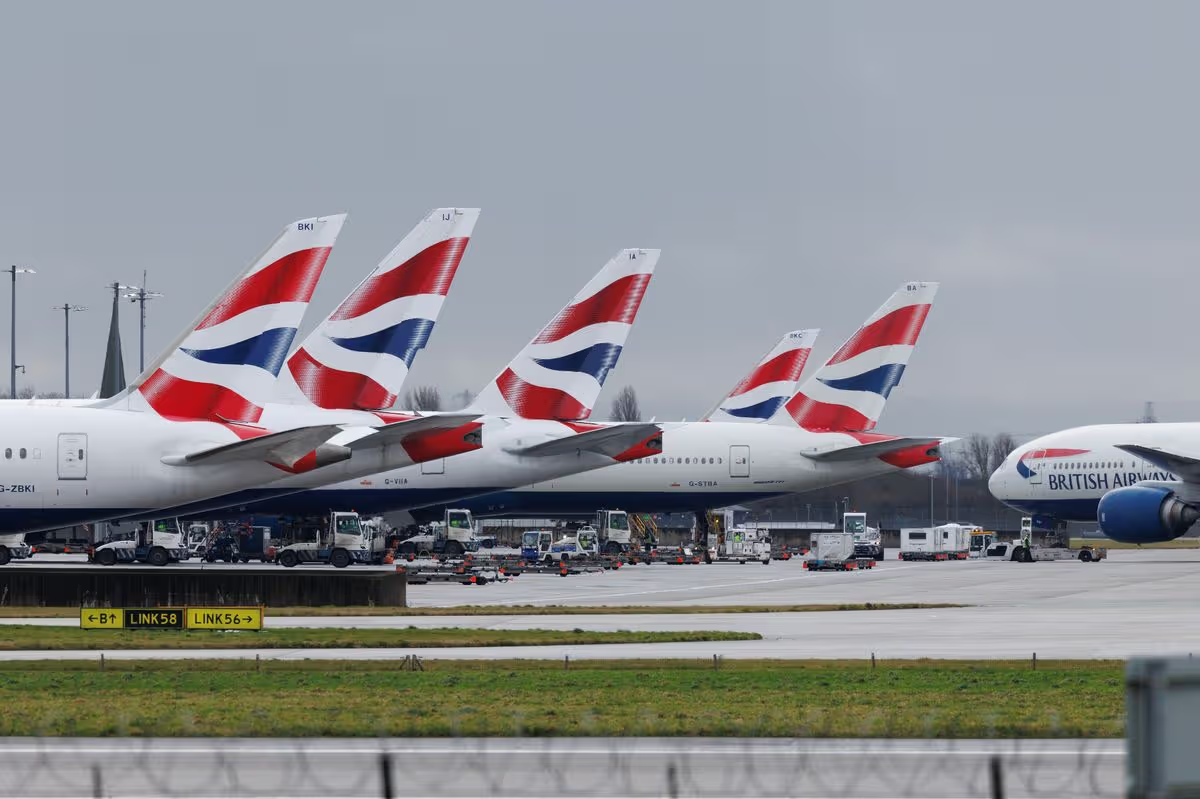
All of the UK flights cancelled today on Wednesday, March 11
Many airlines are operating restricted schedules due to airspace restrictions in the Middle East, with 21,915 of the 38,193 services scheduled to fly since February 28 cancelled

Yesterday, British Airways announced that it has suspended all flights to and from Amman, Bahrain, Doha, Dubai, and Tel Aviv until later this month,(Image: Getty Images)
Dozens of flights to and from the UK have been cancelled today as the war in Iran continues.
Many airlines are operating restricted schedules due to airspace restrictions in the Middle East, with 21,915 of the 38,193 services scheduled to fly since February 28 cancelled.
On Wednesday morning, Dubai International Airport was forced to temporarily pause operations due to a drone strike nearby, which wounded four people. Authorities have confirmed that flights have since continued.
Emirates and Etihad are still operating limited schedules from Dubai and Abu Dhabi airports, respectively. Qatar Airways said it is “doing everything possible to support affected passengers and help reunite them with family and loved ones” while Qatari airspace remains closed.
The airline said that operations will resume“ once the Qatar Civil Aviation Authority confirms the safe reopening of Qatari airspace.”
Yesterday, British Airways announced that it has suspended all flights to and from Amman, Bahrain, Doha, Dubai, and Tel Aviv until later this month, while its services to and from Abu Dhabi are cancelled until later this year. The decision means hundreds of BA services will be cancelled over the coming months.
READ MORE: British Airways cancels hundreds of flights ‘until later this year’ with major cities impactedREAD MORE: Brand new sleeper train between two huge cities with £43 bed tickets launching this year
Flight data shared exclusively with the Mirror by analytics firm Cirium shows that 55 of the planned services due to fly today had been cancelled as of 12.45 pm, which is 2.49% of the total scheduled to fly into the UK from the Middle East and vice versa.
UK flights cancelled on March 11
Arrival Country: Flights; Cancelled; Cancel %
- Qatar: 18; 17; 94.44%
- United Kingdom: 493; 15; 3.04%
- United Arab Emirates: 32; 11; 34.38%
- Bahrain: 3; 3; 100.00%
- United States: 113; 2; 1.77%
- Jordan: 3; 1; 33.33%
- Israel: 7; 1; 14.29%
- Germany: 116; 1; 0.86%
- Denmark: 29; 1; 3.45%
- Cyprus: 20; 1; 5.00%
- Uganda: 1; 1; 100.00%
- Ireland: 121; 1; 0.83%
If you are due to fly from or to the Middle East in the coming days, make sure you check your airline’s website for instructions and the Foreign Office website for the latest advice.
What have the airlines said?
- Aegean Airlines – Greece’s largest carrier cancelled flights to Tel Aviv until March 20; Beirut, Erbil and Baghdad until March 25; Dubai and Abu Dhabi until March 19; and Riyadh until March 14.
- Air France–KLM – Air France cancelled flights to Tel Aviv and Beirut through March 13, and to Dubai and Riyadh until March 12. KLM suspended flights to Dubai, Riyadh and Dammam until March 10, and to Tel Aviv for the rest of the winter season.
- Cathay Pacific – Cancelled all flights to and from Dubai and Riyadh until March 31.
- Delta – Cancelled flights from New York to Tel Aviv until March 22 and from Tel Aviv to New York until March 23.
- Emirates – Operating a reduced flight schedule but expects to return to full operations within days, depending on airspace availability and operational requirements.
- Etihad Airways – Resumed a limited commercial flight schedule between Abu Dhabi and several key destinations.
- Iberia Express cancelled all flights to and from Tel Aviv through March 10.
- Lufthansa Group – Lufthansa, Austrian Airlines, Swiss and Brussels Airlines suspended Tel Aviv flights through April 2 and Beirut flights through March 28. Flights to Tehran are suspended until April 30, and to Amman, Erbil, Dammam, Dubai and Abu Dhabi until March 15.
- Norwegian Air – Now plans to start flights to Tel Aviv and Beirut on June 15, instead of the previously scheduled April 1 and April 4.
- Qatar Airways – Operating a limited schedule to and from Doha, with some flights resuming from March 9 following temporary authorisation from Qatar’s civil aviation authority.
- Saudia Airlines – Suspended flights to Amman, Kuwait, Abu Dhabi, Doha and Bahrain until March 10, and to Moscow and Peshawar until March 15. Limited operations to Dubai have resumed.
- Wizz Air – Suspended flights to Israel until March 29, and flights from mainland Europe to Dubai, Abu Dhabi, Amman and Jeddah until mid-September.

Tottenham manager: ‘Wrong person at wrong time’ – but if not Tudor then who?
Spurs may choose to look further afield – but their current options, within the search parameters as they were a month ago, appear limited.
In addition to a track record of having an immediate impact, Spurs sought someone with top level managerial experience who plays attacking football.
When Spurs initially began their search to replace Frank, himself dismissed after less then eight months in charge, former Marseille boss Roberto de Zerbi, former Borussia Dortmund manager Edin Terzic and ex-Red Bull Leipzig boss Marco Rose were among the other potential short-term options.
Ex-Brighton boss De Zerbi left his role as manager of Marseille by mutual consent after just under two years in charge, three days before Spurs confirmed their appointment of Tudor.
Terzic has been out of work since asking Dortmund “to terminate his contract with immediate effect” in June 2024, after leading the club to the Champions League final.
Rose was sacked by RB Leipzig in March 2025, having won 72 of his 127 matches in charge and lifted the German Cup in 2023.
Within the Premier League, Oliver Glasner, Andoni Iraola and Marco Silva are among the names who will be available this summer – but would any be prepared to leave their respective clubs earlier to help Spurs’ cause?
FA Cup-winning manager Glasner has confirmed he will leave Crystal Palace this summer, but his immediate future was understood to be in doubt in February amid a poor run of results.
Bournemouth are reportedly set to, external open contract talks with Iraola in an effort to ward off interest from Crystal Palace, Tottenham and Manchester United.
Meanwhile, Fulham chief Tony Khan has said he is confident, external Silva will stay at the club “for a long time”.
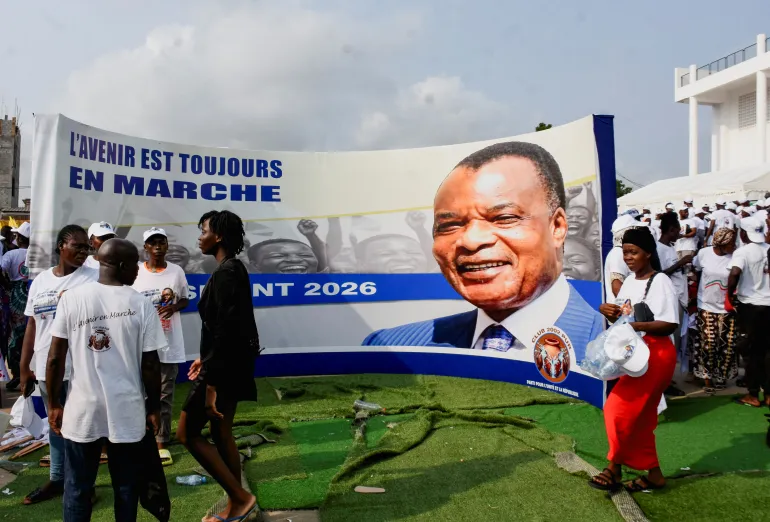
‘Nothing changes’: Four decades in power, Congo’s Nguesso seeks a new term | Elections News
Brazzaville, Republic of Congo – On main roads and public squares across the Congolese capital, posters are up featuring the seven main candidates vying for president.
But at the Moukondo Market in Brazzaville’s fourth district – between lively discussions, people jostling for space and saleswomen trying to attract customers – many voters are less than enthusiastic about this weekend’s election.
Recommended Stories
list of 3 itemsend of list
Fortune, a 27-year-old unemployed university graduate who did not want to give his last name, said he does not expect much to come from the polls.
“When you see how money is spent during the campaign, you wonder if those in power really care about the living conditions of the population,” he said.
While Congo is the third largest oil producer in sub-Saharan Africa, about half the country’s population of about six million people live below the poverty line.
A few metres away, Gilbert, 44, shared similar sentiments. The civil servant explained that his salary is not enough to cover all his household expenses.
“I do odd jobs to supplement my income. At my age, believing that these elections will change our daily lives would be almost suicidal,” he said.
“I’ve known practically the same leader all my life,” Gilbert added. “Some call it stability. Others say that nothing changes.”
It’s a sentiment shared by many in the country: That after 40 years under a single leader, political continuity has become the norm.
President Denis Sassou Nguesso, 82, who is once again standing in the election, first came to power in Congo in 1979. After a period of political transition in the early 1990s, he returned to the presidency in 1997 after a civil war and has ruled the country without interruption ever since.
Two major constitutional revisions have marked his political trajectory. The 2002 constitution and the one adopted in 2015 notably changed certain eligibility requirements, allowing the head of state to continue to run for office.
For Nguesso’s supporters, this political longevity is primarily attributed to the stability the country has managed to maintain in a region often marked by conflict.
Congo’s neighbours include the conflict-racked Central African Republic; Gabon, which witnessed a coup in 2023; and the Democratic Republic of the Congo, where the government is facing armed groups, most notably M23.
In official discourse, peace and institutional continuity are regularly presented as the main achievements of the Nguesso government.
However, several foreign observers painted a more nuanced picture of the political situation. The pro-democracy organisation Freedom House classified Congo as a “not free” country while the Ibrahim Index of African Governance highlighted limited progress in democratic participation and political accountability.

‘Asymmetrical political competition’
In the last presidential election in 2021, the official results gave Nguesso more than 88 percent of the votes cast with a reported voter turnout of 67 percent.
Nguesso is widely expected to win again when the country goes to the polls on Sunday.
Some analysts said the president’s political longevity can be partly explained by the country’s political structure.
Charles Abel Kombo, a Congolese economist and public policy observer, described the political system as a hybrid model.
“The Congolese political system combines formally pluralistic institutions – elections, political parties, parliament – with a high degree of centralisation of executive power,” he explained. “Nguesso’s political longevity can be explained in part by the structure of the institutional apparatus and the predominant role of the executive branch in the management of the state.”
According to him, the continuity of power is also linked to perceptions of stability in a country marked by the conflicts of the 1990s.
“In this historical context, this continuity can be seen as a factor of stability. But it is also accompanied by asymmetrical political competition.” In other words, political change remains theoretically possible but politically difficult.
For the economist, however, the issue goes beyond political change alone.
“The central challenge remains the ability of political actors to propose a credible plan for economic transformation. Countries dependent on natural resources need a strategic state capable of diversifying the economy and guiding productive transformation.”
Other observers took a more critical view of this political longevity.
For economic and political analyst Alphonse Ndongo, the stability often touted by the authorities must be examined with caution.
“There is indeed a stabilising regime because it has succeeded in maintaining peace. This is what is being sold today as the main recipe for success: There is no war, so the country is at peace. But this peace also allows those in power to remain there. We are in a kind of democratic illusion where elections often resemble a deal,” he said.
According to him, the current political architecture makes a change in leadership unlikely in the short term.
“It is difficult for the institutions responsible for managing elections to produce a result that differs from what everyone already expects. Everything is structured, from voter registration to the organisation of the ballot. Under these conditions, a surprising result seems unlikely,” he said.

‘Political alternatives exist’
As the debate continues in Congolese society over whether the country’s political continuity is a mark of stability or a system that is hard to change, the opposition appears fragmented and weakened.
Some established parties are boycotting the vote while some prominent potential candidates are in prison or exile.
In June, the party of opposition leader Clement Mierassa was removed from the official list of recognised political parties.
For him, the conditions for a truly democratic election are not in place.
“We have always called for essential reforms: a truly independent national electoral commission, reliable voter rolls and a law regulating campaign spending,” he said. “Without these guarantees, it is difficult to talk about free and transparent elections.”
Other political actors, however, have chosen to run in the election.
Christ Antoine Wallembaud, spokesperson for candidate Destin Melaine Gavet, said participation remains a way of defending the political space.
“The electoral system has flaws, but that does not mean that those who participate in it condone fraud. Participating also serves as a reminder of the need for reform and shows that a political alternative exists.”
For many observers, access to the media is also a key issue during election campaigns.
“Access to public media remains a recurring problem for opposition candidates. The ruling party candidate always gets the lion’s share even though the High Council for Freedom of Communication has established a list of appearances on state media so that all candidates can present their programmes,” said a Congolese journalist who requested anonymity.
Faced with these difficulties, opposition candidates often turn to private media outlets to spread their messages.
Congolese authorities, for their part, insisted that civil liberties are fully guaranteed for all.
The prime minister and spokesperson for Nguesso, Anatole Collinet Makosso, recently said freedom of opinion and expression “is doing very well”.
“Freedom of expression is alive and well in Congo. The proof is the multitude of foreign journalists here to cover this election. No journalist has been arrested because of their work or prosecuted,” he said.
For the government, this international media presence is evidence of the transparency of the electoral process and the ability of the media to work freely in the country.
However, some press freedom organisations paint a different picture. In its World Press Freedom Index, Reporters Without Borders regularly highlights the difficulties faced by local journalists, particularly in terms of access to public information, political pressure and economic constraints.

Adapting to circumstances
In the working-class neighbourhoods of Brazzaville, reactions to Sunday’s election range from resignation to pragmatism.
In Bacongo, a young man on the street explained that he has learned to adapt to circumstances.
“When the country goes left, we go left. When it goes right, we go right. Doing the opposite can be dangerous,” he said while refusing to give his name.
Beyond the political debate, economic concerns remain central.
The Congolese economy is heavily dependent on oil, which accounts for about 70 percent of its exports and nearly 40 percent of its gross domestic product (GDP), according to the World Bank. This dependence exposes the country to fluctuations in international energy prices.
Public debt has also reached high levels in recent years, exceeding 90 percent of the GDP before being partially restructured under agreements with international creditors.
In this context, several economists said the electoral stakes go beyond the single issue of political change.
Diversifying the economy, creating jobs for a predominantly young population and improving public services are major challenges in the years ahead.
But many Congolese aren’t hopeful that Sunday’s election will make a difference to their material reality because political and economic power will likely remain in the same hands.
“We all understand the system in this country,” Fortune said. “The [economic] crisis doesn’t affect everyone, nor does poverty.”
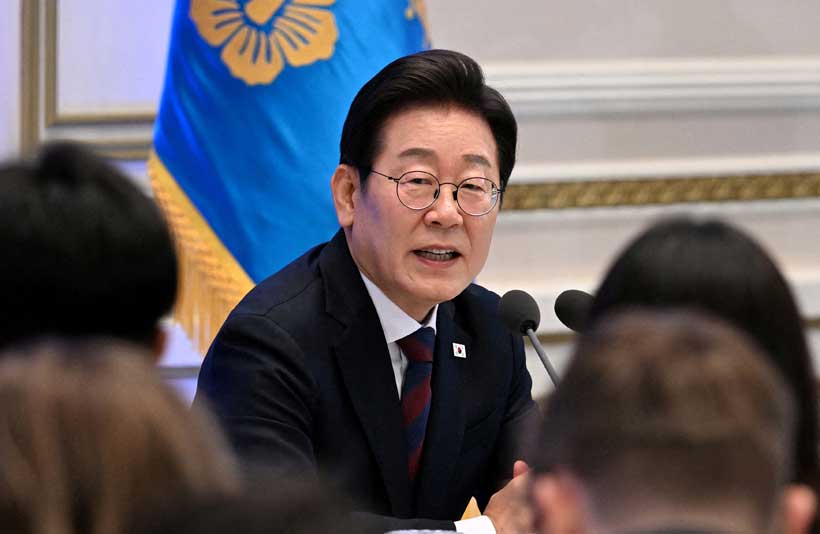
South Korea Says It Can Deter North Even if U.S. Shifts Weapons to Middle East
South Korea said it remains capable of deterring threats from North Korea even if the United States redeploys some weapons stationed on the Korean peninsula to the Middle East amid the war involving Iran.
The comments by South Korean President Lee Jae Myung come after reports that key U.S. missile defence systems and military assets could be moved from Asia to support operations linked to the Iran conflict.
The potential redeployment has sparked concern among Asian allies that shifting military resources could weaken regional deterrence against China and North Korea at a time of heightened geopolitical tensions.
Seoul Says Deterrence Remains Strong
Speaking at a cabinet meeting, Lee acknowledged that reports about the relocation of U.S. military equipment had triggered controversy in South Korea.
He said that while Seoul had expressed opposition to the removal of certain weapons, it could not dictate U.S. military decisions.
However, Lee emphasised that South Korea’s own defence capabilities are strong enough to maintain deterrence against North Korea even if some American systems are temporarily relocated. He noted that South Korea’s defence spending and conventional military strength significantly exceed those of the North.
South Korea hosts about 28,500 U.S. troops as part of the long-standing alliance designed to deter aggression from nuclear-armed North Korea.
Missile Defence Systems May Be Redeployed
Officials have indicated that the U.S. and South Korean militaries are discussing the possible redeployment of Patriot missile defense system batteries to the Middle East.
South Korean media reported that some missile batteries may have already been shipped from Osan Air Base and could be redeployed to U.S. bases in Saudi Arabia and the United Arab Emirates.
There were also reports that parts of the Terminal High Altitude Area Defense (THAAD) system could be moved from South Korea to the Middle East.
While Patriot systems provide lower-tier defence against shorter-range missiles, THAAD systems are designed to intercept ballistic missiles at high altitude.
United States Forces Korea declined to comment on the possible relocation of equipment, citing operational security.
Analysts Warn of Miscalculation Risks
Military analysts say that although South Korea possesses strong military capabilities, the presence of U.S. forces and weapons in the country serves as a crucial signal of Washington’s commitment to the region.
According to Choi Gi-il, a military studies professor at Sangji University, the removal of some systems could carry strategic risks.
He warned that North Korea might interpret the redeployment as a weakening of allied defences and could attempt limited provocations to test the alliance’s response.
North Korean leader Kim Jong Un has recently signalled a more aggressive posture, pledging to expand the country’s nuclear arsenal and describing South Korea as its “most hostile enemy.”
Wider Regional Impact
The redeployment of U.S. assets reflects the broader strategic impact of the Iran conflict on global military posture.
Japan, which also hosts major U.S. bases, has seen two U.S. guided-missile destroyers stationed in Yokosuka deployed to the Arabian Sea to support operations linked to the Iran campaign.
The movements have raised concerns in Tokyo as well, with opposition politicians questioning whether U.S. forces stationed in Japan should be used for operations outside the region.
The developments highlight how the conflict in the Middle East is beginning to reshape global military deployments, drawing resources away from Asia and prompting questions about the balance of security commitments across different regions.
With information from Reuters.

The week’s bestselling books, March 15
The Southern California Independent Bookstore Bestsellers list for Sunday, March 15, 2026, including hardcover and paperback fiction and nonfiction.
Source link

I travelled on the Caledonian Sleeper and one detail made it the best train journey ever

There are few things which could feel more luxurious than a sleeper train with its own check in, restaurant car and stunning views to wake up to
Source link
Mat Sadler: Walsall sack head coach after Salford defeat
Walsall have sacked head coach Mat Sadler following Tuesday’s defeat by Salford City which left them with one win in their past 11 matches in League Two.
The 1-0 loss was their third in a row and further dented their fading challenge for a play-off place.
Walsall were four points clear at the top of the table in early December, but a run of two wins in 14 since Boxing Day has left them 11th in the table, three points outside the top seven with 10 games remaining.
Sadler, a former defender at the club, leaves after a nearly three years in charge, having been appointed on a permanent basis in May 2023 following a short interim stint.
“I would like to take the opportunity to acknowledge the significant efforts and contributions of Mat, both as a professional and as a person, during his time at the club,” Walsall co-chairman Ben Boycott said.
“We thank him for his dedicated service and wish him the very best for the future.”
Coach Darren Byfield will take interim charge of the team with support from Terry Connor and the rest of the backroom staff, the club also confirmed.
South African soldiers deploy in Johannesburg to tackle crime and gangs | Crime News
First troops touch down nearly a month after President Ramaphosa said organised crime threatened country’s democracy.

Published On 11 Mar 2026
Soldiers have been deployed on the streets of South Africa’s biggest city nearly a month after the president announced the army would work alongside the police to tackle high levels of crime.
President Cyril Ramaphosa said in his annual State of the Nation address on February 12 that organised crime was the “most immediate threat” to South Africa’s democracy and economic development.
Recommended Stories
list of 3 itemsend of list
On Wednesday, troops touched down on the streets of Eldorado Park, a working class suburb in the country’s economic capital, Johannesburg, that has high levels of crime and gang violence.
Local media published pictures of armoured vehicles rolling into the area, and the Independent Online reported that local councillor Juwairiya Kaldine welcomed their arrival.
Soldiers were also seen in the Johannesburg suburb of Riverlea. Media reports said the soldiers were searching door-to-door.
South Africa’s national police service and the Department of Defence, which oversees the military, did not immediately provide details on the deployment. But the president said last month that the army will help the police service fight gang violence and illegal mining.

Ramaphosa said in a notice to the speaker of parliament that 550 soldiers would be involved in an initial deployment in Gauteng province, which includes Johannesburg, to help combat crime and preserve law and order.
That deployment would last until the end of April, he said.
The government plans a wider deployment in five of its nine provinces, according to details submitted by police to parliament.
The deployment will focus on illegal mining in the Gauteng, North West and Free State provinces, and gang violence in the Western Cape and Eastern Cape provinces.
Parts of the national deployment could last more than a year, police officials said.
South Africa has high rates of violent crime. Police reported 6,351 homicides from October to December 2025, an average of nearly 70 a day in a country of about 63 million people.
However, not all residents of crime-affected communities are pleased about the plan to deploy the army.
In the Cape Flats, an impoverished area of the Western Cape with high levels of gang violence, where troops will also likely deploy, people told Al Jazeera last month that the military will not help fix the root causes of the violence or the social ills that make it easy to recruit people into gangs.
“It’s a very dangerous thing to bring the army because there’s an impatience with the fact that the police are not doing their job,” Irvin Kinnes, an associate professor with the University of Cape Town’s Centre for Criminology, told Al Jazeera at the time, calling the move “political”.
“It’s to show that the political leaders have kind of heard the public. But the call for the army hasn’t come from the community. It’s come from politicians,” he said.

Venezuelan Parliament Pushes Mining Reform to Attract Foreign Capital
Western mining conglomerates have expressed strong interest in Venezuela’s mineral potential. (Archive)
Caracas, March 10, 2026 (venezuelanalysis.com) – The Venezuelan National Assembly preliminarily approved a new mining law on Monday as part of continued efforts to attract foreign investment to the country.
Venezuelan Acting President Delcy Rodríguez had announced the new legislation last week during a visit from US Interior Secretary Doug Burgum alongside mining executives and urged parliament to act “swiftly.”
“This law will increase all the legal guarantees that can generate confidence and attract national and foreign investment,” said Orlando Camacho, a congressman from the ruling PSUV-led bloc, during the legislative session.
Camacho added that the bill is adapted to the Caribbean nation’s “present needs” and aims to take advantage of the country’s vast mineral riches, mostly located in the country’s Southeast.
Monday’s vote was endorsed by the pro-government legislative majority. Opposition deputies abstained, complaining that they received the draft less than one hour before the parliamentary session. The text will be subject to consultations and proposals before being put to a second and definitive vote in the coming weeks.
Consisting of 126 articles split into 19 sections, the bill establishes regulations for small, medium, and large-scale mining, as well as the state’s ability to declare certain minerals as strategic and reserve areas for security purposes. It also creates a “social fund” to support mining workers, an oversight superintendency, and a state-run data bank.
Concerning mining activities, the proposed law establishes that joint ventures, private corporations, and small-scale artisanal mining groups are allowed to receive concessions. The new law will replace a 2015 decree that imposed state control over mining exploration, as well as the 1999 Mining Law.
The legislation establishes concessions of up to twenty years that can be renewed for two additional ten-year periods. The issuing of contracts is the responsibility of the Ministry of Ecological Mining Development and will not require National Assembly approval. Corporations are also entitled to several tax breaks, likewise granted at the ministry’s discretion, and can take disputes to international arbitration outside the Venezuelan court system.
The Venezuelan government is also seeking to reorganize the mining sector. A decree published on Friday ordered the Venezuelan General Mining Company (MINERVEN) to be absorbed by the Venezuelan Mining Corporation (CVM).
The mining reform follows a similar pro-business overhaul of Venezuela’s Hydrocarbon Law in January. In an interview, National Assembly President Jorge Rodríguez vowed that parliament would “adapt” laws to attract US investors in the wake of the January 3 US military strikes and kidnapping of President Nicolás Maduro
During his visit last week, Burgum touted Venezuela’s mineral riches and potential opportunities for Western conglomerates. On Friday, the Trump official announced the arrival of US $100 million worth of Venezuelan gold as part of a deal involving Trafigura to export up to 100 tons of gold doré bars worth approximately $165 million.
However, Caracas is not expected to immediately receive the revenue. The US Treasury issued General License 51 (GL51) allowing US entities to purchase, transport and resell Venezuelan-sourced gold but mandating that proceeds be deposited in US government-run accounts before being returned to Venezuela under conditions dictated by the White House.
The sanctions waiver additionally blocks transactions with companies from Cuba, Iran, Russia, and North Korea, and bans involvement in exploration and refining activities.
In tandem, the Trump administration reportedly issued a 30-day license allowing select companies, including Canada’s Gold Reserve, to negotiate mining concessions with the Venezuelan government.
Venezuela possesses vast proven reserves of gold, iron, and bauxite, in addition to lesser quantities of copper and nickel. Analysts have also drawn attention to Venezuela’s significant reserves of coltan, which has important military, aerospace, and electronics applications, as well as unproven deposits of rare earth minerals.
Former President Hugo Chávez sought to end foreign mining concessions in the 2000s, pushing instead for the state to play a leading role and link extraction activities to its basic industries in sectors such as steel and aluminum.
The Chávez government likewise revoked a number of concessions from Western mining companies. Several of them, including Canada’s Crystallex and Gold Reserve, went on to secure compensation via international arbitration bodies.
Since 2015, the Nicolás Maduro administration looked to mining as a potential revenue source amid escalating US sanctions, particularly in the 112,000 square-kilometer Orinoco Mining Arc. Nevertheless, the sector was likewise hit by unilateral coercive measures, while the proliferation of irregular mining groups has generated environmental concerns.
Edited by Lucas Koerner in Fusagasugá, Colombia.

Ore Oduba’s kids ‘upset’ as his ex wife Portia reveals she has to sell family home after split with porn-addict ex
ORE Oduba’s kids are said to be devastated as he puts the family home on the market a year after his split from wife Portia Jett.
The Strictly star, 40, announced that he and Portia, 36, had ended their nine year marriage in October 2024.
The pair share a son, Roman, eight and four-year-old daughter Genie together.
The TV presenter’s new-build family home in Tunbridge Wells, Kent, is now up for sale but Portia admitted it has left their kids heartbroken.
She said on social media: “I told the children that we are selling the house.
“It’s hard, especially for Roman, to have these conversations. He’s really upset.


“I wanted to let the kids know, I tried to explain why.
“It’s gutting, and I’ve known for a while.”
The family have been living in the property since 2022.
Last November, Portia appeared to take a swipe at Ore after he revealed his porn addiction battle.
Portia shared a photo as she posed with her two children either side of her during an autumn day out.
The lyrics talk about a partner who is “young, wayward and lost in the cold” and includes the phrases “you pulled the wrong trigger”.
Appearing on the We Need to Talk podcast with MAFS expert Paul C Brunson, Ore told how his addiction struggles have spanned three decades.
He candidly said: “I was nine when I was introduced to pornography. That’s when my addiction started.”
Ore added: “While I wouldn’t say the addiction set in immediately, the intrigue started immediately and it didn’t take long for that intrigue to start running my mind over.
“It was the thing that was destroying my life from the inside out.
“But it was a thing I was running to from an early age as a response to the trauma.”
He told Paul he was speaking out as he wanted to “guide my own children.”
The London-based TV and radio anchor shares two children with ex wife Portia, son Roman born in 2018 and daughter Genie, born in 2021.
Ore, who admitted he had become a “master masker” during his childhood due to fears his father would send him back to Nigeria, told of the personal “shame” he had been struck by.
He then told how his brave confessions were for his family.
He said: “I’m sharing this to save my kids.
“Shame kept me silent for 30 years. It took me 30 years, two deaths, and a divorce to finally go: here’s what’s happening.”
He added: “The reason I felt like I needed to speak out on this, is because I wanted to guide my own children when it comes to it, when it comes to them seeing stuff that is going to be there.
“They’re going to come across it.”
Ore then confessed: “I never imagine I’d ever share this with anyone but in the last year I’ve spoken to friends and family and some amazing, supporting people in my working world who have all shown so much love and pride in me talking about something that is a problem for so many of us.”
The couple announced they were ending their nine-year marriage in October, with presenter Ore then confirming the news on Instagram.
The couple’s break-up shocked longtime followers of the pair, who have watched on as they got engaged, married and welcomed two children.
They first met in 2010 when they were studying at Loughborough University.
Portia was also a prominent support for Ore when he competed on Strictly Come Dancing in 2016, eventually lifting the glitterball alongside pro partner Joanne Clifton.
Swerving rumours of the long-derided “Strictly curse”, Ore made sure Portia bonded with Joanne throughout their time on the show together.
Yet he revealed their sad spit in an emotional message to fans.
The statement read: “Hi guys. Portia and I are sad to announce that we separated earlier this year [2024].
“We’re so grateful for all the love you’ve shared with us both over the years.
“And we want to thank you in advance for respecting our privacy as we navigated this difficult transition.
“We will be making no further comment. Be kind, always.”

How to accept your girlfriend’s best friend knows everything about your sex life
THAT night of slippery anal the two of you haven’t discussed since? Shared over brunch, complete with hand gestures. Here’s how to acknowledge that:
Take pride in your achievements
Why are you embarrassed? You are now one of the great lovers of history, whose sweaty achievements are spoken of with hushed awe in Pret. Like Casanova, Cleopatra or Jacob Rees-Mogg, your prodigious shagging is the sort of feat that would’ve once kept medieval minstrels in business. Except now it’s your girlfriend’s mate Nat who’ll be recounting your tale through various group chats.
She was there first
Long before your first kiss with your beloved, your girlfriend’s best mate heard about your Hinge opener and gave a second opinion on your haircut. You’re only together because this woman approved them, like a chaperone of the Regency period. By listening to stories of your prowess, she’s keeping her role as your girlfriend’s guide through the bewildering gauntlet of modern love.
Fantasise
Pretend you’re living in a letter to Penthouse. You never thought your girlfriend’s mate fancied you. But then she heard tell of how you provided nine minutes of sustained cunnilingus, and now she’s queueing up to sample the goods next to your obliging partner. Have fun imagining how this would play out, while remembering to never, ever tell your girlfriend of this specific fantasy.
Accept things were already awkward
You can only be so close to your girlfriend’s best friend. While she might not acknowledge it, she’s always going to resent you for stealing her pal away from her. So what if stories of your sexual prowess drive a further wedge between the two of you? Don’t worry, she’s only holding onto them to weaponise for when you split.
See if it works two ways
If your girlfriend’s mate is being told all of the sordid details of your sex life, then it’s only fair that you learn about who she’s f**king and how. Open with an easy question, like ‘So does Sonya swallow?’ If your girlfriend is repulsed at your asking and this leads to a relationship-ending argument, at least your paranoia about what’s she’s saying about how you shag will be a moot point.

Iran war – Simon Calder explains rules to Brits with holidays booked to Turkey or Cyprus
Simon Calder gave his thoughts on when travel disruption will start to ease following the strikes on Iran

Travel remains severely disrupted as strikes on Iran continue
A travel expert has shared his views on when ‘people will be able to travel again’ as the Middle East conflict continues to escalate. Journalist Simon Calder, who specialises in travel, discussed the crisis and its impact on worldwide travel.
American and Israeli strikes on Iran are approaching the end of their second week, with no resolution in sight. Travel to the Middle East remains limited, with airlines cutting back on the number of flights to and from the area.
Countries such as Oman, Qatar, and the United Arab Emirates serve as vital transport hubs for destinations including Asia and Australasia. The outbreak of hostilities has left hundreds of thousands of travellers stuck.
Speaking to Sky News, Mr Calder offered his perspective on when travel might become more straightforward. He said: “We’ve already seen missiles sent to Turkey and attacks on Cyprus. Now, personally, I think the chances of anything happening to a tourist in Turkey or Cyprus are microscopically low, but I also know that people are rebooking away. They’re going to the western Mediterranean – typically Spain and Portugal – because they believe they will be safer there.
“If you’re flying from the UK to a holiday spot such as Turkey or Cyprus and that flight is cancelled, then, fortunately, air passenger rights rules are squarely on your side. The airline that cancels the flight has to get you to your destination as soon as possible, regardless of the cost. And if you can’t get there immediately, the airline has to provide meals and accommodation, if necessary, before you are able to get to your destination.
“The Foreign Office warns against travel to Kuwait, to Bahrain, to Qatar and, crucially, to the UAE, home to the busiest hub in the world: Dubai International Airport. But I’m also predicting that, actually, that ruling is going to lift fairly quickly, and people will be able to travel again.”
Flights are still operating through Dubai International Airport, despite two Iranian drones injuring four people after exploding at the facility. The Dubai Media Office, which releases statements on behalf of the city-state’s government, confirmed flights are continuing, and that the attack caused ‘minor injuries to two Ghanaian nationals and one Bangladeshi national, and moderate injuries to one Indian national’.
Officials have been attempting to restore its flight schedule, though the airport has been targeted amid the conflict. The war has created uncertainty for travellers with flights booked in the coming weeks, prompting Mr Calder to offer his guidance on what passengers should do.
READ MORE: Iran war travel expert Simon Calder issues Emirates ‘flights will be resuming’ updateREAD MORE: Martin Lewis explains ‘safe thing to do’ ahead of April 1 price change
“If your flight is due to go, I’d say, a week or more from now, well, all you can do is just hope that it goes ahead,” he stated. “If you’re going imminently and you do not know if your trip is running, well, the basic news is that if you go to Abu Dhabi, to Dubai, to Doha, you will be going against Foreign Office advice. So, be aware of that; your travel insurance will be invalidated.
“I’ve got some skin in the game. I am booked to fly out on Saturday night from Jakarta, the Indonesian capital, through to Abu Dhabi and connect onwards to London. Now, at the moment, along with many, many other travellers, I’m absolutely promised the flight will go ahead as normal, and I trust that it will. But I simply do not know.
“At the moment, I’m definitely not cancelling my flight because, well, bluntly, if you cancel the flight – which is what the airlines would really like you to do – you will simply be removing yourself from the problem. If, like me, you’re booked in a few days’ time and you do have a bit of flexibility, then absolutely keep your booking open.
“If you go for a refund, first of all, the airline will be delighted because you’ll be a problem that’s removed from their cares and, secondly, you could find yourself paying three times, five times, 10 times as much to get back. Much better to remain a problem for the airline; they’ve got to get you where you need to be.”

Wednesday 11 March Moshoeshoe I’s Day in Lesotho
The provided text is an article from the Occasional Digest commemorating Moshoeshoe I’s Day, a public holiday in Lesotho observed on March 11th. It highlights the life of King Moshoeshoe I, who is revered as the founding father of the nation for unifying local tribes and skillfully navigating colonial pressures. Through strategic diplomacy and military resilience, he successfully protected his people’s sovereignty from both Boer settlers and British expansion. The source also notes the King’s influence on Basotho culture, specifically how his preference for wool blankets established the country’s iconic traditional attire. Finally, the text places this historical retrospective within a broader modern news context …
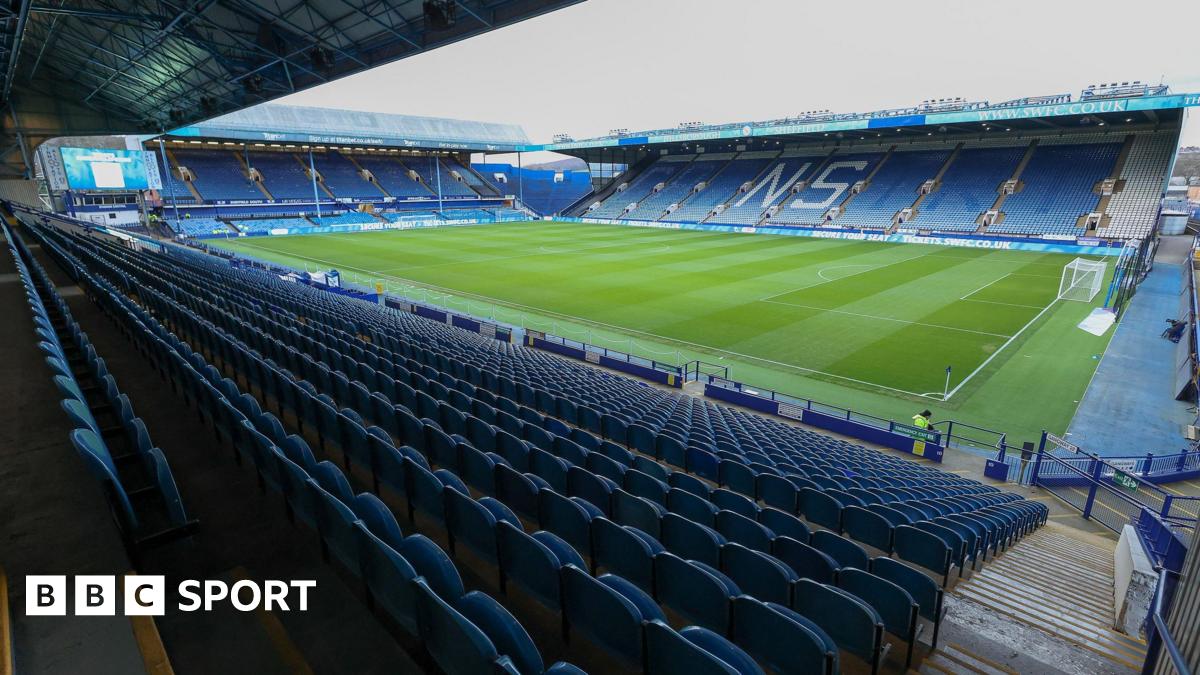
Sheffield Wednesday: Points deduction looms as new bidder announced
Sheffield Wednesday will be handed a 15-point deduction for next season in League One if a deal with their new preferred bidder goes through.
Administrators have begun an exclusive period of negotiation with American private equity company Arise Capital Partners.
However, Arise’s offer would not meet the EFL’s requirement to repay creditors 25p in the pound, which would mean the Owls starting life back in League One with a significant handicap.
Dejphon Chansiri, their main creditor, is understood to have loaned the club £60m in more than a decade as owner, and must be paid back £15m of that if the Owls are to avoid a points loss.
At least six killed in blaze aboard bus in Switzerland
Police in western Switzerland are investigating the deaths of six people killed in a fire that gutted a bus in the town of Kerzers, near Bern. Photo courtesy Fribourg Cantonal Police/EPA
March 11 (UPI) — At least six people were confirmed killed and several were injured after a fire tore through a bus in a town in western Switzerland.
At least three people were taken to a hospital after the incident, which took place at around 6.25 p.m. on Tuesday in Kerzers, around 12 miles west of Bern, police said.
An investigation into the cause was underway, including looking into reports the blaze was started by a passenger dousing himself in gasoline and setting himself on fire, although police and authorities in the canton of Fribourg said they did not believe it was an attack or terrorism.
“At the moment, no element highlights” a terrorist act, Fribourg Police communications head Martial Pugin told Swiss breakfast radio on Wednesday.
Pugin’s comments were echoed by Fribourg State Security and Justice Councillor Romain Collaud who also ruled out a technical fault with the bus, which was operated by PostBus Switzerland.
“It was a diesel bus, not an electric one. A bus catching fire like that surprises everyone. We’re still somewhat in shock. I think it’s important to reassure the public. The public is safe. The investigations and inquiries are ongoing,” Collaud said.
However, he warned that the process of identifying those killed could take several days.
PostAuto, of which PostBus is a subsidiary, said in a social media post that it was deeply saddened by the incident, saying it was a “terrible tragedy,” and vowing to do everything possible to aid in the police investigation.
“All the employees of PostAuto and the post office are shocked and affected like I am,” said CEO Stefan Regli.
“On behalf of the Board of Directors and the entire group management, I express our deep condolences to all of them. Our thoughts are with the victims and their families. The Fribourg Cantonal Police, under the direction of the Fribourg prosecutor, is responsible for the investigation of the fire. PostAuto is in close contact with the authorities and is doing everything in its power to solve this terrible incident.”
Swiss President Guy Parmelin said it pained and upset him that fire had claimed the lives of yet more people in Switzerland.
“It distresses and saddens me that once again people in Switzerland have lost their lives in a severe fire. The circumstances are being investigated. To the relatives of the deceased from Kerzers, I extend my condolences. And I think of the injured and the rescue workers,” he wrote on X.
Tuesday’s incident comes less than six weeks after 41 people were killed in a blaze that broke out in the early hours of New Year’s Day at a bar in the Swiss ski resort town of Crans Montana.

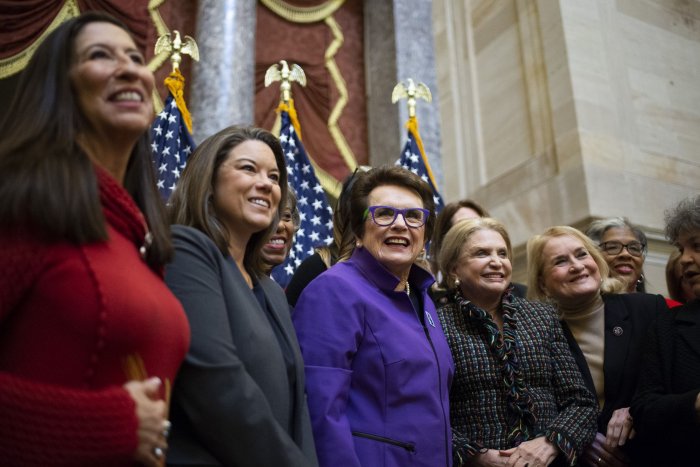
Founder of the Women’s Tennis Association and tennis great Billie Jean King (C) smiles with representatives after speaking during an annual Women’s History Month event in celebration of the 50th anniversary of Title IX in Statuary Hall at the U.S .Capitol in Washington on March 9, 2022. Women’s History Month is celebrated every March. Photo by Bonnie Cash/UPI | License Photo

Best age for family holidays as parents say 8-year-olds make trips ‘most fun’
Parents believe everyone in the family can get something out of a holiday when their children reach eight years old.

Eight is the age when everyone in the family gets something out of the holiday(Image: Getty Images)
Family holidays can be stressful but new research has shown that they are considered to be most fun when children reach eight years old. A poll of 2,000 parents found eight is the age when everyone in the family gets the most out of holidays. At this stage, more than half (55%) of parents believe their children start to form lasting holiday memories, while 64% believe their children can start to get genuinely excited about new places.
What’s more, at eight years old 22% of parents say their children can contribute to the planning. This means parents are better able to relax themselves and can enjoy more shared hobbies and activities together with their kids.
Commissioned by Jet2holidays ahead of Mother’s Day, the research found 76% of mums who go on one or more getaways a year consider family holidays to be their highlight.
A spokesperson for the tour operator said: “Family holidays are special at all ages. However, there appears to be something especially great once kids reach eight years old – with the findings suggesting many kids are more curious, more engaged and better able to take in new experiences at this age.”
The study also identified what parents look for in a family getaway – with value for money (29%), a place which suits the whole family (28%) and good weather (28%) coming top.
Activities everyone can enjoy together are also considered key (17%), along with a destination which is easy to get around (15%) and genuinely family friendly accommodation (14%).
To ensure the kids in particular are happy, 30% ‘often’ or ‘always’ get them involved in the planning of a family break. They do so because it makes their little ones feel included and valued (46%), creates shared excitement (37%) and ensures activities suit their interests (34%).
The holiday milestones considered to be the most significant were going abroad as a family for the first time (35%), flying together for the first time (24%), as well visiting a theme park or major attraction for the first time (15%). Staying away from home overnight for the first time as a unit (14%) was also significant.
A spokesperson for Jet2holidays added: “It’s clear involving children in the planning process plays a big part in making a holiday memorable.
“And this is just one of a host of memorable holiday milestones they’ll be part of – whether that’s flying together for the first time or going abroad as a family stay with parents for years.
“This is why considerations like the right destination and accommodation are so important.
“We’re proud to help families make those memories by offering great value, family friendly holidays which cater to everyone, whatever stage of family life they’re in.”
Which countries have seen the highest petrol prices since the Iran war? | US-Israel war on Iran News
Motorists around the globe are already feeling the impact of the United States and Israel’s war on Iran, with fuel prices sharply rising since the war began.
In the US, a gallon of regular petrol that averaged $2.94 in February now costs $3.58, marking a 20 percent increase, according to data from AAA Fuel Prices, a retail fuel price tracker from the American Automobile Association (AAA).
While each US state sets its own petrol prices, several states have surpassed $4 per gallon, with California exceeding $5 per gallon, the highest level it has been in more than two years.
Which countries have the sharpest petrol price increases?
According to data analysed from Global Petrol Prices, a data platform that tracks and publishes retail energy prices across approximately 150 countries, at least 85 countries have reported increases in petrol prices following the initial attacks on Iran by the US and Israel on February 28. Some nations announce price changes only at the end of each month, so higher prices are expected for many others in April.
Vietnam recorded the highest petrol price increase of nearly 50 percent, rising from $0.75 per litre of 95-octane on February 23 to $1.13 on March 9. Laos follows with a 33 percent increase, then Cambodia at 19 percent, Australia at 18 percent, and the US at 17 percent.
The table below shows the countries that have increased petrol prices at the pumps.
Asian countries pay the biggest price
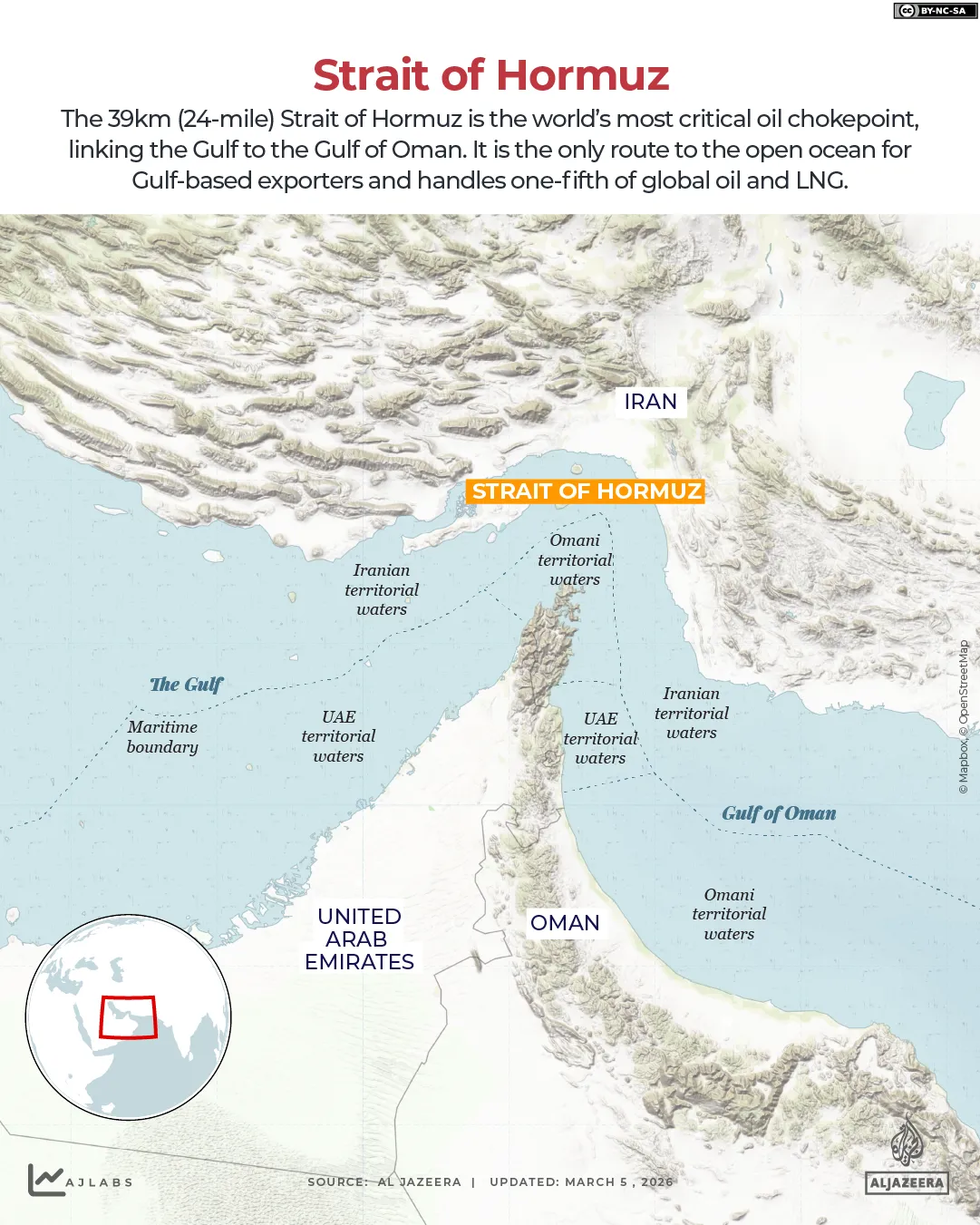
Asia is disproportionately dependent on the Strait of Hormuz for the delivery of its oil and gas, which has been effectively closed since the start of the war. The strait joins the Gulf – also referred to as the Persian Gulf and the Arabian Gulf – to the Gulf of Oman and is the only passage for the region’s oil producers to the open ocean.

Japan and South Korea are among the most vulnerable, importing 95 percent and 70 percent of their oil from the Gulf, respectively.
Both East Asian nations have enacted emergency measures to stabilise their energy markets. On March 8, Japan instructed its oil reserve sites to prepare for a potential release of strategic reserves. The next day, South Korea introduced a maximum price cap on petrol and diesel for the first time in 30 years.
In South Asia, the impact of the war is more severe than in East Asia because countries like Pakistan and Bangladesh have much thinner financial buffers and smaller strategic reserves.
In an attempt to conserve energy, Bangladesh‘s government has ordered all public and private universities to close immediately. In Pakistan, government offices will now operate a four-day workweek, while schools have closed, and a 50 percent work-from-home policy has been enacted to save fuel.
In Europe, the Group of Seven finance ministers convened an emergency meeting to discuss rising prices, with French President Emmanuel Macron raising the possibility of releasing 20-30 percent of emergency strategic reserves to ease the pressure on consumers.
How high oil costs drive up the price of food
Oil prices and food prices move in lockstep, with energy prices affecting every stage of the food supply chain, from the fertilisers used in the fields to the trucks that carry food from field to supermarket shelf.
Rising oil prices also directly affect shipping and the cost of transport.
“The lifeblood of the global economy is transport,” economist David McWilliams told Al Jazeera. “It’s getting stuff from A to B – it’s a logistics problem, a supply chain problem, and ultimately transportation is the energy of the global economy.”
Fears of stagflation – increasing inflation and rising unemployment, which major oil shocks have historically summoned – are rising. Economists point to the crises of 1973, 1978 and 2008 as evidence that every significant spike in oil prices has been followed, in some form, by global recession.
In lower-income countries, where populations spend a far greater share of their income on food and import large quantities of grain and fertiliser, rising oil prices could rapidly translate into food shortages.

What products are made from oil and gas?
Oil and gas are used for far more than just fuel. They are raw materials for thousands of everyday products.
Plastics, including water bottles, food packaging, phone casings and medical syringes, are all derived from crude oil.
Crude oil is also the hidden ingredient in synthetic fabrics such as polyester, nylon and acrylic, which are used to make everything from sportswear to carpets. It also underpins the cosmetics industry, as it is used to make products such as petroleum jelly (Vaseline), lipsticks and concealers.
Household items also rely on oil-based ingredients, with laundry detergents, dishwashing liquids, and paints all derived from petroleum products.
The global food supply is essentially built on natural gas in the form of fertilisers, used to enhance crop yields and ensure that food production can meet demand.


easyJet and Ryanair rules for sharing bag allowance
Ryanair and easyJet have similar rules

People check in at an Easyjet check in counter(Image: TkKurikawa via Getty Images)
Jetting off overseas is often an exciting time, with the promise of fresh surroundings and experiencing a different culture. But as the cost of living crisis rolls out, many Brits are finding it increasingly difficult to locate a getaway that won’t drain their finances.
Depending on your flexibility with dates, bargain flight offers do occasionally crop up. However, you’ll frequently face substantial charges if you want to bring anything beyond a compact carry-on bag. And there are also restrictions on the amount of luggage you’re permitted to take.
It might also be that while one person in your party travels light, others decidedly don’t. In such situations, you may want to ‘share’ your baggage allowance – by allowing another passenger to use some of yours. But is this actually allowed?
Ryanair and easyJet have clarified their policies regarding passengers sharing baggage allowances with fellow travellers in their party. Ryanair said on its website: “Bag pooling is allowed between passengers with check-in bags on the same flight reservation.
“This means that if you have two 20kg Check-in Bags (40kg total) on your booking, one of those bags could weigh 15kg whilst the other weighs 25kg. However, no bag can weigh more than 32kg.”
easyJet adopts a similar approach, as its guidelines state: “If you’re travelling with family or friends on the same flight and booking, you can pool your total weight allowance. This means that the total weight allowance can be split among the total number of bags booked, as long as no single item weighs more than 32kg. Maximum total size (length + width + height) = under 275cm.”
Ryanair customers who have opted for a basic fare are permitted to bring a small bag at no additional cost. The bag must fit under the seat in front of you and not exceed dimensions of 40 x 30 x 20 cm.
Larger bags can set you back anywhere between £12 and £80.99 per flight, depending on the size and the chosen route. It’s always more cost-effective to book these online rather than at the airport.
easyJet allows all passengers to bring one small under-seat cabin bag on board free of charge. This must not exceed dimensions of 45 x 36 x 20 cm, including any wheels or handles.
The cost for larger bags varies, but as with Ryanair, it’s always cheaper to add these online rather than at the airport.

YouTuber Gabriella reveals heartbreaking health update at 31 as she prepares for hysterectomy
YOUTUBER Gabriella has revealed a heartbreaking health update, as she prepares to have a hysterectomy.
The social media star, who is just 31, revealed her news in a candid Instagram post.
The fashion vlogger, who first launched her channel in 2013, gave fans an update, revealing she had been put into early menopause.
Gabriella bravely opened up about how she was set to have a hysterectomy.
This type of surgery is very rare for a woman her age and involves removing her womb.
However, preparing for the operation has had some extreme side effects, which she has now shared with fans.


Taking to her latest Instagram Stories, Gabriella bravely penned: “Are you going through early menopause?!
“I was put on medication to induce the menopause before I have a hysterectomy as it helps some people’s endo symptoms – and it helps the team know what HRT to put me on after surgery based on how I reacted to the menopause med.
“I’ve actually been told to stop taking it 2 weeks before my op (which is now).
“So I’m having a really glamorous mix of menopause symptoms and withdrawal from the meds at the same time and it’s hell.”
The star also shared a selfie of her giving a thumbs down and she emotionally wrote over the snap: “Not doing so well over here.”
The influencer also revealed that her sleep had been badly affected by her symptoms.
The 12 warning signs of early menopause
Early menopause happens when a woman’s periods stop before the age of 45. It can happen naturally, or as a side effect of some treatments.
For most women, the menopause starts between the ages of 45 and 55.
The main symptom of early menopause is periods becoming infrequent or stopping altogether without any other reason (such as pregnancy).
Some women may also get other typical menopausal symptoms, including:
- Hot flushes
- Night sweats
- Changing periods
- Vaginal dryness and discomfort during sex
- Difficulty sleeping
- Low mood or anxiety
- Headaches
- Reduced sex drive
- Problems with memory and concentration
- Joint stiffness, aches and pains
- Recurrent urinary tract infections
- Reduced muscle mass
“Going into the menopause is all well and good until it gives you insane insomnia to the point where your Sultrahumanhg ring says your ideal bedtime is 5am!” she wrote.
Gabriella is best known for her fashion and make-up vlogs where she often shows off her huge hauls of goodies.
Over the last 13 years she has built up a huge following and has amassed nearly 600K fans on Instagram, and almost 1M on YouTube.
Gabriella got her first big break in 2014 when she teamed up with YouTuber OG Zoella, for a beauty haul collaboration.
The two then went on to become best friends before a fall out around ten years ago.
Speaking at the time, Gabriella addressed the feud in a lengthy video.
“Sometimes people just grow apart, that’s what happens,” she told fans.
“To be honest I’m quite upset about mine and Zoe’s friendship because we were so close at one point.
“So close. And I classed her as my absolute best friend. Part of the reason we’re not close now is probably my fault.”
The Influencer Insider – Get all the gossip on all your favourite online stars

Want to know more about the influencer who faked cancer? Read all about Brittany Miller and her sham career here.
We have all the inside gossip about Ladbaby mum’s incredible weight loss here.
And talking of weight loss, we know all about what is going on with B&M queen Becki Jones, which you can read up on here.
If health influencers are your thing, then read this on the man behind Tonic Health and his dubious claims here.