



Why Oregon loss, Desman Stephens hit has Lincoln Riley on hot seat
After 72 particularly miserable hours for his football program, Lincoln Riley took his place behind a lectern Tuesday and tried to assure that things at USC weren’t as bad as they looked.
“There’s a lot of things to be proud of in this football program right now,” Riley assured. “Those that really look into it and look at what’s happening here will see that and understand that. There’s people on the outside that just don’t.”
But the optics at USC, since Saturday’s 41-27 home loss to Oregon, certainly couldn’t have been much worse for Riley. Because it wasn’t just that his Trojans lost a critical game to a bitter rival, one framed for weeks — months, even — as a must-win. Or that in its wake, Ducks coach Dan Lanning had savaged him or his program multiple times.
It was what happened in the midst of that loss, as well as the reactions after, that only made matters much worse for USC.
The days since have prompted questions across the country about Riley’s future at USC, where he’s midway through his fifth season as coach. One person familiar with the situation but not authorized to speak publicly on the matter told The Times that “all options are on the table” with Riley after the loss and the events of last weekend.
The chain of regrettable decisions began the moment Trojan linebacker Desman Stephens lowered his shoulder into the helmet of sliding Oregon quarterback Dante Moore in the second quarter Saturday evening. Moore’s head slammed hard into the ground, and he laid motionless for several minutes surrounded by medical personnel, until he was lifted onto a backboard and loaded into an ambulance that had driven onto the field.
The whole unsettling scene was made far worse by Stephens’ reaction in the immediate aftermath of the hit. After jawing with Oregon players, the junior linebacker was seen taunting the Oregon sideline and celebrating on his way back to USC’s side of the field. He continued high-fiving teammates while the Ducks surrounded their quarterback, who was diagnosed with a concussion but no other serious injuries.
The next morning, both Stephens and his coach said in a statement that his actions were “unacceptable,” “inexcusable” and “completely inappropriate.” But after the game, Riley first said he didn’t see Stephens celebrate the hit. And when Riley was asked why Stephens was allowed to stay on the sideline for the second half, the coach responded, incredulously, “‘cause he’s on our football team.” He wished Moore well, but said nothing further about Stephens or his vicious hit.
“It’s an easy answer,” said Petros Papadakis, a local radio host and former USC captain. “I understand you can’t have eyes everywhere as a head coach. But even if you didn’t see it, by the end of the game you know most of college football has turned against you in the last hour.
“The story didn’t go away because Lincoln didn’t get in front of it.”
It was clear that night, among USC’s leadership, that the immediate response wasn’t adequate enough. So the next morning, athletic director Jen Cohen met with Riley to discuss a suspension for Stephens. They settled on one game.
On Tuesday, Riley took a different tone. He said he was “disappointed with how [Stephens] handled it” and that he “needs to have more awareness.”
Riley also asked for understanding from those who have been critical of Stephens, whom he described as “a young person who made a mistake.”
“Consider if that was your son,” he said, “how would you want it handled?”
But three days later, the college football world was still litigating Stephens’ hit. The story was still alive, in part, due to a short documentary from the game, published by Oregon on Tuesday morning. In it was a clip that would unexpectedly make things even worse at USC.
The clip is of USC’s radio booth, where Pete Arbogast has been the Trojans’ play-by-play guy for the past quarter century. From his perch in the Coliseum press box, Arbogast is painting the scene of the play when Moore was injured. Except, in this case, listeners heard a different account of his slide and Stephens’ hit than what happened on the field.
“He did not try to slide feet first!” Arbogast said in the moment.
Arbogast went on to say that Moore “ducked into that hit. I did not see him put his feet out first. I saw him dive forward.”
When confronted with the replay moments later, Arbogast stood by what he said, claiming that Moore’s slide was “more of a knee-first slide.” Even Arbogast’s radio partner — former Trojan defensive tackle Shaun Cody — raised his eyebrows at the suggestion.
Both Arbogast and the university declined to comment on the situation when reached by The Times.
Papadakis, who previously worked on the broadcast with Arbogast, called it “a bad look,” but explained that Arbogast was “usually defending USC or trying to spin something positive.”
That job was left to Riley and his players on Tuesday. Though, some were more convincing than others.
“This is a time of adversity, the best time to come together as one,” left tackle Elijah Paige said.
“Times like these you tend to see teams fall apart,” quarterback Jayden Maiava added, “but this team is such a tight team and we’re all bought into each other.”
Riley, meanwhile, pointed for the second day in a row to a stretch early in Saturday’s fourth quarter against Oregon, when the Coliseum had reached a fevered pitch and momentum seemed to be swinging in the Trojans’ favor.
Except, it never did. USC allowed two fourth-quarter touchdowns after that. Riley still tried to find the silver lining.
“We didn’t get run out of the stadium,” Riley said. “There’s a lot of good on that tape. You don’t have a chance to win a game like that if you don’t do some things pretty well.”

Pep Guardiola backs Man City after guilty verdict on financial charges | Football
The Spanish coach won 20 trophies during a glittering 10 years as City manager before departing in May.
Published On 30 Sep 2026
Former Manchester City manager Pep Guardiola has spoken out in support of the Premier League club after they were found guilty of serious breaches of financial rules.
The Spaniard handed over to former assistant Enzo Maresca at the end of last season after a decade in charge.
“I want every single @ManCity fan to know I am here; more than ever. I am, always have been, always will, be behind my club, my owner, my chairman, Ferran, the players, staff, Enzo and you, our unique supporters,” Guardiola said on Wednesday in a first reaction on his X account.
“Let me be clear: we will get through this together. I love you all.”
City’s Chief Executive Ferran Soriano addressed staff in a video on Tuesday in which he rejected the independent commission’s findings.
Guardiola took charge of City in 2016 and under his management, they won six Premier League titles – including four in a row – three FA Cups, five League Cups and the Champions League.
The Premier League charges, relating to “sham” commercial contracts used as part of schemes to inflate revenue and understate costs by more than 900 million pounds ($1.2bn) over nearly a decade, cover the period from 2009-18.
In doing so, they concealed the true state of their finances and avoided breaching Premier League and UEFA spending limits during a period in which they won three league titles.
An independent commission found the club guilty on all charges related to breaches of financial rules over the nine-year period.
They have also been found guilty of most of the charges they faced in relation to a failure to cooperate with a Premier League investigation.
City, who continue to deny any wrongdoing, have said they will appeal and have until Friday to do so.
The ruling has sent shockwaves through English football and cast doubt over the future of a club that has become a European giant.
The likely punishment is uncertain but according to Premier League rules, City could face a substantial points deduction, a fine or even expulsion from the top division.
Everton and Nottingham Forest were handed points deductions in the 2023/24 season for single breaches of financial sustainability rules.
On that basis, City would likely face relegation given the sheer weight of the case against them.
There is speculation they could even be stripped of their titles.
“If the appeal fails, Manchester City cannot stay in the league, they have to suffer. And I say that as a supporter and a fan,” said the club’s former chairman, David Bernstein.
Another factor is a potential flood of compensation claims that could cost the club hundreds of millions.
Former Liverpool managing director Christian Purslow told the BBC that clubs would be “queueing up to seek compensation”.

These Traitors-style stays are yours for £70 a night – and they look like the BBC show

The Celebrity Traitors is back on our screens this week, and what better time to book that cosy country escape with your very own abode on the grounds of majestic Scottish castles
Source link

Why Israel is interfering in Palestinian education | Education
The school year started in occupied East Jerusalem with the news that 45,000 Palestinian children are now studying a curriculum put together by the Israeli authorities. That is more than a third of the Palestinian students in the occupied territory and almost double the number from the previous year.
Meanwhile, Christian schools started the school year with a strike, as many of their teachers who live in the occupied West Bank were not granted permits to enter the city.
For the Palestinian population of occupied East Jerusalem, this is yet another form of encroachment on their national rights by the occupation authorities. For Israel, this is a justified intervention because Palestinian textbooks produced by the Palestinian Ministry of Education and Palestinian teachers trained in Palestinian Authority (PA) institutions “teach hate”.
According to international humanitarian law, an occupying power must facilitate the normal operation of educational institutions and avoid interference in their affairs. Recently updated commentary by the International Committee of the Red Cross, the institution tasked with overseeing the application of the Geneva Convention, says an occupying power must not replace the existing education system with its own structures or impose new curricula.
Yet Israeli interference in Palestinian education is extensive and reaches well beyond occupied East Jerusalem – into the occupied West Bank and, more recently, the Gaza Strip. For years, successive Israeli governments have demanded that the United States and European governments pressure the PA to revise its textbooks by conditioning aid. Meanwhile, the devastation of Gaza’s education system has allowed NGOs funded by Western donors to introduce curriculums approved by Israel.
The Israeli argument that all this is necessary to prevent Palestinian children from learning “to hate” in school does not stand up to scrutiny.
Academic research, including a study funded by the US Department of State and prepared by both Palestinian and Israeli scholars, found that Palestinian textbooks do not promote hate and dehumanisation of Israelis.
So what is Israel actually looking to revise in Palestinian textbooks?
Studies comparing Palestinian textbooks with the Israeli-edited versions used in occupied East Jerusalem have documented the removal or alteration of references to Palestinian national symbols, such as the national flag and anthem, Palestinian sovereignty and history.
A 2025 study of primary-school textbooks found that Israeli modifications included replacing “Palestine” with “Israel” in some contexts and removing passages about the realities of occupation.
Israel wants references to the occupation, Palestinian history and self-determination erased from Palestinian textbooks not because they “teach hate”, but because they teach Palestinian children national consciousness – something Israel has fought against since its own creation, claiming “there is no such thing as a Palestinian people”.
This is why Palestinian resistance to curriculum changes in East Jerusalem should not be understood only as resistance to an Israeli textbook. For many parents, teachers and schools, the fear is that accepting the Israeli curriculum also means accepting the Israeli annexation of Jerusalem and its erasure of Palestinian identity inside it.
Removing concepts such as the occupation, the Nakba, refugees, the right of return, Palestinian sovereignty and national symbols from education materials can gradually detach Palestinian political identity from the historical narrative that gives those claims meaning.
While Israel gets to censor and shape Palestinian curriculums, there is little scrutiny by its Western allies of what Israeli curriculums teach Israeli children.
For her book Palestine in Israeli School Books, Israeli philologist Nurit Peled-Elhanan studied Israeli history and geography textbooks published in the post-Oslo years and discovered the extensive use of racist tropes and erasure of Palestinians. In the conclusion, she expressed concern that Israeli students graduate from Israeli schools and enter mandatory military service having “been taught to resent and fear” Palestinians and having no knowledge of their “life-world”.
Another more recent study of 123 textbooks used in Jewish Israeli schools by Israeli scholar Yael Teff-Seker found strong ethnocentric framing, a persistent sense of Jewish victimhood and relatively little space for Palestinian narratives. The author notes that while the concept of peace with Arab nations is described positively, the occupation is “described impartially, without judgement”, while the occupied Palestinian territory is sometimes referred to with Israeli names, for example, Judea and Samaria instead of the occupied West Bank.
A research paper coauthored by another Israeli academic, Roy Weintraub, explores how Israeli state curricula cover the Nakba, one of the central events that shapes Palestinian identity and political realities. The term is “partially present” in Israeli textbooks and teaching materials and “most teaching materials justify the actions taken by Israeli forces during the 1948 War”. The paper concludes: “Inclusion of difficult histories in the curriculum does not necessarily encourage a critical understanding of the suffering and injustices experienced.”
The issue with the curricula in Israel-Palestine is larger than education. It is about power. When one side controls land, movement, permits, budgets and institutions, and can also influence the language through which the other side describes that reality to its children, the classroom becomes another arena of the conflict itself.
The struggle over Palestinian textbooks is not only about what children should learn. It is also about who has the authority to decide what counts as legitimate history in the first place.
The views expressed in this article are the author’s own and do not necessarily reflect Al Jazeera’s editorial stance.

X Factor winners reveal next gig could be their last ever show after taking huge gamble
AN X Factor-winning group have revealed their next gig could be their last ever, after taking a huge gamble.
Rak-Su star Myles Stephenson took to TikTok to reveal that they had “the biggest show of their lives” coming up.
Speaking to the camera, Myles explained: “In less than three weeks we will be doing a show on October 18th at Watford Palace Theatre and I’m a little bit nervous.”
Myles revealed the reason behind his nerves is that they’ll be doing the show “fully independent,” with no label or management, as well as funding the entire show themselves.
He continued: “We have put a lot of money into this, and we don’t know if it’s going to pay off, but it’s not about the money.
“It’s about the fact that potentially this might be our last show so whatever it costs to put on the best show ever, we’re going to do that.
Read More on Myles Stephenson


“I’m nervous because I don’t want it to be our last show, I want it to continue forever.”
Myles went on: “We’ve been full time musicians for nine years and that’s a very, very long time and that’s a very long time for musicians in today’s age.”
The singing star finished by saying: “If we sell out this show on October 18th, we will tour next year so don’t let this be the last time that Rak-Su ever performs, ever again.”
Fans flooded the comments section tagging pals and saying they were excited to watch the show.
Myles is one member of the R’n’B group Rak-Su who won the The X Factor in 2017.
Mentored by Simon Cowell, the group comprised of Myles, Rak-Su J, Ashley Rak-Su and Pharoahcious.
And Simon was not the only judge impressed, with fellow judge Nicole Scherzinger also giving the group the seal of approval.
In 2019 it was reported that the vocal group have been dropped by record label RCA less than two years after being crowned champs.
Myles, Ashley Fongho, Jamaal Shurland and Mustafa Rahimtulla went to No2 with Dimelo, featuring Wyclef Jean and Naughty Boy, when they came off the 2017 show.
But their next four singles were poorly received and they struggled to shift copies of two EPs.
A music insider said at the time: “It’s a tough time to be in pop and the buzz for Rak-Su fizzled out fast. They haven’t delivered the huge chart singles which bosses were convinced they would, despite being so popular on the show. The feeling is that their moment has passed and it’s going to be tough to revive it.”
But Rak-Su have rebuilt momentum, with a huge following on social media and now a gig to look forward to ahead of, if ticket sales go well for October, their teased tour next year.



House Speaker Johnson stumping for CA GOP congressional candidates
House Speaker Mike Johnson plans to visit California on Wednesday to stump and fundraise for Republican candidates in a state that could determine control of the U.S. House of Representatives during President Trump’s final two years in office.
Johnson (R-La.) plans to visit the Central Valley and the Inland Empire, a sign of the importance of California congressional contests in the November midterm election.
David Wasserman, a congressional forecaster for the nonpartisan Cook Political Report, said that Johnson is attempting to mitigate the aftermath of Proposition 50, the redrawing of California’s congressional districts that voters approved in November in response to Trump’s efforts to tilt districts in his favor elsewhere in the nation, notably Texas.
“If it weren’t for Republican efforts to redraw Texas, Proposition 50 wouldn’t have seen the light of day,” said Wasserman, who predicts Democrats will win control of the House, and said that Republicans would have a better chance at holding more seats if they hadn’t prompted the redistricting fight.
Redrawing congressional districts typically happens once a decade after the U.S. Census, and in California, voters in 2010 decided to hand the power of crafting the state’s districts to an independent commission. After Trump pushed Texas to redraw its congressional boundaries to increase GOP representation in Congress last year, California Democrats responded by persuading voters to reshape its districts to favor Democrats, who already dominate the state’s 52-member congressional delegation.
“California Republicans are on the verge of extinction because of the White House action,” Wasserman said.
In Chowchilla, Johnson is scheduled to hold a fundraiser and a rally in support of former Stockton Mayor Kevin Lincoln, who is trying to topple Rep. Adam Gray (D-Merced) in one of the most competitive congressional races in the nation. He is expected to be joined by Republican National Committee chairman Joe Gruters, California Republican Party Chair Corrin Rankin and Congress members from Texas and Michigan.
He is also holding a get-out-the-vote event in support of Rep. David Valadao (R-Hanford), a longtime Democratic target given the voter makeup of his Central Valley district. Johnson is also holding an evening fundraiser in Riverside for Jim Desmond, a member of the San Diego County Board of Supervisors who is running in the district being vacated by longtime Rep. Darrell Issa (R-Vista).
Issa decided to retire after his congressional district was redrawn because of Proposition 50. He has endorsed Desmond to represent the new district, which spans San Diego and Riverside counties.
The California trip is part of Johnson’s plans to campaign in 22 states in an effort to help Republicans retain control of the House before the Nov. 3 election.
Despite California’s sapphire tilt — registered Democratic voters outnumber Republicans nearly two-to-one — the state’s residents are often the largest donors to politicians on both sides of the aisle. Democrats headed here in coming days include gubernatorial candidates Amy Acton of Ohio, Deb Haaland of New Mexico and Gina Hinojosa of Texas.
Trump sent followers a fundraising appeal Tuesday focused on Democrats’ ability to win control of Congress, which would upend his agenda during his final two years in office.
“I’ve never asked for sympathy. I’ve never asked this country to feel sorry for me. I’ve never asked for anything,” he said in the email. “That changes today. With less than 45 days until midterm elections, the left is ready to put the final nail in my coffin.”
Christian Martinez, a spokesman for the National Republican Congressional Committee, pointed to the pivotal role California will play in determining control of Congress.
“California’s House races will decide whether working families keep fighters like David Valadao, James Gallagher, Kevin Lincoln, and Jim Desmond or get more of the same from Democrats who raised costs, left the border wide open, and made communities less safe,” Martinez said. “Californians are done paying more, waiting longer, and living with less safety so corrupt Sacramento and Washington Democrats can protect their socialist agenda.”
Anna Elsasser, a spokesperson for the Democratic Congressional Campaign Committee, shot back that the policies and beliefs of Desmond, Lincoln and Valadao have deeply harmed California families, including high gas prices and the cost of living.
“That’s why Mike Johnson is swooping in to try and save their fledgling campaigns. Voters won’t forget who sold them out to hand massive tax breaks to billionaires and wealthy corporations by gutting health care and food assistance, championing chaotic tariffs, and refusing to rein in a costly war that has sent gas prices soaring,” she said. “Californians are ready for change, not another two years of Mike Johnson and DC Republicans’ status quo.”

Manchester City guilty: What next, how could relegation work and more key questions
The Fraud Act 2006 states that dishonestly making a false representation with the intention of making a gain or avoiding a loss can lead to individuals being imprisoned for 10 years and facing an unlimited fine, if charges are brought and proven.
“Surely the Man City findings are now a police matter,” said Lord Cruddas, a banker and businessman.
“If accounts have been falsified and auditors have been misled then it is potentially a criminal matter. The auditors will call in the police, directors are personally liable for any fraud of a UK company even if it is foreign-owned.”
For the case to move from football wrongdoing to something more, there would first need to be an investigation by the relevant authorities.
The bodies who can investigate potential financial crimes in the UK include regional police forces, the National Crime Agency, HMRC and the Serious Fraud Office.
BBC Sport has contacted each of those bodies and been given no indication that any kind of investigation has begun, but some do not routinely confirm investigations owing to confidentiality.
But former Manchester City chairman David Bernstein – who left the club five years before its current owners took control – raised the possibility during an interview on BBC Radio 5 Live.
“This is very serious and I wonder whether some of these issues might need to be referred to authorities outside of the league,” Bernstein said.
“My immediate thoughts are – can the board of directors continue and should the people involved be suspended immediately?”
Football finance expert Kieran Maguire feels wider investigation may be unlikely.
“HMRC might consider it but there is not a lot for them to go on,” he said. “There is certainly no corporation tax to recover. Football clubs lose money and City would have lost more money had it not been for the activities it undertook.”

Israeli attacks on Gaza kill seven as ‘ceasefire’ violations continue | Israel-Palestine conflict News
At least six people killed in drone attack on passenger van and one person killed in strike on residential apartment.
At least seven Palestinians have been killed and more than 10 wounded in Israeli attacks on the Gaza Strip as Israel continues to violate a nearly year-old “ceasefire”.
Six of the victims were killed in an Israeli drone attack on a passenger van in Tal al-Hawa, in southwest Gaza City, on Wednesday, according to witnesses and medical sources.
Recommended Stories
list of 2 itemsend of list
The Palestine Red Crescent Society, a humanitarian group that runs ambulance and emergency services, said its crews took 13 wounded people to al-Quds Hospital.
Medical sources told Al Jazeera the injuries sustained by the victims of the attack are “critical”.
“Doctors say it’s difficult to save the lives of the wounded because the health system is decimated by years of Israeli attacks and the blockade,” said Al Jazeera’s Hind Khoudary, reporting from Gaza City. “The number of dead in the strike could rise in the coming hours.”
Earlier, the official Palestinian Wafa news agency reported that an Israeli attack on a residential apartment near al-Shifa Hospital in Gaza City killed at least one woman.
Elsewhere, four Palestinians, including two children, were wounded when an Israeli drone hit a shelter for displaced people in southern Gaza, according to local sources cited by Wafa.
Two other Palestinians were seriously wounded by Israeli forces southeast of Deir el-Balah in central Gaza, while Israeli tank fire was also reported in southern Khan Younis, in the southern part of the Strip.
The attacks came as the Ministry of Health in Gaza, which compiles casualty figures from hospitals across the territory, said in its latest daily update early on Wednesday that the bodies of at least nine people had arrived at hospitals during the last 24 hours.
While eight people were killed around the reporting period, one woman had died from earlier wounds, bringing the number of people killed since the start of the “ceasefire” between Israel and the Palestinian group Hamas in October last year to at least 1,431.

At least 5,026 have been wounded over the same period, including 31 in the past 24 hours, the ministry said.
“There is supposed to be a ceasefire in Gaza, but the Israeli army’s violence is endless. Every day, Palestinians are killed, injured, and the humanitarian situation is deteriorating,” said Khoudary, describing “terrifying” conditions for Gaza’s residents.
“Everyone inside the Strip is afraid to go to the supermarket, to take their children to school, and to live their everyday lives,” she added.
Overall, Israel’s genocidal war against Palestinians in Gaza has killed at least 74,032 people since October 2023, with another 175,142 wounded, according to health officials.
In August, an analysis by the United Nations Satellite Centre found that the number of destroyed structures across Gaza has increased by 9 percent since the “ceasefire” took effect.
Overall, about 82 percent of structures in Gaza, roughly 200,000 buildings, have been damaged, and about two-thirds of those have been destroyed since the start of the war, according to the UN.

Man who was outcast as teenager feels he’d fit right in as Gen Z
A 42-YEAR-OLD who was a pariah in youth for not drinking, not having sex, being right-wing and having a mullet is gratified to see those things become cool.
Martin, not his real name, has realised he was not a teenage loser but well ahead of the curve, and believes the person he was 26 years ago would be the most popular kid at school today.
He said: “Sad wanker, they called me, just for having more than 2,000 porn mags. Well Gen Z boasts about how much they goon. Who’s the sad wanker now?
“And joining the Young Conservatives was death for my social life. With today’s edgy online teens, the only concern was that they’re not Nazi enough for lols.
“Being a politically incorrect loner who stays in, doesn’t booze, doesn’t shag and gets socially anxious is ‘based’ now. Pokémon, high-waisted trousers, socks and plastic sandals, and calling everyone a paedo are rewarded behaviours.
“My wispy moustache was mocked. My glasses got me called Deirdre Rashid. I was boring for not going to the pub. Staying in watching The Office was called being a friendless twat then, and now it’s normal. I feel validated, but I’d much rather have been popular.”
Marttin added: “I posted some photos of myself at 20 online and had DMs from hot girls asking which charity shop sold me that cool vintage cardigan. I cried.”

Futuristic theme park named one of Europe’s best reveals HUGE new shows and sci-fi hotel resort in £260million plans
EUROPE is home to a theme park you might not have heard of, but was named one of the best in the world – and it’s about to get some huge upgrades.
Futuroscope in France is often overlooked by its busier neighbour Disneyland Paris.
Yet earlier this year, it was named one of Europe’s best theme parks by Blooloop and was even dubbed the equivalent to Universal Studios in Europe”.
Celebrating its 40th birthday next year – it opened in 1987 – it has since announced huge new multi-million plans.
Called Vision 2025, the €304million (£260million) masterplan has already included the Aquascope waterpark, three rides and and two themed hotels.
One of the biggest upcoming investments will be a fourth hotel at the park, with a science fiction theme throughout.


The four-star hotel is currently under construction, with 240 rooms randing from premium to suites.
A 400-seat restaurant, an 120-seat bar and a huge spa area are all part of the plans too.
Guests will be able to access the park directly via a pedestrian bridge when it opens.
An official opening date and prices are yet to be confirmed.

Olivier Héral, Creative Director, said it will be a “spectacular and immersive hotel, designed as a world unto itself, where architecture, scenography and services tell a true story”.
Also new next year will be ATHOS, a new IMAX film at the park’s Kinemax.
The new Dance with the Robots attraction will see 10 robots dancing to music, while others include the illusion show Imagine, Live Show.
But there are also some exciting new additions to the park this year too.
From December 5, the new Magical Nights parade will launch with five floats and 23 artists.
In the mean time, there is still loads of things to do with 40 rides and attractions.
This includes the Aquascope indoor waterpark, which have eight slides and a lazy river with four themed universes – and even an “aquatic cinema”.
One visitor previously said: “Aquascope is a kind of aquatic nightclub crossed with a James Cameron film.“

The winter sun holiday destinations that are CHEAPER this year
THE UK might still be getting a last burst of heat but now is the time to lock in a winter sun holiday to get through the dark nights of December.
And new research has revealed which holiday destinations are much cheaper to go to this year compared to last year – and the ones to avoid which have jumped in price.
The study, conducted by TravelSupermarket, looked at holiday prices between December 1 and January 31, looking at seven-night breaks.
And the biggest drop in prices was Gambia in West Africa.
The average holiday price last year was £299 each a night, while this winter it has dropped to £219 – a fall of nearly 27 per cent.
This was followed by Ras Al-Khaimah in the UAE, which fell 19.41 per cent £64 to £52.


Others that saw prices drop include Las Vegas (-13.05 per cent), Bali (-11.78 per cent), and Dominican Republic (8.82 per cent).
Chris Webber, Head of Holidays and Deals at TravelSupermarket, said: “This winter‘s package prices show that it pays to look beyond your usual destination.
“These are averages across different hotels and board bases, so individual holidays still need comparing carefully, but the picture is far more varied than winter sun simply becoming more expensive everywhere.
“There are savings further afield , with average package prices to the Dominican Republic down 8.8% and Jamaica down 6.1%.”

Sadly, it’s the destinations closer to home that have risen in price this year.
Tenerife, one of the hottest Spanish islands in winter, is up nearly 25 per cent compared to last year with average prices per person, per night going from £91 to £113.
The Algarve was close behind, with prices up from £81 to £99, a rise in 22.8 per cent.
The Bahamas (+18.67 per cent), Costa Blanca (+16.92 per cent) and Madeira and Porto Sando (+15.43 per cent) rounded up the top five.
10 holiday destinations that have DROPPED in price this winter
- Gambia (-26.85%)
- Ras Al-Khaimah (-19.41%)
- Sousse (-18.39%)
- Las Vegas (-13.05%)
- Bali (-11.78%)
- Dominican Republic (-8.82%)
- Marrakech (-7.5%)
- Jamaica (-6.08%)
- Cape Verde (-6.01%)
- Goa (-4.19%)
Chris added: “Average prices for Tenerife are up 10.5% year on year and Gran Canaria 8.2%, while Cape Verde is down 6% and Gambia nearly 27%.
“Neither is a new destination, but those contrasting price movements give travellers a reason to widen their search.
“Egypt also stands out because its average package price has barely moved, rising just 0.3%.
“At around £117 per person per night, it remains below the averages for Tenerife, Gran Canaria and Lanzarote in our analysis.”

Met Police submits Grenfell Tower fire investigation files to CPS
Deputy assistant commissioner Kevin Southworth said a team of 220 investigators had worked hard on the case but he appreciates “it has taken nine years to get to this point”.
“As we have said before, this is one of the most complex investigations ever undertaken by any UK law enforcement agency – the scale is truly enormous.
“While we know this has had a significant impact on those waiting for answers, it has necessarily taken this long to ensure our investigation is meticulous and presents the very best possible evidence to the CPS for charging decisions,” he added.
The CPS will decide whether there is a realistic prospect of conviction, as well as considering whether bringing charges is in the public interest.
In anticipation of possible criminal proceedings, the Met has said it is building a £2m replica of a section of the tower, which is being dismantled, to help future jurors understand its layout.
Frank Ferguson, head of the CPS special crime and counter terrorism division, said it marked “an important step”.
“We recognise that the journey to this point has been long and difficult.
“Charging decisions will be made independently by CPS prosecutors following a thorough and careful review of all the evidence gathered by the Metropolitan Police Service,” he added.
Listen to the best of BBC Radio London on Sounds and follow BBC London on Facebook, external, X, external and Instagram, external. Send your story ideas to hello.bbclondon@bbc.co.uk, external

Pete Wicks opens up on heartbreaking loss as he begs fans to stop speculating about ‘missing’ dog
HEARTBROKEN Pete Wicks has urged fans to stop questioning the whereabouts of his dog and opened up about a tough loss.
The former Towie star, 37, is famously known for his love of dogs and close bond with his own canines companions.


In December last year Pete – who is in a relationship with Love Island star and documentary-maker Olivia Attwood – told how he was spending Christmas alone after one of his French bulldogs, Peggy, died.
Now he’s taken to social media to ask fans to stop speculating about another one of his Frenchies, Eric, who he rescued in 2016 – sharing the sad news that he has also passed away.
He wrote: “In the past year I have lost both of my dogs Eric and Peggy. They were 10 and 13.
“I haven’t wanted to talk about it… they got me through the past decade and a piece of me has gone with them.


“So to those who feel like they need an explanation of where Eric is, please stop. He was my soul dog. He was my best friend. I shouldn’t have to explain my pain.”
Such is Pete’s love of dogs that he fronted documentary series Pete Wicks: For Dogs’ Sake in 2025 which followed him as he worked behind the scenes at Dogs’ Trust rehoming centres.
Speaking earlier this year ahead of series three of the UKTV show, he told RadioTimes: “Whatever love you give dogs, you get back tenfold.
“People are quite cruel. I cannot abide by people who don’t treat animals with respect.
“I don’t understand why more people who have a bit of a platform don’t give a voice to the voiceless.
“That’s what I try to do in any way I possibly can. It means a lot to me.”

How Chavismo Adapts While the Transition Stalls
Just a few months ago, amidst the avalanche of uncertainties surrounding the kidnapping of Nicolás Maduro by the US military in collusion with Venezuelan forces, we identified six indicators pointing to a clear political reality: the remaining chavista leadership was successfully adapting to the new board under conditions of vassalage to the invading power.
Since then, the core underlying conditions have not changed—the government continues to prevail over the conflict—but new windows of opportunity have opened for the opposition, and new situations have arisen that put this new, Rodríguez-led neochavismo in a tight spot.
Alex Saab has a substitute
The first sign of chavismo’s remarkable capacity for subservience was the sacrifice of some of its own key figures in exchange for US validation. Handing over Alex Saab was a well-calibrated move by the interim government. The primary financial operator of late chavismo had transformed into the manager of an opaque economy, eventually elevating himself into a political actor and a banner of anti-imperialism. Yet his fall came with a successor, a new financial lobbyist bearing the same signature of corruption, but who does not answer solely to chavismo: Alejandro Betancourt is a hinge operator, a pragmatic and elastic figure whose nature allows him to serve multiple partners with conflicting interests at the same time. Thus, the ideological flexibility of chavismo’s newest protagonists aligns perfectly with its broader mutation from a political project into a commercial consortium.
Rising social demands
In our previous analysis, we identified supervised economic liberalization as the government’s biggest gamble to buy time. Accelerating economic recovery was seen as a critical opportunity to relieve political and social pressure. However, the expected results have failed to materialize on schedule. No matter how many headlines trumpet investments in the oil, energy, and mining sectors, and regardless of the photos documenting memorandums of understanding with international capital, the revival of the economy remains a fantasy—just as it has been for the past twenty years. If Venezuelans are accustomed to anything, it is chavismo’s delusions. Today, the government faces a scenario in which the domestic economy and access to basic public services deteriorate at the exact same rate that rejection of foreign tutelage grows. Simply put: the strategy of accelerating economic recovery to defuse political pressure has been a complete failure.
In the electricity sector alone—one of the main triggers of protests and street pressure in recent weeks—there is a stark divide between grand announcements and actual binding agreements. Throughout 2026, investment announcements in Venezuela’s electrical grid were measured in megawatts, nearly all framed as recovery agreements with state-owned Corpoelec. In April, talks with Siemens and General Electric were announced to address the crisis in Zulia, but to date, no public contract exists with either company, and the situation remains critical: blackouts lasting between 5 and 12 hours (or more) persist.
On one hand, we see the return of exiled politicians who were persecuted for years. On the other, isolated attempts at arrests.
To date, no agreement has disclosed financial amounts or funding sources. Furthermore, megawatt figures vary depending on the source, and it remains unclear how INSA and Impsa are dividing the work at the Tocoma hydroelectric plant. All of this is unfolding against a backdrop of undeniable social demands that cannot be pacified by press headlines and investment promises. The timeline for economic relief is slipping away, while the timeline for public demand is accelerating.
The repressive apparatus doesn’t wane, it just loosens its grip
Ten months later, we can affirm that the relaxation of the repressive system and the amnesty law were purely symbolic gestures directed at Trump, carrying no real dismantling of the persecution apparatus. That tactic of erecting façade after façade regarding human rights has been maintained. Repression cooled down and political prisoners were released—some only partially—during these months under foreign tutelage. However, based on several statements from Washington detached from reality, the interim government confirmed that human rights are simply not on the US agenda. In that sense, there have even been small trial balloons replicating the repression of past months, testing American indifference. The Trump administration is not dismantling the repressive apparatus in Venezuela because its own government is also repressive—one that, in many cases, shares victims with chavismo: Venezuelans on US soil.
Nevertheless, a novel phenomenon is taking place that sends contradictory signals. On one hand, we see the return of exiled politicians who were persecuted for years. On the other, isolated attempts at arrests. This tension within the security apparatus has yet to show a clear trend and will ultimately be defined by the political force deployed by the actors involved.
Ambiguity toward China
In the initial months of US tutelage, the most dramatic shift in the interim government’s foreign policy—and the clearest sign of its ability to mutate to survive—was severing its alliance with Cuba. That move brought an alarming deterioration to the island’s economic situation, which had depended on Venezuelan oil for more than two decades. Remaining Chavismo did not hesitate to drop its oldest ideological partner when the cost of sustaining it became Washington’s disapproval. In that sense, it was primarily an existential rupture: one that demonstrated their capacity to sacrifice even their own founding narrative to guarantee the continuity of power.
In Venezuela, China is not competing in the short term. Instead, it is waiting for its window of opportunity to open.
With the discursive framing of the divorce from Cuba settled, this new period in international affairs—beyond the relationship with the US—is marked by the positioning and balancing act required regarding China, particularly concerning its oil assets amidst U.S. penetration into the sector. Unlike Cuba, China is not an ally that can be abruptly discarded without consequences. It is the country’s primary creditor following years of loans repaid with crude oil, and it holds stakes in joint ventures across the Orinoco Petroleum Belt.
For now, the interim government operates in the realm of pure pragmatism: avoiding any signal of alignment with China that might irritate the US, while simultaneously leaving existing Chinese investments untouched. That balance can hold only as long as Washington refrains from directly targeting Chinese assets in the country. Should that happen, Rodriguez-led Neochavismo would find itself trapped between its tutor and its creditor, with no room left to manage ambiguity. China, for its part, is in no rush. Its strategy in the region has long been defined by patience and long-term calculation: it is not competing in the short term; instead, it is waiting for its window of opportunity to open. And under a government that has proven its loyalties are entirely negotiable, that window will open sooner or later.
The alliance with Trump consolidates
The other major successful mutation for chavismo coming into view this year has been the dissolution of its anti-imperialist rhetoric. For over two decades, confrontation with the United States served as the narrative anchor of the movement’s project, the story that justified shortages, explained sanctions and failures, unified the militant base, and gave chavismo a distinct place on the international map. Today, that story is entirely untenable for a government cooperating directly with those who kidnapped its president and bombed its country: chavismo can no longer posture as a fortress against empire.
This shift carries heavy political costs. Internally, it opens deep fractures: segments of the rank-and-file and mid-level cadres trained on that narrative watch as their leadership cuts deals with the very enemy they were taught to fight for years, eroding the loyalty that the narrative once guaranteed. Externally, it means losing international alliances that relied precisely on that shared identity. Chavismo can no longer offer its former partners the epic tale of resistance.
The opposition’s challenge lies in constructing a vision of its own—one capable of appealing to an exhausted society that has watched both the revolutionary narrative and promises of a swift transition collapse.
Yet the dissolution of anti-imperialism also poses a serious dilemma for the opposition. For years, the opposition built its moral standing in direct opposition to a regime that simultaneously claimed the anti-imperialist mantle, violated human rights, and destroyed the economy. Now, with chavismo falling in line with Washington, that contrast becomes blurred. The opposition can no longer define itself solely by its antagonism to chavismo, nor can it present alignment with the U.S. as its own unique banner, because the interim government occupies that exact same space.
This forces the opposition to transform, which brings its historical weakness to the surface: its limited capacity for transformation. The Venezuelan opposition has proven effective at resisting, denouncing, and mobilizing during high-tension moments, but it has struggled immensely to renew its discourse, leadership, and strategies when the political terrain shifts. On this new board, its challenge is no longer to prove that chavismo is illegitimate, but to construct a vision of its own. A vision capable of appealing to an exhausted society that has watched both the revolutionary narrative and the promises of a swift transition collapse. If it fails to do so, it risks remaining trapped in a political language aimed at a chavismo that no longer exists.
Sierra Canyon linebacker Eli Zamorano marches to own beat
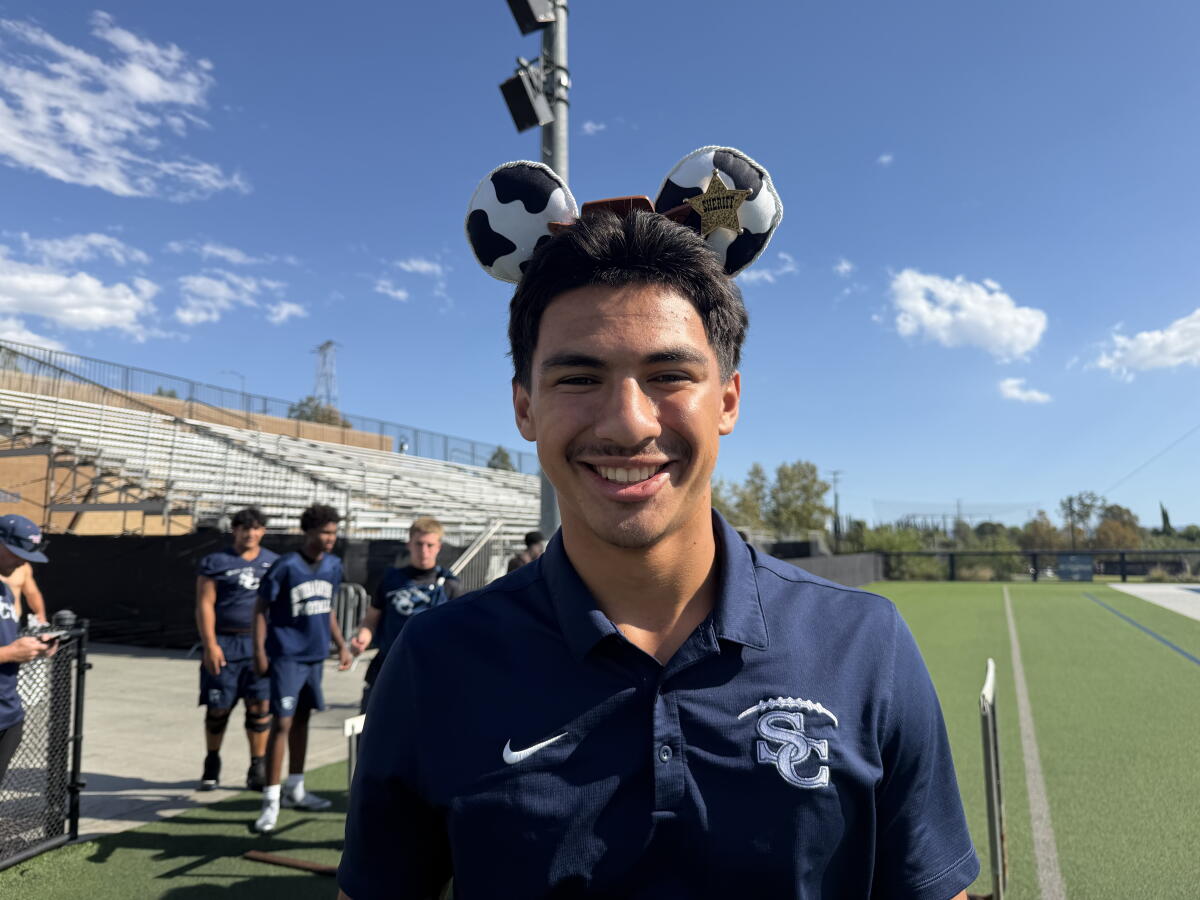
It was Disney Day at Sierra Canyon High, so standout sophomore linebacker Eli Zamorano showed up at football practice wearing Mickey Mouse ears atop his head on Monday.
Walking past, teammates either stared or smiled at the ears.
“He’s a kid who beats to his own drum,” coach Jon Ellinghouse said.
It makes perfect sense, for it was Zamorano as a freshman who was walking in rain and freezing temperatures last November on the field two hours before Sierra Canyon’s playoff game against Santa Margarita going through his pregame routine listening to music from Nirvana and not letting any elements disrupt him.
“I’m not gonna let the weather determine my pregame,” he said. “And I’m actually used to the cold experience. My dad taught me to swim in cold water. That’s who I am.”
At 6 feet 2, 205 pounds, Zamorano is showing signs of becoming one of the best linebackers in the state for a 5-0 Sierra Canyon team that opens Mission League play on Friday against Loyola. He can be the player who’s in on every tackle up the middle or the player covering running backs out of the backfield. He watched his brother, Roman, now at Air Force, play for the Trailblazers last season at middle linebacker and has been taught by his father, Antonio, a former Garfield football player, to focus on toughness and fundamentals.
“It’s the mental toughness our dad taught both of us,” he said. “He played old-school football.”

Linebacker Eli Zamorano wearing his Mickey Mouse ears on Disney Day at Sierra Canyon.
(Eric Sondheimer / Los Angeles Times)
His father became a doctor, his mother a lawyer. They’ve shown their boys a path to success but each must find their own way, though having a doctor in the family while playing football is pretty neat.
“When we were little, 7 or 8 years old, he would take us to see his patients at the hospital,” Zamorano said. “So we learned a lot there. It’s like we have free health care. He walks in our room and feels the [ankle]. He knows what the risks are.”
Zamorano can play the ukulele, listens to music created years ago and doesn’t pay attention to what others think.
“I would like to say I’m a very enthusiastic kid,” he said. “I still like to live life to its fullest. I’m not going to let any outside voices determine what makes me, me. I kind of don’t listen to the music that people do nowadays, and a lot of people call me out. It makes me Eli. And you know, it’s just who I am.”
When he was 15, he spent nearly three months living in Rapa Nui, one of the world’s most remote Polynesian islands. His grandmother was born there. It’s also known as Easter Island and is a special territory of Chile. There’s wilderness, beautiful beaches, amazing sunsets and time for a teenager to reflect on the future.
“I was down there training hard, learning more about my culture, where my family’s from,” he said. “I actually did dancing. It was a really fun experience.”
Whether walking in freezing rain without an umbrella or wearing Mickey Mouse ears around campus, Zamorano always knows what he’s doing.
“A couple girls said they were cute,” he said of his borrowed ears.
Who’s going to question Zamorano’s choices now?

‘Economic war’: Is Iran losing its leverage over the Strait of Hormuz? | US-Israel war on Iran News
As Iran and the United States work with mediators to end seven months of hostilities, the reality in the Strait of Hormuz is shifting in ways that could prove to be a game-changer in ongoing negotiations.
According to the latest data from tanker-tracker websites, traffic through the key waterway has been steadily increasing, with some estimates putting oil and petroleum flow through the Strait of Hormuz at nearly 80 percent of what it was before the US-Israeli war on Iran began on February 28.
Recommended Stories
list of 3 itemsend of list
This could dent Iran’s leverage in reaching a favourable deal for itself in its attempts to end the fighting, which has seriously hampered its already heavily sanctioned economy, amid the US blockade of Iranian ships and ports.
Despite that, experts believe it would be a mistake to think normality in the Strait of Hormuz is imminent, or that Iran will fold easily despite growing economic hardship.
“The fact that oil is getting through the Strait of Hormuz is encouraging, but flows are not yet regarded as completely secure or guaranteed, particularly while the wider conflict remains unresolved,” Susannah Streeter, chief investment strategist at Wealth Club, told Al Jazeera.
Moreover, oil prices remain high globally, including in the US, where President Donald Trump faces a crucial midterm election that could see his party swept away in both houses of Congress.
Tanker insurance costs also remain elevated and energy flows through Hormuz are still far from secure, suggesting Iran’s leverage may be weakening rather than disappearing.
Oil flows through Hormuz recovering
The latest data from commodity analytics firm Kpler points to a significant recovery in oil exports from the Middle East.
Crude exports reached an estimated 16.328 million barrels per day (bpd) in September – their highest level since the war began in late February, the firm reported this week.
Flows through the Strait of Hormuz itself were expected to reach about 9.719 million bpd during the month. Saudi Arabia has driven much of the increase, with its exports rebounding from 2.446 million bpd in August to about 5.4 million bpd in September.
Kpler said Middle East crude exports have recovered to just under 80 percent of their pre-war level. But the figures remain about 3.2 million bpd below the 19.513 million bpd exported in February.
The data also does not include ships crossing Hormuz with their tracking systems switched off, meaning actual traffic could be higher.
Prior to the war, an estimated 120-140 vessels crossed through the waterway daily, roughly half of them oil tankers moving approximately 20 million barrels per day. At the height of the fighting, traffic through the waterway collapsed to as few as two tankers a day after Iran in effect closed the strait in retaliation for US-Israeli attacks.

Is Iran losing leverage?
The rebound in oil flow presents a challenge for Tehran. Iran has sought to use its ability to disrupt the Strait of Hormuz – one of the world’s most important energy chokepoints – as leverage against Washington’s military and economic pressure.
But if large volumes of oil can continue moving through the strait while Iran itself remains under a US naval blockade, Tehran’s bargaining power could diminish.
Iran, however, rejects any assessment that its control over the strait is slipping.
Islamic Revolutionary Guard Corps spokesperson Hossein Mohebbi on Tuesday said the ability of vessels to transit the waterway with US assistance did not mean Hormuz had returned to normal.
Oil prices are another indication that Iran has not lost all of its leverage.

Brent crude fell 2.6 percent to $102.59 a barrel on Tuesday as traders focused on recovering Middle East exports. But it was still heading for a roughly 13 percent gain in September.
Chris Beauchamp, an analyst at IG, said markets were beginning to incorporate evidence of recovering flows but remained wary about how durable that recovery would be.
“It takes time for evidence to filter through to markets,” Beauchamp said. “Oil prices came off yesterday as the narrative began to take hold, and should continue to fall.”
But he said concerns persisted over whether the US protection system could withstand a renewed barrage of Iranian missiles and drones.
Streeter of Wealth Club said the market still had a geopolitical risk premium built into crude prices, despite the improving flows.
“Insurance costs for tankers also remain elevated because of the perceived risks of operating in the region, adding to the cost of transporting crude even as more ships make it through the waterway,” she said.
Moreover, Streeter warned that crude figures tell only part of the story. Flows of refined fuels, particularly diesel and gasoline, remain constrained, while damage to infrastructure has placed additional pressure on energy supply chains, she added.
There is another vulnerability, the investment strategist pointed out. Countries including the US have relied heavily on strategic oil reserves to cushion the impact of the disruption and help contain prices.
“With those stockpiles now significantly depleted, there is a thinner buffer if there is another disruption, which is helping to keep a floor under crude prices,” Streeter added.
‘Economic war’ on Iran
There is little doubt that economic pressure on Iran is intensifying, potentially increasing Tehran’s incentive to reach an agreement.
Official data from the Statistical Center of Iran earlier this month showed gross domestic product (GDP) contracting 10.1 percent year on year between March 21 and June 20, while the crucial oil and gas sector shrank 26.4 percent.
Iran has also been battling high inflation and a plunging currency as the US blockade constrains oil exports and foreign currency earnings.
Twelve-month average inflation reached 69.9 percent earlier in September, while the rial had fallen beyond 2.2 million to the US dollar in early September.

In August, the US announced a fresh economic pressure campaign against Iran, promising to target Tehran’s financial interests across the world.
Mohammad Eslami, a research fellow at the University of Tehran, told Al Jazeera that Iran was facing an “economic war” alongside the military conflict.
“There is a US blockade of the Strait of Hormuz, which affects Iran’s revenues from oil exports and other products such as petrochemicals, which are important to Iran’s economy,” Eslami said. “As a result, Iran’s dollar revenues have been affected by the blockade.”
But he cautioned against judging Iran’s economy solely through the value of its currency.
“The exchange rate is a very important indicator, but it is not the only measure for explaining what is happening or the difficulties and challenges facing Iran’s economy,” Eslami said, adding that Iran has faced US economic pressure for “five decades”.
Can a deal be reached?
Despite the military and economic pressure, negotiations have not collapsed.
At the United Nations General Assembly last week, Tehran and Washington engaged in three hours of indirect talks, as US special envoys Steve Witkoff and Jared Kushner met with Iranian Foreign Minister Abbas Araghchi.
President Trump later described the encounter as “very good” and “very productive.”
Iran also proposed a seven-day roadmap under which the Strait of Hormuz could be reopened and normal maritime traffic restored if Washington meets Tehran’s conditions, a plan Trump categorically rejected.
Those conditions included ending the naval blockade on Iran, easing sanctions and releasing frozen Iranian funds.
However, on Wednesday, Reuters news agency reported that Araghchi had received US feedback on the proposal through Qatari mediators.
An official briefed on the talks said the main disagreement now centred on the sequencing of measures rather than the components of the plan.
N Korea and S Korea exchange threats over DMZ blast | Newsfeed
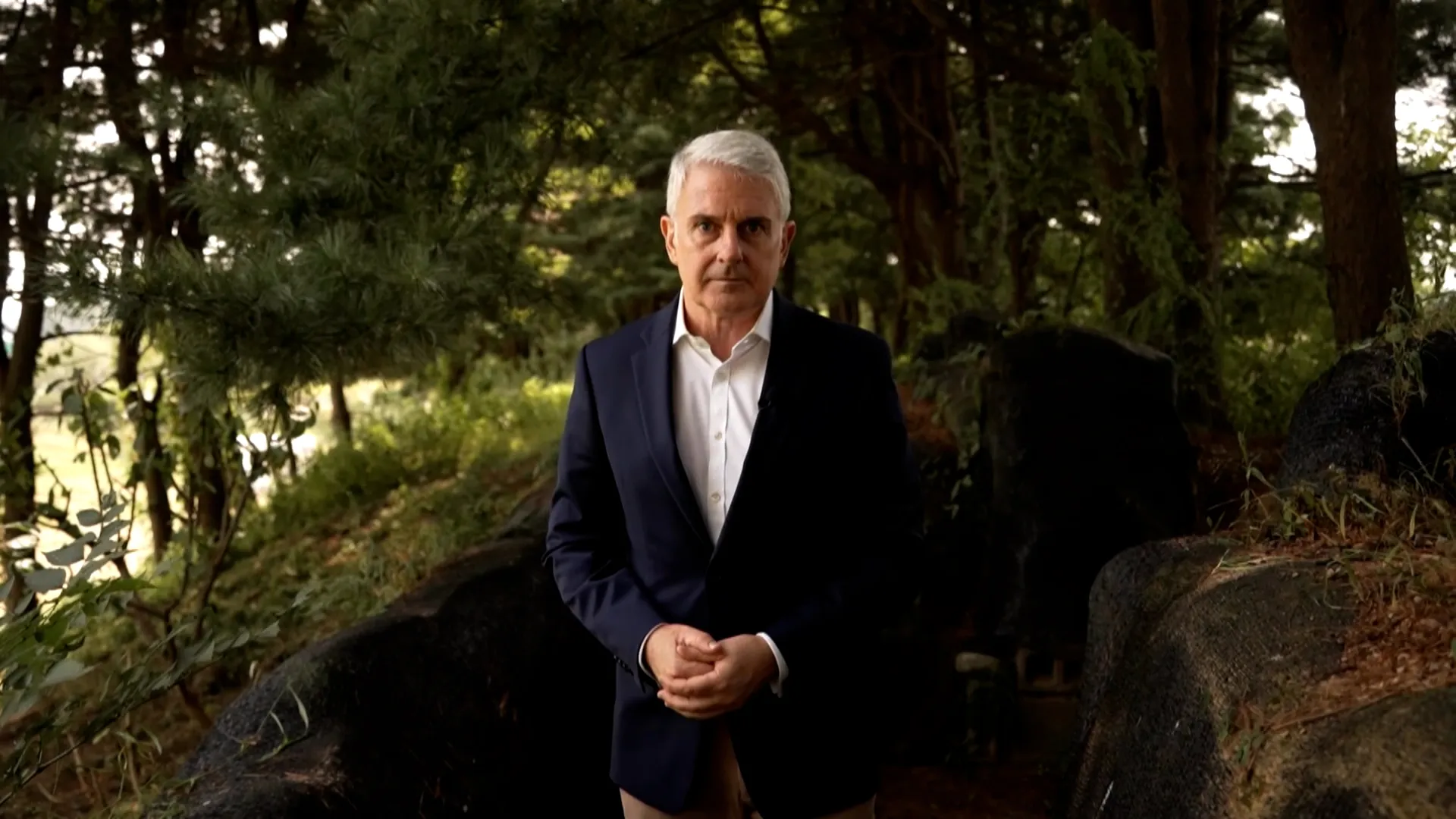
A landmine explosion which injured three South Korean soldiers in the Korean Demilitarized Zone last week, has prompted Seoul to accuse North Korea of deliberately planting mines south of the Military Demarcation Line. Pyongyang denies the allegations and has threatened to retaliate. Al Jazeera’s Jack Barton reports from the DMZ.
Published On 30 Sep 2026

Contributor: There’s a reason people are still talking about Julie Andrews as she turns 91
Summer mornings in the Hill Tracts region of Bangladesh are a respite from the dissonance of honking cars and construction of the capital city of Dhaka. It was a welcome change to hear chickens and the sound of … wait, was that Julie Andrews’ voice echoing over the hills?
I was visiting my home country when I heard a group of schoolchildren playing ektaras, a traditional string instrument, and singing the “Do-Re-Mi” song for their morning assembly.
I used my phone to show them a picture of Andrews. “Do you know her?” They immediately leaped in excitement. They didn’t know the composer Richard Rodgers or lyricist Oscar Hammerstein II. But they knew Andrews — even though 60 years have passed since “The Sound of Music” and these children live in a remote Bangladeshi village. The recognition is evidence of something extraordinary.
Andrews is turning 91 on Thursday, and there are calls online to bubble wrap her, just in case. She is indeed a global treasure, and she has been earning plaudits and admirers for eight decades.
Andrews trained in the Italian bel canto tradition and from a young age sang challenging coloratura arias with precision, clarity and range. The bright, happy tone, perhaps a subconscious decision rather than anatomical alone, provided her respite from the doodlebug bombs that fell during her childhood in England in World War II. British critics had dubbed her as the “youngest prima donna,” a title usually reserved for opera greats, and it wasn’t undeserved. At just 12, she routinely floated high Fs above the treble staff during live performances.
Yet before opera could claim her, Broadway stepped in. From “The Boy Friend” to “My Fair Lady” and then “Camelot,” she won the hearts of theater goers and creators alike. Lyricist Alan Lerner described her as “an amazingly quick study in music … who meets any challenge with an unabated eyelid that makes you wonder how Britain ever lost the empire.”
Her voice then was so precise that the late maestro André Previn, who led the London Symphony Orchestra, proclaimed: “No one’s diction in any field of singing can come close. … You understand every syllable from the second balcony — I don’t understand how you do that.”
It’s inaccurate to romanticize her legacy in 2026 as simply nostalgic. That would overlook the depth and progressive nature of her characters. She was essentially the first female superhero on the big screen, as Mary Poppins — who could fly and create alternate realities with the snap of her heels, but whose more stunning superpower at the height of the Cold War was to charmingly portray capitalism as dangerous.
In “Victor/Victoria,” she navigated a gender-bending performance that challenged societal norms, playing a woman who impersonates a man impersonating a woman when it was taboo to speak about any layer of that. Her most overlooked and perhaps her best dramatic role was in “Duet for One,” a 1986 film about a musician who suffers from multiple sclerosis. Tragically this became a moment of life imitating art, foreshadowing her own destiny to lose her instrument after throat surgery in 1997.
Rather than retreat, Andrews adjusted and leaned into voice acting with characters like the dominant Queen Lillian in “Shrek” films, Gru’s hilariously villainous mother in “Despicable Me” and the mysterious Lady Whistledown in “Bridgerton,” for which she won an Emmy, twice.
In real life, the flying super governess fought to adopt two babies from Vietnam just after the fall of Saigon, helping to raise awareness of the need for adoptive parents. She then co-founded the Operation USA disaster relief charity and opened the Japanese wing for the United Nations Development Fund for Women.
Whether it was to support UNICEF after the devastating Bhola cyclone hit present-day Bangladesh in 1970 or jetting to Jordan and Senegal to support women’s and children’s activities, she was a quiet champion for the underserved. In her most famous role, in “The Sound of Music,” she was a savior for children being displaced by war.
Andrews is mostly out of the public eye, but her singing is eternal and accessible. YouTube is home to a trove of Andrews performances, including “This Is My Beloved” from “Kismet,” full-voiced “When You Wish Upon a Star,” from pianissimos to fortes, high B-flats and all — her classical skill shines through. These recordings remind us that beyond just the formulaic legato phrasing that singers from the Italian tradition follow, and the clear resonance, her work it set a gold standard for musical storytelling that few have surpassed since.
Julie Andrews is no longer trilling on the Alps, nor is she reprising her role as queen of Genovia in a “Princess Diaries” film, but her voice, and what it represented for more than 80 years, endures. It lives on not just in films and recordings but also ringing in the minds of children and adults alike, from her hometown of Walton-on-Thames to the Hill Tracts of Bangladesh. In an age of doom scrolling (and alarmingly low singing standards), her vast career offers a rare resonance and a continuing masterclass.
Shams-il Arefin Islam, a Yale-Berkeley College associate fellow who works on climate mitigation and adaptation, is a classically trained tenor.

Race to replace Pelosi divides Democrats in San Francisco
After being securely held for nearly four decades by one of the most preeminent politicians in California history, the House seat to represent bright blue San Francisco in Congress is up for grabs in November — and dividing the Democratic Party.
Rep. Nancy Pelosi (D-San Francisco), 86, the powerful former House Speaker who’s held the seat since 1987, announced last year that she would not run again. In May, she passed over state Sen. Scott Wiener (D-San Francisco) — a prolific California legislator long considered a potential successor — to endorse San Francisco Supervisor Connie Chan, a local progressive with less legislative experience but strong support from labor.
Pelosi’s endorsement sent Chan, who had been languishing in polls, surging past Democratic tech millionaire Saikat Chakrabarti in the June primary. Chan finished with nearly 30% of the vote and Chakrabarti took 18%. Wiener won, with nearly 41% of the vote.
Both Wiener, a gay man and staunch advocate for the city’s large LGBTQ+ community, and Chan, who immigrated to the city from Hong Kong at age 13 and has deep ties to its large Chinese and immigrant communities, would make history by winning. Wiener would be the first out LGBTQ+ person to represent the city in Congress, and Chan the first Asian American immigrant woman.
The race has sharply divided the state’s Democratic establishment as a rare intraparty showdown between a deft legislator who has driven liberal California policy for years and a rising progressive with the powerful imprimatur of the icon they seek to replace.
Both acknowledge they would take the same or similar positions on many issues, and fiercely oppose President Trump’s agenda. But they also say San Franciscans face a real choice between them that will help define the city for years.
“There is a clear cut between the two of us,” Chan said. “He has long enjoyed establishment support and industry support, and we’ve been grassroots, on the ground, [Asian American and Pacific Islander] community, working people and labor unions — in collaboration and coalition building.”
“We need Democrats who are willing to fight — to fight in a smart way, and to fight in an aggressive way, to defeat Donald Trump and to lower the cost of living,” Wiener said. “We are past the time where we need Democrats in office who were just going along to get along, or who, like Connie Chan, are just part of the status quo.”
Wiener is a MAGA target
Wiener, 56, has lived in the Castro neighborhood since 1997 and was a deputy city attorney and local Democratic Party chair before being elected to the Board of Supervisors in 2010. He was elected in 2016 to the state Senate, where he’s had a massive influence, authoring more than 100 bills that have been signed into law. Allies and critics say he is a workhorse, and at times both effective and divisive.
Wiener has been endorsed by the state and local Democratic parties; a slew of state leaders including California Atty. Gen. Rob Bonta, state Senate President Pro Tempore Monique Limón (D-Santa Barbara) and Assembly Speaker Robert Rivas (D-Hollister); various queer and labor groups including AFSCME; more than half the city’s supervisors; and various members of Congress.
Wiener has passed some of the state’s most progressive laws on LGBTQ+ rights, including protections for gender-affirming care, and challenged federal immigration agents in California. He has also pushed progressive laws — backing safe injection sites, extending bar hours until 4 a.m., decriminalizing psychedelic drugs — that have put some of his fellow Democrats in uncomfortable spots when forced to vote on the controversial issues.
Some in San Francisco label him a moderate, though that designation would draw laughs elsewhere in the country and even in Sacramento. Wiener is one of the most reviled state politicians on the conservative right nationally, and has received scores of death threats for his work, particularly on transgender issues. His website touts a laundry list of profane and homophobic attacks from MAGA loyalists — Elon Musk called him a “scumbag,” former Rep. Marjorie Taylor Greene called him a “communist groomer” — that he wears as a badge of honor.
On housing, Wiener has pushed for deregulation and development near transit hubs statewide to solve the housing and affordability crises, riling some homeowners averse to increased density and some progressives who say his plan favors developers and threatens existing rent-controlled housing. On tech, Wiener has pushed for artificial intelligence regulation but also been criticized for taking a technocratic approach with buy-in from wealthy tech leaders.
Wiener has passed laws protecting net neutrality, capping prescription costs and mandating mental health parity, ending mandatory minimum sentences for nonviolent drug offenders, and requiring corporations disclose their greenhouse gas emissions. He has received substantial financial support from tech leaders and opposes Proposition 40, the ballot measure that seeks to impose a one-time tax on the state’s billionaires.
Rep. Robert Garcia (D-Long Beach), also gay and a former Long Beach mayor, said he considers Wiener a friend but also a generational legislator who has “led the country” on LGBTQ+ rights and housing policy. “I don’t think there’s a better legislator in the United States on housing,” Garcia said.
Rep. Laura Friedman (D-Glendale), who worked with Wiener for years in the state Legislature, said he has been a champion for many issues important to Californians — including the environment — while holding big industry accountable and backing labor. She said while many politicians decide to either rack up easy wins with legislation that barely moves the needle or focus on “progressive value signaling” without accomplishing much of anything, Wiener “takes on some of the most difficult and controversial progressive issues and really gets them done.”
Nancy Tung, the local Democratic Party chair, said many San Francisco politicians “recede” from the city’s raucous local policy debate once they reach higher office, but Wiener is “still is in the knife fight,” especially on housing and affordability issues — showing he cares about the city and making him “such a good fit” for Congress.
Tung said she understands the appeal of sending a fellow Asian American woman to Congress in this political moment, but that Chan “just does not have the legislative record that Scott has.”
Chan for ‘working people’
Chan, 47, who lived in a rent-controlled Chinatown apartment after immigrating with her mother and younger brother, now lives with her firefighter husband and son in the Richmond neighborhood. She was a community and legislative aide for years — including for then-Dist. Atty. Kamala Harris — before being elected to the Board of Supervisors in 2020. She has served as budget chair since 2023 and has centered her campaign, largely funded by Pelosi’s network, around what she calls her “career fighting for working people.”
Chan has been endorsed by a host of Congress members, including Pelosi and Sen. Adam Schiff (D-Calif.); major labor groups including the California Federation of Labor Unions and the California Teachers Assn.; various progressive organizations and fellow and former supervisors; former mayor and S.F. power broker Willie Brown; and Chakrabarti, who since the primary has shared his campaign staff and funding with her.
Chan, who supports Proposition 40, has helped create a $400-million reserve fund in San Francisco to make up for federal cuts to Medicaid and housing subsidies. She also passed a supplemental budget to fund immigration defense services for people targeted by the Trump administration and passed various labor-friendly measures, including a minimum wage increase for in-home workers and cost-of-living adjustments for city service workers.
Pelosi said Chan “understands that budgets are statements of our values,” has “championed justice and progress for working families” and “brings an important lived experience to this moment” as an immigrant woman. Schiff said Chan has impressed him as “a very powerful voice for those who are disenfranchised” and someone with “the potential of growing into” a leader like Pelosi.
Kim Tavaglione, executive director of the San Francisco Labor Council, said she encouraged Pelosi to endorse Chan because Chan “supports San Francisco values,” listens to labor and is a great strategist.
Cleve Jones, the San Francisco activist who has fought for gay political representation since Harvey Milk’s historic 1977 election to the Board of Supervisors, said Wiener “has done some very good things, particularly around LGBTQ issues and HIV/AIDS,” but also angered some in the LGBTQ+ community by repeatedly showing up to an annual Trans March that organizers ask politicians not to attend.
Wiener, who is Jewish, was aggressively heckled at this year’s march, namely for his stance on the Israeli war in Gaza, which he was slower than other progressives to label a genocide. Conservatives mocked him for being targeted by his base, and Wiener ended up fundraising off the incident — which Jones said was “so cynical.”
He said Wiener’s “loyalty is to big developers, big tech and big real estate,” and that he “doesn’t really see the urgency of yet another white man elected to Congress” when San Francisco can send a stronger message by electing Chan, an immigrant woman of color.
Affordability and Trump
Chan said she is a “pragmatic” progressive who has balanced the city’s budget while protecting “healthcare, education, immigration resources” and other working-class priorities. She said Wiener is focused on deregulation for market-rate housing development, whereas she has prioritized tenants’ rights and protecting existing rent-controlled housing in her push for affordable units.
Chan said she will “walk and chew gum at the same time” in Washington by working for affordability while battling Trump, including by reversing his healthcare cuts, expanding Medicaid, providing affordable childcare, abolishing U.S. Immigration and Customs Enforcement and finally figuring out meaningful immigration reform.
“I’m not sugarcoating it as if it’s easy. But we gotta be able to find ways to work together to push those things forward,” she said.
Wiener said he and Chan share the goal “of getting Trump and MAGA out of office, and then making sure that people never feel tempted to flirt with authoritarianism again.”
But he said the way to do that is to advance policies that will “lower people’s cost of living and make people’s lives more sustainable” — including by passing universal healthcare, building millions of new homes, creating low-cost child care and leading a clean energy transition — and that he is the only candidate in the race with a proven ability to do that.
“This is a race to succeed the most effective and operational member of Congress in modern American history,” Wiener said. “San Francisco should send someone who actually has a track record, a proven track record, of being able to deliver.”

London Marathon 2027: Sabastian Sawe and Catherine Debrunner play rock, paper, scissors to decide race days
A game of rock, paper, scissors was used to determine when the elite female and male races will take place at next year’s unique two-day London Marathon.
Men’s world record holder Sabastian Sawe was beaten by women’s wheelchair world record holder Catherine Debrunner – both 2026 London Marathon champions in their respective races – in the contest.
As a result, the elite men and men’s wheelchair races are set for Saturday, 24 April, with the women’s events taking place the following day on the traditional Sunday.
Hugh Brasher, chief executive of London Marathon Events, said: “Sabastian and Catherine’s rock, paper, scissors battle was an entertaining way to decide which day would host each elite race.
“Splitting the elite races will allow us to shine an even brighter spotlight on the extraordinary athletes taking part.”
Earlier this year, organisers of the event confirmed the London Marathon will be held across two days in what is said to be a momentous one-off edition of the event.
The decision was made to enable more people to take part, after a record 1.33 million people entered the ballot for next year.
In 2027 a record-breaking 100,000 participants will take part and it is estimated that more than £150m will be raised for charitable causes.
The women’s championship categories will line-up behind the women’s elite field for the first time in the London race.
“Our outstanding elite women’s wheelchair field will begin the action just ahead of them, creating a true celebration of women’s marathon racing,” Brasher added.
The main events on both days will be a mixed field of male, female and non-binary participants.
Former American Idol contestant found guilty of murdering wife | News
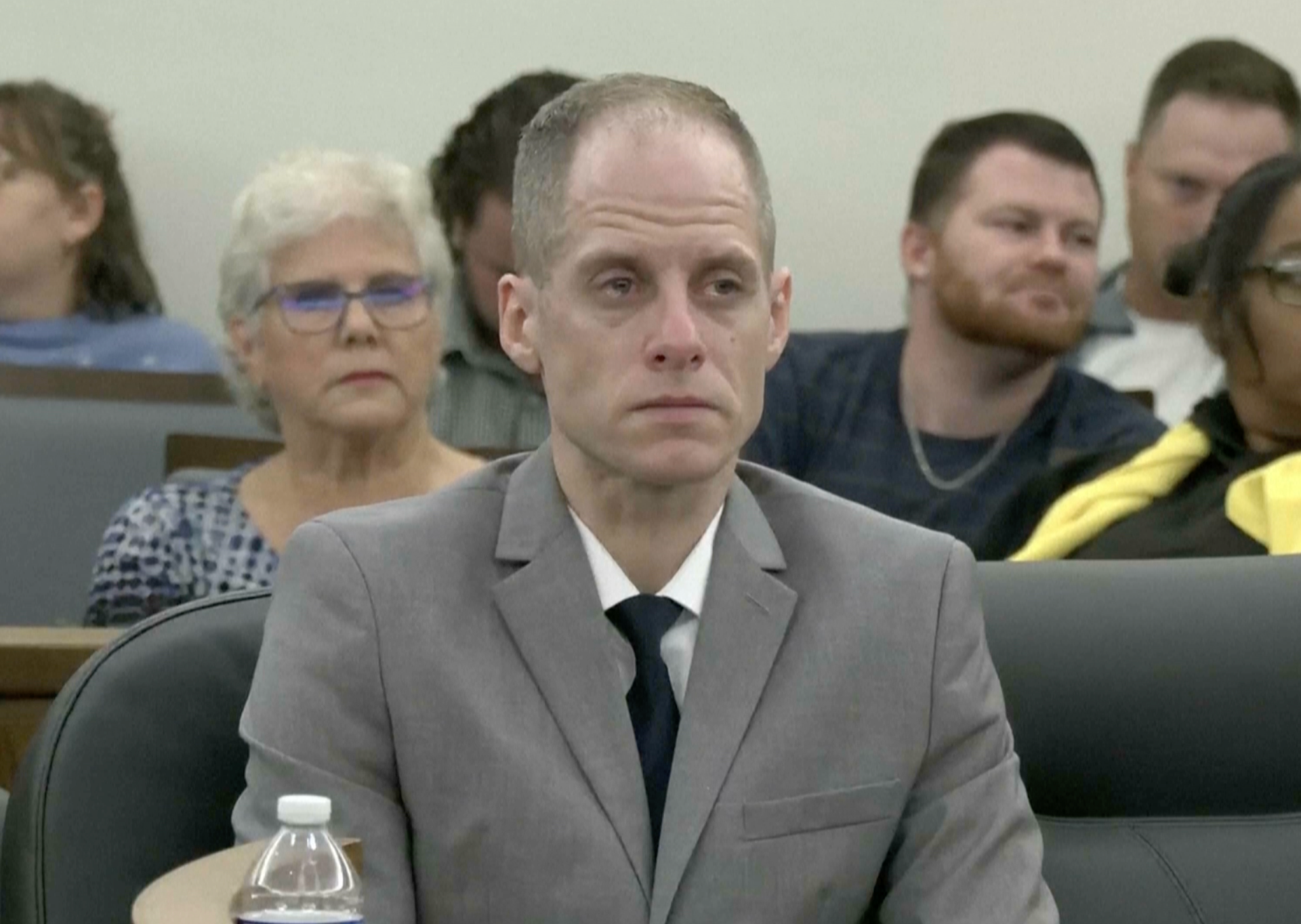
Former American Idol contestant Caleb Flynn has been found guilty of murdering his wife, Ashley, while he was having an affair. He will be sentenced on Monday and could get up to life in prison without the chance of parole.
Published On 30 Sep 2026