



Longtime Venice football coach Angelo Gasca has died
Angelo Gasca, a one-of-a-kind high school football coach who grew up using football to escape from gangs and became a beloved special education teacher, mentor and coach for 36 years at Venice High, died Monday night while watching a Lakers game on television, according to longtime friend, Steve Clarkson. He was 65.
The 1978 Venice graduate never left his neighborhood. Gasca won his first and only City Section Division I championship in 2021. He was known for his innovative passing schemes and producing numerous top City Section quarterbacks, led by former NFL player JP Losman. He was such a fixture at Venice that coaching sons of former players became the norm. He loved the concept of “neighborhood team.”
Perhaps his most important contribution was training, supporting and preparing players to become teachers and coaches. Most of his staff at Venice has been made up of former players. He’d help them stick with the difficult task of earning a teaching credential and find jobs for them.
He was most proud of former running back Byron Ellis, who became an orthopedic surgeon, and receiver Brycen Tremayne, who walked on at Stanford, went undrafted and made the Carolina Panthers.
Last month, Gasca was asked if he ever learned anything from a player and he told the story of having a coaches meeting and one of his ex-players reminded him how he wanted to quit football but Gasca wouldn’t let him.
“I’m not accepting your resignation today,” Gasca told him. “You need to go home and think about it.”
Said Gasca: “He went home and thought about it and stayed on the team and was the starting center. He taught me the best thing we can teach kids is come to school and you never know what connections you’ll make at the school you grew up at. He taught me there’s more to coaching than winning games and scoring touchdowns. In our lives as teachers and coaches, we do learn from players. When we stop learning, it’s time to stop coaching.”
Even though there were rumors last season of Gasca retiring, he insisted he was coming back because he loved teaching and coaching and believed that sports competition can change someone’s life for the better.
“My parents didn’t attend high school,” he said. “When you play, you get a little taste of success and want to play harder and people come into your life and help you. It’s just as easy to do well as it is to do bad. Sometimes when your friends zig right, you have to zig left. The life lessons we learn together is what it’s about.”

Video: What we know about Israel’s assault on southern Lebanon | Hezbollah
The Israeli military has launched waves of air raids across southern Lebanon after announcing “limited and targeted ground operations” against Hezbollah positions. Al Jazeera’s Zeina Khodr is in Marjayoun, which has been turned into an active war zone following clashes.
Published On 17 Mar 2026

We left the UK and bought a French countryside house for £137k
FOR some, upping sticks and moving to another country is just a pipe dream – for others, it becomes a reality.
In 2023, Rob and Lisa took the plunge and swapped life in the UK for one in south- western France – they got their new home for a bargain price and say it still feels like a holiday.
Rob and Lisa have starred in the latest episode of A Place in the Sun: What Happened Next? which showed their progress 10-months after moving to France.
But talking to Sun Travel, Rob revealed he and his family have been living there now for two and a half years after ditching their life in Hastings.
They now live in a rural hamlet in a three-bedroom barn conversion with two-acres of land.
Rob explained: “We bought our house in France for £137,000 – but back in the south of England, for a property this size, you’d be pushing north of £2million.


“Our life now is completely different to the one we left behind – everyday feels like a holiday.”
The retired couple live in the French region of Charente with their two young children Robbie, 11, and Evangeline, 4.
Not to mention all their pets; three ponies, chickens, a dog and a cat.
One major difference that the family found when starting their new life is that the culture is very different, and it’s not a bad thing.
Rob said: “The French work to live rather than live to work.
“I found that they take two hour lunch breaks very seriously. You have to be careful if you go to the shops because they will be closed for a few hours from midday.”
Lisa added: “Everything moves a little slower and things take longer to go through than they do in the UK, but you need to embrace the lifestyle.”
Rob continued: “We’ve been having the time of our lives since we moved here, it still feels like a holiday – and we never set an alarm.
“You can be spoiled very quickly in France, and you can get used to life here – but I don’t want to get used to it.”
Lots of Brits move to find better weather than the UK offers, and Charente is generally much milder.
Summers can see highs of 30C, but can get even hotter – Rob said that the day the family moved in it was a scorching 39C.
In the winter, it rarely gets into the negatives but it does take a while to warm up the house when it’s chilly as there’s no central heating – their home has a log burner instead.
As for other costs, the couple said that the cost of living in Charente is cheaper than in the UK.
Rob said: “Our equivalent of council tax in France is called Taxe Foncière and I pay €1,500 (£1,296.07) a year.
“Whereas in the UK I’d be paying north of £2,000 – utilities are little cheaper too.”
When it comes to food, it’s generally like for like – unless as Rob says “you want to live off a diet of beer and whisky.”
But one upside is that you can pick up a quality bottle of wine for a couple of euros.
Rob revealed you can buy a bottle of J.P. Chenet for as little as €5 (£4.32).
While there aren’t necessarily bars in the surrounding French villages, there are plenty of local restaurants.
Rob said: “You can’t go wrong with French food, they don’t know how to do a bad meal.
“Everything is so exquisite and with real passion.”
The language barrier hasn’t been a problem either.
Rob said: “Well, I’m four years into Duolingo. I can go into a shop or a hairdressers and hold my own. My French isn’t perfect, but I can get by.”
“Our children speak the language, and they have such a great accent that even the French can’t believe they’re English.”
Speaking of the English, there’s a large expat community in the region with around 16,000 Brits living there.
Although in the hamlet where the family live they say their neighbours are split with around half being English, and half French.
The region is generally quiet off-season, but when summer arrives, it gets much busier with visiting British tourists.
Rob confessed that when that time arrives, he tries to avoid the holidaymakers.
He said: “If they hear my English accent in a shop they’ll come over and ask questions, so Lisa and I start speaking French to each other to avoid that.
“It’s sad as well, sometimes local restaurants can seem more like Wetherspoons because it’s full of loud English people.
“I think when tourists come over, they need to try and blend in more with the locals – the French are much more quiet, but very friendly.”
Thanks to their new life in France still feeling like a holiday, the family haven’t taken an official break yet, but plan on visiting Disneyland Paris later in the year.
The country’s capital and the theme park is a five hour drive north of Charente.
Or, if they fancy the beach, La Rochelle is less than two-hours away by car and the city of Limoges can be reached in an hour and a half.
As for leaving life in the UK firmly behind them, Rob and Lisa confess there’s nothing they miss, apart from family members.
But one-way flights to where they are in France can be very cheap, with the closest airport being in Limoges.
In May, you can get one-way tickets from London Stansted to Limoges for as little as £13 with Ryanair.
A Place in the Sun: What Happened Next? airs weekdays from March 16, 2026 on Channel 4.
You can catch up on Rob and Lisa’s episode on Channel4.com.
And if you want to keep up with Rob and Lisa’s home renovation and hear more about taking on the move from the UK to France, check out their YouTube channel Escape to France – Charente.
Here are five top tips for anyone moving from the UK to France…
Lisa revealed her top tips for anyone buying a property in France…
- Plan for delays
The process for buying a house usually takes between two and three months, but can be longer. - Use a notaire that you trust
A French notaire is a state-appointed legal professional required for authenticating acts in property sales – and find one that you trust to help with the buying process. - Look out for extra costs
The notaire fees are usually around 8 per cent of purchase price, and take into account renovation costs and ongoing taxes. - Open a French bank account
In France you need a footprint for big purchases – even if you pay in cash. So open a bank account as soon as possible. - Do the research on location
The weather can change dramatically across France in places just 30-minutes away, so make sure to look carefully before committing to a big buy.
For more on A Place in the Sun success stories, one woman bought her dream home in Spain for £45k.
And here is a beautiful Spanish city that ‘has it all’ with cheap flights and is loved by A Place in the Sun presenters.

Drones expand the deadly front lines of Sudan’s devastating war | Sudan war
The United Nations is warning that rapidly escalating drone warfare in Sudan has killed more than 200 people in little over a week as schools, hospitals, and civilian infrastructure become targets.
Published On 17 Mar 2026

LuLu claims BeeGees star ex Maurice Gibb secretly fathered a son when they were together and she ‘only just found out’
SINGER Lulu has claimed her Bee Gees pop star ex Maurice Gibb secretly fathered a son during their relationship – and says she’s “only just found out”.
The shock revelation about the late music legend has left fans stunned, decades after their high-profile romance.
Lulu was married to her late ex-husband Maurice Gibb for six years, with their relationship officially ending in 1975 – and the couple never had children together.
The star opened up about the bombshell that he might have a son on The Louis Theroux Podcast.
She admitted the news came as a complete surprise decades after their relationship ended.
Louis said: “You know, we’re not always our best selves and that Morris, I think it’s openly acknowledged now, had a fling with Barbara Windsor while he was with you.”


Lulu admitted: “Think he’s got a son. It might have happened when we were married.”
She continued: “I just found out someone showed me something with a guy, and I can’t remember the year he impregnated this girl after a one-night stand, and she has a son who has had his genes taken.
“It’s proven he’s 100% Morris.”
A shocked Louis asked: “While he was with you?”
Lulu answered: “I didn’t do the math because it wasn’t that important.”
Louis stunned replied: “Why isn’t it important?”
Lulu responded: “Today, c’est la vie.”
The Bee Gees went on to become one of the most successful bands of all time, dominating the charts with a string of global hits.
From disco anthems like Stayin’ Alive and Night Fever to timeless ballads, the group sold over 200 million records worldwide and helped define an entire era of music.
Gibb died in 2003 after suffering a cardiac arrest at his home in Miami, aged just 53.
He had two known children – daughter Samantha and son Adam – with his second wife, Yvonne Spenceley.
But in 2019, Nick Endacott-Gibb – who was adopted as a baby – claimed he is the biological son of the British star and band studio manager Patti Nolder, after a DNA test reportedly showed a “100 per cent match” with Maurice’s son Adam.
Following her divorce, Lulu went on to date celebrity stylist John Frieda – but the romance was rocked by a short-lived affair with David Bowie.
The star hasn’t slowed down despite her decades-long career.
She’s continuing to perform live, with shows lined up in the UK, including a major concert at London’s Royal Albert Hall in 2026.
As well as music, she’s been opening up about her life in recent years – releasing her memoir If Only You Knew and speaking candidly about her past struggles, including her battle with alcoholism and journey to sobriety.

Are the Lakers the hottest team in the NBA?
Welcome back to this week’s Lakers newsletter, where we are fully scoreboard watching.
The Lakers have 14 games left and are surging up the Western Conference standings. With six consecutive wins and nine in their last 10, the Lakers (43-25) are third in the West and suddenly have a 1.5-game lead on fourth-place Houston.
The team that couldn’t beat anyone good suddenly has statement wins over four teams with .600 records. The turnaround from fighting to stay out of the play-in to now being in position for homecourt advantage left even JJ Redick struggling to find the right description.
“Is coalesce a word?” Redick said after the Lakers outlasted the Denver Nugget in overtime on Saturday. “Is that the right word? For coming together? Jelling? I think it feels like we’re coalescing right now in a really nice way.”
Lakers’ ‘Big Three’ finds its pecking order
The defining moment of LeBron James’ performance during the Lakers’ game of the season officially went down as a turnover.
His Superman dive to save a loose ball with 54.3 seconds left in regulation against Denver on Saturday turned into one of James’ five turnovers because the Lakers did not corral the jump ball. But the statistical and physical sacrifice of the play showed the type of role James will play on this team coming down the stretch of the season.
“It’s a great example of leadership,” Redick said. “Leadership is not just the voice who’s talking. Leadership is then what you do on the court, and if you want to be a winning team then you need guys who are willing to take the lead and make winning plays.”
With Luka Doncic and Austin Reaves starring, Redick acknowledged that “the best thing for our team is [James] being the third highest-used player.” Since returning from hip and elbow injuries that kept him out of three games, James has had the third-highest usage rate on the team in each of the last three games. All were wins.
Redick acknowledged that “finding the groove” between James, Doncic and Reaves has been “the challenge for all of them, not just LeBron, all season.” It was more difficult because alternating injuries limited the trio’s time together on the court.
The season-long advanced metrics have favored having just Doncic and Reaves on the court, who have a plus-eight net rating together, as opposed to all three (plus-3.2 net rating). But the modest rating of the Doncic, Reaves and James combination has taken dramatic leaps this week alone.
James, Doncic and Reaves outscored opponents by 32.7 points per 100 possessions in wins against the Bulls and Nuggets.
The Lakers have gotten their “best win of the season” four times in the last nine days. Two were without James when the Lakers blew out the Knicks and the Timberwolves. He returned and the wins got grittier: an overtime thriller against Denver and Monday’s tense victory in Houston.
Other teammates made the flashy, standout plays. Doncic nailed the game-winning basket in overtime against Denver, and Reaves forced extra time with a one-in-a-hundred intentionally missed free throw. Deandre Ayton had four consecutive points late in the fourth quarter against Houston that put the Rockets away.
The NBA’s all-time leading scorer, meanwhile, has been a relatively quiet seven-for-13 from the field in each of the last three games, scoring no more than 18 points. He doesn’t mind as long as it adds up to wins.
“If it benefits others, it benefits the team,” James said last week. “The team is most important.”
It won’t count in the stat sheet, but watching James fly across the floor at 41 years old against Denver was “one of the biggest plays of the game,” Reaves said Saturday. Redick joked that after 23 NBA seasons and three years of high school he had never seen James lay out for a loose ball like that.
Because he never had, James replied.
And after sharing a photo on social media of a bright red court burn the size of a nickel, James might never do it again.
“Might be it for diving for the year!” James wrote in an Instagram story showing the wound. “Ouch! Lol!”
Deandre Ayton arrives just in time

Deandre Ayton shoots against the Minnesota Timberwolves.
(Ethan Swope / Associated Press)
Nearly 10 years before teaming up for the Lakers, Rui Hachimura and Deandre Ayton were just teenaged prospects with big dreams. They first met at a Basketball without Borders camp in 2016. The roster that year also included future NBA champions Shai Gilgeous-Alexander and Isaiah Hartenstein. Hachimura recalled Ayton dominating everyone. Then the 7-foot center from the Bahamas inexplicably disappeared.
“That’s what I remember,” Hachimura said with a smile remembering his first impression of his future Lakers teammate. “I was like, ‘Where’s this guy going?’”
When Hachimura shared that anecdote in October, it was an unintentionally fitting description of Ayton’s career. Over the last eight years, the former No. 1 pick has dominated and disappeared in equal measure.
Just in time for the Lakers’ biggest games of the year, the enigmatic center returned to his “DominAyton” mode.
Ayton averaged 13 points and 9.8 rebounds per game in wins over the Knicks, Timberwolves, Bulls and Nuggets after coming back from a one-game injury absence. When Jaxson Hayes and Maxi Kleber were sidelined for games against Minnesota and Chicago, Ayton starred with back-to-back double-doubles.
“Felt like I picked up my energy and my focus,” Ayton said. “I finally caught up with the team.”
One of the surest signs of Ayton’s engagement is his activity on the boards. The Lakers are 29-7 when Ayton has eight or more rebounds and 8-14 when he has seven or fewer. Lately he has been especially clutch with three rebounds and four points in overtime against Denver and five rebounds with six points in the fourth quarter against Houston when the Lakers finished the game on a 13-4 run.
“He is an X factor for us, if not the X Factor,” Redick said after Ayton scored 23 points with 10 rebounds against the Bulls, “because him playing at a high level raises our ceiling. It changes the makeup of our team.”
Ayton had his son Deandre Ayton Jr. in the locker room after that performance against the Bulls. The five-year-old bounced a white rubber ball on the ground while waiting for his dad to finish showering then joined him at his locker for his media obligations. After the game when the Lakers celebrated “Girl Dad Night,” this proud boy dad left a lasting impression.
“Truly a blessing,” Ayton said of having his son join him at the game, “especially being a Laker. Just hope he [is] inspired.”
On tap
Wednesday at Rockets (41-26), 6:30 p.m.
This game will decide the head-to-head tiebreaker between Houston and L.A. In the tight conference race, the Lakers already own head-to-head tiebreakers against Denver and Minnesota, but not against Phoenix, which is lurking in the seventh spot with a 39-29 record, four games behind the Lakers.
Thursday at Heat (38-30), 5 p.m.
The Heat were one of the hottest teams in the East before losing to the Orlando Magic on Saturday in Norman Powell’s return from injury. Powell came off the bench after missing seven games because of a groin injury and scored 20 points. The Heat were 7-0 during the stretch without Powell, even playing without Tyler Herro for two games.
Saturday at Magic (38-29), 4 p.m.
The Magic’s seven-game winning streak came to an end Monday in Atlanta. Franz Wagner (ankle) has played in just four games since Dec. 7, and Paolo Banchero is averaging 24.8 points on 51.4% shooting, 9.3 rebounds and 4.7 assists during the month of March.
Monday at Detroit (48-19), 4 p.m.
The Pistons are cruising toward the top seed in the East. Cade Cunningham has continued his breakthrough year with 24.9 points and 10.1 assists per game.
Status report
Maxi Kleber (lumbar back strain)
The backup big man has missed four games because of a back injury that started earlier this season and recently flared up against. Kleber has good days and bad days, Redick said, and has been shut down for five days. He did not travel to Houston for the beginning of the six-game trip, but the Lakers hope he can join.
Favorite thing I ate this week

Korean short ribs (galbi) with rice and Vietnamese pickled carrots and daikon radish.
(Thuc Nhi Nguyen / Los Angeles Times)
Made possible only through teamwork with my favorite coworker Brad Turner, I did the impossible: I had two uninterrupted weeks at home during the NBA season. After coming home from a month overseas, I needed that time to settle back into my normal life, including my kitchen. I missed it. We kept it low-key for the homecoming with Korean short ribs (galbi) with rice and Vietnamese pickled carrots and daikon radish. Green onions for garnish because my mom would never let a dish touch the table if it wasn’t garnished.
In case you missed it
Lakers surge late and defeat Rockets for their sixth consecutive win
How Austin Reaves pulled off a perfect game-tying missed free throw in Lakers’ win
LeBron James’ adaptability a key in victory over the Bulls
The Lakers turn a big liability into an asset, using strong defense to beat Minnesota
Swanson: Booooo! Bam Adebayo was ‘cheating the game’ in surpassing Kobe Bryant’s 81-point effort
Until next time…
As always, pass along your thoughts to me at thucnhi.nguyen@latimes.com, and please consider subscribing if you like our work!

Earthquake hits Cuba as nationwide blackout deepens crisis

Women chat in Havana on Monday. Cuba’s national electrical grid has suffered a total collapse after a three-month halt in foreign oil shipments. Photo by Ernesto Mastrascusa/EPA
March 17 (UPI) — A magnitude 5.8 earthquake struck eastern Cuba early Tuesday, hours after the island’s national power grid collapsed, leaving nearly the entire country without electricity and compounding an already severe economic and social crisis.
The U.S. Geological Survey reported the quake at magnitude 5.8, while Cuba’s National Seismological Research Center measured it at 6.0. The epicenter was located off the coast of Guantánamo province and was widely felt across eastern Cuba.
State local newspaper Granma reported no fatalities or significant material damage.
The tremor followed the total disconnection of Cuba’s National Electric System shortly before 2 p.m. Monday, the sixth nationwide blackout in roughly 18 months. The Ministry of Energy and Mines said on X that the causes remain under investigation.
The outage left nearly 10 million people without electricity, disrupting water pumping, telecommunications and Internet service. Residents relied on candles, torches and battery-powered radios, according to a report by Mexican broadcaster TV Azteca.
The ministry said the failure affected the entire country, including Havana. The U.S. Embassy in Cuba issued a security alert saying no information was available on when power would be restored.
Energy Minister Vicente de la O Levy said on X that authorities are following established protocols and working to restore electricity to the country’s largest generating units.
Independent outlet Diario de Cuba reported that the government has yet to explain the collapse, which coincided with renewed protests in Havana and growing signs of public discontent.
Officials initially said service was being partially restored through localized “microsystems” in several provinces, prioritizing essential facilities while attempting to restart major thermoelectric plants. Full recovery could take time, especially due to fuel shortages that have limited distributed generation since January.
Frequent blackouts have slowed industrial activity and strained public services nationwide. Recent demonstrations in several cities have resulted in arrests.
Official figures show the Cuban economy has contracted more than 15% since 2020. Much of the state-run industrial sector remains idle and essential services have deteriorated sharply.
Independent experts estimate that fully restoring the power system would require between $8 billion and $10 billion, sums widely seen as beyond the reach of the Cuban economy.
Days after President Miguel Díaz-Canel acknowledged talks with the United States to address longstanding disputes, the government announced measures to allow greater entry of private capital, including from U.S. companies and Cuban expatriates in Miami.
In an interview with state-run Canal Caribe, Vice Prime Minister Óscar Pérez-Oliva Fraga said investors could own private companies on the island and access the financial sector. He confirmed that Cuban emigrants may become partners or owners of private businesses without living in Cuba and may associate with local firms under the Foreign Investment Law.
They also would be allowed to enter the national financial system, open foreign currency accounts and create cooperation and investment funds with authorization from the Central Bank.
Pérez-Oliva Fraga said the measures respond to demands from the diaspora and aim to expand its role in economic development as the government seeks to attract foreign capital and diversify the private sector.
He said “Cuba’s doors are open” to foreign investment, including U.S. companies, while again blaming the U.S. embargo for the island’s energy crisis and fuel shortages.
On Monday, President Donald Trump said he would have “the honor of taking Cuba,” describing the country as weakened after decades of rule by what he called violent leaders.
“You know, all my life I’ve heard about the United States and Cuba. When will the United States have the honor of taking Cuba? That would be a great honor,” Trump said from the Oval Office, according to CNN.
“Taking Cuba in some way, yes, taking Cuba. I mean, whether you free it or take it, I think I can do whatever I want with it,” he added.
His comments came as senior administration officials have repeatedly said a conflict with Iran could end within days and after Trump suggested that Cuba could be next on his agenda.

Tenerife records 84 earthquakes in two days as officials launch ‘plan for disaster’
The popular Canary Islands holiday destination recorded 84 earthquakes over the weekend near Mount Teide, with officials starting work on a contingency plan in case of an eruption

Tenerife reported 84 earthquakes at the weekend(Image: Getty)
Tenerife experienced 84 earthquakes over the weekend, prompting officials to initiate a “plan for disaster”. The National Geographic Institute (IGN) reported that the tremors were detected in the western part of Las Canadas on the island.
Approximately 59 of these seismic events were accurately located, which they claim occurred around Mount Teide. The most notable activity consisted of two low-frequency pulses around the Canary Island.
One happened between 1.30am and 5.30am on Saturday, with the second recorded between 7.30am and 10.30am on Sunday. It’s believed they both occurred at depths of roughly eight and 21km below Las Canadas, each registering low magnitudes.
However, the IGN has stated that these figures are provisional and could potentially rise. It stresses that this type of activity does not indicate an increased risk of a volcanic eruption in the forthcoming weeks or months, according to Canarias7.
This follows reports that the Santa Cruz de Tenerife Council has begun preparations on a contingency plan in the event of an eruption. Mount Teide, Spain’s tallest peak, last erupted in 1909, reports the Express.
A specialised technical department has now been set up to devise an action plan should it erupt again. The plan aims to bolster the city’s readiness and ensure it can provide shelter and essential services.
It’s believed the city could presently manage a “moderate emergency” but there are concerns a major eruption could pose more significant challenges. Santa Cruz Mayor Jose Manuel Bermudez stated: “We don’t know how it will happen, how it will develop, or when it might occur.
“But scientists have indicated that current volcanic developments on the island are not something normal.”
The IGN monitors seismic activity in Spain through a network of over 100 stations, equipment and sampling points which are deployed throughout Tenerife. This enables continuous surveillance.
Scientists can therefore conduct real-time monitoring to detect potential changes in seismic activity, ground deformations, or geochemistry. Tenerife, the largest of Spain’s Canary Islands, is encircled by volcanic activity.
Whilst the mayor has expressed concerns about preparedness to handle an eruption, the president of the island’s governing council, the Cabildo of Tenerife, Rosa Davila, has previously dismissed speculation.
Teide’s 1909 eruption resulted in “minor damage” on the island. Yet an earlier eruption in 1706 is reported to have destroyed a town along with Tenerife’s main port of Garachico.
“A month and a half ago this activity would not have attracted much attention,” a spokesperson for the local National Geographic Institute said. “However, given the current context we will continue to monitor the situation closely in case anything changes.”

EA-18G Growlers Carrying Mixed Load Of Old And New Jamming Pods Are Flying Iran Missions
A picture of a U.S. Navy EA-18G Growler taking part in the current operations against Iran shows the plane carrying an interesting split load of two different electronic warfare pods. Typically, Growlers carry a pair of new AN/ALQ-249 Next Generation Jammer-Mid Band (NGJ-MB) pods or older AN/ALQ-99 pods under their wings, not one of each. The NGJ-MB pods offer a major leap in capability, but have continued to face reliability and other challenges. In general, the capabilities Growlers provide are essential to help support the launching of standoff strikes in the opening phases of a conflict, as well as missions penetrating deeper into defended areas as time goes on.
U.S. Central Command released the image of the EA-18G, seen at the top of this story, and taken as the aircraft was launching from the Nimitz class aircraft carrier USS Abraham Lincoln, last week. The Growler in question is assigned to the Electronic Attack Squadron 133 (VAQ-133). The Lincoln’s air wing, which has been very active in support of Operation Epic Fury since it began, also includes F/A-18E/F Super Hornet and F-35C fighters, E-2D Hawkeye airborne early warning and control planes, CMV-22B Osprey tilt-rotor carrier onboard delivery aircraft, and MH-60R/S Seahawk helicopters.
At first glance, the EA-18G picture is unremarkable, but a closer inspection shows the jet has one ALQ-99 Tactical Jamming System (TJS) pod and one AN/ALQ-249 Next Generation Jammer-Mid Band (NGJ-MB) pod under its left and right wings, respectively. The aircraft also has a drop tank under each wing, as well as what looks to be a third one on the centerline station under its fuselage. The Navy is in the process of replacing the ALQ-99s in part with the ALQ-249, something we will come back to later on.


The Navy is still in the process of transitioning away from the ALQ-99, and those pods remain in active service alongside ALQ-249s. However, TWZ was told in a past interview with two top officers involved in the NGJ-MB effort that the standard mixed loadout for jets carrying ALQ-249s is one of those pods under each wing, along with an ALQ-99 on the centerline. Growlers continue to fly operational missions carrying just ALQ-99s, as well.


Why the VAQ-133 Growler flew this particular sortie with this split loadout of one ALQ-249 and one ALQ-99 is unknown. It is possible that ALQ-99 was substituted for an ALQ-249 on that particular mission due to a lack of availability of the new pods due to maintenance or other factors.
The NGJ-MB pod has suffered from reliability and other technical issues in the past. At least as of the end of Fiscal Year 2025, the pods have continued to face challenges, according to a newly released report from the Pentagon’s Office of the Director of Test and Evaluation (DOT&E).
“The NGJ-MB with the OFP 5.3 software series is not currently suitable for supporting operational missions, due to additional progress required to improve reliability and availability,” the DOT&E report said. “The NGJ-MB system met its maintainability requirements, and
aircrew and maintainers found training to be adequate. Insufficient data are currently available to draw any significant conclusions
on pilot and maintainer workload and usability, given the sample size of the data.”
What steps the Navy may have taken to mitigate these issues since the end of the 2025 Fiscal Year is unknown. Whether this particular software configuration is found in deployed pods that are being used operationally is also not known.
“The Navy has deployed the NGJ-MB to five different Electronic Attack Squadrons,” the report also notes.

In a separate report released in 2020, the Government Accountability Office (GAO), a Congressional watchdog, highlighted negative impacts to EA-18G’s combat range when carrying an ALQ-249 under each wing and one ALQ-99 on the centerline. What the Navy may have done to address this since then is unknown.
A desire to ensure a certain mix of capabilities, together with a need for three drop tanks’ worth of additional fuel, may have also factored in the decision.
ALQ-249s do offer a major boost in capability, broadly speaking, compared to the older ALQ-99s. The NGJ-MB’s use of active electronically scanned array (AESA) antennas, which the AN/ALQ-99s do not have, as well as its modular open architecture design, also opens the door to more rapid integration of new and improved functionality down the line. This could include so-called next-generation cognitive electronic warfare capabilities, which you can learn more about here.


However, as its name makes clear, the ALQ-249 was originally designed primarily to provide mid-band coverage. ALQ-99s come in two separate versions, offering high and low-band coverage, respectively. Air defense radars and other targets for electronic warfare attacks do not all operate in the same frequency ranges, and some are capable of widely modulating their signal outputs specifically to help reduce vulnerability to jamming. Broader frequency ranges could also help when dealing with known threat systems that are being operated in unfamiliar ways.
“The NGJ-MB is assessed to be at least as operationally effective as the legacy AN/ALQ-99 system, against the threats tested on the open-air test ranges during IOT&E,” according to DOT&E’s report. However, the office’s “full assessment of operational effectiveness is provided in the classified IOT&E report published in July 2025.”
A separate Next Generation Jammer-Low Band (NGJ-LB) pod, now designated the AN/ALQ-266, is in development to complement as part of plans to completely replace the ALQ-99 family. However, as of 2024, the NGJ-LB pod was not expected to reach even an early operational capability until 2029. A years-long contract dispute contributed to the delays in work on this pod.

The Navy has also made a decision to expand the capabilities of the NGJ-MB pod to “extend the upper frequency coverage limit to counter modern and adaptive threats” and to “increase frequency range of the NGJ-MB system and enhance the survivability of the platform and protected entities against emerging threats,” according to official budget documents. When these improved NGJ-MB Extended (NGJ-MBX) pods are expected to enter operational service is unclear.
The Navy has also talked in the past about acquiring a dedicated NGJ-High Band (NGJ-HB) pod to address that end of the frequency spectrum, but the current status of that plan is not clear. “I’ll say high band is still on the to do list, but it’s prioritized appropriately, and we’ll get to it eventually,” Capt. David Rueter, then program manager for airborne electronic attack systems at Naval Air Systems Command (NAVAIR), told TWZ last year.
It’s also worth noting here that external pods are just one part of the complete electronic warfare suite on the EA-18G, which also includes elements integrated inside the fuselage and in fixed pods on the tips of the wings. Just last Friday, Prime contractor Boeing received a new modification to the existing contract, with a value not-to-exceed $489,306,966, for upgrades to Growler’s built-in electronic warfare capabilities with the integration of a new system called the AN/ALQ-264 Beowulf. This is part of a larger ongoing upgrade effort for the Navy’s EA-18G fleet.

All of this underscores the overall importance of the Navy’s EA-18Gs to U.S. joint operations, which has been on display as part of the current campaign against Iran. As TWZ has explored in detail, American and Israeli strikes have substantially degraded Iranian air defenses and other military capabilities, but this should not be confused with total air dominance, especially over the northeastern end of the country. When it comes to standoff strikes, the support Growlers provide can help ensure munitions get to their targets, as well as help reduce risks to launch platforms. More recently, there has been a notable shift to direct attacks across other parts of Iran, where air supremacy has largely been achieved. Still, electronic warfare support would help in those areas to mitigate any residual air defense risks.
Earlier in the year, TWZ had already highlighted the importance of EA-18Gs in the opening act of any major air campaign, as well as follow-on phases, in the lead-up to Operation Absolute Resolve. Growlers were a key component of that operation, which occurred in Venezuela in January, resulting in the capture of dictator Nicolas Maduro.
With the Operation Epic Fury air campaign still in full swing, Growler will continue to provide essential electronic warfare support, whatever mixture of pods they carry.
Contact the author: joe@twz.com

Chilling documentary confirmed after ‘unimaginable tragedy’ and fans will be in tears
A new documentary has been announced by 5, revealing the devastating impact of a crime that shook two continents

Chilling documentary confirmed after ‘unimaginable tragedy’ and fans will be in tears(Image: Getty Images)
A chilling documentary has been confirmed after a devastating crime, and it will likely leave fans in tears.
5 has announced a compelling two-part documentary series, Trial By Jury: The Killing of Claire Leveque, which offers exclusive access to the murder trial at the Edinburgh High Court that followed the tragic death of the 24-year-old Canadian. The series will also feature Claire’s family as they faced the “harrowing” days of the trial and beyond.
Claire was brutally killed by her boyfriend while living on the Shetland Islands in 2023. Filmed with rare in-court camera access, granted by the Lord Justice General, the chilling events surrounding Claire’s murder will be examined across two hour-long episodes.
The instalments will reveal the “horrific details that shook a close-knit island community in Shetland and left a family in North America heartbroken.”
The case also highlights the profound toll of intimate partners violence, and the challenges of uncovering domestic abuse in rural areas.
Using a fixed in-court rig, Trial By Jury follows the eight-day trial that led to a unanimous guilty verdict and a life sentence with a minimum term of 25 years for Claire’s boyfriend, Aren Pearson.
Judge Lord Arthurson previously described the crime as “a sustained episode of feral butchery”, while paying tribute to the “dignity and restraint” shown by Claire’s family, who travelled from Canada to attend every day of proceedings.
A synopsis for the documentary reads: “From Claire’s small Canadian hometown to the windswept Shetland village where she lived in near-isolation, the documentary pieces together her final months through testimony, archive footage and investigative reporting.
“The series also follows [Claire’s father] Clint and his fiancée, Jenny, as they make an emotional journey to the island to confront their grief.”
For the latest showbiz, TV, movie and streaming news, go to the new Everything Gossip website
In a statement, Claire’s heartbroken dad, Clint, said: “My little girl was stolen from me. I’ll never get to hug her again, hear her laugh or see her smile. I’ll never see the woman she would have become. She’ll never have the chance to be a mother or grandmother, or to know the love a parent has for their child and know that is the love I have for her.”
Gary Davies, consultant editor for commissioning at 5, added: “This thoughtful series gives a deeply human account of an unimaginable tragedy. It shines a light on the justice process and honours the courage of Claire’s family as they seek truth and remembrance.”
Mark Procter, executive producer for Big Little Fish, echoed the sentiment, saying: “We are profoundly grateful to the Judicial Office for Scotland and to everyone who enabled our access to the trial.
“Above all, we are honoured that the Leveque family have entrusted us to document what happened to Claire. We hope this series serves as a respectful tribute – giving her the voice that was so cruelly taken from her.”
Trial By Jury: The Killing of Claire Leveque will be released on 5
If you’ve been affected by any of the issues raised in this story, organisations including Refuge, New Beginnings Peer Support and Women’s Aid can provide further support and information. The 24-hour, freephone National Domestic Abuse Helpline is 0808 2000 247

One of the UK’s coolest neighbourhoods to get huge £1.1million beachfront attraction
A HUGE new £1.1million attraction is set to transform one of the world’s trendiest neighbourhoods – which is in the UK.
Margate’s Cliftonville was named the coolest street in the UK by Time Out last year.
And an abandoned area on the seafront is set to be transformed into a free-to-use skatepark,
Set to cost around £1.1million, it is being designed by Betongpark Limited who are behind a number of skateparks in the UK, including the converted Victorian bathhouse Manor Place.
Opening on Ethelbert Crescent, it will be free for all skill levels, with plans for workshops and events as well.
Along with the skating area, there will be new seating areas, a kiosk with toilets.


It had hoped to open by this summer, although this hasn’t been confirmed.
Daryl Nobbs, Director of Betongpark, said: “As a team of lifelong skaters, we’re pleased to be building the new park on the site of the former DIY skatepark, working closely alongside a strong local scene.
“Once built, the new concrete skatepark will be one of the UK’s best, set in a beautiful location overlooking the waterfront.
“The concept design includes a range of street and transition-focused elements across a vast site, to provide something for everyone.”
The project is part of the £22.2million Margate Town Deal.
Other plans include improving Walpole Bay, home to one of the UK’s biggest tidal pools.
A new cafe, shower and toilet block and community spaces are part of the improvement plans.
Both Theatre Royal Margate and the Winter Gardens also hope to reopen.
I lived in Cliftonville for a few years after leaving London, and saw how quickly it was changing for the better.
New locally run restaurants and bars were opening, including wine bar Sete as well as the new pub The Local Light.
Margate House is one of the coolest new hotels with its new Willy’s restaurant serving ‘comfort food dishes’.
It still has a way to go – there are ongoing problems with fly tipping in the area and some of the high street still has shops that have been boarded up for years.
But the community is what makes it, from the weekend farmers markets to the huge number of pop up events.
In the mean time, here is everything new coming to Folkestone this year as part of a £20million expansion.
And we’ve rounded up our favourite places in Kent.

Dodgers Dugout: Looking at Will Smith and the NL West catchers; meet our new columnist
Hi, and welcome to another edition of Dodgers Dugout. My name is Houston Mitchell. Today we start a series looking at the NL West, position by position, and we meet our new sports columnist.
NL West, the catchers
It seems like a good time to look at the starting lineups for all the teams in the NL West. The Dodgers are prohibitive favorites to win the division, with some prognosticators thinking they will be the only team in the division to finish above .500.
Baseball Prospectus’ PECOTA projection has the NL West finishing like this.
1. Dodgers, 105-57
2. San Francisco, 81-81
2. San Diego, 81-81
4. Arizona, 79-83
5. Colorado, 61-101
It seems to me at least one other team will finish above .500, but, that’s why they play the games. A lot of projections had Toronto not even making the postseason last year. So take it with a grain of salt.
Now, let’s look at the catchers, ranked from best to worst. Click on the player’s name to be taken to their full stats page.
Dodgers
Will Smith
Last season: .296/.404/.497, 20 doubles, 17 homers, 61 RBIs
Career: .264/.358/.476, 128 OPS+
Smith, who turns 31 on March 28, is the best catcher in baseball and he is a steal at only $14 million a season through 2033. Of catchers who started at least 81 games last season, he was eighth in caught stealing at 25.5%. Some will argue that Cal Raleigh or Alejandro Kirk are better, but when you consider the total package, I put Smith first. Of course, if Raleigh’s huge step up in offense that he took last season is for real, then he could certainly slot ahead of Smith.
Arizona
Gabriel Moreno
Last season: .285/.353/.433, 12 doubles, nine homers, 40 RBIs
Career: .281/.349/.404, 108 OPS+
Moreno has inflammation in his right elbow, but it appears he will be ready for opening day. He has had quite a few injuries the last couple of seasons.
Colorado
Hunter Goodman
Last season: .278/.323/.520, 28 doubles, 31 homers, 91 RBIs
Career: .248/.292/.482, 102 OPS+
Goodman was one of the few bright spots for the Rockies, who lost 119 games last season. Last season was his first good season at the plate. He was an All-Star and won the Silver Slugger award. Earlier this spring training, he had this to say about his defense: “I mean, last year for the whole first half, was kind of like I was in fight-or-flight mode the whole game behind the dish. So just trying to get to where I’m comfortable on the plate and working to get these guys strikes and call better games and stuff like that.”
San Francisco
Patrick Bailey
Last season: .222/.277/.325, six homers, 55 RBIs
Career: .230/.287/.340, 78 OPS+
Bailey is solid defensively, and has proven to be a master at when to challenge a ball/strike call under the new Automated Ball-Strike (ABS) Challenge System (more on that in a future newsletter). Bailey has also focused on his swing in the offseason and has been a much better hitter this spring.
San Diego
Freddy Fermin
Last season: .251/.297/.339, 13 doubles, five homers, 26 RBIs
Career: .264/.309/.376, 91 OPS+
The Padres acquired Fermin from the Royals at the trade deadline last season, and loved how he handled the pitching staff, much like the Dodgers with Ben Rortvedt. He will be backed up Luis Campusano, who hit .336 in triple A but isn’t exactly Johnny Bench behind the plate.
Meet our new columnist
We have a new columnist at The Times, Mirjam Swanson. She will be covering all sports, but here’s guessing she will be writing quite a bit of opinion about the Dodgers. So, let’s get to know her.
Q. Welcome to The Times. What was the road that led you here?
Swanson: Thank you! Oh, it’s been a long and windy road, scenic let’s say. I grew up in Southern California, so it was always my dream to work for the L.A. Times. But journalism is a tough business. And I know I’m not the only mom out there who has turned down and/or taken jobs based on what was best for her children. Plus, I’ve always had this problem of getting really into whatever I’m covering, whether it was action sports or local politics or World Series runs. So while the dream of working at the Times persisted, I was also always happy with what was right in front of me, never desperate to move on. But here I am now, finally, better for the journey, I think.
Q. You will be an all-sports columnist, but we’ll focus on the Dodgers since this is a Dodgers newsletter. Do you have a favorite moment in Dodger history?
Swanson: The moment in Dodgers history that will stick with me most is …
… hmm. The Dodgers’ history books could fill a library — where to start?
I was in the backseat of the family car on a freeway somewhere in Southern California listening to Kirk Gibson put his signature on the improbable 1988 season with his impossibly clutch pinch-hit home run in Game 1 of the World Series. And I was in the ballpark when Gibby met Freddie in 2024, feeling the stadium shake and watching on a TV in the overflow media workspace, feeling awe and angst. Freddie Freeman with grand timing that night, right on deadline.
Watched Shohei Ohtani turn Game 4 of the 2025 NLCS into a Little League game with 10 strikeouts and three home runs. There might never be a greater individual game — or there might be. Put nothing past Ohtani, including the inconceivable.
And I won’t forget my L.A. neighborhood erupting over Miguel Rojas’ “no-way!” ninth-inning solo shot in Game 7 of last season’s World Series.
But all of that is a long and windy way to arrive at this: It’s Andy Pages’ catch.
That’s not recency bias, either. It’s that the play was so confounding, so unexpected, the plot twist no one saw coming. Violent and athletic and hilarious. A whole movie in 10 seconds.
We might not have expected it to be Rojas to hit that season-saving home run, but our brains are trained to accept seeing a home run in such a moment. But an outfielder coming out of nowhere, running down and over his own teammate to make an improbable, impossible season-saving catch for the final out in the ninth inning of Game 7? Wasn’t on my bingo card.
I think about that play daily, it was so cool.
Q. What do you see as the biggest obstacle for the team this season?
Swanson: The answer is health, of course. But the Dodgers are so deep, they’ve done as much as a club can to fortify itself against inevitable injuries and ailments throughout a season, so it feels like less of a concern than it’s supposed to be.
So it’ll be mental. Having to handle the weight of trying to three-peat, of everyone either desperately wanting to see them do it or rooting desperately against them doing it. Every other team is going to treat their games against the Dodgers like it’s the World Series. That should make for good baseball, but it also will test these guys’ psychological stamina.
Manager Dave Roberts said the other night that he felt more pressure to repeat than three-peat, and that at this point, the Dodgers are playing with house money. That might be true, but there’s no ignoring the historic opportunity, either. Heady stuff for a team that’s set up as well as a team can be to do it if players can keep their edge.
Q. I get quite a bit of email from fans saying Roberts is overrated and that anyone could manage this team to the World Series. What are your thoughts on Roberts as a manager?
Swanson: I know some of these people.
And I hope they’re on no one’s jury, because evidence evidently means nothing to them.
A guy I know, an otherwise relatively rational dude, told me after the Dodgers repeated: “The only bad thing about this is Dave Roberts is going to be around longer.”
As if there was any bad thing for fans of the team about the Dodgers’ repeating. You really have to want to be unhappy about something if you’re anti-the manager who has won three World Series crowns in six seasons.
As if it’s automatic to pilot a team with so many talented players, to keep them happy and motivated and locked in, to manage these millionaires with understandable egos. That’s actually so much harder to do than to coach up a team of prospects with modest expectations.
And to pull so many of the right levers along the way, too?
Yeah, Roberts is elite at what he does. And apparently his haters are elite at what they do too.
Q. Is a lockout inevitable after the season, and does baseball need a salary cap?
Swanson: Sigh.
Yes, probably.
No, probably not.
All the salary cap is going to do is save the smarter-than-you Dodgers’ ownership group money while everyone keeps chasing them. It won’t level the playing field, but it will give owners cover for not paying their players as much as they could — and possibly cost us all priceless opportunities to watch Ohtani play baseball while the owners and players arm wrestle over finances offstage.
Sigh.
Q. Lastly, how many games will the Dodgers win this season?
Swanson: Fewer than 100.
Yes, they’re the most talented team money could buy. But every other team is going to give everything it has in every game against the Dodgers. And the Dodgers aren’t going to match that energy every time out — or 117 times out, if you’re hoping the major league record + World Series three-peat combo is on the menu.
The regular season isn’t what it’s really about for the Dodgers. They’ll be conservative with their approach, they won’t push anyone to do anything that could diminish their performance in the postseason. They’re going to play it cool … until they’re not.
And it’s going to drive observers along the way nuts, because it will cost them some games. But let’s try not to fret too much, Dodgers fans. Try not be too hard on Roberts.
Because only one number really matters: Three.
Dodger Stadium has a new field name
The Dodgers agreed to a deal granting Uniqlo naming rights to the field at Dodger Stadium. Though not officially announced by the Dodgers, the name likely will be Uniqlo Field at Dodger Stadium.
Uniqlo is a Japan-based clothing brand. This is just another example of the revenue the Dodgers are generating because of Shohei Ohtani.
But here’s guessing that no one will call it Uniqlo Field at Dodger Stadium.
Opening day starter will be…
Dave Roberts said Monday that Yoshinobu Yamamoto will be the opening day starter on March 26 against Arizona at Dodger Stadium. It will be the second straight opening day start for Yamamoto, and after all he did in the postseason last year, it is much deserved.
And the number is….
Some of you who haven’t seen any spring training games have asked what numbers the new Dodgers are wearing.
Edwin Díaz is wearing No. 3, last worn by Chris Taylor and also worn by such Dodger luminaries as Steve Sax, Willie Davis and Billy Cox. He becomes the 40th Dodger to wear No. 3.
Kyle Tucker is wearing No. 23, last worn by Michael Conforto (I hope that’s not a bad omen) and also worn by, among others, Adrián González, Eric Karros, Kirk Gibson, Jim Wynn, Claude Osteen and Don Zimmer.
In case you missed it
Yoshinobu Yamamoto named Dodgers’ opening-day starter for second straight season
Dodgers star Shohei Ohtani apologizes for ‘shortcomings’ in Japan’s early exit from WBC
Dodgers reportedly agree to deal with Uniqlo for naming rights to Dodger Stadium field
Swanson: Yoshinobu Yamamoto might not wear a cape, but he has super powers
‘Bigger than baseball.’ Why being in Puerto Rico for WBC meant so much to Kiké Hernández
Blake Snell throws first bullpen session of spring training, taking key step forward
Dodgers prospect James Tibbs III attempts to show staying power after multiple trades
And finally
Kyle Tucker hits his first home run with the Dodgers. Watch and listen here.
Until next time….
Have a comment or something you’d like to see in a future Dodgers newsletter? Email me at houston.mitchell@latimes.com. To get this newsletter in your inbox, click here.

US envoys meet Hamas in Cairo to salvage fragile Gaza truce | Donald Trump
In a devastated enclave where more than two million Palestinians remain crammed into a shrinking strip of land under the overwhelming shadow of Israeli military occupation and bombardment, daily survival is tethered to a fragile October “ceasefire”.
But as Israeli and US bombs rain down on Iran, and Tehran retaliates across the region, that battered truce faces a breaking point, prompting an unprecedented diplomatic manoeuvre: direct talks between United States President Donald Trump’s “Board of Peace” and Hamas.
Recommended Stories
list of 4 itemsend of list
Envoys from the new body, personally headed by Trump to oversee post-war Gaza, but with more far-reaching designs, met with Hamas representatives in the Egyptian capital over the weekend, according to the Reuters news agency.
The meetings aimed to safeguard the “ceasefire”, which has been under even more severe strain since the regional war began on February 28.
Following the talks, Israel announced it would partially reopen the Rafah border crossing between Gaza and Egypt on Wednesday. The crossing, Gaza’s sole pedestrian lifeline outside direct Israeli control, was shut when the Iran offensive began.
Despite the diplomatic push, violence in the enclave persists. Israeli strikes on Sunday killed at least 13 Palestinians including two boys, a pregnant woman, and nine police officers, serving as a stark reminder of Israel’s all-encompassing military grip on the territory.
A pragmatic shift or tactical ploy?
While the talks mark a notable engagement by Washington, analysts view the move not as a legitimisation of the Palestinian group, but as a calculated tactic underpinned by the threat of renewed violence.
Abdullah Aqrabawi, a Palestinian political analyst, noted that Washington’s willingness to meet Hamas reflects a stark reality on the ground. “There is a comprehensive, realistic acknowledgement that the main military, political, and social actor in the Gaza Strip is Hamas,” Aqrabawi told Al Jazeera.
However, he warned against viewing the meetings as a fundamental shift in US policy. In the era of the Trump administration, diplomatic meetings do not equate with political recognition. Instead, Aqrabawi argued, the approach is framed by the constant threat of a return to a “war of extermination”.
The ultimate goal of these talks, he explained, is to empower a newly formed technocratic committee in Gaza to build a social base capable of challenging the armed group.
The illusion of ‘reverse blackmail’
Initial reports suggested that Hamas had threatened to abandon the “ceasefire” if Gaza border restrictions continued, purportedly using the regional chaos of the Iran war to force Israel’s hand.
Aqrabawi dismissed this assessment, noting that Hamas has consistently expressed a desire to avoid a return to full-scale war. Rather than a successful Palestinian pressure campaign, he said the reopening of the Rafah crossing serves a different strategic purpose for Washington and Tel Aviv.
“Any facilities, whether the Rafah crossing or allowing aid entry, come through the “Board of Peace” and the new technocratic committee formed in the Gaza Strip,” Aqrabawi said. “It is not a response to negotiations or Palestinian pressure, but rather in the context of allowing this committee to penetrate Palestinian society.”
He added that this aims to establish a security foundation that allows for the disarmament of the resistance, even if it leads to internal Palestinian civil conflict.
Disarmament and the 20-point plan
Prior to the regional escalation, Trump’s flagship Middle East initiative – a 20-point plan for Gaza – had partially halted the mass killings and secured the release of Israeli military captives and some Palestinian prisoners. In exchange, Hamas accepted a ceasefire that left the Israeli military occupying more than half of the enclave.
But the second phase of Trump’s plan, which hinges on Hamas laying down its weapons in exchange for amnesty and reconstruction, remains deadlocked. While some might assume the regional conflict gives Hamas leverage to scrap the disarmament clause entirely, Aqrabawi suggested the opposite is unfolding.
The US and Israel, heavily engaged in Iran, are likely intensifying pressure on the Palestinian group to secure a swift, enforceable victory in Gaza. “The pressure happening today on the occupation government and the American perspective of the war with Iran may push them to pressure Hamas to accomplish this task as quickly as possible,” Aqrabawi said.
Yet, Hamas remains resolute. The group views its weapons as essential for resisting the occupation and forming the foundation of future Palestinian security institutions.
As Washington and Tel Aviv attempt to use the spectre of renewed genocide to engineer Gaza’s political future, the reality for the Palestinians trapped inside the enclave remains unchanged. For them, the partial reopening of a single border crossing is not a diplomatic breakthrough, but a fleeting gasp of air in a besieged Gaza Strip where daily survival is held hostage to the demands of the military occupation.
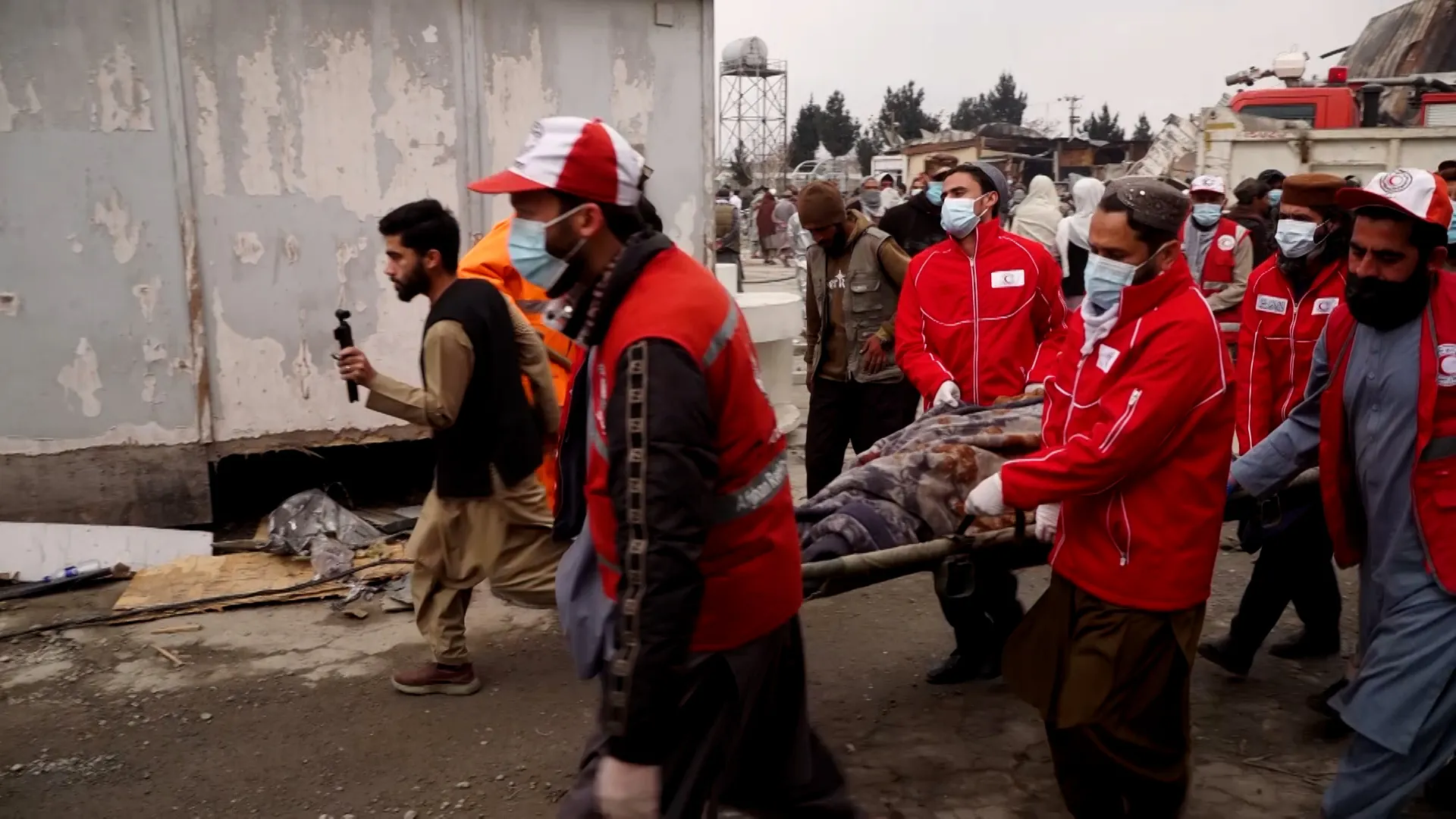
What we know about deadly strike on Kabul medical centre | Taliban
Afghan officials say a suspected Pakistani air strike hit a drug rehabilitation centre in Kabul, killing hundreds of patients and staff and leaving the facility in ruins. Pakistan denies targeting civilians, as tensions escalate between Islamabad and Afghanistan’s Taliban-led government.
Published On 17 Mar 2026

Katie Price’s husband Lee Andrews reveals romantic birthday gifts from glamour model wife as they prepare to reunite
KATIE Price’s husband Lee Andrews has shown off his plethora of birthday gifts from his wife ahead of their Dubai reunion.
Lee celebrated his special day without Katie by his side as she was in England but she has jetted off to the Middle East, despite the ongoing concerns, today to join him.
However, Lee has taken to social media to reveal that Katie did indeed send him some birthday gifts ahead of her arrival.
On social media, he showed off a custom-made card from Katie that featured pictures of them both.
The card also contained the message: “Husband, you complete me.”
Katie also appeared to have got him a matching mug.


A Louis Vuitton gift bag could also be seen in the background as Lee added the caption: “Wife is just the best.”
It appears to be the first time that Katie has splashed out on her husband with the star previously telling The Sun that she has never paid for anything during their marriage.
She insisted Lee had always paid for everything they did, including her flights out to see him.
Lee then shared a snap of another sentimental gift from his wife.
It was a small pin which featured the design of a man and woman embracing with the names Katie and Lee emblazoned on it.
Lee said of the gift: “The smallest thoughts mean the most.”
He went on to share a look at the words Katie had written for him in his card, which said: “To my forever husband!
“Happy Birthday! I will share your whole life celebrating with you!
“I love you to infinity love from your wife Katie x.”
Katie has been spotted at the airport heading to see Lee after a few weeks back in the UK.
Her decision to travel to the UAE comes amid growing concern over troubles in the Middle East.
The ongoing Iran crisis is still causing chaos for travellers following more drone attacks in Dubai, including a missile dropping on the airport.
But Katie was spotted at Gatwick airport late last night with her luggage and passport in hand.
Katie was dressed in a polka-dot tracksuit top and leggings, which showed off her tiny legs.
Katie was seen smiling and was in good spirits, despite boarding a plane to an at-risk country.
The star was seen chatting to the airline staff as she checked in her huge suitcase for her trip.
Despite Katie flying off to Dubai, the ongoing crisis in Iran has continued to affect travel with British Airways cancelling all flights there until June.
The airline took this decision due to the “uncertainty of the situation in the Middle East”.
Other companies are running limited flights whilst the fighting continues.

Suspending gas tax, reducing refinery regulations pushed by two Democrats running for governor
SACRAMENTO — As gas prices surge in California and nationally due to the war in Iran, two Democrats running for California governor are calling for the state to temporarily suspend its fuel tax or ease refinery regulations in an effort to lower costs.
Standing in front of a gas pump in a video posted to social media, San Jose Mayor Matt Mahan said the costs are “becoming an emergency for working families, and I think we ought to act like it.”
The moderate Democrat called on state lawmakers to suspend California’s gas tax, which at 61 cents per gallon is the highest in the nation.
Former Los Angeles Mayor Antonio Villaraigosa also called for an “immediate moratorium” on regulations that he blamed for “overburdening” California refineries and working families.
“These failed policies are not only hurting tens of millions of Californians, they are terrible for the environment because they have forced California to depend on imported foreign oil from the Middle East,” Villaraigosa said in a statement.
The cost of living in California, including the price at the pump, remains a pivotal issue for voters in the state, and has become central to the moderate-leaning campaigns of Mahan and Villaraigosa as they attempt to distinguish themselves in the tightly contested race for governor.
According to AAA, the average price for a gallon of regular gasoline in California on Monday was $5.52, the highest in the nation and more than 50 cents higher than any other state. The national average was $3.71, up from the previous month’s average of $2.92.
Gasoline prices in California are often among the highest in the country for a number of reasons, including environmental rules that require a unique blend of cleaner-burning fuel.
The state also relies mostly on crude oil imported from other countries including Brazil, Iraq and Guyana and processed at in-state refineries. In 2025, 61% of oil processed at California refineries was imported, compared with 23% that was produced in the state, according to data from the California Energy Commission.
A greater reliance on foreign oil has made California more susceptible to price spikes during global conflicts and other disruptions.
Republicans have long supported suspending the gas tax and cutting regulations in order to lower prices at the pump.
Steve Hilton, a GOP candidate for governor and former Fox News host, outlined a plan to lower California gas prices to $3 per gallon by slashing regulations including the low-carbon fuel standard, the rule that requires cleaner-burning gas in order to reduce tailpipe emissions.
The other major Republican in the race, Riverside Sheriff Chad Bianco, supports suspending the gas tax, according to his website.
The current price spike echoes 2022, when Russia invaded Ukraine and disrupted global oil markets.
As prices eventually fell around the rest of the country that year, they remained high for months in California, leading Gov. Gavin Newsom to wage war against oil and gas companies. He accused them of price-gouging drivers and backed laws requiring companies to report their profit margins and keep a supply of fuel on hand to prevent shortages and price spikes.
The governor backed off his battle with the oil companies last year after two refineries announced plans to close. In September, he signed legislation to permit 2,000 new oil wells in Kern County, reflecting an acknowledgement that his war on oil companies threatened to send California’s gas market spiraling.
Republican state lawmakers in 2022 pushed for a temporary suspension of California’s excise tax on gasoline, arguing that it would provide immediate relief to California drivers. That effort was rebuffed by Newsom and Democratic lawmakers, but they later approved $9.5 billion in tax refunds to Californians, providing as much as $1,050 to families as financial relief from record-high gasoline prices and other rising costs.
In 2017, the Democratic-controlled Legislature passed Senate Bill 1, which then-Gov. Jerry Brown signed into law, levying the state’s first gas tax increase in 23 years to fix California’s roads and bridges in disrepair. Under the law, the tax increases each year on July 1 based on the growth in the California Consumer Price Index.
California voters remain conflicted on the state’s regulation of the oil industry, according to an August survey by the Public Policy Institute of California. It found that more than 60% of adults support goals to reduce greenhouse gas emissions and generate electricity from renewable energy sources.
But majorities also said the costs of gasoline and utility bills is a major problem for them personally, according to the poll.
Mahan and Villaraigosa are the only two Democrats who have publicly called to roll back regulations on the state’s oil and gas market, illustrating the political murkiness at the nexus of California’s climate and affordability challenges.
Still, Democratic lawmakers – who hold supermajorities in the state Senate and Assembly – continue to shut down proposals to pause the gas tax, arguing that the state would lose out on much-needed money for roads.
“If anyone has a proposal about how to backfill (transportation) revenues, I’m up for that conversation, but so far, it’s just a bulls— political talking point,” said Assemblymember Cottie Petrie-Norris (D-Irvine).
Petrie-Norris chairs the Assembly Utilities and Energy Committee and has helped lead legislative efforts to stabilize California’s fuels market without retreating from goals to achieve carbon neutrality.
”When I ask people, ‘Do you want affordable gas, clean air or safe roads?’ they say yes. So they want us to do all three of these things,” she said. “We’ve got to be honest with Californians about trade-offs so that we can have real conversations.”
Mahan pushed back on the importance of collecting gas tax revenue.
“The truth is we have the highest taxes in the country and a $350-billion budget, and we ought to be able to pave our roads and enable working families to put food on the table,” he said in an interview. “I just reject the notion that the sky is going to fall if we provide temporary relief to working families who are being pushed to the brink by a war that they didn’t ask for.”
The San José mayor said the state should suspend the fuel tax “for the duration of the war” in Iran “or as long as gas prices are over $5 a gallon” in the state. He also called for “massive regulatory overhaul that brings down costs across the board,” including rules on refineries.
If elected governor, Villaraigosa said he would “reform and overhaul” the California Air Resources Board, which enacts many of the state’s environmental laws — including the low carbon fuel standard and cap-and-invest program.
“We can no longer allow bureaucrats who live in a bubble — with no accountability for the harm they are causing our economy and our people — to have so much power over the lives of every Californian,” Villaraigosa said in a statement.

Chelsea fine: Was Premier League punishment lenient?
Chelsea were handed a nine-month academy transfer ban and a £750,000 fine over the registration of academy players between 2019 and 2022.
But compare this case with Everton and Nottingham Forest in 2024, when both clubs received points deductions for PSR breaches that appear much less serious.
So what relevance, if any, does all this have on the Premier League’s other major disciplinary case?
Fifteen months after the end of an independent commission hearing into more than 100 alleged breaches of financial rules by Manchester City, the club is still waiting to discover its fate.
Unlike Chelsea, City deny wrongdoing and are contesting the case. And unlike at Stamford Bridge, there has been no change of ownership at the Etihad to provide mitigation.
But City fans will surely be encouraged that the Premier League board did not appear to even consider a points deduction in the case of Chelsea, despite the “deception and concealment”. Indeed, it referred to a two-window transfer ban as an “appropriate” punishment, had the club not self-reported and co-operated.
In July 2023, Uefa fined the club £8m over the same case. And the FA is expected to take similar action when it announces the conclusion of its disciplinary process into the affair in the coming weeks.
But there are clear signs that Chelsea feared it could have been worse. In 2024, it was revealed that owners Todd Boehly and Behdad Eghbali held back £150m of their purchase price for the club to cover potential fines relating to the Abramovich era. So far this episode has cost the club about £18m.
Some of their rivals may feel the cost may have been greater in the form of trophies and prize money they could potentially have won. And also to the integrity and credibility of a competition that relies on everyone following the rules.
UN warns of record hunger, 45 million more at risk, if Iran war continues | US-Israel war on Iran News
The Middle East conflict risks adding a staggering 45 million to acute hunger levels, warns the UN’s World Food Programme.

Published On 17 Mar 2026
Tens of millions more people will face acute hunger if the United States-Israel war on Iran, and its reverberations through Iran’s retaliation, continue through to June, the United Nations warned.
“If the Middle East conflict continues through June, an additional 45 million people could be pushed into acute hunger by price rises,” Carl Skau, the deputy executive director of the UN’s World Food Programme (WFP), said on Tuesday.
Recommended Stories
list of 4 itemsend of list
“This would take global hunger levels to an all-time record, and it’s a terrible, terrible prospect,” Skau said, with 319 million people, already a historic high, currently acutely food insecure.
The US-Israeli attacks on Iran that began on February 28 have choked up key humanitarian aid routes, delaying life-saving shipments to some of the world’s worst crises.
Skau said shipping costs are up 18 percent since the war began and that some have had to be rerouted.
The extra costs come on top of deep spending cuts by the WFP, as donors focus more on defence, he added.
Hunger crises in Gaza, Sudan
In Gaza, residents are rushing to stockpile dwindling goods as border closures and the Iran war further strain already fragile supplies, with shortages worsening across the besieged enclave as Israel presses on with its genocidal war there.
Israel is set to partially reopen Gaza’s Rafah crossing with Egypt on Wednesday, ending a two-week shutdown that has deepened an already catastrophic humanitarian crisis in the decimated territory.
Israel shut the crossing the same day it and the US launched strikes on Iran, citing “security” reasons.
The World Health Organization’s regional director for the Eastern Mediterranean warned last week that only about 200 trucks a day were entering Gaza, far short of the estimated daily requirement of 600.
Meanwhile, more than 21 million people in Sudan, nearly half of the population, face acute hunger. Famine has been confirmed in areas where months of fighting have made access for aid workers largely impossible.
In January, the UN warned that aid to Sudan could run out within months unless hundreds of millions of additional dollars are pledged.
Three years of brutal war between the military government and paramilitary Rapid Support Forces have killed tens of thousands of people and displaced 14 million.

What causes meningitis and what are the symptoms?
Two people have died following an outbreak of meningitis, including one student at the University of Kent.
Source link
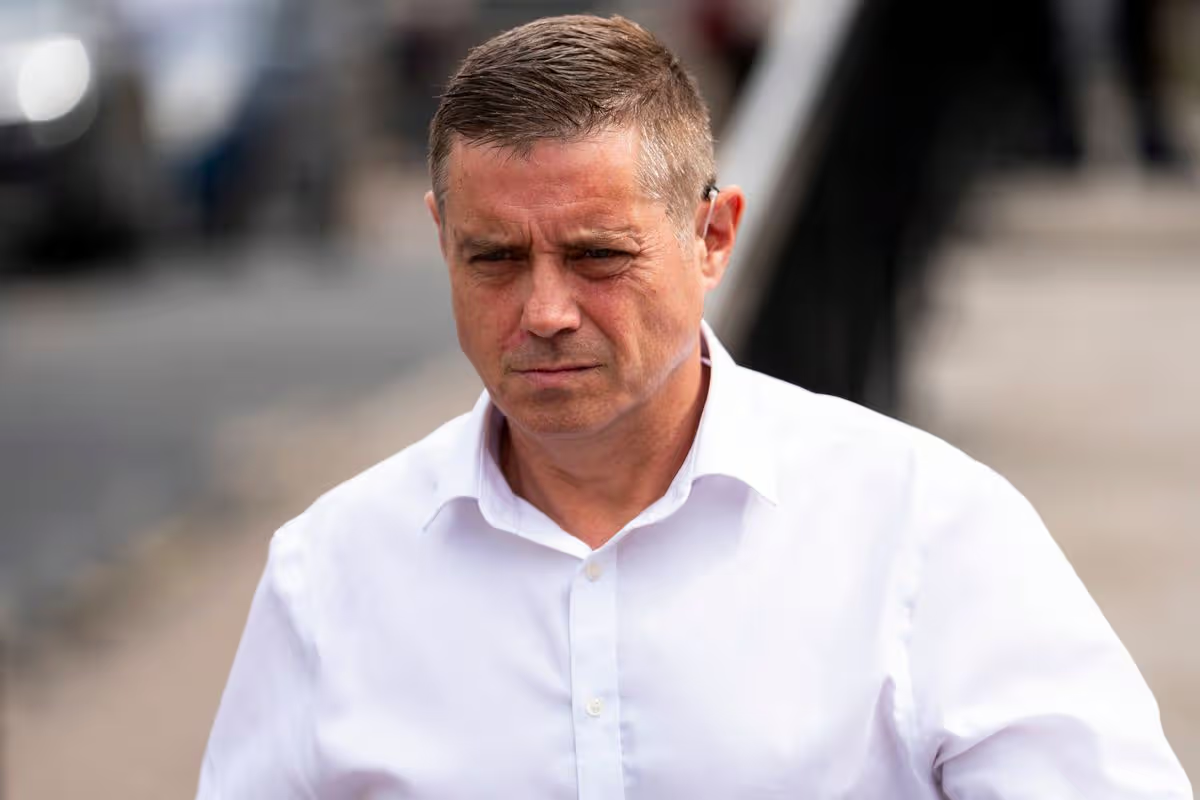
London’s Burning cast now as John Alford found dead in prison weeks after being jailed
The hit firefighter TV show, London’s Burning, kept us glued to the safety of our sofas for an incredible 14 years, but where are the beloved cast now? Read on to find out
London’s Burning: Classic ITV drama teased in throwback trailer
The cast of beloved ITV drama London Burning have endured various fortunes since the popular show came to a demise in 2002. This month, actor John Alford made headlines after it was reported he had been found dead in his prison cell just weeks after being convicted of sex offence charges.
he actor who played Billy Ray in the series between 1993 and 1998 was jailed in January for eight years and six months for crimes against children.
The ITV show had viewers fixed on their sofas during its 14-year run on the network. With emotionally charged storylines and action-packed drama, many wished for more. But the show’s success was down to how much the audience warmed to the Blue Watch team.
London’s Burning began life as a two-hour film in 1986 before becoming the television series we all know and love in 1988. There were a total of 172 blazing episodes before the show was extinguished back in 2002. The firefighter drama was originally shot at Bermondsey’s Dockhead Fire Station, with filming in the first three series taking place in the actual watchroom, mess and bay area – where real-life firefighters leapt at the chance to work shifts as extras. Here, we take a look at the cast now.
Ensure our latest headlines always appear at the top of your Google Search by making us a Preferred Source. Click here to activate or add us as your Preferred Source in your Google search settings.
John Alford
Alford, who appeared on the show for five years, was best known as Billy Ray died this month, aged 54. Earlier this year, following a trial at St Albans Crown Court in September 2025, he was jailed.
The actor, who also appeared in Grange Hill, was convicted of six individual counts. There were two counts of sexual activity with a child, two counts of penetrative sexual activity with a child, one count of assault by penetration and one count of sexual assault.
A Prison Service spokesman told The Mirror: “John Shannon died in prison on 13 March 2026. As with all deaths in custody, the Prisons and Probation Ombudsman will investigate.”
After his arrest, he told police: “This stinks. This is a set-up.” He denied all charges and previously told a trial that he “never touched either of the girls.”
Glen Murphy – George Green
George Green was the show’s longest-serving character and the only one to have appeared in every single series of London’s Burning. This hot-tempered former boxer joined Blue Watch at the start of series one, and enjoyed a steady stream of romances throughout his tenure.
Actor Glen is most well-known as the London’s Burning character, but he has also appeared in British thriller flick Tank Malling and The Bill. Back in 2007, he was awarded an MBE for his charity work after raising more than £1m for good causes. Now 68, Glen got to star with his childhood buddy Ray Winstone in the 2014 thriller Lords of London.
Sean Blowers – John Hallam
Did the immensely likeable but rather uptight John ever get that promotion he was chasing? He never did, did he? The character was left severely traumatised after being buried alive when a wall collapsed on a job in series four.
Five years later, John was brutally killed after falling 80 feet when a gantry gave way amid a warehouse inferno. Actor Sean, now 65, also appeared in EastEnders, Crossroads, Heartbeat and Doctor Who. You may also recognise him for playing Wyman Manderly in the finale of season six of the hugely popular Game of Thrones.
Richard Walsh – Bert ‘Sicknote’ Quigley
Blackwall’s resident hypochondriac, the aptly named ‘Sicknote’ was forever complaining about some malady or another. A wannabe star of the stage, he often made theatre appearances alongside his wife Jean, which his colleagues would begrudgingly go to show their support.
Sicknote bowed out in series 12, when he sadly perished in an explosion at a fireworks factory. Since leaving the series, actor Richard has appeared in daytime TV’s Doctors, the movie Daddy’s Girl, Midsomer Murders and Heartbeat. The now 27-year-old also made a cameo appearance in Netflix series The Crown as Joe Gormley in 2019.
Jerome Flynn – Kenny ‘Rambo’ Baines
“But he wasn’t in London’s Burning!” we hear you cry. Well, he did only feature in the initial TV movie, but we felt actor Jerome was worth a mention as he was just so phenomenally successful post Blackwall.
Jerome of course starred as Paddy Garvey of the King’s Fusiliers alongside Robson Green in hit drama Soldier Soldier. The pals even enjoyed multiple Number Ones in the music charts with their versions of Unchained Melody, I Believe and What Becomes Of The Broken Hearted?
Jerome, now 63, appeared in chilling 19th-century drama Ripper Street and an episode of Charlie Brooker’s disturbing Black Mirror in 2016. Game of Thrones fans will instantly recognise him as loveable rogue Bronn, who featured in countless episodes from 2011 to 2019.
In 2019, he also appeared as Berrada opposite Keanu Reeves and Halle Berry in John Wick: Chapter 3 – Parabellum. In 2022, he starred alongside Harrison Ford and Helen Mirren in Taylor Sheridan’s ‘1923’ – a spin-off from the hit series Yellowstone.
James Hazeldine – Mike ‘Bayleaf’ Wilson
A hugely popular member of the team, Bayleaf was mess manager until he departed the show in series 8. The character was involved in many gripping storylines, such as being knocked unconscious when a wall collapsed and also being buried alive.
Very much a star of stage and screen, actor James was a member of the Royal Shakespeare Company and starred in children’s TV series Chocky as well as Heartbeat. James took on the role of Sigmund Freud in the play The Talking Cure in December 2002, but was shortly taken ill and sadly died a week later. He was 55.
Trevor Nunn, director of the Royal National Theatre, described him as “a leading actor of minutely observed truthfulness, comic brio and emotional daring” who “was also a man of infectious enthusiasm, great warmth and humanity who was universally popular among his colleagues”.
Ben Onwukwe – Stuart ‘Recall’ MacKenzie
Dubbed ‘Recall’ thanks to his unbelievable photographic memory, Stuart joined the team midway through series 4. The firefighter was almost dismissed from the crew when he refused to shave off his beard – something the team rectified by tying him down and shaving it off for him!
Since the show ended, actor Ben, now 68, has been keeping himself busy appearing in Coronation Street, as Clyde Johnson in Holby City and as Dessie Dunn in EastEnders. Back in 2018 he starred as Eric Pratchett in drama Safe, and the following year took on the role of W.E.B Dubois in Hero, inspired by the life and times of the Caribbean war hero, judge and diplomat Ulric Cross.
Ross Boatman – Kevin Medhurst
Renowned as Blue Watch’s resident troublemaker, this wayward firefighter would often scrap with colleagues and question the authority of those above him. The character Kevin came from a broken home and had suffered much sadness in his life before he joined the boys at the station.
Actor Ross is a top poker player and member of the professional playing quartet The Hendon Mob. Now 62, the actor has also enjoyed success in the European Poker Tour and proudly has several poker titles under his belt. He joined the cast of EastEnders in 2021 as Harvey Monroe, for which he won the British Soap Award for Best Newcomer.
Michael Garner – Geoffrey ‘Poison’ Pearce
It wasn’t until series 6 that old Poison joined the watch. He received his unpleasant nickname as he had a penchant for gossip and would overly pander to his seniors. The character wasn’t all bad, however, and could at times be very sensitive.
Post-Blackwall, actor Michael joined many of his co-stars by appearing in Doctors, Holby City and Casualty. Rather unexpectedly, he appeared in pop starlet Ellie Goulding’s music video for How Long Will I Love You in 2013.
Michael, now 72, is perhaps best known for treading the boards, with far-reaching roles in countless Shakespeare plays, Educating Rita and the less high-brow An Evening With Gary Lineker.
Samantha Beckinsale – Kate Stevens
Kate joined the crew in 1990 and quickly became a much-loved member of the team during her two-year stint. Actress Samantha had previously starred as WPC Martin in an episode of Thames Television’s Never The Twain.
Later in 1994, she landed the role of Gillian in the sitcom Time After Time. Three years later she starred as Jilly Howell in the short-lived sitcom Get Well Soon and in 1998 became Gillian Monroe in the short-lived sitcom Duck Patrol with One Foot in The Grave’s Richard Wilson. Samantha, now 59, has also appeared in Doctors, Holby City and Heartbeat.
Connor Byrne – Rob ‘Hyper’ Sharpe
Emotional scenes ensued in series 12 and 13 when Hyper came out as gay to his colleagues. He was later promoted to Leading Firefighter but never got a proper exit as he left for unknown reasons by the start of the final series.
Actor Connor is perhaps best known for playing Mike Milligan in all three of the Tracy Beaker shows, becoming the programme’s longest-serving cast member. Now 61, he also played Geoff in three episodes of Emmerdale back in 2019 and is appearing on our screens this year as Dale Roberts in Doctors.
Like this story? For more of the latest showbiz news and gossip, follow Mirror Celebs on TikTok, Snapchat, Instagram, Twitter, Facebook, YouTube and Threads.

Ancient UK market town full of independent shops is gateway to spectacular drive
It’s the perfect place if you like a combination of adventures and chilling out, taking in the gorgeous scenery.

There are plenty of great pubs and restaurants in the town too(Image: Fine & Country West Wales, Aberystwyth)
A historic market town in the UK is definitely worth a visit this spring, as there’s so much to see and do there. It’s ideal for adventure seekers, and those who just want to walk around, eat good food and chill out.
Tregaron is one of Wales’s oldest market towns. It’s home to independent retailers, coffee shops, and the elegant Y Talbot, a grade II-listed hotel, pub, and restaurant, positioned right in the town square’s centre.
From here, you can embark on an exhilarating road trip along a former drover’s track that showcases hairpin turns through wild terrain.
The Abergwesyn Pass is a 20-mile single-track route stretching from Llanwrtyd Wells to Tregaron. Along this isolated road, you’ll encounter a notorious stretch called “The Devil’s Staircase”, reports Wales Online.
This appropriately named portion of the Abergwesyn Pass features hairpin curves and sharp climbs that aren’t suited to anxious motorists.
For adventurous drivers, you’ll love tackling one of Wales’ most isolated countryside regions, encountering sheep, gnarled trees and rocky formations along the way. It’s extremely steep, reaching a maximum gradient of 20.1%, and cuts through thick woodland towards miles of expansive, barren valleys, providing a descent that will push your brakes to their absolute limits.
Drive carefully and enjoy the scenery as you meander through the wilderness of the Cambrian Mountains, where you could potentially encounter nobody throughout your entire journey. You can also tackle this route by bicycle if your legs are ready for the test.
As well as the Abergwesyn Pass, Soar y Mynydd, Wales’ most isolated chapel, is worth the detour. This modest, whitewashed church was constructed in 1822 to minister to an extremely dispersed community of farmers.
Wandering through this tranquil location, you could easily assume the chapel has been deserted for years. Actually, visiting preachers travel from across Wales to hold services in Welsh.
It’s a serene spot for a picnic, as there’s often nobody else there.
Llyn Brianne Reservoir also deserves a stop to witness an enormous dam. You might be surprised to learn that this striking stone-built dam is Britain’s tallest, rising 91 metres (300 ft) above the River Tywi.
Containing an incredible 64 million cubic metres of water at almost 300 metres (990 ft) above sea level is a remarkable engineering achievement. Building work began in October 1968, with the dam constructed from crushed rock, larger stone, and clay sourced from the surrounding area.
After dark, it becomes a stargazing hotspot in the Cambrian Mountains, making it an excellent location for astrophotography.
Further south, beyond Llyn Brianne reservoir, lies the amazing RSPB Gwenffrwd-Dinas reserve. The reserve encompasses vital habitats of oak woodland, wet alder woodland, and scrubland, all defined by heavy rainfall and swift-flowing rivers.
These conditions are ideal for woodland birds, whilst also offering the perfect environment for significant lichens and bryophytes. Whether you begin or finish the route at Tregaron, you should make time to discover this small Welsh-speaking town. Here, you’ll discover a livestock market, the Tregaron Red Kite Centre and Museum, and locally sourced food and cask ales in a beautifully converted 16th-century Welsh inn.
Y Talbot is an independently owned hotel and Michelin Guide-listed restaurant with 2 AA Rosettes. This charming boutique hotel radiates a ‘cosy country inn’ atmosphere with its slate floors and inglenooks.
The location is said to be the final resting place of a circus elephant which perished in 1848 and lies beneath what is currently Y Talbot’s beer garden.
The establishment, run by head chef Dafydd, who trained under Marco Pierre White, showcases regional ingredients, including lamb, beef, and cheeses sourced from the Teifi Valley, fish from Milford Haven, and shellfish from Cardigan Bay.
Close by, you’ll also discover a neglected Welsh abbey where princes lie buried. Strata Florida Abbey near Tregaron is a remarkable location in Wales where history, royalty, and spirituality meet.
Established in 1201 by white-robed Cistercian monks, this hallowed ground was formerly among medieval Wales’s most vital religious and cultural hubs.
It also serves as the burial site of numerous Welsh princes, including the renowned Llywelyn the Great, who famously convened a council here to guarantee his son Dafydd’s position as the legitimate successor to the Welsh throne.
The Abbey was established as a major institution serving the indigenous population of Wales and Western Christianity through its affiliation with the pan-European Cistercian Order of Monasteries.
The carved west doorway into the Abbey remains standing in isolation and provides an eternal vista down the nave towards where the high altar formerly stood.
You can still see some of the decorated tiles that would have adorned the church floors, along with elaborate carvings throughout the site.

Iran war: Europe’s corporate winners and losers revealed
Eighteen days into the war in Iran, and the scorecard for global equity markets makes for uncomfortable reading.

ADVERTISEMENT
ADVERTISEMENT
European benchmark indices have shed around 7% since hostilities began — the Euro STOXX 50 down 6.5%, Germany’s DAX off 7%, France’s CAC 40 down 7.2%, and Italy’s FTSE MIB lower by 6.4% — dwarfing the more modest 2.5% decline in the US S&P 500, which benefits from America’s status as the world’s largest oil producer and its relative insulation from the energy shock.
Yet the headline numbers tell only half the story.
Beneath the surface, an extraordinary divide has opened up — between European companies that thrive on expensive energy, and those being crushed by it.
The energy shock reshaping the continent
The conflict’s most immediate economic consequence has been a seismic repricing of energy.
Iran’s effective closure of the Strait of Hormuz — through which 20% of the world’s petroleum flows — caused Brent crude to surge from around $70 to nearly $120 per barrel within days.
As of Tuesday, Brent sits at approximately $105, a 42% rally from pre-war levels.
In an attempt to cap the oil price surge, the International Energy Agency coordinated a historic intervention.
More than 30 nations in Europe, North America, and northeast Asia agreed to release a combined 400 million barrels of oil from emergency reserves — the largest such action in the IEA’s 50-year history.
Yet the oil market has sent a clear signal that even this enormous release is nowhere near enough to address the unprecedented supply disruption, with crude prices surging more than 17% since the announcement.
Natural gas has been hit even harder. The Dutch TTF benchmark — Europe’s most important gas price reference — has surged 60% to €52 per megawatt-hour.
In a note this week, Goldman Sachs energy analyst Samantha Dart warned this week that approximately 80 million tonnes per annum of LNG supply — 19% of the global total — is currently offline following the Strait’s disruption and the shutdown of Qatar’s LNG production facilities.
Her team maintains a TTF forecast of €63/MWh for the second quarter of 2026, warning that tightening European physical balances could push prices into the gas-to-oil switching range before the conflict resolves.
The winners: Energy, renewables and fertilizer
The clearest beneficiaries have been European oil and gas producers, whose revenues move in lockstep with the commodity the war has repriced so dramatically.
Norwegian energy giant Equinor has surged 23.7% since the start of the month, as investors pile into one of the continent’s largest oil and gas producers with substantial assets well outside the conflict zone.
Fellow Norwegian producer Vår Energi is up 19.9%, while Aker BP has gained 17.1%. Italy’s Eni is up 14.7%, and Portugal’s Galp Energia has added 13.6%.
The most striking gains, however, have come from an unexpected corner: biofuels.
German renewable fuels producer Verbio SE has shot up 30.4%, and Finland’s Neste Oyj — the world’s largest producer of renewable diesel — has gained 28.1%.
As conventional fossil fuels become more expensive and supply chains more precarious, energy alternatives become dramatically more attractive to both buyers and investors.
German gas utility Uniper SE, which has spent recent years diversifying away from Russian supply, has rallied 19.1%.
The fertiliser sector has also attracted significant gains, with K+S rising 15.3% and Yara International rising 15.0%.
The moves reflect a commodity supply crisis hiding in plain sight: around one third of global seaborne fertiliser trade — roughly 16 million tonnes — passes through the Strait of Hormuz, including 43% of seaborne urea exports, 44% of sulphur, and over a quarter of traded ammonia.
The losers: Steel, airlines and construction
On the other side of the ledger, the losses have been equally dramatic. Energy-intensive industries and businesses exposed to higher costs with little pricing power have been savaged.
Airlines have taken some of the heaviest punishment. Wizz Air — the Budapest-based low-cost carrier with heavy exposure to Central and Eastern European routes — has collapsed 31.2%.
Air France-KLM has lost 22.1% and easyJet has dropped 21.8%. All three face the same brutal arithmetic: jet fuel costs have surged, hedging programmes offer only partial and temporary protection, and there is limited ability to pass costs on to passengers quickly enough to protect earnings.
Steel producers have been hit with similar force. Salzgitter has fallen 27.9%, thyssenkrupp is down 27.3%, and ArcelorMittal has shed 19.1%, joined by stainless steel specialist Aperam, which has dropped 24.5%.
Steel production ranks among the most energy-intensive industrial processes on earth, and mills operating on thin margins face an immediate profitability crisis when gas prices surge 60% in such a short period.
Spanish engineering contractor Técnicas Reunidas has dropped 23.7%, a casualty of its deep exposure to Middle Eastern energy infrastructure projects now thrown into uncertainty by the conflict.
Construction group Webuild has fallen 26.6%, reflecting broader fears that an energy-driven slowdown will freeze infrastructure investment across Europe’s most exposed economies.
Mining company Hochschild rounds out the list, down 21%, rising energy costs compress margins and risk appetite for smaller extractive names evaporates.
Europe enters this crisis in a structurally vulnerable position.
Despite having dramatically reduced its dependence on Russian pipeline gas since the invasion of Ukraine, the continent remains acutely sensitive to energy supply disruptions — and gas storage levels heading into 2026 offer less of a buffer than in prior years.