



Dodgers’ rotation affords them to be audacious with playoff plan
The Dodgers are better than you. They’re smarter than you. They’re richer and deeper and more popular than you. You know it, they know it, there’s no point pretending otherwise.
So, yes, they went into the National League Divisional Series looking past the threadbare Atlanta Braves and thinking about the National League Championship Series.
Who does that? In the playoffs?
Your two-time World Series champions with the world’s best starting pitching rotation and a 1-0 NLDS series lead, that’s who.
The way the Dodgers did the math, it made sense to save their ace of aces, Yoshinobu Yamamoto — who last postseason went 5-1, had an ERA of 1.45 and 33 strikeouts in six appearances and won the World Series MVP — for Game 3 of the NLDS.
Not for the tone-setting Game 1 and, potentially, Game 5 on regular rest.
But Game 3.
Because to the Dodgers, that’s not even much of a calculated risk. It was a math problem specific to them, before they beat the Atlanta Braves 5-3 in Game 1 in 100-degree heat Saturday afternoon.
They figured they’d be able to throw two consecutive left-handers at the lefty-averse Braves lineup, starting Saturday with recently acquired two-time Cy Young winner Tarik Skubal, followed Sunday by Blake Snell, also a two-time Cy Young winner.
Additionally, this way they could have Yamamoto pitch Tuesday on the road, where his ERA is 1.77 instead of at home, where it’s 3.13. And where he’s given up 14 home runs compared with six on the road, where he’s made four fewer starts.
But mostly the Dodgers’ calculus was that having Yamamoto pitch Game 3 means it will line up so that they’ll have him for Game 2 in the NLCS and, if necessary, Game 6 against the Milwaukee Brewers or San Diego Padres. (Or, if you really want to plan ahead — and the Dodgers with their leaky bullpen absolutely should not — for Game 1 of the World Series.)

“That just sets up the rotation and Yamamoto better looking forward,” Dodgers manager Dave Roberts explained before Saturday’s game.
“Not discounting this series, because you’ve got to win this series first, but you start from the fact that they’re all going to pitch — the three [Skubal, Snell and Yamamoto] are going to pitch for sure … and then what sets them up going forward.”
It feels like a faux pas, to be that forward-thinking, and to be saying the quiet part out loud!
“If you can kind of line it up in such a way to give guys ample rest, it puts you in a better position for more options down the road,” Roberts said. “That’s kind of some of the math we had.”
I mean, it adds up. And for these Dodgers — whose fourth starter, Tyler Glasnow, was a key cog in last year’s World Series-winning rotation — it’s a fair assessment.
Though it’s nice of Roberts to pay enough lip service that he’s not totally discounting the best-of-five current series they’re in.
Predictably on Saturday, Skubal, who previously had a 2.04 ERA, a 0.73 WHIP and 56 strikeouts in 39⅔ playoff innings for the Detroit Tigers, brought his own October heat.
The 29-year-old from Kingman, Ariz., gave up just one run and two hits, walked two and struck out seven — giving him 64 in the postseason, the second most in his first seven postseason appearances behind only Bob Gibson (74), per MLB’s Sarah Langs.
Skubal retired 15 consecutive, hit 101 on the radar gun in the second inning and didn’t have a three-ball count until the fifth inning.
“We knew,” Braves manager Walt Weiss said, “it was going to be a rough ride.”
But Weiss did not know, immediately after Saturday’s loss, when he’d be able to deploy his sole ace, 37-year-old Chris Sale, the 10-time All-Star who just pitched in the Braves’ Game 3 wild-card closeout.
“To me it’s not that big a deal when he pitches,” Weiss said. “The Dodgers can’t win it in two.”
A true statement and a matter of fact: The Dodgers can’t win in two, but they’re not shy about expecting to win.
“It’s prudent to kind of map out potentially how they could line up,” Roberts said Friday. “And that’s just doing your due diligence.
“We are very fortunate because we have four guys essentially that you could really kind of pick through to figure out what’s the best way to deploy all four starters, that’s the exercise. But it starts with having four talented guys.”
Andrew Friedman, the Dodgers’ president of baseball operations, reveled in the notion that his club might actually be disproving the rule that you can never have enough pitching — at least when it comes to their elite quartet of starters.
And that, Friedman said, “is very impactful for quality of life.”
And the Dodgers aren’t afraid to say it.

Dodik declared Bosnia ‘dead’. Irrelevant rhetoric or serious threat? | Politics News
Speaking at the final rally of his right-wing alliance ahead of Bosnia’s October 4 election, Bosnian Serb leader Milorad Dodik delivered a predictably controversial statement.
“Bosnia-Herzegovina is dead. It is an impossible country, it makes no sense,” Dodik told supporters of the Alliance of Independent Social Democrats (SNSD) party in Banja Luka on Friday.
Recommended Stories
list of 3 itemsend of list
“It is now nothing more than an empty shell … for those who are trying to keep it alive, so they can prove themselves right about something,” said the former president of Republika Srpska, who is known for frequent separatist threats and for challenging the country’s constitution.
Dodik’s comments came as Bosnia remains deeply divided over its political future more than three decades since the 1995 Dayton peace agreement. It split the country into two semi-autonomous parts – the Serb-majority Republika Srpska entity and the Federation entity, where most Bosniaks and Croats live.
The agreement ended the 1992–95 Bosnian War and established a political framework for power-sharing among Muslim Bosniaks, Orthodox Serbs and Catholic Croats.
On Sunday, voters across the country cast ballots to elect the three members of Bosnia and Herzegovina’s multiethnic presidency, representatives to the national parliament and leaders of institutions in the country’s two entities.
Dodik himself is not on the ballot after being stripped of his post last year, following his conviction for refusing to carry out decisions issued by Christian Schmidt, the international peace envoy who oversees the implementation of the Dayton peace agreement.
‘No political relevance’
Elvis Fejzic, a professor at the Faculty of Political Science in Sarajevo, said attempts by figures such as Dodik to dismantle Bosnia and Herzegovina amount to “populist rhetoric”.
“Politicians and political parties that act unconstitutionally do not determine the fate of Bosnia and Herzegovina,” Fejzic told Al Jazeera, arguing that Bosnia and Herzegovina’s status as a UN member and internationally recognised state is secure.
“Bosnia and Herzegovina … will outlive all those who, through inflammatory statements, seek to obstruct its path towards integration and development,” he said. “Their statements have no political relevance whatsoever.”
Political analyst Tanja Topic said that while Dodik was not officially a candidate, he remained a central figure in the campaign and sought to present himself as a “senior official in international relations”.
Topic told Al Jazeera that the election result could produce several political scenarios in Bosnia and Herzegovina, from “cohabitation in Republika Srpska”, through the formation of a grand coalition, to a “blockage at the state level and the Council of Ministers continuing to operate in a caretaker capacity”.
Dodik’s rhetoric marks ‘long escalation’
Expert Adnan Cerimagic said Dodik’s rhetoric should be taken “seriously” and viewed as part of a “long escalation” rather than a reflection of the country’s current reality.
“For the past four years, his moves against the Dayton order and against Bosnia’s EU and NATO path have reached a new and dangerous level: in March 2025 the country came close to an armed standoff between Republika Srpska and state police,” Cerimagic, a senior analyst at the European Stability Initiative, told Al Jazeera.
“Casting Bosnia as a front-line in a supposed war between Christianity and Islam, and himself as a defender of Christian Europe, is aimed at the one people in Europe against whom a genocide has been committed since the Second World War and recognised as such by two international courts,” he added.
Cerimagic added that Dodik’s rhetoric may reflect uncertainty over the electoral prospects of his preferred candidate, as well as a belief that the European Union has less leverage over Bosnia than it once did.
Initial results are customarily released by the Central Election Commission late on election night and then refreshed every few hours.
In the days that follow, the commission progressively inputs votes from polling stations that remain outstanding, mobile voting teams, as well as ballots sent by mail and those cast at diplomatic and consular missions.
The final, official results must be published by November 20 at the latest.
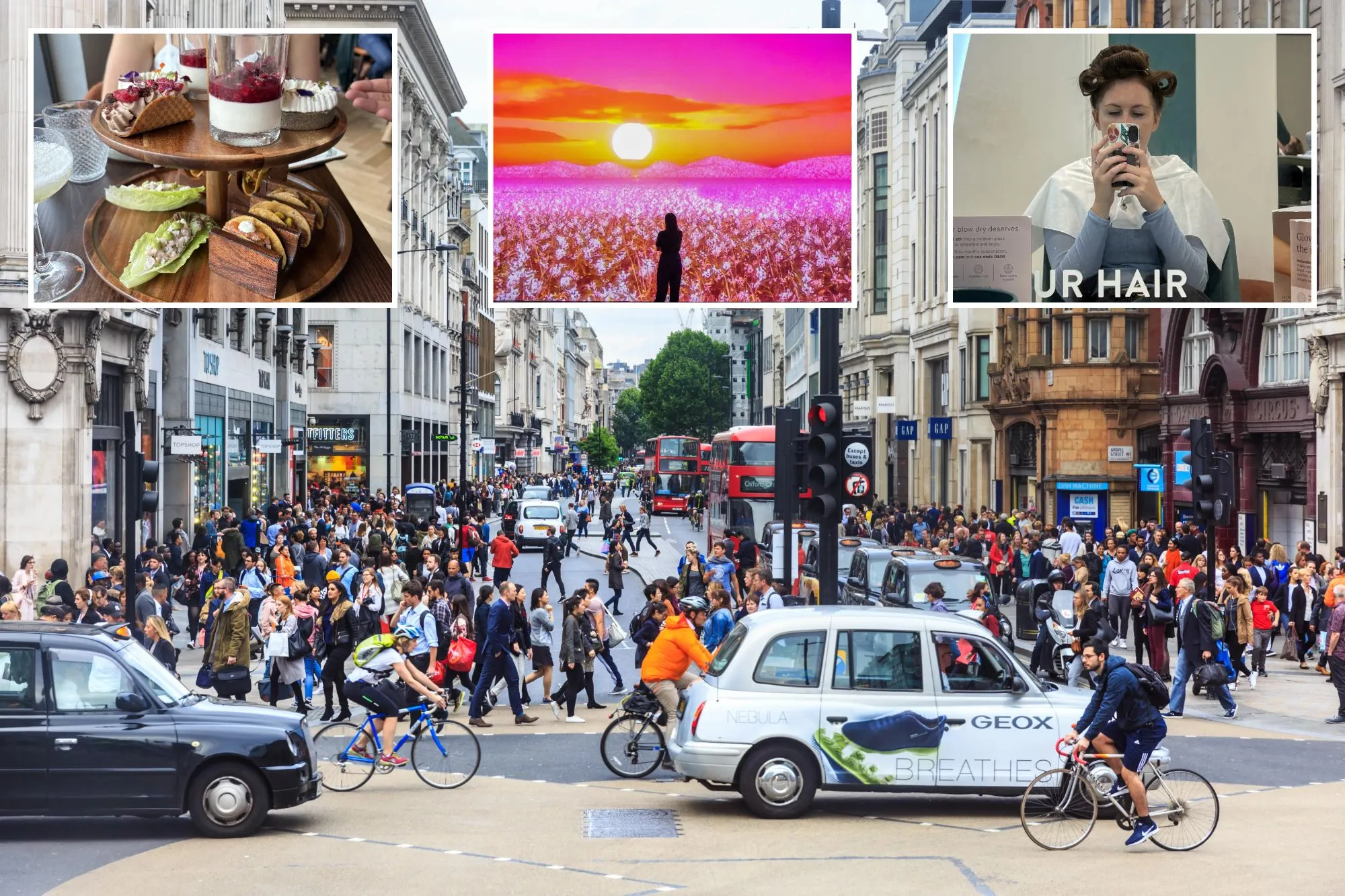
Forget shopping – the lesser-known side to the UK’s busiest high street from Mexican afternoon teas to illusion museums

YOU SAY Oxford Circus, you think crowded streets and busy shops – but there is a whole other side to it you might not have known about.
So we’ve taken it on in two different way – as a busy mum looking to keep her kid busy, to a girly weekend in the city without going to the shops.
Blow dry bars, Mexican afternoon teas and gorgeous Italian dinners
Kara Godfrey, Deputy Travel Editor, explores the busy centre on a girly weekend wanting some pampering.
Growing up in the countryside, my first impression of London was the hubbub of Soho, with bustling streets full of eager shoppers elbowing each other out of the way.
Yet 20 years later, having since moved to (and left) the crazy capital, I know there is more to the iconic city centre than its shops.
And with the announcement that it is about to become pedestrianized, it’s about to become an attraction in its own right.


If you want to explore the centre of London without actually dipping into the shops, it also makes for the perfect girly day out either with your best mate or your mum – if you know where to go as a local.
It is a fantastic destination for a pamper, with affordable nail salons and hairdressers – and did you know one of London’s most famed blow dry bars is found at the bottom of the John Lewis department store?
Having first launched in Chelsea back in 2014 (becoming a fave with the Made in Chelsea stars), Duck & Dry has become an institution for the place to go before a big event.
I sank into the plush chairs, laidback music overheard while I chatted to my hairdresser as my hair was massaged and washed.
As a woman in my mid-30s, I’ve realised that it’s the little luxuries that make life worth it and a person kneading all of my worries away is one of them.
Just 30 minutes later, I left a new woman with a fresh new do so gorgeous, I even bought a blow dry brush on my way out to try and replicate it at home.

(Don’t stop there though, one of my favourite nails bars, Cona, is just around the corner, with the hidden salon tucked behind the bold oranged painted cafe front).
Hair done, nailed fixed – we needed something to line our stomach and gone are the days of our 20s where we opted for a bottomless brunch.
Being more afternoon tea gals, one of the more unique ones is found in the Treehouse Hotel just off the main high street.
This isn’t your usual afternoon tea, however, (although you will still find a scone or two on top) – it’s called the Afternoon Te-Quila, so expect a Mexican fusion.
Starting with a freshly made margharita, we gorged on fresh fish tacos, pumpkin pies and even a unique chocolate taco, pumped full of decadent chocolate mousse.
The views are just as amazing, looking out over London from the top floor, but as I sat under a ceiling of green hanging plants, I was transported to somewhere much more tropical.
There is so much to do outside of this as well that doesn’t require you to lug shopping bags around town.
Or how about catching a West End show? The Palladium has some fantastic shows coming up including Delta Goodrem, Michael Ball and of course the Christmas panto.
(While I might have said there is so much to do along the high street without the shops, I would still recommend popping into the new M&S flagship, with four entire floors of homeware, clothes and a Food Hall. I may have left with both new linen trousers and some Percy Pigs…)
Don’t think I forgot about dinner, because London isn’t one of the world’s best food capitals for no reason.
And with more than 600 restaurants to choose from, according to OpenTable, where do you even start?
Well I’ve found just the place, if you want somewhere slightly quieter away from the crowds, but with fantastic service, a low-key atmosphere and hearty, Italian portions.
Enter Lavo at the BoTree.
Start at the bar for a cocktail – while the menu might sound confusing, it explains which cocktail they are similar to, so I had their version of a negroni.
On weekends there is also a live DJ who toes the line of great, lo-fi music without being so loud you can’t hear each other.
Slightly woozy at this point, my direction to my table was welcome before gorging on towering piles of tuna tartare and large bowls of penne a la vodka.
Our extremely funny server even tempted us into sharing what is now going down as one of the best tiramasus we’ve ever eaten.
And when you need to rest your weary feet from a day of pounding the pavements, you can’t get much more central than the Radisson Blu Bond Street.
Currently undergoing a renovation, it is just steps from the main road, with some of the best views of the high street from my room overlooking the shops.
With Oxford Circus not having many late night openings, don’t worry about not getting any sleep, as it was super quiet once everything had closed.
The cosy restaurant – with that brand new smell – also had a fantastic breakfast spread to refuel, from pancakes and avocado toast to all of the pastries and trimming of a Full English.
So while Oxford Circus will always be known at the shopping high street, there is so much more to it to bring your out of town friend, siblings or parents to without having to step into a shop.
Unless you get a Percy Pig craving, that is.
Illusion museums, kid-friendly food halls and ‘treehouse’ hotels
Caroline McGuire, Head of Travel (Digital), explores as a mum with a seven-year-old to keep occupied
As a London mum, I regularly take my seven year old into the city centre for theatre, museums, parks and all the other awesome attractions it has to offer kids.
But Oxford Street? Are you mad? It’s somewhere I’d actively avoided, assuming it was the worst place for a very active kid who loves running around and touching everything in sight.
How wrong I was. Because we recently spent an overnight stay on Europe’s most famous high street… and it was one of our best 24 hours in the capital.
Oxford Street has changed a lot since I was a kid, coming up from the home counties to spend my Christmas money at Topshop.
In some ways for the bad (those many American candy stores), but in many other ways for the good.
As some of the big chain stores have departed, enterprising new ventures have opened up that are perfect for a family day out.
Take for instance, the Twist Museum. A brilliantly fun illusion museum – even though the grumpy middle aged woman in me still insists it’s not a museum.
We had such a great time exploring all of the mind-bending activities, our favourites being the 3D hologram creator, the mirror room and the ‘big and small room’.
It was so cool that I now have three pictures from there alone on my fridge at home – high praise.
Equally fun was Swingers Golf and Carnival Games, which I’d always written off as an adults-only venue for big kids at heart to have fun with a beer.
Not so, as during the day in the school holidays it was packed with families enjoying easily the best crazy golf I’ve ever done in my life.
Then you get a half-hour pass to play as many games as you can in a retro-style arcade.
As a parent who’s forked out more pound coins than I care to remember at amusement arcades, it was a total joy to do it all for free… and with a time limit. Plus, I got to sip on an extremely good frozen marg while I did it.
If the kids are feeling hungry, their food offering is a godsend. Several high-end food trucks like Patty and Bun burgers and Breddos tacos mean you can all pick what you want to eat.
If you’re looking for something every so slightly more highbrow, we ended our day at Frameless – the very cool digital art experience where you’re put inside famous paintings, as they surround you on huge screens and come to life.
It was really surprising to see how much my son engaged with such old paintings, which he may have dismissed as stuffy in a gallery, by bringing them to life.
Of course after pounding the streets for so long, we were in need of some refreshments, so we headed to Market Halls, which has every food any foodie or fussy kid would want.
I dined on Malaysian Nasi Goreng and Thai soup, while my son had savoury crepes for main… and Nutella crepes for pudding.
Thankfully, with our extremely full stomachs we didn’t have far to go to lay our heads, as we were booked into the Treehouse Hotel, an achingly cool and modern property on Langham Place, with some of the best views of London I’ve ever seen.
Our room was very Scandi-style, with a lovely window seat so we could look out over the city.
The next morning, we managed to find space in our stomachs for brekkie, at the Mexican inspired Madera restaurant, where I had a bagel topped with scramble tofu, vegan cheese and jalapeno pickled red onions, while my son opted for the waffles with whipped cream and berries.
We lingered far too long over breakfast, sad to tear ourselves away from the stunning views from our table.
All that fun of museums, art exhibitions, golf, arcades, and some fantastic food and drink, without stepping foot into a shop?
Teenage me would never believe it.
The New West End Company represents 100 streets in the district including Oxford Street, Regent Street and Bond Street.
They explain: “New West End Company is solely focused on representing and keeping the West End thriving. Established more than two decades ago, today our 800+ membership includes the most respected names in global retail, leisure, hospitality, real estate and business.
“We keep our West End streets clean and safe, promote world-class experiences, provide trusted data and insight, and make the case for policies that support growth. Between 2026-2031, we are investing £60 million to make the district stronger, safer and even more competitive.
“Together with our partners – including Westminster City Council, the Metropolitan Police, the Mayor of London – we are proud to shape the district our members thrive in.“

Bahrain Grand Prix in Malaysia: Harry Benjamin’s driver ratings
Nico Hulkenberg – 7/10
Missing Q2 was disappointing but he responded with a strong recovery on Sunday. Climbed from 15th on the grid to finish just outside the points and comfortably ahead of Audi team-mate Bortoleto after the Brazilian’s penalty.
Lance Stroll – 6.5/10
A much more competitive weekend for Aston Martin generally. Stroll joined Alonso in Q2 and kept himself out of trouble through a chaotic race to finish 12th, even if his team-mate ultimately extracted more from the opportunity.
Franco Colapinto – 7/10
Started 21st due to grid penalties, so 13th represented a very respectable recovery. Kept things clean after his costly mistake last time out and made up plenty of ground in difficult conditions.
Oliver Bearman – 5/10
Another fairly anonymous weekend for Haas. Knocked out in Q1 and although he gained a couple of places during the race, 14th was about all there was to show for it.
Esteban Ocon – 5/10
Frustrated with Haas’ qualifying run plan after going out in Q1 and never really recovered from there. Great start and was fighting well inside the top 10. Ultimately finished behind Bearman and was unable to make the changing conditions work sufficiently to threaten the points.
Pierre Gasly – 5.5/10
Qualifying ninth was an excellent start but Sunday unravelled almost immediately. Nearly lost the car on slicks during the formation procedure and ultimately fell all the way to 16th as Alpine’s gamble failed to pay off.
Carlos Sainz – 6/10
Williams struggled for pace throughout the weekend but 13th represented a good qualifying. His race was then further compromised by contact with Bortoleto, for which the Audi driver was penalised, so 17th doesn’t tell the whole story.
Gabriel Bortoleto – 4.5/10
There was plenty to like about reaching Q3 in the Audi, but the race undid that good work. Contact with Sainz earned him a penalty and left him 18th after starting inside the top 10.
Sergio Perez – 4/10
Qualified last and never looked likely to make meaningful progress even amid all the chaos. Reaching the chequered flag was at least something for Cadillac, but 19th completed another difficult weekend.
George Russell – 8/10
A far better race than his eighth place in qualifying suggested. Made an excellent start, ran inside the top three for virtually the entire afternoon and, even if he couldn’t match Mercedes team-mate Antonelli, was heading for another podium before a power-unit failure stopped him with five laps remaining.
Alex Albon – 4.5/10
Williams lacked pace from the outset and qualifying 20th left him with an enormous amount of work to do. His eventual retirement was caused by a gearbox problem rather than a driving error, but there had been little sign of any kind of meaningful challenge before then.
Valtteri Bottas – 3.5/10
A weekend to forget. Qualified ahead of Cadillac team-mate Perez but admitted his decision to run slicks was a risk before spinning into the gravel on lap nine and triggering the first safety car.

Brit-born rock singer & Canadian Idol star Sass Jordan dies aged 63 as heartbreaking tributes flood in
CANADIAN singer Sass Jordan has died aged 63, her family have announced.
Heartbreaking tributes have poured in for the Montreal rocker who passed away “peacefully” on Friday evening.
Sharing the news of her death on social media, her family wrote: “On Oct. 2 2026, surrounded by her loving family, Sass Jordan peacefully crossed over to the other side.”
Her family remembered her as “an inimitable force of nature” and “an irreplaceable being of light and joy”.
Sass, behind iconic tracks Racine and Make You a Believer, was born in Birmingham, England.
She moved to Montreal aged three with her French literature professor father and former British Ballerina mother.


Aged 16 she was fronting bands in downtown Montreal clubs, later becoming singer and bassist for local favourites The Pinups.
Her debut album, Tell Somebody, won Sass the Juno Award for Most Promising Female Vocalist of the Year in 1989.
Three years later, after moving to Los Angeles, Billboard magazine named her Female Rock Artist of the Year after her album Racine.
It became the defining album of her career, selling an estimated 450,000 copies worldwide and 100,000 in Canada.
That same year she recorded the duet Trust in Me with Joe Cocker for ‘The Bodyguard’, a soundtrack that sold more than 45million copies.
Throughout her career Sass toured alongside Aerosmith, The Rolling Stones, AC/DC and Van Halen.
Later in 2003 she would join Canadian Idol as the only female judge on the panel.
She remained on the show for all six seasons.
Sass is survived by her husband, Derek Sharp, daughter Stella Jordan-Sharp, stepdaughter Brianne Sharp and brother Daniel Jordan.
Her family has asked for privacy to grieve and has thanked fans for their tributes to her remarkable life.
Tributes have flooded in for the late singer, with fans and fellow musicians paying tribute.
Deep Purple singer and bassist Glenn Hughes posted on Instagram: “So suddenly, I’m heartbroken.
“A true friend, we had so much love, joy and laughter and music together.
“RIP my Sasseroonie Girl.”
American rock and blues singer Ian Moore posted: “Love you Sass. Soul mama supreme.”
Others said her voice and art had “defined a generation”.
One user posted: “Thank you for everything and may your presence continue to be such a joy and comfort to us all.”
Supreme Court takes up Exxon, Suncor challenge to climate lawsuits
Supreme Court takes up Exxon, Suncor challenge to climate lawsuits
Source link

Claim that Anaheim mayor called staffer ‘dirty Mexican’ is old hat in O.C. politics
Every fall, I teach a Latino History of Orange County course at Chapman University — from the Portola expedition all the way to Huntington Beach’s MAGA Latina councilmember, Gracey Van Der Mark. The lecture last week focused on how anti-Mexican politics have always worked in Orange County and usually go on to be copied nationwide.
I usually, sadly, have to update this lecture every year because the lowlights just keep coming. That’s why this time around, one of my PowerPoint slides ended with “2026: Anaheim?”.
Haven’t you heard? A lawsuit accuses Anaheim mayor Ashleigh Aitken of calling her chief of staff a “dirty Mexican.”
Stay classy, O.C.!
TimesOC writer (and my fellow Anaheimer) Gabriel San Román first reported on the allegation last month. He revealed that a lawyer for Aitken’s chief of staff Berenice Ballinas was seeking mediation from the city after his client suffered a “sustained pattern of harassment, discriminatory treatment and, most recently, retaliation” while doing her job. A legal claim filed soon after offered pages of alleged incidents detailing what Ballinas claimed she had to deal with when her boss supposedly had too much to drink while on city business.
It’s an ugly read, with incidents at Disneyland’s Club 33, Angel Stadium and other Anaheim landmarks. Yet no passage is more damning — yet more Orange County — than when Ballinas claimed Aitken once called her a “dirty Mexican” in front of then-city attorney Jim Vanderpool and said another time that the mayor didn’t want “a Mexican” like Ballinas to drive her car while Aitken was supposedly what the British satirical magazine Private Eye would call “tired and emotional.”
The mayor, a Democrat who’s running for reelection, has denied the explosive charge in an official statement and during a recent council meeting. And yet the allegation against her now enters Orange County’s long, sad spectrum of anti-Mexican political history.
Just part of the list: Proposition 187. Poll guards. Trying to give local police immigration-enforcement powers. When then-Orange County supervisor Ronald Caspers called a group of Mexican American county employees who demanded promotions “bandidos” during a 1972 supervisors meeting, then suggested the supes move the county seat away from Santa Ana because the city “does not have a normal ethnic balance” — in other words, it was too Mexican.
Or how about when a Newport Beach council member, Dick Nichols, opined during a 2003 council meeting that he opposed expanding the grassy areas of Corona del Mar State Beach because Mexicans “claim it as theirs, and it becomes their personal, private ground all day”? (Asked to apologize, Nichols doubled down by saying, “Where the hell am I in any way discriminating or being a bigot by making a statement that is blatantly true?”)
My hometown is not exempt from this sad parade. Anaheim’s schools, parks and swimming pool were segregated until the 1950s. In 1999, the Anaheim Union High School District board of trustees voted to sue Mexico for $50 million for educating the children of undocumented immigrants (The Times’ write-up was the first time I appeared in the paper, although the writer misspelled my last name).
Why all the O.C. anti-Mexican hate? You’ll have to enroll in my Chapman class for the full explanation. But the main reason is that Mexicans have long functioned as O.C.’s demonized minority. When millions of O.C. residents have grown up believing the powers that be that all Mexicans do is work low-paying jobs and underachieve in life, no wonder politicians bash them again and again — and no wonder many Anaheim residents aren’t giving Aitken the benefit of the doubt.
On Friday, the Anaheim City Council announced after a closed session that it would launch an independent investigation into Ballinas’ allegations. Aitken had an eventful Friday of her own. She admitted on Instagram that she has an “unhealthy relationship” with alcohol and sighed to CBS Los Angeles that Ballinas was “somebody who I thought was my right-hand person.” And while local activists have demanded she resign, O.C.’s ascending liberal machine isn’t asking for her head the way they would’ve if it were a Republican official: Mayor Anaheim gave the opening remarks at the Orange County Labor Federation’s annual Solidarity Awards gala on Friday night to cheers.
Stay classy, O.C.!
The week’s biggest stories

Republican gubernatorial candidate Steve Hilton visits patrons at Victorio’s Ristorante in North Hollywood, where a watch party was held for the CNN governor’s race debate Wednesday night.
(Jason Armond / Los Angeles Times)
California politics
- A sexually suggestive ad from Republican gubernatorial candidate Steve Hilton has drawn millions of views — and condemnation from allies on the right and Democrats.
- Latino voters have shifted away from Karen Bass in the L.A. mayor’s race, according to a new poll.
- The poll’s findings contrast the results of the June 2 primary, in which Bass carried 35 Latino-majority neighborhoods compared with Raman’s seven.
Helicopter tragedy
Paramount-Warner Bros. merger
- David Ellison said the merged Paramount and Warner Bros. Discovery will be called Skydance — the moniker he picked nearly two decades ago when he began building his Hollywood empire.
- Although the name of the corporate parent will change, the two historic studios will continue to operate under their names.
- As Ellison names his new empire, the message is clear: He owns Hollywood, writes news and culture critic Mary McNamara.
More news
Editor’s pick
More picks
Things to do

Retro candies, zombie-themed chips, ghost-branded coffee and large-scale movie characters can all be found at the Horror Boodega snack shop in Burbank.
(Stephanie Breijo / Los Angeles Times)
Today’s recipe

(Genaro Molina/Los Angeles Times)
For culinary content producer Owen Han, his nonna’s recipe for meatballs is as classic as they come. She does not brown the meatballs but instead poaches them in the copious tomato sauce (she called it salsa di pomodoro, or sugo, but you might know it as marinara) so they are extra tender.
Photo of the day

(Nava Rawls / Los Angeles Times)
Games

Here’s today’s mini crossword, plus our other free, daily crossword puzzle, sudoku, word search and jigsaw games.
Have a great day, from the Essential California team
Jack Dolan, investigative reporter
Hugo Martín, assistant editor, fast break desk
Kevinisha Walker, multiplatform editor
Andrew Campa, weekend writer
Karim Doumar, head of newsletters
How can we make this newsletter more useful? Send comments to essentialcalifornia@latimes.com. Check our top stories, topics and the latest articles on latimes.com.

High school football: Week 7 schedule
HIGH SCHOOL FOOTBALL
(Games at 7 p.m. unless noted)
MONDAY’S SCHEDULE
CITY SECTION
Northern League
L.A. Marshall at Franklin
Nonleague
Hawkins at West Adams, 6 p.m.
Los Angeles at Torres, 3:30 p.m.
WEDNESDAY’S SCHEDULE
8-MAN
SOUTHERN SECTION
Nonleague
Lucerne Valley at Desert Chapel
THURSDAY’S SCHEDULE
CITY SECTION
Marine League
Narbonne at Gardena
SOUTHERN SECTION
Alpha League
Mission Viejo at Yorba Linda
Baseline League
Etiwanda at Damien
Rancho Cucamonga at Chino Hills
Boulder League
Pasadena at San Marino
Delta League
Laguna Beach at El Modena
Desert Sky League
Granite Hills at Victor Valley
Silverado at Adelanto
Golden League
Highland at Eastside
Hacienda Heights
Baldwin Park at Covina
South Hills at Los Altos
Iota League
La Palma Kennedy at Cypress
Kappa League
Anaheim Canyon at Fullerton
Lambda League
Woodbridge at Fountain Valley
Manzanita League
Desert Chapel at California Military Institute
Silver Valley at Nuview Bridge
Mid-Cities League
Bellflower at California
Mojave River League
Burroughs Ridgecrest at Hesperia
Oak Hills at Apple Valley
Sultana at Serrano
Rio Vista League
Artesia at Firebaugh
River Valley League
Patriot at Miller
Skyline League
Arroyo Valley at Bloomington
Carter at Indian Springs
San Gorgonio at Fontana
Tango League
Garden Grove Santiago at Bolsa Grande
Santa Ana Valley at Westminster La Quinta
Nonleague
Grand Terrace at Rialto
Kaiser at Jurupa Hills
Rim of the World at Eisenhower
Summit at Colton
8-MAN
CITY SECTION
City League
USC Hybrid at Stella
SOUTHERN SECTION
Express League
Southlands Christian at Avalon
Freelance League
Noli Indian at Villanova Prep
FRIDAY’S SCHEDULE
CITY SECTION
Central League
Bernstein at Hollywood
Roybal at Mendez
Coliseum League
Dorsey at Marquez
Washington Prep at King/Drew
Eastern League
Bell at South Gate
Garfield at South East
L.A. Roosevelt at Huntington Park
East Valley League
Arleta at Monroe
Grant at Arroyo
Verdugo Hills at Fulton, 3:30 p.m.
Exposition League
Jefferson at Santee
Marine League
Carson at Wilmington Banning
Metro League
Hawkins at Rancho Dominguez
Northern League
Lincoln at L.A. Wilson
Franklin at Eagle Rock
Southern League
Los Angeles at Diego Rivera
Valley Mission League
Canoga Park at Van Nuys
Panorama at San Fernando
Sylmar at Granada Hills Kennedy
Western League
Los Angeles Hamilton at Westchester
Los Angeles University at Palisades
Venice at Fairfax
West Valley League
Birmingham at Taft
El Camino Real at Cleveland
Granada Hills at Chatsworth
Nonleague
Angelou at Manual Arts
Contreras at Maywood CES
Locke at Dymally, 4 p.m.
West Adams at Torres, 4 p.m.
SOUTHERN SECTION
Alpha League
San Clemente at Los Alamitos
San Juan Hills at Edison
Almont League
Belmont at Montebello
Angelus League
Bishop Montgomery at Paraclete
Cathedral at St. Paul
St. Pius X-st. Matthias Academy at St. Francis
Arroyo League
Burbank at Monrovia
Muir at La Canada
Bay League
Inglewood at Palos Verdes, 3:30 p.m.
Mira Costa at Leuzinger
Big West League
Corona at Eastvale Roosevelt
Great Oak at Corona Santiago
Murrieta Mesa at Vista Murrieta
Murrieta Valley at Corona Centennial
Norco at Chaparral
Temecula Valley at Riverside King
Boulder League
Crescenta Valley at South Pasadena
Gabrielino at Burbank Burroughs
Bravo League
Tustin at Corona del Mar
Villa Park at La Habra
Camino Real League
Bosco Tech at Mary Star of the Sea
Channel League
Rio Mesa at Moorpark
Santa Barbara at Ventura
Thousand Oaks at Westlake
Citrus Belt League
Beaumont at Redlands
Redlands East Valley at Citrus Valley
Citrus Coast League
Carpinteria at Santa Clara
Grace at Del Sol
Nordhoff at Channel Islands
Coastal 101 League
Buena at Oxnard
Camarillo at Calabasas
Oak Park at Agoura
Cottonwood League
Riverside Notre Dame at Arrowhead Christian
Whittier Christian at Vasquez
Del Rey League
Salesian at Alemany
St. Anthony at La Salle
Delta League
Huntington Beach at Dana Hills
Western at Troy
Desert Empire League
Palm Springs at Shadow Hills
Rancho Mirage at La Quinta
Xavier Prep at Palm Desert
Epsilon League
Aliso Niguel at Brea Olinda
Newport Harbor at Tesoro
Trabuco Hills at Santa Ana Foothill
Foothill League
Golden Valley at Castaic
Saugus at Canyon Country Canyon
West Ranch vs. Hart at College of the Canyons
Foxtrot League
Beckman at Irvine
El Dorado at El Toro
Segerstrom at Orange
Gano League
Chaffey at Nogales
Walnut at Don Lugo
Gateway League
Cerritos at Mayfair
Downey at Warren
La Mirada at La Serna
Golden League
Antelope Valley at Palmdale
Lancaster at Knight
Littlerock at Quartz Hill
Hacienda League
Diamond Bar at West Covina
Hub City League
Compton at Compton Early College
Compton Centennial at Long Beach Cabrillo
Inland Valley League
Canyon Springs at Lakeside
Hemet at Citrus Hill
Heritage at Arlington
Iota League
Marina at Laguna Hills
Garden Grove Pacifica at Northwood
Ironwood League
Capistrano Valley Christian at Western Christian
Cerritos Valley Christian at Village Christian
Heritage Christian at Aquinas
Ivy League
Orange Vista at Liberty
Paloma Valley at Riverside North
Vista del Lago at Rancho Verde
Kappa League
Portola at St. Margaret’s
Sunny Hills at Esperanza
Lambda League
Sonora at Westminster
Manzanita League
Temecula Prep at Anza Hamilton
Marmonte League
Oaks Christian at Simi Valley
Oxnard Pacifica at Newbury Park
Mesquite League
Desert Christian Academy at Linfield Christian
Maranatha at Ontario Christian
Mid-Cities League
Gahr at Norwalk
Miramonte League
Workman at Bassett
Mission League
Chaminade at Bishop Amat
Sherman Oaks Notre Dame at Loyola
Sierra Canyon at Gardena Serra
Mission Valley League
El Monte at Arroyo
Mountain View at South El Monte
Montview League
Azusa at Duarte
Hacienda Heights Wilson at La Puente
Sierra Vista at Ontario
Moore League
Millikan at Lakewood
Mountain Pass League
Tahquitz at San Jacinto
Mountain Valley League
Jurupa Valley at San Bernardino
La Sierra at Rubidoux
Ocean league
Beverly Hills at South Torrance
Lawndale at Peninsula, 3:30 p.m.
Omicron League
Buena Park at Los Amigos
Garden Grove at Santa Ana
Irvine University at Estancia
Pioneer League
Culver City at West Torrance
El Segundo at Torrance
Santa Monica at North Torrance
Rio Vista League
Glenn at Whittier
Pioneer at Lynwood
River Valley League
La Sierra at Rubidoux
Pacific at Ramona, 6:45 p.m.
Sierra League
Ayala at Glendora
Bonita at Northview
Charter Oak at Colony
Sigma League
Costa Mesa at Anaheim
Katella at Rancho Alamitos
Saddleback at Ocean View
Sunbelt League
Moreno Valley at Valley View
Paloma Valley at Riverside North
Perris at Hillcrest
Tango League
Century at Godinez
Magnolia at Savanna
Tri-County League
Dos Pueblos at Royal
Fillmore at Hueneme
San Marcos at Santa Paula
Trinity League
Mater Dei at JSerra
Orange Lutheran at St. John Bosco
Servite vs. Santa Margarita at Saddleback College
Valle Vista League
Chino at Claremont
San Dimas at Diamond Ranch
Nonleague
Banning at Twentynine Palms
Coachella Valley at Desert Mirage
Keppel at Temple City
INTERSECTIONAL
Belmont at Hoover, 6 p.m.
8-MAN
CITY SECTION
City League
New Designs University Park at New Designs Watts
USC Hybrid at Stella, 3 p.m.
Valley League
TEACH Tech at East Valley
Valley Oaks CES at Sherman Oaks CES
SOUTHERN SECTION
Express League
Legacy College Prep at Downey Calvary Chapel
Vista Meridian at Magnolia Science Academy
Tri-Valley League
Cate at Flintridge Prep, 6:30 p.m.
Nonleague
California School for the Deaf Riverside at Entrepreneur
Desert Christian at Malibu, 6:30 p.m.
Frazier Mountain at Cuyama Valley
River Springs Charter at Cornerstone Christian, 5 p.m.
Santa Clarita Christian at Thousand Oaks Hillcrest Christian
Trinity Classical Academy at Lancaster Baptist
INTERSECTIONAL
Kings Christian at Maricopa
Tehillah Christian Academy at PAL Academy, 3 p.m.
SATURDAY’S SCHEDULE
SOUTHERN SECTION
Del Rey League
Crespi at Harvard-Westlake
Marmonte League
St. Bonaventure at Bishop Diego
Moore League
Long Beach Wilson vs. Long Beach Poly at Long Beach Cabrillo
Sunbelt League
Rancho Christian at Riverside Poly
8-MAN
SOUTHERN SECTION
Coast Valley League
Coastal Christian at San Luis Obispo Classical, 6 p.m.
Tri-Valley League
Sage Hill at Pasadena Poly, 11 a.m.
Nonleague
Thacher at Chadwick, 11:30 a.m.
INTERSECTIONAL
Mammoth at Academy of Careers & Exploration, 6 p.m.

What are the five questions being asked regarding the Flydubai attack? | Aviation News
Published On 4 Oct 2026
An attack by the copilot on the pilot during a Flydubai flight has raised many questions regarding aviation security, and some of the official versions of the incident have come under scrutiny from online commentators and aviation enthusiasts.
About two and a half hours after Flight FZ1073 departed from Dubai International Airport on Wednesday, it went into a sharp descent before eventually making an emergency landing in Saudi Arabia.
Recommended Stories
list of 3 itemsend of list
Media reports said the copilot attacked Captain Smit Machchhar. Passengers were able to overpower the copilot, identified by media as Hamam al-Hammami, after Machchhar managed to open the cockpit door during the attack, which the prosecutor general of the United Arab Emirates said was carried out with the cockpit’s crash axe.
While investigators continue working to establish a motive for the attack, several questions have arisen about the incident more generally across social media.
Here are five questions that are being asked:
Why was al-Hammami allowed to fly despite being flagged over security concerns?
Al-Hammami has been identified as an Omani national, according to media reports.
On Friday, The Wall Street Journal quoted unnamed sources as saying that Omani authorities previously blocked the suspect from flying in the country due to concerns over his ideological views.
On Saturday, CNN reported, quoting a regional diplomatic source, that the copilot had also been removed from flight training over similar concerns and was later reassigned to another position.
It added, quoting two sources familiar with the matter, that the pilot was removed from a job at Oman’s national airline last year over concerns about his views.
It remains unclear how al-Hammami managed to get the Flydubai route despite these security concerns.
The possibility of a plumber stabilising plane before reserve pilots stepped in
Reports have emerged that Machchhar managed to open the cockpit door while covered in blood, allowing passengers to subdue the copilot.
One of those who subdued al-Hammami was Yaniv Hayoun, whom Israeli Prime Minister Benjamin Netanyahu described as a plumber.
In a video with Netanyahu, who met him at the airport, Hayoun, 50, was asked how he knew what to do at the plane’s controls before another pilot took control. He said: “I watch Air Crash Investigation, Mr Prime Minister.”
“I jumped back, grabbed the controls and started pulling back the handles” the way he had seen in the Canadian investigation show, in which experts analyse plane crashes.
People on social media have questioned how a plumber could have handled an aircraft in the air.
No report of mass injuries despite fall of 5,180 metres
According to the flight-tracking website Flightradar24, the Flydubai flight rapidly descended about two and a half hours after takeoff, dropping more than 5,180 metres (17,000ft) in less than two minutes.
While the midair drop caused mass panic among passengers, no one was reportedly harmed, according to the publicly available information about the incident. An Air India flight that dropped 90 metres (300ft) during turbulence in August injured at least 17 passengers.
A flight instructor, who recreated the Flydubai jet’s near-vertical dive in a simulator, said the plane would have exceeded its maximum structural speed and anything unsecured would have flown all over the cabin during the recovery’s negative G-forces.
Why was the copilot allowed to fly despite being an Omani national?
Israel does not have official diplomatic relations with Oman, and Netanyahu has previously said such countries were not generally allowed to operate flights to Israel.
On Friday, Netanyahu said Israel was looking into whether the copilot had acted under anyone’s direction, warning that anyone involved would pay a “heavy price”.
On Saturday, the Israeli newspaper Haaretz reported that government officials had received in advance the list of crew members and passengers who were on the flight, including the Omani copilot.
Security sources told Haaretz that the government bodies responsible for monitoring and checking foreign flight crews landing in Israel are the Ministry of Transport and Road Safety’s Security Department and the security agency Mossad.
Copilot prayed before attack
According to The Times of Israel, Machchhar spoke to Netanyahu on Saturday. He told the prime minister that al-Hammami had asked to pray before the attack. Four or five minutes later, Machchhar was hit with “a big blow” to the back of his head, he said.
The flight departed from the UAE at 7:05am (03:05 GMT). The attack reportedly took place about two and a half hours later (05:35 GMT).
The predawn prayer time in the Emirates on Wednesday was 04:51am (12:51 GMT), which would mean al-Hammami’s prayer did not align with Islamic prayer times.
However, al-Hammami could also have been performing a different personal prayer before the attack.

Flight attendant shares 1 item of clothing that could prove dangerous on planes
A flight attendant has shared the thing that she would never wear during a flight abroad, because it can be dangerous, and could have an unexpected physical impact too

She said that there are some things passengers wear that she wishes they wouldn’t (stock image)(Image: Getty Images/iStockphoto)
Dressing up for the airport is part of the fun for many people, because as much as you want to look comfy while you travel, you also want to look chic. However, when it comes to your footwear, a flight attendant has shared that there’s something you should never wear, even though it might at first seem like the comfiest and best idea you’ve ever had.
Sille shared some advice about what’s best to avoid on a plane, and promised she didn’t intend to pass judgement on people’s clothing choices, rather that she wants everyone to be safe and happy in all potential circumstances.
On TikTok, @sillerydell wrote: “I see this on almost every flight, and I promise it’s not a judgment. Your feet and body will thank you,” as she detailed the things that she’d “skip” when travelling on a plane.
Flip flops
Footwear that could prove to be dangerous on planes are flip-flops. She wrote: “Flip-flops. Feet swell, cabins get cold. And imagine running to your gate in flip flops.”
Shorts or crop tops
“First of all, the aircon is brutal,” she said. “Secondly, you don’t ever want your naked skin near those seats.” You might want to opt for full-length trousers and a proper t-shirt, and perhaps even take a jumper with you in case you get too cold.
Tight jeans
She warned that “your body swells at altitude,” so if you wear jeans that are too tight, you may end up feeling extremely uncomfortable, and wondering whether it was worth looking good and suffering, especially if you pair them with a crop top.
One thin layer
She shared that wearing one thin layer and hoping for the best isn’t ideal, as “planes can be freezing, even to hot destinations,” so you may want at least a jacket to keep you warm, or a jumper, and you can wear it on the journey back home.
What the flight attendant suggests you wear instead…
She suggested “Something comfy, covered and in layers,” reiterating that she “works on planes so you don’t have to learn this the hard way”.
What did people in the comments say?
In the comments, someone wrote: “Totally agree!!! Flip flops and Crocs should be banned from flights.” Responding to people asking why, they replied they’re “not appropriate footwear”.
Another defended them, however, saying: “I always wear flip flops, BUT I have specific aeroplane socks that I wear on the plane, except to the bathroom, a different pair of flip flops go on for that, and then they get put in the trash. They are throwaway ones.”
A third wrote: “People wear flip flops to make it easier at security, but honestly, that’s so disgusting! I can’t imagine my bare feet touching those floors. Always socks and sneakers when I fly!”
Somebody else shared other things that they think people should stop doing on planes.
They wrote: “Also, stop wearing strong perfumes when flying. It can trigger allergies, migraines, and respiratory issues in a confined cabin space. Wear perfume or cologne when you’re outside the plane.”
Another said that they wear “linen trousers with elastic waistband, a vest top and a long shirt for layer, but I do wear sandals.”

I visited the winter sun destination with new TUI flights
THE docile dugong munches on the swaying grasses covering the seabed, kicking up billows of sand as it lazily grazes.
Just a few feet above, I’m snorkelling in the warm waters of the Red Sea and fascinated by this gentle giant, also known as a sea cow.
But it isn’t long before my attention is diverted by a magnificent green turtle gliding effortlessly to the surface for air.
And then there are the reefs, where shoals of vibrant fish dart between the thickly-carpeted colourful corals mere feet below me.
Best of all, this stunning marine life is just steps from my hotel, the beachfront 5H Jaz Elite Amara in the Egyptian resort of Marsa Alam.
This hot new winter-sun destination for tour giant Tui offers the chance to swim in the Marsa Mubarak reef in the bay right by the hotel, with a long pier bringing you to within metres of the natural wonders.


Further south than Hurghada on the Red Sea coast, direct flights to Marsa Alam this winter mean less time travelling and more time relaxing.
And I can’t think of somewhere more suited to that than the all-inclusive Jaz Elite Amara.
This sprawling resort features four huge pools fringed by loungers and over-water sunbeds as well as the largest outdoor whirlpool in Egypt.
And that’s before you get to the vast swathe of sand looking out on to the Marsa Mubarak reef, complete with a relaxed beach bar.
The 272 spacious rooms are set in six two-storey blocks around the pools amidst swaying palms and manicured gardens.
My second-floor room was cool (nice, quiet air con), calm and very comfortable, with two queen beds, a sofa and bathroom with twin sinks and huge rainfall shower.
The roomy terrace was perfect for relaxing, day or night.
You can upgrade to a sea view but I was perfectly happy with my room overlooking the pools. And you can also splash out a little extra on swim-up pool rooms.
Kids are well catered for with their own club space as well as dedicated pools, ideal for allowing Mum and Dad a chance to enjoy the gym and spa, with its sauna, steam room and range of treatments.
But the natural wonders of this environment are not to be missed.
The resort’s 5H PADI dive centre offers the chance to learn to scuba dive in gloriously warm waters with so much to see.
And while the desert landscape is stark, jumping onto a quad bike to roar through the wilderness is another thrilling way to explore.
The landscape — and the driving — are surprisingly varied.
One minute we’re whizzing along flat, sun-baked plains, the next we are bouncing over rocky tracks along dry river beds.
It’s full throttle through narrow paths surrounded by towering sandstone cliffs, then we’re kicking up plumes of golden dust as we bank around dunes.
Do as we did and book a late-afternoon safari for the piece de resistance, though.
After an hour weaving our way through the desert, nothing could prepare me for the view as we crested a hill and looked down upon the glistening Red Sea as the sun began to set.
With the desert falling into the water, we paused to watch as the sky turned brilliant orange.
Making our way back to the Bedouin camp where we’d started as dusk fell, there were more treats to come with a generous buffet of lamb, chicken, vegetables, rice and salads.
Bellies full, we took a walk away from the bright lights of the camp with a guide to look skywards.
Free from light pollution, we were soon spotting stars and planets aplenty in the vast desert skies.
Back at the Jaz Elite Amara, there was still time for a nightcap and a little live entertainment on the hotel lobby’s generous terrace before bed.
And refuelling was never an issue with the all-inclusive hotel offering a huge buffet for breakfast, lunch and dinner, with live cooking stations and a vast amount of choice.
Breakfast featured all your usual hot favourites — with fresh omelettes and pancakes — as well as a vast array of fresh fruit and vegetables.
GO: MARSA ALAM
GETTING/STAYING THERE: Seven nights’ all-inclusive at the 5H Jaz Amara Elite, Marsa Alam, is from £975pp including flights from Gatwick on January 10, 20kg checked luggage and transfers.
See tui.co.uk.
OUT & ABOUT: Snorkelling cruise from Port Ghalib, Marsa Alam, with lunch and drinks, £62 per adult.
Quad Bike Morning Safari with Bedouin Tea Tasting, £43; Desert Sunset with Stargazing and Bedouin dinner, £53.
See tuimusement.com.
Lunch and dinner sees more choice, with meat and fresh fish cooked to order in front of you as well as a huge choice of salads, dips and mezze delights.
Hotel guests also get one a la carte meal a week in the hotel’s Tao Tao Asian restaurant, and day and night, fresh pizzas, burgers and salads are also served at the pool snack bar and Bay View beach restaurant.
My short stay proved just the tonic after a few long winter months — and even in February, when I went, we enjoyed temperatures in the mid to high 20s every day and glorious blue skies.
Add in the ease of flying directly into Marsa Alam, just a ten-minute drive from the Jaz Elite Amara, and you get a fuss-free, luxury sunshine break.
And after all that wonderful food, I possibly returned home looking not a little unlike my dugong friend.
IF YOU MISS THIS TOMB THEN TUT TUT
HE lies to one side of the tomb in a simple, clear glass box. Covered in a white shroud with just his head and feet visible, is the mummy of Tutankhamun.
The boy king died more than 3,300 years ago. Yet seeing him resting so quietly in his underground tomb in the Valley of the Kings was the absolute highlight of my trip to Luxor.
While the sparkling treasures discovered by Howard Carter in the tomb are now in the new Grand Egyptian Museum in Cairo, standing just inches from the king himself feels far more atmospheric.
The setting is surprisingly modest compared to the colourful, intricately decorated tombs of other pharaohs nearby – and all the more otherworldly for it.
And the best part is you can easily tick off a bucket-list wonder like this from your Red Sea beach holiday.
Staying in Marsa Alam, holidaymakers can book a tour to visit Luxor, the bustling city on the banks of the Nile, at the heart of the ancient Egyptian empire.
It’s an early start and a long drive – around four to five hours each way across the desert – but worth every single minute.
Accompanied by an expert Egyptologist, we kicked off our whistlestop tour at Karnak Temple.
The scale is astonishing – columns soar skywards and endless sphinxes stretch out before you.
From there, we clambered aboard a traditional felucca open-decked boat for a trip along – and across – the Nile to the west bank where waiting coaches ferried us to the Valley of the Kings.
You’ll have time to access three of the incredible 63 tombs that lie beneath the desert landscape.
Visiting Tutankhamun’s tomb requires a separate ticket – bought at the main visitor centre for around £11 – but coming all this way and skipping it would be a crime.
The scale of the tombs can take your breath away.
From the unique paintings of everyday ancient Egyptian life in Ramses III’s final resting place to the grand pillared hall and huge granite sarcophagus lid in the tomb of Merenptah, it’s almost too much to take in.
Emerging into the bright sunshine we made our way onwards to the equally impressive terraced Mortuary Temple of Hatshepsut, carved dramatically out of the cliff-face, and the mortuary temple of Ramses III, the second largest ancient temple in Egypt.
Our last gem sits unassumingly at the side of a road alongside a jumble of cafes and touristy shops.
The Colossi of Memnon are two huge, quartzite sandstone statues.
Nearly 60ft high, they depict Pharaoh Amenhotep III and once stood as guardians of the entrance to a vast mortuary temple complex and Egypt’s greatest ancient temple.
Time and man have ravaged the ancient wonder and just the two Colossi remain – standing guard in the shadow of the sun-baked cliffs of the Theban Hills.
The long journey back to Marsa Alam saw me quickly nodding off – my head full of the day’s adventures and still marvelling at the astonishing mummy at rest in his tomb.
LISA MINOT
- Ancient Luxor tour from Marsa Alam with private Egyptologist guide, from £195pp, see tuimusement.com.

Seven legitimately insane thoughts you have when taking a day off sick
RESEARCH has found that the older you are, the guiltier you feel about taking time off sick. And it can definitely cause some deeply irrational thoughts, like these:
‘It’s morally wrong’
Does taking a day off sick even count as a moral or immoral act? Not unless you’re skiving off to commit a murder, in which case you’ve got more to worry about than what your boss thinks. Also, disposing of a body would be horrendous with this cold.
‘I must sound ill on the phone’
When phoning in sick, it’s almost impossible not to put on a feeble voice and give a little cough to prove your case. It’s unnecessary and frankly a bit silly. What’s next? A video call while you’re sitting on the toilet making vile noises to prove you’ve got a tummy upset?
‘Will I get the sack?’
The classic paranoid sickie thought. Get a grip and imagine your boss explaining it to their boss: ‘A staff member I have no real complaints about, who takes a normal amount of time off sick, claimed to have a flu-like illness common in the UK, so I fired them.’ ‘Excellent work, Emma, that’s how to run an effective business.’
‘I am betraying my co-workers’
Yes, Gavin and the others are heroically battling through a normal workload while you fail to do your duty like a coward. Oh, hang on, you’re an office worker, not a squaddie abandoning your mates to die in a Taliban attack. You wouldn’t need to lose weight if you were.
‘Will someone come and check on me?’
Might your boss dispatch a colleague to your home? Not unless they are deranged and seriously overstaffed, and even then it’s probably illegal harassment. Your ill, paranoid brain can’t accept this, so you do the sensible thing of sitting away from a window and trying to look miserable instead of laughing at the comforting YouTube shite you’re watching.
‘I wish I had a more serious illness’
Are you ill enough to justify taking time off? It’s a question you’ll be obsessed with for hours, until you wish you were suffering from something clear-cut like a broken leg. Hopefully your next sickie will be the result of being hit by a car, you reason. Your horrific injuries will mean you can relax then.
‘They’ll discover they don’t need me’
Could your job actually be done by your colleagues, and you’re paid tens of thousands of pounds a year unnecessarily? Clearly ‘yes’, because modern companies are notorious for employing way more staff than they need. That’s why they keep you entertained at work with dancing girls and an office jester.
Kyiv bridge hit in further Russian drone attack as German chancellor makes surprise visit
Major bridges in Kyiv have been hit by Russian drone strikes for four consecutive days, as Moscow ramps up attacks on critical infrastructure in Ukraine’s capital.
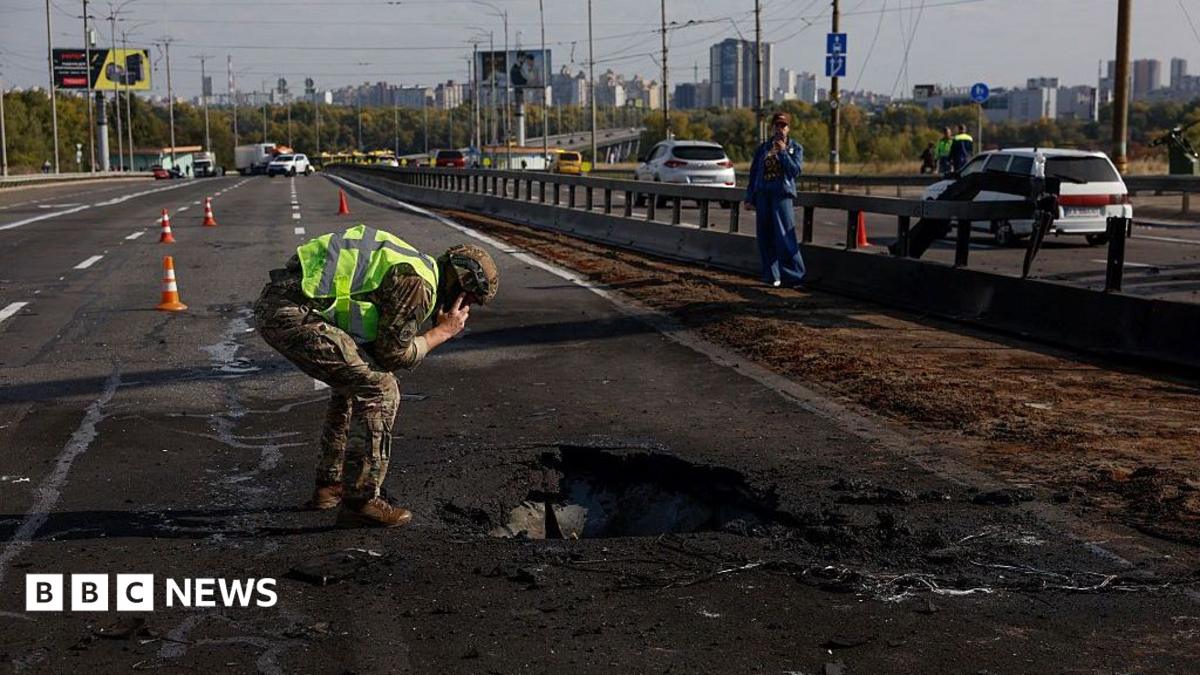
Two people were injured when the Pivnichnyi (Northern) Bridge was struck on Sunday morning for the second day in a row, while the Pivdennyi (Southern) Bridge was hit multiple times earlier in the week.
The latest attack came as German Chancellor Friedrich Merz made a surprise visit to Kyiv in a show of support against Russia’s continuing full-scale invasion.
Russia’s military said it would be intensifying strikes on Kyiv and other Ukrainian regions. It earlier said it had hit the two bridges used to transfer Ukrainian troops.
Video footage of Sunday’s strike, verified by the BBC, shows cars moving on Pivnichnyi Bridge as a drone crashes into it before exploding, creating a ball of fire. A cloud of black smoke can be seen rising above the bridge.
Other videos and pictures have emerged on social media showing a gaping hole in the middle of a traffic lane on the bridge.
Kyiv Mayor Vitali Klitschko said two people were injured in the latest Russian attack. He earlier said that the Pivnichnyi Bridge’s roadway was hit.
Kyiv’s eight bridges across the wide Dnipro River link the western (right) and eastern (left) parts, and many of the capital’s estimated three million residents rely heavily on the metro lines and trains to travel across the city.
Some 500,000 vehicles use the bridges every day.
The two struck bridges are still standing – but the damage and restrictions to traffic and public transport have caused gridlock in parts of the capital at times.
“To get from the left bank to the right one and back – it’s just hell,” Kyiv resident Roman told the BBC on Sunday.
Large numbers of commuters cross the river, especially on weekdays. Repair teams are working to fix the damage and officials say they are planning temporary pontoon bridges, ferry services and even a tunnel under the river to keep Kyiv connected.
Klitschko also said a separate Russian drone strike had damaged a heating main, adding that there would be a temporary lack of hot water in the north-eastern Desnyanskyi district as a result.
Ukrainian President Volodymyr Zelenksy said on Sunday morning Russian drones had also attacked a warehouse in the north-eastern region of Sumy, killing one person.
Meanwhile, in the central city of Dnipro, six people were injured after a communications facility was struck, he said.
Ukraine’s Air Force said that overnight Russia had launched 135 drones, including 52 jet-powered ones. It said that 125 projectiles had been shot down.
As emergency services responded to the incidents, Germany’s Merz met Zelenksy in Kyiv. They laid wreaths to Ukrainian soldiers who have been killed in the war.
Merz reaffirmed his country’s support for Ukraine, writing on X: “Ukraine is facing decisive weeks. That is why I travelled to Kyiv today with the message: You can rely on us.
“Germany’s security also depends on the outcome of this war. That is why we are helping out of our own self-interest as well.”

Rob Lowe’s niece writes heartbreaking tribute and makes vow to sister Fiona, 13, after tragic suicide

THE NIECE of Hollywood star Rob Lowe has penned a heartbreaking tribute to her sister following the teenager’s tragic death.
Fiona Lowe, 13, the daughter of director Chad Lowe, 58, and his wife Kim Painter, 52, died by suicide in Los Angeles on Tuesday.
Her family confirmed the tragedy in a social media post with her grief-stricken parents paying tribute to “the light of our lives.”
Now, Fiona’s elder sister Mabel, 17, has penned her own heartbreaking tribute and made a touching vow to her.
Taking to Instagram, Mabel shared a series of childhood photographs of the pair of them, including playing on the beach, dancing together at home, and happy family picnics and outings.
“I love you so much Fiona,” she wrote in the caption.
“I wish your short time here was easier and I hope your mind is at ease now.
“I will honor you forever and keep your memory alive. I love you, I hope you knew just how much.”
Her mother Kim commented below saying, “Oh Mabel. I love you so much.”
Meanwhile, fellow celebrities sent their love and well wishes to the family that has been shattered by Fiona’s loss just weeks before her 14th birthday.
Most read in Entertainment
“Bless you dear Mabel. My deepest condolences to you and the family,” actor Jeremy Renner wrote.
Meanwhile, Grey’s Anatomy’s Jessica Capshaw said, “What a beautiful tribute to your sister.
“I have had you and your family in my thoughts and prayers and I’m sending you all so much love.”
Pretty Little Liars actress Ashley Benson, who starred in the show alongside Mabel’s father Chad, simply commented with dove and prayer emojis.
Meanwhile, her Emmy-nominated uncle is said to have “dropped everything” to race to his brother’s side as the family was plunged into grief and shock.
A source told journalist Rob Shuter that “Chad is his little brother, and the second he heard, Hollywood stopped mattering.”
“There was nowhere else Rob was going to be except Chad’s side.
“Rob knows there are no words that can fix this,” another source said.
“He can’t take away Chad’s grief. What he can do is be present, protect his brother and make absolutely certain he never has to face this alone.”
Chad and Kim also share their youngest daughter, ten-year-old Nixie.
“We are deeply heartbroken by the loss of our beloved Fiona,” the Lowe family wrote in a statement on September 29.
“She was a loving young girl who was smart, creative, and loved to dance.
“She was adored by her sisters, and she was deeply loved by her parents.
“In fact, she was the light of our lives. Her passing is devastating for our entire family and we ask for prayers and privacy at this time.”
The family ended the statement with the 988 Suicide and Crisis Lifeline and her cause of death was confirmed by a medical examiner on Thursday.
If you or someone you know is affected by any of the issues raised in this story, call or text the 988 Suicide & Crisis Lifeline at 988, chat on 988lifeline.org, or text Crisis Text Line at 741741.

Earnings week ahead: PEP, DAL, STZ, TLRY, LEVI, and more (NASDAQ:PEP)
The first full week of October, though light, brings a diverse earnings slate spanning consumer staples, beverages, travel, apparel, and AI infrastructure, with companies offering fresh reads on both consumer demand and the capital-intensive technology buildout. PepsiCo (PEP), Constellation

Let’s debate ethical dilemmas taking place in high school sports
There are so many ethical dilemmas in high school sports that earning a teaching credential or gaining life experiences from participating in sports won’t always provide a clear path on how to proceed.
And when you bring in rules and regulations set forth by the California Interscholastic Federation, the state’s governing body for high school sports, everyone has an opinion or complaint — especially when there is a perception of inconsistency in how punishment for a rule violation is assessed.
It really comes down to how coaches hold themselves accountable and what a principal believes in supporting. For example, some principals have dismissed coaches for using profanity. Others do nothing.
Here are some of the ethical questions administrators, coaches, parents and players now face:
If cheating is wrong, how come so many cheat?
Should a player who transfers and has superior talent immediately get to start over a player who has been in the program for three years busting his butt?
How do you figure out when it’s OK to share playing time at quarterback if you have two good players or even three?
When is it OK for a parent to ask about their son‘s or daughter’s playing time, if ever?
How important is winning games compared to team grade-point average?
What is the most appropriate punishment for showing up late to practice?
What is a legitimate excuse for missing practice?
When should a coach allow players to wear whatever shoes they want compared to having one universal shoe and color?
Why are coaches allowed to use profanity but players can’t?
Why can’t coaches welcome multi-sport athletes instead of seething when they have to miss an offseason game?
Should benching a player for receiving a technical foul be automatic?
Should a player be immediately removed for committing a personal foul in football?
How much consideration should be given to the parent with money versus the parent with no money?
How much acting is required to pull off a pregame or halftime speech to inspire your players?
How can you teach teamwork and unselfishness for the team but lay low and suddenly go silent when the top player doesn’t follow the example away from the team?
When a parent offers to become an assistant coach, what instructions and guidelines must be imposed to prevent other parents complaining about “daddy ball?”
When is yelling at an official ever appropriate?
When is the margin of victory too large?
Why is it OK to recruit players, then complain when someone else recruits your players?
For years, baseball coaches have broken rules by holding batting practice before playoff games, resulting in teams forfeiting and coaches learning ignorance of a rule is no excuse. That leads to how can a coach receive only a two-game suspension from his district for playing three ineligible players during an out-of-state football game while claiming he didn’t know the ineligible players couldn’t play outside of California when he’s been coaching for more more than 10 years?
Any coach who says “I don’t want to know” where a transfer lives to escape accountability might want to start realizing an entire program can go down when they abdicate responsibility.
Finally, many claim whatever they are doing “is for the kids,” but when is it time for an adult to enter the room and explain the end doesn’t justify the means?
As someone who has seen virtually every kind of behavior, both good and bad, during 50 years of covering high school sports, I can say I don’t have all the answers to many of the questions posed. But when it comes to education-based high school sports. everyone has a responsibility to follow high ethical standards so that maybe a little bit might rub off on their players and help them navigate their future real-life decisions from a position of strength and confidence.
Russia hits Kyiv bridge as Germany’s Merz visits Ukraine’s capital | Russia-Ukraine war News
German chancellor visits Kyiv amid air raid sirens, pledging strong support as Russian strikes disrupt the capital.

Published On 4 Oct 2026
Russia has struck a key bridge in Kyiv just as German Chancellor Friedrich Merz arrived in the Ukrainian capital to meet President Volodymyr Zelenskyy.
The unannounced visit, marked by the sound of air sirens and explosions, came on Sunday to underscore Germany’s support for the nation at a time when Russian attacks on Ukrainian cities are increasing.
Recommended Stories
list of 3 itemsend of list
In a written statement, Merz said he “travelled to Kyiv today because Ukraine needs all our support in the coming weeks”.
“If Russia is not stopped, its war machine will sooner or later turn against us,” he said.

Merz and Zelenskyy met at the National Academy of Sciences, which was struck by a Russian drone on September 28.
Zelenskyy told Merz that Kyiv’s citizens are going through “terrible nights and days” due to the ongoing Russian attacks.
Merz was accompanied by his economy minister, as well as executives from several large German companies, such as Siemens Energy and Diehl Defence.
Ukraine and Germany are also expected to finalise a deal to produce drones and other weapons together that can travel more than 600 miles (965.6km) in an effort to strike deeper into Russia.
Germany has been one of Ukraine’s staunchest supporters. In April, the two countries signed a military pact worth more than $4bn. On Sunday, a $1.1bn military aid package is set to be announced, alongside $394m to repair damage to Ukraine’s energy sector.
Merz’s visit comes a day after Russia warned foreign diplomats and nationals to leave the capital to avoid getting hurt.
Russia’s Ministry of Defence promised to intensify strikes on Ukraine after Zelenskyy said in an interview with the Reuters news agency that it is doubling down on targeting Russian oil refineries after several civilians were killed and wounded over the weekend.
The strike that hit the Northern Bridge over the Dnipro River on Sunday also damaged a road and the supply of hot water in the area, according to a social media statement from Kyiv Mayor Vitali Klitschko. It is the second bridge in the capital to be hit this weekend.
Russia’s all-out war on Ukraine is in its fifth year. Both sides have increased the number of drone and missile attacks on infrastructure, logistics and military sites in recent months.
Iran says Hormuz to remain closed until US meets conditions | US-Israel war on Iran News
Iran’s Foreign Ministry says reopening the strait has been its main goal, while the US continues to focus on nuclear talks.
Published On 4 Oct 2026
The Strait of Hormuz is going to remain closed until the United States accepts Tehran’s seven-day plan to reopen the waterway, Iran’s top negotiator and parliament speaker has said.
Iranian state-linked news agency Nournews, quoting Mohammad Bagher Ghalibaf, reported on Sunday that Washington made “some proposals through a mediator” days after the US replied to Iran’s diplomatic proposal.
Recommended Stories
list of 4 itemsend of list
The US should know “that the era of wasting time and dictating unilateral demands is over”, Ghalibaf said, adding Iran’s position remains “clear and definite”.
He emphasised that “the Strait of Hormuz will not open until our seven conditions based on the Islamabad memorandum are met”, and that Iran is “present on the military battlefield and will confront them with new surprises”.
He added that Iran was neither “excited” nor “intimidated” by the latest US proposals and would “both fight and negotiate”.
US President Donald Trump ruled out an Iranian proposal to reopen the Strait of Hormuz last week, hours after Iran put forward a roadmap to reopening the strait, through which one-fifth of global oil and natural gas is shipped during peacetime.
Last month, Trump threatened to “annihilate” Iran in his speech on the floor of the United Nations General Assembly (UNGA).
On Sunday, Iranian Foreign Minister Abbas Araghchi also said Iran is “serious about finding diplomatic solutions just as we are serious about defending ourselves”.
Speaking to foreign ambassadors and diplomats in Tehran, Araghchi said Iran had clearly explained its conditions for reopening the strait and that Tehran hoped Washington would choose diplomacy and accept its proposal.
However, Araghchi warned that if the US takes military action again, Iran is “more prepared than before and will take whatever action is necessary to defend ourselves”.
Iranian Ministry of Foreign Affairs spokesman Esmaeil Baghaei added that Tehran used the UNGA platform last month to provide world leaders with its position on ending the US-Israel war on Iran.
He said the US has continued to focus on nuclear talks, while reopening the strait has been Iran’s main goal.
“We are at this stage mainly focusing on the strait, and our principal concern is to reach a solution and to have peace and stability restored within this waterway,” Baghaei said.
The Strait of Hormuz has been largely blocked and disrupted for more than seven months, since the US and Israel launched strikes on Iran on February 28, driving one of the worst maritime shipping disruptions in decades.


Brighton Pride ‘signs up’ international megastar for first UK gig in 15 years
AN international megastar is being lined up to headline Brighton and Hove Pride.
The Sun can exclusively reveal how Jennifer Lopez is deep in discussions to take to the stage for her first full-length UK gig in 15 years.
The Jenny From The Block hitmaker, 57, has been approached by organisers to perform at the event, which takes place next summer.
It comes after the high profile bash, which raises funds for LGBTQ+ charities, has previously welcomed a series of superstars onto its stage, including Diana Ross, Paris Hilton, Raye, Mariah Carey, Christina Aguilera, Kylie Minogue and Britney Spears.
A source said: “The event gets bigger and bigger every year and organisers are in the planning stages of booking talent and have reached out to JLo’s team, everyone is really excited to pull it off.
“She’d be a perfect headliner, they’re just working out schedules.”


After headlining World Pride in Washington, D.C. in 2025, Lopez revealed her priorities in her life changed.
She said: “I played Pride last year and I felt like it was the beginning of the new chapter of my life.
“The LGBTQ+ community, for me, has always been a loyal and big part of my fanbase.”
J.Lo last headlined a gig in the country on her Dance Again World Tour when she played London’s O2 Arena in 2012.
This year, Raye and superstar Diana Ross headlined the festivities which are held every year at Preston Park in Brighton in August.
The year before, Girls Aloud played their only UK festival appearance as part of their 2024 reunion at the event.
At Supreme Court: Can oil companies be forced to pay for climate woes?
WASHINGTON — The Supreme Court will open its new term Monday by hearing arguments on whether the oil and gas industry may be forced to pay damages for the scorching heat waves, wildfires and droughts that are blamed on climate change.
It’s a momentous question the justices have put off deciding for nearly a decade — and may do so again.
California joined more than two dozen blue states and municipalities in 2023 when it sued the five largest oil companies, alleging “decades of deception” over the danger of a warming climate.
They have “privately known the truth for decades but have fed us lies and mistruths to further their record-breaking profits at the expense of our environment,” California Atty. Gen. Rob Bonta said.

Fire and smoke rise at the Chevron Refinery in El Segundo in October 2025.
(Robbin Goddard/Los Angeles Times)
Such climate-change lawsuits were patterned after the mass claims against the tobacco and opioid industries. Both were accused of concealing the dangers of their very profitable products.
But the climate suits have stalled. Judges have been divided over whether these potentially huge claims should be decided in federal or state court, and if so, under what law.
Last year, Boulder County, Colo., won a 5-2 ruling in the state Supreme Court that allowed its 2018 suit to proceed as a claim of a public nuisance, an unjust enrichment or a civil conspiracy. These are referred to as “common law” claims that are long-standing and traditional but do not rely on a measure approved by the Legislature.
The Colorado judges also said the climate-change suits are not “preempted” or blocked by federal anti-pollution laws because the suit for damages did not regulate greenhouse gas emissions.
The dissenters said the state court was giving Boulder a “green light to act as its own republic” to punish the Exxon Mobil Corp. for the impact of “global climate change.”
Appealing to the Supreme Court, the oil companies sounded the same theme.
“Boulder, Colorado cannot make energy policy for the entire country,” they said. A ruling for the county would “authorize all 50 states and tens of thousands of municipalities” to ask their local juries to “impose ruinous liability” on the fossil fuel industry, they told the court.
The Trump administration joined in support of the industry’s appeal.
“Our federal system would disintegrate if each state could tackle inherently national or international problems by forcing its regulatory prescriptions on the other 49,” the administration’s lawyers wrote.
In February, the justices voted to hear the case and decide whether federal law blocks state law claims for the “effects of interstate and international greenhouse-gas emissions.”
The court scheduled the case of Suncor Energy and Exxon Mobil vs. Boulder County as the first of the new term.
Legal experts say the industry’s claim to be shielded by federal law is weak.
UCLA law professor Alejandro Camacho described the “preemption arguments as the latest and perhaps most ambitious effort to weaponize federal law to prevent polluters and fraudsters from paying for the harms they cause.”
Neither the Constitution nor the Clean Air Act provides such a shield, he said.
Legal experts on the other side question the notion that a public nuisance can be defined so broadly to include both the sale of a legal product and the impact on carbon pollution, much of it coming from China and India.
The outcome in the Supreme Court remains in doubt.

Supreme Court Justice Samuel Alito, left, shown with Justices Clarence Thomas and Brett Kavanaugh in 2025, withdrew from involvement in the climate case being argued Monday, when the court term begins.
(Chip Somodevilla / Getty Images)
Last week, Justice Samuel A. Alito, a reliable conservative, announced he was withdrawing from the case. He did not say why, but he owns stock in other oil companies that could be affected by the court’s decision.
A broad ruling for Boulder would send a shock through the fossil-fuel industry and clear the wave of climate-change suits to proceed in state courts.
The industry may turn to Congress. Republicans in the House and Senate have introduced bills that would shield energy companies from such liability claims.
Similarly, a broad ruling shielding the oil companies probably would block all of the climate change suits, including California’s.
The justices may opt out of ruling, however.
When they granted review of the case, they asked the lawyers on both sides to weigh in on whether the high court had “jurisdiction” to decide the Boulder case.
Usually the U.S. Supreme Court reviews only final judgments handed down by state courts, and the Boulder case did not result in a final ruling.
And without Alito, the court could split 4 to 4.
A decision based on a tie vote would affirm Boulder’s early stage victory but would not set a precedent that would govern other cases.
In its new term, the court also will hear major cases on immigration and guns.
Two of the cases test the Trump administration’s strict deportation policies. One denies bond hearings to people who entered the country illegally and may be deported.
In the past, the government usually offered bond hearings to those who could be held for months or even years while their claims were pending, so long as they could show they were not a flight risk or danger to the public.
But the Trump administration said it plans to detain tens of thousands of such persons indefinitely, even if they have no criminal record and pose no risk.
Government lawyers pointed to a provision of the 1996 immigration law that said people who entered the country illegally “shall be detained.” Previous administrations applied the mandatory-detention rule only to migrants who entered the U.S. illegally and were arrested near the border.

A refinery in Carson in 2024.
(Michael Blackshire/Los Angeles Times)
On Thursday, the court announced it will hear arguments on the mandatory detention policy, likely to be scheduled for January.
The other case involves so-called “third-country removals.”
The administration is determined to deport immigrants who have “final orders of removal,” many of whom have criminal records. But in some cases, they may not be sent back to their country of origin.
The policy of sending them to a third country has been condemned as harsh and cruel. Thousands of these people have been flown to impoverished countries that are dangerous and where they may be subjected to abuse.
The administration says it seeks assurances from those countries that the deported persons will not be not be abused or persecuted, but it refuses hearings for individuals.
U.S. District Judge Brian Murphy in Boston has ruled these deportees are entitled to a “meaningful notice” of where they are being sent and “meaningful opportunity” to contest this if they have a reasonable fear they will face persecution and torture.
Trump administration lawyers filed emergency appeals at the Supreme Court to set aside Murphy’s orders. They argued that the judge had gone beyond his authority, and the court’s conservatives agreed.
In December, however, the court will hear arguments from both sides on what the law calls for in such deportation cases.
Meanwhile, on Dec. 2, the court will hear a potential landmark on gun rights and and decide whether states may prohibit possession and sale of semiautomatic AR-15 rifles.
California and 11 other blue states have adopted such laws, often in response to mass shootings.
Gun rights advocates say these rapid-fire rifles are among the most popular weapons nationwide and should be protected as lawful under the 2nd Amendment’s right “to keep and bear arms.”
After turning away cases for a decade, the justices voted to hear 2nd Amendment challenges to the laws in Cook County, Ill., and the state of Connecticut.

Prep talk: Oh mother, Corona Centennial football roster filled with players with same first name
The Corona Centennial High football team has an interesting blend of players spelling their similar first names differently, leaving coach Matt Logan to be the referee as to which parents got the spelling correct.
There’s Jaden Jefferson, Jaden Walk-Green, Jaden Bynum, Jayden Steeber, Jayden Rodriguez and Jaiden Sapp on varsity.
Asked for a comment on what the correct spelling should be, Logan replied, “Which one?”
With six player possibilities, he better be specific as to which Jaden, Jayden or Jaiden he’s trying to alert when shouting the name.
Luckily, Logan isn’t the freshman or JV coach because there’s also Jayden Morales, Jayden Bullard and Jaidon Wilkerson. That’s nine players who qualify to join a club or create a T-shirt: Which first name is spelled correctly?
This is a daily look at the positive happenings in high school sports. To submit any news, please email eric.sondheimer@latimes.com.
Brazil votes in deeply polarised election pitting Lula against Bolsonaro | Elections News
Close race expected as left-wing Lula seeks fourth non-consecutive term against right-wing Flavio Bolsonaro, son of convicted former president.
Published On 4 Oct 2026
Polls have opened in Brazil’s presidential election, once again pitting left-wing incumbent Luiz Inacio Lula da Silva against a right-wing candidate from the Bolsonaro family – Senator Flavio Bolsonaro, the eldest son of former President Jair Bolsonaro.
Some 160 million registered voters are eligible to cast ballots in Sunday’s elections, which will elect lawmakers, governors and senators.
Recommended Stories
list of 4 itemsend of list
If no presidential candidate wins more than 50 percent of valid votes, the top two contenders will proceed to a run-off on October 25.
Most opinion polls ahead of the vote showed a close contest, with Lula holding a marginal advantage over Bolsonaro that tightens further in a potential second round.
Lula, of the Workers’ Party, is seeking a fourth nonconsecutive term. The 80-year-old, who previously served as president from 2003 to 2010, wants to continue his series of social programmes aimed at addressing inequality.
Bolsonaro, of the Liberal Party, has promised a hard stance on crime and insecurity. The 45-year-old has also pledged close collaboration with the United States under President Donald Trump.
His father is currently serving a 27-year prison sentence over his role in a coup plot following his election loss to Lula by 1.8 percentage points in 2022. The far-right leader’s conviction and that of several military officers raised questions about the strength of Brazilian democracy, reviving past traumas of the 21-year-long period during which Brazil was ruled by a US-backed military dictatorship.
The presidential election has been dominated by issues such as crime, insecurity and the high cost of living. Corruption and concerns about US intervention in the country’s domestic affairs have also loomed over the campaign.
A recent survey by Quaest says violence was cited as the biggest concern by 31 percent of respondents, followed by corruption (20 percent), economy (19 percent) and healthcare (12 percent).
“The stakes of this election are incredibly stark because the candidates stand for such opposing visions about what Brazil’s recent history means,” Andre Pagliarini, an assistant professor of history and international studies at Louisiana State University and the author of a book on Lula, told Al Jazeera.
He added that while Lula embodies the “consolidation of Brazilian democracy since the end of the dictatorship”, the Bolsonaro family argues that “the institutions that Brazilian democracy has erected since the end of dictatorship are either rotten and unresponsive”.
With reporting by Brian Osgood